
The Future of Industrial Immersion Heating Systems Beyond
Conventional Heating
Engineering smarter thermal solutions for high-performance manufacturing, process heating, and advanced heat transfer — where precision meets industrial reliability.
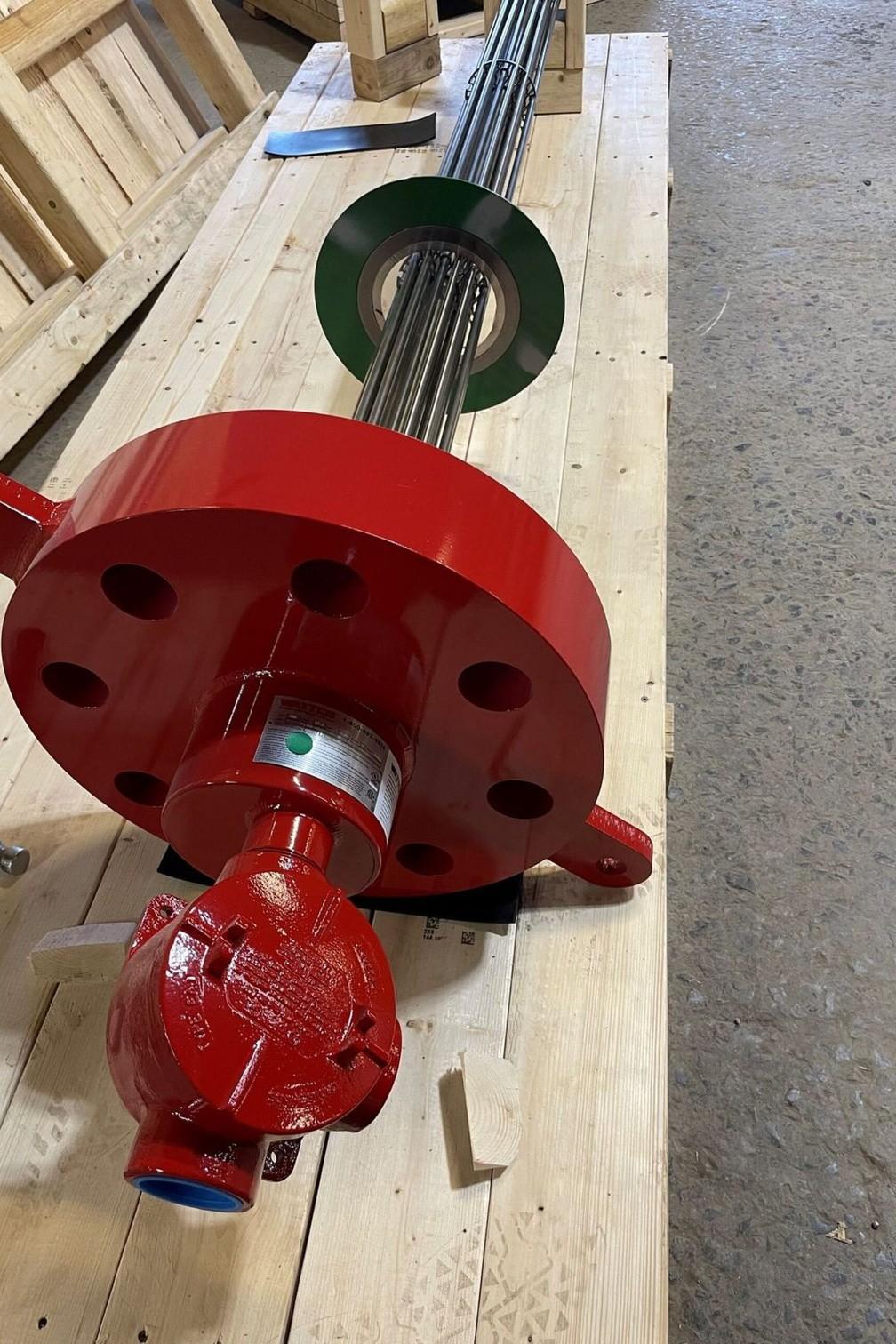

Why Immersion Heating Remains the Backbone of Industrial Process Heating

Direct-contact thermal transfer places the heating element directly in the process medium, so energy moves straight into the fluid instead of first passing through vessel walls, air gaps, or intermediate surfaces where heat can be lost. Because the heat source is in immediate contact with the material being heated, warm-up times are often dramatically shorter — in many industrial applications, that can mean reaching operating temperature in minutes instead of waiting much longer for indirect systems to ramp up. Faster heat-up improves throughput, shortens batch cycles, and reduces idle time between fills, which is especially valuable in operations that run repeated heats throughout the day.
It also supports tighter temperature control, because the system responds quickly to setpoint changes and can maintain a more uniform process temperature without large swings or lag. That precision matters in chemical mixing, plating, wash tanks, oil heating, and other processes where even small deviations can affect product quality, consistency, or safety. By comparison, radiant and convection heating must first heat the surrounding air or equipment before that energy reaches the liquid, making them slower, less efficient, and more prone to uneven temperature distribution. In practical terms, immersion heating can lower energy waste, reduce overheating risk, and cut operating costs by delivering heat exactly where it is needed with minimal loss.
Direct Contact
Heat Transfer Reimagined with Immersion Heat
Exchangers
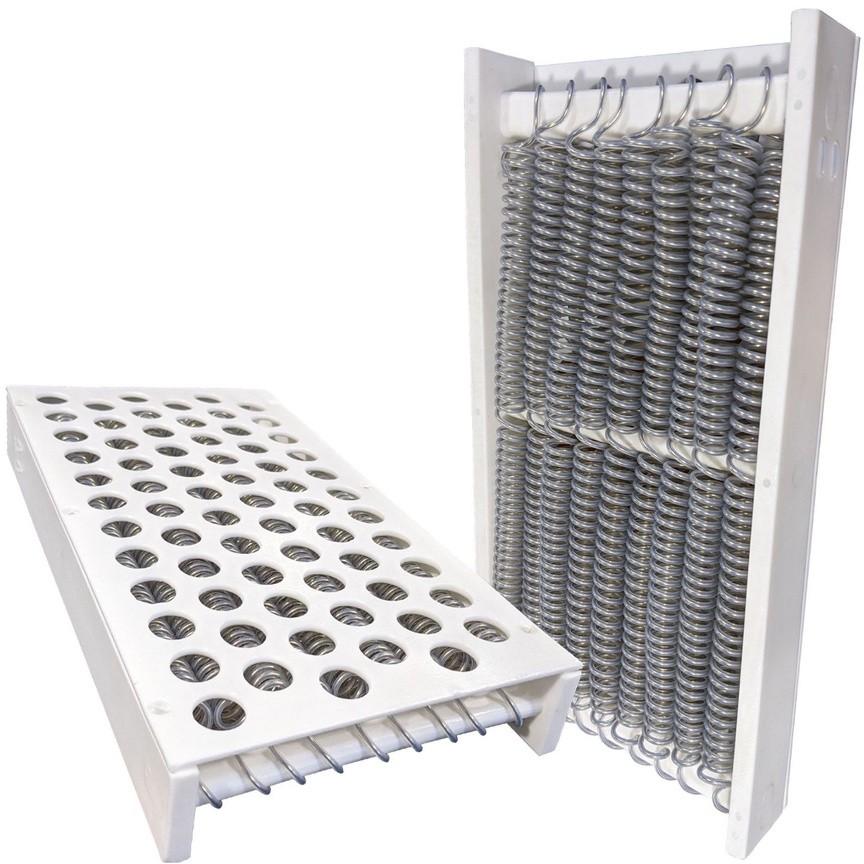
Immersion heat exchangers deliver superior thermal efficiency in aggressive media where shell-and-tube systems fail. Fluoropolymer designs offer chemical inertness without metallic contamination.
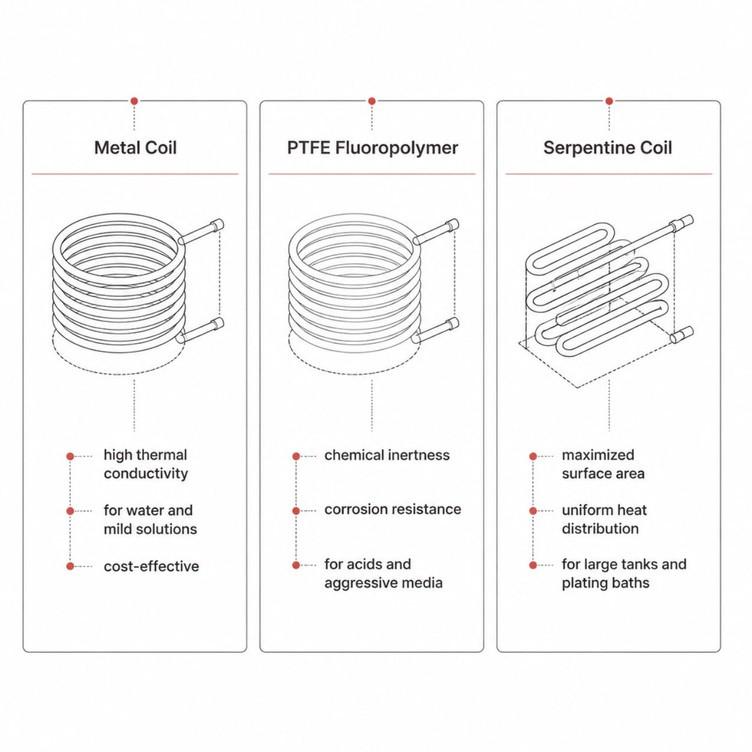
Selecting the Right Configuration
• Immersion heat exchangers for direct tank heating
• Immersion coil heat exchangers for plating and surface finishing
• Fluoropolymer heat exchangers for corrosive chemical processing

PTFE and PFA fluoropolymer coils withstand temperatures up to 200°C while resisting virtually all industrial chemicals.
Selecting the Right Immersion Heater for Every Industrial Application
Mounting configuration, sheath material, and watt density determine thermal performance and service life. Match the heater type to your process medium, temperature requirement, and vessel geometry.
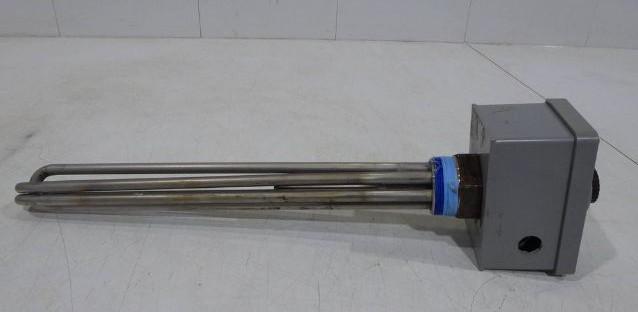
Metal Heate
rs
Stainless steel, Incoloy, and titanium sheaths for water, oils, and mild chemical processes.
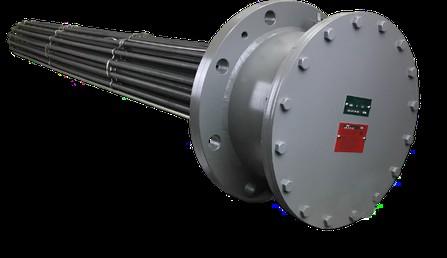
Flanged Immersion Electri c Heaters
Bolted flange mounting for large tanks, pressure vessels, and high-wattage industrial systems.
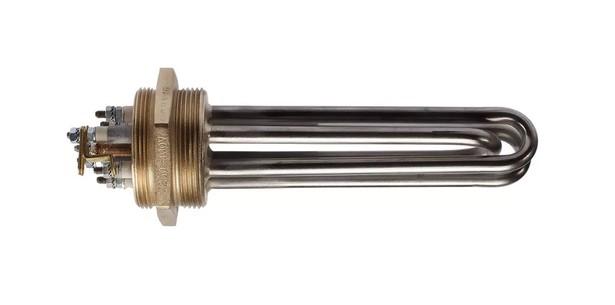
Metal Screwplug Hea ters
Threaded installation for compact vessels, circulation systems, and electric immersion screwplug heat ers in tight spaces.
Water Heating Solutions for Industrial Performance
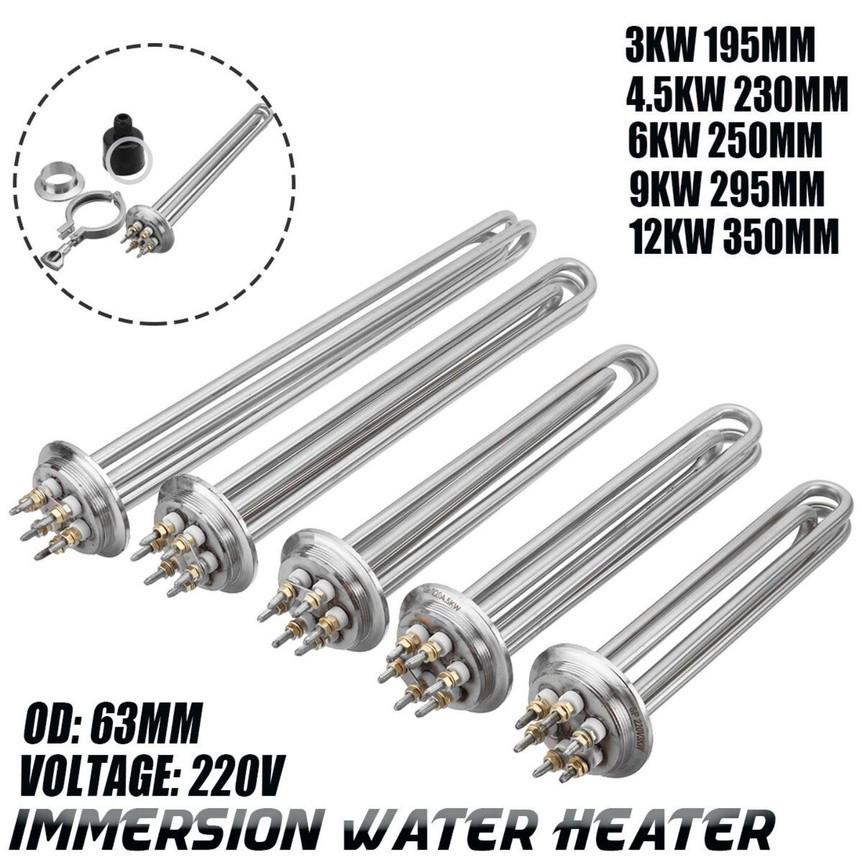
Industrial water heating demands precise temperature control to keep process water within tightly defined operating windows, preventing underheating that slows production and overheating that can create energy waste, scale formation, or product inconsistency. Corrosion resistance is equally critical because continuous exposure to water chemistry, dissolved minerals, cleaning agents, and elevated temperatures can quickly degrade lower-grade materials, shorten heater life, and increase maintenance downtime.
Long-term reliability matters just as much in facilities that run around the clock, where stable performance across varied tank geometries and flow rates helps maintain uniform heat transfer, avoid hot spots, reduce thermal stress on components, and ensure dependable output in demanding process environments.
Tank Immersion
Water tank immersion heaters for deep-tank and large-volume applications
Small Tank & Process
Immersion heater for water in compact vessels and laboratory systems
Tubular & Portable
Immersion heaters for water and immersible water heaters for flexible deployment
Heating Elements That Deliver Long-Term Thermal Reliability
The heating element is the critical component governing thermal output, chemical compatibility, and operational lifespan. Material selection directly determines performance in aggressive media.

Water Heater Immers
ion Elements
High-watt-density tubular elements
engineered for continuous industrial water heating.

Quartz Heating Eleme nts
Fused quartz sheaths withstand ultra-pure water and aggressive acids where metal fails.

Replacement & OEM
Elements
Heating elements for immer sion heaters
available as OEM or fieldreplaceable components.
Inline Immersion Heating for Continuous Manufacturing
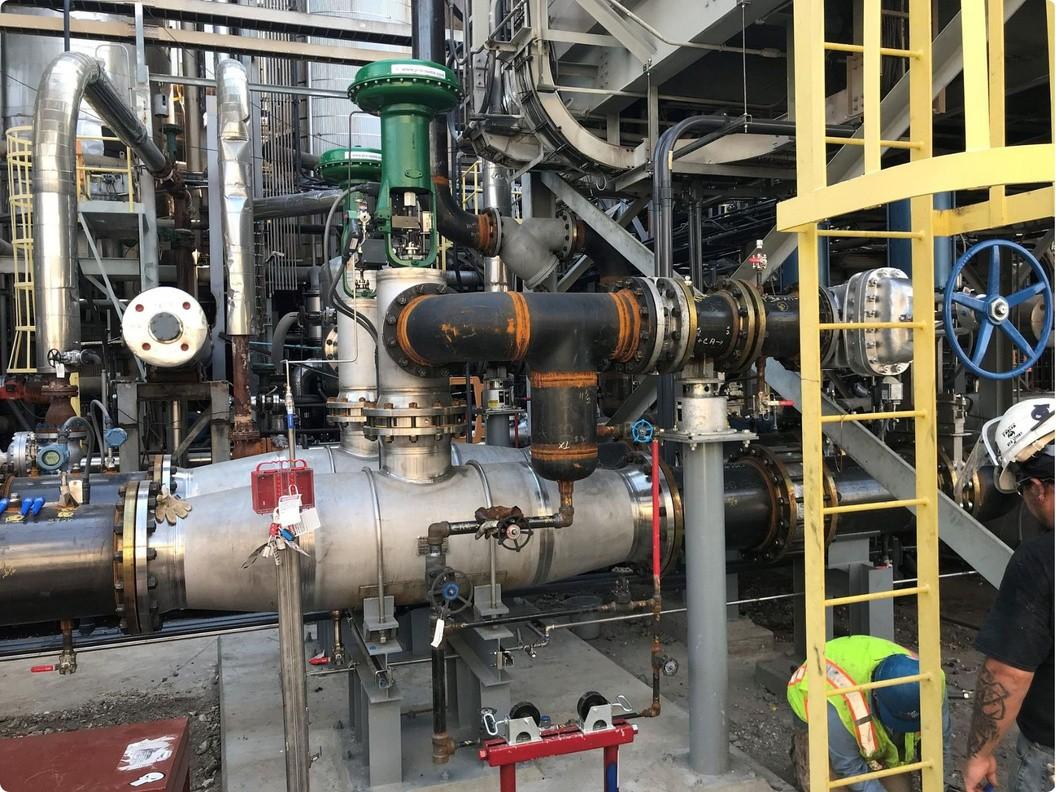
Inline immersion heaters integrate directly into recirculation loops and process pipelines, delivering precise thermal control without interrupting flow. Ideal for continuous chemical processing, semiconductor manufacturing, and surface finishing lines.
• Continuous-flow thermal management with zero dead zones
• Compact footprint for integration into existing process lines
• Compatible with aggressive media via PTFE, quartz, or metal sheaths

Explore inline immersion heater solut ions for continuous process heating applications.
Power, Precision & Thermal Performance
Consistent thermal output requires matched power delivery. Power rectifiers and precision controls ensure stable wattage across varying load conditions.
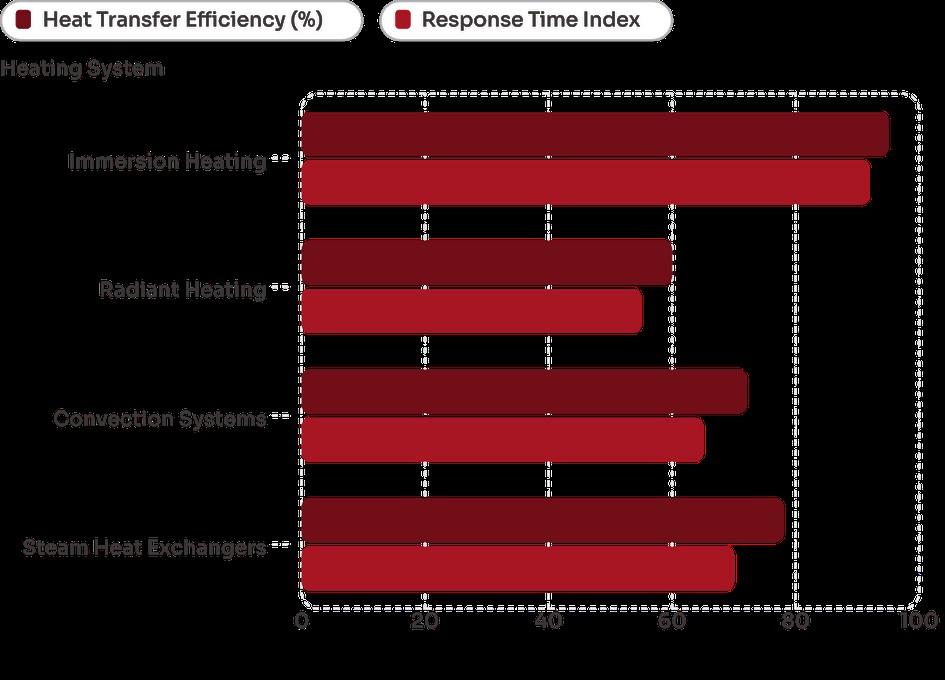
Why Immersion Leads
Direct immersion achieves the highest heat transfer efficiency of any industrial heating method. Paired with precision power rectifiers, it delivers the thermal accuracy that modern manufacturing demands.

When evaluating the best electric immersion heaters, prioritize matched watt density, sheath material, and control integration.
The Next Generation of Industrial Thermal Engineering
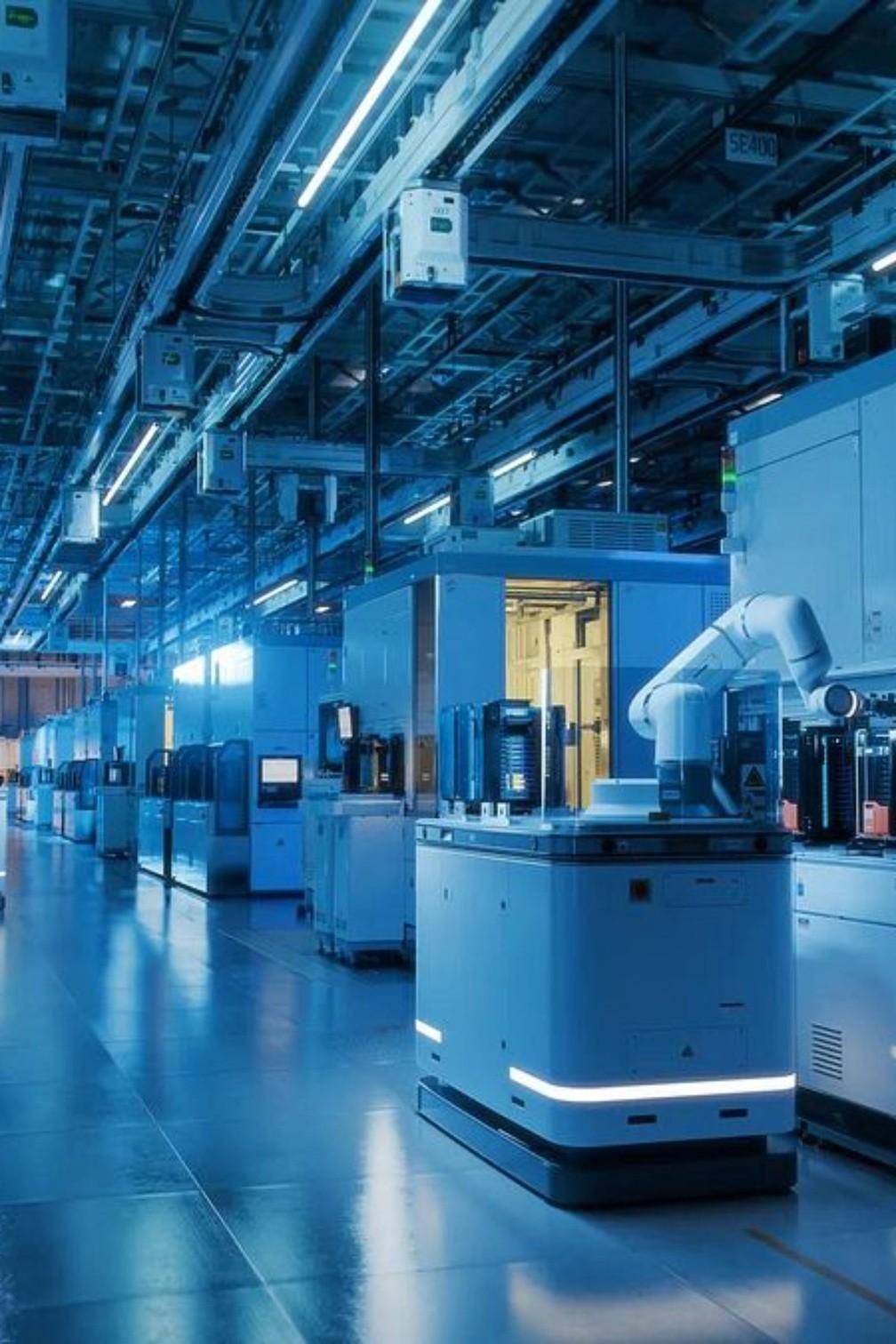
Tomorrow's thermal systems must deliver precision, sustainability, and connectivity — from semiconductor fabs to advanced chemical processing.
Sustainable Heating
High-efficiency immersion heating reduces energy consumption and carbon footprint across industrial processes.
Manufacturing Automation
Smart thermal systems integrate with PLCs and SCADA for automated process heating and real-time monitoring.
Industrial Reliability
Advanced materials and precision engineering extend service life in the most demanding thermal environments.

Future-Ready Systems
Modular heat transfer designs scale with evolving production requirements and Industry 4.0 standards.
Connect With Process Technology
�� Website
www.processtechnology.com
store.processtechnology.com
�� USA — Global HQ
The Tom Richards Building
38809 Mentor Ave., Willoughby, OH 44094
+1 (440) 974-1300 �� Operations Center
7010 Lindsay Ave. Mentor, OH 44060, USA
���� India Office
AAC Protec India Pvt. Ltd.
Plot 129G/17, NSEZ, Noida–Dadri Rd, Phase 2 Noida, UP 201305 | +91-1203116349