ACBDD Special Edition
DEVELOPMENTAL DISABILITIES AWARENESS MONTH, MARCH 2026
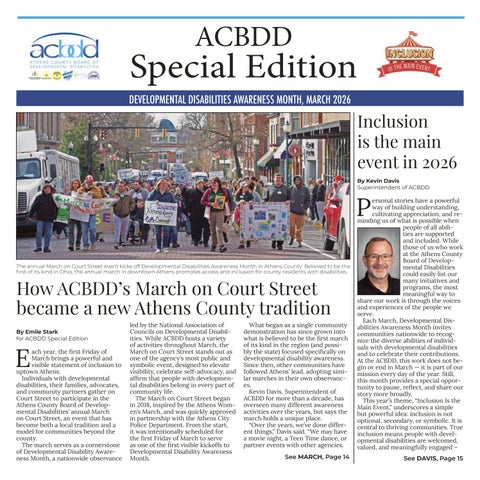
How ACBDD’s March on Court Street became a new Athens County tradition
By Emile Stark for ACBDD Special Edition
Each year, the first Friday of March brings a powerful and visible statement of inclusion to uptown Athens.
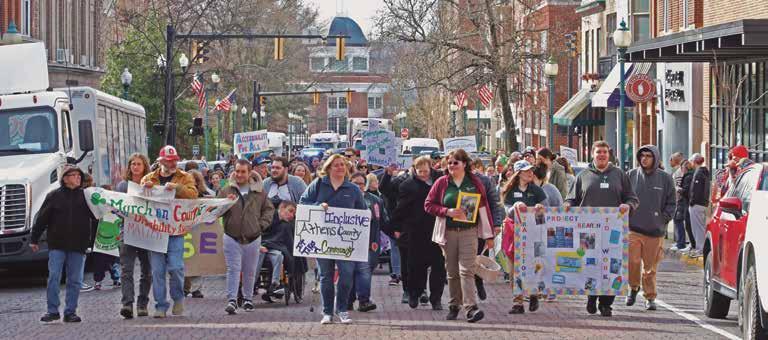
Individuals with developmental disabilities, their families, advocates, and community partners gather on Court Street to participate in the Athens County Board of Developmental Disabilities’ annual March on Court Street, an event that has become both a local tradition and a model for communities beyond the county.
The march serves as a cornerstone of Developmental Disability Awareness Month, a nationwide observance
led by the National Association of Councils on Developmental Disabilities. While ACBDD hosts a variety of activities throughout March, the March on Court Street stands out as one of the agency’s most public and symbolic event, designed to elevate visibility, celebrate self-advocacy, and affirm that people with developmental disabilities belong in every part of community life.
The March on Court Street began in 2018, inspired by the Athens Women’s March, and was quickly approved in partnership with the Athens City Police Department. From the start, it was intentionally scheduled for the first Friday of March to serve as one of the first visible kickoffs to Developmental Disability Awareness Month.

Inclusion is
the main event
in 2026
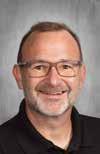
By Kevin Davis Superintendent of ACBDD
Personal stories have a powerful way of building understanding, cultivating appreciation, and reminding us of what is possible when people of all abilities are supported and included. While those of us who work at the Athens County Board of Developmental Disabilities could easily list our many initiatives and programs, the most meaningful way to share our work is through the voices and experiences of the people we serve.
What began as a single community demonstration has since grown into what is believed to be the first march of its kind in the region (and possibly the state) focused specifically on developmental disability awareness. Since then, other communities have followed Athens’ lead, adopting similar marches in their own observances.
Kevin Davis, Superintendent of ACBDD for more than a decade, has overseen many different awareness activities over the years, but says the march holds a unique place.
“Over the years, we’ve done different things,” Davis said. “We may have a movie night, a Teen Time dance, or partner events with other agencies.
See MARCH, Page 14
Each March, Developmental Disabilities Awareness Month invites communities nationwide to recognize the diverse abilities of individuals with developmental disabilities and to celebrate their contributions. At the ACBDD, this work does not begin or end in March — it is part of our mission every day of the year. Still, this month provides a special opportunity to pause, reflect, and share our story more broadly.
This year’s theme, “Inclusion Is the Main Event,” underscores a simple but powerful idea: inclusion is not optional, secondary, or symbolic. It is central to thriving communities. True inclusion means people with developmental disabilities are welcomed, valued, and meaningfully engaged –
See DAVIS, Page 15
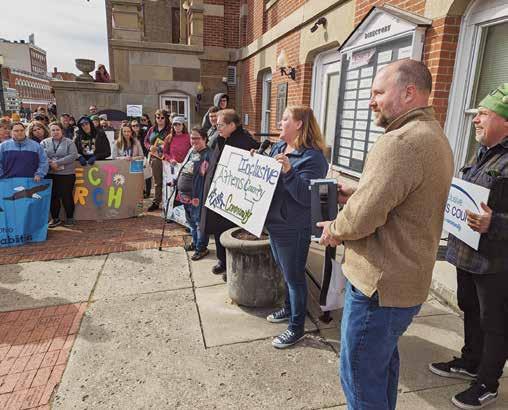
The annual March on Court Street event kicks off Developmental Disabilities Awareness Month in Athens County. Believed to be the first of its kind in Ohio, the annual march in downtown Athens promotes access and inclusion for county residents with disabilities.
ACBDD’s SPECIAL EDITION, MARCH 2026
Building confidence at People First singles mixers
By Emily Roesti for ACBDD Special Edition
Laughter and music filled the room at the People First Singles Mixer, where adults with developmental disabilities gathered for dinner, chatted, and enjoyed a round of trivia.
A joint project between People First of Ohio and the ACBDD’s Integrate Athens program, the monthly mixers bring people together to socialize and improve social skills with people of similar experiences.
For many, the People First Singles Mixer is more than an event — it’s a place to connect with others and build confidence.
People First member Jason Licht, who also serves as the group’s vice president, said the mixers have been a highlight of his time with the organization.
“We’ve done trivia before; we’ve done full-blown dances, just all kinds of things. We’ve done Jeopardy,” Licht said. When speaking about a past event that featured music trivia, he joked that he “ran” the category of heavy metal.
Licht said the events are enjoyable and important because there is no other organization in the county that provides regular social events for this community.
Jessica Pickrell, a community inclusion coordinator with the ACBDD, helps the People First members to organize the events. Pickrell aims to create an environment that helps attendees practice social skills, safely meet new people, and explore relationships at their own pace.
goal is to make the mixer fun, but relaxed and no pressure to hook up and find a date,” she said.
“We are using fun experiences to also teach important safety and life skills, like relationship safety.”
– Jessica Pickrell, community inclusion coordinator at ACBDD
“We are using fun experiences to also teach important safety and life skills, like relationship safety role-playing. During these role-playing scenarios, we talk about the importance of good hygiene, as well as phone and internet safety also. Our
Each event features food, music, and themed activities, such as trivia or, in the autumn, team pumpkin carving.
Licht said the mixers have helped him to build different kinds of connections, from good friends to someone he’s especially excited to see.
“I’ve got my eye on someone,” he said.
“I’m not going to mention their name; I’m a gentleman.”
People First of Ohio is a statewide self-advocacy organization led
by people with disabilities through multiple chapters, including the one based in Athens. Its mission is for members to express their needs and explain their rights to people in their communities.
The group often works with state legislators, other advocacy groups, and government agencies. Some advocacy groups involved include The Arc of Ohio and Ohio Self Determination Association, for just two examples.
The Athens County chapter of People First brings that mission to life. People First of Ohio often collaborates with the ACBDD to host events such as movie nights, dances, and advocacy training.
Other than organizing events such as the mixer, People First members also provide direct advocacy and interaction.
William “Billy” Peacock, current
president of People First of Athens, and Licht often give presentations in the Athens community to residents and families of children with disabilities.
Those presentations can include demonstrating assistive technology, describing different services available to people with disabilities, and helping people learn why words matter and to avoid hurtful statements when interacting with the community.
As the singles mixers carry on, they serve as a reminder of how important it is to create spaces where everyone feels valued, connected, and confident.
“I’ve watched people who once sat alone now look forward to seeing their friends,” Pickrell said. “The difference is incredible.”
• Edited by doctoral student Ebenezer Fayah Amartey
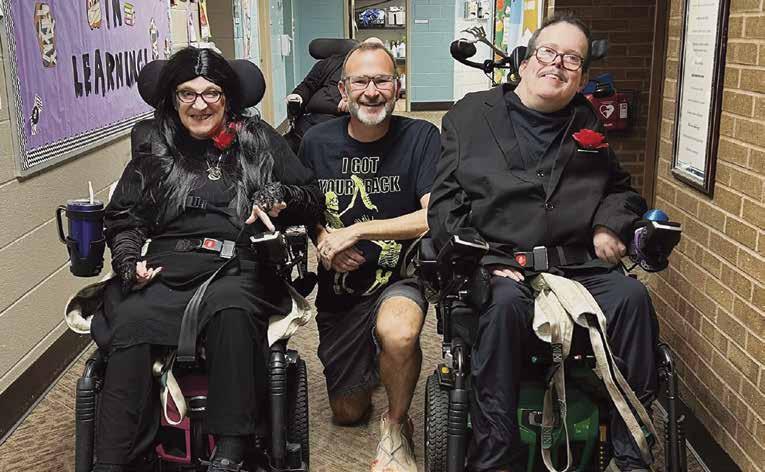
A Halloween party in October was one of the People First Singles Mixer social events organized by People First of Ohio and the ACBDD.
Building friendships and confidence through Teen Time
By Ella Hughes for ACBDD Special Edition
Since arriving in Athens more than two years ago, Gwen and her mom, Jennifer Mouat, have been heavily involved with the activities provided by the ACBDD, specifically Teen Time.
“She’s so much more mature and independent,” Mouat said about the changes she’s seen in her daughter since starting Teen Time. “She wants independence.”
Teen Time is a social club created by the ACBDD for people with developmental disabilities who are 13 to 21 years old. The program allows participants have fun while developing their social skills through activities and outings. It is also designed to help this age group experience something new in a safe space.
Gwen, 19, said that her favorite things to do during Teen Time are to hang out with her friends Fiona, Jules and Kyle. Gwen enjoys her experience with Teen Time and having the opportunity to make close friends.
Heather Clemons, an ACBDD community inclusion coordinator, plans
and organizes Teen Time events. Activities include arts and crafts nights, karaoke, hiking, pumpkin painting, and build-your-own pizza nights. For each event, Clemons looks for engaging activities that encourage participants to step outside their comfort zones and continue to grow.
On any given night, Teen Time can have about 10 to 15 participants who want to try something new and build connections. With that goal in mind, Clemons plans activities to engage everyone involved, with the goal of building confidence, connection and fun.
Her favorite part? “The kids,” Clemons said. “I love working with them. It is really fun to watch them find a new activity they love, make a new friend, or experience something they have never done before.”
Mouat said her daughter has blossomed into a young woman through Teen Time. Gwen has recruited many of the friends she made at Teen Time to join the Ohio University Sparkles, an all-inclusive cheerleading group started in 2018 that supports Ohio’s athletics teams during competitions on campus.
Gwen says her favorite thing about both Teen Time and the Sparkles is simple: “Just hanging out with friends.” For both the teens and their parents, the friendships they’ve made through the program have become an important aspect of their lives.
“It’s really nice to watch them interact and become friends with each other so they have another resource and someone to do things with,” Clemons said.

• Edited by doctoral student Khaja “Aziz” Azizuddin.
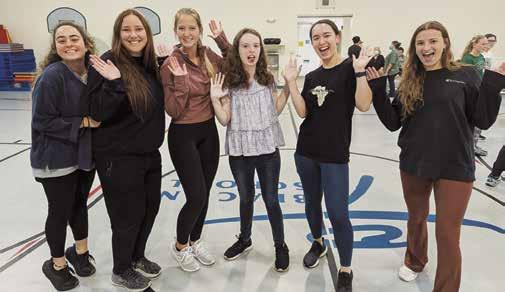
Participants in a Teen Time event last year show off for the camera. Teen Time is a social club created by ACBDD as a way for teens to have fun and build social skills.
ACBDD’s SPECIAL EDITION, MARCH 2026
Beacon School offers special services for all students
By Caroline Schehl for ACBDD Special Edition
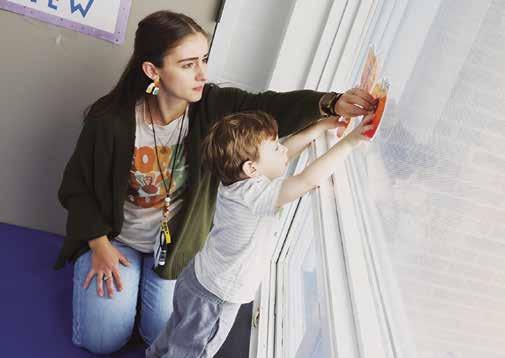
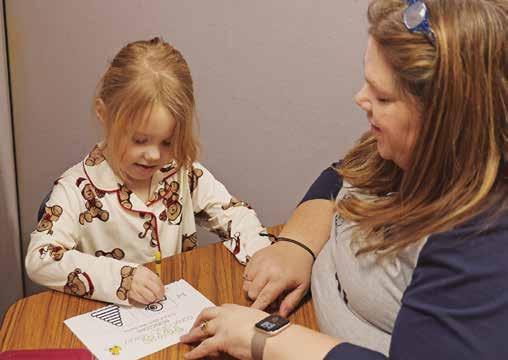
The ACBDD’s Beacon School provides more than classroom instruction for students with developmental disabilities. It offers a coordinated system of therapies and adaptive physical education designed to help students build independence, confidence, and essential life skills. Through physical, occupational, and speech therapies, alongside adaptive physical education, students receive individualized support throughout the school day that helps them make meaningful progress both in and beyond the classroom.
Melissa Lawless, a physical therapist at Beacon School, has seen how Beacon School’s support services can change a student’s life. Just last year, one of her middle school students began walking independently.
“He’s the perfect example of a kid who needs all the supports, and it is now showing how much he’s grown with all that support,” she said. Through repeated practice, strengthening and collaborative work, her student who previously required adaptive equipment to walk
in the school environment, can now take his own steps to get to different locations in the building.
Beacon School is a specialized educational resource for students ages 3 to 21. The school offers a variety of services to help students develop both academic skills and life skills. Some of the services include occupational therapy, physical therapy, speech therapy, and adaptive physical education. Those services are an important piece to the school day for students attending Beacon School.
Becky Martin, principal of Beacon School, shared that those services have made a meaningful difference for many students. Milestones that might seem small to others are celebrated as extraordinary achievements with the school community.
“When a non-verbal student says their first words, when a student learns to write their name, or when a student takes their first steps — moments that may feel routine for a typical student — we proudly celebrate every one of them.”
The school has many rooms where students can practice their everyday tasks. Hannah Rowan, instructor in the intermediate classroom, said
her days are spent not only teaching math, English, science, and social studies, but also collaborating with services to teach personal hygiene and life skills such as cooking and cleaning. Having a team approach is essential to helping students become as independent as possible.
The school has a fully furnished model apartment that includes a living room and a kitchen. The model apartment serves as a space for students to learn life skills that could be applied to independent living.
Beacon School offers a variety of therapies that many students participate in throughout the school day. Jennifer Brown, an occupational therapist at Beacon School, said occupational therapy focuses on looking at the whole person and how to assist with full participation and independence in work, play/leisure, and self-care tasks.
The students work on being in a classroom with many different distractions — including sounds, textures, and visual distractions —while completing classwork, learning to hold utensils and write, holding scissors and cutting, and manipulating various tools in their daily tasks.
At Beacon, in addition to the model apartment and therapy gym, there are two sensory rooms, one a gross motor sensory room and the other a calm-down sensory room, where students can take breaks during their daily routine to self-regulate and refocus preparing for a return to classroom tasks.
Brown has seen the impact her services can have on students, as they develop their fine motor skills and sensory processing skills to become more independent in their daily routine at school.
“It’s amazing seeing students advance from a younger classroom, where they may need a lot of support, and then to see they’re able to walk down to therapy, sit at a table to do academic work, and then finally being able to take those skills into the classroom for increased participation and independence,” Brown said.
Lawless said she enjoys working closely with the other therapists to achieve a similar goal. While she may be working on positioning through adaptive seating, another therapist may be working on cutting skills or
continued on Page 5
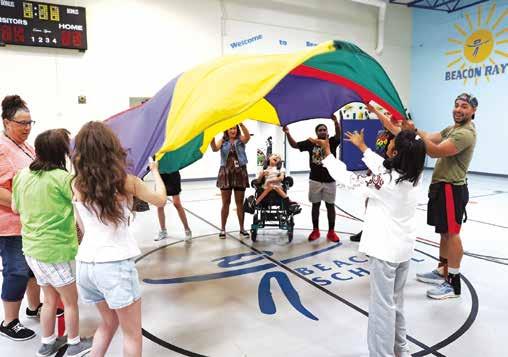
ACBDD’s Beacon School is a specialized educational space for students between 3 and 21, offering individualized and group activities for students with diverse disabilities.
importantly, the wonderful students we serve,” she said.
use of a student’s assistive device. By working together, therapists provide the best support for the students to be successful in the classroom.
Sarah Kincaid Lovett, a Beacon School speech-language pathologist, said simple but engaging activities can enhance speech and language developmen. Just within the year, Kincaid Lovett aided a student in becoming a verbal communicator now speaking in sentences, whereas the student had previously been entirely nonverbal with little-to-no interest in communicating with others.
“Progress is a joint effort between therapists, families, staff, and most
Kincaid Lovett added that “midline crossing” activities, such as when the left arm moves to the right side of the body, promote communication between the left and right hemispheres of the brain. That integrates duties of various areas of the brain including areas responsible for speech, language, coordination, motor planning, attention, etc. and enables students to more effectively access their abilities.
“Therapy sessions include fun and games where every activity is carefully curated with the student’s needs, interests, and brain development,” she added.
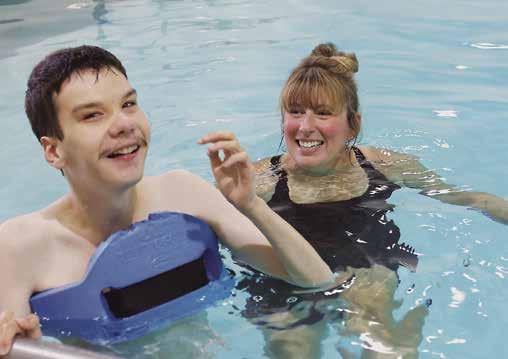
Adaptive physical education is also an important service provided at Beacon School. Ruben Arroyo Santiago, Beacon School’s Adaptive Physical Education Instructor, has expanded the program over the last six years.
Part of adaptive physical education is the swimming program, which has helped many students learn to swim.
Santiago said swimming is a very vital skill for any student to learn, even in landlocked states. One of his students, whom he taught how to swim, saved his brother from a river flood a few years ago.
Adaptive physical education is more than just tossing balls around in class. Many of the skills they learn, like raising their hands in the air to
toss balls, translate to everyday tasks, such as brushing their hair.
The services at Beacon School help students overcome many struggles that, without the help of the teachers and therapists, would not be possible.
“The value that is provided for the students here at Beacon School is to give them specific individualized learning and teaching for different gross motor skills,” Santiago said, “which translates to more opportunities to play outside of the school, interact socially with other peers, and opportunities that go beyond the school.”
• Edited by doctoral student Khaja “Aziz” Azizuddin.
Beacon School’s facilities include a swimming pool, gymnasium, and specialized learning spaces that can be used for each student’s unique developmental needs. continued from Page 4
Retirement for Wade! Marking a lifetime of achievement
By J. Pressley McIlwain for ACBDD Special Edition
Few stories reflect the ACBDD’s mission more fully than that of Wade Bullock, a lifelong member of the ACBDD community whose journey has come full circle.
Recently, Bullock retired from his position as an assistant custodian at the ACBDD’s Beacon School, closing a remarkable chapter that began many years earlier when he first walked through Beacon’s halls as a student. He said returning there later as a staff member was both meaningful and inspiring.
hiring process.
“Wade worked with a Job Developer to update and submit his résumé,” Clemons explained. “He interviewed alongside several candidates and was selected because he was the most qualified. He truly earned that role.”
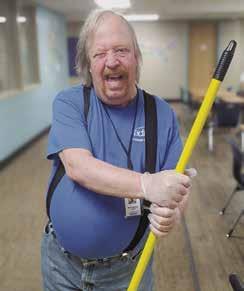
During his teenage years at Beacon, Bullock was an active participant in the county’s Special Olympics basketball team. One of his proudest memories remains participating in the Special Olympics Division III State Championship in 1989 — a milestone that speaks to his teamwork, dedication, and competitive spirit.
After graduating from Beacon School, Bullock set a clear goal for himself: to work hard, stay busy, and remain engaged in his community. He built a strong employment history, including an impressive 14 years at the Athens Hocking Recycling Center. In 2022, Wade achieved another milestone when he returned to Beacon School — as an employee.
“I wanted a really good job,” Wade shared. “I wanted to work at Beacon because I like Beacon the best.”
Heather Clemons, Community Inclusion Coordinator with ACBDD’s Integrate Athens, highlighted Wade’s success in earning the assistant custodial position through a competitive
SPECIAL EDITION SPOTLIGHT: Chester’s big adventure(s)
This past summer, Chester Lane set out on an adventure of a lifetime that took him from the streets of New York City to the beaches of Bermuda.
Once on the job, he embraced the school as a place to stay active and connected. Whether swimming, playing basketball, or lending a hand wherever needed, Bullock made the most of every day.
As the physical demands of custodial work became more challenging with age, Bullock thoughtfully made the decision to retire, a choice supported with care and respect by his colleagues.
“I loved the job,” Bullock said. “But it was getting harder for me to move around mopping and cleaning. They made sure to take care of me.”
When Bullock announced his retirement, Beacon School staff and friends came together to celebrate his years of dedication. The well-attended retirement celebration reflected the deep appreciation and friendship he had built with nearly everyone at the school.
Now enjoying retirement, Bullock remains active and engaged. When asked what he was most looking forward to, Bullock paused, smiled, and answered simply: “Fishing. I really like to fish.”
Bullock’s story is a powerful reminder of what is possible when opportunity, support, and determination come together. His accomplishments, relationships, and lifelong connection to the ACBDD leave a lasting legacy.
Although he was born and raised in California, the only place he had ever been east of Ohio before that trip was New Jersey. His desire to see the Statue of Liberty and the bright blue ocean waters pushed him to obtain his passport, board a plane and travel 560 miles away.
With help from his ACBDD service and support administrator, Clayton Ray, Lane gathered the necessary documents to get his passport in preparation for his trip.
“It was,” Lane said, “very hard and difficult to get the information.”
He then packed his clothes, woke up early, and hopped on a plane to travel first to New York City and then to Bermuda with his friend and her family.
After arriving in New York City, Lane made a street vendor his first stop, and the food soon became the best part of his visit.
“They have pretty good linguine and clams in one restaurant,” he said, “and the Chinese restaurant had everything imaginable… and they (kept) feeding us.”
Visiting the Statue of Liberty, the museums and the M&M Store were things he enjoyed, too. His least favorite thing was how crowded it was in the city.
Lane said one thing he learned from his time in New York City was how hot it gets in the summer.
“I can’t believe they didn’t say how hot it (would) be,” he added.
The next step on his adventure was Bermuda. He and his fellow travelers caught a cab to the New Jersey ports to board the cruise ship. His favorite experience while on the ship was the live production of “Saturday Night Fever.”
Once in Bermuda, he enjoyed the beach, shopping, sightseeing and spotting sea turtles. He also tried new foods such as carrot cake and lobster tail.
But what impressed Lane the most was the stunning scenery. The

ocean, he said, was “different shades of blue… dark blue and light blue… It’s not in one color; it’s in two different colors.” Least favorite thing? The hot sand that burned his feet. He was disappointed when the trip ended and is already thinking about the next one — either to travel to France to visit the grave of musician Jim Morrison or to Australia to learn to throw a boomerang, visit the beautiful Sydney Opera House and enjoy the food.
Lane experienced a long list of firsts on his adventure. Although he started out uneasy, that feeling quickly turned into excitement as his trip unfolded.
“I felt a little nervous at first,” he said, “and then it was just beautiful.”
— Reported and written by Ohio University journalism major Jack Kiamie. • Edited by doctoral student Matt Fitzgerald.
Chester Lane and his friend visiting New York and the Statue of Liberty. ACBDD staff helped Lane prepare for his trip to NYC and Bermuda.
Project SEARCH prepares youth to enter the workplace
By Ameerah Barker for ACBDD Special Edition
Jackie Hawk starts her mornings at OhioHealth O’Bleness Hospital with a routine she’s worked hard to learn. She arrives between 8 and 8:30 a.m., settles into class and then heads to her internship in the nutrition department.
She didn’t always have that level of confidence walking into a workplace. But that is exactly why she enrolled in Project SEARCH — to grow.
“I want to work at a makeup store someday,” Hawk said. “I’ve always loved makeup.”
Project SEARCH is a transition-towork program for individuals with disabilities who have completed high school. It operates as a partnership among several organizations: Opportunities for Ohioans with Disabilities is the funding source; OhioHealth O’Bleness serves as the work site; Tri County Career Center provides the educational component; Capabilities offers job coaching; and the ACBDD’s Integrate Athens offers additional supports that are individual-specific. Interns such as Hawk spend a full academic year rotating through hospital departments while learning communication, employability and independent living skills.
For Hawk, that means learning how to talk with coworkers, respond to supervisors, manage her time, show up prepared, and do it all in a real workplace, not a classroom. Those experiences make goals like Hawk’s reachable, and it gets participants excited about adult life and becoming more independent.
Inside the classroom, Hawk practices skills she now uses every day. One morning, her class focused on professional email writing, according to her teacher.
“People who aren’t used to email will sometimes write like they’re texting,” said Lisa Roback, Project SEARCH instructor. “We teach how to use proper punctuation, capitalization and how to communicate professionally.”
Those small details have helped
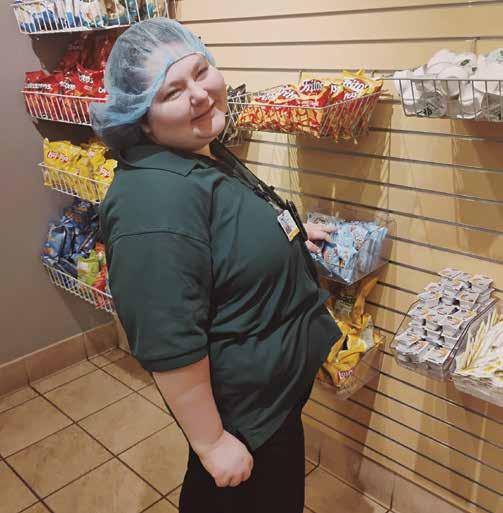
Hawk build her confidence communicating at work. She also practices self-talk strategies — a skill Roback said makes a major difference when the job gets challenging.
“You have to work through discomfort,” Roback said. “We teach them how to say, ‘I can do this’ or ‘I’m almost done.’”
Hawk has taken those lessons straight into her internship. In the nutrition department, she stocks items, prepares supplies and wipes down surfaces. She said she feels more confident doing tasks she didn’t know how to do at first.
“They show me how to do something, and then I get used to it,” Hawk said. “I’m getting better at it.”
Heather Clemons, a community in-
clusion coordinator with the ACBDD who offers support to the interns, has watched Hawk grow throughout the semester.
“What I love is seeing the relationships she’s building,” Clemons said. “When Jackie walks down the hallway, people say ‘Hi Jackie.’ They know her. She is succeeding here.”
Clemons said Jackie is naturally social, which makes her a strong fit in environments where she interacts with people. That aligns with her long-term goal of working in beauty or retail.
“She really wants that independence,” Clemons said. “She shows up, she puts the work in, and she’s growing in all the right ways.”
Those changes are measured
regularly. Project SEARCH uses department evaluations and a detailed assessment called VocFit to track how interns handle tasks such as communication, staying on schedule, following instructions, and learning new responsibilities.
“The growth we see in just the first internship is huge,” Roback said. “Jackie is much more confident than when she started.”
Hawk is also working on life skills beyond her internship. Transportation training is one of them. Some interns learn to use the bus system if they’re not ready for driving. Others work toward their driver’s license with support from the program.
Hawk said she feels supported every step of the way.
“They help us with everything,” she said. “I’m learning how to talk to people and how to work. I’m proud of myself.”
Roback said that mindset is exactly the point of the program.
“My favorite part is witnessing growth,” she said. “Seeing interns take on something that was once uncomfortable and make it natural. It’s the coolest thing to watch.”
When she talks about the future, Hawk always comes back to one goal: a job in the beauty world. She said she wants a workplace where she can talk with people, help customers and be surrounded by something she enjoys. Clemons believes she can get there.
“Every one of our interns has something to offer,” Clemons said. “Jackie absolutely has something to offer. She’s kind, she’s hardworking and she wants to succeed.”
Roback agrees.
“Individuals with disabilities have just as much to teach us as we have to teach them,” she said. “Jackie is a great example of that.”
For now, Hawk is focused on finishing her first internship, continuing to build her skills and preparing for the next rotation. She knows each day brings her closer to the kind of independence she wants.
“I just want to work and be more independent,” Hawk said.
Jackie stocks items at OhioHealth O’Bleness Hospital as part of her job-training program, Project SEARCH.
ACBDD’s SPECIAL EDITION, MARCH 2026
Getting by with a little help from friends (and family)
By Camryn Quiggins for ACBDD Special Edition
If you were to walk into the Texas Roadhouse in Athens on a Thursday, Friday or Saturday evening, you would likely see Dale Ellis near the entrance welcoming customers with a friendly smile. His easygoing presence has made him a familiar face among regulars and coworkers.
What many don’t see, though, has been the steady, meaningful support from friends and family that have helped him grow in confidence and independence over the years. For Ellis, who has worked at the restaurant for eight years, the job represents more than employment — it offers stability, confidence and a sense of community.
“I love Texas Roadhouse,” he said. “Being the door greeter has been wonderful for me.”
That independence, however, didn’t develop overnight. Gradually, Ellis has been building a life supported by family, friends, staff at the Athens County Board of Developmental Disabilities, and routines that keep him active and connected. With the support of those around him, he has gained confidence in managing his finances, schedule and personal goals.
A significant part of that progress could be traced to his friendship with Barry Oches, a retired Ohio University employee and longtime volunteer with the ACBDD’s Friends, Allies and Neighbors program, known as FANs. Oches is also now an ACBDD board member. The two were matched through FANs nearly a decade ago. Oches became involved with the ACBDD shortly after retiring from Ohio University in 2014.
“After I retired from OU, I wanted to volunteer,” he said, explaining that he first spent time at ATCO (the agency’s former day program for adults with developmental disabilities) before being encouraged to become a FANs participant.
He said the FANs program was grounded in genuine connection and community support.
“The FANs program is really about building relationships among community members,” Oches explained, adding that “it’s neighbors supporting one another.”
Ellis and Oches spent time together in ways that had become familiar parts of their friendship — eating lunch at Subway, hiking at Strouds Run, or attending Sunday services at Central United Methodist Church in Athens.
Those routines took on deeper meaning in 2024, when Ellis’ mother passed away. Oches said the loss marked a pivotal point in Ellis’ life as he began taking on more responsibilities. “When Dale’s mother died, he really had to step up and become independent on his own, and I helped with that,” Oches said.
The two attended church together every week, something Oches said had always been important to Ellis’ mother.
Ellis described his friend as a calm and compassionate presence — “understanding and patient,” he said,
someone who “thinks before he speaks and is always cheerful.”
As Ellis’ payee, Oches has helped manage rent and bills while promoting Ellis’ day-to-day independence.
“I’m just here to support him,” Oches said.
That support from Oches and others have helped Ellis gain financial independence, as well.
“Having my own debit card instead of asking somebody for cash all the time was a big step,” Ellis said. “It makes me feel proud.”
Over time, Ellis has developed a wider network of friends and community members who have helped him stay active and connected. Watching that network grow had been meaningful, Oches said.
“He’s developed quite a network of people who help him — take him to work, to Walmart, to church — and that’s great,” he said. “It doesn’t all fall on me anymore.”
He added that Ellis himself is reliable and optimistic. “I tell Dale he’s very low maintenance,” Oches said,
laughing. “He’s independent, dependable and doing well.”
Their friendship, Oches emphasized, went both ways. He described Ellis as “joyful, competent and independent,” noting that Ellis had always presented himself with confidence and capability. “He is family,” Oches said.
Melissa Walker, Ellis’ service and support administrator at the ACBDD, said she had watched his independence grow in meaningful ways throughout their years working together. She described him as dependable, thoughtful and eager to take on more responsibility to become more financially independent.
Walker said Ellis’ journey reflected the purpose of the ACBDD programs: supporting individuals as they built meaningful, self-directed lives.
“Barry listens to what Dale wants to do and helps him find ways to make it happen,” she said. “Their friendship is built on trust and respect, and it’s been great for Dale’s growth. They’ve
continued on Page 9
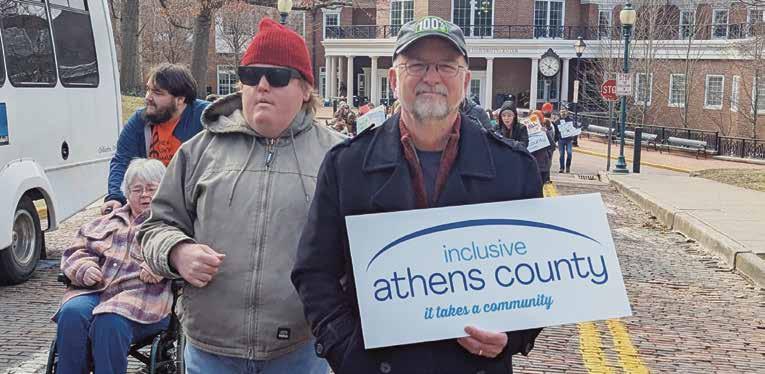
Dale Ellis, left, and good friend Barry Ochs participate in the 2025 March on Court Street for Disability Awareness. Ellis and Ochs have enjoyed a close friendship after being connected through ACBDD’s Friends, Allies, and Neighbors program, or FANS.
continued from Page 8
formed a connection that goes beyond the program.” At Texas Roadhouse, Ellis’ dependability is clear in his work ethic and attitude, Walker said. He consistently shows up, works hard and takes pride in what he does.
Faith was another steady part of Ellis’ life. Sundays at church give him a sense of routine and community, and provides lessons he applies to daily life. “I just try to be kind to people,” Ellis said. “I hope others will be more compassionate and think before they speak.”
Walker described Ellis as a kind and compassionate person, adding that he brings that same warmth to everything he does.
For Oches, Ellis’s outlook had made a lasting impression. He said their friendship has grown through trust, consistency and shared experiences. To those who knew him, Ellis’s story isn’t centered on one major moment but on steady progress — the kind that developed through friendship, community and support.
“Independence isn’t just about doing everything by yourself,” Walker said. “It’s about being part of a community that helps you grow. Dale has that, and he gives back to it every day.”
Ellis says he is grateful for the people who have supported him. “I’m proud of what I’ve done,” he said. “And I’m thankful for everyone who’s helped me along the way.”
• Edited by doctoral student Ebenezer Fayah Amartey

ACBDD’s SPECIAL EDITION, MARCH 2026
SPECIAL EDITION SPOTLIGHT:
Mike’s path to becoming a master in the kitchen
Mike Weekly always liked to get out into the community and shop for groceries with his direct support professional, but he never cooked with those groceries because he didn’t know how.
His support team at the ACBDD came up with a plan to help him save time so he could finally learn to cook. They taught him how to ride the bus and grocery shop on his own, freeing his time with his direct support professional to focus on making a homecooked meal for his girlfriend.
The first step of the quest for Weekly was to master using public transportation. Bianca Sankar, his service and support administrator; and Jennifer Stiltner, his former direct support professional, rode the bus with him the first day and showed him the different places he could stop and what time to get back on.
Shopping on his own freed up time for Weekly to work on his
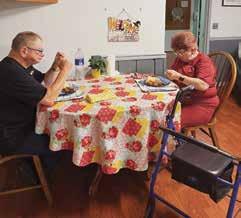
tools, and, most importantly, cooking safely are all skills he gained. When he cooks, he wears his chef hat and apron, proud of what he has achieved.
Weekly started with slow-cooker meals and now makes more delicate dishes such as baked fish for his girlfriend. Now, he likes to cook and share meals with his friends as well.
It has been special for Sankar and June Balch, Weekly’s current direct support professional, to see how far he has come since his quest began.
cooking skills, and also increase his confidence and independence. Next, he learned stepby-step how to prepare a meal from beginning to end. Together, he and his direct support professional would figure out a recipe, buy the ingredients, and then follow each step of the recipe. Reading packaging, preparing the ingredients, using various kitchen
“It was challenging at first to get Mike to commit to the actions of actually cooking,” Sankar said “But once we stuck with it and encouraged him, his love for the kitchen... really has grown, and he’s proud of it.”
— Reported and written by Ohio University journalism major Jack Kiamie.
• Edited by doctoral student Matt Fitzgerald.

Mike Weekly’s support team at ACBDD helped him build the skills and confidence needed to cook delicous meals for him and his girlfriend.
ACBDD’s SPECIAL EDITION, MARCH 2026
Beacon Singers celebrates its 10th anniversary
By Morgan Miller for ACBDD Special Edition
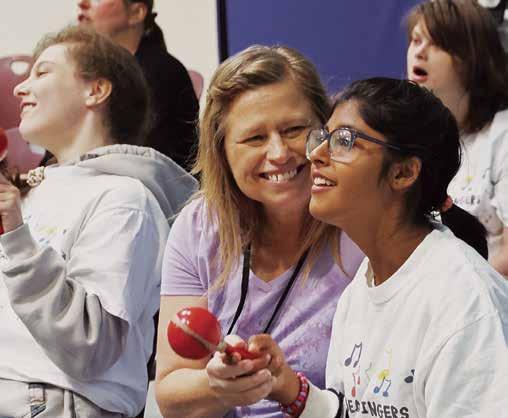
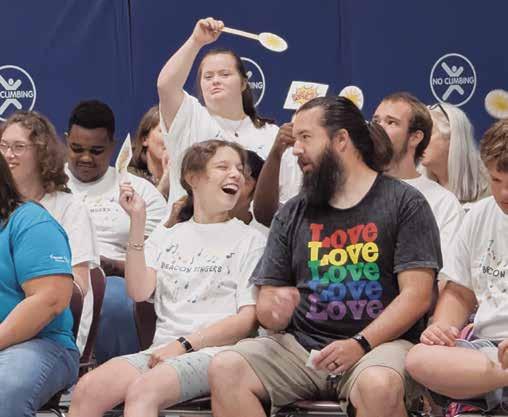
Beacon Singers, a choir at the Beacon School for specialized education in Athens County, is celebrating its 10th anniversary this year. The choir is a part of the Athens County Community Singers, a nonprofit organization for people with and without disabilities.
Beacon Singers began when choir founder and director Stephanie Morris launched a pilot program in January 2016.
“I decided to start a choir at Beacon School to provide the students with the environment of what it’s like to be in a choir in a large group and to prepare for performances,” Morris said.
At the end of the pilot program, the choir held its first concert. Morris said many students enjoyed it and teachers found it beneficial. With a
grant from the Athens County Foundation, the choir was able to start a year-long program the following fall. The choir has been active since, performing about four times a year.
Samatha Dunlap has worked at the Beacon School for 15 years and has seen many students grow through participation in the Beacon Singers.
“When we first started, we thought that it was going to be overwhelming and overstimulating for our students because of lots of noise, musical instruments and singing,” Dunlap said. “But we’ve actually seen a lot of students get used to those loud noises and become more accustomed to being around people who sing.”
Over the years, students engaged in Beacon Singers have learned many skills from participating in the choir.
Becky Martin, principal of the Beacon School, has seen those skills firsthand.
“The choir builds confidence,
communication, a sense of belonging and allows students to express themselves creatively while working toward a shared goal,” Martin said.
“Most importantly, it helps students feel included and celebrated for their unique contributions to the group.”
or participating very little with instruments,” said Dunlap. “Throughout the years, they’ve learned to be more confident about singing, and now they love to belt it out.”
“Throughout the years, they’ve learned to be more confident about singing, and now they love to belt it out.”
Choir is a new experience for many students in the Beacon School, which Dunlap says can be intimidating at first. However, she recalls seeing students get more comfortable over the years as the choir has continued to grow.
– Samantha Dunlap, Beacon School teacher
The choir has evolved in many ways over 10 years, with one of the most prominent ways being through the use of technology. When the choir started, students were often led by lyrics with drawings Morris pointed to on large poster paper. That helped non-speaking students and students
“Some of our students started off participating very little with singing,
continued on Page 11
The Beacon Singers was started in 2016 as a pilot program. A part of the Athens County Community Singers, the Beacon Singers program helps Beacon School students develop the confidence to sing loud and sing proud. The program receives support from the Ohio Arts Council, the Athens County Foundation, and the ATCO Legacay Fund, and benefits from the use of sound and display equipment purchased with a donation from VFW Post 9893 in Albany.
SPECIAL EDITION SPOTLIGHT: Deb’s diamond art dazzles
Deb Morrison’s passion for resin-diamond art began in 2020 when her sister, Heather, purchased a kit for her. Deb quickly learned that her new hobby required more than just creativity.
“Patience. It takes a lot of patience to be able to do it,” she said.
Initially, she needed help lining up the tiny beads (or “diamonds”), using the diamond-painting pen tool, and following the patterns. “When I first started,” said Morrison. “All my beads were kind of crooked until I started getting faster around them and straightened them out a little bit.”
continued from Page 8
who were not readers participate in the choir. Several years ago, choir rehearsals moved to the cafeteria where the director was able to use a program displaying the lyrics and pictures on the pull down screen by the projector.
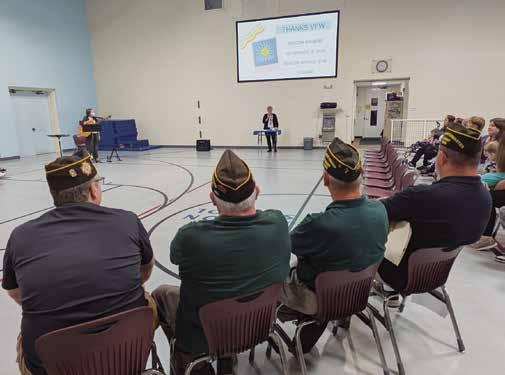
After a donation from the Veterans of Foreign Wars Association, specifically the VFW Post 9893, a projector and sound system were put into the Beacon School gymnasium, where the concerts are now held, Morris said. The new projector assists Morris in her goal to get as many students as possible engaged in the Beacon Singers.
“We try to have every student participate in the music making process in various ways. Students can play instruments or hold signs that go with the song so that all students, especially those who don’t have an audible voice, can participate,” Morris said. Dunlap said another idea behind the choir was for students to have a community they can join after graduating from the Beacon School. Because Beacon Singers is supported by the Athens County Community Singers, students can choose to continue to participate throughout their
adult lives. “For people with disabilities, it can be hard to find a niche or a group that you belong to, so it’s nice that Beacon Singers gives our students that comfort after graduation,” Dunlap said. “That’s what I love most about it; it’s something they can start at 10 and participate in until they’re 100.”
The upcoming 10th year of the Beacon Singers speaks volumes to the dedication of the students, instructors, and director. The devotion from everyone involved can be seen in the choir’s concerts.
“It’s been a lot of work, but when I see the faces, the smiles, and when I hear the excitement at these concerts or performances, it’s always a lot of fun. That’s what makes it worth it,” Morris said.
Athens County Community Singers receives funding to support the adult group and Beacon Singers from the Ohio Arts Council, Athens County Foundation and the ATCO Legacy Fund. For more information, visit their websites at https://oac.ohio.gov and https://www.athensfoundation. org.
• Edited by doctoral student Ebenezer Fayah
Amartey
Five years later, Morrison now creates her beautiful designs almost entirely on her own — vibrant scenes of glowing flowers and shimmering waterfalls. She only asks for help when needed, such as to purchase kits and diamond pieces online or get help with unfamiliar instructions.
Over time, Morrison’s confidence in her work has grown. She now loves to showcase her art around her home. She beams when others compliment her on the wide variety of colorful paintings she created–from starry skies to cozy cabins. Deb also now gives her art as gifts to friends and family on Christmas, birthdays and Mother’s Day. She dreams of one day selling her paintings as well.
Morrison’s initial interest in diamond art ignited into a passion for creating beautiful artwork. It provides her independence, pride, and lots of joy.
Diamond art also helps Morrison manage anxiety. It gives her focus and provides comfort when she is nervous.
Bianca Sankar, service and support administrator for the ACBDD, said she and other staff members

have noticed that Morrison gravitates toward her diamond art and works more intently when she’s troubled.
“You can see that she’s definitely found a purpose that makes her happy and gives her an outlet to (manage) some of her big feelings,” Sankar said. “It just really has brought positivity to her life.”
— Reported and written by Ohio University journalism major Jack Kiamie. Edited by doctoral student Matt Fitzgerald.
Deb Morrison shows off several of the artworks she created using the resin-diamond technique.
Members of VFW Post 9893, Albany, attend a performance of the Beacon Singers. The projector and sound system in the Beacon School gymnasium was purchased with a donation from the VFW post.
New Community & Career Exploration launched
By Finn Smith for ACBDD Special Edition
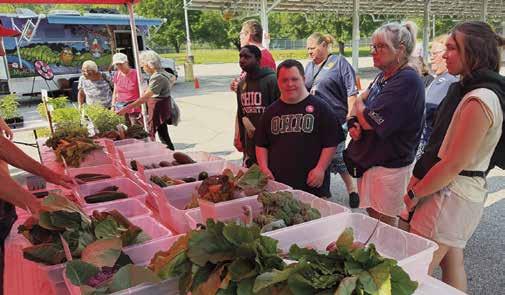
From the rich smell of freshly brewed coffee at Brenen’s Coffee Café to the hands-on creativity of a local print shop, Athens County youth are discovering what their community has to offer through the Athens County Board of Developmental Disabilities’ Community & Career Exploration program.
Launched last summer, Community & Career Exploration is designed for youth ages 14 to 21 with developmental disabilities, providing them with guided opportunities to explore local businesses, public spaces and career pathways while building confidence, independence and practical life skills.
“For many young people with developmental disabilities, navigating the community and preparing for employment doesn’t always come naturally,” said Arian Smedley, assistant superintendent at ACBDD. “This program intentionally bridges that gap by helping students understand their community and envision themselves as active participants in it.”
Developed through the ACBDD’s Integrate Athens initiative, Community & Career Exploration expanded upon a previous summer employment program that focused solely
on employment experiences for youth. Staff recognized that many participants first needed exposure to community resources and real-world experiences before employment could be successful.
“We saw a lack of understanding of some pretty important community resources,” Smedley said. “Community & Career Exploration allows students to build that foundation while also learning what work environments can look like.”
Throughout the program, participants engaged in structured experiences aimed at strengthening independence and career readiness.
Activities included a mock voting experience at the Athens County Board of Elections and a visit to Ohio University’s Schoonover Center for Communication, where students practiced professional presentation by taking headshots in the public photo booth.
A core component of Community & Career Exploration is its strong partnership with local businesses. According to Autumn Brown, director of Integrate Athens, 12 Athens-area businesses have collaborated with the ACBDD to provide interactive learning opportunities, including the Athens Community Center, Bagel Street Deli, Bakery323 and Zonez.
“These partnerships speak volumes about the openness of the Athens community,” Brown said. “They reflect a willingness to connect with people with disabilities not only socially, but also as future employees.”
At Zonez, a promotional printing business in Athens, owner David Kasler provided participants with hands-on tours of the facility, allowing them to observe machines in action and even create their own T-shirts.
“They get to push the buttons, watch the machines run and ask questions about the job,” Kasler said. “You can see how excited they are. Experiences like this aren’t always accessible, so we’re happy to be part of it.”
Kasler added that the program offers meaningful exposure to workplaces students may not otherwise encounter. “We enjoy having them and would welcome them back anytime,” he said.
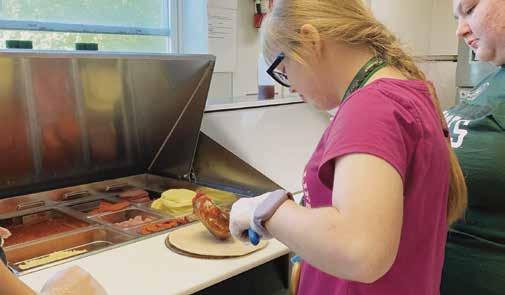
Bagel Street Deli also partnered with the program by hosting a workshop-style visit at its Court Street location. Co-owner Megan McElligott Meyer said participants learned about restaurant jobs, discussed workplace expectations and created their own bagel sandwiches.
“The students explored the busi-
ness, talked about what makes a good employee and then went through an assembly-style line to build their own bagelwich,” McElligott Meyer wrote in an email. “It was a fun and empowering experience.”
Her daughter, Fiona Meyer, who participated in the program, especially enjoyed being an independent customer in a familiar space.
“Bagel Street Deli wants to be a place that welcomes all people,” McElligott Meyer said. “We encourage teens to explore opportunities in local businesses.”
Brown said the program is vital for helping youth with disabilities navigate their future both during school and after.
“The Integrate Athens Community & Career Exploration program is a foundational piece of transition planning, helping the youth of Athens County with disabilities better understand what is available in their community, have better access to it and then be able to prepare for what employment may look like during their school life as well as after their graduation,” Brown said. “It’s truly a foundational step toward independence.”
• Edited by doctoral student Ebenezer Fayah Amartey
The ACBDD launced a new program last summer call Community & Career Exploration, which expands on a previous program focused only on career development. The new program continues to partner with local businesses for job-exploration visits, but also includes excursions to help youth learn to navigate and understand the community.
Volunteering for Inclusion in the Athens region
By Collin Crisp for ACBDD Special Edition
Volunteering with people who have developmental disabilities often begins with a simple step: reaching out. Through partnerships, events, and one-on-one relationships, community members have many ways to connect, learn, and contribute to a more inclusive region.
Autumn Brown, director of the ACBDD’s Integrate Athens program, said the organizations she works with value volunteers who genuinely care about the purpose of their work, and most volunteers thrive in environments that interest them.
Integrate Athens collaborates with “hundreds of organizations” to increase public engagement across the region, Brown said. The program focuses on creating inclusive opportunities where volunteers and people with developmental disabilities participate together and learn from one another in the process.
“There’s that preconceived notion that people with developmental disabilities are not able to do a lot of the same things other people can do,” Brown said. “Once volunteers get involved, they realize that people with disabilities can do pretty much everything anyone else can do.”
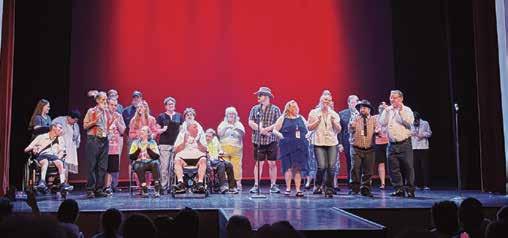
One of the most visible volunteer-driven events is ATCO Idol, an annual performance organized by the ACBDD that allows people with developmental disabilities to showcase their singing, dancing, and performing on a grand stage. Volunteers and participants practice and perform together, often forming meaningful
connections along the way.
In recent years, the Ohio Valley School of Celtic Dance and Culture has volunteered to “practice and create dances with those individuals so that they’re able to perform in their own way,” Brown said. “It has also enhanced the lives of those dancers who’ve had an experience with people with disabilities.” Volunteers grow alongside their partners throughout the experience, she added.
Beyond local events, Integrate Athens also connects volunteers with regional and statewide partners. One such collaboration includes the southeastern Ohio division of Echoing Hills Village Inc., a faith-based organization that provides residential, educational, and recreational services to people with developmental disabilities. Together, they also work with the Athens chapter of Team Heart and Sole, which supports people with disabilities participating in endurance-based running and cy-
heart, you’re going to get sucked in. ... I absolutely love where I am at.”
Training for volunteers typically focuses on building a comfortable relationship with a partner, Ulbrich explained, as volunteers are often matched with a person with a developmental disability. Learning how to communicate effectively is a key part of that process.
cling events throughout central and southeastern Ohio.
Through those partnerships, people with disabilities have participated in running and biking events during Parade of the Hills in Nelsonville each August and the annual Paw Paw Festival near Albany each September.
Rachel Ulbrich, director of adult services at Echoing Hills, said much of her work involves helping people try new activities, set personal goals, and build toward the lives they want. She said Athens has a strong network of advocacy groups, including the ACBDD and programs at Ohio University, all working to support people with disabilities.
Many people in Athens go out of their way to ensure everyone can participate, Ulbrich said.
“Just reach out, even if you’re scared,” Ulbrich said. “I came into this field never working with or even being around a person with disabilities, but once you open up your
The annual ATCO Idol singing contest is just one of the many activities through which volunteers can support people with developmental disabilities in the Athens region. 2026 March on Court Street for
10 a.m. Friday, March 6, Court Street in Athens
For some events, volunteer duties may include assisting with food and drinks at dances, movie nights, or events such as the Shining Stars Gala or Team Heart and Sole. Volunteers are expected to be aware of dietary restrictions and adaptive needs, including the use of specialized utensils, cups, or plates.
“This is something that we always go over with volunteers, and many times we ask that they ask a (direct support professional) for assistance with,” Ulbrich added.
Brown said the goal of volunteer engagement is not only participation, but connection and purpose for everyone involved.
“It’s just important that we all remember how important it is to have meaning and purpose in our lives, and so we continue to offer and foster those opportunities,” she said. “Everyone enjoys life more, and we truly are better together.”
Anybody interested in volunteering to work with people with developmental disabilities can contact Integrate Athens at (740) 541-9600 or email Brown at abrown@athenscbdd. org
• edited by doctoral student Kajah “Aziz” Azizuddin
ACBDD’s March on Court among first of its kind in Ohio
MARCH, from Page 1
But the March on Court Street is different. It brings our message directly into the heart of the community.”
Davis recalls the first March on Court in 2018 as especially meaningful. Despite cold, rainy weather, the turnout was strong, drawing participants from across the region.
“The lives of the individuals we serve are often filled with challenges — many challenges that most people can’t understand,” Davis said. “The rain that day was kind of symbolic of that. No matter the obstacles, people with developmental disabilities continue to show resilience, optimism, and determination.”
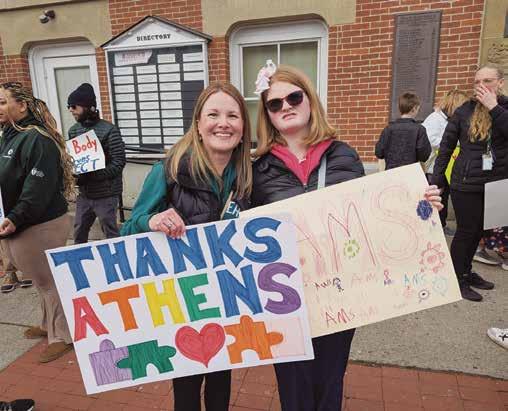
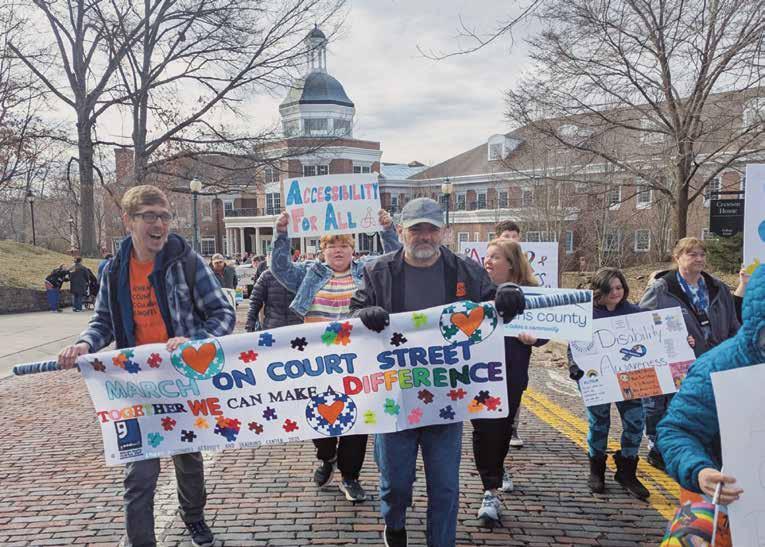
This year’s March on Court Street is scheduled for Friday, March 6. Participants gather outside the fourthfloor Court Street entrance of Baker University Center at Ohio University, then proceed up Court Street to the Athens County Courthouse. Remarks are to follow, including a formal proclamation recognizing Developmental
“The rain that day was kind of symbolic. ... No matter the obstacles, people with developmental disabilities continue to show resilience, optimism, and determination.”
– Kevin Davis, ACBDD superintendent, talking about the first March on Court in 2018
Disability Awareness Month. The march route is intentionally short to ensure accessibility for individuals with mobility challenges.
Event organizers note that the continued support of the Athens City Police Department has been essential
to the march’s success.
Athens County Commissioners President Lenny Eliason, a frequent speaker at the event, brings both professional and personal experience to his advocacy. Eliason became involved in the developmental disability field after helping raise his brother-in-law, who had autism.
“I had to advocate for his needs,” Eliason said. “That grew into seeing how many others also needed support and resources.”
While awareness has improved over time, Eliason notes that stigma still exists and emphasizes education as the path forward.
“Inform and educate. Lead by example,” Eliason said. “Actions speak louder than words. It takes time to change attitudes and biases.”
Billy Peacock, president of the Athens chapter of People First of Ohio, also regularly speaks following the march. As an individual served by the ACBDD, Peacock represents the
core purpose of both the event and Developmental Disability Awareness Month: ensuring that people with developmental disabilities are seen, heard, and respected.
“I feel like there is a need for voices to be heard,” Peacock said. “I can speak on their behalf and let people know that these people are individuals as well.”
Peacock’s message reflects the broader goals of Developmental Disability Awareness Month, which emphasize self-advocacy, community inclusion, and recognizing the contributions of people with developmental disabilities.
While March offers a time for awareness, ACBDD’s mission extends throughout the year. The agency serves hundreds of individuals across Athens County, working to ensure that every person has the opportunity to learn, thrive, and succeed as a valued member of the community.
• Edited by doctoral student Matt Fitzgerald.
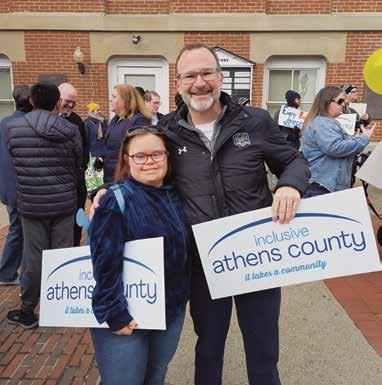
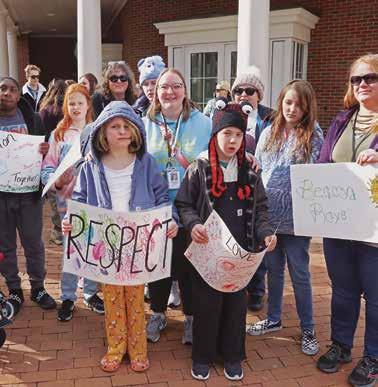
The March on Court Street starts at Ohio University’s Baker Center and concludes on the steps of the Athens County Courthouse. (More photos on next page.)
DAVIS, from Page 1
in classrooms, workplaces, creative spaces, and community life.
In this year’s Special Edition, you will read stories that reflect inclusion in action, with pieces that highlight individuals pursuing their goals, families and staff providing steadfast support, and community partners who open doors to new opportunities.
By uplifting these voices, we hope this publication deepens understanding of the developmental disabilities field and inspires pride in the collective work being done across our community.
Thank you for taking the time to read, reflect, and join us in making inclusion the main event, this month and always.
• Kevin Davis is superintendent of the Athens County Board of Developmental Disabilities.
About this ‘Special Edition’
The Athens County Board of Developmental Disabilities has partnered with Ohio University’s E.W. Scripps School of Journalism and The Post to produce its annual “Special Edition” report every march as part of Developmental Disabilities Awareness Month. The project is led by ACBDD Assistant Superintendent Arian Smedley, journalism professor Bill Reader at Ohio University, and Andrea Lewis, director of student media in the Scripps College of Communications at Ohio U.
Smedley and her ACBDD colleagues came up with story ideas and gathered dozens of photos for the publication. Students in Reader’s fall semester “Multiplatform Reporting and Writing” class produced the articles under the guidance of Reader and doctoral students Khaja “Aziz” Azizuddin, Ebenezer Fayah Amartey, and Matt Fitzgerald. Meanwhile, Lewis and her team at The Post sold advertising space to the sponsors who help pay for the printing and distribution costs. Reader, Lewis and Smedley then collaborated on editing and producing the “Special Edition” you are now reading.
‘Sports Sampler’ showcases athletic opportunies
By Erika Taylor for ACBDD Special Edition
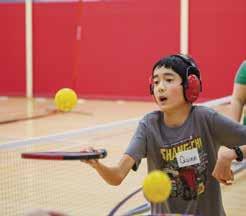
To help children of all abilities discover the sports they enjoy most, Athens County disability advocates launched a new Inclusive Sports Sampler Program last fall. The program is the latest step in a growing effort to make sports more inclusive and adaptive for people of all ages.
The program is part of an initiative led by the Athens City-County Health Department’s Creating Healthy Communities program, or CHC. Based on community feedback, CHC coordinator Meredith Erlewine convened a group of disability advocates and community members looking to create an inclusive recreation offering.
“We had heard from parents and from ACBDD that there was a need for more recreation opportunities for youth with disabilities,” Erlewine said. “We know that kids want to have fun playing with their peers, so we developed a program that welcomes all kids, ages 8 and up, to play together.”
The Inclusive Sports Working Group includes staff from the South-
eastern Ohio Center for Independent Living, or SOCIL, which serves teens and adults; ACBDD’s Integrate Athens, which focuses on community inclusion and accessibility; Ohio University’s Department of Physical Therapy; OU’s Patton College of Education’s Coaching, Health & Physical Education program; the City of Athens Arts, Parks & Recreation; and community members with lived experience. Additionally, Ruben
Arroyo Santiago, the adaptive physical education instructor at ACBDD’s Beacon School, volunteered his time and expertise to the effort.
Jeff Williams, an independent living advocate at SOCIL, brought his experience with adaptive sports to the working group, helping to plan drills and provide support when needed on the court.
Working with athletes with disabilities “opened my eyes up about what is missing in the disability world — and sports being one of the biggest ones,” Williams said.
Knowing that some participants will need help on the court, program planners are creating a pipeline of university students who are studying physical therapy and recreation to serve as coaches for the program.
“This is such a great partnership, because the Ohio University students are looking for real life experience working with kids,” Erlewine said. “And the kids are looking for coaching and mentorship.”
The first Inclusive Sports Sampler, held in fall 2025 at the Athens Community Center, quickly filled

to capacity with 20 registrants – 11 with disabilities and nine without a disability. The program will be held again this spring.
“Our goal is to have an inclusive offering available for all Athens County youth at least annually at the Athens Community Center,” Erlewine said. From there, as kids get older, they can opt to participate in SOCIL’s programs for teens and adults.
Integrate Athens director Autumn Brown said she learned early on that “we all thrive when we feel connected and have meaningful activities.”
Early inclusive sports efforts show how powerful athletics can be in creating those connections, Brown said.
For more information or to get involved with the working group, residents can reach out to Erlewine at merlewine@athenspublichealth.org.
To find out if the next Inclusive Sports Sampler still has opening for spring registration, contact the Athens Community Center at 740-5923325.
• Edited by doctoral student Matt Fitzgerald
Pickleball is just one of the sports kids can try during the Sports Sampler Program (Photo courtesy of Ohio University).