Redefining Advanced Pilates




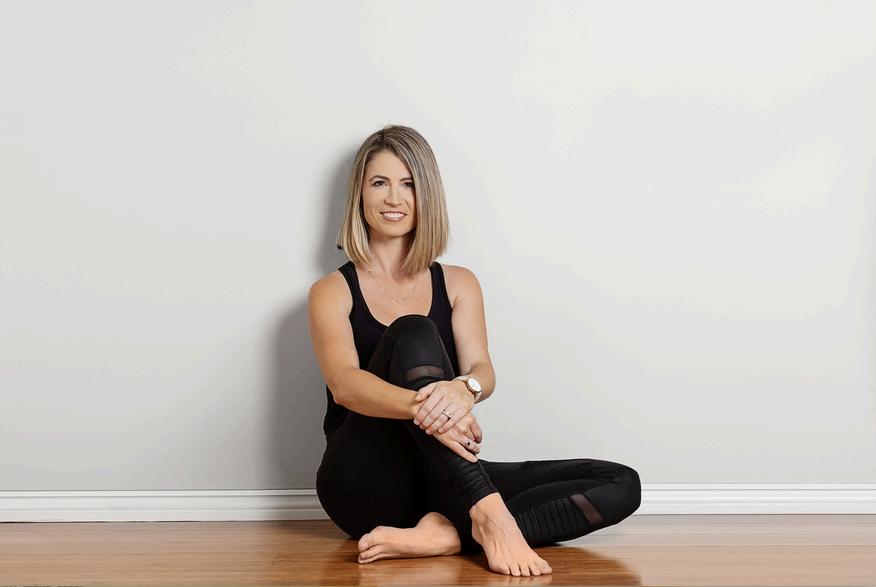
Anna Abubakar, Liz Polk, Samantha Wood, Brent Anderson, Shanelle Lenehan, Anna Sarol, Kimberley Garlick and Shannon Leggett
The Pilates Journal would like to acknowledge and pay respects to the Gadigal people of the EORA nation as the traditional custodians of the place we call homeSydney - where this journal is produced
The Pilates Journal pays respects to their elders, past, present and emerging, and acknowledges all Aboriginal and Torres Strait Islander peoples
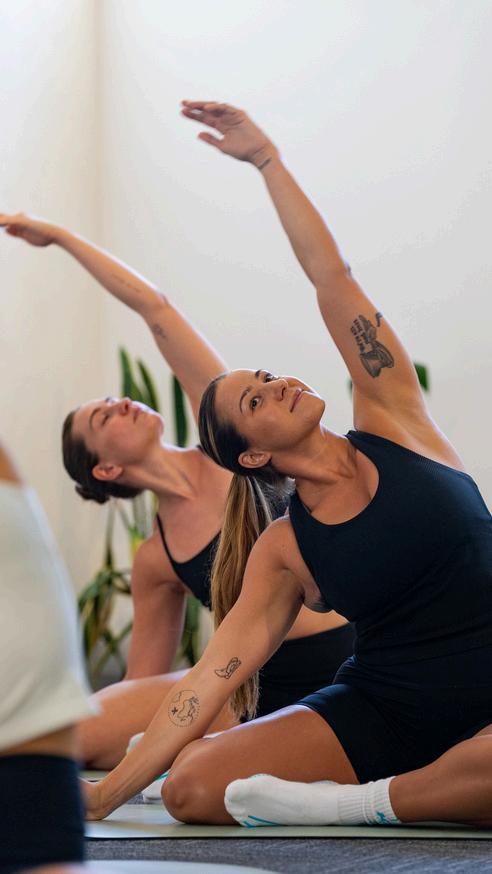

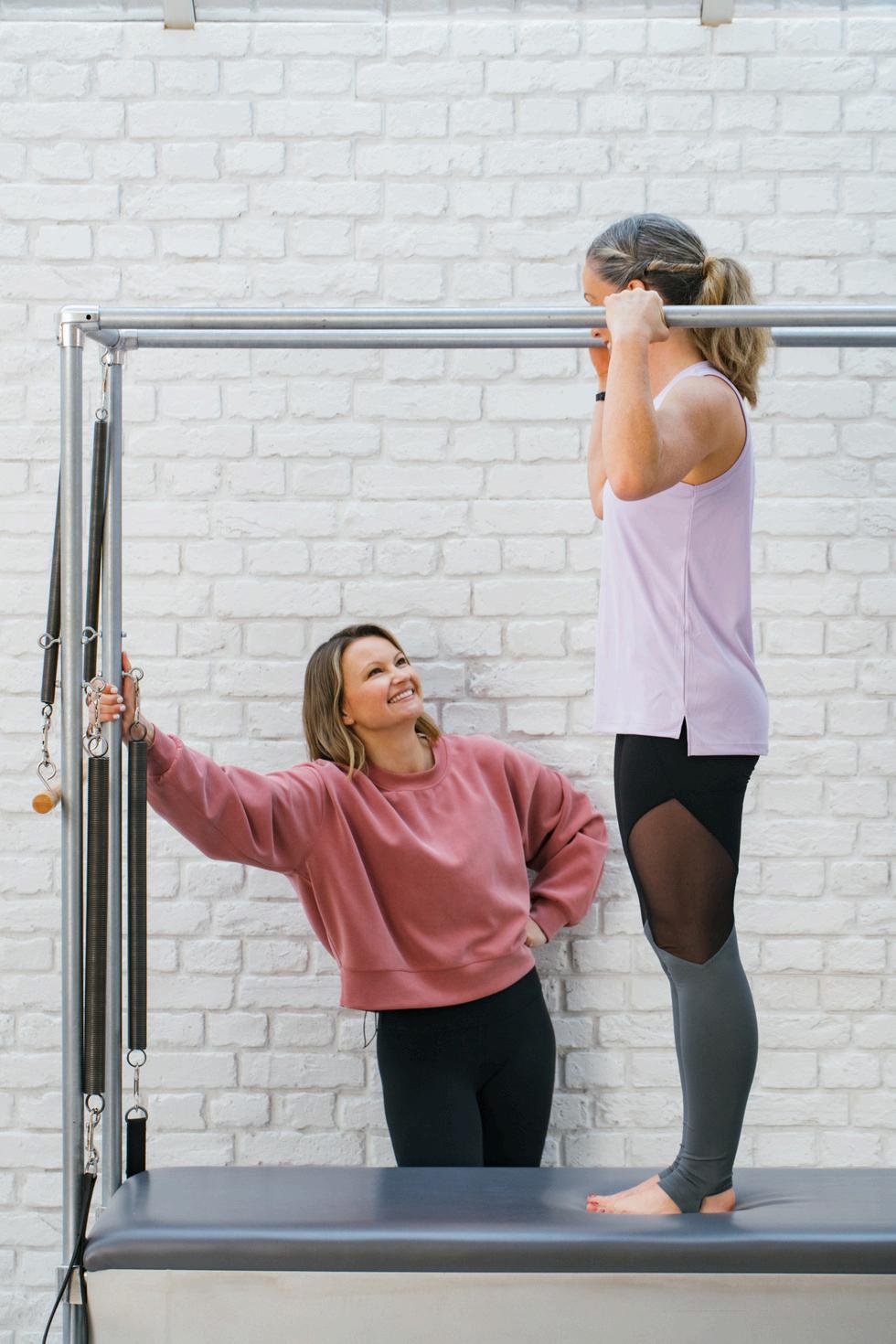
An advanced Pilates body is not defined by performing acrobatic Pilates repertoire An advanced body is someone who:
Uses breath to facilitate movement
Moves with balance and control
Transitions seamlessly, with almost invisible adaptability
Understands when to push and when to modify
Takes accountability for their own movement
These qualities are developed through consistent, intelligent practice - not through endless choreography
Some of the most advanced bodies in my studio will never attend an advanced class Senior clients with age-related contraindications High-powered professionals who train once a
week, year on year, to maintain physical health amidst a demanding career Those navigating pregnancy, post-natal recovery, or a recurring injury that makes certain exercises inappropriate
Their movement is deeply embodied Their breath is guiding and supporting their movement They flow with control They are advanced
An advanced class, however, carries specific demands It typically includes:
Advanced repertoire taught at tempo
Swift transitions with minimal breakdown
Large ranges of motion
Significant strength and flexibility requirements
Complex coordination
Advanced Pilates classes require full-body integration and stamina. They should be reserved for bodies that have genuinely built the prerequisite skills, and even then there can be some element of being naturally able to do the exercises
I always emphasise a principle that will protect both teachers and clients: Advanced exercises are built at Intermediate level If someone is not ready for an advanced exercise, the solution is not to practise the advanced exercise repeatedly. There’s no benefit to that Instead, get more Pilates into the body that can be done well, that will benefit the body now
The Pilates system is beautifully intelligent in this way. It provides so many exercises on so many different pieces of apparatus that will challenge bodies appropriately and prepare them for harder things to come If you find yourself continually breaking down an advanced movement, heavily modifying it, or excessively partnering to guide someone through it, it is usually an indicator that the body is not ready for it We can use the Pilates system better The different pieces of apparatus make the purpose or goal of advanced exercises available to the body sooner. ‘Rowing’ on the Reformer, for example, demands a lot of strength, flexibility and co-ordination There’s a lot of moving parts, therefore they’re considered Advanced As an alternative, we can get the benefits of Rowing on the Baby Chair – and with less load from the springs, and more support for the body If this is done with control, balance, precision, if it’s giving the body what it needs - Pilates is doing its job!
Our responsibility as Pilates teachers is not to put a hierarchy on advanced choreography It is to apply the system appropriately and with the safety and longevity of every body we teach at the forefront of our teaching decisions Our job is to teach Pilates, not to satisfy ego. This idea is increasingly relevant in a social media culture where many come to Pilates studios wanting to do the most impressive looking Pilates they’ve seen online Too often those exercises aren’t appropriate for someone new to the Pilates Method, definitely not to try in a group setting.
As I understand, Joseph Pilates himself did not formally “level” his exercises in the way we often present them today The structuring of Beginner, Intermediate, and Advanced evolved largely through teacher training programmes, to make teaching this system easier for new teachers to learn Joseph designed exercises for the body in front of him If something didn’t suit you, you skipped it Simply
“The Pilates system... provides so many exercises on so many different pieces of apparatus that will challenge bodies and prepare them for harder things to come. ”
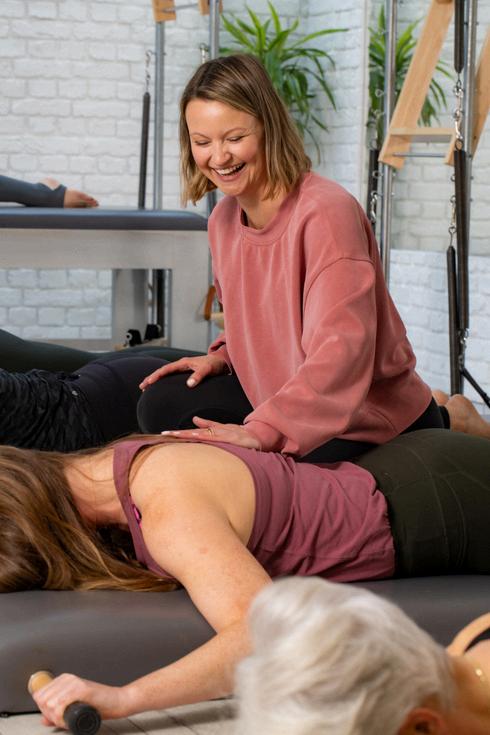
challenge each body as needed and as appropriate
When we return to that thinking, something shifts We stop chasing choreography We start observing quality Not every body will need every exercise Not every body will benefit from every exercise
We recognise that:
An 80-year-old moving with breath-led flow is more ‘advanced’ than someone muscling through advanced exercises
A post-natal client who modifies for their recovering body demonstrates greater mastery than someone forcing range
A client flowing through the Basic work with understanding and integration may be advancing in their Pilates practice more than one rushing through bigger movements
Instead of asking:
“Can they do the advanced exercises?”
Ask:
“Do they embody Pilates?”
When we separate the idea of an advanced Pilates body from an advanced Pilates class, we protect the integrity of the system
We also protect our clients
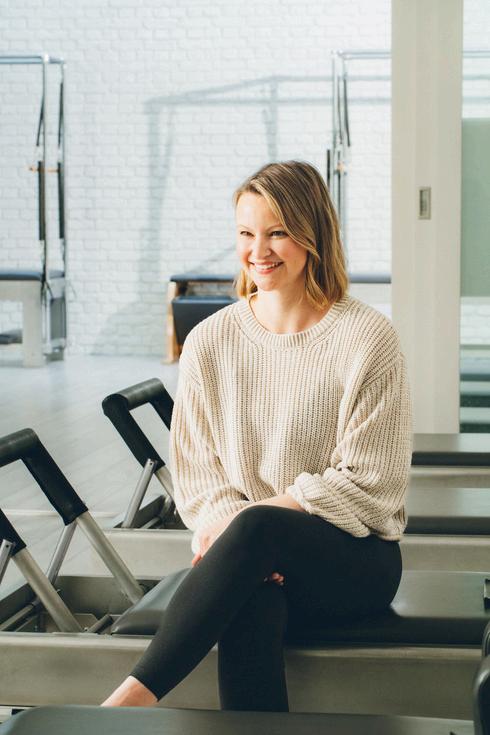
Anna Abubakar is the founder of Pilates Centre, a classical Pilates studio in Dublin, Ireland. Originally finding Pilates during here dance studies as a teenager, she has been teaching Pilates since 2009 and training and mentoring teachers for over a decade.
THE AT-HOME PILATES CATEGORY IS EVOLVING FAST AND WITH IT, A NEW STANDARD FOR PERFORMANCE, DESIGN AND ACCESSIBILITY
by CJ Zarb
As reformer Pilates continues to move beyond the studio, the athome market is evolving rapidly Today’s home user has more choice than ever, from studio-grade heritage equipment to beautifully designed foldable models and fully integrated digital movement systems
Whether the priority is performance, aesthetics, space-saving -
functionality or an all-in-one guided experience, the category now offers compelling options for every type of mover
Below, The Pilates Journal highlights some of the standout athome reformers currently available across different spaces, budgets and movement needs
Studio-grade performance & carriage feel
Build quality & longevity
Space efficiency & storage
Digital integration (where relevant)
Suitability for different mover types
MERRITHEW® – AT HOME SPX® REFORMER PACKAGE WITH VERTICAL STAND
USD $3,549
“Janet La Force Plus is built to deliver a true premium-quality studio reformer, just with the freedom to fold.”
Among at-home reformers, Merrithew’s® SPX remains one of the closest translations of a professional studio experience Its engineering prioritises consistency - the kind instructors rely on for progressive programming over time.
With a smooth carriage glide and robust spring system, it delivers the level of feedback expected in commercial environments The vertical stand introduces a practical advantage for home users, allowing the reformer to be stored efficiently without compromising performance
Rather than adapting the studio experience for home, this model preserves it - making it a strong choice for serious movers and instructors seeking long-term reliability
“Recognised globally for precision engineering and long-term durability”
PERSONAL HOUR – JANET LA FORCE PLUS
USD $2,590
For design-conscious home users seeking both performance and elegance, the Janet La Force Plus by Personal Hour brings a refined aesthetic to the foldable reformer category
With hand-finished walnut detailing, easy-fold functionality, tower compatibility and a smooth, studio-grade glide, it is designed to deliver a high-performance Pilates experience in a compact, thoughtfully considered format
Its premium cushioning and enhanced spring system make it well suited to both home use and boutique professional settings
The package includes Pilates mat, Pilates ring, Pilates ball, and dumbbells Paired with access to the PersonalHour app for ondemand classes and an AI Coach designed to guide your movement without an instructor or wearables
“delivers the smooth carriage feel and resistance expected from a commercialgrade reformer”
For home users navigating apartments, smaller studios or multipurpose living spaces, the Align-Pilates F3 Folding Reformer offers a considered balance of performance and practicality
Engineered specifically for home use, its folding frame allows it to be stored compactly between sessions, making it a strong option for those prioritising space efficiency What sets the F3 apart is its ability to retain the smooth carriage feel and consistent resistance typically associated with commercial-grade reformers - an area where many compact designs fall short
ALIGN-PILATES – F3 FOLDING PILATES REFORMER
USD $1,999
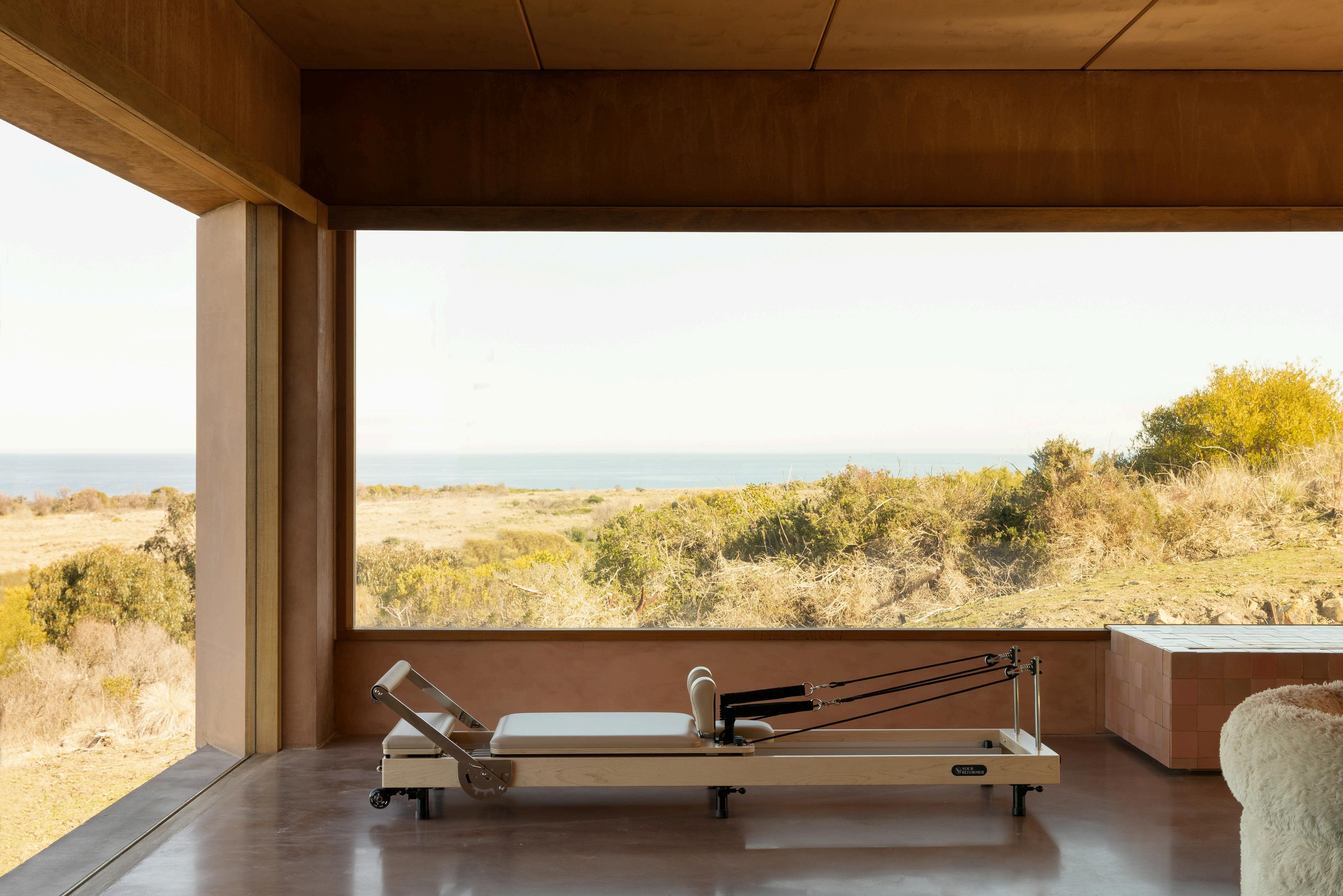
YOUR REFORMER – THE ORIGINAL REFORMER
USD $2,750
More than simply equipment, The Original Reformer by Your Reformer is designed as a complete at-home Pilates ecosystem
Crafted from a solid maple wood frame with a smooth-glide carriage and adjustable resistance, it supports every stage of the movement journey - from gentle restorative flow through to advanced strength and endurance work.
What sets it apart is its seamless integration with the Your Reformer app, giving users immediate access to guided classes, world-class instructors and an ongoing digital studio experience from home
For those seeking the feeling of a studio membership combined with premium equipment, it stands out as a compelling option.
“We
created Your Reformer to help make movement more accessible. Our vision was to bring the full studio experience into one seamless system.”
“It isn’t just a home alternative; it’s a commercial-grade powerhouse designed for the modern home.”
PEAK PILATES CASA™ REFORMER
$2,795 00 USD (STANDARD) / $2,995 00 USD (BUNDLE)
Designed to bring the precision of a world-class studio into the home, the casa™ Reformer offers a studio-quality, no-compromise foundation for serious practice Its professional 41cm height supports optimal ergonomics, while the commercial-grade aluminium frame and whisper-quiet glide reflect true studio-level performance
Complete with a Long/Short Box and Foot Strap, it’s a considered choice for practitioners seeking a home setup that mirrors the standards of a high-end studio
Long-Term Investment Foldable
$2,999 (CURRENTLY
$3,199)
For those seeking studio-grade performance, The Queen Folding Reformer offers a rare balance of strength and flexibility Designed to fold away in under 30 seconds, it delivers the same level of performance expected in a studio environment - with 6-spring resistance, a 330 lb weight capacity, and a 10-year warranty aligning it with traditional studio machines
It’s a considered option for serious home practitioners, as well as boutique studios looking to maximise space without compromising on quality
“The same reformer used in studios running eight hours a day. If you’re investing in a reformer for life, this is the one. ”
“it feels seamless, it expands what you can do, while still respecting space, design and how people actually use their environment”
Already known for its award-winning foldable reformer, the Original FÔLD Reformer with Easi-Fold™ , FÔLD has introduced TÔWER - the first Pilates Tower engineered specifically for a foldable bed
Designed to expand functionality, it transforms the reformer into a 3-in-1 system: mat, reformer and tower Rigorously tested, TÔWER brings a more complete Pilates experience into the home without compromising on space or design
The reformer is available with or without the Tower component, offering flexibility depending on how users choose to build their setup
THE ORIGINAL FÔLD REFORMER (EASI-FOLD™) WITH TÔWER PILATES ATTACHMENT
£2,999 - $4,214
The Vertical Reformer for Home & Studio by Elina Pilates is designed for those seeking professional-grade performance in a more space-conscious format.
Its compact, upright structure - crafted from American maple wood - brings stability, durability and a considered aesthetic, making it well suited to both boutique studios and home environments.
Despite its vertical storage capability, it maintains an ultra-smooth carriage, adjustable height settings, versatile spring resistance and a retractable rope system.
For users needing full functionality without committing to a permanent footprint, it offers a practical balance of performance and space efficiency.
Package includes Reformer Box, Jumpboard, Platform Extender, Pilates Ring and Pilates Ball
“this reformer delivers studio-grade quality in a compact, vertical storage solutionperfect for modern spaces where every square metre counts.”
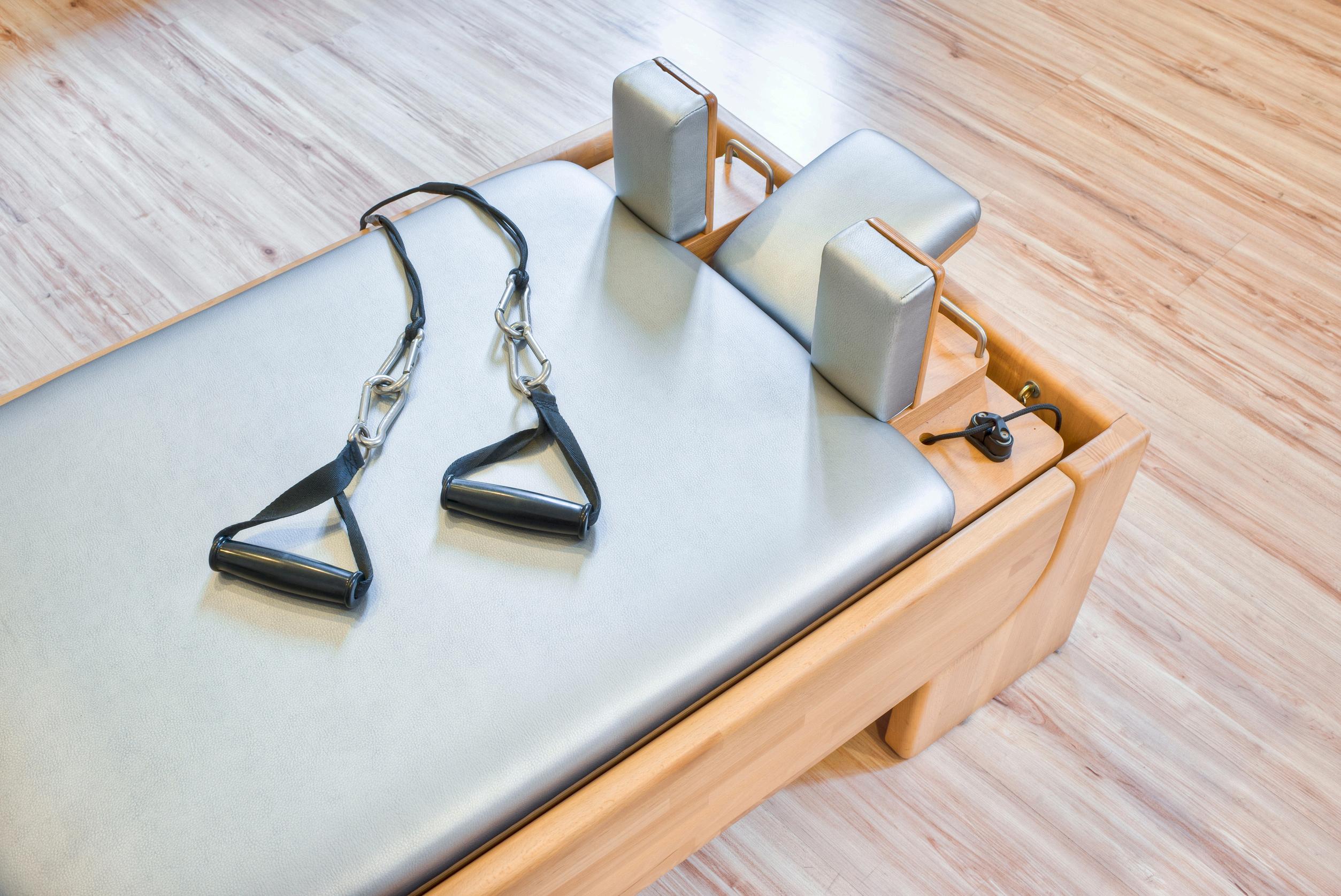
USD $3,549
Personal Hour
USD $2,590
Your Reformer
USD $2,750
USD $1,999
AUD $3,295
Studio-grade performance and long-term durability at home
Design-led homes seeking premium performance in a compact, foldable format
An all-in-one Pilates experience combining equipment with guided digital instruction
Smaller spaces requiring a compact, foldable reformer without compromising performance
Professional-grade performance with vertical storage for spaceconscious environments FÔLD
£2,999 - $4,214
Peak Pilates
USD $2,795 - $2,995
USD $2,999
Versatile, space-saving setups seeking a complete 3-in-1 Pilates system at home. TÔWER pre-sale (£1,099) $1,495 FÔLD Reformer price (£1,999) $2,719
Bringing true studio-grade performance into the home without compromise. Bundle includes Reformer, Long/Short Box, Platform Extender, Jump Board + 12 months Pilates Project app subscription
Commercial-grade strength with the flexibility to fold and store
NEW INDUSTRY DATA EXPLORES WHY VISIBILITY ALONE ISN’T ENOUGH AND WHAT ACTUALLY DRIVES LONG-TERM STUDIO GROWTH, RETENTION AND MEMBER LOYALTY
by Bsport
How often have you welcomed a newcomer to your studio thanks to an app? Taken note of their details, given them a tour – only to never see them again?
If your answer to these questions is regularly, or even sometimes, you’re not alone. More boutique fitness founders are starting to question how much value third party fitness apps really bring long term
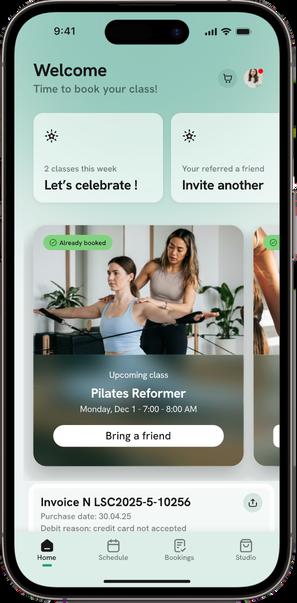
Platforms like ClassPass can be effective for bringing in new people and filling empty spots. According to the bsport Fitness Studio Playbook, 25% of fitness enthusiasts discover studios through booking apps They offer reach, visibility, and a steady flow of first-time visitors – and for a while, that can feel like real growth.
But that acquisition channel doesn't always convert
Third-party booking apps are designed to keep users loyal to their platform, not to your studio That means you’re always sitting alongside other options, competing for attention in the same space. The relationship never quite becomes yours, and your brand ends up as one of many, rather than the one people come back to
Data from the bsport Fitness Studio Playbook reflects that behaviour While 25% of members discover classes through platforms, 37% continue to book through them, suggesting many keep using them after that first visit A large share of customers never fully transitions into your studio, which makes it harder to build relationships, shape habits, or increase lifetime value
There’s a practical limitation too: when studios don’t fully control how they communicate with those members, it becomes much harder to build consistency and create reasons for them to return
hidden cost
Retention is only part of the equation. Margins also matter, especially when platform commissions take a cut from every booking Used as an acquisition channel, that can make sense But when those same members don’t convert into direct customers, the cost repeats every time.

That kind of growth becomes harder to sustain over time Platforms like ClassPass can help you get started and increase visibility but the real challenge begins after that first visit Growth becomes more durable when members move into your own channels
Most members don’t discover studios through booking apps in the first place Research from bsport shows that 61% rely on proximity and 58% on word of mouth when choosing where to train “I didn't think word of mouth would be a big factor, but it's actually huge, ” says Nina Bosamia, founder at Yoga Hook, a multi-activity studio that offers Pilates, Yoga and wellness therapies “Treat your clients well because they tell other people They essentially sell your classes for you. ”
The experience, the consistency, and the small details all play a role in whether someone comes back or drifts away
A more deliberate approach to growth
Platforms like Classpass still have a role, but they’re no longer the foundation. A more balanced approach is starting to emerge, where studios use them to bring people in, then focus on building a direct relationship from that first visit
“If someone downloads your app, there’s a level of commitment, ” says Jane Ellington at The Shed. “You’re no longer one of many options – you’re their chosen studio. ”
Once that shift happens, the relationship starts to change. Members are no longer browsing, they’re returning In practice, that means making it easy to book directly and encouraging app downloads early, so you can stay connected from the start From there, it’s about building habits that feel natural to return to –schedules that fit real routines, simple ways to bring friends along, and a consistent experience that gives people a reason to come back
Growth beyond third party apps
Member behavior is changing, and expectations now go beyond fitness Studios that adapt are seeing stronger results
“Studios that grow stea to focus less on acquisit more on what happen someone walks throu door.”
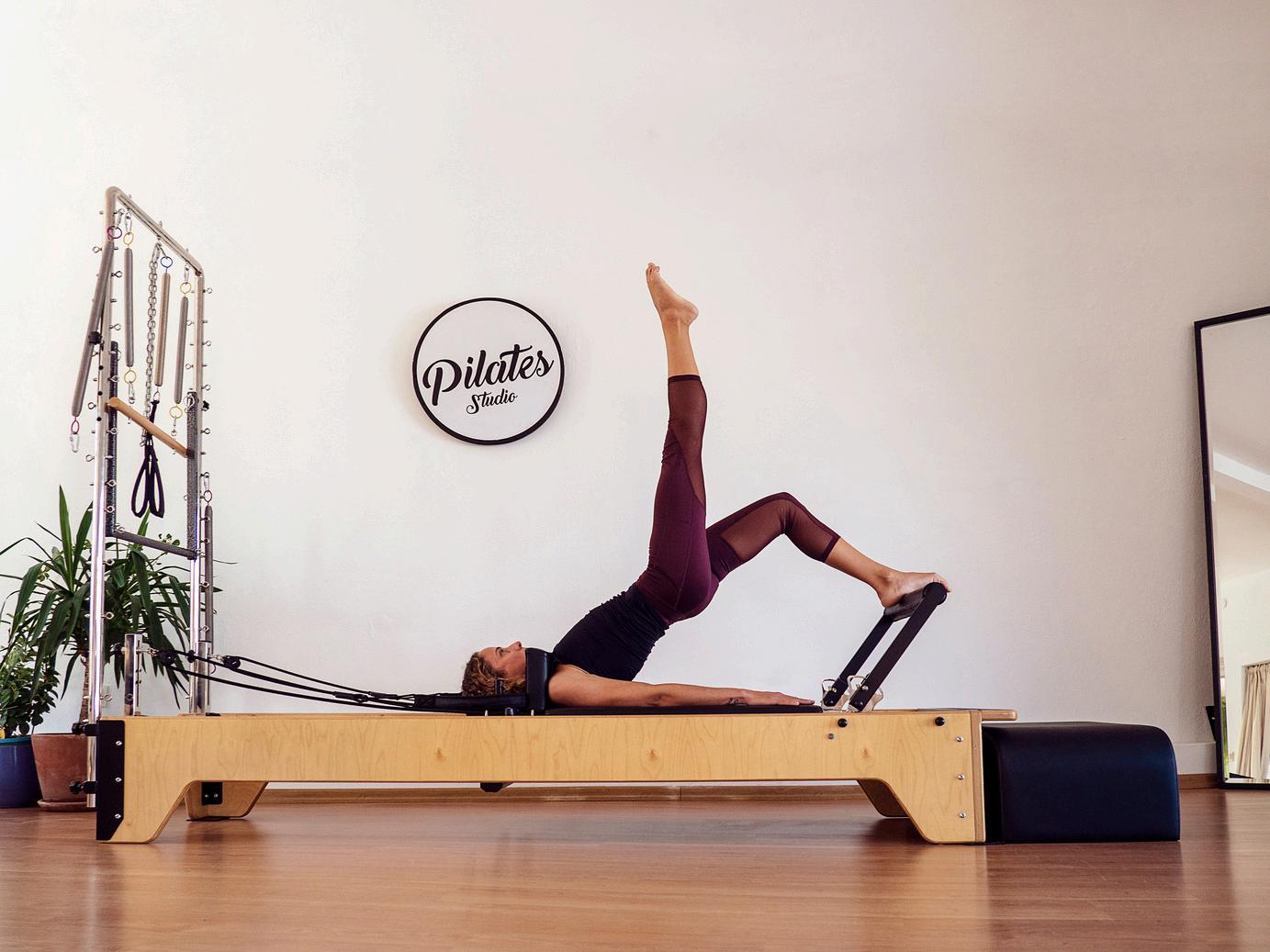
More than 56% of members now attend multiple studios, moving between formats across the week.
78% of users say they want routines that include recovery and lifestyle services, and 33% say they would accept higher prices when those extras are included.
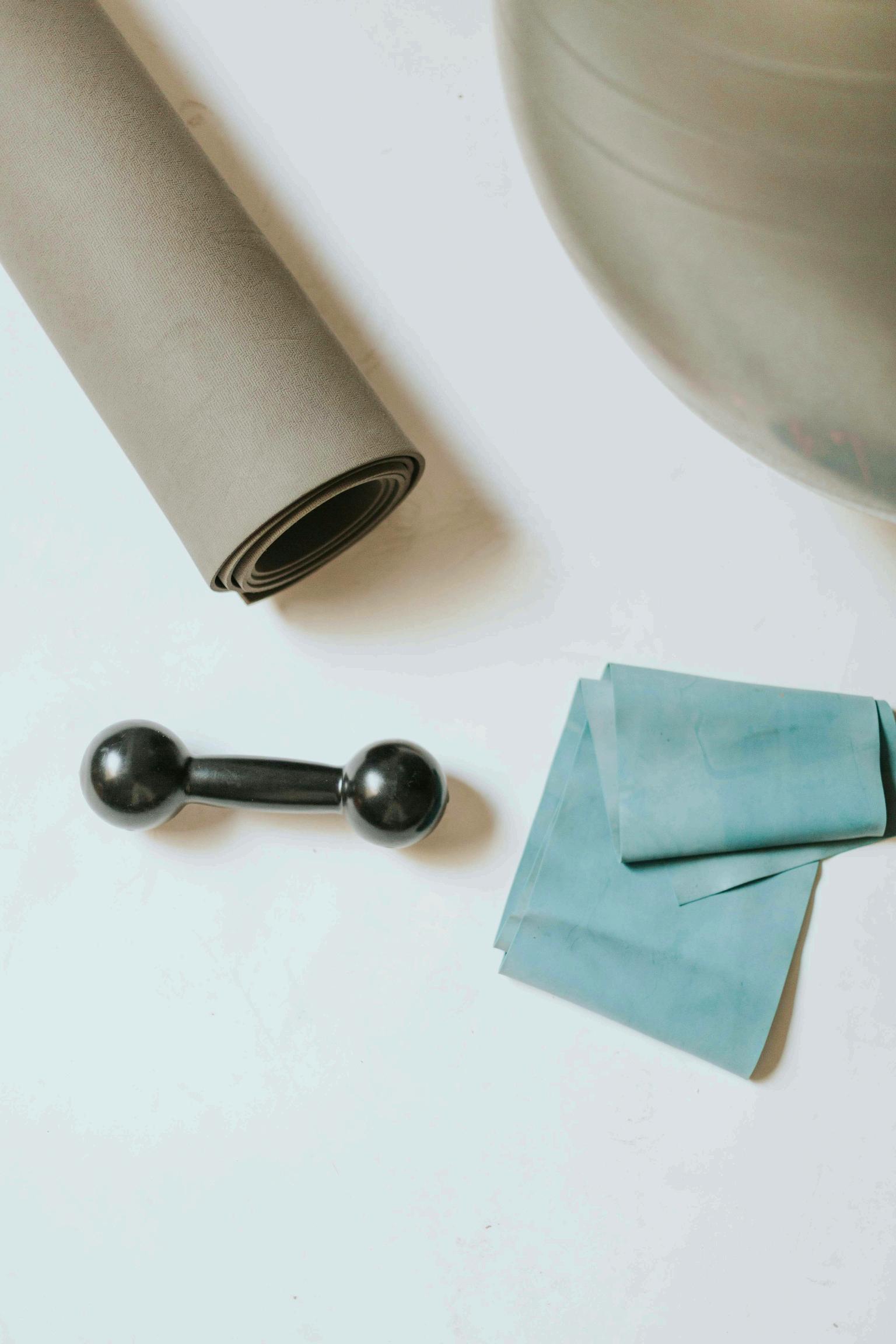
Pilates often anchors the routine, but over 63% combine it with other activities.
Demand for services like massage and sauna shows how both expectations and willingness to pay are evolving
Studios that offer variety and build a more complete experience are better positioned to keep members engaged over time The opportunity isn’t just to attract attention, but to build something people choose regularly
bsport is the leading management platform designed specifically for boutique fitness and wellness businesses, from independent studios to global franchise networks bsport gives you everything you need to grow on your own terms, stay close to your members, and keep up with evolving expectations, so you can use apps like Classpass to bring in new members, and rely on bsport to build direct relationships that drive retention
With bsport, you can:
Integrate with platforms like ClassPass to extend your reach
Launch a fully branded app to bring your members into your own ecosystem from day one
Make every class count with waitlists and flexible attendance rules
Stay connected through targeted, behaviour-based messaging
Encourage referrals with guest passes, gift cards, and simple sharing tools
Add wellness services and in-studio purchases to grow revenue beyond classes
Use AI-powered tools like automated workflows and churn insights to reduce admin and focus on your members
Rely on dedicated onboarding and account management support as your studio grows
Book a tailored, no-pressure demo and see how bsport could work for your studio.
Grow your studio. Get 3 months free
Trusted by 3,000+ studios worldwide, bsport helps Pilates studios run smoothly behind the scenes — from bookings and memberships to payments and reporting. Grow your community, increase retention, and scale without losing what makes your studio special
Limited offer Visit bsport website. READ THE REPORT
by CJ Zarb
Over the past decade, Pilates has expanded well beyond its traditional studio setting Greater access, digital delivery and shifting movement habits have reshaped how, where and why people practise
Pilates Anytime offers one lens into how these shifts are unfolding In conversation with VP Chanda Hinman and CEO Kira Sloane, their insights help illuminate what The Pilates Journal is observing across the industry: the rise of the Hybrid Pilates Mover - a practitioner who blends Pilates with strength training, values efficiency, explores multiple apparatus and moves fluidly between goals, identities and environments
Even as the platform has adapted to shifting consumer habits, its focus remains on exceptional teachers sharing the depth and integrity of the Pilates method
“Ten years ago, many people in the digital fitness space didn’t even know what Pilates was, ” says Chanda “There was very little understanding of mat work, and almost no access to equipment outside of dedicated studios ”
Group classes were often mat-based, and reformer sessions were rare.
“I remember teaching a reformer class with four machines and three completely different models, ” she laughs The rise of group reformer training helped open Pilates to a broader audience While contemporary studios embraced the format quickly, classical teachers took longer to adopt it
Then the pandemic accelerated everything
“When studios closed, people started buying equipment at home in huge numbers, ” Chanda explains “Suddenly Pilates was no longer limited by geography. Now we have a generation of movers who have teachers online, equipment at home and exposure to multiple teaching styles ”
The result is a very different client.
“Many clients want sessions that feel purposeful from the start They’re also interested in fusion, circuit formats and strength-plusPilates experiences. ”
One of the notable shifts Pilates Anytime is observing is the breakdown of single-discipline identity
“There used to be an idea of a Pilates person or a yoga person, ” Chanda says “Now people cross-train They understand the benefits of different modalities ”
“One of the notable shifts Pilates Anytime is observing is the breakdown of singlediscipline identity.”
played a key role in normalising this shift Pilates is ioned as an alternative to strength training, it is egrated alongside it.
people realise they can get huge benefits from es two or three times a week, ” she says “They o one thing all the time. ”
flects the deeply personal nature of modern neys
an enthusiast who becomes a teacher You might might be a high-performing athlete, ” she says y is unique The challenge is how we meet all of
the New Goal
cipation grows, consistency, not intensity has y metric of success e has responded by rethinking how programs are
hem more pragmatic, ” Chanda explains “Instead of elming, it might simply be ‘20-minute beginner es. ’ People often just want something clear and achievable ”
“We’re now seeing renew interest in longer 40–50 mi workouts,” she says. “Peopl craving depth again.”
This mirrors broader digital fitness expectations shaped by platforms like Apple Fitness, where intuitive navigation and personalised pathways are now baseline requirements But the real driver of consistency, Kira believes, is emotional “People have enough memory of how good they felt afterwards to come back, ” she says “We’ve all experienced the inertia of not moving ”
Discovery plays a major role. Some users constantly seek new classes and teachers Others build strong loyalty to specific educators At the heart of these programs is still thoughtful teaching progression, ensuring users are not just moving more often, but moving with greater understanding.
Shorter Workouts and a Return to Depth
Time-efficient formats have surged in popularity in recent years Pilates Anytime saw significant growth in 20–30 minute sessions, particularly during periods when home schedules were unpredictable
However, Chanda notes an emerging shift.
This reflects the hybrid nature of modern practice, balancing quick maintenance sessions with more immersive movement experiences.
Cross-Equipment Curiosity
Access to equipment is reshaping how people practise Pilates
“We’re seeing increased interest in the Tower, ” Chanda says Users frequently mix classical and contemporary approaches, as well as older and newly released content
“They’ll watch everything, ” she explains. “We’re constantly asking where the gaps are ”
Insights come from platform data, forums and direct community conversations.
“Our new system can respond to behaviour, ” she says “The same person might want a strong workout one day and support for an injury the next. ”
They also note that exposure to different apparatus can help users better understand how the Pilates system connects as a whole.
As more people access Pilates online, Pilates A how teaching styles are adapting
“Clear cueing becomes even more important w someone you can’t see, ” says Kira
“That’s something we often notice with studio o explains “They’re used to working with differen in real time, which seems to translate well online natural ability to layer and adjust ”
Traditional labels are also being challenged
“There’s a new category emerging, what we mig beginner, ” Chanda explains “Someone who is a athlete but completely new to the Pilates minds
Serving these nuanced groups is now a major fo “We want to prioritise anyone who wants to try Even as formats evolve, both emphasise that Pi role is not to redefine the method, but to expan quality teaching.
For Chanda and Kira, the future of Pilates Anytim industry lies in continued evolution
“We want to keep showing up as the online res who do Pilates, ” Chanda says That means hono endures while responding to how people practi rooted in our history while continuing to evolve ”
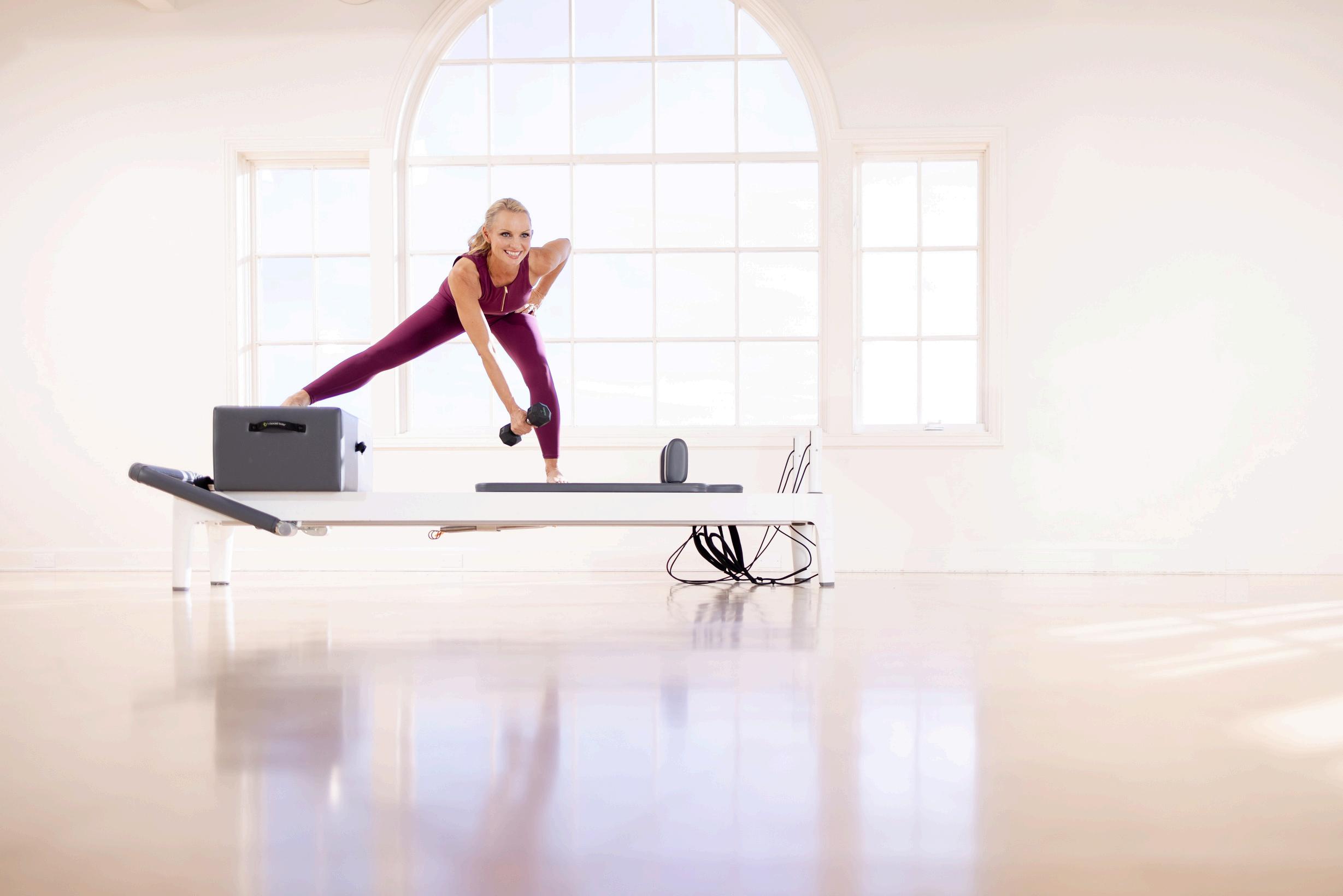
If the past decade has been defined by access, the next may be shaped by personalisation, hybridisation and renewed curiosity about Pilates roots
education for instructors and enthusiasts alike
Its Instructor Program (Instructor Pro) is designed for teachers looking to refine their skills, stay current, and bring fresh ideas into their classes
WITH STUDIO-HOPPING AND SELF-SELECTED CLASS LEVELS ON THE RISE, CLIENTS NEED MORE SUPPORT THAN EVER TO PROGRESS AND GET MORE FROM EVERY CLASS
by Shanelle Lenehan
We’ve all been there A beginner turns up to our advanced class and our class plan instantly goes out the window After almost two decades of teaching, spanning everything from rehab environments to working with high performing athletes, I can tell you this situation has not become any less common If anything, it has become more frequent and increasingly complex to navigate.
It used to be simpler In traditional Pilates settings, the instructor told the client when they were ready to move up That relationship developed over time, class after class, with an instructor who knew their body, their habits, and their patterns That model is harder to sustain today With ClassPass and studio-hopping now a part of Pilates culture, many clients move between studios without forming the kind of ongoing relationship that once made progression feel intuitive
Fewer studios require a private session before attending group classes, and clients are choosing classes based on time slots rather than level
“Without a trusted instructor to guide them, clients are largely left to judge their own readiness”.
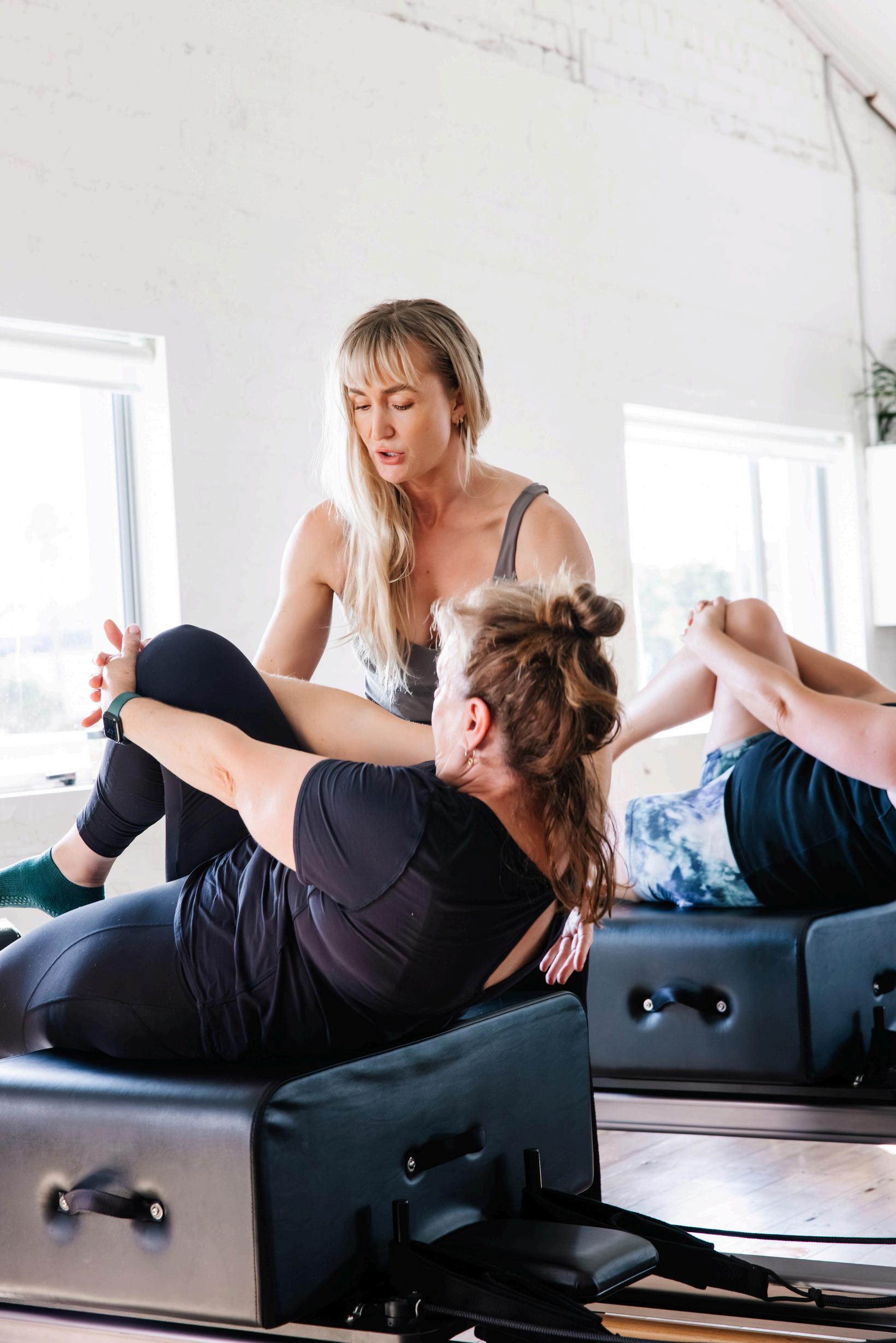
“When we stay silent and simply modify to accommodate a client who is in the wrong level, we are not helping them. We are enabling them.”
When clients walk through our doors they arrive with confidence, sometimes even telling us they are advanced, and occasionally that is simply not what we observe Without a trusted instructor to guide them, clients are largely left to judge their own readiness.
There is also a more uncomfortable truth worth naming They are lulled into a false sense of security, leaving class feeling like they held their own, when in reality the class was quietly reshaped around them Over time, this can lead a client to genuinely believe they are an intermediate or advanced mover which can lead them into unsafe scenarios as well as disrupt the class around them A respectful conversation is far kinder than silent modification.
Pilates is, at its core, about mind-body connection It asks us to cultivate awareness, to listen inward, to notice A client who has genuinely developed that awareness tends not to ask whether they are ready They simply know, because the signals are already clear to them When someone is seeking external validation for a decision their body should be guiding, that is a sign that their selfreading is still developing. And that is okay. It is exactly where we can help
Giving Clients the Tools to Read Themselves:
We cannot feel what our clients feel We can observe, cue, and correct, but the internal experience belongs entirely to them This is why handing clients a clear framework for self-assessment is one of the most useful things we can do Not to take ourselves out of the equation, but to invite them in
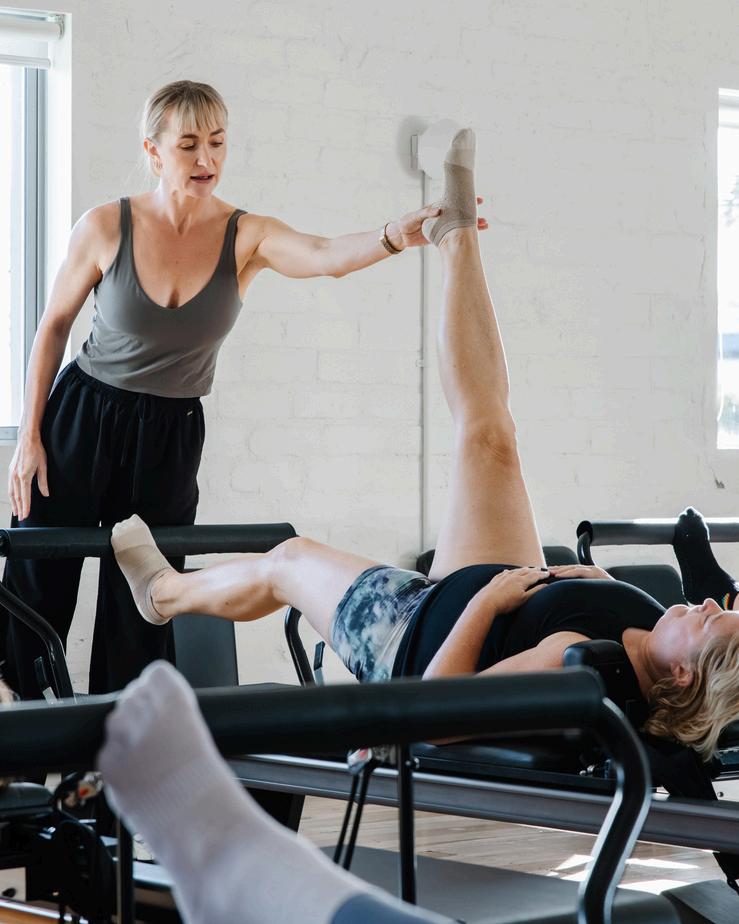
Over the years I have created and often used a simple selfassessment tool that helps clients understand where they genuinely sit in a group class environment I share it with new clients, I revisit it when someone seems unsettled in their level, and I use it every time a client asks me ‘how many beginner classes should I complete before moving up to intermediate?’.
Client Self-Assessment Tool for Group Classes:
They know their springs for familiar exercises, such as Footwork and Bridging
They select the more challenging exercise variations on offer, for example double leg stretch instead of single, full Hundred’s with legs straight instead of table top
They choose the more challenging spring selections, and they understand that sometimes lighter springs are the more challenging option
They do not require rest while others are resting
They are not currently injured, or if they have a niggle, they can manage it independently within the group class setting
They generally understand most of the concepts being taught; for example, they understand the difference between articulating through the spine and hinging at the hip
They feel good during and after class They are not wiped out after every single session
In my experience, when a client can tick all seven of these consistently across three classes in a row, that is their signal to move up It has to be three consecutive classes One good session is a good session Three in a row is a pattern
I met a client not long ago who had been attending intermediate classes at other studios for months She had convinced herself she needed to be in an intermediate class to get the best challenge and bang for her buck, but she was struggling every single session and blaming herself for being weak and not ‘keeping up’ She was not enjoying Pilates Because the instructors never said anything, she assumed sh going until she got stronger.
When she came to me I introduced her to the se straight away, and it was a genuine lightbulb mo realised there was so much more she could be d beginner level: taking more challenging variatio different spring selections, really owning the exe knew and getting the most out of every class Sh conversation feeling empowered rather than de few weeks she was getting so much more out o had even started tracking her spring settings so challenge herself As she put it: 'I thought that w Pilates felt like. Now I am addicted. ' That is exac designed to do "
“Being advanced is not simply about performing harder movements. It is the heightened awareness of your own body...and the ability to move with complete intention and control.”
Being advanced is not simply about performing harder movements It is the heightened awareness of your own body, a keen sense of the environment around you, and the ability to move with complete intention and control The most experienced clients I teach tend to have the fewest questions They have become observers of their own system They notice when something feels off, they adjust without being prompted, and they make decisions in the moment that serve their body rather than their ego That quality of attention is what progression in Pilates
Polestar
,
, and a member of Pilates
and Educator
s education board. She runs workshops and mentors instructors online and in person
At a time when Pilates teachers can gain visibility faster than ever, through social media, group reformer environments, and rapid certification pathways, the pressure to feel “expert” early in a career has never been greater As Pilates professionals, we often focus on the destination, the dream of becoming an "expert. " Yet, after 35 years in this industry, I have come to realise that the true richness of our profession isn't found at the finish line, but in the texture of the journey itself
To understand this evolution, we can look to a framework established by brothers Stuart and Hubert Dreyfus in their work Novice to Expert They identify five distinct stages of professional development. When we map these onto the life of a Pilates teacher, we see that each phase isn’t just a steppingstone, it is a vital season of growth that deserves to be honoured, not rushed
The Beauty of the Beginning: The Advanced Beginner
The Novice stage is where we all start - learning the rules and the rote movements. But it is the Advanced Beginner stage, reached upon graduating from a comprehensive program, where the magic begins
In many skilled professions, development is understood to take time A nurse may spend years refining clinical judgement A doctor trains for over a decade before being trusted with complex decision-making Yet Pilates teachers are often expected to feel fully confident within months of certification. This disconnect can create unnecessary pressure and even burnout True teaching expertise is not rushed; it is accumulated through repetition, observation, and responsibility
When we understand this, the early years of teaching begin to feel less like a test and more like an apprenticeship
At this level, you have the tools, the safety protocols, and the theory It is a glorious, high-energy phase of discovery My advice to those in this season: Don’t hurry through it This is your time to seek out mentors and find a "studio home" that nurtures you In fields ranging from nursing to law, this foundational period takes two to three years Enjoy the "Aha!" moments when theory finally meets the living body This isn't a period of "not being good enough"; it is a period of spectacular unfolding
As you move into Competency (typically after 2–3 years of fulltime teaching), you find your wings You can work independently and achieve excellent results for your clients This is often the stage where teachers begin managing fuller schedules, navigating mixed-level group classes, or supporting clients with more complex needs It can feel like you are constantly making decisions in real time- adjusting springs, pacing, or cueing, while quietly wondering if a more experienced teacher would handle it differently
This stage is about immersion It is the time to attend conferences, join collegial circles, and begin mutually beneficial mentoring The "Competent" stage is where your confidence takes root By staying present in this phase, you build the stamina required for a long career You are learning the "why" behind the "what, " and that slow-cooked knowledge is what eventually tastes like mastery
After a decade or more of dedicated practice, you arrive at Proficiency Here, the work becomes a dance Assessment, class flow, and complex modifications happen spontaneously When a student asks why you chose a specific cue, you might find yourself saying, "It just felt right "
This is the birth of intuition. At this stage, many teachers feel a natural pull toward a niche, a specific population or a specialized area of movement science Proficient teachers are the heartbeat of our industry and make the most profound mentors because they still remember the climb.
The Expert is a teacher whose niche has fully blossomed into a legacy They write the books, conduct the research, and lead the international stage
“But even here, the secret to their success is often their willingness to return to the start.”
Three decades in the studio have taught me is that joy is available at every single stage We often fall into the trap of thinking we will be "happy when" we reach the next level But if we rush the process, we risk burning out and bypass the very experiences that make us great
My invitation to you is this: Pay your dues joyfully Whether you are navigating your first year of teaching or your twentieth, maintain a level of curiosity Occasionally, intentionally "put on the hat of the novice" and learn something entirely new Engage in collegial conversations, stay curious about your clients, and remember that developing your craft is a marathon, not a sprint
“Ultimately, the teachers who will thrive in today’s landscape are those who are curious and willing to invest in their future development. “
The future of Pilates will not be shaped by the teachers who move the fastest but by those who stay curious the longest
By honoring the time, it takes to grow, we don't just become better teachers, we ensure that our passion for Pilates remains as vibrant in year 35 as it was on day one
With over 30 years of experience in rehabilitation and movement science, Brent Anderson, PT, PhD, OCS, NCPT is Founder and CEO of Polestar Pilates Education and Polestar Pilates Center He is also an Assistant Professor at the University of St. Augustine for Health Sciences in the DPT department in Miami, FL. He teaches as an adjunct professor in the Physical Therapy departments at the University of Miami, University of Southern California, and New York University. Brent is passionate about the power of positive movement experiences and is dedicated to sharing Pilates with the world and He is an active consultant for hospitals, universities, and wellness organisations internationally
AS PILATES ENTERS RAPID GROWTH, LESSONS FROM YOGA’S RISE AND RESET OFFER A PATH TO SCALE WITH CLARITY AND LONGEVITY.
by Liz Polk
Over the past two decades, the fitness and wellness industry has experienced waves of rapid growth. Few have been as visible as yoga’s rise in the early 2000s through the mid-2010s What began as a deeply rooted, practice-driven discipline evolved into a mainstream “category, ” expanding quickly across cities, demographics, product offerings and price points.
As the yoga category scaled, it also fractured Studios closed Pricing compressed Client loyalty shifted And many operators were left asking themselves what happened.
For those of us building in Pilates, there is an opportunity to do this differently.
Pilates today is on a powerful upward trajectory The demand is real The results can be very tangible The audience is expanding But where it goes from here is not guaranteed.
With strong leadership and a shared commitment to standards, Pilates can become a long-term, deeply respected modality that clients commit to for years, with a broader and more diverse audience Without that alignment, it risks following a familiar cycle: rapid expansion, loss of authority, dilution, and eventual contraction
I’ve spent much of my career in environments focused on scaling with intention, including my time as a senior executive at Netflix where I also facilitated leadership seminars grounded in long-term organizational thinking One thing is consistent across industries: scale without standards erodes the very thing that made the product valuable in the first place
In Pilates, that risk is real.
When I workout with a highly experienced, classically trained Pilates instructor, whether in a group class or private session, I still discover something new in my body every time Even after all these years That level of depth is what makes the method powerful It is also what gets lost when the experience is massproduced and flattened into something more aesthetic than effective
As Speir Pilates marks its 10-year anniversary, we’ve been reflecting on what it takes to build something that lasts Below are a few lessons that feel particularly relevant for where Pilates is headed next
1. Growth Without Differentiation Isn’t Growth
During yoga’s peak, studios multiplied quickly, often offering a similar product: vinyasa flow, a warm room, candles, and a sense of community Initially, demand supported it Over time, sameness led to commoditization, and price became the primary differentiator.
Margins shrank More importantly, loyalty weakened
The takeaway for Pilates is simple, but not easy: define your corner of the category with precision
At Speir, we’ve always been clear about what clients come to us for: top talent, energy, precision, strength, and athleticism grounded in a contemporary approach to classical Pilates That clarity informs everything, from programming and education to music, tone, and client experience
Differentiation in Pilates is not branding It is the product
2. Teacher Training Became the Product and Diluted the Market
As yoga studios looked for scalable revenue, teacher training programs expanded rapidly While often well-intentioned, the volume of newly certified instructors outpaced mentorship, experience, and sustainable job opportunities
The result was a dilution of teaching quality and downward pressure on compensation.
“As we enter our second decade...we have a commitment to developing exceptional teachers, not just more teachers.”
Pilates has an opportunity to take a different path
Teacher training should be a long-term investment in quality, not just a short-term revenue driver That means scaling rigorous educational standards, meaningful mentorship, and creating clear pathways into sustainable careers
As we enter our second decade, we are doubling down on this Deeper classical Pilates education Ongoing continuing education
Because ultimately, the product IS the teaching.
3 Community Can’t Be Mass-Produced
One of yoga’s greatest strengths, community, also became one of its biggest challenges at scale As brands expanded, many attempted to standardize what is inherently personal and requires authenticity: connection, culture and voice
We all felt the shift
In Pilates, community is built in the room It lives in the interaction between teacher and client It is the moment a teacher sees you, adjusts you, and believes in your progress It is closer to the trust you build with a great coach or a thoughtful doctor than a largescale group experience
Studio culture is not just a marketing strategy It is a lived experience
The strongest studios don’t over-engineer uniformity
When growth slowed, many yoga brands diversified quickly, adding barre, HIIT, custom retail and more While some additions worked, many diluted the core product and created operational complexity
For Pilates operators, the better question is not what can we add, but what strengthens what we already do well
Every new offering should have a clear role: improve retention, deepen results, or expand access for the audience.
If it doesn’t clearly do one of those, it likely adds friction rather than value
The yoga studios that endured were not always the largest with the most locations They were the most consistent They focused on teaching quality, leadership development and operational discipline
They did not chase trends They refined their standards
The same is proving true in Pilates
Consistency in programming, instruction and client experience builds trust Trust builds longevity
At Speir, this has meant staying anchored in a modern classical foundation while continuing to evolve how we deliver it Not moving away from the method, but strengthening our commitment to high-level instruction, thoughtful programming, and exceptional teachers
Today’s client is more informed and more selective There is still price sensitivity, but there is also a growing understanding that quality and expertise carry value
Clients are less loyal to categories and more loyal to experiences that deliver results, structure, and a sense of belonging They want to feel progress They want to understand what they are doing and why They want to feel known when they walk into a space.
This is where Pilates is uniquely positioned, if it leans into depth rather than scale for its own sake
Clear progression Thoughtful programming Strong teacher-client relationships A consistent standard of excellence
The opportunity is to build long-term transformation and, in turn, long-term commitment to the method
Because what we protect now will define what Pilates becomes
As we celebrate 10 years of Speir Pilates, our focus is simple: hold the standard and continue to raise it
That means investing in classical Pilates education, prioritizing continuing education for our instructors, and delivering a contemporary experience that meets today’s client while honoring the integrity of the method.
It also extends beyond our own studios Through our Studio Plans program, we support studio owners around the world with programming, teacher development, and business operations tools, helping them build sustainable, high-quality Pilates businesses grounded in clarity and standards
Because what we protect now will define what Pilates becomes
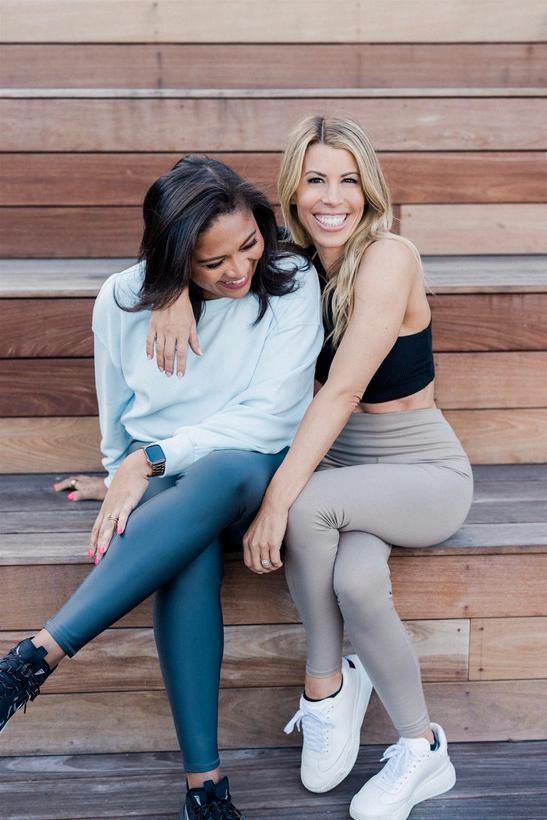
Liz Polk is Co-Founder of Speir Pilates® , a contemporary Pilates company with studios in Los Angeles and Newport Beach. She is also a Founding Partner of The BALA Firm LLP, a leading business and legal affairs practice in media and entertainment. A former senior executive at Netflix, she brings her background in scaling creative businesses and leading high-performance teams to the wellness space. Through Speir Pilates and its Studio Plans program, she focuses on elevating excellence across the Pilates industry.
Speir Pilates® is a contemporary Pilates company founded in 2016 with studios in Los Angeles and Newport Beach. Known for its commitment to precision, energy, and highquality instruction, Speir blends classical Pilates foundations with a modern, athletic approach. Now celebrating 10 years, the company continues to invest in teacher development, client experience, and building a lasting standard within the Pilates industry
by Anna Sarol
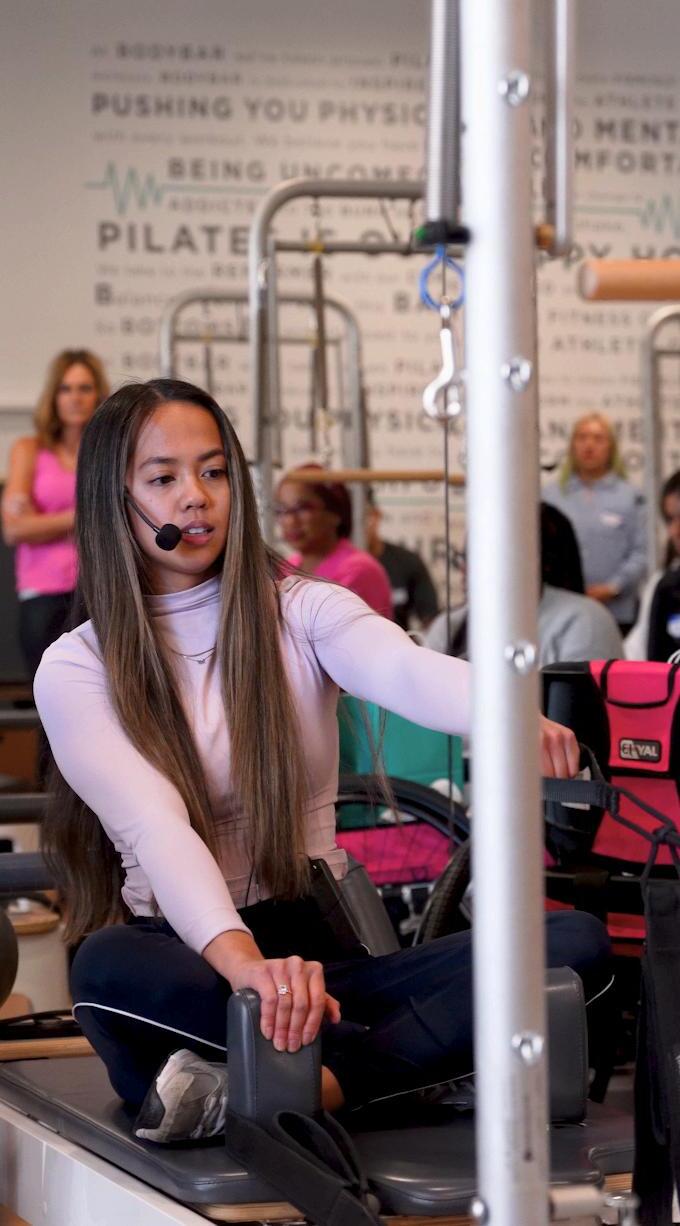
A fully adaptive Pilates class for wheelchair users may still be uncommon in boutique fitness, but instructor Anna Sarol is working to change that
Before she ever taught a class, Sarol began as a BODYBAR Pilates member searching for a form of movement that felt possible again A spinal cord injury at age 14 ended her seven years in competitive gymnastics, a sport that shaped her discipline and body awareness Pilates became the first modality that reconnected her to those instincts It offered structure, precision, and a familiar sense of challenge, but it also offered something she had not felt in years: a pathway back into her body.
“It reminded me of the discipline I grew up with, ” Sarol said “It felt like I could finally honor that inner gymnast again ”
As she continued practicing, the studio encouraged her to pursue instructor training, recognizing how her lived experience could expand what accessibility looks like inside a Pilates space Her presence in training sessions and classes naturally raised questions about how studios could better support disabled clients, not only through modifications but through intentional design
That perspective shaped the fully adaptive class she later led in Kansas City, where she welcomed 14 wheelchair users into the studio for a session designed specifically for people with spinal cord injuries The highly anticipated event filled within a week, despite no public promotion. For many attendees, it was the first time they had seen a Pilates environment intentionally structured around their needs The response underscored something Sarol had long suspected:
“...disabled clients were not uninterested in Pilates, they were simply waiting for a space that considered them from the start.”
Sarol, who uses a wheelchair herself, built the class format around single arm movements that allow participants with varying levels of trunk stability to support themselves while engaging their core “Everyone in that event had some form of spinal cord injury, ” Sarol said “Some people had full trunk stability, some had half and others had zero. ”
She also brought physical and occupational therapists into the room to support both safety and comfort, creating an environment where participants could fully engage in the workout. Her transition from client to instructor also revealed gaps in traditional Pilates training models
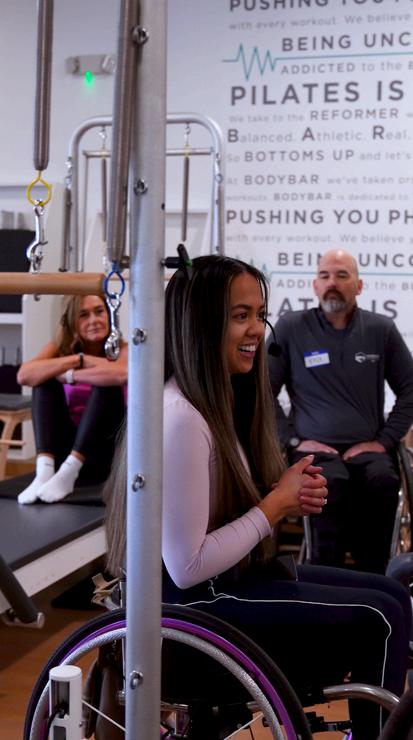
“Most programs do not address how to work with disabled clients, and many studios have never considered how their layout affects wheelchair users. ”
These gaps are not unique to BODYBAR; they reflect a larger industry pattern in which accessibility is often treated as optional rather than a foundational element of instruction.
What made Sarol’s path possible, she notes, was a willingness from her local BODYBAR studio to collaborate without pretense Although they had not hosted an adaptive class before, they were open to learning alongside her, an approach she believes is essential for meaningful inclusion
“Anna has influenced how we think about accessibility across the entire BODYBAR franchise system, ” said Kamille McCollum, president of BODYBAR Pilates “Her work is commendable and she is helping us build a more inclusive future for our studios and instructors ”
As her teaching expanded, so did her online presence Through her “Trying Pilates as a Paraplegic” series on social media, she began hearing from people who had never seen a wheelchair user in a Pilates studio, let alone teaching at the front of the room Many reached out with questions, curiosity or simply relief at seeing someone who looked like them participating in a space they had long assumed was off-limits
That absence of visibility, she says, is one of the most persistent barriers in boutique fitness Equipment can be rearranged and exercises can be modified, but people rarely enter spaces where they have never seen themselves reflected
“The biggest gap is not equipment, It is representation.”
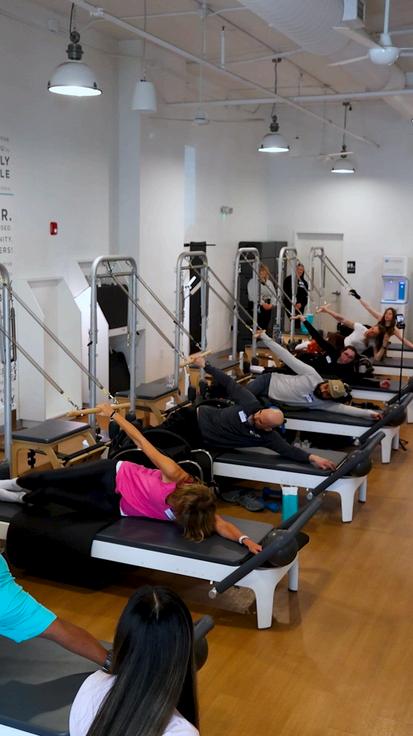
Her content now serves as an entry point for people who are curious about Pilates but unsure whether they belong in the space It also serves as a resource for instructors who want to learn, adapt and better understand how to support disabled clients with confidence and care
Sarol is exploring ways to bring adaptive Pilates events to studios across the country and hopes to eventually develop a training program for instructors Her goal is not to create a niche offering but to normalize disabled bodies in Pilates spaces, making inclusion a standard rather than an exception.
You can find Anna at @annasarol or learn more about BODYBAR at bodybarpilates com
Anna was also New Instructor of the Year for The Pilates Journal Awards in 2025.
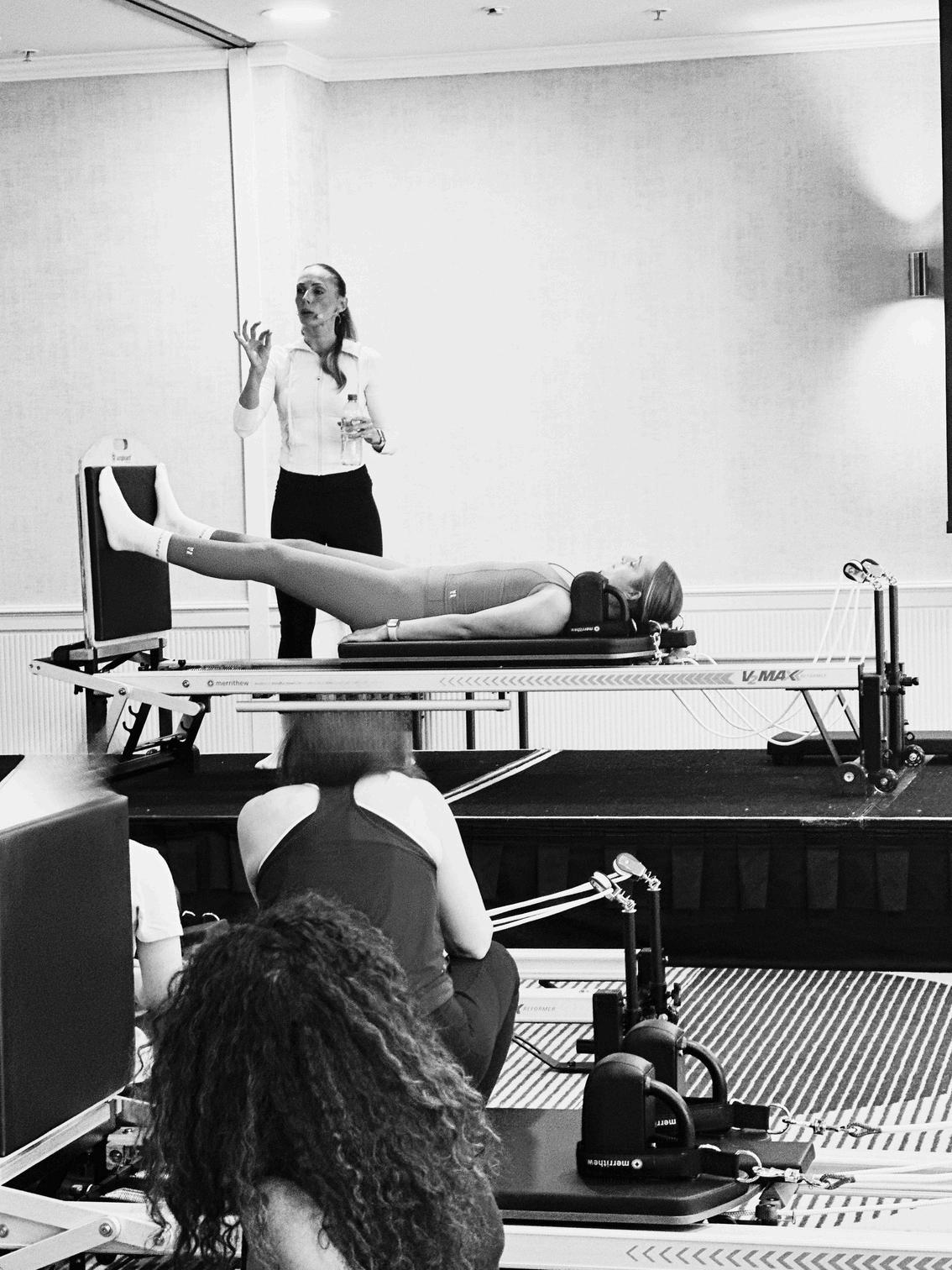
The jump board is a contemporary addition to the Pilates repertoire, developed decades after Joseph Pilates’ original work and often credited to Pilates elder Eve Gentry in the 1970s While it may look deceptively simple, a board that attaches snugly to the footbar end of the reformer, its applications are anything but basic
At its core, the jump board creates a different feedback loop for the feet and lower limbs Some boards are padded, some are not, but all provide a firm surface that can be used for traditional loaded footwork or, as the name suggests, for jumping. What makes the jump board unique is that it allows plyometric-style movement working with the natural spring of the body in a supine, low-impact environment, and when appropriate, even sidelying, quadruped, or prone positions.
board followed by a precise, responsive landing Rather than being aggressive or high impact, it becomes a refined way to build power, coordination, and elasticity in the body
This type of training can also support bone health Regular, wellcontrolled loading through movements like jumping, combined with resistance, has been shown to contribute to improvements in bone density In a Pilates setting, this offers a more supported and accessible way to introduce these benefits without the same impact demands as traditional jumping on hard surfaces.
It’s also worth noting that controlled plyometric work isn’t limited to the jump board. Similar principles can be explored on other equipment, such as at the end of the trapeze table using the spring system, roll-down bar, or slings but that is a conversation for another time
Historically, the jump board became a valuable tool for dancers, particularly for developing allegro technique and safely rehabilitating back into jumping after injury Today, its scope has expanded far beyond dance With thoughtful spring selection and clear intention, the jump board can function almost like a leg press, building strength through deep hip, knee, and ankle flexion valuable for athletes and everyday movers alike
So who is the jump board for? Any able-bodied person who walks through the world can benefit when it is appropriate for them It may support coordination, improve reactive agility, and help us navigate everyday challenges, from uneven ground to playing with grandchildren. That said, it is not suitable for everyone Conditions such as certain heart issues, active joint inflammation, or osteoporosis with significant bone loss may contraindicate jumping
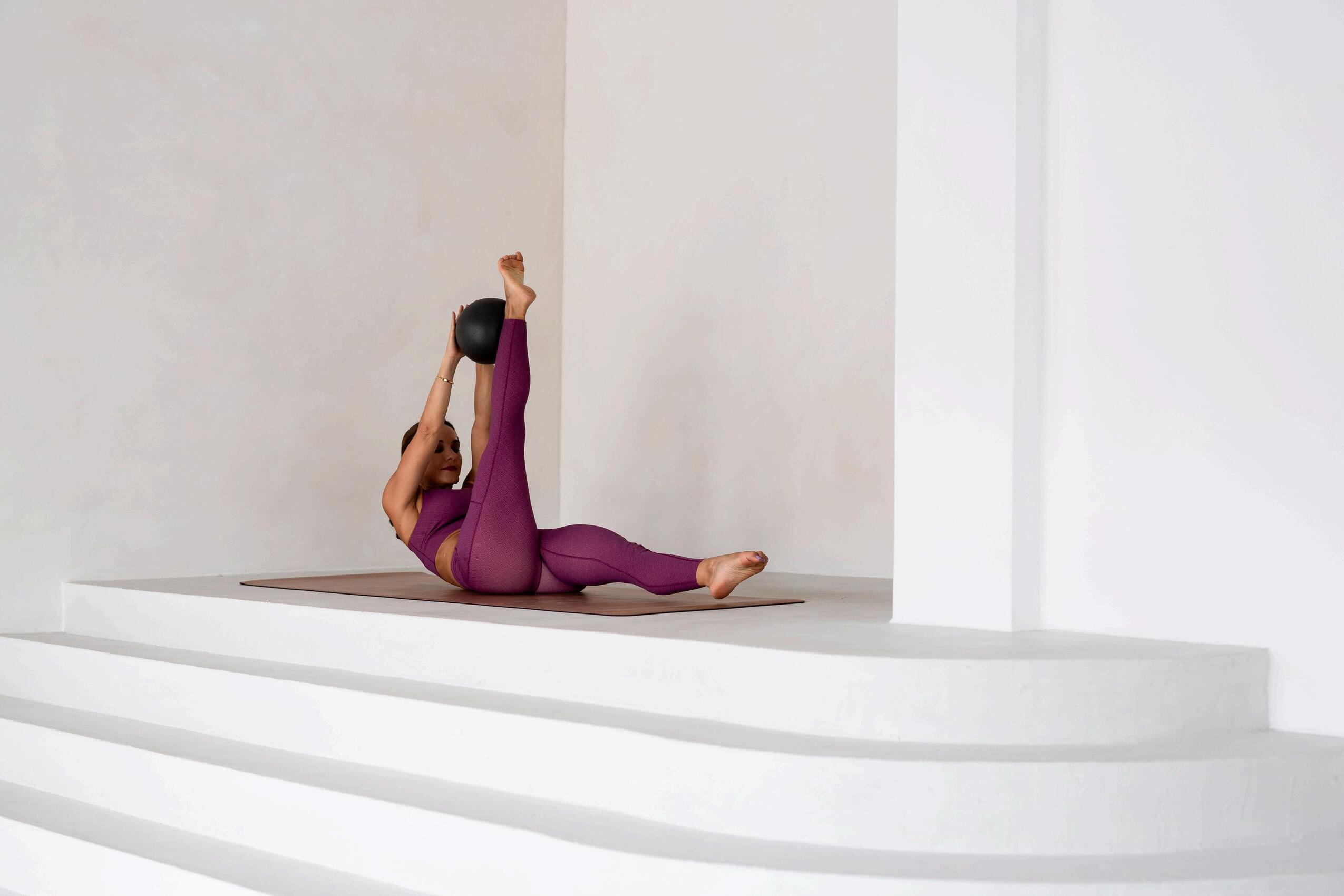
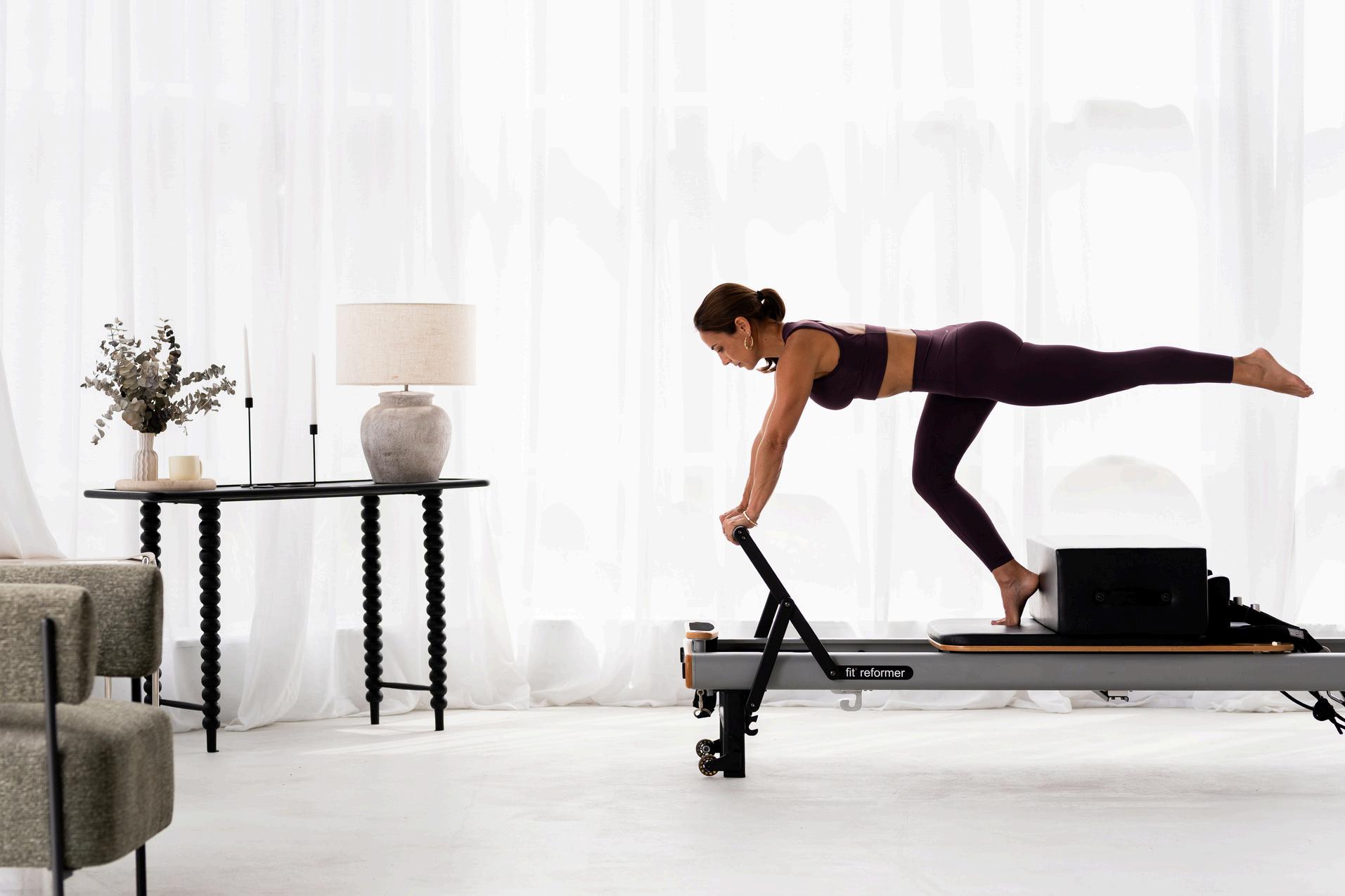
Rather than blasting the movement, focus on lengthening through the legs and maintaining connection through the body We are still looking for clear tracking of the knee over the second toe and an articulate, responsive foot
Kimberley Garlick is the Director of Northern Rivers Pilates in Lismore, Australia. She is also a Certified Polestar Studio/Rehab Practitioner and Educator/Mentor for Polestar International since 2003.
MAGHAN SHARES HOW PILATES PROJECT EVOLVED INTO A PREMIUM DIGITAL PLATFORM, AND WHY USCREEN BECAME THE TECHNOLOGY PARTNER SUPPORTING ITS GROWTH
by CJ Zarb
For Maghan Fittler, the vision was never simply to create another online workout platform
It was to build something far more intentional: a digital ecosystem that could deliver the precision, structure and community of a world-class Pilates studio at scale
After more than two decades in the fitness industry and 16 years dedicated specifically to Pilates, Maghan had already built a formidable reputation across clinical movement, studio leadership and education Her experience spans allied health settings, largescale studio programming and global brand leadership, shaping an approach that moves beyond traditional repertoire and towards real-world outcomes
“I stopped teaching the repertoire and started training the body in front of me to improve real-world outcomes, ” she says
That philosophy became the foundation for Pilates Project, a platform designed to bring structured, results-based programming to members anywhere in the world
But building that vision required more than content alone It required the right technology partner.
Like many in the industry, Maghan’s first move into digital was born out of necessity.
During lockdown, she pivoted her studio offering online, making on-demand classes available through her website while running free Zoom sessions to keep her community connected. The demand was immediate
Yet as the business evolved, so did the limitations of the technology supporting it.
“We were managing a fragmented tech-stack that felt disjointed, and we struggled to deliver the seamless, high-touch interface that a premium brand like Pilates Project requires, ” she explains. For a brand built on quality, structure and member experience, that friction quickly became unsustainable

“It stopped being about just watching a video and started being about entering a digital studio designed specifically for a member’s evolution.”
The shift to a dedicated app was less about following a digital trend and more about protecting the integrity of the teaching experience
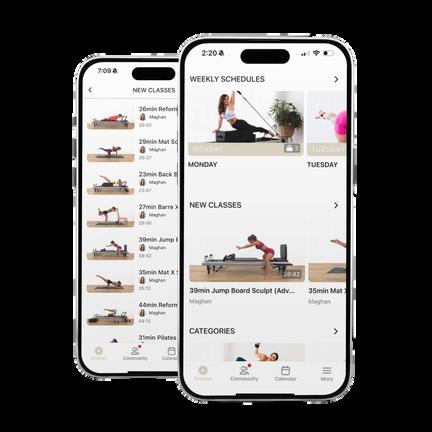
“Launching a dedicated app allowed us to transform our content into a curriculum, ” Maghan says “It stopped being about just watching a video and started being about entering a digital studio designed specifically for a member’s evolution ”
That distinction is where Uscreen became the platform of choice
For Maghan, the decision came down to partnership
Rather than simply offering a video hosting solution, Uscreen provided the infrastructure to build a complete business ecosystem: streaming, CRM, billing, community tools and a roadmap that aligned with long-term growth
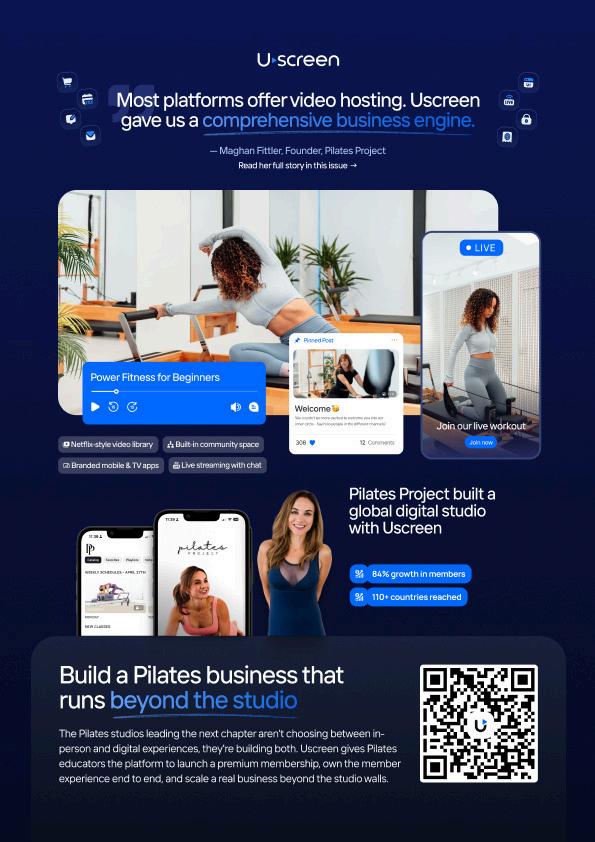
“While most platforms simply offer video hosting, Uscreen provided a comprehensive business engine, ” she says More importantly, the team’s willingness to collaborate on product development made the difference.
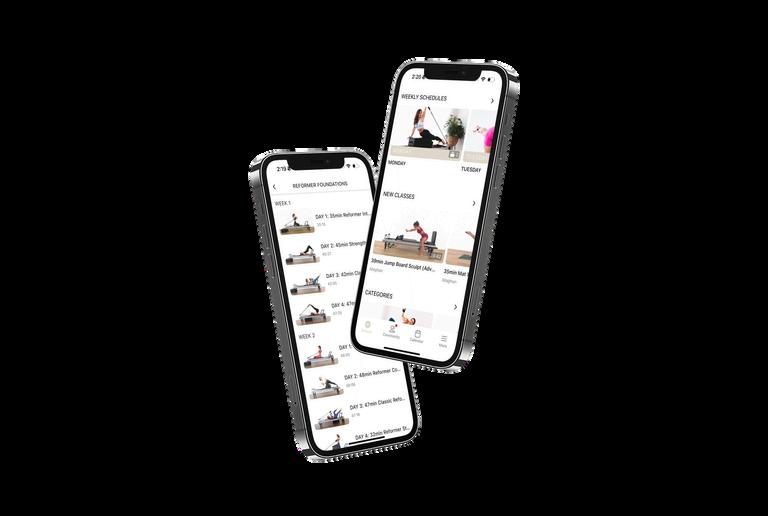
“They weren’t just showing us what the platform could do today; they were demonstrating how they intended to lead the market tomorrow. ”
That future-facing approach resonated deeply with Maghan’s vision for the brand
Instead of working around technological limitations, she was able to build a premium member experience around how she actually wanted people to move, learn and engage
Building More Than an App
Today, Pilates Project has evolved far beyond a digital class library
What began as an online Pilates offering has expanded into a holistic wellness and education platform, including hundreds of classes, nutrition support, meal planning, professional education resources and instructor development.
Her platform now houses:
800+ Pilates, reformer, mat and strength classes
850+ chef-created, dietitian-approved recipes curated weekly schedules and specialised pathways instructor education through Instructor Academy B2B studio integration through StudioConnect (in collaboration with Peak Pilates), bringing on-screen guided sessions into studio spaces
This is where the power of owning the platform becomes clear Rather than relying on algorithms, third-party channels or social platforms, Maghan has been able to build a premium environment fully aligned with her brand
“While social media is a powerful tool for connection, in my opinion it’s a difficult place to foster deep education To achieve real results, members need a focused environment free from the scroll, advertisements and algorithms, ” says Maghan “By removing the noise of fragmented systems, I’ve been able to focus 100% on what matters: elite content, results-based programming and the member experience ”
That vision is now expanding through her next project with Uscreen, Instructor Academy, launching this month Designed to support the next generation of Pilates teachers, the platform will offer breakout tutorials, downloadable class plans and elite Master Classes, extending Maghan’s vision into professional education
For studio owners and educators considering digital expansion, the impact extends well beyond reach alone
The platform has not only expanded Maghan’s global reach but fundamentally changed how the business operates “Financially, the app has stabilised our growth, providing a premium, reliable service that reduces churn and increases member lifetime value, ” she says
For Maghan, the shift has never been about simply putting workouts online It has been about creating a more considered way for members to walls, while maintain precision.
For Maghan, it has a freedom
“This platform allows school hours while love ”
As hybrid fitness con increasingly shaping looks like
For Maghan, digital i “We are moving tow secondary option; it For Pilates professio presents both an op
The brands that will build true ecosystem community.
And with the right platform partner behind it, Maghan’s vision continues to evolve alongside the future of Pilates itself
Helping creators, educators and movement professionals build premium video membership businesses that scale.
ELEVATING STUDIO HYGIENE WITHOUT COMPROMISING THE PLANET
by CJ Zarb
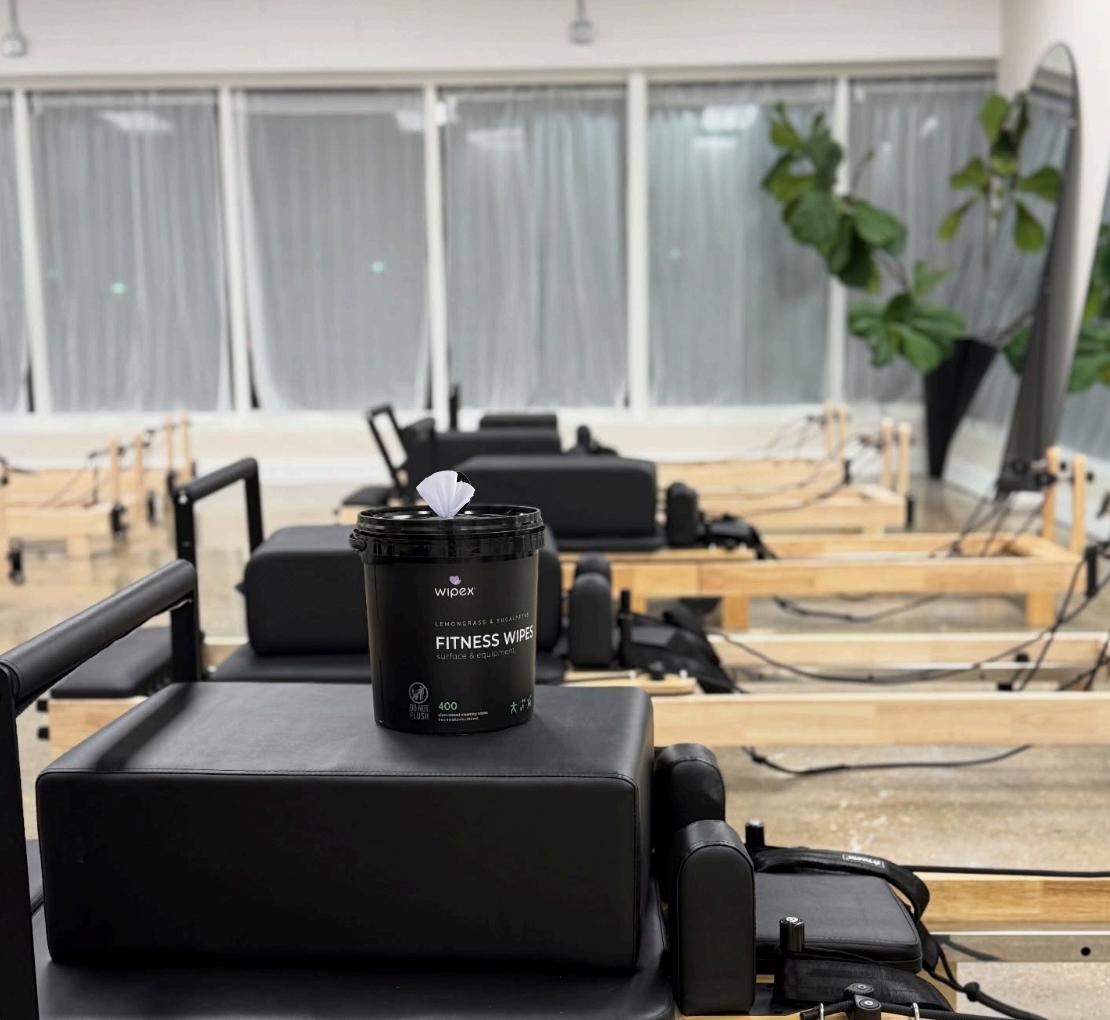

In today’s Pilates landscape, cleanliness is no longer simply an operational necessity, it has become part of the studio experience As boutique fitness continues to evolve into a more premium, experience-led offering, studio owners are increasingly balancing two priorities: maintaining exceptional hygiene standards while ensuring their choices align with broader wellness and sustainability values
According to company president Dean Tansman of Wipex, this shift has become increasingly clear in recent years
“Operators still want rigorous hygiene, but not at the expense of member health, equipment life, or the studio experience, ” Dean explains.
Following the heightened hygiene focus of 2020, many studios turned to harsh, hospital-grade chemicals While effective, these solutions often came with trade-offs, from damage to reformer upholstery and mats to strong chemical smells that disrupted the atmosphere of the space
“From day one, our focus has been to pair lab-validated cleaning performance with skin safety and an elevated sensory experience, including scents that make the room feel fresh rather than clinical, ” says Dean
Today, the conversation has moved beyond simply asking, Does this clean?
Instead, studio owners are asking deeper questions around what products leave behind - on bodies, equipment and the environment
“Our EWG VERIFIED® studio products are built around full ingredient transparency so that operators and clients can see exactly what they’re using and feel confident that their hygiene standards align with their wellness values, ” Dean says
Conscious cleaning means taking a more considered approach to hygiene, one that balances cleaning performance with skin safety, sustainability and long-term material care.
“Studio owners are already managing staffing, schedules, retention and member experience Few have the time to decode chemical labels or investigate manufacturing standards. This leaves many vulnerable to greenwashing, where products appear sustainable in branding but fail to deliver genuine environmental responsibility, ” he says
At the same time, no premium studio wants to compromise on perceived cleanliness
As Dean notes, any environmentally conscious solution must still perform at the highest level
“It needs to remove sweat, body oils and grime buildup while protecting the life of reformers, mats, and upholstery ”
For studios that have made the shift, the difference is being felt both operationally and experientially
Behind the scenes, Wipex has continued to refine its formulas through partnerships with organisations such as EWG and independent laboratories
“Over the years, we’ve worked to refine three things: how well the wipes clean sweat and sebum, how gently they treat skin, and how they interact with real-world fitness materials like vinyl, rubber and technical coatings, ” Dean explains
The brand notes that its fitness wipes are certified hypoallergenic and dermatologically tested, including HRIPT testing for sensitive skin, allowing staff to use them comfortably throughout the day At RFMR Pilates Club in Sedalia, Missouri, hygiene is considered an extension of the client experience.
“At RFMR Pilates Club, we take cleanliness just as seriously as the workout, ” Nadia Ostapenko shares
“After every class, reformers, rings, weights and mats are wiped down as part of the studio ritual; not simply for hygiene, but to maintain a space that feels premium, safe and welcoming ” The difference, they say, is immediately noticeable.
“We absolutely love Wipex Not only do they power through every drop of sweat from those heated sessions and intense pulses, but they leave the studio smelling so clean and refreshing, not that harsh chemical smell ”
For RFMR, cleanliness is no longer a back-of-house operational detail. It is part of the studio’s identity.
“A studio that smells fresh, feels clean, and stays hygienic is part of the RFMR experience ”
Studios tell Wipex that this scientific backing allows them to market cleanliness with confidence and reassure clients who care deeply about both hygiene and wellness
For many wellness-led studios, this reflects a wider industry shift. As sustainability, ingredient transparency and environmental responsibility become increasingly important to clients, what happens behind the scenes is now just as important as the movement experience itself.
For Wipex, that is exactly where the future of studio operations is heading
“Environmentally responsible hygiene is quickly becoming the new standard for premium wellness spaces, ” Dean says In that sense, conscious cleaning is no longer an operational detail
It is part of the modern studio experience
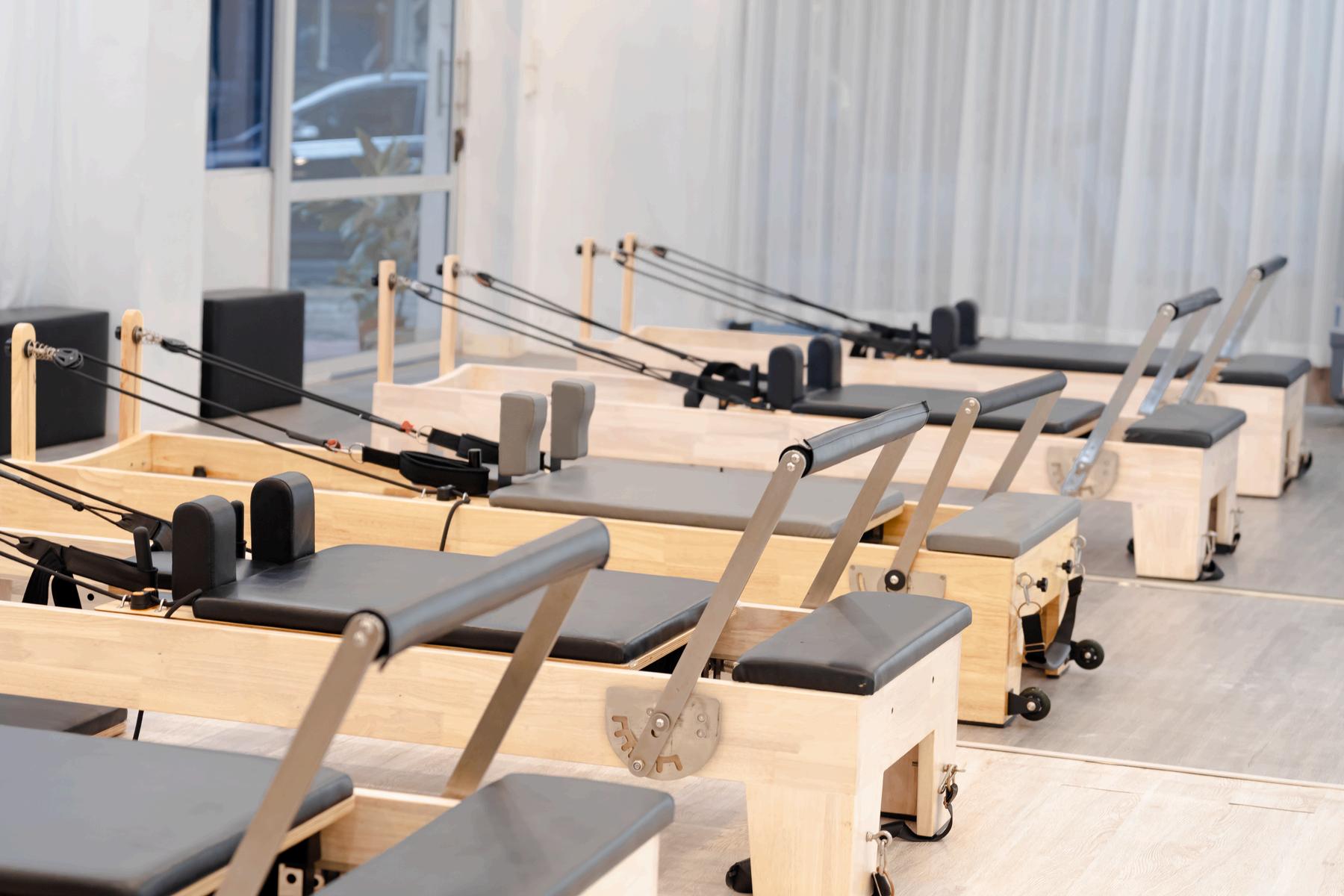
According to Wipex, a genuinely environmentally responsible hygiene solution should meet five key criteria:
Packaging: Minimized, refill-friendly and recyclable where possible
Materials: Compostable fibres rather than plastic-based wipes that contribute to microplastics
Third-party validation: Trusted certifications such as EWG VERIFIED®
Corporate practices: Transparent environmental and social commitments
Manufacturing footprint: Responsible production standards and robust worker protections
by Kimberley Garlick
I write this as the newly appointed President of the PAA with both excitement and a profound sense of responsibility
Having worked closely with Robyn Rix since joining the PAA board, I’ve witnessed firsthand the honesty, passion, and dedication she brought to this role Alongside the collective strength of the board, she has helped establish not only a voice for our industry, but a genuine support network for Pilates professionals across the country
Her leadership has advanced recognition of Pilates within the healthcare system - an essential step for our profession As a second-generation teacher trained by Lolita San Miguel, Robyn honours the lineage and integrity of the method while advocating for its place in the modern professional landscape
It is both a privilege and a responsibility to continue this work The strength of any profession lies in its ability to honour its foundations while evolving with purpose Pilates is not a trend, it is a method grounded in enduring principles Yet as an industry, we are still defining how we are seen and valued within the broader health landscape
My intention as President is to build on the strong foundation already in place by fostering open dialogue, upholding high education standards, and cultivating a membership grounded in shared values We are not simply instructors, we are professionals supporting all populations restore functional movement and be an integral part of reaching goals, improving overall quality of life through all times in life Our work extends beyond the studio, influencing how people move, manage pain, and reconnect with their bodies
This is why it is essential we stand together, not as an extension of the fitness industry, but as a recognised professional body within allied health and career opportunities
To move forward, we must remember where we began Joseph Pilates believed that “physical fitness is the first prerequisite to happiness ” His work was never about aesthetics, but about restoring balance in body and mind That legacy is what we carry forward and why advocacy matters When we advocate for our profession, we elevate a method that transforms lives.
One of our greatest challenges is definition If we do not clearly articulate who we are and the standards we uphold, others will do it for us.
IAs President, I am committed to leading with transparency and purpose, and to creating space for meaningful conversations that shape our future This includes:
Strengthening education standards
Supporting clear career pathways
Advocating for healthcare recognition
Ensuring accessibility while maintaining integrity We must be proactive and we must move forward together
The PAA is an independent, not-for-profit organisation run by Pilates professionals, for Pilates professionals We exist to uphold standards, support career development, and provide industry-led advocacy in an evolving landscape
When you join the PAA, you gain more than a credential You gain recognition, resources, professional development, and connection to a broader community
But beyond these benefits, membership represents something deeper It is a commitment to the value of your work and the standards of our profession The strength of our industry lies in our collective voice Individually, we make an impact BUT together, we create momentum
We are stepping into an era of opportunity BUT IT requires participation, collaboration, and shared responsibility
As I step into this role, I do so with humility and determination I am proud to represent you and to help shape a profession that continues to make a meaningful difference.
The PAA is not just about belonging; it is about standing up for your profession, your peers, and the future of Pilates
I invite you to stand with us Contribute to the conversation Uphold the standards Be part of something bigger than yourself
Together, we can define our profession.
Kimberley Garlick is the newly appointed President of the PAA and the Director of Northern Rivers Pilates in Lismore, Australia. She is also a Certified Polestar Studio/Rehab Practitioner and Educator/Mentor for Polestar International since 2003

EACH MONTH WE WILL SUMMARISE THE BEST/MOST RECENT PUBLISHED ARTICLES IN THE INDUSTRY
Comparison of Pilates, Aerobic Exercise, and a Combined Program for Patients With Rheumatoid Arthritis
This 2021 randomized controlled trial evaluated and compared the effectiveness of three distinct exercise interventions for rheumatoid arthritis (RA) management Thirty patients with RA were evenly distributed among three intervention groups: Pilatesbased exercise, aerobic training, or a combined protocol incorporating both modalities
Each group exercised according to an eight-week intervention program The Pilates group participated in 45-minute sessions three times weekly The aerobic group performed 30-minute treadmill walking sessions three times weekly, with intensity calibrated to 60 to 80 percent of maximum heart rate. The combined intervention group participated in 30-minute aerobic sessions followed by a 15-minute rest period and subsequent 45minute Pilates training three times weekly The following measures were evaluated using validated assessment tools: fatigue, depression, aerobic capacity, pain perception, sleep quality, and overall quality of life
Results revealed that the Pilates group experienced significant improvements in fatigue, depression, aerobic capacity, and quality-of-life metrics but only slight improvement (not statistically significant) in pain perception and sleep quality Both the aerobic and combined intervention groups achieved significant improvements across all measured parameters except pain Notably, statistical analysis found no significant differences in effectiveness between the three approaches
The researchers concluded that Pilates exercises represent a safe, effective alternative to conventional aerobic training for RA patients, offering comparable therapeutic benefits These findings suggest that integrating Pilates methodology into standard rehabilitation protocols for RA could enhance treatment outcomes and provide clinicians with additional evidence-based options for comprehensive patient care
Yentür, S B , N Ataş, M A Öztürk, and D Oskay 2021
“Comparison of the Effectiveness of Pilates Exercises, Aerobic Exercises, and Pilates With Aerobic Exercises in Patients With Rheumatoid Arthritis ” Irish Journal of Medical Science 190 (3): 1027-1034
Samantha Wood, MPT, MBA, NPCT, RYT, is a licensed physical therapist, a National Pilates Certified Teacher (NPCT), and a Yoga Alliance–certified teacher. She created and teaches BASI’s Pilates for Injuries & Pathologies advanced education courses. Click here to view 2026 course dates and locations.
Her new book, Pilates For Rehabilitation, 2nd edition is available now from HumanKinetics com and Amazon com
Tell us a little about yourself and your Pilates background?
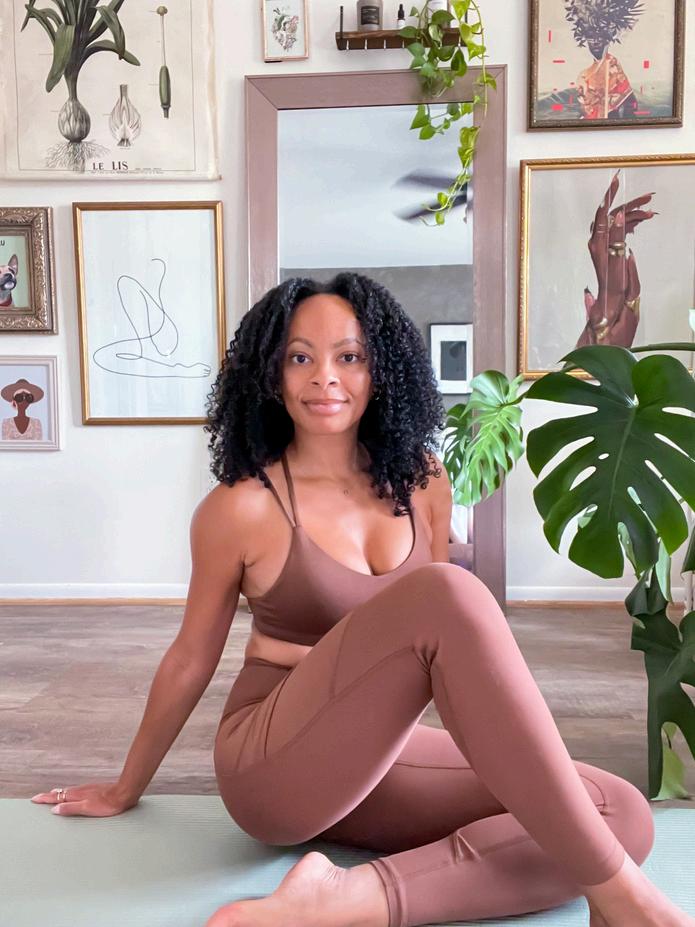
My name is Milan and I live in the metropolitan DMV area in Maryland, USA I teach at three different studios with different ethos and modalities. I love the variety and I've been teaching for about two and a half years, so I still consider myself a newly minted sponge, learning and growing as an instructor in any way possible
How did you discover Pilates?
I discovered Pilates in 2019 during a major life change, alongside experiencing new, non-specific back pain In my search for relief, I explored various fitness modalities, gyms, and studios but was particularly drawn to Pilates. My back pain soon disappeared, and my love for the practice grew
How do you keep learning? What inspires you in your work?
I’m constantly learning in any and every way that presents itself to me. I love continuing education and have attended multiple Pilates conferences, webinars, and specialized trainings in person Everyone explains things in their own unique way, and sometimes one perspective is exactly what I need for a detail to finally click. Tabitha Russell was such an inspiration to me when I attended a plenary session she delivered at Pilates on Tour Chicago She spoke about the isolation she felt when she first entered the profession many years ago, and it prompted a moment of deep reflection for me I thought about the warmth she later showed me as a stranger passing in the hallway at the conference, making a point to ensure I never felt the way she once did: isolated and alone in the field. That moment has stayed with me, and it continues to inspire me to pay that forward
The best advice you were ever given as a teacher…
At the point of certification: we are just advanced beginners In some instances, training can feel like learning a system in a black box. Until anyone starts seeing bodies move and understands human movement patterns and Pilates as a system, we're all well-educated beginners It was an invitation to keep learning and studying because that is not a journey that is complete upon certification, it's just beginning
Is there something you try and instil in each of your clients?
II remind my clients that consistency is what builds selfesteem I often close class by acknowledging how hard it can be to carve out even one hour in a busy day, and how meaningful it is that they chose to show up for themselves By doing so, they’re becoming stronger, more mobile, and more centered I want them to leave knowing their practice is an act of self-care, and something to feel proud of.
The best Pilates course you ever did was…
Any sessions I’ve taken or observed with Amy Havens have been incredibly impactful Before my first in-studio private, I watched one of her sessions on Pilates Anytime, which helped me better understand how to observe the body in front of me and tailor movements to the individual I was working with - both then and ever since Amy also led a balance workshop at Pilates on Tour in Chicago that I loved. The level of detail and insight she shared has stayed with me and continues to inform my teaching today
What’s your favourite piece of equipment to use with clients in studio and why?
My favorite pieces of equipment are the Reformer and Tower Many of my clients are post injury or post-surgical, or managing conditions like scoliosis or spinal fusion These tools allow me to safely guide them through exercises that build strength, stability, and confidence, while staying connected to their bodies I love how the Reformer and Tower make movement feel supportive, intentional, and adaptable to each client’s needs.
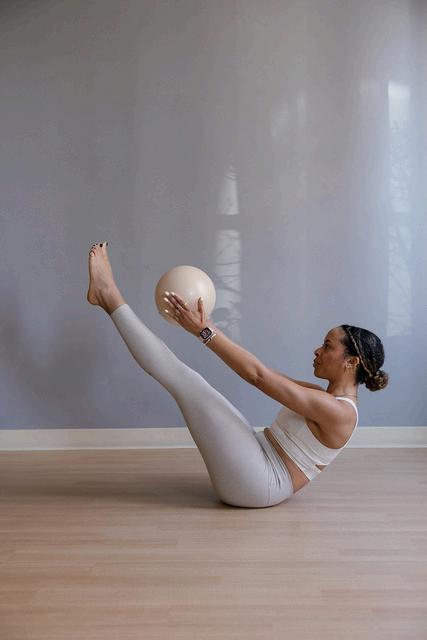
How do you stay motivated?*
I have no shortage of motivation I work fulltime outside of Pilates, and I still remember and believe in how it helped me, my body, and my nervous system When people tell me how their day to day lives have improved, I remember why I'm here and the value we bring to participants' lives
What makes you laugh the most?
One time during a particularly quiet moment in class, a member who'd never used the chair before said " this thing sounds like old stairs!" And the silence broke as we all laughed -- to this day I still stifle a chuckle when there's a particularly talkative chair apparatus in the room and think of old stairs
What’s your favourite way to spend a day off?
In a park with snacks! I take my picnics very seriously, I have a portable speaker, insulated picnic basket, foldable lined picnic blanket and a supply of citronella candles Add a book and snacks, and that is my favorite activity on a spring or fall day
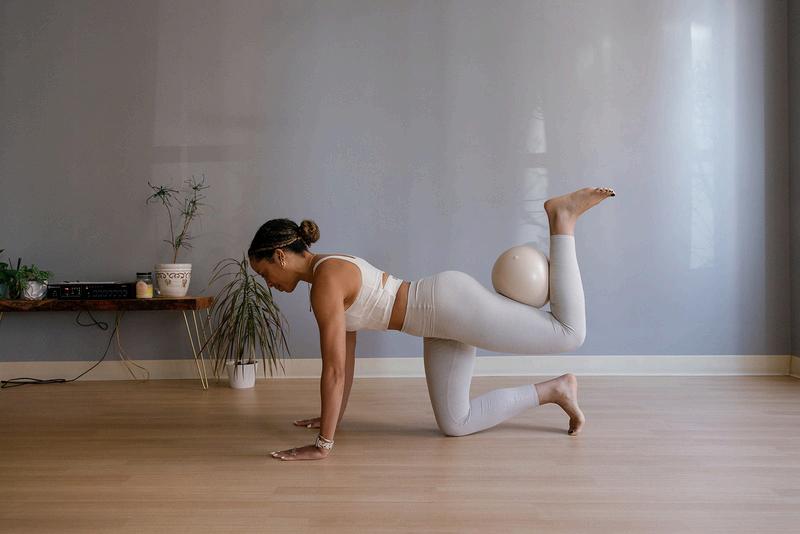
How many pairs of grip socks do you own? Do you love or hate a stretch band?
probably have an embarrassingly small grip-sock collection ompared to some peers. I love a band, they seem to be about as controversial as matcha and matching sets at the moment -- but I remain a stalwart fan of all three
Does your family ‘really know’ what’s involved in your job?
Simplest answer -- absolutely not!
eaches at Ébène Pilates, Nest Movement Studio, ilates Laurel