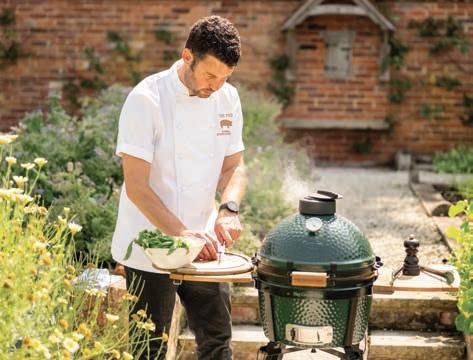
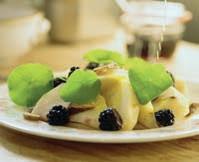
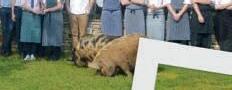
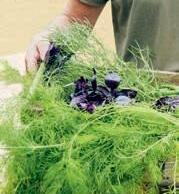
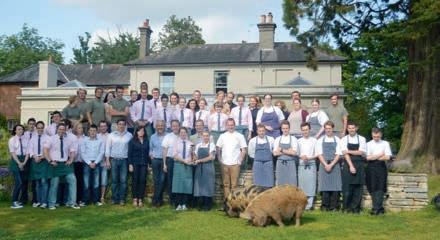
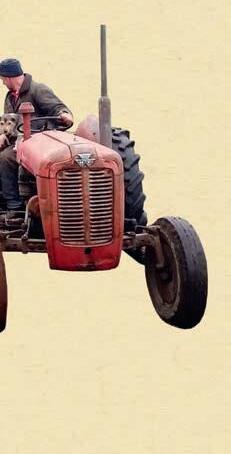
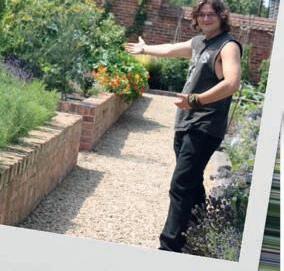
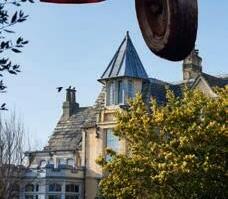
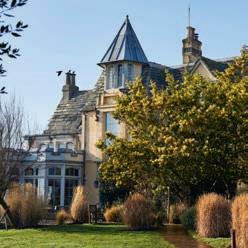
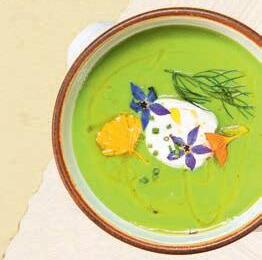
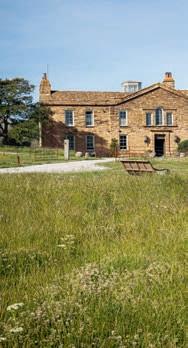
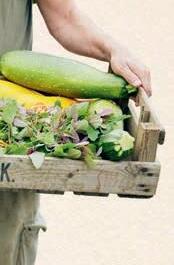
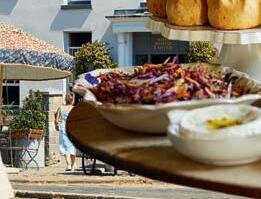
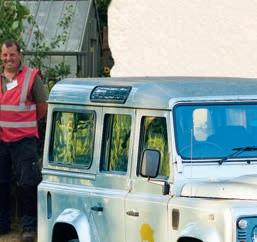
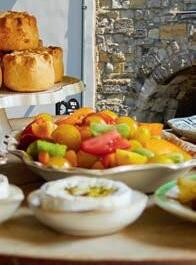
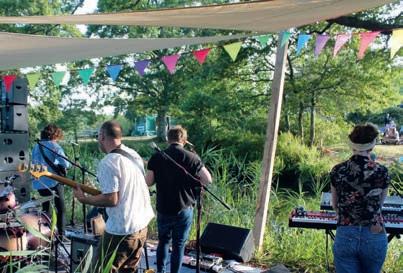
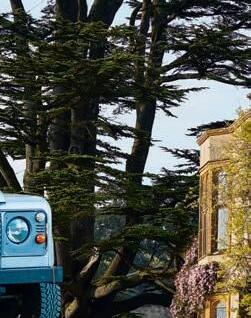
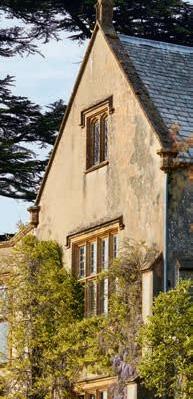
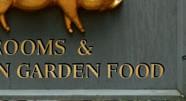
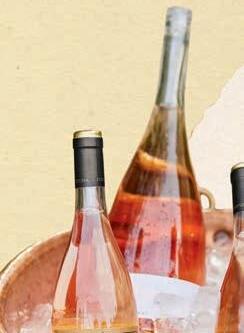
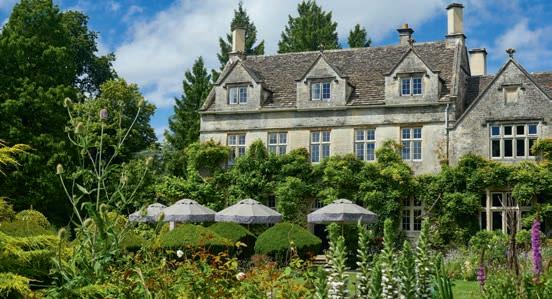
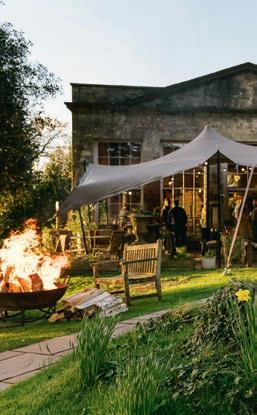
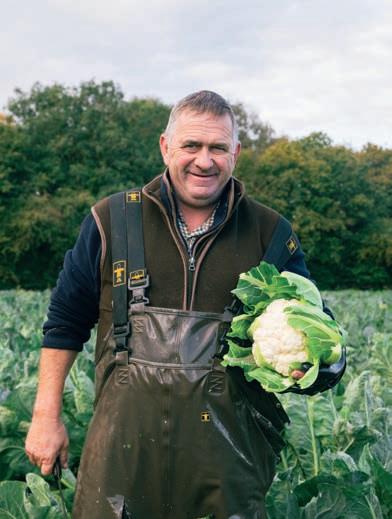
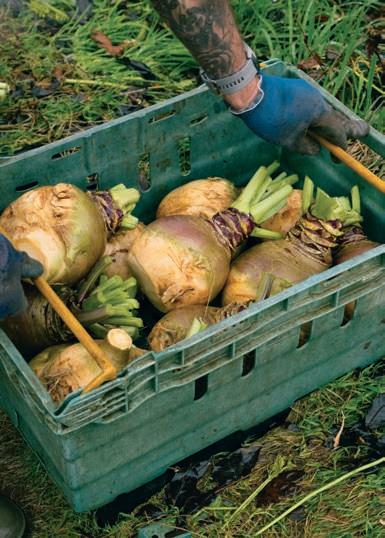
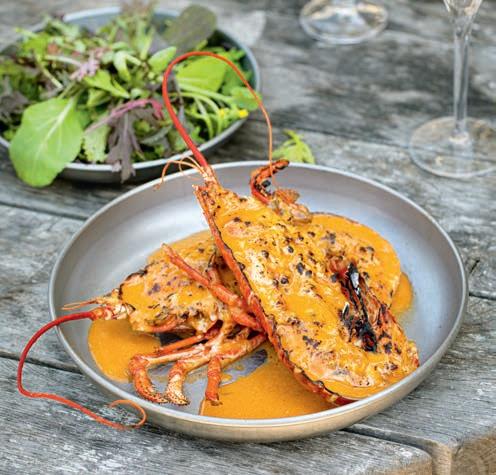
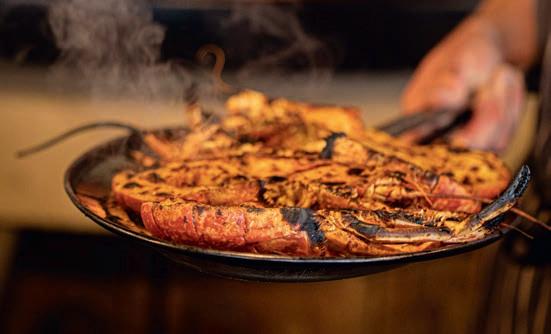
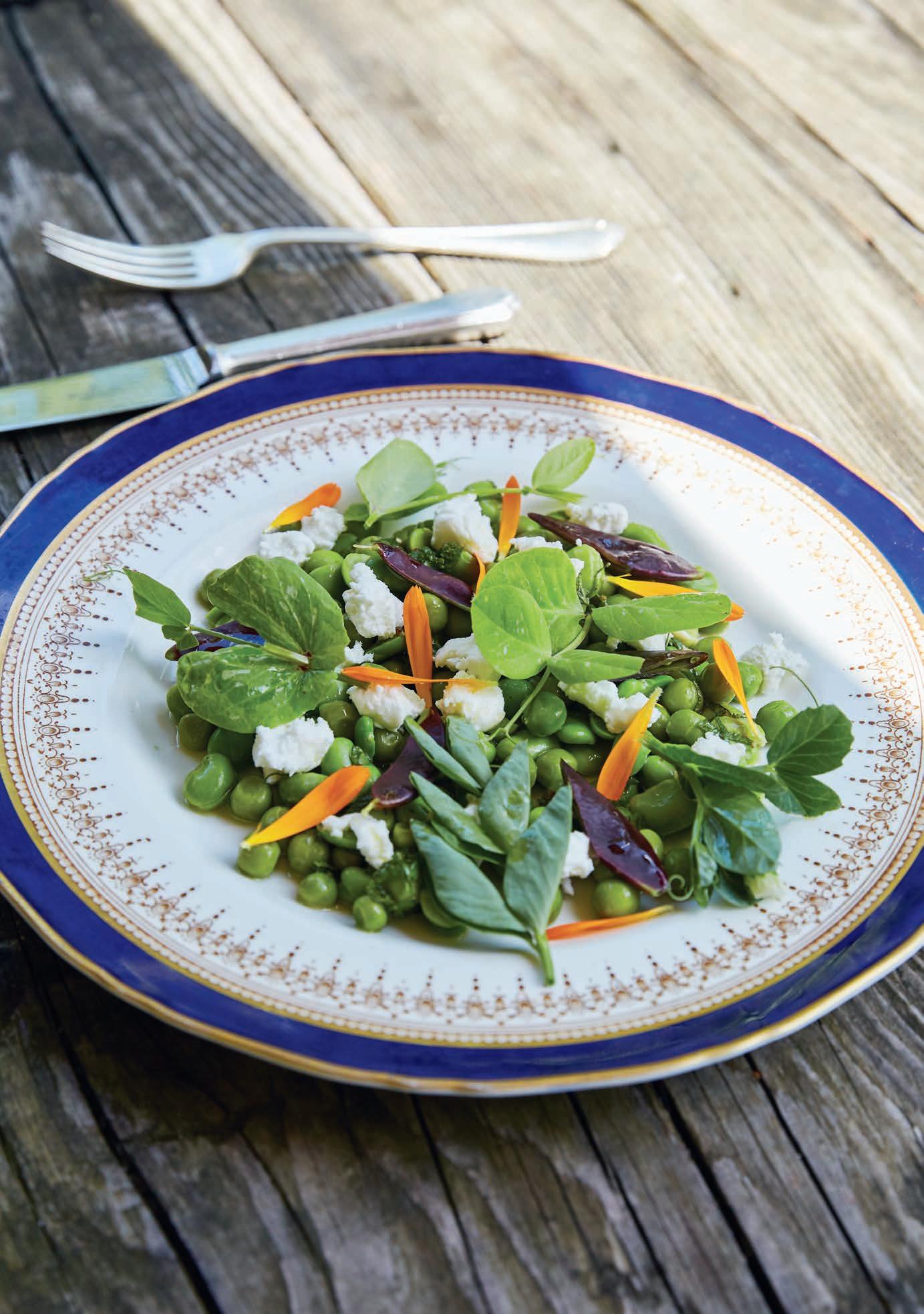
From April 2026, our Garden Ovens are open for a fresh new season of laid-back, alfresco eats and long lunches with a nice cold glass – or two. We’re kicking things up a gnarly notch this year in our outdoor suntraps at THE PIG in the New Forest, THE PIG-near Bath and THE PIG-in the South Downs, with brand new dishes freshly cooked on our Big Green Egg barbecues. Head down to the Garden Oven at your chosen PIG for a flavour of our summer options, or visit thepighotel.com/ eat-and-drink/menus
Dates
for your diary
Gather your favourite people and head round to ours this spring and summer to make some memories worth savouring. From hands-on foodie workshops to restaurant takeovers with fantastic speakers, we’re putting on a brilliant mix of unmissable PIG happenings with our friends across the patches we call home. Find out more and book your space at thepighotel.com/events
Enjoy our Bramley body care, at home
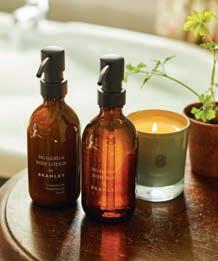
Ever since we opened our very first PIG in 2011, we’ve kept natural, botanical goodies from our friends at Bramley in our bathrooms. You’ll still find them today across each of our nine PIGs (and pub!). So, as we celebrate our big 15th birthday this year, what better time to bring you our new, bespoke Bramley range to enjoy at home? Originally created exclusively for our bedrooms, the Bramley x THE PIG Body Wash and Bramley x THE PIG Hand and Body Lotion are made with a gentle blend of camomile and rosemary inspired by our Kitchen Gardens. Each is packaged in the same brown glass bottles you’ll always find at our house – and now yours. If you want to treat yourself, head to reception or shop online at gifts.thepighotel.com
Fancy your next PIG sleepover on us? Scan for your chance to win as a VIP (very important PIG reader!)
A summer worth celebrating
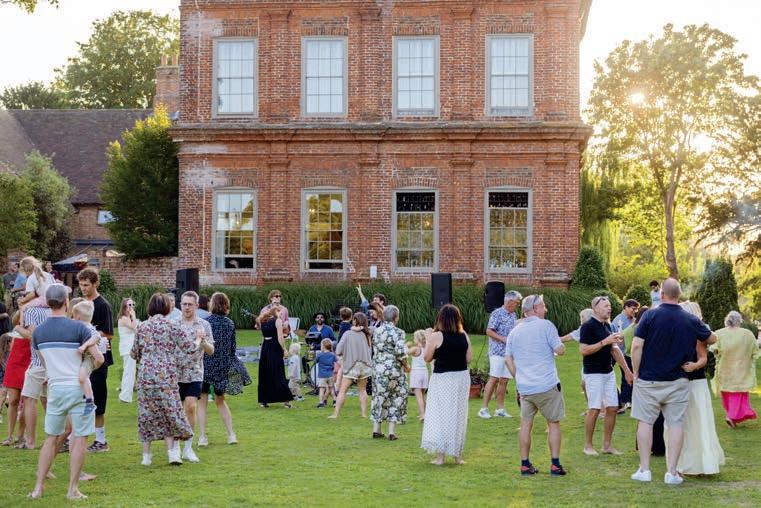
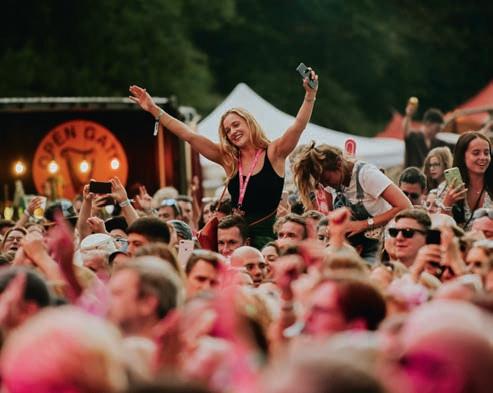
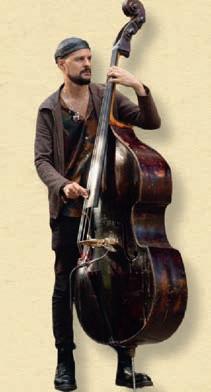
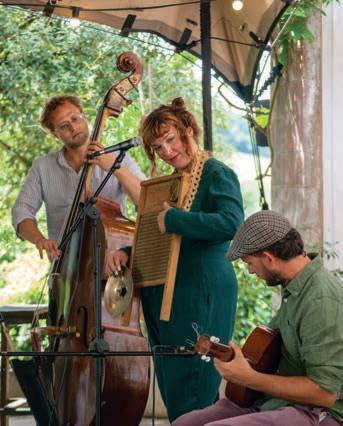
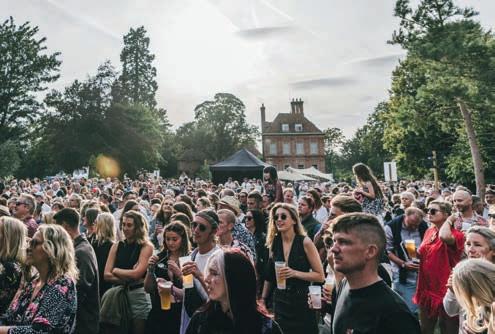
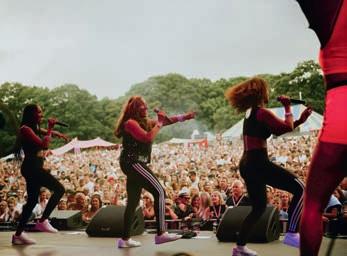
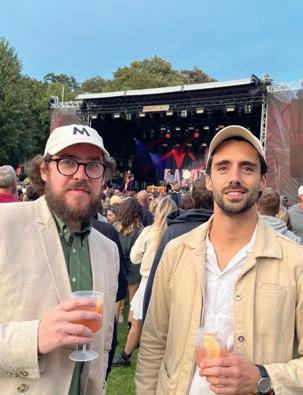
We love any excuse for a good knees-up – especially when there are 15 fantastic years of THE PIG to toast! We’re having a serious summer of birthday bashes, and you’re at the top of our guest list. We’ll be throwing open the doors for our weekend-long Smoked & Uncut Garden Parties at THE PIG-at Bridge Place, THE PIG-at Combe and THE PIG in the New Forest. Expect some great feasting food and cracking live, local music to let the good times roll. Find out more and buy your tickets at thepighotel.com/events
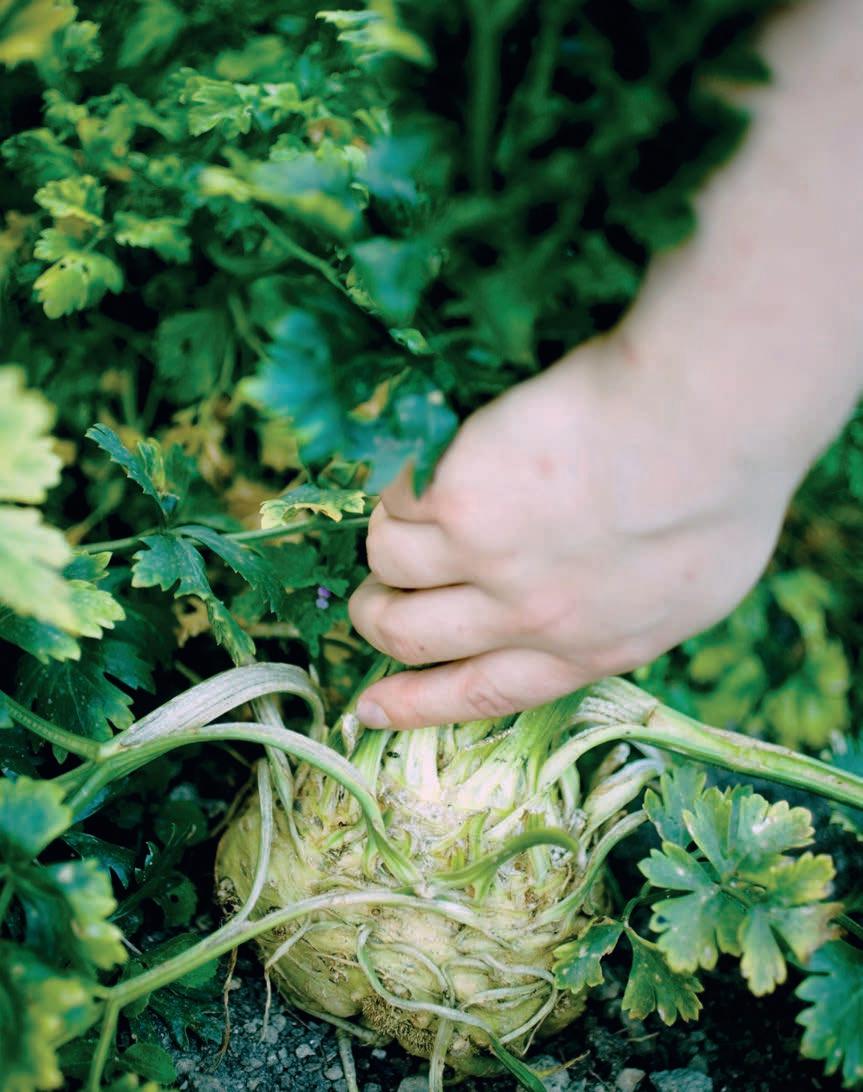
Earthy, sweet, and subtly nutty, celeriac is one of our favourite winter root veggies that’s still fresh and full of flavour in early spring. Best planted around April and left to rest, undisturbed for at least six months, it’s a vegetable that can really teach us a trick or two!
Our kitchen teams love to use celeriac as an unsung hero in PIG dishes – whether that’s slowly braised to beef up a hearty gardener’s broth, crushed into sauces to cut through rich serves of game or salt-baked for a perfectly seasoned, fresh salad that really holds its own.
CELERIAC
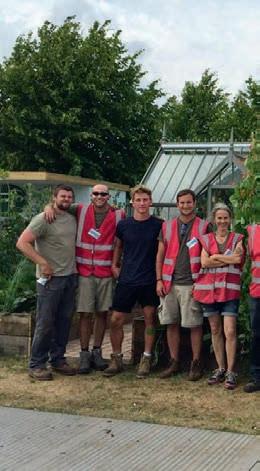
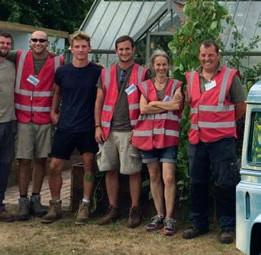
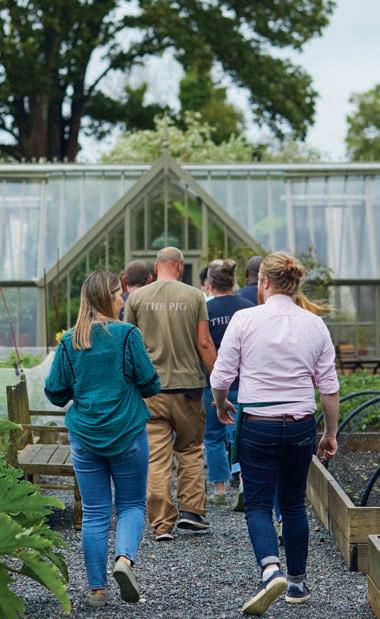
Come and see what’s growing, right now, in the veg beds with a free guided tour of our Kitchen Gardens. We’re always happy to show you around and answer any questions you have. Simply speak to our reception team to join us in the morning. thepighotel.com/events/kitchengarden-tours-at-the-pigs
It’s also the time to find... Leeks, spring onions, sweet peppers, carrots, tomatoes, asparagus, elderflower, wild fennel
Salt of the earth
How to salt-bake a celeriac
Wrapping celeriac in a saltbased crust helps our hero veggie retain moisture, as it steams at the same time as it bakes, to emerge perfectly seasoned.
Start by mixing approx 500g plain flour, 200g rock salt, 1 egg white, a little water and fresh chopped garden herbs into a smooth paste. Chop off the top and bottom of the celeriac and slice off the skin, then coax the dough around it, stretching it until it’s fully encased.
Place the covered celeriac into the oven at 185°C (fan) and cook for about 1½ hours, until you have a golden-brown crust.
When it’s slightly cooled, crack the baked dough using the back of a sharp knife and cut down the middle (just to the depth of the crust) to release the celeriac. Slice into one-inch chunks to build a punchy spring salad.
For the full recipe, visit thepighotel.com/saltbaked-celeriac
PIG
So much has happened since we launched – here is just a glimpse of what we’ve got up to along the way
The doors open to our very first PIG in the New Forest - and our Head Kitchen Garden Guru, Ollie, with his veg beds after the opening party
Two new porkers join the litter: THE PIGnear Bath and THE PIG-on the beach
Indie legends, The Kooks, headline our fifth Smoked & Uncut festival at Lime Wood
Vines with a view: THE PIG-in the South Downs opens, home to our first PIG vineyard in West Sussex, and our PIG People took to the saddle for Hospitality Action’s fundraiser
“Back in Business”, raising over £30,000 to support our friends in our industry 2011
After the success of our 2019 debut, our second PIG book is published, filled with recipes and tales from our local supplier friends
We get the keys to
our
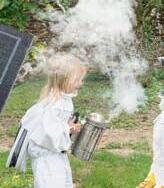
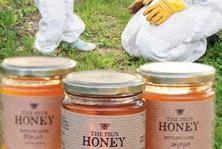
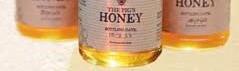
Our first jars of PIG Honey are harvested from our very own bee hives
Harlyn House, ready to restore into
first Cornish PIG, THE PIG-at Harlyn Bay
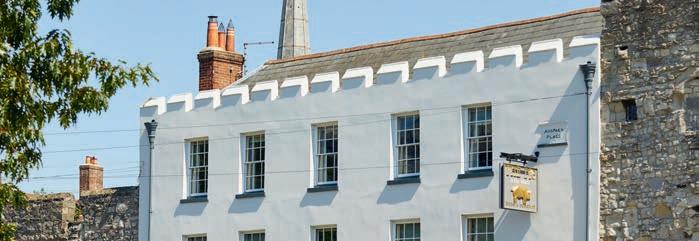
Southampton’s ancient walls become home to our one-of-a-kind historic townhouse, THE PIG-in the wall
At the other end of the coast, former rock-and-roll club THE PIG-at Bridge Place opens in April 2019
We team up with our friends at Alitex for our first Chelsea Flower Show
Music, food and local friends: our first Smoked & Uncut festival rocks the New Forest
2024
We become B Corp certified, a milestone in our commitment to always make thoughtful decisions for people and planet. THE PIG-in the Cotswolds joins the litter, along with our first-ever PIG pub, just across the road
2020
THE PIG-at Combe, our 16th-century Elizabethan gem, opens in east Devon
The pandemic changes everything, but when hotels are allowed to reopen, we invite some specially nominated NHS staff for a well-earned break with us. The first bottles of THE PIG Cut wine –our new house white, red and rosé – arrive in time for Christmas
2025
Our outdoor rustic retreat, The Folly, opens for wood-fired eats and live laidback beats at THE PIG-at Combe
2026
come this year, from serious Sunday lunches to proper summer garden parties –watch this space!
Guest book
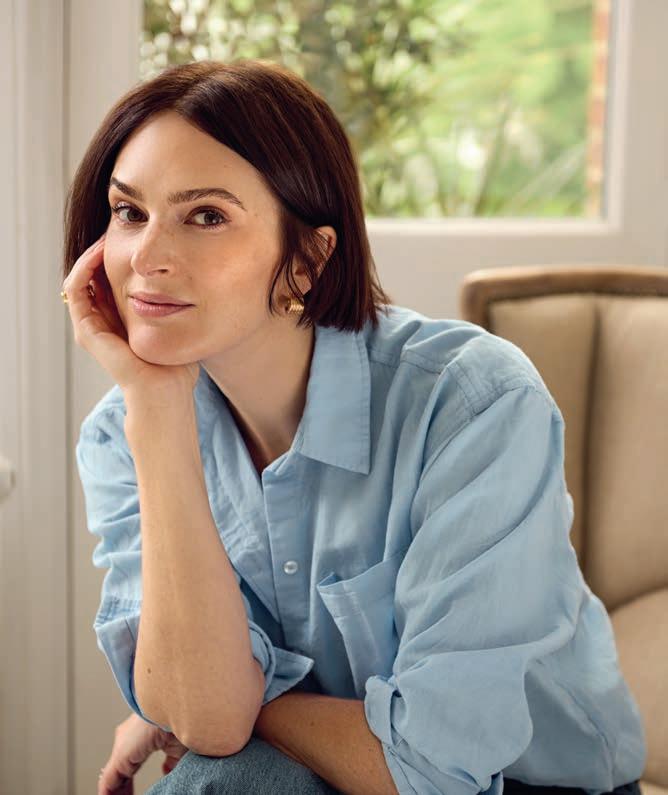
with Elizabeth Day
The author and podcaster shares how she likes to make the most of a PIG stay, and her fondest memories with us — including getting married at THE PIG-at Combe
The first PIG I stayed at was THE PIG-at Harlyn Bay. I had a job as a hotel columnist for The Daily Telegraph and I went to stay when it opened. It was just after the first lifting of lockdown restrictions in 2020 and, as you can imagine, was the easiest trip to say yes to. As soon as we walked through the doors, we felt at home – if home were actually one of the most beautiful, generous spaces you could ever imagine. We also met THE PIG’s founders, Robin and Judy Hutson, and promptly fell in love with both of them and their original vision.
did the whole thing again with family the following spring.
My must-have dish on the 25 mile menu is just all the Piggy Bits. I bow to no one in my obsessive love of these. I also love the kale salads from the Kitchen Garden.
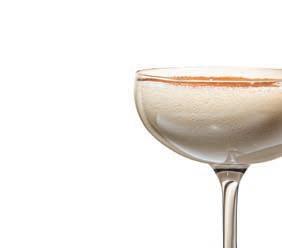
My usual at the bar is a Brandy Alexander. Chris, The Hotel Director at THE PIG-at Combe, introduced me and my husband to these and we’ve never looked back, frankly.
Outside of the UK, I love to escape to Tuscany for a holiday. We will be heading there this summer. In the absence of a PIG opening its doors, we’ve had to find our own accommodation. Outrageous!
My tip for fellow PIG guests is to take time to soak up the ambience – whether it’s reading a book by the fire, sitting on a garden lounger and admiring the view or simply lying in the bath with a cup of tea. So much thought, love and care has been put into making every single aspect of every single PIG feel inviting and beautiful. It’s enough just to be there without feeling you have to do anything. That said, the Potting
Shed massages are amazing.
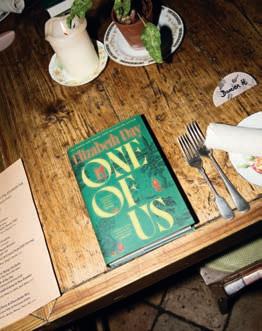
One of Us by Elizabeth Day, published by 4th Estate, is out now
The PIG I enjoyed most recently is THE PIG-in the South Downs. It’s where I had my most recent book launch, for Us. It’s in a stunning setting.
of
My favourite memory at a PIG is of getting married at THE PIG-at Combe. We actually got married there twice. My husband, Justin, and I got engaged during the pandemic and had planned to have a wedding with guests in December 2020, but it was that weird Christmas where a new lockdown was imposed at short notice. We decided to go ahead and travel to THE PIG to sign the register, with just my best friend and her husband as witnesses, then have a family celebration at some future date.
I remember asking Chris whether we could even just sign the necessary certificates in the car park if we had to. But he managed to make it one of the most special, heartfelt and fun days of our lives, even with the restrictions. To our surprise, The Folly was filled with lit candles and champagne was on hand. We had the best time. Then we came back and
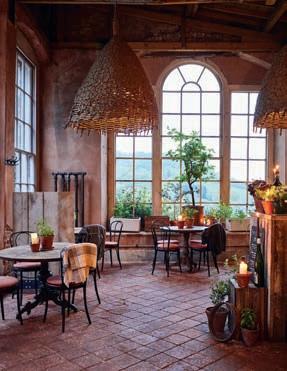
CLOCKWISE FROM BELOW: TUSCANY IS ANOTHER FAVOURITE HOLIDAY CHOICE; THE PIG-AT HARLYN BAY; THE FOLLY AT THE PIG-AT COMBE; HER LATEST NOVEL; ELIZABETH LOVES A BRANDY ALEXANDER
One
INFO & GOINGS ON
~ ESSENTIAL INFO & HOTEL GUIDE
~ KENT CALLING: THINGS TO SEE AND DO
~ THE INSIDE STORY ON SIMPSONS WINE
ESTATE
THE PIG - AT Welcome to
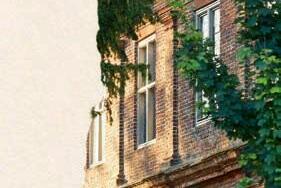
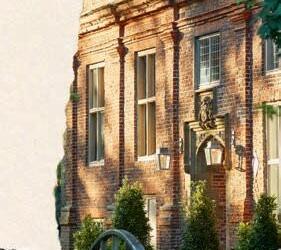
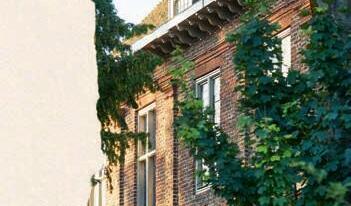
IT’S FITTING THAT THE FIRST OWNER of Bridge Place should have been known for the good table, good wines and good company he kept. Bridge Place was built in about 1638 by Sir Arnold Braems, the first manager of Dover Harbour. It was a society attraction – the Dutch painter Willem Schellinks visited in 1661 and reported that Sir Arnold kept a princely table and had many visits from knights and high-born gentlemen and ladies. Second only to Chilham Castle in east Kent, it was painted by society artists Jan Siberechts and Adriaen Jansz.
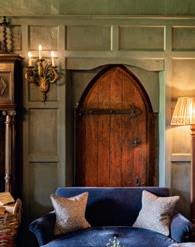
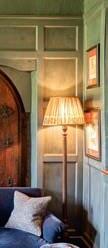
By the early 18th century, the house was falling on hard times and was sold to neighbouring landowners, who pulled down much of the property – the current building is just one wing of the original. Glory days returned in the 1960s, when it became a much-loved music venue. The arched wooden door to the sitting room was once the entrance to a nightclub where Led Zeppelin, The Kinks and The Yardbirds all played early gigs. The rural location meant there were few neighbours to disturb.
These days, we also use this idyllic Kentish location to nurture our Kitchen Garden, accessed via a bridge and practically on its own island. Here, you will find productive raised beds brimming with vegetables, our Alitex Mottisfont greenhouse and our polytunnels, which help to nurture tender crops with heating and lighting.
Today, the knights and rock stars have departed – or not, depending on who your fellow guests are. But with plenty of lovingly refurbished original features to soak up, a stunning countryside setting and THE PIG’s emphasis on the best local Kentish produce, this remains a special house where the good times always roll.
BRIDGE PLACE
HAVEAQUESTION?
Just call reception by dialling 0.
DIALLING OUT
To call an outside line, please dial 9, wait for the change in tone, then dial the area code and number required.
COMPLIMENTARY WI-FI
To activate, just select “THE PIG Public” on your wi-fi settings and away you go!
BREAKFAST,LUNCHANDDINNER
All served in the restaurant.
To find out our restaurant opening times, please call reception by dialling 0.
TREATMENTS
To book a treatment in our Potting Sheds, please call reception by dialling 0 – you can find the full treatment menu in your PIG bedroom.
CHECK OUT
Check out is at 11am.
Wander through the walled Kitchen Garden
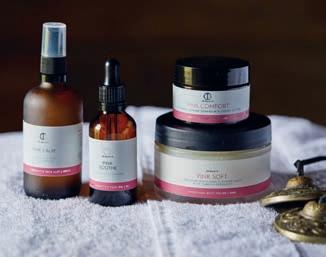
... past the raised beds, alongside the river and into our warm, rustic retreats: our Potting Shed treatment rooms, quiet and calm and designed to help you escape it all. Take inspiration from the garden surroundings and experience deeply relaxing full-body and facial treatments using products by Tribe517, a family-run natural skincare brand that handcrafts its products in the beautiful South Wales countryside. Like us, Tribe517 is passionate about using homegrown or ethically sourced botanical ingredients that care for the planet as well as mind and body – and is dedicated to recycling and using up everything it can.
Good to know
Our therapists have been professionally trained to offer safe and effective spa treatments for guests recovering from or undergoing cancer treatments. Just ask at reception to speak to one of the Potting Shed team if you would like to know more.
SHED MEETS SPA
LOCAL TOP TIPS FROM OUR Reception Manager, Camilla
WHAT I LOVE MOST ABOUT THIS AREA is the balance between countryside and coast. You get the best of both worlds. We are so close to Canterbury but tucked away in our sleepy village, so you can really switch off.
MY FAVOURITE THING ABOUT THIS PIG is the restaurant terrace in summer (you can feel like you’re abroad – especially with a glass of rosé). I also love the Hop Pickers Huts, which are unique to our PIG. They’re like mini chalets on stilts.
MY GO-TO DISH ON THE 25 MILE MENU is the ray wing or the pork belly for two. I also love the brussels sprout & black garlic mayo side dish – I’ve been perfecting it at home because it’s that good.
MUST-VISIT LOCAL PUBS include The Red Lion, nearby, for a pint or two in front of the fire as a stop-off on our walking routes. The King’s Arms in Elham is a little further away – just a 15-minute drive – but well worth the trip. It’s so atmospheric.
A LOCAL GEM Whitstable is full of special places. Grain and Hearth has toasties, pastries and coffee to die for. Vinko is my favourite wine bar and bottle shop, and there’s also a great cheesemonger called The Cheese Box.
FLORA AND FAUNA TO LOOK OUT FOR includes the giant sequoia tree on our front lawn – it’s hard to miss as it’s taller than Bridge Place, and is hundreds of years old.
BET YOU DIDN’T KNOW that one of our bedrooms has a twin bed that appears in the film Harry Potter and the Prisoner of Azkaban, when Harry stays at the Leaky Cauldron.
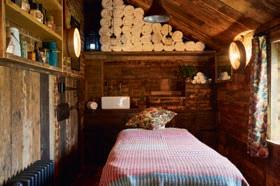
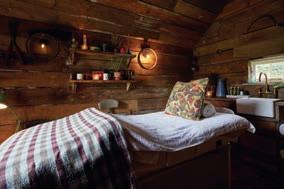
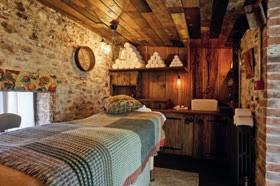
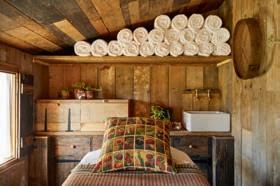
Old tobacco tins, gardening tools, balls of twine … Unlikely as it may seem, the décor of our Potting Shed treatment rooms was inspired by Beatrix Potter’s grumpy gardener, Mr McGregor. It was dreamt up by THE PIG’s former Creative Director, Judy Hutson, whose vision was to “fill the shelves with the sort of things I’d imagine Mr McGregor would have. Oil lamps, vintage bottles, old mugs – and, of course, no shed is complete without a few potted plants. And the massage table is dressed with a big picnic rug.”
Bottled wisdom
Meet the founders of Simpsons’ Wine Estate – one of England’s finest wineries and one of our favourite local suppliers here at THE PIG-at
Bridge Place
“WE LIVE AND BREATHE WINE IN two different countries, with a business that we built around our family life,” says Ruth Simpson.
“So it sometimes feels like there’s a lot going on!” We’re speaking in the tasting room at Simpsons’ Wine Estate, in the Elham Valley, an idyllic patch of Kent countryside. The room’s large internal window affords a view of the winery below, with vast stainless-steel tanks of wines-in-progress. Almost immediately outside are the vineyards, blending seamlessly into the patchwork of fields of this Area of Outstanding Natural Beauty, just four miles south of Bridge Place. Simpsons’ Wine Estate was founded in 2012 by Ruth and her husband, Charles, who since 2002 have also been the winemakers behind Domaine Sainte Rose, a winery in the south of France’s Languedoc region. The pair themselves are a Scot and a Northern Irishman. Several of their acclaimed wines produced in Kent are sparkling wines, with which southeast England is increasingly associated – the lime-rich soil here forms part of the same chalk ridge that stretches all the way to France’s Champagne region.
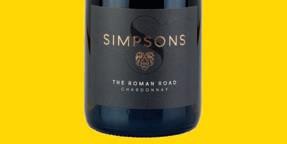
But the winery here has become renowned for producing still wines of note, including a multi-award-winning chardonnay, The Roman Road. The winner of a Platinum medal and Best in Show at the Decanter World Wine Awards in 2020, it is arguably the best example of an English chardonnay.
In the years since 2012, the Simpsons name has become unquestionably prominent and well-regarded on the English wine scene. “It’s rewarding to help grow this new wine region,” says Ruth, who is currently Deputy Chair of WineGB, the UK wine industry membership organisation. And the business takes a collaborative approach to promoting the wine in this part of the country.
“We are part of the Wine Garden of England, which is a group of Kent producers and growers,” Ruth explains, with Charles having been particularly involved in establishing and chairing the group for the first four years. “We don’t see ourselves as competition. We have a friendly collective and all support wine tourism across the county.”
Ruth’s maternal family in Scotland has been a major player in the whisky business for five generations as William Grant & Sons. “Winemaking is very different to whisky, but some of the most successful alcohol brands do tend to be run by families, perhaps just because of the longer-term investment perspective,” she says. “The understanding is that you’re not necessarily going to get a quick return on your investment, but that the longer-term benefits are very worthwhile.”
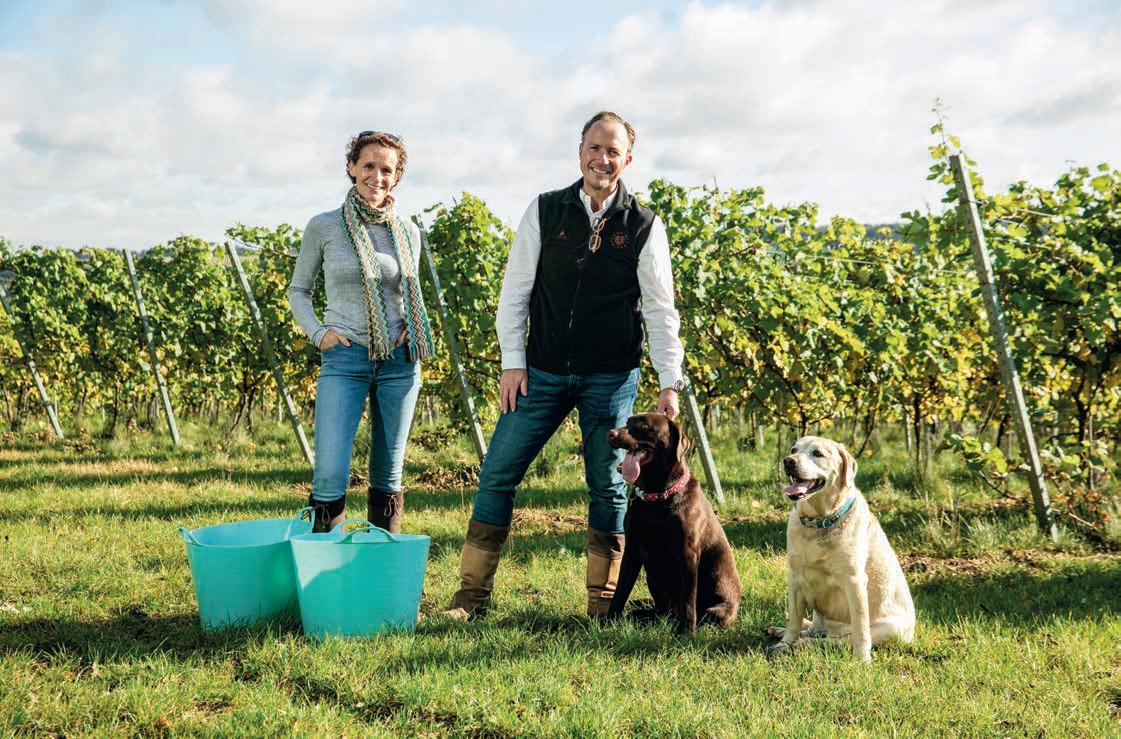
VENI VINI VITI: RUTH AND CHARLES SIMPSON IN THE KENT VINEYARD (ABOVE)
That said, her career prior to founding a winery was in an entirely different field: international humanitarian aid. Charles had also travelled extensively for his work in multinational pharmaceutical operations, and the couple were living in Azerbaijan when they decided to take the plunge and change their lives entirely to become winemakers. “We dreamt up this crazy idea: we both had an interest in wine and wanted to work for ourselves,” says Ruth. From the start, they were clear-eyed about the reality of going into business. “It needed to be a commercial project of a certain size for us to make a living. It couldn’t just be a hobby farm or small project.”
The Simpsons business has always prioritised environmentally sustainable practices wherever possible. “It’s been part of our ethos from the start,” says Ruth. “We have been accredited by the Sustainable Wine Scheme of Great Britain across our vineyards and winery since 2020 and just last year achieved our Gold Standard Award.”
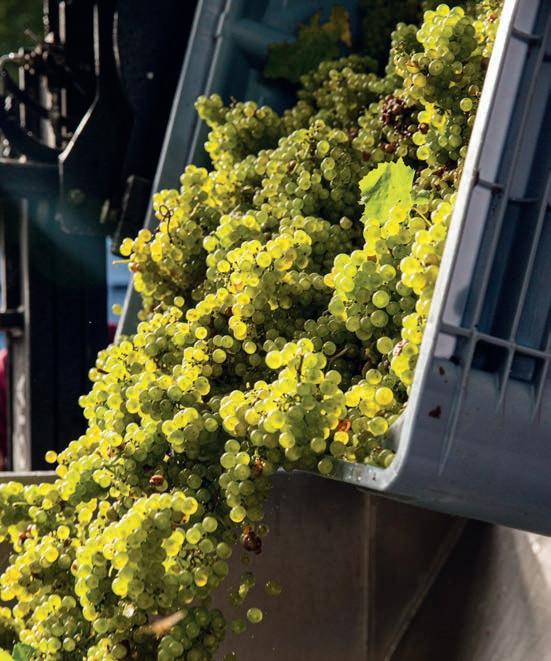
One thing the couple don’t have in their Languedoc winery is access to elephant manure as a fertiliser – a quirk of the UK operation being so close to Howletts Wild Animal Park, and one that contributes to Simpsons’ ecofriendly credentials. “When the grapes come in to be processed, the ‘grape marc’ is what’s left once you’ve pressed the wet skins and the pips,” explains Ruth. “So, what do you do with it when you empty out the press? In France a local distillery takes it for industrial use, which isn’t an option here. We thought it would be great if we could compost grape marc to reuse it on the vineyards, but we needed something to kickstart the process. Howletts is just down the road and they are delighted to get rid of the manure.”
“We dreamt up this crazy idea: we both had an interest in wine and wanted to work for ourselves”
Since establishing itself in Kent, Simpsons has also enjoyed welcome support from THE PIG. Simpsons wines have always been on the menu at THE PIG-at Bridge Place, and Ruth and Charles took pride in seeing Simpsons’ award-wining Chalklands Classic Cuvée poured at the hotel’s 2019 opening party. Luke Harbor, who is now THE PIGs’ Group Beverage Director, also spent time at the winery when he was based in Kent. “Luke had an interest in the production process, and so he came and spent a time with us to see how things worked,” says Ruth. “From pruning in the vineyard to helping in the winery during harvest or preparing the wines before bottling – just really getting stuck in, learning the whole process from grape to glass. He already had incredible sommelier skills, but wanted to get into the finer details of how wine is made. So he’s always been a strong advocate for us, and the support of THE PIG hotel group as a whole has made a huge difference to us.”
With significant international exports –their chardonnays are some of the bestselling English wines in Norway, for example – and with Simpsons wines on the lists of upmarket restaurants and wine merchants around the UK, the brand’s reach now goes far beyond its Kentish HQ. You do have to visit the Kent tasting room in person to enjoy one quirk of the brand, however. “That is our helter-skelter!” confirms Ruth, of the metal tunnel slide that links the upstairs tasting room to the downstairs winery. In a business that’s serious about wine, it’s a light-hearted touch, and is one way to get between the two spaces during a winery tour (the nearby stairs are also an option). Probably best enjoyed after a glass of wine?
Enjoy Simpsons Wines here at THE PIG-at Bridge Place. Tasting experiences at Simpsons Wine Estate start from £25pp; simpsonswine.com
From the loveliest bike rides to the best local pubs, we love to share our local intel. See our curated list online and ask at reception for our map of local walks.
INFO & GOINGS ON
~ HOTEL & ROOM GUIDE
~ SUSSEX CALLING: THINGS TO SEE AND DO
~ THE INSIDE STORY ON LOCAL WINEMAKERS
ARTELIUM
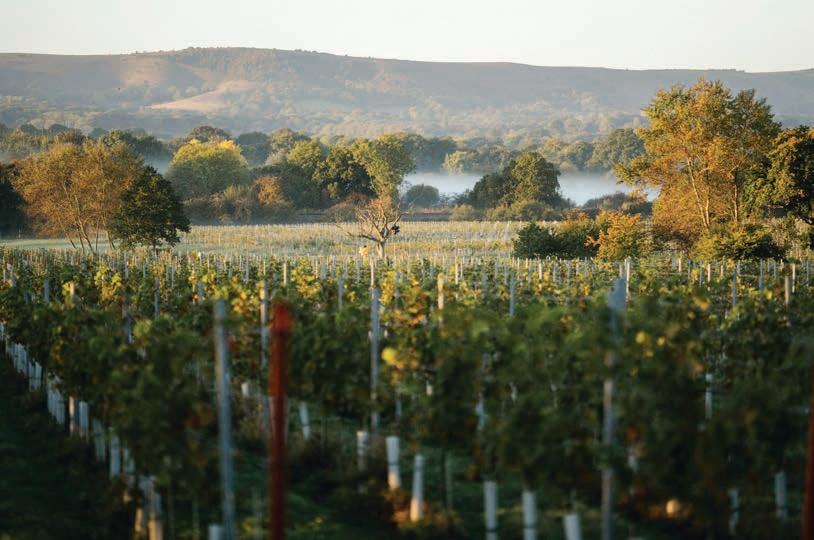
THERE’S A QUINTESSENTIAL ENGLISHNESS and gentle grandeur to the South Downs in this part of Sussex, where the villages don’t get much more hidden away than Madehurst. But if you know where to look, you’ll find our elegant Georgian house, not so far from the more prominent Arundel Castle. Historically, Madehurst Lodge, as the house was previously known, was part of the neighbouring Dale Park Estate. Land for the estate was purchased piece by piece in 1780 by the then MP for Arundel, Sir George Thomas (grandson of the governor of Pennsylvania), who planted extensive woodlands. He is buried beneath the altar in St Mary’s, the village church, where there are also monuments for George and his wife, Sophia, who remained in the house after his death.
For many years, Madehurst Lodge was owned by the Barron family, who were champions of organic farming and early supporters of the Soil Association. They sold the house to the Tod family, who remained here from 1971 to 2017, when the PIG’s story here began. Our move included a long and careful process of converting the house and outbuildings, and making sure we could gather a plentiful daily harvest from our carefully tended Kitchen Garden, as well as planting our first-ever vineyard, before we proudly opened to guests in September 2021.
Welcome to
THE PIG - IN THE
SOUTH DOWNS
Useful
info for your stay
HAVEAQUESTION?
Just call reception by dialling 0
DIALLING OUT
To call an outside line, please dial 9, wait for the change in tone, then dial the area code and number required.
COMPLIMENTARY WI-FI
To activate, just select “THE PIG Public” on your wi-fi settings and away you go!
BREAKFAST,LUNCHANDDINNER
All served in the restaurant.
To find out our restaurant opening times, please call reception by dialling 0.
TREATMENTS
To book a treatment in our Potting Sheds, please call reception by dialling 0 – you can find the full treatment menu in your PIG bedroom.
CHECK OUT
Check out is at 11am.
Wander through the walled Kitchen Garden...
... past the raised beds and fruit cages, and into our original lean-to Victorian Greenhouse, where you will find our warm, rustic retreats: the two Potting Shed treatment rooms, quiet and calm, and designed to help you escape it all.
Take inspiration from the garden surroundings and experience deeply relaxing full-body and facial treatments using products by Tribe517, a family-run natural skincare brand that handcrafts its products in the beautiful South Wales countryside. Like us, Tribe517 is passionate about using homegrown or ethically sourced botanical ingredients that care for the planet as well as mind and body – and is dedicated to recycling and using up everything it can.
Good to know
Our therapists have been professionally trained to offer safe and effective spa treatments for guests recovering from or undergoing cancer treatments. Just ask at reception to speak to one of the Potting Shed team if you would like to know more.
LOCAL TOP TIPS FROM OUR Assistant Night Manager, Stuart
WHAT I LOVE MOST ABOUT THIS AREA is that the views across the chalky hills are incredible from sunrise to sunset.
MY FAVOURITE THING ABOUT THIS PIG is the team. From the gardeners to the house managers to the chefs to the housekeepers, everyone is always so friendly.
MY GO-TO DISH ON THE 25 MILE MENU is our risotto. It’s so warm and comforting, like a little taste of home.
A MUST-VISIT LOCAL PUB is any that serves Guinness and burgers! Our guest favourites are the Black Horse in Amberley and The Black Rabbit in Arundel.
A LOCAL GEM for me personally is my lovely rottweiler, Duke. It’s because of him that I have explored so many areas of the South Downs on our wonderful walks together. But the South Downs Way is stunning with or without a dog.
WILDLIFE TO LOOK OUT FOR includes skylarks, deer, wild pheasants and bats. I must say, I don’t like the snakes, though.
BET YOU DIDN’T KNOW that in the early 1990s, I was a milkman and I used to deliver to THE PIG–in the South Downs when it was a private house.
SHED MEETS SPA
Old tobacco tins, gardening tools, balls of twine … Unlikely as it may seem, the décor of our Potting Shed treatment rooms was inspired by Beatrix Potter’s grumpy gardener, Mr McGregor. It was dreamt up by THE PIG’s former Creative Director, Judy Hutson, whose vision was to “fill the shelves with the sort of things I’d imagine Mr McGregor would have. Oil lamps, vintage bottles, old mugs – and, of course, no shed is complete without a few potted plants. And the massage table is dressed with a big picnic rug.”
Creativity uncorked
For the couple behind English winemakers Artelium, founding the brand has always been part of a wider passion project
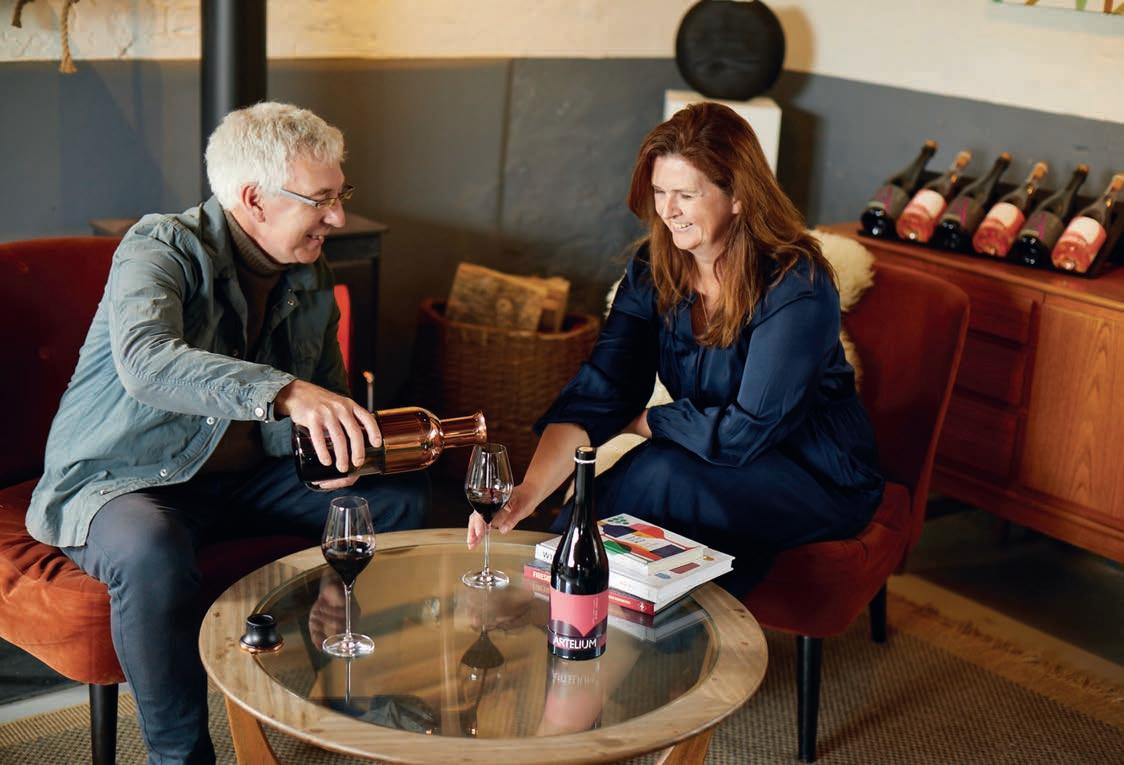
WHEN JULIE BRETLAND AND her husband, Mark Collins, launched their wine company, Artelium, in 2020, they were hopeful it would succeed, despite the pair having no prior professional background in viticulture. “I’ve always had a passion for wine though,” Julie clarifies. “While other people were going on holiday to the beach, I was cycling around visiting vineyards.” All those visits seem to have paid off, as today Artelium is among the UK’s most significant winemakers, which is why you’ll find so many of its bottles on our PIG wine list. From the outset, the couple envisaged Artelium as an expression of their biggest passions. “It was a close call between opening a winery or a sculpture garden,” Julie laughs. “Originally, we wanted to combine the two, but we thought, ‘Let’s start with
the wine and hopefully the sculpture will follow.’”
Artelium now has two Sussex vineyards, spread over 65 acres. The company’s Madehurst site, which lies on South Downs chalk soil, is home to 85,000 vines, while its other property, in Streat, a few miles northwest of Lewes, has 40,000 vines planted on clay soil. The Streat site is home to Artelium’s Cellar Door, where visitors can enjoy wine tastings, vineyard tours and hospitality. “We do lunches and evening meals,” says Julie, “and we run a cultural programme, which might include supper clubs and wine tastings, but also art exhibitions, workshops and talks.”
As well as producing exceptional wines, Julie and Mark had always set out to build “a place where creativity, craftsmanship and collaboration come together”. Hence the name Artelium. In
JULIE BRETLAND AND MARK COLLINS (ABOVE) DRINK TO THEIR SUCCESS
“English sparkling wine has already proven itself. The next frontier is still wine”
Latin, the word “arte” encompasses all aspects of human skill and endeavour, while “-ium” signifies “a place for”.
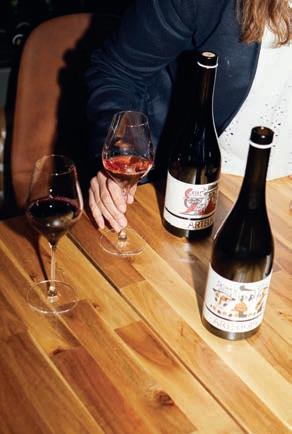
There might not be a sculpture garden yet, but new creative work definitely features in the brand story. The labels on Artelium’s wines are designed by local, Sussex-based artists and for each of the “Artefact” releases – small batch productions of about 500 to 1,000 bottles – the company commissions an artwork. “It might be a painting, a drawing or a piece of sculpture,” says Julie. “When the wine’s gone, the piece of art remains.”
Artelium produces a wide variety of wines, using different varietals and exploring the contrasting chalk/clay terroirs of its East and West Sussex vineyards. “That’s because we really enjoy exploring what English wine can do,” says Julie. “So we make sparkling and still wines, which is quite unusual in the UK, and we make each one vintage-specific, even though we could blend across the years. If we were sensible, we’d probably just stick it all into the same vat and make one or two wines. But that’s not what you do something like this for. You do it for the passion of making wine.”
In the early stages of the company’s development, Julie and Mark were lucky enough to work with two of the UK’s most celebrated winemakers, Dermot Sugrue and Owen Elias. Sugrue later set up his own winery just a few miles from their Streat property. “We’ve tried to maintain a spirit of collaboration that is perhaps unusual in winemaking,” says Julie, going on to talk with great enthusiasm about the amazing progress English wine has made in recent years. “English sparkling wine has already proven itself. We got a 97 point rating for our Curators Cuvée in Wine Enthusiast, which puts it in the top 0.5 per cent of wines judged worldwide. That’s not just good for us, it’s good for English wine. The next frontier is still wine. It’s so exciting to be working in that world.”
Artelium’s relationship with THE PIG began
with THE PIG-in the South Downs – close neighbours to its Madehurst site – but now includes six other outposts dotted around southern England. “Our guests often say they first tried one of our wines at THE PIG,” says Julie, “and that’s always great to hear, because you know it will have been presented nicely and talked about well, because the team there are all really knowledgeable.”
Championing nature is also a priority for Artelium. “We have one of the most beautiful views of the South Downs and we’re conscious of looking after it,” says Julie. “We try to look after the soil as well as possible. Our wines are bottled and transported without foils or bubble wrap and they tend to be low in sulphites. We also have our own kitchen garden, which is organically managed, so the produce we serve, like THE PIG’s, is low food mileage. We’re on a similar sustainable, regenerative journey.”
In its quest to establish ecofriendly winemaking practices, Artelium also has a large planting of Piwi (pilzwiderstandsfähig) grapes. These fungus-resistant hybrids were developed by combining traditional European vines with disease-resistant species, dramatically reducing the need for pesticide use. “Following the success of Artefact #9 – Cabaret Noir, we’ll be launching a red and white wine based on more of the Piwis later this year. And we’ll also be introducing tours and tastings at our Madehurst site.”
Tastings are among the things Julie enjoys most about her job. “I love watching the faces of people sampling our wines and seeing that lightbulb moment when they realise it’s not just one of the best English wines they’ve ever drunk, but one of the best wines they’ve ever drunk from anywhere in the world,” she says, adding that positive feedback makes all the hard work worthwhile. “It’s those moments,” she smiles, “where you think, ‘Actually, we’ve done OK!’”
Enjoy Artelium wines when you drink and dine at THE PIG-in the South Downs; artelium.com
From the loveliest bike rides to the best local pubs, we love to share our local intel. See our curated list online and ask at reception for our map of local walks.
INFO & GOINGS ON
~ HOTEL & ROOM GUIDE
~ HAMPSHIRE CALLING: THINGS TO SEE AND DO IN THE NEW FOREST
~ THE INSIDE STORY ON BAYNHAMS BREWERY
THE PIG IN THE Welcome to
THE NEW FOREST IS UNLIKE ANYWHERE else in Britain, and as the home of our very first PIG, it couldn’t be closer to our hearts. It was created by William the Conqueror as a royal hunting ground in 1079, with special laws protecting the hunted deer and wild boar. To this day, ponies, donkeys, cows and even pigs roam freely in the ancient woods and sandy heathland, sometimes pottering through the village streets.
As for our setting of Brockenhurst – the name comes from the Celtic for badgers’ home – we’re still very much in love with it. There are fascinating places to visit, such as Beaulieu (home of the National Motor Museum) and the sailing town of Lymington, but there is plenty to enjoy here at home. Our house is one of the many lodges built for the groomkeepers who protected the Forest – the original building dated from 1602. With its thick stone walls and handsome proportions, it has a very particular, cosy charm. After 1853, it became a private residence, and from 1950 was a (different) hotel, once run by Brigadier John Doyle of the Conan Doyle family.
So much of what we do at THE PIGs started here. It was the lovely old walled Kitchen Garden that inspired us to grow so much of our produce ourselves, and the richness of the local food scene feeds directly into our 25 mile menu. Explore the grounds and you’ll find huts and outhouses, the Potting Shed treatment rooms and, of course, our animals.
NEW FOREST
Useful
info for your stay
HAVEAQUESTION?
Just call reception by dialling 0.
DIALLING OUT
To call an outside line, please dial 9, wait for the change in tone, then dial the area code and number required.
COMPLIMENTARY WI-FI
To activate, just select “THE PIG Public” on your wi-fi settings and away you go!
BREAKFAST,LUNCHANDDINNER
All served in the restaurant.
To find out our restaurant opening times, please call reception by dialling 0.
TREATMENTS
To book a treatment in our Potting Sheds, please call reception by dialling 0 – you can find the full treatment menu in your PIG bedroom.
CHECK OUT
Check out is at 11am.
Wander into the walled Kitchen Garden
... through the raised beds, out past our greenhouse and beehives, and into our warm, rustic retreats: the two Potting Shed treatment rooms, quiet and calm and designed to help you escape it all.
Take inspiration from the garden surroundings and experience deeply relaxing full-body and facial treatments using products by Tribe517, a family-run natural skincare brand that handcrafts its products in the beautiful South Wales countryside. Like us, Tribe517 is passionate about using homegrown or ethically sourced botanical ingredients that care for the planet as well as mind and body – and is dedicated to recycling and using up everything it can.
Good to know
Our therapists have been professionally trained to offer safe and effective spa treatments for guests recovering from or undergoing cancer treatments. Just ask at reception to speak to one of the Potting Shed team if you would like to know more.
LOCAL TOP TIPS FROM OUR Reception Supervisor, Carina
WHAT I LOVE MOST ABOUT THIS AREA is that you have the choice of the forest, the beach and the city each day. All three are within reach, so the possibilities seem endless!
MY FAVOURITE THING ABOUT THIS PIG is the Kitchen Garden. Our team’s passion really shines through and there are so many hidden features – the pond, beehives and mushroom house are not to be missed.
MY GO-TO DISH ON THE 25 MILE MENU is the tagliatelle, which changes throughout the seasons to celebrate all the different homegrown herbs and vegetables. My favourite dessert is our chocolate tart – perfect for those with a sweet tooth.
A MUST-VISIT LOCAL PUB is the Fleur de Lys, just outside of Lymington. It serves delicious food and the building is steeped in history. The owners tell me their little thatched-roofed pub dates back to 1096.
A LOCAL GEM is our nearby beach at Milford on Sea. The coast is often overlooked when visiting the New Forest, but this little beach gives the very best views of the Isle of Wight and the Needles. Try walking along the shore to Hurst Castle, which makes a lovely backdrop for a stroll with a coffee or ice cream.
WILDLIFE TO LOOK OUT FOR includes our infamous New Forest ponies. It’s great fun to spot them when you head out on a walk from THE PIG. They roam the forest freely, along with cows and donkeys.
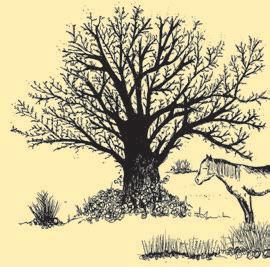
BET YOU DIDN’T KNOW that THE PIG in the New Forest dates back to 1602 – and there’s a rumour that the large oak tree at the front of the house was planted at around the same time.
SHED MEETS SPA
Old tobacco tins, gardening tools, balls of twine … Unlikely as it may seem, the décor of our Potting Shed treatment rooms was inspired by Beatrix Potter’s grumpy gardener, Mr McGregor. It was dreamt up by THE PIG’s former Creative Director, Judy Hutson, whose vision was to “fill the shelves with the sort of things
I’d imagine Mr McGregor would have. Oil lamps, vintage bottles, old mugs – and, of course, no shed is complete without a few potted plants. And the massage table is dressed with a big picnic rug.”
Brew masters
Specialty hops, modern flavours and the first English sparkling beer are all part of the mix at innovative brewery Baynhams, just down the road from us here at THE PIG in the New Forest
IN 2017, TOM BAYNHAM AND HIS BROTHER, Lawrence, decided to turn their passion for making beer into their day job. “The idea came from watching a Jamie Oliver programme about how businesses could and should be more sustainable,” says Tom. In particular, he says a segment about brewing using stale bread caught their imagination. “So we started from a viewpoint of, ‘How can we turn waste products into beer?’” It wasn’t long before we began thinking about water utilisation. Typically it takes five pints of water to make one pint of beer, so how could we reuse the grey water from the brewing process to irrigate our hops?”
Within a matter of weeks, the brothers had bought an old pig farm near Brockenhurst in the New Forest, and their cousin Harry, another passionate home-brewer, had left his job to join the team. They quickly developed a system for harnessing wastewater, planted some hops and built Baynhams Brewery. Tom even moved onto the property to be closer to operations. “It escalated quite quickly,” he says. “We’d been brewing for our friends and family, and enjoying the fact we could make nice beers, but we realised this was the best way to scale quickly. So we went from a home-brew kit to our current pro setup in almost no time at all.”
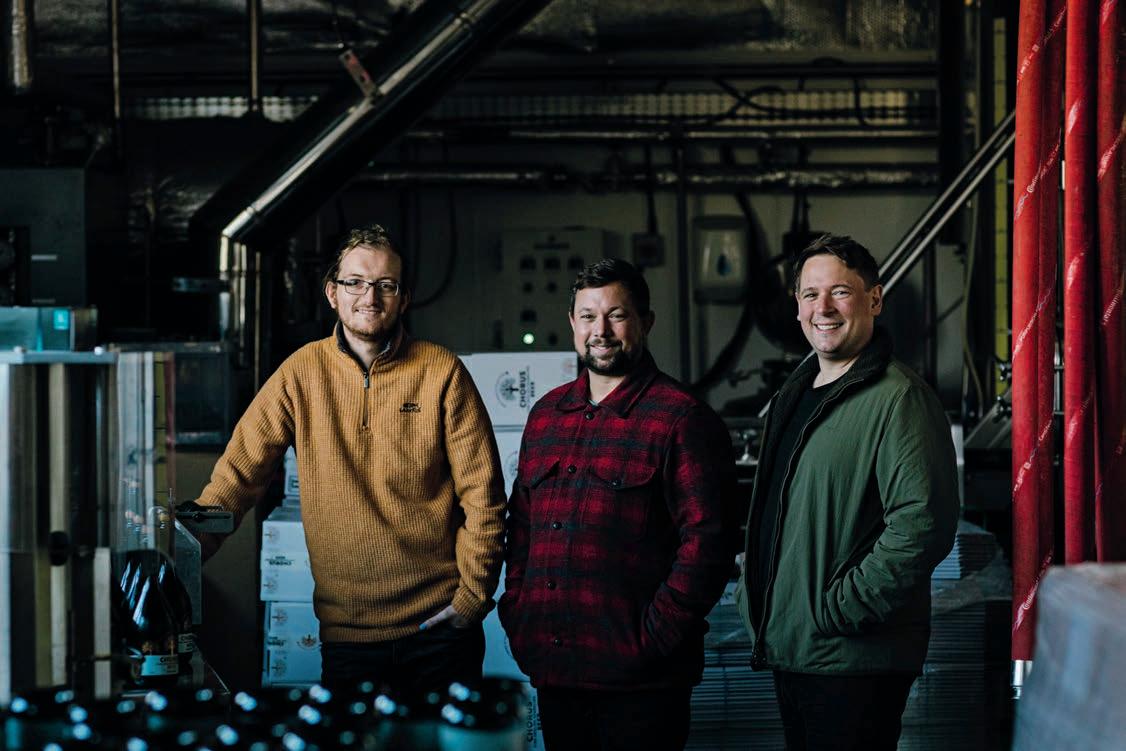
KEEP IT IN THE FAMILY: THE BREWERY WAS FOUNDED BY (ABOVE, FROM LEFT) HARRY, TOM AND LAWRENCE BAYNHAM
“We went from a home-brew kit to a professional setup in almost no time”
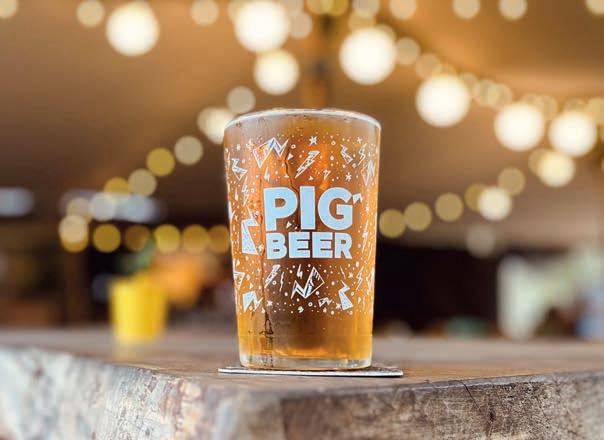
The brothers had already built one successful company – manufacturing a product that improves the maintenance of street lights – and now found themselves applying that business acumen to beer-related decisions. For example, due to land constraints, they chose to plant an old English dwarf variety of hops called Prima Donna, also known as First Gold, that grows to a height of two to three metres (most varieties can grow twice as high). Their first harvest was a triumph, and it was not long before their first brand, Pig Beer, was born. “Another reason we chose Prima Donna hops is because they give our beers a more modern flavour,” says Tom. “Typically they give these lovely citrusy aromas of orange peel, tangerine and dried apricot.”
Naturally, Tom and the team saw an opportunity for their new offerings to be served at a certain namesake hotel just two miles down the road. “We spent quite a long time speaking to the guys at THE PIG in the New Forest before they started stocking our beers,” Tom recalls. “We’d always give a case to anyone we knew who was going there [to give to the team] in an attempt to get them interested.” The beer did pique THE PIG team’s interest, as did the local brand’s emphasis on brewing as sustainably as possible. Indeed, Pig Beer’s New Forest Lager and Storm IPA have become permanent fixtures in our beer fridges.
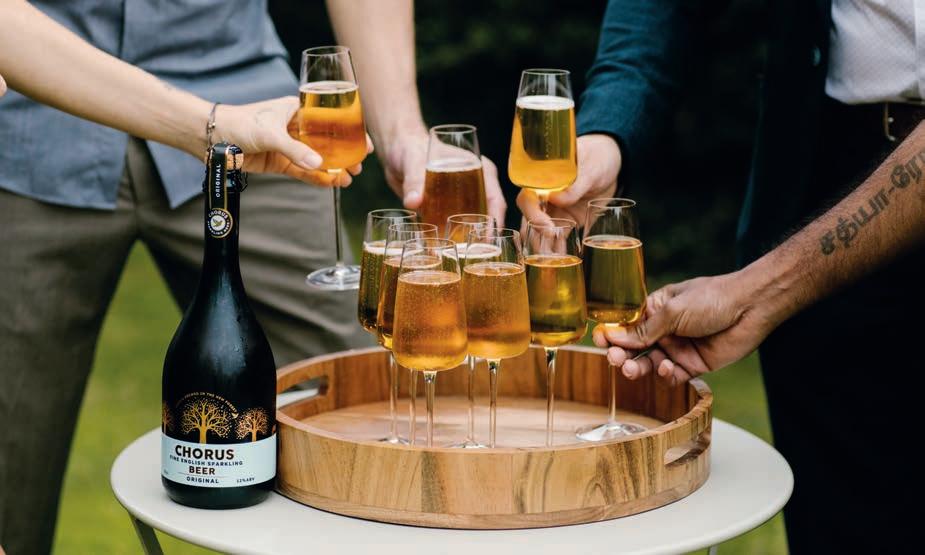
Meanwhile, THE PIGs’ Head Sommelier, Jack Evans, has been working closely with Baynhams Brewery to develop an entirely new type of beer. Taking inspiration from champagne, Chorus is billed as a “celebration beer” and the very
first “English sparkling beer”. It is bottled like sparkling wine, for added effervescence and a distinct taste, and is the result of years of trials and testing. “Our first release has quite a strong nod to beer, but some of its precursors were almost indistinguishable from wine,” explains Tom. “Jack often talks about some of the more sophisticated sparkling wines having an autolytic flavour, or a biscuity finish, which comes from ageing the wine on the lees for anything up to 10 years – whereas we can get that flavour naturally because we’re using malts. And that’s our biggest selling point: an interesting beer, with the characteristics of an aged sparkling wine. It’ll be incredibly exciting to see where we can take it.”
And while a beer that tastes like wine might sound like something a mad scientist would dream up, Tom believes there is a considerable gap in the market – namely, bringing wine lovers and craft-beer fans together. A crossover, then. “Essentially, Chorus is a sharing beer,” he says. “The idea is that it brings people together. We’re seeing lots of couples come to our tap room and share a bottle. It’s an entirely new way of drinking and one that can cater to people of differing tastes.”
Tom considers Chorus to be the perfect accompaniment to cheese, curries, barbecues and roasts – just a few things THE PIG has come to be rather good at. And if it’s not for you, there’s plenty more Pig Beer behind the bar, should you simply want an excellent pint of sustainably produced lager.
Try Pig Beer when you’re here with us at THE PIG in the New Forest, or visit baynhamsbrewery.com
From the loveliest bike rides to the best local pubs, we love to share our local intel. See our curated list online and ask at reception for our map of local walks.
INFO & GOINGS ON Welcome
~ ESSENTIAL INFO & HOTEL GUIDE
~ WHAT MAKES US UNIQUE
~ SOUTHAMPTON CALLING:
THINGS TO SEE AND DO
~ THE INSIDE STORY ON TRACKLEMENTS CONDIMENTS
WE NEVER REALLY INTENDED TO HAVE a city hotel, but when we came across our historic townhouse, a truly unique Grade II listed private residence tucked into Southampton’s ancient walls, we just fell for it.
Our hotel was originally built as a private residence around 1820 and owned by the Countess Elizabeth Craven, an author and playwright, although she never actually lived here. In the late 1880s, it was a brewery, then a cosy pub, the Royal Standard. To create THE PIG-in the wall, we also purchased the adjacent house, adding more bedrooms.
The Western Esplanade, on which we are nestled, once fronted right onto the water. To the right of our hotel (as you face it), you’ll find the city’s West Gate, built in 1338. It’s through this archway that Henry V and his troops marched on their way to Agincourt in 1415. Along the city walls, you’ll find all manner of plaques and signs leading you on a historic trail through Southampton. From here, it’s effortlessly easy to dip into the city’s storied past at venues such as the Tudor House & Garden, the Medieval Merchant’s House and the ruins of Holyrood Church.
THE PIG-in the wall is yours to enjoy as a characterful base for making the most of the city and its surroundings. Should you fancy taking to the water, we’re also just a short ferry ride from the Isle of Wight.
THE PIG - IN THE
We do things a little differently to the rest of the PIGS...
We are all about relaxed deli dining here at THE PIG-in the wall, rather than the full PIG restaurant experience. Being tucked away in the city of Southampton, we don’t have a Kitchen Garden on site, but we are still totally committed to homegrown and local produce!
Daily deliveries from the Kitchen Garden at THE PIG in the New Forest – which is only 20 minutes’ drive away – and our local suppliers from Hampshire, Dorset and the Isle of Wight mean that our menus change just as regularly.
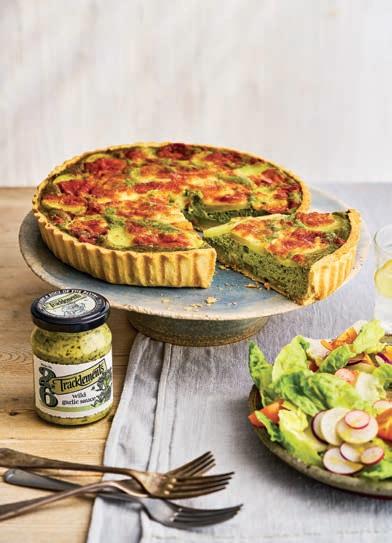
Our menu is a pig’n’mix selection of freshly prepared deli-counter salads, hearty larger plates such as the pie of the day, quiche, snack boards, Piggy Bits and sweet treats.
☞ VISIT OUR NEIGHBOURING PIG
If you’ve enjoyed lots of the fresh, seasonal produce in our Deli-bar dishes, the chances are some of it was grown in the Kitchen Garden at THE PIG in the New Forest, just down the road. Our very first PIG is situated in the most bucolic of settings – a lovely old stone house in the leafy countryside outside Brockenhurst, alongside its abundant walled Kitchen Garden. If you have time, head over there for lunch, dinner or just a drink in the bar – followed by a mooch around the veg beds!
Useful info for your stay
HAVEAQUESTION?
Just call reception by dialling 0.
DIALLING OUT
To call an outside line, please dial 9, wait for the change in tone, then dial the area code and number required.
COMPLIMENTARY WI-FI
To activate, just select “THE PIG Public” on your wi-fi settings and away you go!
BREAKFAST,LUNCHANDDINNER
All served from the Deli-bar. To find out service times, please call reception by dialling 0.
TREATMENTS
If you fancy a relaxing massage or facial, then pop to THE PIG in the New Forest for a Potting Shed treatment. Call reception by dialling 0 to find out more.
CHECK OUT
Check out is at 11am.
PIG PICKS
LOCAL TOP TIPS FROM OUR Deputy General Manager, Lucy
WHAT I LOVE MOST ABOUT THIS AREA is that we are in the heart of the city, but tucked away in the original medieval walls, so you get the lively buzz just a few paces away and our cosy, quiet nook to retreat to.
MY FAVOURITE THING ABOUT THIS PIG is that one of our bedrooms is attached to the Westgate, and the room still has the original arrow slit in the wall!
MY GO-TO DISH FROM THE DELI-BAR is our famous sausage roll. It’s a classic.
A MUST-VISIT LOCAL PUB is Dancing Man Brewery, just a three-minute walk from here. It’s a refurbished old wool house and prison, where the ground floor is now the microbrewery and upstairs is a restaurant. It has a great atmosphere – and it does a delicious Sunday roast.
A LOCAL GEM is God’s House Tower. It’s based within the medieval walls and is a small local museum all about Southampton that hosts different exhibitions and has a great coffee shop, too.
WILDLIFE TO LOOK OUT FOR includes the small birds nesting within the walls and nearby, in Ocean Village Marina, we often spot seals. Testwood Lakes is also great for wildlife spotting and, of course, the New Forest is right on our doorstep.
BET YOU DIDN’T KNOW that, until the land was reclaimed, the seafront used to come right up to the bottom of the steps at THE PIG-in the wall.
Relish the thought
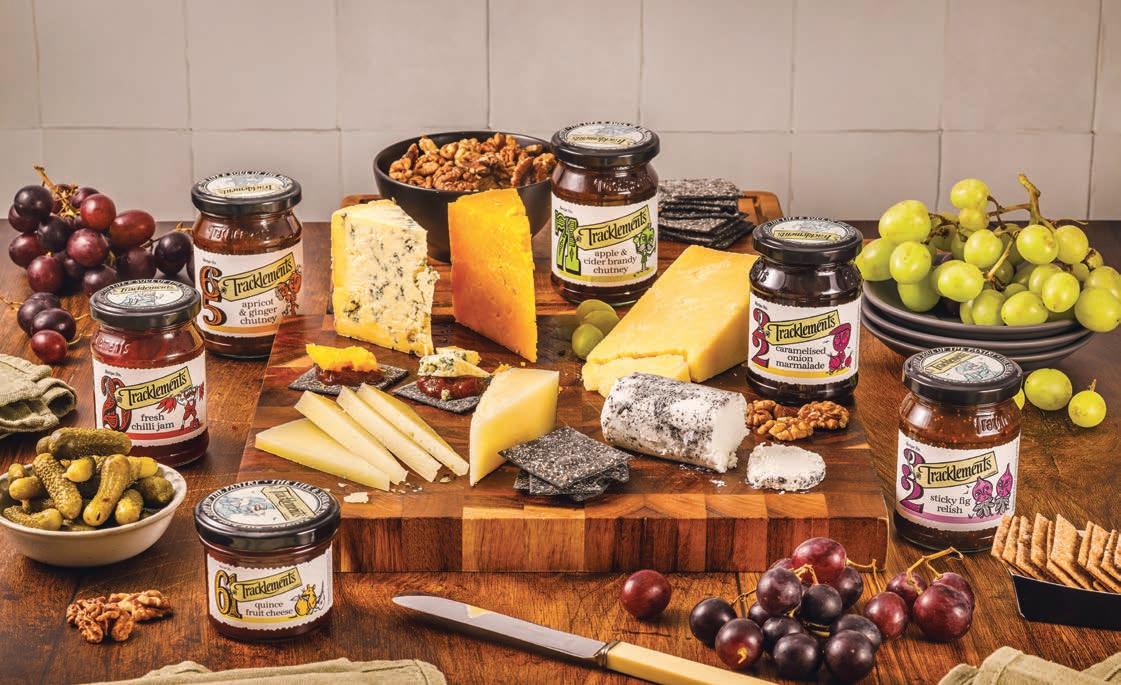
Artisanal condiments brand Tracklements is a hit with chefs and diners, including here at THE PIGs. Still a family business, it all started with some homemade mustard
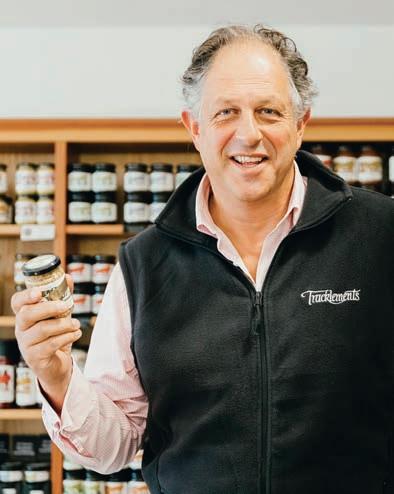
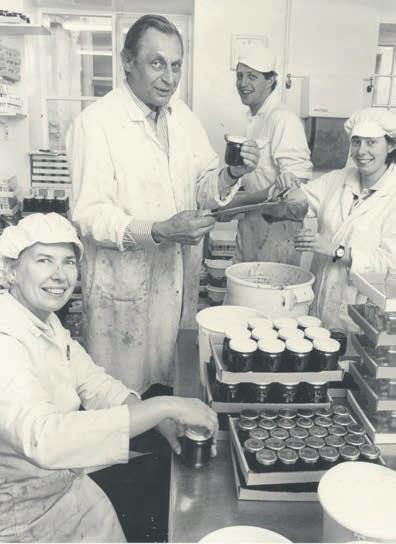
“WHEN MY PA FOUNDED OUR BUSINESS, some 50 years ago, it was all about well-made, regional food from quality ingredients, and that’s very much in our company’s DNA,” says Guy Tullberg, who heads up condiments brand Tracklements. Today the company, founded in 1970 by his restaurateur father, William Tullberg – his first product being handmade wholegrain mustard with handwritten labels – has a staff of about 70 at its sizeable HQ in the Wiltshire countryside. The name Tracklements comes from a northern English colloquialism for “bits and bobs”, which is also used, including by Guy’s grandmother, for condiments on the dinner table. “It’s not a word most people know and probably not a name you’d really choose now, in terms of easy and memorable branding, but it’s our name,” Guy says with affection.
The name certainly doesn’t seem to have held the brand back. Tracklements condiments are served with many dishes in THE PIGs, including at the Deli-bar at THE PIG-in the wall, and they have won fans among chefs from Mark Hix, “a supporter of ours for more than 25 years”, to Jamie Oliver. The company’s varied range includes horseradish – for which Guy has had the same Essex-based supplier of fresh root since 1983 – mint sauce, chutneys, onion marmalade and the UK’s first ever chilli jam, which celebrates its 25th birthday this year. Simply put, the brand produces “anything that you might serve with meat, fish or cheese”.
SAY CHEESE! GUY TULLBERG (BELOW) HEADS UP THE COMPANY HIS FATHER FOUNDED IN THE 1970S
“Condiments are important. Imagine a roast dinner without the mint sauce or mustard”
Guy characterises Tracklements as a “gently ambitious” operation. “We call ourselves a grown-up artisan business,” he says of the steady expansion of the family company over the decades, with its products now available in Waitrose and at many specialist butcher’s and farm shops. “We have the kind of business story you find all over the continent, but that is less common here in the UK.”
Having grown up helping out in his father’s small restaurant in Wiltshire from the age of 14, the mindset of working with fresh, quality ingredients came naturally to Guy. “My Pa had a very short menu of dishes made from local ingredients and an approach that was so rare and revolutionary at the time, but that would seem absolutely contemporary and welcome today,” he says. “We always had homemade ketchup, and when I first tried shop-bought ketchup at the age of about 11, I didn’t understand why it tasted nothing like tomatoes.”
Now a B Corp certified company for high standards for people and planet (as is THE PIG hotel group, incidentally), Tracklements has a culture of transparency about ingredients and processes. This includes in the literal sense of the factory setup. “Our 30,000 sq ft factory in the heart of the Wiltshire countryside has many windows, which is unusual. But we want our people to be able to look out and enjoy the view, and we’re not scared of anybody looking in. We’re simply here cooking onions in a pan for three hours, for example. We have nothing to hide.” It’s an unusual approach for an operation of this scale: “Our output is around 20,000 jars of our products a day,” says Guy.
GUY JOINS HIS FATHER, FOUNDER WILLIAM TULLBERG, IN THE KITCHEN IN THE EARLY DAYS OF THE COMPANY (ABOVE LEFT)
A focus on sourcing quality ingredients from known, small-scale farmers and growers – and paying a fair price for them – means the brand’s prices are higher than many others. “Some of our products might be around £3 a jar where another in a supermarket is £1 a jar, but they are of high quality and absolutely flavourful, so in that sense I believe it is fair to say we are good value,” says Guy. “We make high-quality products and we are very transparent about how we make them.”
Over the years, Guy has seen market trends change, as some condiments go in and out of style. “Things like chilli jam and onion marmalade are much more popular than they used to be. That said, some things never change. Horseradish has always been in our top sellers, made with fresh English root. It never really goes out of fashion, though people have it with different dishes as times change.” Ultimately, he says, “Condiments may not be the focus of a dish but actually they are important. Imagine a roast dinner arriving without the mint sauce, cranberry sauce or mustard that you were expecting. It just wouldn’t work. And a truly good mustard is the basis for many a sauce.”
When Guy makes it to THE PIG-in the wall for a meal, he delights in seeing people around him enjoying Tracklements with their food. “The support of THE PIGs has been wonderful for us. I love to go there and I love seeing our products being enjoyed by guests. Sometimes it’s all I can do not to tap someone on the shoulder, and say, ‘We made that!’”
Try Tracklements condiments when you dine with us at THE PIG-in the wall and other PIGs. tracklements.co.uk
From the loveliest bike rides to the best local pubs, we love to share our local intel. See our curated list online and ask at reception for our map of local walks.
INFO & GOINGS ON
~ HOTEL & ROOM GUIDE
~ DORSET CALLING: THINGS TO SEE AND DO
~ THE INSIDE STORY ON LOCAL VEG GROWERS BERRY HILL FARM
PEOPLE OFTEN SAY that the manor house at THE PIG-on the beach looks like a gingerbread or fairy-tale house – and we do have a slightly unreal setting, perched on a cliff, looking out to Old Harry Rocks. Studland is where Enid Blyton used to go on holiday, and this area has a hint of The Famous Five to it, with golden beaches and bays that spell adventure, and a history of pirate stories. Although Studland is part of the mainland, the area is called the Isle of Purbeck, and it certainly has an island vibe.
The house was built in 1825 as a seaside bolthole by George Henry Bankes MP, who had a family of 14 children to take on holidays. He spent his retirement enlarging and improving it, hence its higgledy-piggledy appeal. George was a descendant of “Brave Dame Mary” Bankes, who defended Corfe Castle against Cromwell’s troops. Some of the medieval carvings here are believed to have come from the castle. Others were, shall we say, “rescued” by the MP from the Palace of Westminster after the fire of 1834. The Bankes family also had a seat at nearby Kingston Lacy, where architect Sir Charles Barry (of Palace of Westminster fame) worked on alterations – many similar gothic revival details can be seen in the hotel.
In World War Two, the house was a base for senior military personnel, and in 1944 an observational bunker called Fort Henry was built into the clifftop at the bottom of the garden. George VI, Winston Churchill and President Eisenhower were among those who came here that year to watch the biggest full-scale invasion exercise using live ammunition carried out as a prelude to D-Day. Fort Henry is now open to visitors and run by the National Trust, and it marks the start of the Jurassic Coast Unesco World Heritage Site, which stretches west along the coast to Devon.
Since the 1950s, the house has been run as a private hotel, though it closed in 2012. We opened as THE PIG-on the beach in summer 2014 and haven’t looked back since. While you’re here, make sure to take some time to enjoy our Kitchen Garden. Here, nestled between the more traditional crops, you will find beds of native sea vegetables such as sea kale, oyster leaf and sea orach. With some of the best views around, we wouldn’t want to be anywhere else.
THE PIG - ON THE Welcome to
BEACH
Useful
info for your stay
HAVEAQUESTION?
Just call reception by dialling 0.
DIALLING OUT
To call an outside line, please dial 9, wait for the change in tone, then dial the area code and number required.
COMPLIMENTARY WI-FI
To activate, just select “THE PIG Public” on your wi-fi settings and away you go!
BREAKFAST,LUNCHANDDINNER
All served in the restaurant.
To find out our restaurant opening times, please call reception by dialling 0.
TREATMENTS
To book a treatment in our Sheep Huts, please call reception by dialling 0 – you can find the full treatment menu in your PIG bedroom.
CHECK OUT
Check out is at 11am.
Wander down through the gardens
... out towards the cliffs and into our warm, rustic retreats: nestled away in the grazing fields with the best views out to sea, our two Sheep Hut treatment rooms are quiet, calm and designed to help you really escape it all. Take inspiration from the green surroundings and our coastal location, and experience deeply relaxing full-body and facial treatments using products by Tribe517, a family-run natural skincare brand that handcrafts its products in the beautiful South Wales countryside. Like us, Tribe517 is passionate about using homegrown or ethically sourced botanical ingredients that care for the planet as well as mind and body – and is dedicated to recycling and using up everything it can.
Good to know
Our therapists have been professionally trained to offer safe and effective spa treatments for guests recovering from or undergoing cancer treatments. Just ask at reception to speak to one of the Sheep Hut team if you would like to know more.
PIG PICKS
LOCAL TOP TIPS FROM OUR Reception Supervisor, Rhea
WHAT I LOVE MOST ABOUT THIS AREA are the picturesque and stunning beaches right on our doorstep, such as Knoll Beach, Studland Beach and South Beach.
MY FAVOURITE THING ABOUT THIS PIG is the gorgeous view looking out to Old Harry Rocks. There’s nothing like it in summer.
MY GO-TO DISH ON THE 25 MILE MENU is our beef ragu tagliatelle. It’s a must-order.
A MUST-VISIT LOCAL PUB is the Square & Compass in Worth Matravers, just a 20-minute drive or a good two-hour walk away. Being on the Jurassic Coast, it’s a great end goal for stretching your legs – the views are unbeatable on a sunny day.
A LOCAL GEM is the National Trust bookshop on Knoll Beach (less than two miles away). It’s a bookshop inside a beach hut and is such a charming find.
WILDLIFE TO LOOK OUT FOR includes the odd pod of dolphins, which we’re sometimes lucky enough to spot out at sea from the beach in summer.
BET YOU DIDN’T KNOW that our wine cellar used to run underground all the way to the beach during the 18th century’s golden age of smuggling.
HUT MEETS SPA
Old tobacco tins, gardening tools, balls of twine … Unlikely as it may seem, the décor of our Sheep Hut treatment rooms was inspired by Beatrix Potter’s grumpy gardener, Mr McGregor. It was dreamt up by THE PIG’s former Creative Director, Judy Hutson, whose vision was to “fill the shelves with the sort of things I’d imagine Mr McGregor would have. Oil lamps, vintage bottles, old mugs – and, of course, no shed is complete without a few potted plants. And the massage table is dressed with a big picnic rug.”
Thanks a bunch
For vegetable farmer and PIG supplier Jim Hooper, local produce is a way of life – and a family legacy
WHEN YOU TUCK INTO the delicious vegetables on the menu here at THE PIGon the beach, you’re enjoying a taste of Dorset history as well as bags of flavour –Berry Hill Farm has been supplying grateful locals with splendid seasonal produce for more than 80 years.
Our story begins in Throop, on the rural fringes of Bournemouth, in 1938, when Stanley and Joyce Hooper began rearing chickens on the 3.5 acres of land that surrounded their new house. Their grandson Jim Hooper (pictured) takes up the tale: “My dad, Ken, was one when they moved here – now he’s 89.” This rural idyll was uprooted by the onset of World War II, when the government encouraged smallholders such as the Hoopers to plough up the land and grow cabbage, then keep pigs in the spare buildings.
As rationing began to relent, Stanley increased the variety of vegetables in the beds and began to deliver his wares to local groceries by horse and cart. Grandmother Joyce worked in a bakery, but spent a good deal of her time in the field weeding and harvesting, while also bringing up two children.
“It’s great for us that there are people who support and want local produce”
Stanley handed over the reins to Ken in the early 1970s, but he continued to work in the greenhouses until he became bedridden. At that point, Jim recalls, “we had to bring the work to him”. Joyce, meanwhile, was an exceptionally hardy soul who carried on working outside until she reached the ripe old age of 99. “She said her idea of heaven was a garden where weeds did not grow.”
Jim, who began to work the land when he left school, recalls a “blessed” childhood. “It was the best of both worlds – you’re rural, so you could play where you want and walk by the river, but we’re right on the edge of Bournemouth, so I could always play football with my friends.”
All the while, Berry Hill Farm was expanding to 35 acres, with a drift of 400 pigs that earned their keep by providing fertiliser for the crop. The porkers departed in the late 1980s, but manure remains Jim’s secret weapon for producing wholesome veg – these days it comes from the cattle at a local farm.
Throughout the year, the Hoopers’ hard work results in an array of flavour-filled delights. “As a smaller supplier, we can grow more of a varied crop that you don’t see in the supermarkets,” Jim says, and he’s not kidding. Depending on the season, guests at THE PIG-on the beach can look forward to – deep breath – potatoes, parsnips,
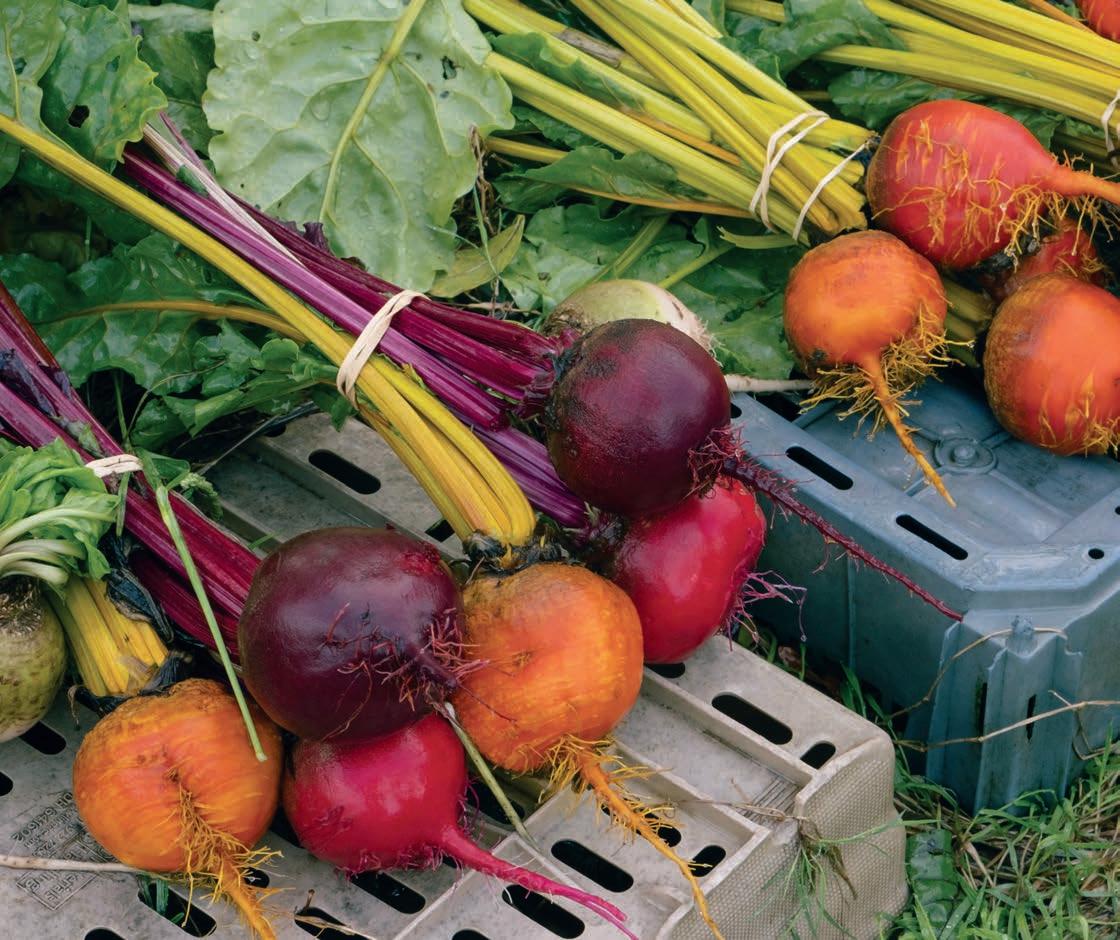
leeks, spring asparagus, beetroot (golden, candy and red), bunched carrots, heritage carrots, kale (green and ruby), cavolo nero, celeriac, courgettes, yellow courgettes and sprouts (on the stem, naturally).
Jim maintains his faith in the farming methods cultivated by his family over several decades: “It’s important to me to follow in my family’s footsteps,” he explains. Yet Berry Hill Farm moves with the times – whether that means attending local farmers’ markets or offering vegetable boxes delivered to your doorstep just hours after the contents have been harvested.
Jim is a fan of THE PIG’s commitment to sourcing ingredients from the surrounding area. “It’s great for us that there are people who support and want local produce,” he says. He’s also a fan of the dishes our chefs rustle up with his vegetables: “I’ve been three or four times, and I love it,” he enthuses.
Appropriately enough, given Berry Hill Farm’s history, Jim is rather partial to our pork dishes, recalling a tender pig’s cheek with particular relish: “I’m a lover of pork, I almost always order it.”
Enjoy Berry Hill Farm produce when you dine with us here at THE PIG-on the beach; berryhill-farm.co.uk
From the loveliest bike rides to the best local pubs, we love to share our local intel. See our curated list online and ask at reception for our map of local walks.
INFO & GOINGS ON
~ ESSENTIAL INFO & HOTEL GUIDE
~ SOMERSET CALLING: THINGS TO SEE AND DO
~ THE INSIDE STORY ON WHITE LAKE CHEESE
Welcome to
PIG - NEAR
NOWHERE ELSE MARRIES MELLOW ENGLISH countryside and buzzing creative energy quite like Somerset, where a dairy farmer invented the world’s most famous music festival and cutting-edge galleries sit amid dreamy meadows. The local cheese isn’t bad, either.
THE PIG’s suitably laid-back and impossibly romantic home here is Hunstrete House, a Grade II listed building built in creamy Bath stone and set in 30 acres of deer park. Known hereabouts as The Lodge, it dates from 1820, but the estate’s roots lie far deeper. In the Anglo-Saxon era, it belonged to the Abbey of Glastonbury – reputed resting place of King Arthur – and it was mentioned in the Domesday Book in 1086. The origin of the name Huntstrete is unclear, but might derive from the Old English hund (hound) and street. And the area has been inhabited since the earliest times, as confirmed by a flint axe head found in Common Wood.
A manor house was first mentioned in 1258, and at the start of the 17th century, the estate was acquired by the family of Sir John Popham. While we find The Lodge more than comfortable, Sir John’s descendants evidently wanted something grander – look out from our gardens and you’ll see the ruined arches of a mansion they tried (but ultimately failed) to add here in the 19th century. The family owned Hunstrete House until 1977, when it was sold to John and Thea Dupays, who converted it into a hotel.
The features in the Kitchen Garden at our Somerset PIG, including the original greenhouses, were lovingly renovated by our team – ensuring the design laid out by gardeners past was not lost. The Kitchen Garden has also grown with demand for its wonderful produce, and is now double the size it was when we opened in 2014. Our historic property is definitely enjoying a whole new chapter.
Useful
info for your stay
HAVEAQUESTION?
Just call reception by dialling 0.
DIALLING OUT
To call an outside line, please dial 9, wait for the change in tone, then dial the area code and number required.
COMPLIMENTARY
WI-FI
To activate, just select “THE PIG Public” on your wi-fi settings and away you go!
BREAKFAST,LUNCHANDDINNER
All served in the restaurant.
To find out our restaurant opening times, please call reception by dialling 0.
TREATMENTS
To book a treatment in our Potting Sheds, please call reception by dialling 0 – you can find the full treatment menu in your PIG bedroom.
CHECK OUT
Check out is at 11am.
Wander into the walled Kitchen Garden
... through the raised beds, out past our berry house and fruit cages, and into our warm, rustic retreats: the two Potting Shed treatment rooms, quiet and calm, and designed to help you escape it all.
Take inspiration from the garden surroundings and experience deeply relaxing full-body and facial treatments using products by Tribe517, a family-run natural skincare brand that handcrafts its products in the beautiful South Wales countryside. Like us, Tribe517 is passionate about using homegrown or ethically sourced botanical ingredients that care for the planet as well as mind and body – and is dedicated to recycling and using up everything it can.
Good to know
Our therapists have been professionally trained to offer safe and effective spa treatments for guests recovering from or undergoing cancer treatments. Just ask at reception to speak to one of the Potting Shed team if you would like to know more.
LOCAL TOP TIPS FROM OUR Events Coordinator, Chloe
WHAT I LOVE MOST ABOUT THIS AREA are the historic sights of Bath – and the long country walks on our doorstep.
MY FAVOURITE THING ABOUT THIS PIG is our cosy little lounge areas to relax with a board game and a nice glass of something.
MY GO-TO DISH ON THE 25 MILE MENU is the zero mile mushroom risotto, made with mushrooms from our very own Kitchen Garden – it’s super fresh and perfectly cooked.
A MUST-VISIT LOCAL PUB is The Carpenters Arms, just a seven-minute drive away, with proper pub grub, chilled vibes and friendly staff.
A LOCAL GEM is the nearby town of Glastonbury. It’s the scenic walks, antiques markets – and, of course, the ancient and mythical history – that make it well worth a visit.
WILDLIFE TO LOOK OUT FOR includes the fallow deer around the outskirts of the property in our deer park. They’re such beautiful creatures!
BET YOU DIDN’T KNOW that a relative of the Popham Family (who originally owned and lived in our home, Hunstrete House) was born in one of the bedrooms in 1943. She still regularly visits and even celebrated her 80th birthday here recently!
•
SHED MEETS SPA
Old tobacco tins, gardening tools, balls of twine … Unlikely as it may seem, the décor of our Potting Shed treatment rooms was inspired by Beatrix Potter’s grumpy gardener, Mr McGregor. It was dreamt up by THE PIG’s former Creative Director, Judy Hutson, whose vision was to “fill the shelves with the sort of things I’d imagine Mr McGregor would have. Oil lamps, vintage bottles, old mugs – and, of course, no shed is complete without a few potted plants. And the massage table is dressed with a big picnic rug.”
PIG PICKS
Whey to go!
How
our award-winning suppliers at White Lake helped pioneer the UK’s goat’s cheese market
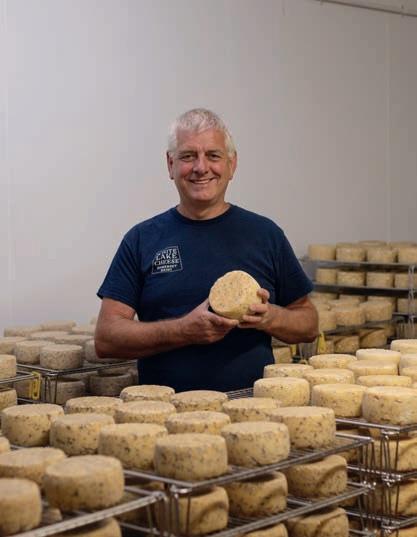
“WHEN I FIRST DECIDED to specialise in making goat’s cheese,” says Roger Longman, owner and CEO of White Lake Cheese, “I remember thinking, ‘This’ll be easy – goats, they’re just like little cows.’ But they’re not; they’re more like piglets. They don’t like the rain, they don’t like the sun and they’re extremely fussy animals. They’re also very naughty, but I love them to bits. And they’re a lot more fun than cows.”
Roger is certainly qualified to comment: his family has been dairy farming since the 1930s. Using milk from the family herd, his parents and grandparents used to make traditional cheddar at their home, Bagborough Farm, located just a couple of miles from the Glastonbury Festival site in Somerset. Today, Roger and his team produce a range of 30 handmade cheeses, selling them online and supplying an array of leading restaurants, including THE PIG-near Bath and THE PIG-at Harlyn Bay. Despite being steeped in dairy life, Roger initially had no interest in being a farmer. Having sampled the “hard labour” of cheddar-making during his school holidays, he decided to pursue a different path, studying engineering at university before spending five years working for agricultural machinery manufacturer Massey Ferguson. “I loved the job, but I discovered that I’m a bit too arrogant to take orders,” he grins. “My parents were retiring, and I thought, ‘You know what? Let’s give this farming a go.’ The first year was good, then the milk price collapsed and we had 14 years of struggling to stay afloat. But the cheese
WHITE LAKE CHEESE OWNER ROGER LONGMAN (BELOW) DECIDED TO SPECIALISE IN GOATS INSTEAD OF FOLLOWING THE FAMILY DAIRY HERD – AND HASN’T LOOKED BACK
“I don’t see the point in producing anything that doesn’t bring joy –because ultimately, that’s what it’s all about”
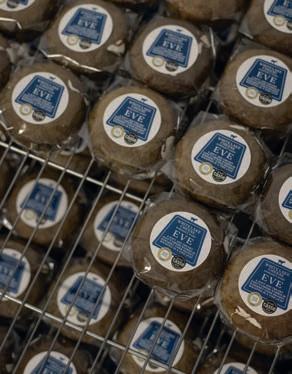
WHITE LAKE MAKES 30 DIFFERENT CHEESES, INCLUDING THE BRIE-STYLE EVE (BELOW)
business eventually picked up and we’ve done very well ever since.”
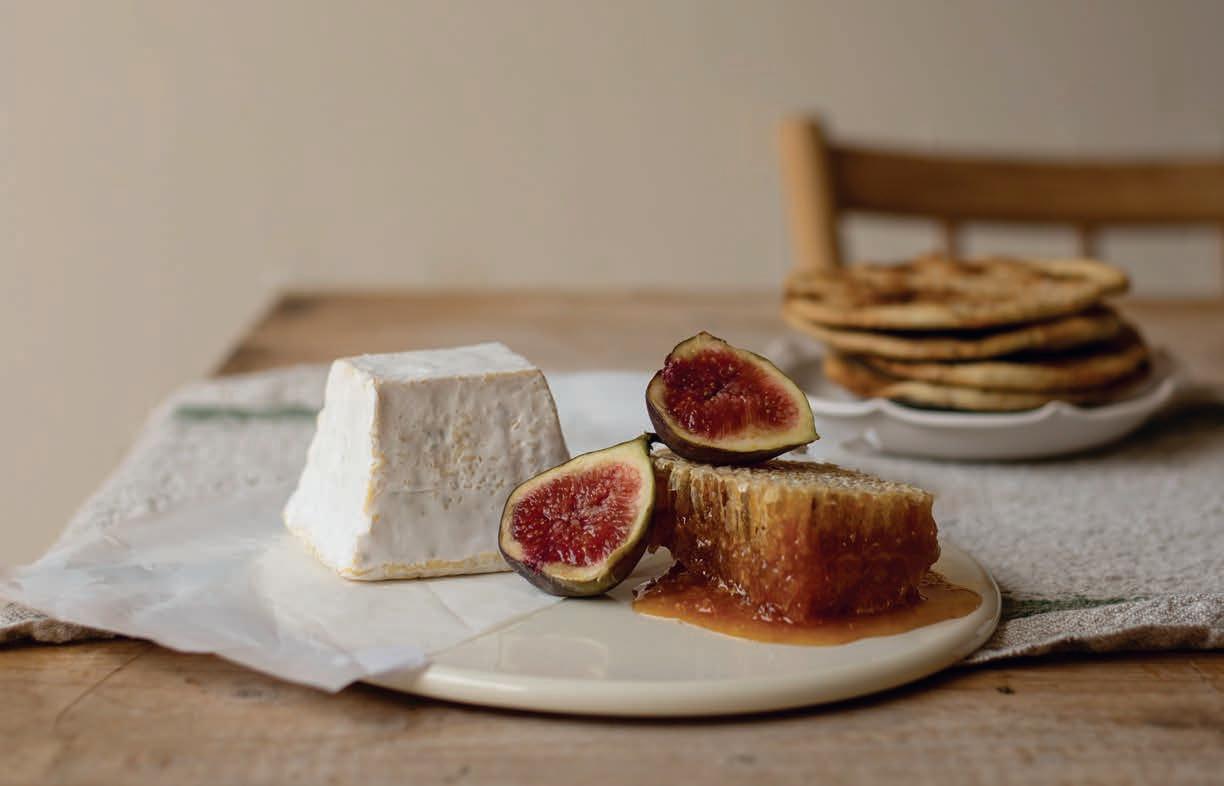
British goat’s cheese was a niche market 20 years ago, he adds, but as more people became interested, White Lake Cheese “grew into that empty space”. The company, which Roger founded in 2004, now employs more than 20 staff and has become one of the most esteemed cheesemakers in the world. It takes its name from the Whitelake River, which starts on the farm before eventually joining the River Brue. The milk used to create White Lake’s awardwinning goat’s cheeses is provided by the farm’s herd of French Alpine goats. For the cheeses in the range that are made from sheep’s milk and cow’s milk, they rely on milk from neighbouring farms. “We’re very lucky,” Roger says. “We’ve got a very good Jersey cow farm just down the road. He’s a classic old-school farmer – he really loves his cows, and that’s super-important, because you need to provide that care and attention for the animals.”
THE PIG-near Bath has stocked Roger’s cheese since 2014, and he recognises many parallels between the two companies. Like THE PIG, Roger is a firm advocate of savouring the
very best. “Our aim is to make cheeses that bring joy when you eat them,” he says. “I don’t see the point in producing anything that doesn’t bring joy, because ultimately, that’s what it’s all about.” He puts the excellence of his own products down to having complete control over their production. “Our cheese is unpasteurised, for example, because we’re using fresh milk every day. It’s a very safe way to make cheese. With some of the bigger operations the milk can be three- or four-days old, so they pasteurise the hell out of it to make it sterile, but then you lose all the flavour.”
He mentions, too, the importance of the goats’ diet: “What we feed our goats gives us the fat and protein quality that we want. It’s a slightly more expensive way of farming, but you get a much creamier cheese. And we use French Alpine goats because I found they were by far the best for the quality of milk.” White Lake Cheese’s Somerset home has become a cheesemaking heartland, he says, because “it’s a great place for growing grass for cows, though goats don’t really eat grass. They’re browsers, not grazers. Ours are very happy goats. They’ll always come up and say hello – and they love a good stroke or a scratch. They’re far more interesting than sheep, and not nearly as heavy as a cow if they stand on your foot.”
It’s not just the goats who are happy at Bagborough Farm. For Roger and his team, the past year has been particularly gratifying. They won 12th place in the World Cheese Awards 2025, garnering a Super Gold for their ash-coated soft sheep’s milk cheese, Pavé Cobble, and took home a clutch of gold and silver accolades at the British and Irish Cheese Awards – including Best Goat Cheese for Shilling, the newest addition to their range. “As a goat farmer, winning something like that is very satisfying,” he nods. “I did cry a little bit on stage. Though really, for me, just still being in business and employing a fantastic group of people is what drives me forward every day.” whitelake.co.uk
From the loveliest bike rides to the best local pubs, we love to share our local intel. See our curated list online and ask at reception for our map of local walks.
INFO & GOINGS ON
~ HOTEL & ROOM GUIDE
~ THE COTSWOLDS CALLING: THINGS TO SEE AND DO
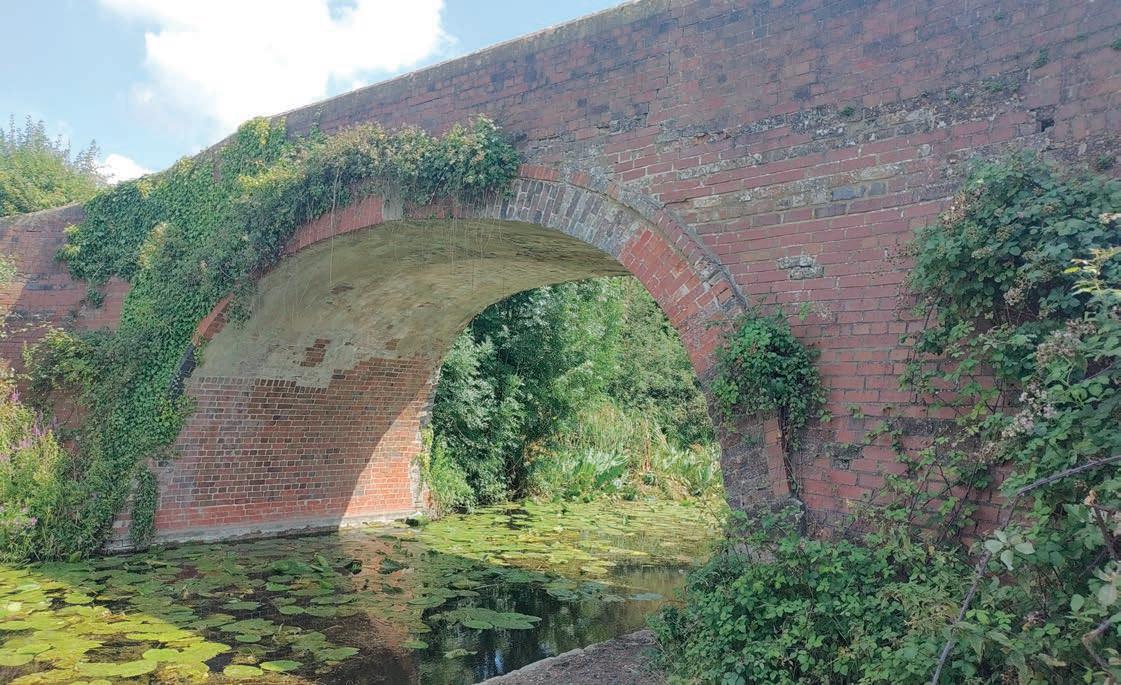
~ THE INSIDE STORY ON RESTORING OUR LOCAL CANALS
CLOSE YOUR EYES and visualise the perfect Cotswolds hotel – we reckon that the newest member of the PIG litter will be exactly what you have in mind. Tucked away in Barnsley, a quintessential honey-stone village just four miles from Cirencester, THE PIG-in the Cotswolds is a handsome Grade II listed house with wisteria winding across its façade, mullioned windows, Arts and Crafts-style gardens and – a first for us – its very own classic country inn, the Village Pub.
Barnsley House was built in 1697 by Brereton Bourchier, whose family had acquired a manor on the site from Henry VIII’s sixth and final wife, Catherine Parr, in 1548. If it looks a little unassuming from the main road, that’s because the back of the house was originally its front – at the end of the 17th century, said main road was merely a lane running through the grounds and veg gardens.
From the 18th century, Barnsley House served as the rectory for medieval St Mary’s Church, next door, but its glory days were still ahead of it. When Rosemary Verey moved here with her husband, David, in 1951, she decided to remodel the grounds herself – and so began a horticultural journey that saw her become one of the 20th century’s most famous garden designers, with a client list that included the future King Charles and Elton John. Her laburnum walk, Tuscan temple and knot garden epitomise the style popular at the time, while the potager, or ornamental kitchen garden, positively screams PIG. Indeed, we like to think of a stay at this cosy, homely house as a visit to your great-aunt Rosemary’s.
After Rosemary passed away in 2001, Barnsley House became a boutique hotel (the vegetable beds in the back field were planted in 2004) with a small but perfectly formed spa near the gothic summerhouse, where we’re excited to extend our PIG treatment offerings. Then there’s The Village Pub, with beamed ceilings and open fireplaces, where we hope you’ll also join us for a pint and some seriously good-quality grub. That notorious bon viveur Henry VIII would doubtless have approved.
Useful info for your stay
HAVEAQUESTION?
Just call reception by dialling 0.
COMPLIMENTARY
WI-FI
To activate, just select “THE PIG Public” on your wi-fi settings and away you go!
TREATMENTS
To book a treatment in our Fieldhouse, please dial 0 or go down to reception to speak to one of our friendly team. CHECK OUT Check out is 11am.
Wander into our newest rustic retreat...
… follow the winding path at the back of the main house of THE PIG-in the Cotswolds to find our Fieldhouse – deeply relaxing treatment rooms with extra-special offerings, including our first nail bar, a hydrotherapy pool, sauna, steam room and outdoor terrace in the heart of the English countryside.
The Fieldhouse is open 9am–6.30pm and you are welcome to use the peaceful spaces inside and outside – even if you haven’t booked a treatment with us. All you need to do is pre-book a free 60-minute slot with reception. You can also enjoy our Fieldhouse if you’re staying with us at The Village Pub. Call reception by dialling 0 for more details.
Good to know
Our therapists have been professionally trained to offer safe and effective spa treatments for guests recovering from or undergoing cancer treatments. Just ask at reception to speak to one of the Fieldhouse team if you would like to know more.
OUR FIRST PIG TREATMENT HOUSE
Carefully designed as the big sister to our PIG Potting Shed treatment rooms, Fieldhouse is a first for us – a small but perfectly formed relaxing retreat in a secluded spot under the trees, filled with even more peaceful spaces to help you switch off. Fieldhouse has the familiar, cosy décor of old tobacco tins and rustic reclaimed wood that you can expect to find across the litter at THE PIGs, with even more treats to offer.
Welcome to our Fieldhouse
We’ve teamed up with Tribe517 to help you unwind and completely relax during your time with us in our quiet and calming treatment rooms.
Tribe517 is a family-run natural skincare brand that handcrafts its products in the beautiful South Wales countryside, not far from us at THE PIG-in the Cotswolds. Our partnership was meant to be: the company shares our ethos, using homegrown or ethically sourced botanical ingredients that care for the planet as well as mind and body.
Just like us at THE PIG, the team at Tribe517 are passionate about the provenance of their ingredients, which include their own honey. They are also committed to getting the little details right: recycling and using up everything they can, and crafting in small batches to ensure the best quality. Our Tribe517 products are suitable for anyone who has nut-based allergies on the skin.
FIND YOUR COPY OF THE FULL FIELDHOUSE TREATMENT MENU IN YOUR BEDROOM, INCLUDING DETAILS OF HOW TO BOOK THE SPA FACILITIES
PIG PICKS
LOCAL TOP TIPS FROM OUR Reception
Team
WHAT WE LOVE MOST ABOUT THIS AREA is the beauty of the journey between the villages – the landscapes are so pretty in all seasons. There are also many old stately homes with stunning gardens to visit, such as Snowshill Manor or Highgrove.
OUR FAVOURITE THING ABOUT THIS PIG is that we still have the books in the shelves of our library written by Rosemary Verey, who lived here when it was a family home.
OUR GO-TO DISH ON THE 25 MILE MENU is the honey roasted carrots – they’re so sweet and the perfect addition to any meal.
A MUST-VISIT LOCAL PUB is THE PIG’s very own The Village Pub, just across the road from the main house. A little further afield, we love The Wild Rabbit in Kingham, The Bull at Charlbury and The Fox at Oddington.
A LOCAL GEM is Jolly Nice, a nearby Cotswolds farm shop and cafe with fresh local produce. It has great options for gift buying, and there are resident donkeys.
WILDLIFE TO LOOK OUT FOR includes Harry the cat, who is frequently seen on the grounds and is very friendly. Also in the garden is Rosemary Verey’s original laburnum walkway, which flowers in late May and makes the garden beautifully colourful.
BET YOU DIDN’T KNOW that the neighbouring village of Bibury was named the most picturesque village in the world by Forbes in 2025 – most notably for the 14th-century row of cottages, which are now protected by the National Trust.
Wild and wonderful
An ambitious project to restore canals here in the Cotswolds has seen PIG guests supporting vital local conservation work
HAVE YOU EVER SEEN A WATER VOLE? The rare rodents are among the UK species that could benefit from the conservation work of Gloucestershire Wildlife Trust in the heart of the Cotswolds’ countryside. It’s hoped that an ambitious project to restore and reconnect two local canals – the Stroudwater Navigation and the Thames & Severn – will transform and rebuild these key waterways to the benefit of both people and nature. The first phase of the work has been completed (as part of a collaborative effort from Stroud District Council, a charity called the Cotswold Canals Trust and others). Crucially, Gloucestershire Wildlife Trust is leading on all conservation aspects of the project, in this ecologically significant stretch of English countryside.
“The work to restore the canals here includes repairing locks and bridges so they can be returned to use, but it also encompasses creating new channels of water,” explains Pete Savage of Gloucestershire Wildlife Trust, a canals specialist who is an environmental adviser on the project. “Conducting ecological surveys before any engineering
“It’s
good news for critically endangered species”
works or vegetation clearance even began to take place was vital.”
When completed, the work to reconnect the canals should clean up derelict architecture and will also mean that more people can experience the Cotswolds via its waterways. But from a wildlife perspective, a core goal is to improve the biodiversity of the region and support some iconic UK species. And because the changes to landscapes and architecture might also have an impact on flora and fauna while the works are in progress, Gloucestershire Wildlife Trust has a doubly crucial role to play. Its conservation work includes removing non-native vegetation that is not beneficial to the local ecosystem, and ensuring the conditions in which significant native species – ranging from water voles to otters, eels and wading birds such as curlews –can thrive.
“We are greatly improving and extending the habitats for water voles, and their habitats are going to be better joined up,” says Pete. “So there are going to be more of them at the end of this project than there were at the start – which is good news, as they are a critically endangered species.” Arguably less cute, but also benefitting from the trust’s efforts are migratory eels. “They make their way from the sea into freshwater habitats and that’s where they live their life
before migrating back out to the sea to spawn. Their challenges include barriers in rivers, so wetlands and canals are really good places for them to grow into adult eels. With these canals, we’re reconnecting the east to the west, and this will give eels a corridor to migrate upstream.”
From curlews to otters to dragonflies, there is a compelling list of native British species set to benefit from the trust’s conservation work.
Among those helping to protect the local wildlife are our wonderful guests like you, here at THE PIG-in the Cotswolds, by choosing to donate an optional £1 to the project on your restaurant food bill. “Fundraising by guests at THE PIG makes a massive difference to our ability to do this work,” sayss Esther Graham, who is the Corporate Partnerships Manager at Gloucestershire Wildlife Trust. “The feedback we get from PIG guests is that being part of this fundraising effort helps them feel connected to the incredible Gloucestershire countryside, which is wonderful to hear. We really appreciate their support.”
“Any money that PIG guests donate to Gloucestershire Wildlife Trust goes wholly to supporting the environmental side of this heritage project,” adds Pete, “and allows us to be even more ambitious about what we can do.” gloucestershirewildlifetrust.co.uk
From the loveliest bike rides to the best local pubs, we love to share our local intel. See our curated list online and ask at reception for our map of local walks.
PETE SAVAGE (LEFT) IS PASSIONATE
WATER VOLES (ABOVE)
INFO & GOINGS ON
~ ESSENTIAL INFO & HOTEL GUIDE
~ DEVON CALLING: THINGS TO SEE AND DO
~ THE INSIDE STORY ON OTTER BREWERY
THE PIG - AT Welcome to
COMBE MEANS WOODED VALLEY – in the Domesday Book, you’ll find the Welsh word for this, “Cwm” – and this leafy part of Devon certainly lives up to the name. This building is probably our “poshest PIG”: a Grade I listed Elizabethan manor house set in 3,500 acres in the Otter Valley, with expansive views towards the Blackdown Hills and plenty of pheasants pottering about. All sitting on land whose first recorded owner, in 1086, was Bishop Odo – the half-brother of William the Conqueror.
We picked up the keys quite some time after that, in October 2015, and worked on restoring, renovating and redesigning the hotel – Combe House has been a hotel of one kind or another since 1968 – as well as what has become one of the loveliest Kitchen Gardens of all of our PIGs. The terraced garden, set within a mature pinetum, retains original features lovingly renovated by our team, including two Victorian greenhouses. In one, you’ll find a Black Hamburg grapevine that is thought to be more than a century old. We also have a Mushroom House where we grow and harvest our own mushrooms, and a Smokery for curing and smoking meat and fish.
We’ve handled the house and its grounds with great care, breathing new life into the building’s old bones, but seeking never to over-restore. We especially love the Folly, our rustic hideaway restaurant that sits in the gardens, and the bedrooms we created in the stable yard behind the main house. We have made the most of other features, such as the original Georgian kitchen and cavernous cellar, where we sometimes host wine tastings – do ask us to show you if you’re curious – and the Elizabethan great hall, dating from 1580, which now holds our lively bar. And while we’ve had plenty of new guests, we’ve also been careful not to bother some of the residents who were already on site, including a colony of bats. After all, they found the place before us.
COMBE
Useful info for your stay
HAVEAQUESTION?
Just call reception by dialling 0.
DIALLING OUT
To call an outside line, please dial 9, wait for the change in tone, then dial the area code and number required.
COMPLIMENTARY WI-FI
To activate, just select “THE PIG Public” on your wi-fi settings and away you go!
BREAKFAST,LUNCHANDDINNER
All served in the restaurant. To find out our restaurant opening times, please call reception by dialling 0. Food is also served daily in The Folly – speak to one of our friendly teams to find out today’s opening times.
TREATMENTS
To book a treatment in our Potting Sheds, please call reception by dialling 0 – you can find the full treatment menu in your PIG bedroom.
CHECK OUT Check out is at 11am.
Wander through the walled Kitchen Garden
... past the raised beds and fruit cages and into the Herb Garden, where you will find our two warm, rustic retreats: the Potting Shed treatment rooms, quiet and calm and designed to help you escape it all. Take inspiration from the garden surroundings and experience deeply relaxing full-body and facial treatments using products by Tribe517, a family-run natural skincare brand that handcrafts its products in the beautiful South Wales countryside. Like us, Tribe517 is passionate about using homegrown or ethically sourced botanical ingredients that care for the planet as well as mind and body – and is dedicated to recycling and using up everything it can.
Good to know
Our therapists have been professionally trained to offer safe and effective spa treatments for guests recovering from or undergoing cancer treatments. Just ask at reception to speak to one of the Potting Shed team if you would like to know more.
SHED MEETS SPA
•
LOCAL TOP TIPS FROM OUR Assistant Reception Manager, Will
WHAT I LOVE MOST ABOUT THIS AREA is how close we are to the coast. The beaches of Sidmouth, Beer and Branscombe are all just a 20-minute drive away.
MY FAVOURITE THING ABOUT THIS PIG is the grandeur of the house – we have the most bedrooms (and some of the largest) here, compared to any other PIG.
MY GO-TO DISH ON THE 25 MILE MENU is our honey mustard glazed pork belly for two. It’s a must-try.
A MUST-VISIT LOCAL PUB is the Masons Arms in Branscombe. It’s tucked away in a picturesque coastal village and has a really cosy atmosphere.
A LOCAL GEM is Darts Farm in Exeter. It’s a local farm shop with a great food hall, a vineyard, lakes, walking routes, a spa … you name it!
WILDLIFE TO LOOK OUT FOR includes the iconic Dartmoor ponies, if you’re visiting Dartmoor. They roam freely, so you’ll often find them in really unexpected places.
BET YOU DIDN’T KNOW that before it was a PIG, the suites in the house were named after local characters – including the last person in the area (a local candle maker) to be hanged for poaching on Tommy Wax Hill in Honiton.
Old tobacco tins, gardening tools, balls of twine … Unlikely as it may seem, the décor of our Potting Shed treatment rooms was inspired by Beatrix Potter’s grumpy gardener, Mr McGregor. It was dreamt up by THE PIG’s former Creative Director, Judy Hutson, whose vision was to “fill the shelves with the sort of things
I’d imagine Mr McGregor would have. Oil lamps, vintage bottles, old mugs – and, of course, no shed is complete without a few potted plants. And the massage table is dressed with a big picnic rug.”
Otter perfection
THE MODERN BREWERY PRODUCES A RANGE OF AWARD-WINNING BEERS, INCLUDING A STOUT (BELOW)
Five generations of beer-making wisdom are behind the success of this family-run Devon brewery – one of our favourite suppliers here at THE PIG-at Combe
“I THINK IT’S FAIR TO SAY that beer is in our blood,” says Patrick McCaig, Managing Director of Otter Brewery. He may have a point. Five generations of his relatives have been involved with the brewing industry, and the company – founded on a farm in Devon’s Blackdown Hills by his parents, David and Mary Ann – remains an independent, family-run business.
A West Country native, David had been taught his trade at Whitbread in Cheltenham by, as it happens, Mary Ann’s father. Having established Otter in 1990, he used all his experience to start brewing exceptional beer. “A few years later,” Patrick recalls, “he called me and said, ‘Look, I need your help. I know how to make beer – I just don’t really know how to sell it.’ That’s where I came in.”
Patrick was working in London, for global advertising agency Grey, when he was persuaded to join his parents in 1995. “It was never my intention to enter the world of brewing,” he says, “but the powers of a family business are strong. My background was in building brands, my dad had worked as a brewer for 20 years and mum was a sort of Ma Larkin figure – the matriarch. Together, the three of us made quite a formidable force.” He adds with a rueful chuckle, “though you’ll notice there was no accountant in the mix”.
Independence, he says, is an intrinsic part of Otter’s DNA. “It allows
you to be the true owner of your brand. Beers created by multinational companies are usually generated by the marketing department and – without wishing to be too cynical – often have a fictitious element. Whereas anything that comes out of Otter is authentic, unique in flavour and made with artisanal production values, albeit scaled up.”
Being independent also allows the family to innovate as their instincts dictate, without the need for countless hours of marketing meetings and focus-group testing. Having started off brewing cask ales, Otter now has 10 beers in its range including a craft beer-inspired pale ale, a stout and a premium lager, Tarka, which is stocked at THE PIG-at-Combe, along with its eminently drinkable Amber Fresh ale.
Otter’s relationship with THE PIG goes back to before THE PIG-at Combe had even welcomed its first guest. “We had a call from Robin [Hutson], and he invited us to the hard-hat opening. There’s definitely a synergy between us. Like THE PIG, what I love most about hospitality is the idea of people going out to enjoy themselves, having memorable occasions – whether it’s in a pub, a hotel or restaurant. That’s what drives me, and it’s why we try to make products that people talk about, enjoy and feel part of.”
Another shared priority with us here at THE PIGs is a focus on sustainability. In 2007, Otter constructed a new cellar for which it won Eco Building of the Year in the South West’s Commercial Property Awards. A third of it is underground, using the Earth’s core temperature to naturally cool the space to the perfect temperature for storing cask ale.
As working breweries go, Otter is about as picturesque as it’s possible to imagine. The thatched farmhouse at its heart dates back to 1806 and its water is drawn from the headsprings of the neighbouring River Otter. “We use about three and a half pints of water to make one pint of beer,” says Patrick. “But rather than taking the excess away in a tanker
and spreading it out in a field somewhere, we treat it ourselves and it goes back into the water course through our willow beds. This also creates a lovely habitat for animals.”
Patrick hopes the idyllic setting will help to lure his sons to the family firm (especially as one of them is studying accountancy). “I’m very keen for my two boys to get on board. It would be incredible to transfer the business to the next generation. I just hope they fall in love with it as I did. In an uncertain world, it’s so important to love what you do.”
When asked to recall the brewery’s proudest moments, he reels off a series of high points, from sharing a pint of Otter Bitter with Jessica Ennis-Hill to the Exeter Chiefs (the Rugby Union team Otter has sponsored for many years) winning the double in 2020. But the ultimate was watching King Charles supping a pint of Otter Head – and clearly relishing it. “How do you tell the King that he’s got a beer moustache that needs wiping off?” Patrick muses. “I mean, I couldn’t really do it for him.”
The royal beer-tache occurred when HRH was attending an event on a Devon farm. “His policeman came up to me and said, ‘Look, he can’t drink any beer,’ Patrick recalls. “But as soon as the King saw that pint of Otter Head, he got stuck in. He had a proper swig of it and said, ‘My goodness, this is good.’ That was a satisfying moment.”
Sadly, for all the triumphs, there are setbacks too. The brewery has faced challenges as the pubs it supplies across the West Country feel the squeeze from hostile economics and cultural shifts. And yet, such worries vanish when Patrick looks out at his bucolic surroundings. “It’s easy to forget your problems in a place as beautiful as this. When I look at the brewery and at what we’ve achieved – in a hospitality sector that’s struggling – I think, ‘You know, it just proves that a family business can work.’” otterbrewery.com
“As working breweries go, Otter is about as picturesque as it’s possible to imagine”
From the loveliest bike rides to the best local pubs, we love to share our local intel. See our curated list online and ask at reception for our map of local walks.
INFO & GOINGS ON
~ ESSENTIAL INFO & HOTEL GUIDE
~ CORNWALL CALLING: THINGS TO SEE AND DO
~ THE INSIDE STORY ON LOBSTER FISHERMAN
JOHNNY MURT
Welcome to
THE PIG - AT
OUR CORNISH PIG’S HOME IS HARLYN HOUSE, which for centuries has been one of the most prominent houses in an area of the county justly famed for its rugged beauty, sandy coves and great produce from sea and land. Its name is said to be derived from the Cornish for “important place by the water”, and we are very proud to be its current custodians. Before we picked up the keys in 2018 and opened two years later, in its 600-year-history, only three families had owned this dramatic stone property, set on a breathtaking stretch of coast overlooking Harlyn Bay.
The first owners of this 15th-century farmhouse were the Tregoyes or Tregewes (one of whom, Richard Tregew, became MP for Cornwall in 1448), followed by “gentlemen-farmers” the Hellyars. The house became ever grander over the years, as new architectural details were added. When a Captain Millar purchased Harlyn in 1947, he thankfully ignored architectural advice that it was “past saving”, instead bringing in master craftsmen to restore it to its former glory. Among the surviving features, although it was heavily overgrown and neglected when we arrived, is our Kitchen Garden. It’s been here for almost 200 years, enclosed by three sides of Cornish slate wall. Our team has lovingly restored it and works year-round to keep it flourishing with vegetables, fresh salads and herbs. We also grow our own rock samphire, sea kale and sea beet.
The many lives and eras of the house are displayed in the exterior stonework, as well as in the flagged floors, heavy wood doors and gorgeous details throughout. Harlyn House has a moody charm all of its own – and simply by staying here, you’re now part of its story.
HARLYN BAY
Useful
info for your stay
HAVEAQUESTION?
Just call reception by dialling 0.
DIALLING OUT
To call an outside line, please dial 9, wait for the change in tone, then dial the area code and number required.
COMPLIMENTARY
WI-FI
To activate, just select “THE PIG Public” on your wi-fi settings and away you go!
BREAKFAST,LUNCHANDDINNER
All served in the restaurant. Our outdoor eatery, The Lobster Shed, is open from 1 April, with Friday live music from 29 May and Sunday DJ sets throughout August. To find out more, please call reception by dialling 0.
TREATMENTS
To book a treatment in our Potting Shed, please call reception by dialling 0 – you can find the full treatment menu in your PIG bedroom.
CHECK OUT
Check out is at 11am.
Wander through the Kitchen Garden
... and wildflower beds, and into our warm, rustic retreat: a Potting Shed treatment room that is quiet and calm, and designed to help you escape it all. Take inspiration from the garden surroundings and experience deeply relaxing full-body and facial treatments using products by Tribe517, a family-run natural skincare brand that handcrafts its products in the beautiful South Wales countryside. Like us, Tribe517 is passionate about using homegrown or ethically sourced botanical ingredients that care for the planet as well as mind and body – and is dedicated to recycling and using up everything it can.
Good to know
Our therapists have been professionally trained to offer safe and effective spa treatments for guests recovering from or undergoing cancer treatments. Just ask at reception to speak to one of the Potting Shed team if you would like to know more.
SHED MEETS SPA
PIG PICKS
LOCAL TOP TIPS FROM OUR Reception Manager, Aaron
WHAT I LOVE MOST ABOUT THIS AREA is how beautiful and untouched it is – the rugged coastal path and landscape have been shaped by the Atlantic winds, and the water is like no other place in the world.
MY FAVOURITE THING ABOUT THIS PIG is how much we champion our surroundings, by sourcing ingredients from the best local suppliers the county has to offer.
MY GO-TO DISH ON THE 25 MILE MENU is our tobacco onions. They go with pretty much everything – they’re gorgeous sprinkled on top of a soup, or scattered on a risotto, on their own as a side dish or served with a delicious steak.
A MUST-VISIT LOCAL PUB is St Kew Inn, about 30 minutes’ drive away in St Kew village. The menu is always superb. I particularly love the smoker, which they use to prepare lots of the dishes.
A LOCAL GEM is St Kew Farmshop & Cafe (I promise I’m not sponsored!). It has themed cuisine events every Friday – the chicken nights in summer are to die for.
WILDLIFE TO LOOK OUT FOR includes the Cornish tamarisk, a tree or shrub that grows in the local hedgerows. It’s one of the only things hardy enough to survive the strong and salty storms we get here in winter.
BET YOU DIDN’T KNOW that we have a door at the back of the house that was taken from the local chapel, St Constantine’s. The chapel now sits in ruins in Trevose Golf and Country Club, and is still viewable to this day – but watch out for flying golf balls!
Old tobacco tins, gardening tools, balls of twine … Unlikely as it may seem, the décor of our Potting Shed treatment rooms was inspired by Beatrix Potter’s grumpy gardener, Mr McGregor. It was dreamt up by THE PIG’s former Creative Director, Judy Hutson, whose vision was to “fill the shelves with the sort of things I’d imagine Mr McGregor would have. Oil lamps, vintage bottles, old mugs – and, of course, no shed is complete without a few potted plants. And the massage table is dressed with a big picnic rug.”
WHAT A
Meet our lobster guy
We rely on legendary local fisherman Johnny Murt to deliver our fresh lobster and more
FISHING IS IN JOHNNY MURT’S BLOOD. Quite how long his ancestors have been working on the Cornish coastline, nobody seems too sure but Johnny is confident that his great-greatgrandfather did, as has every generation since. Coincidently, we were introduced to Johnny by Ross Geach, the seventh-generation farmer behind Padstow Kitchen Garden. The way we at THE PIG see it, if they’ve been doing it for that long, they’re probably pretty good at it.
Johnny remembers that introduction well. He and his brother met our Head Chef at Trevose Golf and Country Club just weeks before THE PIG-at Harlyn Bay was due to open. “THE PIG were looking for a local lobster supplier,” recalls Johnny. “They reckoned they were looking for around 30 to 40 kilograms of lobster per week – not an enormous amount, but we were glad to help out. Well, when the hotel opened, I was soon bringing the kitchen 170 kilograms of lobster a day. That’s around 250 lobsters. At that time, I can’t imagine any restaurant in the country was serving more. We sell a lot to Stein’s, but nothing compared to what we take to THE PIG.”
CATCH! JOHNNY MURT (ABOVE) WITH THE DAY’S HAUL, MUCH OF IT DESTINED TO BE SERVED UP AT THE LOBSTER SHED AT THE PIG-AT HARLYN BAY (BELOW AND OVERLEAF)
JOHNNY’S FAMILY HAS BEEN FISHING THE CORNISH SEAS FOR GENERATIONS
Johnny may be able to deliver great volumes of lobster, but he also takes sustainable fishing and marine conservation seriously. In 1998, having fished out of Padstow for 14 years, he moved to the USA to study for a master’s degree in Fisheries Conservation. He stayed out there and worked in marine science for the next 10 years before taking a job as a fisheries advisor for the UK government as part of the Joint Nature Conservation Committee.
“I was based in Aberdeen but going all over Europe presenting government proposals to fishery groups,” he says. “It was basically two years of schmoozing and visiting lots of beautiful little fishing towns around Europe. But eventually it made me realise I just want to be fishing myself. It’s the same in every port: you see the boats coming in, and you see the family members there on the harbour wall, and that’s how it’s always been for us in Padstow. My grandfather is always the first person I see waiting on the quay. That was a big draw.”
He made the decision to get back in his boat in 2010, and hasn’t looked back since. Back in Padstow, he’s better placed to safeguard the fishery that has served his family so well. For the past couple of years he’s been relentlessly lobbying to protect local fisheries from overfishing by stopping larger commercial boats from operating within the Inshore Fisheries and Conservation Authority’s waters. Progress has been slow and frustrating, but it’s a vital cause, and one he’s not about to give up on.
“When the weather’s good, there isn’t a job in the world that can touch it”
Most days Johnny fishes alongside his brother, father, cousin and uncle, albeit in separate singleperson boats. In fact, he’s recently bought a new one, a small catamaran named Daisy T, that he says makes getting over the Camel Estuary’s infamous Doom Bar marginally easier. “When the weather’s good and your fishing is good, there isn’t a job in the world that can touch it,” he adds.
In winter, when the weather’s not so good, Johnny catches crabs and says that if anything, he prefers the taste of crab to lobster. “It works well,” he says of his seasonal fishing routine. “The lobster season runs from around Valentine’s Day to the end of August, at which point the crab season starts to pick up. We use the same pots to catch both, we just switch up the bait. Lobsters prefer very oily fish – mackerel, pilchards or herring – whereas crabs prefer what we call ‘fresh fish’, such as dog fish or thornback ray.”
His two young sons are, as you might expect, no strangers to seafood. Johnny says the boys currently prefer squid or monkfish to crab and lobster. Is the path written for them in the same way that it was for him? “I’m not sure that my boys will go fishing,” he says, less ruefully than one might expect. “I think they’d be chomping at the bit already if it was something they wanted to do. I know I was.” And he has simply never lost that passion – much to the advantage of the rest of us locals.
Enjoy fresh lobster and Johnny’s local catch of the day when you eat with us at here THE PIG-at Harlyn Bay
From the loveliest bike rides to the best local pubs, we love to share our local intel. See our curated list online and ask at reception for our map of local walks.
Music makers
To
book the best live acts and DJs for our PIGs, including for this summer’s Smoked & Uncut Garden Parties and live music nights, we rely on our friends at Marksman Entertainment
“IN 2025, EVERY SINGLE PIG HOTEL, from roughly May to September, had local musicians playing every other Sunday. So across the year, that’s close to 100 different musicians that we are booking in,” says Johnny Seymour, of Marksman Entertainment, the talent booking and production company that helps to stage live music and other events for our PIGs. “We know that people visiting the PIGs really appreciate it. Good food and good music also go hand in hand –we often find that people come down for the music and then stay for the food, or the other way around.”
As for supporting the careers of the performers, “Simply being able to offer the opportunity of regular shows for local artists really matters to us,” says Johnny, who is a co-founder of Marksman, together with his college friend, Meadows Hulme, a music promoter and PR director. “It gives them a platform to go on from, to move on to their next gigs and go on to success. It would be great if we have played a part in that journey for some of these acts. And with the history of the Smoked & Uncut music festivals that we have put on at various PIGs over the years since 2013, sometimes we’ve been able to have acts on a pretty massive festival stage, too,” he adds.
have been many memorable moments along the way: “Johnny and I driving Sister Sledge to the stage, through the crowd, on the back of a golf buggy, was fun,” recalls Meadows.
As for this summer, something new is afoot, explains Megan Way, THE PIG’s Events Calendar Coordinator, who often works hand-inhand with Johnny and Meadows. “We are excited to be hosting more of our Smoked & Uncut Summer Garden Parties, which we had fun with last year – back to our roots of laid-back beats and delicious feasts,” she says. “Taking place over two or three days, they will include late-night DJs and live music, with an emphasis on quality local musicians of the kind that Meadows and Johnny are used to helping us to support. The Sunday will be a family day, with all sorts of live acrobatics and more.”
“Food and music are things that bring people together”
It was Meadows and Johnny who first helped us cook up the idea of Smoked & Uncut. The festival started life at THE PIG in the New Forest before migrating to other PIGs in the litter, combining live music with tasty seasonal food courtesy of our PIG kitchen teams and high-profile guest chefs including Angela Hartnett. Acts who have performed range from homegrown heroes Supergrass, Razorlight and The Kooks to American disco-funk legends Sister Sledge. And there
Ultimately, says Megan, “Food and music are things that bring people together and both are part of our PIG story. Johnny and Meadows are a huge part of that – they know how to select and support the artists and the bands that fit our homegrown ethos.
“As well as our Garden Parties, throughout the summer we will be hosting live music nights at most of our hotels, on a Friday or a Sunday. And whether they’re best enjoyed with pizzas from the Garden Oven or a barbecue, there’s nothing better than listening to live music with the sun shining, having a drink and good food. It is a huge part of what we do.”
For news and tickets to our Smoked & Uncut Garden Parties at THE PIG-at Bridge Place, THE PIG-at Combe and THE PIG in the New Forest and other live music, see thepighotel.com/events
CLOCKWISE, FROM ABOVE: JOHNNY SEYMOUR (ON THE RIGHT) AND MEADOWS HULME; SISTER SLEDGE; RAZORLIGHT; AND OTHER PERFORMERS AT SMOKED & UNCUT
Peas & beans
Pepper Gimlet
Serves 1
55ml Sapling Gin
5ml green Chartreuse
25ml fresh lime juice
20ml green bell pepper syrup (recipe below)
fresh lime or green pepper to garnish
For the green bell pepper syrup (makes 700ml)
350g white caster sugar
· 350ml water
half a green pepper, chopped
To make the green bell pepper syrup, bring the sugar and water to the boil and add in the green pepper. Take off the heat and, once cool, cover and allow to infuse
overnight. In the morning, sieve the syrup into a large jar or bottle to remove any remnants of the pepper.
For the gimlet, add all the ingredients into a cocktail shaker with ice and shake hard until thoroughly mixed. Finely strain the liquid into an ice-cold coupe and garnish with a twist of fresh lime peel or a slice of green pepper.
Learn how to rustle up even more of our simple PIG classics by watching our YouTube series PIG Tales
– visit youtube.com/ @ThePigHotel/videos
What to drink with this dish…
Our PIG Group Beverage Director, Luke Harbor, recommends three perfect pairings for this colourful dish
Pieropan La Rocca, Soave Classico, 2023
The subtle almond bitterness and slight herbal undertones marry perfectly with the peas and beans, while the rounded tropical notes really chime with the dressing.
Flint Bacchus Fumé, Norfolk, 2023
The lemon and delicate pea flavour of the Flint Fumé accompanies the goat’s curd and minty freshness of this classic dish.
Bruno Lupin Roussette de Savoie Frangy, 2023
This wine is incredibly versatile, showcasing racy acidity and complex green apple and citrus character to complement a lighter, fresher dish like this one.
Nothing tastes more like summer than this. It’s a lovely colourful salad that’s light and zesty, and perfect for enjoying in the sun with a glass of crisp white wine –see our suggested pairings below. We grow our own peas and beans, but you can usually pick some up at a farmers’ market. If you can’t find goat’s curd, you can use soft goat’s cheese as an alternative.
Serves 4
•400g mixed garden peas and broad beans
•juice of 1 lemon
•50ml white wine vinegar
•100ml rapeseed oil
(local if possible)
•2 mint sprigs (grapefruit mint is especially good), finely chopped
•100g fresh goat’s curd
• salt and pepper
For the garnish
•pea shoots and broad bean leaves
•mangetout (purple, if you can find it, optional), raw and washed
•edible flower petals (optional)
Remove the peas and broad beans from their pods, then blanch them lightly in salted boiling water and refresh in iced water. Pop the broad beans out of their skins and drain the peas. Keep to one side.
To make the dressing, mix the lemon juice, vinegar, oil and chopped mint together and season to taste.
To serve, mix the peas and broad beans with some of the dressing and scatter over the plate. Add small spoonfuls of the goat’s curd over the top and garnish with the pea shoots and broad bean leaves. Add the mangetout, if you are using. Finish with a little more dressing and the edible flower petals. Oh, and don’t forget that glass of wine …
OUR PIG PEOPLE
ARE THE FUTURE OF CARING AND CONSIDERED HOSPITALITY
AT HEART, THE PIGs are restaurants with rooms where everything starts with the Kitchen Garden. Our gardeners and chefs work hand in hand to create menus brimful of the freshest seasonal flavours. What we can’t grow ourselves, we source from our local heroes – the best farmers, fishermen and foragers we know, who are the foundation of our 25 mile menu. We are obsessive recyclers and restorers: from vintage fabrics and china to DIY on-site smokeries and upcycled chicken sheds, we love anything homemade and ultra-local. Each of our PIGs is totally different – we always go with the grain of the place, taking our lead from the spirit of the building to create somewhere that feels lived in and well loved. The bedrooms are pretty comfy, too!
Rooted in some of the most stunning parts of the English countryside, the places that we are lucky enough to call home are pretty special – with endless things to do and see, tight-knit communities and loads of talent all around. It’s important to us to play a positive role, whether it’s providing employment, sourcing local ingredients, forging links with nearby schools and charities, or simply being the go-to place for our neighbours to celebrate their special moments. It’s a privilege to work so collaboratively with all of these local heroes that we count as friends and to play our part in these strong, supportive local communities.
Our PIG people are what really make us tick. We believe that our team of almost 1,000 talented professionals working across the hotels – chefs, kitchen gardeners, waiters, sommeliers, bar staff, housekeepers and everyone behind the scenes – is helping to shape the future of caring and considered hospitality. From the newest apprentice to the most experienced manager, they are what make THE PIGs a happy place to be and the reason our guests enjoy their time with us. We couldn’t be more proud of them – and you couldn’t be more welcome here!
the date our first PIG opened, in the New Forest
£83k 07/2011
In 2025, over
raised for our local charity partners from the voluntary £1 donations on our food bills
NUMBERS
We harvested
2½ tonnes of honey from our very own PIG hives last summer
300,000+
seedlings were produced at our central nursery in Brockenhurst to supply all eight PIG Kitchen Gardens
Setting the
In January 2026, THE PIGs were awarded a three-star Food Made Good Standard – the highest rating achievable! – from The Sustainable Restaurant Association, which is the leading sustainability certification in hospitality globally.
This marks our second group-wide evaluation (and our sixth assessment in total), and we’re truly chuffed to have retained our three stars, reflecting our commitment to sourcing responsibly, supporting society and protecting the environment.
“I’ve been part of THE PIG for nearly 15 years, and our ethos has remained constant: growing our own, working with the seasons and sourcing locally,” says our Group Head Chef, Andy Wright. “These principles continue to guide us, and as sustainability standards evolve, so do we.”
None of this would be possible without our brilliant teams, working purposefully for people and planet every day. We see our three-star rating as a milestone, not the finish line. And we couldn’t be happier to have you along for the ride.
Designed and edited by Uncommonly, 3032 Tabard Street, London SE1 4JU (uncommonly.co.uk). Printed in East Sussex by Pureprint, a CarbonNeutral ® Company. The paper is carbon balanced with the World Land Trust, an international conservation charity. With special thanks to all of our partners and those in THE PIG team that have contributed to this issue. ... find out more here
The Pigon the Beach The Pignear Bath The Pig The Pigin the Wall The Pigat Combe The Pigin the South Downs The Pigat Bridge Place The Pigat Harlyn Bay THE PIGin the Cotswolds