DECEMBER 5, 2017
A CLOSER LOOK
7
8
DECEMBER 5, 2017
The Piedmont Highlander
A Closer Look
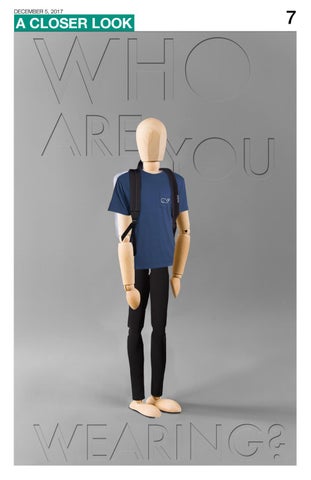
breezeway or runway? Vineyard Vines stickers adorn chromebooks and water bottles. Walking through the halls, a couple of boys with Patagonia hats stroll by. Girls wear headbands to sports practices, making sure that the Lululemon logo is visible right above their forehead. North Face backpacks are on the floor of every classroom. Students wear all of these brands and more as clothing, but they are also something more: a culture that people cling to. “There’s definitely a Piedmont stereotype who’s very preppy, smart, wealthy, and put together,” sophomore Becky Isaac said. “Those tend to be the people who wear name brands.” Look around the breezeway. Most people are wearing similar brands or similar outfits. A lot of times, that means students are wearing somewhat expensive clothing bought from similar types of stores, senior Cameron Addis said. “Honestly, I don’t think wearing name brands is a bad thing,” senior Minnie Cooper said. “I think a lot of times, girls chose to wear Lululemon because it’s more comfortable, and guys chose to wear khaki pants and Vans every single day because it’s comfortable for them.” Similarly to Cooper, Lululemon sales associate Sophie Bluhm said that she believes the brand is successful because the styles are clean and comfortable. “I think [Lululemon] is a brand people trust,” Bluhm said. “I think that they know what they like, they know that it’s going to work.” However, Cooper said that other students are more likely to advertise the fact that they are wearing Lululemon and other similarly priced brands of clothing to show they can afford them. “I think because of the culture that surround things like Patagonia, it’s not just the clothes,” Cooper said. “It’s about the image of the brand and how cool their logo looks and it’s not just about wearing it for comfort at that point.” That theory also extends to which brands people wear less versus which brands people wear more, Addis said. “If you’re wearing Puma versus Nike, Nike is probably better looked at than Puma is, just because not a lot of people wear puma,” Addis said. Junior Margi Brayer said that people chose to buy leggings from Lululemon, even though there are similar leggings for much cheaper at Target, providing another example like Addis’s. “And Patagonia is really popular,” Brayer said. “But The North Face is the same thing, yet everyone’s wearing Patagonia.”
“A lot of Piedmont kids wear and have the reputation of wearing preppy clothes.” Becky Isaac sophomore
Isaac said she agreed that some brands act as a sort of social and socioeconomic status for students. “I feel like a lot of Piedmont kids wear and have the reputation of wearing preppy clothes,” Isaac said. “But honestly, we’re coming to school to learn, so why make yourself uncomfortable when you can just wear sweats and a sweatshirt?” Lululemon falls into the category of comfortable, but pricey and can be worn on casual or nice occasions, Bluhm said. “People see the brand name and they see the logo and think it is a nice brand,” Bluhm said. “There’s a certain amount of quality and a certain amount of prestige behind it.” Money definitely has a big part to play in these brands, making them more desirable for Piedmont kids, Cooper said. “Since we are in a more afflu-
ent area, I think there’s a lot more opportunity to wear nicer things,” Addis said. But the idea of extra wealth to spend on expensive clothing is certainly present in other subjects as well, Cooper said. “The other day in the hallway, I was standing around and girls were comparing how much they
DECEMBER 5, 2017
A Closer Look
were spending on their winter ball dresses,” Cooper said. “Not even what store they got it from or what it looks like, just literally saying how much money they spent on it.” Cooper said that sometimes students are just happy they have gotten a good deal on an article of clothing. But other times, she hears students bragging, like she described. “It’s kind of an uncomfortable thing to talk about,” Cooper said. “Because at that point it’s not about your personal style, it’s about how much disposable income your parents have.” A lot of times, people may not be able to afford these brands, making them feel a little disjointed from the school, Cooper said. “Even though you don’t see it a lot, there are some people who wear really nice things, like
designe r brands, like gucci,” Addis said. But, for the most part, people wear what they want and do not care what other people will think, Addis said. “For myself, I wear stuff that I like,” Addis “I’m not trying to impress anyone or fit in.”
The Piedmont Highlander
brand psychology “It’s like an identity. Like putting on an identity,” licensed clinical psychologist Sara Brose said about clothing brands. Throwing on an outfit in the morning might seem like a mindless action, but there are many psychological factors that come into play. Nineteenth century psychologist Sigmund Freud would relate the need to wear a certain brand to an ego defense mechanism, Psychology teacher Allison Cota said. “The way that we protect our image in public is identification, which means that we identify with [brands] that we think are popular,” Cota said. Associate Director of Marketing at UC Berkeley Renée Alanko said that people buy a certain brand in order to put on the identity or the values that a brand embodies. “Why did you buy the [ item]? Because you are aspiring to be like somebody or something that the brand represents,” Alanko said. The association principle states that people will tend to relate things that seem to be unrelated, explaining why they gravitate towards certain brands, Cota said. “I might be more inclined to buy a product just because somebody I liked endorsed it,” Cota said. “That might make me think that it must be good.” The association principle also applies to the relationship between the price of an item and its desirability. For example, when someone purchases a more expensive item, they feel that they are cementing their social status, and therefore experience satisfaction from buying the product, Cota said. “If you wear more expensive stuff, you are like ‘wow I’m worth it’,” junior Gabrielle Garcia said. Cota said that the need to conform actually peaks in middle school, explaining why middle schoolers seem obsessed when it comes to buying a certain brand. “When seventh grade came along I thought, ‘people are wearing this now, so I have to conform to that,’” Garcia said. Brose said that the use of social media, which tends to start during middle school, additionally adds to the need to buy a certain brand. “You are just saturated with a sense of ‘this is what I need to have’,” Brose said. Middle school involves the day to day struggle of fitting in, and therefore insecurity invades the lives of every student. Marketers play on this insecurity, Alanko said. “If the brand can tap into that insecurity or that need, that will determine whether or not a person will take action and purchase that service,” Alanko said In middle school, Garcia said that she got a pair of bright pink lululemon leggings, which looking back, seemed a little ridiculous. “I felt like I finally fit in even though my pants were hot pink and everyone else’s were black,” Garcia said. “But the brand made me feel like I fit in.” Marketer’s target emotions. Whether consumers wish to fit in or attain certain characteristics, a brand influences their feelings, Alanko said. “It definitely is all emotion,” Alanko said.
9
8
OCTOBER 17,, 2017
The Piedmont Highlander
thrifting and thriving “Yo, that’s fifty dollars for a T-shirt… I call that getting tricked by a business,” Macklemore rapped in the iconic song “Thrift Shop.” While we don’t go “popping tags” when we shop, some students find that thrifting is their preferred method of shopping, rather than shelling out more money for brand-new clothes. In Piedmont, most things are bought new, and there is a sense of a brand culture, where certain brands are trending and everyone seems to have them, said junior David Morris. “I think there are many people who dress similarly with brands such as Nike, Adidas, Vineyard Vines,” Morris said. “There is a little bit of an unconscious bias against people wearing things that are different.” Apparel and merchandise from these pervasive brands often come at a price. Vineyard Vines is popular for their $48 whale t-shirts, Levi’s sells $100 jeans, Nike makes millions off of $190 sneakers, and the inescapable Lululemon leggings start at $98. Very few in Piedmont take advantage of thrift shopping, a great option for those who don’t want to spend a fortune on clothing, Morris said. “I like to go thrift shopping because I love finding new things at good prices,” Morris said. “Randomly finding something you love is a great feeling.” Though the clothing found at thrift stores may not still have the tags attached, the prices are much more affordable. At Thrift Town, a popular thrift store in San Leandro, everything is under $20. “It is pretty low investment,” junior Delaney Keating said. “You won’t spend fifty dollars and think, ‘I might not wear this.’ You spend two dollars, and if you don’t wear it, it’s not the end of the world.” Keating said she did observe a brand culture at Piedmont, with a lack of fashion diversity. “People don’t really express themselves through fashion,” Keating said. “They don’t step outside their comfort zones, and part of the negative effect is that people just want to fit in.”
A Closer Look However, brands don’t lose their appeal when buying used clothing. “I think subconsciously, when I see a nice brand, I think, ‘I should look at that,’” Keating said. “I’m not seeking out brands, but when I’m looking through clothes and a brand pops out, I’m like, ‘oh, what’s this?’” While the brand culture has influence over our shopping tendencies, some people still manage to express their individual selves through what they wear. Morris said he is not afraid to dress however he wants to dress. “People should be able to wear whatever they want, and if it makes them feel good about themselves, then that’s all they need,” Morris said. “It doesn’t matter where the clothing is from.” Sophomore Sophie Hall noted that the price tag partly influences Piedmont’s brand culture. “Fashion in Piedmont is based a lot on how expensive something is, rather than what it looks like,” Hall said. “Some people don’t thrift because they don’t like wearing things someone else has worn, but those are also typically people for whom money isn’t a problem.” With thrifting, not only are you saving yourself some money-- you’re also reducing the amount of wasted clothing, Hall said. “Thrifting is really environmentally friendly, because you’re using recycled clothes,” Hall said. “You’re not supporting a factory that’s putting more smog into the air.” Thrifting can also be a way to have a good time, Hall said. “If you’re with your friends, it’s always a fun experience,” Hall said. “ Yo u
“People should be able to wear whatever they want. It doesn’t matter where the clothing is from.” David Morris junior
might find a ridiculous ball gown, or the most random looking shoes you’ve ever seen, and it’ll just make it so much fun.” However, Keating said that thrifting is not for everyone. “I’d recommend it to someone who has time,” Keating said. “You have to look through everything. I wouldn’t recommend it to someone who just wants to browse, or someone who’s not patient.” But if you do go, and you take your time, you
might find your next favorite sweater or the perfect gift for a friend at a steal of a price. “I thrift shop to find those gems hidden amongst the crazy amount of clothing,” Morris said.
WRITING AND RESEARCH: Gigi Gleghorn (arts editor) Ella Lee (staff writer) Nina Tafapolsky (staff writer)
EDITING AND DESIGNING: Samantha Fanger Katherine Irving
GRAPHIC DESIGN: Katherine Irving