7
NOVEMBER 7, 2017
A Closer Look
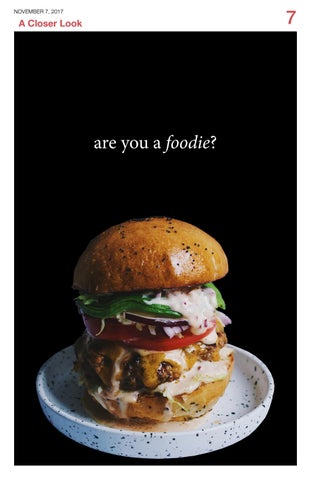
are you a foodie?
8
The Piedmont Highlander
NOVEMBER 7, 2017
A Closer Look
NOVEMBER 7, 2017
A Closer Look
The Piedmont Highlander
it’s Thyme to talk Food. what’s in a foodie?
Adam and Eve’s apple of sin. Marie Antoinette’s condescending cake. Persephone’s poisoned pomegranate. Hansel and Gretel’s gingerbread house. Food has been worshipped, immortalized, spun into legend, myth, and fable, and in history transcended its role as fuel. Foodie, gourmand, epicurean, gastronomist: these terms have categorized those who adore all things edible. In recent years, consumers have begun to crave healthier, more exotic, more interesting food, more often. Seventy-four percent of people seek out new flavors and more adventurous foods, according to Huffington Post. Self-declared foodie sophomore Pierce St. Claire said that a craving for adventure defines the foodie culture. “A foodie is someone who really enjoys trying new things,” St. Claire said. A fascination with food also links foodies together, said PHS alum and co-owner of Farm League Restaurant Group Joel DiGiorgio. “To me a foodie is someone who is open minded about food, someone who is fascinated with it,” DiGiorgio said. To seek out these unusual dishes, the consumer must have a certain level of disposable income, which can impose wealth barriers on budding gourmands. Food culture can blossom in Piedmont because few people face monetary limits on their passions, St. Claire said. “[Piedmonters] have money to supply the love of food,” St. Claire said. “They can definitely eat things that aren’t cheap.” Digiorgio said that an abundance of food, in wealthy communities like Piedmont, leads people to take food for granted. “We don’t eat a lot of what’s on our plate,” DiGiorgio said. Junior Josh Rogers said that disposable income can also lead to a sole focus on restaurant culture, which leads people to forget the original prerogative of foodies: to enjoy food and cooking. “Our generation specifically is very ignorant when it comes to food because nowadays it’s super easy to just buy food,” Rogers said. To spread his love for the kitchen and educate his peers on the benefits of cooking, Rogers founded the Piedmont Food and Cooking Crew. “I love the heat of the kitchen,” Rogers said. “It’s like meditation almost, because you’re completely immersed, and the outcome is always delicious and beautiful and amazing.” The Piedmont Food and Cooking Crew, in addition to preparing food, tours restaurants and corporations and does community service work around feeding the homeless, Rogers said. “It’s all about food appreciation,” Rogers said. Foodie culture extends beyond Michelin star restaurants and hipster cafes. Rogers said that the only requirement to be a foodie is loving food. “Anyone who loves their grandmother’s dish, that brings the nostalgia back of their childhood— that’s a foodie,” Rogers said. These emotional ties to food are integral to appreciation for heritage and the past, Rogers said. “Food keeps traditions within a family alive,” Rogers said. “It’s a long line of food that connects everyone.” Whether it’s in fables and lore or at brunch in the breezeway, food consumes human thought. In the 21st century, food trends like avocado toast and the unicorn frappuccino flood social media. Today, to see what’s new in the food culture, join foodies and take to the streets in search of the next gourmet bite.
to eat or not to eat?
It seems as though everywhere you turn, someone new is a vegan, or haIt seems as though everywhere you turn, someone new is a vegan, or has a new restricting food allergy. But what are these lifestyles actually like? “Before I was vegan, I always felt really guilty, because I couldn’t
think of how meat, and things like that, were actually made,” junior Lilli Brien said. “And so I started [being vegan] for Lent last year, and during that, I watched Cowspiracy, which is a movie about the animal industry’s effect on the environment, and I was shocked by that, so I decided to keep going.” Being vegan restricts one’s intake of all animal products, so many people have to find other healthy alternatives. “I do pretty well getting protein, but I know a lot of people have a harder time with that, and finding protein like tofu and beans. You can definitely get really tired if you’re not getting enough protein,” Brien said. It’s imperative for vegan connoisseurs to make sure they’re getting the nutrients t h e y
eat, so that’s a bummer,” Brien said. However living in the Bay Area means there are plenty of food options. “There’s definitely enough places to eat. Living in the Bay Area, it’s not hard. But if I lived in the middle of Texas, [being vegan] would be practically impossible,” Landheer said. Brien agreed, saying that once she traveled out of the Bay Area, eating vegan tended to be much harder. “I was in Idaho, and a couple places I went, I could only eat french fries. They literally had nothing.
“to me a foodie is someone who is open minded about food, someone who is
fascinated with it.” Joel DiGiorgio restauranteur
would be getting if they weren’t vegan, so maintaining a high-protein diet is sometimes difficult. “The hardest part is when I go to ballet, and I dance for a really long time, and I get tired,” junior Shannon Landheer said. “But if I were to have a piece of meat before, I might have more nutrition in me.” However, Brien said that going vegan has helped her feel better. “I feel good all the time. Like after a big meal, I don’t feel disgusting. And that definitely happened when I ate animal products,” Brien said. Almost all foods tend to have animal products in them, so it can sometimes be difficult to find alternatives, Brien said. “Sometimes, like at food service, there’s not many choices for us vegans to
But here, it’s fine,” Brien said. Although there seem to be downsides, there are also many positives to being vegan. “It’s overall much healthier. I can’t eat a lot of desserts and fattening foods.” Not only is it healthier, but also good for the en-
vironment. “I chose to be vegan because it’s better for the environment and better for animals. We don’t have to eat animals,” junior Malachy Reilly said. “We kill 56 billion animals for our consumption, and we artificially impregnate a lot of them, and it’s just unethical.”
The meat industry is the biggest cause of climate change, Landheer said. “I recommend others be vegan. People think it’s really hard to do, but it’s really not. I eat rice and vegetables for dinner, things like that,” Reilly said. Landheer encourages people to at least cut meat from their lives “You don’t need meat three times a day,” Landheer said. There are diets other than vegan or vegetarianism, which include many people who have an allergy to gluten. “I chose to do this for medical reasons. I have an allergy to gluten so when I don’t eat it I feel so much better,” junior Hayley Sullivan said. “One benefit I’ve noticed is that it makes me think about ingredients, and what I’m putting into my body more in general,” Sullivan said. “Because I have to check to see if something has gluten in it, I see all the ingredients, and it makes me a lot more aware.” Junior David Morris, also allergic to gluten, notices he feels better when he doesn’t eat it. “I have a lot more energy, in general, from not eating gluten,” Morris said. Sullivan said that although at first it was hard, she feels a lot better now that she’s completely eliminated gluten from her life. “I would only recommend to give up gluten if it makes you feel better, because there are health benefits to eating gluten,” Sullivan said. However, Morris knows people who have eliminated gluten from their lives who aren’t allergic to it, and said he noticed they feel more energetic. “You can buy pretty much anything in a gluten free form,” Sullivan said. Sullivan recommends Mariposa, a completely gluten-free bakery and cafe. “Jules Thin Crust pizza is the best for gluten free pizza, and basically any Mexican food is gluten free also,” Morris said. “Pasta Pomodoro had a really good gluten free pasta, but they closed.” Although different diets can be restricting, all agree that they wouldn’t have it any other way. “Sometimes eating restrictions are hard in the beginning, but if it makes you feel better it is so worth it,” Sullivan said.
9
10
NOVEMBER 7, 2017
The Piedmont Highlander
A Closer Look
food culture consumes us. 8:00 a.m. Breakfast. Go to Work. 9:00 a.m. Sit and stare at computer screen. 12:30 p.m. Soggy sandwich for lunch. 1:30 p.m. Back to work. 4:00 p.m. Ping. The woman’s cell phone reads, “popeyethefoodie posted a picture on Instagram.” She opens it to find a vibrant image of light, golden fried chicken nestled within a sesame bun. Beside the sandwich resides a magenta portion of purple cabbage, hand tossed in garlic aioli. Her mouth waters. For a split second, she smells the freshly baked sesame seed buns glazed with truffle oil and almost senses the umami of truffles on her own palate. Just two more hours till she can break from the monotonous routine of her work computer. Her stomach churns with anticipation as she considers her dinner date at Momofuku Noodle Bar. Within the past couple of decades, millennials have promulgated food culture, causing it to become an integral part of American life. The cultural movement has created a new generation of foodies, television shows, and social networks that celebrate culinary adventures. The cause of this seismic shift in food culture is the New World learning values of the Old World, said American chef Anthony Bourdain in an interview with the Smithsonian Magazine. “We’re just catching on,” he said. “We are changing societally, and our values are changing, so that we are becoming more like Italians and Chinese and Thais and Spaniards, where we actually think about what we’re eating, what we ate last night, and what we’re considering eating tomorrow.” Unlike today, people in the 60s would just go out to eat and talk about anything other than food, completely disregarding the culinary art that is in high regard today, Bourdain said. While Bourdain said that the food trend is a result of cultural influences, author of A Taste of Generation Yum Eve Turow conjectures it is a result of living in a digital-first era. Turow said that food culture is the product of the sensory deprivation people experience from constantly looking at screens all day. Since their senses aren’t excited, people crave something tangible that they can see, feel, smell, and taste. Food fills that void. “At the same time, it’s also making us more isolated. We’re craving community,” she said. “The food movement is really a communitarian movement.” As a result, various forms of culinary media have multiplied and flour-
ished. In June 2016, junior Laila Adarkar and her friend Oakland Tech junior Elza Black started Bites By the Bay, an Instagram account that posts photographs of dishes from local restaurants. Adarkar said the account serves as a platform to popularize culinary adventures and creates a network of foodies. “It’s not just about the taste, it’s also the atmosphere and culture created,” Adarkar said. “We can always bond about food.” Other food accounts advocate for eating healthier alternatives. Anavacadoeveryday, started by juniors Lili Brien and Shannon Landheer, promotes healthier eating options that are still scrumptious. Despite featuring only vegan dishes, Brian and Shannon said that they are not trying to promote veganism, but rather conscious eating. “After having a nice nutritious meal, I don’t feel gross anymore, “Landheer said. “It makes you feel better.” This trend of being conscientious about what you eat is becoming more and more prominent in food culture. In a study conducted by Restaurant Insider, 40 percent of customers say that it is very important that restaurants use all-natural ingredients that are free of GMOs and artificial supplements, said journalist for Restaurant Insider Hannah Harrington. “This food industry] is seeing that Millennials are not going to be spending their money on processed foods,” Turow said.
“we actually think about what we are eating; what we ate last night, and what we’re considering eating tomorrow.“
Anthony Bourdain chef written by Nathan Chin, Shay Hempeck, and Mira Tellegen
edited and designed by Samantha Fanger and Katherine Irving
back photo courtesy of Bites by the Bay