Desirae Carns, Louise Gaguet, Jade Gramajo, Megan Ramirez
Copy Editors
Keillian Hriaznov, Isabella Tolosa
The Pearl Post is an open forum for student expression as allowed by California Education Codes 48907 and 48950, committed to excellence in reporting, writing and photography.
The magazine strives to inform and educate students and faculty on events affecting the school.
Thoughts and opinions published in these pages are the work of journalism students and do not represent the position of DPMHS, its administrators or the Los Angeles Unified School District.
An unsigned editorial is the opinion of the Editorial Board, which is comprised of the Editor-in-Chief and the editors. Signed opinions in The Pearl Post reflect the views of the authors. A signed cartoon reflects the view of the cartoonist.
This bimonthly magazine is the official campus newsmagazine of Daniel Pearl Magnet High School. The magazine is also posted online at https://www.thepearlpost.com.
To prevent plagiarism and the spread of misinformation, the DPMHS Student Media staff will not use Artificial Intelligence (AI) to generate any content such as images and writing or as a research tool. AI is allowed to be used ethically as a tool such as brainstorming ideas, proofreading articles and recording and transcribing interviews.
Content
COVER - Design by Louise Gaguet
NEWS - Table of contents / Body image trends on social media
FEATURE - Healthy vs. unhealthy social media trends
OPINION - Denial and recovery from an eating disorder
OPINION - Self perception as a student athlete
ENTERTAINMENT - Eating disorders in the music industry / Weight expectations in entertainment companies
BACK COVER - List of resources by Jenny Marquez
Letter from the editor
In the third issue of the school year, we focused in-depth on body image and self-perception issues. We addressed the challenges and harm associated with these subjects by highlighting cycling body image trends on social media, the impact of eating disorders in music, and comparing healthy and unhealthy self-perception habits on social media.
In addition, we also wanted to include personal experiences concerning unrealistic beauty standards
in the media and the harm of body image stereotypes amongst student athletes.
Our goal with this magazine is to raise awareness about the subjects of body image and self-esteem. We acknowledge that the topics discussed are difficult subjects to address, but it’s important to discuss them. Overall, we hope you enjoy this issue.
Jenny Marquez Editor-in-Chief
The increase in effects of body image trends on social media
By Valerie Sanchez, @my_jeonginnie
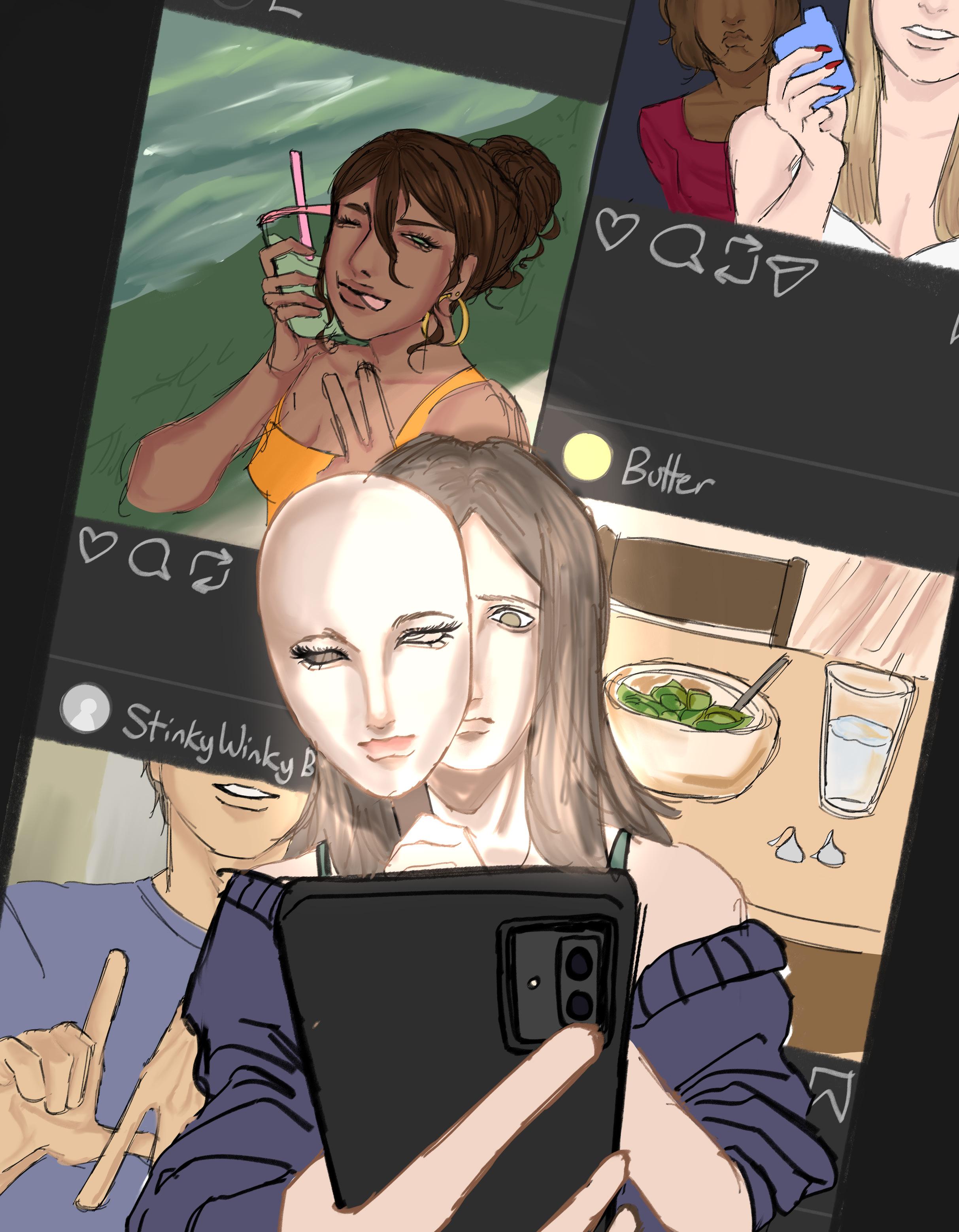
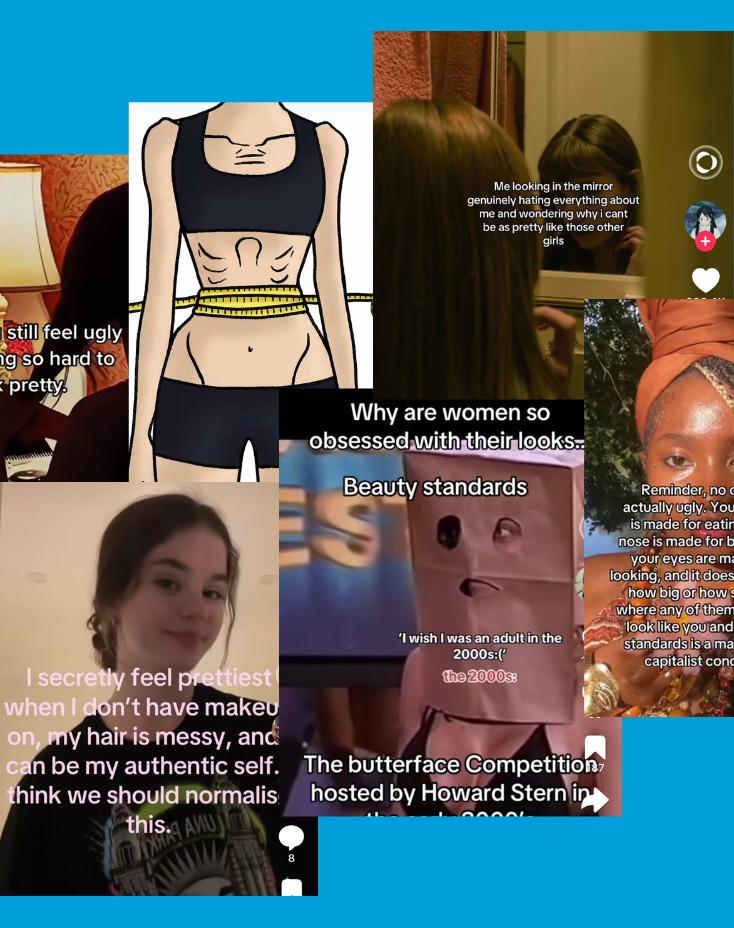
As trends continue to skyrocket across social media, unrealistic body and weight standards are appearing on teens’ algorithms.
“I do think that the idea of body positivity is so important for both young women and men,” the school’s Psychiatric Social Worker, Joanne Tuell said. “I think we need to have a balance between body positivity but also discussing the benefits of healthy habits.”
According to a survey by the Pew Research Center, the use of widely popular social media apps, such as TikTok and Instagram, has dominated the lives of teens. Due to such growth, trends have been created, whether it’s a new effective workout routine or embracing one’s self-image. As platforms’ popularity continues to rise, they are creating positive beauty standards. However, they also contribute to harmful body image trends that promote unrealistic body and weight expectations and can lower self-esteem.
One specific influencer who has been trending on YouTube for some time is YouTuber Eugenia Cooney. Over the years, viewers have watched Cooney’s life progress, where she speaks about her experience with anorexia, raising concern among view-
ers toward the impact of her content on self-perception and body image.
“I have had many conversations with kids, primarily young females, about their body image issues,” Tuell said. “They’re either getting pressure from their family members to look a certain way or they just have a low self-image and it does affect their mental health, which then causes depressive moods and anxiety periods.”
Social media has fostered greater inclusivity and diversity in beauty trends. Teens are exposed to a range of different body types and styles, as well as various cultures and eating habits. Influencers have also contributed to this significant rise. They often promote self-love, realistic routines and healthy eating habits. These types of media provide a safe space where people can express themselves and be themselves. One influencer who promotes these safe spaces is Ashlyn Lundahl, a popular Instagram influencer who posts motivational videos and encourages viewers to be comfortable in their own skin.
“They (influencers) tend to promote good eating habits alongside nice words of affirmation, freshman Niya Bowers said. “I am learning to
be more comfortable in my own body and own it. It puts an image in my head that I am good the way I am and allow myself to truly be who I am.”
Another medium of media being algorithmized is workout videos. Platforms such as Instagram and YouTube are filled with “how-to” workout routines and transformation videos that encourage teens to stay active. One particular social media influencer, known as Noel Deyzel on Instagram, is known for posting motivational gym videos, assisting his viewers with their workout forms and even their mental health.
“I see videos of people working out,” junior Jesus Macias said. “They motivate me to be like them (influencers) and increase my workout time.”
Besides the support and positivity that can be found within social media and its trends, family support also plays a crucial role in the effectiveness of teens’ selfesteem. Families also play an important role in helping teens feel comfortable and confident in their own bodies. Some encourage balanced and healthy meals, alongside having a positive conversation about healthy eating habits. They also assist by promoting self-acceptance and uniqueness, which in turn helps develop teens’ confidence in themselves.
“My family is supporting me,” Bowers said. “They say that I should eat more and not care about what others think.”
PHOTO ILLUSTRATION BY VALERIE SANCHEZ | THE PEARL POST Across social media platforms, there’s an increase in trends concerning unrealistic body and weight standards that affect teens’ self-perception and confidence.
Throughout social media, various different lifestyles and aesthetics are
content, social media encourages people to act differently.
Social media trends and how they influence one’s habits
By Desirae Carns, @itsdezxoxo.
Throughout social media, the trends and the activities or lifestyles they promote can be both negative and positive for people. Here is a list of social media trends and habits and how they can affect people.
Mukbang Through Mukbang content, viewers can form unhealthy relations with food. Mukbang is a term originating from South Korea, translating almost to “eating show” and Mukbang content features footage of people eating. Ac-
cording to the Cureus Medical Journal, Mukbangs are found to promote eating disorders that are associated with excessive consumption, leading to binge-eating behaviors and worrying about body image. The food consumed in these videos are intention-
ally chosen to be artificial and unhealthy, as these brightly colored foods that are already receiving traction online are used to entice viewers into watching these videos as noted by the Digital Media Brand Eater.
Additionally, Mukbangs have been found to be detrimental to one’s psychological health as it encourages unhealthy relationships between the audience and the content creator. For example, American YouTuber Nicocado Avocado is a notorious Mukbanger whose
content was so extreme that his overconsumption resulted in various health issues, such as obesity. Overall, Mukbang content normalizes an obscene amount of consumption of food that is incredibly detrimental to one’s physical and emotional health.
“Clean Girl” aesthetic Whether it be recipe videos or a video describing one’s day filled with their Erewhon salad orders, social media is also capable of glamorizing the consumption of healthy food. These videos encourage the audience to eat better, cre -
ANDREW PULIDO | THE PEARL POST
promoted. Whether it be acts of kindness with strangers, or doing cruel pranks at their expense for
Additionally, social media can influence people’s eating habits, study habits and even how they debate politics.
ating the “clean girl” aesthetic, a trend that focuses on being healthy and having a beautiful and plain appearance. Even though it encourages a healthy eating style, there’s a toxic side to it. For instance, the aesthetic has received criticism online like TikTok user @outervoiceco, who found it to be a hypocritical beauty standard that often other minorities weren’t allowed to join ino n the aesthetic.
StudyTok
Another trend that goes around is “Study Tok,” which encourages people to study so they can get into their dream colleges or just to do well in school.
Thus, there are some accounts like TikTok user @autumnreadsandstudies that use Rory Gilmore from the show “Gilmore Girls” as a posterchild for the aesthetic, which often involves the glamorization of academia and a cozy New England autumn ambiance. Those accounts give tips on how to study and how to get into Ivy League universities. Besides Rory Gilmore, there are videos dedicated to preparing people for the SAT. They often are made by those
who present themselves as highly successful academically and then present their own advice on how to achieve high scores on the SAT. Usually, this aesthetic works to motivate students to treat school seriously in a light manner.
Compulsive Studying
Although social media promoting people to succeed academically may seem to be a positive influence as opposed to the other ways social media can influence one’s decisions, there is the possibility that it may lead to an unhealthy work-life balance. Often, videos related to “StudyTok” release videos titled “Toxic Study Motivation,” like TikTok user @focus.locked who provide mantras surrounding discipline.
Although the trend only wants to improve people’s academic perfomrnace, it can accidentally encourage obsessive work habits that leave people feeling burnt out due to constantly studying because of an upcoming exam or because of their desire to enter their dream college. This hustle culture found in these digital platforms often leads to a non-stop grind and perfectionism.
Hopecore
On TikTok, videos are promoting touching, uplifting and wholesome videos called “Hopecore.” These videos give messages or quotes of optimism, such as self-care, advertising hopefulness and kindness.”Hopecore” promotes a mindset that is able to in those videos, they have multiple images or clips that symbolize or give the feeling of hopefulness.
For instance, an actor or actress giving an inspirational speech, having an aesthetic picture in the background
with a poetry stanza. Although there are different types of “Hopecore” videos, like people recording themselves going up to a random person and giving them compliments. The people who receive the compliment always show an expression of happiness, which makes the viewers feel that there’s still good in the world. Ultimately, “Hopecore” serves as a means of projecting relentless positivity among the internet.
Prank Culture
As content on social media has become monetized and attention has turned into a way for one to turn a profit, prank videos on social media have become increasingly popular. However, this comes at the cost of the prankee, with pranks also becoming crueler to receive more views, according to Psychology Today. Some of these pranks often prey on those who cannot defend themselves, like service workers who are “pranked” who are forced into these scenarios. In one instance, an American couple who used their children for prank content were deemed so offensive that their children were taken away from them.
In an article by Vice, they wrote that these pranks often have a morbid psychological context, with them glorifying sadistic acts of men upon women or other vulnerable groups. Although social media pranks may seem like light-
hearted fun, examples like the afforementioned do it at the expense of vulnerable people.
Debate Culture
Whether it be TikTok lives with radical, polarizing political statements with the statement “prove me wrong” written under the comments, or debate stands set up at universities, the internet has a habit of promoting an unhealthy culture surrounding political discussion. This polarization is resulting in extreme bouts of political violence, for example, the riots at the Capitol as an attempt to overturn the results of the 2020 Presidential election. After the event occurred, researchers found that a major contributor to the frenzy was social media, which Brookings Magazine described as “partisan animosity.”
A part of the problem is the fact that civility surrounding political discussion simply isn’t found in social media spaces, as they are anonymous and there are no repercussions for one’s words as described by a research project by NorthWestern University. Ultimately, social media’s political discussions often cause unproductive conflicts that don’t help.
‘I refused to believe I
Disclaimer: Eating disorders and self-harm and are mentioned in this blog. The Pearl Post Editorial board chose to include these mentions in the story to fully communicate the student’s story.
We all have something that we’re afraid of. Most people are scared of spiders. Others are afraid of heights. I lived in fear of the number displayed on the weight scale at home and at the doctor’s office.
Nine percent of the U.S. population suffers from or will suffer from an eating disorder. Anorexia nervosa, bulimia nervosa, binge eating disorder and OSFED (Other Specified Feeding or Eating Disorder) are among the most well-known eating disorders, but they do not make up the entire spectrum. While they are commonly associated with body dysmorphia issues pertaining to weight loss, that initially was not the case for me. I refused to believe that I had an eating disorder, since I wasn’t “skinny” enough to look like the stereotypical anorexic girl people see in their textbooks.
Stigmas like that in the media make it harder for people who go through body dysmorphia issues to obtain the health they need. There needs to be more representation and knowledge in the media about the different kinds of disorders and how people with those disorders look like.
Developing an eating disorder is not a decision someone can make on a whim. From my perspective, it’s a slippery slope that feels impossible to escape from
once you’ve fallen in.
It all started when I began to go out to places with my friends more frequently. I still ate according to my diet. I knew what to cut back on if I wanted to indulge in meals or sweets with my friends. I had been consistently losing around 10 pounds per month. In my mind, I thought that I was able to maintain a stable relationship with my eating habits and my mental health.
The people in my life made sure to shatter any impression of the sort that I had.
I began reducing my portion sizes, only eating a
meal a day. That meal progressed from a typical meal to a cup of quinoa with lemon. I still wasn’t losing weight fast enough. I noticed the stares I’d get whenever I’d eat.
I couldn’t bring myself to look at the scale. I knew that if I hadn’t reached the number I’d been aiming for in my head, I would force myself to undergo more extreme measures. I was too scared to forcibly purge the little food I would eat, as I knew other people would begin to notice if I did so.
Weight loss became an obsession and I became
addicted to the feeling of hunger sapping at my energy.
Falling into body dysmorphia was an endless black hole I couldn’t escape from. I heard criticisms of my appearance everywhere. It was in being told that I must obviously have experience or a particular opinion about how beauty standards set by influencers on the internet affects teens, since someone who looks like me must feel terrible about themselves. It’s my appearance being made fun of, since anything I could say in retort would just be refuted with “well, I know you of all people
had an eating disorder.’
Eating disorders (EDS), such as anorexia nervosa, bullimia nervosa and binge eating disorder, are found in nine percent of the U.S. population. Throughout this blog, the anonymous student discusses in-depth their journey with an ED. “Developing an eating disorder is not a dceision someone can make on a whim,” the student said.
cannot be talking.”
The more weight I lost and the better I got at my makeup, people began to treat me better. I began to get superficial compliments from people in my classes. All I could think about was how a few months prior, no one would ever say things like that to me. I’d just hear compliments along the lines of “do flowers bloom when you walk?”
For the longest time, I refused to begin recovery
because I felt like I hadn’t lost enough weight to justify getting myself out of that.
However, I began to see more people on online communities dedicated to eating disorders post about how they wished they could go back in time and stop themselves from developing one. I began to reflect on how bitter and negative I was all the time from how much I would starve. I decided to start recovery after I’d repeatedly seen so many young teens my
age cut themselves or lie on their beds, unable to move from how fragile their bodies were. I’d see people lose their minds from a lack of calories. I came to the realization that if I wanted to be successful at school, I needed to eat food.
Even now as I slowly recover, I still skip meals or feel guilty whenever I feel like I’ve overeaten. Recovery is a difficult process and you have to be willing to do it, otherwise the process becomes so much
harder. I know there isn’t a perfect path for me to take, but I’ve been gaining back the vitality that I’ve lost. There is more to life than maintaining control over what you consume.
In a decision made by The Pearl Post Editorial board on April 7, the writer was granted anonymity due to the sensitive content of the story.
PHOTO ILLUSTRATION BY JASMINE THOMPSON | THE PEARL POST
How being on social media has affected me as a student-athlete
By Kaleigh Tapaoan, @runningin_vans
In the nine years I’ve been competitively swimming, I’ve been able to point out a crucial and nagging thought that has crossed my mind before almost every race: my physical body size and how that impacts the way I compete.
This has never truly been a huge issue, as I’ve been able to do the same things any other swimmer can do. However, the endless reminders of my height disadvantage, physical strength and overall speed compared to others has unfortunately made me insecure at times, even to this day. This thought gradually lingered in my mind since I started competing, but it was more present in my life during my sophomore and junior
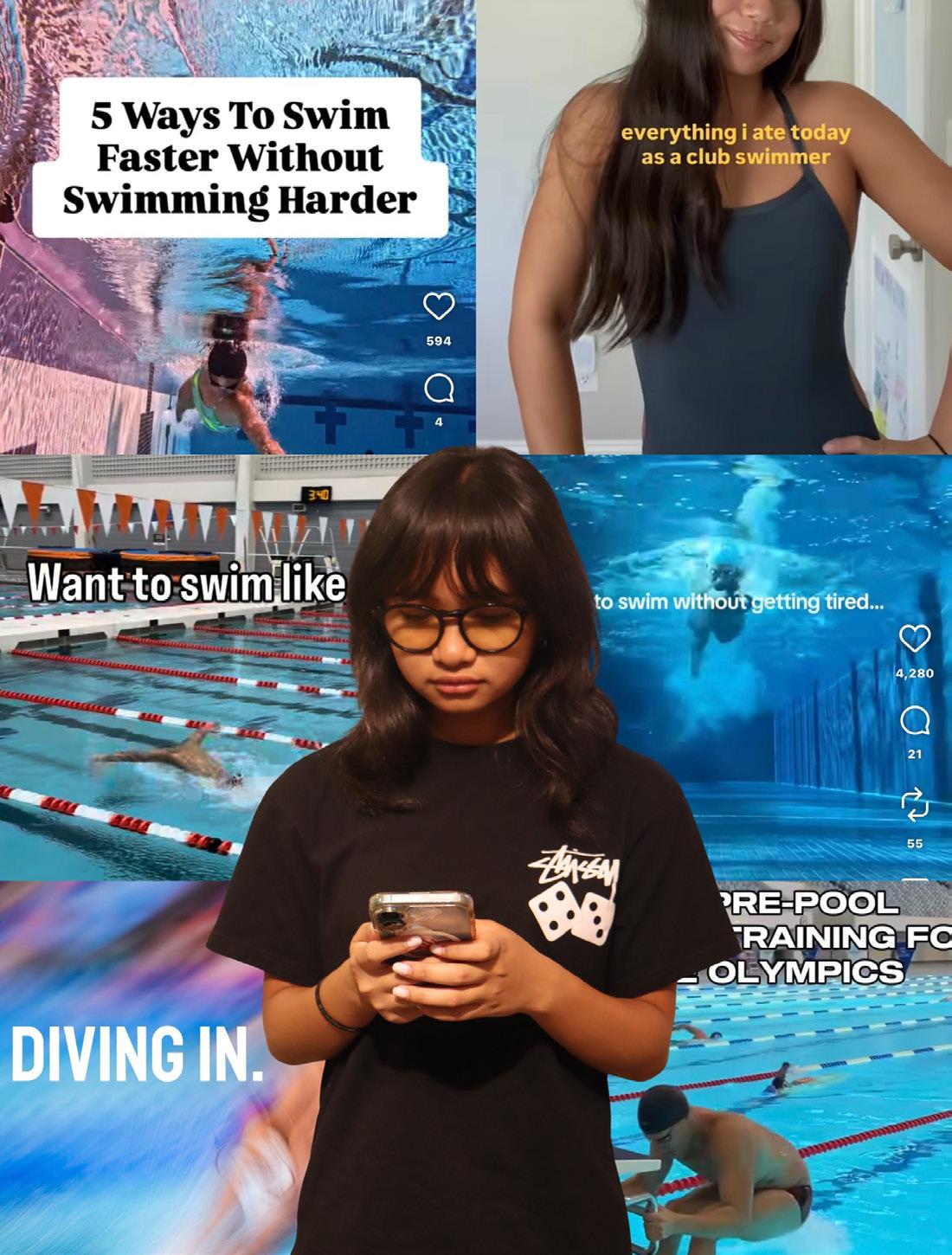
years of high school. Throughout my sophomore year of high school, my overall use of social media increased and I was more exposed to whatever would pop up on my feed. I didn’t think too much about it at the time, but looking back on it, I was primarily seeing multiple videos on Instagram about swimming. There were topics of different techniques I should follow, what kind of diets I should consider and swimsuit advertisements that flooded my page. At the time, I thought the girls in these
“I looked back on how much it truly made my body and myself feel worse about the sport I’ve loved since I was a kid.
-Senior Kaleigh Tapaoan
advertisements and videos looked skinnier and happier, as if they wanted viewers to look similarly to them. I used some of the video tips because they seemed useful, but in reality, I was feeling obligated to follow the algorithm that had shown me and tried to be as
fast as the swimmers online.
During this time of unavoidable scrolling, I was also in the process of moving club teams and continuing to get through daily practices without feeling the dread of showing up. Seeing videos
when I opened social media apps while being subtly reminded that I was physically different from my teammates made the division of my connection to the team painfully greater. This was the start of my imposter syndrome as I developed intense thoughts of not belonging anywhere around my teammates at the time. Even though I didn’t initially hear comments about my body size, I heard comments about my speed and had an uneasy feeling of doubting myself in general.
Moving club teams was one step toward progressing into a better headspace and mental health. I met friends I would count on for life and had stronger connections to my coaches. I thought I was
PROVIDED BY KALEIGH TAPAOAN | THE PEARL POST
Senior Kaleigh Tapaoan swims the 100-meter Backstroke race at the Riverside Aquatics Complex during the 2025 USA Swimming SoCal June Age Group Championships on June 13. This was Tapaoan’s second to last long course competition of the season and she currently swims for the Los Angeles Swim Club year-round.
out of the negative thoughts as a whole–unfortunately there will always be bumps on the road to improvement. I think I hid my concerns about physical strength fairly well because I wouldn’t say anything about it at the time. I still had problems with my overall body image as it was near impossible to avoid thinking about. The second semester of junior year posed a lot of challenges personally and during my training that continues year-round.
It didn’t help that I often viewed profiles of swimmers my age who were faster and generally looked more fit than I did. I was already overwhelmed with the junior
year workload, so continuing to compare myself to others online created more effects on views of my body image. The issue made itself known when I noticed inconsistencies in my sleep schedule and my lack of motivation at daily practices. I would also sometimes have a weird pit in my stomach that would make me lose my appetite. This would occur once or twice for a few days and then my body would feel normal again. I started to question my well being which would then impact my overall mood and mindset whenever I trained.
This went on for the remainder of junior year and it wasn’t until the summer
after the school year ended that I realized I needed to cut the scrolling short. I looked back on how much it truly made my body and myself feel worse about the sport I’ve loved since I was a kid. I tried telling myself, “What good is it that you’re comparing yourself to others on such a high standard when you could just carry on doing swimming as it is?” I persisted in following that thought, as I was fully aware that the following year would be my last year of competitively swimming. I started my senior year with the mindset of not caring about what every single person thought of me and taking up the full enjoyment of competing in
my favorite races.
Looking back on the past few months, I could reflect on how my negative body image criticisms in my head slowly diminished over time. The significant impact on using less social media for the use of the platforms determining who I am as a swimmer truly played a role in my road to improvement. Knowing that the negative thoughts cannot completely consume one’s mind is something that everyone is capable of following. As my swim season comes to a near end, I’ve learned to never let those insecurities win and learned to let my years of training speak for itself in the pool.
Many teens use social media and consume multiple forms of information on a daily basis, one of which would be content on body image. According to a research survey conducted by the U.S. Surgeon General’s Advisory, 46% of teens ages 13-17 expressed that social media has a negative effect on their body image. For studentathletes, being online has opened opportunities in learning techniques and staying fit but also presents an adverse impact to their mental health.
PROVIDED BY KALEIGH TAPAOAN | THE PEARL POST
Senior Kaleigh Tapaoan wins two medals in the 2025 CIF Los Angeles City Section Swimming and Diving Championship at Los Angeles Valley College on May 10. Tapaoan placed 4th in the 200 yard Inidividual Medley race and 7th in the 100 yard Breastroke race. She has represented DPMHS and the Birmingham Community Charter High School swim team since her freshman year in addition to being team captain all four years.
KALEIGH TAPAOAN | THE PEARL POST
The inhumane weight expectations of entertainment companies
Disclaimer: Harsh subjects such as eating disorders and life-threatening issues are featured in this story.
By Valerie Sanchez and Jade Gramajo @my_jeonginnie
Entertainment companies, especially in the K-pop and acting industries, enforce strict lowweight demands through social pressure and company policies, which can sometimes be life-threatening.
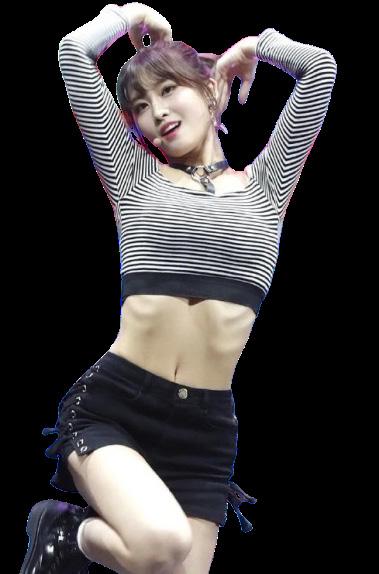
In the case of the K-pop industry, there is one particular idol who comes to mind when it comes to entering your dream work field, only to then be consumed by the desire to lose weight. TWICE member Momo was required to lose 15 pounds in one week to debut in the group. In a South Korean video streaming service, VLIVE, she reminisced about those dark times, to meet the group’s management agency, JYP Entertainment’s, weight requirements. She did so by only consuming
ice cubes and excessively working out but those actions terrified her that if she went to sleep, she would not be able to wake up. The other group members recalled growing concern as they saw Momo lose pigment in her face, looking almost as if she were dying.
“I didn’t eat anything for a whole week and went to the gym all the time,” Momo said in the VLIVE.
“ When I laid down on the bed and tried to sleep, I was scared that I wouldn’t wake up again, so I started crying.”
Another exam ple of the acting industry controlling a celebrity’s weight is televi-
sion personality and singer Kelly Osbourne. Over the years, she has struggled with her body and weight, ever since her introduction to fame as a teenager, featuring in her family’s reality show, “The Osbournes.” In an episode of “The Osbournes Podcast,” she stated that the head of the agency’s office gave her a lecture about how she was too fat to be featured on television and said that if she lost weight, she would look better. In 2018, Osbourne underwent gastric sleeve surgery, which led her to lose 85 lbs and later,
she struggled with gaining weight during her pregnancy. When she was diagnosed with gestational diabetes, that led her to lose a lot of weight after giving birth. Another circumstance that occurred was her massive weight loss after the death of her father, the late “Prince of Darkness,” Ozzy Osbourne. The media started mocking her, viewing her as a skeleton.
“There is a special kind of cruelty in harming someone who is clearly going through something,” Osbourne said in an Instagram story that has since been deleted. “Kicking me while I’m down, doubting my pain, spreading my struggles as gossip and turning your back when I need support and love most.”
PHOTO ILLUSTRATION BY VALERIE SANCHEZ
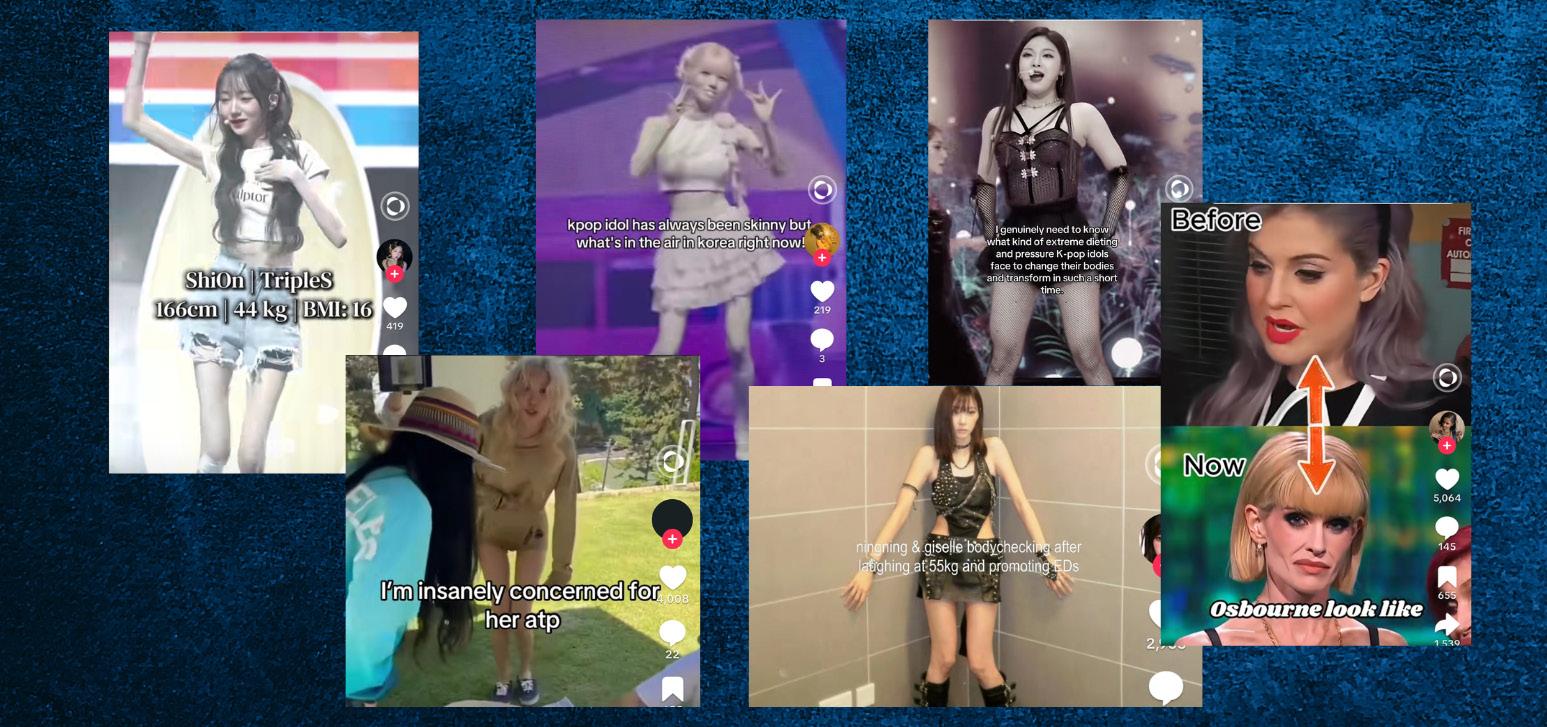
Entertainment companies, such as music labels and acting managements, have enforced strict low-weight demands through company policies and social pressures.
The impact of unrealistic body standards in the music industry
By Megan Ramirez
In an industry where artists are viewed as idols, body standards are taken to an extreme. Many musicians are affected by eating disorders, which can affect their ability to create music and even reflect in their own work.
Eating disorders such as anorexia, bulimia and binge eating disorders are common in the Music Industry. About one-third of musicians are likely to struggle with an eating disorder at some point in their lives, according to The Strad, a classical music based magazine. These findings make sense when considering the stress-intensive environment of the music industry combined with its values of perfectionism.
“There are a lot of expectations in this industry (music industry) about looking a certain way and having a certain kind of appeal,” singer-songwriter Ella Marjia Lani YelichO’Connor, otherwise known as Lorde, said in an interview with Teen Vogue in 2014.
Lorde is one of the many pop musicians who struggled with an eating disorder. The singer developed an unhealthy obsession with her weight during the 2020 COVID-19 pandemic, which worsened with the development of her 2021 album “Solar Power” and the accompanying tour in 2022. The disorder left her struggling to make music,
creating a disconnection between her and her career. Once the artist realized her obsession was taking control of her life, she began the slow recovery process. These issues are discussed in her 2025 album “Virgin,” especially in the song “Broken Glass.”
“Once I stopped doing that, I had all this energy for making stuff,” Lorde said in an interview with Rolling Stone Magazine in 2025. “I could see that if I cut that cord, maybe I would get something back that I needed to do my work… Got it all back, and way more.”
Singer-Songwriter and frontman of the rock band Florence + The Machine, Florence Welch is another musician who struggles with an eating disorder, particularly anorexia nervosa. She had dealt with the disorder start ing in her late teens, while the mentality some times still affects her personally. The artist has reflected on her experience the single “Hunger” off the band’s 2018 album “High as Hope,” focusing on her physical suffering.
“It’s the first time I’ve been able to put it on paper,” Welch said in an interview with
COMMONS
tenet of Health at Every Size.
The Guardian. “...I know how to deal with it in a song, but a lot of stuff I’m still figuring out.”
There is a certain stigmatization around men and eating disorders, one that centers around the idea that men can’t have eating disorders. However, this simply isn’t the case as singer-songwriter Edward Sheeran is a male musician who opened up about his struggles with binge eating and bulimia. His issues stemmed from industry pressure and comparison to other male artists. After he revealed his disorder to the public, he addressed the sentiment sur-
rounding the topic and other men.
“There’s certain things that, as a man talking about them, I feel mad uncomfortable,” Sheeran said in an interview with Rolling Stone Magazine. “I know people are going to see it a type of way, but it’s good to be honest about them because so many people do the same thing and hide it as well.”
Musicians from all different kinds of genres have struggled with eating disorders before and have reflected during their recovery on how it impacts them as people and their careers. Though they have endured these hard experiences, they find healing and solace through their art. Though they have endured these hard experiences, they find presence and healing through their art.
MissLunaRose12 | WIKIMEDIA
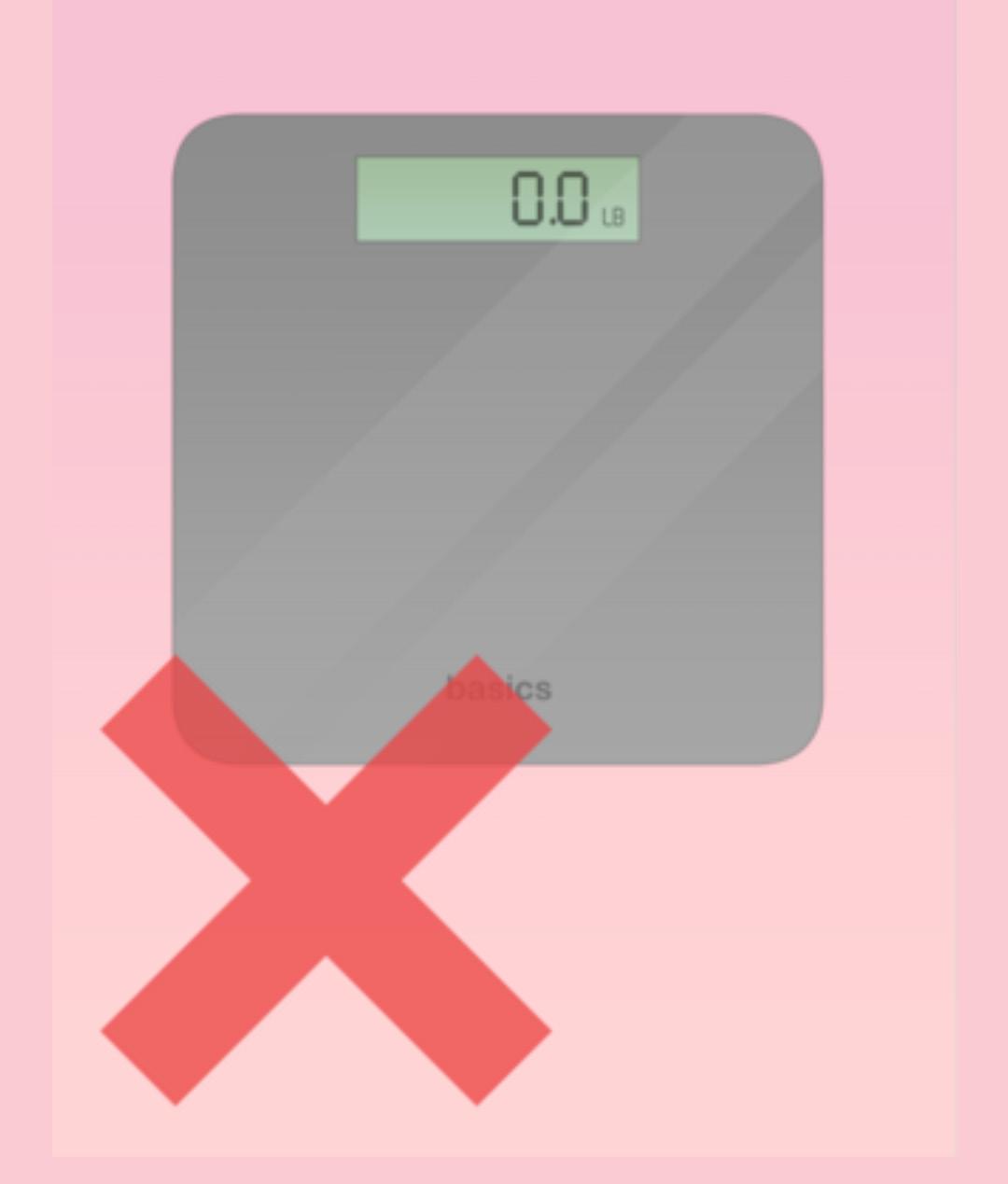
Obsessing over weight and perceived fatness may not be the best approach for health. This hand-drawn image encourages people to focus on habits rather than stressing over numbers on a scale. This idea is a core