18 Water & Energy: Landfill gas-to-energy project generating revenue for Corpus Christi
22 Water & Energy: Corvallis, Ore., infrastructure project offers a model of proactive maintenance and community engagement
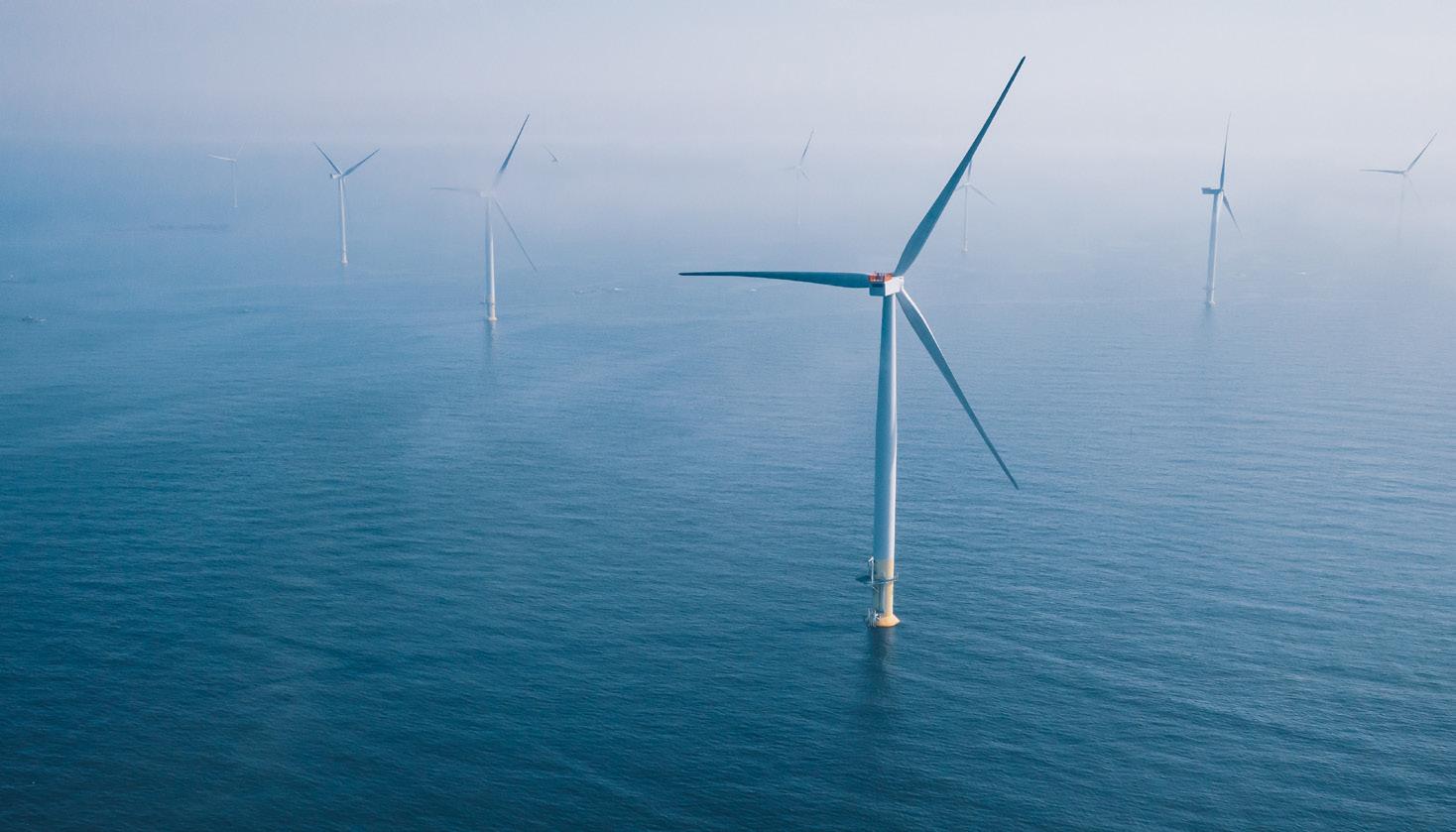
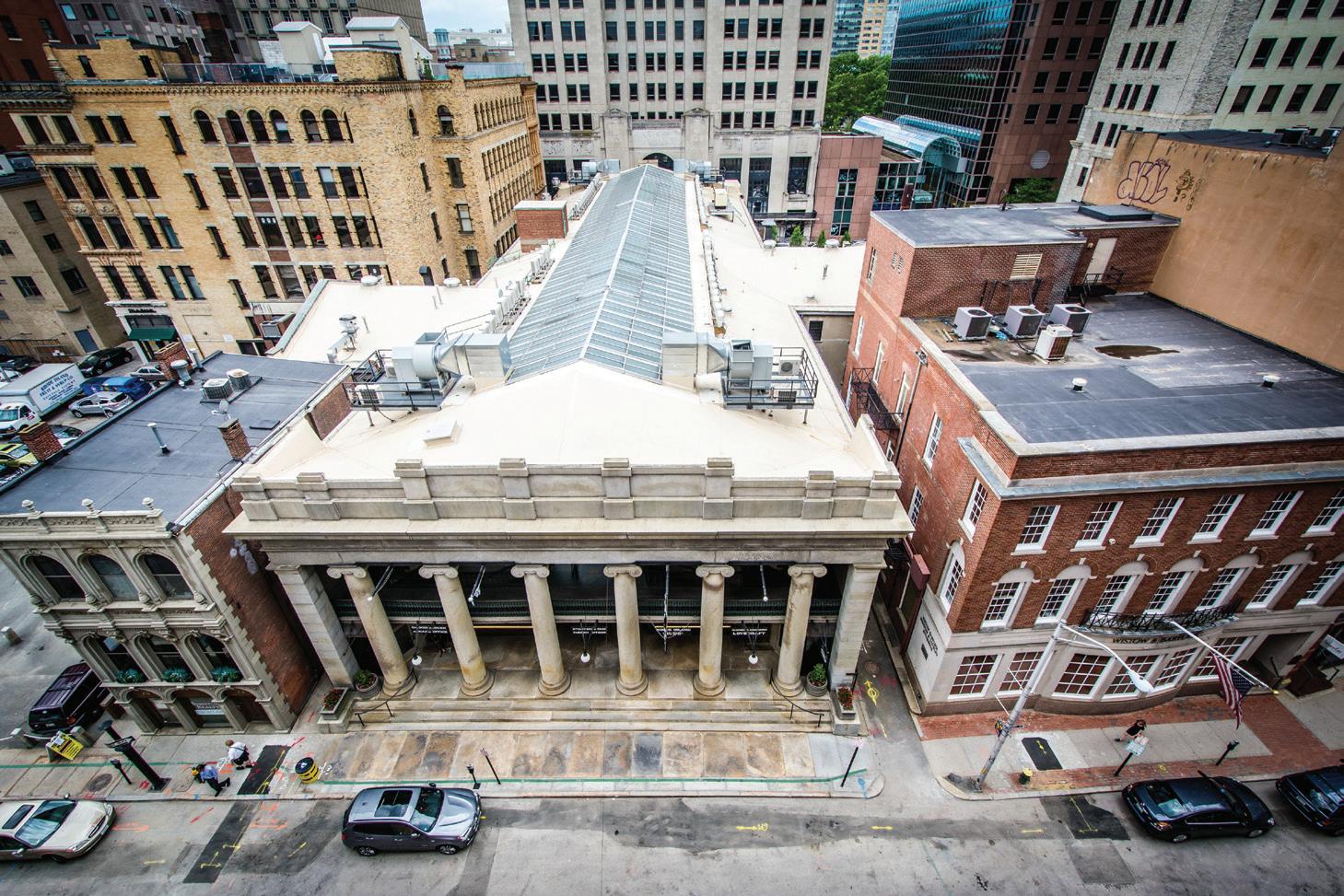
24 Water & Energy: Building a greener Providence: Inside the city’s drive toward energy efficiency
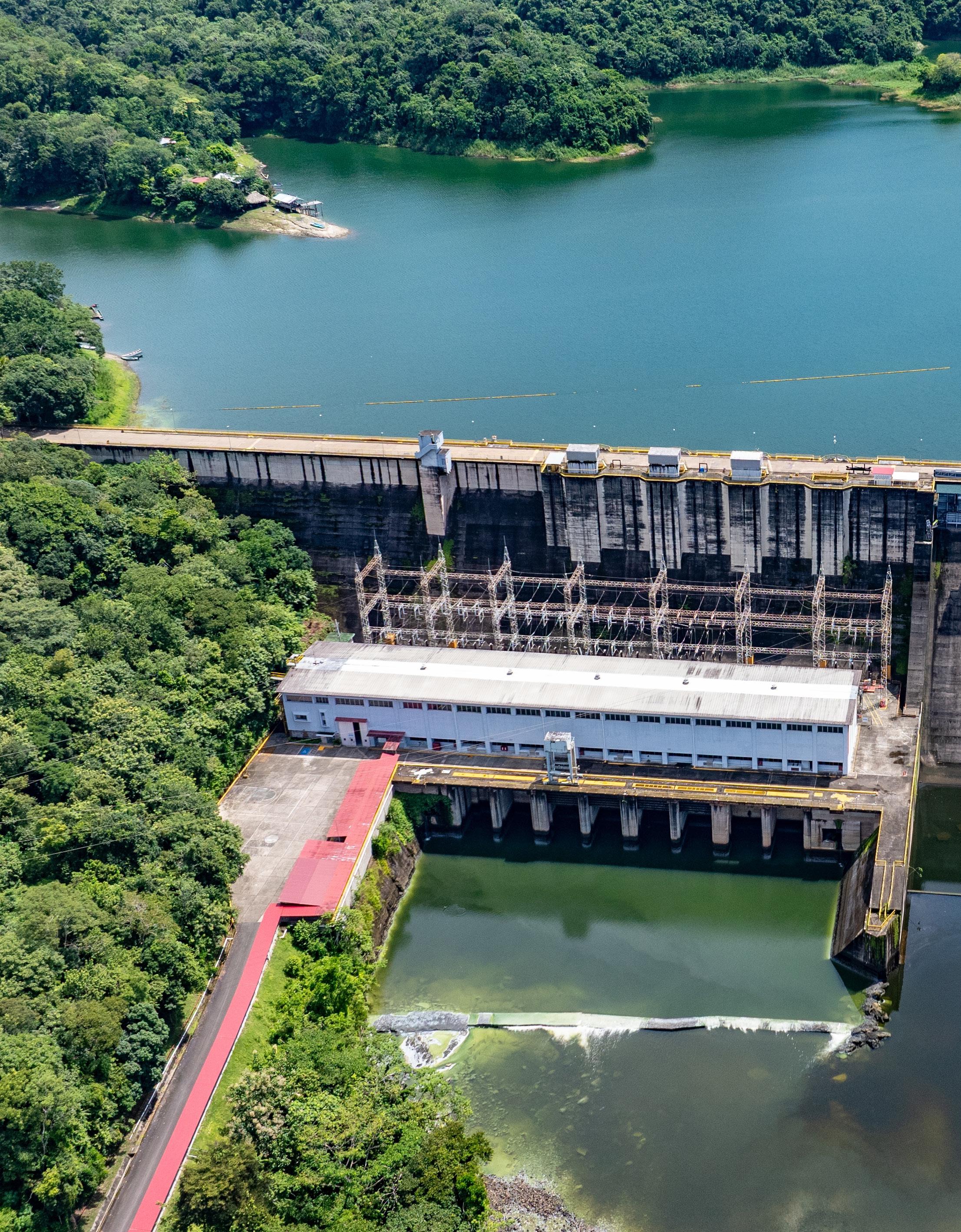
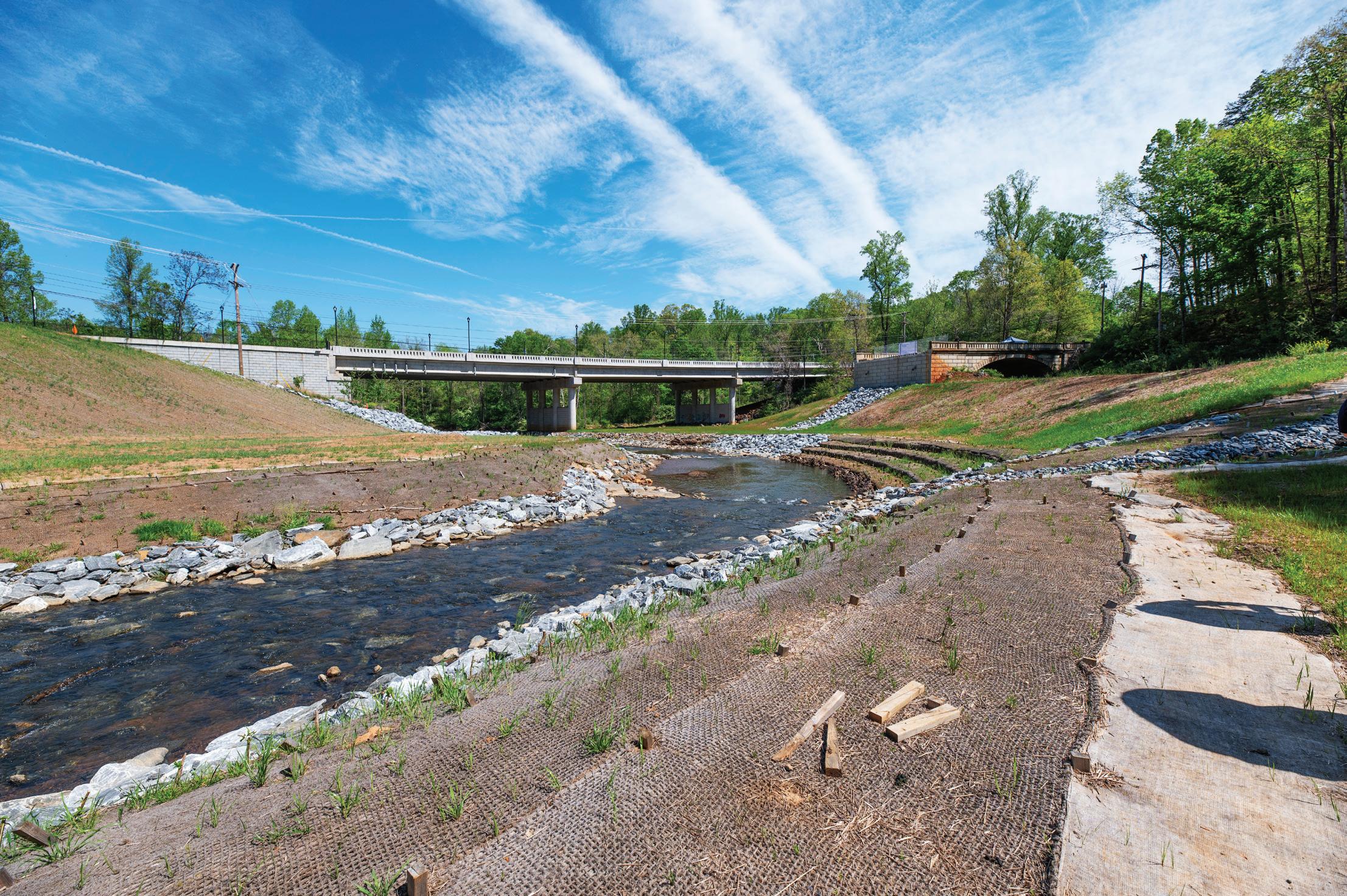
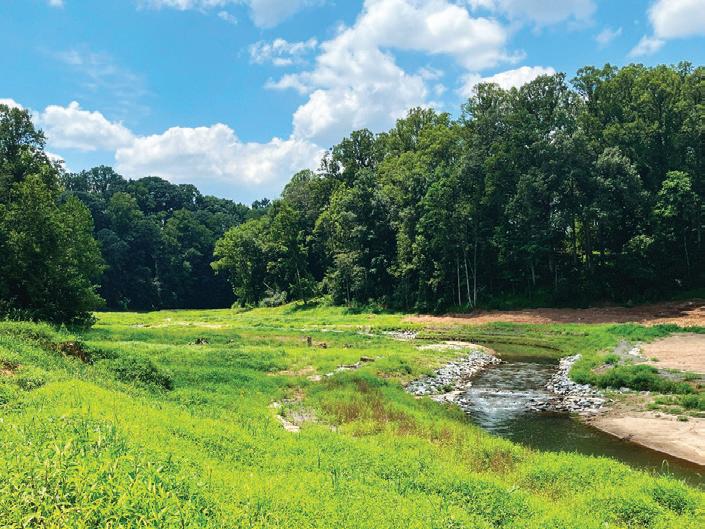
26 Water & Energy: Lynchburg, Va., transforms high-risk dam into wetland
30 Water & Energy: Palm Coast project adds 21-milliongallon capacity to Hulett Basin
34
Building & Construction: Solid waste, recycling and fleet maintenance make a smart relocation
38 Parks & Environmental Services: Rejuvenated adopta-park program inspires community service
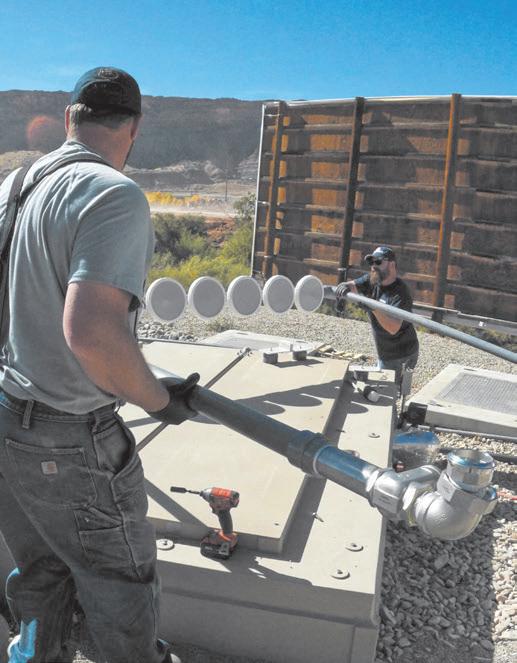
It takes energy to treat wastewater. Orenco® Systems’ new OmniMax-A™ and OmniMax-D™ Moving Bed Biofilm Reactors (MBBRs) use less energy while treating secondary effluent to some of the most stringent BOD/TSS limits and denitrification standards in the industry. Learn more on page 10.
MOVING FLEETS
The world runs smoother because of what happens in the background. While the neighborhood sleeps, the work begins. The routes are long, the job relentless. Keeping a fleet together takes more than effort. It takes smart maintenance and parts built to perform. That’s WIX Filters.
ENGINEERED FOR EXPERTS.
publisher RON BAUMGARTNER rbaumgartner@the-papers.com
editor-in-chief DEB PATTERSON dpatterson@the-papers.com
editor SARAH WRIGHT swright@the-papers.com
publication manager CHRIS SMITH chris@themunicipal.com
Jennifer Barton, Beth Anne Brink-Cox, Lauren Caggiano, Nicholette Carlson, Denise Fedorow, Danielle Lund, Teresa Nicomemus, Janet G. Patterson, Julie Young
Murky waters ahead with increased costs
Sarah Wright | Editor
As I write this column, oil prices have surged over $120 per barrel, with the national average price of regular gas being $4.457 per gallon, according to the AAA’s fuel price chart as of May 4, 2026. California leads the nation in the highest average cost of gas at $6.114. Honestly, I wouldn’t be surprised if these averages increase, as it seems the conflict in Iran is going hot again. However, as I often say, I don’t have a crystal ball, but I can well imagine that the spike in oil prices will have a widespread impact on natural gas markets, electricity rates, construction costs, water treatment, etc.
Like residents, municipalities will need to adjust their budgets to adapt to these increases. While budgets factor in some price variability, these extremes probably
exceed prepared buffers. The reduction in federal support will only compound these challenges.
The FY2027 budget cut proposes cutting the U.S. Army Corps of Engineers’ funding by 36%, which could impact water infrastructure projects, flood control and disaster response. Legis1 notes in its May 4 article, “Army Corps Faces 36 Percent Budget Cut Proposal,” that “The Army Corps of Engineers FY2027 appropriations request, analyzed in a Congressional Research Service report published April 30, 2026, puts the Administration’s proposed civil works budget at $6.66 billion. The FY2026 enacted level was approximately $10.44 billion. That’s a $3.77 billion reduction in nominal dollars.”
For cities pursuing clean energy and water initiatives, federal funding for such projects has decreased. In February 2026, Congress voted to slash $125 million for replacing toxic lead water pipes. On Oct. 1, 2025, the U.S. Department of Energy announced the termination of 321 financial awards, which supported 223 projects.
As prices increase and resources dwindle, it’s easy to feel discouraged. But cities can’t pause water and energy systems. Despite
challenges, many cities continue to invest in energy and water projects, focusing especially on resilience in uncertain times.
Providence, R.I., continues its efforts to make city buildings more energy-efficient with the goal of having them carbon neutral by 2040. Writer Danielle Lund highlights this effort and a proposal to create a green revolving fund that could strategically fund energy-efficiency, renewable energy and other electrification projects across city properties if passed.
As Providence’s director of communications, Josh Estella, said, “In the absence of federal leadership, local governments must do more to improve aging infrastructure.”
In this issue, we’ll also spotlight Corvallis, Ore.’s, critical waterline updates; Lynchburg, Va.’s, removal of a high-risk dam; Corpus Christi, Texas’, partnership to capture energy from its landfill; and Palm Coast, Fla.’s, London Waterway expansion project.
While there may be price constraints in 2026, city employees often prove to be the most creative problem solvers. I don’t doubt we will continue to see this strength as they keep the lights on and water flowing. M
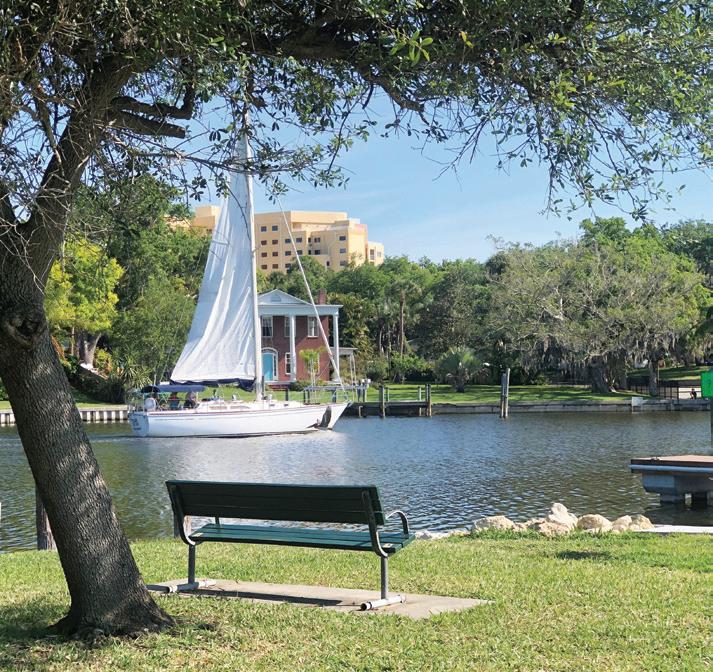
Energy-Efficient Plus
Introducing OmniMax-A and OmniMax-D, MBBR Treatment Systems that give operators more control
It takes energy to treat wastewater. Orenco® Systems’ new OmniMax-A™ and OmniMax-D™ Moving Bed Biofilm Reactors (MBBRs) use less energy while treating secondary effluent to some of the most stringent BOD/TSS limits and denitrification standards in the industry.
For many municipalities, water and wastewater treatment plants use a lot of energy, often accounting for 30-40% of their total energy consumption. Pumps, blowers, aerators, controls and other necessary power-consuming components are part of what makes treatment systems work.
Much of that energy consumption goes toward keeping biological filtration functioning properly.
Activated sludge, the most commonly used process, requires continually mixing and aerating bacterial flocs with highly inefficient solids-handling pumps and positive-displacement blowers, as well as monitoring by operators.
The attached growth process uses fixed media to house bacteria. While air and liquid pass through the media, aerobic bacteria living on it break down the nutrients in the effluent. This process, used in advanced treatment units like Orenco AdvanTex®, uses significantly less energy than activated sludge.
MBBRs utilize a specific type of attached growth technology. Rather than using fixed media, they have moving media that create an environment for BOD- and nitrogen-removing bacteria to grow as they float through the secondary-treated effluent.
Orenco Systems’ OmniMax MBBRs OmniMax-A (A for Aerate) and OmniMax-D (D for Denitrify) are designed for municipal and commercial and engineered for high-flow or high-strength waste applications. Able to be used independently or together, they’re also designed to be energy efficient and simplify O&M costs.
OmniMax-A MBBR
OmniMax-A uses aeration and microbes to remove BOD/TSS and ammonia at flows from 30,000-120,000-plus gallons per day. The science behind it centers on the nitrification portion of the nitrogen cycle the process that converts ammonium nitrogen into nitrates and nitrites.
Effluent from a primary treatment unit enters OmniMax-A and passes through a basin that’s filled with thousands of free-floating HDPE plastic carriers. Each carrier has abundant surface area for beneficial
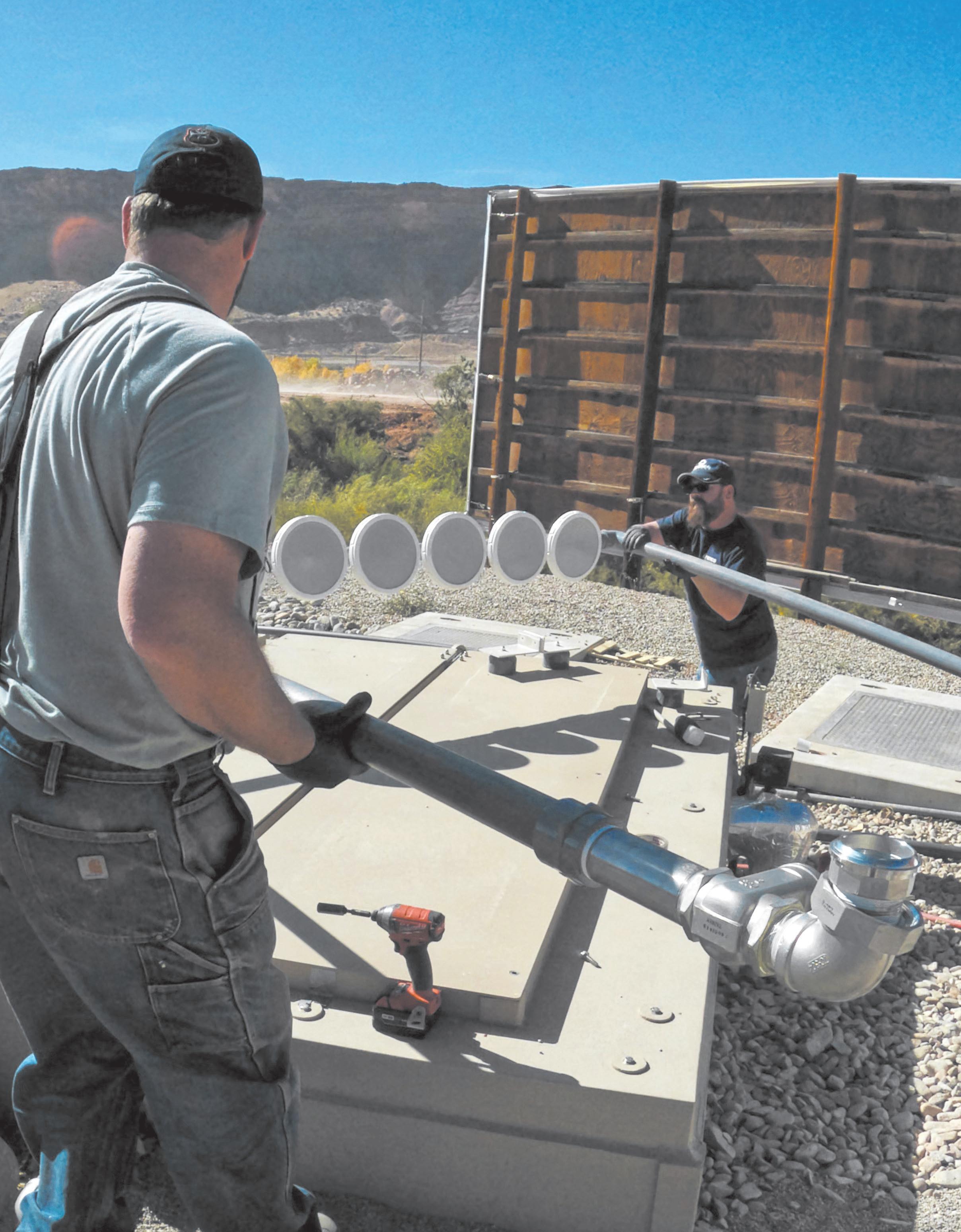
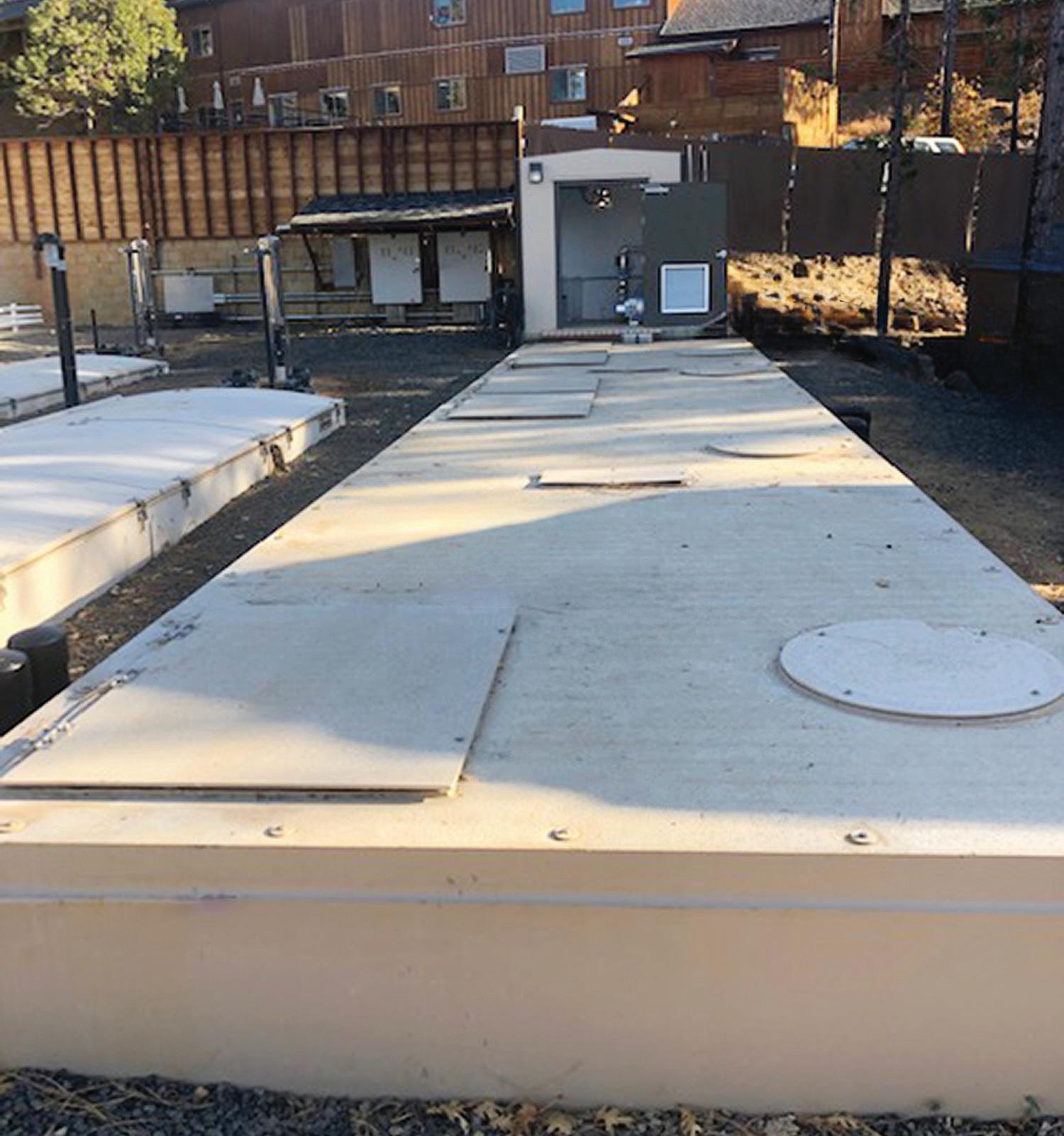
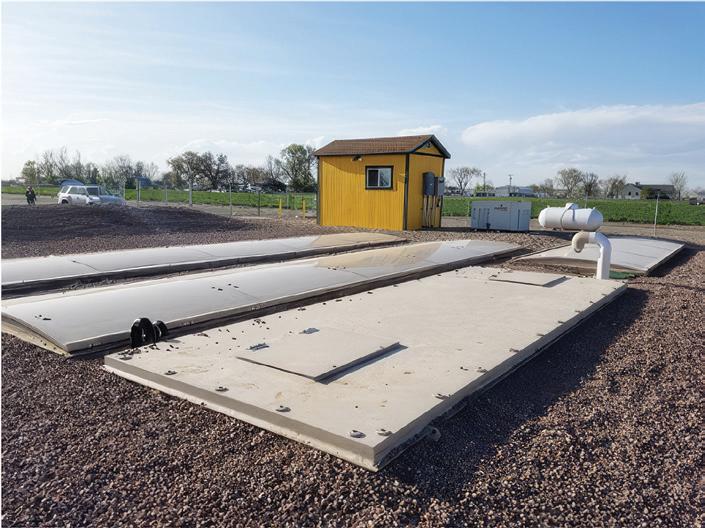
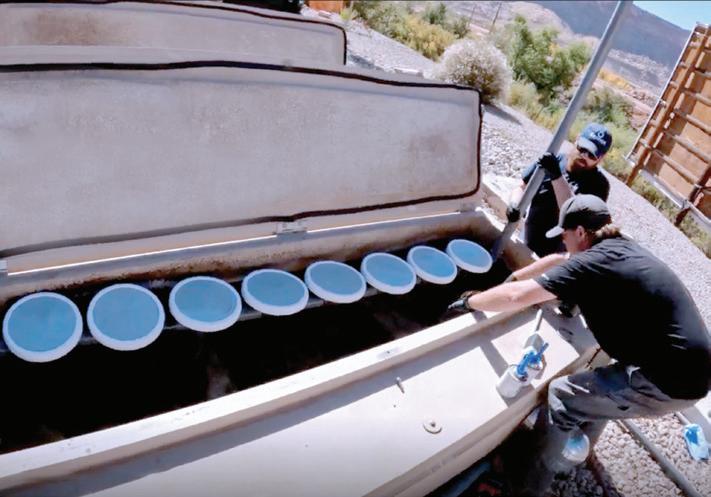
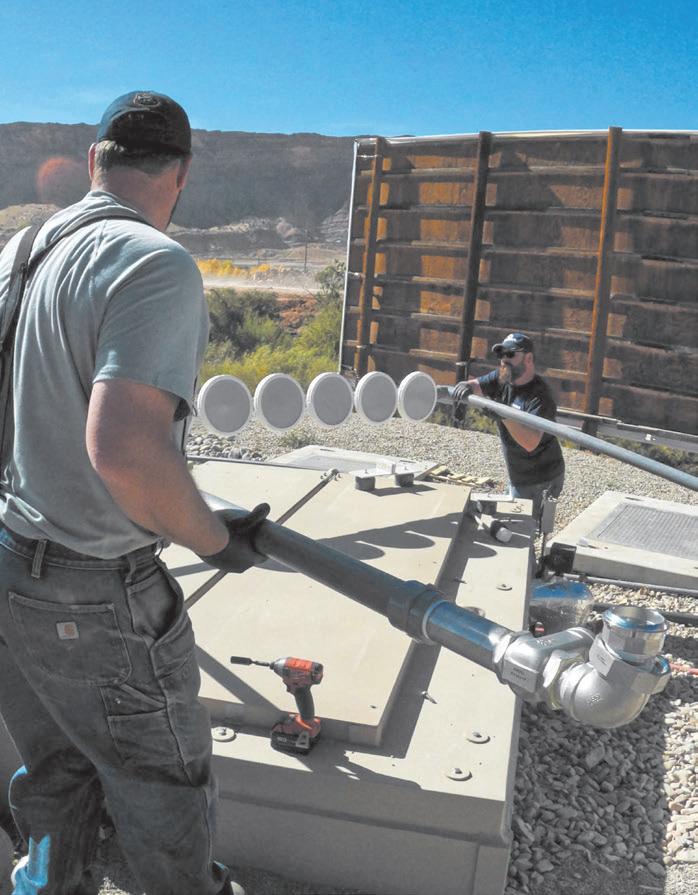
Orenco’s OmniMax-A has removable air grids that can be taken out during operation for servicing. Plant operators will see massive savings in both time and resources. (Photo provided by Orenco Systems)
microorganisms, also known as biofilm, to form. These microorganisms consume and break down pollutants and convert ammonia-nitrogen to nitrate-nitrogen in the effluent.
To ensure the effluent is sufficiently exposed to the beneficial bacteria, diffusers aerate the liquid, keeping the biofilm-rich media in constant motion and in contact with the liquid. The bubbling action also provides oxygen for the microorganisms to thrive and function. When the treated effluent exits OmniMax-A, it shows significant reductions in BOD, TSS and TKN. It also achieves three to four times the oxygen transfer compared to coarse air systems.
OmniMax-A, which measures 10 feet wide by 11 feet tall with lengths between 27 and 50 feet, is a watertight, vacuum-molded, single-piece vessel. Its foam-core fiberglass walls are 6 inches thick with R-36
Article submitted by Orenco Systems
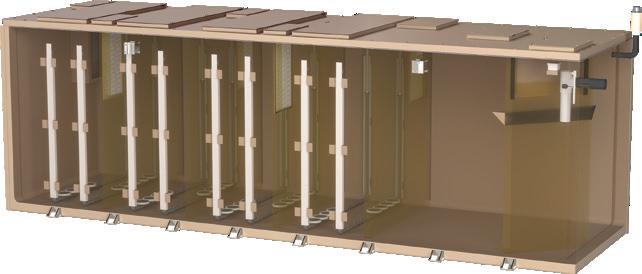
Because of their O&M friendly design, OmniMax-A and OmniMax-D settings can be dialed in sequentially as the effluent passes through the tanks’ separate chambers. Operators have control of BOD, TSS, ammonia levels and other critical measurements. (Photo provided by Orenco Systems)
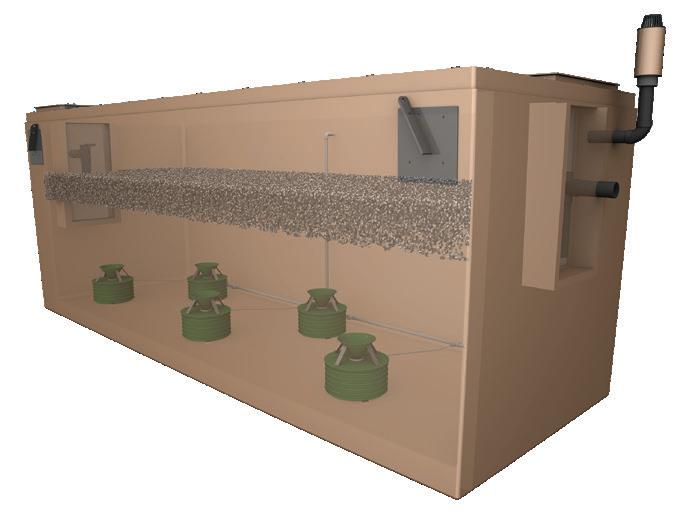
Both OmniMax-A and OmniMax-D are designed for municipal and commercial applications with high-flow or highstrength waste. They’re also engineered to simplify O&M costs and be energy efficient. (Photo provided by Orenco Systems)
insulation. The unit maintains a consistent interior temperature year-round, allowing for efficient wastewater treatment in just about any environment and requiring less operator interaction. Inside the unit, durable stainless steel air diffuser lines transition to PVC under the waterline to a removable air diffuser manifold.
OmniMax-D MBBR
The technology behind OmniMax-D centers on the denitrification portion of the nitrogen cycle the process that converts nitrates in wastewater into nitrogen gas. OmniMax-D reduces up to 85% of nitrates in wastewater and provides treated effluent meeting stringent discharge limits of up to 10mg/L total nitrogen.
Following secondary treatment in an AdvanTex AX-Max™ or similar technology, effluent enters the OmniMax-D’s anoxic, oxygen-depleted environment. The liquid passes through thousands of biofilm carriers covered in beneficial anoxic bacteria. The effluent then receives a dose of carbon, which is consumed by bacteria while converting the nitrate-nitrogen into nitrogen gas.
Meanwhile, durable, corrosion-resistant pneumatic mixers move the effluent to ensure the nitrate-rich influent and carbon are available for the biofilm on the carriers. The resulting nitrogen gas disperses into the atmosphere, resulting in the removal of up to 85% of nitrate-nitrogen from wastewater.
OmniMax-D is 8 feet tall by 8 feet wide standard, with lengths of 7, 14 or 21 feet. Made with foam-core fiberglass like the OmniMax-A, the OmniMax-D can be installed above grade or partially buried in a wide range of climates, thanks to its 4-inch-thick walls and R-26 insulation that maintain interior temperatures in climatic conditions of -60 to 125 degrees Fahrenheit.
Energy-Saving Operator Control
Compared to an activated sludge system, an MBBR system provides superior treatment while requiring less space and energy, fewer materials and simplified operator maintenance.
With a smaller footprint, Orenco’s OmniMax-A treatment tank uses fine-bubble aeration and regenerative blowers to move suspended carriers rather than an energy-consuming mechanical mixer. Regenerative blowers are controlled by variable-frequency drives to maximize overall blower efficiency. Plus, OmniMax-A has insulated walls and lids to keep temperatures in a narrow, consistent range for the beneficial bacteria to thrive.
Ease of maintenance is a standout feature of this unit. Rather than a dual-train system that requires a section shutdown, third-party pumping, and a crane to remove a section of plumbing, Orenco’s OmniMax-A has removable air grids that can be taken out during operation for servicing. Treatment plant operators will see massive savings in both time and resources.
Because of their O&M friendly design, OmniMax-A and OmniMax-D settings can be dialed in sequentially as the effluent passes through the tanks’ separate chambers. Operators have complete control of BOD, TSS, ammonia levels and other critical
OmniMax-A Applications
Orenco System’s OmniMax-A is ideal for situations requiring advanced secondary treatment, including:
•Municipal, commercial, and industrial wastewater facilities
•High-strength waste pretreatment
(e.g., food processing, dairies)
•Nitrification for ammonia reduction
•New installations, retrofits, or expansions in permanent or mobile locations
•At-grade or above-grade setups in diverse climates
OmniMax-D Applications
Orenco System’s OmniMax-D excels in scenarios demanding nitrogen control, such as:
•Pre- and post-anoxic denitrification
•Permanent and mobile locations
•Above-grade or at-grade installation
•A wide range of climates
•Existing systems requiring stringent nitrogen limits
measurements something that’s not possible in an activated sludge system.
For more information about Orenco’s OmniMax-A and OmniMax-D MBBR units, visit Orenco.com or call (800) 348-9843.
Forks, Wash., really ‘bites’ Twilight tourism:
By JULIE YOUNG | The Municipal
No matter whether you are Team Edward or Team Jacob, fans of the “Twilight” saga will find plenty to sink their teeth into while visiting Forks, Wash.
Located along the Olympic Peninsula, Forks is not only the rainiest town in the 48 contiguous states with approximately 128 inches of annual rainfall it is also the gateway to Olympic National Park, the Hoh Rain Forest and the legendary home of Sasquatch, otherwise known as Big Foot. It boasts 73 miles of wilderness coastline, and over the years, Forks has become a hub for hiking, fishing and other outdoor recreation.
However, in 2005, Forks was thrust into an international spotlight with the publication
of “Twilight” by Stephenie Meyer. Suddenly, the community of 3,400 began attracting thousands of avid readers who wanted to see the setting of their favorite book series, which centered on a coven of vampires, a pack of werewolves and the teenage girl caught in the middle of it all.
Like a lot of small towns that gain notoriety through literature, its leaders had to decide whether to downplay the publicity or embrace it. To its economic benefit, Forks chose to embrace it.
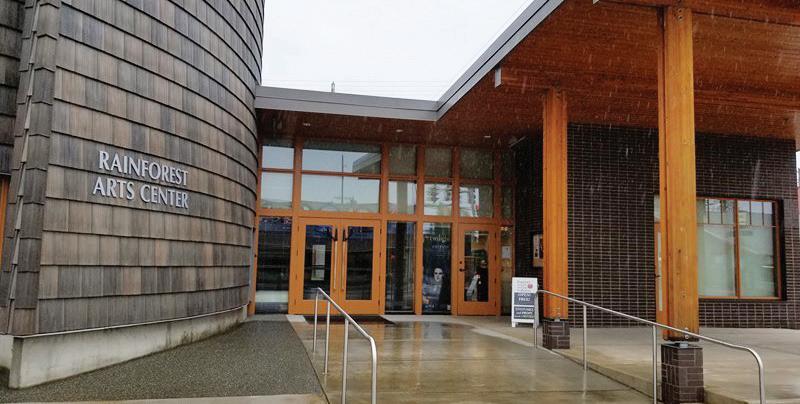
ABOVE: “Twilight” cast members Jackson Rathbone, who played Jasper Hale, Michael Welch, who played Mike Newton, and Chaske Spencer, who portrayed Sam Uley, visit the Forever Twilight in Forks Collection at the Rainforest Arts Center. Cast members frequently appear at the annual Forever Twilight in Forks Festival, where they meet and greet fans of the books and movies. (Photo provided by Rainforest Arts Center Alcove)
Local literary haunts “Twilight” fans looking to take a bite out of Forks should begin at the Forks Chamber of Commerce. Not only is that where they will find Bella Swan’s truck, but they can also pick up a self-guided tour map of the community,
The Forever Twilight in Forks Collection is housed at the Rainforest Arts Center and is free to guests who want to see it. The collection includes several costumes and props from the five “Twilight” movies and is a must-see for any fan of the movies and books. (Photo provided by Rainforest Arts Center Alcove)
which outlines all the “Twilight” selfie spots and local haunts to make a visit memorable.
Looking for lodging? Fans of the series may want to book a stay at the Swan House at 775 K Street. This Airbnb is decorated to look like the movie set, complete with Bella’s bedroom, Charlie’s bedroom and a Quileute room honoring Jacob Black’s tribal roots. There are extra accommodations for families and larger groups.
The Miller Tree Inn enjoys the distinction of being the book-accurate Cullen House a large, three-story, open-concept abode with a large front porch, a replica of Carlisle’s office and a graduation cap display in the front stairwell.
Other popular spots along the “Twilight” tour are Forks High School, home of the Spartans; Sully’s Drive-In, which serves up a “Bella Burger;” and the Three Rivers Resort on La Push Road, where visitors can find the treaty line that separates the vampires from the werewolves.
“The treaty line is not actually at the boundary of the reservation, but it is a fun place where families can go and get their pictures next to the sign,” said Lissy Andros, director of the Forks Chamber of Commerce.
Celebrate the series
Diehard fans can enjoy the Forever Twilight in Forks Festival, an annual event that celebrates the “Twilight” saga with parties, activities and celebrity guests. The 2026 festival takes place Sept. 10-13 and will commemorate the 15th
anniversary of “Breaking Dawn Part 1” with appearances by Jackson Rathbone, who played Jasper Hale, and Ashley Greene, who portrayed Alice Cullen.
Of course, no trip to Forks would be complete without a visit to the Forever Twilight in Forks Collection at the Rainforest Arts Center Alcove, located at 11 Forks Ave. The free gallery features screen-worn costumes and props from the five “Twilight” movies, including Bella and Edward’s bloody wedding ensembles, Jacob’s motorcycle and items from the Volturi. The collection also includes international editions of the books, fan-made art and the Renesmee prop doll used in the final movies.
“Much of the collection was purchased by Jack Morrisey, who is the life-partner of ‘Breaking Dawn’ director Bill Condon,” Andros said. “He really loved the fans, and he wanted to give something back, so he donated the items he purchased so that we could offer this little pot of gold at the end of the rainbow for fans who come to Forks.”
Andros knows how lucky her community is to be the central setting for a global phenomenon like “Twilight,” and she does not take it for granted. She is aware that there are other communities that would love to have this level of notoriety, and it is important to lean into the opportunity when lightning strikes.
“There was some pushback from people who weren’t sure that we should highlight the connection with vampires and werewolves, but a local minister wrote an
These centerpiece costumes were worn by Kristen Stewart and Robert Pattinson in the first “Twilight” movie, when Bella discovers that Edward is a vampire. (Photo provided by Rainforest Arts Center Alcove)
The doll used as a stand-in for baby Renesmee in both “Breaking Dawn” movies has a permanent home in the Forever Twilight in Forks Collection at the Rainforest Arts Center. Chamber of Commerce director Lissy Andros said the doll is one of her favorite items in the collection. (Photo provided by Rainforest Arts Center Alcove)
editorial pointing out that the ‘Twilight’ saga has brought families and fans together. He noted that it’s a beautiful thing to see them make the trip to see the setting of one of their favorite stories,” Andros said.
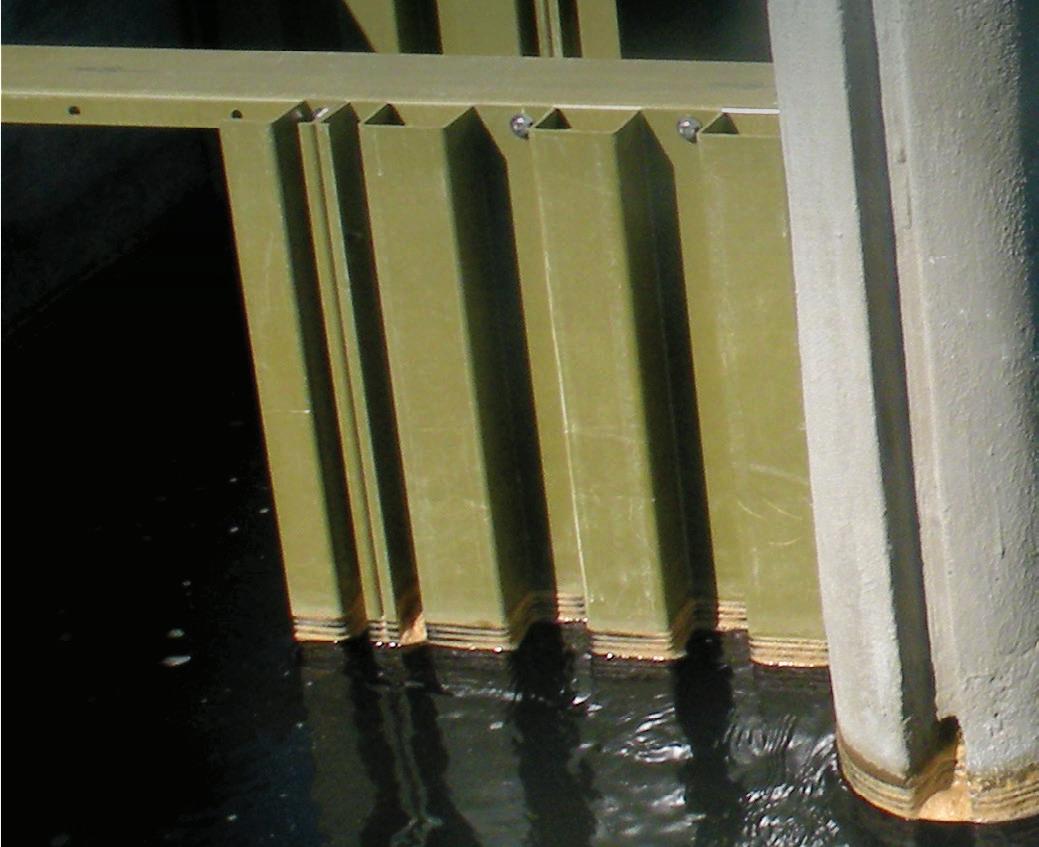
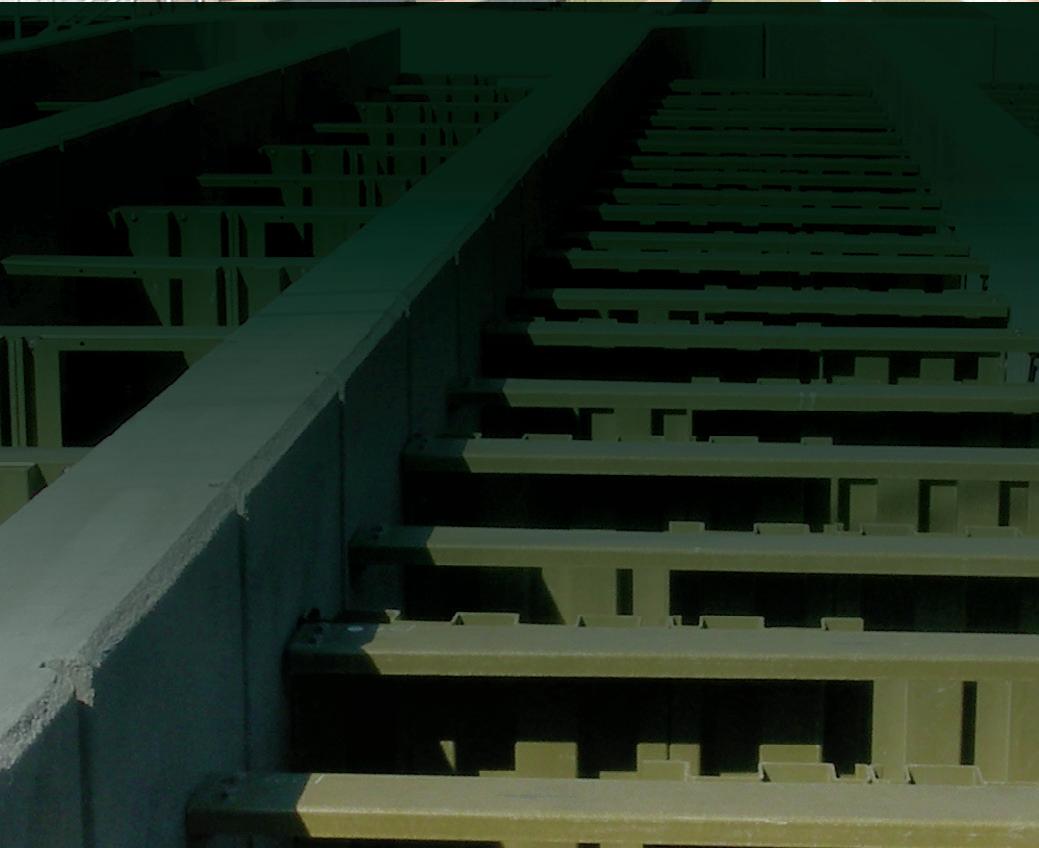
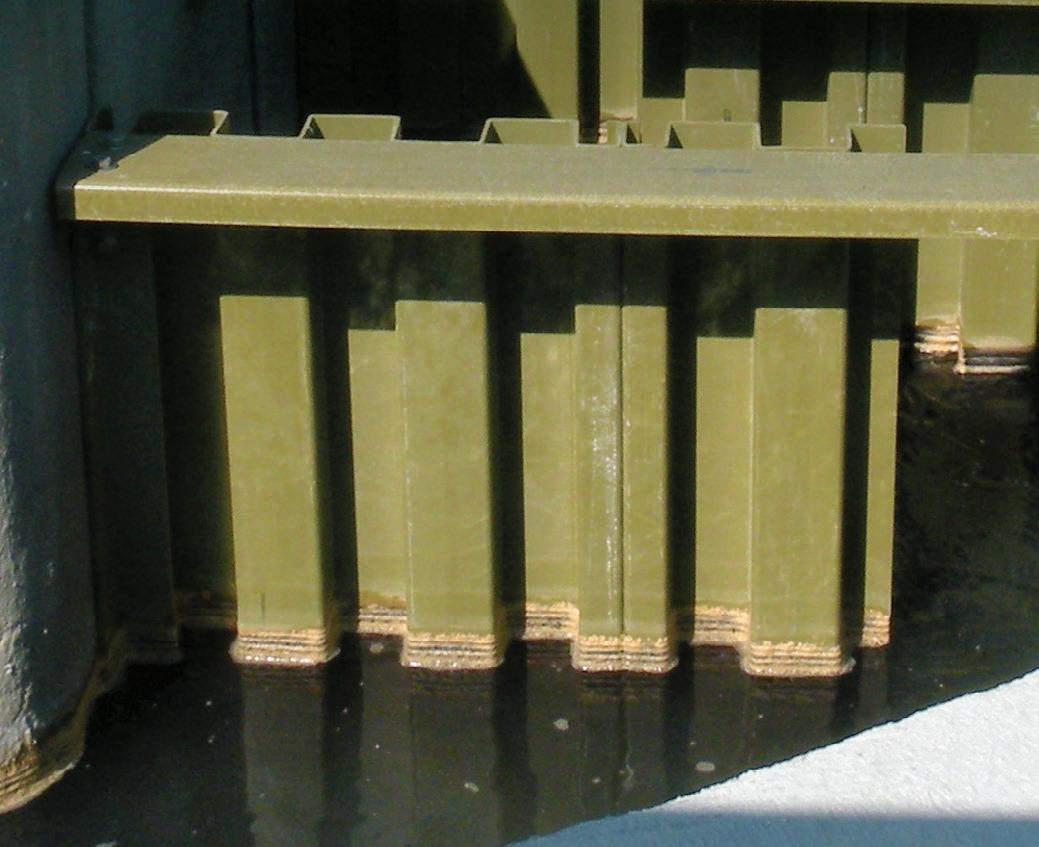
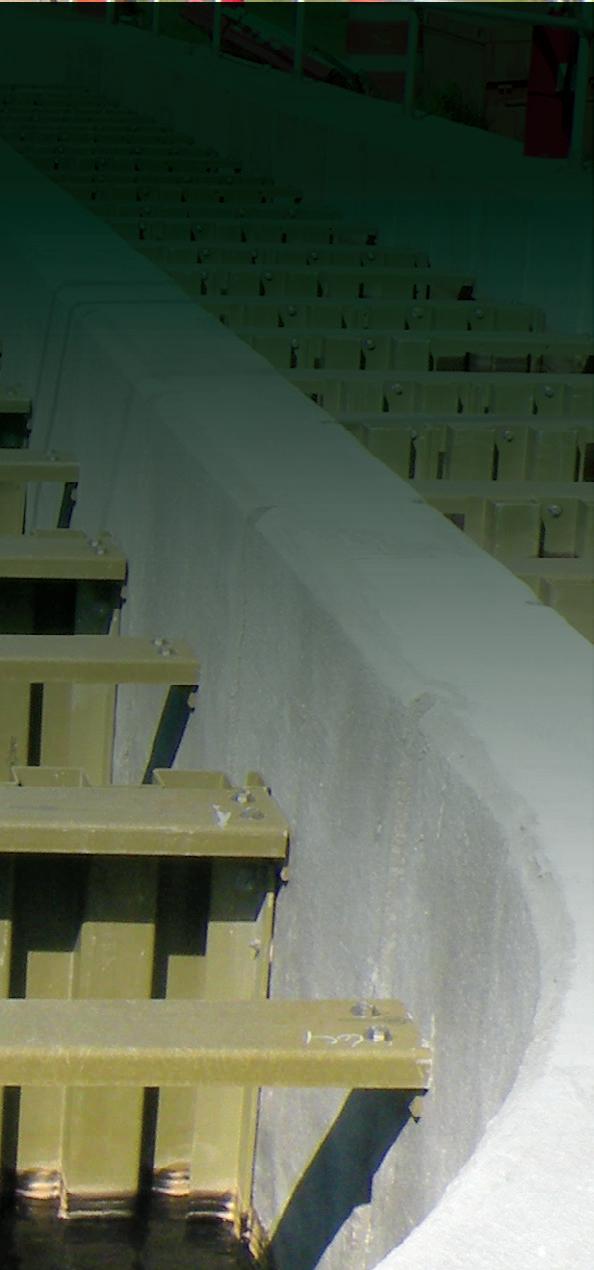
Strongwell’s lightweight, high strength fiberglass ba e panels are ideal for underwater flow control applications. Fiberglass ba e panels are cost e ective because they have a much longer life cycle than wood, concrete, steel, and other traditional materials that are subject to rot and corrosion. The lightweight panels are easy to install and can be easily removed for cleaning and access. All panels o er easy fabrication and installation of new systems or the rehabilitation of existing systems. Ba es can be mounted to existing columns, attached to H-beams, or attached to concrete walls with clip angles.
Now available in standard, straight-walled panels and sloped-wall panels.
3,200 feet
Corvallis, Ore., replaced about 3,200 feet of line, which included some unique challenges like boring under Oak Creek and a railroad. Through its efforts, Corvallis is making its waterlines more seismic resilient.
$230,000
In the first year, the landfill gas-to-energy project in Corpus Christi, Texas, generated $4.6 million in revenue for the city, saved an estimated $230,000 in operating and maintenance costs, and reduced emissions equivalent to taking 83,000 cars off the road. Learn about Corpus Christi’s partnership with Corpus Christi Renewables on page 18.
5%
Scheduled to come online in 2026, on-site solar installations in Providence, R.I., will yield an estimated 1,600 megawatthours of electricity annually, supplying approximately 5% of the energy consumed by municipal facilities.
Find out more about Providence’s energy-efficiency efforts on page 24.
Data centers are straining local grid capacity across the country. Propane, however, is classified as a clean alternative fuel, is more efficient than grid electricity, has an excellent source-site ratio and is completely methane-free. Find out how propane can help meet the demands placed on the rapidly growing data center sector. 4.4%
Water & Energy
1832
An abandoned dam on Pontoosuc Brook in Pittsfield, Mass., dates to 1832 and was used for nearly 100 years to power a long-gone woolen mill. It is now targeted for removal because the structure poses a danger to homes and businesses downstream and was recently overtopped.
Hackers took over the Minot, N.D. water treatment plant computer system for 16 hours in March. The attacker simply suggested that plant improve its firewalls, and city officials stressed the water stayed safe during the cyberattack.
Details available at https://www.kxnet.com/news/top-stories/ minot-water-plant-ransomware-attack/.
Amount saved by the city of Tampa, Fla., for reduced energy consumption by using things like solar power. It had been on track to save $1.8 million, but energy bills went up due to the cost of fossil fuels. There is friction between advocating for the preemption of clean energy efforts over more costly fuels.
Read more at https://www.wusf.org/politics-issues/2026-04-01/florida-lawmakers-thwart-local-clean-energy-efforts-while-not-lowering-residents-electric-bills.
Read about Corvallis’s projects on page 22
Landfill gas-to-energy project generating revenue for Corpus Christi
By DENISE FEDOROW | The Municipal
The city of Corpus Christi, Texas, has literally been turning trash into treasure with its landfill to gas-to-energy project.
Corpus Christi’s director of solid waste, Philip Aldridge, shared how the project worked and how it’s created revenue for the city while also being a sustainable project. He said it takes a while to build up enough garbage to generate gas, but usually within five years, you can generate gas and you have to start capturing it.
“The traditional method is to flare off the gas, which is about 50% methane and 50% carbon dioxide,” he said.
The main landfill, Cefé Valenzuela, was built around 2009-2010, so around 2019-2020, the city knew it had a resource and that there were people interested in it. Aldridge said the city started receiving calls from companies wanting to buy the landfill gas.
He explained that there are a few options for using the landfill gas. Some may want to use it to pipe off to a plant to heat the boiler, or burn it to run generators for electricity, or run it through a plant to clean it to where it’s 99.9% pure and then inject it into the pipeline.
Aldridge also said a while back that the federal government lumped natural landfill gas into a renewable gas category along with dairy farms and wastewater treatment plants, which also spurs development to obtain environmental credits that can be traded and sold. For example, if a chemical plant needs to offset carbon, it can buy these credits on the market.
“That’s the real value of the environmental credits,” he said.
Knowing Corpus Christi was at a point where it had resources to generate revenue, the city put out requests for proposals.
“We had 14 firms from all over sending proposals from Spain, South America, Canada and all over the U.S. with different proposals,” he said.
Some proposals wanted to add generators, some wanted to just truck it away, etc. “Where we are in South Texas, there are tons of gas pipelines. It was important to us to partner with a company with a proven track record that has done landfills, and we wanted to maximize the financial component for the city through royalties,” he said. “We also wanted a company that would take care of the well fields and be responsible for all the capital expenses that go along with the well field.”
That whittled the proposals down to four companies, all of which were renewable natural gas plants, and Aldridge said officials interviewed them.
Officials chose to work with Corpus Christi Renewables (CCR), and once they picked a firm, it was “off to the races.” The city issued a permit to allow the company to build a mini gas plant on the landfill, and it had the plant up and running within six months. The city helped as much as it could. A city news release noted that the landfill gas and lease agreement was approved in May 2023, and the facility opened in October 2023. The city would own the property, all the equipment would belong to the company, which would also assume control of the well field.
Of no longer having the responsibility of the well field, Aldridge said, “That alone saved us $1 million a year in capital expenses and maintenance. That was all transferred to them.”
As municipal landfill owners, the city was only doing the minimum required by the Environmental Protection Agency as far as capturing the gas, but the company
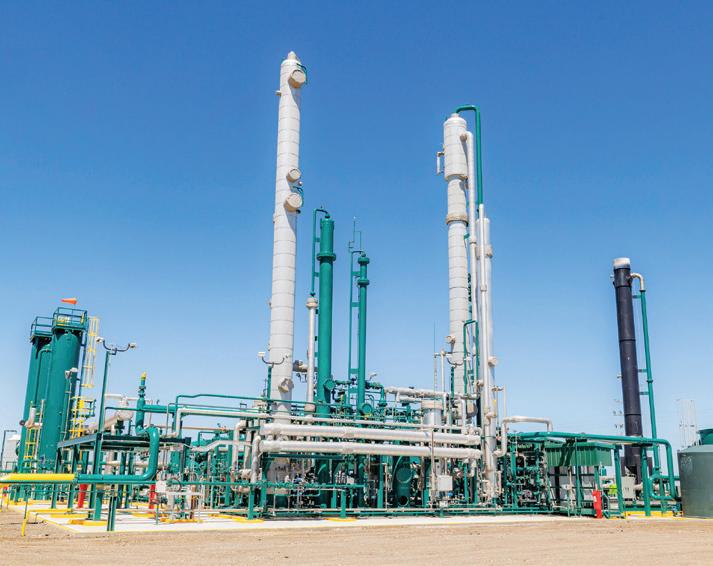
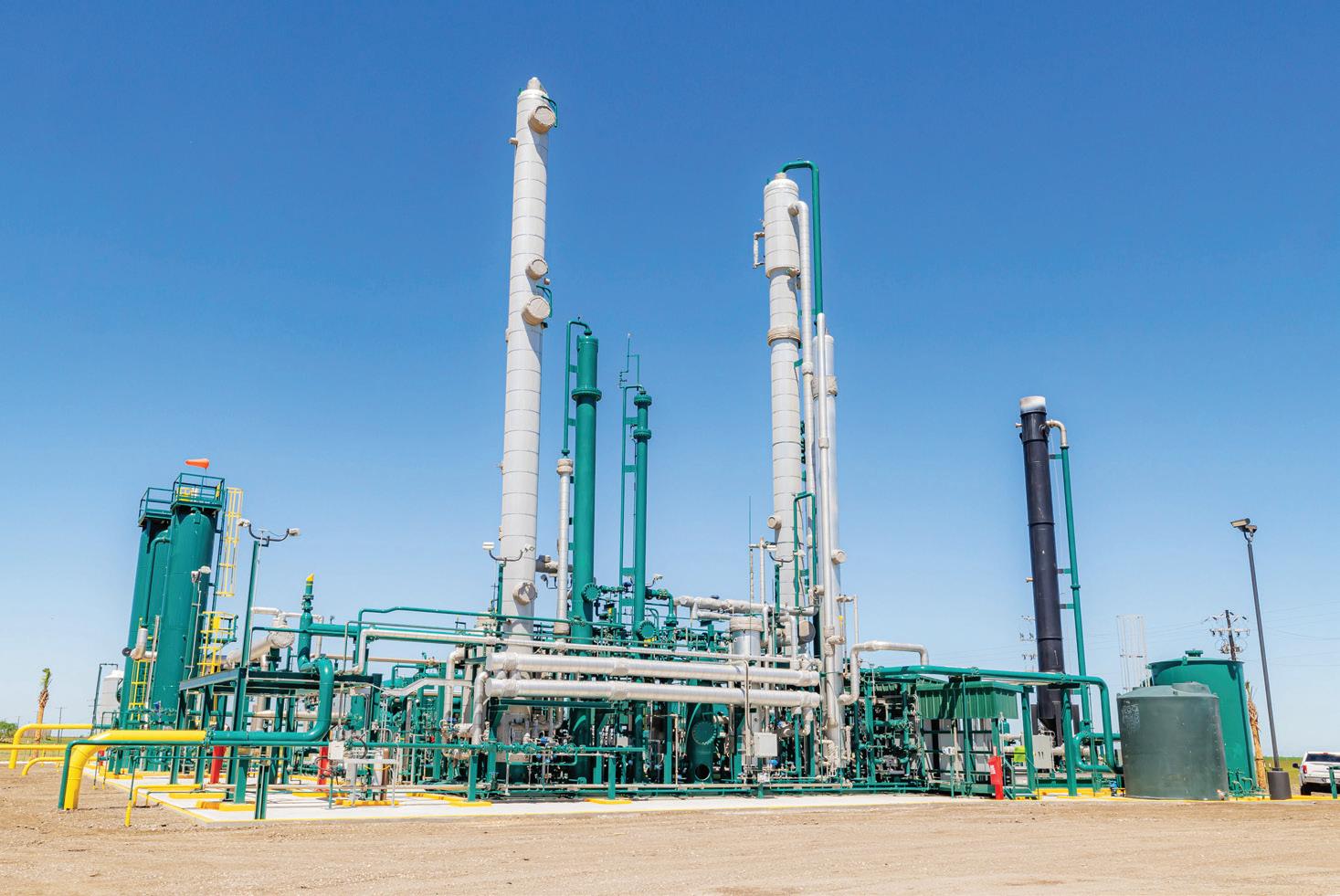
ABOVE: Corpus Christi Renewables built a mini gas plant and pipeline to capture the landfill gas to inject into the pipeline. (Photo provided by Corpus Christi, Texas)
Compost yard at landfill
According to a press release dated July 22, 2025, Corpus Christi Mayor Paulette Guajardo and the city council awarded a $5.8 million contract to J E Construction Services for the construction of a solid waste compost yard at the Cefé Valenzuela landfill.
Annually, the compost yard will produce 120,000 tons of mixed organics and save the city $500,000 to $1 million, providing an additional revenue source. Composting the 80,000 tons of organic waste costs $482,000 versus $1.38 million for landfilling, yielding nearly $898,000 in savings. The compost yard is expected to open this spring.
had a different motive and wanted to capture and produce as much gas as possible, which means less gas being released into the environment. Once the gas is injected into the pipeline, it could show up anywhere in someone’s gas stove or across the ocean; it just goes into the general pipeline.
A year later, the city ran tests on its old, closed landfill 14 miles away, the JC Elliott landfill, and found it could pipe into the main landfill at Cefé Valenzuela. It put a little compressor station at the old landfill. In February 2024, the city amended the agreement, and Corpus Christi Renewables paid the city $1.8 million to install and maintain the pipeline between the landfills. According to Aldridge, the city will also get a royalty when it sells the gas from that landfill. The company also wanted to do the same thing at a privately owned RepublicServices landfill 12 miles away. Although not a municipal landfill, Aldridge said the city wanted what was best for the coastal bin so it is in the middle of a project where CCR will pay the city to put in a pipeline that will connect to the big gas plant at Cefé Valenzeula.
This project has had a significant revenue impact on the city. Reportedly, officials initially projected over a million in revenue, which Aldridge admitted they had projected conservatively.
“It’s a commodity, so it’s up and down, and we hit it at its peak,” he said.
In the first year, the landfill gas-to-energy project generated $4.6 million in revenue for the city, saved an estimated $230,000 in operating and maintenance costs, and reduced emissions equivalent to taking 83,000 cars off the road.
Aldridge said it all depends on how you tailor your agreement. He said some companies will dangle a large upfront payment but little royalties. Corpus Christi took the long view.
“We put an aggressive timeline on the agreement, too; if they didn’t start developing within 12 months, they’d have to pay us rent.”
The impact on the community from a financial standpoint was great. He said this all happened post-COVID when inflation was rising and everything was going up. “We’ve had no rate increases
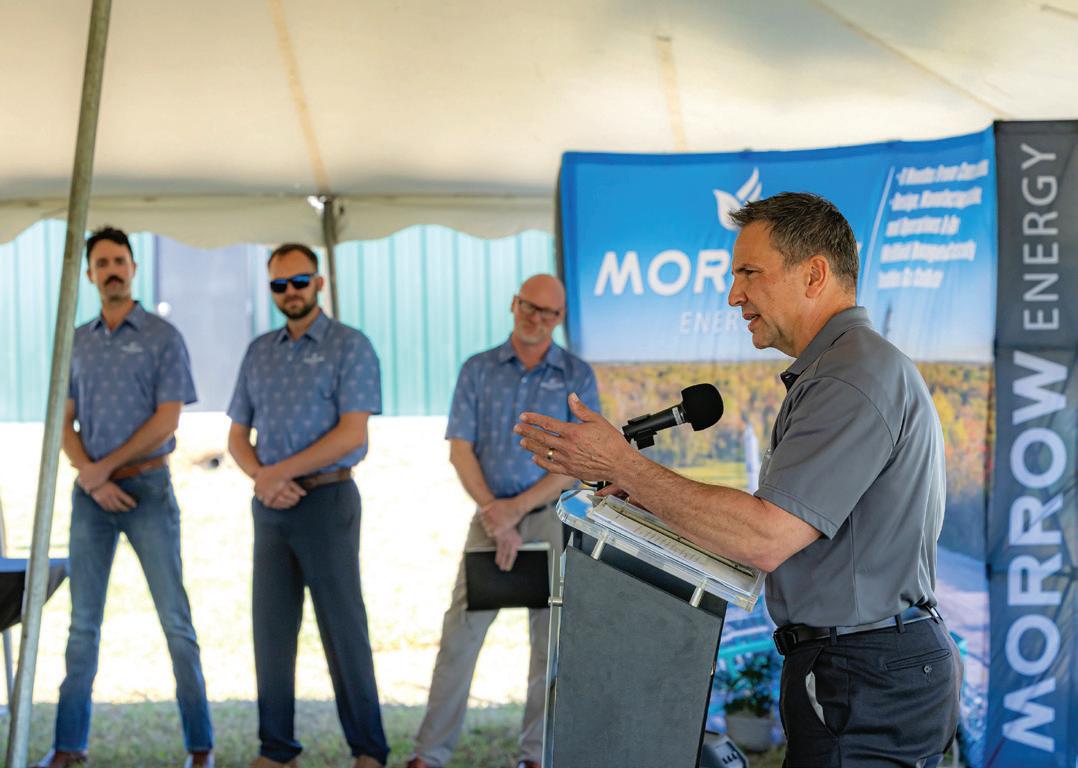
Corpus Christi City Manager Peter Zanoni speaks to those gathered at the ribbon-cutting ceremony of the landfill gas-toenergy project. Corpus Christi Renewables is a division of Morrow Energy. (Photo provided by Corpus Christi, Texas)
for our residents since 2019-2020. We’ve been able to absorb inflation without having to raise rates,” he said.
From an environmental standpoint, the city was only doing the bare minimum to capture the gas. This company is capturing much more and giving it another life, which means less going into the environment.
Aldridge also said officials wanted to pick a company with a proven track record. “We wanted to be a big deal to the company they’re a company with 10 landfills, so we’re a big deal to them versus working with a company where we’d be one of a hundred and just a number in a book. We wanted the personal touch.”
Aldridge advised other municipalities thinking of profiting from their landfills, “Don’t go it alone. There’s plenty of information on the EPA’s website. Interview other cities that have projects about what they like and don’t like, and don’t be afraid to copy their RFQs or contracts there’s no need to reinvent the wheel. Make sure you’re giving (those documents) to all interested parties. And, take the long view.”
Corpus Christi Renewables partnered with the city of Corpus Christi, Texas, to capture the landfill gas, clean it and inject into the gas pipeline. (Photo provided by Corpus Christi, Texas)
Corvallis, Ore., infrastructure project offers a model of proactive maintenance and community engagement
By LAUREN CAGGIANO | The Municipal
A recently completed infrastructure project in Corvallis, Ore., introduced critical waterline updates while demonstrating the city’s commitment to proactive maintenance and resiliency.
The project, which replaced a 20-inch castiron waterline dating back to 1952, addressed aging infrastructure while ensuring uninterrupted service for residents. City officials said it also sets the stage for future growth.
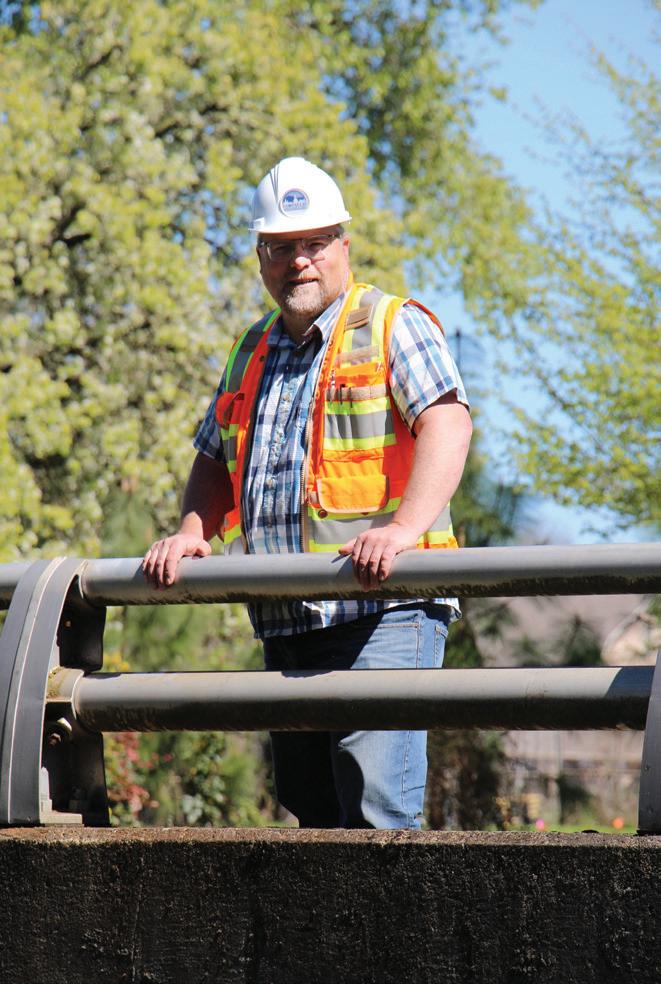
Josh Bjornstedt, a civil engineer and project manager with the city for nearly 25 years, explained the significance of the project.
“This was one of our trunk lines in town, and it had a break about four or five years ago. Given its age and the break, it became a higher priority for replacement. We ended up replacing about 3,200 feet of line, which included some unique challenges like boring under Oak Creek and a railroad.”
The project, located near Oregon State University (OSU), required extensive coordination with the university and nearby residents.
“We had to ensure uninterrupted service for OSU and a large apartment complex in the area,” Bjornstedt said. “Our contractor did a great job limiting downtime during tie-ins to about eight hours, which was well-received by the community.”
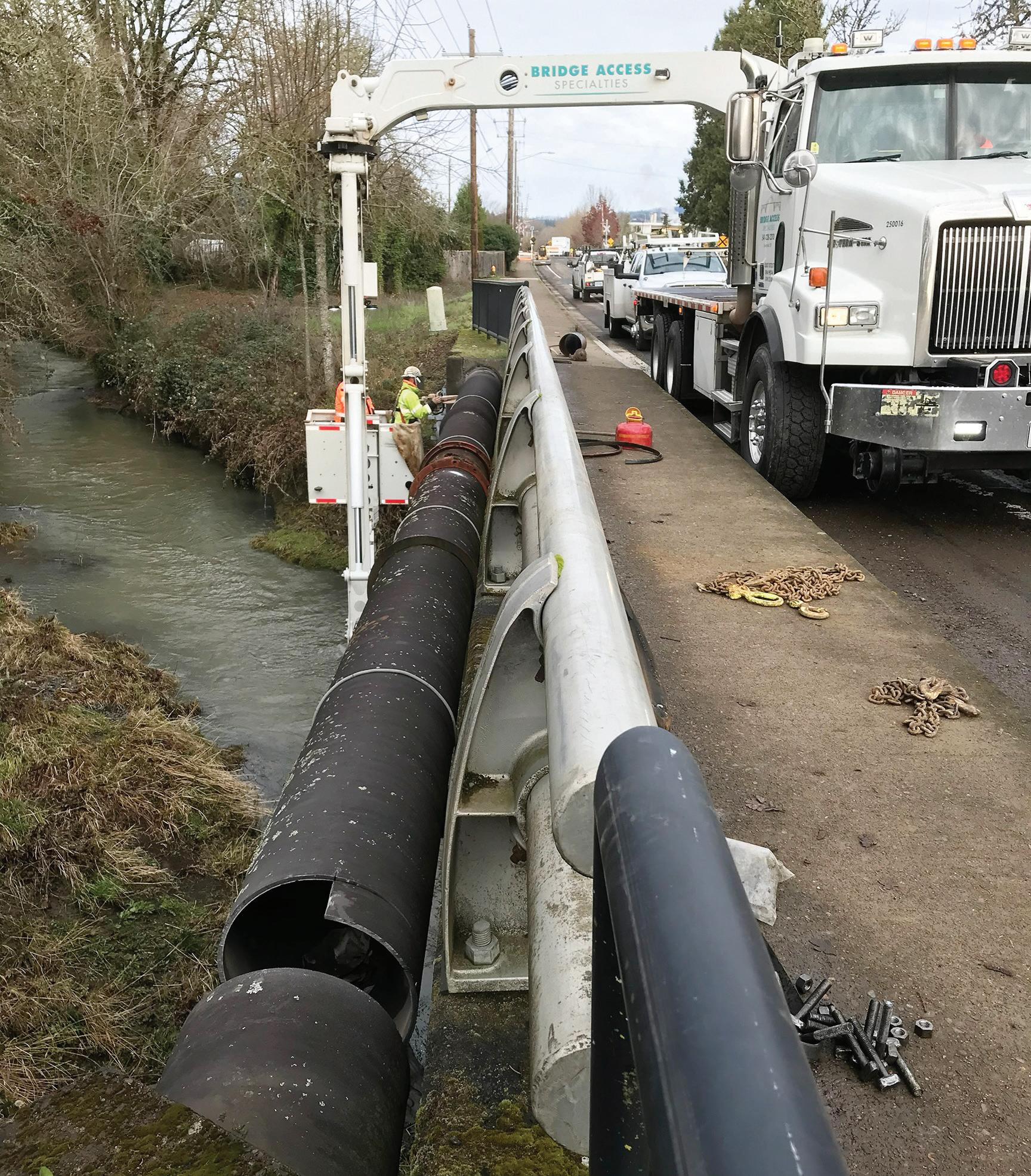
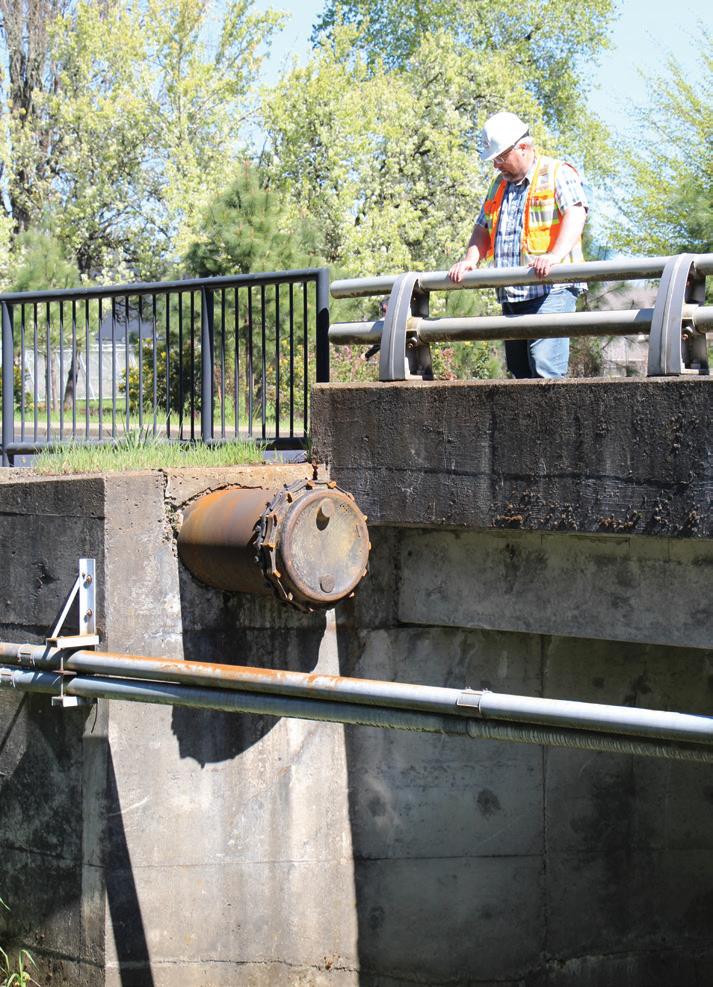
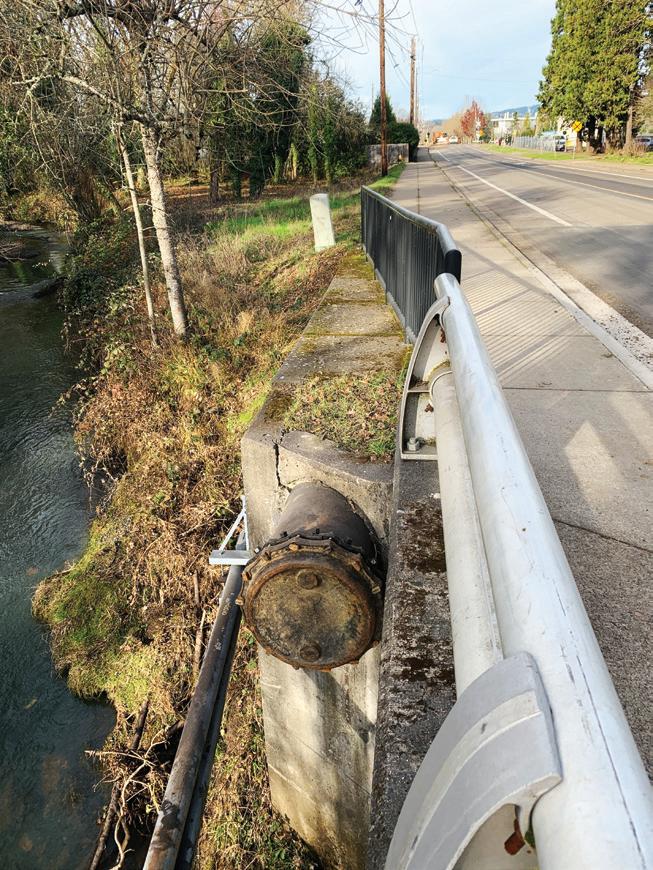
One of the project’s standout features was its focus on seismic resiliency. The old waterline had been attached to a bridge, a vulnerable position in an earthquake-prone region like Western Oregon.
“We try to get our waterlines off bridge infrastructure for seismic reasons,” Bjornstedt said. “By placing the new line underground, we’ve significantly improved its resilience in the event of an earthquake.”
The Cascadia Subduction Zone, an active fault line in the region, has heightened
The project involved the removal of an aging water pipe that had been installed along a bridge over a small creek. (Photo provided by Corvallis, Ore.)
awareness of seismic risks in Western Oregon. Patrick Rollens, the city’s public information officer, stressed the timely nature of this project.
“Being able to tell our community that we took a vulnerable pipeline that was just hanging off the side of a bridge a bridge that could collapse in an earthquake and placed it underground where it’s much safer is a really good outcome,” Rollens said. “You’ll probably see a lot more projects like this in Corvallis in the future.”
Community engagement played a crucial role in the project’s success. The city issued press releases, mailed letters to affected residents and provided weekly updates via email. Bjornstedt also conducted face-toface outreach with OSU and local businesses.
In his words, “Early communication is massive. The fewer calls I get during construction, the better job I’ve done with outreach.”
Rollens stressed the fact that keeping residents informed about traffic impacts was a high priority.
“For most people, their only interaction with this project is when they encounter a road change,” he said. “By communicating early about detours and delays, we were able to minimize complaints and gain community support. People are more willing
to accept a 10-minute delay if they understand it’s for better infrastructure that will last decades.”
The project, completed at a cost of $1.9 million under its $2.4 million budget also highlights the city’s commitment to longterm planning.
“This was about replacing a 75-year-old pipe before it failed catastrophically,” Bjornstedt said. “It’s proactive maintenance that sets our community up for decades of uninterrupted service.”
The city’s approach to asset management and infrastructure tracking also played a key role.
“We experienced a couple of breaks on this line over the years, and it would have been easy to just repair the breaks and move on,” Rollens said. “But in this case, we put some thought into it, took a look at the infrastructure in that area and concluded that we should do this project before we experience something more than a break.”
The project also benefited from its connection to recent improvements made by OSU.
“Oregon State University had extended a similar waterline through their campus up to 35th Street, which is where we connected,” Bjornstedt said. “We saw an opportunity to continue that improvement, creating a longer, continuous piece of newer infrastructure.”
Looking ahead, Corvallis continues to prioritize infrastructure improvements. Current projects include the Rock Creek Transmission Main Replacement and the Marys River Crossing, both of which aim to enhance the city’s water system. The Rock Creek project involves replacing a 24-inch high-density polyethylene line over a span of 13,000 feet, funded by a $10.5 million grant and $3.5 million in city funds. Meanwhile, the Marys River Crossing project recently moved two main trunk lines off bridges and under the river, further improving seismic resiliency.
“It’s been a busy year for waterline projects,” Bjornstedt said. “These upgrades are critical to ensuring our infrastructure meets the needs of a growing population.”
Corvallis, with a population of about 60,000, has seen steady growth since the 1950s, when the original waterline was installed. The city’s infrastructure planning
This project was scheduled during the summer months, when water levels were expected to be at their lowest, to reduce the impact on the river habitat. (Photo provided by Corvallis, Ore.)
takes into account both current needs and future demands.
“On our Marys River Crossing, we installed a larger pipe than was there before, anticipating the city’s build-out,” Bjornstedt said. “We want to ensure we won’t have to touch that line again it’s built for the capacity we’ll need for decades.”
Corvallis, Ore.’s, waterline infrastructure project allows for future population growth.
(Photo provided by Corvallis, Ore.)
Josh Bjornstedt, a civil engineer with Corvallis, Ore. (Photo provided by Corvallis, Ore.)
Inside the city’s drive toward energy efficiency Building a greener Providence:
By DANIELLE LUND | The Municipal
In Providence, R.I., the work of making city buildings more energy-efficient rarely makes headlines. Instead, it happens in small, incremental changes that are reshaping how the city consumes energy. While a proposed green revolving fund has yet to reach the city council, officials say the broader story is already underway: Providence is steadily transforming its public infrastructure to meet ambitious climate goals.
That shift accelerated in March 2024, when Mayor Brett Smiley signed the Energy Efficiency and Carbon Neutral Goals for Municipal Buildings Ordinance into law. The policy commits the city to phasing out fossil fuels in municipal buildings by 2040, aligning Providence with statewide requirements under Rhode Island’s Act on Climate and Renewable Energy Standard.
For Josh Estrella, the city’s director of communications, the ordinance marked a turning point. “Providence’s commitment to lead by example in phasing out fossil fuels from all municipal buildings by 2040 marked a historic commitment,” he said, “to unlock the economic and environmental benefits of improving our public buildings
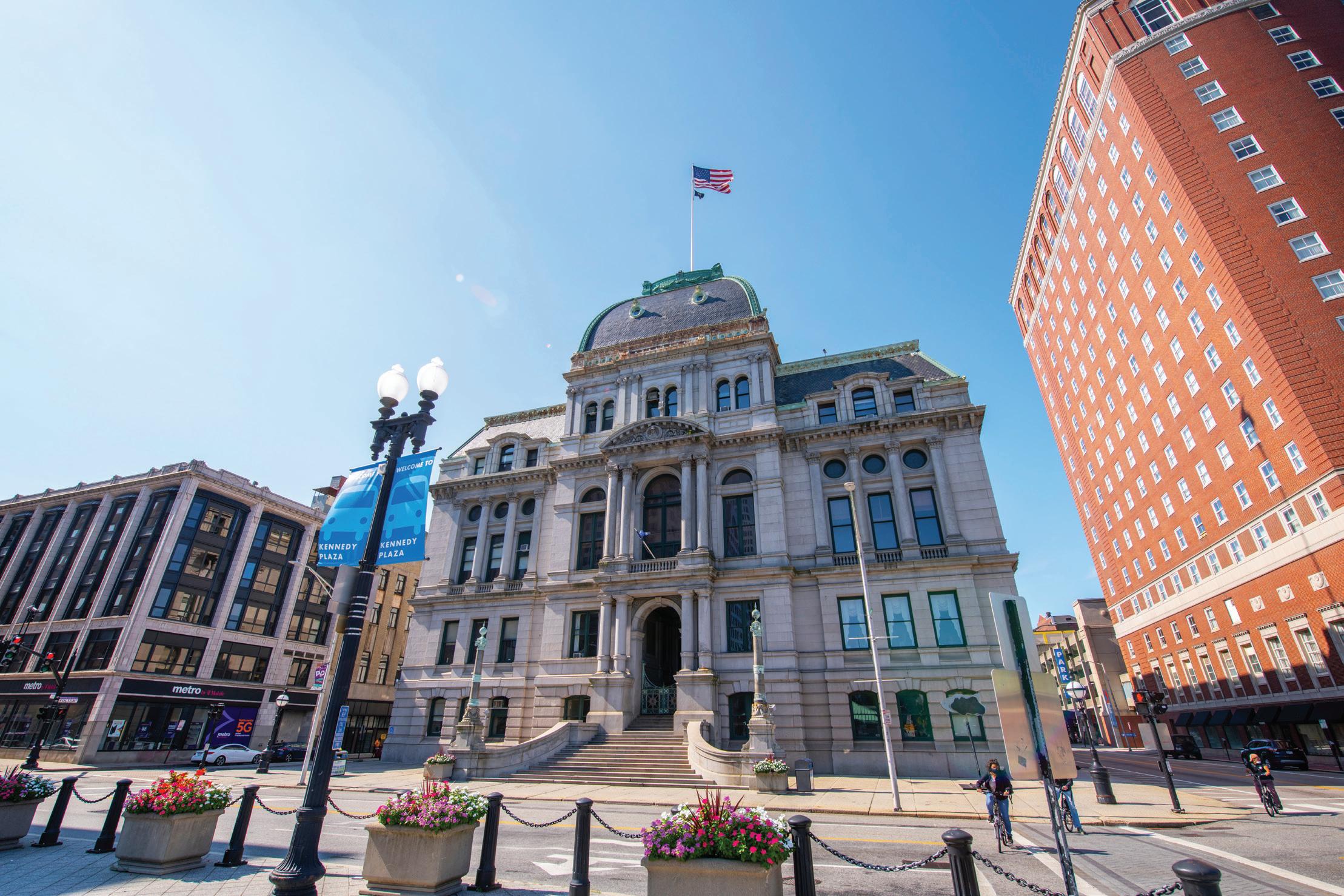
ABOVE: Providence, R.I., strives to phase out fossil fuels in its municipal buildings by 2040. Pictured is its city hall, which was built in 1878 in the Second Empire Baroque style. (Wangkun Jia/Shutterstock.com)
by prioritizing energy efficiency, electrification and carbon reduction investments.”
The ordinance created a drive and a framework for action. In the months since its passage, the city has launched a series of initiatives aimed at reducing energy use, modernizing systems and transitioning to cleaner technologies. Much of that work is guided by a newly released decarbonization roadmap, which outlines how Providence plans to achieve carbon neutrality across its building portfolio.
“The recently released Decarbonization Roadmap gives the city the ability to plan
toward carbon neutrality by 2040 for all municipal buildings,” Estrella explained. “The city is planning to achieve this goal by maximizing energy efficiency measures and energy savings opportunities, analyzing the feasibility of installing clean energy technologies, (and) strategically prioritizing building decarbonization annually based on the energy use intensity of buildings.”
The results are already beginning to take shape. Over the past two years, more than 60 municipal buildings have undergone energy-efficiency audits and upgrades, leading to $3.2 million in utility incentives. These projects include improvements to lighting, heating and cooling systems and building management technologies, all changes that may be invisible to most residents, but are critical to reducing energy consumption.
Electrification has also become a central strategy for the state. So far, 22 building electrification projects have been completed or are under construction, covering roughly 1.2 million square feet of city-owned space. By 2028, those projects will represent about 22% of Providence’s building portfolio, with many facilities transitioning to heat pump systems that replace fossil fuel-based heating.
At the same time, the city is beginning to generate more of its own clean energy. On-site solar installations scheduled to come online in 2026 will produce about 1,600 megawatt-hours of electricity annually, which is enough to supply roughly 5% of the energy used by municipal buildings.
There are additional early signs that these efforts are working. Through the city’s Building Energy Reporting Ordinance program, Providence has documented a 7% reduction in energy use across municipal buildings over the past four years. It’s a modest figure, but one that reflects steady progress.
Behind the scenes, much of this work depends on partnerships. Providence collaborates closely with Rhode Island Energy through its Strategic Energy Management Partnership (SEMP), which provides technical expertise and financial support for efficiency projects. The city is also working with the Rhode Island Office of Energy Resources to align local initiatives with statewide programs.
“The city of Providence has a Strategic Energy Management Partnership that
The Westminster Arcade, a historic shopping center at 130 Westminster Street in Providence, sports solar panels. City-owned buildings will follow this privately owned building’s example by adding solar panels and other clean technology. (Jon Bilous/Shutterstock.com)
provides technical, financial and management support,” Estrella said. Through that partnership, the city is currently advancing 18 new projects expected to deliver more than 1.12 million kilowatt-hours in energy savings.
Even with state support and utility partnerships, funding remains one of the biggest challenges. That’s where the proposed green revolving fund could play a significant role in the near future. Though remains unintroduced to the council, city officials are already developing the concept alongside the decarbonization roadmap.
“The green revolving fund would strategically fund energy-efficiency, renewable energy and other electrification projects across city properties,” Estrella said. “By having a concise roadmap and dedicated city funding, it creates a clear path forward in achieving these goals.”
The model is designed to sustain itself over time. Savings and incentives generated by completed projects would be reinvested into the fund, allowing the city to finance additional upgrades without relying entirely on new revenue streams.
For Providence, the stakes extend beyond emissions. Energy-efficient buildings are cheaper to operate, less vulnerable to
fluctuating fuel prices and more comfortable for the people who use them. Schools, offices and public facilities all stand to benefit.
“These upgrades require upfront capital investment,” Estrella noted, “but they significantly reduce long-term energy expenses, protect the city from volatile fossil fuel prices and lower deferred maintenance costs over time.”
At the same time, the broader policy landscape is shifting. As federal climate programs face uncertainty, local governments are being asked to do more with fewer resources. For Providence, that reality has sharpened the focus on local solutions.
“In the absence of federal leadership, local governments must do more to improve aging infrastructure,” Estrella said, pointing to the need to upgrade inefficient building systems and reduce reliance on fossil fuels.
For now, the green revolving fund remains a proposal. But even without it, Providence’s trajectory is clear. Through a combination of policy, planning and incremental upgrades, the city is steadily reducing its energy footprint: one project, one building and one system at a time.
Lynchburg, Va., transforms high-risk dam into wetland
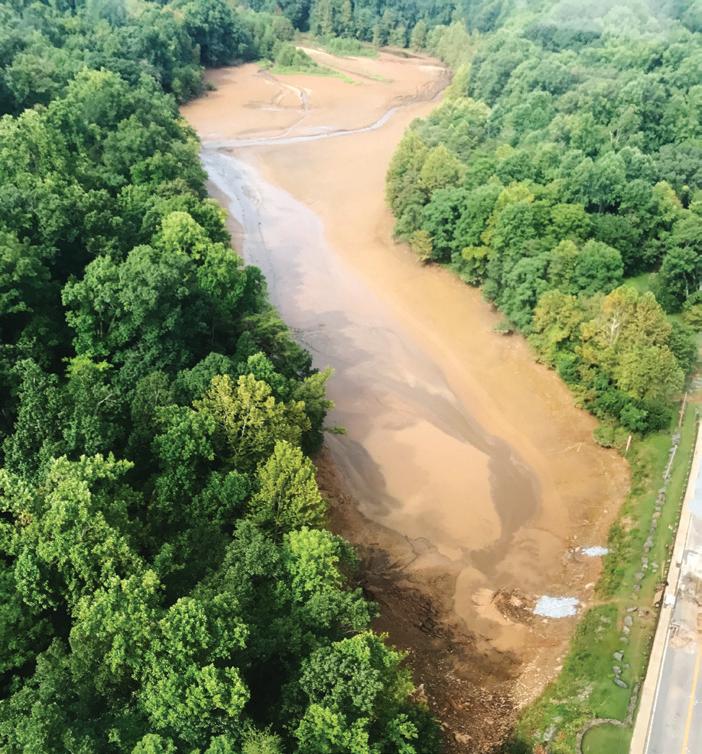
The College Lake dam had been studied extensively by both the city of Lynchburg, Va., and the University of Lynchburg for more than a decade. Classified as a high-hazard dam, there had already been many conversations about the future of the dam and College Lake in order to bring it up to meet standard safety requirements.
The two primary options included either heavily fortifying the earthen dam with parapet walls and mounds of concrete with a road over the top or removing the dam altogether. After the dam overtopped during a major storm in August 2018, the city moved forward with the removal of the dam.
The dam was owned by the city and College Lake was owned by the University of Lynchburg, so the two collaborated on the project and design. The city put together a stakeholder group with water resources, the public works department and the university to formulate a request for proposal. With the removal of the dam, the heavily trafficked Lakeside Drive would need to be removed, and replaced.
Therefore, the first step was designing the bridge to replace the road. The contract was awarded to AECOM in 2019. The city opted to
go with the design-build route to accelerate the process. While the new bridge was being designed and constructed, the city began the preliminary engineering phase, working on the watershed analysis, geotech work and permitting. This took approximately a year to 18 months from 2020 to 2021 and gave the city the basis of the design for the dam removal and restoration to fully understand what the design could and should incorporate.
While heavily damaged and considered a failure, the dam did not technically breach. Therefore, the city could perform temporary repairs to the dam in order to pass Department of Conservation and Recreation requirements and allow the dam to continue to function while the bridge was being constructed. From 2022 to 2024, the city worked on design and easement acquisition. Demolition began in January 2024.
trafficked, the road would need to be removed and replaced prior to the dam removal. The city chose to go a designand-build route for the new bridge.
(Photo provided by Lynchburg, Va., Water Resources)
W.C. English Construction and Resource Environmental Solutions were chosen as the firms for demolition and restoration. The dam’s demolition concluded in October 2025, allowing for final plantings. The official ribbon cutting for the project took place on April 16.
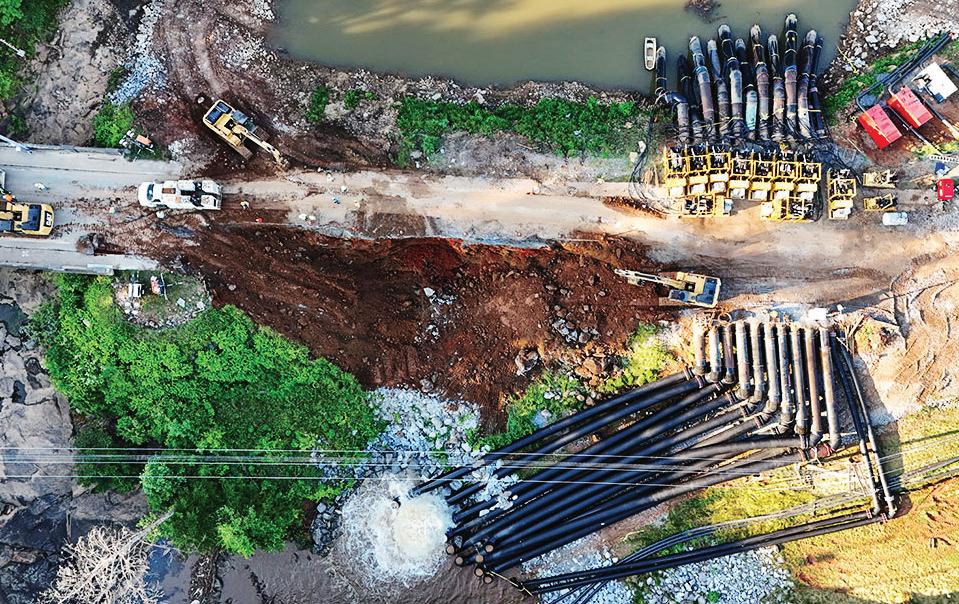
“We did a methodical drawdown of the lake level with a pump system in place to keep it down to the lowest level possible,” Erin Hawkins, Lynchburg water quality manager, explained. “There were six or seven excavators on the embankment that methodically dug down to the bottom.”
Once the dam was breached, it became a 24/7 operation to avoid causing any lag time due to bad weather. They waited until there were multiple days of good weather predicted and then kept a close eye on the weather to avoid issues until the water was low enough to free flow for the remainder of the project. Once
The choices were to either heavily fortify the dam with concrete or to ultimately remove the dam. After a major storm in August 2018, where the dam overtopped but did not breach, the city decided to take action and move forward with the removal of the dam. (Photo provided by Lynchburg, Va., Water Resources)
the full breach was completed, the city could delist it as a high-hazard dam. As a high-hazard dam, the city had to follow an additional set of requirements, including having an emergency action plan that had to be initiated during all flash flood events, monitoring, safety protocols and inundation mapping, which determined the degree of impact for various events. During construction, the construction administrator used a program called DroneDeploy to perform regular flights over the project sites to monitor the large area.
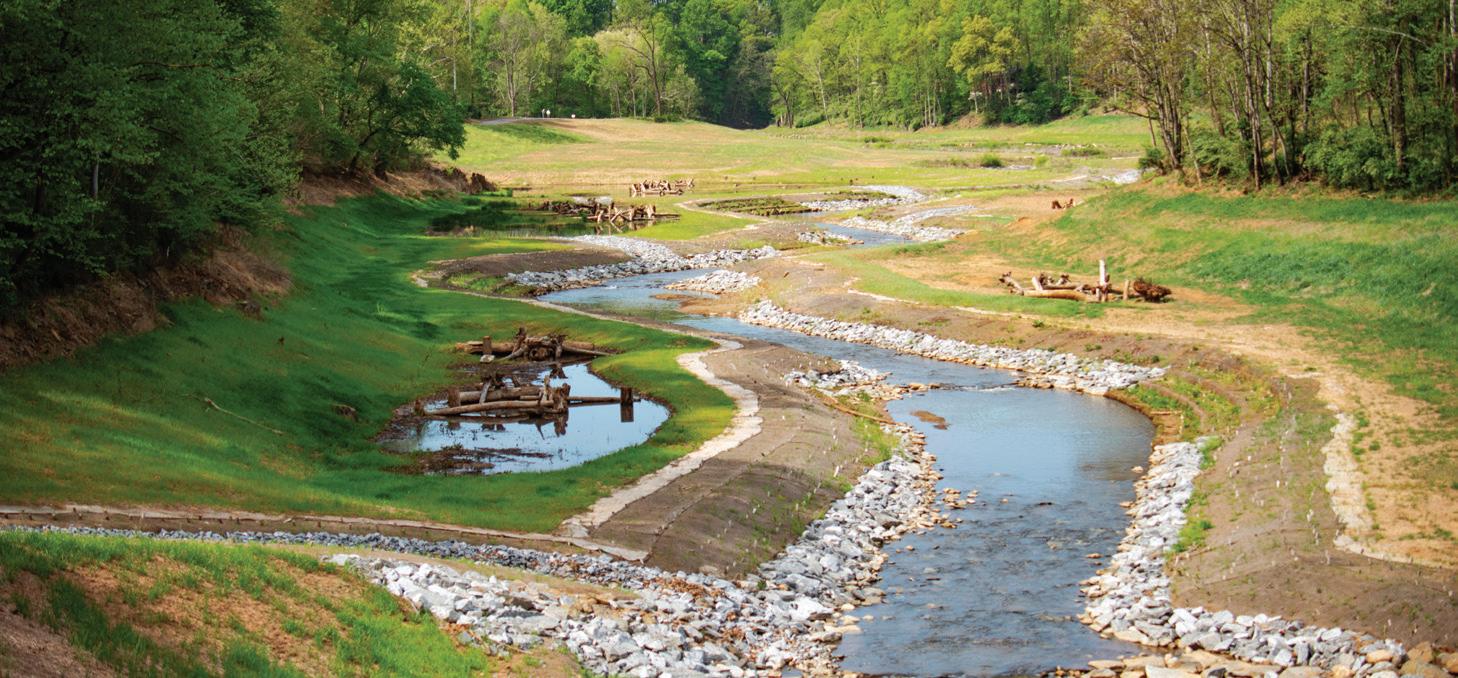
Once that portion was completed, the city switched to restoration mode to create a stable channel for Blackwater Creek to flow through. Fox Creek is the main tributary, though there are a few other smaller tributaries flowing into Blackwater Creek. The municipality opted against allowing the tributaries and creek to undergo natural flow and self-regulation over the subsequent five to 10 years because of the unpredictability of sediment movement and its potential impact on the floodplain or downstream gradient.
Lynchburg worked with the U.S. Army Corps of Engineers and the Virginia Department of Environmental Quality on permitting to integrate ecological improvements so that no mitigation efforts were necessary. This area became a wetland for overflow areas with log structures anchored in. Native wetland plant
The city waited until multiple days of good weather were predicted to begin dam removal. Once the dam was breached, it was a 24/7 operation with multiple excavators on the embankment methodically digging down to the bottom. Once the water was low enough to free flow for the rest of the project, the 24/7 operation ceased. (Photo provided by Lynchburg, Va., Water Resources)
Once the dam was fully demolished, the city switched its efforts to restoration. They worked with the Army Corps of Engineers and Virginia Department of Environmental Quality on permitting to include ecological improvements so that no mitigation efforts were necessary. (Photo provided by Lynchburg, Va., Water Resources)
Water Resources)
species were planted. It has also become a habitat for local wildlife such as tadpoles, turtles and killdeer. Currently, university students are involved in invasive species mapping and are using the wetland as an outdoor classroom.
Creekside Trail is still not completely reopened since the parks and recreation department is working on a realignment of the trail. The city and university are working with the parks and recreation department to explore various recreational and educational opportunities that this new wetland will produce. During the engineering phase, a new trail master plan created a springboard to continue the conversation and generate funding opportunities for boardwalks, trails and more.
“This project removes a high-hazard dam and removes the requirement of inundation mapping for impacts,” Hawkins shared. “With a flash flood advisory or weather, we won’t need to evacuate because of imminent dam failure. It provides protection downstream. It is still in a floodplain, so it doesn’t eliminate the possibility of flooding, but in 2018, we had to evacuate all the properties downstream of the dam very quickly. That is no longer an issue. We won’t pull as many resources from the city during such an event. So many resources were focused on the dam failure when there were many other issues that also needed addressed.”
These restoration efforts have created a wetlands area in Blackwater Creek. It has log structures anchored and native plant species were planted along the creek bed. It has already become a habitat for tadpoles, turtles and killdeer. (Photo provided by Lynchburg, Va.,
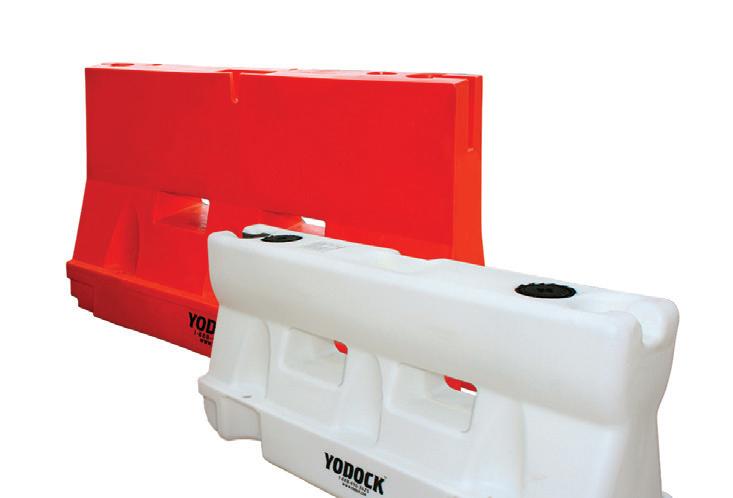
• The 2001, 2001M, and 2001MB barricades are MASH Tested as a Longitudinal Channelizing Device (LCD).
• Accessorize with Lights and Fence Panels.
• Transform unstable ground into stable and weatherproof surfaces for easy transport and staging of heavy equipment.
• Protect Turf & Grass During Events and Projects.
• Create Accessible Walkways for Pedestrians or Crew.
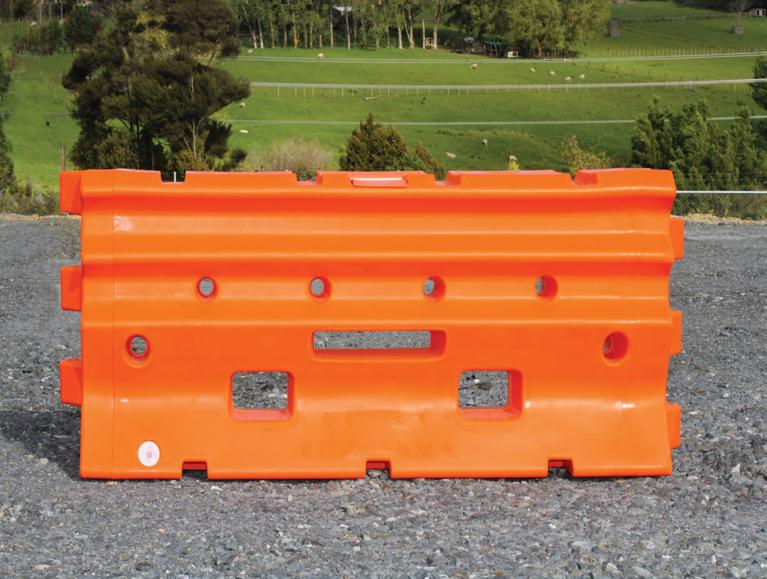
• Portable, High-Performance, interlocking water filled Barrier sections.
• MASH TL-2 Tested for Redirective Applications.
• Minimize/Eliminate rod scoring
• Extend the life of cylinder seals
• Protects cylinders from the elements
• Prevent pitting due to chemical washers
• Reduce particle contamination of hydraulic systems
• Minimize dings and dents associated with falling debris
Palm Coast project adds 21-million-gallon capacity to Hulett Basin
By NICHOLETTE CARLSON | The Municipal
The London Waterway expansion project began in 2019 when the consulting engineering firm DRMP Inc. coordinated with the city of Palm Coast, Fla., to help create and provide feedback on a citywide stormwater master plan. The plan analyzed the city’s current drainage system and provided several recommendations on projects to improve it: The London Waterway was one of the basins in the recommendations.
Improvements needed to be completed within the Hulett Basin to improve flood protection, particularly after large rain and storm events. The expansion project was able to provide 25% of the recommended improvements along the basin.
The design and permitting phase of the project began in August 2020 and involved coordination meetings with city staff, consultants and permitting. The city struggled initially to find good land for the project, because land was expensive and the land that was available was wetland that would not work well for the purpose. Finally, it found some forgotten properties that had been donated 10 or 15 years ago under the condition that they be used for a park.
The project layout phase began with engineering consultations and meetings with neighborhood residents. At the first meeting the residents were very vocal, and many in attendance were not in favor of the project. The timing was also not ideal, because a private developer was simultaneously attempting to turn a local golf course into a large subdivision, and many residents assumed the two projects were related when they were not.
Initially the design was elaborate in that it combined stormwater improvement and a park but had to be cut back due to cost. One change made was to eliminate the proposed walking trails around the pond since neighbors did not want walking trails going through their backyards. Stormwater engineers remained
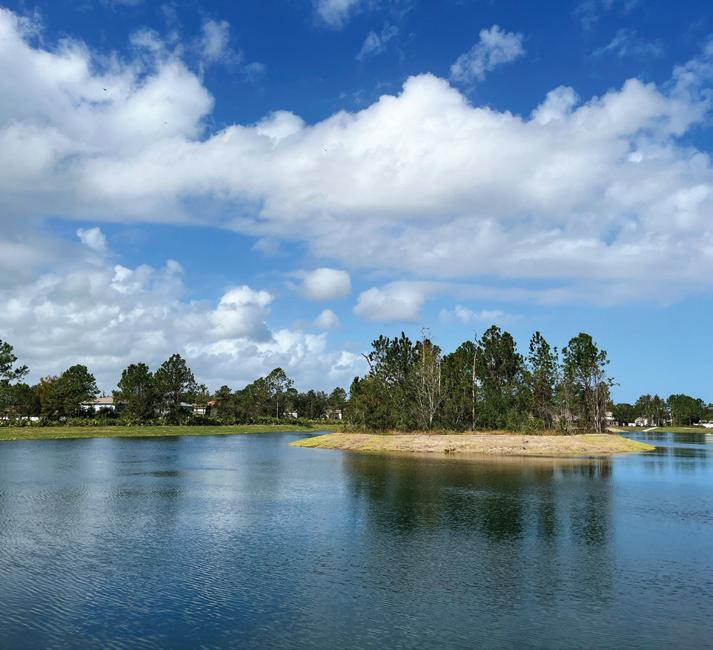
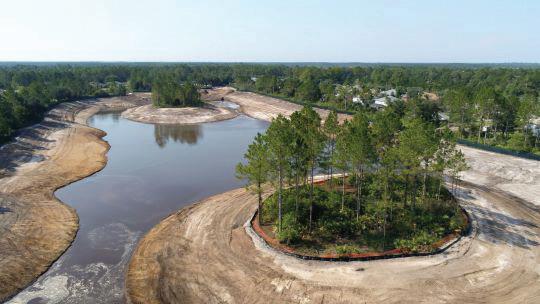
ABOVE: The London Waterway expansion project began in 2019 when a consulting engineering firm helped provide feedback on Palm Coast, Fla.’s, stormwater master plan. It provided multiple drainage system recommendations, one of which was the London Waterway, which would improve flood protection to the Hulett Basin.(Photo provided by the city of Palm Coast, Fla.)
involved with residents throughout the project to communicate and resolve concerns.
One of the biggest challenges of the entire project was the bidding process and getting the project approved. After a great deal of planning, designing and discussion, it was sent out for bid in October 2022 but received no bids.
In February 2023, Carmelo Morales, Palm Coast stormwater engineer, stated, “We made some tweaks to make it more favorable for bidders and got one bid.” However, it was $5 million over budget.
Palm Coast continued to modify the design and sent it out for bids again in May 2023. This time, the city received two bids that were both still over budget, but closer. Meanwhile, prioritization went to other capital improvement
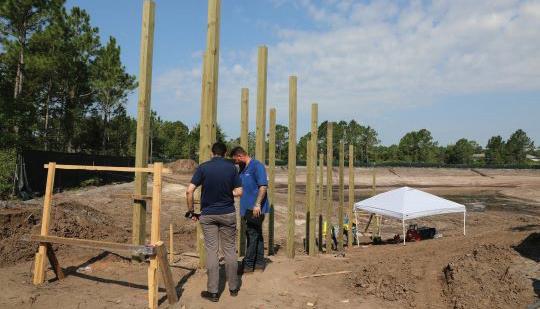
One of the greatest struggles in the project was finding the right land due to expense or the presence of a wetland. After finding land given to the city to be used for a park, plans and designs were underway. (Photo provided by the city of Palm Coast, Fla.)
projects. Funds were shuffled to make the project more desirable, but ultimately, in order to get final approval from the city council, the department had to highlight the combined savings if fill from the project was used on another nearby project. By using the excavated fill to make a pond at the Maintenance Operations Center, the combined savings would be more than $4 million.
“The project consisted of the construction of a stormwater pond that provides relief to the adjacent London Waterway,” Morales described. “As peak stages along the canal rise, stormwater is conveyed to the new stormwater pond for attenuation. This additional capacity limits the volume of stormwater that gets up onto the roads during large rain events.”
There was some structure and piping installed along the canal, so that as the waters rise in the canal, it goes through the pipes and enters the pond. Once pond water reaches a certain elevation, it goes through the other pipe back out toward the canal.
A few utilities also had to be relocated due to the location of the piping.
Additional aspects initially considered included walking trails along the top bank of the pond, boardwalks onto the pond’s natural islands and two wooden docks, but these ultimately were not constructed. However, there are small boardwalk areas on two corners of the pond with an overlook area for fishing and relaxing, along with seating. The two islands were left natural and there were quite a few trees planted along the perimeter of the pond, along with a little aquatic planting.
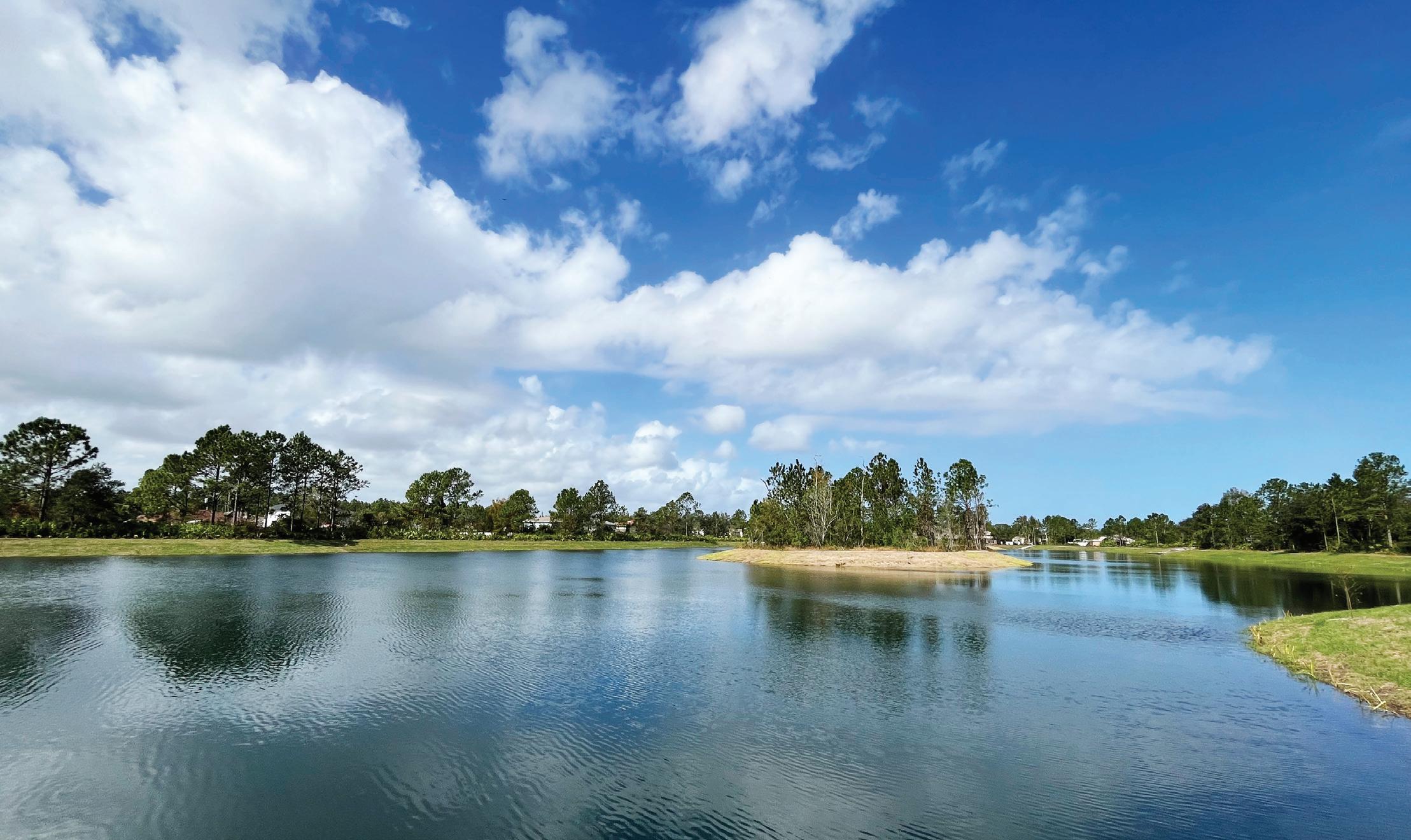
“The project creates approximately 21 million gallons of added capacity within Hulett Basin,” Morales expressed. “This improves flood protection to roads and properties during large storm events. Beyond the stormwater improvements, however, the pond is actually aesthetically pleasing, with two wooden docks and boardwalk approaches and sidewalks out to the road.”
Things moved efficiently once construction began. There were a few typical challenges with contractors and ensuring they stayed within budget, but nothing extraordinary.
The construction phase of the project took about a year. The groundbreaking took place at the end of 2023, and the construction was completed in January 2025. This past year, it successfully held up against hurricane and storm season and received two awards, one from the Florida Stormwater Association and one from the American Society of Civil Engineers.
Another challenge for the city was the bidding process. Over the course of a year, the project was put out to bid three times, with many coming in over budget. Ultimately, the combined savings from this project and another nearby project allowed the city to receive the necessary funding. (Photo provided by the city of Palm Coast, Fla.)
The project built a stormwater pond adjacent to the London Waterway that adds an additional 21 million gallons of capacity within the Hulett Basin. As peak stages rise along the canal, water is transferred to the stormwater pond. Once the pond waters reach a certain elevation, it then goes back through another pipe toward the canal. (Photo provided by the city of Palm Coast, Fla.)
“It was a good challenge combining water quality, stormwater improvement and parks along with neighborhood and resident concerns. It was an improvement that needed to happen, but we also wanted it to look nice.”
Funding for the design and permitting phase came from the city’s stormwater management fund. Funding for construction of the project was $6.2 million, obtained through the American Rescue Plan Act, $2 million from the city’s stormwater fund and a $900,000 grant from the St. John’s River Water Management District.
Previously, the city had been unsuccessful in securing the water management district grant: However, once it stressed the environmental and water quality aspects of the project, it was awarded the grant.
A similar capital improvement project is now underway within the same basin that will move the recommended improvements significantly forward. It is currently in the design and permitting phase and will move Palm Coast closer to 67% of the capacity needed.
Electric utility superintendent has a heart for community participation
By BETH
If anyone has been around Scottsburg, Ind., for any length of time, they’ve heard of Willie Daniels. And surely what they heard has been all to the good.
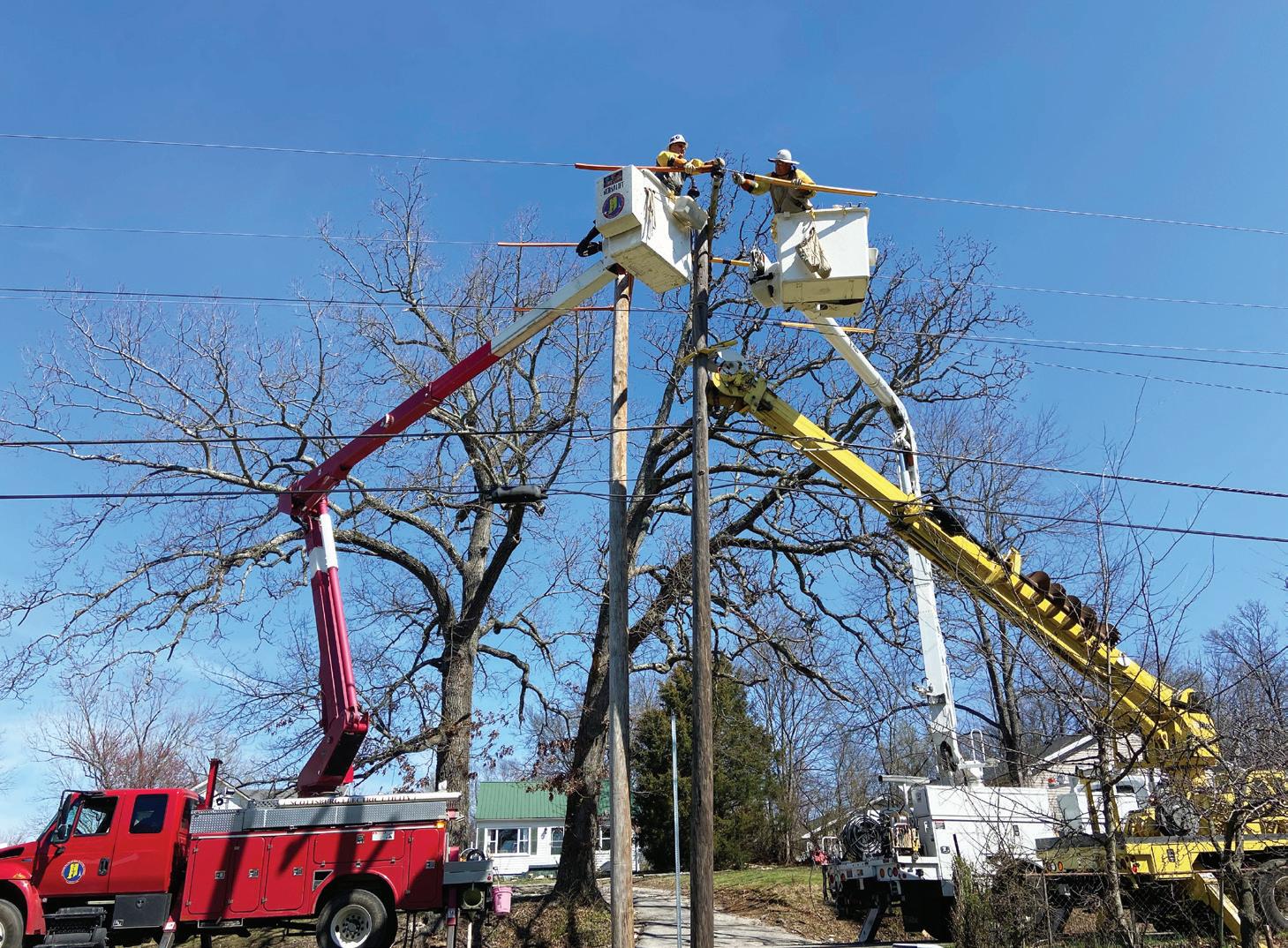
Daniels is the superintendent of the local Municipal Electric Utility. Per the city website, “One of the biggest culprits of power outages and interruptions in the United States is due to tree limbs and plant growth interfering with electric infrastructure or falling on power lines. Keeping the lights on in Scottsburg homes and businesses is the number one priority for the city’s power utility, which is why the utility’s workers have focused on maintaining vegetation in the community. Removing hazardous trees, pruning limbs, and trimming low-lying brush around Scottsburg’s electric infrastructure are some of the largest preventative measures that the utility can take to improve local reliability.”
Daniels is the person who’s on top of that reliability.
“We’ve got a crew of line workers who are doing tree trimming around the clock to
ensure that we’re not letting any trees or bushes get out of hand in any part of the community. We’re undertaking several bigger projects to maintain and improve our electric reliability, but it’s just as important to focus on simple upkeep as well.”
Daniels began his career roughly 14 years ago climbing towers for broadband and working on call for the electric department.
“After practicing on poles behind the shop, I competed in a lineman rodeo, which is a competitive event where electric utility line workers showcase their technical skills, speed and safety proficiency in simulated, real-life, on-the-job tasks,” he said. Known as a brotherhood event, the rodeo brings together journeymen and apprentices for timed competitions, such as pole climbs and rescues, where safety is prioritized and penalties are deducted for errors.
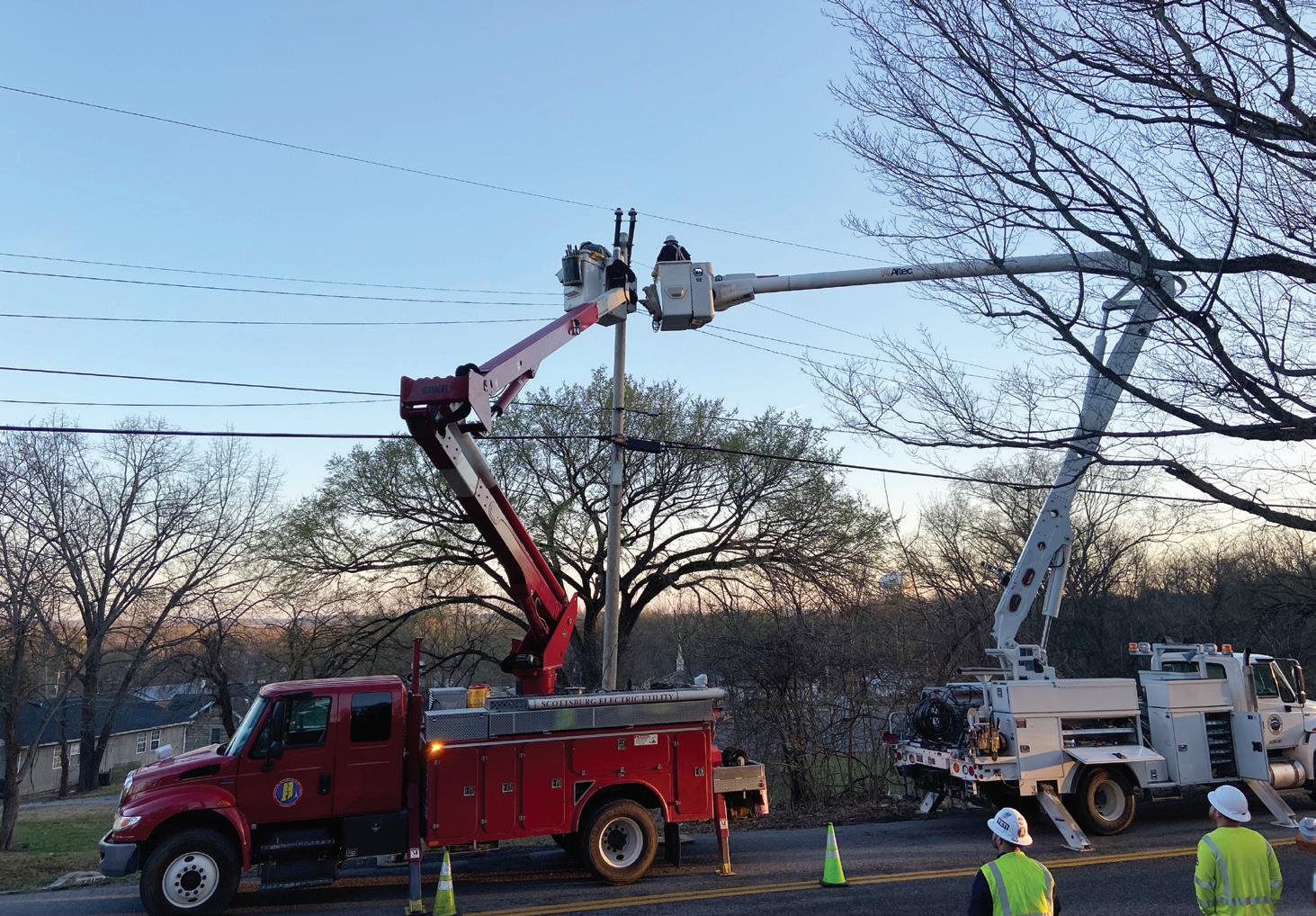
ABOVE: Willie Daniels, in the yellow shirt, is proud of his hard-working crew in Scottsburg, Ind. They are always ready to do whatever is needed, whenever it is needed, just as he is. (Photo provided by Willie Daniels)
Willie Daniels poses with his wife, Chantel, who, years ago, agreed to postpone their wedding when a work-related emergency called him away. (Photo provided by Willie Daniels)
ANNE BRINK-COX | The Municipal
“I attended pole climbing school shortly after. I became hooked on this career, taking extra on-call shifts to learn how to troubleshoot complex issues and participating in mutual aid events. Notably, I postponed my wedding to travel to Florida for a mutual aid event to help restore power for residents there.”
Daniels continued, “Through my commitment to this work, I moved from apprentice to journeyman lineman, then to foreman, and I have served as superintendent for the last five years. I also serve as the president of the Indiana Municipal Electric Association for safety, training and apprenticeships the same organization where I completed my own schooling and as the assistant director for mutual aid at both the state and national levels with the American Public Power Association and IMEA.” He obviously found a perfect fit long ago, and Scottsburg has benefited from that.
What Daniels enjoys most about the work are the relationships built across the community and the country.
“Our department has built a strong reputation for a dependable work ethic and a reliable system. We own our own 69kv transmission loop, five substations and all distribution lines, serving roughly 4,008 meters. We handle all work in-house and prioritize preventative maintenance and system upgrades,” said Daniels. That is a pretty tall order in a town the size of Scottsburg, the population of which is 7,450 this year.
Daniels has a heart for community participation and service that goes far beyond the it’s-my-job mentality.
“I believe my best contribution is helping others learn, whether they are customers, contractors or apprentices. One of my most rewarding experiences was helping build a power line for the Navajo Reservation; seeing the excitement of families receiving electricity for the first time was priceless.”
“While my role as superintendent involves closer daily relationships and my statewide role focuses on broader leadership, both share the same goal: serving the people and building upon the foundation laid before us.”
As hard as he works, Daniels also knows how to enjoy the other areas of his life. “In my downtime, I enjoy spending time with my wife, Chantel; hunting; fishing; and working around the farm. People might be
Line work takes great skill and precision, honed through training. Daniels learned it first and then made sure everyone who would follow and work in this field was equally ready to do so, and to work as safely as possible. (Photo provided by Willie Daniels)
The Scottsburg team tackles another electrical situation,ensuring the community’s power stays on. (Photo provided by Willie Daniels)
surprised to learn that I enjoy singing and speaking at my church.” Anyone who knows him shouldn’t be surprised.
“Regarding my background, I was raised on a farm in a Christian family that taught
me the importance of faith, respect and hard work values I have passed down to my daughters Erin and Brittany, and my grandchildren.”
Solid waste, recycling and fleet maintenance make a smart relocation
By JENNIFER BARTON | The Municipal
Rarely does a project go as completely right as the relocation of the solid waste, recycling and fleet maintenance operations in Venice, Fla.
As long as Ashlee Castle, assistant public works director, has worked for the city, there has been talk of relocating solid waste, recycling and fleet maintenance operations to a new facility.
“That has been a goal of the city for quite some time,” she asserted possibly even up to 20 years prior, based on hearsay from other employees. The buildings these operations occupied had fallen into disrepair and now post-move they have been slated for demolition.
Public works administration and the parks and maintenance department were the first dominos, taking over the former police department building and leaving solid waste, recycling and fleet seeking a permanent home.
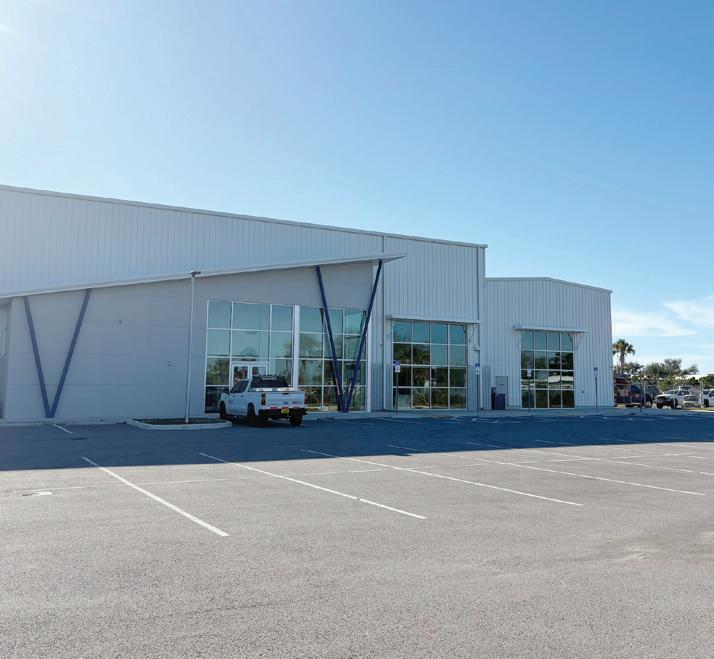
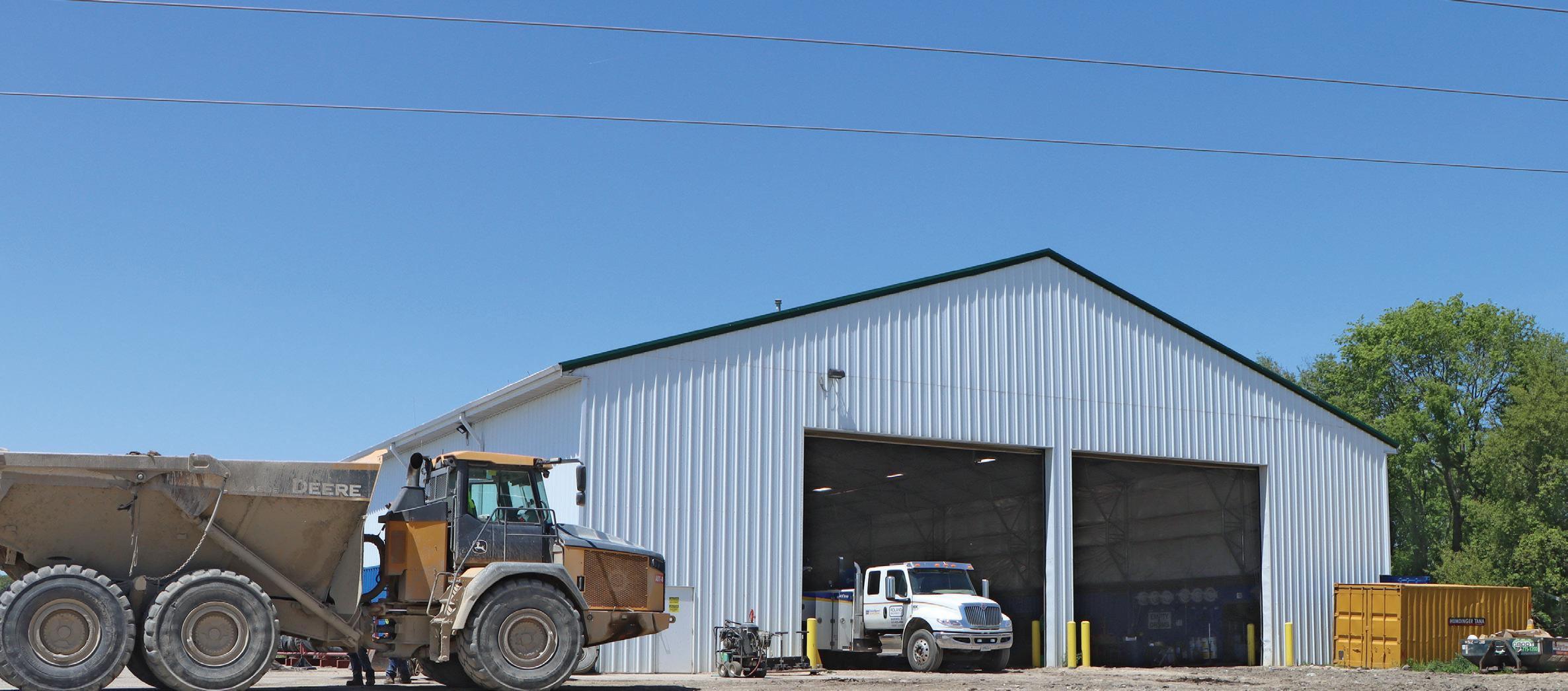
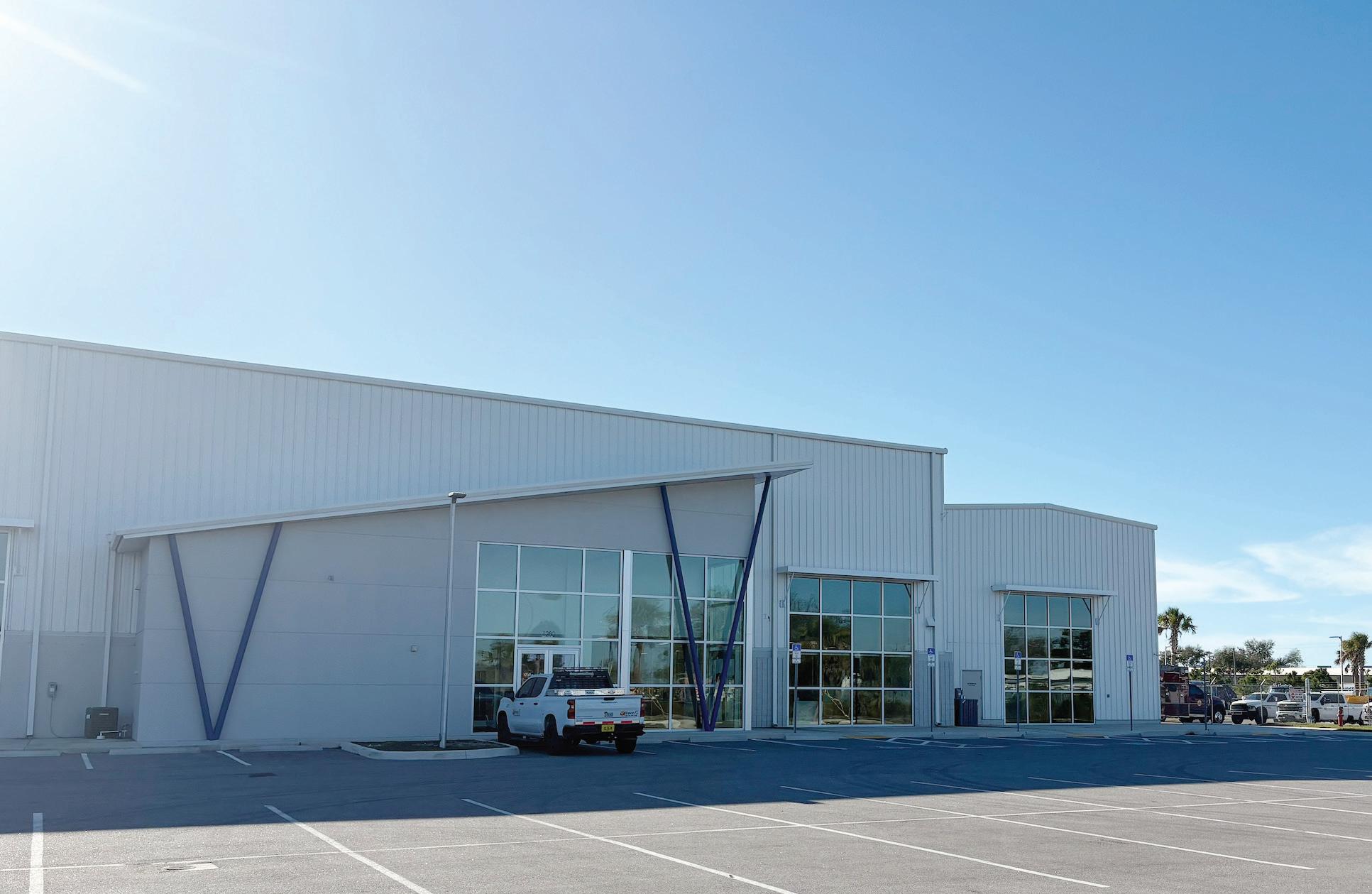
ABOVE: Venice, Fla., relocated its solid waste, recycling and fleet maintenance operations into a vacated Jeep dealership building. (Photo provided by Venice, Fla.)
LEFT: Proudly featuring Venice’s logos, the solid waste and fleet doors welcome visitors. (Photo provided by Venice, Fla.)
Transitioning the departments to a new location allowed for Venice to continue work on its Seaboard Master Plan, which has been in the planning phase since 2024 and will turn a sizable section of the city along the Intracoastal Waterway into a mixed-use area. The redevelopment was part of the driving force in identifying a new location for solid waste and fleet operations. However, this proved challenging because of the fleet vehicles, which require special equipment and mechanical bays to maintain the trucks.
Additionally, Castle spoke of the “stigma” surrounding the parking of garbage trucks even empty ones, which the city ensures happens daily in areas that might offend residents. This was one of the harder aspects of the project. When residents are used to seeing garbage trucks in a certain area, relocating those trucks to higher visibility parking spaces can be jarring. Change can be challenging, she knew, so getting community buy-in was important.
Castle stepped into her position in 2020, and for some time prior to that, city officials had actively looked at industrial sites, pre-established buildings and land on which a properly equipped facility could be built. At one point they were in talks to secure a piece of property, but even then, Castle continued to pursue other opportunities available for the same purpose. “It’s a very unique purchase and a unique build,” she said.
Buying the land and building from the ground up would have cost the city between $20 and $22 million.
While they were still in talks to purchase the necessary land, she realized that Douglas Jeep had recently vacated its former used car center. Castle had been looking at that property for years.
The property wasn’t yet up for sale, but Castle still asked the city manager for authorization to approach the owner and see if he would be willing to sell. Not long after, the property did go on the market.
“In our world, it truly was a unicorn,” she said. “What are the odds of finding a 36,000-square-foot building with already-outfitting fleet bays and the warehouse and storage needed for a solid waste facility? Slim to none.”
Its location was ideal as well, centered in a commercial industrial area and surrounded by retail and commercial properties. Plus, the building already contained administrative space and furnishings, and the purchase agreement included all the equipment inside the facility.
Castle began negotiations to purchase the property. The public works department put together a proposal to present to city council, which was “absolutely ecstatic” about it. For city council members, it was a timely and cost-efficient solution to a longstanding problem; it cut costs in half and shortened a three-to-five-year building project down to a four-month move.
The city closed on the property on Sept. 3, and by Jan. 16, the new facility was fully operational. That included moving roughly 30 staff members in about 90 days.
The total cost for the project came in at $12.8 million: $11.8 for the property and an additional million for minor renovations, fuel tanks, fences, etc.
“Everyone is extremely happy with the outcome,” Castle stated. She spoke of the shock value of the quick move after years of merely talking about it, but city workers handled every aspect with aplomb.
“At the end of the day, I don’t think you could redo the process as flawlessly.”
While Castle calls herself the brainchild behind the purchase, “the relocation absolutely, 100% goes to our solid waste, recycling and fleet staff. They were absolutely phenomenal and invested from the get-go. They deserve all the credit 100 times over.” They are the unsung heroes behind making the project progress as smoothly as possible, she added.
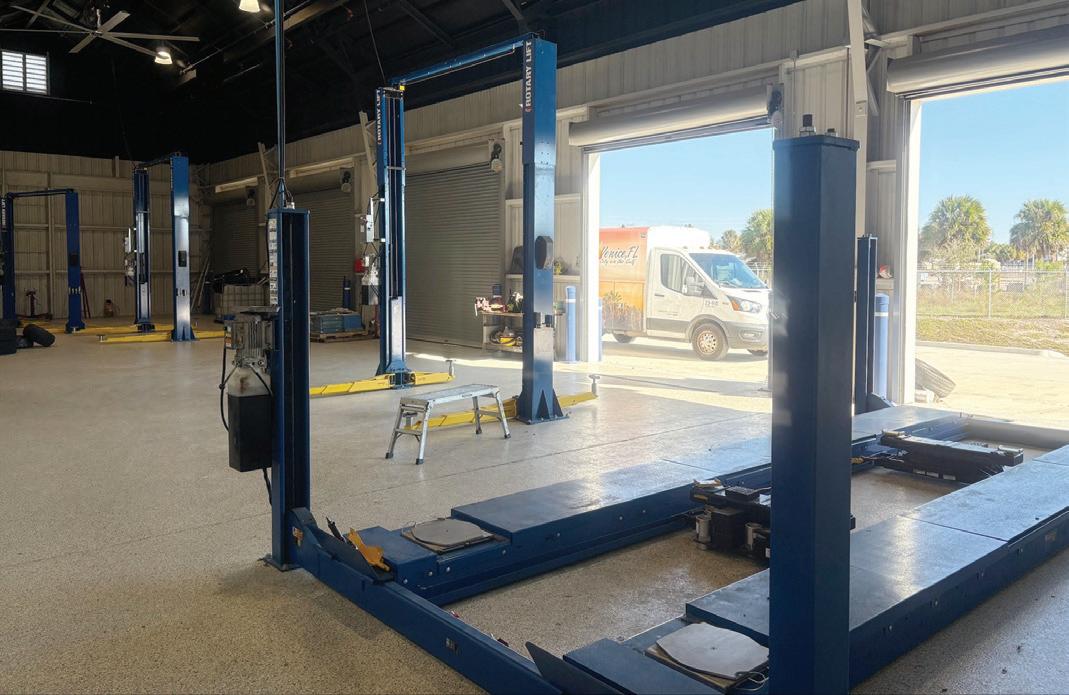
Fleet technicians can safely work on the city’s many fleet vehicles in the new facility. (Photo provided by Venice, Fla.)
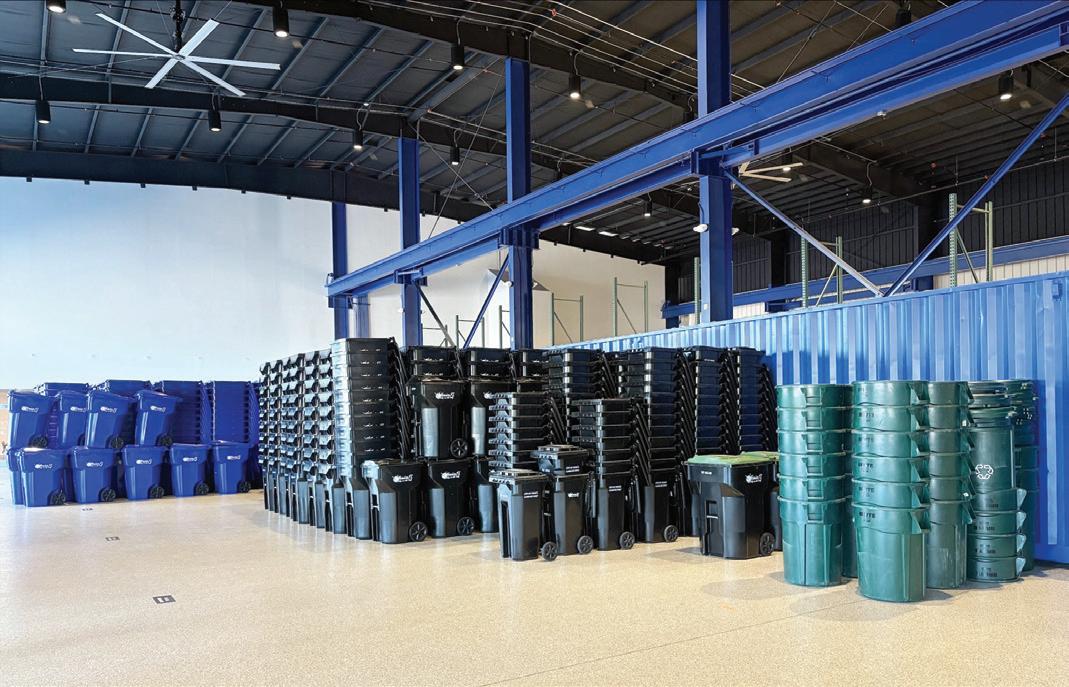
Solid waste has plenty of storage for its trash and recycling bins.
(Photo provided by Venice, Fla.)
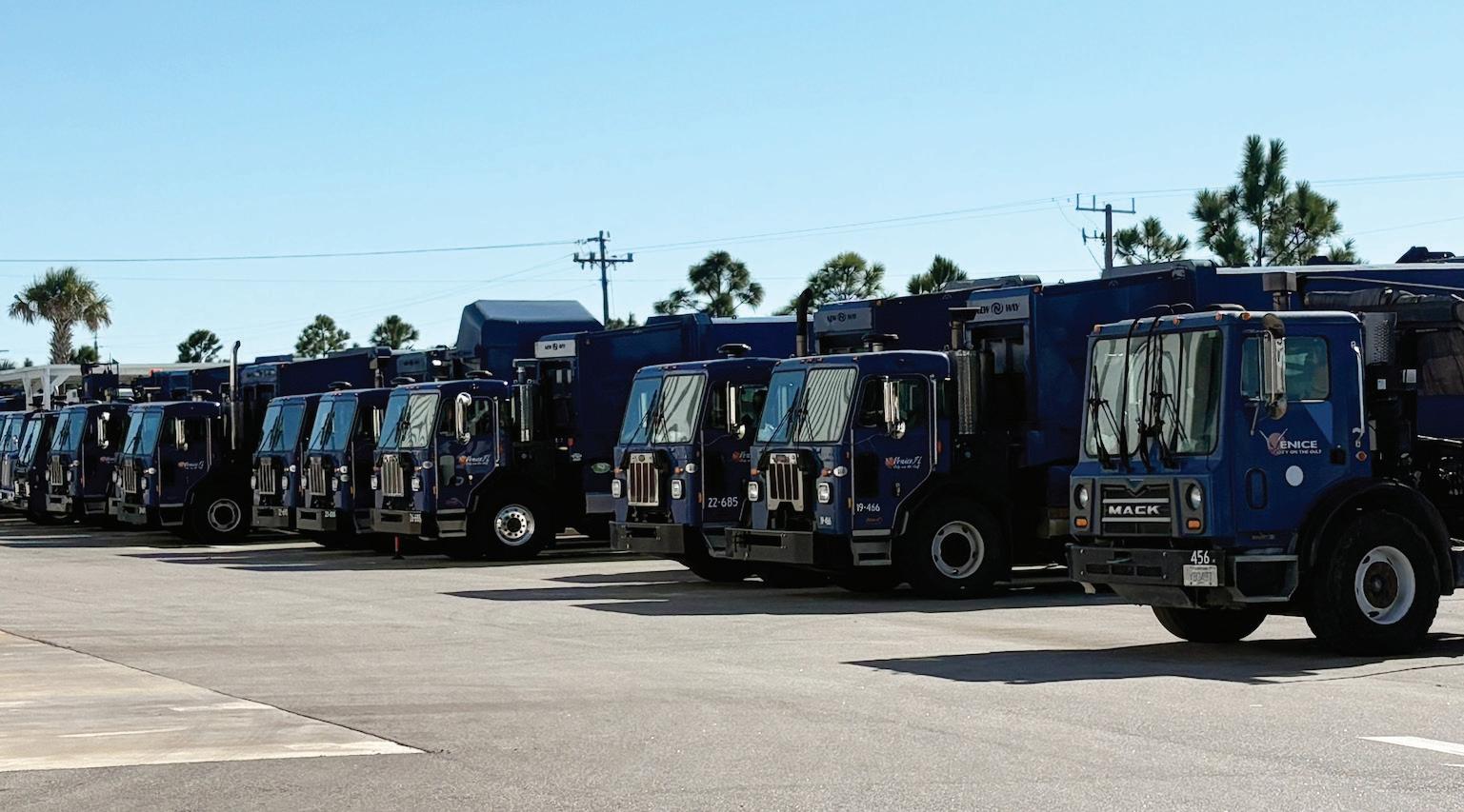
Some of Venice’s fleet vehicles sit outside the new solid waste and fleet facility. (Photo provided by Venice, Fla.)
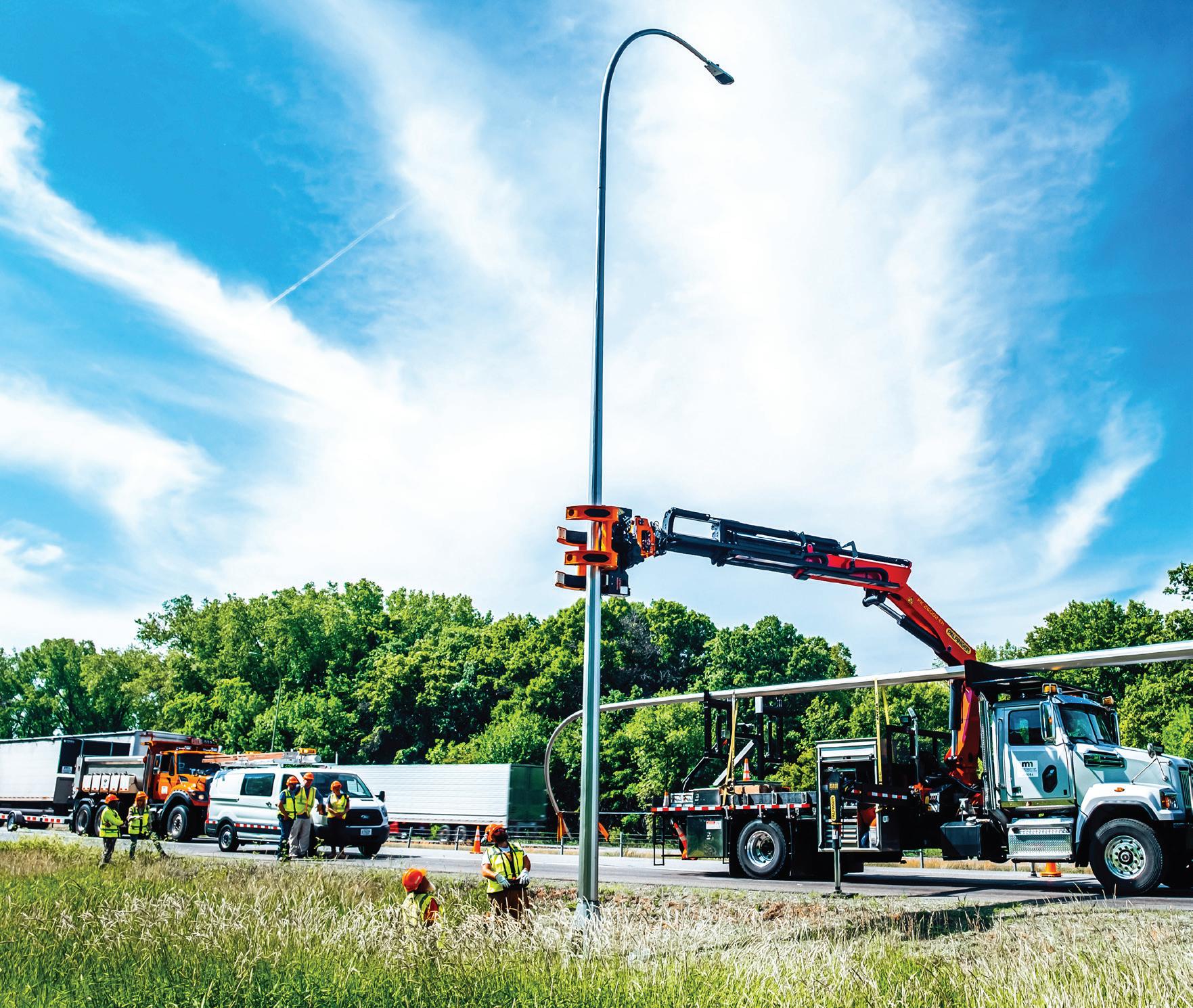
The PM1000 by LaValley Industries transforms your crane into a pole setter that delivers controlled placement for faster installs and more work completed per day.
Purpose-built for safer, faster utility work.
Rejuvenated adopt-a-park program inspires community service
By TERESA NICODEMUS | The Municipal
Green spaces in Melbourne, Fla., will get a facelift with the success of a unique civic initiative.
The city maintains over 40 parks, each offering an opportunity for residents, businesses and organizations to contribute to their community. At the heart of an effort to foster community service and improve the city’s funding of park lands is the Adopt-a-Park program, a revived project that encourages sponsorship and hands-on care of these open spaces.
When Gina Petreins, development and marketing administrator for the Melbourne office of Parks, Recreation and Golf, began working for the city six and a half years ago, she stepped into a role where the Adopt-aPark program had been established a decade
before but was facing several administrative hurdles.
Recognizing the need for a more structured approach and drawing from her advertising background, she overhauled the financial framework, ensuring that sponsors’ contributions would cover the cost of park improvements. One of Petreins’ major changes was to assign specific dollar amounts to each park.
“The first thing I did was assign an annual dollar figure to park sponsorships. I assigned an amount to all the parks, ranging from $350 for our smallest parks up to $1,000 for the larger waterfront parks,” she explained. The tiered pricing model reflected both the
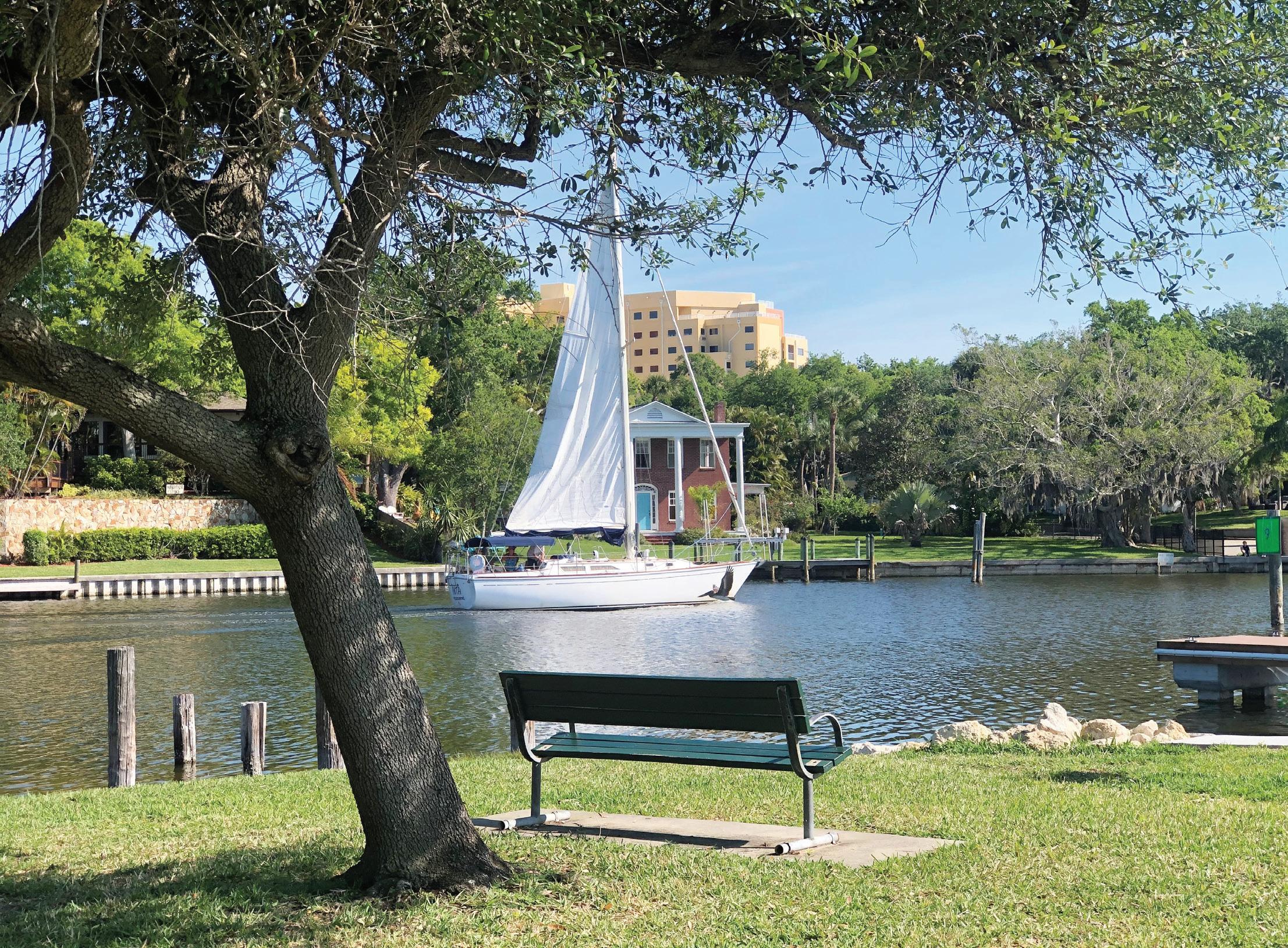
ABOVE: A picturesque waterfront view is available for residents and visitors at Ballard Park in Melbourne. (Photo provided by Melbourne, Fla.)
popularity and the maintenance demands of each park.
Over the past few years, the program has secured more than $17,000 to support local parks.
Petreins clarified what sponsors receive in exchange for their support. “The Adopt-aPark program provides opportunities for the community to help improve and maintain the city of Melbourne’s 42 parks. It allows area businesses, neighborhood groups, organizations and concerned residents to make a difference in parks and open spaces,” she said. “Many people who sponsor a park have grown up here and spent their whole lives going to a particular park. It’s important to
them, and they might just want to have their names associated with it.”
Recognition in the Adopt-a-Park program includes signage at the park reflecting the business, individual or organization name at the adopted park and acknowledgment on the city’s website park directory.
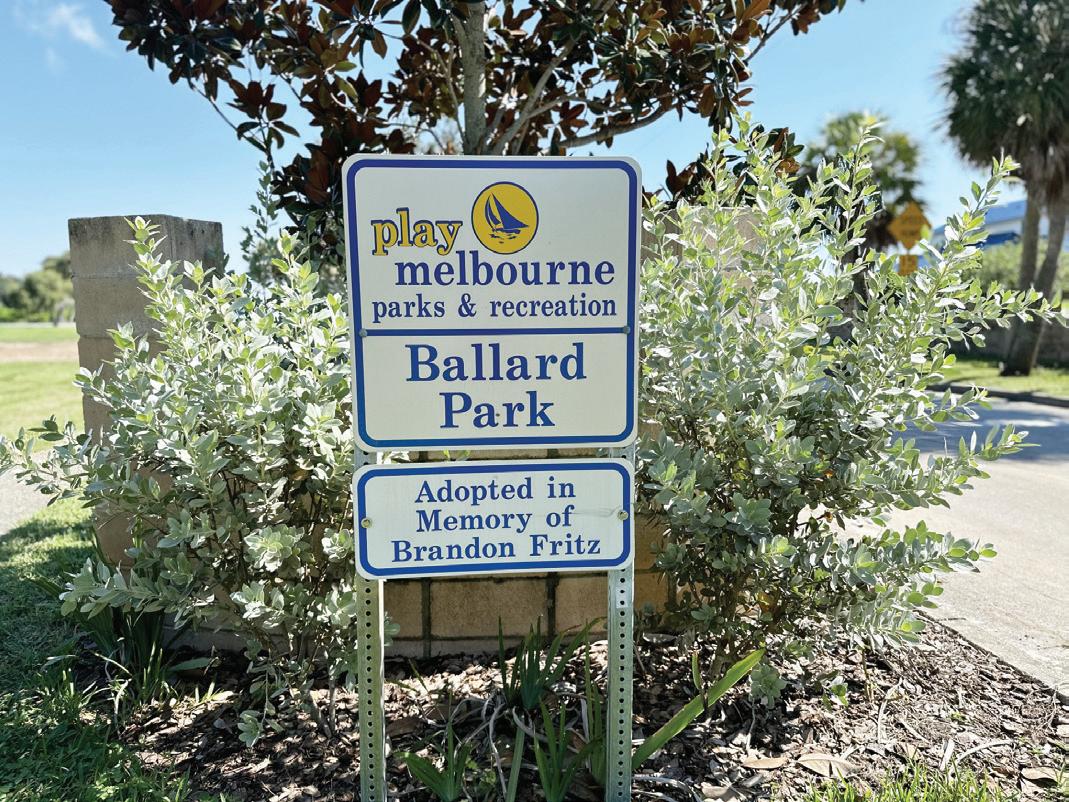
Park adopters can find personal meaning in memorial sponsorships by dedicating their adoption in memory of a loved one. “Ballard Park, one of our largest parks, has been adopted by the family of a young man who passed away in high school,” said Petreins. “That family did a five-year sponsorship and then continued it for the next six years.”
Such adoptions underscore the emotional connection residents have with their parks, transforming sponsorship into tribute and remembrance.
Challenges and management
Despite its success, Petreins admitted there are challenges within the program.
Park adoptions require an annual sponsorship fee and participation in one cleanup project. Most of the cleanup, she said, involves picking up trash or doing minor landscaping under supervision.
Park sponsors who want to go beyond a general cleanup must ask permission. In these cases, proof of insurance must be confirmed, and a parks and recreation representative is assigned to supervise.
The most common challenge is overlapping interest in highly sought-after parks,
according to Petreins. “I may have one park that two or more people want to sponsor. I always give the person who initially sponsored the park the first right to refusal. Memorial sponsorships are trickier, especially in popular waterfront parks where space is limited.”
Broader benefits and community engagement
The Adopt-a-Park program is only one avenue of community involvement. Petreins also oversees sponsorships for community centers, special events like the Fourth of July celebration, and permanent memorials such as benches, trees and plaques.
“I have people contact me all the time and say, ‘How can I help the city? We want to be more involved; we want to support the city.’ Their efforts in our parks increases public awareness of the importance of protecting our natural resources, generates pride in our park system and demonstrates a commitment to our community,” she said.
Melbourne’s Adopt-a-Park program has grown into a vital community initiative that balances financial sustainability, civic engagement and personal connection. Whether through annual cleanups, memorial adoptions or business sponsorships, residents have a variety of ways to make a lasting impact. It’s a model that not only preserves public spaces but also fosters a sense of belonging and pride among those who call Melbourne home.
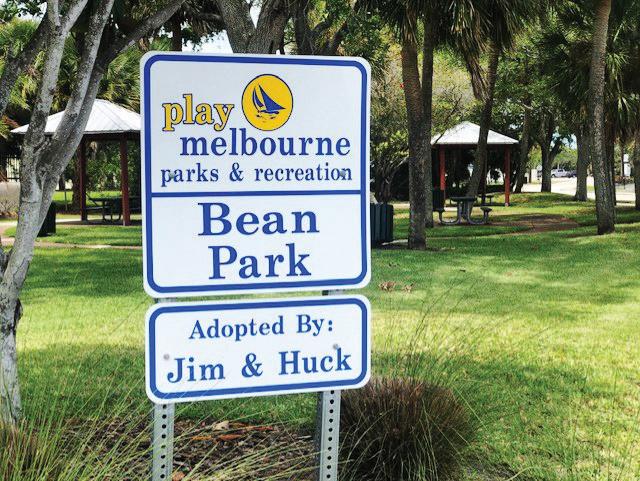
Bean Park was adopted in the past by a resident as a gift for his best friend. The recognition sign displays their childhood nicknames. (Photo by Gina Petreins)
Members of the club work with the Melbourne parks department to purchase plants to install in the park and volunteer to work cleaning and planting in the park.
(Photo by Gina Petreins)
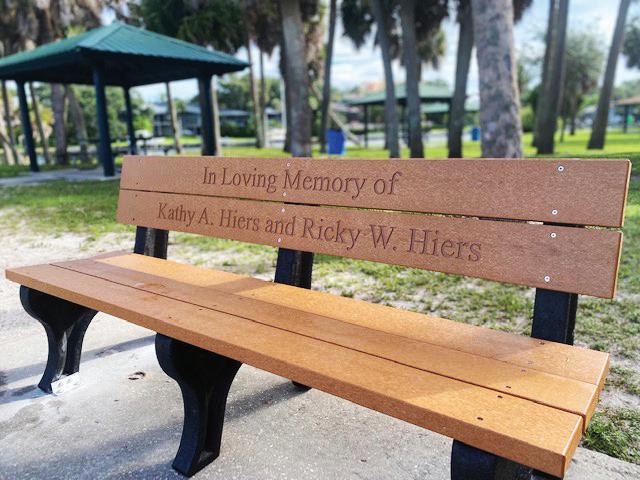
A memorial bench at Ballard Park in Melbourne, Fla., is a way for families and businesses to support the park and memorialize a loved one. (Photo provided by Melbourne, Fla.)
Memorial signage at Ballard Park recognizes families and individuals who have contributed to the betterment of the park. (Photo provided by Melbourne, Fla.)
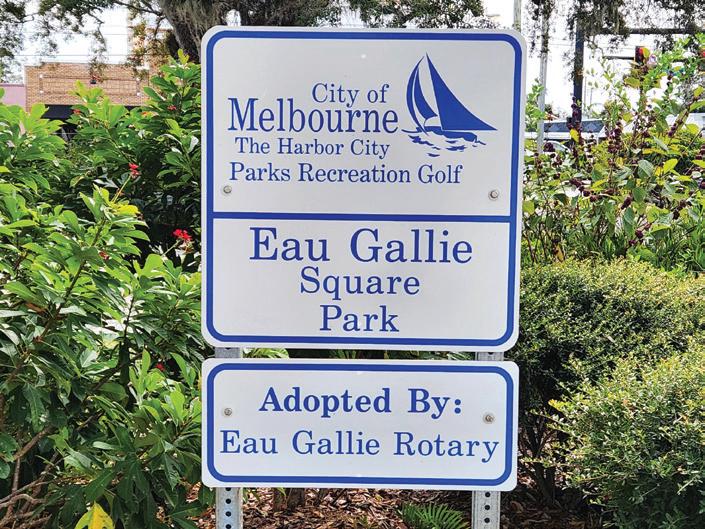
Eau Gallie Square Park in Melbourne has been adopted by the Eau Gallie Rotary.
things you must know BEFORE buying a STREET SWEEPER
JUNE
June 1-4 CLEANPOWER 2026
George R. Brown Convention Center, Houston, Texas
https://cleanpower.org/events/
June 1-4 UTC Telecom & Technology Conference Minneapolis, Minn. https://utctelecom.org/
June 2-5 Women in Government Leadership & Innovation Summit
Salt Lake City, Utah https://womeningovernment. org/
June 3-5 9th Annual North American Active Assailant Conference
Boyne Mountain Resort, Boyne Falls, Mich. https://www.mi-wea. org/2026ac.php
June 15-18 UCA North American Tunneling Conference Anaheim, Calif. https://natconference.com/
June 17-19 ICMA Gettysburg Leadership Institute 2026 Gettysburg, Pa. https://icma.org/events/ gettysburg-leadershipinstitute-2026
June 17-20 Arkansas Municipal League 92nd Annual Convention Statehouse Convention Center, Little Rock, Ark. https://www.armunileague.org/ resources-education/events
June 18-21 International Association Fire Chiefs Hazardous Materials Response Teams
June 18-21 Oregon Volunteer Firefighters Association Annual Conference Chemeketa Training Center, Brooks, Ore. https://ovfa.org
June 21-24 ACE 26
Transforming Our Water Future Annual Conference Washington, D.C. https://www.awwa.org/ace/
June 21-24 Air & Waste Management Association’s 119th Annual Conference & Expo
Austin, Texas https://www.awma.org/ ace2026
June 21-24 Michigan Chiefs of Police Spring Police Exec. & New Chiefs School
Shanty Creek Resort, Bellaire, Mich.
https://www. michiganpolicechiefs.org/
IMPLEMENTS TO FIT YOUR LIFESTYLE
Whether you are sourcing reliable products to maintain the city commons, or buying quality implements to seed the sports fields, Land Pride offers a complete line of labor-saving tractor-mounted implements to tackle your chores and to fit your lifestyle.
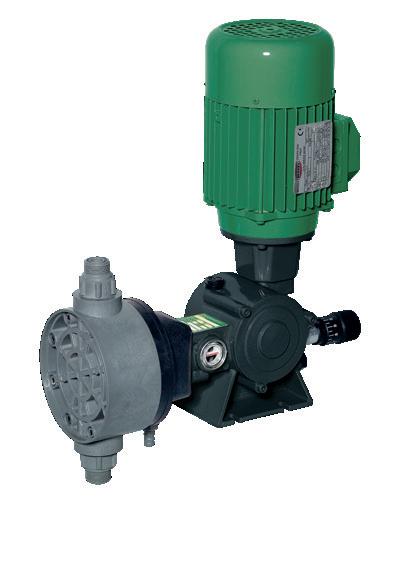
Doseuro | Metering pumps
Mechanically Actuated Metering Pumps
Hydraulically Actuated Metering Pumps
Diaphragm Metering Pumps
• Flow and pressure range
Max flow rate: 1,065 GPH
Max working pressure: 7,251 psig
FPZ | Regenerative blowers
Single-stage regenerative blowers
• Double-stage regenerative blowers
Flow and pressure range:
Max flow rate: 1,600 cfm
Max working pressure: 10 psig
Max vacuum: 14” Hg
Where to find the best money managers
Having strong management skills is in every person’s and every family’s best interest. Good money managers find that they realize their dreams sooner, or, if they’ve suffered a financial setback, they get back on track in a relatively short amount of time.
It turns out that the places in which good money managers congregate benefit from their financial responsibility as well. In cities where people are best at money management, residents can buy in larger quantities and can afford to buy more expensive items, stimulating the local economy. They also have low rates of delinquency and repossession, which
contribute to a stable housing and transportation base.
In order to identify which cities’ residents excel in financial skills, WalletHub analyzed over 2,500 cities using 10 key money management indicators. The data set ranges from the average credit score to the average number of late payments in the past year to the mortgage debt-to-income ratio. All told, the website determined that the Top 10 cities in the U.S. for smart money managers are: