Free Living Life After 50


By STEVE EUVINO Feature Writer
“Boating is a way of life. It brings family and friends together.”
That’s how Christy Fay, owner of Fay’s Marina in LaPorte, described boating to a potential customer at the Northwest Indiana Boat Show at the Porter County Expo Center in Valparaiso.
The 60-year-old customer was shopping for watercraft he could enjoy with his grandchildren.
Fay, whose company has been around 54 years, brought various watercraft to the three-day show. So did Tighe Curran, general manager for Pier 33 Marina in St. Joseph, Mich.
Curran, whose company has been around four decades, said older buyers are “looking for a way to get the grand kids to hang out with them. That’s one of the biggest draws.”
Desired boats depend on tastes on the body of water, Curran explained. For Lake Michigan, he said, consumers might go with a small cruiser or 21-foot runabout. For smaller lakes, a pontoon boat may do for fishing or sightseeing.
Curran and others agreed the pandemic may have been the “perfect storm” for boating. Boat sales surged upward 40% from 2020 to 2021.

“What do you do when you can’t do anything else?” Curran asked. “This is a great way to get together and it’s family-centered.”
According to discoverboating.com, boating is an excellent form of recreation for older adults, but there are safety guidelines. These include: getting on and off the boat safely; wearing life jackets; having safety supplies, first aid equipment, water, and snacks; and having sturdy boat chairs and handrails.
Tyler Brock, a conservation officer with the Indiana Department of Natural Resources, encourages boaters of all ages to have one lifejacket for each



person on board, and the lifejacket must fit each person.
Brock also cautions against mixing “medications” while boating. He’s also seen instances in which someone fell off the boat and no one aboard could
Continued on page 2


By CARRIE STEINWEG Feature Writer
After spending several years in various business and governmental positions, Lance Ryskamp of Highland was seeking an opportunity to be in a nonprofit management role.
Having been a former business owner, attorney and elected and appointed public official, he had strong connections with his local chamber of commerce.
”I had been involved with the chamber for many years, as both a business member and as a governmental liaison, so I was very comfortable and knowledgeable about the chamber and honored to be asked to lead,” he said.
Ryskamp stepped into his role as president/CEO of the Highland Griffith Chamber of Commerce in 2022, leading the 250-plus member nonprof-
it organization.
Born and raised in Highland, he is a 1979 graduate of Highland High School, as well as a 1983 and 1986 graduate of Valparaiso University and Valparaiso University School of Law.
His job involves promoting and advocating for local small businesses, which he said is the most rewarding part of his job.
He is tasked with recruiting and retaining members, planning events and “being an advocate for local small businesses and the communities we represent.”
In his role, he said he is working constantly to improve the value of membership to current and prospective members.
“There are a lot of financial demands on small businesses and it is my job to make sure we always provide value and impact to our members’ valuable investment,” said Ryskamp.
Continued from page 1
handle the controls.
“It’s good to have multiple people on board who know how to operate the boat,” the DNR officer advised.
Boating does offer health benefits for seniors. Discover Boating cites being outdoors as a source of Vitamin D while boosting one’s mood and relieving stress and benefitting one’s mental health.
Robert Owens of QuickNav reports 11.6 million registered recreational boating vehicles in the U.S. in 2023. Owens also reported that 11.9% of American households own a recreational boat and that Americans spend $49.3 billion annually on boating and marine supplies.
Choosing a boat type is based on one’s personal preferences and needs, ranging from a pontoon boat for stability to a cabin cruiser for luxury and protection.
Curran said a well-treated boat can last 20 years. “Like anything else,” he said, “you get what you maintain.”
Terry Lipniskis of Chesterton has owned a tracker, good for fishing and water skiing, since 2016, and uses it on Lake Michigan for perch and salmon.
“I do a lot of fishing with my buddies,” Lipniskis noted.
Vernon P. Chmielewski owns Chicago Pontoon Parts, which repurposes pontoon parts. Sometimes, he said, retirees want to work on their boats, as 65% of his clients are baby boomers.
Jason V. of Crown Point owns two boats and has boated for 40 years. “I like everything about boating,” he said. “I fish all over the country.”
Boating is not cheap, and Curran encourages people to develop a plan and take their time.
“Once they make that decision to buy a boat,” he said, “it really is a day of celebration.”
“I am proud to serve as the president/CEO of the Highland Griffith Chamber of Commerce, advocating for small businesses who, in this era of great corporate concentration, still remain the economic backbone and soul of our communities,” he said.
Ryskamp is a founding board member, past vice president and current president of the Highland Community Foundation, which raises funds for community projects to enhance the quality of life in the Town of Highland. In addition to his years of work on the Highland Community Foundation, he has also served the Town of Highland in various capacities, including as a Highland Town Councilman, Lake County Councilman and as the Highland Redevelopment Commission Assistant. He also recently became a member of the Board of Directors of the NWI Food Council.
He and his wife, Sue, a public school educator, have three stepchildren and two grandchildren.
The Health Foundation of La Porte has awarded Shirley Heinze Land Trust a $23,000 grant to build a boardwalk at Wintergreen Woods, a state-dedicated nature preserve located in Michigan City.
Wintergreen Woods is known for its rich subsoil, which frequently retains water and can make trails slippery and difficult to navigate after wet weather. The new boardwalk will help improve trail conditions and expand safe access for visitors throughout the year.
“Ensuring our preserves are welcoming and accessible is a core part of our mission,” said Kris Krouse, executive director of
Shirley Heinze Land Trust. “This boardwalk will make it easier for more people to experience Wintergreen Woods safely and comfortably.”
The project will also include opportunities for community involvement. Shirley Heinze Land Trust plans to host 10 volunteer workdays to support construction efforts. Corporate teams, civic groups, and local organizations interested in scheduling a designated volunteer day can contact Dylan Jones, volunteer coordinator, to learn more by emailing djones@heinzetrust.org or call (219) 242-8558.
This project is part of Shirley Heinze Land Trust’s ongoing
commitment to improving accessibility across the preserves it protects, including continued efforts at Ambler Flatwoods in Michigan City and other sites throughout northwestern Indiana.
Community members interested in volunteering are encouraged to visit the Shirley Heinze Land Trust website, heinzetrust.org, and follow the organization on social media for updates on upcoming work days at Wintergreen Woods.
There are nature preserves in northwestern Indiana, located in Lake, Porter, LaPorte, Marshall, Starke, and St. Joseph counties.

















Text and Photos
By STEVE EUVINO Feature Writer
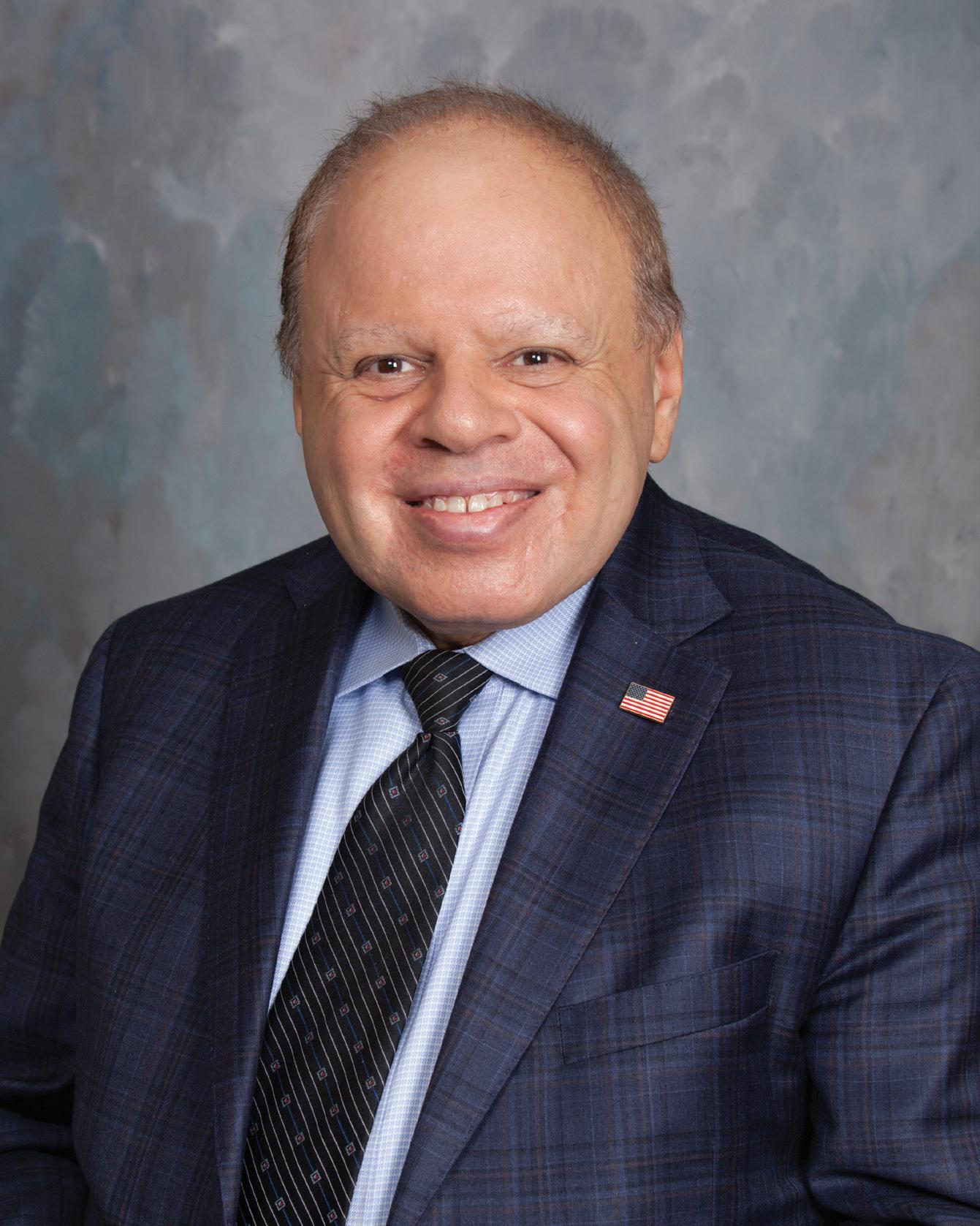
After 38 years in education that included teaching, administration and superintendency, Dr. Roger S. Luekens retired at age 60. As the first superintendent of a new school district, he needed a break.
Some retired school superintendents become consultants. Luekens chose to use his

education background to write positive stories about school communities.
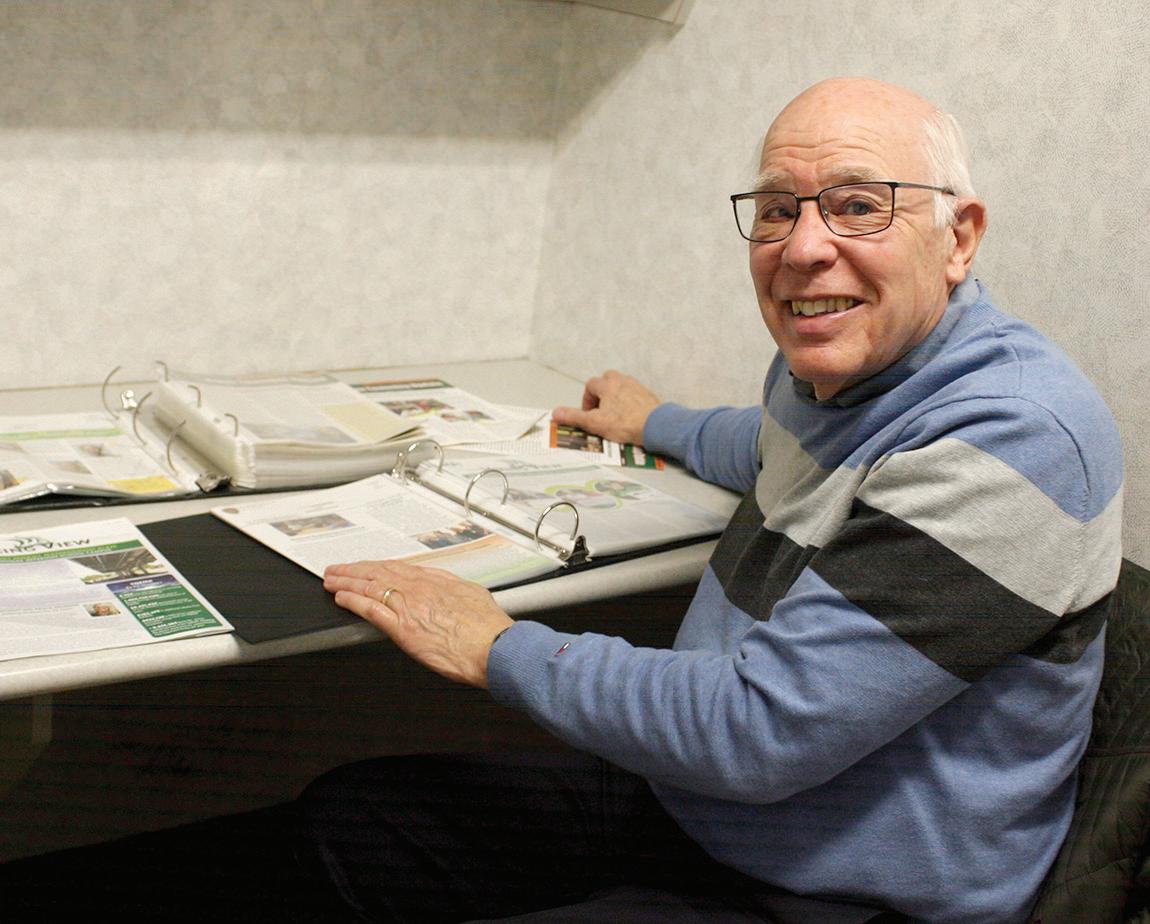
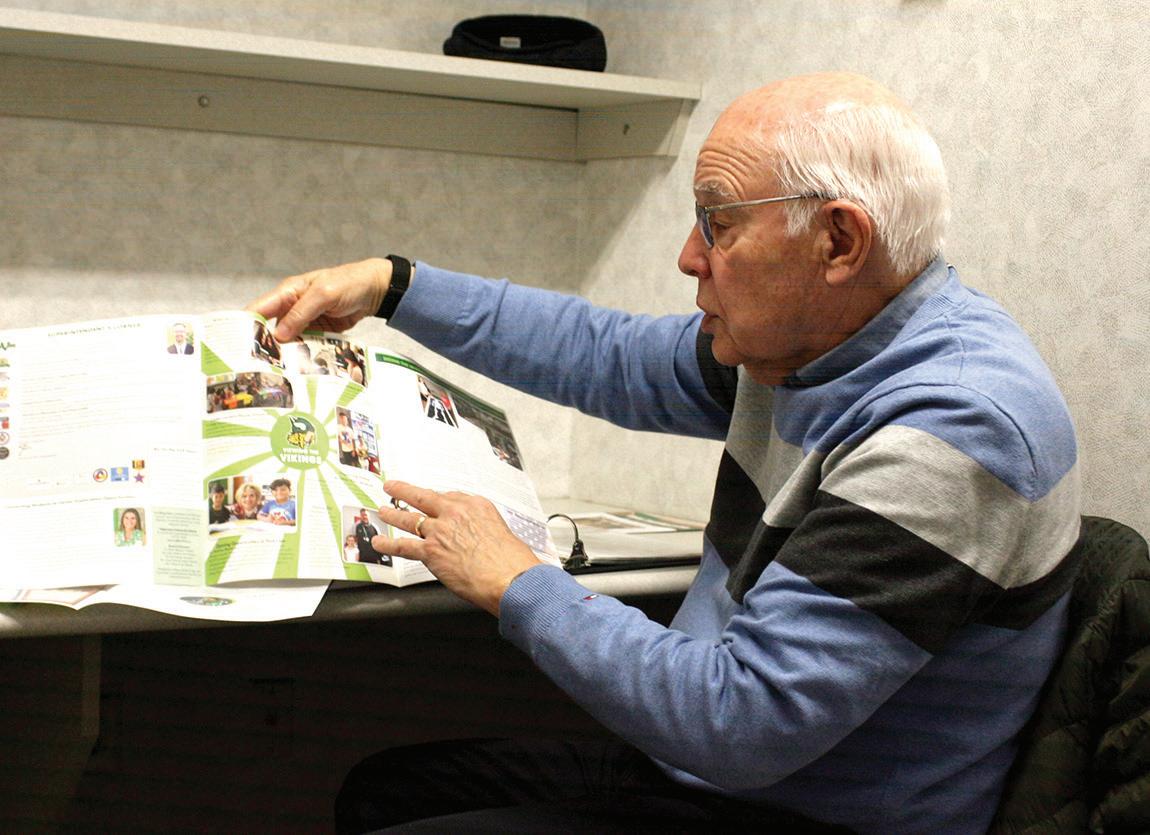
For the past 20 years, Luekens’ one-person company, ViewPoint, Ltd., has been producing newsletters for area school districts.
These days, Luekens, 80, produces two newsletters annually for the school districts he serves, including Union Township and Valparaiso Community schools. He had written for


CORPORATE OFFICE
other school systems, including Tri-Creek in the Lowell area.
A Valparaiso resident, Luekens explained, “I always try to write for the taxpayer. They’re the ones supporting the schools. They want to know where their money is going.”
Story topics vary. Some come from central office administrators; some reflect major school projects; and some are his ideas.
Typical stories might include National Merit Scholars, new teachers and administrators, fine and performing arts programs, student awards and snippets about individual schools.
“I want to do positive stories about positive students, positive teachers, and positive families,” Luekens noted.
One feature story focused on young Valparaiso students contributing their artistic skills to the community’s outdoor utility box project. Another shorter project focused on three Valparaiso High School student-athletes whose teams not only reached state finals but they garnered Mental Attitude Awards for their individual achievements.
The Union Township school superintendent likes to see stories posted regularly about happenings at each building.

A particular favorite of Luekens is a story he did for Tri-Creek Schools about Gabe Sanchez, who in 2020 won the state boys’ cross country title. The story mentions the people who encouraged Sanchez, who finished runner-up at state as a junior. He was determined to do better his senior year and he did.

The Papers Incorporated, 206 S. Main St., P.O. Box 188, Milford, IN 46542, 574-658-4111 STAFF
Ron Baumgartner, Publisher rbaumgartner@the-papers.com
Annette Weaver, Business Manager aweaver@the-papers.com
Kristin DeVittorio, Director Of Marketing kdevittorio@the-papers.com
Deb Patterson, Editor-In-Chief dpatterson@the-papers.com
Account Executive Rebecca Berggren slwest@the-papers.com • 219-241-5483
Lauren Zeugner, Editor lzeugner@the-papers.com
Jerry Long, Circulation Manager jlong@the-papers.com
EDITORIAL DEADLINES Elkhart/Kosciusko Edition
Joseph
SUBSCRIPTIONS
Mailed subscriptions are available, prepaid with order at $37 for one year; and $64 for two years. (Select one edition.) Your cancelled check will serve as your receipt. To order a subscription, call 574-658-4111.
ADVERTISING
For advertising deadlines call your sales representative. The existence of advertising in Senior Life is not meant as an endorsement of any product, services or individuals by anyone except the advertisers. Signed letters or columns are the opinion of the writers, and not necessarily the opinion of the publishers. To advertise contact Rebecca Berggren at 219-241-5483 or slwest@the-papers.com.
PRODUCTION
Senior Life is digitally composed on Macintosh Computers using Digital Technology’s Newspaper Publishing Suite software and Photoshop software. Submit ads as .tif, .eps or .pdf files. ASCII (generic text) may be submitted via email or on CD/DVD. Check our website at www.the-papers.com for guidelines on preparing ads electronically. Graphics for ads can be emailed as PDF files to adcomp@the-papers.com. If you have
tions,
“The student’s progress was so engaging,” Luekens recalled, “that he reached his goal.”
Luekens served in education from 1967 to 2005. A former high school band director and algebra teacher, he served in administration at Lutheran West High School (1967-77) near Cleveland and at Lowell High School (1977-91).
Then, from 1994 to 2005, Luekens served at East Porter County Schools, becoming the new school district’s first fulltime superintendent.
Luekens believes his nearly four decades in education help shape his writing “quite a lot.”
As he explained, “I think I understand the issues the schools go through to produce an excellent product. It’s not an easy process – so many different people want you to do different things.”
After assembling the stories and photos, Luekens takes them to a graphic artist, and, he commented, “They make me look good.”
Luekens, a member of Immanuel Lutheran Church in Valparaiso, and his wife Patricia have two children and one grandchild, who just graduated from Purdue University with eight semesters on the dean’s list.
As Luekens informed the
young scholar, “You beat my old record by eight semesters.”
After studying at Valparaiso and Kent State universities, Luekens earned his doctorate at Purdue.
At East Porter County Schools, Luekens had to develop guidelines, rules, procedures, handbooks, and manuals for staff at three elementaries and three middle/high schools. He also faced two major building projects.
Now, through ViewPoint, Luekens said, “I can provide information directly for the school corporation. I like to tell people, I write people stories about the schools and I don’t have to go to school board meetings.”




By WOODROW WILCOX
Seniors on Medicare get hurt when Medicare’s billing systems are not followed by insurance companies and medical firms. The problem can result in small or large bill balances that seniors are hounded to pay. In addition to that, some insurance companies are now slow to answer the phone when an insurance agency calls to help a client correct a billing problem. It seems Medicare leaders believe the system is working well when it is not. Why do Medicare leaders not care about medical firms and insurance companies operating the system accurately
By CECIL SCAGLIONE
Mature Life Features
It may sound blasphemous, but taking out a loan could lift your credit score, especially if it has suffered some recent damage. A small loan of a few hundred dollars, repaid on time each month, can re-establish your credit reliability.
So will paying off your credit-card debt monthly and on time. This also saves you a lot of money as interest rates climb.
You can use your credit cards
to maintain a solid credit score. Just don’t use your full credit limit. Some advisers suggest you maintain your debt at less than 20% of your limit. If you have more than one credit card, use all of them - even sparingly - and pay the bills on time to retain a strong credit standing. Keep in mind that any misstep - a late payment, for examplecan damage your credit score.
An important step to take to maintain a healthy credit score is to check your credit reports regularly.
Mature Life Features Copyright 2026
in order to avoid problems for seniors on Medicare?
I have spoken and written about such problems for 23 years. Apparently, no one in a leadership role at Medicare cares about such problems hurting seniors.
The people working at this
insurance agency really try to help our clients fight such problems. But the system is breaking down and slowing down in a way that is quickly changing Medicare into a system that does not work to help seniors. It just helps medical service providers and insur-
ance companies to make lots of money while harming seniors.
If you are having such problems now, I suggest you file a complaint against the insurance company or medical firm with the Indiana Attorney General Division of Consumer Protection.
The Greater Portage Chamber of Commerce invites the community to attend the 23rd Annual Portage Community & Business Night, one of the city’s largest annual networking and community showcase events, taking place Thursday, April 16, at The Field House at Portage High School, 6450 US 6, Portage.
The event will run from 4:30 - 6:30 p.m. with an exclusive business-to-business vendor preview beginning at 4 p.m. PCBN is free and open to the public, offering residents and business professionals an opportunity to connect, explore local services, and celebrate the strength of the Portage business community.
Portage Community & Business Night serves as a one-stop destination for

attendees to discover a wide variety of businesses, nonprofits, and organizations serving Portage and the surrounding region. The annual event brings together local entrepreneurs, community leaders, and residents to build relationships and strengthen local economic connections.
“Bringing business owners together to create community connections is what PCBN is all about,” organizers shared. The event provides businesses with a unique opportunity to introduce their products and services directly to community members while fostering collaboration among local organizations.
Attendees can expect:
• Dozens of local business and nonprofit vendor booths
• Opportunities to learn
about community resources and services
• Food vendors and interactive exhibits
• A 50/50 raffle benefiting chamber initiatives and community engagement efforts
Vendor booth opportunities are available for chamber members, non-members and nonprofit organizations, with multiple participation levels designed to maximize business visibility and engagement. Registration is required for all vendors.
Portage Community & Business Night has become a signature chamber event, attracting hundreds of residents annually and showcasing the innovation, services, and community spirit that make Portage a vibrant place to live and work.



By CECIL SCAGLIONE
Mature Life Features
If you think preparing and maintaining a financial plan is akin to visiting your dentist, you’re in a big club.
Some 80% of Americans hate or only do financial planning because they have to - like cleaning the garage or the toilet bowl - according to a nationwide survey of 1,000 adults.
More than half said they don’t feel confident about making good decisions, don’t understand numbers, or are afraid of what they might find if they examine their financial picture too closely.
However, rather than shut down your economic engine, financial experts suggest you prepare for your financial future in the same way you would get set for a cross-country trip. Just as you wouldn’t leave on such a trip without a road map, you should prepare and maintain a household budget to track daily spending, saving and investingand a financial plan to map out long-term financial goals.
About half of Americans maintain a household budget and only slightly more balance their checkbooks monthly. Twothirds have never worked with

a financial planner.
We hire plumbers, electricians and auto mechanics to handle complicated repair problems - yet Americans avoid seeking financial professionals to help with their finances.
Survey results revealed almost 20% percent of respondents never learned how to do financial planning. Less than 5% took a course or seminar on the subject. The remainder said
they learned about financial planning on their own by watching their parents or television, reading books and magazine articles, or from a friend or sibling.
It often takes a serious life-altering event - such as a job loss, having a baby, winning a lottery, or sending the children to college - to make people focus on their finances.
While many Americans try to save money, they sabotage their
efforts with too much debt and not investing in the best financial vehicles.
Almost a quarter of the survey respondents admitted they had too much credit-card debt, and about 10% are not putting anything away for retirement despite the fact that more than half admitted they’ll need at least $1 million for retirement.
About a third of households save money, whether it’s in coins
or dollars or in a cookie jar at home - about the same amount that invest in stocks.
To curb the amount spent, nine out of 10 respondents said they cut coupons, and 60% buy items only when they’re on sale.
What do they spend their money on? The number-one financial pleasure is eating out, followed by purchasing holiday gifts and splurging on clothes.
Mature Life Features
By CECIL SCAGLIONE Mature Life Features
Gold!
It’s been unearthed in mountains and caves around the world, flaunted on fingers and figures for centuries and hoarded and hidden by barons and banks as it became regarded as the standard of wealth.
Then countries dropped the gold standard because it was too stifling. Having to limit the amount of currency to the amount of gold a government has is more bane than benefit.
Without the gold standard, which has been called the “barbarous relic,” hanging around a nation’s neck, it can print as much currency as it pleases.
But the bug to own gold has not died.
A quick picture of this yen is of masked Old West bandits ambushing stagecoaches to carry off sacks of the ore mined out of “them thar hills.”
Gold gains as currency loses its value and buying power.
The price of an ounce of gold has surged steadily over the past couple of decades, from about $300 at the turn of the century to more than $5,000 an ounce earlier this year.
Many gold rushes have a history of turning into bling bubbles.
For one thing, the rising


price has encouraged the development of more gold mines, paving the way to lower prices as supply outpaces demand.
Buying gold has been made easier for investors with the appearance of exchange-traded funds that have risen in popularity during the past decade. This eliminates the need for buyers to physically handle the malleable metal.
Those who wish to do so can still buy coins to cuddle and count as they wish. Or they can diversify their portfolios by investing in gold-backed
certificates or gold-mining shares.
For those who feel gold is too lavish, there’s silver.
Over the past two decades, its price has leaped from about $10 an ounce to around $75 an ounce earlier this year.
For the record, this precious metal also has been used as a monetary standard. It was done in by gold a few centuries ago.
Gold bugs began collecting gold before the emergence of the great Egyptian pharaohs.
They have survived the
careening cost of the yellow metal. The competition for its acquisition today rarely involves armies or ambush. But the greedy and gullible still circle each other in a constant drive to outdo each other and get the best deal.
When talking with most of these folks about buying gold, they rarely discuss selling it for profit. Most point out you can borrow against it, but the game and gamble appears to be acquiring as much as you can as fast as you can.
Mature Life Features Copyright 2026
By CECIL SCAGLIONE Mature Life Features
Your favorite rich uncle gives you a couple of hundred bucks a month and tells you to invest it.
Would you make money?
That’s the question you, along with millions of other Americans, have to ask yourself when you consider your Social Security status.
The yowls about losing retirement-income money by leaving it in the government’s Social Security hands weren’t quite as insistent when the Dow, Standard and Poors and other economic indexes plummeted during the economic downturns. Greed suddenly turns to
guarded when one considers they can lose their shirt in the stock market. That means you could lose your retirement fund if you were investing it yourself.
Those who argue that retirement funds should be protected point to the massive meltdown at Enron a quarter century ago, where more than 60% of employee retirement assets in 401(k) personal-retirement plans were tied up in the company’s stock. That represented about $1 billion (about $1.75 billion today) that went up in smoke when the company crumbled.
Those who support change pick an irritating scab: the
forecast that an unchanged Social Security system will be out of reserves in a half dozen years. Bracing their position is the forecast that the system’s income will be lower than its outgo.
The root of this problem is easy to see. In the mid-20th century, there were 16 workers contributing to Social Security for every retiree collecting benefits. Remember, money paid into Social Security today goes to today’s recipients, it does not go into any fund for those making the payments.
The current ratio is less than three workers supporting every retiree.
Life Features Copyright 2026





1. Take Your Medication as Directed

All medications, whether over-the-counter or prescribed, include directions for safe use. Be sure to follow all printed guidelines and the advice of your doctor to ensure that the medicine works safely and effectively.
2. Don’t Overdo It


Using alcohol and medications unintentionally or to cope with big life changes is called substance misuse. Help can begin with diagnosis, addressing chronic health issues, rebuilding support systems and starting treatment.
3. Check in with Your Mood
Feeling persistently sad or that you don’t have value can indicate depression, especially when these feelings affect your daily routine. Depression can be treated with talk therapy and/or medication. You can also lower the risk of depression when you prepare for major life changes, stay physically active, and share how you are feeling with family or friends.
4. Find Purpose Each Day
Feeling that your life has purpose is a key to fulfillment. It can impact your health positively, and may also slow down aging and increase longevity. Make choices and plan activities based on what is enjoyable, interesting, and important to you.
Learn More When You...
• Talk with your healthcare provider. Bring your questions about healthy aging.
•
•
By CARRIE STEINWEG Feature Writer
Tara Martin has always lived an active lifestyle, from swimming, water skiing and biking to more recent participation in skiing and roller skating.
“I first began skiing in 2009, when I was 38 years old. I wanted to try skiing because my then boyfriend, and now husband loves to ski. I loved to water ski and am a fit, active person. So, although I had/have a fear of heights I really wanted to try it,” she said.
“Skiing has become a metaphor of life for me. One turn at a time,” said Martin. “When you get in a scary, overwhelming situation where you don’t think you’ll ever be able to do it, or you really don’t know if you’ll make it through it, you take it one turn at a time. That’s all you can do. If you need to ski to the edge and stop before the next turn, that’s what you do. You don’t need to look all the way down. Just look to the next turn, and when you get there, take a break and do one more turn. Skiing is an exercise of getting comfortable with being uncomfortable, which is a really important skill and skiing allows me to practice it.”
She also enjoys the social aspect of skiing. Après-ski is a French phrase meaning “after
ski” that refers to social actives like dining and entertainment.
“Whether it be at the bar, or in front of the fireplace in the lodge or in the hot tub, I always look forward to it,” said Martin. “Hitting the outdoor hot tub after a day of skiing and letting the snow fall on your head while soaking is such a fantastic experience.” She’s also made friends on her ski trips, and she is still good friends with a girl she met on a chair lift a decade ago.
“Skiing is also what I like to call the land of the living. This is a sport where you witness people aging well, socializing, staying fit,” said Martin. “One of my best skiing instructors was over 80 years old. It’s truly incredible to see people 80-plus- years old skiing so beautifully, so gracefully. They are so inspiring.”
Her first ski trip was to Boyne Highlands in Harbor Springs, Mich. and the next was to Cascade Mountain in Portage, Wis.
“To this day, these are still two of my most favorite ski resorts,” she said. At Boyne Highlands, she did a “Learn to Ski in 3” class with a two-hour group lesson for three days, and by day three, she was skiing and fell in love with the sport.
Martin and her husband, Gene, typically take a couple ski trips per season, but she had to take some time off from the skis
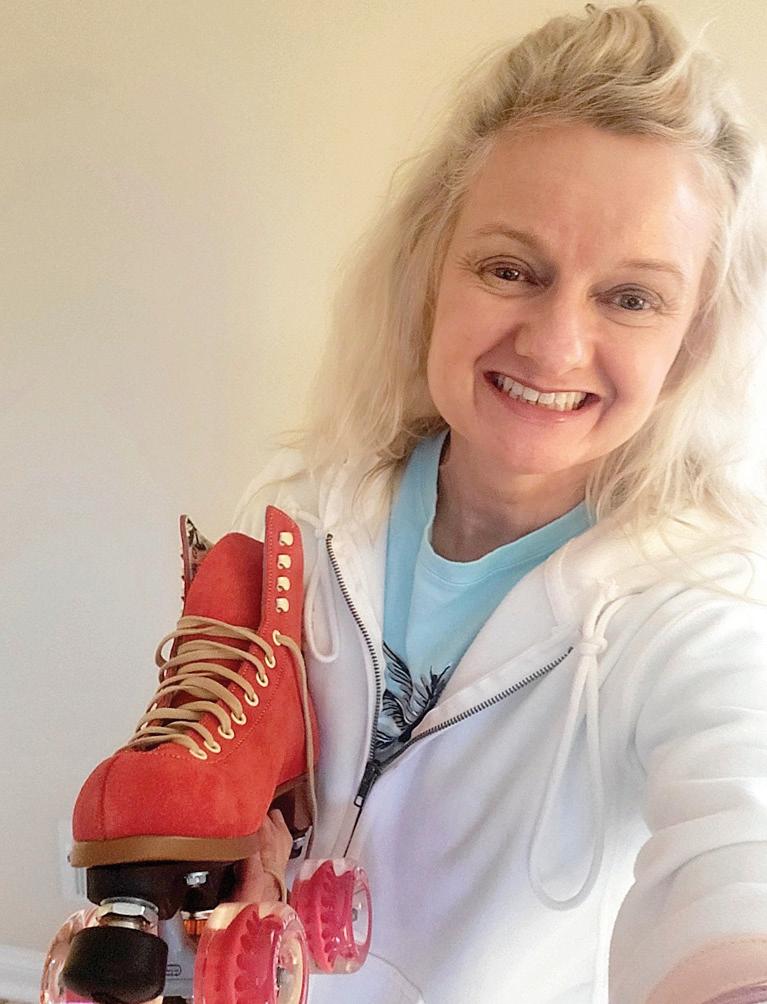
A BRIDGE BACK — Tara Mar-
tin recently picked up her roller skates as a bridge to snow skiing. Rollar skating is also something she can do year round to keep in shape. She said she is inspired by skaters in their 80s flowing around the rink. Photo provided by Tara Martn.
after a knee injury that resulted in surgery. “I skied this year for the first time since my surgery. My knee injury set me back, but I hope to get back to the level I was at previously next ski season. I really did not know if I would ever do it again after my knee accident and it was terrifying to try, but I did it,” she said.
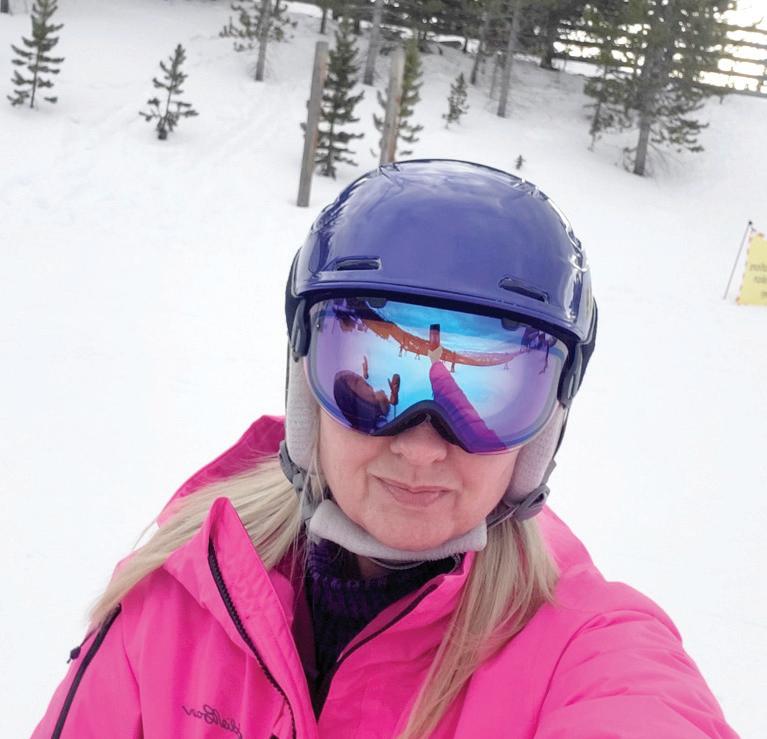
After not roller skating for 20 years, Martin recently picked up her skates again as a bridge to get back into snow skiing and as something she could do year round. “It’s great exercise - a cardiovascular workout, muscular workout and it requires balance,” she said, “and it’s so inspiring to see 80-plus year-old skaters flowing beautifully around the rink.”
Bike riding, hiking and weight
lifting also keep her active and she credits her 83-year-old father with providing an example of a healthy, active lifestyle that she also adopted. Even after a hip fracture last year, he is back to riding his bike. As a nurse practitioner, Martin sees examples all the time of how an active lifestyle positively affects longevity and how limiting a sedentary lifestyle can be.
A. In 2025, Legacy Foundation distributed $6.2 million in grants to nonprofit organizations. A grant is a financial award that does not require repayment and supports charitable projects and programs. Legacy Foundation’s grants are a vital source of funding for many organizations working to improve quality of life in Lake County, Indiana, and beyond. Legacy Foundation distributes grants through competitive applications and distributions from funds established by individuals, families, and organizations. To receive a competitive grant, a nonprofit organization must apply and be evaluated by Legacy’s volunteer Grants Committee and approved by our Board of Directors. Because Legacy Foundation is the community foundation for Lake County, only nonprofits serving our geographic area are eligible.
Non-competitive grants are distributed
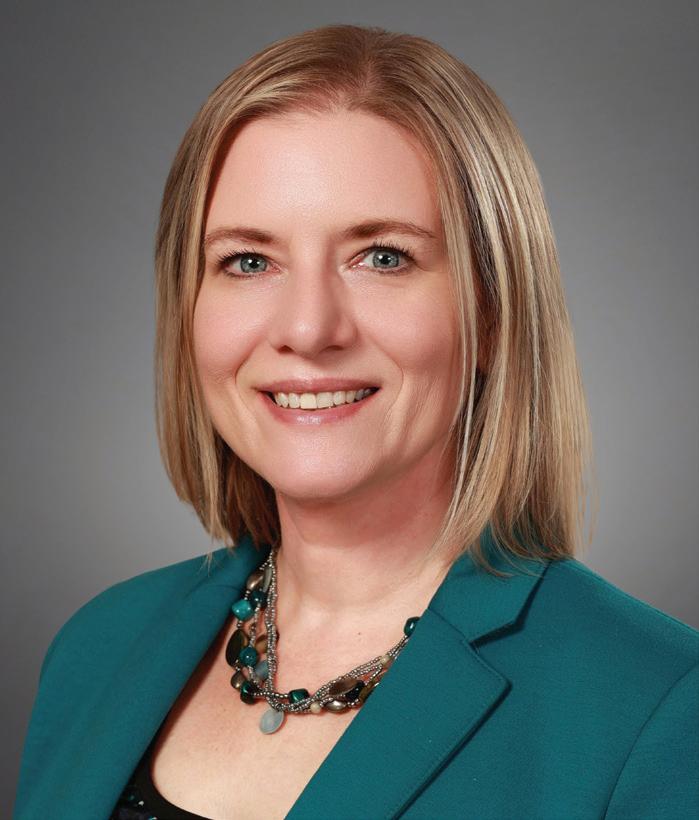
Kelly Anoe President & CEO, Legacy Foundation
from funds established by a donor. Donors can establish named funds and actively recommend grants to nonprofits anywhere in the U.S. or identify a specific purpose in an agreement so grants will be distributed according to the donor’s wishes during their lifetime and after. Learn more about our grantmaking by visiting Legacy Foundation’s website legacyfdn.org or calling 219-736-1880.

Isn’t your
A. According to audit statistics, 80% of our readers are under the age of 75. 65% of our readers have a household income of over $50,000 per year. Nearly 40% of these readers earn more than $75,000 per year. Are households with an income larger than $50,000 your target market? If so, consider advertising in Senior Life! Call or send me an e-mail today!


By CARRIE STEINWEG Feature Writer
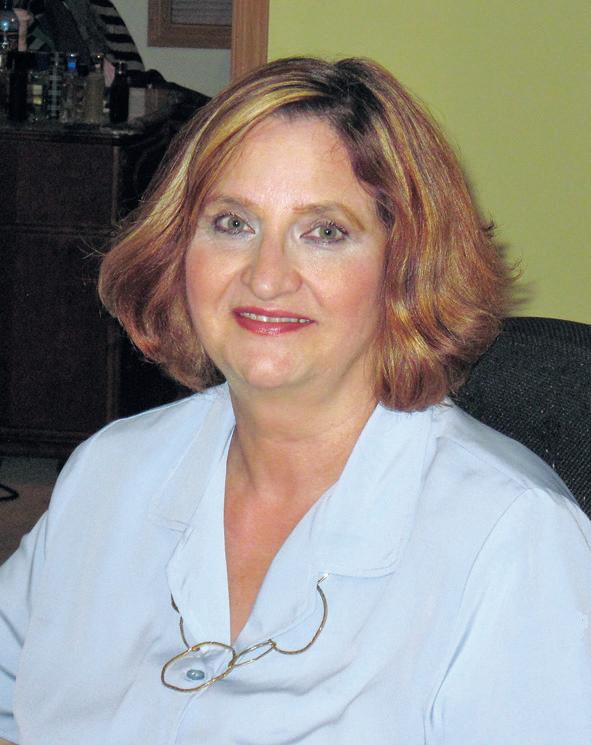
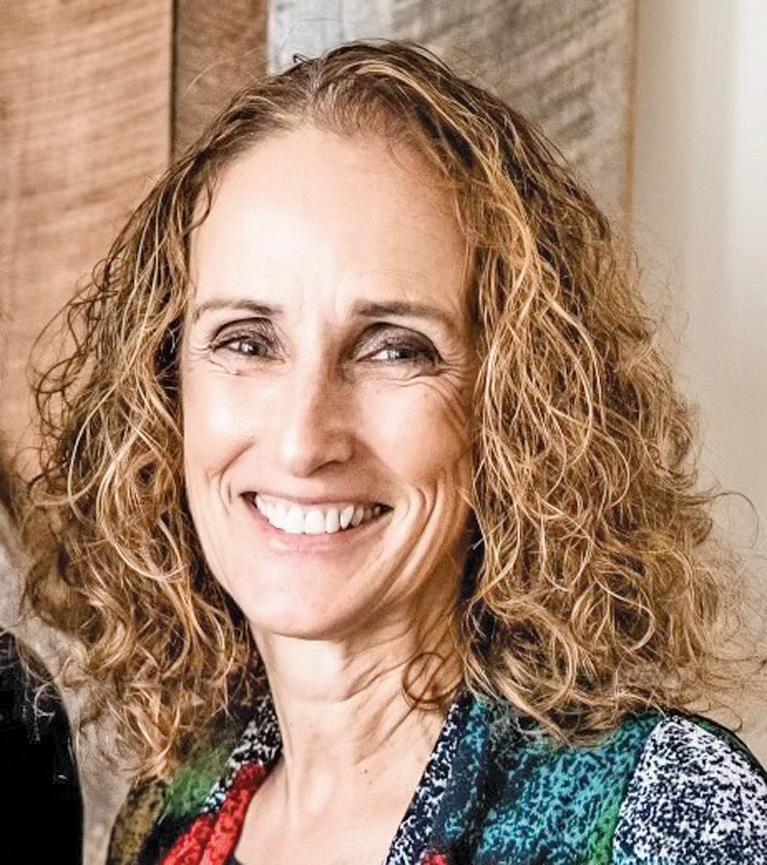
If you believe that there are angels on earth, Lynne Jordan of Kouts would be one who would fall into that category. She has used her own tragic lived experiences and her strong faith to help others find peace in their trying times and acceptance as life nears its end.
Jordan holds degrees in both nursing and psychology. Having been in the nursing field for 40 years, she has worked in oncology, been a nursing instructor and currently works in a dual role as a certified CPR instructor and dementia trainer as well as a hospice chaplain. “Since the age of 4, all I have ever wanted was to be a nurse,” she said. “I love pouring into people and I love
growing people.”
She also believes that the spiritual aspect of life can’t be ignored and plays a critical part in overall wellness along with physical and mental health. “If you negate the spiritual, you negate the physical. They are all intertwined,” she said.
She is also an author and speaker, a certified health and wellness coach, board member of Stonecroft Ministries and a nouthetic counselor through Liberty Bible Church in Chesterton.
Having grown up with an alcoholic father and a mother who leaned heavily on her strong faith, she witnessed the positive effect of faith in her home through her mothers influence. “As an adult, my faith became more established because I was on the phone
The Natural Resources Commission recently approved the dedication of Barnebey Woods in Owen County as a nature preserve and the expansion of Hoosier Prairie Nature Preserve in Lake County.
“Nature preserves represent Indiana’s most unique and significant natural areas, which is why we’re committed to continuing to work with partners to protect them,” said Gov. Mike Braun. “These new and expanded protected natural areas in Owen and Lake counties now have Indiana’s highest level of protection, conserving them for future generations.”
A nature preserve is an area of high natural significance that is representative of what Indiana would have been in the pre-settlement period and is given the highest protection possible by state law.
Barnebey Woods Nature Preserve is owned and managed by Sycamore Land Trust, which acquired the property last year with funding from the President Benjamin Harrison Conservation Trust. It features 141.5 acres of mature upland forest with excellent tree species composition. It has moderate slopes with deep drainages interspersed among long ridges. A small bedrock overhang creates a waterfall when it rains and is a habitat for rock-dwelling species such as walking fern.
There are currently no trails at Barnebey Woods Nature Preserve, but Sycamore is considering future trail additions as part of its long-term planning for the property. The preserve is not open to the public at this time to protect the sensitive natural area.
The expansion to Hoosier Prairie Nature Preserve is known as Sundew Prairie and adds 24.77 acres of wet sand prairie and oak savanna to one of the largest tracts of its type in the state. Many rare species such as northern bog clubmoss, paper birch, and several sedges can be found on the addition.
The preserve lies within the boundary of Indiana Dunes National Park and is owned by the Indiana Department of Natural Resources. Sundew Prairie is not open to the public at this time.
with my dad when he died by suicide. It was my faith that I had to anchor myself in,” she said. “That moment was very transformative and with that trauma you either say “I believe and I’m going to walk through this or I’m going to curl up.’”
From that experience, she penned her second of three books, Living a Balanced Life in a Tilted World. It also led her to volunteer with the Porter County Sheriff’s Department’s Local Outreach for Suicide Survivors (LOSS) team which responds to suicide scenes as immediate support for those affected.
She credits her faith with not only bringing her through such a dark time, but for the positive outcomes and opportunities to touch others’ lives that came from it. She realizes how common it is for individuals to find harmful ways to cope with such trauma. “I believe that pain is a pencil that God uses to complete your purpose,” she said. “I believe that with my whole heart.”
In addition to inspiring others through her speaking engagements, books, outreach and counseling, she discovered two passions that were therapeutic for her in her healing. One is cycling. “I always rode a bike my whole life, but it also turned into mental health for me,” she explained. “With my dad’s suicide, it was monumental being on the phone with him. What do you do with that? I would ride for hours and hours. It was faith in action.
We all need an outlet.” She now rides 500-600 miles a month. She also learned from an artist friend how to use a loom to take used clothing and transform it into rugs. At the same time she was doing a lot of reading and research on human trafficking and while using this newly-learned skill to help process her trauma, she started selling the stock of rugs she had amassed and donating
funds to missions and organizations working to end human trafficking. “These things became a portal. The tragedy of my dad’s suicide became a portal to this rug ministry. Tragedies are the portal for your faith to be acted out,” she said.
Jordan and her husband of 43 years have two adult daughters and their beloved labradoodle.

To support the conservation of land like this across Indiana, consider purchasing the blue Environmental Plate when it’s time to renew your license plate. All funds received from plate sales are used to protect the land, waters, and wildlife of Indiana through the President Benjamin Harrison Conservation Trust.
Learn more about nature preserves at IN.gov/dnr/nature-preserves. Learn more about the blue Environmental Plate at on.IN.gov/enviroplate.




Queen
Opera: A dramatic work set to music for singers and instrumentalists.
Bulsara in Zanzibar (now part of Tanzania) in 1946 - had just broken up with his long-time love, Mary Austin, after revealing to her that he had fallen in love with a man.
By RANDAL C. HILL
Bohemian: An artist or musician from about a century ago who defied convention and standards.
Rhapsody: A classical music piece with distinct sections played as one movement.
“I always wanted to do something operatic,” Queen’s charismatic leader Freddie Mercury once said. “I don’t really know anything about opera myself. Just certain pieces. I wanted to create what I thought Queen could do.” The result became the quartet’s signature song:
Mercury’s now-classic offering is a six-minute suite consisting of several sections - an introduction, a ballad segment, an operatic passage, a hard rock part, and a reflective coda - and all structured like Led Zeppelin’s dynamic “Stairway to Heaven.”
While “Bohemian Rhapsody” is a monumental production, many Queen fans ended up scratching their collective heads when it came to trying to interpret Freddie’s mystifying lyrics:
”Mama, just killed a man.
”Put a gun against his head.
“Pulled my trigger, now he’s dead.
“Mama, life had just begun.
“But now I’ve gone and thrown it all away.”
Was he confessing to an actual homicide? When quizzed about the “Rhapsody” lyrics, Mercury declared, “It’s one of those songs which has such a fantasy feel about it. I think people should just listen to it, think about it and then make up their own minds as to what it says to them.”
Mercury - born Farrokh
It seems that, in the words of “Bohemian Rhapsody,” the Queen leader is literally addressing his mother.” She embraced Zoroastrianism, which is intolerant of homosexuality, and her son’s lyrics laid bare the angst he is suffering as he comes out as gay.
He’s “killing” the straight Freddie he has always shown the world.
The quartet’s record label bigwigs balked at the song’s length - just under six minutes - and worried that Top 40 radio would shun the single due to its unorthodox running time.
(“Hey Jude” was a minute-anda-half longer.)
Queen’s drummer, Roger Taylor, recalled, “They said it was too long and wouldn’t work. We thought, ‘Well, we could cut it, but it wouldn’t make any sense … You would miss all the different moods of the song.’ So, we said no, it’ll either fly or it won’t.’”
The tune’s length never proved to be a problem. Once “Bohemian Rhapsody”gleaned from the Queen album “A Night at the Opera” - hit the English airwaves, the record-buying fans made the single a Number One winner there for nine weeks.
In America, the 45 on Elektra Records became the group’s first entry into Billboard’s Hot 100 listing, climbing to the Number Nine spot in 1976 and reaching Number Two on the 1992 chart after it was featured in the teen-oriented film
“Wayne’s World.”
Trivia note: On “Bohemian Rhapsody,” Mercury played the same recording-studio grand piano as did Paul McCartney on “Hey Jude.”
Bibliography
Book: Cresswell, Toby. “1001 Songs: The Great Songs of All Time.” (Pp. 208-209) New York:
Thunder’s Mouth Press, 2006. Internet: Bohemian Rhapsody, Queen. The first Mercury quote is from here. (No author or date listed) en.wikipedia. org. “Bohemian Rhapsody” by Queen. (No author or date listed) songfacts.com. The second Mercury quote is from here. Horton, Matthew. “Queen: 20 Things You Probably Never Knew About ‘Bohemian Rhapsody.’” June 24, 2015. nme.com. The Roger Taylor quote is from here.
First formal photoshoot, March 1973, photo by Douglas Puddifoot from queeniofficial.om


By DICK WOLFSIE
Because I am so forgetful, when I think of something I need to remember and I’m in the car, the first thing I do is send myself a text. I hit the appropriate button on my steering wheel, hear a little chirp and say, “Send a text to Dick.”
Bluetooth: “What do you want to say to Dick?”
Me: “Mail car insurance. Put out garbage.”
Now, I do this several times a day, and it’s pretty effective. As soon as I get home, I check my messages, and there are all the things I would probably forget to do if I hadn’t sent myself a note. I considered this method quite foolproof, but only a fool like me

could mess it up.
We have a member of our church whose name is also Dick. I did not have him in my address book until recently. I added his name because I am part of a volunteer group that picks him up at his home on Sunday mornings. He decided at his age to stop driving.
Have you already figured out what happened? Most of the messages I intended to send to myself were going to Dick Guernsey. (He told me to use his real name because he wanted to see it in print.)
I began to realize there was a problem when I saw Dick at church and he asked why I thought he should pay my HOA fee this month. I thought this was a very odd thing to ask, so I confided in a fellow Unitarian, who told me, “Sometimes people your age, Dick, get a little confused. It’s normal.”
The next day, I got this text message.
Guernsey: “Dick, it’s Dick Guernsey. Why do you want me to call your son?”
Me: “I don’t want you to call my son. I’m not sure what you are talking about.”
Guernsey: “Also, you texted
me to buy a jar of artichokes and a pint of milk. I hate artichokes and I’m lactose intolerant. And why are you asking me to buy this stuff for you? You know I don’t drive.”
It still didn’t dawn on me what I had accidentally done.
The next day, Dick called me on his cellphone.
“Dick Wolfsie, this is Dick Guernsey. I’m starting to worry about you. I just got a text from you that says, ‘Don’t forget to call my brother in New York.’ I don’t know your brother in New York. The text also says to make an appointment for an oil change. I don’t have a car. That’s why you pick me up twice a month.”
The next day, I got another text from Guernsey asking why I thought he needed to have his gutters cleaned.
“I don’t have to clean gutters,” he texted. “In fact, I don’t have to do anything at this place except go down for dinner.”
I finally figured out what was happening. I changed my name in my address book to Bubba. Now I say, “Send a text to Bubba.”
If your name is Bubba, there is no chance we can ever be friends.
Purdue University Extension recently announced an upcoming Mental Wellness Conversations program for adults ages 18 and over.
Join Linda Curley, health and human sciences educator, at 10 a.m. Tuesday, April 7, for an in-person program offering a couple hours of connection and fun as Purdue Extension prioritizes mental wellness. This complimentary program
will be held at Purdue University Extension’s Lake County office, 2291 N. Main St., Crown Point. Registration is now open. Participants may register by visiting: https://tinyurl.com/MWC7April
For questions or registration assistance, or if you need accommodations or an interpreter or translator to attend this program contact Curley by email at lcurley@purdue.edu or by phone at (219) 755-3240.


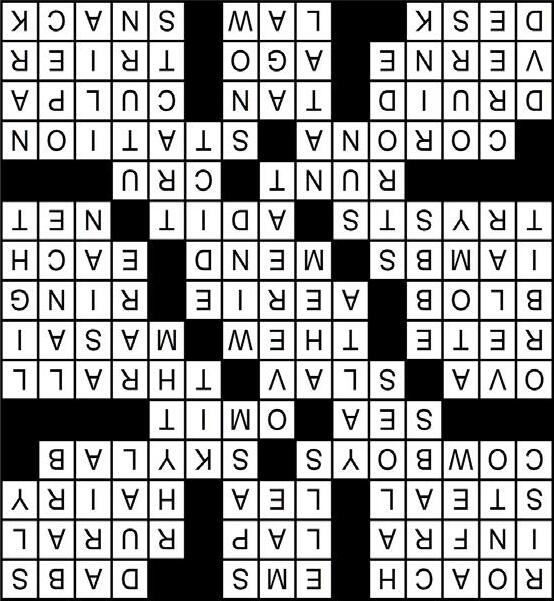
ACROSS
1. House pest
6. Emergency responder, acr.
9. Meme dance moves
13. Below, prefix
14. Swimmer’s distance
15. Not urban
16. Take a base
17. Grazing spot
18. Stressful or unnerving
19. *Clint
Eastwood’s “Space ____”
21. *First U.S. space station
23. Salty dog’s domain
24. Fail to mention
25. Spermatozoa counterpart
28. Ukrainian person, e.g.
30. State of submission
35. Network of nerves
37. Muscle or strength
39. ____ Mara, Africa
40. Shapeless form
41. Cliffside dwelling
43. *Saturn’s environs, sing.
44. Poetic feet
46. Darn a sock, e.g.
47. Per person
48. Rendezvouses
50. Mine entrance
52. After-tax amount
53. Litter’s littlest
55. French vineyard
57. *Sun’s outer layer, not beer brand
60. *Second S in ISS
64. Ancient Celtic priest
65. Sun kiss

67. “Mea ____,” or “my fault”
68. *”From the Earth to the Moon” author
69. In the past
70. Judge 71. Education station
72. Order’s partner
73. Food between meals
DOWN
1. Reduced Instruction Set Computer
2. “I’m ____ you!”
3. Not many (2 words)
4. Dungeness and snow, e.g.
5. *Circles of light around sun and moon
6. 90-degree pipes, e.g.
7. *____ Jamison, the first African-American woman in space
8. Tetanus symptom
9. Two-fold 10. Diva’s solo 11. Prickle on a wire
12. Sylvester Stallone’s nickname 15. Johnny Cash’s “Get ____” 20. Churchill/Roosevelt/Stalin meeting site
22. Model-builder’s purchase
24. Gorge oneself
25. *Planet’s path
26. Type of consonant
27. Skeleton, archaic
29. Attention-getting interjection
31. Like pink steak
32. Of the Orient
33. Jousting pole



34. *____-year
36. Opposite of flows
38. *Solar ____, sun’s emission
42. Authoritative proclamation
45. Walked with long steps
49. *Solar System center
51. Parcels
54. Birth-related
56. One-eighty
57. Manitoba native
58. Couple’s pronoun
59. Dorothy Hamill’s turf

60. Jon of “Game of Thrones”
61. Pelvic parts 62. Petroleum-export-

These cozy spiced-pear overnight oats feature tender cinnamon-maple sautéed pears folded into creamy oats with crunchy pecans and chia seeds. They’re perfect for make-ahead breakfasts throughout the week, and make a refreshing alternative to cooked oatmeal. 4 servings; Active 25 min.; Total Time 8 hrs. 40 min.
old-fashioned rolled oats
2 c. unsweetened plain almond milk
1/2 c. whole-milk plain Greek yogurt
1/4 c. chopped pecans
2 Tbsp. chia seeds
1 Tbsp. vanilla extract
1/4 tsp. salt
DIRECTIONS:
Combine chopped pears, 2 tablespoons maple syrup and 1 teaspoon cinnamon in a medium skillet; cook over medium heat, stirring often, until the pears are slightly softened, 10 to 12 minutes. Let cool for 15 minutes. Transfer 1/3 cup of the mixture to a small bowl; cover and refrigerate for topping.
In a medium bowl, combine 2 cups oats, 2 cups almond milk, 1/2 cup yogurt, 1/4 cup pecans, 2 tablespoons chia seeds, 1 tablespoon vanilla, 1/4 teaspoon salt, the remaining pear mixture and the remaining 2 teaspoons maple syrup; whisk well. Cover and refrigerate until set and thickened, at least 8 hours.
ing grp.
63. Police informer 64. VHS successor 66. Palindromic title
To assemble, divide the oat mixture among 4 (8-ounce) jars. Top each with 1 heaping tablespoon of the reserved pear mixture.










Below are all the adult programs, events and classes for the Month of March at the LakeCounty Public Library
Cedar Lake
10010 W. 133rd Ave.
Crochet @ Your Library, 4:30-5:30 p.m. April 1, 8, 15, 22, 29
Composting 101, 11 a.m. to noon Tuesday, April 14
Book Discussion, 6:30-7:30 p.m. Wednesday, April 15
Getting Started with Ebooks, 6:30-7:30 p.m. Monday, April 20
Registration required for all programs: visit www. lcplin.org/branches/cl.htm or call(219) 374-7121.
Dyer-Schererville
1001 W. Lincoln Highway (US 30)
Crafters Gathering, 10:30 a.m. to 12:30 p.m. April 2, 16 Bridge Club, 1-4 p.m. April 3, 17
New Parent & Caregiver Meet Up, 11-11:30 a.m. April 7, 28
W.I.S.E Wellness Initiative for Senior Education, 1-2:30 p.m. April 7, 14, 21, 28
Book Discussion, 11:15 a.m. to 12:30 p.m. Thursday, April 9
Mahjong Open Play Session, 1-4 p.m. April 10, 24
All Ability: Beaded Plants, 6-7 p.m. Tuesday, April 14
Morning Mix, 10 a.m. to

noon Friday, April 17
Intro to Digital Library Resources: Ebooks & Eaudiobooks, 1-2 p.m. Monday, April 20
Radio in the 1950’s: From Golden Age to TV Age, 6-7 p.m. Wednesday, April 22
Intro to Digital Library Resources: Streaming Movies & Shows, 1-2 p.m. Thursday, April 23
AARP Smart Driver Course (fee), 11 a.m. to 3 p.m. Monday, April 27
Perennial Gardening for Beginners, 6-7 p.m. Tuesday, April 28
Book Discussion, 11:15 a.m. to 12:30 p.m. Thursday, April 30
Registration required for all programs: visit www. lcplin.org/branches/ds.htm or call (219) 322-4731. Griffith-Calumet 1215 E. 45th Ave.
Thursday Threaders, 10:30
a.m. to 12:30 p.m. April 2, 9, 16, 23, 20
Book Discussion, 1-2 p.m. Monday, April 13
All Ability: Mixed Media Flower, 6-7 p.m. Monday, April 20
Book Discussion, 4-5:30 p.m. Monday, April 27
All Ability: Bird Bingo, 11 a.m. to noon Tuesday, April 28
Registration required for
all programs: visit www. lcplin.org/branches/gr.htm or call (219) 838-2825. Highland 2841 Jewett Street
Book Discussion, 3-4 p.m. Thursday, April 2
All Ability: Book Buddies, 10:30-11 a.m. Tuesday, April 7
All Ability: Animal Portrait, 6-7 p.m. Wednesday, April 8
Book Tasting, 6-7 p.m. Wednesday, April 22
Book Discussion, 3-4 p.m. Tuesday, April 28
Registration required for all programs: visit www. lcplin.org/branches/hi.htm or call (219) 838-2394. Hobart
100 Main St. Stitch’n Time, 9:30 a.m. to 12:30 p.m. Saturday, April 4
Adults Get Crafty: Woodburning, 5:30-6:30 p.m. Monday, April 13
Paint’n Time, 10:30 a.m. to 1:30 p.m. April 14, 28
Benefits of Biodiversity, 6-7 p.m. Wednesday, April 15
Adult Mystery Club: Whodunit?, 6-8 p.m. Monday, April 20
Book Discussion, 11:30 a.m. to 12:30 p.m. Tuesday, April 21
Registration required for all programs: visit www. lcplin.org/branches/ho.htm or call (219) 942-2243.
Lake Station 2007 Central Ave.
Hobby Hour, 2-4 p.m. Thursday, April 2
LEGO Night for Adults, 6-7:30 p.m. Wednesday, April 8
Book Discussion, 11 a.m. to noon Tuesday, April 14
Mahjong Open Play, 1-4 p.m. Friday, April 17
Knitting & Crochet Club, 10 a.m. to noon Saturday, April 18
Craft and Chat, 1-3 p.m. Saturday, April 18
Tuesday Time Out, 1:302:30 p.m. Tuesday, April 21
Grown Up Game Night, 6-7:30 p.m. Wednesday, April 22
National Library Week Reading Hour, 2-3 p.m. Thursday, April 23
Bingo at the Library!, 3-4 p.m. Saturday, April 25
Book Discussion, 6-7 p.m. Monday, April 27
Registration required for all programs: visit www.lcplin. org/branches/lsnc.htm or call (219) 962-2409.
Merrillville
1919 W. 81st Ave. (US 30)
Positive Parenting Classes with Safe CHR, noon-1 p.m.
April 1, 8, 15
April Showers Bring Poetry Flowers, 2-3 p.m. Wednesday, April 1
Dungeons & Dragons for Adults, 6-8 p.m. Wednesday, April 1
Keep Me in Stitches, 10 a.m. to noon Saturday, April 4
Caregivers & Coffee Hour, 11 a.m. to noon April 7, 8, 21, 22
All Ability: Macrame Feather, 6:30-7:30 p.m. Thursday, April 9
Know Your Rights Seminar, 6-8 p.m. Monday, April 13
Friends of LCPL Meeting, 1-2 p.m. Tuesday, April 14
Book Discussion, 2-3 p.m. Tuesday, April 14
Monthly Resume Workshop: Creation and Guidance, 2-4 p.m. Wednesday, April 15
April Showers Bring Poetry Flowers, 6-7 p.m. Wednesday, April 15
ESL Conversation Club, 1011:30 a.m. Saturday, April 18
National Library Week: Blackout Poetry Contest, 10 a.m. to 5 p.m. Monday, April 20
guage (ESL), 6-8 p.m. April 20, 23, 27, 30
Video Game and Hang, 6-8 p.m. Tuesday, April 21
Book Folding Art, 6-7:30 p.m. Tuesday, April 21
Board Meeting, 4:30-6 p.m. Thursday, April 23
Understanding Fraud & Scams, 11 a.m. to 12:30 p.m. Friday, April 24
Lake County Public Library Foundation Literary Tea, 1-3 p.m. Saturday, April 25
Book Folding Art, 6-7:30 p.m. Tuesday, April 28
Video Game and Hang, 6-8 p.m. Wednesday, April 29
Genealogy Class: Using the DAR Genealogical Research System, 11:30 a.m. to 1:30 p.m. Thursday, April 30
Registration required for all programs: visit www.lcplin. org/branches/cnl.htm or call (219) 769-3541.
Munster
8701 Calumet Ave., Adult Dungeons and Dragons, 6-8 p.m. April 2, 9
That’s Pretty Clever Tournament!, 2-5 p.m. Friday, April 3
Monday Night Adult D&D, 6-8 p.m. April 6, 27
Book Discussion, 1:30-2:30 p.m. Thursday, April 23
Calumet Astronomical Society Munster, 7-8 p.m. Tuesday, April 28
Genealogy: Genealogy, DNA, and AI, 6-8 p.m. Wednesday, April 29
Registration required for all programs: visit www.lcplin. org/branches/mu.htm or call (219) 836-8450.
St. John
450 Wicker Ave. (US 41) Off the Hook, 1-3 p.m. April 1, 9, 15, 22, 29
Brain Benders, 10-11 a.m. Friday, April 3
Just One More Chapter: A Silent Book Club, 6-8 p.m. Monday, April 6
Book Discussion, 5:30-6:30 p.m. Wednesday, April 8
Craft Saturday: Air Dry Clay Diffuser Discs, 10 a.m. to noon Saturday, April 18
National Library Week: Library Art, 6:30-8 p.m. Wednesday, April 22
Senior Planet: Intro to AI, 11 a.m. to 12:15 p.m. Thursday, April 23
and
Citizenship Class, 10-11:30 a.m. April 20, 22, 27, 29
English as a Second Lan-
Registration required for all programs; visit www.lcplin. org/branches/sj.htm or call (219) 365-5379.



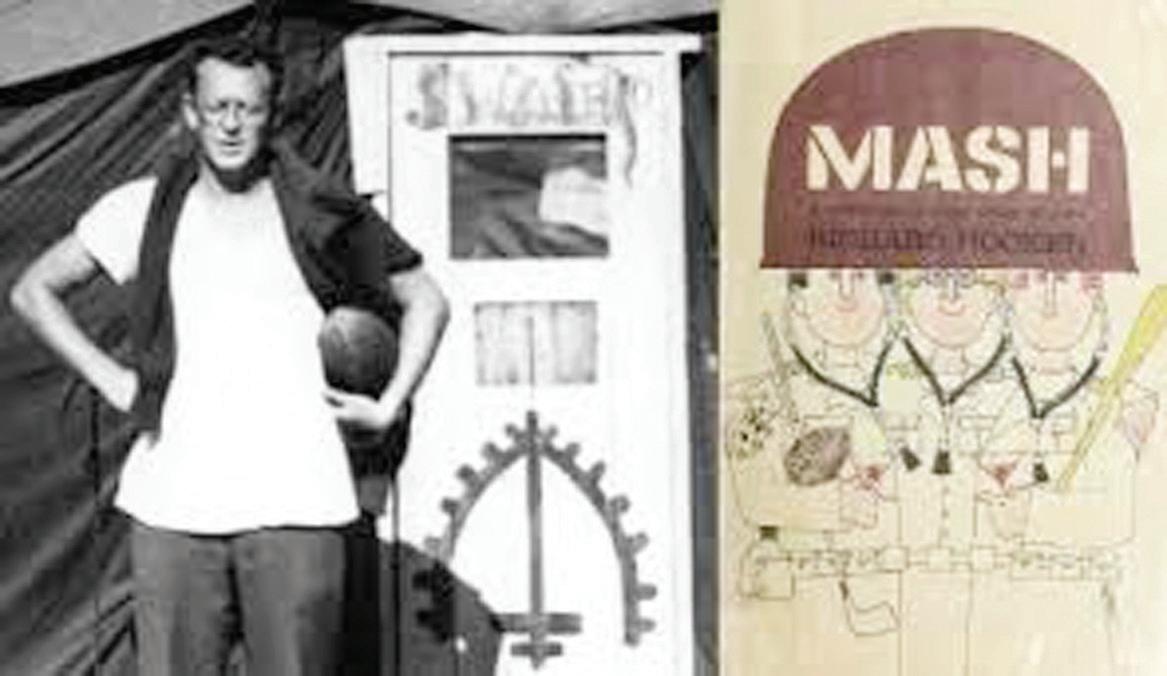
Flashback -
Richard Hornberger, writing under the nom de plume
Richard Hooker, entertained visions of success as a writer when he penned his novel
By RANDAL C. HILL
“M*A*S*H” (Military Army Surgical Hospital), a reflection on his days with the 8055th M*A*S*H unit in Korea. For several frustrating years, he submitted his brainchild to various book publishers, but no one expressed interest.
He took on a writing partner who helped him polish the manuscript. Eventually, William Morrow and Company published “M*A*S*H.” The book bombed, but it was embraced by movie producer Ingo Preminger - Otto’s brother - who bought the movie rights and commissioned Ring Lardner Jr., to come up with a screenplay. The film, which starred Eliot Gould and Donald Sutherland, became box-office gold.
Hollywood power people felt many more dollars could be squeezed out of the “M*A*S*H” story by offering it as a low-budget television show. After all, start-up costs would be minimal, as the sets and props from the film were still in place nearby in a future state park.
Producer Gene Reynolds asked writing pal Larry Gelbart to give him a script, which took Gelbart a mere two days to whip up a workable outline for the show. Given the green light, Gelbart threw himself into painstaking research, toiling with photocopies of early 1950s issues of Time magazine, as well as keeping a master list of Korean names, a map of Korea and an Army handbook on his cluttered desk.
Most TV scenes were shot at the 20th Century Fox studio in Los Angeles, where the “M*A*S*H” compound measured a mere 45 by 90 feet and consisted primarily of a Korean landscape backdrop behind a rubber floor.
“M*A*S*H” premiered on CBS-TV in September 1972.
By CECIL SCAGLIONE Mature Life Features
Airline fares are jumping all over but the wily wanderer still thinks Sunday is the best day to shop airline flights to book the best deal.
Flying from and to hubs is also cheapest. If you don’t live near one, it might be cheaper to drive to one to catch your flight. The same applies to your destination. If you’re going to rent a car anyhow, flying to a hub makes good bargain sense.
Mature Life Features Copyright 2026
Ratings were low at first, and reviews ran the gamut from so-so to scathing. But, in a rare moment of insight in a ratings-obsessed business, CBS believed the program could, if given time, build a decent-sized audience. The series was allowed to struggle through its first season. The gamble paid off when season two ratings skyrocketed and made “M*A*S*H” a mustwatch winner.
Everybody involved seemed happy. Everybody, that is, except for Richard Hooker. As an ultraconservative military veteran, he detested the way television star Alan Alda voiced subtle but frequent anti-war statements during his moments on the small screen.
The series ended on Feb. 28, 1983, after 11 seasons and 251 episodes. The final show (2 ½ hours long) was watched by an estimated 125 million viewers -back then, more than half the population of America.
“M*A*S*H” mixed sarcastic humor with the grimness of war. How did Alda and the others in the show approach such a combination?
Alda said, “I think a lot of what attracted people to the whole series was that, even though it was mainly a comedy, we never tried to forget that real people had lived and suffered through stories like the ones we were telling. We wanted to honor that as much as we could.” And the show did indeed do that.
Bibliography
Books - Javna, John. “MAS*H.” In Uncle John’s Bathroom Reader, 70-71. New York: St. Martin’s Press, 1988. Kalter, Suzy. The Complete Book of “MASH.”* New York: Harry N. Abrams Inc., 1985. Internet - “MASH (Movie); MASH (TV Show).” Wikipedia. No author or publication date listed. Reinstein, Mara. “Alan Alda on 50 Years of MASH: ‘We Never Realized How Successful the Show Was.’” Parade, Sept. 2, 2022.









By JAMES GAFFNEY Mature Life Features
In a culture where beauty is king - or, in this case, queen - it seems women will go to any length to meet the arbitrary standards of glamour and sexiness set by the media, especially slick high-fashion magazines.
When this pursuit of perfection extends to a regimen that includes regularly subjecting hair to harsh chemicals and heated styling devices that can damage otherwise healthy hair, it can leave women looking like anything but the fashion plates they so often try to emulate.
One of the most common misconceptions is that hair is living when, in fact, hair is nonliving and does not heal itself. “Healing” is really new hair growth.
Over time, damage to hair caused by artificial dyes and other treatments can turn
glamorous manes brittle - so much so that the only corrective treatment is a “complete hair-care overhaul” to improve hair health and appearance. When hair is damaged, the protective layer of fat on the outside of the cuticle, responsible for making hair shiny, is removed. Chemical damage is one of the most common culprits, as processed hair loses its natural moisturizers. The result is dried-out frizzy hair that does not hold its style and accounts for the hair’s dull appearance.
Experts offer the following tips to help combat chemical damage:
Use conditioning shampoos and conditioners regularly to improve the appearance of frizzy hair. Two-in-one shampoos that remove oil from the scalp, clean the hair and then condition the hair in the rinse phase also are good choices.
Stop dyeing your hair. If you
must dye your hair, stay “on shade,” or dye it within three shades of its natural color.
Dyeing hair darker rather than lighter is generally better.
Another source of hair damage is heat-styling devices and treatments that can produce a condition known as bubble hair. Signs of this form of damage include hair that smells burned, frizzy ends and hair that breaks easily.
You might think of hair as a piece of steak - it starts out nice soft and flexible. But when you cook it, it changes texture and becomes hard.
Hair damaged by heat cannot be repaired. It must be cut off and allowed to regrow as healthy hair. For hair care, allow it to air-dry when possible.
When using a hair dryer, don’t use the highest heat setting immediately. Start out low and gradually increase the heat.
To straighten hair with a
By JAMES GAFFNEY
Mature Life Features
Staying fit and active can ease the pain of osteoarthritis in the knee and make it easier to manage. Osteoarthritis, also called wear-and-tear arthritis, involves gradual wearing away of the smooth slippery cartilage that lines a joint. Knee pain often is worst after periods of inactivity, such as first thing in the morning. Walking up and down stairs or overuse also can trigger pain.
Some conservative measures to minimize this knee pain include:
Strengthening. Strengthen the muscles around the knee and hip to help support those joints and improve stability.
Low-impact exercise. Regular aerobic exercise can alleviate pain, improve function, build strength and help with weight management. Low-impact options include swimming, cycling or tai chi. Weight loss. Excess weight puts extra strain on knee joints.
Ice and rest. Icing the knee can relieve a pain flare-up. Total rest for up to a day may be helpful, but it’s generally better to keep the knee and body moving in the least-aggravating way.
Knee bracing. Bracing can be effective at reducing pain, providing a feeling of support and for some people improving the ability to walk.
Shoe selection. A shoe with a soft, cushioned heel can absorb some of the impact from walking.
Mature Life Features Copyright 2026
By JAMES GAFFNEY Mature Life Features
Science is working to eliminate socioeconomic disparities in health, which could have far-reaching effects on the nation’s graying population.
Research has revealed an association between a patient’s level of education and adherence to complex treatment regimens. Income, age, race and gender are not as important as education in influencing one’s level of
health, but the differences associated with less education can be overcome, resulting in improved compliance and better health outcomes.
Lower socioeconomic status - less education and lower income and wealth - has long been strongly linked with poorer health, and research has led to the development of programs to address this.
Experts have examined several explanations for health disparities associated with socioeconomic status,
such as differences in access to health care and insurance or in smoking and drinking patterns among affluent and poor groups.
Education is an important contributor to health and life expectancy. The ability to adhere to a treatment regimen, while influenced by education, is the bottom line for better health. Not all patients are alike in their ability to follow and maintain complicated medical regimens.
Mature Life Features Copyright 2026
ceramic iron, put a moist towel in the device to protect the hair from direct heat.
Moisturizing your hair regularly will improve the appearance of heat-damaged hair to some degree, but stopping the source of heat damage is essential.
To keep healthy hair looking its best, the less you do to your hair, the better. Avoid overstyling or overprocessing hair. Be sure to wash the scalp,
which is where the oil is produced, and then let the shampoo run through the hair. Shampoo is meant primarily to clean the scalp and can damage the hair if overused. An oily scalp should be washed more frequently than a dry scalp.
Conditioner should be used on the ends of the hair, not on the scalp for best results. And wear a hat to protect hair from ultraviolet radiation.
Mature Life Features Copyright 2026
The Portage Township YMCA is inviting the community to put its knowledge to the test at Facts & Fools Trivia on Friday, April 10, a lively evening of friendly competition, laughter and community impact. Formerly known as Total Knockout Trivia, the newly rebranded event will bring together teams, local businesses and supporters for a night of fun while raising funds to support YMCA programs and financial assistance for local families.
Facts & Fools Trivia will take place at the Portage Township YMCA, 3100 Willowcreek Road, Portage, and will feature multiple rounds of trivia covering a wide variety of topics—from pop culture and sports to history, science and more. Teams will compete for bragging rights, prizes, and the coveted trivia champion title.
In addition to trivia rounds, the event will include raffles, games and opportunities to win prizes throughout the night. Participants are encouraged to bring their creativity and team spirit—costumes and themed tables are welcome and add to the fun atmosphere.
“Facts & Fools Trivia is one of our favorite community events because it brings people together for a night of laughter and friendly competition while supporting an important cause,” said Shannon Burhans, YMCA president and CEO. “Every table and sponsorship helps
ensure that individuals and families in our community have access to YMCA programs that strengthen youth development, promote healthy living, and foster social responsibility.”
Proceeds from the event will help support the YMCA’s annual campaign, which provides financial assistance to individuals and families who may not otherwise be able to afford YMCA memberships, childcare, youth sports, summer camps and other life-changing programs. The Portage Township YMCA is committed to ensuring that no one is turned away due to an inability to pay.
Community members can participate by purchasing individual tickets, or becoming a table sponsor. Table sponsorships provide a great opportunity for local businesses and organizations to show their community support while gaining visibility among event attendees.
The YMCA encourages businesses, organizations, and groups of friends to gather a team and buy tickets early, as space is limited.
Tickets and sponsorship opportunities are available online at:
www.ymcaofportage.org/trivia For more information about Facts & Fools Trivia or sponsorship opportunities, visit the event page at www.ymcaofportage.org/trivia or contact the Portage Township YMCA at (219) 762-9622.
Aperion Care - Demotte 10352 N. 600 E., Demotte, IN 46310

(219) 345-5211 • www.aperioncare.com
Short Term Rehab, Long Term Care, On-Site Therapy 7 Days A Week, Orthopedic Rehab, Post-Stroke Rehab, Nurse Practitioner Oversight, Wound Care, Respiratory Care, IV Therapy, Cardiac Rehab, Newly Remodeled Communities, Memory Care
Aperion Care - Tolleston Park

2350 Taft Street, Gary, IN 46404 (219) 977-2600 • www.aperioncare.com
Short Term Rehab, Long Term Care, On-Site Therapy 7 Days A Week, Orthopedic Rehab, Post-Stroke Rehab, Nurse Practitioner Oversight, Wound Care, Respiratory Care, IV Therapy, Cardiac Rehab, Newly Remodeled Communities, Memory Care
- Merrillville | Memory Care

7900 Rhode Island St., Merrillville, IN 46410 (219) 525-4123 • www.avivamerrillville.com
Memory Care only. It’s our sole focus. Alzheimer care. From initial to end-state dementia. Comfortable, caring enviornment. Peace of mind for families.
AVIVA - Valparaiso | Senior Living
1300 Vale Park Road, Valparaiso, IN 46383 (219) 531-2484 • www.avivavalparaiso.com
Assisted Living & Memory Care in beautifully renovated community. Parkinson’s Disease Certification. Studios to two-bedroom apartments available.
Hammond-Whiting Care Center
1000-114th Street, Whiting, IN 46394 (219) 659-2770
www.hammondwhitingconvalescentcenter.com
Rehabilitation Unit, Skilled Licensed Nursing, Semi-Skilled Nursing, Therapies: Speech-Occupational-Physical, Long Term Care, Temporary Care, Respite Care, Hospice Care, JCAHO Accredited, Private/Semi-Private Rooms, Pet Visitation Allowed, Medicare and/or Medicaid
Ignite Medical Resort of Chesterton

2775 Village Point, Chesterton, IN 46304 (219) 304-6700
www.ignitemedicalresorts.com
Post Hospital Rehabilitation & Care, Physical, Occupational, Speech, Stroke Recovery, Cardiac Care, Pulmonary Rehab, Wound Care, Infection Management, Renal Management, Resort-Style Senior Living, New & Impeccably Designed Facility
Ignite Medical Resort of Crown Point
1555 S. Main Street, Crown Point, IN 46307 (219) 323-8700
www.ignitemedicalresorts.com
Post Hospital Rehabilitation & Care, Physical, Occupational, Speech, Stroke Recovery, Cardiac Care, Pulmonary Rehab, Wound Care, Infection Management, Renal Management, Resort-Style Senior Living, New & Impeccably Designed Facility
Ignite Medical Resort of Dyer 1532 Calumet Avenue, Dyer, IN 46311 (219) 515-4700
www.ignitemedicalresorts.com
Post Hospital Rehabilitation & Care, Physical, Occupational, Speech, Stroke Recovery, Cardiac Care, Pulmonary Rehab, Wound Care, Infection Management, Renal Management, Resort-Style Senior Living, New & Impeccably Designed Facility
Lake Park Residential Care

2075 Ripley Street, Lake Station, IN 46405 (219) 962-9437 • www.assistedlivingfacilities.org
Assisted Living, Long Term Care, Temporary Care, Private/Semi-Private Rooms, Residential Care, Mental Health Services, Activities, Pet Visitation Allowed, Medicare and/or Medicaid

of The Willows
1000 Elizabeth Drive, Valparaiso, IN 46385 (219) 464-4858 • www.lcca.com
Rehabilitation Unit, Skilled Licensed Nursing 24/7, Ready Set Go Program for Rehab to Home; Physical, Occupational and Speech Therapies; Exceptional Wound Care; Respite Care; Pallitative and Hospice Care; Long-term Care; Private/Semi-Private Rooms; Pet Visitation Allowed; Medicare, Medicaid, Most Insurances, Private Pay Accepted
Life Care Center of Valparaiso
3405 N. Campbell, Valparaiso, IN 46385 (219) 462-1023 • www.lcca.com/Valparaiso
Rehabilitation Unit, Skilled Licensed Nursing, Ready Set Go Rehab Program, Inpatient/Outpatient Physical, Occupational, Speech, Respiratory, Therapy, Wound Care, Respite And Hospice Care, Private/Semi-Private Rooms, Pet Visitation Allowed, Facility Van, JCAHO Accredited, Medicare, Insurance, Medicaid Accepted
Residences at Coffee Creek

Experience Our Unique Approach To Senior Living & Memory Support 2300 Village Point, Chesterton, IN 46304 (219) 921-5200 • ResidencesSeniorLiving.com
Retirement Living, Assisted Living, Dedicated Memory Support, Respite Care, Therapy Available, Pet Friendly and VA Benefits Accepted
Residences at Deer Creek

Experience Our Unique Approach To Senior Living & Memory Support 401 E. U.S. 30, Schererville, IN 46375 (219) 864-0700 • ResidencesSeniorLiving.com
Retirement Living, Assisted Living, Dedicated Memory Support, Respite Care, Therapy Available, Pet Friendly and VA Benefits Accepted
Anthony 203 Franciscan Drive. Crown Point, IN 46307 (219) 661-5100

MajesticCare.com
Assisted Living, Private Rooms, Memory Care, Skilled Nursing, Long Term Care, Respite Care, Rehabilitation Services (including Physical, Occupational, Speech and Respiratory Therapy), Pet Visitation, Accepts Most Payer Sources. *Saint Anthony is no longer affiliated with the Roman Catholic Church, the Diocese of Gary or the Franciscan Sisters of Chicago.
By LYNNE TIMPANI FRIEDMANN Mature Life Features
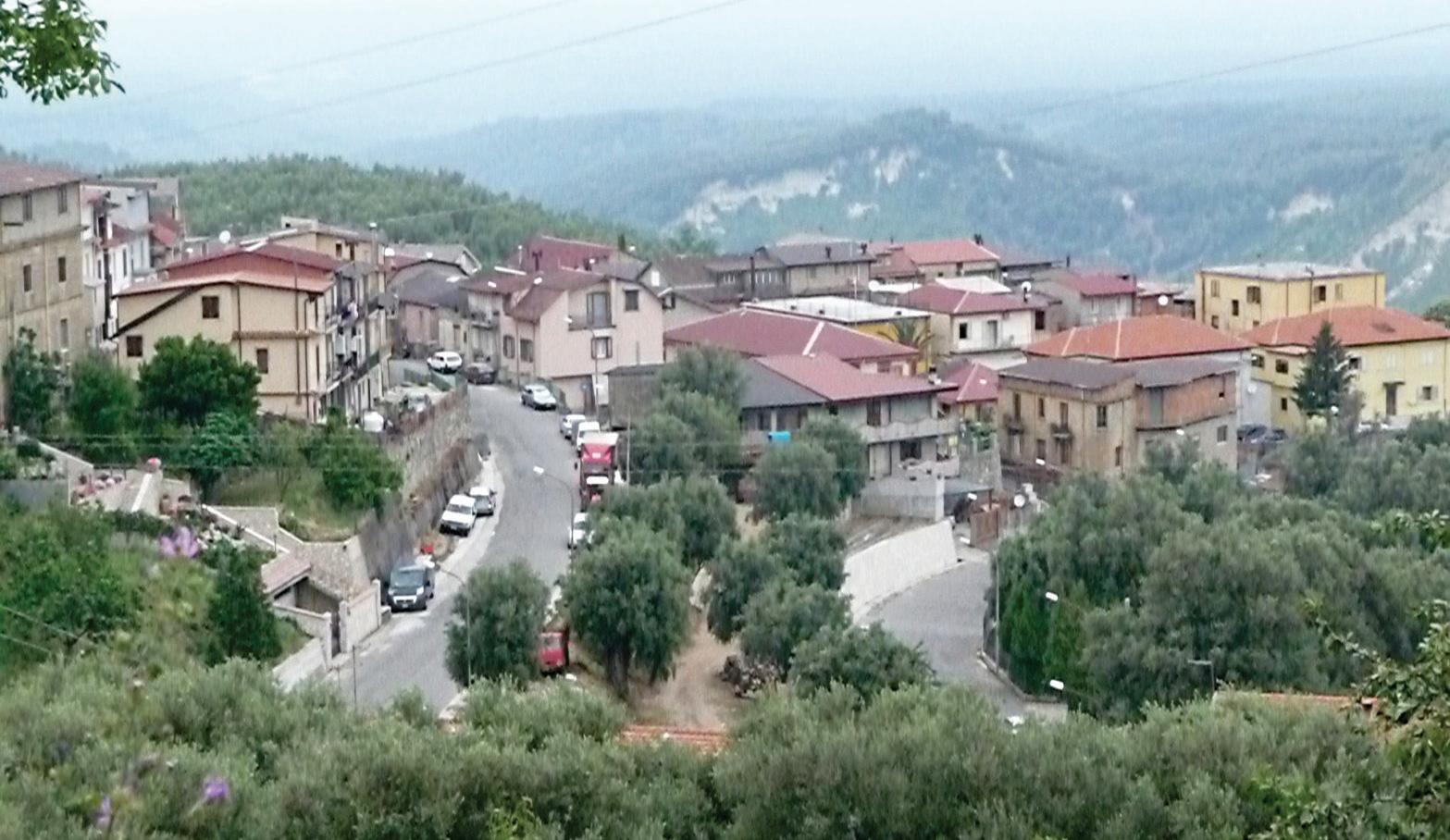
It took a 6,000-mile journey to get home to this village in Italy’s southernmost region of Calabria, which forms the toe of the peninsula’s boot that tickles Sicily.
Three cousins from coastal Reggio di Calabria, the largest and oldest city in the region, accompanied us on the 40-mile drive that took more than an hour to get to Santa Cristina d’Aspromonte.
Our first stop was Scilla, where brightly painted fishing boats bobbing at their waterfront moorings made it a much friendlier sight than when it was home to the monstrous six-headed Scylla of Greek mythology.
Turning inland, the road developed more twists and turns as we climbed higher through thicker and greener woods. A final hair-pin turn and suddenly we were in the middle of a village. The street was blocked by a few dozen slouching musicians who snapped to attention and began to play.

Our visit coincided with the Feast of St. Anthony, one of the village’s five patron saints. We also had to make way for the giants of the festival, two men cloaked in costumes of a 12-foot-tall man and woman who danced down the street with laughing children in hot pursuit.
Santa Cristina has two churches. We stopped briefly at the Old Church before arriving “home” - where Eugenio and Maria Timpani live. They were the parents of my cousins who accompanied us from Reggio.
Eugenio greeted me with, “Tu Timpani?” (You’re a Timpani?), to which I replied, “Si.”
Then family photos flew out of drawers and cabinets.
I opened the photo album I carried from my home in San Diego.
A heavy album was placed before me and crackled open to a sepia-toned photo of who I was told was my grandfather. The lean young man standing next to a stairway was Grandpa John (Giovanni), wearing a hat with his sleeves rolled up and his left foot resting on a shovel.
Handwritten on the back was “Here I am, working in my garden.” It was dated 1920.
Then I distributed copies of a formal portrait of Grandpa John, and we all moved to the kitchen for a couple of hours of noshing and nattering.
The antipasto included cured green olives, sun-dried tomatoes the size of your

By JIM CARPENTER Guest Writer
Of necessity, he arrives quite early.
He is accustomed to the waiting time. In another world this would be annoying. But the old man really doesn’t mind.
He sits at the stop with a few others like him.
Waiting for the transport van to arrive,
To take them to the Veterans Administration clinic.
That in theory, helps keep them alive.
The drive is slow and takes a while,
But again, the old man doesn’t mind.
He has lots in common with other old vets.
They talk to pass the time.
He was a prisoner in a very big war,
A long, long time ago.
He’s finally started to talk about it.
Better to heal late than not at all.
They finally arrive for one more wait. All are friends for this short time.
Telling of family and “soft” war stories.
The old man smiles - he doesn’t mind.
(Time will tell but I do like this. My dad would take the VA van to the Fort Wayne VA for treatment. I imagine this poem would have been accurate. Dad’s been gone awhile).
hand, homemade salami, oil that had been pressed from the family’s olive grove and, of course, plenty of homemade wine. One course followed another as we feasted on handmade macaroni, lamb braciole, salad, green beans - and bread baked by a cousin who owned a bakery.
We also learned the mayor was a cousin.
After finishing the meal with cherries, apricots and a pastry the size of a loaf of French bread filled with Chantilly cream, everyone was ready for a nap.
Over the decades, the original house was expanded to more than 5,000 square feet to accommodate immediate and extended family. These dormitory wings are unused most of the year but housed as many as 20 visiting family members for one to three months every summer.
After everyone awakened and sipped an espresso, we visited the cemetery with its caretaker, another distant cousin who lived across the street from Eugenio and Maria. The cemetery housed
a surprisingly large number of imposing mausoleums. The Timpani mausoleum looked like it might belong to the Rockefellers.
Then we visited an older part of the village where homes have long been abandoned, including No. 17, where Grandpa John was born.
Back in the car, we drove into the mountains dense with trees, carpeted with ferns and dotted with wildflowers. This was the site of an annual August picnic that drew up to 100 family members from all over Italy.
On our way back, we stopped briefly at the spot on the dusty road where Grandpa John said goodbye in 1905. He and his brother, Joseph, walked the 30 kilometers to Scilla before journeying on to Naples to board a boat to America.
We got back just as the statue of St. Anthony left the New Church. As the church bells tolled, the statue was carried down every street followed by the villagers who sang songs and recited prayers.
Mature Life Features Copyright 2026

ST. AGNES ADULT
Specializing in Alzheimer’s
1859 Harrison Blvd.
Valparaiso, IN 46385 (219) 477-5433
www.stagnesvalpo.org
Email: barbkubiszak@gmail.com
Monday-Friday 8-5 p.m.
Structured Activities, Safe & Secure Surroundings, Health Monitoring
“Help make their Golden Years shine a little brighter.”


of ability to pay. Medicare and Medicaid accepted. Discounted self-pay option.

HealthLinc
Multiple locations throughout Lake, Porter, LaPorte, Starke and St. Joe Counties (888) 580-1060
healthlincchc.org
Providing quality medical, dental, optical, behavioral health, pharmacy, podiatry, chiropractic and much more.

CLEAR EAR HEARING AID CENTER
827 W. 45th Avenue Griffin, IN 46319
(219) 934-9747
www.clearhearingaid.com
FREE Hearing Evaluations
FREE 3 Year Warranty & More
Many Insurance Plans Accepted Call For Details
(Nursing Home & In-Home Appointments Available)
See Our Ad In This Issue

VISITING ANGELS HOME CARE
2340 Cline Ave., Schererville, IN 46375 (219) 322-6100
www.visitingangels.com
Nationally respected, non medical, home care service. Providing CNA’s, HHA’s & Companion Care.
* Assist w/Hygiene
* Meal Preparation
* Medication Reminders
* Light Housekeeping
* Transportation
* Hourly, 24-hour Care & Overnight Alzheimer’s / Dementia Care / Palliative Care
LICENSED * BONDED * INSURED

DUNES HOSPICE
(888) 602-9004
4711 Evans Avenue
Valparaiso, IN 46383 1417 N. Michigan Street Plymouth, IN 46563
duneshospicellc.com
A 5 Star hospice. Dunes Hospice has the highest visit frequencies in the area for nurses, CNAs, Social Workers, and Spiritual Counselors. We serve with dignity, honor, and above all, compassion.

FRANCISCAN HOSPICE & PALLIATIVE CARE
101 W. 61st Avenue, Hobart, IN 46342 (219) 945-8020
FranciscanHealth.org/Hospice
• Hospice services available in Lake, Porter, LaPorte, Newton, Jasper, Starke and Pulaski counties
• CHAP accredited
• Medicare, Medicaid and most commercial insurance accepted
• Offering medical palliative care in the home for those still seeking treatment
As a non-profi t, we commit ourselves to practicing the words of our mission by serving your family & loved ones with dignity and compassionate care.

HEART TO HEART HOSPICE OF NORTHERN INDIANA
402 Wall Street, Suite 22
Valparaiso, IN 46383
Phone: (219) 462-6529
Fax: (219) 462-9017
www.HTOHH.com
Compassionate care from our heart to yours. Volunteers needed.
CHAP Accredited

HOSPICE OF THE CALUMET AREA MUNSTER
www.hospicecalumet.org (219) 922-2732 / (219) 736-2422
• Serving Lake, Porter and Bordering Illinois Communities Since 1981
• Hospice Services Are Covered 100% For Patients Who Are Medicare Eligible
• Not-for-profit
• Care Provided In Your Home Or In Our Hospice House

UNITY HOSPICE & PALLIATIVE CARE
Serving Porter, Jasper & Newton Counties in Indiana. (219) 769-8648
Greater Illinois area (312) 427-6000
www.unityhospice.com
Family owned & operated hospice
Offering premier end-of-life care
For over 25 years at no cost to you, Because we care.

MEALS ON WHEELS OF NORTHWEST INDIANA
8446 Virginia St., Merrillville, IN (219) 756-3663 www.mownwi.org
A non-profit nutrition provider offering Chef Prepared Hot Lunches delivered daily (M-F). All meals are heart healthy & low sodium. Specialized diets are also available, as well as 5 or 7 packs of frozen meals.
Serving Lake, Porter, LaPorte, Newton, Jasper, Starke & Pulaski counties.

NORTHSHORE HEALTH CENTERS
Locations in Portage, Lake Station, Chesteron, Merrillville, Hammond, LaPorte & DeMotte
By appt. or walk-ins welcome. (219) 763-8112 or (888) 459-2349
www.northshorehealth.org
Affordable medical and urgent care regardless of ability to pay. Medicare, Medicaid, commercial insurance accepted. Discounted self-pay option.

IGNITE MEDICAL RESORTS
2775 Village Point Chesterton, IN (219) 304-6700 1555 S. Main Street Crown Point, IN (219) 323-8700 1532 Calumet Avenue Dyer, IN (219) 515-4700 www.ignitemedicalresorts.com
Orthopedic Rehabilitation, Stroke Recovery, Cardiac Care, Pulmonary Rehab, Wound Care, Infection Management, Renal Management
AVIVA SENIOR LIVING 7900 Rhode Island St. Merrillville, IN 46410 (219) 525-4123
avivamerrillville.com
• Free standing Memory Care
• Wearable Pendant System
• Care for Early to End Stage Alzheimer’s and Dementia

By VICTOR BLOCK Guest Writer
I visited President Trump at Mar-a-Lago - sort of.
I could have been driving along any street in the United States. The sun was shining, traffic was light and there was no indication that I was passing through anything other than an ordinary neighborhood.
Suddenly everything changed. Police cars were everywhere: Slowly patrolling the streets, parked along sidewalks, driving into, and out of, a gated community. Police officers crowded the pavement and spilled out into the narrow road I was following.
Welcome to Mar-a-Lago, a lavish estate with a storied history known today primarily as the home of Donald J. Trump.
That ornate estate was built (1924-1927) for businesswoman and society figure Marjorie Merriweather Post. Nestled on a barrier island in Palm Beach, Fla., it was acquired in 1985 by then-real estate investor Donald Trump, who used it as his residence.
Ten years later, he converted it into the Mar-a-Lago Club, an exclusive members-only institution with guest rooms, a spa and other hotel-style amenities. When they are there, members of Trump’s family stay in private quarters in a closed-off area of the grounds.
During his first presidency, Trump visited Mar-a-Lago frequently and held meetings there with international leaders like Japanese prime minister Shinzo Abe and Chinese president Xi Jinping.
The name Mar-a-Lago means “sea to lake” in Spanish. The estate extends from one side of Palm Beach Island to the other, touching both the Atlantic Ocean and Lake Worth Lagoon. The property is said to span 126 rooms and extend over an acre and a half.
Post, who died in 1973, willed the estate to the United States government to serve as a Winter White House for presidents and visiting foreign dignitaries. The property was declared a National Historic Landmark in 1980 because it exemplified “the baronial way of life of the wealthy who built

mansions in Florida during the Florida land boom of the 1920s.”
I asked several residents of the area what it’s like to live near such a legendary property which is visited by heads of state, leading political figures and other known dignitaries. The response of most of them was surprising: a big yawn.
“We don’t usually know who’s there,” one young man told me. “All it means for locals is traffic jams,” a 60-something woman explained.
“I voted for Trump but if I’d known how much his being president would mess up traffic here, I would have voted differently,” admitted a well-dressed gentleman.
For visitors to the Palm Beach area, Mar-a-Lago offers an intriguing diversion from the sun, sand and surf attractions for which the destination is best known. Worth Avenue, a shopper’s dream, is lined by upscale boutiques, designer stores and art galleries.
Waterfront settings offer a choice of inviting stretches of sand fronting deep blue water.
Golfers have a choice of over 100 courses, including six at the PGA National Resort.
History buffs and culture lovers will appreciate Palm Beach’s legacy of luxury and splendor. Must-see spots include the Henry Morrison Flagler Museum, the historic Breakers Palm Beach hotel and the Society of the Four
Arts, which encompasses an art gallery, concert hall and gardens.
Mar-a-Lago adds a unique touch which combines historical tidbits, opulent architecture and a lovely semi-tropical setting.
In addition, if you’re lucky - or unlucky, depending upon your politics - an opportunity to see a motorcade leave or arrive which includes a car transporting the president of the United States.


By IGOR LOBANOV
Mature Life Features
Body and sign language can be as offensive as the spoken word when you’re traveling. Even greetings can be misunderstood.
North Americans normally wave a hello or goodbye by raising an arm with the palm outward and waggling the hand back and forth.
Most Europeans also greet and say goodbye with a raised arm, but they move the hand up and down, much as one would dribble a basketball. Waggling the hand, as we do, signals a “No.”
In the West, many fathers instruct their sons, “When you shake a person’s hand, do it several times with a strong grip while looking the person in the eye.” In Scandinavian countries, custom dictates a curt, firm, one-pump shake. Women and children also will extend a hand to shake.
Koreans are taught not to look adults in the eyes, which is a sign of respect for the older person. Among some adults there and in Japan, to look a person in the eye is considered intimidating.
The Japanese customarily will make a slight bow first, then, as a measure of accepting Western standards, will extend their hand.
If greeted with a bow, you
need not return the gesture, but doing so, even slightly, tells the person you respect their customs.
In the Middle East, people will grip an outstretched hand gently. A firm handshake suggests aggressiveness. Some older people still give the salaam, where the person’s right hand makes an upward sweep, touching the heart, forehead and finally up and outward, while the head gives a slight nod. The words you will hear are “salaam alaykum” (peace be with you).
Also in this region, a man is forbidden to touch any woman he is not related to.
A visiting male who ignores this rule is inviting trouble.
If you’re journeying in India and other Southeast Asian nations, you may be greeted by a local leaning forward a bit with hands clasped on the chest as in praying and saying, “Namaste,” which has various meanings. It can mean “I honor your inner light” but is also used to say “Thank you” or even “I’m sorry.”
Body language also is translated differently around the world. When conversing with another individual, people begin by defining their personal space. Ask yourself, “What is my comfort zone?”
In the United States and
By JIM BARRET
Sales and Marketing Director
Residences at Deer Creek Senior Living
Hearing & Dementia: How Hearing Loss Affects the Brain and Exacerbates Dementia is the important topic at the next educational event scheduled for 10:30-11:30 a.m., Friday, April 3, at Residences at Deer Creek Senior Living, 401 E. US 30, Schererville. The program is free of charge.
Dr. Judy Olson, owner and chief audiologist, HearBest Medical Treatment of Hearing Loss, will present subjects from her recent book Clear Connections regarding how hearing loss affects the brain and worsens dementia. Olson has served as director of audiological services at IU Health. She brings over 25 years of leadership experience with several additional medical groups. Topics include how the brain and ear work together to process sound and create the hearing experience. She will describe how our brain interprets sounds around us. Learn how to watch for common symptoms of hearing loss and risk factors contributing to hearing loss over time. According to studies, even mild hearing loss can affect risk of dementia. Addressing
Canada, we generally are at ease about an arm’s length from the other person. Japanese often position themselves even farther apart, while Chinese move in close. Those from Latin countries and Middle Easterners converse toe-to-toe or sideby-side.
Keeping your hands in your pockets during a conversation, while common on this side of the Atlantic, is seen as impolite in France, Belgium, Japan and many other countries.
A popular signal of approval in North America, usually exhibited in appreciation of a musical or other performance or upon glimpsing a
pretty girl, is the whistle. In England, it signifies disapproval.
Hand signals can be a source of malice or misunderstanding. Take the American “hang loose” sign, in which the hand is raised palm outward with the forefinger and little finger extended. In Texas, it represents a cheer for sports fans named for the state’s longhorn cattle. In Africa, it’s deemed to levy a curse on one.
Italians view it as a sign that someone is being cuckolded. In Japan, it signifies the number six: the thumb equals five, the little finger adds one more.
In Germany, the upright
thumb alone signals one.
The popular signal we use with the thumb and forefinger touching to say “OK” means zero or worthless in France. Chinese interpret it as “Up yours!”
The commonly used V-for-Victory sign of World War II is fine, especially in England, if you make it with the palm facing outward. Raising the V with the back of the hand facing an Englishman sends a rude remark.
The best way to avoid misunderstandings is to be observant of what is going on around you and don’t be afraid to ask.
By JAMES GAFFNEY Mature Life Features
Several scientific studies and numerous reports have questioned the necessity and effectiveness of some diagnostic-imaging techniques - but osteoporosis experts say bone-density scans are a vital tool for finding and monitor-
ing that disease.
Bone-mineral density measurement is the gold standard for diagnosis of osteoporosis before a fracture occurs, say experts. In addition, it is a sensitive tool to assess the response to drugs used in the treatment of osteoporosis.
Increasingly, experts say the correlation between
bone-mineral density and bone strength allows doctors to use scans to assess bone quality - but other factors, including age, gender and race, must be factored in to accurately assess patients’ conditions. An annual bone-density scan should be part of routine care for osteoporosis patients.
Mature Life Features Copyright 2026

hearing loss through screenings and hearing aids is a step towards slowing cognitive decline. Studies indicate that losing hearing ability affects the brain as it must work harder to process sounds, affecting its ability to focus resources on memory and thinking.
Annual hearing tests are recommended for older adults, especially for those with risk factors like excessive earwax, exposure to noise and even some medications. Many seniors avoid social situations because they are having trouble hearing. This leads to isolation and can also become a risk factor for dementia.
The program is free of charge but seating is limited.
RSVP by April 1 ResidencesSeniorLiving.com/events or (219) 864-0700.
Check out all of our publications online: inkfreenews.com thepapersonline.com themailjournal.com shoppingguidenews.com autorv.com themunicipal.com glo-mag.com lakelifemagazine.com homelivingplacesandspaces.com seniorlifenewspapers.com






By TOM MORROW Mature Life Features
Bartholomew William Barclay Masterson, who helped make famous the “wild” western frontier during the last quarter of the 1800s, was born Nov. 26, 1853, on a farm in the Canadian province of Quebec.
He was given the nickname “Bat” by boyhood companions while out on a hunting trip. The name stemmed from a popular character of the day, “Baptiste Brown” or “Old Bat,” who was a popular hunter and trapper of his time.
Bat Masterson worked as a buffalo hunter, U.S. Army scout, lawman, professional gambler and popular newspaperman well into the early 20th century.
He became an expert in the use of firearms during his boyhood years and accompanied expeditions that went
out to hunt buffalo. In the fall of 1871, 18-year-old Bat headed west with his 19-yearold brother Ed. They camped with other buffalo hunters working along the Salt Fork River in the present-day Kansas counties of Comanche and Barber. During visits to other buffalo hunting camps, they met several men who would also become legends in western history, including Wyatt Earp, Billy Dixon and Tom Nixon. And “Prairie Dog” Dave Morrow, who, as far as research has gone, is not clinging to any branch of our family tree. I recently wrote of his friendship with Earp. On the western frontier he quickly earned fame as a gunfighter and sheriff in Dodge City, Kansas, beginning Jan. 24, 1877, with an argument with Army Cavalry Sgt. Melvin A. King over a game of poker and a dance hall beauty named Mollie
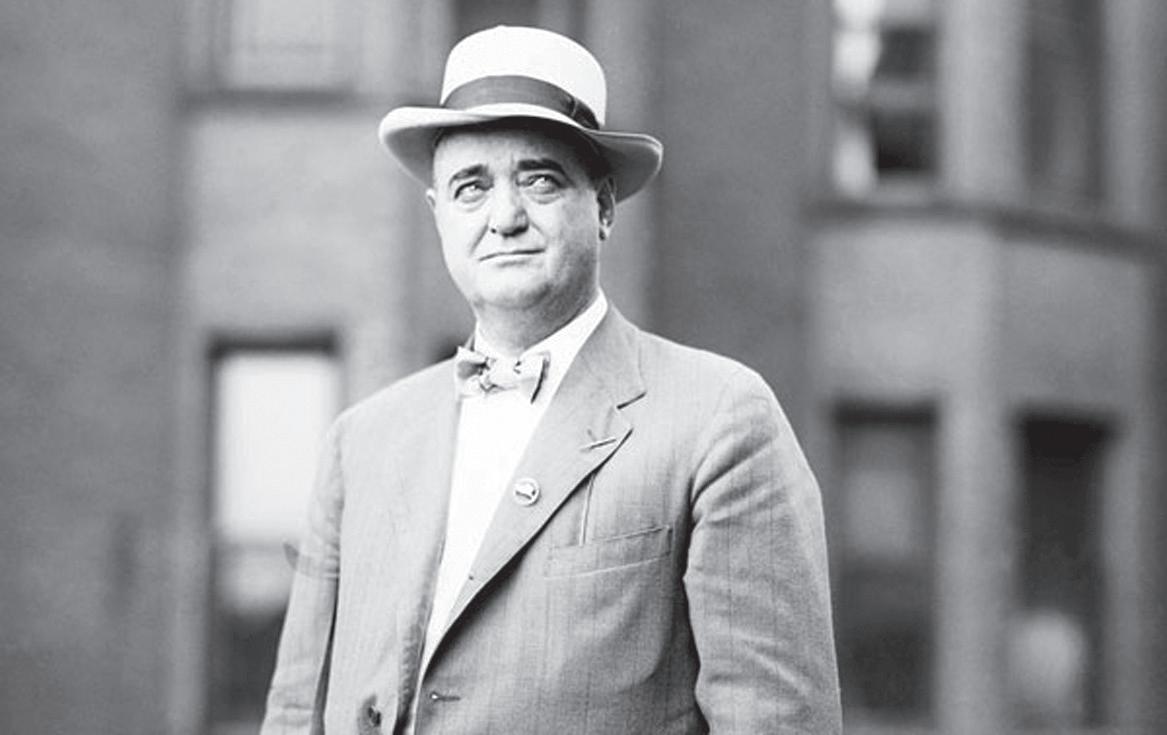
Gunplay erupted and King was left dead, but before falling he got off a shot
that killed the woman and hit Masterson in the pelvis, leaving him with a limp for

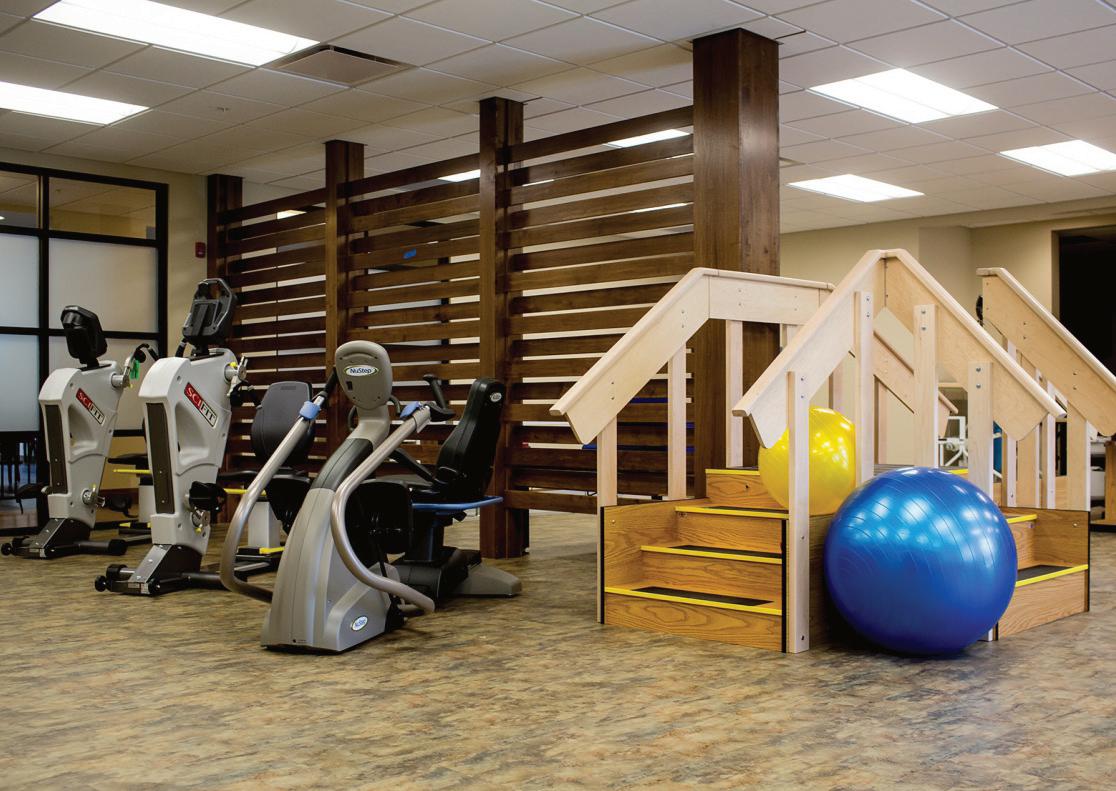


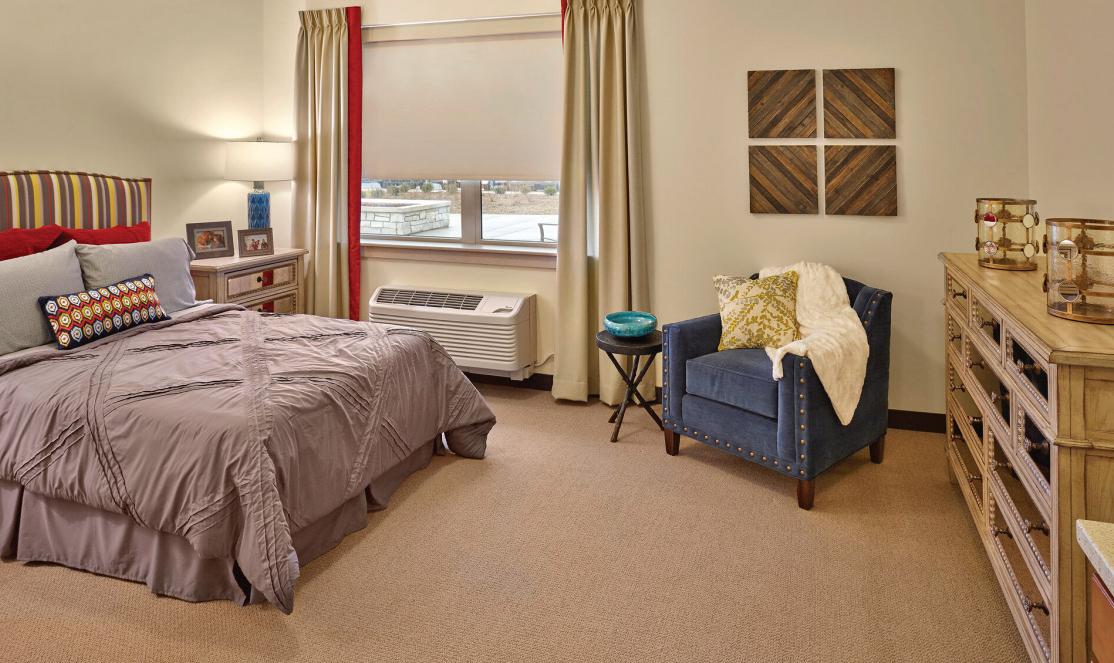
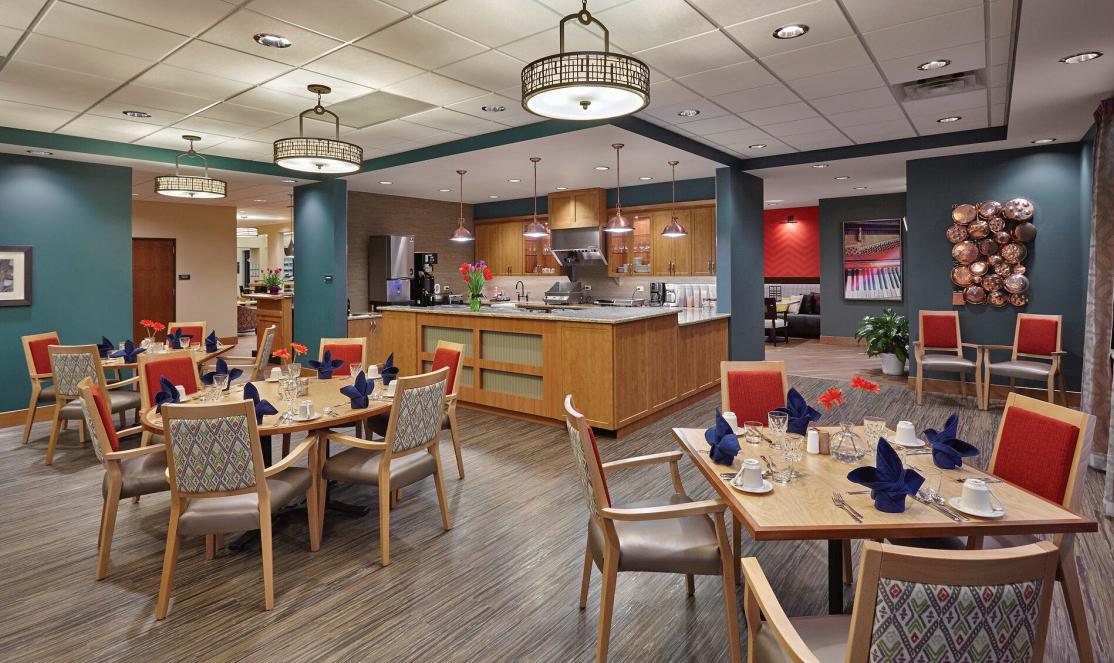
the rest of his life.
In that same year, he became a lawman along with his friend Wyatt Earp and was appointed an under-sheriff by Ford County Sheriff Charles Bassett. At the same time, his brother Ed became an assistant marshal of Dodge City. Among his friends at that time was the notorious gambler and gunfighter John “Doc” Holiday, whom Masterson once described in a newspaper column as a “most picturesque character on the western plains.”
Dodge City was known then as a “wicked little town” and cattle drives replaced the buffalo hunts as longhorn cattle were driven up from Texas along the western branch of the Chisholm Trail to the railroad.
Masterson moved to Denver in the mid-1880s and established himself as a “sporting man,” which was a popular label for being a gambler. He took an interest in prizefighting and became a leading authority on the sport, attending almost every important match and title fight in the United States from the 1880s until his death in 1921. He became such an authority on prizefighting he refereed a number of important matches.
In 1902, he moved to New York City and spent the rest of his life as a reporter and columnist for the Morning Telegraph. His column covered boxing and other sports and frequently included his editorial opinions on crime, war, politics and other topics such as his experiences in the Old West.
During his years in New York City he became a close friend of President Theodore Roosevelt and was one of his so-called “White House Gunfighters” who received federal appointments from the president along with other frontier lawmen Pat Garrett and Ben Daniels.
By the time of his death on Oct. 25, 1921, Masterson was known throughout the nation as a leading sportswriter and celebrity.