The Outtop presents...

RENEWED LUKE 24:13-53
KEY VERSES PER MAIN VERSES (HIGHLIGHTED IN BLUE):
A. Luke 24:13-27; Deuteronomy 31:6; Matthew 28:20; Mark 10:45; Luke 10:1-17; Acts 17:2-3
B. Luke 24:28-35; Proverbs 16:9.
C. Luke 24:36-53; Matthew 24:26, 28:8-10; Luke 24:33-34, 36-37; John 20:11-18; Acts 10:40-41; 2 Corinthians 7:5.
THE LESSON
Setting the Stage
Jesus has been crucified. The Son of God was perfect, innocent of all charges brought against Him by the religious leaders and rulers. During His ministry, many had witnessed the miracles He performed and had heard admiringly His teachings. Yet, near the end of His life, these people chose a murderer, Barabas, over the Son of God.
However, the Good News comes! On the third day following the crucifixion, several women including three women Luke identified as Mary Magdalene, Mary the mother of James, and Joanna came to the tomb. They brought spices to anoint Jesus’ body. But when they got to the tomb, the large heavy stone in front had been rolled away! The tomb was empty!
A. The Lord is Next to Us - In This Case, On the Road to Emmaus
Luke 24:13-27
KEY WORD(S): MAIN CHARACTERS:
Disciples, crucifixion, empty tomb, redeem, resurrection, suffering servant, invite, faith, ascension
God, Jesus, Disciples
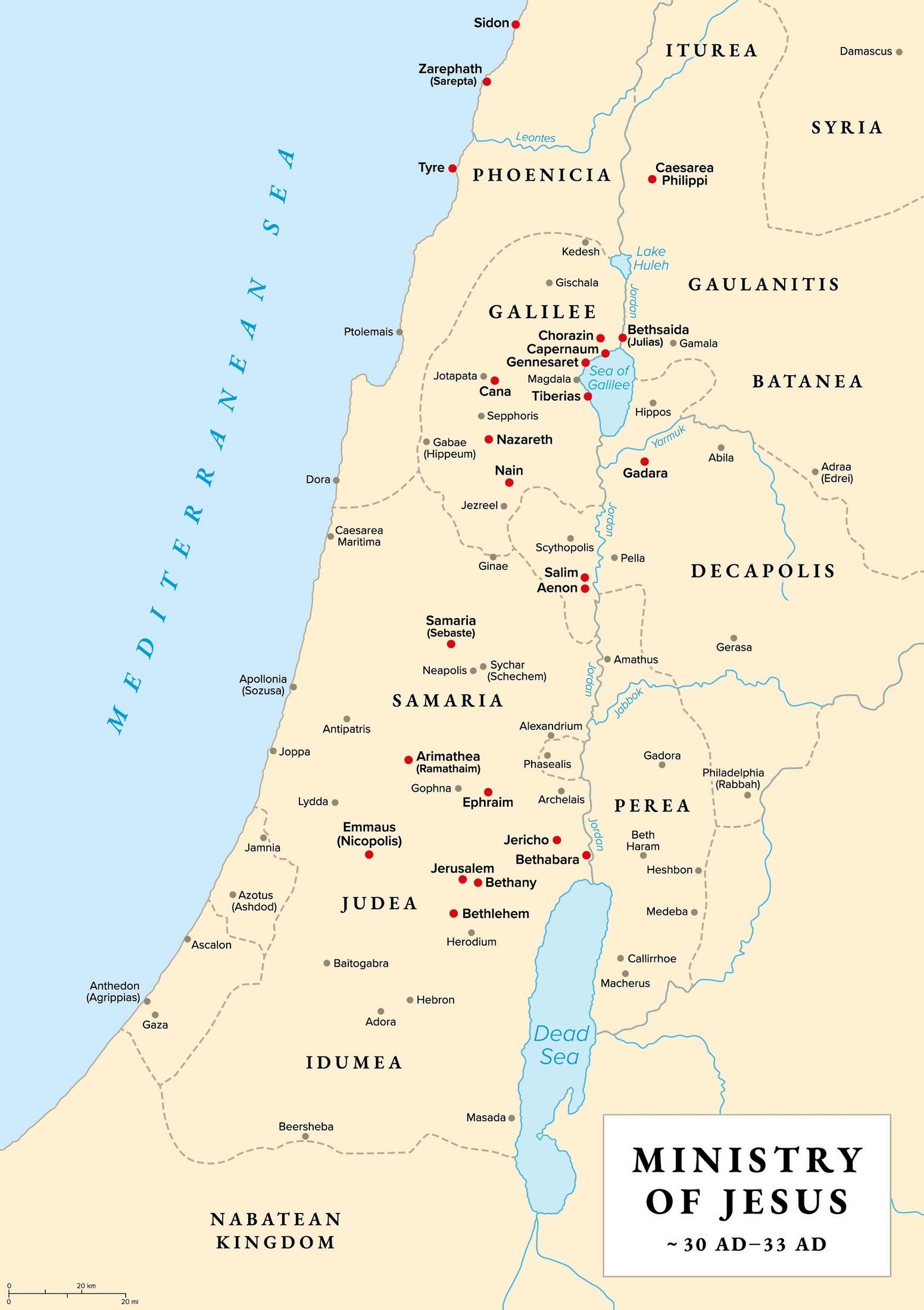
What’s the farthest you’ve had to walk? We are told in the Bible that the town of Emmaus was about seven miles outside of Jerusalem. Two men this day were walking to this village. It is believed that these two men were disciples of Jesus - perhaps part of the seventy-two men that Jesus had sent out earlier to the towns where He Himself would go. (See Luke 10:1-17) One of the men is identified in verse 18 as Cleopas.
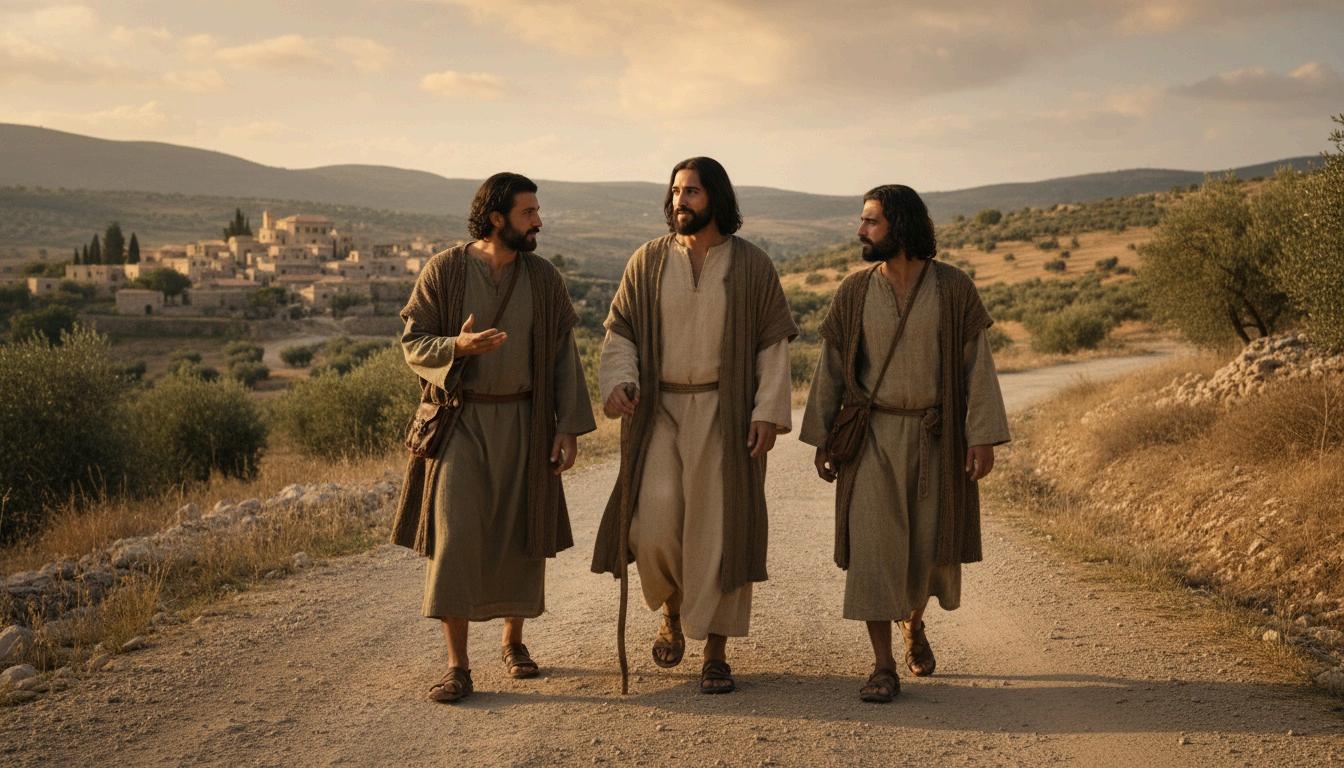
While they were talking and discussing together, Jesus Himself drew near and went with them. But their eyes were kept from recognizing Him. 15 16

As Jesus did with these men, He does today - He walks us, whether we are on top of a mountain rejoicing good news or in a valley dealing with troubles or ships. Think about the Israelites walking across the erness toward the Promised Land. Moses had been appointed leader. He brought them through the ils of the journey. However, Moses was not only a leader for God and His people; he was an encourager. re handing over the reigns over to Joshua, Moses told eople in Deuteronomy 31:6: “Be strong and ageous. Do not fear or be in dread of them, for it is the LORD your God who goes with you. He will not leave you or forsake you.” For us today, we must also march forward in faith, telling others about the Gospel, knowing that Jesus is with us. (See Matthew 28:20.)
Luke 24:13-27 (cont.)
Both men had heard the news about Jesus and they were no doubt sad about His crucifixion. They were followers of Jesus - a man they believed in who was now dead. On top of this, they were aware that the tomb where Jesus lay was empty! Imagine the emotions running through their heads. Then, in the next moment, a man came up beside them. A man they did not recognize.
Jesus decides to partake in the conversation He asks the question ”What is this conversation that you are holding with each other as you walk?” You can just imagine the expressions on the faces of these two men upon being asked this question. Perhaps they looked astonished. Or amazed. Or surprised. Verse 17 tells us the men came to a halt with a depressed look upon their faces. Cleopas asked Jesus in wonderment, “Are you the only visitor to Jerusalem who does not know the things that have happened there in these days?” Jesus replies with “What things?”
Not knowing it was Jesus to whom he was speaking to, Cleopas then proceeded to talk of “Jesus of Nazareth,” calling Him a “prophet mighty in deed and word.” He goes on to tell of Jesus being “condemned to death.”
Let’s look at verse 21, in which Cleopas says “But we had hoped that he was the one to redeem Israel.” What does the word redeem mean to you? It means “to set free, rescue or ransom.” Didn’t Jesus do just that? Didn’t He set us free from our sins? Didn’t He rescue us from the hands of Satan? Didn’t He come as a ransom to many? (See Mark 10:45)
Regarding verses 21 through 24, Dr. David Jeremiah says: “For these two men, when Jesus dies on the cross, all their hopes of rescue from Roman opposition had died with Him. Because their hope was done, they discounted the testimony of the women at the empty tomb.”
But it is the empty tomb - the resurrection of Jesus - that instills our hope for eternity. God came to earth as a baby. This baby, named Jesus, came to redeem us. From the beginning, Jesus has been there for us. He came to die for us. Let me say that again - He came die for us. Acts 17:2-3 tells us:
And Paul went in, as was his custom, and on three Sabbath days he reasoned with them from the Scriptures, explaining and proving that it was necessary for the Christ to suffer and rise from the dead, and saying: “this Jesus, whom I proclaim to you, is the Christ.”
Luke 24:13-27 (cont.)
In verse 25, after listening to these two followers, Jesus rebukes or reprimands both for the misunderstanding they had of what had occurred. They, as well as we today, must be knowledgeable of ALL the Scriptures in the Bible. Jesus, the Messiah, certainly came as a ruling king. However, as Acts 17:23 tells us, Jesus also came as a “suffering servant.” This was made known to us via the prophecies in the Old Testament, which spoke of the suffering, death, and resurrection that the Messiah would incur. See Psalm 22:1, 16-18; 34:20; Zechariah 12:10; Isaiah 50:6; 53 on page 6.
Luke 24:28-35
The three were finally close to the town of Emmaus. They were undoubtedly relieved to see some familiarity of the village. Have you ever been on a trip to a place you’ve been before? You’re tired and anxious to stop for the day. As you get closer to your destination, you begin recognizing buildings and houses. No doubt the travelers did too! Being tired, I’m sure it was a relief to be near home.
However, the visitor (Jesus) didn’t appear that He was going to stop. He was not going to invite Himself into their home. He would have kept walking. What would be His reason for doing so or thinking such? Well, those of us who want Jesus in our lives, our hearts, must invite Him in. We must be insistent or adamant on extending such an invitation. Why wouldn’t we be? If you have (and these disciples have as well) encountered the joy and benefit of fellowship with Christ, you would want to continue to seek more of His company. Dr. Jeremiah says “He waited until they invited Him in, and then He became a crucial part of their lives.” Isn’t that what we want Him to be in our lives - an essential, all-important person who lives in our hearts. And directs our ways or paths. (See Proverbs 16:9)
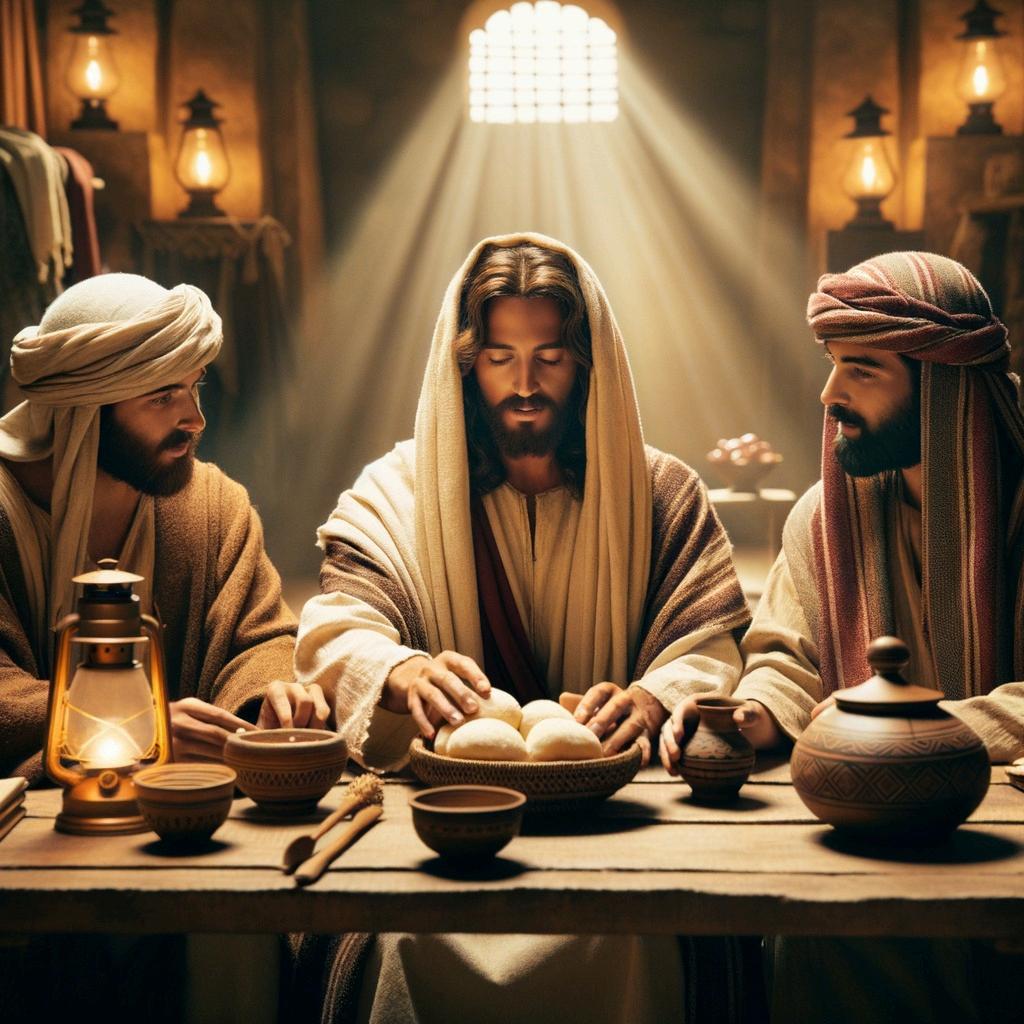
Jesus, upon the invitation, decides to enter their home. In verse 30, sitting at the table where they ate, Jesus “took the bread and blessed and broke it and gave it to them.” Now, the bread that He broke was a whole loaf. Dr. Jeremiah believes that Jesus had an unmistakable way of tearing the bread that identified to the followers that He was the Messiah! When they realized who He was, He disappeared! (See verse 31)
Aaron M. Renn states in his book, Life in the Negative World, that “living in a world of risk” still means that we “walk by faith in God’s promises, being watchful and alert, and always praying.”

Regarding Jesus rebuking the travelers, in verses 25 and 26, the message to them can be the same for us today. Matthew Henry Commentary puts it this way: “If only we were more familar with the Scriptures, and the divine purposes as far as they are made known in Scripture, we would not be subject to the perplexities we often get caught up in.”

Hmm. What are perplexities? Well, other words might be: worries, confusions, suspicions, doubts.
Middle Eastern bread, more specifically that from Jerusalem, is not made for slicing but for tearing and breaking. Food is shared by hand, making slicing unnecessary.



Luke 24:28-35 (cont.)
How do you think these two people felt, realizing that Jesus had visited them? They knew He died on the cross. They heard the tomb was empty! And now they realized that Jesus had been in their presence! Imagine that!
These two men, excited with their news of Jesus, went back to Jerusalem to tell the eleven disciples. (See verse 33) Have you ever run so fast in excitement that you end up tripping over yourself? Perhaps these men did the same! Upon returning to Jerusalem and seeing the disciples, one can only imagine how thrilled they were to hear from them that “The Lord has risen indeed, and has appeared to Simon!” The two would then tell them their experience on the road to Emmaus, and how Jesus made Himself known to them upon “the breaking of the bread.”
C. Jesus Appears to His Disciples
Luke 24:36-53
Did you know that Jesus was seen at least five times on the same day He rose (Resurrection Sunday)?:
1.While Mary Magdalene, Joanna, and Mary the mother of James and Joseph were the first to see the empty tomb, it was Mary Magdalene who first saw Jesus. (See John 20:11-18)
2 The women who had seen the empty tomb and were going to tell Jesus’ disciples, were met by Jesus! (See Matthew 28:8-10)
3.On their way to Emmaus, two disciples of Jesus are joined by Him (but they at first don’t know it is Jesus!). See the story above.
4.Jesus appeared to Simon Peter as proclaimed by the eleven disciples and others gathered. (See Luke 24:33-34)
5.Later in the day, Jesus appears to the eleven disciples who were gathered in a room behind a locked door. (See Luke 24:36)
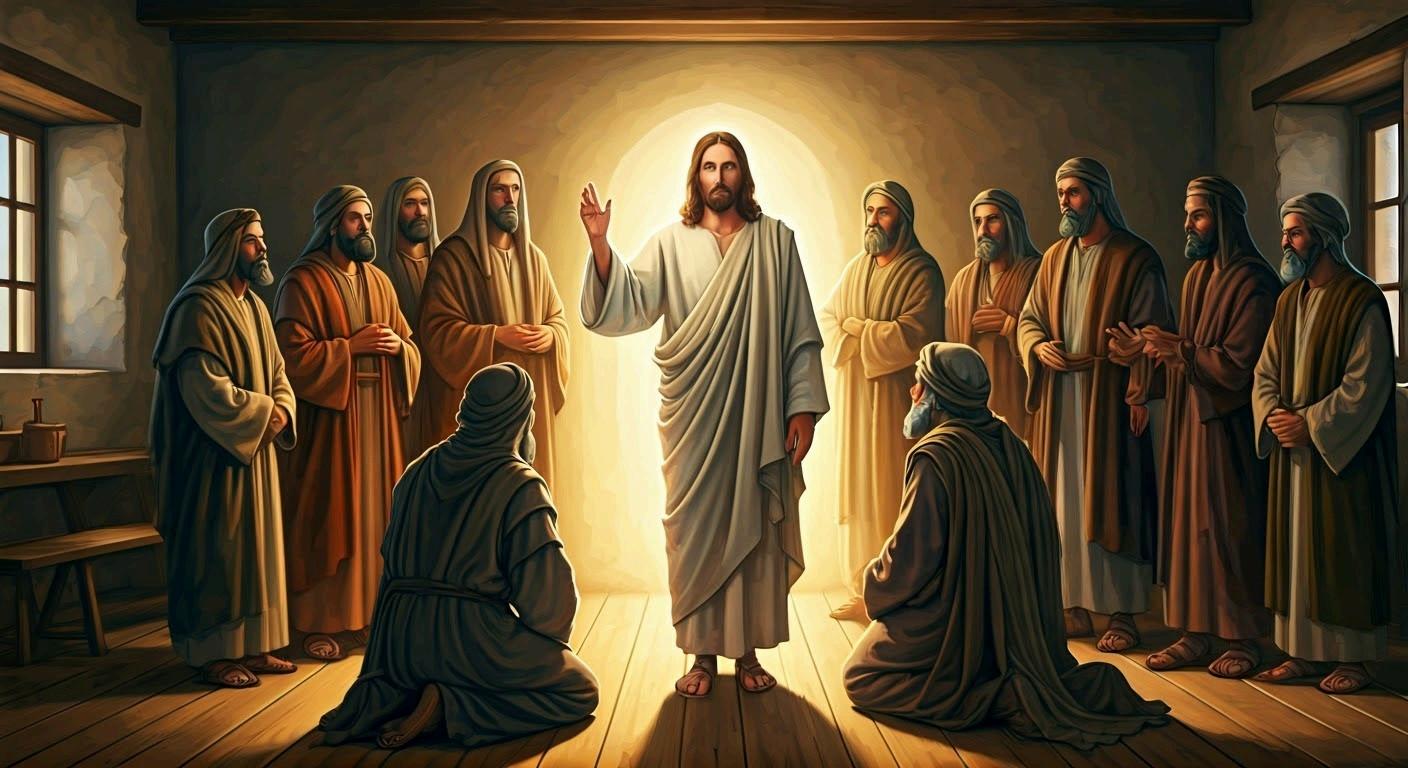
Drenched with sadness. Frightened. Bewildered. Hopes Dashed. The eleven disciples, with all these emotions, were hiding in this upper room, hiding behind a locked door. What will happen now they no doubt wondered. Then Jesus appears! What does Jesus say to the eleven disciples upon entering the room? He says:
“Peace to you.”
These three words were meant to encourage the disciples! The word “peace” conveyed both the love and friendship He had for His disciples. With these words, Jesus was telling them that He had risen - defeating both sin and death.
Luke 24:36-53 (cont.)
What would your reaction be at this moment? Verse 37 tells us the men were “startled and frightened and thought they saw a spirit.” What do you think they believed they saw? A ghost perhaps. Remember in Matthew 14:26, when the disciples were in a boat “a long way from the land,” they saw Jesus walking on the water of the sea. How could this be? They cried out fearfully “It is a ghost!” Now, in this upper room, they see a resurrected Jesus - a supernatural, allpowerful moment.
And Jesus says to His disciples, and to us today during frightening and troubling moments in our lives, “Why are you troubled and why do doubts arise in your hearts?”
A few thoughts from the Matthew Henry Commentary:
1.Negative thoughts, thoughts that harm us, “arise in our hearts.” The apostle Paul tells us that there is “fighting” or conflict outside of us and anguish or fear inside of us [in our hearts] (see 2 Corinthians 7:5).
2.That some of our “troublesome thoughts with which our minds are disturbed arise from our mistakes about Christ. Here, in Luke 24:37, it is stated that “they [thought] they saw a spirit.” Actually, they saw Christ.
3 It is comforting to know that Jesus knows the thoughts in our hearts - all of them - and He will rebuke us when such thoughts are not correct.
How did Jesus silence the fears His disciples had and restore their faith? He showed them “His hands and His feet.” (See verse 40) Jesus then asked for food to eat. (See verse 41) In Acts 10:40-41, Peter says “but God raised Him on the third day and made Him to appear, not to all the people but to us who had been chosen by God as witnesses, who ate and drank with Him after He rose from the dead.”
We read in verses 50-53 the ascension of Jesus to heaven accompanied by His blessing upon His followers and the subsequent worshiping of Him by His disciples.
“who gave Himself for us to redeem us from all lawlessness and to purify for Himself a people for His own possession who are zealous for good works.’
Titus 2:14
During His Ministry, Jesus Foretold of His Pending Death
And He strictly charged and commanded them to tell this to no one, saying, “The Son of Man must suffer many things and be rejected by the elders and chief priests and scribes, and be killed, and on the third day be raised.”
Luke 9:21-22
Jesus told His disciples, "and after flogging Him, they will kill Him, and on the third day He will rise.”
Luke 18:33

Before Jesus ascended to heaven, He gave an instruction to His disciples known as the Great Commission:
“Go therefore and make disciples of all nations baptizing them in the name of the Father and of the Son and of the Holy Spirit.”
Matthew 28:19
What does it take to disciple others? To bring people to Christ who will then bring others to Christ?
Paul tells us in Galatians 6:6-10:
Let the one who is taught the word share all good things with the one who teaches. Do not be deceived: God is not mocked, for whatever one sows, that will he also reap. For the one who sows to his own flesh will from the flesh reap corruption, but the one who sows to the Spirit will from the Spirit reap eternal life. And let us not grow weary of doing good, for in due season we will reap, if we do not give up. So then, as we have opportunity, let us do good to everyone, and especially to those who are of the household of faith.
Jessie Cruickshank states in her book Ordinary Discipleship, “Jesus has gone first. It is up to you how far you will follow Him.”
“I will put enmity between you and the woman, and between your offspring and her offspring; he shall bruise your head, and you shall bruise his heel.”
Genesis 3:15
Then the LORD sent fiery serpents among the people, and they bit the people, so that many people of Israel died. And the people came to Moses and said, “We have sinned, for we have spoken against the LORD and against you. Pray to the LORD, that He take away the serpents from us.” So Moses prayed for the people. And the LORD said to Moses, “Make a fiery serpent and set it on a pole, and everyone who is bitten, when he sees it, shall live.”
So Moses made a bronze serpent and set it on a pole. And if a serpent bit anyone, he would look at the bronze serpent and live.
I gave my back to those who strike, and my cheeks to those who pull out the bear; I hid not my face from disgrace and spitting.
Isaiah 50:6
"Behold, the days are coming, declares the LORD, when I will raise up for David a righteous Branch, and he shall reign as king and deal wisely, and shall execute justice and righteousness in the land. In his days Judah will be saved, and Israel will dwell securely. And this is the name by which he will be called: The LORD is our righteousness.”
6 Jeremiah 23:5-6
11
Therefore my heart is glad, and my whole being rejoices; my flesh also dwells secure. For you will not abandon my soul to Sheol, or let your holy one see corruption. You make known to me the path of life; in your presence there is fullness of joy; at your right hand are pleasures forevermore. 9 10
Psalm 16:9-11
My God, my God, why have you forsaken me? Why are you so far from saving me, from the words of my groaning?
Psalm 22:1
For dogs encompass me; a company of evildoers encircles me; they have pierced by hands and fee - I can count all my bones - they stare and gloat over me; they divide my garments among them, and for my clothing they cast lots.
He keeps all his bones; not one of them is
And after the sixty-two weeks, an anointed one shall be cut off and shall have nothing. And the people of the prince who is to come shall destroy the city and the sanctuary. Its end shall come with a flood, and to the end there shall be war. Desolations are decreed.
Daniel 9:26
"And I will pour out on the house of David and the inhabitants of Jerusalem a spirit of grace and pleas for mercy, so that, when they look on me, on him whom they have pierced, they shall mourn for him, as one mourns for an only child, and weep bitterly over him, as one weeps over a firstborn.”
Zechariah 12:10