
BY DAVE ESHLEMAN
In Mike Nichols’ Oscar-winning 1967 film The Graduate, young Benjamin Braddock was given one word of advice regarding his business future: “Plastics!”
Now, nearly sixty years later, that advice has come back to haunt us all. The world is awash in plastic waste. Microplastic particles pollute
our food, our water, even our blood. It is estimated that ten million tons of plastic ends up in the ocean every year. And the problem is getting worse. Plastic production is expected to triple by 2060, according to the Global Plastics Outlook Database.
While we may feel we’re doing our part by putting plastics in our recycling bins,
the sad truth is that only about 10% ever gets recycled. While worldwide action is needed to mitigate the crisis, Saratoga Rotarians Nancy Shih and Phil Young decided to act locally.
In April of 2025, the two kick-started a collection drive with the goal of collecting 1,000 pounds of plastic waste over one year. By January, 2026, they announced that their lofty

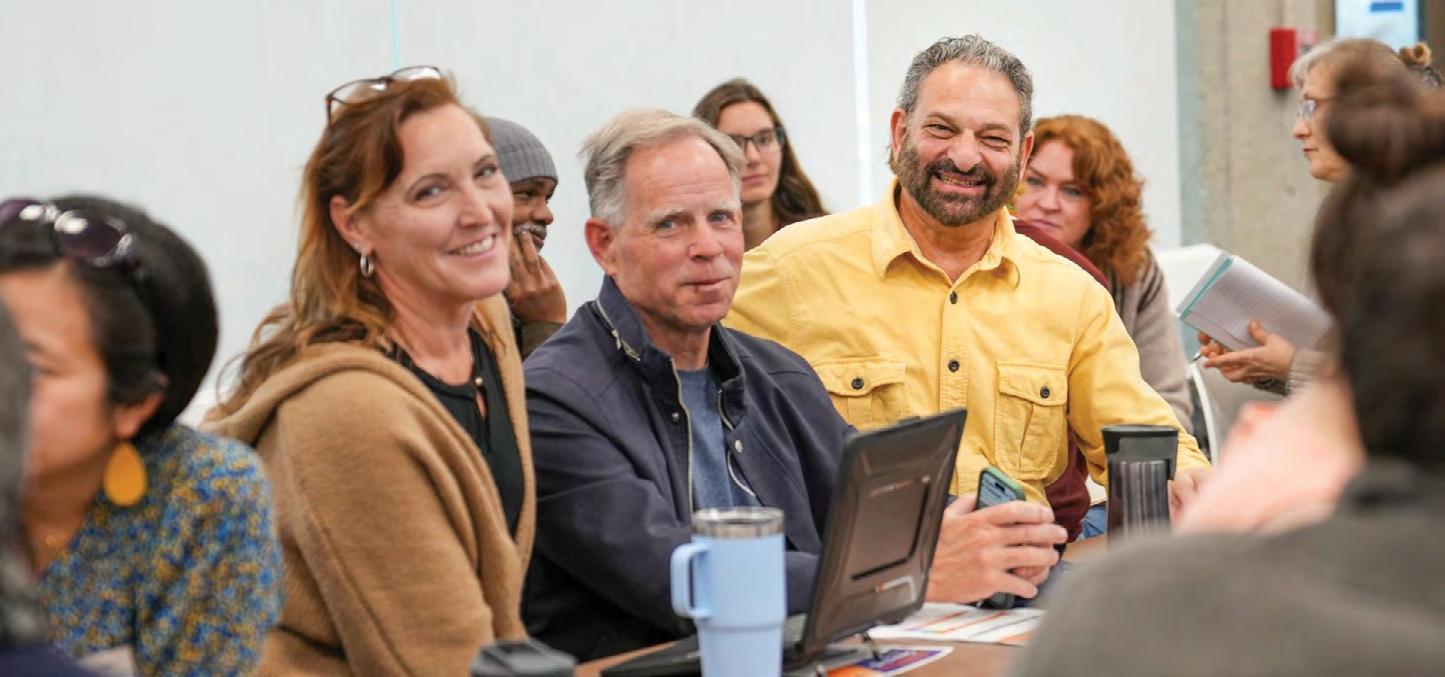
In preparation for spring semester, faculty and staff at West Valley College gathered on Jan. 23 in the new Wang and Qu Learning Resource Commons for All College Day, an annual campuswide convening focused on alignment, planning, and shared institutional direction.
The event brought together employees from across instruction, student services, and operations to share updates, discuss priorities, and reflect on how their work
goal had been met in less than nine months.
“We were overwhelmed by the support we received,” Young said. “From the very first day, our Rotary Club members were enthusiastically stuffing our collection boxes to the brim.”
Rather than ending up in a landfill or worse, the plastic will be converted into durable
outdoor decking and furniture by NexTrex, which will build a bench that the Rotary Club will donate to the citizens of Saratoga. The bench, complete with a plaque explaining its origin, will be installed near the Joan Pisani Community Center and Saratoga Senior Center. But now that the goal has been met,
BY MENDY MAO
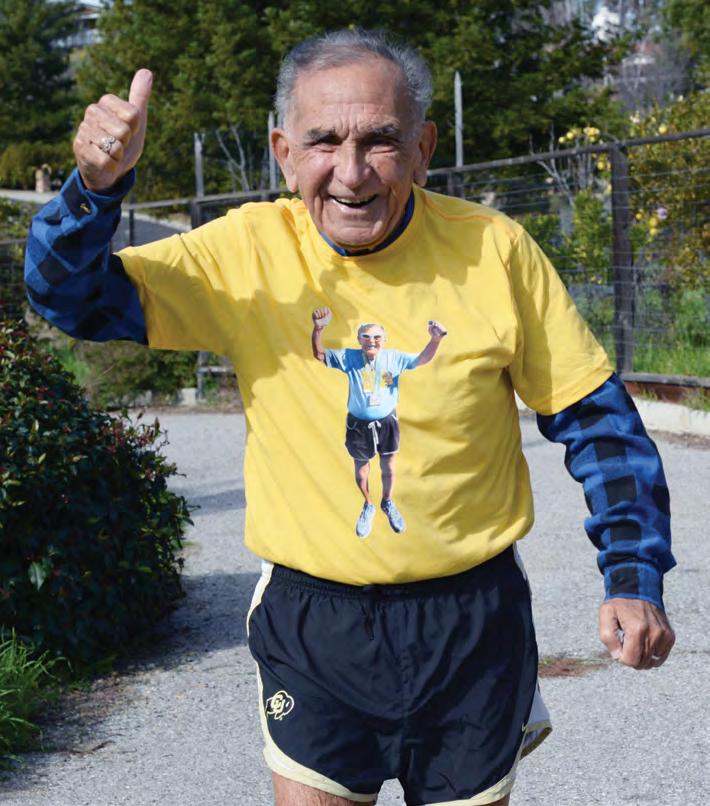
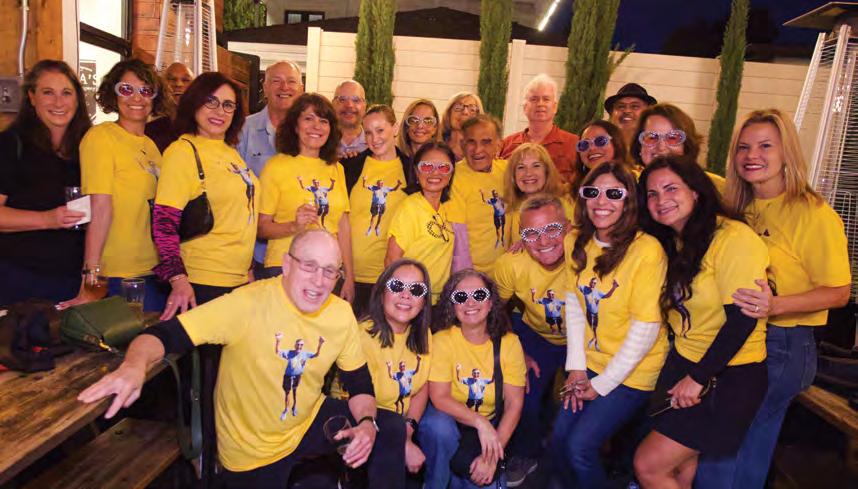
The finish line is in sight. After 26 miles of running, Dr. Moshe Zloof takes the final stride, adding yet another marathon to his record. He raises his arms in victory.
Gesturing to his bright yellow running shirt, with a photo of himself in that moment printed on the front, 88-yearold Moshe explains his love for long-distance running. After starting to run at age 67, he has
completed 38 marathons and an assortment of over 100 longdistance runs. He plans to run another marathon this February.
“Many people my age, they view themselves as going down,” Moshe said. “I don't accept that premise. So I developed a concept called ‘minimum necessary.’ In other words, what is the minimum necessary required to solve a problem?” That philosophy guides nearly every part of Moshe’s

City of Saratoga, Town of Los Gatos, and City of Monte Sereno Council, Commission, & Committee
STAFF:
Executive Editor & Publisher
Tylor Taylor
tylor@sascc.org
Managing Editor
Brandy Maddox brandy@sascc.org
Designer
Tanya Marutova
tanya@sascc.org
Community Relations Liaison
Nimai Kumar nimai@sascc.org
CONTRIBUTORS:
Dave Eshleman
Mendy Mao
Lloyd Russell
Lon Allen
Annette Stransky
Quincy C.
Emilia S.
Tonya Graham McQuade
Sue Fenton
The Outlook is a collection community newspapers Los Gatos, Saratoga, Monte Santa Clara, and Cupertino. deliver accessible, uplifting, hyperlocal journalism that connection, encourages civic engagement, and people, events, and everyday moments that enrich
City Council: Feb. 18, March 4, 7 p.m. (Council Chambers) saratoga.ca.us/241/City-Council
Youth Commission: Feb. 24, 7-9 p.m. (Linda Callon Room) saratoga.ca.us/337/YouthCommission
Planning Commission (special meeting): Feb. 25, 7 p.m. (Council Chambers) saratoga.ca.us/357/PlanningCommission
Traffic Safety Commission: March 12, 6:30-9:30 p.m. (Linda Callon Room) saratoga.ca.us/329/TrafficSafety-Commission Library & Public Art Commission: March 16, 7-9 p.m. (Linda Callon Room) saratoga.ca.us/330/LibraryCommission
Development Review Committee:
Town Council: Feb. 17, March 3, 7 p.m. (Council Chambers) losgatosca.gov/16/TownCouncil
Diversity, Equity, and Inclusion Commission: Feb. 19, 5-7 p.m. (Council Chambers) losgatosca.gov/2951/ Diversity-Equity-andInclusion-Commissio
Historic Preservation Committee: Feb. 25, 4 p.m. (Council Chambers) losgatosca.gov/190/ Historic-Preservation
Planning Commission: Feb. 25, March 11, 7 p.m. (Council Chambers) losgatosca.gov/189/ Planning-Commission
Committee: March 11, 4 p.m. (Council Chambers) losgatosca.gov/200/ Conceptual-Development Complete Streets and Transportation Commission: March 12, 7:30 a.m. (Parks and Public Works) losgatosca. gov/2555/Complete-StreetsTransportation-Commissi
City Council: Feb. 17, March 3, 7 p.m. (Council Chambers)
Send letters to the editor, story ideas, feedback, and questions to outlook@sascc.org . Letters may be edited for length and
We are committed to accuracy and fairness. If you notice error or believe a story clarification, please email outlook@sascc.org with “Correction” in the subject We will review all requests promptly and publish of serving Sereno, We and fosters highlights the community life for all ages. clarity. an requires line. corrections or updates as appropriate. Monte Cupertino?
Interested in reaching readers in Los Gatos, Saratoga, Sereno, Santa Clara, and Contact us at advertise@sascc.org for advertising opportunities.
PUBLISHED BY
Finance Advisory Committee: March 9, 4 p.m. (Linda Callon Room)
View agenda and meeting info at saratoga.ca.us/359/FinanceAdvisory-Committee
Feb. 17, 24, March 3, 10, 10 a.m. (Council Chambers) losgatosca.gov/188/ Development-ReviewCommittee
Note: these meetings are often canceled. Please check the webpage for updates.
Community Health and Senior Services Committee: Feb. 26, 4 p.m. losgatosca.gov/278/ Community-Health-SeniorServices-Commiss Conceptual Development Advisory
Site and Architectural Commission: Jan. 21 (Special Meeting), March 4, 7 p.m. (Council Chambers)
Agendas & meeting info: tinyurl.com/35w4sdsy
Meeting places, Zoom links, and call-in information are contained in each respective meeting agenda. Agendas are typically uploaded the Friday before each meeting. All meetings are subject to change or cancelation. Check the meeting links prior to each meeting or call your local town clerk for questions.
Saratoga City Clerk’s office: 408-868-1216
Los Gatos Town Clerk’s office: 408-354-6834
Monte Sereno City Clerk’s office: 408-354-7635

CITY ADOPTS EXPLICIT SHORT-TERM RENTAL BAN WITH ENFORCEMENT PENALTIES
The Saratoga City Council moved forward with a citywide prohibition on short-term rentals (STRs) after a 4-1 vote on Jan. 21 to introduce the ordinance, adding an explicit prohibition to municipal code where STRs had previously been implicitly disallowed. As of February 2026, about 17 STRs were listed in Saratoga despite the prior implicit prohibition.
Council formally adopted the ordinance Feb. 4, explicitly banning STRs, prohibiting advertising or arranging rentals, and establishing escalating penalties for violations, including fines starting at $1,500. The decision followed the Jan. 21 public hearing, where a handful of residents strongly opposed STRs, citing concerns about parking, trash, noise and unfamiliar visitors.
Council member Belal Aftab cast the lone dissenting vote during the initial action, supporting regulation of STRs, citing benefits for combatting older adult loneliness and supplementing fixed income. At the Feb. 4 meeting, Mayor Chuck Page changed his vote from the Jan. 21 action, but the motion to adopt the ban still passed.
COUNCIL APPROVES
WILDFIRE-FOCUSED TREE ORDINANCE CHANGES
The Saratoga City Council approved amendments to the city’s tree regulations at its Feb. 4 meeting, advancing new wildfire safety standards that include a five-foot ember-resistant zone around structures and updated rules for tree removal near buildings.
The ordinance followed a public hearing Jan. 21, when council introduced the measure aimed at strengthening fire protection citywide. The updated regulations replace references to “zone zero” with “emberresistant zone” language and require the protective zone to be established and maintained around structures before certain tree removal permits are issued.
The Saratoga City Council unanimously authorized staff to issue a request for proposals for an executive search firm to recruit the city’s next city manager.
The recruitment contract is capped at $40,000. Proposals are due Feb. 19, with firm interviews scheduled for Feb. 24, a tentative recruitment launch date of March 16, and the goal of hiring a new city manager after July 1. During
public comment, residents urged the council to consider Acting City Manager Leslie Arroyo as a candidate and suggested agendizing a future item to gather community input on desired qualifications.
SARATOGA PROCLAIMS
FEBRUARY AS NATIONAL SENIOR INDEPENDENCE MONTH
The Saratoga City Council will issue a proclamation Feb. 18 declaring February 2026 as National Senior Independence Month, recognizing the role of older adults in the community and the importance of programs that support aging in place.
The proclamation will highlight access to supportive services, social connection and lifelong learning as key factors in maintaining independence and quality of life for seniors. Council members will also recognize Successful Aging Solutions & Community Consulting (SASCC) for its ongoing work providing programs, resources and advocacy for older adults and caregivers in Saratoga.
COUNCIL APPROVES NORTH 40 PHASE II MIXEDUSE HOUSING PROJECT
The Los Gatos Town Council approved the North 40 Phase II development during a Jan. 13 special meeting, advancing a mixed-use project that includes 450 housing units under Senate Bill 330.
The project, located along Los Gatos Boulevard and Burton Road within the North Forty Specific Plan area, includes 77 deed-restricted affordable units — 16 of them for individuals with developmental disabilities — and publicly accessible open space. Council adopted the resolution in a 3-2 vote following extensive public comment, with some speakers supporting affordable housing, including units for individuals with developmental disabilities, while others raised concerns about the project’s scale and impacts.
Council added several conditions of approval, including requirements related to publicly accessible open space and affordability preferences before final approval. The development contributes toward statemandated housing goals.
COUNCIL APPROVES
ZONING CHANGE FOR 4 TAIT AVE.
The Los Gatos Town Council approved a zoning change and General Plan amendment for property at 4 Tait Ave., shifting its designation from central business district to medium-density residential use. The action followed a recommendation from the
Planning Commission and received public support during the Jan. 20 hearing.
Mayor Rob Moore said in a newsletter that the rezoning of the former firehouse property allows it to be marketed for residential use after several years of unsuccessful commercial leasing efforts, while requiring historic preservation of the building and reducing ongoing maintenance costs for the town.
Council members approved the change 3-0, with one member recused due to proximity to the site and another absent. The ordinance included making the required finding that there is no possibility the project will have a significant environmental impact.
TOWN EXPLORES POSSIBLE 2026
REVENUE MEASURE
Council members voted to begin evaluating potential revenue measure options for the November 2026 ballot, directing staff to seek legislative authority that could allow Los Gatos to exceed the statewide 2% sales tax cap.
The motion authorizes up to $80,000 from General Fund reserves to hire legal, financial and legislative consultants to study options and timelines. Council members emphasized the action preserves flexibility rather than committing to a tax proposal at this stage.
COUNCIL APPROVES MARY AVENUE VILLAS AFFORDABLE HOUSING
The Cupertino City Council approved Mary Avenue Villas on Feb. 3, advancing a 40-unit affordable housing development with units for residents with intellectual and developmental disabilities.
The project, by Charities Housing and Housing Choices, includes long-term affordability restrictions and was approved after debate over parking, traffic and neighborhood impacts. A motion to delay the project for further review failed before council adopted the agreement with modifications.
CORRECTION: In the January edition of the West Valley Outlook, Volume 11, Issue 1, we misspelled one of our contributor's names, Marcia Fariss, in both the masthead and her byline. We regret the error and appreciate Marcia's longstanding contributions to The Outlook.

INTERNATIONAL GUITAR NIGHT COMES TO MONTALVO
Montalvo Arts Center will host International Guitar Night on Feb. 19 at the Carriage House Theater. Four internationally known guitarists will perform solo, in duets and together beginning at 7:30 p.m. Tickets are $78 for reserved seating and $83 for premium. Visit montalvoarts.org for information.
PEACE ADVOCATE REV. MITRI RAHEB TO SPEAK IN SARATOGA
Rev. Mitri Raheb, an internationally recognized author, peace advocate and founder of Bright Stars of Bethlehem and Dar Al-Kalima University, will speak at 7 p.m. Feb. 20 at Prince of Peace Lutheran Church, 12770 Saratoga Ave. The free public event will explore themes of peace, reconciliation and the Palestinian experience. Raheb currently serves on a committee working on an interim constitutional framework and is widely known for promoting nonviolent dialogue during global conflict. Prince of Peace Lutheran Church hosts speakers on civic and international issues as a community service, with past programs addressing humanitarian efforts and
community empowerment initiatives. Admission is free. RSVP at propeace.breezechms. com/form/mitri
MISSION VALLEY CHORUS PRESENTS “A LITTLE ROMANCE”
The award-winning a cappella group Mission Valley Chorus will perform A Little Romance at 7:30 p.m. Feb. 21 at the Joan Pisani Community Center, 19655 Allendale Ave. The evening will feature music and desserts. Visit missionvalley. org/alittleromance for tickets and details.
SARATOGA LIBRARY HOSTS MONTHLY MYSTERY BOOK CLUB
The Saratoga Library’s Mystery Book Club meets the first Monday of each month from 7-8 p.m. Participants can sign up at the Adult Reference Desk to receive a copy of the selected book.
GEORGE BENSON TO PERFORM AT MOUNTAIN WINERY
Jazz guitarist and vocalist
George Benson will appear May 9 at 7:30 p.m. at the Mountain Winery. Benson began his professional career in 1962 and continues to tour internationally. Tickets range from $138 to $173. Visit mountainwinery.com for details.
BY LLOYD RUSSELL
POULENC TRIO TO PERFORM AT LGHS THEATER
The Los Gatos Community Concert Association presents the Poulenc Trio at the Los Gatos High School Theater on Sunday, Feb. 22, at 2:30 p.m. The ensemble, featuring bassoon, piano, and oboe, has performed together for 20 years and appeared in 47 states. Ticket prices range from $5 for students to $65 for families, with discounted season tickets available. Visit lgcca.org or email info@lgcca. org for more information.
FRIENDS OF THE LIBRARY BOOKSTORE SALE OFFERS MYSTERY BUNDLES
The Los Gatos Friends of the Library Bookstore, next to the Los Gatos Library at 100 Villa Ave., will host a book sale Feb. 14-28 featuring 10 mystery titles for $5. Members receive 15 mysteries for the same price.
PROGRAM EXPLORES LOS GATOS’ LOST CARNEGIE
LIBRARY
New Museum Los Gatos (NUMU), 106 E. Main St., will host a historical program examining the town’s longgone Carnegie Library, one of nearly 2,000 libraries funded nationwide by philanthropist Andrew Carnegie in the early
1900s. The original Los Gatos library opened in 1903 with a $10,000 Carnegie grant and closed in 1954. Featuring guest speaker Shawnte Santos of the Los Gatos Library, the program explores the history and legacy of the vanished landmark. Event runs from 11-11:45 a.m. March 12 and is free with registration. Register at numulosgatos. org/events/carnegie-talk.
CAMPO DI BOCCE PLANS ST. PATRICK’S DAY CELEBRATION
Campo di Bocce, 565 University Ave., will host a St. Patrick’s Day celebration from 11 a.m. to 11 p.m. March 17, featuring four full-service bars, five bands and green beer. Food will be served from 11 a.m. to 8 p.m., with last call at 10:30 p.m. Admission is $100 plus service fees. Visit campodibocce.com for details.
SORTA SISTERS BRING BAY AREA TOUR TO THE CATS RESTAURANT
The Sorta Sisters, a group of four women songwriters, will perform March 22 from 6-8 p.m. at The Cats Restaurant, 17533 Santa Cruz Highway. Visit linktr.ee/ sortasisters for more information.
HISTORIAN TO PRESENT PROGRAM ON MARY BROWN AT AINSLEY HOUSE
Educator, historian and author Tonya McQuade will present a talk on Mary Brown, widow of abolitionist John Brown, from 5:30-7:30 p.m. March 13 at the Ainsley House, 300 Grant St., Campbell. Admission is $25.
SILICON VALLEY READS EXPLORES “BRIDGES TO BELONGING” THEME Silicon Valley Reads runs Jan. 15 through March 31 with the theme “Bridges to Belonging.” Featured adult titles include "The Power of Bridging" by John A. Powell, "Mainline Mama" by Keeonna Harris, and "Unlikely Animals" by Annie Hartnett, along with youth programming and events.. Visit siliconvalleyreads.org for the full schedule
FOREIGNER MARKS 50TH ANNIVERSARY WITH ORCHESTRAL CONCERT Rock band Foreigner will celebrate its 50th anniversary with an 8 p.m. performance March 22 at the San Jose Civic, reimagining its music with a 20-piece orchestra. Visit sanjosetheaters.org for more information.
CUPERTINO HOSTS ANNUAL HOLI FESTIVAL OF COLORS
Cupertino’s Holi Festival of Colors returns from 11 a.m. to 4 p.m. March 28 at Memorial Park, 21121 Stevens Creek Blvd. The event will feature music, dancing and traditional color-throwing festivities. Visit cupertinochamber.org for details.
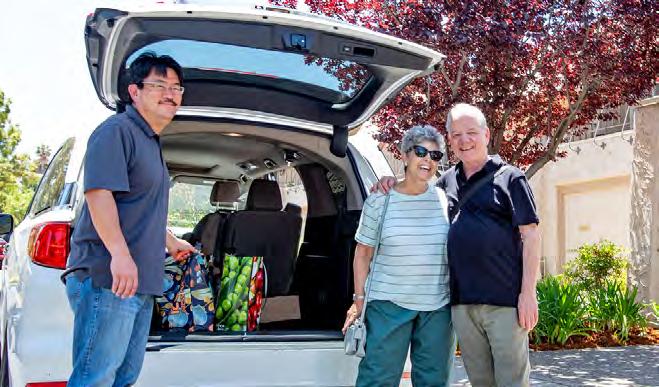

the collection drive will continue, according to Young.
“Now we’re helping the Southwest Y collect 1,000 pounds so that they can get their own bench," Young said.
“I’ve been interested in doing an environment-related project at a local level, and have not seen any relevant programs at our club,” Shih said. “I learned that the Los Altos Rotary Club had started a recycling drive. I thought we could do the same at our club.”
Shih teamed up with Young when she learned of their
common interest. Together, Young and Shih met with Los Altos Rotarians Laura Fay and Peter Landsberger to get more details, and made the decision to start the program in Saratoga.
The idea is simple: collect plastics from your home or office, bring them to the weekly Rotary meeting, and deposit them in a special bin. From there, club members will deliver the bags to their local Safeway, where they will then be forwarded to NexTrex.
However, it’s important to learn the types of plastic that are acceptable for the program: only low-density polyethylene
(type four). While that’s only one of many types of plastics, you’re likely to find plenty of it in your home:
• Grocery bags
• Ziploc bags
• Produce bags
• Case overwrap
• Bread bags
• Newspaper sleeves
• Dry cleaning sleeves
• Bubble wrap
• Cereal box liners
Here’s the easiest test: Is it slightly stretchable? That means it’s probably type four. Does it make a crinkly or crunchy sound in your hand?
Then it’s not! No frozen food bags, candy bar wrappers, chip
bags, pet food bags, or salad mix bags. You don’t have to be a Rotarian to participate. Just bring your collected plastics to the weekly Saratoga Rotary meeting, Fridays from 12:151:30 p.m., at the Joan Pisani Community Center, or directly to collection bins at The Southwest YMCA, Safeway, and Sprouts supermarkets.
For folks interested in being more mindful about plastics, Shih and Young say to avoid buying plastics whenever possible, re-use as many times as possible, dispose of them properly when they can no longer be re-used, and
advocate for laws to reduce our consumption of plastics.
In addition to the Los Altos Rotary Club, which has diverted nearly a ton of plastics from landfills, many other Rotary clubs have taken up the challenge. Rotarians in Poulsbo, Wash., have so far collected over 44,000 pounds of the stuff!
A cynic may say that it’s still a drop in the bucket. But when enough people spread the word and start acting locally, drops become streams, and streams become floods.
Want to participate? Contact Nancy Shih at nancyshih@me.com or Phil Young at pyoung@dbylaw.com
intersects. Sessions addressed topics ranging from teaching and equity to accreditation, enrollment strategy, and institutional storytelling, underscoring the interconnected nature of the college’s work.
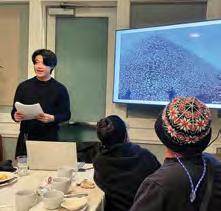
President Jennifer Taylor-Mendoza anchored the day with a presentation titled “Actualizing a Win for All,” outlining a framework that centers student success, mission alignment, barrier awareness, and collaboration across campus.
District leadership echoed those themes. Chancellor Brad Davis spoke to the importance
of coordination across instructional and operational areas, emphasizing shared responsibility in supporting student outcomes and institutional stability.
Updates shared throughout the day pointed to continued investment in both facilities and student support infrastructure.
Major projects underway or nearing completion include new wellness and creative spaces, a theater, and a recording studio scheduled to open March 5.
Additional initiatives discussed included expanded childcare capacity and enhancements to enrollment and financial aid services.
Conversations also addressed institutional
effectiveness and accreditation, with updates on assessment practices and data-informed planning. Faculty were encouraged to consider ways to integrate civic education, media literacy, and democratic engagement into coursework.
As the spring semester continues, All College Day marked a point of alignment for the campus, bringing together faculty, staff, and leadership to assess priorities and surface next steps. With new facilities opening and cross-campus coordination in focus, the gathering reflected a college taking stock of its direction and looking ahead to the months to come.

BY LON ALLEN, MAYOR OF MONTE SERENO
This is the second time that I have been privileged to serve as Mayor of Monte Sereno, the first time being 10 years ago.
As my young wife, Mary (we celebrate our 58th wedding anniversary this month), and I have made Monte Sereno our home for the past 46 years, I am again committed to maintaining our city’s unique and peaceful quasirural character.
My background as an attorney for 50 years — yes, 50! — was invaluable in preparing me to serve in local government for the past 15+ years, including on the Santa Clara County Civil Grand Jury, the County Juvenile Justice Commission, and
the County Board of Parole Commissioners.
I spent 35 years as a corporate lawyer, incorporating well-known local companies such as Atari and Chuck-E-Cheese, followed by 12 years on the Faculty of the Rock Center for Corporate Governance at Stanford Law School.
In addition, I served as an outside director on a dozen for-profit boards and on more than a dozen nonprofit boards. The experience of learning to effectively work in the board environment, whether for-profit or nonprofit, was truly beneficial in preparing me to be an effective member of the city council.
To reach me, email lallan@ cityofmontesereno.org


















































daily life. As he ages, Moshe uses small, intentional actions to preserve both bodily and mental functions. To prevent himself from slouching, he tapes the top half of his eye glasses, forcing himself to sit upright in order to see. While brushing his teeth, he stands on one leg, alternating sides as he moves from one side of his mouth to the other.
“20 years ago, when I started running, I realized that I was losing my balance,” Moshe said. “So I developed something very simple to have balance. When I brush my teeth, I stand on one foot. Very simple stuff … And I [haven’t lost] my balance for 20 years.”
To stay mentally present and socially connected, Moshe sends daily texts and emojis to a list of over 80 friends and family. On his countertop, he lights candles in prayer for his friends’ health, success, and empowerment.
“He's my best friend in the world,” his daughter Serene Zloof said. “He has a thing called, ‘go the extra mile.’ If a friend of his, let's say, has a sick parent, he'll light a candle for them. He's always looking for ways to show people that they're not alone in the world by reaching out oneon-one.”
“We're always a unit,” Rosy Zloof, Moshe’s wife of 54 years, said. “The direction may have changed, but it’s still one unit. And he loves his kids, he's very caring of his family. He’s very mentally creative and has lots of ideas about everything, and he expects other people to follow through with them.”
Moshe brings the same creative and scientific mindset to his personal life that defined his career. Born in Iraq in 1938, he moved to Israel in 1950 before later immigrating to the United States. Moshe earned a Ph.D. in bioengineering from UC Berkeley and worked for years as a computer scientist and bioengineer.
He developed a mathematical model of the heart, programmed the database query method that would become the basis for Microsoft Office, and created a psychological visualization method called Mind Visualizer. Today, he uses the same analytical thinking to maintain his health and wellbeing.
“I'm always trying to find an alternative to solve the problem,” Moshe said. “You can always add a different dimension to whatever you are trying to do or remember, so before I go to the kitchen, I say it out loud that I'm going to go to the kitchen to get milk. If I say it out loud, now I have two channels to remind me about this issue.”
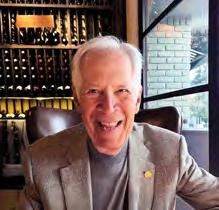
His son Joshua Zloof credits that adaptability for much of his father’s success. He describes Moshe as someone who openly shares his love for others, whether through free workshops or small acts of kindness toward strangers.
“He's always reinventing himself and coming up with new ways to think about the world,” Josh said. “His superpower is taking a bunch of disparate information and structuring it in new ways. He’s always trying to help people, and it's interesting
because it's in this really logical way. You know, he'll go to Trader Joe's, and he'll figure out the cashier’s birthday and give them a birthday cake.”
Fellow runner Mojgan Mohammadi met Moshe three years ago through a running group and, along with runner Kimberly Gruol, designed his now-iconic yellow running shirt. The shirt features a photo of Moshe on the front and his slogan, “minimum necessary,” printed in bold across the back.
“We just wanted to show him how much we love him … and how much he really touches all of us just by being himself,” Mohammadi said. “He has formed some really great friendships, me included, through his ‘minimum necessary.’”
Moshe continues to run
marathons, perform stand-up comedy, and collect vintage figurines. He also writes short scientific articles about the power of the unconscious and of psychology in daily life. His ultimate goal, he said, is to minimize stress and maximize happiness.
Lew Cramer, who has known Moshe since 2005, runs marathons and half-marathons with him through Cramer’s Los Gatos-based exercise group, “Lew’s Walk and Run.” The two run together through the hills every Saturday morning.
“If he gets a speeding ticket or a parking ticket, he doesn't get upset with it,” Cramer said. “He gives himself a budget number of tickets he can obtain, and he sets a goal every year that he's going to get three tickets. He just kind of flows with life. Age
means nothing to him. And he just keeps going.”
Moshe believes that he will never die in his sleep, because his mind is always working too hard. He looks forward to more marathons, more analysis, and more discovery.
“My principle is, I don't look at how things work, I think about why they are working,” Moshe said. “When I see a phenomenon, I’m curious. Curiosity is the mother of invention, right? If you are curious, you can invent different ways of doing things. So that's why I love life, because I'm not obsessed by one thing.” Inspired to get into running or walking? No matter your age, Lew’s Walk & Run in Los Gatos would love to train with you. Contact Lew Cramer at sapiential@ comcast.net or 408438-3232.
BY TONYA GRAHAM MCQUADE
More than 160 years have passed since the final surrender of the American Civil War, bringing an end to four years of bloody battles that tore the nation apart and left an estimated 620,000 to 750,000 dead. While some now relegate study of the Civil War to history books, others – including members of the South Bay Civil War Round Table (SBCWRT) –continue to make its study and discussion a primary focus and still see its relevance today.
Every fourth Tuesday of the month, the SBCWRT hosts a featured speaker on some aspect of the Civil War. Recent presenters have addressed destruction of nature and animals in the Civil War, campaigns against the Apache and Navajo, and the Civil War career of Edwin Vose Sumner. Others bring more personal accounts, sharing stories and photos from a visit to the Gettysburg National Battlefield in Pennsylvania, as well as a personal account of the Civil War from a child’s point of view as revealed in family history records. The next meeting is Feb. 24 at 6:30 p.m. at Jack’s Restaurant on Saratoga Avenue.
Currently, 223 Civil War Round Tables exist around the country, according to the national CWRT Congress' website, with eleven groups meeting in California – including two in the Bay Area (SBCWRT and Peninsula CWRT). Each group operates individually, planning its own meetings and speakers. The CWRT Congress acts as a resource to those groups, providing guidelines, information on upcoming events and conferences, grant opportunities, and online “Civil War Fridays” Zoom sessions to introduce possible speakers to the groups. Its mission is “to inspire Civil War Round Table leaders to adapt, adopt, and maintain strategies for sustainability,” the website states.
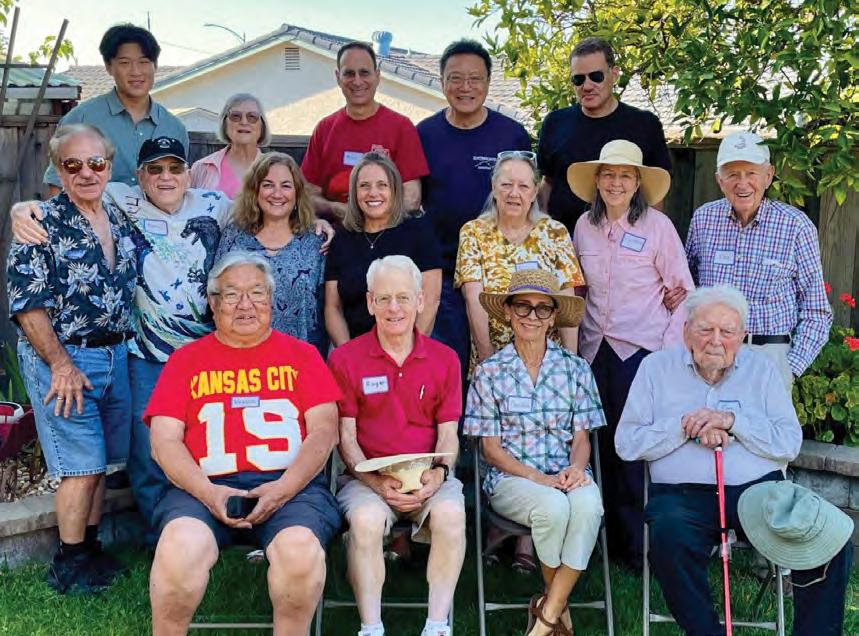
According to SBCWRT secretary and membership chair Tom Roza, the South Bay group formed in 1990. Roza attended his first meeting in 2008.
“There is so much to learn from the study of the Civil War that applies to our country today,” he said. “There is still significant racial, ethnic, religious, and gender discrimination in our society as was present in the years leading up to the Civil War.”
Current membership numbers are down from their highs during the 150th anniversary years of the Civil War (2011-2015) and were further reduced due to pandemic shutdowns. However, a faithful group remains. Members range in age from college-aged to 97 – the age of the group’s historian, San Jose resident Tom McMahon.
McMahon, a former priest, military chaplain, and mental health therapist, joined the group nineteen years ago.
“I knew almost nothing about the Civil War,” he said, “and I’m always interested in adult education.” He still devotes himself to studying
and writing about history and founded the History Club at the Almaden Senior Center.
The group’s youngest member, David Hsueh, joined the group two years ago and has been its featured speaker three times. He became interested in the Civil War after visiting the Lincoln Memorial at age seven and watching the film “Gettysburg” at age eleven. Since then, he has visited many Civil War battlefields, attended Civil War conferences, and is currently majoring in political science at U.C. Berkeley.
“The Civil War was one of the first wars to be this documented … soldier’s accounts of war, of the disease that ran in camps, the suffering of battle, and the grief after,” Hsueh said. “I think their accounts reveal volumes about humanity and society –all still important and relevant insights today.”
Member Vernon Hayashida, who became interested in the Civil War because of its many types of firearms, agreed.
“History can repeat itself if people don’t remember it,” Hayashida said.
Roger Bonilla, a retired
librarian, was drawn to the Civil War through his admiration of Abraham Lincoln, but that interest increased after visiting battlefields in Virginia. He joined SBCWRT last year because he believes it is important to “learn more about this crucial, tragic conflict.”
“The agony we went through to preserve the Union makes it more important that we try our utmost to preserve the Union now,” Bonilla said.
Bonilla also enjoys playing old Civil War songs on his guitar. He was happy to find a rapt audience at the group’s summer barbeque last September. He played several songs, including “The Bonnie Blue Flag” and “The Blue and the Gray.”
San Mateo resident and writer Alan Sissenwein also became more interested after visiting historical sites.
“I’ve been fascinated by history since I was a teenager, but my interest in the Civil War began in my last quarter of graduate school when I lived near Washington, D.C.,” he said. “Monuments to Civil War generals dot the city, and
many of the war’s battlefields are within driving distance. All this enthralled me, and I eagerly played tourist. I like to say that in California, the Civil War is an abstraction, but on the East Coast, it’s a presence.”
“It was the key event that gave the nation its identity,” said member Jim Rhetta, who retired from Lockheed Corp and from the USAF Reserve as a Colonel in the Intelligence Community. Rhetta joined SBCWRT after retiring because “it is a means of keeping the mind active,” and he enjoys the “mental stimuli.”
Morgan Hill resident Kirstein Ta attended her first meeting because she wanted to hear author Tonya McQuade’s presentation on her book “A State Divided: The Civil War Letters of James Calaway Hale and Benjamin Petree of Andrew County, Missouri.”
“I wanted to learn more about human interest stories,” said Ta, who became interested in the Civil War after “starting a family genealogy and discovering several members served in the Confederate army.”
Retired engineer Don Christian also was first drawn to the Civil War by family stories, but touring battle sites and “personally finding Civil War artifacts” cemented his interest, he said.
“I became interested in San Jose’s mercury and quicksilver legacy and how it contributed to the Civil War through high-tech weaponry,” Christian said.
He also believes strongly in the Civil War’s ongoing relevance.
“The U.S. Civil War is not yet passed,” Christian said. “We are still fighting it today. We all need to recognize the truth in this statement.”
Kirstein Ta will be the group’s featured speaker at SBCWRT’s meeting Feb. 24 at 6:30 p.m. at Jack’s Restaurant, located at 1502 Saratoga Avenue, San Jose. Ta will speak on “Ars Moriendi – The Good Death,” looking at the harsh reality soldiers faced dying far from home and loved ones. New attendees are always welcome.
To promote interest in Civil War history, SBCWRT is hosting an essay contest for high school juniors and seniors with cash prizes. Students are asked to address the following prompt: In a reflective essay, tell how one of the following has impacted your understanding of the U.S. Civil War - its causes, effects, battles, and/or key figures - and why you think it is important for young people to develop an understanding of the Civil War on a more personal level (rather than just names, dates, and key events).
• A battlefield, historical site, or museum you have visited
• A workshop or conference you have attended
• A book you have read (fiction or nonfiction)
• A movie, TV series, or documentary you have watched
sbcwrt.org.
Basic Guidelines:
Who: High school juniors and seniors in Santa Clara County
What: Personal Reflective Essay
Length: 750-1000 words, typed, double spaced, no use of AI
When: Deadline March 15, with winner announced April 5
Prizes: First = $300; Second = $100; Third = $50
Winners will be invited to present their essays at the April meeting of the South Bay Civil War Round Table
BY ANNETTTE STRANSKY
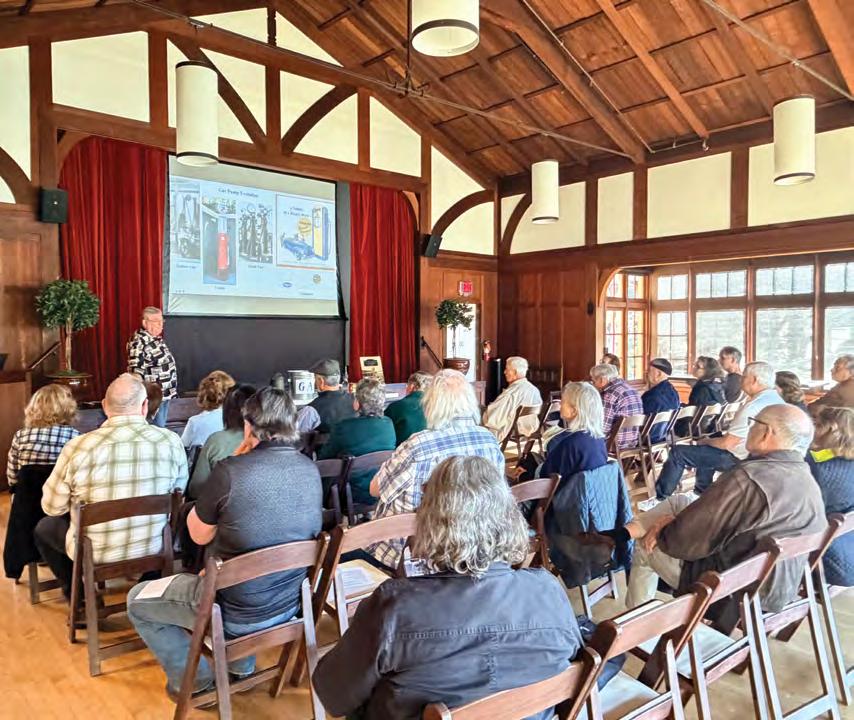
Gas stations weren’t always the brightly lit convenience stops drivers know today. A recent Saratoga Historical Foundation lecture traced their evolution from hand-pumped kerosene barrels to modern fueling hubs.
On Jan. 19, residents gathered at the Saratoga Foothill Club to hear about the history behind “Lost Gas Stations of San Mateo County,” a book by Bruce Cummings and Nicholas Veronico that took three years to research.
The story of gas stations begins with S.F. (Sylvanus Freelove) Bowser, who sold his newly invented kerosene pump to a grocery store owner in Fort Wayne, Indiana, on Sept. 5, 1885. Less than two decades later, the first purposely built drive-in gasoline service station opened in Pittsburgh, Pennsylvania. Bowser designed a simple device for reliably measuring and dispensing kerosene — a product that remained in high demand for decades — and his invention soon evolved into the metered gasoline pump.
In 1898, John J. Tokheim devised a safer way to dispense gasoline by placing the tank underground with the Bowser pump directly above it. Before the first official gas stations, early motorists purchased fuel in bulk from general stores, blacksmith shops or pharmacies. These locations stored handpumped fuel in barrels, making the process slow and increasing the risk of fire.
According to historical
accounts, one of the first dedicated gas stations was built in St. Louis, Missouri, allowing drivers to pull up and purchase fuel without transferring it from a canister. The modern fuel station began to take off in 1913, when Gulf Refining Co. opened a drive-up gas station in Pittsburgh. As cars became more popular, the demand for dedicated fueling locations grew, and by the 1920s, major oil companies were opening service stations where drivers could refuel, check tire pressure, and repair cars.
Gas station restrooms emerged in the late 1920s and became a major industry focus in the 1930s, evolving from rudimentary pit toilets into guaranteed, inspected facilities — such as Texaco’s “Registered Rest Rooms” — designed to attract women travelers. Cleanliness became a key marketing tool during the rise of automobile travel.
During this period, gas stations evolved into branded service centers. Companies such as Sunoco, Texaco and Shell introduced uniformed attendants who pumped gas, cleaned windshields and offered mechanical assistance. From the 1940s through the 1950s, selfservice stations began allowing drivers to pump their own gas, helping reduce prices.
Gas stations also offered free road maps in the United States from roughly 1925 to 1975. While Gulf Oil began distributing maps as early as 1913, the practice became widespread in the mid-1930s
to encourage car travel and continued until oil shortages in the 1970s made the giveaways less practical. By 1980, free maps had largely disappeared due to rising costs.
Customer loyalty programs were another draw. Stations prominently offered S&H Green Stamps and Blue Chip stamps from the 1930s through the late 1980s, with peak popularity in the 1960s and 1970s. Motorists earned stamps with gasoline purchases and collected them in booklets to redeem for merchandise.
Between the 1960s and 1980s, stations began providing food, rest areas and even entertainment for travelers, while fast-food chains partnered with fuel providers to create convenience-focused stops.
Advertising also played a major role, with campaigns such as “Trust your car to the man who wears the star,” launched in 1962 alongside a hexagon logo introduced in 1963. Other popular slogans included “You expect more from Standard, and you get it” and Exxon/Esso’s “Put a Tiger in Your Tank!”
The 1970s brought gas shortages and rationing, forcing stations to limit hours and impose fuel purchase restrictions.
Advances in technology during the 1990s introduced automated pumps and credit card readers. Today, gas stations continue to evolve, catering to a wide range of driver needs.
The book is available for purchase online and in bookstores for $24.99.
We’d love to hear from you! If you’re a student with a story to tell, an experience to share, or something exciting happening at your school, The Outlook wants your voice in our Youth Corner. Whether it’s a field trip, a class project, a club you love, or a special moment in your community, send us your perspective and help shine a light on what young people are doing across our cities. Your story could be featured in an upcoming edition!
BY
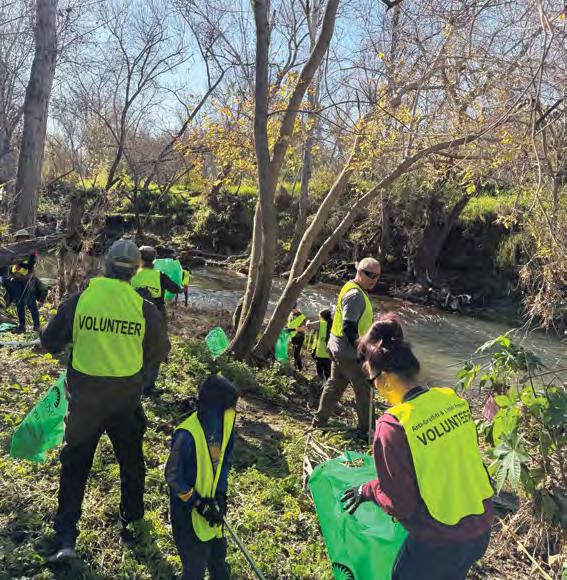
On January 24, students, family, and community members from Village School in Campbell helped clean up the Guadalupe Creek in San Jose, CA. There were over 50 people at the clean-up, and we collected so much trash that it was about as heavy as a grown buffalo! In the end, we collected 2,680 pounds of trash!
The school partnered with the South Bay Clean Creeks Coalition (SBCCC), which originated as a communitybased effort called Friends of Los Gatos Creek, and has expanded to include Los Gatos Creek, the Guadalupe River, and the Coyote Creek.
The January clean-up was organized and sponsored by the Village School Student Council to help salmon, beavers, other animals, and people, too. The clean-up created cleaner water, safer spaces, and a healthier environment. Overall, this clean-up helped nature and our whole community. This is important, because imagine a world with trash everywhere and rivers and creeks that are brown and black. By taking action, we can prevent that.
Even one piece of trash counts. The more we help, the brighter our world’s future will be. Students said they really enjoyed seeing the before and after of all the trash that was picked up. They left feeling proud after seeing how much trash was removed. Everyone involved really liked this experience, and many people not only made new friends, but practiced working as a team. Families found the cleanup so fun that they want to help the environment even more by setting up another clean-up in the spring. We hope for more families to join next time, and we hope to spread the word across not only our school district, but other school districts to make an even bigger impact on our local creeks. Many thanks to the leaders, Josh and Jordan, from the SBCCC, and to Village School parent Riza Schwandner, who supported us and helped coordinate the clean-up, for making this creek clean-up possible and for making it their mission to keep the river clean so that nature can thrive!
Interested in organizing a cleanup with your school? Contact the SBCCC sbcleancreeks.com/contact-us
BY LLOYD RUSSELL
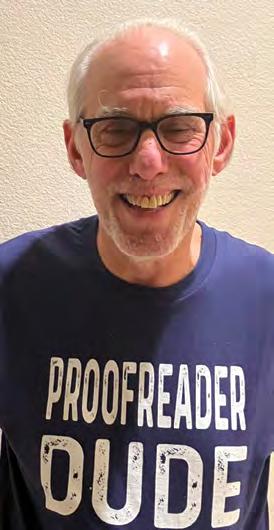
Although you won’t get this until after February 14, why don’t we celebrate Valentine's month with some highly recommended romances from yours truly? I’ve got seven for you, and you can read them
in any order you’d like. I will list them (with a small recap) in alphabetical order by the author’s last name, not by favoritism.
Amooi, Rich – “Hacking the Holidays”
Zara Mazini is a brilliant FBI Cybersecurity Specialist. She is tasked with finding the person who is stealing from rich people and using that money to help families in need during the holidays.
She volunteers at a library so that she can investigate one of the librarians, Sam Monroe. Does she do more than just hack into Sam’s computer? I’m not sayin’! P.S. This “romance” has some very poignant moments!
Center, Katherine – “Hello Stranger”
Sadie Montgomery has just had the biggest achievement for her artistic endeavors. She has placed in a big portrait contest. Next thing she knows, she is in the hospital suffering from a condition known as “face blindness.” She can see, but everything is jumbled. How
can she have any romance with this crazy illness?
Dawson, Maddie – “Let’s Pretend This Will Work” It looks like Mimi Perkins has finally found the love of her life. Ren Yardley, a fellow drama teacher at her school, has proposed, and Mimi has accepted. Then Ren’s ex-wife has a very bad accident, and Ren goes back to her house to help her recover. It looks like he might just stay with his ex. Will Mimi get him back? Or maybe somebody else? Check it out.
Graves, Tracey Garvis – “The Trail of Lost Hearts”
Wren Waters suffers two heart-breaking blows and decides she’s going to do some solo geocaching (“the outdoor activity of using GPS to look for hidden objects”) in Oregon. And, very fortuitously, she comes across Marshall Hendricks, who, himself, is coming off a life-changing event. Marshall actually saves her from a serious encounter. They decide to geocache together as friends. But is that
all they are? Will the universe decide they have had enough grief? You decide.
Lauren, Christina – “The True Love Experiment” Felicity “Fizzy” Chen is a very well-known romance writer. But she has never really been in love before. Conner Prince is a documentarian. He’s a single parent. When he and Fizzy run into each other, Conner comes up with the great idea of having Fizzy be the star of a reality show in which Fizzy meets a number of men, looking for true love. Will she find that person in front of the camera? Or behind it?
Lonsdale, Kerry – “Find Me in California ” Julia Hope is about to lose the grandmother that raised her and made her who she is today. Matt Gatlin, who is a thousand miles away, has to help his grandmother in California, who he has avoided for the last twelve years. Their chance encounter leads them to both confront emotional realities. Will their stories bring them together? Or will they end up
going their separate ways? Montgomery, Erika – “A Summer to Remember” Thirty-year old Frankie Simon owns a movie memorabilia store on Hollywood Boulevard that she and her recently deceased mother started together. The store keeps her mother fresh in her mind. But when she receives a mysterious package that has a picture of her mother with two famous movie stars taken a year before Frankie was born, she looks for answers. Will she find them? Is she destined to find a romance that it appears her mother had? You will have to read “A Summer to Remember” to find out.
Trivia question: In 1998, a first edition of which literary classic sold for $76 million?
A. Paradise Lost
B. The Canterbury Tales
C. Gulliver’s Travels
D. Dr. Faustus
Answer to last edition’s question: D. Jonathan Franzen
BY SUE FENTON
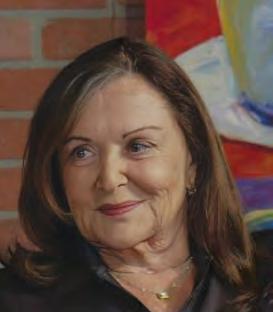
After living in Manhattan for over 40 years in a high rise building along the Hudson River, it should not be a secret that I don’t know a lot about
the feeding habits of California birds. Aside from the occasional condor, eagle, or hawk, little birds did not usually visit me on the 40th floor.
We lived in several different apartments, with the view from one of them a huge smokestack framing a beautiful view of the George Washington Bridge (incidentally, it is a 1904 steam power station for over 1,500 buildings, including Penn Station). There was a hawk from the other side of the Hudson River in New Jersey that found a mate and every year nested in the metal staircase 30 stories up around the smokestack. The stack, which belched giant plumes
of vapor regularly, must have kept the hawk family warm. We regularly watched the babies as they learned to fly.
And there were more birds. My husband woke me early one Sunday morning to see a massive black helicopter “bird” just in front of our living room window, with a line of taxis on the avenue below, in front of our view of the Statue of Liberty. We later learned it was Hollywood, making the movie Die Hard 3. The sight of this almost in our apartment scared us to death.
We moved to Los Gatos during the pandemic. Los Gatos has lots of birds, and I love to watch birds. So I put up a bird feeder with suction cups
attached to the window so we could see the birds feeding in front of our eyes. But then we had a problem. Squirrels loved the birdseed. We later learned that rats do too, and we had rat problems. The squirrel population had become an involuntary part of our family, especially at meal time. After all, squirrels and rats will eat anything — a bit like me!
My husband went out and did a bit of research. We learned that birds have no taste buds. Mammals like squirrels and rats learn not to eat bird seed with chili. Seems to me that Californians may know this. But not us city slicker New Yorkers. Who knew? My husband very
carefully, with rubber gloves, COVID mask, and glasses, mixed chili sauce into the bird seed, and lo and behold we saw them visit the feeder once or twice and quickly run away, to not come again another day. No more squirrels or rats in the feeder. Lots of birds.
But what is the catch? My daughter-in-law insisted that I had to keep the feeder clean so the birds don’t get sick. I cleaned it after many feedings with the chili bird seed. My husband warned me he “may” have made the birdseed chili a “tad” too strong. Too strong?! Watery eyes and sneezing. Live and learn.