

BY THE OUTLOOK EDITORIAL BOARD
Welcome to The Outlook, Cupertino edition! The Outlook is a collection of print community newspapers currently serving Los Gatos, Monte Sereno, Santa Clara, Saratoga, and now, Cupertino. We provide accessible, uplifting, and hyperlocal journalism that fosters connection, encourages civic engagement, and shines a
light on the people, events, and everyday moments that enrich the lives of residents of all ages.
Who is behind this publication?
The Outlook is published by Successful Aging Solutions & Community Consulting (SASCC), a local nonprofit that has been serving older adults and their families for more than 40 years. SASCC provides direct
services, and also helps local governments, large institutions, and other nonprofits plan for the fastest growing population in Silicon Valley: adults age 50+. We are recognized as one of the go-to organizations for aging solutions in our region. From hands-on services to big-picture initiatives that ensure we can grow older without losing our dignity and independence, SASCC is committed to building connection and helping people
BY MENDY MAO
Volunteers bring researchbased gardening tips to libraries, gardens, and community spaces across Santa Clara County
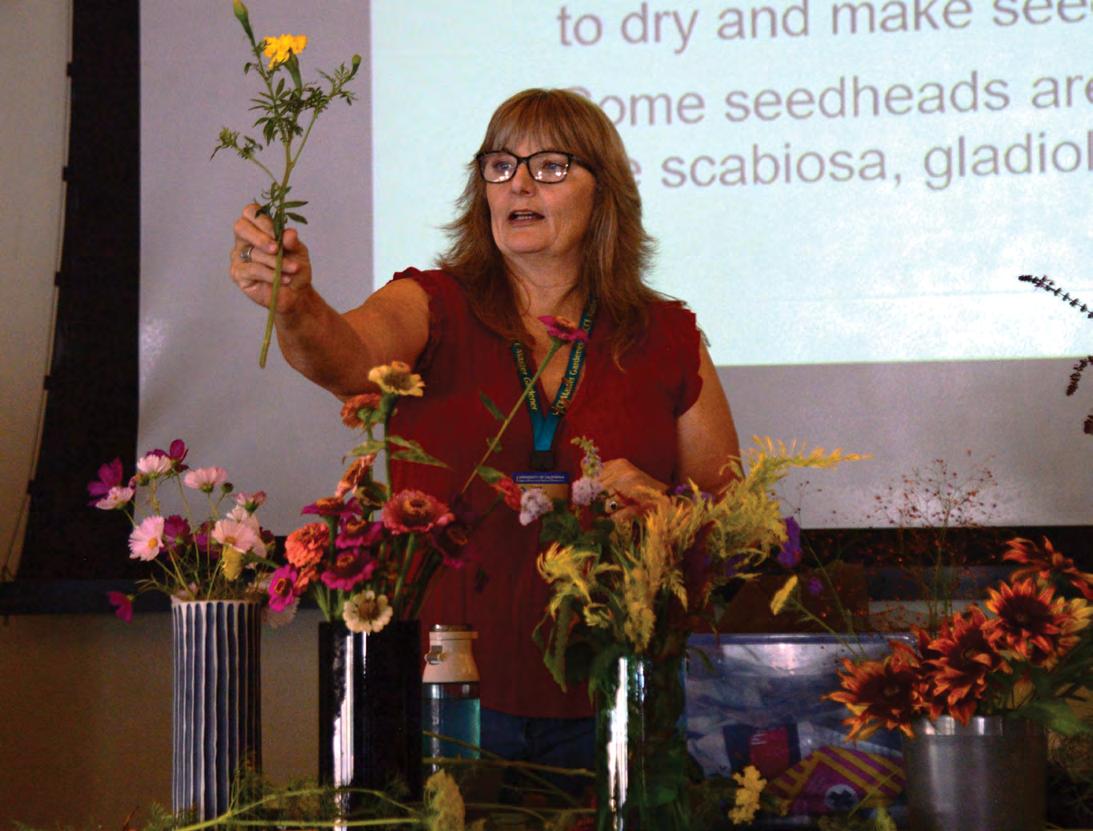
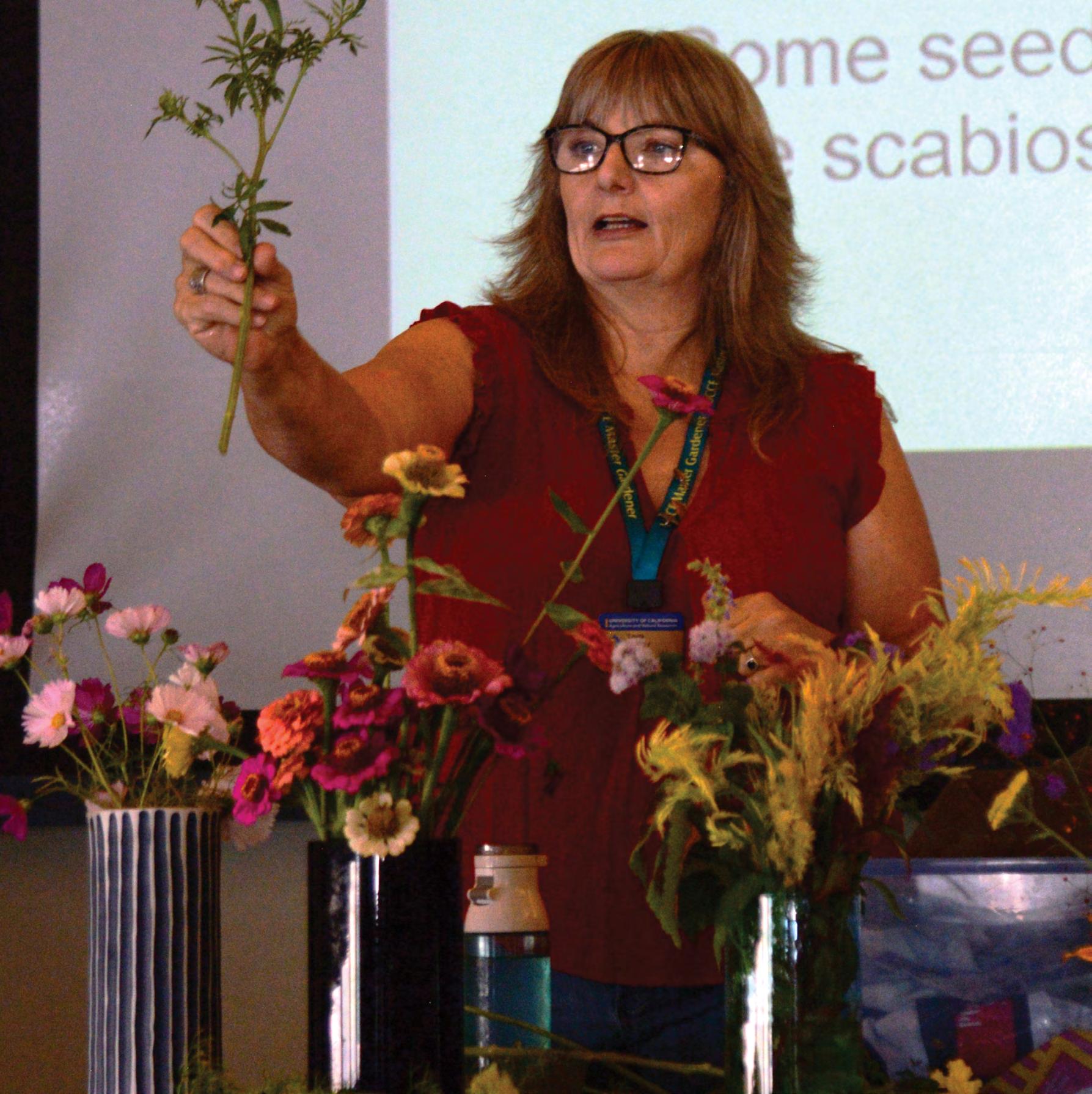
At the front of a library room, master gardener Laura Westley gestures toward an assortment of flowers as she encourages the crowd to get their hands dirty by using one’s finger to test soil moisture. Audience members, seated with worksheets detailing the basic needs of different flower species, respond with chuckles and cheers. It’s another successful talk bringing the wonder of gardening GARDENERS, PAGE 6
thrive at every stage of life.
What is this paper going to cover? Is this some kind of senior newsletter?
The Outlook is for everyone. Part of the “digital divide” is the disconnect between our generations. There used to be a deep societal reinforcement of the concept of “respect for our elders,” in large part because they held all the wisdom of
previous generations and had the ability to guide the youth towards their best purpose. In today's tech-forward society, this concept has been turned upside-down. The fear of getting older has been amplified by the digital divide. Most of what we see and read about aging has to do with healthcare, housing, or advertising; in other words, all the ways we can be parted from our money, time, and resources
OUTLOOK, PAGE 4
Every September, we celebrate National PACE Month, a time to highlight a special kind of care that helps older adults stay healthy, active, and independent while living in their own homes. PACE stands for the Program of All-Inclusive Care for the Elderly, a healthcare program for people aged 55 and older who need support to live
safely at home while they age. This year’s theme is “Your Health. Your Journey. Our Support.” and shows how PACE provides personalized care and strong support to both seniors and their caregivers.
WHAT MAKES ON LOK PACE SPECIAL? On Lok PACE is a trusted leader in senior care. In fact, On Lok created the PACE model PACE, PAGE 12

STAFF:
Executive Editor & Publisher
Tylor Taylor
tylor@sascc.org
Managing Editor
Brandy Maddox brandy@sascc.org
Designer Tanya Marutova
tanya@sascc.org
CONTRIBUTORS:
Mendy Mao
On Lok
Amy Vu
Lorraine Gabbert
Akriti Shrivastava
De Anza College
Omar Torres Alzheimer’s Association
Joe-Ming Chen
Marcia Fariss
Sue Fenton
Lloyd Russell
Kathy Denise
The Outlook is a collection community newspapers
Los Gatos, Saratoga, Monte Santa Clara, and Cupertino. deliver accessible, uplifting, hyperlocal journalism that connection, encourages civic engagement, and people, events, and everyday moments that enrich

CITY COUNCIL:
Sept. 16, Oct. 7, 13, 21
6:45 p.m.
(Council Chamber)
• Televised special meeting (legislative update): Oct. 13, 7 p.m.
BICYCLE PEDESTRIAN COMMISSION:
Sept. 17, Oct. 15, 7 p.m.
(Quinlan Conference Room)
All council, commission, and committee meetings are subject to change or cancellation. Check the city website prior to each meeting or call the city clerk at 408-777-3223. If the agenda for an upcoming meeting is not yet posted, check back closer to the meeting date for updated information.
View meeting info at: cupertino.legistar.com.
TEEN COMMISSION: Oct. 8, 6 p.m.
(Quinlan Conference Room)
TECHNOLOGY, INFORMATION, AND COMMUNICATIONS COMMISSION: Sept. 18, 7 p.m. (Special meeting, Quinlan Conference Room)
ARTS AND CULTURE Commission: Sept. 22, 6:30 p.m.
(Quinlan Conference Room)
PLANNING COMMISSION:
Sept. 23, Oct. 14, 28, 6:45 p.m. (Council Chamber)
HOUSING COMMISSION: Sept. 25, Oct. 21, 5:30 p.m. (Quinlan Conference Room)
LIBRARY COMMISSION: Oct. 1, 7 p.m. (Cupertino Library)
PARKS AND RECREATION COMMISSION: Oct. 2, 7 p.m. (Quinlan Conference Room)
SUSTAINABILITY COMMISSION: Oct. 16, 4 p.m. (Quinlan Conference Room)
AUDIT COMMITTEE: Oct. 27, 4 p.m. (Quinlan Conference Room)
BY AMY VU, PRESIDENT, LEAGUE OF WOMEN VOTERS OF SOUTHWEST SANTA CLARA VALLEY
Send letters to the editor, story ideas, feedback, and questions to outlook@sascc.org . Letters may be edited for length and
We are committed to accuracy and fairness. If you notice error or believe a story clarification, please email outlook@sascc.org with “Correction” in the subject We will review all requests promptly and publish of serving Sereno, We and fosters highlights the community life for all ages. clarity. an requires line. corrections or updates as appropriate. Monte Cupertino?
Interested in reaching readers in Los Gatos, Saratoga, Sereno, Santa Clara, and Contact us at advertise@sascc.org for advertising opportunities.
On July 6, 2025, Larry Stone officially stepped down as Santa Clara County Tax Assessor. Stone’s resignation triggered a special election on November 4, 2025, to fill the vacated assessor’s office. Stone had held the position for 30 years, meaning that for
three decades there had been no election where he was not the incumbent.
As we prepare for this special election for assessor, let’s review what the role entails. The primary responsibility of an assessor is to identify and assess property within county lines and carry out property tax law regulations. The assessor’s office manages over 250 employees and administrators.
The Santa Clara County Assessor does not establish property tax laws or rates, nor does the office collect taxes or set property assessment rules. Its duties are limited to executing existing assessment protocols, ensuring assessments are timely, fair, and include an avenue for appeals.
Accurate property assessments are important because they determine local
tax revenue. Property taxes fund K-12 schools, community colleges, and other city and county services.
As we await the official list of assessor candidates from the Santa Clara County Registrar of Voters, please take a moment to register to vote (if you’re not already registered) or check your voter registration status at the Secretary of State’s site: voterstatus.sos.ca.gov

FORMER CUPERTINO
MAYOR HUNG WEI REMEMBERED FOR DEDICATION TO SERVICE
Former Cupertino mayor and councilmember Hung Wei passed away from lung cancer on Aug. 28. She was 69. Wei, who served on the Cupertino City Council from 2020 to 2024 and as mayor in 2023, was elected with the highest vote total in city history. She was remembered for her warmth, generosity and dedication to community service, qualities that left a lasting mark on those who knew her.
Beyond her work at City Hall, Wei served on the Fremont Union High School District board of trustees, was a Cupertino Rotary past president and district governor, YMCA board chair, and a member of numerous local organizations. At the Sept. 3 city council meeting, colleagues honored her service and ordered city flags flown at half-staff in her memory.
Wei is survived by her husband, Ta-Wei Chien, and their two sons. Her family has asked that donations be directed to causes close to her heart, including Rotary, in lieu of flowers.
DE ANZA COLLEGE RANKS AMONG NATION’S BEST COMMUNITY
De Anza College has been named one of the top community colleges in the nation, according to personal finance website WalletHub. The school ranked #5 nationwide in WalletHub’s 2025 list, which analyzed data from more than 600 community colleges across the U.S.
The ranking considered factors such as tuition and financing, student retention and graduation rates, and post-graduation employment outcomes. De Anza was one of eight California colleges to place in the top 20, alongside Woodland Community College (#4) and the College of San Mateo (#6).
WalletHub analysts noted that the best community colleges combine affordability with strong academic support and services that prepare students for good jobs after graduation.
BONUS PRODUCE FOR SENIOR AND WIC FARMERS MARKET
Low-income seniors and WIC recipients can stretch their food dollars at local farmers’ markets thanks to a new program from the Pacific Coast Farmers’ Market Association
(PCFMA). Cardholders in the Farmers’ Market Nutrition Program receive a $15 monthly bonus in scrip to spend on fresh fruits and vegetables. Simply visit the information booth with your FMNP card once a month to claim the bonus.
In Cupertino, the bonus is available at:
• De Anza College Farmers’ Market, 21250 Stevens Creek Blvd., Sundays, 9 a.m.-1 p.m., year-round
• Creekside Farmers’ Market, 10455 Miller Ave., Fridays, 8 a.m.-12 p.m., year-round.
To become part of the Senior Farmers Market Nutrition Program (SFMNP), visit fns.usda.gov/sfmnp/ senior-farmers-marketnutrition-program
To become part of the WIC Farmers Market Nutrition Program (FMNP), visit fns. usda.gov/fmnp/wic-farmersmarket-nutrition-program
LEAGUE OF WOMEN VOTERS HOSTS VOTER REGISTRATION DRIVE
In honor of National Voter Registration Day, the League of Women Voters CupertinoSunnyvale will host a voter registration drive on Tuesday, Sept. 16, from 10 a.m. to 6 p.m. at the Cupertino Library. Volunteers will be on hand to help adults register or update their registration and to assist
teens with pre-registration if they will be 18 by Election Day. Residents who have recently moved are encouraged to take this opportunity to update their voter information.
Cupertino’s 12th Annual Fall Bike Fest takes place Saturday, Sept. 27, from 9 a.m. to 1 p.m. at Civic Center Plaza. The family-friendly event features bike games, arts and crafts, story time, food, and the popular Tour-de-Cupertino and scavenger hunt rides. A signed waiver is required for on-bike activities, which can be downloaded in advance to speed up check-in. Full schedule and details are available at cupertino. org/bikefest.
CITY
To mark Cupertino’s 70th anniversary, the City of Cupertino is introducing its first Restaurant Week from Oct. 6-12. The weeklong celebration highlights local dining with exclusive specials and limited-time dishes from participating restaurants. Residents and visitors are encouraged to dine out, discover new favorites and support neighborhood businesses. The list of participating restaurants will be posted Sept. 15 at cupertino. gov/taste70
The Cupertino Senior Center is now accepting donations for its annual Hidden Treasures fundraising event. Gently used or new items such as jewelry, artwork, kitchenware, home décor, and collectibles may be dropped off Monday through Friday, 8 a.m. to 5 p.m., through Oct. 10 at the Senior Center, 21251 Stevens Creek Blvd. This year’s Hidden Treasures sale will take place Thursday, Oct. 23. For a full list of accepted items, visit cupertino.gov/hiddentreasures
The City of Cupertino is moving into phase 2 of its new Active Transportation Plan, which will guide pedestrian and bicycle improvements for the next 5-10 years. Phase 1, held this spring, drew input from more than 1,300 residents at 12 outreach events and generated nearly 3,000 public comments. The next phase will focus on prioritizing infrastructure and program recommendations, with additional workshops and a new survey open through Oct. 31. Residents can find more information, review draft concepts, and share feedback at cupertinoatp.org
FRIENDLY VOICES TO MERGE WITH AVENIDAS
Friendly Voices, a Bay Area nonprofit that combats loneliness among older adults through weekly phone calls, will become part of Avenidas, a leading organization with services and programs devoted to older adults in the San Francisco mid-Peninsula. Both organizations’ boards have approved the merger, which now awaits final state authorization.
Founded in 2020 during the pandemic, Friendly Voices trains volunteers to call isolated
adults age 60 and older for friendly conversations, often in the senior’s preferred language. The program has matched hundreds of older adults with volunteers and will continue uninterrupted under Avenidas.
A press release stated that the move builds on a five-year partnership between the two groups.
“Avenidas has been referring clients to Friendly Voices since 2020 and considers this essential service a perfect match for the organization,” the release said. “Both organizations have similar core values and
serve similar audiences and, with Avenidas Volunteer Corps, can scale and serve even more older adults.”
For more information about becoming a phone buddy or to refer an older adult to this service, go to friendlyvoices.org. Learn more about Avenidas at avenidas.org
CAREGIVERS COUNT! CONFERENCE SESSIONS SEPT. 13 & 20
The 15th annual Caregivers Count! conference continues with two more sessions aimed at supporting family caregivers.
On Saturday, Sept. 13, from 10 a.m. to noon, therapists will lead a virtual session titled Tailoring Care and Support Transitions, presented by Vanessa Souza, LCSW.
On Saturday, Sept. 20, from 10 a.m. to noon, an in-person event will be held at Campbell Community Center in the Roosevelt Room, 1 W. Campbell Ave. The program will feature two panels: Bridging the Tech Divide: Empowering Caregivers with Digital Tools and Practical Low-Tech Solutions with Trinh D. Nguyen, and In-Home and
Residential Care with Dedra Jize. Both sessions are part of the free conference series, which opened Sept. 6 with a virtual program, Seven Questions About Transitions That Worry Caregivers. Advance registration is required at caregiverscount.net.
AGENDA MIX & MINGLE SET FOR SEPT. 25
Santa Clara County Seniors’ Agenda will host its next Mix & Mingle on Wednesday, Sept. 25, from 4:30-6:30 p.m. at San Pedro Square, 87 N. San Pedro St., San Jose. The informal gathering brings together people who work with organizations that serve or impact older adults. This month’s event highlights Suicide Prevention and Falls Prevention months, encouraging those working in these areas to attend and connect. No registration is required. Attendees can meet on the patio facing St. John Street, near the old truck. Ninety minutes of free parking is available at the Market Street/ San Pedro garage across the street.
FALL GARDEN FAIR SET FOR OCT. 11 IN SAN JOSE
The UC Master Gardener Program of Santa Clara County will host its annual Fall Garden Fair on Saturday, Oct. 11, from 9 a.m. to 2 p.m. at the Martial Cottle Park Demonstration Garden in San Jose, as part of the park’s Fall Festival. Admission is free; parking is $6.
Visitors can shop for locally grown seedlings, herbs, ornamentals, native plants, garlic and shallots, and low-water succulents. Gardening talks, children’s activities, garden tours, and hands-on demonstrations such as tool sharpening and composting will also be offered. A plant help desk and educational booths will be on site to answer questions, and proceeds from plant sales will support the Master Gardeners’ mission.
The Fall Garden Fair is one of many seasonal events organized by UC Master Gardeners throughout Santa Clara County, providing learning opportunities and inspiration for both novice gardeners and seasoned growers. Visit tinyurl. com/mastergardenersevents for more events.

OUTLOOK, FROM PAGE 1
with each passing decade. Part of our mission is to create infrastructure that makes our communities better places to grow older, and media sources can help or hurt that effort. The Outlook is not a newspaper for seniors. It's a newspaper that covers the best our community has to offer with uplifting and informative content that is inclusive of older adults. We are part of the solution.
When will the paper be delivered?
We're starting out with
a quarterly publication for a couple editions to test our systems and get things running smoothly, and then we'll start publishing monthly. It's delivered by the US Postal Service, so you'll receive a copy at your home. We also have a distribution team that delivers to coffee shops, libraries and business, so you'll definitely see us around.
Why publish a print newspaper in the age of AI and digital media hegemony?
The Outlook was launched in 2016 to give communities their voice back. As the local
papers were all bought up by large corporate entities, we lost the local perspective. The Outlook has become a trusted source of true local news and information by sourcing all of our content from the cities we serve, instead of providing readers with duplicative information from big cities and national headlines. While SASCC’s mission is centered on supporting older adults, The Outlook is for the entire community. We use our outlet to highlight the best of what our communities have to offer, as well as the people, programs, and events that bring us together. With the launch of
The Cupertino Outlook, we’re thrilled to bring that same spirit of connection to you, sharing stories, features, events, and resources that keep Cupertino informed and civically engaged. This expansion comes to you as part of our partnership with the Foothill-De Anza Community College District and De Anza College. In 2023, SASCC developed and launched Senior Guided Pathways, the nation’s first program centered on the intersection of education, aging, and workforce development. This initiative helps adults 50+ explore opportunities for learning, purpose, connection, and independent sustainability.
We’ve seen tremendous results from the program, enrolling thousands of students age 50+ at our pilot site, the West Valley-Mission Community College District. This fall we are launching Senior Guided Pathways at De Anza College, and we are honored to highlight its impact in the pages ahead. This paper is for you, and we’d love for you to be part of shaping it. Share your ideas, send us letters to the editor, or let us know about people and events we should feature. Together, we can ensure the Cupertino Outlook truly reflects the vibrancy and heart of this city.

BY BRANDY MADDOX
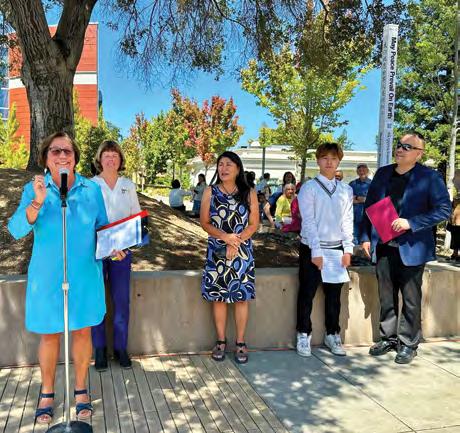
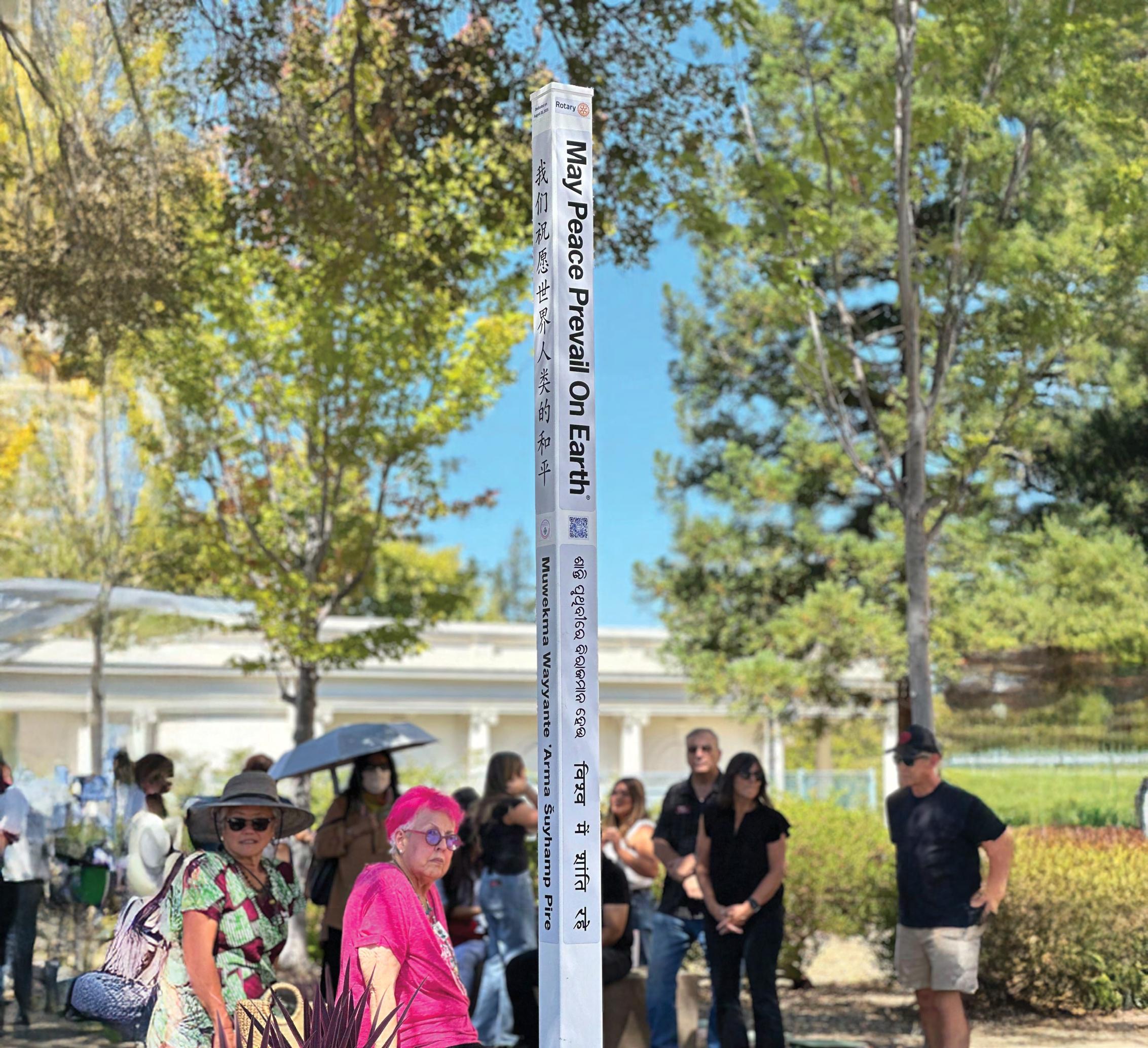
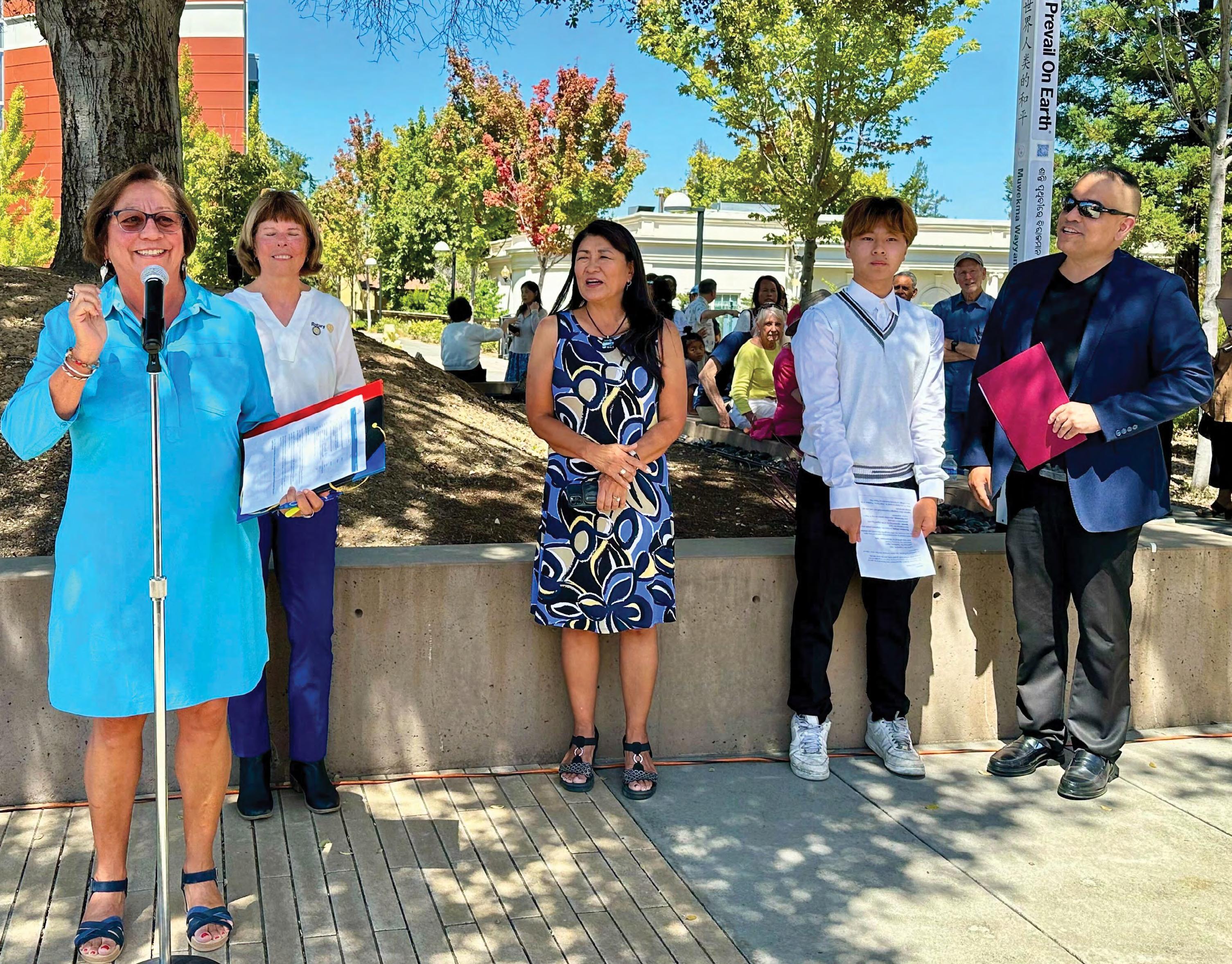
The Rotary Club of Cupertino and De Anza College dedicated a peace pole on campus on August 20, joining a global movement to promote peace and unity. The first peace poles were erected in Japan after World War II, and more than 250,000 have since been installed in over 180 countries worldwide.
“They remind us to think, speak, and act with compassion,”
Rotary Club President Kathy Yates said during the dedication ceremony. “They stand as silent sentinels, encouraging reflection, understanding, and unity.”
Yates explained that peace poles, planted in parks, schools, houses of worship, and community spaces, have become one of the world’s most recognized international symbols of peace. They carry the message, “May Peace Prevail On Earth.” Rotary International has encouraged clubs globally to plant them as a visible commitment to peace.
De Anza College President Omar Torres dedicated the pole,
urging the community to take its message to heart.
“This peace pole may seem simple in form, but its message is profound,” Torres said at the ceremony. “It stands as a daily reminder that peace is not passive; it’s an active choice. It asks us to listen more deeply, to show empathy, and to be courageous in the face of division.”
The dedication also welcomed eight visiting Rotarians from Toyokawa, Japan, Cupertino’s Sister City. Their visit was timed serendipitously with the ceremony.
“Your visit could not be more meaningful or timely because the Sister City Program and peace also go hand in hand,” Cupertino Rotary past-president Alysa Sakkas said.
Students at De Anza College played a key role in shaping the project. The college’s student government selected the languages featured on the peace pole, including those of Cupertino’s four sister cities: Italian, Japanese, Mandarin,
Odia and Hindi, along with Muwekma Ohlone, Spanish, and Vietnamese.
“It was important to us that the languages on the peace pole reflect both global unity and our local identity,” said De Anza student body president Jayven Huang. “Together, these languages represent both our roots and our shared aspirations.”
Emcee Dolly Sandoval, a former Cupertino mayor, De Anza alumna, and longtime Rotary member, closed the ceremony by thanking participants and reminding the audience of the pole’s purpose. “May peace begin with us. May peace grow among us. And may peace prevail on Earth,” Sandoval said.
The dedication concluded with a performance by a De Anza student a cappella group, followed by refreshments and fellowship.
View the peace pole at De Anza College’s Media Learning Center building. De Anza College is located at 21250 Stevens Creek Blvd., Cupertino.
GARDENERS, FROM PAGE 1
to the community.
This hands-on learning moment is part of a broader movement: the UC Master Gardener program, which trains local volunteers to bring researchbased gardening knowledge into everyday spaces like libraries, community centers, and parks.
In Santa Clara County alone, over 300 trained master gardeners hosted 187 free or low-cost public education programs last year, reaching 3,360 adults and 1,076 youth. Backed by the University of California, the program blends academic research with real-life passion, offering talks, workshops, and hands-on experiences in 12 demonstration gardens and public libraries across the region. One demonstration garden is at McClellan Ranch Preserve in Cupertino.
Sue Neufeld, volunteer since 2023, leads the library talk program, which brings master gardeners to 15 different Santa Clara County libraries.
“My favorite part is being able to talk to the public about gardening,” Neufeld said. “We're just trying to expose people to what they can do at their home, or at a community garden.”
Sarah Farley, program manager for Santa Clara County, highlights the work put in by volunteers like Neufeld, who undergo a rigorous training process to become certified.
“We have really great
people who are very passionate and generous with their time,” Farley said. “I've been really, really impressed with our master gardeners’ ability to just reach so many of our community.”
San Jose local Mary Lou Hughes attends all master gardener talks at the Berryessa Public Branch Library, applying the information she learns to her home garden.
“I love all of these master gardener talks,” Hughes said. “They're very motivating, and you always learn so much and get new ideas.”
Beyond flowerbeds and vegetables, master gardeners teach lessons on sustainability, food security, wildfire prevention, and climate-resilient gardening. Volunteers also lead two 12-week therapeutic gardening programs per year at Elmwood Correctional Facility, where inmates grow vegetables and learn practical gardening skills.
Neufeld, who volunteers at Elmwood, says the impact is profound.
“The Elmwood folks benefit from the knowledge because it gives them a feeling of purpose and hope,” she said. “Again and again, we hear the inmates comment on just how good it feels to get their hands in the soil, to be outside, to be able to pick real tomatoes off the plant.”
A study published in the National Library of Medicine supports these observations, noting that gardening can help
The Elmwood folks benefit from the knowledge because it gives them a feeling of purpose and hope. Again and again, we hear the inmates comment on just how good it feels to get their hands in the soil, to be outside, to be able to pick real tomatoes off the plant.
- Sue Neufeld
reduce anxiety and improve mental health through social connection, movement, and time outdoors.
“There's kind of a peace with growing things, so it’s a stress reliever,” Willard said. “I think it's good for your health and it’s beautiful to just walk around nature. Gardening does help our environment, so we’re also doing a good thing for the planet.”
Willard, who has volunteered since 2017 and gardens at least twice a week, emphasized that gardening is accessible to everyone regardless of space or experience.
“Anybody can garden,” she said. “Start small. If flowers are your thing, if house plants or succulents are your thing, do that.
You shouldn’t be discouraged. Because I’ve killed stuff too!” Neufeld recently added Tully Library to the program’s lineup and hopes to bring more underserved neighborhoods into the fold.
“My goal now is to add to the libraries that we give talks at,” Neufeld said. “We want to reach parts of the population that aren’t necessarily able to get this kind of knowledge.”
For aspiring home gardeners, Willard offered a timely tip: late summer is a great month to plant cold-season vegetables like broccoli, cauliflower, kale, and mustard greens.
And for those looking to bring nature indoors, join UC Master
Gardener Mint Pasakdee for a free garden talk on the essentials of houseplant care at McClellan Ranch Preserve. The program runs Saturday, Oct. 18 from 10 to 11 a.m., covering practical tips on light, water, soil, and fertilizer. A tour of the community and demonstration gardens will follow from 11 a.m. to noon, with master gardeners available to answer questions. Bring a chair, water, and a hat. Parking is available at the ranch, with overflow nearby. McClellan Ranch is located at 22221 McClellan Road, Cupertino. To access free gardening resources or reach the volunteer help desk, visit ucanr.edu/site/uc-mastergardeners-santa-clara-county

BY LORRAINE GABBERT
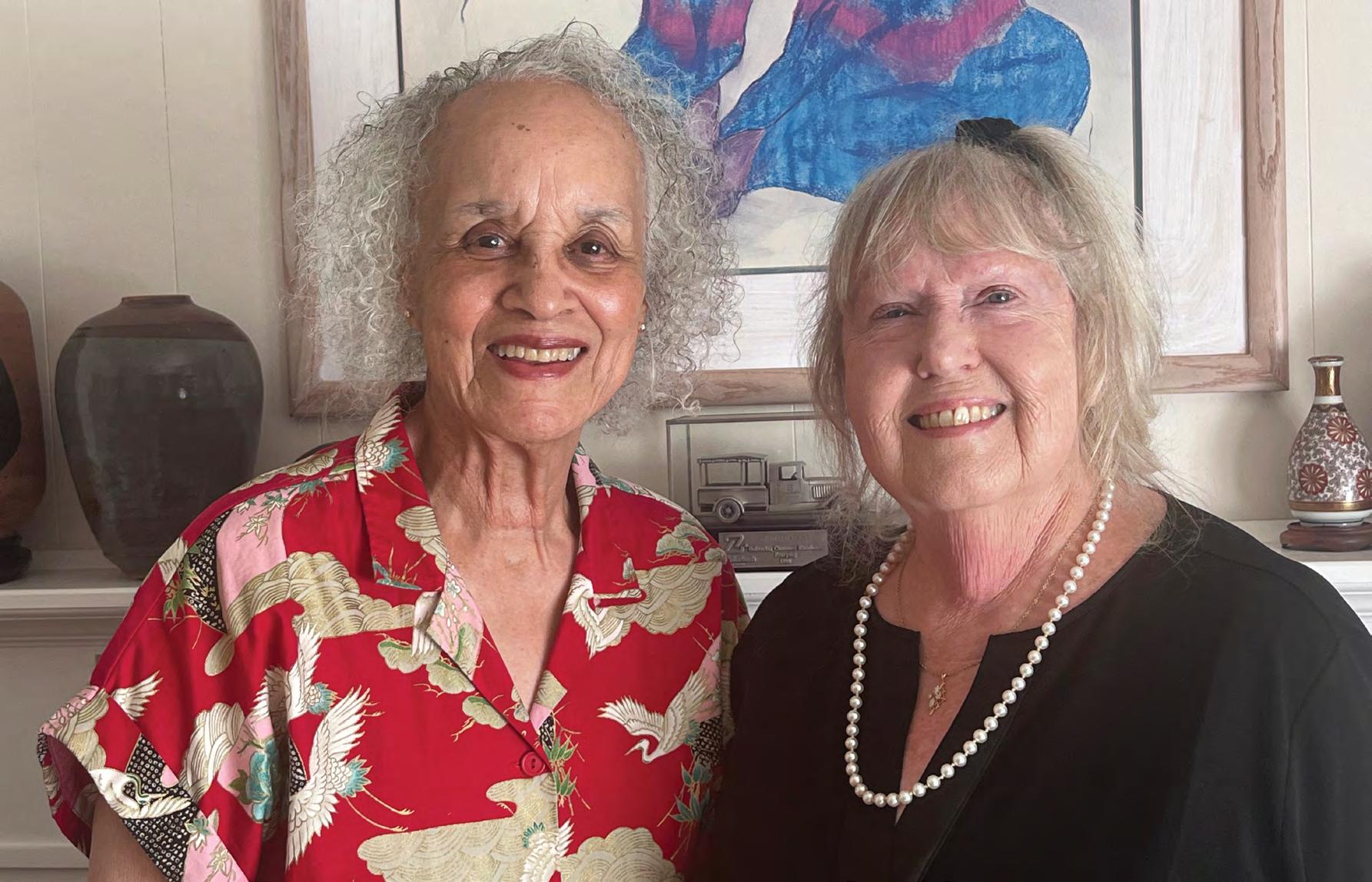
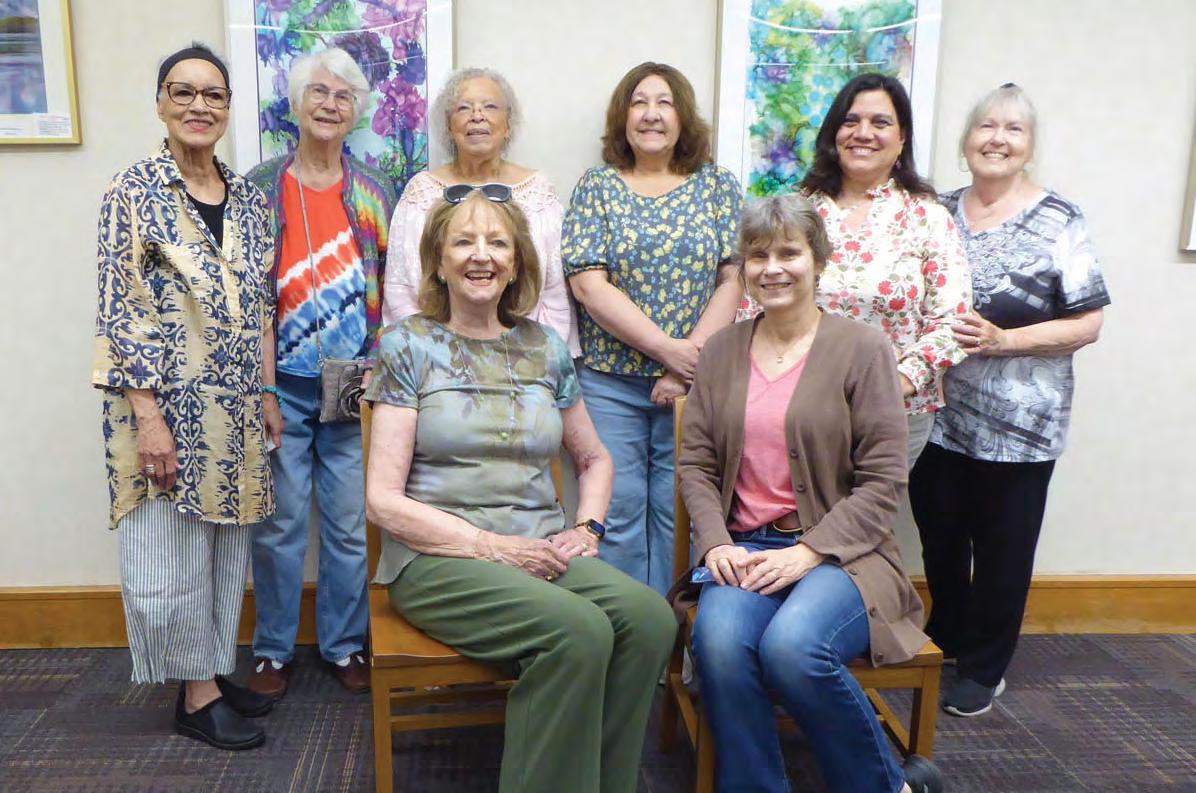
The Santa Clara County Branch of the National League of American Pen Women (NLAPW) is an organization of professional women in the arts who support each other’s creativity while making friendships along the way.
This year, the branch will award four $1,500 grants to talented high school seniors or college students in the fields of writing, music, and art. It also provides cash prizes in a limerick contest and a poetry competition to encourage community members to hone their skills.
The desire to benefit and encourage students drew current Santa Clara County Branch President Luanna Leisure to join Pen Women. Student membership is complimentary for the first year.
“I love helping the students,” Leisure said. I just love it with all my might.”
Dorothy Atkins, Santa Clara Branch outreach chair, said everyone needs a hand up while pursuing their passion. Recognition matters, she said, and encourages them to continue.
“They’re terribly excited about getting this award,” Atkins said. “Not only does it make us feel good ... but to see them accept it ... is just rewarding. This is what we work for.”
The NLAPW started in 1897 with a group of female journalists fighting for equity in Washington, D.C. They created a progressive press union offering members “mutual aid, advice, and future development.” In 1921, the organization became known as the National League of American Pen Women.
There have been numerous famous Pen Women through the years. In 1866, at age 18, Vinnie Ream received a congressional commission to sculpt a marble statue of Abraham Lincoln, which still stands in the Capitol rotunda. Other members include Maya Angelou, Pearl S. Buck, Rosalyn Carter, Hillary Clinton, Grandma Moses, Georgia O’Keeffe, and Eleanor Roosevelt. Today, NLAPW
boasts more than 80 branches and 1,600 members nationwide.
For Atkins, Pen Women has been both welcoming and inspirational.
“As women, we're always doing so much for everybody else,” she said. “This gives us a place to come and nurture each other. And also nurture the things we want to do. It makes me do better and feel excited about doing it.”
Pen Women are a busy bunch. In March, the Santa Clara
Branch held its annual Celebrity Luncheon fundraiser and recognized women Achievers in the Arts. In April, Excellence in the Arts grants were awarded during a luncheon held at the Saratoga Senior Center. In May, poetry competition winners shared their poems and achievers performed during an afternoon tea. In June and July, Pen Women showcased their artwork at the Saratoga Library.
Pen Women members also belong to a memoir writing
group and the South Bay Writers branch of the California Writers Club, both of which meet at the Saratoga Senior Center. To strengthen their ties, members gather monthly for lunch at Bay Area restaurants.
Atkins said she “was over the moon” to be chosen as an achiever. A lot of artists have their artwork tucked away in closets, she said, and having the opportunity to display it is a great feeling.
The Santa Clara County
Branch isn’t shy about promoting itself and featuring members’ work. In addition to a virtual art show, members participated in an exhibit at the Headen-Inman Museum House in Santa Clara, galleries in Saratoga and Half Moon Bay, an Art, Book & Entertainment Festival at San Jose Woman’s Club and pop-up events at Beyond Text in Los Gatos.
To activate the Santa Clara County Branch, Leisure initiated show and tell sessions after the business part of meetings.
“It’s so awesome to get to know one another,” she said. “We’re excited about ... sharing our creativity with each other and supporting one another.”
In addition to displaying their art, members read excerpts from their books and present musical performances. At one meeting, Atkins led an ekphrastic creative writing exercise that inspired her painting.
“When they wrote their stories about what they were seeing and feeling ... it brought tears to my eyes,” she said. “It was powerful to see how someone views your work, and how they respond to it. It's something I'd love to see more of.”
Leisure and Atkins have dived into community outreach to grow the organization.
“I want to run to every woman I see on the street and ask them if they're creative,” Atkins said, “and try to bring them into this organization. We get that camaraderie and it’s invaluable.”
Pen Women brought both Leisure and Atkins validation for their art and writing.
“I had no one that was supportive,” Leisure said. “Pen Women brought me to life and then the ideas just started going ‘bam.’”
Likewise, before Pen Women, no one read Atkins’ writing or appreciated her paintings.
“It fed my creativity, and I started making friends and getting involved in the art world,” she said. “It opened up a whole new world for me. I want to share that with someone else, let them feel that excitement.”
BY AKRITI SHRIVASTAVA
Nearly 250 children started the school year with new backpacks, fresh clothes, school supplies, and heads held high thanks to West Valley Community Services’ Back to School with Dignity Program.
Each summer, WVCS partners with local retailers to host a special shopping event where children are paired with volunteer chaperones to pick out clothes, enjoy a cozy breakfast, and choose free books from a book nook. This year’s event took place at Old Navy in Westgate Center and was a meaningful day for families and volunteers alike.
The impact is personal for parents like Tiyonna, whose daughter with special needs had a joyful and accommodating experience, or Carolina, who was moved to tears knowing her son had everything he needed.
The Back to School with Dignity Program shows that with compassion, commitment, and a little back-to-school magic, every child can feel valued and ready to learn.
For many families, the season brings stress rather than excitement. Quynh, a single mother with no income, felt overwhelmed by the cost of supplies. Sarah, working parttime and stretching every dollar, couldn’t afford new school clothes. Rina, living in her car with three children, saw even
the basics as luxuries. Like all parents, they simply wanted their children to begin the year with pride and confidence. WVCS helps make that possible.
The program has supported students from transitional kindergarten through 12th grade for over 20 years, ensuring those facing financial hardship can start the year with dignity and the tools to thrive. Funded by generous donors and sponsors, it offers families not only material goods, but a renewed sense of hope and belonging.
About West Valley Community Services
West Valley Community Services is a nonprofit dedicated to fighting hunger and homelessness in the West Valley. Founded in the 1970s by public health nurses in Cupertino, WVCS now serves communities across Cupertino, West San Jose, Saratoga, Los Gatos, Monte Sereno, and nearby mountain regions.
The organization offers no-cost food through an onsite market and mobile pantry, emergency financial and housing assistance, case management, and transportation support for seniors. Seasonal programs, including Thanksgiving baskets, Cake4Kids, Gift of Hope, and Back to School with Dignity, bring added support when families need it most. For more information or to donate to WVCS, visit wvcommunityservices.org


BY AMY VU, PRESIDENT, LEAGUE OF WOMEN VOTERS OF SOUTHWEST SANTA CLARA VALLEY
Public education in the United States is shaped by a layered system of federal, state, county, and local agencies. Each plays a distinct role in setting policies, providing resources, and ensuring accountability. Understanding who does what can help parents, students, and community members know where to turn when questions or concerns arise.
The U.S. Department of Education (DOE) was established in 1979 through the Department of Education Organization Act. The mission of the DOE, as outlined in the Act, is to improve the quality of education; ensure equal educational opportunities for all individuals; promote improvement in the quality of
education through federally supported research, evaluation, and sharing of information; improve coordination, management, and efficiency of federal education programs and activities; and increase accountability of federal education programs.
The DOE oversees federal education programs like the Department of Health and Human Services Head Start program, Department of Agriculture's School Lunch program, and federal student loan programs. The DOE sets policies on federal funding and collects data nationally. The DOE is not responsible for the development of curricula and enrollment and graduation requirements; that has always been left to the state and local authorities.
The state education authority in California is the State Board of Education (SBE) and California
Department of Education (CDE). The SBE is the governing and policy-making body for K-12 public schools. The SBE consists of 11 members who are appointed by the governor and approved by the California Senate. The CDE is headed by the State Superintendent of Public Education, Tony Thurmond. The CDE enforces education laws and regulations adopted by the SBE. The only elected office in the CDE is Superintendent of Public Instruction. The next election for this office is June 2026. Since Tony Thurmond is term-limited, there is no incumbent in this upcoming race for Superintendent of Public Instruction.
At the local level, we have the Santa Clara County Office of Education (SCCOE). The primary functions of the SCCOE are to support local school district operations and provide
instruction through special education programs, alternative schools, and federal and state preschool programs. This agency is governed by seven elected members who serve four-year terms. Three of the current SCCOE board members have terms that expire next year.
Your local public school is governed by a school board, whose members are all elected. School boards are responsible for creating policy, approving curriculum, setting the school calendar, and approving budgets for their school district. The school board also hires the superintendent who oversees the implementation of the board’s vision and policies.
With all the different educational governance bodies, it can be difficult to determine which agency is responsible for which aspect of our education system and to figure out who
to contact when you have a problem. In general, if you are unhappy about the instructional materials, the assessment system, or curricula in public schools, you should contact the SBE at SBE@sbe.ca.gov and your local school board members. You can find your local district and board members by typing in your address in the “Look Up Your District” section of the Santa Clara County Registrar of Voters website at vote.santaclaracounty. gov To find out more about preschools or alternative education resources, contact the Santa Clara County Office of Education at (408) 453-6500. If you have a concern about equal access and opportunity to education, you can file a complaint with the U.S. Department of Education at ed.gov/laws-and-policy/civilrights-laws/file-complaint
BY DE ANZA COLLEGE
The first time Aurelio Cardenas came to De Anza, he didn’t think he belonged in college. He’d been incarcerated as a teenager and young man, before an injury from gun violence left him partially paralyzed in his early 20s.
Now he’s graduating with an associate degree for transfer in history, thanks to his own hard work, his wife Jessica’s encouragement, and support from De Anza’s Rising Scholars program. This fall, Cardenas will transfer to the University of California, Santa Cruz, after winning the prestigious Pister Leadership Award, which provides $20,000 for college expenses.
“Aurelio has overcome so much just to get here, and he’s grown in remarkable ways,” said
James Nguyen, Rising Scholars faculty coordinator. He called Cardenas a powerful example of “second chances, transformation and the incredible things our students can achieve when given the opportunity.”
When Cardenas took his first class at De Anza a decade ago, he felt self-conscious and out of place, and he didn’t want to come back.
But a few years after his injury, he enrolled in De Anza’s Adapted Physical Education program for people with disabilities. There, he found new motivation after seeing a classmate graduate and transfer to UC Berkeley.
Cardenas tried a history class and liked it so much that he decided to enroll full time.
He joined the Men of Color Community and then the Rising Scholars program, which provides
resources for students who have been incarcerated or involved with the justice system.
The Rising Scholars team, counselor Jesus Ruelas, program coordinator Claudia Guzman, and Nguyen, provided invaluable support, said Cardenas, who called them “game-changers.” With their encouragement, he won a coveted internship last summer at Martin Luther King Jr. Research and Education Institute.
Cardenas said his biggest challenge at De Anza was often “believing in myself” – as an "older" student with a disability and a troubled background. Now his long-term goal is to work with young people as a counselor or teacher.
“I want to tell them, ‘If I can do it, they can, too,’” he said.
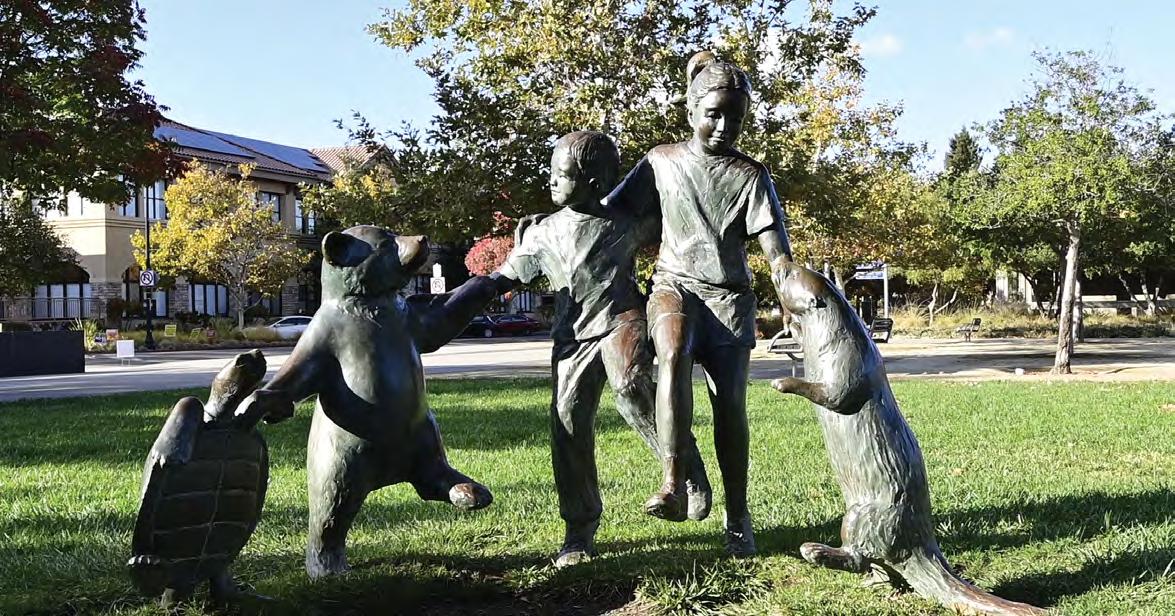
The Cupertino Library is a lively hub where families gather for storytime, neighbors connect over shared interests, and adults of all ages discover new opportunities to learn. From cultural celebrations and book discussions to handson workshops, the library sparks curiosity, creativity and connection, making it a true cornerstone of community life.
UPCOMING PROGRAMS
Adult Nonfiction Book Discussion:
“Surf When You Can” Sunday, Sept. 14, 2025, 11:30 a.m. to 12:30 p.m.
Discuss Brett Crozier’s “Surf When You Can: Lessons in Life, Loyalty, and Leadership from a Maverick Navy Captain.” Explore themes of trust, teamwork and work-life balance. Meets the second Sunday each month at 11 a.m. in Room 201B. Sponsored by the Friends of the Cupertino Library.
Police Read-Along Wednesday, Sept. 17
10:30-11 a.m.
A Santa Clara County Sheriff’s Deputy shares stories and safety tips during this special family storytime. Sponsored by the Cupertino Friends of the Library.
Adult Book Discussion: “Orbital” by Samantha Harvey Wednesday, Sept. 17 11 a.m. to 12:30 p.m.
Discuss Samantha Harvey’s “Orbital” (2023), which follows astronauts aboard the International Space Station. Group meets the third Wednesday morning and third Thursday evening each month. Sponsored by the Friends of the Cupertino Library.
Knit-Alongs Friday, Sept. 19
2:30-4 p.m.
Bring your knitting or
ADDRESS: 10800 Torre Ave., Cupertino, CA 95014
PHONE: (408) 446-1677
HOURS: Monday-Friday: 10 a.m. to 9 p.m.
Saturday & Sunday: 10 a.m. to 6:30 p.m.
crochet project and connect with others in a social, creative setting. Adults 18 and older only. Meets in Room 201A (first Fridays in 201B). Participants are encouraged to bring their own supplies.
Volunteer to Teach an Adult How to Read: Orientation
Monday, Sept. 22
1-2 p.m. and 6-7 p.m.
Learn how to volunteer as a literacy tutor with the Reading Program. Orientation covers requirements and resources. For adults 18 and older. Meets in Community Room 201.
I Like to Move It Move It: The Science of Moving Your Body
Friday, Sept. 26
3-4 p.m.
Discover the science behind physical activity and explore fun, non-running ways to stay active. For ages 6 and up.
Taiwanese Tea Culture Celebration
Monday, Sept. 29
3–4:30 p.m.
Celebrate the Moon Festival through Taiwanese tea traditions. Includes a live tea ceremony with audience participation. Space is limited; registration opens Sept. 1 at 10 a.m.
Reading Buddies Thursday, Oct. 2
7-8 p.m.
Children in grades K-5 can practice reading aloud to a trained therapy dog from
Furry Friends P.A.T.S. Meets first Thursdays of the month. The Registration opens the third Monday of each month at the Children’s Reference Desk.
ONGOING PROGRAMS
Family Storytime
Saturdays, 10:30-11 a.m.
Stories, songs, rhymes and dances that encourage early literacy. Open to all ages; limited to the first 100 families (maximum two adults per group). Bring a blanket or yoga mat.
Babywearing Dance
Sundays, 11 a.m. to noon
A fun weekly dance class for caregivers wearing their babies — a lively way to connect and move together.
Homework Help for Grades K-5
Tuesdays and Thursdays, 4:30-6 p.m.
Drop-in homework help from volunteer tutors for students in grades K–5. No registration required. Basic school supplies provided.
Meditation and Mindfulness
Wednesdays, 4:30-5 p.m.
Practice 20 minutes of guided meditation followed by a 10-minute Q&A with instructor Manisha. Meets in Community Room 201A.
BEDTIME STORYTIME
Wednesdays, 7-7:30 p.m.
Evening family storytime with stories, songs and rhymes. Open to all ages; limited to the
first 100 families (maximum two adults per group). Bring a blanket or yoga mat.
Storytime for Babies Thursdays, 10:30-11:30 a.m. For pre-walkers (ages 0–1). Songs, fingerplays and stories build early literacy. Limited to the first 30 babies (maximum two adults per group). Bring a blanket or yoga mat.
ESL Conversation Club Tuesdays, 10:30 a.m. to noon Practice English listening and speaking in a welcoming space while learning about other cultures. For adults 18 and older with basic English skills. Meets in Room 201A; registration required.
ESL Parent & Caregiver Conversation Club Mondays, 10:30-11:15 a.m.
Parents and caregivers practice English, gain parenting insights and connect with others; children are welcome to attend.
Toddler Storytime Tuesdays, 10:30-11 a.m. Stories, songs and movement for children ages 1-2 who are on the go.
For accessibility accommodations (e.g., ASL), please fill out the online form at sccld.org/accessibility at least 7 days before the event. If you need assistance with the form, speak with a staff member, call (408) 540-3945, or email ask@sccl.org
BY DR. OMAR TORRES, PRESIDENT, DE ANZA COLLEGE
Since I became president of De Anza College in January, I’ve been constantly amazed by the innovative ways our institution serves our diverse community.
Today, I’m excited to share news about a partnership that exemplifies our commitment to lifelong learning and intergenerational connection.
De Anza has joined forces with Successful Aging Solutions & Community Consulting (SASCC), a nonprofit services provider based in the West Valley, to offer specially curated credit and noncredit courses for older adults ages 50+. This partnership, which we call Senior Guided Pathways, represents more than just
expanded course offerings: it’s about recognizing that education has no expiration date and that learning enriches lives at every stage.
Whether you’re preparing for your next chapter in life, updating skills for today’s job market, or simply seeking to broaden your knowledge, we’ve designed classes with you in mind. Our course listings span an impressive range of subjects, from art, languages, literature and science to practical career training in business, computer science and real estate.
De Anza’s innovative programs extend well beyond traditional course offerings. We’re home to cutting-edge initiatives like our new Automotive Technologies Management baccalaureate degree, which combines technical
expertise with business acumen for the evolving automotive sector. Community members can also benefit from our Zero Textbook Cost and Open Educational Resources initiatives, which provide access to highquality digital materials at no cost.
Additionally, our De Anza College Promise program demonstrates our commitment to accessibility by providing eligible full-time students with free tuition and fees for up to two years (up to 15 units per quarter), opening doors for more of our residents to pursue higher education.
Senior Guided Pathways embraces our commitment to accessibility through noncredit options. Several courses in Computer Science and Real
Estate are available as noncredit classes, covering the same material as their credit counterparts but offered tuition-free. This removes financial barriers while maintaining the quality education De Anza is known for.
This initiative also aligns perfectly with my goals for enhancing De Anza’s value to our students and community. By expanding our partnerships and creating new opportunities for students of all ages, we’re addressing the diverse needs of our region while fostering the kind of innovative, entrepreneurial mindset that makes our college community so Special.
Education has always been about transformation — the transformation of individuals, communities and society.
Through our Senior Guided Pathways partnership with SASCC, we’re creating a space where experience meets innovation, where wisdom is shared across generations, and where the pursuit of knowledge continues to flourish throughout life.
I invite all community members to explore these new opportunities and discover how DeAnza College can support your educational journey — whatever stage of life you’re in. Together, we’re building a stronger, more connected community through the power of lifelong learning. Visit
to learn more.
FRIDAY, SEPTEMBER 19 10 A.M. TO NOON MAIN QUAD FRIDAY, SEPTEMBER 19 10 A.M. TO NOON MAIN QUAD
Senior Guided Pathways students are warmly invited to join the De Anza community for Welcome Day, a celebration of the new school year and all the opportunities campus life has to offer.
While much of Welcome Day is designed for traditional-age students, it’s also a wonderful way for older adult learners to: Explore your Village — a supportive network of students, faculty, and staff connected by shared interests and goals. Meet instructors and program leaders who can guide your educational journey. Learn about resources for registration, financial aid, and student support. Take a campus tour, enjoy refreshments, and connect with peers of all ages.
Know what you want to study? Stop by the corresponding Village. Not sure where you fit? You’re welcome to visit any Village that sparks your curiosity.
And remember: through the De Anza College Promise, eligible students can receive free tuition for up to two years (15 units per quarter) plus $1,000 for books. This program, along with noncredit class options, ensures that education remains accessible at every stage of life.
BY MENDY MAO
In every stage of life, learning can help people find fulfillment and connection. As we age, it becomes vital for retaining cognitive abilities.
A 2015 JAMA Neurology study found that the level and quality of education earlier in life can build resistance to dementia later on. Samuel Leale, operations manager at Successful Aging Solutions & Community Consulting (SASCC), who holds a master’s degree in gerontology, encourages continued learning throughout life.
“There’s that concept of neuroplasticity and the fact that the brain can continue to change itself and evolve over time, even as we get older,” Leale said. “And learning plays a big role in that. You’re stretching your brain past its capacity, trying to remember things, and it’s like working a muscle. You’re exercising that muscle of cognition and mental capacity.”
Claire Day, chief mission and program strategy officer of the Alzheimer’s Association Northern California and Northern Nevada Chapter,
oversees the association’s support groups and programs, including education groups. She referenced an Alzheimer’s Association article noting that adults who worked in mentallydemanding jobs tend to have larger cognitive reserves, giving the brain greater resistance to damage from diseases like dementia. Exercising your brain later in life can also slow the progression of dementia and improve function.
“Cognitive engagement— brain games, puzzles, learning something new, doing something that really challenges your brain—can also reduce your risk of developing dementia,” Day said. “Learning is good for everybody, and whether you have Alzheimer’s disease or not, learning something new, challenging yourself, is really good for the brain.”
Seventy-eight-year-old Rodrigo Bejarano exercises his brain with bingo, trivia, and most recently, crossword puzzles. He has even devised strategies for tackling the hardest ones.
“You know, if you don’t use it, you lose it,” Bejarano said.
Learning also fosters social
connections. An article in Taylor & Francis Online found that collaborative learning in college students encouraged social connection. In the same way, taking classes or learning new skills in a community can strengthen a healthy social network.
The CDC recommends a robust social network as protection against serious illnesses, including heart disease and dementia. In her work with Alzheimer’s patients, Day has seen those who interact with others and stay active often have better outcomes.
“The social connections are as important as the cognitive
enhancement,” Day said. “Those that have social interactions and social connections do far better than those who are isolated. That social engagement piece is needed as a big part of a healthy brain’s aging.”
Learning not only exercises the brain, it can also build friendships that help slow Alzheimer’s. Bejarano, a Saratoga Adult Care Center participant, said talking with friends has helped him confront dementia.
“For sure, it does help a lot,” Bejarano said. “You go home and watch TV, that’s not the same as having a friend. I’m learning that friends are very
valuable. I enjoy my friends in the group here, so I look forward to coming in the mornings.”
For older adults, learning may become more difficult as the brain’s plasticity decreases. Day stresses the importance of finding the right activity for each individual.
“Find those opportunities to look at something different, something interesting,” Day said. “It’s about finding things that you enjoy hearing about, and then it might make it easier to learn. Take those smaller steps in the beginning, because when you see the reward of what you’ve done, it will encourage you to keep going.”

of care right here in the Bay Area in response to a need in the community. Since 1971, On Lok has helped thousands of older adults manage their health and live with dignity and independence.
Today, On Lok PACE serves over 2,200 seniors in Santa Clara County, San Francisco, and the Tri-City area of Alameda County. Every day, our team supports older adults with the care they need, from doctor visits to home care, meals, and fun social activities.
On Lok PACE has been serving Santa Clara County since 2009 and has two centers in San Jose and is opening a third location in South San Jose in 2026. On Lok PACE Centers are a welcoming “one stop shop” where seniors get care and connection.
On Lok’s team provides all primary and specialty medical services, exercise classes, prescriptions, transportation, social activities, healthy meals, transportation to and from our centers, and much more. It’s a place where older adults are treated with respect and feel like part of a community. Every day, On Lok PACE team members support seniors with the care needed to remain living independently, in their community, for as long as possible.
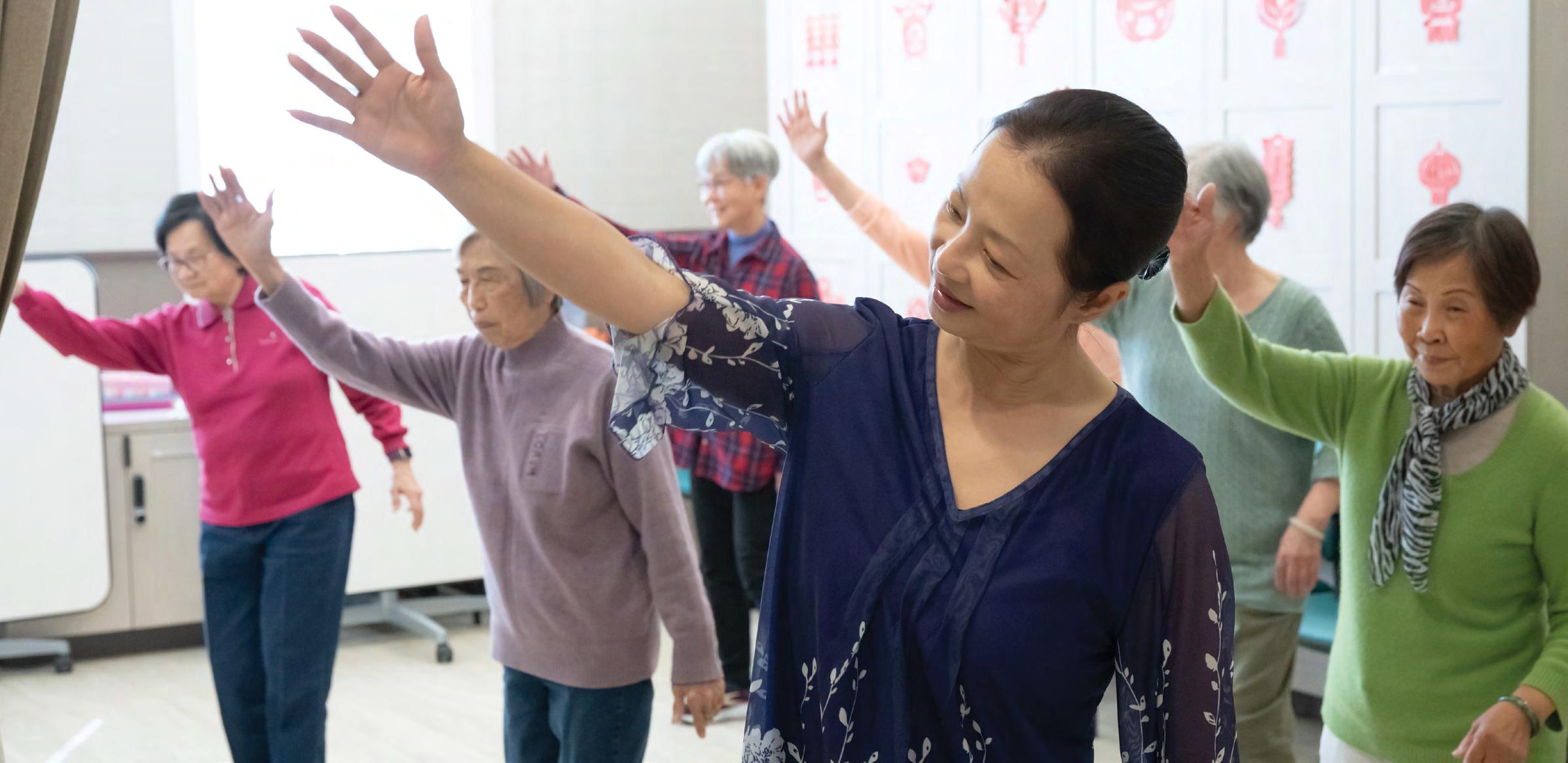
HOW PACE WORKS PACE is different from standard health care. It brings everything seniors need into one program. Each person gets a team of professionals, including doctors, nurses, caregivers, social workers, and therapists, who work together to create a personalized plan that fits each senior’s unique needs.
PACE provides medical care, home care and personal help, meals and nutrition support, transportation, social
and recreational activities, and therapies and medications. Because most PACE participants qualify for Medicare and MediCal, they don’t pay anything out of pocket for On Lok PACE services. Everything is managed by one team, making care better organized and easier for families.
As our aging population continues to grow, programs like On Lok PACE are more important than ever. By 2030, more than
25% of Californians will be 65 years of age or older. Research shows that PACE participants have fewer hospital visits, better health, and greater satisfaction compared to seniors who reside in nursing homes or other congregate settings.
Because On Lok PACE focuses on keeping seniors living as independently in their homes and communities for as long as possible, we also work with our seniors and their family members on what other support may be
needed.
As we celebrate National PACE Month, On Lok is proud to provide compassionate, hands-on care that is culturally sensitive and tailored to each person's unique needs. We believe every older adult deserves to age with comfort, dignity, and proudly support caregivers and their families with their loved ones' aging journey.
To learn more about On Lok PACE and how we help older adults in the Bay Area, visit onlok. org/pace or call 1-855-973-1110
BY ALZHEIMER'S ASSOCIATION
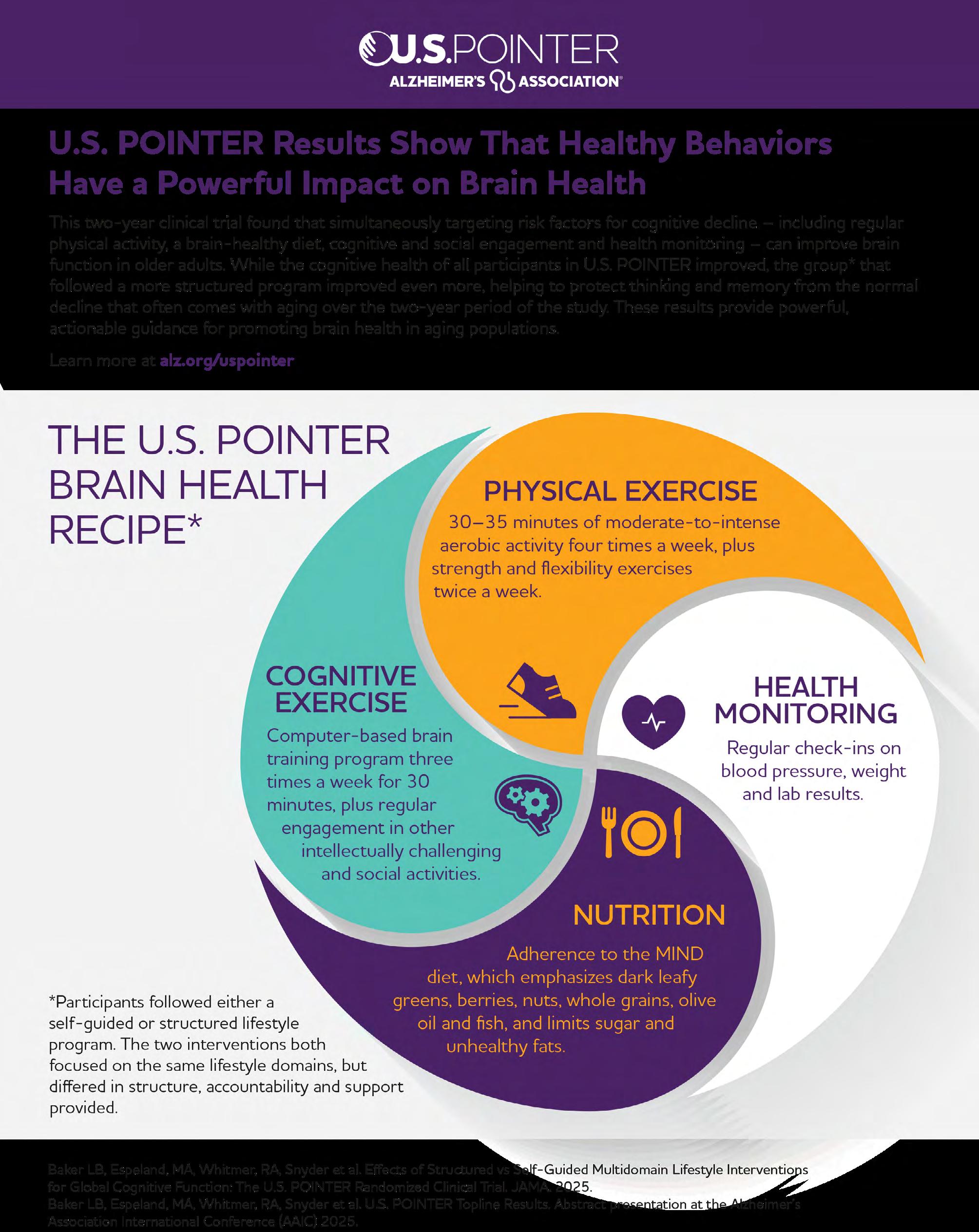
At the Alzheimer’s Association International Conference (AAIC) 2025 in Toronto in July, researchers announced results from the Alzheimer’s Association U.S. Study to Protect Brain Health Through Lifestyle Intervention to Reduce Risk (U.S. POINTER). The study is the first large-scale clinical trial to show that lifestyle interventions improved cognition in older adults at risk of cognitive decline.
Researchers found that both structured and self-guided lifestyle interventions led to cognitive benefits, though the improvements were greater in the structured intervention group. The trial included more than 2,000 older adults, nearly onethird from groups typically underrepresented in dementia research.
Both approaches focused on physical exercise, nutrition, cognitive challenge and social engagement, and heart health monitoring, but differed in structure, accountability and support:
• Structured intervention: Participants attended 38 peer team meetings over two years and were given a prescribed activity program with measurable goals. These included aerobic, resistance and stretching exercises; adherence to the MIND diet; cognitive challenge through BrainHQ training and other intellectual and social activities; and regular review of health metrics and goalsetting with a study clinician.
• Self-guided intervention:
Participants attended six peer meetings and were encouraged to make lifestyle changes that fit their needs and schedules. Study staff provided general support but not goal-directed coaching.
In partnership with UC Davis and the Alzheimer’s Association, the Sacramento region was proud to serve as a trial site. More than 400 local residents participated, some in person and some virtually.
“As the burden of dementia grows worldwide, U.S. POINTER affirms a vital public health message: healthy behavior has a powerful impact on brain health,” said Claire Day, chief mission and program strategy officer for the Alzheimer’s Association Northern California
and Northern Nevada chapter, who attended the conference.
“This is a critical public health opportunity. The intervention was effective across a broad, representative group — regardless of sex, ethnicity, APOE genetic risk, or heart health status — demonstrating its applicability and scalability for communities across the country,” Day said. “The positive results of U.S. POINTER encourage us to look at the potential for a combination of a lifestyle program and drug treatment as the next frontier in our fight against cognitive decline and possibly dementia.”
Building on the momentum of U.S. POINTER, the Alzheimer’s Association will launch several programs and initiatives,
including:
• A personal brain health assessment tool.
• A virtual brain health training program for health care providers.
• A community recognition program for organizations championing brain health.
• A brain health roundtable to bring together leaders across health care, public health, community and corporate sectors.
These are the initial results. Over the coming months, study leaders will continue analyzing the data to provide an even more comprehensive picture of the trial’s findings.
For more information, visit alz.org/uspointer. To find ways to get involved or participate in research, visit alz.org/clinicaltrials.
BY JOE-MING CHENG, PH.D. CMPE
On June 11, 2025, during my fourth post-cancer checkup, my oncologist noticed a suspicious spot. It wasn’t clear if it was inflammation or a recurrence, so he ordered a PET/CT scan.
I arrived early to the San Jose imaging center, just in time to see a technician deliver the day’s freshly made 18F-FDG dose. This tracer is a radioactive form of sugar. Because cancer cells use sugar much faster than normal cells, the tracer helps doctors see where cancer might be hiding.
Rather than fear, I felt awe. In the 1970s, while pursuing my M.S. at UC Santa Barbara, I designed and built a biofeedback device for asthma patients. My classmates were working on prototypes of early CT scanners. That fusion of engineering and medical innovation has fascinated me ever since.
Watching the tracer arrive brought that passion full circle. With its short half-life, 18F-FDG must be produced and delivered daily. Once inside the body, it is drawn to cancer cells. When its particles meet electrons, they vanish in a flash of energy. The PET scanner reads those flashes
and builds a detailed picture doctors can use to guide care.
The scan showed no cancer, my oncologist at El Camino Oncology confirmed. Relief and gratitude swept over me. But the moment also reminded me how far antimatter has traveled, from a theoretical idea to a tool in everyday medicine.
In “Angels & Demons,” Dan Brown imagines antimatter as a stolen canister powerful enough to vaporize Vatican City. Though dramatized, the physics is real. When antimatter meets matter, they annihilate into pure energy. Einstein’s famous equation, E=mc², explains why: even a small amount of mass releases enormous energy. Just a fraction of a gram of antimatter paired with matter could equal the force of an atomic bomb
The story of antimatter began in 1928, when British physicist Paul Dirac predicted particles identical in mass but opposite in charge to electrons.
Four years later, Carl Anderson discovered the positron, earning the 1936 Nobel Prize and confirming Dirac’s idea. Other discoveries followed, including the antiproton in the 1950s, and antimatter became an established part of physics.
Today, it is more than a

scientific concept. In hospitals, PET scans use antimatter reactions to detect cancer with remarkable accuracy. What once lived only on the chalkboard now saves lives every day.
As I reflected, I thought of Father Georges Lemaître, the Belgian priest and physicist who proposed the Big Bang theory in 1927. He believed the universe
began as pure energy, splitting into matter and antimatter, most of which annihilated. But because of a tiny imbalance, one particle of matter in every 10 billion survived. From that slim margin came everything: stars, planets, life itself.
Antimatter began as a cosmic mystery. Today, it is part of the story that saved my life.
antimatter (noun, physics) Molecules formed by atoms consisting of antiprotons, antineutrons and positrons. Stable antimatter does not appear to exist in our universe.
“Standard theories say that matter and antimatter were created in equal amounts after the Big Bang.” — Oxford Languages
or hissing.
Many people have been asking about tinnitus, so today’s column will address several of those questions. However, this column is not intended to be a comprehensive discussion of tinnitus.
When additional questions are posed, we’ll attempt to cover them in a future column.
Q: What is tinnitus?
A: Tinnitus is defined as a noise in your head or ears, primarily heard only by you (subjective tinnitus). Tinnitus noises most often are whistles, clicks, hums, ringing, roaring,
Rarely can others hear it but if they do, it’s often pulsatile (in time with your heart beat) in nature. Generally it is not dangerous but can indicate other systemic issues.
Q: What is the proper pronunciation of the word?
A: The correct pronunciation of the word is TI-nuh-tus in the US; however, the UK pronounces it Ti-NIH-tus. Professionals emphasize the first syllable but some lay people emphasize the middle syllable; while technically both are correct, the preferred pronunciation according to Miriam Webster and the American Tinnitus Association

is to accent the first syllable.
Q: How prevalent is tinnitus?
A: Very! Nearly 24% of older adults experience some type of tinnitus; nearly 10% of young people (teens through mid 20s) experience tinnitus. More than 50 million people in the U.S. suffer from tinnitus. It can be constant or intermittent.
Q: What causes tinnitus?
First, tinnitus is not a disease; it is a symptom of an underlying medical issue. The most common causes are: Noise exposure, hearing loss, medications, earwax, ear infections, head or neck injuries and circulatory system problems.
Less common tinnitus risk factors include: Eustachian tube dysfunction, Meniere’s Disease, TMJ (the two joints joining the lower jaw to the skull) disorders, vestibular tumors, otosclerosis, auto-immune diseases, and blood vessel disorders.
Q: Is there a cure for tinnitus?
A: Maybe. Depending upon the cause of the tinnitus, there may well be valid medical treatments that will eliminate or mitigate the tinnitus. Comprehensive medical and audiological evaluations are the best way to determine the cause and possible remediation of the tinnitus.
You can cover up or “mask” tinnitus by having background white noise or ambient noises
available (music, recordings of waterfalls, or other pleasant sounds). Not only will it mask the tinnitus, but it will help refocus your attention away from it.
Based on extensive advertising seemingly everywhere, “miracle cures for tinnitus” exist. There are a plethora of fraudulent or scam “cures” for tinnitus; do not waste your money on them! They are perfect examples of “buyer beware” because realistically there is no “miracle cure.”
Q: Can certain medications cause tinnitus? What about foods; can they cause tinnitus?
A: Absolutely! There is a long list of medications that can cause tinnitus. Since new medicines are constantly being introduced, it is prudent to check with your doctor and/or pharmacist before taking them. Often the tinnitus disappears once the medication is no longer being used.
A partial list of common medicines that can cause tinnitus include: aspirin, diuretics, NSAIDS, (Ibuprofen, Motrin), aminoglycosides (Vancocin, cis-platinum); also, some anti-anxiety, blood pressure, allergy, anti-convulsant and chemotherapy drugs.
Foods that can cause tinnitus: Thus far there is no proof that foods can cause tinnitus; however, there are foods that can exacerbate or cause spikes in tinnitus: caffeine, alcohol, salt, processed foods, MSG, sugar, and saturated fats.
Q: Can stress affect tinnitus?
A: Yes, most definitely. Depending on how you view your tinnitus, your response can influence the tinnitus. If it disturbs you, the brain might interpret it as a threat to you; if that is the case, then you will likely become anxious about it. That worry will amplify your perception of it and you may become even more stressed. Some have described this as a “vicious cycle.” In other words, the more it bothers you, the worse it will seem.
Reducing the stress in your life is helpful in managing tinnitus. Meditation, yoga, lessening issues that are stressful, exercising, going to places where nature is plentiful—parks, coastal areas, or even “vegging out” and watching clouds glide through the sky. Also, exercising can reduce your general level of stress and that includes the anxiety often associated with tinnitus.
Additional reliable online information is available from Mayo Clinic, Johns Hopkins, UCSF, Cleveland Clinic, American Tinnitus Association, and other reputable medical and professional sites.
Please feel free to submit questions regarding hearing, hearing aids, lipreading (speechreading), tinnitus, ear pain, vertigo, or other related queries to outlook@sascc.org or hear@gizmology.com
BY SUE FENTON
There are times when a simple meal at a picnic table turns into a family story that is worth repeating. This is one of those occasions.
On the Fourth of July, a few friends and neighbors gathered poolside. With our busy lives in the Bay Area, it is hard to find the time to socialize. But the Fourth provides us all with time — no work, no school. We may gather with folks with whom we rarely have time to chat. It was the case when I sat down to eat and chat with Los Gatans whose story I barely knew.
And then Sue on the Street
went into her usual mode and asked about everybody’s life. And then I heard a story. A couple told me how they could not have children. It was hard for them because they both came from large, boisterous families. And they both wanted the same.
But no such luck. They were to be without children of their own. Enter the adoption choice, with a twist. They planned to have that large family by adopting a child who already had a family and integrating that family into their family and newly adopted baby. The
adoptive couple stayed with the birth mother while she was in labor. The adoptive parents even cut the umbilical cord. Wow! They thought that by everyone being included at the birth from both families, that would help make it one big happy family. So it began. And so it is. The birth mom did not give up a baby but in her generosity created a miracle from God. Two families became one. The child and adoptive family have been in constant contact with the birth mother’s family for all these years. The
baby has grown up healthy and well-adjusted. The baby was not taken from her birth mother but given more love and support that any child could ask for. The message here is that with love, anything is possible.
Always remember that it is love that keeps people together. It is love that keeps it remaining that way. Until our day at the picnic table, I had no idea that their child was adopted. Now I see why the child grew up so strong and happy. It was the love of TWO families!
BY LLOYD RUSSELL

We have all read books and then seen a movie or TV adaptation of that book. I’m sure you’ve said: “The book/movie was better.” Or, you might have read the book and said “I wonder if the movie is better.” Well, you’re in luck because you get to see 15 of my winners in this very hotlycontested list. Before I present my choices to you, I have to give you a couple of warnings:
Some of the books are old and may be before you began pleasure reading.
Some of the movies are old
and may challenge my memory.
If I rated the book the same as the movie, that means I liked them pretty much equally.
In each case, I will give you the pub date of the book and the year the movie came out (along with the lead actors). And my ratings, from lowest to highest are:
- Good - Very Good
- Really Good
- Excellent
And here they are:
1. “The Leisure Seeker,” by Michael Zadoorian2009/2017 (Helen Mirren & Donald Sutherland)
- Book: Really Good
- Movie: Stinker (yes, you read that right)
2. “A Man Called Ove,” by Fredrik Bachman - 2012 (2013 in English)/2015 (in Swedish)/2022 (Tom Hanks)
- Book: Really Good
- Movie (Swedish): Very Good
- Movie (English): Very Good
3. “The Notebook,” by Nicholas Sparks - 1996/2004 (Rachel McAdams, Ryan
Gosling, James Garner & Gena Rowlands)
- Book: Good
- Movie: Very Good
4. “Harry Potter” (series), by J.K. Rowling - 1997-2007/2001-2011 (Daniel Radcliffe, Rupert Grint & Emma Watson)
- Books: Very Good
- Movies: Very Good
5. “The Help,” by Kathryn Stockett - 2009/2011 (Viola Davis, Emma Stone, Octavia Spencer & Jessica Chastain)
- Book: Very Good
- Movie: Very Good
6. “The Da Vinci Code,” by Dan Brown - 2003/2006 (Tom Hanks)
- Book: Good
- Movie: Good
7. “Seabiscuit,” by Laura Hillenbrand - 1999/2003 (Toby Maguire & Jeff Bridges)
- Book: Very Good
- Movie: Very Good
8. “Shogun,” by James Clavell - 1975/1980 (TV
miniseries)(Richard Chamberlain)
- Book: Excellent (top 3 alltime)
- Miniseries: Excellent
9. “The Glass Castle,” by Jeannette Walls - 2005/2017 (Brie Larson, Woody Harrelson & Naomi Watts)
- Book: Excellent (top 12 alltime)
- Movie: Very Good
10. “Me Before You,” by Jojo Moyes - 2012 (book 1 of a trilogy)/2016 (Emilia Clarke & Sam Claflin)
- Book: Very Good
- Movie: Very Good
11. “Roots,” by Alex Haley - 1976/1977 (TV miniseries) (LeVar Burton, John Amos, Louis Gossett Jr. & Ben Vereen)
- Book: Excellent (top 12 alltime)
- Miniseries, Excellent
12. “Queen Sugar,” by Natalie Baszile - 2014/20162022 (TV series) (Kofi Siriboe & Dawn Lyen-Gardner)
- Book: Very Good
- Series: Very Good
13. “The Boys in the Boat,” by Daniel James Brown - 2013/2023 (Callum Turner & Hadley Robinson
- Book: Very Good
- Movie: Really Good
14. “All the Light We Cannot See,” by Anthony Doerr - 2014/2023 (TV miniseries) (Aria Mia Loberti, Hugh Laurie & Mark Ruffalo)
- Book: Very Good
- Series: Very Good
15. “Still Alice,” by Lisa Genova - 2007/2014 (Julianne Moore, Kristen Stewart & Alec Baldwin)
- Book: Very Good
- Movie: Very Good
THIS MONTH’S TRIVIA: Who won the Pulitzer Prize in Fiction twice between 2017 and 2020?
A. Donna Tartt
B. Richard Powers
C. Colson Whitehead
D. Jennifer Egan
BY KATHY DENISE
I have been a knitter for years, making blankets, scarves, hats, and donating many to those in need. Years ago, as I regularly brushed our Siberian Husky, a “woolly” with unusually long fur, one of my son’s teachers offered to spin the collected fur into yarn. With that yarn, I knitted squares for three blankets, one for each of my kids.
After that husky passed, we
adopted two husky/malamute pups, but their fur wasn’t usable for spinning. When one suddenly died at age five, her brother grieved so deeply that we brought home another Husky, this one a “super woolly.” Once again, I had fur worth spinning, but the original teacher had moved away. Through Etsy, I found different spinners, first in Baltimore, then the Midwest, and now in Pennsylvania.
Each had their own way of working with the fur, but the Pennsylvania spinner has been the most reliable. At $25 an ounce, it isn’t cheap, so I reserve the yarn for family and close friends.
From that yarn I’ve made hats, pillows, and even stuffed animals for grandchildren. Each piece carries the warmth of our dogs, woven into memories my family can hold for years to come.