

BY FRANK MAYERS
De Anza College’s Cheeseman Environmental Studies Area welcomed a brood of mallard ducklings in May, swimming
in the arboretum’s pond, along with four adults.
While the Cheeseman ESA area provides a home for these ducklings, they still face danger there. A red-tailed hawk caused the ducklings to scatter, diving in to attack one of the adult ducks.
BY BRANDY MADDOX
When Steve Conley moved to the Forum at Rancho San Antonio in 2011, one thing surprised him. After a career in health care and hospitals, where every organization he had dealt with kept a nonprofit fund, he found that the Cupertino retirement community had none.
That gap set him to work. More than a decade later, the organization he helped build, the Forum Charitable Fund, has awarded more than $200,000 in grants to programs serving older adults across the South Bay, from stroke recovery and adult day care to caregiver support and senior technology classes.

Ducklings are not the only babies welcomed to De Anza’s campus. The Kirsch Center has been raising monarch butterfly caterpillars after students discovered eggs on native narrowleaf milkweed present in the garden.
The caterpillars are kept in mesh enclosures to ensure they have a safe environment to mature and are released back into the wild as adult butterflies after they emerge from their cocoons.
The Cheeseman Environmental Studies Area is a hidden oasis on campus, its 1.5 acres filled with diverse life from California’s various biomes including birds and bees, coastal redwoods, and even a saguaro cactus.
BY BRANDY MADDOX
The Cupertino City Council voted unanimously on June 16 to extend the city's contract with the Santa Clara County Sheriff's Office through Sept. 30 and to revise its cost methodology as the county proposed, accepting an increase of as much as $6.4 million while the two sides negotiate a longer-term agreement.
The amendment keeps law enforcement services in place without a lapse. As part of the continuing talks, the county has agreed to let a third-party consultant assess its proposed cost methodology.
The extension grew out of a May 26 meeting between the three cities and the county. In a May 27 newsletter, City

Executive Editor & Publisher
Tylor Taylor
tylor@sascc.org
Managing Editor Brandy Maddox brandy@sascc.org
Assistant Editor
Lorraine Gabbert
lorraine@sascc.org
CONTRIBUTORS:
Frank Mayers
Anika Kapasi
Gordon Yang
Sue Fenton
Alysa Sakkas
Lloyd Russell
The SASCC Outlook is a collection of community newspapers serving Los Gatos, Saratoga, Monte Sereno, Santa Clara, and Cupertino. We deliver accessible, uplifting, and hyperlocal journalism that fosters connection, encourages civic engagement, and highlights the people, events, and everyday moments that enrich community life for all ages.
Send letters to the editor, story ideas, feedback, and questions to outlook@sascc.org . Letters may be edited for length and clarity.
CORRECTIONS
We are committed to accuracy and fairness. If you notice an error or believe a story requires clarification, please email outlook@sascc.org with “Correction” in the subject line. We will review all requests promptly and publish corrections or updates as appropriate.
Interested in reaching readers in Los Gatos, Saratoga, Monte Sereno, Santa Clara, and Cupertino? Contact us at advertise@sascc.org for advertising opportunities.
City Council: July 21, Aug. 4, 18, 6:45 p.m. (Council Chamber)
Technology, Information and Communications Commission: July 22, 7 p.m. (Quinlan Conference Room)
Audit Committee: July 27, 4 p.m. (Quinlan Conference Room)
Arts and Culture Committee: July 27, 6:30 p.m. (Quinlan Conference Room)
Planning Commission: July 28, Aug. 11, 25, 6:45 p.m. (Council Chamber)
Economic Development Committee: July 30, 1 p.m.
(Quinlan Conference Room)
Library Commission: Aug. 5, 7 p.m.
(Cupertino Library)
Parks and Recreation Commission: Aug. 6, 7 p.m.
(Quinlan Conference Room)
Teen Commission: Aug. 12, 6 p.m. (Quinlan Conference Room)
Legislative Review Committee: Aug. 17, 2 p.m. (Conference Room A)
Bicycle Pedestrian Commission: Aug. 19, 7 p.m. (Quinlan Conference Room)
Please note: all council, commission, and committee meetings are subject to change or cancellation. Check the city website prior to each meeting or call the city clerk at 408777-3223. If the agenda for an upcoming meeting is not yet posted, check back closer to the meeting date for updated information.
View meeting info at: cupertino.legistar.com/ Calendar.aspx
Dear reader,
The Outlook is going year-round. As we make that shift, we think it's important for you to know what's ahead. We're building an Outlook you'll find online and in your inbox, with our print product taking on a fresh format. You'll hear from us more often, all year long. As we transition, we'll take a brief break from our current print production schedule to give the digital launch and print refresh our full attention.
Local independent publishing is changing. We've been part of a shift toward local news that connects people with the communities they call home, and in the process we've built a foundation that will let us serve our communities for years to come.
We're proud of what this publication represents to local media, and we respect the potential it has for amplifying a voice often unheard in other news outlets: your voice. We're excited about where The Outlook is headed. Whatever the format, our commitment stays the same: honest local reporting, a genuine reflection of the community, and a steady connection to the people and places you care about. The stories that matter here will keep being told, and you'll have even more ways to be part of them.
Sign up at theoutlookonline.org to be the first to know when our newsletter and new platforms launch, and to help shape them with your feedback.
We’ll see you soon!
- The Outlook
PUBLISHED BY

The Cupertino City Council is responsible for adopting city laws, setting local policy and providing community services while balancing the budget. It provides (or contracts) services such as law enforcement, public works,
and community development. It also appoints a city manager to oversee daily operations. Council meetings are typically held the first and third Tuesdays of the month at 6:45 p.m. at the Cupertino City Hall Council Chamber.
The positions of mayor and vice mayor are appointed by the city council each December and rotate annually. In December 2025, Kitty Moore was appointed Mayor and Liang-Fang “Liang” Chao Vice Mayor. J.R. Fruen, R. “Ray” Wang, and Sheila Mohan also serve on the city council. To contact the Cupertino City Council, email: citycouncil@cupertino.org.
The city council directed Mayor Kitty Moore on May 5 to send a letter to state Assembly Speaker Robert Rivas raising concerns about the scope and implementation of recent housing and land use laws.
Following council discussion, Cupertino is beginning to consider a fare increase and new funding opportunities for Silicon Valley Hopper, the on-demand sharedride microtransit service for Cupertino and Santa Clara residents, including students, as the program's future hinges on grants and partnerships. At the May 5 meeting, staff proposed
applying for a Transit and Intercity Rail Capital Program grant to improve access to regional rail and reduce single-occupancy car trips.
The program runs on local and grant funding, including a $1.2 million in Community Project Funding secured by Rep. Ro Khanna. Fares are $3.50, with a discounted $1.75 for students, seniors, low-income residents, and people with disabilities.
Representatives of Elder Aid, a service that connects seniors with backgroundchecked volunteers for help and rides, spoke during public comment at the June 16 council meeting to thank the city for a grant to upgrade its app. More information at theelderaid.com.
T he city council declined to fund a sound wall for the Memorial Park pickleball courts, instead allocating $15,000 for a professional noise study and referring the issue to the Parks and Recreation Commission. On a 3-2 vote, the council also continued the pickleball pilot program, called for a threemonth update, and asked staff to explore options including limits on placing new courts near homes and other noisesensitive sites.
Cupertino City Council candidates will face a voluntary $50,000 spending cap for the Nov. 3 election, under a
resolution the city council passed May 19.
CLARIFYING CITY LAWS
The city council approved a batch of ordinance updates at its May 5 and 19 meetings, including raising bingo prize limits to $500 per game to match state law and adding guidelines that allow residents to sell items on their own property.
Cupertino property owners will see a 3% increase to the Clean Water and Storm Protection fee on their property tax bills for fiscal year 202627. Fees depend on property size and use but will be $1.44 more per year for most
single-family homes. Approved by the city council on June 2, the increase generates about $35,500 in revenue. The city did not raise the 1992 Storm Drain fee. The fees go toward stormwater permit compliance, inspections, education, creek cleanups, and storm drain maintenance.
BUDGET APPROVED
The city council adopted a $141.3 million operating budget and a $14.2 million capital budget for fiscal year 2026-27 at its June 16 meeting, and set the year's appropriation limit at $148.5 million. The operating budget passed 3-2, with Councilmembers J.R. Fruen and Sheila Mohan opposed. As part of the plan, the council cut $60,000 for automated license plate readers
Manager Tina Kapoor said public safety services and fiscal responsibility remain among the city's highest priorities, and that Cupertino, which contracts with the county for sheriff's law enforcement services, is continuing to work toward a fair, long-term agreement.
"The County has agreed to an extension of the current agreements as negotiations continue over the terms of a new contract," Kapoor said, "and to allow a third-party consultant to perform an assessment of the County's proposed cost methodology. The short extension will ensure that both parties can continue working toward a legally compliant agreement that maintains public safety services for the community."
The dispute has been public for months. All three cities had sheriff contracts set to expire at the end of June. The county's initial proposal, issued Dec. 31, would have raised Cupertino's law enforcement costs by 39.6%, an increase of about $7.5 million, beginning July 1. The county revised the proposal twice in April, and the April 13 revision trimmed about $1.1 million from the proposed increase. The amendment the council approved June 16 sets the increase at no more than $6.4 million a year, bringing Cupertino's annual cost to about $25 million from roughly $18.6 million. Saratoga pays $9 million and Los Altos Hills pays $2.8 million, and both face increases of their own.
The June 16 meeting also surfaced a local question about where Cupertino might cut if costs keep climbing: the future of school resource officers. Reducing the number of officers
stationed at schools would save money, but school officials urged the council to keep them.
Fremont Union High School District Superintendent Graham Clark, board trustee Danny Choi, and the principals of Lynbrook, Monta Vista, and Homestead high schools spoke on behalf of the district, and other community members also testified. The council directed the city manager to work with the district's superintendents on ways to share the cost of the officers.
The county has pointed to its own fiscal strain. County Executive James Williams told the Mercury News the county faces a $9 million annual gap between what it costs to provide sheriff services to the three cities and what the cities actually pay.
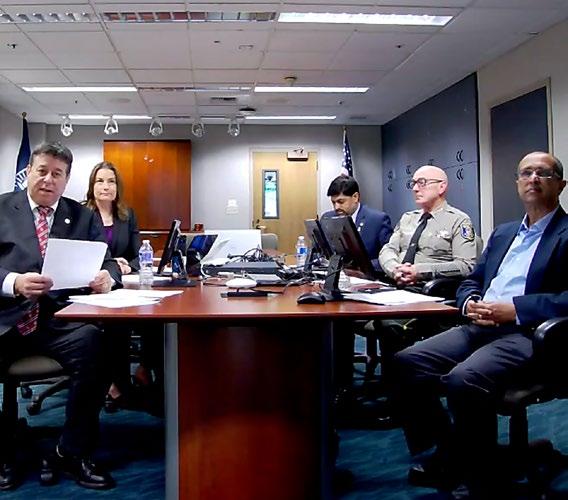
Much of the disagreement spilled into public view at an April 14 online town hall, where the three mayors clashed with county officials in an exchange that at times resembled a public negotiation.
City officials claim the county has not been transparent on the cost breakdown of the new contract and have included what Saratoga Mayor Chuck Page, who opened the meeting on behalf of all three cities, called "significant additional overhead costs."
The cities also argued the proposed overhead charges may violate state law. California Government Code Section 51350, known as the Gonzalez Act, prohibits counties from passing general countywide overhead costs, expenses the county would incur regardless of whether it provides contracted services, onto contracting cities.
"According to the Gonzalez Act … the county shall not charge the city contracting for a particular service, either as a direct or
indirect overhead charge, any portion of those costs which are attributable to services made available to all portions of the county," Cupertino Mayor Kitty Moore said during the town hall. Moore also cited a reported $470 million mid-year county budget deficit, suggesting financial pressure may be driving the county's push for full cost recovery.
Williams pushed back, saying the increase reflects costs the county has long subsidized and that the county is acting within the law. He said the county's budget situation "should not be the driver or basis" of the negotiations, and cited the statute's opening sentence, which states that a county "shall charge the city all those costs which are incurred in providing the service so contracted or authorized."
"When it comes to legal issues, you can't quote the statute and forget about the first sentence," Williams said. "That's absurd."
Williams also defended the increase as a necessary correction to years of underpayment. "Over the years, there has been a huge and growing discrepancy between the actual cost of delivering the service and the contracts," he said. "That gap is not one that can be sustained."
Sheriff Robert Jonsen cited recruitment costs, technology upgrades, and new training mandates as drivers of the increase, and noted that cities get access to the full force of the department during major incidents. "When you really need us, we can pull from all over the county," Jonsen said. "That is something that a lot of community members forget about."
Officials argued that the three cities' status as donor cities, meaning they pay more in county taxes than they receive in services, should factor into
negotiations. "We have some of the lowest returns on taxes paid by residents, while contributing disproportionately through property and sales taxes," Moore said.
Los Altos Hills Mayor Rajiv Bhateja repeatedly questioned the county's calculations, calling the overhead costs "incomprehensible." He said his town pays roughly $3.5 million for less than one full-time deputy's worth of patrol coverage, compared with Danville, which fields 30 officers for $12 million. "The math does not work," he said.
Williams disputed that those expenses amount to improper overhead, arguing that detective work, body cameras, internal affairs review, and deputy training are services any law enforcement agency must provide. "These are not overhead costs," Williams said. "These are direct service costs."
Residents who attended expressed support for sheriff services but concern over rising costs. In a real-time poll, 47% said they were very satisfied with sheriff services and 35% said they were satisfied. Asked whether they would support deep budget cuts across city services to fund the increase, 49% said no and 25% said yes. "I feel as a citizen that we're being asked to spend more money for fewer services," a participant identified as Ken said.
The cities introduced a counterproposal in March, proposing a 12% increase starting July 1 to cover updated deputy salary and benefit costs, a jointly developed cost-allocation model by Sept. 1, and a three-year phased implementation of remaining overhead charges.
The dispute has drawn attention from the Santa Clara County Board of Supervisors. District 5
Supervisor Margaret Abe-Koga, whose district covers the three cities, said she supports cost recovery but has reservations about the timeline. "As much as I favor cost recovery, trying to make up the cost all at once is difficult for any city," Abe-Koga told the San José Spotlight. A final town hall poll asked whether residents would support exploring alternative law enforcement providers given the proposed increases. About 50% said yes, 31% said no, and 15% said maybe.
Saratoga has begun exploring that option. With its contract among those affected, the city is weighing whether to leave the county for the Los Gatos-Monte Sereno Police Department. Mayor Page toured that department earlier this year, and the city held an April 27 special meeting to discuss law enforcement alternatives.
On May 19, Los Gatos Town Manager Chris Constantin and Los Gatos-Monte Sereno Police Chief Jamie Field presented the Los Gatos Town Council with a regional policing model that would fold in Saratoga, telling council members the arrangement would improve coordination during emergencies and reduce costs through shared fixed expenses. Council members did not vote on the partnership but unanimously directed staff to continue discussions with Saratoga. With the contract extended through Sept. 30 and a thirdparty review of the county's cost methodology to come, the negotiations move into a new phase. The cities and the county have said they remain committed to reaching an agreement.
Lorraine Gabbert and Wylder Robison contributed to this article.
The City of Cupertino celebrated Independence Day with a full day of community traditions, including the annual pancake breakfast hosted by the Optimist Club of Cupertino,
the Flag Raising Ceremony, Children's Parade, kids lawn activities, live music, swimming at Blackberry Farm, and the evening fireworks show.


BY TYLOR TAYLOR, CEO, SASCC, AND EXECUTIVE EDITOR, THE OUTLOOK
Since the Cupertino Outlook launched in September 2025, readers have watched us champion Senior Guided Pathways at De Anza College. We wrote about it, we brought it to city and county officials, service organizations, and community groups, and we told you it was coming. Many of you have asked for an update on the status of the program, and we think the community is entitled to a direct answer.
Senior Guided Pathways (SGP) is a program created by Successful Aging Solutions & Community Consulting (SASCC), The Outlook’s parent organization. SASCC is a senior services direct provider and consultancy that works to help our communities become great places to grow up and grow old. SGP is designed for community colleges with the goals of increasing enrollment in the 50+ demographic and
development of curriculum to support the aging services workforce.
After a successful launch of SGP at the West ValleyMission Community College District, SASCC began working on a partnership with the Foothill-De Anza (FHDA) Community College District. Our team put two years of real work into setting the stage
intent the district leadership and its colleges expressed to us. However, a formal commitment from FHDA never materialized. The district has since pointed to institutional changes underway, which its chancellor detailed in a statement provided to The Outlook.
"De Anza College is in a period of leadership
"I am grateful for SASCC's genuine investment in Senior Guided Pathways and for the work you and your team put into engaging the Cupertino community around lifelong learning. That commitment reflects exactly the kind of community partnership De Anza values.”
- Lee Lambert, Chancellor, Foothill-De Anza Community College District
for a successful implementation. We ran community listening sessions, produced survey research on the need, helped facilitate the City of Cupertino's strategic plan to enhance senior services, and built demand for SGP across the area, all in good faith and on the strength of the
transition, and the District is in the midst of developing an enrollment strategic plan in the context of becoming a basic aid/community-supported institution," FHDA Chancellor Lee Lambert said. "We recognize the important role of Foothill-De Anza in supporting our seniors and
our greater community, and we will continue to fulfill our mission of educational excellence and student success."
“I am grateful for SASCC's genuine investment in Senior Guided Pathways and for the work you and your team put into engaging the Cupertino community around lifelong learning,” Lambert added. “That commitment reflects exactly the kind of community partnership De Anza values.”
The team at SASCC and The Outlook worked very hard to achieve a full launch with FHDA, so naturally there is disappointment with this outcome. However we acknowledge and appreciate that De Anza College remains one of the great resources this community has, and we will continue to explore opportunities for partnership. Our relationship with their Journalism Department will remain in place, and we’ll continue to offer their student journalists internship and employment opportunities with The Outlook. We're
proud to give those reporters a wider audience.
What we want you to take away from this is that Senior Guided Pathways is alive, and it's growing. Now in its fourth year, we have achieved steady year-over-year enrollment growth and are launching the state’s first-ever Community Caregiver Certificate program this fall. West Valley College is our partner for this work, and we encourage anyone in the Cupertino area who was waiting on it to make the short drive or to take a couple clicks over to their site to explore the offerings. westvalley.edu/sgp

BY ANIKA KAPASI
In Santa Clara County, a home can be a million-dollar asset — yet homeowners struggle to afford repairs, modifications, or care arrangements needed to remain there safely.
Nonprofit organizations and housing specialists have long been part of the local safety net, offering services such as home sharing and low-cost repairs to help adults remain independent and stay in their community.
Household income has not kept pace with housing costs, according to California’s Legislative Analyst's Office. This pressure is reshaping the agingin-place conversation, pushing communities to focus on how homes and neighborhoods can better support residents as they age.
Deanne Everton, executive director of Rebuilding Together Silicon Valley (RTSV), said that a common misunderstanding for aging homeowners is that they must eventually sell their home to move somewhere cheaper or to assisted living.
“It can be very disruptive for an older adult to move,” said Everton, whose nonprofit organization provides no-cost home repairs for low-income older adults and people with disabilities. “Moving is such a stressor, and it disrupts their whole routine, their whole support system — everything.”
RTSV offers services for critical repairs like roof leaks and furnace failures, as well as safety modifications such as ramps and walk-in showers to help homeowners remain independent. The organization serves those who own their own home and earn 80% or less of the area median income in Santa Clara County, which is around $111,000 annually, said Everton.
Most clients, however, have annual incomes in the $30,000 to $40,000 range.
Repair costs have nearly tripled since 2020, while funding has not risen to match, Everton said. As a result, RTSV only serves around 200 homes annually, down from 400 pre-pandemic.
Everton called their services a “relatively small investment” in the broader push to make a home a safer and healthier place for adults to remain in for the remainder of their lives.
Build By Design is another firm that works with homeowners on property modification and design, but focuses more specifically on guiding owners through municipal application and permitting processes for accessory dwelling units (ADUs) — independent housing units built on the same lot as the home — and other housing projects.
While home repairs and modifications may be enough for some residents to remain in the same household they grew up in, Alison Cingolani, director of policy for Silicon Valley at Home, said residents should expand their idea of aging in place to mean remaining in the same community, but not necessarily the same home — especially in the high-cost suburbs of Santa Clara County.
“You’re close to friends, you’re close to your support networks, but you’re not necessarily trying to hang on to a building that you are no longer sure you need,” said Cingolani, whose organization works to address the housing needs of low-income households through policy advocacy and public education.
She said one of the largest challenges for older adults in the Bay Area is that cities have stopped building starter homes, which are affordable housing for first-time buyers. Starter homes can take the form of single-family homes, condominiums, and sometimes ADUs.
California’s “severe” housing shortage is an additional barrier, said Celeste Goyer, Casita Coalition’s vice president of research and operations. The organization is a statewide nonprofit advancing ADU and middle housing solutions through education, policy reform, and coalition building.
Goyer said between 75% and 90% of the residentially zoned land in cities and urban areas is zoned strictly for one house on a lot, which makes it difficult when trying to add additional housing.
“ADUs work with what we’ve got … and give people the ability to add a unit in multiple different ways,” she said. “Their superpower is their flexibility.”
There are three primary ADU types: detached ADUs, which stand separate from the main house; attached ADUs, which are built in addition to the main house; and junior ADUs
“The biggest impact usually comes from simple, unglamorous fixes like grab bars, better lighting, removing trip hazards, zero-step entries, wider doorways and having a bedroom suite on the first floor,” Nicole Johnson, the chief operating officer of Build By Design, said. “Homes have typically been designed as if everyone’s 35 and fully mobile, and then they are surprised when it has to be retrofitted later if you are planning on aging in place.”
(JADUs) created within the walls of the main home.
Both Goyer and Cingolani said, however, a significant barrier to building ADUs is the financing required for construction. Most homeowners need enough equity to qualify for a loan or a home equity line of credit to have enough cash to build the structures.
The cost to build an ADU often ranges from $30,000 for a simple interior conversion JADU to more than $400,000 for a large detached ADU, according to the Santa Clara County Planning Collaborative.
Unincorporated Santa Clara County permitted 56 ADUs in 2024 (the latest year released), according to the California Department of Housing and Community Development Annual Progress Report. In Cupertino, 44 ADUs were permitted; Saratoga had 74; Los Gatos had 26; and Monte Sereno had 9, according to the cities' annual progress reports filed with the state.
“You can create rental income [with ADUs], fund care or improvements or provide space for a family member to live on the property with you as you age in place,” Johnson said. “People may have a lot of equity but still be cash poor and on a fixed income — especially older folks.”
In 2023, Assembly Bill 1033 made it possible for owners to sell their ADUs separately from the main house as condominiums, another aging-in-place strategy that allows adults to remain in the community.
However, while state law has made it easier to establish ADUs, condo development has not been streamlined in the same way. Pending legislation, known as AB 1903, aims to ease litigation barriers for some condo and townhome builders.
Cingolani added that condos also are not usually accessible to low-income households that SV@Home serves.
Alongside these construction-based options, home-sharing programs are offering another path forward to aging in place: matching homeowners with renters looking for lower-cost housing.
Home sharing was described as an “immediate solution” to help people find housing, according to Laura Fanucchi, director of programs at HIP Housing, a long-standing nonprofit organization in San Mateo County offering four affordable housing programs.
HIP Housing’s home-sharing program has been operating since 1979, using existing housing stock. It is designed to match home providers with
a room or an ADU to rent to home seekers, said Fanucchi.
There are no income guidelines for home providers, as long as they demonstrate a financial or housing need. For home seekers, the organization requires they earn a minimum of $1,800 per month.
“Most of our home providers are spending a disproportionate amount of their income on housing expenses, and especially when an older adult is living on a fixed income, that can be very challenging,” Fanucchi said.
HIP Housing interviews and screens about 500 people a year, and about 260 people are matched in the program. About 60% of home providers are seniors, said Fanucchi. Among home seekers, about 30% are seniors, while the other 70% are in their mid-40s.
This breakdown differs from another home-sharing program, Home Match, said Rachel Matthews, director of Home Match for Alameda County.
The program’s service was originally designed to be focused on seniors, since its parent organization is Front Porch, a senior-living nonprofit organization.
“ ... the longer that we’ve been doing this, we have served a broader and broader group of people,” Matthews said. “[We are now getting home seekers] as young as 18 and then up through the 80s.”
For home providers, the decision is often driven by a combination of financial need and a desire for companionship. Matthews described some
matches as a “task exchange,” where a renter may pay reduced rent in exchange for agreedupon household tasks.
“When we talk about task exchange, it's never caretaking — it’s more that companionship piece of it or how they help around the house,” said Matthews.
Rent costs range from $700 to $1,800, with ADUs typically priced around $2,000, Matthews said.
Home Match currently serves four counties: Alameda, Contra Costa, Marin, and San Francisco.
Now, it is expanding services into Santa Clara County, according to Lucie Ashley, director of operations at Home Match.
With seed funding from its parent organization, Home Match will first expand into Los Gatos, Campbell, Saratoga, and the west side of San Jose this September.
From there, it will move farther into Santa Clara County. Its office will be located in Los Gatos, said Matthews.
This expansion ensures there is a home-sharing program covering all of the Bay Area, said Ashley. Home Match plans to begin outreach for the new Santa Clara County program in July and continue through August, ahead of its September launch.
“Housing in the Bay Area is a pressure point and has been for decades,” said Ashley. “Home Match and home sharing in general is just one piece of the puzzle that can relieve a little bit of that pressure upstream.”


It’s your moment. Take control of your future and right-size your life by investing in a one-bedroom at The Forum at Rancho San Antonio.
Our one-bedroom independent living homes allow you to be more intentional with your time and say goodbye to unnecessar y worries and costs.



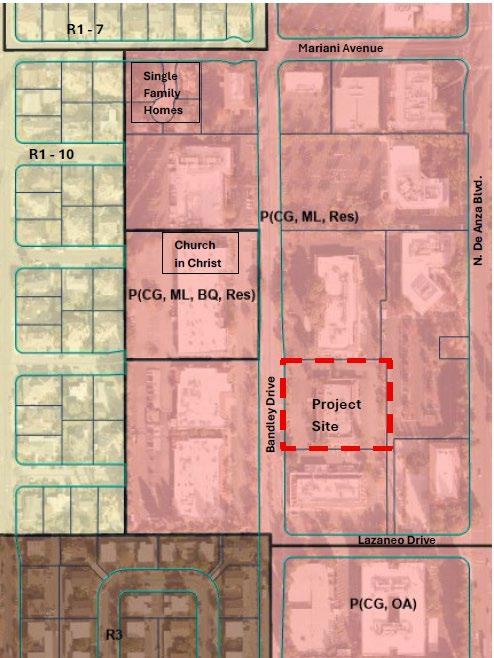
The Cupertino City Council has approved two commercial-to-residential conversions in recent months, clearing the way for nearly 150 new homes on sites now occupied by offices, restaurants, and small businesses.
Both projects add to the housing Cupertino must plan for under the state's Regional Housing Needs Allocation (RHNA), which calls for 4,588 homes through 2031.
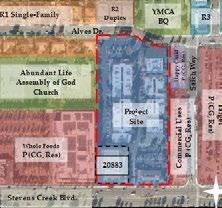
On June 2, the council unanimously approved a SummerHill Homes proposal to convert a commercial building at 10268 Bandley Drive into a 27-unit, three-story townhome complex, including five affordable units, on a 1.55-acre site. The Planning Commission recommended approval May 12, and the council granted waivers to reduce the project's front and rear setbacks.
Vice Mayor Liang-Fang "Liang" Chao raised concerns about the loss of office space, and residents urged the city to help relocate existing tenants, including Chinese and Japanese
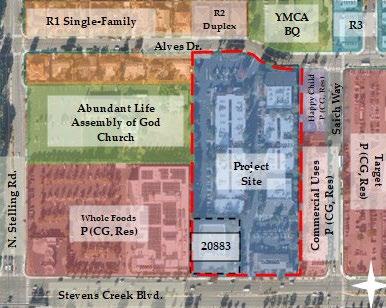
language and Taiwanese culture learning centers, a clay and pottery studio, and a dance studio.
At Mayor Kitty Moore's request, the agreement requires that 50% to 75% of the landscaping use native plants. Future buyers will be notified that the area includes commercial and industrial uses with activity, and associated noise, outside standard business hours.
SummerHill said the project will contribute about $1.3 million in park fees, $285,000 in school fees, and $18,000 a year to the general fund.
The June approval followed an April 7 vote in which the council approved replacing the Stevens Creek Office Center, home to Voyager Craft Coffee and Panera Bread, with 122 for-sale homes. Proposed by Harvest Properties, that project calls for 66 small-lot single-family homes and 56 townhomes, including 24 affordable units, on a 6.9-acre site. It has no set timeline.
BY BRANDY MADDOX
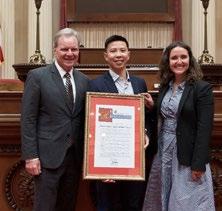
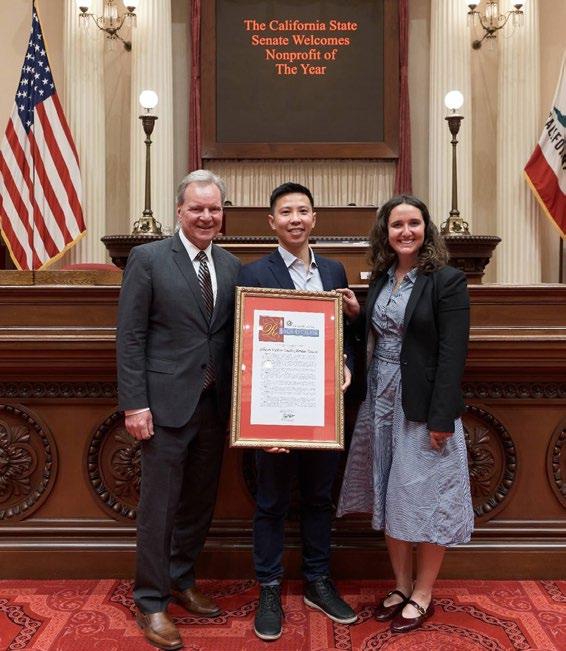
Five state legislators who represent The Outlook's coverage area selected 2026 California Nonprofits of the Year for their districts, part of a statewide recognition program tied to California Nonprofits Day on May 20.
The program, now in its 11th year, is run by the California Association of Nonprofits in partnership with the Assembly and Senate Select Committees on the Nonprofit Sector. More than 100 legislators chose honorees this year, and more than 1,000 organizations have been recognized since the program began.
Sen. Dave Cortese, whose Senate District 15 covers
Saratoga, Los Gatos, Monte Sereno, and Cupertino, selected Silicon Valley Youth Climate Action, a Cupertinobased nonprofit that organizes student-led climate action teams in Saratoga, Los Gatos, Cupertino, Santa Clara, Sunnyvale, San Jose, and other communities. The group runs a Youth Climate Leadership Academy and has advocated for climate emergency declarations in San Jose and Santa Clara County.
"SVYCA stood out to me because they have built one of the most effective youthled climate movements anywhere in California," Cor tese told The Outlook.
He pointed to a $2 million state investment he championed

the Year to AACI President and CEO Sarita Kohli, left, and board Treasurer Raul Gorospe. Photo courtesy of Asm. Patrick Ahrens
for the Santa Clara County Youth Climate Initiative, which he said SVYCA helped drive, and to the group's work to establish youth seats on the Santa Clara County Sustainability Commission.
Assemblymember Patrick Ahrens, whose Assembly District 26 covers Cupertino, selected Asian Americans for Community Involvement. Founded in San Jose in 1973, AACI provides health, behavioral health, and wellness services to underserved communities across Santa Clara County, with staff who speak more than 40 languages and dialects.
"As a trusted community health care and services provider, AACI serves anyone in Santa Clara County regardless of their ability to pay or immigration status," Ahrens said. "I have personally lived without access to needed health care, so I selected AACI as the District 26 Nonprofit of the Year. AACI's commitment to equity and serving people in need is so deeply impactful, particularly today as federal, state, and local gove rnment cuts restrict access to care."
Sen. Josh Becker, whose Senate District 13 also covers all four cities, chose the Los Gatos Anti-Racism Coalition. Founded in 2020, the coalition advocates for affordable housing and police reform, and pushes for changes to how race and history are taught in schools. LGARC also runs a local rental assistance program launched in 2023.
Assemblymember Gail Pellerin, whose Assembly District 28 covers Los Gatos
and Monte Sereno, named Community Solutions, headquartered in Gilroy with offices in Morgan Hill and San Jose. The nonprofit provides mental health services and trauma-informed support for survivors of domestic violence, sexual assault, and human trafficking.
"Community Solutions has shown up for underserved Santa Clara County residents facing some of life's hardest moments for over 50 years," Pellerin said. "Their partnership with Santa Clara County Behavioral Health Services has quietly strengthened our entire public health system."
Assemblymember Marc Berman, whose Assembly District 23 includes Saratoga, chose the Palo Alto-based Children's Health Council. Founded in 1953, CHC provides learning and mental health services for children, teens, and young adults regardless of language, location, or ability to pay.
According to CalNonprofits' 2019 Causes Count report, California's roughly 110,000 nonprofit organizations employ about 1.2 million people, generate $273.7 billion in annual revenue, and rank as the state's fourth-largest industry by employment.
Santa Clara Valley Healthcare has opened a mobile health center at De Anza College, bringing walk-in medical care to a part of the West Valley that has long gone without a nearby public clinic.
The center began operating May 6 and will be stationed on the Cupertino campus every Wednesday. It serves adults 18 and older on a walk-in basis, with no appointment needed, and is open to college students and area residents alike.
Services include treatment for minor illnesses and
injuries, family planning, physical exams, health screenings, adult vaccinations, and referrals to specialists. The center accepts all insurance plans except Kaiser Permanente and works directly with uninsured patients so no one is turned away based on ability to pay.
The pilot is a partnership between the County of Santa Clara and the Foothill-De Anza Community College District, and it extends care to Cupertino, Los Altos, Saratoga, West San Jose, and the surrounding area.
"I hope that this is just the start," said District 5 Supervisor Margaret Abe-Koga, adding
that she was proud the county found a creative solution during difficult budget times by working with the college district to reach not only students but children, families, and seniors in the community.
Assemblymember Patrick Ahrens, who represents the 26th District and is a former De Anza student and Foothill-De Anza trustee, said he personally struggled to access health services as a student. "This new and innovative way to access health care means more people will be able to get the preventative health care they need," he said.
The expansion adds to SCVH's network of four hospitals, 15 major health centers, and numerous clinics across the county from Palo Alto to Gilroy. The county-owned system is California's second largest, with acute care hospitals including O'Connor Hospital, Regional Medical Center, St. Louise Regional Hospital, and Santa Clara Valley Medical Center.
The county plans to evaluate the pilot over its first year. "The pilot program will be evaluated throughout the first year to determine the community's long-term needs and to learn
what future health services will benefit De Anza College and the community," said SCVH Chief Executive Officer Paul E. Lorenz.
The Mobile Health Center is open Wednesdays from 9 a.m. to 3:30 p.m. at De Anza College, Parking Lot J, 21250 Stevens Creek Blvd., Cupertino. Last patient check-in is 30 minutes before closing. Parking is available in the adjacent structure.
Photo essay by Frank Mayers
WILDLIFE, FROM PAGE 1







BY GORDON YANG
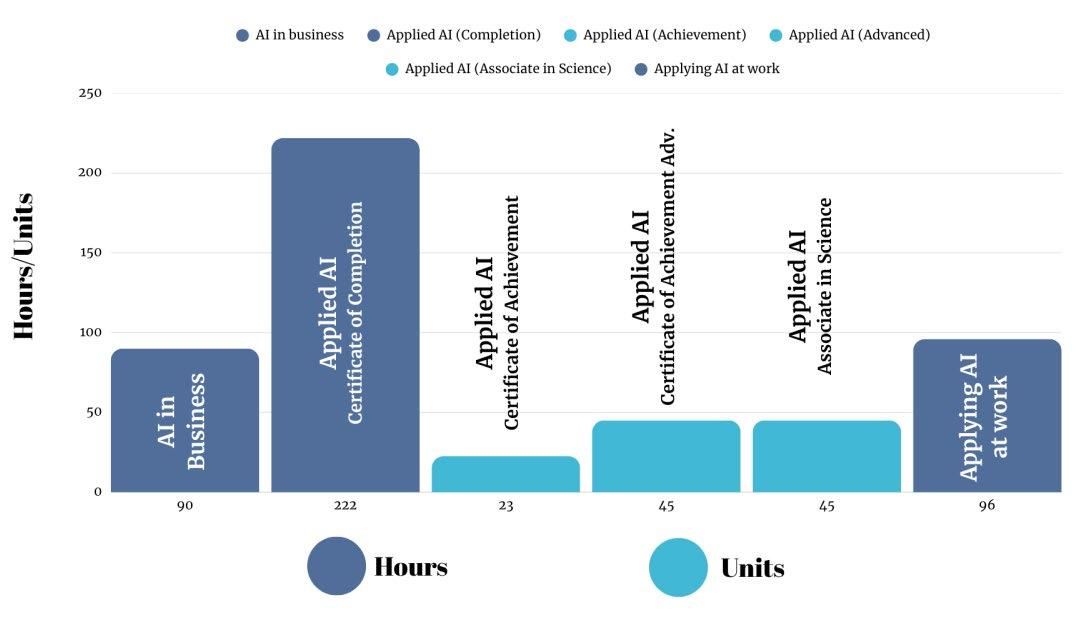
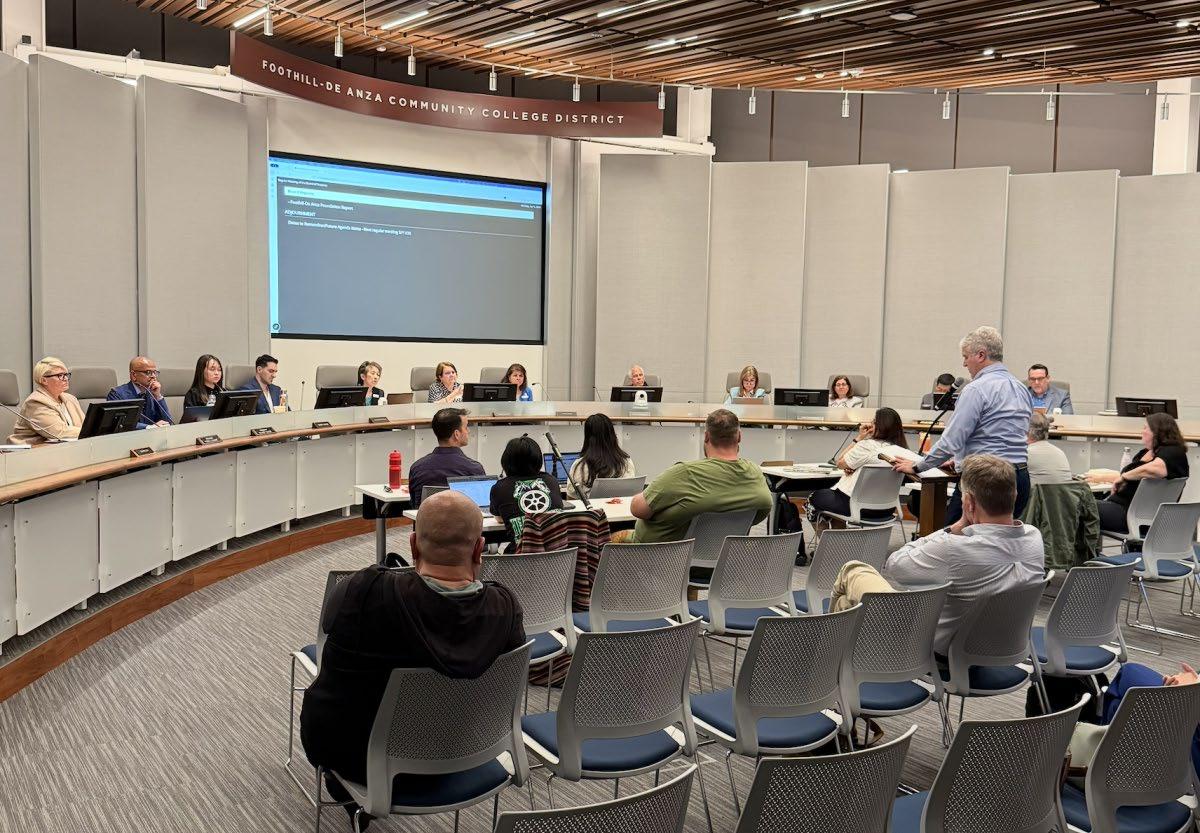
The Foothill-De Anza Board of Trustees approved six new artificial intelligence certificates and associate degrees that will take effect in the 2026-27 academic year at its April 6 meeting.
New offerings include:
• AI in Business Certificate Completion requires 84-96 hours
• Applied Artificial Intelligence certificate or degree
◦ Certificate of Completion requires 222 hours
◦ Certificate of Achievement requires 20-23 units
◦ Certificate of Achievement, Advanced requires 40.5-44 units
◦ Associate in Science requires 40.5-44 units
• Applying AI at Work: Build Solutions with a Human Touch Certificate of Completion requires 96 hours
Ram Subramaniam, De Anza College Vice President of Instruction and former administrator in charge, said the AI certificates cater to students who return from their careers.
“We are still finding industry and institutional resources to ensure our programs fully meet state academic requirements,” Subramaniam said about finalizing the AI curriculums.
Board Vice President Laura Casas said she “applauds” the college for its new AI courses
but that the curriculum comes at “a scary time.”
“My own son was laid off due to AI, so we need to give our students all the tools necessary to improve their job market performance,” Casas said. “Who knows what’s going to happen?”
Trustee Alexander Gvatua said cutting arts programs while expanding tech offerings did not look good for the district. In the same meeting 176 courses were cut because
of low enrollment, including 12 arts classes.
“I don’t know how great it looks to be significantly cutting dance (classes) and then having a bunch of AI classes instead,” Gvatua said. “We have an obligation to prepare students for careers and for jobs, but we also have a responsibility to nurture the artistic, cultural, and intellectual lives of our students.”
Ryan Sheehy, 23, a computer science major, said he wasn’t necessarily interested in the AI degree.
“I’m more interested in lower level stuff like computer engineering,” Sheehy said. “It would be very useful if they teach algorithms and how the technology actually works.”
Subramaniam did not give an exact date for when students could apply for De Anza’s new courses and degrees.
The curriculum overhaul also removed 176 courses, including career development, computer science and information systems, physical education, and arts courses.
Rather than the administration making that decision for its teachers, Subramaniam said De Anza faculty chose to remove the courses.
“These courses haven’t been offered for multiple quarters,” Subramaniam said. “This indicates low student interest in them.”
Originally published by La Voz News, De Anza College’s student publication. Visit lavozdeanza.com to read more.

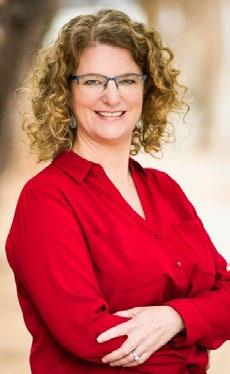
Christine Throm, Au.D.
This month we are exploring some of the most exciting developments in hearing research. From the first FDA-approved gene therapy for a form of inherited hearing loss, to ongoing efforts to regenerate damaged inner ear cells, to the growing role of artificial intelligence in hearing healthcare, researchers are making remarkable advances in the field. We'll separate fact from fiction, discuss what these breakthroughs mean for patients today, and explore what may be possible in the future.
Gene therapy is one of the most exciting new developments in hearing research. Scientists are learning how to replace or repair faulty genes that cause certain types of inherited hearing loss. In 2026, the FDA approved the first gene therapy for a rare genetic form of deafness caused by changes in the OTOF gene. While this treatment only applies to a small number of people today, it is a big step in demonstrating how gene therapy can be applied to medicine going forward. Researchers are now studying similar approaches for other genetic causes of hearing loss.
Inside the inner ear are tiny sensory cells called hair cells that convert sound vibrations into signals the brain can understand. In humans, these cells generally do not regenerate once they are damaged by aging, noise exposure, or certain medications. Studies in animal have shown that scientists can stimulate supporting cells in the inner ear to develop into new hair-like cells, and some experiments have demonstrated partial recovery of hearing function for these animals such as parrot fish.
While these results are encouraging, it is important to remember that the human ear is far more complex than the ears of laboratory animals. As a result, hair cell regeneration remains an experimental area of research and is likely many years away from clinical testing and use. Patients should not delay proven treatments such as hearing aids, cochlear implants, communication strategies, or audiologic care while waiting for regenerative therapies. The best outcomes are often achieved when hearing loss is addressed early rather than postponing treatment in hopes of a possible future cure.
Artificial intelligence is already beginning to improve hearing healthcare. AIpowered tools can help audiologists personalize hearing aid settings, reduce background noise, and even make the clinic run more smoothly. For older adults, these technologies may make hearing care more accessible, convenient, and tailored to individual needs. While AI will not replace audiologists, it is becoming a valuable tool that can help clinicians deliver more accurate and efficient care while improving the listening experience for patients.
Whether you're curious about the latest science or simply want to better understand your hearing health, join us for our Listen Up Café to learn more about these topics or give us a call to schedule an appointment and have the chance to talk to our doctors
Want more information about hearing health?
Dr. Throm is happy to present her acclaimed, medically based, Listen Up Café lecture series!

Friday, July 17, 2026: Emerging Research in Hearing Health: Gene therapy, cochlear regeneration, AI-driven audiology tools
Friday, August 21, 2026: Hearing Loss, Cognitive Decline & Dementia
Friday, September 18, 2026: Hearing Loss and Risk of Falls
Friday, October 16, 2026: Hearing Aids, Confidence, and Connection: Overcoming the stigma Friday, November 20, 2026: Hear for the Holidays! (Dates and location subject to change)
We’ll have good coffee, light refreshments, and a great discussion see you there!
Seating is limited for these FREE events.
(Call or email us for a free information sheet if you are unable to attend.)
Please call for time and location information (408) 673-4052
We’re proud to have served Los Gatos, Saratoga, Campbell, Cupertino, San Jose and the entire Bay Area for over 50 years!
Our team has the knowledge and tools to determine the cause of your hearing loss. If a hearing loss is detected, we have premium hearing aid technology that can help! Providing the right solution for Your Life. Your Style.





Rd.) www.LosGatosAudiology.com
BABYWEARING DANCE CLASS MEETS SUNDAYS
A babywearing dance class for adult caregivers and pre-walking babies meets Sundays from 11 a.m. to noon on July 19, 26, Aug. 2, 9, and 16 at 10800 Torre Ave. Participants must bring their own baby carrier. Learn more at sccld.org
MOVIES IN THE PARK LIGHTS UP CREEKSIDE PARK AUG. 7
Creekside Park will screen free films under the stars on Fridays from 8 to 9:45 p.m. on Aug. 7, 14, and 21, and from 8 to 10:15 p.m. on Aug. 28, at 10455 Miller Ave. Learn more at cupertino.gov
BAER BLACKSMITH SHOP OPENS FOR DEMONSTRATIONS JULY 25
Community members can visit the Baer Blacksmith Shop on Saturdays from 11 a.m. to 3 p.m. on July 25 and Aug. 29 to learn about early Cupertino history and the craft of blacksmithing. The shop is
at McClellan Ranch Preserve, 22221 McClellan Road. Learn more at cupertino.gov
CUPERTINO CAMPOUT RETURNS TO CREEKSIDE PARK JULY 18
Families can pitch a tent at Creekside Park for a night under the stars from 4 p.m. Saturday, July 18, to 10 a.m. Sunday, July 19, at 10455 Miller Ave. Recreational activities round out the overnight. Preregistration is required. Cost is $33 for residents and $40 for nonresidents per person. Learn more at cupertino.gov
ENVIRONMENTAL EDUCATION CENTER
OPENS SATURDAYS JULY 18
The Environmental Education Center at McClellan Ranch Preserve opens to families on Saturdays from 11 a.m. to 3 p.m. on July 18, 25, Aug. 1, 8, 15, 22, and 29. Visitors can meet the city's animal ambassadors, explore local wildlife, talk with preserve staff and park rangers, and take part in
BY LORRAINE GABBERT
hands-on activities. The center is at 22221 McClellan Road. Learn more at cupertino.gov
SENIOR CENTER HOSTS OPEN HOUSE AUG. 21
The Cupertino Senior Center will hold an open house from 10:30 a.m. to 12:30 p.m. Friday, Aug. 21, at 21251 Stevens Creek Blvd. Visitors can learn about senior classes, activities, and resources, including weekly socials, fitness classes, and trips. Free class demonstrations and resource presentations run at 10:30 a.m., 11 a.m., 11:30 a.m., and noon. Learn more at cupertino.gov.
LIBRARY HOSTS ONLINE ENGLISH CONVERSATION CLUB JULY 23
The Cupertino Library will host an online English Conversation Club on Thursdays from 11 a.m. to 12:15 p.m. on July 23 and Aug. 6, 13, 20, and 27. Registration is required for each session, and participants receive a Zoom
link before each meeting. Learn more at sccld.org
SUMMER CONCERT SERIES RETURNS TO MEMORIAL PARK JULY 23
A free summer concert series runs Thursdays from 6:30 to 8 p.m. on July 23, 30, Aug. 6, 13, and 20 at the Memorial Park Amphitheater, 21163 Anton Way. Bring a blanket or low-back chair. Learn more at cupertino.gov
FAMILY STORYTIME RETURNS TO CUPERTINO LIBRARY JULY 18
Family Storytime at the Cupertino Library features stories, songs, rhymes, and dances to build early literacy skills. Sessions run Saturdays from 10:30 to 11 a.m. on July 18, 25, Aug. 1, 8, and 15 at 10800 Torre Ave. Learn more at sccld.org
BILINGUAL STORYTIME OFFERED IN MANDARIN AND ENGLISH JULY 24
A children's librarian will lead a bilingual family storytime in Mandarin and English
with stories, songs, a flannel board story, fingerplay, and a craft on Friday, July 24, from 7 to 8 p.m. at the Cupertino Library, 10800 Torre Ave. Children and their caregivers are welcome. Learn more at sccld.org
TODDLER STORYTIME RETURNS TO CUPERTINO LIBRARY JULY 21
Toddler Storytime for 1- and 2-year-olds features stories, songs, movement, and actions geared to very young toddlers. Sessions run Tuesdays from 10:30 to 11 a.m. on July 21, 28, Aug. 4, and 11 at the Cupertino Library, 10800 Torre Ave. Learn more at sccld.org
LIBRARY COURTYARD HOSTS LIVE MUSIC SUNDAYS IN JULY
The Cupertino Library will host free all-ages live music in its courtyard on Sundays from 3 to 4 p.m. Bluegrass plays July 19, and a brass quartet performs July 26 at 10800 Torre Ave. Learn more at sccld.org

BY SUE FENTON, SUE ON THE STREET
Sue on the Street has always been in love with gardens and music. For 40 years, I was lucky enough to live a short walk from New York City’s Central Park, a global icon and tourism hub.
One beautiful summer day in 1986, I began my walk from Manhattan’s west side to the east side through the park. A melody wafted through the trees. I soon recognized Brahms, Chopin and Beethoven and began searching for the origin of the music. To my surprise, there was a man in a straw hat and a bow tie playing the violin. I spied a large group of people sitting and standing around him. I chatted with Phillip and gave him a generous tip in his violin case. As we chatted, I soon discovered that he had played in the American Symphony Orchestra with the famous conductor Leopold Stokowski. Unfortunately, Phillip had developed macular degeneration, an eye disease that blurs fine details, and could
no longer read sheet music. So, he took his violin and came to Central Park. It didn’t take long for parkgoers to discover him. One of those who did was Woody Allen, who lived next to the park and filmed numerous movies there with Phillip in the background. Phillip and I became fast friends. He even serenaded guests at my wedding reception in the garden of the house of the famous chef James Beard.
Once the Central Park authorities required musicians to obtain a permit, Phillip could no longer play there. He couldn’t get a permit on his own, so Sue on the Street marched to the Central Park police headquarters and obtained for him the very first permit issued.
One day, on my daily jaunt through the park, I came upon five young men in shorts and T-shirts sitting on a bench listening intently to Phillip play. I waited until I could have a few words with them to find out where they were from, since it was unusual to see young people during the workday gathered around Phillip. I sauntered over and asked why they were there instead of a bar, museum, or baseball game. They informed me they were sailors from the HMS Ark Royal docked nearby, the British fleet’s flagship. The ship, a pocket aircraft carrier that had recently taken part in the Falklands War, was in port for the Fourth of July celebration of the reopening of the refurbished Statue of Liberty. And now the real story begins! And this is all true!

I invited the young men home for dinner that night. They had been at sea for six months and were dying to sit on a couch surrounded by a family. They were all married with children in Ireland.
Once I returned home, I took a deep breath (this was pre-cellphone days) and called my fiancé at his office.
“Guess who’s coming to dinner?” I said.
He took it in stride, knowing way back then I was a Sue on the Street personality!
They came to dinner with a case of beer and the largest bouquet of flowers I had ever seen. They were so happy, and we all had a lot of fun. They invited us to a private tour of their ship.
We met them with our three young children at the dock. They appeared in starched dress whites and looked like movie stars as they approached us.
One of the sailors picked up Sara, who was 5, and carried her on his shoulders up to the bridge, with all of the rest of us following. She sat in the Captain’s chair and turned the ship’s wheel. The two older boys did the same, all with the Captain’s cap on. They were all blown away.
We went to the deck where the airplanes and helicopters were housed. They told us we could not go inside the helicopters since they were armed and loaded and ready for war.
Then we went down to the mess hall and had snacks.
I realize that this adventure in 1986 was a harbinger of Sue on the Street.
Hope to see you soon on Channel 15 on Xfinity or on YouTube: Sue on the Street.
If you've been reading Sue Fenton's "Aches and Pains" column in The Outlook, here's good news: there's a book of them now. "Dancing in the Rain: The Collected Columns of Sue on the Street" gathers the beloved pieces that have made her a reader favorite. Search the book title on Amazon to find it.
FORUM , FROM PAGE 1
The Fund's mission is plain: to enhance quality of life for seniors by funding community programs that promote senior health, well-being, and engagement. Its reach extends well beyond the Forum's own gates, into Cupertino, Los Altos, Mountain View, and Palo Alto.
The Forum itself is an unusual place. Opened in 1991, it is one of the few retirement communities in the country owned and governed by its residents, who hold their independent living units, pay California property taxes, and share in their homes' appreciation. With more than 400 residents and a full range of care, from independent living to memory care, it has the kind of close community that can turn one resident's idea into a working nonprofit.
Years in the making
Getting there took years and more than one attempt. An early effort to create a tax-deductible fund in 2004 did not move forward. Conley's own first try, in 2012, aimed to partner with area hospitals on medical research relevant to seniors, but the hospitals were not interested in funding the work. The idea gained traction when the proposed fund was redirected toward the Forum Health Care Center, which serves residents and non-residents alike, along with outside programs for seniors in nearby communities. That broader purpose satisfied the IRS, which granted the Fund 501(c)(3) status in 2019, a year after it was incorporated as the Forum Health Fund.
Conley readily acknowledged that he was the driving
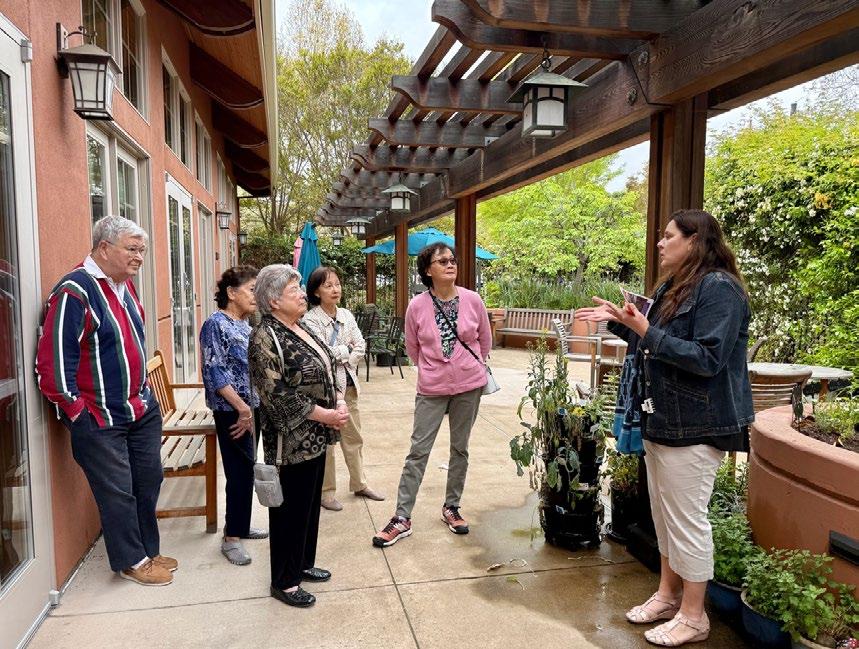
force behind the effort, but he was quick to share credit. The founding board was assembled for its mix of legal, community, development, historical, and organizational expertise, he said, and every member had a hand in shaping the Fund and pushing it through IRS approval. He had started two companies before, he added, but working with the IRS proved far more demanding than either.
In 2023, the board changed the organization's name from Forum Health Fund to Forum Charitable Fund. The new name made clear that the Fund supports charities, Conley said, and donations have grown since.
Where the grants go
Today the Fund's grants land across Santa Clara County. In 2025, it supported AnewVista Community Services, which teaches technology classes in English and Spanish at senior centers, and Live Oak Adult Day Services, which runs four adult day care centers for people living with dementia. It has helped the Avenidas Rose Kleiner Center in Mountain View cover transportation for participants in its adult day program, often the single biggest barrier for the seniors it serves. At the Forum Health Care Center, recent grants paid for professional audio and video systems, hearing loop systems for residents who use
hearing aids, and gait-analysis equipment to improve balance and help prevent falls.
Ask Conley which grant has meant the most to him and he does not hesitate. It was one of the Fund's earliest, paying for Lite Gait equipment used in stroke recovery at the Forum Health Care Center. The machine was expensive, he said, and it made a real difference for patients relearning to walk.
The Fund's growth has done something else Conley did not fully expect. It has built the Forum's reputation across the South Bay, he said, and adding an outside board member helped carry that recognition into the wider community.
Looking outward, and ahead
That outward focus runs through the Fund's current leadership. Conley served as its second president, after Walt D'Ardenne and before Patti White. Today the Fund is led by John Monroe, who has set his sights squarely on the surrounding community.
Asked about his biggest priority, Monroe was direct: "Understanding which Cupertino-area organizations most closely align with the Forum Charitable Fund's mission so we can direct our funding where it will have the greatest impact on seniors' quality of life."
He also wants more of his Cupertino neighbors to know the Fund is open to them.
"Forum Charitable Fund is funded largely through the generosity of Forum members, their friends and families,” Monroe said. “We welcome support from others in the Cupertino community who believe in our mission."
Conley, for his part, expects the next decade to be about growth. The Fund's resources have climbed steadily since its founding, he said, and good management should keep them climbing. Donors are recognized on the Tree of Hope in the lobby of the Health Care Center's memory care building, where each gift adds an engraved leaf.
To learn more about the Forum Charitable Fund, visit forumcharitablefund.org.
The Forum Charitable Fund is a 2026 grant supporter of the Cupertino Outlook.
BY ALYSA SAKKAS
Rather than being an “oldschool” business club, the Cupertino Rotary is deeply engaged in hands-on civic and community work with real local impact. Much of its work is done in partnership with other organizations and nonprofits.
In addition, the Cupertino Rotary has a specific committee for its numerous climate action projects. The Cupertino Rotary was awarded the Rod Diridon Rotary Award for District 5170 in recognition of the depth and breadth of its work, and
its impact in lowering carbon emissions.
Here are a some examples of projects the Cupertino Rotary is involved in:
Climate Action initiatives — award-winning work helping nonprofits install residential solar, electrification projects, artistic bike racks throughout Cupertino, a pollinator garden, and backyard fruit harvesting for West Valley Community Services.
Fall Festival (Sept. 12) — a multicultural community festival with nonprofits, local vendors, student robotics
competitions, art contests, and more. Visit sv-ff.com.
Mary Avenue Housing — Cupertino Rotary was instrumental in the recently approved Mary Avenue. project to provide affordable housing for adults with developmental disabilities.
Hidden Villa partnership — funding a new shade structure through proceeds from its annual golf tournament. Mental health initiative at Monta Vista High School — discussions underway for a future (2027) wellness
and mental health project in memory of former Mayor Hung Wei.
Youth and community service — Thanksgiving meal delivery, back-to-school shopping support, Rebuilding Together home renovations, Read for America classroom visits, Second Harvest volunteering.
Workforce development — Projects with De Anza College and the Fremont Union High School District (FUHSD) adult education program. In addition to providing several scholarships, the Cupertino Rotary oversees a $1 million
scholarship fund for San Jose State University endowed by a former club member.
International service projects — Cupertino Rotary is known globally within Rotary for extensive international humanitarian work, often running more than 10 projects simultaneously with clubs around the world.
Want to learn more about the Cupertino Rotary? Visit portal. clubrunner.ca/3794
211 Food, senior care and child care, counseling, legal aid, housing, and more. Free, confidential, multilingual.
Call 211 | 211scc.org
CANCER CAREPOINT
Non-medical support services for those impacted by cancer. 2512 Samaritan Ct., Suite A, San Jose, CA 95124 | (408) 4026611 | cancercarepoint.org
EMERGENCY ASSISTANCE
NETWORK OF SANTA CLARA COUNTY
One-time financial aid for rent, mortgage, utilities, and move-in costs to prevent homelessness and hunger. Assistance is based on ZIP code.
1400 Parkmoor Ave., Suite 250, San Jose, CA 95126 | (415) 8084300 | uwba.org/get-help
FAIR HOUSING LAW PROJECT
Housing discrimination, mortgage abuse, and eviction issues.
152 N. First St., 3rd Floor, San Jose, CA 95111 | (408) 280-2470 lawfoundation.org/housing
HOUSING AUTHORITY OF SANTA CLARA COUNTY
Administers the Housing Choice Voucher (Section 8) program and develops affordable housing for low-income families, seniors, veterans, and people with disabilities.
505 W. Julian St., San Jose, CA 95110 | (408) 275-8770 | scchousingauthority.org
Structured weekday program of social activities, meals, and supervision for older adults, with respite support for family caregivers. Serves adults with dementia, Alzheimer's, Parkinson's, and other age-related conditions. | St. Jude's Episcopal Church, 20920
COMPUTER HISTORY MUSEUM
Catalogue or edit artifact photos, archive, or become a greeter or docent. | 1401 N. Shoreline Blvd., Mountain View, CA 94043 Wednesday-Sunday, 10 a.m. to 5 p.m. | (650) 810-1010 computerhistory.org
DEER HOLLOW FARM
Become a docent or work in the garden. | 22500 Cristo Rey Dr., Cupertino, CA 95014 | Tuesday, 8 a.m. to 4 p.m.; Wednesday, 8 a.m. to 1 p.m.; Thursday-Sunday, 8
McClellan Rd., Cupertino, CA 95014 | Monday-Friday, 9 a.m. to 3 p.m. | (408) 973-0905 liveoakadultdaycare.org
CUPERTINO SENIOR CENTER 21251 Stevens Creek Blvd., Cupertino, CA 95014 | MondayFriday, 8 a.m. to 5 p.m. | (408) 777-3150 | cupertino.gov/senior
a.m. to 4 p.m. | (650) 903-6430 | deerhollowfarm.org
EMMA PRUSCH FARM PARK
Care for farm animals and gardens, or lead farm tours.
647 S. King Rd., San Jose, CA 95116 | Daily, 8:30 a.m. to sunset (408) 794-6262 | sanjoseca.gov
MCCLELLAN RANCH PRESERVE
Help with planting, watering, and maintaining native plant restoration. | 22221 McClellan Rd., Cupertino, CA 95014 | Sunrise to sunset. Environmental Education
SANTA CLARA COUNTY
SANTA CLARA COUNTY FIRE DEPARTMENT
Emergency response, fire prevention, education, and preparedness. 20215 Stevens Creek Blvd., Cupertino, CA 95014 (408) 299-3144 | sccfd.org
ADULT PROTECTIVE SERVICES (APS)
Santa Clara County hotline for reporting suspected abuse, neglect, or financial exploitation of older and dependent adults. Available 24 hours a day. | (408) 975-4900 or (800) 414-2002 | tinyurl.com/ sccadultprotectiveservices
CONGREGATE MEAL SITE (DINE-IN)
India Community Center West Valley. Hot, nutritious meals in a social setting.
Union Church of Cupertino, 20900 Stevens Creek Blvd., Cupertino, CA 95014 | (408) 934-1130 | iccwestvalley.org
WEST VALLEY COMMUNITY
SERVICES
Support for food, housing, rental, financial assistance, and case management. 10104 Vista Dr., Cupertino, CA 95014 | MondayFriday, 8 a.m. to noon and 1 p.m. to 5 p.m.; Thursdays, 3:30 p.m. to 8 p.m. | (408) 255-8033 | wvcommunityservices.org
PAPER SHREDDING SERVICES
The UPS Store, 20660 Stevens Creek Blvd., Cupertino, CA 95014 | (408) 213-2191 store4646@theupsstore.com
VISITING ANGELS
In-home support for seniors, including personal, companion, respite, memory, Alzheimer's, transitional, and fall prevention care. | (408) 241-5100 | visitingangels.com/sanjose2
SUNNYVALE SENIOR CENTER
550 E. Remington Dr., Sunnyvale, CA 94087 | Monday-Friday, 8:45 a.m. to 4:30 p.m. | (408) 730-7360 sunnyvale.ca.gov/recreation-and-community/ community-centers/senior-center
SHERIFF'S OFFICE, WEST VALLEY PATROL DIVISION
Law enforcement services for Cupertino, Saratoga, Los Altos Hills, and unincorporated areas of western Santa Clara County.
Center: Saturdays, 11 a.m. to 3 p.m. | (408) 777-3149 cupertino.gov/Parks-Recreation/ McClellan-Ranch-Preserve
SAN JOSE HERITAGE ROSE GARDEN
Weed, clip spent blooms, prune, propagate, and plant roses. Bring a hat and drinking water.
438 Coleman Ave., San Jose, CA 95110 | Saturdays, 8:30 a.m. to 11:30 a.m. | (408) 298-7657 heritageroses.us
1601 S. De Anza Blvd., Suite 148, Cupertino, CA 95014 | (408) 8686600 | Non-emergency dispatch: (408) 299-2311 countysheriff.sccgov.org
Made
PAPER SHREDDING AND ENVIRONMENTAL RECYCLING (FREE)
De Anza College Parking Lot A, 21250 Stevens Creek Blvd., Cupertino, CA 95014. Saturday, Aug. 29, 8 a.m. to noon Saturday, Nov. 14, 8 a.m. to noon (408) 777-3200 cupertino.gov/environmentalday
AARP TAX-AIDE
Free tax preparation for older adults and low-to-moderate-income filers during tax season. IRS-certified volunteers staff sites at libraries and senior centers. | (888) 227-7669 | aarp. org/taxaide

SANTA CLARA VALLEY
HEALTHCARE MOBILE
HEALTH CENTER
Walk-in care for adults 18 and older regardless of insurance: treatment for minor illnesses and injuries, family planning, physical exams, health screenings, adult vaccinations, and referrals to specialty care. De Anza College, 21250 Stevens Creek Blvd., Cupertino, CA 95014, Parking Lot J Wednesdays, 9 a.m. to 3:30 p.m. (408) 299-5151 | scvh.org
AACI (ASIAN AMERICANS FOR COMMUNITY INVOLVEMENT)
MENTAL HEALTH SERVICES
Culturally responsive services for individuals and families.
2400 Moorpark Ave., Suite 300, San Jose, CA 95128 (408) 975-2730, ext. 204 aaci.org
CASSY (COUNSELING AND SUPPORT SERVICES FOR YOUTH)
Free, school-based mental health services, staff training, and parent consultations. 2010 El Camino Real, Suite 907, Santa Clara, CA 95050 (408) 493-5289 or text 988 cassybayarea.org
GRIEF SUPPORT GROUPS (VITAS HEALTHCARE)
Remote, virtual, and online support groups available. (888) 804-0387 | vitas.com/ family-and-caregiver-support
NAMI (NATIONAL ALLIANCE ON MENTAL ILLNESS) SANTA CLARA Support, education, and resources for individuals and families. 1150 S. Bascom Ave., Suite 24, San Jose, CA 95128 Helpline 10 a.m. to 6 p.m.: (408) 453-0400, option 1 After-hours support: option 4 namisantaclara.org
Call, text, or chat 988 for 24/7, judgment-free support for mental health, substance use, and more.
HEALTH INSURANCE
COUNSELING & ADVOCACY PROGRAM (HICAP)
Free, volunteer-based program assisting with Medicare, supplements, long-term care, and managed care plans. Funded by Sourcewise. (408) 350-3200, select option 2 | mysourcewise.com/programs-services/ medicare-options
MEALS ON WHEELS (HOME DELIVERY)
Home-delivered meals for older adults who have difficulty shopping for or preparing food. Coordinated through Santa Clara County Social Services. (408) 755-7680 ssa.santaclaracounty.gov/ food-assistance
SENIOR ADULTS LEGAL ASSISTANCE (SALA)
Nonprofit elder law office supporting older adults in living safely, independently, and with dignity. | 1425 Koll Circle, Suite 109, San Jose, CA 95112 (408) 295-5991
SOURCEWISE
Santa Clara County's Area
Agency on Aging. Information, referrals, and care management for older adults, caregivers, and people with disabilities.
3100 De La Cruz Blvd., Suite 310, Santa Clara, CA 95054 (408) 350-3200, option 1 mysourcewise.com
FRIENDLY VOICES
Free volunteer-led phone calls offering conversation and
companionship to older adults experiencing isolation. (650) 395-8017 | friendlyvoices.org
VTA ACCESS PARATRANSIT
ADA-mandated shared-ride van service for people whose disabilities prevent them from using regular VTA bus or light rail service.
Monday-Friday, 8 a.m. to 5 p.m. | (408) 321-2380 vta.org/go/paratransit
FAMILY CAREGIVER
ALLIANCE
Information, education, and support for family caregivers of adults with chronic or disabling conditions. Serves Santa Clara County and the broader Bay Area. | (415) 434-3388 or (800) 445-8106 | caregiver.org
LONG-TERM CARE
OMBUDSMAN
Free, confidential advocacy for residents of nursing homes and assisted living facilities in Santa Clara County. Operated by Catholic Charities of Santa Clara County. (408) 944-0567 or (800) 231-4024 | ccscc.org/ seniors-ombudsman
SANTA CLARA COUNTY OFFICE OF VETERANS SERVICES
Help with VA benefits claims, survivor benefits, education benefits, and DMV verifications for veterans, surviving spouses, and active service members. 68 N. Winchester Blvd., Santa Clara, CA 95050 | (408) 9184980 | vets.santaclaracounty.gov
BY LLOYD RUSSELL

I've got something a little different and a little the same for this month. How is that possible, you ask? Well, it's a legitimate question. I started writing my blog — booksage. blogspot.com — in 2011, and at the end of every year I posted my top books. Why am I telling you this? Because most of these books have not been mentioned in my Outlook articles, and they are definitely worth mentioning. Some will look familiar, but I think most might not. Allowing for the fact that a few are part of a series (you'll have to discover that for yourselves), here are my top books for 2011-2018. If you have not read them, take a look. They cover a wide range of genres. In the order read, starting with 2011:
Hart, John – “The Last Child” Hart, John – “Iron House” Diffenbaugh, Vanessa – “The Language of Flowers”
Picoult, Jodi – “The Storyteller”
Hoffman, Beth – “Saving CeeCee Honeycutt”
Moyes, JoJo – “Me Before You”
BY JAMES CHE
Your phone rings. The caller sounds exactly like someone you love, and they need urgent help. You hear the familiar voice of a child, a relative, or a spouse. Your heart rate climbs. Then the caller tells you not to tell anyone else, just to send money fast. Something feels off, though. There's a slight delay in the speech, and the words feel oddly flat.
What you may not realize is that you're not talking to a loved one at all. The caller is an AI-generated voice built from just seconds of audio scraped from the web, and you were seconds away from losing thousands of dollars.
It sounds like science fiction, but reports of AI-driven scams are rising fast.
With the rapid spread of AI tools, some bad actors are exploiting these advances to scam victims by instilling fear and manufacturing urgency. Three types of scams are most common: voice clone calls, AI deepfake videos, and
Franklin-Willis, Amy – “The Lost Saints of Tennessee”
Hoffman, Beth — “Looking for Me”
Diaz, Sue – “Minefields of the Heart”
Kline, Christine Baker –“Orphan Train”
Archer, Jeffrey – “Be Careful What You Wish For”
Moyes, JoJo – “After You”
Andre, Bella, and Skully, Jennifer – “Breathless in Love”
Jio, Sarah – “Goodnight June”
Follett, Ken – “Edge of Eternity”
Archer, Jeffrey – “Mightier than the Sword”
Gawande, Atul – “Being Mortal”
Andre, Bella, and Skully, Jennifer – “Reckless in Love”
Herron, Rachael – “Splinters of Light”
Eisler, Barry – “The God's Eye View”
Coben, Harlan – “Fool Me Once”
Backman, Fredrik – “A Man Called Ove”
Archer, Jeffrey – “Cometh the Hour”
Towles, Amor – “A Gentleman in Moscow”
Oakley, Colleen — “Close Enough to Touch”
Jenoff, Pam — “The Orphan's Tale”
Hepworth, Sally — “The Things We Keep”
Quinn, Kate — “The Alice Network”
Belle, Kimberly — “The Marriage Lie”
Hepworth, Sally — “The Mother's Promise”
Shaffer, Mary Ann, and Barrows, Annie — “The Guernsey Literary and Potato Peel Pie Society”
Tahir, Sabaa — “An Ember in the Ashes”
Hepworth, Sally — “The Secrets of Midwives”
Andre, Bella, and Skully, Jennifer — “Irresistible in Love”
Harmel, Kristin — “The Life Intended”
Senate, Melissa — “The Love Goddess' Cooking School”
Harmel, Kristin — “The Room on Rue Amelie”
Harmel, Kristin — “The Sweetness of Forgetting”
Moyes, JoJo — “Still Me”
Poeppel, Amy — “Limelight” Chamberlain, Diane — “The Dream Daughter”
Center, Katherine — “How to Walk Away”
Wingate, Lisa — “Before We Were Yours”
Owens, Delia — “Where the Crawdads Sing”
TRIVIA QUESTION: Which university press is the oldest English-language publishing house in the world?
A. Cambridge University Press
B. Pontifical Institute of Mediaeval Studies
C. Oxford University Press
D. Edinburgh University Press
Answer to last edition’s question: B. “The Canterbury Tales” (P.S. It sold for $7.6 million, not $76 million.)
AI-generated text messages. Fortunately, most of them share five telltale warning signs.
The first is urgency and pressure. Scammers weaponize urgency to make victims feel cornered, as though they must act immediately or something terrible will happen. Common phrases include "ACT NOW!", "Don't tell anyone else," and "Time is running out."
The second sign is a request for payment through untraceable channels such as cryptocurrency or gift cards, which scammers favor precisely because they can't be easily traced.
The third sign is a refusal to verify identity. Most scammers only know surface-level details about you or the people you know, so they'll stumble over personal questions like, "What's your mother's maiden name?"
The fourth sign is noticeable imperfections: frequent pauses, a flat tone, or slightly unnatural cadence caused by AI models imperfectly mimicking a human voice.
The fifth is an unfamiliar number or a slightly altered

email address. An email from "contact@paaypall.vip" asking for your password is almost certainly not legitimate, and the same suspicion applies to calls from unknown numbers. While scams are growing more sophisticated, protecting yourself doesn't have to be complicated. Knowing the signs matters, but so does slowing down. When you receive a sudden call from an unknown number, don't respond immediately. Take a moment to check whether you recognize the number. If the caller claims to be someone you know, ask a specific personal question,
something only that person would know. Try to verify with a second person before taking any action. And before doing anything else, step away and take a breath. Urgency is a scammer's most powerful tool, and the best thing you can do is refuse to let it work.
The next time you get a message from an unknown number or an urgent request from a suspicious email address, remember that recognizing the signs can protect you. As scams grow more sophisticated, staying informed about technology helps you navigate an increasingly complex digital world.
Right here in Saratoga, SASCC offers free, hands-on technology support through SASCC Tech, where volunteers are available to answer questions about devices and applications. Drop-in sessions are held every Tuesday and Thursday from 3:15 to 4:15 p.m. at the Saratoga Senior Center, next to Saratoga City Hall. Scammers are exploiting AI to deceive unsuspecting people, but pausing to assess the situation can make all the difference.