TheSummerOpiate 2026, Vol. 46

TheSummerOpiate 2026, Vol. 46
© The Opiate 2026
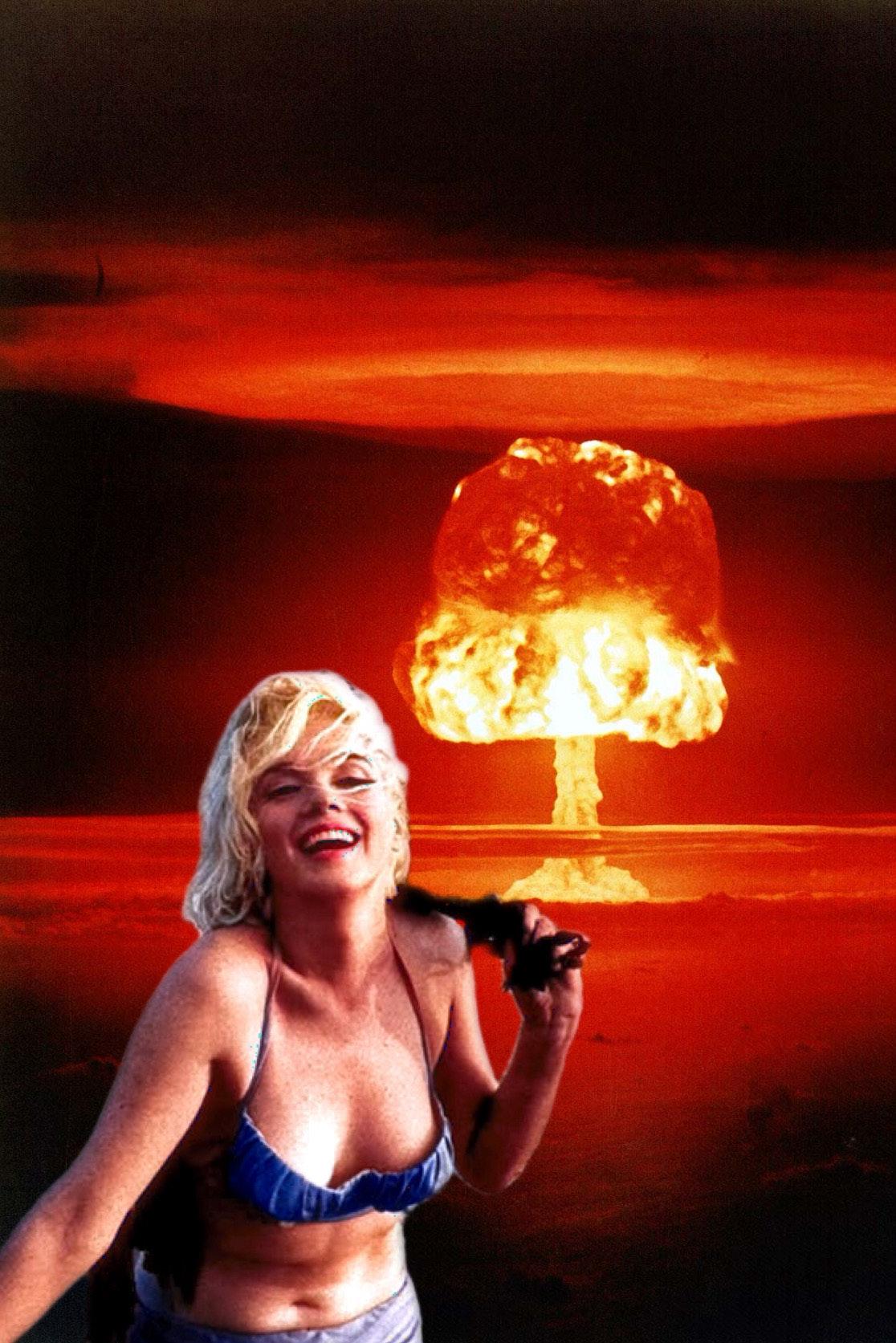
Cover art: Nuclear Marilyn (comprised of two images: Marilyn Monroe at the beach in 1962, photographed by George Barris, and The Castle Romeo nuclear test in 1954, photographed by the U.S. Department of Energy)
This magazine, or parts thereof, may not be reproduced without permission. Contact theopiatemagazine@gmail.com for queries.
“I’m
for the individual as opposed to the corporation. The way it is the individual is the underdog, and with all the things a corporation has going for them the individual comes out banged on her head. The artist is nothing. It’s really tragic.”
-Marilyn Monroe
“This is the way the world ends/ Not with a bang but a whimper.”
-T. S. Eliot
The Opiate, Summer Vol. 46
Editor-in-Chief
Genna Rivieccio
Editor-at-Large
Malik Crumpler
Editorial Advisor
Anton Bonnici
Contributing Writers: Fiction:
Vittorio Valente, “Upstairs” 10
Earl Javorsky, “Cleaning Up the Beach” 19
Mike Lee, “An Uncertain Smile” 27
Steffi Gauguet, “Crashing into Comprehension” 32
Non-fiction:
Allison Strong, “The Cure” 38
Louis Bourgeois, “The Black Jacket” 47
Jennifer Rood, “Weightless,” “Liminal Space,” “Vicissitude” & “What’s On the Table” 58-62
Frankie Laufer, “A Soft Breeze” 63
Charlie Brice, “Pythia” & “Phobias” 64-65
Naa Asheley Ashitey, “I have run out of things to ponder and stress over at two a.m.,” “After you’re done fucking me” & “Furthermore, Moreover, Etc.” 66-69
John Grey, “The Travails of a Homeless Man” & “Hopper” 70-71
Cithara Patra, “A Girl Knows,” “To Reach 100 Summits,” “Bachelorette” & “Twilight Girls” 72-76
Ron Riekki, “It’s Raining,” “As I get older,” “A friend tells me how to live to a hundred,” “We have to go around the room and introduce ourselves” & “We go to the graveyard and look down at a grave, breathing loudly from going uphill” 77-81
Floyd Humphrey, “Mandira’s Kitchen” 82-83
Larry Kilman, “Octoberfest,” “Generations” & “Legacy” 84-86
Criticism:
Genna Rivieccio, “From Mischief to Don’t Bother to Knock: Charlotte Armstrong and Marilyn Monroe Unwittingly Worked Together to Establish the Modern Version of the ‘Unhinged Babysitter’” 88
If one were to home in on the quintessential person (and, more to the point, the quintessential woman) to have been vindicated after being put through the wringer for their looks and life choices, the only “correct” answer is Marilyn Monroe. Sometimes equally as well-known by the name of Norma Jeane (Baker). The name that started her out in this life but couldn’t quite carry her through it until she conceded to changing it entirely. Though, then again, the Marilyn name didn’t exactly carry her through life either. For while it allowed her to escape from the pain that came with belonging to no one (since, despite having a mother, Norma Jeane was frequently relegated to foster care and, in fact, decided to get married so young for the first time in order to evade any more dealings with it), it also caused her to tap into an altogether new kind of pain. That of belonging to everyone. And yes, Monroe was arguably the blueprint for what twentieth century fame would come to mean for many women deemed to be “icons.” That “meaning” being, to the proverbial masses: women are for picking apart until there‘s nothing left of them.
In Marilyn’s case, self-medicating was the manner in which she chose to gradually do away with herself. Whether subconsciously or otherwise. The pressures of living up to an ideal will do that to a woman. Especially one who ultimately has rather humble aims. And for Marilyn, that aim was to get married and have children. A not so surprising goal when also considering her “era” was in the 1950s—the very pinnacle of what the phrase “conservative heyday” refers to (that is, until the 2020s came along). For even someone as ”modern” and ”forward-thinking” as Monroe couldn’t fully avoid being a product of her time.
By the same token, her ”avant-gardeness” when it came to other matters—like demanding to be taken seriously as an actress and therefore ”walking out” on 20th Century Fox to start her own production company—made her a so-called oddity for the period. And so it was that, compared to the “average” woman of the day, Marilyn could often seem like a contradiction. A dichotomy. Which, of course, tracks considering she was a Gemini (a zodiac sign that makes anyone [though particularly those of the male gender] totally cuckoo...see also: a certain Orange Creature that has styled himself as the U.S. equivalent of a dictator).
Indeed, Marilyn was a “daughter of the summer” in a dual way (there goes that Gemini doubleness of hers again): she was born in June and died in August. Never seeing the winter of that year (1962) both literally and metaphorically. For she had just turned thirty-six, sleigh-riding into what Hollywood was inclined to bill as, with every conviction of matter-of-factness at that point (and probably even now), “old ladyhood.” And what was she to do at that point? Who was she to be then? At a time when there was hardly a market or any sense of acceptance for a “day-old bread” sex symbol?
There are no doubt some people who would, even if feeling shame or fear for saying it aloud, posit that Marilyn was “better off” dying young (or young-ish, for those Hollywood pedophiles who don’t believe anyone over eighteen is young). Because would it not be a worse outcome for Marilyn to face a “Norma Desmond fate”? Not to mention her die-hard fans having to see her image “sullied” in such a manner.
Ah, but then there are those in the opposing camp that would argue, How could you say such a narrow-minded, misogynistic thing? Marilyn would have found a way to be a part of the film industry no matter what, even if only from a behind-the-camera capacity. A pretty thought, of course, but not entirely a realistic one. Someone like Marilyn would have been doomed to never be seen beyond her blonde bombshell image. And once that faded out, it’s not very plausible that Hollywood would have kept its doors open to her otherwise. Even in a position like producer, director or writer. Afer all, the movie business remains largely closed to most “behind-the-scenes” women even now, so one can imagine how closed it was during Marilyn’s reign.
That isn’t to say she might not have eventually found her footing and new home in theater, having spent so much time at the Actors Studio and also studying method acting privately with Lee Strasberg. In fact, so taken with Lee and Paula Strasberg was Marilyn that she bequeathed seventy-five percent of her Estate, including intellectual property rights, to them. Which is how, in yet another example of tragedy and exploitation in Monroe’s life, she ended up losing control of her image even in death, when Lee’s third wife, Anna Mizrahi, became the beneficiary of Monroe’s Estate as Lee willed everything in his name to her. And that’s how Monroe ended up being sold, yet again, to the highest bidder in
2011. Specifically, Authentic Brands Group (a somewhat sinister name in its oxymoronicness), who paid Anna somewhere between a reported twenty and thirty million dollars to take over the reins of Marilyn and her image. And oh, how they’ve wielded it in ways Anna likely never would have or could have dreamed of (nor did she seem that interested in knowing how they would or could, for cash was likely the only thing at the top of her mind after enough finessing, enough assuring that Marilyn’s legacy would “tastefully” endure). Particularly with Monroe’s one hundredth birthday to cash in on. Not that Authentic Brands Group didn’t already have plenty to cash in on without the boon of “celebrating” (a.k.a. profiting from) Marilyn’s special milestone. Her name and/ or image, after all, have been associated with everything from Forever 21 to Chanel in the past decade and a half. High- or lowfashion (and anything in between), it doesn’t matter, so long as the Monroe image is cemented as something that has “versatile appeal that crosses generations, price points and distribution channels,” as the executive vice president of entertainment at ABG phrased it. Which is just how every girl dreams of being “positioned,” isn’t it?
Never mind that Marilyn was an artist (whatever her detractors might say), with an accordingly delicate and fragile soul. Hence, the irony of her turning to Hollywood for acceptance. A place where, as it’s no secret by now, souls are but the price of admisson. Whereas pure and artistic souls tend to make the toll-takers salivate all the more. Offering something rarer in that these are the types of artists that industry executives/gatekeepers in general see as more profitable. Because they have something unique, something truly genuine—iconic—about them that drives the masses into a frenzy across centuries. And those who “allow” such people into the business (again, for the small price of a soul) are “trained,” as it were, to have a nose for exploiting the simultaneously talented and vulnerable (see also: Elvis Presley and Britney Spears).
To the bitter end and beyond, Marilyn’s exploitation remains a warning to any artist, across all mediums, that maybe being obscure and undiscovered isn’t without its perks.
Obscure and undiscovered,
Genna Rivieccio July 2026
Vittorio Valente
HiRhiannon. How are you, dear?”
I hid the cigarette I was smoking behind my thigh and exhaled the smoke away from my aunt, as if I could possibly hide that too. “As good as I can be.”
I wasn’t sure why I did that. I was a twenty-six-year-old woman who just attended her father’s funeral; I could smoke wherever and whenever I liked, especially after the function.
My great-aunt, Agnes, a ninety-year-old lady who had shrunk to being a bit above five feet in height, patted me on the forearm. “I know dear. He was still so young, and you have been so strong.”
“Thanks Auntie.”
“I didn’t see your mother and sisters. Are they alright?”
I couldn’t help but grin. I looked in front of me: we were right outside the chapel of Glyntaff’s Crematorium. It was a stone church with steep, sloping roofs, large vertical windows and little ornamentation. It was a true institution of Pontypridd, since the crematorium was the oldest in all of Wales and the only one in it for over thirty years—or so claimed their website. The cemetery around it was a landscape of grass, evergreen trees and the black and gray of the tombstones.
It covered everything I could see, except the parking space in front of the chapel and the university, which was separated from that
valley of tears by a wire mesh fence.
“...are you still with me dear?”
“Huh? Oh yeah, sorry... Mother and Christeen caught a bug, they couldn’t make it. Sarah... Well, she couldn’t make it either.”
“Oh, I know she’s so busy now, and God bless her for that, but really...not even for her father’s funeral?”
I shrugged and dropped the cigarette at my feet, “It is what it is, Auntie. Some people don’t have time. Even for death.”
I snuffed out the cigarette with the tip of my shoe and walked
“I was finally in Pontypridd when the reels veered towards celebrity worship. One of them showed another edited clip from a TV show, but at least with an actress talking to someone that wasn’t an alien raccoon. Then there was one with two actors promoting their latest film, constantly touching each other in ways only Hollywood would find appropriate. And then, she finally popped up.”
away. The rest of the funeral was much like this, walking through a sea of men and women dressed in black, all as old as my parents or older, and listening to their condolences and how Father was this and that and did so much and so well and everything else people say at an event like this. And I was there, nodding and thanking, excusing Mother and my sisters for not being there. Sometimes I told them it was the flu, other times it was an unspecified urgent matter they couldn’t possibly delegate or delay. I could barely come up with anything for Sarah, but my interlocutors were all so quickly understanding and sympathetic.
She’s a star now, they said. She’s probably in the States, couldn’t make it for something so sudden. Her career is at such a crucial moment, surely even a day away could put it at risk.
Plenty of acquaintances, who had barely seen her in person more than once, all jumped at the opportunity to defend her from the consequences of her own actions. I smiled, thanking them for their
kindness, but my grin was a thin veil.
I mused that the only difference between Sarah’s childhood and adulthood was that now other people, beside my parents, justified her bullshit.
Eventually they all went away, emptying Glyntaff Cemetery of the little human life it was going to get that day. I walked home in heels and dressed in black. I could have taken the car, but I had to leave it at the house in case Mother or Christeen would need to go to the store.
Or at least I thought that ought to be the reason. But maybe I just wanted to walk. Glyntaff was such a small village after all, so small and close to Pontypridd that I hadn’t realized it was its own locality until I was a teenager. It was on an elevated position on the other side of the river from Pontypridd, meaning it would have taken me ten to fifteen minutes to descend and leave it behind. I pulled my phone and earphones from my purse and opened TikTok, paying just enough attention to my surroundings not to be run over by a car. I doomscrolled for a while, trying to latch on to any reel that could take my mind off of that day: anime content, a podcast clip on what would happen if the sun disappeared—the only one I watched in its entirety—an unfunny skit on how shitty life was in the Middle Ages, a forty-something-yearold man sitting in a car and venting about Instagram bimbos, a scene from Guardians of the Galaxy with a blurry filter, AI-generated subtitles and a song that had been recently trending everywhere...
So basically the usual crap my algorithm spammed all over my feed, no matter how much I pressed the “Not Interested” button.
I was finally in Pontypridd when the reels veered towards celebrity worship. One of them showed another edited clip from a TV show, but at least with an actress talking to someone that wasn’t an alien raccoon. Then there was one with two actors promoting their latest film, constantly touching each other in ways only Hollywood would find appropriate. And then, she finally popped up.
Her hair (or rather, her extensions) was sky-blue in this one; curly on her left and straight on her right. She wore cream-colored eyeliner and silvery glitter all over her face, while her lipstick was of a lighter shade of blue than her hair. The title was, “SERAPHIM
#celebrity #seraphim #celebritymentalhealth.”
Some out-of-view interviewer asked, “Now Seraphim, you have said in Vanity’s cover issue that your songs come from a place of vulnerability and trauma. Is that why you named your album Blue Riding Hood? Is it about a big, bad wolf in your life?”
Sarah sighed, “Nahhhh...well, I don’t think there’s only one big, bad wolf we meet in life. This is something I’ve come to terms a lot
Upstairs - Vittorio Valente
with in therapy, and I think that’s what Blue Riding Hood is so much about: digging up those things in my childhood I buried deep down.”
I stopped, staring at my sister’s glittery face on my phone screen, feeling my stomach plunge all the way to hell.
“Ohhh, like your life in Wales?”
“Yes! You know, I have many good memories about living there, I miss the nature of it all a lot. I remember playing with my sisters...”
I watched in horror as the reel showed pictures of me and Sarah from when we were eight and six. I was on the ground with my eyes closed, spaghetti and red sauce over my head and belly, while Sarah knelt behind me with her arms extended, hands hanging down and her fingers curled. She had green paint smeared all over her face, her grin showing all her teeth.
“...dressing up for Halloween with them as zombies, vampires, anything we felt like. But at the same time, I felt a bit...I don’t know, taken for granted? I am the youngest, so—”
I turned off the screen. I pressed my lips against it, repressing the urge to scream bitch in the middle of the road. I moved the phone away and took some slow, deep breaths, doing what I could to soothe the intense anxiety gripping me.
People online now had pictures of me as a child because my sister had to promote her fucking album!
My baby sister, who apparently felt ignored by her family, when even the picture she gave to those vultures showed that all we ever did was cater to her whims.
Did she really think I wanted to be lying on the ground for Halloween, with shit all over my face and clothes, to play the victim to her zombie? And that Christeen wanted to spend it babysitting us, making those improvised costumes, taking pictures and distracting us so we wouldn’t notice our parents ditched us again to do anything else but spend time with their kids?
She probably did. Then again, Sarah was never the thinker of the family, I was. She was a creature of instincts, and to expect anything sensible from her would have been like asking a donkey to write a Shakespearean masterpiece.
That thought, for whatever reason, relaxed me a bit. It took my mind away from Sarah and Father long enough to start walking again. It even got sunny—quickly and out of the blue, as was typical of Welsh weather.
I made it to our house, nestled among other semi-detached residences and facing a crag covered in moss, as was also typical of Wales. On the ground, it was just another door and a couple of windows by the side of the pavement and a small balcony upstairs. I saw our car parked on the side of the road, so I knew Mother and Christeen were
The Opiate, Summer Vol. 46
still at home.
I entered and called for them, “Mother! Christeen! Have you bought anything for dinner?”
No answer.
Fucking figures, I thought.
“Have you had lunch at least?” I said into the nothingness.
I checked the kitchen for any signs they had prepared something for themselves, but nothing seemed different from when I had left after breakfast. I opened the dishwasher for more clues: full. I had forgotten
“Did she really think I wanted to be ly- ing on the ground for Halloween, with shit all over my face and clothes, to play the victim to her zombie? And that Christeen wanted to spend it babysitting us, making those improvised costumes, taking pictures and distracting us so we wouldn’t notice our parents ditched us again to do anything else but spend time with their kids?”
to turn it on, and now I wasn’t sure if there were any new dirty dishes since my departure.
“If you want lunch, I’m changing first.”
I went between my room and the bathroom on the ground floor to take off the funeral clothing and makeup, then got into my joggers and put on the first hoodie I could find in my closet. When I got back to the kitchen, Mother and Christeen were still nowhere to be seen.
“Hello! Are you two home?”
No answer again. I quickly checked their rooms, but they weren’t there. I even went to Sarah’s old room, left untouched since she was seventeen, which proved to be the exercise in futility I knew it would be.
Neither of them had a reason to be in there.
I went back to the entrance and peered out of the window: yes, the car I saw was, in fact, ours.
Upstairs - Vittorio Valente
Did they leave on foot?
To where? And why?
I called them, first on WhatsApp. And when they didn’t answer normal calls either, I told myself they might be somewhere without service.
Sorry, this number is not recognized. Try— What? How! How did both their numbers stop working?
I considered calling the police, but I immediately resolved not to. Their numbers not working didn’t mean they were in danger, and I really didn’t want to make a fool out of myself.
So I reflected on where else they might be. I had looked pretty much everywhere in the house, except the basement and attic.
I looked at the door behind me, leading to the basement, and then at the narrow, uncomfortable stairs leading to the attic. I never liked going into the basement: the reek of mold in there was unbearable. So I went for the stairs, still calling for Mother and Christeen. I came to the attic door, feeling anxious about opening it. After all, there was no way they wouldn’t have heard me calling for them, so what was holding them back from answering?
No, they surely weren’t in there. I was checking just so I could stop thinking about it and focus on actually finding them. I turned the knob and entered.
The attic was an empty room, with white walls and a carpeted floor, with no furniture or miscellaneous objects waiting to be remembered and used. In fact, I wasn’t even sure why we called it “the attic” as it was just a room under our roof with no purpose. I wondered why Mother and Father never used it, since a room with a balcony could always come in handy.
And that’s when I saw them: Mother and Christeen, their withered corpses each lying on a long metal sheet. They lay on the threshold of the balcony, its window-door mysteriously open. Their heads and torsos rested outside, gently caressed by the sunlight, while their abdomen and legs were inside the room.
I screamed as my knees gave way. I pushed myself along the floor backwards until I slammed my shoulders against the wall. I curled up and bit into my hand, repressing the urge to hyperventilate and cry. Their bodies were naked, dried-up and thin, like Egyptian mummies without their wrappings. Their eye sockets were empty, their teeth yellowed and deteriorated, their skin brown like papier-mâché. No fat or organ seemed to be in them anymore, as even their breasts were nothing more than crusty areolas and nipples. But I knew it was them the moment I laid my eyes on their remains: their hair was still intact. Mother had her dark-red bob, tidy and dyed to hide the gray streaks, and Cristeen’s long, light-brown hair, untrimmed and full of
split ends, remained attached to her skull.
It was indeed them, reduced to dead husks on metal sheets. And I had no idea of the how or the why or, far more importantly, the who...or the what.
Who or what could have done this?
Was it real?
No, I must have been dreaming. Or losing my mind.
But it all felt too real to be either of those things. I pulled my phone out and dialed 999.
The operator picked up immediately. “Emergency, do you need police, fire or ambulance?”
“P-p-police,” I whispered.
“What is your location, madam?”
I gave them my address.
“Thank you. What is happening, madam?”
I felt my lower lip quiver as I answered, my voice as low as I could possibly make it go. “I...I don’t know. I think someone killed my family.”
“Your family? Have you found their bodies?”
“Yes...but, they are... I don’t know how he did it.”
“Who did what, madam?”
I instinctively pulled the phone away to stare at it for a second. Was that moron being for real?
“Killed them!” I hissed, “The murderer. I don’t know how he could... Please, just send someone to my house.”
“Is anyone else in danger, madam?”
“I am! I... I don’t know if he’s still here!”
“Who’s ‘he,’ madam?”
Had I not been so utterly terrified, this is the moment where I would have screamed at the waste of tax money on the other side of the phone. Instead I whimpered, “The murderer!”
“How do you know it’s a man?”
“I...I don’t know. It might be a woman. I just... Please, I can’t think straight! Just send someone over.”
“I don’t think it was a man, madam. Your father is dead, after all.”
The operator’s words didn’t register at first. They were so impossible, so inconceivable, that I thought I must have said something about Father’s funeral and just forgot.
“What are you talking about?! Why do you care? Just send someone here to—”
Then it clicked for me. The operator had just said something they couldn’t have possibly known.
“What did you say? Did you say something about my father?”
“Yes, madam. It wasn’t him. You know he wasn’t the one who wanted to kill your family.”
My phone almost slipped out of my hand.
“Who the fuck are you?!”
No reply.
“What have you done to my mum and sister, you fucking—”
I heard the call disconnect and I threw the phone aside. I looked around to find something, anything, I could use as a weapon. The room was as barren as before, so I just stood up and started screaming towards the balcony.
“Help! Somebody please help me!” I cried, tears finally streaming down my cheeks.
If anyone heard or cared about my calls for help, I couldn’t know. The sunlight was too bright, making it impossible to see the street or the mossy crag in front of my house.
The only visible things were the balcony railing, Mother and Christeen.
I stopped; at that point, was I even still in Pontypridd?
I put my hand over my mouth, trying to hold back the sobbing, staring at the white door of the attic and waiting for the killer to finally enter.
But nothing happened. For what felt like interminable minutes, the door remained shut.
When I got tired of waiting, I looked at Mother and Christeen again. That’s when I noticed that their metal sheets were not parallel to the floor, but slanted. Something was under them, right in the middle.
I stepped closer to see if I could spot what it was from a different angle, until I was right at their feet.
All I could tell was that there was something under them, but there was only one way to figure out what it could be. I knelt and grabbed at Mother and Christeen’s metal sheets and, taking care to absolutely not touch their corpses, I started moving them apart. A smaller body, curled up in a fetal position, was just beneath, resting on its own smaller sheet. Her hair was long and a lighter red than Mother’s. It was the hair she had for most of her life, before she started dyeing it so people would stop calling her a ginger.
I let go of Mother and Christeen’s sheets and backed away, sitting in the same spot as before as I covered my eyes and face.
This had to be proof it wasn’t real. It was a nightmare, a simulation, a mental breakdown. It was something that I could come back from, that had a way to return me to my life. When I took my hands away from my eyes, I saw Sarah, Mother and Christeen’s gaunt bodies a yard away from me, standing up. My muscles contracted all at once, cutting my breath. I could do nothing but stare.
Sarah spoke with a shrill, childish voice, “...brains?”
My vision blurred and I felt the warmth of new tears coming down.
“Rhiannon...just, can you just brains?” she asked.
My jaw jerked, releasing a gasp.
“I... I don’t—” I uttered.
Sarah continued, “Please...just brains, Rhiannon. Mummy said it’s fine.”
Mother said nothing. She stared at me with her eyeless gaze, her mouth slightly agape and waiting. Christeen was doing the same, letting Sarah do all the talking.
Crying, I found myself shaking my head and whispering, “I’m sorry...but I can’t. I just fucking can’t.”
Sarah took a deep sigh. Then she screamed and lunged, followed by Mother and Christeen.
The pain I experienced dashed any delusion that this wasn’t real. I felt bites ripping my flesh, my skull pounded against the wall until it cracked open, my organs pulled and stuffed inside my killers’ orifices. When they plucked my eyes out, one was squashed by the excessive eagerness of my family to tear me apart. The other was flung away by the same mania and flew to the other side of the room, landing right on one of the abandoned metal sheets.
The last thing I saw was the gentle springtime sun over the street I grew up on and the mossy crag that bordered it.
Earl Javorsky
Iwas walking back to my car at Buccaneer Beach on a cold Thanksgiving morning when a guy rolled up on a bike, said, “Happy holidays, brother” and asked me for a cigarette. I told him, “No, sorry, I don’t smoke” and kept walking. As I reached to open my car, he scooted up close and got off the bike. He had an eight-inch blade in his hand—black, military-looking—and a crazed look that told me anything could happen now, what are you gonna do motherfucker?
“Gimme your wallet.” He was your typical Oceanside tweaker: skinny, dirty-blonde hair, maybe six feet. His teeth weren’t bad yet, but they smelled, and even though it was chilly out he was wearing cutoff jeans and a tattered Bad Brains shirt.
I glanced to my left; the nearest car was twenty feet away, and there was no one else in the lot. The wind was coming off the ocean and had ruined the surf. The usual doper crowd was probably dispersed along the Pacific Coast Highway, looking for hookups or handouts, or to score.
“Hey!” he barked in my face. “Your fuckin’ wallet.”
I had six hundred bucks on me and didn’t want to give it to this dipshit. I raised my hands and said, “Look, I’m gonna show you something on my phone, right? You’re gonna like it.”
He put the knife up to my chin. “The fuck you talkin’ about?”
“I know a chick, she lives right down the street. She loves to party and she’s got bags of gak that’ll blow your mind. Best fuckin’ Thanksgiving you’ll ever see.”
The tweaker blinked and said, “You’re full of shit.”
“You like coke?”
“Fuck yeah, but it’s expensive.”
“This chick cooks rocks the size of fuckin’ eggs. We’ll smoke ‘em in a two-hundred-dollar pipe and she’ll do stuff to you till your your brain explodes.”
“Fuck you, man, you’re tryin’ to fuck with my head.”
But I could see the gears spinning. He backed off a bit with the knife. I moved my hand slowly toward my pocket. “I’m gonna call her now, and you can see a picture of her first, okay?”
He scratched his scrubby little beard with his free hand and said, “This better not be some bullshit.”
I pulled up Lilah’s number and her photo popped up on my screen, hot like a Facebook friend request from a porn website huckster. I hit the call button and put it on speakerphone.
Lilah picked up on the second ring. “Billy, what’s up?”
“I got a guy wants to meet you.” I put out the phone so the tweaker could see it.
Lilah said, “Hey, baby, what’s your name?”
The tweaker’s mouth was open, his head bobbing back and forth like a pigeon’s. He closed his mouth and chewed on his cheek for a minute and then blurted out, “Frank. My name is Frank.”
I looked around; there was still no one in view. I motioned to Frank to put the knife down and he slid it into a sheath in his belt.
“Well hello, Frank. Am I gonna get to meet you?” Then Lilah turned her camera on and pointed it at a glass table with a giant bong, an open baggie of purple buds and a mirror with a heap of shiny crystalline powder on it.
Frank peered at the phone like it was a gateway to another universe, lost in the possibilities. The inside of his cheek must have been shredded. He mumbled, “Uh, yeah, sure.”
“Soon I hope, right?”
I took the phone back and asked, “You good?”
Frank nodded his head and suddenly grinned. “Hell yeah I’m good.” Then he did a weird little meth-head victory dance.
We threw his bike into my hatchback and headed north. Frank’s hands vibrated on his knees, his feet tapping sixteenth notes, and every few seconds his whole body would twitch like he’d been tasered. When I glided onto Highway 76 from PCH, he said, “Fuck, dude, you told me it was right up the street,” but it came out meek and whiny. I told him to relax, it was ten minutes, max.
Cleaning Up the Beach - Earl Javorsky
It had started raining, and we drove in silence except for the windshield wipers squeaking on the glass. Finally, I asked Frank where he was from and he said, “Barstow, man. Fucked-up place, truly fucked up. Moved down here a few years ago. It’s fucked up here, too. Spent some time in Riverside. And yeah, man—” He coughed up a rueful laugh. “That was fucked up too.”
Lilah had a ranch-style house on two acres behind Guajome Park on the Vista border, isolated from any neighbors. Frank rocked back and forth in his seat as we drove up the long, rutted dirt driveway. When I parked, he jumped out of the car but his smell stayed behind.
“Lilah liked to party. I don’t know how she managed to stay gorgeous and pay the mortgage behind all that shit, but she seemed to have a handle on it. Me, I didn’t like it. A few beers, a hit of weed and I just wanted to be left alone.”
Lilah answered the door in a kimono, her hair all mussed like she’d just gotten out of bed. She was about my age—forty—but still looked like centerfold material. She put out her hand and said, “Frank, I’m so pleased to meet you.”
Frank was reduced by now to stuttering. He took Lilah’s hand and made a goofy little bow, then laughed nervously and looked back at me. I told her, “Let’s go” and Lilah herded us into the living room. She left the room for a minute and came back with two Heinekens, caps off, and handed one to each of us. I watched as Frank tilted the bottle and drained half of it.
He stared at the glass table with all its treasures. There was a pillbox with Xanax and Oxy, Valium and Dilaudid. The white powder
was still on the mirror, now neatly divided into rails. A fat bud sat in the bowl of the pipe, and a smaller glass pipe rested next to a butane torch. Frank put his fists up to his eyes and rubbed furiously, then looked again.
Lilah liked to party. I don’t know how she managed to stay gorgeous and pay the mortgage behind all that shit, but she seemed to have a handle on it. Me, I didn’t like it. A few beers, a hit of weed and I just wanted to be left alone.
The rain was crazy now, and the wind had kicked up. It was cozy inside. Lilah closed the curtains and put a log in the fireplace, poked at it till it caught the blaze. She swiped at her phone and Thievery Corporation’s “Lebanese Blonde” started playing over speakers in the corners of the room.
I sat back on some cushions on the floor. Frank stood there awkwardly, not sure what to do until Lilah motioned him to the sofa. He stared at the table like a trained dog, hungry but obedient. I saw Lilah glance at her watch. I checked mine: six minutes.
“So, Frank, how did you and Billy meet?”
Frank looked over at me, helpless now. He clearly wanted to make a good impression. We had four minutes to waste, so I said, “Frank helped me fix a flat tire down at the beach. I didn’t have a lug wrench, and he was checking out the surf right next to where I was parked so I asked him if I could borrow his.”
Frank was bobbing his head again. “Yeah, man. Billy’s good people, I knew it right away.” I looked up at Lilah and she shrugged. A hit of weed wasn’t going to hurt.
Three minutes.
Lilah fired up the torch and took a hit off the bong, then motioned for Frank to have one. The rain pelted the house, the flame hissed, the bong bubbled away and Frank finally sat back into the pillows. He held his breath while Lilah helped herself to more. He was still holding it, his eyes popping, while she scooped some crystals into the smaller pipe. Finally, he let loose an enormous plume of smoke and coughed, “Damn, that is some good shit.” Then he finished his beer and pointed toward Lilah’s hand. “We gonna hit that any time soon?”
One minute.
“Yeah, baby, let me get it started.” She put the pipe to eye level and blasted the bottom of the bowl with the torch. Frank stared at it, hypnotized, as the crystals liquefied. Suddenly, Lilah’s hand jerked, and the pipe flew out of her hands and shattered on the table.
I looked over at Frank. He reached for the table but was moving slowly, too sedated to register what was happening. The GHB Lilah
had put in his Heineken was finally kicking in.
“Hey, Frank!”
He looked at me and said, “What the fuck...”
“Gimme your fuckin’ wallet.”
“What are you talking about?” He was slurring now; he’d be gone in a minute.
“That’s how we really met, right? You put a knife in my face, remember?”
Frank slid back and sideways on the couch, his head resting awkwardly against the armrest on his right side. Lilah left the room again and this time came back with a bucket and a bolt cutter, which she offered to me. I reminded, “I’m pretty sure it’s your turn” and took the bucket instead. I put it on the floor under Frank’s hand, which was dangling off the couch, and watched as Lilah placed the blades around Frank’s middle finger and snapped the handles together.
The finger plopped into the bucket and the stump started spraying blood. Lilah hit it with the torch and stanched the flow. I picked up the finger by the tip and let it drain, then wrapped it in a paper towel and put it in a ziplock bag for Lilah’s collection.
We dropped Frank off, still comatose, at a bus stop in Escondido.
It was a month before we got another one, Christmas Day. We’d been playing the game since mid-summer, and Lilah’s collection was up to six, so we were right on schedule.
The punk rolled up on a skateboard, again at the beach but this time with a gun. A peashooter, a sad little .25 that looked like it had been fished out of a drain somewhere. We went through the routine: he demanded my wallet, I stalled, he got shitty about it, I pitched him on the hot chick with the dope, Lilah charmed him on the phone and off we went.
It was a clear day this time, chilly with a bright blue sky, and the kid rubbed his hands together and shivered when he got in my car. His name was Jared; he was small, maybe five-six, seventeen or so, with a peach-fuzz mustache on a baby face. He spun the wheels on his skateboard while I drove, going around and around to keep them all spinning at once while he shook his head slowly. He did that for the whole drive.
When we got to Lilah’s, I said, “We’re not going in there while you have that gun.”
Jared shrugged his shoulders and handed it to me. He seemed
weirdly docile, different from the snarling brat that, only fifteen minutes earlier, had threatened me with a bullet. I got out of the car and tucked his gun into my jacket.
Inside, Jared took his Heineken and went straight to the couch. He put the beer, untouched, on the table. He took out his phone. “Mind if I tell my mom I won’t be home for a while?”
Lilah glanced at me. It seemed like a bad idea, but we didn’t want to spook him so I stalled with, “Hey, yeah, but first let’s have
“The finger plopped into the bucket and the stump started spraying blood. Lilah hit it with the torch and stanched the flow. I picked up the finger by the tip and let it drain, then wrapped it in a paper towel and put it in a ziplock bag for Lilah’s collection.”
a toast to a good party.” I sat and raised my beer toward him. He touched the screen and made the call anyway.
Lilah sighed and stayed standing, watching Jared as he said, “Yeah, hi Mom. I’m having lunch with some nice people I met. I’ll see you tonight, okay?” He listened for a beat and then assured, “Yeah, it’s all good. Love you.”
Lilah relaxed and sat down. She started packing the bong, then looked up and asked, “You don’t like beer? I can get you something else.”
Jared stood up. “I gotta pee really bad first. Can I use your bathroom?”
Lilah told him to use the one by the front door.
We watched the kid walk out of the living room. The house was quiet. Something was off, and I didn’t like it. For some reason, I found
Cleaning Up the Beach - Earl Javorsky
my hand gripping Jared’s gun.
Suddenly we heard footsteps in the foyer, and then a stream of people flooded the living room. Seven of them, with Jared bringing up the rear. The one in front I recognized immediately; it was Frank, and he was pointing a gun at Lilah. A big gun this time, a Glock 9. He walked right up to her and put it to her temple.
I looked at the others. I had forgotten their names, but I knew all their faces. And I knew that they were each missing a finger.
Frank sat in the leather chair next to the sofa, keeping the gun trained on Lilah. “So what are you guys, like, vigilantes? Trying to clean up the beaches? Who the fuck do you think you are?”
It didn’t seem like a real question, so I kept my mouth shut. I was waiting for a moment, a distraction, whatever it would take for me to get a shot at Frank.
Lilah kept her cool. She said, “So what is it that you want? You want money? I can do that.”
Frank shook his head. An older guy with a beard and an American flag bandana answered, “How much do you think a finger is worth? I’m a fuckin’ musician, bitch.” My guess was that he had pawned his last instrument years ago, but maybe he still thought he had a future.
Frank looked at me and said, “Didn’t you ever think we might notice if we met someone else with a missing finger?”
I stared at him dumbly. It occurred to me that we had never dreamed of these guys congregating, piecing together the fragments they could remember of their stories, concocting a plan.
Frank chuckled. “Yeah, dude, the light’s coming on, right?”
The other guys just stood there, staring at Lilah, at Frank, at the table with the pipes and the weed and the white powder. Frank rested the gun in his lap, still pointed at Lilah. “Maybe we’ll take your money, but we’re gonna have some fun first.” With his left hand, he reached for the little glass pipe.
Lilah looked at me. Her left hand was two feet from the Glock. She made the smallest nod and I pulled out the .25, aimed it at Frank’s head and pulled the trigger.
Nothing happened.
The whole lot of them broke out laughing. Jared said, “What, you think we’re stupid?”
Everybody started moving. Two of the guys came up behind me and I felt a sharp pain in my neck. I don’t know what they gave me, but within twenty seconds I couldn’t move or speak. They zip-tied my wrists together and rolled me off the chair to the floor. Out of the corner of my eye, I could see Frank and another kid struggling with Lilah. A feisty one, she was, screaming and clawing at them. Then silence.
A big guy, tatted up and scary looking, towered over me. I remembered him—our first catch. Now he showed me the stump where his finger used to be, then reached into his back pocket and pulled out a pair of pruning shears.
They took turns, ceremonially, sequentially from first to last. Frank took his time before saying, “Merry Christmas, motherfucker.” I felt every second of every cut, followed by the searing pain of the torch cauterizing the wound. Each cut sounded like a carrot being chopped, then the clack of blades as they snapped together. Six times altogether. They took the three middle fingers of each hand. Paralyzed, I couldn’t even make a squeak.
That was five months ago. What they did that day got burned into my brain like a reactor meltdown.
When they were done, they turned their attention to the goods on the table. They partied for a while, swapped stories, raided the liquor cabinet and took turns ransacking the house. One guy came over and pissed on me.
Then they injected me again and bundled me into a panel van that was parked outside. It was dark when they rolled me out into a filthy gutter. Apparently, they planted a bag of meth in my pocket, because the Tijuana police put me in a cell and left me there until Lilah finally paid my way out two months later.
We’re together now, in a rathole motel on the Coast Highway. Lilah’s not looking so great, but she’s still got hustle. And me? Well, I’ve come to love firing up a bowl full of crystal—the swirling of the trapped white cloud, the god-like feeling on the inhale. Most days I do a squeegee gig on the highway, but even that’s a chore with just a thumb and a pinkie.
Mike Lee
Feeling like an empty vessel filled with dirt, Karen slept badly, waking up every hour from two o’clock on. Finally, she got up and made coffee in the nude on the old ceramic stove, brushing off the solitary cockroach to the cracked linoleum at her feet.
Karen felt indifferent to the roach as it scurried under the cabinets. There was a time when she would havd freaked out, but after nearly a year in South Williamsburg, she became impervious. Every creature has a right to breathe, she felt, though her sentiments did not apply to her diet. She still ate meat.
She stared through the window as the bodega-bought Café Bustelo in the coffee pot boiled; her eyes could not conceal her weariness in the reflection.
She cupped her hand to her left breast for something like emotional support. Karen was confident no one could see her. The tenement window was too filthy thanks to years of grime from traffic on the Williamsburg Bridge.
The bridge was once so decayed that clouds of rust would fall from the beams.
Karen once heard that the projects near the Manhattan side had the highest incidence of asthma in children. She was never sure if such stories were true. By the time she stumbled to thirty, Karen
concluded she lived in a world of liars, spending half her efforts in conversations parsing out the monochromatic shades of truth and complete bullshit.
Brooklyn was as good a place as any to start. It had already been four years of never affording Manhattan, and now, she was facing being gentrified out of her current neighborhood: Williamsburg. Bay Ridge was the last line of defense for the single person who never quite achieves. There is a price to be paid for not making it in New York City, and this arrives on the first of the month like a fallen angel with a sweet taste for retribution.
Peering through the window, Karen watched the new hotel under construction across the street, with the yellow-helmeted workers moving around the site. This was the future: property values were skyrocketing each year in the last five; even the 2008 crash had only slowed the increases temporarily. There was plenty of money to be made by the landlords of the neighborhood’s buildings, hers especially.
In Williamsburg, rent prices soared, doubling and tripling over the five years she lived there. Soon, she would be priced out, likely because the lease was set to renew in two months. She did not have a rent-stabilized apartment and was at the mercy of her landlord.
That landlord was of the first generation of stakeholders who bought up properties in the early 1990s, when Williamsburg was divided by the bridge into a slum and a barrio. Back then, only language differentiated the poverty of mostly Latinos and the Orthodox and Satmar Jews. As they struggled to survive, the declining property values attracted artists who could no longer afford the Lower East Side and SoHo, therefore established new galleries and studios, and hosted the attendant rooftop parties.
She missed out on all of that, not arriving in the city until after 9/11. Then it was cheap. After a year of living in a dorm, she set out in the middle of the night to lurk near the old Russian’s newsstand by the Astor Place stop so she could get the latest copy of The Village Voice. People sometimes lined up for a block to snag the most recent edition for the updated apartment listings before running to the telephone to leave messages for potential landlords.
She was one of those people. And it had gotten her a place by the Williamsburg Bridge for three hundred and fifty a month. Now, it was one-thousand-six-hundred. For one bedroom, a kitchen and a bath. A windowless, narrow space served as a living room that contained a futon and a coffee table. She usually slept there; the bedroom acted as her studio, crowded with materials and a long work desk that was a set of planks on top of cinderblocks where she kept her papers and computer. Everything else was just racks of canvas—mostly completed work, always unsold, and occasionally shown once.
An Uncertain Smile - Mike Lee
Karen had yet to have a solo exhibit, and it had been several years since her last legitimate group show, but she did have paintings hanging at Brooklyn Bowl and a couple of Williamsburg cafés.
She stopped visiting those cafés. The thrill of her work being shown had long since faded. Rather sad, actually, but after enough time, an artist accepts their lot...while antithetically continuing to hope for that big break. Whether it happens, it shall ever be. That is what Karen felt. This sentiment kept her going, though in what direction remained, in her view, to be unforeseen.
Upon her arrival in her neighborhood south of the bridge,
“Bay Ridge was the last line of defense for the single person who never quite achieves.
There is a price to be paid for not making it in New York City, and this arrives on the first of the month like a fallen angel with a sweet taste for retribution.”
everyone seemed to be making art. For some, it went as far back as the 1970s. There were painters and sculptors, mixed-media and video artists, musicians, writers, poets, spoken-word performers and those who claimed they were but never did. Professional drinkers and bullshit artists, the latter were. Karen fell for one several years ago, and she lost the rent to him that month, which fucking sucked. As much as the job market does.
Those with higher-regarded MFAs were working as museum guards or as underpaid gallery assistants; several dropped out entirely to teach in charter schools or to run impromptu workshops in adult education programs. By the time the decade of the terrible 10s arrived, everyone seemed to stop talking about the dreaming of creation. Instead, it was about the complaints of the scrapings of survival, an
unmitigated snark regarding anyone climbing higher on the ladder. Two lobsters clawing thoughtlessly in the pot, unaware that success in climbing out probably meant being in a universe of desolation.
That’s what she felt.
Especially the night Karen had the epiphany that she was not going to make it in New York. Not ever. Not anything.
That was in June. There was a solstice party on the rooftop bar at The William Vale, one of the new hotels spreading like a disease in the warehouse and factory district on the northern boundary of Williamsburg and Greenpoint. This recent development of boutique and luxury high-rise hotels cast a grave pall over the neighborhood. When previous waves of creeping gentrification made so-called oldtimers like Karen feel their lives slipping away, the sudden, tumorous sprouting of hotels portended the intensification of a yawning abyss.
Karen was in a bad mood. Between lipstick and tears, Mom had called to ask, in a subtle way, if she had considered moving back home to Pennsylvania. In Karen’s view, these calls were an opportunity for Mom to negotiate her oblivion. Trying to talk her into leaving, despite Karen not wanting to. Even though the situation in Brooklyn was difficult, was painful and annoying. It took everything inside of her to defer a decision and, sometimes, craft complex prevarications that Mom did not believe.
After they spoke, Karen went to work on the painting. The canvas loomed like an unwanted guest.
She completed the underpainting three days ago and spent the time making multiple sketches before finally deciding on what she originally conceptualized.
Or close to it, she thought. Karen was influenced by minimalism and wanted a single black line with red crosshatches at equidistant angles. A painting that would be appropriate at a restaurant in one of the new hotels, like The William Vale, near McCarren Park. She had three completed; one hung at the haunted bar in Bushwick. She had it priced at one-thousand-five-hundred dollars. Someone was interested. That would pay the rent.
“The first rule of an artist is to always pay the rent,” she whispered, thinking of the advice given to her at her graduate show. Mom, again. She excused herself and vomited in the bathroom. Ruined the evening and had migraines for a week.
Karen sat on her stool, clutching her open sketchbook and staring at the canvas before her. Though simple, it really wasn’t. It’s all about precision. The line must stand out, anchoring the composition,
and the crosshatches must have the right tenor of red for the viewer to read what they will. That she learned from studying Rothko. Sometimes the simplest of forms can resonate deeply in the soul.
Sometimes.
Karen looked down at the sketchbook, studying the various forms, calculating what would make the width of the horizontal line stand out without looking out of balance. She put the sketchbook on the floor and began to measure out tape.
Her phone vibrated on the table. Karen answered and was told that the painting at the haunted bar had been sold. Check waiting at the bar. She made the rent. That might be enough for Mom to leave her alone for a while. To hold off the suburbs for another month or two.
Karen placed the phone in her pocket, turned back to the canvas, picked up the tape and began to apply it to the blankness.
Steffi Gauguet
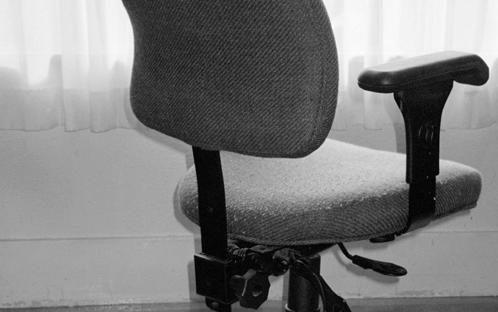
Hespins his little cousin as fast as he can as she hangs tight to her sister’s desk chair. The brand-new, white-cushioned chair on wheels, turnable like a small merry-go-around, is perfect for the game he and Nora are playing. Nora had climbed up into the chair with his help (she is only five and her knee can’t quite reach the seat yet). Once she sat, he pushed her all the way back so her center of gravity was the furthest it could be from the point of rotation. With her little legs extended and her feet sticking out, she almost hits him in the hips with each round. But that’s okay. He grasps the backrest with both hands and spins her with all his might. Again and again. A broad smile breaking across her face. His, too.
She squeals for joy. He laughs his deep belly laugh. They are having so much fun. Faster and faster he spins her. Bending his body in half so her feet won’t kick him—not that he would have minded that. He likes his body crashing into things and, with the speed her feet are circling, the impact might feel good to him. No, he makes sure nothing is going to slow her accelerating rotation. He sees her wispy blonde hair fly back and to the left, her rosy cheeks getting wider, her narrow shoulders being pressed into the seat and marvels at the g-force he is able to create. This is what astronauts must feel like during training in the 20 g centrifuge
Crashing into Comprehension - Steffi Gauguet
at NASA, he thinks. At least a little bit.
“Yieeehhhh,” she screeches—still smiling.
“Faster, faster!” she urges him on.
Faster and faster he turns her. Her body pressed deeper and deeper into the cushion of the chair. Her head starts to tilt towards the left, her little hands claw into the armrests. He would love that feeling. Does she, too? He has learned that not everyone likes the same things he does. He loves being squeezed into tight corners, or between four rollers on the “squeeze machine” at the center, where his mom takes him to work on his sensory processing. He loves firm, bone-cracking hugs, crashing into others at full speed, jumping off the swing from the highest point and diving to the bottom of the deep end at the YMCA pool. It calms his body, it calms his racing mind. So many thoughts always racing around in his head.
Does Nora’s mind ever race? She is nine years younger than him, but already knows so much about the world and life. He knows that she knows more about people than he does. She seems to always know to say the right thing, so the other kids let her play with them. How does she do that? Knowing what to say, so they don’t make a weird face that he doesn’t know how to interpret, or a joke that he doesn’t understand but makes everyone else giggle...he would love to learn that. He is trying to learn that. But it is so hard. Not for Nora, it seems. She even gets along well with her other cousin, who is struggling to get along with other kids, too. In different ways, not like his ways. Nora can play with anyone. Everyone seems to like her. What would he give to peek into her brain, her thoughts, her ways of connecting with the world? He knows he is wired differently. That’s how he explains what autism is if someone asks him. He describes brains as computers. His computer happens to have lots of speedy connections in areas of science, math and engineering, which come easily to him. But his computer has only a few, and slower, connections in the areas responsible for processing social behaviors, facial expressions, tone of voice. And so he has to work extra hard in those areas.
He looks at her closely. Her face is a bit different now. He is not sure if she is still having so much fun or if it is something else. Maybe she is bored, and wants him to turn her even faster? He tries and swings the chair extra hard for this round. That feels good. He likes moving his body against resistance, feeling the ache in his arms.
Then suddenly, her little foot gets caught on the edge of the desk—how could he not have noted the chair had moved laterally, not just around?
The chair comes to an abrupt halt and her little body shoots out of the seat, right into the wall. Headfirst, of course. He could have predicted that. Kids have disproportionately big heads. And they always seem to land right on top of them. He likes crashing into things, but even to him, this crash looked painful.
“Nora, I am sorry! Are you okay?”
He is genuinely worried he hurt her. He never wants to hurt his playmates. It just happens, sometimes. Just ask his younger siblings who have flown into walls or other objects, too. But it’s not because he means to hurt them. Sometimes, he misjudges what will happen, despite his calculations of force, velocity, gravity and mass. And they complain that things hurt, things which might not hurt him at all. There is that. Many kids seem more sensitive than he is. It is so hard to know what is too much. He has gotten in trouble a lot because of that. But he is learning, and paying better attention.
“Why is he being taught ‘English’ in school and not ‘Others’ Ways of Thinking,’ when reading books is so much easier than reading people? He has participated in social groups, been working with the Social Thinking curriculum by Michelle Garcia Winner and done years of Applied Behavior Analysis (ABA) at his autism center. And yet, everyone around him just seems to have been born knowing these ways of communicating that he has to learn in a much more explicit, conscious and cognitive kind of way.”
Nora gets up from the floor. A little unsteady, she pushes her hair out of her blotchy-red face and says, “I’m okay.”
Phew, good, he thinks, gesturing for her to get back onto the chair for round two.
But she is not coming. She turns away from him, her shoulders moving in a wiggly way. And all of a sudden, she starts making funny
Steffi Gauguet - Crashing into Comprehension sounds.
She is crying, he realizes with shock. Why?
She said she was okay.
She clearly isn’t though, if she is crying now.
He tries to understand. Why would she say one thing and then act like the opposite?
He does not even know how to put his question into words, not that he would have had a chance to ask it, before she storms out of her sister’s room and into her mom’s arms in the kitchen.
He is utterly confused.
This happens often to him. Human beings puzzle him. Especially kids his own age, or younger ones, like his cousin. She had fun! He knows that! Her face had said it, he can read a smile! Her squealing, too. That sounded happy, didn’t it? He isn’t so sure anymore. And maybe her smile had been a grimace? Just like the time he had roughhoused with his mom in the pool and her smile had changed to a grimace and he hadn’t realized it, and she got all upset at him because he wouldn’t let her go when she had asked him to. He had heard her say the word “stop!” but her face had looked happy, so he had ignored that until it was too late.
They had a long talk after that. And now he knows: there are smiles and there are grimaces. And they mean different things. But they are not easy to distinguish. And then there is still so much he doesn’t know. About others.
There is a lot he does know. They always call him intelligent, smart, even brilliant. He is smart, just not as smart as he would like to be when it comes to understanding others. He knows a ton of facts. Science facts. Physics, chemistry. Equations. Space engineering. Those things are so much more logical and so much easier to grasp for him. Science makes sense. People don’t. Why is he being taught “English” in school and not “Others’ Ways of Thinking,” when reading books is so much easier than reading people? He has participated in social groups, been working with the Social Thinking curriculum by Michelle Garcia Winner and done years of Applied Behavior Analysis (ABA) at his autism center. And yet, everyone around him just seems to have been born knowing these ways of communicating that he has to learn in a much more explicit, conscious and cognitive kind of way. ***
The next day, he goes to his mom for help. He explains the RUD he had Nora go through accidentally and how he did not mean to hurt her, but is worried he did. How she had cried, so she must have
been hurt even though she had said she was okay.
“Wait,” she stops him. “What is an RUD?”
“Rapid unscheduled disassembly! Don’t you remember? It’s what SpaceX calls an accidental explosion!”
How could she have forgotten? He looks at his mom, wanting to understand this world. This entire world. Not just rocket design, fuel efficiency and dark energy. He wants to understand his little cousin and what she might have been thinking.
He is prepared to read disappointment or anger in his mom’s face. He is worried she will be upset that he played too wildly with his little cousin and tell him that he is a big boy now, and needs to be aware of how strong his body is getting, and learn to control it better. All true, he knows. But he really wants her to help him understand Nora.
He did not expect his mom to look at him with an expression of more pride on her face than when he had won the middle school science award. This confuses him, too. But he is happy she is not upset at him, and when she wraps her arms around him super tight, so he can no longer take a deep breath, just the way she knows he likes it, all the confusion and the racing thoughts calm. Everything seems all right to him. He will get it one day. Everything is right. At least, for this second or two, this Planck moment in time.
Thecops each grab an armpit and haul me to my bare feet before marching me out of my bestie’s house. Yep. My best friend, Helen, called the police on me. The woman who promised to help me get off the prescription painkillers I’ve crutched on for over a decade.
I’ve been handcuffed before. But that was back then. Now, I have herniated discs pressing on my spinal cord, arthritic hands (and shoulders) and locks of gray hair falling into my eyes.
God, I’m so too old for this shit.
The drugs: you’ve heard the stories, I’m sure. At first, opiate painkillers were restorative. A miracle, in fact. Over time, my tolerance skyrocketed, and I took more than I was supposed to, and then more than that. I started to nod off. A lot. Then there was the fact that I couldn’t take a shit, a living hell. I often wondered, would I die of the usual respiratory arrest, or would opiate-induced constipation choke the life from me first? People do die that way, even if it’s not discussed on the evening news.
Prince’s fentanyl OD changed everything. Later, I was checking my email when a profile on him for The Washington Post popped up in my feed. My hand gripped the mouse as if it held the key to my future. I clicked. I learned, tragically, that on the day after his death, Prince had been scheduled to see a pain specialist to start treatment for his opiate dependence and chronic hip problems with a drug called Sub-
“Accessing a prescription was a huge challenge. First, my pain management guy said it was ille- gal, which I knew wasn’t true, so I moved on to my shrink and pri- mary care physician, who both said it’d be too risky for them to prescribe because I’m on so many meds already—specifically psych meds. What, was I the only psych patient with an opiate problem?”
The Cure - Allison Strong oxone. Nowhere in this essay was Prince referred to as an addict. This made an impression on me as I, too, am opiate-dependent and often irked by that label. Prince’s housekeeper found him collapsed in his elevator, the body already cooling. The writer’s argument was that it wasn’t drugs that killed Prince, it was stigma. Stigma against Suboxone, an overwhelmingly effective, yet underutilized treatment for opioid use disorder. Searching for more information on this drug I’d never heard of, I pored over medical journals, noting phrases such as “effective against pain at very low doses,” “lower side effect profile than methadone” and “ceiling effect on respiratory arrest.”
The word Suboxone flashed red and white on my screen. Like Christmas lights. There it was. My way out. Would this be my first step toward recovery? I thought back to my glory days in the ‘80s and ‘90s, when I worked as an alternative rock radio DJ in major markets like Phoenix and L.A. Heady times for fresh voices and outlooks. Music is like that. Imagining myself free of pain for the first time in years, I dreamed of getting back in the game.
Accessing a prescription was a huge challenge. First, my pain management guy said it was illegal, which I knew wasn’t true, so I moved on to my shrink and primary care physician, who both said it’d be too risky for them to prescribe because I’m on so many meds
already—specifically psych meds. What, was I the only psych patient with an opiate problem? Frustrated and furious, I paced around the house for hours. That’s when Michael, my saint of a husband, located a hole-in-the-wall pain clinic in a strip mall. All cash. This is Florida, mind you, ground zero of the infamous pill mills.
After taking my money, the doctor explained that Suboxone induction required me to go cold turkey off my MS Contin—a precursor to the far more pernicious OxyContin—for a good forty-eight hours. Though the doctor looked concerned and warned me I’d suffer, I thought, Go ahead, just put it on my tab. I followed his instructions to the letter.
During the first day of detox, I found myself drenched in sweat more or less constantly. I dragged myself to the shower five times a day to scrub the chemical stink from my pores. Worse yet, my back was on fire. I couldn’t tolerate heat or light. On the second day of detox, even with a boatload of Motrin on board and a Lidocaine patch stuck to the right side of my lumbar spine, I was barely getting by. This was to be expected. I remember reading online that when you first get off opiates, there’s a raging traffic jam of long-suppressed pain signals rushing to the brain.
I so craved a ‘Contin. The temptation was overwhelming. Having the pills around made me feel unsafe in my own home. Which is why, at ten a.m. on a hatefully bright Tuesday morning, I ran over to my best friend’s place to leave her with my stash of two hundred and fifty-three little powder blue tablets, just like we’d agreed upon. I sure wasn’t going to dump them at the fire station, like those public service announcements advise. Think about it: I could end up in a car wreck, have broken bones poking through my flesh and, with an OUD diagnosis lurking in my chart, no doctor would prescribe me opiates, no matter how much I needed them, ever again. In desperation, I’d likely turn to the street for relief and find fentanyl instead. No thanks. I may be old, but I’m way too young to die that way. Best to hold on to my stash. Just in case.
Before leaving my condo, I stuffed a few newspapers into the chaos of my tote bag and, in a zippered side pouch, tucked a spare Lidocaine patch along with my sacred first dose of Suboxone. I strapped my old school Walkman around my waist—I’m a Gen Xer still stuck in the ‘80s—and drove to Helen’s in the same sweat-soaked sports bra and long-sleeved t-shirt I’d slept in.
I pulled into a guest parking space painted a shade of yellow so harsh that I squinted. Before getting out of the Jeep, I pressed “play” on a mixtape I’d made: Nirvana, Nine Inch Nails, Garbage and The Cure. For me, depressing music by deeply depressed artists democratiz-
es pain. While Morrissey droned on about his overcast soul, I noticed that the freshly paved asphalt was melting under the midday sun, my flip-flops leaving indents as I trudged through it. The stench of tar was so thick that, halfway up the stairs to her third-story condo, I started to choke. I grasped the railing with a slippery hand, trying to steady myself. Breathe. Just breathe.
When I finally got to Helen’s door, I removed my headphones and banged the corroded metal knocker until she opened up, knuckling sleep from the corners of her eyes.
“Hey, I’m so sorry I didn’t call first,” I began, kicking off my sticky sandals next to the welcome mat. “Remember the bit about my leftover pills? I really need to leave them here.”
Helen pointed toward her dinner table as if to say, Take a seat. She sat at the far end of the table while I placed the big orange bottles on a quilted blue placemat and, with great care, lowered myself into the seat beside her.
She studied my face for a long time. “Do you remember calling yesterday? You said you wanted to die.”
Am I stupid or what? People assume all sorts of things when you put the words “want” and “die” in the same sentence. I tried to sound calm. “Saying you want to die during detox is totally normal. Tell me you realize this.”
“You’re just trading one drug for another. You must see that.”
“That’s where you’re wrong, Helen. Suboxone is getting me off pain meds. In a few months, I’ll wean myself off it. Besides, a doctor gave it to me.”
“You go to all these quacks, Allison, but you’re only getting sicker.”
“No, I’m not,” I said, furiously shaking my head.
“You need help, Allison, real help. And if your husband won’t step up, I will.” She got up, snatched the cordless off the wall and keyed in some numbers. “Yes, I have an emergency,” she said, as if making a dinner reservation. “My best friend is here with two big bottles of pills and is threatening to swallow them all.”
I lurched over to her as best I could. “Helen,” I yelled. “That’s a total lie!” I tried to wrest the phone from her grasp but, given my physical condition, she was far too quick for me.
“Yes, that’s my address. Yes, we’ll be here,” she assured before hanging up.
“Sending me to the hospital is going to undo everything I’ve gone through so far. Call back and say we don’t need them.”
“It’s too late. They’re already on their way.”
I should’ve made a run for it, but the vise around my spine was The Cure - Allison Strong
The Opiate, Summer Vol. 46
tightening. I sagged into the nearest chair, put my head in my hands and awaited my fate.
***
The hospital smells like any other: Lysol and floor cleaner, with a base note of fear. The med techs outfit me with a pair of baby blue and white grippy socks before confiscating my tape player, my purse and that precious first dose of Suboxone I’m supposed to take about an hour from now, at noon. This must violate something in that Patient Bill
“A quick glance around the room lands on the woman who can make my day even more of a living hell than it already is. I’d know she’s in charge even without the shiny badge and the word ‘SECURITY’ stenciled in black on the back of her crisp, button-down shirt: the stocky build, stiff, upright stance and scowl say it all. Shit. I’d hoped at least for a knowledgeable nurse, but all I get is a rent-a-cop. She’s there to secure us. Whatever that means.”
of Rights plaque that hangs on every fourth wall of the place. When it’s time to start my medicine, I’ll need it like a diabetic on insulin. I already do. Yet I’m certain the hospital won’t see it that way.
They sequester me in a small holding room with two other shipwrecked souls deemed a danger to themselves or others. Forget patient privacy; we’re totally exposed. The windows, which open out into the ER, are tall and wide, so that the busy doctors can observe our behavior without actually having to interact with us. Eerily efficient.
I know the drill from past visits. They’ll keep me in this room for God knows how long, until a tired and irritable shrink shows up at the end of their own horrible day to evaluate whether to place me on
a seventy-two-hour involuntary psych hold. In most states, this is called a 5150, but here in Florida, it’s called a “Baker Act.” As if giving it a name with letters makes it sound more humane. Trust me, it’s anything but. If I’m admitted, a doctor I’ve never met becomes the new boss of me. I’ll probably get some cocksure type twenty years my junior, who will switch my meds to the ones they’re more comfortable with, as if their comfort takes precedence over mine. I’ll get so depressed, I’ll lose the will to live. Trust me, all that disempowerment can really finish you off.
My long-time psychiatrist, who also thinks ill of hospitals, has a game plan for getting me out of these types of jams. Here’s how it works: the hospital automatically calls my emergency contact, Michael. Then Michael reaches out to my shrink. Then my shrink gets on the phone with their shrink and mentions that I’m prone to all kinds of nasty side effects, even listing a few. Hospitals worry about legal issues, so instead of sending me to psych, they release me into the loving arms of my husband. This system usually works. But this time, because Helen lied about me being suicidal, and because I’m edgy as hell with these withdrawal symptoms, the hospital might commit me.
A quick glance around the room lands on the woman who can make my day even more of a living hell than it already is. I’d know she’s in charge even without the shiny badge and the word “SECURITY” stenciled in black on the back of her crisp, button-down shirt: the stocky build, stiff, upright stance and scowl say it all. Shit. I’d hoped at least for a knowledgeable nurse, but all I get is a rent-a-cop. She’s there to secure us. Whatever that means.
“Can I please have some Lorna Doones?” I request the hospital’s standard fare by name, so she’ll know I’ve been around the block and have no intention of being intimidated by her or anyone else.
“Nope. Lunch was at eleven.” She screws up her face in a shoddy show of empathy. “Dinner isn’t until four. You’ll just have to wait.”
“Well, the important thing is I get my medicine at noon. My doctor has prescribed it.”
The security lady isn’t listening. She’s focused now on a gangly youth on the cot to my right, with frayed dreads pointing every which way who’s swatting his inner thighs while jabbering to ghosts, or to himself, who can tell.
So sad. The kid can’t be more than eighteen. Curious to see who’s on my left, I peer around the drape and see a patch of silver hair above closed eyes sunk so deep in the sockets this man could well be dead, or close to it. Which has me wondering, at what point do people just give up? He won’t need much supervision, that’s for sure. Unlike the kid to my right, who’s slapping his legs even harder now, howling holy hell at the wall.
“Keep it down over there,” the security guard commands. “Or we’ll give you your shot.”
Your shot? My God, he’s a frequent flyer. On the young man’s tray table, there’s a clear plastic bottle of urine topped with a funnel. I swear, men have it made in these situations. And now I’m reminded: boy, do I need to pee.
“Is there a bathroom in here?”
The security guard’s voice is clipped, impatient. “We’re shortstaffed today, so it might be a while.”
This is worse than jail. At least there, every cell has a toilet attached to the bottom of the sink. “Hmmm,” I say as I gesture toward the floor. “If that’s the case, you should just go ahead and call Environmental. Tell ‘em to bring two mops.”
The woman wrinkles her nose before jerking her head to the right to bark into her shoulder mic. Like magic, a tall, delicate someone of fluid gender shows up to walk me to the john. Which is a good thing because my brain is so fried that I’d never find my way there on my own. In the mirror, I stare at my greasy, ponytailed hair, bloodshot eyes and the ribbons of sweat running down both sides of my neck. The bathroom only has a hand dryer, so I towel off with toilet paper.
When I return, the room is silent except for the ominous ticking of the wall clock. Guess they gave that young man his shot while I was gone.
I’m back on my cot when a muscle beneath my right eye starts twitching. A sharp ache hits my body like a bomb. I feel myself breathing through the small of my back. God, I just want to go home so I can suffer in private.
I stare at the wall clock again. It’s closing in on twelve-thirty. “I was supposed to start my Suboxone at noon. It’s very important.”
“We don’t let no one have meds until our doctor okays them, so you can stop asking.”
So that’s it. I’m stuck here without even an Advil. If I’m going to ride this out, I need something to hold on to. A paper-thin hospital blanket won’t cut it. Ideally, I’d get my music back, but I know better. I’d settle for something, anything, to prevent the panic attacks I get when the pain is stronger than I am. Even reading a newspaper would calm me a little.
“Please,” I beg, trying not to freak out. “My back is killing me.”
She ignores me.
“Hey,” I say, turning up the heat. “If you won’t give me my medicine, at least give me back my newspapers. I read them to keep up with work.”
She cocks her head as if to wonder, Can this crazy old lady even hold down a nine to five?
The Cure - Allison Strong
I puff myself up and say, “I’m a mental health journalist,” which even happens to be true. I look around the room and shake my head. “Your bosses would hate it if I wrote about your mistreatment of psych patients, wouldn’t they?” The security lady still looks confused, so I harden my tone. “Look, I just need something to read. Do you have a rule against that?”
She looks up at the ceiling and sighs. “All right, I’ll have your papers brought in.”
For a while, reading about global, national and local crises takes my pain down a notch. But when the kitchen staff carts in chicken soup, my stomach convulses. My body is turning inside out to purge its poisons, but nothing comes up. Good thing I missed lunch today.
An hour passes, then three, then four. I sort of lose track of time. At seven in the evening, the security guard calls me to go upstairs to have my head examined. I hope my hubby and my shrink made a case for my release. If they haven’t? I’m screwed.
Before I leave, I want the security guard to know how disgusted I am with all I’ve endured today. I rip the Lidocaine patch from my back—it’s stopped working anyway—and manage to stand, pulling my locked-up spine as straight as I can. Before hobbling out of the holding room, I flick the patch toward the trash can. It misses, and the gooey part clings to the shiny steel side. Not much of a victory, I know. But it’s something.
Michael is sitting in a gray plastic chair, my lightweight lavender hoodie in his lap. He stands, and we hug, a surge of his sweetness flowing through me.
“Here, Allie.” He drapes the soft cotton over my shoulders. “Wear this. I remember from working at Holy Cross how cold hospitals get.”
With great effort, I slip one arm, then the other, down the sleeves, sit in the chair next to Michael and chatter about my day.
“We can talk about this later,” he whispers. “And remember, the less you say to the doctor, the less likely he is to admit you.”
Michael is right. I stay silent.
Not five minutes later, a wholly unremarkable-looking man in a navy blue lab coat comes in and makes eye contact—first with Michael, then with me. Satisfied that at least one of us is in our right mind, he remarks about some “confusion” and hands me the discharge forms.
As Michael drives out of the parking lot, the Lithium channel— such a perfect name—is blasting Soundgarden. Chris Cornell is singing, “Blow up the outside/Blow up the outside world” when Michael makes
a sudden right turn.
“Hey,” I say, “where—?”
“We’re going to get your car at Helen’s. You’re lucky she didn’t have it towed.”
“Oh, right. I forgot.”
I chew the inside of my cheek. Here I am, at age fifty-five, in a mess like this. All because Helen betrayed me at my lowest point. Or maybe I’m the one who did this to myself. It wouldn’t be the first time I’d adored someone to the point of putting them in charge of my life. It’s something I do, I think, because...
“Hey,” my husband says. “You put yourself there. Helen’s your friend, for reasons I’ll never understand.” His voice lowers. “She’s certainly not mine.”
We’ve reached the lot and pull into the spot next to my Jeep. Before I pop the door handle to get out, Michael asks me to wait. He reaches into his shirt pocket and offers me a royal blue and white Suboxone foil. Under the dome light, it gleams.
“Here. The hospital took yours, right?”
I nod in agreement, then slip the sublingual strip under my tongue. As the medicine burns throughout my mouth, I reassure myself that I’m doing exactly what the SAMHSA website says to do— switching from full-strength opiates to Suboxone and committing to a year of therapy. Or more. However long it takes to deal with the Helen thing.
Sitting back, I press the preset for the classic rock station. Steely Dan. The smooth saxophone lines of “Deacon Blues” give me some liftoff.
“Michael, you know the craziest thing about this band?”
“No, what?”
“They’re totally pathos, but somehow got lumped into that silly yacht rock category.”
He shakes his head. “What the hell is yacht rock?”
“You know, all that lightweight stuff from the ‘70s and ‘80s, like Christopher Cross, Toto, Boz Scaggs. I heard that when journalists called Donald Fagen for a comment, he told them to fuck off before hanging up the phone.”
Michael reaches for my arm. “Look, Allie, are we getting out of here, or are we gonna sit in this parking lot and talk about music all night?”
“Sorry, I was rambling.” I reach past the steering column to wrap my man in my arms one more time and say, “See you at home, baby.”
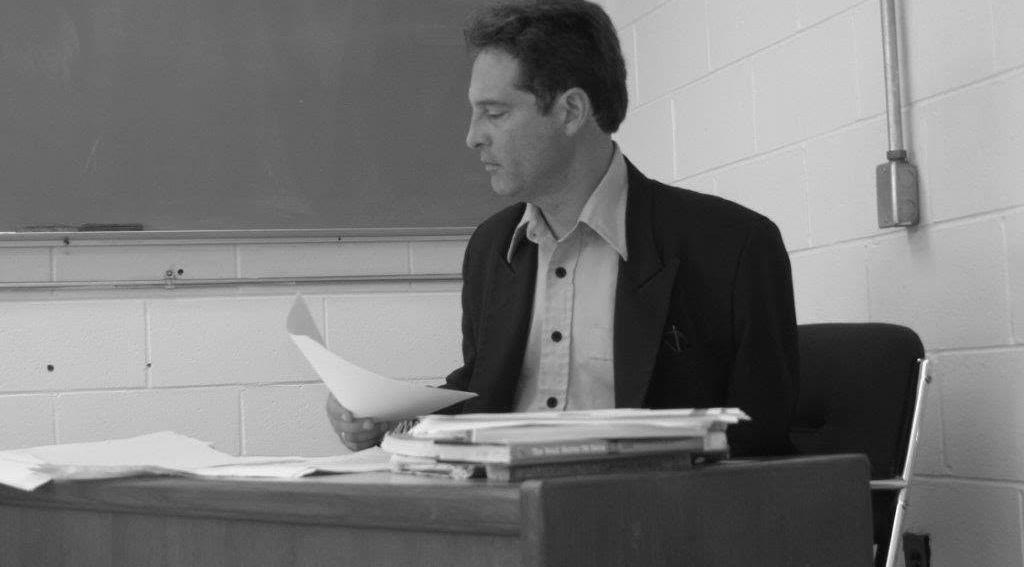
Ihave been crippled for half my life. For seventeen years, I have existed without a left arm. I sometimes wonder what this physical deformity is doing to my mind. I seem to get worse, not better, for why should I ever hope to get better? After all, I’m permanently wounded; there is no cure for what I have. I do not have words to describe to you how badly it hurts to see others more adept than I, physically speaking. I’m forced into subordination without the balance of two arms. How I long to clutch things with two hands. It is true that I am quite strong in my right arm, but this is only an advantage in certain situations. It is no comfort to know that I could lead a whole army into battle and conquer the Earth, yet, to tie my shoes is just about impossible. I can never play the guitar, which, in my youth, was the dearest thing to me, my guitar. I cannot wear the tight clothes I was once accustomed to. What I can wear now is quite limited and it’s almost impossible for me to wear anything dignified when the weather is hot because I cannot go out in public without sleeves, the sleeves of my black crepe blazer; with this blazer I can go almost anywhere and I can almost fake being a whole person again, as I tuck my left sleeve into the blazer pocket, and appear as if no arm is truly missing, from certain angles in any case. Without the blazer, life would be impossible. Yet it is still impossible since, when the weather is hot like it is from early June into late September, I cannot wear the jacket because I fill it with sweat. I am
hot-natured. I was born with a working-class body, that wouldn’t wear such jackets at all unless forced to. I am forced to, so for three or four months out of the year, I am stuck in this jail, this attic room that is my abode, my punishment for not only being crippled but also a kind of writer as well. Self-imposed exile because I cannot bear the thought of my contemporaries seeing me fully unsleeved, fully crippled. I can outwrite them all, but life is not fair, and if I went out without sleeves they would pounce on me and tear me to shreds; their greed for my blood is immense. The black jacket hides a multitude of sins and without it, I am not a human being at all, but a spectacle for my hateful and unforgiving contemporaries. I exaggerate, you say? No, I do not exaggerate; if you were to see me without the jacket you certainly wouldn’t think I was exaggerating. My body is asymmetrical now, seventeen years after the auto accident that did this to me. My body has atrophied, one side of me has shrunken, and it’s really a disgusting sight. And my left shoulder, what’s left of it, has no arm to keep it down, so the stump rises and rises each year and pushes the shoulder up and back so that I’m developing a hump. Am one-armed, hump-backed...what joy! Yet, this is me.
No. For what I have there is no cure, nor will there ever be a cure. The rest of my days will be spent in the cloister, growing more and more deformed as the years pass. It’s a wonder I can bear it at all. Yet, somehow I do, but only with the help of the black jacket. Without it, I could not go on.
My first experience with any kind of black jacket was in the mid-1990s. Since I’d been one-armed, I had been wearing a green denim jacket on which I buttoned the empty sleeve where the left arm used to be at the bottom of the jacket. The sleeve formation worked out pretty well, but the style of the jacket was all wrong for me. I looked like some juvenile thug or some suburban fresh face in a speed metal band. I was well into college by this point and, naturally, I wanted a more sophisticated look. Or, if not sophisticated, at least profound. After all, I was studying to be a poet. Also, the denim jacket still revealed too much one-armedness because the left sleeve was drawn out all the way to the bottom button; it didn’t have a pocket where I could tuck in the sleeve. There was also the problem that when it really did get cold— which was admittedly rare where I was going to school in Baton Rouge, Louisiana, but, still, there were some vicious cold fronts that moved through in December and January—the denim jacket was rendered useless. The winter of 1994-95 was so cold that it even reached down into the bowels of Baton Rouge. I’d lived in South Louisiana all my life and for the first time (I was twenty-four going on twenty-five), I
The Black Jacket - Louis Bourgeois
was genuinely afraid that I might freeze quite literally to death if I didn’t find a heavier coat to wear than the green denim jacket that my maternal aunt bought me from Macy’s in Metairie.
In those days, I was against using phones for philosophical reasons much too difficult to go into here, so I wrote my father a letter explaining that I was in much need of one of the two pea coats he’d been issued by the Navy when he was stationed in Long Beach, California
“I have been crippled for half my life. For seventeen years, I have existed without a left arm. I sometimes wonder what this physical deformity is do- ing to my mind. I seem to get worse, not better, for why should I ever hope to get better? After all, I’m permanently wounded; there is no cure for what I have. I do not have words to describe to you how badly it hurts to see others more adept than I, physi- cally speaking.”
during the Vietnam War in the early 1970s. He was stationed on one of the many fleets that didn’t see action in that war. By the time he was drafted, Nixon was already downsizing the military to get America out of the war so that, by around early 1971, few naval fleets were sent to Vietnam. I remember my father expressing deep remorse that his ship was not sent to fight.
Days later, the parcel arrived in the mail. It didn’t come a moment too soon, since the temperature dropped even lower than when I sent my father the letter asking for it. I walked all the way across campus, climbed the five flights of stairs and entered my apartment to open the box and try on the jacket. My father had wrapped the box with a ridiculous amount of duct tape and it took the better part of an hour to get the box open. It would never occur to me to use a
knife to open the box. Don’t ask why. Owning a pair of scissors was out of the question, too civilized, and I was very much against civility back then. I was quite nervous about where the pockets were placed on the jacket. If they were sewn too high, I might not be able to stuff the sleeve in such a way as to not reveal too much one-armedness when I wore it, or worse, the coat might be so stiff that the empty sleeve would accentuate, not hide, the emptiness of the left sleeve. I tried the coat on and instantly became aware that it was too stiff for the purpose of hiding my not-arm. I was sent into a terrible internal panic. I moved my shoulders about, trying to loosen up the coat so that the sleeve would fall right into the pocket. I wanted this coat to give me a new life, but the situation wasn’t looking too good. Now, where were the pockets located and how would they receive the sleeve? These were big concerns for my crippled body-mind. The sleeves were almost too high, but it turned out that they were just high enough so that I might be able to try the coat out in public at least once to see if it worked. The sleeve did not want to cooperate with the nearly misplaced pockets. It was stiff, the sleeve was stiff. I stuck my arm into the left sleeve, hoping to loosen it up so that I could wear it, wear my father’s jacket, this jacket that was as old as I was. After about five minutes of wrestling with the sleeve, I finally got it to lay right into the pocket. It was almost too good to be true. I walked around in my apartment watching myself as I passed back and forth in front of the mirror, trying to be as honest as possible with myself about the look of the sleeve. I concluded that a passerby would have to be particularly observant to realize there was no arm in the left sleeve. I would not, of course, be able to button the coat as that would draw it so tight that it would expose the emptiness of the sleeve. Fortunately, the coat had wide lapels that covered a great deal of the chest, so that buttoning the coat would only be necessary in the direst winter conditions, and once inside a library or bar, I could unbutton the coat as quickly as possible, perhaps without drawing too much attention to myself. Besides, the coat was designed for extremely cold weather, and I could certainly get away without buttoning it much of the time in Baton Rouge, even with the record cold weather we were having.
I hadn’t felt such joy since before the accident six years earlier. I walked Chimes Street with almost a complete air of freedom, with very little self-consciousness about my fragmented body. The few people who knew me commented how handsome the jacket looked on me, and after just a few hours of wearing it out in public, after I’d become irredeemably drunk in a bar called The Bayou, some woman who wore too much hairspray and makeup, offered me a hundred dollars for the coat. As drunk as I was, I was still able to say to her quite clearly and with full confidence that I wouldn’t sell this jacket for a thousand
The Black Jacket - Louis Bourgeois
dollars. The woman turned away from me instantly and left the bar. She had no idea what hit her but, instinctually, she knew she’d been hit by something that she didn’t understand, nor would ever want to understand. She crossed some personal line that she didn’t want to find out any more about.
When the bar closed, I got a taxi to take me downtown to the public wharves on the Mississippi River. I wanted to feel the industrial winds with my back against the night sky, well-lit by the chemical plants all up and down the river. I felt like a free man in my father’s coat. The coat was at least twenty-five years old, and there was no telling what it had endured during the whole two years my father wore it in the Navy. The coat was not in perfect shape; the pockets had holes in them and the lining was falling apart. My father obviously did not send the best coat of the two he had. Shame on him for treating me this way, but I had suffered worse insults than that during my then short twenty-five years on Earth. It was ripped around one of the large black buttons that was embossed with an anchor.
The coat transformed me. Consequently, my grades in school improved, and, further, I even ventured out to a reading or two put on by the English department. I seemed to write more poetry than ever. I wrote poems about going to distant psychological landscapes, false cities, in my father’s tattered coat. I would find myself in some distant land called Zarbo, where “there are hidden roads that/Run into mill grinders.” Charred remains of the human soul, etc., or I would journey to a desert where “placid hyenas” are “circled by hymenopterous wasps,” where the lonely come here to find “if not God, then at least themselves.” Then the traveler, wrapped tightly, not loosely, in his father’s coat, reenters the city he left and encounters a visionary who promises to show the traveler everything, pure consciousness without being, where there is no such thing as free will. The visionary puts the traveler, the cripple, into a trance and turns him into a true artist and takes the shape of a bird and flies into absolute freedom where transcendence is everlasting and where there is no longer any need for bodies and there is no longer any need for language. A journey of Pure Being, you might call it. ***
Then, the weather changed quickly. I’d taken the university bus into campus because it was too warm in the pea coat to walk to class. On the way in, we passed an ostrich farm. I had never noticed it before because, you see, my eyes are constantly downcast, there is much of the outside world I have never seen. It’s not anything I can change about myself, nor do I want to. Having been forced to turn inward, because
of my infirmities, I’ve lost almost all interest in anything but myself.
I was now sweating in the pea coat and becoming concerned that this might be the last day I’d be able to get away with wearing the coat until next winter, and then only if it was a cold enough winter. One of the ostriches had its head poked through the metal mesh of the aviary and seemed to be staring right at me as the bus idled, waiting for the light to turn green. The bus driver had
“In those sleeveless days, complete strang- ers would walk up to me and ask me what happened to my arm. I’d mumble something about a car accident and then they would feel the need to go on and comfort me by saying something about some relative or friend they knew who had only one arm or one leg and how well they were getting on in life. How I loathed these encounters, those anecdotes about how others have overcome their handicaps and the like. Apparently, they don’t realize how demoralizing it is to be constantly assured that all is not as bad as it seems.”
a bad case of Morning Glory and was talking nonsense out loud to himself—decontextualized phrases and even half-words that made no sense, probably not even to himself. I couldn’t help but pity him because I knew by noon he’d crash and would grow silent, suffering a terrible panic, agonizing over the loss of his morning euphoria. Such is the price we pay for uncensored happiness. Such is the price we pay for unfettered words. The ostrich kept staring at me and the inside of my father’s coat was drenched with my sweat. I kept thinking how me and the ostrich were alike, he was flightless and caged, I was wingless myself and trapped forever in my perpetually wounded body. I was about to study Latin in a two-and-a-half-hour-long class and this bird wouldn’t The Opiate, Summer Vol. 46
The Black Jacket - Louis Bourgeois
lift his gaze from me. What on Earth did he want? What was he trying to trying to tell me? Sweet Latin, if only I could have learned it. If I could have remembered all those grammatical rules, perhaps my life would have turned out better, instead of enduring this abstract coexistence every waking moment of being myself. But I’m hard-headed and rebellious all the way through my rancid self and can’t be taught anything, can’t be taught anything but myself. Who knows, I might have become something in the world if I had listened to my teachers and learned a few rules, a few grammatical rules and moral rules and tempered this narcissism that eats away at me until there’s nothing left but more I. But enough! One is what one is and what one has to become and there is very little about ourselves that we can control. And I am not at all convinced we possess free will.
By the end of the day, I had to shed the pea coat for the last time until hopefully it got cold enough next winter to wear again. I would have to go sleeveless, wearing my oversized t-shirts and short-sleeved collared shirts. I would be thrown back into the merciless world where my left sleeve would blow hard in the wind, like some strange flag of utter humiliation. In those sleeveless days, complete strangers would walk up to me and ask me what happened to my arm. I’d mumble something about a car accident and then they would feel the need to go on and comfort me by saying something about some relative or friend they knew who had only one arm or one leg and how well they were getting on in life. How I loathed these encounters, those anecdotes about how others have overcome their handicaps and the like. Apparently, they don’t realize how demoralizing it is to be constantly assured that all is not as bad as it seems. How would they know anyway? That would be like me knowing what it’s like to be Black in America or what it’s like being blind. The fact of the matter is that I couldn’t even walk down the street in peace without drawing a crowd, of sorts, a mob of pitying fools. They couldn’t possibly know what it’s like to be given a life’s task like this, a task I never asked for nor wanted. I never even thought about fame until I was forced to deal with this hideous deformity that has resulted in the worst case of egotism on record. Now what? I can’t live mindlessly in the world like most people do. I’ve been given the impossible task of making the world come to me, of somehow conquering the world so that I can be accommodated in it; the whole world must know my name, must know who I am, so that I can do something as simple as walk down the street without
people coming up to me to ask me embarrassing questions. For the record, I’d like to say that if there is a God, then this God is one evil fuck and I would gladly risk eternal damnation to be given the chance to spit in his face just once. That’s the kind of person I’ve been forced to become. No, I’m not bitter, I’m joyful, but I’m not afraid to face myself head on, unlike most people, I want to see what’s really there, regardless of the price for seeing the truth. But without sleeves, I’m a child again to the passersby, and this I cannot endure. There’s a certain innocence that grows in you when you’re crippled, and people just can’t help themselves; they come up to you and pat you on the back and say, Just hang in there, you’ll be all right. God will provide. How I do hate them! How I hate their God. I loathe the Human Race, and when that day comes, when the world really does know my name once and for all, how badly these people will pay for being nice to me, for looking down on me. Their niceness is really a slaughter of my dignity, and I’m one of the most prideful people on the face of the Earth. When I come to power, Hitler will look like a nursemaid. He had it out for Jews, but I go further; I have it out for everyone who’s not me. I am not your friend. I repeat, Louis Bourgeois is not your friend. I’m not anyone to invite to your dinner parties. Jackson Pollocklike, I’ll dump the table of all its food and wares. I swear I will. If you see me, don’t come up and ask me how I’m doing; I’ll cut your fucking throat next time you do that. If you people would just never talk to me again and let me become more and more crippled, I’ll become a Supernova. My pain will light the whole galaxy.
I must overthrow everything for the sake of clarity; I must destroy everything that is not I. I must become more evil, more innocent, thus more intelligent, and more deadly.
I was sitting at the counter of Louie’s Café just off Chimes Street. I only had two dollars left to my name so I ordered a plate of potatoes for $1.85. No tip. I hadn’t eaten in two days and it would be at least two more days before I received any money to eat again. I poured maple syrup all over the potatoes. I didn’t particularly like maple syrup, but needed the extra nourishment since it was always so long between meals in those days. I wasn’t exactly poor; I lived off of grants, student loans and disability checks, but I usually spent all of my money as soon as I received
The Black Jacket - Louis Bourgeois
it on books, booze and prostitutes. It would never occur to me to go grocery shopping and bring food home and cook it myself. There was something deeply unappealing about that, as if it made life too easy, too agreeable. I didn’t want a safety net— wanted to become as miserable as possible thinking this would enhance my writing. Generally speaking, it felt good to starve. Beside, whenever I had money, it just confused me and took me away from my books, from my French and Latin studies and my own torturous writing, my studies of myself. Without money, life was sober and dry, nothing but reading and writing, just the way I wanted it. Except during the all-night drinking immersions at the bar, I talked to no one, and I had not a single friend. Sui generis, sui fucking generis to the bitter end. I was eating my potatoes with a slowness that only someone who hasn’t eaten in a long time and doesn’t know when he’ll eat again can endure when a middleaged man walked in from the street wearing a crisp sports coat, even though it was a humid ninety degrees outside. I thought of my father’s pea coat and how well it hid the amputation. Then it occurred to me that I, too, might be able to find a jacket I could wear no matter the temperature, no matter the heat of Baton Rouge in the spring and summer. A few days later, one of my checks arrived in the mail and, just as soon as I cashed it, I took a taxi down to the bus station and bought a ticket down to Picayune, Mississippi where my mother lived. When I arrived, my aunt, Mary Ellen, was waiting for me at my mother’s house and I told her I wanted a coat I could wear all the time regardless of the weather. The next day, we drove across the Causeway and she took me shopping at Macy’s in Metairie. I tried on no less than a dozen black jackets. None of them fit me right. Either the material was too stiff, or the coat pockets were too high or low. A few of them didn’t have pockets at all. For my purposes, a jacket without pockets was a strange concept! A tragedy even. I was about to give up when my aunt dropped yet another black jacket over the dressing room door. I had to rip open the temporary stitch of the left hand pocket with my mouth to see if the sleeve was right for the pocket and vice versa. After I got the coat on and put the sleeve in the pocket, I slowly turned before the mirror terrified, really, of what would be reflected. To my amazement, what looked back at me was a person who appeared completely whole. I almost cried, but didn’t. Too mean to cry, perhaps. This jacket did a better job of concealing my wounds than my father’s pea coat. The jacket was a City Life black crepe blazer and it cost four hundred dollars. Luckily, my aunt is rich, so the price didn’t
matter much and she happily bought it for me. She commented that she hadn’t seen me this happy since before the accident. How right she was. Now that I had this jacket, now that I had found my life’s uniform, my stylistic signature, my existential attire, my poet’s adornment, my scholarly robes.
As we pulled out of the Macy’s parking lot and headed back over Lake Ponchatrain, I thought to myself, I will die in this jacket, I will be buried in it, but before I’m buried in it, I will become famous in this jacket, in part because of this jacket.
That was twelve years ago. I’m still wearing the same black crepe blazer. I am not dead yet or famous.
These things take time.
this temptation to step off the edge/and fall weightless, away from the world —Dorianne Laux, “For the Sake of Strangers”
It makes me feel somehow better when there’s a name for it— arachnophobia, schadenfreude, sonder for example— those feelings that sit at least two standard deviations from the bell curve center of feelings where angry, sad and happy live.
A man once told me about his compulsion to jump when he comes close to the edge of a building’s rooftop or balcony. Call of the void, I said. It has a name. He never jumps. Doesn’t even want to, really. But his brain manufactures and entertains the notion and then there he is suddenly falling away, away from safety and solidity away from responsibility and obligation away, away from the illusion of control
and there he is becoming something beyond self wholly alive in a pinpoint moment wholly in the arms of gravity, pulling at him like a hungry lover.
And don’t we surrender ourselves in love? In falling in love? In lovemaking? Don’t we crave that moment when we step past the lip of the high building we have constructed for ourselves and finally, falling meet something truer?
Jennifer Rood
Where the Pacific and Harris Creek meet, where salt waves push up against fresh water flowing in then recede again, I let the stream move past my skin then feel the ocean surge again.
I wonder at how to say exactly where I stand—ocean or creek?
I wonder at the difficulty of defining the edge of anything constantly in flux like this, like the difference between waking and sleeping, when you are neither and both, or that space between day and night that we call dawn or dusk where dark and light mix.
Am I still young, or am I old now, and growing older, drifting into the deep sea of age, the memory of clear water and days spent on land growing fainter?
is a word you almost never encounter in the singular, as in one vicissitude and I’ve never seen it accompanied by expected because its nature is to be unanticipated, a change you didn’t see coming and probably couldn’t have expected to expect.
It’s often used to describe weather or like where I saw it last, in a newsletter describing an Antarctic mission where a sensor was lost half a mile down and the writer shrugged at vicissitudes of weather and ice itself that made the science there a delicate and precarious thing.
It’s a wonder we can understand anything at all, really, what with the vicissitudes of all the natural forces around us and inside us, too— our own minds, for example, which are at times amazing but which also fail and flail and flounder, and then, I suppose it follows
that we should expect to be swallowed by the vicissitudes of relationships with others whose own quirky, failing bodies and minds are as ever-changing as our own. What, then, can we count on, if anything?
When we are nothing but falling leaves blown on the autumn winds, a dropped instrument, hopeful for discovery but subject to every vicissitude of existence?
Jennifer Rood
...life’s like an hourglass glued to the table —Anna Nalick, “Breathe (2AM)”
Of course you can’t help but wonder where life’s taking you, wonder what it will be like to get older and then to be old. It’ll be here in an instant, you know; the hourglass pours itself out. You also know you can’t stay glued to some single idea of happiness if you want to really be able to fully enjoy what is here in the now. The trick is to want to eat the meal that’s on the table.
Frankie Laufer
The sound of a bass guitar is moving a row of distant wheat to the east. The sun is shining just like in the beginning. Swaying back and forth like rhythmic dancers. They are captured on a cloud of silent time. No names are necessary; they know each other from previous lives. The drummer is quietly playing my favorite song, and yours too.
His past love is sitting behind me staring intently, but not intentional. They make no eye contact.
A soft breeze is moving through the crowd under a sky that could care less. Don’t talk to me, I’m not listening through my ears.
These moments are like relatives: here today, gone tomorrow. Enjoy what you can and leave the rest to others. Play on.
The Opiate, Summer Vol. 46
Charlie Brice
We all want Mary Oliver to bring us spring in words or let us watch Buddha’s last breath—tell us how unnecessary we are.
Or do we?
We all love to read Maria Mazziotti Gillan’s poems, smell bread her mother made— the aroma that perfumed the lives of so many immigrant families like Maria and her siblings.
Or do we?
We all desire Mary Gaitskill to expose, in her novels and short stories, those pathetic male poltroons who think that when a woman smiles at them it means they’re going to get a blow job.
Or do we?
We all covet Margaret Atwood’s wisdom, her biting satire, her warning of fanatical isms that would reduce women to sperm repositories and spawn incubators.
Or do we?
We all need Hannah Arendt to warn us of how banal evil can be, how it creeps, innocently at first, even humorously, and hides in seemingly innocuous symbols and colors—swastikas and red baseball caps.
Or do we?
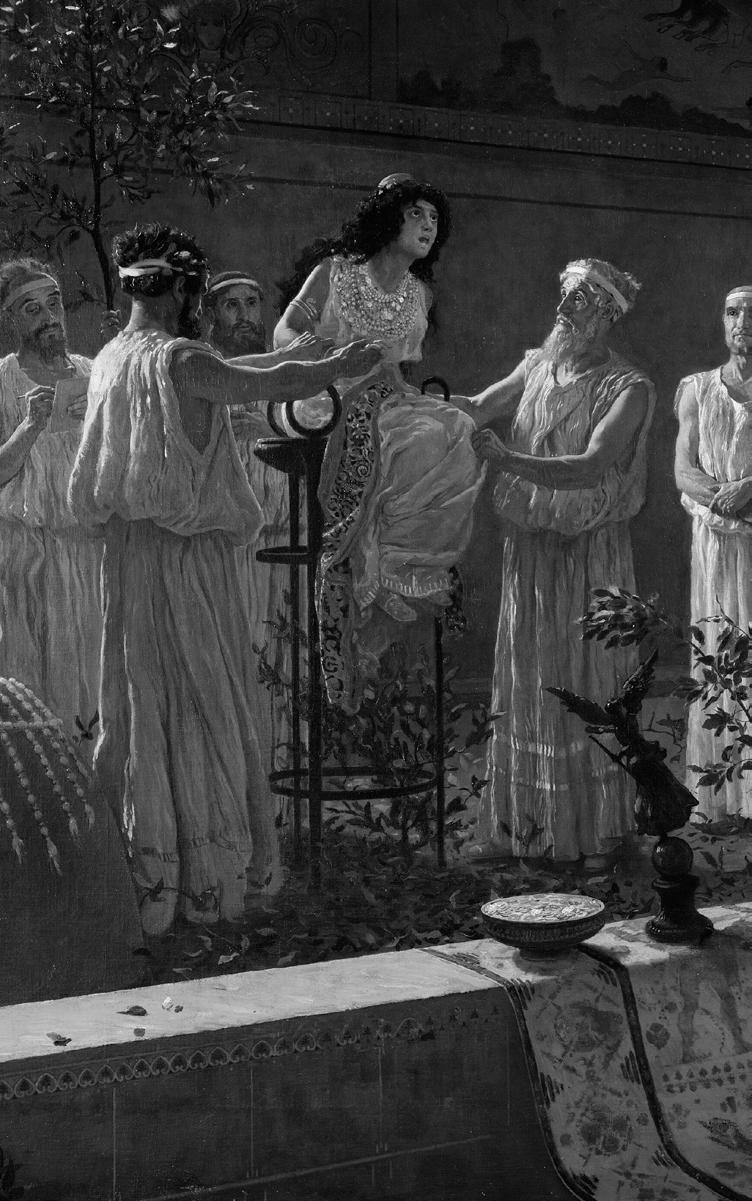
Charlie Brice
Winston Churchill couldn’t abide whistling. During a visit to the White House in 1941, he instructed the staff not to whistle outside of his bedroom door. Eleanor couldn’t stand him. He
may have saved the world from Hitler, but he was a bad influence on Franklin, who drank too much when Winston visited. Billy Bob Thornton breaks into hives when around antique furniture. He nearly needed sedation while filming Love Actually because of the furniture on the set. He pleaded with Hugh Grant to stop teasing him about his phobia. This is the man who arrived on the red carpet with Angelina Jolie and told an interviewer that they’d fucked on their way there. This same man hyperventilates around English mahogany expanding tables and Victorian tufted accent chairs. As for me, I hate heights. If I see old-timey photographs of skyscraper workers sitting on steel beams hundreds of feet above ground, my bangers shrivel,
become useless raisins, bereft of reason or rationality. I squirm like a girl on her first date trying to discourage a boy’s probing fingers. At least I’ve never warned the White House staff not to show me photos
of men lounging and laughing eight hundred and fifty feet above the skyline of New York. At least I’ve never done that.
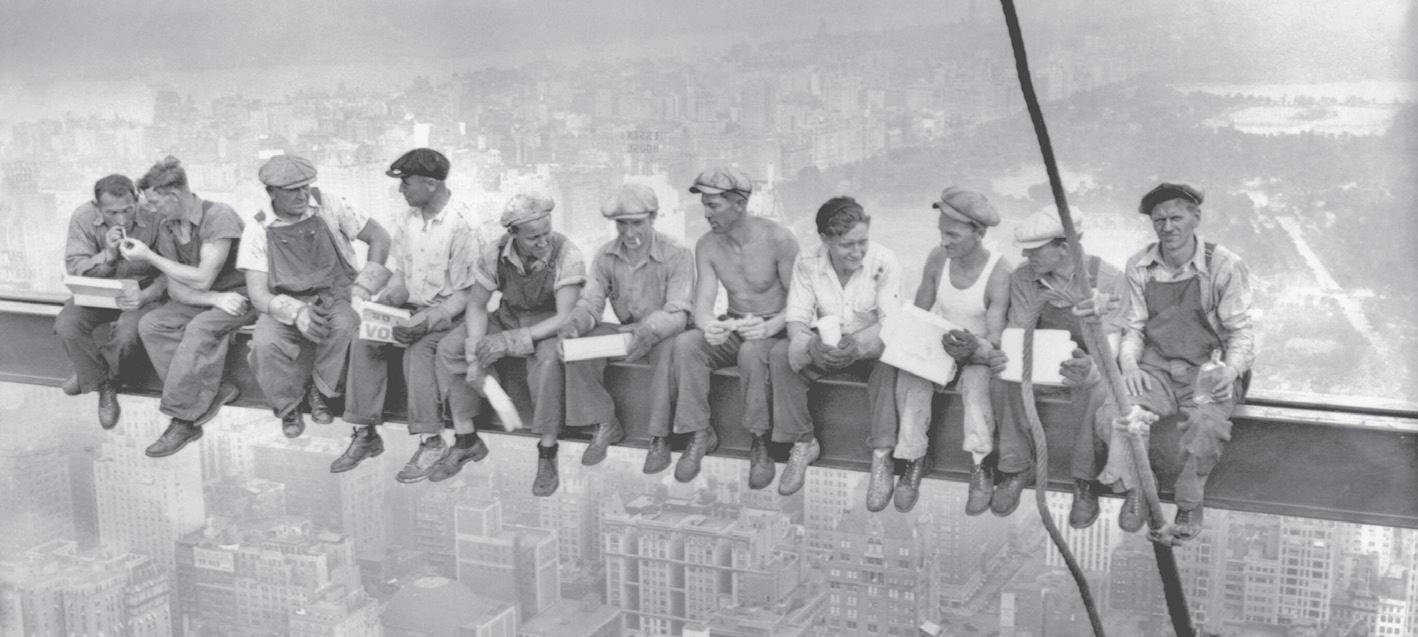
Naa Asheley Ashitey
i.
Over the course of the night, a soft banging in the ceiling rose in cadence. I am awakened at 5:26 a.m. in the morning by a loud crash in the kitchen. The sun herself is still asleep, but my feet burn when I run across the hallway. I can barely see the light switch when I go to flick her on. The room is illuminated. Everything looks how it did when I left it. Unsurprisingly, you left a bowl in the sink even though you screamed at me to not dirty up the place and cause a second infestation of a single ladybug. Me, yes. I am simply your dirty fucking whore; I grab the dish and place it in the dishwasher. I’ll run it again before you wake up.
ii.
The house is slowly turning into a greenhouse. The smell of tobacco is less invasive.
I still have to clean the soot off my foot and make dinner for the night.
There goes that soft banging again.
What if I call 911 and report that the banging sounds like there is a human being stuck in between the plaster?
I could finally save myself and it’ll cost less than using a pistol or noose. Only if it works.
I am okay with dying, just not by your hands
iii.
I like to keep plants along the windowsill. You used to be an avid bird watcher, right? I remember the Moleskine sketchpad you kept in your left shirt pocket. It was always in your left shirt pocket. You never told me who taught you how to draw.
Sometimes, the lines of what I think was the beak or maybe it was the wing, my memory escapes me, starts to travel to the edge of the page and swerve like it’s trying to draw itself into the back. it’s art, I think.
So, I think it’s fine that there is one particular branch of leaves I like to trim. The rest can be left unfurling in whatever direction they please. I should clean off the brown leaves. I don’t want to interrupt its potential. I’ll just give it more water.
iv.
You said no one else would understand how hard it is for us to grow here.
And yet a few purple flowers have sprouted along my bicep.
v.
I’ve stopped trusting your intuition.
You can’t make me believe dying for my freedom is a powerful mantra to live by any longer. Oxygen disappears beneath the soil line.
I’m going to walk across your garden one last time.
vi.
Now I keep my plants on the nightstand, in the master bedroom of my two-bedroom apartment.
Naa Asheley Ashitey
Under the glass cathedral, a portrait of God lays in front of me.
The sun has set and a semblance of the moon can be seen, not yet fully in view.
I don’t have a psalm to start this conversation. I don’t have a good way to call out to you, anything valuable to leave upon the stairs, or any questions worth answering.
The portrait of God stares down at me.
I wish the face was all but accepting. The Opiate, Summer Vol. 46

Naa Asheley Ashitey
I.
Can I just be like the mothers of the 80s and the 2020s, and blame Manson for the cocktail of pills I shoot back in the morning and the caffeine I snort during the two p.m. slump.
II.
I told my mother I’m still a virgin and she sounded just as disappointed as the day we came home the next day after revealing to my dad she knew about his affair.
III.
I say I am scared about the pain. In reality, I’m just sparing the world from more of me.
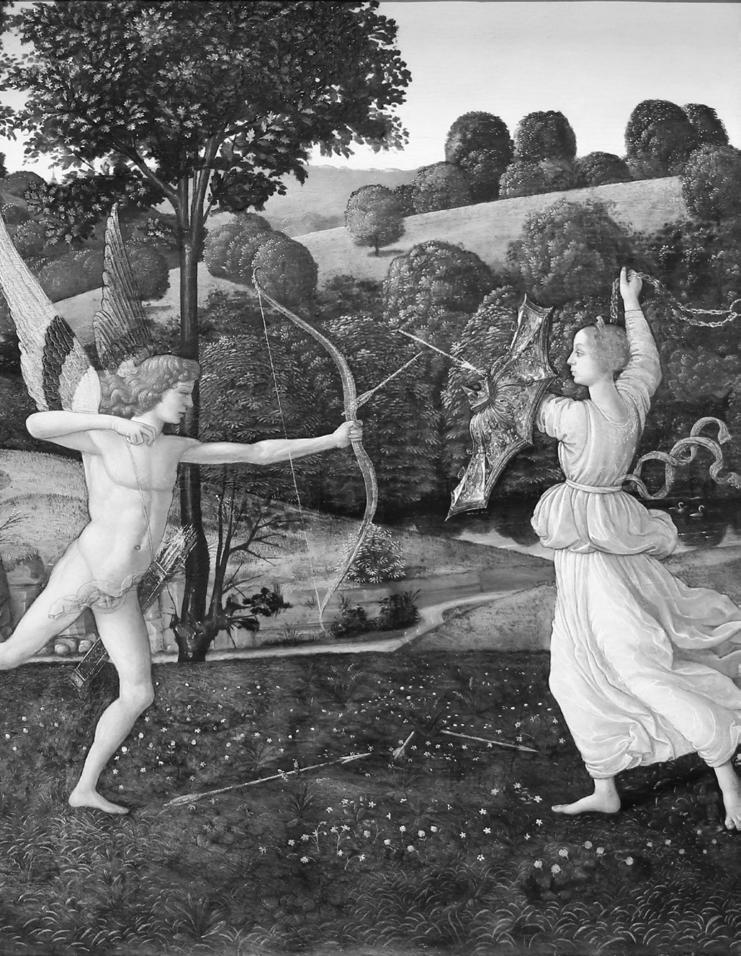
The Opiate, Summer Vol. 46
John Grey
No particular home means every place is my home. And what roof could carry the sky’s coattails? But, some nights, the stars are particularly starless, the fresh air breathes darker than bad whiskey and the doorways I sleep in are narrower, more confining than any room these bones have laid up in. And where’s the romance, when I smell worse than I feel and everyone who’s out for what they can get still looks at those with nothing like they’ve got something to give. My restlessness damns me. Everywhere I go looks more and more like every place I’d never want to be. I long for a place to live. Meanwhile, I live in this place.
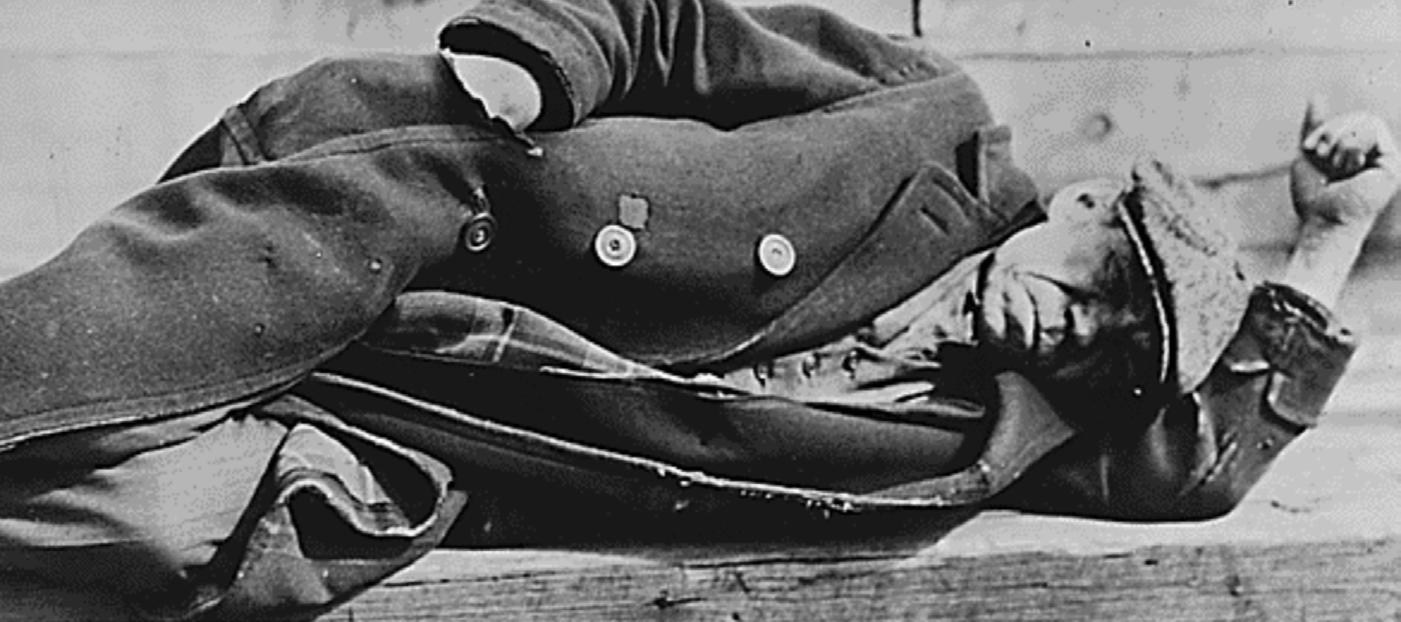
My journey took me to a place called Hopper and the last gas station in America that was owned by an actual human being. A windblown flag read “Ernie’s,” though that owner’s actual name was John, just like mine. Oh well...there’s actual and there’s actual. In the window of his tiny office was an old rusty sign for a brand of gas and oil called “White Eagle.” I took a photograph to save its future.
I must admit the drive-in restaurant was a disappointment. Sure I could park my car and revel in a waitress on roller skates taking my order. But the building itself was a pink and blue replica. And the vehicles, like mine, weren’t born when America was in the 1950s. Good thick shake though.
I was too late for the Main Street Cinema. I could only stand outside, peer in and imagine. The poster on its wall was for the first Spiderman movie. And the concessionaire stand was as barren as the landscape that framed the forgotten town.
The diner was still in business. And so was the hardware store. I saw nobody in the streets under fifty. And every bench was filled with those who knew this place in better times.
I stopped in the park, rested on the brown grass, in company with a statue that was dedicated to the Hopper war dead. Most of them were buried in a graveyard halfway up a nearby hillside. They too knew this place in better times.
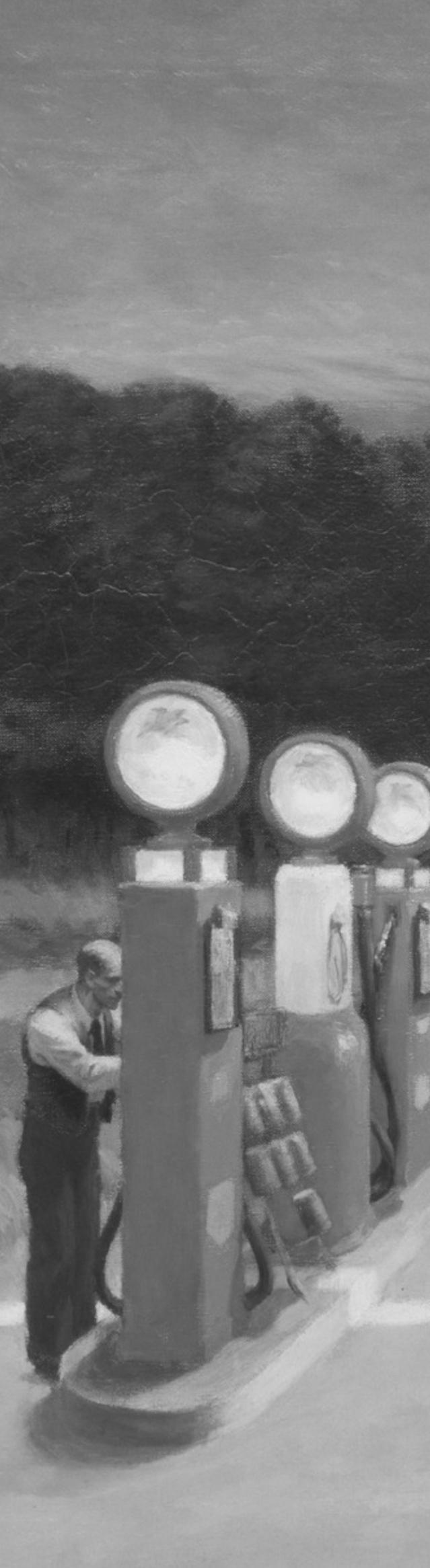
Cithara Patra
A girl knows what it means to sit pretty squeeze her lips tight and smile wide her face painted pink neck drenched in perfume she’s your perfect little doll your toy to show off and play with until you’re bored so you throw her away and go for the next doll in your sights
A girl knows how to behave keep up the spirits in the room while hers is falling to pieces she calms herself as a billion pairs of eyes scan up and down her body picking every bit apart pointing out the flaws out loud she takes it all in stride and pretends it’s not hurting her when all she wants to do is cry
A girl knows the cruel words that come from all around her They come from those closest to her and once in a while, they come from strangers She knows you’re trying to make her small maybe you’re trying to change her She knows your cruelty and your reasons for tearing her apart when she’s done nothing
A girl knows all about you She’s been around so many like you She keeps quiet ‘cause it pleases you and while you spend time taking her down she’s plotting for the day she escapes and burns down everything in her path
including you
Cithara Patra
To break down your walls
To break through to you is the same as trying to reach 100 summits
Climbing and crawling your sides rocks and dirt crumbling under my weight I try to move your boulders, snap the twigs blocking my way, winds blowing in all directions rain beating down on my back then come the blizzards hitting my face you try to knock me down you try to keep me from going up you don’t move, you can’t move still, I climb to the top I will keep climbing all your summits until the day I reach you and get you to stop raining all your grievances down on me
One day, I’ll reach you and stop you from pouring your grievances on me
Cithara Patra
lost in the crowd of strangers caught between the lit cigarette and the coffee table I’m surrounded by eager people who want my name to tell my story, where I came from sweat rolls down as I stare into my drink give them a story they’ll believe
be a bachelorette for them fake it till I make it bachelorette wine and dine them bachelorette and none of them will ever know who or what I’ve left behind
glancing in the corner, I fear he’s near his followers blend in and put on their manners they’re polite when ordering drinks for others then turn around and slap the cuffs on to haul them away still sweating, I’m breathing into my glass breaking out a smile as I play a new role
be a bachelorette for them fake it till I make it bachelorette wine and dine them bachelorette and none of them will ever know who or what I’ve left behind
licking my lips, I cock my head giggle and flirt with anyone in my face not one senses the fear buried deep in me as we joke about the weather and politics pretending the world isn’t crumbling before our eyes it’s all good till they ask my name and I play the same song and dance I’ve been playing since I got here
be a bachelorette for them fake it till I make it bachelorette wine and dine them bachelorette and none of them will ever know who or what I’ve left behind
as the lights go out, I hit the road with no clue where it will lead me only a few dollars in my pocket and a story to sell the next time someone asks me for my name
be a bachelorette for them fake it till I make it bachelorette wine and dine them bachelorette and none of them will ever know who or what I’ve left behind
for now, I’m a bachelorette going from state to state city to city, town to town living it up with everyone desperate to forget the interesting times we’re surviving in
Cithara Patra
They dance when the sun sets with silver-streaked hair and pale bodies their sky-blue eyes gazing to a darkening sky the stars shine down on them as they move
No one else sees them for they’re covered in the nighttime Protected by the moonbeams and swaying to the silence Laughing as the last light dies and darkness finally takes over
I always see them, those twilight girls Never coming out in the morning They are at peace as I watch them step lightly across the grass and turn towards the glittering stars Raising their hands and swaying as a night wind blows through Their moon-kissed hair
I don’t know who they are They never speak to anyone They only come out at night to dance and bask in the quiet it offers I smile at their ritual and take in every laugh and move they make They are lost tonight and it’s fine They’re only lost until twilight rolls around and then they find themselves again
Twilight girls dance to the rhythm of cicadas swirl to the light of fireflies Dance all night long while I wish to join them under a sunless sky The Opiate, Summer
Ron Riekki
Thank God it’s raining. The smokers go outside and smoke.
I wish they’d smoke in their homes. I wish they’d kill their family’s lungs instead of mine. They smoke in front of my window. I can’t afford air conditioning. I wake up in the night, actually wake up from the smoke.
Wake up coughing. But tonight it’s raining. They don’t smoke when it rains. Or they do, but not in front of my window. I pray for thunder every day of my life. I can hear it now, protecting me, screaming for the smokers to stay inside and let us live.
Ron Riekki
I lose a little bit of hope every day. It feels pretty good.
Ron Riekki
My sister says, Who wants to live to a hundred?
My brother says, Who wants to live?
After I pull him aside, ask if he’s doing all right. He says he was making a joke.
Later, my sister goes on Zoloft.
Ron Riekki
In the past, we’d actually just introduce ourselves. But now, everyone tells you their politics. You go around the room and you can tell the person’s politics by the way they introduce themselves. When they come to me, I say, “Ron.” They pause, waiting for more. I say, “Just Ron” and point in the direction that the introductions are going. I wish there was no such thing as a President or a Congress or mayors or tuna salad.
Ron Riekki
It almost feels like we’re mocking those who can’t breathe. I feel bad.
I try to hold my breath.
And hold it. Then I let out this massive breath that just mocks them more.
I say, “I’m sorry” to the dead person I don’t know. And then we go look at a cool-looking tree.
Floyd Humphrey
Like slimy gutter rats, Britain’s ICE agents slid through the back fence targeting a chic Indian restaurant, its owner embodying “British values,” employing competent people disregarding their ethnicity—meritocracy at its best
Mandira, lauded by Britain’s culinary finest— Nigella Lawson, Jamie Oliver and Channel 4— was on holiday, delegating management to those in whom she believed to those in whom she trusted
the ICE rats with two pit bulls and Surrey police, who think modus operandi is an Indian side dish, began questioning the hard-working student staff, who were supplementing their paltry education grants,
about their studies and asking for identification. “When was the last time you went to class?” “What grades did you get?”
Questions only for the “sun-kissed” staff.
With no crime having been committed, satisfied with the answers given in mime and subtitles for the hard of thinking, ICE supinely melted away into the gutter they had come from without paying the legal parking fees,
That this is happening in Britain is causing consternation among some citizens sixty years after the 1965 Race Relations Act, this hostile environment policy used to target all minority-run businesses— 1939 anyone?
The oxymoron “intelligence-led” is used to vindicate a “tip-off” as sufficient, needing no corroboration, to instigate spontaneous raids
Mandira’s Kitchen, and other businesses run by those whose skin color that interior designers refer to as “hickory bronze,” remain on the menu of the UK’s ICE agency
Larry Kilman
When we slept on the sidewalk, head-to-head to gather warmth, we learned why clochards put cloth beneath them and how halogen street lamps keen and sway in gelatin air.
In dreams of gray and gathered dust, cars hissed by like raindrops, foot taps fell like oxen, and our mothers called to us. We awoke with aching muscles and the nagging sense of having done something we weren’t supposed to do. It was only a drunken lark, but what would our mothers say? Horrified, to be sure, but secretly pleased in a vicarious sort of way. Our antics no longer trouble them, they cut the bonds long before we could.
It seems now, as we grow with age, it becomes harder to flee the undesirable acceptability of things. The Opiate, Summer Vol.
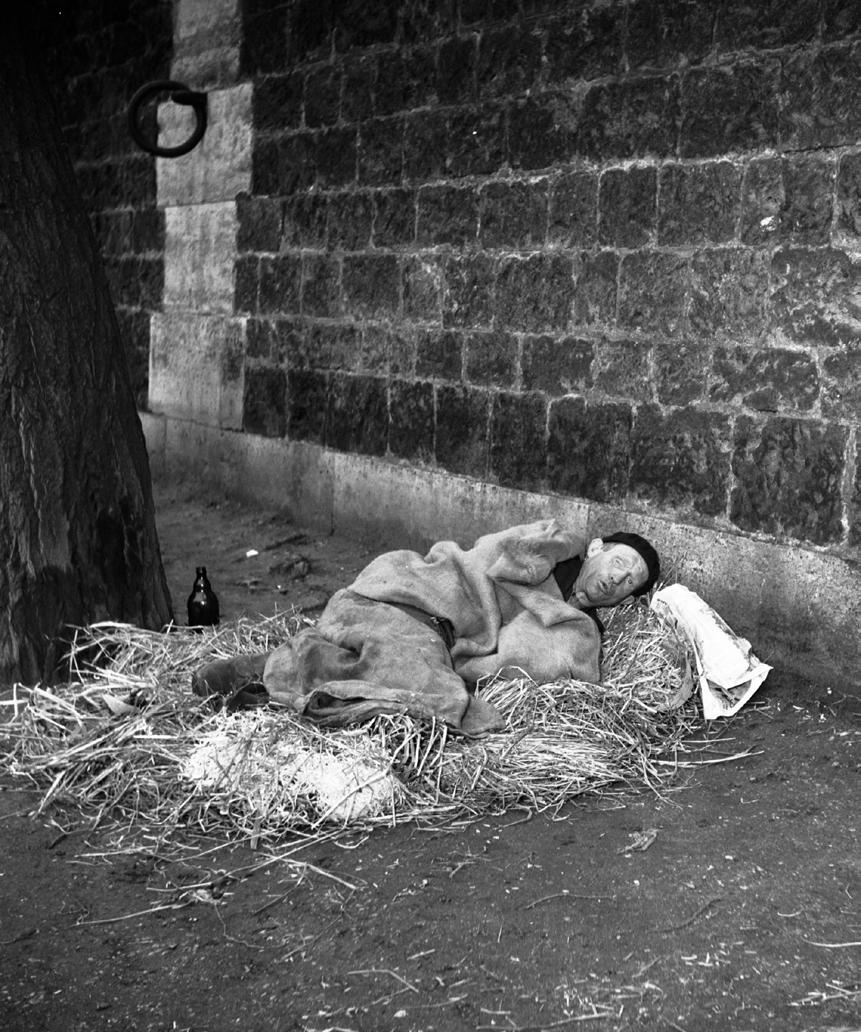
The faces at the wedding were so grim it is almost comic. People didn’t break into smiles at the sight of a camera back then. They lined up stiff and solemn to mark the occasion. Even my parents, who were so full of joy. They are all gone now.
Just paper photos in a carboard box, discovered in the garage, a wonder they haven’t faded, to be digitized when we get around to it. Sepia-toned dream images, a frozen moment. All photos will one day look like ancient artifacts.
The departed also fill my own wedding album. The bride for one, divorced from my life, and the friends she took, as well as those who drifted, victims of time and distance. My college roommate, the friends from high school, the one damaged in the war, the photo almost painful.
These photos are in color, the pages still vibrant. A small journal to remind of the days. I feel like an anthropologist making sense of relics, though I’m not so removed I don’t feel the loss and the memory of life with everything ahead.
My daughter’s album, when the day comes, will be full of joy. She will look at it to relive the moment. But, in time, some smiling faces will be lost to her, as they are lost to all. It is the missing we remember, with whom we measure changes and the slip of days.
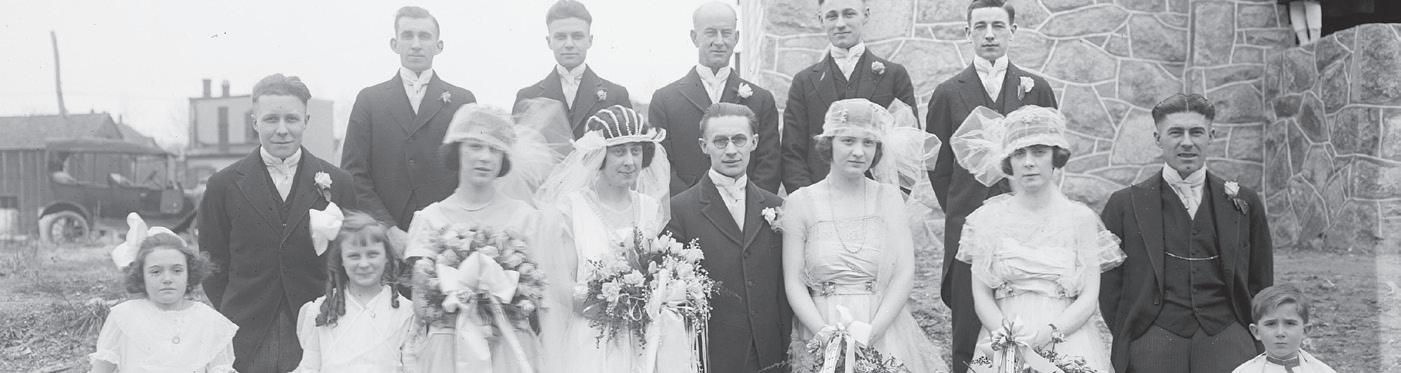
Larry Kilman
The curators gather round the inflatable chair, Knowing not how to seal the leak. Their efforts doomed to fail, for even if they patch the puncture, the act of repair ruins the chair. How do you fix something that was never meant to last?
The furniture of my grandmother, on the other hand, was built to endure: heavy dark wood, breakfronts and clocks, a dining table with a small bell to summon servants. But tastes change, and even the antiques dealer couldn’t give it away, taking it anyway to spare the family. We carry smaller things,
but even those don’t protect us. Once there was a gold wedding ring, handed down to a daughter who was sixteen when her father died. The ring gone ten years later in a burglary, her grief rising as if he died a second time.
We want to leave a legacy, but come to find it difficult. Things with meaning, but personal, the collections of lives well-lived. Might as well just say, “I can’t bear to part with it, so I’m leaving it to you, feel free to do as you please,”
as you gaze lovingly at books that will go unread, kept on hand because you like them and what they say about you, never realizing their weight until it is time to move. Your heirs will curse you lightly, still loving you.
Nothing lasts, no point becoming attached to objects, mere souvenirs of the passage through. Better to leave a wealth of memories, to be passed down from children to children’s children. We live on until the last person who remembers us is dust, and that has to be enough.
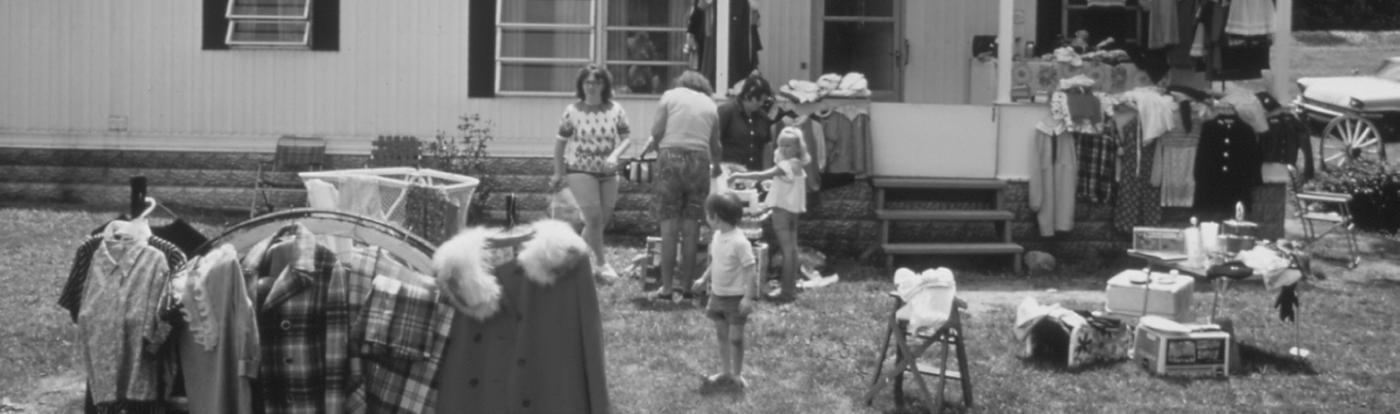
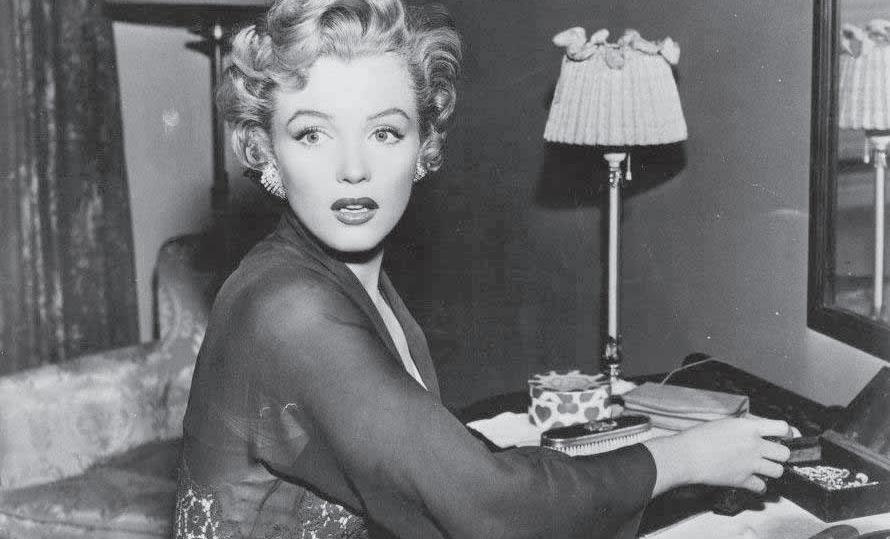
Genna Rivieccio
In1951, Charlotte Armstrong released her seventh novel (which would become a drop in the bucket of her prolific bibliography), Mischief. One year later, the babysitter character in said book, Nell Munro (whose last name is changed to Forbes in the film adaptation— probably because Munro is too close to Monroe), became another breakthrough role for Marilyn Monroe, following her increasingly notable work in such features as The Asphalt Jungle, Clash by Night and Let’s Make It Legal.
Rebranded as Don’t Bother to Knock, the film would clock in at a rather short one hour and sixteen minutes, with about one minute of that being the overture. Composed by Lionel Newman, the music captures the danger and suspense of a character like Nell, belied by the portions of the composition that evoke a more jovial, “good-time girl” sort of feel. In fact, the music wars with itself in this way, by turns
ominous and damn-near jaunty (indeed, it often sounds like the type of music Woody Allen would include for one of his overtures [complete with the accompanying backdrop shots of various New York cityscapes]—not to bring his besmirched name into this).
But it’s necessary to set up what’s coming. And that is: one very unhinged babysitter. To be sure, it could be argued that Armstrong laid the groundwork for the modern horror movie trope about this very type of babysitter. The traumatized, “not to be trusted” one who’s sure to do something diabolical to your child. And as director Roy Baker homes in on an exterior shot of The McKinley Hotel, the first noticeable difference between the book and the movie is established: in the former, the hotel is called The Hotel Majestic, and is described as “neither large nor small, neither cheap nor costly. Not the last word, it wasn’t dowdy, either. It was conservative. It tried to be smart about it, in a modest way. It took the middle road. Even the elevators, although they ran smoothly, did so with a modest speed.”
The McKinley asserts itself in an entirely opposite manner, suggesting (via a sign perched on the front desk), in a somewhat foreboding tone, “Make this more than a hotel. Make it YOUR HOME. The McKINLEY.” Thus, the nature of the hotel is already in contrast to The Majestic. For it is the sort of place where guests stay for long-term stints, as the character with the first line of the movie, Emma Ballew (Verna Felton), gets across when she expresses her dissatisfaction over the fact that they’re letting a convention happen in the place, chastising the concierge with the critique, “This hotel is getting run down. And the food isn’t what it was ten years ago either.” As soon as she’s out of earshot, the concierge snarkily asks, “Are you?”
The script, written by Daniel Taradash, then brings in the other key players of the narrative, with a scene cut to the hotel’s lounge singer, Lyn Lesley (Anne Bancroft), lamenting about a guy to the bartender, Joe (Willis B. Bouchey). A guy she just so happened to break up with because she likes everything about him “except me.” She then goes into a rendition of “How About You?” as Baker cuts to Jed Towers (Richard Widmark) listening to her voice over the speaker in his hotel room. Clearly, he’s the broken-up-with beau in question.
The setup of their rupture isn’t quite like this in the book, with Lyn being but an “ordinary” girl who lives on East 36th Street with her family instead of a lounge singer. Jed has known her for a “year or more” but, of late, has been seeing her with greater consistency during his “between jobs” phase. In fact, he’s slated to ship out to “the West” the following day for some big-time sort of role, though it’s never said what, specifically, that role is. Maybe because that’s not really the point.
The point is, he needs to make a decision about his future with Lyn. It’s that unspoken thing hanging in the air between them on their last night together. And, like the Lyn of the movie, the Lyn of the book is fed up with Jed’s cynicism about people. His general mistrust of them. In Mischief, that comes out in the form of him refusing to give any change to a homeless man in the street. Lyn is disturbed by how sure he is that the man is running a “racket” and doesn’t genuinely need help.
In Don’t Bother to Knock, she admits to him that she’s broken it off because “just once I wish you’d try to judge somebody without being glib,” adding that she can’t stand “the way you treat people, the way you think about them. All you can focus on is the cold outside of things, the simple facts.” This is the same issue that leads the Lyn of Mischief to walk out on Jed at the restaurant, which, in turn, leads him back to the Hotel Majestic, angered and desperate to find some kind of “replacement” for the night. To his retroactive dismay, that replacement is Nell.
As for the way Monroe chooses to render Nell, there’s no doubt that her acting coach of this era, Natasha Lytess, instructed her to play the character like more of a lost lamb than she comes across in Mischief. Indeed, Nell Munro is far more dastardly than Nell Forbes, with a later revelation in the book being that she set her own house on fire with her parents in it and then claimed she was “sleepwalking” while she did it. This being what her uncle, Eddie, would prefer to believe when he opens his home (a.k.a. apartment) to her after the “accident.”
To take some of the “edge” off Mischief Nell, Monroe imbues Don’t Bother to Knock Nell with a more serene, less calculated quality. As one can immediately see around the four-and-a-half-minute mark, when Monroe makes her grand entrance, aimlessly wandering in like an adrift soul through the revolving doors of the hotel. Her disconnected-from-it-all aura persists when she meets Uncle Eddie, the elevator operator, in the lobby. For, as their dialogue soon reveals, he’s the one who got her a last-minute gig after overhearing Mrs. Jones in the elevator saying that she needed a babysitter. So it is that the film starts out in an entirely different manner from the book, which instead chooses to favor a beginning that focuses on the Jones family: what they’re like, how they act and why they’re at the hotel.
And the reason Peter, Ruth and Bunny O. Jones are staying in Room 809 at The Majestic is that Peter has an event (specifically a “convention” for a “corn-fed gathering of country editors”) to attend. One that obviously requires Ruth to be on his arm. Ruth who feels left in the lurch by her sister-in-law, Betty, who had previously agreed to watch over Bunny while they went out. What’s more, it stokes Ruth’s long-simmering fury at Betty for viewing her as “buried with the rank and file, and the drab stones all said Housewife, that drab, piteous
From Mischief to Don’t Bother to Knock... - Genna Rivieccio label.” Though perhaps no drabber and more piteous than Nell’s situation, which is that she’s become a burden on her uncle and aunt. Though that burdensomeness is more downplayed in the film.
As is just how mistrustful Ruth actually is of leaving her only daughter in the care of a stranger. Her mistrust is part and parcel of the rising McCarthyism of the decade (with those modern-day “witch hunts” often showing up in Armstrong’s work). Which is why, from
“As for the way Monroe chooses to ren- der Nell, there’s no doubt that her acting coach of this era, Natasha Lytess, instruct- ed her to play the character like more of a lost lamb than she comes across in Mischief. Indeed, Nell Munro is far more dastardly than Nell Forbes, with a later revelation in the book being that she set her own house on fire with her parents in it and then claimed she was ‘sleepwalking’ while she did it. This being what her uncle, Eddie, would prefer to believe...”
the outset, Ruth is skeptical of accepting someone they don’t know to watch over Bunny at the last minute. Nonetheless, she tells herself that, since Nell is a connection through the elevator operator, “It was just like home, after all. You needed somebody. You asked around. It was just like the Johnstones who might say all their sitters were busy but they knew someone who knew somebody. You set up a kind of chain of inquiry and after a while it dredged up what you wanted. People were people and they passed the word and obliged each other and that was the way it went all over the world, truly.”
Except that, sometimes, people passing “the word” (a.k.a. a recommendation) along aren’t also passing along all the information with it. Hence, Eddie not mentioning that Nell is fresh out of the booby hatch and not exactly mentally stable. Which is probably why she shouldn’t be looking after a child. Granted, she doesn’t really do much of that at all as the evening progresses, far too busy making eyes from across the courtyard at Jed in Room 821, with windows that face
directly into hers. And so, after enough, cat-and-mousing (paired with Uncle Eddie’s offhanded suggestion that “another fellow could pop up anytime, a real nice fellow”), she summons Jed into her room. Jed who has no idea what he’s about to get into. For already, she’s displaying signs of being totally detached from reality. Not just because she’s walking around in Ruth’s kimono, slippers, earrings and bracelet (and has also put on her perfume), but because she’s gotten all “dreamy.” Her mind floating up out of her body as she dances around the room as though she’s actually dancing with someone. And that someone she’s imagining is Philip, her boyfriend who died in WWII, still fresh in the public consciousness at the time.
This is supposed be Nell’s “reason” for being so insane. Hollywood decided that she needed a source of trauma in the form of losing her beloved. So it’s no surprise that the Philip conceit is something that was added into the movie version, whereas, in Mischief, there is no ostensible “cause” for why Nell is so fucked up, which is what makes this version of her far more unsettling.
Naturally, this isn’t the only detail that’s been added or slightly “tweaked.” The shifting of small details are, in truth, what makes the book so different from the film. Like how Don’t Bother to Knock Nell initially refuses to take any candy from Bunny, claiming, “I...I never eat candy.” However, in Mischief, when Ruth instructs Bunny to offer her some candy, the scene that unfolds is instead as follows: “Bunny got the box, offered it, as Ruth had taught her, with a gracious little bend of her small body. Nell said, ‘Thanks a lot.’ And snatched. Ruth felt her heart lighten. Surely that was nice of her. That held some understanding. No grown person could care that much for candy. The greedy quickness must have been exaggerated for the child’s sake.”
But no, as the film shows, Nell’s greed for candy rears its ugly head as soon as she leaves Bunny in her room to go to sleep. That’s when Nell opens the box and proceeds to eat quite a few chocolates from it. Her gluttony and carelessness are part of what makes her so villainous—in addition to being a product of post-war America and the ramping up of capitalism, hence a philosophy that touted, “Me first and fuck everyone else. Even children.”
And yes, both versions of Nell can’t stand Bunny, have absolutely no empathy for her whatsoever. What’s more, Nell’s primary source of irritation with Bunny stems from the latter “cramping her style,” “killing the vibe,” etc. That’s why she tells her in the movie, “It’s wicked to come between people.” A polite 1950s way of saying, “Don’t pussy block me, bitch.” Then there’s her loose threats to kill Bunny if she doesn’t hesh up. Complete with, at one point, barely restraining herself from pushing Bunny out the window as she looks into the ones of the other guests across the way (this, too, adding to the very “everyone is
spying on everyone” quality of the narrative).
The McCarthyism element shines through again when Mrs. Ballew tells her husband (another add-in character, for Mrs. Ballew is Miss in the book), “After all, if anything dreadful is going on upstairs, it’s our duty to do something about it.” Her husband, clearly more of a leftist, replies, “Don’t be a peeping pansy. Leave ‘em alone.” But neither Mischief Ballew nor Don’t Bother to Knock Ballew can do that. Nor can another character that doesn’t make the cut for the film: Parthenia. For, in the book, rather than Mrs. Ballew and her husband being the only ones to eventually try to check on the girl, Parthenia is the one who decides to knock on the door first in Mischief. But it seems lucky that her character didn’t get translated to the screen, considering how racist the presentation of her comes across in the book. For yes, Parthenia is a Black woman and, in 1951, one can imagine how ill-advised any white person writing a Black person might be. Apart from the accent given to Parthenia, there’s a strong flare-up of, let’s say, race relations between her and Nell, who, the second she closes the door in her face after Parthenia tries to ensure the child is okay, grumbles, “N***er.” Yet another testament to what a horrid person she is. Particularly in Mischief. Indeed, it isn’t just that Mischief makes Nell come across as far more terrible/morally bankrupt as a human being, but also more dangerous. And so, it’s no surprise when she ends up hitting Uncle Eddie over the head with an ashtray (how very Mr. Ripley). This after he pops in yet again to check in on his deranged niece. And when he goes into the bathroom, gravitating toward the sound of the running water he hears, Nell stops him with a bop over the head, not wanting him to see Jed hiding in there. In the movie, she does so with an ashtray stand (much more common in those days). And, in both cases, she doesn’t seem to much care whether the bludgeoning kills her blood relative or not. The only thing she cares about, in fact, is getting Jed to stay so she can keep up her botched attempts at seducing him.
Mischief Nell takes her violence level one step further by even engaging in an all-out catfight with Bunny’s mother, who finally goes back to the hotel (for, in Mischief, the event takes place away from the Hotel Majestic) after deciding to listen to the feeling in her gut that’s been telling her all night that something is very wrong with “that girl.” That stranger. For, as it becomes increasingly apparent, “don’t trust strangers” (stranger danger!) is a core message of the narrative (again with the McCarthyism). Least of all pretty single girls with far-off looks in their eyes.
To that point, both iterations of Nell express a kind of “who am I? what am I? where am I?” aura. Flickering in and out of reality arbitrarily—though, more often, out. This being her “cloak of defense,”
“Mischief Nell takes her violence level one step further by even engaging in an all-out catfight with Bunny’s mother, who finally goes back to the hotel (for, in Mischief, the event takes place away from the Hotel Majestic) after deciding to listen to the feeling in her gut that’s been telling her all night that something is very wrong with ‘that girl.’ That stranger. For, as it becomes increasingly apparent, ‘don’t trust strangers’ (stranger danger!) is a core message of the narrative (again with the McCarthyism). Least of all pretty single girls with far-off looks in their eyes.”
how she can justify, by any means necessary, her cold-blooded actions. Not that the Nell of Mischief feels much obliged to justify anything. Though she does end up pulling a “who me? what happened?” sort of maneuver after she knows she’s been found out by everyone in an “authority” position. For as Armstrong describes the aftermath, “But Nell only rolled, drowsily. Her arm fell in sleepy grace, revealing her face. Here eyes were closed. The blue gone, her small face was left perfectly serene. There was a long scratch from eye corner to jaw. It looked as if it had been painted there, as if she felt no pain. She seemed to be asleep.”
Uncle Eddie, newly conscious and having emerged from the room he was stashed away in, comments (in his own “serene” sort of way), “‘After the fire, they say she slept...just like that.’ He swallowed and looked around at all their set faces. ‘How can she sleep?’ he whimpered.”
In Jed’s estimation, probably because she’s “nutty as a fruitcake.” This also being a very 1950s kind of parlance. One that reduces mental illness to, in essence, a “choice.” As Monroe herself probably viewed it during the early stages of seeing her own mother, Gladys, committed to a mental institution. This happened for the last time in 1934, the year Norma Jeane turned eight years old. Though, by that time, she was no stranger to being passed around through the
foster care system (not to mention an orphanage). As she grew older, however, it seemed as if Monroe gained a newfound empathy for her mother, whose own mental illness was passed down from her father, Otis Elmer Monroe (the last name of which Marilyn took on as part of her stage name), condemned to the fate of dying in Patton State Hospital in San Bernardino when he was forty-three years old.
When Marilyn herself started to feel as if mental illness really wasn’t a “choice,” so much as a combination of genetics and environment, it seemed as if being cast in Don’t Bother to Knock landed in her lap at the perfect moment for her to articulate what that meant, and to convey it with the kind of grace and nuance her acting skills weren’t yet attuned to in the 1940s, when she had started taking on bit parts (including one in a Marx brothers movie called Love Happy).
In 1952, when the film was released, Gladys had been in the same type of facility Nell had just come out of for eighteen years. And she would spend the rest of her life in such a facility (though not always the same one). Monroe, tapping into that reality, suffuses the Nell of the screen with something beyond mere “diabolicalness” for the sake of it. Instead, likely because of seeing her own mother in this condition, she was able to wield it so earnestly and believably through Nell. To tell the world, via her “instrument,” that those deemed “mad” by society ought to be treated with more kindness and understanding, and not merely written off as people who shouldn’t be around “well people,” as the book puts it. In fact, Uncle Eddie is ultimately made to look semivillainous as well...for “daring” (and “deigning”) to take a chance on someone with such a patchy mental health history. For putting others in harm’s way by placing faith in someone who “shouldn’t” be trusted “unless she gets all better.”
In Mischief, this is how Bunny’s father explains it to her, in an oversimplified manner designed not to further upset the child, who has gone through enough trauma for one evening. So it is that Peter assures her, “They’re coming. They’ll take her to a hospital... because she’s sick, really. She doesn’t know how to get along with people who are well.”
In her way, whether intentional or not, Armstrong seems to be addressing the cold cruelty of a society that expected everyone— especially women who had lost boyfriends and fiancés and husbands during the war—to simply move on, to “get on with it.” And, of course, not think so deeply about anything that it might send them over the edge like Nell. In truth, that could easily be another takeaway from the text and film: that if you dwell too much or too long on your own grief, your own feelings, you might end up so batty that you can’t relate to the
living anymore.
As for Monroe’s performance, it surely paved the way for other “demented babysitters” on film, scant though the genre still may be. For, by and large, horror and/or psychological thriller movies about babysitting still tend to revolve around a babysitter caught in the crossfire of the horror (e.g., Jill Johnson in When a Stranger Calls or Laurie Strode in Halloween). Whereas the number of films about the babysitters themselves being the source of the terror are a bit more limited. Though some examples include Peyton Flanders a.k.a. Mrs. Mott in 1992’s The Hand That Rocks the Cradle, Jennifer in 1995’s The Babysitter and Emelie Liroux (albeit more of a babysitter impersonator) in 2015’s Emelie. Which is why perhaps screenwriters of the present ought to take a look at Don’t Bother to Knock for a bit more inspiration.
If you like The Opiate magazine, you’ll love The Opiate Books. Find our current roster of titles (featured below) online or at your favorite bookstore. Visit theopiatebooks.com for more information.
Released: June 2022 List price: $34.99


Released: April 2023 List price: $10.99





The PornME Trinity (2nd Edition) by
On the Way to Invisible by Antonia Alexandra Klimenko
The Fire Within by Chiara
David Leo Rice
Released: October 2022
Taillights Disappearing by Steve Denehan
Released: November 2024
List price: $14.99
The Verities of Love by Ron Kolm
Released: March 2025
List price: $12.99
Released: June 2024
List price: $14.99
Diary of an Anonymous Midtown Office Worker in the 2010s by Genna Rivieccio
Released: January 2025
List price: $23.99
When the Phone Rang by Anton Bonnici & Youssef Alaoui
Released: April 2025
List price: $14.99
Released: September 2024
List price: $14.99
Reprise by Victor Marrero
Released: January 2025
List price: $7.99
Let’s All Be Happy Today by Joel Allegretti
Released: October 2025
List price: $18.99

Walrond Strangmeyer
Restless Demons Sing to Me of Angels’ Wings & Human Claws by William
Released: October 2025
List price: $14.99

Released: January 2026
List price: $13.99

Released: April 2026 List price: $14.99
Released: November 2025
List price: $15.99

Released: March 2026
List price: $14.99

Released: May 2026 List price: $12.99
Released: January 2026
List price: $14.99

Released: March 2026
List price: $20.99

Released: June 2026
List price: $12.99
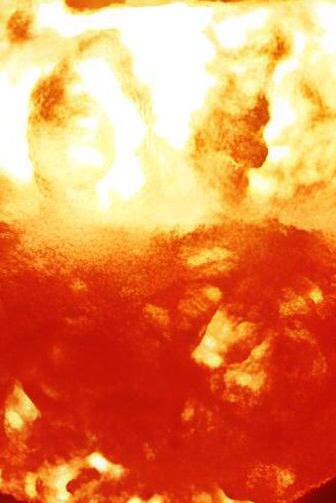
If not, The Opiate, Vol. 46 is sure to prepare you for one with fiction, poetry and nonfiction from Vittorio Valente, Earl Javorsky, Mike Lee, Steffi Gauguet, Alli-
son Strong, Louis Bourgeois,
Jennifer Rood, Frankie Laufer, Charlie Brice, Naa Asheley Ashitey, John Grey, Cithara Patra, Ron Riekki, Floyd Humphrey and Larry Kilman.
The