
CONTINUITY OF CULTIVATION
FARMING | EDUCATION | RESEARCH
LEONARD BUSTOS
LA DESIGN 6: CAPSTONE - SPRING 2023
PROFESSOR RICHARD NEWTON
CONCLUSION CONCEPTS INTRODUCTION
INDEX
INTRODUCTION
MANIFESTO
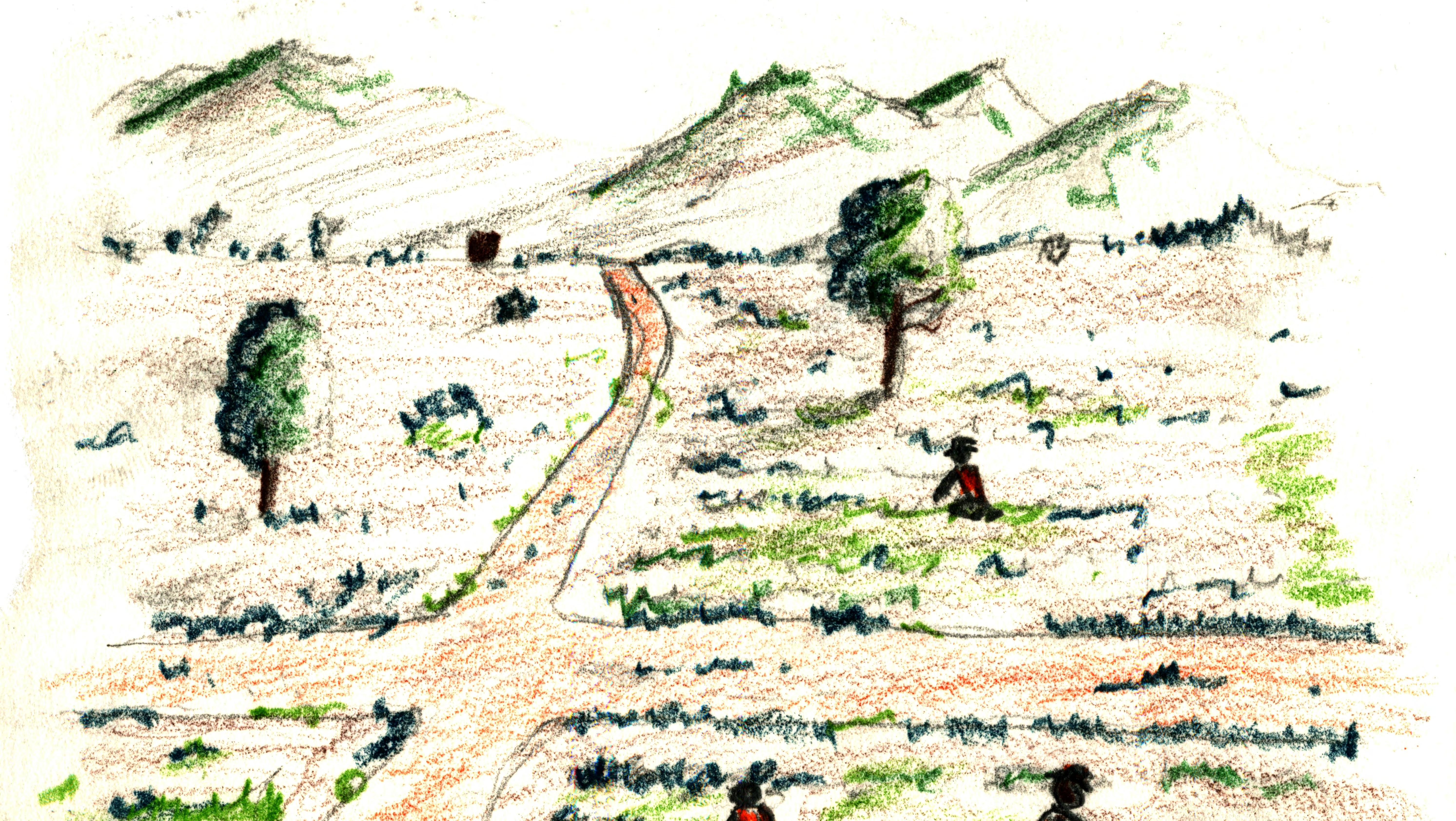
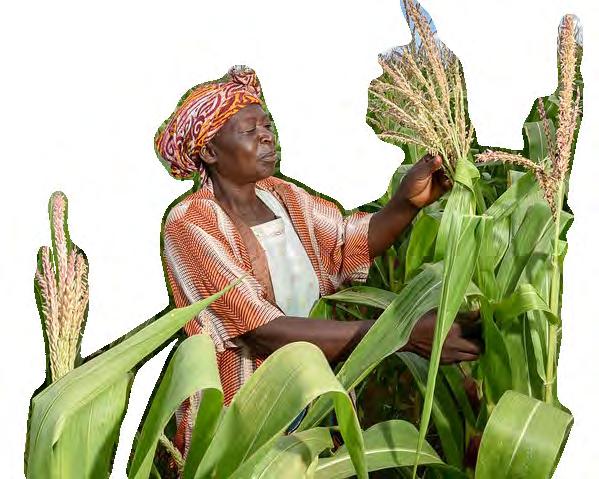
• Farmland cultivates the majority of land within the site and throughout malawi
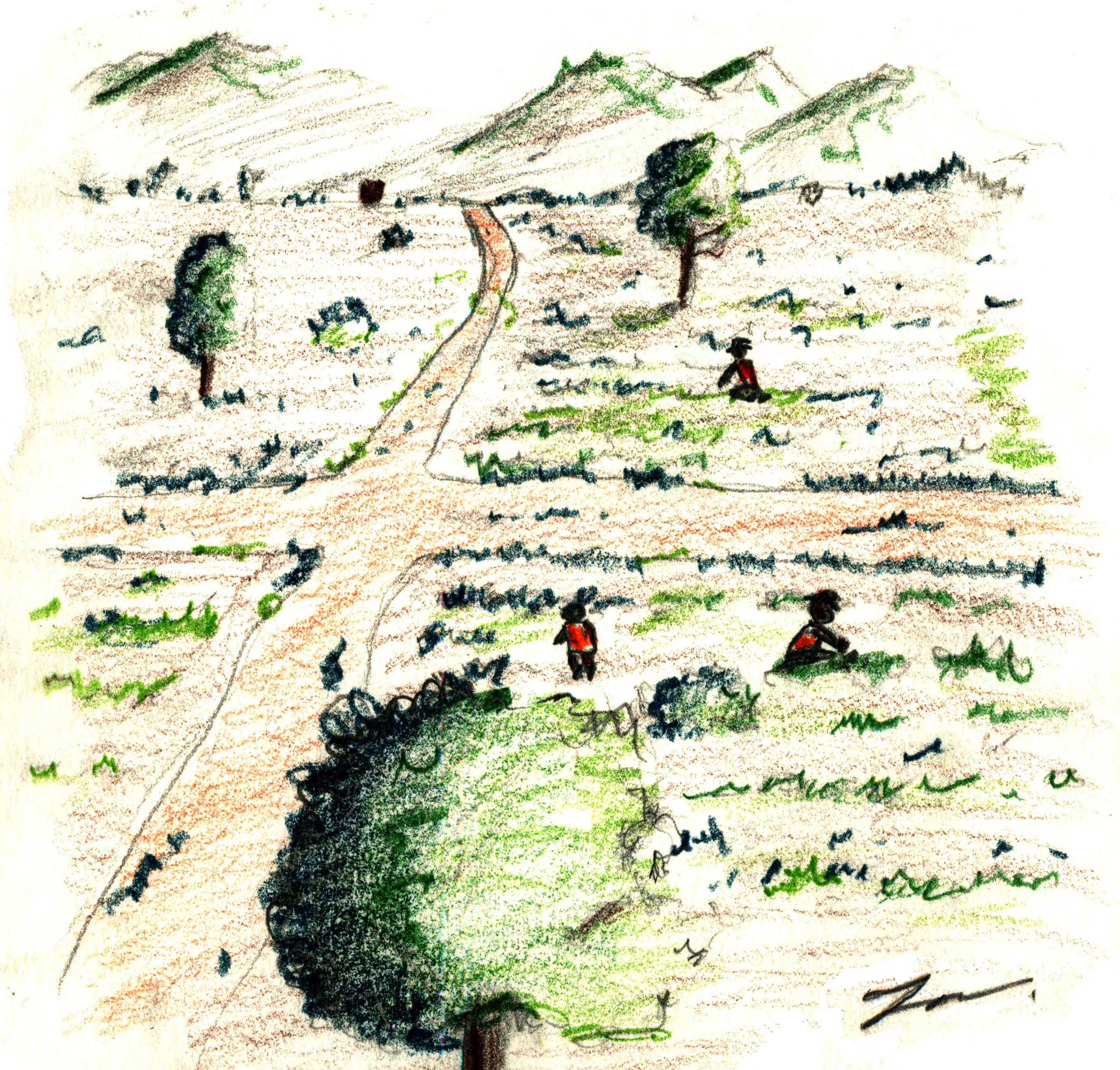
• Is a vital component of Malawi’s economy and culture
• The challenging weather conditions and changing climate make it increasingly difficult to be sustainable
This project aims to integrate agricultural spaces with the overall development, support local communities, enhance productivity, and educate and research sustainable farming that accommodates seasonal weather patterns, flooding, and better manage rainfall within the site.
Overall the project explores environmental, societal, and economic approaches that can be passed down to future generations for sustainable farming practices.
4
SEASONAL CALENDAR
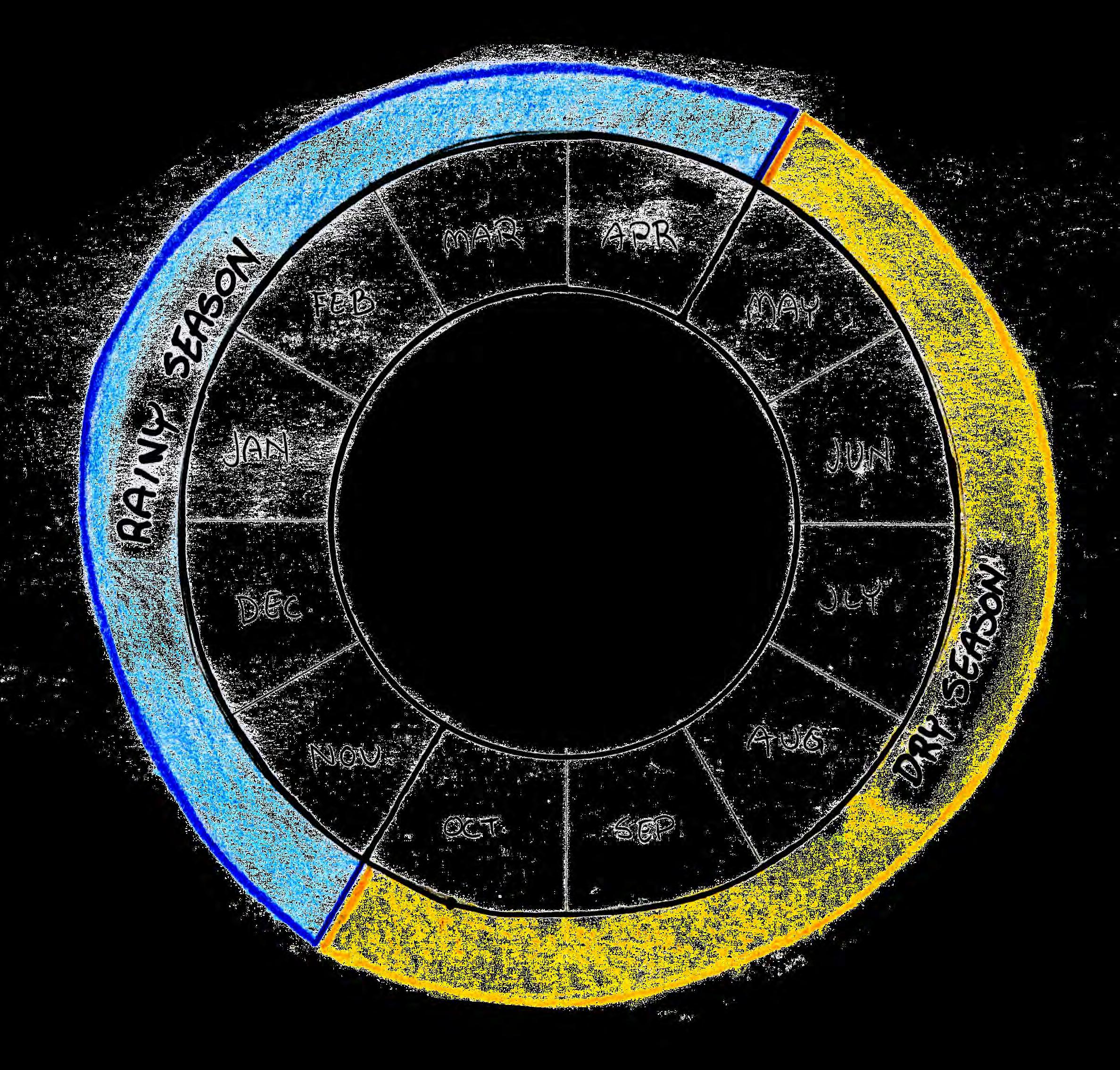
Farming is challenging in malawi due to changing climate .
During the rainy season, malawi experiences heavy amounts of rainfall. As highlighted, malawi experienced the heaviest amount of rainfall during January this year.
Rainfall in malawi can become destructive to farmlandsultimately washing away all crops and livestock.
The dry season also creates difficult conditions since most of the farmlands dry out.
5
5.2IN - 8.6IN 1.8IN - 5.1IN 2.8IN - 0.6IN 8.8IN - 9.2IN 9.1IN - 6.6IN 6.5IN - 2.9IN 1ST 31ST 1ST 31ST 1ST 31ST 1ST 31ST 1ST 28TH 1ST 31ST
MAIZE CROP SCHEDULE
1.) Deweed if Necessary
2.) Assembly Line:
- Dig hole
- Place seed(s)
- Place fertilizer
- Cover seed(s)
3.) Wait for Rain or Water Crops with Existing Water Source
4.) Deweed/Maintain
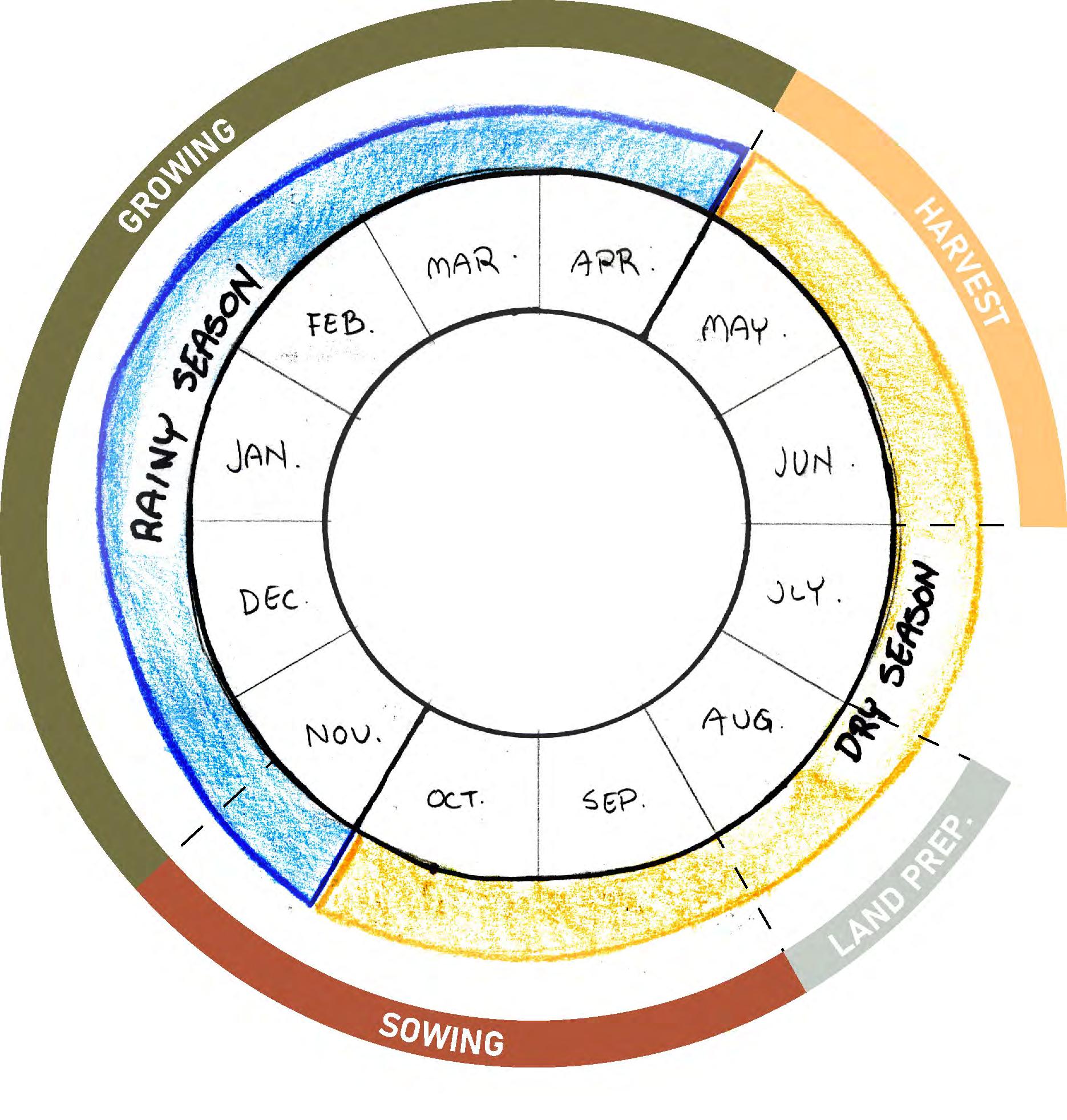
Maize’s growing phase takes place during the rainy season, which makes maize difficult to maintain, grow, and harvest.
So what are some methods that can reduce the destructive effects of rainfall and support crop growth and harvest?
5.) Harvest Maize When Mature
6.) Hang Dry
7.) Remove Kernels:
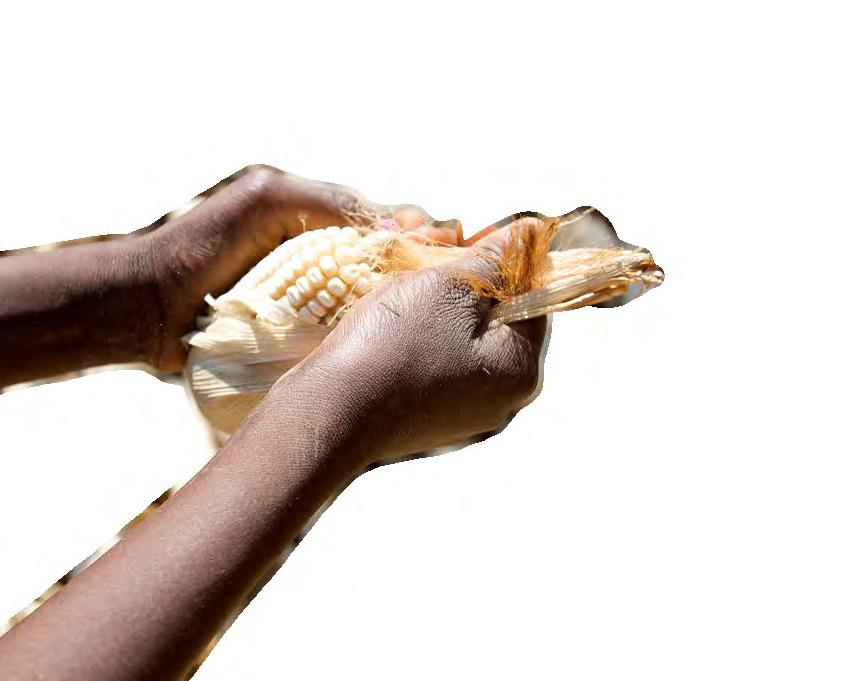
- First rub two maize cobs together
- Once one entire cob has no kernels, use it to remove the kernels from the remaining cobs
8.) Store Kernels in Bag
8.1.) For Self-use, Take to Grinder Mill
9.) Soak
10.) Dry
11.) Grind
12.) Shift
13.) Cook
14.) Serve
6
FARMLAND CONDITIONS
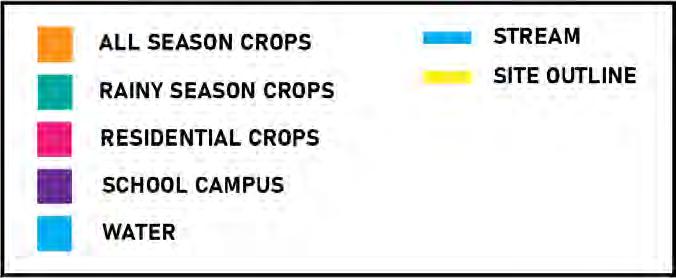
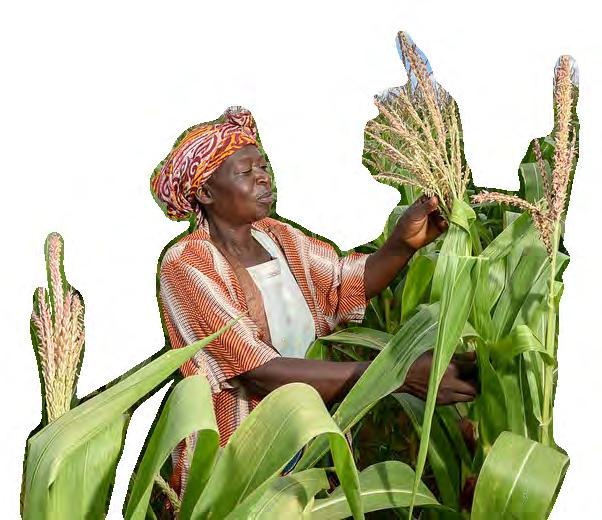
About 16% of the crops are year-round, 20% are family/community-owned, and 40% grow during the rainy seasons. Overall, about 76% of the land area around our site is used for agricultural purposes

7
8
CONCEPTS
10
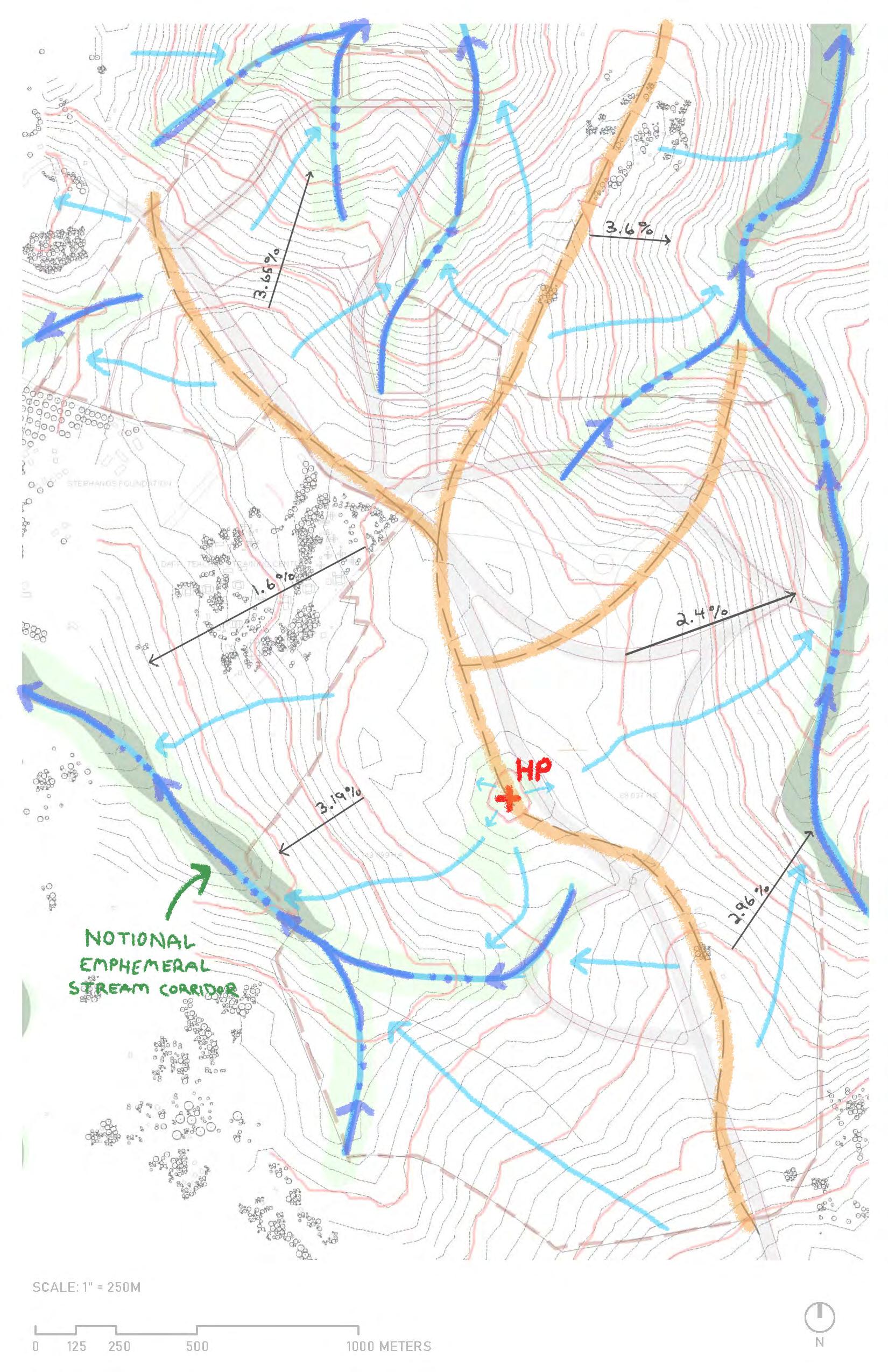
WATER TOPOGRAPHY
LAND ANALYSIS
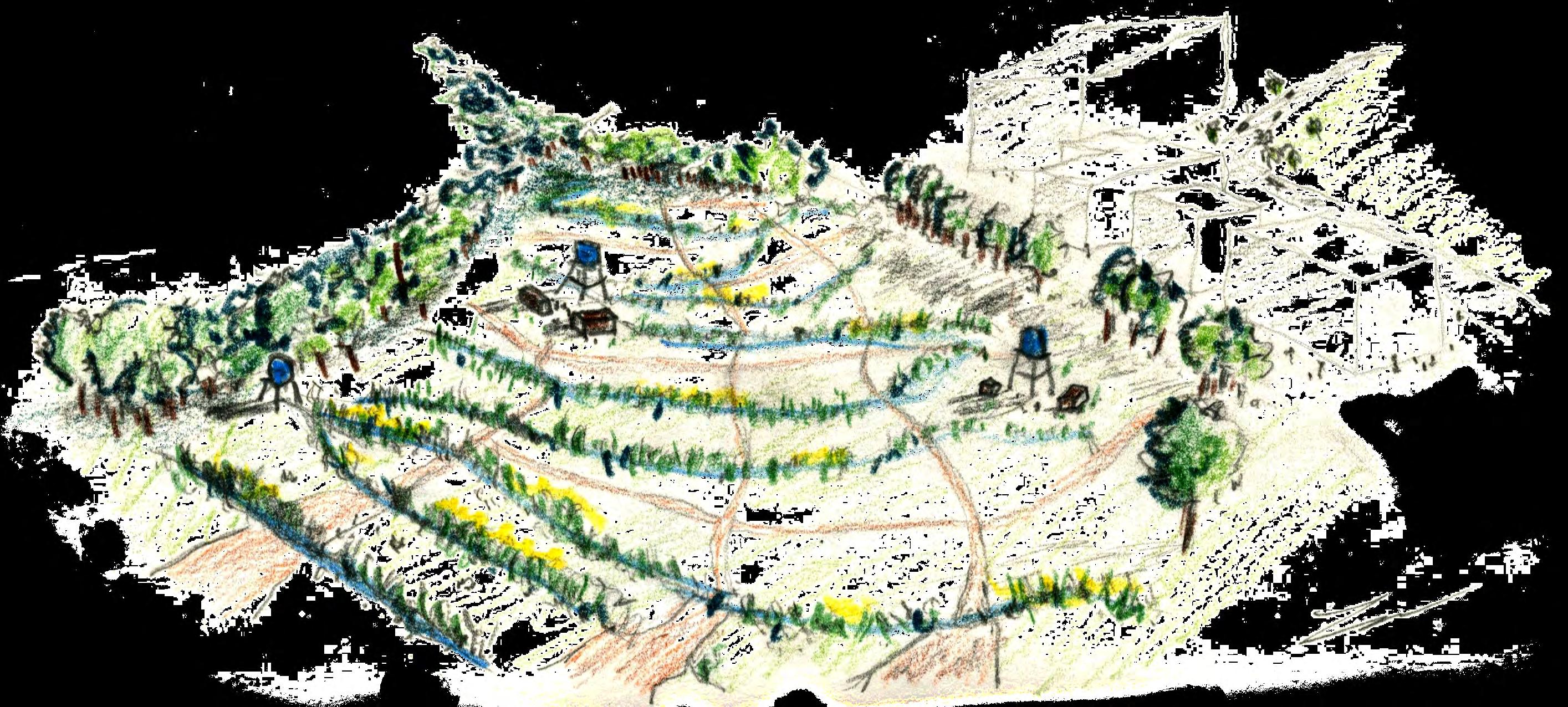
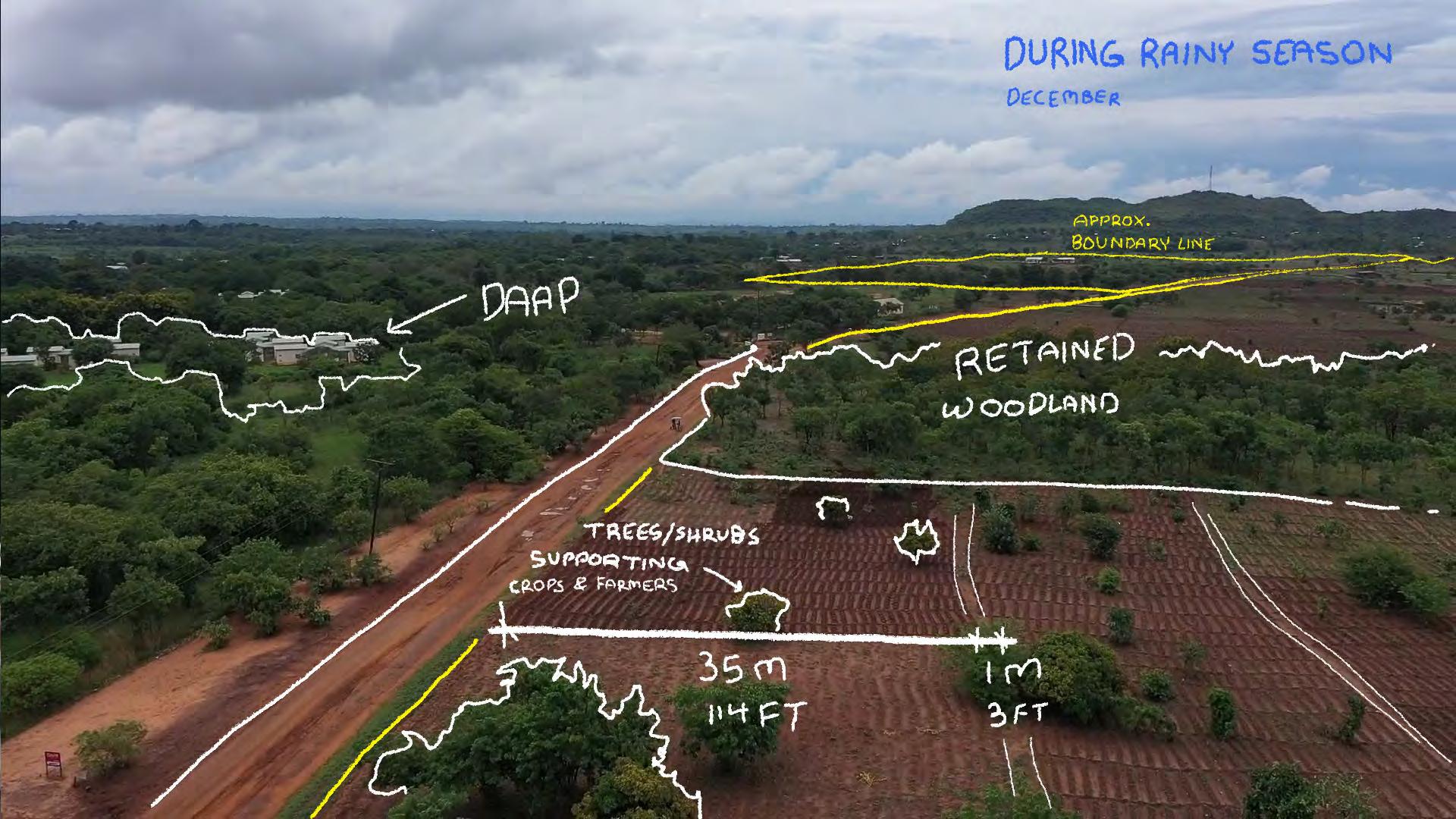
With the help of drone footage, we can determine the various elements that farmlands consist of within our site.
11
LAND ANALYSIS
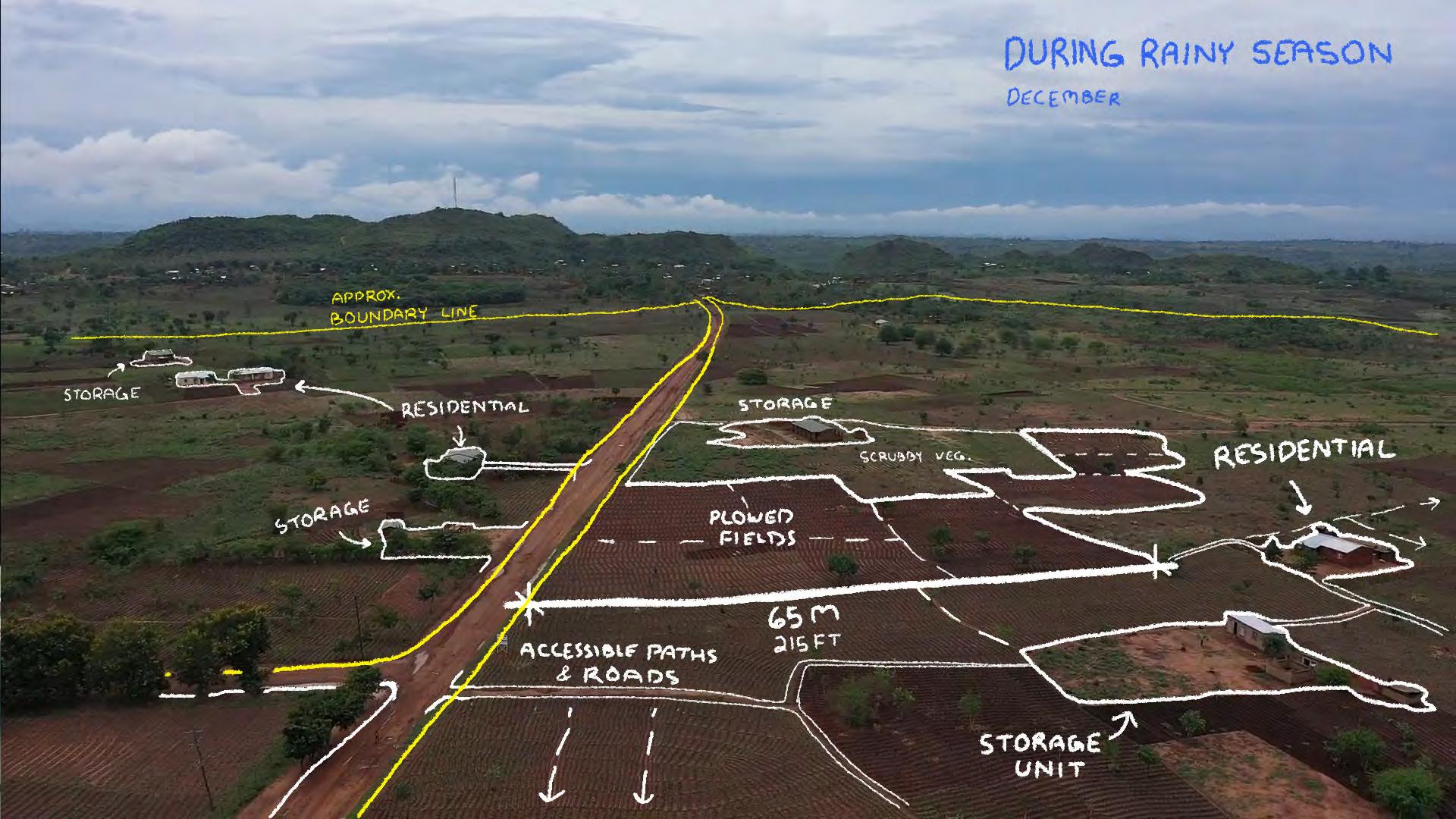
Most, if not all the farmlands consist of the same elements but vary in scale and quantity
12
EXISTING PROGRAM ELEMENTS
Trees & Shrubs
- Provides shade for farmers
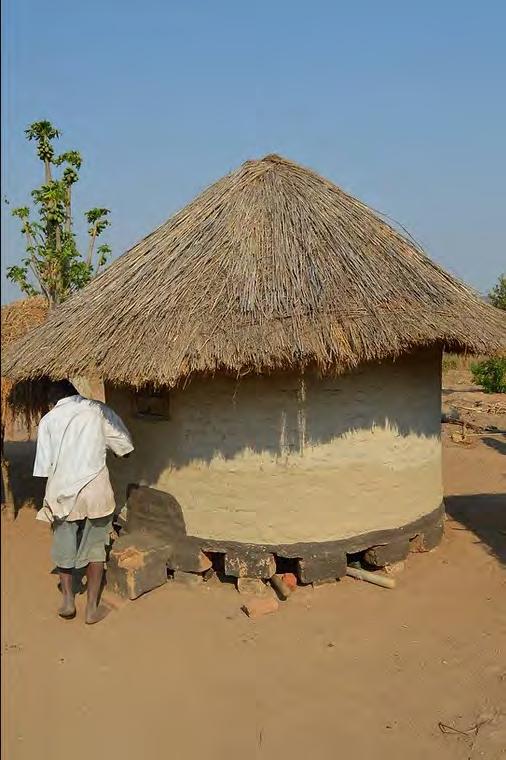
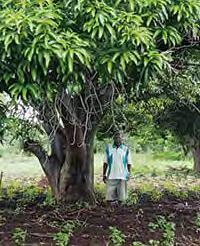
- Supports crop growth
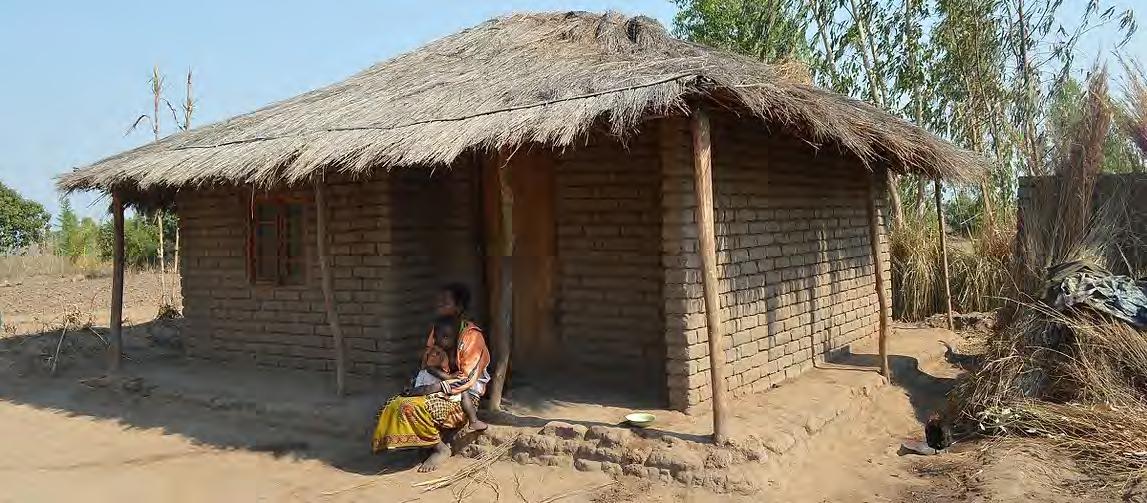
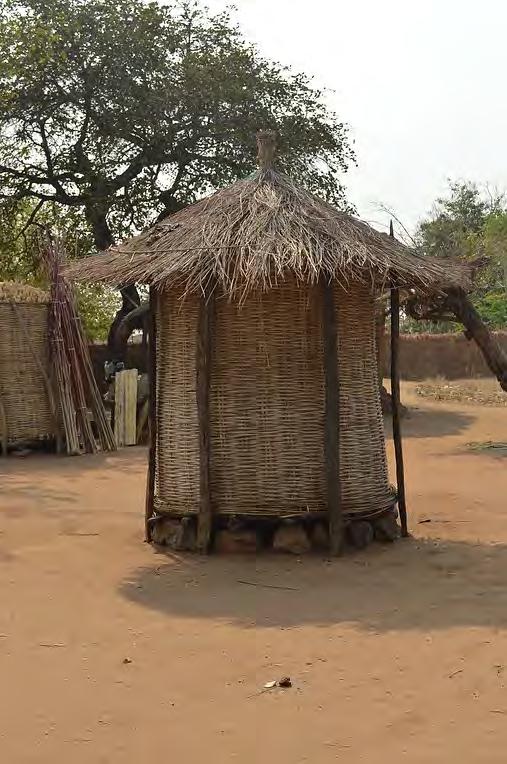
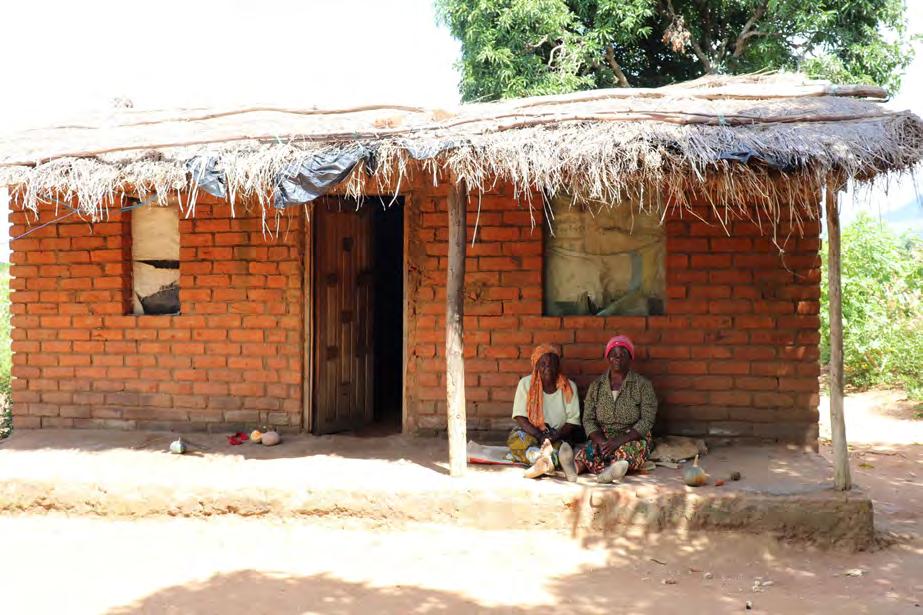
Residential & Storage Units
- Constructed with brick, wood, reeds, & more
Plowed Fields
Accessible Pathway
Retained Woodland
13
RESIDENTIAL
SHADE
SHADE
GRANARY GRANARY
NEW PROGRAM ELEMENTS
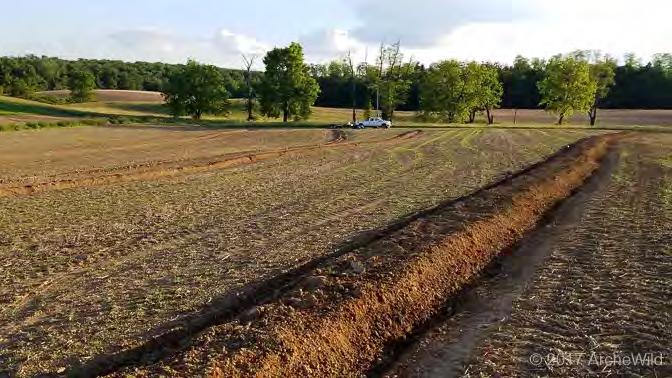
Water Reclamation & Storage
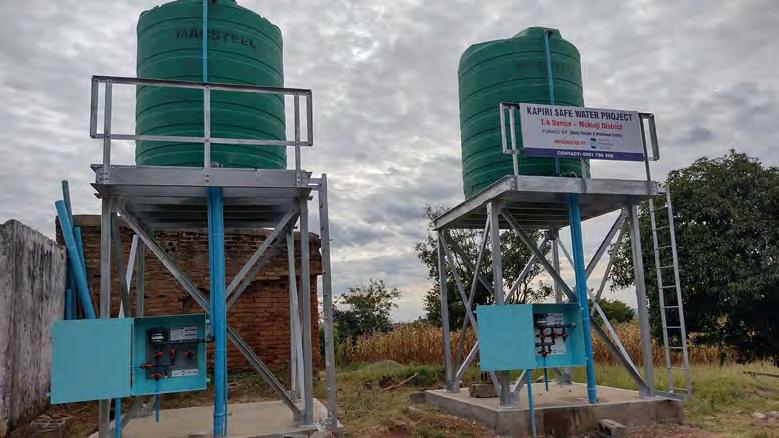
- Cisterns
- Swales - Canals
- Supports sustainable farming practices
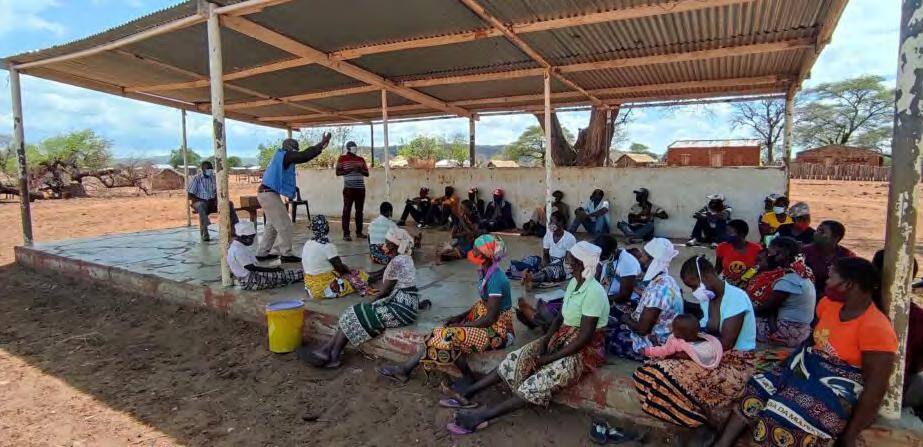
Social Spaces
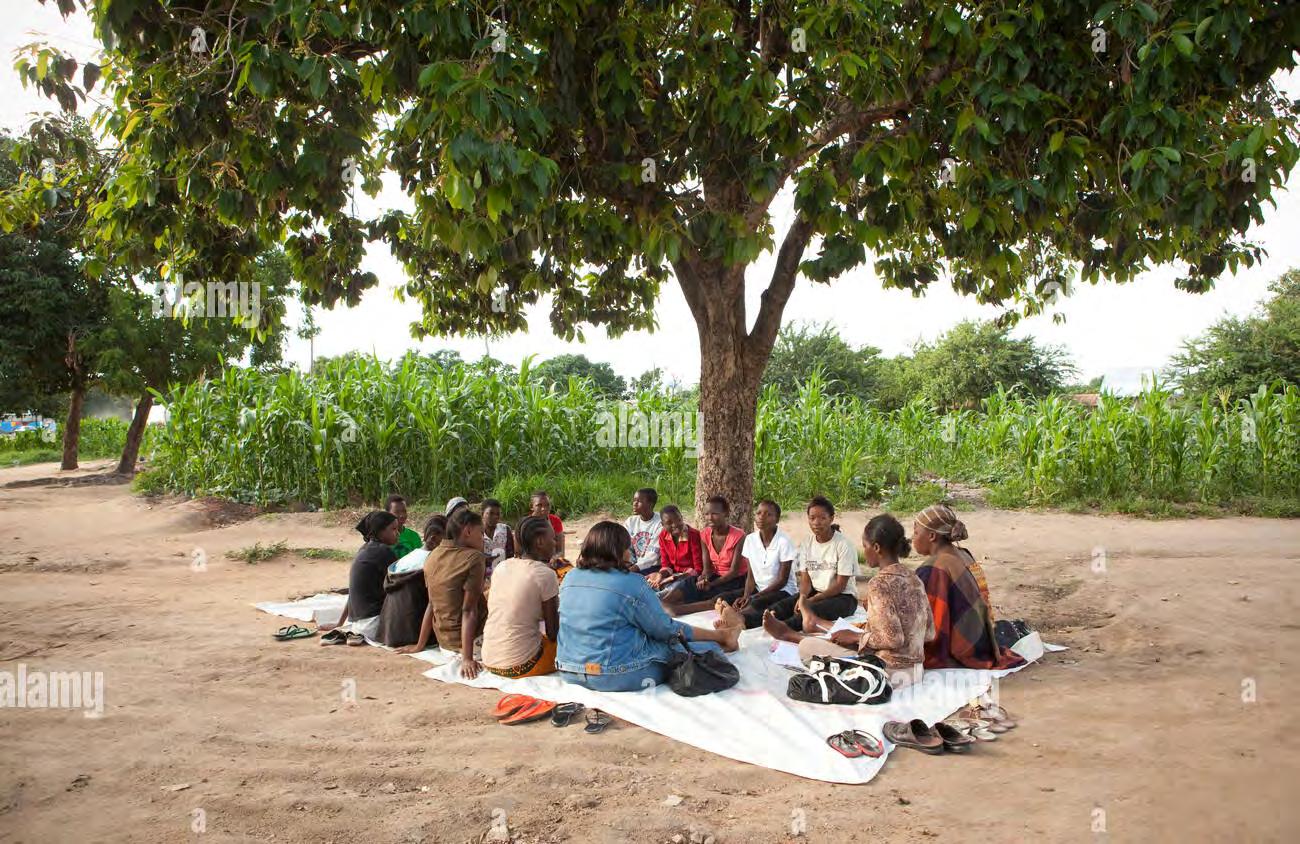
- Within shaded areas (i.e. Under tree or veranda)
- Strengthen community through engagement
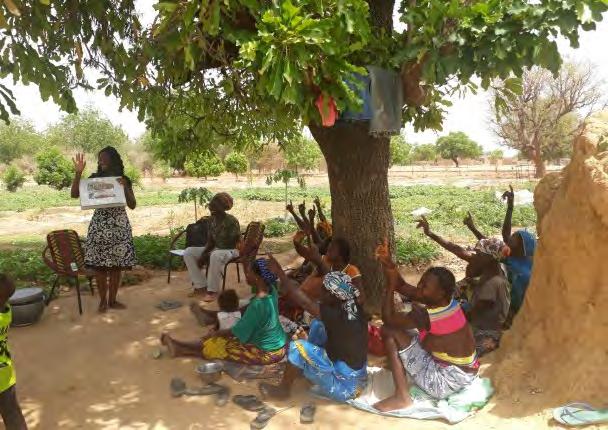
Teaching Spaces
- Within shaded areas
- Supports passing down sustainable farming approaches for future generations
14
CANAL
TEACHING
SOCIAL
SWALE CISTERN
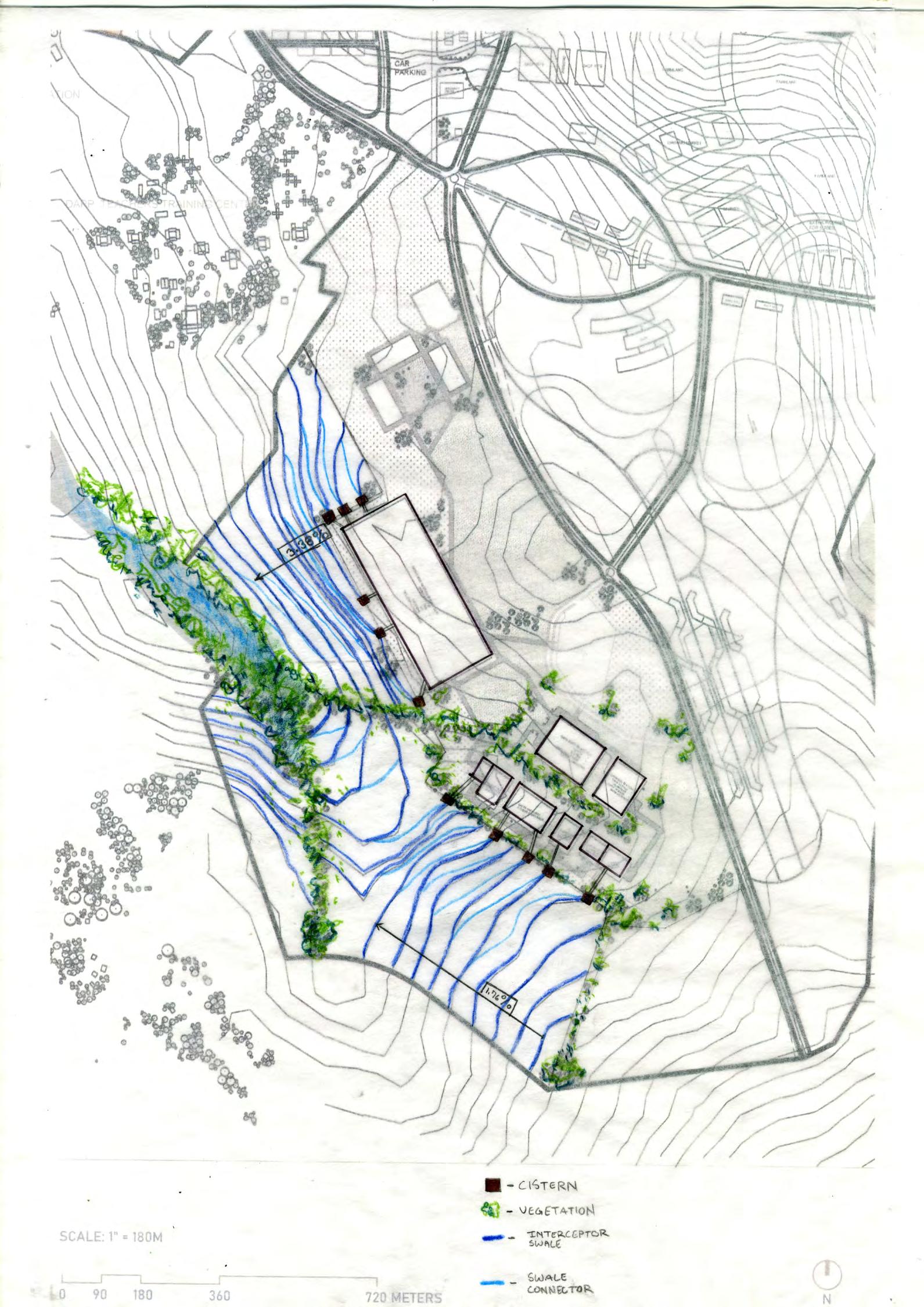
INTERCEPTOR SWALE SITE PLAN
Water Reclamation & Storage
- Cisterns
- Swales
- Canals
Trees & Shrubs
- Provides shade for farmers
- Supports crop growth
Residential & Storage Units
- Constructed with brick, wood, reeds, & more
Plowed Fields
Accessible Pathway
Retained Woodland
- Supports sustainable farming practices
Social Spaces
- Within shaded areas
(i.e. Under tree or veranda)
- Strengthen community through engagement
Teaching Spaces
- Within shaded areas
- Supports passing down sustainable farming approaches for future generations
15
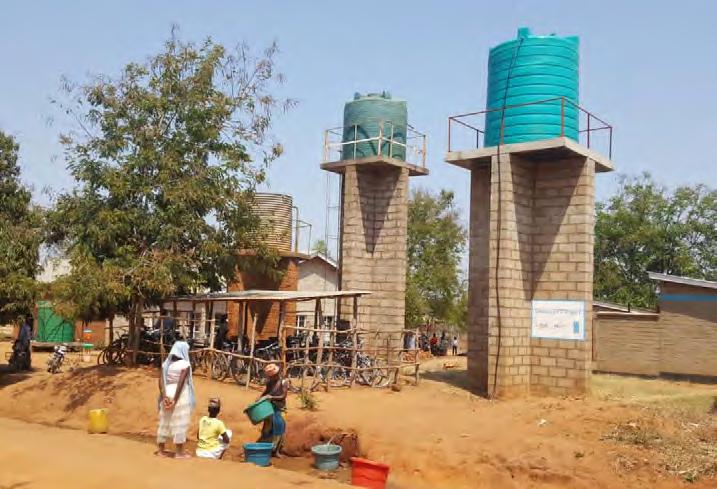
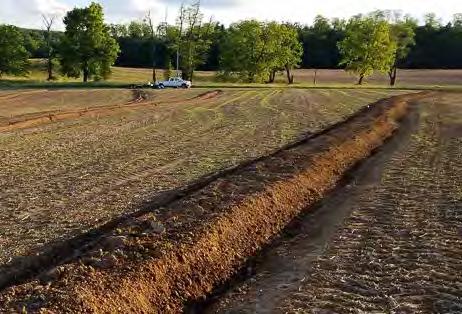
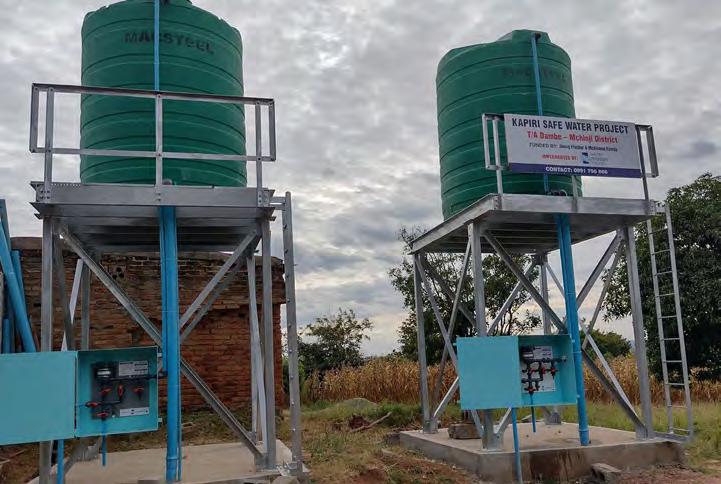
PRECEDENTS
16
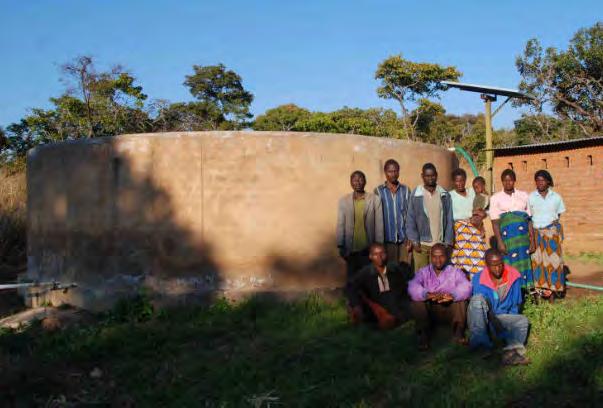
CISTERN
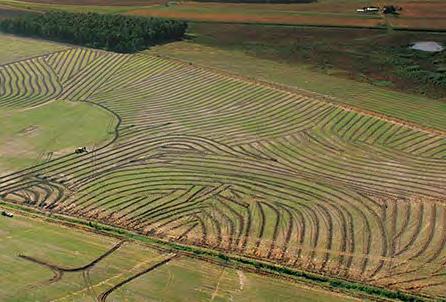
SWALE
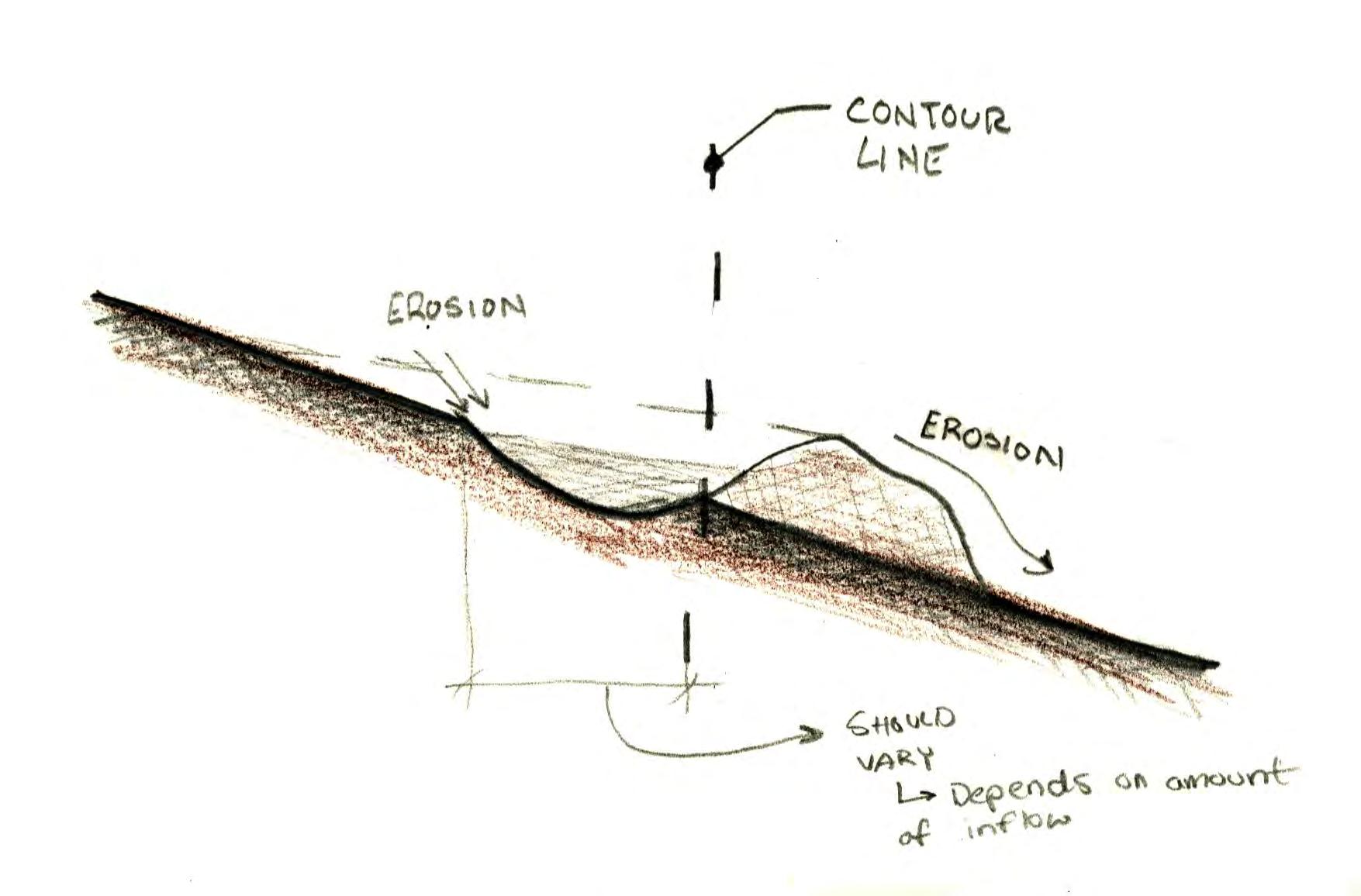
INTERCEPTOR SWALE SYSTEM
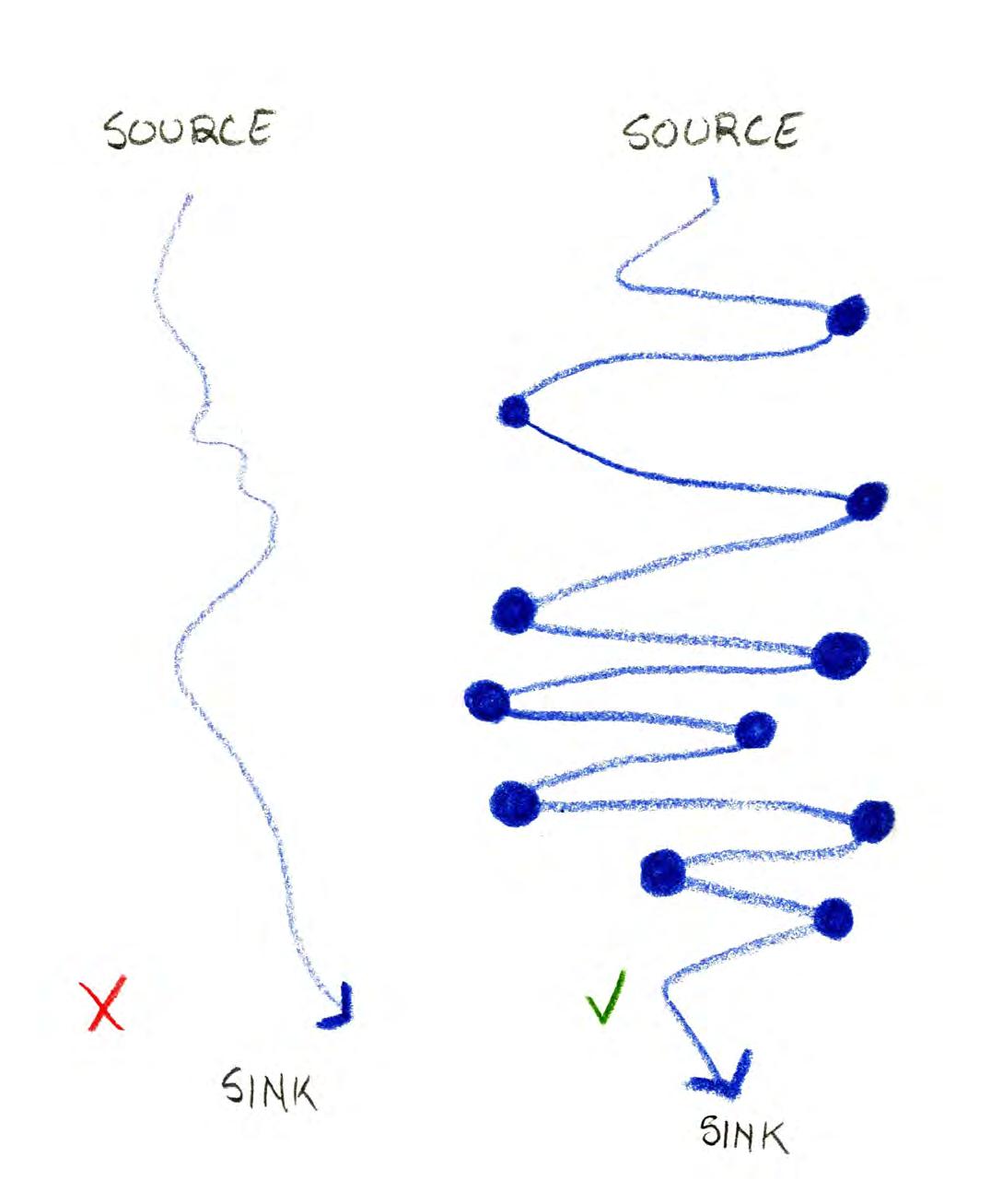
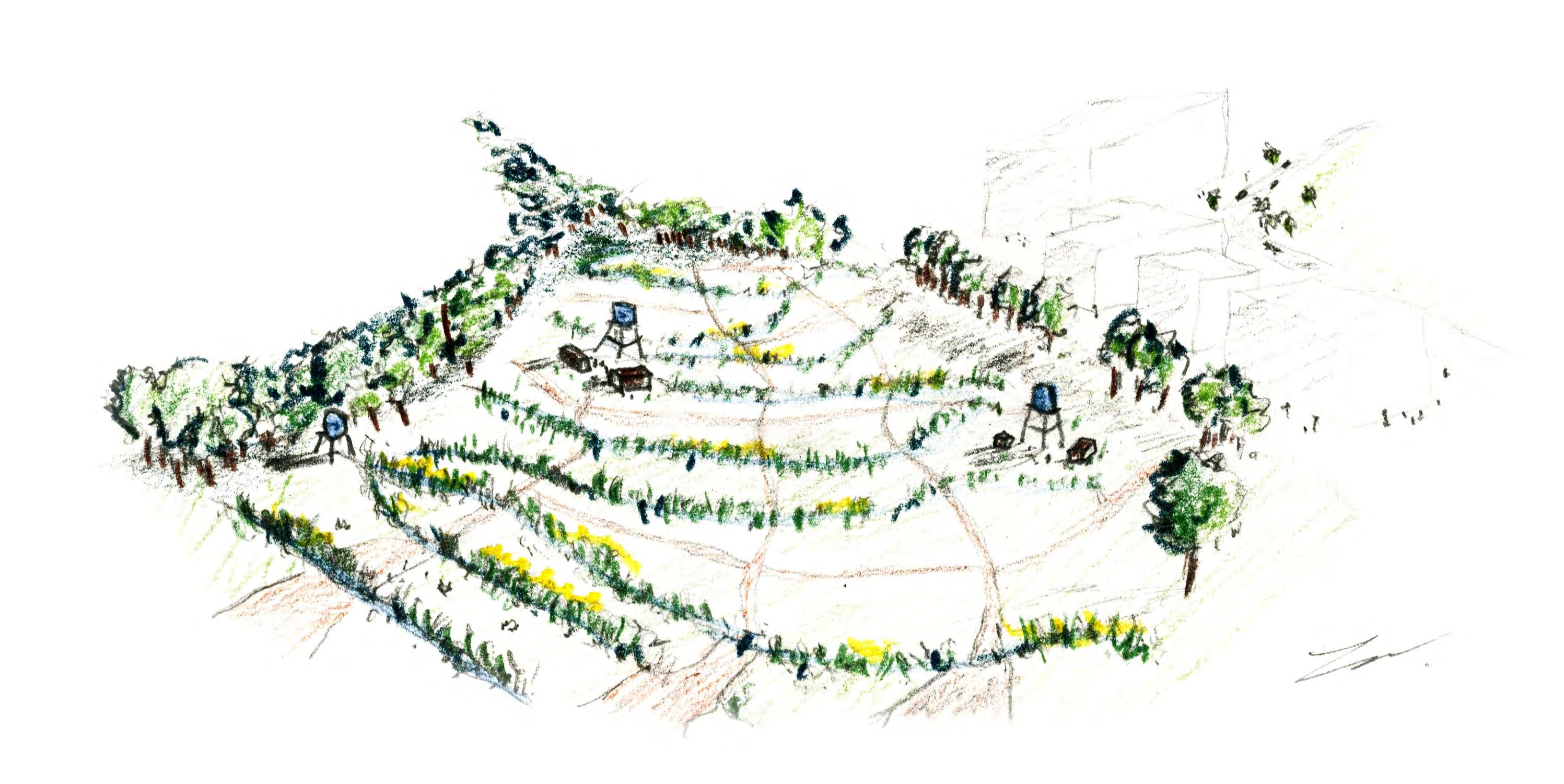
With the use of interceptor swales, water can be better maintained and irrigated sufficiently to control the heavy amounts of rainfall.
17
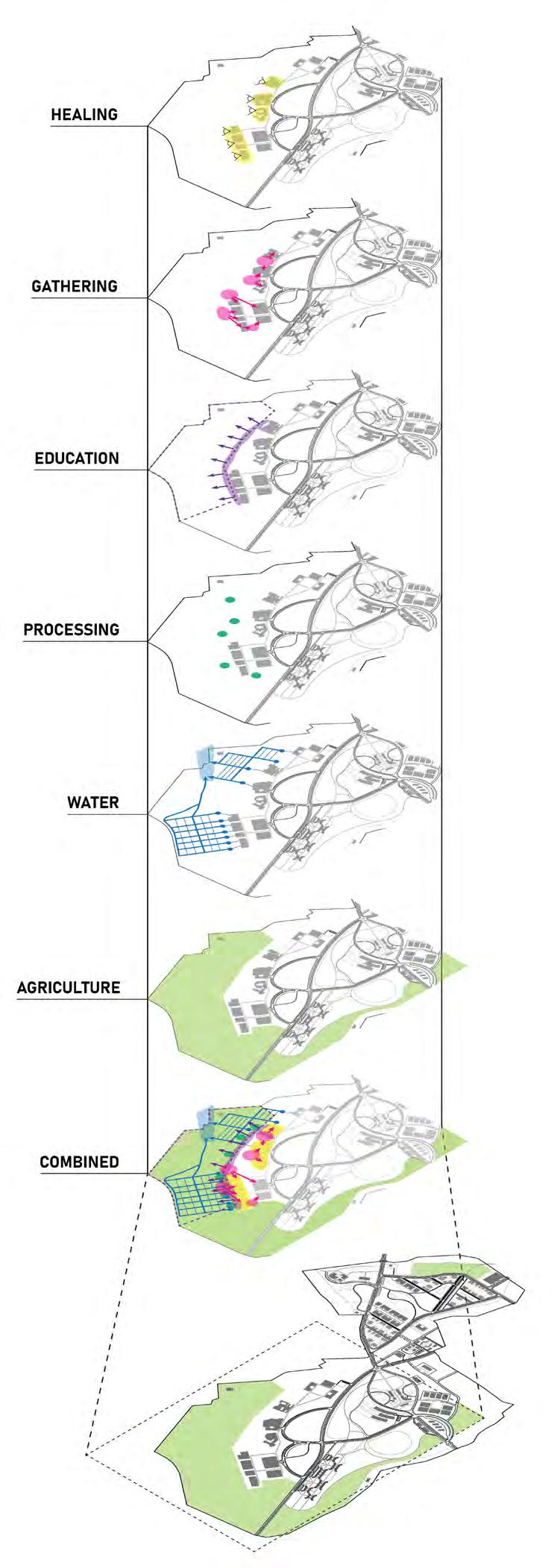
PROPOSED PROGRAM ELEMENTS
The program elements shown are located within potential areas for them to exist, all of which connect to one another to create multi-functional spaces.
18
AGRICULTURE
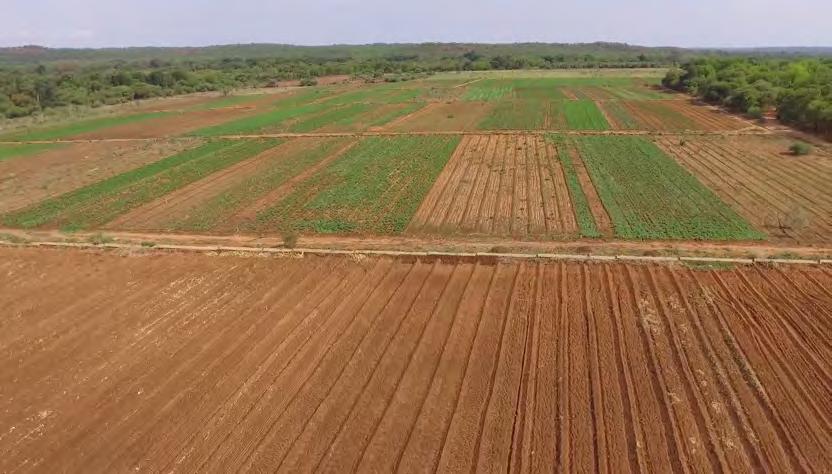
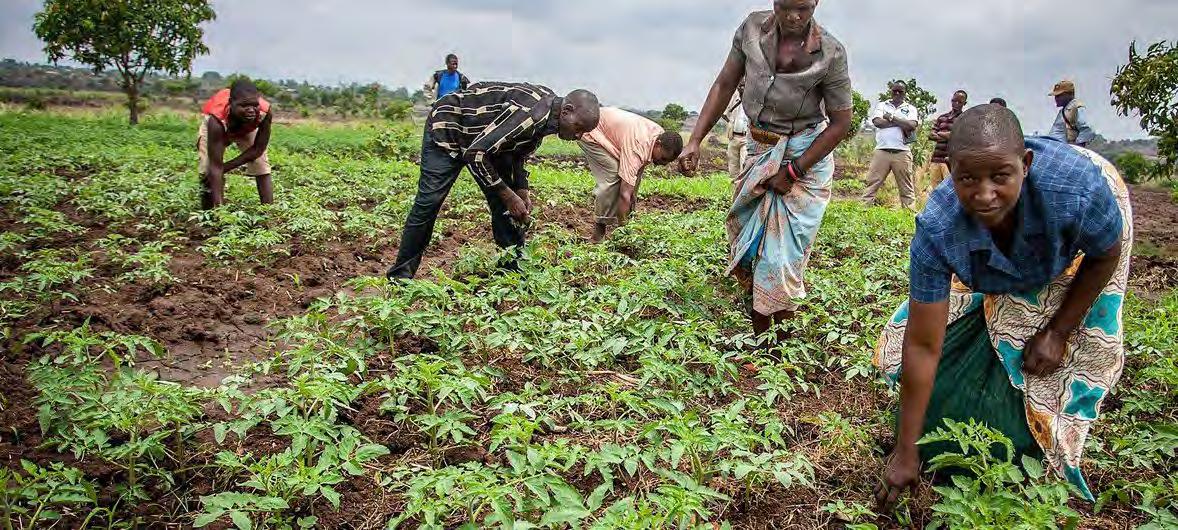
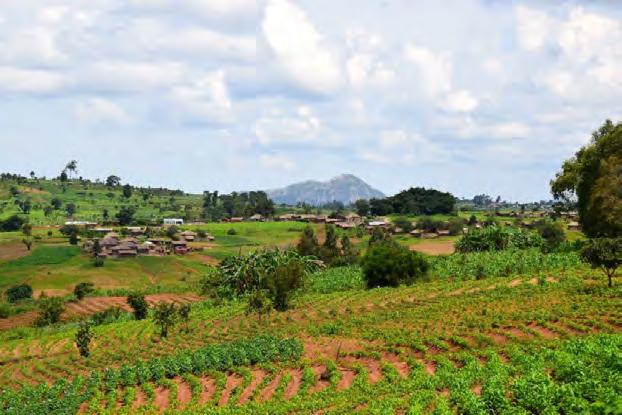
The farmland creates an outer green ring around the site that supports cultivation, smallholder farmers, and families in need of food.
19
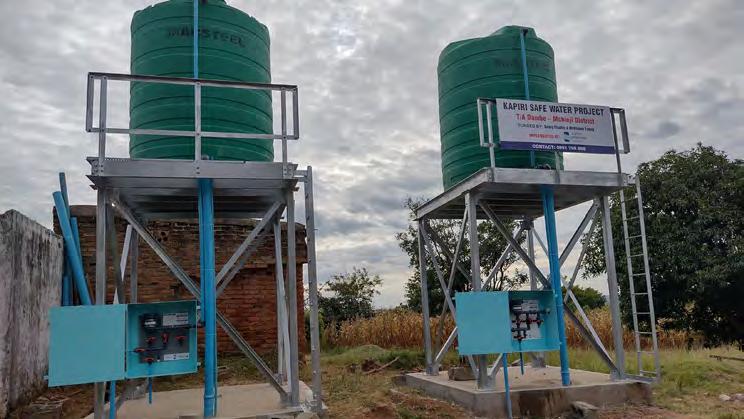
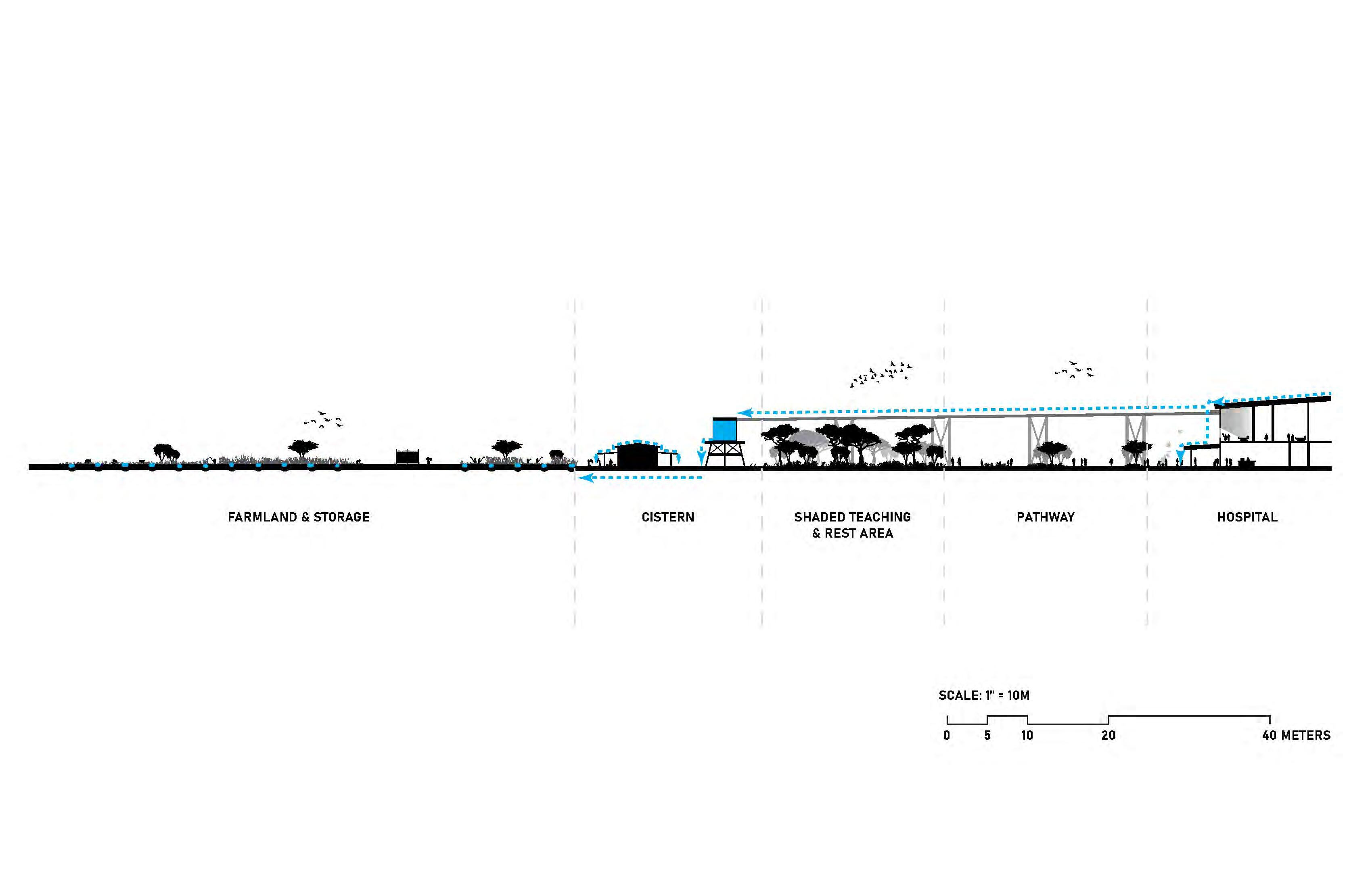
Water is collected from the roofs of buildings and feeds into an aqueduct that transports the water into a cistern. From there, the water is later released into swale systems that help the growth of crops within the farmland during the dry seasons.
20 WATER
PROCESSING
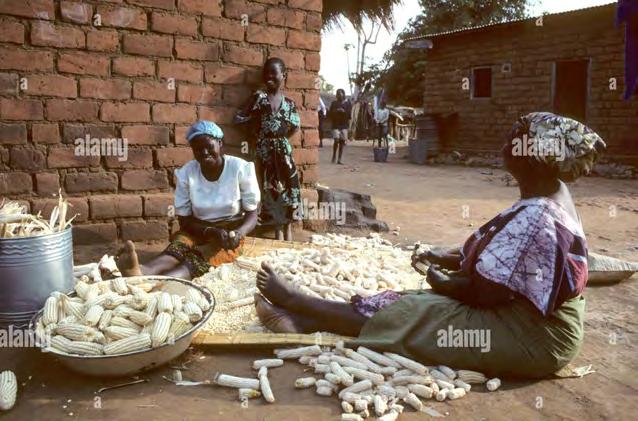
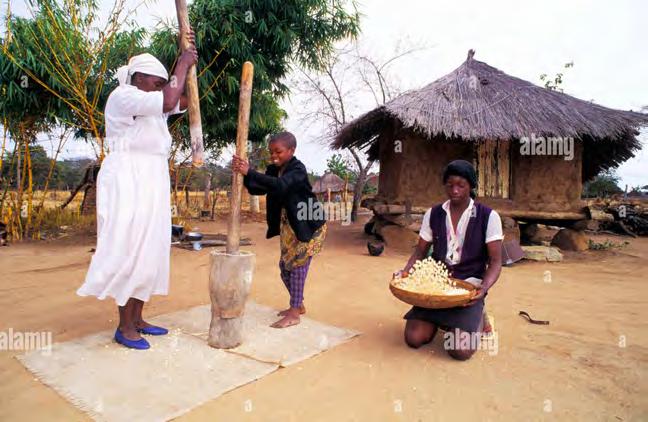
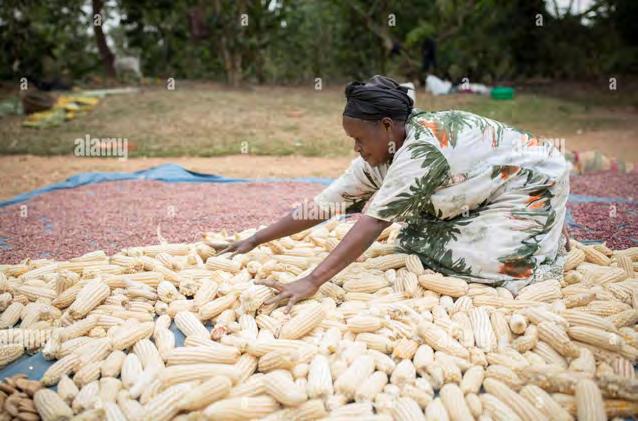
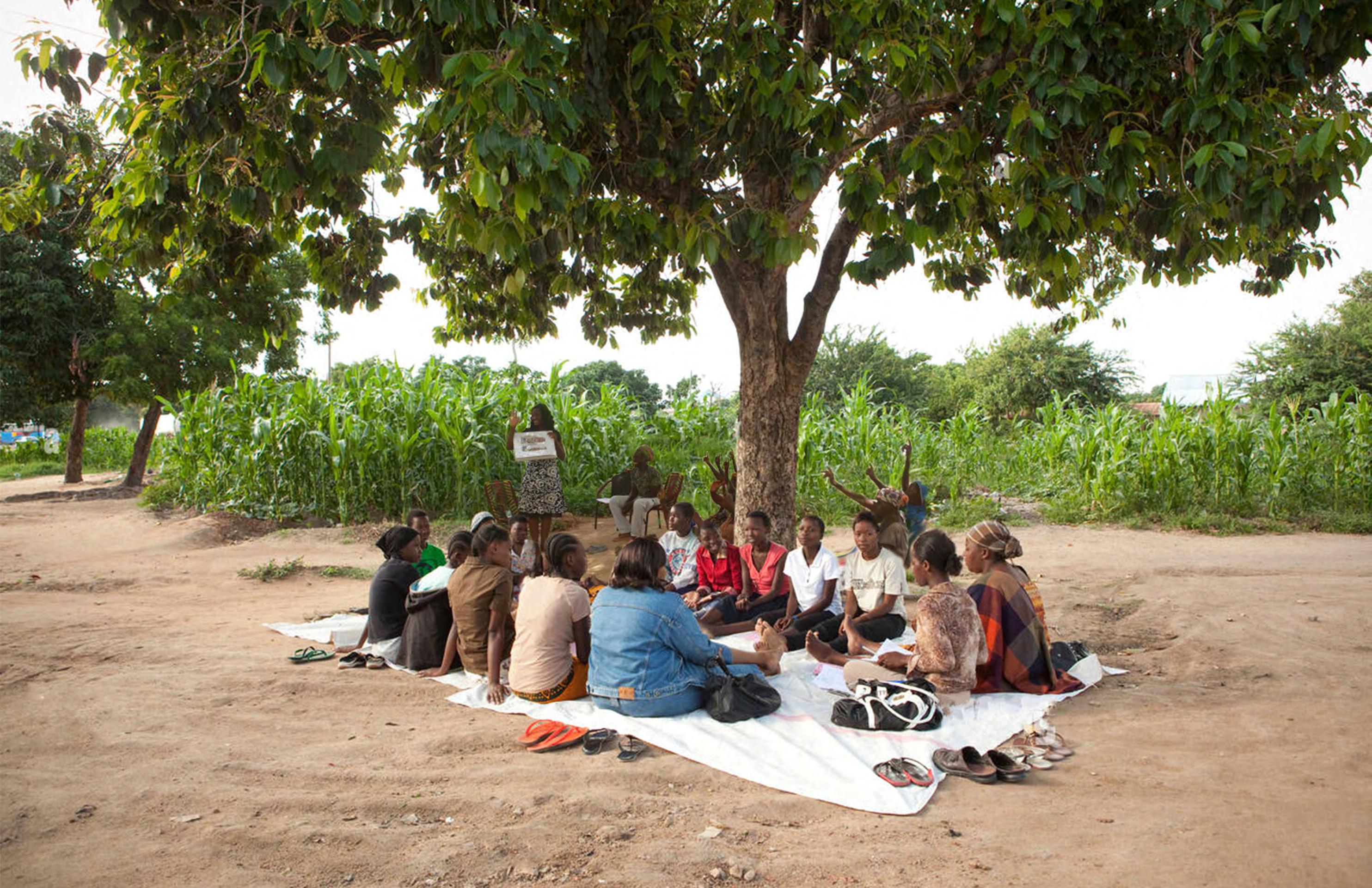
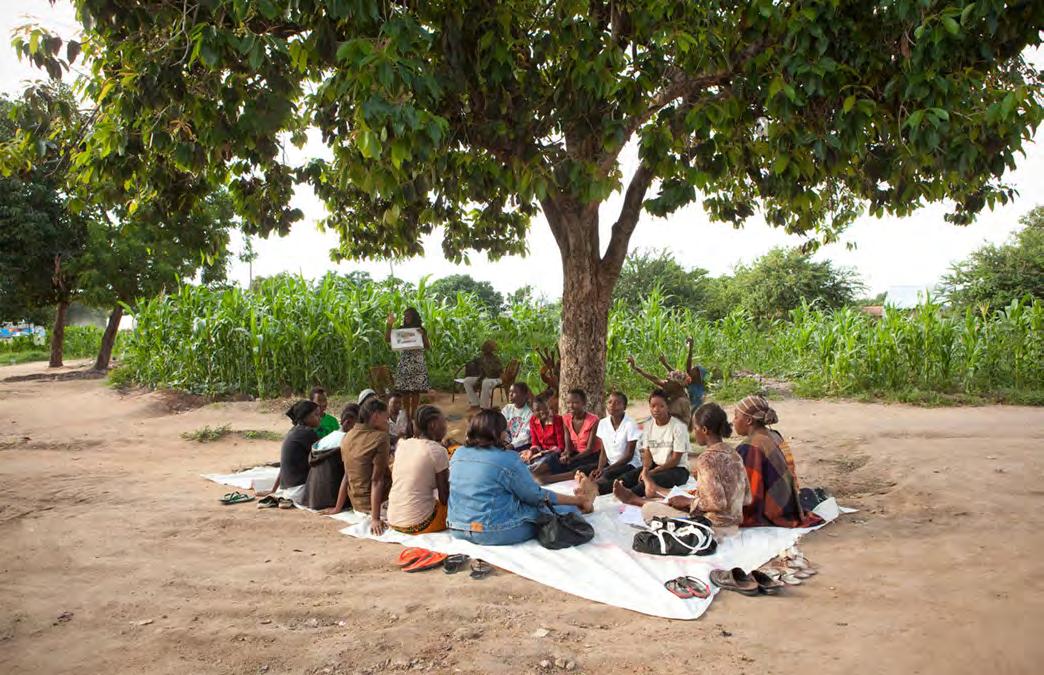
Areas for processing crops can also become areas for community gathering and engagement. Typically, for maize, locals lay out a large tarp to sit on and place the harvested maize, to which they remove the kernels. Overall, crop processing is an engaging experience that could perhaps inspire others to become farmers.
21
EDUCATION
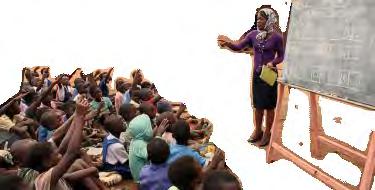
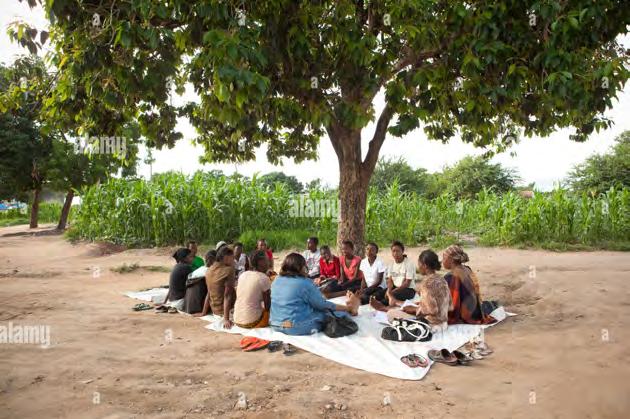
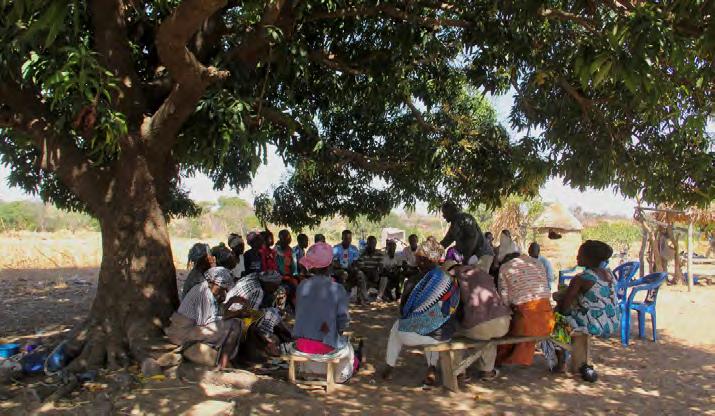
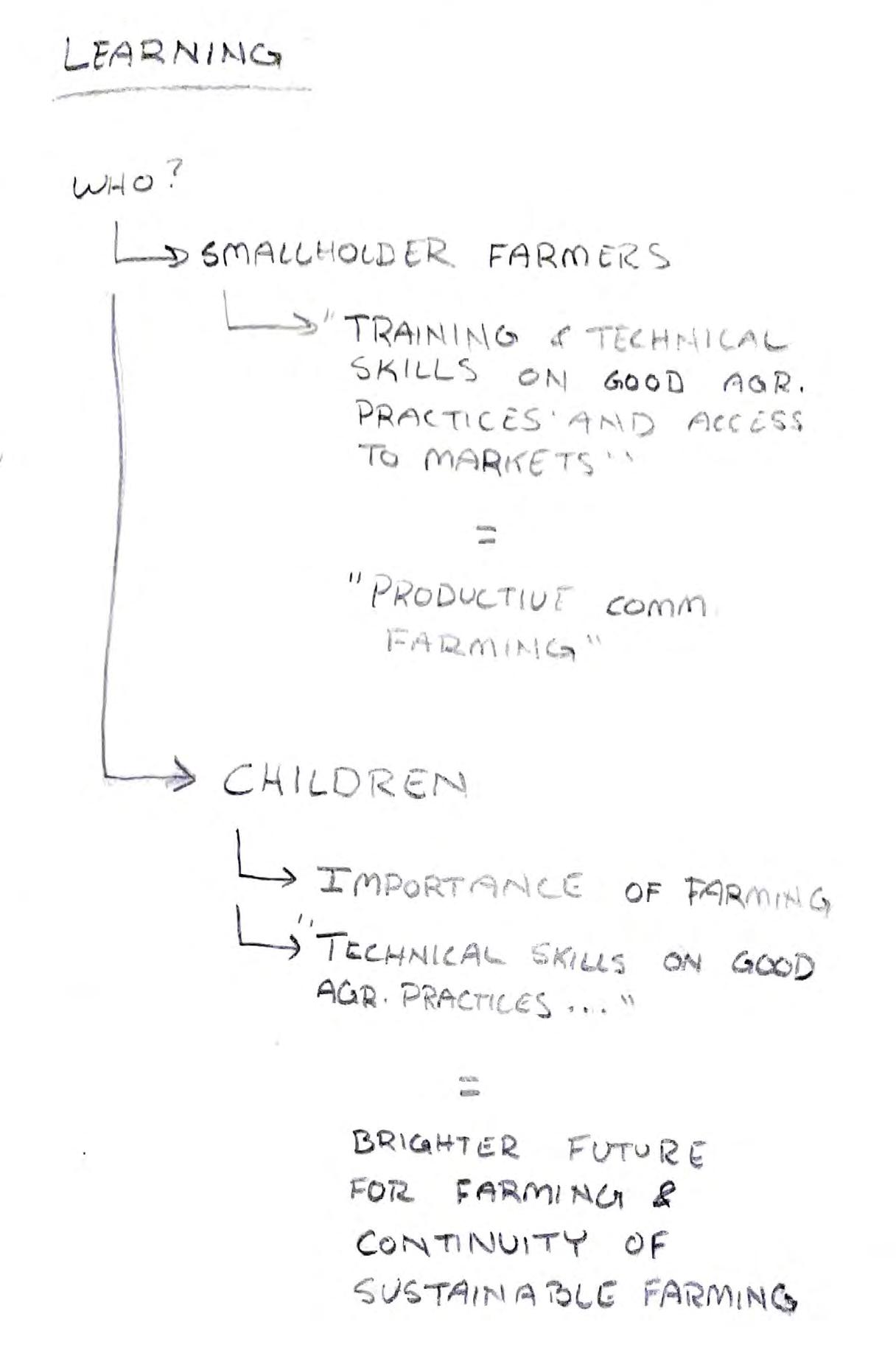
Those being taught vary between smallholder farmers and children, to those who learn the importance of good farming practices, technical skills, and the environmental, sustainable, and societal benefits it brings, all of which also take place within shaded areas.
22
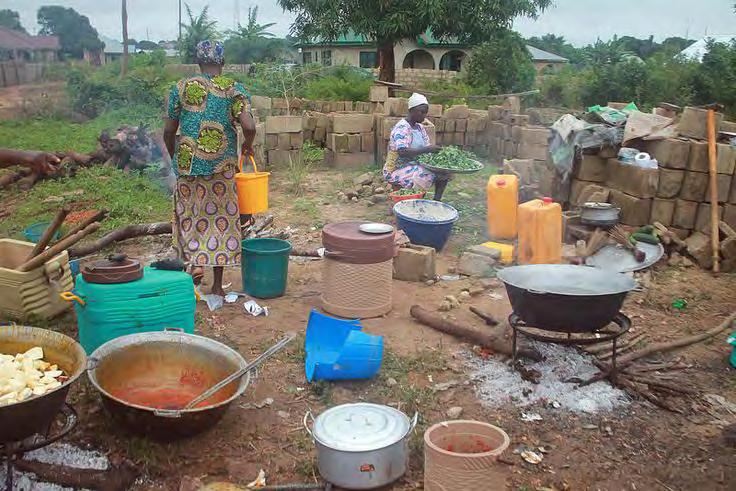
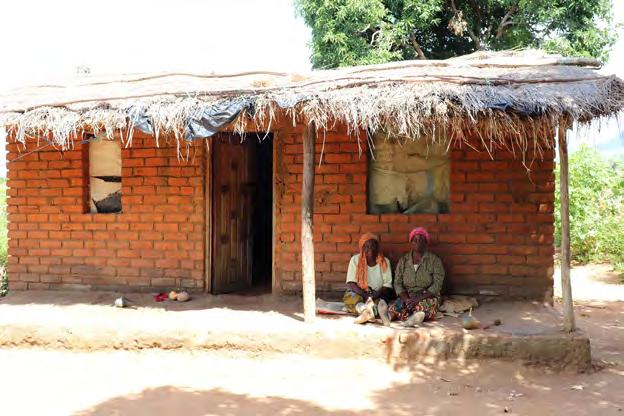
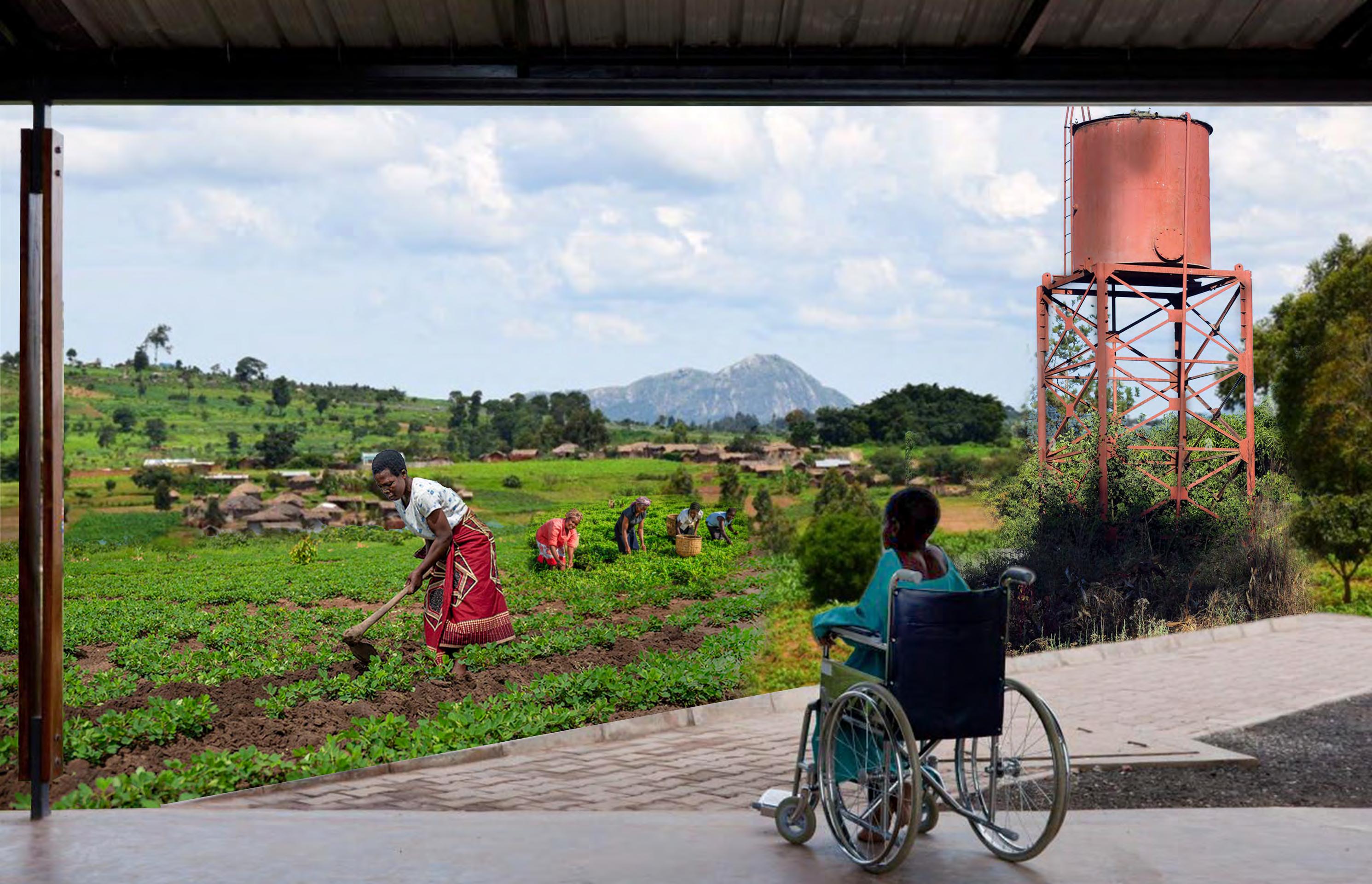
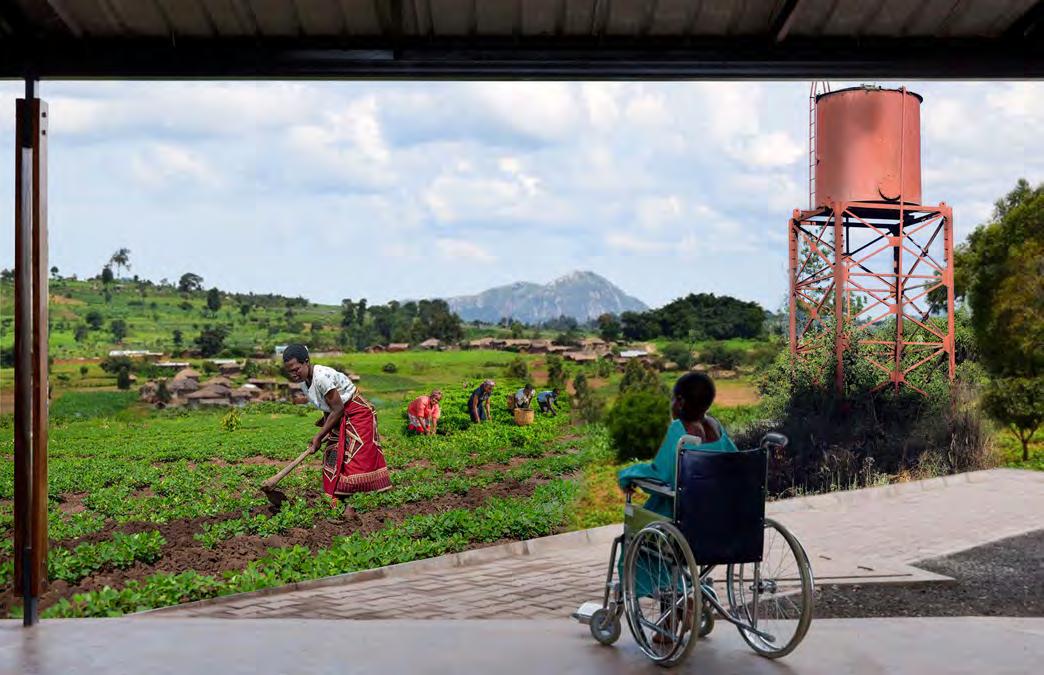
Gathering spaces expands to various additional program elements, such as cooking. Typically, families visit any relatives in the hospital and provide care for them. This involves cooking meals for their loved ones and takes place outside and in close proximity to the hospital
23 GATHERING
As all these programs interlink, one from within the hospital could perhaps witness it all happening as they heal and are reminded what the true heart of Malawi’s culture is.
24
HEALING
COMBINED
All the program elements interlink and function together to create multi-functional spaces.
25
CLAY MODEL TOPOGRAPHY STUDIES
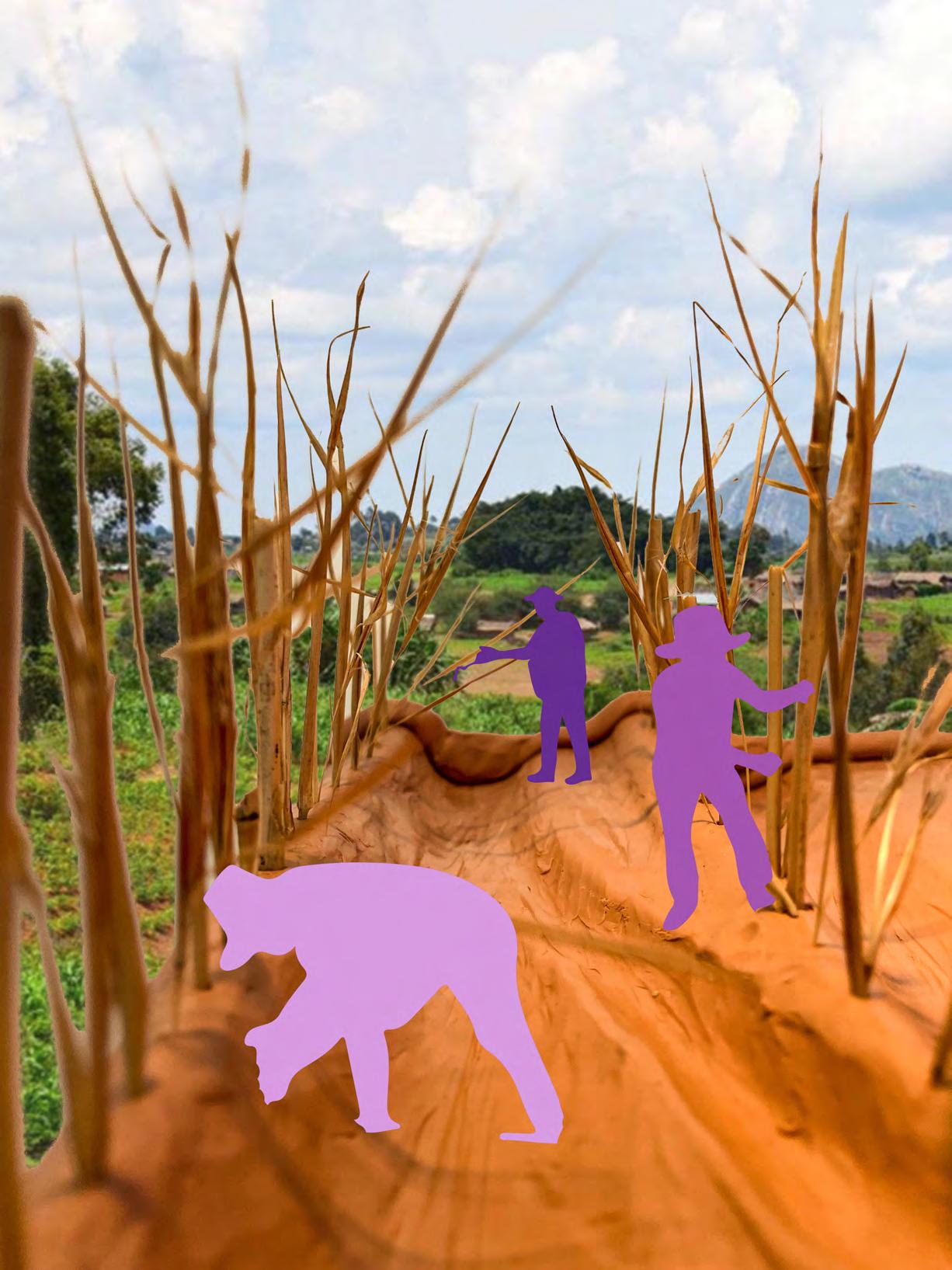
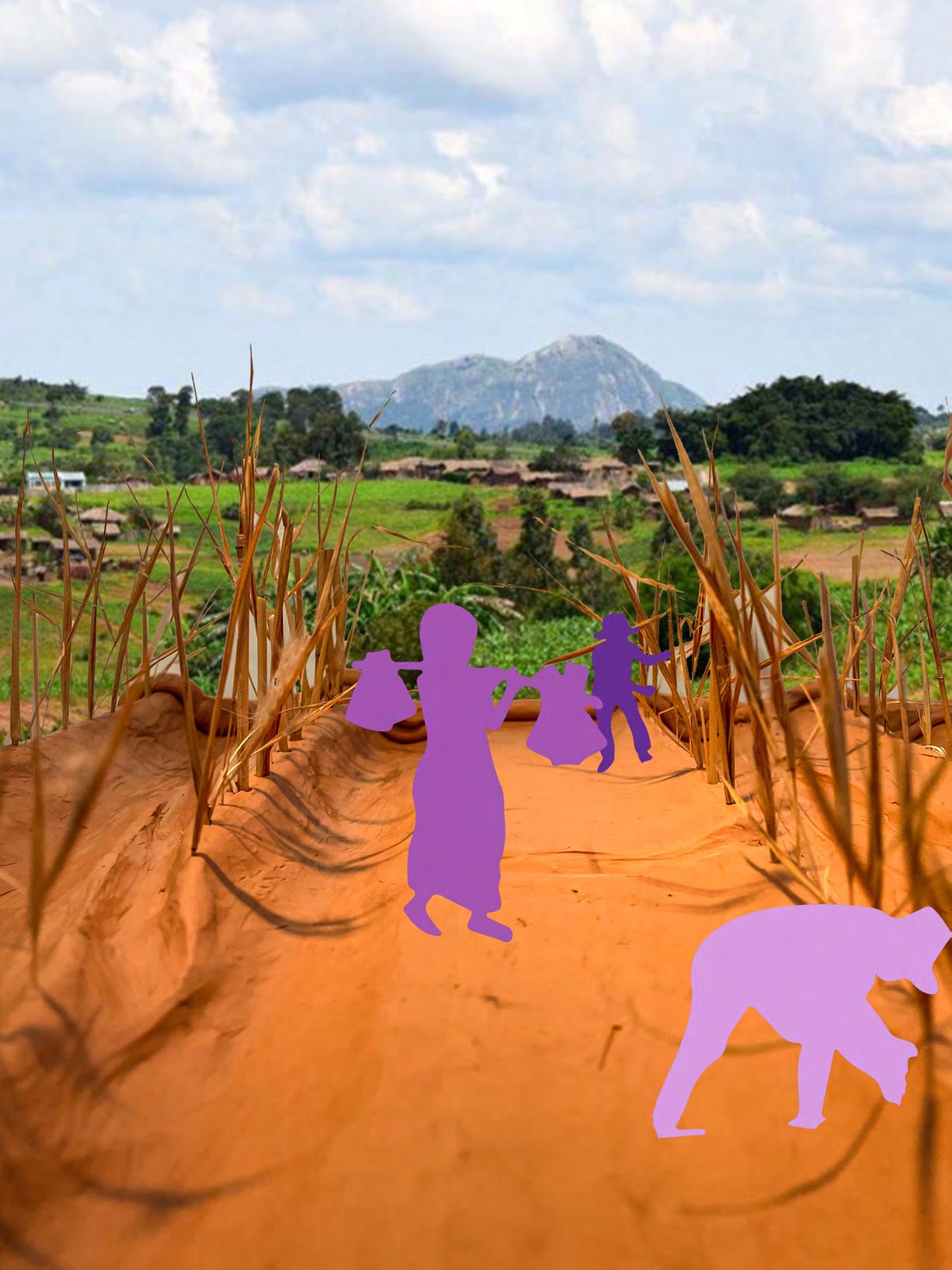
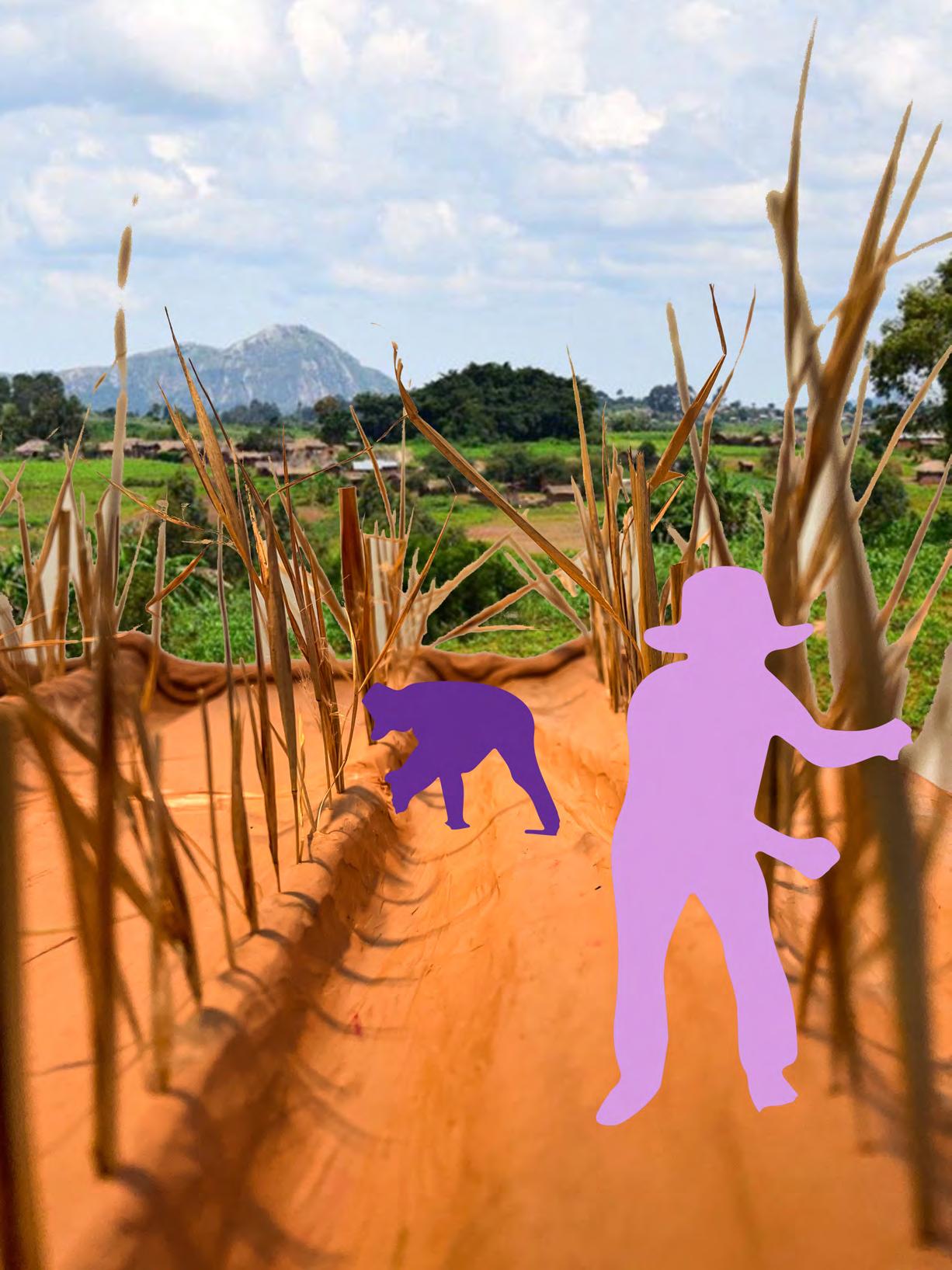
26
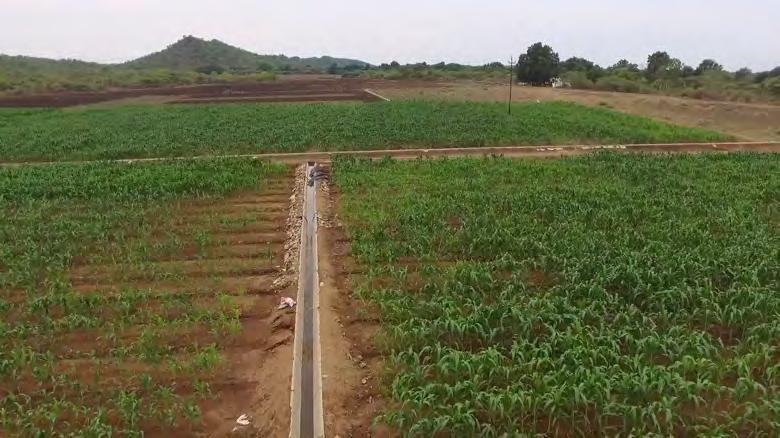
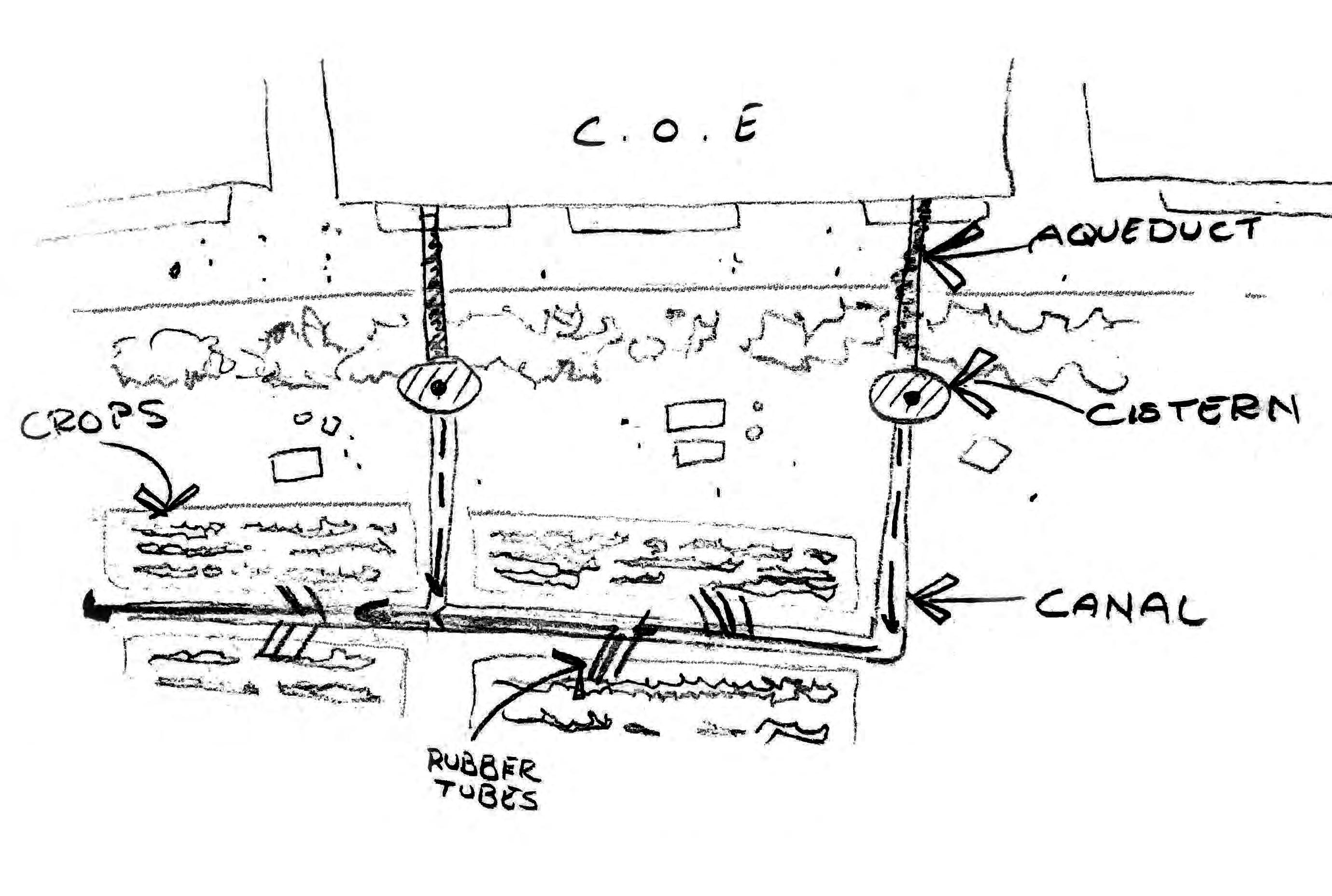
CANAL SYSTEM STUDY
An additional strategy for water irrigation is the use of canals that are typically powered by water pump generators. Water is then collected through rubber tubes and poured between each row of crops. Both swale and canal strategies create an immersive space that revolves around water, agriculture, teaching, and engagement.
27
INTERCEPTOR SWALE APPROACH | PLANTING AND MAINTENANCE
MAINTENANCE
0 1 6 FEET 2
4
SCALE: 3/4" = 1FT
CROPS
INTERCEPTOR SWALE
28
INTERCEPTOR SWALE APPROACH | IRRIGATION
GROWTH
INFILTRATION & SATURATION
0 1 6 FEET 2
4
SCALE: 3/4" = 1FT
INTERCEPTOR SWALE
29
INTERCEPTOR SWALE APPROACH | BEFORE HARVEST
0 1 6 FEET 2
4
SCALE: 3/4" = 1FT
CROPS
30
INTERCEPTOR SWALE
CANAL APPROACH | PLANTING AND MAINTENANCE
MAINTENANCE
0 1 6 FEET 2
4
SCALE: 3/4" = 1FT
CANAL CROPS
31
INTERCEPTOR SWALE APPROACH | IRRIGATION
WATER FLUSHES OUT
GROWTH
INFILTRATION & SATURATION
0 1 6 FEET 2
4
SCALE: 3/4" = 1FT
CANAL
RUBBER TUBE
32
INTERCEPTOR SWALE APPROACH | BEFORE HARVEST
0 1 6 FEET 2
4
SCALE: 3/4" = 1FT
CANAL
33
CROPS
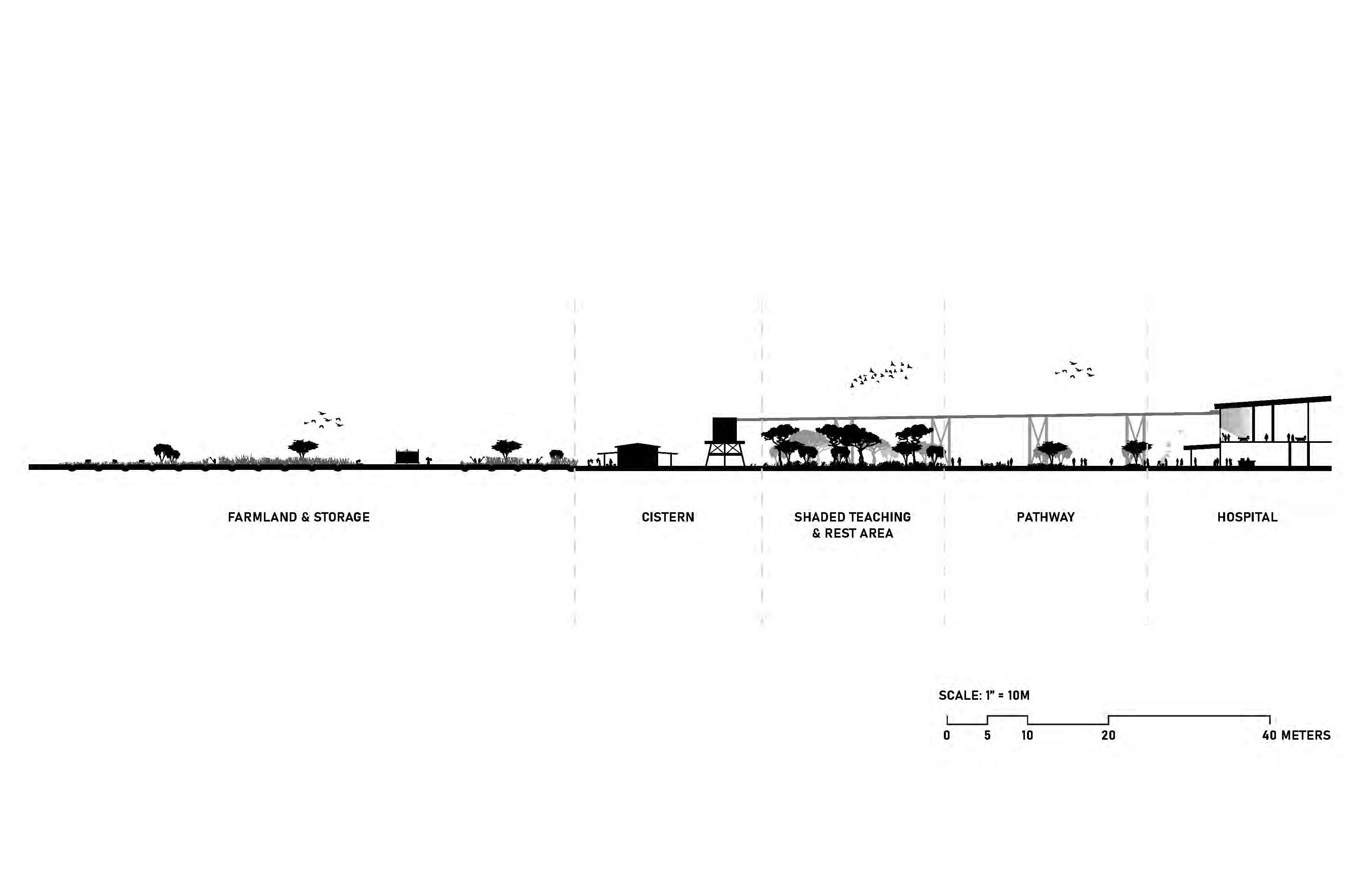
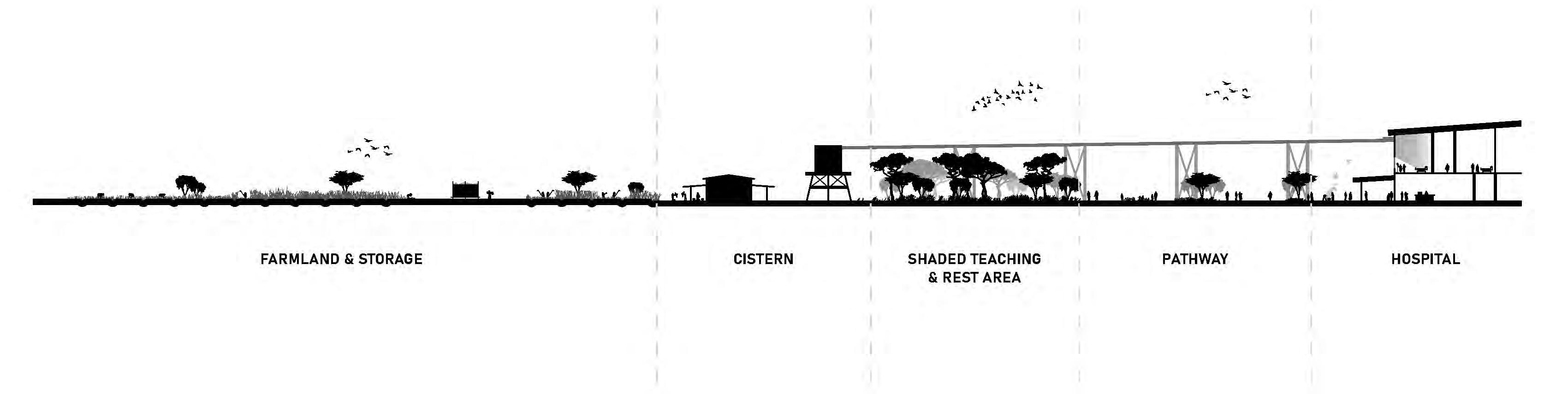
PROPOSED SITE SECTION
Through agriculture, teaching, and engagement, the site then creates a journey for the community and ultimately tells a story of their culture.
34
PROPOSED SITE SECTION
Additionally, the site tells the story of the water’s journey and function throughout the landscape.
35
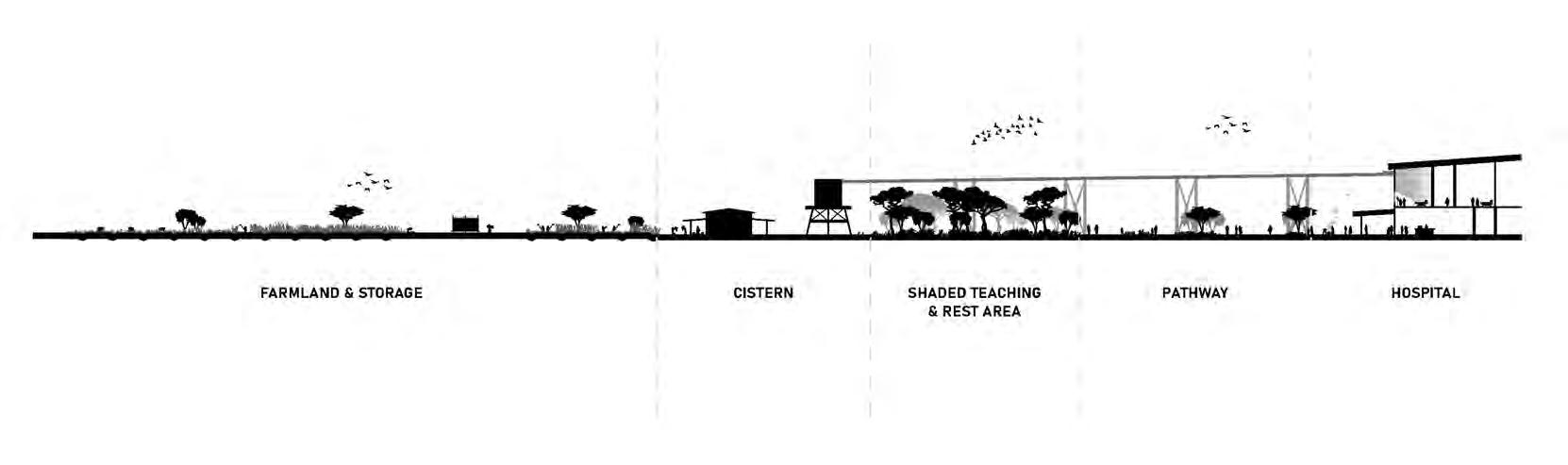
PROPOSED SITE SECTION
HARVESTING
GRANARY SWALE
0
.5 1 2 4
SCALE: 1” = 1M
METERS
36
PROPOSED SITE SECTION
HARVESTING
LEARNING
0 SCALE: 1” = 1M .5 1 2 4 METERS
CHILEKA FARM
37
38
PERSPECTIVE EDUCATION GATHERING PROCESSING
PROPOSED SITE SECTION
0 SCALE: 1” = 1M .51 2 4 METERS
39
GATHERING HEALING
40
HEALING
PERSPECTIVE
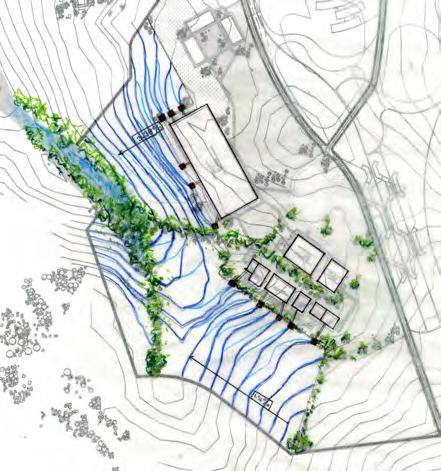
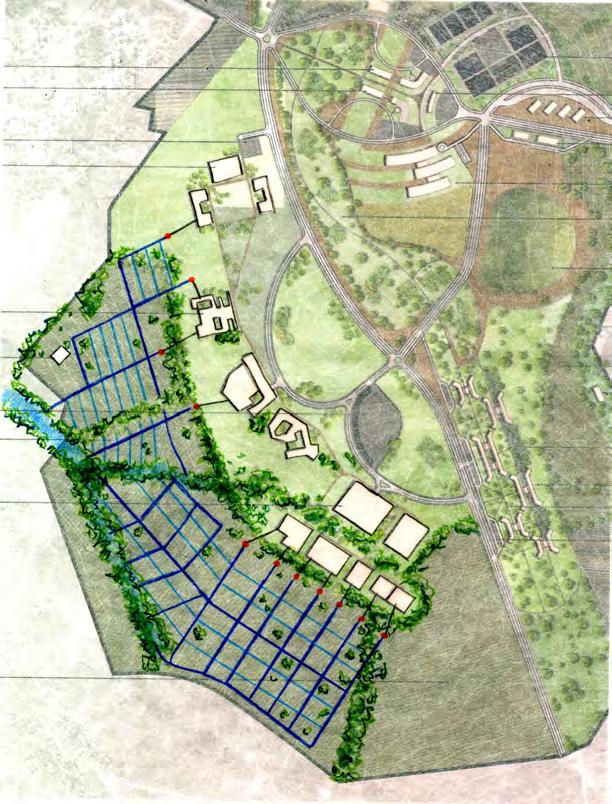
SITE PLAN
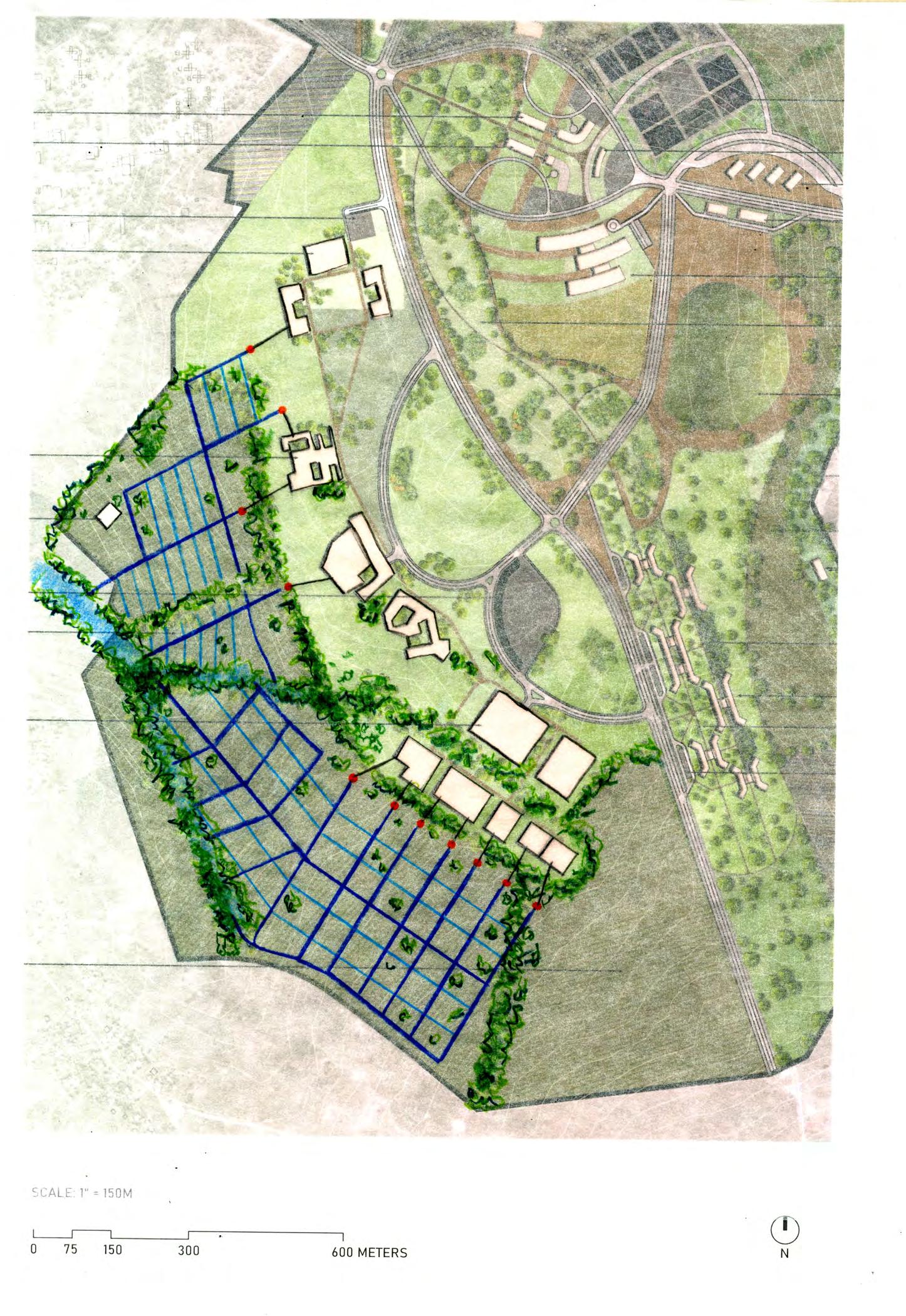
With the use of interceptor swales and canals, water can be better managed and used to irrigate farm fields during the dry season
41
METRICS
ENVIRONMENT
• Water management
• Habitat enhancement
• Research and implement practices
SOCIAL
• Maintain tradition of agriculture
• Education
• Strengthen community
ECONOMIC
• Provide jobs
• Generate income from production
42
CONCLUSION
MANIFESTO
• Farmland cultivates the majority of land within the site and throughout malawi
• Is a vital component of Malawi’s economy and culture
• The challenging weather conditions and changing climate make it increasingly difficult to be sustainable
This project aims to integrate agricultural spaces with the overall development, support local communities, enhance productivity, and educate and research sustainable farming that accommodates seasonal weather patterns, flooding, and better manage rainfall within the site.
Overall the project explores environmental, societal, and economic approaches that can be passed down to future generations for sustainable farming practices.
44
CONTINUITY OF CULTIVATION
6 FEET SCALE: 3/4" 1FT CROPS INTERCEPTOR SWALE MAINTENANCE 45
SOURCES
American farm Bureau Foundation for Agriculture
https://www.agfoundation.org/news/the-three-sisters
ANANAS
https://ananas.design/journal/2019/4/23/how-to-prepare-your-land-before-themonsoons
Malawi Vernacular Architecture
https://www.malawiarchitecture.com/granaries
MDPI
Christian Thierfelder, William Trent Bunderson, & Walter Mupangwa
https://www.mdpi.com/2076-3298/2/3/317
COPENHAGEN CONSENSUS CENTER
https://www.copenhagenconsensus.com/publication/malawi-priorities-agricultureexports
National Agricultural Library
https://www.nal.usda.gov/collections/stories/three-sisters#:~:text=and%20the%20 Southeast.-,The%20Iroquois%20and%20the%20Cherokee%20called%20corn%2C%20 bean%2C%20and%20squash,squash%20throughout%20of%20the%20field.
INTERNATIONAL TRADE ADMINISTRATION
https://www.trade.gov/country-commercial-guides/malawi-agricultural-sector
Orant CHARITIES AFRICA
Kusamala https://kusamala.org/about/permaculture-in-malawi/
Livestock in Malawi
https://livestockinmalawi.com/
https://orantcharitiesafrica.org/5-facts-about-maize-in-malawi/#:~:text=There%20 are%2029%20varieties%20of,which%20mature%20faster%20than%20others.
53
SOURCES
ResearchGate
David Skole, Jay Samek, Cheikh Mbow, & Michael Chirwa
https://www.researchgate.net/figure/Vegetation-of-Malawi-showing-the-distributionof-forests-The-majority-of-forest-is_fig1_350577541
USAID https://www.climatelinks.org/sites/default/files/asset/document/2019_USAID_ Winrock%20International_Livestock%20GHG%20Green%20Investment%20Opportunities. pdf
REUTERS
Charles Mkoka
https://www.reuters.com/article/malawi-crops-seed-idINL8N1M95BC
World Food Program
Francis Thawani
https://www.wfp.org/stories/rural-womens-day-rains-unreliable-malawis-farmersharness-sun-instead
The Malawi Project https://www.malawiproject.org/crops-in-the-dry-season/
Tiyeni https://www.tiyeni.org/research
United Convention to Combat Desertification
https://www.unccd.int/sites/default/files/ldn_targets/Malawi%20LDN%20TSP%20
Country%20Report.pdf
54
THANK YOU