All rights reserved. No part of this book may be reproduced in any form without the written permission of the publisher, except for brief quotations embodied in critical articles, features, academic work, and reviews.
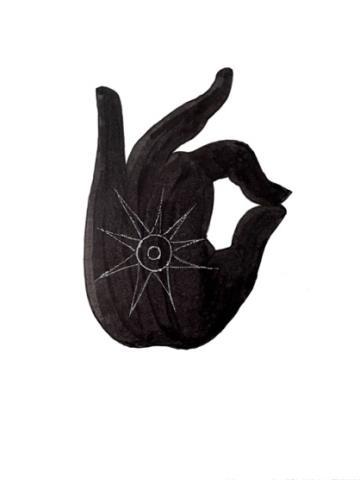
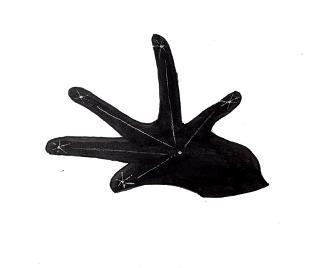
Cover Art and Internal Images: Anne Patterson
Cover Background Image: ESA/Hubble & NASA, E. Shaya, L. Rizzi, B. Tully, et al.
Created with the goal of shining a light on the marginalized art forms of libretti and lyrics, Ecstatic Motion Press is an independent publisher seeking to support these foundational works, without which opera and songs would not exist. Honoring the essential voices of librettists, lyricists, poets, and writers, we draw our inspiration from the Rumi lines, “Do not feel lonely, the entire universe is inside you. / Stop acting so small. You are the universe in ecstatic motion.”
Ecstatic Motion Press publications are produced in collaboration with POCO Labs, a non-profit initiative designed to mix literary artists and classical composers to foster lasting creative relationships. To learn more, please visit https://pocolabs.org/
First Edition. Created in the United States of America.
ISBN: 979-8-9993542-0-4
Acknowledgments
With gratitude to The Hermitage Artist Retreat for the gifts of time, community, and inspiration; Christopher Theofanidis, Anne Patterson, Patrick Harlin, Robert Spano, Lauri Stallings, and Caitlin Lynch for ideas, inspiration and soul-rich collaboration; Dr. Jane Isabelle Forner, Joseph Pfender, and Aspen Music Festival for the use of Dr. Forner’s program essay; Elena Karina Byrne for her brilliant editorial eye; Alan Fletcher, Patrick Chamberlain, Eugene Rogers, Jeffrey Douma, Adriana Zabala, Mary Fanidi, and Heather Brown for their belief in and support of this work; Dr. Vivek Tailor for his friendship, patience, and poetic and cultural expertise; Kelli Russell Agodon for sisterhood and never-ending inspiration, Lois P. Jones for lending her creative light to all I do, the Big Bear Poets for artistic kinship and support and walking this artistic and spiritual path with me, and the Grind doulas for all we’ve ushered into the world together.
Commissioned by The Aspen Music Festival and School; Yale University Glee Club and Yale Choral Artists; and the University of Michigan School of Music, Theatre, and Dance.
For the Aspen premiere, heartfelt thanks to Alexandra Munroe and Robert Rosenkranz, as well as Karen Brooks, Marsha and David Dowler, and Judy and Tony Evnin
For Christopher Theofanidis
“If I know what love is, it is because of you” ~Hermann Hesse
Table of Contents
Foreword / iii
Cast and Choruses / xi
Pre-Show / xiii
Act I, Scene I: She Who Holds Eternity / 1
Act I, Scene II: Shedding Skin / 13
Act I, Scene III: Door in the River / 27
Act II, Scene IV: Book of the World / 37
Act II, Scene V: Inner Sanctum / 46
Act II, Scene VI: Break Until You Open / 58
Act II, Scene VII: Into the Om / 72
Notes / 82
About the Author / 86
Foreword
By Dr. Jane Isabelle Forner
This essay was first published on August 1, 2025, in the program book of the Aspen Music Festival and School (Robert Spano, Music Director).
This Is Where Time Lets Go: Ritual, Love, and Temporality
in Siddhartha, She
What would happen . . . when the lyrics of your being were unbound? (Act I, scene 1)
Opera is just as attracted as any artform to probing the mystery that is human existence and behaviors. The representation of a personal path to spiritual enlightenment that weaves through Siddhartha, She brings together a kaleidoscopic array of cultural influences, but taps into a universal urge to find meaning in existence. The rich and multifaceted title character is a figure we come to adore for her charm, her pursuit of a higher purpose, her wit, and openness, but, as the libretto notes, also her role as a “vessel for the human story.”
Although the opera is only loosely based on Herman Hesse’s novel Siddhartha, the legacy of the German author’s writing throughout the halfcentury after his death in 1962 offers insight into a broader cultural and artistic context for Theofanidis and Studdard’s work. Published in parts between 1919 and 1922, one can readily imagine how the devastation of World War I impacted Hesse’s approach to a narrative that deeply probes the nature of human existence and an individual’s quest for selfunderstanding and enlightenment. Siddhartha was the result of Hesse’s many years learning about Eastern philosophies, including Taoism, Hinduism, and Buddhism. It was a profound, sincere interest that was also unavoidably steeped in the legacy of the German Romantic tradition, where the nineteenth-century European perspective on (and often, fetishization of) the “East” led to frequently skewed Orientalist portrayals. But this philosophical pull also represented a deep need to seek understandings knowing and being in alternative ways; as Bhabagrahi
Misra writes, “the ideal in the imaginative world of the Romanticists centered round Indic material.”
But beyond that, Hesse’s Siddhartha went on to become intimately important to the present through its influence among countercultural artistic movements of the 1960s and 1970s, which drew widely on Eastern philosophies and art for inspiration and fulfilment. After he won the Nobe Prize for Literature in 1946, Hesse’s literary oeuvre gained considerably wider attention, finding a cult following helped along by a popular 1972 film adaptation directed by Conrad Rooks. Its themes of eastern mysticism, and Siddhartha’s resistance to authority, resonated strongly with the Woodstock generation, in the throes of anti-Vietnam war protests, and seeking alternative forms of spirituality and of living. Even The Who’s Pete Townshend incorporated an extended reference to Siddhartha in his song “The Ferryman” (1978), with a central motif of an always-flowing river.
The somewhat archaic, allegorical mode in which Hesse writes is considerably updated for a modern audience in Melissa Studdard’s libretto, which switches between witty banter and dialogue and a lush, elevated poetic style, suitable for an opera libretto that allows space for language to breathe, even if not structured around traditional recitatives and arias. But by far the most important twist in this twenty-first-century Siddhartha is the gender switch of the title character, and consequentially the nature of her relationships with other characters; Govinda, Siddhartha’s best friend, also is cast as female, shifting the mode of their interactions. All roads seem to lead in and out of the scenes between Siddhartha and Kamala the courtesan, however, where the overall dramatic frame of a spiritual journey and path towards understanding is suffused with queered inflections. Siddhartha’s sexuality and relationships form a central part of her winding path of self-discovery.
In Hesse’s novel, Siddhartha has encounters familiar to classic heteronormative archetypes: a profound, serious male thinker is faced with sexual temptations which he must overcome in order to pursue his higher purpose. The power dynamic between them is not simple: Kamala teaches him about intimacy and pleasure, but she is also represented as a habit he cannot break: “again and again, he came back to beautiful Kamala, learned the art of love, practiced the cult of lust.” But Siddhartha comes to feel that he has lost his way, that the world is passing him by, as he has succumbed to lust, sloth, greed. His relationship with Kamala is skewed by
the same materialism that ultimately appears to afflict the operatic couple a need for beautiful things, for money and clothes, as a prerequisite for love.
Lust is, for Hesse’s Siddhartha, a “vain, fleeting pleasure,” and the love that he experiences with Kamala is not one that equates with true happiness quite the opposite. But the relationship that blossoms between Kamala and Siddhartha in the opera takes on a different tone altogether. Although the operatic Siddhartha ultimately decides to leave Kamala, feeling, like Hesse’s protagonist, that she has lost herself in love and greed, the queer love we witness flourishing is suffused with tenderness and reciprocity, lacking the intense frustrations and nebulous possessiveness of the novel.
Where scene 5 traces their meeting, it is in scene 6 that the central substance of their relationship unfolds, with two wordless montages spinning out the passage of their life together, in all its chaos and intimacies, domesticities and luxuries. Its subtitle, “Break Until You Open,” evokes how a fuller sense of sexuality and connection can be liberated through a breaking down of the self, even if the path of pleasure that Siddhartha chooses with Kamala proves not to be her final place. Yet while Siddhartha’s initial meeting with Kamala is based on her wish to “learn the art of love,” falling into their respective archetypes of Samana a wandering ascetic and powerful courtesan, their ensuing relationship is rooted in a kind of mutual transformation, an openness to a love that comes as a surprise that is, as the chorus sings, “growing . . . passing . . . flowering . . . blossoming . . . ripening.”
Audre Lorde wrote in Sister Outsider that “for women, the need and desire to nurture each other is not pathological but redemptive, and it is within that knowledge that our real power is rediscovered.” In the scenes between Siddhartha and Kamala we witness this, a nurturing of each other that does not yield even as they must decide to separate. The complexity and messiness of queer love in all its beauty is rendered in Studdard’s sensual lyricism:
CHORUS I: If you’re looking for dark all night, and the moon gets in the way, it’s asking you to run into the Pleasure Grove and kiss the fingers of the trees. Say yes.
CHORUS II: Say yes.
KAMALA: I am the grove.
SIDDHARTHA: I am the trees.
While feminist and alternative productions of canonic operas abound these days, opera in general lacks enormously in representations of same-sex relationships. It is not the only focus of Siddhartha, She by any means, and it is this subtleness that allows a listener to absorb the queer overtones of Kamala and Siddhartha’s journey as they wish.
It is a relationship perhaps cursed by an excess of pleasure, to be sure, and Siddhartha’s choice to leave comes from the feeling that she has overconsumed: ultimately, “it’s a life that’s full of love, but also material excess, and it stands in contrast to the spiritually-centered life that Siddhartha had previously lived.” She feels disgusted at herself, “soiled with greed . . . filthy with sloth.” Yet the parting with Kamala is not of violent rejection, but of mutual recognition, rooted in a shared understanding that their life together is no longer happy, no longer serving either of them. They are “agonized,” “destroyed,” resisting the separation, but they are also both relieved to voice what they know to be true:
KAMALA: I feel you drifting ... sometimes it’s almost like you were never really here.
SIDDHARTHA: I was here, and I lost myself in love for you.
KAMALA: And I lost myself for you.
The opera is not adjudicating on sex and love, but guides us through considerations of universally relevant aspects of human relationships: what do we relinquish of ourselves? How do we love without losing ourselves? As the chorus summarizes, “What is love but a voice across the waters of time . . . . Like a wild wind we move through joy and sorrow.” As we emerge out of the Siddhartha-Kamala love drama, and Siddhartha returns to the river, we wonder whether it has happened at all, or if it was just a feverish dream of pleasure. Siddhartha indeed remarks to Dharuna that she feels she has been asleep for years. But this question, indeed, is a central conceit of the opera: past, present, and future are collapsed, shaken
loose from tethers of linearity, but not obliterated altogether. Time passes, yet is not rooted clearly; when Govinda and Siddhartha see the Buddha in scene 3, the overwhelming impression it makes on them is intimately linked to a conception of time and existence, as Govinda remarks that “this must be where time lets go.”
Described as a “ritual music drama,” Siddhartha, She adopts many dramatic strategies that sidestep traditional forms of plot and storytelling as Siddhartha herself states plainly in scene 7, “time is an illusion.” Within the opera’s multilayered narrative, time is not rejected, but its illusory nature is manifested by a powerful sense of impermanence and cyclicity. Opera scholar Márta Grabócz has argued that elements of ritual, stasis, and initiation journeys are notable in contemporary operas, where a preference for non-linear narrative forms intersects with renewed interest in myth as both subject matter and format. In avoiding teleological or conventional plot structures, a great deal of contemporary theatre since the 1960s has looked to expand the dramatic possibilities of opera through experimental approaches to time and to personhood. The question is not about the relationship of the dramatic world to the “real” world of us, the audience, but how temporality is made elastic within the fabricated world of the drama onstage. Things that “happen” may be understood as purely symbolic. Similarly, characters may lack individuality, instead emerging as archetypal representations of human qualities, behaviors, or ideas much like in myth, or in the prologues of seventeenth-century opera which took inspiration from ancient Greek drama.
Siddhartha’s trajectory could be understood as purely symbolic, without any supposition of literal movement through space and time within the drama. In this understanding, all characters, experiences, and events take on a wholly metaphorical nature, beyond a normal level of representational drama. Whether we accept this framing or attempt a fully literal interpretation, Siddhartha, She urges us away from either extreme: its narrative is neither entirely symbolic nor literal, but is perceived fluidly: “What was and what will be are points along the ever-present river of what is.”
Deeper meanings are infused throughout the opera, amplified by the presence of ritualistic choreography and gestures. Aarti is a ritual performed in which a lamp or flame is waved in front of a deity as a gesture of devotion, as the chorus does at the beginning and end of the
opera, carrying candle arrangements and setting them into the river, while mudras (literally meaning “seal,” “brand,” or “gesture” in Sanskrit) are symbolic gestures used in Hindu and Buddhist traditions, mostly with the hands. In a scene with her father, for instance, Siddhartha performs Abhaya Mudra which conveys fearlessness, protection, and peace. It is made with the right hand raised to shoulder height, the arm crooked, the palm of the hand facing outward, and the fingers upright and joined. Depicted on images of the Buddha using the left hand instead, it’s said to forbid relatives from fighting. Just as passages of the libretto slide into deeply philosophical, lyrical poetry, so too does the opera’s choreography illuminate aspects of the symbolic, of stepping out of (or into) time.
Because music necessarily possesses a temporal dimension, it is difficult to divorce it from its forward-unfolding path. Composers interested in disrupting linearity, then, deploy various techniques to construct a more fluid sense of time. Return to the experimentalism that paralleled the flourishing of interest in Hesse’s novel in the 1960s; think of Fluxus-style experimentalism in New York City lofts, powered by hours of drones, or of the Beatles’ White Album. Theofanidis’s score mirrors the drama’s ambiguous presentation of time: in many passages, instrumental crossrhythms weave around singers constantly, while choral parts establish a wash of tonal sound. In others, a vast stillness radiates through extended chords and immersive percussion, sometimes akin to drones, sometimes rippling gently. In sum, the richly-layered textures of the score both suggest continuous advancing motion and a circularity that evokes the elastic shifts between the narrative’s forward-driven passages and those that are more ritualistic and symbolic. The orchestra’s surging rises and falls, and moments of tranquility, also evoke the central importance of the river, something which is honored and revered, and which symbolizes transition, journey, and truth; it is steady motion but also a weightlessness, a still, full being.
In its bringing together of a mosaic of spiritual, cultural, musical, and literary influences, Siddhartha, She stands alongside a growing corpus of contemporary operas and new music works that reflect intercultural practices. In another instance, W. Anthony Sheppard described composer Tan Dun’s practice as a form of “cross-cultural operatic experimentation”; composer George E. Lewis, meanwhile, has advanced in recent years the idea of “creolization” to contemporary music, drawing from the literary movement of créolité originating in 1980s Martinique. In other words,
listening to a twenty-first century-opera like Siddhartha, She asks us to open our ears beyond postmodern collage to experience a new form of immersive, intercultural opera. As is sung as we progress into the Om: “every person a note.”
Cast & Choruses
In Order of Appearance
Soprano: Siddhartha
Lyric Soprano: Govinda (Siddhartha’s Best Friend)
Bass baritone: Abinaswar (Siddhartha’s Father)
Tenor and Bass-Baritone (from the chorus): Two Samana Soloists
High Countertenor: Gautama The Buddha
Yellow-Frocked Disciple (extra from the chorus; non-sung)
Contralto or Low Mezzo-Soprano: Dharuna (Ferrywoman)
Mezzo-Soprano: Kamala
Three Dancers: Kamala’s Arms, Kamala’s Attendants (non-sung)
Tenor: Aman (Kamala’s Head Servant)
Non-Sung: Kamaswami (Extra from Chorus)
Chorus I: Stage Chorus (Members sometimes appear as priests and priestesses, scenes of people, samanas, pilgrims, disciples, the river, etc. Dressed in neutral tunics to which scarves of different colors and patterns can be added, removed, layered, or replaced)
Chorus II: House Chorus (Always seated among the audience, dressed to blend)
Pre-Show
Exterior, Entrances, The Stage. (Chorus I Outside; Percussionists at Entrances; Chorus II in Audience; Dancers Onstage; Siddhartha Onstage)
Alive with calm, vibrant, luminous energy, the external area surrounding the venue serves as a liminal zone, transporting the audience into the enchanted realm of communal contemplative experience. River and nature sounds, punctuated by periodic but sparse antiphonal bells on an A, flow from speakers. Prayer flags thread pathways, where members of CHORUS I stand and/or roam holding diyas nestled inside leaf boats and flowers.
At each entrance to the performance space, a PERCUSSIONIST sounds a large bell.
CHORUS II sits dispersed among audience seats in plain clothes.
Onstage, SIDDHARTHA stands in a contemplative gesture while a large bell on scaffolding is sounded by a PERCUSSIONIST. At different stations along the riverbank, DANCERS AS SCENES OF PEOPLE (individuals, pairs, and small clusters) engage in various activities, each group or individual a point on a continuum, unaware of the other points, each its own microcosm, its own stitch in the fabric of humanity. Though there are few groups, it is a large view that implies more with scenes of varying energy and import fisherman casting rods, friends walking and chatting, people meditating alone and together, families having meals, and so forth. There is rhyme between the scenes they’re separate but connected.
ACT I, SCENE I She Who Holds Eternity
The River. (Siddhartha; Govinda; Abinaswar; Chorus II in Audience; Chorus I; Dancers)
PERCUSSIONISTS AT ENTRANCES gradually cease and return to the stage as the hall calms, lighting dims, and the sound focus shifts to the stage area, with one last, dramatic sounding of the mounted onstage bell.
PRE-RECORDED VOICE
Spotlight on SIDDHARTHA, who remains alone contemplating the river.
Then, from a remote part of her soul, from the banks of her dormant life, she heard a sound.
SIDDHARTHA looks around as if she can hear something, then settles her gaze on the river.
Music starts and lighting now reveals DANCERS, who, with great reverence, begin to perform a series of Aarti mudras, signaling the beginning of the Aarti ritual.
CHORUS I enters from the rear of the performance space, humming, still holding diyas, ceremonially, as for a procession. Once onstage, they drift their flower-leafand-flame rafts down the river, as CHORUS II joins their humming, illuminating the audience with an incandescent harmony that opens up the spaces of the whole.
After offering their diyas to the river, CHORUS I MEMBERS stand at different stations along the riverbank, engaged in conversations, watching the ceremony, and so forth. Whether offering fire to the current, watching the ceremony, or performing Aarti, all onstage are in a sort of synchronous choreography a hypnotic undulation enchanting the audience.
CHORUS I
Like a flame they swayed in sync with the river, making their offerings to the Goddess Ganga.
As the ceremony and humming end, lights fade, and SIDDHARTHA is once again spotlighted.
SIDDHARTHA
What is this torrent inside me, rushing through me like a rain-drenched river, flooding the rooms of me until the only thing left is my own song?
CHORUS I
...telling her this is not all she is meant to be...
SIDDHARTHA
The trinkets and trifles of childhood are gone, the comfort of silk and brocade, washed away
I tried to be a good daughter, tried to listen to what my parents wanted, but now my own thoughts are stronger, surging, stronger, drowning out the teachings that once cradled me...
SIDDHARTHA & CHORUS I
stronger, surging, stronger,
CHORUS I
...telling her this is not all she is meant to be...
SIDDHARTHA
...heiress of ritual, offspring of custom, princess of mantras and rites and routines. Beneath the clutter and debris of all this knowledge lies something wiser...
CHORUS I
...an inner awareness that knows it knows nothing.
SIDDHARTHA
The questions inside me are more instructive than every answer and scripture and decree.
CHORUS I
Now, the offerings and prayers of childhood are gone, comfort and complacency washed away.
SIDDHARTHA
There’s nothing left but the surging of this clear-throated message:
SIDDHARTHA, CHORUS I, & CHORUS II
Leave.
As SIDDHARTHA returns her gaze to the river, a whimsical, lighthearted musical flourish introduces GOVINDA, who enters silently behind SIDDHARTHA, at the outer edge of the spotlight. Literally and figuratively, GOVINDA is in SIDDHARTHA’S light.
SIDDHARTHA
(Without turning around, but with great affection) Govinda! Good timing!
GOVINDA
(To audience) How does she always know it’s me?
CHORUS I
She knows.
SIDDHARTHA
(Now walking over to take Govinda by the hands) My dearest and oldest friend, I’ve missed you!
GOVINDA
(Laughing, delighted) But it’s only been an hour since we played kabaddi. And it was just an hour before that when we had our lessons. And an hour before that, we were sitting in meditation. And before that, we were having lunch. In fact, this past hour is the only hour we have not been together since breakfast! (Hugging SIDDHARTHA and spinning her around) Not that I didn’t miss you too ...
SIDDHARTHA
(Laughing, but serious) Well, some hours are longer than others.
GOVINDA
(With light humor) Right! Like waiting for dinner.
Yes, but
SIDDHARTHA
GOVINDA
(With dramatic, silly sweetness) Or waiting for a best friend to come back.
SIDDHARTHA
Yes, that too, but really
GOVINDA
(With lively, playful animation) Oooh this is starting to sound serious. Did Brahma himself appear while I was gone? Did the sky open up and spill out a new Veda? Did a Kalpavriksha tree grant all your wishes?
Exactly what kind of hour is it that can’t bear the absence of a soon-toreturn friend?
SIDDHARTHA
(Taking GOVINDA’S hand again, grounding her, looking her in the eye) An hour that ignites a soul.
ALL OF CHORUS I & II
The same luminous humming as before, more intermittent now
GOVINDA
(Finally understanding, dragging out the sounds of the words) Oh ... I see ... Siddhartha ...
SIDDHARTHA
(Music indicates tonal shift) Govinda, I need to talk to you.
GOVINDA
It’s amazing how something you’ve always expected can take you by surprise.
SIDDHARTHA
(Gently) Govinda, it’s been a long time since we’ve talked about what would happen …
GOVINDA
… when the lyrics of your being were unbound?
SIDDHARTHA
Govinda, if you’ve changed your mind…
GOVINDA
Siddhartha, this is not about mind. This is about who you are, who you’re becoming. I’m here for you. I’ll be there for you, wherever “there” is. (After a pause, thoughtfully, quietly) I’ll be back by sunrise.
As GOVINDA departs, SIDDHARTHA hugs her and returns her gaze to the river.
Enter ABINASWAR, stepping, as GOVINDA had, into the outer rim of SIDDHARTHA’S light.
ABINASWAR
(To audience, upon seeing SIDDHARTHA, who remains in her own thoughts, entranced by the river, completely unaware of ABINASWAR’S arrival)
When the river asks what a daughter is, I say, The one who holds eternity between the banks of her brows. And when the banyan tree asks the meaning of the breeze, I reply, How far must a leaf drift to find the life it’s had all along? The leaf
doesn’t know what a journey is, but I don’t want to say departure, so I show it the girl emerging from the water with her
own shadow in her hand. How often she has overslept and forgotten to fear the cobwebs and cobras threading the path to enlightenment. Don’t ask me what a daughter is a wing on the shoulder blade of one not quite yet gone but leaving,
a memory of a memory of an instant full of hours. Don’t ask me about the girl standing beside the Ganges with my heart in her hand. There goes my daughter, wading bravely into the river of self, dropping her father’s heart
behind her on the ground, like a pebble not lovely enough to keep, or an ancient city swallowed by time and marl and sand.
CHORUS I
How far must a daughter drift to find the eternity between her brows?
ABINASWAR glides over to and around SIDDHARTHA just as SIDDHARTHA turns to face him. Though they don’t quite hug, their movements, fluid, mirror each other’s, as if they were dancing, as if they were leaves swirling in the same wind. They settle to standing so gently that the final cessation of movement is almost imperceptible.
ABINASWAR
(Kindly but firmly) Siddhartha, it’s time to come home. Dinner is waiting.
SIDDHARTHA
I’m not hungry, Father.
ABINASWAR
(Taking her hands) You’ve been out all day, and your mother sent me to get you. It’s time, Siddhartha.
SIDDHARTHA
(Gently, emphatically) It is time. But not for dinner.
ABINASWAR
(Worried) Come on now; stop this nonsense and let’s go home.
SIDDHARTHA
I cannot, Father.
ABINASWAR
If you won’t come home, what is it you plan to do?
SIDDHARTHA
(Releasing her father’s hands) You know, Father.
After a long silence, ABINASWAR turns and begins to walk away, motioning for SIDDHARTHA to follow. It’s the act of someone who knows they’ve already lost but is still trying to command some miracle to get what they want.
ABINASWAR
(To self, after glancing back and seeing that SIDDHARTHA hasn’t followed) Now she is the strong, immovable banyan, and I’m just a wind that moves her nowhere.
Overcome with emotion, ABINASWAR stops and stands briefly in silence before turning back to SIDDHARTHA.
I’ll wait.
SIDDHARTHA
I will too.
ABINASWAR drifts just outside the light but can still be seen, faintly. SIDDHARTHA waits. Position shifts, as well as changes in lighting and music, indicate time passing. ABINASWAR paces, troubled, his steps in sync with SIDDHARTHA’S changing positions. Whichever way SIDDHARTHA shifts, ABINASWAR is there, not visible to her, nor menacing, but like a moth caught in her winds.
ABINASWAR
Owl calls, the buzzing and cricking of cicadas and other insects, and changes in lighting indicate evening passing into night.
(To self) This is getting worse.
(Returning and standing still in front of SIDDHARTHA, who stills with him) Come home, Siddhartha.
SIDDHARTHA
Remains silent.
They turn towards the rustling of a large animal rushing through the brush…
ABINASWAR
Come home, Siddhartha. It’s getting dark, and everyone has eaten except the tigers and hyenas.
SIDDHARTHA
Father, you know I need to leave.
ABINASWAR
You may not. It’s not safe. You’re not ready.
SIDDHARTHA
I am ready.
SIDDHARTHA opens her arms to hug ABINASWAR, who, more in denial than rejection, ignores the gesture and turns away.
ABINASWAR
I am not ready.
ABINASWAR walks out of the light and again paces, weakly now, more slowly.
SIDDHARTHA removes her jewelry and stands completely still, facing the direction of her father’s pacing. Her right hand is raised in Abhaya mudra. Her left hand, palm up, waist level, holds her jewelry. ONSTAGE MEMBERS OF CHORUS I stand behind her, their left hands raised in Abhaya mudra, their right hands palm up.
As SIDDHARTHA waits for her father to return, her legs begin to tremble, yet her overall posture remains resolved feet firmly planted, back straight, shoulders square, hands in position, gaze set steadily on a far point of the river. As time passes, owl and cicada sounds give way to morning birdsong. Lighting and music indicate the transition from late night to pre-dawn.
ABINASWAR steps back into the outer rim of the spotlight, where SIDDHARTHA can once again see him. Moving forward, he places one hand on SIDDHARTHA’S upturned palm full of jewelry, the other hand on SIDDHARTHA’S shoulder. SIDDHARTHA’S legs stop trembling.
ABINASWAR
(Attempting to lighten the moment with a hint of implied humor) Your mother will not be happy.
SIDDHARTHA
(With seriousness and compassion, flipping their hands over and removing her hand so that ABINASWAR is left holding the jewelry) My mother will understand.
ABINASWAR
(Finally understanding that he can’t stop SIDDHARTHA and placing the jewelry back into her hands) (gently) Return the jewelry yourself when you come to pack your bag.
SIDDHARTHA
(Placing the jewelry back into ABINASWAR’S hands and clasping her own hands behind her back) A bag is just another thing to carry.
ABINASWAR extends his hands to SIDDHARTHA, who, taking them, pulls ABINASWAR in for a hug. They hold the embrace for a moment, and when they drift away, they flutter around each other briefly, momentarily once again in sync.
CHORUS I
Leaves in the same brief wind, partners in a final dance.
ABINASWAR settles out of the dance, turns, and, as SIDDHARTHA watches, walks slowly offstage without looking back.
After a somewhat lengthy moment of heaviness, GOVINDA’S light musical flourish sounds, and GOVINDA enters again, hair piled into a bun, wearing a dhoti presenting as a man.
GOVINDA twirls around, and though appearing like she might curtsey, bows instead.
(With humor) Have you stolen your father’s clothing?
GOVINDA
Yes. To avoid being robbed, I’ve resorted to stealing.
SIDDHARTHA and GOVINDA share a light laugh and exit, arm in arm.
SIDDHARTHA
(Serious for a moment, taking GOVINDA’S hands and looking into GOVINDA’S eyes) Ah. Bandits. But there’s more you seem so … comfortable … finally.
GOVINDA
It’s possible the lyrics of my being…
SIDDHARTHA
(Warmly) … have also come unbound.
The two share a quiet moment of understanding.
SIDDHARTHA and GOVINDA exit, arm in arm.
ACT I, SCENE II
Shedding Skin
The Desert (Siddhartha, Govinda, Chorus I as Samanas, Chorus II Always in Audience, Pre-Recorded Voice of Siddhartha, Offstage Voice)
Very faintly visible, inside a mysterious darkness: SIDDHARTHA, GOVINDA (still presenting as a man), and the SAMANAS sit onstage, possibly behind a dark screen or hanging fabric.
From the void of darkness, the sound of a nervous human heartbeat (SIDDHARTHA’S) whooshes and surges, beats and pumps as a few slow flashes of light pulse through the darkness like heat lightning revealing only a momentary flash of the figures. Simultaneously, and in synch with the flashes, surreal music, more strange than sinister, washes over the heartbeat, then back out.
CHORUS I
So’ham.
Abstract, snakelike PROJECTED IMAGES uncoil, rise, and sway in the otherwise dark scene.
SIDDHARTHA
(Still from the void of darkness, nervously, over her continuing heartbeat) I can’t tell what’s happening.
Like the flicker of a snake’s tongue, another flash of light and a lash of the surreal music…
SAMANA I
(Voiced over the continuing heartbeats, with very subtle, snakelike hissing on the S’s) You’re inside her mind, Siddhartha. Sip her thoughts. Feel how the lightning in her body surges and slides into slither and strike.
Now the sound of a second heartbeat (a snake’s) layers in, discordant and out of rhythm with the first, tangling with it, battling it for predominance while two of the projected snakelike images twist up and lock bodies, rearing, striking, hissing, growling, tangling in a wrestle-dance so complex it’s difficult to know whether they’re fighting or mating.
CHORUS I
Escape, Siddhartha.
Another flash of light, another lash of music...
CHORUS II
Break free ...
Music and dim lights pulse in, with the sound of a pungi now predominant, its buzzing tones evoking a mildly agitated fervor. The music and lights hold longer and longer with each pulse, brightening slightly, until the figures of SIDDHARTHA, GOVINDA, and the SAMANAS can just be made out, sitting on the ground in a circle, baskets in front of them.
Now the PROJECTED IMAGES become less abstract, though not fully detailed, and they are indeed snakes, swaying from the baskets in the center of the circle and flicking their forked tongues. The two tangled snakes are motionless for the moment, caught in each other’s grips.
The group of SAMANAS, including SIDDHARTHA and GOVINDA, appears disheveled, dusty, undernourished, ascetic, and there is a stiff, disciplined formality in their postures. Some of the SAMANAS hold and appear to be playing, pungis.
SIDDHARTHA
(Still in dim lighting) But how?
(Slightly scolding) You must be fearless, Siddhartha.
CHORUS I & II
(Trailing into a slight hiss with the S’s) Fearless
(Displaying a passion discordant with the starkness of the scene yet retaining a touch of severity)
You must smash the windows between your spirit and the snake’s, break down your heart’s doors, run through untrod forests, naked, with your ego burning to ash in your hands…
(With the same passion)
run until you no longer have hands or feet or heart or ego.
You must discover you are figurative,
SAMANA I
SAMANA I
SAMANA II
SAMANA I
literal, moon, sun, explosion, implosion, the ocean inside a womb.
SAMANA II
You must build a home deep down in the valley of uncertainty
SAMANA I and, though you may strangely find comfort there…
You must agree to not stay.
SAMANA I
Then, you can begin to understand an other.
SAMANA II
Then you can begin to know that there are no others.
All other instruments recede, and only the pungi ominous, beautiful, swaying, hypnotic continues over the heartbeats as the heartbeats gradually synchronize and calm. Likewise, the PROJECTED IMAGES of snakes become more rhythmic, in sync with the pungi and heartbeat.
As one of the two tangled snakes tries to strike, the other crossfades into a hand that reaches out and strokes the front of the cobra’s neck beneath the hood.
CHORUS I So’ham.
SAMANAII
SIDDHARTHA
I feel her.
The cobra withdraws from the strike, and non-lexical mantras, chants, and river sounds wash in, then back out.
The body is just another house to step in and out of, like leaving home. I step out of me and into her.
Now, there is a loud clap, as, simultaneously, the PROJECTED IMAGE of the cobra strikes again and SAMANA I slaps SIDDHARTHA’S face. Though SIDDHARTHA barely flinches, all other sounds and music stop abruptly, slapped away. Lights intensify suddenly, and the SNAKELIKE PROJECTIONS recoil and recede back into their baskets. We can see the full stage for the first time: it’s early evening, sunset, and in contrast to the stark appearance of the SAMANAS, the PROJECTED IMAGE of a gloriously stunning sky begins to pink and deepen. More SAMANAS can now be seen on other parts of the stage, engaged in various activities, such as meditation (some standing, some sitting, some walking), gathering fruit and/or nuts, scooping water, etc. They all stop abruptly and stare at SIDDHARTHA.
II
Stupid girl. There is no you or her. When will you get it?
I
So’ham.
SAMANA I
(Somewhat coldly) That’s enough for today. No dinner.
SAMANA
CHORUS
Again?
GOVINDA
SAMANA II
There’s no room for spirit in a full body.
The sunset intensifies. Various shades of carmine, carnation, lavender, tangerine, and magenta vibrantly stretch, swell, and striate, as the sun slowly lowers along the horizon. Without noticing the beauty of the sky, SIDDHARTHA, GOVINDA, and the SAMANAS stand and quietly walk over to a large tree, where they place their baskets for the night. As they claim sleeping spots, some SAMANAS gather in small clumps or pair off, while others choose more solitary locations to bed down. SIDDHARTHA and GOVINDA move just far away enough to speak privately.
SIDDHARTHA
(After some time, over grumbling stomachs, light snoring, and ambient night sounds, and beneath the PROJECTED IMAGE of a vast and twinkling sky) Govinda, are you still awake?
GOVINDA
Yes. I’m too hungry to sleep. I’ve never been this hungry. Or uncomfortable. Or tired. I think I’m actually too tired to sleep.
SIDDHARTHA
Govinda, I have to get out of here.
GOVINDA
Do you want to go for a walk?
SIDDHARTHA
No, Govinda. I mean. I. Have. To. Get. Out. Of. Here.
GOVINDA
Oh
We hear a whoosh of wings as the PROJECTED IMAGE of a large, winged shadow passes across the moon. The lightly audible sounds of nature become slightly more audible as music fades out.
GOVINDA (SPOKEN)
(after a moment in thought, as the sounds of nature settle around them) But, you’ve learned so much. I can’t enter the cobra’s mind. With time, you could become the greatest of the Samanas.
SIDDHARTHA (SPOKEN)
What have time and deprivation and the subjugation of cobras gotten the elders? Can you name one Samana who has escaped the cycle?
GOVINDA
(After another thoughtful pause, as music resumes) Have you heard people talking about an enlightened one? One who left the Samanas
Again, the PROJECTED IMAGE of the large, winged shadow.
SIDDHARTHA Gautama?
GOVINDA
Yes. They say Gautama eats. And has a sense of humor. Can you imagine laughing again?
SIDDHARTHA
I can, and I will. I’m leaving the Samanas in the morning. Come with me, Govinda
GOVINDA
I would like to, Siddhartha. (pause) I think. I would like to hear Gautama speak.
SIDDHARTHA
Do you really believe one person can teach another The Way?
GOVINDA I do. Don’t you?
SIDDHARTHA
No, I don’t.
GOVINDA
Maybe you’re right, but even if Gautama can’t teach you, you can learn from Gautama. Maybe not the whole way, but a few steps ...
SIDDHARTHA
Right, Govinda. Smart distinctions. Tomorrow we’ll leave this emaciated life, and you’ll hear your Gautama speak.
GOVINDA
And we’ll laugh again.
SIDDHARTHA
(Amused) I’m already thinking up jokes for the road.
GOVINDA
Ooh, I have one now.
Yes?
SIDDHARTHA
GOVINDA
An elder disciple complains to the Buddha about a new group of disciples.
SIDDHARTHA
(Joking around) Hey now that could be us soon!
GOVINDA
Yes that’s why it’s funny.
(Laughing) Okay, go on…
SIDDHARTHA
GOVINDA
So, the elder says, “These new disciples are totally thoughtless” and Gautama says, “Wonderful! Tell them to keep up the good work.”
GOVINDA and SIDDHARTHA laugh lightly, then are interrupted by the heavy snore of a SAMANA. Maybe if they had something in their bellies they would sleep more quietly.
GOVINDA and SIDDHARTHA laugh one last time as they settle into sleep. Night drifts quickly past in a series of shifting body positions, varying nocturnal sounds, subtle changes in lighting, and clouds rolling by. Music, too like clouds in vast space rolls, drifts, and folds over and in on itself and back out.
Just as morning approaches, in the faintest of predawn light, while everyone else, including GOVINDA, is still asleep, SIDDHARTHA rises to sitting meditation. Simultaneously, the PROJECTED IMAGE of the large, winged shadow passes overhead circling and circling, in rhythm with the music, in synch with SIDDHARTHA’S movements.
Again, the wings flapping, more urgently, a beckoning.
OFFSTAGE VOICE
From a remote part of her soul, she heard a sound...
SIDDHARTHA stands, arms open, reaching skyward. As the shadow of the heron lowers, music intensifies, pinpoints, brightens. Double reeds push through the clouds like birds.
PRE-RECORDED VOICE OF SIDDHARTHA (AS IF SPOKEN FROM WITHIN)
I am that.
CHORUS II
(A bit like bird caw) I am ... I am ... I am ...
A PROJECTED IMAGE of a shadow-self rises from SIDDHARTHA, shoulders back, led by the heart, and merges into the heron.
CHORUS I & II
(Merging into the heron’s sounds as the heron flies upwards and out of sight) I am ... I am ... I am ...
In place of the heron, momentarily we see just parts a wing, a beak, an eye, illuminated, reflecting the sleepers below.
The heron again passes over.
SIDDHARTHA
(With PROJECTED IMAGES of the bird’s eye view to accompany the words)
Then, through the temple of heron I flew, my body opening its geography to wind. I entered rooms of mind illuminated by the desire to reach and touch the sky. I flew through rainbows
and mango leaves, bamboo forests and strands of mala beads, into the apricot and tangerine dreams of a rising sun, and the wheel of a dharma that had just begun. I dipped my bill into the flooded
marsh grasses and taught carp and cascade frogs to pray at the altar of my hunger before I ate. I flew through bracelets of prayer and the haloes of saints sitting lotus in mangrove trees.
CHORUS I
She found a new astronomy beneath the arch of her wing, flew so high she knew the latitudes and longitudes of God’s thoughts and desires and they were all the same: to be.
SIDDHARTHA
I flew so high there was no more me just moon, sun, a comet flung loose from destiny shifting, changing, rolling across a sky everything that could be and nothing at once. A crest in a wave…
CHORUS I
(The PROJECTED IMAGE of the heron swoops down and the PROJECTED IMAGE of SIDDHARTHA lowers back into SIDDHARTHA’s body)
… and back to sea.
SIDDHARTHA returns to her sleeping position as the heron flies off, and the PROJECTED IMAGES cease for the moment.
GOVINDA
(Stretching and waking) Siddhartha, did you see that majestic heron?
SIDDHARTHA
(Pretending to stretch and awaken as well) I think so. (with a smile) Maybe.
GOVINDA
She was beautiful regal and self-possessed.
GOVINDA
Can you imagine what she must see flying over the world at night? All those rivers, oceans, treetops, unimaginable expanses of land
SIDDHARTHA
A big, glorious organism that speaks one language life. Govinda, we can’t fly, but there’s something else we can do.
SIDDHARTHA looks over at the baskets, which are briefly spotlighted.
GOVINDA
Yes, let’s do it.
As the stage brightens a bit overall, SAMANA I, SAMANA II, and other elder SAMANAS can be seen sitting in meditation. Though GOVINDA and SIDDHARTHA approach, the elders do not acknowledge them or stir from meditation.
SIDDHARTHA walks directly in front of SAMANA I and stands, looking down. When the SAMANAS still don’t react to SIDDHARTHA and GOVINDA, SIDDHARTHA bows and speaks.
SIDDHARTHA
Respected Samana
SAMANA I
(Interrupting) Discipline, young Samana. It can wait until after meditation.
SIDDHARTHA
(Firmly) Respected Samana, it cannot wait until after meditation. Govinda and I are called to another path. We’re grateful for what we’ve learned here, but we need to leave now.
SAMANA I
(Dismissively) Will that be all?
SIDDHARTHA
No. We’re releasing the snakes.
SAMANA I
(Standing to face SIDDHARTHA eye to eye) You will not touch the snakes.
SIDDHARTHA and SAMANA I stand looking at each other, as kids might in a staring contest, though there’s no hint of humor. They’re both strong-willed, determined, serious formidable opponents. The PROJECTED IMAGE of the snakes tangled in battle flashes briefly behind them; then SIDDHARTHA places her hand on SAMANA I’s shoulder.
CHORUS I, with echoes in CHORUS II
(Fading in subtle mantralike chant-singing) Lokah Samastah Sukhino Bhavantu
As SIDDHARTHA’S hand remains on SAMANA I’S shoulder, transmitting her vision, behind them we see a sampling of the earlier PROJECTED IMAGES from the heron’s view the wonder, the beauty, the freedom of it all clearly making an impact on SAMANA I.
SIDDHARTHA removes her hand from SAMANA I’S shoulder, and the tangled snakes appear again. They untangle and one of them slithers away.
SAMANA II
(In wonderment) I see.
SIDDHARTHA and GOVINDA half-bow to SAMANA I who stands still, a bit too awestruck to bow back. As SIDDHARTHA and GOVINDA exit, SAMANA I walks in the other direction, to the tree where the baskets remain lined up from the night before, and one by one, removes the lids.
As lights fade to end the scene, the PROJECTED IMAGES of abstract snakes slither from a bright clearing and into the understory of a forest as transitional music steers us into the next scene.
ACT I, SCENE III
Door in the River
Jetavana, the Buddha’s Grove (Chorus I as Pilgrims, Disciples, Householders, the River; Siddhartha; Govinda; Gautama/Buddha; Chorus II)
There’s an air of excitement, as lights fade in to reveal an animated STREAM OF PILGRIMS and YELLOW-FROCKED DISCIPLES carrying long strands of river fabric as they head towards Jetavana, the Buddha’s grove, in the late afternoon sun. Some walk alone within the stream, and some in pairs or groups, but all are part of the one great moving organism, as a river is both the drops that form it and the continuous, flowing body. River sounds and gurgling, surging music emphasize the rippling, flowing effects of movement. Lighting unifies the human/river flow as a single entity.
Reaching Jetavana, at the far side of the stage, some of the PILGRIMS and YELLOW-FROCKED DISCIPLES break off from the main stream into small rivulets or stations, while others continue past the stage as if headed to slightly further parts of the grove, just out of sight. Those who exit the stage come back around and start again so that the river is a continuous influx of people through the entire scene.
Small clusters of householders just outside the grove engage in domestic activities.
With a bright, bubbly lilt in the music, SIDDHARTHA and GOVINDA flow in, disheveled and dirty but laughing and smiling. Like two petals in a river, they flutter through the stream of people, tossed joyously around in its currents, at times apart, at times together.
When they arrive at Jetavana, they break off and join a small group. After a short time, there’s a sudden hush followed by a chord (the Buddha Chord) so selfcontained and radiant that it holds everything within it, emits everything from it. The river stops moving as a YELLOW-FROCKED BEING, who was before imperceptibly embedded in the crowd, steps out of the river towards the front center of the stage.
As the being, GAUTAMA, moves forward, the river bends as if to follow. Aside from an immense, ubiquitous calm and a reflective radiance emanating from the skin, head, and clothing, GAUTAMA appears like the others.
Everyone turns to watch as GAUTAMA and several YELLOW-FROCKED DISCIPLES approach a household and receive rice. When GAUTAMA’S arms lift, the river peaks, when GAUTAMA turns, the river swirls, when GAUTAMA merges back into the stream, it surges forward again, when GAUTAMA and the YELLOW-FROCKED DISCIPLES slip back out and head towards the front of the grove to sit and eat, the river stops flowing and bends towards the glowing being. When GAUTAMA sits, among a small cluster of YELLOW-FROCKED DISCIPLES, eating a small bowl of rice, one grain at a time, slowly, peacefully nothing exists but the Buddha and the rice. The spotlight is on the glowing Buddha, and everything else is dim. Sounds of conversation, river, music, and nature have all stopped.
A second, slightly dimmer spotlight is now on SIDDHARTHA and GOVINDA.
SIDDHARTHA
(To Govinda) It’s the Buddha.
GOVINDA
(Not yet seeing Gautama) Which one? How can you tell? They’re all dressed the same.
SIDDHARTHA
They are not the same.
Disciples and pilgrims begin to gather around GAUTAMA, who continues eating quietly. GOVINDA looks over and sees the BUDDHA for the first time.
GOVINDA
(Shielding eyes) It’s like someone turned up the sun.
SIDDHARTHA
If the sun were the stillest thing in the world.
GOVINDA (concurrently, each to self; or alternating) SIDDHARTHA
This must be where This must be the person time lets go a kind of heaven in whom heaven resides, we mistook for a moment, the temple we mistook a kind of salvation for a human body, that through the simplest the body through which gesture speaks nirvana speaks
GOVINDA & SIDDHARTHA TOGETHER
Look how peacefully the Buddha eats. Nothing in the world exists but rice. Rice and enlightenment and the person, the one being
GOVINDA (concurrently, each to self; or alternating) SIDDHARTHA
I am certain who exemplifies why I must follow. I must find my own way.
CHORUS I CHORUS II
I must follow… …must find my own way …
Now done eating, GAUTAMA lifts a hand, and the Buddha chord sounds again, and general activity resumes as the river bends towards the hand. A small, expectant crowd, including SIDDHARTHA AND GOVINDA, gathers around GAUTAMA, who sits in complete tranquility, not actively trying to think of what to say just waiting for the words to arise from the still part of soul.
Both of GAUTAMA’S arms lift now, and the river follows the pattern of GAUTAMA’S arm movements, almost as if it is an extension of GAUTAMA’S arms, bending and rippling at the same angles and in the same proportions until GAUTAMA’S arms and hands settle into Vitarka Mudrai, and the river stops once again. Anything that is or has been moving or making sound on the stage now stops, as if all of life is taking refuge in the extreme stillness of the Buddha. A gentle, holy light illuminates the orchard, and especially GAUTAMA. The people gathered around GAUTAMA can be seen prominently in the reflective sheen of GAUTAMA’S clothing and/or body paint, as if GAUTAMA’S body is their sanctuary, as if GAUTAMA is the whole of humanity.
GAUTAMA
The Sotapan, The Stream Enterer …
A tranquil silence (no music) of 10-15 seconds. Everyone and everything is still, calm…
(Slowly, with easeful deliberation) The learned and noble disciple understands what is worthy and unworthy of consideration and considers only the worthy.
What suffering is, the disciple wisely considers.
The origin of suffering, the disciple wisely considers.
What the extinction of suffering is, the disciple wisely considers.
The path to the extinction of suffering, the disciple wisely considers.
(Again, a tranquil silence of 10-15 seconds, as the Buddha waits for the words to arise from deep within.)
Through these considerations, the disciple is freed of self-illusion, skepticism, and attachment to mere rule and ritual three of the fetters that bind beings to the wheel of existence. Thus, the disciple has forever escaped the states of woe and has entered the stream leading to Nirvana, thereby assuring their final enlightenment.
More than any earthly power, more than all the joys of heaven, more than rule over all the world, is the Entrance to the Stream
As I am one who has entered the stream, has traveled, from its source to its mouth if you follow my teachings, if you are unshakeable on this Noble Eightfold Path, then you too have entered the stream and will follow the stages to the final perfection. You will be freed from all fetters.
GAUTAMA’S head bows, and all, including the RIVER OF PEOPLE, remain silent and still, entranced.
After a moment, a YELLOW-FROCKED DISCIPLE stands and offers GAUTAMA an arm. GAUTAMA takes it and stands, and the river surges again. As GAUTAMA receives PILGRIMS requesting to join the community, GOVINDA rushes over.
GOVINDA
(The whimsical notes associated with GOVINDA sound, but with more gravity than before, weighted by maturity) Exalted one, I felt your voice pass through me, as clear as the waters of truth. I vow to follow you into the stream.
(GOVINDA and GAUTAMA bow to each other)
GAUTAMA
(To GOVINDA) Sotapan, I accept you. You may join me and walk with us in holiness to put an end to all suffering.
GOVINDA and GAUTAMA bow, and GAUTAMA turns to receive another PILGRIM as GOVINDA dashes back over to SIDDHARTHA.
GOVINDA
Siddhartha, you can go now. Receive your blessing so you don’t have to wait until morning to join the community.
SIDDHARTHA
(Placing a hand on GOVINDA’S shoulder) Govinda, my dearest and oldest friend, I’m so happy for you. Today you followed your own light. You have my respect and love and my blessing.
(Tenderly) But you know this is not my path.
GOVINDA
But where will you go? When will we see each other?
SIDDHARTHA
(Kindly) Govinda, you know those who walk with followers of the Buddha renounce friendship and family, free will, and possessions.
GOVINDA begins to cry, and SIDDHARTHA hugs her.
GOVINDA
But I only meant to … (breaks into sobs)
SIDDHARTHA
Govinda, please don’t doubt yourself. I don’t choose to follow a teacher, but I believe there’s no one more holy, more wise, more evolved than the Buddha. You’ve chosen a noble path. So, go, be well, and when you need me, look inside and find my love and belief in you.
GOVINDA and SIDDHARTHA hug and GOVINDA moves slowly, achingly, towards the YELLOW-FROCKED DISCIPLES.
A disciple moves out of the group and gently drapes a yellow frock over GOVINDA’S shoulders.
SIDDHARTHA (To self)
Why are all the bells inside me ringing? Why are all the doors I closed flung open? I am an earth, and my rivers are flowing, flowing backwards and sideways, forwards and up and down, zigzagging around these colossal rocks of thought thrown so artfully in my path that my currents no longer command their own flow. I told Govinda I can’t follow a teacher, but now I don’t know what to think about what I thought I knew. How ironic, how alarming that this embodiment of peace, this Buddha, has kindled such turmoil in me. How strange, how dismaying to be flooded with the haze and chaos of agitated waters.
CHORUS I
Holy
CHORUS II
Presence
As SIDDHARTHA watches GOVINDA move towards a group with the YELLOW-FROCKED DISCIPLE, GAUTAMA walks up and stands at SIDDHARTHA’S side.
Samana, why do you worry?
Illustrious One, may I speak freely?
GAUTAMA
SIDDHARTHA
GAUTAMA nods.
Now, in the reflection of GAUTAMA, only SIDDHARTHA can be seen.
Exalted One, as I understood you today, the noble disciple should not consider the unworthy.
GAUTAMA nods.
But you also teach embracing oneness with all.
GAUTAMA nods.
How can I embrace what I cannot consider?
GAUTAMA
Clever Samana. Too clever. Wearing your intelligence like a costume. Who is really beneath that costume? Where can you find her?
SIDDHARTHA
(Frustrated) Well, why do you think I’m here?
GAUTAMA
Because you’re confused. You can’t tell the difference between where and what, enlightenment and cleverness, yourself and your thoughts, embracing and considering
You don’t know how to be taught, but you won’t listen to yourself. What are you so afraid of, Samana?
SIDDHARTHA
(Increasingly frustrated) I don’t understand what this has to do with my question.
GAUTAMA
It has to do with everything. It is everything.
SIDDHARTHA
But I thought I knew … what mattered …
GAUTAMA
Exactly. You thought…
And thought and thought …
CHORUS I
SIDDHARTHA
What am I supposed to do now? My best friend isn’t coming with me. I can’t go home. I can’t go back to the desert Samanas. I can’t stay with you.
GAUTAMA
It seems to me that this might be the best thing that has ever happened to you.
SIDDHARTHA
To have lost everything?
GAUTAMA nods.
SIDDHARTHA
But what am I supposed to do now?
GAUTAMA
Precisely.
GAUTAMA smiles, turns, and walks off. The gesture is modest, quiet, and peaceful it’s clear that GAUTAMA is no longer thinking of the conversation. GAUTAMA is not impacted by surroundings the reverse is true trees rustle in GAUTAMA’S wind as GAUTAMA walks past, the river bends with GAUTAMA’S movements, clouds follow.
SIDDHARTHA watches her own reflection in GAUTAMA’S back.
Lights slowly brighten as CHORUS I streams offstage and down the aisles, fluttering and flooding the river fabric alongside the audience before exiting the rear of the performance space. At the same time, river sounds strengthen and surge and swell, and CHORUS II illuminates the audience with humming once again that luminous, expansive harmony.
After CHORUS I has exited and CHORUS II has ceased humming, river sounds recede to background, continuing through intermission in the areas around the performance space.
SIDDHARTHA stands alone, as lights fade to black.
ACT II, SCENE IV
Book of the World
On the Ferry (Chorus I as River, Siddhartha, Dharuna, Chorus I as Passing Samanas and Disciples and Householders, Kamala, Chorus I as Members of the Procession, Chorus II in the Audience)
Just before sunrise, in an hour that is neither totally dark nor completely lit, and within the shroud of a mysterious fog that envelopes the stage, SIDDHARTHA sits on a raft, with a cloaked and hooded figure (DHARUNA) standing some distance behind her, face obscured, rowing. The fog is denser around DHARUNA, who seems otherworldly and necromantic. In silence occasionally punctuated by trilling insects and other pre-dawn sounds, DHARUNA rows with rhythmic fluidity. Lighting gradually brightens through the scene as twilight transforms into morning.
As SIDDHARTHA leans down and dips a hand into the water, a bevy of nearby swans flies off slapping their feet onto the water, whistling their wings, and sounding their beaks.
(To self, as the swan sounds trail off)
Suddenly I can’t tell the difference
SIDDHARTHA
between my soul lifting and a bevy of swans shaking free from dawn,
can’t tell if the river is an hour slipping through shadow, or a prayer chanting itself, the self that is my own self but not, the river that is the fish that shimmer within it, but different each fish, each swan, each person, each ripple its own letter in the book of the world. How willfully I misread it, seeking the secret alphabet behind the invisible veil, how hard I tried to disappear too, when all along it was myself I should have been
reading. Now the world is full of signs that have always been there, and I am the words, the book, the meaning, the reader.
A diya on a leaf boat drifts by. The sound of bells and humming fades in momentarily, reminiscent of and evoking the luminous harmony of the Aarti ritual.
SIDDHARTHA
(Reflective, half to Dharuna, half to herself) I’ve seen that divine light before.
Divine light…
CHORUS I
SIDDHARTHA
I’ve seen that diya.
CHORUS I Offering of fire…
SIDDHARTHA
Like a soul in the vessel of body, it journeys.
CHORUS I
Like a body in the vessel of boat, it journeys.
SIDDHARTHA
(With a look back at Dharuna) I’ve seen that ferrywoman casting her spell on the river …
CHORUS I
... enchanted translation of thought into oar…
SAMANAS, DISCIPLES, and HOUSEHOLDERS pass along the riverbanks. Music evokes Govinda, then Abinaswar, then the Samanas, then the Buddha.
SIDDHARTHA
I’ve seen those Samanas and disciples and householders.
CHORUS I They journey…
SIDDHARTHA
How perfect yet flawed they are, like all humans.
CHORUS I
How divine.
I’ve seen this river…
Mother Ganges …
SIDDHARTHA
CHORUS I
SIDDHARTHA
Seen the crescent moon floating in her waters like a boat… (Beat)
And the fish … little magicians…
CHORUS I
Shapeshifting into rainbows, ripples, and stones …
SIDDHARTHA
Through this and the next several exchanges, the music/sound is a younger, less complete version of what will later become the OM note fusion. Though the Buddha Chord is not yet fully realized, elements of its stillness unfold in tandem with elements associated with the motion and forward flow of the river/journey.
I’ve seen gold-beetles…
CHORUS I
… living brooches crawling along the underside of vines…
SIDDHARTHA
And winds parting silver rice-fields like hair …
CHORUS I
on the wise heads of elders…
(Beat)
She’s seen mourners weeping over their dead …
SIDDHARTHA
… and the shady gardens of Jetavana swaddling an entire sangha
CHORUS I
The sky grown all holystrange and radiant with twilight…
SIDDHARTHA
as I prayed…
She’s seen it, seen it all.
CHORUS I
SIDDHARTHA
(Music indicates tonal shift)
But I’ve never really seen it.
DHARUNA remains quiet for a moment, and SIDDHARTHA continues to look at her, though nothing of her face can be seen beneath the hood.
DHARUNA
(Quietly, continuing to row)
When you’ve drifted far …
DHARUNA pauses to gauge whether SIDDHARTHA is receptive.
SIDDHARTHA
As I have.
DHARUNA
And you drag your desire behind you like a sack that’s too heavy to lift…
SIDDHARTHA
As I do.
DHARUNA
It’s not easy to see through the dust you’ve stirred up. (Beat)
SIDDHARTHA and DHARUNA fall into easy silence as DHARUNA continues to row.
SIDDHARTHA
(After some time) Friend, you’ve probably figured out I don’t have any money.
DHARUNA
You can pay next time.
SIDDHARTHA
I may never have any.
DHARUNA
You can bring me something beautiful.
SIDDHARTHA
I’m not sure I’ll be back.
DHARUNA
Everything returns.
SIDDHARTHA Does it?
DHARUNA
(Slowly, warmly, with a deep, stoical calm that is the inverse of the ascetics’ nervous energy) The sun comes back to the world each morning, the trees return to their architecture again every winter, and
SIDDHARTHA
(Finishing the thought for DHARUNA) You believe I will return here ...
An abrupt commotion along one of the riverbanks draws their attention to a lively, passing procession. The light that has grown to encompass the stage now shrinks into a spotlight around KAMALA, who leads the procession. To the pulse of tambourines and drums sashaying across a tanpura drone, KAMALA walks slowly forward with sensual, rhythmic movements. She wears colorful bangles and jewelry, bold makeup, layers of brilliant scarves and fabrics, and a bright, sheer veil over her head and face.
As she walks, everyone she passes begins to follow not at the end of the procession, but right behind her so that followers are gradually shifted further and further back by new people wanting to be near her. Children, men, women all follow.
KAMALA passes an owl, and the owl turns its head all the way around and then flies after her. Cats follow her. Monkeys, butterflies, birds, bees, and snakes follow. Anything she passes joins the procession of KAMALA walking. Like GAUTAMA, she’s a magnet, drawing everything into her field.
CHORUS I
Again and again and again.
SIDDHARTHA
(To herself)
Enchantment in motion. (beat) Explosion of color! She’s a prism, a rainbow, a parade.
DHARUNA
That is Kamala, the famous courtesan. She’s travelling from her city house to her pleasure garden.
SIDDHARTHA
(with her hand to her forehead, as if trying to see into the distance) Is she dancing or walking? I can’t tell.
DHARUNA
With Kamala, they are the same.
SIDDHARTHA
It looks like she’s saying something. Is she talking or singing? I can’t tell.
DHARUNA
With Kamala, they are the same.
PRE-RECORDED VOICE OF KAMALA OVER THE SOUND SYSTEM
And I will plant a thousand rubies between my thighs for you. I will plant a thousand wrens in the sky to sing the song of you.
OFFSTAGE VOICE
From the banks of her dormant life, she heard a call…
SIDDHARTHA
(To Dharuna) Stop here, friend.
A soft, romantic thread of light bridges the distance between SIDDHARTHA and KAMALA.
ACT II, SCENE V
Inner Sanctum
In Kamala’s House, in the Pleasure Grove (Kamala, Kamala’s Arms/Attendants, Chorus I, Chorus II, Aman, Siddhartha, Kamaswami)
Spotlight on KAMALA, in the final stages of dressing. Centerstage, a large door (seen from the side) separates garden and home, dark and light, wild and tame.
As KAMALA admires herself in a mirror, OBSCURED DANCERS, lined up behind her, serve as her arms, fanning around her in a sort of syncopated flow of mudras that is their “resting” state. She’s elegant, but energetic, lively, mischievous a harnessed bustle of warm energy.
Now, one hand smooths KAMALA’S hair and another pinches KAMALA’S cheeks while the rest of the arms continue their flow.
Now, another hand slides bangles onto wrists and another situates scarves.
CHORUS II
(Energetic) Adorning, bedecking ...
KAMALA kisses a palm and blows towards the mirror, she tosses her hair and flutters her eyelashes, she winks and laughs coquettishly. She’s practicing but also clearly charmed by her own allure.
CHORUS I & II
(Humorously as KAMALA continues to toss her hair and wink at herself) Admiring, admiring, admiring, admiring…
A loud offstage knock.
AMAN (OFFSTAGE SHOUT)
Shall I answer it, Madame?
KAMALA’S many arms and hands momentarily stop moving as KAMALA glances in the direction of the voice.
KAMALA
No, I think not. Not yet, Aman.
The sound of approaching footsteps. AMAN appears.
What did you say, Madame?
KAMALA
One of the hands lifts a piece of fruit to KAMALA’S lips as two other hands punctuate her hips.
(With a quick, playful hip shimmy) I said, let him work up an appetite, Aman. (takes a bite)
(Laughing and clapping) Ohhhh … you’re incorrigible, Madame. Incorrigible and brilliant.
AMAN
AMAN
The knocking grows louder and more insistent as KAMALA’S many hands continue to adorn her with jewels, fabrics, and makeup.
KAMALA remains composed in the face of the knocking; AMAN, however, grows visibly concerned.
AMAN
Now, Madame?
KAMALA
Wags fingers in the universal no-no-no sign.
AMAN
I can’t take it.
KAMALA
(Lighting a candle) A little longer in the darkness … to appreciate my light.
The knocking grows desperate as KAMALA continues to primp.
AMAN
It’s cold out, Madame.
KAMALA
(Without looking over) Then our welcome will feel all the warmer.
AMAN
Madame. (gesturing towards the knocking) It would be a kindness to us both.
KAMALA
(Playfully irritated) Oh, all right, you poor, soft-hearted man. Let him in.
AMAN disappears, the sound of his footsteps growing fainter, until a door can be heard creaking open. The door closes, the feet sound their way back, and AMAN appears again.
AMAN
Madame, it is not Kamaswami. (a dramatic beat) It’s her again.
KAMALA
(Clapping two hands together while a third comes backwards to her forehead, feigning a dramatic faint) Oh, for the love of wine and money! What does she want?
AMAN
She doesn’t say.
KAMALA
She’s so dirty. Send her away before Kamaswami sees her and thinks I’ve founded an orphanage (beat) or, worse, (playfully) an ascetic sect.
AMAN
Orphanage! Madame she’s your age or older.
KAMALA
Well, who can tell beneath all that dirt? (all the arms now making shooing hand gestures) Quick quick!
AMAN once again transforms into the sound of disappearing footsteps. The door creaks open, then closed. The footsteps reverse directions, and AMAN appears again.
AMAN
Madame.
KAMALA
Yes?
AMAN
She says no.
KAMALA
No? What do you mean no?
AMAN
Just no. She’s like a tree, Madame. Immovable. I wouldn’t be surprised if she’s rooted next to the knocker.
KAMALA
(With a touch of admiration) Well, damn.
Quickly, Aman. Run and send her round back before someone sees her. Tell her I’ll speak with her. Briefly.
Again the pattering feet, the door creaking open then closed.
SIDDHARTHA almost instantly appears centerstage at the Pleasure Garden door, cleaned up but wearing the same ragged clothes. She’s so eager and nervous that she trips and drops a flower she’s been carrying. As she’s lifting her head back up from picking up the flower, her hair gets caught on a twig near the door.
Knocks loudly.
KAMALA turns to move towards the door, and the dancers spread around her, visible now her attendants.
KAMALA
(With sass, totally aware of her own cleverness) I’ve transferred the knocking from one door to another. Is this all I’ll accomplish tonight?
(Attendants giggle)
As KAMALA and SIDDHARTHA first see each other, they’re both momentarily transfixed. Then KAMALA quickly regains composure, reaches a hand through the doorframe, and cups SIDDHARTHA’S chin, turning SIDDHARTHA’S face side to side.
(With mild delight) Samana, you are clean.
(More attendant giggling)
But your clothes are still dirty.
(Releasing SIDDHARTHA’S chin and lifting one of SIDDHARTHA’S hands) And your hands are clean, but your fingernails are dirty. (looking down) You have no shoes.
SIDDHARTHA
(Blurts awkwardly, with charming enthusiasm) I’ve come to learn the art of love from you.
(Attendants giggling)
KAMALA
(Picking the piece of broken twig from SIDDHARTHA’S hair) Is that so?
(Gesturing towards her attendants) Tell me, Samana, do you see my attendants standing there, each as lovely as a petal on a lotus flower?
SIDDHARTHA
Well, yes. You’d have to be a fool to not notice a thing like that.
(Attendants giggling)
KAMALA
And do you see my elegant settee and cushions, made of finer fabric than Durga’s sari? Have you ever seen more beautiful embroidery than those swans and their pearl black mouths…?
(SIDDHARTHA nods)
Tell me, Samana, would I cultivate all this elegance just for people to trample through with dirty feet?
SIDDHARTHA
(With a sudden, surprising flourish of confidence) Does Kamala think with only her eyes?
KAMALA
(Amused, not rude lightly sparring) I can smell your clothing too, Samana.
(Attendants giggle)
(Kindly) But, go on.
SIDDHARTHA
(Completely undaunted) I’ve brought you a gift.
KAMALA
And how could a poor, shoeless Samana afford a gift worthy of Kamala?
SIDDHARTHA
I’ve prepared a poem.
KAMALA
(Even more amused) I have a minute.
SIDDHARTHA
It’s called “Kamala is the Pleasure Garden.” (hands KAMALA the flower)
KAMALA
Yes so they say.
(Sarcastic aside, to conductor) Great another mediocre poem about my luscious, fig-red lips.
(To SIDDHARTHA) Samana, you may begin.
SIDDHARTHA
(Bows, then stands, as one does for a formal presentation)
Kamala is the pleasure garden blooming inside a sky-clear
dream. She walks along the stem of birdsong, singing. Notice not
her unfolding village of red petals, nor her voluptuous umbrellas
of trumpet bud and vine. Instead, what she looks like
beneath the costume of body so expansive
herds of universes could pass through her, so vast you could understand
how the gods fit infinity into a seed.
KAMALA
(Visibly moved, almost tenderly) Well, Samana, that was unexpected.
(Trying to lighten the mood) You have the gift of poetry. No wonder you have trouble keeping clean. (attendants giggle)
Give me another poem. Make it up right now! About my attendants, my settee, my cushions.
ATTENDANTS discretely line back up behind KAMALA, becoming her arms again.
SIDDHARTHA
Okay. Cushions, settee, attendants. (Bows)
Forever adrift in a lagoon of silk, holy swans circle
the couch, their flower-stem necks a serenade of feathers
as they stretch towards the goddess above them fluffing a cloud.
Come float with me she sings across wit-glossed lips.
Come shine with me, she calls from her night-dark depths.
On our way, her attendants sing, as they flutter around her flecks of Heaven exhaled by a blue-black god, specks of stardust circling their star.
Ohhhhhhh…
KAMALA
SIDDHARTHA
(Playfully, holding up a hand to indicate she’s not done, then taking a humorous tone)
But … it’s all too resplendent for a mere Samana’s foot to crash through,
and so, Queen Swan, Queen Silk, Queen Starlight, I bid you adieu.
(Playfully pretends to leave)
KAMALA
(Clapping her many hands) Ohhh, you delightful little rascal come back here!
You’re full of surprises, aren’t you? What other hidden talents do you have besides stringing words together with a godly thread?
SIDDHARTHA
I can think.
KAMALA
(After realizing that’s all
SIDDHARTHA is going to say) Is that all?
SIDDHARTHA
I can fast. (beat) Oh and I can wait.
KAMALA
Well, what good are those things?
SIDDHARTHA
Throw a rock in water, and you’ll see why waiting is good.
When I have a goal, I am like that rock. I just wait and wait, allow nothing in the way, and nature pulls me through the waters of intent to my goal, like a rock to a riverbed.
KAMALA
That’s cleverly stated, to be sure. But a clever analogy doesn’t make a truth. Give me a real-world example.
SIDDHARTHA
If I hadn’t waited for you to speak to me, you’d have never heard my poems.
KAMALA
Samana, that is an excellent point. But I already know you can make poems (then humorously) and wait. (attendants giggling) There must be something else you can do…
(attendants return behind Kamala, again becoming her arms)
SIDDHARTHA
Well, I know sacrificial songs and magic spells. I’ve read the scriptures, and
KAMALA
Wait! (hands in the stop symbol) You can READ?
The offstage knocking begins again, and KAMALA turns towards it, then back to SIDDHARTHA again.
Hurry, Siddhartha. (the many hands nudge SIDDHARTHA towards the garden)
You have to go. Come back tomorrow morning. Early. Before the dew dries. Wear this (grabbing a nearby sari and thrusting it into SIDDHARTHA’S arms).
As SIDDHARTHA disappears into the Pleasure Garden, KAMASWAMI is led in by Aman from the other direction. Lights fade as KAMASWAMI (in shadow) is enveloped in arms.
ACT II, SCENE VI
Break Until You Open
The Pleasure Garden (Siddhartha; Kamala; Kamala’s Attendants/Dancers, Chorus I, Chorus II)
Just past sunset, in the last hint of evening light, amidst candles and lanterns and the soft songs of birds and river murmurings, KAMALA and SIDDHARTHA, both lavishly dressed, sit on a bench or blanket, picnicking. KAMALA holds a book, and SIDDHARTHA is stretched out with her head in KAMALA’S lap. Behind them hang long streams of fabric, ceiling to floor.
KAMALA (SPOKEN)
(Reading aloud from the book, as attendants pass back and forth through the fabric panels delivering and retrieving baskets of food and wine)
Sita flowed down from the balcony, resplendent in a sari of deep maroon. Her anklets tinkled and her pearl earrings swung like little moons. Standing by her father, she smiled gently, then shyly lifted her eyes to look at Rama, who smiled too.”
SIDDHARTHA
(Sitting up) How quickly you’ve learned to read.
How quickly you’ve made me fall in love with you.
KAMALA (SPOKEN)
I never expected to fall in love.
SIDDHARTHA (SPOKEN)
I never expected life to be this messy.
KAMALA sets the book aside, and the ATTENDANTS clear it away, along with remnants of the meal, and any other picnic paraphernalia.
SIDDHARTHA guides KAMALA to her feet, and they embrace, beginning a romantic, swaying dance. Around them, the ATTENDANTS perform a dreamy dance fusion / surreal enactment of SIDDHARTHA’S and KAMALA’S inner states.
CHORUS I
If you’re looking for dark all night, and the moon gets in the way, it’s asking you to run into the Pleasure Grove and kiss the fingers of the trees.
Say yes.
Say yes.
I am the grove.
CHORUS II
KAMALA
I am the trees.
SIDDHARTHA
CHORUS I
And if you’re confused about the meaning of life, it’s because your house and your mind are too clean.
Mess your kitchen and your hair and your life up with love.
Say yes.
Say yes.
CHORUS II
KAMALA
I’ve thrown out all the brooms and recipes and combs.
SIDDHARTHA & KAMALA
We’ll teach each other the rules to the game of love….
CHORUS I …then throw them out.
SIDDHARTHA
There are no rules, no contracts, no documents to be signed,
just a dance to be lived, a body to be sung ...
CHORUS
I
Open your red dress like a beak
CHORUS
II and sing.
SIDDHARTHA & KAMALA TOGETHER
(Disappearing behind the panels) Yes, my love. Yes, my love. Oh, yes, yes.
The ATTENDANTS dance alone onstage as music, lighting, and nature sounds indicate time passing.
SIDDHARTHA and KAMALA flow back out.
In an extended musical sequence a dreamy, emotionally charged, mostly unsung montage SIDDHARTHA and KAMALA enact a life together in which they do any combination of the following: share meals, entertain guests, play cards and gamble, drink, flirt, brush each other’s hair, embrace, kiss, write letters, talk, cry, laugh, walk, take care of each other in illness, give each other jewelry and gifts, bicker, make up. It’s a life that’s full of love, but also material excess, and it stands in contrast to the spiritually-centered life that SIDDHARTHA had previously lived. In it, we can see SIDDHARTHA sometimes fitting in, sometimes standing apart as if involved in an aside. Around them, all the while, the ATTENDANTS flutter, dote, and serve as danced emotion.
Passing . . . through the seasons … passing . . . together
Together . . .weathering
Growing . . . like trees . . .weathering … and growing
Passing . . . through the seasons …
Blossoming . . . ripening . . . nourishing
Flowering . . . dancing . . . through the winds of life
After several minutes, the flurry of activity dissipates, and all disappear behind the panels. Once again, music and lighting indicate time passing.
KAMALA, now visibly older, flows excitedly back out to the Pleasure Grove alone and strolls around, looking at and smelling the flowers.
KAMALA
(Playfully) Siddhartha, come out here and kiss me!
SIDDHARTHA
(Also now visibly older, but with an excited and youthful energy as she spills through the panels and twirls around, rushing over to kiss KAMALA)
Last night was so much fun!
A complete success!
SIDDHARTHA & KAMALA (ALTERNATING)
Yes, yes.
KAMALA
Your parties always are!
SIDDHARTHA
KAMALA
Great things will come of it new patrons, new clients, more riches. And you, you’re a complete success. If anyone had told me all those years ago how well you would fit into this world, I’d have never believed them!
SIDDHARTHA
I fit anywhere.
(Playfully) Oh, do you?
KAMALA
SIDDHARTHA
(Putting her head on KAMALA’S shoulder and tucking herself into a hug) I’m compatible!
KAMALA
Everyone does love you!
That young woman you were talking to at the end
SIDDHARTHA
Wasn’t she lovely?
KAMALA
(A bit ruffled but trying to sound light) Acceptable looking. But “lovely” is bit much. I mean, what did she have besides youth?
SIDDHARTHA
Youth is grand! I would love to have all that energy, wouldn’t you?
KAMALA
(Pulling away a bit) Are you still drunk or something? We’re in perfect shape!
SIDDHARTHA
Oh hey come on I didn’t mean
(Noticing KAMALA’S increasing agitation) You’re right, there’s no one our age who looks as good as you
KAMALA
Our age?
(Breaking away from SIDDHARTHA and storming off to another part of the stage) You, Siddhartha, are an idiot.
Through a short musical passage, SIDDHARTHA and KAMALA strike various postures of indignation, frustration, hope, sadness, and stubbornness, as the ATTENDANTS flow back out and sway dramatically back and forth across the stage in an abstract, vaguely antagonistic wave of dance between SIDDHARTHA and KAMALA, sometimes favoring one and sometimes the other.
Eventually, KAMALA and SIDDHARTHA begin to look at each other regretfully, inching closer until they’re standing next to each other again.
KAMALA
(taking SIDDHARTHA’S hands and looking her in the eyes) I’m sorry, Siddhartha.
SIDDHARTHA
No, I’m sorry.
KAMALA
(Playfully) Well, you should be.
SIDDHARTHA
(Also playfully) Right, I know no one can compete with your … … … ego.
KAMALA
Hey now!
SIDDHARTHA
Kamala, you know you’re the most gorgeous woman along Ganges, but I’ve been trying to show you how much more you are than that.
And, anyway, I didn’t mean physical beauty when I said she was lovely.
KAMALA
Then why did you wax on about the glories of youth?
SIDDHARTHA
You brought it up I was just trying to keep things light. I don’t want to have to tear someone else down to build you up. And I can appreciate youth without thinking it’s better than age. To me, age is more beautiful because it’s refined by grace.
KAMALA
So, you don’t . . . find her more attractive than me?
SIDDHARTHA
Not in any way.
KAMALA pulls SIDDHARTHA close and embraces her, and they walk arm and arm through the panels, soon emerging from a different point.
CHORUS I
Another musically led montage begins, moving slightly faster than the previous one. Interactions are shorter, elements of music and dance from before are sped up, and SIDDHARTHA and KAMALA, rather than staying fully onstage as they did in the first montage, now thread in and out of the panels in an increasingly chaotic and disjointed way, sometimes separately, sometimes together. Time is passing more quickly, as it seems to do later in life, yet SIDDHARTHA and KAMALA are physically moving more slowly, weighed down by the excesses of their lifestyle. The ATTENDANTS once again flutter, dote, and serve as danced emotion.
What is love but a voice across the waters of time, inviting you to sink into silt like an ignorant stone?
And what is time but a horse crossing a river after midnight, trying to shake starlight from her mane?
Like a wild wind we move through joy and sorrow.
Like a sliver of starlight, we cling to the mane of that mighty animal, glistening and drenched, hoping not to be bucked.
SIDDHARTHA and KAMALA emerge from the panels and once again settle onstage, looking yet older than before.
KAMALA
(Fastening a necklace on SIDDHARTHA, with some effort) There now. Don’t you look marvelous.
SIDDHARTHA
(Graciously, but dispassionately) Thank you, Kamala.
KAMALA
Don’t you like the necklace?
SIDDHARTHA
It’s lovely, Kamala. They all are.
KAMALA
But?
SIDDHARTHA
Do you want any more necklaces?
KAMALA
(Also a little dispassionately) I don’t suppose I really do. (Laughing sadly at the absurdity of it all) Nor bracelets, nor earrings, nor anklets…
I’ve been feeling …
SIDDHARTHA
Tired of it all?
KAMALA
(Walking around to stand in front of SIDDHARTHA) Yes. But beloved, how can I ever express how much I love you, how grateful I am for you?
SIDDHARTHA
(Touching KAMALA’S face and looking in her eyes) Don’t worry, Kamala. I see it in your eyes. I feel it in your gestures every day.
But?
KAMALA
I don’t love this life we’ve built together.
SIDDHARTHA
(Nodding, agreeing, relieved)
KAMALA
I feel you drifting ... sometimes it’s almost like you were never really here.
SIDDHARTHA
I was here, and I lost myself in love for you.
KAMALA
And I lost myself for you.
SIDDHARTHA & KAMALA
(As if realizing this together) Walking the path means remembering in every moment who you truly are. Beneath the skin and bone, beneath the life.
KAMALA
And you can’t do that with me. (beat) And I can’t do that with you.
I know, Kamala.
SIDDHARTHA
KAMALA
Maybe if we’d met later, or if I had been already on the path there must be a way there must be people who can have both.
SIDDHARTHA
But what good does it do to think about what could have been?
KAMALA
(after a beat) So, this is it? Just like this? Now? It’s not what I want, not how I thought it would happen.
SIDDHARTHA
(equally destroyed) It’s not what I want either, but we both know it’s time.
KAMALA
Siddhartha…
KAMALA’S and SIDDHARTHA’S eyes remain interlocked, agonized, their postures and expressions a last act of resistance as the DANCERS pull KAMALA from the stage.
Eventually, SIDDHARTHA wanders in the other direction to a far part of the stage, alongside the river.
CHORUS
I
Like a wild wind we move through joy and sorrow.
CHORUS II
What is love? What is time?
CHORUS I
Like a sliver of starlight, we cling to the mane of the mighty animal.
CHORUS II
What is time? What is love?
CHORUS
I glistening and drenched, hoping not to be bucked.
SIDDHARTHA
(To self, with disgust)
Look what I’ve become.
I’m so soiled with greed, how can I ever be clean again?
I’m so filthy with sloth, how will I wash off
the days of doing nothing and nothing and nothing again?
(Taking off jewelry and/or colorful scarves and throwing them to the ground)
Should I throw this glut into the river?
Or should I jump in myself?
I could forget this entire mess that is my life.
I could sink to the bottom like an undressed bone.
ACT II, SCENE VII
Into the Om
The River (Siddhartha; Chorus I, Chorus Members as River, Chorus Members as Travelers, Chorus Members as Monks and Nuns, Chorus II; Dharuna; Gautama; Abinaswar)
Mid-afternoon. SIDDHARTHA has fallen asleep next to the river and is just waking. A hooded figure, DHARUNA, sits next to her, watching over her.
SIDDHARTHA
(Quietly, as if from the other side of sleep, but startled, as if the sound of her own voice has woken her) Om.
CHORUS I & II
(Gently, but held longer than Siddhartha’s Om) Om.
Now, additional nature sounds reverberate and radiate the Om, and SIDDHARTHA holds her hand to her chest to feel if the sound is coming from herself.
DHARUNA
(As the Om of nature fades out, and through a veil of fog that seems to surround only her) Namaste, Siddhartha.
SIDDHARTHA
(Rubbing her eyes and blinking as if to make sure DHARUNA is real) Namaste. Thank you for guarding my sleep. But how do you know my name?
DHARUNA
I once ferried you across the river. You were a Samana then, and you had no money.
SIDDHARTHA
But that was twenty years ago. How do you remember?
DHARUNA
Who could forget the sight of a Samana approaching the Pleasure Grove in her tattered frock? (With a little humor) I’ve occasionally said a prayer for you.
Then, a few hours ago, I found you here, sleeping next to the river like a very expensively dressed piece of crocodile bait. That protection required a little more than a prayer.
SIDDHARTHA
I feel like I’ve been asleep for years. Like everything before now was a dream.
DHARUNA
Nods. Holds the space for SIDDHARTHA to continue speaking.
SIDDHARTHA
I didn’t learn or grow or take care of others. I had no charity in my heart, didn’t create anything or give to anyone except my lover. I just consumed and consumed until I felt so heavy it was like I would vomit mansions and diamonds.
Is it strange to say I think the river sang to me while I slept? And I sang to it…until we were singing together from the same great lung.
DHARUNA
(Gently) That’s not strange at all. The river has spoken to you. The river has many things to share if a person is willing to listen.
SIDDHARTHA
I am willing. I want to listen.
Strangely, it feels like there’s nothing more important now than listening to the river.
CHORUS I MEMBERS AS TRAVELERS approach, and DHARUNA steps away momentarily, conversing privately with them as SIDDHARTHA continues to sit gazing into the river. For a moment, it looks as if the group will leave, then DHARUNA walks back and holds her hand out to SIDDHARTHA, who accepts it and joins the group. As they ferry across, DHARUNA can be seen instructing SIDDHARTHA in how to row and manage the raft.
CHORUS I
Music and lighting indicate time passing as SIDDHARTHA and DHARUNA ferry back and forth across the river.
Through the sacred waters they rowed, gliding through the glass throat of truth.
They were so open, the days fell through them,
and passengers mistook them for temples of light.
DHARUNA
(After some time, as elements of the Om note fusion emanate from the river) Tell me what you hear.
SIDDHARTHA
That time is an illusion.
DHARUNA Yes?
SIDDHARTHA
Like the source of the river, the past is still there, and like the point we’re rowing towards, the future is already there. What was and what will be are points along the ever-present river of what is.
DHARUNA
When you feel the whole river moving through you, you’re free, but when you think the spot you’re rowing over is the whole river, you suffer.
SIDDHARTHA
I have suffered like that ... and I’ve caused suffering. I hadn’t yet heard the thousand voices of the river. I didn’t yet know I could find myself in love instead of losing myself there.
SIDDHARTHA and DHARUNA fall into easy, contemplative silence, listening to the river, looking at the sky. Eventually they arrive at the shoreline, and DHARUNA docks the ferry as SIDDHARTHA walks quietly along the riverbank.
(To self)
What is self but a squatter in the house of spirit, harboring thoughts like stowaways across the ocean of mind?
And what are thoughts but thieves stealing our attention from everything that is?
When I want to think, let me instead open. When I want to know, let me instead love.
SIDDHARTHA
DHARUNA
(Emerging out of a fog and walking over to sit beside SIDDHARTHA) You’re ready.
SIDDHARTHA
(Overcome with gratitude) I didn’t think it was possible to have a teacher. I’m so grateful.
DHARUNA
(Quietly) I’m merely a reflection in the waters that taught you.
SIDDHARTHA
No, you’re the one who tilted the universe so I could take a sip.
DHARUNA
Listen.
As SIDDHARTHA and DHARUNA sit quietly looking into the river, MEMBERS OF CHORUS I AS RIVER begin a luminous humming, accompanied by the beginning of the layering that will become the full Om Note Fusion.
DHARUNA
Do you hear?
Nods.
SIDDHARTHA
(After some time) Listen deeper.
DHARUNA
CHORUS I
Every moment, a step in the perpetual unfolding. Every person, a note in the great, eternal Om.
Now the humming radiates out to CHORUS II, who once again open the space with incandescent sound.
SIDDHARTHA and DHARUNA continue to listen to and look at the river as the Om evolves and the river becomes more and more luminous. CHORUS I and CHORUS II stand, singing neutral vowel sounds, as projected images, both mundane and extraordinary, begin to layer in, appearing as if they’re rising out of the river, evaporating and raining back into it. We see people and animals born and dying and eating, storms washing over the land and sunrises peeking over mountaintops. We see celebrations and chores and rituals the rich tapestry of being, with all its joy and suffering, brought to life in image and sound faster and faster, closer together, rising, rising until the image of a flower erupting into blossom overlays them and the Om Note Fusion crescendos into pure light, light which is not absence but, rather, entirety. Radiance emits from stage to audience, where it hangs with the Om, bathing the audience in the awe of all things, until, on the other side of the Om, sound gradually contracts and seems to recede back into the river, and once again, we see SIDDHARTHA and DHARUNA, and now they are radiant the way GAUTAMA is radiant, and they sit quietly for a time, basking in the after-hum of the softly continuing river Om, until, finally, a passenger approaches them for a ride.
It is ABINASWAR, old and feeble and tired.
ABINASWAR
Excuse me, friends, can you direct me to a boat? I see you have a simple raft for crossing, but I need something that can get me all the way to Varanasi.
SIDDHARTHA
(Standing and taking her father’s hands) Father, it’s me, your Siddhartha.
ABINASWAR
(Touching SIDDHARTHA’S hair and cheek) Siddhartha ... (breaks off weeping) Siddhartha, what are you now? (with a touch of senility) You’re a lamp, or some kind of candle.
SIDDHARTHA
(Also crying now) And you, Father, you’re becoming a river ... (still crying) I will take you.
ABINASWAR
To audience, as SIDDHARTHA and DHARUNA untie and prepare the raft, and as the soft Om continues to emanate from CHORUS I and CHORUS II.
To speak the word death is to open the cold jar of fear. You don’t want to touch it. You don’t want to hear what’s inside. Smash the jar into your faith and say it anyway. The fragments won’t matter when you’re stepping out of your body to erupt into blossom.
The fear won’t linger when you’re back in the river, rowing your bones and your sunset back home.
As SIDDHARTHA helps ABINASWAR to a seat, the soft Om continues to emanate from the river. SIDDHARTHA begins rowing ABINASWAR not across, but into, the length of the river. It’s evening, and the Aarti ritual is just beginning the DANCERS begin the sacred movements as MEMBERS OF CHORUS I walk onstage in procession, carrying the diya arrangements and setting them into the water.
Amidst floating diyas, the hum of the river, and sacred ritual, SIDDHARTHA rows her father into the sunset, into the Om.
ABINASWAR
It’s all so beautiful.
SIDDHARTHA
Yes, Father. It is. Everything is beautiful.
As the Om amplifies and SIDDHARTHA’S radiance intensifies, SIDDHARTHA lifts a lamp, stands, and steps into the river, moving towards the audience, gesturing for ABINASWAR to follow. Music from the opening ritual returns as SIDDHARTHA and ABINASWAR walk on/in the river. Each CHORUS I MEMBER that SIDDHARTHA and ABINASWAR pass lights a diya and follows them in procession to the edge of the stage, where SIDDHARTHA stops and hands ABINASWAR the lamp.
ABINASWAR continues offstage, walking into the audience and up the centermost row, where a blue light has flooded, creating the illusion of a river. MEMBERS OF CHORUS II light their diyas as he passes.
MEMBERS OF CHORUS I, SIDDHARTHA, DHARUNA, and ALL ONSTAGE begin to follow ABINASWAR, walking into the rows of the hall, as MEMBERS OF THE ORCHESTRA begin to hum and the sound of the river and the humming and the music wash into the audience, flooding the whole space in resonance, embracing all in radiant unity.
Spotlight on SIDDHARTHA in the hall. She is noble, strong, an everywoman, a beacon, a vessel for the human story, that, in its call to awareness, is the bell that rings us all.
Notes
Production Notes:
Staging and other directions are meant not to dictate details but to provide guidance.
The river: long pieces of fabric streamed and fluttered by chorus members. Sometimes accentuated by lighting.
To include with playbill: mudra chart, diagram of aarti, mantra translations
Notes on the Text:
A diya (pg. 3) is a clay or mud lamp containing a cotton wick dipped in oil or ghee. For the aarti ritual, diyas are placed on the river, often among flowers, inside leaf boats.
Dancers (pg. 3) may be in motion or in poses, as the choreographer wishes.
While the spotlight is on Siddhartha (pg. 6) and the rest of the stage is dim, the dancers should move to their positions along the river to perform the mudras.
“Then, from a remote part of her soul, from the banks of her dormant life, she heard a sound” (pg. 6) is very close to the phrasing in Hilda Rosner’s translation of Siddhartha.
(pg. 6) “A river aarti such as the renowned ceremonies on the Ganges at Haridwar or Varanasi is a Hindu ritual of worship that expresses gratitude, devotion, and deep reverence for the river, which is regarded as sacred and often personified as a goddess (like Ganga Maa). The ritual typically involves oil lamps (diyas), incense, chants, and offerings, symbolizing the dispelling of darkness and the honoring of the river’s lifesustaining power.” Vivek Tailor, Siddhartha, She cultural consultant
Mudras (pg. 6) are symbolic hand gestures that embody specific meanings and teachings. They are used in Indian dance, as well as Hindu and Buddhist ceremonies.
The phrase “heart in her hand” (Pg. 11) alludes to a Frank Stanford line.
The Abhaya mudra (Pg. 14) conveys fearlessness, protection, and peace. It is made with the right hand raised to shoulder height, the arm crooked, the palm of the hand facing outward, and the fingers upright and joined. Depicted on images of the Buddha using the left hand instead, it’s said to forbid relatives from fighting.
Cobras are known for growling (Pg. 18) when they’re angry, but I understand that the sound designer may not want to include this if it seems to distracting or unusual.
The heartbeat (Pg. 18) will continue through most of Scene II, with varying intensity and speed.
So’ham (Pg. 18): I am that.
The joke that Govinda tells (pg. 25) is an adaptation of a common Zen joke.
This beautiful Sanskrit mantra, the Lokah Mantra (Pg. 30), is an offering of loving-kindness to all beings, including non-human animals, and translates as May all beings everywhere be happy. Though not literally correct, American translations often add the words and free for a nonliteral translation of May all beings everywhere be happy and free.
The Vitarka mudra (Pg. 37) is a gesture of education and conveying wisdom and spiritual truths.
Gautama’s speech (Pg. 37) is an adaptation of the “Right Understanding” section of the Buddha’s “Noble Eightfold Path.” Here is the original:
THE SOTAPAN, OR "STREAM-ENTERER"
The learned and noble disciple, however, who has regard for holy men, knows the teaching of holy men, is well trained in the noble doctrine, he understands what is worthy of consideration, and what is
unworthy. And knowing this, he considers the worthy, and not the unworthy. What suffering is, he wisely considers. What the origin of suffering is, he wisely considers; what the extinction of suffering is, he wisely considers; what the path is that leads to the extinction of suffering, he wisely considers.
And by thus considering, three fetters vanish, namely: Selfillusion, Skepticism, and Attachment to mere Rule and Ritual.
But those disciples in whom these three fetters have vanished have "entered the Stream," have forever escaped the states of woe, and are assured of final enlightenment.
More than any earthly power, More than all the joys of heaven, More than rule o'er all the world, Is the Entrance to the Stream.
And, verily, those who are filled with unshaken faith in me, all those have entered the stream.
There are ten "Fetters" by which beings are bound to the wheel of existence. They are: Self-Illusion, Skepticism, Attachment to mere Rule and Ritual, Sensual Lust, Ill-will, Craving for the World of pure Form, Craving for the Formless World, Conceit, Restlessness, Ignorance.
A Sotapan, or "Stream-Enterer" i.e. "one who has entered the stream leading to Nirvana," is free from the first three fetters.
A Sakadagamin, or "Once-Returned"-namely to this sensuous sphere-has overcome the 4th and 5th fetters in their grosser form. An Anagamin, or "Non-Returner," is wholly freed from the first five fetters, which bind to rebirth in the sensuous sphere; after death, whilst living in the sphere of pure form, he will reach the goal. An Arahat, or perfectly "Holy One," is freed from all fetters.
The scene (pg. 46) will gradually move from opacity to clarity, both in thought and environment. As the ferry advances, as day progresses, as the fog dissipates and Siddhartha observes and reflects, so Siddhartha becomes more lucid too.
This knock (pg. 56) is occurring at the front door, which is offstage. The centerstage door is the back door, which leads out to the pleasure grove.
The passage Kamala reads (pg. 68) is adapted from The Ramayana.
“Suddenly I realize / That if I stepped out of my body I would break / Into blossom.” –James Wright, from “A Blessing” (pg. 88).
Melissa Studdard writes poetry, fiction, song cycles, and libretti and is the author of five books. Her writing has been featured in The New York Times, The Guardian, and other major news outlets, and has won many awards, including the Poetry Society of America's Lucille Medwick Award for a poem on a humanitarian theme. As a librettist/lyricist, she has had works commissioned by Aspen Music Festival, Philadelphia Chamber Music Society, Wolf Trap, Yale University Glee Club and Yale Choral Artists, the University of Michigan School of Music, and more.