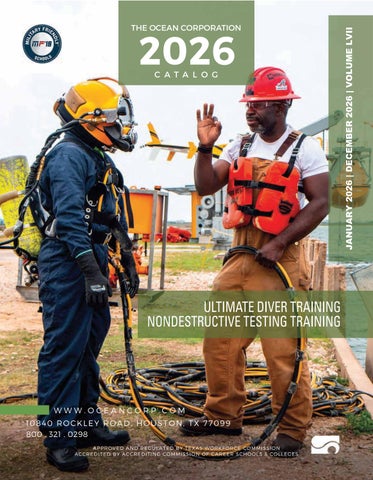
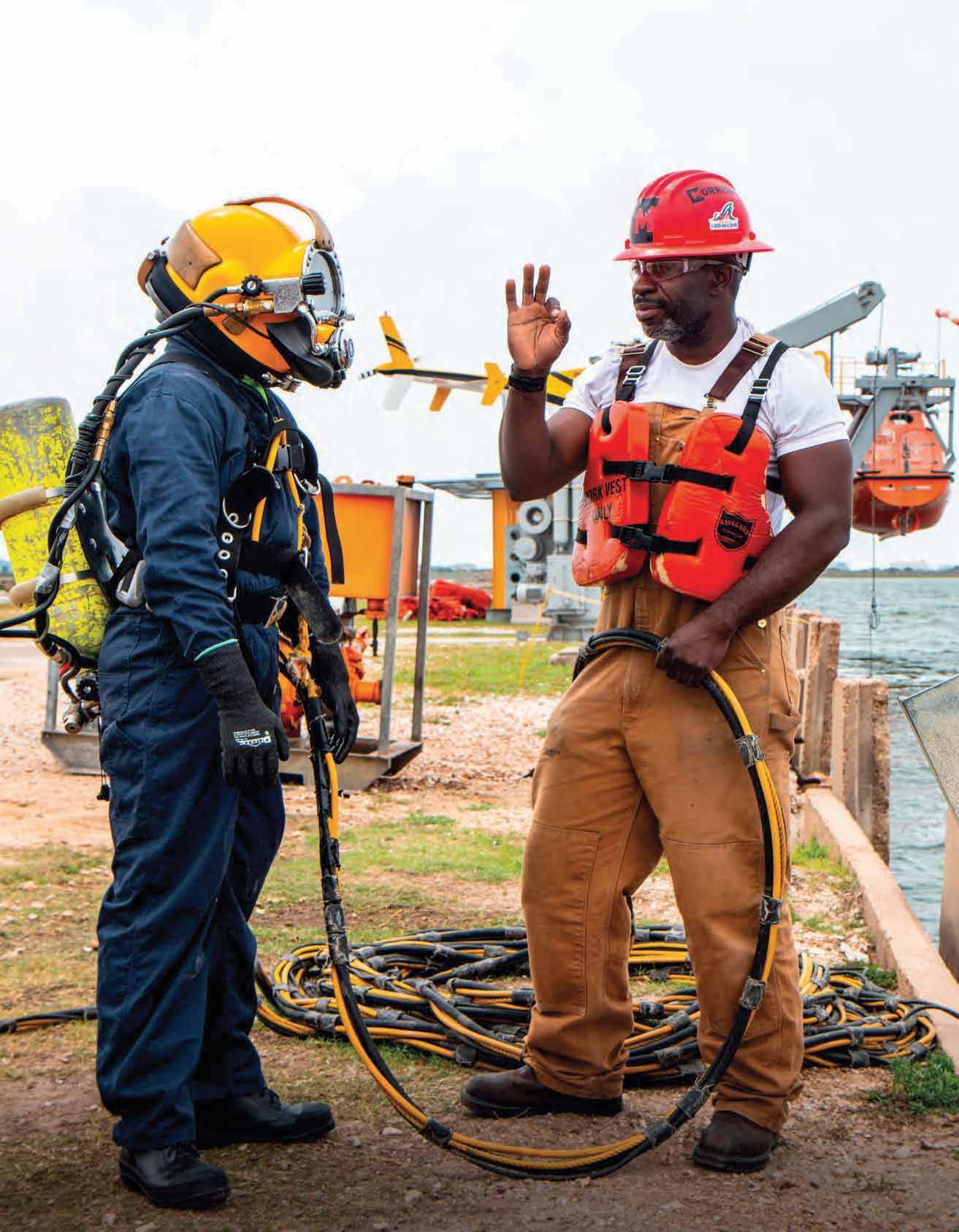
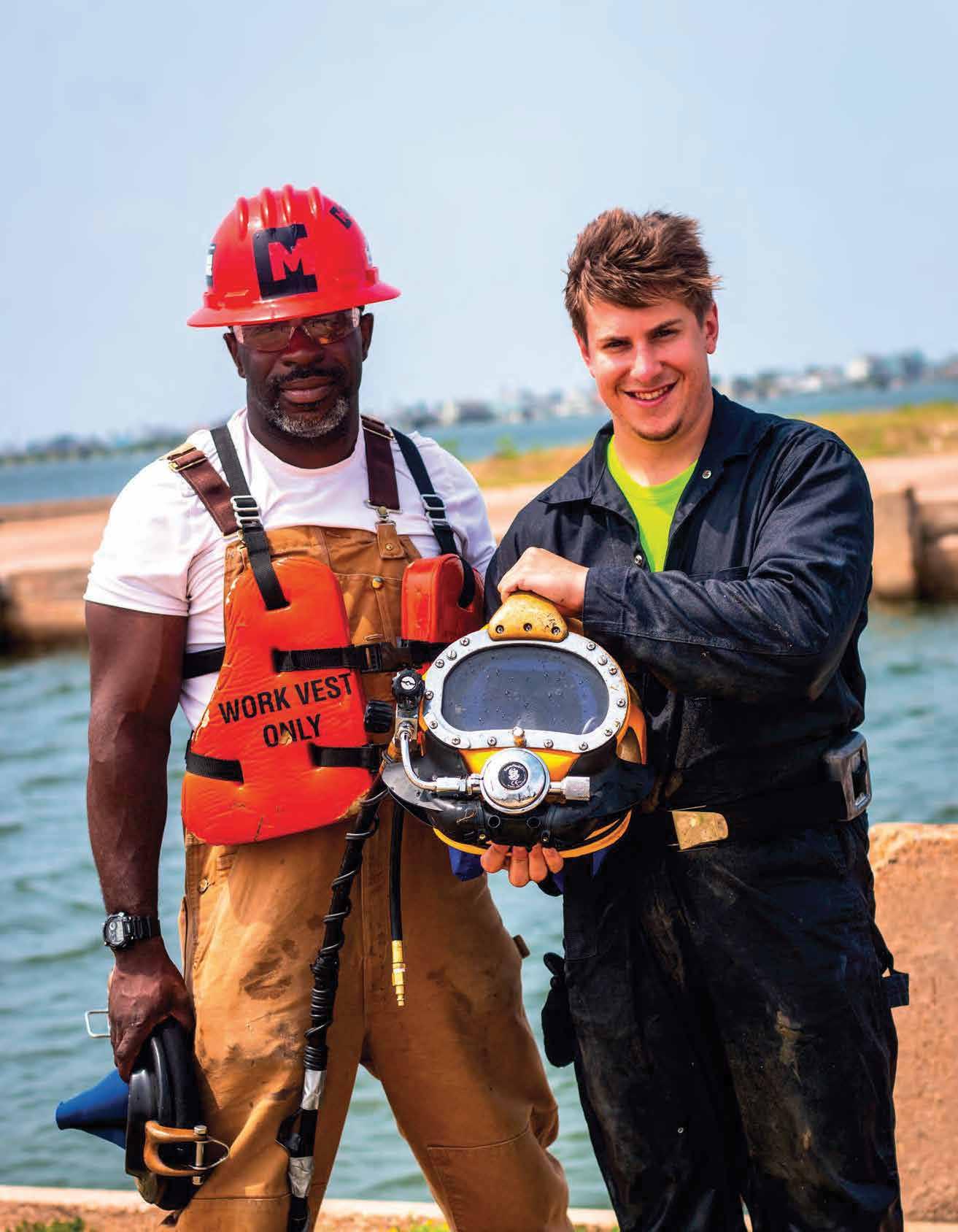
ULTIMATE DIVER TRAINING NONDESTRUCTIVE TESTING TRAINING
Program Curriculum 03
Why Become an Industrial Inspector? NDT Hybrid Training Option 4 4 2
PROGRAMS
11 – UDT Why Become a Commercial Diver
13 – UDT Why Choose The Ocean Corporation For Commercial Diving 18 – UDT Program Curriculum 01
2 – NDT Why Choose The Ocean Corporation For Industrial Inspection
2 – NDT Why Become an Industrial (Nondestructive Testing) Inspector
3 – NDT Program Curriculum 03
3 – NDT Hybrid Training Option
DEPARTMENTS
– Application Procedures
4 – Admissions Requirements
4 – Perfect Attendance Recognition
4 – Student Services
4 – Tuition, Costs, Books and Supplies
4 – Consumer Information 4 – Refund Policy
4 – Return of Title Iv Funds
4 – Policy Regarding Books and Supplies 48 –Academic Progress for Financial Aid Eligibility
– Academic Policies and Standards
5 – Admissions Office Info, Tours & Visits
5 – Student Complaint / Grievance Procedure
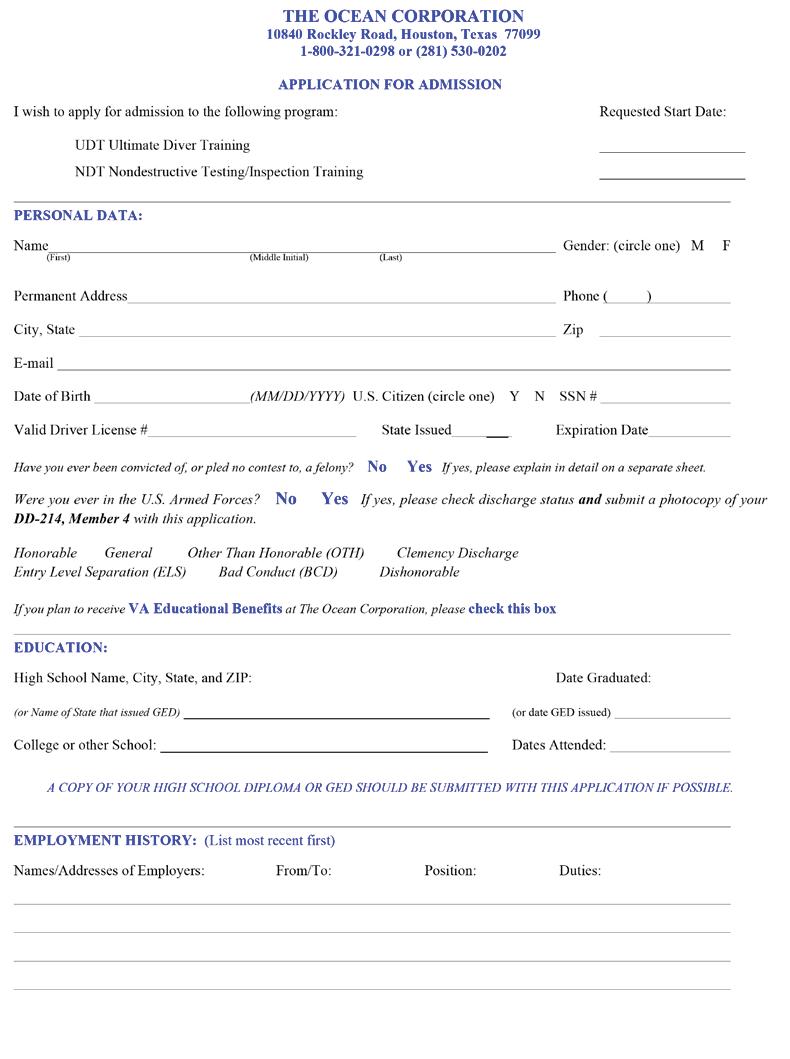
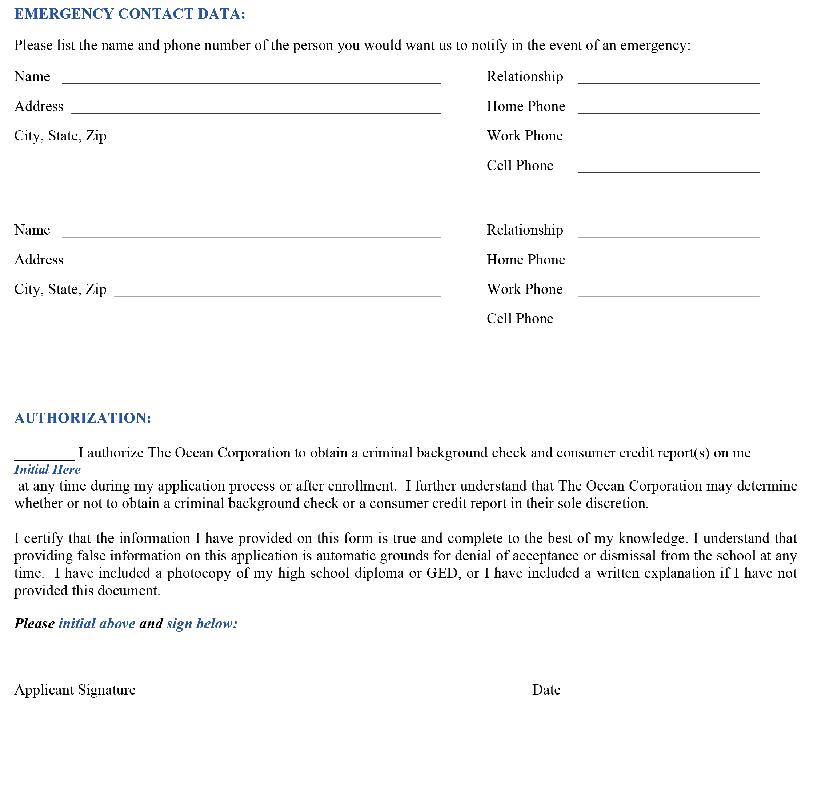
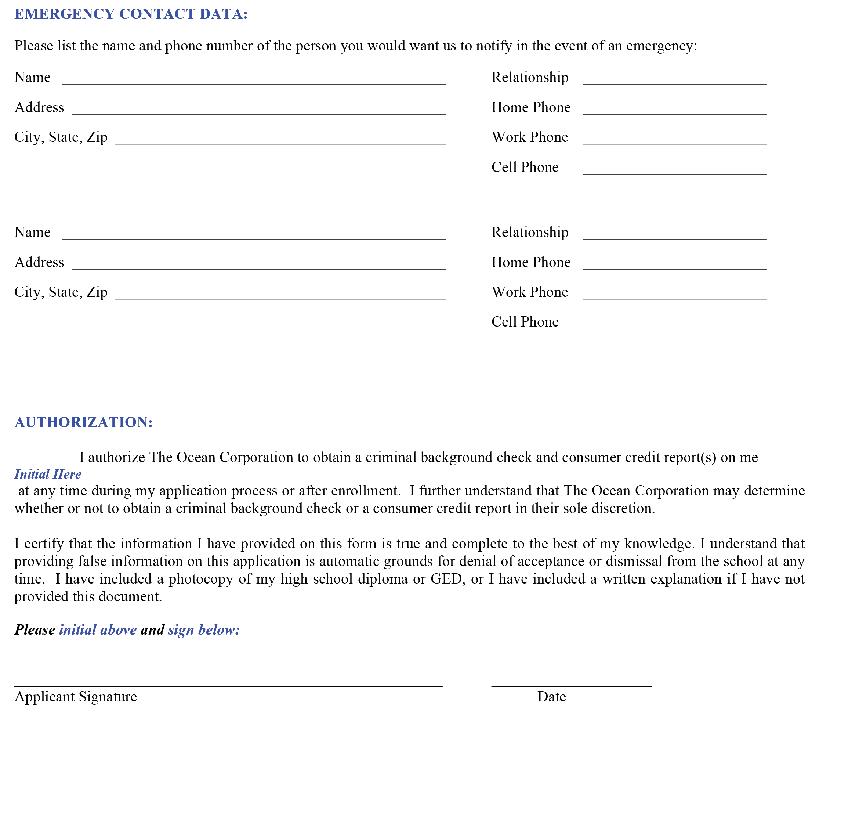
5 – Application for Admission
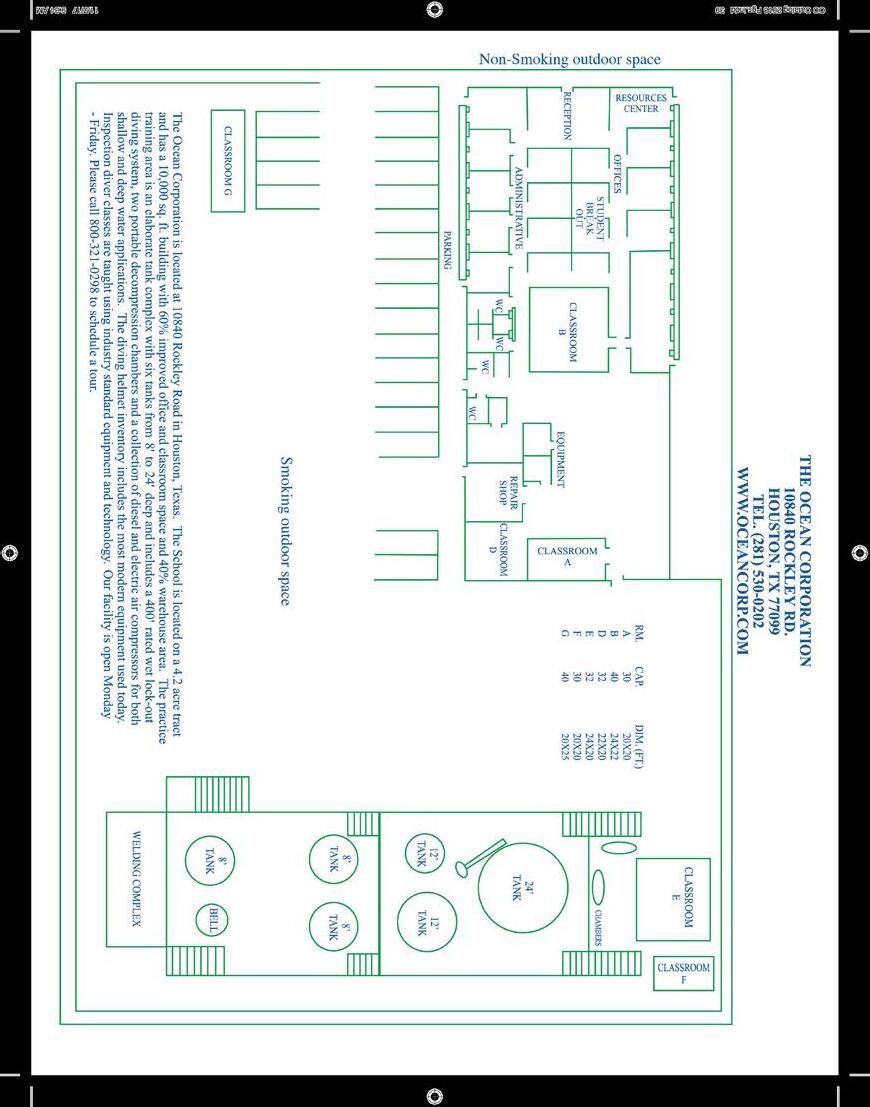
5 – School Map
Meet our Officers & Directors
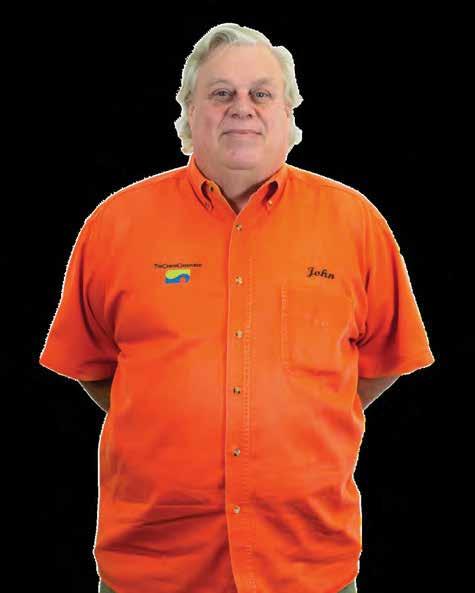
John S. Wood
Terry D. Kelley
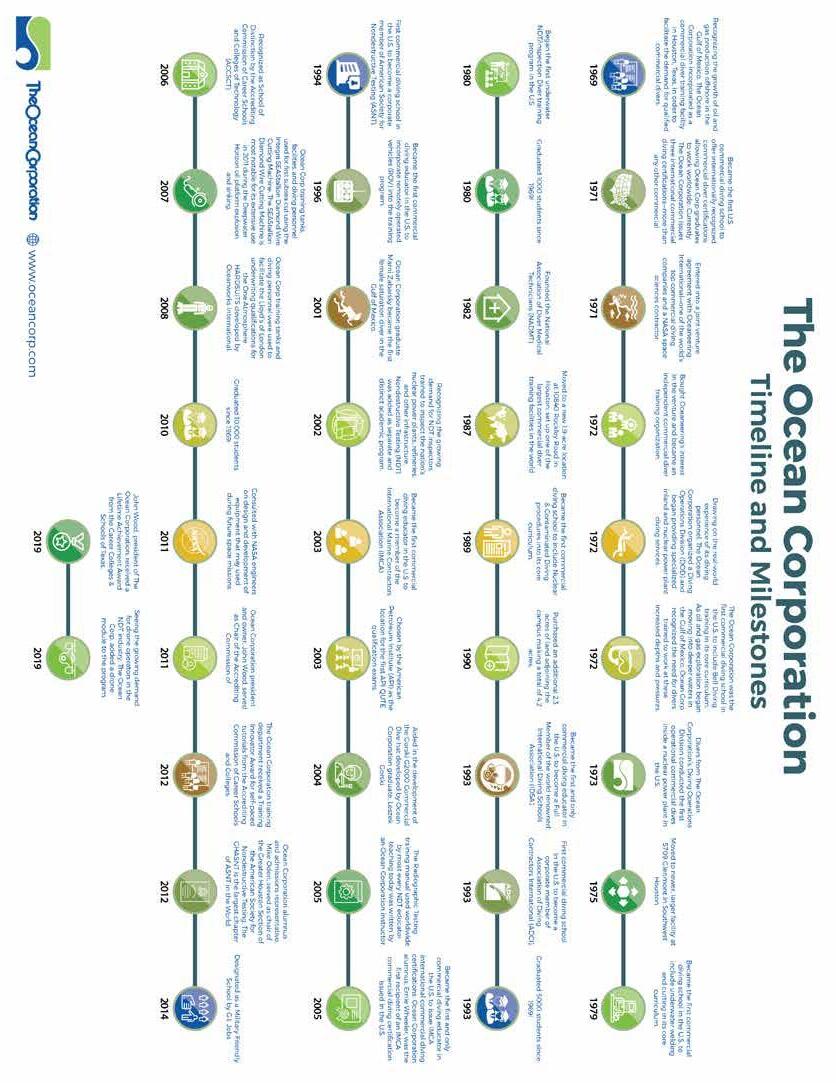
The Ocean Corporation has been providing career training since 1969. We offer training programs in commercial diving and industrial inspection, and our programs are designed to provide you with the complete set of skills necessary for success in your chosen career field.
In 2005 the radiographic used
For over 50 years we have had a solid reputation for producing well-trained graduates. Our students work in commercial diving and industrial inspection worldwide. Just ask anyone in the business – The Ocean Corporation is well-known and wellrespected.
Our reputation and professional respect among industry leaders translates to job opportunities for graduates of The Ocean Corporation. Although we cannot guarantee you job placement, for more than five decades our school has enjoyed a reputation for placing high-quality graduates in high-quality positions.
The Ocean Corporation is located in Houston, Texas, a prime location for job opportunities. Ninety percent (90%) of all billed diving hours worldwide are in the nearby Gulf of Mexico.
Houston also has professional sports, music concerts, nice weather and plenty to do in your spare time. I would like to invite you to visit our campus, talk to our students and staff, and get to know The Ocean
We are proud of our facility and what we do for our
at 1-800-321-0298 for more information or to schedule a visit.
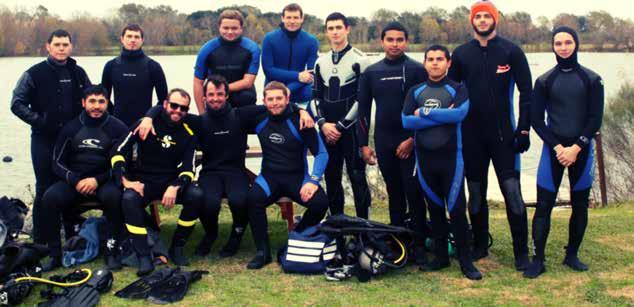
Ocean Corporation graduates are currently working in well-paying jobs, all over the country and around the world. Much of our success can be attributed to our knowledgeable and skilled faculty and staff. We have one of the largest commercial diver and industrial testing training facilities in the world, and I believe our dynamic team learning atmosphere is unparalleled in the industry.
FLEXIBILITY – Industrial (NDT) inspectors work in local jobs near their homes, jobs that require them to travel to job sites, and jobs that require them to re-locate to new in one place, while others have inspectors choose to work on a parttime or occasional basis to suit their
1-800-321-0298, ext . .
inspection panies,omc and
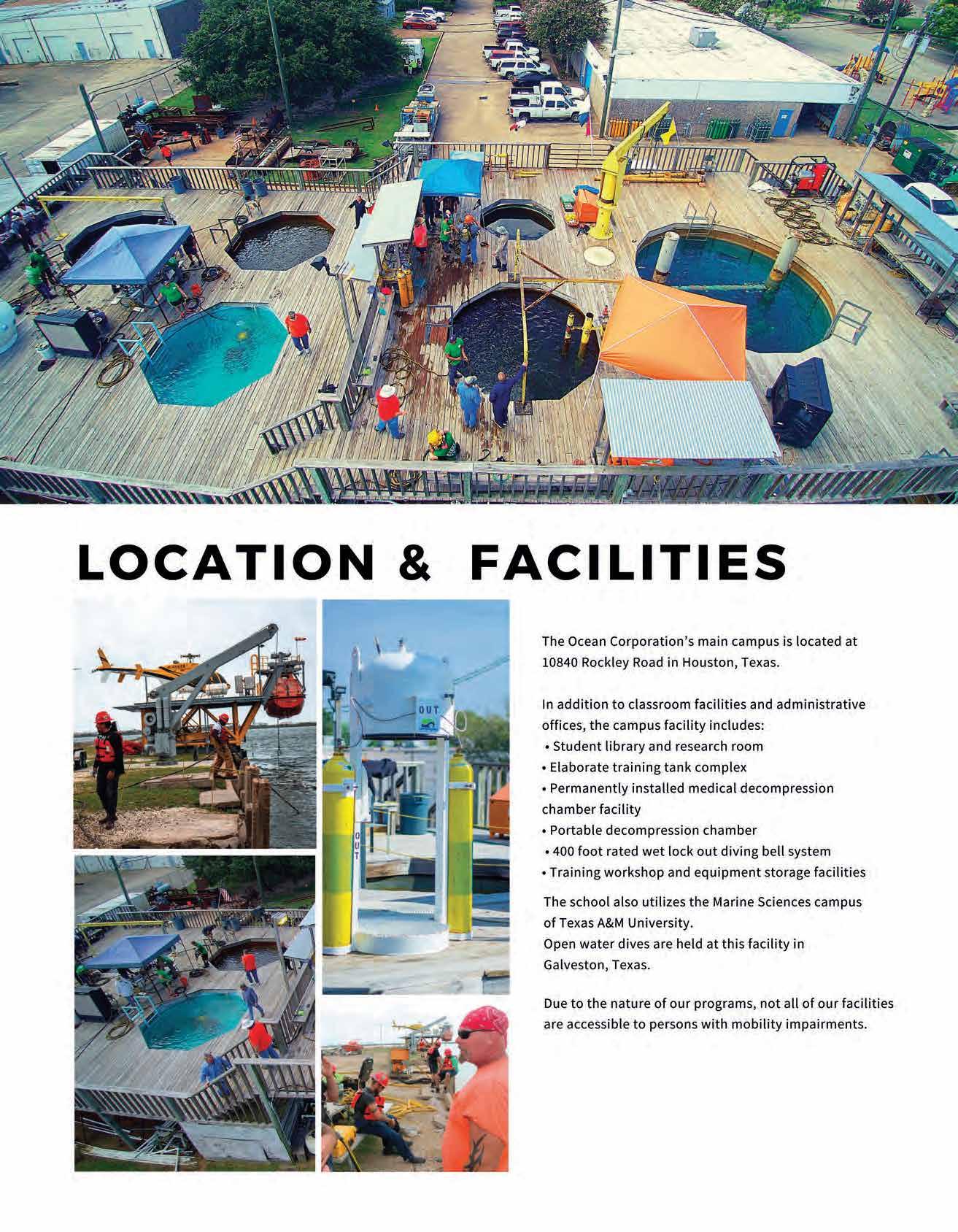
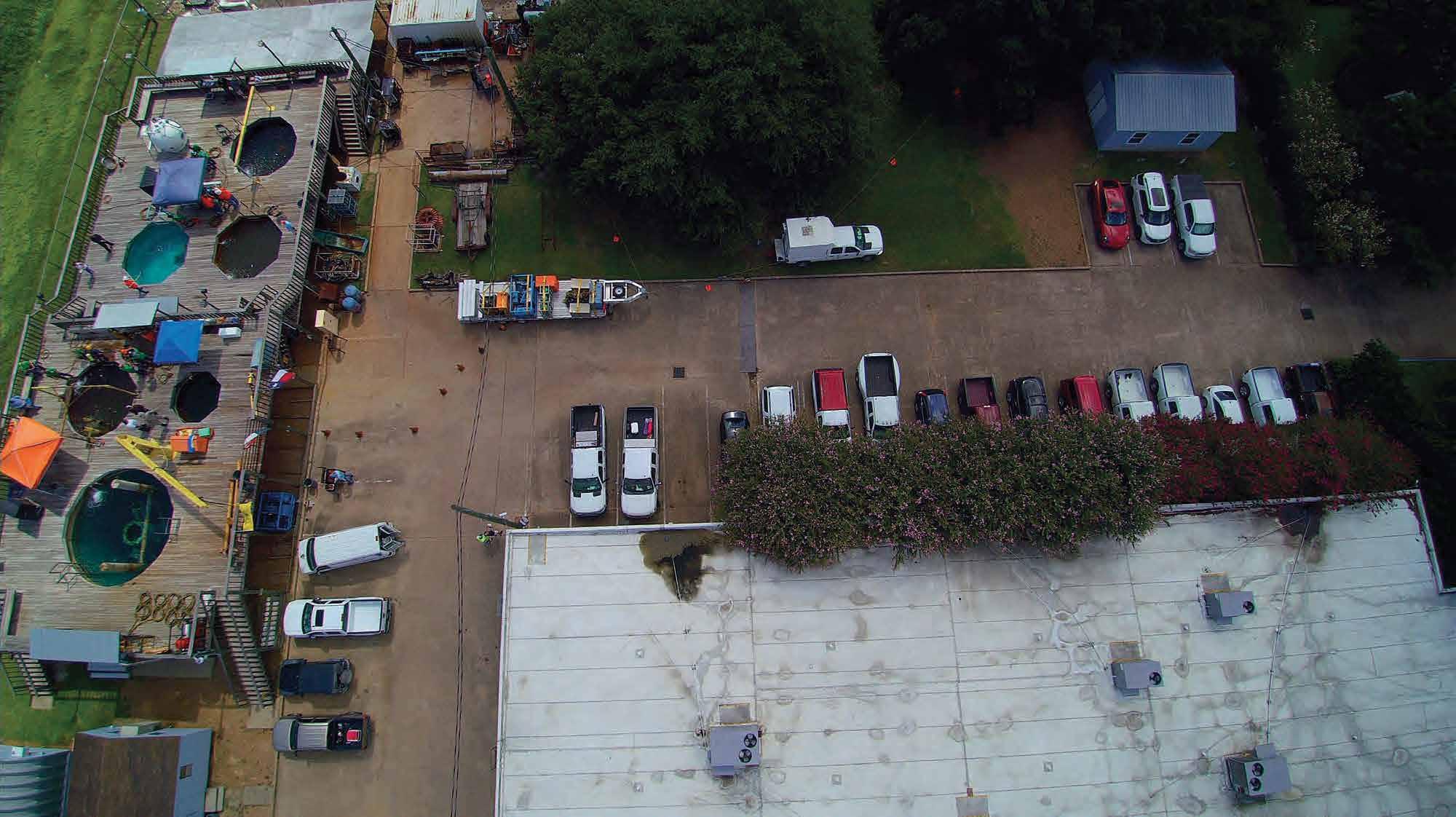
The Ocean Corporation’s main campus is located at 10840 Rockley Road in Houston, Texas.
In addition to classroom facilities and administrative
WHY CHOOSE US?
We provide highly effective job placement assistance. We often invite company managers to visit the campus to observe and socialize with our students to provide an opportunity to develop a rapport prior to that first interview. Our graduates are well-prepared for success in their job search, and we work hard to provide them with the contacts to help them get there. Additionally, we offer job placement assistance for as long as you remain in the industry; all you have to do is ask.
You will graduate in less time and still be fully trained. Our programs include everything you need to be successful in commercial diving or industrial inspecting…and nothing you do not need. You will be fully trained in just 7 ½ months. When you graduate from The Ocean Corporation, you will be well trained and well prepared to begin your career.
The Ocean Corporation is a respected industry leader. Our graduates have been successful because companies know that we have practical and realistic hands on training
industrial inspectors know our name and know that our
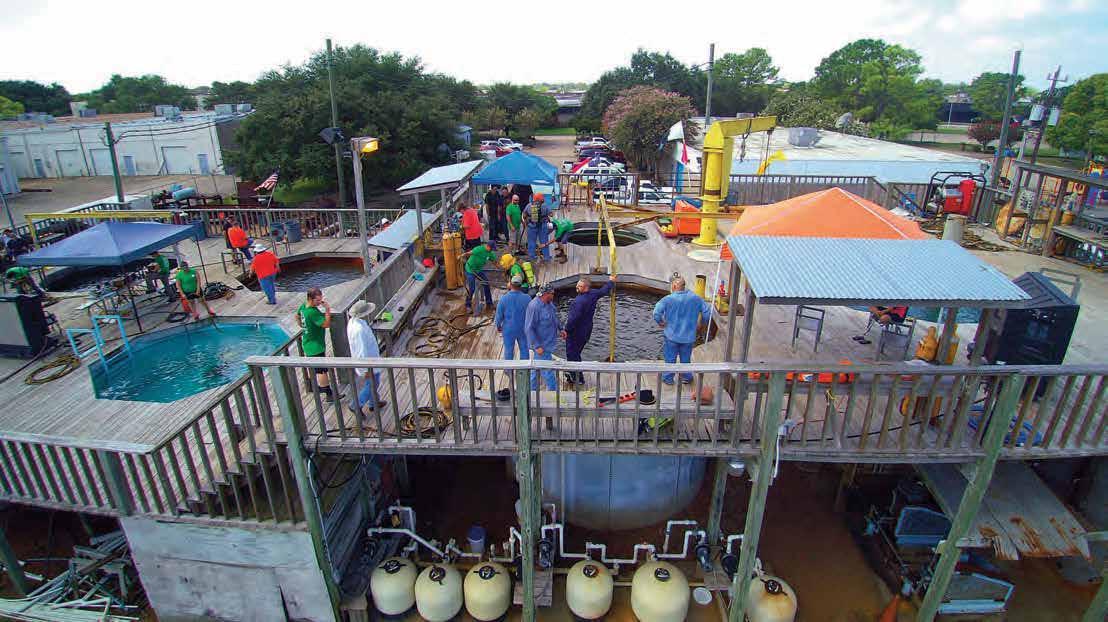
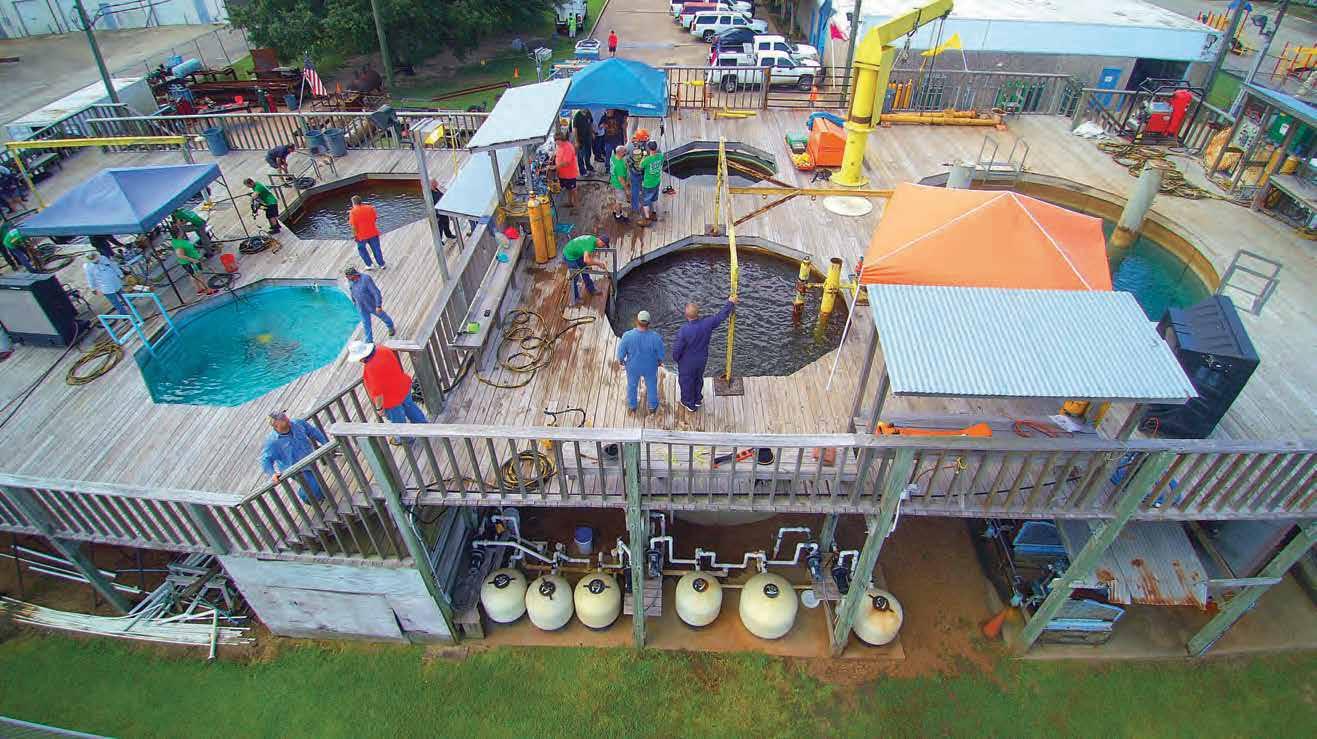
Our facilities are large and well-equipped. We have six classrooms, six training tanks, and a welding complex complete with up-to-date, industry-standard equipment including 12 welding machines. Our commercial air and mixed-gas diving equipment can
EDGE – NDT inspectors equipment and testing training manual most every NDT educator was written by an Ocean Corporation Instructor.
FREQUENTLY ASKED QUESTIONS
What type of student housing is available?
The area surrounding the school offers many large apartment complexes within walking distance from the school. You select your roommate, if you want one, and you make the arrangements with the complex of your choice.
Is the training expensive?
Our commercial diving and industrial inspection programs are among the least expensive, complete programs of their type available. There are also several local employers that have hired our students as temporary employees. This helps to offset your living expenses and offers you a better lifestyle while you are in school. Financial aid is also available, for those who qualify.
What skills or aptitude do I need to do these programs?
The main skills you need are the willingness to work and the desire to learn. We require that you have a high school diploma or state-issued GED.
Students interested in the Ultimate Diver Training (UDT) program must also pass a medical examination to ensure they are physically able to do the job, and it is strongly recommended that all students be able to pass a background check to obtain a Transportation Worker Identification Credential (TWIC) card. While obtaining this card is not a requirement, the inability to obtain a TWIC card may limit a graduate’s job opportunities, especially in off-shore positions.
In 2005 the radiographic used worldwide teaching today
For more information on TWIC card rules, the application process, and cost, please visit:
What types of work do commercial divers do?
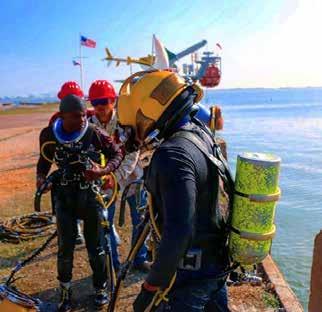
Commercial divers can do a range of jobs including inspecting and repairing oilrigs, pipelines, bridges, water towers, and dams as well as working on salvage operations.
Is diving uncomfortable, difficult or dangerous?
There is some discomfort, difficulty and risk in commercial diving, just as there is in other outdoor, active occupations. Commercial divers believe the excitement, job satisfaction and high pay more than make up for these challenges. Additionally, advancements in the field have made the job safer and more comfortable than ever before. Historically, the greatest comfort issue with diving was working in cold water. With the advent of hot water diving suits and hightech, dry-suit systems, these discomfort issues have been eliminated. The risks to a modern diver have been minimized by better technology, safety procedures and personnel training. In fact, workplace accidents involving diver personnel are far less frequent today than in the early days of the profession.
What is the first step to getting started?
Contact our Admission’s Office at 1-800-321-0298 if you have any additional questions or simply fill out the application on page 54 of this catalog and send it in, along with any other required documents as detailed on page
When do I start?
We have classes starting approximately every five weeks. From the moment you start classes, we can have you on your way to becoming a commercial diver or industrial inspector in less than eight months.
inspectors work in local jobs near their homes, jobs that require them to travel to job sites, and jobs that require them to re-locate to new in one place, while others have inspectors choose to work on a parttime or occasional basis to suit their
EDGE – NDT inspectors equipment and testing training manual
most every NDT educator was written by an Ocean Corporation Instructor.
inspectors work in local jobs near their homes, jobs that require them to travel to job sites, and jobs that require them to re-locate to new in one place, while others have inspectors choose to work on a parttime or occasional basis to suit their
FLEXIBILITY – Industrial (NDT)
EDGE – NDT inspectors equipment and testing training manual
most every NDT educator was written by an Ocean Corporation Instructor.
WHY CHOOSE THE OCEAN CORPORATION FOR COMMERCIAL DIVING?
We have the least expensive, complete commercial diver program. We provide comprehensive training for less money than other commercial diving schools. We do not train "air only" divers because we know that welding and mixed gas/bell skills are important when breaking into the diving business. Our training
We have experienced up-to-date staff. Our diving instructors are experienced, active or retired commercial divers who periodically work offshore and onshore and leaves of absence to work in the U.S. Gulf of Mexico and overseas, so their skills remain current and they gain experience
Your equipment costs will be very affordable.
The Ocean Corporation provides almost all of the equipment needed. The rest of what you will need can be purchased in
Houston is a great location for both training and employment.
Warm weather makes Houston a great place to do underwater training, and Houston’s location near the Gulf of Mexico makes it a great place to find a job. More commercial divers are hired in this area than in any other place in the world. More than 30 diving companies are located within 325 miles of Houston. The Gulf Coast is the commercial diving, offshore
Recompression chamber operations
CUTTING EDGE – NDT inspectors robotic equipment and
In
and NON-STRENUOUS
FLEXIBILITY – Industrial (NDT) inspectors work in local jobs near their homes, jobs that require them to travel to job sites, and jobs that require them to re-locate to new in one place, while others have inspectors choose to work on a parttime or occasional basis to suit their
2005 the radiographic testing training manual used worldwide by most every NDT educator teaching today was written by an Ocean Corporation Instructor.
CUTTING EDGE – NDT inspectors robotic equipment and
In
FLEXIBILITY – Industrial (NDT) inspectors work in local jobs near their homes, jobs that require them to travel to job sites, and jobs that require them to re-locate to new in one place, while others have inspectors choose to work on a parttime or occasional basis to suit their
2005 the radiographic testing training manual used worldwide by most every NDT educator teaching today was written by an Ocean Corporation Instructor.
ULTIMATE DIVER TRAINING (UDT) PROGRAM 01
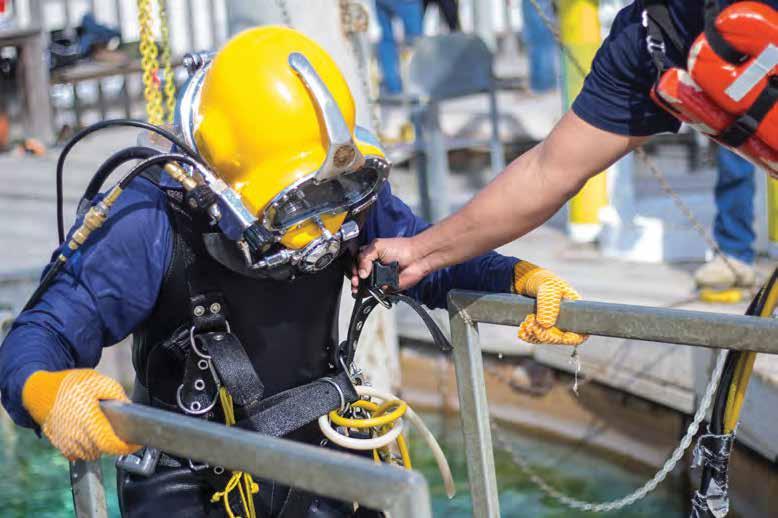
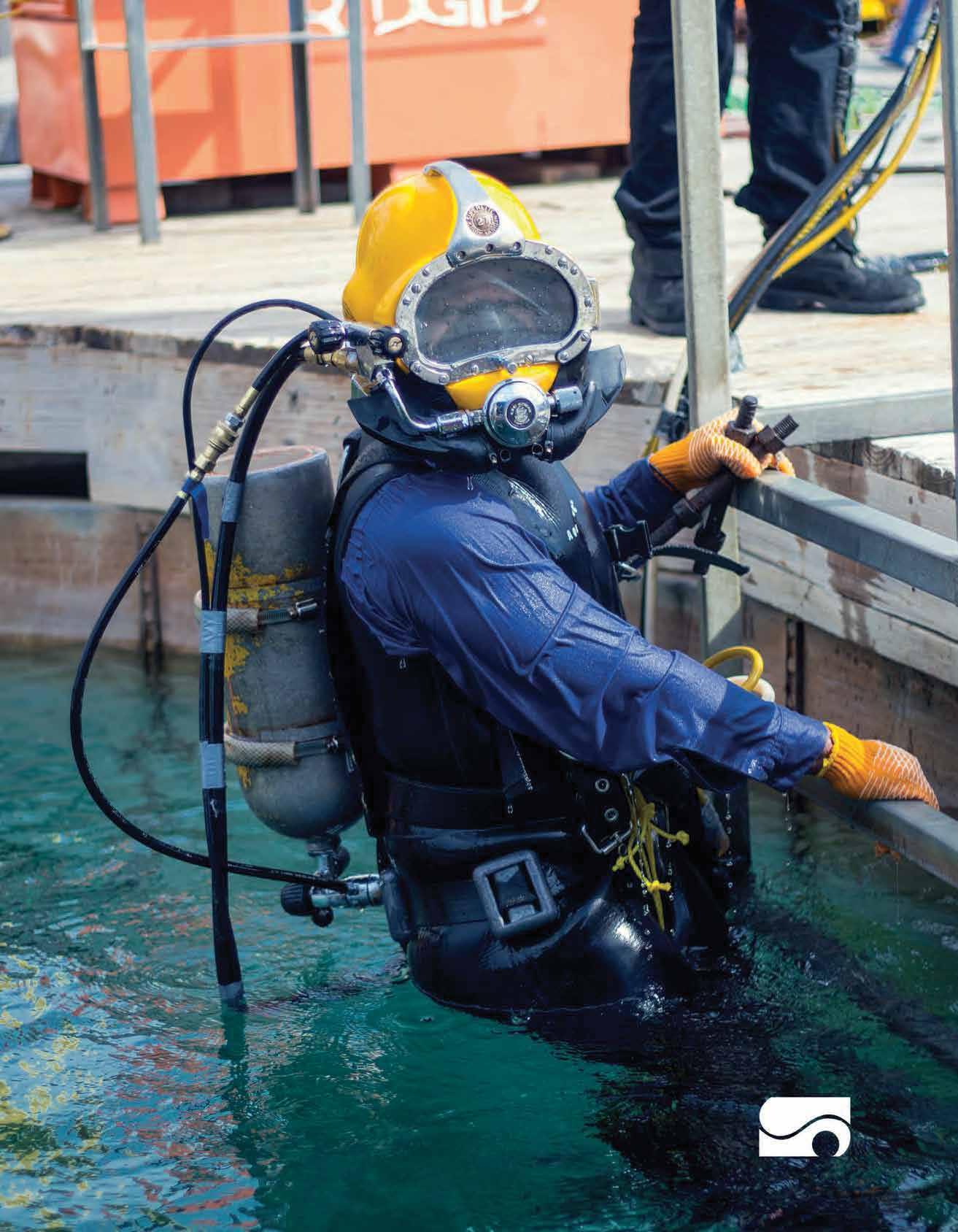
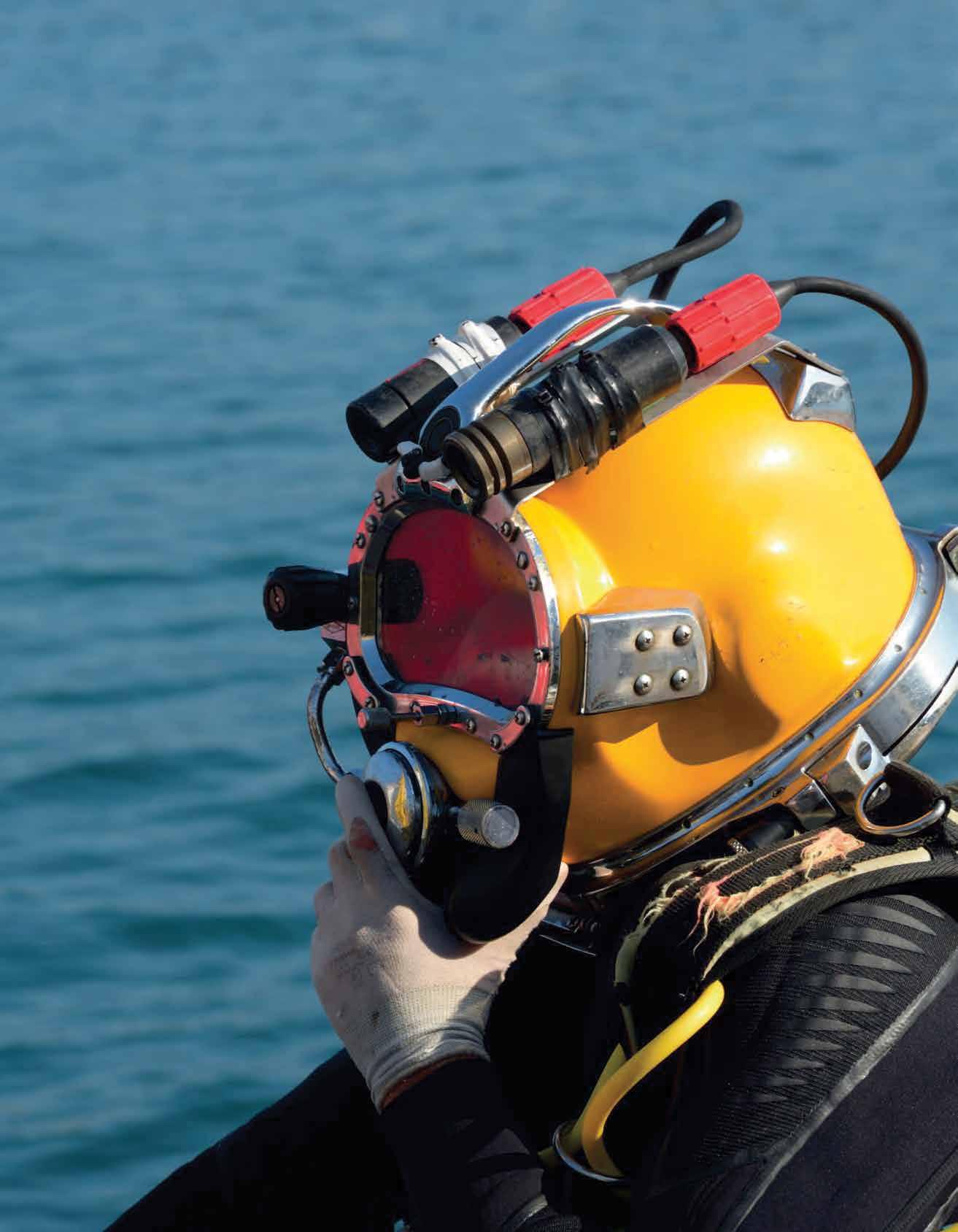
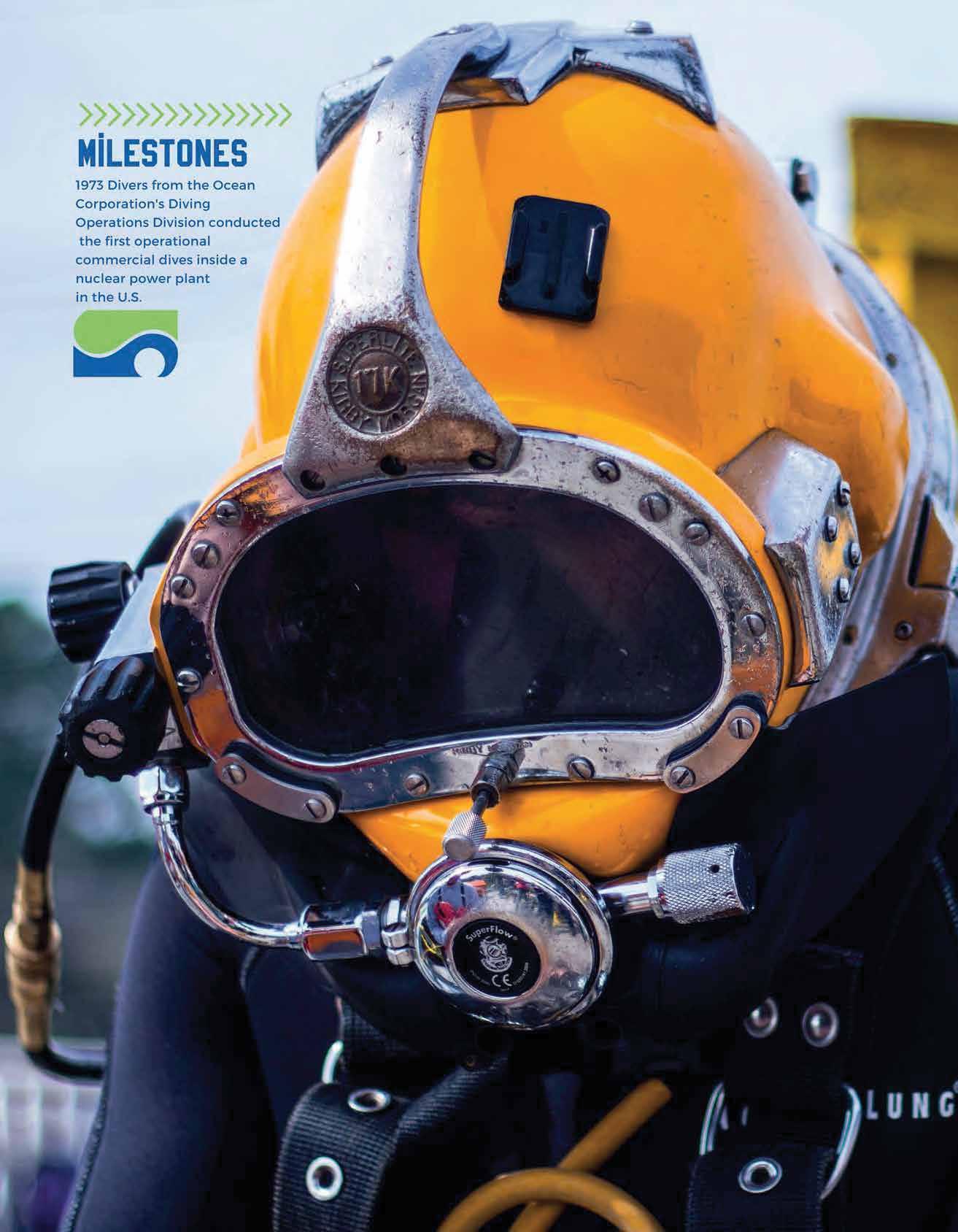
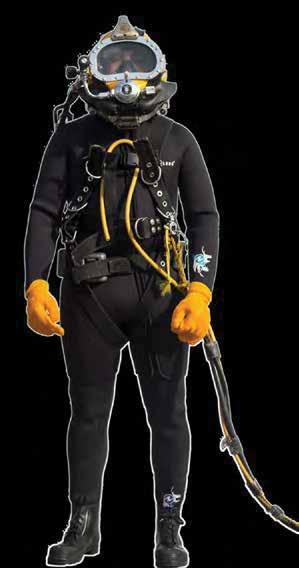
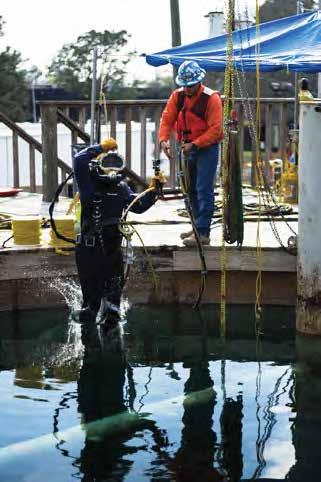
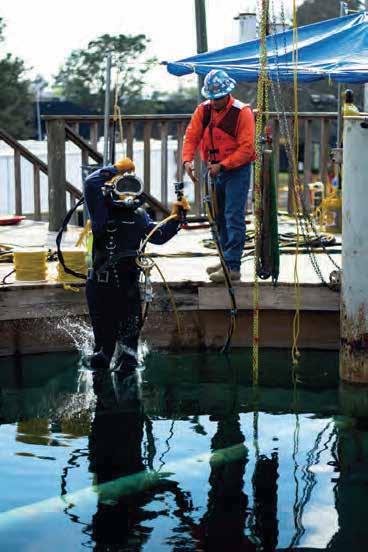
This program is the ultimate in diver training! It meets or exceeds all of the standards of the American National Standards Institute (ANSI) for entry- level commercial divers.
Graduates of this program are skilled in welding and cutting, both surface and underwater, and in mixed gas and saturation. UDT students are introduced to the latest revolution in the diving industry - Remotely Operated Vehicles (ROV). They are given an overview of the types and styles of ROV’s used in the industry and are taught about offshore structures/vessels and ROV applications. UDT students are taught the basics in Quality Control/Quality Assurance (QC/QA) and have an opportunity to participate in the American Society of Nondestructive Testing (ASNT) Houston Chapter activities.
Graduates of this program receive:
• UDT Diploma which includes Levels I & II Ultrasonic Testing and Magnetic Particle Testing
• HAZWOPER (40 hours) as outlined in 29CFR 1910.120
• Qualified Rigger Card.
Program 01: Ultimate Diver Training - This program meets or exceeds the standards established by ANSI ACDE 01-2015 (American National Standards Institute Association of Commercial Diving Educators, version January 2015) and ANST TC1A 01- 2015 (American Society of Nondestructive Testing, Testing Criteria 1A).
In 2005 the radiographic testing training manual used worldwide by most every NDT educator teaching today was written by an Ocean Corporation Instructor.
Program 01: Ultimate Diver Training - EDUCATIONAL OBJECTIVE: Upon completion of the required training, each student is prepared to begin employment in the commercial diving or the ROV or the Drone industries. UDT graduates also have sufficient training in Ultrasonic and Magnetic Particle Testing to obtain entrylevel positions in certain nondestructive testing/industrial inspection occupations.
Program 01: Ultimate Diver Training – MEDICAL MATRICULATION REQUIREMENTS:
In order to begin lab courses after completion of the lecture courses, students pass a medical examination, to be documented on The ADCI Medical History Form (Meddoc rev 08/17/2017). This form will be provided by The Ocean Corporation to all prospective UDT students. All students enrolled in the UDT program must submit a completed medical evaluation form, signed by a medical doctor licensed in the United States. It is highly recommended that students obtain the examination and submit the completed form prior to beginning lecture classes, but the completed form absolutely must be submitted prior to the conclusion of five weeks of instruction at The Ocean Corporation. Students who do not submit the completed form by the end of the five-week period will not be permitted to move on (that is, matriculate) to the lab portion of the program.
CUTTING
EDGE – NDT inspectors robotic equipment and
inspectors work in local jobs near their homes, jobs that require them to travel to job sites, and jobs that require them to re-locate to new in one place, while others have inspectors choose to work on a parttime or occasional basis to suit their
UNIQUE LOCATIONS –
inspection panies,omc and
PROGRAM 01:
PROGRAM 01:
ULTIMATE
This
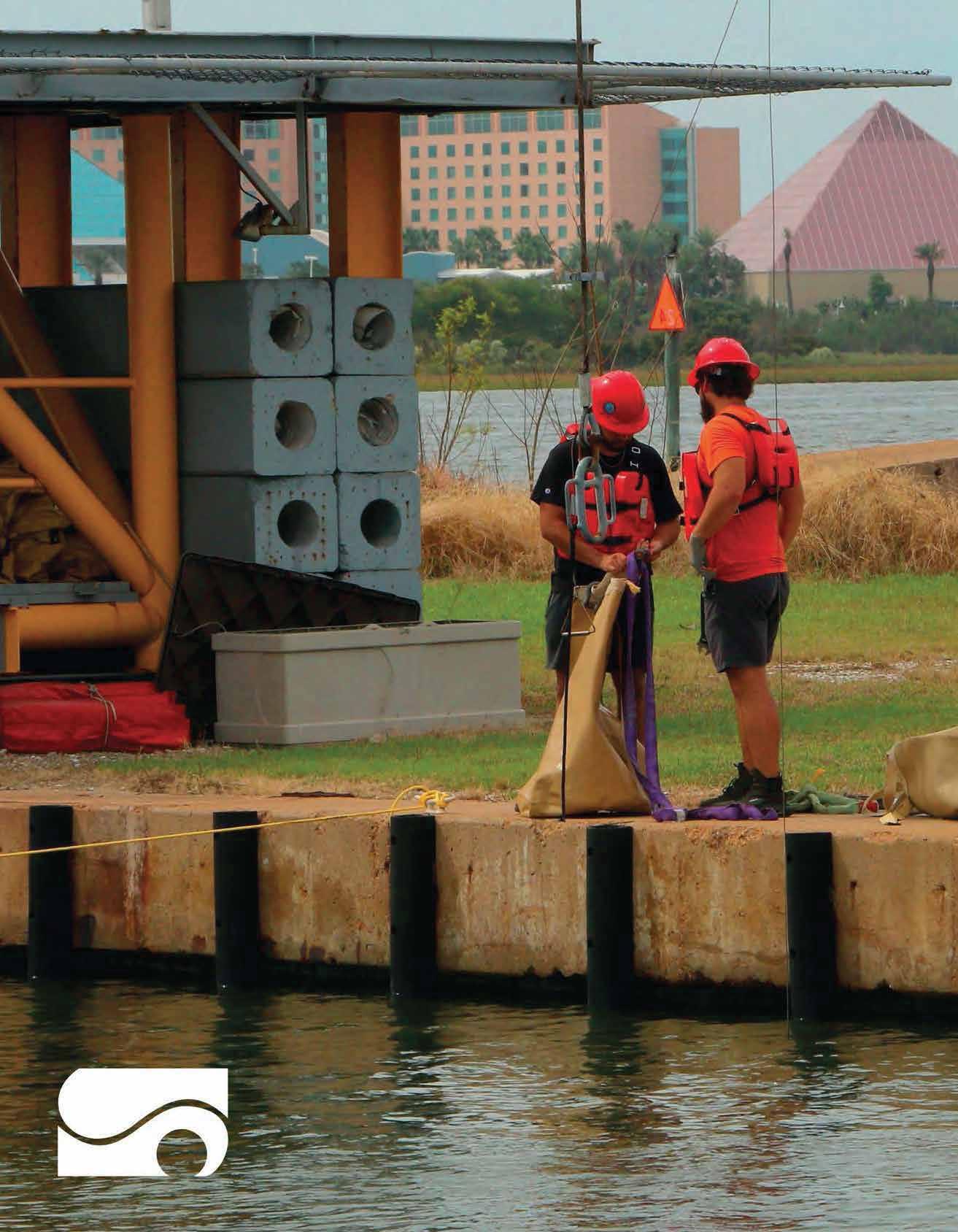
Rigging – Lecture 20 Hrs., Lab 20 Hrs. – Students learn the construction, care, and safe use of different types of wire and rope and to work safely with block and tackle, winches, and other rigging equipment to move heavy loads. Fundamental marlinespike seamanship will be learned in addition to useful knots and the splicing of line. Students also learn proper crane operation, the use of block and tackle fairleads and other rigging equipment commonly used in commercial diving operation. The students also learn proper rigging and loading of diving equipment for job mobilization. A written and practical examination will be given encompassing the rigging material.
Basic Diving Physics - Lecture 10 Hrs. — This course teaches the basic principles of physics as related to diving. Students also learn the terminology of diving physics and are introduced to the basic gas laws. A written examination will be given encompassing all basic physics and physiology material.
Basic Diving Medicine - Lecture 10 Hrs. — Students learn the fundamentals of diving physiology and are informed of diving medical conditions. They also learn how to prevent problems by observing safe diving practices. A written examination will be given encompassing all basic physics and physiology material.
Air Decompression - Lecture 25 Hrs. — Students learn the use of U.S. Navy Standard Air Decompression Tables and learn the techniques for surface decompression procedures. Students are required to learn to compute schedules and properly record dive profiles on log sheets. Special emphasis is placed on safety procedures for oxygen decompression. A written examination will be given encompassing materials regarding decompression procedures.
Treatments - Lecture 20 Hrs. — Students learn the use of the hyperbaric medicine treatment tables. During this time, students combine their medical knowledge with their understanding of the treatment tables to diagnose and treat various simulated diving problems. Students are also familiarized with current medical treatment practices. A written examination will be given encompassing treatments material.
Intro to Scuba or Commercial SCUBA – Lab 15 Hrs. – Students will learn the fundamentals of self-contained underwater breathing apparatus (SCUBA) for commercial use, including equipment setup, underwater safety, and controlled dive operations.
In 2005 the radiographic testing training manual used worldwide by most every NDT educator teaching today was written by an Ocean Corporation Instructor.
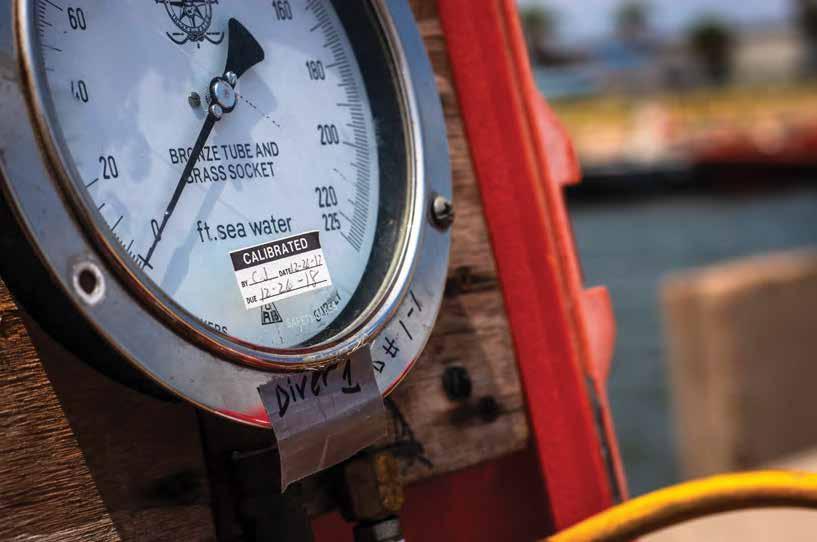
Marine Equipment Maintenance – Lecture 10 Hrs. Lab 5 Hrs. — Students learn the operation, maintenance and field troubleshooting of marine diesel engines, compressors, high-pressure jet pumps, hyperbaric chambers, volume tanks, dive umbilicals and dive hats. Students also learn how to test the accuracy of pneumofathometer gauges and pressure relief valves, and how to recalibrate gauges for accurate readings. A written examination will be given encompassing marine equipment maintenance.
Dive Equipment Maintenance - Lecture 15 Hrs. Lab 10 Hrs. — Students learn to perform maintenance on the diving systems as required. Students also learn the operation and function of commercial diving masks and helmets. They learn to properly set up and maintain a complete dive station and to perform preventative and field maintenance on the diving equipment. A written examination will be given encompassing dive equipment maintenance.
Diving Air Systems - Lecture 10 Hrs. Lab 5 Hrs. — Students learn the safe operations principles of air supply systems. They learn about various types of compressors and air storage systems and learn procedures for inspection, maintenance and testing. A practical examination, with a pass/fail scoring, will be given encompassing the diving air systems material.
CUTTING EDGE – NDT inspectors robotic equipment and
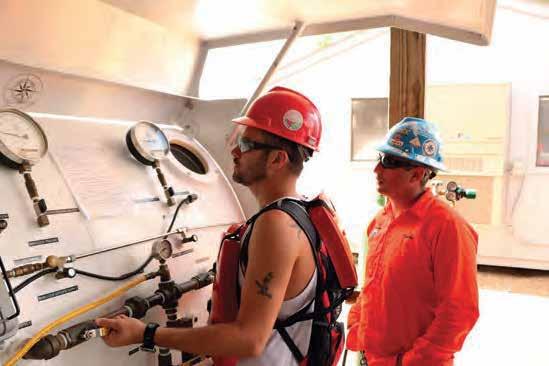
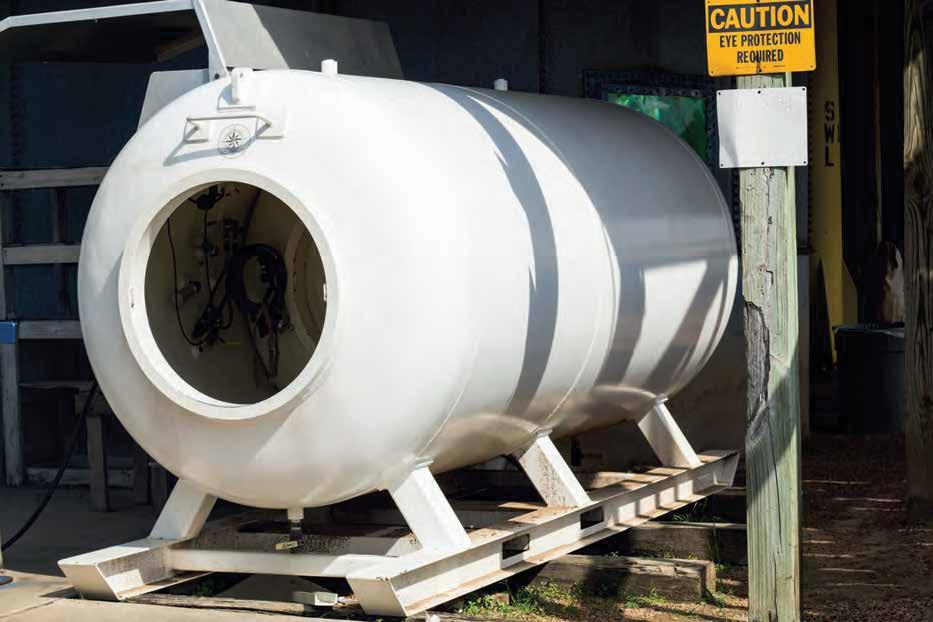
Chamber Operations - Lab 10 Hrs. — In this phase of training, students learn the hands-on operation of a decompression chamber. This provides an opportunity for practical use of the decompression schedules and tables. Students are trained and tested as operators of the chamber, as is commonly done in commercial diving. A practical examination, with a pass/fail scoring, will be given encompassing the chamber operations material.
Maritime/Marine Safety – Lecture 5 Hrs. – Students are introduced to the measures used to protect life and property at sea. Specifically, the guidelines come from the International Convention for the Safety of Life at Sea (SOLAS). SOLAS provisions range from setting the frequency of ship inspections to implementing approved life-saving appliances.
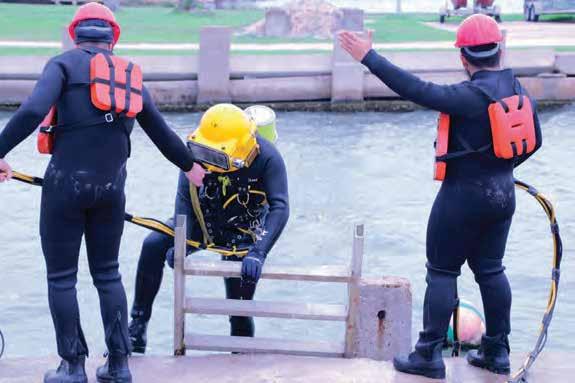
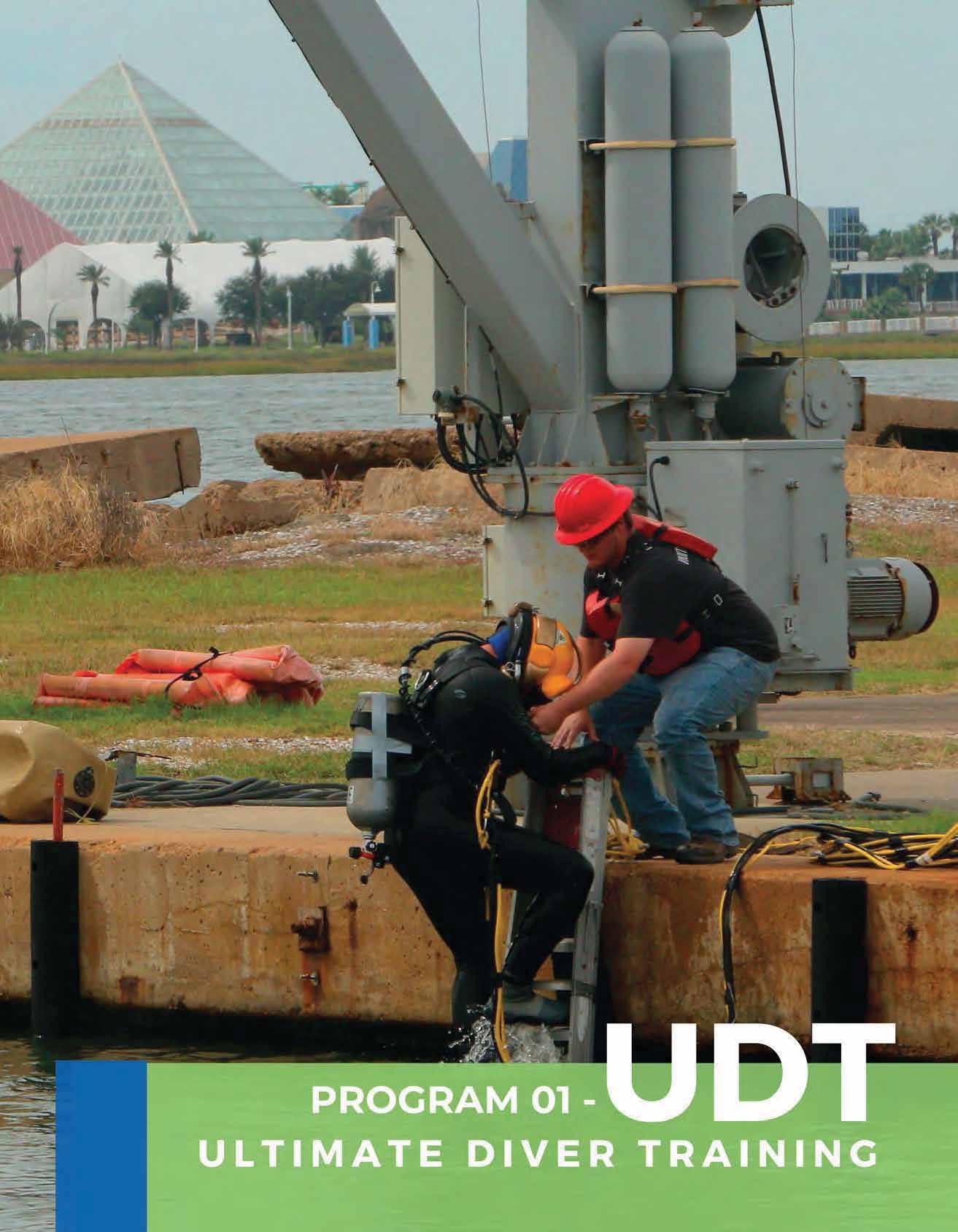
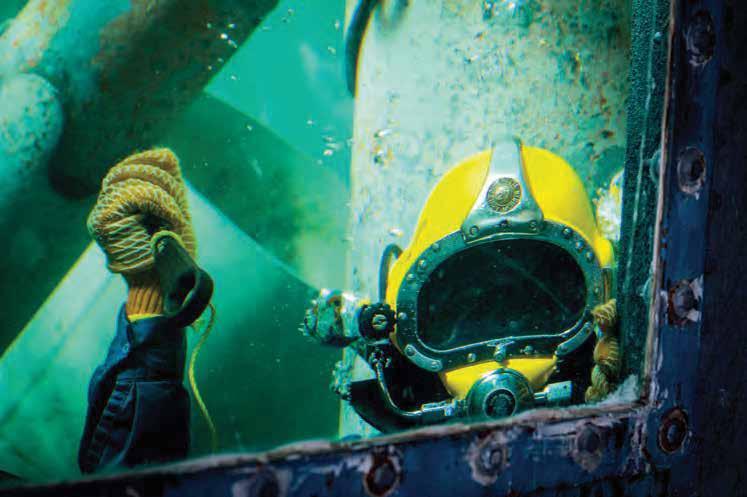
Commercial Dives - Lab 30 Hrs. — Students learn to conduct practical tending and diving operations using lightweight surface-supplied diving gear. Mechanical and rigging projects are performed underwater by the students during this phase of training. A practical examination, with a pass/fail scoring, will be given encompassing the chamber operations material.
Open Water Project Dives - Lab 25 Hrs. — Under supervision, students learn to load and mobilize all necessary support equipment for open water diving operations. Students set up complete diving stations on site and perform various underwater projects. These projects employ all the diving skills taught thus far and include the operation of tools and rigging equipment. The proper keeping of logs, records and reports is stressed, and the work performed is reviewed for quality control, as is done in the field. A practical skills demonstration, with a pass/fail scoring, will be given encompassing open water project dives.
First Comprehensive Exam - Lecture 5 Hrs. — Students are given a written exam and critique covering all subjects up to this point. Students are evaluated on their academic progress and that progress is recorded. If necessary, counseling is given at this time.
Super Projects - Lab 40 Hrs. — Students learn to conduct complete diving operations. Students are responsible for planning, logistics and successful completion of actual working tasks in controlled conditions. A practical skill demonstration, with a pass/fail scoring, will be given encompassing the chamber operations material.
Advanced Mixed-Gas Diving Physics - Lecture 10 Hrs. — Students learn how to apply diving physics principles to commercial diving operations. They learn the physics and mathematics of air supply systems and the application of this information to practical commercial diving operations. Students are presented with an overview of the procedures, techniques and applications of deep mixedgas diving.
Advanced Mixed-Gas Diving Medicine - Lecture 10 Hrs. — This course teaches the advanced concepts of diving physiology and medical problems. They learn new material involving decompression sickness, prevention and treatment.
Mixed Gas Diving Operations and Tables - Lecture 10 Hrs. — Students learn mixed-gas diving operations and procedures. They learn to use the mixed-gas tables and compute and record mixed-gas decompression schedules. Students also learn the rules, regulations and standards of safety for mixed-gas diving.
Mixed Gas Diving Equipment - Lab 5 Hrs. — The students learn by doing a hands on experience while dealing with representative examples of the most widely used mixed gas equipment. The emphasis is on the operation of mixed gas surface diving equipment and gas delivery systems. After completing all mixedgas and advanced mixed-gas modules, a written examination will be given encompassing material from these modules of instruction.
Mixed Gas Dives - Lab 30 Hrs. — Each student will make mixed gas dives on actual offshore diving systems. Emphasis is on safety, tending, gas rack operations and diving procedures. A practical skills demonstration, with a pass/fail scoring, will be given encompassing mixed-gas diving.
Bell/Saturation Diving - Lecture 10 Hrs. — This section encompasses learning bell and saturation diving techniques. Students learn about the deep diving "team" concepts and are taught procedures for complex bell diving systems operation. Students also learn the rules, regulations and safe practices required for bell and saturation diving.
inspectors work in local jobs near their homes, jobs that require them to travel to job sites, and jobs that require them to re-locate to new in one place, while others have inspectors choose to work on a parttime or occasional basis to suit their
Bell/Saturation Diving Systems - Lab 5 Hrs. — This course teaches a complex bell system and the components and operation of the system. They also learn industry standards for "plumbing" deep diving systems. They keep accurate records during training operations. Emphasis is on diving procedures and lifesupport system operations. After completing all bell/saturation dive modules, a written examination will be given encompassing material from these modules of instruction.
NDT – UDT - 01.03
Industry Overview and History – Lecture 5 Hrs. – Students are given a historical overview of the development of the industry, its pioneers and tradi ons. In addi n, they will understand the current and future roles the American Society of Nondestruc ve Tes ng (ASNT) and the e ect disasters have regarding the development of codes and standards within the industry. In addi n, the students are provided an overview of the industry through a thorough discussion of industry characteris cs including: working with the employer, working with the employer’s customers, and being a part of the company team. How can earnings be maximized? How does personal life a ect job security? Tips on the do’s and don’ts of workplace protocol and the methods to create long-term employment within the industry are also provided.
Magne c Par cle (MT) Level I Inspec on Techniques – Lecture 10 Hrs., Lab 10 Hrs. —
Upon comple n of this module, students will demonstrate prac cal competencies using the Magne c Par cle (MT) inspec on techniques. Magne c Par cle inspec on is the use of magne c elds in the detec n of surface and near surface defects. Level I general and speci c examina ns will be given at the end of this module in accordance with recommended wri en prac ce, ASNT SNT TC 1A and CP-189.
Magne c Par cle (MT) Level II Inspec on Techniques - Lecture 5 Hrs., Lab 10 Hrs.—
Students learn the theory and lab applica ons of Magne c Par cle (MT) inspec on techniques in a diving environment. Level II general and speci c examina ons will be given at the end of this module in accordance with recommended wri en prac ce, ASNT SNT TC 1A and CP-189.
Level I Ultrasonic (UT) Inspec on Techniques - Lecture 30 Hrs., Lab 10 Hrs. —
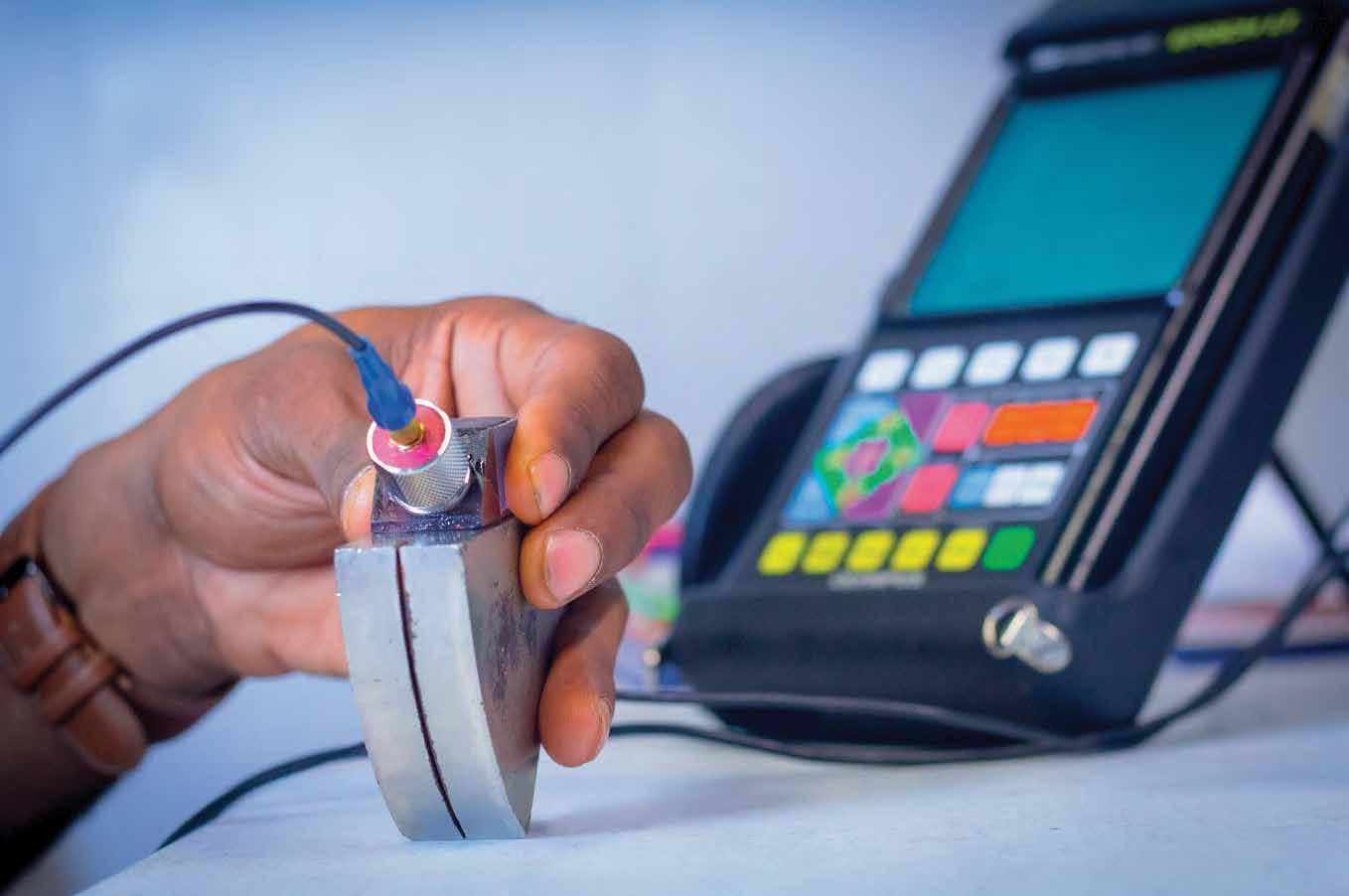
This course teaches Ultrasonic Tes ng Inspec n through the theory of sound and sound wave propaga n, pulse echo, transmission tes ng, transducer design, instrument controls and func n, materials velocity and normal beam inspec n. Level I general and speci c examina ons will be given at the end of this module in accordance with recommended wri en prac ce, ASNT SNT TC 1A and CP-189.
Level II Ultrasonic (UT) Inspec on Techniques - Lecture 15 Hrs. Lab 25 Hrs. —
Through intensive prac cal applica on in the use of angle beam inspec on techniques students learn the laws of re ec n, refrac n and mode conversion. In addi on, students learn the use of di erent types of calibra on blocks, such as IIW and DSC, and the inspec n of materials using the AWS D1.1 speci ca ons. Level II general and speci c examina ons will be given at the end of this module in accordance with recommended wri en prac ce, ASNT SNT TC 1A and CP-189.
In 2005 the radiographic testing training manual used worldwide by most every NDT educator teaching today was written by an Ocean Corporation Instructor.
Subsurface Structural Integrity NDT Lab – Lab 10 Hrs. – NDT inspec ons are a cri cal component for ensuring the structural integrity and safety of subsurface components such as o shore oil pla orms, bridges and underwater pipelines. In this course, students learn how to perform underwater NDT inspec ons using underwater inspec on techniques, procedures and equipment. Students will perform NDT inspec ns, underwater, on mock-up oil pla orms and structures located in the pass/fail scoring, will be given encompassing the NDT material.
WELDING – UDT - 01.04
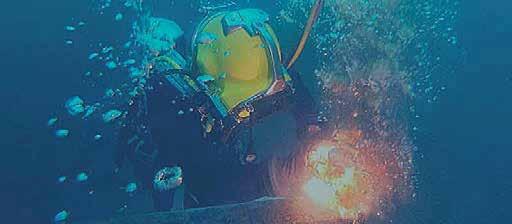
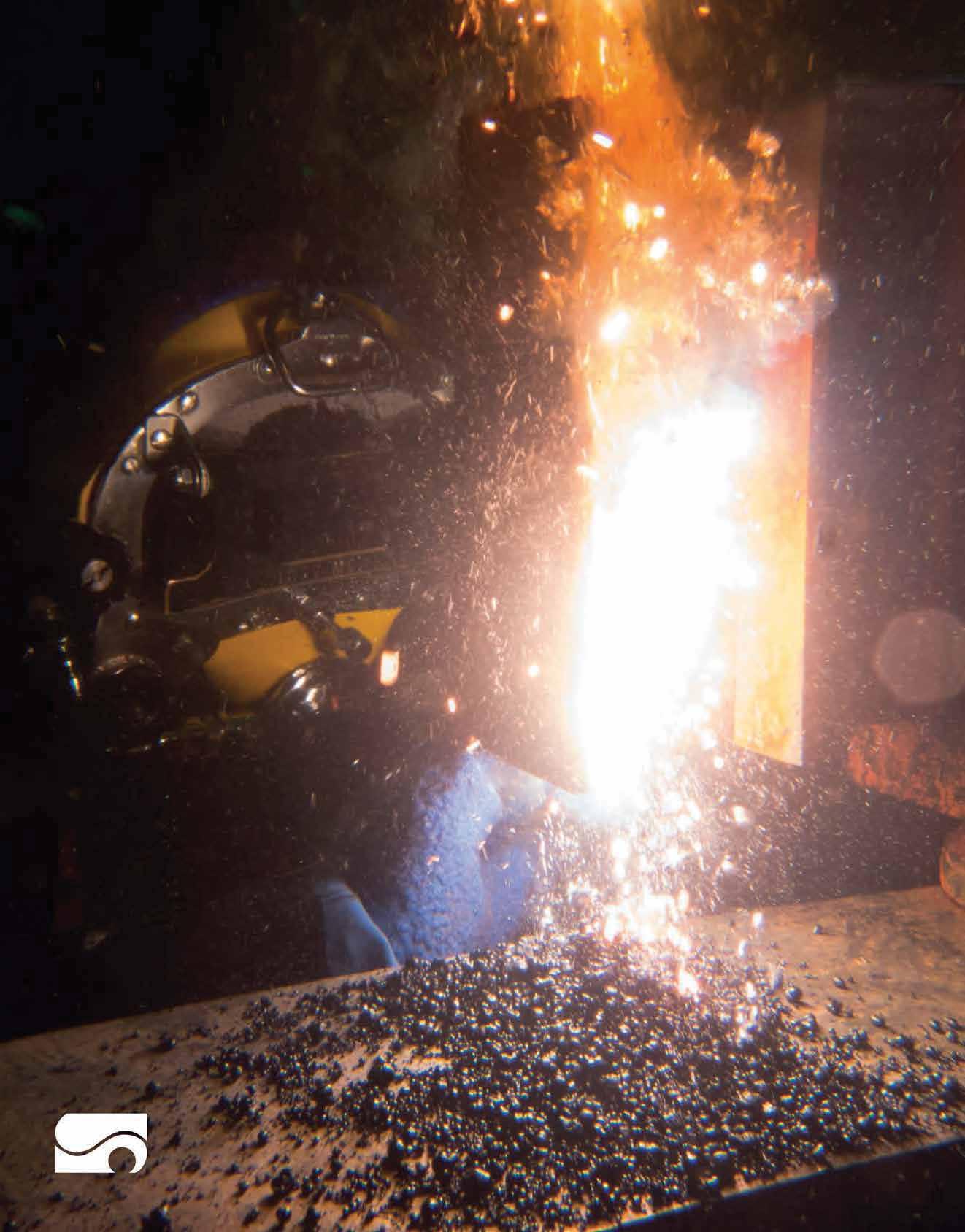
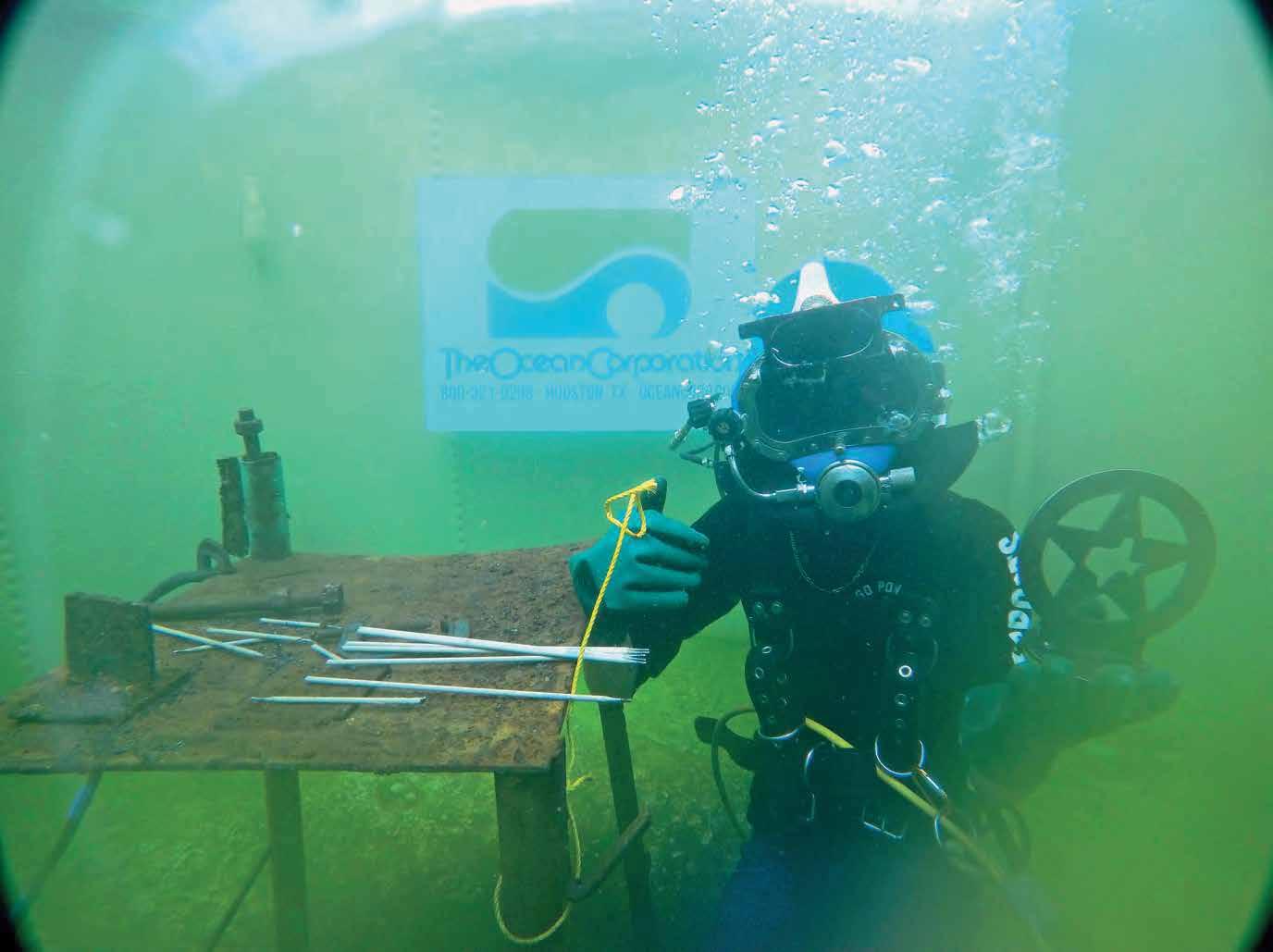
Underwater Welding and Cu ng Lecture – Lecture 20 Hrs. – Students learn the principles of shop welding and cu ng. They are taught the special requirements for underwater welding and cu ng. Equipment, materials, and techniques are explained with emphasis on safe prac ces. Students are made aware of the quali ca ons and skills the diving industry requires of underwater welders. Students are given a review and nal wri en examina n encompassing all welding and cu ng material.
Surface/Underwater Welding - Lab 60 Hrs. — This course teaches the use of oxy/ acetylene cu ng equipment and students are given shop prac ce in proper surface cu ng techniques. Students learn about di erent types of welding machines, cables, electrode holders and various sizes and types of electrodes. They also learn how to perform service types of welds and are given shop prac ce projects. Students progress to the use of underwater welding equipment and perform underwater welding projects in the diving tanks.
Underwater Cu ng Lab - Lab 40 Hrs. — In this course, students learn about oxy/arc equipment which includes oxygen pressure regulators, various types of cu ng torches, cu ng rods and proper techniques for underwater cu ng and are given prac cal cu ng projects in the diving tanks.
CUTTING EDGE – NDT inspectors robotic equipment and
Orienta on to Remotely Operated Vehicle (ROV) - Lecture 5 Hrs., Lab 5 Hrs. Students learn a list of terminology along with de ni ns and receive an overview of the types and styles of ROV's used in the industry. The students also learn about o shore structures/vessels, ROV Applica ons, ROV Subsystems, Spread/Support Equipment, Test Equipment and Documenta n/Procedures. During the prac cal por on of the training, Students learn to setup ROV dives, conduct pre- and post-dive checks, and to operate basic controls. Students will perform visual inspec on of simulated o shore oil structures using ROV techniques. A prac cal skills demonstra n, with a pass/fail scoring, will be given encompassing ROV materials.
Final Review & Exam – Lecture 10 Hrs. — Students are given a review and wri en examina on encompassing material from the en e program.
inspectors work in local jobs near their homes, jobs that require them to travel to job sites, and jobs that require them to re-locate to new in one place, while others have inspectors choose to work on a parttime or occasional basis to suit their
and
FLEXIBILITY – Industrial (NDT) inspectors work in local jobs near their homes, jobs that require them to travel to job sites, and jobs that require them to re-locate to new in one place, while others have inspectors choose to work on a parttime or occasional basis to suit their
CUTTING EDGE – NDT inspectors robotic equipment and
inspectors work in local jobs near their homes, jobs that require them to travel to job sites, and jobs that require them to re-locate to new in one place, while others have inspectors choose to work on a parttime or occasional basis to suit their
FLEXIBILITY – Industrial (NDT)
In 2005 the radiographic testing training manual used worldwide by most every NDT educator teaching today was written by an Ocean Corporation Instructor.
UNIQUE LOCATIONS –
FLEXIBILITY – Industrial (NDT) inspectors work in local jobs near their homes, jobs that require them to travel to job sites, and jobs that require them to re-locate to new in one place, while others have inspectors choose to work on a parttime or occasional basis to suit their
JOB PORTABILITY –inspection companies, and NON-STRENUOUS
CUTTING EDGE
robotic equipment
W H Y C H O O S E T H E OC E A N
C OR P O R A L A I R T S U D N I R O F N O I T I NS P E C T I N G ?
Our nondestructive testing/inspection program is comprehensive.
The Ocean Corporatio
N
n
our program, you will possess the building blocks for a fulfil ling career in industrial inspection; we even teach resume-writ ing skills
The Ocean Corporation teaches the American Society of Nondest ructive Testing (ASNT) approved program Graduates of The Ocean
In 2005 the radiographic testing training manual used worldwide by most every NDT educator teaching today was written by an Ocean Corporation Instructor.
Corporation have gone on to secure employment inspecting:
Amusement park rides
Bridges
Petro-chemical plants
Buildings
Power generation plants
Nuclear power plants
We have experienced up-to-date sta .
Wind turbines Paper mills Automotive Aerospace equipment Pipelines
In 2005 the radiographic testing used worldwide by most teaching today was
Our instructors are experienced active or retired inspection professionals who have been involved in the development, interpr etation
and practical application of new laws governing the industry Teaching faculty continu
the field
The cost of your program will be very le.
The Ocean Corporation provides complete training of the essent i ve c ost, and allows you to become employed in your field in less time t han many other programs This is a fast track from trainin g to work, without requiring that you take a broad-based selection of “li beral arts” courses that you will not need for employ
robotic equipment and
CUTTING EDGE – NDT inspectors
Houston is a great location for both tra ining and employment.
Houston has the highest concentration of NDT companies in the nation, many of them with operations all around the world , representing diverse industries. Plus the great weather, dive rse community, and great people m ake this a great place to go to school!
What types of work do industrial inspectors do?
Industrial
NON-STRENUOUS – Industrial
inspectors work in local jobs near their homes, jobs that require them to travel to job sites, and jobs that require them to re-locate to new in one place, while others have inspectors choose to work on a parttime or occasional basis to suit their
FLEXIBILITY – Industrial (NDT)
UNIQUE LOCATIONS –
inspection panies,omc and
JOB PORTABILITY –
inspection companies, and
UNIQUE LOCATIONS –
FLEXIBILITY – Industrial (NDT) inspectors work in local jobs near their homes, jobs that require them to travel to job sites, and jobs that require them to re-locate to new
in one place, while others have
NON-STRENUOUS – Industrial
CUTTING EDGE – NDT inspectors
robotic equipment and
inspectors choose to work on a parttime or occasional basis to suit their
In 2005 the radiographic testing training manual used worldwide by most every NDT educator teaching today was written by an Ocean Corporation Instructor.
JOB PORTABILITY –inspection companies, and
UNIQUE LOCATIONS –
FLEXIBILITY – Industrial (NDT) inspectors work in local jobs near their homes, jobs that require them to travel to job sites, and jobs that require them to re-locate to new
in one place, while others have
inspectors choose to work on a parttime or occasional basis to suit their
NON-STRENUOUS – Industrial
inspectors work in local jobs near their homes, jobs that require them to travel to job sites, and jobs that require them to re-locate to new in one place, while others have inspectors choose to work on a parttime or occasional basis to suit their
CUTTING EDGE – NDT inspectors
robotic equipment and
In 2005 the radiographic testing training manual used worldwide by most every NDT educator teaching today was written by an Ocean Corporation Instructor.
In 2005 the radiographic testing training manual used worldwide by most every NDT educator teaching today was written by an Ocean Corporation Instructor.
JOB PORTABILITY –inspection companies, and
UNIQUE LOCATIONS –
CUTTING EDGE – NDT inspectors robotic equipment and
FLEXIBILITY – Industrial (NDT)
inspectors work in local jobs near their homes, jobs that require them to travel to job sites, and jobs that require them to re-locate to new
in one place, while others have
inspectors choose to work on a parttime or occasional basis to suit their
NON-STRENUOUS – Industrial
inspectors work in local jobs near their homes, jobs that require them to travel to job sites, and jobs that require them to re-locate to new in one place, while others have inspectors choose to work on a parttime or occasional basis to suit their
FLEXIBILITY – Industrial (NDT)
CUTTING EDGE – NDT inspectors
robotic equipment and
most every NDT educator teaching today was written by an Ocean Corporation Instructor.
In 2005 the radiographic testing training manual used worldwide by
In 2005 the radiographic testing training manual used worldwide by most every NDT educator teaching today was written by an Ocean Corporation Instructor.
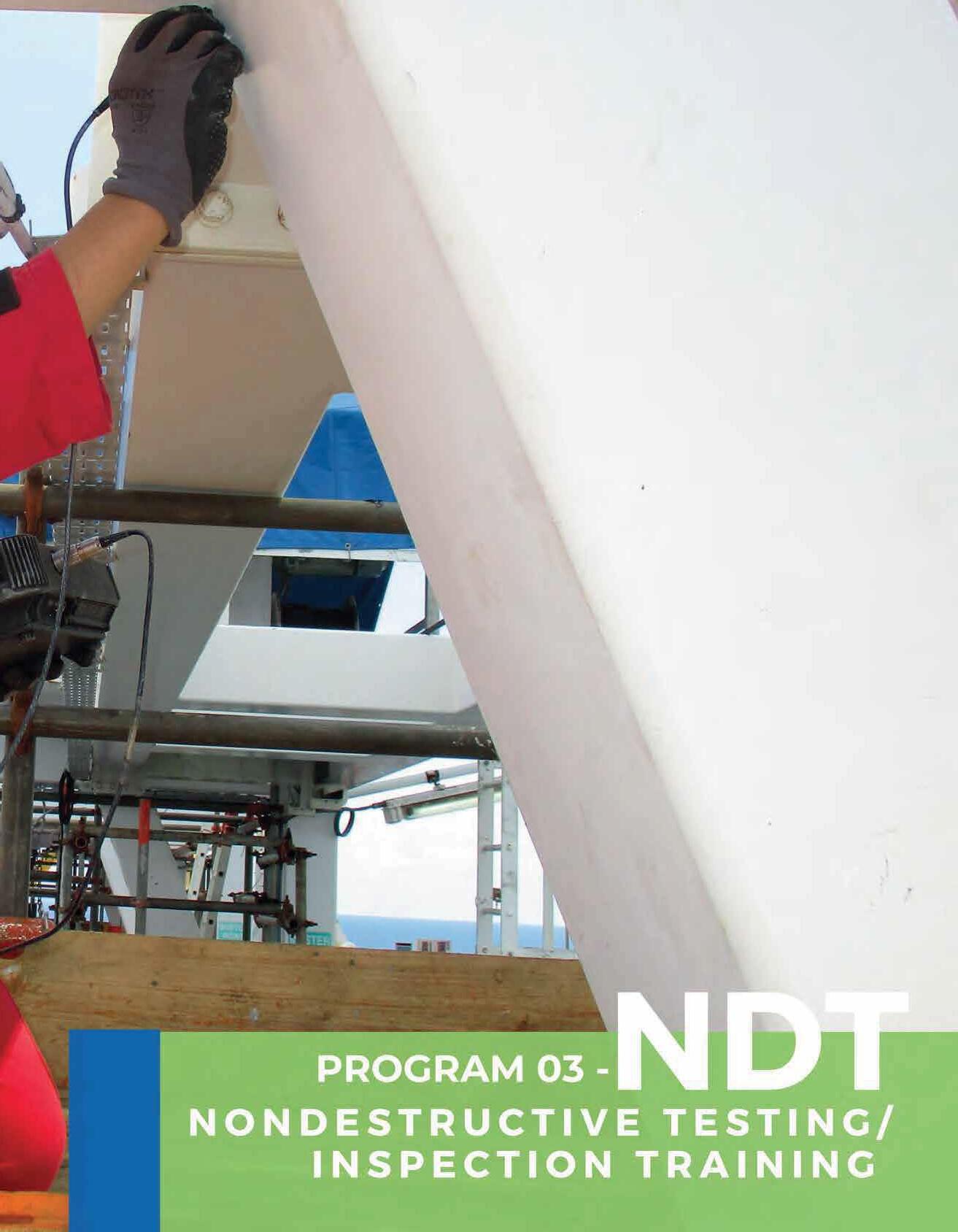
NONDESTRUCTIVE TESTING/ INSPECTION TRAINING (NDT) PROGRAM 03
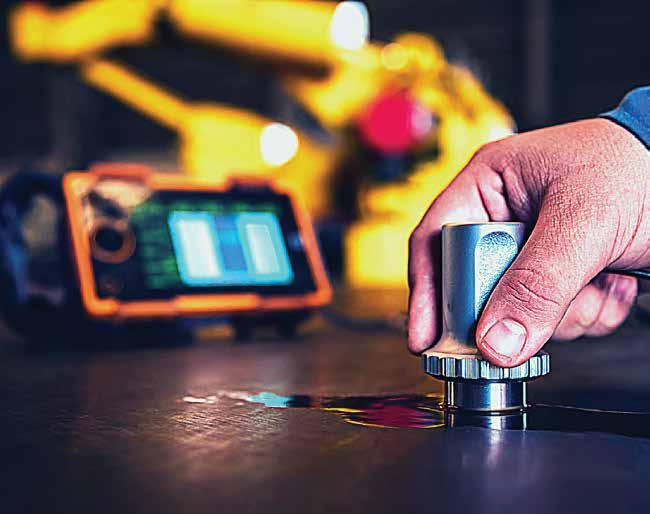
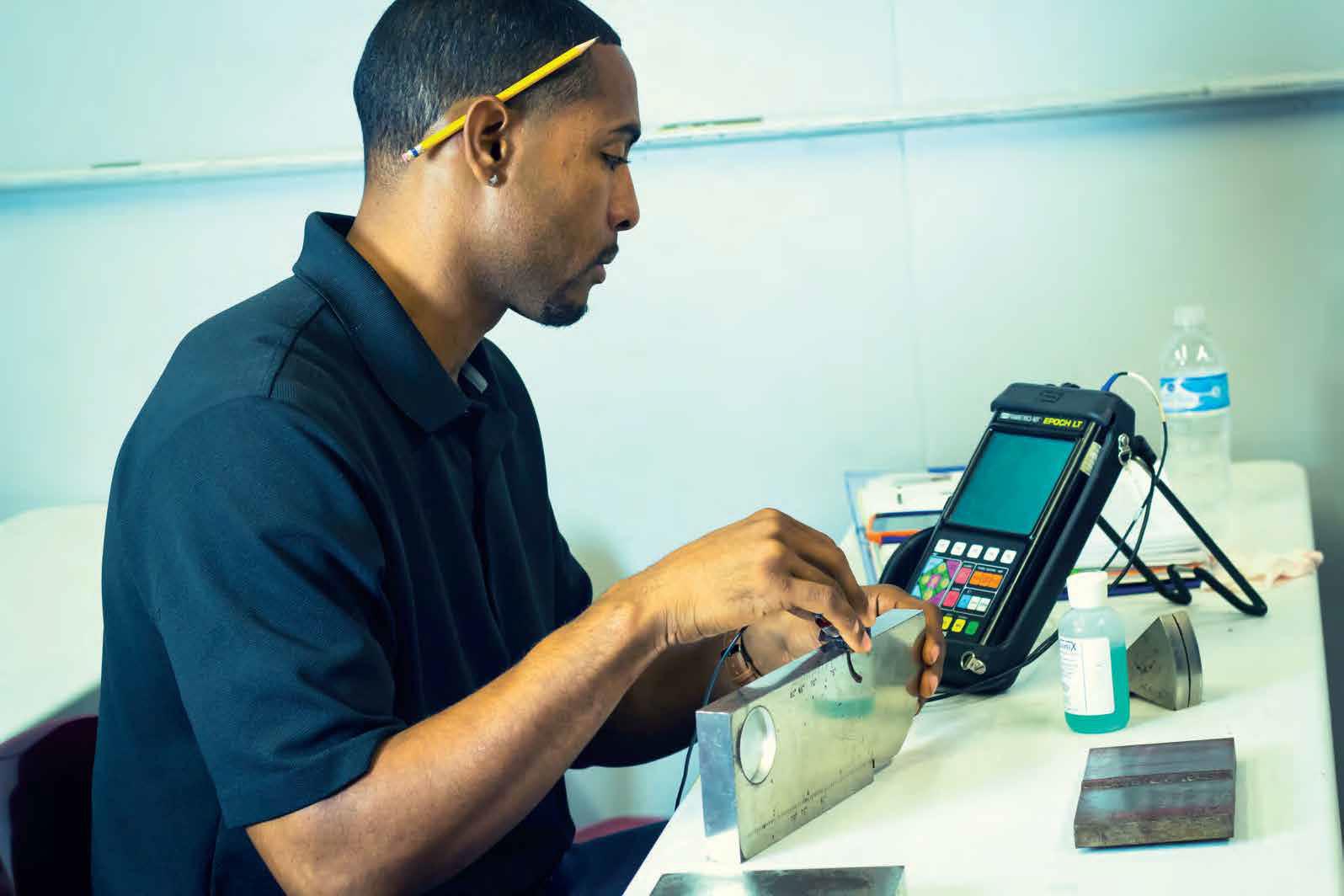
The Nondestructive Testing/Inspection Training program is a comprehensive program. The NDT program provides graduates the skills and knowledge to setup, calibrate and use inspection equipment commonly used in the industry today. Ultrasonic (UT), Magnetic Particle (MT), Liquid Penetrant (PT), Eddy Current (ET), Radiography (RT) and Visual Testing (VT) methods are all addressed in depth. Students graduating from the Nondestructive Testing/Inspection Training program will be prepared for an entry-level position in Inspection, Safety Technologies and Quality Control industries.
Graduates of this program will be able to conduct tests, interpret, evaluate and document results of those tests according to specific written procedures for the detection of defects in various materials. The different processes used to turn raw materials into various products and the defects inherent in those processes are also covered. Students will gain an understanding of rigging in accordance with procedures outlined in API RP2D and Remotely Operated Vehicles (ROV) operations as they relate to the NDT/Inspection industry. Workplace safety is covered in the HAZWOPER module.
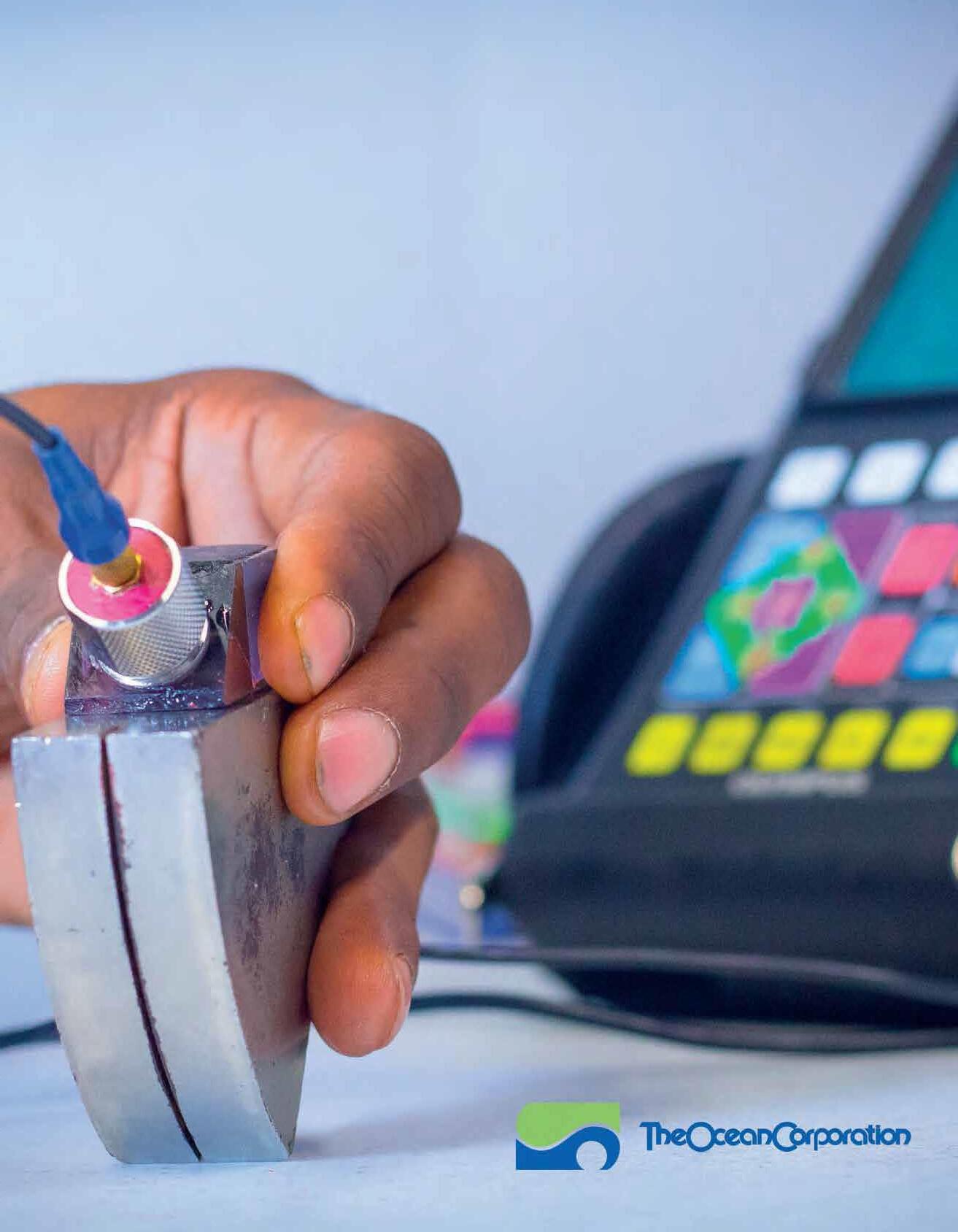
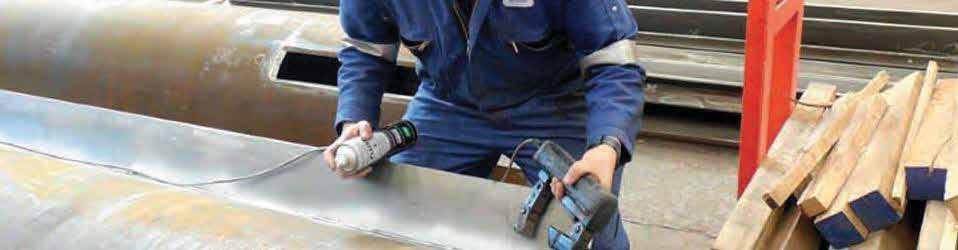
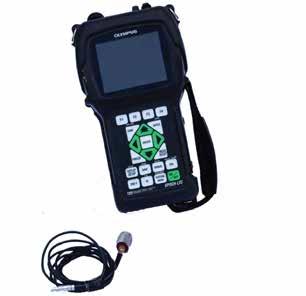
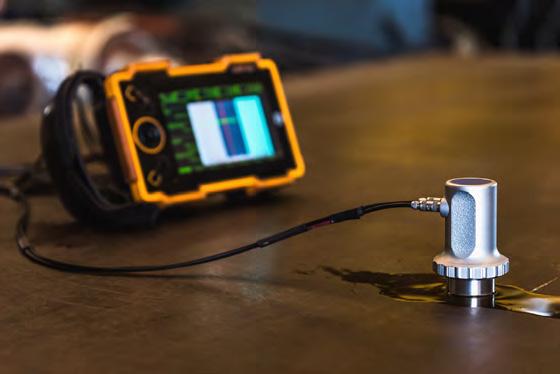
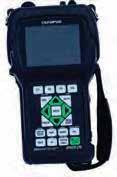
The Nondestructive Testing/Inspection Training program will provide hands-on training with a variety of equipment including ultrasonic flaw detectors, thickness meters, magnetic yokes and coils. Students will also be introduced to the various inspection codes and specifications. Graduates will receive the academic credentials necessary for certification up to Level II as outlined in ASNT SNT-TC-1A.
Graduates will be prepared to perform essential job skills relating to levels I & II of nondestructive testing in the methods of Visual, Magnetic Particle, Liquid Penetrant, Ultrasonic, Eddy Current, Radiography testing and Ground Penetrating Radar In addition, they will use the following skills: practical Rigging techniques, NDT Remotely Operated Vehicles, Report and Procedure Writing, Interview Skills, Hazardous Waste Operations and Emergency Response procedures, Job Research, Welding and Cutting, Materials and Processes and Resume Writing. Graduates of this program receive:
• NDT Diploma (which includes Levels I & II of Ultrasonic Testing, Magnetic Particle Testing, Dye Penetrant Testing, Eddy Current, Visual Testing, Ground Penetrating Radar, Thermal Infrared and Radiographic Testing)
• Radiation Safety (40 hours)
• HAZWOPER (40 hours) as outlined in 29CFR 1910.120
Program 03: Nondestructive Testing/Inspection Training This program meets or exceeds the standards established by ASNT -SNT-TC-1A (American Society of Nondestructive Testing, Testing Criteria 1A and CP-189).
Program 03: Nondestructive Testing/Inspection Training - EDUCATIONAL
OBJECTIVE: Students will be prepared to obtain employment in the Nondestructive Testing field (NDT) as an entry-level technician.
JOB PORTABILITY –inspection companies, and
UNIQUE LOCATIONS –
FLEXIBILITY – Industrial (NDT)
inspectors work in local jobs near their homes, jobs that require them to travel to job sites, and jobs that require them to re-locate to new
in one place, while others have
inspectors choose to work on a parttime or occasional basis to suit their
– Industrial
CUTTING EDGE – NDT inspectors
PROGRAM 03:
NONDESTRUCTIVE TESTING/INSPECTION TRAINING 750 HOURS (30 Weeks)
STUDENT TO INSTRUCTOR RATIO = 30 to 1
LECTURE 530 HOURS
STUDENT TO INSTRUCTOR RATIO LECTURE
LAB 220 HOURS
TOTAL 750 HOURS
LAB 22 TOTAL
This program offers complete Nondestructive Testing training in a comprehensive program. This training allows NDT graduates the freedom to transition between industries, locations and divisions within their company. It is one of the most comprehensive inspection training programs in the world.
–
CUTTING
inspectors work in local jobs near their homes, jobs that require them to travel to job sites, and jobs that require them to re-locate to new in one place, while others have inspectors choose to work on a parttime or occasional basis to suit their
NONDESTRUCTIVE TESTING – NDT - 03.01
Industry Overview – Lecture 5 Hrs. — This course provides an overview of the industry through a thorough discussion of industry characteris cs including: Who is the employer? Who is the employer’s customer? How to be a part of the company team? How can earnings be maximized? How does personal life job security? Tips on the do’s and don’ts of workplace protocol and the methods to create long term employment within the industry are also provided.
Industry History – Lecture 5 Hrs. — This course teaches a historical overview of the development of the industry, its pioneers and tradi . In we will discuss the current and future roles the American Society of Nondestruc ve Tes g (ASNT) and the disasters have regarding the development of codes and standards within the industry to NDT – Lecture 5 Hrs. — This course introduces students to the NDT equipment and how the equipment is used in the industry.
Isometric Drawing – Lecture 5 Hrs., Lab 5 Hrs. – Students will be introduced to Isometric, Piping and Drawing fundamentals, symbols, nomenclatures and their uses in the NDT industry. Students will using and drawing Isometric, Piping and drawings (P&IDs). A skills a pass/fail scoring, will be given encompassing isometric drawing materials.
Report – Lab 5 Hrs. — Students will demonstrate their prac cal understanding of the unique ways of recording and repo ng results within the Nondestruc ve Tes g industry. A prac cal skills demonstra , with a pass/fail scoring, will be given encompassing procedure/report materials.
Procedure – Lecture 5 Hrs. — Students will be able to iden y the components that make up a procedure, the importance of working to a procedure, the reference material to prepare a sample procedure and to prepare procedure. A prac cal skills demonstra , with a pass/fail scoring, will be given encompassing proced
Visual Te ng (VT) Level I – Lecture 20 Hrs. — Upon students will demonstrate a prac cal understanding of the physical principles of light and vision as it relates to nondestruc ve and the equipment used in Visual Level I general and speci c examina s encompassing all informa n covered in Visual Tes g will be given at the end of this module in accordance with recommended wri n prac ce, ASNT SNT TC 1A and CP-189.
Visual (VT) Level II – Lecture 10 — Con a n of instruc n in more advanced Visual Level II general and encompassing all informa covered in Visual Tes g will be given at the end of this module in accordance with recommended ASNT SNT TC 1A and CP-189
Liquid Penetrant (PT) Level I – Lecture 5 Hrs., Lab 5 Hrs. — Upon comple n of this module, students will demonstrate competencies using the Liquid Penetrant (PT) inspec techniques. Liquid Penetrant inspec n is the use of dye penetrant for the detec n of surface defects. Level I general and speci c examina encompassing all info on covered in Liquid Penetrant Tes g will be given at the end of this module in accordance with recommended wri n ASNT SNT TC 1A and CP-189.
Liquid Penetrant (PT) Level II – Lecture 10 Hrs., Lab 5 Hrs. — Con a n of instruc n in more advanced Liquid Penetrant Level II general and speci c examina s encompassing all informa n covered in Liquid Penetrant Tes g will be given at the end of this module in accordance with recommended wri n ASNT SNT TC 1A and CP-189.
(MT) Level I – Lecture 15 Hrs., Lab 5 Hrs. — Upon comple n of this module, students will demonstrate prac cal competencies using the Magne c le (MT) inspec techniques. Magne c Par cle inspec is the use of magne c elds in the detec of surface and near surface defects. Level I general and speci c examina s encompassing all informa covered in Magne c Par cle Tes g will be given at the end of this module in accordance with recommended wri n prac ce, ASNT SNT TC 1A and CP-189.
(MT) Level II – Lecture 10 Hrs., Lab 5 Hrs. — Con on of instruc n in more advanced Par cle appli ons. Level II general and speci c examina s encompassing all informa covered in Magne c Par cle Tes g will be given at the end of this module in accordance with recommended wri n p , ASNT SNT TC 1A and CP-189.
Eddy Current (ET) Level I – Lecture 45 Hrs. — Through an understanding of the physical principles of electricity and electromagne m and eddy current distribu n in various product forms, students will be able to calibrate and use the Eddy Current equipment common to industry. Level I general and examina s encompassing all informa n covered in Eddy Current will be given at the end of this module in accordance with recommended wri n ASNT SNT TC 1A and CP-189.
Eddy Current (ET) Level II – Lecture 20 Hrs., Lab 25 Hrs. — Con nua n of instruc n in more advanced Eddy Current Level I general and speci c examina s encompassing all informa n covered in Eddy Current will be given at the end of this module in accordance with recommended wri n prac ce, ASNT SNT TC 1A and CP-189.
Ultrasonic (UT) Level I – Lecture 30 Hrs., Lab 20 Hrs. — Students will demonstrate the prac cal ability to u lize Ultrasonic Tes g Inspec n through the theory of sound and sound wave pulse echo, through transmission transducer design, instrument controls and materials velocity and normal beam inspec . Level I general and speci c examina s encompassing all informa covered in Ultrasonic Tes g will be given at the end of this module in accordance with recommended wri n ASNT SNT TC 1A and CP-189.
Midterm Review & Exam – Lecture 10 Hrs. — Students are given a review encompassing all informa Students are then given a encompassing all cumula ve informa
FLEXIBILITY – Industrial (NDT) inspectors work in local jobs near their homes, jobs that require them to travel to job sites, and jobs that require them to re-locate to new
in one place, while others have
NON-STRENUOUS – Industrial
– Lecture 30 Hrs., Lab Hrs. 10 This module introduces the principles and of Thermal/Infrared (IR) in NDT. Students will explore thermal imaging techniques, heat analysis, and equipment to detect anomalies in materials and structures. Emphasis is placed on data and in line with ASNT TC-1A guidelines.
inspectors choose to work on a parttime or occasional basis to suit their
Radar (GPR) – Level I Lecture 10 Hrs. This module covers the fundamentals of Ground Radar (GPR) focusing on its in subsurface material will gain knowledge in GPR equipment setup, signal and data analysis, enabling e ve detec n of structural features and anomalies below the surface.
CUTTING EDGE – NDT inspectors
robotic equipment and
Radar (GPR) – Level II Lecture 10 Hrs. Lab 15 Hrs. This learning module builds on Level I by focusing on advanced equipment opera , data analysis, and interpreta skills It covers complex survey techniques, indepth signal analysis, and preparing technicians to handle more challenging subsurface inves ons and provide accurate, detailed ndings.
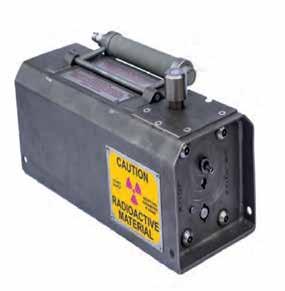
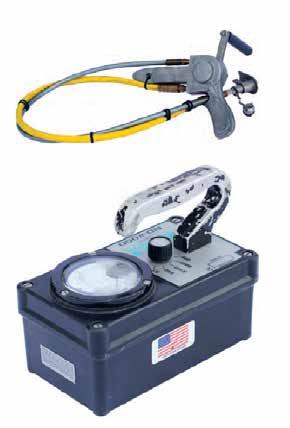
– Lecture 45 Hrs. Students will demonstrate a prac cal understanding of the fundamentals of safety including characteris cs of radi on, exposure, controlling radia n dose, radia n instruments and the use of personal monitoring equipment, per ent to state and federal ri n examin on will be given encompassing all radia n safety material.
Radiography (RT) Level I – Lecture 45 Hrs Students will demonstrate an understanding of the principles of and decay, radiographic equipment, principles of X and Gamma Ray detec , evalua n of radiographic quality and interpreta of images Level I general and speci c examina s encompassing all informa covered in Radiography Tes g will be given at the end of this module in accordance with recommended wri n ASNT SNT TC 1A and CP-189.
In 2005 the radiographic testing training manual used worldwide by most every NDT educator teaching today was written by an Ocean Corporation Instructor.
Radiography (RT) Level II – Lecture 25 Hrs., Lab 20 Hrs. — Con a n of a more advanced study in Radiography. Level II general and encompassing all informa n covered in Radiography Tes g will be given at the end of this module in accordance with recommended wri n prac ce, ASNT SNT TC 1A and CP-189.
Film – Lecture 20 Hrs., Lab 5 Hrs. This module focuses on the cri cal skill of X-Ray Film within radiographic Students will learn to evaluate radiographic images for material defects, discon i es, and compliance with industry codes and standards. The course emphasizes image quality assessment, defect characteriza , and interpreta techniques essen al for accurate NDT evalu ons
Final Review & Exam – Lecture 10 Hrs. Students are given a review and exam encompassing all from the program.
Final Lecture – Lecture 5 Hrs. Students learn strategies and philosophies to successful employment within the industry. They are encouraged to use a good work ethic, be accountable for their ac s and not to let their personal life habits interfere with their ability to respond to job opportuni es Students are updated on the current market situa s and the near future forecast
Hazardous Waste and Emergency Response (HazWOpER) – Lecture 35 Hrs., Lab 5 Hrs. Students will be able to iden y: hazardous communica s standards, biological/chemical hazards, con ned spaces, HAZMAT response, zone management and selec criteria for maintenance and repair of equipment Students are given a review and encompassing all Hazmat material.
Rigging – Lecture 15 Hrs., Lab 15 Hrs. Students will demonstrate their p understanding of rigging by working safely with block and tackle, winches and other rigging equipment to move heavy loads, enabling them to rig and load equipment for job Proper use of is an integral part of this module. A wri n and prac cal examina will be given encompassing all rigging material.
Resume Writing & Job Research – Lecture 5 Hrs., Lab 5 Hrs. — Students will write their resumes in accordance with the accepted practices of the Nondestructive Testing industry. Students are given feedback during this process so that a completed resume will be available to pursue employment in the Nondestructive Testing industry. In addition, students will participate in job research using various published information, in order to determine where they would most like to work within the industry.
Materials & Processes – Lecture 10 Hrs. — Students will be able to identify discontinuities in metal and engineered materials through an understanding of the discontinuities likely to occur as a result of the manufacturing process. Students are given a practical examination encompassing all materials and processes information.
Welding and Cutting – Lecture 15 Hrs., Lab 20 Hrs. Students will apply the principles of shop welding and cutting, equipment, materials and techniques with an emphasis on safe practices. Students learn the required qualifications and skills of the welding industry. Students will use oxy/acetylene cutting equipment and different types of welding machines, cables, electrode holders and various sizes and types of electrodes. Students are given a review and written and practical examination encompassing all welding material.
Positive Material Identification (PMI) – Lecture 5 Hrs This learning module provides NDT students with an introduction to the American Petroleum Institute’s (API) Recommended Practice 578 and will provide an orientation to the technologies currently used in the petrochemical industry for positive material identification (PMI). A practical skills demonstration, with a pass/ fail scoring, will be given encompassing isometric drawing materials.
Orientation to Remotely Operated Vehicle/Automation (ROV) – Lecture 15 Hrs., Lab 5 Hrs. The various types of Remotely Operated Vehicles used in conjunction with inspection will be explored through a combination of lecture and practical application. The advantages and disadvantages will be covered with an emphasis on personnel safety. Upon completion, the student will be able to explain when and where automation is preferable to manned intervention. A practical skills demonstration, with a pass/fail scorin g, will be given encompassing ROV materials.
JOB PORTABILITY –inspection companies, and
FLEXIBILITY – Industrial (NDT) inspectors work in local jobs near their homes, jobs that require them to travel to job sites, and jobs that require them to re-locate to new in one place, while others have
NON-STRENUOUS – Industrial UNIQUE LOCATIONS –
CUTTING EDGE – NDT inspectors
NDT HYBRID TRAINING OPTION
inspectors choose to work on a parttime or occasional basis to suit their
robotic equipment and
St u dents will b e iss ue d a t abl e t ,
In 2005 the radiographic testing training manual used worldwide by most every NDT educator teaching today was written by an Ocean Corporation Instructor.
m
ticipa
APPLICATION PROCEDURES
JOB PORTABILITY –inspection companies, and
UNIQUE LOCATIONS –
FLEXIBILITY – Industrial (NDT) inspectors work in local jobs near their homes, jobs that require them to travel to job sites, and jobs that require them to re-locate to new in one place, while others have
inspectors choose to work on a parttime or occasional basis to suit their
NON-STRENUOUS – Industrial
CUTTING EDGE – NDT inspectors
robotic equipment and
In 2005 the radiographic testing training manual used worldwide by most every NDT educator teaching today was written by an Ocean Corporation Instructor.
Transfer of Credits (Credit for Previous Training):
RE-ENTRY:
Credit Upon RE-ENTRY:
ADMISSION REQUIREMENTS
JOB PORTABILITY –inspection companies, and
FLEXIBILITY – Industrial (NDT)
All applicants must be at least eighteen years of age before beginning classes
Education:
inspectors work in local jobs near their homes, jobs that require them to travel to job sites, and jobs that require them to re-locate to new
NON-STRENUOUS – Industrial UNIQUE LOCATIONS –
in one place, while others have
Applicants are required to provide documentation of high school credential from a legitimate high school recognized by the State in which the diploma was issued or possession of a valid government-issued GED or post-secondary transcript with a minimum of 60 hours completed credits. Home-schooled students will submit proof of a legitimate credential based on the requirements of the State in which the home-schooling occurred. Students with foreign credentials will be required to provide a certified English translation if necessary. It is the applicant’s responsibility to provide their academic credentials (diploma, transcript, or other documents) to The Ocean Corporation. Students who are unable to obtain/provide paperwork documenting their high school credentials due to extraordinary circumstances may provide a notarized statement at the discretion of the School Director. All high school credential documents will be examined for both the authenticity of Corporation reserves the right to request to view original documents and/or to
inspectors choose to work on a parttime or occasional basis to suit their
CUTTING EDGE – NDT inspectors
robotic equipment and
Satisfactory Payment Arrangements:
No student will be allowed to begin classes at The Ocean Corporation without making satisfactory arrangements to pay (including federal student loans and federal parent loans), other outside aid, private education loans, veterans’ benefits payment plans, and/or personal payment (cash, check, money order or credit card).
Non-Discrimination in Admissions Policy:
In accordance with Title IX of the Education Amendments Act of 1972, The Ocean Corporation does not discriminate in admission or any other aspect of our programs on the basis of race, religion, ethnicity, sex, age, disabilities must be physically able to complete the training program with abilities are bona fide occupational qualifications and thus certain disabilities might disqualify a student from any potential employment.
In 2005 the radiographic testing training manual used worldwide by most every NDT educator teaching today was written by an Ocean Corporation Instructor.
PERFECT ATTENDANCE RECOGNITION
The Ocean Corporation encourages students to be on-time and to miss as few days of class as possible. Students who complete the UDT or NDT program with zero tardies and zero absences are with Perfect Attendance.
CAMPUS LIFE
experiences while attending TOC
Campus Life is a Facebook page created by The Ocean Corporation that is designed to help create an inclusive learning environment by encouraging social networking between students. Students are encouraged to post and share, images and comments about their educational experiences while attending TOC.
STUDENTS SERVICES
JOB PORTABILITY –inspection companies, and
FLEXIBILITY – Industrial (NDT) inspectors work in local jobs near their homes, jobs that require them to travel to job sites, and jobs that require them to re-locate to new
NON-STRENUOUS – Industrial UNIQUE LOCATIONS –
in one place, while others have
The Ocean Corporation maintains a job placement assistance service for graduates of the school. This service is offered to all graduates who request programs include training in basic resume-writing to develop those skills before moving into the job market. “We often invite companies to campus to meet with our students to provide an opportunity to develop a rapport prior to that first interview. Additionally, we offer job placement assistance for as long as you remain in the industry; all you have to do is ask.
inspectors choose to work on a parttime or occasional basis to suit their
CUTTING EDGE – NDT inspectors robotic equipment and
Financial Aid:
with rights
Our Financial Aid staff will work with you from your application for admission and financing options, assist you with paperwork and explain your rights and responsibilities website at oceancorp.com/financial-aid/.
Housing:
There are several large apartment complexes near the school that give lease of the school, and some have swimming pools and other amenities. The Admissions Office can provide students and applicants with a listing of local options and will also assist with matching roommates upon request.
Parking
secure location behind the academic buildings and training complex.
Part-Time Work
Class Schedule and Holidays
Please see "Attachment C" for class schedule and holidays.
In 2005 the radiographic testing training manual used worldwide by most every NDT educator teaching today was written by an Ocean Corporation Instructor.
TUITION, COSTS, BOOKS AND
Detailed information on student costs at The Ocean Corporation is contained in “Attachment B” to this catalog.
FINANCIAL AID
Detailed and current information on financial aid programs, eligibility, award amounts, and application procedures are available on the financial aid pages of The Ocean Corporation website at oceancorp.com/financial-aid/.
The Ocean Corporation participates in the Federal Student Aid Programs authorized under Title IV of the Higher the Federal Pell Grant, Federal SEOG Grant, Federal Direct Stafford Loan, and Federal Direct PLUS Loan programs.
The Ocean Corporation is licensed by the Texas Workforce Commission - Career Schools and Colleges, and participates in grant and employment training programs provided by the State of Texas.
The Ocean Corporation is approved for the training of veterans and other persons by the Texas Veterans Commission, and will certify eligible students for VA Educational Benefits.
Students/applicants are encouraged to submit their Free Application for Federal Student Aid (FAFSA) online at www.studentaid.gov/h/apply-for-aid/fafsa as soon as possible to expedite the financial aid process. Of course, our dedicated, professional Financial Aid Office staff is available by telephone or in-person if you have any questions during the application process, and detailed instructions for the process are available on our website at:
CONSUMER INFORMATION
CONSUMER INFORMATION
The Ocean Corporation website contains consumer information mandated by numerous governmental agencies. The consumer information webpage can be accessed at oceancorp.com/consumer-info/ The information includes:
The Ocean Corporation website contains consumer information mandated by numerous governmental agencies. The consumer information webpage can be accessed at oceancorp.com/consumer-info/
JOB PORTABILITY –inspection companies, and
Jeanne Clery Campus Security Report and Policy:
FLEXIBILITY – Industrial (NDT) inspectors work in local jobs near their homes, jobs that require them to travel to job sites, and jobs that require them to re-locate to new
Jeanne Clery Campus Security Report and Policy: This Report contains an itemized listing of crimes and certain other offenses committed on the campus and the adjacent public areas in the past three years. The Policy highlights The Ocean Corporation’s methods for protecting student security, and for informing the students and the campus community of any crimes that may pose a threat to safety.
NON-STRENUOUS – Industrial
The Report and Policy can be found at: oceancorp.com/consumer-info/ and click on the Annual Security Report.
UNIQUE LOCATIONS –
highlights The Ocean Corporation’s methods for protecting student security, and for informing the students and the
in one place, while others have
oceancorp.com/consumer-info/
Drug Awareness and Drug Abuse Prevention Policy: The Ocean Corporation maintains a drug abuse prevention policy which prohibits the illegal possession, sale, or distribution of controlled substances on the premises or at school events. The Policy and signi cant information about the hazards of drug abuse, the effects of speci c substances, and links to local rehabilitation service organizations can be found at oceancorp.com/consumer-info and click on the Drug and Alcohol Policies.
inspectors choose to work on a parttime or occasional basis to suit their
CUTTING EDGE – NDT inspectors
robotic equipment and
Other Consumer Information Available on our Website (oceancorp.com/consumer-info and click on the tab with the information you are seeking):
Drug Awareness and Drug Abuse Prevention Policy: policy which prohibits the illegal possession, sale, or distribution of controlled substances on the premises or at oceancorp.com/consumer-info
Other Consumer Information Available on our Website ( oceancorp.com/consumer-info and click on the tab with the information you are seeking)
Cancellation Policy: A full refund will be made to any student who cancels the enrollment contract within 72 hours (until midnight of the third day excluding Saturdays, Sundays and legal holidays) after the enrollment contract is signed. A full refund will also be made to any student who cancels enrollment within the student’s rst three scheduled class days, except that the school may retain not more than $100 in any administrative fees charged, as well as items of extra expense that are necessary for the portion of the program attended and stated separately on the enrollment agreement.
VA EDUCATION
BENEFITS PENDING PAYMENT
COMPLIANCE: In accordance with Title 38 US Code 3679(e), The Ocean Corporation has adopted the following additional provisions for any students using U.S. Department of Veterans Affairs (VA) Post-9/11 G.I. Bill® (Ch. 33) or Vocational Rehabilitation & Employment (Ch. 31) bene ts, while payment to the institution is pending from VA.
The Ocean Corporation will not:
➤ Prevent the student’s enrollment;
➤ Assess a late penalty fee to the student;
Cancellation Policy:
➤ Require the student to secure alternative or additional funding;
➤ Deny the student access to any resources (access to classes, libraries, or other institutional facilities) available to other students who have satis ed their tuition and fee bills to the institution.
However, to qualify for this provision, eligible students may be required to:
➤ Produce the VA Certi cate of Eligibility (COE) by the rst day of class;
signed. A full refund will also be made to any student who cancels enrollment within the student’s first three scheduled class days, except that the school may retain not more than $100 in any administrative fees charged, as well as items of extra expense that are necessary for the portion of the program attended and stated separately on
➤ Provide a written request to be certi ed;
➤ Provide additional information needed to properly certify the enrollment as described in other institutional policies.
Printed copies of any of the consumer information
Printed copies of any of the consumer information contained on The Ocean Corporation website can be obtained by contacting The Ocean Corporation Compliance Officer at 800-321-0298 ext. 115.
In 2005 the radiographic testing training manual used worldwide by most every NDT educator teaching today was written by an Ocean Corporation Instructor.
REFUND POLICY
1. Refund computations will be based on scheduled course time of class attendance through the last date of attendance. Leaves of absence, suspensions and school holidays will not be counted as part of the scheduled class attendance.
2. The effective date of termination for refund purposes will be the earliest of the following:
3. If tuition and fees are collected in advance of entrance, and if after expiration of the 72 hour cancellation privilege the student does not enter school, not more than $100 in any administrative fees charged shall be retained by the school for the entire residence program or synchronous distance education course.
if cancellation administrative charged
4. If a student enters a residence or synchronous distance education program and withdraws or is otherwise terminated after the cancellation period, the school or college may retain not more than $100 in any administrative fees charged for the entire program. The minimum refund of the remaining tuition and fees will be the pro rata portion of tuition, fees, and other charges that the number of hours remaining in the portion of the course or program for which the student has been charged after the effective date of termination bears to the total number of hours in the portion of the course or program for which the student has been charged, except that a student may not collect a refund if the student has completed 75 percent or more of
5. Refunds for items of extra expense to the student, such as books, tools, or other supplies are to be handled separately from refund of tuition and other academic fees. The student will not be required to purchase instructional supplies, books and tools until such time as these materials are required. Once these materialsare purchased, no refund will be made. For full refunds, the school can withhold costs for these types of items from the refund as long as they were necessary for the portion of the program attended and separately stated in the enrollment agreement. Any such items not required for the portion of the program attended must be included in the refund.
6. A student who withdraws for a reason unrelated to the student’s academic status after the 75 percent completion mark and requests a grade at the time of withdrawal shall be given a grade of “incomplete” and permitted to re-enroll in the course or program during the 12-month period following the date the student withdrew without payment of additional tuition for that portion of the course or program.
7. A full refund of all tuition and fees is due and refundable in each of the following cases: representations by the owner or representatives of the school.
8. REFUND POLICY FOR STUDENTS CALLED TO ACTIVE MILITARY SERVICE.
A student of the school or college who withdraws from the school or college as a result of the student being called to active duty in a military service of the United States or the Texas National Guard may elect one of the following options for each program in which the student is enrolled:
RETURN OF TITLE IV FUNDS
JOB PORTABILITY –inspection companies, and
FLEXIBILITY – Industrial (NDT) inspectors work in local jobs near their homes, jobs that require them to travel to job sites, and jobs that require them to re-locate to new
Recipients of Federal student financial aid who withdraw from enrollment at The Ocean Corporation, or have their enrollment terminated for administrative, disciplinary, attendance, or other reasons will have their financial aid eligibility re-calculated under a formula prescribed l keep only the pro-rated portion of student aid “earned” through attendance letion of the first sixty percent of the enrollment period, all of a student’s financial aid is considered “earned” and no return of funds is retained using the following method:
UNIQUE LOCATIONS –
NON-STRENUOUS – Industrial
Determine the percentage of the payment period (or period of enrollment) the student attended before withdrawing.
in one place, while others have
inspectors choose to work on a parttime or occasional basis to suit their
CUTTING EDGE – NDT inspectors
robotic equipment and
outside vendors is subject to the approval of the instructor fo
d have completed the entire financial aid process more than ten days prior to balance or the
anticipated charges for books, tools and supplies for the payment period, whichever is less) to be used for the purchase of books, tools and
In 2005 the radiographic testing training manual used worldwide by most every NDT educator teaching today was written by an Ocean Corporation Instructor.
ACADEMIC PROGRESS FOR FINANCIAL AID ELIGIBILITY
This Academic Progress for Financial Aid Eligibility policy applies only to applicants/recipients of federal student aid, and sets Corporation, or vice versa.
students completing their programs within one and one-half times the normal attempted more than one and one-half times the number of hours required to for transfer students will consider all “attempted credit hours” (see definition timeframe be re-calculated based solely on those hours that are applicable to the maximum timeframe standard will be placed upon Financial Aid upon the maximum timeframe standard cannot be reversed under the
Average (GPA) calculation, attendance, etc. are calculated in accordance with
subject shall be considered “attempted”, regardless of grade received.
after re-entry shall be deemed to have “attempted” the subject twice. In such credits that were accepted for transfer or proficiency credit are also considered “earned”.
or other absence of 180 calendar days or less, shall be evaluated in the same manner as if the absence had not occurred, with the exception of any student, who returns after a withdrawal, dismissal, or other absence of more than 180 days, shall be measured in a manner consistent with a transfer student (see below).
to transfer courses, they will not impact the students GPA. Payment periods for transfer students shall be defined individually based upon the remaining period of instruction.
Financial Aid Eligibility shall be measured at the end of each payment period. payment period shall be dependent upon his/her academic record as of the
the student, or other special circumstances. Appeal letters should be addressed to the that led to the academic difficulty, how those circumstances have changed, and a plan determination is final.
A student for whom a mitigating circumstance appeal is approved will be placed in to good academic standing (according to the chart) by the end of a probationary payment period, the student will lose eligibility for future financial aid (Financial Aid
financial aid eligibility may potentially regain academic eligibility by one or more of the without benefit of federal financial aid, and/or 2) be accepted into a different academic the courses applicable to the new program) will be in compliance with all academic
In each of the circumstances listed above, approval is at the discretion of the Director
previous academic difficulty, warning, or probation shall have no future bearing on the
ACADEMIC POLICIES & STANDARDS
The Ocean Corporation maintains very high standards for academi hese high ere
JOB PORTABILITY –inspection companies, and
contributed to that success for over 0 years.
FLEXIBILITY – Industrial (NDT) inspectors work in local jobs near their homes, jobs that require them to travel to job sites, and jobs that require them to re-locate to new
SEQUENTIAL NATURE OF PROGRAMS/ACADEMIC STANDARDS
UNIQUE LOCATIONS –
in one place, while others have
inspectors choose to work on a parttime or occasional basis to suit their
NON-STRENUOUS – Industrial
CUTTING EDGE – NDT inspectors
robotic equipment and
ATTENDANCE AND LEAVE OF ABSENCE POLICY f the program.
endance issues.
GRADING SYSTEM
NDT EXAM GRADING EXPLA NED:
2005 the
ithout being on Training etion of the
In
radiographic testing training manual used worldwide by most every NDT educator teaching today was written by an Ocean Corporation Instructor.
CLOCK HOUR DEFINITION AND SEMESTER CREDIT HOUR CONVERSION
The Ocean Corporation uses a conversion ratio of 31.25 clock hours to each semester credit hour for purposes of calculating eligibility for federal student financial aid. There is no distinction made between lecture hours and
APPEALS / RE-ENROLLMENTS / PROBATION
and make satisfactory arrangements with the Business Office to pay any outstanding balance on the student’s account.
PROGRESS REPORTS
can review their exam scores at their discretion."
TUTORING
Tutoring is available without charge to all students of The Ocean Corporation.
CONDUCT AND DISMISSAL POLICY
WITHDRAWAL POLICY
ACADEMIC PROGRESS AND FINANCIAL AID
CERTIFICATE POLICY
STUDENT RECORDS/TRANSCRIPTS
electronically in The Ocean Corporation’s student database system.
ADMISSION TO THE OCEAN CORPORATION
JOB PORTABILITY –inspection companies, and
UNIQUE LOCATIONS –
NON-STRENUOUS – Industrial
Students wishing to attend a program at The Ocean Corporation must submit an Application for Admission, meet admissions requirements, epted students will be allocated to class starts based upon the student’s
The Ocean Corporation Admissions Office is open five days a week, excluding holidays. Our regular business hours are 8:00 A.M. to 6:00 P.M Monday through Thursday and 8:00 A.M. to 5:00 P.M. on Friday. We offer a toll free number, 1-800-321-0298, for prospective students to call
FLEXIBILITY – Industrial (NDT) inspectors work in local jobs near their homes, jobs that require them to travel to job sites, and jobs that require them to re-locate to new in one place, while others have
inspectors choose to work on a parttime or occasional basis to suit their
The Admissions Office conducts tours twice daily, Monday through Friday, at 10:30 A.M. and 1:30 P.M. You are your arriving about ten or fifteen minutes prior to the time the tours are scheduled. Out-of-town visitors are strongly encouraged to call in advance for an appointment and information on tours, hotels, car rental, and t
robotic equipment and
In 2005 the radiographic testing training manual used worldwide by most every NDT educator teaching today was written by an Ocean Corporation Instructor.
Accrediting Commission of Career Schools and Colleges 2101 Wilson Boulevard, Suite 302 (703)247-4212
Approved and regulated by the Texas Workforce Commission, Career Schools and Colleges 101 East 15th Street
John Wood, President
JOB PORTABILITY –inspection companies, and
NON-STRENUOUS – Industrial UNIQUE LOCATIONS –
FLEXIBILITY – Industrial (NDT) inspectors work in local jobs near their homes, jobs that require them to travel to job sites, and jobs that require them to re-locate to new in one place, while others have
inspectors choose to work on a parttime or occasional basis to suit their
CUTTING EDGE – NDT inspectors
robotic equipment and
In 2005 the radiographic testing training manual used worldwide by most every NDT educator teaching today was written by an Ocean Corporation Instructor.
JOB PORTABILITY –inspection companies, and
JOB PORTABILITY –inspection companies, and
UNIQUE LOCATIONS –
UNIQUE LOCATIONS –
NOTES
NOTES
NOTES
APPLICATION FOR ADMISSION 2
APPLICATION FOR ADMISSION 2
FLEXIBILITY – Industrial (NDT) inspectors work in local jobs near their homes, jobs that require them to travel to job sites, and jobs that require them to re-locate to new
FLEXIBILITY – Industrial (NDT) inspectors work in local jobs near their homes, jobs that require them to travel to job sites, and jobs that require them to re-locate to new
in one place, while others have
in one place, while others have
inspectors choose to work on a parttime or occasional basis to suit their
inspectors choose to work on a parttime or occasional basis to suit their
NON-STRENUOUS – Industrial
NON-STRENUOUS – Industrial
CUTTING EDGE – NDT inspectors
CUTTING EDGE – NDT inspectors
robotic equipment and
robotic equipment and
In 2005 the radiographic testing training manual used worldwide by most every NDT educator teaching today was written by an Ocean Corporation Instructor.
In 2005 the radiographic testing training manual used worldwide by most every NDT educator teaching today was written by an Ocean Corporation Instructor.
NOTES
JOB PORTABILITY –inspection companies, and
JOB PORTABILITY –inspection companies, and
UNIQUE LOCATIONS –
UNIQUE LOCATIONS –
NOTES
NOTES
NOTES
NOTES
NOTES
APPLICATION FOR ADMISSION 2
APPLICATION FOR ADMISSION 2
APPLICATION FOR ADMISSION 2
APPLICATION FOR ADMISSION 2
FLEXIBILITY – Industrial (NDT) inspectors work in local jobs near their homes, jobs that require them to travel to job sites, and jobs that
NON-STRENUOUS – Industrial
NON-STRENUOUS – Industrial
JOB PORTABILITY –inspection companies, and NON-STRENUOUS – Industrial
FLEXIBILITY – Industrial (NDT) inspectors work in local jobs near their homes, jobs that require them to travel to job sites, and jobs that require them to re-locate to new
FLEXIBILITY – Industrial (NDT) inspectors work in local jobs near their homes, jobs that require them to travel to job sites, and jobs that require them to re-locate to new
in one place, while others have
in one place, while others have
inspectors choose to work on a parttime or occasional basis to suit their
inspectors choose to work on a parttime or occasional basis to suit their
CUTTING EDGE – NDT inspectors
CUTTING EDGE – NDT inspectors
robotic equipment and
robotic equipment and
In 2005 the radiographic testing training manual used worldwide by most every NDT educator teaching today was written by an Ocean Corporation Instructor.
In 2005 the radiographic testing training manual used worldwide by most every NDT educator teaching today was written by an Ocean Corporation Instructor.