• • seeks to diversify revenue streams through seeks to revenue streams through Bojanala Holdings
• • In the process of applying for a concession In the process of for a concession in the Okavango Delta in the Okavango Delta
• • pushes for hunting quotas from DWNP pushes for hunting quotas from DWNP
New single-pill HIV treatment shows promising results
By Bhekinkosi Phiri
A new experimental HIV treatment that combines two drugs into a single daily pill has shown promising results in major clinical trials, offering hope for simpler treatment options for people living with the virus.
Pharmaceutical company Gilead Sciences announced on February 25 that its investigational treatment combining bictegravir and lenacapavir successfully maintained viral suppression in people with HIV who switched from other antiretroviral therapies. The findings were presented at the
Conference on Retroviruses and Opportunistic Infections (CROI) 2026 and are based on results from two Phase 3 trials known as ARTISTRY-1 and ARTISTRY-2.
The once-daily pill was tested in people whose HIV was already controlled by medication. Researchers found that the new treatment was just as effective as existing therapies at keeping the virus suppressed after 48 weeks.
In the ARTISTRY-1 trial, which focused on people taking complex treatment regimens, only 0.8% of participants who switched to the new pill showed detectable virus
levels, compared with 1.1% among those who remained on their existing multi-tablet regimens. Some participants had previously been taking between two and eleven pills a day, with many needing to take medication more than once daily.
The second trial, ARTISTRY-2, compared the new combination to a widely used single-tablet HIV treatment. Results showed similar effectiveness, with 1.3% of participants on the new pill experiencing detectable virus levels, compared with 1.0% among those who stayed on the existing therapy.
Researchers reported that immune system indicators remained stable in both studies and no major drug-resistance issues emerged during the trials.
The new treatment was also generally well tolerated. While some participants experienced mild side effects, serious drug-related complications were rare and very few people stopped treatment because of adverse reactions. Experts say simpler HIV treatments can play an important role in improving adherence to medication. Many people living with HIV cannot use standard single-tablet regi-
mens due to drug interactions, intolerance or pre-existing resistance, leaving them on more complicated treatment schedules.
Lenacapavir, one of the drugs in the new combination, works differently from most existing HIV medications by targeting the virus’s capsid, a protein shell that protects the virus and is essential to its life cycle. This allows it to block the virus at multiple stages of replication.
The bictegravir-lenacapavir combination remains investigational and has not yet been approved for use anywhere in the world. Gilead said the
results from the ARTISTRY trials will help support future regulatory submissions. Gilead, a leading research hub was best known for the recently approved Lenacapavir injection that is currently being used around the world as a PrEP for HIV, whlle currently working to create more treatments for other diseases such as cancer with additional cures set to be released sometime this year. While there is still no cure for HIV, modern antiretroviral therapies allow people living with the virus to maintain low viral levels and live long, healthy lives.
NWDC formulates 5-year Local Economic Development Strategy
By Kgosietsile Bontsi
The North West District is currently in the process of formulating a 5-year Local Economic Development (LED) Strategy for (2026-2030) in an effort to attract investment and create employment opportunities.
This was revealed by North West District Council, Senior Economist, Gloria Pole during a Stakeholder Engagement Conference that was held in Maun this week meant to align District Development
Plan 9 (DDP 9) to National Development Plan (NDP 12).
According to Pole, through the strategy focus will be on key sectors that include tourism, agriculture, mining, financial services and manufacturing to mention but a few.
Pole noted that the tourism sector in the district revolves around Maun’s position as the entry point to the Okavango Delta and Moremi Game Reserve. She added that through the strategy they intend to facilitate digital licensing re-
newals and regulatory reporting in the tourism sector, and make monthly data subscription by operators mandatory. The senior economist stated that the strategy aims to reduce tourism revenue leakages, to strengthen domestic value retention, increase employment opportunities, stimulate Small Medium Enterprises growth and Tourism Master Plan 2023-2033, seek partnership with stakeholders for joint inspections and monitoring illegal operations. She also said that the manu-
facturing industry has the potential to boost the economy of the North West District as such they intend to establish factory shells and accelerate incubators, partnership and collaboration with research and training institutions.
With regard to mining and energy, Pole noted that they intend to make the North West District an industrial hub, establish small-scale processing plants and enforce compliance measures of the Sand and Aggregate Sector, and implement water recycling
in processing plants. She said the district’s aim is to establish Public Private Partnership (PPP) for solar, rural Electrification and Network Extension to attain universal access to electricity by 2030. Pole noted that technology plays an important role in enhancing productivity, financial inclusion and supporting entrepreneurship, therefore through the strategy they intend to introduce digital ID. She highlighted collaboration of financial institutions and banks with businesses in re-
mote areas to act as banking agents. Pole added that they intend to roll out SmartBots to the entire District. She also revealed that through the LED Strategy their aim is to upgrade rural roads to improve access to markets, health facilities and tourism sites. Pole noted that improved infrastructure will lower the cost of doing business and attract private investment, improve water supply and sanitation systems in growing settlements.
FMD prevention measures in zone 3c, 6b revised!
By Staff Writer
The Ministry of Lands and Agriculture has revised movement restrictions after the ongoing surveillance has not detected Foot and Mouth disease cases outside disease control zones of 3c and 6b covering parts of the Central and North-East districts.
In a press release, the ministry updated that movement of live cloven-hoofed animals into, out of and within zones 3c, 6a and 6b remains prohibited until further notice.
Movement of live cloven-hoofed animals into, out of zones 3b and 7 also remain prohibited except for
direct slaughter and registered slaughter facility within the two zones until further notice.
It also indicated that movement of fresh cloven-hoofed animals derived products (meat, fresh milk) out of zones 3b, 3c 6b and 7 remains prohibited except into and within a zone without a permit.
Furthermore, movement of fresh cloven-hoofed animals derived products (meat, fresh milk) out of zone 6a remains prohibited except into zones 6b and 3c which is allowed without a veterinary movement permit.
“Movement into zone 6a is allowed under without a veterinary movement permit. Direct movement of cloven-hoofed derived fresh products between zones 6b and 3cis allowed without a veterinary movement permit,” read the statement.
The ministry further announced that the transit of cloven hoofed derived fresh products through zones 3b, 3c, 6a, 6b and 7 is allowed in sealed containers or trucks under veterinary movement permit.
“Movement of livestock feeds, trophies, skins and hooves out of zones 6a6b
and 3c remains prohibited, except milled or processed livestock feeds from 6a. Movement restrictions on live cloven-hoofed animals and their derived fresh products in zones 4a, 4b, 5, 8, 9,10, 11, 12, and 13 have been lifted,” the ministry added.
It also noted that import and export including transit of cloven-hoofed animals, derived fresh products and animal feeds is allowed subject to import and export condi-
tions with effect of the 4th March, 2026. Additionally, movement of cloven-hoofed animals and their derived fresh products within and into zones 1 and 2 is allowed. “Movement of cloven hoofed derived fresh products is allowed from zone 2 and 1 in sealed containers or trucks under veterinary permit”
Farmers, members of the public and stakeholders have since been urged to comply with the revised disease pre-
vention measures, remain vigilant and report any signs of illegal in livestock to the nearest Department of Veterinary Services or Botswana Police Services offices. Meanwhile the ministry has indicated that the first round of FMD vaccination of cattle in zones 6b and zone 3c was successfully completed. It revealed that booster vaccination which commenced this past Sunday is expected to be completed by March., 17th, 2026.
NWDC pivots towards tourism!
By Joseph Kgamanyane
The North West District Council (NWDC) has revealed plans to venture into tourism as part of its efforts to diversify streams for sustainable revenue-generation to enhance its financial independence.
This push by the local authority stems from recommendation by the ministry of local government and traditional Affairs, for councils to avoid over-reliance on central government funding and instead create own income to ensure financial independence and better service delivery.
In an interview, NWDC chairperson, Itumeleng Kelebetseng revealed that council’s company, Bojanala Holdings will act as the investment vehicle to manage these proposed tourism projects among them an investment in the Okavango Delta - similar to the proposed presidential resort by government within the NG 28 concession.
Kelebetseng revealed that they have had discussion with the physical planning where they discussed modal-
ities on submitting an application for a concession in the Okavango Delta at Tawana Land Board.
Kelebetseng has also announced council’s interest in dedicated annual hunting quotas from the Department of Wildlife and National Parks (DWNP).
According to Kelebetseng, council is currently in the process of operationalising Bojanala Holdings, adding that they are seeking start-up funds for that purpose.
Asked about previous initiatives geared towards diversifying revenue generation, Kelebetseng responded that some are still on track while others were found not to be viable.
This include among others, the once proposed development of a horse racing track field that was also set to promote tourism and economic growth.
“The horse track racing field plot is near the University of Botswana campus in Sexaxa. An expression of interest will come out for an interested investor to collaborate with us on this project,” assured the chairperson.
However, he expressed disappointed that the previous administration proposed to build an international horse racing track in Palapye, a plan that he believes could have been envisioned in their already available plot.
Meanwhile former NWDC Chairman, Reaboka Mbulawa had expressed disappointed that his successors failed to deliver on some of the projects that could have helped council increase its revenue. He highlighted that when
he left in 2019, he had established a Private-Public Partnership (PPP) company which could have been operational by now. He added that the horse track racing field could have been one of the projects implemented through the PPP company.
“If they have not done that after so long then it is unfortunate. It is something that will cripple the council,” he said.
Mbulawa has also questioned the council’s capacity to effectively manage and exe-
cute such complex, high-level tourism projects.
“Having failed build a horse track, then they want another mandate beyond it. I am not convinced that they have the capacity.”
He however clarified that there is nothing wrong with council operating a similar investment in the Okavango Delta similar to the presidential resort planned by government.
“It does not matter if its council or the central government that operates such an invest-
ment. Just like government did, council is also eligible to apply for a similar concession. Why go for the same land when there is enough,” he quipped.
Government has recently rejected a motion by Leader of Opposition, Dumelang Saleshando requesting it to abandon plans to construct a Presidential Lodge within the NG 28 concession and return it to Tawana Land Board for possible allocation to the North West District Council.
Chronic water shortages persist across Okavango
By Tumisang Kelatlhilwe
Residents of the Okavango district are grappling with a worsening water crisis as supply fails to meet demand, disrupting livelihoods and essential services across several villages.
According to a recent Okavango District Development Committee (DDC) report, only 494,860 cubic metres of water were supplied during the third quarter against a demand of 561,600 cubic metres. This 12% shortfall
is being fueled by a “perfect storm” of ageing infrastructure, pipeline vandalism, inadequate storage, and outdated treatment plants.
Authorities report an indication of infrastructure that is under strain. The Water Utilities Corporation (WUC) reported a staggering 44% water loss this quarter, caused by leaking tanks and frequent pipe bursts—particularly along the Sepopa-Gumare transmission line.
The crisis has hit villages like Qangwa, Chukumuchu,
and Nxau-Nxau the hardest, where local reservoirs can no longer keep pace with growing populations. Currently, access to potable water stands at just 64%, with roughly 7,000 connections serving a population of over 74,000. New connections are also lagging; only 88 of 104 recent applicants were connected within the required 21-day window, a delay WUC attributes to transport and material shortages.
To mitigate the immediate thirst, authorities have
resorted to water bowsing (trucking) in Ghani, Habu, Gucha, Xanxana, Xurube, and Mowana.
The crisis has taken a psychological and physical toll.
During a full council session, Xhaoga-Kajaja Councilor Galebolae Motshabakhawa highlighted a growing sense of inequality, noting that Kajaja 2 residents receive significantly less water than those in Kajaja 1.
“The bowser simply passes the village even when there is a shortage, forcing resi-
dents to walk to Kajaja 1,” Motshabakhawa said. He warned that this journey is life-threatening. “Doing so is very dangerous as there are many wild animals roaming between those areas. I plead with the Corporation to assist these residents accordingly.”
Similarly, Councilor Uakaemba Tjiponda of Nxau Nxau-Chukumuchu lamented that the small tanks in his constituency are insufficient. He urged the WUC to find new water sources,
noting that with financial constraints biting, residents fear the crisis will persist without urgent long-term investment.
In response, the WUC announced plans to refurbish treatment plants in Sepopa, Seronga, and Mohembo West. The corporation also intends to renew old networks in phases and has engaged the Botswana Police and Botswana Defence Force (BDF) to patrol pipelines and deter vandals.
Khwai plot allocations to resume before year-end
By Kgosietsile Bontsi
Residential plot allocations in Khwai village are expected to resume before the end of 2026, following a decade-long impasse fueled by environmental concerns and planning hurdles.
The Minister of Lands and Agriculture, Dr. Edwin Dikoloti, revealed the timeline in Parliament while responding to inquiries from Maun North MP, Dumelang Saleshando. Saleshando had sought clarity on the status of 71 pending applications—46 residential and
25 for ploughing fields— that have remained deferred since 2012. The last formal allocations in Khwai took place in September 2021, though these were limited to nine applications from 2016 specifically related to the formal registration of ancestral land previously allocated by Bogosi.
Dikoloti explained that the 2012 deferrals were necessitated by the ecological sensitivity of Khwai and the NG/19 concession. Much of the village sits on a floodplain, making it prone to
seasonal flooding. Previous attempts to formalise land use were met with several roadblocks, which included the Town and Country Planning Board rejecting initial village layout plans due to environmental risks.
The 2016/2017 Development Plan was deferred by the North West District Council pending a Strategic Environmental Assessment (SEA), which stalled due to a lack of funds.
To further make the situation difficult, the process was met with community
friction when a management plan review led by the Botswana Tourism Organization (BTO) was terminated at the scoping stage in 2018 after the community insisted that the 71 deferred applications be resolved before any new planning took place.
The Minister emphasised that the absence of a comprehensive land-use framework remains the primary obstacle. To address this, he has directed the Tawana Land Board to prepare a new Land Use Management Plan following the 2019 ex-
piry of the previous one.
“The preparation of such a plan normally takes approximately six months,” Dr. Dikoloti stated. “Once finalised, allocations will resume to ensure orderly, sustainable, and environmentally responsible development.”
He further noted that as of August 2023, the entirety of Botswana was gazetted as a planning area under the Town and Country Planning Act. This mandates that any land allocation must be preceded by a legally approved and gazetted plan.
The pressure for land in
Khwai continues to mount. Beyond the 71 deferred cases, the Land Board is currently managing an additional 134 pending applications. This backlog includes 60 registrations for ploughing fields, 64 residential registrations, and several new applications for business and residential plots.
“It is anticipated that, banking on the cooperation and participation of the community, plot allocations in Khwai should resume before the end of 2026,” Dr. Dikoloti concluded.
The Ngami Times
‘‘The Last newspaper established in the 20th Century’’ CONTACTS:
Printed and published by The Ngami Times Printing and Publishing Co (Botswana) (Pty) Ltd at their offices, Mabudutsa Ward, Maun. Tel; 6864807. E-mail: info@ngamitimes.co.bw. Website:www.ngamitimes. co.bw Printed on recycled newsprint. Member of Media Institute of Southern Africa and Press Council of Botswana.Registered at the Post Office as a newspaper. Company registered in Botswana. All material and photographs appearing previously, currently and in future are protected items of the Copyright Act. Only the editor can provide permission for reusage of such material on receipt of a written request.The public is informed of the existence of the Press Council of Botswana, which endeavours to enhance media accountability and professionalism. For this purpose, the public is urged to refer any complaints, suggestions or comments regarding issues of how the media in Botswana reports generally to the following address: The Chairperson, Press Council of Botswana, PO Box 301315, Tlokweng. Tel 3500378. Fax 3161196.
NOTICE TO ADVERTISERS
The Ngami Times does not accept liability for errors in advertisements that do not detract from the original. This includes spot or full colour. While every effort is made to meet advertising and printing requests, it can sometimes happen that such errors do occur. Such advertisements may appear to be slightly different from those requested but not necessarily differ from the original. In the event of advertisements supplied in a computer format to which The Ngami Times does not have access, reconstruction of such advertisement will be done to as near as is possible to the original typefaces. Advertisements are published at the advertiser’s own risk. Changes to advertisements will be accepted until Wednesday 1pm prior to publication date. Any changes received after this time will not be accepted and cancellation of such advertisement will not be accepted without an agreement by the advertiser to pay 50% of the quotation given at the time of booking such advertisement. Only one proof of Display advertisements will be provided (this does not apply to Classified advertisements, for which no proof will be supplied) and said proof must be signed and returned to the newspaper as soon as possible prior to publication date. The breaking of contract obligations will be charged at 50% of the total signed contract period The Ngami Times does not accept advertisements containing offensive language and any such advertisements will be rejected without explanation.
NOTICE
All opinions expressed by letterwriters published in these columns is their opinion only and not necessarily those of The Ngami Times. Readers are reminded that any letters received commenting on High Court or magistrate’s court proceedings so far unresolved will not be published. Comment on such cases is sub judice until the hearings are complete. Letters must be signed with the sender’s name and address before publication will be considered. This applies to letters faxed to this office. Letters sent via
Theft and vandalism stifle service delivery in Okavango
By Tumisang Kelatlhilwe
A rising tide of theft and vandalism of public property is crippling development in the Okavango District, hampering the government’s ability to provide essential services to local communities.
According to a report by the Okavango District Development Committee (DDC), the Water Utilities Corporation (WUC) recorded a significant spike in infrastructure damage during the third quarter. Targeted items included pipelines, public standpipes, and critical electrical components at boreholes. The Sepopa–Gumare water transmission pipeline was identified
as one of the hardest-hit areas. The consequences of these acts are stark. The district recorded a staggering 44% water loss during the quarter, meaning nearly half of all treated water leaked or was diverted before reaching consumers. While ageing infrastructure and leaks contributed to the loss, officials cited vandalism as a primary driver. These disruptions have led to massive revenue losses for WUC and left numerous villages facing chronic water shortages. WUC officials noted that the financial burden is two-fold: funds originally earmarked for expanding services to new areas are now being diverted to repair and replace stolen equipment.
The crisis extends beyond water supply. In Mohembo, the village’s Wi-Fi Park—designed to provide youth with internet access for job hunting and studies—has been rendered useless after critical equipment was stolen. The facility remains shut indefinitely until replacements can be secured.
Agriculture, the backbone of the local economy, has also been targeted. In Qangwa, theft of irrigation drippers has stalled cluster garden projects, while similar vandalism was reported in Ngarange. These setbacks have been further compounded by the suspension of Government Purchase Orders (GPOs), which has delayed the procure-
ment of replacement parts. However, humans are not the only threat to infrastructure. Kauxwi–Xakao Councillor, Television France, reported that a water tank in Kaputura—previously used to supply livestock—was destroyed by elephants searching for water. The incident has left local farmers without a reliable water source, intensifying the regional crisis. Addressing these challenges remains a logistical nightmare. The vast geography of the Okavango District, coupled with a shortage of patrol vehicles, makes it nearly impossible for authorities to monitor remote infrastructure or respond quickly to reports of vandalism.
Man gets 6 lashes of the cane for arson!
By Tumisang Kelatlhilwe
Also gets a 2-year prison sentence wholly suspended Maphogo receive six strokes of the cane at a customary court. The court further instructed that he compensate the complainant for property lost during the incident.
Maun Magistrate Court has sentenced a 21-year-old man of Bodibeng village in the North West to two years in behind bars, wholly suspended after confessing to setting fire to his employer’s property following a wage dispute. The court has further sentenced the young arsonist to six lashes of the cane on his bare back for the same offence.
Lengwe Maphogo appeared before the Maun Magistrate Court where he was convicted on a charge of arson. Magistrate Gofaone Mosweu sentenced Maphogo to two years in- prison. Mosweu suspended the custodial sentence and ordered that
The offence dates back to July 13, 2022, at Bokamoso Ward in Bodibeng village. The court heard that Maphogo deliberately set alight a structure belonging to the complainant Johannes Kangora after a disagreement over P1,600 he claimed was owed to him for work performed at a cattle post. When the matter previously came before court, Maphogo pleaded guilty, explaining that he acted out of anger and frustration after failing to receive payment for his hard work.
The fire destroyed a number of items kept inside the structure.
Among the damaged property were a tent valued at P3,800, four blankets worth P300 each, a jacket valued at P300 and food items estimated at P800.
Two axes worth P300 each, a net shade valued at P100, a pair of shoes worth P400, four shovels valued at P120 each and two mattresses worth P200 each were also lost in the blaze.
The complainant further indicated that the sum of P20,000 in cash, together with a livestock certificate and a national identity card, were destroyed in the fire. However, he stated that he was not so sure as to how much money was in the tent to be exact as he had been saving some money from his while also using some.
Passing the sentence, Magistrate Mosweu stated that Maphogo would be required to repay the complainant for the proven value of the damaged items. However, she clarified that the P1,600 the accused claimed he was owed would not be deducted from the compensation order.
“The court is not satisfied that the alleged P20,000 was proven, and it will therefore not be included in the compensation,” she said.
The magistrate further observed that the total value of the damaged property exceeded the amount Maphogo claimed he was owed. Maphogo will undergo corporal punishment in line with customary court procedures.
‘Fake Prophet’ remanded for P570k ancestral swindle
By Staff Writer
A 50-year-old man, accused of masquerading as a prophet to swindle a client out of more than half a million Pula, was arraigned before the Francistown Magistrate’s Court this Tuesday.
Bakhulumi Mduluchwa, a resident of Shashe Mooke, stands accused of defrauding Bious Segole of P571,200 on July 7, 2023, in Makobo village. Police arrested Mduluchwa on Monday night following a three-year manhunt. His alleged accomplice remains at large.
The prosecution alleges that Mduluchwa and his partner convinced Segole that ancestors had warned of his impending death. They reportedly claimed the only way to survive was to pay for a “cleansing” to appease his forefathers.
Appearing before Principal Magistrate Thapelo Buang, Mduluchwa denied being a prophet, claiming instead to be a simple hawker at the Francistown bus rank. He further argued that he was not evading the law but was “running for his life.”
“The complainant was threat-
ening me. He once came to my house with a gun and tried to kill me,” Mduluchwa claimed in court. “I fled to my mother’s lands because he wanted my blood. My wife and children witnessed this, but the police did nothing.”
State Prosecutor Moatlhodi Macheng successfully applied for Mduluchwa to be remanded in custody, labeling him a significant flight risk.
“The suspect has been ducking and diving for almost three years. Police had to publish his picture on social media to seek public assistance,” Macheng told the court. He added that investigations are ongoing to determine if the stolen funds were used to acquire properties that could be confiscated.
In a final plea for bail, Mduluchwa claimed he was currently in negotiations with the complainant to repay the money. “Me being behind bars will derail the discussions. My Worship, we are talking about money here,” he pleaded. Magistrate Buang denied the request, remanding the accused in custody. Mduluchwa’s scheduled to return to court for a status update on March 23, 2027.
Stock theft trial for accused trio set for April
By Maretha Kaisara
The trial for three men accused of repeated stock theft is set to commence next month before the Maun Magistrate’s Court. The trio, Setshego Keokile, Ompolokile Tshekelo, and Puume Karamendu is alleged to have acted jointly at Gwexha cattle post on January 24, 2022. Without a claim of right, they reportedly stole and slaughtered four cattle belonging to Gogopamang Moetse, valued at P26,000.
State Prosecutor Meshack Mothusi noted that the accused were granted bail in June 2022.
However, they allegedly committed a near-identical offense in December 2022, stealing and killing four more of the same complainant’s cattle, also valued at P26,000. These animals bore the same branding and ear tags as the previous group. According to court statements, the complainant was alerted to the second incident on Christmas Day 2022, when Constable Mpitsang informed him of an ongoing investigation at his cattle post. The slaughtered animals: four cows of various colors (Tshunyana, Khunwana, and Tlhabana) were identified by their specific ear tags and
“F8 over KD” brands.
The breakthrough in the case occurred when a silver Honda Fit (registration B539 BMZ) was spotted near the crime scene. This lead resulted in the arrest of Karamendu, who subsequently assisted police in apprehending Keokile and Tshekelo.
The suspects reportedly led investigators to an unidentified butchery in Maun, where several carcasses were recovered.
Following the investigation, police returned the meat to the complainant via form BP 129 and officially cautioned the trio. While Tshekelo and Karamen-
du were previously granted bail, Keokile remained remanded until a recent appearance.
Magistrate Gofaone Mosweu granted Keokile bail after he argued that the state prosecutor’s frequent absences were delaying the case. His release was conditioned on a P1,000 bond and two sureties of P1,000 each.
Magistrate Mosweu warned Keokile to avoid further criminal activity, attend all court dates, and report to the Maun Police Station once a month. The trial is scheduled to begin on April 7, 2026.
Ngoni unveils deeply personal ‘I” Exhibition
By Bhekinkosi Phiri
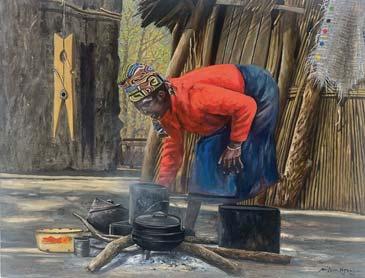
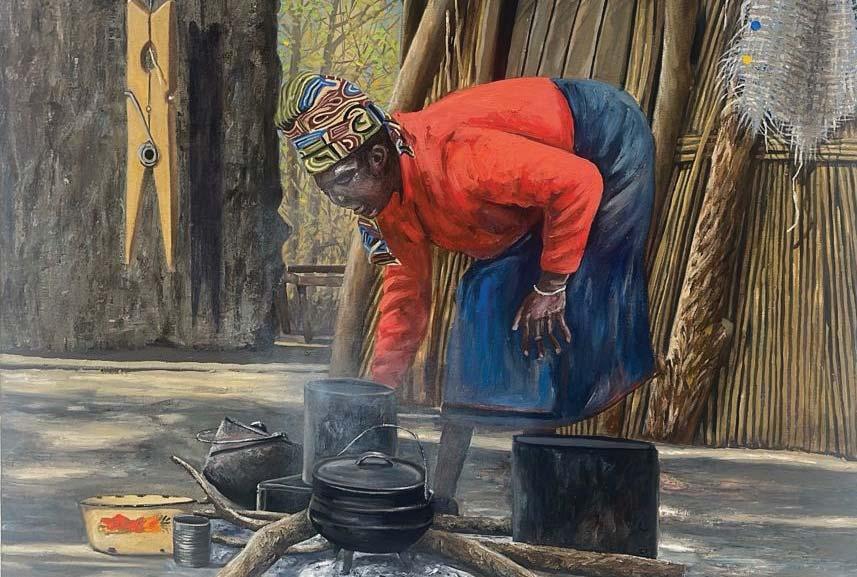
Acclaimed artist Wilson Ngoni recently unveiled his new exhibition titled ‘I’ at the National Museum and Art Gallery in Gaborone, offering art lovers a rare and intimate look into what he describes as “self-reflections” shaped by life journeys, philosophy and personal growth.
“When art has purpose, it creates grace. Art is like love, if it is not purposeful, it becomes something else.” Ngoni shared. The exhibition, which opened last Thursday, marks a significant shift in Ngoni’s artistic presentation. While widely known for his realistic depictions of everyday life particularly scenes grounded in Botswana’s social fabric Ngoni is now foregrounding a more abstract and surreal dimension of his work.
“I’m painting self-reflections, where I’m at in life, my feelings, and my philosophy,” Ngoni said in an interview. “Even though many people know me for realistic works, I have also been painting abstracts for a long time.”
Central to Ngoni’s work is a philosophy rooted in shared humanity. He believes every individual has a responsibility to contribute to the wellness of others.
“We share this world. We share spaces. We are technically connected somehow,” he said. “But we choose to be strangers. We put boundaries between ourselves through religion, politics, class and even our phones. I wish to return to the general place of humanity.”
For Ngoni, art is not simply aesthetic it is purposeful. His objective, he explained, is to orient his philosophy through his creative practice and to see his ideas enacted within society.
“Success is to see my suggestions or my wishes put to play,” he said, adding that art should have intent. His drive, with the themes he has partaken in are to help people find peace in themselves, to break down stigma and grow communities to a better place.
Ultimately his personal view of success was to share his own message and hope the audience can take a part of the universal message to find a space of reflection.
Though realism has defined much of his public identity as an artist, Ngoni says abstraction has always been part of his vocabulary. He describes his abstract works as “impossible whispers” soft, almost inaudible expressions that require patience
and openness from the viewer.
“They are like someone whispering and you’re trying to read their lips,” he said. “If you are calm and patient enough, you will catch it.”
Ngoni explained that he initially relied on realism to communicate with audiences who may not yet have been ready to engage with his more conceptual messages.
“People who are not ready to understand my philosophy I had to teach them through realistic works,” he said. “But both realism and abstraction carry my signature. They amplify the same philosophy.”
The artist now feels compelled to accompany his abstract paintings with written explanations and has expressed interest in producing a book dedicated solely to interpreting these works.
“I feel the need to write a book that explains my abstract paintings,” he said. “To help viewers have a glimpse into what I am saying.”
Ngoni acknowledged that Botswana’s landscapes and communities have shaped his worldview and artistic direction. His earlier works often captured ordinary moments in people’s lives, grounding his philosophy
in relatable imagery.
Yet even as his style evolves, he insists his core principles remain intact.
“The change is growth,” he said. “My desire to contribute to humanity is growing. The philosophy is the same it is just expanding.”
Ngoni hopes visitors leave the exhibition with more than admi-
ration for technique. He wants them to experience joy, reflection and renewal.
“I want my audience to enjoy and be joyful,” he said. “While they are looking at my paintings, I want their minds to be released from the hinges of worry.”
He also hopes fellow artists will draw inspiration from his emphasis on intentional creation.
“Art needs to be purposeful,” he stressed. Above all, Ngoni encourages viewers to embrace authenticity.
“I want people to belong to themselves,” he said. “I am being me genuinely and sincerely. I wish for my audience to copy that.” The exhibition is currently open to the public at the National Museum and Art Gallery.
Illegal churches blamed for Maun’s mounting waste
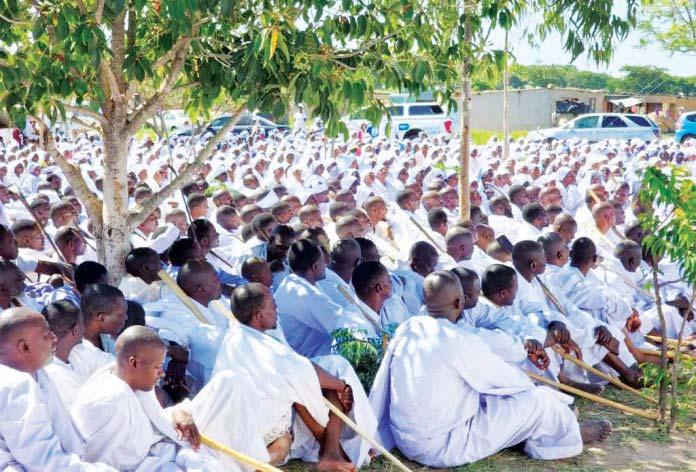
• “Most of these worship groups set up beneath trees without permanent structures, fencing, ablutions, or waste bins”- NWDC Chairman ing, ablutions, or waste bins,”
By Martha Kaisara
North West District Council (NWDC) Chairperson, Itumeleng Kelebetseng has taken advantage of his Kgotla meetings to address the persist issue of litter in Maun which has become an eyesore. Kelebetseng recently pointed to the rapid emergence of churches in undesignated areas as a major contributor to the deteriorating cleanliness of Maun.
Speaking at a consultative kgotla meeting with residents of Kubung, Kgosing, Borolong, and Mabudutsa on Tuesday, Kelebetseng warned that the village’s untidy state threatens its reputation as Botswana’s tourism hub and the gateway to the Okavango Delta.
“Most of these worship groups set up beneath trees without permanent structures, fenc-
Kelebetseng noted. He further alleged that many of these organisations operate illegally, lacking proper registration and licensing.
The chairman’s concerns extend beyond religious gatherings. He highlighted a widespread culture of waste mismanagement among residents and businesses, condemning the practice of creating illegal dumping sites and temporary landfills.
Kelebetseng warned that the pollution is leaking into the Okavango Delta and protected wildlife areas. “Our National Parks are littered to the extent that you will spot an eland or an impala chewing plastic along with grass. This portrays a devastating image to our tourists,” he said.
He urged the community to
take personal responsibility, starting with their homesteads, and encouraged residents to register for the council’s litter collection service at the subsidised rate of P100 per annum. During the meeting, residents Monei Diane and Mooketsi Phaladi called for a joint task force between Bye-Law officers and the Police to shut down illegal church operations.
Gomang Keitumetse, Chairperson of the Umbrella Village Development Committees (VDC), concurred that the village is in a “bad state,” specifically citing the Maun Bus Rank as a cleanliness hotspot. She also raised alarms regarding local schools, describing them as unhygienic environments for learners.
“One reason schools remain untidy is the lack of funds to employ dedicated cleaning per-
sonnel,” Keitumetse explained. In response, resident Otshedile Masoko suggested that Parents and Teachers Associations (PTAs) take the lead in hiring
To combat the crisis, resident Bathobangwe Tsheko suggested revitalizing the national campaign that declares the
month a general cleaning day, insisting that consistency is the only way to restore Maun’s status as a “green city.”
Youth call for unemployment creation over ConCourt!
By Tumisang Kelatlhilwe
Youth in the North West District have raised concerns over whether the proposed Constitutional Court reflects their immediate priorities, arguing that pressing issues such as unemployment, education and social welfare should be addressed first.
The concerns were raised during a Youth Pitso on constitutional consultations hosted by Minister of Trade and Industry, Tiroeaone Ntsima, at Life Centre in Maun on Monday. The meeting formed part of ongoing national engagements aimed at gathering public views on proposed constitutional reforms.
Speaking during the session, youth participants also high-
lighted challenges within the education sector, citing inadequate learning facilities and limited opportunities after completing school.
Maun Senior Secondary School
Deputy Head Boy Emmanuel Dintwe said many students continue to learn in classrooms that lack adequate infrastructure and learning resources. He noted that such conditions affect the quality of education and ultimately the competitiveness of young people in the labour market.
Another participant, Tshegofatso Shawe, questioned whether the country could afford to establish the Constitutional Court at a time when unemployment remains high among graduates and young professionals.
Shawe suggested that available funds could instead be channelled towards strengthening internship programmes and supporting sustainable youth employment initiatives.
Gender-related concerns were also raised during the discussion. Youth representative from Sedie Ward, Tsaone Bango, said unemployment among young women has contributed to economic dependency, leaving many vulnerable to abusive relationships.
“If we had employment opportunities then we would not be stuck in abusive relationships just to be taken care of. Government should help us stand on our feet so that we can take care of ourselves,” she said.
The youth in Maun reiterated
that economic empowerment remains a key priority, urging policymakers to ensure that constitutional reforms complement efforts aimed at addressing pressing social and economic challenges affecting young people.
For his part, North West District Council Chairperson Itumeleng Kelebetseng noted that young people in the district remain among the hardest hit by unemployment. He said while the establishment of a Constitutional Court is an important legal reform, the country must first focus on addressing economic challenges affecting the youth.
Kelebetseng said government resources should prioritise urgent needs such as job creation, health services and youth em-
powerment programmes before institutional reforms.
“The Constitutional Court is indeed needed, but it should come at a later stage where top priorities like health and unemployment have been dealt with in our country,” he said.
Responding to the concerns,
Minister Ntsima acknowledged the challenges raised by the youth and emphasised the importance of their participation in constitutional consultations.
He emphasised that addressing unemployment requires collective effort from government, the private sector and communities.
Ntsima noted that a strong and efficient judicial system could improve investor confidence, which in turn has the potential to contribute to economic growth
and job creation. He explained that the proposed Constitutional Court would function as a specialised judicial body designed to handle constitutional matters more efficiently, thereby reducing delays often experienced in the current court system.
Ntsima said the court would focus on constitutional disputes, emerging issues such as cybercrime and digital fraud, as well as matters relating to human rights and governance.
“The Constitutional Court is going to help speed up the duration of court cases because it will be specialised and staffed with specialised personnel, ensuring that justice can prevail without long case backlogs,” he said.
Francistown hosts first motor show!
By Staff Writer
A premier automative event, the Francistown Motor show is billed for the second city this Friday and Saturday at Toro Junction Mall.
The show which has a flare of lifestyle is expected to showcase the latest models and technology is the first of kind in Francistown, and has attracted over 32 exhibitors in the automotive industry and service provision.
“Francistown motor show being the first in the history of the city marks a significant milestone for the automotive industry and the cars enthusiasts. With 13 years’ experience in the motor vehicle industry, this is city is ready and has been wishing to have an event of such a nature,” said Joseph Khengere of Maverick Motor Events during a press conference, to officially unveil the
event.
“Francistown’s time here and now good things are coming to this city, and the era to have all events, shows being held in Gaborone is over. It is time to spread our wings to other parts of the country,” said Khengere. Khengere promised the Francistown motor show which is held in collaboration with Toro Junction Mall to be held every year, and to grow it going forward.
“Francistown is soon to be the next top-notch destination for motor show and other lifestyle events. The amazing thing about the people here is that they always the take up ownership of any initiative, and run with it,” explains Maverick Motor Events director.
The show which will be held over two days, will cater for both business and non-corporate clients, mixing business with pleasure for the children
and family.
“We have attracted a wide array of exhibitors who have a lot to offer. The show will see the car dealers to clinch deals to with clients outside the showrooms, create leads for future business
as well. Licenced drivers will be able to test drive the vehicles brought by the dealers.”
To the individuals and families, the director said this is an opportunity for them to shop for a vehicle together, have fun
and make it a weekend outing as well.
For the motor vehicle enthusiasts, the big machines will also be on display, together with the classic vintages.
“A motor show is not complete
if the fast cars are not on display. We will have a list of those spectacular, fast and furious wheels on show, to give the young ones something to look out for and talk about even after the show,” ended Khengere.
cleaning staff
second Friday of every
NOTICE
Notice issued in terms of Section 10 of the Environmental Assessment Act (CAP 65:07)
NOTIFICATION FOR PUBLIC REVIEW OF AN ENVIRONMENTAL IMPACT ASSESSMENT (EIA) FOR AN AGROTOURISM PROJECT AT XOBE
The major findings of an Environmental Impact Assessment (EIA) undertaken for the proposed Agrotourism Project in Xobe are summarised hereunder;
a) Nature and magnitude of the activity
The proposed developments of an Agrotourism project will include twelve stables to hold 24 horses at full capacity. Adjacent to the stables will be four pasture paddocks, a fruit and vegetable garden and food storage area for the horses. The agricultural component will constitute 50% of the Farm. The tourism component will have an accommodation facility with twelve tented ensuite guest rooms and campsite. The facility will hold 54 guests at full capacity. Other components of the tourism side will comprise guest area, including restaurant, dining area, lounge and swimming pool. Ancillary facilities include staff village and office. Other staff members will be ferried in daily from Xobe settlement. Electricity is generated from a solar power plant and a sewage treatment plant has been constructed to polish the sewage. Water is obtained from two boreholes.
b) Location of Facility
The facility will be on plot owned by In heart of Africa Safaris (PTY) LTD, located in NG/35 in Xobe settlement adjacent to Boteti River. The GPS location of the central point of the project site is 20°06’19.39”S, 23°28’39.52”E. The size of the plot is 2.4918 Hectares.
c) Anticipated Environmental Impacts and Mitigation measures to respond to the negative Impacts
The environmental impacts and mitigation measures identified by the EIA study are presented in the EIA report and summarised in the Table below.
Construction Phase Noise pollutionReduce excessive revving of vehicles whilst on site
Air pollutionDrive slowly at 30km/hr
Soil contamination by hydrocarbons
Sprinkle non potable water on area to be dug to reduce dust generation
Construction vehicles and machinery not to be serviced or refuelled on construction site
Visual pollutionCollect litter, soil residues and waste timely
Land pollutionWaste segregation should be done on site. Trucks hauling waste must be covered
Spread of diseaseIntensify community mobilization efforts about HIV/ADIS and other communicable diseases
Employment creationAdvertise employment opportunities to the community of Xobe
Outsource some services from local community
Noise pollutionReduce excessive revving of vehicles whilst loading and off loading
Operation Phase Soil contaminationVehicles and machinery to be serviced and re-fuelled at designated service providers only
Air pollutionDrive slowly at 30km/hr
Dispersal of litter outside project area and posing risks to people and animals
Sprinkle non potable water on area to be dug to reduce dust generation
Provide litter bins with lids
Separate litter and dispose it off appropriately
Risk of injuriesEnsure workers wear PPE. Train employees on safety procedures
Conduct awareness campaign on health risks
Spread of diseaseIntensify community mobilization efforts about HIV/ADIS and other communicable diseases
Employment creationAdvertise employment opportunities to Xobe and neighbouring communities. Outsource some services from local community
Diversified business opportunities Interaction with other sectors of the local economy and businesses
Decommissioning Phase
Loss of employmentGive employees 3 months’ notice to impending closure. Give employees terminal benefits
Reduced business opportunities Give partner businesses 3 months’ notice to impending closure
d) Environmental Impact Statement Placement
Copies of the EIS can be accessed at the following areas for review by the public: Department of Environmental Protection Plot 523, Light Industrial, Mophane Road, next to Motorvac Maun and at Xobe Kgotla, Xobe.
e) Correspondences
Written comments or objections from those likely to be affected by the project and other interested persons should be submitted to the Department of Environmental Protection, by 13th March, 2026. All correspondence should be addressed to:
District Environmental Coordinator
Department of Environmental Protection
P. O. Box 35 MAUN
Tel: 6801237
Email: deamaun@gov.bw
or hand delivered to
Department of Environmental Protection Office, Plot 523, Light Industrial, Mophane Road, next to Motovac. MAUN
KITSISO MO SECHABENG
Kitsiso e e ntshiwa mabapi le Karolo ya bolesome ya Molao wa Tshekatsheko Tikologo (CAP 65:07)
KITSISO MO SECHABENG MABAPI LE KANOKO YA TSHEKATSHEKO YA KAMEGO YA TIKOLOGO KA TLHABOLOLO LEFELO LA TEMO LE BAJANALA (AGROTOURISM) KWA XOBE
Dipatlisiso tsotlhe tse di bonweng fa go dirwa ditshekatsheko tsa seemo sa kamego ya tikologo ka nako ya kago le ka nako ya fa lefelo le setse le bereka di sobokilwe fa tlase.
a) Boleng le bogolo jwa tlhabololo
Tlhabololo e tlaabo ele lefelo la temo le bajanala (Agrotourism). Lefelo le tlaa kgaoganngwa ga bedi, gona le masaka a dipitse a le 12 a nna dipitse dile 24 mmogo le fa go lemiwang merogo le maungo. Karolo e nngwe e tlaabo ele boroko jwa bajanala (tented camp and campsite). Matlo a boroko a bajanala a tla nna lesome le bobedi (12) mme go na le fa bajanala ba kampang teng. Lefelo le tla nna bajanala be le 54 fa go tletse. Dikago tse dingwe e tla nna fa bajanala ba gorogelang teng, fa go jelwang teng, fa go ikhudiwang teng le ntlo ya boapeelo. Tse dingwe dikago e tlaa nna tsa ko go bewang dithoto teng. Babereki ba tlaa agelwa matlo a boroko. Babereki ba bangwe batlaa nna kwa malapeng a bone mme ba tsewe moso le moso go tla tirong. Go tla dirisiwa motlakase wa marang a letsatsi mme metsi a a leswe a tlaa tlhatswiwa ka mochine o o tlhatswang metsi a a leswe. Metsi a tla tsewa mo di dibeng tse pedi.
b) Lefelo la tiro
Lefelo la tlhabololo e ke lefelo le le abetsweng In Heart of Africa Safaris (PTY) LTD, le fitlhelwa mo NG/35 gaufe le motsana wa Xobe go bapa le noka ya Boteti. Botona jwa lefelo ke 2.4198 Ha. Dinomoro (coordinates) tsa bogare jwa lefelo ke; 20°06’19.39”S, 23°28’39.52”E.
c) Ditlamorago tse di ka tlhagogang le tse di akantsweng go fokotsa manokonoko a go amega ga tikologo
Ditlamorago tse di ka tlhagogang le tse di akantsweng go fokotsa manokonoko a go amega ga tikologo di kwadilwe mo pegong (EIA) ka botlalo, mme fa tlase fa ke tshoboko fela.
Legato la tiro Tse di amang tikologoTse di akantsweng go fokotsa manokonoko a go amega ga tikologo
Kago Modumo o o feteletsengFokotsa modumo wa dikoloi ka go sa gata mafura thata fa di le kwa lefelong la kago.
Kgotelesego ya phefoDikoloi di tshwanetse go tsamaya ka lebelo le le kwa tlase (30km/hr). Metsi a gasiwe fa lefelong la kago go fokotsa lerole
Kgotelesego ya mmu ke di ole Dikoloi le dimachine ga di a tshwanna go baakanyetswa kwa lefelong la kago. Dikoloi ga dia tshwanna go tshelwa leokwane kwa lefelong la kago.
Kgoteleselo ya tikologoMatlakala a tshwanetse go farologanngwa. Matlakala a a rwalwang ka dikoloi a tshwanetse a khurumediwe
Go leswafatsa tikologoMatlakala a tshwanetse go tlhaolwa mme a isiwe kwa lefelong la matlakala la Maun.
Go anama ga malwetseGo godisa maiteko a go rotloetsa go tsaya karolo ga morafe mo go hemeng malwetse a a tshelenwang (HIV/AIDS le amangwe).
Go tlhamiwa ga mebereko Diphatlha tsa mebereko di tshwanetse tsa phatlaladiwa ko metseng e e gaufi le lefelo la tiro. Batho ba metse e e gaufi le Madirelo ba tshwanetse go rotloediwa go gweba le lefelo la tiro
Modumo o o feteletsengFokotsa modumo wa dikoloi ka go sa gata mafura thata fa di pega kana di folosa dithoto
Kanako ya tsamaiso ya kgwebo
Modumo o o feteletsengFokotsa modumo wa dikoloi ka go sa gata mafura thata fa di le kwa lefelong la kago.
Kgotelesego ya phefoDikoloi di tshwanetse go tsamaya ka lebelo le le kwa tlase (30km/hr). Metsi a gasiwe fa lefelong la kago go fokotsa lerole
Go anama ga malwetseGo godisa maiteko a go rotloetsa go tsaya karolo ga morafe mo go hemeng malwetse a a tshelenwang (HIV/AIDS le amagwe) .
Go gasagasa matlakalaMatlakala a tshwanetse go tsenngwa mo di kantini tse dinang le dikhurumelo tse di ka sekeng tsa bulwa ke diphologolo Matlakala a tshwanetse go tlhaolwa mme a isiwe kwa lefelong la matlakala la Maun.
DikgobaloBabereki ba tshwanetse go dirisa didirisiwa tsa itshireletso le go rutwa mekgwa ya ipabalelo mo tirong go fokotsa dikotsi
Go tlhamiwa ga mebereko Diphatlha tsa mebereko di tshwanetse tsa phatlaladiwa ko metseng e e gaufi le Madirelo. Batho ba metse e e gaufi le Madirelo ba tshwanetse go rotloediwa go gweba le Madirelo
Morago ga kgwebo e ema go dira
Go latlhegelwa ke ditiroBabereki ba tshwanetse go fiwa tlhagiso ya dikgwedi dile tharo fa Madirelo a ema go dira.
Phokotsego ya diphatla tsa kgwebo Bagwebi ba ba dirisanyang le Madirelo ba tshwanetse go fiwa tlhagiso ya dikgwedi di le tharo pele ga Madirelo a tswalwa
d) Mabeelo a meriti ya mekwalo ya tshekatsheko
Meriti ya mokwalo wa tshekatsheko tikologo o o feletseng e ka bonwa kwa Ofisi ya Lephata la Tshomarelo Tikologo mo Maun, ko Plot 523, Light Industrial, mo tseleng ya, Mophane, go bapa le madirelo a Motorvac, lekwa Kgotleng ya motsana wa Xobe.
e) Dikakgelo le Mekwalo
Dikakgelo le dingongorego go tswa mo go ba ba amageng kgotsa ba ba nang le kgatlhego ka tiro e, di ka romelwa ka mokwalo ko Lephateng la Tshomarelo Tikologo pe le ga 13 tsa Mopitlo 2026 ko atereseng e e supilweng fa tlase: Mogolwane wa Kgaolo
Lephata la tsa Tikologo
P. O. Box 35 Maun
Mogala: 6801237 Email: deamaun@gov.bw Kana di ka isiwa kwa ofising ya Lephata la Tikilogo mo Maun, ko Plot 523, Light Industrial mo tseleng ya Mophane go bapa le madirelo a Motovac.
PUBLIC NOTICE
Notice issued in terms of Section 10 (2) of the Environmental Assessment Act (Cap. 65:07)
NOTIFICATION FOR PUBLIC REVIEW OF AN ENVIRONMENTAL IMPACT STATEMENT (EIS) FOR THE PROPOSED CONSTRUCTION AND OPERATION OF FILLING STATION AND TRUCK STOP BY GEORGE RINDO AT PALAPYE, PALAPYE DISTRICT
The major findings of an Environmental Impact Assessment (EIA) Study undertaken for the proposed operation of filling station and truck stop are as summarised hereunder:
a) Nature and Magnitude of the Activity
The proposed filling station and truck stop will be operated on a plot covering an area of approximately 21596 m2. The proposed project activities comprise construction and operation of a filling station, truck stop, service shop/quick shop, office, fuel pumps on three islands with a canopy, secure parking for trucks, dining facility, showers, tyre change, workshop, washing bay, Wi-Fi, games room, restaurant, car park and loading and offloading bay. The filling station is proposed with two (2) underground storage tanks (UST) for diesel with a total capacity of 92 m3 (46 m3 each), and two (2) UST for unleaded petrol 95 with a total capacity of 92 m3 (46 m3 each). Correspondingly, there will be a loading and off-loading bay. Perceptibly, there will be a parking area for residents and the general public utilizing the proposed developments.
b) Location of the Activity
The proposed project site is located at Palapye in Palapye District. It is located about 50m west of Gaborone – Francistown (A1) Road. It is situated about 200m west of Lotsane Senior Secondary School. The project site is also located approximately 200m south of Lotsane River. The proposed project site is in the vicinity of Lotsane River, schools, residential, commercial and industrial plots.
c) Anticipated Environmental Impacts and Proposed Mitigation Measures The environmental impacts and mitigation measures identified by the Environmental Impact Assessment (EIA) study are presented in detail in the Environmental Impact Statement and summarised in the table below.
Potential exposure of subsurface archaeological artefacts
Preconstruction, Construction & Operation If any archaeological material is identified, all works should be halted and the DNMM be notified immediately.
Biophysical Environment
Loss of vegetationPreconstruction and Construction Vegetation clearance to be done only where construction will take place. Revegetate after rehabilitation of project site to improve the aesthetics of the environment.
Land pollutionPreconstruction, Construction, Operation & Decommissioning Waste should be disposed of at designated waste disposal sites. Provide chambers (waste bins with lids) for waste collection.
Noise pollutionPreconstruction, Construction, Operation & Decommissioning Construction activities should be timed such that disturbances occur between working hours. Residents should be informed about the noise during operation. Regularly service machinery and haulage trucks at proper workshops during all phases of project.
Soil erosionPreconstruction, Construction, Operation & Decommissioning Any erosion signs observed during operation should be restored. Vegetation clearance should be done on proposed sites only. Avoid dragging materials by lifting them. Haulage trucks should use designated routes. Workers should avoid unnecessary movements.
Water pollutionPreconstruction, Construction, Operation & Decommissioning Vehicles and machinery should be serviced regularly as per manufacturer/dealer’s recommendations at proper workshops to avoid oil leakages.
Soil contaminationPreconstruction, Construction, Operation & Decommissioning Solid waste should be disposed of at designated waste disposal sites. Vehicles and machinery should be serviced regularly to avoid oil leakages. Servicing of vehicles and machinery should be done at proper workshops. Social Impacts
Boost to local economyConstruction, Operation & Decommissioning During recruitment, priority should be given to local companies and individuals. Capacitate employees with relevant training.
Injury and possible death to employees from heavy plant operations
Preconstruction, Construction, Operation & Decommissioning Provide protective and safety clothing such as boots and helmets. Ensure that heavy plant is operated by qualified personnel. Ensure that operation of heavy plant occurs when there is adequate lighting.
Road accidentsConstruction, Operation & Decommissioning Put speed limits to maximum of 40 km/h in the village. Put the headlights on to increase visibility.
HIV/AIDS infectionsPreconstruction, Construction, Operation & Decommissioning Provide condoms to the employees. Educate the workers on issues related to HIV/AIDS.
Environmental degradation from illegal dumping of rubbles
DecommissioningLiaison with the community members and police for the surrounding environments to address this potential impact. Rubbles should be disposed of at designated waste disposal sites.
Air pollutionPreconstruction, Construction, Operation & Decommissioning The site and access road must be wetted regularly to reduce dust production and air pollution. Vehicles must be serviced regularly to minimise emissions of sulphur dioxide. Health Hazards
Water pollutionPreconstruction, Construction, Operation & Decommissioning Vehicles should be serviced regularly as per manufacturer/dealer’s recommendations at proper workshops to avoid oil leakages. Ablution facilities should be made available on site.
Reduction of aesthetic quality Preconstruction, Construction, Operation & Decommissioning Ensure that waste receptacles are available on site, and that the waste is transferred to a registered dumping site/ landfill.
d) Conclusions
The project is needed to reduce a high demand of fuel around Greater Palapye area. The benefits of the project outweigh the negative issues. The results from the EIA exercise show that the identified environmental and socio-economic issues can be mitigated. Additionally, majority of the impacts are reversible and therefore, the proposed development can be approved. The project should be allowed to continue taking on board the highlighted mitigation measures. An archaeological impact assessment (AIA) of the project area was undertaken and a letter of authorization has been obtained from the DNMM. The AIA concludes that there are no archaeological resources in the area. It is therefore concluded that the project can proceed given the findings of this study.
e) Recommendations
Following the undertaking of the Environmental Impact Assessment for the proposed project, it is recommended that the project be allowed to proceed with due implementation of all the mitigation measures recommended.
f) Environmental Impact Statement Placement
Copies of the EIS have been placed at the following locations for review by the general public and the Interested and Affected parties (IAPs):
1. Department of Environmental Protection (Serowe)
2. Palapye Main Kgotla
3. Palapye Library
Written comments or objections from those likely to be affected by the project and other interested persons should be submitted to the Department of Environmental Protection by 20th March 2026.
g)
A LEOKWANE LE MAEMELO A DITERAKA KE RRE GEORGE RINDO
PALAPYE, MO KGAOLONG YA PALAPYE
Dintlhakgolo tsa dipatlisiso tse di bonweng fa go dirwa ditshekatsheko tsa seemo sa kamego ya tikologo ka nako ya kago le nako ya marekisetso le maemelo di simolola go dira di sobokilwe fa tlase:
a) Boleng le Selekanyo sa Tiro
Marekisetso le maemelo a, a agiwa mo setsheng sa selekano sa 21596 m2. Kago e tla akaretsa marekisetso a leokwane le maemelo a diteraka. Kago e tla akaretsa; ditanka tsa leokwane di le nne (4) tsa selekano sa 184000 litres tsotlhe ka kakaretso (46000 litres nngwe le nngwe), ofisi, mabeelo a matlakala, mabeo a dikoloi, Wi-Fi, ntlo ya metshameko, lefelo le go tla bong go jelwa teng, lefelo le go folosiwang dilwana, le mabeelo a dilwana.
b) Lefelo la Tiro
Lefelo le go tla dirwang tiro e, le mo Palapye, mo kgaolong ya Palapye. Lefelo le, le selekanyo sa dimmethara tse masome a matlhano (50 m) kwa bophirima jwa tsela ya Gaborone – Francistown (A1). Lefelo la tiro le selekanyo sa dimmethara tse di makgolo a mabedi (200 m) kwa bophirima jwa sekolo se se golwane sa Lotsane. Lefelo le, le bapile le noka ya Lotsane, dikwele, dijarata le marekisetso a dijo le a dithoto.
c) Ditlamorago tse di solofetsweng le maitlamo a go itebaganya le tsone:
Ditlamorago tse di solofetsweng le se se ka dirwang go tila ditlamorago tse, di ka bonwa mo pegong ya ditshekatsheko tsa tikologo tse di supilweng mo mokwalong wa ditshekatsheko tsa tikologo. Mokwalo o o latelang o supa tshoboko ya mokwalo wa ditshekatsheko.
Ditlamorago Legato la tiro Metlhale ya go fokotsa manokonoko a ditlamorago
Ditlamorago mo go tsa ditso
Kgonagalo ya go epolola ditso
Paakanyo ya lefelo la tiro, ka nako ya kago le ka nako ya tiriso
Ditlamorago mo tikologong
Tatlhego ya dimelaPaakanyo ya lefelo la tiro le ka nako ya kago
Kgotlhelesego ya tikologo ka ntlha ya matlakala
Paakanyo ya lefelo la tiro, ka nako ya kago, ka nako ya tiriso le morago ga tiriso
Koketsego ya modumoPaakanyo ya lefelo la tiro, ka nako ya kago, ka nako ya tiriso le morago ga tiriso
Tatlhego ya boleng jwa mmu
Paakanyo ya lefelo la tiro, ka nako ya kago, ka nako ya tiriso le morago ga tiriso
Kgotlelesego ya metsiPaakanyo ya lefelo la tiro, ka nako ya kago, ka nako ya tiriso le morago ga tiriso
Kgotlelesego ya mmuPaakanyo ya lefelo la tiro, ka nako ya kago, ka nako ya tiriso le morago ga tiriso
Ditlamorago mo matshelong a batho
Tlhamo ya meberekoKa nako ya kago, ka nako ya tiriso le morago ga tiriso
Dikgobalo le dintsho tsa babereki
Paakanyo ya lefelo la tiro, ka nako ya kago, ka nako ya tiriso le morago ga tiriso
Fa go ka diragala gore sengwe sa ditso se ka iponatsa ka nako ya kago, tiro yotlhe e tshwanetse go emisiwa mme ba lephata la tshomarelo matlotlo a tlholego le ntlo ya ditso (DNMM) ba itsisiwe.
Kgaolo ya dimela e dirwe mo teng ga lefelo la tiro fela. Jala dimela morago ga tiriso ya lefelo la tiro go tlhabolola tikologo.
Matlakala a tshwanetse go bolokelwa kwa mafelong a a letlelesegang (mahuti a matlakala).
Matlakala a tshwanetse go bewa sentle pele fa a ka isiwa kwa mahuting a matlakala.
Tiro e tshwanetse go dirwa ka nako ya motsegare go tila kgoreletso ya modumo ka dinako tsa go itheetsa (bosigo). Banni ba tshwanetse gore ba itsisiwe ka modumo o o tla tlhagogang ka nako ya tiro.
Rurifatsa gore dikatakata le didirisiwa tse dingwe di mo seemong se se itekanetseng ka nako tsothe.
Tatlhego epe ya mmu e e nnang teng e tshwanetse go baakanngwa. Kgaolo ya dimela e dirwe mo teng ga lefelo la tiro fela. Didirisiwa di seka tsa gogiwa mme di tsholediwe.
Dikoloi di tshwanetse go dirisa ditsela tse di letleletsweng. Babereki ba tshwanetse go ikgapa mo metsamaong e e sa letlelesegeng.
Dikoloi di tshwanetse go baakanngwa ka nako e e letleletsweng ebile di baakanyetswa kwa mafelong a a letleletsweng gore di seka tsa tshololela ole mo lefelong la tiro.
Matlakala a tshwanetse go latlhelwa kwa mahuting a matlakala. Dikoloi di tshwanetse go baakanngwa ka nako e e letleletsweng ebile di baakanyetswa ko mafelong a a letleletsweng gore di seka tsa tshololela ole mo lefelong la tiro.
Paakanyo ya didirisiwa e tshwanetse go direlwa ko mafelong a a lebaganeng.
Diphatlha tsa mebereko le ditiro di tshwanetse go fiwa banni ba lefelo pele fa go ka sekasekwa ba ba tswang kwa ntle. Go rutuntsha babereki ka dikitso tse di maleba.
Babereki ba tshwanetse go apara diaparo tsa itshireletso ka nako tsotlhe.
Tlhomamisa gore dikatakata di dirisiwa ke batho ba ba nang le ditankana tsa go di dirisa. Tlhomamisa gore dikatakata di dirisiwa motshegare ebile go na le lesedi le le lekanetseng.
Dikotsi tsa tselaKa nako ya kago, ka nako ya tiriso le morago ga tiriso Baya matshwao a tsela mo motseng a a supang gore dikoloi di letlelesegile go tsamaya ka lobelo lo lo sa feteng masome a mane (40 km/h). Tshuba dipone tsa koloi go oketsa lesedi.
Go anama ga mogare wa HIV/AIDS
Kgotlelesego ya tikologo e e bakiwang ke go latlhela matlakala gongwe le gongwe
Kgotlelesego ya tikologo e e bakiwang ke lerole
Paakanyo ya lefelo la tiro, ka nako ya kago, ka nako ya tiriso le morago ga tiriso
Babereki ba tshwanetse go fiwa dikausu (condoms). Babereki ba tshwanetse go rutiwa ka bodiphatsa jwa mogare wa HIV le bolwetsi jwa AIDS.
Morago ga tirisoDirisana le sechaba le mapodise mo go somareleng tikologo. Matlakala a tshwanetse go latlhelwa kwa mahuting a matakala.
Paakanyo ya lefelo la tiro, ka nako ya kago, ka nako ya tiriso le morago ga tiriso
Thibela go tsoga ga lerole ka go tshela metsi. Dikoloi di tshwanetse go baakanngwa ka nako e e beilweng go tila kgotlelesego ya tikologo.
Ditlamorago tse di amanang le leswe Kgotlelesego ya metsiPaakanyo ya lefelo la tiro, ka nako ya kago, ka nako ya tiriso le morago ga tiriso
Tlhomamisa gore ditanka tse di tsenyang matlakala di teng ebile di isiwa kwa lehuting la matlakala ka nako.
Dikoloi di tshwanetse go baakanngwa ka nako e e beilweng ebile di baakanyetswa kwa mafelong a a letleletsweng gore di seka tsa tshololela ole mo lefelong la tiro. Go tshwanetse go tlisiwa matlwana a boitiketso mo lefelong la pereko. Phokotsego ya boleng jwa tebego ya tikologo Paakanyo ya lefelo la tiro, ka nako ya kago, ka nako ya tiriso le morago ga tiriso
d) Tshoboko
Tiro e, e botlhokwa mo go fokotseng letlhoko la leokwane mo kgaolong ya Palapye le mafelo a a mabapi. Ditlamorago tsa tiro e, ke tse di botlhokwa mo matshelong a batho, ebile di dintsi go feta tse di sa siamang. Ditshekatsheko tsa tikologo di supile fa ditlamorago tsa tiro e di ka fokodiwa ebile di bo di kgona go laolesega. Go lebega fa bontsi jwa ditlamorago di ka laolesega, ka jalo tiro e ka letlelelwa go tswelela. Tiro e tshwanetse go letlelelwa gore e tswelele mme go sa lebalwe dintlha tse di ka fokotsang manokonoko a ditlamorago tsa tiro e mo tikologong. Go ne ga dirwa ditshekatsheko tsa ditso mme ba Lephatla la Tshomarelo Matlotlo a Tlholego le Ntlo ya Ditso ba ne ba ntsha mokwalo wa gore tiro e ka tswelela. Ditshekatsheko tsa ditso di supile gore ga go a bonwa sepe sa ditso mo lefelong le, ka jalo go tserwe tshwetso ya gore tiro e ka tswelela go lebeletswe maduo a ditshekatsheko tsa tiro e.
e) Dikgakololo tsa Patlisiso Morago ga ditshekatsheko tse di dirilweng, go rotloediwa gore tiro e tswelele mme go diragadiwe mananeo a paakanyo ya tikologo a go gakolotsweng ka one.
f) Mafelo a pegelo e e ka bonwang teng: Pegelo e e ka bonwa ke sechaba le banaleseabe mo mafelong a a latelang:
1. Lephata la Tshomarelo Tikologo (Serowe)
2. Kgotla ya Palapye
3. Library ya Palapye Fa o le kgatlhanong le tiro e e akantsweng e, o ka romela dikakgelo ka mokwalo, kwa go ba Lephata la Tshomarelo Tikologo (Department of Environmental Protection) pele ga kgwedi ya Mopitlwe e le 20, 2026.
g) Dikakgelo
Dikakgelo le dipotso di ka romelwa kwa go: Mookamedi, Lephatla la Tshomarelo Tikologo, Private Bag 0028, Serowe, Tel: 4630174 / 6, Fax: 4631307 kana tsa isiwa ka letsogo kwa DEP Office kwa kgotlaneng ya Palamaokue.
Tourism &Environment
*With Professor Joseph Mbaiwa
Tourism and Economy
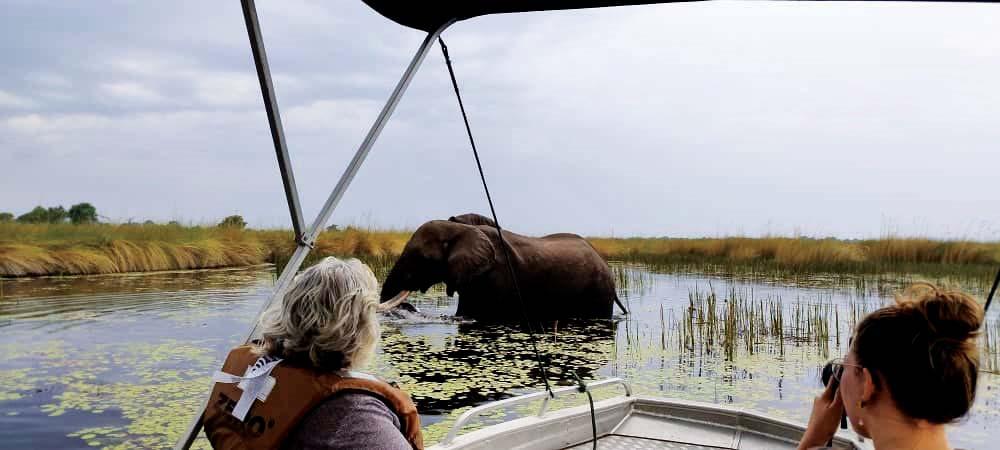
Botswana’s economy has long been anchored by diamond exports, with mining contributing significantly to GDP, government revenue, and foreign exchange earnings. However, fluctuations in global diamond demand and declining sales have exposed the vulnerability of relying heavily on a single commodity. As revenues from diamonds weaken, the need to diversify becomes urgent. One promising and sustainable alternative lies in expanding wildlife-based tourism, a sector where Botswana already holds a strong comparative advantage. Botswana is globally renowned for its pristine wilderness and high-value, low-volume tourism approach especially in the Okavango Delta. The country is home to iconic destinations such as the Okavango Delta, a UNESCO World Heritage Site; Moremi Game Reserve, Makgadikgadi Nxai Pan National Park, Chobe National Park, famous for large elephant population; Kalahari Transfrontier Park and the vast Central Kalahari Game Reserve. These natural assets position Botswana uniquely within Africa’s tourism market. Unlike mass-tourism destinations, Botswana has successfully marketed exclusivity, conservation, and premium safari experiences. Strengthening and expanding this sector can provide foreign exchange, create employment, stimulate rural development, and generate sustainable revenue streams independent of mineral cycles.
Sustainable wildlife-based tourism contributes to economic revival in several ways. First, it is labour-intensive. Lodges, tour operations, hospitality services, transport, and crafts all create jobs across skill levels. Importantly, many of these opportunities are in rural areas where poverty levels are often highest. By expanding community-based natural resource management (CBNRM) programs, local communities can directly benefit from wildlife conservation through employment, joint-venture partnerships, and revenue-sharing arrangements. Tourism has strong multiplier effects, that is, visitors spend money on accommodation, food, transport, crafts, and cultural experiences. When properly structured, this spending circulates within the domestic economy, supporting small and medium enterprises (SMEs). Diversifying into cultural tourism, heritage tourism, and eco-tourism packages can further lengthen visitor stays and increase per-capita expenditure. However, to maximize tourism’s contribution and reduce revenue leakages, strategic reforms are necessary. Revenue leakage occurs when a significant portion of tourism income leaves the country through foreign ownership, imported goods, expatriate labour, and international booking platforms. To address this, Botswana should undertake the
following:
1. Promote Local Ownership and Partnerships: Encourage citizen participation in lodge ownership, tour operations, and concession management. Joint ventures between international investors and local communities should ensure meaningful equity participation and skills transfer.
2. Strengthen Local Supply Chains: Reduce dependence on imported food, beverages, furniture, and safari equipment by supporting domestic production. Incentivizing local agriculture to supply lodges and hotels can keep more revenue within Botswana.
3. Develop Skills and Training: Invest in hospitality, conservation science, wildlife management, and tourism business training through institutions such as the Botswana Tourism Organisation in collaboration with tertiary institutions. Skilled local workers reduce reliance on expatriates.
4. Enhance Marketing and Air Connectivity: Expand international marketing campaigns and improve air access through partnerships with carriers such as Air Botswana. Better connectivity increases tourist arrivals and competitiveness.
5. Improve Infrastructure Sustainably: Invest in roads, digital connectivity, renewable energy, and water systems in tourism zones without compromising environmental integrity.
6. Strengthen Conservation and Anti-Poaching Efforts: Tourism depends on wildlife preservation. Continued investment in conservation ensures long-term sustainability and protects Botswana’s brand as a premier safari destination.
7. Diversify Tourism Products: Beyond traditional safaris, Botswana can expand into birding tourism, photographic tourism, adventure tourism, and cultural heritage experiences that showcase local traditions.
In conclusion, while diamonds have historically powered Botswana’s economy, wildlife-based tourism offers a resilient and sustainable pathway for diversification. By strengthening local participation, reducing leakages, investing in skills and infrastructure, and maintaining strong conservation policies, Botswana can transform tourism into a major engine of economic recovery and long-term stability in Botswana.
*Joseph E. Mbaiwa, PhD is a Professor of Tourism Studies, at the Okavango Research Institute, University of Botswana in Maun.
Botswana sweeps honours at ITB Berlin 2026
Botswana cemented its status as a global leader in sustainable travel this week, walking away with two major accolades at the 60th Internationale Tourismus-Börse (ITB) Berlin, the world’s premier travel trade show, held March 3-5.
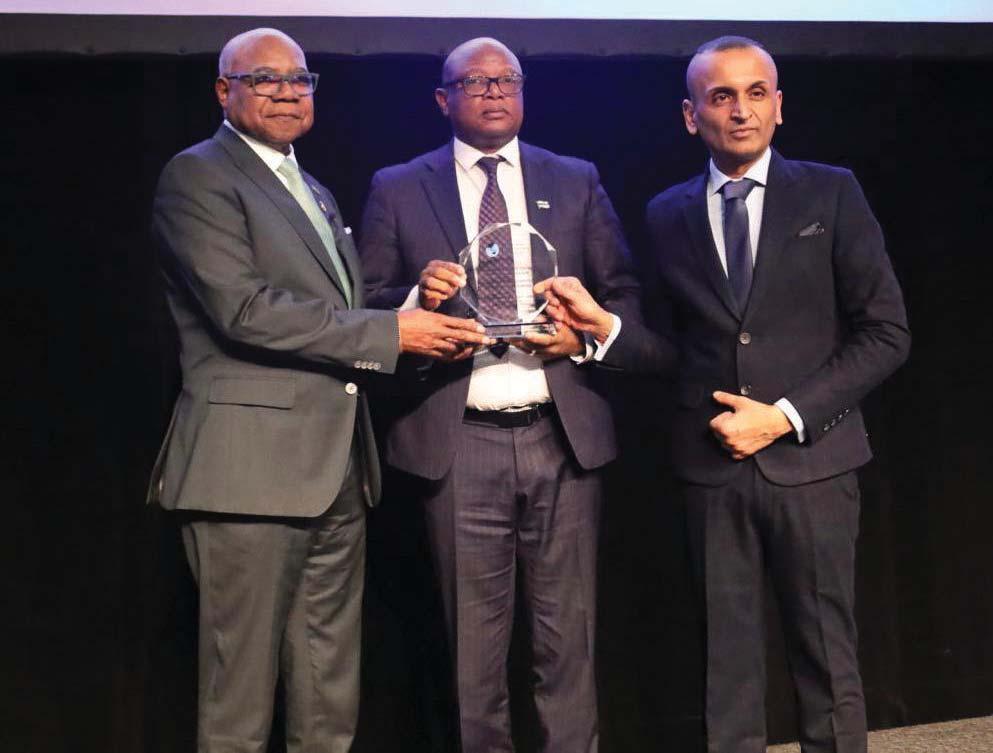
In a crowning achievement for the national delegation, Botswana was named “Destination of the Year – Thrilling Experiences” at the prestigious PATWA International Travel Awards. In a double victory, the Minister of Environment and Tourism, Wynter Mmolotsi, was honored with the “Tourism Minister of the Year – Nature Conservation” award for excellence in governance.
Accepting the honors, Mmolotsi reaffirmed the nation’s commitment to conservation-led growth. “These awards reflect Botswana’s dedication to sustainable tourism development and community empowerment,” he stated.
The Botswana Tourism Organisation (BTO) noted that the PATWA recognition provides a powerful platform to showcase the country’s unique offerings to the global buyers, investors, and industry leaders gathered in Berlin.
There was clear impact in market penetration and po-
tential for investment on day of the travel show. Leading a delegation of 25 local tourism operators, Mmolotsi and the BTO executed a deliberate strategy to stimulate global demand.
The impact was immediate, as on the first day alone, the delegation conducted 174 high-level meetings. Some operators averaged nine meetings each, securing faceto-time with international agents from key markets including Switzerland, Germany, Italy, the UK, France, Canada, and Denmark.
The BTO highlighted that the “Thrilling Experiences” award validates Botswana’s position as a top-tier destination for high-impact safari and wilderness tourism.
“Botswana’s high-value, low-volume tourism model has positioned the country as a global leader in sustainable travel,” BTO said in a statement. “From pristine wilderness landscapes to diverse wildlife ecosystems, we continue to attract discerning travelers seeking authentic and responsible experiences.”
In addition to the awards ceremony, Minister Mmolotsi delivered a keynote address at the PATWA World Tourism Leaders’ Summit, focusing on “The Future of Tourism.”
As the show concludes today, the delegation leaves Berlin with renewed optimism. The intensive networking and back-to-back sessions are expected to translate into a significant surge in visitor numbers, signaling a robust recovery post Covid -19, and a growth phase for the local tourism industry.
Conservation partners implement anti-poisoning,
de-snaring initiatives
By Maretha Kaisara
Escalating cases of poisoning and snaring continue to threaten Botswana’s conservation efforts in the north western part of Botswana, considered the country’s heart of tourism.
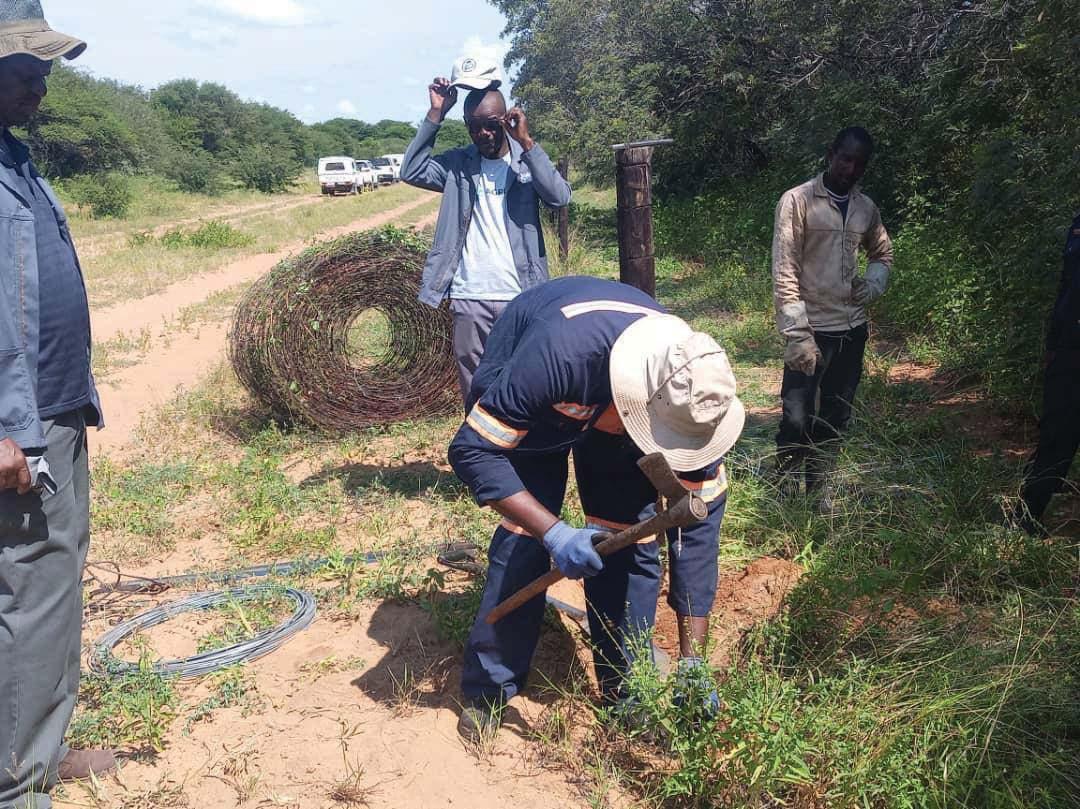
This has prompted Conservation of Natural Ecosystems Trust (CONNECT)’s collaboration with the Department of Wildlife and National Parks (DWNP) and other various stakeholders from both the private and public sectors.to initiate robust means of curbing the acts.
In an interview, CONNECT researcher, Robyn Flemix highlighted that through four coordinated de-snaring campaigns conducted over the past six months, they have removed more than 273 snares across three focus areas of Chobe, North West and Okavango districts. This is estimated to represent
approximately 20–30% of existing snares, highlighting the scale of pressure.
This collaboration has also made strides in removing active snares from wildlife including elephants, lions, wild dogs, hyenas, waterbucks, and zebras. Flemix says operating in remote landscapes poses significant logistical challenges for detection and removal.
Since January 2025, CONNECT, DWNP, and partner organisations have also documented 149 vulture and raptor mortalities linked to poisoning incidents in northern Botswana. These figures represent only incidents in which partners were directly involved and do not reflect all poisoning events nationally.
Flemix said they are planning to implement a range of preventative measures designed to reduce poisoning and snaring incidents before they occur. The efforts, she
said - will focus on improving early detection, strengthening response capacity, and supporting long-term ecosystem protection.
“CONNECT plans to expand into structured capacity-building and awareness initiatives, aimed at strengthening prevention of poisoning and snaring through improved skills, knowledge sharing, and community engagement,” she emphasized.
The trust’s work is currently focused primarily on northern Botswana, particularly in landscapes where wildlife and community activities overlap and risks of poisoning and snaring are higher.
Flemix noted that their intention is to use these areas as operational learning sites, with future expansion into additional regions as partnerships and resources allow.
She alluded that improved reporting and incident documentation systems will allow faster detection, information
sharing, and coordinated response. The researcher added that it also enhances multi-agency collaboration, ensuring wildlife, veterinary, and law enforcement partners can respond collectively and efficiently.
She said strengthening monitoring approaches, particularly for sensitive species and high-risk areas, to help identify threats early and guide preventative action is much anticipated, adding these planned initiatives aim to gradually shift conservation responses from reactive incident management toward proactive prevention and ecosystem-based protection. As the programme grows, CONNECT intends to expand partnerships to support community awareness and engagement, training, technical exchange, and preventative conservation initiatives.
North West, Okavango gain big in education budget
• target infrastructure, curriculum and child welfare interventions
By Bhekinkosi Phiri
Minister of Child Welfare and Basic Education, Nono Kgafela-Mokoka, has outlined a series of infrastructure, curriculum and child welfare interventions set to benefit the Ngamiland and Okavango regions under the 2026/2027 budget proposals presented to the National Assembly on 3 March 2026.
In her Committee of Supply speech, the minister detailed how expansion projects, special needs education reforms and child protection systems will directly impact communities in in Ngamiland, particularly the North-West and the newly created Okavango District.
A key highlight is the continued expansion of Okavango Junior Secondary School in Gumare, which is among nine junior secondary schools targeted for completion under a P274 million allocation for secondary school expansion.
The project forms part of a broader effort to align infrastructure with rising enrolments and evolving curriculum demands.
In addition, P32 million has been earmarked for the construction of staff houses across the country, with 34 specifically to be completed at Okavango JSS and Etsha JSS.
The Minister emphasised that
improving teacher accommodation is critical for staff retention, particularly in remote areas such as the Okavango. Special needs education also features prominently in the region’s plans. Kgafela-Mokoka announced that the STEAM-aligned Functional Curriculum for learners with Severe to Profound Intellectual and Multiple Disabilities (SPIMD) would be implemented this month at the Maun Special Needs Centre. The move ensures that children with significant learning challenges in Ngamiland will benefit from the ministry’s transition to a Science, Technology, Engineering, Arts and Mathematics-driven framework.
On child welfare, the Minister revealed that the new Lesedi OVC Data Management System is being rolled out in seven districts, including
Okavango and Charleshill.
The system, developed in collaboration with the United States Government, is intended to improve data collection, reporting and programming for Orphans and Vulnerable Children (OVCs). The rollout in Okavango is expected to conclude by the end of March before a national expansion, subject to funding.
The Orphans and Vulnerable Children Programme itself remain a central pillar of government support in remote and rural districts. The Minister reiterated that the programme continues to provide basic necessities to children of destitute families, Remote Area Dwellers and other vulnerable groups, with a proposed P200.1 million allocation under the 2026/2027 recurrent budget.
Infrastructure maintenance will also receive attention in
Estate Planning
*With Peace W. Moitatodi
Estate Planning: Your Guide to Wills, Trusts & Estates-Know Your Rights! Part of Your Estate?
Series | Week 35
Title: Can Your Pension, Insurance and Beneficiary Nominations Form Part of Your Will?
Which Takes Precedence — And Can They Work Together?
the region as part of a P445 million national allocation for repairs and rehabilitation of junior and senior secondary schools. Government has acknowledged persistent infrastructure backlogs, overcrowding and service delivery challenges, particularly in rural districts.
Beyond brick-and-mortar projects, the Minister linked these interventions to broader national transformation goals under NDP 12 and the Botswana Economic Transformation Programme. She argued that modernised facilities, inclusive education reforms and strengthened child protection systems are essential to ensuring that learners in districts such as Ngamiland and Okavango are not left behind in Botswana’s shift toward a knowledge-based economy.
Drones deployed to battle Okavango locust swarms
• Ministry turns to aerial spraying after ground
efforts fail in difficult terrain
By Tumisang Kelatlhilwe
The Ministry of Lands and Agriculture has dispatched a specialised pest control team to the Okavango District to combat a locust outbreak that continues to threaten regional food security and livelihoods. The infestation, which surfaced last November, has devastated fields in Moporota and Kadangasa. Local farmers report that the pests have decimated crops, sparking fears of total income loss and longterm food shortages.
In a shift in strategy, the Ministry has deployed drones to conduct aerial pesticide spraying over 1,000 hectares of farmland and grasslands. The operation is expected to take seven days.
Chief Crop Production Officer Kene Kebalepile admitted that initial ground interventions were ineffective.
“We tried to use vehicles to spray, but they kept breaking down and could not effectively access the fields due to the difficult terrain,” Kebalepile
said. “We sought assistance from our headquarters in Gaborone for a drone, and our request was granted.”
The use of drones allows the team to treat cultivated fields precisely without the mechanical damage caused by heavy vehicles. Ground teams will now pivot to focus on the surrounding open grasslands. For local farmers, the aerial intervention offers a final sliv-
er of hope. Phemelo Ditando, one of the affected farmers, described the destruction as absolute.
“There is no food left in our fields; the locusts have finished everything,” Ditando said. “When we first raised the alarm, the pests were small. Now they have grown and are far more destructive.”
While expressing gratitude for the Ministry’s response,
Ditando noted that the delay in intervention allowed the swarm to reach its current peak.
Authorities have urged farmers to cooperate fully with the pest control teams to ensure the operation’s success. For the communities of Moporota and Kadangasa, the outcome of this seven-day mission will determine if any of this season’s harvest can be salvaged.
When drafting a Will, many people assume that everything they own will automatically be distributed according to that Will. But here is a critical question:
Does your pension, life insurance, or beneficiary nomination actually form part of your Will?
The answer may surprise you.
1. 1. Do Pension Benefits Form Part of Your Will?
In most cases, no.
Pension funds are governed by the rules of the pension scheme and relevant pension legislation. When you nominate beneficiaries under your pension fund, the trustees of the fund are usually given discretion to distribute the benefit.
This means:
• The pension benefit does not automatically fall into your estate
• It is often paid directly to nominated beneficiaries
• The trustees may investigate financial dependants before distributing funds
• Your Will does not override pension fund rules
Even if your Will states that your estate must be divided equally among your children, the pension fund trustees may distribute differently if there are dependants who were financially reliant on you.
This is why relying on your Will alone can create unintended consequences.
2. Does Life Insurance Form Part of Your Will?
It depends. If you have:
√ Named Beneficiaries on the Policy
The proceeds are paid directly to those beneficiaries and do not form part of your estate.
No Named Beneficiaries
The insurance payout is paid into your estate and will then be distributed according to your Will.
This distinction is extremely important.
If your estate has debts, estate duty, or disputes, an insurance policy without a beneficiary nomination can be delayed significantly.
3. Do Beneficiary Nominations Override a Will?
In most cases, yes. Where there is a valid beneficiary nomination:
• Pension funds follow pension rules
• Insurance companies pay nominated beneficiaries
• Retirement annuities follow their governing legislation
Your Will governs estate assets. Beneficiary nominations govern contractual benefits. These are two different legal mechanisms.
4. So What Actually Forms
Generally:
Property registered in your name
• Bank accounts (without payable-on-death instructions)
• Shares and investments (unless structured otherwise)
• Personal belongings • Business interests
These assets are distributed according to your Will.
5. Can They Work Together? Yes — and they should. A well-structured estate plan ensures:
• Your Will aligns with your beneficiary nominations
Your pension nominations are updated • Your insurance policies reflect your estate objectives • Minor children are properly protected
Tax implications are considered
Liquidity is planned for estate costs For example: • You may nominate your spouse on your pension
Nominate a
for
for
dants • Delays in accessing funds
Litigation
6. The Most Common Mistake People Make They draft a Will — and forget to review their beneficiary nominations. Or worse: They assume the Will overrides everything. It does not. Your estate plan is like a puzzle. Every piece must fit together.
Final Thoughts
Your pension, insurance, and Will are not competing documents. They are complementary tools. But only if structured correctly. If your beneficiary nominations contradict your Will, the law will follow the nomination — not your intention. The question is not whether you have a Will. The question is: Is your Will aligned with your financial instruments?
This article is provided for general information purposes and does not constitute legal advice. Next week, we continue our estate planning se-
NOTIFICATION FOR PUBLIC REVIEW OF AN ENVIRONMENTAL IMPACT ASSESMENT STUDY FOR THE PROPOSED AGRO TOURISM (GUESTHOUSE, TENTED CAMPSITE, APIARY AND HELIPAD) AT MAKOBA BY ALLISTAIR MACFARLANE
This notice presents the major findings of the Environmental Impact assessment undertaken for the proposed agro-tourism project, are summarized hereunder:
(i) Nature and Magnitude of the Activity
Mr. Allistair McFarlane is proposing an agro-tourism project by constructing the following:
A ten bed guesthouse, tented camping site, Helipad, bee apiary, dinning and lounge area, a boma/ relaxation area, solar farm, staff village with ablutions, sewerage system, manor house and related infrastructure, kitchen, parking area and fruit garden.
(ii) Location of the Activity
The proposed area for development is at his ploughing field, in Makoba, a village settlement 10km northwest of Shorobe.
(iii) Rationale for Proposed developments
The demand for tourism facilities in Ngamiland has grown as such government encourages the grown of new alternative tourism such as agro-tourism projects.
Anticipated Impacts and Proposed Mitigation Measures
The environmental impacts and mitigation measures identified by the Environmental Impact Assessment (EIA) study are presented in detail and summarised in the table below.
Surface & Ground water pollution Operation Decommissioning
Land Pollution Construction Operation Decommissioning
Noise pollution
Spillages of oil, lubricants and fuel from site plant and machinery has the potential to contaminate the surface and groundwater in the area.
Indiscriminate waste disposal by the workers
• Construction equipment should be serviced to avoid leakages of petroleum products, grease, oil, and hydraulic fluids.
• Emergency spillage containment plan should be done.
• Contractors Code of Ethics should be adhered to.
• Sanitary facilities should be provided for both males and females on site.
OperationFrom the Helicopter• Redesigned rotor blades with improved aerodynamics are creating less turbulence, making helicopters significantly quieter during flight, take-off, and landing.
Air Pollution Construction Operation Decommissioning
Increased dust, smoke and emissions resulting from vehicles, and machinery.
• Avoid leaving the helicopter idle for long hours
• Construction code of conduct should be adhered to.
• All construction vehicles carrying construction materials such as gravel, sands and waste must be fully covered.
• Construction machinery and vehicle engines should not be left running when not in use.
Exposure to Health and Safety hazards
Operation Decommissioning
Increased flood risk Construction Operation Decomissioning
Accidents at the workplace, lack of personal protective equipment (PPE)
All phases of the project as the project is in close proximity with the Gomoti river
Increase in HIV/AIDS Prevalence Construction Operation Decomissioning Relationships between residents, truck drivers and local people
Increased Employment Opportunities
OperationCreation of employment opportunities
• Staff should be provided with appropriate protective clothing.
• Fully equipped first aid kit should be always availed on site.
• Tool box talks should be undertaken.
• Maintain natural drainage patterns and avoid obstruction or diversion of existing watercourses
• Regular HIV/AIDS education, counseling and testing to the public during project cycle.
• Improved dissemination strategies used in condom dissemination
• Employ as much labor as possible from the local community.
• The employment procedure should be as transparent and be according to the Labor Laws
Loss of Vegetation Construction Decomissioning Vegetative clearing• The developer must avoid clearance outside the site area.
Skills transfer operationImproved service accessibility, improved commercial value/condition of business activities, and contribution to growth of national economy.
Village Growth Construction Operation Decommissioning
(iv) Conclusions of the Study
Disposable income available to employees and increased trade Business investment opportunities
• The Contractor should resort to using labour-based technologies in order to create short term employment opportunities for job seekers in the project site.
• Priority shall be given to employing residents during construction, operation and decommissioning phases.
The findings of the EIA study is that the benefits of the establishment of the proposed Agro tourism outweigh the negative impacts as the facility will provide accommodation services in the area
(v) Recommendations of the Study
It is recommended that the development be undertaken in accordance with the EIA guidelines detailed in this report. It is vital that all persons responsible as described by the EIA guideline are informed of their responsibilities and have the relevant mitigation guidelines issued to them by the developers environmental consultant.
(vi) Environmental Impact Statement Placement
Copies of the EIS can be reviewed at the following locations:
-Shorobe Kgotla
-Department of Environmental Protection-Maun Office
(vii) Correspondences
All written comments and objections from those likely to be affected by the project and other interested people should be submitted to The District Environmental Coordinator, Department of Environmental Protection, P O Box 35,Maun and Tel: 6801237, Fax 6862503 or hand delivered to plot 523, Light Industrial, Near Motovac. This notice will circulate once weekly for two (2) consecutive weeks from 13th February to 27th February 2026.
KITSISO MO SETSHABENG
Kitsiso e ntshiwa mabapi le Karolo ya Lesome (Section 10) ya molao wa Tshekatsheko Seemo sa Tikologo No.10, EA CAP 65:07
KITSISO YA SETSHABA MABAPI LE TSHEKATSHEKO YA DITTLAMORAGO TIKOLOGO MO TSA TIRO EE AKANYEDITSWENG YA BOJANALA JWA TEMO-THUO KO MAKOBA KA ALLISTAIR MACFARLANE.
i)Kitsiso e e tlhalosa dithlamorago tse di bonweng fa go dirwa tshekatsheko ya Tikologo (EIA) tse di dirilweng mabapi le tiro ya bojanala jwa temo (agro-tourism) di sobokilwe fa tlase.
ii) Sebopego le bogolo jwa le Selekanyo sa Tiro
Rre Allistair MacFarlane o ikaeletse go simolola tiro ya bojanala jwa temo (agro-tourism) e e akaretsang tse di latelang:
• Ntlo ya boroko e e nang le malao a le lesome
• Kampa ya ditente
• Lefelo la go palama sefofane se sennye (Helipad)
• Ntlo ya dinotshe)
• Lefelo la go jela le la go ikhutsa
• Lefelo la boikhutso (Boma)
• Tshimo ya motlakase wa letsatsi
• Motse wa badiri o o nang le mafelo a go tlhapela
• Tsamaiso ya a metsi a leswe (sewerage system)
• Ntlo kgolo (manor house)
• Boapeelo
• Lefelo la go ema dikoloi
• Tshimo ya maungo le dikago tse dingwe tse di amanang le tiro e
iii) Lefelo la Dithabololo
Lefelo le le akantshiwang go tlhabololwa le mo tshimong ya mong wa tiro, kwa Makoba, motse wa sekgala sa dikilometara di le leome (10) kwa bokonebophirima jwa motse wa Shorobe.
iv) Bomosola jwa ditlhabololo Tlhokego ya mafelo a bojanala mo Ngamiland e oketsegile mo dingwageng tse di fetileng. Puso e rotloetsa go atolosiwa ga mekgwa e mesha ya bojanala, go akaretsa Bojanala jwa temothuo, go tshegetsa tlhabololo ya itsholelo ya selegae le go tlhama ditiro.
v) Ditlamorago tse di akanditsweng le methlale ya go leka go fokotsa manokonoko le go oketsa bomolemo jwa tiro
Ditlamorago tsa Tshekatsheko ya tikologo le dikgato tsa go fokotsa manokonoko a tsone mo dikologong di tlhalositswe ka botlalo le sobokanngwa fa tlase.
DitlamoragoKgato ya tiroTiroDintlha tse di fokotsang manokonoko mo tikologong
Kgotlelesego ya Metsi a Kwa Godimo le a Kwa Tlase ga Lefatshe
Kgotlelesego ya Lefatshe
Tsamaiso le go fetswa tiro
Kago, tsamaiso le go fetswa tiro
Go tshologa ga ole, leokwane• Methine e tshwanetse go tlhokomelwa go baakanngwa kgapetsakgapetsa.
Go latlhiwa ga matlakala ka tsela e e sa siamang ke badiri
Modumo o feteletseng TsamaisoLefelo la go palama sefofane se sennye Helipad
Kgotlelesego ya phefo
Kago, tsamaiso le go fetswa tiro
Dikotsi tsa Botsogo le Pabalesego Tsamaiso le go fedisiwa
Go oketsega ga merwalela
Koketsego ya bolwetse jwa segajaja (HIV/ AIDS)
Go thamiwa ga ditiro
Go hokotsega ga ditlhare/dimela
Go oketsa bokgoni jwa babereki mo tirong
Kago, tsamaiso le go fetswa tiro
• Go tlhomiwa le go diragadiwa ga leano la go itsa go tshologa tsa tshoganetso.
• Go sala morago melawana ya ba pereko.
• lekaneng a badiri (banna le basadi)
• Go nna teng ga matlwana a boiteketso
• Tiriso ya sefofane se se nnye se se nang le mafetlho a a fokotsang modumo
• Go hokotsa go tlogela sefofane se duma lebaka le le leele se sa dirisiwe
Lerole le mosi• Go sala morago Melawane ya tsa pereko
• Go khurumetsa dikoloi tse di tsamaisang di dirisiwa tsa kago le matlakala
• Go tima methine fa e sa dirisiwe
Dikotsi tsa tiro le go tlhoka diaparo tsa tshireletso
• Go neela badiri diaparo tsa itshireletso tse di maleba
• Go nna le ditlamelo tsa thuso ya potlako e e tletseng ka tsotlhe mo tirong
• Go tshwara dipuo tsa polokesego (toolbox talks) kgapetsakgapetsa
Tiro e gaufi le Noka ya Gomoti Mekgwa ya go Fokotsa
Kago, tsamaiso le go fetswa tiro Dikamano magareng ga badiri, bakgweetsi le baagi
• Go boloka ditsela tsa tlholego tsa metsi
• Go tila go thiba kgotsa go fetola ditselana tsa metsi
• Thuto, boeletsi le diteko tsa HIV/AIDS kgapetsakgapetsa
• Kabo ya dikausu le go oketsa kitso ka mogare mo sethabeng
TsamaisoGo thamiwa ga ditiro• Go tsaya badiri ba le bantsi go tswa mo sethabeng sa selegae
• Go sala morago melao ya tiro ya naga
Go fetswa ga tiro
Tsamaiso
Kago le go fetswa tiro
Go kgaolwa ga ditlhare/dimela
Go tokafatsa ditirelo, dikgwebo le go thusa go godisa itsholelo ya lefatshe
• Baagi ba tshwanetse go tila go kgaola dimela kwa ntle ga lefelo le le beilweng la tiro
• Mokonteraka o tshwanetse go dirisa mekgwa e e ikaegileng ka tiro ya batho go tlhama menyetla ya ditiro tsa nakwana mo batlhokang ditiro mo lefelong la porojeke koketsego ya motse Kago, tsamaiso le go fetswa tiro
Madi a tiriso a a leng teng mo badiring le koketsego ya kgwebo
Dithono tsa peeletso mo kgwebong
• Tlhopho e tla fiwa baagi ba lefelo leo pele mo go thapeng badiri nakong ya kago, tiragatso le go phimolwa ga porojeke
vi) Tshoboko le Kgakololo
Tshwetso e tserweng ke gore tiro e diragadiwe go sena tswenyego ka botlalo. leaneo la tshekatsheko ya tikologo le le dirilweng ,go ditsela tsotlhe tsa go fokotsa ditlamorago tse di tlhalositsweng mo pegong e. Batho botlhe ba ba nang le maikarabelo ba tshwanetse go itsisiwe sentle ka boikarabelo jwa bone
vii) Mafelo a go beilweng meriti ya mokwalo wa maduo a tshekatsheko tikologo ya mekwalo
Mereti e go beilweng buka ya Tshekatsheko ya Tikologo (EIA) e ka bonwa kwa:
- Kgotla ya Shorobe
- Offisi ya Lephata la Tshireletso ya Tikologo mo Maun
viii) Tsela ya Ikgologanyo
Dikgokagano tsotlhe di romelwe kwa go:
Molaodi wa Kgaolo
Lephata la Tshireletso ya Tikologo
P.O. Box 35, Maun
Mogala: 680 1237
Fax: 686 2503
Kgotsa di isiwe ka diatla kwa Plot 523, Light Industrial Area, gaufi le Motovac, Maun.
Kitsiso e, e tla phatlaladiwa gangwe ka beke mo dibekeng tse pedi tse di latelanang go simolola ka Tlhakole , e thola
malatsi a le lesome le boraro go ya ko go Tlhakole e tlhola malatsi ale masome a mabedi le bosupa mo ngwageng o no wa 2026.
CLASSIFIEDS
NOTICE TO ADVERTISERS
All employment advertise worldwide distribution, FREE OF CHARGE. Personal notices for Births, Deaths, Engagements and Marriages are carried free of charge.
PUBLIC NOTICE
Notice is hereby given that Joseph Jack Ramsden has applied for a change of land use for plot 43919, Boseja ward, Maun, from single residential to multi residential. Any person who wishes to comment on or object to this application may submit their written representations to the Physical Planner, North West District Council, Private Bag 01 Maun or Telephone on 6861844 within (14) days of this publiction,Cell 71657609 (1253)
EMPLOYMENT
Commercial Helicopter
Line Pilot x 2. Valid CPL (H) license and Robinson R44 rating essential. Bell 206 rating an advantage. The successful candidate will be expected to operate from remote locations within Botswana. Please apply to the Operations Manager, Helicopter Horizons, P.O.Box 66, Maun. Tel: 680 1186.Apply to: opsmanager@helicopter-
horizonsd.com (1253)
An Engineering firm based in Maun is looking for a qualified machinist to join our Maun team. Candidate should have atleast 5 years experience and a national certficate machine fitting. Send applications to apexproengineering1@ gmail.com. Closing date is 22 match 2026. Apexpro Engineering P O Box 2185 Maun. (1253) Agrichem Maun: Agro-Chemicals & Fumigation Technician
Looking for an experienced technician with knowledge of agro-chemicals, pesticides, and fumigation. Must understand safe handling and application procedures. Valid driver’s licence advantageous. Send CV to: maun@agrichembotswana.com
Closing date: 16 March 2026
Urgently looking for (2) herd men to work at Amusangwana Ranch at Hyeanaveld. A minimum of three years experience in animal husbandry is required and be of minimum of 21 years. Apply to Gakenosi Mpho P O Box 21931 Maun, email address: mphogakenosi@ gmail.com. 71301331/ 75806069 (1253)
Farm worker wanted at Ramothupe at Makalamabedi. Apply to
NOTICE OF INTENTION TO ENTER INTO A CONTROLLED TRANSACTION IN TERMS OF THE TRIBAL LAND ACT, 2018
This notice is issued in compliance to the provisions of the Tribal Land Act of 2018, Section 34, subsection (1) (a) to (e) and the transactions involves
CERTAIN: Integrated farm, lot 155 Mababe
SITUATE: Batawana Tribal Territory
MEASURING:1.5579 Hectares
HELD:Certificate of Customary Land Grant, dated 14 February 2012 between Lucy Tebalo and Maun Sub Land Board.
This transaction is between Lucy Tebalo (Seller) and Leowang Tours (Pty) Ltd (Purchaser) who is a non-citizen for the sum of BWP900, 000.00 (Nine Hundred Thousand Pula Only)
Any citizen of Botswana interested in entering a similar transaction in respect of the above-mentioned property may do so.
Any person objecting to this transaction should do so in writing, giving reasons thereof to the Board Secretary Tawana Land Board, P O Box 134 Maun and the undersigned within thirty (30) days of publication of this notice.
DATED at Maun this 5th day of March 2026
Lucy Tebalo P O Box 11
Maun Telephone 71822792
Mpho Kelefithetse P O
Box 21339 Maun. contact on 72614935/ 77199117 (1253/1254)
Farm Labourers wanted (2) female and male to work at the farm situated at Matabologo, Sehithwa village. Apply to Ntshemang Gaboekae P O Box 270 Maun. Contact 72578476 (1253)
Looking for farm worker/ herdboy at Namanyane cattlepost near Sehithwa. Apply to Mathaka Mmapatsi P O Box 350143 Maun. Contact 71532425. (1253)
NOTICE OF NEXT OF KIN MEETINGS
Administration of Estates Act [ Cap.31 :01]
NOTICE IS HEREBY given that by virtue of section 31 of the Administration of Estates Act (Cap: 33.01), heirs and next of kin of the deceased and all persons having claims against the above estate, are being called upon to attend before the Master of the High Court at Maun High Court on the date and time specified opposite the names of their deceased relatives for purposes of recommending for appointment, a person or persons as Executor/Executrix Dative as well as identifying beneficiaries and to discuss any other business relating to their deceased relative.
Name of Deceased Person Estate Number Date of Meeting Time 1.Alfred Ebineng ESHMN-000028-26 21 APRIL 2026 14:30HRS
DATED AT MAUN THIS 05 DAY OF MARCH 2026
MASTER OF THE HIGH COURT
Change of use, Subdivisions, Land Matters and Development Consultants:
Location: Plot number 20570, Boseja Industrial, P O Box 300067, Maun, Contact number:Mr. Lebadi@76509303
CHANGE OF LAND USE
Archein (Pty) Limited wishes to change the use of their plot located in Thito ward, tribal lot 11442 Maun from residential (sfr) to Civic and Community (Pre School).
Abicord (Pty) Limited wishes to change the use of their plot located in Boseja ward, tribal lot 20570, Maun from light industrial to commercial (Backpackers)
Uamunovandu Tjinyeka wishes to change the use of his plot located in Disana ward, tribal lot 9627 Maun from residential (sfr) to multi family residential (mfr).
Orebotswe Gabautlwe wishes to change the use of their plot located in Sedie ward, tribal lot 24458, Maun from residential (sfr) to multi family residential (mfr).
For any queries or objections please contact North West District Council Physical Planning Office at telephone no: 6861844 if they dissaprove of this change of use within 21 days.
IN THE MAGISTRATES COURT OF THE FIRST CLASS FOR THE DISTRICT OF NORTH WEST HELD AT MAUN
CASE NO: CCMMN 000259-24
In the matter between:
ROSE THUSO LECHA PLAINTIFF and DENZIL SWART 1ST DEFENDANT DYAN SWART 2ND DEFENDANT
NOTICE OF SALE IN EXECUTION
BE PLEASED TO TAKE NOTICE that pursuant to judgment of the above Honorable Court, the following will be sold by public auction by Deputy Sheriff Philip Maitseo to the highest bidder as follows:
Date of Sale: 5th December 2025
Time: 0900am
Venue: Maun Police Station
PROPERTY TO BE SOLD: 65 inch television, 2 x couch, Kenwood radio with 2 speakers, Engraving machine, Glass top table and 4 chairs, Defy double door fridge, 2 x single bed CONDITIONS OF SALE: Cash or bank guaranteed cheques.
DATED AT MAUN ON THIS 12TH DAY OF NOVEMEBR 2025
DEPUTY SHERIFF PHILIP MAITSEO
71320924/75176140
C/o ROSE THUSO LECHA
PLAINTIFF’S ADDRESS
P.O. BOX 21532 MAUN
VACANCY: AUTO MECHANIC
Guma Lagoon Camp Is Hiring
We are needing an Auto mechanic to be based in the bush
Must have the following:
• Knowledge of diesel and petrol engines
• Comprehensive knowledge on maintenance, servicing of all type motor vehicles and trucks
• Knowledge in vehicle electrics a plus
• Code 10 driving experience
• Knowledge on generators
• Prepared to live in remote location
• Good stock control
• Minimum 5 years hands on experience
Applicants to send cv’s with references to:
Guy Lobjoit
Guma lagoon Camp, Etsha 13, Ngamiland P O Box 1469, Boseja,Maun or E-mail: info@guma-lagoon.com
CLOSING DATE FOR APPLICATIONS: 16TH MARCH 2026
Judge: Hon. MOTSWAGOLE IN THE HIGH COURT OF THE REPUBLIC OF BOTSWANA HELD AT GABORONE
CASE NO: CVHGB-000219-25
In the matter between: EXTRA LIGHT GROUP (PTY) LTD T/A ARCHEIN HARDWARE PLAINTIFF And LUZED HOLDINGS PROPRIETARY LIMITED 1ST DEFENDANT
NOTICE OF SALE IN EXECUTION
BE PLEASED TO TAKE NOTICE that pursuant to the judgement of the above Honourable Court the following property of the Defendant will be sold by public auction by the Deputy Sheriff to the highest bidder as follows:Date of Sale: 1st April 2026
Time of Sale: 10:30hours
Venue: Plot 121 / 2, Boseja Industrial, Maun, Botswana Property to be Sold: 1xNissan Condor Truck White in Colour Registration No B656BOV, 10nos X 210L drum of Raw Materials to produce cleaning chemicals. 15 buckets of finish product cleaning chemicals.
Terms of Sale: Only cash or EFT, Subjected to condition of sale available on request.
Dated at Gaborone this the 2nd day March 2026
DEPUTY SHERIFF MOKIYA MOKIYA, P O Box 20784, Maun Old Mall YWCA office, Maun, Cell 72631139 / 6864158. c/o Plaintiff, EXTRA LIGHT GROUP (PTY) LTD T/A ARCHEIN HARDWARE, PO Box 550356, Mogoditshane, Plot 73881, Phakalane Gaborone, 3181512
BBA encourages the public to join bowling
By Kgosietsile Bontsi
The Botswana Bowling Association (BBA) Vice President Edwin Nyoka has encouraged members of the public to come forth and join bowling as it is an inclusive sport despite of age or gender.
Nyoka noted that in an effort to grow the sport they are engaging private entities to help the association build facilities in strategic places like Palapye, Serowe, Lobatse and Maun.
“We are also engaging World Bowls to assist us with equipment for use in introducing short mat bowls before the dream of bowling greens is realised. We are also targeting the youth to come in numbers as they are the future,” he said.
Nyoka has however stated that bowling is growing in that they have a good number of youth from both genders having developed interest in the sport and also
participating in competitions.
He said that they have the Re Ba Bona Ha programme comprising of under 15, under 18 and under 25 with Jwaneng as their hub. Nyoka added that the association will conduct training camps over this coming weekend in Jwaneng for their under 15, under 18 and under 25 teams.
“We encourage the Private Sector out there to come forth and partner with us to further develop the sport as we usually miss out on International competitions which would improve our standard due to lack of funds,” he said.
Meanwhile, the association will host a competition dubbed Francistown Major Tournament in Francistown on the 14th March 2026.
The five clubs that are expected to participate in the tournament include Gaborone Bowls Club, Jwaneng Bowls Club, Orapa Bowls
Club and Phikwe Bowls Club
“There are five clubs in the country of which one has to
host a major tournament as per the BBA annual calendar. The club which accumulates more points from
the five Majors is awarded the Haskins Trophy,” he said.
The BBA will send its team to participate at the Youth Championships taking place in South Africa end of March 2026.
International marathon runners Isaac Mpofu from Zimbabwe and Zambia’s Elizabeth Mukoloma have been crowned the champions of the 5th edition of the FNB Kazugula Bridge Marathon, winning gold medals in the men and women’s 42.2km category respectively.
The event, held on February 28th in Kazungula attracted runners from across the SADC region, United States of America and Europe, reflecting its growing popularity.
Mpofu produced an impressive performance to win gold in the men’s 42.2 km race with a time of 2 hours, 14 minutes and 18 seconds, beating South Africa’s Siboniso Sikhakhane, who finished second with 2 hours, 19 minutes and 17 seconds,
while Namibia’s Jeremia Shaliaxwe settled for third place in 2 hours, 20 minutes and 9 seconds.
Mukoloma delivered an outstanding performance in the women’s 42.2km category, clocking an impressive finishing time of 2 hours, 38 minutes and 9 seconds to secure the top spot in the female category. Kenyan runners Edna Kimitei and Nyaingiri Kemunto finished on position two and position three respectively. Kimitei clocked 2 hours, 47 minutes, and 20 seconds while Kemunto finished with a time of 2 hours, 49 minutes and 12 seconds.
In the elite men’s 21 km race, Zimbabwe’s Tatenda Hove finished on position one clocking a time of 1 hour, 6 minutes and 43 seconds while Kenyans Ezra Keter and Timothy Kosgey
finished on position two and three respectively. Keter finished in a time of 55 minutes and 41 seconds while Kosgey clocked 55 minutes and 42 seconds.
Namibian marathon runner Lavinia Haitope produced an impressive performance to win gold in the elite women’s 21km race. Haitope crossed the finish line in a time of 1 hour, 13 minutes and 44 seconds, beating Botswana’s Mosadikwena Gotswakgosi, who finished second in 1 hour, 18 minutes, 6 seconds, while Kenya’s Nancy Chepleting settled for third place in 1 hour, 20 minutes, and 47 seconds.
Zimbabwe’s Martin Matsapa took position one in the men’s 15km race registering a time of 46 minutes and 26 seconds while Batswana runners Karabo Bosele and Kagiso Kebatshwaretse
Ngurungu maintains steady-climb trajectory
From page 12
Ndundu remain on 30 points but have a game in hand that could prove crucial in the race for second place.
Eleven Angels FC and Motlakase Power FC played out a goalless draw, leaving Eleven Angels seventh on 22 points while Motlakase remain second from bottom with 11.
At the foot of the table, Tshikinyega Tigers FC remain
rooted in last position with 10 points after suffering their 12th defeat of the season.
Mbalakalungu SC also remain under pressure in 10th place with 17 points following their narrow loss to the league leaders.
With 18 weeks completed for most teams, Tonota FC’s 10-point cushion places them firmly in control of the promotion race. However, with Ndundu Young Fighters SC
and BR Highlanders FC still to play their outstanding fixture, the battle for second and third positions remains tightly contested.
As the season moves deeper into its decisive phase, Tonota appears increasingly difficult to catch but in football, momentum can shift quickly, and the chasing pack will be hoping for a late twist in the campaign.
took position two and three respectively. Bosele clocked 46 minutes 37 seconds while Kebatshwaretse finished in 46 miniutes and 42 seconds. In the 15km women’s category, Botswana’s Ratang Lenyatso emerged the champion clocking a time of 59 minutes and 19 seconds, Moreblessing Masvosve from Zimbabwe took position two registering 1 hours, 00 minutes and 56 seconds while Diteko Ketlhomphilwe from Botswana took position three registering a time of 1 hour, 02 minutes and one second.
Andrew Ndlovu from Zimbabwe won gold medal in
the men’s 8 km category with a time of 24 minutes and 46 seconds followed by his counterpart Mthabisi Mthabisi with a time of 25 minutes and 8 seconds while Botswana’s Lebogang Mugagu took position three clocking 25 minutes and 32 seconds.
Batswana runners Bontle Nginya and Yarona Ramoleele dominated the women’s 8km race, scooping gold and silver medals respectively. Nginya registered a time of 29 minutes and 49 seconds while Ramoleele clocked 31 minutes and 33 seconds. Zimbabwe’s Thobekile Ncube
won a bronze medal with a time of 31 minutes and 56 seconds.
In an interview, Marathon CEO, Obert Morgan confirmed that everything went according to plan despite financial constraints.
“We did not have many runners from the government and parastatals due to the economic challenges, we had more runners coming from the private sector,” he said.
According to Morgan, around 4 8000 athletes participated in this year’s event which featured 8 km, 15 km, 21.1 km and 42.2km races.
BBA encourages the public to join bowling Page 11
Ngurungu maintains
steady-climb steady-climb trajector y trajectory
• • Tonota FC
By Bhekikosi Phiri
Sankoyo Bush Bucks (Ngurungu) has continued its steady climb with a 1–0 away win over Tshikinyega Tigers FC in the First Division North Football League moving into sixth place on 24
points, level with BR Highlanders FC, who also have a game in hand.
This as the title race took a decisive turn over the weekend as Tonota FC extended its dominance at the summit following Match Week 18 action. Tonota continued the
unbeaten march with a 2–1 victory over Mbalakalungu SC, moving to 44 points from 18 matches. With 13 wins and five draws, they remain the only unbeaten side in the division and now hold a commanding 10-point lead at the top. Their defensive
solidity remains a hallmark of their campaign, having conceded just 10 goals while scoring 28.
Second-placed Enesia FC delivered one of the standout performances of the weekend, thrashing Ferry Wanderers SC 3–0 to climb to 34
points. The emphatic victory strengthened their grip on second place and improved their goal difference to +16, the second-best in the league behind Tonota.
Tsabotlhe FC remains third on 31 points after a 2–2 draw with JJ United FC in a com-
petitive encounter that saw both sides share the spoils. Meanwhile, fourth-placed Ndundu Young Fighters SC did not feature in Week 18 action, as their match against BR Highlanders FC was marked as not played.