

TRI-STATE DEFENDER


By James Colemena TSD Contributing Writer
Shelby County commissioners approved a resolution funding a lawsuit to stop an imminent state takeover of the county’s largest school district during a special meeting on Monday, May 4.
“The
POSTMASTER: Send address changes to The Tri-State Defender, 1509 Madison Ave., Memphis, TN, 38104.
GENERAL INFORMATION: Inquiries may be submitted in writing or by calling (901) 523-1818 or by email. TELEPHONE: (901) 523-1818.
The Tri-State Defender (USPS 780-220) is published weekly. The Tri-State Defender 1509 Madison Ave. Memphis, TN, 38104. Second-class postage paid in Memphis, TN. The Tri-State Defender is a member of The National Newspaper Publishers Association and the Tennessee Press Association.
Commissioners voted 8-3 to approve the resolution allocating $200,000. The item previously failed to overcome objections during the April 27 meeting. It required an eight-vote hurdle to pass.
“The truth is, our schools need significant improvement. I think there are things that are working well, but there is a lot that can be improved,” said Commissioner Michael Whaley. “I also think that we have enough really good people in the county of Shelby that can help lead that effort.”
Whaley cast what would be the deciding vote after missing the previous meeting. The term-limited commissioner also suggested a takeover would be a disservice to school board candidates who were on the May 5 ballot. are currently running for office in 2026.
“The only reason why I support this today is because we haven’t even yet selected those people. And they stood up and said, ‘You know what, I want to serve. I want to be a leader for my community because I want to make it a better place.’ I think they deserve at least a chance to see them lead,” Whaley said.
of the Publisher. (901) 523-1818 | 1509 Madison Ave, Memphis, TN 38104
Also voting in favor were Chairwoman Shante Avant, Henri Brooks, Charlie Caswell, Miska Clay Bibbs and sponsors Mickell Lowery, Erika Sugarmon and Matthew Szalaj. Commissioners Amber Mills, Britney Thornton and Mick Wright voted against the resolution. Thornton is the only Democrat to vote no.
State lawmakers are moving forward
— Michael Whaley
with a takeover of the school district following allegations of mismanagement and fraud. An initial state-ordered audit revealed a relatively small amount of questionable items. So far, state auditors have identified $1.45 million in possible waste and abuse out
of the district’s nearly $2 billion annual budget. About 25% of the audit has been completed.
House Bill 662/Senate Bill 714 permits the establishment of a state-appointed school board to take control of MSCS. Although the law technically

“It gets even crazier. The state takeover board can close down a school. The new law doesn’t say anything about notice or public meetings. It just says specifically, they can close any of our schools.”
— Lee Harris
applies statewide, MSCS is the only district to meet all of the criteria for the law.
According to Shelby County Mayor Lee Harris, the devil is in the details. A group of handpicked outsiders could “take over every building,” “pay staff whatever compensation they want,” and “cancel benefits and change benefits, raises, promotions.”
“They can fire almost any employee, including any untenured teacher, and they can certainly fire the superintendent. They can replace any fired employee with a friend or contact in their network,” Harris said. “And it gets
even crazier. The state takeover board can close down a school. The new law doesn’t say anything about notice or public meetings. It just says specifically, they can close any of our schools.”
Although outcomes and alleged corruption were cited as the catalysts for the takeover, many point to the MSCS board’s decision to fire former Superintendent Marie Feagins in early 2025.
The former Detroit Public Schools administrator was dismissed by a 6-3 vote over accusations of misleading board members and financial mismanagement.
One proponent of state intervention
acknowledged as much during the meeting.
“We’ve had how many months of this chamber filled with parents who are desperate for something to change. Two years of superintendent search that resulted in a transformation agent that was then dismissed for being a transformation agent,” Wright said.
Once again, the District 3 commissioner attempted to derail the lawsuit through an objection. At first, he pointed to the origin of the resolution, which was introduced during a full meeting instead of in a committee. However, he was quickly rebuffed.
“There is not a rule about items originating in committee,” said Parliamentarian Lee Rankin.
Lowery invoked Commission Rule 36, which permits special meetings to be called that are deemed necessary for an emergency purpose or because the public necessity requires it.
No one argued that the lawsuit didn’t fit the criteria.
Wright then questioned the funding source. Wouldn’t it be included in the FY2026 general fund as an unfunded item? However, Harris had already identified long-running projects that extend beyond the current FY2026 budget to draw from. The money will be moved to the county’s tort fund.
“To the extent that it is unbudgeted in a line item, it is contemplated by the funding policy, which requires the county to fund its liabilities for its defense,” said Shelby County Attorney Megan Smith.
Both Wright and Mills represent suburban municipalities in Shelby County. Each has its own school district. As a result, they will be spared state intrusion.
“Their children are not going to be impacted by what we are seeing here,” Caswell said. “This is just a door opening to many other things to follow. If we don’t stand on something, we are going to fall for any and everything they continue to dish to us.”

By James Coleman TSD Contributing Writer
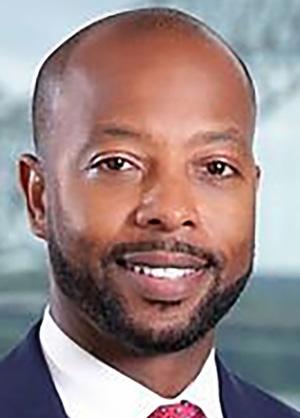
Outgoing Shelby County Commissioner Mickell Lowery emerged from a field of seven candidates during the Tuesday May 5, primary to capture the Democratic Party nomination for county mayor.
“I’m not running for the next job. I’m running for the next generation,” Lowery told supporters. “Tonight, the people of Shelby County said they’re ready for a mayor who will stick around, build relationships, and get things done. I’m honored by that trust, and I’m ready to get to work.”
Lowery focused on kitchen table issues during the campaign, like livability, universal pre-K and improved health care.
The District 8 commissioner will square off against former Tennessee State Rep. John DeBerry in a race to succeed Shelby County Mayor Lee Harris, who is wrapping up his final term. DeBerry, who recently served as an advisor to Republican Gov. Bill Lee, ran unopposed in the GOP primary.
Across the aisle, the Democratic contest was much more competitive. Among a crowded field, a three-way race quickly developed between Lowery, Memphis City Council member JB Smiley and Marie Feagins, former Memphis Shelby County Schools superintendent.
Lowery snagged 32% of the vote — good for 23,833 votes — as he outpaced his competitors. Smiley placed second with 23.8%, while Feagins was
in the show position with 21.28%. The latter two gathered 17,708 and 15,834, respectively.
Both Lowery and Smiley invested heavily in commercials during the campaign. However, Lowery went into the campaign with the largest warchest. Over the course of his campaign, he raked in nearly $550,000 in political donations, along with a self-loan. Lowery goes into August’s partisan matchup with a $315,000 cash on-hand.
Smiley was a close second with around $537,000 raised over the same period. Feagins raised $47,000. The erstwhile school administrator largely relied on name recognition built during her short tenure at MSCS — and in the aftermath of her firing in early 2025.
The derby included Shelby County Criminal Court Clerk Hiedi Kuhn, Shelby County Tax Assessor Melvin Burgess, Shelby County Chief Administrative Officer Harold Collins and businessman Rusty Qualls. Kuhn was the only also-ran to crack 10% with 8,046 votes.
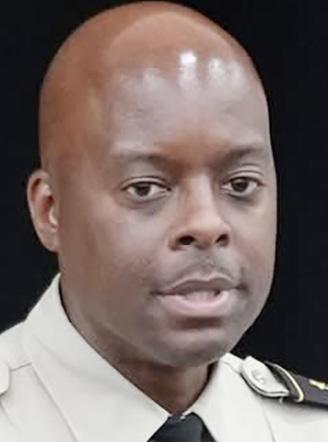
Another much-watched contest was the race to succeed term-limited Shelby County Sheriff Floyd Bonner. Democratic voters expressed overwhelming
confidence in a nearby successor, SCSO Chief Deputy Anthony Buckner, who ran away with 59.45% of the vote. A total of 42,523 votes were cast for the career lawman.
“I am truly humbled by the trust you have placed in me. This victory belongs to every volunteer, supporter, family member, and voter who believed in our vision for safer communities, stronger relationships, and accountable leadership,” wrote Buckner on Facebook.
Buckner’s platform includes expanding diversion programs as an alternative to incarceration, along with improving conditions in the county jail at 201 Poplar.
The nearest competitor out of the five-person field was Keisha Scott, who netted 16.72% of the vote. Regional Hubbard came in third with 12.14%.
Both Scott and Hubbard are currently employed by the SCSO.
So is Buckner’s opponent in August. Republican Brad Less hauled in over 60% of the GOP vote to top Marco
Yzaguirre. Buckner is a 28-year veteran of the force.
The race that drew the most candidate interest in 2026 was the Democratic primary contest for Shelby County Clerk. Current Shelby County Deputy CAO La Sonya Hall surpassed the remainder of the 11-person race with 30.59% of the vote.
Shelby County Commissioner Britney Thornton came in a distant second with 18.48% of the vote. She exits the commission in August after serving only one term. General Sessions Court CAO Michael Williams fell to third with 10.45% of the vote.
Hall will face Tina Montgomery in August. The Republican ran unopposed in her primary. The winner will succeed term-limited Wanda Halbert.
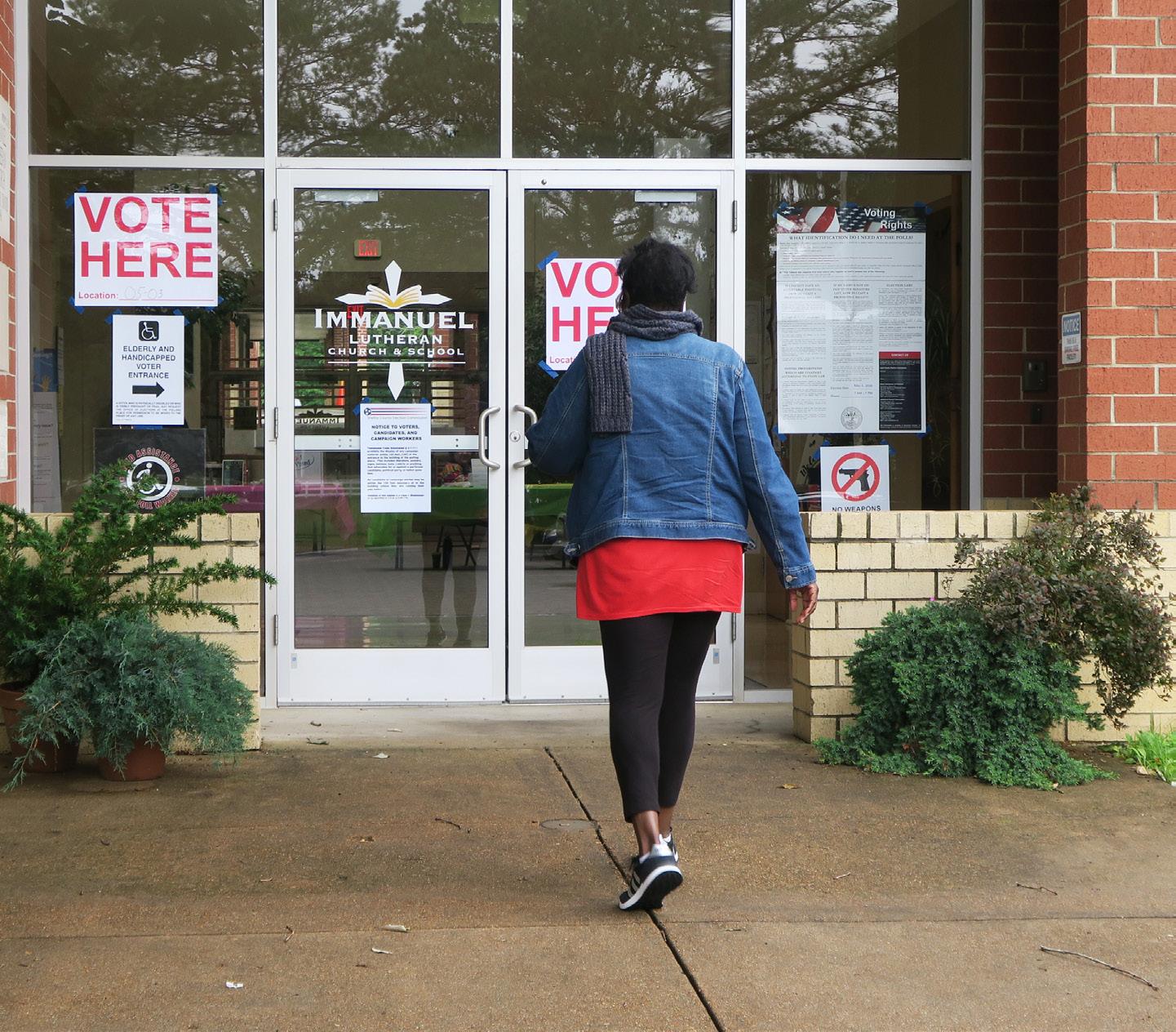
A total of 89,848 ballots were cast by Shelby County voters during the primary, out of 577,527 registered voters. The 16% turnout represents a significant increase over the 11% primary showing in 2024.
By Terri Schlichenmeyer
Uncle Sam needs you. He has work for you, a steady job that may be the most difficult thing you’ll ever do. But you’ll gain pride in your accomplishments and decent pay for the work, plus three hots and a cot. Hey, it’s a great opportunity to gain on-the-job experience — even if, as in the new book “The War Within a War” by Wil Haygood, you once might’ve experienced racism, too.
Dan Bullock was a boy who’d always dreamed of becoming a Marine. And so he did, and after graduating from basic training, he was sent to Vietnam to fight. Sadly, Dan was asleep one night in May of 1969, when a Vietcong soldier threw a grenade into the tent where he lay. Dan Bullock was killed instantly.
Wallace Terry knew about Bullock, and he couldn’t stop thinking about him.
Terry was one of a handful of Black journalists in Vietnam, and he’d heard bitter talk and hot anger from Black troops —talk of discrimination, of terrible assignments, of seeing greater danger than white soldiers saw. Many young Black men enlisted in the military because opportunities for them were scarce at home. Once in Vietnam, they’d become politically savvy and smart about current events, hoping things might get better in America but knowing, down-deep, that nothing would.
Though the American military had been officially integrated for years, what Terry heard was that Black soldiers
felt like Vietnam was a “war within a war.” Many said that race didn’t seem to matter in combat. At base camp and from their superiors, there was the problem. In the meantime, President Lyndon Johnson signed bills to help the poor but his policies didn’t stop racism or the war itself.
By war’s end, more than 58,000 American soldiers died in Vietnam.
One of them was Dan Bullock, who wasn’t 16, as he’d told the Marine recruiter. As Terry learned, Dan was 14 when he enlisted, 15 when he died, the youngest American soldier to perish in Vietnam.
It’s not on there, but “The War Within a War” should have a trigger warning sticker on the cover. If you’re a veteran of combat, you should know that before proceeding.
Using the stories of dozens of people who went to Vietnam in various ways and for myriad reasons, author Haygood offers tiny stories and a window into American warfare that often goes unknown. Here, you’ll meet the Common Man and those who were quite uncommon, brave women who played parts in history, and entertainers who raised consciousness through music. You can smell the jungle here. You’ll feel the heat and hear the sudden, terrifying silence as you go through this must-read, highly relevant, heartbreak of a book.
Just beware: It’s sometimes very graphic and certain readers might want to skip it, even though it’s one of the better books you’ll find on the subject. Absolutely, if you’re unfamiliar with or want to know more about this part of American history, “The War Within a War” is a book you need.

c.2026,
$35.00
362 pages
By Ancelious Meeks TSD Contributing Writer
The Mississippi River provided a fitting backdrop Sunday evening as thousands gathered for the final night of the RiverBeat Music Festival, where a blend of soul, hip-hop and timeless showmanship took center stage on the Bud Light Stage. From a historic jam session led by Memphis royalty to high-energy headlining performances, the night captured the essence of the city’s rich musical legacy and its evolving sound.
The lineup followed Friday and Saturday shows featuring Hip-hop pioneers Wu-Tang Clan and Ice Cube who headlined a roster that included T-Pain, Salt-N-Pepa, De La Soul and Wale — artists whose contributions have shaped the sound and direction of modern music.
Sunday’s journey began with legendary producer Boo Mitchell, who took the stage at 4:45 p.m. alongside his team from Royal Studios. Known as one of the pillars of the Memphis soul sound, Mitchell curated a live jam session that paid homage to the city’s musical roots while bridging generations of artists.
“We wanted to take fans on a musical journey — from Royal to Memphis soul classics,” Mitchell said.
That journey featured a powerful lineup including soul icon William Bell, rising star KIRBY, blues legend Bobby Rush, and the duo of brothers Duwayne Burnside and Garry Burnside. Adding a unique Memphis-to-mainstream connection, Dennis Graham also joined the session, further reinforcing the city’s far-reaching influence.
By 6:30 p.m., the crowd shifted from soul grooves to lyrical mastery as Wale took the stage. Delivering a set that


true to his lyrical roots.
Throughout his set, Wale reaffirmed his place in the rap conversation — an artist equally comfortable crafting songs for the ladies as he is delivering bars that resonate with hip-hop purists.
gy high with charisma, humor and surprising moves that kept the crowd engaged from start to finish. He delivered a genre-spanning experience, pulling from his 2023 covers project On Top of the Covers, with standout renditions of classics like “Don’t Stop Believin’” and “A Change Is Gonna Come.” The crowd’s reaction — equal parts shock and admiration — underscored the depth of his artistry.
Of course, it was the hits that brought the night full circle. From early staples like “I’m Sprung,” “I’m N Luv (Wit a Stripper),” “Bartender” and “Buy U a Drank,” to feature-heavy anthems that defined a generation, the momentum never slowed. He powered through chart-topping collaborations including “Kiss Kiss” with Chris Brown, “I’m a Flirt (Remix)” alongside Usher and R. Kelly, “Low” with Flo Rida, “Blame It” with Jamie Foxx, and “Good Life” with Kanye West.
spanned his career, Wale reminded fans why he remains one of hip-hop’s most versatile artists. From early hits off his 2009 debut to fan-favorite love ballads like “The Matrimony” and “Lotus Flower Bomb,” his performance balanced introspection with crowd-moving energy.
He effortlessly transitioned from poetic flows to club anthems, igniting the audience with “No Hands,” alongside nods to collaborators like Roscoe Dash and Waka Flocka Flame. Wale also showcased newer material, including “Watching Us” featuring Leon Thomas, “Blanco” and “Tomorrow Today,” proving his ability to evolve while staying
Closing out the night, T-Pain hit the stage at 8:30 p.m. with a performance that doubled as both a celebration and a reintroduction. Known for revolutionizing the use of Auto-Tune, T-Pain used the moment to remind fans of a truth often overlooked — his natural vocal ability.
Auto-Tune, the pitch-correcting software that helped define an era, became synonymous with T-Pain’s sound when he burst onto the scene in 2005. But Sunday’s performance made it clear: the technology was never a crutch — it was a creative tool. His live vocals, rich and controlled, drew visible reactions from fans hearing his unfiltered voice for the first time.
T-Pain’s set was a masterclass in entertainment. While never billed as a traditional dancer, he kept the ener-
For two decades, T-Pain has shaped the sound of modern music — influencing not only singers but an entire wave of artists who blurred the lines between rapping and melody. His debut album, Rappa Ternt Sanga, now feels less like a clever title and more like a cultural prophecy.
Sunday night at Riverbeat wasn’t just a concert — it was a timeline of music’s evolution, rooted in Memphis soul and stretching across hip-hop, R&B and beyond. From Boo Mitchell’s homage to the city’s foundation to Wale’s lyrical showcase and T-Pain’s genre-defying performance, the Bud Light Stage delivered a night that celebrated both legacy and innovation.
As the final notes faded into the riverfront air, one thing was clear: Memphis didn’t just host the music — it was the music.





Akbari: ‘We are always outnumbered, but we keep fighting’
By Lee Eric Smith TSD Contributing Writer
Just hours after laying a colleague to rest, Memphis lawmakers — now effectively a man down in the Tennessee General Assembly — gathered to confront what they call a new threat to Black political power: a push to redraw the state’s congressional map.
That warning came shortly before Republican Gov. Bill Lee called a special session of the General Assembly to revisit Tennessee’s congressional map, a move critics say could target the state’s only majority-Black district centered in Memphis.
The push follows a U.S. Supreme Court decision that critics say weakens protections under the Voting Rights Act, potentially opening the door for states to redraw districts in ways that dilute minority voting strength.
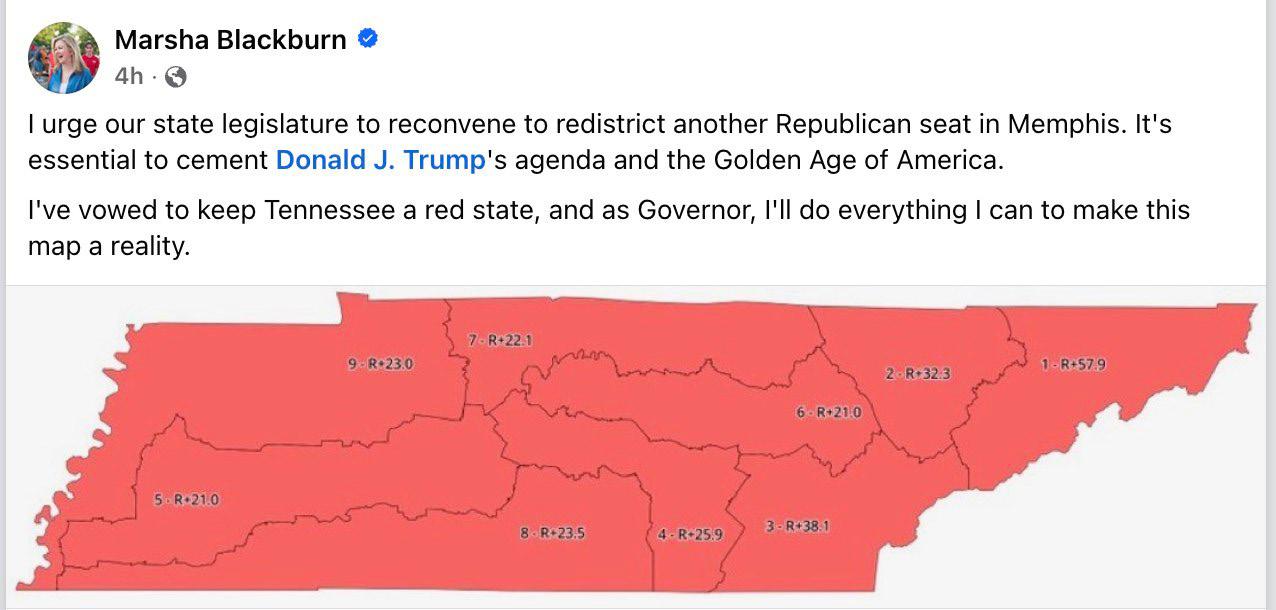
Speaking at the National Civil Rights Museum, a coalition that included U.S. Rep. Steve Cohen and members of the Tennessee Black Caucus — without the late State Rep. G.A. Hardaway, who was funeralized Friday, May 1, — warned that the decision threatens to dilute the political voice of Memphis, home to the state’s only majority-Black congressional district.
Tennessee’s 9th Congressional District, represented by Steve Cohen, is the only Democratic-held seat in the state’s congressional delegation.
“This is ground zero,” Cohen said, invoking the legacy of the Voting Rights
Act of 1965 and the Civil Rights Movement. “Civil rights are being attacked … taking away potentially a goodly half of African American representation in the United States Congress.”
Within hours of the court’s decision on April 29 essentially declaring that race could not be considered in of drawing congressional district lines, Lee confirmed that lawmakers would return to Nashville for a special session beginning Tuesday, May 5, to “review” Tennessee’s congressional map, citing the need to ensure districts remain “fair, legal and defensible.”
But critics , many of whom had already gathered anticipating such a move, said the timing and motivation raise deeper concerns.
‘A
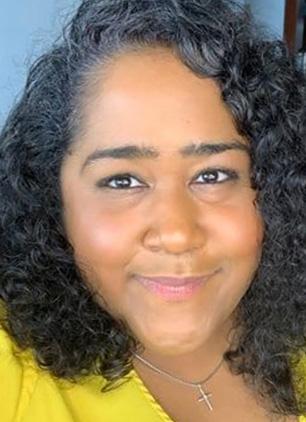
State Sen. Raumesh Akbari said the issue rises above partisan politics and should concern every voter.
“Because we’re not just talking about making this an all-Republican district. We’re talking about diluting a power base,” she said. “Proposed maps, which are not legit, but they’re proposed, stretch the district all the way up to Kentucky. How does that help rural folks? How does that help urban folks? How does that help Tennessee function better?”
“This effort is not normal. It’s not about good government or fair representation,. It’s a political power grab. It’s voter suppression in real time … an attack on Memphis Black voters.”
— State Sen. London Lamar
State Sen. London Lamar went even further and did not mince words.
“This effort is not normal. It’s not about good government or fair representation,” she said. “It’s a political power grab. It’s voter suppression in real time … an attack on Memphis Black voters.”
Her remarks came as lawmakers pointed to the state’s 9th Congressional District, anchored in Memphis, as a likely target if lines are redrawn.
“You cannot move the finish line after the race has already started,” Lamar added, noting that candidate qualifying deadlines for upcoming elections have already passed.
Akbari also questioned the legality of changing district lines mid-election
cycle, pointing to prior court precedent that warned against disrupting active elections.
“This is not a partisan issue. It’s an issue of democracy … fairness … legacy,” Akbari said. “For the General Assembly to contemplate this move is unconscionable.”
Blackburn: ‘We must cement Donald Trump’s agenda’
Once more, President Trump seems to pick up the phone to call on Gov. Bill Lee to make something happen. Last fall it was about sending the National Guard to Memphis. Now, it’s redistricting.
“I had a very good conversation with Gov. Bill Lee,” Trump wrote on Truth
Social after the ruling. “He stated he would work hard to correct the unconstitutional flaw in the Congressional Maps …. Thank you Gov. Lee — PUSH HARD!”
Republican U.S. Sen. Marsha Blackburn, also a candidate for Tennessee governor, has released a proposed redistricting map on social media that extends District 9 to the Kentucky state line. She called for legislators to act immediately to “cement Donald J. Trump’s agenda and the Golden Age of America.”
She doubled down on those comments on a video released Friday.
“Now that we’re on the other side of this Louisiana decision, it is time for us to redraw these maps,” she said. “It is time for us to cement President
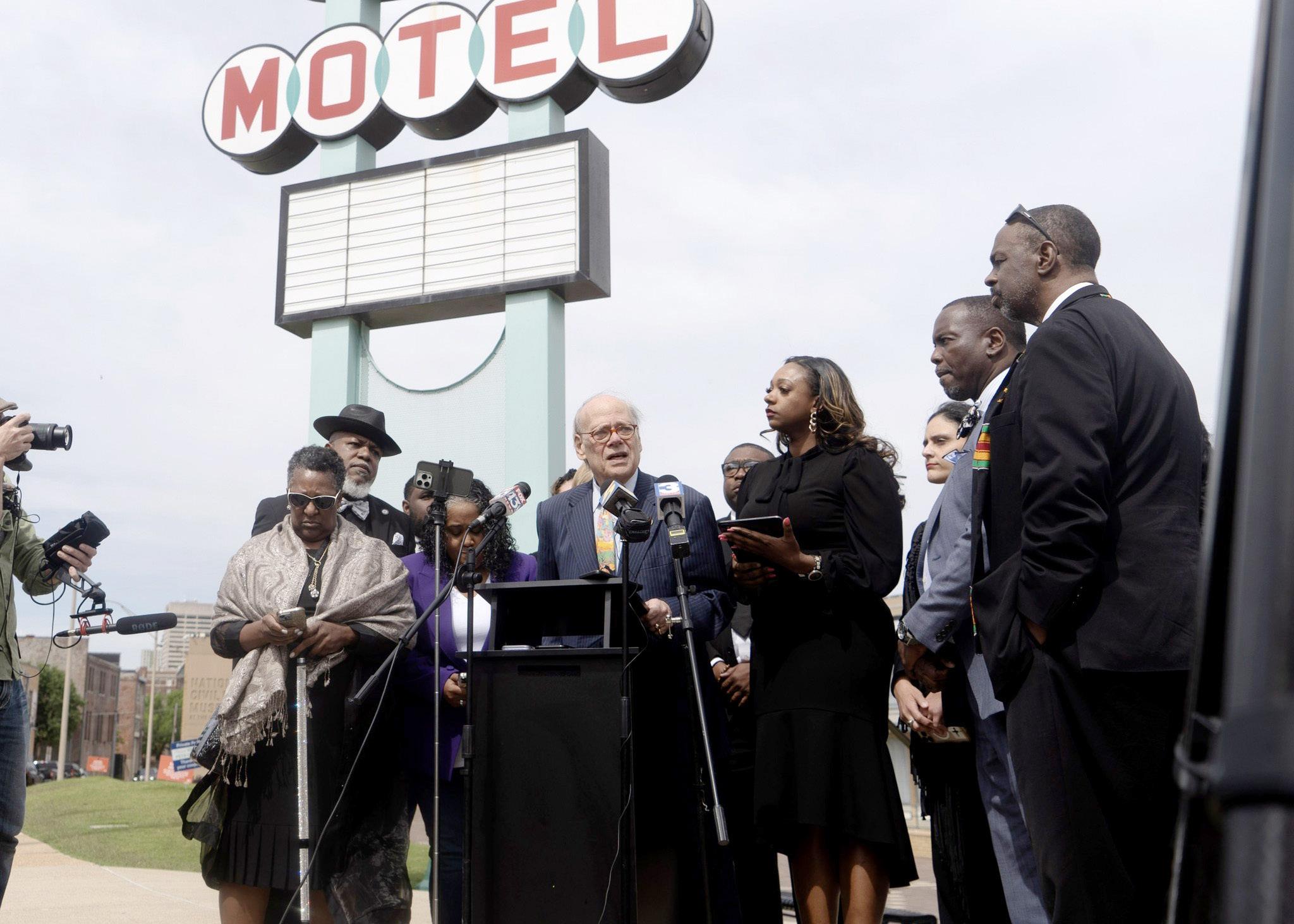
Trump’s agenda. That is what the American people voted for. Tennesseans want to make certain that we keep Tennessee red, that we are America’s conservative leader. And thank you, President Trump, for supporting these efforts.”
The May 1 press conference carried added weight, coming just after services for longtime lawmaker Hardaway, a fixture in Memphis politics and a fierce advocate for voting rights. State Rep. Karen Camper invoked that legacy — and the generations before him — in stark terms.
“That decision gives license … to code racism and white supremacy,” Camper said. “People fought in wars
for this country and couldn’t vote … and now we’re here.”
She called for “operational unity” among advocates, lawmakers and the public, urging a coordinated response if redistricting moves forward.
Shelby County Democratic Party Chair Willie Simon warned that the implications stretch beyond Memphis.
“Once it happens here, it can happen anywhere,” Simon said. “We’re having conversations about whether we’re able to vote … in a place where we pay taxes.”
Among those raising concerns is state Rep. Justin J. Pearson, who is also running to unseat Cohen in Congress — yet stands aligned with him on the
“District 9 exists because of a history of racism … and the Voting Rights Act guaranteed representation in communities like ours. We’re not going to quit. We’re not going to bow down.”
— state Rep. Justin J. Pearson
issue of protecting District 9.
“This is an attack on Black political power … and on the ability of minority communities to choose representatives,” Pearson said in a video message following the ruling.
Pearson tied the moment to a broader rollback of federal protections and ongoing challenges to the Voting Rights Act.
“District 9 exists because of a history of racism … and the Voting Rights Act guaranteed representation in communities like ours,” he said. “We’re not going to quit. We’re not going to bow down.” He also called for mobilization, announcing canvassing efforts and rallies aimed at defending the district.
What comes next
With the special session set to begin May 5, lawmakers are expected to debate whether — and how — to redraw congressional lines in a compressed timeline that could collide with ongoing election preparations.
Democratic leaders say they are preparing for a multi-front fight — inside the legislature, in the courts and in the streets. For many gathered at the Civil Rights Museum, the stakes are clear.
“Memphis is not a bargaining chip,” Lamar said. “Black voting power is not a loophole. Memphis will not be carved out without a fight.”
And if the lines are redrawn, she added, the response will be just as forceful.
“We are always outnumbered,” Akbari said. “But we still keep fighting.”
As
By Lee Eric Smith TSD Contributing Writer
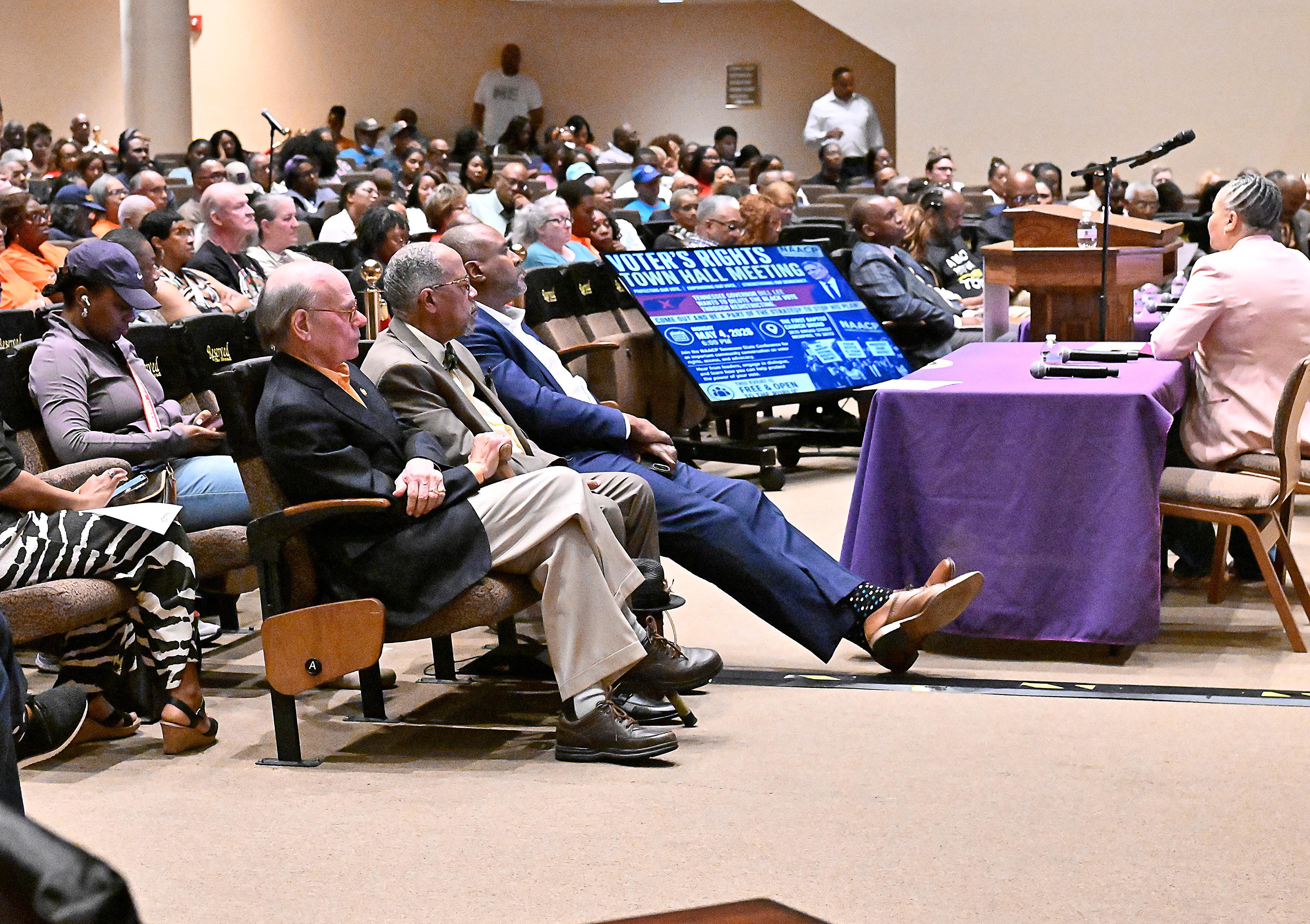
What unfolded Monday night inside First Baptist Church Broad started as a town hall — Memphians rapidly mobilizing for a state redistricting fight. But it didn’t take long for the evening to feel like a revival, complete with passionate preachers, amens and applause.
But instead of a sermon on salvation in Christ, the primary political messages were: Keep fighting. And by all means: VOTE.
Senior Pastor Keith Norman drew laughter — and knowing applause — when he floated the idea of greeting Sunday worshippers and turning away those who admit they didn’t vote.
“Some of these neighboring churches might have some visitors or new members coming,” he said, delivering the line with a straight face that suggested it wasn’t entirely a joke. “At First Baptist Broad, WE VOTE.”
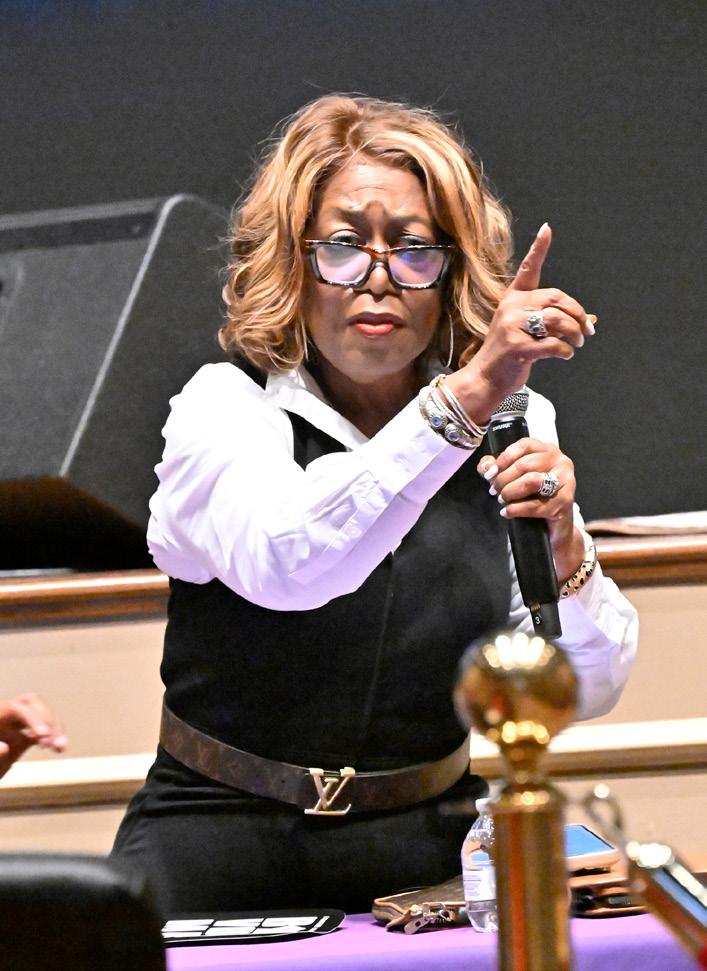
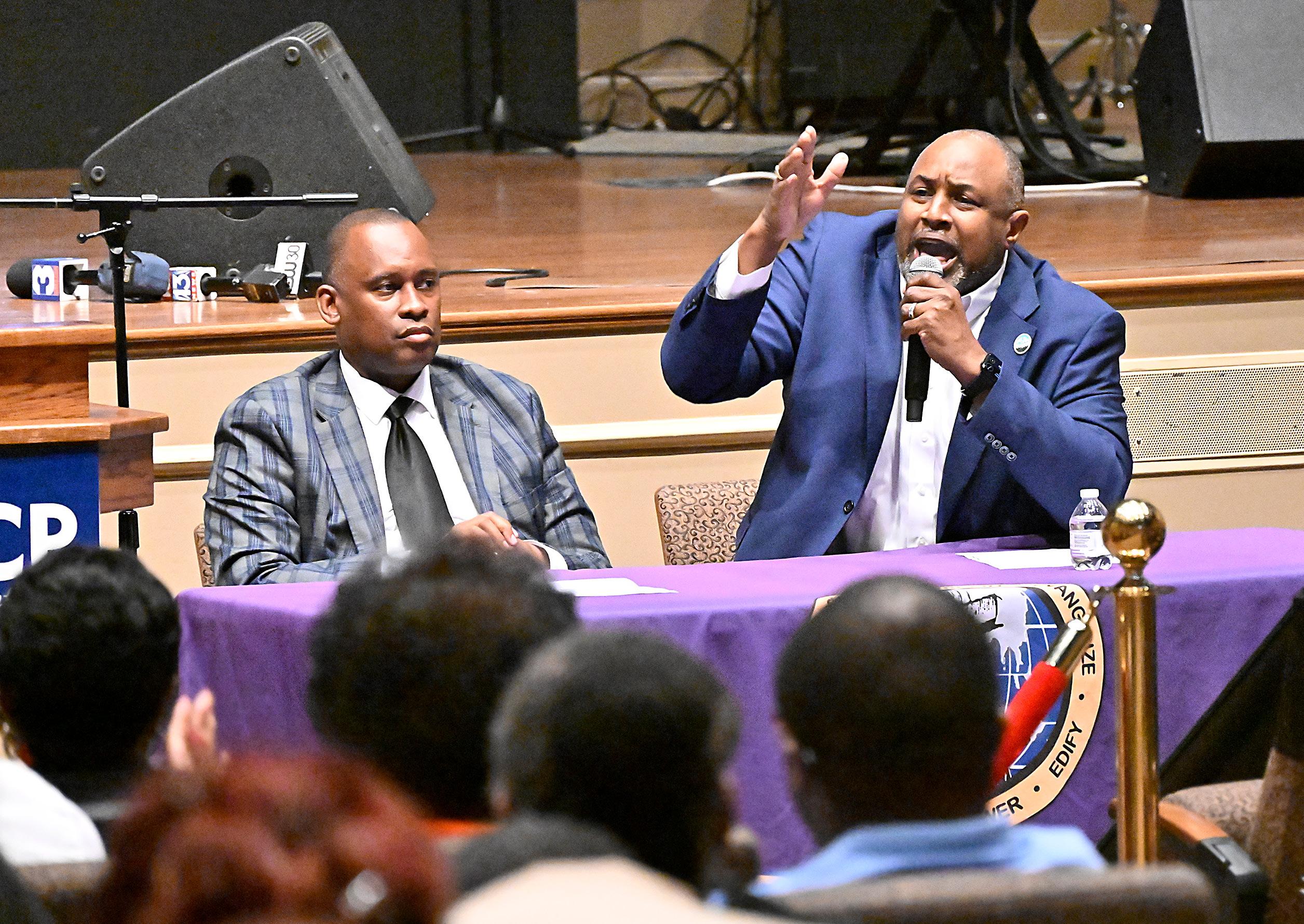
With several hundred people filling the sanctuary on short notice, the Tennessee State Conference NAACP-led voter rights town hall became a rallying point for Memphis residents and elected officials bracing for a fast-moving congressional redistricting battle that could reshape — and potentially weaken — Black political power in Tennessee.
The meeting was organized in response to Republican Gov. Bill Lee ‘s call for a special session of the Legislature to address redrawing Tennessee’s congressional districts. The session started Tuesday, May 5.
National NAACP President Derrick Johnson, one of several leaders to join the town hall via videoconference, set the tone, calling the moment “one of the biggest fights in a generation.” He warned that the court’s decision and other recent legal developments has opened the door to rolling back decades of civil rights progress.
“This is not gonna be a quick fight,” Johnson said. “We are in a long war … but we will prevail because we are in the fight.”
Throughout the evening, speakers repeatedly tied the redistricting push to the broader erosion of the Voting Rights Act.
“Tennessee will be the first state to call back a special session to redraw these congressional lines — something that is just downright voter suppression,” said State Sen. London Lamar. “It is targeted to weaken our vote. As emotional as I am, thinking about my whole life learning about the Voting Rights Act. To see that, in my young years, being taken away from us is a burden I never thought I would carry.”
State Sen. Raumesh Akbari framed the issue explicitly in racial terms.
“This is not a partisan issue — it is a race issue,” Akbari said. “It is designed specifically to make sure that the voices of the 61 percent Black residents in this district are not heard. It is about whether we can select our candidate of choice.”
Memphis Mayor Paul Young joined via video conference, emphasizing
“This is not gonna be a quick fight. We are in a long war … but we will prevail because we are in the fight.”
— NAACP President Derrick Johnson
that Memphis risks losing influence and resources if its representation is weakened.
“This is something we all should be unanimous on. Democrats, Republicans, Black, White — everybody should understand that this is about making sure Memphis is represented,” Young said. “Memphis generates the highest amount of revenue for the state of Tennessee, and we need to have a voice when it comes to decisions that affect our communities.”
Akbari said the redistricting effort is also part of a broader conservative push for power across the South.
“The 9th Congressional District, as we know it, is on the chopping block. What happens here won’t stop here — Mississippi, Alabama and Louisiana are all facing similar threats.
“Tennessee might be first, but it won’t be the last,” she said.
The stakes
Atty. Van Turner, the state NAACP’s point person on legal matters, explained how the fight reached this point and what is at stake. He pointed to a U.S. Supreme Court ruling on
Friday, May 1, in a Louisiana case that race cannot be considered in mapping congressional districts. Justices also ruled that lines can be drawn along partisanship lines.
Turner said the ruling opens the door for states to redraw congressional maps under the guise of partisanship, even when race is the underlying factor. The ruling, he said, creates a legal gray area — one that allows lawmakers to claim compliance while fundamentally altering who holds political power.
“So what you’re going to hear over the next few days,” Turner said, “are people standing up saying this has nothing to do with race … and on the other side, you’re going to hear folks say this has everything to do with race.”
What’s different this time, Turner warned, is the speed. Rather than
waiting for the next census cycle — when redistricting typically occurs — Lee immediately called the special session. Maps of Tennessee were circulated on social media just after the ruling showing Shelby County, thus Memphis — the state’s only predominately Democratic and Black district — being parcelled among three districts.
Turner said lawmakers could move immediately, meaning voters could face newly drawn districts as soon as November.
“At the end of the day,” he said, “we’re dealing with whether African Americans — who make up the majority in this district — will still have the ability to elect a candidate of their choice.”
Turner said the response would
not be limited to the ballot box. Legal challenges are expected, he said, but they will depend on community participation — from testimony to affidavits — to build the record for what could become a long-term fight.
“If this goes to litigation, we’re going to need plaintiffs, affidavits, testimony — all of it. That’s how you build a case,” Turner said. “Even if we don’t win right now, that record will matter. Because that’s how these cases are built and won over time.
“Ten years from now some child will pick up the record from today — from your affidavits, your testimony — and use it in a case to win. That’s how this works.”
Throughout the gathering, speakers alternated between historical perspective and present-day urgency.
Rev. Earle Fisher, founder of UpTheVote901, didn’t mince words about redistricting efforts.
“I’m pissed,” he said. “But I’m also not shocked.”
Fisher pastors at Abyssinian Baptist Church in Whitehaven and frequently refers to his church as “the Blackest church in Memphis.” He warned that the current situation reflects a long-standing pattern — and a failure to sustain political engagement across generations.
“We are here today because we forgot to tell the story of the struggle” to future generations, Fisher said. “And now we’re asking people to fight who we never trained to fight. We need to develop a strategy that is not simply responding to what (those in power)
have always done.”
Expanding the fight beyond the ballot
Tajuan Stout-Mitchell, former Memphis City Council chair, pushed the conversation beyond voter turnout, urging a broader, more coordinated response that includes economic pressure and unified leadership.
“We need to be on one accord — not just the NAACP, but civic organizations, young voters, student groups,” Stout-Mitchell said. “We need joint statements, clear demands and regular coordination. And we need to be willing to use every tool we have.”
That includes economic leverage, she added, calling for stronger support of Black-owned businesses and greater accountability from the broader business community.
“You cannot survive if we do not survive,” she said. “Our voices will not be silenced — not in the legislature, not in the economy, not anywhere.”
“What
Near the end of the evening, Rev. Dr. Andre Johnson addressed the matter in generational terms — not as something distant or historical, but immediate and personal.
“I’m part of the first full generation that was not segregated,” Johnson said, pausing as the weight of that reality settled over the room.
For many in that generation, the Civil Rights Movement has long existed as memory and myth — grainy footage, black-and-white photographs, stories told in classrooms and churches. A time when others marched, others risked, others decided what side of history they would stand on.
Johnson issued a challenge.
“If you ever asked yourself, ‘What would I have done back then?’” he said. “The answer is simple: Whatever you’re doing right now is what you would have been doing then.
“You have an opportunity right now,” Johnson said, his voice rising. “To be on the right side of this moment. Don’t waste it.”
Inside the final hours of State Rep. G.A. Hardaway’s last session — and the life that filled every room he entered
By Lee Eric Smith TSD Contributing Writer
The last week of the Tennessee legislative session is always loud. Tempers run short. Votes get called on bills that members have spent months fighting over. The House floor, already a place of controlled tension, becomes something rawer — voices raised, colleagues avoiding one another’s eyes across the aisle.
But toward the end of the 114th General Assembly, some members of the Tennessee House were noticing something quieter than the noise. They were noticing an absence.
The stack of papers wasn’t on the desk. The hand wasn’t raised. The man who, by every colleague’s account, never sat still — who moved through the chamber like he owned every conversation in it — wasn’t there.
“GA is always here,” said Ken Jobe, press secretary for the Tennessee House Democratic Caucus who worked closely with Hardaway for years. “So when he started missing days, people knew something was happening.”
State Rep. Karen Camper, House Minority Leader, Tennessee House of Representatives, put it simply: you got used to him being there. When he wasn’t, the room felt it.
State Rep. Clay Doggett, a Republican from Pulaski who had chaired the House Criminal Justice Subcommittee during part of Hardaway’s tenure — and who called Hardaway “dad” on the House floor — ran into him in the garage one afternoon near the end of session. Hardaway looked thinner than usual.
“Dad, where have you been?” Doggett asked.
“Son, I had a fall,” Hardaway told
him. “My leg hurts. But I’m getting my strength back.”
A few weeks later, Doggett put his hand on Hardaway’s leg on the House floor and felt mostly bone.
“Dad, you’re withering away,” he said. Hardaway waved it off. He had something going on, he said. He would get through it. He didn’t want to be a bother.
That, too, was typical of G.A. Hardaway.
The man who moved
Godfrey A. Hardaway Sr. — G.A. to everyone — represented District 93 in the Tennessee House of Representatives for 19 years, from 2007 until his death on April 24, 2026, at the age of 71. He died at 5:22 a.m. at Vanderbilt University Medical Center in Nashville, after a brief illness, according to a statement from his family. The session had ended just hours before.
A Democrat, Hardaway covered parts of South Memphis and Orange Mound. He chaired the Shelby County Legislative Democratic Caucus and previously led the Tennessee Black Caucus of State Legislators. He received the National Black Caucus of State Legislators’ Legislator of the Year award in 2021. He was a real estate investor by trade, a Baptist, a father of three, a DePaul University finance graduate — and, to an entire generation of Memphis and Tennessee lawmakers, someone harder to categorize.
State Rep. Larry Miller, the longest-serving current member of the Tennessee House, who helped recruit Hardaway into the legislature nearly two decades ago, said the two eventually ended up as deskmates — sitting right next to each other on the House
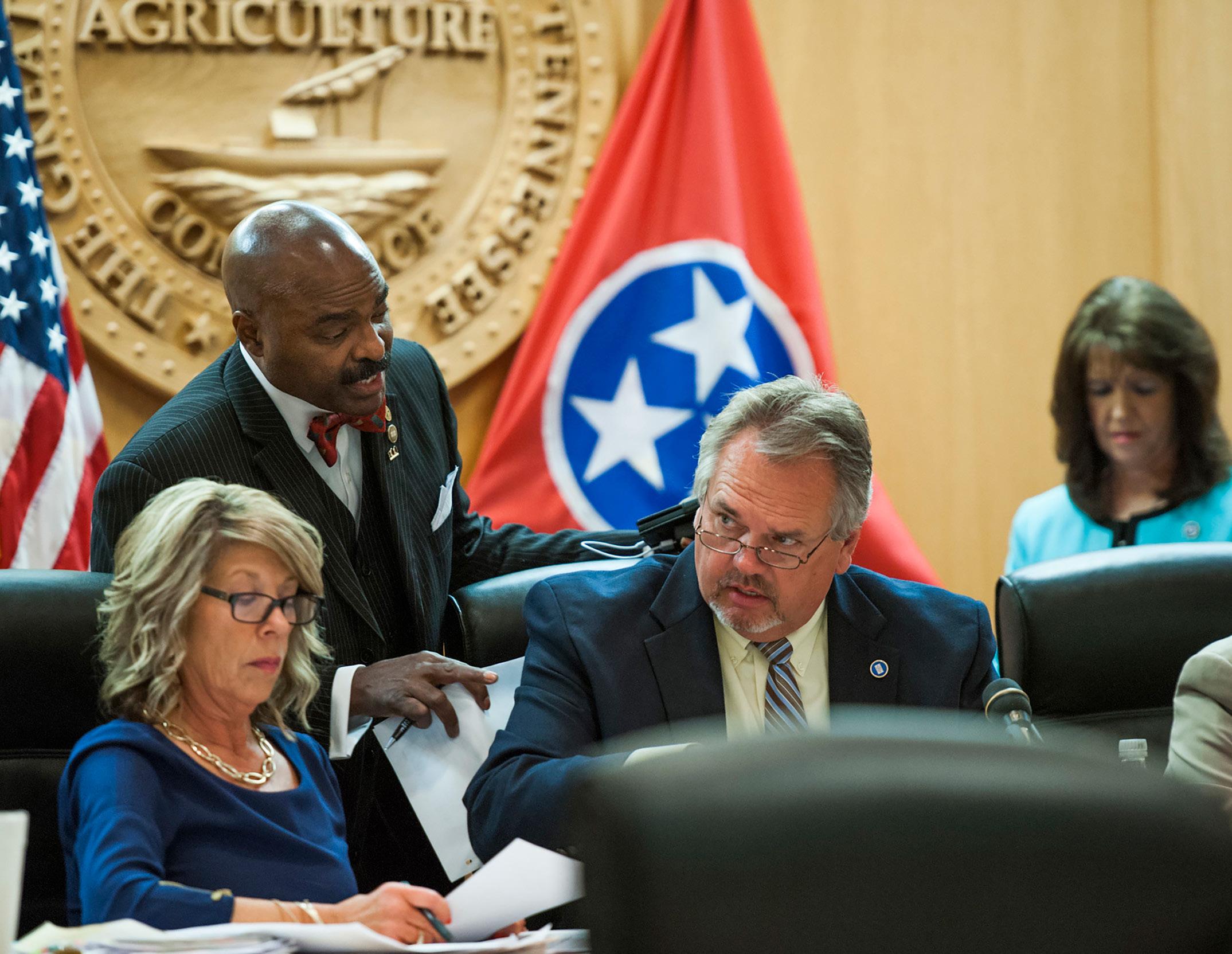
floor. It didn’t much matter.
“G.A. would never, ever sit in his seat,” Miller said. “At some point he became my seatmate, but every time I looked around, G.A. was up — working legislation, talking to people, moving around the chamber. That was amazing to watch.”
Miller laughed at the memory. He had started out mentoring Hardaway — introducing him to caucus leadership, taking him on the road to build the relationships that help him be effective. It didn’t take long before the dynamic shifted.
“I guess I could call myself somewhat of a mentor,” Miller said, “but that changed very quickly because he never
stayed in his seat. I ended up following him.”
For nearly two decades, Hardaway’s colleagues in the Tennessee House watched him work in a way that defied easy description. He sponsored 22 bills in the 114th General Assembly alone — on voting rights restoration, GPS monitoring for domestic violence defendants, juvenile safety, elder abuse protections, ethics reform. He co-sponsored 172 more. His legislative focus never wavered: criminal justice, education, economic equity, and the advancement of Black communities in Tennessee.
“He passed bills when Democrats were in control, and he passed bills when
“He (G.A. Hardaway) passed bills when Democrats were in control, and he passed bills when Republicans were in control. He was able to squeeze things through, even during a Republican supermajority. He knew how to get it done.”
— State Rep. Larry Miller
Republicans were in control,” Miller said. “He was able to squeeze things through, even during a Republican supermajority. He knew how to get it done.”
What made him effective wasn’t volume — though the volume was remarkable. It was preparation. It was relationship building. And it was a way of being in a room and making people stop.
“When he would stand up, people would stop and listen,” Jobe said. “He had a way of expressing himself — always respectful, but always making his point.”
‘You could have heard a pin drop’
In the final days of the session, as members registered Hardaway’s absence, an idea began to take shape.
State Rep. Jesse Chism, a Memphis Democrat, filed a House resolution to honor Hardaway’s work. It was not a scheduled tribute, not an orchestrated moment. Chism wrote it because they had gotten word that they needed to go see him — and because it seemed like the right thing to do while there was still time.
“I filed a resolution to honor his work,” Chism said. “Not knowing that we were that close to the end.”
He presented it from the well of the House. The chamber, which had been noisy and tense all week went quiet.
“You could have heard a pin drop,” said Doggett, who had watched the moment from his seat. “Every member of that chamber was on their feet.”
“The reverence and respect for G.A. was immeasurable,” he added. “He was highly thought of by members from both parties.”
Back in Memphis, Miller, who had already left Nashville, was watching the session online when the resolution appeared on his screen. He stopped.
“I’m thinking: what the hell is hap-
pening?” Miller recalled. “Is G.A. still with us? What’s going on?” He started calling people. What was that resolution about? They said “We just wanted to do it. We just wanted to honor him.”
It passed as HR0297: “A Resolution to commend Representative G.A. Hardaway for his honorable and distinguished service to the people of Tennessee.”
None of them knew, at that moment, how close it was.
Homework assignments
To understand what that chamber was losing, you had to understand what G.A. Hardaway did when he wasn’t on the record.
Camper remembered the first time she arrived at the Capitol after being appointed to the House. She didn’t know what to expect. Before she could even get her bearings, Hardaway was there.
“As soon as I got to the Capitol, there he was — like he was assigned to me,” she said. “He made my hotel reservations, made sure I had my room. He just really rolled out the carpet.”
Later, she realized he had put her in the Sheraton — more expensive than where most members stayed, but right across the street from the Capitol. Walking distance. He had thought about it.
“He made it very personal,” she said, “Welcoming you to the House. That was just who he was.”
For younger members, Hardaway’s mentorship was more structured — and more demanding.
“G.A. was a teacher to so many young legislators,” said Chism, “not just at the state level, but local and national.” When Chism first arrived in the legislature, Hardaway taught him how to write a bill, how to read a bill, parlia-
mentary procedure, and how to study legislation. His love language, Chism said, was to push.
“He gave you homework,” Chism said. “He’d call at 6 a.m. — and I don’t let anybody call me at 6 a.m. unless it’s an emergency — but he’d say, ‘Here’s your homework.’”
After Chism’s first year, Hardaway started calling him his “exit strategy.” He said it in a room with 300 people in it.
Chism paused, then laughed. “I’m pretty sure he said the same thing to others, too. He had a way of making everybody feel like they were special to him.”
State Rep. Torrey Harris, one of the youngest members in Democratic leadership and a Memphis Democrat who has served since 2018, said Hardaway went further than mentorship.
“Everybody says somebody is their mentor,” Harris said. “But for me, he was more like a father figure. I didn’t necessarily have that growing up.”
He influenced things most people wouldn’t expect. “People always say I’m one of the best-dressed ones up there,” Harris said with a slight laugh. “But that’s because of Hardaway. ‘Make sure your tie is right. Pull that jacket back on.’ I’m going to miss that.”
In committee rooms, Hardaway had a style all his own. He didn’t use the iPad issued to every member. He used his cell phone — notes filed, legislation annotated, ready to go.
“He had a very unique way of picking legislation apart,” Doggett said. “He would get out his cell phone, lay it on the desk, and make his points. A lot of times, the tweaks that were made weren’t because Republicans caught something. It was because G.A. had found something — sometimes just one sentence — that needed a second look.
“His main goal was to make good policy.”
Camper described the image that stayed with her: Hardaway in the back of the room, hand raised high, stack of papers in the other. Never sitting.
“He was always there like, ‘You’re going to see me. I’ve got these papers,’” she said.
There was even, Camper noted with a laugh, an informal nickname that arose from his prolific bill filing. In the days before the legislature capped the number of bills a member could introduce, Hardaway would file 150 bills — easily.
“When they eventually reduced the number of bills members could file,” she said, “people jokingly called it ‘the Hardaway rule.’”
When the session finally adjourned Thursday night, a group of lawmakers didn’t go home. They went to Vanderbilt hospital instead. “Almost the entire Black Caucus delegation came up that night,” Jobe said.
They could only go in the room a few at a time. Hardaway was on a ventilator. Jobe said that, as far as anyone could tell, he never reacted — never opened his eyes. But they stayed. “They said he could hear us,” Jobe said quietly.
Chism had been riding to the hospital still half-wondering if Hardaway would give him grief for the fuss from the special resolution. “On the way there, I was thinking, he’s going to be mad because he doesn’t like that kind of attention,” Chism said. “But when I got there and saw his condition, it made me glad that we did something — to give him his flowers while he was still here.”
Harris said he was among those in the room when Hardaway passed. There were six of them: Hardaway’s three children, Harris, and two other legislators.
“There are 99 of us in the House,” Harris said. “God could have taken so many others. But G.A. made an impact that went above and beyond what this role requires.”
In the days that followed, colleagues began to see — in real time — what his absence from the session had already meant.
See Page 14
From Page 13
A piece of legislation had cleared the Judiciary Committee by a single vote. House Bill 1971 — which Camper identified as a bill aimed at ousting Shelby County District Attorney Steve Mulroy — would strip citizens of the ability to challenge state statutes in court without demonstrating direct injury, a significant rollback of a legal protection on the books since 2018.
Doggett, who voted against it, didn’t need to calculate what would have happened if Hardaway had been in the room.
“If G.A. had been there, that bill would have failed,” Doggett said flatly. “He and I would have voted the exact same way. It would have tied, and the bill would have died in committee.”
Camper was measured about the larger implication. Republicans, she said, likely would have found a procedural path to bring the bill back — worked the votes, made the calls, gotten it done another way. She’d seen it happen on the floor before. Still, she said, that’s not really the point.
“That says a lot about what one man’s absence can do,” she said.
“He made legislation better,” Doggett said. “A lot of his work wasn’t done on the microphone. It was conversations outside of committee, on the House floor, before the bill ever came up.”
There was also the unfinished work he had been building toward. For years, Doggett and Hardaway had worked together on expanding GPS monitoring requirements for violent domestic offenders — a bill stalled not by opposition, but by cost. They had been figuring out a way around the fiscal hurdle. They had been planning for next year.
“I told him: next year, we’re going to get that done,” Doggett said. “We’re going to try to carry that forward for him.”
Miller, who had been calling people Thursday evening about the resolution, got the text Friday morning: G.A. had passed.
“After 33 years,” Miller said — and then he paused. “Every time we lose one of our colleagues, it takes a little bit of me with them.”
At the Capitol, the flag was placed on Hardaway’s desk. The flags outside were lowered. The chamber that had stood in silence the night before now had a different weight to its quiet.
“We lost a fighter,” Chism said. “We lost a friend. We lost a teacher. In the state that our state is in right now, we lost a very great general.”
Harris noted that the governor and the speaker — both Republicans — were expected to attend the services, and that Hardaway had been accorded the rare honor of lying in state at the Tennessee State Capitol before his celebration of life in Memphis..
“They don’t do that for everybody,” Harris said.
The ‘gun’ show
For all the stories about Hardaway’s presence in committee rooms and on the House floor, some of the clearest memories of him came in quieter — and sometimes unexpected — moments.
Doggett’s kids knew him by name. When they came to the Capitol for spring break or a birthday, they always wanted to go see G.A. He was always tickled to see them. He would pull out a five-dollar bill and press it into their hands like they were his own grandchildren. When they came this past session, he wasn’t there.
Harris thought of all the Thursdays — session ending, everyone heading home — and Hardaway getting back on the road to Memphis, showing up at events, taking photos, speaking on whatever needed to be spoken on. “No one takes more pictures than G.A. Hardaway,” Harris said. “If you’re in Shelby County, you know that.”
Chism remembers going to see the Temptations together. Hardaway had called him that afternoon, hours after they’d had a heated disagreement about something on the floor. Chism was still irritated. He went anyway. They had a great time. By the end of the night, Hardaway had more homework for
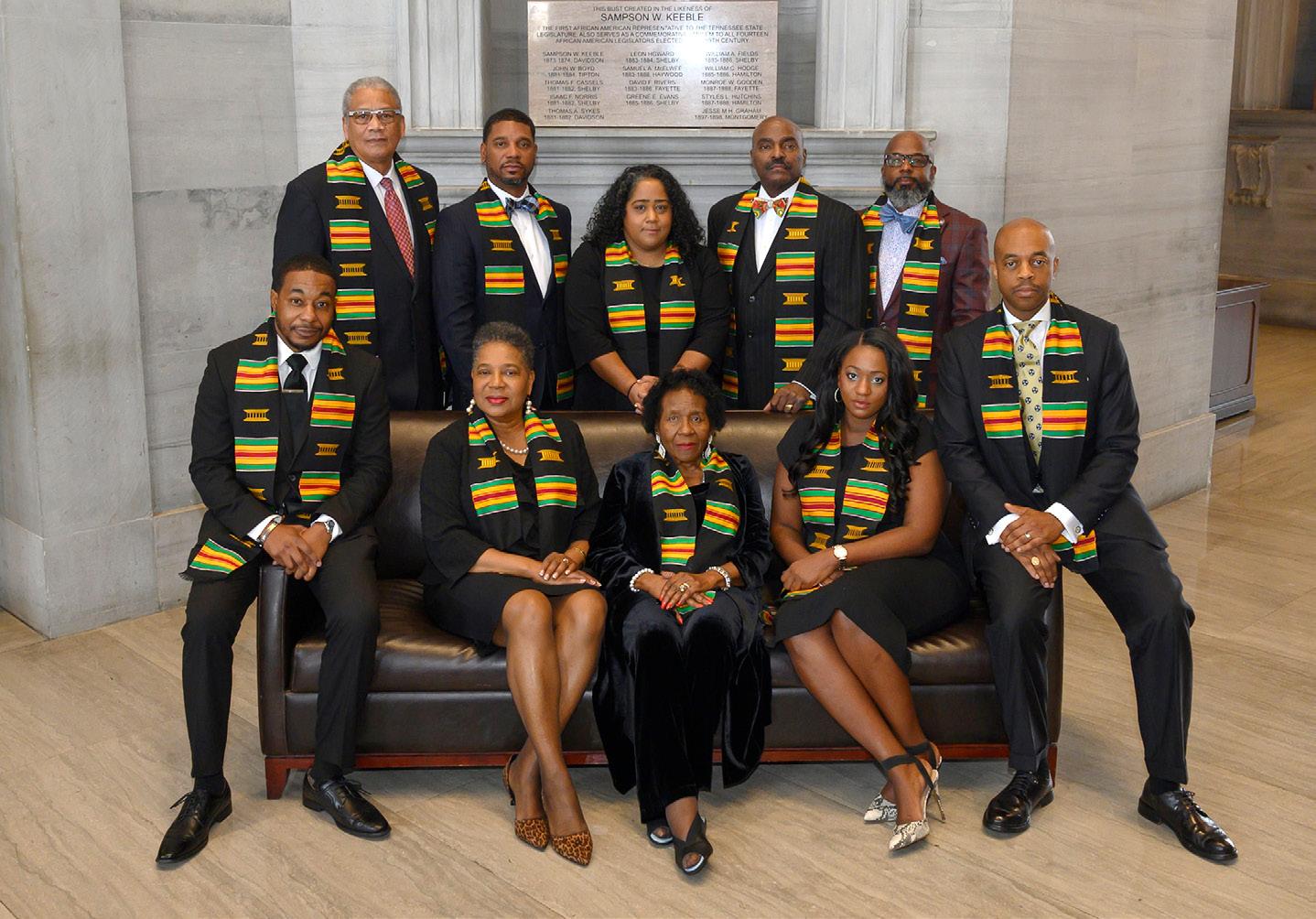
him.
And then there was the push-up contest.
Chism had been in the legislature a few years, maybe 38 years old and going to the gym regularly, when Hardaway pulled him aside during a break in session and dragged him to one of the clerk’s offices.
“Come on, get on down,” Hardaway said. “Let’s go.”
They were both in suits. Hardaway wanted military push-ups — the kind where you pause at the bottom, fully extended, before pressing back up.
“I’m like, are you serious?” Chism said. “Come on, old fella. This ain’t gonna work out well for you.”
It worked out fine for Hardaway. His arms didn’t shake. He didn’t hurry. He just kept going, methodical as he was with everything.
Chism’s arms started shaking toward the end. When Hardaway finally stood up, Chism was almost relieved.
“He gave me a run for my money,” Chism said, still laughing at the memory. “He had to be about 67, 68 years old. And I’m like — wait a minute. I’m not fixin’ to let this man beat me.”
He shook his head. “That increased
my respect for the man. For real.”
Keeping it moving
G.A. Hardaway will lie in state at the Tennessee State Capitol on Thursday, April 30. His celebration of life will be held Friday, May 1, at Mississippi Boulevard Christian Church in Memphis. Funeral arrangements are being handled by E.H. Ford Mortuary.
He is survived by his three children, who were at his side when he passed, and by the communities of Orange Mound, Binghampton, Highland Heights, Cordova, and South Memphis that he represented and served for nearly two decades.
He is also survived, in a different sense, by the lawmakers he shaped — the ones who know how to read a bill now because he taught them at 6 a.m., the ones who straighten their ties when they remember him watching, the ones who carry unfinished legislation in his name toward a next session he won’t see.
Miller said Hardaway would have had little patience for extended mourning.
“GA would say: Keep it moving,” Miller said.
“We’ve got work to do.”
By Lee Eric Smith TSD Contributing Writer
At a time when Memphis faces uncertainty — from a recent U.S. Supreme Court ruling reshaping voting rights to a looming redistricting fight — hundreds gathered at Mississippi Boulevard Christian Church on Friday, May 1, to honor State Rep. G.A. Hardaway Sr., 71, who died April 24 after a short illness.
The service blended grief and gratitude, music and memory, as speaker after speaker pointed to a life defined not just by policy, but by presence — a man remembered for a simple but powerful ethos:
Goffrey A. Hardaway took care of people while taking care of business.
Wharton: ‘I didn’t know what the ‘G.A.’ stood for’
Former Shelby County Mayor A.C. Wharton delivered one of the most memorable reflections of the afternoon — beginning with humor and landing squarely on Hardaway’s work ethic.
“Quite frankly, I didn’t even know his (full) name until it came out. I’m serious. I’m standing in a pulpit. I didn’t know the man’s name. I just know G.A.,” Wharton chuckled as the audience laughed. “And quite frankly, I don’t think he knew what the ‘A.C.’ stands for. But you know what? That kind of stuff doesn’t really matter. G.A. and I never talked about what your name stood for.”
Wharton described Hardaway as relentless — someone who didn’t just campaign, but put in the work. He told a tale of hearing noises outside in his yard at 1 a.m. His children were alarmed.
“‘Daddy, somebody’s in the yard! Get
the gun!’” Wharton mimicked. “‘No, son, that’s just G.A. putting up his yard signs.’ Middle of the night.
“That’s just the way he rolled.”
When the U.S. Supreme Court voided chunks of the Voting Rights Act earlier this week, Wharton said he found himself expecting a 6 a.m. call that never came.
“I kept waiting on that call, that ‘what are we going to do’ call,” Wharton said. “G.A. would say we’ve got to come up with a strategy. No crying, no moaning … just what are we going to do?”
Sexton: ‘When he raised his hand, I had to pause’
Cameron Sexton, the Republican speaker of the Tennessee House, stood among those paying tribute, underscoring the bipartisan respect Hardaway commanded during his 19 years as a legislator.
“When he would raise his hand, I had to pause,” Sexton said.
He described Hardaway as methodical and deliberate, a lawmaker who forced others to slow down and think.
“He always spoke with purpose and was a great orator as well,” Sexton said. “Even if he was in an argument with you, he would still be encouraging and supportive, always wanting the best for you, always trying to build you up, not tear you down. G.A. wasn’t there to tear people down. He was there to build you up.”
“Because he believed that you could do great things,” Sexton continued. “He believed he would do great things and he did do great things. He will be very much missed in the General Assembly.”
‘Homework’
As the Tennessee Black Caucus of
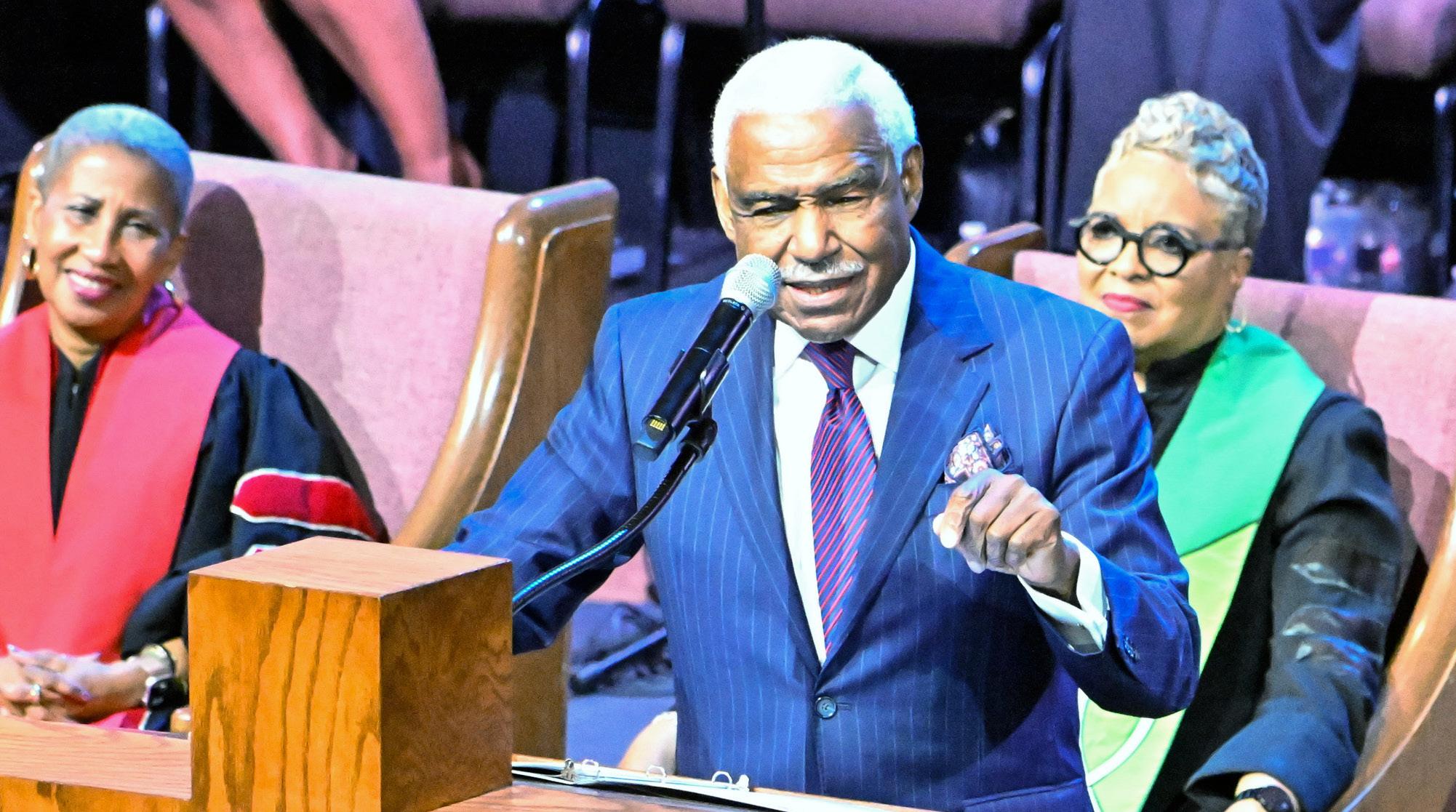
State Legislators joined State Rep. Jesse Chism — all dressed in black and adorned in kente cloth — the moment reflected the previous Friday, when the same body made sure Hardaway was recognized on the House Floor before the close of the session.
“Hardaway, he was known for giving everybody homework,” Chism said. “Those of you in this building who ever met G.A. Hardaway, you know when you left him, you had an assignment to do.”
Chism made clear that Hardaway’s homework didn’t end with his death.
“Our homework here is to live with purpose,” he said. “Our homework is to legislate with caution. Our homework is to love with passion.”
“We’re going to miss G.A.,” Chism stated. “We’re going to miss our teacher, our mentor, our general, our warrior.”
Still, he said, the work continues.
“We’re going to do it just like G.A. would,” Chism said. “We’re going to do it so well that people watching us will believe that God himself ordained us to do what we do.”
Mississippi Boulevard’s Rev. Dr. J. Lawrence Turner eulogized Hardaway, who represented South Memphis and Orange Mound, landing on a story that put Hardaway’s essence into sharp focus.
“He was on the phone handling business, and somebody asked him for something to eat,” Turner said. Without hesitation, Hardaway, who was leaving a store, kept the conversation going — but stepped back into the store. “He didn’t stop the call,” Turner said. “He went back inside, bought the man some food, came back out and kept talking. That’s just who he was.”
Turner said that instinct, to serve in the moment, reflected a larger philosophy that defined Hardaway’s life and work.
“He fought a good fight,” Turner said. “He fought for criminal justice to be redemptive and not punitive. He fought so that all children would receive the same high-quality education. He fought for the common good.”
Rhodes College junior Johnathan Burch, a political science and health equity double major, is among 55 outstanding college students from across the country who have been named 2026 Truman Scholars. The Harry S. Truman Scholarship Foundation made the announcement April 24.
The Truman Scholarship provides generous financial support for graduate study in preparation for careers in government, public service, the nonprofit sector, or education. Students are nominated by their institution based on their leadership, public service, and academic achievement.
Burch, who is from Heath Springs, S.C., and graduated from David W. Butler High School in Matthews, N.C., and came to Rhodes as a Posse Foundation Scholar dedicated to developing his leadership skills. He has been a competitor on one of Rhodes’ national mock trial teams and was recently elected to serve as a Student Trustee for the 2026-2027 academic year, following his current term as Rhodes Student Government President.
“In moments like this, I think about what my grandmother always told me before she passed: ‘Lead society, whether it be through education, ministry, medicine, or government,’” Burch said. “As someone who worked to help integrate both the Charlotte-Mecklenburg School District and the Presbyterian Church of Charlotte, she understood the weight behind those words. She instilled in me a responsibility to leave
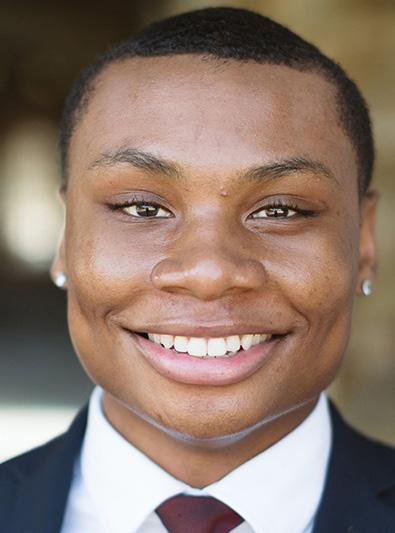
society better than I found it.”
Burch has worked as a Rhodes Diplomat, Peer Assistant, and an Office of Admission student associate. Outside of campus, Burch worked as a clinical quality improvement intern at Church Health, which allowed him to connect with the Memphis community and serve the uninsured.
As a 2025 Douglass-O’Connell Global Intern, he gained experience working for the Irish Innocence Project in Dublin, Ireland, conducting legal and comparative constitutional research.
Jason Haberman, Ph.D, co-director of postgraduate scholarships at Rhodes, said Burch is a quiet leader who does not mistake volume for authority. Burch’s leadership is effective, Haberman added, because he is thoughtful in his approach and has spent years building trust among his peers
“Johnathan Burch is focused on one problem with uncommon clarity: improving access to bereavement and mental health support for adolescents and young adults,” Haberman stated.
“In every way, Johnathan embodies the spirit of the Truman Scholarship — dedication to public service and leadership cultivation.”
The 2026 Truman Scholars will receive their awards in a ceremony at the Harry S. Truman Presidential Library and Museum in May.
LEGAL NOTICE
Request for Bids
RFB Number 26-0016
Pedestrian Plaza Canopy Fans
Sealed bids for Pedestrian Plaza Canopy Fans will be received on Opengov.com-MEM or by physical copy via USB at the Memphis-Shelby County Airport Authority (Authority), Memphis International Airport – Receiving Dock, 4150 Louis Carruthers Drive, Memphis, TN 38118, until 2:00 pm local time, on Wednesday, June 17, 2026. Responses will be opened and publicly read in person at the Procurement’s Warehouse Conference room located at 4150 Louis Carruthers Drive Memphis, Tennessee 38118, thirty (30) minutes after the response deadline, with a Microsoft Teams option available. A complete Request for Bids Packet with submittal instructions, additional data, and response format may be found on the Authority’s website Flymemphis.com or Opengov.com-MEM on or after Tuesday, May 5, 2026.
A pre-bid meeting will be held on Tuesday, May 19, 2026, at 1:00 pm at Authority’s Board Room on the Mezzanine Level, Terminal B of the Memphis International Airport, 2491 Winchester Road, Memphis, TN 38116, followed by a site visit. All attendees must register at Opengov.com-MEM.
All Bidders are responsible for checking the Authority’s website or Opengov up to the submission deadline for any updates, addenda, or additional information. In accordance with the Authority’s purchasing policies, the Authority will give preference to businesses located in Shelby County, Tennessee when awarding contracts and making purchases, unless prohibited by law. The successful Bidder must sign a contract with the Authority that includes Federal Aviation Administration provisions, if applicable,
1509 Madison Ave.
Memphis, TN 38104
PH (901) 523-1818
HOURS: Mon.-Fri. 9 a.m. - 5 p.m.
STANDARD RATES: $8.00 per line for 1 column ad.
regarding the Buy American Preference, Foreign Trade Restriction, Davis-Bacon, Debarment and Suspension, Prohibition on Certain Telecommunications and Video Surveillance Services or Equipment, Domestic Preferences for Procurements, and Drug-Free Workplace, all of which are incorporated herein by reference.
The Authority reserves the right to reject any or all responses to this Request for Bids in whole or in part; to waive any informalities, technicalities, or omissions related to this Request for Bids; and to reject responses on any other basis authorized by the Authority’s purchasing policies.
The Authority is an equal opportunity employer and prohibits discrimination based on the grounds of age, race, sex, color, national origin, disability, marital status, military service, or sexual orientation in its hiring and employment practices and in the admission to, access to, or operation of its programs, services, and activities.
By order of: Terry Blue, A.A.E. President and CEO Memphis-Shelby County Airport Authority















































By Brianna Smith-Herman TSD Contributing Writer
After more than a decade of building his craft and business from the ground up, Memphis filmmaker and entrepreneur Jason Thibodeaux has received one of the state’s top honors, being named Tennessee’s Young Entrepreneur of the Year.
The recognition, announced by the U.S. Small Business Administration (SBA) Tennessee District Office as part of its 2026 National Small Business Week honorees, places Thibodeaux among a select group of leaders driving innovation and economic growth across the state.
Each year, National Small Business Week highlights the role small businesses play in creating jobs, strengthening communities and shaping the nation’s economy.
“After 10+ years of staying consistent, being named Tennessee’s Young Entrepreneur of the Year is a powerful validation that I’m on the right path and very motivating,” Thibodeaux said. “It also shows that young creatives from Memphis can build something impactful and sustainable here instead of having to leave, and that hard work will be recognized.”
Thibodeaux is the founder of Millenium Media Label, a production company he launched in 2017 after beginning his filmmaking journey with a single camera in 2011. He has built a reputation for high-quality storytelling and working across documentaries, commercials and film projects throughout the region.
His growing portfolio includes serving as director of photography for several notable productions, including the feature film “Damaged Goods,” the documentary “A Spirit of Memphis,” which won Best Hometowner Feature at the 2023 Indie Memphis Film Festi-

val, and “Hoop Street,” which has been accepted into the upcoming American Black Film Festival in Miami Beach, Fla, May 27-30. He also produced “Sistahood: A Story of Strength,” a powerful film highlighting Black trans women in Memphis, now recognized across multiple film festivals. Earlier in his career, he worked as a camera operator on “Queen Rising,” which screened in multiple Memphis theaters.
But for Thibodeaux, the work has always been about more than film — it’s about building infrastructure for the next generation.
Between 2024 and 2025, Thibodeaux expanded beyond production, developing a dedicated video production warehouse and studio in Memphis. In 2023 he purchased an 18,000-square-foot property with revenue generated from his work in the local creative economy. He later acquired two adjacent proper-
ties totaling nearly 40,000 square feet for future expansion.
“I’ve always wanted my own studio, but I never imagined it would be coming together this soon,” he said. “Seeing the clear gap in Memphis for a professional creative space that actually serves local talent and small businesses pushed me towards my goal faster than I expected.”
Once completed, the facility will include soundstage capabilities, production headquarters, collaborative workspaces and programming such as workshops, youth initiatives and cultural events, creating direct pathways for Memphis creatives to learn, grow and build sustainable careers.
“Memphis is home,” he said. “This city’s creative community gave me the tools and opportunity I needed to even dream this big, so I’m investing serious time, energy and money to build it here
instead of leaving.”
Thibodeaux’s expansion has been supported by key partnerships, including guidance from the Tennessee Small Business Development Center at Southwest Tennessee Community College and financing through Pathway Lending. In 2025, he was awarded a $25,000 Economic Development Growth Engine (EDGE) ICE Loan/Grant.
Statewide, the SBA recognized several additional business leaders:
• Tennessee Small Business Person of the Year: Steven Cassidy, EOD Gear, Franklin
• Small Manufacturer of the Year: Temel Islamoglu, Anatolia Granite and Marble, Baxter
• Rural Small Business of the Year: Josh Flory, Flory Custom Woodworking, Riceville
• Veteran-Owned Small Business of the Year: Luke Dressman, Building and Repair Systems, Nashville
• Women-Owned Small Business of the Year: Erin Sparks, Sparks Vintage, La Vergne
Kelly Loeffler, SBA administrator, will honor state and territory winners during a national awards ceremony in Washington, D.C., on May 3. Steven Cassidy, Tennessee’s Small Business Person of the Year, will represent the state at the national level.
In addition, the SBA’s Tennessee District Office will host a statewide awards ceremony in Nashville on May 12 to celebrate all honorees.
“During National Small Business Week, SBA is honored to recognize the job creators, builders, and innovators who fuel our nation’s economy and anchor communities across America,” Loeffler said in a statement.
Since 1963, National Small Business Week has been recognized by the president of the United States as a time to celebrate the impact of entrepreneurs nationwide.