POSTMASTER: Send address changes to The Tri-State Defender, 1509 Madison Ave., Memphis, TN, 38104.
GENERAL INFORMATION: Inquiries may be submitted in writing or by calling (901) 523-1818 or by email.
TELEPHONE: (901) 523-1818.
The Tri-State Defender (USPS 780-220) is published weekly. The Tri-State Defender 1509 Madison Ave. Memphis, TN, 38104. Second-class postage paid in Memphis, TN.
Tri-State Defender is a member of The National Newspaper Publishers Association and the Tennessee Press Association.
of the Publisher. (901) 523-1818 | 1509 Madison Ave, Memphis, TN 38104
■■ NEWS
Shelby County commissioners delay vote on $18 million settlement in Sheriff Bonner lawsuit
By James Coleman TSD Contributing Writer
Shelby County Commissioners sidetracked an $18 million amendment that would settle a lawsuit between the Mayor Lee Harris and Sheriff Floyd Bonner during the Monday, May 18 meeting.
The agreement between the two offices will be scrutinized during the next committee meetings, on May 27.
Bonner filed the suit against the mayor and the commission in circuit court last August, alleging the county short changed the SCSO of $67 million in FY2026 funding, by failing to approve a salary petition for personnel and office expenditures. Bonner is wrapping up his second and final six-year term.
A confidential agreement was eventually mediated, after the matter moved behind closed doors in February. Moreover, it prohibits both sides from “wilfully” disclosing details “to any member of the public or to the media without the express written consent of the parties.”
The lone caveat is the commission. The payout requires the 13-member body’s stamp of approval. According to the terms, it must be approved within 30 days of signing.
The resolution is sponsored by the SCSO. Harris signed it on May 1. According to online data provided by the Shelby County Circuit Court, the case was dismissed on May 5 via consent order. Bonner added his signature on May 6.
The agreement also recommends the mayor remain relatively agnostic on the matter. Pursuant to the settlement, Harris doesn’t have to make a recommendation to the commission. However, he is prohibited from opposing it.
“As the sheriff’s request recently was the subject of litigation between the sheriff and myself, which litigation has
been resolved, on the advice of counsel I take no position on the request,” read the settlement.
Nevertheless, the administration sought to distance itself from the item.
The SCSO requested the $18 million settlement be drawn from the county’s reserve fund, or “fund balance.”
“This is not approved by finance. The reason that we are not approving this is because it will have a significant impact on our fund balance,” said finance director Audrey Tipton.
At the start of FY2026, the reserve fund was a robust $78 million. However, a $43 million withdrawal from the debt service/emergency fund to cover an “operational shortfall” quickly erased much of the balance.
Commissioners had to borrow the money last November after incurring increased expenses. The added costs were mainly due to the state-ordered Memphis Safe Task Force. Delayed federal reimbursements complicated the issue.
The fiscal year ends on June 30. If the commission approves the settlement, the bulk of the money will go to overtime. As much as $16 million will be divided between 31 OT accounts. The remaining $2 million will go toward sundry items. Nearly $1 million will be used to purchase new service weapons. Landscaping projects will receive $768,905. The rest of the money will cover ammunition, building maintenance and food service costs.
President Calvin Anderson Editor Stephanie R. Jones
Pope Leo XIV makes historic apology for Vatican’s role in legitimizing slavery
By Nicole Winfield and Paolo Santalucia Associated Press
VATICAN CITY — Pope Leo XIV made a historic apology on Monday, May 25, for the Holy See’s role in legitimizing slavery and for having failed to condemn it for centuries, calling the Vatican’s record a “wound in Christian memory.”
Past popes have apologized for Christians’ involvement in the trans-Atlantic slave trade. But no pope had ever publicly acknowledged, much less apologized for, the role that past popes played in giving European sovereigns explicit authority to subjugate and enslave “infidels.”
History’s first U.S.-born pope, whose family history includes both enslaved people and slave owners, delivered the apology in his first encyclical, “Magnifica Humanitas,” (Magnificent Humanity), which was released Monday.
The sweeping manifesto is about safeguarding humanity in an era of increasing reliance on artificial intelligence. Leo raised the slave trade in relation to what he called the new forms of slavery and colonialism that the digital revolution is fueling.
Black American Catholics, activists and scholars have long called for the Holy See to atone for its role in the colonial-era trade in human beings, beyond generic apologies for the involvement of individual Christians.
“It is impossible not to feel deep sorrow when contemplating the immense suffering and humiliation endured by so many in stark contrast to their immeasurable dignity as persons infinitely loved by the Lord,” Leo wrote. “For this, in the name of the church, I sincerely ask for pardon.”
Shannen Dee Williams, historian at the University of Dayton and author of the 2022 history of American Black Catholic
nuns, “Subversive Habits,” welcomed the apology as a “monumental step toward the kind of essential truth-telling and reparation that many Catholics have prayed and worked to witness.”
“The Catholic Church has never been an innocent bystander in the history of white supremacy,” said Williams. “Black Catholics have waited a long time to hear the Vatican speak honestly about the church’s leading roles in the trans-Atlantic slave trade and chattel slavery — and thus by extension the enduring systems of anti-Black racism in the world today.”
Centuries of legitimizing slavery for European colonizers
The Vatican has insisted that it always upheld the dignity of all human beings as children of God. But a series of 15th-century directives from the Vatican authorized Portuguese sovereigns to conquer Africa and the Americas and enslave non-Christians.
In 1452, for example, Pope Nicholas V issued the papal bull Dum Diversas, which gave the Portuguese king and his successors the right “to invade, conquer, fight and subjugate” and take all possessions — including land — of “Saracens, and pagans, and other infidels, and enemies of the name of Christ” anywhere.
The bull also gave the Portuguese permission “to reduce their persons to perpetual slavery.”
That bull and another issued three years later, Romanus Pontifex, formed the basis of the Doctrine of Discovery, the theory that legitimized the colonial-era seizure of land in Africa and the Americas.
Nicholas V’s permissions to the Portuguese were confirmed or renewed by Pope Callixtus III in 1456, Pope Sixtus IV in 1481 and Pope Leo X in 1514, according to the Rev. Christopher J.
Kellerman, a Jesuit priest and author of “All Oppression Shall Cease: A History of Slavery, Abolitionism, and the Catholic Church.”
Spanish kings received the rights for the Americas.
In 2023, the Vatican formally repudiated the Doctrine of Discovery, but it never formally rescinded, abrogated or rejected the bulls themselves. The Vatican insists that a later bull, Sublimis Deus in 1537, reaffirmed that Indigenous peoples shouldn’t be deprived of their liberty or the possession of their property, and were not to be enslaved.
Holy See late to condemn slavery, Leo says
In his encyclical, Leo recalled that his namesake, Pope Leo XIII, was the first pope to explicitly condemn slavery in 1888, long after many countries had abolished it. Before that, in antiquity and the Middle Ages, church institutions and even popes — Gregory the Great — had slaves, Kellerman said.
In acknowledging the 15th century papal bulls, Leo wrote in his encyclical: “Already in the early modern period, the Apostolic See of Rome, responding to the requests of sovereigns, intervened several times in order to regulate and legitimize forms of subjugation, and, in certain cases, including the enslavement of ‘infidels.’”
Leo said it wasn’t possible to judge the morality of the decisions with today’s standards.
“Yet neither can we deny or diminish the delay with which both society and the church came to denounce the scourge of slavery,” he said.
The pope said that the church has long affirmed the dignity of every human being as the basis of its doctrine, “even if it took eighteen centuries for its full incompatibility with slavery to be
explicitly recognized.”
“This constitutes a wound in Christian memory, one from which we cannot consider ourselves detached,” he said.
Leo’s own family history and past apologies
Kellerman, the scholar, welcomed Leo’s apology but said more needs to be done to further acknowledge how the Catholic Church legitimized and expanded slavery.
“Pope Leo has strengthened the moral credibility of the church with this admission and apology today,” he told The Associated Press. “Hopefully a future document will explain in more detail the church’s involvement with slaveholding. As a scholar I have some quibbles with the wording, but this is a truly remarkable moment.”
During a 1985 visit to Cameroon, St. John Paul II asked forgiveness of Africans for the slave trade on behalf of Christians who participated in it, but not the popes. In a 1992 visit to Goree Island, Senegal, which was the largest slave-trading center in West Africa, he denounced the injustice of slavery and called it a “tragedy of a civilization that called itself Christian.”
According to genealogical research published by Henry Louis Gates Jr., 17 of Leo’s American ancestors were Black, listed in census records as mulatto, Black, Creole or a free person of color. His family tree includes slaveholders and enslaved people, Gates wrote in The New York Times.
Winfield reported from Middletown, Connecticut.
Associated Press religion coverage receives support through the AP’s collaboration with The Conversation US, with funding from Lilly Endowment Inc. The AP is solely responsible for this content.
A Soldier’s Wife offers heartfelt reflections on family, faith and resilience
Book review
By Terri Schlichenmeyer
I’m telling Mom!
When you were small, those words were often enough to send a chill down your spine. One quick tattle to the woman who bore you, and you were in trouble. That simple phrase always kept you in line, at least until you were grown. By then, as in the new book, “A Soldier’s Wife” by Blair Underwood with Ylonda Gault, Mom had something to tell you.
Marilyn Underwood had kept every scrap of paper that ever passed through her fingers.
That, says her son, author and actor Blair Underwood, is how it seemed. After her death from multiple sclerosis nearly six years ago, Mrs. Underwood’s children found piles and piles of notes, notebooks, lists, random thoughts, and memories she’d written down. Paper was everywhere.
She’d said many times that she was
“putting together a memoir of sorts,” and after looking over what she’d left, Underwood thought the collection would make a good children’s book. He was later convinced that his mother’s story was bigger than that.
Marilyn Ann Scales Underwood was an only child, and was raised to be independent. Born and reared in Buffalo, N.Y., she attended an all-girls school with a big dream to work in the fashion industry. She indicated that her mother was brave to let her go, but Underwood knew that her career was really in New York City. She was right; she thrived there.
Laser-focused on her work, Underwood was in no hurry to do as most late-1950s women did, get married. Though friends urged her to date, it was not a priority until she met the love of her life, Frank. She loved him instantly. They were engaged three weeks after meeting, and married three months later.
“One thing about me,” she wrote. “When I set my mind on something,
you can believe it’s as good as done.”
There are really two ways to look at “A Soldier’s Wife.”
On one side, it feels almost random. Marilyn Underwood was a strong, independent woman, an inspiration to those who knew her — but most of us didn’t. While the writings author Blair Underwood compiles here are wise and funny, they’re not earth-shattering and there may be times when they won’t hold your interest.
But they’re exactly what you need, exactly when you need them.
Reading this book is like getting a letter from your grandma. The essays here are warm, with reminders to pray to a purposeful Higher Power, that life’s a struggle but it’s worth living, and that suffering happens. There’s love in this book — lots of it! — gratitude, gentleness and old-fashioned values. It’s sweetly quaint, but firm. And yes, it’s random, but consider it as a hug from somebody’s mom when you’re down, because that’s rather what it is.
208 pages
Just remember that no book has to be read cover-to-cover. You can skip around, and you’ll be fine with this one, whenever you need its comfort. “A Soldier’s Wife” could be meaningful or meaningless to you at various times only you can tell.
“A Soldier’s Wife: My Mother, the Marvelous Mrs. Marilyn A. Underwood” by Blair Underwood with Ylonda Gault c.2026, Amistad $28.00
Memphis filmmaker’s ‘Hoop Street,’ built on grit and hope, selected for American Black Film Festival
By Judith Black Moore TSD Contributing Writer
As Black women filmmakers continue carving out space in an industry that has often overlooked their voices, Memphis filmmaker and screenwriter Teresa Dickerson is stepping onto a national stage with a story rooted deeply in the city she loves — Memphis. Her feature film, “Hoop Street,” has been selected to screen at the 30th anniversary of the American Black Film Festival, becoming one of only 11 films selected in the U.S. Narrative Features category. The screening is scheduled for Friday, May 29, at O Cinema in Miami Beach, Fla.
For Dickerson, the accomplishment represents more than a career milestone. It is the realization of a creative vision years in the making — one fueled by Memphis, basketball, faith, resilience and the determination to tell stories often left untold.
For young audiences wrestling with pressure, trauma and uncertainty, Dickerson hopes the film offers both encouragement and affirmation.
“Go after your dream. Don’t settle for less than what you were created on earth to become. You were created to bring light and love to the spaces you enter,” she said.
Dickerson’s journey into filmmaking did not begin in Hollywood. It began in Memphis corporate spaces, NBA offices and around family storytelling traditions that shaped how she understood emotion, struggle, humor and humanity. Before founding Isaiah 54 Films, she spent years working in media relations and community investment with the Memphis Grizzlies and in corporate affairs with Kroger.
Those roles gave her “a front row seat to the power of storytelling,” Dickerson said. “But, to be honest, I grew up listening to family members tell the most powerful, colorful stories about life.”
What began in 2006 as a hobby, testing whether her journalism skills could translate into screenwriting, evolved into something far more personal.
“Once I found the right screenwriting software, I decided to learn more about the craft,” she said. “I learned that it was a bit more than a hobby. It became my passion.”
That passion ultimately became “Hoop Street,” a sports drama centered on Mason James, played by Benjamin Holmes, a talented but troubled teenager suspended from his high school basketball team because of his temper. Fighting trauma, anger and personal demons, Mason seeks redemption through a summer basketball league and one final opportunity to secure a college basketball scholarship.
Dickerson said the character is intentionally symbolic.
“I named the main character Mason and he represents Memphis,” she explained. “I wanted Mason to be tough as nails and most often angry, but he is actually a kind-hearted person who is trying to be happy and reach his goals.”
In many ways, Memphis itself becomes another character in the film.
“With ‘Hoop Street,’ I wanted to capture the texture of the city — like its resilience, creativity, humor, struggle, and sense of community that exist in neighborhoods people don’t always see represented authentically,” Dickerson said. “The goal wasn’t just to use Memphis as a backdrop, but to let the city itself become part of the emotional fabric of the story.”
premier Black film festivals and an Oscar-qualifying festival.
“It was surreal,” Dickerson said of learning “Hoop Street” had been selected. “To be one of 11 U.S. Narrative Feature selections, is such a blessing.”
The film was directed by Princeton James and produced through a collaboration between Isaiah 54 Films and Gravity Productions. Nearly 100 percent of the cast, crew and soundtrack artists are from Memphis.
That decision, Dickerson said, was intentional from the start.
“I wanted to give Memphians the opportunity to go for their dreams in this field,” she said. “That’s why it makes me so proud to have nearly 20 of our cast and crew join me in Miami, made possible by the support of the Donnell Cobbins Jr. Futures Trust.”
Dickerson said one of the most emotional moments came during casting. “To hear them acting out words I wrote, was emotional,” she said.
The film’s path to national recognition included selection by the Memphis and Shelby County Film and Television Commission to participate in the Porretta Terme Film Festival in Italy before landing at ABFF, one of the nation’s
The moment also places Dickerson among a growing number of Black women filmmakers reshaping how Black communities, Black families and Black resilience are portrayed on screen. Rather than centering stereotypes or sensationalism, “Hoop Street” leans into humanity, vulnerability and hope.
“I also hope the project contributes to the growing filmmaking community in Memphis by showing that meaningful, high-quality stories can be developed and produced here,” Dickerson said. “There’s so much talent in the city, both in front of and behind the camera, and I think audiences are hungry for stories that feel specific and honest.”
And for aspiring Black women filmmakers watching her breakthrough unfold, Dickerson says, “Sometimes, it’s hard to take a leap of faith, especially when betting on yourself. Do it anyway. Do it afraid.”
The “Hoop Street” trailer can be viewed here: https://www.youtube.com/ watch?v=SChs0ecnKxQ&t=90s
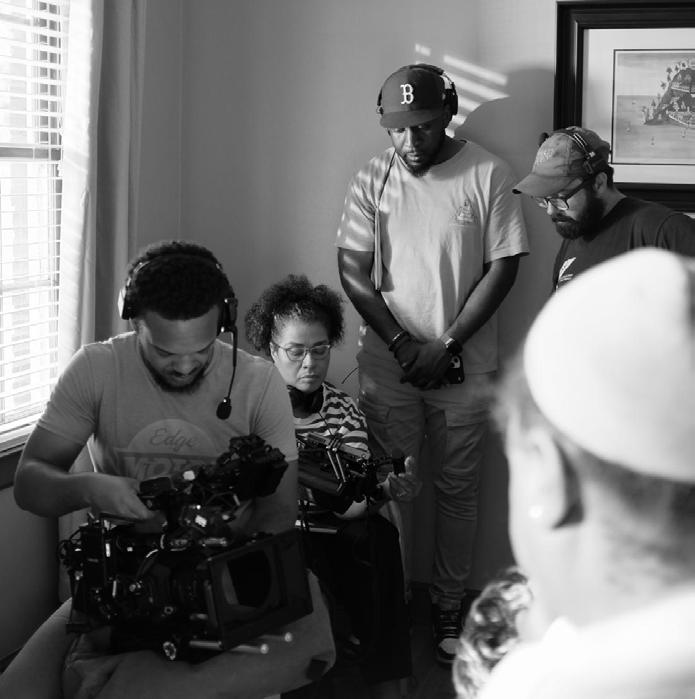
Working on a scene from “Hoop Street,” are, from left, Jason Thibodeaux, Teresa Dickerson, Princeton James, Justin Malone and Kathy Lofton. On the Cover: “Hoop Street” cast and crew members. (Courtesy photos)
Award-winning documentary ‘Brannu: The Urban Horseman’ returns home for special Memphis screening
By Brianna Smith-Herman TSD Contributing Writer
Memphis native Julia Griggs is bringing her award-winning documentary, “Brannu: The Urban Horseman,” home for a special screening at the Benjamin L. Hooks Central Library on Tuesday, June 2, 2026.
The event, scheduled from 3-8 p.m., follows the film’s growing national acclaim, including earning Best Local Documentary Feature at the 2026 ATL Doc Festival. Produced through Griggs’ Kingdom Stride Productions, the documentary explores Black horsemanship, land ownership, displacement and community resilience through the story of Brandon “Brannu” Fulton.
Directed by Adelin Gasana, the film takes a deeper look at Fulton’s life after animal cruelty charges filed against him in 2016 were later dropped. What began as the image of a Black horseman riding through Atlanta quickly unfolded into a larger story about ownership, identity, and the fight to preserve community amid rapid development.
For Griggs, the story immediately felt bigger than a traditional news segment.
“I first saw Brannu riding his horse on the Atlanta Beltline in 2022 and thought it would make a great news piece,” Griggs said. “But the more I learned, the more questions I had. I wanted to understand who he really was, what his vision was for the land he purchased, and what happened after everything changed.”
That curiosity eventually evolved into Griggs’ first feature-length documentary — a project she says was created with intentionality, care and a com-
mitment to telling Fulton’s story with depth and authenticity.
With a journalism career that includes writing for The Tri-State Defender and producing for major
national news outlets such as CBS and CNN, Griggs says storytelling remains at the center of her work.
“I don’t see myself as just a filmmaker — I’m a storyteller,” she said. “My pas-
“At its core, this film isn’t just about one man. It’s about the right to protect, build and thrive without barriers.” — Julia Griggs
sion for storytelling has been shaped by my work as a news producer, where I’ve covered a wide range of national and international stories. That experience deepened my understanding of how media shapes public perception and drives conversations.”
The film also taps into larger national conversations surrounding Black land ownership and community preservation amid growing development pressures.
“Brannu’s story puts a face on what gets lost when we prioritize profit over people,” Griggs said. “It asks the hard question: Who gets to stay when land becomes valuable?”
For Griggs, bringing the documentary back to Memphis is especially meaningful.
“Memphis is a part of my foundation,” she said. “It’s where I started my early career in local news, radio, and had the opportunity to write for the Tri-State Defender. To now return home with an award-winning documentary feels incredibly special.”
She added that the screening is about more than the film itself.
“It’s about honoring where I came from and showing what’s possible when you trust God and stay grounded in faith and purpose,” Griggs said.
Above all, Griggs hopes audiences leave inspired by Fulton’s resilience and challenged to think critically about equity, opportunity and community.
“At its core, this film isn’t just about one man,” she said. “It’s about the right to protect, build and thrive without barriers.”
For more information, visit Brannu. co
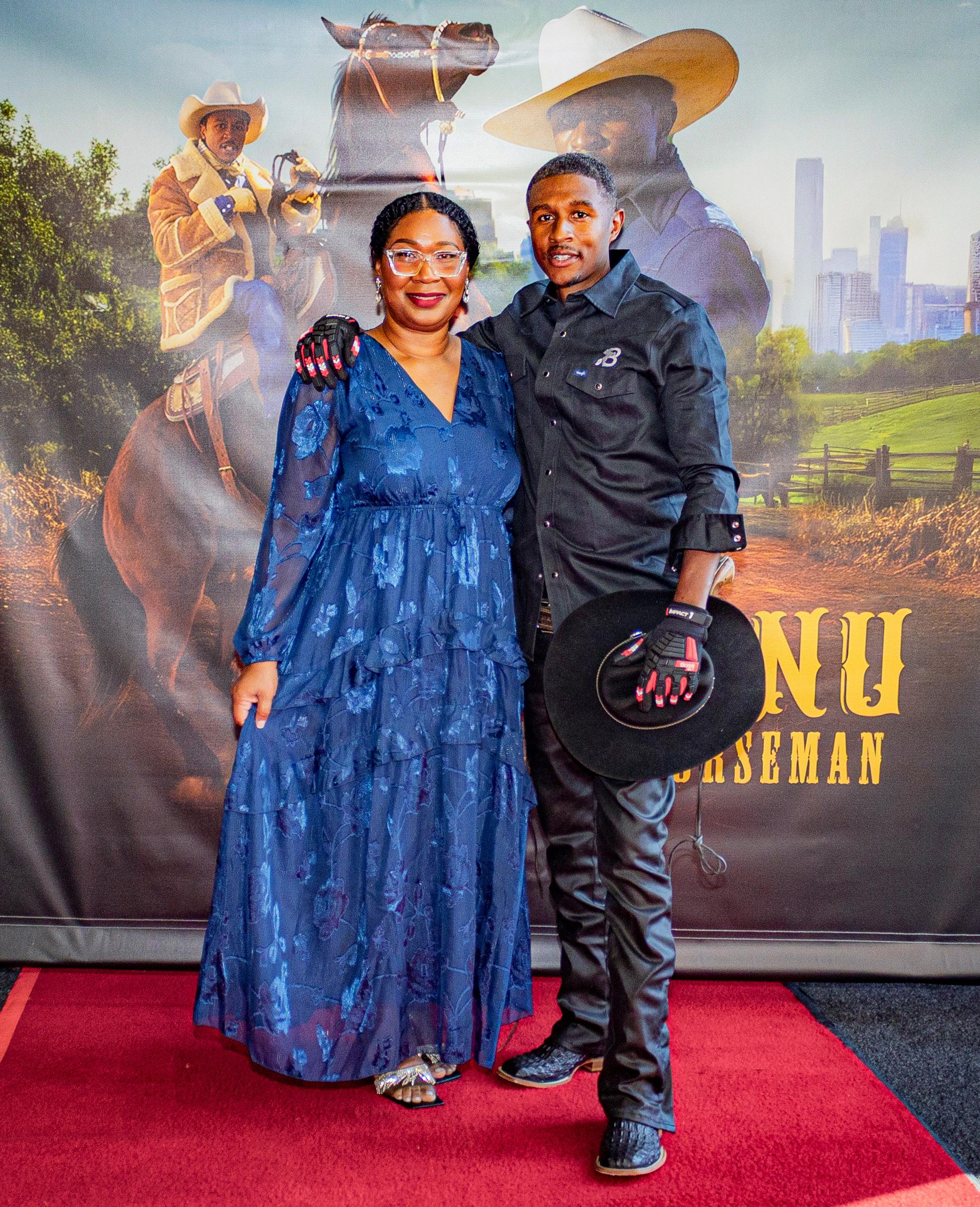
Memphis native Julia Griggs produced the award-winning documentary film about Brandon “Brannu” Fulton, Atlanta’s “urban horseman.” (Courtesy photo)
Girls Inc. of Memphis celebrates 80 years of preparing girls to thrive
By Judith Black Moore TSD Contributing Writer
The story begins long before the Memphis chapter. It starts in 1864 when the national Girls Inc. organization was founded in the aftermath of the Civil War to serve girls navigating upheaval and uncertainty. Much later, in 1946, after visiting a Girls Club in Pennsylvania, Lucille DeVore Tucker returned to Memphis and established the city’s local affiliate.
In 1990, the name Girls Incorporated was adopted, signaling a sharpened focus on preparing girls for successful adulthood. Today, that mission continues in Memphis — shaped by generations of families who have come through its doors.
“We are serving our fourth generation of girls,” said Sylvia Martinez, president and CEO of Girls Inc. of Memphis. “We have great-aunts, grandmothers, mothers and now daughters and great-nieces coming through Girls Inc.”
That continuity extends beyond participation to philanthropy. In Memphis, families like the Buckmans reflect that legacy — where giving spans generations, from matriarch Mertie Buckman to her daughter Cathy, and now to Cathy’s daughters, who continue to support Girls Inc.
Martinez, a Girls Inc. alum, now serves as the seventh CEO in the Memphis affiliate’s history, bringing a deep awareness of the organization’s 162year legacy.
“When I moved to Memphis, I realized I was stepping into a community with a long history and fierce leadership — women who meant business and took the role of addressing girls’ needs seriously,” she said. “That’s a big responsibility.”
Her perspective is informed by experience across the country. Before Memphis, Martinez served at Girls Inc. of Greater Los Angeles, where most
participants were Latina. In Memphis, the organization serves a largely African American population.
“The cultures may be different,” she said, “but the needs are the same.”
That understanding — and the need to build trust in every community — guides her leadership.“Families need to know their children are getting the best quality programming and care.”
Over eight decades, Girls Inc. Memphis has evolved alongside society.
“When we started, we were equipping the future homemakers of America,” Martinez said. “As opportunities expanded — for education and sports — we shifted.”
Today, the focus is broader, preparing girls for college, careers, entrepreneurship and skilled trades. “My priority is to ensure our girls are equipped to do as they please,” she said. “We are equipping women to blaze their own trail.”
New challenges continue to emerge. The COVID-19 pandemic created significant learning loss, prompting renewed focus on academic support and exposure to opportunities. At the same time, broader social shifts have affected participation.
Shortly after Martinez’s arrival, Latina girls made up about 7 percent of the organization’s population. In the past year, that number has declined. “Families have other priorities right now in keeping their children safe,” Martinez said, referencing concerns tied to increased immigration enforcement.
The number of girls served has also decreased in recent years. Before the pandemic, Girls Inc. Memphis served nearly 3,000 girls annually. Today, that number is about 1,500 — a deliberate decision. With a new campus, staffing shortages and shifting funding priorities, the organization scaled back to preserve quality.
“It’s easy to grow,” Martinez said. “It’s harder to sustain. We chose to be conservative so we can maintain strong
programming and sustain this campus.”
That campus is named the Patricia C. Howard Campus in honor of former President and CEO Patricia C. Howard. It includes a new facility and an 8-acre youth farm in Frayser. Supported by land gifted in 2025, the farm reflects a focus on both education and community impact. “We’re addressing food deserts, teaching agriculture and giving girls access to fresh produce,” Martinez said. “It’s hands-on STEM learning.”
The campus also offers culinary classes, computer labs and workforce development programming. Girls participate during the day, while adults use the space for community learning in the afternoons.
“Our new building allows students to walk to us in a community that lacks efficient transportation,” she said.
Martinez believes young people should help shape what comes next.
“When there was discussion about expanding a landfill near our farm, I asked, ‘Why aren’t you talking to the children?’” she said. “They’re the ones who will live with these decisions.”
As the organization looks ahead, sustainability remains central — both financially and programmatically. “My vision is to build a foundation so we can be here for another 80 years,” Martinez said.
That includes keeping programs accessible while maintaining quality.“I want us to remain reachable to families who can’t afford these services while staying financially strong.”
The return on investment is clear.“For every dollar invested, we generate three dollars in impact,” she said.
Programs include paid internships for young women up to age 24, along with services for girls ages 5 to 18.
Schools and community groups are invited to participate in workshops, and the farm serves as a hub for education and team-building.
Looking ahead, Martinez hopes the
Girls Inc. name carries weight beyond the organization itself. “I want it to be a seal of approval,” she said. “When a girl has Girls Inc. on her resume, people know she’s ready.”
She also sees collaboration as essential to future impact.
“The greatest opportunity right now is for organizations to come together,” she said. “If we share resources and partner, we can do more.” That includes support from the corporate and civic sectors.
As Girls Inc. Memphis marks its 80th anniversary, Martinez is focused on what comes next — and who will shape it.
“I can’t tell you what the focus will be in 80 years,” she said. “The girls will decide.” Her hope is that more alumnae return not only as participants, but as leaders. “I’m the first alum to lead this chapter,” she said. “I hope I’m not the last.”
In that vision, Girls Inc. remains steadfast to its mission by offering a place where each generation prepares the next to be strong, smart and bold decade after decade.
To learn more about Girls Inc., including its upcoming summer offerings, visit Girls Inc. | Inspiring All Girls to be Strong, Smart & Bold.
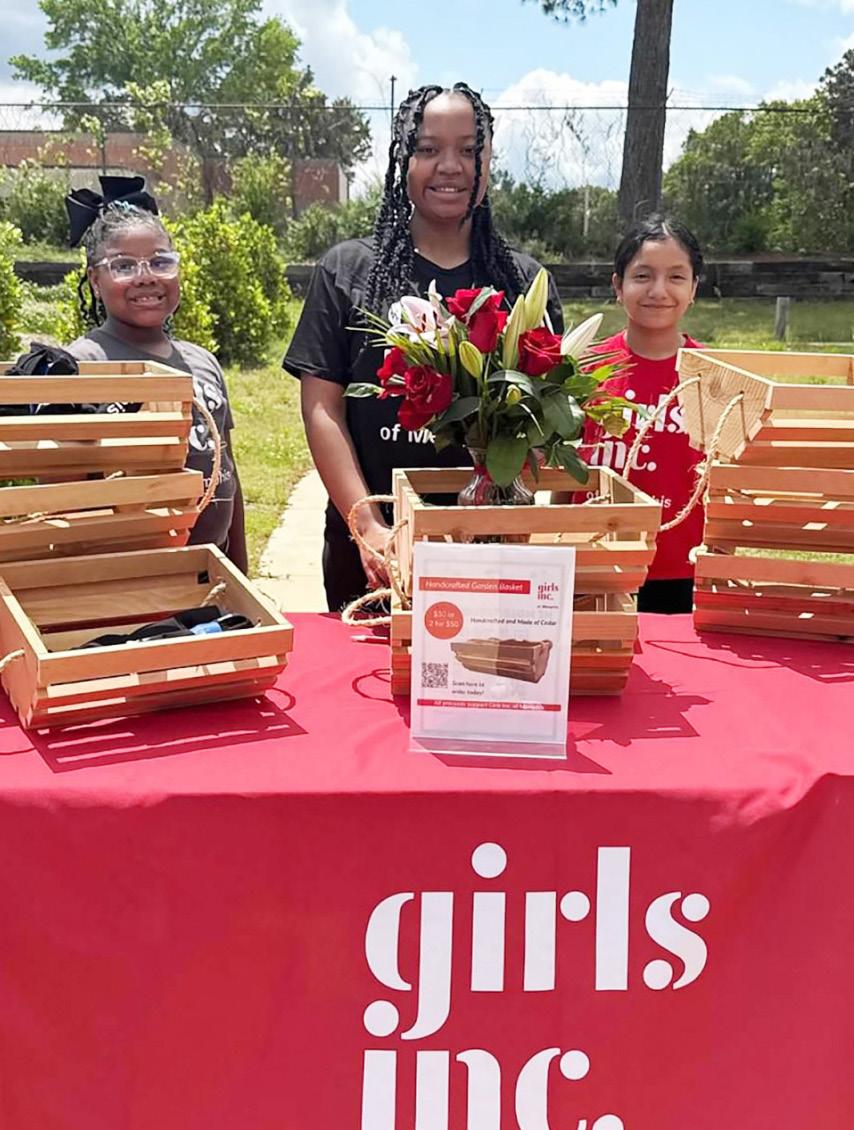
Girls Inc. participants, from left, Naria Boykins, Da’Riyah Drinkwater and Sharayli Palacios stack baskets at the produce farm.
S.O. What! Foundation honors Memphis leaders, students at annual scholarship soiree
TSD Newswire
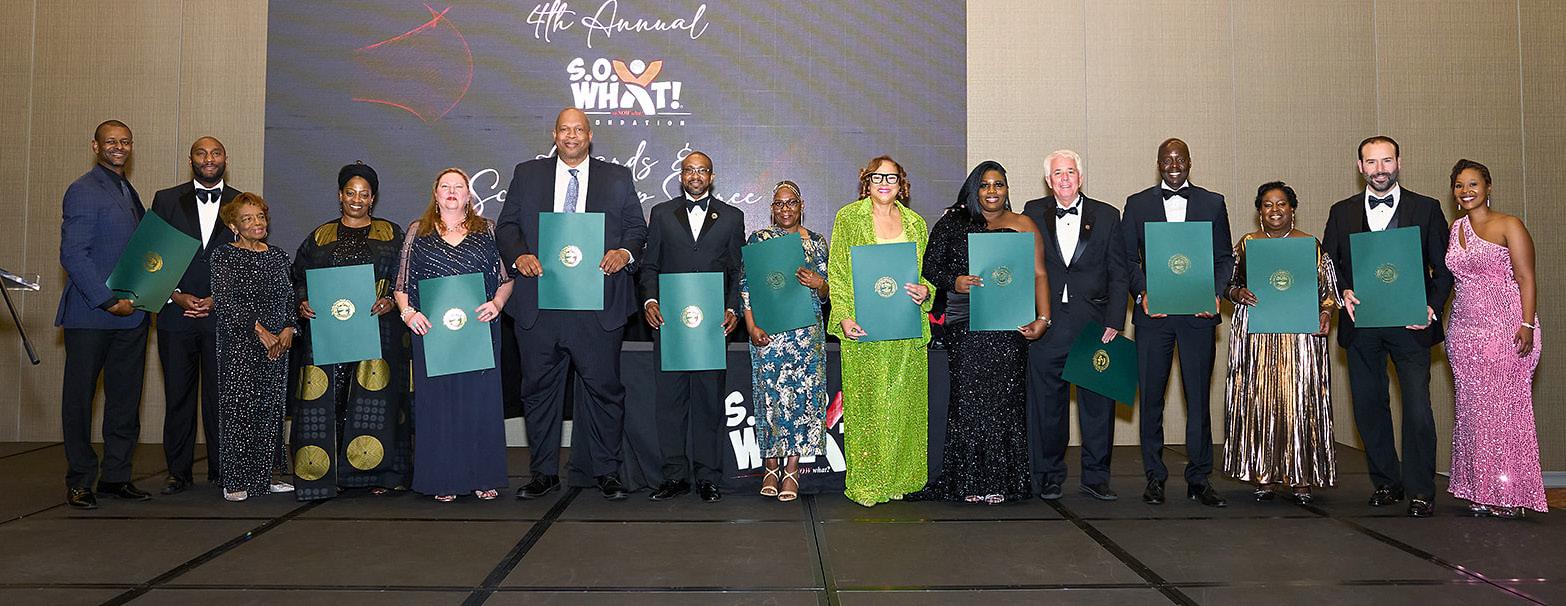
The S.O. What! Foundation held its 4th Annual S.O. What! Awards and Scholarship Soiree recently at the Renasant Convention Center recognizing local community leaders while also awarding memorial scholarships to Memphis area students who are pursuing higher education despite significant life challenges.
The scholarships honor the lives and legacies of individuals whose values continue to inspire hope, perseverance and opportunity for the next generation, said author, speaker, and University of Memphis alumna Summer Owens, founder of the S.O. What! Foundation.
“For many students, these scholarships represent more than financial support,” Owens said. “They represent belief, community and a powerful message that their resilience matters and their future is worth investing in. That is why we are proud to host this fundraiser.”
The Soiree celebrates resilience and community leadership, bringing together supporters who believe in honoring those who lead today while investing in those who will lead tomorrow, Owens added.
This year, the event was sponsored by Alliance Healthcare Services.
“The S.O. What! Foundation embodies exactly what we believe at Alliance, that a person is never defined by their diagnosis or their struggle,” said Laurie Powell, CEO, Alliance Healthcare Services. “We’re proud to support an organization that champions the strength and dignity of every person on their path to wellness,”
Throughout the evening, 12 community leaders were recognized for their stories of resilience. Each leader shared a powerful, heartfelt testimony on how they overcame their struggles to
become the leaders they are today and how their work continues to strengthen Memphis through service, leadership and impact.
Honorees were:
• Cary Vaughn – CEO and president of Love Worth Finding Ministries, Inc.
• Wanda Taylor – CEO and founder, Ladies in Need Can Survive
• Steve Mulroy – Shelby County District Attorney
• John Best – General Manager MSCS Broadcast Services
• Meka Egwuekwe – CEO, CodeCrew
• Anthony Buckner – Chief Deputy, Shelby County Sheriff’s Office
• Cherisse Scott – reproductive and sexual justice, advocate and servant
• Rose Flenorl – manager, Global Citizenship and Human Resource, FedEx Corp.
• Will Richardson – entrepreneur, and veteran and community advocate
• Linda Hall – senior advisor for Student Equity and Leadership Development, University of Memphis
• Tina Bailey – transformation coach, corporate leader and author
Owens said it was especially meaningful to have Bertha Rogers Looney, the last living member of the Memphis State Eight, co-host the event. Looney’s courage, along with seven other students, helped break racial barriers by enrolling at Memphis State University — now University of Memphis — and opened doors for generations of students who followed. “Her presence at the Soiree served as a powerful reminder of the sacrifices that made opportunities possible and the responsibility we share to continue lifting up others,” Owens stated.
Shelby County Mayor Lee Harris and Shelby County Sheriff Floyd Bonner Jr. also attended, as well as Shelby County Commissioner Charlie Caswell, Jr.
In response to the event’s continued growth and community support, this year’s Soiree was held at the Renasant Convention Center. “The new venue reflects the expanding impact of the event and the Foundation’s commitment to hosting a night worthy of the extraordinary individuals and students being recognized,” said Owens.
To learn more about the S.O. What! Foundation and its mission to empower youth and young adults to overcome obstacles, eliminate excuses and achieve success through education, mentorship, scholarships and leadership development programs, visit thesowhatfoundation.org
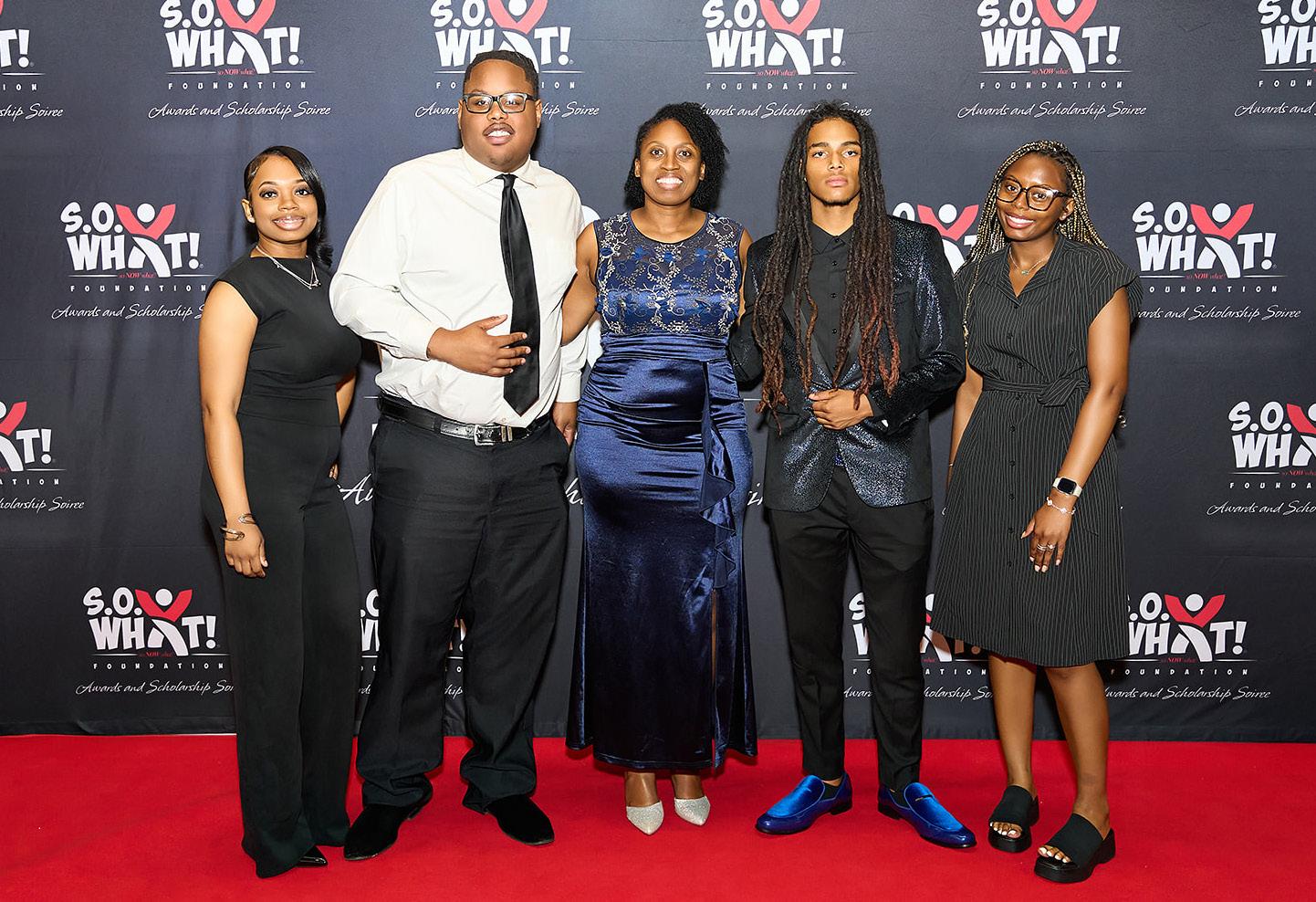
Netisha Burnett, center, The S.O. What! Foundation program chair, along with honorees Daneisha Davis, Lazarus Allen, Nathaniel Bradshaw and Xhyla Jackson.
The S.O. What! Foundation Awards and Scholarship Soiree attendees, from left: Shelby County Commissioner Charlie Caswell, Jr., Shelby County Mayor Lee Harris, Bertha Rogers Looney, Cherisse Scott, Laurie Powell, John Best, Meka Egwuekwe, Tina Bailey, Rose Flenorl, Wanda Taylor, Steve Mulroy, Chief Deputy Sheriff Anthony Buckner, Linda Hall, Cary Vaughn and Summer Owens.
As Memphis schools takeover looms, city faces further voting power struggle
By Melissa Brown Chalkbeat
The Tennessee supermajority’s redrawing of its Congressional districts to siphon Memphis Democrats into Republican seats came days before the Memphis-Shelby County school system takeover is expected to be signed into law. It’s an unprecedented confluence that could dilute the voting power of Tennessee’s largest majority-Black city.
This week, Memphis Democrats decried an onslaught of Republican measures they say are aimed at Black Memphians, who will see their locally elected school board neutered by GOP political appointees just as they lose a Memphis-centered Congressional district aimed at protecting minority voting power.
Senate Democratic Caucus Chair London Lamar, a Memphis Democrat, called the sweeping effort “an absolute power grab.”
“You didn’t like our school board, you took that over,” Lamar said Thursday, May 8, prior to the redistricting vote. “You didn’t like our airport authority. You took that over. And now, you don’t like the way Memphis votes. You’re going to take that away from us, too. You cannot claim local control while stripping Memphis voters from meaningful representation. You cannot claim to respect democracy while changing the rules.”
Now, one of the main architects of the Memphis-Shelby County schools takeover wants to capitalize on the redistricting effort.
Sen. Brent Taylor, the Memphis Republican who sponsored the Senate version of the takeover, announced Thursday he would run in the redrawn 9th Congressional District just minutes after the redistricting effort was signed
into law. Taylor and other Republicans have denied the effort was tied to Memphis’ racial makeup but say they’re now able to further consolidate Republican power in Tennessee due to a recent U.S. Supreme Court ruling.
“This is about allowing Tennessee to maximize its partisan advantage,” said Sen. John Stevens, a Republican from Huntingdon, in a Senate debate this week.
Taylor’s partner in the schools takeover, Memphis Republican Rep. Mark White, was one of the few Republicans who did not support the redistricting effort. White opted to not cast a vote in favor or against the measure alongside a handful of other Republicans who serve in more competitive districts in Shelby and Knox counties.
The state takeover legislation awaits Gov. Bill Lee’s signature to become law.
The law would shift control of the state’s largest public school district to a nine-person oversight board appointed by Tennessee’s top three Republicans, including the governor. The new board will diminish the authority of the local school board, which is in the middle of an election cycle that drew the largest voter turnout in over two decades for
county-wide May 5 primary elections.
Takeover advocates argue years of academic underperformance and district management drama necessitated the intervention, which accelerated after the school board in 2025 quickly fired a new superintendent.
It also follows years of rising tensions between Tennessee Republicans, a majority-white party with supermajority power, and local leaders in Memphis, a longtime Democratic stronghold with a majority-Black population. Last year, Republicans imposed a state and federal law enforcement surge because of immigration and crime concerns.
A Memphis school board member in April called the oversight law “racist” as Tennessee Republicans, all of whom are white, will seize control from the locally elected school board, the majority of whom are Black. Memphis parents
have expressed concern about funding and support for a predominantly Black school district.
The Republican supermajority has given the oversight board nearly unlimited power to dive into district records, from teacher evaluations to curriculum reviews, and control the district’s largest financial decisions.
It will also have final say over the district’s operating budget and superintendent contract. Its power even extends in part to the Shelby County Commission, the county’s local governing body, which will be blocked from signing off on the MSCS annual budget until the oversight board gives its approval.
Melissa Brown is the bureau chief for Chalkbeat Tennessee. Contact Melissa at mbrown@chalkbeat.org.
This story was originally published by Chalkbeat.
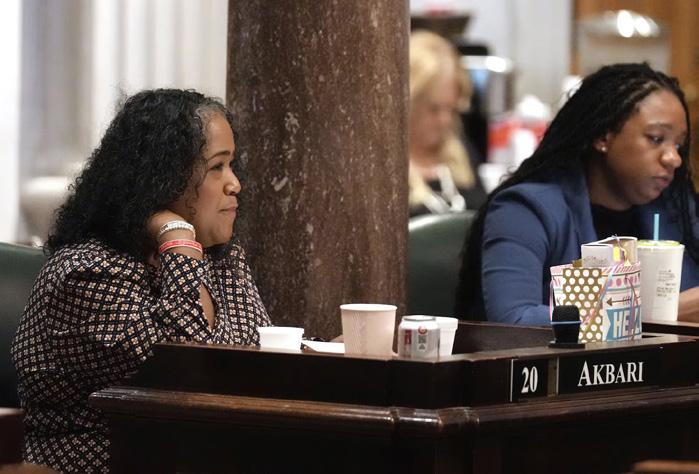
Memphis Democratic Senators Raumesh Akbari and London Lamar decried a Tennessee Republican redistricting effort as the latest in a series of maneuvers taking local control from their city. (Larry McCormack/Chalkbeat)
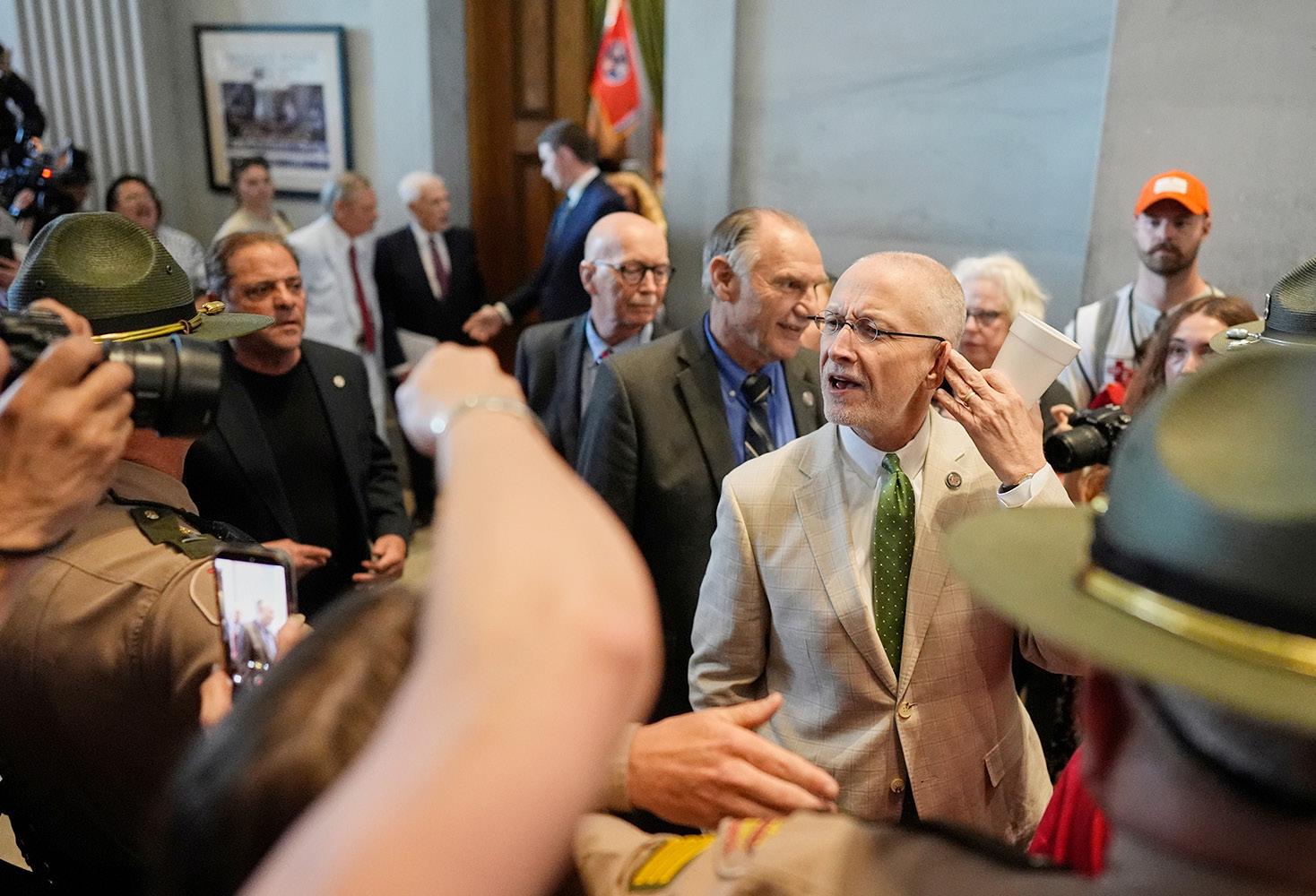
Sen. Brent Taylor, R-Memphis, taunts protesters as he leaves the Senate chamber after a special session of the state legislature to redraw U.S. Congressional voting maps, in Nashville, Tenn., Tuesday, May 5, 2026. (George Walker IV/Associated Press)
“Some teachers may not want to go in a building where there are two schools. And we will be sharing an art teacher, music, PE, whatever exploratory classes that they have, that’s just efficient and maximizing staff.”
— Angela Whitelaw
Ida B. Wells to remain a distinct school at another district campus for at least a year
By Bri Hatch Chalkbeat
District officials will delay closing one Memphis school for at least a year despite the school board voting to shut it down in February.
Memphis-Shelby County Schools officials confirmed Wednesday, May 20, that students and teachers from Ida B. Wells Academy will be moved into the Norris Achievement Academy building next year, and the original location will close. Chief Academic Officer Angela Whitelaw said that decision was motivated by an outpouring of community support for the K-8 alternative school during closure meetings this winter.
“The conversation was around (Ida B. Wells) being a level five school, and working with a very small student population,” Whitelaw said during an interview Wednesday, May 20. “Hearing that feedback and listening at both meetings, we wanted to lift up the programming that the school had.”
District officials provided more details of the now-altered closure plan following Chalkbeat Tennessee reporting that raised questions about how the school transfer would affect students and staff.
It’s a departure from the plan for four other schools that will close this year, where students will be dispersed into nearby schools and teachers relocated throughout the district. Director of Alternative Education Melita Thomas said Wells’ class sizes won’t be changed, and
students won’t mix with Norris attendees. Principal Tarcia Gilliam-Parish will also join the transition to Norris, as will some teachers.
Superintendent Roderick Richmond originally said MSCS was considering a temporary transfer in February. After
months of workshopping the plan, Whitelaw said the district told Ida B. Wells leaders and teachers about the relocation in April.
MSCS leaders decided to close the Ida B. Wells building in February because it was severely underenrolled,
with more than 400 open seats, and needed almost $6 million worth of facility repairs. It’s part of Richmond’s plan to close up to 10 more schools by 2028 in an effort to combat those district-wide issues.
And at a graduation ceremony Tuesday, May 19, Ida B. Wells’ parents and staff said the district hadn’t given many details about what that move would look like. Some families have already made the decision to send their children to other schools next year.
Whitelaw said they’re planning as if all current Wells students will make the move to Norris. It’s unclear how many educators will follow, she said, because positions change significantly throughout the summer.
“Some teachers may not want to go in a building where there are two schools,” she said. “And we will be sharing an art teacher, music, PE, whatever exploratory classes that they have, that’s just efficient and maximizing staff.”
Whitelaw said Ida B. Wells will stay open in Norris for at least one year, but she’s not guaranteeing any longer.
“We want to make sure that we get in there and see, to give the programming some additional time, as well as the students to transition,” she said.
Bri Hatch covers Memphis-Shelby County Schools for Chalkbeat Tennessee. Reach Bri at bhatch@chalkbeat.org. This story was originally published by Chalkbeat.
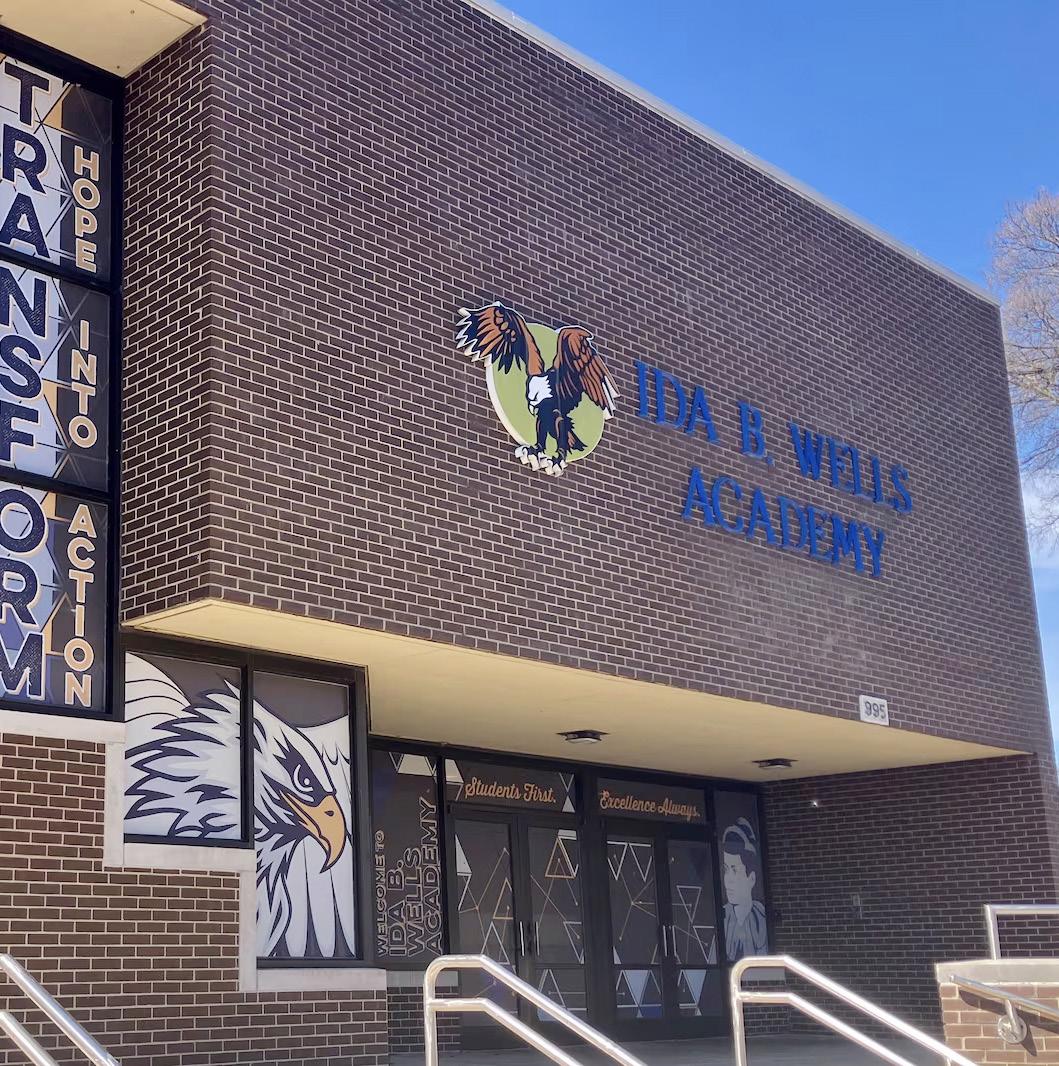
The Ida B. Wells building will close, but students and teachers can relocate to the Norris Achievement Academy building next year. (Bri Hatch/Chalkbeat)
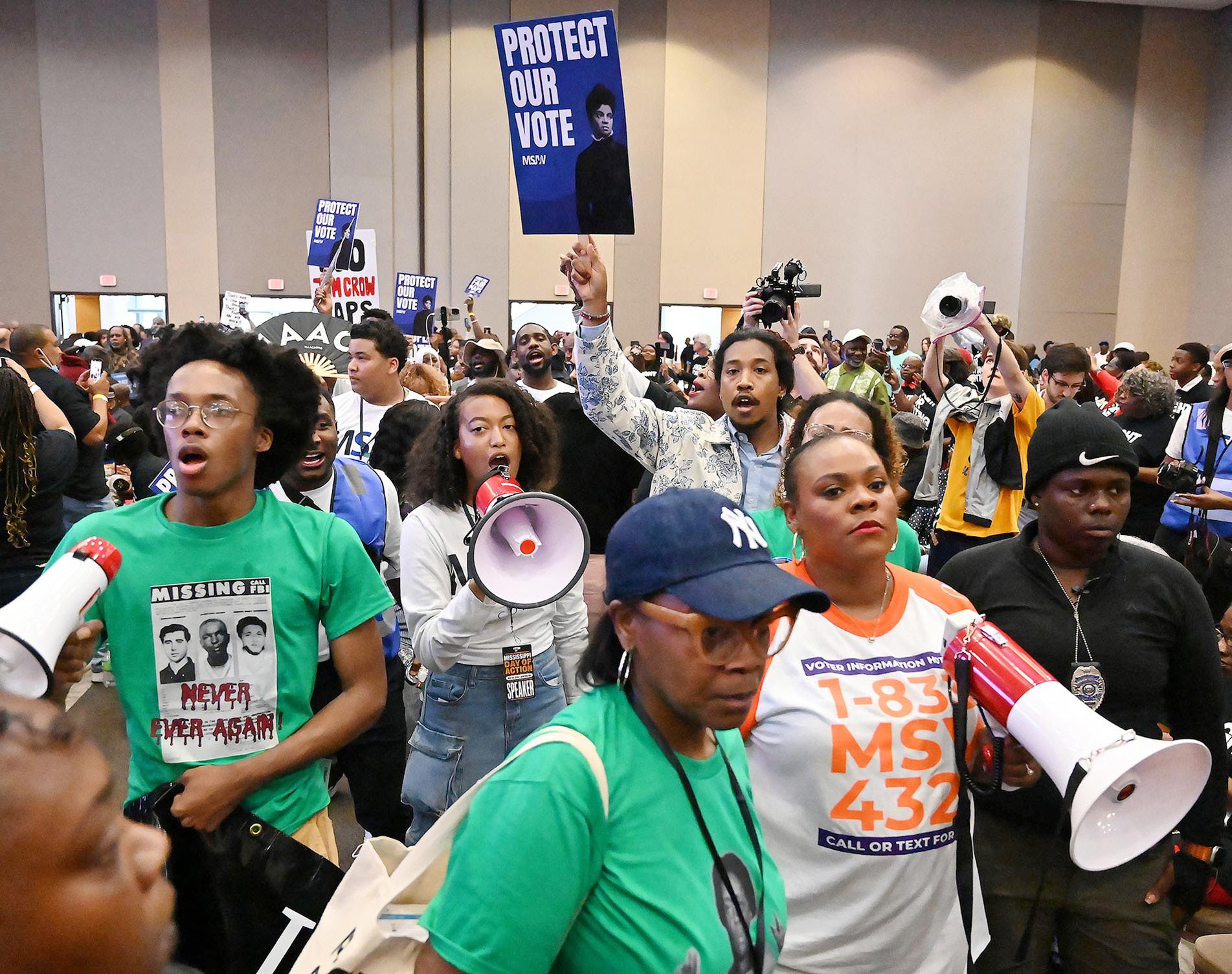
‘We’re ready to fight’: Thousands protest Mississippi redistricting and rally for voting rights
By Taylor Vance Mississippi Today
Blocks away from where state lawmakers will consider redrawing Mississippi’s political maps to reduce Black representation in government, thousands of people gathered Wednesday in Jackson to protest those efforts and mobilize people to vote in November.
The energy from the crowd was so palpable and raucous at times that some of the event’s speakers had to pause their remarks to let the attendees participate in rounds of chants, shouting, “No justice, no peace.”
Wednesday’s rally was a rebuke of the U.S. Supreme Court’s recent ruling weakening the federal Voting Rights Act and efforts by Republicans across the South to redraw electoral districts to weaken Black voting strength. The participants, including some from Memphis and Tennessee, protested those efforts by sporting shirts that called for fair political districts and waving signs that said, “No Jim Crow maps.”
The target for some of the redistricting efforts in Mississippi is U.S. Rep. Bennie Thompson, the state’s lone Democrat and Black member in Congress, who frequently draws the anger of Mississippi Republicans and President Donald Trump.
“I’m mad as hell about them calling Congressman Thompson a terror,” said U.S. Rep. Jonathan Jackson, a Democrat from Illinois who attended the rally. Jackson, son of the late Rev. Jesse Jackson, was referring to a comment Mississippi Gov. Tate Reeves made on a radio show earlier this month, where he said that Thompson’s “reign of terror” in the state’s 2nd Congressional District would soon end.
Thompson told the crowd on Wednesday that GOP leaders will soon have a “fight on their hands” if they
want to redraw the state’s congressional districts by slicing up the majority-Black Delta and Jackson metro area and putting those regions into majority-white districts.
“We can’t let short-minded people turn us back,” Thompson said. “Now, we don’t have to act like the crazy folks did on January 6, but you’re going to know we’re upset.”
Some Republicans in the state and the Trump White House have pushed for Mississippi lawmakers to redraw the state’s four congressional districts to make it difficult for Thompson to win reelection.
But several politicians at the rally, such as Scott Colom, the Democratic nominee for the U.S. Senate this year, criticized Reeves’ comments, noting Thompson has a history of sending federal dollars to Mississippi, one of the poorest states in the nation.
“The issue with that is I don’t remember Gov. Reeves sending back the money that Congressman Thompson voted to give for infrastructure,” Colom said.
For now, Reeves has cancelled a special legislative session for lawmakers to redraw the state’s Supreme Court voting map. The session was supposed to have begun Wednesday. But Reeves said in an interview earlier this month that he expects the Legislature to redraw Mississippi’s congressional, state legislative and judicial districts before the 2027 state election cycle.
House Speaker Jason White on Wednesday said he expects the governor to call lawmakers into a special session soon to redraw state legislative districts
Historians, state lawmakers, national advocates, members of Congress and civil rights attorneys spoke at Wednesday’s rally, called Day of Action, aimed at bringing generations of voters together to rebel against the redistrict-
ing efforts and mobilize them to vote during the upcoming midterm election. Two busloads
“We will not be erased,” said state Rep. Kabir Karriem of Columbus, Ms., chairman of the Mississippi Legislative Black Caucus. “We’re not going anywhere. And if you think you’re going to get rid of us, you’ve got another thing coming.”
Southern states led by white Republicans have raced to redraw their congressional districts and erode majority-Black districts after the recent high court ruling.
“In the 250th year of the country, the nation has decided to double down on the idea that it is a white republic,” said Eddie Glaude, a nationally recognized academic and political pundit who grew up in Moss Point.
The Rev. Jerry Jefferson, president of
the Okitibbeha County Branch of the NAACP, drove over two hours from Starkville to attend the rally. Jefferson, donning a “I FIGHT FOR VOTING RIGHTS” shirt, said the memory of prior civil rights struggles still looms large for him and many other attendees at the Jackson Convention Center on Wednesday.
“Once again, every time we try to go up the social ladder, political ladder or whatever it is, there’s always somebody who’s going to come try to cut our feet from under us and put us down to where we were before. But we refuse to go back,” Jefferson said.
The rush of some Southern states to redraw districts ahead of midterm elections caused several speakers to compare the erasure of majority-Black districts to fights during the Civil Rights Movement to gain voting rights
Kyita Welchlin, center, with bullhorn, and Tennessee state Rep. Justin Jones lead a contingent of marchers into a Rally for Voting Rights at the Jackson Convention Center, Wednesday, May 20, 2026, in Jackson. (Vickie D. King/Mississippi Today)
NEWS
for Black people and to the end of Reconstruction in the Deep South, when the federal government returned control to state leaders and they began enacting discriminatory laws and trying to intimidate Black voters.
Rep. Bryant Clark, a Democrat from Holmes County whose father Robert Clark in 1967 became the first Black person elected to the Mississippi Legislature in the modern era, said today’s efforts to reduce Black officials mirror the decision of white lawmakers in the 19th century to disenfranchise Black voters by enacting Jim Crow laws.
“It’s the same fight, same song, second verse,” Clark said.
The national NAACP has responded to this by calling on Black athletes and fans to boycott the athletic programs of public universities in states that are taking steps to reduce Black representation in politics, including in Mississippi.
If Black athletes participate in the boycott, it could drain rosters for powerhouse football programs and deplete revenues.
Derrick Johnson, the national NAACP president, on Wednesday at the rally compared predominantly white universities using many Black student athletes as a revenue source while not standing up for Black voices to a type of “sharecropping.”
“We don’t believe in sharecropping,” said Johnson, who lives in Mississippi. “We should not perform on the football fields or basketball courts where they cannot generate a profit.”
The rally ended with Tennessee state Rep. Justin Jones urging the participants to channel their anger against efforts to reduce Black voting strength into voting in the federal midterm election on Nov. 3.
“If you can get 5,000 people together on a Wednesday in the rain, then I believe you can get so many more on a Tuesday in November,” Jones said.
Mississippi Today reporter Michael Goldberg contributed to this report.
Eddie Glaude is a member of the board of directors for Deep South Today, parent company of Mississippi Today.
PUBLIC NOTICES / CLASSIFIEDS
PUBLIC NOTICE THE MEMPHIS URBAN AREA METROPOLITAN PLANNING ORGANIZATION
In compliance with federal regulations 23 CFR 450 and the Memphis MPO’s Public Participation Plan (PPP), the Memphis Urban Area Metropolitan Planning Organization (MPO) will hold public engagement events to provide the public with the opportunity to comment on the development of the Moving Together: 2055 Regional Transportation Plan (RTP) and to review and provide input on the draft Safety Action Plan (SAP), which is available for a 30-day public review period beginning on May 29 and ending on June 29, 2026.
The following event dates, times, and locations to participate are listed below:
Date: Monday, June 8, 2026
Time: 10:30 AM – 12:00 PM
Location: Downtown Transit Center 444 N Main Street Memphis, TN 38105
Date: Monday, June 8, 2026
Time: 2:30 PM – 4:00 PM
Location: Airways Transit Center 3033 Airways Boulevard Memphis, TN 38131
Date: Tuesday, June 9, 2026
Time: 10:30 AM – 12:00 PM
Location: Memphis Zoo 2000 Prentiss Place Memphis, TN 38112
Date: Wednesday, June 10, 2026
Time: 2:30 PM – 4:00 PM
Location: Benjamin L. Hooks Central Library 3030 Poplar Avenue Memphis, TN 38111
Date: Thursday, June 11, 2026
Time: 10:30 AM – 12:00 PM
Location: M.R. Davis Public Library 8554 Northwest Drive Southaven, MS 38671
Attendees will be afforded the opportunity to comment on the information presented at the events. Any comments provided at the events should be applicable to the information presented and should be provided in a respectable manner. Please note that additional engagement opportunities may be considered. In the case of an emergency or other unforeseen circumstances, the public engagement opportunities listed above could change with limited or no notice and will be shared on the MPO’s website: memphismpo.org
It is the policy of the Memphis MPO not to exclude, deny, or discriminate on the basis of race, color, national origin, or any other characteristic protected under applicable federal or state law in its practices, or in its admission to, access to, or operations of its programs, services, or activities. For any and all inquiries regarding the application of this accessibility statement and related policies, or for persons that require aids or services to participate either in the review of these documents or during the events, please contact Kate Horton, at 901-636-7218 or
Rates are non-commissionable and are quoted at the net rate. No refund for early cancellation. For additional information contact Sales Dept. at (901) 746-5201 or email: advertising@tsdmemphis.com.
Kate.Horton@memphistn.gov
If you need assistance participating in these events, please contact the MPO Office at 901-6367190 and provide at least seven (7) days notice.
This notice is funded (in part) under an agreement with the State of TN and MS, Departments of Transportation.
LEGAL NOTICE
Request for Statement of Qualifications
MSCAA Project Number 26-1497-00 Open Ended NEPA Consulting Services
Statements of Qualifications for Open Ended NEPA Consulting Services will be received by the Memphis-Shelby County Airport Authority (Authority), Procurement Department, 4150 Louis Carruthers Road, Memphis, TN 38118, until 2:00 PM local time on July 16, 2026. The Information Package, including a description of the scope of services, the selection criteria, the required response format, and additional instructions may be obtained on the Authority’s website at www. flymemphis.com on or after May 27, 2026
All Respondents are responsible for checking the Authority’s website up to the submission deadline for any updates, addenda or additional information. The successful Respondent must meet the Small Business Participation Program (SBPP) goal for this project, which is 10%, and sign a contract with the Authority that includes Federal Aviation Administration provisions, if applicable, regarding Buy American Preference, Foreign Trade Restriction, Davis-Bacon, Affirmative Action, Debarment and Suspension, and Drug-Free Workplace, all of which are incorporated herein by reference.
The Authority reserves the right to reject any or all responses to this request in whole or in part; to waive any informalities, technicalities, or omissions related to this request; and to reject responses on any other basis authorized by the Authority’s purchasing policies.
The Authority is an equal opportunity employer and prohibits discrimination based on the grounds of age, race, sex, color, national origin, disability, marital status, military service, or sexual orientation in its hiring and employment practices and in the admission to, access to, or operation of its programs, services, and activities.
By
order
of: Terry Blue, A.A.E. President and CEO Memphis-Shelby
County Airport Authority
LEGAL NOTICE Request for Bids
MSCAA Project Number 23-1476-17-02
Snow Removal Equipment Building - Building Package - Construction
Sealed bids for Snow Removal Equipment Building - Building Package - Construction will be received by the Memphis-Shelby County Airport Authority (Authority), Procurement Department, 4150 Louis Carruthers Drive, Memphis, TN 38118, until 2:00 PM Local Time on 6/23/2026. Bids will not be received at any other location. Within 30 minutes thereafter, the bids will be opened and publicly read via phone/ video conference (link/phone information available online at https://flymemphis.com/rfps-rfqs/) . The Bid Documents, including a description of the scope of work, the required response format, and additional instructions may be obtained on or after May 28, 2026 online at https://flymemphis.com/rfps-rfqs/
A Virtual Pre-Bid Meeting will be held on Thursday June 4, 2026, at 11:00 AM local time via phone/video conference (link/phone information available online at https://flymemphis.com/ rfps-rfqs/). The project site will be available for inspection following the meeting at 1:30 PM local time. Anyone that would like to attend the site visit must register by Wednesday, June 3, 2026. Site Visit registration is done by emailing bidquestions@flymemphis.com Pre-bid and site visit attendance is strongly recommended. All instructions for the Pre-Bid Meeting and Site Visit can be found at https://flymemphis.com/ rfps-rfqs/
All Bidders are responsible for checking the Authority’s website up to the submission deadline for any updates, addenda or additional information. The successful Bidder must sign a contract with the Authority that includes Federal Aviation Administration provisions, if applicable, regarding the Buy American Preference, Foreign Trade Restriction, Davis-Bacon, Affirmative Action, Debarment and Suspension, and Drug-Free Workplace, all of which are incorporated herein by reference.
Each bid must be made by a contractor licensed in Tennessee and be accompanied by a 5% Bid Guarantee. The successful bidder must execute a Performance Bond and a Payment Bond in the amount of 100% each of the Contract Price and meet the Small Business Participation Program (SBPP) participation goal for this project, which is 15%
The Authority reserves the right to reject any or all responses to this Request for Bids in whole or in part; to waive any informalities, technicalities, or omissions related to this Request for Bids; and to reject responses on any other basis authorized by the Authority’s purchasing policies.
The Authority is an equal opportunity employer and prohibits discrimination based on the grounds of age, race, sex, color, national origin, disability, marital status, military service, or sexual orientation in its hiring and employment practices and in the admission to, access to, or operation of its programs, services, and activities.
By order of:
Terry Blue, A.A.E. President and CEO
Memphis-Shelby County Airport Authority
■■ NEWS Tennessee fails to execute Tony Carruthers after IV difficulties. State won’t try again for a year
By Travis Loller Associated Press
NASHVILLE, Tenn. — Tennessee officials on Thursday May 21, called off the lethal injection of Tony Carruthers, who was convicted of kidnapping and murdering three people in 1994, after his executioners tried and failed for over an hour to establish an intravenous line. Gov. Bill Lee announced soon afterward that the state would not try again for at least a year.
In a written statement, the Tennessee Department of Corrections said medical personnel had quickly established a primary IV line but were unable to find a suitable vein for a backup line as required by the state’s execution protocol. Efforts to insert a central line also failed, and officials called off the execution.
Maria DeLiberato, an attorney for Carruthers, said she saw him “wincing and groaning” while officials attempted to find a vein, calling it “horrible” to watch.
DeLiberato was addressing reporters when the governor’s office issued the reprieve. She began crying.
“That’s amazing!” she said. “I’m so grateful!”
States have repeatedly had to halt executions because of difficulties establishing an IV. In Idaho in 2024, medical team members tried eight times to establish a line to execute Thomas Creech, one of the nation’s longest-serving death row inmates, before calling it off; Idaho Gov. Brad Little subsequently signed a law making firing squad the state’s primary method of execution.
In Alabama, Gov. Kay Ivey paused executions for several months after officials called off the lethal injection of Kenneth Eugene Smith in 2022. It was the third time since 2018 Alabama had been unable to conduct executions due to problems with IV lines.
Carruthers convicted of killing 3 in Memphis
Carruthers, 57, was found guilty of the 1994 kidnappings and murders of Marcellos Anderson; his mother, Delois Anderson; and Frederick Tucker. He was forced to represent himself at trial after repeatedly complaining about court-appointed attorneys and threatening to harm several of them.
There was no physical evidence tying Carruthers to the killings, and he was convicted primarily on the basis of testimony from people who claimed to have heard him confess to or discuss the crimes.
They include a man later revealed to be a police informant who told media he was paid for his testimony.
A co-defendant, James Montgomery, was originally sentenced to death along with Carruthers but was later resentenced and released from prison in 2015, according to court filings.
Authorities said Marcellos Anderson was a drug dealer, and Carruthers was trying to take over the illegal drug trade in their Memphis neighborhood. Carruthers’ attorneys have said their client’s “paranoia and delusions” prevented him from being able to cooperate with court-appointed counsel, but the judge viewed this behavior as willful.
The Tennessee Supreme Court said on appeal that Carruthers’ actions before the trial jury were offensive and self-destructive but the situation in which he found himself was one of his own making.
Carruthers’ attorneys have tried to show that he is incompetent to be executed. They claim in court filings that Carruthers believes the government is bluffing about executing him in order to coerce him into accepting a plea deal that exists only in his mind. That way, Carruthers believes, the government can avoid paying him what he thinks
are millions of dollars it owes him. He is convinced that his own attorneys are part of a conspiracy against him and refuses to even speak with them, according to court filings.
Lethal injection drug purity questioned
Carruthers’ attorneys also had expressed concern that the state may have been planning to use expired lethal injection drugs, a growing concern across the country as states work to keep most information about their drugs secret. Attorneys twice asked the Tennessee Department of Correction last month whether it had secured the appropriate drugs for his execution date and for assurance the drugs had not expired.
Assistant Attorney General John W. Ayers’ response did not directly answer but said the department would comply with its lethal injection protocol — which includes regular inventory of the drugs to monitor expiration dates.
Tennessee began a new round of executions last year after a three-year pause following the discovery that the state was not properly testing lethal injection drugs for purity and potency.
An independent review later found that none of the drugs prepared for the seven inmates executed in Tennessee since 2018 had been fully tested.
Associated Press reporters Gene Johnson in Seattle and Sudhin Thanawala in Atlanta contributed.