
TRI-STATE DEFENDER

tsdmemphis.com


tsdmemphis.com
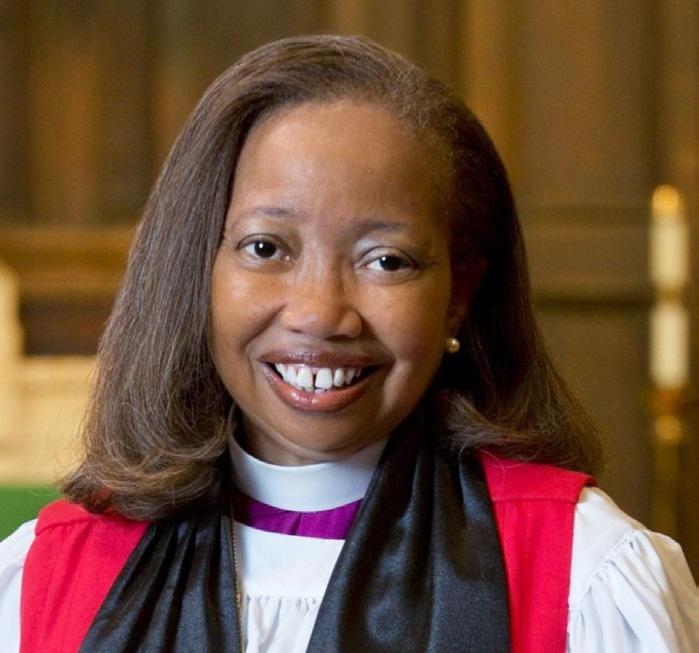
Rt. Rev. Dr. Dorothy Sanders Wells, who is a member of the Rhodes Class of 1982 and bishop of the Episcopal Diocese of Mississippi, will receive an honorary doctor of humanities at the 177th Commencement of Rhodes College. The ceremony will be Saturday, May 16, at 8:30 a.m. in the Hubert F. Fisher Memorial Garden on campus. In the event of rain, the commencement will take place in the Bryan Campus Life Center.
In addition, Wells has served on the Alumni Association Executive Board of Rhodes College and the Board of Trustees of St. Mary’s Episcopal School. She received the Black Student Association’s Distinguished Alumna Award in 2011 and at Rhodes’ Commencement in 2015 was presented with the Algernon Sydney Sullivan service award.
Wells is the mother of two adult daughters.
POSTMASTER: Send address changes to The Tri-State Defender, 1509 Madison Ave., Memphis, TN, 38104.
GENERAL INFORMATION: Inquiries may be submitted in writing or by calling (901) 523-1818 or by email. TELEPHONE: (901) 523-1818.
The Tri-State Defender (USPS 780-220) is published weekly. The Tri-State Defender 1509 Madison Ave. Memphis, TN, 38104. Second-class postage paid in Memphis, TN.
The Tri-State Defender is a member of The National Newspaper Publishers Association and the Tennessee Press Association.
materials covered by copyright. No materials herein may be reproduced without the written permission of the Publisher. (901) 523-1818 | 1509 Madison Ave, Memphis, TN 38104
$60 Annually/$5 Monthly
Digital subscriptions are available online at tsdmemphis.com
In 2024, Wells made history becoming the first woman and first Black person elected to lead the diocese. She had served as rector of St. George’s Episcopal Church in Germantown, Tenn., and chaplain of the church’s preschool. Born in Mobile, Ala., Wells earned a bachelor’s degree in vocal performance from Rhodes, where she was the first Black student inducted into the college’s chapter of Phi Beta Kappa. She has also earned a master of divinity from the Memphis Theological Seminary, a juris doctor from The University of Memphis, and doctor of ministry from Emory University.
Prior to her ordination into the ministry, Wells practiced law for 18 years, first with the law firm of Waring Cox, PLLC, and then as a corporate attorney for FedEx. She also has been active in the Memphis community, serving on the boards of directors of the Metropolitan Inter-Faith Association (MIFA), Church Health, Community Alliance for the Homeless and Room in the Inn-Memphis.
“I believe that my years in Memphis are marked by my commitment to serving the underserved and creating opportunities for meaningful dialogue among ecumenical and interfaith groups. The foundation I received at Rhodes helped me understand my call to make the world a better place,” said Wells.
“Bishop Wells has lived out the Rhodes mission with uncommon clarity and purpose,” said Rhodes College President Jennifer Collins. “Her leadership, her service to others, and her unwavering commitment to justice and compassion exemplify the values we hope every graduate carries into the world. We are deeply proud to honor her with this degree.”

In times like these, it is easy to feel powerless. Advocacy organizations exist for this very reason, to protect rights, ensure fairness and hold systems accountable.
By Judith Black Moore TSD Contributing Writer
The nonprofit ecosystem is made up of organizations that uplift communities through service and those protecting the rights that make progress possible. Together they uphold a foundation of sustained equity and lasting justice.
Many people may be surprised to learn that organizations like the NAACP, the ACLU and the National Urban League are nonprofits.
Your paid membership to these organizations functions as a contribution — helping fund their work in the same way donations support more traditional nonprofits.
In today’s political climate, where conversations around voting rights, civil liberties, education, and even history itself, are becoming more contested, how we define and support nonprofit work deserves a closer look.
Some nonprofits meet immediate needs. Others prepare people for what’s ahead.
And then there are the many nonprofits like the NAACP, the ACLU and
National Urban League whose primary role is advocacy, protection and systemic change. These organizations operate at a different level of impact. They are not primarily hosting programs or workshops. Instead, they challenge laws, file lawsuits, shape public policy and protect constitutional rights.
Their work often happens in courtrooms, legislative chambers and behind the scenes, places most people never see but where decisions are made that affect millions.
Part of the reason these nonprofits feel different is structural. Most community-based organizations, like youth programs, education initiatives and service-driven nonprofits, operate as 501(c)(3) charitable organizations. Donations to these organizations are tax-deductible and their impact is often visible and immediate.
Advocacy organizations, however, often operate as 501(c)(4) social welfare organizations. Many of these organizations also operate or work alongside a 501(c)3 arm. For example, the NAACP works in partnership with the NAACP Legal Defense and Educational Fund, an independent 501(c)(3) organization
focused on litigation and education. That structure allows them to lobby more directly for legislation, advocate with policymakers and engage more actively in shaping public policy
The trade-off is that contributions to the 501(c)(4) side are not tax-deductible.
Understanding this distinction should shape how we think about giving.
When you support a 501(c)(3), you are often funding programs you can see and measure — students served, workshops delivered and lives directly impacted.
When you support advocacy organizations, whether through membership or contributions, you are funding work that is less visible but equally critical — legal challenges, policy changes and protections that prevent harm before it happens.
There are also practical differences to keep in mind:
• Donations to 501(c)(3)s are tax-deductible while most contributions to 501(c)(4)s are not.
• Both types of organizations typically file annual reports with the IRS, known as Form 990, and those filings are publicly available.
• The impact of 501(c)(4)s often shows up through court decisions, legislation or sustained influence.
At a time when voting laws are shifting, school curricula are being debated and communities are navigating heightened cultural and political tension, it is not enough to simply support nonprofits in a general sense.
Citizens must take a moment to understand:
• Who is serving immediate needs
• Who is preparing people for what’s ahead
• Who is protecting the rights that make both possible
These roles are interconnected. The work of each helps sustain the foundation of equity and long-term opportunity.
In times like these, it is easy to feel powerless. Advocacy organizations exist for this very reason, to protect rights, ensure fairness and hold systems accountable. They are nonprofits too. The difference is in how their impact shows up.
Supporting both 501(c)3s and 501(c)4s through contributions or memberships (respectively), is part of a broader ecosystem that ensures communities are not only served, but their rights are also protected.
Judith Black Moore is a nonprofit consultant and the founder of Taking Back the Future, a youth-focused nonprofit.
Associated Press
A Tennessee man pleaded guilty on Friday, May 15, in the shooting death of Young Dolph during a daytime ambush at a Memphis bakery, marking an end to courtroom battles stemming from the rapper and music label owner’s shocking killing in his hometown more than four years ago.
Cornelius Smith Jr., 36, pleaded guilty to second-degree murder in a Memphis courtroom under an agreement with prosecutors that dropped other charges against him, according to a press release from the district attorney’s office. He was sentenced to 20 years in prison as part of the plea deal.
Smith and another man, Justin Johnson, were charged with first-degree murder in the November 2021 killing of Young Dolph.
Smith was the main witness in the trial of Johnson, who was convicted of first-degree murder in 2024 after Smith named him as the second shooter. Johnson was sentenced in September 2024 to life in prison. Johnson was later sentenced for two other convictions
from the trial: conspiracy to commit murder and possession of a gun as a felon.
Smith also testified at the trial of Hernandez Govan, who was acquitted in August of charges that he organized the killing.
Young Dolph, whose legal name is Adolph Thornton Jr., was a rapper, independent label owner and producer who grew up in Memphis and was admired in the city for his charitable works. The 36-year-old was in his hometown to hand out Thanksgiving turkeys to families when he was killed.
The shooting stunned the entertainment world as another death of a rap star killed in their prime.
Authorities said two men exited a white Mercedes-Benz and began shooting at the rapper at the bakery. He died after being shot about 20 times, according to a medical examiner’s report.
After the killing, the bakery, Makeda’s Homemade Cookies, turned into a memorial to Young Dolph. He was also honored at a Memphis Grizzlies game and the city named a street after him.
Murals of the rapper have been painted around the city.
Prosecutors have portrayed the killing as part of an effort by Anthony “Big Jook” Mims to get revenge on Young Dolph for diss tracks aimed at Big Jook and the record label he helped run for his brother, rapper Yo Gotti. Smith has testified that Big Jook put out a $100,000 hit on Young Dolph as well as smaller bounties on all the artists at Young Dolph’s record label, Paper Route Empire.
At the trial of Justin Johnson, a prosecutor told jurors that Cocaine Muzik Group (now known as Collective Music Group), a rival record label founded by Yo Gotti, wanted Young Dolph to work for them, but he turned them down.
Big Jook was shot and killed outside a restaurant in January 2024. No arrests have been made in his death, and he was never charged in Young Dolph’s killing.
Smith has testified that, “I didn’t know anything about Paper Route having no hits,” before Govan told him about them. He said Govan hired him to “do the hits” and was going to take

$10,000 as his cut.
But the jury in Govan’s trial was not convinced that he organized the killings.
After Young Dolph’s death, social media was filled with messages of respect and love for the rapper, whose music discussed Memphis street life and his crack-addicted parents, alongside hard-earned lessons of strength and perseverance in the face of difficult circumstances. His legacy as a fiercely independent artist and businessman was cemented in the hip-hop universe.
By James Coleman TSD Contributing Writer
A recently updated city impasse procedure to settle contract disputes between City of Memphis workers and their employer was vetoed by Mayor Paul Young on Tuesday, May 12. The bad news was delivered to City Council members during Council Day at City Hall. Council attorney Alan Wade also received the three-page notification.
In his missive, Young said the ordi-
nance “seeks to enlarge the Council’s authority in direct contravention of the charter, which vests the mayor, solely, as the chief executive officer of the City of Memphis, with the authority to ‘administer, supervise and control all divisions, boards, agencies, offices and employees of the city.’”
In March, council members approved an ordinance that pares down a three-person arbitration panel to a single mediator. The intermediary would work with both parties towards a solution. Council members crafted to limit
their role to a straight up or down vote. Impasses are limited to budget-sensitive issues like pay or benefits.
A 8-4 majority of council members agreed that the previous rules — written in 1978 — had become unwieldy and counterproductive.
At the time, sponsor JB Smiley opted to override Wade’s warnings and move ahead with a third and final vote. The legal advisor cited the city’s charter, which requires an arbitrator. Unlike an intermediary — which facilitates negotiations — arbitrators function more
like judges who issue evidence-based decisions.
Young also implied that the ordinance left the administration with more questions than answers.
“The ordinance’s circular references to unstated processes and requirements, to produce unknown/undefined documents, create an enforcement impossibility,” wrote Young “The administration cannot enforce an ordinance shrouded in enigma.”
An override of Young’s veto could be added to the May 26 meeting’s agenda.
By Travis Loller Associated Press
NASHVILLE, Tenn. — Four Memphis residents are suing U.S. and Tennessee officials, saying they have been harassed, arrested and physically mistreated for engaging in activities protected by the First Amendment such as observing and recording law enforcement agents in their city.
A lawsuit filed Wednesday in federal court targets the Memphis Safe Task Force, comprising agents from 13 federal agencies that President Donald Trump ordered to the city to fight crime alongside Tennessee State Troopers and the Tennessee National Guard.
Since late September, hundreds of federal, state and local law enforcement personnel tied to the task force have made traffic stops, served warrants and searched for fugitives in the majority Black city of about 610,000 people. The lawsuit says the task force has conducted over 120,000 traffic stops.
“In the professed name of crime control, Task Force agents have stopped, menaced, and arrested Memphians engaging in routine, day-to-day activ-
ities,” the lawsuit states. “In response, Memphians encountering Task Force agents in public, including Plaintiffs, have stopped to gather information about and record Task Force activities.”
The U.S. Department of Justice released a statement on Wednesday in response to the lawsuit.
“In eight months, the Memphis Safe Task Force has made over 9,000 arrests, including 951 known gang members, and located 150 missing children, drastically increasing public safety in the Memphis community. The Department will not tolerate any action that puts our law enforcement officers at risk. We strongly disagree with the allegations in the lawsuit and remain committed to fair, impartial, and professional law enforcement practices to keep Memphians and the American people safe.”
Hunter Demster, a Memphis resident and plaintiff, says he regularly sees the task force stopping cars in his neighborhood, which has a large Hispanic population. In one interaction, he was surrounded by task force agents after he filmed a traffic stop and told the people in the car that they had a right not to
speak to police.
“It is a terrifying feeling,” Demster said. “I did nothing illegal. I used my First Amendment protected rights to hold up a phone and say some ‘know your rights’ information.”
Scarlet Kim, senior staff attorney with the American Civil Liberty Union’s Speech, Privacy, and Technology Project, said the Tennessee law is written so broadly that officers have wide discretion to invoke it against observers even when the observers are not impeding their actions.
“When observers go to the scene of task force activity and they are observing, they’re gathering information,” Kim said. “They are picking up their phones and cameras and documenting what’s happening. That’s all core protected First Amendment activity. And it’s not a basis for the government to essentially react in the way that they’re reacting.”
The task force is part of a larger effort by Trump to use National Guard troops and surge federal law enforcement in cities, particularly ones controlled by Democrats. Speaking last year to U.S. military leaders in Virginia, Trump
proposed using cities as training grounds for the armed forces.
The lawsuit accuses task force agents of systematically retaliating against the four plaintiffs and other members of the public engaged in similar observations. It claims the threats and harassment are the “direct result of federal policy” that views observing federal agents performing their duties in public as a threat of harm to those agents. The lawsuit also claims that federal and state officials have failed to train their agents not to retaliate against citizens engaged in activities protected by the First Amendment.
The lawsuit asks the court to declare that retaliation against the plaintiffs for observing and recording law enforcement activity is unconstitutional and to prohibit the agents from further retaliation. It also targets a Tennessee law that requires observers to stand at least 25 feet (7.6 meters) away from law enforcement officers, if they are warned to do so, or face arrest. The suit asks the court to declare unconstitutional the use of the “Halo Law” against defendants who are not interfering with agents or impeding their duties.
By Melissa Brown Chalkbeat
The Tennessee supermajority’s redrawing of its Congressional districts to siphon Memphis Democrats into Republican seats came days before the Memphis-Shelby County school system takeover is expected to be signed into law. It’s an unprecedented confluence that could dilute the voting power of Tennessee’s largest majority-Black city.
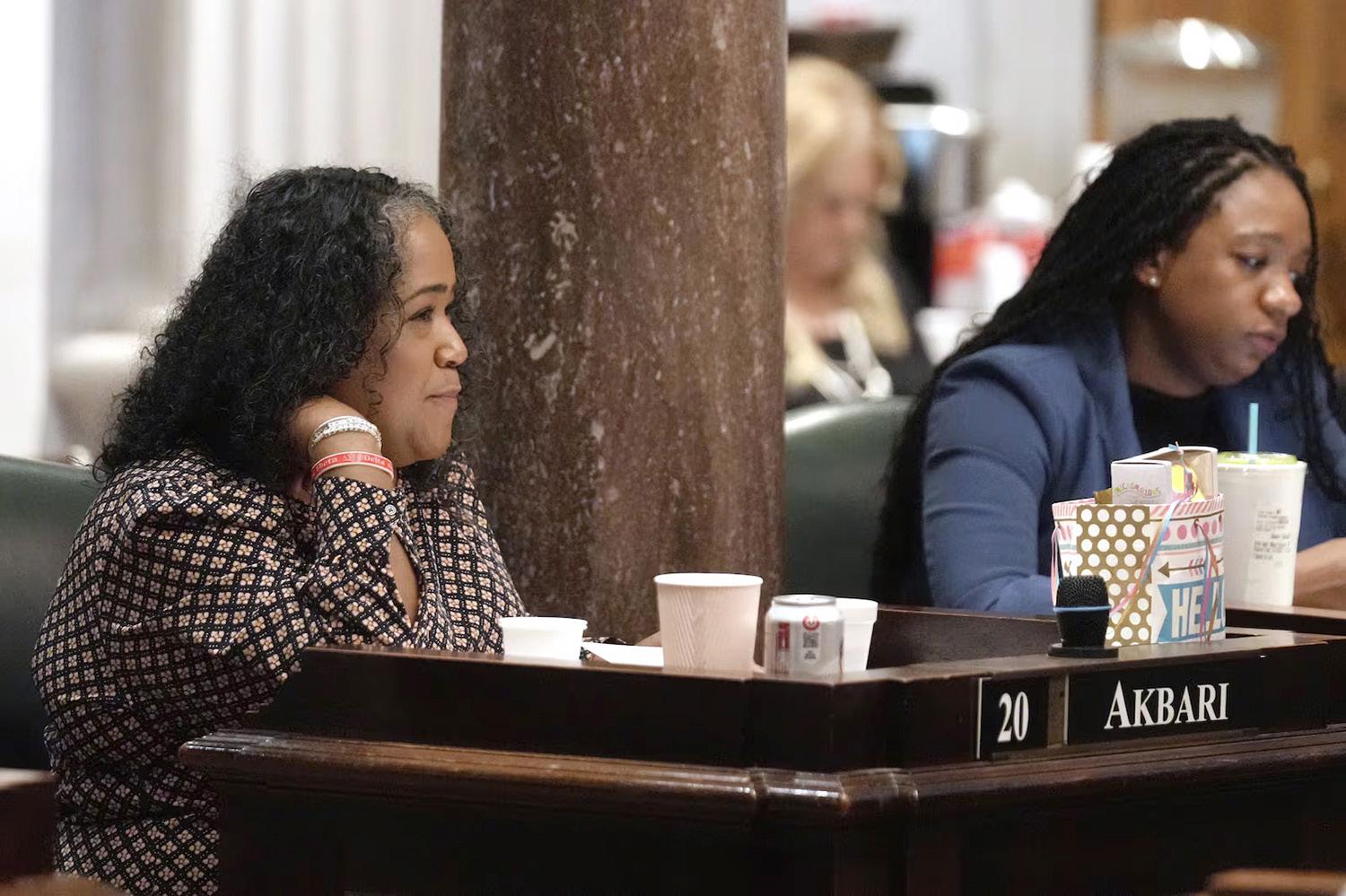
This week, Memphis Democrats decried an onslaught of Republican measures they say are aimed at Black Memphians, who will see their locally elected school board neutered by GOP political appointees just as they lose a Memphis-centered Congressional district aimed at protecting minority voting power.
Senate Democratic Caucus Chair London Lamar, a Memphis Democrat, called the sweeping effort “an absolute power grab.”
“You didn’t like our school board, you took that over,” Lamar said Thursday, May 8, prior to the redistricting vote. “You didn’t like our airport authority. You took that over. And now, you don’t like the way Memphis votes. You’re going to take that away from us, too. You cannot claim local control while stripping Memphis voters from meaningful representation. You cannot claim to respect democracy while changing the rules.”
Now, one of the main architects of the Memphis-Shelby County schools takeover wants to capitalize on the redistricting effort.
“You didn’t like our school board, you took that over. You didn’t like our airport authority. You took that over. And now, you don’t like the way Memphis votes. You’re going to take that away from us, too. You cannot claim local control while stripping Memphis voters from meaningful representation. You cannot claim to respect democracy while changing the rules.”
— London Lamar,
Sen. Brent Taylor, the Memphis Republican who sponsored the Senate version of the takeover, announced Thursday he would run in the redrawn 9th Congressional District just minutes after the redistricting effort was signed into law. Taylor and other Republicans have denied the effort was tied to Memphis’ racial makeup but say they’re now able to further consolidate Republican power in Tennessee due to a recent U.S. Supreme Court ruling.
“This is about allowing Tennessee to maximize its partisan advantage,” said Sen. John Stevens, a Republican from Huntingdon, in a Senate debate this
week.
Taylor’s partner in the schools takeover, Memphis Republican Rep. Mark White, was one of the few Republicans who did not support the redistricting effort. White opted to not cast a vote in favor or against the measure alongside a handful of other Republicans who serve in more competitive districts in Shelby and Knox counties.
The state takeover legislation awaits Gov. Bill Lee’s signature to become law.
The law would shift control of the state’s largest public school district to a nine-person oversight board appointed by Tennessee’s top three Republicans, including the governor. The new board will diminish the authority of the local school board, which is in the middle of an election cycle that drew the largest voter turnout in over two decades for county-wide May 5 primary elections.
Takeover advocates argue years of academic underperformance and district management drama necessitated the intervention, which accelerated after the school board in 2025 quickly fired a new superintendent.
It also follows years of rising tensions between Tennessee Republicans, a majority-white party with supermajority power, and local leaders in Memphis, a longtime Democratic stronghold
with a majority-Black population. Last year, Republicans imposed a state and federal law enforcement surge because of immigration and crime concerns.
A Memphis school board member in April called the oversight law “racist” as Tennessee Republicans, all of whom are white, will seize control from the locally elected school board, the majority of whom are Black. Memphis parents have expressed concern about funding and support for a predominantly Black school district.
The Republican supermajority has given the oversight board nearly unlimited power to dive into district records, from teacher evaluations to curriculum reviews, and control the district’s largest financial decisions.
It will also have final say over the district’s operating budget and superintendent contract. Its power even extends in part to the Shelby County Commission, the county’s local governing body, which will be blocked from signing off on the MSCS annual budget until the oversight board gives its approval.
Melissa Brown is the bureau chief for Chalkbeat Tennessee. Contact Melissa at mbrown@chalkbeat.org.
This story was originally published by Chalkbeat.
By James Coleman TSD Contributing Writer
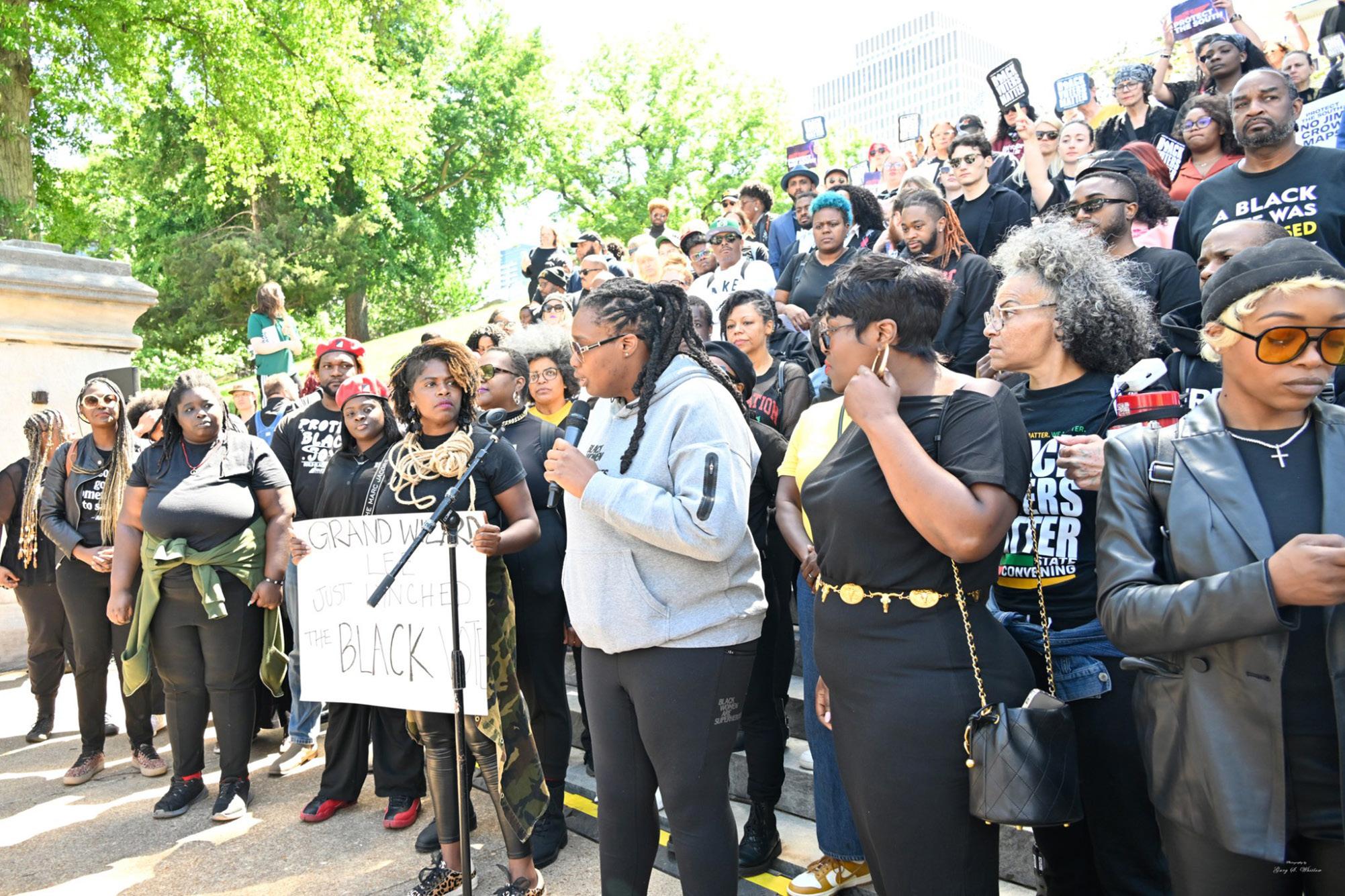
Defiance against a newly redrawn congressional district map continues to grow after the Memphis City Council unanimously approved a resolution opposing the new District 9 boundaries at the Tuesday, May 12 meeting.
Council member JB Smiley introduced the resolution during the morning meetings. Personnel and Governmental Affairs Committee members unanimously agreed to add the item to the afternoon meeting agenda using the same night minutes.
Smiley read a statement in the afternoon, after “withholding” his comments earlier in the day.
“For generations, Congressional District 9 has ensured that the voices of the people of Memphis are heard at the federal level. Now the state legislature has fractured our community and diluted our collective voices for partisan gain,” said Smiley. “Memphis has always fought through adversity and we’ll fight through this too, because no map can erase the people of this city, our history or our power.”
On May 7, Republican state lawmakers in Nashville approved redrawn lines during a special session called at the request of Republican Gov. Bill Lee. Opponents argue the lines were redrawn to end the Democratic Party’s dominance in the state’s only district with a majority Black population. The overhaul also splits Shelby County among three congressional districts — the 5th, 8th and 9th — ending decades of Memphis-dominated representation under a compact urban district. Tennessee currently sends a 8-1 delegation to Congress.
State Republicans jumped at the
“These particular events that are going on at a national level state-by-state are wrong. What we’re looking at is not political gerrymandering. This is a reinstitution of Jim Crow, intentional or not.” — Jeff Warren.
opportunity, after the conservative-led Supreme Court set the table by narrowing the scope of Section 2 of the 1965 Voting Rights Act. It prohibits discriminatory voting procedures based on race, color or membership in certain minority groups.
District 9 is currently represented by Rep. Steve Cohen. Moreover, the district has been represented by a Democrat since being drawn following the 1980 census.
“These particular events that are going on at a national level state-bystate are wrong. What we’re looking at
is not political gerrymandering. This is a reinstitution of Jim Crow, intentional or not,” said Jeff Warren.
At 70 years old, Warren is the elder statesman of the body. The native of Salisbury, North Carolina moved to Memphis in 1989. The longtime area physician remembers the plight of Black Americans struggling to gain a basic civic right.
“When I was a young man, I remember the civil rights marches. I remember people being sprayed with cannons and attacked by dogs. I saw that on TV at night. I knew how hard it was
for people to actually get the right to vote and then actually get the right to have their own voice represented in our own houses of government,” recalled Warren.
For another council member, the memories are recounted through the ancestral narratives of her grandmothers. Both suffered the humiliations and human rights of abuses of Jim Crow law.
One was lucky enough to guess the number of beans in a jar— a common hurdle black voters had to clear to vote. Other methods included poll taxes, literacy tests, grandfather clauses and intimidation.
“And because she guessed how many beans were in a jar, they sicced a dog on her that bit her ankles — because she wanted to vote,” said Yolanda Cooper-Sutton. “Eventually, they did let her vote, but the trauma that we as a country and we as a people have gone through just to have a right to vote has been minimized to. You don’t want our vote and you don’t even want our voice anymore.”
According to the council woman, her surviving 98-year old grandmother isn’t surprised by the recent turn of events. Redistricting came up during a recent Mother’s Day visit.
“She kind of smiled and said, ‘there is nothing new under the sun. As long as evil exists, you will always see the same thing being replayed through history,‘” said Cooper-Sutton.
Despite the philosophical outlook, there was room for criticism. The family matriarch is disappointed in the lack of action by the nation’s current Black leadership.
“They didn’t have a plan and (didn’t) see this coming,” quoted Cooper-Sutton.
By Candace A. Gary TSD Contributing Writer
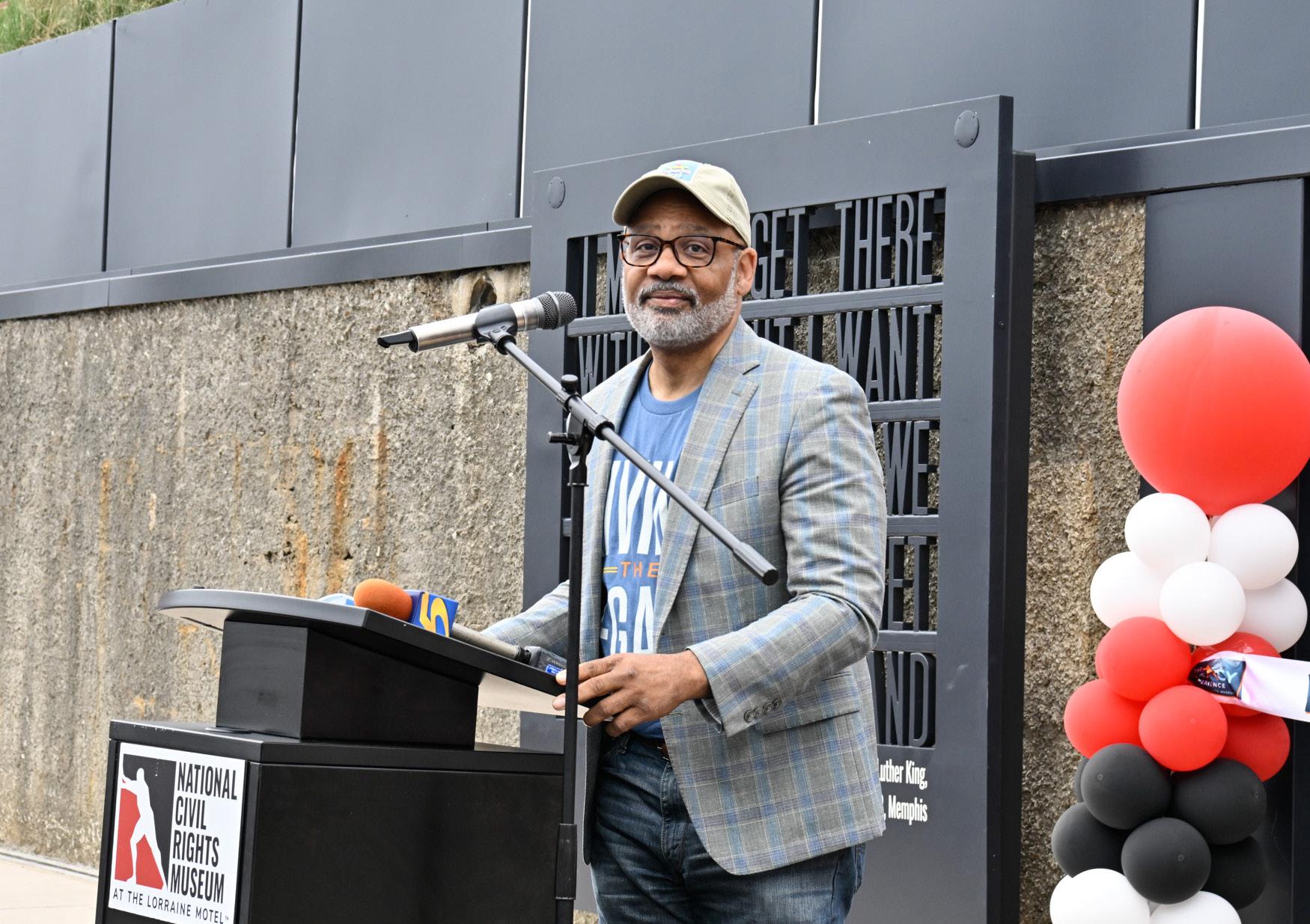
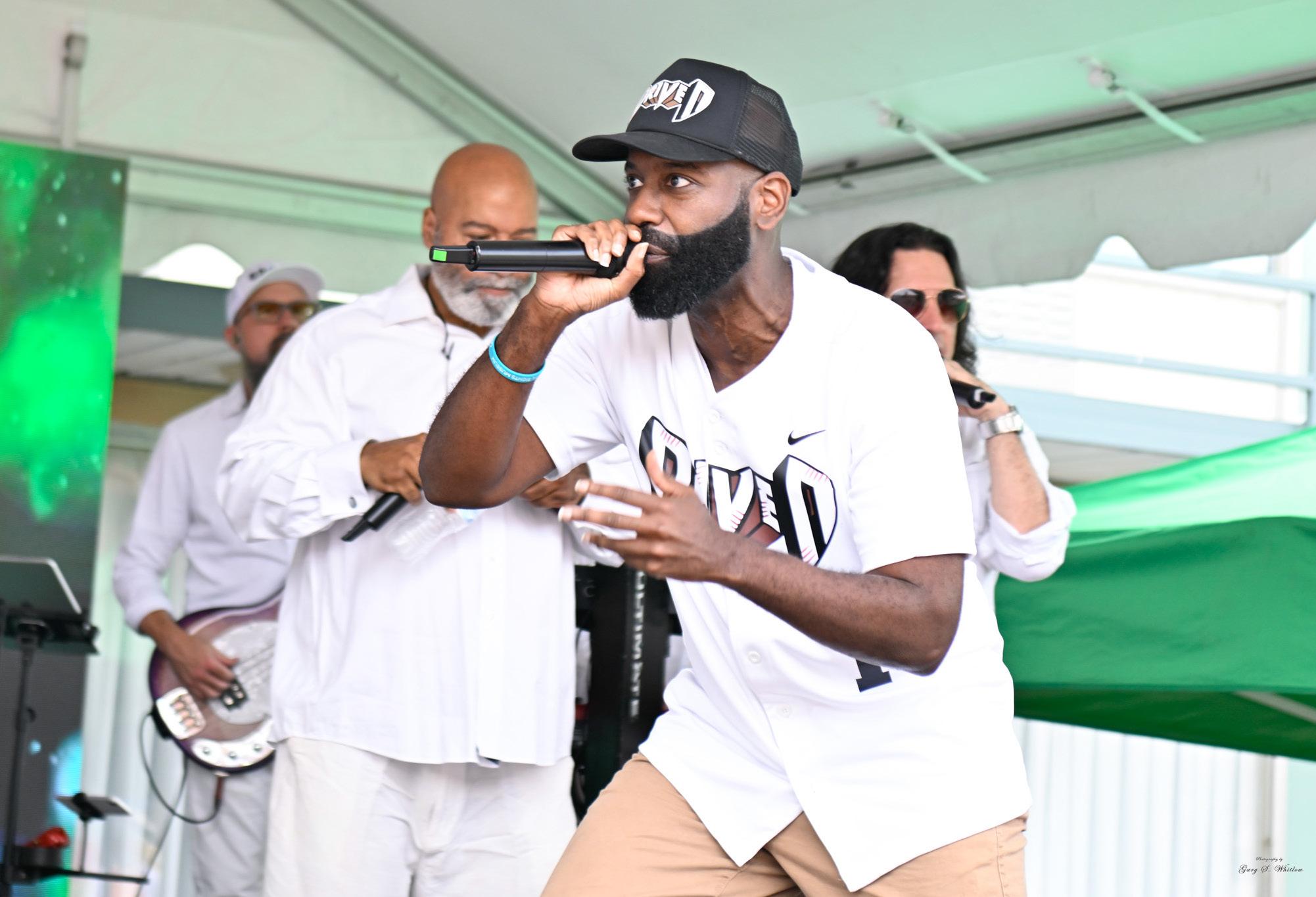
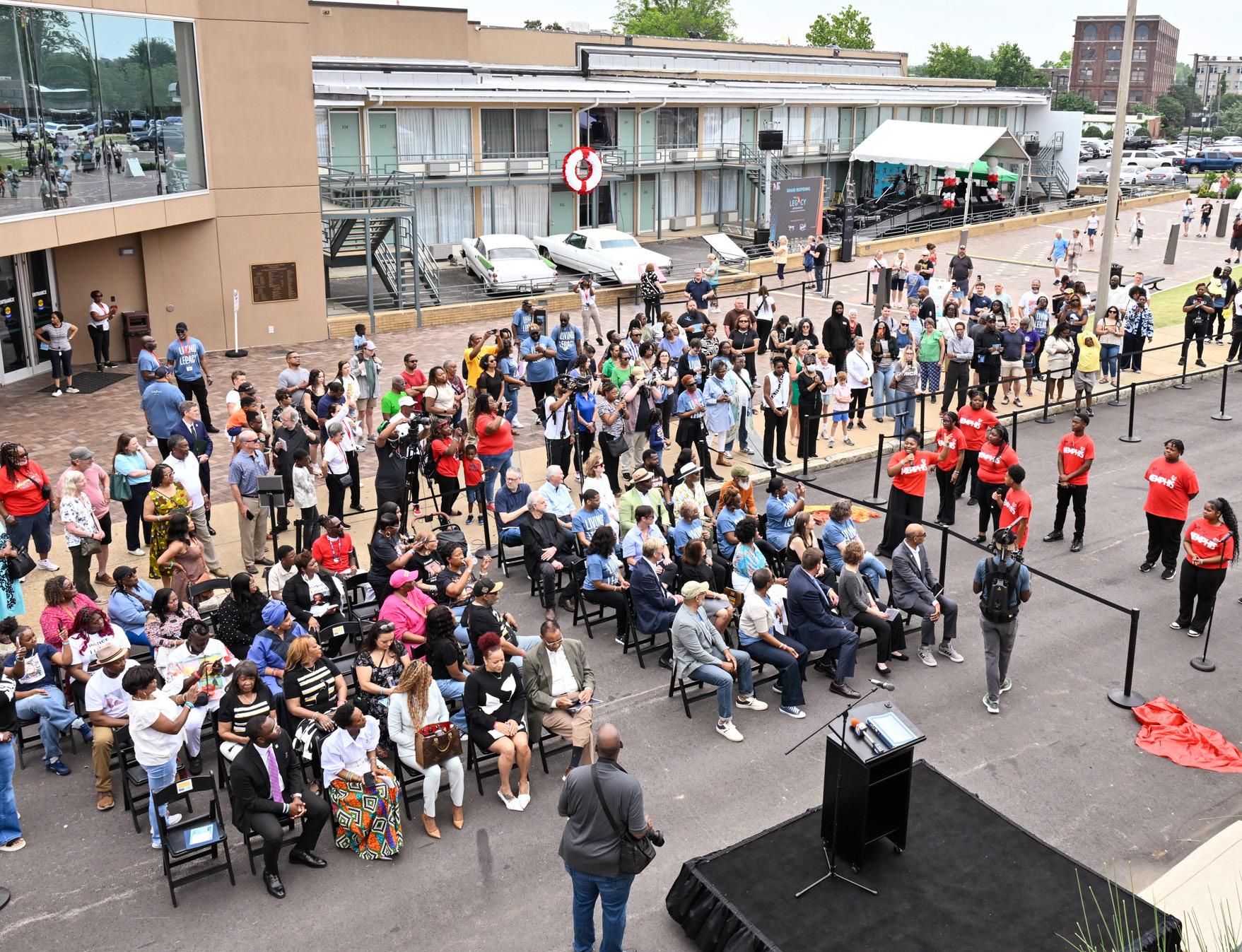
The National Civil Rights Museum has re-opened its Legacy Experience building, offering new and expanded opportunities for learning, community building, culture and inspiration. The grand opening held on May 16 featured a full day of celebration, complete with a ribbon cutting, heart-felt speeches and discussions, uplifting music, food and so much more.
Located at the site from where the bullet that killed Dr. Martin Luther King, Jr. was said to have been launched, the building had previously focused on programming surrounding King’s assassination. However, today, The Legacy Experience is designed to move Memphis, nation and world forward, addressing the pursuit of justice from 1968 to present day.
Russ Wigginton, president of the NCRM, says the idea sparked from visitors asking “What happened after Dr. King died?”
“At the time of concepting, we’d had this building for 20 years,” said Wiggington. “But we weren’t seeing people go over there. We were looking for ways to stay relevant and answer the questions visitors kept asking.”
Wiggington, who will celebrate his five-year anniversary at the helm this fall, joined the NCRM when attendance was rich and vibrant, surprisingly enough, during the global pandemic. But he says, in keeping with city trends, the museum has struggled over the last few years with attracting visitors.
“We are one of the drivers of tourism,” he said. “What hasn’t been the
case is a lack of commitment or enthusiasm nationally and internationally.”
A $10 million grant from the state of Tennessee jumpstarted the renovation, followed by another $38 million raised from local and national corporate, philanthropic organizations and individuals to complete the park to the west of the museum’s plaza and the terrace atop The Legacy building.
“Though attendance is down, that kind of support reinforces that we have great momentum,” said Wiggington.
“And The Legacy Experience allows people to see themselves as part of the ongoing civil rights and justice fight.”
These substantial investments have enabled NCRM to highlight the history of the movement from Dr. King’s death to today, focusing less on who killed him and more on why he was murdered.
The Legacy Experience features exhibits on the Poor People’s Campaign, and an incredible work of art from local, but globally recognized artist, Derek Fordjour. The Freedom Award Gallery, highlighting all 110 awardees since and their speech excerpts, is also featured.
A “decades” wall, beginning with the 1970s, spotlights key moments during the continual fight for freedom and justice throughout each decade until now. Perhaps one of the most moving parts is the “Say Their Names” exhibit, remembering Black Americans who have died at the hands of police brutality since 1968. It also illustrates how the Black Lives Matter Movement came to life as a result of these heinous acts.
“There are also exhibits connected to Dr. King’s book ‘Where Do We Go

“The Lorraine Motel is our sacred ground and foundation. … The Legacy building is our future. People can understand the context of the Lorraine. But they need to own the Legacy building.”
— Russ Wigginton
From Here’ and the Assassination Gallery has been completely transformed,” added Wiggington.
Additionally, the Legacy building houses interactive displays and exhibits focused on other social movements that were born out of the Civil Rights Movement, like environmental concerns, LGBTQ rights, affordable housing, economic justice, education, arts
and culture movement and more.
There is even a space for participating in “hope as a discipline,” where visitors can share their hopes for the future.
The grand opening celebration was curated with the entire community in mind, from ages 2 to 92. Following the official ribbon-cutting and opening ceremony, attendees were invited to tour the newly renovated building, enjoy
music from the terrace, “craftivism” art stations and other cultural activities in the plaza and Founders Park. Performances by DJ Cody Little, the Garry Goin Group featuring a myriad of local artists, and Yella P added to the festive nature of the day.
Seeing how all the spaces will now work together to create a full immersion and understanding of the struggle,
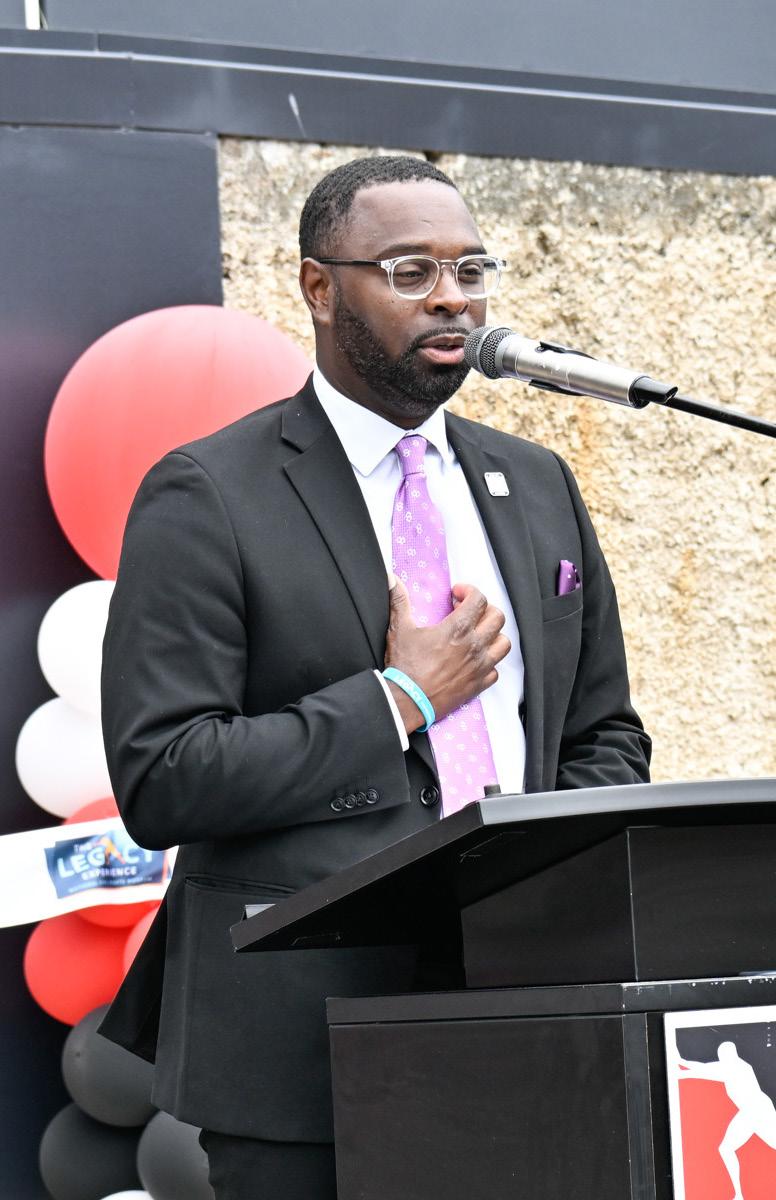
and to inspire visitors to action today, is quite powerful.
“The Lorraine Motel is our sacred ground and foundation. … The Legacy building is our future,” said Wiggington. “People can understand the context of the Lorraine. But they need to own the Legacy building.”
The opening celebration was just the beginning. Community members are invited to contribute to the “Our Stories, Our Museum” summer story-telling activation, by sharing their experience and connection to the movement. This is how the community becomes part of The Legacy.
To learn more, visit https://civilrightsmuseum.org/













































By James Coleman TSD Contributing Writer
One of the greater unknowns of the next school year will be the status of the Memphis-Shelby County School’s FY2027 budget. One of the levers of the power of a state-picked oversight board will be control of the annual budget. Despite the lack of clarity, MSCS brass aren’t deviating from standard operating procedure. On Wednesday, May 13 the district’s leadership presented its first draft of the proposed $1.69 billion budget to Shelby County Commissioners.
According to the new MSCS leader, the document stresses five “A’s” — academics, attendance, attitude, athletics and arts — as a “pathway to greatness.”
“This framework guides everything that we do with our students from birth through post-secondary. It also ensures intentional support at every stage of their journey, from kindergarten readiness to college, career and life readiness,” said MSCS Superintendent Dr. Roderick Richmond.
Shelby County splits the brunt of the costs with the state. A total of $673 million in funding grants come from the state, while the county pays $512 million. The rest of the money comes from local, federal sources. The City of Memphis chips in $1.3 million.
“A little over $684 million goes directly to schools. That’s how we pay our teachers. It’s how we get different supports directly into the classroom,” informed MSCS Chief of Business Operations Tito Langston.
Many of MSCS’ FY2027 priorities are mainstays of academic institutions — promote academic growth, recruit and retain the “most effective” teacher and administrators, and prepare students for a global workforce.

“A little over $684 million goes directly to schools. That’s how we pay our teachers. It’s how we get different supports directly into the classroom.”
— Tito Langston
Public sentiment also was gauged before the draft was prepared. Along with public forums, surveys were conducted to draw up a short list of demands. The questionnaire plumbed student, parent, teacher, administrator, school board member and MSCS employee opinion.
Many students requested an expansion of mental health services available to them. Some have struggled during the post-Covid return to normalcy.
Social media provides another stress factor. The proposed budget includes $5.6 million for mental health support. Furthermore, social emotional learning and behavioral support receive $12.1 million.
“I know teaching Gen-Zs, that’’s a huge issue with them,” said commissioner Erika Sugarmon.
The White Haven High School educator also said many students would like to see an expansion of trade programs, along with possible co-enrollment in the county’s various trade school programs. A variety of skills are taught at the locations, including HVAC repair, welding, construction, cosmetology, to name a few.
Richmond also dispelled a myth among students that attendance didn’t factor into graduation. According to Sugarmon, oft-truant White Haven students would dismiss attendance concerns as a non-factor.
“The district doesn’t do that. That is a site-based decision,” said Richmond. “If that is happening at your school, that shouldn’t be occurring,” replied Richmond.
Student attendance is one of six metrics under scrutiny of state lawmakers, following the passage of a recent state law.
Last month, the Republican lawmakers approved legislation that establishes a state-appointed oversight board to take control of MSCS. A takeover would be triggered if the school system fails in four out of the six metrics. The others are academic ratings, school performance, leadership stability, priority status, and financial integrity.
Commissioners recently approved a resolution to allocate $200,000 to fund a lawsuit in a bid to upend the takeover.
Chronic absenteeism is defined by a student missing 18 full days, or 10% of the school year. According to Richmond, MSCS’ absentee rate dropped by 3.7% in 2026. Still, Richmond put MSCS’s “cumulative” number between “35%-45%” in 2025-2026.
“Normally, when I’m looking at a high school, I hope the attendance rate is above 90%,” conceded Richmond. However, many students in MSCS
don’t have “normal” backgrounds. Many struggle in poverty, with a lack of access to basics, like food and transportation. Some have only one parent at home. Others don’t even have that much.
“You start thinking about those things and you think about missing 18 days, but looking at some of the conditions our students are growing up in, the challenges that they have. I think our students do a great job just to get up and come to school each and every day,” said Richmond.
To recruit and retain the “most effective” teachers and administrators, MSCS is offering a variety of bonuses. Teachers who remain at the same location for the entire year will receive $1,000. Moreover, “hard to staff” teachers, such as special education and “end of course” instructors will score $2,500. Teachers with special certifications will receive extra compensation too.
Last month, the school board gave teachers a 2% raise too.
“Since we’ve got TISA (Tennessee Investment in Student Achievement) dollars, we’ve invested over $100 million in the teacher salary schedule over the past five years. This year was no different,” said Richmond.
MSCS also plans to continue investment in schools. This is headlined by two new high schools under construction for Frayser and Cordova. Both projects continue apace. Eight schools are also slated for renovations, thanks to private donations.
The budget also calls for “techready” classrooms and collaborative spaces. Athletic facilities would receive upgrades too.
To cut down on costs, four schools were approved for mergers this year. One is slated for closure.
By Matt Brown Associated Press
WASHINGTON — The NAACP is calling on Black athletes and fans to boycott the athletic programs of public universities in states that are taking steps that the nation’s oldest civil rights group says are restricting Black voting rights.
Launched on Tuesday, the “Out of Bounds” campaign urges prospective Black athletes, their families, alumni and fans to “withhold athletic and financial support” from major public universities in states that “have moved to limit, weaken or erase Black voting representation.”
If Black athletes participate in the boycott, it could deplete rosters for powerhouse football and basketball programs across the Southeastern Conference and Atlantic Coast Conference.
The NAACP is among groups responding to a wave of gerrymandering in the aftermath of a Supreme Court ruling that winnowed a key provision of the Voting Rights Act of 1965.
The boycott comes as civil rights activists have mobilized across the South to protest redistricting plans by Republican state legislatures that eliminate majority-Black congressional districts after the high court’s ruling. Activists have looked for pressure points to dissuade GOP-led states from redistricting maps, including calls for mass protests and economic boycotts.
“Across the South, Black athletes have helped build some of the most profitable college athletic programs in America,” said NAACP President Derrick Johnson. Johnson noted that the programs “generate hundreds of millions of dollars in annual revenue, national television value, alumni donations, merchandising sales, ticket sales, and brand equity — much of it
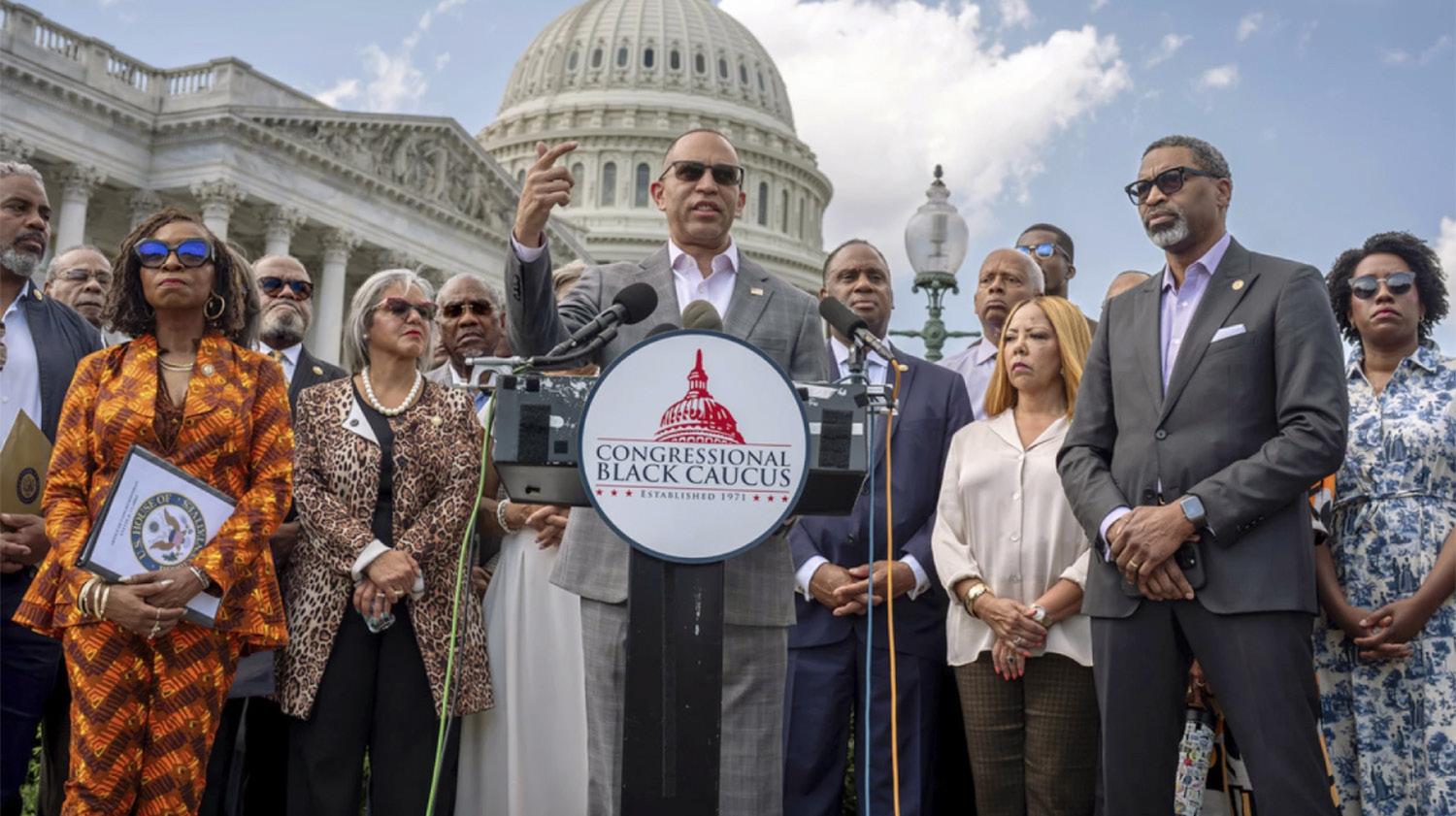
powered by Black football and basketball talent.”
The NAACP’s campaign calls out Alabama, Florida, Georgia, Louisiana, Mississippi, Texas and South Carolina as states to boycott, arguing that the athletic programs of those states’ flagship universities are especially reliant on Black athletic talent and should protect Black political interests.
“Black athletes should not be asked to generate wealth, prestige, and power for state institutions while those same states strip political power from Black communities,” said Johnson.
The campaign issues calls to action across three audiences:
• Black athletes and recruits are asked to withhold commitments from targeted programs, to ask coaches and athletic directors where their universi-
ties stand on voting rights, and to visit and seriously consider HBCUs.
• Current college athletes are asked to use their platforms to elevate the issue, to ask institutional leadership for public statements opposing racial vote dilution, and to consider all available options under the transfer portal.
• Fans, alumni, donors, and consumers are asked to stop purchasing tickets, merchandise, and licensed apparel from targeted programs and to redirect that spending to HBCUs — their athletics programs, scholarship funds, NIL collectives, bands, and alumni foundations.
Black lawmakers themselves are also putting pressure on athletic leagues to take action against Republican-led states that may redistrict longtime Black members of Congress.
The Congressional Black Caucus on Monday sent a letter to the commissioners of the SEC and ACC athletic conferences, as well as NCAA President Charlie Baker, that its members will oppose the SCORE Act, a bill to standardize athletes’ contracting rights across the country, unless conference leaders oppose GOP-led redistricting efforts in states that include major conference members.
“The Congressional Black Caucus believes institutions that profit from Black talent and Black communities have a responsibility to stand with those communities when their fundamental rights are under attack,” the CBC said in a Monday statement. “Silence in the face of injustice is not neutrality — it is complicity.”
By Tim Reynolds Associated Press
Brandon Clarke’s death raised countless questions. So far, there are few answers.
And it’ll probably stay that way for a while.
The Memphis Grizzlies forward was found dead inside a home near Los Angeles on Monday, May 11, and a person familiar with the terms of the investigation told The Associated Press on Tuesday, May 12 — after the team announced Clarke’s passing — that drug paraphernalia was found at the residence.
The 29-year-old Clarke was pronounced dead at the scene by first responders. An autopsy was performed, but the cause of death could take weeks to determine.
Meanwhile, in Memphis, the shock remains. The Grizzlies posted a tribute video on Friday, saying that Clarke’s “legacy will carry on in the hearts of Grizz Nation, always and forever.”
Here’s what to know:
At some point, the County of Los Angeles’ Medical Examiner’s Office will update Clarke’s cause of death. But that could take weeks, pending the return of toxicology and any other tests that were ordered.
For now, the coroner’s office says the case remains open and the cause of death is listed as “deferred.” The coroner’s work has been completed. It’s simply a matter of the tests coming back.
There are other elements of the investigation into Clarke’s death, such as who made the 911 call and what other factors could have played a role.
The team’s next move
A number of fans have visited the
outside of the team’s arena in Memphis, placing flowers and other mementos to share their grief over Clarke’s death. The Grizzlies have banners of their players attached to poles in the plaza outside FedEx Forum, and fans — on their own — have visited to pay respects.
The team has not yet determined if or when there will be a public memorial or anything similar to celebrate Clarke’s seven years with the franchise. It’s also unclear when Clarke’s family will hold funeral services.
Clarke was under contract to be with the Grizzlies through the 2026-27 season.
Clarke was arrested April 1 in Arkansas for speeding and possession of a controlled substance that was reportedly kratom, an herbal supplement promoted as an alternative pain remedy that becomes illegal in Tennessee as of July 1. He was released on bond a day later. It likely won’t be clear until the coroner’s office issues its report if kratom was in Clarke’s system when he died.
Health officials have been warning about the risks of an opioid-related chemical known as 7-hydroxymitragynine and a component of kratom. The plant native to Southeast Asia has gained popularity in the U.S. as an unapproved treatment for pain, anxiety and drug dependence.
A federal report in 2019 found overdose deaths involving kratom were more common than previously reported. Most who died had also taken heroin, fentanyl or other drugs, though officials counted a few instances in which kratom was the only substance listed.
Shelby County Government has issued Sealed Bid number I000957A, Personal Protective Turn-Out Gear & Accessories (Shelby County Fire Department). Information regarding this Bid is located on the County’s website at www.shelbycountytn.gov . At the top of the home page, click on the dropdown box under “Business”, Click on “Purchasing” and “Bids” to locate the name of the above-described Sealed Bid.
SEALED BID-I000957A DUE DATE
THURSDAY, JUNE 4, 2026, AT 2:30 PM CDT
(SB-I000957A), Personal Protective Turn-Out Gear & Accessories (Shelby County Fire Department)
Shelby County is an equal opportunity affirmative action employer, drug-free with policies of non-discrimination on the basis of race, sex, religion, color, national or ethnic origin, age, disability or military service.
By order of LEE HARRIS, MAYOR SHELBY COUNTY GOVERNMENT
NOTICE TO BIDDERS
Shelby County Government has issued Sealed Bid number I000964A, Auto Repairs: Warranty Work Repairs (Shelby County Fire Department). Information regarding this Bid is located on the County’s website at www.shelbycountytn. gov . At the top of the home page, click on
1509 Madison Ave. Memphis, TN 38104
PH (901) 523-1818
HOURS: Mon.-Fri. 9 a.m. - 5 p.m.
DEADLINES: Display ads Friday 5 p.m. Classifieds ads Monday 5 p.m.
STANDARD RATES: $8.00 per line for 1 column ad.
the dropdown box under “Business”, Click on “Purchasing” and “Bids” to locate the name of the above-described Sealed Bid.
SEALED BID-I000964A DUE DATE WEDNESDAY, JUNE 3, 2026 AT 2:30 PM CDT
(SB-I000964A), Auto Repairs: Warranty Work Repairs (Shelby County Fire Department)
Shelby County is an equal opportunity affirmative action employer, drug-free with policies of non-discrimination on the basis of race, sex, religion, color, national or ethnic origin, age, disability or military service.
By order of LEE HARRIS, MAYOR SHELBY COUNTY GOVERNMENT

By Terri Schlichenmeyer
The videos and news reports were inspiring.
In them, a hesitant prospective-college student turned into a happy new college-bound student with the click of a key. They were accepted into the college of their dreams. How can you get the same feeling next spring, when you’re the one with the highest of hopes?
You can start by reading these great books and sharing them with your family.
You probably already know that getting into the college of your choice is not something you do last-minute. In “The People’s Guide to College Applications: A Week-by-Week Approach to Writing, Connecting, and Getting In” by Jill Constantino (Prometheus Books, $21.95) takes you through each step, but not in a frantic way. There’s no pressure here, just easy-to-grasp, makes-sense methods to apply for the college you want. There are reminders here, things you can’t forget and things you can, hints on asking for referrals and writing essays, and plenty of reminders to take a deep breath. Bonus: It’s also a book for parents, who may feel just as much pressure as does their child.
Okay, but let’s say that you’re an adult, a parent who’s sweating those college applications, classes, and the FAFSA for yourself, ugh! Then you’ll want to read “Student Parent: The Fight for Families, the Cost of Poverty, and the Power of College” by Nicole Lynn Lewis (Beacon Press, $26.97).
It’s an urgent call meant for nontraditional students who are also Black, Latinx, gay, moms, or dads.
In this book, you’ll find stats and stories that may already sound familiar, tales of not enough money, not enough support, not enough arms or sleep or resources. If you’re looking for a book of advice, this isn’t it, though. It’s more of a resource that you’ll want to take to your guidance counselor or any local politician.
But what if you’ve decided that college can wait? Is that okay? Look for “The Mission Generation: Reclaim Your Purpose, Rewrite Success, Rebuild Our Future” by Arun Gupta and Thomas J. Fewer (Wiley, $29.00) because you have many options for your future.
The kind of workday your Grandpa had is probably over, and you can’t count on toiling at the same place for 40 years for a pension and a gold watch. You already know that, and this book will help you decide your next step. You’ll learn what kind of worker you are, what’s stopping you from finding a job or occupation you’ll love, how to determine the purpose you envision for your future, and how to get where you need to be. This book isn’t just for high-schoolers, but for anyone ages 16 and beyond who’s feeling restless, ready for change, or who’s thinking about some kind of purposeful retirement.
And if these aren’t the college-based or not-college-bound books you need, then be sure to ask your favorite bookseller or librarian for help on ideas, how-to’s, test prep books, or study guides. They’ll have books for you, and maybe a little inspiration, too.
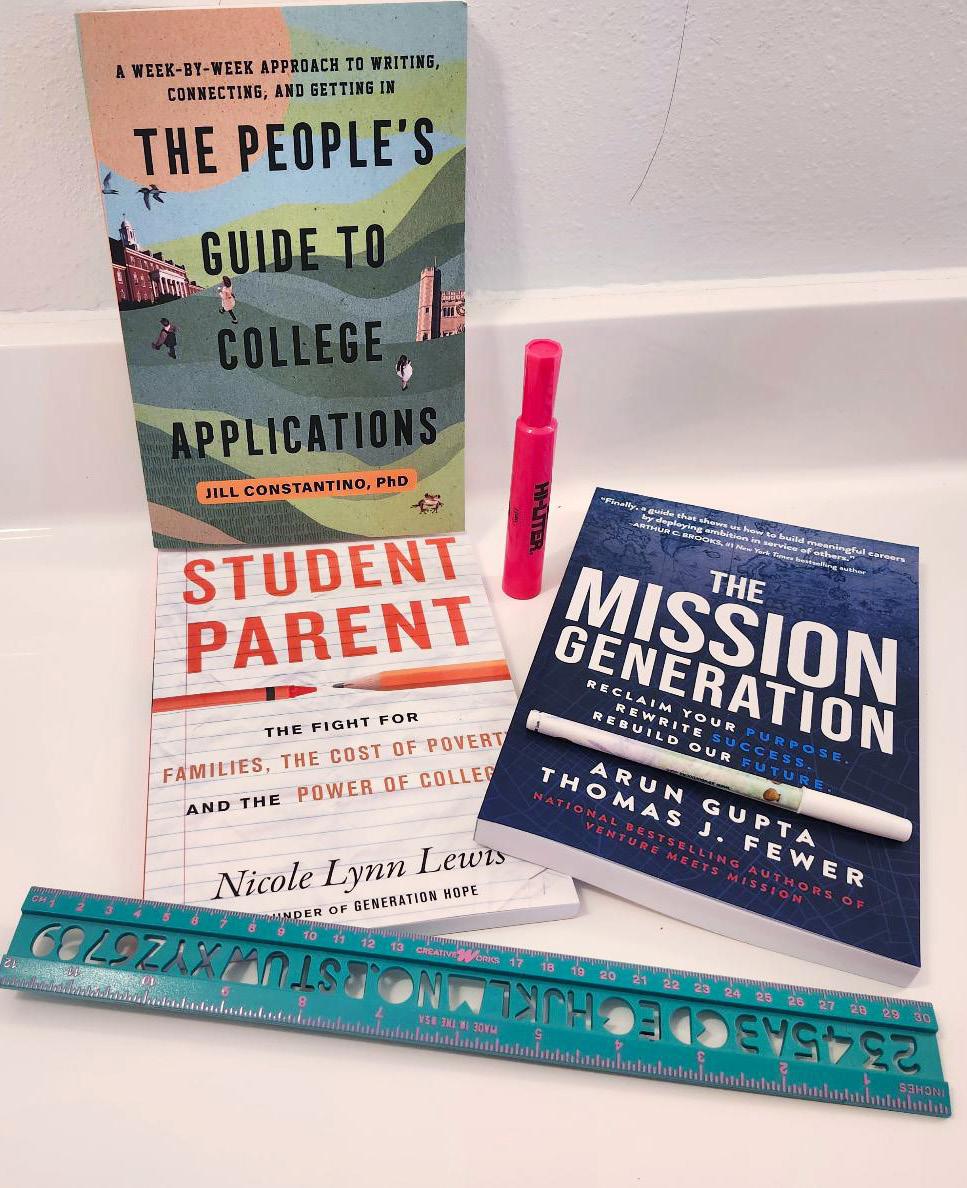
Books for college-bound students by various authors
c.2026, various publishers
$21.00 - $29.00 various page counts