“We know at some point they will leave. The question becomes, what are the things that we are going to be doing as a community to make sure that we sustain those gains?”
— Mayor Paul Young
— Page 2
— Page 3
“An almost crime-free city” — President Donald Trump
POSTMASTER: Send address changes to The Tri-State Defender, 1509 Madison Ave., Memphis, TN, 38104.
GENERAL INFORMATION: Inquiries may be submitted in writing or by calling (901) 523-1818 or by email.
TELEPHONE: (901) 523-1818.
The Tri-State Defender (USPS 780-220) is published weekly. The Tri-State Defender 1509 Madison Ave. Memphis, TN, 38104. Second-class postage paid in Memphis, TN. The Tri-State Defender is a member of The National Newspaper Publishers Association and the Tennessee Press Association.
materials
No
by
herein
be
without the written permission of the Publisher. (901) 523-1818 | 1509 Madison Ave, Memphis, TN 38104
■■ NEWS
Shelby County mayoral candidate Marie Feagins sues MSCS alleging sexual discrimination
By James Coleman TSD Contributing Writer
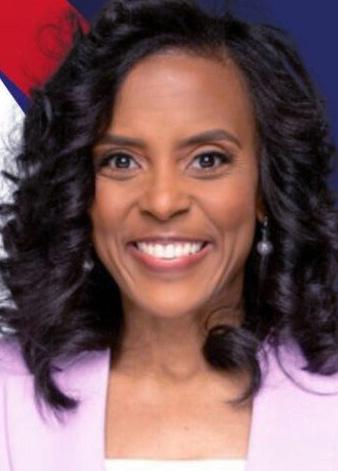
Shelby County mayoral candidate Marie Feagins has filed a new lawsuit against her former employer, Memphis-Shelby County Schools, alleging sexual discrimination and retaliation, according to documents filed in federal court Wednesday, March 18.
The former Memphis-Shelby County Schools superintendent is seeking $487,500 in severance pay, along with compensatory and punitive damages. A separate lawsuit is currently under consideration in Shelby County Circuit Court.
According to the federal filing, Feagins claims male counterparts in similar circumstances were treated “more favorably despite documented and investigated misconduct.” She is represented by Birmingham-based attorney Johnathan F. Austin.
Feagins’ predecessor, Joris Ray, resigned in 2022 during an ongoing investigation into accusations of abuse of power and policy violations. Ray, a career Memphis educator, received a $480,000 severance package that included 18 months of pay.
The suit contends Feagins’ circumstances are similar to those of former MSCS Deputy Superintendent John Barker.
In 2022, Barker was placed on leave after an internal investigation over a complaint of sex- and race-based harassment. Although the probe concluded without evidence of wrongdoing, the head of Strategic Operations and Finance opted to retire and pursue other opportunities.
“Dr. Feagins alleges that she was treated differently because of her sex and in retaliation for protected activity, and that similarly situated male executives were treated more favorably in circumstances where district policies were violated and investigated — including
being permitted to resign, remain employed, and/or negotiate exit terms not offered to her,” the complaint read.
The suit also contends that the damage to Feagins’ reputation harmed her future employment opportunities.
The “stigmatizing allegations” included claims of a “sexualized nature, financial mismanagement, and other accusations impugning [her] honesty and integrity.”
The U.S. Equal Employment Opportunity Commission approved the lawsuit. The federal agency, which enforces laws prohibiting workplace discrimination, determined Feagins has a “right to sue” after she filed a complaint.
Feagins was terminated by a 6-3 vote Jan. 21, 2025. The former Detroit public
schools administrator was accused of several violations, including misleading board members about $1 million in paid overtime, accepting unapproved donations, grant mismanagement, and failures in leadership and communication.
She had been hired the previous April. Six of the nine-member board are women, and five voted for her dismissal.
However, the suit singles out one board member. It accuses Towanna Murphy of “criminal conduct including accusations involving vehicle theft, forgery, stalking, harassment, and credentials fraud.”
President Calvin Anderson Editor Stephanie R. Jones
Marie Feagins
Distinguished Publishers Gallery induction underscores a life’s work rooted in truth-telling and community
By Brianna Smith-Herman TSD Contributing Writer
The legacy of Bernal E. Smith II, past Tri-State Defender publisher, took center stage on Wednesday, March 18, as he was posthumously enshrined into the Distinguished Publishers Gallery during the Black Press Reception at Howard University.
Held as part of Black Press Week and hosted by the National Newspaper Publishers Association Fund in partnership with the Howard University Moorland-Spingarn Research Center, the recognized Smith’s indelible impact on Black journalism and the communities it serves.
The reception, themed “Celebrating 199 Years of Black Press Publishing,” brought together journalists, publishers, scholars and community leaders in a setting that was both reflective and purposeful. As attendees gathered, the Howard University Choir delivered a moving rendition of “Lift Every Voice and Sing,” setting a tone of reverence, pride and historical continuity.
Benjamin F. Chavis Jr., president and CEO of the National Newspaper Publishers Association, reflected on the mission of Black-owned media.
“The Black Press of America has never been just about news,” Chavis said. “It has always been about freedom, justice, dignity and self-determination.”
His words echoed throughout the ceremony — reinforcing the very principles that defined Smith’s life and work.
Presented by Karen Carter Richards, publisher of the Forward Times and chair of the NNPAF, the enshrinement recognized Smith as a visionary leader within the industry.
“Bernal E. Smith II represented the promise of a new generation of publishers who understood both the historic responsibility and the evolving possibilities of Black-owned media,” Richards said. “As publisher of the Tri-State De-
fender, he embraced the proud tradition of advocacy journalism while bringing fresh energy, innovative ideas and bold thinking to the future of this industry.”
Richards said Smith was widely regarded as one of the rising leaders in NNPA. “His passion for the mission of the Black Press was unmistakable. He believed deeply in its power to inform, uplift and protect the interests of African American communities across the nation,” she stated.
“Bernal was not only a publisher — he was a visionary. He consistently brought new ideas, new strategies and renewed enthusiasm to the NNPA.”
Smith’s family members — his wife, Towanda Peete-Smith, daughter Brianna Smith-Herman (this writer), and sister Cher Smith — accepted the honor on his behalf.
“The support and commitment to preserving Bernal’s work means the world to our family, friends and community. To see him enshrined today is an incredible tribute to a man who gave his heart and soul to his industry,” said
“Bernal E. Smith II represented the promise of a new generation of publishers who understood both the historic responsibility and the evolving possibilities of Black-owned media.”
— Karen Carter Richards
Towanda Peete-Smith. “Bernal understood that the responsibility of being a publisher was a sacred trust.”
The Black Press Archives and Gallery of Distinguished Newspaper Publishers was conceived by William O. Walker, editor-publisher of the Cleveland Call and Post, who envisioned a space dedicated to preserving and celebrating the contributions of Black journalists.
Established in 1973 at Howard University in partnership with the NNPA, the gallery stands as a permanent
tribute to those who have shaped the landscape of Black media.
“William O. Walker had a vision for a gallery space where you could come (and) reflect on the importance of those who contributed to the Black Press,” said Brandon Nightingale, a senior project manager for the Black Press Archives.
This year’s Black Press Week focused on the theme “Truth, Trust, and Technology: Approaching 200 Years of the Black Press in a Transforming Information Age.”
While also commemorating the March 16, 1827 founding of Freedom’s Journal, the first Black newspaper published in the United States, the gathering brought together leaders across media, academia and technology to examine the future of Black-owned media.
A fireside discussion further explored how Black-owned outlets can leverage emerging technologies while maintaining the authenticity and cultural responsibility that has long defined the Black Press.
Still, as the conversation looked ahead, Smith’s enshrinement served as a reminder that the future of Black media is firmly rooted in the legacy of those who came before — leaders who understood that telling our stories is not just a profession, but a purpose.
The moment was both deeply personal and profoundly symbolic for this writer.
Standing alongside my mother and aunt as my father’s name was added to the list of the Black Press pioneers was more than an honor — it was a confirmation of the impact he made. His work, his voice and his vision live on not only in the pages he helped shape, but in the communities he uplifted and the stories he made sure were told.
In a space dedicated to preserving history, his presence now becomes part of something even greater — a reminder that the work of the Black Press is never finished, only passed on.
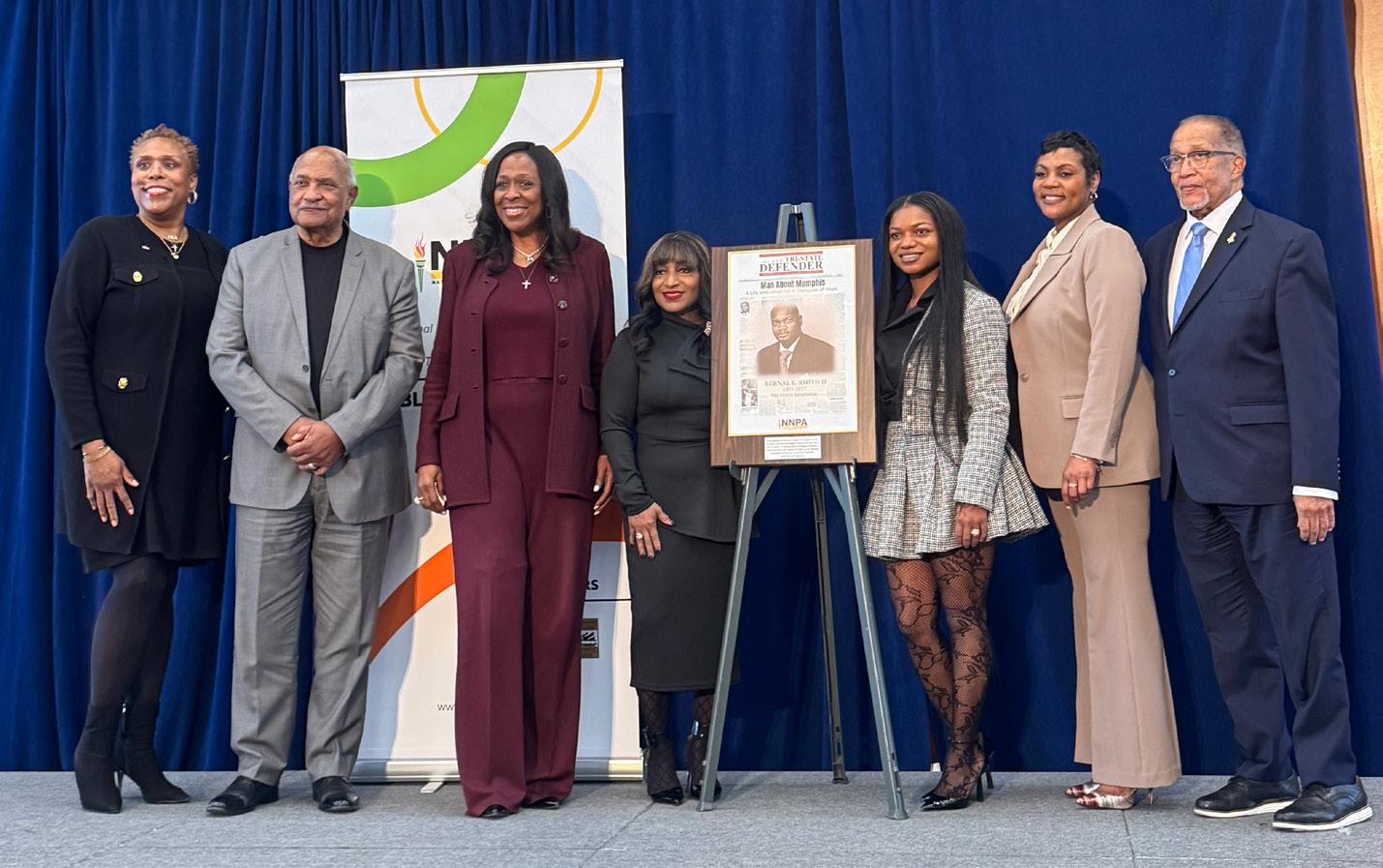
From left, Kelly Hodges, executive director of the National Newspaper Publishers Association; John Warren, NNPA board member; Karen Carter Richards, chair of the NNPA Fund; Towanda Peete-Smith; Brianna Smith-Herman; Cher D. Smith; and Dr. Benjamin F. Chavis Jr., president and CEO of the NNPA, during the Black Press Reception at Howard University. (Brianna Smith-Herman/Tri-State Defender)
■■ PERSPECTIVE
When pressure is the strategy
Nonprofit leaders understand the co-existence of advocacy and agitation in addressing community concerns
Groundworks
Judith Black Moore
Some nonprofit leaders build programs. Others confront the policies and power structures that have contributed to making those programs necessary.
Then some nonprofits do both, work directly with communities while confronting the policies and decisions shaping the problems those communities face. Their leadership carries the realities of neighborhoods into rooms where elected officials and philanthropists help shape funding priorities and public policy.
Durell Cowan, founder and CEO of HEAL 901, operates in that space. HEAL 901 focuses on violence prevention, youth development and mental health support — work that places Cowan regularly in neighborhoods across Memphis and just as often in policy discussions with elected officials. Cowan acknowledges that his work sometimes moves between agitation and advocacy, but he sees the distinction as important.
“An advocate must have a solution to the problem,” Cowan said. “An agitator is someone who has felt the effects of a policy or a system in a way that has caused harm or they have seen it happen to others and become very vocal about the issue, but they haven’t had the time or direction to learn how to move toward a solution.”
Understanding the root causes of systemic problems, he said, is what transforms agitation into effective advocacy. That evolution mirrors the path of HEAL 901 itself.
“When we started, HEAL 901 leaned heavily toward advocacy, raising awareness about the conditions contributing to violence and pushing institutions to examine policies affecting young people,” Cowan said. “We were doing
95 percent advocacy and 5 percent service.”
Founded in 2018, HEAL 901 has grown into an organization with a staff of 16 that includes administrators, program staff and licensed mental health professionals. Today the balance has shifted. “Now we are about 85 percent direct service and managing programs,” Cowan said.
Yet, advocacy remains central to the organization’s identity.
“If I just come to you with a problem and I don’t have a solution, why would you listen?” Cowan said. “I know I have to expose the problem in a strategic manner so it leads to the solution that I ask for. I am a combination of both, agitator and advocate.”
That approach often takes Cowan and his staff beyond the neighborhoods where their programs operate and into the arenas where policy decisions are made.
Cowan and his team meet with city officials, state legislators, members of Congress and philanthropic leaders. They travel frequently to Nashville and other centers of decision making when they believe pressure can move conversations toward action.
“There are a lot of policies that exist that are outdated,” Cowan said. “It takes someone who understands this to help policymakers realize that not changing these policies not only does harm today but also harms future generations.”
Advocacy at that level requires more than confrontation. It requires translation. “I have to translate what I see on the ground into language policymakers and funders can understand,” Cowan said, “and do it in a way that they are not offended.”
“If I just come to you with a problem and I don’t have a solution, why would you listen? I know I have to expose the problem in a strategic manner so it leads to the solution that I ask for. I am a combination of both, agitator and advocate.”
— Durell Cowan
Working in proximity to communities also shapes how leaders like Cowan interpret the problems they confront.
“When you see a pattern that affects a certain demographic, you must start looking at the conditions around the situation that lead to negative outcomes,” he said.
Those conditions often extend far
beyond the reach of any single nonprofit program. “When you look at the social determinants of health, housing, education, jobs, living wages, it’s the same things civil rights leaders fought for decades ago,” Cowan said.
Memphis has seen billions of dollars invested in efforts to reduce poverty and strengthen communities. Yet many of the underlying challenges remain stubborn. For Cowan, part of the problem lies in how resources move through systems before reaching the people they are meant to help. “The intent is there,” he said. “But it’s the hands the funding has to pass through to get to the people that is often the problem.”
That observation reflects a tension that exists across the nonprofit sector. Philanthropy and government funding often flow through multiple institutions before reaching the communities those dollars are meant to support.
Organizations like HEAL 901 attempt to shorten that distance. Because
Judith Black Moore
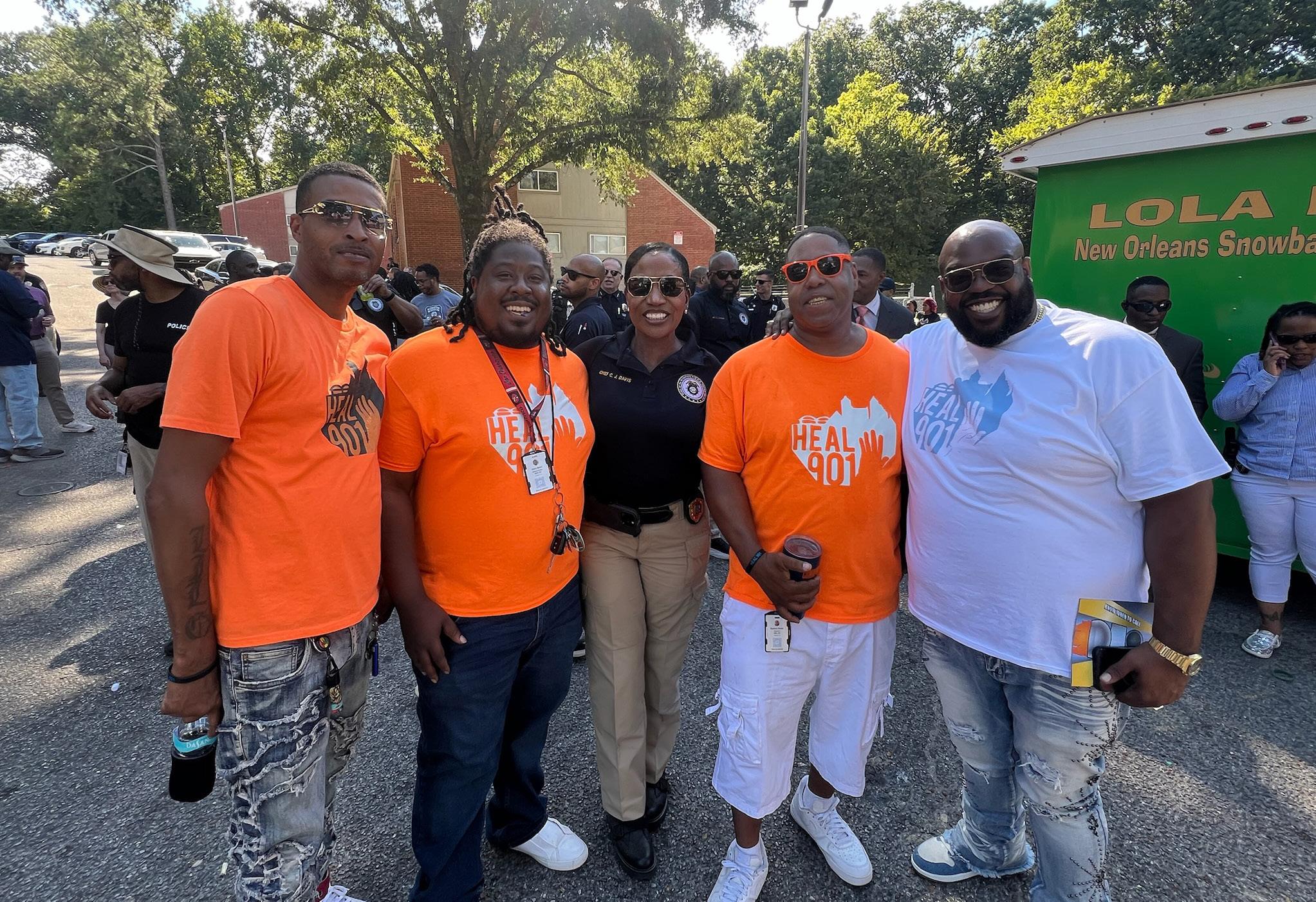
HEAL 901 team members Mickey Robinson, from left, Alexx Brent and Dedrick Chism stand with founder and CEO Durell Cowan and Memphis Police Chief Cerelyn “CJ” Davis.
they operate close to the communities they serve, they often see the consequences of policies and institutional decisions long before those consequences appear in reports or data.
“When you are not on the other side of the problem, you don’t see it and you don’t understand how it feels,” Cowan said. “That’s why I am willing to have difficult conversations.”
He sees those conversations as part of nonprofit leadership itself.
“We know the system. We know what’s going on,” Cowan said. “I expose the problem to city council members, the state legislature and congressmen and then I show them the solution.”
For Cowan, the work ultimately returns to community. “I am about build-
ing community,” he said. “We have to galvanize the community and organize. This is the role of nonprofits.”
Recently, Congressman Steve Cohen announced several federal funding allocations to support community initiatives in Memphis.
Among them was $1,031,000 designated for the City of Memphis Youth Violence Prevention initiative. HEAL 901 will benefit from funding provided through that initiative as it expands violence prevention efforts in South Memphis and supports young people most vulnerable to violence.
For Cowan, the investment represents an opportunity to strengthen programs already underway while continuing the advocacy that helped bring attention to the issue in the first place.
Leaders like Cowan can make rooms uncomfortable. They challenge assumptions, question systems and insist that policymakers confront realities that statistics alone rarely capture.
But they also perform an essential role in civic life.
They translate lived experience into policy conversations that shape funding decisions, programs and priorities. In cities still wrestling with deep structural challenges, that kind of leadership can help ensure the solutions being pursued are grounded in the realities people face every day.
— Judith Black Moore is a nonprofit consultant and the founder of Taking Back the Future, a youth-focused nonprofit.
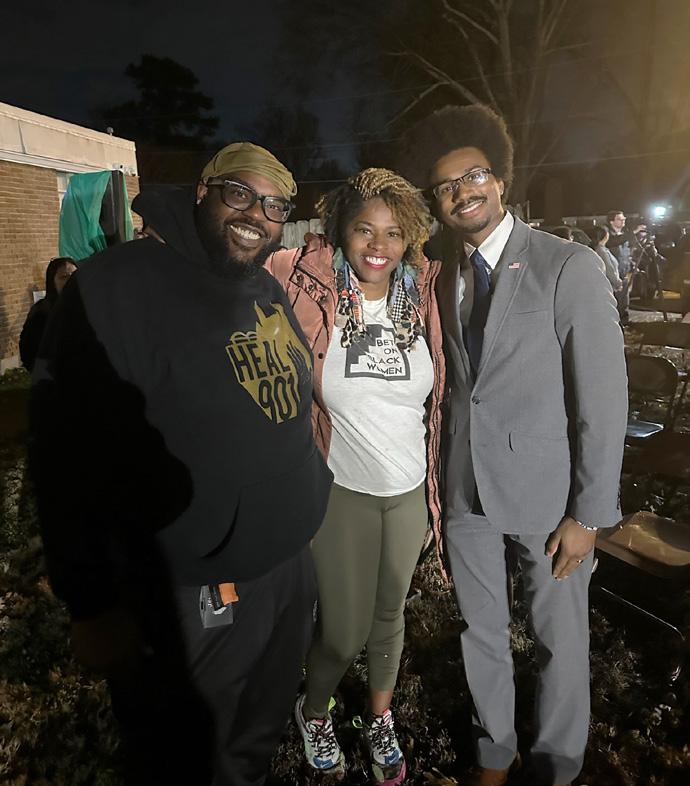
Durell Cowan, founder and CEO of HEAL 901 stands with Rachel Goodwin Sprigs of The Equity Alliance and Tennessee Rep. Justin Pearson.
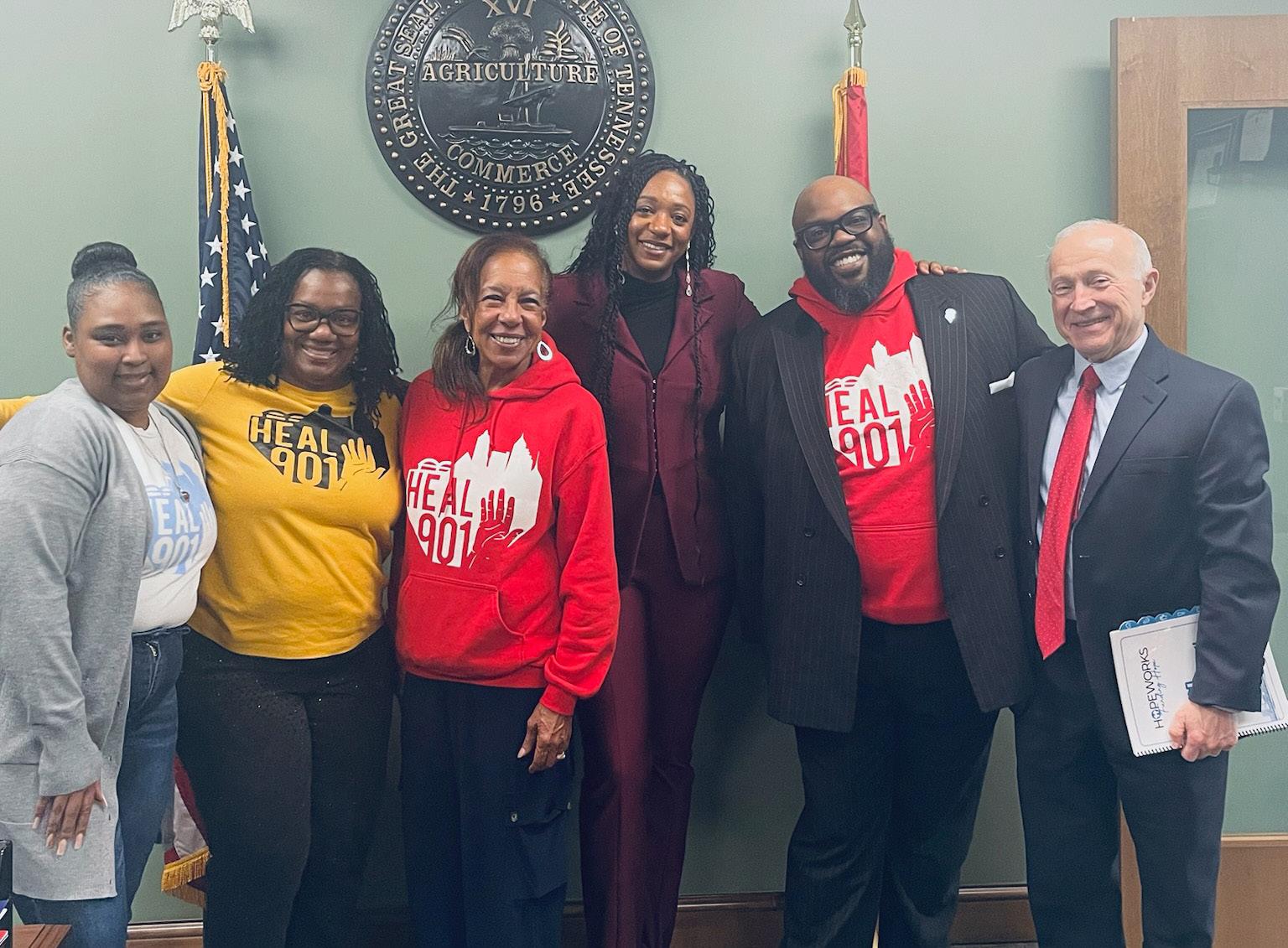
HEAL 901 staff members (from left) Meisha Morgan, Melinda Conner and Diane Richardson meet with Tennessee Sen. London Lamar and Ron Wade, executive director of HopeWorks.
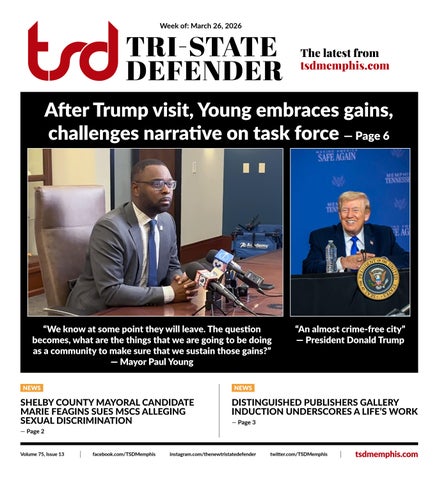
After Trump visit, Young embraces gains, challenges narrative on task force
President touts sweeping success; mayor points to local progress and long-term needs
By Lee Eric Smith TSD Contributing Writer
In broad strokes, President Donald Trump and Memphis Mayor Paul Young agree on at least a few things about the Memphis Safe Task Force: Crime is down, and an increased law enforcement presence has played a role. Beyond that, the agreement begins to break down — particularly when it comes to how those gains are measured, explained and projected forward.
Speaking Monday before a packed audience at the Tennessee National Guard facility at Memphis International Airport, Trump offered a sweeping assessment of the city’s trajectory, suggesting Memphis could soon become “an almost crime-free city.”
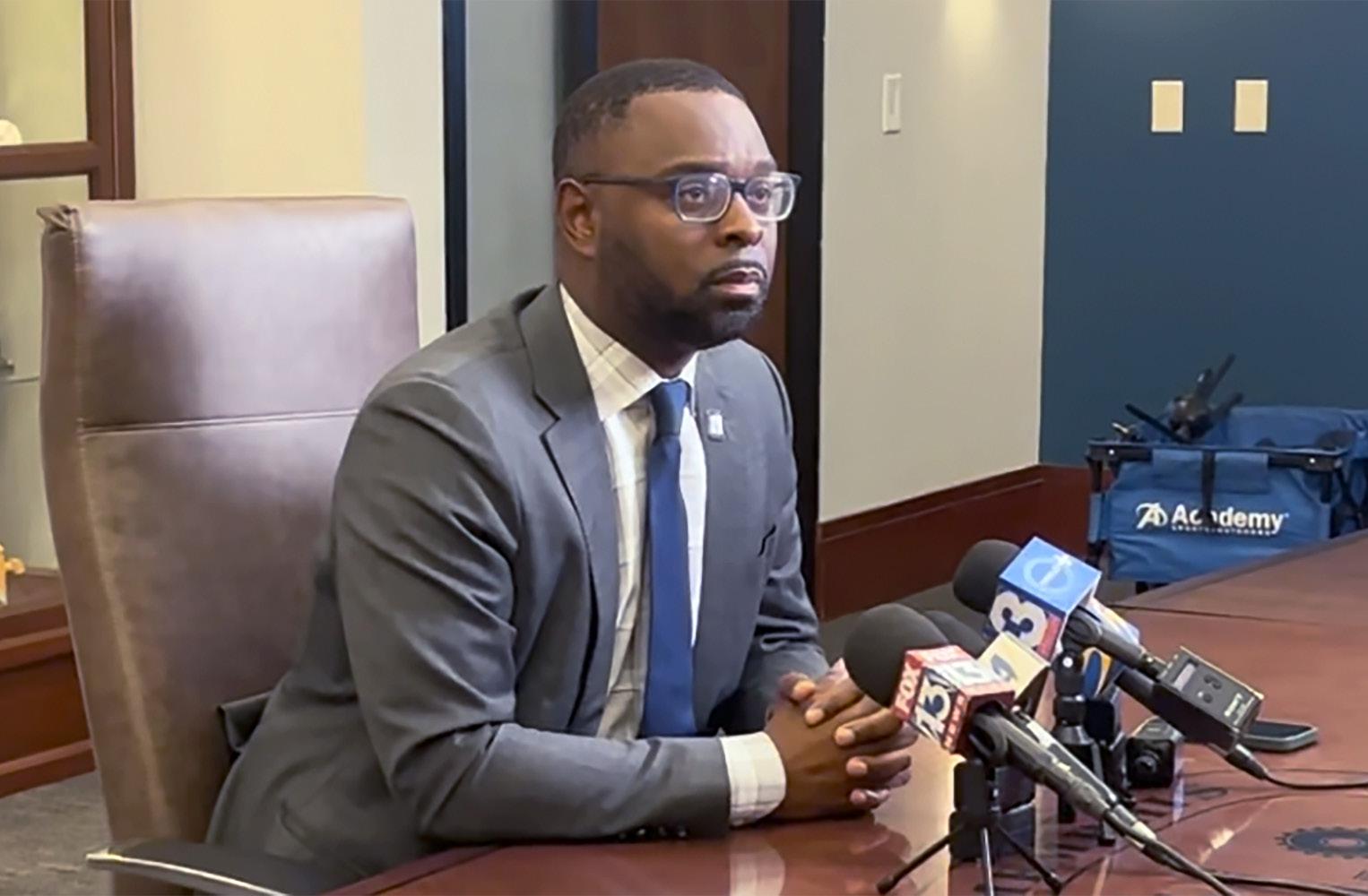
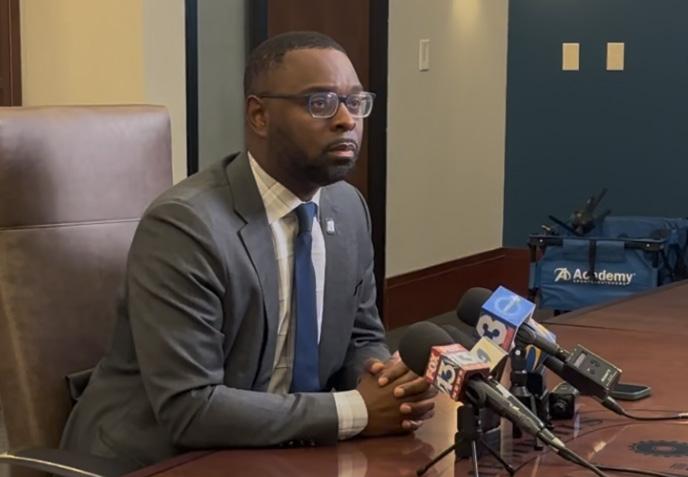
Notably absent from the dais during the discussion of crime in Memphis: Memphis Mayor Paul Young and Police Chief CJ Davis. Young, who said a personal conflict kept him from attending, addressed the media at City Hall shortly after Air Force One departed.
In his response, Young struck a more measured tone, acknowledging the impact of the task force while emphasizing that Memphis’ progress predates its arrival — and will depend on what happens after it is gone.
“I think that because of how we have aligned our efforts… it’s led to greater
results,” Young said. “Certainly (the Task Force) amplified the work, but we know that the work continues.”
Trump: Memphis will be ‘almost crime-free’ in a few months
Flanked by Secretary of War Pete Hegseth, Attorney General Pam Bondi, Tennessee Gov. Bill Lee and FBI Director Kash Patel among others, Trump held court at a roundtable decorated with seized guns, drugs and ammunition.
In his usual off-the-cuff, loose-withthe-facts style, Trump praised the Task Force as a national model for aggressive, coordinated crime enforcement. He pointed to thousands of arrests, more than 1,100 illegal firearms seized and over 150 missing children recovered as evidence of the task force’s effectiveness.
Sprinkled between his improv remarks were a few national announcements:
Trump said he had directed officials to postpone planned strikes on Iran’s energy and electricity infrastructure to allow time for negotiations, adding that recent discussions between the two countries had been “very good” and could lead to a broader agreement in the coming days. (Media outlets report that Iranian officials have since denied any negotiations with the U.S.)
Closer to home, he announced that National Guard members deployed in Memphis and similar operations would receive benefits comparable to active-duty troops, a move framed as recognition of their role in ongoing public safety efforts.
He also tied the Memphis operation to his administration’s broader immigration enforcement strategy, noting that hundreds of undocumented individuals had been arrested locally as part of the task force’s work — a strategy that Mayor Paul Young takes exception to.
“That’s not a part of this task force
that I like… that I am supportive of,” Young said.
Young: ‘I want to make sure I’m at the table’
In his remarks, he did not dispute that the task force has had an impact. But he pushed back on the idea that it represents the starting point of Memphis’ progress. Prior to the task force’s arrival, he noted, the city was already seeing a roughly 25 percent reduction in crime.
“That’s work that was already underway,” Young said, pointing to existing local initiatives that were expanded
Memphis Mayor Paul Young speaks at City Hall after President Donald Trump’s visit to the Tennessee National Guard facility, highlighting local crime reduction efforts and long-term community investments. (Lee Eric Smith/Tri-State Defender)
■■ NEWS
through federal partnership.
For Young, the more pressing issue is sustainability.
“We know at some point they will leave,” he said. “The question becomes, what are the things that we are going to
be doing as a community to make sure that we sustain those gains?”
His answer centers on long-term investment — particularly in housing, workforce development and prevention. “We have to put opportunity in
the hands of our young people,” he said.
The quiet accomplice: Tennessee gun laws
In 2021, Tennessee lawmakers approved permitless carry, allowing most adults to carry a handgun without a permit — a move supporters framed as an expansion of Second Amendment rights.
In Memphis, the effects have been hard to ignore.
The law has coincided with a rise in gun-related violence, and local leaders have repeatedly pointed to the growing number of weapons circulating in the city as a complicating factor in efforts to reduce crime.
In 2022, Memphis voters tried to respond. Residents overwhelmingly approved a referendum aimed at tightening local gun regulations, including measures related to handgun permits, safe storage and so-called “red flag” provisions.
Those efforts never took effect.
State law prohibits local govern-
ments from enacting their own firearm regulations, and the referendum was ultimately blocked — leaving Memphis bound to statewide policies it has no authority to change.
Asked about the issue, Young acknowledged the constraints facing local leaders.
“The laws are what they are,” he said. “And until they’re changed, my goal is to make sure that we are working to bring people the justice that they need and deserve.”
Demonstrations greet presidential visit
While in the Tennesse National Guard facility it was all cheers for Trump and his delegation, outside the secured perimeter, the reception was more divided.
Protests and counter-protests ultimately took shape at multiple locations across the city, including along the Macon Road corridor near Sycamore View Road, where a crowd gathered with signs and chants both supporting and opposing the president’s visit.
Supporters of the Task Force echoed the president’s message that aggressive, coordinated enforcement is necessary to reduce violent crime. Meanwhile, critics of Trump’s visit raised concerns about immigration enforcement and the presence of National Guard troops.
Backing up his ‘he ain’t welcome here, mane’ statement, State Rep. Justin J. Pearson called for federal resources to replace military personnel.
“Get out of here and leave the money because that’s what we need,” Pearson said at one rally, according to WREG NewsChannel 3. “We need the money to make Memphis the place it can be. We need the capital infusion. But we don’t need a white supremacist, domestic terrorist president in our city. That’s not going to help us.”
The demonstrations, while smaller than the audience gathered inside to hear from the president, underscored a central tension surrounding the visit — whether Memphis is being held up as a model for crime reduction or being used as a backdrop for a broader national narrative.
Tennessee Gov. Bill Lee, Secretary of War Pete Hegseth, President Donald Trump and former Florida Attorney General Pam Bondi attend a roundtable discussion on the Memphis Safe Task Force and crime reduction efforts. (Official White House photo by Molly Riley)
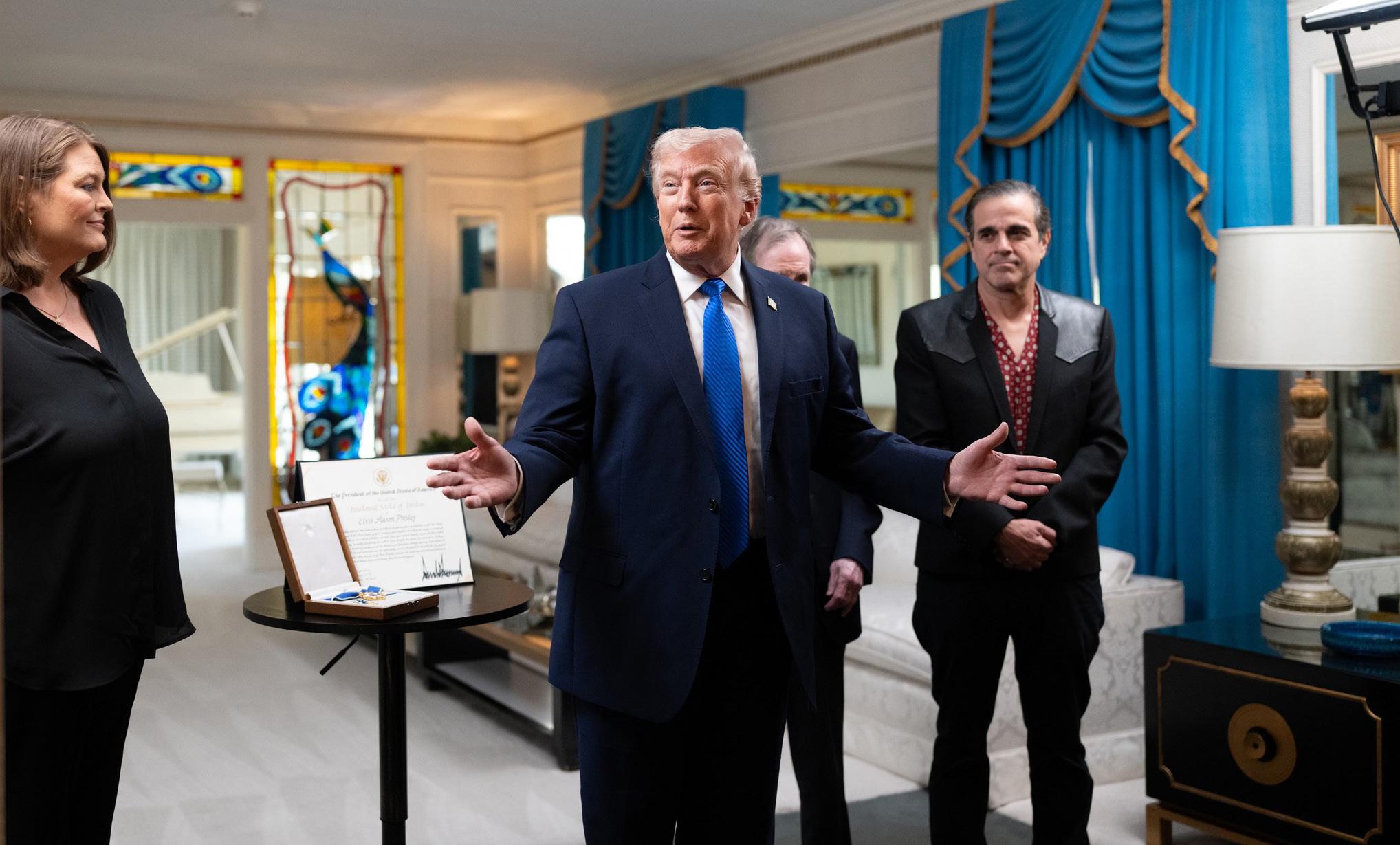
President Donald Trump visits Graceland in Memphis after highlighting the Memphis Safe Task Force and the city’s recent crime-fighting results at a nearby Tennessee National Guard facility. (White House photo by Molly Riley)
Tennessee lawmakers pass resolution honoring National Guard deployment in Memphis amid Democratic protests
By James Coleman TSD Contributing Writer
A decision by Republican state lawmakers to prevent discussion on a resolution honoring Tennessee Gov. Bill Lee’s deployment of National Guard troops to Memphis has drawn outrage from Democratic lawmakers.
Conservatives brushed off accusations of cowardice to pass House Resolution 1094 with a 73-18 vote Thursday, March 19.
“We congratulate Governor Bill Lee on responding promptly to a grave emergency by deploying the National Guard to Memphis in a successful effort to dramatically lower the crime rate in the city,” the resolution read.
Collierville Rep. Cameron Sexton’s resolution was passed just before a scheduled visit to Memphis by President Donald Trump. The second-term Republican will be in town to tout results of Operation Safe Memphis. Reps. William Lamberth and Jason Zachary were the other sponsors.
One member of the severely outnumbered Democratic delegation called the maneuver “tasteless.”
“They called (for an immediate vote) because they knew there were people who were against the resolution. I just think it’s one of those things they didn’t want to talk about,” Rep. Jesse Chism told the Daily Memphian.
The GOP currently holds a 75-24 majority in the House.
Lee requested the deployment of hundreds of federal law enforcement officers to take part in the state-federal task force in late September. However,
The decline is not unique to Memphis. Crime has fallen significantly nationwide after spiking in 2020 during the COVID-19 pandemic.
it was the inclusion of National Guard personnel in the city that stirred the most controversy.
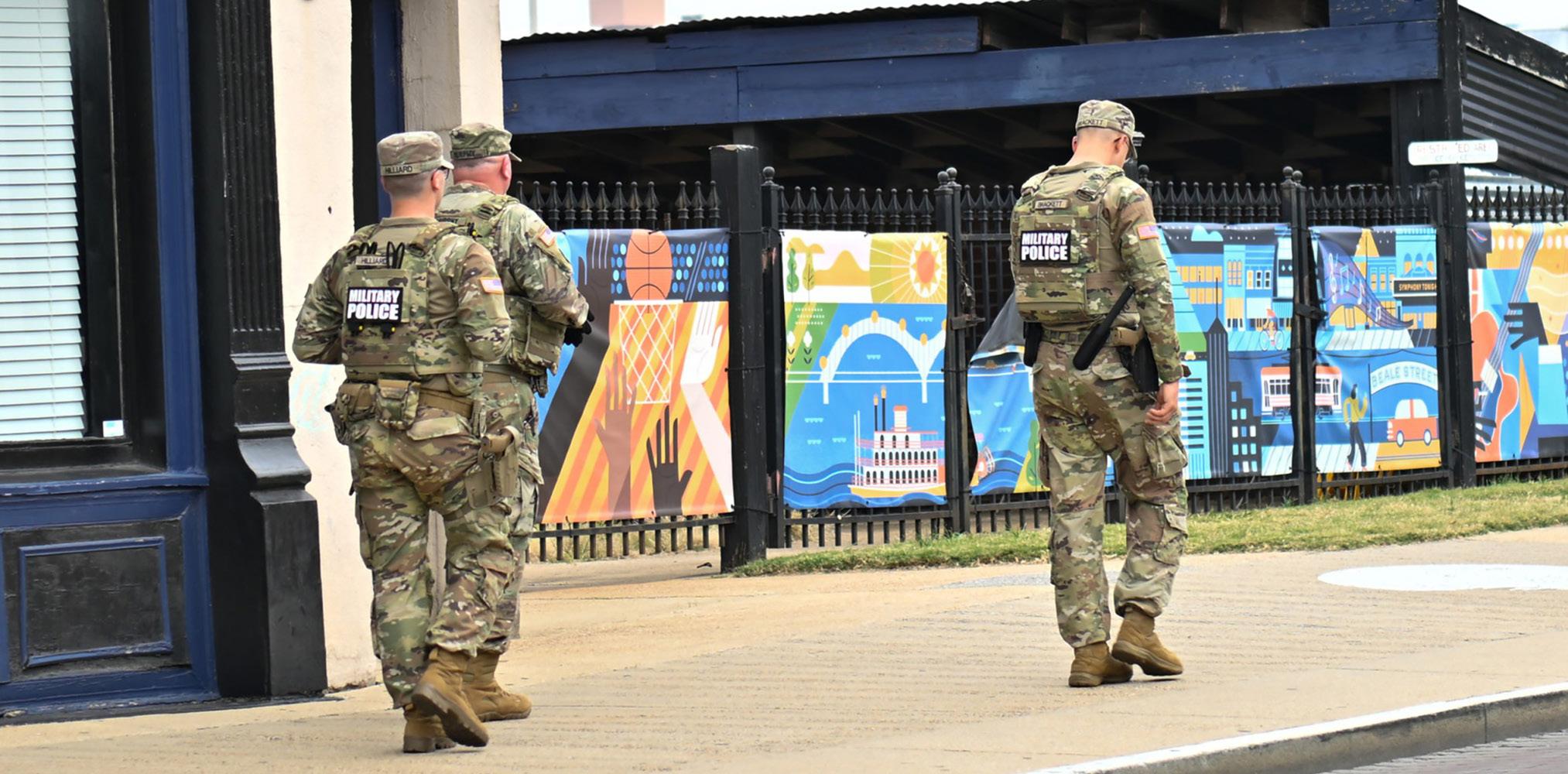
Since their arrival on Oct. 10, the unarmed part-time troops have been deployed in small groups in high-crime neighborhoods and high-traffic areas throughout Memphis.
“The deployment of the National Guard is credited with alleviating pressure on the understaffed Memphis Police Department by acting as additional eyes and ears for law enforcement,” the
statement elaborated.
The bulk of crime fighting has been carried out by the Memphis Police Department, which has coordinated with a range of federal, state and local law enforcement agencies, including the FBI, the Tennessee Bureau of Investigation and the Shelby County Sheriff’s Office.
About 5,000 arrests have been made, and 1,900 illegal firearms have been seized as a result of the ongoing operation.
Memphis is also currently experiencing a 25-year low in its crime rate. The downturn began long before the task force was formed. Since 2024, overall crime has dropped more than 40%. The reductions have occurred across the board, with significant decreases in both violent crimes and property crimes.
However, the decline is not unique to Memphis. Crime has fallen significantly nationwide after spiking in 2020 during the COVID-19 pandemic. The decrease began as schools and workplaces reopened.
Memphis’ crime rate still hovers about 10% above the national average.
National Guard members patrol the Beale Street entertainment district in Memphis amid ongoing political and legal disputes over the governor’s deployment order. Local leaders who brought the lawsuit argue the state acted without required local authorization or legislative approval. (Gary S. Whitlow/Tri-State Defender)
Hardaway risks ballot spot after petition error, explores write-in bid to keep Tennessee House seat
By James Coleman TSD Contributing Writer
Longtime Tennessee Rep. G.A. Hardaway remains determined to hold onto his District 93 seat after making the rookie mistake of not double-checking signatures to qualify for the May 5 Democratic primary.
The perennial incumbent fell just short of the required 25 signatures after one of the signatories on Hardaway’s nominating petition did not meet residency requirements for the district. The Shelby County Election Commission discovered the issue while checking addresses against voter registrations.
In addition to imperiling the 71-yearold representative’s 20-year run in office, the error also leaves the district without a candidate on the May 5 ballot. Neither a Republican nor an independent candidate filed to run.
Despite the setback, Hardaway is pursuing a potential remedy.
“My team and I are pursuing all administrative, legislative and judicial options. I will be running for House District 93 to continue representing the best interests of my constituents,” Hardaway said in a statement to TSD.
One option would be to appeal the disqualification to the election commission. However, the chances of success narrow significantly after the March 10 filing deadline. Typically, the election commission notifies candidates who fall short of the required signatures as the deadline approaches.
Valid signatures are reviewed after submission. The fact that Hardaway filed his petition at the deadline does not help his case.
PUBLIC NOTICES / CLASSIFIEDS
NOTICE TO BIDDER(S)
Sealed bids will be received by the Shelby County Government in the Department of Housing online until 9:30 a.m. on Tuesday, April 7, 2026, as shown below:
MULTIPLE AND ENTIRELY DIFFERENT LEAD HAZARD REDUCTION AND REHABILITATION JOBS ARE CONTAINED IN THIS BID NOTICE. BIDDER(S) MAY ELECT TO BID ON ANY OR ALL OF THE JOBS IN THE NOTICE.
SEALED BID 202621 DUE ONLINE AT 9:30 a.m. Tuesday, April 7, 2026
1. Lead-Based Paint Hazard Reduction Jobs.
Detailed specifications for the items above may be obtained through the Neighborly Portal beginning Friday, March 20, 2026 All bids will be opened and publicly read by the Shelby County Government at the time mentioned above at the Department of Housing, 6465 Mullins Station Road Memphis, TN 38134, (901) 222-7600; TTY Number (901) 222-2301; or for information in Spanish 901-222-7601. Award recommendations will be posted at the following website https://www.develop901.com/ housing upon review of the bid opening results.
As a condition precedent to bidding, each bidder must apply and qualify for a Vendor Number and Business Registration Number (BRN) prior to submitting your response.
We have now transitioned to conducting bids online through Neighborly. If you have not already signed up, you can do so at https://portal. neighborlysoftware.com/SHELBYCOUNTYTN/ contractor. All documents submitted must be current and uploaded into your Neighborly
TSD CLASSIFIEDS
1509 Madison Ave. Memphis, TN 38104
PH (901) 523-1818
HOURS: Mon.-Fri. 9 a.m. - 5 p.m. DEADLINES:
account. Bids submitted without all required documentation will be unacceptable. Paisley Pogue (Paisley.Pogue@shelbycountytn.gov or 901-222-7611) will be assisting with any questions you may have regarding uploading the documents.
All new contractors will need to register with the Neighborly portal in order for their bids to be accepted on projects. Interested contractors not currently on the contractor list should contact the Department of Housing in order to schedule a meeting with the Housing Site Inspector.
Paper copies of bids are no longer available. The Department of Housing encourages participation from WBE, MBE, LOSB, and Section 3 Contractors under these rehabilitation programs.
The Shelby County Government reserves the right to reject any or all bids and to waive any informalities therein.
By
order of
LEE HARRIS, MAYOR SHELBY COUNTY GOVERNMENT
Scott Walkup, Administrator
Another option is to run as a write-in candidate in either the Aug. 6 Democratic primary or the Nov. 3 general election. Hardaway has until 50 days before each election to submit a certificate of write-in candidacy.
If permitted, Hardaway would need to secure 5% of the district’s registered voters to win — about 1,795 votes out of 35,889, according to a February election commission report. Turnout totals in such reports typically fall short of certified general election results.
The drawback is that Hardaway’s name would not appear on the portion of the ballot reserved for Democratic candidates, eliminating the advantage of name recognition for voters selecting from a list.
In Shelby County, votes are cast on touchscreen machines or hand-marked paper ballots, both of which include options for write-in candidates.
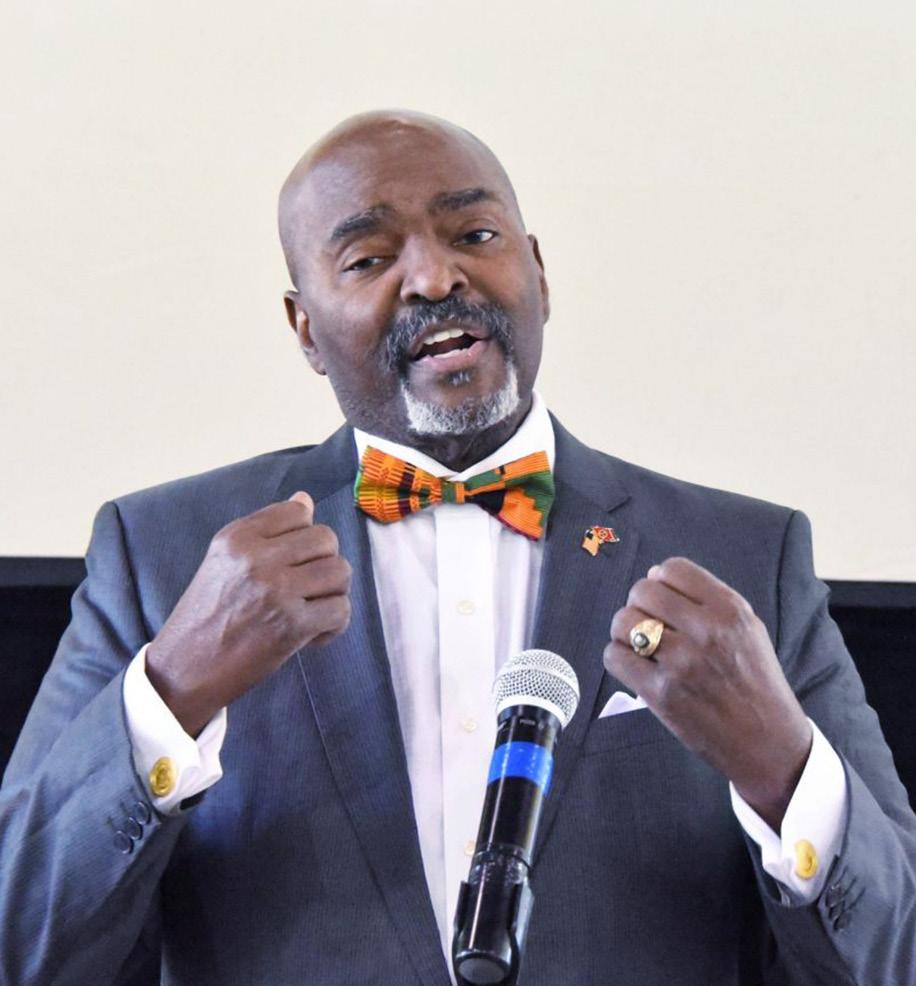
State Rep. G. A. Hardaway. (Gary S. Whitlow/Tri-State Defender)
$24.00
Diversity is good for investments as well as society
Book review
By Terri Schlichenmeyer
You do it with your stocks. Your entire investment portfolio, in fact, is diversified. As an investor and a businessperson, you know how important that is for your bottom line. You also know what a benefit diversity is in your customer base and your workforce, and how homogeneity isn’t necessarily a good thing in the long run. So now read more, and get ready to grow….
Start out by understanding how the banking and finance industries have worked against African Americans and other minorities by reading “The Racial
Wealth Gap: A Brief History” by Mehrsa Baradaran (WW Norton, $24.00).
Did you know that, on average, a white household in America has around six times more wealth than a Black household has? This obviously affects African Americans, but it also affects businesses at large and the future of society in general. Baradaran shows how this inequality in everything financial has been in place for decades, how it has roots in Jim Crow and the Civil Rights Movement, and what can be done to fix these nefarious issues of poverty brought by financial disparity. Along the same lines, reading “The Real Ones: How to Disrupt the Hidden Ways Racism Makes Us Less Authentic”
by
Maya Rupert (Dutton, $30.00), can help you learn to recognize the need for people of color to be true to themselves.
A lack of authenticity, or a perceived need to change to fit in, can lead to problems, and Rupert explains why and how this is detrimental at work and in simple everyday getting-byes.
Readers’ eyes will be opened wide here, because she also shares personal stories of learning to be inauthentic and how it affects everyday life. She offers behind-the-scenes peeks at politics and gives plenty of advice for open-minded business people.
And finally, just when you think you know a lot about a tool you use every day, along comes a book like “The
Inattention Economy: How Women of Color Built the Internet” by Lisa Nakamura (University of Minnesota Press, $24.95).
Chances are, you’ve been online for at least a couple decades — so long, that you barely think about it when you log in. Read this book, though, and you’ll learn a few surprising stories about the women behind your computer’s parts, the queer woman who launched an influential social media page, as well as women who worked in Silicon Valley, those who otherwise contributed to the equipment you couldn’t do your job without. The story is a little on the technical side but it’s also pretty astonishing.
Business Books on Diversity by various authors c.2026, various publishers
- $30.00 various page counts
Black artists in America, Installation Three wraps at the Dixon Gallery and Gardens
Exhibit informs, reminds region of Black artists’ impact, importance from Bicentennial to 9/11
By Candace A. Gray TSD Contributing Writer
The tulips gleefully greet those who enter the gates at the Dixon Gallery & Gardens on an almost spring day. More than 650,000 bulbs of various hues are currently on display. And they are truly breathtaking.
Inside the gallery, and equally as breathtaking, is the “Black Artists in America, From the Bicentennial to September 11” exhibit, which runs through Sunday, March 29. This is the third installment of a three-part series that started years ago and illustrates part of the Black experience through visual arts in the 20th century.
• Fall 2021/Winter 2022 - Part One: Black Artists in America, From the Great Depression to Civil Rights, 19291954
• Fall 2023/Winter 2024 - Part Two: Black Artists in America, From Civil Rights to the Bicentennial, 1954-1976
• 2026 - Part Three: Black Artists in America, From the Bicentennial to September 11, 1976 to 2011
“This story picks up where part two left off,’’ said Kevin Sharp, the Linda W. and S. Herbert Rhea director for the Dixon. “This era is when we really start to see the emergence of these important Black artists’ agency and freedom shine through. They start to say and express what they want to, and it was a really beautiful time.”
With 50+ paintings, sculptures and assemblages, the exhibit features artists like Varnette Honeywood from Los Angeles, whose pieces appeared in Bill Coby’s private collection (before they were auctioned off) and on “The Cosby
Show.” Also included are works by Alonzo Davis, another Los Angeles artist who opened one of the first galleries there where Black Artists could exhibit.
“Though [Davis] was from LA, he actually lived in Memphis for a decade,” said Sharp. “He was a dean at Memphis College of Art, and later opened the first gallery in New York owned and operated by black curators.”
Another featured artist is former NFL player, Ernie Barnes. His work is distinctive. Where have you seen one of his most popular paintings, Sugar Shack? On the end scene and credits of the hit show “Good Times.” His piece Saturday Night, Durham, North Carolina, 1974 is in this collection.
The exhibit features other artists with Memphis ties, including abstract
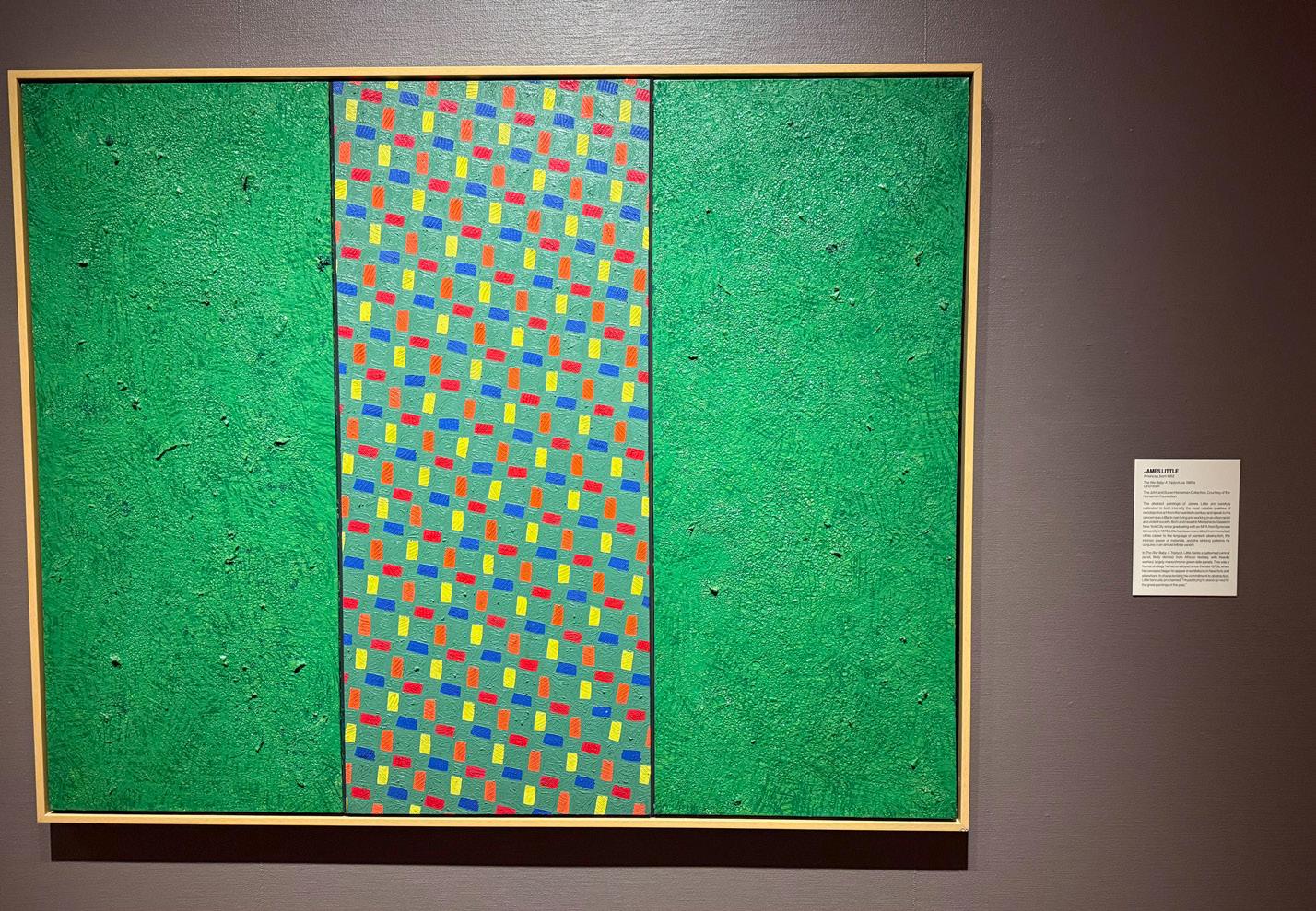
painter James Little, who was raised in a segregated Memphis and attended Memphis Academy of Art (before it was Memphis College of Art). He later moved to New York, became a teacher and an internationally acclaimed fixture in the art world in 2022 when he was named a Whitney Biennial selected artist at the Whitney Museum of American Art in New York.
Other artists like Romare Bearden, who had a Southern experience but lived up North, were featured in all three installments.
“During this period of time, he was a major figure,” said Sharp. “He wrote one of the first books on the history of African American art during a time when there were more Black academics, art teachers — more Black everything!”
Speaking of Black educators, Sharp said the head curator behind this tri-part series and Dixon’s partner in the arts is Earnestine Jenkins, Ph.D., University of Memphis art history professor, who also earned a master of art degree from Memphis State University (now UofM). “We began working with Dr. Jenkins in 2018,” he said.
Sharp explained that it takes a team of curators, registrars, counterparts at other museums, and more, about three years to assemble an exhibit like this. It came together quite seamlessly, he added. Each room conjured up more jaw-dropping “wows” than the one before it. Each piece worked with the others to tell the story of Black people and their collective experience during this time period.
One of the last artists about whom Sharp shared information was Bettye Saar, who will turn 100 years old this year. She’s been working in Los Angeles for 80 years and is finally getting her due. Her medium is collages or assemblages, and an incredible work of hers is on display. She’s married to an artist and has two daughters, also artists.
The exhibit catalogue bears some of these artists’ stories, among other scholarly information.
The exhibit, presented by the Joe Orgill Family Fund for Exhibitions, is culturally and colorfully rich. It is a must see and admission to the Dixon is free.
Visit https://www.dixon.org/ to learn more.
Fun Facts: An original James Little design lives in the flooring of the basketball court at Tom Lee Park., and he makes and mixes his own paint colors.
Memphis native James Little’s “The War Baby: The Triptych” is included in the “Black Artists in America” exhibit at the Dixon Gallery and Gardens.
From Reconstruction to the SAVE Act
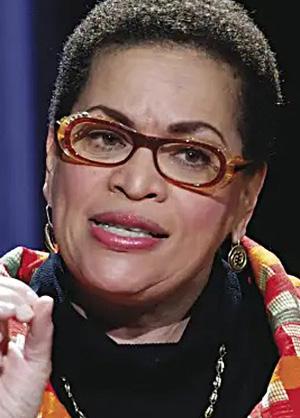
By Dr. Julianne Malveaux TriceEdneyWire.com NNPA NewsWire
Frederick Douglass did not know the day he was born.
Like many enslaved people, he was denied even the dignity of documentation. Birth dates were approximations. Family lines were severed. Identity existed in property ledgers, not in public record.
His mother, Harriet Bailey, called him her “little Valentine,” and Douglass later chose February 14 as his birthday — an act of self-definition in a country that refused to define him as fully human.
That act matters.
Douglass understood something fundamental: identity is not granted by paperwork. It is asserted through presence, voice and participation. He claimed authorship over his own life in a nation structured to deny it.
Today, we are debating whether doc-
umentation should determine access to democracy.
The SAVE Act would require documentary proof of citizenship to register to vote in federal elections. Passports. Birth certificates. Paper trails. Supporters frame it as administrative protection.
But the history of American democracy teaches us that administrative mechanisms are rarely neutral.
Paperwork has always been political.
After Reconstruction, when Black political participation expanded, new rules narrowed the electorate. Literacy tests. Poll taxes. Grandfather clauses. Each was presented as procedural. Each functioned as a barrier.
The methods change. The objective — control over who counts — does not. Documentation requirements would
fall hardest on those least likely to have ready access to formal records: seniors born at home in the Jim Crow South, low-income Americans without passports, married women whose legal names no longer match their birth certificates. Even producing paperwork can become a test of belonging.
Documented cases of noncitizen voting are exceedingly rare. The question is not fraud prevention; it is access.
Reconstruction was not only about emancipation. It was about participation. Black men voted. Black officials were elected. Black institutions were built. And when those gains threatened entrenched power, backlash followed.
In 1898, in Wilmington, North Carolina, a legitimately elected multiracial government was overthrown. Black political power was dismantled. The ballot was replaced by the bullet. It was not disorder; it was organized suppression.
The lesson is sobering. When participation expands, resistance emerges.
Today’s debates unfold in legislative chambers rather than in armed mobs. But the question remains: who has the authority to define citizenship?
Douglass claimed his identity in a system that denied him documentation. He did not wait for official recognition to assert his humanity. He understood that democracy depends not on perfect records, but on inclusive participation.
When paperwork becomes a prerequisite for political voice, we should ask whether we are strengthening democracy — or narrowing it.
The struggle over the ballot has never been merely procedural. It has always been about power.
Douglass defined himself when the state would not.
The question now is whether we will let the state decide who counts.
Dr. Julianne Malveaux is a Washington, D.C.-based economist and author.