POSTMASTER: Send address changes to The Tri-State Defender, 1509 Madison Ave., Memphis, TN, 38104.
GENERAL INFORMATION: Inquiries may be submitted in writing or by calling (901) 523-1818 or by email.
TELEPHONE: (901) 523-1818.
The Tri-State Defender (USPS 780-220) is published weekly. The Tri-State Defender 1509 Madison Ave. Memphis, TN, 38104. Second-class postage paid in Memphis, TN.
Tri-State Defender is a member of The National Newspaper Publishers Association and the Tennessee Press Association.
herein
without the
permission of the Publisher. (901) 523-1818 | 1509 Madison Ave, Memphis, TN 38104
■■ NEWS
Shelby County residents encouraged to apply for community garden plots
TSD Newswire
Shelby County Community Gardens program is now accepting applications for the 2026 gardening season. All residents of Shelby County are eligible to apply.
The Shelby County Community Gardens are located at 6265 Gardener Road and consist of over 360 plots that are assigned to gardeners for the season. This year, gardeners may choose either a 100’ x 25’ plot or a smaller 25’ x 25’ plot.
The gardens are managed by the Shelby County Department of Parks and Neighborhoods. Shelby County Mayor Lee Harris re-established the Community Gardens in 2020 as an initiative to provide free space for residents to grow their own food, nurture healthy lifestyles and enjoy the county’s green spaces.
“The Shelby County Community Gardens give residents the opportunity to connect with the land, grow healthy food for their families, and build stronger relationships with their neighbors,” Harris said in a news release. “We are proud to continue this program for another season and encourage residents across Shelby County to take advantage of this free opportunity to garden, learn and enjoy our shared green spaces.”
Karen Bell, Shelby County Parks and Neighborhoods manager, said the goal of the program is to foster and grow a vibrant green community in the county.
“When you visit the garden, you can truly feel the sense of community that exists there. Neighbors gather not only to grow fresh fruits and vegetables but also to share ideas, learn from one another and build meaningful connections,” Bell said. “The garden is a reminder that when people come together around something positive, the entire community benefits.”
Sammy Salky has worked a community garden before and plans to do so again. “For the past 13 years, working in my garden has been a meaningful part of my retirement. It keeps me active, gives me purpose, and brings great joy and satisfaction.”
Longtime gardener Dr. Eugene Mangiante said the gardens are meaningful for Shelby County residents. “After 26 years of being involved with the Community Gardens, I have seen firsthand how this program helps residents grow their gardening skills and connect with others in the community,” Mangiante said.
“This year, the community garden is offering traditional plots and smaller plots, which are great for new gardeners. Shelby County Government provides the land, water and a community of experienced gardeners willing to share their knowledge,” he added.
For more information about the program, visit https://communitygardens. shelbycountytn.gov/, or send an email to community.gardens@shelbycountytn.gov.
President Calvin Anderson Editor Stephanie R. Jones
Potted plants grow on a patio space at a Shelby County community garden. The program offers gardeners plots of different sizes to grow vegetables, herbs and flowers throughout the season.
Black Press Week kicks off with annual Sunday service
By D. Kevin McNeir Special to the AFRO
When officials at St. George’s United Methodist Church pulled Richard Allen, Absalom Jones and other Black parishioners off their knees while praying in Philadelphia in 1787, they went on to form their own church, free of racial discrimination.
In a similar example of Black people shaking off the shackles of racial oppression, John Russwurm and Samuel Cornish, determined to “plead our own cause,” founded “Freedom’s Journal” in 1827, marking the start of the Black Press in America.
On Sunday, March 15, members of the Black Press will celebrate 199 years of perseverance, ingenuity and achievements during the annual worship service at D.C.’s historic Metropolitan AME Church, known as Black Press Sunday. The day will serve as a time to honor the heroic Black leaders who started the institution and the people who have kept it alive.
Black Press Sunday 2026 will kick off a week of activities that will include receptions, seminars, conversations and strategic pow-wows that will highlight the contributions of Black journalists and acknowledge the need to support Black media in America.
The Rev. William H. Lamar IV, pastor of Metropolitan, one of the event’s sponsors, spoke to the significance of the service.
“We celebrate the Black Press because they have always captured our joys and pains, our victories and defeats, and our hopes and dreams,” Lamar said. “However, we must remember that the media is political and is not neutral. It
can report a vision of shared human flourishing or one of exclusion, oppression and exploitation. Throughout its history, the Black Press has represented African Americans and stood with humanity in the quest for truth.”
In year’s past, Black Press Sunday has become an annual fixture in the lives of those who work for or support the mission of Black journalists and publications, including the Tri-State Defender.
Phil Lewis, president of the Washington Association of Black Journalists (WABJ), and deputy editor at Huffington Post, said he’s thrilled to once again join the celebration.
“When I attended the service last year, it marked one of the first events under my tenure as president for WABJ and I remember how excited I was to see the sanctuary filled with people,”
Lewis said. “Within the ranks of the National Association of Black Journalists, our chapter boasts one of the strongest memberships with more than 500 active participants. And what’s most important is fostering relationships across the generational divide.”
Lewis said he was most impressed by numerous examples of comradery that he witnessed after the conclusion of last year’s service.
“We met in the church’s fellowship hall during which the publisher of The Washington Informer, Denise Rolark Barnes, gave remarks,” he said. “It was a real celebration with soul food prepared by Black-owned caterers and conversations between people who were meeting for the first time. But what was really awesome was seeing the reunions that occurred among veteran members of the Black Press.”
Lewis said the fellowship and net-
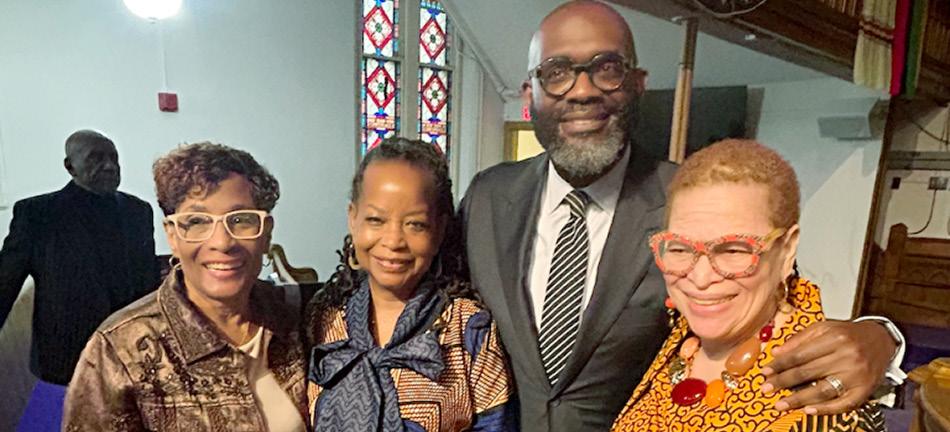
After a Sunday morning service of joyful praise, the Rev. William H. Lamar IV, pastor of Metropolitan AME Church in Washington, D.C. (second from right), is joined by three of today’s most respected Black women in media: Dr. Frances “Toni” Draper (front, right), publisher of AFRO News; Washington Informer Publisher Denise Rolark Barnes, and author and columnist, Dr. Julianne Malveaux, who also serves as Dean of the College of Ethnic Studies at Cal State LA. (Photo courtesy Washington Association of Black Journalists / Phil Lewis)
working was crucial.
“We have to get back to that kind of community engagement, especially among Black journalists, if we hope to survive the policies that are being promoted by the current administration in the White House.”
Barnes, who, like WABJ, serves as an event sponsor in her joint roles as publisher of The Washington Informer and president and chair of Washington Informer Charities, said while the challenges the Black Press faces today are monumental, she plans to focus on following the ancestors on Sunday morning, praising God freely without fear of oppression.
“I look forward to Rev. Lamar delivering a message that will provide hope and inspiration to journalists impacted by the elimination of DEI, and the significant reductions in revenue and cuts in jobs that have plagued Black journalists and Black publications since the recent president took office” Barnes said. “Ultimately, however, this is like any other Sunday worship service in the Black church. I don’t know about anyone else, but I’m going to be there to have church!”
Ron Moten, co-founder of Don’t Mute DC, posited that joining the other sponsors, which also include AFRO News and the National Newspaper Publishers Association, said his organization has long supported the work and mission of the Black Press.
“Given the unprecedented turn of events that have occurred under the current administration, changes that have disproportionately impacted African Americans, we need the Black Press now more than ever before” Moten said. “Black Press Sunday is about increasing awareness about the important role Black journalists play in our lives, whether we realize it or not.”
Moten said financial support is key.
“We’ve got to dig deep in our pockets so we can raise funds that will help support the Black Press and ensure its survival.”
Lewis emphasized that even as a Millennial and one of the younger spokesmen slated to address the audience during the service, he recognizes the historical significance of gathering at Metropolitan AME Church.
“Just think — this was the place where one of the most prolific voices of the 19th century, Frederick Douglass, worshipped,” Lewis said. “He published The North Star as part of the Black Press, reaching thousands of African Americans. He stood up when people like Donald Trump attempted to erase our history.”
“Like Douglass, it’s vital that we — as storytellers — share the good news about the Black Press and its 199 years of service,” said Lewis. “That’s what Black Press Sunday is all about. We’ve got more work to do and more stories to tell.”
Bernal E. Smith II to be enshrined in NNPAF Gallery of Distinguished Publishers
By Brianna Smith-Herman TSD Contributing Writer
The legacy of Bernal E. Smith II, the late Tri-State Defender publisher, will be honored on Wednesday, March 18, 2026, when he is enshrined in the Gallery of Distinguished Black Publishers by the National Newspaper Publishers Association Fund (NNPAF).
The ceremony recognizing Smith’s contributions to the Black Press and his impact as a leader, journalist and publisher will take place at 10 a.m. on the campus of Howard University in the Blackburn Ballroom.
The NNPA Fund Black Press Archives and Gallery of Distinguished Black Publishers, established in 1973 as a joint project between the NNPA and Howard University, celebrates the pioneers and leaders who shaped African American journalism. Located in the Moorland-Spingarn Research Center, the gallery honors distinguished publishers each year during Black Press Week.
Those enshrined represent a powerful list of trailblazers, including Frederick Douglass, Ida B. Wells and Marcus Garvey — leaders who used journalism as a platform for justice, advocacy and empowerment.
“The National Newspaper Publishers Association Fund is proud and honored to induct Bernal E. Smith II, the late Publisher of the Tri-State Defender, into the Black Press Gallery of Distinguished Black Publishers,” said Karen Carter Richards, chairman of NNPA Fund and CEO and publisher of Forward Times Media Group in Houston.
“Bernal represented the very best of the next generation of Black Press leadership. He brought incredible energy, creativity, and a bold vision for the future of the National Newspaper
Publishers Association and the Black Press as a whole,” Richards added.
Smith was widely recognized as a transformative force in Memphis media. A Memphis native, he led the historic Black newspaper beginning in 2010 and played a pivotal role in returning it to local ownership in 2013. That year, Smith led a group of investors to purchase the publication from Real Times Media, ensuring the newspaper would remain locally owned and operated.
As publisher, Smith centered his work on preserving the legacy and purpose of Black journalism. Under his leadership, the Tri-State Defender expanded its role as a voice for community advocacy, social justice, and economic opportunity in Memphis and beyond. He was also known for elevating local leaders and unsung heroes through signature community events and recognition galas that celebrated achievement across the city.
Smith passed away in October 2017 at age 45.
His enshrinement into the Gallery of Distinguished Black Publishers ensures that his work — and the work of the Tri-State Defender — will remain part of the historical record of the Black Press. The gallery also serves as a crit-
ical archive, preserving the contributions of more than 200 African American-owned community newspapers.
“Those of us in the NNPA were
extremely proud of Bernal and believed deeply in his leadership and innovative ideas to help move our organization forward,” Carter said.
Bernal E. Smith II at the 2017 Best in Black awards. (Tri-State Defender Youtube channel)
Bernal E. Smith II (right) interviewed Minister Louis Farrakhan. (Tri-State Defender Youtube channel)
Berna E. Smith II discusses an election and the importance of voting on TSD television. (Tri-State Defender Youtube channel)
County election officials highlight security upgrades, lingering voter turnout challenge
Renovated headquarters includes safeguards designed to protect ballot integrity
By Lee Eric Smith TSD Contributing Writer
Shelby County election officials say they have spent years and millions of dollars strengthening the security of the voting process. They’ve installed bullet-resistant glass, tightened access controls and redesigned their headquarters to better safeguard against bad actors.
The ballots will be accurately counted and your vote is secure, they say. The challenge that remains, they add, is getting voters to the polls.
“Now we’ve just got to encourage people to vote,” said Shelby County Election Commission chairman Mark Luttrell, following a media tour Thursday, March 5, of the commission’s newly renovated headquarters, where officials showcased a series of upgrades designed to improve security, transparency and efficiency ahead of future elections.
The $5.8 million renovation marks the first major overhaul of the O.C. Pleasant Jr. Operations Center since it opened in 1997. Election officials said the project modernizes the building while costing far less than the estimated $20 million to $40 million that a complete rebuild might require.
Among the upgrades: a perimeter fence surrounding the property, expanded surveillance cameras, badge-restricted access beyond public areas, bullet-resistant glass and improved fire suppression systems.
Officials also highlighted operational changes, including a redesigned ballot-processing system that places all ballot handling in a single controlled area.
Luttrell said the changes reflect growing public scrutiny of elections
nationwide.
“We’ve seen over the last 15 years probably more attention to the election process than we’ve experienced in our American history,” Luttrell said.
That scrutiny, he said, is why the commission has invested in stronger security and operational safeguards.
“The election process is constantly under scrutiny and we’re being asked to justify the things that we’re doing,” Luttrell said. “We’re trying to work it by the book.”
One example of that layered security lies beyond the public areas of the building.
During the tour, officials described certain secured rooms that require two separate entrance keys, typically held by representatives of different political parties. The safeguard is designed to ensure bipartisan oversight of sensitive election materials.
Luttrell said the commission takes pride in the state’s reputation for election integrity, noting that Tennessee’s election operations rely heavily on bipartisan participation.
“I attribute that in large part to the fact that you have Democrats and Republicans working together at the polling locations, at the headquarters to ensure that the vote is done correctly and with integrity,” he said.
Administrator of Elections Linda Phillips said the public often underestimates the level of detail involved in election administration.
For example, she tracks emergency ballots sent to polling locations by serial number, reconciling them when they return.
“If 100 ballots went out, two got voted, then I got 98 that are blank,” Phillips said.
The process, she said, is time-con-
suming but essential.
“It takes a lot of time. It’s not cheap, I will tell you that. But I think it’s a very good process,” she said. “People who come to the polls can be assured that their ballots are being counted exactly as they cast them.”
Yet, despite the extensive safeguards, election officials say the larger issue facing Shelby County elections remains voter participation.
Luttrell said the commission plays a role in educating voters about the process — from how voting machines work to where polling locations are located — but he emphasized that candidates themselves often play the biggest role in motivating voters.
“The Election Commission has a
responsibility to educate the public but elections rely on candidates to turn the vote out,” Luttrell said. “Because the candidates are the ones that really are going to live or die politically at the ballot box.
“But we need better turnout. I would encourage all of our candidates to do what they can to get people out to vote,” he said.
Phillips noted that the county actually has a high percentage of eligible residents registered to vote.
“If you don’t show up to vote, you have no voice and you’re letting somebody else talk for you. And that’s just wrong,” she said. “I think we’d have vastly different results if we had turnout in the 90 percent range.”
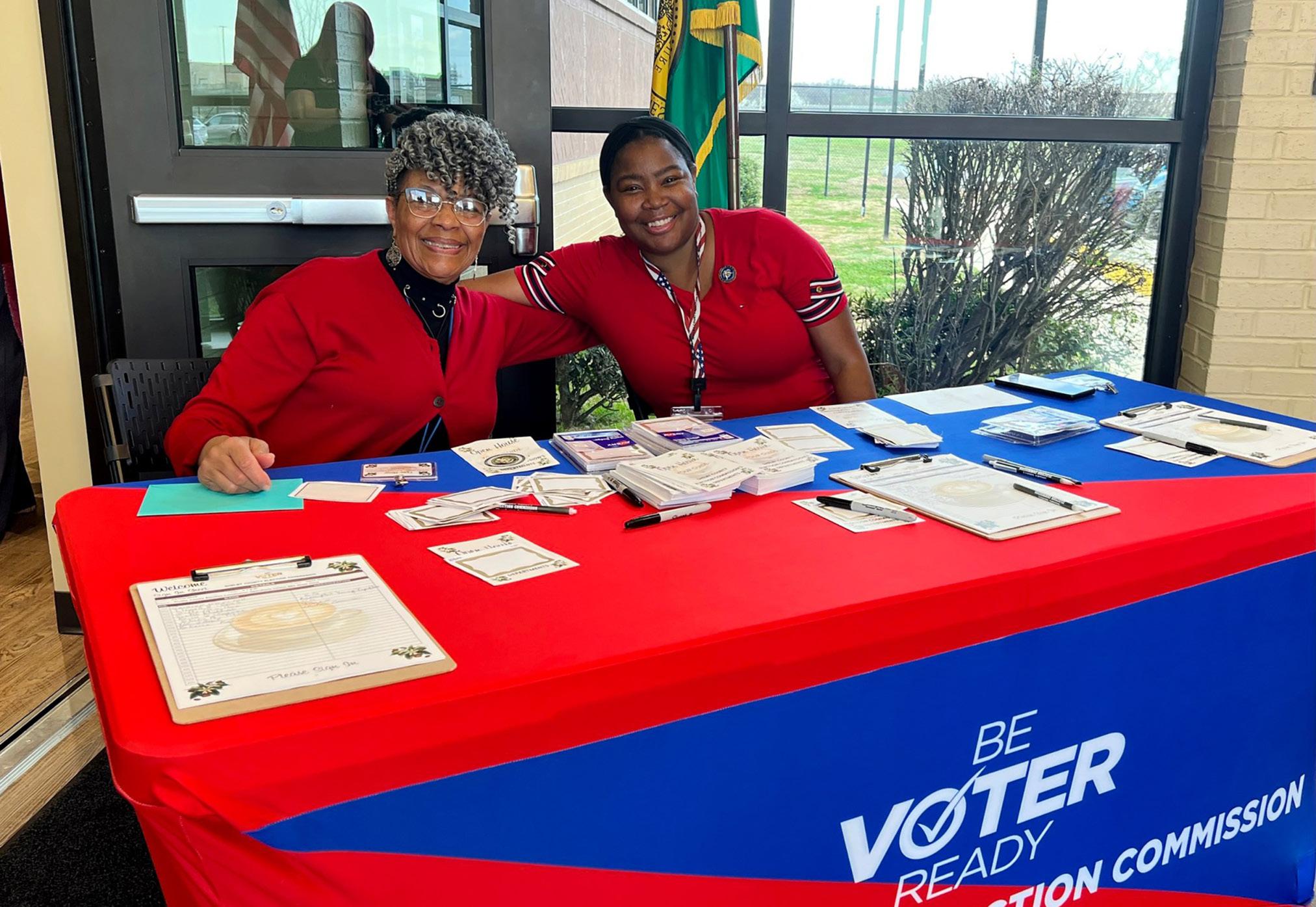
Volunteers greet visitors and provide information during a media tour of the Shelby County Election Commission’s renovated O.C. Pleasant Jr. Operations Center onThursday, March 5, 2026, in Memphis. Election officials highlighted security and operational upgrades made as part of a $5.8 million renovation of the facility where ballots are processed and counted. (Photo courtesy of the Shelby County Election Commission)
Southaven community left with ‘dread’ after state board approves xAI permit
By Alex Rozier Mississippi Today
Despite repeated cries from Southaven residents about noise, unchecked air emissions, and opaque operations of the xAI gas turbine facility in north Mississippi, the state permit board voted unanimously Tuesday, March 10, to allow the company to expand its footprint.
Shannon Samsa, a Southaven resident with a master’s degree in physician assistant studies, said after the hearing she felt “dread” about the prospect of dozens of new turbines emerging at the nearby generator station.
“Every single system and person who’s supposed to protect us has failed to do so,” said Samsa, a community organizer who made the three-hour drive Tuesday morning to attend the hearing in downtown Jackson.
The permit board’s decision comes three weeks after the Mississippi
Department of Environmental Quality held a town hall in Southaven to invite feedback on xAI’s application to build 41 permanent turbines. Dozens of residents and advocates — both from north Mississippi as well as Memphis — spoke out against the proposed permit. No one there spoke in favor of the facility.
The group of generators would power xAI’s data center operation that stretches across the state line into Memphis. The company also recently announced a new center it plans to build just down the street in Southaven. Elon Musk, a billionaire and recent adviser to President Donald Trump, owns the business.
The xAI facilities, which consists of the “world’s largest supercomputer,” the company claims, are used in part to power the AI chatbot Grok.
Residents, at the town hall and Tuesday’s hearing, largely complained of the site’s proximity to people’s homes. Less than half a mile away from the xAI
facility, neighbors can hear a constant humming noise from the existing 27 turbines. The state allows those turbines to run without a permit because they fall under a “temporary-mobile” exemption, which means no one is officially tracking what toxic releases come from the generators. A number of parents at the February meeting expressed concern that the emissions were already impacting their children’s health.
Brent Mayo, vice president of operations for xAI, spoke at the hearing, thanking MDEQ for helping the company “lead the global AI race.”
“ We have advanced emission controls on all of our turbines to produce environmental effects,” Mayo told the board.
Jaricus Whitlock, chief of MDEQ’s Air Division, said modeling done by the state and the Environmental Protection Agency showed emissions from the new turbines would keep the area in compliance with national air quality standards.
“As MDEQ is conscious of the concerns regarding the contributions that emissions from (the proposed turbines) will potentially have on existing air quality, this analysis was thoroughly scrutinized by both MDEQ air modeling staff and EPA Region 4,” Whitlock said. Mayo added that xAI has worked “closely and transparently” with MDEQ and EPA throughout the permitting process.
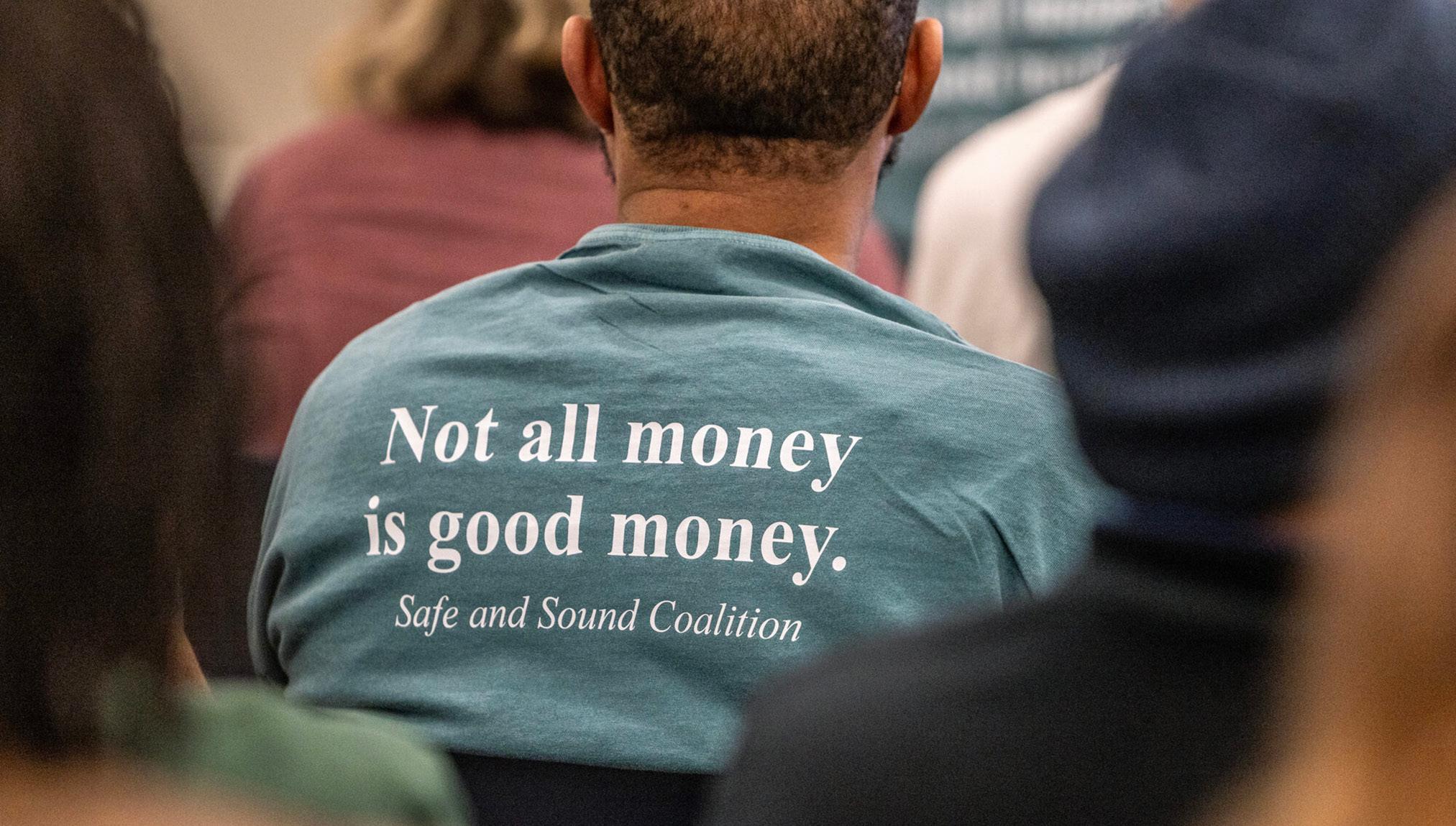
None of the concerned residents in Southaven, though, have been able to get in touch with Mayo or anyone else at the company, said Samsa. Her group, the Safe and Sound Coalition, has raised alarms about the facility since the fall.
Mississippi Today reached out to xAI’s official media channel in the fall, which responded with an apparent automated message, “Legacy Media Lies.” When reporters approached Mayo at Tuesday’s public hearing, he declined to answer any questions. The only contact information he gave out was his ac-
count on X, the social media platform Musk owns.
Jason Haley, who said he can see the turbine site from his backyard in the Colonial Hills neighborhood, played for the permit board an audio recording of the humming from the facility he hears around the clock. He said some of his neighbors have already moved because of the noise.
“I’ve lived in my house for 20 years and now I don’t want to be here anymore,” Haley told the board.
‘Rush to get this permit finalized’
Emails obtained by the Southern Environmental Law Center suggest Mississippi officials were in a hurry to approve xAI’s permit application.
“Attached is the first draft permit preliminary determination for MZX Tech,” Jeffrey Bland of MDEQ’s permits division wrote to the EPA on Dec. 22 last year (MZX Tech is the subsidiary of xAI that owns the Southaven facility). “The directive from my upper management is that this permit needs to be at public notice no later than (Jan. 15th) of next year. If you plan to review, please provide comments on the draft document no later than (Jan. 6, 2026).”
Another email, sent by EPA Region 4 staff to MDEQ on Jan. 14, references a “rush to get this permit finalized.”
In a response Tuesday afternoon,
■■ NEWS
MDEQ said the email from Bland was regarding “coordination about scheduling, not an effort to rush or bypass the permitting process.”
“Because the company’s construction timeline was tied in part to the one-year limitation on temporary turbines, staff were asked to determine whether the draft permit could be ready for public notice in January if the technical review was complete,”
Jan Schaefer, MDEQ director of communications, told Mississippi Today in an email. “That direction was contingent on the air quality modeling and other analyses meeting all regulatory requirements.”
The one-year timeline Schaefer referenced is how long xAI has to run its temporary-mobile turbines without a permit. The company began running those turbines last August.
Last week, the national NAACP and the group’s state chapter wrote a letter blasting the agency over the hearing’s timing. MDEQ only publicized the hearing on March 5, giving just five days notice, and it also just responded to public comments on Saturday, the letter said.
Moreover, the hearing took place on the morning of a midterm election primary, making it especially burdensome to attend for Southaven residents who already live a three-hour drive away.
“Instead of protecting air quality, MDEQ is forcing Black and low-income residents to choose between exercising their right to vote and protecting their right to breathe clean air,” Abre’ Conner, director of the NAACP Center for Environmental and Climate Justice, said in a statement. “Scheduling a hearing on Election Day, three hours away from the community, with almost no notice, is a textbook example of environmental racism.
“The message is clear, they want to sneak this data center in with as little involvement from the community as possible.”
The Southern Environmental Law Center also panned the agency for holding the hearing just three weeks after the end of the public comment period, which received significant participation.
“This absurdly short timeline shows that MDEQ is seemingly more concerned about rubberstamping xAI’s
air permit than it is about having a dialogue with the public or protecting the health of North Mississippi and Memphis families,” Eric Hilt, SELC’s senior communications manager, wrote in an email.
In a two-paragraph response on Monday, MDEQ Executive Director Chris Wells wrote that the board always meets on the second Tuesday of each month, and that all public comments were provided to the board.
In February, the SELC and NAACP sent xAI a notice of intent to sue for violating the federal Clean Air Act by running its temporary-mobile turbines without a permit. Hilt told Mississippi Today the groups have to wait until 60 days after that notice before they can file the lawsuit.
Samsa, with the Safe and Sound Coalition, confirmed after the hearing that her group would explore additional legal action to address the constant noise coming from xAI’s turbines.
Attendees gather for a Mississippi Department of Environmental Quality public hearing on an xAI air permit application in Southaven, Mississippi, on Tuesday, Feb. 17, 2026. About 30 residents spoke in opposition to the proposed turbines, citing concerns about air pollution and noise. (Eric Shelton/Mississippi Today)
By Bri Hatch Chalkbeat
On a Monday night in December, around 20 Memphis and Shelby County students sat in a conference room illuminated by a big screen projecting policy recommendations.
The group discussion sounded nearly identical to a local government meeting, aside from the occasional “6-7” joke. One at a time, the high schoolers that make up the Shelby County Youth Council suggested tweaks and changes to the policies they’ve been brainstorming since August to improve local life and especially mental health for young people.
“I feel like we’re coming in very strong about the things that we want to do,” said Maura Young, a senior at Collierville High School. “Maybe we need to take smaller steps.”
That comment was met with grumbles of disapproval from some. To be fair, a few of the goals sound lofty, like completely eliminating AI use in local government or spending $1 million to create an online hub for local mental health resources.
But with budget season just around the corner, the student leaders are trying to convince county and city leaders to fund even one of their youth-centered solutions. They’ve been making their case at county commission and school board meetings since last fall.
This school year, the group is focused on addressing youth mental health issues, which have increased in Shelby County and nationwide since the pandemic.
“I live in South Memphis, where you see a lot of stuff,” Marc Williams, a sophomore at Hollis F. Price Middle College High School, said. “It could be violence or going to broken homes, dysfunctional
■■ NEWS
These Memphis-area students are lobbying for mental health investments
homes. It could be that [students] may not have food for a night.”
Tennessee ranks as one of the worst states in the country for youth mental health, with high rates of mental health conditions and low access to care. In 2021, for example, more than half of 12-to-17-year-olds struggling with depression in Tennessee did not receive help. Nearly a quarter of Shelby County high schoolers reported seriously considering suicide that year, according to the Centers for Disease and Prevention.
The mental health resource hub, one of the group’s top policy recommendations, would include a website and an in-person team to answer phone calls from Shelby County teens.
“Resources here are very scattered, and you have to do so much manual research before you can even find services,” Williams said. “It’s very based on like, tell a friend, tell a friend, instead of it being like, ‘Hey, if you need help, come here and you have all the resources.’”
Collecting data for the hub would also help identify gaps in local resources, said SCYC member Madison Thomas.
“A lot of people are duplicating efforts that don’t need to be duplicated,” Thomas, a junior at Lausanne Collegiate School in East Memphis, said. “Right now we’re very saturated in awareness efforts, but it distracts from concrete resources that could help.”
SCYC is also pushing for more school social workers and counselors, wellness rooms for decompression during the school day, and a student advisory board that would regularly meet with county and city leaders to direct mental health initiatives.
The student group, also called SCYC, is run by local nonprofit Bridges USA and has been fully funded by the Shelby County government since 2019.
Around 25 student members receive $15 per hour wages for their work each year.
Zachary Harris, a junior at Lakeland Preparatory School, has been on the council for three years. He said his goal is to get just one of the group’s priorities written into the county, city, or school system budget. In September, the county commission approved a resolution to consider the group’s recommendations for budget spending but haven’t adopted one yet.
“Knowing that we can touch the budget even a little bit is all that we need to get started,” Harris told Chalkbeat. “Because if we can do it once, we can do it again.”
Youth council trains Memphis students to be public advocates
Each spring, SCYC hosts the Youth Voices Summit to train fellow peers on how to advocate for their own causes.
On Feb. 28, more than 130 students showed up at the Bridges building downtown to practice giving public comments that typically happen in local government meetings to a crowd of almost 80 community leaders and 15 elected officials.
Dorian Allert, a senior at White Station High School, advocated for hiring more school mental health professionals. Her school, which holds almost 2,000 students, has only one social worker and one psychologist on staff. “School counselors and social workers are overwhelmed, overworked
and underpaid,” Allert said. “Students looking for mental health support have to wait days or even weeks to get an appointment.”
It was MSCS Board Chair Natalie McKinney’s second time attending the summit. This year, she was drawn to SCYC’s proposal to create a youth mental health advisory board.
“That has been an ongoing and persistent ask from our youth since the pandemic,” McKinney said. “What I always stress is this has to be a collaborative effort because we are a school system. We are not the mental health system. So we need to figure out how to align our systems and resources.”
McKinney said she plans to continue working with student leaders to figure out how to best implement their vision. “I firmly believe in, ‘don’t do it to us, do it with us,’” she said, referencing a phrase echoed by SCYC leaders.
Harris, the three-year SCYC veteran, said the group knows its work isn’t a short-term project. He hopes that county and city leaders like McKinney advocate for SCYC recommendations in upcoming budget creation and approval meetings.
“This is going to take years and years of work,” he said. “But the satisfaction of knowing that I at least helped one person out there through just talking to somebody, that’s perfect for me.”
Reach Bri at bhatch@chalkbeat.org. This story was originally published by Chalkbeat.
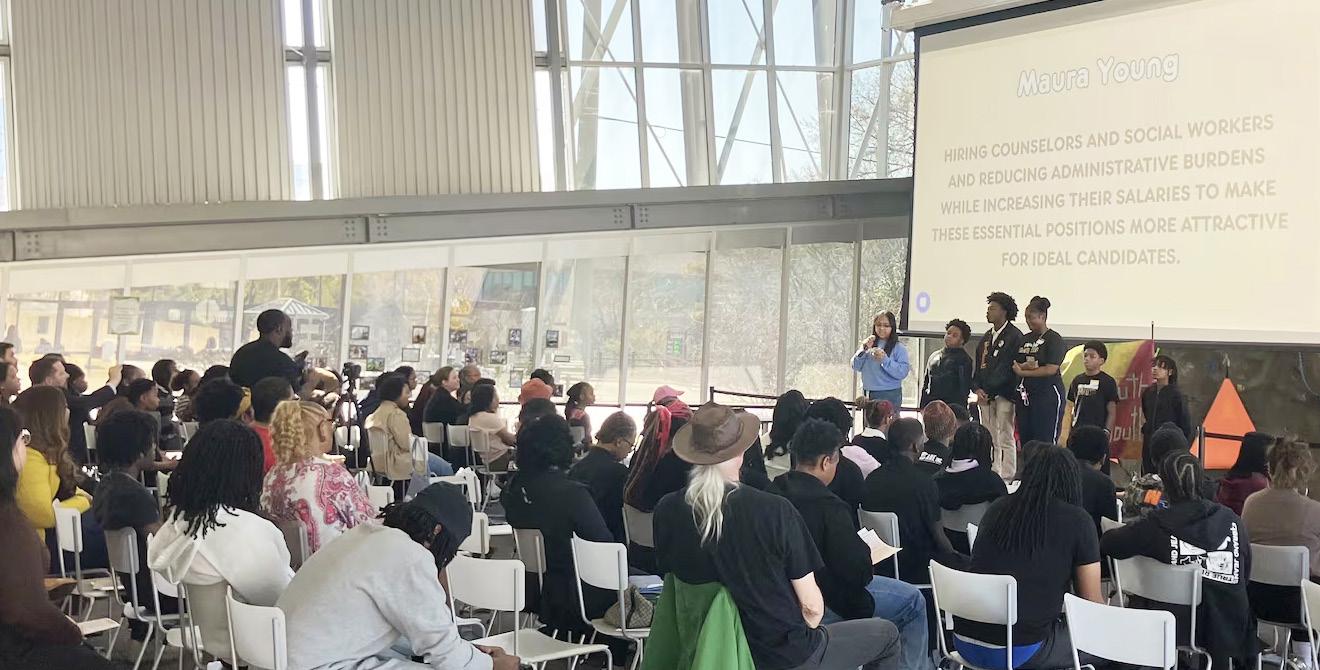
SCYC student member Maura Young advocates for hiring more school counselors at the Youth Voices Summit in February. (Bri Hatch / Chalkbeat)
Tennessee House passes bill to track undocumented students in public schools
By Melissa Brown Chalkbeat
Tennessee House Republicans on Monday passed legislation to track the immigration status of all public school children in the state, an effort that drew sharp rebukes from Democrats and immigration advocates.
The legislation requires that Tennessee public schools verify the citizenship or immigration status of each student enrolling, and then report anonymized data to the Tennessee Department of Education, state immigration officials, and state lawmakers.
Senate Republicans last year passed an earlier version of the bill that would allow Tennessee schools to charge undocumented students tuition.
House Majority Leader William Lamberth argued on Monday that schools are already gathering birth certificate and local residency data, in addition to required medical records, and his legislation would not be an additional logistical problem for schools.
“This just asks for that data,” Lamberth, the Republican sponsor of the bill, said.
Rep. Gabby Salinas, a Memphis Democrat, urged colleagues not to be “fooled” by Lamberth’s arguments that the legislation is a simple data collection bill. Salinas pointed to previous comments from Lamberth that the bill is a vehicle to challenge Plyler v. Doe, a longstanding U.S. Supreme Court precedent guaranteeing a right to public education to all children.
“Our kids in Tennessee are not your legal experiment,” Salinas said.
Tennessee educators in recent months have disagreed with the Republican proposal to collect and verify the immigration status of nearly 1 million children in state public schools. In Knox County, a bipartisan school board
“We will probably still get sued by some group out there that doesn’t think Tennesseans and their legislators should know how many illegal immigrant children are in our schools.”
— House Majority Leader William Lamberth
has officially opposed the legislation. Educators in recent weeks have testified against the effort, citing logistical concerns and potential disruption to local communities.
“Is this just a pretext to getting information that we want so that ICE can come up here and disrupt families that are attempting to live lawfully?” Rep. Yusuf Hakeem, a Chattanooga Democrat, asked during the House debate.
Lamberth didn’t respond. During the floor debate on HB 836, though, the Republican majority leader suggested multiple times that opponents to the education bill were proponents of “open borders.”
The Monday vote was more than a year in the making.
In 2025, Lamberth and Sen. Bo Watson, both powerful lawmakers in Republican leadership, filed legislation that would allow public schools to block undocumented students from attending public schools.
The sponsors made clear they were targeting Plyler, rolling out a joint press release when the bill was filed amid a larger immigration push in the legislature last year.
The effort sparked weeks of heated protests at the Tennessee General Assembly, and the Republican sponsors
worked to dial back their bills.
Senate Republicans eventually passed a version of the bill in a close vote that would allow public schools to charge undocumented students tuition.
In addition to challenging Plyler, the sponsors would later argue public schools are bearing an increasing financial burden to educate undocumented students, though Tennessee schools are largely funded through local sales tax paid by anyone purchasing groceries or gas in a community, for example.
Lamberth delayed his bill in 2025 amid pushback and concerns over whether the legislation would threaten more than $1 billion in federal education funding. He repeatedly said the U.S. Department of Education was working on guidance for lawmakers on the issue, but it has not publicly materialized and Lamberth amended the bill to just include data collection.
He acknowledged late last week he still expects the state to be sued over
the legislation, should it pass into law.
“We will probably still get sued by some group out there that doesn’t think Tennesseans and their legislators should know how many illegal immigrant children are in our schools,” Lamberth said. “There’s going to be a group out there that doesn’t think we should be able to ask that. I think that’s ridiculous, but it’s likely still going to happen.”
With the passage of House Bill 793, the General Assembly’s two chambers now have two differing versions of the bill. The Senate could agree later this week to adopt the House version. Watson said Monday he hasn’t “paid a lot of attention” to the House version and would make a decision when it comes to the Senate later this week.
This story was originally published by Chalkbeat. Melissa Brown is the bureau chief for Chalkbeat Tennessee. Contact Melissa at mbrown@chalkbeat.org.
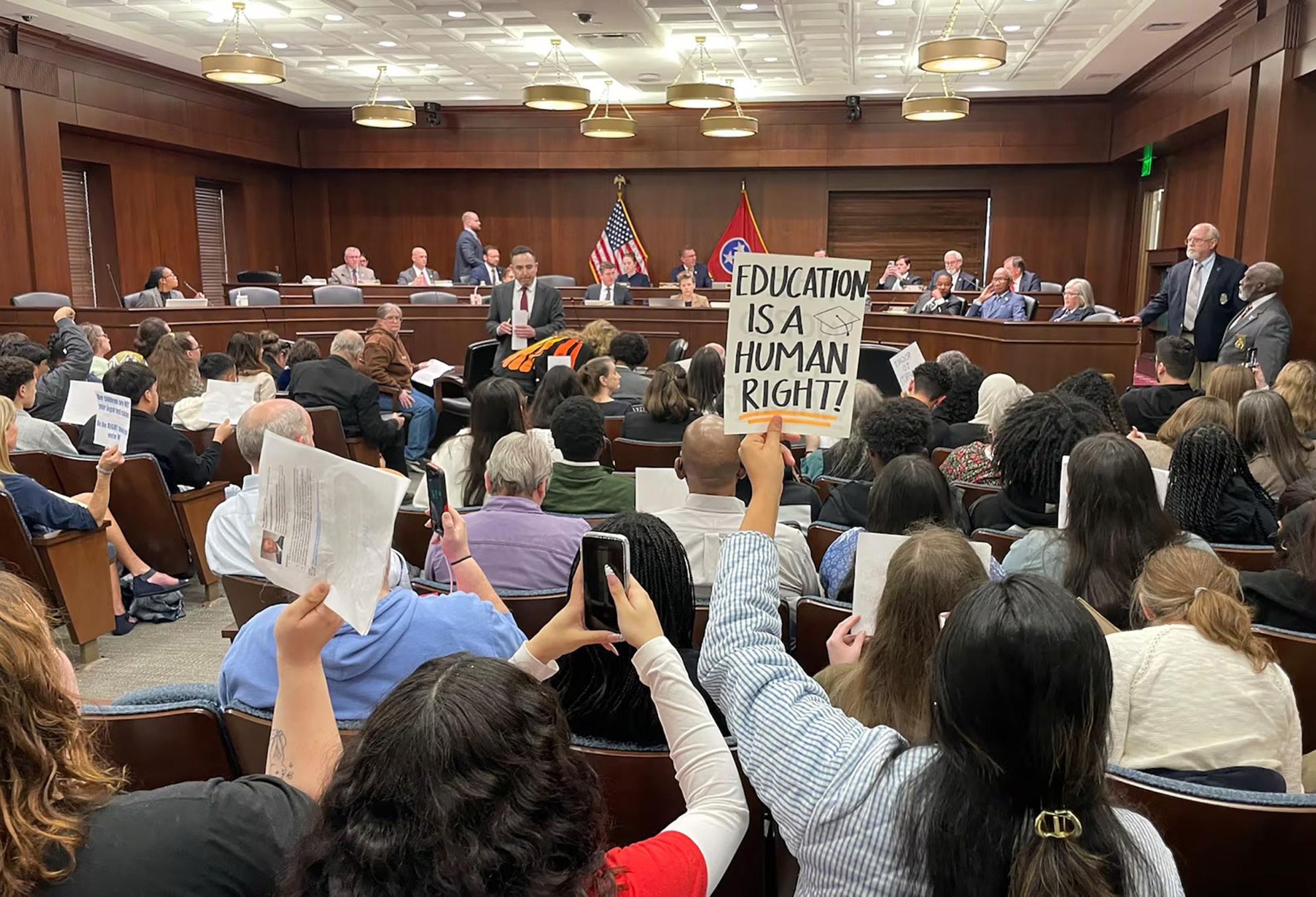
Community members attend a General Assembly meeting on March 4, 2026 in Nashville, Tenn. (Melissa Brown / Chalkbeat)
■■ ENTERTAINMENT
Whalum family business: Jazz at ‘Kafé Kirk’
By Candace A. Gray TSD Contributing Writer
In its eighth year, the quarterly jazz series “Kafé Kirk” continues to feature stars from around the globe, and aptly, from music mecca Memphis. Kirk Whalum, the visionary, curator and artist in residence, believes that Memphis is the perfect place for a jazz home.
Though Whalum has played all over the world with numerous A-list artists — the late Whitney Houston, Luther Vandross, Quincy Jones, and Dave Koz, to name a few — he too calls his native Memphis home.
And Sunday, March 22, at Crosstown Theater, he will welcome his world-renowned nephew, Kenneth T. Walum III, back home for an unprecedented “Kafé Kirk.”
“I am so geeked about this show! To have my nephew, who is busy doing his own thing, join me — I’ve had his brothers, Kameron and Kortland, with me on this show before,” said an excited Whalum. “But he plays my instrument — we’re both saxophonists, so I am very excited!”
Whalum shared details about the “diagonal continuum” that this particular partnership represents.
“I was influenced by my uncle, Uncle Hugh ‘Peanuts’ Whalum, who is featured on my ‘Gospel According to Jazz #3’ album,” said Whalum. “He’s in Heaven now. But now I get to feature my nephew.”
Kenneth Whalum III, can be found playing and singing all over the world — sound familiar? A quick Facebook search reveals Whalum, III, having recently played with Outkast for their induction into the Rock ‘n Roll Hall of Fame ceremony, serving as musical director for rapper Ludacris, and ending 2025 at the Blue Note in Los Angeles.
“To be gainfully employed, doing something you love on a broad level, is a blessing. It’s magical,” said Whalum. “And to see the next generation (doing it) is amazing.”
Part of that next generation of Whalum musicians is Whalum’s son, Kyle, who lives in Los Angeles and is working with Katy Perry, after having worked with Kelly Clarkson, the first “American Idol” winner.
“He was on the Grammy’s this year with Sabrina Carpenter,” said Whalum of his son. “He’s done a lot of different things, and he’s the only new generation Whalum who hasn’t done our series.” (Foreshadowing, maybe?)
The Whalums continue to be a global force in pop, hip hop, jazz and more.
And while Kirk Whalum, who speaks three languages, could have chosen to live anywhere — as he did with his family in France in the 90s — and anchor his series anywhere, he chose his hometown.
“I came home in 2006, before my father transitioned, and Ruby (his wife) and I fell in love with Memphis, seeing and experiencing it for the first time as adults,” said Whalum. “Some said Memphis wouldn’t give jazz a chance, but we knew otherwise.”
Whalum shared a story about how when living in France, Memphis even showed up in a Burger King, complete with Beale Street signs, instruments, Elvis photos and other elements of Memphis blues and soul.
“Memphis has always been global, we’re just too close to it to see what it is,” said Whalum.
For Sunday’s Kafé Kirk series, the uncle-nephew duo will join a cast of Memphis musicians, including Garry Goin (guitar), Jackie Clark (bass), Robinson Bridgeforth (drums) and Terrance “T.” Brown (keys) to share with Memphis what the world gets to behold.
If you’re looking for that big band, brass sound, this is also where you will find it. Whalum is featuring two more gifted wind instrument artists: Kirk Smothers and Jim Spake, who played on the Memphis-recorded “Uptown Funk” by Bruno Mars.
“Horns are a big part of that ‘Mem-
phis Sound’,” said Whalum. “And these guys represent that Stax legacy of music, back when they were breaking barriers by being bi-racial, with Steve Cropper and Booker T & the MGs.”
The collective will perform originals from Kenneth Whalum III, some of Kirk Whalum’s originals and a few songs from the “Memphis Soul Stew” album by King Curtis, who was not originally from Memphis but recognized the power and pull of Memphis music.
That, and so much more, is just what this collective of global musicians plans to share in this installment of “Kafé Kirk.”
Details: “Kafé Kirk” is Sunday, March 22, at Crosstown Theater at Crosstown Concourse. Doors open at 5 p.m.; show starts at 6 p.m. Click here for tickets.
Gestalt Community Schools (GCS) is accepting bids for our School Nutrition Program for School Year 26-27.
Seeking proposals for providing Food Service Management Services for Gestalt Community Schools. GCS is a public charter school organization that serves students in Shelby County, TN. Proposals must be received by COB Monday March 23rd 2026 To request an RFP, please email us at aadeleke@gestaltcs.org or call 901-663-4763.
Beyond uncertainty: Middle market strategies for 2026 success
By Elizabeth Rouse Special to the Tri-State Defender
Now that we’re firmly into 2026, middle market leaders are navigating a familiar mix of opportunity and uncertainty. In conversations with the private and public companies we serve, we find they’re not waiting for perfect clarity. Instead, they are making targeted, strategic moves to help their companies grow.
Mid-size companies contribute to the city’s economic growth, especially in industries such as logistics, manufacturing, health care and professional services. With Memphis serving as a major logistics hub and the city continuing to attract new investments and talent, it’s important for businesses to balance growth opportunities with rising costs, workforce pressures and keep up with digital advancements while remaining competitive on national and global levels.
Three themes have emerged for continued success in 2026: Expanding digital reach, leveraging mergers and acquisitions (M&A) for transformation and prioritizing employee financial wellness.
Digital success starts with outcomes, not tools
The most successful digital journey starts with the client, not the technology. This includes business-to-business companies, where clients now expect the same seamless digital experiences in business as they encounter in their personal lives, making client journey mapping a critical first step.
An effective approach involves clarifying the client engagement moments that matter most: from discovery and buying to onboarding and service. The client experience and data flows should be designed around these critical touchpoints. This means defining what data to capture, assigning clear data ownership and standards and providing relevant teams with a single, secure view. When the right people have
the right information at the right time, decision-making accelerates and satisfaction increases.
A good digital strategy will also help improve employee experience, freeing up employees’ time from manual and tedious tasks and creating more room for higher-value, innovative and creative work. This can help attract more digital-savvy employees who can leverage AI, provided data is clean and governed and leaders keep humans in the loop for critical decisions.
Consider shaping the future through M&A
Deal activity is expected to continue in 2026, and mergers and acquisitions can be a powerful tool to accelerate growth and support succession planning. In Memphis, many middle market companies are family-owned. Therefore, M&A is largely being used as a tool for succession planning, legacy preservation, long-term stability and expansion.
Specifically, M&A offers several strategic avenues for growth and resilience:
• Diversifying into adjacent products or services can broaden a portfolio and deepen client relationships through additional offerings.
• Consolidation can strengthen a company’s competitive position by expanding distribution and removing duplicative costs.
• Cross-border deals offer a path to faster market entry and local expertise.
• Employee stock ownership plans (ESOPs) allow owners to sell all or part of the business, while keeping stakeholders invested in the company’s success.
Prioritize your team’s financial wellness
The financial health of your employees can impact the financial health of your overall company. While many employers remain focused on
offering traditional benefits — such as retirement and health care — employees are asking for a more holistic approach to their benefits package.
Employers must think of financial wellness benefits as more than a perk; these resources can help quell employees’ financial anxieties. The 2025 Bank of America Workplace Benefits Report found that personal debt is a significant source of strain for employees, with 46% saying it actively causes them stress and 35% saying it interferes with their focus and productivity at work. In a particularly competitive labor market, offering these benefits can help drive job satisfaction, talent retention, work productivity and more.
To help meet employees’ financial wellness needs, employers should begin to look beyond traditional benefits. Our research found that employees are looking for unique resources to support their financial health, including:
• Retirement education and planning
• Learning how to generate income in retirement
• Online tools to measure and improve financial wellness
• Financial guidance and resources on emergency savings, mortgages and paying for college And while nearly all employers feel responsible for their employees’ financial well-being, less than half offer financial wellness programs to support it. Closing this gap could be a critical step toward building a more engaged and resilient workforce.
In the face of continued uncertainty, middle market companies that embrace a customer-centric digital strategy, consider growth through strategic M&A, and prioritize the financial wellness of their employees will be best positioned for lasting success throughout 2026 and beyond.
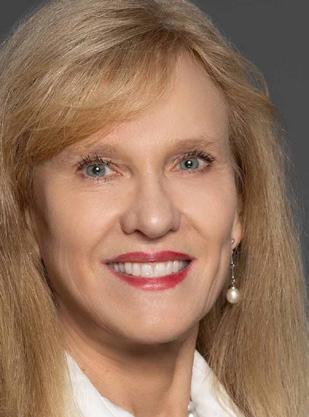
Elizabeth Rouse is senior vice president of global commercial banking for Bank of America Memphis.