


By James Coleman TSD Contributing Writer
Memphis City Council members took the first step towards offering paid family maternity leave to all city employees on Tuesday, May 26.
A resolution offering six months of paid leave moved forward with a favorable recommendation during the Personnel Committee meeting. The resolution replaces an ordinance that would have codified the benefit in the city charter.
The item will be taken up at the next council meeting on June 9.
more “efficient” and “binding.”
“We want to make sure, Councilwoman Green and I, that it’s real on paper and in policy. And that it has a less likelihood of being argued when we’re gone,” said co-sponsor Michalyn Easter-Thomas.
The answer satisfied any doubts from fellow committee members.
“What would be so rewarding is that we would take all of our attorney’s advice when things come up and we have a question. Then we could all go through it. That would be really nice, councilmembers,” said Yolanda Cooper-Sutton.
runner-up in the 2026 Shelby County Mayor Democratic primary scuttled a recently approved ordinance amendment that overhauled the city’s employee impasse procedure.
At the time of its authorship, Smiley ignored the advice of council attorney Alan Wade, who said the amendment would violate the city’s charter.
The tweak pared the procedure down from a five-person arbitration panel to a single mediator. The intent was to let the city and workers settle their own differences as much as possible, without council input.
INFORMATION: Inquiries may be submitted in writing or by calling (901) 523-1818 or by email. TELEPHONE: (901) 523-1818. The Tri-State Defender (USPS 780-220) is published weekly. The Tri-State Defender 1509 Madison Ave. Memphis, TN, 38104. Second-class postage paid in Memphis, TN.
If it passes on a third and final vote, the city employees would join the growing ranks of government employees of all levels in Tennessee that are eligible for the benefit. Cities in the state that currently offer PFL include Nashville and Knoxville.
All full-time employees would be eligible for 100% of 240 hours of paid leave. In addition to births, qualifying events include adoptions and foster placement.
“Just as the county government now has it, the state government has it — we’ll get this through — the city government will have it,” said co-sponsor Council Member Jerri Green.
Memphis’s city employees currently rely on paid time off to lend a post-maternity hand around the house.
“I think this is a really incredible policy. I think it’s going to be something really wonderful for our employees,” said Green. “I hope that private organizations around our city take our example and do the same, because it is so important for parents and for children.”
Before the resolution was read into the record, another co-sponsor withdrew an ordinance that offered the same benefit. It was written on the advice of the city’s chief legal officer, Tannera Gibson. A resolution from the mayor would be
The comment was likely a dig at Councilman JB Smiley. During the executive session later in the day, the
A new amendment that expands the panel to six members was offered on Tuesday.

By Brianna Smith-Herman TSD Contributing Writer
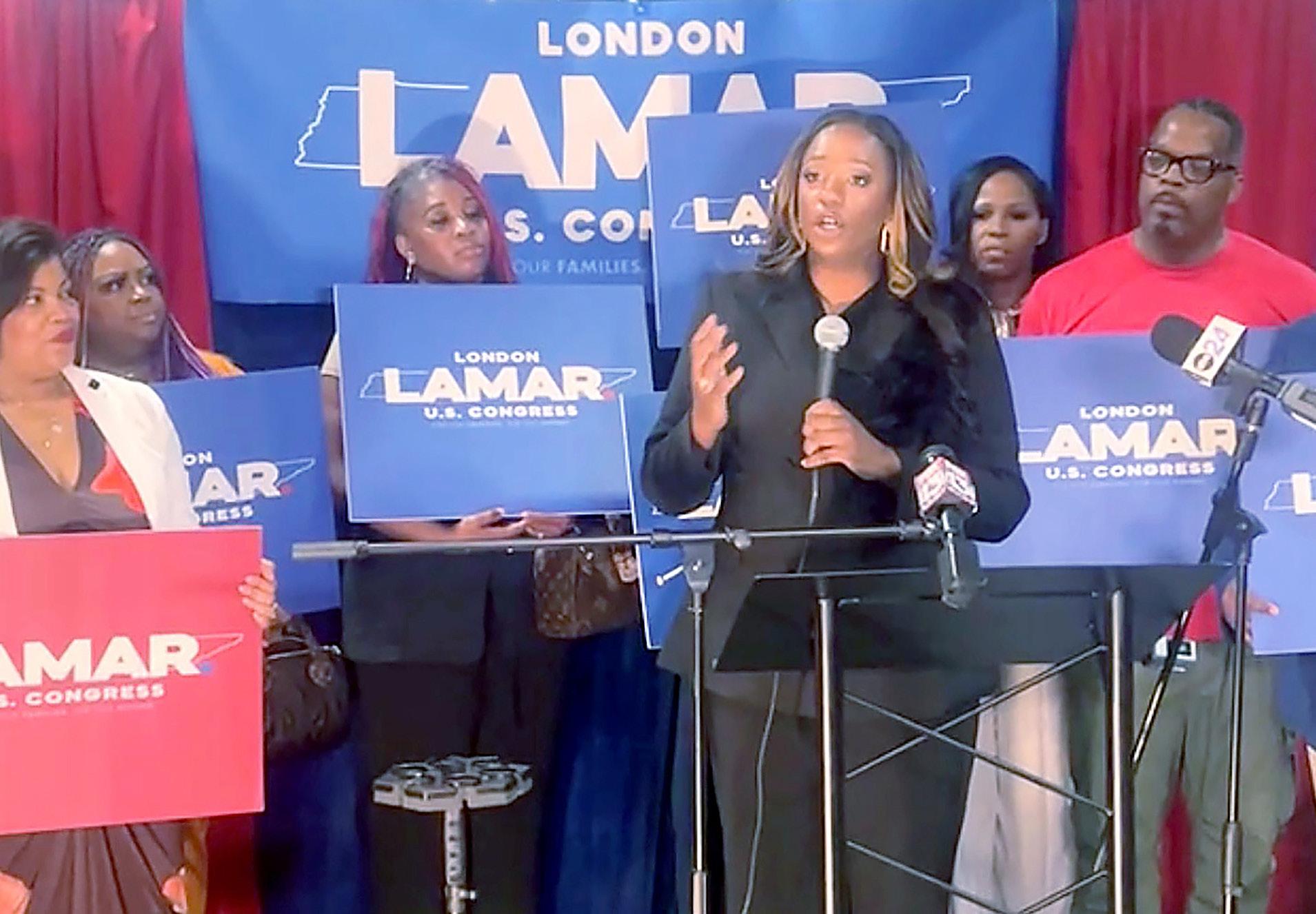
State Sen. London Lamar officially launched her campaign for Tennessee’s 9th Congressional District on Tuesday, May 26, during a kickoff event at Hickory Ridge Mall in Memphis. Supporters, community leaders, media members and local residents gathered at the Elite Performance Foundation inside Hickory Ridge Mall as Lamar, a Democrat, formally announced her bid for the U.S. House seat representing a portion of Memphis and a district that now stretches 770 square miles. surrounding communities.
The morning event included remarks from Lamar outlining her vision for the district and her plans to advocate for Memphis on the national stage.
“This campaign is about fighting for our families, protecting Memphis’ voice and bringing real resources back home,” Lamar said during the announcement.
Lamar currently serves as Chairwoman of the Tennessee Senate Democratic Caucus and represents Tennessee Senate District 33, a position she has held since 2022. Before joining the Senate, she served in the Tennessee House of Representatives for District 91 from 2018 to 2022.
Her campaign will center heavily on affordability and improving quality of life for Tennesseans, Lamar said. Key priorities include expanding access to affordable healthcare, addressing housing challenges and advocating for resources that directly benefit working families.
Lamar enters what is expected to
become one of Tennessee’s most closely watched congressional races following recent redistricting changes that reshaped District 9 and sparked criticism from civil rights groups and voting advocates who argue the changes dilute Black voting power in Memphis. Multiple lawsuits challenging the newly approved maps are currently pending in court.
Following the Legislature’s decision to redraw Tennessee’s congressional maps, Lamar said the new District 9 closely mirrors the communities she already serves in the state Senate.
“When the legislature decided to redraw the maps, I looked at it and realized that the majority of the new Congressional District 9 is my Senate district,” Lamar said. “So, essentially, I’m already running to continue representing and engaging with many of the
people I already serve.”
Steve Cohen, who has represented District 9 for nearly 20 years, recently announced he will not seek re-election following the redistricting overhaul. Lamar will face a Democratic primary field that already includes State Rep. Justin J. Pearson, who announced his congressional campaign before the new redistricting maps were approved. Also running in the Democratic primary are M. LaTroy Alexandria-Williams. Dennis Jeffrey Clark is running as an Independent.
On the Republican side, Shelby County Commissioner Brent Taylor has also entered the race. Taylor, one of the architects and vocal supporters behind the recent redistricting effort, announced his congressional campaign one day after Gov. Bill Lee signed the legislation into law.
“The Mayor sent us a 3 page letter with some language I disagree with — but that’s neither here nor there.”
— JB Smiley
By James Coleman TSD Contributing Writer
Memphis City Council members scrapped a veto override of a reworking of the city’s impasse procedure during the Tuesday, May 26 meeting.
On May 12, Mayor Paul Young vetoed an amendment that pared down the city’s impasse procedure from three arbitrators to a single mediator. A new proposal featuring a six-person mediation will be considered on June 9. For the time being, city workers’ bargaining units will be governed by the previous set of rules. Council members would like to lock down the new procedure before considering a dispute between the city and the firefighters’ union.
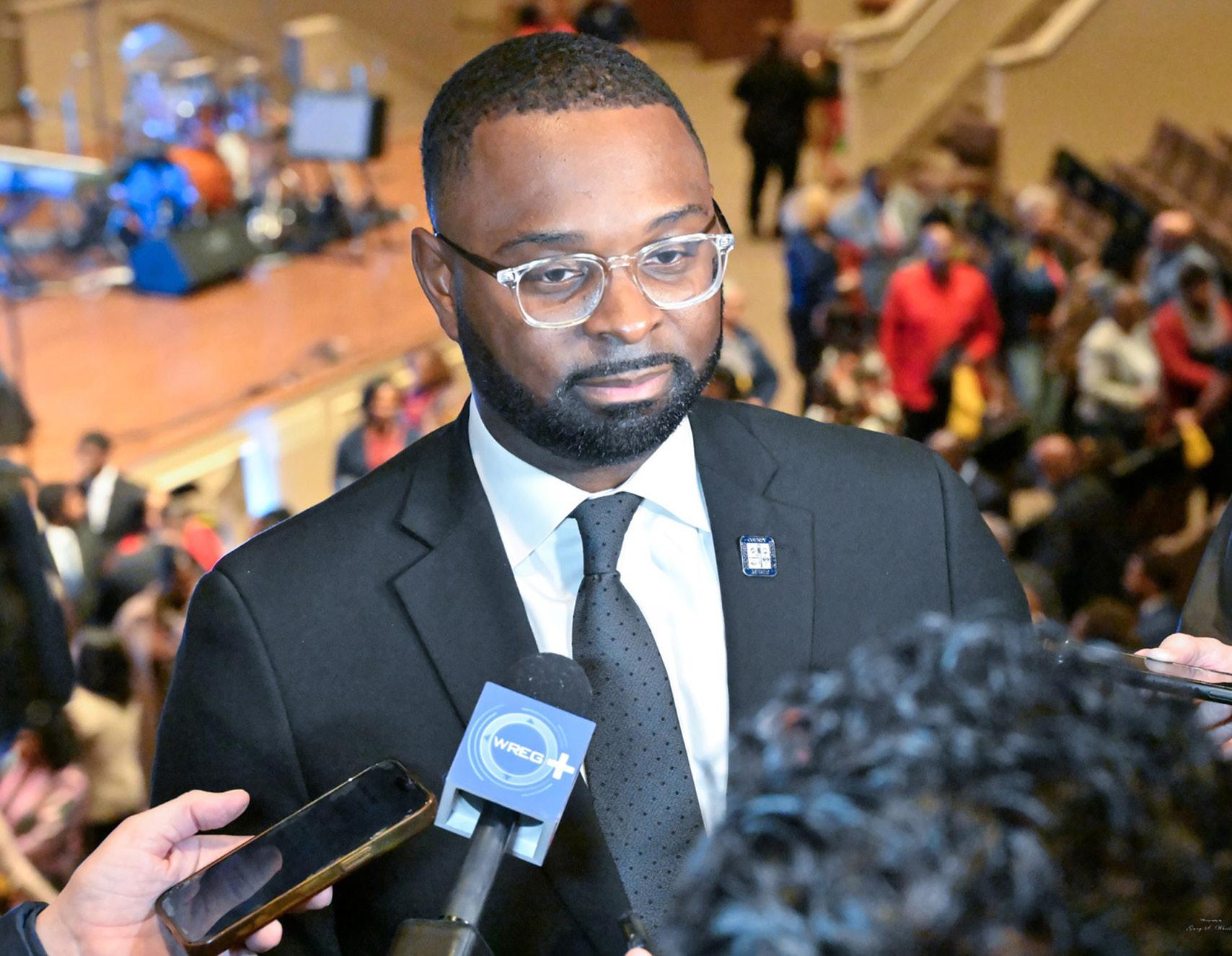
“Upon passage of this resolution, we’ll be reverting back to the 2017 amendment until we have a new impasse ordinance,” said Councilman JB Smiley. “This gives all affected parties an opportunity to be a part of the creation of the new impasse ordinance. I think it speaks for itself. We have to give the employee association that is at an impasse with the administration an opportunity to be heard.”
The full council rescinded the vetoed amendment later in the afternoon.
The new proposed six-member panel will feature two representatives from each side of a dispute — city, union and council. The details have been hammered out in discussions between Smiley, the administration and vacationing council attorney Alan Wade.
“He quickly responded to all of my questions, then he told me he may lose service. I think that was his way of saying ‘please leave me alone while I’m on vacation,’ ” Smiley chuckled. “There will be a follow up resolution, which will schedule the impasse presentation before the full council.”
The expansion of the impasse panel membership appears to be at odds with Smiley’s original intent. At the time, he was attempting to simplify the process by letting the both sides in a dispute settle the matter largely by themselves. The mediator would have facilitated discussions.
Unlike an arbitrator, a mediator does not have the power to make binding decisions.
During the crafting of the vetoed proposal, Wade cautioned Smiley over its legality. The city charter explicitly
calls for an “arbitrator” to help settle labor disputes between the city and its labor unions. Nevertheless, council members gave a 8-4 thumbs up to the changes.
Wade’s premonition of a veto quickly came to pass.
In a letter announcing the veto, Young chided the proposal for “circular references to unstated processes and requirements, to produce unknown/ undefined documents, creating an enforcement impossibility.” The mayor said the proposal was “shrouded in enigma.”
Moreover, the mayor said the amendment “seeks to enlarge the Council’s authority in direct contravention of the charter, which vests the mayor, solely, as the chief executive officer of the City of Memphis, with the authority to ‘administer, supervise and control all divisions, boards, agencies, offices and
employees of the city.’”
“The Mayor sent us a 3 page letter with some language I disagree with — but that’s neither here nor there,” commented Smiley.
Under the current system, the impasse panel hears from both sides before making a recommendation. A council vote against the recommendation nullifies it. The new rules will also require council approval for passage.
At the close of the executive session, a joint ordinance between the council and the Shelby County Commission was also pulled. Councilwoman Michalyn Easter-Thomas’ proposal would establish a public-private partnership to promote economic mobility between the county and its largest city. It was slated for its third and final reading.
“It was withdrawn also on the county side,” informed Easter-Thomas.
By James Coleman TSD Contributing Writer
For the second time in as many attempts, Shelby County Commissioners failed to render a verdict on an $18 million settlement between the Mayor Lee Harris and the Shelby County Sheriff’s department during their Monday, June 1 meeting.
On May 18, the mayor’s financial team presented the settlement to commissioners, after Bonner successfully sued the mayor in circuit court. Commissioners have initially balked at the funding request.
The item was sent back to committee without recommendation. It will be taken up on Wednesday, June 10.
The bulk of the cash — $16 million — will square unpaid overtime costs through February. However, the meter is still running. Moreover, the bill continues to accrue as many of the problems go unresolved. The total overtime costs for the year are expected to climb to $120 million.
“We are currently at about $20 million to $21 million here to date. We had budgeted for I think it was $11 million, so about $10 million over what
we budgeted for. So the next couple of months, depending on what they spend on overtime, that will be the rest of the $16 million,” said Audrey Tipton.
However, the county may not be on the hook for the entire sum. Around $7 million of the money may have already been offset.
Part of the problem is the SCSO’s new budgeting tool. The transition to Oracle software has bedeviled finance teams from the county and the sheriff’s department. The SCSO uses the software to manage its payroll and overtime costs. According to the administration, the new system is more rigid. Cash for overtime costs must be budgeted ahead of time on a single line. The previous system allowed the department latitude to draw cash from a “pool” to cover unintended expenses — like the current overtime overrun.
Commissioners entered the discussion hopeful that at least one of two parties would have found an alternative to a funding resolution. Budget & Committee Chairman Michael Whaley got the ball rolling during the May 27 committee meeting. He floated the trial balloon of using the sheriff depart-
ment’s vacancy savings.
The money is from unspent money budgeted for unfilled salaries and benefits. At the time, Tipton said the maneuver would allow the county to avoid the SCSO Maintenance of Effort, under which the state requires local agencies maintain a consistent level of their own funding for essential services.
Tipton reaffirmed as much on Monday.
“My understanding is, now that I’ve spoken to our attorney about this, if this is one time, if this is $16 million to increase over time from FY2026, it does not impact maintenance of effort, because it will not repeat in 2027.”
However, commissioners were left staring at the original resolution a few days later.
“This resolution looks overly simplified. It says let’s just take $18 million. You add up the $2 million and the $16 million and the $15,000 and just pull it out of unassigned fund balance, which is just not a good way to do it,” chided Whaley. “And we don’t have to do it that way. That’s what I’m struggling with. I thought we were getting somewhere and we’d have maybe a substitute or an amendment.”
Prior to the comment, county attor-
ney Megan Smith informed commissioners they had “fulfilled” their end of the bargain with the inclusion of the resolution on an agenda. For its part, the SCSO is holding firm to the current resolution. Furthermore, if the matter isn’t resolved in the allotted 30 days, another lawsuit could be brought.
Still, the overtime bill isn’t going anywhere.
Although exact numbers weren’t available, much of the OT is being paid to the undermanned staff at the Shelby County Jail. A ballpark complement of around 520 SCSO employees are currently responsible for the safety of an average of 2,600 to 2,900 inmates.
The number has swelled recently, as the Memphis Safe Task Force runs its course. Since beginning in late September, the state-ordered federal, state and local law enforcement operation has arrested over 7,000 suspects. The majority have passed through, or are currently being held at 201 Poplar Ave.
Commissioners are also seeking a full accounting on the overall costs of the operation. The federal government is slated to refund $700,000 in costs. The actual figure is vastly higher.

‘
What Memphis students don’t know about civics — and one mentor’s mission to change that
By Lee Eric Smith TSD Contributing Writer
Time was, kids could learn how the U.S. Congress makes laws by watching Schoolhouse Rock on Saturday mornings. Sing along if you know it: “I’m just a bill, just an ordinary bill, and I started out on Capitol Hill…”
But Schoolhouse Rock is gone. So are the civics and American government classes that were once required to graduate high school. And when Memphis-based mentor Tony Nichelson asks a teenager about the Bill of Rights today, he often gets a blank look in return.
“Do they know the three branches of government?” he said. “Do they know how many representatives there are? It’s dangerous for us to have young people that have no clue about some very basic things about America.”
The gap left behind is more than nostalgic. In an era when young people are navigating aggressive federal enforcement, expanding executive power and communities where a knock on the door can upend a family, understanding your rights isn’t a civics elective. It’s a survival skill.
Which is exactly why Nichelson — Memphis mentor, founder of Man of the House Mentoring and CEO of SouthSoul Media — launched “Civic Literacy / Teen Project ‘26,” a structured initiative designed to give young people in the Bluff City what their schools stopped providing long ago.
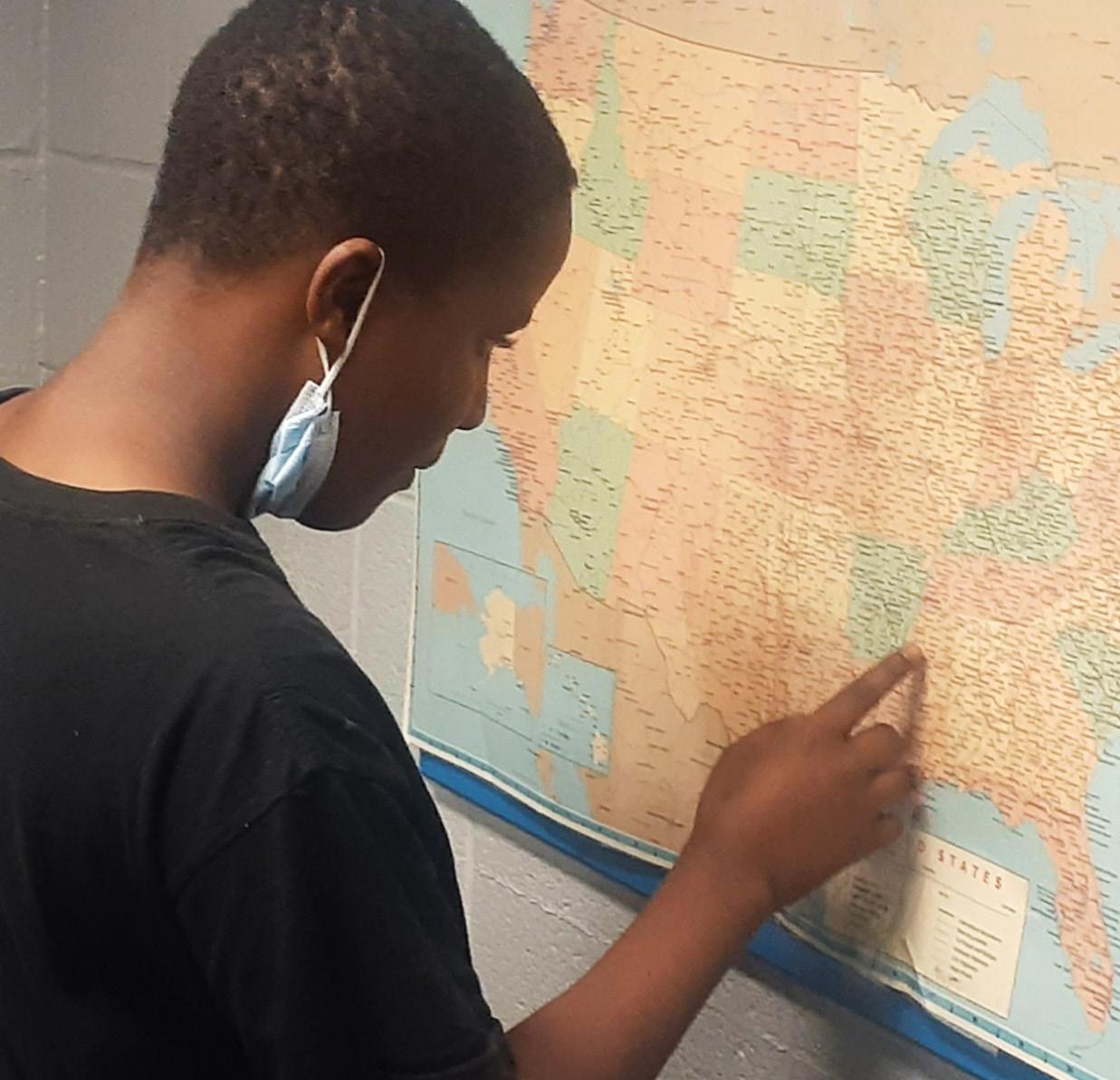
“I remember learning all of the state capitals. It gave me a sense of how big the nation was,” Nichelson said. “I don’t know when it happened or how it happened, but we got away from it.”
Nichelson’s concern tracks a documented shift in American education that played out over decades. Civics was once a standard feature of the high school curriculum — a standalone course, required, alongside U.S. history and geography. Students mem-
orized the branches of government, learned how laws were made and could locate the states on a map. It wasn’t glamorous instruction, but it was foundational.
The drift started in the 1970s, when schools began folding civics into broader “social studies” frameworks. Then in 1983, a federal report called “A Nation at Risk” sounded the alarm about American students falling behind — and the response was to double down on math, science and reading. Civics didn’t disappear, but it started losing ground.
The decisive blow came in the early 2000s with No Child Left Behind. Under that law, schools were evaluated almost entirely on reading and math scores. Subjects that weren’t federally tested — civics, history, geography — got squeezed to the margins. Educators will tell you that’s when it really slipped away.
Tennessee still requires a government course for graduation — half a credit — and since 2017 has mandated a civics test based on the U.S. citizenship exam. On paper, the knowledge requirement went up. In practice, the depth never came with it.
That’s the distinction Nichelson keeps returning to. Civics didn’t vanish from the classroom. It just got crowded out — and what replaced it was awareness without understanding, exposure without application. And in a nation with a documented history of re-writing laws specifically to restrict and often capture people of color, ignorance of the law can land you in jail.
For Black families in the South, the stakes of civic ignorance were never abstract. A father could be
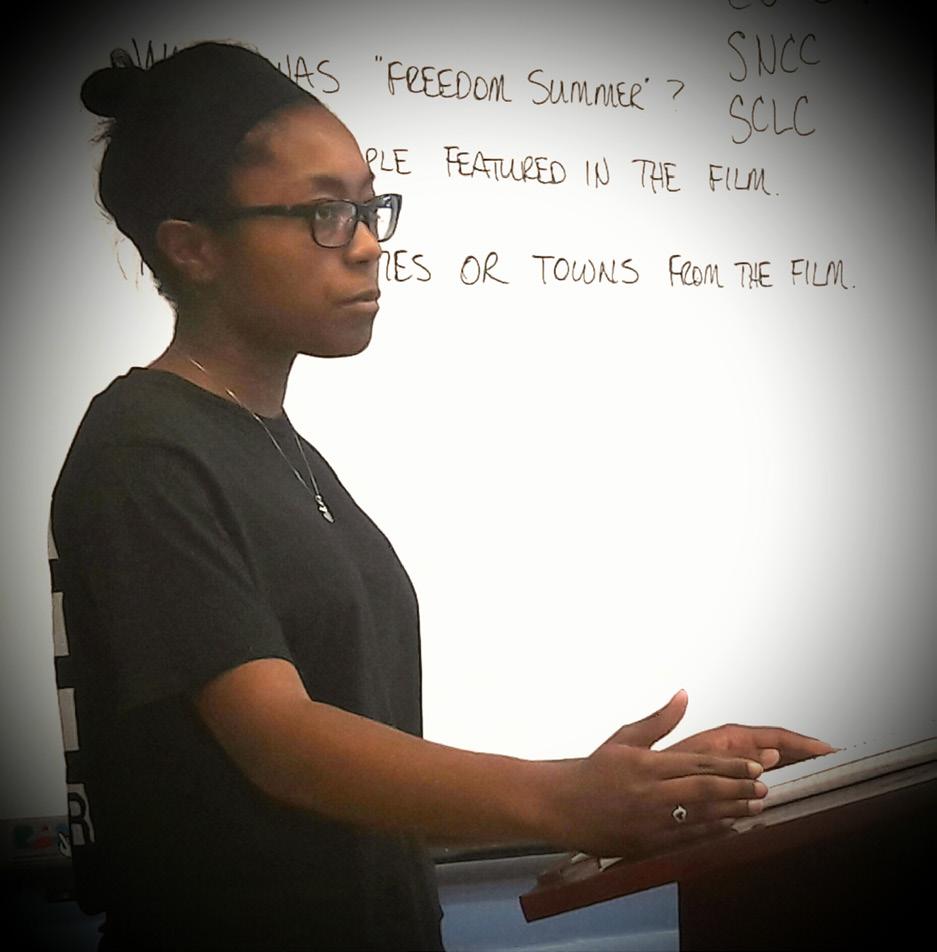
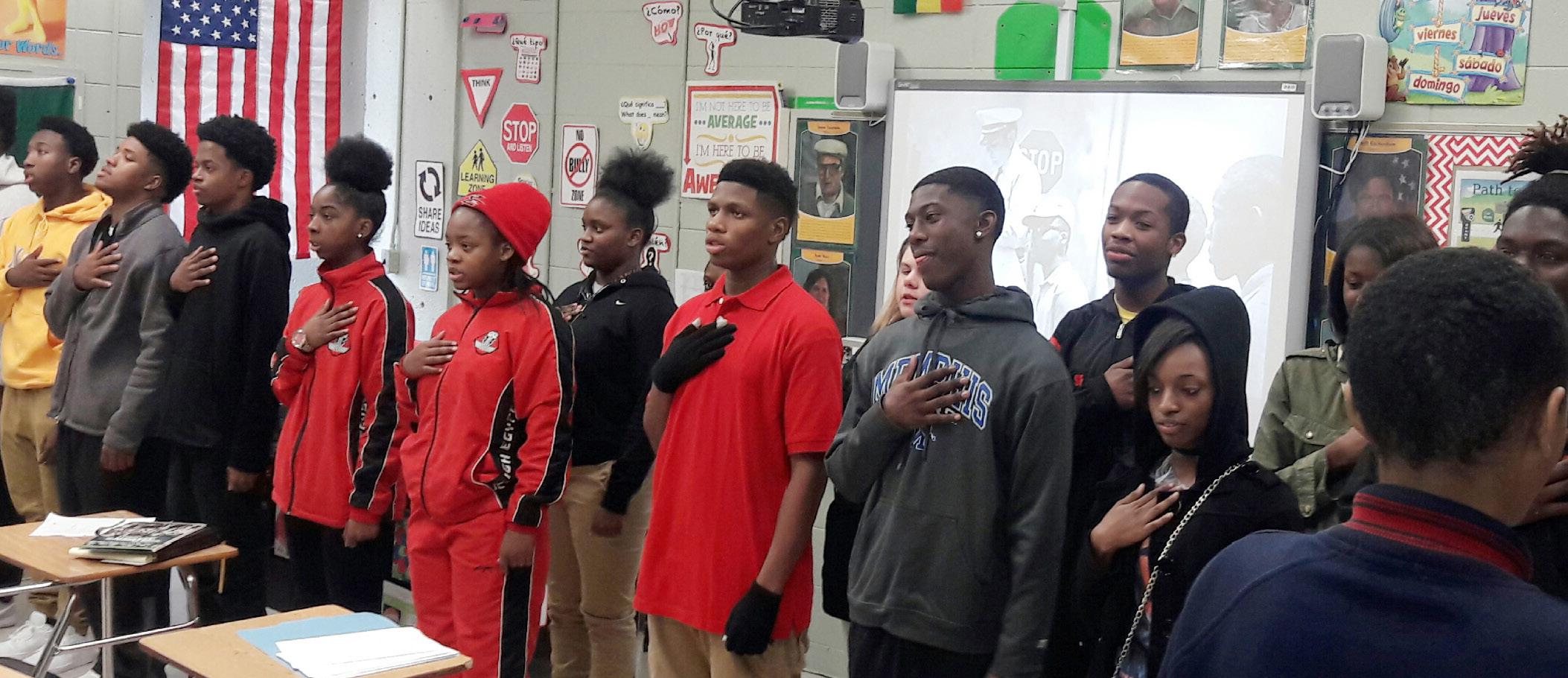
Memphis mentor Tony Nichelson’s “Civic Literacy / Teen Project ’26” initiative introduces students to the U.S. Constitution, the Bill of Rights and the structure of American government. (Photos: Courtesy Tony Nichelson)
ON THE COVER: Students participating in Tony Nichelson’s “Civic Literacy / Teen Project ’26” stand for the Pledge of Allegiance.
pulled from his household over a misdemeanor, not because the system misfired, but because it was working exactly as designed, against people who didn’t know how to push back.
“You had to know what the law stated. And there were laws written to really damage, in my opinion, the families and communities,” he said. “You could snatch a father away from his family because of some misdemeanor law and put him on a chain gang.
“You could go to jail for things that you did not know. You had to know the law so you wouldn’t get picked up for vagrancy,” he said. “Parents knew it, and they taught their children that.”
That knowledge moved through Black households the way other families passed down recipes or trades. It was a survival curriculum. And it carried a second lesson alongside the first — that people who understood the system well enough could also organize to change it.
One of Nichelson’s sharper points is about what gets remembered versus what actually happened during the Civil Rights era.
The images people carry — fire hoses in Birmingham, the march on Selma — are real. But they don’t tell the whole story of how change was made. Behind every iconic moment was infrastructure. Organiza-
tion. People who understood the system well enough to know exactly where to push.
Take the Montgomery Bus Boycott. What’s often remembered as a moment of spontaneous resistance was something far more deliberate. “They had carpools,” Nichelson said. “Over 300; and some days, they crippled that bus line. The government had to respond.”
King was 26 years old when he arrived in Montgomery. The people who changed America weren’t distant historical figures — they were young, organized and operating from a clear understanding of their rights and the system they were up against. That’s not a footnote. That’s the lesson.
“The community came together,” Nichelson said. “Churches, neighborhoods — everybody said, ‘We
have to do this.’”
That model of organized, legally grounded activism is what he’s trying to revive — and pass on.
What he’s building
Teen Project ‘26 started in April and runs to July 4 at City University School of Liberal Arts, targeting students ages 12 to 17. At its center is a student workbook built around the Bill of Rights, key constitutional amendments and an exploration of civil rights history — not as distant events, but as living context.
The program runs on three tracks: academic, economic and citizenship. Students don’t just study history — they respond to it. They write essays, create artwork, produce podcasts and public service
announcements. The best work can be published, licensed, even monetized.
“Now is your time to publish, share and monetize your God-given craft,” the program materials tell students.
That’s not just motivation. For Nichelson, it’s the whole argument — that young people have something worth saying about this moment, and that the tools to say it effectively start with understanding how the country works.
“There are some really talented and bright young people,” he said, “but they don’t get the opportunity. (Our community isn’t) connecting with students who have this kind of talent for art and writing to keep this information alive among their peers.”
The nation’s 250th anniversary is already generating celebration, spectacle and, in some quarters, real anxiety about which stories will be told and how.
Nichelson doesn’t sidestep that tension. “It’s going to be an interesting time,” he said. “America has to face the fact that, yeah, we’re a great nation and have done a lot of things — but there’s a downside, there’s a dark side.”
His program’s guiding principle speaks directly to that: America’s 250 is our history as well.
“Everything you can think of for that 250 years,” he said, “there was some aspect of Black life that was affected. Slavery, Jim Crow, busing — even to this very day. That’s why that slogan sticks in my mind.”
His goal isn’t to diminish the celebration. It’s to make sure young people show up to it informed — and prepared to shape how the story gets told from here.
The program is still recruiting students. Nichelson said he’s working to connect a few current participants — including a student named Lorraine — with TSD for follow-up conversations in the coming weeks.
For now, he’s focused on starting where he has to.
“We have to start with smaller bites,” he said. “Knowing our Bill of Rights. Young people want to know more about this. We just haven’t done a good job of connecting it.”
That gap — between what young people want to know and what they’re actually being taught — is, for Nichelson, the whole story. And at 250 years in, he believes America is running out of time to close it.
For more information on Civic Literacy / Teen Project ‘26, contact Tony Nichelson at shopouryouth@ gmail.com or makingblackboys@gmail.com, or call 901.336.2399.
By Lee Eric Smith TSD Contributing Writer
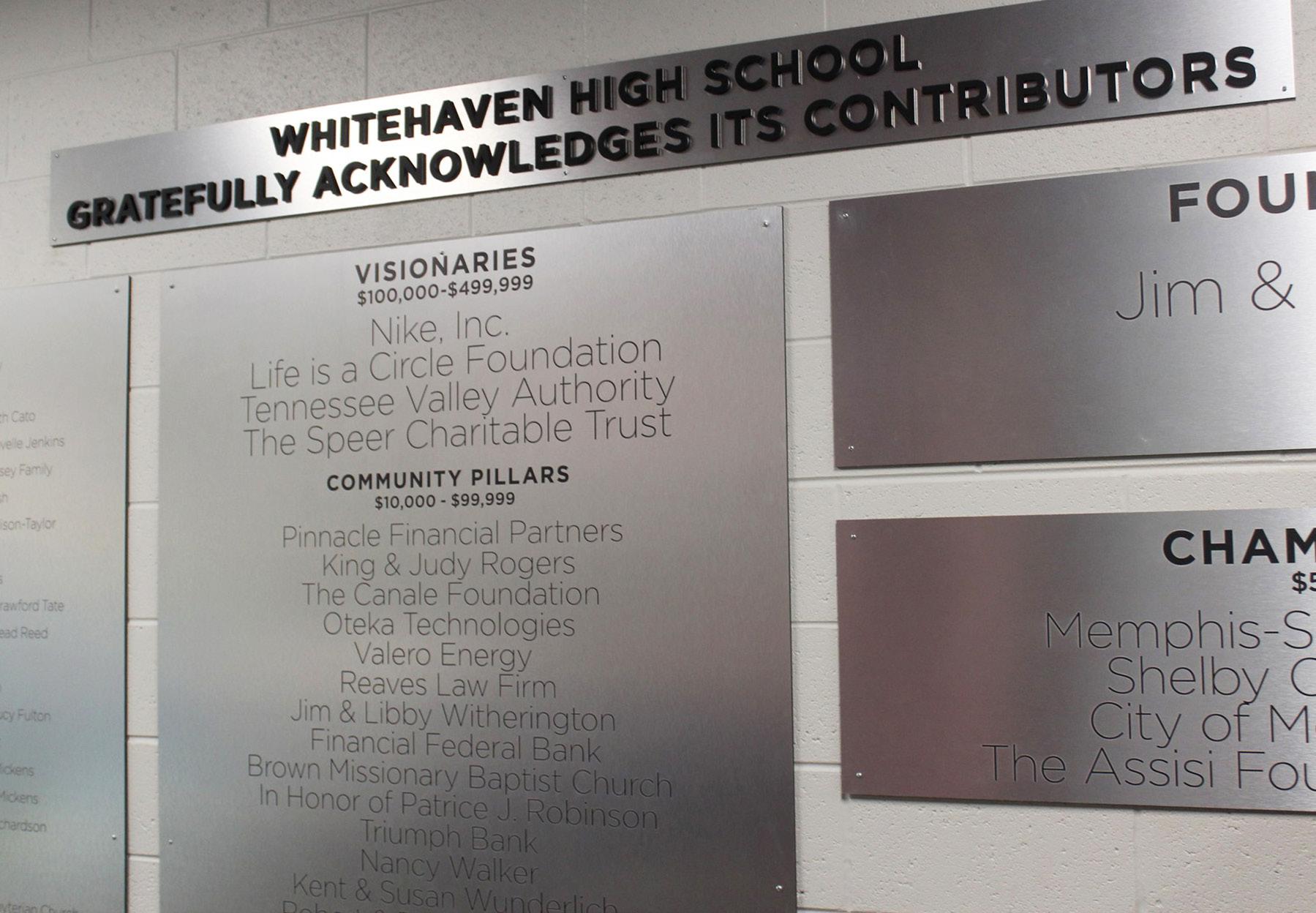
For most of the 2025-26 academic year, students at Whitehaven High School have migrated between classes, passing by a shiny new facility aimed to bring out the sleeping mathematicians and scientists in Southwest Memphis. But with the school year concluded, they’ll have to wait until at least next fall to take classes there — and maybe longer, depending on how much red tape will need to be snipped.
Months after the ceremonial opening of the James Herbert STEM Center at Whitehaven High School, the multimillion-dollar facility remains largely unused for instruction — even as a recently released state forensic audit raises questions about how the project was managed, funded and brought online.
“As of the date of this report, the Herbert STEM Center is not yet operational for instructional use, and no definitive utilization timeline has been established,” auditors wrote.
Context matters
The Whitehaven STEM facility will remain unused indefinitely. That’s the “what.”
The “why” is considerably more convoluted.
It’s no secret that the Memphis-Shelby County Schools Board spent much of 2025 dealing with one crisis or another. In January, the board controversially fired former superintendent Marie Feagins, who responded with a lawsuit of her own. The board appointed Dr. Roderick Richmond as interim
superintendent, then removed the interim tag before re-attaching it earlier this year.
Meanwhile, the Tennessee General Assembly and state officials intensified scrutiny of the district amid growing concerns over finances, governance and academic outcomes. That scrutiny culminated in a sweeping forensic audit commissioned by the state and conducted by accounting firm CliftonLarsonAllen LLP.
The resulting 329-page report examined a range of district operations — including the Herbert STEM Center project itself.
Auditors found that approximately $9.94 million had been raised for the project, roughly $9.05 million had been spent, and about $885,000 remained unexpended. The report also identified governance and communication gaps involving project partners, including SchoolSeed, which served as fiscal agent for the project.
Under Memphis-Shelby County Schools Board Policy 2019, major gifts and donations must be fully evaluated before the district formally accepts them. The policy specifically states that donations must be assessed “prior to its acceptance/approval” to ensure audit compliance and avoid “speculation of fraud.”
The policy also requires district leaders to consider whether a donation could create “undesirable or hidden costs” related to staffing, maintenance, utilities or long-term operations. Gifts valued above $15,000 require formal

Board approval. A whole STEM Center certainly qualifies.
That policy framework now hangs over the Herbert STEM Center debate because the district formally accepted the building in October 2025 as “a fully operational facility under its jurisdiction” — even though the state audit later found unresolved communication and operational-readiness concerns tied to the project.
Importantly, the audit does not accuse anyone connected to the project of fraud or theft.
In fact, auditors noted that project expenditures were generally supported and related to construction and operations. But the report does paint a picture of a project whose operational details may not have been fully settled
by the time the district formally accepted the building.
Among the audit’s findings:
• “The investigation identified concerns related to governance, communication, and operational readiness associated with the Herbert STEM Center project.”
• Auditors found “an apparent loss of trust” between the Whitehaven Empowerment Zone and Whitehaven STEM Building Inc.
• The report stated that delays in equipment purchases and readiness issues “were not clearly communicated to the District.”
Ironically, the Shelby County Board of Education formally accepted the Herbert STEM Center on Oct. 28, 2025 — weeks after the ribbon-cutting ceremony and more than a month after
the building received its certificate of occupancy.
Board records reviewed by The TriState Defender show little substantive public discussion of the project in the days leading up to that vote.
Agendas from finance, procurement and policy committee meetings held Oct. 21, 2025 contain no visible discussion of the Herbert STEM Center, despite extensive conversations surrounding district finances, staffing shortages, infrastructure concerns and governance reforms.
At the same time, board members were debating temporary suspension of key governance policies related to budgeting and oversight while grappling with declining enrollment, legal expenditures and mounting operational pressures districtwide.
Still, the Board voted unanimously to accept the building as “a fully operational facility under its jurisdiction.”
District policy requires that major gifts and donations be fully evaluated before acceptance, including consideration of long-term operational and maintenance obligations – things like: How many additional teachers and staff

are needed? How does the new facility impact energy usage? What ongoing costs are associated with running new chemistry and biology labs?
The Board’s acceptance remains valid. But the gap between the building’s formal acceptance and its continued lack of instructional use now raises broader questions about whether all operational conditions tied to the project had truly been resolved at the time of the vote.
Questions surrounding the Herbert STEM Center did not begin with the audit.
During construction, community members and activists questioned the project’s changing footprint and reported costs. Early plans described a 25,000-square-foot STEM facility costing approximately $9.5 million. By the time the building opened, the facility footprint had shrunk to roughly 20,000 square feet, while city permit records listed construction costs at approximately $7.9 million.
At the ribbon cutting last fall,
project leader Richard J. Meyer said the difference reflected the distinction between “hard” construction costs and “soft” costs associated with the overall project.
“The $7.9 million on the permit is just the hard cost — what you pay the contractor for the steel, the concrete, the bricks,” Meyer told TSD at the time. “Everything else — architecture, utilities, equipment — are soft costs that aren’t reflected on that permit.”
Vince McCaskill, president and CEO of SchoolSeed, also pointed to pandemic-era inflation and rising construction costs.
“The reality is, prior to the pandemic, to build any facility in Memphis, in Shelby County, it’s gonna cost you about $250 a square foot,” McCaskill said during the center’s opening ceremony. “Then the pandemic hit — COVID hit, inflation hit — and everybody felt it in the stores.
“So if you felt it in the stores, can you imagine what that cost would be with construction materials?” he continued. “So it went from $250 a square foot to $400 a square foot.”
The audit appears to support portions of those explanations while
simultaneously raising new questions about communication, oversight and operational planning.
At this point, the Herbert STEM Center belongs to the district. The issue is no longer whether the building exists or whether it was formally accepted. The question now is what remains unfinished before students can fully use it.
In a statement released after publication of the forensic audit, MSCS acknowledged the findings broadly, saying the district “welcomes any information that can be used to strengthen MSCS” and is “working diligently to assess and make the necessary changes.”
The district did not specifically address the Herbert STEM Center or provide a timeline for when students might begin regularly taking classes inside the facility.
For now, one of the most ambitious education projects in recent Whitehaven history remains something students can admire mostly from the outside looking in — a gleaming symbol of possibility waiting for the systems around it to catch up.
‘Black
By Lee Eric Smith TSD Contributing Writer
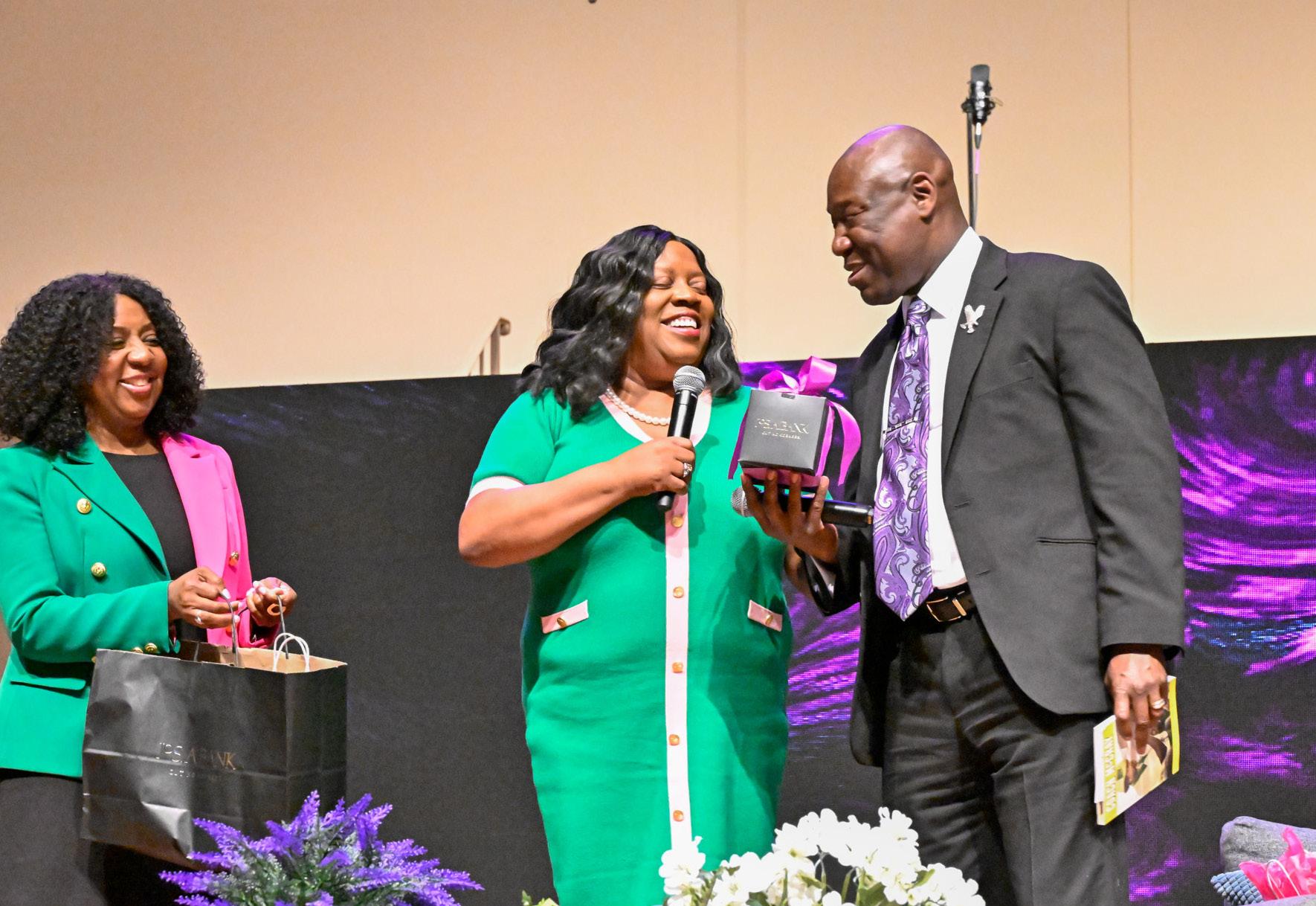
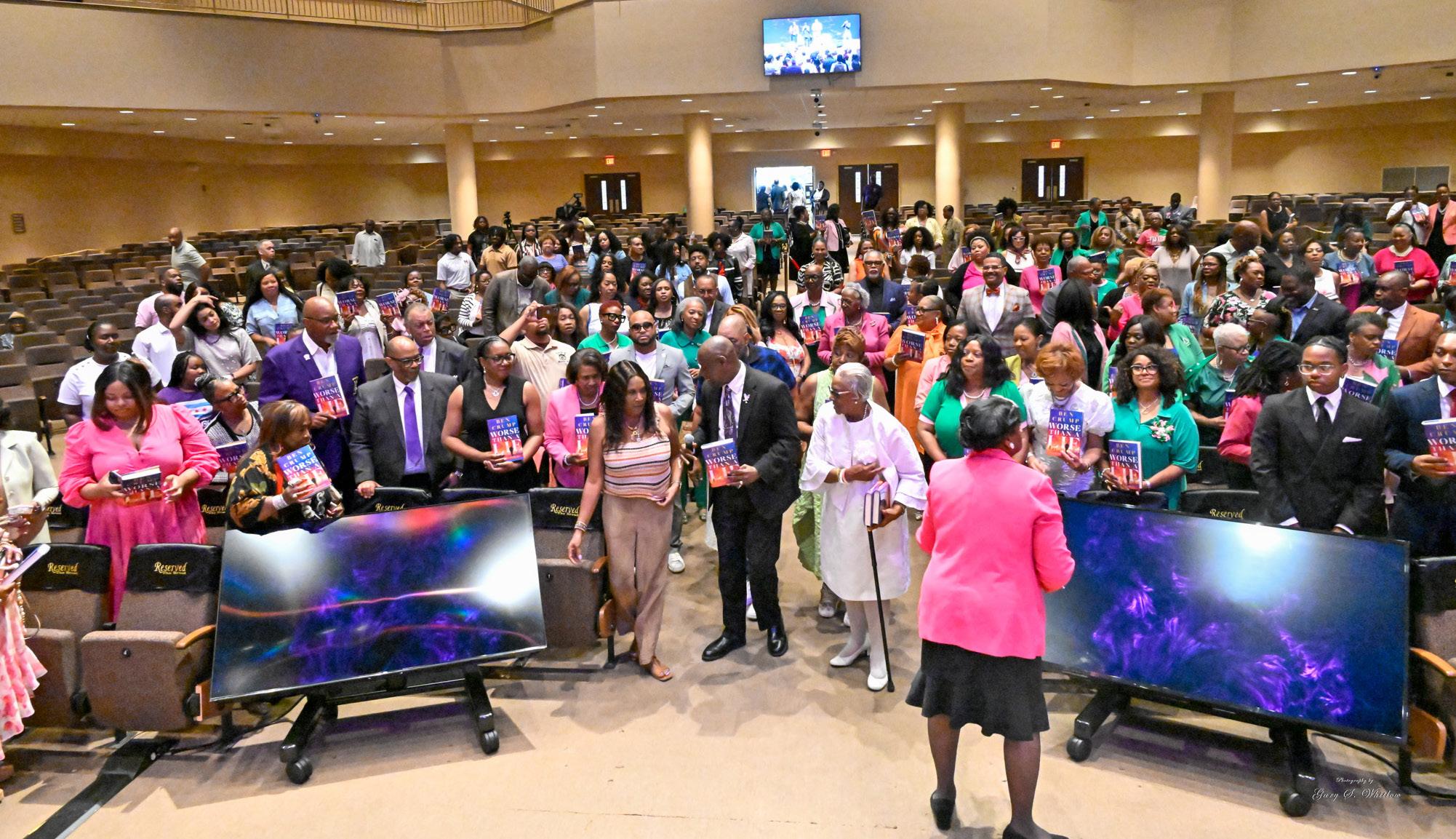
Civil rights attorney Ben Crump came to First Baptist Church-Broad on Sunday, May 31, as a bestselling novelist. But before long, the afternoon conversation about his new legal thriller, “Worse Than a Lie,” had become something more familiar to those who have followed Crump’s career: part testimony, part legal education, part call to courage.
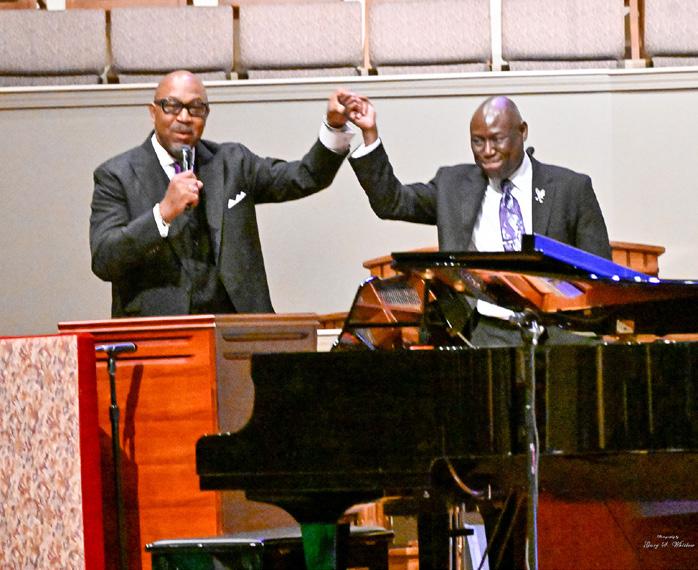
Crump, often referred to as “Black America’s attorney general,” returned to Memphis for a book discussion and signing hosted by the Beta Epsilon Omega Chapter of Alpha Kappa Alpha Sorority Inc. The event followed his appearance at the church’s morning service, where Pastor Keith Norman said Crump delivered a message strong enough to earn him a new local title.
“He’s not only going to be known as Black America’s attorney general,” Norman joked. “He’s probably going to be known as the co-pastor of First Baptist Church-Broad.”
For Crump, the visit was also a return to a city where he has been deeply connected to some of the nation’s most visible police brutality cases. In 2015, he came to Memphis after a Memphis Police officer fatally shot 19-year-old Darrius Stewart while trying to arrest him for an out-of-state warrant.
More recently, Crump stood with the family of Tyre Nichols, who was brutally beaten by rogue MPD officers and died later in the hospital. Nichols’ mother and stepfather, RowVaughn and Rodney Wells, were in attendance Sunday, and Crump paused early in the
program to recognize them.
“She has continued to represent not only her son, Tyre Nichols, but also this Memphis community in a very special way,” Crump said of RowVaughn Wells.
‘There was no Black superhero lawyer…’
“Worse Than a Lie,” is Crump’s debut novel and the first installment in a planned legal-thriller series centered on Beau Lee Cooper, a Black civil rights attorney. The story follows Hollis Montrose, a Black former police officer who is shot by white officers on the night Barack Obama is elected president, then finds himself accused by the very system that nearly killed him.
Crump said he wrote the novel to inspire a new generation of civil rights lawyers and social justice advocates — and to give readers a window into what happens inside courtrooms where Black people and other marginalized communities often fight for their lives, liberty and dignity.
“My personal hero, Thurgood Marshall, said most people would never really know what happens when you’re in a courtroom fighting for marginalized people, especially Black people,” Crump said. “So I was thinking to myself, that’s what Thurgood did in his day. How can I get people to learn about what happens in a courtroom?”
He found his answer in the legal thrillers that helped shape his own imagination — from TV shows “Perry Mason” and “Matlock” to John Grisham’s book “The Rainmaker” and Michael Connelly’s “The Lincoln Lawyer.” But Crump said those stories were missing something — a Black civil
rights attorney as the hero.
“I kept wanting to ask John Grisham, ‘When are you going to write about a superhero Black trial lawyer?,’” Crump said. “But I stopped myself, because I said, what would he know about the experience of being a Black lawyer in Black culture and the Black community?
“God said, ‘No, that’s your life,’” Crump said to raucous applause. ‘What’s
That realization led to Beau Lee Cooper — “BC,” Crump noted with a smile — a fictional protagonist whose courtroom battles echo the themes of Crump’s real-life work.
The setting of the book’s opening scene was intentional, Crump said. By
placing Hollis Montrose’s shooting on Nov. 4, 2008, the night Obama became the nation’s first Black president, Crump wanted to challenge the idea that America had entered a “post-racial” era.
“I wanted to create an allegory in the mind of the readers,” Crump said. “If we elected our first Black president, would we then be living in a post-racial society? Now, I know none of us believe that. But remember in 2008, that’s what a lot of people were saying.”
In the novel, Hollis tells the officers they have the wrong person. He tells them he is a police officer. He tells them he is licensed to carry a gun. But Crump said the officers do not see him; they see what they project onto him.

“They only saw what they projected on him, which is often the case,” Crump said.
That, Crump said, is part of what gives the book its title.
He traced the phrase “worse than a lie” back to his grandmother, who helped raise him while his mother worked two jobs. Crump described his grandmother, who had a third-grade education, as the wisest person he had ever known.
“My grandmother would say, ‘What’s worse than a lie? That is to tell the truth and have nobody believe you,’” Crump said.
That theme, he said, is not confined to fiction.
The brilliance behind bars
“In every city, in every state, in every courtroom all across America, every day, you have sisters and brothers going into courtrooms being forced to lie on themselves and enter into trumped-up plea agreements,” Crump said. “They understand the alternative of rolling the dice and going to trial with anything but a jury of their peers is likely for them to be convicted of a crime they didn’t even commit and spend decades in prison.”
Crump said the novel also pushes back against the way the criminal justice system defines Black people, particularly those who have been labeled convicted felons.
In “Worse Than a Lie,” two members of Beau Lee Cooper’s investigative team are Black men with felony convictions — characters Crump said he wrote intentionally to show their brilliance, resourcefulness and humanity.
“I’m not going to give up on my people just because a racist criminal justice system tries to define them as having no redeemable qualities,” Crump said. “If we give our sisters and brothers a chance, they will amaze you what they can do.”
Crump told the audience that young
people entering the legal profession must understand that the fight for truth and justice is “not for the faint of heart.”
“Once you decide you’re going to go fight for Black people to get equality and justice, they’re going to come for you,” Crump said. “The most important thing is to have courage.”
‘Keep kicking!’
Crump said “Worse Than a Lie” has already opened new doors. The book was designed as a franchise, he said, and television rights are already moving forward, with more Beau Lee Cooper stories planned.
But for all the talk of books, television and Hollywood, Crump kept returning to the deeper purpose behind the work: using every available platform to defend Black life, liberty and culture.
“I’m an unapologetic defender of Black life, Black liberty and Black culture,” Crump said. “I was writing this for our people.”
That mission, he said, requires more than education, eloquence or access. It requires courage — especially for young lawyers and future leaders who may one day find themselves in rooms where others are depending on them to speak.
To make the point, Crump reached back to a lesson from the Rev. Jesse Jackson, who once joined him in
federal court during an equal-pay case involving Black insurance agents.
Crump said the case involved Black agents who had worked 20 or 30 years, only to see younger white agents paid as much — and in some cases twice as much — as they were. Crump had asked Jackson to attend the hearing, believing his presence would strengthen the workers’ fight.
But once inside the courtroom, Crump said, the federal judge repeatedly talked down to him and his team. After two or three hours, Crump said, “a little defeatist mentality” began to set in. During a break, Jackson pulled him aside.
“Attorney Crump,” he recalled Jackson saying, “you must never forget that you don’t drown because the water is deep. You drown because you stop kicking.”
Crump said Jackson kept pressing the point.
“Our people can never see you stop kicking,” Crump recalled. “Our people can never see the people who inspire them stop kicking. Our people can never see their leaders stop kicking.”
Then Crump let the words rise, almost sermon-like, the way Jackson had given them to him. For Crump, the lesson belonged not only to that courtroom, but to Memphis, to Tennessee, and to the broader struggle facing Black communities now.
“That is a lesson for us today,” Crump said. “No matter what’s going on at the White House, and the Supreme Court, and the Tennessee State House — as long as we keep kicking, as long as we keep kicking, we’re going to be all right.
“I don’t care how the cards are stacked against you — you keep kicking,” Crump said. “I don’t care how the odds are against you — you keep kicking. I don’t care what the circumstances are — you keep kicking.
“Don’t you ever stop kicking. I promise you, as long as you keep kicking, you will make it to the other shore. As long as you keep kicking, you will make it to safety. As long as you keep kicking, I promise you, we will overcome.
“But whatever you do, don’t you ever stop kicking!”
“I was honored and humbled, and reminded how refreshing it was for someone like her to be commemorated, not for just popularity or notoriety but for being a quiet, consistent, productive member of her community.”
— Michael Hooks Jr.
By Lee Eric Smith TSD Contributing Writer
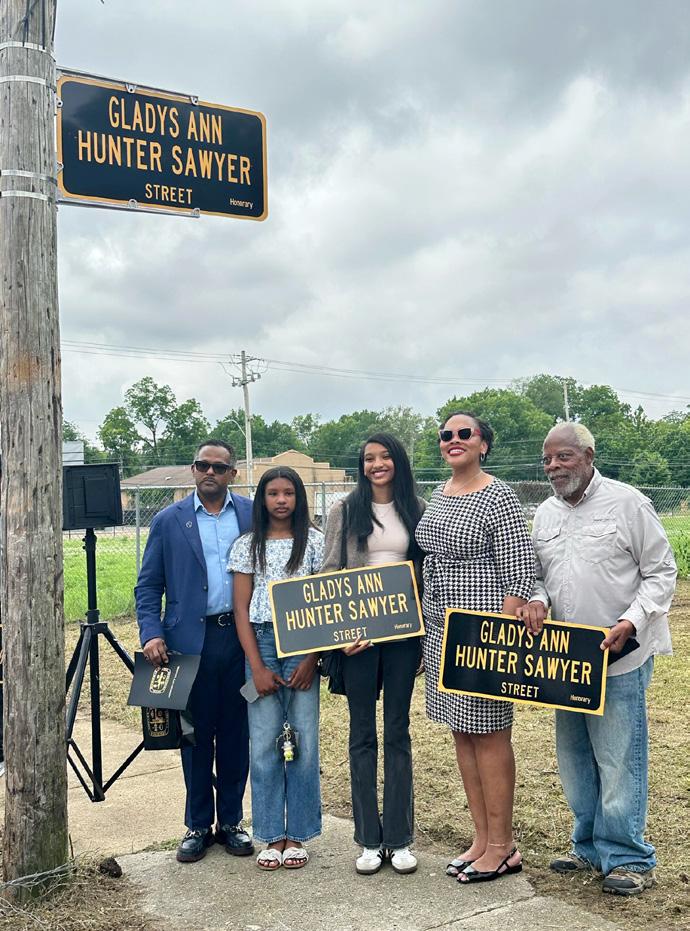
The life and legacy of Gladys Ann Hunter Sawyer — a Memphis-born entrepreneur, civic leader, arts supporter and family matriarch — were honored with the unveiling of an honorary street sign in front of the home where she was raised.
The sign, unveiled by Memphis City Councilwoman Pearl Eva Walker, marks Decatur Street near Jackson Avenue and recognizes Sawyer’s contributions to Memphis across her 72 years of life.
Sawyer, who died in 2022, was the mother of Michael Hooks Jr., founder and CEO of Allworld Project Management, and former Shelby County commissioner, and General Sessions Court Clerk Tami Sawyer.
For Hooks, the moment was both deeply personal and a reminder that public honor does not always come to those with the loudest names.
“I was honored and humbled,” Hooks said, “and reminded how refreshing it was for someone like her to be commemorated, not for just popularity or notoriety but for being a quiet, consistent, productive member of her community.”
Tami Sawyer, in a Facebook post after the unveiling, noted that her mother was born in the segregated John Gaston Hospital before being raised in the home now marked by the honorary sign.
“Her life was one of service, and she
raised my brother and me to live the same,” Tami Sawyer wrote.
Born May 12, 1949, to Raymond Thomas and Bernice Hunter, Gladys Sawyer grew up as the oldest of her mother’s nine children. After graduating from DuSable High School in Chicago, she returned to Memphis and attended Memphis State University, where she became the first Miss Black Memphis State, joined Alpha Kappa Alpha Sorority Inc., and was part of the Memphis State 109, the student activists who challenged segregation and discrimination on campus.
Her professional life reflected that same blend of vision and determination. Sawyer owned Cooking with GAS catering in Evanston, Ill., and later coowned and managed the North Shore Examiner and Brides Today with her husband, Andrew Benjamin Sawyer Jr. She went on to work in marketing and project management before founding HGF Inc., a Memphis-based firm serving government and nonprofit clients.
Hooks said his mother’s legacy stands on its own, even within a family name widely associated with Memphis civic life.
“I bear the Hooks name,” he said. “The expectation there is, we’re blessed to come from a family who’s known for doing things in the community. But my mother was not so widely known. Looking back on her life, the things she did, and particularly the people she helped, was just as wide as some of the popular names.”
Sawyer also served on the boards of
the Women’s Foundation for a Greater Memphis and Girls Inc. of Memphis. She was a member of the River City Chapter of The Links Inc., and was among the founders of Hattiloo Theatre’s Whitman Sisters.
For the family, the sign is more than a marker.
“My father, who is a man of little words, asked those gathered to remember her, to honor her by voting,” Tami Sawyer wrote.
Hooks said that message carries particular weight now, at a time when Black political power in Memphis and Shelby County is again at the center of local and state debate.
“The simple thing my stepfather asked was, ‘In the legacy, let’s not let this be a sign, a physical sign. Let’s continue to live in the spirit of Gladys Ann Sawyer,’” Hooks said. “But at minimum, exercising our right to vote.”
For Hooks, that call is inseparable from his mother’s own civil rights history — from her years as a student activist at Memphis State to her lifelong commitment to service.
“It’s important, especially in these trying times, that she was an avid voter,” Hooks said. “She’s got her own civil rights history.”
He said the same communities now worried about redistricting and diminished representation still have power — if they use it.
“I don’t think the average person realizes that the answer to the dismantling of our voter rights with this redistricting — if the majority of the
Black folks would exercise their vote, we could get these seats back,” Hooks said. “We could end up with three seats instead of just one.”
Then, he added the warning plainly: “They’re counting on us not voting. They’re counting on us voting at 20 percent here.”
That, Hooks said, is where the sign’s deeper meaning rests — not only in remembering Gladys Ann Hunter Sawyer, but in carrying forward the civic discipline and community responsibility she modeled.
“So that’s where my focus and spirit lies,” Hooks said. “Doing something in honor of her legacy. And this is a reminder that I’ve got to stay focused on that.”
By Mark Sherman Associated Press
WASHINGTON — The Supreme Court on Thursday, May 28, ruled for a Black death row inmate from Mississippi who claims there was racial bias in the makeup of the jury that convicted him.
By a 5-4 vote, the justices sided with Terry Pitchford, who was sentenced to death for his role in the killing of a grocery store owner.
“In this case, whether due to confusion, oversight, an overly hurried jury selection process, or some other cause, things broke down,” Justice Brett Kavanaugh wrote for the court. Chief Justice John Roberts and the court’s three liberal justices joined with Kavanaugh.
There were 11 white jurors and one Black juror in a trial with similarities to that of another Black man on Mississippi’s death row, whose conviction the high court overturned seven years ago.
It’s unclear what happens next in Pitchford’s case. Justice Neil Gorsuch, who dissented, suggested the state still could argue Pitchford’s conviction should be sustained. If his conviction is overturned, the state could seek to retry him.
“Mr. Pitchford is now entitled to a fair trial in the state court,” Joseph Perkovich, who argued the case for Pitchford at the Supreme Court, wrote in an email.
Doug Evans, a now-retired prosecutor with a history of dismissing Black jurors for discriminatory reasons, had excused four other Black people at Pitchford’s trial. Black people make up more than 37% of Mississippi’s population.
The Supreme Court ruled 40 years ago in Batson v. Kentucky that jurors could not be excused from service because of their race and set up a system

by which trial judges could evaluate claims of discrimination and the race-neutral explanations by prosecutors.
Pitchford’s case focused on whether his lawyers did enough to object to Judge Joseph Loper’s rulings and whether the state Supreme Court acted reasonably in ruling they had not.
Pitchford’s lawyers made the necessary arguments and the state high court acted unreasonably, Kavanaugh wrote.
In dissent, Gorsuch wrote that Pitchford had to show that no fair-minded judge could rule as the Mississippi court did and that the record in the case was crystal-clear in his favor.
“As I see things, Mr. Pitchford has
failed to satisfy either of these standards,” Gorsuch wrote, joined by Justices Samuel Alito, Amy Coney Barrett and Clarence Thomas.
In 2019, the Supreme Court overturned the death sentence and conviction of Curtis Flowers, because of what Kavanaugh then described as a “relentless, determined effort to rid the jury of Black individuals.” Evans, who has since retired, was the prosecutor in that case, and Loper presided over the final two of Flowers’ six trials.
Pitchford, now 40, was 18 when he and a friend decided to rob the Crossroads Grocery, just outside Grenada in northern Mississippi. The friend shot store owner Reuben Britt three
times, fatally wounding him, but was ineligible for the death penalty because he was younger than 18. Pitchford was tried for capital murder and was sentenced to death.
The case has been making its way through the court system for 20 years.
In 2023, U.S District Judge Michael P. Mills overturned Pitchford’s conviction, holding that the trial judge did not give Pitchford’s lawyers enough of a chance to argue that the prosecution was improperly dismissing Black jurors.
Mills wrote that his ruling was partially motivated by Evans’ actions in prior cases. A unanimous panel of the 5th U.S. Circuit Court of Appeals reversed the ruling.
By Ancelious Meeks TSD Contributing Writer
Starlito and Bandplay brought their Not The Country You Know Tour to Minglewood Hall on Friday night, May 29, delivering a performance that highlighted the chemistry between one of Tennessee’s most respected lyricists and one of the state’s most accomplished producers.
The Memphis stop of the tour celebrated the duo’s latest collaborative project while revisiting records that have helped define both artists’ careers. While the venue was not filled to capacity, the artists’ core supporters showed up in force, creating an atmosphere that felt intimate, authentic and deeply connected to the music.
The evening opened with DJ CP The Great and Bandplay giving fans a reminder of why the Columbia, Tennessee native has remained one of the South’s most influential producers for the better part of a decade. Bandplay took the audience through an impressive catalog of hits he has helped create over the last 10 years.
As DJ CP The Great worked the crowd, records such as Key Glock and Young Dolph’s “Water on Water on Water” and “Major,” Megan Thee Stallion’s “Ungrateful,” BigXthaPlug’s “Whip It” and “The Largest,” and Bankroll Freddie and Megan Thee Stallion’s “Pop It” blasted through Minglewood Hall. The sequence served as a reminder that Bandplay’s fingerprints can be found on some of the most recognizable Southern rap records of the past decade.
The producer showcase was more than an opening set. It was a celebration of a career that has helped shape the sound of modern Southern hip-hop while connecting artists from Memphis, Texas, Nashville and beyond.
Once Starlito emerged, he wast-

ed little time getting into the music.
Throughout the night, the Nashville native delivered a mix of fan favorites and newer material, including “You Don’t Know the Half,” “All I Do,” “Where I’ve Been,” “Exotic,” “Unblock Me” and the tour’s title track, “Not The Country You Know.”
One of the night’s standout moments came when Don Trip joined Starlito on stage for performances of “Caesar & Brutus” and “Schadenfreude.” The pair’s chemistry was evident as fans rapped along to every word, creating some of the loudest reactions of the evening.
The surprises did not stop there.
Rising Memphis artist Eddie Valero also made an appearance, giving the crowd an unexpected treat. Valero and
Don Trip were brought out separately during the show, but their appearances carried additional significance as the two recently released their collaborative project, “Armageddon.”
Adding to the night’s entertainment was a running joke between Starlito and DJ CP The Great. Several times throughout the evening, Starlito playfully reminded the DJ that the event was Starlito and Bandplay’s Not The Country You Know Tour and not just a Starlito show. The exchanges drew laughter from the audience and showcased the relaxed camaraderie among the artists on stage.
From beginning to end, the audience remained engaged, reciting lyrics, recording favorite moments and showing
appreciation for the artists who have built their careers through consistency and authenticity. Unlike many mainstream rap concerts, the night felt less driven by spectacle and more by the connection between the performers and the fans who have supported them throughout the years.
The performance underscored what has made the Starlito-Bandplay partnership successful. Bandplay’s thumping production provided the perfect backdrop for Starlito’s introspective storytelling, while surprise appearances from Don Trip and Eddie Valero further emphasized the depth of Tennessee’s hip-hop talent.
By the end of the night, the Memphis stop felt less like a traditional
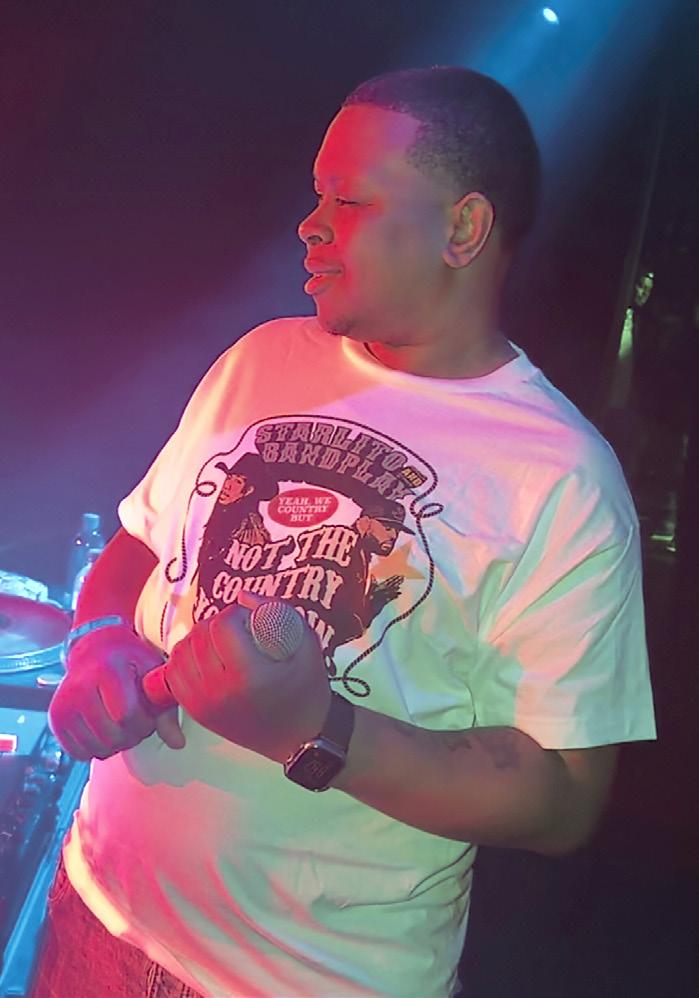
DJ CP The Great energizes the crowd at Minglewood Hall before Starlito and Bandplay’s performance. The Memphis DJ helped set the tone for an evening celebrating Tennessee rap talent and the artists’ enduring connection with their fans.

Producer Bandplay takes the stage during the Memphis stop of the Not The Country You Know Tour. The Columbia, Tennessee native highlighted a decade of hit records that have helped shape the sound of Southern hip-hop.
concert and more like a celebration of Tennessee rap culture, bringing together artists from Nashville, Columbia and Memphis under one roof. For those in attendance, Not The Country You Know proved that loyal fan bases and authentic music can still create memorable moments without relying on mainstream trends or viral attention.
Notice:
Request for Proposal for Commissioning Agent Services for Regional One Health Campus Modernization Project
CovalusAllworld Project Management, LLC, as the Owner’s Representative for the Regional One Health Campus Modernization Project located in Memphis, TN, is soliciting submissions to coordinate commissioning activities across both a new multiphase medical campus project and a stand-alone Central Utility Plant (CUP) project to ensure seamless integration of all utilities and systems on behalf of Regional One Health.
The intent of this Request for Proposal (RFP) is to obtain service proposals for a commissioning agent to to provide documented confirmation that all systems fulfill the functional and performance requirements of the project for the building owner, occupants, and operators. This includes verifying proper integration between the main campus buildings and the separately contracted CUP. The Commissioning Agent’s primary role is to develop detailed commissioning specifications, review designs, coordinate testing, and verify performance of all systems, with particular emphasis on coordination between the two separate contractors.
Beginning June 1, 2026, the documents comprising the RFP may be obtained from the following link: https://onecampus.regionalonehealth.org/ building-tomorrows/
Submission of Qualifications:
Submit your proposal electronically to: https:// covalus.egnyte.com/fl/TGKFD33Bg7Md by 11:59pm on June 19, 2026. Please attempt to limit the file size to 10MB. Late RFQ responses will be rejected and will not be considered for award. Additional instructions for submitting proposals are included in the RFP.
After submission, notify the following via email to confirm receipt: Kurt Fallon at kfallon@ covalus.com; Bill Burross at bburross@allworldmail.com
Questions should be emailed only to the contacts above no later than June 12, 2026.
Request for Qualifications for DBOOM Central Utility Plant for Regional One Health Campus Modernization Project
CovalusAllworld Project Management, LLC, as the Owner’s Representative (OR) for the Regional One Health Campus Modernization Project located in Memphis, TN, is soliciting submissions for qualifications to develop, design, build, own, and operate a central utility plant (“CUP”), on behalf of Regional One Health.
The intent of this Request for Qualifications (RFQ) is to obtain qualification submissions for a long-term partner to develop, design, build, own, and operate a stand-alone central utility plant (“CUP”), inclusive of delivery of utilities to within five (5) feet of the Project building wall, which will provide heating, cooling, and backup electricity to the Regional One Health Campus Modernization Project.
Beginning June 1, 2026, the documents comprising the RFQ may be obtained from the following link: https://onecampus.regionalonehealth.org/ building-tomorrows/
Submission of Qualifications: Submit your response electronically to: https://covalus.egnyte.com/fl/TGKFD33Bg7Md by 11:59pm on June 19, 2026. Please attempt to limit the file size to 10MB. Late RFQ responses will be rejected and will not be considered for award. Additional instructions for submitting proposals are included in the RFQ.
After submission, notify the following via email to confirm receipt: Kurt Fallon at kfallon@ covalus.com; Bill Burross at bburross@allworldmail.com; Eric Burk at eburk@covalus.com; Chris Acuff at cacuff@allworldmail.com
Notice: Request for Proposal for Medical Equipment Planning Services for Regional One Health Campus Modernization Project
Allworld Project Management, LLC, as the Owner’s Representative for the Regional One Health Campus Modernization Project located in Memphis, TN, is soliciting submissions to provide comprehensive medical equipment planning (MEQPS) services and the potential to provide specific final-mile logistics service scopes of work. The selected MEQPS firm will participate in both the design and construction phases of the project and will work collaboratively with the Owner, Program Manager, Architect/Engineer, Construction Manager, and Technology Responders to deliver an integrated healthcare environment that supports clinical excellence, operational efficiency, and enhanced patient experience.
The intent of this Request for Proposal (RFP) is to contract one Firm for the full scope of MEQPS, including planning and execution of new and existing medical asset relocations from the current facility to the new facility. It is imperative that the MEQPS firm has experience in planning, procuring (support), coordinating, scheduling, integrating, and staging and preparing healthcare facilities.
Beginning June 2, 2026, the documents comprising the RFP may be obtained from the following link: https://onecampus.regionalonehealth.org/ building-tomorrows/
Submission of Qualifications:
Submit your proposal via email to: Bill Burross, Email: bburross@allworldmail.com by 2:00pm on July 10, 2026. Proposals submitted in any other manner will not be accepted. Additional instructions for submitting proposals are included in the RFP.
Questions and Other Communication
Questions should be emailed only to the contact above no later than 2:00pm June 12, 2026.
Until MEQPS firms are notified of their status (award or decline) in the RFP process, MEQPS firms are not to contact other ROH employees or any member of its staff or physicians regarding this RFP without permission from the ROH primary contact(s). MEQPS are permitted to contact ROH staff for on-going day-to-day business as usual activities. Failure to comply with this direction and processes for communication and procedures as stated within this document may disqualify the bidder at ROH’s sole discretion.

By Terri Schlichenmeyer
Take care.
What a nice thing for someone to say as they take their leave! Be well. Stay safe. Be careful, watch where you walk, be mindful so you can see one another again. Take care – and, as in the new novel, “Ghalen” by Walter Mosley, take care of others, too.
It was raining the day Jamilah Fenestra and Robert Horton finally met, but the romance that sprang from there was often sunny for years to come.
Jammy was a scientist; Robert worked as an assistant chef at a restaurant. She took care of him when a policeman pushed him down on the cement, hitting his head and causing slight brain damage. He taught her to think slowly and carefully. They balanced one another well — and when she gave birth to their only son, it was the pinnacle of their lives.
Ghalen was the best of both his parents. His mother said he was “the smartest person” she’d ever encountered. His father taught him to think smart, to be kind, and that no job was beneath him. The boy grew up to be handsome and popular, a natural leader at a young age, a son who was willing to take care of his parents, even when he was just a schoolboy. He loved, and was loved deeply by those who knew him –and that included many women.
But as Ghalen grew and matured, he began to realize that he needed to make his own way in the world. His father would need even more help in the fu-
ture, his grandmothers were not aging well, but life was an adventure to seize. Was college necessary, when so many people would require his assistance later? Or were Ghalen’s talents needed closer to home now to help his father and his best friend, who was in and out of jail?
How would Ghalen ever become a man of his own?
Chances are, if you picked up a copy of this book, you’d be looking for either “a Romance in Black” or you’d expect another fast-paced novel from author Walter Mosley. The problem is, you might not get either.
“Ghalen” is messy. It’s not a romance in the usual sense; there’s a lot of sex, including an uncomfortably explicit assault scene, but not a lot of love-andflowers stuff. Really, it’s more ForrestGump-ish, as the fifteen-year-old title character bounces through many, many adult-like events over the course of a few months.
Fans, though, won’t mind. This book is written in the usual Mosley style, with long conversations, tiny details, psychology in characterization and plenty of grit, with a bit of his signature detective plotlining thrown in for good measure. Readers will also have good reason to wonder if you’ll see Ghalen again in another book.
Whether you view that as a good thing or not is another matter. This isn’t a bad book, but it may take some patience for readers unused to Mosley’s pleasantly rambling style. You may like “Ghalen” a lot — or you might not care for it.

By Candace A. Gray TSD Contributing Writer
With the return of Disney’s “Beauty and The Beast” to Broadway, Memphis will soon behold the African-American actor and puppeteer who will interpret the lead role of Beast in the latest touring production.
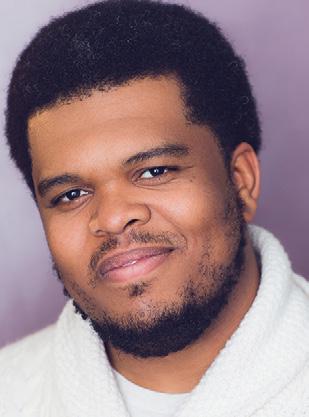
The Orpheum Theatre will host “Beauty and the Beast,” its final show of the 2025-2026 season, June 2-7. The production returns after a 25year hiatus and features members of the original creative team along with a significant addition. The Beast will be played by Fergie L. Philippe, the first African-American in the U.S. to assume the role.
“I feel like I was made for this role,” said Philippe. “My friends always say, ‘I feel like I’m just watching you,’ and that’s the greatest compliment you can get.” The Memphis production is more than just another stop on a national tour.
It represents a return to a city he describes as culturally rich and deeply resonant. He previously visited Memphis in 2018 while touring with “Hamilton,” an experience that left a lasting impression.
“I love Memphis, it’s such a great city,” Philippe said in a recent interview. “Obviously the food, the music, the history, it’s all so special.”
Though his moments off stage were brief, Philippe recalled scenes that spoke to the soul of the city. A simple
walk revealed the Lorraine Motel and the National Civil Rights Museum, which pulled on his heart strings.
“I immediately became emotional just being outside,” he said. “There’s a beauty to the city that’s undeniable.”
That appreciation for culture and history is something Philippe carries with him, shaped by experiences beyond the stage. He cited a visit to Tulsa, Oklahoma, where he encountered the legacy of Tulsa Race Massacre and the once-thriving Black Wall Street. Staying in a hotel directly across from a museum dedicated to that history left a profound impact.
“It’s such a gift to be a touring artist, to be immersed in the culture in so many cities,” Philippe said. “I get to be involved in these cities with incredibly rich history,” which he said is important to him and his work.
Philippe’s journey into the performing arts began early and he credits childhood influences for sparking his passion. “I grew up in Miami, Florida, and hilariously, I came to acting through puppetry,” he said, referencing the inspiration he drew from Sesame Street.
What began as fascination soon evolved into a calling. Philippe remembers his first performance vividly, a moment that confirmed his path, and a teacher who supported him from the start, encouraging him to stay on the path he had begun to pursue at just 11 years old.
His commitment to the craft deep-
ened through formal training at the African Heritage Cultural Arts Center led by Marshall L. Davis Sr. The organization, serving the Miami community since the 1970s, provided Philippe with both artistic grounding and cultural context.
As he grew older, his artistic interests expanded. Discovering theater and music as a teenager at the New World School of the Arts, a performing arts high school, opened new creative avenues, blending storytelling, song and performance into one cohesive art form.
“Musical theater popped up, and it was this massive combination of all the things I loved,” said Philippe. “It’s been a part of my life since then.”
After high school, Philippe earned a bachelor of fine arts degree in musical theatre from Elon University in North Carolina. Then it was straight to New York, where he joined a touring production almost immediately. A few years later, Philippe learned of the Beast opportunity while he was working on the revival of “Camelot” at Lincoln Center.
“A friend in “Alladin” told me it was rumored that they were bringing ‘Beauty and the Beast’ back,” said Philippe. “Beast is the dream role!”
Less than a year later, he auditioned and soon landed the role. He said they weren’t exactly looking for his type, but the role was meant for him. Philippe has been playing Beast since July 2025.
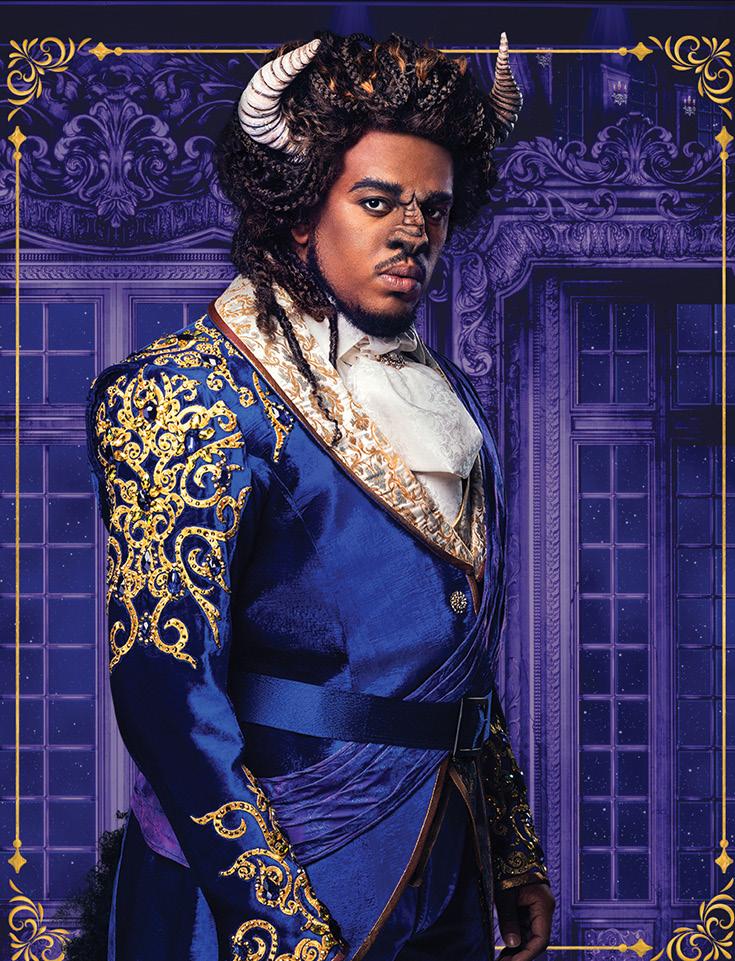
Fergie Philippe, the first African-American performer to play Beast in a U.S. touring production of Disney’s “Beauty and the Beast,” brings the iconic role to Memphis when the Broadway production arrives at the Orpheum Theatre June 2-7. (Evan Zimmerman)
As a Black performer navigating spaces that have not always been inclusive, Philippe, 31, understands the significance of representation, particularly in productions like “Beauty and the Beast,” which continue to reach diverse audiences across the country.
“I’m blown away at how little I’ve spoken about my race in this role … it actually hasn’t come up a lot,” said Philippe. “I think it speaks to the power of a Disney story; it supersedes race and does a great job of connecting families in meaningful ways.”
Philippe is, however, excited about how this role positions him as an inspiration to Black boys and opens the conversation about Black males’ ability to open up and show emotions and vulnerability.
“Men need to see this, too,” he said. “We are essential to this story about acceptance and redemption … and being able to come back from a bad place. I think it’s a profound experience.”
For show tickets and more information, visit https://www.orpheum-memphis.com/
NEW YORK — Peabo Bryson, the two-time Grammy Award-winning R&B singer known as the voice behind the Oscar-winning Disney film duets “Beauty and the Beast” with Celine Dion and “A Whole New World” with Regina Belle from “Aladdin,” has died. He was 75.
His family said in a statement that Bryson died Tuesday evening, June 2, 2026, in Marietta, Georgia, days after having a stroke.
“While our hearts are broken, we find comfort in knowing how deeply Peabo was loved and how many lives were touched by his voice and his generous spirit,” the family’s statement said. “His legacy and music will live on for generations to come.”
Internationally celebrated for his Disney classics, Bryson also built a career over five decades as one of R&B’s premier balladeers, recording hits including “Feel the Fire,” “I’m So Into You” and “Can You Stop the Rain.”
“For more than five decades, Peabo’s extraordinary voice served as the soundtrack to some of life’s most cherished moments,” the family’s statement said. “His music carried generations through joyful celebrations, great love stories and enduring moments of comfort and inspiration.”
Throughout his prolific career, Bryson became known for his pristine tenor and remarkable reserves of technical ability, working with fellow illustrious R&B singers including Sam Cooke and Brian

McKnight. Specializing in towering ballads — “I’m So Into You,” “Let the Feeling Flow,” “If It’s Really Love,” “Feel the Fire,” and “Through the Fire” — he released some 20 albums, scored 17 Top 20 R&B hits, and released three gold-certified albums.
Bryson celebrated his 60th birthday
during a performance in Memphis in 2011.
Born Robert Peabo Bryson and raised in South Carolina, the singer, songwriter and balladeer launched his career with the group Moses Dillard and the Tex-Town Display in the 1970s. Shortly afterward, Atlanta label Bang
Records signed him as a solo artist. He recorded for Capitol, Elektra and Columbia Records and became one of music’s most sought-after duet partners. Aside from Belle and Dion, he also collaborated with artists including Roberta Flack and Natalie Cole.
His duet with Flack, “Tonight, I Celebrate My Love,” became one of the defining love songs of the 1980s, while “If Ever You’re in My Arms Again” helped expand his audience beyond R&B radio. He later scored No. 1 R&B hits with “Show & Tell” and “Can You Stop the Rain.”
Beyond music, Bryson appeared in stage productions including “Raisin,” “The Wiz” and “Porgy and Bess.” In 2018, he returned with “Stand for Love,” his 21st studio album, produced by hitmaking duo Jimmy Jam and Terry Lewis.
“If I were to tell you the emotions I feel most every day: gratitude for one, humility for another, and validation. Not how you think, but validation in the faith that I’ve kept in myself and those around me, and the person that I’ve managed to maintain myself to be,” Bryson told Rolling Stone in 2018. “I’m really happy about that. I like me. And I like that I don’t feel the need to chronicle my accolades to anyone, shout them out to anybody. But, if someone were to stop and do the research, there’s nobody like me.”
Bryson’s family said memorial and celebration-of-life arrangements will be announced at a later date.