POSTMASTER: Send address changes to The Tri-State Defender, 1509 Madison Ave., Memphis, TN, 38104.
GENERAL INFORMATION: Inquiries may be submitted in writing or by calling (901) 523-1818 or by email. TELEPHONE: (901) 523-1818.
The Tri-State Defender (USPS 780-220) is published weekly. The Tri-State Defender 1509 Madison Ave. Memphis, TN, 38104. Second-class postage paid in Memphis, TN.
■■ NEWS
Tri-State Defender to host education forum as Shelby County schools face historic crossroads
By Judith Black Moore TSD Contributing Writer
The Tri-State Defender will convene a panel of educators and policy leaders next week for a community discussion on one of the most consequential periods in Memphis public school history.
The TSD in the Community Education Forum is set for 6 p.m. Wednesday, July 1, at Alpha Memphis Education Foundation, 4122 Barton Drive. The event is free and open to the public. Registration is required at www.tri-statedefender.com/community
The forum comes as Memphis-Shelby County Schools stands at an unprecedented crossroads. Tennessee Republicans passed a measure in April giving a nine-person, politically appointed oversight board sweeping authority over the locally elected school board and the state’s largest school district, which serves more than 100,000 students. Gov. Bill Lee signed SB714 into law on May 22, 2026.
The state’s intervention did not come without a fight. The Shelby County Commission voted to set aside $200,000 for a lawsuit challenging the takeover, and the Memphis Shelby County Schools board voted to hire a lawyer for the same purpose. A lawsuit has been filed in federal court in an attempt to stop the new oversight board, arguing it strips power from elected representatives.
Local reactions have been mixed. Supporters argue the state-appointed board will bring additional expertise and accountability, while critics contend it weakens local control and the authority of elected officials.
Against this backdrop, the Tri-State Defender is hosting the forum to bring together community members, educators, and civic and educational nonprofit leaders to share opinions and insights.
“Education is one of the most im-
portant issues shaping the future of Memphis and Shelby County, impacting not only our students, but also our workforce, economy and quality of life,” said Stephanie R. Jones, editor of the Tri-State Defender.
Forum panelists have deep roots in Memphis
Tomeka Hart Wigginton, president and CEO of United Way of the Mid-South, built her career in education, public policy and philanthropy management, including service on the Memphis Shelby County Schools board.
Dr. Derek King, who has a doctorate in educational leadership from the University of Mississippi, is the principal of Craigmont High School.
Cardell Orrin, executive director of Stand for Children Tennessee, grew up attending school board meetings with an activist mother. His father helped organize the student walkouts that led to the 1971 election of the first African American school board member in Memphis. He has led Stand for Children Tennessee since 2014.
Sable Otey, a former educator who holds a master’s degree in education, is a member of the Memphis Shelby County Schools board.
Lori Spicer Robertson, a Memphis civic leader and communications executive whose career spans nonprofit leadership, corporate diversity and community engagement, will serve as panel moderator.
President Calvin Anderson Editor Stephanie R. Jones
Iran war imposes hidden costs on Memphians
Black and working-class Memphis households pay more for fuel and electricity, as war in Iran yields gains for U.S. tech and electric vehicle sectors
By Shawnee Calhoun
Special to the Tri-State Defender
In Memphis, we know about paying more for less — when costs go up, but the reasons for price hikes fail to add up. And we recognize when events happening in other parts of the world hit hardest close to home.
Although the Iran war is winding down in the Middle East, its global economic impact is still running through our local communities — through gas stations where families are now spending more on fuel than in February, and through power lines connected to trillionaire Elon Musk’s xAI supercomputer facilities across the state line, causing sharp increases in residential electricity bills.
When a U.S. president picks a fight with a foreign nation, who pays and who profits?
On Feb. 28, 2026, the United States and Israel launched Operation Epic Fury against Iran, disrupting the Strait of Hormuz, the narrow waterway where 20 percent of the world’s oil passes daily. In retaliation, Iran closed the transportation channel. Within four weeks, the average national price for a gallon of regular gas here at home, nearly 7,000 miles away from the conflict, surged from $2.98 to $3.98, according to AAA.
But the burden of the price surge falls unevenly. Low-income households absorb a disproportionately larger share of rising fuel costs than wealthier ones, according to a May 2026 study released by the Federal Reserve Bank of New York. Families in low-income households spend 17.8% of their income on combined energy and transportation fuel costs — more than three times the national average, based on a 2024 report by the American Council for
an Energy-Efficient Economy. A $1 increase for a gallon of gas is not just an inconvenience for families already stretched thin. For them, it is a crisis.
It’s no surprise that rising gas prices drive electric vehicle demand. Yet, one automaker, Musk’s Tesla, delivered 54% of all vehicles sold in the U.S. EV market in the first quarter of 2026, more than every other automaker combined, up 11 percentage points from Tesla’s 43% segment share for the same period in 2025.
The carmaker’s good fortune could be a matter of political maneuvering on Musk’s part.
In June 2025, Musk publicly called the proposed Congressional One Big Beautiful Bill, which eliminated the federal EV tax credit, a “disgusting abomination” on his own social media platform, X, which triggered a rift between Musk and President Donald Trump. But the two men appeared to reconcile in late September at the Glendale, Arizona, memorial service of slain conservative political activist Charlie Kirk.
Five months later, the U.S. and Israel’s coordinated military campaign against Iran drove up gas prices and made electric vehicles more attractive. The gas-price effect seems to have delivered to Tesla the consumer demand that the lost tax credit would have generated, without attaching one cent of federal subsidy.
But trading a gas-fueled vehicle for an electric version may simply be shifting the financial burden from the pump to the utility meter for Memphis households – with Musk benefiting on both sides.
Musk’s xAI company operates supercomputers and data centers, including Colossus 1 and Colossus 2, in South Memphis, a predominantly black and working-class Memphis community,
and in nearby Southaven, Mississippi, a small town adjacent to South Memphis and a 15-minute drive from the city’s downtown district.
Less than a year ago, xAI began installing gas turbines to power its facilities in Southaven, without air emission permits and without public notice to surrounding communities.
Meanwhile, the Tennessee Valley Authority approved a deal in February granting xAI up to 300 megawatts of power, enough to supply 75,000 to 150,000 homes with average daily usage. In April, the NAACP, represented by the Southern Environmental Law Center, filed a federal lawsuit under the Clean Air Act against xAI over the gas turbines, which now total at least 57 and remain unpermitted. In response, the Department of Justice announced on June 16, 2026, efforts to dismiss the civil rights advocacy group’s air pollution lawsuit, signaling support for xAI.
Although electricity costs for data centers increased 3% from 2022 to 2024, residential electricity prices rose 10%, according to a January 2026 Yale Climate Connections analysis. From 2020 to 2024, residential electricity prices rose 25%. Ordinary households are effectively subsidizing the artificial intelligence industry’s energy needs.
Still, Memphis residents can take steps to help ease the pain.
– Research your household’s electricity rate trends before assuming an EV purchase saves money. After all, you still have to charge an electric vehicle.
– Choose wisely before you buy an electric vehicle. The Hyundai IONIQ 5, Chevrolet Equinox EV and Nissan Leaf are competitive alternatives from automakers whose leaders are not openly involved in shaping foreign policy decisions that affect your fuel costs.
– Use community transportation
where available. Riding MATA buses, carpooling, biking and walking are ways to engage in collective economic resistance.
– Advocate for new laws to protect your communities. Memphis has no laws restricting data center locations. Rocky Top, Tennessee, a rural town six hours northeast of Memphis, is looking to pass a new zoning ordinance to limit the construction of data centers to industrial districts that could serve as a model to set the agenda for Memphis neighborhood associations.
– Learn to read proposed legislative bills that could affect you and your neighbors, and write to your representatives about the personal costs of failed policy decisions to build a record of accountability that outlasts any political season. Memphis public libraries offer free access to legislative records and civic education resources.
– Contact state Sen. London Lamar and state Rep. Karen Camper, whose proposed cost protection bill, the “Data Center, Artificial Intelligence and Clean Transition Tariff Accountability Act,” would have required data centers to fund the grid costs they generate rather than passing costs to ratepayers. The bill deserves to return in 2027 with community pressure behind it.
Black and working-class Memphians have always been asked to absorb more than their share of the costs that benefit the powerful. The evidence is a matter of public record, and available for you to review.
Read the record. Follow the money. Organize accordingly.
Shawnee Calhoun is a Memphis-based journalist, published author, and wellness professional with a bachelor’s degree in journalism from the University of Memphis.
Otis Sanford’s new autobiography celebrates family, friendship and Memphis journalism
Newspaperman, educator and author reflects on journey from rural Mississippi to 50-year career in the big city
By Lee Eric Smith TSD Contributing Writer
Before veteran journalist Otis Sanford delved into the stories of his life’s work at a recent book signing — the kind of newsroom stories that make journalists laugh, nod and remember why they got into the business — Sanford first wanted the audience to stand, not all at once, but in groups.
Cousins, former classmates, colleagues and the people who once worked with him in Memphis newsrooms took turns standing up as he called out their group affiliations.
“All former Commercial Appeal and Press-Scimitar people, would you please stand and let everybody see you?” Sanford asked. Dozens rose to their feet.
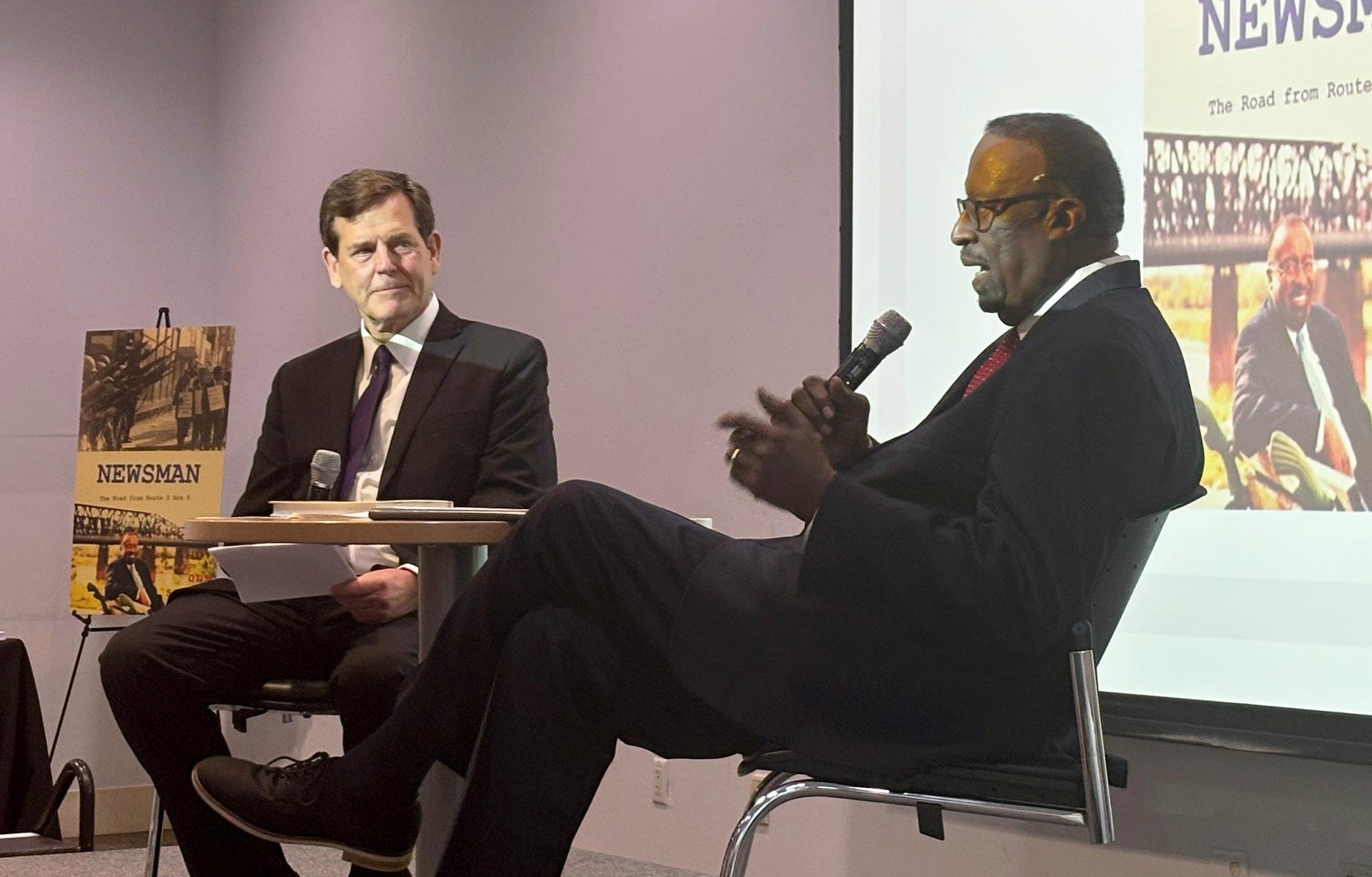
At that moment, the June 16 launch event for Sanford’s new memoir, “Newsman: The Road from Route 2 Box 9,” at Benjamin L. Hooks Central Library became a reunion of family and friends celebrating the release of a heartfelt epistle to journalism, to Memphis and to the Black reporters who helped shape how the city understood itself.
Sanford’s friend, Joe Birch, the longtime Action News 5 anchor, hosted the event, which drew some 300 people. Birch recalled meeting Sanford decades earlier inside the federal building in downtown Memphis. Before 9/11, reporters could still linger in the hallways of government offices and watch who passed by or catch a tip, Birch said. Sanford covered the federal beat for The Commercial Appeal. Birch often chased the same stories. Birch met Sanford, who wore “a really cool black leather jacket,” in a stairwell, where Sanford was
working on a story for his beat.
“He dominated that beat like I’ve never seen a reporter dominate a beat,” Birch said. “He really was giving me a lesson in journalism before he ever became a professor.”
Sanford’s book, Birch said, is “a love letter” to Freddie and Bertha Sanford, the author’s parents, and to his six siblings. Sanford is the youngest of seven.
A promise to his mother
Sanford wrote the book, he said, because he made a promise to his mother, who lived to be 101 years old. His father earlier died of cancer.
“I promised my mother … that our family story was just so incredible that I was going to write it one day,” Sanford said.
He began interviewing her, collecting details and memories from her life. After she died, Sanford said he knew he had to keep his promise. He also knew he had to broaden the focus of the project.
“It can’t just be about the family life,” Sanford said. “It has to be about the impact that my family had on my career, on my life, growing up and wanting, since I was like 7 or 8 years old, to be a journalist.”
The title of the book is a nod to Sanford’s rural roots, chronicling his journey during the Civil Rights era from the postal delivery address of his childhood home in Como, Miss., to a 50-year journalism career in major newsrooms and classrooms.
Sanford, professor emeritus in journalism and former Hardin Chair of Excellence in Journalism at the University of Memphis, built a career that included The Clarion-Ledger in Jackson,
Miss., The Commercial Appeal, the Pittsburgh Press and the Detroit Free Press. Still, his recollections returned to his upbringing, the family that raised him, the South that shaped him and the city where he always wanted to work as a journalist.
Before Sanford landed a job at any newspaper, however, he received his first journalism assignment from his father when he was still a child.
“My father gave me the standing order: Read the newspaper,” Sanford said. “And he would always ask me when he came home from work, ‘What’s in the news?’ And I was prepared to tell him what was in the news.”
Sanford’s daily perusal of The Commercial Appeal, delivered to the family mailbox every morning, instilled in him an abiding love for the city of Memphis, long before he became part of its journalism community.
Memphis was the place he enjoyed visiting as a child to spend time with
relatives in Orange Mound, or to walk the streets downtown. Memphis represented possibility.
“I just loved the big city,” Sanford said.
By the time he realized he could write, Sanford had a dream. He wanted to become a newspaper reporter. And he wanted to work in Memphis at The Commercial Appeal, the newspaper he had read every day as a child.
“This is the place I always wanted to be,” Sanford said. “I don’t care what anybody, anywhere else, says about this city. I love Memphis.”
Sanford’s childhood proximity to some of the Civil Rights Movement’s defining moments helped him understand the importance of documenting history as it unfolded.
He recalled a time when his older brother, Louis, testing the central ideas of the newly signed Civil Rights Act of 1964, entered a drugstore in Como, Miss., bought a soft drink and sat in a
Joe Birch and Otis Sanford discuss Sanford’s new memoir, “Newsman: The Road fromRoute 2 Box 9,” during the book launch event at Benjamin L. Hooks Central Library. (Lee Eric Smith/Tri-State Defender)
booth where Black customers were previously prohibited from sitting. People gathered outside and peered through the windows. Some were angry. But Sanford’s parents supported his brother.
“That left an unbelievable impression on me,” Sanford said.
Two years later, civil rights activist James Meredith announced his 210mile March Against Fear from Memphis to Jackson, Miss. On the second day of his solitary protest, Meredith was hit with pellets from a white man’s shotgun. Dr. Martin Luther King Jr. and other civil rights leaders continued the march, attracting thousands of participants, while Meredith recuperated in a Memphis hospital.
Part of the planned route for the march was less than a mile from his family’s farm, Sanford said. He desperately wanted to walk to the corner and witness the civil demonstration. But his mother would not let him go. She told him and his sister Everlyn that she had work for them to do in the field. Years later, Sanford’s mother told him the real reason.
“She said, ‘I just didn’t want you to go, because I was afraid for your life,’” Sanford recalled.
The Three Amigos
Sanford devotes special attention in
■■ NEWS
his book to the bond shared between himself, Karanja A. Ajanaku and Jerome Wright, “the Three Amigos,” as he called them. In 1977, the three men were the only Black reporters at The Commercial Appeal, where they were assigned to the city’s high-profile downtown beats. Sanford covered federal court. Wright covered the police beat. Ajanaku, then known as Leroy Williams, covered City Hall.
Ajanaku and Wright also are deeply connected to the history of the TriState Defender. In the mid-2000s, Ajanaku joined TSD, where he served as executive editor until his retirement in 2024. During his tenure, Ajanaku recruited his friend, Wright, who became TSD’s deputy editor
“We developed a bond that you just cannot imagine,” Sanford said.
The three men often met for lunch, though eating was rarely the real purpose. Sometimes, they went to Peoples, a local tavern, to shoot pool and discuss the stories they were writing, Sanford said.
“Ours was a friendship based on our love of journalism, our pride in racial heritage and our desire to just own our beats,” Sanford said. “Unfortunately, both of them have passed away, but they will always be my amigos.”
Wright died in 2024. He is remembered for his knowledge of Memphis neighborhoods, newsroom discipline, humor and devotion to the craft of journalism. Ajanaku, who succumbed to cancer in 2025, brought a distinctive mix of cultural consciousness, sharp reporting and strong commitment to Black community life.
Journalism will survive
The evening’s host and the author also examined the current state of journalism.
The Commercial Appeal building at 495 Union Ave., home to the daily newsroom until 2019, is no longer the bustling center of Memphis newspaper life. Demolition of the structure began this week. Sanford said he had driven by the building the day before and felt the loss.
“It kind of pains me sometimes to see where a printed newspaper has gone,” Sanford said.
The newspaper industry failed to see the digital future coming quickly enough, he said. The companies that had the money, audiences and public trust, he said, should have built the platforms that now dominate attention.
But Sanford made a distinction
between the fate of printed newspapers and the future of journalism.
“Journalism is going to survive,” Sanford said.
The field of journalism will continue to attract professionals eager to do the ethical and important work of telling people what they need to know and want to know, he said.
Sanford, who taught journalism ethics at the University of Memphis, said good journalism requires getting the story right, allowing contrarian voices to be heard and resisting the carelessness that often defines social media.
“We always talked about ethics and how important it was,” Sanford said, “because it separates what we do and what we have done at the newspaper from what you might see on social media.”
As the conversation drew to a close, Sanford was asked what advice he would give young people in Memphis. His answer was simple.
“Know stuff.”
Know the names of local and national elected officials, Sanford said. Know basic facts about the world around you. Ask questions. Find a mentor.
He then reiterated his first words of advice.
“Just … know stuff,” he said.
Crump demands video, autopsy in officerinvolved shooting of Senatobia infant
‘It’s not our first rodeo’: Local activists cite troubling patterns with police
By Lee Eric Smith TSD Contributing Writer
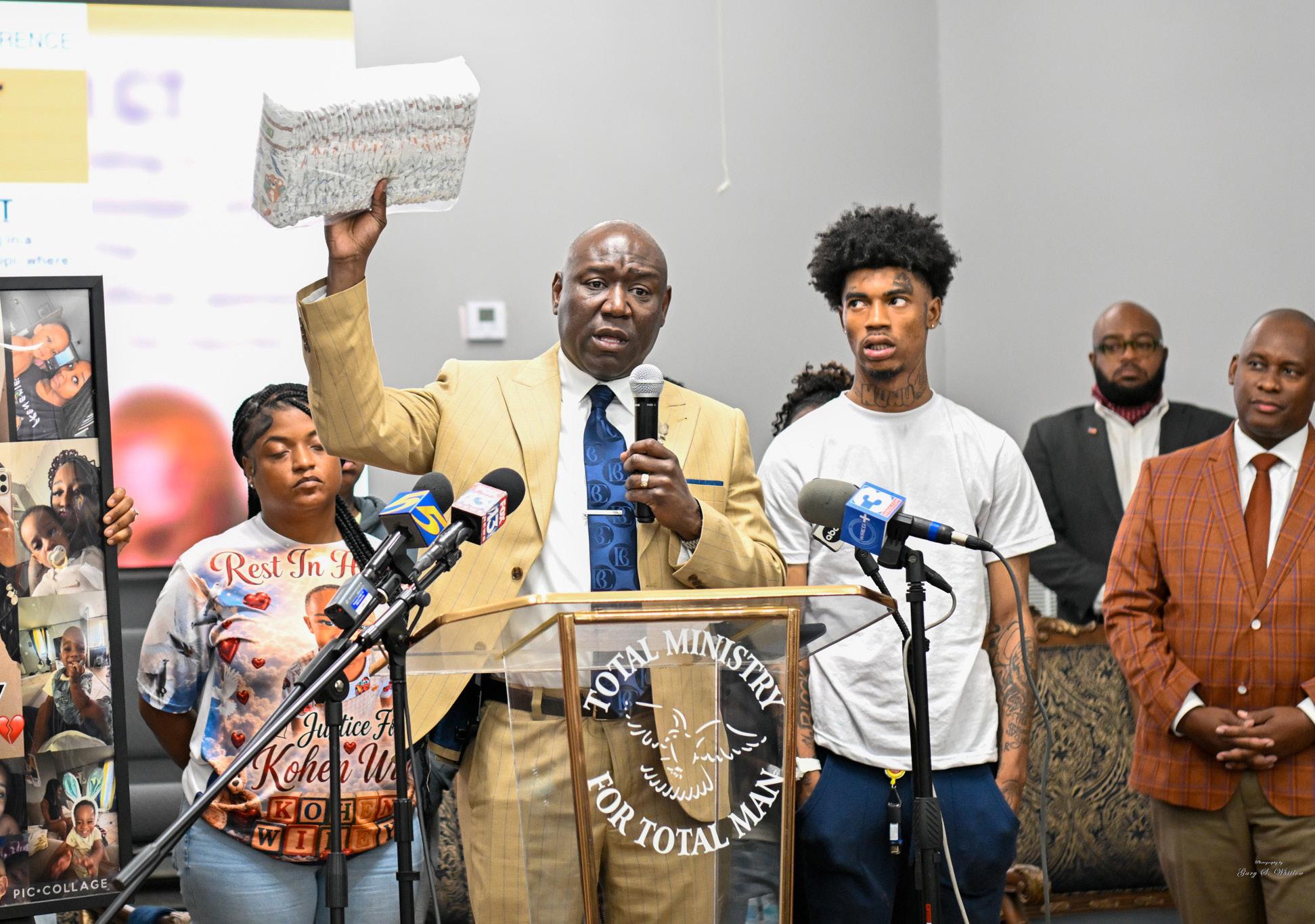
Civil rights attorney Ben Crump stood with the family of 1-year-old Kohen Wiley on Monday and called for an independent autopsy and the release of all video connected to the police shooting that killed the child outside a Senatobia Walmart.
The June 22 press conference, held at Gospel Temple Church of God in Christ eight days after Kohen was killed, marked the latest escalation in a case that has ignited protests and renewed long-simmering tensions between Black residents and police in the north Mississippi town.
Crump, joined by Memphis attorney Van Turner, other attorneys, members of Kohen’s family and community activists, said the family does not want to rely solely on findings connected to the state investigation.
“When a baby is killed in a police shooting, the family should never have to wonder whether they are getting the full story,” Crump said. “This is how we make sure they get the full story.”
Kohen was killed June 14 after Senatobia police and Tate County Sheriff’s Office deputies responded to a reported shoplifting call at Walmart. The Mississippi Bureau of Investigation said officers attempted to stop a vehicle carrying two women and a child, but the driver drove toward officers, nearly striking one, before an officer fired, according to The Associated Press. Kohen’s mother, Vellesiya Wiley, has disputed that account. In a video posted on social media by Crump,
she said her friend, who was behind the wheel, was not driving toward the officers, because they were “all on the right side and she was driving towards the left,” AP reported. Wiley also said she believed her friend had paid for the diapers she was carrying.
At Monday’s press conference, Crump repeatedly questioned how an alleged shoplifting call involving diapers ended with police firing into a vehicle where officers knew a baby was inside.
“They were called over a box of diapers and a family now has to bury their baby,” Crump said. “You cannot put
ON THE COVER: Atty.
those two things next to each other and call it reasonable policing.”
Crump also criticized authorities for describing Kohen in a report as a “juvenile,” saying the language obscured the fact that he was a 1-year-old toddler.
“You do not call a baby a juvenile unless you already are building a case to justify what you did to that baby,” Crump said.
The family is seeking release of all
video from the encounter, including police body camera footage, dash camera footage and Walmart surveillance video. The footage is critical to determine where officers were standing, Crump said, how many shots were fired and whether any officer was in danger when the shot that killed Kohen was fired.
Crump also said the family intends to arrange an independent autopsy to
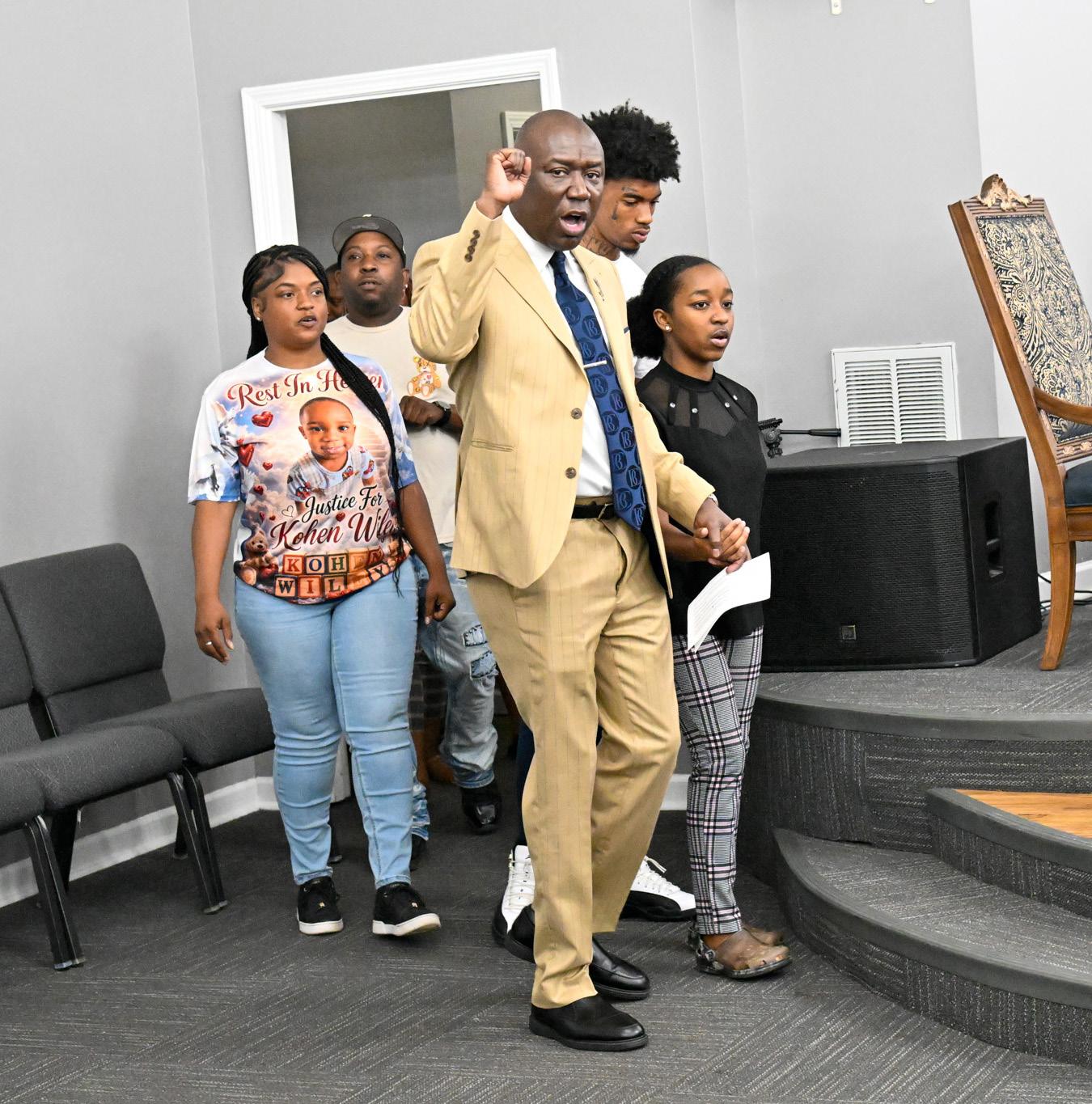
Atty. Ben Crump walks with Vellesiya Wiley, mother of 1-year-old Kohen Wiley, at a press conference Monday, June 22, in Senatobia, Mississippi. (Photos: Gary S. Whitlock/Tri-State Defender)
Ben Crump holds up a pack of diapers Monday, June 22, at Gospel Temple Church of God in Christ while speaking about the police shooting of baby Kohen Wiley. To his right is Kohen’s father Davion Williams.
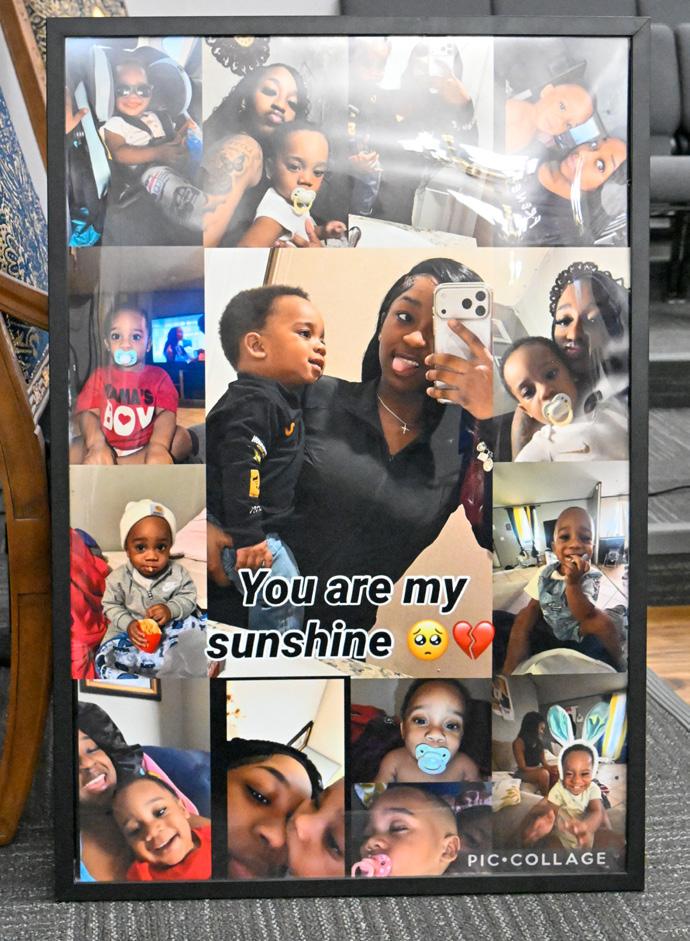
A family photo collage shows 1-year-old Kohen Wiley with relatives and loved ones. Kohen was killed June 14 during an encounter involving law enforcement in Senatobia, Mississippi, prompting calls from his family for transparency and justice.
■■ NEWS
“They were called over a box of diapers and a family now has to bury their baby. You cannot put those two things next to each other and call it reasonable policing.” — Ben Crump
determine the trajectory of the bullet that killed Kohen.
“This autopsy is going to be an important part of what happened to Baby Kohen,” Crump said. “But you know what’s going to be more important? The video.”
Turner, a former Shelby County commissioner and former president of the Memphis Branch NAACP, said the video should not be withheld from the public.
“The body cam footage can be released today,” Turner said. “Walmart has cameras all throughout the parking lot. Walmart needs to do the right thing and release the video footage.”
The AP reported Friday that the officer who shot Kohen and the woman driving the car has been placed on administrative leave while MBI investigates. Authorities have said video will be released once the investigation is complete.
The shooting has drawn national attention and comparisons to other cases that left Black people dead after police encounters that began with allegations of minor offenses.
Bernice King, daughter of civil rights icon Rev. Martin Luther King Jr., said in an Instagram statement that the case reflects a deeper societal issue.
“We are treating items on a shelf as
more valuable than a child,” King said. “That is not just bad policing; it is a moral collapse.”
For many in Senatobia, Kohen’s death also has reignited concerns about previous police encounters involving Black residents. Advocates have pointed to the arrest of a 10-year-old Black boy who urinated in a parking lot in 2023, and an encounter last year when Breshari Faulkner was pulled from her car during a confrontation over an handicapped parking space in the same Walmart lot where Kohen was shot, according to AP reports.
At Monday’s press conference, community activist Patrick Alexander, who
grew up in Senatobia, echoed those concerns, saying Kohen’s death did not occur in isolation.
“This is not our first rodeo,” Alexander said. “This is not our first walk around the block with Senatobia Police Department.”
But for Kohen’s family, the public demands for accountability are inseparable from their private grief.
Lassandra Williams, Kohen’s paternal grandmother, remembered him as a sweet and loving child whose family had imagined a future full of ordinary milestones.
“I’m going to miss him,” Williams said. “They took away so much. I’m looking forward to graduation, first day of school — so much they took away from us. That’s why we demand justice, because it’s not right.”
Veronica Roberson, Kohen’s maternal grandmother, said he was her only grandchild.
“That baby meant everything to me,” Roberson said. “He’s all I had. My only and my first grandchild. I took his mother to the hospital to deliver him. And I named him. So our bond was special.”
Funeral services for Kohen are set for 2 p.m. Saturday, June 27, at Hosanna Family Worship Center in Pope, Miss. Wiley, Kohen’s mother, spoke only briefly Monday.
“I watched my baby take his first breath, and I watched my baby take his last breath,” she said. “I’m still in disbelief about the traumatizing event that occurred that took my one and only child, Baby Kohen.”
She asked the community to keep her family in prayer.
“Justice for Baby Kohen,” she said.
The Associated Press contributed to this report.
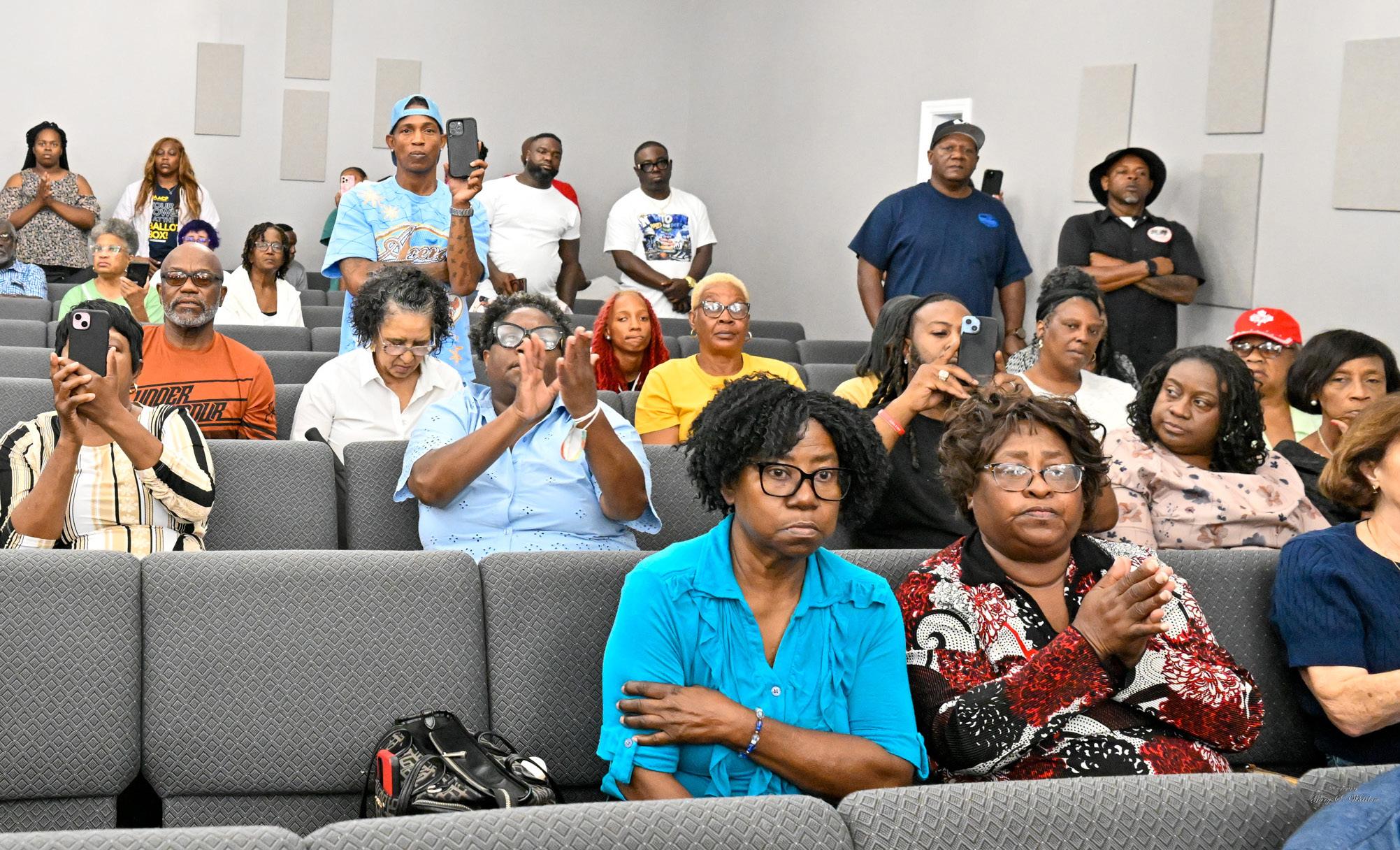
Senatobia residents gather Monday, June 22, at a press conference where Atty. Ben Crump addressed actions being taken in the case of baby Kohen Wiley, who was killed by police June 14 at the local Walmart.
NEWS Dream home giveaway builds hope for St. Jude families
By Brianna Smith-Herman TSD Contributing Writer
For many Mid-Southerners, the St. Jude Dream Home Giveaway offers a chance to win a new house. But every $100 raffle ticket sold supports a larger mission to ensure families with children battling cancer never face financial hardship to cover lifesaving treatment.
The annual home giveaway supports the work of St. Jude Children’s Research Hospital. Ticketholders have a chance to win a newly built, 3,200-square-foot home, valued at about $675,000. Tickets are sold out.
The 2026 winner of the suburban Memphis dream home, located in Arlington, Tennessee, will be announced live on Action News 5 at 11 a.m. Sunday, June 28.
Although the giveaway awards a new home to a single winner, organizers say the overall goal is raising money to help St. Jude continue its groundbreaking work in pediatric cancer research and treatment.
The dream home program, which raises millions of dollars annually, launched in 1991 in Louisiana with a single home that drew $160,000 in donations. Today, the hospital’s fundraising organization, ALSAC, raffles off more than 40 homes in cities across the country, including nearby Chattanooga and Nashville, and Jackson and Oxford in Mississippi.
“Every dollar raised is directly donated to St. Jude Children’s Research Hospital,” said Toni Todd, development specialist for ALSAC.
Donations help cover bills for treatment, travel, housing and food
“Every dollar raised is directly donated to St. Jude Children’s Research Hospital.”
— Toni Todd
for families with a child receiving care, allowing parents to focus on helping their children heal. St. Jude’s approach to fundraising sustains a globally lauded model of care.
This year’s Memphis dream home is the 19th project for builder Greg Bridgers and Southern Serenity Homes. Each year, Bridgers incorporates modern trends and family-friendly amenities into the home’s design. The 2026 home features upgrades such as a three-car garage, built-in bunk beds in the bonus room, and an outdoor kitchen designed for family gatherings and entertaining.
Local and national home improvement suppliers and manufacturers contributed labor and materials to build this year’s dream home, staged by local interior designer Kim Loudenbeck, who owns Warehouse 67, a furniture store in Germantown, Tennessee.
After decades of progress at St. Jude, survival rates have increased to 80% for childhood cancer and other catastrophic diseases. Still, some children facing life-threatening illness are left without effective treatment options.
“There’s 20% that still needs St. Jude’s help,” said Todd. “Not only could you change your life by winning a home, but your ticket helps fund research to support the lifesaving mission of St. Jude. For the children of St. Jude, that means hope.”
The 2026 St. Jude Dream Home under construction in Arlington has 3,200 square feet and is valued at about $675,000. The winner of the annual giveaway will be announced at 11 a.m., Sunday, June 28, on Action News 5. (Courtesy photos)
By Melissa Brown Chalkbeat
Memphis-Shelby County school leaders are suing top Tennessee Republicans in an effort to stop a new takeover law from diverting power away from the locally elected school board to a new board of political appointees.
The district, alongside the Shelby County Commission and all nine individual MSCS board members, filed a lawsuit in federal court late Thursday night — hours after the Republican-appointed oversight board met for the first time in Nashville.
Gov. Bill Lee, who’s named directly in the lawsuit, signed the takeover legislation into law in late May. Lee’s office has not yet responded to a request for comment.
With the law in effect, top Republican lawmakers appointed a nine-member oversight board that will seize control of key district decisions. That
■■ NEWS
Memphis-Shelby County Schools sue Tennessee over state takeover
intervention “dismantles” local education systems and strips the county government of its authority to approve school budgets, MSCS argues in the lawsuit.
It also violates the Fourteenth Amendment and the Tennessee Constitution, according to the new filing. Local leaders are seeking a preliminary injunction to stop the takeover board from making any decisions once their term starts in less than two weeks.
“Once the Oversight Board is constituted and acts, the consequences cannot be undone,” the lawsuit says. “The democratic right of Shelby County’s voters to elect representatives who actually govern cannot be restored through damages or retrospective relief.”
House Speaker Cameron Sexton and Lt. Gov. Randy McNally, who chose four oversight board members, are also named in the lawsuit, alongside the state education commissioner.
Board members and local residents have criticized the MSCS takeover for usurping power from the local school board elected by Memphis voters. The new oversight board will have final say over superintendent and staff contracts, along with MSCS’ annual budget.
The local board approved a $1.7 billion budget draft in late May, but it’s unclear whether that will be subjected to the oversight board’s intervention.
The new oversight board plans to meet again in less than three weeks, and they’re waiting for full results from a billion-dollar forensic audit that may guide their initial decisions in the district.
Not all Memphians are opposed to the state takeover. Intervention advocates cite years of academic underperformance and leadership instability in the district, which some say came to head after the local school board suddenly fired former Superintendent
Marie Feagins in January 2025. MSCS has had four superintendents in the past five years. And while the district has earned the highest score in state measures of student growth for the past four years, over 75% of Memphis students failed to achieve proficiency in reading and math last year. Some community members told Chalkbeat they are doubtful a lawsuit will succeed in reversing the takeover legislation, a sentiment echoed by GOP lawmakers who sponsored the effort. The Shelby County Commission will front the cost of the lawsuit because of a law passed in late April that prevents the school district from funding a lawsuit against state accountability measures.
Bri Hatch covers Memphis-Shelby County Schools for Chalkbeat Tennessee. Reach Bri at bhatch@chalkbeat.org. This story was originally published by Chalkbeat.
Memphis-Shelby County Schools sued top Tennessee Republicans on June 18 over a new schools takeover law the district argues is unconstitutional. (Larry McCormack/ Chalkbeat)
Memphis mourns Grammy-nominated rap music producer Tay Keith
By Brianna Smith-Herman TSD Contributing Writer
The music industry is mourning the loss of Memphis native and Grammy-nominated producer Tay Keith, who was found dead in his Nashville apartment by police during a June 18 welfare check. He was 29.
No foul play is suspected, according to the Metropolitan Nashville Police Department, and the cause of death remains under investigation.
On Friday, Keith’s record label, Drumatized, released a statement from his family confirming his death, describing him as a “beloved son, brother, uncle, family member and friend.”
Keith, who was born Brytavious Lakeith Chambers, helped shape the sound of modern rap, creating some of the most recognizable songs of the past decade and proudly transmitting Memphis culture and music to a global audience.
“While the world knew him as Tay Keith, his family knew him as BryTavious — a source of love, strength, laughter, and guidance,” the statement said.
The family, who requested privacy and continued prayers, also described Keith as a “visionary” and “cultural force,” whose work helped define the sound of a generation.
Details regarding a memorial service will be announced at a later date.
For Memphis, Tay Keith was more than a hitmaker. Growing up in South Memphis before moving to East Memphis during his early teen years, and ascending to the highest levels of the music business, Keith’s hometown success story inspired scores of record producers, artists and entrepreneurs looking to follow in his footsteps.
Keith began making beats as a teen-
ager, building his reputation, alongside fellow Memphis rapper BlocBoy JB, as a creator who found major success while remaining true to his roots. His breakthrough 2018 hit “Look Alive,” featuring Drake, introduced his signature production style – minimalist instrumentation with heavy drums under catchy melodies – to audiences worldwide. A string of chart-topping records, Drake’s “Nonstop,” Travis Scott’s “Sicko Mode,” Eminem’s “Not Alike,” and Lil Baby and Gunna’s “Never Recover,” quickly followed and established Keith as a dominant force in contemporary rap music.
Throughout his career, Keith worked with some of the industry’s biggest names, including Beyoncé, Cardi B, Future, 21 Savage, Megan Thee Stallion, Jack Harlow, Miley Cyrus, Lil Nas X, Chris Brown and Travis Scott. His work earned Grammy nominations for Travis Scott’s “Sicko Mode,” and Drake and 21 Savage’s “Rich Flex.”
Alongside manager Cambrian Strong, Keith co-founded Drumatized Music Group, a Memphis-based record label and creative collective designed to support emerging talent. In 2024, Keith was named BMI producer of the year by Broadcast Music, Inc., the largest music licensing organization in the U.S., which annually honors producers whose music was most-performed on radio, television and streaming platforms. The following year, Keith and Strong were recognized for shaping “what the future sounds like” on the Forbes “30 Under 30: Music” list.
Still, Keith’s accomplishments went beyond music. In 2018, he earned a bachelor’s degree from Middle Tennessee State University, while producing some of the biggest rap recordings in the country. He often spoke about the importance of education, noting that
he chose to complete his degree, despite career opportunities that could have prompted him to leave school early.
As news of his death spread, tributes poured in from across the music industry and his hometown. Longtime collaborator BlocBoy JB, who helped launch Keith’s career through their early Memphis recordings, shared a heartfelt tribute and a throwback photo of the pair, expressing grief over the loss of one of his closest friends and creative partners.
Fellow Memphis artists Hitkidd and Jozzy also publicly mourned his passing, while British rapper AJ Tracey, who collaborated with Keith on the hit single “Rain,” described the producer as “a legend of the game.”
Posts on social media reflected on the impact of Keith’s music and the way his signature sound helped define this recent era of rap.
Memphis producer Ramone Taylor, known as RamoneBeats, said some of the genre’s biggest records became synonymous with Keith’s famous tag, “Tay Keith, f— these n—-s up!”
“His tag signaled the start of so many heavy hitters, becoming one of the
most recognizable sounds in the music industry,” Taylor said.
In Memphis, many viewed Keith as a cultural ambassador who never forgot his origins. His production on “Look Alive” famously spotlighted the city through the lyric “901, Shelby Drive, look alive,” introducing Memphis references to listeners across the world.
“Tay Keith made Memphis sound global,” Taylor said. “Every time you heard that tag, you knew somebody from our city was influencing the culture. That’s a legacy that won’t be forgotten.”
For many aspiring producers, Keith’s journey from a teenager making beats in Memphis to a Grammy-nominated and celebrated producer serves as proof that success is possible without abandoning one’s roots.
Tay Keith leaves behind a musical legacy built on innovation, creativity and an unwavering commitment to his hometown. For a generation of rap fans and hip-hop heads, Keith’s beats will be remembered as the soundtrack of their lives. But his interpretation and transmission of Memphis music culture and its impact may prove to be his most enduring contribution.
Memphis native Tay Keith rose from producing beats as a teenager to becoming one of the music industry’s most influential producers, earning Grammy nominations and helping bring Memphis’ signature sound to a global audience. (Courtesy photo)
Transcendent: A Memoir explores truth, identity and the journey to becoming one’s authentic self
Book review
By Terri Schlichenmeyer
People tell lies every day. Sometimes it’s a matter of survival. At other times, lies are used to exert power or control, avoid punishment or even gain an advantage. Lies and falsehoods originate from familiar sources and unexpected places. They’re repeated as if true, but they’re still lies.
In her new memoir, “Transcendent,” actress and advocate Laverne Cox lays bare her struggle to stop lying to herself.
Sissy.
The bullies in Cox’s Mobile, Alabama, neighborhood often called her that derogatory term, and so did her mother. “Sissy” was just one word, though. Other words were worse, and more painful. The boys would call her ugly names while they beat her — when they could catch her. Her mother yelled cruel words at her gentle child who refused to participate in “boy” activities.
Even at 8 years old, says Cox, “I was a prim and proper lady.”
Despite the verbal abuse aimed at what others saw as feminine behavior on her part and a failed attempt at conversion therapy, Cox’s mother sent her and her identical twin brother to the Alabama School of Fine Arts, where Cox learned to dance. It was a lifeline for her, and the talent she cultivated at the fine arts school helped her get into college in Indiana. From there, she had hoped to find fame and fortune in New York City.
Yet, the abuse she suffered as a child held Cox back. One decidedly negative thought, “There is something wrong with me,” became her daily mantra. “I didn’t know how to say it,” says Cox, who was born male, “I’m a girl.” But therapy sessions helped Cox learn the language to speak her truth.
Developing a sense of style helped, as did her brother’s support, a handful of friends, and happy scent-infused memories of her mother’s makeup table. Every step along the way, Cox says, “I was expressing myself, I was also allowing myself to edge closer to my girlhood.”
“Transcendent,” released this month by Gallery Books, an imprint of Gallery Publishing Group, a division of Simon & Schuster, is a difficult read — not because of style, but the intensity of its substance.
From her earliest memories of being sexually abused as a toddler to verbal and physical abuse throughout her childhood, Cox glosses over nothing. Get ready for pages and pages of disturbing recollections that will feel like a bad roller-coaster ride, making you cringe and wanting to hide your eyes. But doing so would be a mistake. The best part of Cox’s memoir is its wholesale surrender to the truth, unfiltered and unashamed.
As the book progresses, Cox’s story does, too. We see a child who knows the truth, but has no words for it. The child becomes a teen with a burgeoning sense of self, then a young adult who craves love as she stretches her wings.
By the time Cox begins to chronicle her history-making career in Hollywood — becoming the first transgender person in 2014 to be nominated for an acting Primetime Emmy Award — and the abuse has (mostly) ended, readers will breathe a well-deserved sigh of relief. Surviving such a harrowing tale will be satisfying for readers, but incomplete, because her story is still unfolding.
Fans of Cox’s television and film work will want to read “Transcendent,” as will anyone who has transitioned or is thinking about transitioning, or loves someone who has transitioned. It’s a rough read, but a necessary one. And that’s no lie.
“Transcendent: A Memoir” by Laverne Cox c.2026, Gallery Books
$30.00
238 pages
■■ SPORTS
NBA Draft: Grizzlies continue latest rebuild with Duke’s Cameron Boozer at No. 3
Karim López, league’s first Mexican born draftee, added at No. 21
By Teresa M. Walker AP Sports Writer
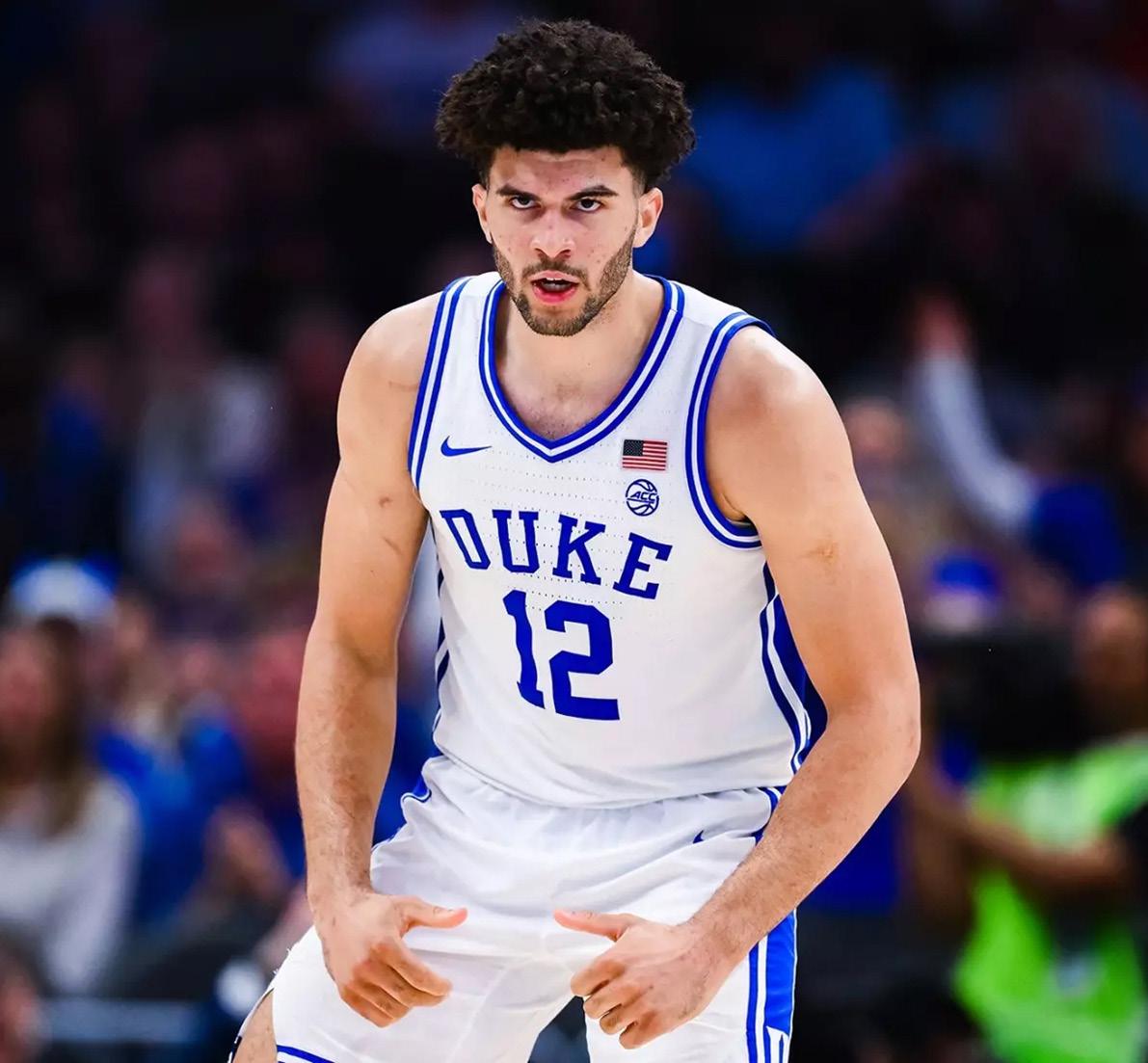
Cameron Boozer sees himself as a perfect addition to the Memphis Grizzlies’ latest rebuilding project.
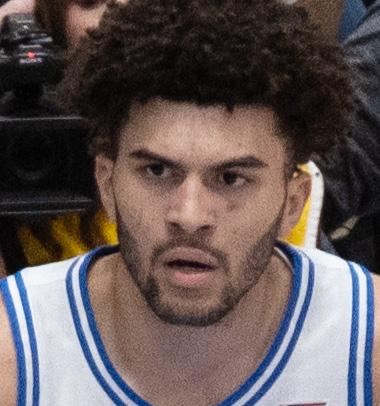
The Grizzlies selected the Duke forward with the third pick in the NBA draft Tuesday night, adding another high pick for a third straight year. Boozer joins 7-foot-3 center Zach Edey, the ninth overall pick in 2024, and Cedric Coward, the 11th selection a year ago and member of the All-NBA rookie team.
Fans in Memphis are excited about the addition of Boozer to the team. Thousands gathered at the FedExForum draft watch party Tuesday night, jumping to their feet and cheering when he appeared on the jumbotron live-streaming draft selections, after hearing NBA Commissioner Adam Silver call his name.The 6-8, 253-pound Boozer is the son of former Duke and NBA player Carlos Boozer. He was the fifth freshman voted AP men’s national player of the year. Now Cameron Boozer joins Edey, a twotime AP men’s national player of the year, in Memphis’ front court.
“I think we automatically become one of the best rebounding duos in the league,” Boozer said. “His size is unmatched. ... I mean he’s just a big dude. It’s going to be exciting to see what different types of things we can do. Really mess up other teams and cause some mismatches for sure.”
Memphis also added forward Karim López at No. 21 after twice trading back from No. 16 in a series of moves that returned five future second-round picks.
The Grizzlies sent the draft rights for Iowa guard Bennett Stirtz at No. 16 to Oklahoma City in exchange for the rights to Stanford guard Ebuka Okorie and two second-round picks. Then Memphis sent Okorie’s draft rights to Detroit for López as the 21st pick and three more second-round picks. Neither deal can be finalized until July 6.
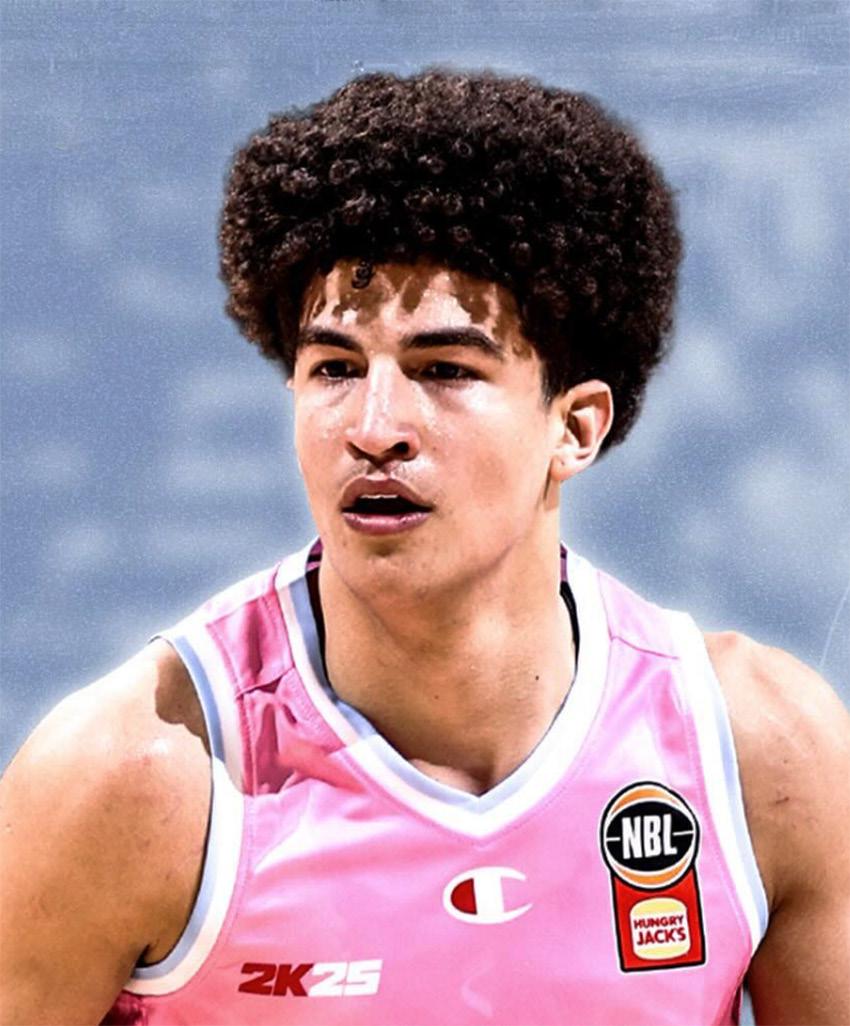
The 6-8 López is the first Mexican-born player taken in the first round of an NBA draft. He played two seasons in Australia’s National Basketball League’s “Next Stars” developmental program that produced lottery picks LaMelo Ball, Josh Giddey and Alex Sarr in recent years. Lopez just turned 19 in April.
“It means a lot to me,” López said. “It’s just a great opportunity for me and my country to have this platform and have this opportunity. So super blessed and definitely take it with a lot of pride.”
Boozer brings size, grit to Memphis’ rebuild
The big prize Tuesday night was Boozer, someone general manager Zach Kleiman called “a very significant piece” for the Grizzlies.
Boozer averaged 22.5 points and 10.2 rebounds while helping Duke win 35 games and reach No. 1 in the AP Top 25 poll. The Blue Devils claimed the top overall seed for March Madness and reached the NCAA Tournament’s Elite Eight.
He showed the kind of toughness the Grizzlies can use after so many injuries over the past couple seasons. Boozer finished a loss to UConn with 27 points despite suffering multiple facial frac-
tures in the first half.
That helped Boozer prove he can finish through contact shooting 55.6% from the floor and also shot 39.1% from 3-point range. Boozer also is a strong passer (4.1 assists), notably assisting on Isaiah Evans’ late 3-pointer to beat reigning national champion Florida.
“We certainly think he’s a great fit on court,” Kleiman said. “Off court, we think he is going to represent this organization and this city very well for years and years to come.”
Memphis kicked this rebuild into gear last summer trading away Desmond Bane and followed up by trading
Ja Morant’s future is still unknown
The only reason two-time All-Star Ja Morant hasn’t joined that exodus was Memphis could not find a good enough deal for the point guard to close out the three core Grizzlies who were supposed to lead the franchise into the future. Memphis still is expected to move on from Morant with the guard playing only 79 games combined over the last three seasons. Morant could be packaged as part of a move up in this draft by the Grizzlies with two years left on his current contract. Kleiman said the
Jaren Jackson Jr. in February.
Former Duke star Cameron Boozer was selected by the Memphis Grizzlies with the No. 3 overall pick in the 2026 NBA Draft. The AP National Player of the Year averaged 22.5 points and 10.2 rebounds as a freshman while helping lead the Blue Devils to the NCAA Tournament Elite Eight. (Photo courtesy of Duke Athletics)
■■ SPORTS
Grizzlies are focused on this draft right now.
“We’re not going to speculate on hypothetical transactions tonight,” Kleiman said after the end of the first round.
Memphis is counting on a youth movement
The Grizzlies moved up from sixth to third in the lottery after finishing 25-57 and missing the playoffs for the second time in three years. That record makes it difficult to get a read on coach Tuomas Iisalo and whether his time in European basketball will translate to NBA success.
Memphis also has shooting guard Jaylen Wells, who has started 143 of 148 games in his first two seasons. He joined Edey on the NBA’s All-Rookie team, and veteran Ty Jerome was added a year ago as another guard option.
Karim López
AP Basketball Writer Tim Reynolds and Associated Press freelance reporter Clay Bailey contributed to this report.
Black Music Month culminates with celebratory fanfare
By Candace A. Gray TSD Contributing Writer
This weekend marks the end of a very festive month, as we have celebrated Black Music Month and Juneteenth — not to mention the Obama Presidential Center opened in Chicago. (We know former President Barack Obama loves his Black music!)
If you haven’t had a chance to support Black artists this month, we have curated 10 dynamic opportunities to celebrate the music that laid the foundation for so many genres, musical experiences and grooves that power the beat around the globe. And Memphis music has played, and continues to play, a big part in global music.
Whether you park it at one event or a few, inside or outside, this list won’t steer you wrong! From music to film and literary works, to dance and food, these cultural experiences pay homage to Black culture, Black music and Memphis’ indelible imprint on American culture.
BB King’s “Lucille Talks Back” 50th Anniversary Album Party
Thursday, June 25
7 p.m.
New Daisy Theatre (330 Beale Street, 38103)
FREE
Tickets are available here.
“Lucille Talks Back” was originally released by B.B. King in 1975. The album is set to be re-released, under the creative direction of executive producer Meshell Ndegeocello, on June 26. The album features a collective of incredible musicians, including Memphis native, Eric Gales. One can also hear Ann Nesby, Ledisi, Cam Anthony, Ink, Cory Henry, Avery Sunshine and Doyle Bramhall, II on this tribute album to the King of the Blues.
The night will feature festive party vibes, networking and of course, live music. Attendees will also be the first to hear a preview of the new album.
Sunsets at Beale Street Landing
Thursday, June 25
6-9 p.m.
Beale Street Landing (251 Riverside Drive, 38103)
FREE
Tickets are available here.
This outdoor music series has been happening all month long. Singer, songwriter (and background vocalist for John Legend) Keri Lee kicked off the series, followed by Kennard Farmer and Amber Rae Dunn, and Miz Stefani. The inaugural season will wrap up this Thursday evening with Julia Magness, who sang with the Tennessee Mass Choir for years, and is also known for her bluesy and soulful sound. In addition to the music, guests can enjoy local food, signature cocktails, and an unmatched Mississippi River sunset. Attendees are also welcome to bring coolers and chairs, as seating is limited.
Sunset Skate
Thursday, June 25
6-9 p.m.
Tom Lee Park, Sunset Canopy (422 Riverside Drive, 38103)
FREE
Tickets are available here.
If you want to get a little more physical, Sunset Skate is the perfect event for the whole family. With curated, high-energy DJ sets by the Voice of MSCS DJs and free 30-minute skate rentals from Cordova Skating Center, this is the best night of family fun. If you want to take things one step further, Step & Skate Movement will be on hand offering skate dance lessons. The theme for this week’s event is Jersey Jam with the Memphis Grizzlies and Memphis Tigers. Fun Fact: This event series has won a TSD Best in Black award the last two years.
Candlelight: Tribute to Whitney Houston
Friday, June 26
6:30 p.m.
Brooks Museum of Art (1934 Poplar Ave., 38104)
Tickets are available here.
These candlelight concerts are truly a sight and sound to behold. If you’ve never attended one before, do yourself a favor and check it out. For an hour, the Listeso String Quartet will share their interpretations of pop queen Whitney Houston. Imagine hearing “How Will I Know,” “The Greatest Love of All,” and “I Will Always Love You” on strings? This event is close
to selling out. If you miss it this time around, there will be another offering Friday, July 31.
Sankofa African Diaspora Festival
Saturday, June 27
11 a.m. - 5 p.m.
Cossitt Library (33 S. Front, 38103)
FREE
For more information, contact Antonio Quinn at antonio.edwards@memphistn.gov or 901-415-2766.
The third annual Sankofa African Diaspora Festival this Saturday will honor and recognize Black Music Month. The festival is known for celebrating the rich culture and contributions of African-descended people. The day will feature art, local vendors, author readings, music, dance performances, local vendors and food trucks. Last year’s event saw more than 500 attendees and 30 vendors sold their wares.
Summer of 70s Blockbusters - Cooley High
Saturday, June 27
2 p.m.
Orpheum Theatre Memphis (203 S. Main St., 38103)
Tickets are available here.
It was 1964 and the sounds of Motown were everywhere, especially in Chicago, the setting of the fictitious Cooley High School. The Orpheum has hosted this Summer of 70s Blockbusters series all month long and will culminate with “Cooley High.” Earlier this month “Close Encounters of the Third Kind” and “Jaws” jogged the memories of attendees. If you haven’t seen “Cooley High” before, the film is about two teenagers coming of age and trying to navigate life in a rough Chicago neighborhood. There will be pre-screening activities prior to show time. Call the Orpheum Box Office with questions: 901-525-3000.
Stax Music Academy Summer Music Experience Finale
Saturday, June 27
7:30 p.m.
Overton Park Shell (1928 Poplar Ave., 38104) FREE
Know before you go.
Another season is winding down for the students
■■ ENTERTAINMENT
“The
who have been learning the ways of soul at the Stax Music Academy Summer Music Experience. Students and instructors alike will display their soulful creativity, collaboration and hard work before a crowd of hundreds (maybe thousands?) as part of the Orion Free Concert Series. This event is free, family-friendly and is always a good time for all. Feel free to bring lawn chairs, picnic blankets and baskets. Food trucks will be onsite. Arrive early for good parking and preferred seating options.
Latin Soul: La Bamba
Sunday, June 28
2-7 p.m.
Edge Motor Museum (645 Marshall Ave., 38103)
Learn more about Chef Cooking With Papi here. Local Chef, Marco Navarro, is presenting a West Coast-inspired cultural experience, complete with music, art, fashion and storytelling. This event invites guests to experience a rich celebration of culture, connection and movement. Classic cars and low riders will provide the aesthetic backdrop while attendees enjoy live music, DJs, curated food and beverage offerings in an environment grounded in Latin, Soul, Funk, R&B and West Coast classics. Navarro, also known as “Cooking with Papi,” will prepare the food, and Cxffeeblack will provide coffee and cocktails.
Think: Block Party, but elevated.
Kafé Kirk featuring Kirk Whalum and The Baylor Project
Sunday, June 28
6-8 p.m. Doors open at 5:00 p.m. (General seating) Crosstown Theatre (1350 Concourse Ave., Suite 250)
Tickets are available here.
Back for another installment, saxophonist Kirk Whalum presents his quarterly jam session, Kafé Kirk, at Crosstown Theater. This performance will feature a Grammy-nominated husband-and-wife duo, The Baylor Project, composed of vocalist Jean Baylor and drummer Marcus Baylor. Together, all the artists’ music explores faith, family, culture and the traditions that shaped and fuel today’s Black (and American) music scene. This cross-genre musical experience is one that will transcend race, age or political preference and highlights the influence Memphis has on American music.
Stax Museum’s “Live in Studio A” Summer Series
Tuesday, June 30
2-4 p.m.
Stax Museum of American Soul Music (926 East McLemore Ave, 38106)
FREE (with ID, proof of Shelby County residence)
Tickets are available here.
The Stax Museum of American Soul Music will host its final “Live in Studio A” session featuring the Stax Music Academy Alumni band, 926. This is an opportunity to hear some of Memphis’ most talented artists who are just beginning their professional careers in music performance, production and everything in between. Alumni who have performed at New York’s Lincoln Center, Washington D.C.’s Kennedy Center and all over the world bring it all back home to Memphis for the last installment of this incredible series. This event is free and open to the public, but you must present your Shelby County ID for free admittance.
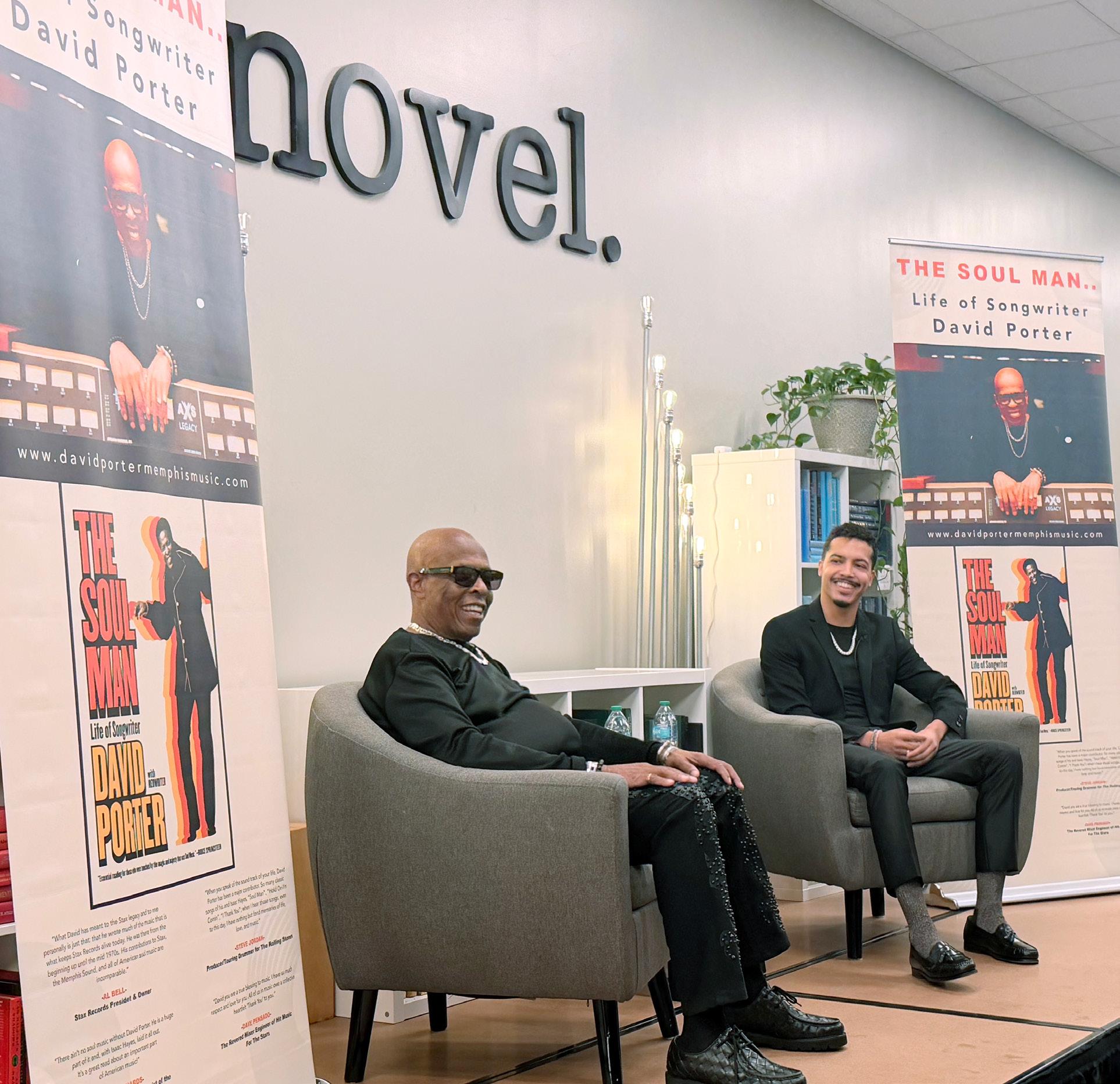
Who knows? Maybe you’ll see “Stax alumni” David Porter, who released his book “The Soul Man: Life of a Songwriter David Porter” in Memphis just days ago. For more than 60 years, Porter was a songwriting machine, leading the pack as the label’s first staff songwriter. He would go on to write and co-write more than 1,700 songs, including hits like “Soul Man,” “Hold On, I’m Coming,” and “When Something is Wrong With My Baby,” which he wrote with the late Isaac Hayes. The book provides a behind the scenes look at one of the nation’s most influential music dynasties and explores Porter’s role in shaping the next generation of musicians.
Learn more here.
Memphis songwriter David Porter, left, talks about his newly released book,
Soul Man: Life of a Songwriter David Porter,” with singer/songwriter Brandon Lewis at Novel Books & Gifts on Saturday, June 20. (Courtesy photo)
FREE
Juneteenth 2026
M■■ COMMUNITY
emphians took advantage of many options to observe the Juneteenth holiday at events across the city the weekend of June 18-20 that offered everything from educational exhibits and freedom rides to festivals, concerts and community gatherings.
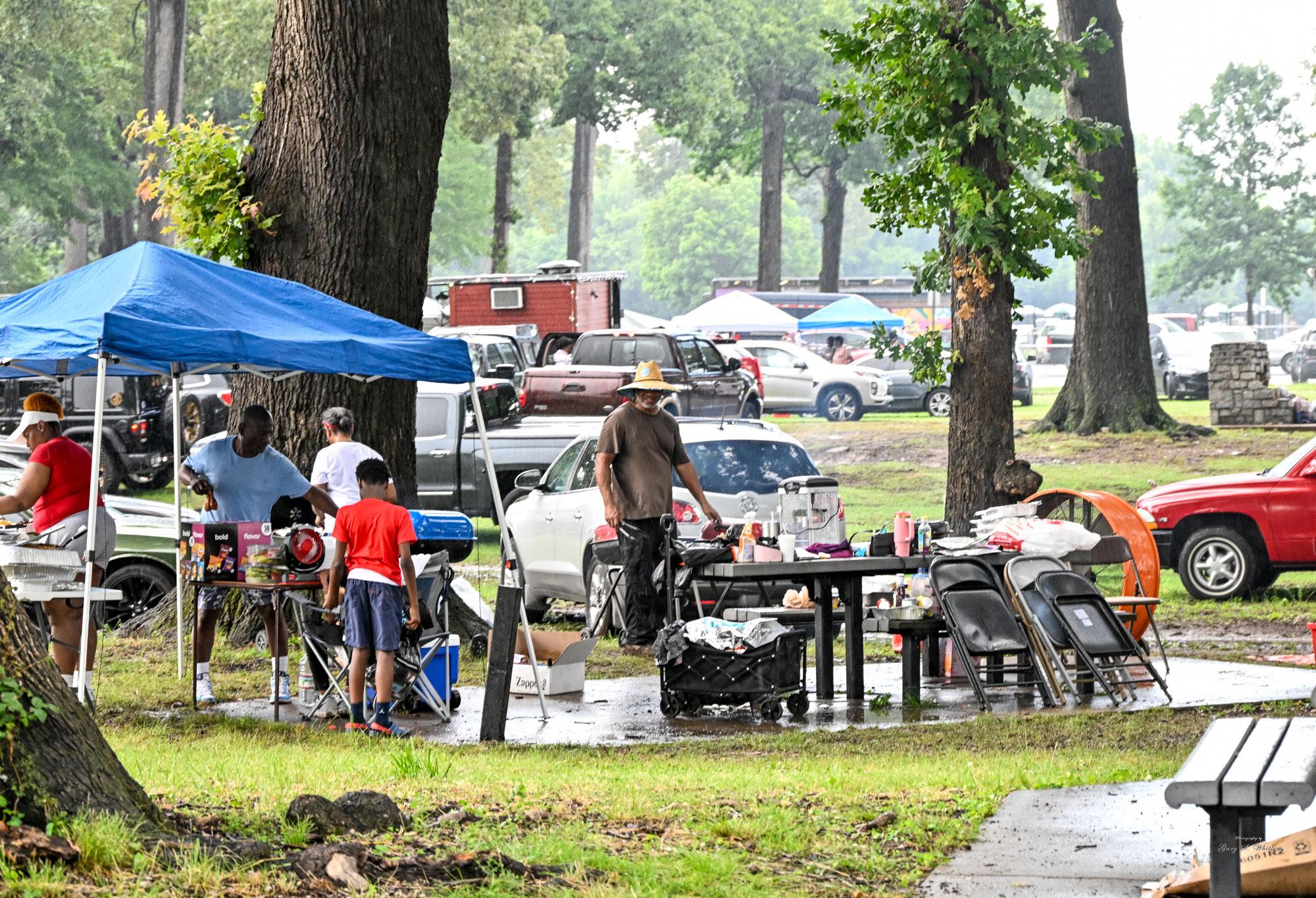
At the National Civil Rights Museum tents and picnic tables were set up outside allowing visitors to sit and enjoy barbeque, ice cream and array of other foods from vendors who lined the sidewalk. The museum also was open for touring.
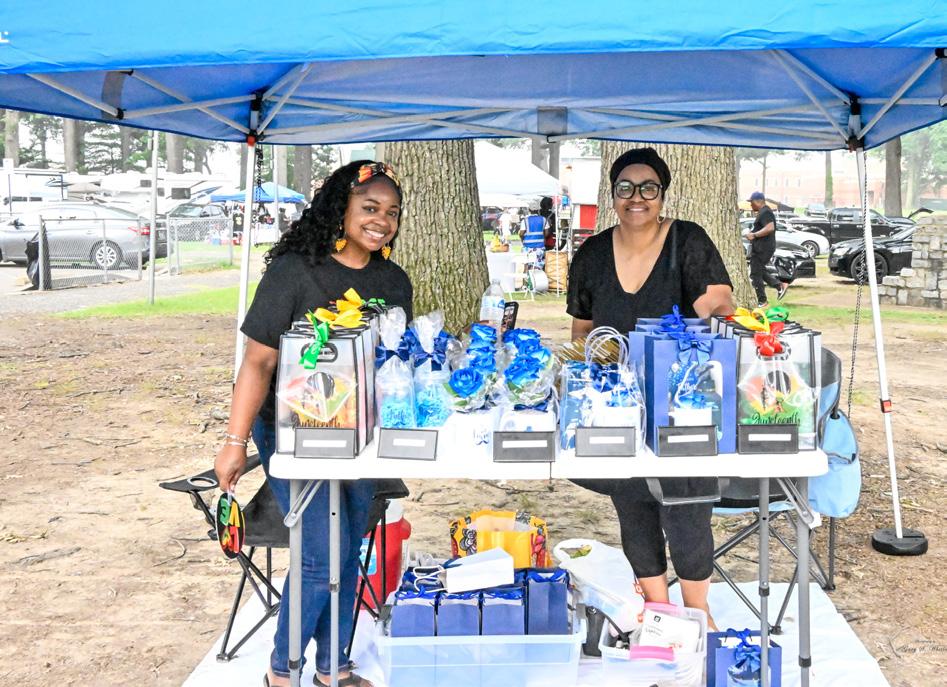
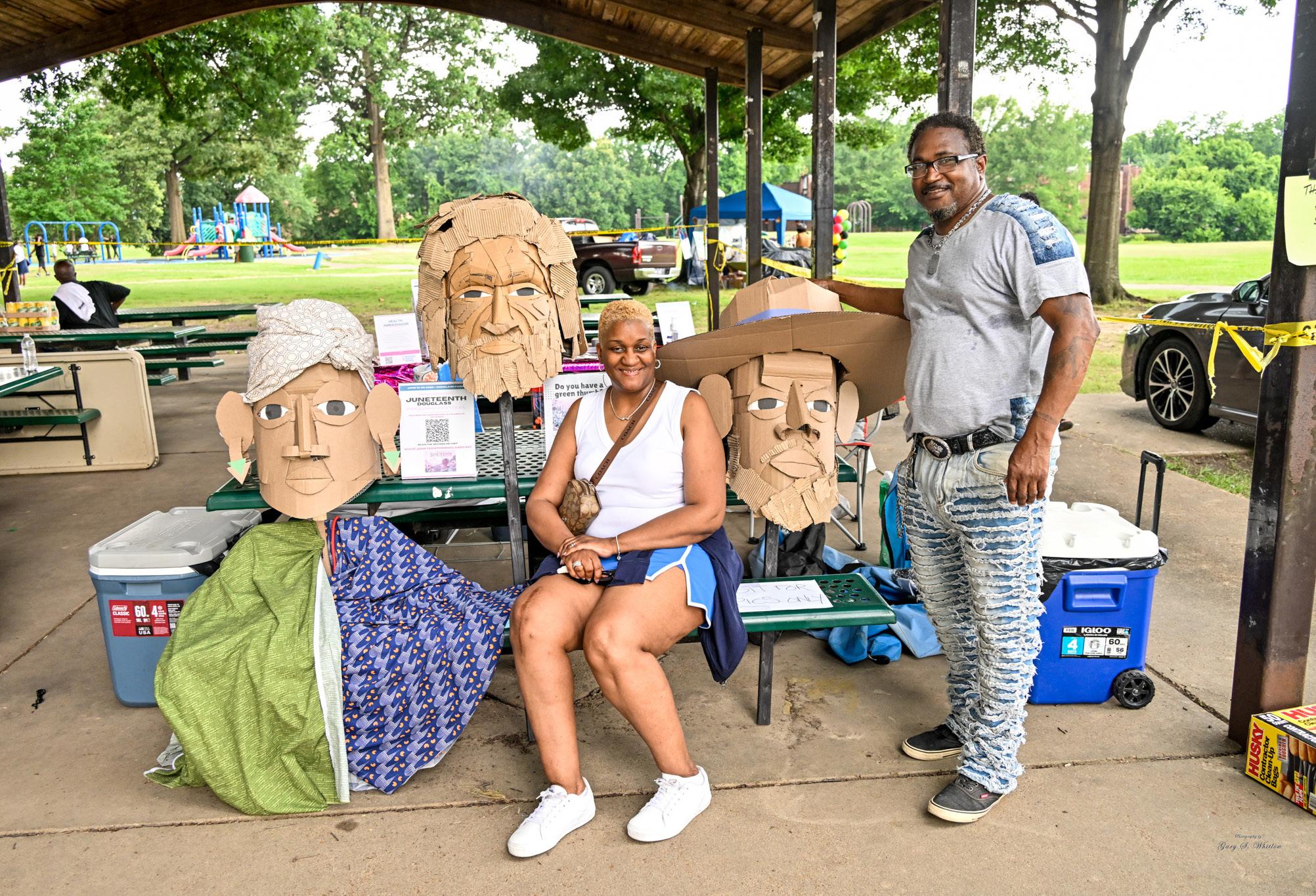
Others enjoyed a day of shopping for unique items Saturday at the Shop Black Festival at Martyr’s Park. Rain showers didn’t seem to dampen the celebration. The Douglass Freedom & Heritage Festival drew a steady crowd throughout the weekend for festivities under the shade of trees and tents.