
DEFENDER


By James Coleman TSD Contributing Writer
A $5 million funding resolution for renovations at AutoZone Park passed on a third reading walk-off during the Tuesday, June 23, Memphis City Council meeting.
Council members agreed 11-0 to fund “critical” repairs at the Triple-A stadium, home to the Memphis Redbirds, a minor league baseball team affiliated with the St. Louis Cardinals. Last year, the council approved a similar $5 million funding resolution for the ballpark. Both resolutions will be funded with a bond issuance.
The money will be allocated to fire safety equipment upgrades and new HVAC systems, which were both installed in 2000. More safety netting also will be installed behind home plate to protect new clubhouse seating. The improvements are aimed at bringing the 26-year-old stadium up to Major League Baseball standards.
“It is an asset that has gone into disrepair. There are critical issues in which we’ve had to invest in that particular asset,” said Antonio Adams, City of Memphis chief operating officer. “As we move forward, it would be a more collaborative process and conversation as to how we program the asset.”
The Redbirds also “envision that asset can be used for more than one use,” said Adams.
During an earlier discussion about the ballpark, some council members said they are dissatisfied with average game attendance, which is about 3,000, according to Baseball America, a sports media and analysis company. But others noted the importance of rehabilitating a major downtown attraction.
“We can’t just let our baseball park go into disrepair. This is no different if you
“We can’t just let our baseball park go into disrepair. This is no different if you are talking about AutoZone Park, or the FedEx Forum, or anything we own.”
— J. Ford Canale
are talking about AutoZone Park, or the FedEx Forum, or anything we own,” said council member J. Ford Canale. “Regardless of how you feel about it, one way or the other, it is our asset. We have to maintain it no matter who is there. The very last thing that the City
of Memphis needs is another vacant sports arena, especially in the heart of downtown.”
Prior to an executive committee voice vote, Canale’s reasoning was tested. Council member Jeff Warren proposed taking $500,000 of ballpark funding and putting it toward the Memphis Zoo’s multiyear $250 million capital improvement plan for “catastrophic” issues, like repairs “so animals don’t die.”
“It’s the same logic you’re giving me here. It’s something we own,” said Warren, who withdrew his proposal when Adams expressed uncertainty regarding whether the bond money could be diverted to another cityowned property.

By Judith Black Moore TSD Contributing Writer
recognition to bring awareness to their causes and to compete for volunteer attention.
Intentional volunteerism, an approach to volunteering that considers important causes without concern for broad exposure, means deliberately seeking out community-based organizations, neighborhood programs and grassroots efforts to serve.
Behind every fundraiser, food distribution, mentoring program, community cleanup or voter registration drive is a group of people who are seldom in the spotlight. Their names may never appear in annual reports. They rarely stand on a podium to receive public recognition. Yet, they are often the people who help turn ideas into action and missions into meaningful community service for nonprofit organizations. They are volunteers, and they help bridge gaps in social services to vulnerable groups.
But the reasons why volunteers choose charitable causes to support is crucial to the survival of small organizations and their ability to serve.
“We don’t have the media budget like larger nonprofits to let the public know we need volunteers,” said Barbara Andrews, who teaches at Kiddie Kollege Child Care Center, a predominantly Black preschool in the Castalia Heights neighborhood. “Pretty much any small nonprofit like ours needs hands on deck. We may have 30 children in a classroom and three teachers. If we have two volunteers, we can do even more.”
Andrews’ comments highlight an important reality. Most would-be volunteers are willing to support the work of small organizations, but the challenge for these charitable groups is name
Some volunteer opportunities attract commitments almost immediately. Members of the community sign up early, clear their calendars and make participation a priority when a recognizable name, much-anticipated event or prominent organization issues a clarion call for volunteers, generating enthusiastic responses months in advance. Nothing is wrong with supporting well-known organizations. They also rely on volunteers to do exceptional work. But deciding where to serve should be based on the needs of the community, instead of the organization’s level of visibility.
Across Memphis, small nonprofits and grassroots organizations work every day to address challenges facing children, families and underserved neighborhoods. And they are making an impact. But many operate with limited resources, little public notice and modest marketing budgets.
“When you’re driving through neighborhoods and you see small nonprofits, stop and ask how you can help,” said Andrews, the preschool teacher. “The children we serve could benefit from more people being in their lives.”
For small nonprofit organizations lacking resources, securing early and firm commitments from volunteers are vital to capacity development and service delivery. Responses such as “I will get back to you” or “I’ll let you know closer to the event date” create uncertainty. But organizers need to
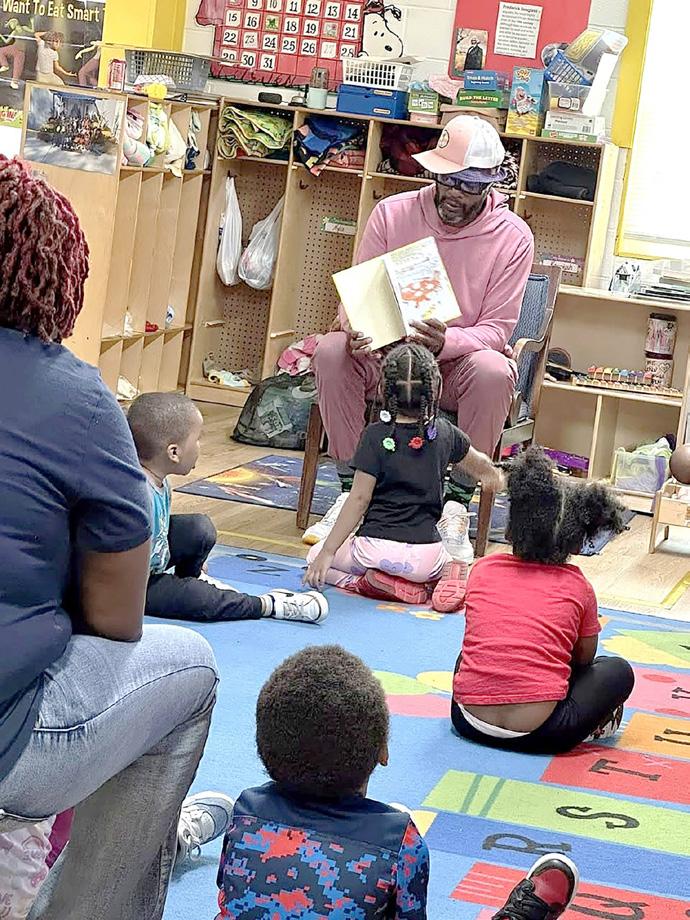
Debra Brown, who managed community engagement and volunteer coordination at blood donation giant Vitalant before retiring, understands both sides of volunteerism. She now helps recruit, train and assign volunteers for community projects tied to organizations such as the NAACP and Black Clergy Collaborative of Memphis.
“Sometimes volunteer opportunities don’t come with tangible gifts, but they offer the chance to do meaningful work and support causes that matter most to you,” said Brown. “For those of us organizing volunteers, we also have to remember that thanking the people who come out to serve and making it a good experience goes a long way.”
Volunteers deserve appreciation expressed through clear communication, sincere gratitude, and cues or acts that demonstrate their contributions matter.
know how many volunteers they can count on, what responsibilities can be assigned and whether critical needs will be covered. Staffing plans, participant experiences, safety measures and program logistics often depend on knowing well in advance who will show up to help.
According to a 2023 report, “The State of Volunteer Engagement: Insights From Nonprofit Leaders and Funders,” released by the Do Good Institute at the University of Maryland, nearly 70% of nonprofit chief executives said volunteers enable “more detailed attention to the people served,” underscoring the critical role of volunteers in enhancing organizational service.
Still, nonprofit leaders have responsibilities of their own.
A simple thank you, refreshments, a meal when appropriate and opportunities to connect with others can reinforce the importance of volunteers to a charitable organization’s mission.
Communities are strongest when intentional volunteerism is part of the service ecosystem. Prioritizing equitable volunteerism – ensuring community members from a variety of backgrounds have opportunities to serve – and showing thoughtful appreciation for those who offer service can be an important step toward profound community change.
Judith Black Moore is a nonprofit consultant and the founder of Taking Back the Future, a youth-focused nonprofit. With decades of leadership experience at nationally recognized nonprofit organizations, she brings a seasoned, strategic lens to the issues that matter most in the nonprofit sector.
By James Coleman TSD Contributing Writer
Memphis City Council members put the finishing touches on the city’s fiscal year 2027 budget Tuesday, June 23, by adding a 2% raise and a onetime $2,000 bonus for city sanitation workers.
Along with a $900 million operating budget, council members approved over $100 million for capital improvements. Both budgets will be funded by an unchanged property tax rate of $3.39. The fiscal year begins July 1. Council members approved the budget 11-1. Chase Carlisle cast the only “no” vote.
Representatives of the American Federation of State, County and Municipal Employees at the meeting had expected a 5% pay raise. But council member JB Smiley’s proposal supporting the raise for the union was pared down, following an objection by J. Ford Canale. During recent discussions with
Mayor Paul Young’s administration, it was noted that some employees are already “overcompensated.” For his part, Canale, who serves as vice chair of the Personnel, Governmental Affairs and Annexations Committee, said council discussions about the remaining 3% could be revisited later in the year –after identifying the workers referenced by the administration – to avoid confusion or missteps.
Following the vote, many city workers who attended the meeting left disappointed. Union leaders have argued the solid waste budget could easily absorb a 5% increase. The hourly rate for most sanitation workers ranges from $17 to $25.
The council also reallocated $703,675 from Accelerate Memphis dollars remaining in the fiscal year 2026 budget to pay for new vehicles for solid waste and anti-blight efforts.
Personnel costs account for over 70% of the total budget, including more than $400 million to cover payroll for
the Memphis Police and Memphis Fire departments. Memphis Police will receive $221 million of the total budget. And $180 million is budgeted for Memphis Fire.
The fiscal year 2027 budget also invests in the city’s infrastructure, including $36.5 million for projects in South Memphis. A new police station at the site of the former Southwest Twin Drive-In and a new library in Parkway Village are planned.
City leaders earmarked $20 million for paving projects and pothole repairs. The money also will go toward expanding Memphis’ ability to lower asphalt production costs. Another $18 million will be spent to tackle blight and illegal dumping.
Memphis Parks, which oversees more than 150 parks, along with trails, playgrounds, recreation facilities and programs, and owns community attractions, including several museums, the Memphis Botanic Garden, Memphis Zoo and Simmons Bank Liberty Stadi-
um, netted over $40 million in funding for the fiscal year.
Upgrades for the parks division include $4 million for a new clubhouse at The Links at Audubon golf course, along with $3.5 million for American Way Park and another $3.1 million for Jesse Turner Park to cover site improvements. The Overton Park Shell and city greenlines also are slated for enhancements.
During the meeting, council members also approved referendum ordinances on their first votes. The first proposed legislative measure would alter the appeals procedure for the city’s civil service system for nonpartisan government employees. Another would require lobbyists to register with the city and disclose their employers. Voters also must decide whether to change library workers’ labor status from appointed employees to civil service workers.
If approved on a third and final reading, three separate referenda will be placed on the upcoming Nov. 3 ballot.
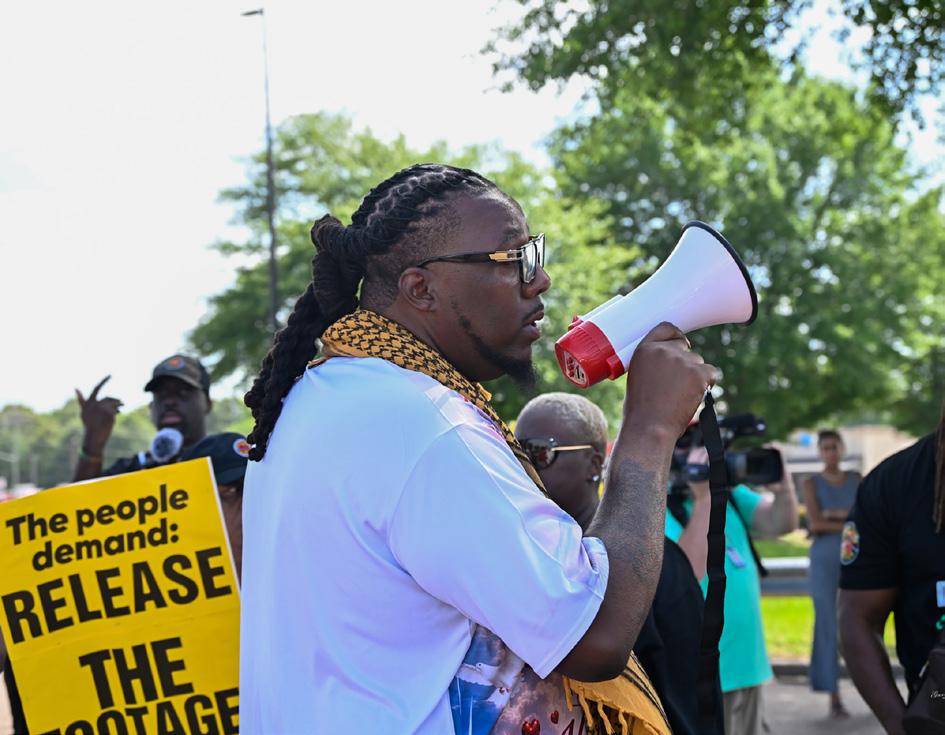
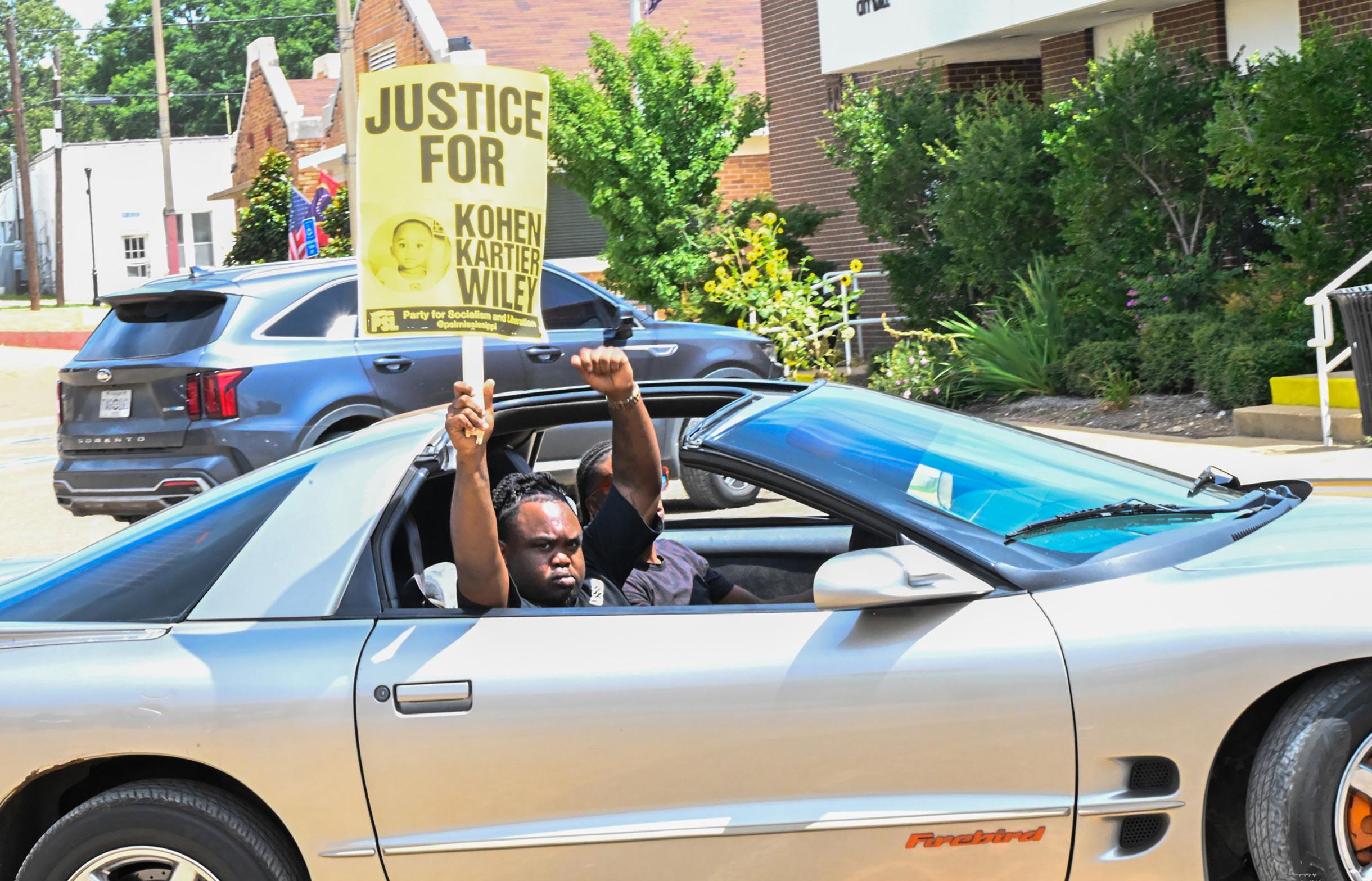
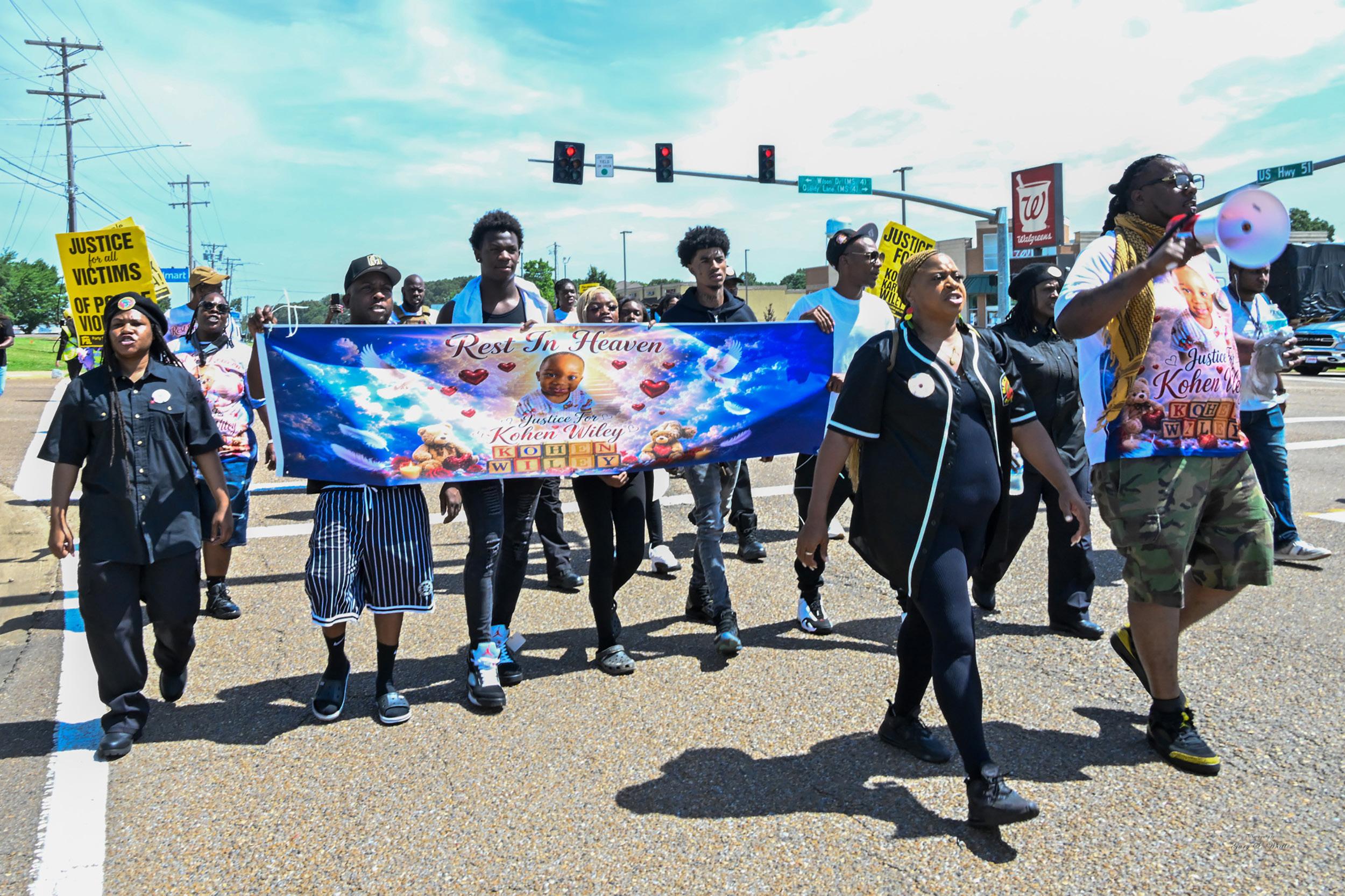
Protesters and supporters marched through Senatobia, Mississippi, on Friday afternoon, June 26, to honor the life of 1-year-old Kohen Wiley while also calling for answers and accountability in his death during a police involved shooting.
Kohen’s, mother and father, Vellesiya Wiley and Davion Williams, with the help of others, carried a banner that read “Rest in Heaven - Justice for Kohen Wiley,” as dozens of people marched from Walmart, where the baby was killed, to Senatobia City Hall. The Walmart was closed during the march as were other businesses along the rally route.
Kohen Wiley was struck by police fire on June 14, while sitting on his mother’s lap on the passenger side of a vehicle being driven by another woman in the Walmart parking lot. Officers were responding to a suspect shoplifting call.
Marquelle Bridges, president and founder of Building Bridges Coalition in Memphis, led the crowd with a bullhorn, shouting “say his name.” Members of Black Lives Matter Memphis also participated in the march along with organizations from other cities across the country.
The march came ahead of visitation services for Kohen Friday evening at West Gilmore Church of Christ.
Funeral services are scheduled for 2 p.m. Saturday, June 27, at Hosanna Family Worship Center in Pope, Mississippi.
Toddler killed by a Senatobia police officer remembered as a child of laughter, love and ‘Bluey’
By Lee Eric Smith TSD Contributing Writer
POPE, Miss. — In the two weeks since Kohen Kartier Wiley was killed by a Senatobia police officer, there have been protests, marches, tear gas, demands for video and righteous anger.
But on Saturday afternoon, June 27, inside Hosanna Family Worship Center in Pope, Miss., the shouts for justice gave way to quiet, heavy grief. Mourning over a life gone too soon.
Hundreds gathered for final services for Kohen, the 1-year-old boy whose death outside a Senatobia Walmart has drawn national attention and renewed scrutiny of the city’s police department. The sanctuary was about two-thirds full, filled with reminders of the life at the center of the controversy — a baby boy who loved toys, cartoons and cutting grass with his toy lawnmower.
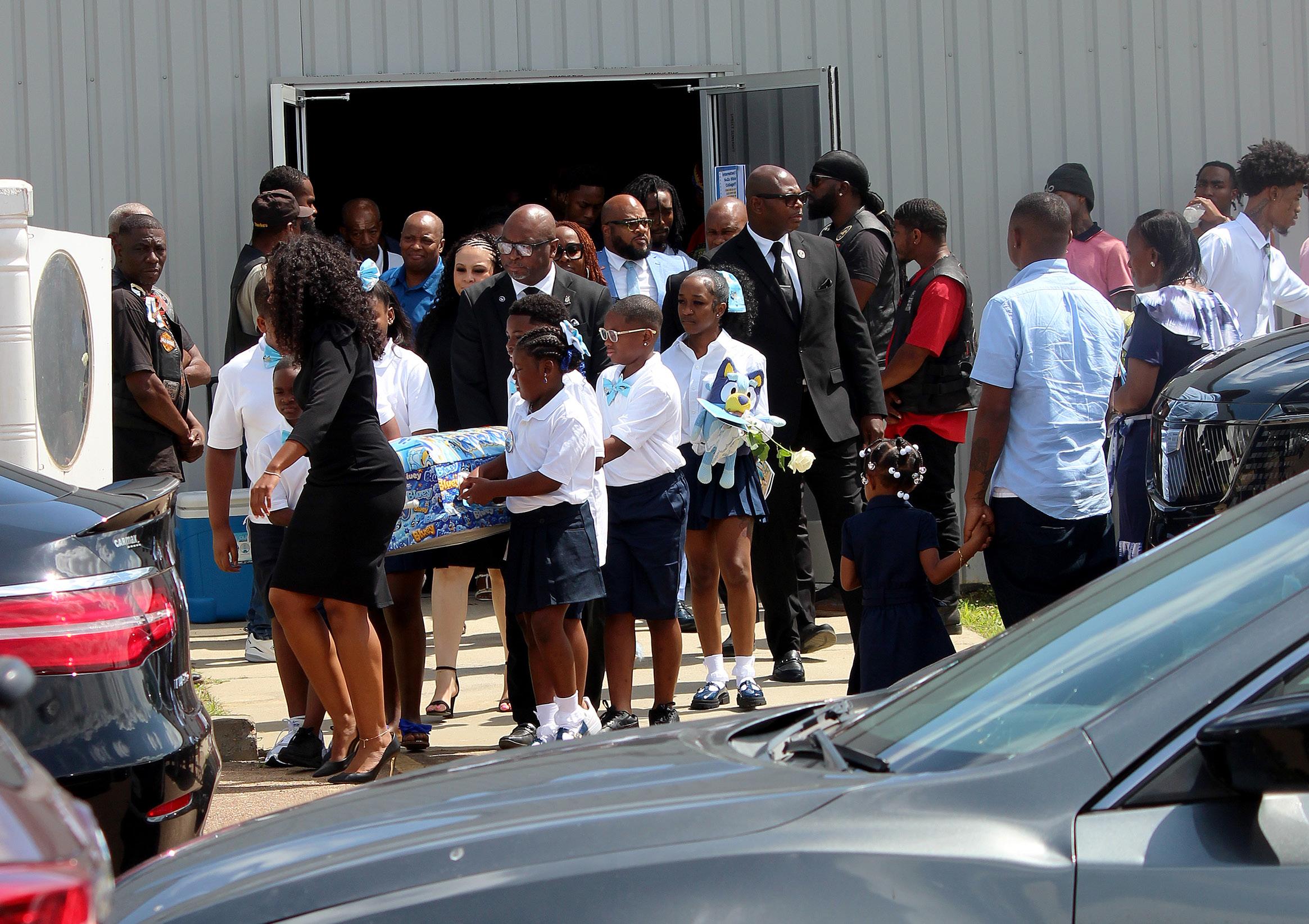
Images of Kohen with Bluey, the popular children’s cartoon character, appeared throughout the funeral program. Stuffed animals were placed around the sanctuary. And when Memphis attorney Van Turner stood to offer what the program described as a “call to justice,” Kohen’s parents stood beside him. Vel’lesiya “Punkin” Wiley, Kohen’s mother, held a stuffed Bluey toy in her arms.
“We need to celebrate this precious young soul today,” Turner said, “but then, on tomorrow, we have to do something about it.”
Kohen was killed June 14 after Senatobia police responded to a reported shoplifting call at Walmart. The Mississippi Bureau of Investigation has said officers attempted to stop a vehicle carrying two women and a child, and that the vehicle drove toward officers, nearly striking one, before an officer fired. Kohen’s mother, who said she was holding her baby on her lap
at the time, has disputed that account.
Turner, working with national civil rights attorney Ben Crump, and the family have called for an independent autopsy and the release of police body camera, dash camera and Walmart surveillance video. At a news conference earlier in the week, Crump questioned how a reported shoplifting call involving diapers or pull-ups could end with police firing into a vehicle with a baby inside.
Turner returned to that point Saturday, but in language shaped by the setting — a church, a funeral, a family sitting with the unthinkable.
“There is nothing at that Walmart store that is more precious than a baby boy,” Turner said. “There is nothing that is man-made that is so precious that you would take the life of something that’s God-made.”
Kohen, he said, “deserved to live.”
“He deserved to go to school,” Turner said. “He deserved to have a life full of love. He deserved to make his parents proud.”
Turner also warned that after the funeral, the burden of care and protection for Kohen’s family would fall back on the community.
“After today, the cameras will go away,” Turner said. “The news reporters will go back, and it’ll only be you and them and Senatobia. So it’s up to Senatobia to stand up for this family.”
The funeral caps a week of public pressure and repeated calls for officials to release video of the shooting. Friday morning saw protesters gather again to march. Later that evening, after family visitation, a town hall meeting was scheduled.
But by Saturday afternoon in Pope, 30 miles south of Senatobia, the movement paused long enough to do what no protest chant could do: Sit with the grief of a family preparing to bury its baby.
The family and funeral leaders appeared determined to protect the sacredness of the moment. Media were not allowed to shoot photos or video inside the service, which was livestreamed. Before public remarks, the agenda guide reminded those gathered that the family had asked speakers to limit their comments to two minutes and keep the focus on Kohen.
“We have already had our call to justice,” she said. “They have asked that you limit your expressions to

joyful thoughts of Baby Kohen.”
Joyful thoughts were braided with sorrow
The funeral program described Kohen as a beloved little boy who “passed into the arms of Jesus” at age 1. Born Nov. 1, 2024, at 10:23 a.m. at Northwest Mississippi Regional Center in Clarksdale, Miss., he weighed 5 pounds, 7 ounces. His family wrote that although his time on earth was brief, his life was filled with “laughter, love and light.”
“Kohen brought joy to everyone he met,” the program read. “He loved playtime with his mom, playing with his toys, and cutting the grass with his toy lawnmower.”
In a letter printed in the program, his mother wrote that for “one beautiful year and seven short months,” Kohen filled her life with a love beyond measure.
“You were my greatest blessing,” she wrote, “and I will hold onto the cutest smiles and the best hugs that you shared with me.”
His father, Daveon Williams, wrote that his son would always hold a special place in his heart.
“You are deeply loved and will never be forgotten,” he wrote.
who mourn
The eulogy, delivered by the Rev. Keri Henson of Hunter’s Chapel M.B. Church in Como, Miss., leaned into the tension every mourner in the room could
“There is nothing at that Walmart store that is more precious than a baby boy. There is nothing that is man-made that is so precious that you would take the life of something that’s God-made.”
— Van Turner
feel: Faith does not erase grief. It helps carry it.
“Grief is real,” Henson said. “Grief doesn’t follow a schedule. Grief doesn’t ask permission.”
She told the family that their tears were not weakness.
“They are a sign of love,” Henson said. “And love was present in this life we are honoring here today.”
Henson described Kohen as “loved and adored” by his mother.
“He was all she had,” Henson said.
Preaching from John 14, Henson reminded the family that the promise of heaven does not make loss painless, but it does give the grieving somewhere to place their hope.
“For Baby Kohen, everything Jesus Christ promised has already come true,” Henson said.
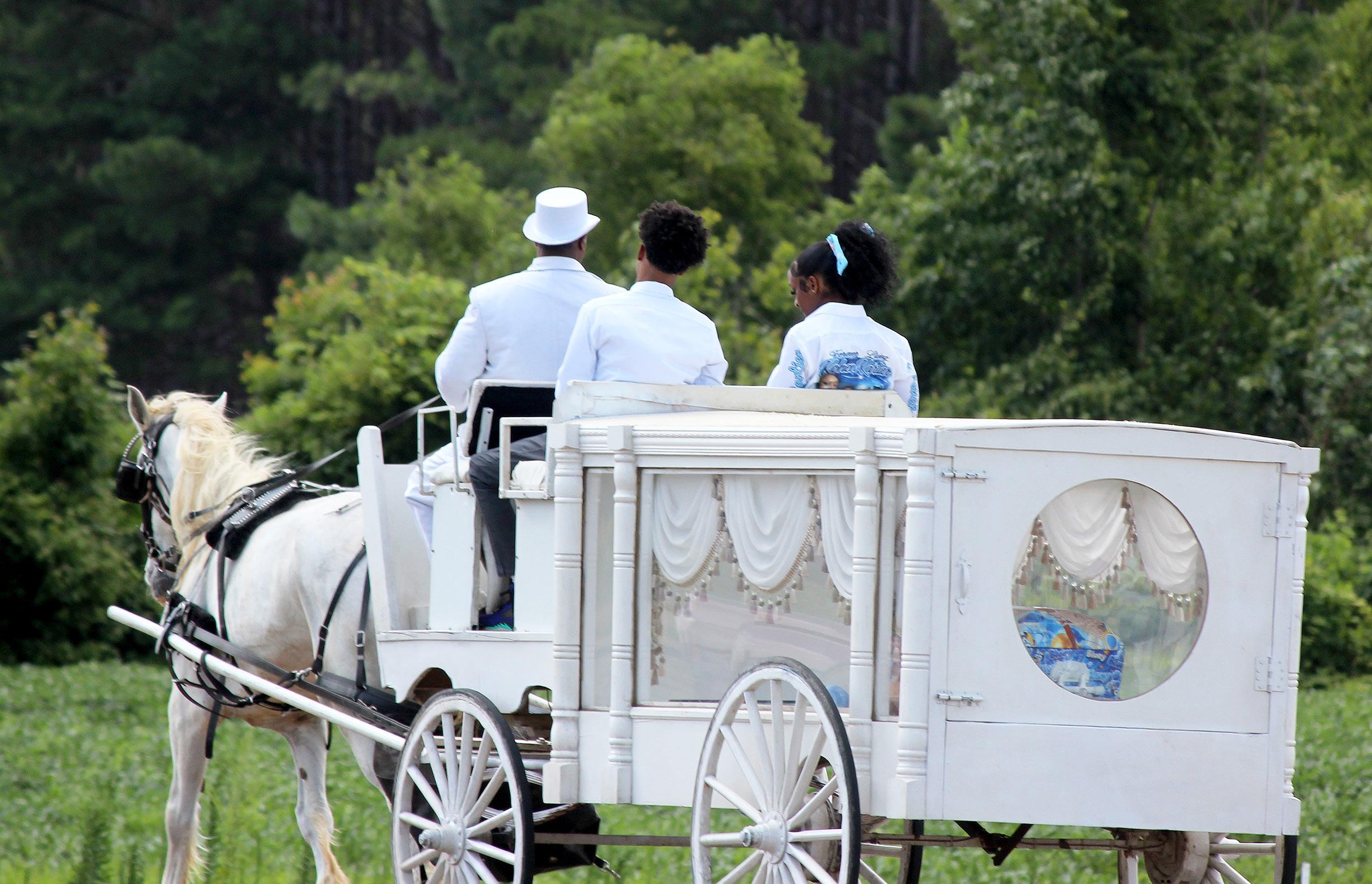
Outside the church, Kohen’s small casket was
carried by a group of children and placed inside a white, windowed, horse-drawn carriage. His parents climbed aboard. The horse turned west, leading the motorcade toward the burial site.
Behind him, a community left with both parts of Saturday’s charge — to grieve him fully, and then to fight for justice.
By Lee Eric Smith TSD Contributing Writer
For Mary Hamlett, the numbers announced by the city Tuesday, June 23, at Benjamin L. Hooks Central Library were not abstract.
The $191,000 Emergency Solutions Grant awarded to the Metropolitan Inter-Faith Association, or MIFA, will help families with children avoid homelessness, find shelter when they have nowhere else to go and, in some cases, move into new housing.
“It means homelessness prevention,” said Hamlett, MIFA’s housing stability programs vice president. “It means kids not sleeping on the street.”
That ground-level impact was the main point, as the City of Memphis Division of Housing and Community Development awarded nearly $6 million through its fiscal year 2027 Strategic Community Investment Fund, or SCIF, to dozens of nonprofit organizations, neighborhood groups and educational institutions focusing on housing, homelessness services, youth opportunity programs and community development.
The awards were funded by the city’s Neighborhood Partnership Grant program and federal resources from the U.S. Department of Housing and Urban Development, including the Emergency Solutions Grant, Housing Opportunities for Persons with AIDS, HOME-Funded Tenant-Based Rental Assistance and the Community Development Block Grant.
A total of 10 local organizations were granted awards through the federal agencies’ programs. Another 27 received Neighborhood Partnership Grant awards, and four educational institutions received block grant funds to support internship programs.
Ashley Cash, director of the city’s housing and community development department, called the awards “our annual investment into Memphis communities and Memphis organizations.”
“Really, it’s an opportunity to be able to provide service to the community.”
Cash said before the ceremony. “We’re supporting community agencies that are doing great work.”
‘Brighter hope’
For MIFA, that work is focused on families with children — a population Hamlett said can be deeply affected when housing becomes unstable.
“We know the impact of homelessness on children,” said Hamlett. “It can impact their education. It impacts their health. It impacts the parents’ ability to work and provide for the family.”
MIFA expects its grant to help shelter about 60 families, assist another five families through rapid rehousing and help about 10 families through homelessness prevention, said Hamlett. Depending on family size, she estimated the funding could affect 250 to 300 children.
“What these programs do is keep families together,” said Hamlett. “It keeps children able to go to school, and it gives them a brighter hope for the future.”
The funding, she noted, is essential to MIFA’s work.
“This is our biggest funding stream for shelter services,” said Hamlett. “How many people may be in their cars at night because they don’t have a place to go? This grant gives them a place to go.”
This year’s community investment ceremony introduced a shift in format. Rather than simply bringing orga-
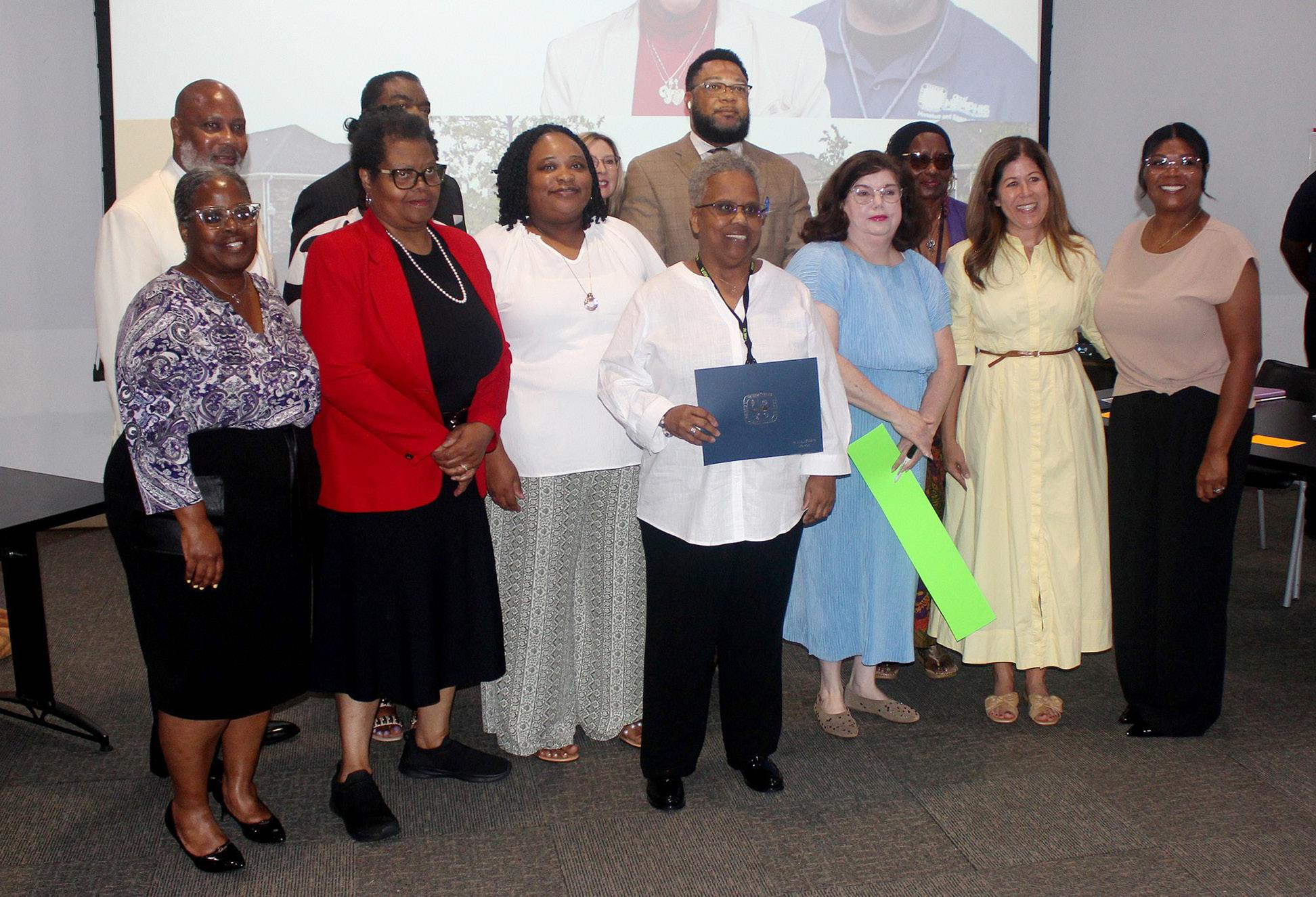
nizations together for award presentations and photographs, the housing and community development department followed the ceremony with a workshop designed to help grant recipients understand how to manage the awarded funds, document their work and strengthen their capacity.
The change was tied to the city’s desire to make the gathering more useful for the organizations receiving support, said Cash.
“We know people’s time is valuable,” said Cash. “If we can get everybody here together, hearing the same thing instead of asking them to come back out for another thing, it’s just a great opportunity.”
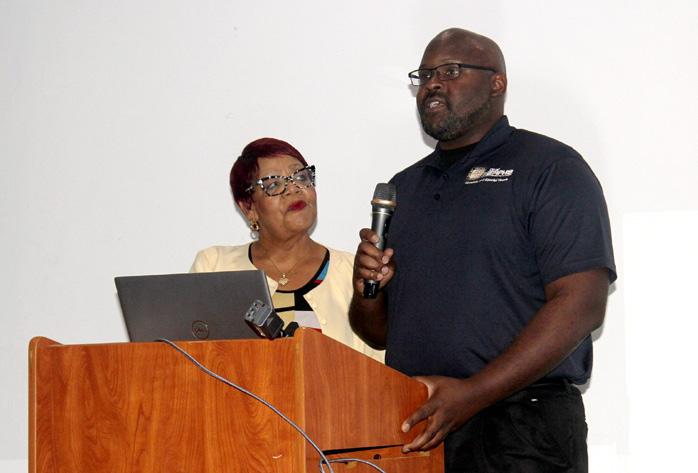
The workshop was designed to help nonprofits with “their actual planning, their budget planning, understanding
how to manage their program, what we’re looking for in terms of program management,” said Cash, whose department aims to provide information that will help agencies leverage city support as they seek additional funding.
During the ceremony, Cash told recipients the city recognizes the awards represent only part of what it takes to keep community programs operating.
“It’s not just what we’re giving,” Cash told the room. “You all are putting in your time, looking at the other funds, making programs work. You’ve got people depending on you.”
Cash said the department she leads has been administering the funding for more than two decades, dating to 2001, while the public awards ceremony and workshop format began in recent years
as a way to better recognize the work of community partners.
“We really had the idea to be able to celebrate with each other,” she said. Connecting to city priorities
Felicia Harris, deputy director of programs for the city’s housing and community development department, also connected the work of the funded agencies to Mayor Paul Young’s broader priorities for the city, including public safety, housing and neighborhood investment, youth opportunity and workforce development, city infrastructure and services, culture, and economic growth.
The work of many of the agencies in the room for the ceremony directly supports the housing and neighborhood investment pillar, which includes expanding housing opportunities, addressing blight and strengthening neighborhoods.
Harris also pointed to Young’s stated goal of creating 10,000 housing units in Memphis by 2030.
The largest award, $4,094,863, was allocated to Housing Opportunities for Persons with AIDS, or HOPWA. Hope House Day Care Center received the largest individual award of $1,722,058, also through HOPWA.
Friends For Life Corp., also known as Friends For All, received three HOPWA awards totaling nearly $1.9
million. CMI Healthcare Services received $472,940 through HOPWA and $375,000 through HOME-Funded Tenant-Based Rental Assistance, or HOME-TBRA. Cocaine & Alcohol Awareness Program Inc., or CAAP Inc., received $375,000 through HOMETBRA.
Awards administered by the Emergency Solutions Grant totaled $490,810.55, and were allocated to Hope House Day Care Center, MIFA, Catholic Charities of West Tennessee, YWCA Greater Memphis and Room In the Inn.
Neighborhood Partnership Grant awards totaled $405,000, with 27 organizations receiving $15,000 each. Those recipients included YMCA of Memphis & the Mid-South, RISE Memphis, Young Actors Guild, Heal Memphis DBA Heal 901, Klondike Smokey City Community Development Corporation, Junior League of Memphis, Peer Power, Community Legal Center, Binghampton Development Corporation, Service Over Self, Forward Memphis, Mustard Seed Inc., The Works Inc., World Relief Memphis, United Housing Inc., Victorian Village Inc., Alcy Ball Development Corporation, and Young, Gifted and Green.
The city also awarded $220,000 in block grant funds for internships to the University of Memphis, which received $100,000, and LeMoyne-Owen College, Christian Brothers University and Rhodes College, which each received $40,000.
The range of recipients reflected the breadth of community work the city is trying to support, said Cash.
“There’s just a host of agencies,” said Cash, “that are spanning from community service activity all the way to internships, to housing support and homelessness services.”
For Hamlett, the value of that support comes back to families trying to survive.
“As rental prices go up and people become more unstable, it takes a little more to keep them stable and to help them regain housing,” said Hamlett. “We’re always open for more funding so we can help more families.”
By James Coleman TSD Contribuiting Writer
Soon-to-be Shelby County Commissioner LaShanta Rudd has been accused of misappropriating City of Memphis taxpayer money.
According to an internal memo from the City of Memphis, the political novice allegedly misused over $10,000 in grant funding intended for use by her nonprofit, Serving In Christ Outreach. The missive was dated Jan. 23, 2026.
Instead of going towards youth mentorship and job training, auditors found the money was used to purchase a used car. Rudd also is accused of paying for building maintenance and unauthorized personal expenses with the cash.
A 2015 Nissan Sentra was purchased for $5,000 and $48.98 was spent on an oil change for a 2007 Honda Odyssey, according to the city document. Another $2,600 in public funds was unaccounted for.
“We noted expenses for residential repairs (flooring, HVAC duct cleaning, security door), a vehicle purchase, including registration, vehicle maintenance and other noncompliant activity,” read the memo. “We determined that these expenses should be reimbursed to the City.”
The investigation ran from July 1, 2024 to June 30, 2025.
The commissioner-elect has been banned from receiving City of Memphis grant funds again. Her nonprofit received more than $13,000 in FY2025. Since being founded in 2010, it has benefited from over $88,000 in municipal funding.

Rudd has not commented on the allegations.
The Memphis City Council awards around $2.5 million in grants to nonprofits annually. The money must also be used for its stated purpose.
Rudd won her District-10 Democratic primary contest by a comfortable 15-point margin in May. No Republican or Independent candidate filed for the August general election.
The district covers parts of Orange Mound, Cooper Young, Castalia Heights and the Memphis Airport area.
However, Rudd ended her write-in candidacy for the Tennessee House District-93 seat. She launched her bid after the death of state Rep. G.A. Hardaway in April.
Last year, former Shelby County Commissioner Edmund Ford Jr. was indicted for misuse of commission grants.
Three nonprofits were accused of funneling over $250,000 to an account linked to Ford’s computer business, E&J Computer Services and Repair and Precise Solutions and Consulting LLC, in exchange for the grants.
The indictment accused Ford of disguising the revenue as charitable donations on IRS returns. In February, he pleaded guilty to five counts of federal tax evasion and attempted tax evasion. He resigned his seat immediately afterward as a condition of his plea deal.
Cottage-style rental homes and courtyard designed to build community in Memphis
By Lee Eric Smith TSD Contributing Writer
A once trash-filled parcel of land in Midtown aims to become a community model to drive population growth in Memphis and create a close-knit neighborhood for middle-income residents to call home.
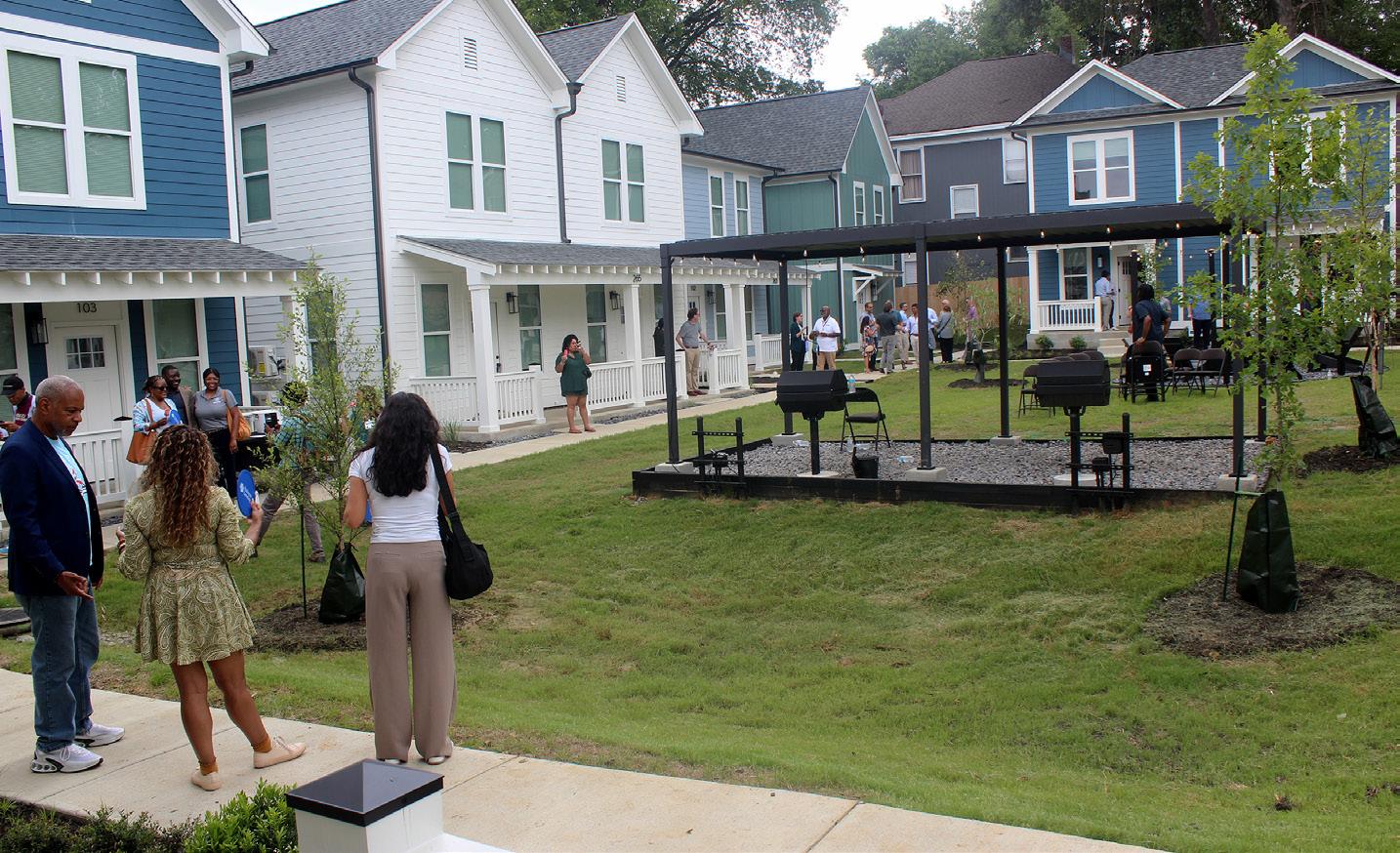
City officials and housing development leaders gathered Wednesday, June 24, for a ribbon cutting to celebrate the completion of the first phase of BelleMont, a new 23-unit cottage court community, situated on 2.5 acres near the Crosstown cultural district, for households earning about $52,000 a year. Instead of big apartment complexes and sprawling suburban-style subdivisions, BelleMont was built one front porch at a time.
The new development, located at 281 N. Montgomery St. in the Medical District, is the first completed project under the city’s Middle-Income Housing Pilot Program, or MI-Pilot. It features one-bedroom and two-bedroom rental homes built around shared green space, and includes front porches, grilling areas, a firepit and room for a community garden.
The development’s name, a nod to its location between Bellevue Boulevard and Montgomery Street, is a shortened portmanteau of the two routes.
The missing middle
For city leaders, BelleMont represents more than new rental units. It embodies the type of development the MI-Pilot program was conceived to support and is an example of “missing middle”
housing, such as cottages, duplexes, quadplexes and townhomes that can fit into existing neighborhoods, providing options for teachers, nurses, first responders, young professionals and working families, “the people who keep our city running,” said Young.
“They earned too much to qualify for traditional housing assistance, but not enough to comfortably afford many of the housing options that were out there on the market,” said Young. “They deserve the opportunity to live comfortably in the communities where they actually serve.”
The city’s Division of Housing and Community Development launched the MI-Pilot program to support developers building or rehabilitating attainable housing for households earning 80% to 120% of the city’s median household income, which is $51,736, a 2024 Census report shows.
The idea for middle-income housing grew out of conversations among members of the community development department about a gap in the local market, said Ashley Cash, the director of the department, which has contributed $500,000 in grants and loans to the BelleMont project, and will support its next phase.
“What this represents is an opportunity in our market for working-class families, individuals, people just like you and me who are trying to live,” said Cash.
The first round of funding for the city’s MI-Pilot program invested $1 million across three developments expected to offer attainable housing units. In addition to BelleMont, the program includes the Leath Quad Community on North Parkway near Crosstown Concourse and Barton Row in South Memphis. These housing developments
are part of a broader plan announced earlier this year to create 10,000 new units in Memphis by 2030, said Young.
“Many of you may know that over the past 25 years, we’ve lost about 35,000 people, in terms of our population,” said Young. “Part of our strategy to grow our population is to ensure that we have a diverse range of housing options available for people.”
After the ribbon cutting, Young said the city’s housing strategy must include smaller projects like BelleMont to develop vacant or underutilized land in populated areas.
“As we look at large projects that provide hundreds of units, we also want to look at those small infill redevelopment projects,” Young said. “What we know is that it’s going to mean more people occupying our neighborhoods, which will strengthen our commercial corridors, like Jackson Avenue, Park Avenue — many of the major thoroughfares where we have a number of
small businesses. So our housing goal actually helps to boost our economy.”
For the Downtown Memphis Commission, the city’s economic development agency for its central business district, the BelleMont project also demonstrates how public incentives can help draw developers to urban projects.
Chandell Ryan, the commission’s president and CEO, said the site was transformed from underused land into a neighborhood asset. Before work began, Ryan said the debris removal team hauled away two dump trucks full of trash from the site.
BelleMont is the kind of dense, high-quality development the downtown commission wants to replicate across the city’s core, she said. She also credits the payment-in-lieu-of-taxes program, or PILOT, for helping to make the project feasible.
“This property proves that when we
back visionaries, our neighborhoods thrive,” said Ryan.
Introducing BelleMont
KPS Development Partners, led by builder Scott Kern, used a mix of public incentives, private investment, loans from a community development financial institution, or CDFI, and crowdfunding to finance construction of the project.
Phase 1 of the BelleMont development includes 19 one-bedroom units and four two-bedroom units on one acre, said Kern. Construction of phase two is expected to begin later this year, and phase three will likely follow 12 months later, on the remaining 1.5 acres, he said.
According to BelleMont’s website, livebellemont.com, one-bedroom units with one bath start at $1,000 a month for 448 square feet. A 640-square-foot, one-bedroom unit with one bath starts at $1,250 a month. Rent starts at $1,575 a month for two bedrooms and two baths in 1,152 square feet.
The new cottage court neighborhood features modern finishes, open-concept living areas and shared outdoor amenities, according to the builder.
Kern: ‘Community building is ministry work’
For Kern, the most important decision for his team centered around building a new complex that fit the existing neighborhood. That meant smaller homes, front porches and a courtyard layout that is intended to increase opportunities for residents to interact with one another.
“We could have done two- or three-story walk-up apartments. This felt more contextual, more respectful of the neighbors, as opposed to dropping a big building in their neighborhood,” said Kern.
BelleMont has to work financially, Kern said, but the project also carries a larger purpose inspired by the mayor’s remarks at a 2025 housing summit about the mission of public service.
“Real estate development is more than numbers and buildings,” Kern said. “It is ministry work. Community building is ministry work.”
By James Coleman TSD Contributing Writer
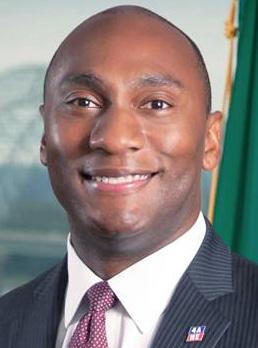
Shelby County will receive its first property tax increase in eight years after the board of commissioners voted 8-5 to a nearly two-cent adjustment for FY2027.
It is the first property tax hike of outgoing Shelby County Mayor Lee Harris’ administration. The new rate of $2.70 per $100 of assessed value of property will fund a $1.6 billion operating budget, which remained flat. Last year’s rate was $2.68.
In May, Harris proposed a $2.66 tax rate. At the time, the term-limited executive pitched the number as a tax cut. The figure merely reflected the true adjusted rate after the window to appeal FY 2025 property assessments had expired.
Instead, commission members hewed closer to the path budget committee chairman Michael Whaley proposed. During budget negotiations, the outgoing commissioner initially proposed a three cent increase to the rate, or $2.71.
Whaley was seeking additional revenue for the county’s fund balance. The past two fiscal years, commissioners passed last-minute funding resolutions due to cost overruns.
In FY2026, the overrun was due to unfunded overtime costs at the Shelby County Sheriff’s Office. Most of the money went to workers at the understaffed county jail at 201 Poplar. The
lockup’s population swelled after Operation Safe Memphis was announced in September.
Whaley’s proposal was intended to prevent a similar occurrence in FY2027. The rate hike is expected to generate an additional $2.5 million in revenue. The extra cash is anticipated to shore up the county’s long term finances too.
The proposal also represented the middle road in the budget discussions.
Unsurprisingly, some rejected the notion. Every Republican commission member voted against it, including commissioners Mick Wright, Amber Mills, David Bradford and Brandon Morrison. Democrat Erika Sugarmon broke ranks and joined the conservative caucus, citing opposition to a tax increase.
Others were amenable to a hike, but were more interested in spending the money on long-neglected priorities. In the end, the latter contingent held more sway.
A majority was cobbled together after $11.8 million was diverted from funding construction on a new K-8 Treadwell Elementary School. It will be spent on deferred maintenance issues at several Memphis Shelby County district schools. The money is part of a $176.7 million Capital Improvement
Plan budget that emphasizes school infrastructure, deferred maintenance and health care expansion.
It was Morrison’s proposal that united the majority. Voting in favor of were chairwoman Shante Avant, Miska Clay-Bibbs, Britney Thornton, Henri Brooks, Matthew Szalaj, Charlie Caswell, Mickell Lowery and Whaley. The budget also provides a 1% pay increase for all county employees. Workers should notice the difference on their next pay stub. The final document also earmarks $29.4 million towards indigent care. The total is a $5.4 million increase from the previous year.
One of the biggest winners of the budget season is probably Sheriff Floyd Bonner. The sheriff’s office will receive $207 million — a $27.1 million increase over FY2026. A total of 2,444 positions could be funded with the amount. Including jail staff, the department currently has around 2,000 employees.
Commissioners also approved a $4.3 million funding settlement with Bonner to resolve unpaid over time issues from FY2026. Last year, Bonner accused Harris of “shortchanging” the SCSO by $67 million after the mayor dipped into the department’s unfunded positions to balance the county’s budget.
Commissioners also approved a separate $1.7 billion school district FY2027 budget during the meeting.
By Lee Eric Smith TSD Contributing Writer
Cameron Boozer and Cedric Coward were supposed to share a basketball future once before.
It did not happen at Duke. But as Boozer sat inside FedExForum on Thursday, June 25, wearing the expectations that come with being the No. 3 pick in the NBA draft, the former Duke star made clear he has no problem with the reunion happening now — in Memphis, with the Grizzlies betting on a younger core and a new identity.
“I mean, Ced had to do what was best for him,” Boozer said, smiling as he clarified that he was not angry when Coward chose to go pro instead of joining him at Duke. “It would have been great to play with him. But what we would have done at Duke could have been great. Obviously, you saw (his play last season) in the NBA. So imagine what he could have done at the college level.”
Now, Boozer said, he is looking forward to the pairing.
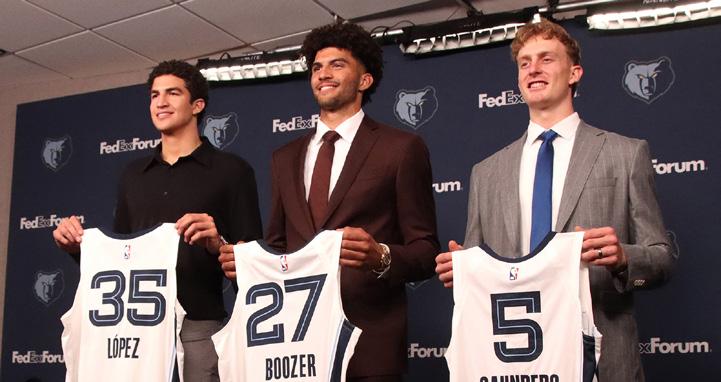
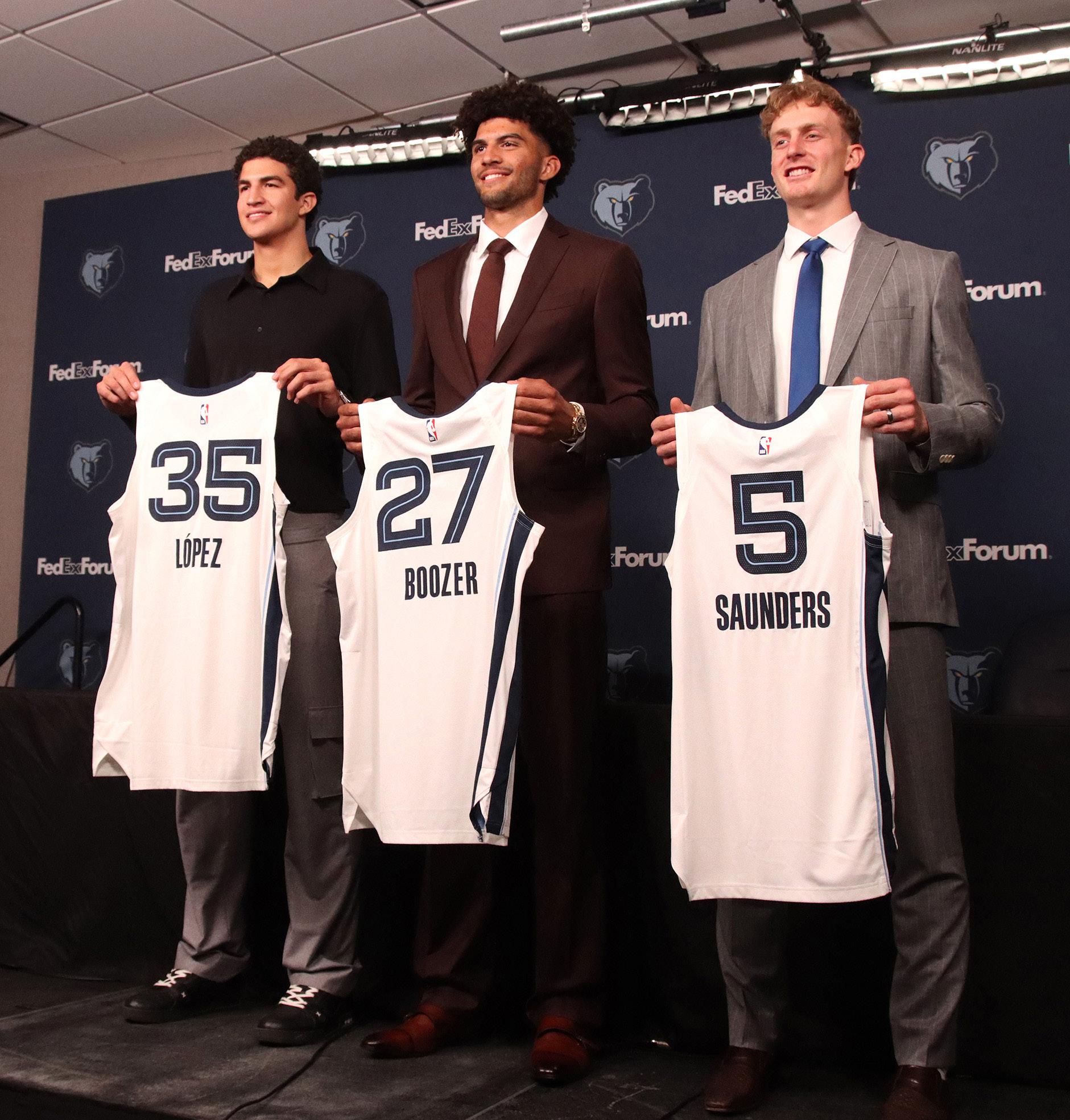
That future — with Boozer, Coward, Zach Edey and a wave of new young talent — was the undercurrent Thursday as the Grizzlies introduced their 2026 draft class: Boozer, the No. 3 overall pick; Karim López, the No. 21 pick from the New Zealand Breakers; and Richie Saunders, the No. 32 pick from Brigham Young.
The three rookies sat alongside Grizzlies general manager Zach Kleiman and head coach Tuomas Iisalo inside the Don Poier Media Center, where much of the conversation was not just about who Memphis had drafted, but what kind of team the Grizzlies are trying to become.
For Boozer, the question was im-
mediate: Is it intimidating to enter the NBA as one of its youngest players, a top-three pick and a possible face of the franchise?
“I wouldn’t say it’s intimidating,” Boozer said. “I’ve had a target on my back my whole career. I’ve been one of the top players in the country in my class for four or five years now. So I wouldn’t say it’s intimidating, but obviously the NBA is a new level. I’d say it’s more exciting.”
Boozer, a unanimous first-team All-American and national player of the year at Duke, said the challenge is part of what he wants.
“I want to be a great player,” he said. “I want to be one of the greatest players to play the game. That means you’re going to have challenges. … I’m excited to be here in Memphis. I think we’ve got a great young team who’s hungry. And I think we’re going to surprise people.”
That confidence was matched by a
clear understanding of the stage he is stepping onto. Boozer said his time at Duke and his history of playing under pressure has prepared him.
“Going to Duke really helped me prepare for this,” Boozer said. “You’re playing on one of the biggest stages in college basketball, if not the biggest stage. You’re playing big games every night. You’re playing other top players every night. And for me, I’ve been the best player on my team my whole life.
“I’m not saying I’m going to come in and walk in and be the best player. But being a big-time player is not something that’s new to me.”
Iisalo’s smile told part of the story when he was asked about Boozer’s offensive possibilities. At 6-foot-9 with scoring touch, passing instincts and high-level feel, Boozer is not the kind of frontcourt player easily confined to one role.
“He’s a very unique player in many aspects,” Iisalo said. “He does everything, basically, on the court. He can create mismatches in the post. He scores out of transition. He is an excellent shooter and mover without the ball. He can screen. He can handle.”
For Iisalo, the most intriguing part may not be any one skill, but how Boozer’s game connects to others.
“There’s really everything you would need from an offensive guy,” Iisalo said. “The big thing with him is just to utilize his high basketball IQ, his decision-making and his ability also to get the teammates on the same page.”
New Grizzlies look
Boozer’s fit with Edey and Coward was one of the clearest on-court storylines of the day. Edey, the former national player of the year at Purdue, gives Memphis a massive interior
“They’re
serious. They’re tough-minded. They’re output-focused. It’s about winning at the end of the day. We’ve got guys that are all bought in. They’ve done it. They’ve shown at every level that these guys are focused on winning and have, in fact, won.”
— Zach
Kleiman
presence after averaging 13.6 points and 11.1 rebounds last season. Coward played his rookie season for the Grizzlies and averaged 13.6 points, 5.9 rebounds and 2.8 assists, giving Memphis another young, physical and versatile building block on the wing.
Boozer sounded eager about how those pieces could fit together.
“Ced is a great player, so I’m excited to get on the court with him,” Boozer said. “And then Zach — he’s huge. So I’m super excited to play with a guy that big. I think we’re going to dominate the glass and the paint. It’s going to be a lot of fun, for sure.”
That language — physicality, toughness, winning, work — also lined up with how Kleiman described the organization’s direction.
“They’re serious. They’re tough-minded. They’re output-focused,” Kleiman said of his rookie class. “It’s about winning at the end of the day. We’ve got guys that are all bought in. They’ve done it. They’ve shown at every level that these guys are focused on winning and have, in fact, won.”
Asked what brand of basketball he wants the Grizzlies to play, Iisalo said the team talked often last season about speed — and not just foot speed and making quick decisions. He also returned to the relationship between the team and the city.
“All of the Grizzlies teams from the
past and present also need to have a strong identity,” Iisalo said. “That identity for us has started with high effort and high character, team-orientedness.
“It’s very important that the people feel like the team is a working team and that they play for the whole and play for each other, but also for the city and the organization.”
The Grizzlies’ draft class brings a range of stories beyond Boozer.
López, who played the past two seasons with the New Zealand Breakers as part of the NBL’s Next Stars program, became the first Mexican-born player drafted in the first round. López said he’s already felt the support from both Mexico and Memphis.
“It’s great. It’s amazing,” López said. “Just to have people supporting me, it always helps, right? It’s better to have supporters than haters. I’m super blessed for that and just looking forward to this opportunity.”
Saunders, meanwhile, arrives as an older rookie at 24, and he is still recovering from a major knee injury. He said the past few months have tested him, but also sharpened his focus.
“It was hard,” Saunders said. “Having pretty much a life-changing injury, I’ve never experienced that. But I’ve been just super mentally building. I’ve been doing my best. I’m just so focused on getting better and focused on having a great foundation as I enter into this next step.”
Saunders said the process has been defined by work, something he sees as central to his basketball story.
“That’s what I’ve done my whole career, is work,” Saunders said. “It’s been in this different, more focused way, but it’s been work. … I’m grateful to finish my rehab here and be playing when I’m playing, and be able to just work alongside these guys, alongside the rest of the team, and bring what I bring to the table and help win games.”
Iisalo said Boozer and López are expected to participate in Summer League, while Saunders remains in rehab.
1509 Madison Ave. Memphis, TN 38104 PH (901) 523-1818
HOURS: Mon.-Fri. 9 a.m. - 5 p.m.
DEADLINES:
Display ads Friday 5 p.m. Classifieds ads Monday 5 p.m.
STANDARD RATES: $8.00 per line for 1 column ad.
Rates are non-commissionable and are quoted at the net rate. No refund for early cancellation. For additional information contact Sales Dept. at (901) 746-5201 or email: advertising@tsdmemphis.com.
THE TRI-STATE DEFENDER assumes no financial responsibility for errors nor for copy omission. Direct any classified billing inquires to (901) 523-1818.
Shelby County Government has issued Sealed Bid number 202654, Automotive Equipment and Supplies. Information regarding this Bid is located on the County’s website at https:// oneconnectbids.shelbycountytn.gov/
SEALED BID 202654 DUE DATE FRIDAY JULY 31, 2026 AT 2:00 PM CST (SB-202654) Automotive Equipment and Supplies (Fleet Services Department)
Shelby County is an equal opportunity affirmative action employer, drug-free with policies of non-discrimination on the basis of race, sex, religion, color, national or ethnic origin, age, disability or military service. By order of
LEE HARRIS, MAYOR SHELBY COUNTY GOVERNMENT

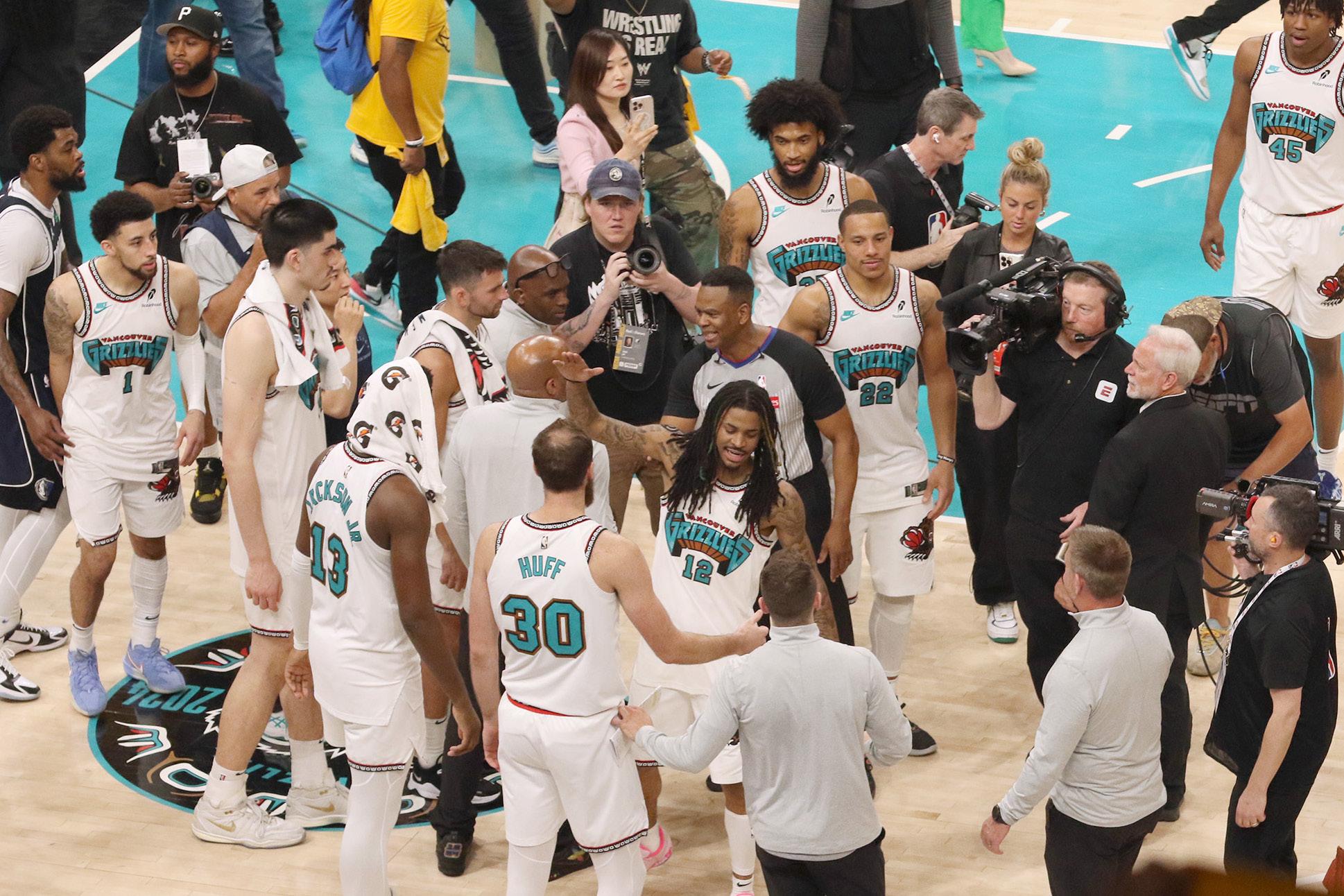
By Tim Reynolds Associated Press
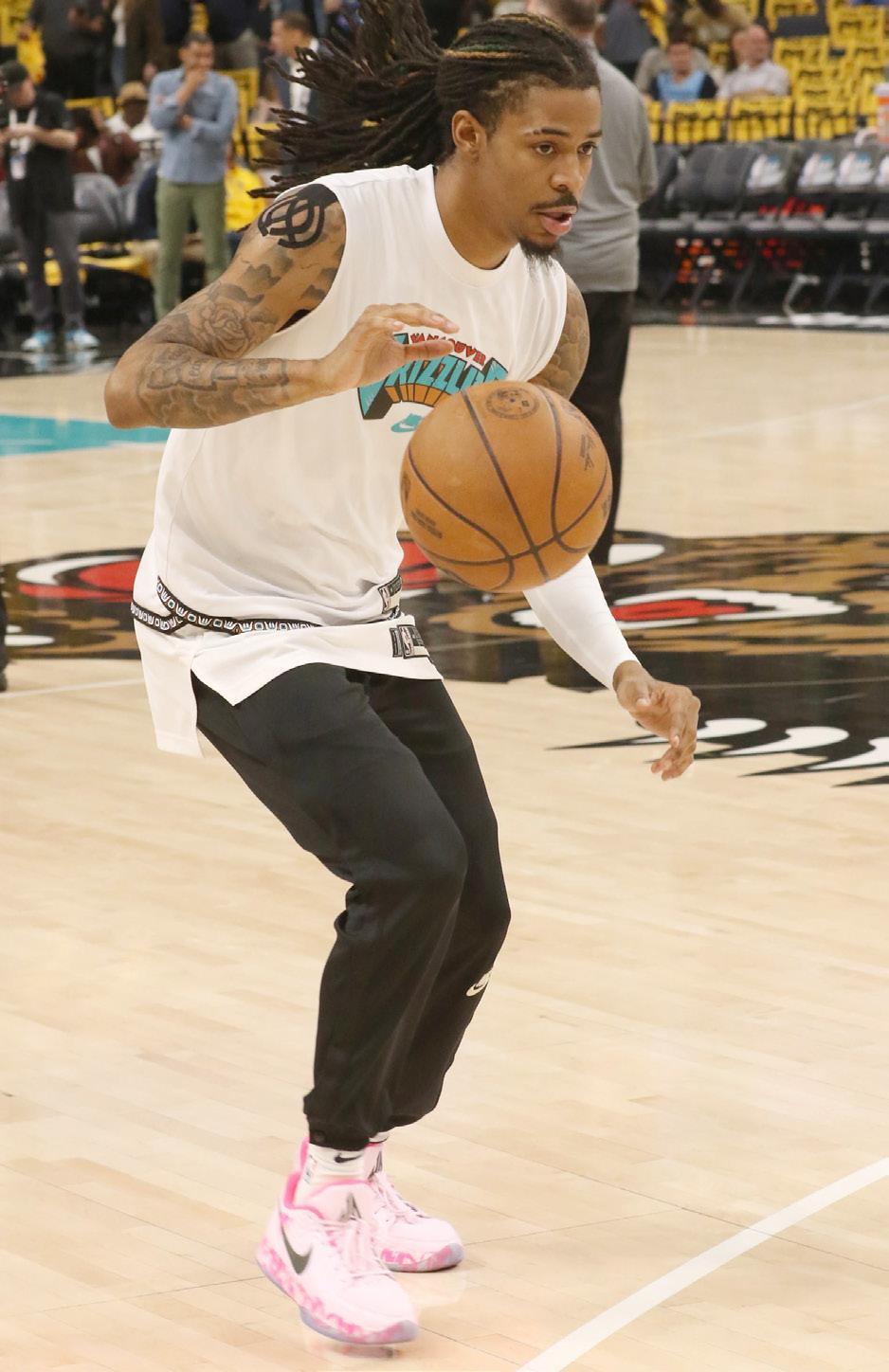
Ja Morant is headed to Portland, after the Trail Blazers and Memphis agreed on a trade Monday that sees the Grizzlies starting anew and gives the two-time All-Star a chance to revive his career, a person with knowledge of the agreement told The Associated Press.
Portland is sending Jerami Grant and Kris Murray to the Grizzlies as part of the deal, said the person who spoke to the AP on condition of anonymity because the trade has not gotten the required league approvals.
ESPN first reported the agreement. It’s a big swing by the Trail Blazers and could suggest Portland — with new owner Tom Dundon, whose Carolina Hurricanes just won the Stanley Cup
— might not be done making moves. Morant adds to a logjam at point guard right now for Portland, with Jrue Holiday, Damian Lillard and Scoot Henderson also on the current roster.
Morant has averaged 22.4 points for his career but has played only 79 games over the last three seasons because of injuries and suspensions — including a 25-game banishment after he was seen on a livestream holding a gun while he
was in the passenger seat of a vehicle. That came not long after an eight-game suspension for flashing a gun in a Denver-area nightclub, also captured on social media.
Grant averaged 18.6 points last season for Portland and will be joining his sixth team by going to Memphis. Murray averaged 5.8 points per game this past season for the Trail Blazers.

By Ancelious Meeks TSD Contributing Writer
G Herbo brought his signature street anthems and energetic stage presence to Minglewood Hall as the headliner for the 3rd annual Juneteenth Summer Classic, an event promoted by Tapped In and Peppa Mouth of the South. The show on Friday, June 19, featured a strong lineup of local talent, including super producer Hitkidd, Duke Deuce, CoCash, and Fast Cash Jizzle, along with several other performers who helped showcase the city’s thriving hiphop scene.
Despite G Herbo’s national profile and loyal fan base, attendance was lighter than many expected for a headlining performance of this magnitude. The turnout suggested that Memphis may not be one of the rapper’s strongest markets, even as he continues to maintain a respected presence in hip-hop nationwide. Still, the fans who attended were engaged throughout the night, rapping along to many of G Herbo’s most popular records and showing appreciation for both the headliner and the local artists who opened the show. The concert provided a platform for Memphis
talent while giving local supporters of G Herbo a chance to see the Chicago rapper perform live.
One of the night’s biggest takeaways was the contrast between the strength of the lineup and the size of the audience. While Memphis has consistently supported its own artists and Southern rap acts, Friday’s event raised questions about whether G Herbo’s music resonates as strongly in the local market compared to other regions.
Regardless of attendance figures, the performers delivered professional sets and maintained high energy throughout the evening.
By Terri Schlichenmeyer
Seven thousand steps.
That’s what researchers say you need each day for optimal health, about three miles of walking, stair-climbing or running. It’s a lot, but you do what you can to stay healthy, right? Well, maybe it’s time to check out our picks for books aimed at African American readers to help you on your health and wellness journey.
At some point in the near future, you should make your annual appointment with your primary care physician, who will have the requisite training and credentials to provide routine healthcare and advice for disease prevention, and diagnose and treat common conditions. But you may also need to consider what your doctor looks like before choosing one to care for you.
In “The Price of Exclusion: The Pursuit of Healthcare in a Segregated Nation,” author Nicole Carr examines the impact of race on healthcare and patient outcomes, and how the shortage of Black doctors in the U.S. could affect your health – in unhealthy ways.
Systemic racism has led to significant health inequalities for Black people in the past 170 years in U.S. medical schools and hospitals, posits Carr. Black researchers, who advocated for better care for Black patients, were ignored or their work was seized and subsumed by others, leaving Black patients’ health outcomes vulnerable to the vagaries of subpar care. For their part, Black doctors have fought back for themselves and for their patients. And historically Black medical schools
have trained more Black doctors than predominantly White institutions for more than a century. But change has been slow.
Told through the lens of her great-grandfather’s early 20th century experiences as a physician, “The Price of Exclusion: The Pursuit of Healthcare in a Segregated Nation” is a lively and interesting must-read for anyone hoping to overcome barriers to quality healthcare and pursue a long, healthy life.
Still, for Black women, the struggle for effective medical care is different. And more urgent.
In “A Terrible Strength: The Hidden Crisis of the Black Womb & Your Survival Guide to Healing,” Kemi Doll, a surgeon who specializes in reproductive cancers, describes the rampant racism directed at Black women that she has witnessed throughout her career, from implicit bias in charting –documents created by doctors to track a patient’s medical history and care – to less-effective pain management and lower-quality treatment protocols. When a Black woman gets pregnant, she puts herself at risk of developing serious health complications or even dying, because of unequal access to quality healthcare.
“A Terrible Strength: The Hidden Crisis of the Black Womb & Your Survival Guide to Healing” offers a series of cautionary tales augmented by persuasive data analyses and helpful advice to empower Black women to advocate for themselves.
Carr’s and Doll’s books are heart-rending, but enlightening and instructive, and worth keeping as companions for visits to the doctor.

$30.00
304 pages
$28.99
320 pages