Ida B. WellsBarnett gets a new plaza for her 164th birthday Redesigned Beale Street gateway elevates the journalist’s statue and the history she fought to expose — Page 4
DECODING THE JOB DESCRIPTIONS ON THE BALLOT FOR THE AUGUST ELECTION
— Page 6
— Page 10
TRI-STATE DEFENDER
Nolan Wells remembered for his gentle spirit as Rev. Al Sharpton demands truth about his death
By Jake Offenhartz and Stephen Smith Associated Press
OCEAN SPRINGS, Miss. — Family members and supporters of Nolan Xavier Wells filled a Mississippi church Monday, July 20 to mourn and celebrate the 18-year-old, as the Rev. Al Sharpton pleaded for new evidence addressing the “many unanswered questions” around the teenager’s July 4 disappearance.
are white. He did not return with them to the mainland that evening, officials said. His body was found two days later off the island’s coast.
Jackson County Sheriff John Ledbetter said initial interviews suggested Wells chose to stay on the island and that his friends believed he would get a ride with someone else. The friends were cooperating with investigators, according to the sheriff.
POSTMASTER: Send address changes to The Tri-State Defender, 1509 Madison Ave., Memphis, TN, 38104.
GENERAL INFORMATION: Inquiries may be submitted in writing or by calling (901) 523-1818 or by email. TELEPHONE: (901) 523-1818.
The Tri-State Defender (USPS 780-220) is published weekly. The Tri-State Defender 1509 Madison Ave. Memphis, TN, 38104. Second-class postage paid in Memphis, TN.
The Tri-State Defender is a member of The National Newspaper Publishers Association and the Tennessee Press Association.
materials covered by copyright. No materials herein may be reproduced without the written permission of the Publisher. (901) 523-1818 | 1509 Madison Ave, Memphis, TN 38104
The funeral opened with tearful remarks from Wells’ parents, who described their son as a warm and gentle presence, a role model to his younger siblings and a gifted athlete with NFL ambitions.
“He had a way of making people feel seen, welcomed and valued,” said his mother, Christine Wonsley. “He could lift your confidence with just a few words and make you feel like you belong.”
In a fiery eulogy, Sharpton then promised a $100,000 reward for any new information about the circumstances around Wells’ death, which came following a boat trip with friends to Horn Island, off the Gulf Coast.
Half of the sum will be covered by the actor and producer Tyler Perry, who also paid for the funeral, Sharpton noted.
“Somebody knows something,” Sharpton continued, drawing applause from the crowd that included the director Spike Lee, former NFL player Terrell Owens and many prominent Black clergy.
“Let every stone be rolled back and every veil be torn asunder and let truth pop out of the ground like a flower,” he continued.
Wells, who was Black, had traveled to Horn Island — a popular Fourth of July destination — with a group of friends from high school, all of whom
But the still-unknown circumstances leading to Wells’ disappearance have fueled rampant online speculation and galvanized leaders in the Black community, including some who have expressed skepticism about the independence and transparency of the investigation.
In his eulogy, Sharpton urged those following the case to withhold judge-
President Calvin Anderson Editor Stephanie R. Jones
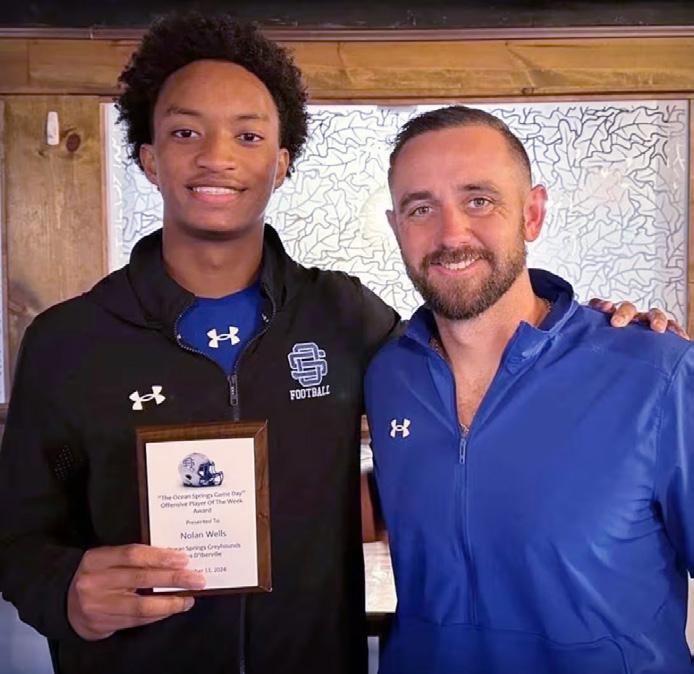
Nolan Wells with his coach, Jake Bramlett. (Courtesy Jake Bramlett)
ment until more information becomes available. But he also questioned why Wells’ phone and keys were found with his friends, why they had not immediately called police after realizing he was missing and why local officials appeared so quick to dismiss the possibility of foul play.
■■ NEWS
Invoking the history of racist violence in Mississippi, including the lynching of Emmett Till and assassination of Medgar Evers, Sharpton continued, addressing the state’s law enforcement authorities: “Before we can medicate and heal today, we’ve got to look at your history.”
“They went out on the boat, the boat came back, and Nolan washed up on the shore two days later dead. Wouldn’t you want answers?” — Ben Crump
The family’s attorney, Ben Crump, then led the crowd in a chant of “Nolan’s life mattered,” as Wells’ mother sobbed into the shoulder of her husband, Elmore Wonsley.
At a news conference following the funeral, Crump said they were still waiting on the results of an independent autopsy. The official autopsy has also not been released.
Crump had said he is working alongside the local prosecutor to inspect Wells’ phone. The prosecutor has agreed to present the results of the investigation to a grand jury once it is completed, according to Crump.
“They went out on the boat, the boat came back, and Nolan washed up on the shore two days later dead,” he said at the funeral Monday. “Wouldn’t you want answers?”
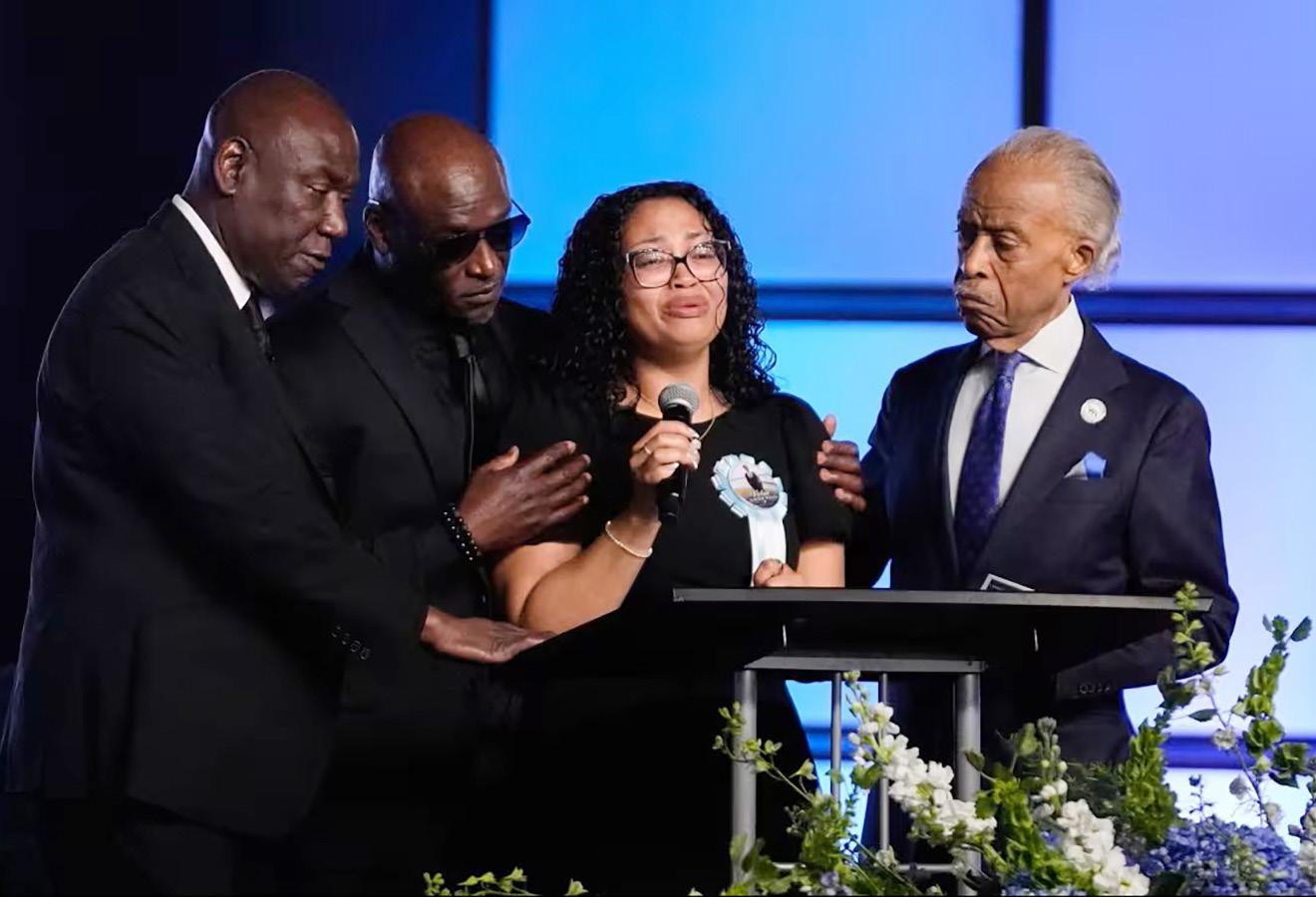
Caption: Christine Wonsley, center, is flanked by her husband Elmore Wonsley, second from left, attorney Ben Crump, left, and Rev. Al Sharpton during the memorial service for her
son Nolan Xavier Wells, Monday, July 20, 2026, in Ocean Springs, Miss. (AP Photo/Gerald Herbert)
Wells, who would have turned 19 next month, played wide receiver on the football team at Southwest Mississippi Community College in Summit, Mississippi, and had aspirations of playing at a high-level Division I program.
At the funeral, Wells’ father, Elmore Wonsley, recalled the hours the two spent studying game tape and running drills on the beach.
“I nicknamed you Mr. Cool Hands because it seemed like you were catching a touchdown every game,” the father said through tears.
“Our son meant a lot to a lot of people,” he concluded. “Today shows us how much he meant to the community, the country and the world.”
Associated Press video journalist Sophie Bates in Jackson, Mississippi, contributed to this report.
Christine Wonsley, center, is flanked by her husband Elmore Wonsley, second from left, attorney Ben Crump, left, and Rev. Al Sharpton during the memorial service for her son Nolan Xavier Wells, Monday, July 20, 2026, in Ocean Springs, Miss. (AP Photo/Gerald Herbert)
Ida B. Wells-Barnett gets a new plaza for her 164th birthday
Redesigned Beale Street gateway elevates the journalist’s statue and the history she fought
to
expose
By Lee Eric Smith TSD Contributing Writer
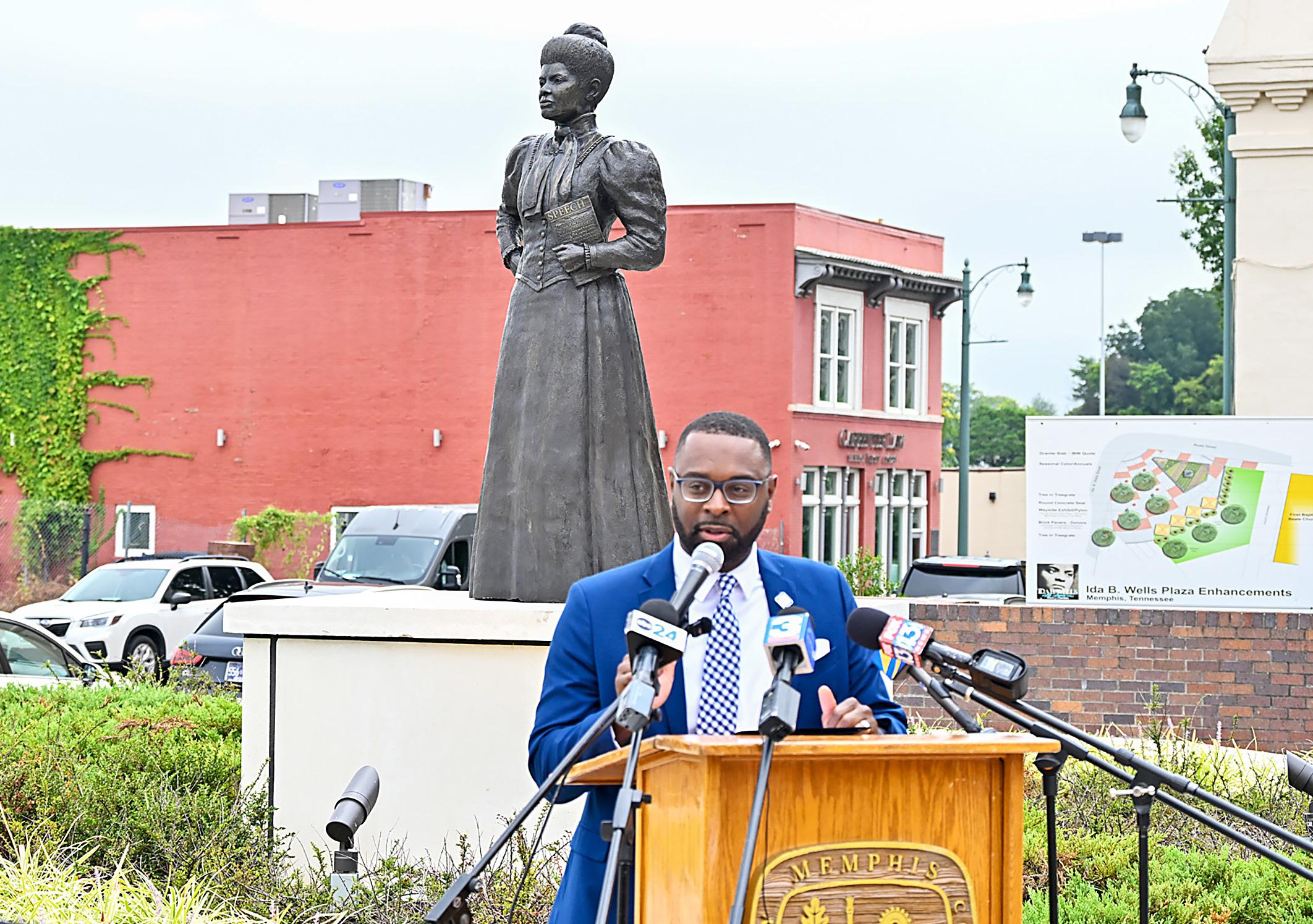
Ida B. Wells-Barnett got a new plaza for her 164th birthday — one designed to make her impossible to overlook.
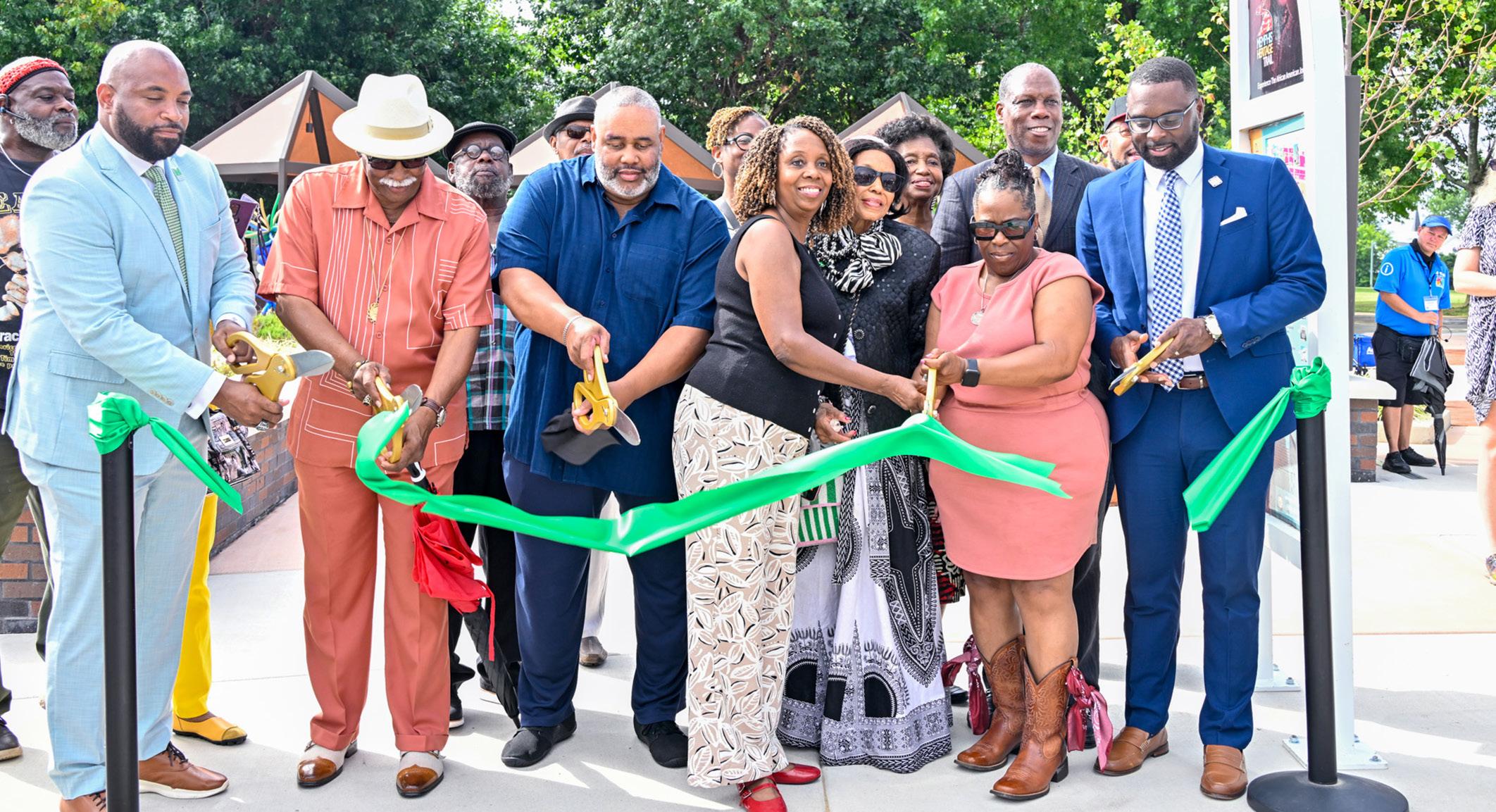
At the eastern end of Beale Street, city leaders cut the ribbon on a redesigned Ida B. Wells Plaza, where the investigative journalist and anti-lynching crusader’s bronze statue now stands higher and more visible, surrounded by new paving, landscaping, lighting and displays that help tell her story.
The ceremony was held July 16, the date Wells-Barnett was born into slavery in Holly Springs, Mississippi, in 1862.
“This is an important public space in our city, and public spaces tell the story of the city,” Memphis Mayor Paul Young said. “The names that we choose, the places we preserve, the people we honor — those things reflect our values and shape how future generations of Memphians understand our great city.”
The bronze statue was initially installed at Beale and Fourth streets in 2021. Fourth Street has since been renamed Ida B. Wells-Barnett Street. But Young acknowledged that the original placement did not fully capture the dignity or importance of the woman it honored. “When we erected the statue, there were some issues with the location and how it was placed,” Young said.
The statue has been elevated so it can be seen from farther away. Other improvements include specialty lighting, new landscaping and irrigation, redesigned planters, seating, exhibit foundations and signs explaining Wells-Barnett’s life and work. City capital records list $450,895 in appropriations for the renovation.
The plaza also serves as a new entrance to Church
Park, near FedExForum and historic First Baptist Church-Beale, a location tied closely to Wells-Barnett’s work as a journalist.
“Now what we have today is a project where we have a plaza that actually reflects the beauty and the dignity that Ida B. Wells deserves,” Young said.
Taking a stand for history
Young said the project dates to his years as director of the city’s Division of Housing and Community Development, when Rev. Dr. L. LaSimba M. Gray Jr. approached him about creating a public memorial to Wells-Barnett.
Gray, who helped organize the Ida B. Wells Memphis Memorial Committee, said the effort grew from his realization that Wells-Barnett’s contributions were in danger of being forgotten.
“When I learned that there was a systematic effort to erase her contribution, then I doubled down, making sure that it didn’t happen,” Gray said.
He sought the support of the late scholar and civil rights activist Miriam DeCosta-Willis, editor of “The Memphis Diary of Ida B. Wells.”
“She said, ‘Let’s do it, LaSimba,’” Gray recalled. “She said, ‘But LaSimba, I’m up in age and sick.’ I said, ‘You wouldn’t do a thing. Just give your endorsement.’”
With that endorsement, Gray said, he went to work raising money, building public support and recruiting designers to shape the plaza. The statue itself was created by Andrea and Larry Lugar of Lugar Bronze Foundry.
Young credited Nixon General Contractors, landscape architecture firm JPA Inc. and Lugar Bronze Foundry with helping complete the redesigned space.
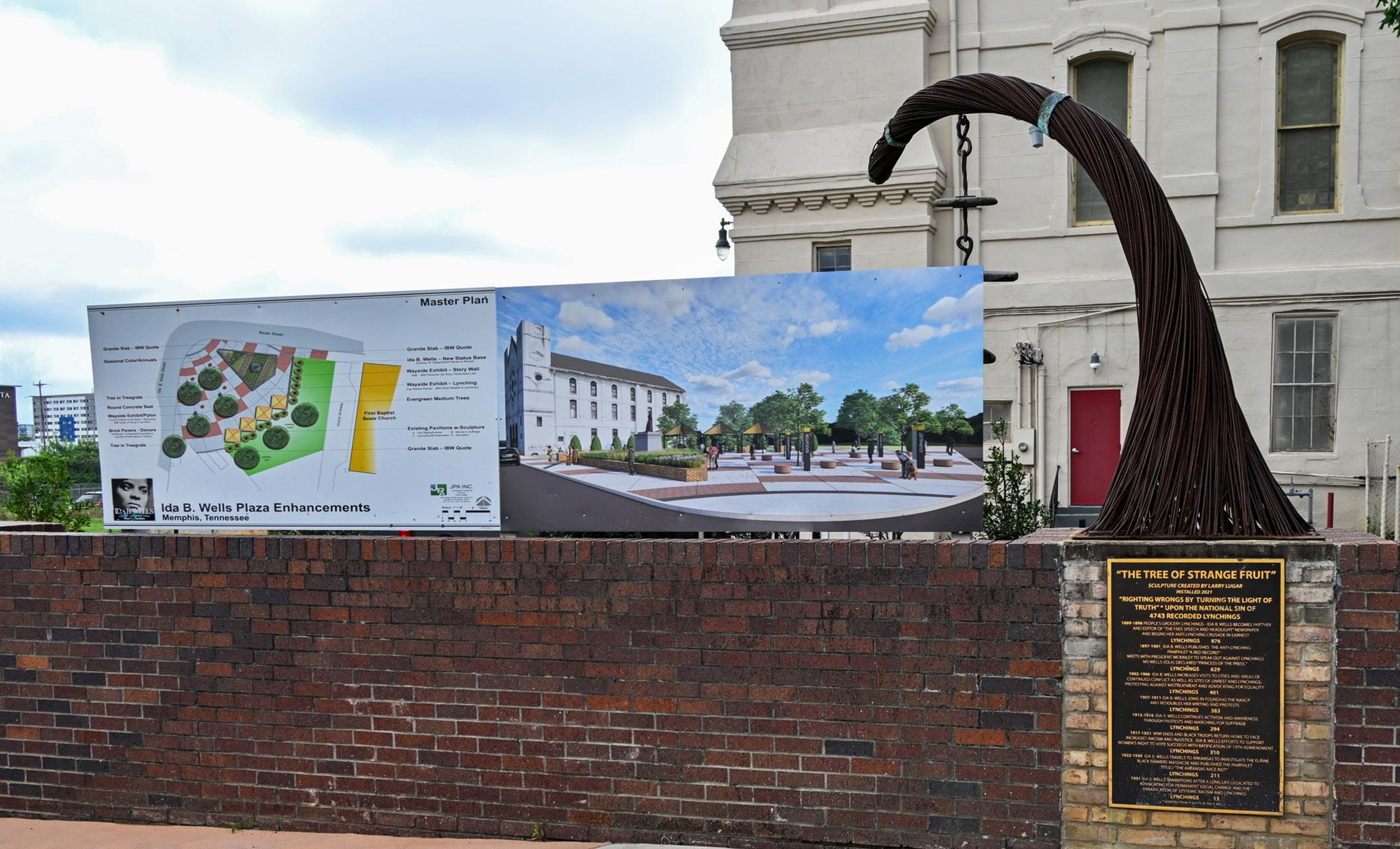
“The Tree of Strange Fruit” installation and design renderings are on display at the new Ida B. Wells Plaza. (Gary S. Whitlow/Tri-State Defender)
ON THE COVER: Mayor Paul Young said during a ribbon cutting ceremony on July 16 that the new placement of her statute in a revamped plaza “reflects the beauty and the dignity that Ida B. Wells deserves.”
“History should be very visible,” Young said. “It shouldn’t just exist in books and museums, but in the everyday places where people gather, where they walk and where they learn.”
From Holly Springs to history
Wells-Barnett moved to Memphis after losing her parents and a younger brother during the 1878 yellow fever epidemic. She worked as a teacher before emerging as a journalist, newspaper editor and outspoken critic of racial segregation.
Her reporting took on new urgency after the 1892 lynching of her friend Thomas Moss and his business associates, Calvin McDowell and Will Stewart. The three men were connected to People’s Grocery, a Black-owned store whose success threatened a nearby white-owned business.
After the men were arrested following an armed confrontation, a white mob removed them from jail and lynched them. Wells-Barnett investigated their deaths and challenged the claims routinely used to
■■ NEWS
justify lynching, arguing that racial violence was often used to suppress Black economic and political progress.
A white mob later destroyed her newspaper office and threatened her life while she was away from Memphis. She never returned to live in the city, but continued her anti-lynching campaign through writing, public lectures and international speaking tours.
Tough topics on display
Those painful chapters are reflected in the plaza’s artwork, including an installation titled “The Tree of Strange Fruit” that invokes lynching, as well as another that recalls the printing press Wells-Barnett used to spread information.
Memphis Parks Director Justice Bolden said the installations are meant to force visitors to confront the past while also looking toward a better future.
“We can’t forget about the past,” Bolden said. “Any time you install monuments or signage, it’s a reminder to educate those about what has happened in our
past, but it’s also an opportunity to look over and see a statue and landscaping and beautiful paver brick that reminds you of what our future looks like.”
Bolden said he hopes young people who visit the plaza leave with “a sense of purpose, a sense of belonging, a sense that ‘I matter.’”
Young said the plaza can also function as a gathering place for families, parade participants and visitors finishing a walk along Beale Street.
For Gray, however, its location carries a deeper significance. Wells-Barnett worked near the church and operated a printing office along Beale, placing her at the center of Black Memphis’ political, business and cultural life.
“I think the blues always have been an expression of pain, but this is the crucible,” Gray said. “Beale Street meets history and culture in a real meaningful way that cannot be ignored.
“If anything was going to happen in Memphis in that time or in that era, it started on Beale Street — and Ida B. Wells was in the mix.”
Rev. Dr. L. LaSimba M. Gray Jr., second from left, and Mayor Paul Young, right, are joined by city and other officials and supporters to cut the ribbon at the new Ida B. Wells Plaza at the eastern end of Beale Street.
Decoding the job descriptions on the ballot for the August election
The Power We Hold
By Shawnee Calhoun TSD Contributing Writer
Early voting for the Aug. 6 election begins today, July 17 and runs through Aug. 1. And voters will make big decisions for Memphis, six suburban communities, Shelby County, the state and the nation.
Some voters’ uncertainty about candidates’ backgrounds and policy platforms makes voting anxiety-inducing. Many hope or assume the contenders on the ballot will represent their interests and improve the quality of life for all constituents. But votes are often cast for candidates whose signs were most visible or slogans were most memorable.
At the Tri-State Defender, we know the city and county charters, the Tennessee State Constitution and the U.S. Constitution rarely find a place on voters’ bookshelves or nightstands, as they go to work, rear children and try to make ends meet.
To help instill confidence at the ballot box, TSD has done the homework for voters. This article explains every office on the Aug. 6 ballot, so voting decisions are informed by the job description, not a yard sign.
A brief overview of the three branches of government: executive, legislative and judicial. The three branches operate at the local, county, state, and national levels of government. Voters will elect representatives for each branch at all four levels.
The executive branch enforces laws under its jurisdiction. Members of this branch are top officials. Our executives in Shelby County include the mayor, sheriff, property tax assessor, trustee,
county clerk and register of deeds.
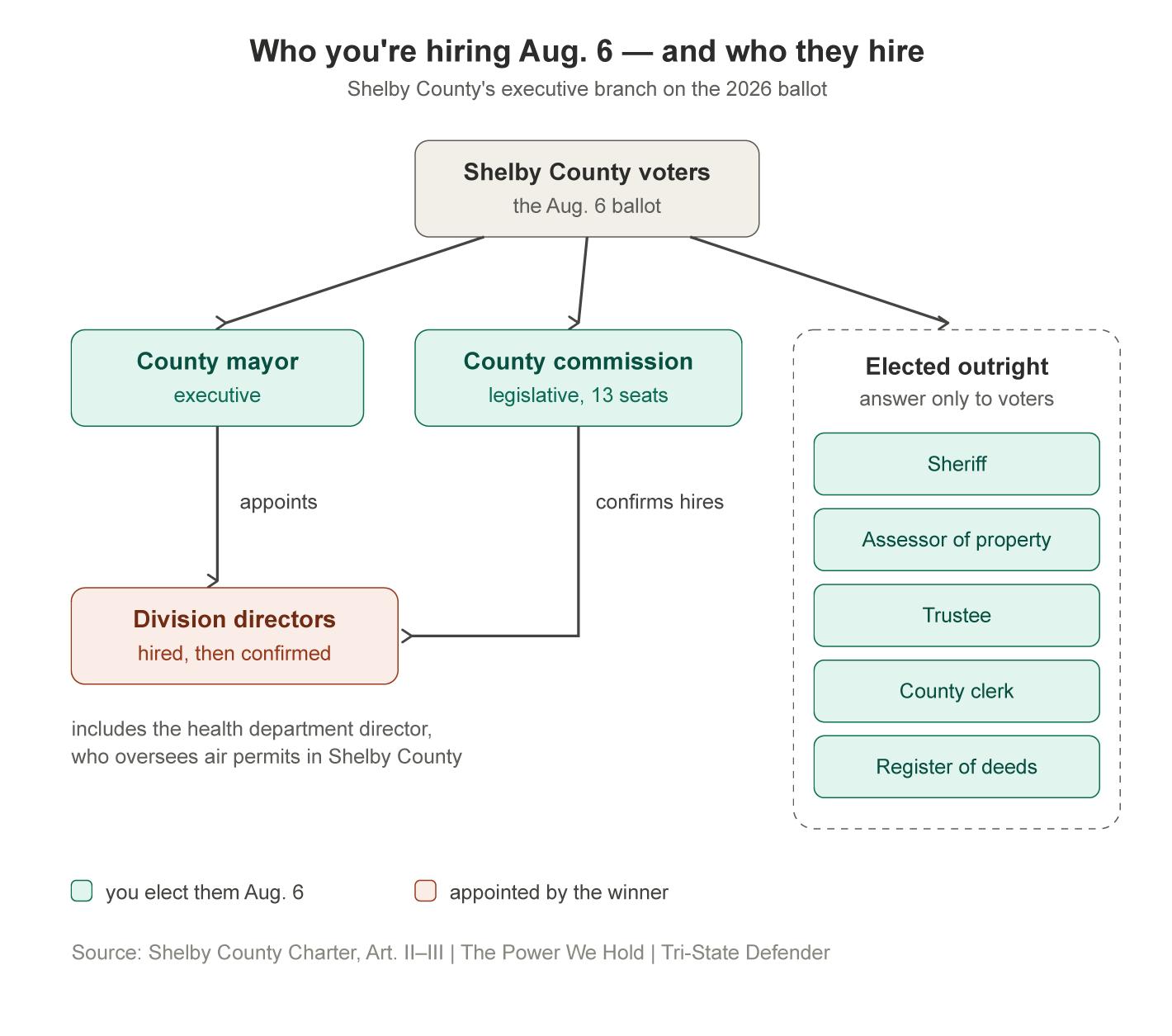
The county mayor hires directors who run the county’s divisions, or departments. But the hires only become official when 13 county commissioners confirm them.
Issues that affect residents’ everyday lives, such as air emissions from data centers in South Memphis, appear on the ballot. The Shelby County Health Department, which granted the air permit for gas turbines owned by SpaceXAI, formerly xAI, is run by a division director appointed by the county mayor. Whoever wins the county mayor’s race chooses the person who enforces air quality rules throughout Shelby County.
For county executives, voters elect them directly, which means no board
preapproves them. They answer only to us at the ballot box.
Positions within the legislative branch span seven cities, Memphis, Arlington, Bartlett, Collierville, Germantown, Lakeland and Millington, on the Shelby County ballot. School board members and county commissioners are responsible for making rules and budgets.
Arlington is the only municipality on the ballot with a race for aldermen, who pass ordinances to govern their town, set its property tax rate and adopt its budget.
And school board members set district policy, adopt the schools’ budget, and hire and oversee the superintendent who runs the district’s day-to-day operation.
County commissioners propose
county ordinances for local laws to govern the entire county, adopt the county budget, set the county tax rate and — as noted above — they preapprove the county mayor’s hires before appointees can take office.
When you vote for a commissioner, you also are choosing who has a say in the county’s unelected leadership, because commissioners confirm the health department director, who decides air permits and other public safety and welfare matters. And they control the department’s budget. If the data centers in South Memphis concern you, the votes you cast for county commissioners are your second check on the county’s health department.
Shelby County’s judicial branch is made up of judges who hear and decide
(Shawnee Calhoun/Tri-State Defender)
cases, and the court clerks who assist them. Judges preside over legal cases that affect the lives of county residents — criminal trials, lawsuits, evictions, divorces, child custody and estate probate. Court clerks maintain case files and records, collect fines and fees, and process the paperwork that keeps a case from stalling.
All three branches of government, executive, legislative and judicial, repeat at the city, county, state and national levels.
At the state level, we are tasked with voting for the chief executive, the governor, and legislators, or state senators and state representatives. Our state legislators, who hold similar titles to the people in Congress working in Washington, D.C., are members of the Tennessee General Assembly in the state’s capital, Nashville, Tennessee. Keep track of Tennessee legislators’ work in real time by watching live streams online.
Let your state senator or representative know that you’re invested in what they say and do, such as splitting one
■■ NEWS
congressional district in Memphis into three, by timestamping and screengrabbing meetings you’ve watched and sharing this information when you write to them.
State legislators also shape the South Memphis data center fight: State environmental agencies must follow laws the General Assembly writes. Memphis-area representatives have pressed for independent air quality monitoring at the SpaceXAI site. The District 86 House race on the Aug. 6 ballot covers South Memphis neighborhoods closest to the gas turbines.
At the national level, called “Federal” on the ballot, Tennessee voters will choose from a roster of candidates for nine U.S. House of Representatives seats and one U.S. Senate seat. These particular candidates matter because the U.S. House holds the power to impeach a president, and the U.S. Senate decides whether to remove an impeached president from office.
If you believe candidates are handpicked on a whim by the two major political parties, you would be incorrect.
The Aug. 6 ballot highlights how your voice dictates each party’s operation. Voters will choose two state executive committee members from 10 candidates. These people do not work for any branch of government, despite their “executive” title. Instead, they actually run the Democratic and Republican parties in Tennessee. They represent specific Tennessee Senate districts, and they govern internal “party members in good standing.”
According to political party bylaws, each party’s rules strictly apply to individuals who choose to associate with the party, including candidates running under the party name, delegates attending nominating conventions and local precinct officers. And state executive committee members decide party platforms, manage primary election rules and fund local grassroots campaigns. So, if you want your party to start selecting younger candidates or candidates whose platforms align with
issues that matter to you, then focus on the Democratic or Republican executive committeeperson who literally helps decide which candidates end up on your ballot.
The charters and constitutions can go back on the shelf after Aug. 6 – your election homework is done.
You now know which offices write rules and adopt budgets, which ones enact laws, which ones judge disputes, and which committee runs your party. Each office touches your life in some way: your property tax bill, the budget for your child’s school, your neighbor’s case in front of a judge, or the sheriff who runs the jail. None of it is abstract but it can all be decided without you, if you do not vote in the upcoming election. Choose to decide for yourself. Cast your vote.
The yard signs and the slogans have had their say. Voting is the power we hold — but only if we show up to use it.
(Shawnee Calhoun/Tri-State Defender)
■■ NEWS Prominent Democratic Congress members rally for Pearson
By Judith Black Moore TSD Contributing Writer
More than a thousand people packed New Direction Christian Church in Hickory Hill on Friday, July 17 as three Democratic members of Congress brought attention to a state congressional race reshaped by the redistricting that divided Memphis into three congressional districts.
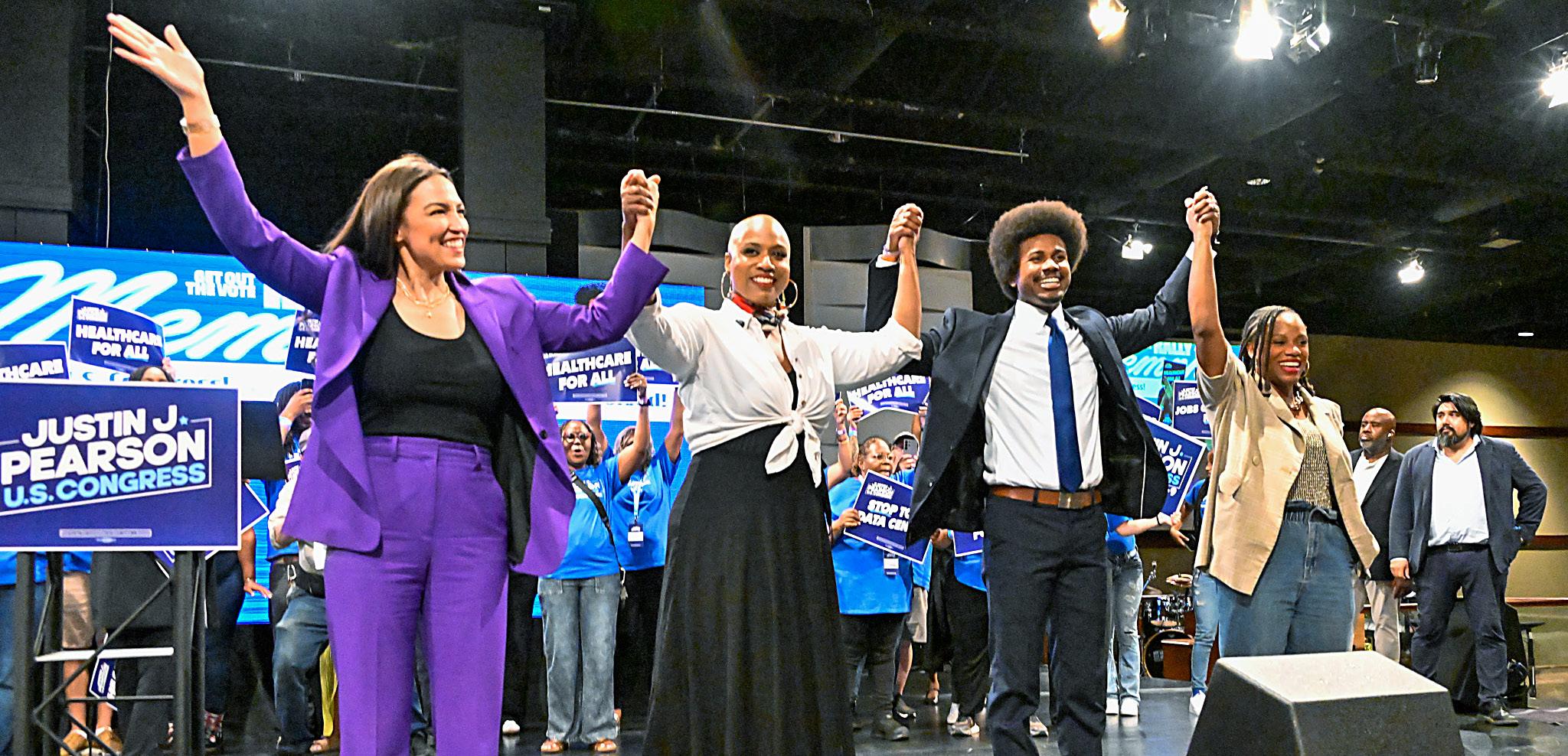
U.S. Reps. Alexandria Ocasio-Cortez of New York, Ayanna Pressley of Massachusetts and Summer Lee of Pennsylvania joined state Rep. Justin Pearson on stage, rallying support for his congressional bid. They framed the race as a test of Memphis’ political voice after redistricting split the city’s roughly 400,000 Black residents among three congressional districts, none of which has a Democratic majority.
Their visit came as early voting got underway and as Memphis grapples with an aggressive federal law enforcement presence and growing concern over its impact on the community.
State lawmakers redrew the congressional lines in May after the U.S. Supreme Court’s decision in Louisiana v. Callais weakened federal voting rights protections.
Pearson, 31, has built a national profile since he and fellow Democratic Rep. Justin Jones were expelled from the Republican-controlled Tennessee General Assembly in April 2023 for joining a gun-control protest on the House floor following the Covenant School shooting in Nashville. The Shelby County Commission returned him to his seat within weeks.
He had planned to challenge longtime Memphis U.S Rep. Steve Cohen before redistricting scrambled the map. Cohen chose not to run again in the altered district.
The crowd inside the church reflected a range of backgrounds, perspectives and reasons for showing up. Some came specifically to support Pearson. Others came to hear the visiting members of Congress, support family members participating in the program or simply better understand a political landscape that has left many uncertain exactly which congressional district they now call home.
Barbara Beecher, a member and greeter at New Direction Christian Church, expressed that the new congressional map has left many voters trying to determine where they now fit.
“People are really confused. They sent a card to me and my husband telling us our district. I am very glad we weren’t redistricted,” Beecher said. She added that she rearranged her evening to be at the rally. “I missed my line dancing so I could be here because I want to know
what’s going on. I am a greeter. I wanted to see my church packed. I am glad to be here to welcome people for this.”
Monroe Relford was in the audience to support his daughter, Tennessee Sen. Charlane Oliver, who was among the evening’s speakers. He also came with frustrations about what is happening in Washington.
“The Republicans have sold this country down the drain. They have done nothing for the common man,” Relford said. “I guess when they voted to pass that housing bill — that was something but then their own president didn’t sign it — but it became law anyway — so that’s just one thing. But let me ask this question. Why are we at war? Most people don’t even know. I know I don’t.”
Tiernee Nichole learned about the rally while at work and came straight from her job.
“My manager told me about this. So I came after work. I’m not sure what district I am in anymore. I am here to figure things out and just here to get more information and support Justin Pearson,” Nichole said.
Following remarks from local community organizers and calls for action, the national speakers took to the podium.
Lee, who represents a Pittsburgh-area district, told the crowd she’d toured the site of SpacesXAI’s Memphis data center before the rally and had spoken with residents about its effects on the surrounding community.
“It is my honor to be here joining you from Western Pennsylvania. When we got here, we took a tour. We saw Elon Musk’s new pet project,” Lee said. “I heard from young people with asthma, aunties who say enough is enough.”
She pressed the crowd on the tradeoff the project represents: “What is the
U.S. Reps. Alexandria Ocasio-Cortez of New York, from left, Ayanna Pressley of Massachusetts and Summer Lee of Pennsylvania joined state Rep. Justin Pearson, rallying support for his congressional bid, at New Direction Christian Church on Friday, July 17.
purpose of having these corporations in our communities when our own community cannot breathe?”
Pressley invoked the history of Black economic survival while commenting on the recent surge in the cost of consumer goods.
“I landed in Memphis today thinking about our ancestors, sacrifices they made, the dreams they carried, the way they found a way to make a dollar out of 15 cents — just like we are doing right now when it comes to gas, groceries, housing, health care, elder care, education,” Pressley said.
She closed with an appeal to the audience: “I need you to move your feet to the polls so we can win this election.”
Ocasio-Cortez, making her first visit to Memphis, connected the moment to the city’s civil rights history and to the death of the Rev. Dr. Martin Luther King Jr., who was assassinated in Mem-
phis in 1968.
■■ NEWS
“Something is happening in Memphis. This is the darkness, but this is what it takes to see the stars,” Ocasio-Cortez told the crowd.
“When I landed last night, I decided to pull up Dr. Martin Luther King’s last speech about the mountaintop. We are here to pick up where King left off 58 years ago,” she continued. “Fifty-eight years ago, King was assassinated here in Memphis. Fifty-eight years later, to the month, the Supreme Court gutted the Voting Rights Act. And 58 years later, what was the first place they went after to redraw the seat? Memphis. And that wasn’t an accident either.”
The rally also drew attention to a more immediate concern: four fatal shootings over the past two months by members of the Trump administration’s Memphis Safe Task Force, including the July 6 shooting of 20-year-old Tyrin
Johnson, who had no criminal record.
Some family members of those killed joined Pearson on stage. He told the crowd the deaths were a foreseeable consequence of the federal deployment ordered by President Trump last year.
“Our worst fears have been realized,” Pearson said. “Let us remember these beloved families whose lives have been forever altered.”
In addition to the national representatives, U.S. Sen. Bernie Sanders also has endorsed Pearson as have 11 of his colleagues in the Tennessee House Democratic Caucus.
Pearson faces state M. LaTroy A-Williams, Sen. London Lamar and Jim Torino in the Democratic primary Aug. 6.
A total of 10 candidates are seeking to represent the newly redrawn 9th District, which now stretches from Shelby County through rural West and Middle
Tennessee into Williamson County.
Four candidates — Charlotte Bergmann, state Sen. Brent Taylor, Jeremy Thompson, and state Rep. Todd Warner — are competing in the Republican primary Aug. 6. Independent candidates Dennis Clark and Michelle Davis Head will appear on the Nov. 3 general election ballot. Early voting for the primary began July 17.
Other candidates also have received notable local, state or national endorsements.
Lamar has been endorsed by Cohen, who represented the 9th District for nearly two decades.
Taylor, who entered the race within hours of Gov. Bill Lee signing the bill authorizing the new congressional map, has been endorsed by President Donald Trump. Taylor also has secured backing from Tennessee’s U.S. Sens. Marsha Blackburn and Bill Hagerty.
Seven Shelby County residents chosen for new Leadership Tennessee class
By Judith Black Moore TSD Contributing Writer
Leadership Tennessee, a nonpartisan community leadership organization, has chosen 52 participants from 12 counties in diverse sectors, including business, education, government, healthcare and nonprofit groups, for its Signature Program’s 13th class. Seven hail from Shelby County.
As part of the program, participants engage in open dialogue and immersive learning experiences to examine the state’s most significant and complex challenges during a 10-month period, while building collaborative relationships across the state’s three Grand Divisions, the West, Middle and East regions of Tennessee.
Shelby County will be represented by a group of proven change agents:
• Adam Christopher, director of government relations for AutoZone
• Dorcas Young Griffin, Metropolitan Inter-Faith Association’s newly named president and CEO, who currently serves as Shelby County deputy chief administrative officer until next month
• Deidre Malone, president and CEO of The Carter Malone Group, LLC
• Anna McQuiston, executive director of the MidSouth Development District
• Sally Pace, chief executive officer of Connect Healthcare Collaboration
• Anasa Troutman, founder and CEO of The Big We
• J. Lawrence Turner, senior pastor of Mississippi Boulevard Christian Church Griffin, MIFA’s soon-to-be president and CEO, believes the Shelby County leaders were chosen because of their deep knowledge and hands-on experience in driving positive change in the
■■ NEWS
region, she said.
“I think it is significant for seven people to represent Memphis and Shelby County,” said Griffin. “Many times, not just in Memphis but across the state, Memphis is talked about because of its challenges. Our participation in Leadership Tennessee will not just highlight the challenges of Memphis, but the people who are the solutions to our challenges.”
And the Shelby County delegation reflects a broad cross-section of leadership and perspectives, said Griffin.
“There are leaders from the arts community, business leaders, people running nonprofits and people who represent the great faith of the community and its hope,” she said. “We have people who will tell the truth about what we are working through and also offer solutions because when Memphis is strong, the state of Tennessee is stronger.”
Leadership Tennessee, founded in 2013 at Lipscomb University, was created to help bridge the cultural and geographic differences that have historically existed between Tennessee’s three Grand Divisions. The university’s public service initiative transitioned eight years later to become an independent nonprofit organization.
The organization’s Signature Program is designed to help leaders better understand issues that transcend geographic boundaries. Five sessions are held in different regions of Tennessee, bringing together participants with subject matter experts to study community-level challenges, encourage dialogue, and find ways to collaborate and identify solutions that can strengthen communities statewide.
Leadership Tennessee President and CEO Dr. Alfred Degrafinreid II said Class XIII members were selected because of their accomplishments and their capacity to inspire progress.
“We take great pride in challenging our cohorts to think deeply, lead courageously and engage meaningfully in shaping Tennessee’s future,” said Degrafinreid. “We are excited to see how this class will leverage those experienc-
es to strengthen their communities and help shape the next chapter of leadership in Tennessee.”
Participants are selected through a competitive process that begins with nominations from business leaders, community organizations and Signature Program alumni across Tennessee. An anonymous committee reviews applications and selects each year’s cohort.
When asked how Black representatives from Memphis and Shelby County can both contribute to the program and gain from the experience, Griffin said the opportunity extends beyond the participants themselves.
“People from across the state will be in the room with different levels of access,” said Griffin. “That creates an opportunity to build authentic relationships and better understand how different levels of access can work more effectively for Black people in Shelby County. Information, insight and access gained through those relationships can be brought back to support communities in Memphis and Shelby County.”
She hopes those connections will create lasting opportunities for future generations, she said.
“I am really praying this experience will manifest into legacy building for Memphis and especially for Black Memphians,” she said.
Hope and safety are the long-term effects Griffin expects this opportunity to create for Shelby County residents.
“Safety is not just about physical safety or public safety. It is also about hope – it’s about creating a place where people feel free and safe to make decisions, because they know they have opportunities,” she said. “I look forward to having conversations focused on creating hope through opportunities. And I am excited.”
The 2026-2027 program for Leadership Tennessee Class XIII commences this summer and will continue through next year, culminating in the formation of a statewide network of leaders positioned to advance collaborative solutions for Tennessee’s future.
Federal investment helps Alpha Omega repair facilities, but operating pressures remain
Rep. Steve Cohen highlights $2.25 million secured for the Memphis veterans organization as its director calls for renewed community support
By Lee Eric Smith TSD Contributing Writer
A $2.25 million federal investment will help Alpha Omega Veterans Services continue renovating its Jackson Avenue campus and make needed repairs at its other Memphis properties.
But the money will not fill the gaps that have strained the nonprofit’s day-to-day operations or eliminate the uncertainty surrounding federal housing programs on which many of its veterans depend.
That distinction came into sharper focus after U.S. Rep. Steve Cohen toured Alpha Omega’s Jackson Avenue facility Friday July 17, and highlighted funding he helped secure through the congressional appropriations process.
“The work Albert Edwards and his staff are doing for homeless veterans is inspiring, and I am pleased to be able to strengthen its outreach,” Cohen wrote in his weekly newsletter. He also credited the late Cordell Walker, Alpha Omega’s longtime executive director, with drawing his attention to the organization’s needs.
Alpha Omega moved into the former Marine Corps Reserve Center at 3114 Jackson Ave. in January 2024. The organization launched a $10 million capital campaign to renovate the property and turn it into a campus serving veterans experiencing homelessness and other challenges.
Executive Director Albert “Al” Edwards said Cohen’s office helped Alpha Omega secure a $2 million grant for the Jackson Avenue work, along with another $250,000 that will reach the organization through the City of
Memphis.
“(Cohen’s) office approved it, and we ended up getting that money,” Edwards said. “We’re currently using that money to do some much-needed renovations that were still needed out here.”
Cohen’s July 17 newsletter described the full amount secured through the annual appropriations process as $2.25 million.
Edwards said Cohen has also submitted Alpha Omega for an additional $1 million that, if approved, would support repairs at the organization’s two other properties.
“The properties are older properties, and they are in desperate need of some work,” Edwards said.
Capital funding and operating needs
The new capital investment arrives after a difficult period for Alpha Omega and other organizations that depend on grants from the U.S. Department of Housing and Urban Development.
In January, MLK50: Justice Through Journalism reported that two of Alpha Omega’s three housing programs were sustained through HUD grants and that delays in the federal funding process could force the organization to rely more heavily on community support.
Edwards said two HUD grants expired earlier this year, leaving Alpha Omega with a roughly two-month gap before the replacement funding began.
“We were out a considerable portion of our funding over those two months,” he said.
The organization also faced the prospect of having to quickly change some of its housing from a permanent
supportive model to transitional housing because of proposed federal policy changes. A judge blocked those changes at the time, Edwards said.
However, he said Alpha Omega is preparing for the likelihood that one of its facilities will have to shift from permanent supportive housing to a transitional model during the next grant cycle.
“At least this time, we have more time to do it,” Edwards said. “It’s not so much of a crunch.”
Permanent supportive housing is generally designed to provide longterm housing and services to people with disabilities or other barriers to independent living. Transitional housing typically places a limit on how long a resident may remain in the program.
‘It makes a world of difference’
Founded in 1987, Alpha Omega has helped veterans move out of home-
lessness, recover from addiction and work toward sobriety and independent living.
Edwards said grants remain crucial, but unrestricted donations from individuals and the community give Alpha Omega flexibility that government funding does not.
“Over the past couple of years, that unrestricted donor funding has been dwindling,” Edwards said. “It has been making it difficult for us to do our mission, which is caring for these veterans.” He said supporters may contribute money or in-kind donations through the organization’s website, alphaomegaveterans.org.
“We’re only able to do the work that we do because of grants,” he said. “But even more importantly, because of funding that comes from the community.”
While unrestricted donations have declined in recent years, Edwards said
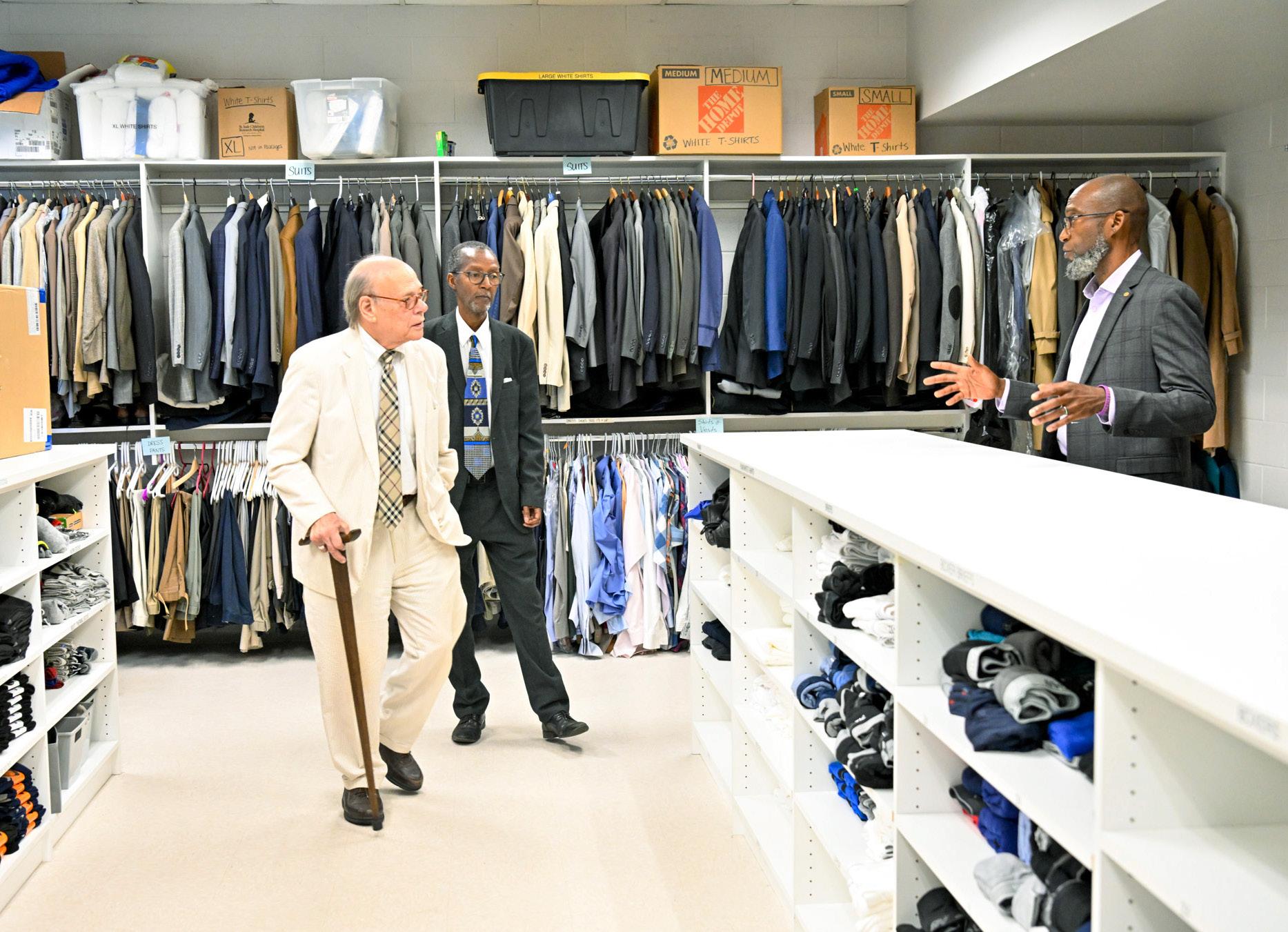
U.S. Rep Steve Cohen sizes up the offerings at the Alpha Omega Veterans Services clothes shop, where vets can affordably find something to wear. Cohen is joined by his staff member Wiley Henry and Albert Edwards, Alpha Omega executive director, behind the counter. (Photos: Gary S. Whitlow/Tri-State Defender)
“The work Albert Edwards and his staff are doing for homeless veterans is inspiring, and I am pleased to be able to strengthen its outreach.”
— U.S. Rep. Steve Cohen
the organization welcomes support in many forms. Community members can contribute financially, donate needed items or volunteer their time by sharing talents and simply spending time with veterans.
“We have people who come out and teach them how to play guitar, teach them how to paint, or things like that,” Edwards said. “Just having that type of engagement with people in the community lets them know that people still care about them. It makes a world of difference.”
Edwards hopes Cohen’s recognition will introduce more people to Alpha Omega’s mission and inspire others to get involved.
“We’re looking for any kind of involvement with us,” he said. “However someone’s heart is moved to engage with us, we welcome it all.”
Cohen’s visit came as his office also announced another federal investment in local veterans’ services. The Lt. Col. Luke J. Weathers Jr. VA Medical Center will receive $8,302,004 in infrastructure improvements during the third quarter of the federal fiscal year.
The funding includes upgrades to X-ray and MRI technology, improvements to food-service capabilities and new roofs for Buildings 1, 1A, 5 and 7.
“Our veterans deserve the best,” Cohen said. “These investments in preventive maintenance and high-tech diagnostic equipment will improve the treatment the facility can provide, and I look forward to seeing these improvements implemented later this year.”
The commitment is personal for Edwards, who served 25 years as an Army combat veteran.
“This is a mission for me,” he said.
This Memphis charter school cut chronic absenteeism to only 3 students. Here’s how
By Bri Hatch Chalkbeat
The year after COVID-19 hit, Memphis principal Kamie Cowan knew she needed to get students back in their seats.
More than half of the students at Compass Berclair, a local K-8 charter school, were chronically absent in 2022, meaning they missed at least 18 days of school, or more than 10% of the school year.
Last year, only three of the school’s 230 students met that mark. Cowan said that dramatic drop started in the 2022-23 school year, when she put together an attendance team that met every other week to review attendance data and problem solve.
“We just started paying attention, I guess, which sounds simple,” she told Chalkbeat. “But that consistent time of paying attention, that’s where this shift started to happen.”
Cowan said she believes any school can reduce chronic absenteeism with similar strategies. The key, she said, is relying on talented school staff and setting realistic goals.
“It can be very daunting,” she said. “So making that team is really important, and then picking goals that are really clear and bite-sized to start, so you get some quick wins.”
Memphis-Shelby County Schools leaders ramped up chronic absenteeism interventions this past year, aiming to reduce chronic absenteeism rates for the first time since 2017.
High chronic absenteeism is one of six criteria state Republicans included in the law creating an appointed board to seize control of key MSCS decisions, including charter authorizations and contract approvals.
The oversight board, which a federal judge temporarily blocked from operating last month, is meant to address district management and what Republicans say are years of academic
underperformance. Students who are chronically absent are less likely to read on grade level by third grade and more likely to drop out of high school.
An MSCS spokesperson told Chalkbeat that official absenteeism numbers for the district are currently under state embargo. In February, district leaders said 27% of MSCS students were at high risk for chronic absenteeism. That’s down from 31.5% in June 2025 and just above the district’s year-end target of 26.5%.
They also said that close to 40% of MSCS high schoolers, or 12,000 total, were at risk of being chronically absent. That represented a 1 percentage point drop for Memphis-Shelby County high schoolers compared to last year. But it’s significantly higher than the state’s average high school chronic absenteeism rate of just over 23%.
This past year, MSCS expanded its spending on efforts to combat chronic absenteeism. The district invested $4.4 million to place 78 attendance liaisons in schools across the region. It also launched a door-knocking initiative that yielded mixed results.
Compass Berclair students monitor their own attendance data
Cowan, the Compass Berclair principal, credits most of her school’s success in reducing chronic absenteeism to the attendance team she formed, which includes herself, the school secretary, counselor, and dean of academics.
“All those roles are super significant,” Cowan said. “But if the principal is not on board and really supporting and navigating it, it can only go so far.”
The secretary makes daily attendance calls to families of any student that’s absent. Each quarter, the team plans a field trip or out-of-uniform days to celebrate
students or classes that improved their numbers. The school counselor meets with classes weekly to go through attendance data with the students.
“The students at our school can tell you how many days they’ve been absent and how close they are to being chronic,” Cowan said. “It’s really important for them to be aware of that.”
Cowan and her team sort students into tiers of risk level for chronic absenteeism to better tailor interventions. They host family meetings once a student reaches five absences.
The meetings help school leaders identify specific barriers to attendance, Cowan said, most often including transportation.
“Our demographic does not have a lot of grandparents and aunties and uncles that live in Memphis,” she added. “And it’s really hard to get kids to school, especially when you don’t have many people to lean on.”
One strategy that’s worked well for her school is arranging parent carpools, Cowen said.
Compass leaders also focus on creating a school culture that makes students want to show up and show up on time, she said. Every school day starts with a morning meeting where teachers play games or answer random questions with students.
Cowan also uses free online resources from Attendance Works, a national nonprofit that works with schools and districts to boost attendance, to design the school’s tier system and brainstorm solutions. Compass Berclair also received coaching from Attendance Works through funding from the local nonprofit Hyde Family Foundation, which also is a Chalkbeat funder.
Bri Hatch covers Memphis-Shelby County Schools for Chalkbeat Tennessee. Reach Bri at bhatch@chalkbeat.org. This story was originally published by Chalkbeat.
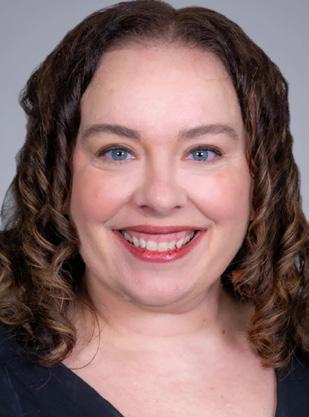
Kamie Cowan
Never Tell a Black Girl How to Black Girl celebrates identity, joy and authenticity
Book review
By Terri Schlichenmeyer
Some things can really make you cross.
People telling your business, for instance, or asking questions they have no reason to know, or criticizing your hair or clothes or life. These moves would set anyone off. They would be the last straw for many of us. As in the new book, “Never Tell a Black Girl How to Black Girl” by Amena Brown, some folks just cross the line.
In a way, it’s a matter of grammar. Depending on how you say it, “Black Girl is a noun and a verb,” says Brown. A Black Girl — with a capital B and a capital G — can be a Black girl — and she can Black girl. Brown herself has done it in six countries, she says in her book. Growing up in North Carolina, she Black Girled her hair her entire life. Her grandma made her sit for box braids when she was small, telling Brown that she was “tenderheaded.”
Later, Brown had relaxed hair, until she “went broke” and couldn’t afford the process anymore. That was when she got acquainted with her natural hair — although she returned to box braids at least once, and loved them all over again.
As the child of a strict Pentecostal mother, Brown was a “late bloomer.” She tasted alcohol for the first time in her 20s. She was chaste when dating, and she was a better church girl than a party girl. After she left the church, however, she began experimenting with wine, then cocktails. She learned
to cook, reasoning that the path to finding love started in a kitchen, one that happened to be her grandmother’s. And yes, love did eventually come in the form of a red-headed white man who was her friend before he became her boyfriend, before he became her mother-sanctioned, grandma-approved husband.
“There are so many ways to Black Girl, which means the way you Black Girl is beautiful, and the way I Black Girl is beautiful too,” she says.
Looking for a collection of addictive, can’t-read-just-one essays that’ll make you laugh but also feel like author Amena Brown is peeking into your life? Want a book that speaks to every corner of your existence?
Yeah, then you want “Never Tell a Black Girl How to Black Girl.”
You know how it is when you spot something so profound, so right, that you just have to call your friends and read it out loud to them. That’s what you’ll find here: Truth told with humor and oozing with warmth. Add honesty that’s smart, bold and practically begging for a “Heck, yes!” and you’ve got your new favorite book.
The essays here are short enough to read in a few minutes, but compelling enough to make you want more, so give yourself room. This is a book for 20- and 30-somethings, and their mothers and grandmas who can handle respectful irreverence and surefooted playfulness.
Can men enjoy “Never Tell a Black Girl How to Black Girl”? Sure, but it’s aimed at women, cross your heart.
320 pages
“Never Tell a Black Girl How to Black Girl: Essays” by Amena Brown c.2026, Tiny Rep Books