POSTMASTER: Send address changes to The Tri-State Defender, 1509 Madison Ave., Memphis, TN, 38104.
GENERAL INFORMATION: Inquiries may be submitted in writing or by calling (901) 523-1818 or by email. TELEPHONE: (901) 523-1818.
The Tri-State Defender (USPS 780-220) is published weekly. The Tri-State Defender 1509 Madison Ave. Memphis, TN, 38104. Second-class postage paid in Memphis, TN.
The Tri-State Defender is a member of The National Newspaper Publishers Association and the Tennessee Press Association.
All materials covered by copyright. No materials herein may be reproduced without the written permission of the Publisher. (901) 523-1818 | 1509 Madison Ave, Memphis, TN 38104
$60 Annually/$5 Monthly Digital subscriptions are available online at tsdmemphis.com
■■ NEWS
Tennessee elementary schools might limit classroom digital device use under pending law
By Melissa Brown Chalkbeat
Tennessee elementary schools could limit classroom digital devices under new legislation aimed at minimizing screen time for young students, even on educational electronic devices.
The General Assembly has finalized legislation that will require schools serving kindergarten through fifth grade to develop a policy to limit the use of electronic devices and block any students from accessing social media during school hours.
Senate Bill 2310 was significantly dialed back from its original form, which sought to totally ban digital educational devices like Chromebooks for young students except in special circumstances, such as in individualized education programs for students with disabilities.
Some lawmakers and educators raised concerns about instructional tools already deeply integrated into the classroom, such as digital whiteboards. The legislation that passed would allow schools to set their own policies while prioritizing “in-person, teacher-led” instruction.
The Tennessee legislation, which still has to be signed into law by Gov. Bill Lee, gives local districts broad discretion to continue using devices as long as they believe the device serves “instructional purposes for which such use provides a clear educational benefit.”
The pending law is part of a growing national backlash to educational technology that comes after an earlier push to ban recreational screen time for students. Last year, Tennessee required schools to enforce smart phone bans, though many school systems already had restriction policies in place. Concerns about the effects of screen time for children have also coincided with a national decline in reading and math achievement in recent years, sparking a flurry of public debate about the use of educational technology inside the classroom.
Melissa Brown is the bureau chief for Chalkbeat Tennessee. Contact Melissa at mbrown@chalkbeat.org.
This story was originally published by Chalkbeat.
Published by
The Tri-State Defender
President Calvin Anderson Editor Stephanie R. Jones
A Tennessee bill to ban all digital devices in elementary schools was dialed back considerably. Now, the pending law requires schools to limit device usage to instructional purposes with a “clear educational benefit.” (Karen Pulfer Focht for Chalkbeat)
Memphis pediatrician Ethelyn WilliamsNeal dies at 87 after nearly 60-year career
Special to TSDMemphis.com
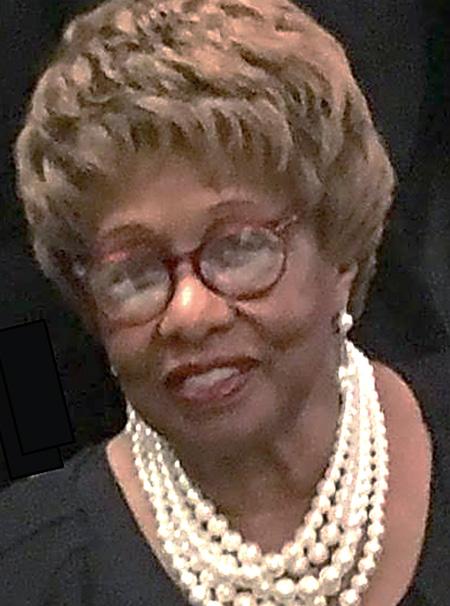
Dr. Ethelyn Williams-Neal, who practiced pediatrics in Memphis for nearly 60 years, passed away at her home Monday, March 30, 2026, her family said. She was 87.
Williams-Neal was born Ethelyn Juanita Williams on April 27, 1938 in Mason, Tennessee, to John Ed and Odessa Williams. The middle of three sisters, Ethelyn grew up on her family’s farm before her parents eventually relocated to Memphis in pursuit of better educational opportunities for their daughters. The sisters would each go on to become doctors — Willie Mae, a Ph.D. in education; Ethelyn a pediatrician; and Beverly an endocrinologist.
Williams-Neal attended Klondike Elementary and went on to graduate as valedictorian of the Manassas High School class of 1956. She enrolled at Central State College, originally to become a medical technologist. However, her exceptional intelligence garnered encouragement from several of her professors to pursue medicine. One, a medical researcher for whom she worked directly, told her to go to medical school and wrote her a letter of recommendation on the spot.
Williams-Neal obtained her medical degree from the University of Illinois in Chicago before returning home to Memphis for her 1966-67 internship. She became the first Black intern in the City of Memphis Hospital system (now known as the MED).
She married attorney Olly Neal in 1973 and they divorced amicably several years later.
Williams-Neal opened a private pediatric practice in Memphis in 1977, serving hundreds of children across the city until her “official” retirement in 2024. Her tenure allowed her to treat generations of patients and later those
she affectionately referred to as her “grand-patients.”
Williams-Neal’s early pursuit of excellence became a commitment and a charge to serve and uplift her community. Alongside her sisters she co-founded the Williams Sisters Three Fund at Manassas; the John Ed and Odessa Williams Scholarship Fund at Friendship Baptist Church; and the John Ed and Odessa Williams endowment at the University of Tennessee Health Sciences Center (UTHSC) in Memphis. She and her sister Beverly lent their medical expertise and services through health screenings at Friendship Baptist church members and the larger Klondike community.
Williams-Neal also started a community garden to encourage church and community members to eat more whole foods.
retary for the Bluff City Medical Society in 1977-1980, and president in 19891991. She was also an avid supporter of the arts and culture, from the Memphis Symphony Orchestra to her membership in organizations like The Society and The Links, Inc., Sisters of the Yam travel/book club and the Ashanti Literary Guild.
Williams-Neal was preceded in death by her sisters, Willie Mae Williams-Crittendon, Ph.D., in 2015 and Dr. Beverly Jean Williams-Cleaves in 2020.
She is survived by her nieces Pamela Crittendon Johnson (Doug), Marinda Anderson; nephew Sheldon Crittendon (Lolita); great-niece and great-nephew Jehan and William “Skeeter” Roberson; brothers-in-law Cordy Crittendon and Calvin Cleaves, Sr., “bonus” nephews and nieces Calvin Cleaves II (Georgette), their children Calvin Douglas Cleaves III and Addyson Cleaves; and Carlotta Williams (Terence), their daughter Astasia Williams and son Terence (T.J.) Williams, Jr., as well as scores of close family friends, church family, professional colleagues, and community members.
She was a member of Alpha Kappa Alpha Sorority, Inc., and served on numerous boards and committees and held leadership roles. She served as sec-
Burial immediately following service, Elmwood Cemetery, 824 S Dudley St., Memphis, TN 38104
E.H Ford Mortuary (Whitehaven) has charge.
Dr. Ethelyn Williams-Neal
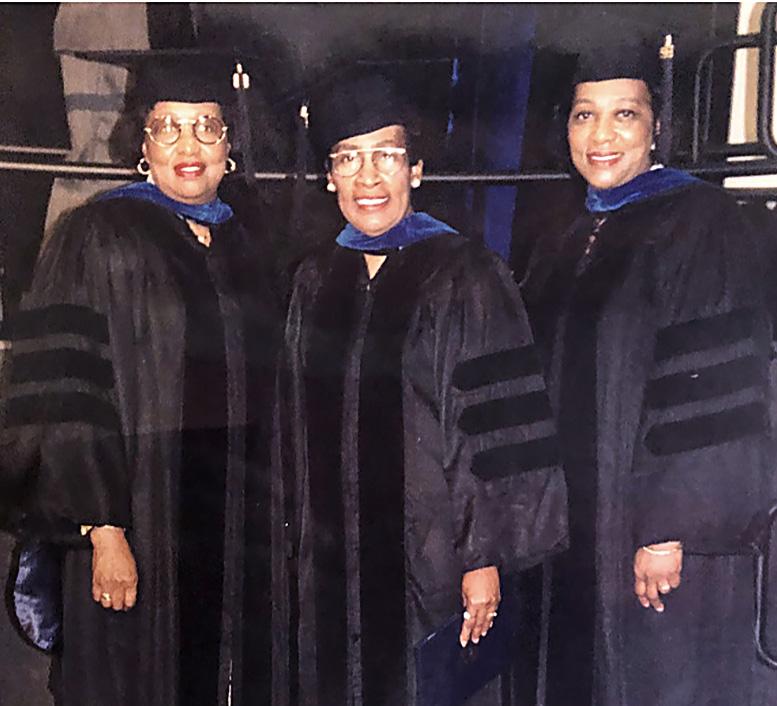
Dr. Ethelyn Williams-Neal, left, who treated pediatric patients for nearly 60 years, poses with her sisters Willie Mae Williams-Crittendon, Ph.D., center, and Dr. Beverly Jean Williams-Cleaves in this undated family photo.
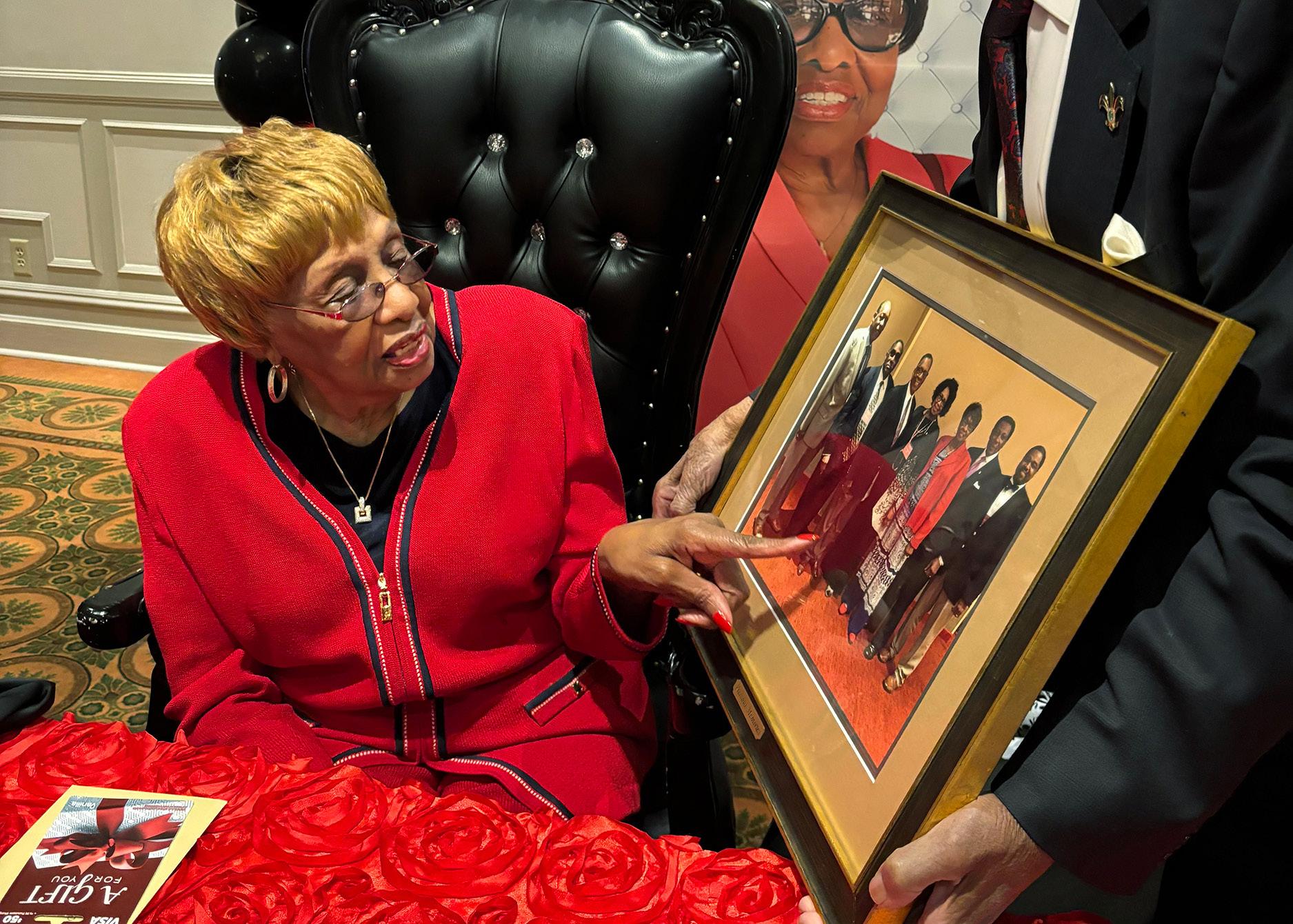
Dr. Ethelyn Williams-Neal, who practiced pediatrics in Memphis for nearly 60 years, receives a commemorative photo from William Terrell recognizing her alongside fellow members of the Volunteer State Medical Society in this file photo.
The Remarkable Life of Reed Peggram
Book review
By Terri Schlichenmeyer
You couldn’t escape it. When you fell in love, that was it. You were there for good. Leaving your amour’s side was unthinkable, turning away was impossible. You’d do anything for that person you loved — even, as in the new biography, “The Remarkable Life of Reed Peggram” by Ethelene Whitmire, escape toward danger.
On August 28, 1938, Reed Peggram boarded a ship from Hoboken, New Jersey, hoping to “become a proper gentleman” and fulfill his dreams. A prolific writer and Harvard scholar of comparative literature, he had recently been awarded the Rosenwald Fellowship, which put him in the company of literary stars like Du Bois, Hurston, and Hughes.
Both Peggram’s mother and grandmother were then domestic workers, and they had big expectations for him. Reed himself was eager to study abroad, for professional and personal reasons. He was “determined to become a French professor and an accomplished linguist” and “he also hoped to find love.”
What better place to do it than in Paris?
Outgoing and confident, Peggram made friends easily and had no trouble moving “through the world of his white male peers.” Where he faltered was in his lack of funds. He relied on the kindness of his many friends — one of whom introduced Peggram to a “man who would become so pivotal in his life,” a Danish man named Arne. Peggram and Arne had a lot in common, and they began to enmesh their
lives and dreams of living in the United States. But there were complications: Homosexuality was largely forbidden, World War II was in its early stages, and it quickly became apparent that it was dangerous to stay in Europe. And yet, Peggram loved Arne. He refused to leave without him and so, while most visiting Black Americans fled the war in Europe, “Reed was trying to stay.”
There’s so much more to the story inside “The Remarkable Life of Reed Peggram,” so much to know about Reed himself. Problem is, it’s a long haul to get to the good stuff.
In her introduction, author Ethelene Whitmire explains how she came to this tale and yes, it needs telling but probably not with the staggering number of inconsequential details here. Peggram moved homes a lot, and many people were involved in keeping him in Europe. That alone can be overwhelming; add the fact that costs and other monetary issues are mentioned in what seems like nearly every page, and you may wonder if you’ll ever find the reason for the books’ subtitle.
It’s there, nearly halfway through the book, which is when the tale takes a tender, urgent turn — albeit one with determination, rashness and a dash of faux nonchalance. Also, if you’re expecting an unhappily-ever-after because, after all, it’s a World War II tale, don’t assume anything.
Reading this book will take a certain amount of patience, so skip it if you don’t have that fortitude. If you’re okay with minuscule details and want a heart-pounder, though, “The Remarkable Life of Reed Peggram” might be a good escape.
$30.00
308 pages
“The Remarkable Life of Reed Peggram: The Man Who Stared Down World War II in the Name of Love” by Ethelene Whitmire
c.2026, Viking
School board makes Richmond permanent as audit shows $1.1M in potential waste, takeover looms
By James Colemen TSD Contributing Writer
With a state takeover looming and a long-awaited audit showing only a small amount of potential waste, Memphis-Shelby County School Board members opted to remove the interim tag from Superintendent Roderick Richmond’s title during a Tuesday, March 31, meeting.
Shelby County Republican lawmakers Brent Taylor and Mark White are expected to reintroduce legislation to take over the school board. The proposed plan would defang the board, placing control in the hands of state-approved appointees from Shelby County. Richmond’s promotion by unanimous vote came one day before the release of a state-ordered audit of the board.
So far, the audit does not appear to be as much of a threat as originally feared. State forensic auditors and legislative leaders presented their findings Wednesday, April 1, in Nashville.
Takeover advocate Sen. Brent Taylor is also sponsoring a bill that inhibits the district’s ability to file countersuits.
The review uncovered about $1.1 million in potential “waste, fraud and abuse” by Memphis-Shelby County Schools out of a $2 billion budget. The state paid about $6 million to CliftonLarsonAllen LLP to conduct the investigation.
The audit document noted that the district’s frequent leadership turnover made the review more difficult and may have contributed to some of the issues identified.
The state paid about $6 million to CliftonLarsonAllen LLP to conduct the investigation.
The audit document noted that the district’s frequent leadership turnover made the review more difficult and may have contributed to some of the issues identified.
“The Board takes the preliminary observations seriously and is committed to full transparency and accountability,” she said. “While no level of waste or potential violation is acceptable, it is important to provide context. The preliminary financial findings, while meaningful, represent less than onetenth of one percent of the district’s approximate $2 billion annual budget over three years.”
Nevertheless, the board said it is taking the findings seriously.
“Our team is combing through the report and digesting the findings. If any wrongdoing is identified, we will join the state in holding the responsible individual or individuals accountable so that the law-abiding employees within this organization can continue the important work of educating our community’s children,” the district said
in a statement.
With the permanent hire, board members moved up the timeline on Richmond’s job status. A 7-2 vote earlier in the month had set the hire date for some time after the audit’s release.
The majority was achieved after language was added linking Richmond’s continued status to increased scrutiny. It also factors in his business management and implementation of a state-ordered corrective action plan. Richmond could be relieved of duty if he falls short in either area.
He also could be fired for cause if he intentionally refuses “to follow reasonable directives from the BOARD via issued resolution.” He would receive no severance if that occurs.
The maneuver was enough to sway Sable Otey, Tamarques Porter and Towanna Murphy, who had been reluctant to hire Richmond pending the audit results.
The cost of firing Richmond could add to the state’s total. He would receive $487,500 in severance if removed without cause, and nothing if fired for cause.
Richmond’s three-year contract will pay him $325,000 in his first year, with 2% raises in the following years. The agreement includes an option for a one-year extension. He could be fired for cause if his first two years’ grades in student achievement, business or
Richmond’s three-year contract will pay him $325,000 in his first year, with 2% raises in the following years. The agreement includes an option for a one-year extension.
finance are rated “unsatisfactory.”
Richmond is earning the same amount as former superintendent Marie Feagins during her brief tenure. Feagins, a 2026 Shelby County mayoral candidate, was fired early last year in a 6-3 vote after board members cited professional misconduct and leadership failures. The former Detroit public schools administrator had been hired 10 months earlier and did not receive severance pay. She is suing the school board in pursuit of a severance package.
Prior to being named interim superintendent, Richmond served as chief academic officer during the 2013 merger of Memphis City Schools and Shelby County Schools. In 2024, he was appointed transformation officer by Feagins.
Richmond is a 30-year educator with the district who also served as principal of Ross Elementary School and Ridgeway Middle School.
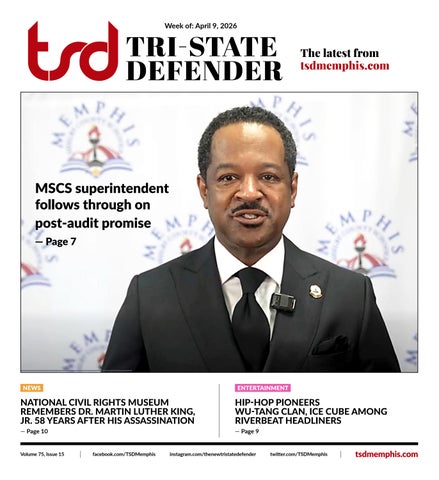
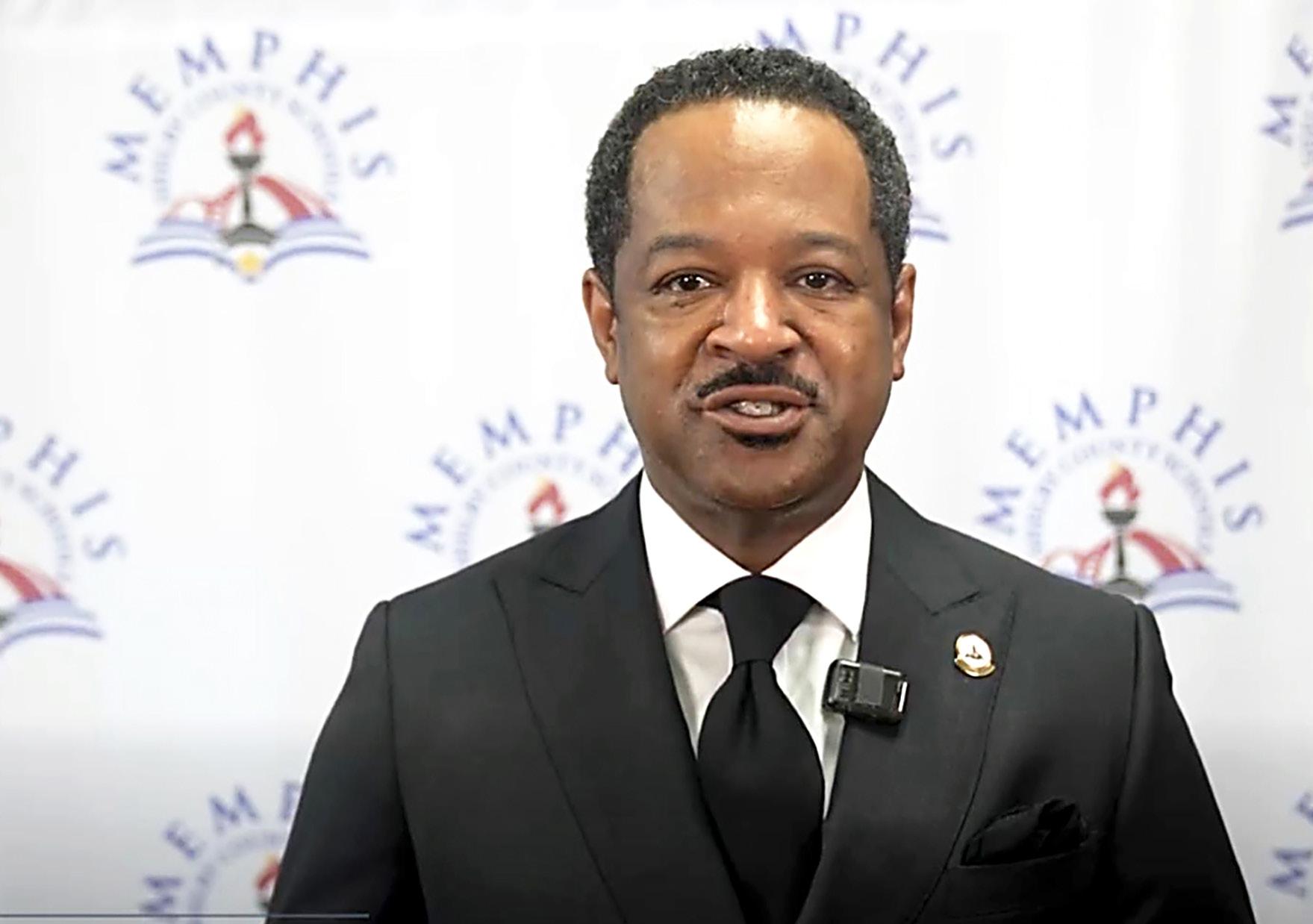
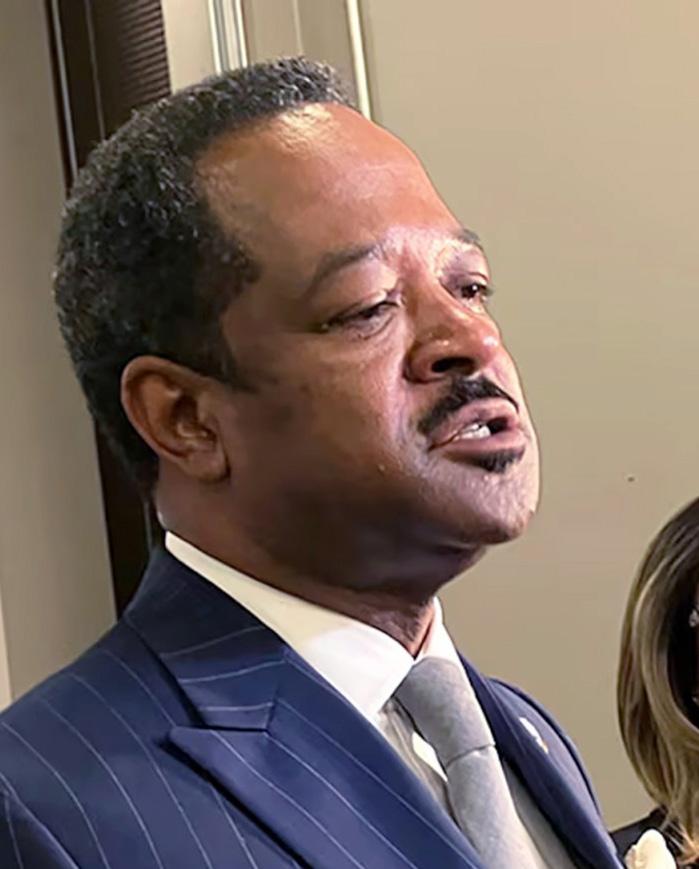
Memphis-Shelby County Schools Superintendent Roderick Richmond (Bri Hatch/Chalkbeat)
NEWS MSCS superintendent follows through on post-audit promise
By James Coleman TSD Contributing Writer
Newly appointed Memphis-Shelby County Schools Superintendent Roderick Richmond followed through on a post-audit promise to provide a progress report on the district’s efforts to address shortcomings revealed in a recent state-ordered examination.
On Monday, April 6, Richmond announced the launch of two websites to track the district’s response. One follows progress tied to Richmond’s six-pillar improvement plan, while the other mirrors categories outlined in the audit’s findings, including human resources. The sites come ahead of an anticipated meeting between Richmond and state lawmakers.
“I’m meeting with state leadership in the next few weeks to publicly answer any additional questions after that meeting. In the meantime, we have released a full report outlining progress over the past year against the challenges outlined,” Richmond said in a Facebook statement.
The websites are part of a six-pillar plan Richmond presented in March to address findings in the forensic audit.
The $6 million, three-part review is seen by many as a precursor to a potential state takeover of the district. The audit covers the 2021-24 school years.
The audit remains ongoing, with only one of three report volumes complete. A final report is expected by June 2026.
According to Richmond, many of the issues identified in the review were already being addressed by the time the preliminary report was released April 1. However, some findings uncovered by auditors at CliftonLarsonAllen LLP had not been identified by district administrators.
The first installment, which identified about $1.1 million in potential waste, fraud and abuse, also offered guidance on cybersecurity and internal controls.
Many of the cybersecurity details were redacted for security reasons.
Both areas reflected similar deficiencies, including an overreliance on institutional knowledge and poor recordkeeping, which became more apparent after experienced staff members left during a 2024 restructuring.
MSCS internal auditors were affected by former Superintendent Marie Feagins’ reorganization plan, which included 740 staff cuts and 480 new
hires. Many positions were funded with one-time pandemic relief funds. Feagins was fired by the school board early last year.
Disruptions to the internal auditing process were cited as one of the reasons for her dismissal. The audit follows the board’s 6-3 decision to fire her.
“We were aware of the vast majority of issues outlined and have already implemented guardrails and processes for improvement. However, the audit also exposed a few critical blind spots that we can now collaboratively work to repair,” Richmond said.
According to the audit, the dis-
trict’s ethics and fraud hotline needs improvement, including a standard procedure for forwarding complaints. Auditors also flagged another $1.7 million in spending for possible violations of district policies.
“Now, I have the opportunity to address and repair systems and structures I did not have access to in those earlier roles. As any new leader of any organization, my tenure as superintendent began with a review of every part of it, as well as action plans to strengthen processes, procedures and student achievement districtwide,” Richmond said.
A screenshot shows the Memphis-Shelby County Schools progress tracking website, launched by Superintendent Roderick Richmond to outline the district’s response to findings from a recent state-ordered audit.
Hooks Institute celebrates 30 years, honors Memphis ‘Pillars of Progress’ at April 10 gala
By Candace A. Gray TSD Contributing Writer
For three decades, the Benjamin L. Hooks Institute for Social Change has been at the forefront of advancing equity, education and opportunity in Memphis. On April 10, that legacy will take center stage as the Institute celebrates its 30th Anniversary with the “30 Years and Still Rising: Pillars of Progress Gala.”
Set for 6 p.m. at the Scheidt Family Performing Arts Center (3800 Central Ave.) on the campus of the University of Memphis, the evening will bring together community leaders, advocates and supporters for a night of reflection, recognition and renewed commitment to social change. The event will include a cocktail reception, awards presentation and live music.
Since its founding, the Hooks Institute has transformed bold ideas into meaningful action, supporting initiatives that keep children safe, expand academic and economic access, and preserve the history and legacy of the Civil Rights Movement through education, research and the arts.
Current Institute programs, like Hooks Academic Achievement and Mentoring Initiative (HAAMI) and A Seat at the Table (ASATT), focus on supporting and developing students. The institute also recently released its tenth edition of the Hooks Policy Papers, which were created with input from UofM’s School of Nursing and the UT Health Science Center, and findings presented from an NIH-funded grant on breast health in segregated communities in Memphis.
Additionally, the Fayette County Civils Rights Movement history is preserved through the work the institute does, which is near and dear to the heart of its executive director, Daphene McFerren, as her family was integral in
the movement.
Proceeds from the gala will directly support the Institute’s programs, which are funded largely through donations and grants. Organizers note that demand for these initiatives, from community outreach to research and public policy engagement, continues to expand.
A highlight of the evening will be the recognition of this year’s “Pillars of Progress,” individuals and institutions whose work reflects a deep and sustained commitment to Memphis.
Among the honorees are the Memphis Brooks Museum of Art, recognized for its dedication to community-centered exhibitions and cultural engagement, and the Tri-State Defender, long regarded as a leading voice documenting and sharing a dialogue of African American life in Memphis since 1951. The Tri-State Defender will celebrate its 75th anniversary this year.
“The Tri-State Defender and the Memphis Brooks Museum of Art are being honored as Pillars of Progress because of their institutional efforts to amplify diverse voices in Memphis,” said McFerren. “From 1951 to the present, the Tri-State Defender has focused on publishing articles that show the depth of the lived cultural and economic experiences of the African American community in Memphis.
“The Memphis Brooks Museum of Art has made a concerted effort to showcase art that resonates with diverse audiences, thereby helping to create a community unified in its cultural exploration of the arts,” McFerren stated.
For Diedre Malone, vice president of the Tri-State Defender, the recognition is both humbling and deeply meaningful.
“This honor is a reflection of the legacy and responsibility we carry as storytellers in this community,” Malone said. “The Tri-State Defender has always been more than a newspaper; it’s been a voice for the people, a champion
for justice, and a preserver of our history. To be recognized alongside such impactful leaders and institutions affirms the importance of that work and challenges us to keep pushing forward.”
Also being honored is Johnnie Turner, a fearless 1960s-era civil rights activist, educator and former state representative for District 85, and Jocelyn Wurzburg, who co-founded the Panel of American Women following the assassination of Martin Luther King Jr. to promote healing and racial unity in the city.
“These women are being honored because of their significant contributions to creating a more inclusive community through their civil rights activism,” said
McFerren. “Johnnie Turner and Jocelyn Wurzburg are models of how we might work together today to resolve differences and inequities in Memphis and beyond.”
Together, all of these honorees represent the spirit of progress that has defined both the institute’s mission and Memphis itself.
Organizers invite the public to be part of this milestone celebration on April 10. Doors open at 5:30 p.m., with the program beginning at 6 p.m. Tickets are available at https://www.eventbrite.com/e/ the-hooks-institute-30th-anniversary-and-pillars-of-progress-gala-tickets-1982456463649?aff=oddtdtcreator
Hip-hop pioneers Wu-Tang Clan, Ice Cube among RiverBeat headliners
By Brianna A. Smith-Herman TSD Contributing Writer
Memphis has always been a city where music tells the story and festivals like RiverBeat create space for that story to be experienced across generations.
The RiverBeat Music Festival will return to Tom Lee Park May 1-3, bringing thousands to the Mississippi Riverfront for a three-day celebration of sound, culture and connection, rooted in the traditions that have long defined Memphis as a global music capital.
Now in its third year, RiverBeat is part of a broader effort to reimagine the city’s relationship with its riverfront following the historic redevelopment of Tom Lee Park. The festival debuted in 2024 as the first large-scale music event to activate the transformed space, signaling a new era for live music in downtown Memphis.
While RiverBeat is a newer addition to the city’s festival landscape, its foundation reflects a familiar rhythm: music as both economic driver and cultural expression.
This year’s lineup underscores the enduring impact of Black artistry across genres.
Hip-hop pioneers Wu-Tang Clan and Ice Cube headline a roster that also includes T-Pain, Salt-N-Pepa, De La
Soul and Wale — artists whose contributions have shaped the sound and direction of modern music.
Their presence on the Mississippi River carries symbolic weight in a city where Black music — from blues and soul to hip-hop — has long served as both creative force and cultural record.
RiverBeat also makes space for Memphis’ own musical artists. Performances featuring local rap pioneers, such as DJ Squeeky, Al Kapone, Kia Shine, DJ Bizzle BlueBland and artists tied to the city’s signature sound ensure that Memphis is not simply hosting the festival, but actively defining it.
“The influence of Black artists is not a trend in Memphis — it’s the foundation. Lineups like this reflect a legacy that continues to shape music around the world,” said Anthony ‘Hitkidd’ Holmes, a Memphis music producer.
Organizers have positioned the festival as more than a music event, incorporating art installations, interactive experiences, a ferris wheel and multigenre programming designed to draw a diverse audience while remaining grounded in the city’s cultural identity.
Events like RiverBeat do more than draw crowds; they create opportunity, visibility and momentum for a city that has long influenced global sound.
For more information, visit: https:// riverbeat.com/
National Civil Rights Museum remembers Dr. Martin Luther King, Jr. 58 years after his assassination
Annual celebration encourages community members to fight on
By Candace A. Gray TSD Contributing Writer
This year, Easter fell on the same weekend as the anniversary of the Rev. Dr. Martin Luther King Jr.’s death. On the day most associated with joy and rejuvenation, the National Civil Rights Museum carried out remembrance while also imparting messages of hope and renewed commitment to a generation that better days were ahead.
King was killed on April 4, 1968 at 6:01pm on the balcony of the Lorraine Motel in Memphis. A wreath marks the spot where he was shot before being rushed to John Gaston Hospital, where he would take his last breath. The spot around which a museum and historic site was built, in 1991, to honor him and carry his dream, work and legacy forward.
Russ Wiggington, president of the museum, opened the 2026 commemoration titled “Remembering MLK’s Legacy: The Man. The Movement. The Momentum.” He reminded the hybrid (in-person and virtual) audience that the ground on which the physical attendees were seated was sacred ground, a place of learning and truth, and a catalyst for social change.
“His speeches are still relevant today,” Wiggington said twice, underscoring the importance of revisiting Dr. King’s speeches, especially his last, “Mountain Top,” which was delivered in Memphis, the night before he was killed.
“Engage deeply with his words from that final year. His voice still echoes, his vision guides us, his call compels us forward,” said Wiggington, before he introduced Mayor Paul Young, Congressman Steve Cohen and Tennessee State Representative Justin Pearson.
“We gather to remember, but also to respond,” said Mayor Young of King,
who, Young said, not only did so much for our city, but for the world.
“Dr. King came here for economic justice, for families, for people who deserved more,” said Young.
He went on to talk about meeting 94-year-old Andrew Young, who he said was still out doing the work, and how he was inspired by the history he represented right in front of him and First Lady, Dr. Jamila Smith-Young.
“We owe a debt to him that we are paying through progress. Dr. King asked ‘What are you doing for others?’ The answer is in what we build for Memphis,” said Young.
Congressman Cohen began his remarks by acknowledging the great work of Fannie Clark, former Tennessee Mass Choir founder and director, who were represented at the event and opened with “You Are the Greatest of All Time,” an inspirational gospel tune.
He also acknowledged that Dr. King’s speech at Mason Temple spoke against militarism, materialism and racism.
“Boy, would he be busy today. His journey is not over, his dream is not yet fulfilled. We need to follow his dream and make it come true,” said Cohen.
“Too many of us became comfortable, our worth rising, personal status being slightly better, rooms of privilege being slightly opened. But none of us is free until ALL of us are free.”
— Rev. Nontombi Naomi Tutu
State Rep. Justine Pearson, whose cadence is like that of a Baptist preacher, gave spirited remarks remembering a “radical” Dr. King.
“He worked for the marginalized, not the wealthy … those who’ve been forgotten, who didn’t have titles, who society discarded but who he viewed as sacred children of God,” said Pearson.
The 31-year-old wrapped by reciting a few lines from MLK’s “Letter from a Birmingham Jail,” and by declaring that “Until justice flows like waters, we’re going to keep fighting and Memphis is the place for it to happen.”
As has always been the case in the fight for Civil Rights, young people have been at the forefront. And today is no different.
Two young men who recently won NCRM’s “Keeper of the Dream Award,” for the embodiment of MLK’s values and their commitment to leadership and service, were also on-hand to share how the work through their non-profits is making Memphis better.
Carlos Watkins, a student at East High School, and founder of Operation Purple House, uses his platform to be a beacon to his peers, to equip them to be leaders of today and tomorrow.
Lausanne student, Christian Love, founded Opportunity Bridge 901, a youth-led digital organization that connects youth to leadership opportunities, with hopes that those who can will use their voices to make a difference.
And then singer Karen Brown delivered “A Change is Gonna Come,” by
Sam Cooke.
The Southern Christian Leadership Conference, with whom MLK worked hand-in-hand during the 1950s/60s, was represented by Demark Liggins, president of the organization, whose parents are from Memphis.
“SCLC will turn 70 next year. We are still here and must lead and echo our God and His guidance. Let’s honor our legacy, lean into our leadership and insist that our action is rooted in love,” said Liggins.
A wreath ceremony and litany were performed by members of Alpha Phi Alpha, Inc., the fraternity in which MLK was a member.
Ryan Jones, director of history, interpretation and curatorial services for NCRM, invited the crowd to listen to an excerpt of MLK’s final speech, “I’ve Been to the Mountain Top,” delivered the night before the global tragedy that was his death occurred.
Listening to MLK recount the “If I had Sneezed” section of this speech was grounding.
“If I had sneezed, I wouldn’t have been around in 1961 and integrated interstate travel … I wouldn’t have been here for the Black people in Birmingham, Alabama … I wouldn’t have had a chance later that year in August to tell America about a dream I had … I wouldn’t have been able to come to Memphis, to see a community rally around those brothers and sisters who are suffering …” said Dr. King.
“It really doesn’t matter what happens
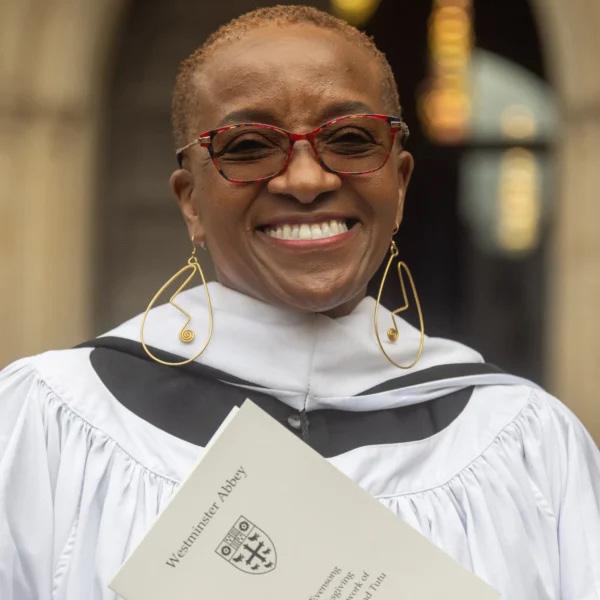
Rev. Nontombi Naomi Tutu
■■ NEWS
now … I’ve seen the promised land. I might not get there with you, but we as a people get to the promised land …,” said Dr. King.
Less than 24 hours later, at 6:01pm, April 4, 1968, Dr. King was shot. And an hour later, he was gone. There was a moment of silence at this time at the commemoration, one hour and one minute into the program.
The choir offered “Amazing Grace” and “Precious Lord” as songs of comfort.
Assassination personal account and keynote speaker
Two powerful women were slated to share their perspectives, insights and wisdom for carrying MLK’s dream forward. Deaconess Clara Jean Ester, who was present when Dr. King was murdered, gave a personal account of what she saw that fateful day. And Rev. Nontombi Naomi Tutu, Archbishop Desmond Tutu’s daughter, delivered the keynote address.
A visibly emotional Ester, now 77, then 19-years-old, remembered “it sounded like a truck backfiring.”
“Watching him being lifted up and thrown back — I didn’t know what to do,” Ester said. “I ran up the steps, tried to get a pulse … I unbuckled his belt to try and help him breathe. I saw towels in the corner and said we need to apply pressure to stop the blood.”
She relived that traumatic moment. The pain was evident to all who listened.
“We, young and old, will continue to fight because justice is ours like everyone else’s and we demand what we deserve,” said Ester.
Those same emotions carried over into Rev. Tutu’s address.
“If there was ever a time we needed the man, the movement, the momentum, it is today,” said Tutu. “When we talk about reimagination — the way in which the powers that be have attempted to sanitize the story of Dr. King — we have to remind ourselves of the real story.”
Tutu, an episcopal priest and human rights advocate from South Africa, eloquently and spiritedly poured into the hybrid audience, urging people to seek
and share the truth about who Dr. King was and how we are to be if we take the responsibility of “making sure our history isn’t sprinkled in American and world history in the shortest month of the year, but that it’s something our children are nourished with from the earliest of days.”
She spoke about how God wants this world to be good again, but it can’t while there is racism; when children are being sent across the world to kill people they don’t even know.
Tutu shared how Dr. King said that “America owes a debt to the Black people of this country for the centuries of free labor, enslavement, murder, rape, and if this country is unwilling to claim that legacy, this country will never be what it wants to be — a beacon on a hill …”
“How did we let the movement die?” asked Tutu. “How did we let ourselves be in the place we are today, where racism is alive and well and out on the streets yelling the ‘n-word’, where ICE is out there denying the humanity of God’s children?”
“Too many of us became comfortable, our worth rising, personal status being slightly better, rooms of privilege being slightly opened,” she said. “But none of us is free until ALL of us are free.”
She revered Dr. King throughout, saying he believed in the truth, that every human was worthy of respect, freedom, the ability to feed, clothe and house themselves.
Tutu concluded by saying, “As we reimagine the legacy of Dr. King, let us pledge ourselves, that we not be the man, but we are the people driven by the same dream as the man. That we are the movement that will move our world closer so that God can once again look and say ‘It is good.’ We are the carriers of the momentum to bring justice, liberation and respect to all of God’s children.”
The program ended with tears, hugs, A, B and C selections from the Tennessee Mass Choir to uplift and a benediction from Rev. Tutu. “Allow us to follow in (King’s) footsteps, trusting in Your promise to us, in a world of freedom, peace, justice, shalom.
PUBLIC NOTICES / CLASSIFIEDS
LEGAL NOTICE Request for Bids
MSCAA Project Number 18-1420-02-01
Charles Baker Pavement Improvements Phase 2 - Construction
Sealed bids for Charles Baker Pavement Improvements Phase 2 - Construction will be received by the Memphis-Shelby County Airport Authority (Authority), Procurement Department, 4150 Louis Carruthers Drive, Memphis, TN 38118, until 2:00 PM Local Time on Tuesday, May 5, 2026. Bids will not be received at any other location. Within 30 minutes thereafter, the bids will be opened and publicly read via phone/ video conference (link/phone information available online at https://flymemphis.com/rfps-rfqs/) . The Bid Documents, including a description of the scope of work, the required response format, and additional instructions may be obtained on or after April 7, 2026 online at https://flymemphis.com/rfps-rfqs/
A Virtual Pre-Bid Meeting will be held on Wednesday April 15, 2026 at 11:00 AM local time via phone/video conference (link/phone information available online at https://flymemphis. com/rfps-rfqs/). The project site will be available for inspection following the meeting at 1:30 PM local time. Pre-bid and site visit attendance is strongly recommended. All instructions for the Pre-Bid Meeting and Site Visit can be found at https://flymemphis.com/rfps-rfqs/
All Bidders are responsible for checking the Authority’s website up to the submission deadline for any updates, addenda or additional information. The successful Bidder must sign a contract with the Authority that includes Federal Aviation Administration provisions, if applicable, regarding the Buy American Preference, Foreign Trade Restriction, Davis-Bacon, Affirmative Action, Debarment and Suspension, and Drug-Free Workplace, all of which are incorporated herein by reference.
Each bid must be made by a contractor licensed in Tennessee and be accompanied by a 5% Bid Guarantee. The successful bidder must execute a Performance Bond and a Payment Bond in the amount of 100% each of the Contract Price and meet the Small Business Participation Program (SBPP) participation goal for this project, which is 16%
The Authority reserves the right to reject any or all responses to this Request for Bids in whole or in part; to waive any informalities, technicalities, or omissions related to this Request for Bids; and to reject responses on any other basis authorized by the Authority’s purchasing policies.
The Authority is an equal opportunity employer and prohibits discrimination based on the grounds of age, race, sex, color, national origin, disability, marital status, military service, or sexual orientation in its hiring and employment practices and in the admission to, access to, or operation of its programs, services, and activities.
By order of:
Terry Blue, A.A.E. President and CEO
Memphis-Shelby County Airport Authority
LEGAL NOTICE Request for Bids
MSCAA Project Number 23-1469-03
East Parking Lot Expansion - Phase 5 - Construction
Sealed bids for East Parking Lot ExpansionPhase 5 - Construction will be received by the Memphis-Shelby County Airport Authority (Authority), Procurement Department, 4150 Louis
Carruthers Drive, Memphis, TN 38118, until 2:00 PM Local Time on Thursday, May 7, 2026 Bids will not be received at any other location. Within 30 minutes thereafter, the bids will be opened and publicly read via phone/video conference (link/phone information available online at https://flymemphis.com/rfps-rfqs/). The Bid Documents, including a description of the scope of work, the required response format, and additional instructions may be obtained on or after April 13, 2026 online at https://flymemphis. com/rfps-rfqs/
A Virtual Pre-Bid Meeting will be held on Monday April 20, 2026 at 10:00 AM local time via phone/video conference (link/phone information available online at https://flymemphis.com/rfpsrfqs/). The project site will be available for inspection following the meeting at approximately 1:00 PM local time. Those wishing to attend the site visit must register. Site Visit registration is done by emailing bidquestions@flymemphis. com Pre-bid and site visit attendance is strongly recommended. All instructions for the Pre-Bid Meeting and Site Visit can be found at https:// flymemphis.com/rfps-rfqs/
All Bidders are responsible for checking the Authority’s website up to the submission deadline for any updates, addenda or additional information. The successful Bidder must sign a contract with the Authority that includes Federal Aviation Administration provisions, if applicable, regarding the Buy American Preference, Foreign Trade Restriction, Davis-Bacon, Affirmative Action, Debarment and Suspension, and Drug-Free Workplace, all of which are incorporated herein by reference.
Each bid must be made by a contractor licensed in Tennessee and be accompanied by a 5% Bid Guarantee. The successful bidder must execute a Performance Bond and a Payment Bond in the amount of 100% each of the Contract Price and meet the Small Business Participation Program (SBPP) participation goal for this project, which is 13%
The Authority reserves the right to reject any or all responses to this Request for Bids in whole or in part; to waive any informalities, technicalities, or omissions related to this Request for Bids; and to reject responses on any other basis authorized by the Authority’s purchasing policies.
The Authority is an equal opportunity employer and prohibits discrimination based on the grounds of age, race, sex, color, national origin, disability, marital status, military service, or sexual orientation in its hiring and employment practices and in the admission to, access to, or operation of its programs, services, and activities. By order of: Terry Blue, A.A.E. President and CEO Memphis-Shelby County Airport Authority