POSTMASTER: Send address changes to The Tri-State Defender, 1509 Madison Ave., Memphis, TN, 38104.
GENERAL INFORMATION: Inquiries may be submitted in writing or by calling (901) 523-1818 or by email.
TELEPHONE: (901) 523-1818.
The Tri-State Defender (USPS 780-220) is published weekly. The Tri-State Defender 1509 Madison Ave. Memphis, TN, 38104. Second-class postage paid in Memphis, TN.
Tri-State Defender is a member of The National Newspaper Publishers Association and the Tennessee Press Association.
of the Publisher. (901) 523-1818 | 1509 Madison Ave, Memphis, TN 38104
■■ NEWS
Memphis City Council approves new impasse procedure after debate over arbitration process
By James Coleman TSD Contributing Writer
Memphis City Council members overhauled the city’s impasse procedure to settle disputes between labor unions and the city government during the Tuesday, March 24, meeting.
But first, members had to settle a dispute between the ordinance’s sponsor and City Attorney Alan Wade over the best approach.
“At the last committee meeting, there was a dialogue between me and attorney Wade, particularly my belief that the middle process was not necessary,” said Councilman JB Smiley. “Attorney Wade’s position is that it is required by charter.”
After a lengthy debate, they sided with Smiley’s amended approach, which removed any roadblocks to the two sides of an impasse settling the matter themselves.
A mediator will facilitate negotiations in hopes of finding an amicable resolution. If the effort falls short, the outside help will make recommendations based on the final position of each side. The ultimate decision remains in the hands of the council.
The revised process eliminates the use of three-member arbitration panels and instead puts impasse decisions to a direct up-or-down vote by the full council.
The changes apply specifically to economic terms of labor agreements, including pay and benefits.
The ordinance passed by a 7-3 margin on a third and final reading. Council members previously relied on a three-member panel of arbitrators to make recommendations.
Both Smiley and Wade agreed that the old method had become too cumbersome.
Wade’s proposal scaled down arbitrators to one outside consultant who would compare competing proposals’ impact on the city budget before offering an opinion.
According to Wade, neither side was encouraged to find a resolution with the previous setup. Moreover, “bargaining units” would use the process to circumvent discussions with city administrations. In the end, the political pressure resided on the shoulders of the council.
Past impasse proceedings also included elaborate technical presentations by both sides of the dispute, followed by deliberations by council members.
Council member Janika White agreed with Wade’s legal assessment and his rejected proposal. White and Smiley are also attorneys.
“The arbitration is clean,” White said.
“It’s succinct.”
Impasse rules have been changed
several times over the decades. The last time council members tweaked the rules was in 1978.
The current push was inspired by the most recent budget season last July. Council members approved the first of a two-year 10% raise for city firefighters and police the previous year. Instead of receiving the second 5% installment the next year, they had to settle for a 3% raise, with the promise of being made whole in January.
The disappointment led to lawsuits by police and firefighter unions, along with intense lobbying of council members.
Mayor Paul Young ultimately urged the council to fund the extra 2% to end the lawsuits. Still, other city employees took notice of the precedent.
Defender
President Calvin Anderson Editor Stephanie R. Jones
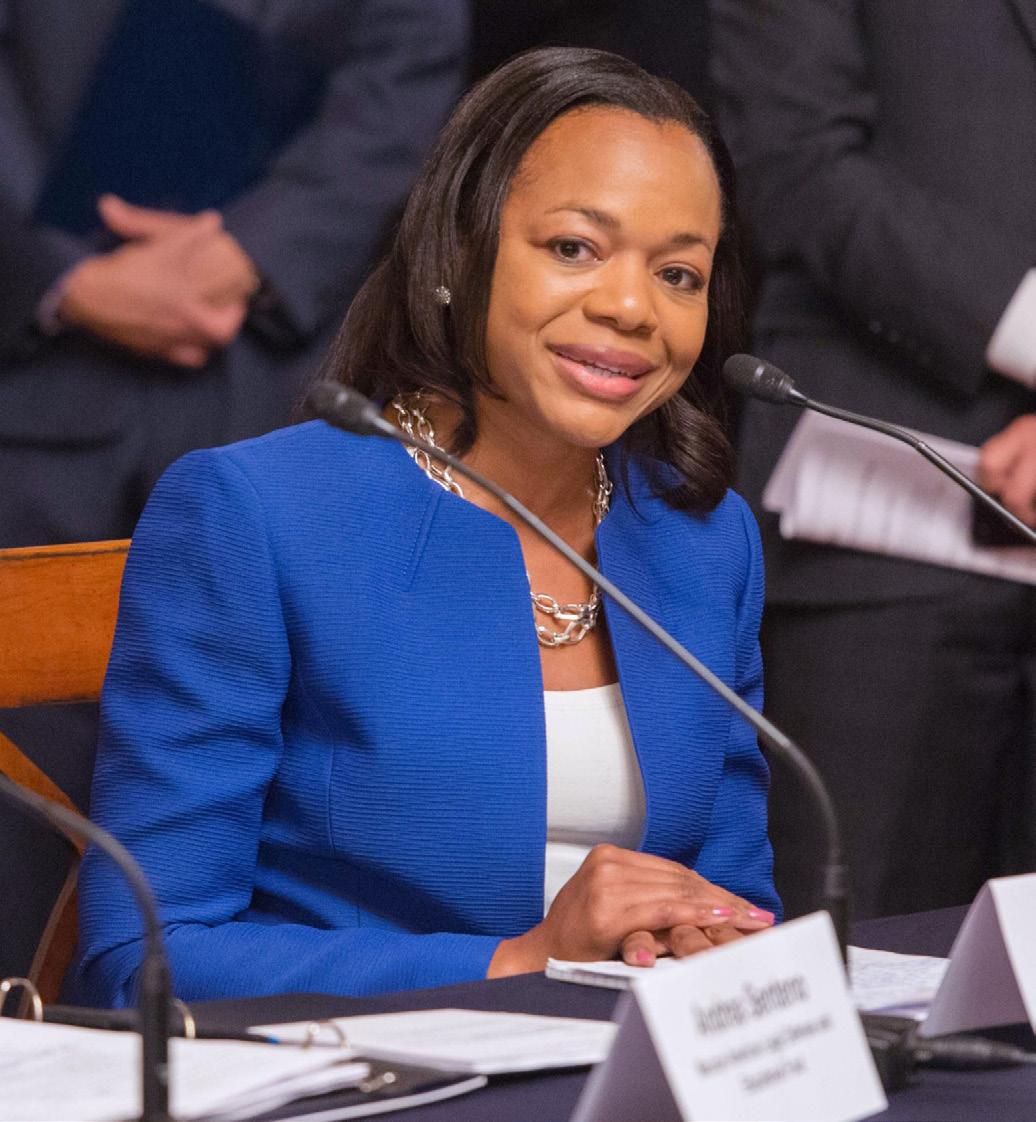
“As we face unprecedented attacks on voting and civil rights, having Kristen Clarke at the helm of our legal operations brings strategic vision, disciplined leadership, and innovative advocacy.” — NAACP President and CEO Derrick Johnson
The NAACP names ex-DOJ civil rights chief Kristen Clarke as its top lawyer
By Aaron Morrison Associated Press
The NAACP, the oldest civil rights organization in the U.S., has hired a former Biden Justice Department official to head its legal advocacy work.
Kristen Clarke, who previously led the DOJ’s Civil Rights Division, will be the NAACP’s next general counsel, the organization announced on Wednesday. According to an announcement shared first with The Associated Press, Clarke will oversee the NAACP’s legal strategy and operations, and she will lead its litigation efforts on voter access, gerrymandering and the First Amendment, among other civil rights and social justice issues.
“The NAACP has stood on the front lines of justice for over a century, and
I’m deeply honored to join this historic organization at this critical moment in our democracy,” Clarke said in a statement.
“Our communities are under relentless attack — from the ballot box to their wallets — and this moment demands that we use the full weight of the law to promote justice and accountability,” she said.
NAACP President and CEO Derrick Johnson said Clarke is “the legal mind this moment demands.”
“As we face unprecedented attacks on voting and civil rights, having Kristen Clarke at the helm of our legal operations brings strategic vision, disciplined leadership, and innovative advocacy,” he said in a statement.
The NAACP said Clarke’s appointment shows how it is mobilizing “legal
firepower” to combat Republican efforts to dismantle voting rights protections that date back to the Civil Rights Movement, when Black Americans overcame legal suppression and intimidation, largely in southern states.
The NAACP sued nearly a year ago, arguing that President Donald Trump’s executive order seeking to require proof of citizenship for voter registration violated the constitutional rights of states to regulate voting, and discriminated against voters of color. A federal judge blocked that order in June, siding with a group of Democratic state attorneys general that also challenged its constitutionality.
Clarke was the first woman and the first Black woman appointed to lead the DOJ’s Civil Rights Division. Serving from 2021 to 2024, she sought reforms
in police departments over abusive practices, including in Memphis after the 2023 beating death of Tyre Nichols. She also was part of the DOJ team that prosecuted an avowed white supremacist for hate crimes after a shooting killed 10 Black people at a Buffalo, New York supermarket in 2022.
Before joining the Justice Department, Clarke earned degrees at Harvard University and Columbia Law School, and served as president and executive director of the Lawyers’ Committee for Civil Rights Under Law, which was founded more than 60 years ago to challenge racial segregation.
Since leaving federal service, she has served as a professor at Howard University School of Law, which she will continue to do while working for the NAACP.
By Melissa Brown Chalkbeat
If Tennessee Republicans move forward to impose a state-backed takeover of Memphis-Shelby County schools, the district’s hands may be tied from challenging the state intervention’s legitimacy in court.
Tennessee school districts would be blocked from using their budgets to pay for lawsuits challenging any state-imposed accountability measures under a new bill making its way through the General Assembly. Districts could still sue the state if other organizations like legal defense funds foot the legal bills.
Senate Republicans passed Sen. Brent Taylor’s SB 712 on Thursday, though the House version awaits a pivotal House Education Committee vote. Though the legislation is written broadly to block districts from funding lawsuits to challenge accountability measures, it comes just days before lawmakers are expected to unveil a
■■ NEWS
Ahead of Memphis schools takeover, Republicans move to block district’s legal pushback
renewed effort to seize major controls from the locally elected Memphis school board.
Taylor said Thursday he believes the measure would apply to state intervention efforts.
The legislation is backed by the takeover’s sponsors, Taylor and fellow Memphis Republican Rep. Mark White.
Two MSCS officials declined to comment on the passing of Taylor’s bill. But Memphis School Board Chair Natalie McKinney has previously said she’s in favor of challenging state takeover legislation in court.
Taylor and White have said they’re modeling their takeover of MSCS after a 2023 state intervention in Houston public schools. Houston’s local board delayed that action for three years by filing a 2019 lawsuit against the state education department. The case went all the way to the Texas Supreme Court, where the state ultimately prevailed.
As the General Assembly enters what is expected to be the final month of
session, the clock is ticking on the takeover effort Taylor and White say will be coming this year.
The two lawmakers, backed by Republican leadership, have argued that Memphis students have been badly served by years of district drama at the board level, and that years of languishing test scores require external intervention.
White has proposed an oversight committee structure that would take control of the district’s major financial decisions, including the superintendent’s contract. The committee would be made up of Shelby County residents, which Republicans argue would amount to local intervention rather than a state takeover. But the committee would be handpicked by state Republican leaders at a time of increased tensions between state and Memphis elected officials.
Takeover effort details are still unclear with just weeks left in the General Assembly session. White and Taylor say they need the results of an external
financial audit to inform intervention plans, though both want an oversight committee that takes significant controls away from the local board.
That audit was completed in midMarch, according to the Tennessee Comptroller’s office, and lawmakers have received private briefings on its details. But the office still has not set a date for its public release. Multiple legislators this week said they expect the audit to be released publicly next week.
Lt. Gov. Randy McNally, an Oak Ridge Republican, last year favored an intervention effort with more input from local elected officials. But in recent weeks he has said the audit briefings revealed significant mismanagement and proved that oversight is necessary.
Melissa Brown is the bureau chief for Chalkbeat Tennessee. Contact Melissa atmbrown@chalkbeat.org.
This story was originally published by Chalkbeat.
‘The Mixed Marriage Project: A Memoir of Love, Race, and Family’
Book review
By Terri Schlichenmeyer
The first thing you noticed was that smile.
It was so genuine, so appealing that you couldn’t help but smile back. You were drawn to that grin, that face, the whole package. When you fell in love, did you notice your beloved’s skin color? Maybe — but as in the new book, “The Mixed Marriage Project: A Memoir of Love, Race, and Family” by Dorothy Roberts, the heart doesn’t always care what the eyes see.
The pile of boxes had been kicked down the road for years.
Newly-landed in Philadelphia, Dorothy Roberts knew it was past time to deal with them. Her father, creator of the boxes’ contents, was long gone, as was his wife. Steeling herself one afternoon, Roberts opened the first cardboard container.
She found piles of fragile, yellowing, crisp-edged paper filled with words from an old-school typewriter. Each scrap represented her father’s life’s work.
In 1937, when he was a young man, Robert “Bob” Roberts began studying interracial marriage in the Chicago area, hoping to write a book. He knocked on doors, conducted interviews and asked for referrals of similarly paired friends. He met families and learned their stories in a project that his daughter believed was an “obsession” that sprang from his love of his wife, a Black Jamaican woman. The truth was, though, that his study had started long before Bob met Iris, long before they had three bi-racial daughters.
“Awestruck” by the volume of the
work and the implications, Roberts kept reading.
She wasn’t surprised by the segregation most of the couples endured, but by the unique barriers they experienced. There were couples of all ages and “all walks of life,” each having crossed considerable “social boundaries.” Still, most had a community of support and many had memberships to clubs of like-minded people.
Roberts was astounded by the backgrounds of the people in her father’s work, she says. She was pleased to see the friendships he cultivated through it.
She was shocked and delighted to learn that her mother had also worked on the project. Word to the wise: There are times when a books’ perceived subject can be a little misleading, even confusing. That goes doubly here.
Though “The Mixed Marriage Project” contains a detailed overview of a lifetime of work, it’s just as much a memoir, which can be too much in two possible ways. Roberts offers many personal stories and family history going back generations, mixed with thoughts on her father’s “project,” and the switching comes fast. So fast and frequent, in fact, that it can feel jarring in its unexpectedness. Yes, you can subject-switch easily enough, but the overview seems repetitive and it sometimes bogs before you need to switch your mind back. Maintaining your attention can be challenging.
Still, as the child of a mixed-race marriage, Roberts has a lot to say and her thoughts are particularly meaningful in today’s world. Because of its bumps, this might be a hard book for you to read. In spite of them, “The Mixed Marriage Project” may make you smile.
c.2026, Atria / One Signal Publisers
$30.00
320 pages
“The Mixed Marriage Project: A Memoir of Love, Race, and Family” by Dorothy Roberts
‘No Kings’ rally draws 1,000-plus in Memphis, blending protest, history and community
Diverse crowd gathers at Robert Church Park, marches through downtown amid national wave of demonstrations
By Lee Eric Smith TSD Contributing Writer
Quitea bit has happened to aggravate Americans against President Donald Trump since Memphis’ last “No Kings”rally in October 2025 — not just nationally, but locally as well.
Ordering troops onto Memphis streets would be on that list, as would coming to Memphis to brag about it. ICE raids. Killing two American demonstrators in Minnesota. Invading Venezuela (without seeking permission from Congress). Starting a war in Iran that’s got gas skyrocketing (also without a go-ahead Congress). Posting videos depicting the Obamas as apes. Putting his signature on money. The list gets rather long rather quickly.
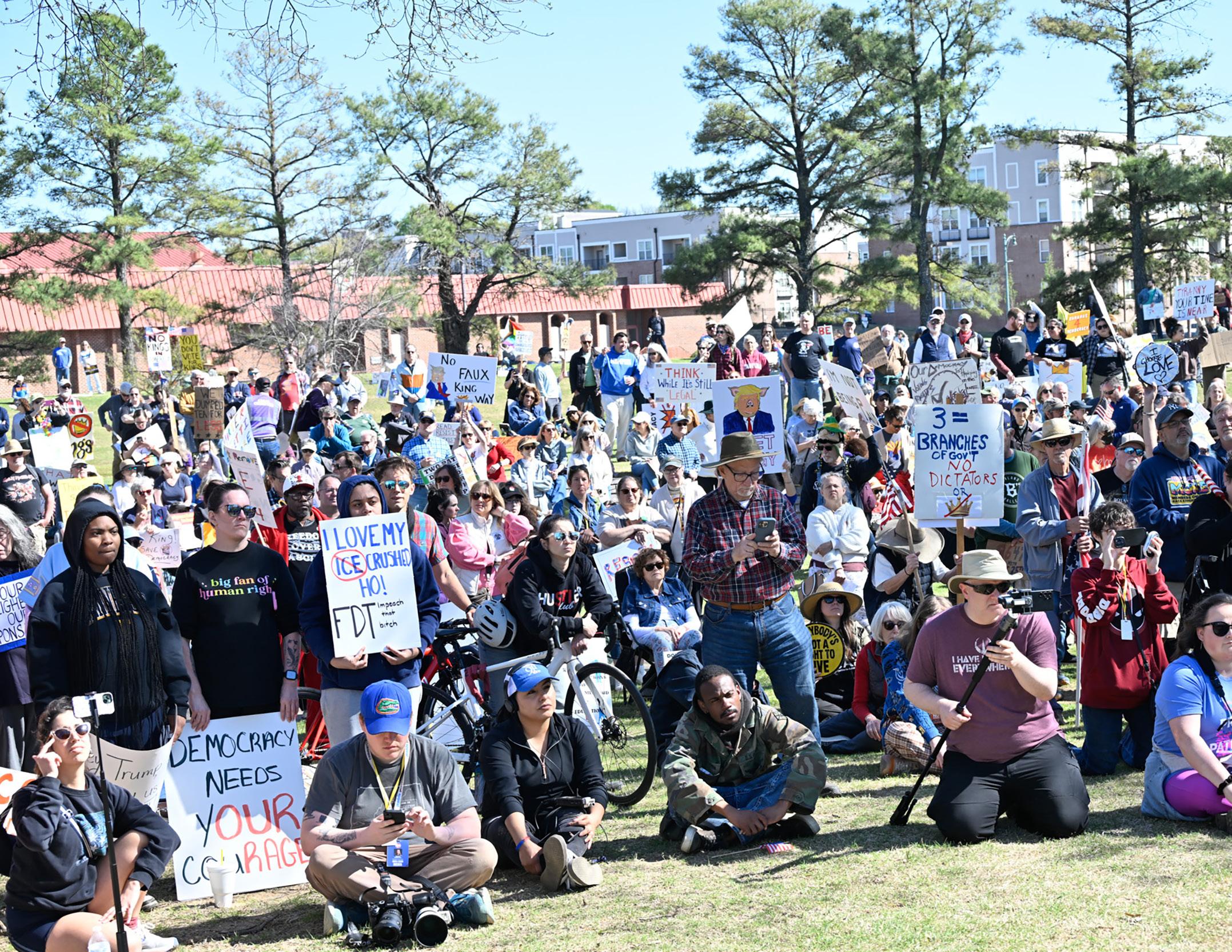
Whatever their reasons, thousands of Memphians gathered Saturday, March 28, at Robert R. Church Park — joining a wave of protests that spanned the nation — for the latest “No Kings” rally, voicing opposition to what they describe as an increasingly unchecked presidency.
Across the country, more than 3,000 “No Kings” events were held Saturday, drawing millions of participants in what organizers describe as one of the largest coordinated protest movements in recent U.S. history.
In Memphis, the gathering unfolded as both protest and community rally — with speakers, organizers and attendees pointing to issues that hit close to home, from immigration enforcement to economic pressure and the recent federal presence in the city.
According to the Memphis Police Department, six individuals were detained and three charged following what officers described as a disturbance near Second Street and Beale.
Police said organizers had a permit for the rally at the park, but not for a street march, and that officers gave repeated warnings for demonstrators to clear the roadway before making arrests.
One individual, identified as 33-year-old Rueben Burch, was charged with disorderly conduct, obstructing a highway, interfering with an officer and resisting detention. Authorities said pepper spray was used after a suspect resisted arrest. Organizers have disputed that account and called for further review of the incident.
While such protests are often portrayed in national media as drawing largely white, liberal crowds, Memphis told a different story.
Here, the gathering was notably diverse — Black
and white, young and old, families and seasoned activists — reflecting a broader cross-section of the city than the stereotype might suggest.
By the height of the event, the crowd had swelled to over a thousand, filling the downtown park with handmade signs, chants and conversation.
The afternoon opened not with speeches, but with music, setting a tone that felt as much communal as it was confrontational. A live band moved easily between eras and messages, with performances of “Wake Up Everybody,” popularized by Teddy Pend-
Memphis police officers detain a protester during the “No Kings” march downtown on Saturday, March 28. Authorities later said six individuals were detained following incidents related to demonstrators entering the roadway.
(Photos: Gary S. Whitlow/Tri-State Defender) ON THE COVER: Marchers head west along Beale Street near the intersection with B.B. King Boulevard following the “No Kings” rally.
■■ COMMUNITY
ergrass, and “Optimistic” by Sounds of Blackness. At moments, the crowd joined in on freedom songs like “Ain’t Gonna Let Nobody Turn Me Around,” grounding the protest in a deeper historical rhythm.
That sense of continuity was perhaps best embodied by Joe Calhoun of the Withers Museum and Gallery, who once again carried a sign noting that he marched in 1968 — and is still marching today.
The message required no amplification.
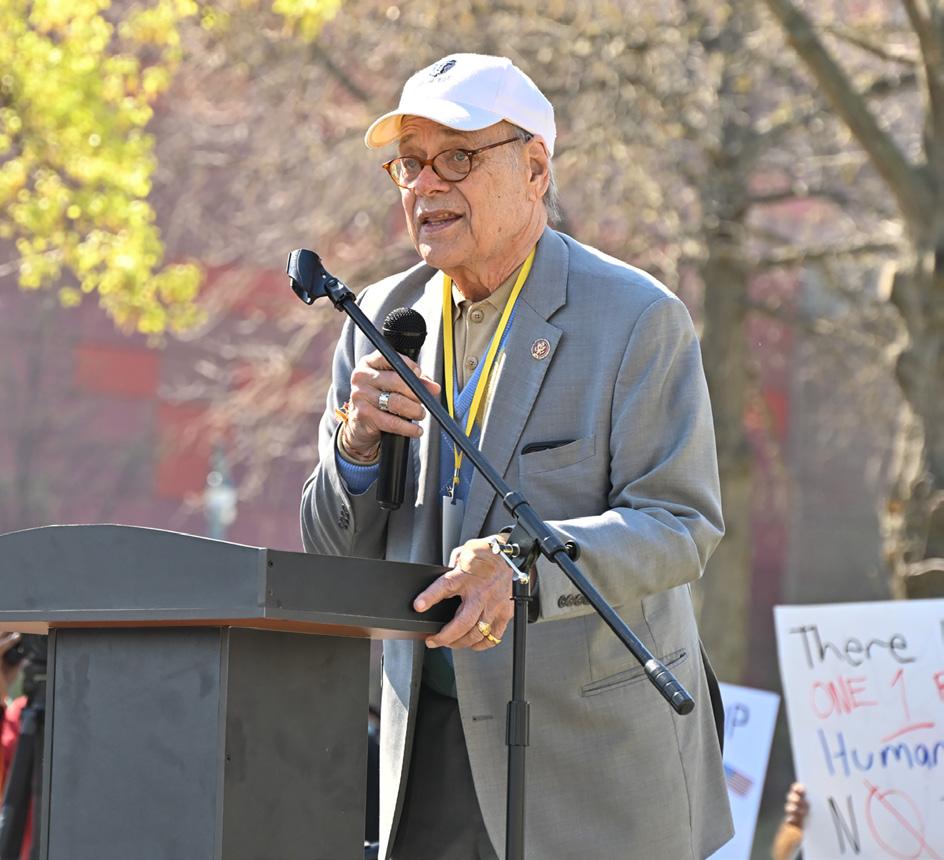
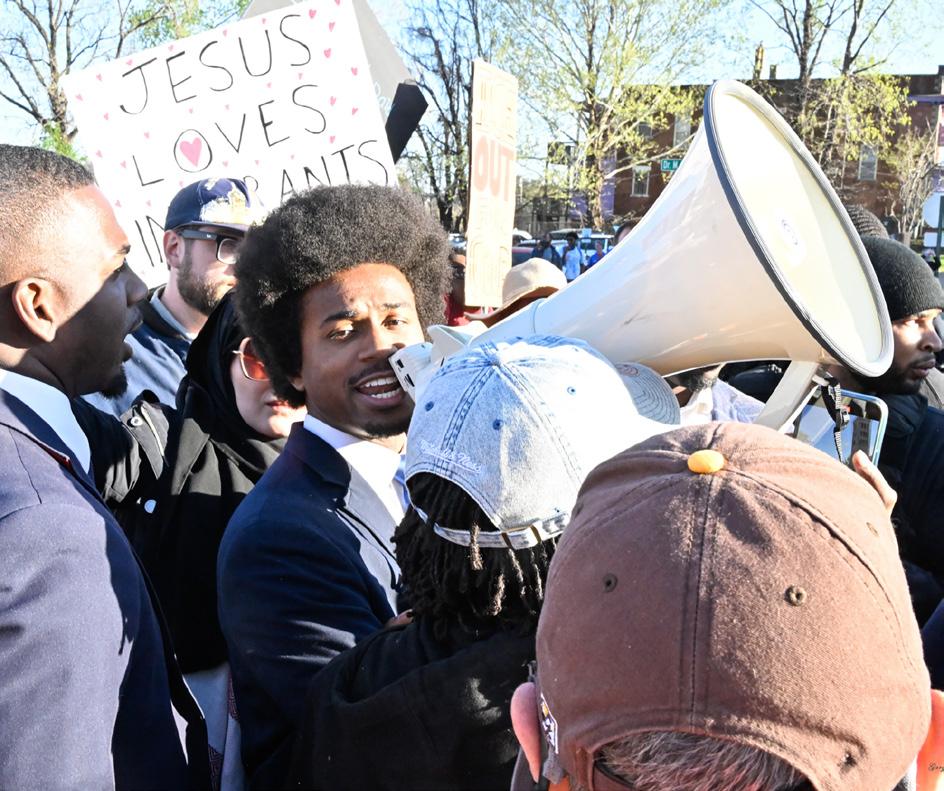
Elected officials also made appearances, including U.S. Rep. Steve Cohen, who addressed the crowd, and state Rep. Justin J. Pearson, who was seen both speaking and marching alongside demonstrators. Pearson, currently engaged in a primary challenge against Cohen, was joined at one point by his brother, Keshaun Pearson.
Memphis City Councilman J.B. Smiley Jr., who is running for Shelby County mayor, was also present, walking with participants through parts of the march.
Organizations including the National Action Network’s West Tennessee chapter were visible throughout the crowd, alongside grassroots groups and
of many visual statements that blended protest with performance.
Following the speaking program, demonstrators moved into the streets for an impromptu march from the park through downtown corridors that included Beale Street and along Martin Luther King Jr. Avenue near the FedExForum.
Despite tension between demonstrators and police, the overall tone of the day remained steady — part protest, part gathering, part reminder.
unaffiliated residents.
At one point, a protester wearing a Trump mask and an orange jumpsuit stood watching the crowd, holding a sign that read “Trump for Prison,” with “2028” crossed out and replaced with “Now” — one
In Memphis, at least, the “No Kings” message carried not only political urgency, but historical resonance — echoing past struggles while reflecting a present-day coalition that, like the city itself, refuses to be easily categorized.
Hundreds of demonstrators begin arriving shortly after noon at Robert R. Church Park for the “No Kings” rally in downtown Memphis on Saturday, March 28.
U.S. Rep. Steve Cohen addresses the crowd during the “No Kings” rally at Robert R. Church Park.
State Rep. Justin J. Pearson speaks through a bullhorn as his brother, Keshaun Pearson, stands behind him during the march.
A protester is detained by Memphis police during the “No Kings” march in downtown Memphis.
Planting more than seeds: Everbloom Farmacy cultivates growers, community and hope
Memphis nonprofit’s “seeding event” draws volunteers and teens to a larger vision of food sovereignty
By Lee Eric Smith TSD Contributing Writer
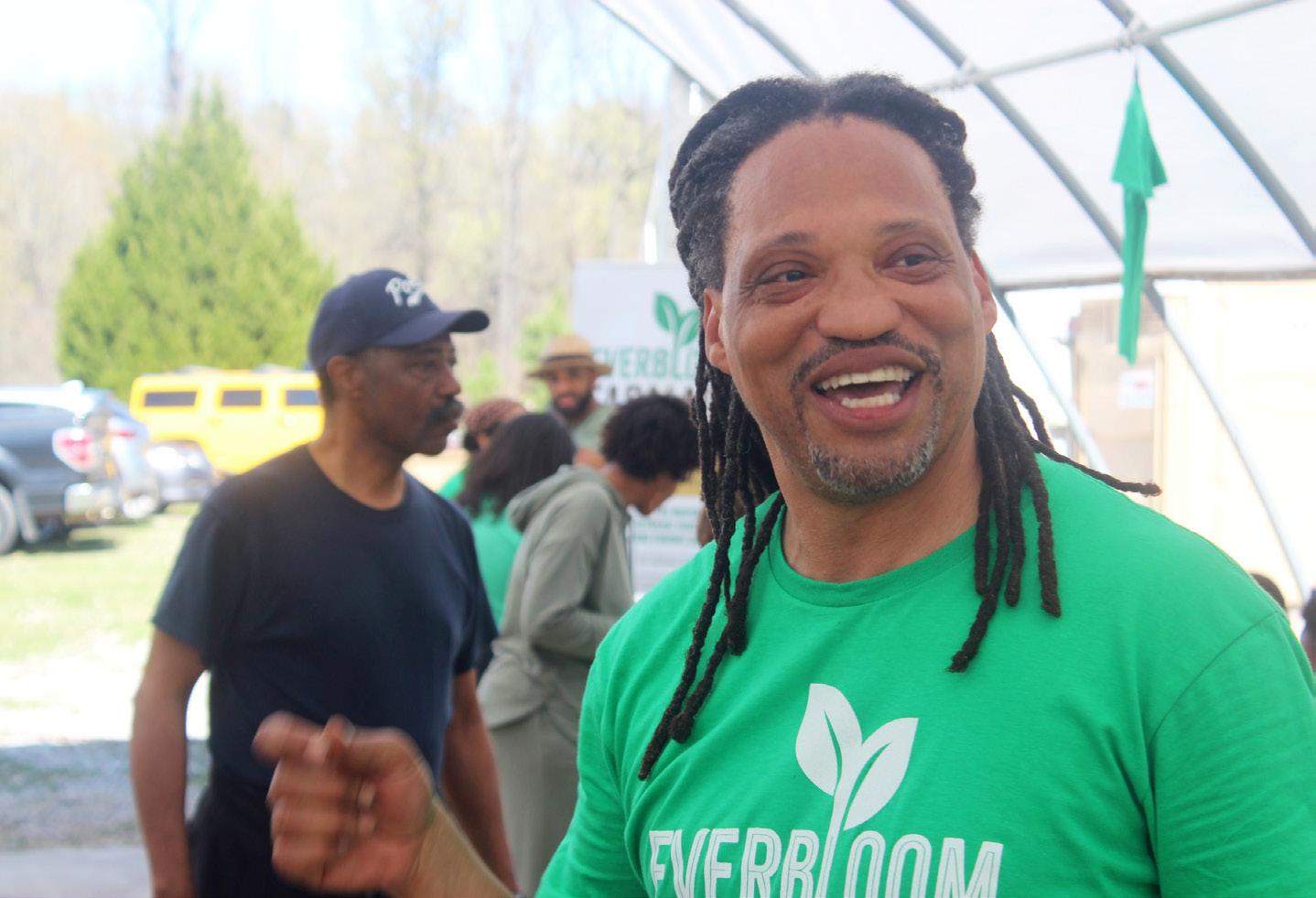
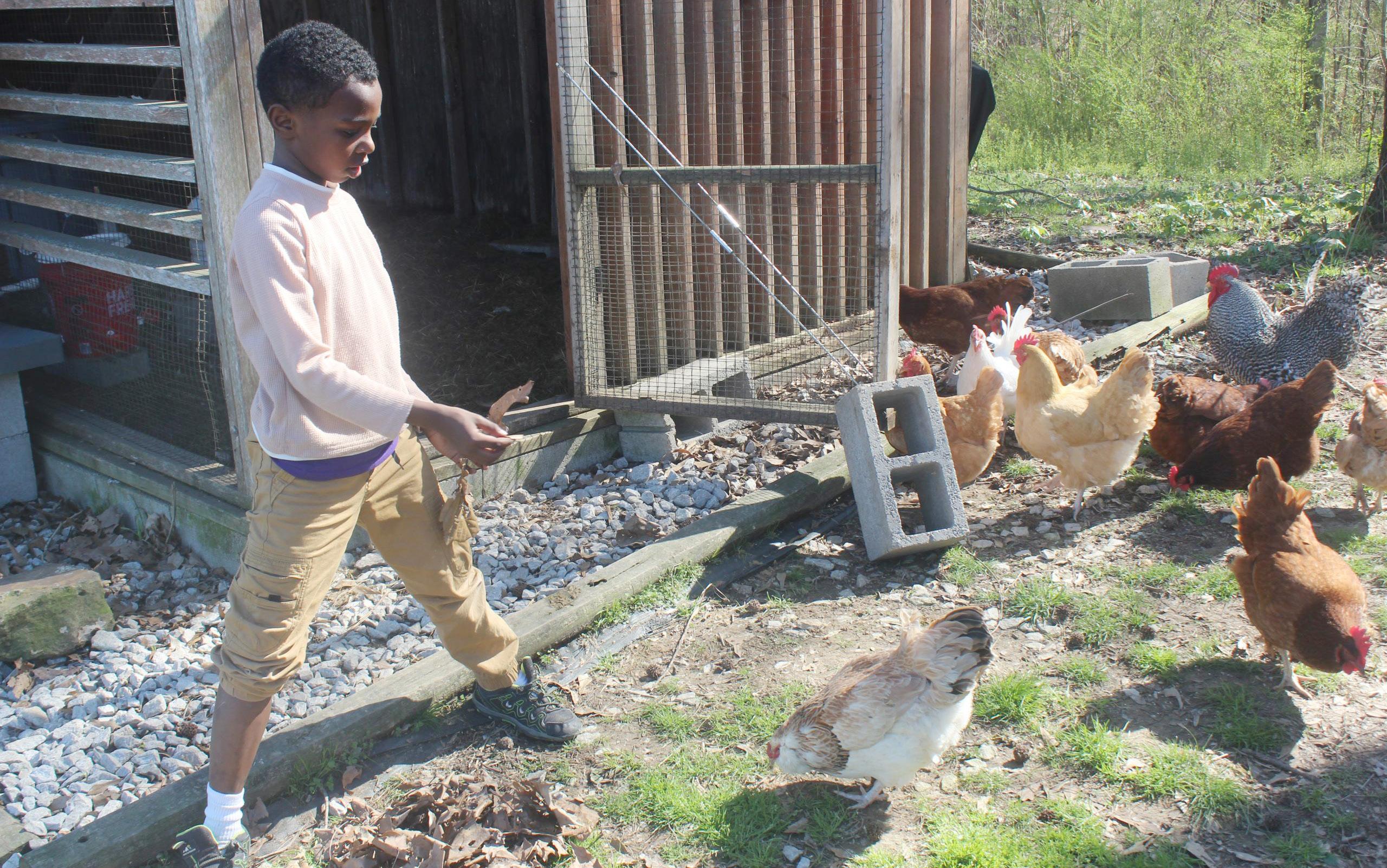
On a stretch of land where a lake glints in the distance and chickens roam beyond rows of seedlings, the work at Everbloom Farmacy looks, at first glance, like a simple day of planting.
But for founder Kenneth Anderson, the goal runs deeper.
“We’re not just planting seeds — we’re growing growers,” Anderson said, pausing amid trays of young plants and clusters of volunteers. “A cadre of people who can ensure Memphis always has food in abundance.”
The recent “seeding event” brought together residents from across Memphis — and even a group of teenagers from Birmingham, Alabama — to help repot and distribute thousands of seedlings grown on Anderson’s 21.5acre farm.
The work unfolded with an easy rhythm. Volunteers moved between tables, soil and starter plants in hand, while conversations flowed and music played in the background.
For Anderson, that blend of activity is intentional.
“Our mission is to grow food, well-being and community — together,” he said. “Each one feeds the other.”
‘An extension of your fridge’
Everbloom Farmacy, a nonprofit organization founded five years ago, is built around a simple but urgent premise: Access to healthy food should not depend on where you live or how much you earn.
“We really see ourselves as a movement,” Anderson said. “And that movement is about ensuring food sovereignty and food access — independent of your
economic status or where you live.”
A Memphis native who grew up in North Memphis, Anderson said the idea took shape after he returned to the Bluff City in 2009 following years of living overseas. There were patterns around the growth and consumption of food that he noticed in other cultures that he didn’t see back home.
“I realized there were a lot of health concerns impacting our community — obesity, hypertension, diabetes, cancers — all related to food,” he said. “And so much of our food appeared to be processed, because many of our community members live in food deserts.”
What troubled him most, he said, was not just access to food, but the lack of connection to how it is produced.
“A grocery store is a marketplace, not production,” Anderson said. “It’s important to have places where people can buy food, but we need to reconnect with the idea of growing our own food.”
His guiding principle is straightforward:
“Your garden should be an extension of your fridge.”
Seed starters
That philosophy drives the organization’s work — particularly events like the recent seedling giveaway, where participants receive starter plants and hands-on guidance at no cost.
“The only way to get people to do that is to provide the means and access so they don’t have to spend money just to start,” Anderson said.
Through its state-licensed community nursery, Everbloom continuously grows and distributes seedlings while teaching residents how to maintain their own gardens. He believes the approach is key to building a sustainable local food system.
“Our mission is to show that many hands make light work,” Anderson said.
“If everybody does something, no one has to do too much.”
From volunteers to future growers
For many attendees, the event was as much about connection as cultivation. Jackie Pride, a Memphis resident attending her first Everbloom event, said she was drawn by friends — and stayed for the sense of community. African drummer Ekpe Udoh maintains a gentle rhythm and vibe.
“This is an awesome property. They’ve done a beautiful job with this farm,” Pride said. “And you hear the music playing? That’s our history. It’s all about bringing us together.”
“This isn’t just about one person, one company or one nonprofit,” she added. “This is a community event.”
That community extended beyond Memphis. J’Money Webb, 15, traveled from Birmingham with classmates from Build Up Community School as part of a school trip organized by a principal with Memphis ties.
“He wanted us to see how they grow plants so we can go back home and share what we learned,” Webb said.
The experience shifted his perspective.
“When you grow your own food, you know where it comes from,” he said. “If you just buy it from the store, you don’t always know.”
Webb said he now hopes to garden more regularly — starting with one of his favorite foods.
“I’d say cabbage,” he said. “And yeah, I know how to cook it, too.”
Closer to home, 14-year-old Enoch Graham, a student at Houston High School, said his own experience with growing began with flowers — but the lesson extends further.
“Without farmers, we wouldn’t have
Kenneth Anderson, founder of Everbloom Farmacy
■■ COMMUNITY
fresh food — healthy food,” Graham said. “Everything would just be processed.”
His advice for getting more young people involved is simple:
“Just getting out there and trying it. Once you do it one time, it’s kind of fun.”
‘Shelter isn’t just a house, it’s community’
For Anderson, those individual experiences are part of a larger goal — one that connects food access to broader social outcomes.
“I’ve been a lawyer for more than 28 years,” he said. “When I look at the map in Memphis and see where crime is highest, and then overlay where food insecurity is highest — it’s a one-to-one ratio.”
To him, that correlation points to a deeper issue.
“Crime is often a symptom of needs not being met,” Anderson said. “And those needs are simple: food, shelter and connection.”
“And shelter isn’t just a house — it’s community.”
That belief fuels Everbloom’s ongoing outreach, with regular seedling distributions planned across Memphis, including North Memphis, New Chicago and Boxtown. The next opportunity comes soon.
Everbloom Farmacy will host another community seedling distribution on Saturday, April 4, from 2 to 4 p.m. at its Community Learning Nursery, 6165 Benjestown Road. Participants can pick up starter plants — including tomatoes, cucumbers, peppers, okra and squash — and get guidance from the organization’s grow team.
The event builds on recent momentum. In March alone, Everbloom distributed nearly 800 starter plants and worked with volunteers to transplant more than 2,000 seedlings.
For those interested, Anderson’s message remains simple:
“Spend time in the soil,” he said. “And if you don’t want to do that, support someone who does.
“Everybody eats. We just want to make sure everybody eats well.”
Lee Eric Smith II feeds the flock at the Chicken Coop at Everbloom Farmacy in the Shelby Forest area of Shelby County.
Jackie Pride (center) makes friends while she gets her hands dirty at Everbloom Farmacy.
‘In HER Era’: Memphis women gather for a day of purpose, power and possibility
Junior League summit features HGTV host, real estate agent Egypt Sherrod
By Judith Black Moore TSD Contributing Writer
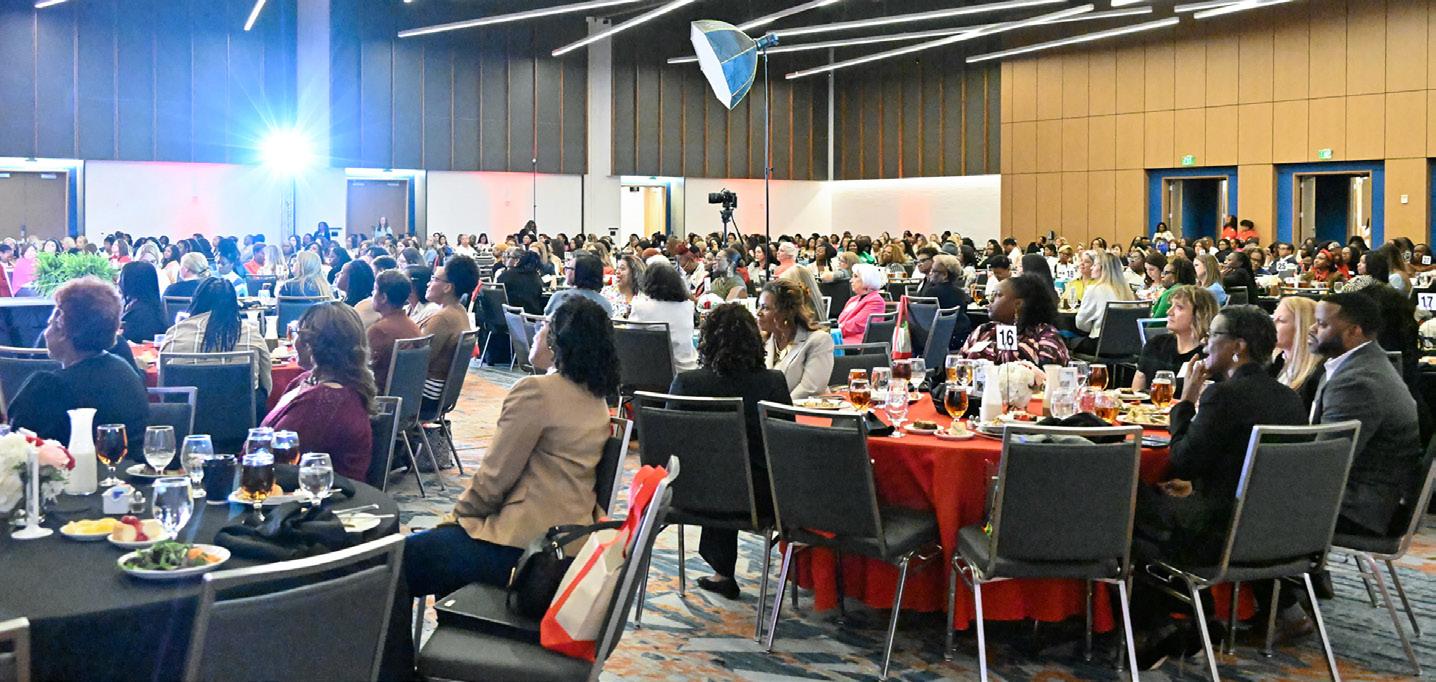
Hundreds of women from across the Mid-South gathered at the Renasant Convention Center for the 11th Annual Develop H.E.R Women’s Summit on Friday, March 27.
Hosted by the Junior League of Memphis, this year’s theme, “In HER Era,” framed a day of programming focused on professional development, personal wellness and community leadership.
The event included a marketplace featuring local vendors and community organizations offering products and services ranging from apparel and jewelry to health resources and business support. Breakout sessions were held throughout the day, covering topics related to financial growth, wellness and career development.
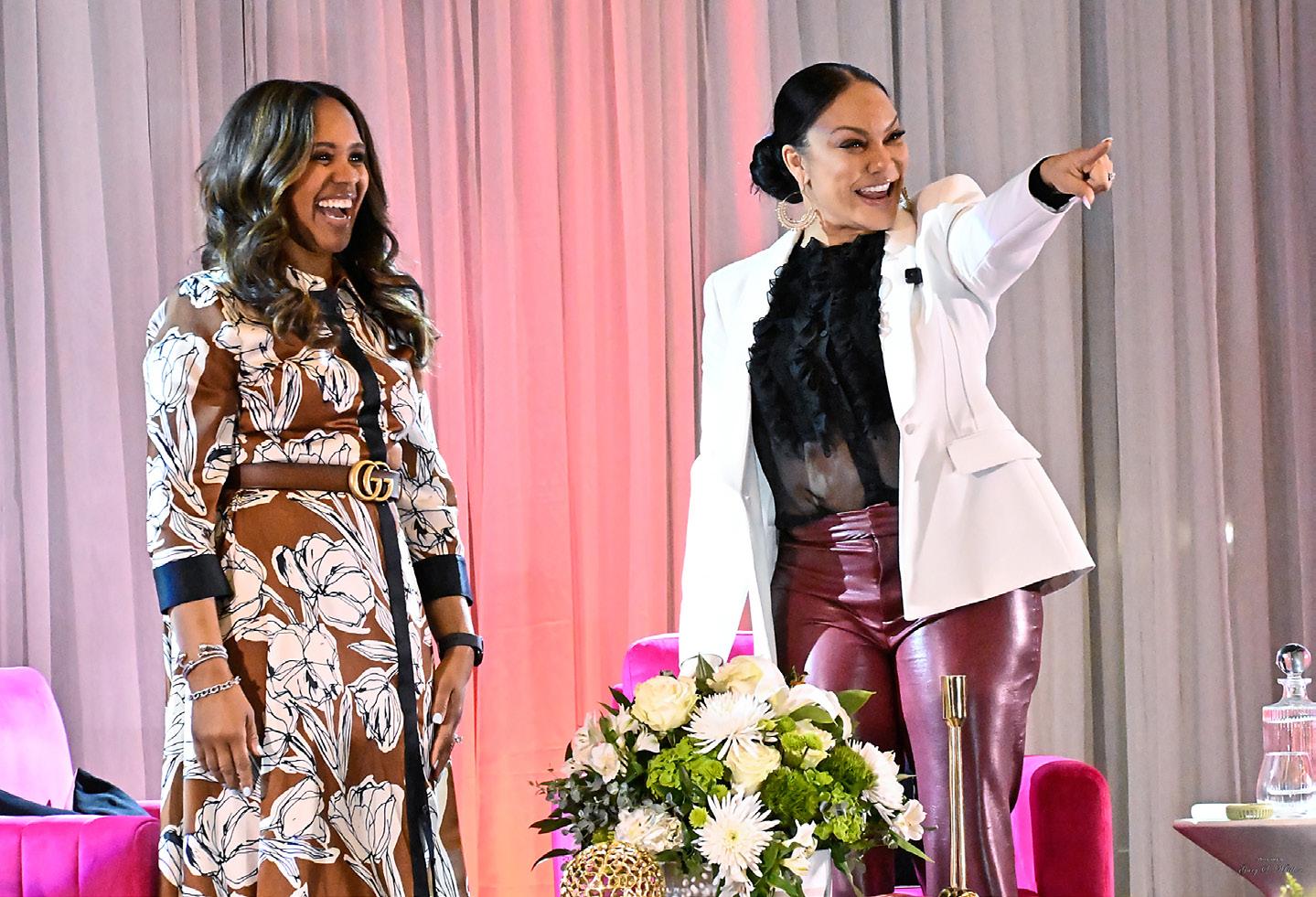
A featured conversation with Emmy Award–nominated television host, real estate expert and designer Egypt Sherrod was moderated by Joy Redmond, Action News 5 anchor.
“Memphis always shows me so much love,” Sherrod said, as she opened the discussion. “Are we going to keep it real today?”
Sherrod is best known as host of HGTV’s Flipping Virgins and its long running show, Property Virgins. She is CEO & Managing Broker of the Atlanta-based residential brokerage Indigo Road Realty, and is also principal designer at Indigo Road Design Group
and Indigo Road Home Furnishings.
She spoke about decision-making in the face of uncertainty and the importance of acting despite uncertainty.
“When we move forward in the face of fear, we begin to fear a little bit less,” she said. “For me, it was about obedience. I was called for something bigger. When I didn’t have the connections and didn’t have the credentials, I still moved anyway.”
She also discussed the role of action in creating opportunity.
“When we move, everything we need shows up for us in divine timing,” she said.
Addressing work-life balance and sustainability, Sherrod said she made intentional changes in her own career.
“At some point, something has to give,” she said. “I had to downsize to make my life more sustainable because bigger is not always better.”
She also spoke about financial priorities and long-term goals.
“We cannot exist in a space where we are chasing money,” she said. “Create something for yourself that creates freedom.”
Sherrod described once losing her job as a turning point in her career.
“I call it ‘fired to freedom,’” she said. “Living in service is where I found joy.”
For some attendees, the discussion reinforced personal and professional goals.
“She encouraged me to go out there and be what I want to change in the world,” said Brittney Patterson, an
entrepreneur attending the summit for the first time. “Listening to her made me feel like I can do this.”
Patterson, who owns Nephew #2 BBQ and Exquisite Business Solutions, said the event provided both encouragement and practical insight.
Junior League of Memphis President Lori Jackson Evans addressed attendees near the close of the event.
“I thank all of the women that showed up and chose to be their authentic selves,” Evans said. “I hope you do not let today’s energy stop at the door. Take it home and share it with
someone else and surround yourself with truth tellers.”
The organization also recognized longtime office manager Pat Pope, who is retiring after 37 years of service.
“I like to think we found a need in the community and we helped fill that need,” Pope said in a video presentation highlighting her tenure.
Founded in 1922, the Junior League of Memphis supports community initiatives through volunteer service, training and partnerships, and has contributed to the development of several Memphis-based organizations.
Joy Redmond, left, moderates a conversation with Dr. Egypt Sherrod, right, during the Junior League of Memphis’ 11th annual Develop H.E.R. Women’s Summit on Friday, March 27, at the Renasant Convention Center. (Gary S. Whitlow/Tri-State Defender)
Hundreds of women gather at the Renasant Convention Center for the 11th annual Develop H.E.R. Women’s Summit, a daylong event hosted by the Junior League of Memphis focused on professional development, wellness and community leadership.
2026 Restaurant outlook: Casual dining value and experience create recipe for success
By Cristin O’Hara and Trevia Chatman Special to the Tri-State Defender
Despite ongoing inflation, workforce challenges and the looming effects of tariffs, consumer spending on restaurant fare has continued to edge upward. Projections indicate that food service industry sales will reach $1.5 trillion in 2025, which is encouraging news for operators. Yet, beneath this resilient demand are shifting tastes, strained household budgets and consumers becoming more selective about where they dine, how often and what they consider “worth it.”
Tennessee, as well as Memphis, has a very diverse and lucrative restaurant industry. According to the National Restaurant Association, the restaurant industry is the fourth largest employer in Tennessee. In 2025, there were more than $29 billion in restaurant and food service sales and every dollar spent in Tennessee restaurants contributes more than $1 billion to the state economy. In Memphis, there are many food festivals and events that amplify the restaurant industry including Memphis Black Restaurant Week, DeSoto County Dining Week, Downtown Dining Week, the Memphis in May World Championship Barbecue Cooking Contest and countless others.
With QSR prices rising and the gap between QSR and casual dining narrowing, consumers are willing to spend a little more for better quality and experience. QSR prices have reached a tipping point where casual dining is now viewed as offering better quality and value.
To compete in this environment, fast casual brands are leaning into quality cues, like ingredient sourcing, portion confidence and using limited-time offerings to create urgency. Meanwhile, QSRs are communicating value with affordable meal bundles and adjusted menu prices to attract price-conscious consumers.
While costs ease, budgets remain strained
Wholesale food prices continued to trend higher in 2025, and while labor challenges have eased somewhat, operators could expect more states to enact minimum wage increases in the year ahead. That could keep menu prices under pressure.
According to a recent Bank of America Institute report, rising inflation expectations may signal a tightening of spending habits. As household budgets remain tight, value has become non-negotiable for consumers. Menu “engineering” is becoming more disciplined: brands are retiring low-margin items, simplifying prep to cut waste and labor time, and using premium sides, sauces and beverage upgrades to lift average check numbers without across-the-board price hikes. Companies that pair sharp price-positioning with a differentiated experience are best positioned to win repeat visits.
Easing capital costs may unlock opportunities
After three years of decline, restaurant M&A is poised to pick up. Many investors have been waiting on the sidelines for the dust to settle; however, forecasts now point to easing capital
costs and a more merger-friendly regulatory environment.
Public markets may reopen, too. The first successful restaurant IPO could unlock a wave of offerings for brands with compelling unit economics, a scalable model and strong performance.
At the same time, consolidation within banking, particularly acquisitions of regional lenders with deep restaurant relationships, introduces counterparty risk. If a new parent bank exits the sector, operators could find themselves scrambling. Operators are staying close to lenders, stress-testing cash flow under higher-for-longer scenarios and establishing relationships with larger institutions to preserve access to capital as bank appetites evolve.
Franchisees are diversifying
If legacy brands struggle to reignite traffic through innovation and pricing, the sector could see more franchisees pivot to newer growth concepts. Recently, several large operators diversified into brands such as 7 Brew, Dave’s Hot Chicken and Hawaiian Bros, attracted by strong unit economics and runway. The trend will likely accelerate in 2026 if incumbents don’t persuade operators and guests that they deliver real value.
Across the sector, experience is starting to carry as much weight as price. “Give me value or give me vibes,” is the latest decision filter among consumers. To thrive, operators must deliver a differentiated value proposition and show relentless adaptability. That means sharp menu engineering, with new items, limited time offers and targeted discounts that reinforce brand positioning, combined with an improved service culture and ambiance. Operators are considering investments in lighting, acoustics, seating layouts and greeting/order/ payment routines, while improving accuracy and speed.
While the appetite for dining out remains healthy, selectivity is the new baseline. Success in 2026 will hinge on a disciplined playbook: make value visible through precise pricing, create menus that balance desirability and margin, invest in service culture and ambiance and maintain flexible access to capital as banking relationships shift. Resilience has carried the industry this far; adaptability will carry it further.
Christin O’ Hara is the managing director and restaurant group head at Bank of America. Trevia Chatman is the president of Bank of America Memphis.
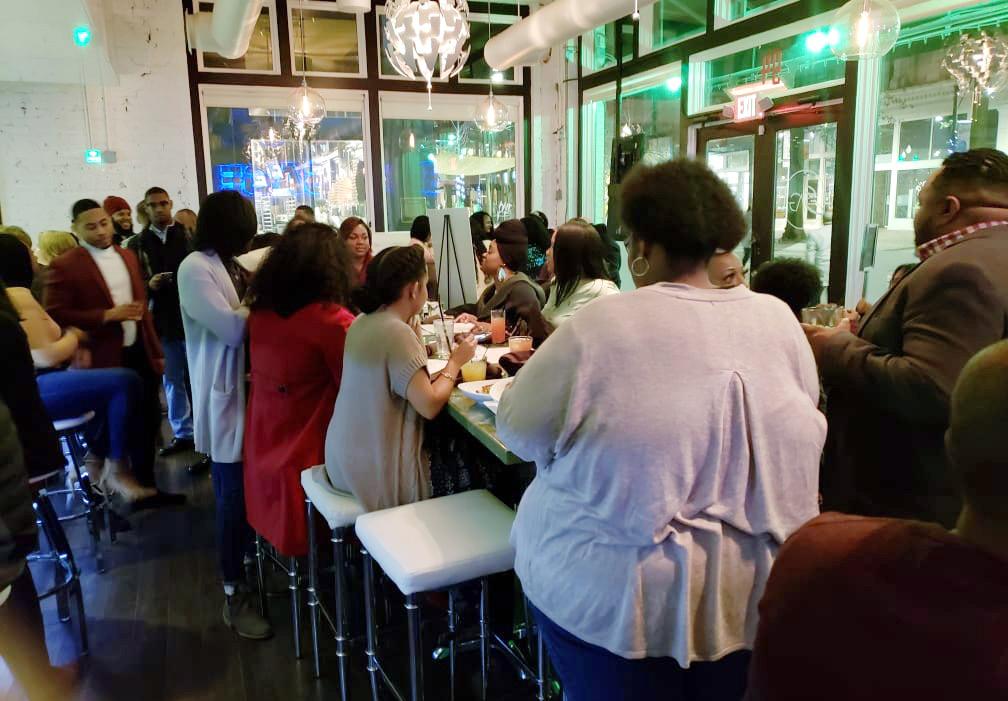
The restaurant industry is the fourth largest employer in Tennessee, according to the National Restaurant Association.
■■ SPORTS
Georgia Southern’s Hana Haden hired as Memphis women’s basketball coach
By Associated Press
Memphis has hired Hana Haden from Georgia Southern as the 14th women’s basketball coach in program history.
Athletic director Ed Scott announced the hiring Thursday. Haden will be introduced at a news conference on Wednesday.
Haden just earned honors as the 2026 Sun Belt Coach of the Year after taking Georgia Southern to a 23-8 record and the first regular-season title in 25 seasons. That was despite being picked to finish 10th in the preseason poll of the league’s coaches.
“Hana has demonstrated a sustained ability to win at every level and lead her teams to postseason success throughout her career,” Scott said in a statement. “Hana is a proven leader who brings exceptional drive, determination and
energy, and we are confident she will elevate our program.”
Haden spent the past two seasons at Georgia Southern and coached senior Kishyah Anderson to a breakout performance as the Sun Belt Player of the Year this season.
“This university represents a city and a state with an incredible passion for basketball, and I look forward to building a championship program that embodies the pride and toughness to reflect that passion,” Haden said.
Haden has a record of 224-91 as a head coach over 10 seasons. She also has coached at Division II Georgia Southwestern State and Moberly Area Community College. She played at Western Carolina for two seasons after stops at the University of Missouri-St. Louis and Mineral Area College.
PUBLIC NOTICES / CLASSIFIEDS
LEGAL NOTICE
Request for Statement of Qualifications
MSCAA Project Number 25-1487-00
Airport Construction Administration & Inspection Services
Statements of Qualifications for Airport Construction Administration & Inspection Services will be received by the Memphis-Shelby County Airport Authority (Authority), Procurement Department, 4150 Louis Carruthers Road, Memphis, TN 38118, until 2:00 PM local time on April 14, 2026. The Information Package, including a description of the scope of services, the selection criteria, the required response format, and additional instructions may be obtained on the Authority’s website at www.flymemphis.com on or after March 17, 2026
All Respondents are responsible for checking the Authority’s website up to the submission deadline for any updates, addenda or additional information. The successful Respondent must meet the Small Business Participation Program (SBPP) goal for this project, which is 18%, and sign a contract with the Authority that includes Federal Aviation Administration provisions, if applicable, regarding Buy American Preference, Foreign Trade Restriction, Davis-Bacon, Affirmative Action, Debarment and Suspension, and Drug-Free Workplace, all of which are incorporated herein by reference.
The Authority reserves the right to reject any or all responses to this request in whole or in part; to waive any informalities, technicalities, or omissions related to this request; and to reject responses on any other basis authorized by the Authority’s purchasing policies.
TSD CLASSIFIEDS
1509 Madison Ave.
Memphis, TN 38104
PH (901) 523-1818
HOURS: Mon.-Fri. 9 a.m. - 5 p.m.
DEADLINES: Display ads Friday 5 p.m. Classifieds ads Monday 5 p.m. STANDARD RATES: $8.00 per line for 1 column ad. THE TRI-STATE DEFENDER assumes no financial responsibility for errors nor for copy omission. Direct any classified billing inquires to (901) 523-1818.
The Authority is an equal opportunity employer and prohibits discrimination based on the grounds of age, race, sex, color, national origin, disability, marital status, military service, or sexual orientation in its hiring and employment practices and in the admission to, access to, or operation of its programs, services, and activities.
By order of: Terry Blue, A.A.E. President and CEO Memphis-Shelby County Airport Authority