
TRI-STATE DEFENDER



By James Coleman TSD Contributing Writer
Public safety efforts in Downtown Memphis received another infusion of cash from the state legislature this budget season.
A $50 million grant to the Downtown Memphis Public Safety was included in the state’s $58.3 billion FY2027 budget that passed on April 16. The endowment follows a $74 million grant from state lawmakers earlier this year.
The Downtown Memphis Commission is currently designing infrastructure to invest the $124 million. City and state leaders hope the outlay will encourage visits to Downtown Memphis.
City planners are currently drawing up improvements to support peak travel and high visitation times downtown. Meanwhile, physical upgrades could include sidewalks that meet ADA standards and improved pedestrian and street lighting for increased visibility.
MDC is responsible for the development of the 6.5-mile Downtown Memphis area, including the Beale St. entertainment district and the FedEx Arena.
The Memphis City Council recently invested $80 million in a planned $550 million renovation of the latter. The upgrades to the facility are intended to prevent the Memphis Grizzlies from seeking greener pastures in another city.
Numerous marquee NBA players like Lebron James, Draymond Green, Anthony Edwards and Jimmy Butler have skewered the 21-year-old arena, along
with the city’s accommodations.
More ominously, an expansion of the league is expected before the start of the 2028-29 season, with Seattle and Las Vegas expected to gain franchises. Adding more logos to the 30-team league, or relocating small market franchises — like Memphis — are being studied as options.
City leaders have taken note. A $250 million renovation is slated to begin at the former Downtown Sheraton Hotel — dubbed the Memphis Riverline Hotel on an interim basis — next year. The work is scheduled to be completed in 2029.
Renovations are also underway at four city-owned parking garages. Improvements at the Justice Center, Peabody, First Place and Borboro facilities include enhanced public safety efforts like lighting and signage. Structural repairs and waterproofing are also being done.
Last year, the Memphis Police Department opened a Downtown Command Center. The $2.5 million surveillance hub, which features AI-powered cameras, serves as a “real-time crisis center.” The command center is located at 250 Peabody Place.

Nonprofits’ yearly filings reveal details about leadership, priorities and how your dollars are used
By Judith Black Moore TSD Contributing Writer
While you may have filed your taxes by April 15 and moved forward, nonprofits are still on the clock. May 15 is their red-letter day, the deadline to file Form 990, a public document that offers a detailed look at how an organization operates.
When deciding to support an organization, many donors focus on mission statements, events or community presence, but the 990 provides something different: a behindthe-scenes view of how a nonprofit is structured, governed and funded. The form answers key questions: Who is overseeing the organization? How is money being spent? How much is going toward programs versus administration?
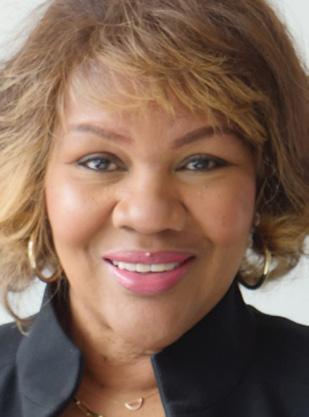
“A Form 990 is one of the most accessible tools the public has to understand how a nonprofit functions. It provides insight into governance, compensation and spending priorities — things donors should feel comfortable reviewing.” — Courtney Davis
with program versus administrative expenses.
“While there is no perfect ratio, this section can give donors a general sense of how much of the organization’s budget is directed toward its mission compared to operations,” she explains.
Next, review leadership and governance. “The 990 lists board members and key staff, which will offer donors a glimpse into who is making decisions and whether there is a strong, engaged governing body,” Davis added.
For those who give, these are important questions.
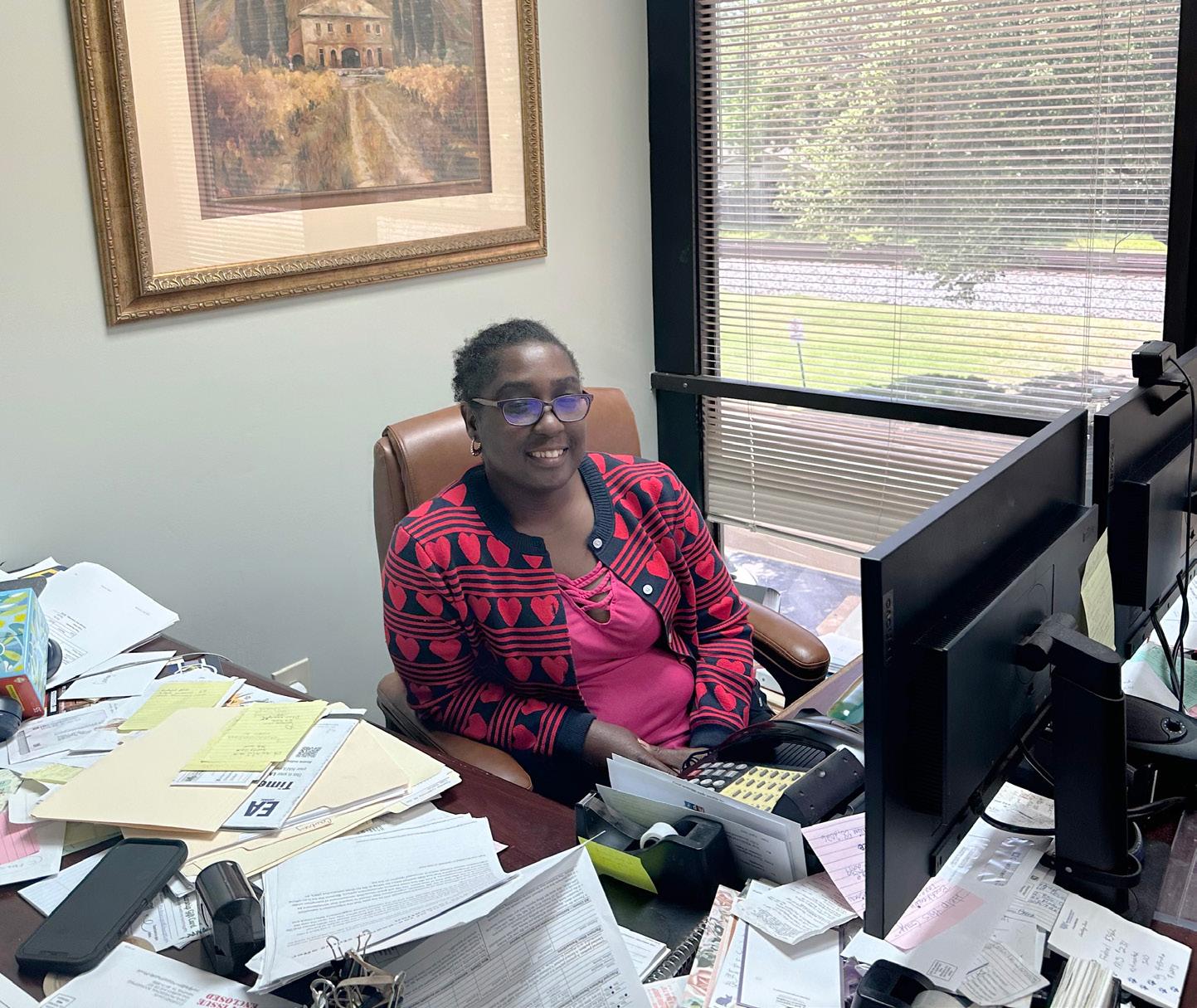
“A Form 990 is one of the most accessible tools the public has to understand how a nonprofit functions,” said Courtney Davis, owner of Davis Professional, a tax, bookkeeping and financial services company. “It provides insight into governance, compensation and spending priorities — things donors should feel comfortable reviewing.”
But beyond simply locating the document, knowing what to look for makes all the difference. Davis says to start
She advises donors to take a look at executive compensation. This is often one of the most discussed elements, but it should be viewed in context — considering the size, scope and complexity of the organization.
Finally, pay attention to revenue sources. “Is the organization primarily grant-funded? Does it rely on individual donations? Is it generating income through programs? These details can reveal both stability and vulnerability,” said Davis.
She cautions that although these are critical details, the numbers don’t tell the whole story. Impact, relationships
and community trust are vital aspects not easily captured in a financial document. But the 990 offers a level of transparency that should be taken into account when making philanthropic decisions.
“The obvious may not always reflect the full picture,” says Davis. “An organization with lower revenue may still be delivering meaningful work. A larger organization with more funding may also have the resources to hire professionals who can more effectively present their financial story. Understanding these nuances is essential when reviewing a 990.”
In a time when individuals are more
intentional about where they give, the 990 can serve as a valuable tool for becoming better acquainted with the organizations they support. It allows donors to move beyond assumptions and gain a clearer understanding of where their money is going and who is responsible for stewarding it. Nonprofits are required to make this information available. The opportunity lies in whether the public chooses to use it.
Black Moore is a nonprofit consultant and the founder of Taking Back the Future, a youth-focused nonprofit.
By Bri Hatch Chalkbeat
The Memphis-Shelby County school board voted unanimously Tuesday night to hire a lawyer to challenge the state takeover legislation Tennessee Republicans advanced on Monday.
Hours before the Memphis board met, Gov. Bill Lee signed into law new legislation that will block the district from using public funds to pay for the lawyer. It’s unclear what that will mean for a lawsuit from MSCS moving forward.
The Memphis board meeting came one day after state lawmakers approved bill language that would give a new state-appointed oversight board control over the district’s budget and staffing decisions. That includes hiring and firing the superintendent with or without cause.
The takeover bill still needs to pass in the House and Senate, with the first round of voting expected on Wednes-
day, April 22. In Monday’s conference committee meeting, some Democrats raised concerns about the legality of the bill, which they said targets MSCS in its criteria for intervention.
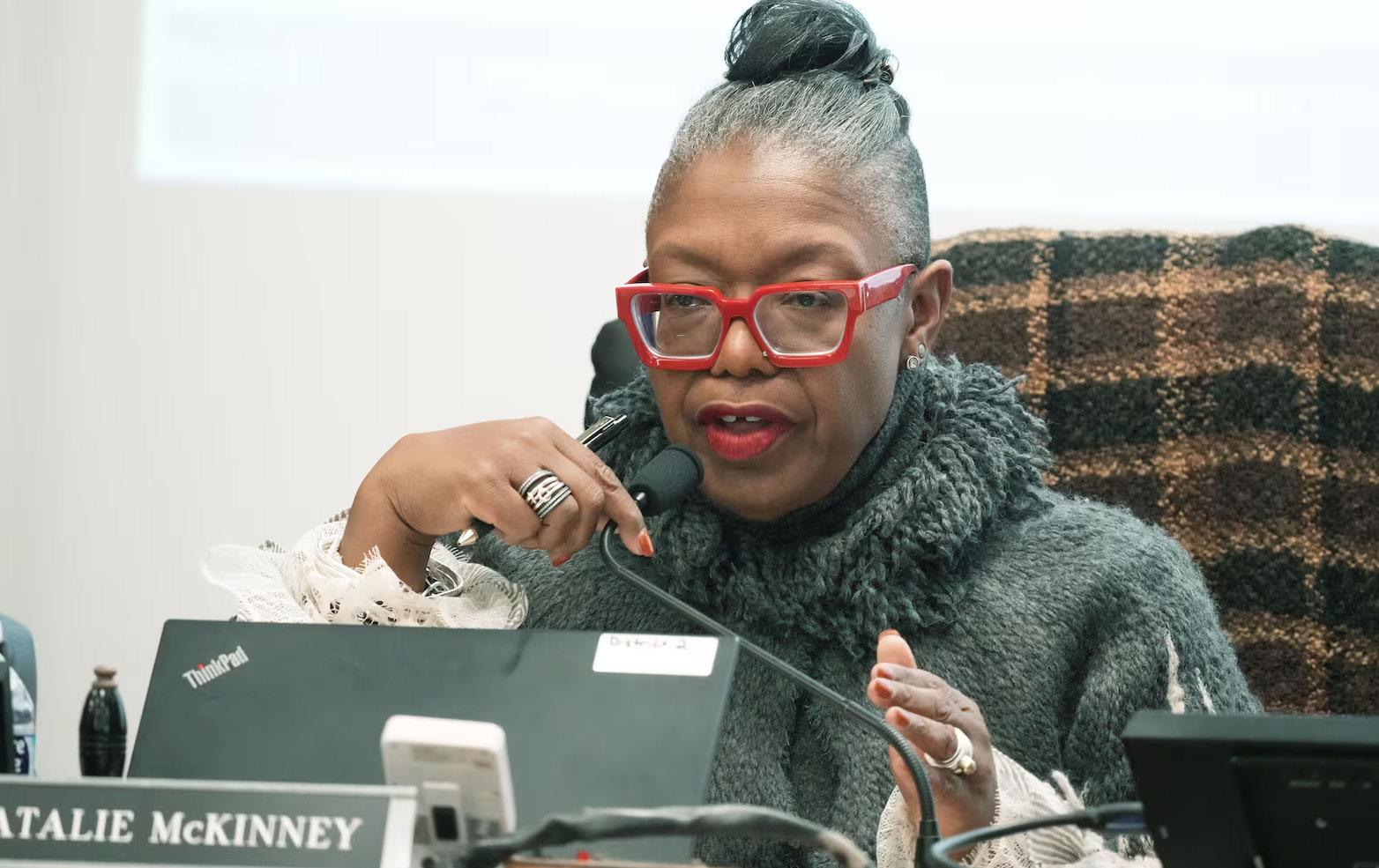
Board members met in executive session before voting on the resolution, which was sponsored by board chair Natalie McKinney. Keith Williams was not present for the vote.
Board member Stephanie Love, who represents the Frayser area, said Tuesday that the district is still trying to “undo the unjust harm” caused by state intervention through the failed Achievement School District.
“We have a lot of work to do, but we are up for the task,” Love said. “And this law is racist. We are the largest public school system, the Blackest public school system, in the state of Tennessee.”
The new takeover bill could target other Tennessee school districts. But only MSCS meets all six of the academic underperformance and management
instability criteria that triggers state intervention. For one, Memphis is the only district in the state with an ongoing state-funded forensic audit managed by the Tennessee Comptroller.
Other criteria include school districts where:
• fewer than 50% of students earn proficient scores on state standardized math tests.
• fewer than 50% of students earn proficient scores on state standardized English language arts tests.
• 25% or more of schools in the district earn a D or F letter grade from the Tennessee Department of Education.
• and a 25% or higher chronic absenteeism rate.
McKinney told Chalkbeat before Tuesday’s meeting that she supported suing the state after multiple failed attempts to collaborate with lawmakers for an alternate path forward. She also said the takeover bill doesn’t help students.
“There is nothing in that piece of
legislation that talks about academics,” she said. “It talks about our buildings and our budget.”
The oversight board would work on a mandated four-year term, during which it has veto power over proposed budgets and vendor contracts. It also has broad power to fire the superintendent and can cite the district leader’s refusal to follow board directives as cause for termination.
The current MSCS board unanimously approved a three-year contract for Superintendent Roderick Richmond on March 31. But Tennessee Republicans frequently point to the 2023 state takeover of Houston public schools as a model for MSCS’ intervention, where state education leaders immediately fired the superintendent and appointed a new one.
— Bri Hatch covers Memphis-Shelby County Schools for Chalkbeat Tennessee. Reach Bri at bhatch@chalkbeat.org.
This story was originally published by Chalkbeat.
By Candace A. Gray TSD Contributing Writer
The Benjamin L. Hooks Institute for Social Change at the University of Memphis marked its 30th anniversary with a celebratory gala that brought together civil rights veterans, community leaders, scholars and elected officials to reflect its legacy of advocacy and to chart a course for the work ahead.
In addition to celebrating its milestone, the evening also shone a light on four “Pillars of Progress,” who represent their namesake’s ideals and strive for justice in their own corners of Memphis and the world. The evening’s awardees included the Honorable Johnnie Taylor, Joycelyn Wurzburg, The Brooks Museum and the Tri-State Defender.
The evening opened with a rendition of “Total Praise” by the late Richard Smallwood, performed by a string quartet, rhythm section and an ensemble of singers. A video tribute, the first of several throughout the night, to the institute’s namesake, the late Rev. Dr. Benjamin L. Hooks, civil rights icon, former NAACP executive director and Memphis native, would follow.
“You all look gorgeous,” said Michael Hooks, Jr., echoing the words his uncle would often say. “That’s what Dr. Hooks would say.”
Born in 1925, Benjamin L. Hooks was denied access to equal education to whites, and rather than accept it, he spent his life challenging it for generations to come. That legacy is what the institute was built to carry forward.
Jesse Turner, chairman of the institute’s advisory board, set the tone early, reminding the audience that the organization was founded with a clear and ambitious charge: to preserve the history of the Civil Rights Movement
and to finish its unfinished work.
“That takes 30 years of belief,” Turner said.
U.S. Rep. Steve Cohen (D-Tenn.) echoed that sentiment, crediting the Hooks family and institute with playing a significant role in his political career. “They supported me,” Cohen said. “They were a large part of all my successes and I’m grateful for them.”
He also shared personal connection points with all four of the evening’s honorees, Turner, Wurzburg, Brooks Museum and the Tri-State Defender, mentioning the late Dr. Karanja Ajanaku, former TSD editor and associate publisher.
Reginald Boyce, director of community affairs for the City of Memphis and pastor of Riverside M.B. Church, called the institute’s milestone more than a number. “That’s a movement,” he said. “That’s a voice that refuses to go silent,” he said, underscoring the 30 years of impact, advocacy and unwavering commitment to justice. “The next 30 years will require even more courage, collaboration and conviction,” Boyce added.
Hooks Institute’s executive director, Daphene McFerren, who joined the institute in 2008 after practicing law at the U.S. Department of Justice, outlined the scope of the institute’s research impact. Among its accomplishments: Policy papers that have influenced work around poverty, voter registration and health disparities; a breast cancer study examining outcomes in underserved urban communities; documentaries and a digitization project preserving Civil Rights-era documents, including materials tied to Fayette County’s Tent City, now held in the Library of Congress.
Daniel Kiel, scholar and professor at UofM’s Cecil C. Humphreys School of

Law, highlighted one of the institute’s most visible community-based projects, The Memphis 13, led by him and seeded by the Institute. The project which honors the 13 Black children who integrated Memphis City Schools. New murals honoring the historic moment now appear in the schools.
The program also recognized the Institute’s arts and education programming. Sixteen authors have received the Frances “Fanny” Hooks Book Award, which centers on literature connected to the Civil Rights Movement. Student participants in the Institute’s academic support and career readiness program, known as HAAMI, were also celebrated.
The evening’s honorees included Johnnie Turner, whose decades of activism, from NAACP organizing to the Tennessee House of Representatives, reflect the very mission the Institute was built to advance. Turner pushed for legislation addressing unsolved cold cases from the Civil Rights Era. “I don’t know when I’ve had feelings like I’ve had at this very moment,” she told the audience, visibly moved. “No matter the challenge before us, we can overcome.”
Honoree Joycelyn Wurzburg helped establish some of the region’s first anti-discrimination legal protections through the Memphis Panel of American Women. “Our granddaughters should not have to
fight the same issues their grandmothers already won,” Wurzburg said.
Both honorees were frank about the moment the nation finds itself in. With the Tennessee Human Rights Commission eliminated last summer and ongoing rollbacks of civil rights protections, the night carried an undercurrent of urgency alongside the celebration.
Accepting the award on behalf of the Tri-State Defender was board member, Vanecia Belser Kimbrow, Esq., who spoke about the integral part the Tri-State Defender plays in the Memphis community.
“The Tri-State Defender has been here for nearly 75 years to inform, uplift and empower our people,” said Kimbrow. “It’s a living and breathing institution.”
While the medium has changed from print to online, the mission remains the same as Tri-State aims for another 75 years of service to the public, she added.
McFerren, who was fortunate to work with the Hookses two years before their deaths, framed the road ahead clearly. “The struggle is a never-ending process,” she said.
Board member Javonte Cortez closed the formal program with a charge to the audience — sustained commitment, collaboration and courage — before the room rose to the sounds of “Ain’t No Stopping Us Now.”
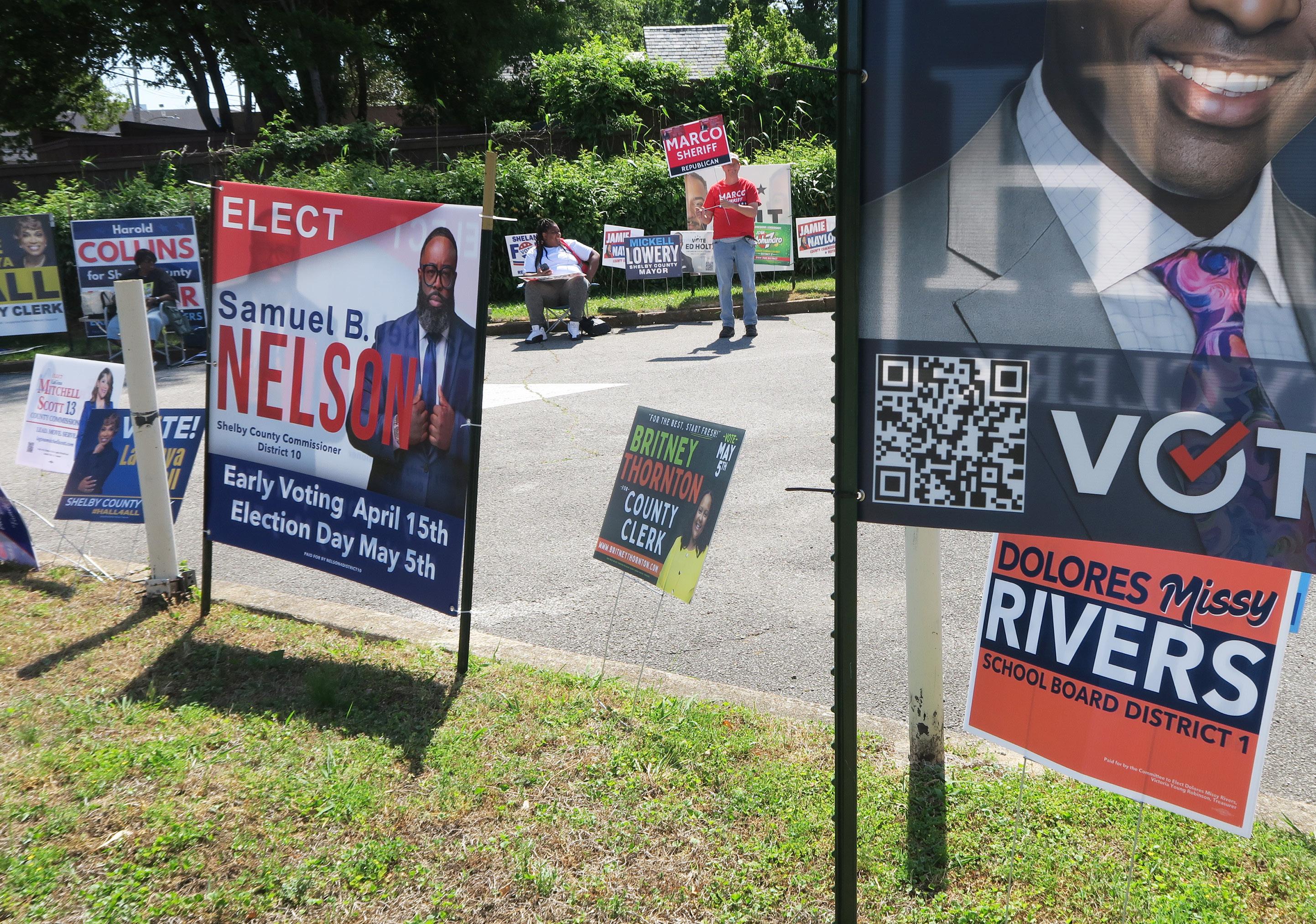
After a full week of early voting in Shelby County, the Democratic Party appears to have a significant advantage in the 2026 primary.
According to the Tuesday, April 21, headcount — the latest tabulated results from the county’s 27 polling stations — 11,985 voters have stepped into booths, or cast absentee ballots in the 2026 primary.
However, the Democratic party’s wide field of candidates have been averaging over 2,000 votes per day. Republicans have netted hundreds. In fact, Tuesday was their best turnout with 650 votes.
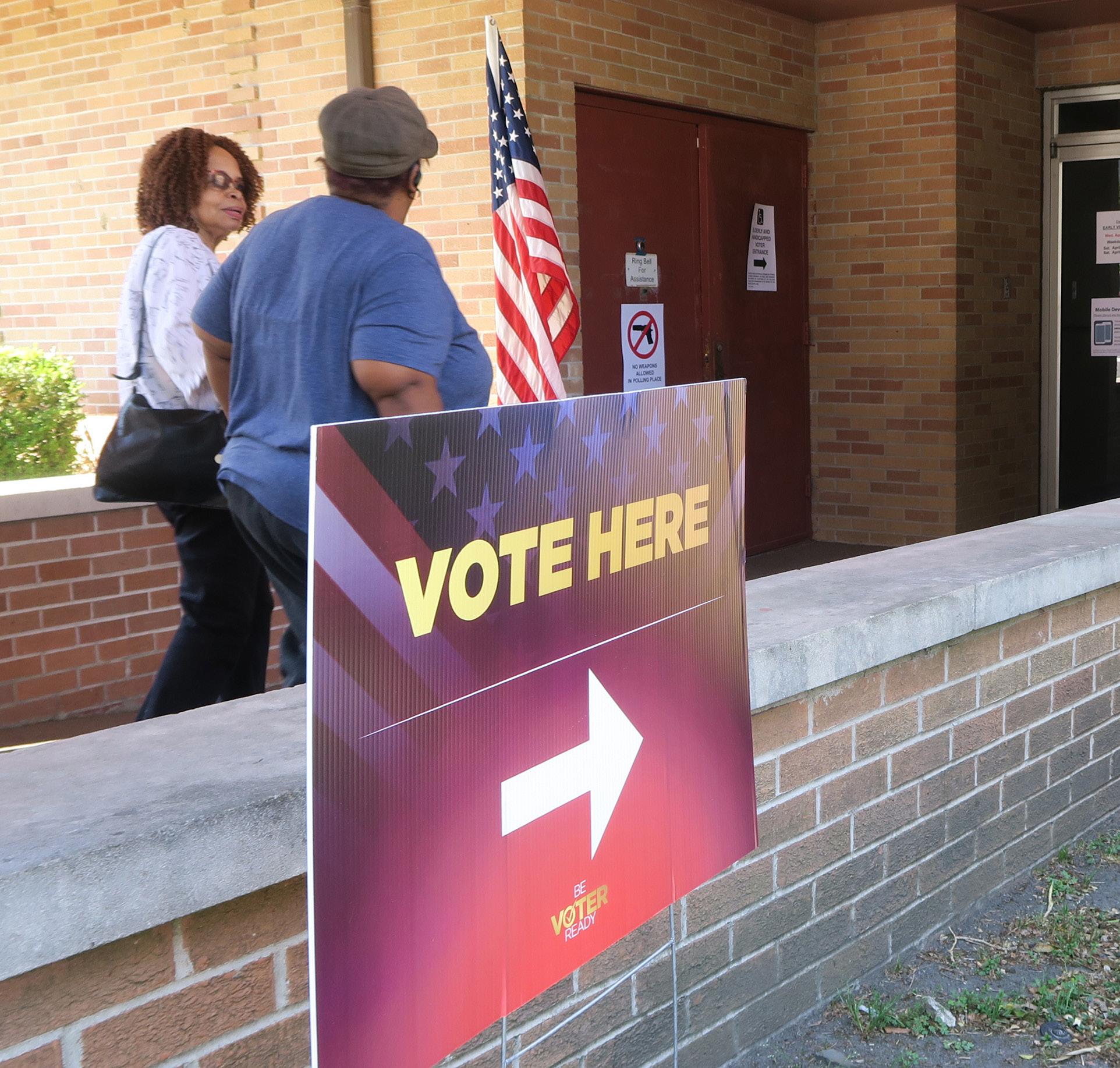
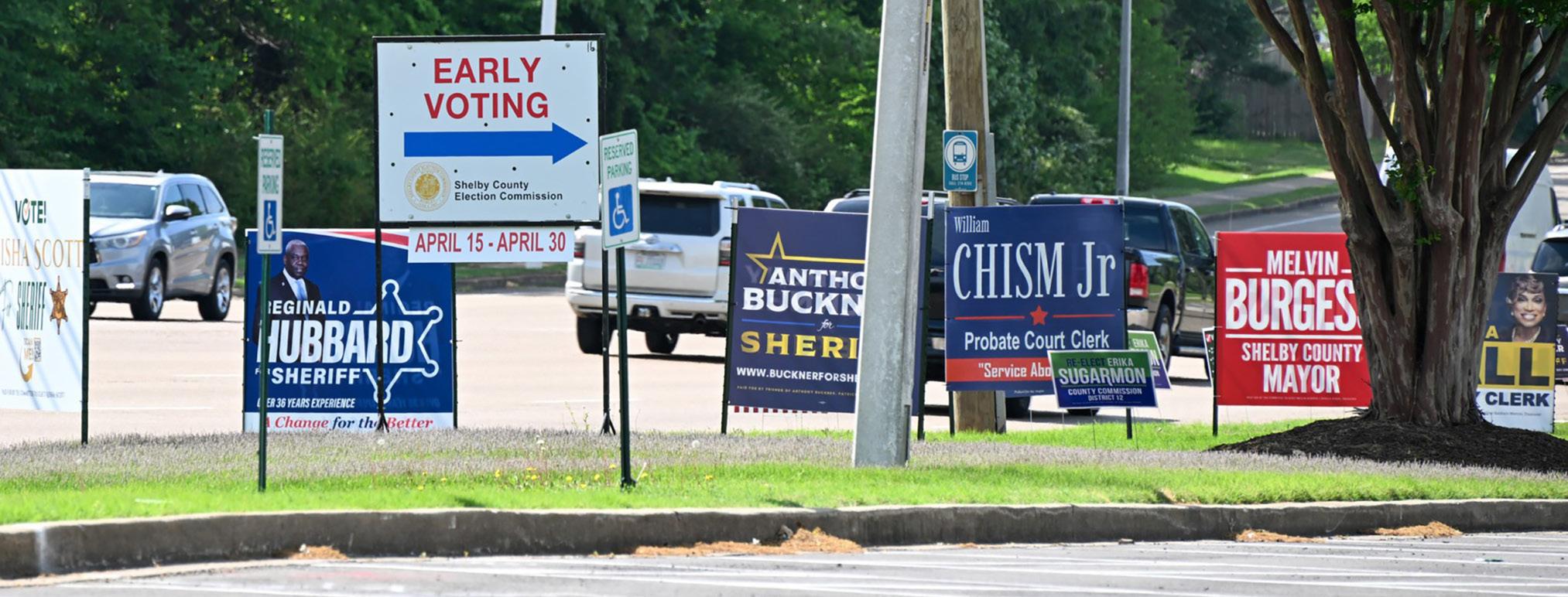
Voters began lining up at polling places in Memphis and the surrounding area on Wednesday, April 15. Early voting will run through April 30.
On weekdays, the county’s polling workers will open the doors at 11 a.m. and call it a day at 7 p.m. Voters can make their picks from 10 a.m. to 4 p.m. on Saturday, April 18. On Saturday, April 25 doors will be open from 8 a.m. to 4 p.m.
Ballots can also be cast at the Shelby County Election Commission’s Downtown office. Polls will be open from 9 a.m. to 5 p.m. on weekdays to all registered county voters. Voters will get another chance on Saturdays, with the polls open from 10 a.m. to 4 p.m. on April 18 and from 8 a.m. to 4 p.m. on April 25.
The election commission is also conducting nursing home visits to make sure voting is available to their residents. They began on April 8.
All polling places will be closed on Sundays.
Polls will be opened again on May 5 from 7 a.m. to 7 p.m. for the primary. This year’s primary ballot is packed
with 122 Democratic candidates, compared to 19 Republicans. A handful of independents will also be in competition. There are a total of 35 contests on the ballot.
Seven Democrats are vying to succeed term-limited Shelby County Mayor Lee Harris. The race is headlined by Memphis City Council member JB Smiley, Shelby County Commissioner Mickel Lowery and short-lived Memphis-Shelby County Schools superintendent Marie Feagins. As the GOP’s
only candidate, former state Rep. John DeBerry is assured a spot on the August 9 general election ballot.
Voters will also choose a successor to term-limited Shelby County Sheriff Floyd Bonner. Like the mayor’s race, the contest also attracted candidates from the Democratic Party. Two Republicans entered the race. Most of the candidates come from a background in law enforcement.
Another race that drew significant interest from candidates is the open
county clerk seat. Several Democrats made the cut to succeed Wanda Halbert, who also cast her ambitions on the mayor’s office.
Several spots on the county commission will be up for grabs too. Of the 13 seats, only three incumbents — Chairwoman Shante Avant, Henri Brooks and Erika Sugarmon — appear on the ballot. The majority of the commissioners have run into term limits. However, Britney Thornton is leaving her District-10 seat after a single term to pursue the county clerk job.
Meanwhile, District-9 voters select a replacement for former commissioner Edmund Ford, Jr., who resigned from the seat in February, after pleading guilty to federal tax evasion charges. Interim commissioner Matthew Szalaj was recently selected to finish the term.
The Memphis-Shelby County School Board election calendar has returned to its regularly scheduled order. In February, a circuit court judge squashed an ordinance that aligned board elections with the commission.
As a result, only six of the 13 board seats appear on the 2026 primary ballot. They include Districts 1, 3, 5, 6, 8 and 9. Current MSCS board Vice Chair Joyce Dorse Coleman is the only incumbent running for re-election. She faces four primary opponents. No Republican candidates appear on the ballot for the MSCS board races. Two independent candidates are on the slate.
Other contested races on the ballot include criminal court clerk and county trustee.
During the previous county primary in 2022, only 11% of voters opted to head to the polls early. The number was down from 13.8% in 2018.
By Bri Hatch Chalkbeat
With early voting underway, Memphis voters have begun choosing from among 15 Democratic candidates vying for four open school board seats in the district’s first political primary.
Voting has started for the May 5 primary race in Districts 1, 6, 8, and 9. No Republican candidates qualified to run this year, but two independents will challenge the Democratic nominee in Districts 6 and 8 in the Aug. 6 general election.
That means the Memphis-Shelby County Schools representative for Districts 1 and 9 will be decided by the Democratic primary. Both elections include incumbents who have been on the school
board since 2018: Michelle McKissack and Joyce Dorse-Coleman, respectively.
The other candidates, ranging from seasoned MSCS teachers to a local lawyer and parents’ rights advocate, are joining the pool during a time of looming shifts in district leadership.
Senate Republicans are expected to take the next step in advancing their state takeover plans for MSCS in the coming days. Republican leadership appears set to adopt a version close to Rep. Mark White’s 2025 proposal that would create a board of managers that would take away key responsibilities from the local board, including budget and superintendent decisions.
Republican lawmakers launched the takeover effort last year after the
controversial firing of former Superintendent Marie Feagins last January. Current board members voted unanimously to hire Roderick Richmond, a 30-year district employee, as the new permanent leader late last month. Check out our interactive map tool to find out which MSCS board district you’ll see on your ballot. And before casting a vote, read all about the candidates’ comprehensive profiles using the following links:
• District 1 voting guide. https://www.chalkbeat.org/ tennessee/2026/04/14/voter-guidememphis-shelby-county-schoolsboard-election-district-1/
• District 6 voting guide. https://www.chalkbeat.org/
tennessee/2026/04/14/voter-guidememphis-shelby-county-schoolsboard-election-district-6/
• District 8 voting guide. https://www.chalkbeat.org/ tennessee/2026/04/14/voter-guidememphis-shelby-county-schoolsboard-election-district-8/
• District 9 voting guide. https://www.chalkbeat.org/ tennessee/2026/04/14/voter-guidememphis-shelby-county-schoolsboard-election-district-9/
Bri Hatch covers Memphis-Shelby County Schools for Chalkbeat Tennessee. Reach Bri at bhatch@chalkbeat.org. This story was originally published by Chalkbeat.
By Melissa Brown Chalkbeat
Tennessee Republicans took one step closer to seizing major controls from the Memphis-Shelby County school district on Monday in a takeover effort that could eventually affect other school systems across the state.
The legislation would install a politically appointed oversight board in any Tennessee school district that meets four of six criteria of academic underperformance and management instability.
Republicans on Monday, April 20, approved a conference committee bill, which will now move to full House and Senate votes this week.
The nine-person oversight board would be empowered to fire any district employee, including the superintendent, with or without cause. It would also have veto power over the district budget.
The bill would become law immediately if passed, meaning Tennessee Republicans could appoint an oversight board amid ongoing school board elections in Memphis.
Memphis takeover advocates have argued intervention is needed due to consistent academic underperformance in the state’s largest school district. But Tennessee Department of Education officials testified on Monday that a majority of school districts meet the same academic underperformance criteria, and seven school districts meet three of four performance standards.
Those districts include Campbell, Cocke, Madison, Lewis, and Shelby counties, in addition to the state-run Achievement School District and the Tennessee Public Charter School district.
Under draft legislation proposed by a conference committee this week, the state could install an oversight board in
school districts where:
• fewer than 50% of students earn proficient scores on state standardized math tests.
• fewer than 50% of students earn proficient scores on state standardized English language arts tests.
• 25% or more of schools in the district earn a D or F letter grade from the Tennessee Department of Education.
• and a 25% or higher chronic absenteeism rate.
Rep. Mark White, a Memphis Republican who is co-sponsoring the effort to intervene in Memphis schools, noted MSCS is the only state district that meets all of those criteria.
The final two designations include the commissioner of education, a political appointee, determining whether an audit shows deficiencies in district management, and whether the local board of education has employed more than two superintendents or directors of schools in the last four years.
Memphis is the only district in the state with an ongoing state-funded forensic audit managed by the Tennessee’s Comptroller audit, though school districts are routinely examined in lower-profile audits.
“It highlights that this legislation was written very surgically to apply only to Memphis and Shelby County schools,” said Sen. Raumesh Akbari, a Memphis Democrat who called the intervention effort “heavy-handed.”
Memphis Republicans pushing for intervention argue the effort is not a state takeover of Tennessee’s largest district, as lawmakers or the Department of Education would not directly control decisions within the district. The majority of the oversight board members must be residents of Shelby County.
However, the new legislation gives
elected Republicans in Tennessee broad authority to craft or even trigger an oversight board, given the commissioner of education authority included in the legislation. The governor would appoint five oversight board members, and the House and Senate speakers would get two appointees each.
The oversight board would seize major financial controls from the Memphis-Shelby County school board, whose primary authority is to set the district’s operating budget and manage the district’s superintendent.
Under the draft legislation, the school board would have to submit its proposed budget to the oversight body for approval. The oversight body could veto any or all line items in the budget.
The oversight board could even rewrite the entire district’s budget under certain circumstances, if the school board doesn’t meet the oversight board’s timeline for revising the budget.
The draft legislation also inserts some control over the local legislative body, which in Memphis’ case would be the Shelby County Board of Commissioners. It would block the local body from signing off on the district’s budget without the oversight board’s approval.
Tennessee Republicans frequently
point to the 2023 state takeover of Houston public schools as a model for MSCS’ intervention, where state education leaders immediately fired and appointed a new superintendent.
The current MSCS board unanimously approved a three-year permanent contract for Superintendent Roderick Richmond on March 31. That contract puts the district on the hook for a nearly half-million dollar payout if the new state board decides to fire Richmond without cause.
But the new bill would make it easier for the oversight board to fire Richmond with cause. The board could cite as cause for termination any refusal of the superintendent to follow their directives, or contributing to “deficiencies in the management, accounting, or internal controls of the LEA.”
The legislation calls for the oversight board to conduct a comprehensive needs assessment that would essentially audit teacher staffing levels, including reviewing results of annual teacher evaluations. The board would be authorized to review any and all records from the district, including teacher evaluation records and student disciplinary reports.
The oversight board would then be tasked with developing a “transformation plan that identifies performance and operational goals” in the district.
The board could hire a contractor to draw up those assessments and plans.
The oversight board would be subject to Tennessee’s open meetings and public records law. No other criteria are outlined in the draft legislation. Oversight board members could be removed by the governor and legislative leaders at any time, for any reason.
Oversight board members must be compensated at the same rate as school board members under the legislation. They can hire up to three staff members total, in addition to reassigning a staff
member from the district office. The district must pay for those salaries, but they can petition the Department of Education for some funding.
“It would almost be like you’re paying for two school boards,” Akbari said. Costs rise for audit, intervention model
Intervention advocates, led by Memphis Republicans and party leaders like House Speaker Cameron Sexton, have funneled even more state dollars into the audit effort. Gov. Bill Lee is directing another $1.7 million to complete the audit in next year’s budget, which grows the total price tag of the audit to $8.7 million.
And it’s possible lawmakers could direct another $1 million to help fund a new oversight board.
The nearly $10 million in state funds far outpaces the potential fraud and waste findings revealed by the audit thus far. The ongoing financial audit, which covers a three-year period, revealed around $1.1 million in funds that auditors said could be potential waste and abuse. Another $1.7 million was flagged as spending misaligned with district policies that didn’t rise to waste and abuse thresholds.
That amounts to less than 1% of the district’s operating budget over the three-year period being audited.
Tennessee Republican leaders suggested the early findings were among the worst audit findings they had ever seen, pointing to mismanagement of employee paperwork and alleged cooperation issues with district officials.
Democrats on Monday pushed back on these assertions. Akbari, the Memphis Democrat, pointed to previous school audits in Maury and Polk counties, which found millions in mismanaged funds and major control failures. Neither of those audits triggered a state-funded forensic audit or state intervention.
Melissa Brown is the bureau chief for Chalkbeat Tennessee. Contact Melissa at mbrown@chalkbeat.org.
This story was originally published by Chalkbeat.
Shelby County Government has issued Sealed Bid number 202623, Sledge Road Overflow Bridge Project for the Shelby County Roads, Bridges, & Engineering Department. Information regarding this Bid is located on the County’s website at www.shelbycountytn. gov . At the top of the home page, click on the dropdown box under “Business”, Click on “Purchasing” and “Bids” to locate the name of the above-described Sealed Bid.
SEALED BID-202623 DUE TUESDAY, MAY 26, 2026 @ 2:00 PM (CST)
(SB-202623) Sledge Road Overflow Bridge Project
A voluntary pre-bid meeting to address questions will be held via Microsoft Teams on Tuesday, May 5, 2026 @ 9:30am CST. Please join my meeting from your computer, tablet or smartphone:
Microsoft Teams meeting Join: https://teams.microsoft.com/ meet/228172244673502?
=64b1pZitNm70pMVAQB
Meeting ID: 228 172 244 673 502 Passcode: CM2iG7y8
Shelby County is an equal opportunity affirmative action employer, drug-free with policies of non-discrimination on the basis of race, sex, religion, color, national or ethnic origin, age, disability or military service. By order of
LEE HARRIS, MAYOR
SHELBY COUNTY GOVERNMENT
LEGAL NOTICE
Request for Qualifications
RFQ Number 26-0018
Insurance Brokerage & Consulting Services
Sealed proposals for Insurance Brokerage & Consulting Services will be received on Opengov.com-MEM or by physical copy via USB at the Memphis-Shelby County Airport Authority (Authority), Procurement Department, Memphis International Airport - Receiving Dock, 4150 Louis Carruthers Drive, Memphis, TN 38118, until 1:00 pm local time, on Thursday, June 4, 2026. A listing of all proposers will be posted on Opengov one (1) hour after the response deadline. Responses to the Request for Qualifications will not be publicly opened and read. A packet with submittal instructions, additional data, and response format may be found on the Authority’s website Flymemphis.com or Opengov.comMEM on or after Tuesday, April 21, 2026.
A pre-proposal meeting will be held on Wednesday, May 6, 2026, at 11:00 am at Authority’s Board Room on the Mezzanine Level, Terminal B of the Memphis International Airport, 2491 Winchester Road, Memphis, TN 38116. All attendees must register at Opengov. com-MEM.
All Respondents are responsible for checking the Authority’s website or Opengov up to the submission deadline for any updates, addenda, or additional information. In accordance with the Authority’s purchasing policies, the Authority will give preference to businesses located in Shelby County, Tennessee when awarding contracts and making purchases, unless prohibited by law. The successful Respondent must sign a contract with the Authority that includes Federal Aviation Administration provisions, if applicable, regarding the Buy American Preference, Foreign Trade Restriction, Davis-Bacon, Debarment and Suspension, Prohibition on Certain
1509 Madison Ave. Memphis, TN 38104
PH (901) 523-1818
HOURS: Mon.-Fri. 9 a.m. - 5 p.m.
DEADLINES:
Display ads Friday 5 p.m. Classifieds ads Monday 5 p.m.
STANDARD RATES: $8.00 per line for 1 column ad.
Rates are non-commissionable and are quoted at the net rate. No refund for early cancellation. For additional information contact Sales Dept. at (901) 746-5201 or email: advertising@
Telecommunications and Video Surveillance Services or Equipment, Domestic Preferences for Procurements, and Drug-Free Workplace, all of which are incorporated herein by reference.
The Authority reserves the right to reject any or all responses to this Request for Qualifications in whole or in part; to waive any informalities, technicalities, or omissions related to this Request for Qualifications; and to reject responses on any other basis authorized by the Authority’s purchasing policies.
The Authority is an equal opportunity employer and prohibits discrimination based on the grounds of age, race, sex, color, national origin, disability, marital status, military service,
tsdmemphis.com.
GENERAL INFORMATION:
The Tri-State Defender reserves the right to edit all copy or to reject or cancel any ad at any time. Copy change during ordered schedule constitutes new ad & new changes. Deadlines for cancellation are identical to placement deadlines. Rates subject to change. We can only offer in-house credit and NO REFUNDS are issued.
THE TRI-STATE DEFENDER assumes no financial responsibility for errors nor for copy omission. Direct any classified billing inquires to (901) 523-1818.
or sexual orientation in its hiring and employment practices and in the admission to, access to, or operation of its programs, services, and activities.
order of:
Blue, A.A.E.

By Terri Schlichenmeyer
In life, there are times when you want some rhymes.
Short ones or long, rhymes you read quietly or read out loud, savored alone or enjoyed with a crowd. It’s Poetry Month and you’re on the look, so why not seek out one of these books?
Who are you and where did you come from? “Stages” by Tramaine Suubi (Amistad, $19.99) gives you things to think about, including your inner life and what’s going on outside it. Read it, and be educated.
Place matters a lot, and “Shade is a Place” by MaKshya Tolbert (Penguin Poets, $20) is a book that considers Charlottesville, Virginia, in various ways. It invites readers to visit the
“Black sense” of the city, to seek out natural parts of it, and to study the small, quiet places within. This book is perfect for vacation or if you’re thinking about travel.
If you are a new parent – or you’re about to be – look for “They Bloom Because of You” by Jessica Urlichs (Putnam, $19.00), a book about the ever-evolving process of becoming a mother: the love, despair, strengths and sadness, and watching as a newborn becomes a toddler becomes a big-kid. This is a book you’ll reach for many times over the years.
On that note, “This is Not a Small Voice” by Sonia Sanchez (Beacon Press, $18.99) is a book that tackles a wide variety of topics — love and community, as well as activism and family. Readers will note the urgent power in these poems, which might make you want to
get out and do something.
If the Sanchez book is right up your alley, then you’ll also want “We (The People of the United States)” by Joshua Bennett (Penguin Poets, $20), one book-length poem that touches upon many aspects of American life over the last century or so. Black culture, scientific innovation, popular music, creativity, whatever made America good – and bad – is in this book. The semiquincentennial is coming soon, so read it now.
And finally, if you want to know more about poets, then look for “No More Worlds to Conquer: The Black Poet in Washington D.C.” by Brian Gilmore (Georgetown University Press, $29.95). In this book, you’ll read about a thriving literary community that Gilmore says is often overlooked but that’s just as vibrant as any other

Books for Poetry Month by various authors c.2026, various publishers $18.99 - $29.99 various page counts
in America. Filled with interviews, it’s deeply researched, and nicely comprehensive, making it a book you’ll absolutely want to have next to your poetry collection. Tackle it in between reading poetry; you won’t be sorry.

By Sophie Bates, Lekan Oyekanmi and Gerald Herbert Associated Press
SHREVEPORT, La. — A Louisiana man who fatally shot seven of his children and another child in an attack against his family was in the middle of separating from his wife, who also was shot and wounded, a relative said.
The violence that unfolded early Sunday across two houses in Shreveport, Louisiana, was one of the nation’s deadliest mass shootings in recent years.
The gunman’s wife, who family members say is the mother of some of the children, and another woman were critically wounded, according to the Shreveport Police Department. The police said in a statement Monday that they are hopeful both women will recover.
The shooter, identified as Shamar Elkins, died after fleeing and a police pursuit that ended with officers firing on him.
Officials said the children — three boys and five girls — ranged in age from 3 to 11 years old. Another person jumped off the roof of the house and was expected to survive.
“I just don’t know what to say, my heart is just taken aback,” Shreveport Police Chief Wayne Smith said. “I cannot begin to imagine how such an event could occur.”
Elkins and his wife, identified by family members as Shaneiqua Elkins, were separating and had been due in court Monday, said Crystal Brown, a cousin of a woman shot in the attack. She said the couple had been arguing about the separation before the shooting.
“He murdered his children,” Brown said.
Family members described Shaneiqua Elkins as a doting mother, who celebrated her children’s success in school and carefully dressed them

before family events.
“She raised those kids right,” said Lionel Pugh, Shaneiqua Elkins’ uncle. “They were the center of her universe.”
The violence started before sunrise
Sunday
Authorities said the shooting erupted before dawn, when Elkins shot a woman at a home in a neighborhood south of downtown. He then went to the other house a few blocks away and began shooting the children, police said. Elkins’ nephew was among the slain children, according to the Caddo Parish coroner’s office.
Liza Demming, who lives two houses down from where most of the victims were shot, said her security camera captured video of the suspect running away along with the sound of two shots.
“That’s pretty much all I saw was him running out of the house and the cars leaving,” she said.
Demming later went outside and saw the covered body of a child on the
home’s roof.
State Rep. Tammy Phelps said some children tried to get away through the back of the house. “I can’t even imagine what the police officers, first responders actually dealt with when they got here today,” she said.
Mourners laid flowers outside the single-story house on 79th Street and others lit candles for the victims in the parking lot of a nearby shopping plaza.
“It just makes you take your children and hug them and hold them and tell them how much you love them,” said Kimberlin Jackson, who attended the vigil.
Gunman had no recent arrests for domestic violence, police say Investigators were not aware of other domestic violence issues involving Elkins, said police spokesperson Chris Bordelon.
Elkins had served in the Louisiana National Guard from 2013 to 2020 as a signal support system specialist and
a fire support specialist, said guard spokesperson Lt. Col. Noel Collins. Elkins held the rank of private and had no deployments, Collins said.
He did not appear to have an extensive criminal history in court records, which showed he was placed on probation in 2019 after pleading guilty to illegal use of weapons. In that case, Elkins fired five rounds at a vehicle and told police that someone inside it had pulled a gun on him, according to a police report.
Brown, the cousin of one of the women who were shot, said she was at church Sunday morning when the pastor told congregants about the shooting at the end of the service. She described the children as happy and friendly.
“They worked, came home, they stuck to themselves,” she said. “Just an everyday family.”
The mayor of Shreveport, a city of about 180,000 residents in northwestern Louisiana, called it a tragic situation. “Maybe the worst tragic situation we’ve ever had,” said Tom Arceneaux.
The children who died in the shooting are Jayla Elkins (3), Shayla Elkins (5), Kayla Pugh (6), Layla Pugh (7), Markaydon Pugh (10), Sariahh Snow (11), Khedarrion Snow (6), and Braylon Snow (5), according to the Caddo Parish Coroner’s Office.
The shooting in Shreveport was the deadliest in the U.S. since January 2024, when eight people were killed in a Chicago suburb, according to a database maintained by The Associated Press and USA Today in partnership with Northeastern University.
Contributing were Associated Press reporters Jack Brook in New Orleans; John Seewer in Toledo, Ohio; Jake Offenhartz in New York; Jeff Martin in Atlanta; Steve Karnowski in Minneapolis; Terry Tang in Phoenix, and Christopher Weber in Los Angeles.