Martin Mensah could not imagine his life without art.
“It has fundamentally changed how I see the world,” he said. “I no longer observe casually. Light becomes something to analyze; colors and shapes become relationships; and people’s expressions become stories. This heightened awareness stays with me everywhere. It has also trained me to tolerate imperfection while working toward improvement—a skill that extends far beyond art. Over time, I have become a problem-solver who thinks visually and creatively, not just logically.”
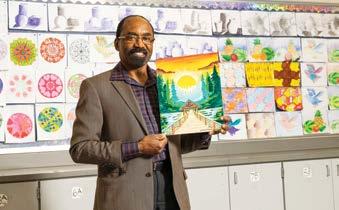
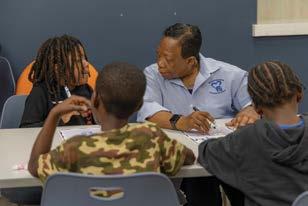
Mensah, a Ghana native who teaches art at Veterans Memorial Middle School in Covington, afforded The NEWTON Community Magazine a glimpse into his world by providing the dazzling cover for our Summer 2026 issue. He calls it “The Boardwalk to Brightness.” The piece took Mensah roughly 12 hours to complete across three days, from research and sketches to the final acrylic painting.
“The title is both literal and optimistic, emphasizing a journey toward light and
warmth,” he said. “The composition is intentionally balanced, with the sun centered to symbolize the peak of summer and a sense of harmony within the community. I used a bold complementary color scheme, contrasting the warm oranges and yellows of the sky with the cool blues and greens of the forest and water. This creates a vibrant, high-energy atmosphere that reflects the spirit of summer.”
Mensah’s artistic pursuits involve many vehicles.
“I work across a range of mediums, with a primary focus on sculpture,” he said. “I create clay and carve wood in both relief and in-the-round forms, and I also produce cement sculptures, including 3D portrait pieces. In addition, I explore fabric collage on canvas and acrylic portrait painting. Wood carving remains my favorite medium because of its tactile quality and expressive depth. However, recently I have been working more with acrylic painting due to time constraints and the demands of my teaching role.”
PUBLISHERS’ NOTE
I’m an overplanner. I just stepped out of denial by admitting as much. That’s the first and most important step in fixing a character defect. Control is the root issue, and overplanning is the symptom.
I’m not saying I shouldn’t plan out the day ahead of me, our family’s financial future or how each issue of The NEWTON Community Magazine will get finished. We are called to be wise. There’s just truth to the idea that too much of a good thing can become bad. Let’s think about what the act of obedience looks like through the filter of planning. I talk a lot about how anxiety plagues my life. You’d think having a plan would help ease this tension. In theory, you’d be right. In practice, you’d be wrong.
The problem is that things don’t always go according to plan. It’s a guarantee that my plan will fall apart if it’s not God’s plan, too. It’s as true as gravity. I will never win fighting against it. Plus, my plan is boring in comparison to what God has in store for me. My ways are not God’s, and His ways are so much greater than mine. I will continue to plan, but I will not worship that plan or worry when it changes. Instead, I will head out in the direction I believe He wants me to go.
Instead of worrying my plan will fall apart, I want to be excited about His plan taking me down unexpected paths. To that end, I will continue to work on being obedient.
Have a great day today.
Scott Tredeau
CYNTHIA GAITHER
‘WE BELIEVE IN FAMILY’
Stories by Kari Apted
When multiple generations live in the same small town for decades, it fosters deep bonds that last a lifetime. Charles and Amma Gaither enjoy just such a legacy, one that has kept them thriving even through unfathomable loss.
by KARI APTED
Charles and Amma Gaither’s sprawling home sits on a large corner lot in Oxford, surrounded by manicured landscaping and massive shade trees. The wide driveway hints at the many cars that are often parked there, and the paint looks comfortably worn, making it easy to imagine the scores of happy children running in and out across the years.
Charles was born and raised in Oxford, while Amma moved to the area from Morgan County in her teens. They are both 86 and have been married for 67 of those years. Amma was one of seven siblings, and Charles was one of five, so it felt natural for them to raise a big family, too. The couple was blessed with eight children who went on to produce 21 grandchildren, 36 great-grandchildren and three great-great-grandchildren. Sadly, the Gaithers have lost three of their five daughters, one to ovarian cancer, one to lupus complications and one so violently that it changed the entire family’s story.
For a time, the Gaithers’ eldest daughter, Cynthia, was happily married. She and her husband followed her parents’ legacy of raising large families, as they had eight children together, adding to the daughter Cynthia already had from
a previous relationship, Shawonna, who recalls joyful times with her stepfather.
“He was my stepfather, but he didn’t treat me any different than his biological kids,” Shawonna said. “He took all of us kids everywhere. Every Christmas, we would go see the Rich’s Christmas tree. I remember he cut a big racetrack around his yard for our go-karts.” Her stepfather held down a good job, and though there were nine kids to which to tend, Shawonna and her younger sister, Alexis, describe a childhood where they never went without anything. “We had the first Atari, Sega [and] Nintendo when other people still didn’t have a clue,” Alexis said. “That’s the man that people saw.”
Shawonna remembers when circumstances started to change.
“At some point, he started using drugs,” she said. “This was in the 80s, at the height of the crack epidemic.” As her stepfather’s addiction spiraled, the situation became chaotic. He grew angry, unpredictable and abusive. “Eventually, it got really bad. He was stealing things, typical addict behavior,” Shawonna said. “He went in and out of rehabs. He would never stay long enough to get better.” Amma agreed. “He changed once he got
on drugs,” she said. “Before that, you wouldn’t know someone better than [him].”
On the evening of Sept. 3, 1992, he showed up unexpectedly at the Gaithers’ home. Shawonna was 14 and lived with her grandparents at the time. She recalls her stepfather being agitated and making threats toward Cynthia, but he eventually left. The following day was her high school’s first football game, and Cynthia had promised to be there to see Shawonna perform with the band. Around midday, a hall monitor came to get her from class.
“I got to the office, and the principal said I needed to go with this man who was there to pick me up,” Shawonna said. “When we drove up to the scene, there were people everywhere, standing in the street, crying and upset. Nobody told me what happened, but I just knew. I knew it was my mom.”
about that day. Alexis describes her father as someone people did not know as well as they thought they did. “He had a mean streak that people didn’t know about because he was always so charming and good-looking,” she said. As the family reeled with shock, the community came out in full force to provide support. Rev. Hezekiah Benton of Bethlehem Baptist Church prayed over them as they gathered in the street. The kids’ teachers visited in a concerted effort to offer comfort. The band booster club parents brought food from the football concession stand that night. The Gaithers found themselves surrounded by love and provision.
“Everybody was bringing food,” Charles said. “The City of Covington police and Newton sheriff’s deputies came over. It felt like all of Newton County turned out for us. If there had been GoFundMe back then, we’d have been millionaires.”
Shawonna saw Amma and Charles sitting at the top of the hill, her little sister Alexis clutching Cynthia’s shoe in her arms. The elder Gaithers had already been there an hour or more, having dropped everything when another daughter had called to tell them to come quickly. Police would not let them near the scene initially. “I saw the van and her body on the street, covered with a sheet,” Amma said. In a sudden fit of rage, Shawonna’s stepfather had run over Cynthia while driving his mother’s van. When he saw that she was still alive, he backed up and ran over her again, delivering the fatal blow.
Despite his outburst the night before, the Gaithers struggled to fathom that his rage had consumed him enough to murder Cynthia in front of his children and his mother. Alexis was only 4 years old at the time and was inside the van with her younger siblings as the violent act occurred. She prefers not to think
Support continued for months, as the Gaithers adjusted to having all nine grandchildren in their home. Bunk beds lined the walls of three bedrooms, and the bonus room became another bedroom. During the holidays, the community showered the children with gifts, not just the first year but for many years after. “We couldn’t even walk into the living room for all the presents,” Charles said. “We received so many bicycles [that] we had to give some of them away.”
The family credits Cynthia’s sister, Ann, for getting everyone on a schedule and keeping life running smoothly in the four-bedroom, two-bathroom house. “Aunt Ann ran a tight ship,” Shawonna said. Charles admitted to being somewhat intimidated by Ann’s firm organizational skills. However, they were necessary, as the Gaithers not only made room for Cynthia’s children but for the other grandchildren they helped raise.
“We had meal schedules, bathroom schedules and shower schedules,” Shawonna said. “She would cook, and we would eat in shifts. Daddy (Charles) and the boys would eat, then we’d feed the little kids, clean up the dishes and then we older kids would eat. Then somebody would go bathe the kids. Then we would do homework.”
Saturdays were for cleaning, with the girls doing many of the indoor tasks and Charles directing the boys in yard work. Sundays were for worship. The entire family gathered at Rust Chapel United Methodist Church, as it had for decades. The Gaithers take pride in their resilient family and in how Cynthia’s nine children have chosen decent paths in life.
“I look at the nine of us now, and where we are is amazing,” Shawonna said. “Yes, each of us has had our own struggles, but we are all living a better life than what we saw. We’re able to do that because of how Mama (Amma) and Daddy raised us.”
“Love overrides everything else.”
Amma Gaither
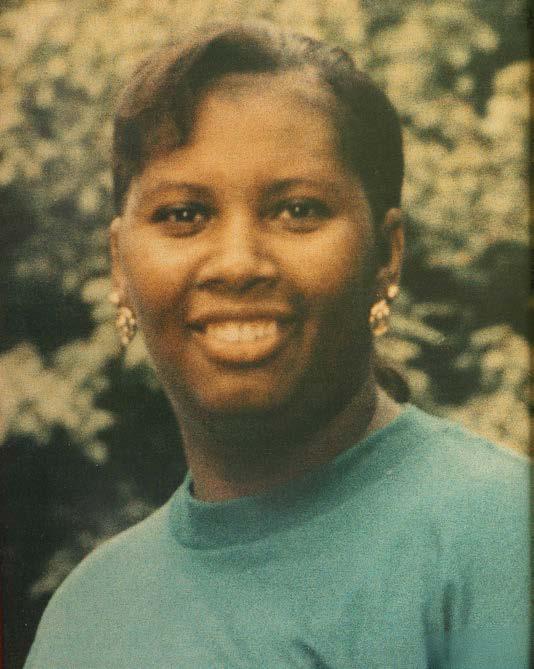
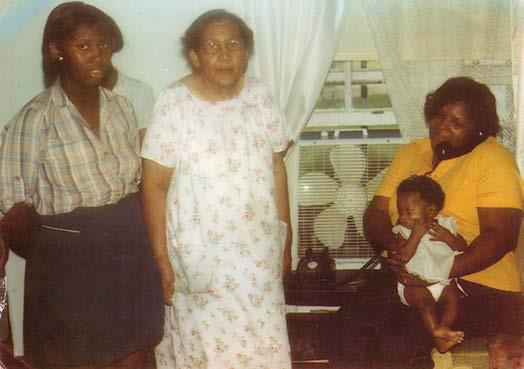
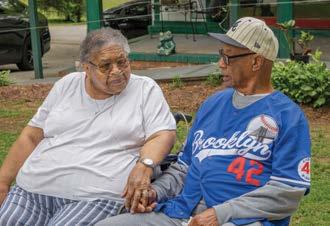
CYNTHIA GAITHER, MABEL GOSS, AMMA GAITHER AND JAMIA HENDERSON IS SITTING IN AMMA’S LAP
Shawonna remains grateful to the aunts and uncles who were always there to help the Gaithers care for their grandchildren. With their strong spiritual roots and the passage of time, all nine of Cynthia’s children managed to forgive the man who took their mother away from them. Alexis admitted that the process was not easy but believes it was necessary for their emotional well-being. “He never explained why he did it, and he has never said he was sorry,” she said, emphasizing that forgiveness proves more difficult in the absence of an apology. He served over 20 years in prison for his crime. Remarkably, his mother continues to be one of Amma’s closest friends. “Love overrides everything else,” Amma said, pointing out that her family members still talk and see each other on a daily basis. “We believe in family.” Shawonna concurred. “This house has never been just us,” she said. “Everybody wants to be a part of this family. We do everything together. That’s the beautiful part about it. No one has ever had to face anything alone.”
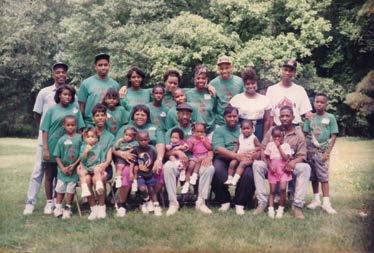
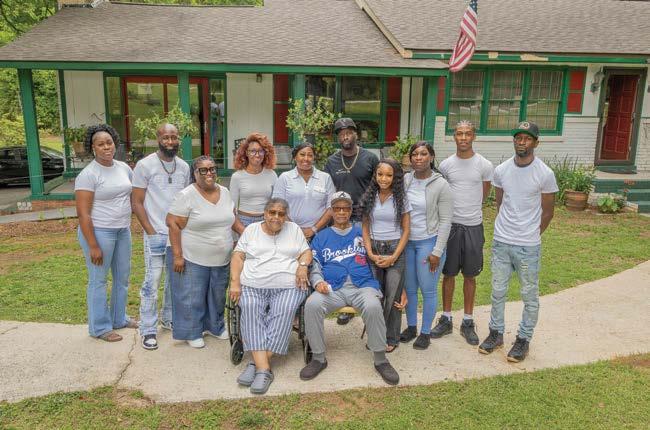
ALEXIS HENDERSON, CHARLES HENDERSON, SHAWONNA GAITHER, JORDYN BROWN, JAMIA HENDERSON, MICHEAL HENDERSON, AALIYAH JOHNSON, TAMARA JOHNSON, DENICO HENDERSON, ANDREW HENDERSON JR., AMMA GAITHER AND CHARLES GAITHER SR.
Helping Others Heal
by KARI APTED
Shawonna Gaither’s memories of that September day are clear. She was removed from class and driven to a crowded crime scene, where she tried to wrap her brain around the fact that the motionless, sheet-draped body stretched on the ground was her mother, Cynthia. The realization that her youngest siblings had all been inside the vehicle when her stepfather plowed over their mother—twice— in a fit of rage only added to the horror. His motive was unclear, as were the reasons why Cynthia had endured his drug addiction and violent behavior for so long.
“Mom had a father, brothers, protectors, but she kept a lot of things to herself,” Gaither said.
“If her Dad had known what was going on, things might have been a whole lot different. She worried that she couldn’t take nine kids back to live with her parents, but they would have never said no.”
After the tragedy, all nine children did move in with their grandparents, Charles and Amma, who provided the love and structure needed to help them heal.
“Back then, people were not as informed about trauma as they are
today,” Gaither said. “Some of the children received counseling, but it was just for a few sessions.” What happened to her mother was the main force behind her career choice. After high school, Gaither earned a bachelor’s degree in human services from Mercer University and worked for a time at one of the rehab centers her stepfather had attended years earlier. “It was there that I started learning the intricacies of trauma,” she said, “and started working my way through my own.”
Gaither is now pursuing a master’s degree in clinical mental health counseling and has served as the program coordinator for Rockdale County’s DUI court for the past 11 years. Her position there, along with education and experience, have all shaped the way she views addiction’s impact on her family.
“What I’ve learned is that sometimes our moral compass makes us think about our decisions,” Gaither said, “but substance abuse affects your brain chemistry and lowers your inhibitions. The addiction breaks the threads that would normally hold you back and keep
you from doing bad things you might want to do. Some people never lose that moral compass, but many do. I also learned that you cannot love addiction away.”
In her role as program coordinator, Gaither has helped many people work through the impact of substance abuse by connecting them with therapy, accountability and other resources needed to get their lives back on track after repeat DUI convictions. The awardwinning program boasts a high success rate.
“Around 90% of our graduates don’t reoffend,” she said, pointing to graduation days as her favorite part of the job. “I get super excited about graduations when I get to celebrate with clients for all their hard work. It reminds me of why I do what I do.” Gaither encourages others going through difficult times to unashamedly seek available assistance. “Sometimes, you can’t find an outlet for your anger and frustration, and problems come when you stay in it,” she said. “You can’t always help what happens to you in life, but you can choose what to do with it. You cannot sit in your hurt. You have to move forward.”
Stories by Phillip B. Hubbard
STRONG ROOTS
Dr. Melvin Baker’s trailblazing dental practice became a beacon of possibility, proving that focus and community can open long-closed doors.
by PHILLIP B. HUBBARD
When Dr. Melvin Baker opened his practice in December 1976, his goal was to provide quality care. However, he accomplished much more: He made history. Baker became the first black dentist to practice in Newton County, a distinction in which he takes tremendous pride some 50 years later.
“People just need to see other people that look like them who are doing something,” he said. “I wasn’t able to see that when I was growing up. I didn’t get to see any other black professionals. They need to know that there is something out there besides what’s in this community, and they can have a share of it if they want to.”
Starting his business amid the Civil Rights Movement, Baker never recalls experiencing any discrimination toward him or his practice. He did have to go to Atlanta to secure a bank loan to originally open the business. Newton County banks never approved a loan, but he could not definitively say whether or not those were discriminatory practices. It was an early hurdle Baker remembers having to clear at the time. Baker took great care to present a fair opportunity at his practice, serving an approximate 50/50 split between white and black customers. He also employed people of multiple races and cultures.
“People just need to see other people that look like them who are doing something.”
Dr. Melvin Baker
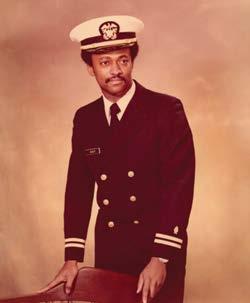
Baker operated his private practice in Newton County—it was named Covington Family Dentistry—until he retired on Nov. 19, 2014. His life would have looked different had he chosen another path. While in college, all Baker knew for sure was that he wanted to own and operate his own business. He contemplated three choices: lawyer, doctor or dentist. He felt like being a lawyer required too much reading, something he did not enjoy; and, at the time, doctors were on call 24/7, which did not draw him to that profession. Baker took the dentistry route, graduating from the Medical College of Georgia in Augusta in September 1974. There, he earned a bachelor’s degree in biology, along with a minor in chemistry. He practiced in the United States Navy for two years before returning home.
Throughout his four decades in dentistry, Baker had three different office locations in Covington. The first was in the building that sits beside Krystal on U.S. 278. His second location was situated next to what is now Piedmont Newton Hospital. The third stood across from McDonald’s on U.S. 278. He owned the last two buildings, as well.
Returning home to Newton County—where he proudly proclaimed he was “born and raised”—was always part of Baker’s plan. He felt comfortable coming back and working in the community because of many family and friends. In fact, Baker was intentional about taking his family-style connection to the area and applying it to his office. He believes that mission was accomplished.
CLARK COLLEGE
COLLEGE OF GEORGIA
“We were very much family-oriented,” Baker said. “When people came in, they were coming to see family. We had clientele coming from all the surrounding counties: Fulton, DeKalb, Jasper, Walton, Butts. They passed a lot of dental offices to get to our offices. They did that because they felt comfortable there. They were coming to see family.”
Baker not only took that approach concerning his patients but did so with his employees, too. He credits much of the success experienced through his practice to the people who worked there over the years. Baker recognized he could not have done it alone, always making it a point to say “we” when discussing his practice with others. Linda Eubanks grew up with Baker on Stone Mountain Street—they refer to it as “Short Street” because it ranks among the shortest streets in the county—and worked for “Dr. B” for 27 years. She served as Baker’s assistant and front desk receptionist starting in 1989. Time and time again, Eubanks witnessed the family-style environment rise to the forefront.
“When I was assisting him, we had this one client who came in and his tooth got knocked out; and he needed his tooth the same day,” Eubanks said. “Dr. Baker went in and we took something and made a tooth and made it happen for that person. That just was awesome to me. I was like, ‘Wow.’”
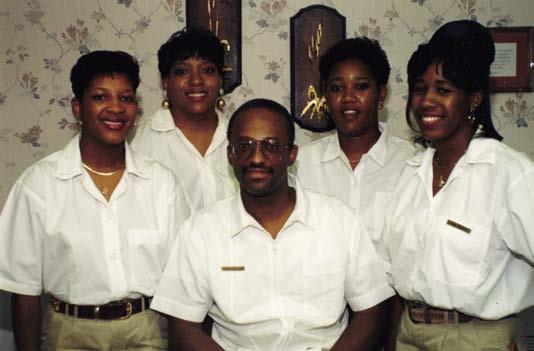
(L-R) CHERYL MILLS, ANGELA BENTON, DR. MELVIN BAKER, DEBORAH BANKS AND LINDA EUBANKS
Baker’s passion for his hometown was also evident outside of his practice, as he was involved in various capacities. He served on the Newton Hospital Authority and the Head Start, the First National Bank and the Washington Street Community Center boards, along with being an Oxford city councilman. Baker has volunteered his time with Newton County Senior Services, while also staying active at St. Paul AME Church, where he has attended services his entire life. His efforts have not gone unnoticed.
“A lot of new businesspeople, a lot of politicians, come into the area [and] they want to speak to me and want to get my opinion and try to get my support,” Baker said. “That tells me that I’ve probably done some things right.”
Located at 4168 Baker Street, Covington Family Dentistry remains open Monday through Friday, from 8 a.m. to 5 p.m. According to its website, Dr. John Hendricks purchased the practice in 2012, and in late 2017, current owner Dr. Doreen C. Wilson seized the reins. Although Baker did not set out to become a
historical figure, he certainly emerged as one. Other black dentists have opened and operated dental practices in Newton County in the years since, but he will always be the man who broke the barrier.
Five decades have passed since Baker etched his name in Newton County’s history books. He views his choice to return home to work as a “great decision” and recognizes that his career could have gone in many different directions. Baker remains grateful that it played out the way it did. Even in his retirement, Baker aims to impact others. He wants younger generations to feel inspired and to realize the potential that lives inside them to accomplish their own hopes and dreams.
“They can do it, too,” Baker said. “They can overcome whatever negative things they have in their life, whether it’s a bad family situation or whatever. I’d like for them to know they can overcome those things if they just stay focused. I didn’t consider myself really a very smart student, but the biggest thing was I was determined and I was focused.”
GRACE & TRUTH
Power of Community
As division grows louder, quiet acts of support still have the power to restore hope. Imagine what could happen if we encouraged each other instead of choosing the alternative.
by HEATHER BOWMAN
There has never been a time when community feels more important—or more fragile—than it does today. Everywhere we look, people are divided. From politics and religion to opinions and social media, it can feel like the world is constantly asking us to choose sides rather than choose one another. Community was never meant to look like that.
People find belonging in community. It’s where hope grows quietly in ordinary moments. It’s where lives change, often in ways we don’t fully realize until years later. I know this because community changed mine. When I first arrived in Covington, I was a young single mother trying to escape generations of family trauma and domestic violence. I felt uncertain about my future. I was a college dropout, unsure of my direction, and simply trying to survive while giving my daughter a better life than the one I had known. Then something unexpected happened: People here gave me a chance.
I began working at Main Street Bank. It wasn’t just a job. It was dignity, stability and the ability to provide for my daughter. For the first time, I could breathe again. Soon after, I found a local church community that didn’t judge or condemn me for where I had been. Instead, the people there encouraged me. They reminded me that my story wasn’t over and that God still had something meaningful ahead for me.
I knew I wanted life to look different for my daughter. I wanted to break the cycle of generational trauma and create a healthy, thriving future for her. Education felt like a key part of it. If I wanted her to value education and dream bigger, I realized I needed to lead by example, so I took a step of faith and enrolled in classes at DeKalb Technical College in Covington. One of my instructors, Sherri Lowery, poured encouragement into me in ways she may never fully realize. She believed in me when I wasn’t always sure I believed in myself. Because of that
encouragement, I graduated from DeKalb Technical College, went on to earn my bachelor’s degree and later completed a master’s degree. Life continued unfolding in unexpected ways. I met my husband—a customer at Main Street Bank—and we’ve now been married for 23 years.
When I look back, I can see how each piece of this community helped shape my story. The bank that gave me an opportunity. The church that offered grace instead of judgment. The instructor who spoke life into my future. The countless people who made this place feel safe. Because of them, I found freedom. I found hope. I became the person God called me to be. That’s why community matters so deeply to me now.
In a world that often feels like it’s at war with itself, I long to see us return to something simpler. The practice of loving our neighbors well. Choosing compassion over criticism. Helping a brother or sister in need. Speaking words that build up instead of tear down. What if we stopped asking who is right and started asking who needs support? What if we looked around and asked “How can I help?” instead of “Who can I disagree with?”
When people feel seen, encouraged and supported, they grow, and when individuals grow, communities become stronger. I believe our community has the ability to lead by example, to be a place where grace and truth meet, where people feel safe enough to start again and where hope is not just talked about but lived out daily.
Sometimes, the greatest change doesn’t begin with big movements or loud voices. Sometimes, it begins with a neighbor who simply chooses to care.
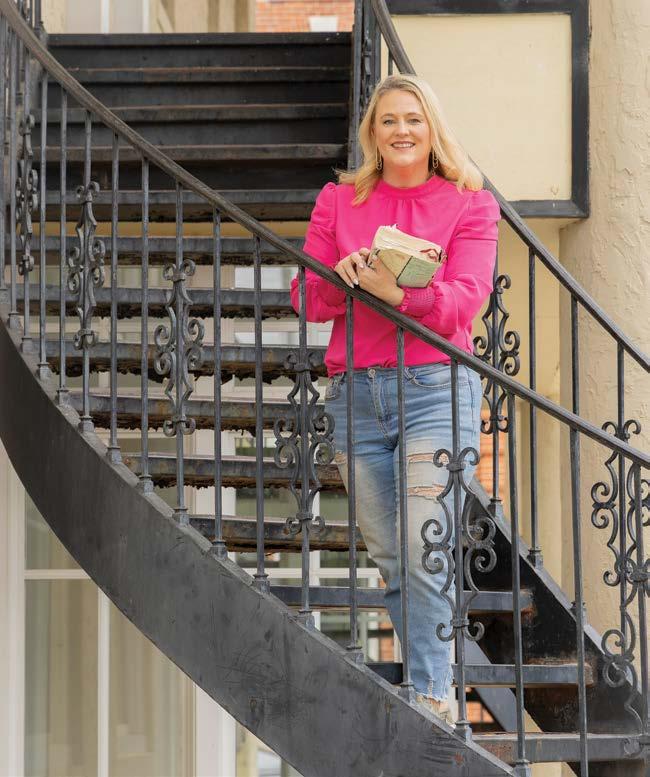
Heather Bowman is the youth director at Devoted Church in Conyers. For information, visit wearedevotedchurch.com.
Grace & Truth
“In a world that often feels like it’s at war with itself, I long to see us return to something simpler.”
Heather Bowman
(L-R) NATALIE, DR. LEIGH AND MEGAN
MEDICAL MIRACLES
Pregnancy can be an unpredictable process for anyone, but Tim and Sheri Benton’s journey to parenthood was filled with multiple surprises and challenges from the start.
by KARI APTED
Tim and Sheri Benton decided to start a family in 1996. Conception did not come as easily as it does for many, so Sheri’s doctor gave her a low dose of Clomid—a first-step fertility drug with a low chance of conceiving multiples. “The doctor said I had a 10% chance of having twins,” she said. The medication worked, and late in the year, the Bentons were thrilled to learn they were expecting. Sheri’s due date was Aug. 5, 1997.
The first ultrasound showed one healthy embryo in development. Much to their surprise, a subsequent examination revealed two healthy babies growing inside Sheri’s womb. Then, against all odds, the next ultrasound revealed three tiny babies were on the way. “At that point, I said, ‘No more ultrasounds,’” Tim recalled with a laugh. The Bentons were grateful for the unexpected blessing of triplets and delighted to learn that all three babies were girls. Sheri’s first trimester progressed well. She was healthy enough to continue working as a dental hygienist and to receive prenatal care from her regular obstetrician. However, all of that changed when she went for a routine checkup at 19 weeks. Sheri’s ultrasound revealed that her cervix had started to open.
Usually, the cervix—the opening between the uterus and the birth canal—remains tightly closed until a woman goes into labor. In some cases, particularly when the mother is carrying more than one baby, it begins dilating too soon. In the best-case scenario, the doctor can perform a cerclage to stitch the cervix closed. In the worst case, the cervix continues opening, and the uterus expels the babies. If they are not old enough to survive outside the womb, the pregnancy is lost.
“The nurse told me that I was six centimeters dilated,” Sheri said. “She said, ‘Do not get off that bed. You are going straight to the hospital.’ They tilted the head of the bed down to help keep the babies inside me, and that’s how I rode over to the hospital.” Under the care of a perinatologist, her cervix was stitched shut, and she was placed on bed rest. “At 21 weeks, the cerclage broke,” Sheri said. “They had to do another one. Then that one also broke, and they did a third cerclage. At 23 weeks, Megan was coming. We couldn’t stop it.”
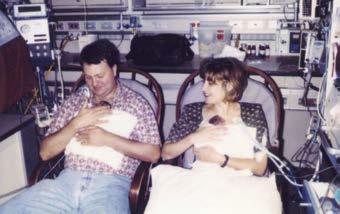
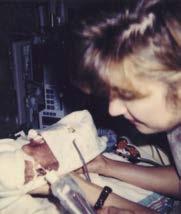
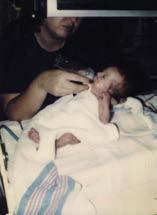
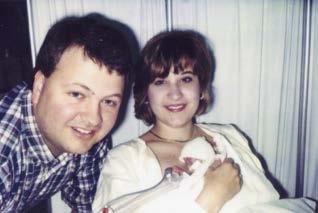
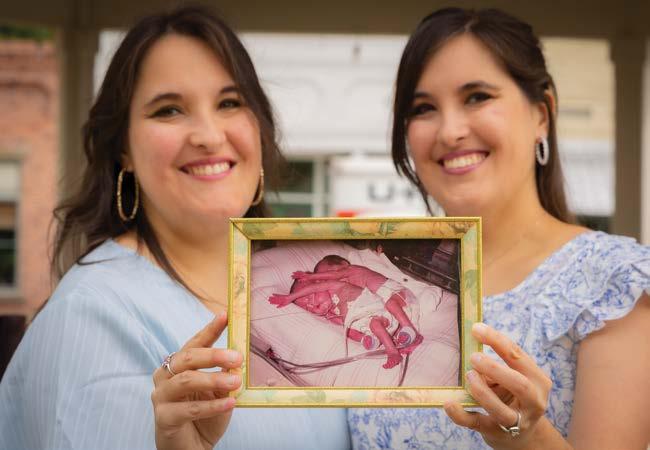
At 23 weeks of gestation, a fetus remains remarkably small. Curled up inside their mother, each of the Bentons’ daughters occupied about the same space as a large grapefruit. Sheri’s doctors determined that a vaginal delivery was preferable over a C-section, as it has been shown to aid in lung expansion and reduce the risk of certain respiratory issues common in micro preemies. On April 8, 1997—a full 17 weeks early—tiny Megan entered the world first. Lindsey appeared 45 minutes later, and another hour passed before Natalie was born. All three were whisked away to the Level 4 Neonatal Intensive Care Unit at Gwinnett Medical Center. Megan and Natalie weighed one pound, two ounces each, while Lindsey weighed one pound, four ounces. For perspective, all three birth weights combined totaled less than half the weight of one average full-term baby. Each of the Bentons’ daughters measured 11.5 inches long. They were so early that their tiny eyes were still fused shut.
“The Lord was the only thing that got us through.”
Sheri Benton
Stories by Kari Apted
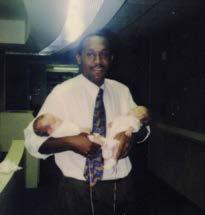
Today, the prognosis for 23-week preemies is still uncertain, even with advances in neonatal care. In 1997, it was even scarier to deliver babies so early. The Bentons’ neonatologist, Dr. Leslie Leigh, had never cared for 23-week triplets before. “He was brutally honest with us throughout the entire situation,” Tim said. “Absolutely nothing was sugar-coated. It was tough to know everything that could go wrong, but we were glad he prepared us.” Sadly, despite being the largest of the triplets, Lindsey lived only 10 hours. Sheri and Tim still choke up when they talk about her. “Dr. Leigh told us not to plan a funeral yet because we might be burying all three,” Sheri said. Lindsey’s death, however, was not in vain. “Her passing helped save Megan and Natalie,” Tim said. “Their lungs were fragile, like wet tissue, and the vent was too much for them. After Lindsey died, Dr. Leigh put them on an oscillator instead. It made little puff sounds, kind of like a helicopter.” The nurses also frequently rotated the babies to prevent lung injury and to ensure oxygen was distributed evenly.
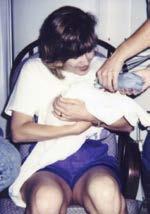
The first week was so crucial that Dr. Leigh slept at the hospital for the first five nights. Tim and Sheri settled into a routine of spending as much time as they could at the NICU, where skin-to-skin contact was encouraged as soon as the girls were strong enough to handle it. Once it was clear that the babies would survive, Dr. Leigh sat the Bentons down with documents and charts detailing from head to toe any possible complications ahead.
“He covered anything that could have happened,” Tim said. “They could end up blind or deaf, with gastrointestinal problems or asthma. We appreciated his honesty, but it was a rollercoaster ride all the time.”
Both girls had patent ductus arteriosus, a heart defect common in preemies. Natalie responded to medication, but Megan had to
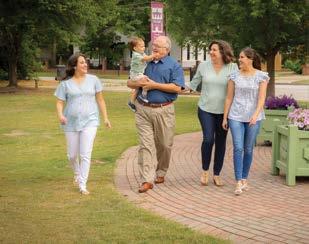
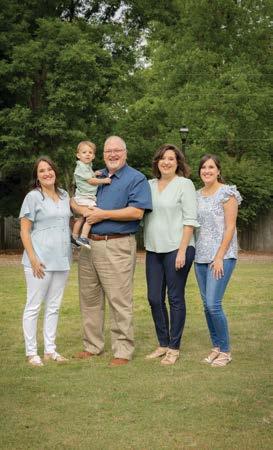
(L-R) NATALIE AND JOSHUA JARAMILLO, TIM AND SHERI BENTON AND MEGAN MATHEWS
undergo surgical repair when she reached two pounds that June. Both girls experienced brain bleeds, and Megan had additional complications, including losing the top part of her ear during a blood transfusion mishap and a retinal detachment that required another surgery.
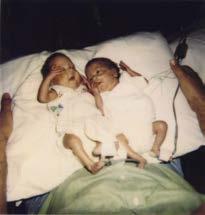
“It was a lot of tough stress,” Tim said. “Talk about feeling helpless.” Sheri agreed. “A lot of prayer was going on,” she said. “The Lord was the only thing that got us through.” The parents agreed that the NICU experience taught them how to understand the sovereignty of God. “It was all out of our hands,” Tim said. Sheri started a journal for her daughters and wrote them letters regularly to document their progress. They put the sisters in the same bed on July 1 and transitioned them from ventilators to nasal cannulas. The girls were finally able to come home on Aug. 5. Their journals document that they both weighed four pounds, three ounces that day. “They were on heart monitors
and lots of medicine for a year,” Sheri said. “We mostly stayed home to protect them from RSV and other sicknesses.”
Megan’s ear was rebuilt from rib cartilage when she was in kindergarten, but she still needs vision correction in the eye affected by the retinal detachment. Aside from permanent scarring on their hands and forearms from the needles and IVs they endured, the girls enjoyed remarkably good health as they grew up. Neither experienced any cognitive or intellectual disabilities that can be common in micro preemies. Natalie is now married to Carlos Jaramillo and is a stay-at-home mom to their 2-year-old son, Joshua. They are expecting a daughter this fall. Megan married Nathan Mathews and owns a cleaning service. Dr. Leigh remains in contact with the family and attended the weddings of both girls.
“The girls have always been close—ridiculously close,” Tim said. “They are our miracles.”
Fuzzy Feelings
Born from a promise to help others, the Covington Police Department’s annual Fuzz Run has grown into a decades-long tradition of compassion, unforgettable milestones and unwavering support for Newton County.
by PHILLIP B. HUBBARD
Some of the Covington Police Department Fuzz Run’s most memorable moments do not involve the race itself. One year stands out from the rest for current race director Chip Shirah. A girl was training with Kellye Personal Fitness to walk a 5K, and at the beginning of her journey, she could not even get out of her wheelchair. Nevertheless, she completed the walk, which prompted tears from spectators. “I remember [former assistant police chief] Almond Turner crying when she came [in],” Shirah said. CPD built the participant a wheelchair-accessible bathroom, a ramp at her house and more. Such moments were the reason the Fuzz Run began in 1984.
Stories by
“This is something that we need to do,” said former captain Willie Davis, one of the event’s original organizers. “It’s charitable, and we want to be a help to people. We want to reach out. We don’t want people to just see us as a police department that’s out here just arresting people. We want to build that relationship.”
Across four decades, certain races have made an impression on other directors. The event in 2021 coincided with the 20th anniversary of 9/11, and the race incorporated a tribute. Three years prior, a special honor was held for CPD officer Matt Cooper, who was shot in the line of duty only days before the 2018 Fuzz Run. No matter the year, the mission behind the Fuzz Run has remained the same: to serve as a vehicle for community outreach and support. Those are the principles on which the race was built.
Officer Frank Hilton established Police Who Care Inc. as a way to financially assist CPD officers and their families when they were in need. Davis, along with then-chief Bobby Moody, thought of the Fuzz Run as a way to help raise funds. Turner and current Newton County Sheriff Ezell Brown served with Davis and Moody as the committee to originally form the event. The first race, a 10K beginning on College Avenue in Covington, had 12 runners and one sponsor. Now, around 3,000 participate each year, along with an additional 1,000 attendees who do not race. There are 50–75 vendors who display their products at the expo, and sponsors fill the back
Phillip B. Hubbard
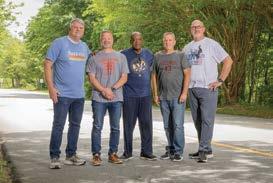
(L-R) KEN MALCOM, ALLEN MARTIN, WILLIE DAVIS, CHIP SHIRAH AND PAUL DAILEY
of the race’s commemorative shirt. On average, the Fuzz Run raises $100,000–$150,000 for the organization each year, making it the largest fundraiser for PWC.
As a result, PWC has broadened its reach. CPD is a longtime partner with the Newton County Special Olympics, and officers assist Alcovy CASA with two “Shop with a Cop” outings—one at Christmas and one for back to school. Officers receive a $250 allowance in case they encounter someone in need while on duty. Plus, if any officer falls in the line of duty anywhere in Georgia, PWC immediately donates money to his or her family to get funds to them right away. CPD started a community outreach unit the same year the Fuzz Run began. Former race director Ken Malcom believes the two have had a symbiotic relationship.
“This project naturally fit under the philosophy of what our goals were in community policing projects,” he said. “This was an absolute home run with what we were trying to establish. We suddenly had resources to grow the race and grow Police Who Care.”
Shirah stressed that none of what PWC accomplishes goes without credit to Hilton, who died in April at the age of 89. This year’s Fuzz Run shirt will honor Hilton for his efforts and contributions to the Covington Police Department and Newton County community.
The Fuzz Run draws people from outside the local area, too. People from all over the world have participated throughout the years. One South Carolinian started when the race was in its infancy and continues to participate. Runners travel from Nigeria and Korea to take part, as well. However, what catapulted the Fuzz Run to true prominence came from inside Newton County. An estimated 20–30 area businesses are known to pay for their employees and their families to participate. Years ago, CPD visited area schools when the Drug Abuse Resistance Education program was at its height. By promoting the event directly to the teachers and students, the Fuzz Run enjoyed a major boost in participation. On one occasion, approximately 150–200 people from East Newton Elementary School ran the race.
This 2026 Fuzz Run is scheduled for Sept. 11–12. Per CovingtonFuzzRun.com, it is the “largest participatory event in Covington, Georgia, year after year.” Festivities kick off on the eve of the race with a two-day expo and the Friday Fuzz Walk. Race day features Mary Beth’s Red Bird Run—a 50-yard dash for kids 5 and under—and a one-mile Fun Run. The day concludes with the 5K Peachtree Road Race qualifier. Organizing an event of this size involves a year-long process. Preparation begins just a couple of days after the race.
“I started something years ago. It was called the Good, the Bad and the Ugly,” Shirah said. “We met [the following] Monday morning when it was fresh on our minds and [started] going over it.”
In October, organizers host a lunch thanking the sponsors. Weekly planning meetings start in January. By June, the vision for the race starts to become clear. Former race director Allen Martin
pointed out that the event could not come to fruition without the help of the CPD, civilian volunteers and other police departments. He likened actual race day to cooking Thanksgiving dinner. It takes a great deal of preparation, but the actual event goes by in a blink.
“It’s good to have those extra hands, because [all former and current race directors] can attest [to the fact that] we can’t do it all,” Martin said. “Sometimes we try to, but it’s good to know that you’ve got folks you can count on to drive through a different portion of whatever the responsibilities are.”
The Covington Police Department’s Fuzz Run is more than a series of races or a once-a-year event. It serves as a means to build a stronger community. Across the 43 years of the event, a group of five race directors believe that goal has been accomplished. Beyond race times and medals, organizers contend that the event has helped bring people closer together.
“From a race director’s point of view, that’s just a small part of it—who actually wins the race,” said Paul Dailey, another former race director. “It’s all the activities, the event, getting the opportunity to get people from the community here [and] people from the outside to visit Covington and actually see our community. That’s what makes the biggest winners.”
PHOTO CREDIT, PAGE 43: FUZZ RUN COMMITTEE
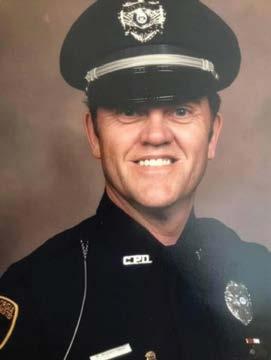
OFFICER FRANK HILTON
“This is something that we need to do. It’s charitable, and we want to be a help to people.”
Willie Davis
Stories by Chris Bridges
SMALL IN NUMBER ONLY
From a 10-year hiatus to a historic state championship, the Providence Classical Christian School girls soccer team forged an unforgettable season that was defined by growth, determination and an injured senior’s steadfast presence.
by CHRIS BRIDGES
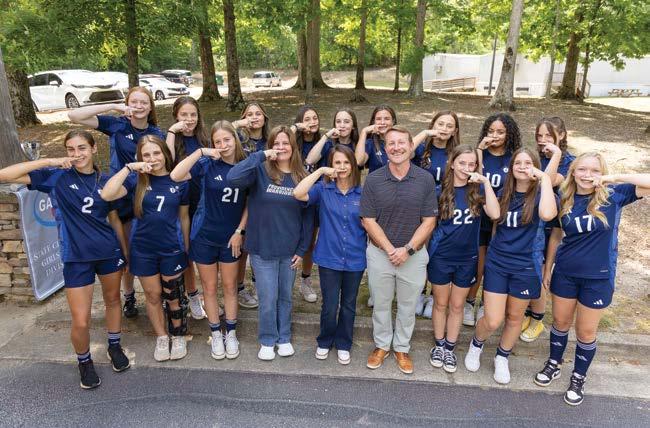
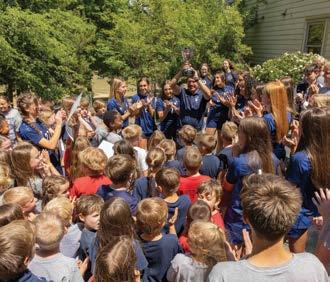
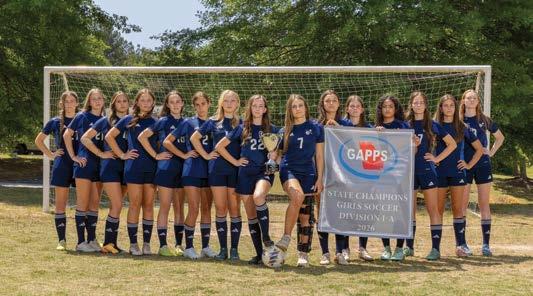
Providence Classical Christian School in Oxford may be small in number, but its girls soccer team flexed its competitive spirit by winning a state championship in May. It was the first such title in the history of the school, which opened in 2005. The fact that Providence once discontinued its soccer program made the run to a championship all the more satisfying.
The return of the sport has been something to behold and served as a rallying cry for the school, according to first-year athletic director Jon Krieger.
“I was told that we stopped the soccer program mainly because we lost the facility we were renting,” Krieger said. “Our school does not have a playing field or a gym of its own yet. We started the soccer program back this year after a 10-year hiatus mainly because our students asked for it.”
Providence competes under the Georgia Association of Private and Parochial Schools banner. Peachtree Academy in Covington and the Blue Springs Youth Soccer Association
in Loganville allowed the Warriors to rent practice and game time during the season.
“We are a very small private school, with 27 high school students,” Krieger said. “We are allowed to have a small number of homeschool students play with us.”
Two of the most outspoken advocates behind the soccer program’s rebirth were seniors Ava Stanley and Henry Ferguson. “They both had been playing for other teams because that is allowed in GAPPS if your school does not have a program of its own,” Krieger said. “Ava said she really thought the girls would be very competitive because many underclassmen from the school had been playing together for several years.” Unfortunately, Stanley suffered a season-ending knee injury—she tore her ACL and meniscus—in the second game of the season.
“It looked as if we might not have the season we were hoping for when she got hurt,” Krieger said. “However, after her surgery, Ava continued to show up to practices and games,
and the rest of the team responded to seeing her there with a never-give-up attitude. She gave God the glory in probably the hardest time in her life but knew that He had a plan. We just didn’t know that the plan was to win a state championship with her on the sideline.”
Stanley took it all in stride.
“I had surgery on April 3 and am recovering well,” she said. “I hope to play again at [the University of Georgia] on either a club team or intramural team. Prior to the injury, I played soccer for six years. This allowed me to help coach using my knowledge of the sport. Our team is primarily underclassmen. I was the only senior, and we had four juniors and one sophomore. The remaining eight players were in eighth and ninth grade. Additionally, many of the girls had never played soccer before. For a team to have performed as well as we did with so many factors is astonishing.”
The team excelled under first-year head coach Kylie Myers. A former club and Division II player, she also coaches in the United Football Academy system in Loganville.
“The keys to our team’s success this season were consistency in the simple things, especially ball control and passing,” Myers said. “We really emphasized making the most out of every minute
ANNA JONES, JACKIE KIRKLAND, ELLA POPE, SARAH CLIBURN, AVA KUFFREY AND ELISE MCNUTT
in training. Every time the girls touch the ball, they improve, so we focused on using our practice time wisely and maximizing touches on the ball.” One of the most significant challenges involved teaching players with various levels of experience.
“Some girls had played soccer for many years, while a few had never played before,” Myers said. “While we worked hard to develop soccer skills and understanding of the game, our ultimate focus was much bigger than wins and losses. We wanted the girls to compete with character, encourage one another and honor God in the way they played, treated others and represented PCCS. We consistently reminded them that their effort, attitude and sportsmanship were opportunities to reflect their faith, both on and off the field.”
In addition to Stanley, the team was led by six All-Region players: Hannah Cliburn, Sarah Cliburn, Anna Jones, Tori Lingerfelt, Elise McNutt and Maddisyn Sellars. Jones, Lingerfelt, McNutt and the Cliburns also earned All-State honors. Lila Ferguson, Addie DeWeber, Naomi Wadley, Ella Pope, Jackie Kirkland, Ava Kuffrey, Charis Atkins and Emily Jones rounded out the roster. Stacey Stanley and Matt Sokolik assisted Myers.
“The girls bought into the process from day one, worked hard consistently and continued to improve throughout the season,” Myers said. “Their attitude, effort and willingness to learn made this championship season very special. Beyond the success on the field, the coaches developed meaningful relationships with these young ladies and have grown in our respect for their character, leadership and heart for others, both on and off the field.”
Stanley called it a true team effort.
“We had practices starting in January, which helped us learn how to play with one another and learn basic skills, as well,” she said. “We then applied those skills to game-like scenarios. The biggest skill our team had to grow in the most was trust. Many of the experienced girls did not trust the newer players. As soon as they learned how to trust in one another was when they started seeing change. Our passes became better, people encouraged one another and the love of the game grew in everyone.”
The Lady Warriors lost only two games all season.
“The teams we lost to were not even in our association,” Stanley said. “We won every game in our division, taking us to quarterfinals, semifinals and then winning state. Watching from the sidelines and seeing them grow as a team made me very proud. I would often sit on the bench missing the player I used to be and the sport itself. This experience has taught me to never take anything for granted and to find joy in all things. I could not be more grateful to be on this team and be able to still participate despite my injury.”
Soccer’s rebirth at Providence provided students with a cause behind which they could unify and altered the school’s trajectory in athletics. Krieger praised Staley and Ferguson for their persistence and commitment.
“I am so blessed to be at a school that has students like Ava and Henry,” he said. “We are going to miss them tremendously next year, but I know that they will be forever remembered for their influence in getting the Providence soccer program started back again; and they will be remembered for contributing to the school’s first state championship.”
(L-R) HANNAH CLIBURN, LILA FERGUSON, MADDISYN SELLARS, EMILY JONES, TORI LINGERFELT, NAOMI WADLEY, ADDIE DEWEBER, CHARIS ATKINS, AVA STANLEY,
“Watching from the sidelines and seeing them grow as a team made me very proud.”
Ava Stanley
Staying Ahead of the H2O Curve
The Newton County Water and Sewerage Authority takes a proactive approach to safeguarding the lifeblood of the communities it serves.
by MICHELLE FLOYD
The next time you brush your teeth or take a shower, Mike Hopkins wants you to go back to the basics to remember the importance of not wasting water; and when you cook dinner, he wants you to realize how fats, oils and grease can cause problems in water systems.
“It’s the only water we’ve got,” said Hopkins, who has worked as the executive director of the Newton County Water and Sewerage Authority for the last 20 years. “When you push a button, waste goes away from you. Sometimes people forget that there is a live person on the other side at a wastewater plant working to clean that water and get it back out into the community.”
Hopkins adds that saving five gallons of water a day might not seem like much, but it adds up quickly if everyone participates. Since 1970, the NCWSA has delivered clean water to the
county, city and neighboring partners. The authority’s 70 employees take their responsibilities seriously to ensure quality.
“They love what they do, and they realize they are providing an essential service and protecting public health,” Hopkins said. The NCWSA, a quasi-government organization, does not receive tax dollars. Oversight comes through the interaction between its board of directors and the Newton County government and its cities.
Newton County delivers 5.5 million gallons of water and processes 3.2 million gallons of wastewater each day. Between the growing number of residents, the increasing number of visitors and the upswing in the number of businesses entering the county, those figures could continue to rise. Frontline workers at the NCWSA earn certifications and take assessments
“ We take clean, fresh water for granted when we turn on the tap.”
Sally Anne Short
during their tenure to ensure compliance with regulations. The Newton County Water and Sewerage Authority recently hired Sally Anne Short as its water conservation manager to help better inform the public about the importance of water conservation and protection.
“We take clean, fresh water for granted when we turn on the tap,” said Short, who worked as a teacher for 30 years. “I want the public to understand that it’s a precious resource.” She plans to continue to engage with school groups at all levels, community organizations and businesses by hosting tours at NCWSA facilities to demonstrate the water cleaning process. “I’ve been really impressed that everyone I’ve met really cares.”
Hopkins notes the importance of educating people at all ages about water conservation, particularly focusing on students who can help influence future generations.
“They’re actively learning, so they are in that mindset,” Hopkins said. “If we can reach them early, maybe they can also hold their parents accountable, too.”
Short adds that although we do not live in an area prone to a water crisis at this time, the NCWSA takes measures to ensure the longevity of its resources. The organization stays droughtready, maintaining an extended six to eight months of water supply at Lake Varner during such conditions. By October 2026, the NCWSA plans to offer reused water by treating water and delivering it back to Stanton Springs Industrial Park industries for use in cooling towers and other applications, aiding the conservation of the existing supply.
“I love how forward thinking they are,” Short said. “They are proactive instead of reactive.”
For information on Newton County Water and Sewerage Authority, visit ncwsa.us or call 770-787-1375.
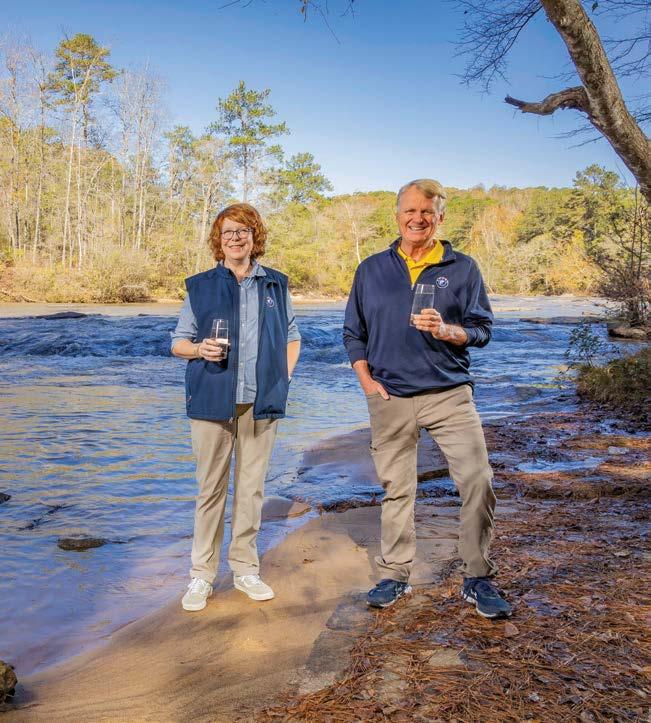
(L-R) SALLY ANNE SHORT AND MIKE HOPKINS
“I tried to remain as flexible as possible— and dependable. Every day was different.”
Bea Jackson
TIME WELL SPENT
Stories by Michelle Floyd
Bea Jackson steps into retirement after helming the Washington Street Community Center as executive director for nearly a quarter century, leaving behind a legacy of opportunity, partnership and unwavering care.
by MICHELLE FLOYD
Bea Jackson held the same position as executive director of the Washinton Street Community Center for almost a quarter century, but she carries a new title as of May 31: retiree. Jackson stepped away from the center, where she served as director since 2003 and had worked with its summer camp for even longer.
“I give credit to Mrs. Louise Adams, who laid the cornerstone for an after-school program at Washington Street,” Jackson said. “She was conducting an after-school program, and I learned from her techniques and how she worked with the parents and children.”
Jackson and her husband, Wick, made their way to Georgia in 1978.
“I used to come to the Atlanta Stadium for an annual jazz concert, and it opened my eyes to other possibilities,” said Jackson, who hails from Williamsburg, Virginia, and once worked as a news reporter for a television station near Charleston, West Virginia. “A group of friends and I who traveled decided to make Georgia our home since we thought there was more opportunities for African Americans here and it seemed more progressive.”
After their move to Georgia, Jackson worked in public relations and developed programming for senior citizens through the Dekalb County Council on Aging. She later linked arms with Girl Scouts, where she received executive training and served in community development while conceptualizing outreach programs covering
21 counties in Northwest Georgia. They moved to Covington at the turn of the millennium after leaning on a real estate friend in their hunt for a good deal. The city that was situated just east of the bustling Atlanta towns in which Jackson had lived for the better part of two decades was foreign to her.
“I knew absolutely nothing about it,” she said. “My husband was diagnosed with a debilitating illness, so we moved here for respite and for him to heal. He loved the outdoors and animals, so we found it to be soothing.”
Inside a growing community, Jackson discovered the center with which she would become synonymous. It was started in 1996 to address the needs of childhood literacy, crime and high school dropouts. Jackson started working with the after-school and summer programs, partnering with local organizations like the YMCA and Newton Community Partnership to allow kids to swim, read and participate in programs they normally would not have access to on their own.
“We started out with 20 kids in the early summer days,” said Jackson, who at first mainly worked with middle school students. “I just felt opportunities in Covington were limited. The kids who surrounded me were confined to Covington, and Covington didn’t have a lot to offer then, so we expanded what they could do.” She took students on various field trips and even
took a group of them to New York. “They encouraged me to do more,” Jackson said. Over the years, Jackson has continued to serve alongside her husband, who volunteered at the center despite being diagnosed with multiple sclerosis. “He is still thriving,” Jackson said. “He served as a helper at Washington Street the whole time I’ve been here. He loved it. He’s been there every step of the way. He can’t walk, but he’s still vibrant and the kids absolutely adored him.”
The Washington Street Community Center now serves about 50 kids per day during the school year and another group during the summer. After school, students participate in various
activities like homework help, health and fitness, mentorship and a children’s choir. They even tend a garden, where they harvest and upkeep fruits and vegetables that they eat and share with the community. Over the summer, students continue to participate in enrichment activities and trips.
“My hours never ended,” said Jackson, who spent many days writing grants and promoting the center to business and community groups. “I tried to remain as flexible as possible— and dependable. Every day was different.” She helped secure grants for technology and field trips while also engaging groups like the Newton County Chamber of Commerce and the
Kiwanis Club of Covington. “I got heavily involved in the community,” Jackson said. “I wanted to make sure Washington Street was in the loop.”
Chamber President Debbie Harper admits Jackson will be missed.
“Bea’s passion for serving others and creating opportunities has made a lasting impact on Newton County,” Harper said.
“She will leave a legacy in this community. Her passion for people, servant leadership and unwavering dedication to making a difference have left a lasting impact on countless lives across our community.”
Jackson credits partnerships with community organizations— from Newton County Schools and the Newton County Board of Commissioners to the Newton County Recreation Department—with furthering the success of the program.
“Throughout her tenure, she helped build a strong and meaningful partnership with us, creating opportunities that enriched the lives of countless kids and families” said Kale Curtis, deputy director of Newton County Recreation Department. “Mrs. Bea’s leadership, collaboration and genuine care for people made the community center a welcoming place for all, and her influence will continue to be felt for years to come.”
Jackson admitted that she will miss the kids the most.
“They were what motivated me,” she said. However, she does not believe the community will feel her absence all that much.
“We will stay in Covington,” said Jackson, a member of the Newton-UGA Archway Partnership, which collaborates with University of Georgia faculty and students to address local issues. “I’m planning on being involved in community life.”
Stories by Avril Occilien-Similien
FROM CORPORATE AMERICA
To the Classroom
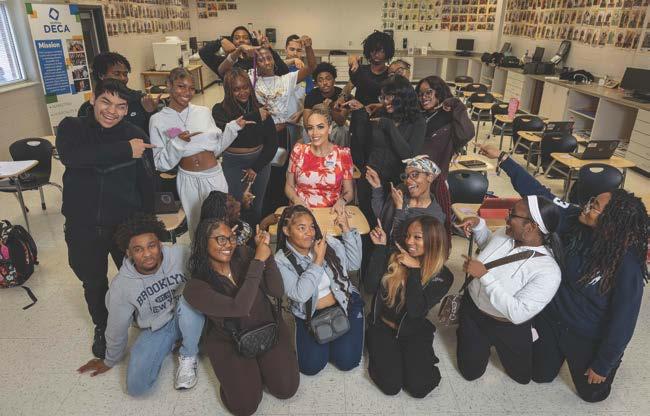
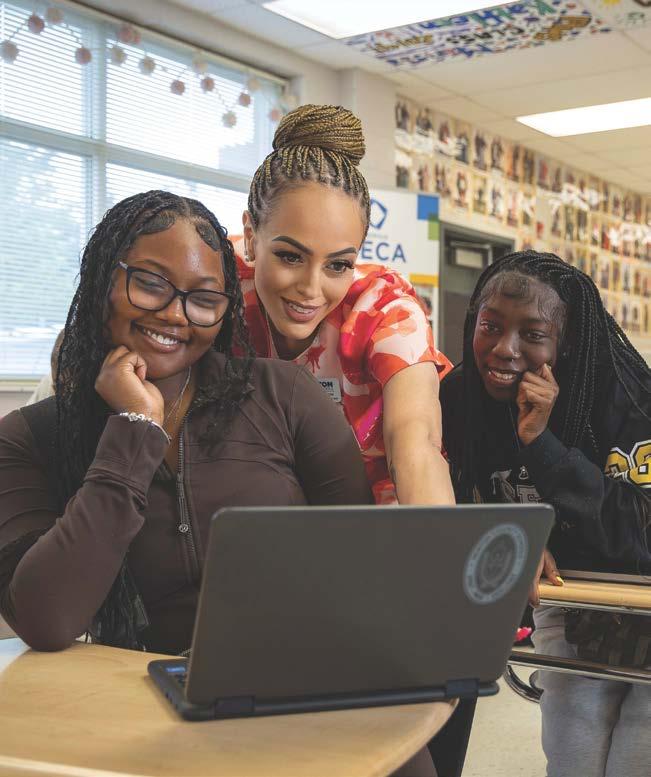
Dr. Quinita Morrow, the Newton County School System ‘Teacher of the Year’ for 2025–26, transforms marketing education at Alcovy High School through real-world experiences, entrepreneurship and a passion for pushing students to believe in themselves.
by AVRIL OCCILIEN-SIMILIEN
When Dr. Quinita Morrow first stepped into a classroom, she never imagined education would become her life’s calling. “I originally said I was only going to teach for one year,” she said with a laugh. Nineteen years later, the marketing instructor and assistant testing coordinator at Alcovy High School has been named the 2025–26 Newton County School System “Teacher of the Year”—an honor she describes as both humbling and unexpected. “Teachers don’t really do this work for recognition,” Morrow said, “so when your colleagues nominate you and support you, it means a lot.”
Born in Tuskegee, Alabama, Morrow earned an athletic scholarship to Albany State University, where she completed degrees in business before entering the corporate world. She then worked at Wells Fargo Financial in Stockbridge. However, even as she built a business career, something kept pulling her toward education. The seed for teaching had been planted years earlier by one of Morrow’s own mentors. She credits her former high school business teacher, Audrey Marshall, with inspiring her to pursue education.
“She made learning come alive,” Morrow said, “and I always remembered that.”
Eventually, an opportunity to teach marketing education opened in Newton County. What was supposed to be a temporary position quickly became permanent, marking the beginning of her journey in the classroom. “I immediately fell in love with the students,” she said, “and that’s what has kept me here.” While teaching, Morrow earned a doctorate in business administration from Walden University in 2019. She chose not to pursue an advanced degree in education. “I wanted the business content and also to stay connected to what students would actually experience in the real world,” she said. That devotion to real-world relevance shapes nearly everything Morrow does in the classroom.
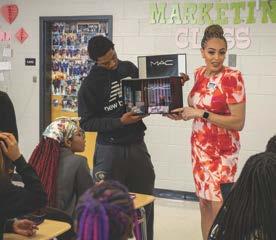
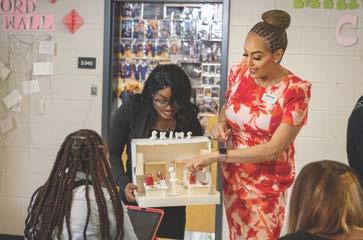
When someone walks into Morrow’s marketing class, it quickly becomes clear that it is not a traditional lecture-based environment, because her teaching style centers heavily on conversation, hands-on learning and real-life application.
Students are not simply memorizing vocabulary terms or taking notes from slides; they are building businesses, creating marketing campaigns and solving actual problems.
One of the hallmarks of her program: a massive guest speaker series that brings professionals directly into the classroom. Morrow welcomes approximately 180–190 speakers representing
“I want every student to leave my classroom knowing they are capable of more than they think.”
Dr. Quinita Morrow
a wide variety of industries and professions. “They reinforce what we’re teaching,” she said. “Students get to hear directly from people actually doing the work.” These connections help students see how classroom concepts apply beyond the school walls while also exposing them to careers they may never have considered. Morrow’s entrepreneurship students also participate in project-based learning experiences that culminate in pop-up shops where students launch and operate their own businesses. From product creation to branding to sales strategy, students handle every aspect themselves and keep the profits they earn.
“It becomes real for them,” Morrow said. “There’s ownership even from parents who often become involved, as well, helping students prepare products, set up displays or support the business concepts their children develop. It’s one thing to talk about entrepreneurship. It’s another thing to actually do it.”
In addition to entrepreneurship, her classes routinely incorporate current events and pop culture into marketing lessons. Whether discussing brand management, rebranding controversies or social media trends, Morrow uses topics students already care about to deepen engagement. She described her teaching style as highly conversational rather than rigidly scripted.
“I want students to think,” she said. “I want them to connect what’s happening in the world to what we’re learning.”
Beyond the classroom, Morrow creates memorable experiences through business and marketing opportunities that extend far outside the school’s walls. For example, students in her program have attended movie premieres, walked red carpets and participated in professional networking opportunities that many high schoolers never experience. Those moments matter for Morrow because they expand students’ vision for what is possible.
“You never know what’s going to spark something in a student,” she said. While Morrow comes across as clearly passionate about business and marketing education, she credits the students themselves for continuing to energize her after nearly two decades in the profession. She laughs about how often her students teach her about technology, social media and hidden apps. “They keep me young,” she said. That willingness to keep learning from students contributes to her effectiveness.
Morrow readily acknowledges that education is not always an easy profession but believes fulfillment matters more than chasing titles or income alone. When asked what advice she would give to current and aspiring teachers, she emphasized authenticity and purpose over financial motivation.
“Trust your instincts,” Morrow said, “and follow what you’re passionate about.”
“I want people to have something to remember me by.”
Bob Hickly
Stories by Michelle Floyd
A Craftsman’s LEGACY
After committing his life to military service, various vocations and other pursuits, Bob Hickly found peace and quiet in creating handmade wooden violins that now carry his memory forward.
by MICHELLE FLOYD
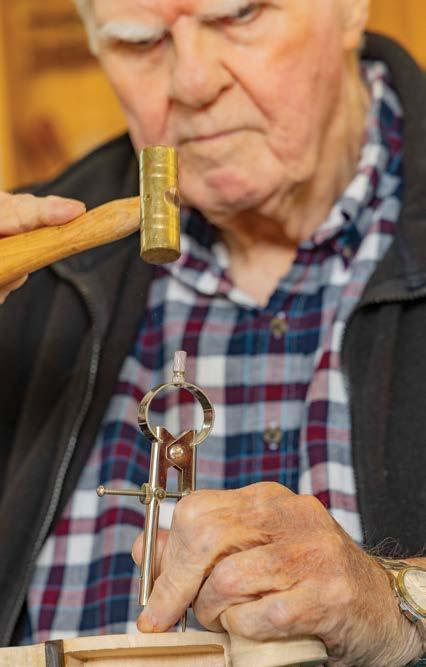
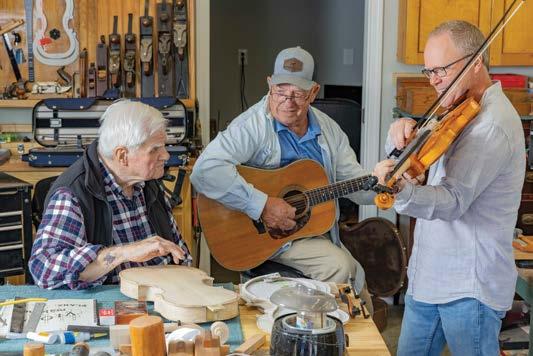
After he spent nearly eight decades working multiple jobs and testing out countless hobbies, Bob Hickly finally found where he was most at peace: building wooden violins at his home.
It was a passion born from an unlikely source. The then-Covington resident in 2016 traveled to his home state of Pennsylvania alongside his wife, Jo, a fellow Keystone State native. They were there to visit her cousin, who happened to repair and build large bass instruments. Bob was soon flooded with inspiration, as he delved deeper into woodworking—an art he had been practicing since 2007. “He said, ‘I think I could build something like that,’” Jo remembered. The couple married in August 2018, then moved to Newborn some four years later. All the while, Bob honed his skills as a craftsman. However, he felt basses might serve as too significant of a project to undertake, so he started to build wooden violins instead.
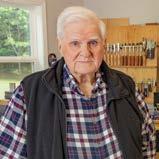
“It gives me peace and harmony,” Bob said over the phone just a few days before his death on May 15 at the age of 83. In addition to his wife, he is survived by a brother, five children and four grandchildren. Hickly, who was born in Pittsburgh on Nov. 6, 1942, was preceded in death by his parents, William Paul and Agnes, and his brother, Donald. “Those who knew Bob will remember him as a man of quiet strength, steady character and genuine kindness,” his obituary read. “He valued loyalty, honesty and perseverance, and he
carried himself with a dignity that earned the respect of all who crossed his path. He was a man who believed in doing things the right way, and he set an example for others through both his words and his actions.”
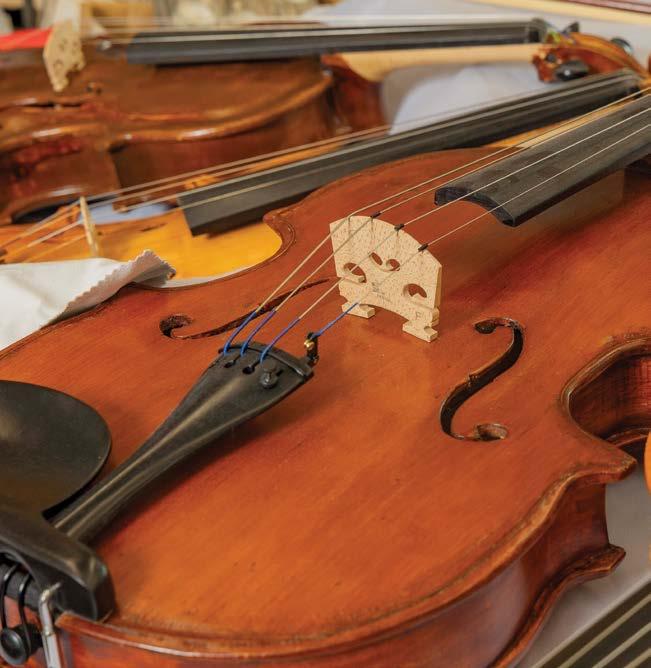
Bob started his woodworking journey by building cups and bowls, then eventually moved on to large furniture pieces. During the last decade of his life, he completed 10 violins and two violas. He kept most of the instruments, choosing to build them mostly for his own pleasure. Bob gave away others as gifts. He could not pick a favorite. “I want people to have something to remember me by,” Bob said. Barbara Thayer was the recipient of one of his violins, a piece she now treasures even more.
“Once my husband passed away in 2018,” Thayer said, “we became really good friends.” She met Bob roughly 20 years ago. Thayer and her husband, Gary, owned a motorcycle shop in McDonough and helped him repair a trike that had been involved in an accident. “I told him one day that he would have to give me one [of his violins],” she said. “They were hanging on the wall, and he told me to pick out one.” Thayer still has the violin displayed in her home. “It means a lot to me,” she said, “because my buddy made it.”
Bob moved to Georgia in 1960 by way of the United States Army, which stationed him at Fort McPherson in Atlanta.
He retired from military service as a Major in 1987, then worked at Golden State Foods. Bob was also a Master Mason and a member of the Golden Fleece Lodge No. 6, the American Legion and the Veterans of Foreign Wars. Woodworking provided him with a means through which to explore his creative side.
Although each project provided its own tests and difficulties, Bob pointed out his favorite part of the process without much hesitation: the quietness afforded by the shop behind his home in Newborn. The most difficult aspect was “thinking it was going to be easy,” he said. Unfortunately, Bob was forced to give up woodworking when he became ill in September, but he always held onto his memories by displaying his craftsmanship around his shop and home. Bob estimated that each violin took around 180 hours—the equivalent of more than seven days— to complete. They included intricate details like grooves and traditional curves that required measurements as small as millimeters on thin pieces of wood.
“It was amazing to watch him take a block of wood and take it down so thin, not paper thin but [thin enough that] it sounds hollow when you tap on it,” Jo said. “He scraped a little bit at a time. It’s hard to believe it goes from a block of wood that was two inches thick.”
(L-R) BOB HICKLY, PHIL AND RUSS TANNER
COURAGE BUILT ON GRACE
Through compassion, grit and a village that rallied behind them, the McQueens have spent roughly a decade providing children with safety, connection and a chance to heal.
by DELANEY DERRY
Foster care can often be reduced to statistics, from the number of children waiting for homes to the number of families licensed to foster and the number of adoptions finalized each year. However, behind every statistic is a child carrying the weight of uncertainty or loneliness, and behind every open door is a family choosing to make room for someone else’s story alongside their own.
For Ryan and Andrea McQueen, the choice began quietly but quickly, without hesitation, as they graciously opened their home and hearts to children and families in need.
The Social Circle couple’s journey into fostering and adoption began 10 years ago but certainly did not happen overnight. At first, they volunteered to temporarily care for children who needed short-term placements. Then came adoption. The McQueens adopted three children—Lexi, Madi and Tyler—before officially becoming foster parents. The journey to fostering began in 2016, when Tyler’s biological brother, Tate, entered their lives in an unexpected way. Tate’s mother had once been the McQueens’ neighbor. Andrea was even present for his birth. When Tate entered foster care, he was placed immediately with the McQueens and united with his brother. After learning the mother could no longer care for Tate, they adopted him, as well. Afterward, the Georgia
PICTURED ON FACING PAGE
BACK ROW
Division of Family and Children Services opened the McQueens’ home as a regular foster placement. Since then, they have fostered more than 100 children.
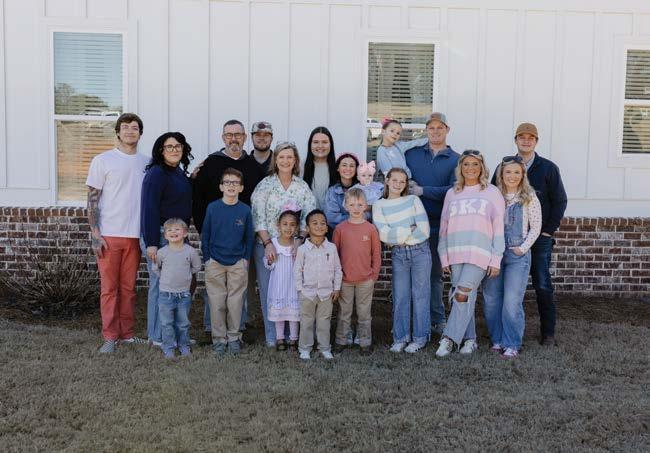
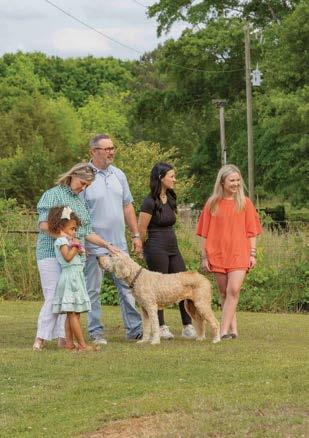
Today, the McQueens have six adopted kids who live at home, along with a 13-month-old foster child. Their household includes two 14-year-olds, a 9-year-old, a 7-year-old, a 5-yearold and a 4-year-old. Their youngest adoption, Kinsley, was finalized in October.
What began as coincidence slowly grew into conviction. Their grace and compassion for children in need blossomed with every child they encountered. The McQueens made every decision intentionally, choosing child after child to create stability for those who lacked it. They acknowledge that their own financial stability made fostering possible, and they encourage those who are able to consider helping in some capacity, whether through fostering, adoption or supporting foster families in their communities.
“We’ve been super blessed,” Ryan said. “I can’t complain one bit.”
Still, the McQueens emphasize that fostering involves much more than providing food or shelter.
According to Ryan, building trust is the key ingredient in helping children. It also means working alongside biological parents rather than against them.
(L-R) GRAYSON, AMBER RYAN, GRIFFIN, ANDREA, BRILEY, LEXI, IVEY, WILLOW, RIVER AND MICHAEL. FRONT ROW (L-R) ROWAN, TYLER, KENSLEY, KEATON, TATE, MADI, MORGAN AND MAKENNA. PHOTO CREDIT, MAKENNA MCQUEEN
“It’s great being able to grow up with all of them because you know you will be able to have them forever.”
Makenna McQueen
“Stability and structure—those kinds of things are key,” Andrea said. “We are what they call partner parents, so we work with these kids’ parents to help them get them back. When they get these plans to be able to get their kids back, it’s very daunting, it’s very overwhelming for them, so you work with them. Once those parents start to trust you, too, that’s huge, because I think once you can work with the parent and the kids see you working with the parent, that helps them to relax, as well. Yes, these kids have been through terrible things and seen terrible things, but so have their parents, and they love them no matter what.”
The goal of foster care remains reunification whenever possible. Many children enter care because families are struggling with issues like addiction, financial hardship, mental health challenges or unsafe living conditions. The McQueens have helped many children return home safely to their parents. Some of them visit years later with children of their own who
affectionately call Ryan and Andrea “Pop-pop” and “Mee-mee.”
However, the work can be exhausting, emotionally and physically. Andrea admits community support became essential to sustaining their family over the years.
“I think we have such an amazing village,” she said. “If we need a break or if we’re just feeling overwhelmed, I mean, thank God our grown kids are so amazing. If we need a date night or anything, we lean on each other. Fostering can be overwhelming. Clearly, we’ve been doing it longer than most people, so we seem to be the ones that everybody calls when they’re feeling overwhelmed, but you also connect with other foster parents who are going through the same things that you are.”
The McQueens’ church community, Grace Monroe, organized care teams that rotated meals weekly, helped provide supplies and offered practical support whenever new children arrived. Andrea described those acts as lifesaving, especially during difficult seasons. The McQueens also encourage foster
parents to attend conferences, support groups and trainings for resources and encouragement. They attend two conferences every year with Chosen For Life Ministries and DFACS, which provide them with informative and valuable places to link arms with others in their position. The main challenges the McQueens have faced involve behavior with the children, but a gracious hand and assistance from members of the community made those situations much smoother.
“[Foster parents] need to know [to] stop waiting on your DFACS case worker to get you in with a therapist,” Andrea said. “Stop waiting to get doctors’ appointments. Nobody tells you, and we had to learn that. I don’t have to wait for DFACS to get me a good therapist, because right off the get-go, all of these kids need a good therapist, whether it’s play therapy, speech therapy, whatever.”
For the McQueens’ biological children, fostering changed the shape of their youth. Makenna McQueen, their youngest biological daughter, was around 7 years old when her parents adopted their first child. “It’s great being able to grow up with all of them because you know you will be able to have them forever,” she said. “People want to say, ‘those aren’t your siblings, those are half your siblings or they’re adopted,’ but no, they are all my siblings.” Makenna credited her parents for always including the family in conversations surrounding fostering and adoption, making sure everyone understood what was happening when new children entered the home. It made a major impact on their family dynamic. Makenna admitted the experience was difficult to fully understand as a child but revealed that it ultimately reshaped her perspective.
“I wouldn’t say, as a 10-year-old, I understood giving up my life to help another kid,” she said. “Not saying I did that, but
that was how it felt as a 10-year-old, but now I am so grateful for that because that kind of helped me realize not everyone has a wonderful, grand life. It put a lot into perspective and gave me a lot more empathy for everyone.”
It has become less about re-homing children for the McQueens and more about offering consistency, grace and love during uncertain or unsafe times.
“Even in the hardest times, there is so much joy,” Andrea said. “[The community] sees our family, sees how happy our children are. They see the difference that you can make in the hardest time of a child’s life and still bring joy and make a difference in their childhood.”
The purpose remains simple, according to Ryan.
“Give [foster children] a chance,” he said. “Without people volunteering their time, their love, their home, they don’t have a lot of chance, and people can have the opportunity to give them a chance.”
JOHN WHITE’S SEARED CHICKEN BREAST, SPRING PEA PUREE AND HONEY
TURMERIC CAULIFLOWER
Chef John White from The House of Nosh and Brew in Covington can craft a fresh summer meal like few others. As restaurant owner Candice Dean put it, “If John created it,
it’s going to be delicious.” Each dish complements the others, resulting in a flavorful lunch or dinner that is beautiful for special occasions but light enough for summer appetites.
SEARED CHICKEN BREAST
• 2 skin-on chicken breasts
• Kosher salt and black pepper, to taste
• 1 tablespoon oil
• 2 tablespoons butter
• 2 garlic cloves, smashed
• 2 sprigs thyme
SPRING PEA PUREE
• 1½ cups fresh or frozen green peas
• 2 tablespoons butter
• 2–3 tablespoons heavy cream
• 1 teaspoon lemon zest
• Salt to taste
HONEY TURMERIC
ROASTED CAULIFLOWER
• 2 large heads cauliflower
• 3 tablespoons olive oil
• 2 tablespoons butter, melted
• 3 tablespoons honey
• 1½ teaspoons ground turmeric
• 1 teaspoon smoked paprika
• 1 teaspoon kosher salt
• ½ teaspoon black pepper
• 2 cloves garlic, finely grated
• Zest and juice of half a lemon
PREPARE THE SEARED CHICKEN
BREAST: Season chicken breasts with salt and pepper. Heat oil in a skillet and sear chicken until the skin is a deep golden color, about six to eight minutes. Flip, add butter, garlic and thyme and baste continuously. Finish in the oven at 375°F until the chicken reaches an internal temperature of 155°F. Allow chicken to rest for five minutes before serving.
PREPARE THE SPRING PEA
PUREE: Blanch peas in boiling, salted water for one to two minutes. Shock peas by immersing them in ice water. Drain, then blend peas with the butter, heavy cream, lemon zest and salt.
PREPARE THE HONEY TURMERIC
ROASTED CAULIFLOWER: Whisk together olive oil, butter, honey, turmeric, paprika, salt, pepper, garlic, lemon zest and juice. Toss each cauliflower head thoroughly in the glaze. Roast whole heads of cauliflower at 425°F for 15 minutes, or until softened.