5/2 Central Boulevard, Silverdale Parking in the Briscoes complex 09 4210910
https: //kateallen.co.nz
Founded by Registered Nurse Kate Allen, our Silverdale clinic has become a trusted destination for advanced skin treatments, cosmetic injectables and laser technology With more than 21 years of nursing experience and a commitment to ongoing education, we take pride in delivering personalised care and results our clients can feel conf ident in.
WHY CONSISTENCY IS THE SECRET TO HEALTHIER SKIN
Whether you're looking to improve pigmentation, acne, redness, scarring or the visible signs of ageing, lasting results are about more than a single treatment. Every person's skin responds differently to treatment, influenced by factors such as age, hormones, sun exposure, lifestyle and genetics That's why every skin journey at Kate Allen Aesthetics begins with our OBSERV Skin Analysis technology, allowing us to assess concerns both on and beneath the skin's surface and create a personalised treatment plan tailored to your skin's unique needs
INTRODUCING OUR SKIN TRANSFORMATION PROGRAMMES
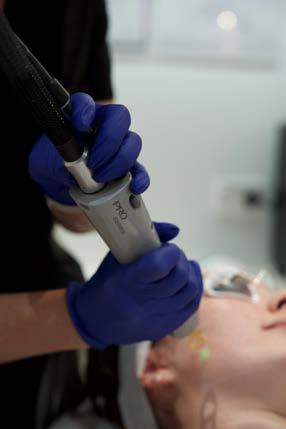
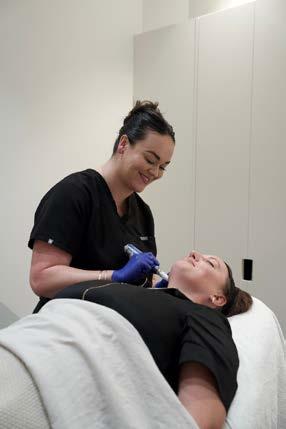
Results driven and bespoke to your skin goals These 6 month treatment programmes keep you on track and ensures your skin is supported both at home and in clinic Skin Needling or Laser Rejuvenation (for your face and neck), are the foundation for these programmes Prices start at $1674 and payment plans are available
Each programme includes:
OBSERV Skin Analysis and consultation
Personalised skincare recommendations
Four advanced treatment sessions for the face and neck
(Skin Needling or Laser Rejuvenation)
Four LED Rejuvenation Facials to support healing and maximise results
$150 skincare credit towards recommended homecare
A post-programme OBSERV review with a mini facial to assess progress and ref ine your treatment plan
ABBEY’S SEASONAL SKIN TIP
As the temperatures drop, so do humidity levels, making winter one of the toughest seasons for our skin Cold air and indoor heating can leave skin feeling dry, dehydrated and more sensitive, making it important to adjust your skincare routine
Reduce how often you exfoliate, as over-exfoliation can weaken the skin barrier and increase dryness and irritation If you've cleansed your skin the night before, a splash of lukewarm water is often enough in the morning to help preserve your skin's natural oils
Don't forget your daily SPF either UV rays are present year-round and continue to contribute to premature ageing and pigmentation, even during winter The cooler months are also an ideal time for treatments such as skin needling, laser rejuvenation and pigmentation correction, allowing your skin to heal while achieving the best possible results before summer
Every great skin journey starts with a conversation Book your complimentary consultation and let our experienced team create a treatment plan designed specif ically for your skin
ON THE COVER: Summerset Milldale
Found & Fancied
FEATURE: Celebrating culture through dance
SHINING A LIGHT: The Good Friends Café
Cooking Questions
Harbour Hospice Homes & Gardens Tour
Fiji by catamaran
New season roses
Property Chat
Coastie artist’s Burnt Offerings
LOCAL FICTION: The Map
The
Coastguard Hibiscus:
Welcome, dear readers, to our 12th Birthday Issue! Our wee mag started in August 2014 with just 16 pages and an ambitious idea to connect local residents and businesses, to share stories and to celebrate our community. We are thrilled and humbled to still be here 12 years later with a bigger mag, a bigger distribution area and a fiercely loyal readership base. Thank you for continuing to choose us to help you connect with all things local on the Coast.
This month we have a number of entertaining reads for you, including a lovely piece of local fiction called The Map, an impassioned piece about people looking for their next home, and an extremely entertaining tale from Coastguard Hibiscus about the crazy happenings on their recent training night.
If you’re a bit of a culture vulture, we have stunning images for you of some of the incredible art pieces on display at the Burnt Offers exhibition in Mangawhai that includes Coastie artist Alysn Midgelow-Marsden, we have information on the Harbour Hospice Homes & Gardens Tour where you can experience firsthand the architecture of homes featured on Grand Designs, and in our Artspeak column we share details of everything on offer at Estuary Arts Centre this month, including their much anticipated Members Merit Awards.
We also have advice on everything from how to cook leeks to growing your new season roses and why you should spend more time at the beach.
Please, pop your feet up and enjoy.
Claire Nevans
We weren’t losing anything, we were gaining a new life.
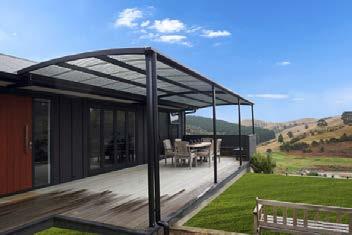
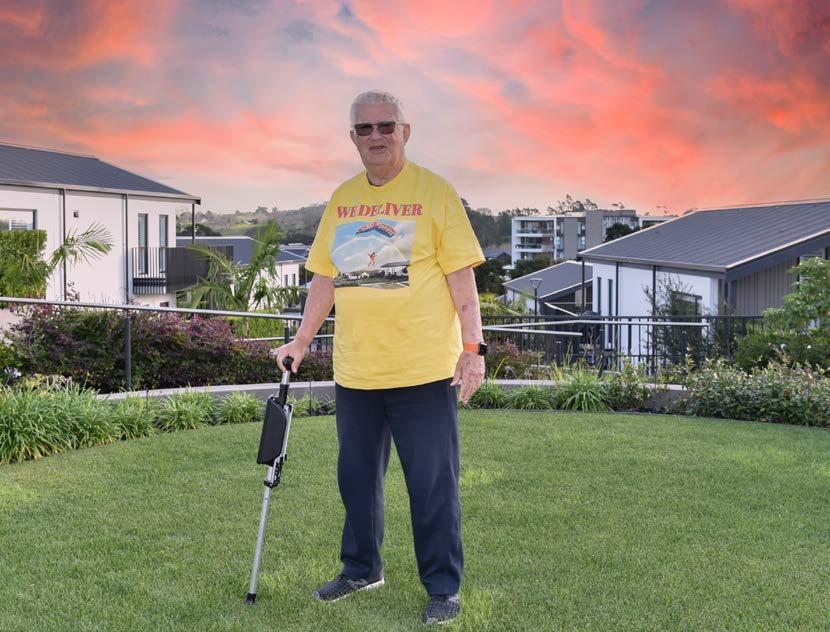
Before Summerset, Eddie and Dianne Collett had already packed a lifetime into their years. They met as young airline crew in Wellington, Eddie a First Officer, Dianne cabin crew with the National Airways Corporation (NAC).
The couple married in 1971, and a short while later the first of three children arrived. After the NAC/Air NZ merger, they relocated to Auckland and Dianne poured her energy into keeping the family humming through Eddie’s international rosters for Air New Zealand.
After 45-years in their much-loved Murrays Bay home with sea views and a pool, everything changed. “I walked out onto the brand-new deck in slippers,” recalled Eddie. “One leg just took off… I very badly broke my other leg.” Recovery meant wheelchairs, ramps and hard questions. “We realised we weren’t foolproof anymore.”
The couple visited Summerset’s Milldale village on a beautiful day, admired the rural outlook and felt something click. “I said to Eddie, I think we can do this,” said Dianne. “We tend to be decisive,” added Eddie. “We came back the following day and signed.”
From the moment they arrived, the Collett’s felt embraced by the village community. “You wash your car, and it takes an hour because everyone stops to chat,” laughed Dianne. “And Wednesday drinks, nobody is ever late.” New neighbours quickly became close friends, the kind who notice if your garage is open, or a car window’s down.
“People are watching your back,” said Eddie. “Being a gated community adds to our security and peace of mind. And if anything happens, help is at hand.”
After decades managing a large property, practical worries faded, too. “At our age, climbing ladders is not on,” said Eddie. “Summerset washes the villa exterior, clean the gutters, mow the lawns. It’s all taken care of.” Village security also makes the ‘lock and leave’ lifestyle effortless. “We went on a six-week trip, and it was so nice to just lock the door and go,” said Dianne. “Coming home all you have to do is unpack your suitcase, it’s bliss.” They’re off again to Japan for the cherry blossoms, followed by a Viking cruise. “Our children complain they can never get hold of us,” she giggled. “We have more of a social life than they do!”
Perhaps the greatest gift is what it’s meant for their family. “Our children don’t have to worry about us anymore,” said Dianne. “Don’t leave it too late. Don’t burden your kids,” added Eddie. Most of all, the move reframed how they think about home. “We thought we’d miss the view,” said Eddie. “But halfway through selling, we stopped worrying about what we were losing. We were looking forward to what we were going to.” Asked if they have any regrets, Dianne doesn’t hesitate: “Once you move in, you never regret it.” Eddie agreed, “We weren’t giving something up, we were gaining a new life.”
If you’d like to know more about Summerset Milldale, visit summerset.co.nz
Print | Digital | Social
FOLLOW US
thecoastiesmag.co.nz
TheCoastiesMag
thecoastiesmag
IN THE LOOP
Grab yourself an Earthloving bargain
DESIGN
PUBLISHER
Grayson & Sarah Furniss
MANAGING EDITOR
Claire Nevans
GRAPHIC DESIGN
KD Design
PRINTER
Treehouse Print
CONTACT US
021 771 140 advertising@thecoastiesmag.co.nz
CONTRIBUTORS
Hayley Crawford
Karen McMillan
Mark Lane
Carmen Bird
Chris Norris
Trish Beauchamp
Lizzie Blanchard
We all love a bit of retail therapy and if we can help the planet out at the same time that’s even better. The Winter Pre-Loved Kids Market is coming to Orewa this month, so if you’ve got kids growing out of their clothes faster than you can wash and fold them, babies ready for toddler toys, or you need some new books to read your little ones at bedtime, this is the place for you. You can grab yourself a few bargains and save some second-hand goods from hitting the tip while they still have plenty of life in them. The market has been running for over 15 years and is always a great morning out with a fun and friendly family atmosphere.
The market will take place at the Orewa Community Centre on Saturday, 22 August from 9am to 12pm. Contact natashagoodasnew@yahoo.com for more info.
New weekly fun run on Ōrewa Beach
For those of you who need a bit of motivation to go for a run come hump day or
fancy having some buddies to run along the beach with of an evening, you will be thrilled to hear that a new weekly fun run/ race has started up on Orewa Beach on Wednesday nights.
The gathering point for The Coasties 5km is The Orewa Surf Club. Registrations begin at 5pm with the race starting at 6pm (with headlights in winter). The entry fee is $14, which includes a complimentary drink after the race. Prizegiving will take place at 7pm with podium and spot prizes up for grabs. For more information contact cherie@hotchilli.co.nz.
Ōrewa
seawall and shared pathway open
The Hibiscus and Local Bays Board were thrilled to announce the path is ready for use, stating, ‘We’ve been proud to champion this project, which helps protect the Ōrewa beachfront from erosion while improving access for walkers, cyclists and beachgoers. The new 600m pathway and seawall extends between Marine View and Kohu Street and includes improved beach access, planting and pathway lighting. The new lighting system is continuing to be fine-tuned and is scheduled to operate from 6am until sunrise and from sunset until 10pm.’
If you haven’t checked it out already we highly recommend you do. What a fantastic asset for our community and it looks stunning too.
FOUND & FANCIED
chocolate
cream
Mille feuilles at Faridas Hibiscus Coast Highway, Orewa
Cinnamon roll at Romeo Panetteria
Gather your friends for a fabulous day out peeking behind the gates and doors of some of Omaha’s most beautiful homes.
TICKETS & more info for both events: harbourhospice.org.nz/our-events or scan the QR code Featuring newly Michelinrecognised restaurants and New Zealand’s finest wineries, enjoy ten exceptional food and wine pairings competing for the Vintners’ Brunch Best Wine & Food Match Award.
Celebrating culture through dance
Inspired by the many happy memories of her primary school Bollywood dance group, Orewa College Year 13 student leader Santhiya Vasanth founded the school’s first Bollywood dance group in 2024. Starting with just four students, the group has since grown to over fifteen members. Though the group provides a space for those of South Asian heritage to connect with their culture, the group welcomes anyone with a passion for dance, creativity and community.
For Santhiya, Indian dance has always been a significant part of her life. ‘As a kid, it really made me enjoy my culture a bit more’. When she arrived at Orewa College, however, she noticed that there wasn’t a group specifically dedicated to celebrating Indian culture. Rather than waiting for one to exist, she took the opportunity to form one herself.
Though the group is labelled as a Bollywood dance group, its performances draw on a much broader range of traditions. The group incorporates dance styles from across India and Sri Lanka, celebrating the rich diversity of South Asian cultures.
Santhiya, along with two other dancers in the group, Asmi and Sanjana, also participate in classical Indian dance training outside of school. Through this they learn Bharathanatyam and Kathak. This knowledge allows the group to bring a deeper level of understanding into their performances.
Since its creation in 2024, the group has continued to grow through dedication and perseverance. After first performing at Orewa College’s annual dance showcase, the group has gone on to participate in much larger events, such as Polyfest and
Bollywood Showdown. In 2026, the dancers performed at the Auckland Bollywood Showdown, sharing the stage with over 20 schools and over 400 students. For the members, the event was not only an opportunity to perform, but to also connect with other schools and students celebrating their passion for South Asian dance.
The group’s participation on the 2026 Polyfest stage also marked a significant milestone. As another first for Orewa College, the performance reflected the festival’s purpose of celebrating cultural diversity through youth performance, and demonstrated how far the group had come in just three years.
Though establishing a new cultural group within the school has come with its own challenges, its success is not measured by its size or number of performances, but rather by the opportunity it creates for students. ‘It might not make an impact on every student at Orewa College, but I know it will make an
impact on some,’ Santhiya said. ‘If a Year 7 Santhiya came into the school and wanted to join this program I know it would mean a lot to her.’
More than just a dance group, the Orewa College Bollywood group is a tight-knit family, a welcoming place where South Asian students can celebrate and share their culture and inspire the next generation to do the same.
Lizzie Blanchard | Feature Writer
Insurance
Why you need someone in your corner
When most people think about insurance, they think about policies, premiums and paperwork.
I think about advocacy.
My Greek heritage has taught me to value standing up for what is right. Throughout history, Greeks have earned a reputation for resilience, determination and refusing to back down when the stakes are high.
Those same qualities are important in my role as an insurance adviser.
Many people assume that once a claim is lodged, the rest is straightforward. Sometimes it is. But occasionally clients need someone firmly in their corner to ensure matters are progressed fairly and promptly.
Several years ago, I inherited a client whose insurance had been arranged elsewhere.
At just 39 years of age, she received the devastating diagnosis of terminal pancreatic cancer.
I lodged the claim immediately, along with the extensive medical information requested by the insurer. Yet, several weeks passed with little progress, while the family faced enormous emotional and financial pressure.
As their adviser, I wasn’t prepared to simply sit back and wait. I continued to push for answers, challenge delays and advocated on behalf of the family until the claim was finally approved and paid.
The relief for the client and her loved ones was immense.
That experience reinforced something I have always believed: the true value of an insurance adviser is not measured when a policy is taken out. It is measured when a client needs support the most.
Whether it’s managing a claim, challenging an underwriting decision, or helping clients navigate a difficult situation, advocacy remains one of the most important parts of my role.
Because when life throws up a challenge, everyone deserves someone in their corner. It’s what we do!
Theo Simeonidis | UProtectNZ Insurance Services
Theo is a Financial Adviser, living and working in Millwater on the Hibiscus Coast, and specialising in personal and business insurances. Theo can be contacted on 027 248 9320 or email theo@ uprotectnz.com. Any assistance is provided on a free, no-obligation basis. A public disclosure statement is available on the www.uprotectnz.com website.
THE GREEN SPOT
Good things come to those who thrift, because when you shop second hand, you don’t find things, they find you. I have had two great finds recently, related to this topic, which I am keen to share this month.
Firstly, there is a new app called Op Spot, which aims to make shopping second hand as accessible and appealing as buying new.
Op Spot lists all the op shops in your area with a map view or a clear list of their location and opening times. The idea is that app users or the store workers can upload pictures of their current wares so you can view ahead online. If you’re like me, you will have come across bargains that you don’t
necessarily need for yourself but want to spread the word to divert this treasure from landfill. You just take a pic and upload it to your wall for the rest of the Op Spot community to see.
One of these shops is my other recent discovery, Re:Circle Whangaparāoa, which is a consignment store in Coast Plaza where items are sold on your behalf.
Have you ever wished you could offload your unwanted goods in a retail style setting and have someone else mind the store and process the payments? At Re:Circle you can book a stall for however many weeks you choose and pay a weekly rate as well as commission on items sold. Sales will show on your online profile, notifying you that you can add more products to your rack or shelves. There’s a variety of shelving units
to choose from, including lockable glass cabinets for valuable objects, and if you only want to sell a few articles you can use their ‘per item’ option.
For more information go to recircle.nz or in store (branches are also in Onehunga and Hamilton) where you could pick up a preloved bargain as a customer – stall owners get a discount. And don’t forget to download Op Spot from your app store to check out all the other local opportunity shops, find the best one or plan your next thrifting adventure.
Hayley Crawford | @trashtalkingmama
TAKING A HIKE
Tobins Track Arrowtown
I’m lucky enough to spend a fair bit of time down south, and with a good friend based in Arrowtown, I usually pop in whenever I’m down. My last visit landed in mid-July, cold enough for the temperature to sit at zero in the mornings. Smoke from fireplaces drifting through town giving the whole place that cosy winter feel and the mountains looking beautiful in the early light. Wrapped in a hat, thermals, scarf and a puffer, I headed out early from my friend’s place, the start of Tobins Track just a few minutes up the road.
Across the bridge and onto the track, the climb begins with a slow, steady rise. The wide old road is scattered with schist, and bare trees line the edges with piles of autumn leaves still clinging to the ground. Every few minutes I’d stop to take in the view: Arrowtown sitting quietly below, and snow dusting the surrounding mountains. The whole area has that classic Arrowtown charm – gold-rush history tucked into every bend, cottages dotted through the valley, and the river winding its way past the village.
I passed a couple of other walkers enjoying the morning. One guy was running repeats – up and down six times –clearly training for something bigger than a casual walk. Town itself had been hectic with school holidays, so being out on the track felt like a welcome breather, a bit of space away from the hustle and bustle.
As I climbed higher, the ground shifted from frosty to icy, making a few sections slippery. Near the top, patches of snow appeared, crunching underfoot. The birdlife was incredible – a full winter chorus echoing through the valley. Reaching the lookout, the view opened up across the basin, the mountains stretching out in every direction. It’s one of those classic Central Otago scenes that is breath taking – wide, open and beautifully still.
The descent was easier, though I still tip-toed around the icy patches. Back at the bottom, with cold cheeks, fingers and toes, I wandered straight to Provisions, my favourite Arrowtown brunch spot. A hot coffee and something delicious from their cabinet was the perfect finish – exactly what you deserve after a winter hike.
By the time I headed off, I’d clocked around 8km. It never felt long or difficult – just one of those South Island mornings that leaves you feeling refreshed and grateful for the spectacular country we live in.
Carmen Bird
Carmen Bird Photography
SHINING A LIGHT
The Good Friends Coffee Bar & Eatery
WHY YOU SHOULD VISIT
This is such a great spot for a café and while it is the third incarnation of an eatery to grace this generous space on Milner Avenue, the team behind Good Friends have the experience from their previous and existing venues to make this a great success.
On the menu there is a wide range of options and price points to suit everyone, and while the usual breakfast and lunch options are well covered to meet expectations, there are also some more unusual offerings for the adventurous in your party, such as pork belly eggs benedict, matcha cream pancakes and a seafood and orzo stew.
If you’re looking for something a little lighter or lunch to go, there’s not one, but TWO cabinets filled with colourful treats to tempt you. Savoury options include wraps, sandwiches and rolls, frittatas, pies and sausage rolls. Those with a sweet tooth are spoilt for choice with an extensive variety of slices, cakes, cheesecakes and tarts to try with their favourite cuppa.
WHAT WE LOVE
The décor inside is fresh and elegant, and the trees lining the street have grown enough to make the outlook pretty lush considering the urban location. The chairs are padded, which is always welcome, and there’s plenty of outdoor seating for the warmer months and for those with their dog in tow (water bowls are provided by the stairs).
Even though Good Friends was busy when we visited (on the day after their grand opening) we were seated promptly, our food came out quickly and the service was excellent. Members of our party ordered the chicken salad, the crispy pork belly with fried eggs, mince on toast and the crunch nut granola and everyone enjoyed their food and said they would order the same again, though that might be a few visits down the track, with how many other dishes we already want to try. The iced chocolates went down well and our smoothies looked pretty and had just the right amount of sweetness.
While they’ve managed to fit in a lot of tables, the space is generous enough that you don’t feel squashed up against the people next to you, and there are a wide range of table sizes from two-seaters right up to a long grand table in the centre able to accommodate large groups. It was also great to see a sizable blackboard with plenty of chalk in the corner to help keep little ones occupied.
Heartburn isn’t always ‘just heartburn’
Almost everyone experiences heartburn from time to time. After a large meal or a spicy dinner, that familiar burning sensation in the chest can seem like nothing more than an inconvenience. But when reflux becomes frequent, it may be your body’s way of telling you that something more significant is happening.
Gastro-oesophageal reflux disease (GORD) occurs when stomach acid repeatedly flows back into the oesophagus. Common symptoms include heartburn, acid regurgitation, chest discomfort, chronic cough, hoarseness, excessive throat clearing or a sensation of food sticking. While medications can provide excellent symptom
relief, they do not always identify the underlying cause or detect damage that may already have occurred.
Long-standing reflux can lead to inflammation, narrowing of the oesophagus, or a condition called Barrett’s oesophagus, where the lining of the oesophagus changes over time. Although Barrett’s oesophagus does not usually cause additional symptoms, it is recognised as a risk factor for oesophageal cancer. Fortunately, when detected early, appropriate surveillance and treatment can significantly reduce this risk.
Not everyone with reflux requires further investigation. However, symptoms that persist despite medication, difficulty swallowing, unexplained weight loss, anaemia or recurrent vomiting should be discussed with your GP. Depending on your individual situation, an upper endoscopy (gastroscopy) may
be recommended. This simple procedure allows a specialist to examine the oesophagus and stomach directly, diagnose the cause of symptoms, and identify problems at an early stage.
If reflux is affecting your quality of life or has become a regular part of your routine, don’t ignore it. Speak with your GP or specialist about whether an assessment is appropriate.
At Waitematā Endoscopy, we’ve been working hard to reduce wait times, and can offer most standard gastroscopy and colonoscopy appointments within 7 working days of receiving a referral. We accept GP, specialist and self-referrals via our website.
are dedicated to exceptional patient care
With new Specialists and increased capacity, Waitemata Endoscopy can provide greater access to timely and quality care
As a Surgical Endoscopist, Mr Kulasegaran offers both medical and surgical intervention to aid with the management of reflux.
Appointments are available within 7 working days for most Gastroscopy & Colonoscopy procedures by matching you with the availability of our Gastroenterologists & Surgeons*
Talk to your GP about a referral to the Waitemata Endoscopy Group, or you can self-refer at: WE have you covered from 'Top to Bottom'
ww.waitemataendoscopy.co.nz/book
Mr Suheelan Kulasegaran Upper GI, Bariatric, Laparoscopic, General Surgeon and Endoscopist
Waitematā Endoscopy (09) 925 4449
Mr Suheelan Kulasegaran
Upper GI, Bariatric, Laparoscopic General Surgeon & Endoscopist
THE BEAUTY BRIEF
Your skin has a secret garden
Are you looking after it?
Meet the tiny invisible world that’s working around the clock to help keep your skin healthy.
When we think about healthy skin, we usually focus on what we can see – a radiant glow, smooth texture and fewer breakouts. But living on the surface of your skin is an entire microscopic community doing some of the hardest work of all.
Welcome to your skin microbiome
Think of it as your skin’s own secret garden. It’s home to trillions of beneficial bacteria, fungi and other microorganisms that work together to protect, nourish and strengthen your skin. While ‘bacteria’ might sound like something you should scrub away, these tiny residents are actually some of your skin’s biggest supporters.
A healthy, balanced microbiome helps maintain hydration, calm inflammation, strengthen your skin barrier and defend against harmful bacteria that would love to move in
uninvited.
But like any beautiful garden, it can be thrown out of balance.
Sometimes, in our quest for flawless skin, we’re actually disturbing the very ecosystem trying to protect us. Over-cleansing, harsh exfoliation, too many active ingredients and constantly switching skincare products can all disrupt this delicate balance. The result? Increased sensitivity, redness, dryness, irritation or those mysterious breakouts that seem to appear overnight.
Fortunately, skincare is evolving.
You may have heard the terms prebiotics, probiotics and postbiotics. Prebiotics nourish the beneficial microorganisms already living on your skin, probiotics are beneficial microorganisms, and postbiotics are the helpful compounds they produce. Together, they support a thriving microbiome and encourage healthier, more resilient skin.
This growing understanding of the skin’s natural ecosystem has led to a gentler, more
supportive approach.
Corneotherapeutic skincare focuses on strengthening the skin barrier and working with the skin’s natural processes rather than stripping them away. This is the philosophy behind Prologic, the professional corneotherapeutic skincare range I use in my salon. By respecting the microbiome, these treatments help create the ideal environment for healthy, resilient skin.
Healthy skin isn’t about doing more, it’s about doing the right things consistently.
Your skin isn’t the enemy. It’s a living ecosystem. Treat it like a beautiful garden, nourish it, protect it and resist the urge to overwork it. When the environment is right, healthy, radiant skin doesn’t have to be forced, it simply flourishes.
COOKING QUESTIONS
Your own personal chef with Mark Lane
I have been cooking professionally for 39 years. My business, Culinary Lane Catering, is based in Millwater, providing three and five course dinners in your home, out-catering and grazing tables. Gain the benefit of my experience by emailing me your cooking questions.
Trish: Can you please share some ideas for using leeks more broadly. They are cheap at the moment, and other than use them in soups I’m not sure what to do with them. For example, what can I do with them to serve as a veg on the side? Can you use the green bit for anything? Thanks.
The humble leek has been eaten by humans for nearly 6000 years and, in my opinion, is one of the most underrated and under-utilised vegetables there is. They are low in calories but rich in vitamin A, D and folate. They contain powerful antioxidants linked to heart health and reduced inflammation. They are a winter vegetable but due to our mild Spring and Autumn climate they have an eight-month season.
The white of the leek is the most tender and the light inside green is also very sweet. The darker outer and upper leaves are quite tough but perfect for long cooking such as soups and stocks, so zero waste. It is important to wash the top of the leeks well due to the way they are grown to remove all dirt. But drain and dry well so they don’t get too watery.
Most people blanch the sliced leeks quickly in boiling water, but I prefer to sauté them in rings or strips in butter, sea salt and cracked black pepper for approximately 5 minutes until soft and translucent. You can also cut in half, toss in virgin olive oil and seasoning and roasted at 200oC for 20-25 minutes until brown and crispy on the edges. You can also braise them in chicken or vegetable stock with fresh herbs and a knob of butter. By using these methods of cookery, you release the natural sugars, and they will
become quite sweet.
Leeks pair superbly with gar lic, thyme, cream, parmesan, bacon, chicken and fish.
Kate: I have a family member who has just been diagnosed diabetic and they have a sweet tooth. Can you recommend any desserts or treat ideas that are low sugar but will satisfy a sweet craving please.
There is no reason that a diabetic can’t have desserts that satisfy their sweet tooth and keep their blood sugar completely stable. They need to eliminate added sugar, eat foods rich in fibre, protein and healthy fats. In suitable recipes try swapping out ‘refined flours and sugars’ for low-carb alternatives such as almond, coconut, buckwheat and chickpea flour, and natural sweeteners like stevia, monk fruit sweetener, allulose or erythritol. Also use lots of fruit-based desserts such as Greek yoghurt with berries, baked apples and pears, avocado and dark chocolate mousse, grilled peaches with ricotta and chia seed fruit pudding.
For that quick sugar hit have low-glycaemic varieties of good quality dried fruits such as unsweeted apricots, dried apples and prunes which absorb more slowly into your bloodstream.
Mark Lane | Culinary Lane Catering www.culinarylane.co.nz culinarylane@gmail.com
When life changes, so should your will
Joy and her late husband, Eric, hadn’t been able to have children. However, they were close to their godchildren, acting as surrogate aunt and uncle to the four children. Sadly, ten years ago, Eric died suffering a heart attack. He and Joy had completed their wills a couple of years before he died, leaving everything to each other and then if they both died, to a mixture of family members and charities.
After Eric’s death, Joy decided to update her will. Under her current will, the executor was Eric’s older brother. That was no longer appropriate, as he was in his late 70s and might die before Joy. She also wanted to revise the gifts in her will to reflect discussions she and Eric had before his death.
Joy’s main asset was the family home, which was now worth a substantial sum. She also had some cash in the bank that supplemented her pension. She decided she would leave the house to her godchildren on the basis that it represented the lion’s share of her estate, and the balance would be divided between the three charities she and Eric had agreed upon. This meant that even if she spent all her cash, the godchildren would receive the proceeds of the family home after it was sold. Joy also appointed her lawyer to act as the executor of her estate. She thought it was good to have someone neutral in the role, and as her lawyer would need to be involved if she died anyway, it just made sense.
Three years later, Joy decided to move to a retirement village. She was struggling to keep up with the grounds and housework in her house. She had friends who had moved into villages, and she wanted company now that Eric was gone. She viewed retirement villages with one of her goddaughters and settled on one that she loved, with great facilities.
When Joy went to the lawyer to sign the papers for the sale of her home and the purchase of the occupation right to the apartment in the village, the lawyer suggested she review her will. Joy remembered the rough proportions between her godchildren and the charities and said that she might look at it to make sure it was still ok. Now that the cost of buying in the village was less than her home, she would have more cash, but needed time to think it over.
Joy didn’t end up contacting her lawyer to update her will, as she was having too much fun enjoying her new life in the village. Sadly, two years later, Joy had a stroke and ended up passing away with pneumonia in hospital a few days later.
Her godchildren were sad but pleased for Joy that she had been able to enjoy her last few years, even though it was without Eric. They were surprised, however, when they read Joy’s will. The will specifically left them Joy and Eric’s family home. That had been sold when Joy had moved into
the retirement village, but the wording remained the same – it didn’t relate to the sale proceeds of the home. The lawyer told them that, as that asset no longer was in Joy’s estate, they would receive nothing under her will, and her entire estate would go to charity.
Joy’s godchildren were not the greedy type, but this did not seem fair, and they didn’t think it would have been what Joy wanted. They decided to take their own legal advice. The lawyer they saw said that the best thing to do would be to try and negotiate with the charities, but that there was no guaranteed chance of success.
This story illustrates the importance of reviewing your will as well as getting good advice around the way that it’s drafted. People often think wills are simple, and they can be, but often they are being drafted to consider complex situations. Ensure that your will is up to date and says what you want to happen so that you don’t leave an expensive headache for your family.
Tammy McLeod (BA LLB) Managing Director, Davenports Law
Trust and asset structuring specialist, leading the Trust Team.
Do You Have A Valid Will?
It is recommended to review your will every five years, or whenever your circumstances change.
When you make a will you are creating a lasting legacy for your loved ones, with the opportunity to have your say.
Significant milestones such as marriage, separation, death, a change in your assets, or expanding your family can affect your assets being distributed in the way you want them to be.
Ensure your final wishes are respected and get advice that reflects your personal situation. Contact our Trust and Wealth Protection team to review your will.
Omaha opens its homes For Harbour Hospice Homes & Gardens Tour
Harbour Hospice’s Homes & Gardens Tour is returning on 15 November with a line-up of exceptional homes and gardens, including homes that featured on Grand Designs NZ.
The tour is based in Omaha, with tickets expected to sell fast. ‘Omaha is home to some absolutely stunning properties, and we feel very humbled to have had so many locals say yes to generously opening their homes for hospice,’ says Harbour Hospice’s Fundraising and Busines s Development Specialist Emily Thomas.
Mark and Lisa Darrows are among them, with their new build, completed earlier in 2026, being something of a local landmark after featuring on season 10 of Grand Designs NZ.
The Darrows’ home is not your typical beach house. Four years in the making, at a cost of $10 million (including the cost of the section), Grand Designs presenter Tom Webster describes it as a ‘glorious sculptural house’.
Its 1800m section is adjacent to a public car park and was once used by locals as a thoroughfare between the dairy and beach, so the Darrows’ biggest challenge was to create a home that preserved their privacy.
Architects Lindy and Luke Leuschke, also opening their home for the tour and who featured in the same Grand Designs episode, rose to that challenge with a bold and innovative design that features what Tom Webster describes as ‘The great wall of Omaha’ – a huge wall clad in scalloped glass reinforced concrete panels, that shields the downstairs level of the house, leaving the upstairs to take in sweeping ocean views.
The Darrows describe the house as a ‘sanctuary for family, and all the chaos that comes with it’. They recently welcomed their first grandchild and hope to fill their home with many more.
They agreed to show their home because ‘we acknowledge the interest from the local community,’ Mark says. ‘And we’re happy to open it for a charitable cause such as Hospice. Both my parents and father-in-law received Hospice care so we understand how important it is.’
The House &Garden Tour is generously sponsored by Principal Event Sponsors Bayleys in the North and Heather Walton-BycroftBayleys Omaha, with the Omaha Golf Club as the event’s central hub. To secure your tickets: https://harbourhospice.org.nz/event/ homes-and-gardens-tour/.
Give your glasses a little TLC
Most of us wear our glasses every day, but how often do we think about looking after them?
A little care can go a long way towards keeping your glasses and sunglasses comfortable, clear and in great condition for years to come.
One of the simplest habits is using a case whenever your glasses aren’t on your face. It only takes a moment for a pair of glasses to get scratched at the bottom of a handbag, sat on at the beach or knocked off a bedside table. A sturdy case offers the best protection when you’re on the go.
Whether you’re out walking at the beach, tackling weekend jobs around the house, cheering from the sidelines at winter sport or navigating wet roads on the school run, try to avoid leaving glasses or sunglasses on the dashboard or in the glove box of your car. Temperatures inside a parked vehicle can climb surprisingly high, potentially affecting lens coatings, frames and overall fit.
When it comes to cleaning, a microfibre cloth is your best friend. Tissues, paper towels, clothing and tea towels can all leave tiny scratches on lenses over time. It’s also worth remembering to wash
your cleaning cloth regularly, as trapped dust and oils can reduce its effectiveness.
Been gardening, working in the shed or caught in a gusty day at the beach? If your lenses have been exposed to dust, grit, sand or salt spray, give them a gentle rinse under lukewarm running water before wiping them. This helps remove abrasive particles that could scratch the lenses.
And just like your car benefits from a regular service, your glasses can, too. If your frames are feeling loose, slipping down your nose, or simply looking a little worse for wear, pop in and see us for a glasses ‘WOF’. We can check screws, adjust the fit, and, where appropriate, give your frames a deep clean in our ultrasonic cleaner to help remove built-up dirt and grime.
Your glasses work hard every day. With a little TLC, they’ll keep helping you see clearly and comfortably wherever life takes you.
Come and see the team at Orewa Optics for your regular check-up, and to see our extensive and stylish range of eye wear. Orewa Optics are here Monday to Friday, 8.30am to 5.30pm, and enjoy extended hours until 7pm on Tuesdays. Call us today 09 426 6646 or book online at www.orewaoptics.co.nz.
The top 5 things optometrists wish you’d stop doing to your glasses
1. Using your shirt to clean your lenses: It seems harmless, but clothing fibres can trap dust and grit that may scratch your lenses over time. A clean microfibre cloth is always the better option.
2. Leaving them in the car: Hot dashboards and gloveboxes can warp frames, affect lens coatings, and shorten the life of your glasses. Your sunglasses might love the sunshine – but your lenses don’t.
3. Putting them down lens-first: We’ve all done it. Unfortunately, so have thousands of scratched lenses before us. Always fold your glasses and store them in their case when not in use.
4. Ignoring loose screws and crooked frames: If your glasses are slipping, sliding, or sitting unevenly, don’t wait until something snaps. A quick adjustment can often solve the problem in minutes.
5. Treating them like they’re indestructible: Glasses are designed for everyday life – but they’re not tools, headbands, or dashboard ornaments. A little care goes a long way!
BUCKET LIST TRAVEL
Michelle’s Blue Lagoon Fiji Escape
I recently had the pleasure of experiencing Blue Lagoon Cruises’ 3-night cruise through Fiji’s spectacular Yasawa Islands aboard the newly refurbished Fiji Princess. It was the perfect blend of relaxation, adventure, authentic culture and warm Fijian hospitality, and a wonderful way to experience one of the most beautiful parts of the South Pacific.
Stepping onboard, we were welcomed with genuine Fijian smiles and made to feel completely at home. The refurbishment has given the Fiji Princess a fresh, contemporary feel while still retaining the intimate, boutique atmosphere that Blue Lagoon Cruises is renowned for. With a maximum of around 44 guests onboard, it offers a far more personal experience than a traditional large cruise ship.
Day one: Our first stop was the beautiful South Sea Cay. Surrounded by crystal-clear turquoise waters and pristine white sand, it felt like stepping onto a postcard. We had the opportunity to snorkel straight from the beach and it was a wonderful way to begin the cruise.
Day two: The morning began swimming with reef sharks in their natural environment. While initially a little daunting, it was an incredible experience and something I’ll never forget.
After lunch, we visited a traditional Fijian village. It was a privilege to learn more about the local customs, traditions and way of life in a way you simply can’t experience from a resort.
Day three: We returned to the village to attend the Sunday church service. Listening to the congregation singing together was incredibly moving and gave us a genuine appreciation for the importance of faith and community in Fijian life. Other guests joined an optional snorkelling excursion.
After lunch, we cruised to a beautiful sheltered bay, where we encountered a group of majestic manta rays and were able to swim alongside these gentle giants as they glided gracefully through the ocean. It was a truly magical experience that none of us will ever forget.
Day four: Day Four began with a beautiful morning snorkel. It was the perfect way to farewell this incredible part of Fiji and soak up the last of the spectacular scenery. We were then transferred to the Yasawa Flyer for the journey back to Port Denarau.
Worth noting
One thing worth noting is that the Fiji Princess is a catamaran. Although this design provides a comfortable sailing experience, there were occasions when sea conditions made the vessel a little rockier than expected. I also discovered that a few cabins are better positioned than others, with some located closer to the engines or public areas where noise can be more noticeable. This is something I can happily advise on during booking.
Whether you choose the 3-night cruise as we did, or opt for the longer 4-night or 7-night itineraries, you’re guaranteed an unforgettable experience in one of the world’s most beautiful destinations.
Michelle | Bucket List Travel www.bucketlisttravel.co.nz
New Season Roses Start Here!
Protect New Shoots
As days grow longer and fresh growth starts to emerge, roses become more susceptible to pests and disease. Yates Super Shield Rose Spray provides convenient duel-action protection, controlling common insect pests and fungal diseases in one easy application. By protecting new shoots and foliage before problems take hold, it helps roses stay healthy, vigorous, and looking their best. Spray thoroughly over foliage, stems, and buds, ensuring all surfaces are covered for e ective protection. Strong, protected plants can focus their energy on producing lush foliage and spectacular owers, setting the scene for a stunning spring and summer display.
Plant for Success
August is the perfect time to plant roses, allowing roots to establish before the ush of spring growth begins. A strong foundation is the secret to long-lasting, healthy roses, and Tui Rose & Shrub Mix is specially formulated to provide just that. Designed to support root development, moisture retention, and nutrient availability, it creates the ideal environment for roses to thrive. Simply plant directly into the Tui Rose & Shrub Mix when establishing new roses in garden beds or containers. Plant in a sunny, sheltered position and give your roses the best possible start for a season lled with abundant blooms, vibrant colour, and beautiful fragrance.
Growing With Support
Healthy, abundant roses often need a little support to perform their best. As plants produce vigorous new growth and heavy ower ushes, longer canes can bene t from gentle typing to keep them upright, improve air ow, and prevent damage from wind and rain. The Gardener Cloth Tree Tie is designed to provide secure support without cutting into delicate stems, making it ideal for training climbing roses or managing bush varieties. By guiding growth and protecting developing canes, you can encourage stronger plants, better-shaped roses, and a garden lled with beautiful blooms throughout the growing seasons.
MORTGAGE MATTERS
Understanding your borrowing capacity
Understanding your borrowing capacity is one of the first and most important steps in buying your first home. Your borrowing capacity is simply the maximum loan amount a bank will offer you, based on your current financial situation. Your borrowing capacity can also change, as your financial situation changes.
Once you understand what your borrowing capacity is, it will then help you determine what price range you should be searching in, and whether your home loan application is likely to succeed. Buyers who skip this step often fall in love with homes outside of their reach, wasting time, money and emotional energy.
It’s important to note also, that different banks weigh factors differently. Some banks are more generous with certain income types; some count boarder income. Others may have lower benchmarks for certain household sizes.
What factors determine your borrowing capacity
• Banks assess your borrowing capacity using:
• your income – this includes salary, self-employment income and rental income
• your regular living expenses – lower expenses increase your borrowing capacity
• the number of dependents you support
• your existing debts such as car loans, personal loans, credit cards or student loans
• your deposit amount
• your credit score and any past defaults or missed payments
• they stress-test your ability to service a mortgage at higher interest rates (usually at rates 1.5 - 2% above the current market rates)
• debt to income ratio (DTI)
Strategies to maximise borrowing capacity
Before applying for a mortgage, you may want to consider the following steps.
• Increase your deposit amount to at least 20% of your purchase price. If your deposit is less than 20%, this increases the risk associated with your lending, so banks often impose additional requirements that you need to satisfy.
• Cancel any unused credit cards – banks will allocate anywhere up to 5% of your total credit card limit as a ‘fixed monthly expense’ (even if you have a $NIL balance, as you could max this facility out at any time) which will reduce your borrowing capacity. OR
• If you’re wanting to keep your credit card, look to reduce your limit instead.
• Cancel any overdraft facilities and any
• Ensure a clean credit history – show no missed payments for at least 6 months prior to applying for a mortgage.
• Self-employed income – typically banks want to see a track record of stable income, so you need to ensure your last 2 years of tax returns show a strong profit and/or consistent profit.
• Review your spending and reduce any discretionary expenses at least 3 months prior to applying for a mortgage (banks tend to review the last 3 months bank statements as part of their assessment).
If you’re considering purchasing your first home, we recommend you seek expert help from an experienced Mortgage Adviser. Let’s chat! Contact Wayne Henry on 021 423 818 or email wayne@waynehenry.co.nz
Wayne Henry | Wayne Henry Mortgages
Wayne & Karen Henry are Millwater locals. Wayne is a Financial Adviser specialising in mortgages and Karen supports him with all admin related work. Wayne’s Disclosure Statement is available free of charge on request or can be downloaded via website https://www.waynehenry.co.nz/ wayne-henry-mortgage-adviser/
PROPERTY CHAT
with Jason Croft
Rodney’s market is finding its feet
The Hibiscus Coast property market experienced its strongest June in five years, bucking national trends. We are seeing the market steadily finding its feet, transforming into a more balanced and predictable environment. Higher buyer activity is still being driven by first home buyers who are attracted by value, the coastal lifestyle appeal and major long-term infrastructure like the Penlink motorway project. Homeowners are starting to realise that now is a great time to make their next move. This has been a key feature of recent conversations, instead of focusing only on their final sale price, they are focusing on the changeover cost. In a down market, the price gap between properties shrinks. This means you can actually save thousands of dollars when buying your next home, putting you in a much stronger financial position long-term.
How far does your budget stretch?
To help you assess your purchasing power, here’s a breakdown of June sales by price point:
Under $1 Million: 51 properties (40% of the market)
$1 Million to $2 Million: 70 properties (54% of the market)
Over $2 Million: 8 properties (6% of the market)
Official Cash Rate (OCR) from 2.25% to 2.5%
The Reserve Bank of New Zealand unexpectedly lifted the Official Cash Rate to 2.5% –marking its first increase in over three years – with expectations that at least two more rate hikes will follow later in the year. In response to this economic uncertainty, new borrowers are more likely to lock in longer-term fixed mortgages. This could also mean that banks start to lift their test rates resulting in buyers potentially being able to borrow less.
I trust these insights will help you navigate the current market with confidence. If you are considering your next move, would like to discuss the very latest figures or simply want a fresh perspective on your property’s value, I am here to help. Let’s start a conversation, give me a call today.
Jason Croft | 021 33 22 57 | jason.croft@iagent.co.nz
Independent Agent, A branch of eXp New Zealand Ltd. Licensed REAA (2008)
Disclaimer: Data has been provided by a third party (REINZ). All care has been taken to ensure the information is accurate, but it may differ from other sources due to timings.
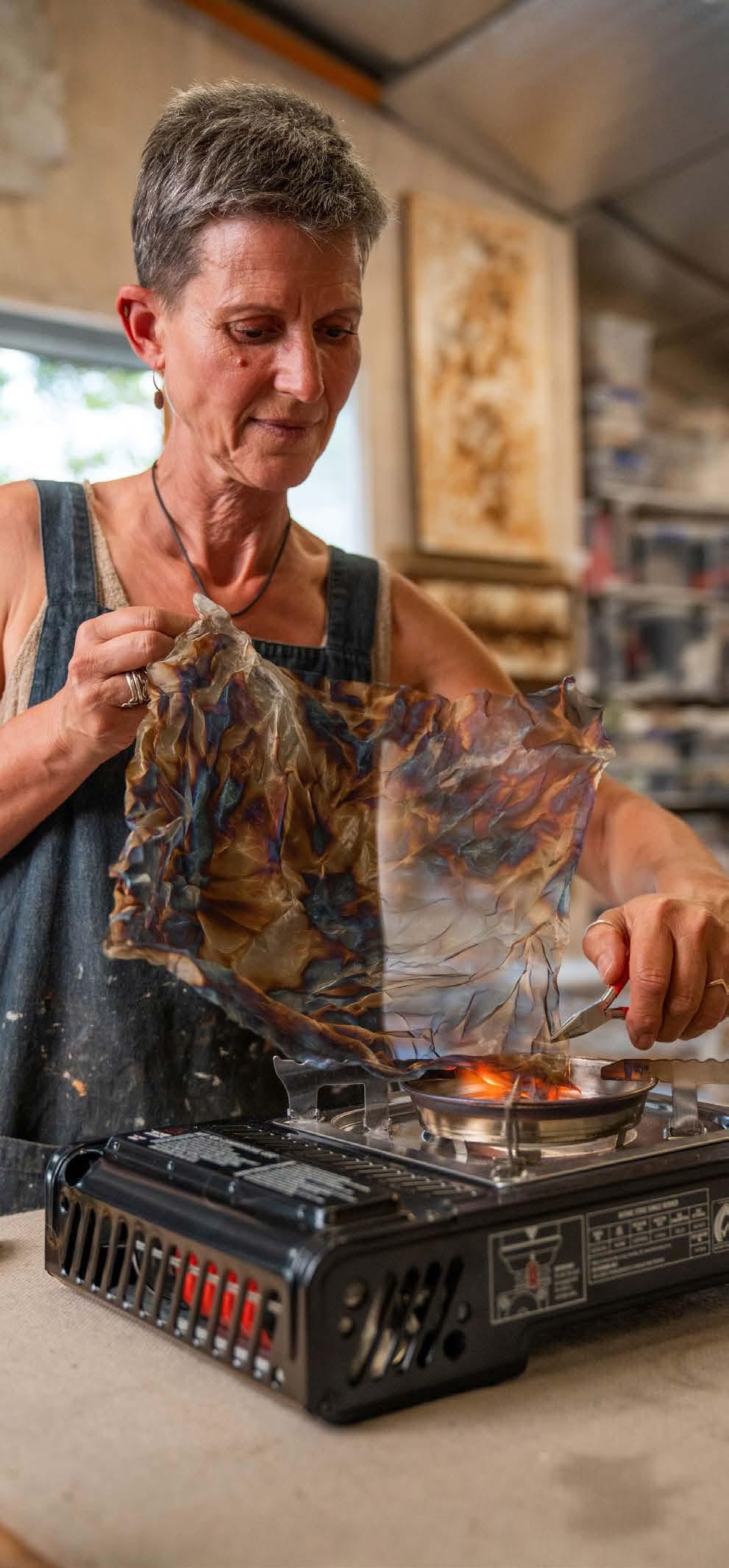
What do you get when two artists are given free rein with their pyromaniac tendencies? You get Burnt Offerings
The Burnt Offerings exhibition, coming up next month at the Mangawhai Artist Gallery, brings together two artists whose practices share a remarkable common thread: both use intense, deliberate heat to transform their materials, and both have embraced that fire will always have the final word.
One of those artists is Coastie Alysn Midgelow-Marsden. Alysn works with metal
such as stainless steel, copper, brass and bronze using a process called flame painting to draw out colours inherent in the materials themselves. This process creates petrol hues in heated steel, rainbows that bloom across copper and bronze, and subtle pale greens and umbers in brass: these colours are not applied but revealed, the product of atomic change in the metal’s structure. Works are shaped into flowing, textured forms which may be found placed over silver-gilded canvases or allowed to hang freely, all casting shifting shadows as daylight moves around them. The works explore
the fragile structures that hold us physically, emotionally and collectively.
The second artist exhibiting is Karena de Pont. Karena works with recycled cedar boards, their knots and scars already carrying a previous life before she begins. She paints, and then she burns, feeding each piece to flame until the acrylic blisters, the
pigment shifts, the wood chars and opens to reveal its grain anew. The result is bold, large-scale work that leans into landscape without prescribing it: deep blacks, earthy reds and ochres, pale ghostwhites informed by years of road travel across four countries and the passing glimpses of horizon, sky, and grasses seen from a moving perspective.
Where Karena’s work is rooted and tactile, Alysn’s is atmospheric, evoking the shimmer of light on water, a sense of depth, movement, and time layered beneath a surface.
The two practices could hardly look more different. Yet side by side they are unexpectedly, compellingly complete. You will encounter the dark and the luminous, the earthbound and the weightless, the charred and the iridescent.
Burnt Offerings invites you to witness transformation and to consider what becomes possible when an artist is willing to let go of what they made, and trust what the fire makes instead.
If you fancy a day trip from the Coast, or even a weekend away to Mangawhai next month, be sure to put this exhibition on your to-do list.
What: Burnt Offerings at Mangawhai Artist Gallery
Where: 45 Moir St, Mangawhai
When: Open daily 12 to 24 September Hours: 10.30am to 3.30pm Open 9.30am on Saturdays
Karena de Pont | 027 6313083 karenadepont@gmail.com
THE FICTION SPOT
The Map
By Clare Smith
Her hand shot out, slapping the red snooze button into silence. She glanced out the uncovered window, the early morning sun angled harsh against the phone’s screen, confirming what eighty-three years of habit knew. Time to get up.
Slight of frame, but steady on her feet, she stepped into the compact ensuite and tapped the mirror until it illuminated the windowless room with a cold white light. Humming, she drew her hairbrush across her scalp, then ruffled the oyster strands into gelled disarray.
She plucked a fresh white tee-shirt from the dresser and a black slip dress from the rail, shimmying into it before returning to the mirror. Head tilted right, she raked her fingers through her quiff.
And stopped.
Unhurried, her fingers trailed down her cheek to rest on her mouth. Tiny creases rippled between her brows as her head and shoulders angled away.
Thin and bare, her arm reached out to the cool, smooth glass. One finger tracing the outline of her face. The low hum continued until it tapered away in a breathless whisper. The contours reflected completely out of sync with the path her hand had taken.
In one move she pulled her arm back, fingertips playing across her lips as she stood motionless before her reflection. Tentatively she reached out to the mirrored surface. Then she shrugged and turned away.
Hung low on the only available wall in the villa, an oversize painting dominated the living space. She moved close to the work, standing where
she always stood. Ridges and hollows beneath her touch. Her fingers paused and found the familiar curve of cheek. Following around the sweep of a smooth round brush that had formed the face, up to the short, sharp lines that defined a brow. Her nails dragged along the deep textured furrows depicting a Titian coloured quiff.
The paint gave a little under her touch as she felt the folds of the red scarf around the woman’s neck. Almost elastic under the pressure of her touch, yet solid in its unchanged consistency.
The door opened with a light knock and she turned.
‘Good morning, I have your breakfast,’ the young woman said, coming in carrying a tray to the small table.
‘Pop it in the fridge, would you, dahling,’ she said. ‘I’ll have it
later.’
The care worker placed the dishes inside the fridge and said, ‘There you are. See you again tomorrow,’ as she slipped out the door.
Returning to her dresser for a red bandanna she knotted it carefully, then pulled on heavy, black boots. She paused before the painting a final time, her fingers inching along the layers of red paint. Each fold showing her the way.
She adjusted the scarf. Then opened the door and strode down to the gate. She looked left—then stepped right.
The same as every other day.
HIBISCUS COAST WRITERS
For more information, don’t hesitate to get in touch with the Membership Secretary, Paula at paulajkora@ hotmail.com
Nobody buys a house
They buy a version of themselves
I once had a seller cry in her empty lounge room. Not because she was losing money. Not because the deal fell through. The removalists had just left, and for the first time in nineteen years the room echoed. That sound, she told me, was the sound of a whole life leaving a building. I stood there holding my folder of paperwork feeling completely useless, because in that moment paperwork was the last thing that mattered.
That is the part of this job they do not put in the brochure.
Everyone assumes real estate is about numbers. Comparable sales, square metres, capital value, the auction clock ticking down. And yes, all of that is real, all of that matters, I run those numbers every single day. But numbers do not explain why a couple will pay forty thousand dollars more for a house with a slightly bigger deck facing west, or why a buyer will walk straight past a freshly renovated kitchen and fall for the crooked pohutukawa in the backyard instead. Numbers do not explain feelings, and
feelings are what close deals.
I have watched buyers stand in a doorway and go quiet. Not bored quiet. The other kind. The kind where you can almost see them picturing their kid’s bike against the wall, or their dog asleep in that patch of sun on the floor. That silence is worth more than any listing description I could write. My job, most days, is just to shut up and let it happen.
Sellers ask me constantly what will get them the best price. Stage it. Style it. New paint, new handles, bake something before the open home, they have heard it all. Fine, sure, do those things if you want. But none of that beats one thing, and it is not glamorous: tell the truth. Buyers today are not naive. They bring builders. They bring reports. They bring their cousin who ‘knows a bit about houses’. The second they catch a whiff of something hidden, they walk, and they tell everyone why. I have seen honesty save a sale more times than any granite benchtop ever has.
This coast is filling up fast. New driveways, new fences, new families every month chasing the same thing, space and sea air and a bit of quiet. That means more competition, more open homes on a Saturday than anyone can attend, more noise. In that kind of market the agents who win are not the loud ones. They are the ones who actually listen when a buyer says what they are really looking for, instead of just nodding along waiting for their turn to talk.
At the end of the day a house is bricks and a roof and some pipes underneath. What I am actually selling, every single time, is somebody’s next chapter. I take that seriously. I hope it shows.
E: ryan@treehouseprint.co.nz PO Box 133, Kumeu 0841 Auckland
The health benefits of vitamin SEA
There are multiple health benefits to spending time at our local beaches during the colder months.
A trip to the ocean, warmly dressed, may assist in recovery from winter sniffles, as salt air can help clear sinus congestion.
Our bodies can produce vitamin D from natural sunlight without needing to ‘Slip, Slop, Slap’ sunscreen so much to guard against high UV levels. Sunlight also releases serotonin in our bodies – a happy hormone –that regulates our mood, eases anxiety, and can help us feel calmer and more focused.
For the hardy amongst you, two other happy hormones – endorphins and dopamine – are released with cold water immersion. The early morning Orewa Dippers are not crazy; they are boosting their mental and physical health. Cold water temperature forces your heart to pump harder, which can improve circulation and reduce inflammation throughout the body.
As mentioned in a previous article, the beach also has a high concentration of negative ions. Negative air ions (NAIs) are good for us despite their name. We cannot see, feel or smell them, but their presence improves our health and well-being. Research has shown they can help lift depressive feelings and relieve stress.
Indoor environments have significantly fewer NAIs, and air conditioning systems, fluorescent lighting and electronic devices further deplete their levels. Spending time outside in open and light spaces – which an ocean coastline provides – can help clear mental fog and refresh our perspective on how we feel.
‘Blue-space’ wellness is now clinically recognised for its mental and physical health benefits. Wallace J. Nichols (Marine Biologist) has science-backed findings that being around water can be ‘medicine for the brain, lowering levels of the stress hormone cortisol and improving happiness’.
We’re more than lawyers, we’re partners in your success.
Based
in Silverdale,
we’re here to help with business and commercial law, property, trusts and estate planning.
Formerly Simpson Western North
I love spending time at the beach and definitely feel the positive effects of being surrounded by blue water, light and negative ions. My coastal walk is often experienced as a way to ‘blow away the cobwebs’. I have a walking buddy who joins me in all weather conditions. We always feel invigorated (and often soaked!) after a wild, wet or windy beach walk.
If you want a mood boost today, bundle up the family, the dog, or the kite and head to your local beach. Your wellbeing will thank you: mind, body, and soul.
Trish | Life Wellness Coach trishbeauchamp.com
Get a grip, mate
When was the last time you hung from a set of monkey bars for a decent amount of time? It’s probably been a while. And not just because adults have less opportunity to hang out at playgrounds, parents excepted.
There’s a reason for that beyond nostalgia – most of us simply stopped needing to hang, carry or grip much of anything with real load behind it.
Grip strength, particularly as we age, fades early and quickly – and almost no one trains it – which is a shame, because it is one of the best indicators we have of overall health.
A landmark 2015 study published in The Lancet, part of the Prospective Urban Rural Epidemiology (PURE) study, followed nearly 140,000 people across 17 countries for four years. Researchers led by Darryl Leong found that grip strength predicted all-cause mortality and cardiovascular death more strongly than systolic blood pressure did. Every five-kilogram drop in grip strength was tied to a meaningfully higher risk of dying, of heart attack and of stroke.
So what is it specifically about grip strength? It’s a marker, not a mechanism. A weak grip is highly likely to be indicative of a weak, well, everything else – less lean muscle mass, less physical activity and a body in slow decline.
Grip strength is just the easiest place to notice it, in the same way a canary is the easiest way to notice bad air in the mines.
So what’s the best course of action from here? Don’t avoid heavy, awkward two-handed stuff in daily life that already surrounds you –hauling a boat back onto the trailer, wringing out your togs after a mid-winter dip (where are my brave souls?!), or carry the bucket of fish back to the car after a successful day fishing.
Want a rough gauge of your own? See how long you can hang from a bar, or how confidently you crack open a stiff bottle top. No lab required, and that’s the point of the study in the first place.
Sure, you can absolutely add in deadlifts, rows and farmers carries into your training. But next time, give it your best effort before handing off the jar of pickles!
Cedar – Protecting Oil or Stain • Decks & Timber – Beautiful Oil, Stain or Paint • House Washes • Window Cleans • Concrete & Paving Cleans
When the pager sounds on training night COASTGUARD
Every second Tuesday evening, volunteers from Coastguard Hibiscus gather at the Hibiscus Coast Boating Club for training. While many people see the rescue vessels heading out on callouts, few see the countless hours of preparation that happen behind the scenes to ensure our crews are ready when the pager goes off.
Training nights cover a huge range of skills. Some evenings focus on medical training, where crew members learn how to assess and care for patients until they can be handed over to ambulance staff. Other sessions cover navigation and chart work, reading weather forecasts and sea conditions, understanding tides and currents, handling a vessel safely in challenging wind and sea states and operating marine electronics and communication equipment.
Practical training is equally important. Using a mock-up of our rescue vessel, crews practise setting up towing lines, deploying equipment, recovering people from the water and ensuring every piece of gear is exactly where it needs to be when seconds count. We train on jump-starting vessels, responding to mechanical failures, conducting shoreline searches, man-overboard recoveries, radio communications, and, of course, the search and rescue techniques that form the core of what we do.
On paper, last Tuesday’s training was scheduled to be a straightforward chartwork exercise. Crew members were asked to bring
along their charting equipment and prepare for an evening of plotting positions, bearings and search patterns.
Or so we thought.
About fifteen minutes into the session, the pager sounded.
A group of Sea Scouts conducting their own training exercise at Stanmore Bay had reportedly witnessed two kayakers capsize. The kayakers had been unable to re-enter their craft before drifting apart from them, and the Scouts had subsequently lost sight of both paddlers. Fortunately, because the Scouts were undertaking navigation training themselves, they were able to provide compass bearings to the last known position of the kayaks.
The rostered crew immediately sprang into action. Several volunteers raced to prepare Hibiscus Rescue Two for launching while the remaining crew in the boat club began working through the information provided. Charts were spread across tables as bearings were plotted and calculations made. Crew worked out the approximate location of the casualties, estimated drift, and determined the likely course the rescue vessel would need to take.
At the same time, another team collected medical equipment, warm clothing, torches and handheld VHF radios before heading to Stanmore Bay Beach to begin a shoreline
search.
Back at the shed, one of our skippers, the training officer, and a crew member who had recently completed her VHF radio qualification established Incident Control. Their role was to coordinate communications, monitor the progress of the search teams and ensure information flowed efficiently between everyone involved.
Once Hibiscus Rescue Two arrived on scene, Incident Control directed the crew to commence a sector search pattern. The search had already been calculated and plotted by the team back at the boat club, demonstrating how valuable chartwork and planning skills can be during a real rescue operation.
After several minutes of searching, the crew located their target.
Floating in the water was ‘Ruth Lee’, our rescue training mannequin. Recently purchased thanks to the generous support of the Four Winds Foundation, Ruth Lee is an incredibly realistic training aid. Weighing approximately 40 kilograms when dry, she behaves much like a real casualty in the water, allowing crews to practise recovery techniques in a safe but highly realistic environment.
Meanwhile, the shoreline search team had made a discovery of their own.
Hidden amongst the beach environment was
one of our volunteer crew members, Andrew, playing the role of an injured casualty requiring assistance. The team assessed his condition, provided immediate care and coordinated his recovery before transporting him back to the shed.
With both ‘casualties’ recovered, the exercise moved into its final stage. Ruth Lee and Andrew were assessed by the crews before being handed over to a higher medical authority for further treatment.
What had begun as a simple chartwork lesson had transformed into a full-scale search and rescue scenario involving navigation, communications, incident management, vessel operations, shoreline search techniques, casualty recovery and medical response.
The exercise highlighted just how important realistic training is. By creating scenarios that closely mirror actual incidents, volunteers gain valuable experience making decisions under pressure, communicating effectively and working together as a coordinated rescue team. These are skills that cannot be fully developed in a classroom alone.
One of the most heartening aspects of the evening was the response from our local community. As crews searched Stanmore Bay Beach with torches, several members of the public stopped to ask if assistance was needed and offered to help. Others noticed the activity from nearby homes and walking tracks and took an interest in what was happening.
Later, local community Facebook pages were filled with questions from curious residents who had spotted rescue crews, torches and vessels operating after dark. While the exercise may have sparked some intrigue, it was also a wonderful reminder that our community genuinely cares about what happens on our coastline and appreciates the work of its volunteer rescue service.
At Coastguard Hibiscus, we are incredibly fortunate to be supported by a community that understands the importance of being prepared for emergencies on the water.
And if reading this sounds like something you would enjoy being part of, we’d love to hear from you.
Whether you have extensive boating experience or are completely new to the maritime environment, Coastguard Hibiscus is currently recruiting. We provide training, mentorship and opportunities to learn a wide range of skills while making a real difference to the safety of people on the water.
You don’t need to be an expert to join – just someone willing to learn, contribute to a great team and help your community when it matters most.
After all, you never know what might happen on a Tuesday night at the boat club. Sometimes what starts as a lesson on charts can turn into an unforgettable adventure.
Cryptocurrency has moved from niche investment to mainstream asset but is often overlooked when people are thinking about their estate planning. In Ruscoe v Cryptopia Ltd (in liq) [2020] NZHC 728, the High Court confirmed that cryptocurrency is property capable of being owned and held on trust.
For anyone holding Bitcoin, Ethereum or other digital assets personally, that means those assets can form part of their estate and pass under their will, although the practical challenges are often unlike those associated with conventional assets.
The first issue is making sure the asset is known about. Unlike a house or a conventional bank account, cryptocurrency leaves no paper trail that an executor can stumble across. If nobody knows the asset exists, it may not be identified or distributed. A will can record that digital assets exist, but private keys, passwords and seed phrases should not be included in the will itself, because a will may become public record once probate is granted.
The second issue is access. Cryptocurrency held through an exchange may be recoverable by an executor after probate or letters of administration are obtained, but this will depend on the exchange’s terms, its jurisdiction, and its verification requirements. Cryptocurrency held in a private wallet is different. Access usually depends on possession of the relevant private key, seed phrase or recovery process. If that information is lost, the asset may be practically unrecoverable. Secure, separate storage of access details is therefore essential, ideally through a confidential digital asset memorandum or access protocol that is not attached to or incorporated into the will.
The third issue is distribution. Cryptocurrency not specifically gifted in a will generally falls into the residue of the estate, along with other assets not otherwise allocated. For some people that will be appropriate. For others, particularly where crypto holdings are significant or volatile, a specific gift may be worth considering.
Digital assets do not require a different kind of will, but they do require a will that accounts for them properly. Recording that cryptocurrency exists, keeping access details secure and separate, and deciding whether specific gifts are appropriate will help ensure these assets reach the intended people.
If you need assistance drafting or updating your will to account for cryptocurrency or other digital assets, contact Martin & Parker Law at office@mplaw.co.nz or give us a call on 09 421 0559.
Samuel Epstein | Solicitor Martin & Parker Law
Note: This article is published for general information purposes and should not be relied upon as legal advice. For advice specific to your legal issues, please engage a lawyer directly.
We wish we’d done it sooner
Ray and Mary’s move to The Botanic
For Ray and Mary Pavitte, moving from their Millwater home to a two-bedroom, two-bathroom villa at The Botanic Hibiscus Coast has turned out to be far more than simply downsizing.
‘It’s probably the best decision we’ve ever made,’ says Mary. ‘We just wish we’d done it sooner.’
The couple first heard about The Botanic during its early stages of development.
‘It piqued our interest,’ Mary says. ‘But initially I thought, ‘No way do I want to go into a retirement village. I had this picture in my mind of nursing homes.’
Still, curiosity led them to attend an Open Day. ‘We loved the café,’ Mary says. ‘Then we came back for lunch one day and started talking with some residents sitting outside. They were so friendly and welcoming – it really made an impression on us.’
Life in Millwater had been good. They had lovely neighbours and enjoyed their home, but life was changing and some health challenges arose. Maintaining the property, gardens, lawns and hedges was becoming increasingly difficult. ‘The garden became a worry,’ Mary says. ‘We were becoming reliant on contractors for everything and we realised that staying where we were was going to cost us more and more.’
The couple explored other retirement living options in the area, but kept returning to The Botanic. Eventually they secured a garden courtyard villa that felt right for them and their treasured cat Cleo.
Now settled into village life, both Ray and Mary have discovered they can enjoy it in their own way. ‘The move has been outstanding for us,’ says Mary. ‘People are so friendly. Not just residents and neighbours, but the staff too. I’ve made lots of friends here. I love the exercise classes, we have coffee together and there’s always someone to catch up with.’
Ray laughs as he adds, ‘I’m not really a mixer, and that’s the great thing – I don’t feel any pressure to be one here.’
It’s that balance that has surprised them most. There’s a real sense of community, but also the freedom to live life your own way. ‘Everyone knows us by name,’ says Mary. ‘The staff are wonderful. Even in the café, people make you feel so looked after.’
The practical side of village life has also made a difference. They regularly use the local buses to get into Orewa. ‘It’s so handy,’ Ray says. ‘I can walk to the chemist, Pak’n’Save, Bunnings, the wine shop. Everything’s close by and easy to access.’
For anyone hesitating about making the move, their advice is simple. ‘Talk to people who already live here,’ says Ray. ‘All of the financial reasons you may be worrying about will be far outweighed by the relationships and community you gain.’
And if they could change one thing? ‘We would have done it earlier.’
www.thebotanic.co.nz
From enrolment to election day
Your 2026 voting guide
New Zealand’s next general election will be held on Saturday, 7 November 2026 Voting is an important way to take part in our democracy, and the process is designed to be accessible for everyone who’s eligible.
Am I eligible to vote? You can generally enrol and vote if you’re 18 years or older on or before election day, are a New Zealand citizen or permanent resident, and have lived in New Zealand continuously for 12 months or more at some time in your life. If you’re 17 and you turn 18 by election day and are enrolled by the deadline, you’ll be able to vote.
Enrolling to vote: You must be enrolled by midnight on Sunday, 25 October 2026 to vote in the general election. You can’t enrol and vote on election day.
If you enrol by 4 October 2026, your details will appear on the printed electoral roll (unless you’re on the unpublished roll), allowing you to cast a normal vote. If you enrol after this date but before the deadline, you can still vote by casting a special vote, which requires completing a declaration form. You
don’t need to show identification to enrol or vote.
If you’re already enrolled, check that your details – particularly your address – are up to date. If you’ve moved you can still vote, although your electorate vote may be affected if you’re now living in a different electorate.
When can I vote? Voting opens Monday, 26 October 2026. You can vote before election day at an advance voting place, or on election day itself — Saturday, 7 November 2026, between 9am and 7pm.
If you enrol by 4 October, you’ll receive an EasyVote pack with useful information including your EasyVote card, voting locations and candidates in your electorate. If you don’t receive a pack, you can still vote – you don’t need an EasyVote card or ID.
How do I cast my vote? At the voting place, you’ll receive a ballot paper and complete it privately in a voting booth.
You’ll make two choices. Your electorate vote is for choosing the person you want
to represent your local electorate and your party vote is for choosing the political party you want to represent you in Parliament. Once completed, your ballot paper is placed into the ballot box.
Support is available: If you need assistance, you can bring a support person into the voting booth. They can’t tell you who to vote for, but they can read the ballot paper aloud or mark it according to your instructions. Voting information is available in a range of formats and languages, including Easy Read, Braille and New Zealand Sign Language resources.
Need help or information? If you have questions about the voting process, eligibility, enrolment or accessing support, you can contact the Electoral Commission.
You can also contact your local Citizens Advice Bureau. CAB provides free, confidential and neutral information, support and guidance to help people make their own informed decisions. Contact CAB on freephone 0800 367 222 or online at cab. org.nz.
Orewa Community Centre Whangaparaoa Library Outreach: Mon-Fri: 9:30am to 3:30pm Wed: 10am to 12noon (excluding public holidays)
Six ways to recognise AI wrote that
Recognizing when an article was written by AI often comes down to noticing patterns that feel a bit too smooth, too generic or too polished. AI can produce clean, structured writing, but it sometimes leaves clues that give it away. Here are six of the most common signs to look for.
1. Repetitive buzzwords and familiar ‘AI phrases’. AI tools tend to draw from a predictable pool of vocab and phrases. These can sound formal, dated, or overly polished. You might see repeated use of words like ‘delve,’ ‘empower,’ or ‘seamless,’ along with phrases such as ‘in today’s fast-paced world’ or ‘it is important to note.’ These expressions show up often because they’re safe and widely used, so the model leans on them.
2. Samey structure and ‘robot-smooth’ flow. AI writing often lacks the natural rhythm of human speech. Sentences may all be similar in length, creating a flat or overly consistent tone. Paragraphs might follow identical patterns, and lists are common even when they interrupt the flow. Also look for the ‘rule of three,’ where points regularly appear in sets of three because it’s a common structure the model has learned. Like this paragraph.
3. ‘Too perfect’ grammar and punctuation. AI tends to write with near-perfect grammar, often more polished than a typical human might write. While that sounds good, it can appear pretty sterile. One giveaway is the use of em dashes. For example: AI frequently uses—and misuses—them when connecting ideas. Passive voice or safe language also shows up more often than necessary, making the writing feel formal or maybe even distant.
4. Fluff, repetition and lack of real insight.
Because AI doesn’t have personal experiences, it can struggle to add depth or nuance. It might circle around the same point using slightly different wording or rely on generic statements that could apply to almost any topic. Emotion, personality, and strong opinions are usually muted, resulting in writing that feels polite, but bland. Again, safe.
5. Made-up or unreliable information. AI sometimes invents facts, quotes or studies and presents them confidently. These ‘hallucinations’ can include non-existent references or outdated data written as if it were current. If details seem as precise but if you look into them they are hard to verify, that’s
another red flag.
6. A customer-service tone in casual writing. AI often defaults to a friendly but formal tone. If a piece of writing is meant to sound personal instead it can feel like tech support, not that human. AI lacks humour, storytelling, and personal anecdotes.
Chris Norris | AllBrand
Cert. MKTG | MCC | Cert. Typography
Former Chairman of Business Whangaparaoa and Board Member for Silverdale Business. Mentor with the Business Mentors Programme at MBIE. Now runs a locally focussed branding business. Allbrand.co.nz – Revealing the true USP in businesses. Chris@allbrand.co.nz
Bobby S Barfoot & Thompson Millwater
Known Locally. Trusted Personally. Your Local Guide. On Your Side.
021 0512 769 b.sundarajan@barfoot.co.nz
Choosing the right flooring partner
When you’re managing a residential build on the Hibiscus Coast or anywhere across Auckland, the last thing you need is a flooring supplier who causes problems on site. Wrong product, late delivery, poor installation – any one of those can blow your timeline, damage your client relationship and eat into your margin. We’ve heard it from builders time and again: flooring is one of the trades that goes wrong more than it should.
There’s a difference between a retailer who sells flooring and a business that genuinely understands the construction process. The building process demands sequencing, site readiness, product lead times and an understanding of the pressure you’re under counting down the days. Flooring typically comes in at the tail end of a build –and that’s exactly when timelines are tightest.
One of the most common frustrations you hear from builders is product discontinuation mid-project. You spec something for a 20-lot development, and three months in the product goes out of stock. It creates a headache for everyone. It’s crucial to work with a flooring partner who has consistent product availability from New Zealand’s top brands with strong local distribution networks, consistent supply chains and the product depth to handle volume orders without surprises.
Inaccurate measuring costs money. Over-ordering ties up your budget. Under-ordering means delays and the headache of sourcing additional stock from the same dye lot. You need a flooring partner
who can provide professional on-site measures and itemised quotes that break out every cost individually. No bundled figures, no guessing. You need to know exactly what you’re paying for before a single roll is cut.
Installation quality is where a lot of flooring companies lose builders’ trust – and their repeat business. Poorly laid carpet, visible joins in vinyl, or timber that moves underfoot are the kinds of defects that generate call-backs, punch-list disputes and awkward conversations with your clients. You need a flooring partner who works to a high standard on every job and provides an installation warranty that gives you something concrete to offer your client.
At Midway Flooring, we stock from New Zealand’s most established and reliable flooring brands, we help you spec correctly from the outset, choosing products with the availability and lead times your project requires. We measure accurately and we provide a two-year installation warranty. We work to your programme, not ours. Ready to set up your trade account? Call us and we’ll make flooring the trade you stop worrying about.
August brings one of Estuary Arts Centre’s most anticipated annual events – the Members’ Merit Awards Exhibition, a highlight of our mid-winter exhibition programme.
Current Estuary Arts Centre members are invited to enter up to three artworks in any medium for this prestigious exhibition. Each year, an invited guest judge selects the Premier Award winner, who receives a cash prize along with an exhibition package for 2027. Merit Award winners across a range of artistic disciplines also receive product prizes generously donated by local art supply and framing businesses.
The award winners will be announced at the Preview and Awards Evening on Friday, 31 July at 6.30pm. Everyone is warmly welcome to attend this special event, which features music, food and beverages while guests enjoy the diverse range of artworks on display. Visitors are also encouraged to vote for their favourite artwork in the exhibition. The artist receiving the highest number of public votes will be awarded the People’s Choice Award, announced at the conclusion of the exhibition.
Looking to develop your own creative skills? Our Term Three Art Education Programme offers an exciting selection of engaging art classes and workshops for artists of all experience levels. Choose from a wide range of weekly classes and weekend workshops delivered at Estuary Arts Centre. We are also delighted to introduce three new off-site teaching venues, providing more accessible learning opportunities across the region: Gulf Harbour Art Hub, Warkworth Pottery Hub and Red Beach Salvation Army Hub.
Whether you are an experienced artist or just beginning your creative journey, there has never been a better time to get involved in the local arts community.
We look forward to welcoming you to the Members’ Merit Awards Exhibition and seeing you at one of our many classes and events this winter.
Estuary Arts Centre is open seven days a week and is conveniently located at 214B Hibiscus Coast Highway, Orewa.
Looking for your next great read? Let our local author guide you.
Uncomfortable Economics
by David Schnauer
Believing we can do better for the next generations has prompted this author to pen a book calling for action ahead of the New Zealand general election. The overriding concern is that New Zealand once ranked among the world’s most prosperous nations, but that is no longer the case, so David Schnauer examines what can be done to turn things around.
Covering all the big topics – health, education, housing, banking, immigration, tax, welfare, climate change and more – the author offers ideas that make for thought-provoking reading. He urges people to care about the economy. He argues that people need to care as much about having a winning economy as they do about their favourite sports team winning. And it’s also a call for politicians to make the hard calls and look at things in the long term, rather than focusing on election cycles and short-term fixes.
Uncomfortable Economics will certainly spark conversation and debate, as New Zealand, like many other countries, faces some of the same challenges: unaffordable superannuation and health care, overpriced houses and lack of savings, and government deficits. Thankfully, there are many positive suggestions.
Mary Egan Publishing, RRP $40.00
Vice, Virtue and Villainy by Bob Richmond
This debut crime novel by local author Bob Richmond is wonderfully entertaining with just the right mix of memorable characters, a pacy plot, mystery and action and a side of romance.
Former Detective Inspector George Simpson was injured in the line of duty and is now trying his hand at the quiet life in a coastal town after reluctantly leaving the police force. It helps that he has a fledgling relationship with the lovely Josie Fenton, who works at a local bar.
But when confronted unexpectedly by a stranger with a gun and on a mission, he is soon drawn into investigating a complex case involving two rival gang leaders. He must draw on all his professional skills to get to the bottom of what is going on, putting himself bang smack in the middle of a lot of trouble, while trying to keep one step ahead of the official police investigation despite their disapproval.
Bob Richmond has a real talent for humour, and this novel will appeal to anyone who enjoys The Thursday Murder Club books. Vice, Virtue and Villainy is warm and witty, with wonderful characters. I hope there is a sequel.
Publishing, RRP $38.00
WHAT'S ON HIBISCUS COAST
HIBISCUS COAST SCOTTISH COUNTRY DANCE CLUB
Every Weds Silverdale Hall 7:00pm
HIBISCUS COAST ARTISTS
GROUP
Meet on Mon 9.30am-1pm Stanmore Bay Community Hall Whangaparoa. All Welcome.
Shana 021 650 184
HIBISCUS COAST ROCK & ROLL
Every Tues. W’poa Hall 7pm lessons. 8pm general dancing. Wear soft sole flat shoes. See website & Facebook
DANCE FITNESS CLASS
Every Tues/Thurs evening 7-8pm at Kingsway Jnr Campus. First class FREE then $10 per session. Richard 021 504084
PUHOI CELTIC SESSIONS
Every 2nd Thurs at Orewa North Primary School. A sing-around/ play-around event. Alan alanthewag@outlook.com
SUICIDE BEREAVEMENT
SUPPORT
Last Mon of every month (Jan-Nov) 7-9pm HBC Community House. Support for anyone who has lost a loved one.
Susan 021 884 162
OREWA GARDEN CLUB
2nd Thurs of month
Feb–Nov 12.30–3pm.
St John’s Catholic Church Hall, Orewa. Visitors welcome. orewagardenclub@outlook. co.nz
HIBISCUS COAST ORCHID SOCIETY
ST CHAD MARKET
1st Sat of every month 8am-noon 117 Centreway Rd, Orewa. Grant 021 0830 7743 or email office@ hbcanglicanparish.nz
UKELELE CLASSES
Every Thurs at St Andrew’s Church Hall. 107 Centreway Dr 1pm-2:15pm. $15 includes music.
Avon Hansen-Beadle 021 421 109
HIBISCUS COAST CONCERT BANK
Every 2nd Thurs
All ages & abilities welcome hccb.org.nz Call 021 186 4599
WHANGAPARAOA INDOOR BOWLS CLUB
W’poa School Hall Mon 7pm. All ages, beginners welcome. Coaching provided. Maurice 027 392 0541
Orewa Presbyterian Church 10am-12pm. Friendship Club for seniors. Morning tea, guest speakers & outings. Colleen 021 112 3409
HIBISCUS COAST COUNTRY MUSIC CLUB
1st Sun each month
Orewa Community Centre 1-4pm $5.00. Everyone welcome. Janet 0212367094
2nd Sunday of the month. Feb–Dec 1-3pm Masonic Lodge, Centreway Road, Orewa. Visitors welcome. Bruce 09 947 5787 HOUSIE
Every Friday 12.30pm ($1000 jackpot) at Bowls Orewa, 214 Hibiscus Highway. Ph 09 426 5937
MILLWATER PARKRUN
Every Sat 8am
See www.parkrun.co.nz/ millwater for more details
HBC GRANDPARENTS
PARENTING GRANDCHILDREN
Monthly 1st Wed, Support Group. Maygrove Retirement Village. 10:30-1:30 free lunch. Weekly for Coffee Group each Wed 10:30 (various locations). Donna 021 024 30064.
HBC SENIOR CITIZENS ASSN. INC.
Meet Tues for Indoor bowls & cards at Orewa Community Hall. 12-4pm. Membership $5/yr. $2 entry includes afternoon tea. Edna Tibble 0272975554
SILVERDALE BALLROOM STUDIO
Every Thurs Silverdale Hall 7pm. Adult & Improvers classes for beginners & social dancers. 021 031 4216
PIONEER DANCE CLUB
Every Thurs at Silverdale Hall 1.30-3.30pm. Social Ballroom Dance for seniors. 021 031 4216
LINE DANCE CLASSES
Beginners class Weds 10am-midday at Silverdale Hall. Great way to exercise to music & make friends. Sue 021 99 1717
TRAVEL CLUB with Bucket List Travel.
2nd Tues of every month
(Feb-Nov) 9:45am–11am Red Beach SurfLifesaving Club. Michelle 094261490
HIBISCUS COAST
FRIENDSHIP CLUB
4th Wed of the month at 10am Bridge Club rooms, Edith Hopper Park, Manly. Speakers/outings/luncheons together. Peter or Jeanne 09 4268675.
ROTARY CLUB OF OREWA-MILLWATER
1st & 3rd Tues of every month 7pm at The Wade Tavern. 2 Tavern Rd Silverdale. orc.secretary@outlook.com
LADIES CRAFT GROUP
Every school term Tues Orewa Community Church 235 HBC H’way. 10am-12pm. $2 for morning tea & craft creche provided.
SILVERDALE VILLAGE MARKET
Every Sat 8am -1pm Silverdale St Silverdale
KIWI CLUB 4th Sun of each month. Social Dance 5-8pm, all welcome. Silverdale Hall.
HIBISCUS PETANQUE CLUB
Every Tues/Weds 9am12 & Sun 1pm at 214 HBC Highway. New players welcome, free coaching. John 0274894955
10PIN BOWLING FOR SENIORS
W’poa Bowling Centre, Arkles Bay. Looking for senior players to join club for league games. Mon & Fri 10am. Lots of fun and advice. Brett 0210530905
HIBISCUS COAST QUILTERS
1st Tues of the month at 9.30am & 3rd Weds at 7.30pm. W’poa Community Hall. Beginners, experienced quilters & visitors welcome. hbcquilters@gmail.com
HIBISCUS COAST LITERARY CLUB
2nd Sat of the month @ 1pm W’poa Library Workshops. By authors. Writing competitions. Friendly atmosphere. Everyone welcome.
HIBISCUS COAST MIDWEEK BADMINTON CLUB
Every Weds 9am-noon
All welcome . Orewa Badminton Hall, Victor Eaves Park. 021 0870 8118
ARTS GROUP
Every school term Friday Orewa Community Church 235 HBC H’way. 9am-1pm $2 incl. morning tea
Alan 021 039 7155
Mon/Wed/Thur & Sat 10-noon at W'poa Library. By Volunteers from HBC Genealogy Group. Garry on 021 902715 or garryphillips2010@gmail.com
HIBISCUS COAST GENEALOGY CLUB 3rd Tuesday of each month at St Chads Church, 117 Centreway Road, Orewa 2-4pm. Guest speaker. Afternoon tea and fellowship follows. Members free, visitors welcome, $5.
HEARTBEATS CARDIAC SURVIVORS SUPPORT GROUP
1st Tues of every month 10am at HBC Community House. Open to all heart event survivors & their families. Trent Lash 0220 606 199
OREWA LIONS CLUB
1st & 3rd Weds 6.30pm (7pm start) at St Chads Hall 117 Centreway Road, Orewa.
Wendy 021 841 125, orewalionsclub@gmail.com
SILVERDALE NAVAL CLUB
meets the 3rd Sun of each month at HBC Community RSA at 15.00. Vince Sturmey 09 4285222
DAIRY FLAT MUSIC CLUB
Weekly dances/events with live music held at The Dairy Flat Hall, Postman’s Rd. Visit www.dairyflatlive.com for more info.
SUPPORT YOUR LOCAL
The Kitchen People kitchenpeople.co.nz
Harbour Hospice 021 226 2741 Fashion / Art Gifts Homewares
250g (when cooked) of precooked red or white quinoa
100g good quality blue cheese (I use Kikorangi)
40g grated parmesan
30g Italian parsley (roughly chopped)
10g fresh thyme ½ lemon (juice from)
Salt & pepper
Virgin olive oil
Pre-heat oven on fan bake to 190oC. Cut the pumpkin in half length ways, scoop out the seeds and most of the pumpkin flesh from the length of the pumpkin leaving the ends intact (you want to leave 2cm of flesh in the pumpkin shell with the skin on).
Cut the removed pumpkin flesh into smaller pieces and sauté in the butter, garlic and thyme in a heavy bottomed pot or frypan over a medium heat for around 5 minutes. Add the diced, washed and drained leeks, cooking until soft, stirring often.
Add the breadcrumbs and cooked quinoa, and stir until heated through. Remove from the heat and gently stir in the crumbed blue cheese and parmesan, lemon juice and check the salt and cracked black pepper.
Season the inside of the shell and fill the cavity of both sides with the stuffing. Any left-over stuffing, wrap in oiled tin foil and roll into a log (cook this on the same tray for around 30 minutes). Place the two halves of pumpkin back together and tie securely with string in intervals so it is back in one piece. Brush the outside of the pumpkin shell with olive oil.
Place in a heavy baking dish with olive oil and seasoning, place in the centre rack in the oven and roast for approximately 1 to 1.75 hours (depending on pumpkin size) until the pumpkin is tender but still holding its shape.
Lift carefully on to a chopping board, with a serrated knife cut into the desired size slices. Remove the other stuffing from the tin foil, slice and serve on the side of the pumpkin. Serve with your favourite protein, trimmings and rich gravy.
Mark Lane | Culinary Lane www.culinarylane.co.nz
FIN’s Seafood chowder
Ingredients
⅓ leek, finely sliced
½ onion, finely diced
1 medium carrot, finely diced
½ stick celery, finely diced
½ tsp fresh thyme, finely chopped
35g butter
Method
Melt the butter in a heavy-based saucepan over a medium heat. Add the leek, onion, carrot and celery and cook gently for 8 to 10 minutes, until softened and fragrant without colouring. Stir through the thyme.
Sprinkle over the flour and cook for 2 to 3 minutes, stirring constantly. This creates the rich, velvety base (a roux) that makes a great chowder.
Gradually whisk in the warm milk, followed by the fish stock and dashi, until smooth. Bring to a gentle simmer and cook for 5 to 7 minutes, stirring occasionally, until the
35g plain flour
250ml warm full cream milk
350ml fish stock (we use FIN Fish Stock, but any good quality fish stock will work)
200g monkfish (or other firm white fish), cut into bite-sized pieces
250g prawns, peeled
300g shellfish meat (mussels and clams work beautifully)
3 Tbsp dashi stock
Sea salt, to taste
White pepper, to taste
chowder has thickened slightly.
Add the monkfish, prawns and shellfish, then simmer gently for 10 to 12 minutes, or until the fish is just cooked through and the prawns and shellfish are tender. Avoid boiling, as seafood is best cooked gently.
Season to taste with sea salt and white pepper.
Ladle into warm bowls and finish with a sprinkle of fresh parsley, chives or dill. Serve with plenty of fresh crusty bread and a wedge of lemon for squeezing over just
before eating.
Chef’s tip: Monkfish is ideal for chowder because it holds its shape during cooking. If you’re using a more delicate fish, such as snapper or gurnard, simply add it during the final 4 to 5 minutes of cooking. This keeps the fish beautifully tender and prevents it from breaking apart.
www.finfishbutchery.co.nz
5/530 Hibiscus Coast Highway, Orewa
WHAT'S ON AT YOUR LOCAL LIBRARY
Ōrewa
Special events
Writers Workshop for Teens with Sally Sutton
Saturday, 8 August from 1pm to 2.30pm. Never get stuck for an idea again! Brainstorm your own unique story. Learn the dos and don’ts of good writing. Discover tips and tricks on story structure, characters, language features and dialogue. Suitable for ages 12 to 18 years old.
The Dead Speak: Inside the World of Forensic Investigation
Thursday, 6 August at 11am. Thomas Coyle, MNZM, shares insights after a 37-year career spanning crime scene investigation, homicide cases and disaster victim identification. Free event.
Sunday, 16 August to Sunday, 30 August. To mark the Hibiscus Coast Embroiderers Guild’s birthday, embroidery work will be on display in the library during these dates.
Flourish Within Wellness
Saturday, 22 August from 1pm to 3pm. Are you stuck, stressed, or overwhelmed? How to start breaking the loop and reclaim yourself. A mental fitness workshop by Hattie Bretherton covering topics such as naming overwhelm, values compass, low points and vision, strengths-based approach, self-compassion tools, anchor point, breathing practice and next steps. Welcome and safe space. Open to all from 20+.
Regular programmes
Monthly & fortnightly
Hibiscus Coast Board Games Group: Sundays, 2, 16 & 30 August at 12.30pm Parkinson’s Support Group: Monday, 3 August at 10am. Email jo.lynch@parkinson.org.nz
Step in, step up, stand out: Tuesday, 4 August at 10am. Register via website: ripple.net.nz/workshops
Book Chat: Wednesday, 5 August at 10.30am
Family tree maker: Wednesday, 12 August at 1pm. Booking required, email ftm@hbcgenealogy.org.nz
Orewa Orators: Fridays, 14 & 28 August at 12pm Orewa Writers and Poets: Saturday, 15 August, at 1pm HBC Embroiders Guild: Sunday, 30 August at 1pm
Weekly adult’s programmes
ESOL with Lynn Williams: Mondays at 1pm (term time)
Conversational French: Mondays at 3pm
Craft group: Wednesdays at 9.30am
BrainCharge: Wednesdays at 11am (term time)
Te timatanga o toku Reo Maori Heaerenga group: Wednesdays at 2pm (term time)
Digital seniors: Thursdays at 10am
Gentle yoga with Sarah Pearce: Thursdays at 2pm (term time)
PTE IELTS with Lynn: Saturdays at 9.30am (term time)
Weekly children’s programmes (children’s area during term time)
Rhymetime: Tuesdays at 11am (for 18 months to 3-year-olds)
Code Club: Tuesdays at 3.30pm (currently full). We are always looking for new volunteers to help, click on the link: Volunteer - Code Club Aotearoa. Wriggle & Rhyme: Wednesdays at 10 am or 11am (for 0 to 2-year-olds)
Storytime: Thursdays at 11am (for 2 to 5-year-olds)
Composting Workshop
Saturday, 15 August from 12.30pm to 2pm. Hibiscus Coast Zero Waste’s Sarah Williams with gives an introduction to compsting. Free event.
An introduction to Reiki
Tuesday, 18 August at 11am. Understanding touch therapy and its benefits. Free event.
Death Cafe
Sunday, 30 August from 1pm to 2.30pm. Join end-of-life Doula Marama Winder to have a safe and open discussion about death and dying. Coffee, tea and cake provided. Free event.
Regular programmes
Adult’s programmes
The Reading Revolution: Wednesdays, 2pm to 3pm
Digital Seniors (65+): Wednesdays, from 10am to 12pm
Low Sensory Quiet Hour: Wednesdays, 1.30pm to 2.30pm
CAB Chat: Wednesdays, 10am to 12pm
BrainCharge: Fridays, 2pm to 3pm
Chinese beginner’s English: First and third Fridays at 10am
Brightside spinners: Fridays 9.30am to 2pm
Hibiscus Coast Writers: Saturday, 13 June at 1pm
Children’s programmes
Rythym & Beats: Mondays, 10.30am to 11am (3 to 5 yrs)
Chess Club: Tuesdays at 3.30pm (10 yrs+)
Minecraft Club: Wednesdays, 3.30pm to 4.30pm (all ages)
Wriggle & Rhyme: Thursdays, 10.30am to 11am (0 to 2 yrs)
Te Reo Story Time: Fridays, 10.30am to 11am
Code Club: Fridays at 5pm. Learn how to make computer games (8 to 13 yrs)
Beginner’s Mandarin: Saturdays, 1.30pm to 2pm (6 yrs+)
Teen Craft Club: Saturdays at 2pm
Advanced Mandarin: Sundays, 10am to 10.45am (6 yrs+)
Story time: Saturdays at 10.30am and 11am (bilingual)
Teen Book Club: Thursday, 11 June at 3.30pm. Share your love of reading with like-minded teens, enjoy some snacks and join in some bookish related activities and crafts.
For further events held by community groups please consult the library’s Facebook page.
Silverdale Pioneer Village
Coming up this month at the Silverdale Pioneer Village:
RAG RUG WORKSHOP
When: Saturday, 8 August from 10am to 3pm
Cost: $80 (includes tuition, rug tools and hessian)
Learn a new craft and recycle your old clothes at the same time. Our Rag Rug Workshop, run by experienced rag rug maker and village volunteer Jennifer Hacking, will show you how to make a small clippy rug or seat cushion. Morning tea is provided. Please bring a packed lunch (or you can nip to one of the local shops). There will be some ‘clippy’ fabric available to use but you will need to bring some of your own as well.
The course will be limited to 10 participants, so please email pioneervillage1968@gmail.com to book your space.
OPEN EVERY WEEKEND
The Pioneer Village is open every Saturday and Sunday from 10am to 3pm, including the Treats & Treasures Craft Shop selling:
• unique handcrafted gifts, both new and upcycled using vintage material
• toys, jams and preserves
Come for a day and take a step back in time. Entry is by donation www.silverdalepioneervillage.com (09) 426 8272 | 15 Wainui Road, Silverdale
Premier, luxury, resort-style retirement village for 65+
LIMITED TIME OFFER OF 50% CAPITAL GAIN SHARE *
Only a handful of existing villas and apartments remain available at The Botanic. Don’t delay, come for a look around sooner rather than later to secure your retirement in a community a little different from the rest. While future stages are planned, only a small number of completed two and three-bedroom homes are currently available for purchase.
Visit our Sales Office & Showhome at 3 Sage Close, Silverdale anytime between 10am - 4pm weekdays, or weekends by appointment.