

























Hey there Bears!



This newest Markis here just in time for summer! Our scrapbook-themed issue covers hot topics like 504s, AI, and trendy movies through sticker-covered pages. From school events to features on student-owned businesses to a wealth of opinions, this Markhas something for everyone.


As we transition to a new Editorial Board, we’d like to thank our past editors for their hard work and dedication, and the PTA for providing the funding for us to do what we love. Lastly, thank you to all of the students and staff members who have supported us through it all.
XOXO,
The M-AChronicle

Our Staff
Editorial Board
Editors-in-Chief
Vesta Kassayan
Louisa King
Lilia Wilkiewicz
News
Alisha Parikh-Briggs

Ellie Rosen
Culture and Features
Charlie Tobin
Advisor
John McBlair
Managing Editors
Sports
Alexa Djafari
Alex Sanchez Jara
Events
Eliza Crowe
Miya Yu
Design
Lia Nadav
Social Media
Ivy Watrous
Copy Editors
Rose Chane, Leah Collins, Anna Dearing, Gaby Foster, Isabel Habibi, Alessandra Hartwig, Austin Horton, Becca Koenig, Jenna Lee, Siboney Lynch, Audrey Majzun, Joe Pagee, Alli Schindler, Shawnak Shivakumar, Caitlin Smith, and Ben Warner
Staff Writers
Oliver Bain, Delilah Bellis Rivera, BB Bohmann Farrell, Gracie Bullard, Yimeng Cai, Lawrence Chao, Karen Chen, Eliana Clapp, Ilaria Cline, Sarah Coolican, Remko Cuellar, Niya Desai, Saachi Dhillon, Koji Edmunds, Emerson Edwards, Nico Espinosa, Aria Folkerts, Farah Ghajar, Melani Pleitez Gutierrez, Leilah Hanif, Julianne Hanson, Hailey Hintze, Gabriella Jansen-Olliges, Caleigh Jones, Johanna Key, Leo Lanza, Layla Lecue, Colin Lee, DAnjou Paul Libunao, Lucia Liu, Grant Maletis, Nalin Malhotra, Natasha Mar, Sosi Noravian, Julian Pang, Lucia Rose, Piper Rosenthal, Brianna Ruiz, Hana Suzuki, Milagros Tapia-Mendez, Lavietani Taufahema, and Amari Witt











































































When Congress passed Section 504, it aimed to make education more accessible for individuals with disabilities. And in many ways, it did, creating accommodations such as extra time, separate testing settings, and access to typing for assignments and exams. Yet, the law’s complexity and the absence of federal funding have forged socioeconomic and racial disparities in students’ ability to access its accommodations.
Despite being legally mandated to identify and evaluate students who need 504s, many schools either fail to do so or face a significant backlog. Instead, families who can afford to do so hire private psychologists for an evaluation, creating an inherent reliance on wealth
and education to access support.
Now, 504 implementation is expanding nationwide. Since 2018, M-A has seen a 59.4% increase in the number of enrolled students with 504s, even as enrollment has declined by 13% in that same period. But this process is happening disproportionately, turning a tool designed to improve educational equality into an exclusive service.
To prevent marginalized students from being excluded from 504 services, the law must be restructured to include stricter guidelines for schools and provide funding for accommodations and timely evaluations.
California schools are required to provide educational services that satisfy students’ needs at no cost to families—a guarantee that holds far more firmly for IEPs than for 504s.
An Individualized Education Program (IEP) plan, regulated under the Individuals with Disabilities Education Act (IDEA), provides families with clear instructions on the evaluation process and implements accommodations for their child at no personal expense. Once a student is found eligible for one of the 13 approved disabilities, they are permitted to receive specific interventions in the school curriculum, such as assistive technology or occupational therapy. Federal law affords families the right to request a private Independent Educational Evaluation, which schools must pay for if a family deems the school’s IEP evaluation inadequate for their student’s needs.
Section 504, however, lacks this coherence and organization. Passed under the Rehabilitation Act of 1973 and enforced as a civil rights law, Section 504 addresses physical and mental impairments not listed under IDEA that affect school performance. According to neuropsychologist Karen Dearing, 504s cover mild to moderate impairments,
ranging from ADHD and dysgraphia to anxiety and depression, and even to concussions, gender dysphoria, and temporary injuries. No written plan is required of the school when creating accommodations for a student.
504s are ambiguous in both their requirements and accommodations. “[The plans] don’t tend to list why a student is getting a certain accommodation, or any type of evaluation data that’s been used to determine that they qualify for 504,” Meghan Burke, a professor of Special Education at Vanderbilt University, said. “It doesn’t even tell you necessarily who’s at the meeting to develop the accommodations.” 504s and IEPs are funded differently because they fall under dif ferent federal laws. Schools are required to cover the full cost of IEPs through federal, state, and local funding. Conversely, 504s do not have a separate stream of funding because they are part of a civil rights law. While families can file an Office for Civil Rights complaint if a school fails to properly evaluate a student, there is no guar antee they will receive a compensatory service.





• Governed by Individuals with Disabilities Education Act (IDEA)
• Includes specially designed instruction and related services, like assistive technology
• Must be a written document including services and accommodations, and how the student participates in general education
• Must include measurable annual goals and track student progress
• Requires an IEP team: parent/caregiver, general education teacher, special education teacher, school specialist, and district representative




• Governed by Section 504 of the Rehabilitation Act of 1973, a civil rights law
• Usually does not include special instruction, focusing on less complex accommodations
• Does not have to be written
• Does not require goals or progress tracking
• Team may include parents, teachers, and the principal
• Does not need to be revised or checked in on
ection 504 requires all educational entities that receive federal funding to actively seek out students who meet 504 disability requirements and evaluate them for a plan—a responsibility known as “Child Find” duty.
“In theory, accommodations should be available to students regardless of where they go to school. It certainly should be fairly consistent across public schools because public schools are all governed by the same federal education law. In practice, that’s not always the case,” Dearing said.
M-A’s 504 coordinators receive their funding from the District’s general fund, which has faced recent pressures due to declining enrollment, leading to significant cost-cutting measures, such as the closure of TIDE Academy. The department also relies on donations from the M-A’s Parent Teacher Association, according to the 504 coordinators.
Beyond funding discrepancies, private and school psychologists evaluate students for 504s differently. The vast majority of private psychologists use the Diagnostic and Statistical Manual of Mental Disorders (DSM-5) diagnostic criteria, along with cognitive testing and other holistic measures, to produce comprehensive evaluations, diagnoses, and accommodation recommendations.
The approach allows for far greater flexibility and speed in identifying a cause for diagnosis. On average, private evaluations often cost anywhere between $3,000 and $7,000.

Conversely, public school psychologists are solely guided by Section 504’s definition of disability, which offers limited guidance on how to diagnose students. The evaluation requirements rely on appropriate diagnostic tests and a loosely defined team of “knowledgeable” individuals to create the plan, leaving significant room for interpretation.
A diagnosis from a private psychologist rarely receives pushback from schools, which are legally obligated to cover the cost of an additional evaluation if they refute it. “When you come into a 504 meeting with an external diagnosis, that’s the best irrefutable


evidence,” Zachary Rossetti, an associate professor of Special Education at Boston University said.
When students come to a school for an evaluation, obtaining accommodations can take months to years. At M-A, Sam Leslie ’24 struggled with illegible handwriting for three years before he finally received a 504 plan from the school his junior year. Though previous teachers had suggested that he seek a dysgraphia diagnosis from a private psychologist, Leslie, like many students, wanted to avoid the thousands of dollars necessary for a private diagnosis.
In Leslie’s junior year, he emailed former 504 Coordinator Jennifer Hettel to be evaluated, and his teachers submitted an evaluation request in January 2023 after compiling writing samples from Leslie. He wasn’t evaluated until May 2023 and received minimal communication from Hettel in the interim.
“She seemed to have a really insane load with not enough support,” Leslie said. Today, not much has changed. Only two 504 coordinators support the 338 students with accommodations on campus.
Even after being evaluated in May—a process that he said lasted 15 minutes—the College Board did not approve Leslie’s accommodations in time for his AP exams.
His prolonged wait and haphazard evaluation are fairly standard across most school evaluation processes. Senior Ruby Stone struggled with reading and writing throughout middle school and initially intended to pursue a school evaluation rather than pay for a private diagnosis in the summer of 2021.
After being repeatedly denied for a school evaluation in both sixth and seventh grade, Stone’s learning difficulties only worsened.
“The cost became worth it because I just needed my diagnosis, so they weren’t going to keep denying me. I just had to do it,” she said.
Though Stone eventually received her private diagnosis and accommodations in late 2021, the price of such support was not lost on Stone and her family. “[My mom] always jokes about how it was so expensive compared to how the school could have done it,” she explained.


In recent years, the number of students using 504s has grown significantly, in part due to the Americans with Disabilities Act Amendments Act of 2008. This legislation broadened how disability is interpreted, making it easier for students with mental and physical impairments to qualify for accommodations.
Nationwide, as school enrollment decreased due to a declining birthrate, the number of students with 504s grew by about 300,000 between the 2017-18 and 2020-21 school years. Since District data collection began in 2018, the number of enrolled M-A students with 504s has increased by 59.4%, even as overall enrollment has steadily decreased.
However, this growth has happened inequitably, dominated disproportionately by wealthy, educated, and white families. These trends have emerged nationally, but are especially prominent at M-A.
69% of students with 504s attended Hillview Middle School or La Entrada Middle School—both of which have predominantly white student bodies and draw from some of the wealthiest neighborhoods in the nation. Meanwhile, students who attended the East Palo Alto-based Ravenswood School District make up only 7% of students with 504s. Students’ feeder middle schools often reflect racial, socioeconomic, and educational divisions as a result of intense historical redlining and gentrification within San Mateo County.

Of all M-A students with 504s in the 2025-26 school year, only 42% of them identify as students of color. However, students of color make up 68% of M-A’s total population, highlighting a 26-percentage-point gap between the two groups.
Conversely, while white students make up only 32% of this year’s student body, they account for 58% of all students with 504s.
The racial discrepancies also reflect a much more disturbing chasm between parental wealth and educational background. Of all M-A students, only 52% have a parent with a bachelor’s degree or higher. However, that same population comprises 75% of students with 504s.
College completion is closely tied to socioeconomic status. Households headed by someone with a bachelor’s degree or higher have a median income that is $74,290 greater than households headed by someone with only a high school diploma. When advocating for 504 access, parental education and literacy offer significant advantages in interpreting Section 504 and IDEA, which were written at a 16th-grade reading level, according to Burke.
Even for highly educated parents, the vagueness of Section 504 is nearly impossible to decipher, which is why those who can afford to often turn to private specialists to navigate the law for them. This dynamic not only creates unequal use of the system but can embolden families to pursue accommodations that go beyond pure necessity, garnering additional time and support on consequential exams like the SAT and ACT.
“[504s are] kind of becoming something you can just pay for. And that’s unfortunate, because there are people who do need them, but there are a lot of people who think of it as a tool you can just pay for,” Stone added.
As a result, only 59 of 338 students with 504s are socioeconomically disadvantaged.












he racial, educational, and socioeconomic discrepancies among students with 504s are not just alarming—they are discriminatory.
The vast majority of students with 504 needs who aren’t in dire circumstances wait for months or years to be evaluated. Their grades aren’t poor enough to raise alarm, and their parents aren’t interested in burning thousands of dollars on a private evaluation, so they sit, and wait, and nothing comes.
“Students who need accommodations, and probably need a 504 plan but aren’t getting them, fall through the cracks,” Rossetti said.
Without designated federal funding for 504 services, districts must draw on their general budgets and donations, neither of which can satisfy the growing demand. To evaluate these students, schools need more psychologists and more comprehensive accommodation services. In other words, schools need money.
To increase access for marginalized students, Congress must amend Section 504 to include per-student provisions that support evaluation and accommodation costs. To centralize the process and eliminate ambiguity, Congress should require schools to use a standardized, written template that thoroughly details necessary accommodations and how they will be implemented.
Additionally, the law must require the involvement of parents/ guardians, academic counselors, school psychologists, and at least one core subject teacher in the evaluation process. Once administered, schools should continue to play an active role in the student’s education, regularly checking in to ensure their accommodations are sufficient. “When families are involved in your education, your academic outcomes also improve, and this is true for students with IEPs or 504 plans and [students] without disabilities,” Rossetti explained.
Ultimately, implementing Section 504 is inherently challenging. Supporting students with such diverse needs is not easy. But it is not impossible.
To ensure equal access for all students, it is imperative that Section 504 be revised to include clearer guidelines and funding. Ignoring such reforms will turn the law into a tool for educational discrimination and render its civil rights capabilities useless.
Gaby Foster and Isabel Habibi were the lead authors of this article.

illustrated by Eliza Crowe and Lilia Wilkiewicz










Terrified by the ongoing climate crisis, one Belgian man found comfort in an AI chatbot on ChatGPT named Eliza in March 2023. However, unbeknownst to his wife and children, the seemingly innocent conversation quickly grew out of hand. As he became more emotionally involved with Eliza, the man began seeing the chatbot as another human being, trusting it over his own family members. Finally, when the man proposed
didn’t hesitate to encourage him. Soon after, the man took his own life.

people might think it’s more secure because you aren’t telling your real feelings to other people,” Kevin* said.
















This case is undeniably extreme, but it highlights a threatening concern. As AI grows in prominence, people are turning to it for emotional support over humans. In a 2026 survey of adults who have used AI for mental support, 43.75% of Americans interviewed preferred to discuss mental health struggles with AI chatbots, rather than family, friends, or a doctor.
But why is this so concerning? If AI can comfort people, offer advice, and help solve problems, why shouldn’t people use it?
The intuitive argument is that AI lacks real emotions, but the real problem goes beyond that.

One of the main reasons people bring their issues to AI is fear of judgment. “Some













Chatbots don’t criticize or disapprove. Instead, they encourage people to open up about their problems. This fear of judgment is especially prevalent in teenagers. Based on a survey conducted on adolescents aged 1318, 9.1% of participants had a social anxiety disorder. Due to the stigma surrounding mental health that labels people as “weak,” people often fear social exclusion and discrimination, leading to an unwillingness to seek help.
However, the fear of judgment drives people to become dependent on AI, creating a sense of isolation that makes access to real therapy more difficult. This can spiral into worse problems and alienate the individual from reality.
“If you have problems, you should talk about it with a real person because AI might be unhealthy, since AI is not real. Also, sometimes you can develop unhealthy mechanisms when you talk to AI and use that as something to trauma dump on and get addicted,” Kevin* said.



Because AI is designed to maximize user satisfaction and engagement, it creates an illusion of understanding. In reality, AI cannot truly empathize and think rationally. Studies have shown that AI agrees with-and amplifies human biases and judgements. When a person in need of therapy chats with AI, the bots often agree with self-misdiagnosis and encourage proposed solutions. AI creates a positive feedback loop, an echo chamber where users hear only what they want to hear. It works to provide comfort rather than concrete and sometimes uncomfortable steps.
A phenomenon that has been termed AI psychosis poses a major threat, especially for mentally ill patients. In a 2025 survey in the UK, 11% of people who had used AI




Friends & Family Doctor










for mental health support reported that AI triggered or worsened symptoms of psychosis, such as hallucinations and delusions. By being unconditionally supportive, AI is exacerbating people’s radical ideas and avoiding all moral reasoning to make its users happy.
Most users do not experience such damaging consequences, but the underlying bi ases still persist. AI’s concerning tendencies can shape anyone’s worldview harmfully over time.
However, many still argue that AI’s ac cessibility makes it more practical than hu man interaction. AI is free, available day and night, and accessible within seconds. While accessibility is undeniably important, there are better alternatives. Options like 24/7 mental health hotlines offer real human interaction and are just as easy to access. At M-A, wellness resources are available to help students who are suffering with mental health issues.
Many students believe AI can’t replace human interaction. “I think right now prob ably a therapist is far superior. They’re more human and they’re also trained in therapy,” Steven* said.
While AI may be able to solve simple prob lems or provide a brief confidence boost,
its looming harmful potential outweighs its usefulness. Use AI at your own risk, but un derstand the dangers it presents.
*The names of these interviewees are pseudonymstoprotecttheirconfidentiality.












The modern social media experience for teenagers is a para dox. Instagram, TikTok, and others allow connection like never before, but this connection is facilitated by curated stories, reels, and photos.
Recently, the visual aesthetics of 2016 have been trending—a sign of nostalgia for simpler times where posting was carefree. Hun dreds of celebrities took to Instagram to show their old photos—the throwbacks were fun, messy, and most importantly, real. Instagram needs to return to being a digital scrapbook, not a visually aesthetic grid.
Social media should be fun. But there is this invisible pressure to perform, even on private accounts. Most people are followed by their friends, family, and some random acquaintances, so it’s easy to keep up with a person’s life by going through their feed.
Nearly 62% of teenagers are active on Instagram, but this digital social network has a cost. There’s a clear overuse of social media, with the average teenager spending nearly five hours a day on it. This statistic is especially concerning because data consistently links high screen time with poor sleep, anxiety, depression, and low self-es teem.

Admittedly, most people spend this time consuming content, so it’s not solely the stress of posting that contributes to higher screen time. Still, constantly consuming highlight-reel-esque content cre ates a pressure to replicate perfection. This exposure contributes to an environment that doesn’t feel like real life, an idealized reality. It is here that comparison becomes the thief of joy, as there are clear differences between casual vacation and professionally taken photos.

The
“minimalist” and “clean” aesthetic of a “high-income” Instagram is just rebranded classism. With this external demand for visually perfect posts, it feels like culture is saying that those clean shots are the ones that deserve to be seen.

Recently, online discourse, particularly on TikTok, has accidentally begun to deconstruct the idea of “aesthetic” as thinly-veiled wealth and privilege. This started when users began saying that they could tell if someone was high or low income based on their feeds. “There’s the excessive use of filters, the oversharing in the bios, the dozen relatable memes on the Instagram story—all of these signal ‘low class’, because upper class people play by different rules on social media,” linguist and content creator Adam Aleksic said in a TikTok.
“Overusing filters comes across as excessive self-presentation, where you’re trying too hard to make yourself look better,” he said. “A ‘higher status’ user will have a more seamless visual aesthetic that presents a consistent image of identity where it’s less obvious that you’re trying to get people to like you.”
The “minimalist” and “clean” aesthetic of a “high-income” Instagram is just rebranded classism. With this external demand for visually perfect posts, it feels like culture is saying that those clean shots are the ones that deserve to be seen.
Many users have the desire for a perfect Instagram grid. If a certain photo does not “match” previous posts or get enough likes, it is sent to the deepest chamber of Instagram hell: the archive. People want to hear that they have a “good” Instagram.
Influencers have been able to capitalize on this desire by selling their advice. Prominent TikToker Evan Gray Smith focuses his
content on achieving the perfect Instagram feed, allowing followers to pay 25 dollars for a 30 to 45-second rating posted to the public—or they can pay double for a private video. “This looks like a photo you take on accident and immediately delete,” Smith said in a review.
Looking at recent trends embracing imperfection and messiness, it’s clear people are craving authenticity. Already about 80% of teenagers have spam accounts or finstas, which house unglamorized posts full of energy and life. At its peak, the app BeReal removed the pressure of visual aesthetics by capturing a single photo at a random time.
The rise of the photo dump (10 photos showing your attractiveness, style, and good food) clearly demonstrates that people want to post for themselves. However, the variety is still too carefully chosen. It can be “performative” to photograph your matcha, but posting a random funny street sign is a step in the right direction. The post becomes much more real because it shows an actual person behind the glamour.
If the current shift towards posting photo dumps, throwbacks, and finstas has shown anything, it is that social media should be a real representation of our lives. It’s time to let the archive rest, and finally make Instagram casual again.
by
Audrey
Majzun
designed by Audrey Majzun illustrated by Grant Maletis








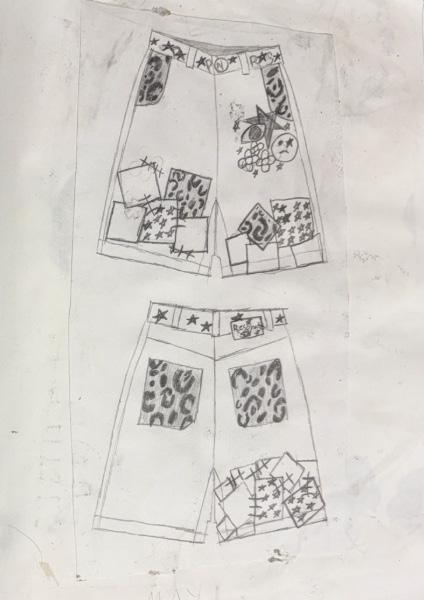
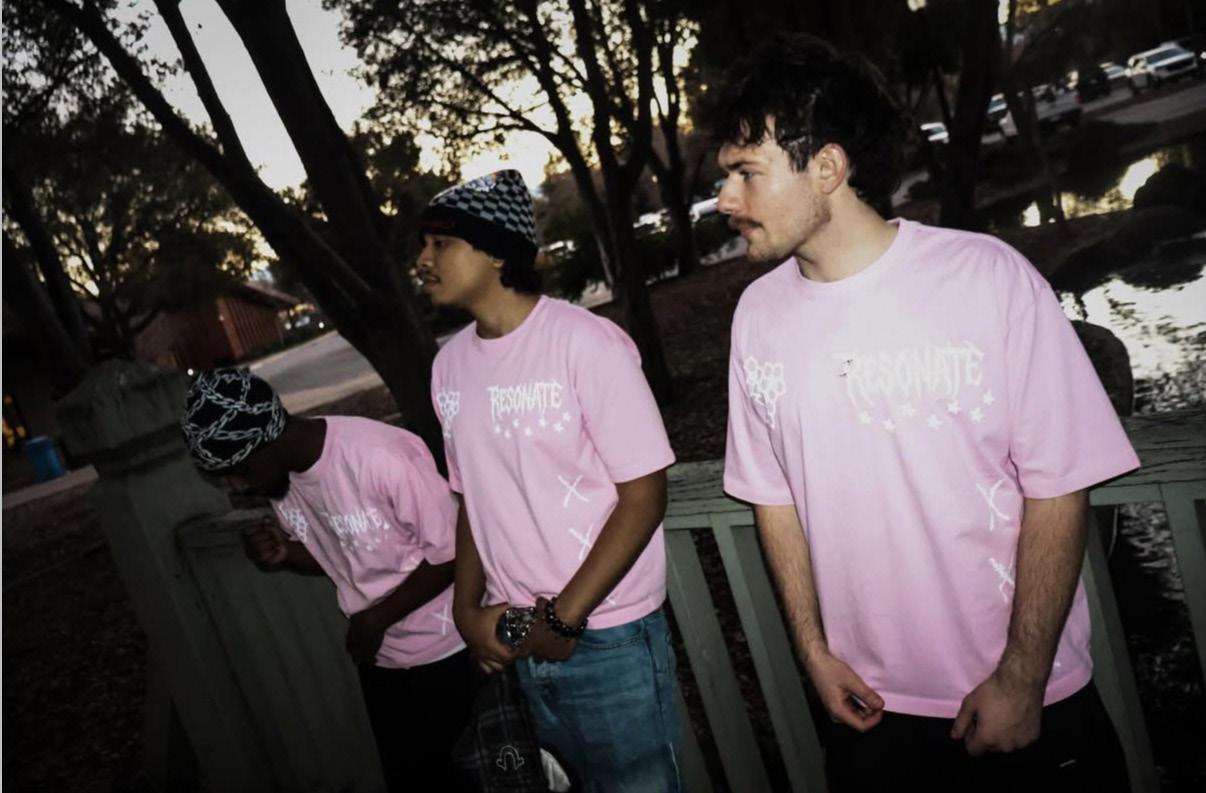
His black, tattered sketchbook, ripping at the seams, is full of pages and pages of clothing designs, sketched with vibrant colored pencils. Plastered at the top of one page, it says, “Resonate. Made for ppl who love to express themselves.” You’ve seen these hoodies around school, and now it’s time to learn the story behind them. Senior Amir Bonner is the creative force behind this booming business, turning his love for art and streetwear into the profitable, growing clothing brand that is Resonate.

Bonner’s been surrounded by art his whole life. His creativity was shaped by family members who work in photography, music, and body art. “My friends, family, cousins, they love fashion too, so it was really easy for me to get into it and just fall in love with it,” he said.
He spent countless hours sketching designs in his notebook, and started wondering
what it would be like to bring those ideas to life. So, Bonner began researching how to create his own clothing brand. He knew he already had the artistic capabilities and the vision, but he now needed to navigate the business side.
After watching YouTube videos and reading books about starting a small business, Bonner decided to take the leap. Late at night, with his notebook open, pages filled with half-finished designs, Bonner scribbled down what would become the business plan— the consumer energy, the target market, and the brand’s founding values. He found a manufacturing company based in China that specialized in the exact kind of streetwear, hoodies, and shirt-based clothing he wanted to produce. “So I hit them up, told them I had a design, measurements, and everything, and I just wanted to see if they could do it. Then, they replied back saying yeah they can,” he said.
But for Bonner, Resonate isn’t just about manufacturing clothes—it starts with the art.
In the corner of his bedroom lies a stack of retro fashion magazines. While seemingly untouched on the outside, under every cover lie tattered pages filled with cutouts, each representing a spark of inspiration for a photo shoot or clothing design. “I like cutting up magazines and finding stuff in books or art I see and making a mood board of it. I just get inspired by all these colorful flowers and all these types of art, so that’s really what it is: I love art itself,” Bonner said. Bonner’s process starts with inspiration from some other form of media, brands he already knows and loves, or a lived experience. Next, he creates a mood board—usually, these are made up of magazine clippings glued into his sketchbook, surrounded by penciled accents.
Once a design has made it past the artistic design phase, Bonner spends hours using a mockup clothing template on Photoshop to get a sense of what the product will look like. His Photoshop skills have significantly




improved thanks to taking Digital Photography I his junior year with Dawn Tower Irvine. After he has this visual down, he talks with his manufacturers, who sometimes have limitations that force Bonner to modify his designs. When he finally figures out the perfect design, Bonner sends in his creation and soon has his next piece of clothing.
Next, he has to market them.
“To be honest, I didn’t even sell them first shirts. I just spent a whole bunch of money, but I really got them out to my friends and people who really loved them, and they wore them around,” Bonner said. “People would see them, and they would compliment them and be like, ‘Oh, where did you get them from?’”


Resonate started as an esoteric brand, hoodies known only through word of mouth, seen on community members wearing free shirts, bought straight from Bonner’s pocket. From the beginning, Bonner has gone out of his way to show his dedication to making the brand community-focused.
While Bonner took aspects of his personal life into his creative process, his brand was also deeply influenced by the media around him. “I be getting ideas from [hip hop and R&B] on what type of mood I want to give this certain piece, or sometimes music just helps me think and lock in. It plays a big role in how I create and design clothes,” he said. He added that characters from manga shows such as Ichigo from Bleach have also inspired him. “I also love horror movies, so all that horror stuff really does play a part in the dark tone I give my brand.”

and purple hoodies with an eerie, veiny eye ball gazing at anyone who walks by, and the brand name, Resonate, plastered across the front like lightning striking.
“I made some more hoodies and gave them



This vision for a “dark tone” culminated in his first drop of Resonate hoodies. Black

“It would get to a point where you’d walk around and so many people would be wearing his stuff. It was really cool to see how many people were supporting him and that he was making an impact.”
- Senior Casey St. Clair
Some people on my website started to buy them, and I had to start packaging, counting inventory, and everything, because I’m just getting rid of hoodies left and right,” Bonner said.
“I remember seeing his first clothes when he was just starting posting about that stuff, and I always thought it was super cool,” senior Casey St. Clair said. “Every couple of days I’d see more people wearing the hoodies at school and it would get to a point where you’d walk around and so many people would be wearing his stuff. It was really cool to see how many people were supporting him and that he was making an impact.”
Bonner quickly learned the resilience needed to be an entrepreneur. “You really have to take a loss and then know how to redirect yourself the next time you approach it. I don’t think you can really learn everything from a video or books about
business, you really got to go all-in and see how it goes and just do better next time,” he said.
The brand community is one of the most important aspects of Resonate and distinguishes it from other streetwear brands. This camaraderie is seen in classmates wearing shirts he paid for himself in the early stages. And it’s also seen in how


he chooses to showcase the products. The models include his cousins, his close friends, students who told him they want to pursue careers in modeling, and other students at M-A who have really supported the brand and expressed their appreciation for it.
“I planned on starting off small so I could just build up a community, because I obvi ously didn’t want to start off so big and





not have that many people to sell to, so just like, kind of baby steps until I start growing some more, getting some more experience, and learning how to do more stuff with my brand,” Bonner explained.
That sense of community is especially evident on campus, where students and teachers alike have supported Bonner’s work. Art teacher Mitzi Ulloa, for example, has encouraged him to host a fashion show at the annual art show and supported him throughout the design process.




Bonner will be attending CSU East Bay to major in business and marketing, and looks forward to continuing to evolve the brand and having it grow with him. “I see a lot more clothes and new creations coming, with a lot of colorful ideas and darker tones too, because I love doing the mix of both,” he said. Resonate is only growing from here: more launches, more shifts in tone, more artistic innovation. However, through whatever is in store for the brand’s future, it’s clear that two things will be preserved: the brand will always be deeply rooted in the community that supported it from its inception, and it will always be “Resonate. Made for ppl who love to express themselves.”
by Alessandra Hartwig designed by Alessandra Hartwig photos courtesy of Alessandra Hartwig and Amir Bonner














B A E R S D I O N B G I T I H N G S
by Louisa King



Cdesigned by Louisa King illustrated by Lilia Wilkiewicz
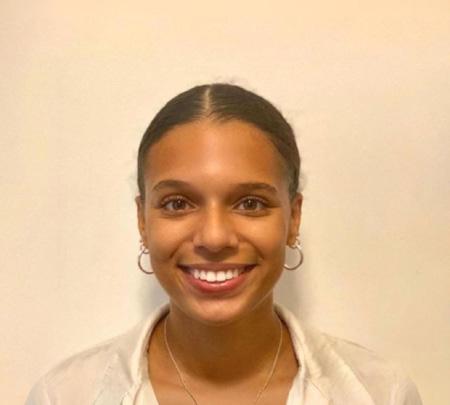
laudia Sánchez-Beato Johnson ’16 is a biomedical scientist at the University of Maryland School of Medicine’s Institute for Genome Sciences, where she works to translate disease ontology data into systems that power global research.
Sánchez-Beato Johnson was born and raised in Madrid, attending international boarding schools throughout her childhood before moving to the Bay Area during her high school years. At M-A, she competed in cross country. “Growing up across cultures and educational systems gave me an early understanding of how healthcare access, lifestyle, and medical outcomes vary globally,” she said.
Following M-A, Sánchez-Beato Johnson attended the College of William and Mary and studied health sciences. There, she conducted an independent grant-funded international research project in molecular and cardiovascular physiology and shared her findings at international conferences.
“That’s when I fell in love with research because, especially in medicine, any small error can risk the life of someone, so everything is very methodical. I think research is like artistry, it’s more similar to writing— you’re able to design your projects, you’re able to have fun and play with science,” Sánchez-Beato Johnson said.
After graduating from college, Sánchez-Beato Johnson decided to earn her Master of Science in Systems Medicine at Georgetown University, where she conducted research in precision medicine and biotechnology.
After getting her master’s degree, Sánchez-Beato Johnson joined the University of Maryland School of Medicine’s Institute for Genome Sciences as a biomedical scientist. She currently works on the Disease Ontology, a biomedical knowledgebase funded by the National Institutes of Health. “I’m inspired where biomedical science and emerging technologies come together to spark innovation,” Sánchez-Beato Johnson said.
Sánchez-Beato Johnson researches diseases’ causes and their symptoms to be able to distinguish one from another. That information is added to the Disease Ontology database, which is accessible to biotechnology companies, government agencies, and patients.
Sánchez-Beato Johnson has also been recently leading the Spanish-language scientific translation and engagement efforts in order to make the data more globally accessible. “For me, bilingual science is about impact. Research only matters if knowledge can be accessed, understood, and applied across communities and borders,” she said.
“Experiencing medicine and lifestyle across Europe and the United States ultimately shaped my scientific direction. I saw firsthand how disparities in representation and access influence which populations benefit from biomedical innovation and which are left behind,” Sánchez-Beato Johnson said.
Sánchez-Beato Johnson’s advice to current M-A students: “Don’t feel pressured to fit into a single box too early. Some of the most meaningful paths are interdisciplinary, and your unique combination of interests is something to lean into, not simplify.”

by Louisa King

Elliott Baer ’00 is the head of service operations for Google’s Ads business, where he ensures Google Ads work smoothly for millions of customers while maximizing revenue.
At M-A, Baer’s life revolved around his dual passions for music and sports, first competing in baseball since his childhood, and later moving to cross country.
After graduating, Baer attended Williams College, where he majored in economics. While at Williams, Baer expanded his involvement in music through performing in the jazz band and playing in his own band, as well as competing in cross country. “Going toward the end of college, I just couldn’t get it out of me the idea of being in the music business,” Baer said.
After Baer graduated from Williams, he joined a startup music company called Ron Shapiro Management & Consulting. He then decided to attend Columbia Business School after four years. “I got to take leadership and development classes that really changed how I thought about the person I am in the world, and even more than where it led me career-wise, it was one of the best experiences I’ve had in my life,” he said.
After business school, Baer joined the Federal Bureau of Investigation (FBI) as a chief of program management. “I wanted to help work with an organization that had a strong mission. In this case, it was protecting and defending the country, something I got excited about,” he said.
Baer then switched to management consulting, joining the firm McKinsey and Company, soon after making his final move to Google, where he is currently head of service operations for Google’s Ads business. “The last eight and a half years at Google have been so exciting, and it’s been great to have impact and be able to see it through,” he said. “It reminds me of back in the music industry days where I would present to a record label CEO, one day about an artist or an idea, and the next day being on the tour bus, riding with the band and solving their problems.”
Baer’s advice to current M-A students: “I would urge people not to worry too much about having a five, 10, 20, or even three-year plan for themselves, but to think through where their interest intersects with impact.”

by Lucia Rose

Marianne Despres ’94 transformed her love for cooking and baking into her own restaurant, El Sur, in downtown Redwood City, where she shares her Argentine culture with the Bay Area. Despres grew up in Menlo Park. She cherishes her experience at M-A, recalling meaningful friendships and inspiring teachers. Sonja Seaberg, her French teacher, sparked her interest in Paris. “I’m still really close with a lot of my high school friends, which is great,” she said.
After M-A, Despres attended the University of the Pacific, where she studied foreign affairs. After college, Despres pivoted toward food writing, which ultimately steered her to the culinary world.
She then attended Le Cordon Bleu Paris in Paris, where she studied both Culinary and Pastry. “I fell in love with being in the kitchen, and liked learning from the chefs and hearing their stories,” she said.
Despres spent the following years working, including at the three-Michelin-star restaurant, The French Laundry in Napa. “You learn discipline, how to stay on your toes, how to work under pressure, how hard it is to create a really nice dish,” Despres said.
Despres eventually returned to the Bay Area and opened El Sur, specializing in empanadas tied to childhood memories of making them with family. “My parents were both entrepreneurs, and having independence and freedom, where all the decisions you make are really important,” she said.
During COVID-19, she began freezing and selling empanadas online. “That made me so proud and happy that not only are we making this great product, people were really appreciative of it at a critical time,” Despres said.
Despres’ advice to current M-A students: “Figure out what you’re good at, and work really hard, stay focused and disciplined.”

by Alisha Parikh-Briggs

For Saul Menjivar ’14, tennis isn’t just a sport—it’s the lifestyle and pathway that shaped his academic career and life after high school.
Menjivar’s childhood was defined by tennis. However, Menjivar didn’t always see tennis as his main sport. Growing up, Menjivar enjoyed playing recreational basketball more than tennis, but when he entered high school, he began to take tennis more seriously.
At M-A, Menjivar joined the boys tennis team, where he played on varsity all four years. As the first person in his family to attend college, he knew early on that athletics would be his ticket to future academic opportunities, including university admission.
Menjivar also began coaching younger kids in tennis at Holbrook Palmer Park during his freshman year.
Although Menjivar received multiple Division III tennis offers, he declined and instead attended Loyola Marymount University (LMU), drawn by a financial aid offer. At LMU, Menjivar studied finance and business. Finance, however, wasn’t always Menjivar’s end goal.
While at LMU, Menjivar wanted to take a different approach to school than he did at M-A. Although he had originally planned to walk on to the LMU tennis team, he eventually decided against it.
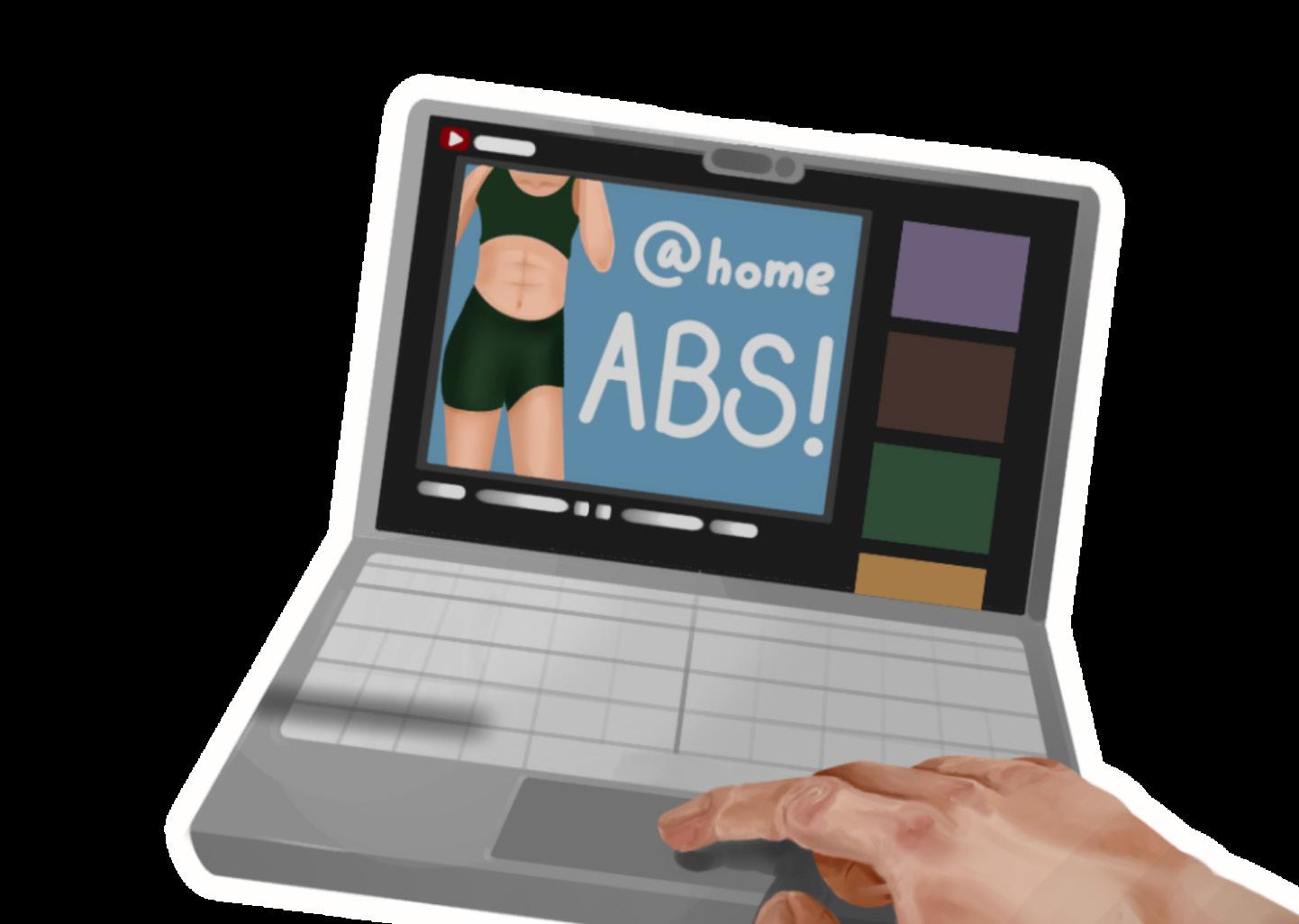
But Menjivar’s tennis journey wasn’t over. Around this time, he began posting fitness content on social media and gradually found his way back to tennis, this time, as a coach. This transition turned out to be life-changing. Menjivar began coaching Division I athletes and professional competitors.
That same year, Menjivar was offered a full-circle opportunity. Former M-A coach Tom Sorenson invited him to take over the tennis program. Now at M-A, Menjivar is focused on rebuilding the boys team’s culture and competitiveness.
For Menjivar, returning to tennis has brought a sense of fulfillment he didn’t always feel in the corporate world. “Last year, even when I had the busiest days, I felt like this was the happiest I’ve ever been,” he said. “We’re trying to be super tough and play at the highest level.”
Menjivar’s advice to current M-A students: “With hard work and putting your mind to what you want to do, you can make it happen.”




Some love stories are sweet. Some are messy. Then there’s Wuthering Heights.
Similarly, when Catherine and Heathcliff reunite Fennell uses more iconic lines from the book such as, “I have not broken your heart—you have broken it; and in breaking it, you have broken mine.” The scenes included are portrayed effectively, and the actors capture the exact emotions and tone as described in the book, so one would hope that

Rather than centering on romance, the book primarily examines the cycles of abuse and manipulation that are prevalent in the lives of Catherine and Heathcliff.













Not only does the storyline differ from the book, so do the characters. One of the two main narrators, Lockwood, is complete ly absent from the movie despite his influ ential role in the book, offering an outside perspective on the family affairs. In the book, Catherine’s brother Hindley despises Heathcliff, but Old Mr. Earnshaw adores him. However, in the film, Hindley doesn’t exist, and instead it is Old Mr. Earnshaw who hates Heathcliff and abuses him. Joseph, the ser vant, is pious and infuriating in the novel,


By prioritizing romance, the movie transforms the darker, complex themes into a more commercially appealing but far less nuanced film.














and Fred Ebb, first premiered on Broadway stages in 1996. Since then, it has won countless awards and has become the longest-running American Broadway show. The production is a lively satire of the criminal justice system.
The story opens as Roxie Hart (senior Kealy Bryman) kills Fred Casley (junior Derek Valladao)—with whom she was having an affair—for trying to leave her. Roxie goes on to convince her husband, the truly hilarious Amos Hart (junior Joseph Tompkins), to pay for a lawyer to defend her.
Her lawyer, Billy Flynn (junior Calvin Blanford), is a charismatic master at manipulating the press with “the old razzle dazzle.” “It’s also the 1920s, it’s such an energetic time period. So it’s really fun to bring that energy every day,” Blanford said. Billy helps Roxie manipulate publicity to control her narrative.
Alongside Roxie’s story, the show follows Velma Kelly (sophomore Ines Bensoussan), a glamorous showgirl who desperately wants to get out of jail and gain the fame she’s always dreamed of. “She’s a diva, she’s glamorous and all that,” Bensoussan said. “I still had to play that vulnerability and that
manipulative character that took me a second to get there.”
Roxie, with the help of Billy, manages to free herself, but the media has moved on to another murderer. Disheartened, Velma and Roxie unite to perform together, closing out the show with jazz and dancing in the song “Nowadays.”
The cast built an alluring show that demonstrated the dangers of temptation and propaganda. The cast and crew seamlessly balanced singing, intricate dancing, a live student band, costumes, and set chang-
Blanford also spoke to the inclusivity of the cast. “They let me be all these kinds of different people in the drama program, and everyone’s different, but we’re all kind of united by that common goal of putting a show on,” he said.




by
Niya Desai and Leilah Hanif designed by Amari Witt illustrated by Grant Maletis photos courtesy of Pascal Bensoussan




Leadership hosted its fourth an nual Corn Day on the Green, which was decorated with corn-themed balloons and colorful posters, and featured music, cornhole, and a variety of corn-re lated snacks, on March 12.
Leadership promoted the event through Instagram and flyers, reminding people to prepare and wear corn-themed outfits, such as green and yellow, or dress up like a farmer to fully enjoy the Corn Day spirit.
“I think it’s just fun to celebrate. Anoth er similar event is how we also do Pickle Day, so I think it’s kind of funny, and it’s sort of a good way to have a good time during lunch,” Leadership student and junior Charlie Weber said.


“I think sometimes we just need to celebrate things that are silly, and there’s nothing political about this. There’s nothing serious, it’s just Corn Day. I’m more than willing to celebrate,” English teacher Susie Choe said.

During lunch, students gathered around food stands set up by Leadership students that sold corn dogs, corn nuts, candy corn, corn pops, and popcorn. “It was a little challenging, because we had to figure out how to cook all the corn dogs, but eventu ally we were able to. We also just put out a bunch of tables and had to order all this, but eventually it worked out really well,” Weber said.
by Milagros Tapia-Mendez


don’t even have to be good at anything, you just have to come walk around and be silly,” Choe said.
“There’s so many things you wouldn’t know that are made of corn. It’s just so fun to be able to put them all together, and I think it’s something that you would never really think of doing. But then when you do it, everyone loves it so much,” Leadership




opportunity to explore a different culture, with respective clubs celebrating their heritage through food, arts, music, and more.

The week kicked off with Black Culture Day, celebrated by the Black Student Union (BSU). The club served traditional proteins, sides, and desserts, and the menu ranged from mac and cheese to pound cake.
Asian Culture Day continued the cultural festivities with fun and engaging activities. The Asian Culture Club and Taiwanese Culture Club presented various games, in which students had to pick up rice, macaroni, and beans using chopsticks in order to earn candy.
Wednesday represented Latin American cultures with Latinos Unidos de M-A

On Pacific Islander Culture Day, stu dents gathered at the Green to watch the Poly Club’s performance. The club members performed a variety of traditional dances, prompting loud cheers from the crowd.


The festive week closed with a celebration of all cultures on Friday. Asian Culture Club sold two popular flavors of boba tea, brown sugar and taro milk teas, which sold out in nearly 10 minutes. Other clubs like the Genders and Sexualities Alliance, BSU, and Jewish Student Union participated with

special is the diversity,” senior and event organizer Caroline Rose said. “So being able to have a celebration that represents what makes us M-A is super important.”

by Yimeng Cai and Hana Suzuki photos courtesy of Yimeng Cai and Hana Suzuki




































It’s been nearly four years since Harry Styles’ Album of the Year winner, was released. Now, he’s returned with KissAlltheTime.Disco,Occasionally a 12-track album that sells itself as a bold pivot into electronic dance music. For an album that advertises itself as a reinvention, it feels like the Styles we’ve always known. Kiss All the Time. Disco, Occasionally’s strongest moments are its ballads, where Styles returns to the sounds he’s done before.


The lyrical weakness slightly lets up across the album’s midsection. “Are You Listening Yet?” starts strong but fizzles out, burying Styles’ vocals under techno-sounds and production. “Dance No More” aims for a Mark Ronson “Uptown Funk”-style groove. It lands closer to a cruise ship DJ set.
When Styles strips away the electronic additions, his album comes alive. “Coming Up Roses” is easily the record’s best track—a waltz with an orchestra that Styles co-arranged. It coaxes the listener through the story Styles tells about vulnerability, insecurity, and learning from relationships. “Pop” rounds out the album’s bright spots. It’s catchy while pulling off the electronic elements Styles was going for. KissAlltheTime.Disco,Occasionally. isn’t a total disaster. But with Styles’ resources, talent, and almost four years of development, avoiding disaster is a low bar. Harry’sHousewas phenomenal because it leaned into what Styles does best. KissAlltheTime.Disco,Occasionally. doesn’t prove that Styles has changed. It proves he probably shouldn’t try to.
by Vesta Kassayan and Brianna Ruiz
Almost two years after releasing her iconic album BRAT , Charli xcx has shifted directions with her music, foregoing the brash vibe of BRATfor the sweeping, gothic love of Wuthering Heights .
Her album accompanies Emerald Fennell’s movie of the same name, encompassing the obsession and toxic romance of Catherine Earnshaw and Heathcliff. Charli creates a soundtrack of haunting violin and chaotic energy to accentuate the film’s volatile romance.
“House” is the heart of the album. Charli blends the tragic, sweeping story of Wuthering Heights with her signature electronic beats. She preserves the best parts of BRAT while providing maturity and emotional depth, creating something completely fresh that never fails to captivate.
“Open up” provides a breather in the middle of the album. Charli’s voice is ethereal on repeated lyrics, set against the rise and fall of ghostly strings. The song switches the narrative from a whirlwind of a love story to the destructive aftermath of a separation.
WutheringHeights provides a whole new side of Charli xcx. It’s overflowing with longing, desperation, and gothic strings, spectacularly capturing the wildness of Catherine and Heathcliff’s tragic love story.
by Vesta Kassayan and Brianna Ruiz
S t y l e s H a r r y C h a r l i K a h a n N o a h




Noah Kahan’s return to the music world has been heavily anticipated. After returning to his home in Vermont, where his success ultimately began, Kahan dives into his comforting yet sentimental sensibilities on his fourth studio album, TheGreatDivide .
Notably one of the most emotion-evoking songs, “End of August” is not just heartbreaking, but the perfect opener for this album. Beginning with a twinkling piano, the song wholeheartedly captures the overall essence of TheGreatDivide: Kahan needs to feel pain to feel alive. “American Cars” is another favorite, exploring the dynamics of familial and hometown relationships and hardships after returning from his newfound success. The track steers off from his usual folk tendencies, incorporating strong electric guitars and furious drumming.
On first listen, the tone comes off somewhat repetitive and monotonous, but the thought-provoking lyrics are nothing short of remarkable. Ultimately, TheGreatDivide lives up to its hype—the choruses are addictive, and Kahan’s emotion is masterfully displayed.
by Alexa Djafari
and Ellie Rosen designed by Caleigh Jones illustrated by Caleigh Jones





4/10

After a box office flop with The Running Man, Glen Powell was looking for a comeback. Unfortunately, How to Make a Killing is his second straight failure.
This lack of fanfare makes sense. The plot is dull, the script is cringy, and the performances are fine at best. It’s safe to say that no one will remember this release. In fact, many will never even discover it.
The film follows Becket Redfellow (Powell), a retail store worker who grew up isolated from his wealthy family. His world was shaken when his mother passed away, but not before reminding him to live the life he deserves. Redfellow decides that the best way to follow through is to murder his relatives to receive his inheritance.
The movie half-heartedly tries to explain that his desire for murder comes from a slight sense of thrill, but Powell’s performance is unable to harness any of that psycho energy. Instead, he feels more like a normal guy, making the storyline feel extra awkward. It’s clear that Powell is much more suited for smaller roles. Ones where you see him less.
The easiest way to describe How to Make a Killing is forgettable. You could say it failed to meet expectations, but let’s be honest, there weren’t any to begin with.
by Johanna Key
ProjectHailMary was released in theaters in March to resounding success. The film follows overqualified middle school science teacher Ryland Grace (Ryan Gosling). When he wakes up on a spaceship, with no memory of who he is or how he got there, he panics. Slowly, Grace begins to piece together his past, discovering that he was forced onto the spaceship by Eva Stratt (Sandra Hüller) to save Earth from star-eating bacteria. While in space, Grace meets an alien facing the exact same issue, whom he nicknames Rocky (James Ortiz).

ProjectHailMary is a truly stunning film. Its insane visuals and emotional performances will cement the movie as a modern sci-fi classic. Gosling’s stellar leading performance makes it easy to get emotionally invested. The cinematography is another bright spot. This is definitely a movie to watch at the theater.
Overall, ProjectHailMaryis undeniably fabulous, with an amazing ending. Grace deciding to become a teacher on Rocky’s planet is exactly what the viewers wanted. It is heartfelt, powerful, and perfectly ties up all the strings. On the other end of the universe, Stratt receives videos of Grace’s new life, and (spoiler alert!) our world and Rocky’s are saved. What a relief!
by Alexa Djafari and Johanna Key





8/10
TheDrama , A24’s fifth release this year, stars A-listers Robert Pattinson and Zendaya as a young Boston couple going through pre-marriage anxieties (to say the least). It is, unsurprisingly, a 1970s esque capital-D Drama.
The Drama starts with a meet-cute: Charlie (Pattinson), a British curator at the fictional Cambridge Art Museum, spots Emma (Zendaya) reading at a coffee shop. They chat, and they fall in love. It’s textbook.
But then, Emma confesses that at 15, she planned and almost carried out a school shooting. Even worse, Emma only backs out after another shooting happens in the same town. Everyone goes silent. Whoops.
The next hour of the movie is unnervingly slow. Charlie spirals: Should he go through with his wedding? Emma—who, after her epiphany, spent years as a gun violence advocate—gets cast as a monster by her closest friends.
There’s a much sharper movie inside The Drama . One about how every person at the confession table is a hypocrite. Instead, we get an oddly-timed brawl, and a final scene where Charlie and Emma sit at their favorite restaurant, smile from across the booth, choose to start again, and the credits roll. It’s not a complete letdown, it just feels like wasted potential.
by Vesta Kassayan designed by Lia Nadav illustrated by Grant Maletis




Yearning has become an aesthetic. Everyone loves a story where, after years of waiting, the guy finally gets the girl. However, the romanticization of longing teaches people that patience and self-sacrifice are proof of love, when in reality, the wait isn’t romantic—it’s torture.
Yearning has evolved into a feeling people want to experience—waiting for someone, no matter how long it takes. But the truth is, yearning is the bitter aftertaste left when love isn’t found, a quiet kind of suffering we often mistake for devotion or love. We need to stop glorifying the pain of longing for someone, and instead, we should learn to heal, move forward, and stop wasting time on someone who is not interested.
This romanticization is largely amplified through popular media. On apps like TikTok, users edit scenes from movies or TV shows that feature intense desire, which frequently go viral, further popularizing the idea. Thousands of videos with captions such as “bring back yearning” or the repeated use of songs like Jeff Buckley’s “Lover, You Should’ve Come Over” glorify the idea of yearning for others. Once people engage with these videos, the TikTok algorithm feeds them more of the same content, reinforcing this romanticization. But yearning shouldn’t be normalized, because conveying it as something beautiful or admirable only makes the ache feel acceptable.


To better understand where yearning stems from, it is necessary to examine the psychological reasons behind the desire for human communication. Psychologist Phillip Shaver is best known for his research on social relationships and attachment theory, which examines infants’ innate desire to bond with a protective caregiver. “That need never disappears. As we get older, we get our sense of safety and security from family, friends, mentors, and—very important—romantic partners,” he said.
“Yearning might be a phase that contributes to finding a relationship partner. Whether this is good or bad depends on whether the partner is secure and supportive,” Shaver added. “It has a kind of bittersweet quality because the separation and unattainability are painful, but the intense attraction can be pleasant.”
Laurie and Jo’s relationship in Greta Gerwig’s movie adaptation of LittleWomenis a prime example. Though their bond begins as a childhood friendship, Laurie gradually develops a romantic desire for Jo. Though once he finally expresses his love for her, she doesn’t feel the same. “I gave up billiards, I gave up everything you didn’t like, I’m happy I did it’s fine and I waited and I never complained because I, you know, I figured you’d love me, Jo,” Laurie confesses.




Little Women shows how yearning leads to harm rather than romance. Laurie revolves his whole life around pleasing Jo, even though she is completely unaware of his feelings. He craves her attention but still doesn’t take any action, and instead, silently suffers and diminishes himself, only to find his devotion goes unnoticed and unreturned.
In some cases, yearning involves seeking approval from someone who, in the end, might never feel the same. “You can long or yearn for someone too much, and it starts to become unhealthy and idealistic,” junior Avery Williams said. The need for connection can turn yearning into an intensifying passion to detrimental extremes.
This self-destructive form of longing is also prominent in season two of Bridgerton . Anthony Bridgerton, who is highly ambitious, adopts a strict demeanor as he carries the family’s burdens. Soon after meeting Kate Sharma, a strong-willed and intelligent woman, he finds himself hopelessly drawn to her—despite being engaged to Kate’s younger sister, Edwina—composing the perfect forbidden-love arc. Anthony declares that he will always think of Kate, no matter how far apart they are. “Do you think that there is a corner of this earth that you could travel to, far away enough to free me from this torment?” he proclaims.


The audience becomes captivated by this pitiful romance. Yes, it is alluring, but the obsession with their love triangle—which is unrealistic—distracts viewers from the heartache and delusion. Gradually, when yearning, people begin to lose themselves, forgetting what truly matters: their own well-being.
As longing intensifies, it can cause people to degrade themselves and distort their perception of another person, even if the reality is different. “I think you kind of create an idealized version of the person that you like in your head, and start to ignore all the bad things that they might be trying to show you,” Williams said.
“Being attracted to someone and developing a crush on them is natural. This is how relationships usually begin. The positive part is the attraction; the associated negative part is the worry that the attractive person doesn’t feel the same way,” Shaver explained.
The pain and anxiety within love or a crush are inherent, but the version we create for someone and the way we crave that fantasy is not. The intense attraction convinces people that yearning is love, but in reality, it’s only desperation. Over time, connection and desire through communication, shared joy, and hardships are what develop sincere love.
Life moves quickly, and connection is fleeting. If we want
overthink and hold yourself back. “Just let it happen. Stop pondering on it. Stop thinking of all those hypotheticals because you will likely end up disappointing yourself with the reality of just human relationships, because they’re not your fantasies,” senior Viet-Tran Do said.
“If you keep reflecting on what’s happened in the past, and longing for someone, I don’t think that’ll get you anywhere. So I think you just have to accept it and just let it go,” junior Trgz Labson said.
The tragedy and pathetic nature derived from waiting are shown in Emerald Fennell’s movie interpretation, Wuthering Heights . Near the end, the story’s main love interest, Heathcliff, marries a side character, not out of love, but to provoke the woman he’s truly in love with: Catherine. Instead of reacting with jealousy, Catherine spirals into a deep depression, unaware that Heathcliff still longs for her. Desperate, he executes the infamous love-letter cliché, also shown in The Notebook . “I’ll wait for you every day and every night / Why do you not respond?”
Healthcliff writes. But Nelly, a close companion to Catherine, destroys the letters, keeping them apart.
This situation is tragic—but the pathetic part is that they live only four miles apart. The audience aches to intervene, but in the end, it’s too late. Catherine dies first of heartbreak, then illness, and Heathcliff is left not with satisfaction, but with the unbearable weight of what could have been.



“When you love someone, there’s always the intent of action, with yearning it’s just sort of a hobby for a lot of people,” Do added.
Popular media glorifies pining—waiting years for someone as proof of devotion. But longing actually decreases one’s chance of winning someone over. It’s endearing in movies when the story fades to credits after two hours, but in reality, there are no closing scenes, and you can’t wait on someone forever. “A healthy person allows [themself] to feel the loss without suppressing it but also without being completely lost in it,” Shaver said. Yearning is only favorable when it is reciprocated on both sides, with love having already been formed and balanced. “[When people] love each other equally in each other’s absence, it can be very healthy, and it does show a level of true love or unconditional love. But I think also, when it becomes unbalanced or unequal, it does kind of turn into delusion,” Williams said.



“Yearning might be useful in calling attention to one’s deep need for a secure connection. But no matter its benefits, the underlying pain is still there. The positive aspects of attachment are acknowledged, while the negative aspects of not having the desired partner are very painful,” Shaver concluded.
Love isn’t supposed to be desperate. It isn’t supposed to require transforming yourself in hopes of pleasing another, and it isn’t a waiting game for someone or something that isn’t yours to begin with. Sorrow and heartache are inevitable occurrences in love, but yearning encourages this pain to a torturous extent. A torture people falsely believe is love.

by Miya Yu designed by Miya Yu
On March 18, The New York Times published a year-long investigative report alleging civil rights activist Cesar Chavez sexually assaulted multiple girls and women, including fellow activist and co-founder of the National Farm Workers Association, Dolores Huerta.
Chavez’s name is found all around the world, and because of his close ties to California, it’s in the names of many prominent Bay Area monuments. Chavez once lived in San Jose, and the farmworkers’ movement took place in California. In the wake of the investigation, community organizations are planning to remove his name from public spaces.

Traffic light with Cesar Chavez street sign.

Cesar Chavez Ravenswood Middle School, East Palo Alto
The naming of Cesar Chavez Ravenswood Middle School in East Palo Alto was decided in 2009 after the merging of Cesar Chavez Academy and Ravenswood Middle School. Parents encouraged that Chavez’s legacy and leadership be represented in the school’s name, as he was a source of pride for the community.
The Ravenswood City School District recently stated they plan on changing the name of the middle school. In a press release, Superintendent Gina Sudaria encouraged educators to shift the focus of the farmworkers’ movement to the many contributions rather than a single man. Webster Lincoln, East Palo Alto’s mayor, mentioned the idea of replacing Cesar Chavez’s name with the significant historical figure and former president Barack Obama.
Cesar Chavez Street resides in southern San Francisco, connecting the Mission District and Bayview neighborhoods. The street was formally named Army Street and changed to honor Chavez on his birthday in 1995, two years after his passing.
The city of San Francisco has yet to take any action to change the street’s name, a process that would entail removing over 100 combined street signs and sidewalk etchings.
“My office will support community efforts to remove Cesar Chavez’s name from any District 9 institutions,” San Francisco Board Supervisor and representative of the Mission, Jackie Fielder, wrote in a statement, suggesting that action will come soon.

Mural that covers the wall of the Library.
“My office will support community efforts to remove Cesar Chavez’s name from any District 9 institutions,” - Board Supervisor Jackie Fielder

The Cesar E. Chavez Library is located on the San Jose City College campus and is open to both students and the public. The library opened in 2003 and features a large mural of symbols from the farmworkers’ movement on the side of the building. The school has started the process of renaming the library to “San Jose City College Library.”

San Jose will finish establishing a way to shift focus to the survivors of the movement and women’s contributions that have been overlooked.
Cesar Chavez Elementary School, located in the Mission District of San Francisco, was previously known as Hawthorne Middle School before undergoing renovations in the 1990s. The campus is hard to miss with its vibrant colors and large portrayal of Chavez. The school is moving to change its name.
by Emerson Edwards designed by Emerson Edwards photos courtesy of Emerson Edwards
Located in the heart of downtown San Jose is the Plaza de Cesar Chavez. The plaza dates back to 1797 and was renamed to honor the Chavez in 1993.
Days after the sexual assault allegations came out, the lettering on the stage’s steps that read “PLAZA DE CESAR CHAVEZ” were covered by San Jose City crews. The city council mentioned renaming the plaza to still honor the farmworkers’ movement but remove Chavez as the representative.
On March 25, the Open Government Committee and the San Jose City Council’s Rules voted for a two-step process. First, the city will distinguish all public art and infrastructures with Chavez’s correspondence. Next, San Jose will finish establishing a way to shift focus to the survivors of the movement and women’s contributions that have been overlooked.
Richard Segovia is the owner and resident of the Latin Rock Music House on the corner of 25th and York Street in San Francisco. It features Chavez in one of its many portraits. The house has hosted renowned performers and its walls celebrate many Latino idols.
Chavez was painted by artist Carlos “Kookie” Gonzalez on the front of the building. On March 25th, Segovia contacted Gonzalez to have the mural painted over. “I did this to let everyone know. Let’s get the ball rolling. Let’s start right here and get this done,” Richard Segovia said in an interview with ABC7 News.
Segovia mentioned he wanted to remove Chavez from the mural quickly as a message to the community. Gonzalez affirmed Segovia’s message, saying Chavez’s actions are an inexcusable betrayal.

Scaffolding set up to paint over Chavez’s portrait.

As teenagers scroll through their social media feeds, they are increasingly exposed to videos promoting extreme dieting, “clean eating,” and unrealistic body standards. From “What I Eat in a Day” posts to #skinnytok content, social media has significantly reshaped how young people perceive food, health, and their bodies. Experts say that this can have severe long-term consequences which include, but are not limited to, nutritional deficiencies, hormonal imbalances, weakened bones, slowed metabolism, and long-lasting mental health impacts.
One of the most common forms of online content that teens encounter is nutritional advice that lacks scientific evidence. This media is pushed onto random groups of young users, a handful of whom follow the advice, adopting unhealthy eating habits. One anonymous student had firsthand ex perience with how consequential this can be for teens’ development. “You’re exposed to things at a young age when you’re developing that you probably shouldn’t be because so cial media is [accessible to] a vast age group of people,” they said.
Social media platforms deliberately push out the content that draws the most at tention, meaning posts featuring extremely thin or muscular bodies are often promot ed by the apps’ algorithms. This constant exposure to idealized and often unrealistic body types can cause young users to feel as though they are not “normal.” This fur ther reinforces the harmful standards about what bodies “should” look like.
This leaves teens feeling very confused about how to achieve these unrealistic body standards, making them more vulner able to misleading advice and online scams, such as dangerous supplements or extreme diet plans. Acknowledging this vulnerability,

advertisers, who are paid for commission, often promote trends by tying them to celebrities or mass influencers, implying that using these certain products or diets will help achieve the same body types seen in the posts. This creates the false idea that these appearances can easily be replicated, even though these images are often unrealistic or heavily curated.
M-A alum and University of Michigan kinesiology student Addison McCombs ’25 emphasized that influencers have significant power. “When influencers post about eating habits and diets, and the way people look, they need to know that they are playing a role in shaping young people’s minds,” she said. Research by the National Eating Disor-
perfect body image,” the student said. “It just creates this fake reality that that’s the only version of beauty, and you feel the need to mold yourself into that.”
As a result of online discourse, some teens begin skipping meals, avoiding favorite foods, or cutting out entire food groups from their diets. Luce urges adults to look out for the early signs of unhealthy eating behaviors in teens. “When people start skipping meals and avoiding whole classes of food, it may indicate an eating problem,” she said.
In addition to restrictions, researchers found that overusing screen time can play a significant role in unhealthy eating patterns among teenagers, particularly by encouraging distraction and overeating. The distrac-


later. “Adolescents can overeat or binge eat even in the absence of hunger when they are distracted in front of screens and phones,” Nagata said.
Certain online trends also normalize excessive eating, including mukbang-like content in which large quantities of food are consumed on camera in a short time period for pure entertainment. While not as widespread as restrictive diet trends like #skinnytok, this type of content can still shape teens’ perceptions of normal portion sizes or eating behaviors. As excessive screen time becomes more common in daily life, this pattern may contribute to the growing risk of binge eating.
Societal trends have always shaped the way people think about health and body image. As new ideals emerge over new generations, they influence not only beauty standards but also eating habits and behaviors. Over time, these shifting expectations have contributed to consistent misunderstandings about the concept of healthy eating.
As a result, eating disorders are now appearing across demographics that were previously excluded from the diet cultures. “They’re in countries we have never seen before,” Luce said. “India has some of the highest rates of eating disorders.” Across the globe, eating disorder diagnoses have risen significantly in recent decades. Rates of eating disorders worldwide have more
opment of eating disorders.
Research shows that up to 80% of individuals with eating disorders will experience an anxiety disorder during their lifetime, and additionally, roughly 70% are diagnosed with major mood disorders. Experts say that teens experiencing anxiety or depression are more likely to partake in restrictive eating, binge eating, or over-exercising as a way to cope with their own emotional distress.
“All the videos or pictures of people are just perfect, what seems like the perfect body image. It just creates this fake reality that that’s the only version of beauty, and you feel the need to mold yourself into that.”
- Anonymous student
than doubled, rising from around 3.5% to 7.8% in recent decades.
Eating habits and eating disorders have historically been misunderstood. “When you look back in time, [people] used to say that eating disorders were a white, upper-class woman’s illness,” Luce explained. She elaborated that people are most familiar with anorexia, which they often associate with elegant images of ballerinas or socialites. By the 1990s, unhealthily thin figures had become normalized in Western culture, and with it came the rise of poor body image. Research from the late 1990s found that increased exposure to fashion magazines was associated with higher eating disorder symptoms in young girls, and a longitudinal study of 6,928 girls from ages 9 to 14 found that trying to look like people in the me dia was linked to starting purging behaviors. “They would say that body image dissatis faction was the normative discontent of white women in Western cultures, so that it’s normal to hate your body. Isn’t that
Luce also pointed to technology as a turning point in the recent prevalence of disordered eating. “Since we got the iPhone, there has been a huge increase in depression, anxiety, suicidality, and eating disorders in kids,” she said. At 12 U.S. hospitals, the number of adolescents aged 12 to 21 hospitalized for eating disorders rose from 294 cases in 2010 to a peak of 2,135 in 2021. Mental health disorders, such as anxiety and
Despite its risks, social media can sometimes promote healthier lifestyles. Content and influencers who emphasize balanced eating, body diversity, and realistic wellness standards can help undo harmful narratives. Research has shown that for transgender and non-binary individuals, social media actually plays a more positive role, improving their perception of their body image because they have access to supportive communities that their own environment could lack. McCombs believes teens should approach social media with skepticism and self-awareness. “I think that people can take what they see with a grain of salt,” she said.
As teens continue to navigate social media, experts stress that families, schools, and platforms must promote healthy, balanced eating in everyday life. After all, no amount of likes is worth compromising an entire generation’s health.

Media exposure also played a major role in spreading eating disorders across new regions. “On the island of Fiji, there were no eating disorders until they got TV,” Luce said. As media becomes more accessible around the world, these unrealistic beauty standards can reach new audiences and fur ther contribute to rising body image issues





Hillview: 36.9%
Cesar Chavez: 15.6%
La Entrada: 12.5%
Kennedy: 6.5%
Other Public: 8.9%
KIPP: 4.8%
Private School: 5.7%
Charter: Unknown:3.6%3.0%







Representation of middle schools in M-A’s total enrollment from the 2025-26 school year.





M-A is undoubtedly a powerhouse when it comes to athletics, offering a to tal of 64 sports across a three-sea son catalog. Consistently, M-A is one of the most successful schools in terms of sports in the Peninsula. In the 2024-25 school year, the varsity teams collected eight PAL titles, and 20 student-athletes advanced to compete at the collegiate level.
The M-A community fosters an environment where many athletes have the opportunity to succeed in sports and represent M-A with pride. However, the athletes who become cham pions are not a completely accurate represen tation of the diverse student body.
Three main feeder middle schools comprise the majority of M-A’s student population. Hill view Middle School has the highest percentage of graduates currently attending M-A, ac counting for 39.6% of the total school enroll ment. The second largest feeder school, Cesar Chavez Ravenswood Middle School (CCRMS), constitutes 15.6% of current M-A students. La Entrada Middle School follows closely behind with its students making up 12.5%.

Despite Hillview and La Entrada accounting for 52.1% of students’ middle schools, they contribute to over 75% of varsity athletes’ feeder schools. Hillview accounts for 55.9%, and La Entrada makes up 22%.
The majority of varsity sports require some level of previous experience. Many local middle schools do not have the financial or functional capacity to provide an early introduction to every sport that is offered in high school, often forcing students and families to find this experience elsewhere.
For example, aquatic programs, including boys water polo, are not offered by any of M-A’s three major feeder schools because none have a pool on campus. As a result, middle school students interested in water sports turn to local clubs and programs to fill this gap. This has


Hillview: 55.9%
La Entrada: 22.1%
Other: 22%



Percentage of varsity athletes from middle schools from the 2025-26 school year.
and baseball teams attended Hillview, as well as 76.9% of dance team members.
In fall 2024, M-A introduced girls flag foot ball, a brand new sport to the school. With an opportunity to draw new student-athletes to participate, this pattern of dominating repre sentation from certain middle schools contin ued. Much of the inaugural varsity roster was already involved in other sports. In this most recent season, out of 24 CCRMS, Hillview, and La Entrada varsity athletes, only two went to CCRMS.
Some no—cut sports have more diversity. In addition to being one of the few sports where Hillview is not disproportionately represented, the cheer team accepts many students who are not as familiar with the sport.. The cheer ros ter comprises a total of eight middle schools, making it one of the most diverse teams M-A

M-A’s motto of “Strength In Diversity” is reflected in the makeup of the campus, but lacks visibility on the athletic side. Modern youth sports are structured to benefit students who come from households that can financially support the pay-to-play model. M-A’s current varsity rosters mirror this nationwide trend, giving more representation on the field, court, and pool to those who can afford it.



eadership hosted its Night in Hollywood Prom at the San Francisco Design Center Galleria on April 24. The venue glowed with string lights, sparkling sets, and elegant decorations. Upperclassmen enjoyed capturing memories in the 3D videobooth, indulging in crêpes and frozen custard, playing table games, and dancing the night away.


with throwbacks like “Low” by Flo Rida, and “Beauty and a Beat” by Justin Bieber. Color ful disco lights amplified the dance floor’s lively vibes, keeping everyone on their feet.
The Galleria’s vast layout allowed for a variety of activities, ensuring that every student could find something they enjoyed.

“[My favorite part was] getting together with the community and seeing everybody,” senior Jimena Alvarado said.
The DJ kept the energy high, spinning hits, such as “Tití Me Preguntó” by Bad Bunny, “Rich Baby Daddy” by Drake, and “Not Like Us” by Kendrick Lamar, along
When not on the dance floor, students refueled with treats like sweet and savory crêpes and ice cream from the frozen cus tard bar. Food remained a popular stop that kept everyone energized throughout the night.
Students could also join in on games like blackjack and poker at the casino tables fill ing the third floor, which offered an alter native for those who preferred activities other than dancing.


“[The best parts were] the vibes overall and the dresses,” senior Chionna Mems said. “I think the people made it better.”
On the first level, a photobooth was available for students to take photos with friends and dates. On the fourth floor, a 3D videobooth offered a unique experience for students to get dynamic videos that captured the essence of the night.
Toward the end of the night, Lead-
by Leilah Hanif and Lucia Rose designed by Lucia Liu illustrated by Lia Nadav photos courtesy of Leilah Hanif











Designer” “Events Enthusiast” “Sports


“Chronicle(ly)









For Editor-in-Chief Becca Koenig, journalism started with a passion for writing and a love for reading. As a junior, Koenig began to take on more ambitious stories, including teacher strikes. As chief, Koenig worked extensively on the Sandy Hook editorial and rigorously tackled the copyediting slack to ensure the website’s quality. She balanced leadership duties with in-depth stories, including coverage of surveillance technology and TIDE Academy. Koenig also became heavily involved in TheMark . “I didn’t come into the program thinking I was going to be super design-forward, but graphic design really lets you embrace your creativity,” Koenig said.
Koenig will attend Stanford University in the fall.
As a young child, Gaby Foster created a neighborhood newspaper. Little did she know that she would end up leading a high school publication. As one of this year’s Editors-in-Chief, Foster has managed one of the largest staffs the M-AChroniclehas ever had. On top of being a remarkable leader, managing ClickUp like no other, and always making others laugh during classroom Ether, Foster has published and led countless Editorials. “I’m most proud of our 504 Editorial, we put a lot of thought and research and especially time into that story, and I’m really happy with how it turned out,” she said.
Foster will continue to study journalism at Northwestern University.
Isabel Habibi’s journey in journalism began with a love for writing and curiosity about the world around her. “I’ve always enjoyed writing, but journalism gave me a way to explore real issues and share stories that matter,” she said. Through her work as news editor, Habibi has learned life lessons that have helped shape her as a journalist. “I learned how to take feedback, even when it’s tough, and use it to improve my writing. I also learned how to dissect complex documents and data, a skill that will carry into college and beyond,” she said.
Habibi will attend UC Berkeley in the fall.



by Alisha Parikh-Briggs designed by Siboney Lynch
Alessandra Hartwig never expected to end up in journalism, but once she got a taste for storytelling, she was hooked. Hartwig joined the M-A Chronicle during her junior year and immediately began exploring, taking on many massive projects early in her career as a journalist. This year, Hartwig had the opportunity to continue to dive into local policy and explore new creative formats. When covering the student clothing brand Resonate, Hartwig built an ornate multimedia piece that captured the personality and brand. “It was rewarding to see the story come together and convey the right vibe,” Hartwig said.
Hartwig plans to study physics at UC Berkeley.
When Leah Collins joined the M-A Chronicle her junior year, she quickly proved herself to be an outgoing and dedicated reporter. She covered complex stories, such as affordable housing, experiences that deepened her interest in local news. “Covering the ICE walkouts and sharing quotes and photos—it felt like real journalism. Those experiences, and seeing the final pieces published, were amazing,” Collins said. Her growth as an editor stretched far beyond writing. “The biggest thing I’m taking to college is the people skills. Coordinating, communicating, and working with others are lessons I’ll carry forward,” she said.
Collins will major in Law, History, and Society at Vanderbilt University in the fall.
Rose Chane joined the M-A Chronicle inspired by a love of writing that started back in middle school. When she came to M-A, she arrived with energy and curiosity. By junior




@machronicle @machronicle @themachronicle