

Fundedby the PTA





Fundedby the PTA
Volume XVII Issue III

Hi Bears!
Spring has sprung, and so has our third Mark
With spring’s arrival comes renewal—a season of growth, perseverance, and transformation. In this issue, we reflect that spirit through stories on a student social media detox, features on M-A’s sporty seniors, and powerful student protests. At the end of this edition, you’ll find interactive games, inviting you not just to read, but to participate.
To encapsulate the essence of these stories, this Mark showcases vibrant and nostalgic elements reminiscent of the children’s section of a library—colorful, carefree, and full of imagination. We urge you to read this issue with a sense of curiosity and optimism. Please appreciate the simple joy of turning each page!
Happy reading, The M-A Chronicle










Editorial Board:
Gaby Foster Editor-in-chief
Rose Chane Culture & Features Editor
Alessandra Hartwig News Editor
Managing Editors:
Jenna Lee Events Editor
Amari Witt
Social Media Manager
John McBlair Advisor
Becca Koenig Editor-in-chief
Leah Collins News Editor
Isabel Habibi News Editor
Caitlin Smith Design Editor
Ben Warner Sports Editor
Copy Editors
Eliza Crowe, Anna Dearing, Alexa Djafari, Austin Horton, Vesta Kassayan, Louisa King, Siboney Lynch, Audrey Majzun, Joe Pagee, Alisha Parikh-Briggs, Ellie Rosen, Alli Schindler, Shawnak Shivakumar, Charlie Tobin, Lilia Wilkiewicz, Miya Yu
Staff Writers
Oliver Bain, Delilah Bellis Rivera, BB Bohmann Farrell, Gracie Bullard, Yimeng Cai, Lawrence Chao, Karen Chen, Eliana Clapp, Ilaria Cline, Sarah Coolican, Remko Cuellar, Niya Desai, Saachi Dhillon, Koji Edmunds, Emerson Edwards, Nico Espinosa, Aria Folkerts, Farah Ghajar, Melani Pleitez Gutierrez, Leilah Hanif, Julianne Hanson, Hailey Hintze, Gabriella Jansen-Olliges, Alex Sanchez Jara, Caleigh Jones, Johanna Key, Leo Lanza, Layla Lecue, Colin Lee, DAnjou Paul Libunao, Lucia Liu, Grant Maletis, Nalin Malhotra, Natasha Mar, Lia Nadav, Sosi Noravian, Julian Pang, Lucia Rose, Piper Rosenthal, Brianna Ruiz, Hana Suzuki, Milagros Tapia-Mendez, Lavietani Taufahema, Ivy Watrous
Page 22:



Page 18:


Page 23:
Lens: Local Protests


I n s i d e ?



“Ihave wanted to get recruited, pretty much since I was in third grade,” senior June Wagner said.
est level possible, Wagner had to forgo many typical childhood experiences. “I had to sacrifice really early on. For example, Halloween in elementary school. I didn’t really experience that just because our coach wanted us to be at practice every day,” she said.
In middle school, Wagner began playing water polo because her passion for soccer was waning. “I was struggling mentally with soccer. I was basing a lot of my worth off of my performance in the


group of guys and girls throughout the West Coast, and we’re still friends after the experi ence. Everyone supported each other in everything. I really felt like I belonged and had confidence,” she said.
Two Rivers revived Wagner’s love for the sport and encouraged her to continue it through high school. “I carried that feeling of confidence and belonging back to my club team here, and that’s when my skill and performance started kicking off,” Wagner said.

At M-A, Wagner began on varsity as a freshman. “I didn’t expect anything, and I really learned to keep my head down, work hard, and have fun,” she said. “The seniors were extremely nice and inclusive, and a lot of them I consider my role models.”
In her sophomore year, Wagner decided to only play for her club team so she could focus on getting recruited. She looked at a variety of schools before landing on Whitman.
“I didn’t know what I wanted for a really long time,” Wagner said. “I thought I wanted the biggest name brand, the highest level, or the furthest away. It wasn’t until I went on visits that I realized I wanted to be on the West Coast at a school that was financially realistic. I got almost a full ride to Whitman, and I get to go to law school a year early.” Through a 3-3 dual degree program in partnership with Columbia Law School, Wagner will have the opportunity to attend Columbia Law after three years at Whitman.
Wagner’s decision to pursue law came down to her experiences playing club soccer. “I want to be a lawyer because I’ve dealt with a lot of hardships and inequality within soccer from club and college coaches, so I want to go into sports and entertainment law to prevent that from happening to anyone else,” she said.
In her final season, Wagner has realized her love for the team lies in her strong connections with other players. “I get to play with my younger sister, who’s also a freshman on varsity, and it’s just been really fun and so special,” Wagner said. “We’ve put all this time into this program, and there are a lot of us, and we’re all really close.”
Wagner’s advice to other athletes: “You have to really put in the work if you want to be a collegiate athlete, or even if you want to be successful in your sport. You have to really devote a lot of your time, and it does get to be really mentally draining, but when you have like-minded people around you, it’s easier.”
by Siboney Lynch designed by Alexa Djafari

Senior Luisa Tava has played varsity basketball for all four years of high school, with her love for the sport dating back to sixth grade. Tava was inspired to try out for the Hillview Middle School team by her dad, who grew up playing basketball, and her friends, who were joining the team.
“I had a pretty late start, because most people start when they’re super young, like five or six years old, but I got the hang of it pretty quickly,” Tava said.
Tava played varsity basketball as a freshman at Pinewood School in Los Al tos. She transferred to M-A in October of her sophomore year, immediately joining the varsity team. “It was a pretty smooth transition because I knew a bunch of the kids already, so I didn’t feel out of place,” she said.
Despite this fluid social transition into her new team, Tava found ad justing to the difference in playing style challenging. “At my old school, we played at a faster pace, it was just go, go, go,” she said. “Here, we think about what we do before we do it and take our time more during games.”
To adjust to this difference, Tava found it helpful to watch film to see her mistakes and stay consistent during practice.
Tava is looking to continue her career in college and has been sup ported through the recruitment process by her trainer and parents. “I feel like basketball has one of the most competitive recruitment processes in all sports,” she said.
Tava’s advice to other athletes is to keep working hard. “People just think you could go to practice and be good at something, but you have to put in time after practice, in the morn ings, and late at night to get extra reps in,” she said.
by Ivy Watrous designed by Alexa Djafari photo courtesy of Kimberly Yu
enior Aiden Atkins is currently a power forward for M-A’s varsity boys basketball team. His journey with basketball began at the age of six, when his love for the sport took over. “I played soccer growing up, and it was actually my first sport. But it wasn’t the same love I had with basketball,”
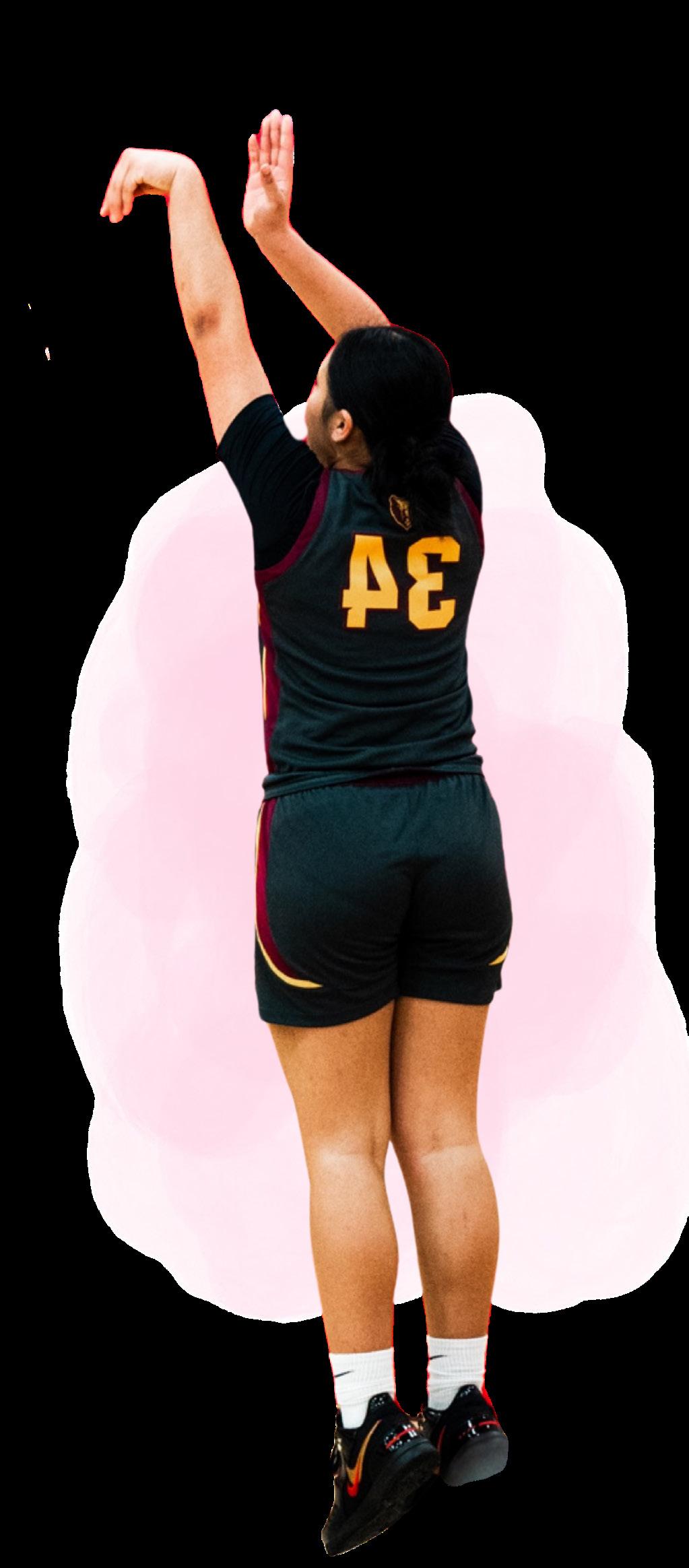
In 2022, Atkins moved from Atlanta, Ga. to Menlo Park, and his passion for basketball didn’t falter. It was intimidating to start fresh in a new city and school, but he felt welcomed. “I was a little nervous at first, but when I got here
Moving across the county was difficult for Atkins. It was intimidating to start fresh in a new city and school, but he learned to love the community.
To start his freshman year, he attended East Palo Alto Academy (EPAA), but in October, he transferred to M-A. “I wanted a different experience. EPAA was a smaller
“It’s been a great four years. I’ve met a lot of people, and grown a lot as a person playing basketball,” he said. During his time at M-A, Atkins said he wouldn’t change a thing. “It feels
After high school, Atkins intends to continue his basketball journey. “I plan on going to a junior college to play basketball and transfer out for a four-year [college],” he said. Atkins’ advice to any high schooler is to live in the moment. “Cherish your time as long as you can because you only get to go through the high school experience one time in your

Collecting is a hobby that requires dedication, but the rewards go beyond the objects themselves. Collections often hold memories and nostalgia, giving them special meaning. Take a peek into what students choose to collect, and the memories associated with their collections.

Sophomore Diego Ortiz’s LEGO car collection features over 100 cars, ranging from Technic to Speed Champion sets. “My favorite car is the Ferrari Daytona SP3. I got that one for Christmas last year, and I just like how big and detailed it is,” Ortiz said.
This wasn’t the first car Ortiz received as a Christmas gift. “I started collecting LEGOs when I was about five years old, when I got my first LEGO set, which was a LEGO garbage truck, for Christmas,” he said. “And ever since I built that LEGO, I thought it was really fun to put all the pieces together and be appreciative of the end results.”
Senior Gustav Singel’s collection began with CDs passed down from his dad, fueling his interest in music. However, the impact of his collection goes beyond just music. “Whenever I play a CD, it brings me back to the person I was at the time. It’s a way to reflect on who I’ve become,” he said.
Some of his CDs hold particularly special meaning. “One of my close friends made a custom CD for me. He put a bunch of songs on it that we both like, which was really meaningful,” Sin gel said.



“Making paper cranes is a Japanese tradition, and my mother was going to make 2,000 paper cranes—one for each hour she needed to get her therapy license—and then she stopped doing that,” senior Sumiko Robinson said. “I saw a bunch of cranes, and I was like, ‘Oh, I have time. I’ll make some cranes while I’m watching movies.’”

Robinson’s crane collection eventually grew into something much bigger. Robinson donated the first thousand cranes to the hospital where her father works, as a symbol of healing. “Hopefully people at the hospital would see that and be a little more hopeful,” she said.
Senior Kayla Greenbaum started collecting card decks during one of her first travel volleyball tournaments. “I wanted a card deck to keep in my backpack, because I play cards with my dad often,” she said. “Now, every tournament and place I go to, I get a new card deck.”
Greenbaum’s favorite part of her collection was a gift from her family. “When my sibling and my dad went on a cross-country road trip, they got a really old vintage card deck that’s made out of cardboard and real paper,” she said.
by Colin Lee designed and illustrated by Ellie Rosen

When senior Zachary Quintana told his dad he was going to collect cans for money, his dad didn’t believe him. “He’s like, ‘Zach, you’re not going to find anything. You’re not going to make money,’” Quintana said. “He takes the cans to the recycling center, and the clerk gives me the receipt. My dad sees $15, and he starts going crazy.”
Quintana’s main motivation for his collection is earning cash. “Every can I collect is five cents, and it’s not a lot really, but if you just pick up a can and keep it, dig through your trash, or dig through someone else’s trash, that’s five cents you wouldn’t have had before. If you collect this stuff over time, you actually make a lot of money,” he said.








336 Hours
O U R B E A R S




Senior Daniel Mat
loub has long been interested in reducing his screen time. “I want to make it so that social media is not a habit,” he said.

“Leading into this, I didn’t think I could function without social media. That sounds a little sad, but it felt like something that was almost a necessity,” he said.
In the week leading up to the cleanse,
Matloub spent a daily average of four hours and 42 minutes on his phone. “I often go to social media to relax or feel more connected, which definitely works. However, I do
“I feel a lot better than I thought I was going to be. I’ve had all my social media since sixth grade, but I’ve honestly felt a lot calmer and less anxious than I thought I would,” senior Penelope Chapman said.

Despite the benefits of increased gen uine communication, the fear of miss ing out has remained Matloub’s greatest challenge. “I really miss being able to see what is going on in specific people’s lives, but I don’t miss the time drain that it is,” he explained.
After reintroducing social media, Mat loub noted that his focus and productivi ty have remained steady and that he feels less stressed overall.
Matloub’s advice for students interest ed in participating in a similar cleanse: “Have other people hold you account able. I think this challenge has really helped with that, where it’s a matter of I have to report my social media every day, and so other people get to see my social media [usage].”

tionally. “My screen time is definitely higher than when I was on the detox but less so than be fore it,” she said. “My Instagram and Snap chat time specifically are around 15 minutes each per day, which is a huge step for me.”
Chapman’s advice for students interest ed in participating in a similar cleanse: “Don’t pressure yourself into be ing productive all the time or trying to change your entire routine. I think the harm around tradi tional offline cleanses comes from a pressure to be hyper-productive, which is why we avoid it, but it doesn’t have to be the case.”






In the week leading up to the detox, junior Atessa Gholamy averaged 10 hours and 31 minutes of phone screen time per day, with approximately 59% of that time spent on TikTok, Snapchat, and Gholamy joined the cleanse to see how it would affect her daily life and help her become more focused. Similar to Matloub, Gholamy was most concerned about losing connection with her friends—including sending messages, sharing videos, and being up to date on “cultural referenc-

Gholamy explained that the first day was difficult, spending a total of six hours and 17 minutes on her phone. “There were
alize I have other work I have to do, so it’s more beneficial,” he ex plained.
Following the challenge and reinstalling some of his social media platforms, Guzman primar ily used them to communicate and share up dates rather than to consume end less content. “After ending the detox, I’ve used social media only to text or post about my life, but I haven’t watched videos or doom scrolled like I have be fore,” he said.
“The biggest bene fit I see from taking a break from social media has to be hav ing more time on my hands. It really showed me what I could be doing instead of being on social media,” Guzman added.
times where I’d go to where the apps were before I deleted them to open them as muscle memory and it sucked not being able to open the app,” she said.
With social media absent, Gholamy redirected her time toward homework, Netflix shows, mobile games, cooking, and baking. “I think I miss just being able to mindlessly scroll sometimes, but, at the same time, not being able to scroll has forced me to do a lot more of the things I need to do,” she said.
Following the two-week cleanse, Gholamy kept her social media apps deleted until the end of finals, extending the detox by three days. Once they were redownloaded, she noted her attention had shifted. “I’ve enjoyed being able to see what my friends are up to, especially ones I don’t see often or on a daily basis, but random people on my for you page don’t really grab my interest right now,” Gholamy said.



At first, we expected this experiment to be challenging for all participants, regardless of their initial social media use or amount of free time. Given how much these dopamine-driven apps are ingrained in teens’ daily lives, we predicted that completely abandon ing all apps would be no easy feat. All four students involved come from various backgrounds, take different classes, and balance numerous extracur riculars and out-of-school commitments. Still, each completed the two-week chal lenge successfully.
Participants reported simi lar experiences in the first few days, including minor withdraw al symptoms such as relentless and habitual phone-checking, as well as a lingering concern about losing touch with friends. By the end of the week, students shared that they now maintained more meaningful relationships with their friends and family, positive shifts in their habits and mind set, and a newfound apprecia tion for the time they had lost to scrolling.

As federal immigration enforcement has intensified, local police departments’ usage of surveillance technology has been increasingly scrutinized. Flock Safety’s Automated License Plate Readers (ALPRs), used by both the East Palo Alto (EPA) and Atherton Police Departments, have emerged as a main target.
Flock was created in 2017 and has quickly come to dominate the ALPR market. ALPRs use optical recognition technology to analyze video from cameras in public areas and compare footage to license plate numbers of vehicles associated with a crime or suspect. Police and investigators are then notified when vehicles of interest are spotted. Atherton currently has 53 cameras and EPA has 25.
The cameras have sparked controversy nationwide, as cases of the technology allegedly being used for stalking, harassment, and immigration enforcement have gained national attention. Given Immigration and Customs Enforcement (ICE) activity in EPA in the past seven months, many have questioned whether these cameras could be misused for immigration enforcement purposes locally.
Flock explicitly states on their website that ICE does not have direct access to the data. However, 404 Media reported that, as of May 2025, upward of 4,000 searches


had been conducted at the request of the federal government nationally, with the purpose of “immigration.”
“People deserve to live in a safe and secure community, and we need to empower our police officers with the modern technology that enables them to do that.”
- EPA City Council member Mark Dinan
Furthermore, the city of Mountain View announced that federal agencies— unrelated to immigration enforcement— accessed the city’s Flock databases in 2024. According to Mountain View, this incident occurred because Flock enabled a “nationwide” search setting without the city’s consent or knowledge.
Since this incident, Flock’s “systems have been improved and that they no longer enable any access sharing outside of the State of California,” according to a
statement released by the city of Mountain View.
“Our community has a very large immigrant community, and that is a concern,” EPA City Council Member Ruben Abrica told the M-A Chronicle. “And I would guess, if you go ask immigrant communities, ‘What do you think about this, and the possibility that they might get the information on you?’ I think people say, ‘No, I don’t want it to, I hope they don’t.’”
Flock is one of the most widely used license plate reading systems across the U.S., with cameras being deployed in over 5,000 communities. Unlike its major competitors, however, Flock has refused independent security review. An independent security review is a third-party assessment of an organization’s security measures that tests the validity of the claims made.
The EPA Police Department has implemented safeguards to prevent federal agencies from accessing the data. After 30 days, the data is discarded. Also, according to Chief of Police Jeff Liu, the data is continuously audited to ensure it is not being accessed by unauthorized departments. If the data is accessed by anyone unauthorized, the city’s contract with Flock can be broken.
In December 2025, the EPA City Coun


“There’s a lot of fears floating throughout the United States right now, and it’s really sad to see. And I can’t say that those fears are not real, there have been plenty of times over the last year that’s like, ‘Oh no, that’ll never happen.’ And then it happens.”
- EPA Chief of Police Jeff Liu
cil voted 3-2 to extend their contract with Flock for another five years in a $453,250 deal.
“Right now, we’ve had lots of good re sults and safety and security,” EPA City Council member Mark Dinan, who vot ed to continue the city’s partnership with Flock, said. “People deserve to live in a safe and secure community, and we need to empower our police officers with the modern technology that enables them to do that.”
Abrica, who voted against the mea sure, disagreed. “This federal govern ment is using every tool at their disposal, including technology, to go after not only immigrants,” he said.
The EPA Police Department publishes monthly reports of Flock’s successes, and has reported the technology to be very ef fective in both catching perpetrators and deterring crime. In the past year, Flock ALPRs have been used 84 times to assist with investigations.

However, some have argued that the benefits of this technology have been overstated. “Anytime you make claims like cause and effect, you have to be very careful to ascribe the cause, that ‘If we hadn’t had the cameras, we wouldn’t have been able to solve this.’ Logically, that’s not a good argument,” Abrica ex plained.
Others questioned the legitimacy of fears over this technology being used for immigration enforcement altogether.
gration enforcement,” Dinan said. “If you look at what’s going on in Minnesota or what’s happened in Chicago, they’re not messing around with tracking individual people. The idea that they would have to use Flock cameras to come in and harass immigrants is nonsense.”
However, ICE has conducted targeted operations in EPA in the past seven months.
“[Community members] just don’t trust our federal government, and they don’t trust that Flock won’t be subject to a data breach at some point, where some-
Liu said. “There’s a lot of fears floating throughout the United States right now, and it’s really sad to see. And I can’t say that those fears are not real, there have been plenty of times over the last year that’s like, ‘Oh no, that’ll never happen.’ And then it happens.”
“To me, it’s like, why give them another tool? Why? Somebody’s already beating you over the head. And so why say, ‘Here’s another hammer?’” Abrica said.
by Becca Koenig designed and illustrated by Louisa King

Unless you’ve been living under a rock, you’ve heard of Marty Supreme. A remarkably solid movie, Marty Supreme is well acted, beautifully curated, thematically thorough, and endlessly entertaining. Marty Supreme follows Marty Mauser (Timothée Chalamet), a world-renowned ping pong player and small-time hustler in ’50s New York City. With no money to support his ping pong playing dreams, and no mercy from anyone in his life, Mauser endlessly searches for enough money to gain the success and fame he feels he deserves.
Mauser burns every bridge in his life at least once, but there is always a certain charisma surrounding Chalamet’s character. The film has multiple laugh-out-loud moments, including maybe the funniest scene of the year, and a couple of gags straight out of left field. From the moment you recline your chair, Marty Supreme doesn’t give you a dull moment. The film’s media presence has presented the new blueprint for movie marketing. Complete with orange tracksuits, a “leaked” A24 Zoom call, an EsDeeKid remix, and a trip to the Sphere, Marty Supreme has been unavoidable for anyone on the internet. With the success of Marty Supreme, Chalamet is cemented as a generational actor. Slight warning, though: you might need a Xanax to keep your head straight.

WICKED: FOR GOOD 6/10 MARTY SUPREME 8/10

Good magic movies are rare these days, and the Now You See Me movies have usually filled that gap with flashy tricks and big personalities. Now You See Me: Now You Don’t only gets half of that right. The movie has all the ingredients for a spectacular third installment, delivering on magic, spectacle, and a shocking plot twist. The execution, however, proves to be its downfall.
The plot follows the Horsemen, a group of illusionist thieves, as they’re pulled back into action after three young magicians stage a fake Horsemen performance. Their act spirals when they get home and find J. Daniel Atlas (Jesse Eisenberg), the leader of the Horsemen, in their house. He has a summoning card from elite magician group the Eye, forcing them to reunite for another heist. Dialogue often feels choppy or patronizing, as if viewers are expected to be satisfied with simple cleverness just because the tricks look cool.
The film’s obsession with deception taps into more than just the magic. When every moment is created to impress instead of connect, you leave the theater feeling entertained, but not moved. Now You See Me 3 dazzles when it needs to and entertains when it can, but it can’t escape the trap of its own illusions.



After a very long year of waiting and an overly emotional press tour, Wicked: For Good ultimately falls short. It doesn’t defy expectations (or gravity) in the way that the first part did. After an excellent performance in part one, the energy and emotion of part two felt surprisingly underwhelming. The singing and acting remain strong, but For Good lacks the emotional nuance that made the first installment so compelling.
In the land of Oz, Elphaba Thropp (Cynthia Erivo) fights against adversity and forms an unlikely friendship with Glinda Upland (Ariana Grande). The second part begins with Elphaba, now a revolutionary, swooping in to save animals from being overworked during the construction of the Yellow Brick Road. Elphaba and Glinda truly work in tandem, filling their scenes with believable emotion, humorous banter, heartfelt friendship, and yes, a few slaps.
For Good highlights how those in power can twist narratives and manipulate public opinion, a reflection of the messy, real-life struggle for truth and authority. It’s a pattern that feels uncomfortably familiar for those who keep up with the news. While the film delivers emotional highs, standout solos, and relevant themes, it reminds us that without fully developed, energetic characters, even magic can feel fleeting.















Bob Weir, M-A alum and founding member, guitarist, and vocalist of the Grateful Dead, passed away on Jan. 10. The global community of Deadheads—the extraordinarily passionate fans of the Grateful Dead—mourned Weir’s passing and honored his legacy of inventive yet familiar music.
Emerging in 1965, the Grateful Dead pioneered new sounds, blending rock, folk music, and psychedelia. Their improvisational style and uniquely varied setlists, with each of their concerts featuring different songs in a different order, planted them at the forefront of the jam band movement. The band was known for fostering a close community among fans, feeding off the passion of their eccentric, counterculture cult following as they continuously toured the U.S. for over 60 years.
Thousands of Deadheads gathered to memorialize Weir outside of San Francisco City Hall on Jan. 17, decorat ing altars with red roses, a symbol of the band.
At M-A, students and teachers paid tribute to the musi cal icon by listening to Grateful Dead songs, wear ing band merchandise, playing hacky sack (a game popularized by Dead-



heads while waiting outside concert venues), and even performing the Grateful Dead’s music themselves.
At a regular rehearsal night with his band, science teacher Lance Powell and his friends paid homage to the Grateful Dead. “We played Grateful Dead songs all night long as a tribute. And it’s so fun. It just keeps on giving. And the way the music is set up, we can play it differently every time, and it’s very jam-oriented,” Powell said.
In addition to their groundbreaking musical sound, the local roots of the Grateful Dead and Weir himself bring pride to M-A Deadheads. Weir and co-founder Jerry Garcia met for the first time at the now-closed Dana Morgan’s Music Shop in Palo Alto. The band had their breakout performance at Magoo’s Pizza Parlor, now Bar Loretta, on Santa Cruz Avenue in downtown Menlo Park.


duced so many music legends,” senior Zoe Yob said. “Not only some members of Fleetwood Mac, but just that the Grateful Dead is from Menlo Park. I feel like it gives so much pride to our community. It’s great.”

“I do think it adds a little bit of nostalgia. That’s pretty cool that he went here, and he was on this campus as a kid,” math teacher Steven Kryger said. The Bay Area connections expanded beyond Menlo Park to San Francisco, where the Haight-Ashbury neighborhood became the communal home for the band and a site of pilgrimage for Deadheads. This free-spiritedness defined a local culture that attracted many M-A teachers to the Bay Area.
Weir grew up in Atherton with his adoptive parents, frequently moving schools. He moved to M-A for his junior year in the fall of 1965. “I think he was absent on picture day,” Powell said. “And I don’t know that he was the strongest student.”
Though Weir did not seem particularly invested in school, his presence inspires current M-A Deadheads. “I think it’s so cool that M-A has pro-
“I think it says a lot about what San Francisco is and can be, and has given birth to. It reminds me of the old San Francisco before it became Silicon Valley techie. It reminds me of its origins,” English teacher Maria Angelone said.
Raw, live music was what drew most young people to the band. Kryger attended his first Grateful Dead concert after college. “I just got hooked on the vibe of the live jam band show, and Dead was just a whole other experience,” he said. He cites the improvisational aspect of the band’s music as the source of his dedicated passion. “They communicate on stage,
and they go in a certain direction, and they just allow it. It’s how they’re feeling on that given night, how they want to express themselves.”
“I love the experience of being in a Dead show and letting the music just move through me,” Angelone said.
Like properly obsessed Deadheads, multiple M-A teachers, including Angelone, Kryger, and Powell, have attended dozens of, if not over a hundred, Grateful Dead concerts each. “When I was really in my heyday of attending shows, they would do two, three, four nights. I would go to every show. People are like, ‘Why would you go?’ It’s a completely different show. It’s a completely different set of songs,” Kryger said.
This novelty and mystique captured the imagination of Powell when he was a high school sophomore in Minnesota. His dedication to the band later inspired him to drive 12 hours to concerts between college classes and then follow the band around the country after graduation.
“That’s where I got the bug for travel,” Powell said. “And there’s a whole world outside of the Midwest that I need to explore. I built my confidence doing that too, because I’d go to shows by myself, and I’d hitchhike, and I’d meet all these interesting people. And then the fun part would be I’d meet him this year, and then we say goodbye, and then a couple years later, we’re at a show. It’s like, ‘Wait a second, I know you people.’ The music just keeps bringing people back together again.”
Weir was instrumental in creating the rich sound of the band. “Bob Weir
was always solid, and he could sing. The way he came in with rhythm guitar—I think a lot of people really respect that, because with Grateful Dead, there’s all these things happening, and the music’s all interweaving,” Powell added. “Bob Weir was the rhythm, just a really distinct rhythm sound that totally worked for that setting.”
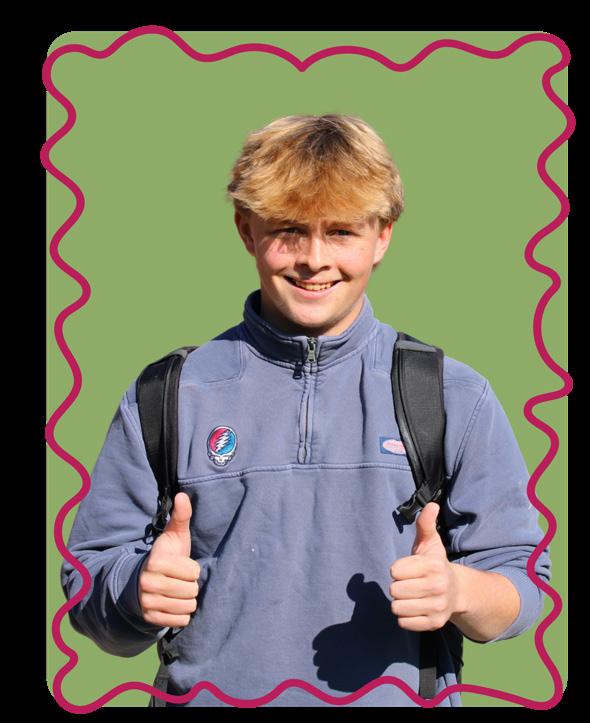
Greatly inspired by the Grateful Dead, Powell is in multiple bands, and he appreciates Weir’s drive. “He knew he wasn’t the best musician, I remember seeing in an interview,” Powell said. “It didn’t matter. He’s like, ‘I gotta have the music. I gotta do it.’ Find somebody else that’s played that many shows ever in the history of Earth.”
Within a band carrying so much unique legacy, Weir proved to be the glue that held the music together and appealed to earlier generations. Now, young people are continuing the legacy, too.
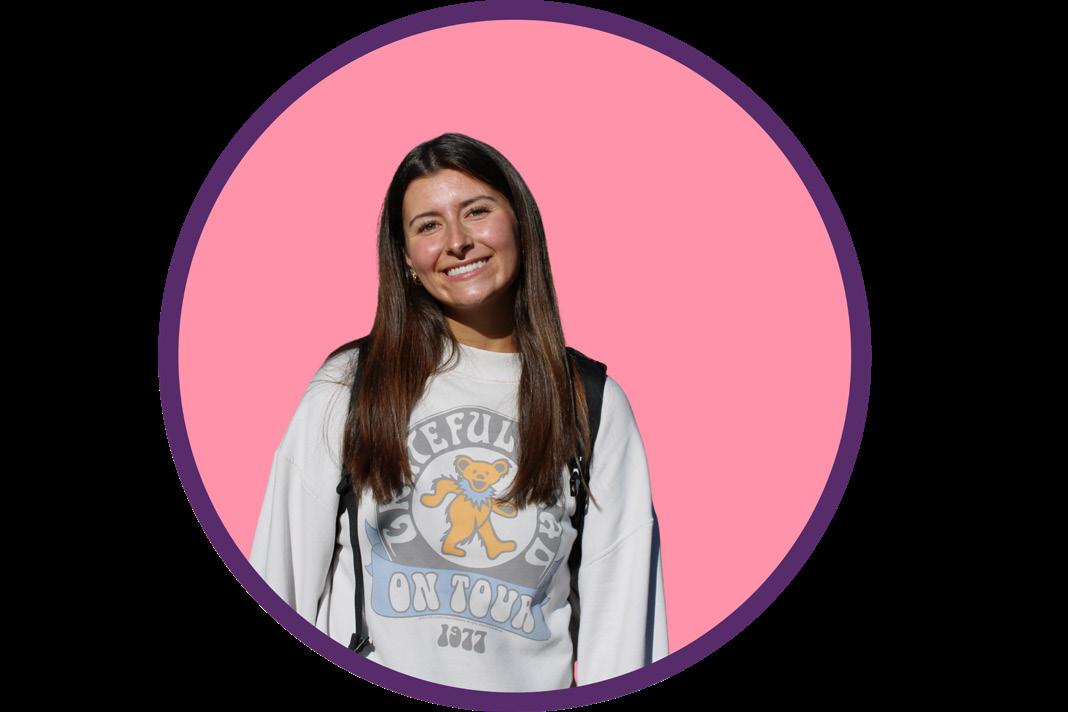

Introduced to the Grateful Dead by his dad, junior Sam Huddleston has been to
his fair share of concerts. “I’ve seen them at the Sphere like six times, me and [junior] Cole [Genauer]. I’ve seen them in Mexico three times, Hollywood, Shoreline, Chase Center, Giants Stadium,” Huddleston said.


Huddleston and his friends also play hacky sack every lunch, inspired by prior Deadheads to recreate the feeling of community found in the game. “[The Grateful Dead] is just a symbol in my life for happiness, so I can always turn it on and it brings joy,” he said.
Yob also reminisced on her childhood full of fandom, lovingly passed down by her dad, who attended M-A when the Grateful Dead was very popular. One of Yob’s favorite songs is “I Will Take You Home.” “It was made by Brent Mydland, and it was for his little daughter,” Yob said. “[My dad] still always plays the song whenever we’re together. It’s about a dad and how he’ll never leave his daughter.”
Weir often spoke of a 300-year legacy of the Grateful Dead’s music, hoping to impact audiences beyond the lives of the original band members.
Powell attended Weir’s last shows in Golden Gate Park, which drew tens of thousands of Deadheads across generations. “The spirit of the Grateful Dead is alive and well all over the place, and even though Bob Weir just died, the music continues on, and that’s kind of the exciting part,” he said.
by Eliza Crowe designed by Eliza Crowe illustrated by Grant Maletis
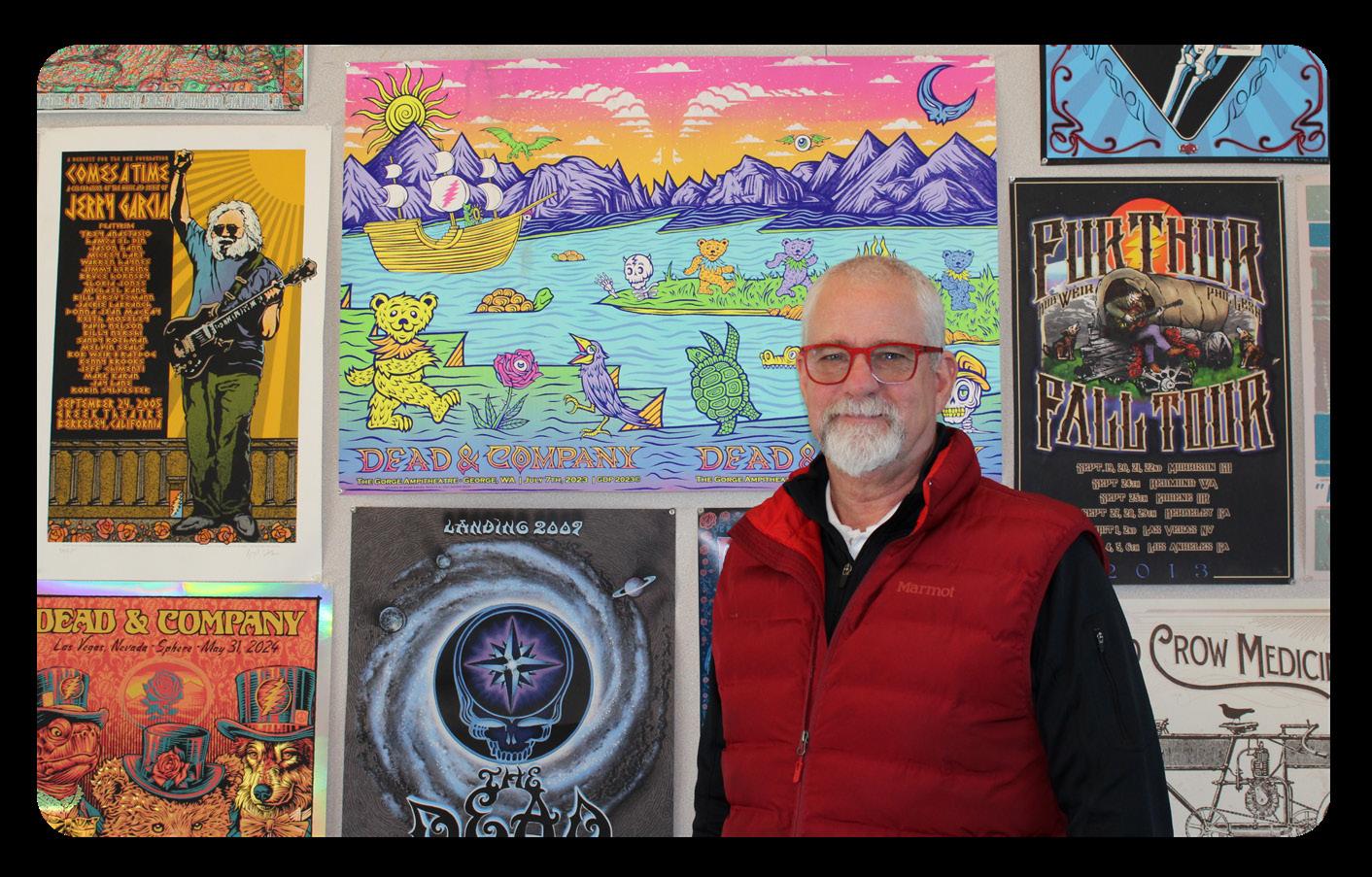
Math teacher Steven Kryger poses with his Grateful Dead




Balsamic Bowl at Eats Meets West Bowls ($19)


Whether you’re vegan, vegetarian, or just prefer eating a plant-based diet, finding nourishing and delicious meals when out to eat can seem impossible. While most restaurants offer your everyday salad, plain pasta, fries, or, if you dare, a questionable veggie burger, these options often don’t satisfy your hunger or check all the boxes for a balanced meal. These four meat-free dishes are the crème de la crème of entertaining your taste buds.
Balsamic Bowl
Eats Meets West Bowls offers a convenient and satisfying grab-and-go lunch in downtown Redwood City. Their bowls include a base of fresh ingredients, customizable for any dietary preferences, and, while delicious alone, are truly amazing with the dressings. Each bowl comes with a harmonizing set of sauces with Indian and Panamanian fused flavors that hit any flavor craving. The blissful balsamic bowl with a balsamic vinaigrette, cilantro-garlic, and yogurt dressings on top of brown rice, greens, chickpeas, and veggies is the one to get for a refreshing pick-me-up type of meal.
Dumplings
Located in the Stanford Shopping Center, True Food Kitchen promises nutrition that tastes good through whole, real foods, seed oil-free cooking, and healthy drink choices. The kitchen delivers this with the edamame dumplings, made with white truffle oil, dashi, Thai basil, and sesame seeds. The dumplings are addictive. The flavors are bright and citrusy, and the broth’s saltiness nicely contrasts with the basil. It works as a light and satisfying bite or a great starter to share at the table.

Dal Makhani at Tilak Indian Cuisine ($17.95)
Dal Makhani
Downtown Menlo Park’s Tilak Indian Cuisine has a wide selection of authentic and flavorful vegetarian meals. It’s the perfect restaurant for group dinners, as dietary preferences won’t get in the way of eating a full meal. The Daal Makhani, a comforting and hearty dish with buttery whole black lentils and kidney beans cooked to creamy perfection, is the standout of the establishment’s vegetarian offerings.
Caprese Sandwich
Tucked away in the back of the store, the deli section at Delucchi’s Market serves hidden-gem sandwiches. The caprese sandwich is a simple vegetarian bite that delivers exactly what it needs to. Grilled on a Semifreddi’s baguette and packed with tomato, fresh mozzarella, basil, and balanced olive oil and balsamic vinegar, it’s perfect to pick up for an easy lunch, with leftovers for the next day.





[I think they’re] useful, but I don’t see people carrying them a lot at school.”
Freshman Tomoka Hatanaka shared a similar perspective. “I think [they are] more useful,” she said.
Employees at Trader Joe’s say the bags’ simplicity and limited availability play a major role in their popularity. “I think it’s because they’re very minimal and simple. I think people just tend to like things that are minimal, and they’re very aesthetic,” senior and Trader Joe’s employee Rana Keskin said.
Keskin also explained why customers are willing to go to such great length to get them. “They’re very aesthetic, and they’re very popular, so people are willing to go out of their way and pay even more,” she said. Keskin sees the store’s pastel and Halloween tote bags as both practical and stylish pieces. “They’re very cute, but you can also put stuff in it. So it’s very practical,” Keskin said, adding that she uses one regularly.
Walking out of Trader Joe’s, it is almost a given that shoppers will be carrying the store’s reusable tote bag. These bags have become just as recognizable as the store itself. What started as an item that dangled above checkout lines has grown into an accessory commonly seen in classrooms, hallways, and on social media. While Trader Joe’s tote bags are known for being affordable and functional, their popularity is also tied to their aesthetic. The store frequently releases new styles, many of which are seasonal or limited edition. The most popular—the miniature pastel totes, Halloween-themed bags, and their mystery packages—attracted attention because they were only available for a short time. Initially intended to just carry groceries, these bags have become an indispensible accessory, toted by teachers, parents, teenagers, and everyone in between.
Limited availability has also created a massive resale market for the bags. “Once you make something scarce, it becomes more desirable,” Trader Joe’s employee Misty S. said. While she understands why people resell the bags, she expressed some surprise at the prices. “I’m surprised that people will rebuy them at such a high markup,” she said. “But they are really cute.” Some bags, especially mini or seasonal designs, are listed online for far more than their original price.
Trader Joe’s tote bags have gained traction online, especially on platforms like TikTok. “It started as a TikTok trend, I believe,” Misty said. “And from there, since they’re limited in production, they keep getting sought after.”
Misty owns only one. “I liked the Frankenstein Halloween one. It’s the only one that I actually have at my house,” she said.
The combination of social media exposure and limited availability has helped push the bags beyond their original purpose. Videos highlighting new designs or showing hordes of customers purchasing bags circulate quickly, making the totes even more desirable. These posts gain millions of views, drawing more attention to the products.
Beyond the United States, social media posts of people using the bags turned the totes into symbols of American pop culture, becoming popular in countries like Japan, Korea, and England.
Among M-A students, Trader Joe’s tote bags are generally viewed as practical items rather than fashion statements. “They’re easy to carry because they’re small, but hold a lot of space,” sophomore Logan Weiss said.
He also pointed out the balance between the quality and price. “They’re inexpensive, so for such a high-quality product, they’re just overall really good,” Weiss said. “Personally,
Because of the demand, the grocery store limits how many bags customers can buy. “[We limit purchases] so everybody, especially the people in line, actually get a chance to get them,” Misty said.
by Lucia Liu



















































by Alisha Parikh-Briggs












Feb. 7
At Hillsdale Shopping Center in San Mateo, protestors gathered to honor the 41 individuals who died while in ICE custody. Demonstrators urged Americans to mobilize in defense of democracy. The crowd honored those who passed, local musicians performed, and Indivisible San Mateo founder Mary Bevins spoke out against ICE.


Hundreds of students from M-A and neighboring schools peacefully took to the streets on Jan. 30 as part of a nationwide walkout against Immigration and Customs Enforcement (ICE) and President Donald Trump.
The nationwide movement first gained traction earlier that week on social media following the killings of two protesters in Minneapolis.
The walkout, which began at 10:25 a.m., took place along Middlefield Road and concluded four miles north at the San Mateo County Courthouse in downtown Redwood City. Students left school peacefully, without any intervention from teachers or administrators.
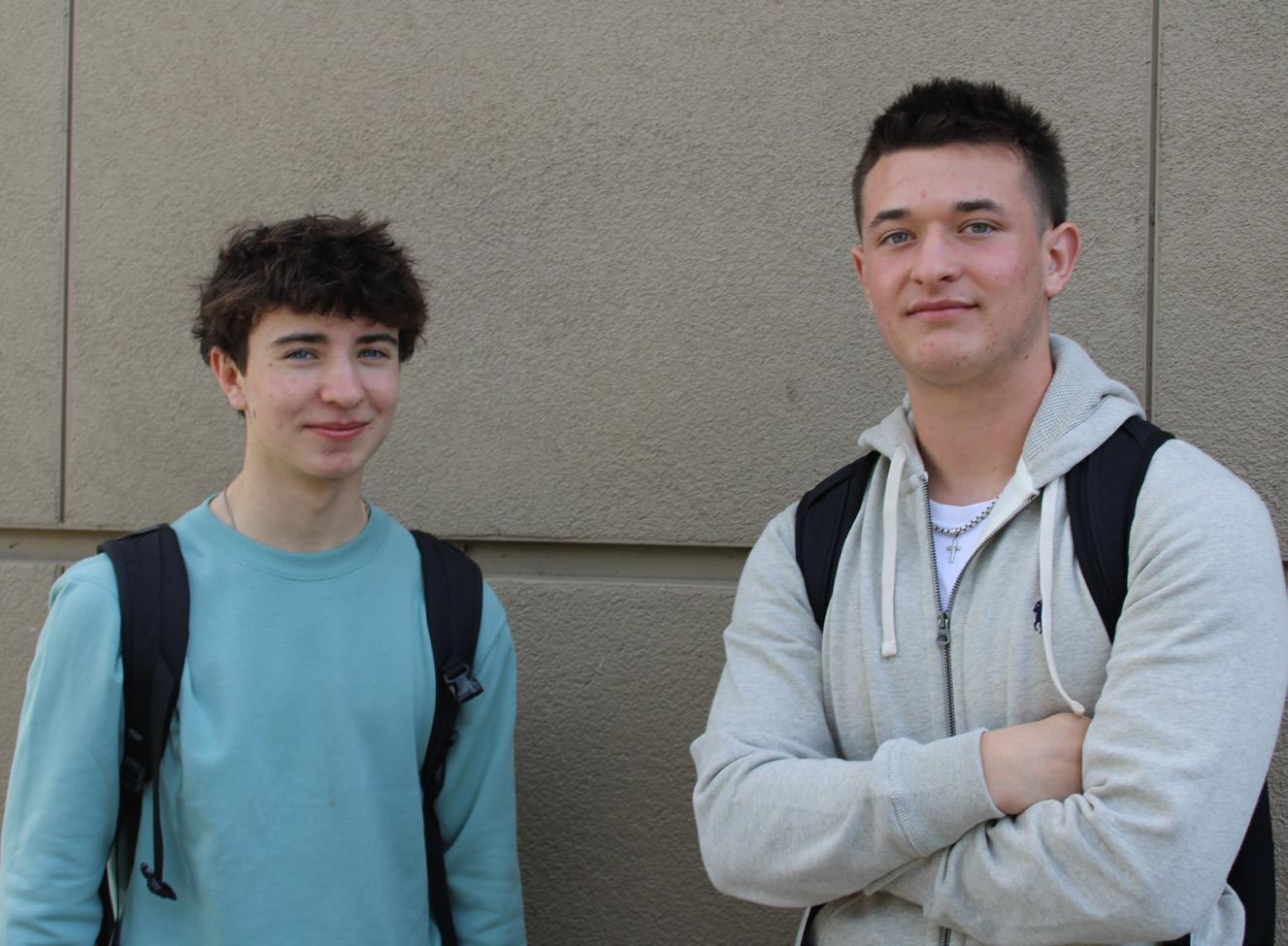
Many students explained that their decision to walk out was personal, as they had previously encountered ICE. “ICE came over near my house and they tried to take a couple of my neighbors away. We were there, and we were telling them to stop and that it’s not okay and [ICE] threatened to take us all with them,” freshman Lexi Arroyo said.
“I had ICE drive by elementary schools near my sisters’ schools, and I just saw them getting out of the cars and stuff, trying to talk to teachers,” freshman Melanie Cortez said.
Other students were concerned about how ICE’s presence in the Bay Area could impact immigrant family members. “Just the thought of [my parents] getting hated on, or them being in fear outside, or getting killed and I might not know of it, is very upsetting,” senior JJ Balderas said.
As students approached the intersection of Glenwood Avenue. and Middlefield Road, they were joined by 19 students from Menlo School. Two Menlo students, senior Cindy Cruz and freshman Obasi Winn, had heard about the walkout from friends and joined without pushback from Menlo’s administration.
“We’re kids. We’re out here doing what we think is right. We’re trying to advocate. We’re just trying to use what the system has provided for us, and we’re trying to protest in whatever way we can,” Winn said. “It’s a beautiful day. A beautiful day


to start some good trouble. It’s amazing today.”
“My parents, they were in complete fear, like they were afraid that something would happen to me or that something would happen to them. And I just think that’s not fair. For someone that lives in this country, they call it the ‘land of the free,’ yet we live in fear all the time of getting separated,” Cruz added.
Demonstrators were cheered on by passing drivers and by children and teachers from Encinal Elementary School, located along the walkout route. Multiple deputies from the Atherton Police Department and the San Mateo County Sheriff’s Department repeatedly approached students, reminding them to stay on the side of the road. Upon reaching Redwood City, students were greeted by many workers and business owners who stepped out of shops to cheer them on.
As the students arrived at the county courthouse, they joined demonstrators who had walked out of Woodside High School, Redwood High School, and Ken-

nedy Middle School. Together, students participated in many chants; some peaceful—“La gente unida jamas sera vencido (united people will never be defeated),” “No hate, no fear, immigrants are welcome here”—and others more explicit—“F*ck ICE” and “Que viva la p*ta raza (long live the f*cking race).”
“Some people might think, ‘It’s such a horrible thing that people have to protest to get their rights,’ and yes that’s really bad, but when you’re at a protest, I think you should show more joy so that you can show the government and all that they’re not breaking your spirit,” Kennedy seventh grader Elena Cantu Gonzalez said.
Celebrations, chants, and dancing continued outside the courthouse until demonstrators began dispersing around 12:15 p.m. to return to their respective schools.
Prior to the walkout, Principal Karl Losekoot sent a message to families via StudentSquare, emphasizing safety and clarifying students’ rights. It reminded students that SUHSD Administrative Regulation 5113 allows students to be excused from school—if called out by a parent—for “engagement in a civic or political event” one day per year.
Other schools received similar messages from their administrations, establishing a neutral stance on the matter and simply expressing a desire for their students to remain safe.
by
Cientos de estudiantes de M-A y de escuelas vecinas salieron pacíficamente a las calles el 30 de enero como parte de una huelga a nivel nacional contra el Servicio de Inmigración y Control de Aduanas (ICE, por sus siglas en inglés) y el presidente Donald Trump. El movimiento nacional ganó fuerza en las redes sociales esa semana, tras la muerte de dos manifestantes en Minneapolis.
La huelga comenzó a las 10:25 a.m. y se realizó a lo largo de Middlefield Road. Concluyó cuatro millas al norte en el Juzgado del Condado de San Mateo, ubicado en el centro de Redwood City. Los estudiantes salieron de la escuela de manera pacífica, sin intervención de maestros ni administradores.
Muchos estudiantes explicaron que su decisión de participar en la huelga fue personal, ya que ellos mismos habían tenido encuentros con ICE. “ICE llegó cerca de mi casa e intentaron llevarse a unos de mis vecinos. Estábamos ahí y les decíamos que pararan, que no estaba bien, y [ICE] nos amenazaron con llevarnos con ellos”, dijo Lexi Arroyo, estudiante de noveno grado.
Otros estudiantes expresaron preocupación por cómo la presencia de ICE en el Área de la Bahía podría afectar a sus familiares que son inmigrantes. “Solo pensar en que [mis padres] sean odiados, o que tengan miedo afuera, o que los maten y yo ni siquiera me enterara, es muy preocupante”, dijo JJ Balderas, estudiante de duodécimo grado.
Cuando los estudiantes se acercaron a la intersección de Glenwood Ave. y Middlefield Road, se les unieron 19 estudiantes de Menlo School.
“Somos niños. Estamos aquí haciendo lo que creemos que es correcto. Estamos tratando de alzar la voz. Solo estamos usando lo que el sistema nos ha dado y protestando de la manera que podemos”, dijo Obasi Winn, estudiante de Menlo School.
“Mis padres estaban completamente aterrados, tenían miedo de que algo me pasara o de que algo les pasara a ellos. Y simplemente creo que eso no es justo. Para alguien que vive en este país, al que lo llaman la ‘tierra de la libertad’, aún así vivimos todo el tiempo con el miedo de ser separados”, añadió Cindy Cruz, otra estudiante de Menlo School.
Los manifestantes recibieron muestras de apoyo de conductores que pasaban por el lugar y de niños y maestros de Encinal Elementary School. Varios agentes del Departamento de Policía de Atherton y de la Oficina del Sheriff del Condado de San Mateo se acercaron repetidamente

a los estudiantes para recordarles que permanecieran al lado de la calle. Cuando llegarona Redwood City, los estudiantes fueron recibidos por trabajadores y dueños de negocios que salieron de sus tiendas para animarlos.
Cuando los estudiantes llegaron al juzgado del condado, se unieron con manifestantes que habían salido de Woodside High School, Redwood High School y Kennedy Middle School. Juntos, los estudiantes participaron en numerosos cánticos; algunos pacíficos—“La gente unida jamás será vencida”, “No hate, no fear, immigrants are welcome here (sin odio, sin miedo, los inmigrantes son bienvenidos aquí)”—y otros más explícitos—“F*ck ICE (a la m*erda con ICE)” y “Que viva la p*ta raza”.
“Algunas personas pueden pensar, ‘Es algo horrible que la gente tenga que protestar para obtener sus derechos’, y sí, es muy malo, pero cuando estás en una protesta, creo que deberías mostrar más alegría para demostrarle al gobierno y to-
dos que no están rompiendo tu espíritu”, dijo Elena Cantu Gonzalez, estudiante de séptimo grado de Kennedy.
Las celebraciones, los cánticos y los bailes continuaron frente al juzgado hasta que los manifestantes comenzaron a dispersarse alrededor de las 12:15 p.m. para regresar a sus respectivas escuelas.
Antes de la huelga, el director Karl Losekoot envió un mensaje a familias a través de StudentSquare, enfatizando la seguridad y aclarando los derechos de los estudiantes. El mensaje recordaba a los estudiantes que el Reglamento Administrativo 5113 del SUHSD permite que los estudiantes sean excusados de la escuela—si un padre los retira—por “participación en un evento cívico o político” un día al año.
Otras escuelas recibieron mensajes similares de sus administraciones, estableciendo una posición neutral sobre el tema y expresando únicamente el deseo de que sus estudiantes quedan seguros.


-A was a special place for me, it holds some of my best memories, friends, and experiences,” Francisco Sanchez ’20 said. Sanchez is currently enrolled in a master’s program at UC Santa Cruz, designed to strengthen his medical school application. Sanchez plans to pursue a career as a radiologist.
During Sanchez’s junior year, he took Psychology with Lisa Otsuka, a class that ignited his passion for medicine by showing him how mental and physical health are intertwined. “I really enjoyed it because we got to dive into different parts of science and medicine, and it really grew my passion for that,” he said.
Following his graduation from M-A, Sanchez attended UC Davis as a Psychology major, hoping to join the pre-med track.
In his junior year at UC Davis, he took a Health Psychology class that became one of his favorites. “It was cool to see how the mind really influences the body,” he said. He believes this knowledge is often overlooked and is crucial for his future in medicine.

Sanchez now attends UCSC, completing a master’s program before he applies
to medical school. He chose to pursue a post-baccalaureate program at UCSC because it offers a unique opportunity to strengthen his medical school application. “I chose UCSC because it’s a fairly new program, so I’d be one of the first to complete it,” he said. “The program provides students with fresh opportunities to work alongside passionate individuals, allowing them to be part of something innovative in the heart of Silicon Valley.”

by Rose Chane


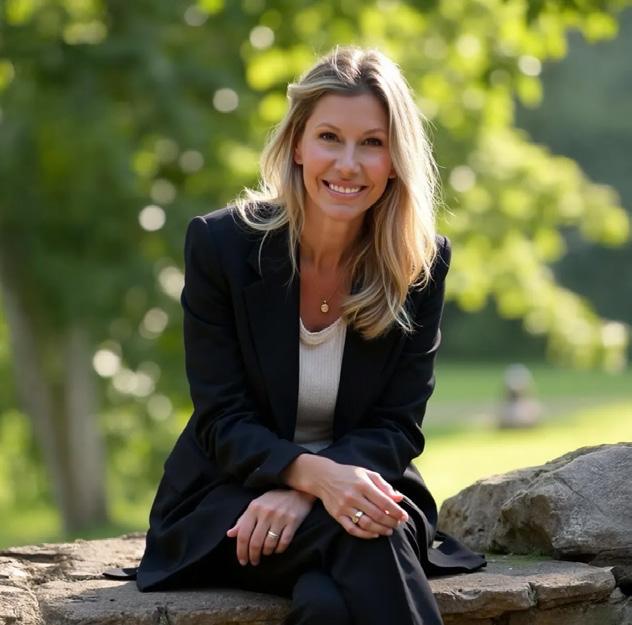

“Ispent over a decade investigating and writing about cybersecurity, and now I’m focused on making concrete changes within it,” Nicole Perlroth said. Perlroth was the longtime lead cybersecurity reporter for The New York Times, where she covered technology, digital espionage, and major cybersecurity attacks worldwide. Now, Perlroth works to change how the cybersecurity industry responds to threats through her writing, podcast, and advocacy.
During her time at M-A, Perlroth appreciated its diverse campus. “I would say it was my last true experience with diversity. I actually credit that to being successful,” she said.
In 2009, Perlroth became a cybersecurity reporter for The New York Times, a role she held for 11 years. Her reporting included investigations into Russian hacking of nuclear power plants, North Korea’s cyberattack on Sony, and the Chinese government’s hack of The Times in the early 2010s. “I covered the most consequential cyber attacks in history,” she said.
Midway through her reporting career, Perlroth decided to write a book to make
Sanchez believes his passion for medi cine stems from his athletic career, where a desire to understand his injuries and how the body works sparked his interest in the field.


With this in mind, Sanchez hopes to become a radiologist. “I want to be the one behind making a diagnosis and understanding why injuries happen,” Sanchez said.
Sanchez’s advice to current M-A students: “Take advantage of the resources M-A has to offer. I believe M-A set me up for success going into college. Ask teachers what they did and don’t be afraid to ask questions.”
by Alisha Parikh-Briggs

cybersecurity more accessible to the pub lic. “My work was so intimidating, the world needed someone to grab them by the hand and walk them through this world in simpler terms,” she said.
In 2021, Perlroth’s book, They Tell Me the World Ends lished, examining the global rise of cyber weapons and the risks of digital security.
After leaving The Times in 2021, Perl roth shifted towards cybersecurity policy and solutions. She served as an advisor to the Cybersecurity and Infrastructure Se curity Agency (CISA), works as a venture partner for Ballistic Ventures, and con tinues cybersecurity education through keynote speaking and teaching.


Perlroth also hosts a podcast, “To Catch a Thief: China’s Rise to Cyber Su premacy.” “I’m really trying to inform the public as much as I can,” she said.
Perlroth’s advice to a current M-A stu dent: “Stick your head up every once in a while and take a look around. Make sure you’re going in the right direction for you and doing what’s right for you, not just what everyone else is doing.”



by Alisha Parikh-Briggs



love talking to people who are curious about what I’m doing and sharing my knowledge with them, because at the end of the day, I think humans love to help each other,” Ben Scott ’05 said. Scott is an artificial intelligence (AI) go-to-market lead at Google, where he helps companies adopt AI, automate outreach, and maximize revenue.
Scott enjoyed taking ceramics at M-A, a skill he still uses today. “I work in front of a computer all day, so when I’m done, I’m burnt out, and I don’t want to look at a screen,” he said.
Following graduation, Scott attended UC Santa Cruz, originally as an undecided major before ultimately choosing economics.

“I’ve always cared about making sure people feel represented regardless of their background,” Semaijah Ix-Siu ’21 said. Today, Ix-Siu works in the diversity, equity, and inclusion (DEI) department for the Seattle Seahawks, where she advocates for underrepresented communities and cultures. With a strong focus on education, she leads internal initiatives that promote inclusivity and awareness through cultural events, community partnerships, and storytelling.
Throughout her time at M-A, Ix-Siu’s passion for athletics never wavered, and she began looking into careers that would keep her involved in the world of sports.
Following graduation, Ix-Siu attended the University of Washington (UW), where she pursued a degree in communications. “There wasn’t an undergraduate major for sports management, but I felt like communications really aligned with my interests and would help me in the future,” she said.
Ix-Siu connected with the Seattle Sea hawks during her sophomore year when UW hosted a women-in-sports network ing event on campus. “The event brought together women from across Seattle’s

Scott attended the University of San Francisco for graduate school, where he participated in a global master’s program. The program focused on globalization in business and how entrepreneurship varies internationally.
After completing the program, Scott worked multiple technology jobs, specializing in sales, data, and launching
Eventually, Scott got the opportunity

sports community—including representatives from the Seahawks, Storm, Reign, Kraken and UW Athletics,” Ix-Siu explained.
It was during this event that Ix-Siu met Melanie Hoshino, the Seahawks’ manager of DEI. Ix-Siu remained in close contact with Hoshino over the next two years and continued learning more about the Seahawks’ DEI efforts. Before she finished her senior year at UW, Hoshino encouraged her to apply for a seasonal DEI coordinator role, which she held from November to March before graduating from UW last spring.
A few months later, Ix-Siu was invited back as a full-season 2025 DEI intern. “It allowed me to further contribute to the team’s inclusion initiatives,” she said. Ix-Siu worked with the team and community to plan and carry out programs that promote inclusivity, awareness, and representation.

Ix-Siu’s advice to current M-A students: “Put yourself out there and make your presence known. It’s hard to get into sports if you don’t know anyone, so try and connect with the athletic director and use your resources.”
to switch to Google, where he helps com panies integrate AI to improve their pro ductivity. “I’ve been here for nine months now, and I work with the most incredible customer base, Lovable, who does vibe coding,” he said.
As Scott has found success in software and AI, his high school experience con tinues to shape his outlook. “One of the strengths [of M-A] is the diversity in the school,” Scott said. “Especially in this day

and age with what’s happening in the country, it’s just so important to empathize and understand other people and understand that, at the end of the day, we’re all in it together. We’re all good people. We have more in common than we don’t, and that’s what M-A taught me.”
Scott’s advice to current M-A students: “I’ve known some amazingly brilliant people that weren’t motivated. On the flip side, I’ve known people that were not the smartest person in the room, but they worked the hardest, and they were the most thoughtful and intentional, and those people are typically the ones that

photos courtesy of Nicole Perlroth, Francisco Sanchez, Ben Scott, and Semaijah Ix-Siu






Women are allowed to compete in all the individual events making up the decathlon: 100m sprint, long jump, shot put, high jump, 400m sprint, 100m hurdles, discus, pole vault, javelin, and 1500m run. However, in the Olympics, women are still restricted to the seven-event heptathlon, which differs from the men’s decathlon in structure, distance, and prestige. Heptathletes run 200m and 800m races while decathletes run 400m and 1500m.
The decathlon’s 10 events, especially the discus throw and pole vault, have historically been framed as too demanding for women. While this has long been disproven by athletes, it is still embedded in olympic policy. For decades, this exclusion has fueled criticism of gender inequality and blocked women from earning the title reserved for male decathletes: “The world’s greatest athlete.”
Starting in recent years, a major movement has emerged to change that. The nonprofit Ico For All, founded by pole vaulter and advocate Lauren Kuntz, is dedicated to establishing the women’s decathlon on the world stage and ultimately securing its inclusion in the Olympics.
Kuntz was first inspired to launch the movement while coaching as a graduate student. “I was coaching a meet, helping one of my biggest athletes stay mentally in the game, and I suddenly thought, ‘Man, I really want to do this,’” she said. “Then it hit me, why can I coach an event I’m not allowed to compete in? It was a light switch for me.”
The 2000s Olympics brought more momentum to the push for women’s decathlon, when women were finally allowed to compete in pole vault, sparking hopes that a women’s decathlon event would soon follow. However, momentum faded due to limited opportunities and fragmented advocacy. Efforts resurfaced only in scattered pockets such as small groups, individual athletes, and local organizers trying to keep the event alive.
That began to change with the creation of the Women’s Decathlon World Championships, launched and organized by Kuntz’s nonprofit. The event, although not an official World Athletics championship, has quickly become the first global
hub for women decathletes. It features both open divisions for athletes of all lev els and ages and elite divisions targeted at athletes who meet a certain qualifica tion standard. Participation has steadily grown, with five countries represented in the competition last year and 12 the year before.
To build the field, Kuntz relies heavily on personal outreach. “A lot of it is word of mouth, or messaging athletes directly,” she said. “I look on world ranking lists for pole vaulters and send them a DM on Instagram.” She has sent hundreds of messages to promising athletes, especial ly women at a point in their life where training for 10 events is feasible, inviting them to compete and join the movement.
Her organization has also worked to increase visibility through media partner ships, including a distribution deal with the All Women’s Sports Network on Am azon Prime and Pluto TV. “The broadcast will be available in 60-70% of U.S. house holds,” Kuntz said.
But organizing a world championship and making it a positive athlete expe rience on a grassroots budget requires creativity. The team helps international athletes navigate travel, access training facilities before competition, and feel supported from arrival to closing cere monies. This year, they partnered with a New Zealand decathlete company to design custom uniforms, adding a profes sional touch despite limited resources.
Sponsorship for the movement is still developing. “We tend to have the most success with mission-aligned companies focused on women in sports,” Kuntz said. “Brands that see the value of the story we’re telling aligns with the story they try to tell around their products.”
Some of the biggest hurdles Kuntz and the organization face are securing facil ities and dealing with the minutiae of event planning. Securing a facility will ing to host a multi-day international meet was surprisingly difficult at first. “Some universities are just not used to that,” Kuntz said. The team eventually found a partner in SPIRE Institute, whose busi ness model includes hosting large sport ing events.
Without official backing from World Athletics, Kuntz hires USA Track & Field officials to ensure compliance with record-setting standards, which is essential if women’s decathlon is ever to be recognized formally.

The roadblock at the top levels is largely strategic and financial. World Athletics has long viewed the women’s combined events as much of an “either-or” situation: Either the heptathlon or the de-





by Johanna Key
If you’ve ever been to the G-Wing after lunch, there is absolutely no possibility of missing the seagulls that scavenge the area, searching for students’ abandoned lunchline pizza. After a particularly scary incident where a seagull’s droppings nearly landed in my hair, I decided it was about time to get to know these birds.

The first seagull I spoke with was immediately on edge. When asked simple questions like, “How are you?” and “What is your name?” the bird immediately took flight, abandoning its pizza crust. Looks like some seagulls are not so excited to get to know their student neighbors.
The second seagull I met was much more cooperative. While refusing to provide its name and age, this seagull did state the reason it enjoys M-A. “I just love people watching. Everyone is so unique. I feel like all my friends look exactly the same,” the seagull said.

After my first successful interview, I was able to connect with many more seagulls. Buddy, who migrated down from Canada this past fall, expressed his love for the school lunch leftovers. “It’s just so delicious—10 times better than anything else up north,” he said. When questioned about the inconvenient amount of droppings his species leaves behind, Buddy accused humans of being hypocritical. “You guys leave behind tons of food and trash. Don’t act like you’re any better than us,” he said.
Just like students, seagulls have their own favorite school lunches. The M-A Chronicle concluded that the majority of seagulls prefer the pizza, with some look-




ing out for the spicy chicken sandwich or leftover croutons from the salads.
However, not all seagulls are so particular. Brandie, a proud member of the local seagull community, has a much less restrictive diet than some of her peers. “Honestly, I’ll eat anything,” she said. Her friend Gulla shared a similar sentiment.




“Wherever there is food, there is me,” she said.




There is no way to pretend that seagulls don’t get a bad rap—they are annoying, needy, and often dangerous. Still, they are proud members of the M-A community, and it looks like they are here to stay.



















The newest trend this winter has been bare feet in the cold. Ever since winter started, close-toed shoes have gathered dust, instead replaced by truly appropriate winter-wear: flip-flops.
“I lost my UGGs, and the only shoes I could find were my flip-flops,” senior Trenn Startar said. “I haven’t touched them since my summer bedroom deep clean, so I knew just where they were.”
This fashion statement that started simply out of convenience quickly yielded unforeseen benefits. The first benefit that students noticed was the chance to show off their seasoned pedicures.
“I haven’t gone to the beach in four months, so I haven’t gotten a pedicure since then,” junior Nial Paulioush said. “I like how my grown-out nail polish resembles a french tip, but with low maintenance.”
Next, it is a phenomenal sensory experience. Trudging across the Green is like walking through a free mud bath, as mud seeps into the soles of your shoes and in between your toes.
“It had just freshly rained while I was walking across the Green, and the mud soaked my Rainbows all the way through,” sophomore Moe D. Feat said. “When I walked, it made a noise that sounded an awful lot like ASMR.”


Additionally, for those who love to be the center of attention, this statement will get eyes looking your way.




“I had three people come up to me and ask me if my feet were cold!” freshman Notie Ceable said.
“I made it onto five private stories during one lunch period after stepping in a puddle!” junior Looksy Loo said.
The benefits don’t stop there. Winter attire often prioritizes warmth from head to toe. Many students find themselves bundling up in too many puffers, scarves, and sweatpants to go for a “winter aesthetic” look—like it’s not 60° in California. Flip-flops are a great quick-fix to avoid overheating while still maintaining the rest of your East Coast look.

“I get goosebumps on my feet,” freshman I.M. Colt said. “I didn’t even know that was possible.”
Flip-flops are also a great option for P.E. class. Since damp grass and muddy fields are common during winter, opentoed shoes provide the benefit of drying quicker and avoiding the discomfort of peeling off wet socks after class. Off the record, we’ve heard teachers particularly appreciate it when you run the mile in flip-flops, too.
Your bare feet will match the bare trees, making flip-flops fit right into the winter season. When they can save you from extra effort, overheating, and wet socks, flip-flops become an obvious choice for your winter wardrobe rotation.
by Ivy Watrous designed and illustrated by Johanna Key

















Located on Santa Cruz Avenue, the artistic oasis of Rabbit’s Foot offers dozens of unique opportunities to create everything from textile art to tufted rugs. Within only a year of its opening, the crafting store has become a popular gathering place for the local community. Rabbit’s Foot is bursting with pure creativity and is, undoubtedly, thriving.
Rabbit’s Foot was founded last May by married couple Emma Yi and Li Li. With a passion for art and a desire to share the importance of family time, the two sought to open a store for the community that would provide a place for exactly that. “This space is more than just a shop—it’s a place where you can explore art without fear or pressure,” Yi wrote on their website. “Whether you’re here to make a mess, discover new textures, or simply enjoy a peaceful moment for yourself, this space welcomes you.”
The craft store offers a range of projects, spanning from pottery painting to yarn tufting. These crafts vary in skill level, appealing to both beginner and experienced artists. “[Rabbit’s Foot] is really for all ages, not just kids,” Li said. “We actually have three or four projects that are only for adults.”


Yi occasionally travels to different countries in Asia, such as China, to find new arts and crafts to bring back to the shop. This allows for a constantly rotating project menu. “We update our projects quarterly,” Li said. “We want this community to do different things and have a different way to explore art. That’s our goal.”
However, Rabbit’s Foot does specialize in one craft: charm decoration. Over half of the store is used to store charm materials. Customers first pick out the item they want to embellish, with choices including mirrors, lamps, and purses. Next, they select the glue that is used as the frosting base, choosing from over 30 colors. Finally, they hand-pick unique charms from a library of options. Popular cartoon characters, miniature food, and pastel animals are just a few of the wide range of charms available. Artists then design and decorate as they wish, taking their creations home the same day.
Convenience is key for this craft store. Rabbit’s Foot is open six days a week, including weekends. The broad availability of store hours appeals to the community,
allowing for flexibility with customers’ busy schedules. Artists are welcome to walk in without any reservation and start crafting within minutes. Since the closure of the pottery shop Color Me Mine in 2020, downtown Menlo Park hasn’t had a comforting space to create art. While numerous art galleries have opened up on the street, downtown Menlo Park went without a sitdown creative outlet for five years.
For the founders, Rabbit’s Foot is more than just a craft store. “Rabbit’s Foot is meaningful. Right now, a lot of people stay at home and watch TV, especially kids,” Li said. “We wanted to provide a place for families to come and work on somethingtogether. [Where] kids and their friends can come to hang out.”
According to the staff, almost every weekend is fully booked with children’s birthday parties. Without a doubt, the environment and atmosphere appeal greatly to young aspiring artists. But, adults too, frequent the store for reasons deeper than pleasure. “Art [is] a way to express emotions, strengthen bonds, and find peace amid uncertainty,” Yi said. “In quiet, colorful moments [of crafting], I rediscovered the joy, healing, and connection that creativity brings.”
Each customer is greeted by Li or Yi with a welcoming smile. A place where families gather to express themselves and let loose a little, Rabbit’s Foot has quickly become a hub for creative expression. “This is for the community,” Li said.
by Gracie Bull ard designed by Miya Yu illustrated by Caitlin Smith








The Dance Team’s long-awaited annual dance show premiered on Wednesday, Jan. 14 in the Performing Arts Center. Families lined up by the door, cradling bouquets and tickets, eager to enter the theater.
The show began as the lights shut off and the stage was illuminated with purple light. In the center, the dancers stood head down, wearing their traditional maroon and gold uniforms. “Walk It Out” by Unk filled the room as the dancers bounced into their intricate routine.
After the introductory performance, the team’s head coach, Kate Lynn Roberts, presented the dancers, followed by the JV team performing “Not My Fault” by Reneé Rapp and Megan Thee Stallion. The varsity team then danced to “More” by Usher, a fitting choice that left the audience wanting exactly that.
The dance team had been preparing for the show for months, showcasing newly choreographed routines and performances from football and basketball games.
“We started our dance prep right when we got back from winter break, and it was a little bit chaotic because this year we had to cram it in and do the dance show way earlier,” sophomore officer Sara Martinez-Fernandez said.
Many of the varsity dances were choreographed by captains senior Micaela Rubinsky, senior Anika Desai, and junior Siya Singla.
“When you run for captain, or when

ativity and all my skills that I’ve been practicing my whole life to perform.”
To celebrate their last year with the team, the seniors performed a compilation of songs by Pitbull, closing with “Give Me Everything.”
“There’s not really a feeling to describe being a senior and leaving behind everything. It’s just a bittersweet moment, like you’re so happy that you graduated, but you’re also leaving behind something that has shaped your high school experience,” Rubinsky said.
Each grade choreographed their own dance, with freshmen dancing to “Ya Ya” by Beyoncé, sophomores to “Push 2 Start” by Tyla, juniors to “Just Keep Watching” by Tate McRae, and seniors to “Mr. Worldwide” by Pitbull.
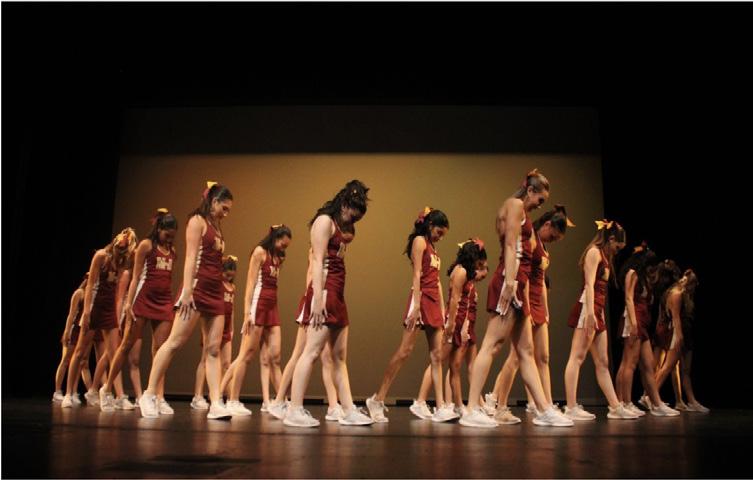


“As a sophomore, you just know what’s going to happen with the dance show, and your stamina is better because you’ve had more practice, so the show is just a lot easier in general,” sophomore Kate Peterson said.
The show also featured performances from dance company Studio650, run by Roberts. The studio performed “Dracula” by Tame Impala, various songs by McRae, and others featuring M-A and outside dancers that held the audience spellbound.
Finally, non-dance team students were called to the stage for the long-awaited partner dance.
During the partner dance, dancers alternated on and off the stage through quick music changes. The duos showcased team moves including chest bumps, flipping off each other’s backs, and even the Dougie.


“It was just hanging out with the people around you and laughing about the mistakes you make,” sophomore partner dancer Leila Hsieh said. “You know the partners aren’t real dancers, so I think the fun in it is making mistakes.”
After the partner dance, JV danced to “These Words” by Natasha Bedingfield as the audience clapped to the beat of the song.

Varsity ended the night with a heartfelt slideshow celebrating the four graduating seniors: Bailey Lanier, Shayne Porter, Desai, and Rubinsky. The pre-
sentation brought tears to some of the dancers’ eyes as they reflected on their journey.
“The dance show is the best part, arguably, of being on the dance team. It’s something that you get to showcase to everyone else,” Rubinsky said. “It’s a reflective moment for me to look back on all my experiences on the dance team, and it just makes everything worth it.”
by Emerson Edwards and Farah Ghajar designed by Gracie Bullard illustrated by Grant Maletis



“[My style is inspired by] influence from fashion designers, some models, and underground streetwear brands. I really enjoy and like the style of [streetwear]. So I really feel like that transformed my style.”
“I saw the shirt, and I was like, it would be cute with the lines and this shirt with it—the green and the blue go good together. I thought it’d be cute, and then these flares, just thought it would match the style.”
“Some people that inspire me, I would include Jane Birkin, I would include Clairo, and I would include 2000s Britney Spears. I get inspirations from shows that I watch. So if I see someone who’s wearing an outfit that I think is cute, I try to find ways to imitate that as much as possible,” Papapanagiotou said.



You will soon have an overwhleming urge to wear stripes and animal prints. Start hunting now...
“I get my inspiration from mainly Pinterest or Tiktok. I usually thrift most of my clothes, or get them from other people,” Pech said. “I would say comfort [is more important than style], because you can also be stylish while doing it.”

“I get a lot of my clothes secondhand so I can have a variety of different styles in my closet. I look for clothes that have a cool vibe or color that matches something else in my closet, so most of my clothes go



“I really have no inspiration, but I feel like I’d rather just be comfortable,” Vail said. “[To come up with my outfits], I sometimes go on the internet or in general, I just like the color, like how every color


Eminem, according to most Involved
Free ____, a recent Taipei summiter’s movie
Golden Gate city & state, abbr.
Previous president of Mexico, abbr.
Heart of “misread”
Football org. of the land down under M-A sports chant
Sarcastic response to thank you, in text slang
Landmark 1964 law, briefly Chicken’s yelp
Commotion or protest
SPF target and a nope
Hathaway of Hollywood
Hermes’ job
British insult, e.g.
Multi-purpose oven technology
Rare morning moments
Popular car theft video game
Ex’s and _h’s FAFSA overseer
Playing cupid, perhaps
Antagonist of anime series My Hero Academia
This is probably chlorinated
Repeated letter in “oh no”
You, in text slang
Okay, in text slang
Greek island in Dodecanese chain
Sprinted
Most common letter in English