GRAPHICS EDITOR Emma Gillich graphics@themanitoban.com
GRAPHICS ASSOCIATE Teegan Gillich
AUDIO AND VIDEO
AUDIO EDITOR Max Reid audio@themanitoban.com
PHOTO EDITOR Mike Thiessen photo@themanitoban.com
PHOTO ASSOCIATE Ebunoluwa Akinbo
VIDEO EDITOR Zulkifl Rafah video@themanitoban.com
DIGITAL MEDIA EDITOR Faisal Rahman social@themanitoban.com
SOCIAL MEDIA ASSOCIATE Paula Robles Andia
REPORTERS
NEWS Arifah Gheesah
NEWS Nafisa Al Lilo
RESEARCH & TECHNOLOGY Nawal Semir
COMMENT Thandeka Katsika
COMMENT Kyra Campbell
ARTS & CULTURE Carrington Dong
ARTS & CULTURE Jordan Anglin
SPORTS Faiyaz Chowdhury
SPORTS Israel Abejoye
VOLUNTEERS
VOLUNTEERS
interested in volunteering?
email me@themanitoban.com today!
The Manitoban is the official student newspaper of the University of Manitoba. It is published monthly during the summer and each week of regular classes during the academic year by the Manitoban Newspaper Publications Corporation.
The Manitoban is an independent and democratic student organization, open to participation from all students. It exists to serve its readers as students and citizens.
The Manitoban is a member of the Canadian University Press, and our journalistic standards can be found on the Manitoban’s website.
The newspaper’s primary mandate is to report fairly and objectively on issues and events of importance and interest to the students of the University of Manitoba, to provide an open forum for the free expression and exchange of opinions and ideas and to stimulate meaningful debate on issues that affect or would otherwise be of interest to the student body and/ or society in general. The Manitoban serves as a training ground for students interested in any aspect of journalism.
Students and other interested parties are invited to contribute to any section of the newspaper. Please contact the appropriate editor for submission guidelines.
The Manitoban reserves the right to edit all submissions and will not publish any material deemed by its Editorial Board to be discriminatory, racist, sexist, homophobic or transphobic, ableist or libellous.
Opinions expressed in letters and articles are solely those of the authors. Editorials in the Manitoban are signed and represent the opinions of the writer(s), not necessarily those of the Manitoban staff, Editorial Board or the publisher.
A “volunteer staff” member is defined as a person who has had three volunteer articles, photographs or pieces of art of reasonable length and/ or substance published in the current publishing year of the Manitoban
Any individual who qualifies as a volunteer staff member must be voted in by a majority vote at a Manitoban editorial board meeting. Elected representatives and non-students may be excluded from holding votes as volunteer staff members in accordance with the Manitoban Constitution.
Designing practical, evidence-based programs to improve support access
Mansura
Akter Meghla, staff
F or Shay-Lee Bolton, mental health research is not just about generating data or testing theories. It is about building systems that work for people in their everyday lives.
Bolton is an associate professor in the U of M’s department of psychiatry. She studies mental health through both public health and clinical lenses. She said her work uses “data to understand who is at risk, what factors shape mental health and how we can intervene early” to make a meaningful difference.
Bolton’s research sits at the intersection of psychiatric epidemiology and intervention and implementation science. At a broad level, she uses population-level data to understand patterns of mental health and wellness. At the same time, she is deeply involved in designing and evaluating programs that can be delivered at scale. Much of her work focuses on brief mental health interventions that are practical, low-barrier and able to reach large groups of people.
Two major programs anchor her research. The first is Cognitive Behaviour Therapy with Mindfulness (CBTm), a free, class-based program available to Manitobans. The program teaches practical skills to manage stress, anxiety and low mood, while also building resilience and healthy habits. The second is the Public Safety Mental Health Service, which provides prevention and intervention supports for public safety personnel across the province, including police officers, firefighters, paramedics, corrections staff and dispatch workers. Research and community engagement are built directly into both programs, allowing Bolton and her team to continually adapt their work based on participant feedback.
Bolton’s interest in mental health research grew from both professional and personal experiences. As a teenager, she lived with a family member who struggled with
mental illness. She recalled not fully understanding what her family member was experiencing or how to help as they navigated a system that was fragmented. That experience stayed with her.
care costs, to lost productive years,” she added. “Yet historically, mental health hasn’t
What continues to motivate her, she said, is seeing the real-world impact of her work.
“From an epidemiology perspective, mental health issues create huge impacts, from day-to-day functioning, to relationships, to healthcare costs, to lost productive years”
“From an epidemiology perspective, mental health issues create huge impacts, from day-to-day functioning, to relationships, to health-
— Shay-Lee Bolton, associate professor in the U of M’s department of psychiatry
received the focus it deserves, and stigma is still a major barrier.”
One recent project Bolton is particularly proud of is the development of a Cross-Cultural CBTm program for newcomers to Canada. The program was created by a team with deep experience working alongside diverse newcomer communities. “They adapted
our CBTm content to make the material approachable, culturally relevant and meaningful for people who may not have a western view of mental health,” she explained.
The program is currently being evaluated by two students. They are studying whether the program resonates with newcomer students and how it can be further improved. “The early response has been incredibly positive,” Bolton added.
Bolton situates her work within a broader shift in mental health care. There is increasing attention on low-intensity supports, including digital and hybrid models, that can improve access for people who live far from specialized services. She believes demonstrating the effectiveness of scalable programs like CBTm could help reduce waitlists, provide early support before symptoms escalate and teach preventative skills long before someone reaches a crisis point. She described this approach as offering mental health “swimming lessons,” giving people tools before they are overwhelmed.
Ultimately, Bolton hoped her work would expand access to cognitive behavioural therapy, which she described as the most evidence-based treatment and prevention tool available for mental health concerns. She aims to demonstrate that large-group, low-barrier programs can be both effective and empowering, helping people build skills they can use throughout their lives.
The Cross-Cultural CBTm program will be offered in January and February in both virtual and in-person formats, allowing participants to choose what feels most comfortable. The six-session program encourages participants to bring a support person if they wish. Anyone interested can register at www.cbtm.ca under the “Cross-Cultural” tab.
PHOTO PROVIDED BY SHAY-LEE BOLTON
The ‘wicked problem’ of AI in assessment
New testing methods are piloted to keep pace with rapidly evolving AI models
Nawal Semir, staff
A new 2025 study reveals artificial intelligence (AI) use in assessments as a “wicked problem,” or a problem “that [defies] neat solutions,” forcing educators to redesign assessment styles.
Headed by Thomas Corbin, a research fellow at the Centre for Research in Assessment and Digital Learning at Deakin University, this study interviewed 20 university-level educators across four different faculties at Australian universities. Through referrals, the researchers identified educators leading assessment redesign in their respective faculties and questioned them on the types of challenges generative AI has imposed upon them in terms of student assessment, as well as the types of changes they have implemented as a response.
Although the researchers did not initially hypothesize generative AI as a “wicked problem,” the response from the educators suggests it as such.
The term “wicked problem” gained popularity in the 1970s due to theorists Horst Rittel and Melvin Webber. Unlike “tame problems,” which are defined by their linearity and ability to be solved through step-by-step processes, “wicked problems” are unpredictable and are characterized by “better” or “worse” answers, but no objective “true” or “false.”
Illustrating the scale of the issue, a survey of academic integrity violations in the UK has exposed nearly 7,000 proven cases of cheating using AI between 2023 and 2024. While this number is expected to increase now that generative AI usage has become more mainstream,
experts suggest these proven cases are only a small percentage of real violations. In response, one solution educators across North America have been experimenting with is having more oral exams.
Kyle Maclean, an assistant professor at the Ivey Business School in London,
Instead of face-to-face oral exams — which would not be feasible with large class sizes — the Ivey Business School gave students five minutes to respond to a question with a
certain groups at a disadvantage. For instance, students for whom English is an additional language may struggle to articulate complex ideas under pressure. The stress of a face-to-face evaluation can further hinder performance.
Furthermore, the AI issue in universities is a layered
Ontario,is researching both the benefits and downsides of this ancient form of testing. In an interview with the CBC, Maclean explained the implementation of “scalable oral exams” was introduced in his faculty during the COVID-19 lockdown.
video.
This assessment style represents a significant departure from the traditional testing methods students are accustomed to. It demands quick thinking and does not allow them to return to previous questions, which is an unprecedented challenge for many. This assessment style also risks placing
one that is constantly shifting. While teachers are expected to immediately redesign their curriculums in response to changing AI systems, generative AI is constantly adapting and improving in functionality. In the last three years alone, the global generative AI market has increased by 54.7 per cent,
proving itself explosive. This attractive market for investors has propelled generative AI development, with new versions dropping just a few months apart from each other. For example, ChatGPT dropped its 5.0 version in August 2025, and by November it had released two 5.1 versions — GPT-5.1 Instant and GPT-5.1 Thinking. The implication for educators is that these responsive curriculum adjustments implemented at the beginning of the semester may become irrelevant before the term even ends. This is especially problematic given that occupational stress has been identified as a major problem in Western universities. With excessive workloads as a primary culprit, adding constant redesign to an educator’s workload only contributes to the issue. Ultimately, in reconciling with an ever-evolving AI ecosystem, the study suggests educators and universities must acknowledge the wicked role AI has and will continue to play in assessment, dispelling any belief that the issue is inherently “solvable.” Instead, the researchers suggest that a constant negotiation is necessary, with trade-offs lying at the heart of every curriculum. While “wicked problems” have no true solutions, the study urges allowing individual educators more bargaining power in assessment creation — all proposed styles will have trade-offs that better suit the needs of certain groups. Instead of creating the illusion of rigid perfection in university assessments, this modified-objective approach highlights flexibility, easing the burden placed on educators to create a uniform, onesize-fits-all solution to assessment-taking.
GRAPHIC BY EMMA GILLICH / STAFF
Why we should take the flu seriously
No, the flu is not ‘just a cold’
Boris Tsun Hang Leung, staff
In the summer of 2023, I experienced one of the worst viral infections of my life. It started as a vague queasiness one evening, but exploded into a suite of debilitating symptoms overnight — fever, nausea, joint pain, sinus and eye infections and a productive, visceral cough.
My symptoms refused to subside even after weeks, and I ultimately had to pay a visit to the emergency room because it was indicative of more serious complications, such as pneumonia. Not to be dramatic, but there were moments where I genuinely wondered if I would ever recover from this. I did, eventually, despite the debilitation of the viral infection. The idea of acquired immunity feels intuitive. When the immune system encounters a pathogen it has previously faced, it activates memory T and B cells and produces antibodies to ward off infection. Some antiviral antibodies, like those created after measles infection or vaccination, are also maintained for life.
However, not even half a year later, I was plagued by a virus yet again, this time in Winnipeg during the winter. The same symptoms
appeared, this time with a hefty bout of delirium. I was bedridden and felt betrayed by my own body. I lamented, “How did this happen again?”
It was only after the fact that I discovered that the timing of these infections coincided with an influenza A epidemic in Hong Kong (where I spent the summer) and a period of heightened influenza A incidence in Manitoba.
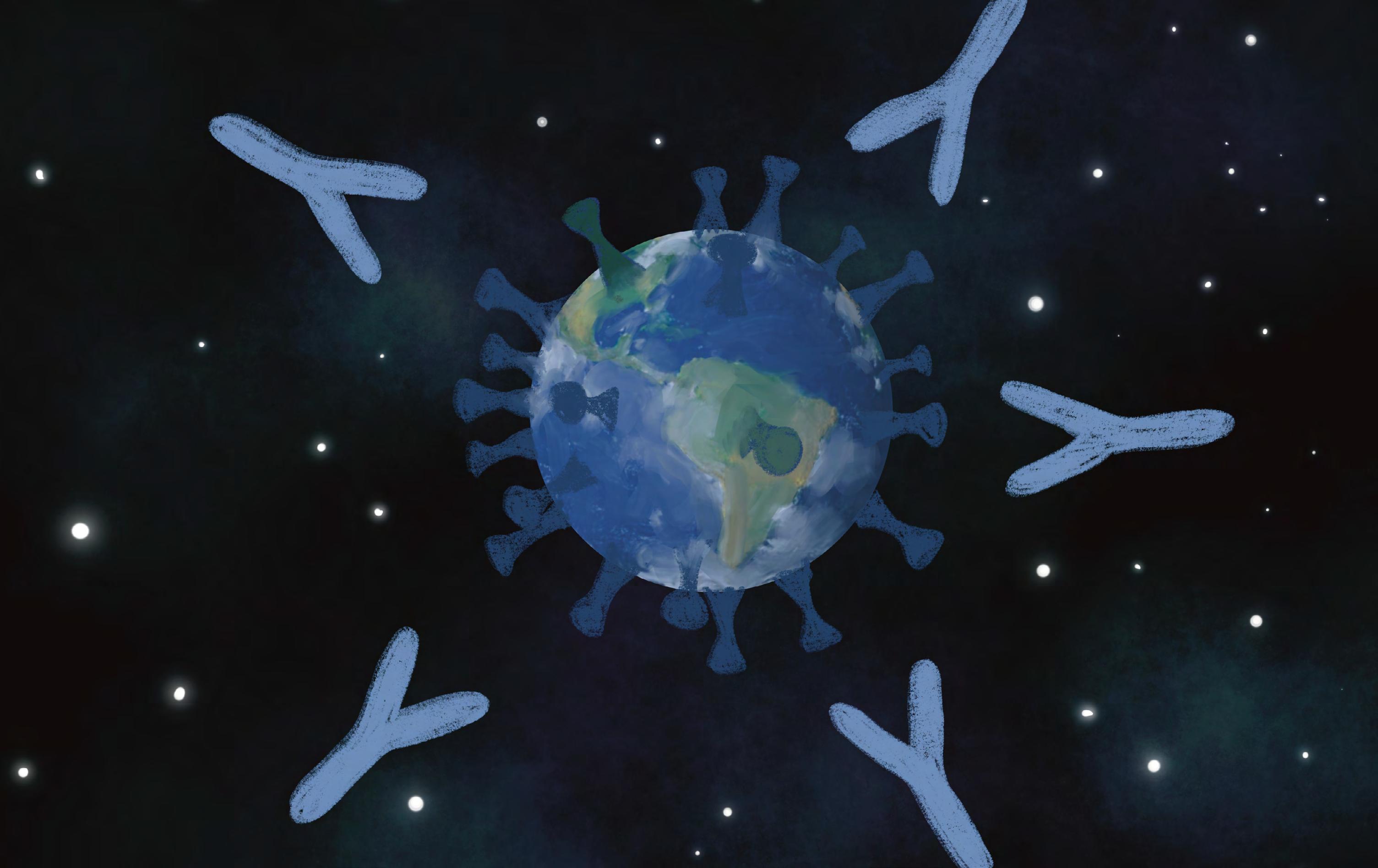
It is simply impossible to retroactively pinpoint the specific pathogen I contracted, but influenza A, also known as flu A or Alphainfluenzavirus influenzae, is notorious for evading immune responses. Each virus is covered with the protein’s hemagglutinin and neuraminidase on its surface. They are highly variable, with dozens of forms, combining to make over 130 different subtypes of influenza A, such as H1N1 and H3N2. Over time, these mutations prevent the virus from being recognized by antibodies and immune cells, making them less, or not effective at all. This is called antigenic drift, and Immunize Canada has compared this to a game of telephone, where the original message changes as it gets whispered around the group.
The flu, however, can
become much more virulent when an antigenic shift occurs, which is when a virus changes so drastically that most people cannot fend it off. This can happen when a host, particularly pigs and birds, are infected with two subtypes of flu viruses at the same time, and they swap genetic information to create a new subtype. Instead of a normal game of telephone, imagine someone in the group whispers the original message in a completely different language.
This is the culprit behind pandemics that have swept across the globe. The infamous Spanish Flu of 1918, for example, is believed to have originated from birds before it spilled over to pigs, and then humans. Compounded by factors such as the lack of effective medical treatment and the mobilization of troops for the First World War, it is estimated that 50 to 100 million people died from the flu, far exceeding those who died from the war itself. Flu pandemics have emerged three more times since then, with the latest one taking place in 2009.
Fast forward to today, there has recently been a global surge of flu cases in much of the world, particularly in the
U.S. and Canada, due to a new mutation called subclade K. For instance, New York has just reported a record-high number of flu hospitalizations in a single week, while the number of positive tests for the flu has increased sharply in Canada.
Although flu mortalities are on the decline and relatively uncommon in young adults, tragic cases are by no means unheard of. Now and then, I see headlines of healthy teenagers and people in their 20s dying from influenza.
In other words, personal experience, history and the news have led me to believe that the flu is not to be trifled with. Despite this, there exists people who “refuse” to be sick, and admittedly, I used to be one of them. In the past, I have arrived at university sick due to fear of missing out. It took me a while to realize that missing a handful of classes will not instantly ruin my GPA, nor will missing a meeting or volunteer shift cause my workplace to implode. If anything, I would like to believe most people would rather have a sick person stay home than show up and potentially spread diseases to others.
I am sure there are plenty who show up to class or events
knowing full well that they are infectious. I can sympathize with those who mask up and socially distance, but I have also met people who egregiously dismiss viral infections as a benign cold that would not impact the well-being of university-aged adults.
More concerningly, there has been a rise in antivax sentiment due to misinformation on social media, and experts are saying vaccine hesitancy has led to the reemergence of diseases such as measles and is causing “needless death and suffering.” On a personal note, it seems like the world has learned nothing from COVID-19 and instead decided to barrel itself toward conspiracy and anti-intellectualism.
Given the viral pandemics in recent history and the ongoing upswing of flu infections, downplaying the flu is at best ignorant and at worst selfish and anti-science. My goal is not to fearmonger, but to highlight that being young and healthy does not make one invincible against diseases. Influenza may not be as deadly as it used to be, but it sure can make you feel like death warmed up.
Heated Rivalry holds the line against fear and erasure
The breakout series shows Canadian stories can push back, not just entertain
Kyra Campbell, staff
I am used to an alarm clock going off at an ungodly hour, then getting hauled into a freezing rink by 8 a.m. Not to play hockey, but to watch my brother play the sport that has become a cornerstone of his life.
Alongside the joy I get from seeing him play this long-held Canadian tradition, this holiday season has felt heavy. Not in the usual end-of-year way, but in a deeper, emptier way — like the ground has fallen out from under us but we are supposed to pretend it is normal.
Across North America and beyond, the “antiwoke” wave has hit a new peak, fully escaping the confines of comment sections and increasingly influencing public policy. We have seen attacks on diversity initiatives intensify, immigration become an all-purpose political weapon and trans people, day after day, legislated out of more aspects of public life.
And then, Heated Rivalry arrives as a reminder of why representation must be fought for and celebrated every day.
The story behind the show is already special to me. Heated Rivalry is adapted from a novel by Nova Scotian author Rachel Reid. As a Nova Scotian myself, it matters more to me than many people understand. When you are used to seeing “Canadian content” usually meaning Toronto or Vancouver, a breakout project with roots closer to home hits differently. It feels akin to being seen, and proves that stories from here have the power to travel.
parts that make you bite your tongue.
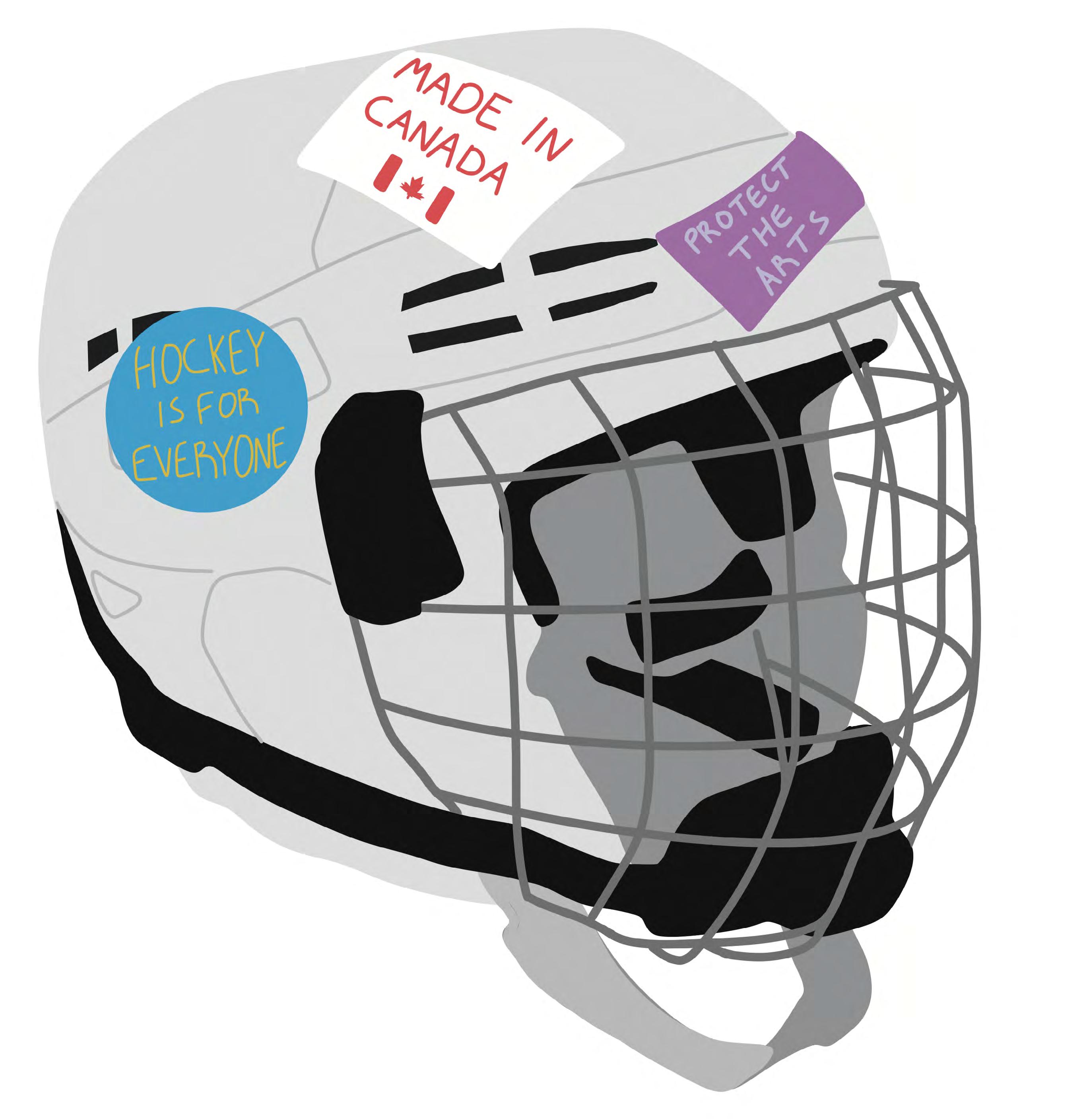
Hockey can be beautiful, but it is also stubbornly conservative, obsessed with toughness, averse to vulnerability and quick to police anything that looks different. In recent years, we have seen how something as small as pride tape or warm-up jerseys can become a flashpoint, as if basic support for queer people is too political for the sport that is supposedly “for everyone.”
other inside those systems.
A love story set in the hockey world might sound like escapism, but I think it is the opposite. In a moment where our lives are increasingly narrowed to issues of trade and military prowess, this show insists
Canada chooses, through policy and tax credits, to support domestic film and television. This show received assistance from programs like the Canadian Film or Video Production Tax Credit, meaning public revenue helped make it possible.
“Taxpayer-funded television” can be an easy punchline in our increasingly
I am well acquainted with the smell of wet gear, cold air, the sound of skates cutting into ice and the way a rink can feel like its own little world. I also know the culture that comes with it — the parts people romanticize and the
This is why Heated Rivalry matters. For those who have not watched it yet, the premise is simple but it is also deeply tied to the beauty and pain of the time we live in. Two elite hockey players, Shane and Ilya, meet as teenagers, become fierce rivals, and fall into a secret relationship that stretches across years, teams and countries. It is a romance, yes, but it is also a story about power, image and the cost of hiding. It is about how systems shape people and how those people still find each
that love, curiosity and vulnerability are not side stories, but the main plot. It treats tenderness like something worth writing, filming and funding.
It also does something Canadian television is known for. It is raw, less glossy and more willing to sit in discomfort. It is less interested in perfection and more interested in showing what people do when they are scared but still trying.
There is another layer here that we should not skate over. Productions like Heated Rivalry exist partly because
individualized world, but I am happy to pay taxes when governments use them to invest in public goods, support vulnerable Canadians and reduce the costs people should not have to carry alone. And yes, I want them to support Canadian arts and culture. Because culture is not decoration. It is infrastructure.
When governments and media tell us the only thing that matters is the crisis of the moment — whether that is inflation, trade or security — it becomes easier to cut everything else quietly. Arts funding gets framed as frivolous. Public broadcasting becomes a target. Grants get treated like waste. That is not an accident. If you can convince people that imagination is optional, you can shrink public life until all that is left is fear and consumption. Once those supports are gone, they are difficult to get back. People move away, industries hollow out and whole regions lose the ability to tell their stories.
Heated Rivalry is exactly the kind of story that critics of public support would call “unnecessary” — a queer hockey romance, a “niceto-have.” But it is also exactly the kind of story that proves why we need the arts, especially now. It makes space for people who are constantly told to be quiet. It shows that Canadian stories can be bold, not just polite. It takes a sport that has often been used to enforce one narrow version of masculinity and asks what happens when those outside that version refuse to disappear.
The streaming service Crave has already renewed Heated Rivalry for a second season, and the lead actors have said they are signed on for three. It is a reminder that Canadian work can break through on its own terms, without leaving representation behind. Shows like this reach the screens because writers, crews and communities build them, and because there are systems that make creative risk possible. It is easy to call that spending frivolous until you notice what disappears when it is gone. More imported stories can flatten us into passive consumers, with fewer chances for people on the margins to be seen.
If we want Canadian stories that feel specific, honest and brave, we must treat those systems as essential.
Why we always fail at ‘new year, new me’ Defining goals and focusing on the process
Thandeka Katsika, staff
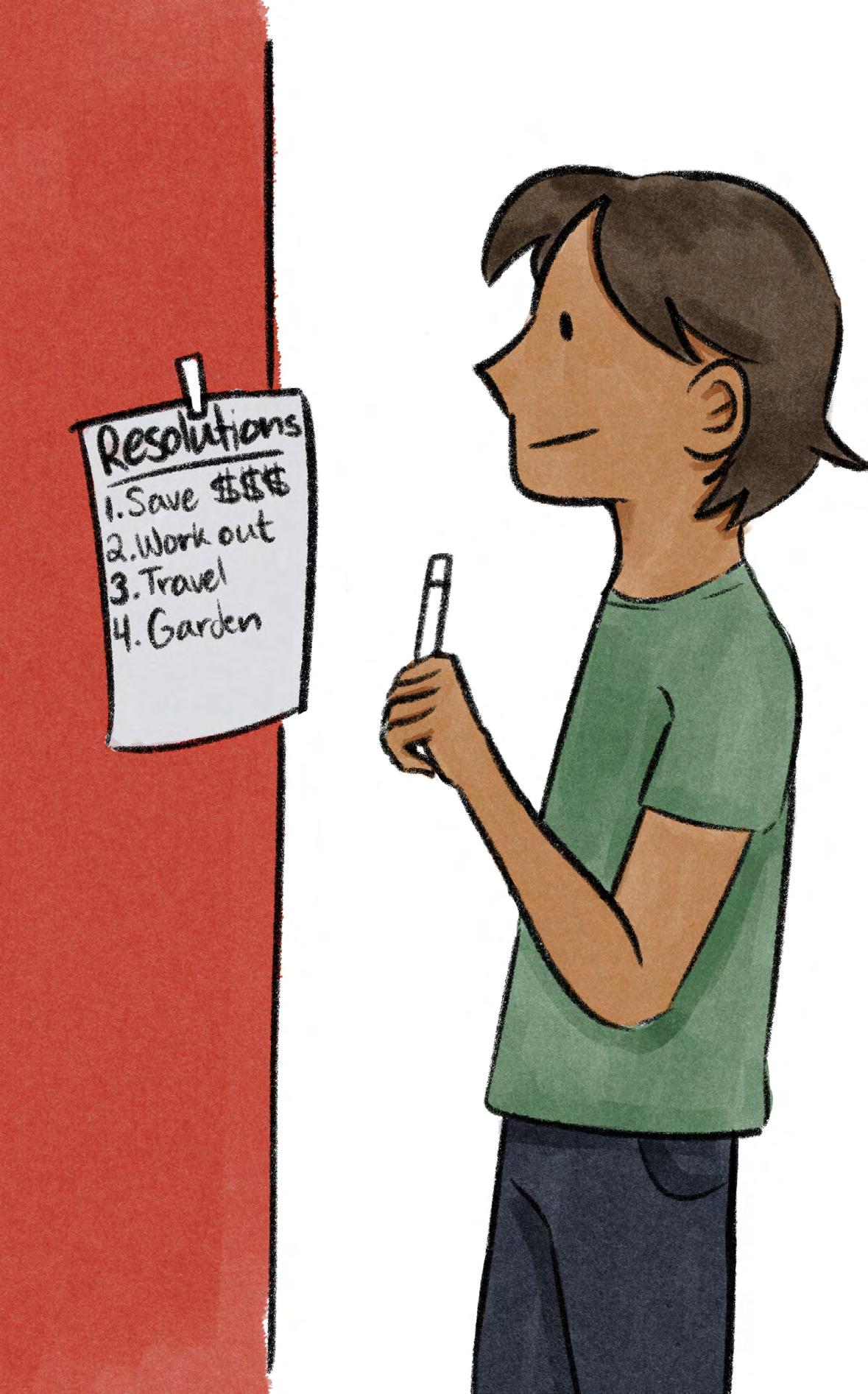
Every January, I watch the same routine unfold — social media is filled with declarations of “new year, new me,” and every year I feel the familiar pressure to participate. I want to write out goals, redesign my life and promise myself I will somehow be more disciplined, more productive and healthier on the first of January than I was on the 31st of December.
As the year progresses, my motivation fades, my new habits slip and the version of myself I envisioned at the start of the year completely disappears. By the end of the year, I feel a quiet sense of disappointment at having failed yet another year’s worth of resolutions.
While reflecting on my failure to meet my 2025 goals, I realized that one of the biggest mistakes I make when setting goals is building them on pressure and not intention. Most of my goals are a response to guilt. I feel bad that I procrastinate, I don’t exercise enough, I eat a lot of junk food and I don’t call my parents enough. I make resolutions I think will “solve” these issues.
This year, I am hoping to approach change with more
honesty and patience. I want to dig deeper into understanding where my resolutions stem from and make changes rooted in self-love rather than shame.
As I assessed my own struggles with New Year’s resolutions, I looked further into why so many people struggle to keep the resolutions they set for themselves. The more research I did, the clearer it became. The problem is rarely a lack of willpower, discipline or motivation. More often, it is misalignment.
One of the core problems with resolutions is that they are built on unrealistic expectations rather than an understanding of human behaviour. Many people are well-intentioned, but when setting new year’s goals they are often trying to completely overhaul their lives.
Human beings are not wired for sudden, large-scale behavioural change. Especially when it requires prolonged discomfort. So, in situations where the required effort is high and the progress is slow, we tend to revert to older, easier habits.
A more sustainable approach to goal setting begins with alignment. In James Clear’s book Atomic
Habits, he noted it is more important to build systems than to set goals. A goal might sound something like “I want to lose some weight this year,” while a system might be, “I will walk for about 30 minutes every day.” Clear suggested people should focus on the process itself rather than the end product. This is because progress is slow. If you only focus on the result, it can become discouraging when you do not see any change. By focusing on the process, progress is less likely to curb your motivation.
With this in mind, I have decided to focus on processes rather than end goals this year. I want to forget about the person I think I should be on the outside and instead concentrate on doing the internal work to grow in self-love. For a long time, I measured my progress by how well I could stick to a list of goals I set in January. Now, I’m learning that slow and steady really does win the race.
As the new year unfolds, I hope more people permit themselves to redefine what success looks like. Growth and change do not have to be dramatic, they just have to be present.
Your horoscope for the week
Zodiac sign mania, flip a coin and see your fate this week
Quinn Mayhew, staff
AQUARIUS
January 20February 18
Try not to take the week seriously. Learn to appreciate smaller moments and try to think with your head more than your heart. Take bold steps if you are in a new phase of your career and avoid getting entangled in other people’s problems, as it may cause undue stress and heartache. Prioritize your mental health and well-being this week to maintain your enthusiasm for the things that you enjoy.
PISCES
February 19March 20
Look for opportunities for emotional growth this week. Some relationships may be trifling, but look inward and try to see the good within the bad. There may be a focus on the financial sector of your life that urges you forward, but let your intuition be your best guide. Focus on inner growth rather than societal pressure.
ARIES
March 21 - April 19
Listen to Fleetwood Mac this week — it will help you tap into your emotional side. This week will lead you toward a romantic spark if you look for a relationship where you normally wouldn’t. Seek out new connections and nurture longterm friendships because this
will lead to prosperity later in life. Commit to loyalty, and this will set you up for future success.
TAURUS
April 20 - May 20
The desire for adventure will draw you toward newfound opportunities — this is an excellent time to take risks and improve on pre-existing relationships. Focus on creativity and exploring hobbies you’ve been putting off. Take the initiative to tackle the tasks you’ve been putting off as it will also clear your mind for the week ahead.
GEMINI
May 21 - June 20
Be generous with your time and energy this week. Spend time with family and friends — it will refuel your vitality. Be optimistic. This will prevent burnout and guide you toward opportunities within the career realm. Watch television or read this week as a chance to regain strength.
CANCER
June 21 - July 22
This week is an excellent time to act on those crazy ideas you might be having. Start a coven of witches, try roller blading for the first time or maybe adopt a pet turtle. Your social life will thrive this week. Make sure you capitalize on this newfound energy and take
opportunities to enrich your life with different ideas.
LEO July 23 - August 22
The vibes are off at work, so fight fire with fire (kidding). Your co-worker may be bothering you, or maybe everyone’s a little fussy. Make time to do things that you enjoy, and combat that negative energy. Take time to clean the space around you — it will make for a clearer mind.
VIRGO
August 23September 22
You will have a very whimsical week. Try to tap into that mystical energy and go for a walk, seek out time to be alone. Explore the world around you and try to notice things you normally would not. This week would be a good time to relax and not overstrain yourself, as you may experience burnout.
LIBRA
September 23October 22
Be careful not to overindulge this week. If you are feeling the need to covet, try combating the feeling with generosity by giving to others. This week will feel difficult, but fret not — surround yourself with friends and family and enjoy this time with the people you care about.
SCORPIO
October 23November 21
You may be arguing with someone in your life — do not fall into despair. Try to balance the stress from this strained relationship with things that you enjoy. Your intuition is usually correct, trust your gut and listen to your heart. This will lead you down the correct path.
SAGITTARIUS
November 22December 21
If you have something to say, now is a good time to say it. Communication is key this week — make sure you are communicating your feelings to the important people in your life. If energy is low in the middle of the week, try to rejuvenate yourself with some alone time, as there may be some strained energy from people you may have been having problems with before.
CAPRICORN
December 22January 19
Perseverance will be key this week, as things may be feeling a little tough, whether in school or your career. Try to focus on how your body feels and fret less about things you cannot control. This week will be difficult, but it will show your resilience.
To complete Sudoku, fill the board by entering numbers 1 to 9 such that each row, column, and 3x3 box contains every number uniquely. In Straights, like Sudoku, no single number 1 to 9 can repeat in any row or column. But rows and columns are divided by black squares into compartments. Each compartment must form a “straight.” A straight is a set of numbers with no gaps but it can be in any order, eg [7,6,9,8]. Clues in black cells remove that number as an option in that row and column, and are not part of any straight. Glance at the solution to see how “straights” are formed.