to the students of the University of Manitoba, to provide an open forum for the free expression and exchange of opinions and ideas, and to stimulate meaningful debate on issues that affect or would otherwise be of interest to the student body and/or society in general. The Manitoban serves as a training ground for students interested in any aspect of journalism. Students and other interested parties are invited to contribute to any section of the newspaper. Please contact the appropriate editor for submission guidelines. The Manitoban reserves the right to edit all submissions and will not publish any material deemed by its
The second impact
The dawning of the next bananapocalypse
JEREMIAH YARMIE, STAFF
The ubiquitous Cavendish banana is on its last leg due to the fungal pathogen Fusarium oxysporum. The fungus causes a condition called Panama disease and threatens to wipe out commercial banana plantations across the world.
This story has happened once before. We are simply experiencing the second wave of bananageddon.
A recent report in PLOS Pathogens affirms the idea that the Cavendish banana is doomed if current commercial banana practices don’t change. In fact, this same story will be repeated over and over again until bananas are produced in a fundamentally different way.
Prior to the 1960s, a different banana was enjoyed around the world. The Gros Michel, a better banana than the Cavendish by all accounts in terms of flavor and robustness, was nearly wiped out by a different strain of Panama disease that first arose in Australia in the late 1800s.
The Gros Michel is still grown in some niche areas around the world, but Panama disease will ensure that it is never grown as a commercial crop again.
The Big Mike, as some like to call it, is larger, hardier, and more delicious than the plebeian Cavendish bananas we consume today. There is a reason that banana-flavoured foods
don’t really taste like what we know of bananas – it’s because they taste like Gros Michel bananas, not our pathetic Cavendish.
The Cavendish arose from the ashes of the Gros Michel for one simple reason: it was immune to the strain of Panama disease that crippled the Big Mike.
However, even the Cavendish isn’t immune to this new strain of Panama disease, called Tropical Race 4, which was first noted in Southeast Asia and has since spread to Africa, the Middle East, and Australia.
There have been fears for more than a decade that Tropical Race 4 would cause the second bananapocalypse, and now that the disease has migrated to South America, which is where the world’s largest producer of bananas are, doom is close at hand.
But why is this happening to bananas?
Bananas are the prime target for disease-causing fungi because of the way they are cultivated.
If you go to the grocery store, you may notice that all bananas look the same; the consistency is almost too perfect. This is because all commercial bananas are clones of each other.
Bananas are commercially grown from cuttings of pre-existing plants. This mode of reproduction is asexual, which results in no genetic diversity
amongst the population. This mode of cultivation is also why the bananas we eat lack seeds, since seeds form as a result of sexual reproduction. Selling a cloned product is beneficial for a number of reasons. All banana fingers – each banana is a finger and the bundles are called hands – are remarkably consistent because of the cloning process. Cloning also allows for bananas to be produced en masse for cheap. Consistency and cheap production are desirable traits for any industry.
But without genetic diversity, there is little protection against disease. If a pathogen, such as Tropical Race 4, can wipe out one banana plant, it is able to wipe them all out.
While the loss of the Cavendish banana would be unpleasant for most of us here in Canada, it wouldn’t fundamentally change our lives.
The thing that makes Tropical Race 4 really scary is how it will affect the millions of people living in developing countries who rely on the fruit as a large source of their daily calo-
ries. The loss of the Cavendish would certainly result in food insecurity for these people.
In 2005, Dan Koeppel, the author of Banana: The Fate of the Fruit That Changed the World, wrote about the inevitable reckoning of Tropical Strain 4 for Popular Science
“How much time is left for the Cavendish? Some scientists say five years; some say 10.”
The bananas have lasted 10 years, but will they last much longer?
GRAPHIC BY KELLY CAMPBELL
Coffee reduces DNA breakage: study
Just another reason to appreciate coffee
MALAK ABAS, STAFF
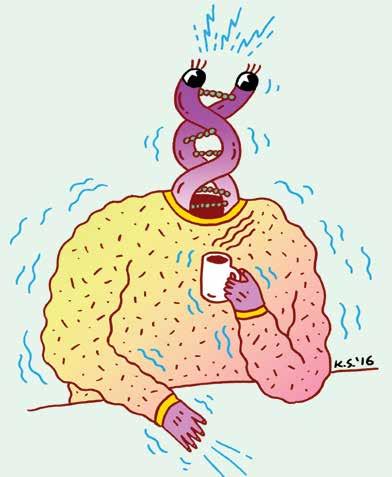
Coffee’s place in a healthy diet has always been a divisive topic. If you’re one of its fans, you’re in luck: recent studies have shown that drinking coffee not only reduces DNA damage, but does so more quickly than originally believed.
Here’s a basic rundown of DNA damage. Human beings, much like cars or well-read books, break down over time. DNA gets damaged all the time, and some of it is really not a big deal. That being said, as you get older, your body becomes less able to repair DNA.
That wisdom you gain with age could be part of the problem, as recent findings have shown that the same process our brains use to learn new things leads to DNA degeneration. A DNA break in an aging human can have very serious consequences, many of which are associated with cognitive decline.
Coffee has already been shown to possibly lower your risk of a long list of illnesses, including type 2 diabetes, chronic liver disease, and breast cancer. Caffeine has been proven to be neuroprotective, and is used in rodent studies focused on treating
The devil’s tumour
Misfortune strikes the marsupials twice
JEREMIAH YARMIE,
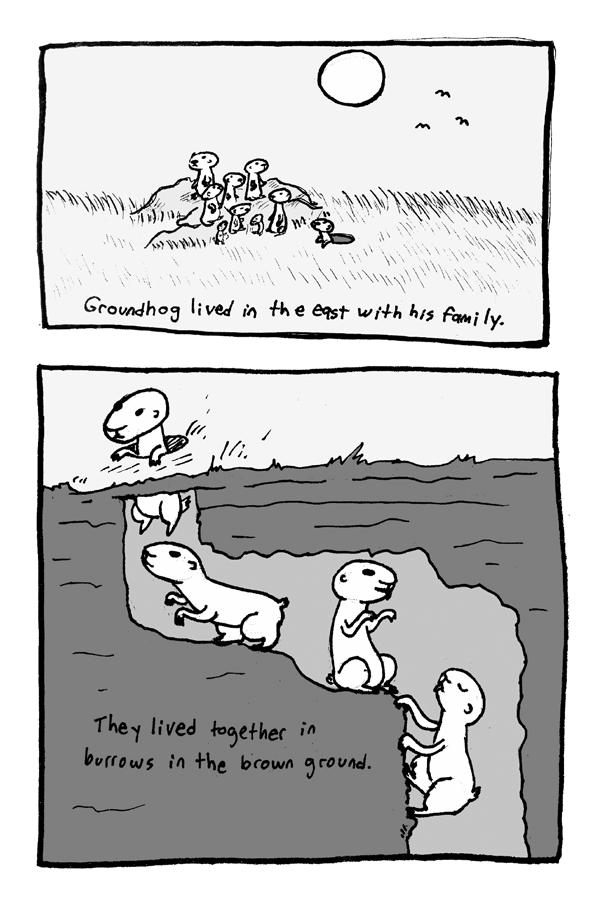
Looney Tunes fans are probably familiar with Tasmanian devils. The rare and particularly feisty marsupial found exclusively on Tasmania, a small island-state located just south of the mainland of Australia, is on the verge of extinction due to a contagious form of cancer. Facial tumour disease in these
animals was first noted about two decades ago. The disease causes tumours to grow on the faces and in the mouths of devils. The scary thing is that these tumours can transfer between Tasmanian devils. To make matters worse, researchers have recently found a second transmissible facial cancer disease. It
seems like these ferocious marsupials can’t catch a break.
Published in PNAS , the study showed that this new form of devil facial tumour disease is distinct from the first form both structurally and genetically. Although the two forms of cancer appear to be similar at a superficial level, they have different
Alzheimer’s. Coffee lowers estrogen and insulin levels in the body, is full of antioxidants, and can possibly even have an antidepressant effect.
Recent studies have shown that drinking coffee not only reduces DNA damage, but does so more quickly than we originally believed
And, of course, there is the alertness effect. That feeling that got you through finals in December is caused by increased neuron activity in the brain, which itself is caused by caffeine blocking something called adenosine, which causes drowsiness.
In one of the recent studies, carried out by Elke Richling and her colleagues at the University of Kaiserslautern in Germany, 13 healthy adults were given 200 millilitres of coffee four times over eight hours.
Blood samples were taken and the samples were tested to judge their DNA integrity. The samples showed reduction in DNA breakage within two hours of coffee consumption. Within eight hours there was up to 30 per cent more damage reduction than there was before the experiment.
It’s not all perfect, however. Coffee’s benefits come with some negative effects. Coffee is also shown to raise cholesterol levels and blood pressure. Your Starbucks order that takes more than three sentences to construct might not work either, as added sweeteners detract from the coffee’s health benefits.
The experiment also notably used less than 800 millilitres of coffee, which is less than two medium-sized cups at most coffee shop chains.
Like many things in life, coffee consumption seems to remain a grey area where moderation is key. If you’re concerned about your own susceptibility to coffee’s good or bad side effects, speak with a health care professional who knows your personal health history.
causes.
The first documented transmissible cancer, DFTD1, is structured in cell bundles. The second transmissible cancer, DFTD2, forms itself in sheets. Both are spread similarly but produce different types of tumours.
Cancers aren’t really the kind of diseases that are contagious
Cancers aren’t really the kind of diseases that are contagious. These odd diseases formed, in part, because of how aggressive these animals are.
Tasmanian devils often bite one another in the face, usually during mating or combat. This results in cancer cells being seeded into facial wounds of bitten companions. From there, a new tumour grows.
Biting is the perfect way to transfer the new seeds of a tumour. The cancer cells don’t last very long outside of the body, so an instant trip from one animal to the next is perfect.
Once established in a new body, the tumour spreads cancer to the lungs, kidneys, and lymph nodes.
Tasmanian devils have very little genetic diversity. This results in poor immune responses to the foreign can-
cer cells passed between animals.
Devil facial tumour diseases usually kill an infected animal within six months. In the 20 or so years since the cancer was first observed, it has decimated devil populations by more than 90 per cent.
Hope hasn’t been entirely lost, however. Tasmanian devils are showing behavioural adaptations to the disease.
Devils have been shown to be mating earlier. This gives them a chance to raise at least one litter of joeys before dying from the cancer. This way, population numbers can be maintained, despite the deaths caused by devil facial tumour disease.
To date, there are no known human forms of cancer which are transmissible. Even if cancer cells are somehow transferred into the body of another human, immune systems are able to recognize the cells as foreign and destroy them.
The only exception, however, is in the case of organ transplants in which the organ is cancerous. This is due to the recipient’s weakened immune system as a result of medication to prevent tissue rejection.
STAFF
GRAPHIC BY JUSTIN LADIA
GRAPHIC BY KEEGAN STEELE
Organ farm
Shortage of donated organs leads to black markets and ethically charged research
CHANTELLE DUBOIS, STAFF
Organ transplant is a topic that has not only been a source of inspiration for plots in movies and books, but is also the fuel for a reality that is stranger than fiction.
In Canada, roughly 4,000 individuals are on waiting lists for organ donations with kidneys, hearts, lungs, and livers being in high demand. However, many of these individuals will never receive these vital organ donations.
Canadians lag behind many other countries in organs donated, mostly because hospitals are often not able to obtain consent before potential donors die or become brain dead.
In order for an organ donation in Canada to commence, a patient must be declared brain dead (when the brain tissue has been deprived of oxygen and can no longer function) by two experienced physicians. Patients at this point are dependent on life-support equipment. Their families are then consulted for consent and medical information on the deceased. Then the search for a match on a waiting list begins.
However, Canada is not the only country with a shortage of viable organs for transplant.
In China, there are up to 300,000 requests for organs per year. However, donating organs voluntarily is a taboo subject within Chinese culture.
So, what solutions are there to the shortage of organs?
Previously, China harvested
organs from executed prisoners. Hard to Believe, a recent PBS documentary, alleged that prisoners were used for on-demand organ delivery, removing organs from still-living prisoners.
University of Manitoba alumnus and international human rights lawyer, David Matas, has even written books on the topic: Bloody Harvest and State Organs: Transplant Abuse in China
In order for an organ donation in Canada to commence, a patient must be declared brain dead
The books claim that a specific religious group has been targeted and outlawed in China by the Chinese communist party, imprisoned for political purposes, and then are subjected to inhumane treatment, including having their organs harvested.
Matas’ work has garnered him equal amounts of recognition and backlash. In 2010 he was nominated for the Nobel Peace Prize and has been recognized by the U of M with the Distinguished Alumni Award.
There are also rumours of a burgeoning black market where the wealthy can bypass waiting lists and pay money to buy organs. There have
been Chinese individuals who have come forward to share stories of selling kidneys or parts of their liver in order to make money to pay off debts, or to be able to afford relatively trivial items like iPhones.
China vowed to end organ harvesting from prisoners in August 2015, and educational campaigns have been implemented to encourage more voluntary donations. However, there are still mass shortages of donations.
In the U.S. a lab is currently conducting research into creating “human-animal chimeras”: pigs or sheep whose embryos have been infused with human stem cells to grow perfect match tissue.
Before this infusion, their DNA is modified so that the specific organ or tissue that is going to be harvest is unable to develop on its own in the embryo. The embryo then relies on the human stem cells which then form the develop the organ.
These experiments have been conducted on fetuses only, with none of the hybrid species being carried to term.
This method could help alleviate organ donation shortages, and also help overcome the tricky problem of finding tissue matches.
However, these experiments raise questions about the ethics of harvesting organs from animals, and of creating human-animal hybrids: What percentage of growing tissue must be human before the animal is
considered too human? Or what if the brain is developed from human cells?
Should animals be grown for the sole purpose of harvesting its organs?
The involved scientists do not
E-cigarettes contain chemicals linked to lung disease: study
‘Popcorn lung’ chemical found in e-cigarette flavours
‘MALAK ABAS, STAFF
E-cigarettes have exploded in popularity in a very short time. What started as a possible alternative to smoking and a tool to help people break the habit has now become an aesthetic accessory in some cliques. Using e-cigarettes to quit smoking may not be the best idea, as a recent study has shown that many e-cigarettes contain chemicals that can directly cause lung disease.
One of the primary chemicals in question, diacetyl, is typically used for flavouring and has been linked to a lung disease called “popcorn lung.”
This disease is named after several incidents in which workers became ill after inhaling butter flavouring from microwave popcorn processing plants. This deceptively silly name (its actual name is bronchiolitis obliterans) belies the very serious nature of the disease, as it is incurable and difficult to diagnose. Diacetyl is also a tobacco additive.
“Recognition of the hazards associ-
ated with inhaling flavouring chemicals started with ‘popcorn lung’ over a decade ago,” said Joseph Allen, the lead author of the study, in an interview with the Harvard Gazette
The chemical in question, diacetyl, is typically used for flavouring and has been linked to a lung disease called “popcorn lung”
“However, diacetyl and other related flavouring chemicals are used in many other flavours beyond butterflavoured popcorn, including fruit flavours, alcohol flavours, and, we learned in our study, candy-flavoured
e-cigarettes.”
The study, which was published in the journal Environmental Health Perspectives, tested 51 different types of e-cigarettes for diacetyl. The study also tested the brands for acetoin, and 2,3-pentanedione, two other flavouring agents with links to respiratory illness.
The study found 2,3-pentanedione was found in 23 of the flavours, acetoin was found in 46 of the flavours, and diacetyl was found in 39 of the flavours. At least one of the three chemicals was found in 47 out of the 51 flavours.
The study did not mince words about the serious nature of these findings, saying, “urgent action is recommended to further evaluate this potentially widespread exposure via flavoured e-cigarettes.” E-cigarettes aren’t regulated by the U.S. Food and Drug Administration, and global sales of e-cigarettes hit $8 billion in 2015.
believe more than five per cent of an animal will consist of human tissue, although they admit there are unknown potential outcomes.
Diacetyl is used in e-cigarettes to produce a wide variety of flavours. Some have a more “natural” inspiration, such as strawberry or mango e-cigarettes, while some have sugary flavouring and cartoonish packaging (cupcake-flavored e-cigarettes,
for example), leading some people to worry that the marketing would appeal to young children. Attempting to combat this issue, Manitoba passed a law that prevented people from vaping in indoor public spaces in November 2015.
GRAPHIC BY KELLY CAMPBELL GRAPHIC BY CAROLINE NORMAN
GRAPHIC BY BRAM KEAST
COMIC BY KELLY CAMPBELL
GRAPHIC BY JONDELL COOMBS
COMIC BY SARAH WALKER
GRAPHIC BY BRAM KEAST
Arts & Culture
Controversial case comes to cinema
New Omar Khadr documentary debuts at Canada’s Top Ten Film Festival, Winnipeg’s Cinematheque
OLIVIA MICHALCZUK, STAFF
On Jan. 23, Winnipeggers will have the opportunity to see the new documentary Guantanamo’s Child: Omar Khadr, at Cinematheque, located in the exchange district.
The documentary aims to explore the infamous case of Omar Khadr
from his perspective while detailing the crime, prison life, and release of the controversial inmate.
In 2002, at the age of 15, Khadr was captured by Americans after throwing a grenade in an armed conflict in Afghanistan resulting
in the death of American soldier Christopher Speer.
Khadr was extensively wounded in the conflict with a hole in his chest, blind in one eye and shrapnel littered throughout his body. After being medically treated, the boy was trans-
ferred to Guantanamo Bay where he was tortured and interrogated for a decade.
In 2012 he was returned to Canada after pleading guilty to war crimes and was released on bail on May 7, 2015.
The struggle between categorizing Khadr as a brainwashed child soldier or a dangerous, al-Qaeda-associated terrorist has divided nations, including Canada, where the case is still being tackled by the new government.
“Even though this case started under a Liberal government, they have been critical over the years of how the Harper government let him languish and did not take his age into consideration,” said the film’s co-director Michelle Shephard on the previous government’s strong opposition to Khadr’s release.
“There’s still an appeal of his bail before the courts, which I will be surprised if the Liberals pursue.”
“Even though this case started under a Liberal government, they have been critical over the years of how the Harper government let him languish and did not take his age into consideration” –Michelle Shephard, co-director, Guantanamo’s Child
Shephard also commented on Khadr’s pending civil suit against Ottawa for complicity in what Khadr claims was an “arbitrary detention” in Guantanamo, stating that the Canadian government’s stance on that will be “interesting.”
Directors Patrick Reed and Shephard have created a documentary that has earned a spot in the 15th annual Canada’s Top Ten Film Festival (presented by Toronto’s International Film Festival) and will be taken on a national tour.
“Omar Khadr’s story has fascinated me since he was captured in 2002,” Shephard told the Manitoban
“It was a tragic and historic case on so many levels, and here at the centre is this 15-year-old Canadian who grew up in Guantanamo – so many of the issues that affected his case represented how the world had changed after 9-11. But I knew that people wouldn’t fully grasp the story –move beyond the rhetoric and politics – until they were able to see and hear from him and the others involved in the story. I was lucky enough to
collaborate with veteran filmmaker Patrick Reed to make the film, which really made me appreciate the power a documentary can have.”
Reed is an award-winning filmmaker that has dug deep into humanitarian issues that have attracted international praise.
Shephard has spent over a decade as the National Security reporter at the Toronto Star and, throughout her international travels, has made over two dozen trips to the infamous prison at Guantanamo Bay. Her experience in journalism and filmmaking collaborations has collected many awards.
“I think it helped that when we started making the documentary in 2012, we already knew the story and I had spent years building trust among those involved – from Dennis Edney, Khadr’s lawyer, to some of the special forces soldiers involved in the firefight, interrogators, or former Guantanamo detainees,” said Shephard.
“Having been to Guantanamo so many times and [having] watched Khadr in those military hearings since he was a teenager gave us some context in shaping the documentary too.”
The documentary takes an intimate look at Khadr’s case, while conducting interviews with educated experts that articulate the real story from all perspectives.
Khadr is a Canadian-born citizen who was brought to Afghanistan by his father. Khadr and his father’s relationship with al-Qaeda have been debated at length and contribute to the controversial nature of the case.
After being returned to Canada in 2012, Khadr was released by the Alberta government to Edney, who invited Khadr into his home where he ate home-cooked meals, went for walks to see the entirety of the sky for the first time since his capture, relearned simple tasks both physically and emotionally, and recharged his monitoring ankle bracelet that tracks his activity, including his 10 p.m. curfew. Shephard described this as one of the most profound moments in creating the documentary.
“Watching Dennis, his wife Patricia, and Omar interact – being a fly on the wall during those first few days of freedom in their home. Dennis and Omar talk about this in the film, how they’ve moved from lawyer-client relationship to one more akin to father-son. It’s really remarkable how they’ve adopted him and helped him adjust. They’re an incredible couple,” said Shephard.
Cinematheque’s Jan. 23 showing of Guantanamo’s Child begins at 7 p.m. Tickets are $6 for members, $8 for students, and $9 for everyone else. Purchase them online at www.winnipegfilmgroup.com
PHOTOS BY WHITE PINE PICTURES
Local love for the lake
Winnipeg performers band together for a good cause
OLIVIA MICHALCZUK, STAFF
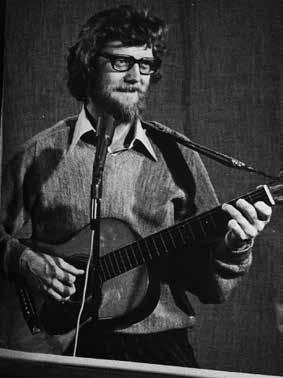
On Thursday, Jan. 14, an eclectic group of local musicians are set to perform at the West End Cultural Centre (WECC) to raise funds for the Lake Winnipeg Foundation (LWF) while honouring lake-lover and Interlake folk musician Sol Sigurdson.
The event is called “Love, Lake Winnipeg: A tribute to the songs of Sol Sigurdson,” and it features Panamax (a duo comprised of experimental electronica artists Tim Hoover and Curran Faris), indie rockers Mise en Scene, folk/country soloist Jess Reimer, and a collaboration between established folkies Scott Nolan and John K. Samson.
Each performance will include the artist’s own material in addition to a Sol Sigurdson cover. The performers have recorded these covers for a limited-edition four-song EP, one copy of which will be given to each ticketholder for free upon entry.
LWF is an environmental nongovernmental organization that focuses on restoring and protecting the health of Lake Winnipeg by implementing research, public education, stewardship, and collaboration. The member-based organization was founded in 2005 by a group of concerned citizens.
With the expertise of a Science Advisory Council comprised of respected freshwater scientists from across Canada, LWF is promoting its Lake Winnipeg Health Plan, focused on the root causes of harmful algae blooms.
Global Nature Fund, an international conservation organization, named Lake Winnipeg its “Threatened Lake of the Year” in 2013, citing algae blooms caused by agricultural pollution and sewage.
“Lake
Winnipeg is at the core of who we are
as Manitobans: it defines our geography, drives our economy, shapes our culture and supports our biodiversity”
– Alexis Kanu, executive director, Lake Winnipeg Foundation
“Lake Winnipeg is at the core of who we are as Manitobans: it defines our geography, drives our economy, shapes our culture and supports our biodiversity,” said LWF executive director Alexis Kanu.
The cultural impact of Lake Winnipeg on the artists is expressed through stories translated to song. According to Nolan, Sigurdson is the master craftsman of that trade.
“Locals hearing their own names and stories in song is something we
have in common, and I think its part of what we’re known for.”
Sigurdson was born and raised on the west shore of Lake Winnipeg in Riverton. His father managed several fishing stations and he helped out with the family business, which was active on Lake Winnipeg for decades. His music reflects on his experiences with the lake and the community that thrived from its abundant resources.
As singer and principal songwriter of the Whisky Jacks – a fixture of local hootenannies at Interlake dance halls in the 1960s – he brought to life the stories of the people he met during his time on the lake.
“His songs reference real people, places, and events from our history. In many ways, they’re a love letter between a place and its people,” said Kanu.
Solo artist and former Weakerthans frontman John K. Samson was approached to participate in the project because his style of storytelling through music is similar to that of Sigurdson. LWF was pleased to learn that Samson is a fan of Sigurdson’s, and he joined the project as a producer with a guiding artistic vision.
“I was excited at the opportunity to collaborate with John in the first place but the idea of interpreting another artist’s song made it even more interesting,” Nolan told the Manitoban
“[John and I] discussed and marvelled at the idea of songs that were written for small groups of people to hear.”
Stories of Lake Winnipeg bring to light an economic and cultural impact on residents both current and former that resonates to this day.
“The Interlake area and Lake Winnipeg mean a whole lot to me. I grew up in Gimli a few blocks away from the lake, spending my summers hanging out on the beaches and swimming in the water. For a small town there has always been a strong creative community, whether it is art or music, and a lot of that inspiration, for me at least, comes from living so close to such a big body of water,” said Corey Hykawy, Mise en Scene’s bassist.
Hykawy went on to explain the importance of Sigurdon’s music to the history of Lake Winnipeg and Gimli. This, Hykawy said, is due to the fishing community and the lake itself being among Sigurdson’s favoured
Same space, new place
New downtown pub promises to be diverse, artsy hotspot
TOBI NIFESI, STAFF
T
hree years ago, downtown Winnipeg lost one of its favourite bars – the Lo Pub. But there’s a new pub in town that promises to amp up the city’s arts scene.
The Knndy is a recently opened bar and arts venue that is located in the exact same space as the defunct Lo Pub. The new downtown spot opens as a bar and restaurant during the day, but functions as a live entertainment venue at night.
Jamil Chaudhry is the Knndy’s director of operations and he would be the first to dismiss the idea of the pub being just a pub. He wants the Knndy to be known as a live arts and entertainment venue that opens its stage to artists, musicians, comedians, poets, and spoken-word artists of any cultural background.
“It is a community live venue [...] we cater to pretty much all cultures,” Chaudhry told the Manitoban
Those that used to frequent the Lo Pub meet familiar sights on entering the establishment. A few furnish-
ings – some brass rails and window fittings, among others – have been unmoved to preserve some trappings of the original space.
“This place has quite a bit of history,” said Chaudhry.
“Winnipeggers like to see different things. Keeping that in mind, [showcasing the] old and new is the main concept of the Knndy.”
The space’s interior design gives the pub a fresh and artsy vibe. The walls are lined with murals, pictures, and paintings submitted by local artists, and the stage is decorated with colorful installations. At first sight, the Knndy looks like a cross between an open concert hall and an arts studio.
That being said, the services at the bar are complementary to all that the pub has going on. The menu consists of tasty food and fancy drinks from different cultures, and the pub offers catering services as well.
Downtown Winnipeg is home to most of the city’s nighttime hotspots
and Chaudhry emphasizes that the Knndy is only here to contribute.
“We are just an addition to the same culture. We are not here to see who is going to do better or worse [...] This venue is not about the competition. It is about how we can contribute more,” said Chaudhry.
“Night life in Winnipeg downtown has changed and we are just part of that change.”
The venue, located at 330 Kennedy St., touts inclusivity and diversity in all services it provide. From the contributing artists, to the live music, to the food, multiculturalism underlies a night out at the pub. Music from any genre or cultural origin could easily be heard from the stage on any given night.
On Jan. 9, the pub hosted a mashup event called “1thing.” The show featured live and simultaneous performances from DJs, a B-boy dance group, and live art from an architectural designer. It is the pub’s mandate to host more art shows like this from
lyrical topics, as both remain “vital parts of the Interlake’s culture and economy” to this day.
“These songs are as relevant as they have ever been with the current state of the lake, which is why this event is such a great thing,” said Hykawy.
“We all get to sing songs about Lake Winnipeg while showcasing an Interlake folk legend and raising funds for the lake that we love.”
Tickets to “Love, Lake Winnipeg” are $25 and can be purchased online at www.lakewinnipegfoundation.org or through the WECC’s box office. Doors are at 7 p.m., and the show starts at 7:30.
time to time, but it’s not Chaudhry’s only plan for the space.
“From day one, our vision was to have this venue cater to multicultural events [...] The major one is that we are trying to put together something for the Hispanic community.
I think that is a need in Winnipeg,” Chaudhry explained.
For more information on this new downtown hotspot, follow the Knndy on Twitter (@theknndypub), and Instagram (@theknndy), and like the pub’s Facebook page.
PHOTOS PROVIDED BY LWF
PHOTO BY CAROLYNE KROEKER
The Relevance of Islamic Identity in Canada sparks timely conversations
Canadian Muslims speak out, but offer few conclusions
TOBI NIFESI, STAFF
This book is neither a manual nor a dissertation, on the relevance of Islam in Canadian society. It’s a conversation intended to make the reader cognizant of the inner workings of a secularized society that struggles with its pluralistic values.
Nurjehan Aziz, a Canadian editor, reached out to eleven prominent essayists, and together they began a conversation. This conversation,
which grew into a book, The Relevance of Islamic Identity in Canada: Culture, Politics, and Self (edited by Aziz), examines what it means to be a Muslim in Canada today.
The eleven contributors include Muslim writers, scholars, activists, journalists, and artists. Each contributing author was either born in or immigrated to Canada.
In diverse ways, each author relays their thoughts on a few key issues that face Canadian Muslims. These range from the identity crisis a Muslim living in a secular democracy struggles with, to the Islamophobic notions that arose after 9-11 and have persisted ever since.
In his essay, Vancouver-based novelist Ameen Merchant writes about his ambivalence towards the perceived image of Muslims. A victim of incessant racial profiling at Canadian airports, Merchant emphasizes the othering attitude of secular Canada towards Muslims and the lack of individualism perceived amongst members of the faith.
“I am a Muslim. But I am also not just a Muslim,” Merchant writes in his essay’s conclusion.
As the book progresses, Merchant’s statement seems to be the underlying perception each author has of themselves. Their various views on how Islam can function and persevere in a society that pays no mind to religious values stem from their belief that they are more diverse than the stereotypical notion of a Muslim Canada has come to know.
“I am a Muslim. But I am also not just a Muslim” – Ameen Merchant, The Relevance of Islamic Identity in Canada
As with every conversation, each contributor had a different tone. The essayists’ tones range from reflective to apoplectic to humorous. Safia Fazlul, a Toronto-based novelist, shares her thoughts on the proximity of a sex store to the Toronto Islamic Centre, and she does it so casually
’Toban turntable
Federal Lights
Coeur de Lion
4/5
Carefully painted with poetry, pounding drum beats, and enchanting layers, Winnipeg band Federal Lights has produced a captivating follow-up to their 2013 debut We Were Found in the Fog in Coeur de Lion. The album is set to be released Jan. 29, with Canadian tour dates to be announced shortly.
Coeur de Lion opens with the catchy groove of “Into the Ground,” one of the more uplifting tracks on the record. With joyful harmonies that soar over the chorus and delicate glitters of xylophone melodies, the song highlights a theme of endurance and finding strength even while feeling broken.
The title track switches things up and features Jodi Roy, whose voice can only be described as liquid honey, pure and sweet. It allows for a sharp contrast from counterpart Jean-Guy Roy’s low and husky vocals, which primarily take the lead role on the rest of the album. The track can almost be described as psychedelic – listeners can expect wanting to close their eyes and sim-
ply float away into space.
Other standout tracks include folk anthem “This Town,” which could likely find its way onto your summer road trip playlist, as well as “Parachutes,” a slow-moving and stunning duet between the two vocalists that finishes the album.
My only criticism is that a few tracks tend to border on the line of being repetitive, though they still have enough appeal not to be written off completely. Additionally, I would welcome a stronger vocal
presence from other band members – in their rare appearance, it added compelling variation and a unique layer to the record.
Listeners will no doubt be drawn in by the emotional stories told in Coeur De Lion. Mesmerizing, stormy and filled with electrifying tension, this is a must-listen for anyone wanting to further explore the Winnipeg music scene.
www.federallights.org
that the reader could easily miss the common misconceptions about Islam highlighted in her essay.
Narendra Pachkhede writes about the history and importance of constructing mosques with actual minarets in Canadian cities. Monia Mazigh recommends a partner-oriented style of relationship between men and women of the Islamic faith while Mohamed Abualy Alibhai argues that a conscience-based Islamic community would ward off any threat secularization may pose to existing family structure.
Amid all these expositions and suggestions, Haroon Siddiqui, a former editor at the Toronto Star, manages to squeeze in a chapter called “Anti-Muslim Bigotry Goes Official – Canada’s newest Dark Chapter” –and it was dark indeed. Siddiqui goes ballistic on anti-Muslim bigotry and what he called a campaign by former prime minister Stephen Harper to inculcate Islamophobia in Canadians.
However, despite the varied tones and passionate writings of the contributors, there is something lacking about this book. Just like some conversations, much is mentioned but
nothing is really being said.
The post-9-11 anti-Islam bigotry, the rise of ISIS, the 2015 niqāb debate, Quebec’s Islamophobia, the curtailing of Islamic cultural practices and structures in Canadian cities – all of these are some of the important issues that are mentioned and welldiscussed in the essays. However, the open-ended nature of the essays may simply leave the reader unfulfilled.
One cannot doubt the passion with which the writers, including Aziz (who wrote the preface), share their thoughts. It is clear that these issues are crucial and readers ought to be aware of them.
That being said, despite all the passion, this book may leave readers still confused about the relevance of Islam in Canada. The tenets shared by the writers only go as far as to suggest that secularization and Islam do not go hand in hand.
Order The Relevance of Islamic Identity in Canada from the publisher, Mawenzi House, at www.mawenzihouse.com
William Prince Earthly Days 4/5
Released just before Christmas, William Prince’s Earthly Days is already drawing deserved acclaim.
The Winnipeg singer-songwriter –by way of Peguis First Nation – had previously earned accolades slinging his tunes live at several joints around town.
On this, his debut record, Prince demonstrates why some of the city’s best roots musicians are admirers and cements his place among them.
Consider album opener “You Got Me” – it somehow deftly avoids the ‘we’ve got each other and that’s enough’ trope while still being essentially about that. Certainly, the honeyed voice singing the tune helps – Prince’s supple baritone feels like it could keep you warm on a Manitoba winter’s night – and the foot-stomp percussion provides an insistent push to the tune.
Prince enlisted the help of kindred spirit, local folk musician, and longtime collaborator Scott Nolan as a producer on Earthly Days and while the album rises (and honestly, never falls) on the strength
of Prince’s songs and performance, Nolan’s steady hand on the controls ensures the album has a consistent, quality sound.
Even on a sparse (and stand-out) song like “Bodyguard & the Beer Girl,” Nolan uses a subtle reverb that gives Prince’s voice and guitar a fuller tone than the singer would likely produce in a room all by himself. But ultimately, Earthly Days succeeds because Prince all by himself is a force to be reckoned with.
www.williamprincemusic.com
RAYLENE PACI, VOLUNTEER STAFF
MICHAEL ELVES
PHOTO PROVIDED BY MAWENZI HOUSE PUBLISHING
PHOTO
Bisons edge high-flying Golden Bears
Men’s hockey sweep #3 Alberta, take seven of eight points in regular season
RYAN STELTER, STAFF
Friday
The University of Manitoba Bisons men’s hockey team opened up the 2016 calendar year with a clash against defending CIS champions Alberta Golden Bears, coming out on top 7-4 on Friday night at the Wayne Fleming arena.
Manitoba opened the scoring when Brett Brooks finished off a rebound after Jonah Wasylak came barreling in on a breakaway and whiffed a shot on a rolling puck.
The lead wouldn’t last for long, however. After a beautiful string of passes, Jordan Hickmott made a nifty forehand backhand deke to roof it past a helpless Byron Spriggs. Eleven seconds after that, the hot-handed Jordan DePape came streaking in on the right wing and blasted a shot through the wickets of Bears goal-
tender Luke Siemens. DePape has now registered a point in the last 12 games – a Canada West best.
Captain Luke Paulsen took a bad penalty midway through the first period, and the Bears capitialized.
James Dobrowolski sniped a shot glove side from the slot, levelling the score at two a piece heading into the break.
The second period echoed the same storyline as the first. Wasylak got the Bisons back in front when he fired a shot over the shoulder of Siemens from the top of the circle –his first goal as a Bison. Riley Kieser tied things back up for Alberta at 7:36 of the middle frame, picking up a rebound in front of the net and with his long reach, wrapping it around a sprawling Spriggs. Three minutes later, the Golden Bears would earn
their first lead of the night when veteran defenceman Thomas Carr fired a low, hard shot from the blueline.
With five minutes remaining in the frame, rookie Brett Stovin extended his point streak to an astonishing 10 games, notching his ninth goal of the season after flicking a rebound in from close range following a Lee Christensen point shot.
The home side exploded in the third frame for three unanswered goals, including two consecutive powerplay tallies.
Three minutes into the period, Channing Bresciani ripped a shot home from the point to make it 5-4 for the home side. Minutes later, Shaq Merasty buried a DePape feed into the slot to double Manitoba’s lead.
Rene Hunter finished off the scoring with some nice patience in the
A rough restart
slot, wristing home a shot far side on Siemens, who was then pulled after allowing his seventh goal on the night at 10:56. The Bears pushed hard in the last 10 minutes of the game, but some solid defensive play and some key saves from Spriggs were enough to see Manitoba through.
Head coach Mike Sirant talked post-game about the successful start to the second half of the year.
“It was a team win,” he said. "I thought everybody on our team did their job and played their role [...] We did the things that we identified we needed to do to be successful, we played our game and it was really good to see our players rewarded for their effort and performance.”
Saturday
On Saturday afternoon, the Bisons played out a 3-2 win over Alberta. The second game of the back to back was hard-hitting and physical, with no animosity lost between the two teams.
The visitors were determined not to repeat Friday’s 7-4 loss, dominating in the early going. All that hard work came undone when Joshua Derko took a bad cross checking penalty 200 feet from his own net.
The Bisons made the Golden Bears pay by way of Jordan DePape when, four seconds into the Manitoba power play, he buried a far side shot on Luke Siemens. DePape extended his point streak to an impressive 13 games with the tally. Alberta would tie the game with less than a minute left when Kruise Reddick had a shot deflect off Justin Paulic’s shoulder into the back of the net.
Lots of penalties filled the latter half of the frame, as tensions started
Women’s hockey open up 2016 with two straight shutout losses
ANDY CHE, STAFF
Friday
The University of Manitoba Bisons women’s hockey team didn’t get their new year running on all cylinders on Friday night. The herd dropped a 2-0 loss at the hands of the Alberta Pandas, now the league-leaders in the Canada West. With a shutout loss, Manitoba suffered their first scoreless performance since an Oct. 16 home matchup against Mount Royal.
Alberta set the tone early, when Alison Campbell grabbed the goahead goal just 18 seconds into the game. The Edmonton native beat goalie Rachel Dyck top-shelf for her third goal of the season.
Though the Bisons were caught by an early setback, Jon Rempel’s side responded valiantly. The first period proved a fiery affair as both teams
took three penalties each, although neither powerplay unit made good on their chances.
Alberta goalie Lindsey Post was in Manitoba’s way all evening. The fourth-year Quebec native recorded 14 saves for her fifth shutout of the CIS season. Her perfect game was in part due to a resilient Pandas defense that held the Bisons to only three shots in the third period.
Meanwhile, Dyck stood firm for Manitoba in their search for an equalizing goal. After allowing Alberta to capitalize with their first chance of the game, Dyck stopped the next 15 shots she faced. However, the Pandas sealed the win by scoring on an empty net with Campbell’s second goal of the contest.
With the loss, the Bisons fall to
third in the Canada West division with a 9-7-1 record. Meanwhile, the win gives the Pandas a two-point cushion at the top of Canada West, with a 10-6-1 record.
The two teams will meet again on Saturday, Jan. 9 to complete the weekend series.
Saturday
Following their 2-0 defeat on Friday night, the Bisons were hoping to redeem themselves on Saturday in game two of the weekend series. To their disappointment, the Pandas inflicted a second consecutive shutout on the visitors, sweeping the series with a 3-0 home victory. Up until this past weekend, the herd hadn’t been shut out in consecutive games since the 2013-14 season.
Alberta drew first blood when a tipped Megan Eady shot beat Rachel Dyck from the point midway through the first period. Once again, the Pandas’ defiant style of defense was too much for Manitoba to penetrate. The home side took their narrow 1-0 lead into the second intermission.
The Alberta defense then began to play with an attack-minded chip on their shoulders by the start of the third period. Blue-liner Cayle Dillon ripped a high point shot past a screened Dyck leaving the Panda’s with a 2-0 cushion.
Manitoba played their most productive period in the third frame, forcing goalie Lindsey Post into making nine of her 23 saves of the night. However, the herd was unable to get themselves on the board as the game
to boil over from Friday night’s contest.
The Golden Bears dominated the second period, peppering Paulic but only managing to get one shot past him when three minutes in Riley Kieser found the back of the net. Two minutes later, Warren Callis wristed a shot on Siemens to draw the herd level at two.
After two periods, the visitors had registered 33 shots on goal, compared to the Bisons’ 13.
In the third period, Alberta carried the play throughout again, dominating in every single statistical department except the score sheet. The plucky Bisons team managed to stay in the game with some fabulous saves from Paulic.
In the dying minutes of the game, DePape threw a pass to the front of the net and Shaq Merasty was the beneficiary, slotting the puck home past Siemens for the game winning goal. Brett Stovin got the second assist on that play, in turn extending his own point streak to 11 games.
Paulic was the star of the show, making several highlight reel saves in the game. He was the main reason the herd stayed in the game all afternoon. The rookie talked postgame about his performance and being able to beat the Bears twice on the weekend.
“Things went well out there, the defense had a heck of a game out there, limiting their scoring chances,” he said. “It feels pretty good to beat those guys twice in a row.”
The Bisons play a two-game set at home against the Mount Royal Cougars next weekend, looking to continue their momentum.
wound down.
Rounding off the contest was Sasha Lutz, burying an empty net goal to clinch the 3-0 victory.
Post’s second consecutive shutout means she now boasts five in her last six outings. Though lacking an offensive catalyst on their team, Manitoba are still receiving stout goaltending through Dyck, who made 18 saves on 20 shots in the defeat.
The Pandas are now atop of the Canada West table by two points. The Bisons slip down to fourth with the defeat and are tied with Regina.
The Bisons will cap off their twoweekend road set next week at the Regina Cougars on Jan. 15 and 16, respectively.
PHOTO BY CHANTAL ZDAN
Who’s worth the money?
The Manitoban’s sports reporters break down what they think the Jets should do with the contracts of some of their best players
ANDY CHE AND RYAN STELTER, STAFF
As the trade deadline approaches, plenty of eyes will be on Winnipeg and what occurs with some of their franchise players. Ryan Stelter and Andy Che discuss their thoughts on what the best choice may be for the Jets.
Ryan The Winnipeg Jets, and particularly general manager Kevin Cheveldayoff, have some decisions
to make in the near future.
Both Dustin Byfuglien and captain Andrew Ladd are due to have their contracts run out at the end of this season. Byfuglien is currently making US$5.2 million a year, and will be looking for a long-term, bigmoney deal. Ladd is currently collecting US$4.4 million a year and will also be looking for a pay raise. Here is the problem, however: Big Buff is 30 years old and will be head-
ing into his twilight years fairly soon. Winnipeg has a young defenseman, Jacob Trouba, who is due to receive his first big pay raise as well, with his entry-level contract expiring at the end of this season. The 21-year-old has given the Jets brass a lot to think about and certainly deserves a longterm, big-money contract. He’s the future of the Jets’ blue line and there’s no question about it. Hopefully Cheveldayoff can see that and ink Trouba to a long-term deal.
It would be best for the Jets to resign Ladd for whatever amount of money he demands and keep Trouba for the long term. Byfuglien should be dealt at the trade deadline for an all-star forward – something that the Jets lack.
Evgeni Malkin is a player the Jets could target due to the Pittsburgh Penguins’ struggles on the back end. The trade could therefore make sense for both teams as the Jets would receive a top-line forward and the Pens could finally get a reliable defenceman. There would be other pieces involved, but if Chevy could pull a deal off like that it would definitely be a positive for the Jets.
Andy
It’s a sure bet that the Jets will extend the contracts of forwards Mark Scheifele and Adam Lowry, who are set to become restricted free
agents by this season’s end. The question remains,what length will each player sign to?
Eyed as the future franchise center for the Jets, Scheifele should be offered a long-term deal in the range of 5-6 years at US$25 million to US$35 million
Scheifele perhaps has the most definitive outcome. Eyed as the future franchise centre for the Jets, the 22-year-old should be offered a long-term deal in the range of 5-6 years at US$25 million to US$35 million. Having signed an entry-level contract in 2011, Scheifele’s steady offensive output has him on pace to set career highs in goals and points this season.
Though dominant on the forecheck, the concern for Adam Lowry – another restricted free agent – is his potential to blossom into a top-six forward. Following a fruitful rookie campaign, the third-round selection
in 2011 has fallen into a sophomore slump and was given a conditioning stint in the AHL’s Manitoba Moose. The Jets will likely test Lowry’s shortterm potential with a three-year deal in the range of US$10 million to US$15 million.
The Jets will also be looking into locking up Jacob Trouba long term. However, with his offensive and defensive output slumping, the Jets may offer the 2012 ninth-overall selection a truncated contract for him to prove his playing level before inking him to a long-term deal. The most likely terms offered will be in the range of two years at US$8 million.
While Cheveldayoff assembles his shortlist of players to extend, the Jets general manager will also look into opening up cap space. With the emergence of Connor Hellebuyck – another Jet who will be seeing a boost in salary very soon – the future is appearing increasingly bleak for Ondrej Pavelec. At US$10 million over the next two seasons, the Jets might want to relieve him from their payroll. The most likely scenario is to trade the 28-year-old in exchange for a veteran goaltender as a mentor to both Hellebuyck and AHL standout Eric Comrie.
GRAPHIC BY CAROLINE NORMAN
CIS issues new recruiting document
Changes to rules affect football most directly
MIKE STILL, STAFF
On Jan. 1, a new set of CIS recruiting rules came into effect, with a full page dedicated specifically to football. Most of the changes in relation to football involve finances, with teams being prohibited from taking recruits to professional sporting events, for example.
Manitoba Bisons head football coach Brian Dobie is quite familiar with how much recruiting has changed in the CIS over the past two decades, as he and current UBC head coach Blake Nill were the first to begin nationally recruiting at a time when that concept was unheard-of in the Canadian game.
“Recruiting was not recruiting as we know it now. There were certain base rules, but there wasn’t a need the way there is now, because when I came in in the mid-90’s, it was essentially local recruiting,” Dobie said.
As time passed, more and more schools realized that the major variable when it came to winning games was quality recruiting outside of their home province. Certain teams also began receiving strong financial backing from rich local donors, such as Jacques Tanguay at Laval, Stu Lang at Guelph, and most recently, David Sidoo at UBC.
Not coincidentally, all three of those programs found success shortly after linking with the above names. Laval has been a perennial powerhouse for the past decade and a half, Guelph has reached the conference championship three times over the past four years, and UBC claimed their first Vanier Cup since 1997 this past season.
“The more the playing field became imbalanced, the more people started becoming conscious of it and concerned,” said Dobie.
New recruiting document breakdown
According to Dobie, the football coaches in the Ontario University Athletics (OUA) conference were the first to bring up the need to alter certain rules in the document.
“The recent evolution of this [recruiting document] came out of the OUA, out of football,” Dobie said.
“The football coaches and athletic directors in the OUA were very concerned about the disparity in budgets and in additional funding in the budgets from outside sources and the abilities of two, or three, or four of these schools to do great things and the other five or six or seven schools to not do those things.”
The changes to the document were discussed at the latest national meetings as well as the first-ever CIS football summit this past June. The 10-member board of directors for CIS ultimately voted in favour of the new recruiting guidelines in mid-December.
“When you look at the new recruiting document, there’s not a lot of change in the recruiting document from where it was,” says Dobie. “I think it’s just a better document in
terms of expanding the technical and spirit of the rules. I think it spells things out more blatantly in black and white as to what can and can’t be done.”
According to Dobie, a number of the new changes to the recruiting document centre around money and financial assistance. Both topics comprised a significant amount of discussion during the national meetings.
“I think right now, that’s probably the biggest concern in CIS football, is the money disparity,” Dobie said.
Manitoba’s 2007 Vanier Cup win
This isn’t the first time a major change has been made to CIS policies with a direct tie to football. In 2008 – following Manitoba’s first Vanier Cup win since 1970 – a new eligibility rule was added which stated that after an athlete graduated high school, they had seven years to complete five seasons of CIS play.
Prior to that, beginning around the mid-90’s, Canada West teams had predominantly been recruiting junior football players, while the teams out East were not. Those players were able to play five seasons of junior football and then five additional seasons in the CIS, making the average age around 27-to-28.
“It had been discussed, it had been
bantered around the table for several years. It wasn’t suddenly Manitoba won, let’s do it [...] You could see it coming,” Dobie said.
“There had been a lot of discussions at our national meetings and we had fought back the wave over a period of time,” Dobie said.
Eventually, the change was made as the teams in the East had more members and therefore a majority ruled.
The most recent changes to the recruiting document have a very similar aspect to what happened following the 2007 season, except this time it was UBC’s success and financial backing that finally pushed things over the edge.
“Once boom, it happens, I think that’s the exclamation mark and we’ve got to do something about it,” Dobie said.
Compliance
While the impressions among CIS coaches and staff to the new recruiting document is positive, there are still some underlying issues – compliance being the most significant – as schools are expected to police themselves.
“That [compliance] unto itself bothered me more than anything else in this document,” Dobie said.
“Why should Coleen Dufresne
[athletic director at the U of M] be responsible for righting perceived wrongs in someone else’s program, with our competitors? That’s not her job.”
A positive step towards implementation of the new rules occurred a few months ago, when Graham Brown was hired as the new CEO of the CIS
The major issue stated by Dobie in relation to recruiting compliance is that there’s no realistic way for one school to investigate another in a timely manner.
“They [the athletic directors] can’t follow up, they have no right to follow up. If I was to accuse someone of something, they can call their colleague at another school and ask the question, but they can’t follow up. There’s no way, they don’t have the means to do that.”
For Dobie, the best-case scenario
is to have third party policing, with particular people responsible for every individual conference. Unfortunately, that’s not realistic at the moment as it would likely require too much money to transport the hired officials back and forth across the various conferences.
“I would love to have a couple people in an office in Toronto, and a compliance office in Canada West, OUA, RSEQ, and AUS,” Dobie said.
“The problem, then, is everything is about money [...] It wouldn’t be easy, it wouldn’t be cheap, and that therein lies the problem, because if money was no issue, hire 25 people across the country. Put one in every school.”
A positive step towards implementation of the new rules occurred a few months ago, when Graham Brown was hired as the new CEO of the CIS. He’s been asked to form a committee (geared to be up and running in the new year) that will look into how to most effectively police the rules.
“Usually when there’s a need, people find ways to solve the problem, and I’m optimistic and trusting that the CIS will do that,” Dobie said.