Re: Cancellation of the U of M federal candidates’ debate
I am very disappointed that the University of Manitoba Students’ Union (UMSU) has decided to cancel the upcoming Winnipeg South federal candidates’ debate. The rationale given to my campaign by vice-president external Astitwa Thapa was “the Local Candidate’s Debate has been cancelled because of [Conservative candidate Gordon] Giesbrecht’s refusal to attend the debate. We have heard from a lot of students that they just aren’t interested in attending if there won’t be a debate with the Conservative representation.”
Re: UMSU moves forward with divestment campaign
I want to commend UMSU Council and vice-president external Astitwa Thapa for their trailblazing work towards divesting the University Investment Trust from the fossil fuel sector. I agree wholeheartedly with Thapa when he says “the University of Manitoba prides itself in being a leader in the 21st century – then be a leader by divesting from fossil fuels.”
I am encouraged for the future of the country given this insightful campaign, and wish the student government continued success in its excellent work advocating for positive social change. Please continue being the change and leading by example.
Michael Silicz
U of M alumnus and former Manitoban comment editor, 2007-2009
I would ask UMSU to indicate how many of the approximately
29,000 students at the University of Manitoba indicated their lack of interest. Even without the participation of the Conservative candidate, students, professors, and staff deserve to hear about the platforms of the New Democratic Party, Green Party, and Liberal Party. In cancelling the debate, UMSU is allowing itself to
be bullied by the Harper government – a government that has refused to participate in public forums in a meaningful way.
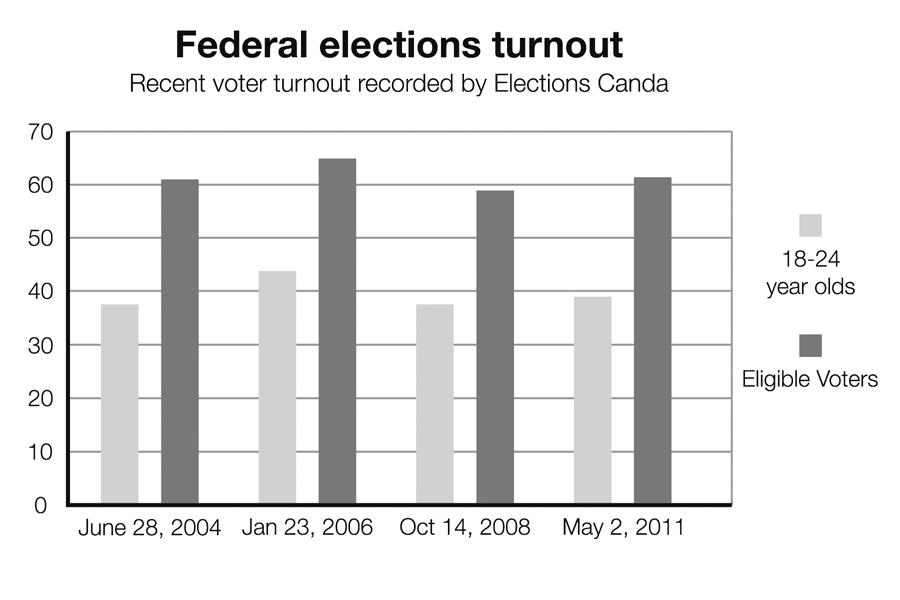
In a time when youth voter turnout is at an all-time low one would expect the student union of the largest post-secondary institution in Manitoba to encourage democratic participation through hosting a federal candidates’ debate.
It’s no secret: students will change this election
Young people and students can drastically change the outcome of this federal election. The current government won a majority in the 14 closest ridings by only 6,201 votes. Just imagine what could happen if more young people voted and raised the issues that we care about.
As members of the Canadian Federation of Students (CFS), students at the University of Manitoba and across the province are participating in the national “It’s No Secret” campaign. The campaign seeks to engage students in the election and ensure that we are voting while also raising issues that are critical for students across Canada.
We must demand that our politicians and political parties meaningfully address the issues facing young people today, including the future of the economy, the environment, and the society that we will inherit. A critical way to make this demand is with our ballot. Students can make a difference this election. It’s up to us to ensure that student issues are on the table.
There are many issues facing students on a day-to-day basis that must be included in the national conversation about our collective future. It’s no secret that student debt has climbed to over $17 billion in Canada. We’ve seen little leadership on this issue from our politicians.
Instead, the federal government secretly increased the student debt ceiling from $19 billion to $24 billion this spring without talking about the root causes of skyrocketing student debt. We are told that the main issue in this election is the economy, yet we’ve seen little conversation about
the debt crisis that is bankrupting an entire generation.
While the provincial government has direct power over post-secondary education, the federal government can play a leadership role in ensuring education for all. Unfortunately, federal funding for social programs like post-secondary education has been steadily slashed since the 1980s. While government grants used to cover up to 80 per cent of university budgets 30 years ago, they now cover roughly only 50 per cent.
It’s no secret tuition fees are making up the difference. Fees have tripled since the 1990s, outpacing the rates of inflation and other costs such as housing or food. At the same time, university administrations, including the University of Manitoba, are investing in capital projects and cutting the fundamentals: courses, faculties, programs and services.
International students were burdened with covering these budget cuts when their tuition fee differentials were hiked by up to 18 per cent. At both the government and institutional level, there is a lack of leadership to create post-secondary institutions that are focused on providing quality and accessible education for the public good. While fighting budget cuts at the university level, we must also demand that the federal government adequately fund post-secondary education across the country.
Students face another hurdle in paying for their housing. It’s no secret Canada is one of the only developed nations without a national housing strategy. Many students depend on affordable housing throughout their
education and we need the federal government to ensure that adequate housing exists for everyone.
Students across the country, particularly women-identified students, should be able to attend post-secondary where a consent culture is fostered. The federal government can provide leadership to ensure all students feel safe on campus.
Throughout and after students’ education, getting a good job is becoming harder and harder. It’s no secret that youth unemployment and under-employment is outpacing general unemployment rates. Many students are forced to take unpaid internships, often only accessible to those who are able to work without earning a wage. The federal government must take strong leadership to address youth employment in Canada.
Young people are watching as our current leaders destroy our land and environment. The divestment campaign active on campus through the Divest Manitoba student group, which CFS-Manitoba allocated $2,000 to help launch, seeks to end investment in fossil fuels at the university level.
The CFS has been helping launch and coordinate this campaign across the country. The federal government must stop subsidizing fossil fuels and the tar sands, and instead invest in future generations through clean and renewable energy. Students today will inherit the environment, but we need to see action now to address the climate crisis that puts our entire collective future into a dangerous position.
The list of reasons for young people to vote in this election goes on and
Brianne Goertzen NDP candidate, Winnipeg South
on. Choose an issue that matters most to you, investigate, read and understand what each party is proposing to address the issue. Engage with your local politicians, online or at local candidates’ forums. Ask them questions and demand they take a stand. As part of a national student organization, we know that political parties have been listening to our campaign. The Green Party announced a plan to eliminate tuition fees by 2020. The NDP announced a plan to eliminate interest on federal student loans and give $250 million to the student grants program. The Liberals have talked about investing in a youth jobs and employment plan. The CFS will continue to represent the interests of University of Manitoba students at a national, provincial, and local scale in this election and elections to come. When we stand in solidarity, students can change the national conversation. Last election only 39 per cent of people age 18-24 voted. On Oct. 19, let’s change that. When students are active and engaged, we can see change on the issues that affect us on a daily basis. Be part of the student movement that will continue to fight for more equity and justice on our campuses and in our society on election day and beyond.
Michael Barkman Chairperson, Canadian Federation of Students-Manitoba
When I learned that Bison Sports is dismayed that their best-attended football games draw a mere quarter of the student body out to Investors Group Field, it brought tears to my eyes. The sky became suddenly overcast, and out of nowhere I heard the plaintive strains of the slow movement from Tchaikovsky’s violin concerto ringing out from the world’s tiniest violin.
In an article in the Sept. 30 issue of the Manitoban, Mike Still wrote, “while Bison Sports is working hard to create an optimal fan experience, it’s still up to the students and fans to do their part and actually show up.”
He expressed a similar view in an
editorial back in March, describing attendance at Bisons home games as “abysmal” and “pathetic.”
These articles discuss the indisputable fact that supportive fans can improve a football team’s performance on the field. But they go one step farther and intimate that U of M students have a responsibility to attend football games and are somehow letting the school down if they don’t.
I’m not a sports fan. Ordinarily I don’t begrudge other people their sports fandom so long as they keep it away from me. But the immortal rind it takes to publicly lament the attendance levels and suggest that
University of Manitoba students have some kind of obligation to show up at Bisons games – well, that makes me mad.
Crunching the numbers
First, let’s dispel the notion that Manitoba’s attendance this year is in some way unusually low for CIS football. The average attendance at all CIS men’s football games that have happened this season by the time of writing is 3,596. The Bisons’ average attendance at the four games that have been played so far is 3,264 –less, but not by much. Last season it was 2,891 against an overall average of 3,307.
Manitoba is behind the curve, but it’s by a matter of hundreds, not thousands. Regardless of the size of the stadium, expecting a five-digit turnout on a regular basis is absurdly unrealistic. CIS football only occasionally cracks five-digit attendance – it has done so only four times this season, twice at Laval and twice at Western.
This is not to say that Bison Sports shouldn’t press to improve attendance, but it’s certainly not true that Manitoba fans are uniquely unsupportive of their team. Guilt tactics are hardly warranted. Being a student these days is not easy. Unless you’re extremely well-off,
you have to work, and in many cases you have to work more than one job. If you take your studies seriously, then coursework and reading will absorb a great deal of your time. Then there are extracurricular activities, some of which (depending on your program) are nominally optional but in practice required. I’m told many people enjoy going out with their friends as well. There just isn’t time for many students to attend football games even if they wanted to. It’s nothing short of cruel to suggest they are in some way letting somebody down by prioritizing school, work, and other responsibilities over football – which, let’s not forget, is not the main purpose of a university.
But there are also many people that aren’t interested in football at all and would never attend a game even if you paid them.
Performance etiquette
Though I doubt athletes would like being compared to musical performers, I think the analogy holds. It’s not actually necessary for the U of M to have a football team. The Bisons do not play football because we need them to. They play football for their own benefit as athletes and as entertainment for the fans. In an important sense, this makes them performers, and some of the same rules of etiquette must apply.
As a musician, it strikes me as unspeakably gauche to complain publicly about poor attendance – especially when your definition of “poor attendance” is still usually greater than 1,000 people. Even worse is to deny the autonomy of the audience to choose what they do and do not wish to see.
We’re taught that nobody owes you an audience. I happen to think that a symphony concert is a more worthwhile place to spend an evening than a football game, but even I can’t argue with an audience’s choices one way or the other. In the words of the great sportsman Yogi Berra, “if they don’t want to come out, nobody’s gonna stop ’em.”
If people know about your concert and consider it worth their time to attend, they will. All you can do is promote the concert as heavily as possible, play as well as possible, and hope for the best. I don’t see how the matter could be any different for athletes and football games.
Musicians are no strangers to the “home field advantage.” Of course it is always better to be playing for a large and visibly excited audience so you can feed reciprocally off the energy in the room. Playing for a small or unsympathetic audience is difficult and unpleasant, but sometimes you have to do it.
You don’t always get the audience you’d like. As a performer, if the excitement isn’t there, it’s your job to create it. You have to do this for whoever shows up, whether it’s 30,000 people or only three.
GRAPHIC BY CAROLINE NORMAN
Features Editor: Dana Hatherly Contact: features@themanitoban.com / 474.6520
Point/Counterpoint: To vote or not to vote
You should vote
CRAIG ADOLPHE, STAFF
You should vote.
Often when people tell you that, they argue it’s a sacred responsibility and the best way for you to effect change. Voting advocates tend to get a little hyperbolic.
I won’t attempt to list activities from most to least impactful in terms of bringing about change, but I will readily acknowledge that voting isn’t the only way to do it.
There are other things you can do, other tools in your social change toolbox. Any good organizer knows you need diverse strategies and tactics at the ready if you’re hoping to bring about any type of societal improvements, but voting doesn’t hinder those other efforts in any meaningful way. You can do both.
For the conscientious non-voters
Many of smartest and most well read people I know practice radical politics, identifying as socialist, anarchist, or communist. They do so because they recognize the structural inequalities that exist in society and want to address them.
They further recognize that voting isn’t a panacea for all of a country’s problems and inequalities – a new democratically elected government
won’t change the nature of our capitalist world-economy and it won’t end the burning of fossil fuels. Where many of them err is rejecting voting or otherwise participating in the electoral system as naive, inconsequential, or a waste of time.
Many of those radicals view our elections as something akin to electing a new captain to steer the Titanic after its collision with an iceberg. They see us headed in a terrible direction and the matter of who leads us as an entirely superficial or cosmetic decision at best, or a distraction from the real issue at worst.
I encourage you to remember that even small changes can have a big effect – particularly when stacked one on top of the other. When their effect is to stigmatize groups, decrease accessibility of essential services, or ravage the environment, they can worsen the lives of many people. When they’re targeted at alleviating poverty, making services more accessible, or reducing harm to the environment, these gradual changes can have the opposite effect. Passing on electoral politics is effectively giving in to the former as an inevitability.
Government has had a major impact in alleviating inequality in other countries. Scandinavia, where
a social democratic agenda has prevailed through much of the late 20th century, is full of examples. In Finland, a government-run “housing first” initiative helped to reduce the number of homeless people in the country from over 18,000 in 1987 to 9000 people in 2003 – effectively dropping the country's homeless rate by over 50 per cent in the span of 15 years. The housing policy didn’t end homelessness altogether, and Finland, like every country, still suffers from economic inequality, but for those lives that were improved by government intervention, it wasn’t an inconsequential difference.
We don’t have to go far to see the impact of government policy. Canada’s history is full of policy changes and political decisions that have had both great and terrible effects for its citizens. We’ve established a national healthcare system, created the CBC, and passed a law allowing same-sex marriage.
We’ve also had a long history of colonization, sent young people to die in wars, plundered our natural resources, and infringed on people’s rights – putting Japanese Canadians in internment camps throughout the 1940s, for example. National childcare, legalization of marijuana, hous-
ing initiatives, and a variety of other policies are currently on the table. Which of these things we do and who is elected to implement other legislation moving forward does matter.
You may not like the fact that someone else is producing legislation that will impact you, but this will happen whether you vote or not. And if you don’t vote, then it’s that much more likely to be someone you find unpalatable and who has a drastically different view of the world.
The perfect as enemy of the good
Conscientious non-voters often point to the fact that no party perfectly represents their ideal government (or even form of governance) as a reason to reject the system altogether. The perfect is the enemy of the good, as the saying goes.
Many people prefer being involved in social movements – such as the Occupy movement, Idle No More, or the student movement – where rhetoric is often high and there are greater opportunities to feel active and involved to electoral politics, which can be boring, unimaginative, and unpleasant on the whole.
Social movements give an opportunity for people to gather, discuss
their problems, imagine an improved and often ideal world, and present that to the broader society, usually by taking steps to live their ideals in the public spotlight. It’s a beautiful thing to see.
Radicals are right in that social movements play a major role in bringing about social change. In fact they’re generally the prime incubators of social change. But it’s through government action that these changes are often institutionalized, ensuring that the new ideas that have been concocted and any benefits that have been won remain available well into the future, after the movement has fizzled.
So organize a sit-in or boycott, write slam poetry, support alternative media, and found a workers’ co-op. Live the way you want to live. And when all that is done, pop in to a local voting station and mark an X beside the candidate you think is best suited to make a difference.
Voting won’t change everything, but it will change some things – don’t throw anything out of your toolbox just yet.
GRAPHIC BY BRAM KEAST
Point/Counterpoint: To vote or not to vote
Don’t vote
EVAN TREMBLAY, STAFF
Voting is nothing. Voting is checking a box on a piece of paper.
Not many people bother to check that box anymore. We are told that this is a bad thing. We are failing the system, our country, our society. Somehow, if more people checked that box, things would be better.
Not voting does not mean that you are apathetic, though certainly many people who do not vote are. But this is also true of many people who do vote – whose sole act of civic engagement is checking a box every few years.
Many people vote for the same political party their entire lives without knowing the candidates, the issues, or even the history of the party they are voting for. Is their uninformed participation in the system, which is easily manipulated, better than my informed lack of participation?
To hear voters wax poetic in their defence of voting, you would think it was an informed debate among equally reasonable and knowledgeable peers. Images of white-robed Greeks, sage and bearded, are forced upon the imagination of the unfortunate listener.
Be the most well-informed, reasonable person you can be. But remember, when you check that box, your vote counts no more than the most gullible, hateful, criminal, stupid, and bigoted members of our society. Or, if you prefer, their worldview is just as valid as yours.
Not voting does not mean that you are happy with the way things are. Neither does voting, for that matter. “Change,” “hope,” and “better” are familiar clarion calls which tend to make people flock to a certain political banner. But not voting can stem from an understanding that the real issue is not the party in power – it is the system through which that party holds power.
If you think that the system itself is deeply flawed and must be replaced by a better one, then why would you debase your ideals by participating in that flawed system?
In particular, why would you give up your sovereignty by voting? That’s what voting is – the acquiescence to be ruled. If you vote in good faith, that democratic act is a two-way street. If your candidate doesn’t win, you must submit to the authority of whoever did win. A vote for any candidate is a vote for the system. A vote for any set of ideals is a vote for our current system of government, be it a shade more blue, red, or orange. The ideals may be different, but the system claims the authority (though it may not always exercise it) to tell you what substances you can put into your body, what are the permissible forms of worship, and what forms of expression are permissible. It will always claim the authority to practise violence on your behalf, punish on your behalf, steal on your behalf, and oppress on your behalf. A vote is merely an expressed opinion on how crudely enforced that author-
ity will be, and in what walks of life. That’s giving a lot away by checking a box.
Futility
Incremental change is often held up as a reason to vote: if the system itself is bad, the line goes, than at least we can slowly make it better, because incremental improvement is better than nothing. This would be an attractive argument, if incremental changes were always improvements. But a system that can be made incrementally better through voting can be made incrementally worse in the same way. Incremental change is nothing other than the lack of ability on the part of the system to resist capricious change by the government of the day.
In Canada, we’ve seen incremental improvements in environmental regulations over decades, which have been, inarguably, a good thing. But by the very mechanisms these improvements were accomplished, they were swept away. The system allows for tinkering, but there are no
methods to guarantee this tinkering will be for the greater good. Rather, the tinkering is most likely to be done by the kind of unscrupulous people who are best at manipulating others to vote for them. These changes are most likely to be done so that these unscrupulous people can cement their hold on the system.
Many people vote for the same political party their entire lives without knowing the candidates, the issues, or even the history of the party they are voting for
Not voting does not mean you are not involved. If you do not vote
on principle, then you have a moral responsibility to be involved, at least to the degree that you must live your life in accordance to your own ideals. There is greater involvement, and probably greater effect, in a person trying every day to be kind, charitable, environmentally conscious, and socially responsible, than voting can ever bring.
Not voting means living your life well without needing to elect someone to tell you – legally compel you, more likely – to live your life well. It means opening yourself to your own personal shortcomings without having the government as a whipping boy to shift blame to when you fall short.
On a practical note
The system is broken. It will, for many years, prop itself up, whether you vote or not. In nothing is this seen more clearly than in its response to climate change. Climate change is a threat to every human on the planet, one that cannot be ignored or stopped. To avoid the worst of its effects – and the worst
of its effects may be the collapse of the biosphere and the end of human life – will require massive cultural, economic, industrial, and social re-organization on a global scale. However, the people you could vote for refuse even to speak in the language of radical need – they lack the will and ability to begin the necessary adaptations. The system cannot even address the impending collapse of the life-systems which support its constituent parts – which it glibly calls “voters.”
Not voting is recognizing the huge disconnect between our government and our lives, between reality and pleasant fiction, between the lies of politicians and the truth of your conscience.
Don’t vote – don’t waste your time. Live your life in such a way that if everyone lived their life like you, we wouldn’t need to cast a vote deciding which of your brothers was least unfit to be your keeper.
Getting out the youth vote
Be the Vote aims to educate, engage youth electorate
MIKE STILL, STAFF
One political advocacy group has sought creative ways to combat political apathy and boost electoral participation among youth.
In the 2011 federal election, voter turnout for those between the ages of 18 and 24 years old was just 38.8 per cent, and 45.1 per cent for those ages 25 to 34.
Grace Kennedy, a Manitoba native in her second year of a postdegree program in social work at McMaster University, wanted to reverse historical trends and raise those numbers for the upcoming federal election. As founder and executive director of Be the Vote, Kennedy aims to politicize youth and increase
their electoral participation across the country.
“There’s a lot of initiatives that pop up around elections to get youth to vote, but there’s nothing that really sticks around, year-round, to try to advocate and encourage youth to get more involved in politics 365 days a year,” Kennedy said.
Upon her return to Winnipeg in late 2014, Kennedy held a meeting with a number of interested people from the University of Manitoba and across Winnipeg who also wanted to see this happen.
“Basically, we formed a group. A lot of people are still involved at the advisory level, and then I found peers when I was at McMaster to actually get involved in operations and incorporate as a not-for-profit,” Kennedy said.
By March of this year, Be the Vote, a non-partisan initiative to increase youth voter turnout, was up and running.
Kennedy and her team have been out in the community in the lead up to the election, doing their best to promote youth engagement in the political process. They attended major events, such as TEDxYouth@ Jamesville in Hamilton, Ont. and Pride Toronto, to spread the word.
Kennedy also gave a presentation about her youth engagement strategy at the Hamilton Town Hall on electoral reform.
While the group’s outreach efforts have had some success, Kennedy acknowledged the fact that there is still a ways to go.
“It’s very easy to get the kudos from those who think it’s really commendable that we’re working on this, but
we’re very sensitive to the fact that it takes so much more,” Kennedy said.
“I think what we’ve learned is that addressing this probably requires something so much larger than what we’re able to do, but at the same time, we’re not discouraged.”
“By
virtue of the fact of more youth voting, we would hope to see politicians try and engage youth in innovative ways that are meeting youth where they’re at”
– Grace Kennedy, founder and executive director, Be the Vote
To keep youth commitment up, the organization has been emphasizing their awareness campaigns.
“The biggest project we have on the go right now is pushing out our public service announcement video campaigns on ad space through YouTube and Facebook,” Kennedy said.
The goal with the online advertisements is to provide a subtler pull to those who may not otherwise be interested in getting out to vote and learning more about the long-term impact of their electoral involvement.
Be the Vote also has their own YouTube channel under the same name. They have been publishing weekly videos over the past month to provide some background about each major federal party’s platform and other pertinent information for youth voters.
“To be honest, and I’ll agree, youth are most comfortable at our computers, watching videos, and that’s where we’re used to getting messaging,” Kennedy said. “It’s just about being respectful of that. And so, why not have stuff on YouTube?”
Overall, Be the Vote is trying to encourage inclusivity for the youth electorate.
“It just comes back to having a more inclusive political society in Canada,” Kennedy said. “By virtue of the fact of more youth voting, we would hope to see politicians try and engage youth in innovative ways that are meeting youth where they’re at.”
To learn more about the Be the Vote, go to www.bethevote.ca
PHOTO BY CAROLYNE KROEKER
Source: Elections Canada
Forcing indigenous issues to the federal forefront
Reconciliation needs to be addressed by party leaders because it is a Canadian problem
ALEAH ISAAK, STAFF
On Sept. 26 the National Post published a letter about the lack of indigenous issues at the forefront of federal election platforms, denouncing the silence from each of the major political parties on such issues at the past three leaders’ debates.
Specifically, the lack of conversation on reconciliation remains an embarrassing gap in our election.
In the letter, Wab Kinew, associate vice-president of indigenous affairs at the University of Winnipeg, called on federal politicians to discuss how they would implement the Truth and Reconciliation Commission’s (TRC) recommendations. The letter was signed by 22 other people from a variety of professions and backgrounds from across Canada.
While all parties have put forward background documents outlining their positions on indigenous issues, these conversations have yet to be a part of national debates.
As university students preparing to take on leadership roles in our society in the very near future, it is important that we have the courage to be honest with ourselves and each other about the present state of our country: to acknowledge its strengths and weaknesses.
We also need to have an understanding of our history in order to move forward.
In the opening paragraphs of the truth and reconciliation summary report, the commissioner outlines the history of the relationship between indigenous people in Canada and the federal government, laying down the foundation for reconciliation in the
Canadian society.
“For over a century, the central goals of Canada’s Aboriginal policy were to eliminate Aboriginal governments; ignore Aboriginal rights; terminate the Treaties; and, through a process of assimilation, cause Aboriginal peoples to cease to exist as distinct legal, social, cultural, religious, and racial entities in Canada,” the report states.
Residential schools
When Canada first became a country in 1867, there were residential schools run by churches already in operation, dating back to the 1840s.
The Indian Act was enacted in 1876, effectively allowing the federal government to establish residential schools. The government started phasing out mandatory residential school education in the 1950s and 1960s, with the last federally funded residential school closing in the 1990s.
Under the residential school system, indigenous children were removed from their families and immersed in federally run schools. They were taught the ways of European culture, told that their own culture was wrong, and were not allowed to speak their language. This, as the TRC explains in their report, was an act of cultural genocide.
Even though residential schools have been shut down, the effects are evident today.
From the 1960s until the 1980s there was an increase in the number of indigenous children adopted by non-indigenous families, sometimes without the knowledge or consent of
their parents and communities, in what was known as the Sixties Scoop.
In a study titled “Pathways to the Overrepresentation of Aboriginal Children in Canada’s Child Welfare System,” which compared child welfare services provided to aboriginal and Caucasian children in Canada, the authors state that between the years 2000 and 2002, 40 per cent of children in the child welfare system were aboriginal, yet aboriginal children represented less than five per cent of the child population.
“The issues facing indigenous peoples are as critical today as they ever have been” – Ry Moran, director, National Centre for Truth and Reconciliation
Treaties
The report by the TRC, along with the report of the Royal Commission on Aboriginal Peoples, provides a blueprint for moving forward, according to Niigaanwewidam Sinclair, assistant professor and acting department head of native studies at the U of M.
The Royal Commission on Aboriginal Peoples identifies treaties as the starting point for reconciliation,
but Sinclair argued that the main issues are rooted in the constitution.
“Treaties are established agreements that were intended to create a peaceful and beneficially reciprocal relationship,” Sinclair said.
“It will only be opening up the constitution that will bring true reconciliation. Until then everything else is just fixing the windows.”
Sinclair was referring to section 91(24) of the Constitution Act of 1867, which stipulates that the federal government has control over “Indians, and Lands reserved for Indians.”
Section 35(1) of the Constitution Act of 1982 recognizes the treaty rights of the aboriginal peoples of Canada.
Sinclair argued that neither of these sections go far enough towards the reconciliation that is necessary for Canada.
Reconciliation is not only important for policy makers, educators, and politicians – it is important for all Canadians. We need to recognize that we all suffer when integral voices in our country are not heard.
A united front
A group of U of M colleagues –including Sinclair, history professor Adele Perry, sociology professor Andrew Woolford, and Adam Muller, associate professor of English, film, and theatre – have put together a petition in support of the TRC’s final report, asking all levels of government to address its findings.
Woolford told the Manitoban why this transformation has significance for him.
“I live in a society that made
genocide possible. I inhabit an institutional world that sought to eliminate indigenous peoples as cultural groups and that has not undergone sufficient change to ensure that these destructive tendencies cease. So I am implicated in this society and have a responsibility to contribute to change.”
At an individual level, we can all take steps by trying to understand the history of our country and its people. This may involve reading the TRC report and its recommendations for action.
Ry Moran is the director of the National Centre for Truth and Reconciliation located at the U of M’s Fort Garry campus. He told the Manitoban what he thought students can do to create change.
“We all have a collective obligation to become informed of the issues and the challenges of reconciliation. We need to understand why the call to reconciliation is so loud in society right now. I think all citizens and students have been asked to learn more about this history,” Moran said.
“The issues facing indigenous peoples are as critical today as they ever have been.”
Racial divides still exist in Canadian society. This is a Canadian problem, not just a First Nations problem. Once we understand this, we will know why the lack of conversation among federal leaders is so appalling.
PHOTO BY ALEAH ISAAK
Winnipeg South candidates respond to federal election questions
Questions and answers with the Green, Liberal, and NDP candidates in U of M’s south riding
DANA HATHERLY, STAFF
I
n the lead up to the 2015 federal elections, the Manitoban requested interviews with each of the candidates for MP in the Winnipeg South riding, home to the University of Manitoba Fort Garry campus. Three out of the four candidates in the riding were interviewed by the Manitoban: Liberal party candidate Terry Duguid, Green party candidate Adam Smith, and NDP candidate Brianne Goertzen.
Conservative candidate Gordon Giesbrecht was the only candidate in the riding who did not agree to an interview. The Manitoban did not receive response to email and phone call requests to the Conservative campaign office.
Each of the candidates who were interviewed were asked the same standardized questions, in the same order. The questions were not distributed to the candidates prior to the interviews.
MANITOBAN: What are your priorities and goals in government, if elected?
SMITH, GREEN: Well, a specific one having to do with the university is that tuition is getting out of control. And honestly, the whole way our university system works is we already pay heavy tax subsidies for a good post-secondary education, but what happens, actually, is it’s often the lowest-income people that get priced out of that anyway. So we’re subsiding most of the cost, but not quite enough to help the poorest people, which means they’re often trapped in situations beyond their control and have trouble being able to actualize their full potential.
We would like to, by 2020, completely do away with tuition in the same way that Germany, Finland – a lot of the most successful northern European countries – have in job training and post-secondary education, in order to level that playing field, in order to have as educated a population as possible. And they’ve kind of proven that it works from a funding point of view. It doesn’t break the bank and the benefits are really worth it. Another one I quite like out of the policies is that we have a carbon
fee and dividend system.
Basically, each party is sort of talking about climate change, but people aren’t really putting their foot down. The NDP have put forward a capand-trade policy, which is kind of the most solid platform out of the three main parties, but the cap-and-trade system is extremely open to corruption. It’s basically the right to pollute by pollution tokens, or sell carbon amounts back and forth, so that if you don’t cut down your carbon, you can buy from somebody else who did cut down their carbon. But you wind up with these weird conflicts of interest where there is a business that produces a basically unsellable product, except it produces a lot of poisonous after-effects, like it has really bad consequences for the environment, so they get rid of that, and that’s what their business is: it’s creating a poison and then cleaning that up. You create conflicts of interest.
Well, our plan is that you simply add a carbon fee when it’s taken out of the ground – right from the oil producers, right at the site. We’re thinking about $50 a tonne, and it would be passed onto consumers as any consumption tax and oil tax is, but the fee taken from the base, instead of being put into general revenue, will be sent out immediately to all Canadians in the form of a dividend cheque. This dividend cheque will then be equal for all Canadians, so even though the lower income Canadians spend more of their income on consumable goods and would be hit harder by the carbon tax, they will receive an equal amount to the guy who bought a yacht, a private jet. We will be equalizing that and creating an incentive for both people and businesses to reduce carbon usage.
GOERTZEN, NDP: One of my big priorities is to implement the national child care strategy that we put forward. I have a child, and childcare is very hard to find, even in a province such as Manitoba. With the second lowest rates of child care, we just don’t have enough spaces, and the NDP is the only party that’s putting forward a concrete plan. A $15 a day maximum and the creation of a million spaces –this is unheard of in the past, where
both the Conservatives and Liberals have promised child care spaces and have yet to deliver on that.
That’s one of my big priorities, as well as ensuring health care funding transfers do take place, because I believe our health care system, if you’ve ever experienced an emergency room wait, is absolutely horrendous. This shouldn’t be the case in Canada.
And of course, a job creation portfolio, not just for the older generation, but for youth that are exiting post-secondary education. It’s at a time when students are exiting postsecondary and there’s no jobs for them. The only jobs they can find are precarious part-time employment. It’s pretty impossible to pay your student loan payments back. We’re seeing a drain of people’s skills that they’ve incurred during post-secondary being slowly eroded because they’re forced into jobs to pay back debt.
DUGUID, LIBERAL: Strong representation is certainly the mainstay, but we have an infrastructure deficit, which our city councillors and others will tell you about. The university has been underfunded in my opinion. We’ve had research cut back, we’ve had our scientists muzzled. The University of Manitoba is really a knowledge engine for our community and our province, and it’s very important that we support it. Jobs for youth: critical. We are going to be putting forward a plan to put $1.3 billion toward jobs for youth, as well as $300 million over the next three years to create 40,000 jobs for young people.
M: What needs have you identified in the riding that must be addressed at the federal level?
D: I’m sounding like a broken record here, but the university community has not been supported. The university has an impact of $1 billion in our local economy, but research funding has been flatlined or cut. We’ve had institutions like the Freshwater Institute, the Cereal Research Centre – right here on campus – we’ve had those two institutions gutted. We need to support our research, our university, our infrastructure.
Our roads are not in good shape. We have brown water and frozen pipes. We can’t carry on an economy without infrastructure. Our major plank is supporting the middle class, because without a strong middle class, we don’t have a growing economy. We’re in a recession, even though Mr. Harper denies it, and we need to put money in people’s pockets.
[The Liberals are] proposing a tax cut for the middle class and our child benefit, which will put money in the pockets of parents. We know that this is going to get the economy moving, we know that this is going to get jobs, and we know that it’s going to benefit the people of Winnipeg South.
S: The tuition [issue] obviously applies. Another is that the Green party is really against urban sprawl. Unfortunately, Winnipeg South has had quite a problem with urban sprawl. A lot of our areas are expanding quite far away. This is bad for nearby wetlands, increasing driving times, increasing gridlock, and making it much more expensive to build roads and basic infrastructure – water piping, electrical piping, electrical wiring, and things like that.
What we actually want to propose is a Canadian infrastructure bank. Currently, provinces borrow money at a higher rate than the Canadian government does, because the national government is considered more credit-worthy. We would like this bank to borrow at the Canadian rate and then lend out infrastructure funding to the provinces and municipalities at the good rate, instead of the one they would be forced to pay. In exchange, the conditions for these loans would be a reduction in urban sprawl, basically trying to make more concentrated, better organized areas. I’m not an urban engineer, I couldn’t tell you exactly the best ways to do that, except we’re not doing it the best way right now.
G: Again, jobs and the economy. If we don’t have jobs, then we don’t have a productive economy. We need a stable economy in any kind of riding, and this one is no different. A lot of what I’m hearing at the door is people do want decent jobs – jobs that are
paying decent wages that also come with full-time hours, as opposed to piecing together part-time jobs to make ends meet. Household debt is at a record high [...] which shows an indebted generation that’s not really being discussed.
Child care also falls into this, because every $1 you invest in child care, you get $2 returned to the economy, so that’s actually contributing to a stable economy, that platform. Health care is also a concern of mostly those who are retiring and the baby boomer generation, which is understandable, because they’re going to be accessing health care at higher rates than the younger generation would. So those are the top priorities, as well as the big issues that I’ve heard thus far from the riding and I feel are evident in the riding.
M: What are your thoughts on the current federal levels of support for education? What would you implement or change?
G: I think it’s pretty apparent that the federal government has really dropped the ball in funding postsecondary education. A lot of people say, “education falls under provincial jurisdiction,” which is true. However I do believe that the federal government has a responsibility. The NDP is the only party that has ever proposed the National Post-secondary Education Act, which will provide for guaranteed funding levels, so making education more accessible, affordable, and of higher quality, because there will be a standardization of what post-secondary is.
I will be chiefly taking that on personally, as a goal of mine, to make sure that that bill gets re-proposed in the house. But again, education funding levels from the federal level have decreased [...] so it’s a lot harder for provinces to put money into postsecondary when they have other obligations that they are now footing the bill for.
S: Well, obviously reducing tuition would be the big one. It’s unfortunate: textbooks have increased 2.3 times the rate of inflation since 2008 and the average student in debt is over $25,000
Adam Smith, Green party candidate
Terry Duguid, Liberal party candidate
in debt. These are ridiculous numbers, and even when they graduate you get about 13 per cent unemployment for youth, and [higher rates of] underemployment when they’re working part-time jobs that aren’t often in their field in any way.
Federal funding for post-secondary education has fallen 50 per cent as a ratio of GDP between 1993 and 2013, and we think we really need to turn that around. Obviously education is a provincial thing, but the funding comes heavily from the federal government. The federal government collects [about] 50 cents of every tax dollar paid, and they don’t have to pay for it directly, so they can kind of help create programs like that.
We would like to get rid of the two per cent cap on funding for Inuit and First Nations people. It would take a little while to turn around the system to get rid of tuition by 2020, but in that time, we’d like to make student loans debt-free and we’d like a debt-forgiveness program for anything above $10,000. That might get re-worked depending on the jobs people are getting. Medical students may, for instance, be allowed a higher level of debt because they will receive higher pay once they graduate on average, but we need to stop starting our young people with so much debt.
D: There is a student debt crisis, there is an accessibility crisis for some students. Without bursaries and loans, I wouldn’t have gotten my undergraduate degree or my master’s degree. I ended up with $10,000 worth of debt. I ended up paying it off over a decade, but it’s the best investment that I’ve made. I think that a priority for me is support for students. We haven’t made our post-secondary education announcement yet, but I hope we hear something about that from the Liberal party and I think that we will. I think we need to increase research funding. Our universities have been starved of funds. I like to say: the science of today is the economy of tomorrow. And if we’re not investing in research and innovation, then we’re not growing our economy. We just recently made an announcement on business incubators [...] I believe the innovation announcement that we just made will benefit those two institutions greatly.
M: How will your planned measures support academic research across the country?
D: We have, as I’ve described, this $20 billion social infrastructure fund. I’m sure some of that will be directed towards the university community. And I believe that we will
restore research funding for things like freshwater research. We have the [Experimental Lakes Area], which has a very strong connection to the University of Manitoba and the University of Winnipeg, and that funding, to the tune of $1.5 million a year, will be restored. We will try and recover the role that we played in freshwater research.
We’re incredible at health research, particularly things like HIV and infectious diseases. We are global powerhouses, and yet our university and our public institutions, like the National Microbiology Laboratory, have been starved of funds. So my belief is that, and I will certainly push for this should I be elected, that we need to be increasing research funds so that we can stay competitive as a nation, we can innovate and create those jobs of the future.
The Conservatives have shifted the way funds are being spent away from basic research. If we hadn’t done basic research, we wouldn’t have something called the laser. You never know, these exercises in pure research, just for the point of discovery, often are these paradigm-shifting discoveries that change our lives. All of those things at one point folks thought were not very important, they turned out to be very important.
S: Basically, again, it’s another funding issue. The funding has dropped so precariously that we believe there just needs to be more funding. One of our main things that we’d like is that we’d like to bring in stronger apprenticeship programming. In Canada we spend a lot of money on company research and development through tax incentives, but we’re finding out that that is not the best way to get skilled research and development.
A lot of the money goes eventually from companies, either through them or to universities to do the research and development, but we’re finding tax incentives aren’t the best way – it tends to get gobbled up by already established players who aren’t bringing around the new technology that we’re going to need to become a bigger player.
Countries like Finland, Taiwan, and Israel, they’re doing what is focused investment grants towards entrepreneurs, towards promising university plans. We can’t just allow these lazy “let people take advantage of” programs. We’ve got to try to build on our strengths, like our aerospace division type thing. We have an advantage for cold weather testing. We have, across the country, excellent places to do tidal technological research, so we would like a lot of the increase in funding to go
to areas where we have a national advantage based on what we have in our country.
G: I think academic research is a key component at the University of Manitoba. I actually did my master’s here, so I have seen the effects of the corporatization on university campuses mainly through research funding. What’s interesting is students are deciding their topics by way of funding levels, and I think it should be more where your interests are, where your passions are, because that’s where the greatest research comes from.
The funding levels for research should be examined, in particular the Tri-Council funding levels and the way that it’s granted to folks. I would ideally like to see a little bit of the removal of co-opting private interest with public research. Those are my own personal beliefs in regards to that, but again, academic research is something that should be prioritized and there should be more research and funding dollars for graduate studies, for sure.
M: What will you do to support university students and address rising levels of student debt in Canada?
G: I think, again, the key component to that is if there is a national framework, the funding levels that the postsecondary institutions are needing will then remove that onus on the student, as we’ve seen here [at the U of M] with the recent budget cuts and the disproportionate increases of tuition fees.
Manitoba has legislation that ties tuition to inflation levels, but Ontario doesn’t, for example. For me, it’s coupled when you start at the macro-level of federal funding and it goes down to your provincial. If there’s a standard and a mechanism which institutions have to abide by, then it goes down to the student who is not being disproportionately burdened with tuition costs to cover those funding levels, which are shortfalls from the province to the university administration.
D: Under the Harper government, student debt has skyrocketed. I think the average debt is $26,000 per student graduating. The other issue is that student fees have gone up [...] under Harper’s watch, and so I’m very sensitive to that. We haven’t made any announcements on that, but as I said before, if it wasn’t for grants and bursaries, I wouldn’t have gotten an education.
I’m particularly concerned about disadvantaged students from our indigenous communities, recent
immigrants, folks who don’t have the means to seek higher education like some other families do. And so they need special supports, in my opinion. But I think that by supporting the middle class – our whole program is directed at the middle class, putting money in their pockets, getting them back to work – so they’ll be able to support their sons and daughters going into higher education.
S: Ultimately, our goal is to get rid of the problem completely. In the meantime, we’d like to increase bursaries, especially for lower-income people, First Nations people who tend to get hit the hardest by that. We want to allow everybody [to access post-secondary education], especially as many people from disadvantaged groups and areas as possible, in order to provide good examples for other people in their group. You don’t want to have all of the taxpayer subsidies that are already provided to universities being taken advantage of by the better-off already. You want to target the groups that need it most, and ultimately, we want to do it by ending tuition.
M: More and more students are finding themselves unemployed, juggling multiple part-time jobs, or in unpaid internships. What will you do to support young people looking for work and those coming out of university?
G: We did announce our 40,000 jobs, particularly for youth. We’re also providing incentives for companies to seek apprenticeship programs. Another key component is that there will be legislation protecting unpaid internships. It’s actually a really frightening thing to see what young people are being put through to try to make inroads into a job. We’re actually going to be protecting interns under our party platform.
To me, it’s very vital for us to be looking at the whole life cycle of an individual. When you head through your post-secondary education, like myself, I was promised at the end of it that I’d be put in a position where you’d at least be able to get a well-paying job, a job. However that’s just not the case that youth are facing today. I think it’s really sad that they also feel disenfranchised to vote because they don’t feel like politicians are listening to them. But I’m listening, I’ve experienced it, so I want to make sure that they know that their concerns aren’t falling on deaf ears.
S: We’re proposing $1 billion a year to fund a youth community and environment service corps. This would be for people ages 18-25. The money would be divided up amongst munici-
palities who need work done, and this money would then be given to their local young people as a way to give them that first job they need to get into the labour market, because so many jobs require job training that they just don’t have.
We also propose a ban for unpaid internships. We believe that it’s taking advantage of students when they’re basically required to get internships now, if you want to find a job, and the ones who don’t have parents or family to support them while they’re doing that stage. Others are often just simply left out of the labour market and are forced into jobs way outside their field and way below their education grade.
We think, with the youth community and education service corps, it would fund 40,000 young people. It would be a trial balloon period, so we would try it for four years, so 160,000 young people would go through at the minimum federal wage, which we support raising to $15. This would give them their starting job experience and it would allow municipalities to get involved with their young people, get them used to some of the problems that the community as a whole has to deal with, so it would create a lot of connections between the next generation and what the current government has to deal with already.
D: Justin Trudeau introduced a few months ago a new youth jobs program. It’ll be $1.3 billion over the next three years to get our young people back to work, young people who have been in school. We know young people that we work with, that have master’s degrees, our gold medal winners, and they’re serving burgers at McDonald’s, and it’s just a crying shame. There’s a great need out there for those talents, and we need to put those talents to work.
There’s also this $300 million fund, the youth jobs fund, which will help train young people and integrate them into the workplace. It’s just a shame that the unemployment rate for youth, people under the age of 25, is three times what it is for adults. We need to do something about that. Mr. Harper has neglected our youth over the last decade, and they need attention. They’re going to be the leaders of tomorrow. And if they’ve got these big gaps in their work records and they’re not using their skills, it’s not good for our country or our economy.
Brianne Goertzen, NDP candidate
Gordon Giesbrecht, Conservative candidate (photo unavailable)
Water, water, everywhere
Search for water in the universe continues after NASA’s Mars announcement
CHANTELLE DUBOIS, STAFF
Recently NASA announced that liquid water has been found on Mars. This water was discovered after analyzing streaks that appeared on slopes which disappeared in cold weather and reappeared in warm weather. The discovery was made through data collected by the Mars Reconnaissance Orbiter (MRO).
Scientists believe that this liquid
is a hydrated mixture composed of magnesium perchlorate, sodium perchlorate, and sodium chlorate. It is also thought that the streaks are the result of water being absorbed to the surface from below the surface.
Over the past decade, the MRO has been monitoring and collecting data on the red planet. The purpose of the MRO’s mission is to study the
history of water on Mars by collecting photographs, analyzing minerals on the surface, measuring the distribution of dust and water in the atmopshere, and tracking Martian weather. The MRO was launched from Earth in 2005 and has been orbiting Mars since 2006.
Mars on average is much colder than Earth, with an average temperature of -50C. The streaks of salty water appear at a relatively warm -23C. The Martian polar ice caps were already known to contain frozen water and carbon dioxide.
The discovery of liquid water on Mars is significant because of the implication that the environment could potentially sustain life or have once sustained life. Life as we know it thrives in environments where liquid water is present.
A meteorite from Mars that was discovered in the Antarctic in 1996 was thought to possibly have the fossils of microbes, which may have come from the neighbouring planet.
The discovery of life on another planet would be one of the biggest discoveries in human history.
In an interview with MSNBC, Bill Nye, the CEO of the Planetary Society, said, “if we were to discover life on another world [...] it would change this one. It would change the way everybody feels about what it means to be a living thing in the cosmos [...] It would change human history.”
Mars is not the only place where scientists are looking for water. Many of Jupiter’s moons are thought to harbour water below the surface, including Europa, Ganymede, Callisto, and Enceladus. Saturn’s moon Dione is also a candidate for the presence of water.
The Dawn space probe is currently investigating Ceres, a dwarf planet in the asteroid belt, also thought to potentially have water.
The red planet, our closest neighbour in the solar system, has been a point of fascination and intrigue due
to many of its similarities to Earth and potential as a future home for humans.
It is thought the planet may have once had oceans similar to Earth and may have been a habitable environment.
Currently there are several ongoing Mars missions. Aside from the MRO, there are the Spirit and Opportunity rovers, the Curiosity rover, Mars Express, Mars Odyssey, and the Mars Atmosphere and Volatile Evolution mission. The InSight mission is scheduled to launch in 2016.
These missions’ mandates include analyzing composition of the atmosphere, photographing its surface, searching for water, analyzing the Martian poles, studying radiation, studying the planet’s interior, and determining Mars’s potential for habitability.
GRAPHIC BY KELLY CAMPBELL
Telework
Working in a virtual office
CHANTELLE DUBOIS, STAFF
Telework, or remote working, is a steadily increasing trend in the workplace, with a 26 per cent increase in telework job postings in the U.S. for 2014 over the previous year.
Thanks to cloud sharing platforms, various communication channels, and ubiquitous Internet access, the office can now be wherever you take your laptop with you. Meetings can be held virtually online, documents can be shared live on the cloud, tasks can be managed through a variety of management applications, and work can be completed from home, or even on the beach if one wishes (as long as there is a Wi-Fi connection).
For employers, the appeals of telework and hiring remotely are numerous. It can reduce the cost of rent for office space for employees if not all of them need to come in to an office to work. It also enables employers to expand their pool of potential talent, since they now have the option of hiring outside of their immediate vicinity. This could also make hard-to-find skills easier to obtain for a company. Additionally, work can be completed around the clock if employees are hired globally. For employees, telework gives them the flexibility to work where they want and when they want. Most telework jobs are task-based, meaning that employees don’t have to commit
to the typical nine-to-five workday. It also eliminates commuting time and cost, reducing the amount of time in rush hour. More options can also be available since geographical location is no longer a limiting factor in a job search.
In a study lead by Nicholas Bloom, an economics professor from Stanford University, employees who teleworked tended to work 9.4 per cent longer, and were 13 per cent more productive than their in-office peers. The rate of quitting also went down by half, which Bloom took as an indicator that employees were happier.
Unfortunately, the study also found that employees who worked from home were passed over for promotion more often, and some felt isolated from their peers. It was suggested that some in-office work would help balance these factors.
Some companies have found it valuable to ensure they continue to interact with their employees face to face by having regularly scheduled video meetings.
Ordr.in, a tech startup, starts each day with a 15-minute video conference call on Google Hangouts. David Bloom, CEO of Ordr.in, said he found this to be an effective way to keep everyone communicating and ensure that everyone feels accountable when they have to report their
status on a daily basis.
Other companies have reportedly used GoToMeeting, Skype, and Campfire for virtual meetings.
For task management Trello, Slack, Google Calendar, Asana, and Basecamp are popular options.
For file sharing Google Drive, DropBox, and GitHub have all been popular options as well.
All of these platforms and services either come at a very low cost for businesses or are free.
One of the most successful examples of companies which primarily operate remotely is Automattic, the creator of WordPress. The company has 190 employees from 28 countries in 141 cities around the world. Only 10 of those employees report regularly to the main office.
The culture of Automattic is inspired by the open source community, where individuals from around the globe can freely contribute to software projects.
Automattic promotes inclusiveness by keep all channels of communication open for all employees. Anyone who works for them can join in on a Google Hangouts video call or chat room meetings.
The money saved from not having to rent a large office space is also dedicated to a travel budget for employees, who can use it to arrange meetings
with their co-workers anywhere in the world. The company also organizes an annual grand meeting where all employees are flown in.
The company also benefits from having work being completed around the clock, with an estimate of 100 updates being pushed onto WordPress daily.
Telework hasn’t completely replaced the traditional office workplace, but for talented, self-motivated individuals, it can be a great option for finding flexible and rewarding work.
GRAPHIC BY JEN GOERTZEN
Science briefs: Helpful bugs
These insects are making the world a better place
MALAK ABAS, STAFF
Brazilian wasp venom contains cancerfighting toxins
Recent studies on the Brazilian wasp Polybia palista reveal that the venom in their stingers contains what may one day be an effective treatment to fight cancer. The peptide in the wasp’s venom, called MP1, attacks cancer cells by ripping open holes in their membranes. The venom is especially effective because it is selective and only attacks cancerous cells.
Cancerous cells arrange lipids within their cell membranes in a way that leaves them vulnerable to the MP1 toxin, and the cell dies after being punctured.
The lipids targeted by MP1 are phosphatidylserine and phosphatidylethanolamine. While healthy cells normally keep these lipids on the inside of their membranes, cancerous cells keep these lipids on the outside.
The venom was tested on model membranes that contained both lipids. MP1 was efficient at breaking open the membranes – the holes in
the membrane formed almost immediately. The next step is to continue experimentation with the Brazilian wasp in an attempt to fine-tune the venom into a drug that could be suitable for humans to use as an alternative to our current form of chemotherapy.
Paul Beales, co-author of the original research published by the Biophysical Journal and senior translational research fellow at the University of Leeds , reports that there is still a long way to go before the venom is considered safe for human use.
“As it has been shown to be selective to cancer cells and non-toxic to normal cells in the lab, this peptide has the potential to be safe,” Beales said to the Huffington Post. “But further work would be required to prove that.”
Plastic-eating worms could help reduce waste
Stanford researchers have presented a possible solution to the mounting plastic waste crisis: the mealworm.
It has been shown that mealworms, which are the larvae of the darkling beetle, can survive on a diet of Styrofoam and other plastics. Plastics, which are considered largely non-biodegradable, have been accumulating in landfills and oceans for decades.
While there are other animals that are able to consume plastic – cockroaches, for example – they were not considered as an option for landfill management because they did not result in by-products which are biodegradable.
The mealworm can not only consume plastic healthily, but also con-
verts the plastic into biodegradable waste.
The researchers, who published their findings in Environmental Science and Technology, fed 100 mealworms between 34 and 39 mg of Styrofoam for a month. Bacteria within the larval gut of the mealworm were shown to have broken down the Styrofoam within 24 hours of consuming it.
They were compared with larvae that were fed a bran diet and had lived alongside them for the month, and found no difference in overall health of either group of mealworms.
The droppings of the mealworms that ate plastic for the month appeared to be safe to use for crops, although further research is needed.
The second study took the gut bac-
Dung beetles save U.K farmers millions
Dung beetles and humans have a symbiotic relationship. The humans provide the cattle, who in turn provide the dung from which the beetle gets its name. The dung beetle uses the dung for everything from food to a place for mating, and in turn make the dirt that the farmer uses richer in nutrients.
The extent of this relationship’s impact was not known until recent research in the journal Ecological Entomology reported that the dung beetle’s work could be saving the United Kingdom cattle industry an average of £367 million per year.
The benefits are the result of the dung beetle’s positive impact on cattle. These include less pasture fouling, improved grass growth, fewer para-
sites that could harm the cattle, and fewer pest flies.
They also improved both cows raised in organic environments (without the use of antibiotics or hormones) and cows raised in conventional environments. The estimated financial benefits were greater with cows in an organic environment: £43.70 annually per cow, compared to the conventionally raised cow’s £37.42.
The study goes on to suggest that as much as £40.2 million more could be saved each year if further action was taken to protect dung beetles through agri-environment schemes – financial benefits for farmers who work with methods that preserve the environment.
Cattle are currently treated with
anthelmintics, which are drugs that kill or stun parasitic worms. Anthelmintics also affect dung beetles.
The study, which refers to anthelmintics as unecessary, concludes that ending these regular treatments could save U.K. farmers an additional £6.2 million a year, not including the additional savings from not purchasing anthelmintics.
teria of the mealworm and applied it to polystyrene (a form of plastic used for Styrofoam). The bacteria also degraded the polystyrene, but at a slower rate than the mealworm.
Scientists hope that this research will be a stepping-stone to discovering the exact microorganisms that give mealworms this digestive power, which could give scientists the ability to replicate these enzymes.
Along with further studies on the mealworm, the researchers are also looking for a water-bound equivalent to the mealworm to study to combat the huge amount of plastic waste found in the world’s oceans.
20 Diversions
ILLUSTRATION BY BRAM KEAST
PHOTO BY CAROLYNE KROEKER
IVORY BUFFALO
PVR with History Channel recordings to replace retiring professor
Department of history head defends new hire
MURV BERKLEY, STAFF
Controversy has erupted over a decision to replace retiring history professor Morgan Gremins with a PVR filled with History Channel programming.
The PVR, which lacks any formal accreditation, was brought in by a member of the university’s IT staff after history department head Lyle Brennan was told by senior administration that they did not have the resources to replace the retiring professor with a qualified human.
The PVR is scheduled to begin teaching in January at the commencement of the winter term, and
will head classes on 1940s Europe, American bayou culture in the 21st century which will be largely focused on the reality series “Swamp People,” and history of alien intervention in human evolution which will draw from a variety of History Channel original programming including “Ancient Aliens,” “Hangar 1: The UFO Files,” and “UFOs Declassified.”
Chloe Sanders, second-year history student, said she was disappointed to hear about the hiring decision.
“I don’t see the point. I could just
as easily watch this at home. I mean, I wouldn’t, but I could if I wanted to.”
Brennan told the Ivory Buffalo that he sympathized with the concerns raised by students but argued that the department had to make some hard choices in the face of university-wide budget cuts.
“We don’t really have many options. The PVR will help to alleviate some of the teaching workload, allowing our other faculty members to maintain their current allotted amounts of time for research,” Brennan said.
“The PVR will not itself be engaged in any research, I should
clarify that. It’s strictly being brought on in a teaching capacity.”
In response to the decision, University of Manitoba Faculty Association representative Marty Herzog is calling for a review of the university’s hiring policies.
“This isn’t an isolated incident. This is just another example of a welldocumented trend by the administration to replace academic staff with household electronics,” said Herzog.
“It’s the VCR incident all over again,” he added, referring to the recently appointed head of the department of film studies.
Arts & Culture
Arts & Culture Editor: Seamus Hamilton-Pattison
Contact: arts@themanitoban.com / 474.6529
Pledge your allegiance to campus radio
U of M campus radio station to kick off fourth annual pledge drive
OLIVIA MICHALCZUK, STAFF
T
he fourth annual Pledge-ORama fundraiser for 101.5 UMFM is just around the corner and the beloved campus radio station is in need of donations to continue to provide its listeners with “hit-free” content and relevant talk radio.
UMFM has had the same operating budget since 1998 and as the costs of running the station increase, the lack of sufficient funds becomes problematic.
Pledge-O-Rama is a fundraiser that relies on listeners to contribute donations from Oct. 16 at 6:30 p.m. through Oct. 23 at 8 p.m.
Station manager Jared McKetiak reflected on how important the fundraiser is not only for UMFM, but also the community.
“I know that many of us were pretty apprehensive about asking our loyal listeners, friends, and family for their hard-earned money in that first year, but I think that what we’ve all come to realize is that UMFM is a valuable part of Winnipeg’s artistic fabric and that people, some who we know and many who we don’t, are more than happy to support a great cause,” said McKetiak.
“The week is hard to explain – it’s a mix of sleepless days and nights, lots of caffeine, and the best team of volunteers in town all banding together to raise money to keep producing the great radio that Winnipeg and beyond has come to know and love [...] Any amount helps out, no matter how big or small.”
If your student budget prevents you from being able to donate money, you can still contribute to ensure Pledge-O-Rama is a success.
“If you want to come down and help answer phones during PledgeO-Rama, drop us a line at pledge@ umfm.com and we’ll get you sorted out,” McKetiak told the Manitoban
“If you’re on social media, an easy source of help is sharing our content,” added program director Michael Elves.
“Whether it’s the event page for the kick-off show, posts about special programming, photos of our merch, or anything else, take a few seconds to help spread the message.”
The fundraiser changes a bit every year and 2015 is sure to keep donors satisfied. Pledge-O-Rama’s kick-off show is scheduled for Oct. 15.
“We got pretty lucky with Ben Caplan, who’s in the midst of touring Canada on his excellent new record and was already slated to play the Good Will [Social Club],” said McKetiak.
“We added Heartbeat City and Astre, two of our favorite local acts and participants on this year’s Pledge-O-Rama CD, for what we think is an amazing night of music.”
Tickets for the kick-off event are $5 at the door with a minimum $25 donation to Pledge-O-Rama, or $12 otherwise.
Aside from the kick-off ticket discount, a variety of other incentives are included to encourage generosity to UMFM from discount cards that are redeemable at more than 40 local business to UMFM swag including mugs and t-shirts designed by local designer Tiff Bartel. Toques, scarves, sweatshirts, and the Transmissions from UMFM 101.5 compilation album will also be available depending on how much one donates to the station.
“I believe strongly in what we’re doing here at UMFM and all the great things we accomplish with listener support,” said Elves.
“The two takeaways that continue to blow me away each year are the amazing outpouring of support of our listeners each year and seeing volunteers from all walks of life band together in the common goal of raising money that is essential to UMFM’s continued survival,” added McKetiak.
Donations are accepted by phone from 6 a.m.-3 a.m. Donors can also pledge money in person at the UMFM station at Room 308 in University Centre (Monday to Friday between 10 a.m. and 5:30 p.m.) or online. Payment plans are available to contribute in installments and a variety of payment options make it easy to contribute.
For more information on PledgeO-Rama, please visit www. umfm.com/events/pledge
PHOTO BY JARED MCKETIAK
Building the arts in a borough
Independent gallery avidly supports contemporary art in the community
TYLER DRACHUK
Art director Alexandra Keim (known for her work with the Canadian Museum for Human Rights) and gallery assistant Kristina Vannan are never bored despite the deceptive stillness of the approximately 3,000-square-foot gallery space of Actual Contemporary.
Fresh off the unveiling of Mélanie Rocan’s new multimedia collection Beaux Désastres/Beautiful Disasters and Heat – a ceramic collaboration between artists Zachari Logan, Osvaldo Yero, and Grace Nickle and soon a fourth, Lin Xu – Keim recalled the night of Sept. 5, when the exhibits debuted.
“[It was] very joyful – there were hundreds of people throughout the gallery including supporters of all the artists. Mélanie is very integrated within the arts community. No anxiety, it goes up there with boredom.”
Beautiful Disasters is very gestural and relies heavily on juxtaposition exploring the relation between the subconscious and waking state of the artistic process.
“Her sculptures are very playful, almost child-like as they jump out of her canvases like an extension of her paintings,” said Keim.
Entering its second year since its inception in July 2014, Actual Contemporary is now one of the largest independent galleries in Winnipeg. Keim is nine months into her job as art director.
“The focus has changed towards a more community-based art gallery and the model is both commercial and public. Sometimes exhibitions are not easily sellable, and more experimental like the back room,” Keim told the Manitoban. Actual Contemporary’s back room currently features a Scream Machine aimed at a Crowd in Suspense
“We are trying to reach the bounds between local, national, and international. A balance between for-profit and not-for-profit, but our focus is mainly on Manitoban and Prairie artists.”
This includes an upcoming collaboration with the Video Pool Media Arts Centre entitled Age of Catastrophe and a painting exhibition from Neil Peter Dyck, From Bluffs to the Holler
“We are constantly in contact with artists to prepare them with framing and square footage for layout design. Age of Catastrophe includes a lot of logistics for us to host these high-tech artists,” said Keim.
“The theme behind these two exhibitions is a contrast of high and low tech,” she explained.
Dyck uses found wood pieces that are taped, painted, and beautifully layered to create his works, whereas everything with Video Pool will have to do with “electronics, interactivity, film, and video.”
These exhibitions debut Nov. 13
and 14, respectively.
One featured painting in Dyck’s collection is an abstract landscape entitled Anticipation Gone Up The Drain. Vannan notes its Haida influence and the meshing of mountain and prairie features.
“We see ourselves as one of the leading contemporary art platforms within the prairies, if not within Canada,” said Keim.
Does Keim believe Actual Contemporary achieved this through international efforts or local community building?
“Check, check, all of the above,” she said, with an optimistic smile.
Future collaborations include a holiday season exhibition with a working title of Push, Pull, and Drag ; artists such as Ian August and Erica Mendritzki; and a solo exhibition in the new year of current Heat artist Grace Nickel.
Actual Contemporary has not only survived past its first year, it now thrives as it matures into its next. This and similar independent galleries are a pinnacle of the art scene across Western Canada; gallant artists and gallery-goers owe a great deal to these pioneering spirits.
Actual Contemporary is located at 300 Ross Ave. For more information, visit www.actualgallery.ca
Get hooked on Narcos
Netflix original series offers a chilling,
CAITLIN GRIFFITH
Narcos is a crime drama series on Netflix created by Carlos Bernard, Chris Brancato, Doug Miro, and Paul Eckstein that details the life of Colombian drug kingpin Pablo Escobar and the Medellin Cartel, as well as the American Drug Enforcement Administration (DEA) agents who searched for Escobar.
The series stays extremely accurate to the real-life story of Pablo Escobar (portrayed by Wagner Moura). It’s so accurate, in fact, that it often comes across as a documentary more than a dramatized serialization of the events that took place in Escobar’s life.
The plot is intertwined with real photos and news clips that accompany tumultuous scenes. Reaffirming its documentary style, almost the entire show is narrated by DEA agent Steve Murphy (played by Boyd Holbrook).
That being said, the show makes constant references to the genre of magical realism (which, coincidentally, originated in Colombia). This means that artistic licensing is taken in order to dramatize events and give
the story an almost mythical aspect.
Steve Murphy is the driving protagonist of the show. Given that he is based off of an actual DEA agent of the same name, this could have led to a fictionalized version of Murphy that would add more drama and move the plot forward.
This, however, this isn’t the case for Narcos. The real DEA agents
Steve Murphy and Javier Pena were consultants on the show and aided actors Boyd Holbrook and Pedro Pascal (who plays Pena) with getting into their characters.
A major fault in the show is the use of certain disturbing content that may be triggering to viewers. This is most notable in one particular scene, where members of the cartel repeatedly rape a woman.
While this scene is used to show a power play amongst Escobar’s men, there are many ways in which they could obtain this same goal without the use of such an unsettling scene that brings up a sensitive subject that should not be tossed around for the sake of shock value.
While the show maintains the immoral doings of Escobar, it also manages to make him frighteningly sympathetic. While this is a good thing in a dramatic sense – because a flat character can ruin a show – it’s also off-putting that he may be a character whom people end up rooting for, as he is such a historically horrendous man who destroyed countless lives.
Other than Escobar himself, the other characters have yet to be developed in a distinct manner, and it can even be hard to remember their names or their place in the story. It is understandable, however, that a show about Escobar will focus solely on Escobar before developing the rest of the characters. This can lead to a slow start since, as stated above, the driving protagonist is Steve Murphy, and as in the first few episodes he seems lifeless to viewers, he is incredibly hard to root for.
There is enormous potential in this show to round out more characters and fall into more interesting plots as viewers become familiar with the
back-story. For this reason, I do believe I will continue watching Narcos , and I look forward for season two where I can learn more about Pablo Escobar’s life story, which truly seems to be greater than fiction.
3.5/5
This review was based on the first three episodes of Narcos, which are currently available for streaming on Netflix.
PHOTOS PROVIDED BY ACTUAL
‘Musical chairs’ on air
Get to know the past and present hosts of Buckle-Up Radio on UMFM
SEAMUS HAMILTON-PATTISON, STAFF
Despite a relatively recent change in shows and hosts, listeners who tune in to 101.5 UMFM on Saturdays between 10 a.m. and 12 p.m. will be guaranteed one thing for certain: two hours of great, eclectic music.
Hosted by Jon Carr, Buckle-Up Radio plays a wide variety of music. According to Carr, one can tune in and hear “jazz, country, pop, funk, experimental, et cetera,” though he
has a particular soft spot for The Beatles, “rock/pop music of the 1960s,” and a Texan alternative rock band called Midlake.
Carr told the Manitoban that he runs such a diverse show for his audience with the goal that they will “hopefully see how music is all connected.”
Buckle-Up Radio has been present on the University of Manitoba’s campus radio station for three years,
but it didn’t always occupy the aforementioned two-hour period each Saturday morning.
Previously, this time slot belonged to music historian John Einarson. The show was called My Generation and ran until May of this year when Einarson relinquished the time slot to Carr and Buckle-Up Radio
Prior to joining UMFM, Einarson’s radio experience included two ill-fated years with the Nostalgia Broadcasting Cooperation (CJNU 93.7 FM).
“As I am quite well known as a music historian, I was invited to host my own two-hour radio show on CJNU Nostalgia Radio, entitled This Time Long Ago. I played mostly popular 60s music, including Winnipeg music history with anecdotes, and backstories to the records. It was a popular Friday evening show. However, the limited format of the station didn’t allow me to stray too far from the familiar, nor to dip my feet into the 70s or beyond,” said Einarson.
“In fact, the show was really an experiment by CJNU to appeal to a younger (aged 50-60) demographic than their usual programming and many of the station’s regular listeners were not very supportive or appreciative of the music I was playing [...] They would often let me know this while I was on-air. For some rea-
son, every time I played Bob Dylan someone would call in and literally yell at me. It became frustrating and restrictive, so I left after a little more than two years.”
“My Generation was a destination point every Saturday morning from 10 a.m. to 12 p.m. for music lovers of all stripes”
Following a conversation with UMFM program director Michael Elves, Einarson would begin hosting My Generation on UMFM, where he was allowed total freedom to broadcast whatever genres of music he chose.
“Right from the get-go, My Generation was a popular show and brought a wider demographic to UMFM. I loved the opportunity to do featured theme shows, play rare, live, unheard, or long lost tracks, and introduce listeners to artists they may never have known previously. My Generation was a destination point every Saturday morning from 10 a.m. to 12 p.m. for music lovers of all stripes.”
Both Carr and Einarson extolled the virtues of UMFM for encouraging and supporting the hosts’ penchant for eclectic, varied programming.
“The format of my UMFM show was, indeed, perfect for my music history interests. The UMFM staff encouraged and supported that approach to my show. It was a perfect marriage,” said Einarson.
“If it’s good, and makes you smile, the music can all be listened to together. Like a musical stew. There isn’t enough of that on radio: true diversity. Sure, you’ll hear Eagles or the Beatles here on Buckle-Up. Heck, you can hear that on any commercial radio. But you aren’t going to hear them with Royal Canoe, Dave Brubeck, the F-Holes, Delta Blues music, or easy listening. I want to bring back what radio was all about – [UMFM] is the only place to do that,” said Carr.
Jon Carr hosts Buckle-Up Radio every Saturday on 101.5 UMFM from 10 a.m.-12 p.m. Re-runs of John Einarson’s show, My Generation, can be heard from 12 a.m. to 2 a.m. Find out more about the programming offered on UMFM by visiting www.umfm.com
30 years of cinematic pride
Winnipeg’s only LGBTTQ* film festival celebrates
T
he Reel Pride Festival will be celebrating its 30th year in Winnipeg by continuing to show films that focus on content relevant to the queer community. The purely volunteer board is excited to share the films they have collected for this year’s festival, which takes place at the Gas Station Theatre from Oct. 13-18.
This year, the festival has sponsored three pre-screenings at two alternate locations aside from the host venue. The first one was a screening
of The Amina Profile: A Gay Girl in Damascus, shown in a women’s and gender studies research class at the University of Manitoba to which all were welcome.
“This is never going to show up in mainstream cinema,” said program committee member Annette Schultz.
“We provide a place for film that has to do with any of the issues or stories or narratives that have to do with LGBTTQ*.”
The attitudes of the audience evolved as layers of the story began
to unfold. The audience was taken on an emotional journey alongside Montrealer Sandra Bagaria, who not only bravely displayed the personal side of her story, but also explored the effects her online lesbian relationship with Syrian social and political activist Amina Abdallah Arraf al Omari had on the queer community in Syria and around the world.
The way people identified with the film varied throughout the room in the discussion that took place after.
The focus shifted from political crisis, to online relationships, to how people identified with the characters from the perspective of their sexual orientation. A discussion participant pointed out that the films have many layers and points of view, so when attending the Reel Pride Festival, queer content is going to be an aspect but not necessarily the focus.
Matthew Pruse, a member of Reel Pride’s board, described why the entire community, regardless of sexual orientation, should be involved in the festival.
“We all know someone that is gay or lesbian, or trans, et cetera [...] We have tons of people in our community
and at the end of the day, everyone’s lives are connected. When Reel Pride started, being out wasn’t socially acceptable, it was on the cusp of that turn [...] The mandate of Reel Pride is to bring the issues of our community into the [wider] community so we get the visibility and the knowledge about different issues.”
“You are sharing part of our lives with us and our different challenges and concerns,” added Pruse.
It is evident that the board members are excited for the Reel Pride 30th anniversary.
“Anything that can exist for that long is awesome – this needs to be celebrated,” said Schultz excitedly.
“There are two lesbian shows in mainstream media that are coming out at the same time as our film festival, one of them that we were hoping to have but it got picked up. I don’t know that that has ever happened before [...] That’s what’s changed now, but we’ve been around for 30 years.”
This year features the 12th Annual Reel Pride Canadian LGBTTQ* Short Film Competition that has recently spiked in interest and popularity.
“People are starting to take notice of what we’re doing here in Winnipeg,” said Ron Lambert, organizer of the short film competition program.
This year’s show on Oct. 14 at the Gas Station Theatre contains three hours of selected Canadian shorts with queer content from around 80 entries.
The Reel Pride festival has done a lot for the queer community in Winnipeg since its humble beginnings in 1985, even within the committee running the festival.
“We needed to get permission for people to put their names on the board list. Now they’re active and contributing and out,” said Schultz.
“Some of the films helped me come out and be a better person,” added Pruse.
The next outreach pre-screening Four Moons will take place at Red River College Princess campus at 7 p.m. on Oct. 9. Newly featured online ticket purchasing can be done on the website. Information about the prescreenings and festival schedule can be found online at www.reelpride.org
MICHALCZUK,
GRAPHIC BY BRAM KEAST
PHOTO PROVIDED BY REEL PRIDE
’Toban turntable
RYAN CAPAR
3.5/5
Avalanche marks the fifth release by Canadian folk artist Kalle Mattson and offers the listener a short yet fulfilling experience. The album’s six tracks clock in at 24 minutes. Rather than writing songs that sound like a Mumford & Sons throwaway jam, Kalle Mattson’s folk tunes feel like they draw more influence from older folk artists such as Bob Dylan or the Travelling Wilburys, which I can appreciate. Avalanche starts on a high note. The first two tracks, “Avalanche” and “Lost Love,” are what I would describe as drivers: upbeat songs you’d want to turn up on the highway. Mattson is able to use his storytelling to draw the listener in, while having the songwriting ability to hold your attention with grandiose choruses.
The third track, “Left Behind,” slows things down with acoustic finger-picking, shakers, and an infectious harmonica melody threequarters of the way into the song. The album picks back up once again with the songs “A Long Time Ago” and “New Romantics,” where Mattson marries traditional folk with modern-sounding keyboards and synths before ending with the softer “Baby Blue,” a song that is very Dylan-esque in its melody and tone.
Take my word, Avalanche is a strong album. It has variety and will appeal to those that are diehard fans of the genre, while seducing those who aren’t.
www.kallemattson.com
Black Mastiff
Music Machine
3.5/5
Edmonton’s Black Mastiff is a sneaky band. Their name evokes heavy metal forefathers Black Sabbath. The front cover of Music Machine is stark and monochromatic, featuring a winter forest and a wall of refrigerator-sized Ampeg and Traynor amplifiers with an imposing Rickenbacker bass prominently featured.
These few superficial aspects, coupled with the fact that the band is signed to impeccable Canadian heavy metal label New Damage Records, leads the listener to anticipate a fuzzy, overdriven aural assault in the traditional doom metal fashion of groups like Electric Wizard, Candlemass, the aforementioned (and everalmighty) Sabbath, or even Down.
In actuality, Black Mastiff are much more “rock ’n’ roll” than all that. What you have here is essentially really, really heavy blues-rock. In that way, it actually does remind one of Black Sabbath, particularly their debut.
The guitar riffs are huge, monolithic, and dominate the majority of the album, but each one has a certain “swing” to it. Couple that with singer Clay Shea’s shockingly sultry-smooth vocals, Music Machine is far more groovy and sexy than metallic and punishing.
The album’s fourth track, “Pariah,” is the best example of this. A quirky, climbing bass riff and thunderous drumming guide
Shea’s crooning verses before the song drops into a slow, instantly headbangable chorus at Shea’s Ozzy Osborne-esque cry of “Here I go.”
Other standout tracks include the feedback and guitar effectsladen “Neolithic Grove,” as well as the slow-burning opening track “Near North.”
Unfortunately, this album’s greatest strength is also its most immediately apparent weakness.
The band’s riff-driven approach to each song works great overall but because of this, the vast majority of the songs feel like they’re around the same tempo.
Music Machine also sports a crystal-clear, polished production. It’s great to hear every instrument
so perfectly, but also detracts from a sludgier, fuzzier 1970s vibe that the record could have had. If you come at this album expecting these guys to be the next High on Fire or Sunn O))) based on the ominous artwork, you’re going to be severely let down.
However, if you dig proto-heavy metal the likes of Black Sabbath’s earliest work or the lazy stoner rock of Corrosion of Conformity’s Deliverance, pick this bad boy up and let the power of the riff compel you.
www.blackmastiff.com
Kalle Mattson Avalanche
SEAMUS HAMILTON-PATTISON, STAFF
IMAGE PROVIDED BY KALLE MATTSON
IMAGE PROVIDED BY BLACK MASTIFF
Discussions with DJ
Chatting about the second half of the season
MIKE STILL, STAFF
After a slow start to the season, the University of Manitoba Bisons football squad has won their last two consecutive games, and head into the Thanksgiving bye week tied for second in the conference with a 3-2 record.
The Manitoban caught up with linebacker DJ Lalama – who is 15th in the conference with 21.5 tackles, to chat about the team’s mindset entering the final three regular season games.
MANITOBAN: You have three regular season games left after the bye week, two of which are against teams lower than you in the standings. Is it hard not to brush off those two matchups, and focus more on your rematch with a UBC team that beat you earlier this year?
LALAMA: I think after what happened last year, the option of looking past an opponent is feared, in the sense that last year we probably looked past Alberta and Regina and we got spanked both times. It’s one of those things, I think the big core of the group that was there last year is back this year, and we understand what it really means to take it one game at a time.
We get scouting reports Sunday or Monday, and that’s what that week is focused on. I think if we start looking ahead, we’re not going to do ourselves any favours. Who knows, UBC could be 2-5 by the time we play them, or they could be 5-2. Our goal is to be 5-2 by the time we play them, and then go from there.
M: You’ve got Regina again right after the bye week. Is your mindset or preparation any different heading into a back-to-back?
L: No, we’ll have a pretty good handle of what they do. Their coaches aren’t dumb, and neither are ours, so I’m sure there’s going to be some stuff kind of taken off the board, or some new stuff added, especially with that bye week in between. But again, all we can do is gameplan for what we’ve seen on film, and when they throw something new at us, just make the adjustments that we need.
M: How would you evaluate the defence’s play after the first four games of the season?
L: From a defensive standpoint, I think we have yet to put a full 60 minutes together. I think you’ve seen our front seven at times be dominant, I think you’ve seen our secondary be dominant at times as well. We’re trying to find that stride, and that link to kind of put the two together.
I think you’ve also seen a tale of halves. Against Calgary, I think we played very well in the first half, not so much in the second half, and UBC, arguably the reverse of that. Again in Alberta, came out with kind of a slow start, and a big second half. So,
I think from a defensive standpoint, we’ve shown what we can do at times, it’s just about finding that consistency now.
M: Does it give you some relief, knowing you have an offence that can keep you in pretty much any game with its quick strike abilities?
L: We definitely have confidence in our offence. Three different running backs, five different receivers, a quarterback, that are all contributing, and the o-line is playing great. They like to stretch the field and make big plays. They’re playing great, I think they’re third in the country in yards, so they’re doing what they’re doing, they’re controlling what they’ve got to control, now it’s just up to us to keep the other team off the board.
M: Do you think the defence has a statement to make over the final three games?
L: I wouldn’t say so much a statement. I would say more or less, we’ve seen on film what we can do. It’s just about executing that over 60 minutes. In terms of a statement, if we were 0-4, maybe that word would come out, but we’ve lost two very close games to two very good football teams. I think collectively, both games we’ve lost, we’ve lost by a combined nine points to two top-ranked teams. I think biggest thing for us is just creating turnovers – creating havoc that way, and limiting the big play. I think if we
do those two things, our physicality will come out, and the rest will take care of itself.
M: As you mentioned, your first three games were against top-ranked teams in the conference. Do you think it’s good to have matchups like that at the start of the year, to test your resolve as a team?
L: Definitely. I think any time you can play against top competition, it brings the best out in you. Moving forward, again, we’ve seen what we can do against the best competition. Not to take anything away from the rest of the conference, but playing Calgary, you’ve seen what they’re doing across the board, and we take pride with some of the things we did in that game, and we know there’s
some things we need to fix. At the end of the day, we’re excited about the second half of the season, and I think you’re going to see guys kind of turn up, and show why we’re going to be in the Hardy Cup come November.
PHOTOS BY JEFF MILLER
Mr. Everything
Bison
slotback Jesse Walker has become gifted playmaker in Manitoba’s offence
MIKE STILL, STAFF
It didn’t take Jesse Walker long to figure out that football was his calling. A fairly gifted soccer player growing up, Walker stepped onto the gridiron for the first time midway through grade eight, and the rest is history.
“My first game, I scored five touchdowns I think, and then I was like, okay, this is something for me, I can tell,” Walker said.
Walker, a native of Mission, B.C., has proven ever since his first game that he’s not only a playmaker but an ironman as well. He barely took a play off in his four seasons at Mission Secondary School from grades nine to 12.
“Coming from a small school, we didn’t have many kids who played football – there were maybe 25 on our roster, which is barely enough for guys to start both ways,” Walker said.
“I played offence, defence, I played kicker, I played kick returner, I played punt returner, I played punter. I didn’t leave the field, I was just off to the side getting a drink of water, and then I’d go back on.”
Without a doubt, Walker was the MVP for his squad, and the statistics back up that statement.
In grade 11, he had 2,131 allpurpose yards, as well as 26 tackles, six interceptions, and two fumble recoveries. He followed that up with another stellar season his senior year, with 3,048 all-purpose yards, 25 tackles, and four interceptions.
Walker’s talents in high school were noticed not only by CIS schools, but universities down south as well.
A total of 12 contacted Walker, with Purdue and Nevada showing the most interest.
Ultimately, though, he chose to stay in Canada, noting that head coach Brian Dobie made him feel comfortable from the beginning of the recruiting process in grade 11 until he made his final choice to attend the University of Manitoba for the 2015 season.
“Coach Dobie made me feel a different kind of way with him,” Walker said. “He actually showed me outside of football, even if I didn’t make it past a year, he would still be there to help me try and figure out my life for the next three to four years at the University of Manitoba.”
Midway through his rookie campaign, it looks like Walker made the right decision. He claimed a starting spot at slotback in training camp, and has currently hauled in 21 receptions for 358 yards, and three touchdowns.
His total receiving yards are good for second on the team so far this season.
“I think there’s a lot of things that are going to feature me this year, and I’m just trying to follow up, to fill the shoes that I’ve got to fill” – Jesse Walker
“As a freshman, it’s been pretty tough, because you’re trying to learn everything at the same time, but it’s all coming together now,” Walker said.
Bisons face familiar foes
Women’s hockey split opening series of 2015-16 season
The puck dropped on the University of Manitoba Bisons women’s hockey season this weekend with a pair of games against the reigning Canada West champions, the Alberta Pandas.
The herd edged the Pandas on Saturday night with a 2-1 win, but fell 4-0 on Sunday.
Saturday night comeback
On Saturday, the teams saved the scoring until late in a penalty-filled affair. Alberta received seven penalties on the night, and the Bisons had five of their own.
After two periods of scoreless hockey, the deadlock was broken by the Pandas in the third period, when they struck with a goal by defenceman Natasha Steblin.
The Bisons pushed for an equalizer and they found one just two minutes later through Alanna Sharman, The second-year forward will be looking to build off her impressive rookie year – one in which she led the Canada West in scoring.
The herd grabbed the game winner with three minutes remaining in the contest. Lauryn Keen, the defenceman from Manitou, was the hero of the night as she completed the comeback for the home side.
The Bisons held off a late push from the Pandas, killing a penalty in the dying minutes of the game. The score line showed how close this contest was, as Manitoba had 17 shots, compared to Alberta’s 14.
Bisons get blanked on Sunday
The Pandas were determined to
With the departure of former Bison Nic Demski to the CFL, it’s fair to say that Walker has filled the Mr. Everything role in the receiving corps quite well. Along with veterans Alex Vitt, Bryden Bone, and Dustin Pedersen, Manitoba has assembled a diverse group of pass-catchers this year, and Walker knows it.
“Our offence here is crazy, we have so much talent and so much depth right now,” Walker said.
“I think there’s a lot of things that are going to feature me this year, and I’m just trying to follow up, to fill the shoes that I’ve got to fill.”
avenge the loss they were handed by Manitoba the night before. They pushed early and it resulted in forward Nicole McGlenen taking a penalty early in the first. Alberta capitalized and scored on the ensuing power play. Alberta would add another before the period was up.
A penalty-riddled second period saw no goals being scored, with Manitoba keeping themselves close heading into the final 20 minutes.
The Pandas really pushed in the third period, however, as they outshot the herd 11-4. They would add two more goals, one from Erinn Baddock, and another via Alison Campbell.
Bison penalties would be the story of the night, as they took five, compared to Alberta’s one. Manitoba’s lack of discipline bogged down the flow of the game, as well as their chances, and never allowed them to mount a serious comeback.
On a positive note, Bison goalie Rachel Dyck played admirably in the loss, making 28 saves on 32 shots. What’s next?
The Bisons now head to Regina for a pair of games against the Cougars next weekend. Last season, the Bisons had a 3-1 record in the regular season playing against Regina.
The Cougars will be seeking revenge as the Bisons kicked them out of the Canada West playoffs last year.
RYAN STELTER, VOLUNTEER STAFF
PHOTO BY CHANTAL ZDAN
Bisons beat the sheep
Manitoba wins their homecoming game against Regina
RYAN STELTER, VOLUNTEER STAFF
This past Friday night saw the University of Manitoba Bisons football team get their first home win of the season, soundly beating the Regina Rams by a score of 34-19.
Both the Bisons and the Rams started off slow, trading field goals early in the first quarter. Later in the opening session, though, Manitoba grabbed the momentum.
The herd was pinned deep in their own end when Bison quarterback Theo Deezar completed a 42-yard pass to Dustin Pedersen. The wideout made an excellent grab over the shoulder to get the Bisons out of trouble. That kick-started the Bison offence, according to Deezar.
“I honestly think that was the spark of our offence, that got us going in the entire first half there,” he said. “Without that play I think it’s a different story for sure.”
The Bisons went on to score on the ensuing drive, through a 30-yard touchdown reception by veteran Alex
Vitt. After nabbing another touchdown on the opening play of the second half, Vitt is now up to four touchdowns for the year. He currently sits second in Canada West
After throwing for three touchdowns against the Rams, Deezar now leads the Canada West conference, with 13
in both yards per game and total touchdowns.
After the Vitt major, Manitoba would score three more touchdowns in the second quarter, outscoring the Rams 21-7.
The Bisons had this game in the bag, it seemed. However, they let stalled offensively in the second half,
something head coach Brian Dobie was not too happy about.
“We need to understand that when we have a lead, we need to increase the lead,” he said. “Our guys didn’t quit today, but they slowed down, they took their foot off the gas, they didn’t have that killer instinct.”
Getting it done defensively
Despite a sluggish second half, Manitoba never really allowed the Rams into the game. Regina’s offensive yardage was mostly through the air, with Rams quarterback Noah Picton throwing short five-to-10-yard passes.
Regina found some success in the first half with this type of passing game, but the Bison defence shut it down in the second. Dobie commented that it was a physical adjustment by the players that helped stymie the Rams offensively.
“I think the defence started to play more physically, I think that was a big
part of it,” he said. “We want to minimize drives like that and I thought we did a pretty good job of that.”
Everyone got involved defensively for the Bisons, with seven players recording at least five tackles. Jayden McKoy led the pack with 10. Eric Plett also got his second interception of the year towards the end of the fourth quarter, crushing any chance of a Regina comeback.
Despite a sluggish second half, Manitoba never really allowed the Rams into the game
Conference-leading offence
After throwing for three touch-
downs against the Rams, Deezar now leads the Canada West conference with 13, and is also fourth overall in the country. Deezar is also averaging 377 yards a game, another conference best.
Bison running back Jamel Lyles is also fifth in the conference in yards per game, averaging 108. He has earned himself two CIS Player of the Week awards on the year, through his effort both offensively and on special teams.
The Bisons head into a bye week next week and then take on Regina again, this time in Regina on Oct. 17.
Finders, keepers
Bisons and Wesmen both possess goalies of the future
ANDY CHE, STAFF
Lately Manitoba has become a breeding ground for some major contributors to North American soccer, such as Desiree Scott and Tyson Farago.
Scott recently starred for Canada in the 2014 Women’s World Cup, while Farago underwent a trial with English club Brighton & Hove Albion before moving on to FC Edmonton in 2013.
Debuting in the CIS this past season, goalkeepers Logan Grzenda and Madison Wilford are well on their way to leaving a lasting imprint on Manitoba soccer as well.
Wilford has proven herself to be a strong presence in the Manitoba goal. In addition, her ability to play the long ball has enhanced the Bisons’ options in initiating attacks from the backline
Logan’s run
Decorated with an under-18 national title, University of Winnipeg Wesmen goalkeeper Logan Grzenda currently plies his trade for Manitoba Major Soccer League premier team, Germania FC. He also recently appeared in his first competitive match for the University of Winnipeg
Wesmen, and if that performance was any indication, this shot-stopper has a bright future ahead of him in the CIS.
For Grzenda, the road to the CIS has not always been clear-cut. As a freshman last season, he was confined to the bench as an understudy to fellow goalkeepers Joshua Partaker and Martin Skiarski.
With no appearances after his first year, the wait for a CIS debut extended into this season. During the summer period, Grzenda was asked to limit his performances with Germania FC in order to commit to the Wesmen. It was a decision that quickly paid off.
Grzenda graced CIS turf for the very first time in the Sept. 12 season opener. Although the Wesmen dropped a 2-1 decision to the Mount Royal Cougars, the 21-year-old revealed his true potential to be a number one.
With seven saves to his name, he was named the Wesmen’s man of the match.
The experience for Grzenda was surreal right from the moment he stepped onto the pitch for the first time.
“It was way different than normal. There were way more fans and it felt a bit more real,” he said.
Though his most memorable moment might not have been a save, it certainly brought the crowd to its feet. Grzenda won possession with a Manuel Neuer-like challenge outside his box, winning the ball and leaving his fellow man grounded.
“I won the ball as he went to kick it but he got my full body and he flipped,” Grzenda said. “I had the fans jeering at me for that, and I was
just loving it.”
Grzenda has plenty of chances to live up to the hype he garnered during the season premiere. Living up to expectations is something not unfamiliar to Grzenda, though, who backstopped his U-18 club to a national title in 2012. The championship series marked the first time that a Manitoba club had won the tournament since 1991.
It seems like history is repeating itself, since he rose in the pecking order for FC Northwest as a youth under similar circumstances. His father Ron, a former FC Northwest manager, remembers the experience well.
“Logan was one of three goalies on that team. He was a smaller goalie, but he’s worked really hard the past couple of years,” he said.
For the goalkeeper entering his second year of eligibility, the experi-
ence of dominating youth soccer and attempting to do the same in the CIS is definitely contrasted.
“It’s a higher level for sure. Before it was just 18-year-old kids, not the university level where you’re training every single day. The CIS is a much higher level,” Grzenda said.
With the rest of his university sporting career ahead of him, Grzenda is keeping his head high regarding both his performance and the Wesmen’s. Any goalkeeper of his calibre playing at the CIS level would agree that they should have only one target in the back of their minds.
“I want to be a starting keeper. I will try to get in as many games as I can and be a consistent performer and contributor,” Grzenda said.
Living up to expectations is something not unfamiliar to Grzenda, though, who backstopped his U-18 club to a national title in 2012
The passing of the torch?
Though she may be a freshman, University of Manitoba Bisons stopper Madison Wilford is performing well beyond her years. Five games into her debut CIS campaign, she has two wins to her credit and sits fourth amongst all keepers with an impressive 0.929 saves-to-shots ratio.
Fittingly for a first-year player in a position that demands a lot of experience, Wilford began the campaign as a reserve goalkeeper. But four games into the regular season, she began to rise in the pecking order.
She made her debut during Manitoba’s trip to Regina and was introduced as a substitute at halftime. The Bisons won the match 2-1, and Wilford has participated in every game for the herd since. With the
derby match at Investors Group Field coming up this weekend, it will serve as no surprise should she be given the opportunity to grace the turf.
Wilford’s most recent performance was a 3-0 win against Lethbridge on the back of a 3-1 loss to Calgary. She made 14 saves for her first shutout in the CIS. If that’s any indication, it won’t be the only one she has.
“My first CIS season has definitely been both nerve-racking and exhilarating,” said Wilford.
“There have been some intense games, that’s for sure. But I think our Bisons women’s soccer team has done incredible work, and I can’t wait to see how the rest of the season goes.” Wilford has proven herself to be a strong presence in the Manitoba goal. In addition, her ability to play the long ball has enhanced the Bisons’ options in initiating attacks from the backline. Especially with current first-choice goalkeeper Chloe Werle in her final season of CIS eligibility, Wilford provides the Bisons the luxury of planning for the years beyond their captain’s departure.
Part of a group of goalkeepers that combine for 13 years of CIS experience, the rookie will have plenty of resources at her disposal to lessen her learning curve.
“The veteran goalkeepers on the team are some of my best friends, they’ve been giving me exceptional support,” Wilford said.
“We work so hard every day in practice, helping each other get better and I’m so lucky to have such loyal comrades.”
Customary to the norm of signifying goalkeepers in a squad’s depth chart, starters inherit the numberone jersey should it become available. Don’t be surprised if the Winnipeg native swaps her number 30 for number one by next season.