
O ut of the classrooms, into the streets

O ut of the classrooms, into the streets
EDITOR-IN-CHIEF ? editor@themanitoban.com
Ty Brass
BUSINESS MANAGER ? accounts@themanitoban.com
Cindy Nguyen
ADVERTISING CO-ORDINATOR ? ads@themanitoban.com
Diego Castro
MANAGING EDITOR ? me@themanitoban.com
Sarah Doran
COPY DESK ? copy@themanitoban.com
Ursula Chojko-Bolec (ed.)
Evan MacNeil
NEWS DESK ? news@themanitoban.com
Cam Cannon, Liam Forrester (eds.)
Colton McKillop
Dimitar Tomovski
RESEARCH & TECHNOLOGY DESK ? research@themanitoban.com
Michael Campbell (ed.) Emma Rempel
COMMENT DESK ? comment@themanitoban.com
Lucas Edmond (ed.)
ARTS & CULTURE DESK ? arts@themanitoban.com
Shaylyn Maharaj-Poliah (ed.)
Alex Braun
Zoë LeBrun
Grace Paizen
SPORTS DESK ? sports@themanitoban.com
Matthew Merkel (ed.) Isaiah Wagner
PHOTO DESK ? photo@themanitoban.com
Basel Abdelaziz (ed.) Mohammad Arsalan Saeed
DESIGN DESK ? design@themanitoban.com
Matthew Doering (ed.)
Mikaela Warkentin
GRAPHICS DESK ? graphics@themanitoban.com
Dallin Chicoine (ed.)
Marina Djurdjevic
AUDIO DESK ? audio@themanitoban.com applications open, see themanitoban.com/jobs
SOCIAL MEDIA DESK ? social@themanitoban.com
Jalene Moman, Molly Smyth (eds.)
Audra Ashley
VOLUNTEERS THIS ISSUE ? Alexander Decebal-Cuza
VOLUNTEER STAFF ? Ivan Nuñez Gamez, Emily Unrau-Poetker
interested in volunteering? email me@themanitoban.com today!

109 HELEN GLASS BUILDING
UNIVERSITY OF MANITOBA
WINNIPEG, MB
204. 474. 6535
The Manitoban is the official student newspaper of the University of Manitoba. It is published monthly during the summer and each week of regular classes during the academic year by the Manitoban Newspaper Publications Corporation.
The Manitoban is an independent and democratic student organization, open to participation from all students. It exists to serve its readers as students and citizens.
The Manitoban is a member of the Canadian University Press, and our journalistic standards can be found online at toban.news/jsp.
The newspaper’s primary mandate is to report fairly and objectively on issues and events of importance and interest to the students of the University of Manitoba, to provide an open forum for the free expression and exchange of opinions and ideas and to stimulate meaningful debate on issues that affect or would otherwise be of interest to the student body and/ or society in general. The Manitoban serves as a training ground for students interested in any aspect of journalism.
Students and other interested parties are invited to contribute to any section of the newspaper. Please contact the appropriate editor for submission guidelines.
The Manitoban reserves the right to edit all submissions and will not publish any material deemed by its Editorial Board to be discriminatory, racist, sexist, homophobic or trans-phobic, ableist or libellous.
Opinions expressed in letters and articles are solely those of the authors. Editorials in the Manitoban are signed and represent the opinions of the writer(s), not necessarily those of the Manitoban staff, Editorial Board or the publisher.
A “volunteer staff” member is defined as a person who has had three volunteer articles, photographs or pieces of art of reasonable length and/ or substance published in the current publishing year of the Manitoban.
Any individual who qualifies as a volunteer staff member must be voted in by a majority vote at a Manitoban editorial board meeting. Elected representatives and non-students may be excluded from holding votes as volunteer staff members in accordance with the Manitoban Constitution.
All contents are ©2021 and may not be reprinted without the express written permission of the Editor-in-Chief.







“There’s a basic concept that’s hundreds of years old that universities are autonomous and independent from governments regardless of their political stripe”
— Ted Binnema, CAUT Defence Fund president
NEWS Dimitar Tomovski, staff
The U of M’s post-strike plans have raised concerns for student travellers this holiday season.
On Nov. 10, the U of M Senate Executive announced the approval of academic calendar modifications prompted by the ongoing UMFA strike.The senate has presented two possible end-ofterm scenarios depending on the duration of the strike.
The first scenario occurs if teaching resumes on or before Nov. 15. In that case, classes unaffected by the strike would end as normal on Dec. 10. Classes interrupted by the strike would end Dec. 16. The exam schedule would be changed to accommodate the interrupted classes within the Dec. 11 to 23 exam period. The voluntary withdrawal (VW) date for all classes would be pushed back from Nov. 23 to Nov. 29. The deadline for this plan has since passed.
The second scenario anticipates a return to teaching sometime between Nov. 16 and Nov. 23. While the end date and exam period would remain the same for continuing classes, the last day for interrupted classes would be pushed back to Dec. 23. Consequently, the exam period for interrupted classes would take place between Jan. 6 and Jan. 9. The VW and grade appeal dates for all classes would be pushed back to Dec. 7 and Jan. 28, respectively.
Vice-provost of teaching and learning Mark Torchia recognized the potential challenges of a delayed end of term for students with holiday travel plans.
“It depends a lot on an individual student’s situation,” he said.
“Many of the exams that will be held in that January time period […] are exams that are normally held online anyway, or remotely.”
NEWS Liam Forrester, staff
While reading week provided respite for some, UMFA and its student supporters were working the picket lines and organizing rallies.
On Friday, Nov. 5, Students Supporting UMFA (SSUMFA) gathered on the quad in front of Tier Building before joining a larger rally planned later that day. As a crowd assembled on the steps of the university administration building, the students spoke out against the U of M administration for its role in temporarily taking down UM Learn and the provincial government for its interference in UMFA’s bargaining through the province’s wage mandate.
Torchia encouraged academic staff and leaders to consider accommodations and alternatives in their final exam plans.
“For instance, could an exam that was meant to be in person be done remotely? Could some other arrangement be made for those students? Could it be a take-home type of exam?” Torchia said.
“All those things are options and I think that’s where students need to connect with instructors and others in those units to work through what those possible scenarios are.”
UMSU president Brendan Scott said the student union is aware of the challenges the calendar changes would cause student travellers. Scott outlined a number of additional student supports under consideration, including a compassionate grading proposal. Torchia was noncommittal on the possibility of a compassionate grading system as long as teaching hours remain the same once classes resume.
“That discussion hasn’t happened yet,” Torchia said.
“One of the reasons for that is that the term is still continuing. We’re not removing teaching hours from the term or anything like that, so we haven’t discussed compassionate grading.”
Torchia went on to mention students have the option to apply for an authorized withdrawal if they exceed the VW deadline.
Authorized withdrawal is typically extended to students who must withdraw from a course for medical or compassionate reasons such as the death of a family member, job loss or legal matters.
SSUMFA marched around the administration building chanting slogans shortly after noon. The students then joined up with the sizeable group on the building steps. Members from multiple other unions, including the Manitoba Federation of Labour, the Manitoba Teachers’ Society, Manitoba Nurses Union and CUPE Local 204, had gathered in support of UMFA.
UMFA president Orvie Dingwall introduced both student and union speakers who offered their support for the strike, including the Canadian Association of University Teachers (CAUT), who had brought in members from across Canada. CAUT Defence Fund president Ted Binnema told the crowd the fund was helping to cover UMFA’s strike pay and pledged an additional $1 million to cover any further costs.
“There’s a basic concept that’s hundreds of years old that universities are autonomous and independent from governments regardless of their political stripe,” Binnema said.
“So when I say, as others have already said, that […] you are fighting the fight for all of us, that’s a serious, principled fight, and we thank you.”
A parade of faculty associations and university unions came up to the microphone and presented UMFA with additional donations and solidarity pledges.
The following Monday, Nov. 8, members of UMFA and Students Supporting UMFA gathered in front of Manitoba Premier Heather Stefanson’s constituency office in an attempt to speak to Stefanson about government interference in collective bargaining at the U of M.
While a sit-in of Stefanson’s office had been planned as part of the action that morning, activists found the office locked and empty. Labour activists peered into windows, knocked on the door and called the office repeatedly throughout the morning.
Jaron Rykiss, a third-year philosophy and political studies student, had hoped to meet with Stefanson that

morning. Despite the meeting falling through, Rykiss emphasized the importance of the day’s action.
“The whole goal of being here is that there’s a serious problem at the university,” he said.
“Professors aren’t being retained, professors are not being recruited, we’re losing our seasoned talent to other universities because they can get more money at a city with similar costs of living and a university that decides to support them better.
“We came here today because enough is enough already, the strike has been going on for a while now and we’ve got to stop that, we’ve got to get that over with.”
As their numbers increased, the strikers organized small teams to canvass the area around Stefanson’s office.
Kevin Scott, a senior instructor in the biological sciences department and 12-year veteran with UMFA, lamented the salary situation at the U of M.
“The salaries at [the] U of M are embarrassingly low,” Scott said.
“I’ve been here over 15 years and I’m taking home more money on strike pay than I am being in the classroom, where I’d much rather be.”
Another rally was planned for Friday, Nov. 12 at the Manitoba Legislative Building, but was cancelled due to heavy snowfall making driving conditions dangerous.
NEWS Colton McKillop, staff
The U of M is planning to offer a homesharing program to students in need of housing.
The program, called Winnipeg Homesharing, would pair students with older homeowners who need help with household chores in exchange for reduced rent. It may be implemented as soon as next year.
UMSU president Brendan Scott hoped the program could alleviate students’ problems finding housing.
“[Student housing] has been a reoccurring issue, and the cost of being a student is constantly going up,” he said.
“I’ve heard stories of […] eight students living in one house together just because they want to make it affordable.”
In surveys conducted by UMSU, numerous students have raised housing as an important issue, and more recent surveys asking about homesharing specifically found “many students very interested in the program.”
Scott said two new apartment buildings near U of M “somewhat address
the student housing concern” by providing additional housing, but said the high rent is “not feasible for many students.”
“So [this program] is a great opportunity to address the housing concerns.”
Schools such as the University of Toronto, Ryerson University and York University have also recently tested similar programs, with participants reporting positive experiences.
The program is primarily aimed at international students and domestic students from outside Winnipeg.
According to Scott, the program will have “extensive screening for both people looking for housing and the people offering housing.”
“There’s an extensive matchmaking system that’s looking at the location of the house and the proximity to the university,” he said.
The program’s screening will also match participants according to personal compatibility and skills at particular tasks needed by home owners, such as dishwashing.
Scott said the program would monitor
the relationship between renters and homeowners to help resolve any issues that might come up between participants and that renters would be in “direct contact with the people running the program.”
“If there is a problem, people running the program are going to step in right away and figure out whatever the best [solution] is, because obviously there are so many [problems] that could arise,” he explained.
Scott argued students would be more likely to encounter problems with finding roommates on their own through websites like Kijiji.
“You don’t know what you’re getting into there but you do know what you’re getting into here, in that these are people that have been vetted and there’s a system in place [with] people that are actively looking over the relationship,” he said.
He pointed out that under this program, renters would have someone to bring grievances to if issues arose and that mediators could help find solutions, including locating new living arrangements.
“If you were to go and find a roommate by yourself, you might be in a bit of a tough situation in which you’re on your own if things go sour with your

roommate,” he argued.
According to Scott, one additional hurdle the program is facing due to COVID-19 is the reluctance of some to move in with new people during the pandemic.
Nevertheless, Scott said UMSU is currently working on informing students that this program is available.
Scott said since the program would offer one-year leases and it’s difficult for students to move out in the middle of the semester, the program, “is probably something that a lot of students will be looking for over the course of the summer.”
news@themanitoban.com
Jubilee Fund to launch program, first of its kind in Canada
NEWS Cam Cannon, staff
In May 2022, at-risk women — those seeking to leave abusive situations who can no longer stay in shelters — will be eligible to participate in a pilot program that would guarantee their rent for a year.
The Jubilee Fund (JF), an organization that describes itself as a “charitable ethical investment fund,” is spearheading the program.
JF provides loan guarantees, loans and bridge financing for non-profit organizations that work against poverty.
According to JF fund development manager Monica Dueck, the program came about through seeing a need
for lease guarantors for students and at-risk women in her personal life.
“We realized a gap was there for what started initially as students and at-risk women,” she said.
“Through further exploration we realized that the need for at-risk women was so great that if we were going to do this, we would need to start with one demographic at a time and build on that moving forward.”
The program would see JF acting as a co-signer on leases for at-risk women, covering rent if participants are unable to. JF plans to take in between 10 to 40 women during the pilot project but hopes to expand the program in the future.
“As far as we can tell, there is no other program like this in Canada”
— Monica Dueck, Jubilee Fund fund development manager
The program can be accessed either through referral from partner organizations such as the Manitoba Association of Women’s Shelters or by directly contacting JF through its website.
“As far we can tell, there is no other program like this in Canada,” said Dueck.
“It’s one gap that hasn’t been looked at,” she said.
“Although it may seem like a pretty simple thing that people should be able to perhaps go to a family member to guarantee their rent or [go to] a friend, that’s not the case for at-risk women.”
At-risk women often experience isolation from their friends and family for a variety of reasons.
“It’s a way for them to gain their independence,” Dueck said. “It’s giving them their power back, to be honest.
“It’s empowering them to rebuild their life on their terms. We’re just co-signing. That’s all we’re doing. They get to pick where they want to live. We’re just there to be a friend.”
The program would also come with some requirements including proof of income, character references and reporting budgets.
However, Dueck cautioned that the program is currently still being designed.
Arts Student Body Council president Fardeen Zareef called the initiative “wonderful.”
“We all know how much of a crisis there is in the city with a lack of affordable housing options,” he said.
“It’s a welcome change for our province and it’s wonderful to acknowledge the fact that Manitobans will be the first to get access to [such a program].”
According to a CBC report, the COVID-19 pandemic has seen a spike in intimate partner violence.
Those experiencing intimate partner violence can reach out to the Manitoba Association of Women’s Shelters’ 24/7 crisis line at 1-877-977-0007.
news@themanitoban.com
Michael Campbell, staff
Since the UMFA strike began on Nov. 2, students have stepped up to provide support for their peers and organize demonstrations in support of UMFA. One student group, Students Supporting UMFA (SSUMFA), has gained attention for its activism. To get students and faculty involved, SSUMFA is hosting teach-ins with striking faculty members. According to Olivia Macdonald Mager, a SSUMFA organizer, these research talks offer students a valuable perspective on the ongoing labour dispute during the temporary suspension of courses.
The purpose of the teach-ins is to connect a faculty member’s area of expertise to the labour dispute. In this way, faculty members can continue to
support teaching and learning while abiding by the conditions of the strike.
As a student leader, Macdonald Mager felt a duty to take on responsibility during the strike. She is the president of the University of Manitoba history students’ association, which works alongside the Arts Student Body Council and the University of Manitoba Students’ Union to provide support to students.
“I think that a lot of students were looking to me for answers,” Macdonald Mager said.
The strike has forced student leaders to pick up the slack. They quickly became responsible for sharing information, and now, even hosting
learning opportunities.
Macdonald Mager recalls the uncertainty surrounding the beginning of the strike. She noticed that as the strike deadline grew nearer and there was silence from both the university and the union, tensions among students grew higher.
“The entire Monday [there] was a lot of texting back and forth and emailing and time [spent] to sort of allay a lot of fears,” Macdonald Mager said.
“And to the extent that you can with the platforms that we currently have. If we were on campus, that would be one thing because I could go to the lecture halls and say, ‘This is what’s happening.’ But I only have a certain number of emails and contacts.”
Teach-ins bridge the communication

gap between faculty and students. Macdonald Mager said faculty members are excited to be able to interact with students despite the strike. “There’s also an aspect of educating students that […] the strike is not simply about one thing,” Macdonald Mager said.
“It’s not simply about wages […] There are a diversity of reasons why this strike is important, […] and the different impacts on history, gender [studies], labour studies and Indigenous studies.”
For some, like David Camfield, an associate professor in the labour studies program, or Julia Smith, an assistant professor in the labour studies program, the connection between their research and current strike is apparent. Camfield gave a talk on Nov. 11 and Smith gave her talk on Nov. 15. For others, the connection between a professor’s research and the current strike requires more explanation.
Adele Perry, director of the Centre for Human Rights Research and distinguished professor in the department of history, plans to relate the commemoration of social movements and recent challenges of colonial commemoration to the current strike in her Nov. 17 teach-in. Likewise, Sean Carleton, assistant professor in the departments of history and Native studies, hopes to historicize the current strike with examples from Winnipeg’s labour history in his teach-in scheduled for Nov. 18.
The first teach-in occurred on Nov. 8 and featured Niigaan Sinclair, acting department head of Native studies. Sinclair discussed how the department continues to struggle with recruiting and retaining faculty members — owing in part to the working conditions at the University of Manitoba. Sinclair was joined by David Parent, an assistant professor in the department, to offer his perspective as a recently hired staff member.
The idea to host teach-ins, allowing students and faculty to continue to connect over important ideas and research, goes back to the 2016 strike. At that time, students and faculty could meet in person to continue their discussions. This year, the teach-ins have been hosted virtually thus far and plans for research talks on the picket line have been dashed by recent inclement weather.
Currently, SSUMFA has teach-ins tentatively scheduled until Nov. 24.
“We’re hoping for the best,” Macdonald Mager said.
“If the strike ends over the weekend, then [the remaining talks] will be cancelled.”
Emma Rempel, staff
Researchers from the University of Manitoba have conducted an assessment of cleaning methods on the bacterial burden of hospital privacy curtains. Ayush Kumar, associate professor in the department of microbiology, and Sarvesh Logsetty, professor in the department of surgery, published their findings in the journal Scientific Reports, along with several co-authors.
The pilot study revealed using cleaning products every three to four days resulted in significant reductions in curtain bacterial burden. Using randomized controlled trials, they found that cleaning curtains with a commercially available 1.4 per cent hydrogen peroxide cleaning product, either spray or wipes, was sufficient to dramatically reduce the amount of bacteria on the curtains.
Inspiration for the project came from Logsetty’s work as a surgeon in the burn unit at the Health Sciences Centre (HSC). Burn patients have lost layers of skin, which serves as the body’s first defense against bacterial
Cleaning may reduce bacterial infection and spread of antibiotic-resistant bacteria “Hospitals [are] breeding grounds for antibiotic-resistant bacteria” —Ayush Kumar, associate professor in the departments of microbiology and medical microbiology
infections. This leaves burn patients highly susceptible to infections.
Logsetty was surprised by the lack of research on bacterial transmission from high-touch surfaces, such as the privacy curtains that surround beds. He observed surfaces like curtains and bed rails were often touched by health-care staff after hand washing, as well as patients and visitors. Contact with these surfaces could transfer bacteria to the patient.
These findings may seem simple, but there are many hurdles to implementing new standards in health-care settings. Current guidelines advise changing curtains only when they are visibly soiled or when the patient has a known antibiotic-resistant
infection. Since cleaning all the curtains in a hospital can require significant resources, it is important for research to guide cleaning methods and frequency.
“ We need to demonstrate that these resources are appropriately allocated here, as opposed to somewhere else,” said Logsetty.
Kumar found that simple cleaning methods were very effective at reducing bacterial load — measured in colony forming units.
Beyond reducing preventable infections in at-risk patients, these cleaning procedures may help to slow the spread of antibiotic-resistant bacteria.
The researchers found that both cleaning methods reduced the presence of antibiotic-resistant bacteria in addition to reducing overall bacterial burden. Using Methicillin-resistant Staphylococcus aureus as a marker for drug-resistant bacteria in the study, they found that both cleaning methods completely eliminated these strains from the curtains
A significant and growing number of infections cannot be treated with antibiotics because they have acquired resistance to these drugs.

“Hospitals are breeding grounds for antibiotic-resistant bacteria,” said Kumar, owing to the prevalent use of antibiotics.
Bacteria can also share the genes that encode antibiotic resistance, passing these genes along to other bacterium in a process
called horizontal gene transfer. In contrast to vertical gene transfer — which is the transfer of genes from parent to offspring — horizontal transfer can occur by simple close contact, analogous to a handshake.
In developed countries, there are estimates that the use of antibiotics has increased expected lifespans by approximately 20 years.
“Major advancements in medicine in the 21st century have been possible because of antibiotics,” Kumar said, citing the possibility of invasive surgery and organ transplants.
If major moves aren’t made to slow the spread of antibiotic-resistant bacteria, there could be wide repercussions. For instance, both commonplace and life-saving surgical procedures would become dangerous without reliable antibiotics. A worst-case scenario projected by the World Health Organization is that drug-resistant diseases could cause 10 million deaths globally per year by 2050.
Preventing infections in the first place remains the best strategy for slowing the spread of antibiotic-resistant bacteria. While handwashing remains the most effective method to reduce disease transmission, implementing cleaning protocols like these in health-care settings may both benefit the individual at-risk patient and slow the spread of drug-resistant infections.
Logsetty hopes now that they have gathered data that illustrates a simple solution to target routes of transmission, there will be more attention paid to the prevention of health-care-associated infections.
“In retrospect, it makes sense. But somebody had to think about it [first],” Logsetty said.

If you want to eat well, you need to understand protein. Not all proteins are created equally, so to make healthy choices, it’s important to have all the facts.
22.5g
2.6g 0g 45mg
INGREDIENTS: 1

PROTEIN: 17g
INGREDIENTS: 20+
Plant-based Plant-based 9g 11g 320mg
Canada’s Food Guide suggests filling a quarter of your plate with protein, and since the average Canadian needs about 25g of protein per meal, lean meat like chicken makes the most nutritional sense.
more at chicken.ca Visit chicken.ca to learn more about the di erent types of protein and find some healthy recipes everyone will enjoy.
Architecture students take a closer look at addressing Winnipeg’s urban condition
At the start of the academic term, my architecture studio had undertaken the challenge of designing pavilions for the Graham Avenue Transit Mall. Starting with a thoughtful intention of repurposing and redefining the uses of abandoned machinery found at the Salvage Supermarket, our
doesn’t help the issue.
If we continue with more of the same Band-Aid type of approaches for downtown that have been tried many times prior — such as developing green spaces that will never be utilized, installing more parking lots, lack of consideration for pedestrian
we changed the narrative and try new methods that push the envelope toward things that haven’t been done before.
In light of recent news, there appears to be a plan in place to close down Graham Avenue to all motorized vehicles. This optimistic upswing could provide a great opportunity to allow for new design practice to be incorporated into the area. A positive
“found education” which allowed us to explore issues in self-led matters that we were both interested in and strongly felt the need to address.
The resulting projects provide us with a diverse range of conversations about how we can begin to reimagine our urban districts in a more modernized context by reusing and redefining the traditional methods that have been used in the past. They deal with

next step was to define a flexible intervention that would encourage better engagement with the public.
Though this is no new idea in urban design, our studio dug deep to find out what needs to be better addressed in Winnipeg’s downtown public community to draw the city together.
Anyone who has been downtown would almost immediately observe
street engagement and accessibility — it will almost certainly continue to degrade.
Our downtown has a long and rich history. It was, at one time, a highly acclaimed district attracting visitors from all around the world. In a constant state of evolution, it would be a colossal shame for this to be the beginning of the end of the area due to negligence of old urban design
transformation and redefining of the era could finally come to fruition and Winnipeg needs it.
By applying approaches like tactical urbanism — a concept in urban design promoting citizen-led and low-cost interventions to improve the conditions of communities — the studio and I have tried to transition away from conventional ways urban developers look at and approach our urban
The downtown district should be able to draw the interests of the entire city and beyond, not take that away with utility-driven infrastructure
how many underused corners there are, how there is either an abundance or lack of parking, the highly spanned out areas and how unwelcoming the public spaces are. The current layout of the area is unfavourable from all points of view, whether it be pedestrian, vehicle, bike or bus. The recent closure of many key businesses in the area such as Hudson’s Bay certainly
methods. The downtown district should be able to draw the interests of the entire city and beyond, not take that away with utility-driven infrastructure.
This is why Winnipeggers should pursue design efforts that are communally focused rather than ones that are purely about profit. It’s time
fabric in order to change the narrative about downtown Winnipeg’s environment. Our hope is that, by doing so, downtown Winnipeg can become more communal and engaging.
The impetuses behind each students’ project proposal varied and were inspired by the methodology of
matters such as temporal installations that could be done during the transitional and development phases of a site, street-side markets to incite more interactive living among the community, novelty installations to be discovered by the urban adventurer, reimagined park concepts for leisure and recreation and innovative parking systems for state-of-the-art parking layouts, among many other fantastic proposals.
Although these projects themselves are entirely theoretical and may perhaps not be the most definitive of solutions to our urban issues, they thoughtfully suggest possible routes for change and open a conversation to the complex and nearly unanswerable question regarding the best route to pursue for the future of Winnipeg’s urban district.
words & graphic
/
Dallin Chicoine / staff









Ivan Nuñez Gamez, volunteer staff
Heather Stefanson, the first female premier, is no stranger to provincial politics. Stefanson served in various roles in Brian Pallister’s administration, including deputy premier. On the campaign trail, Stefanson promised to lead the Progressive Conservative party (PC) in a different direction, attempting to distance herself from Pallister’s contentious political legacy, but her inaction so far has left Manitobans wondering if the party’s insider candidate was the right choice.
After Pallister’s resignation following heavy criticism over his pandemic response and racist rants, the PCs were forced into a contentious leadership race. After winning the race by 363 votes, Stefanson vowed to face the various challenges affecting Manitobans, emphasizing issues like reconciliation, economic recovery, labour shortage and health care. However, a lack of unity within the party is hampering these campaign promises. Shelly Glover, who ran against Stefanson in the election, questioned the integrity of the election results and filed court documents after alleged irregularities with the process. Glover maintains she has enough evidence to prove her claims, while the PC election committee officials are convinced the process was handled appropriately without favour.
According to recent polls, Manitoba’s New Democratic Party is already set to win two-in-five decided voters in the upcoming election. Once the provincial parliament reconvenes, Stefanson might have trouble regaining lost ground. Her parting views on implementing new health measures as a balanced approach heeding advice from public health officials and Manitoba businesses is a contradiction too deep to ignore — the results of this teetering strategy are already taking a toll on public health seeing as COVID-19 hospitalizations are rising steadily. But Stefanson’s mishandling of pandemic mandates is not the only place she finds herself following in her predecessor’s footsteps.
The University of Manitoba Faculty Association (UMFA) called a legal strike on Nov. 2 for the fourth time in history due to the university administration’s inability to offer reasonable wage increases to facilitate recruitment and retention of staff members. Tough restrictions imposed on unions during the Pallister administration, which include restrictive mandates on raises and negotiations, is partly to blame. When asked about her stance on such mandates, Stefanson stated the province should have a more “collaborative approach” with unions, but her recent actions prove otherwise. On several occasions, UMFA and student-led associations who are standing in solidarity with professors have tried contacting the
/ staff

premier’s office without success. When a peaceful demonstration was held in front of her constituency office, it looked empty. That same day, Stefanson appeared to be meeting with the presidents of Assiniboine Community College and Brandon University.
The U of M is the largest post-secondary institution in the province and failure to negotiate satisfying contracts for UMFA members could have serious repercussions. For example, failing to retain staff in the faculty of nursing due to poor pay could prolong the nursing crisis. If the faculty is unable to recruit nursing educators and staff, fewer
students will graduate, escalating the nursing shortage. Nursing professors have called on the provincial health minister and other cabinet members to deliberate with Stefanson in order to resolve the strike and allow free bargaining between the university administration and UMFA to prevent future labour disputes. Despite numerous efforts, Stefanson has remained frustratingly quiet, increasing uncertainty among students and infuriating faculty members.
Manitoba might have a new premier, but the policies implemented during her predecessor’s administration remain influential. The PC government’s ballyhoo rhetoric revolving
around COVID-19 is inhibiting a safe recovery. Manitoba needs a new party to lead it through the pandemic, not new PC leadership. Stefanson has displayed a disappointing conformity to the PCs’ conventional approach to post-secondary education and funding. The only way to ensure quality education is by removing current bargaining mandates that limit staff recruitment and retainment. Manitobans want action and, despite her promises, Stefanson is not the leader who will bring it.
comment@themanitoban.com
Missing, murdered Indigenous women and girls still in crisis 50 years after murder
Lucas Edmond, staff
This past week, I spent time driving through the Rocky Mountains of British Columbia toward the coastal regions.
In B.C., it’s common to see red dresses hanging from trees lining the highways. Although these highways evoke wanderlust for many who navigate their way through the valleys, to Indigenous people these roads are far from benign. The red dresses serve as a harrowing reminder that, for many Indigenous women, these highways were the last places some individuals were seen alive.
The notorious Highway of Tears, where serial killers and racially motivated attacks disproportionally converge, was seemingly everywhere. Police have long ignored the pattern of disappearances and murders, allowing assailants to terrorize Indigenous women and girls. However, it is hard to tell where the pattern ends. There are no borders for this issue and it doesn’t simply end at the Highway of Tears or in B.C. — it is endemic to Canada’s colonial character. Police negligence has always defined violence against Indigenous women.
Upon a short break for air, I had read that Nov. 12 marked the 50-year anniversary of Helen Betty Osborne’s horrific murder. Osborne’s story gripped the world after 16 years of silence following her murder and the four white men responsible for the crime were tried in 1987. The town conspired to keep the murder a secret to protect these men from prosecution and local police forces were complicit.
On a cold Friday night in November, Osborne began walking home from the local legion in The Pas. That same night, Lee Colgan borrowed his father’s car and picked up his friends James Houghton, Norman Manger and Dwayne Johnston. The four would continue driving around the town until they encountered Osborne walking home. They proceeded to abduct Osborne and she was later found murdered at the local pump house.
The investigation that followed lasted roughly a year and the four men were identified as suspects but were never arrested. Although the case remained open, no one was found guilty of the murder. In later years, Colgan would boast at parties and bars about murdering an Indigenous woman. In the controversial book Conspiracy of Silence, investigative journalist Lisa Priest detailed large swaths of evidence of conspiracy amidst the community. “It’s nothing we [haven’t] heard before,” said a desk clerk at a hotel in The Pas in an interview.
The case remained “dormant” until 1983 when Const. Robert Urbanoski reviewed the case and found significant evidence pointing to a few suspects. He reinterviewed those
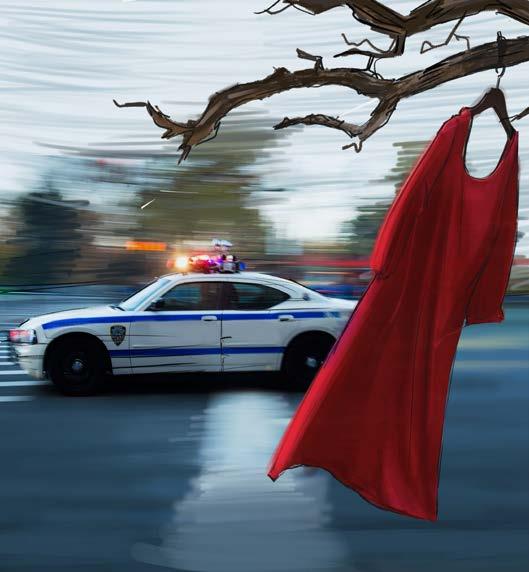
previously questioned and later took out a column in the Opasquia Times requesting witnesses to come forward with knowledge. The column resulted in incriminating evidence which motivated Colgan to take out a plea bargain for immunity. He later testified in court, providing enough evidence for convictions.
By the end of the trial, after 16 years of freedom, only Johnston was convicted of murder and sentenced to life with a chance of parole after 10 years. The jury was all white.
Although Osborne’s story is not an exception, it is one of the few openly documented instances where a white community was racially motivated to protect murderers due to the victim’s Indigenous identity. Osborne’s murder and investigation served as another example of systemic investigative negligence regarding missing and murdered Indigenous women and later influenced the Aboriginal Justice Inquiry (AJI) to “investigate, report and make recommendations to the minister of justice on the relationship between the administration
of justice and aboriginal peoples of Manitoba.”
The Aboriginal Justice Implementation Commission (AJIC), which was responsible for the AJI, questioned the intentions of the RCMP following the Osborne case. “Urbanoski completed the investigation with some alacrity [which] causes us to question why the RCMP allowed the case to slip from attention at the end of 1972,” said the AJIC in the inquiry.
The reason the RCMP likely let the case slip from attention is the same reason the white community in The Pas kept the murder a secret: Osborne was Indigenous. Violence against Indigenous women does not stop with the crime — violence also materializes in the investigation. By refusing to properly look into these crimes, white, male-dominated police forces send a clear message to Indigenous communities: that police serve to protect some people and to cause irreparable damage to others.
The AJIC concluded the report by
noting “Canada’s treatment of its first citizens has been an international disgrace.” Not much has changed since the report was released in 1991. Indigenous women and communities are still systemically abused by police forces. The final report on the National Inquiry into Missing and Murdered Indigenous Women and Girls was released in June 2019 and two years and an election have passed with little action. In fact, the issue was all but forgotten in this election’s leaders’ debate in Quebec.
The police force and government aren’t protecting women like Osborne. These inquiries have confirmed important information that we already knew, but what counts is the action that comes after. Bring Indigenous women and girls home. Give families closure. Treat them with the dignity they deserve. It’s the least the government could do amidst genocide.
comment@themanitoban.com
LETTERS Jesse Hajer
On Nov. 2, professors, instructors and librarians represented by the University of Manitoba Faculty Association (UMFA) went on legal strike, bringing many classes and other university activities to a halt. The main issue faculty are fighting against is deteriorating institutional quality due to uncompetitive salaries.
The U of M has the lowest paid English-language university faculty amongst its peers and has seen its inflation-adjusted salaries fall by 1.7 per cent over the last six years, while faculty at other research-intensive universities in Canada saw a 2.6 per cent gain. Low compensation is stifling recruitment of new talent, with unfilled positions leading to a deterioration in ability to prepare the next generation of Manitoba for the workforce. Required courses are being left unstaffed and not offered, delaying students in meeting degree requirements, who are looking to out-of-province universities for courses. Leading faculty are heading to other provinces, taking their large research grants and jobs for students with them. University administration acknowledges these negative impacts of uncompetitive pay and has the money to resolve the issue but appears caught up in the broader ideological dictates of the Manitoba government.
Since being elected in 2016, the PC government has been on a mission to shrink the size of the government. Over-achieving on even their own ambitious targets, the Pallister government cut the provincial civil service by 18 per cent — or over 2,600 positions — from 2016 to 2021. In doing so, the provincial government more than doubled the target initially announced. Those who remained faced years of real wage reductions in alignment with the wage freeze mandate of the government. These cuts were supposedly to address the budget deficit, but in reality have ended up paying for large tax cuts that disproportionally benefit the wealthy and continue to divert funds from essential health, education and other government services.
After five years of this austerity approach, the consequences have been broadly felt. The most visible have been in health care with the closure of emergency rooms and clinics, rock-bottom staff morale and mental health and staffing shortages. When the pandemic hit this weakened system, Manitoba was distinct for being the only province at the time to send intensive care patients outof-province due to lack of capacity. Recruitment and retention issues persisy. Ironically, the government recently asked the U of M to train more nurses, with faculty unable to respond to the province’s “rush job” due to staffing shortages linked to provincial austerity.

Problems with recruitment, retention and quality of public service is not only apparent in health and education. The Manitoba government is facing large vacancies in the conservation sector, unable to retain officers to protect our province’s natural resources and recreation areas central to tourism across the province. Infrastructure workers are reporting deep cuts and low wages are compromising the quality of our highways, bridges and other assets, threatening public safety and our large transportation industry.
Staff shortages at Manitoba’s Vital Statistics Branch are resulting in Manitobans waiting months for death, marriage and birth certificates, leading to painful and costly delays. Public health inspectors are facing large backlogs due to staffing shortages and low wages, a problem magnified by the COVID-19 crisis.
Vacancy rates are not generally made public, but indications are that rates are extremely high: freedom of information requests have found them well in excess of 20 per cent in the departments of family services, justice and in the occupations of health-care aides and home-care workers. At a time when a strong public sector is needed to support the province’s social and economic recovery from
the COVID-19 crisis, the public sector appears to be suffering a severe capability crisis due to understaffing.
Despite old-school perspectives that pit government versus the private sector, the reality is that a modern advanced economy needs a stable, functioning and well-staffed government to help co-ordinate economic development and provide essential health, education and other social services. Without strong public services, Manitoba will lose ground to other jurisdictions with respect to developing, attracting and keeping skilled workers and businesses in the province.
The strike currently taking place at the U of M is only the most recent symptom of the government’s austerity agenda and is making matters worse. If labour market tightness is the problem — as Manitoba’s new premier asserted during her leadership campaign — we should be investing more in our post-secondary institutions and doing more to support students to move through their programs and get in the job market. Instead, due to the real wage reduction mandate from the government, the strike has students nervously waiting to see if they will be able to complete their classes
this term and grappling with the impact this will have on graduation timelines, including in high-demand occupations such as nursing.
A new premier — along with the associated changes in senior staffing at the provincial government level — is an opportunity for a reset, a chance to reverse the cuts, end the hostility toward workers and reinvest in the public services that underpin our economic success and quality of life. A good first step would be to clearly state that the university is free to negotiate wage increases with its workers based on the needs of the institution and its stakeholders, instead of anti-public sector bias.
Jesse Hajer is an assistant professor in economics and labour studies at the University of Manitoba and a research associate with the Canadian Centre for Policy Alternatives – Manitoba. He worked as a policy advisor and manager with the Manitoba government from 2009 to 2016.
Zoë LeBrun, staff
Winnipeg-based writer and former Manitoban contributor
Alex Passey has just released Shadow of the Desert Sun Published in September, this “sword and sorcery fantasy” is Passey’s second novel to date.
Passey began writing seriously in high school after picking up Robert Jordan’s The Wheel of Time series, and it was around this time that he became interested in the fantasy genre.
“I love fantasy on two levels,” he said.
“First is the escapism, which is great, but in that escapism, you’re also allowed a disconnect that allows you to examine a world different from your own, and perhaps glean some insights about our world that are tough to see when you’re immersed in it. It’s a neat little paradox, in that distancing yourself from our world can also in a way bring you closer to it.”
Shadow of the Desert Sun represents a departure from Passey’s first novel, 2020’s Mirror’s Edge
Comparing the two, Passey said, “Mirror’s Edge is a lot more of a serious foray into philosophy and the human condition, whereas I wrote this book to be more of an accessible and fun adventure story that doesn’t take on quite as heady of subject matter.”
Inspired by books such as the aforementioned Wheel of Time and R.A. Salvatore’s Legend of Drizzt, Shadow
of the Desert Sun takes place in the desert nation of Arannus, a land with magic, danger and treachery abound. The story follows two youths named Ayden and Cyan, who have yet to experience the world outside their small village, as they are swept up in a world of political intrigue and fall under the protection of Blademaster Raynor, who must guide and protect them from a clan of assassins, a magi-swordmaster gone mad and the Archmage who lords over Arannus on their journey through the desert.
Passey also said in addition to this action-packed, politically driven plot, readers are introduced to “magics that allow access to a mosaic of Spirit Realms, where extradimensional entities seem to have hierarchies and designs of their own that dwarf the politics of humans.”
Although there are elements of each character’s journeys that speak to broader themes, such as loyalty, responsibility and life after loss, Passey said these were ideas that rose organically out of the story rather than messages he chose to deliberately investigate.
“The root goal of the writing was largely adventure for adventure’s sake,” he said.
Passey has big goals for the world Shadow of the Desert Sun takes place in — not only is the novel set to be the beginning of a series with more books on the way, but it has also been
Alex Braun, staff
3.5/5 stars
Astrocolor has their mind set on one thing in their new album, Paradise: a relaxing beachside vacation. Though hailing from the not-exactly-tropical city of Victoria, B.C., they nevertheless channel all the island life energy they can muster. Press photos show the appropriately middle-aged band in pastel buttondowns, slim-fit khakis, tasteful RayBans and boat shoes with no socks, enjoying the sunlight and laughing with drinks in their hands.
Taking cues from ’60s lounge and exotica music, the album is largely instrumental, with featured vocals on the second track, “Paradise,” courtesy of Cayley Thomas. The beats occasionally threaten to veer into the
territory of anonymous fast fashion background music or “lo-fi beats to study/relax to,” but Astrocolor adds just enough unique flourishes to keep the aesthetic tasteful rather than bland.
Opening track “Mile High” sets the mood quite nicely. A lively modern electronic beat is juxtaposed with dusty guitars and jazzy electric piano. There is a sort of jet-setting retrofuturism to the band’s style, with spacey effects and synths taking their place among sounds lifted from the mid-century. The track closes with an announcement from a flight attendant, welcoming you to paradise.
featured in his other writing projects.
“My story ‘The Devil’s Iris’ that was published in Strange Sorcery a few years ago is also part of this storyline,” Passey said.
“I plan to make this world as sprawling as I possibly can.”
Regarding his writing process, Passey said, “A lot of the time the act of writing is just a process of organizing ideas for me. Most of the actual creative ideas spring up at times of the day when I’m not near my laptop.”
“My phone is absolutely crammed full of text messages to myself of things that spring into my head through the day, like plot twists or lines of dialogue. Then first thing every morning I sit down at the laptop and try to Frankenstein them all together into a coherent story.”
In contrast to this, Passey discussed the marathon of publishing and editing in a different light.
“The process of trying to get published is very monotonous and trying,” he said.
“The editing process is kind of like that too. I love the first couple edits, when you’re going back over the thing you wrote and fine-tuning it to be coherent and pretty as possible. But then by the last couple edits when you’re just ferreting out a couple typos and you’ve read the thing a dozen times, you’re kind of sick of it.”
“But that’s just the nature of the

process,” Passey said, “and it all melts away when you’ve finally got the final bound product in your hand, with the cool cover art and your author photo on there. Then you’re ready to crack it open and read it again as if you’ve never seen the text before.”
You can find Shadow of the Desert Sun at major retailers, including the University of Manitoba Bookstore.
arts@themanitoban.com
sine-wave synths lending a woozy slipperiness, starting a quick dip into real catatonic relaxation on “Go to the Beach” and “Catamaran.” It’s like that point in the beach day where the sun starts getting to your head.
Night falls on side two, starting with “Aperitif,” named after the digestive cocktail: a little samba tune with shuffling drums and jazz flute, setting the mood for a promiscuous night in paradise. “Dusk,” a sax-driven slow jam, and the driving, synthy “Nightswim” continue lurking in the darkness.
great heights or evokes any particularly strong emotions, it does quite well at capturing its intended mood. Paradise is charmingly unambitious, playful and spirited mood music, in search of nothing more than a few minutes of escape from the rat race. So take a deep breath, pour yourself a mai tai and make believe that you’re on a white sand beach — Astrocolor might be able to take you there. ARTS & CULTURE
The good vibes continue through the first side of the record, staying at a comfortable mid-tempo. The third track “Tropical” gets slightly spacy, with gliding slide guitars and
The penultimate track, “Another Lover,” is initially pretty but too repetitive for its own good, and the stuttering closer, “After Paradise,” doesn’t offer much closure. But maybe that’s the point. At Astrocolor’s tropical resort, you never have to leave; the vibes can keep flowing forever.
Though the album never reaches

arts@themanitoban.com
Grace Paizen, staff
If there was ever a textbook example of the Dickensian nature of our country’s court system, particularly in its treatment of sexual abuse survivors, Donna Besel’s new memoir would be it.
In The Unravelling: Incest and the Destruction of a Family, Besel documents the stresses — physical, emotional and financial — on her life from 1992 to 1995 as she navigates the trials of bringing her father to justice for the sexual and violent crimes he committed against his wife and children.
The book begins with an epigraph from Adolf Hitler — startling and unconventional, yet appropriate in the context of describing how abusers operate by wielding the weapons of fear, terror and force to divide and conquer their victims, preventing them from seeking help.
The memoir is an incredibly brave and thoughtful recounting of Besel’s abusive childhood.
By drawing parallels between the
betrayal of her father — historically a trusted figure — and the betrayal of the legal system which claims to protect and stand by victims of crime, Besel emphasizes the abortive and disillusioning process of seeking justice.
A child herself at the time of the abuse, it is excruciatingly obvious in Besel’s narration of events that the justice system comfortably accommodated the perpetrator yet offered no support to the now-adult victims still carrying the burdens of abuse, as highlighted by the court’s reliance on the efforts of the victims themselves to gather evidence.
Moreover, the constant insistence that incestual crimes are simply “a women’s issue” adds a sickening note of the patriarchal hegemony western law sits atop.
The memoir’s other heavy theme is the constant reminders given to the author to simply forgive and move on from the atrocities of her past, as though it were so simple.
In fact, Besel’s book reads as a
reminder to question the popular custom of forgiveness — why should a child be responsible for forgiving the violent actions of an adult?
The discomfort of those who do not wish to acknowledge uncomfortable subjects is palpable throughout the memoir and relentlessly disheartening between the spare moments of hope.
The blaming of victims who chose to step forward is also punishingly rampant and ridiculous. The acknowledgment by the victims of the criminal acts committed against them is regarded by acquaintances and family members alike as tearing the family apart, where the selfish and cruel acts of the perpetrator go overlooked.
Besel herself laments “it was no small wonder sexual assaults were so under-reported,” between the fractures and schisms of her own family and the ugly reality reflected by surfacing uncomfortable truths.
There are gleams of community, hope and love that shine through the book, especially the community of friends — mostly women — who support Besel through her three years of hell.

The Unravelling is an education in the mind of a sexual assault victim and the physical effects of acknowledging such violence. It’s also a stark reminder of the failings of the justice system in an area where women and children are predominantly the victims.
The Unravelling: Incest and the Destruction of a Family is available at major retailers.
arts@themanitoban.com
‘The War Being Waged’ is a melange of monologue, movement and meaning
After a theatre drought going on nigh two years, Prairie Theatre Exchange (PTE) has opened its doors to smaller, vaccinated audiences for the world premiere of The War Being Waged, written and co-directed by Manitoban playwright Darla Contois.
Patrons are required to show proof of vaccination and photo identification upon arrival at the theatre and wearing a mask is mandatory at all times. In addition to the in-person run of the show, the play will also be available to view online in December.
Thomas Morgan Jones, co-director of the production and PTE’s artistic director, is thrilled to welcome patrons to “a new era of theatre in Winnipeg” with Contois’s evocative piece, which has been in development for the past three years and has debuted at the perfect time.
In his program notes, Jones said, “Darla’s voice has brought us all back together. To consider. To reconsider. To see ourselves. To see the world around us. And to hold on to love as a way forward. To remember the power of love. This is how we begin again.”
Described by Contois as an “incredibly personal” narrative, The War Being Waged tells the story of three generations of Indigenous women through three different performance genres — monologue, poetry and contemporary dance — and holds “remnants of real people, real conflicts and real relationships” from Contois’s own experiences. The piece deals with difficult subject matter and ultimately seeks to answer what she calls “one of the most important questions” Indigenous people ask themselves: “What are you fighting for?”
Upon entering the theatre space, patrons are met with a feast of soft nature sounds, including whistling winds and water droplets, accompanied by a melancholic piano melody which sets the tone for what is to come.
The innovative set, courtesy of Andy Moro, is comprised of moveable, elevated plexiglass platforms with a box at the centre that doubles as a storage space. Actor Tracey Nepinak occupies this seat before the lights dim and, when she does, the room goes dark and the performance begins.

Nepinak exudes a quiet strength in her role, her voice rich and clear as she recounts stories of past trauma, family conflict and pain. The storytelling element in the performance is intimate and compelling. Nepinak speaks to the audience as though she is addressing each person individually as they hang on her every word.
About a third of the way through the 70-minute performance, Emily Solstice Tait joins Nepinak on stage as an enigmatic dancer. Her sharp, precise actions as she tears through Jera Wolfe’s choreography evoke powerful imagery and create fascinating stage pictures — both with Nepinak and with the video projected onto the set itself. The imagery presented ranges from nature and fire to astral figures and glittering stars.
The War Being Waged is not a typical theatre piece — it sets up certain expectations and then upends them completely — and this fresh take on the art form, along with the highly interpretive content, is sure to stir up some intense conversation. It is a strong start to PTE’s 2021-22 season. And, Jones said, “There is so much more theatre to come.”
The War Being Waged runs in person at Prairie Theatre Exchange until Nov. 24 and digitally from Dec. 2 to 12. For more information, please visit pte.mb.ca.
SPORTS Matthew Merkel, staff
The U of M Bisons football team will play in the Hardy Cup final for the first time since 2014.
On Nov. 13, the Bisons defeated the University of Alberta Golden Bears 43-17 in the Canada West semifinal.
Playing on a snowy IG Field, the Bisons hosted its first playoff game in eight years. The herd faced a Golden Bears team that had finished third overall in Canada West with a 3-3 record, losing to the U of M 31-17 on Oct. 1.
The Bisons would come out the gate firing, piling up 16 points in the first quarter. Running back Breydon Stubbs scored on a hand-off from quarterback Jackson Tachinski, rumbling into the Golden Bears’ end zone.
In the second quarter, Tachinski called his own number, tumbling two yards into the end zone and scoring the Bisons’ second touchdown of the game. Tachinski was also deadly with
his arm on Saturday — he threw 32 yards to Gavin Cobb, who made the catch over his shoulder and jogged into the end zone, and then later in the fourth to Macho Bockru on a screen pass that the receiver ran 10 yards to the house. Throughout the game, Bisons kicker Cole Sabourin sent three field goals through the uprights, helping the Bisons put 43 points up on the scoreboard.
The Bisons were also up to task defensively, limiting the Golden Bears to 17 points. Linebacker Isaac Dokken led the way with six-and-a-half total tackles, two broken-up passes and a forced fumble, while defensive back Arjay Shelley had four tackles and the lone interception for the Bisons.
With the win, the Bisons will move on to the Hardy Cup final to face the firstplace University of Saskatchewan Huskies Nov. 20.
sports@themanitoban.com


The Master of Arts in Applied Economics (MAE) is a one year program which trains students in economic analysis, specifically in applied fields such as finance, regulation, environmental policy and economic development. The demand for professional economists with practical knowledge in the area of policy analysis is growing. The MAE program caters to this demand in the public and private sectors.
Application deadline: February 1, 2022
SPORTS Matthew Merkel, staff
The Bisons basketball teams each played a two-game series at home against the University of Regina Cougars Nov. 12 and 13. The women’s team lost both games and the men’s team finished 1-1 on the weekend.
The women’s team got off to a rough start. The U of R gained an early lead in the first quarter. Employing a 2-1-2 press, the Cougars were able to throw off the Bisons’ offence, scoring 16 points off turnovers. The Bisons also shot poorly on Friday, going 19-71 from the field compared to the Cougars, who went 23-67. Bisons guard Taylor Randall scored a team-high 17 points but was unable to match the Cougars’ Faith Reid. The fourth-year guard knocked down 22 points en route to her team’s first win of the Canada West season.
The Cougars had a rough start to their season after being swept two weekends in a row, first at the hands of the University of Winnipeg and then by the University of Saskatchewan. Reid said she and her team learned a lot from those first two games, helping them come together to win their first of the year.
“We knew we needed to come in here and play well, and I think we […] learned some lessons from our games before and just kind of executed,” said Reid.
Reid also credited her teammates for helping find her in open areas, allowing her to pull up and drain shots.
“I think we just moved the ball well. [I] couldn’t have done it without my teammates, you know, when we
moved the ball, we just get open shots and I was just able to knock some down today.”
In game two, the Cougars continued its dominant play. After finishing the quarter with a three-point lead, the Cougars would put up 15 points in the second, finishing the first half with a 12-point lead. The third quarter saw end-to-end action from both teams.
The Bisons appeared to solve its shooting woes, going 50 per cent from the field in the quarter. Even so, the Cougars continued to score at will.
Jade Belmore scored 10 points in the quarter to maintain the Cougars’ lead. In the fourth, Bison Deidre Bartlett attempted to cut the team’s deficit by draining a couple three-pointers while Emerson Martin and Taylor Randall both scored on drives to the rim.
Unfortunately for the Bisons, it was not enough to catch the Cougars. Belmore finished a monster performance scoring 28 points and nabbing 11 rebounds, leading her team to a 77-62 win.
Saturday’s loss was the herd’s fourth of the year, keeping the team winless so far on the season. The week prior, the U of M lost its first two games of the season to the University of Winnipeg Wesmen, 91-62 in the Bisons’ home opener and 86-64 at the Duckworth Centre.
The Bisons men’s team narrowly won game one 70-66. After trading leads throughout the game, the Bisons would take over in the fourth quarter. Mason Kraus would drain back-toback three-pointers to lengthen the Bisons’ lead, and Tito Obasoto kicked off a two-minute seven-point run

“I think we kind of addressed our weaknesses and, you know, we’ve really had a head of steam going into this season” — James Wagner, U of M Bisons men’s basketball player
with a three-pointer in the final few minutes of the game to help clinch the Bisons’ third straight win of the season.
James Wagner was the player of the game for the Bisons, putting up 19 points for the herd. Although the Bisons were undefeated to start the season, their 3-4 exhibition record was not reassuring heading into the Canada West schedule. Wagner said he and his teammates have learned a lot from their preseason and have applied their new knowledge to the regular season.
“We had a pretty rough preseason,” he said. “I think, you know, we had a little bit of time to come back and practice and learn.
“I think we kind of addressed our weaknesses and, you know, we’ve really had a head of steam going into this season.”
Unfortunately for the herd, game two was not as successful. Three and a half minutes into the second quarter, the
Bisons found themselves in a 15-point deficit. Bisons guard Elijah Lostracco drained a pair of threes and forward Cameron O’Hara posted up six points, helping the Bisons fight back and regain the lead. Both teams would continue going back and forth in the third, exchanging baskets throughout the quarter. In the fourth, the Cougars would take over. After a Keiran Zziwa three put the Bisons up by five, the U of R would go on a dominant 17-0 run, fueled by slick jumpers from Benjamin Hillis and Matt Barnard, capped off by a thunderous slam dunk by Cougar Nick Barnard.
The Bisons attempted a late comeback but ran out of time, resulting in its first loss of the Canada West season 77-68.
The Bisons men’s and women’s teams will look to rebound Nov. 26 and 27 when they play the Brandon University Bobcats at home.
sports@themanitoban.com
