

EDITOR-IN-CHIEF ? editor@themanitoban.com
Ty Brass
BUSINESS MANAGER ? accounts@themanitoban.com
Cindy Nguyen
ADVERTISING CO-ORDINATOR ? ads@themanitoban.com
Diego Castro
MANAGING EDITOR ? me@themanitoban.com
Sarah Doran
COPY DESK ? copy@themanitoban.com
Ursula Chojko-Bolec (ed.)
NEWS DESK ? news@themanitoban.com
Cam Cannon, Liam Forrester (eds.)
RESEARCH & TECHNOLOGY DESK ? research@themanitoban.com
Michael Campbell (ed.)
COMMENT DESK ? comment@themanitoban.com
Lucas Edmond (ed.)
ARTS & CULTURE DESK ? arts@themanitoban.com
Shaylyn Maharaj-Poliah (ed.)
SPORTS DESK ? sports@themanitoban.com
Matthew Merkel (ed.)
PHOTO DESK ? photo@themanitoban.com
Basel Abdelaziz (ed.)
DESIGN DESK ? design@themanitoban.com
Matthew Doering (ed.)
GRAPHICS DESK ? graphics@themanitoban.com
Dallin Chicoine (ed.)
AUDIO DESK ? audio@themanitoban.com applications open, see themanitoban.com/jobs
VIDEO DESK ? video@themanitoban.com applications open, see themanitoban.com/jobs
SOCIAL MEDIA DESK ? social@themanitoban.com
Jalene Moman (ed.)
VOLUNTEERS THIS ISSUE ?
Kitty Kerr, Grace Paizen
VOLUNTEER STAFF ? Zoë LeBrun, Emily Unrau-Poetker
interested in volunteering? email me@themanitoban.com today!

109 HELEN GLASS BUILDING
UNIVERSITY OF MANITOBA
WINNIPEG, MB
204. 474. 6535
The Manitoban is the official student newspaper of the University of Manitoba. It is published monthly during the summer and each week of regular classes during the academic year by the Manitoban Newspaper Publications Corporation.
The Manitoban is an independent and democratic student organization, open to participation from all students. It exists to serve its readers as students and citizens.
The Manitoban is a member of the Canadian University Press, and our journalistic standards can be found online at toban.news/jsp.
The newspaper’s primary mandate is to report fairly and objectively on issues and events of importance and interest to the students of the University of Manitoba, to provide an open forum for the free expression and exchange of opinions and ideas and to stimulate meaningful debate on issues that affect or would otherwise be of interest to the student body and/ or society in general. The Manitoban serves as a training ground for students interested in any aspect of journalism.
Students and other interested parties are invited to contribute to any section of the newspaper. Please contact the appropriate editor for submission guidelines.
The Manitoban reserves the right to edit all submissions and will not publish any material deemed by its Editorial Board to be discriminatory, racist, sexist, homophobic or trans-phobic, ableist or libellous.
Opinions expressed in letters and articles are solely those of the authors. Editorials in the Manitoban are signed and represent the opinions of the writer(s), not necessarily those of the Manitoban staff, Editorial Board or the publisher.
A “volunteer staff” member is defined as a person who has had three volunteer articles, photographs or pieces of art of reasonable length and/ or substance published in the current publishing year of the Manitoban.
Any individual who qualifies as a volunteer staff member must be voted in by a majority vote at a Manitoban editorial board meeting. Elected representatives and non-students may be excluded from holding votes as volunteer staff members in accordance with the Manitoban Constitution.
All contents are ©2021 and may not be reprinted without the express written permission of the Editor-in-Chief.








‘Historical’ victory for Palestinian students at the University of
NEWS Cam Cannon, staff
NEWS Cam Cannon, staff
Following a nearly four-hour UMSU board of directors meeting that president Brendan Scott described as “contentious,” the union is to begin work on drafting a statement of solidarity with Palestinian students.
The heavily amended motion 0517 was approved following hours of debate in which the board heard from numerous students with ties to both sides of the ongoing humanitarian crisis in the occupied Palestinian territories.
UMSU will become one of several student unions across the country that have issued such statements including the York Federation of Students, University of Toronto Mississauga Students’ Union, Continuing Education Students’ Association of Ryerson and Simon Fraser Student Society.
The decision comes as the result of months-long efforts by an informal coalition of 40 students at the University of Manitoba. The group’s goals are to get UMSU to issue a statement of solidarity with Palestinian students, create a new chapter of Students for Justice in Palestine on campus and initiate a human rights complaint against the Asper school of business for an email which they view as threatening to international students.
“We are very humbled [by the board of directors passing motion 0517] because we know the precedent that our actions will serve,” said Black, Indigenous, Students of Colour Collective co-founder and member of the coalition Tabitha Clavecillas.
“This is a historical moment, it’s a watershed moment for student advocacy […] it will empower future iterations of us from different walks of life […] it will […] tell them that this is okay, talking about these issues [is] okay […] the board of directors are for the students and not for the institutions that keep us silenced.”
Zahra Rizvi, a third-year computer science major involved with the group, said on campus Palestinians have felt “there is nobody to speak for [them],” and that there is a lack of resources and support.
“We’ve come such a long way […] the word ‘Palestine’ is going to be uncensored,” said Rizvi.
However, discussion of the motion during the meeting — and even whether to consider the motion — was tense and at times heated.
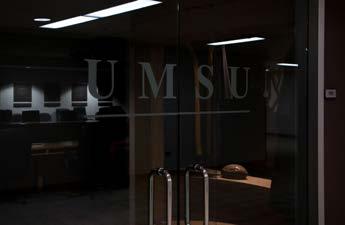
After initially being introduced to the UMSU board of directors in July, the motion was referred to the executive. The initial motions 0517 and 0518 were tabled by the executive with the aim of creating a new one in collaboration with the coalition.
The UMSU executive held two meetings with the coalition to discuss the motion but were unable to reach an agreement.
The group had put forward a draft statement to be worked on with the executive at those meetings, but there was no agreement reached. The executive insisted on removing the word “Palestine” from the statement in an attempt to make it inclusive of “all students affected by events in the Middle East,” according to UMSU vice-president student life Savannah Szocs.
At the board of directors meeting on Sept. 7, the executive put forward motion 0520, intended to be a more inclusive alternative to that of the coalition.
A motion to reconsider the original motions was put forward. The motion passed after approximately 20 minutes of debate.
“The statement [the executive] had written was completely devoid of all mention of Palestine under the pretense of inclusion and was written in a very patronizing tone,” said Rizvi while providing motivation for reconsidering the coalition’s motions.
“Choosing to delete any and all mention of Palestine under the pretense of inclusion is not inclusive […] This is disrespectful to the work that the coalition of students has done so far and an injustice to not just Palestinian and impacted students but also to every Black, Indigenous and student of colour.”
Scott said “it is not a student union’s place to be involved in foreign politics,” both during the debate and in an interview Sept. 13.
He said motion 0520 “is one that supports all students who may be affected by the Middle East and not just Palestinian students.”
He continued that the new motion “encompasses the spirit” of the coalition’s including a statement and list of specific resources for students to access.
A presentation to the board by the coalition pointed out UMSU has recently taken positions on both international issues and has expressed solidarity with specific groups of students.
In February 2020, UMSU released a statement in solidarity with Indian students following the passage of a law in India that stripped Indian Muslims of their citizenships.
Later that year in June, UMSU released a joint statement with other student unions in solidarity with the Black Lives Matter (BLM) movement.
The presentation also included many testimonials from Palestinian and Muslim students as well as screenshots of death threats received by a Palestinian student in the faculty of science who wished to remain anonymous.
During debate, the UMSU executive committee was accused of taking an “all lives matter” approach — the argument it is wrong to show support for a specific group because other groups also struggle, often used in response to the BLM movement
— to the question of solidarity with Palestinian students.
Szocs “really strongly” disagreed with the comparison.
“Wanting to support all people is not the same as silencing BLM protesters and saying all lives matter,” she said. She argued it makes more sense to release one joint statement rather than one for students from every country.
Motion 0520 is “just a blanket statement so that we can say that we support all students in the Middle East right now,” she said.
University of Manitoba Black Students Union president Reem Elmahi agreed with the “all lives matter” comparison.
“I often don’t like comparing all social movements with Black Lives Matter, but there definitely are parallels to what’s happening here,” Elmahi said.
“We made it very clear with the whole movement that anti-Blackness was an issue, and we didn’t want to water it down to just racism because things were directly impacting Black people and to lump together all the racist things that happen to all people of colour can get kind of washed and just become very generic statements. I just want to make it clear […] we shouldn’t be lumping all Middle Eastern issues together.”
A number of Jewish and Israeli students also spoke during the debate, saying the motion in solidarity with Palestinian students made them feel “attacked” and as though their experiences are being delegitimized.
One student argued the motion delegitimizes the state of Israel. He urged the adoption of a motion that equally supports both sides.
“We should be scared about the kind of precedent we set when we exclusively show support for one group over another when both are experiencing suffering from the same conflict,” they said.
Others argued only the Palestinian side of the humanitarian crisis in the occupied Palestinian territories was being represented.
There is no timeline for when the statement will be released, although in an interview Sept. 13, Scott said work will begin and stakeholders will be consulted.
news@themanitoban.com
NEWS Cam Cannon, staff
The Manitoba Harm Reduction Network demonstrated the potential of overdose prevention sites and safer consumption sites over the September long weekend.
According to a press release, the site staffed by volunteer nurses, outreach workers and others helped around 260 people access services including testing for sexually transmitted and bloodborne infections as well as nurse care.
The pop-up also served as a safer consumption site — a clean, safer environment with supervision intended to reduce the potential harm of drug use, oftentimes also offering connections with addictions treatment and other social services.
Harm reduction supplies including naloxone — the drug used to temporarily reverse an opioid overdose — as well as syringes and condoms were also distributed. The site provided naloxone kits to 131, the vast majority of whom already have experience administering it.
“The supervised consumption site was a community response to a Manitoba problem,” said Winnipeg network coordinator Jonny Mexico.
According to Mexico, Manitoba is
expected to have over 400 overdose deaths this year — up from 372 in 2020.
Last year alone also saw an 87 per cent increase in deaths from the previous year, 2019.
“That’s too many, that is a lot,” said Mexico.
“That’s 400 individuals, somebody’s mother, somebody’s father, somebody’s brother, somebody’s sister, somebody’s loved one, somebody’s relative.”
Mexico went on to say overdose deaths are preventable “by offering a space where people could come and have a meal, make some art, hang out and have a conversation, access harm reduction supplies and personal supplies […] [where] if folks wanted to utilize the services of a tent that has some tables and chairs and harm reduction supplies inside and wanted to use drugs in a safer environment, they were totally welcome to do so.”
Throughout the pandemic, substance use as well as overdose deaths have increased dramatically. At the same time, the pandemic has created cross-border supply chain issues resulting in a more toxic drug supply.
Mexico said Manitoba is one of the few
provinces in the country that does not have safer consumption sites nor a drug testing system — through which people who use drugs can verify that drugs do not contain adulterants such as fentanyl.
“We don’t have a lot of tools [in Manitoba] that would really help prevent overdoses with such a toxic supply,” said Mexico.
“Another tool that [other provinces] are using for overdose prevention is safe supply and that’s another thing that we’re pushing for and fighting for […] To have a safe supply would stop a lot of those overdoses from happening in the first place.”
In July of this year, two Vancouver, B.C. organizations — the Drug User Liberation Front and Vancouver Area Network of Drug Users — handed out adulterant-free substances including methamphetamines, heroin and cocaine to draw attention to the necessity of a safe supply.
Mexico also noted over the weekend there weren’t any fights or violence that broke out, nor any interactions with the police.
“The idea of harm reduction is to meet people where they’re at and provide a service,” said Mexico.
“We know that there are these gaps in services because there are no supervised consumption sites, there’s no

place for people to test their drugs. It was important for us to do this, to have this action, and we did it on the down-low […] we did it, we were able to serve the community and then we did a press release afterward saying ‘Hey, we did this thing, it happened and it didn’t impact anybody in a negative way.’”
Mexico hopes this can be “taken as a lesson learned.”
On Sept. 13, candidate for the leadership of the Progressive Conservative Party of Manitoba Shannon Martin announced his support for the establishment of a safer consumption site in Winnipeg.
news@themanitoban.com
Plan aims to support mental health as staff and students return to class
Minister of Education Cliff Cullen and Minister of Mental Health, Wellness and Recovery
Audrey Gordon met outside the Louis Riel School Division’s head office Sept. 7 to announce the government’s plan to allocate more than $1 million to back to school mental health supports to all school divisions.
The supports are an addition to a previous announcement of $2.5 million to improve COVID-19 protections in schools. A Progressive Conservative Party spokesperson claimed that the funding is part of a broader $50 million push since October 2019 to improve mental health and addiction supports throughout the province.
The school divisions will have some discretion in how precisely the funds are allocated given different communities have different needs in terms of mental health supports.
Those supports include talking about mental health, training teachers and
school staff and supports for teachers and school staff.
The province is partnering with the Canadian Mental Health Association, Sources of Strength and SafeTalk to provide training for 50 educators, professional development opportunities, thrival kits to help students discuss wellness and meditation and further support to staff and students. $150,000 is allocated specifically for the engagement of elders and knowledge keepers in the school system.
Manitoba Liberal Party leader Dougald Lamont is skeptical the money will make much of a difference.
“It’s sort of a drop in the bucket as far as mental health is concerned and a lot of it is focused on training,” Lamont said.
“This is all about training people who are not mental health professionals in mental health, when what we need is mental health professionals to provide mental health supports.”

was
critical of
education being tasked with addressing mental health without a public mental health service.
“It is not for the education system to solve these problems. Mental health problems need to be solved by a mental health system,” Lamont said.
“What we really need is to build up a proper public mental health system and this doesn’t really accomplish that.”
Without that funding, Lamont claims, mental health workers have better luck finding work elsewhere.
“We actually have an incredible program at U of M that graduates
psychotherapists,”
said.
“The people we graduate [are] incredibly high quality, it’s a great program, but they end up leaving Manitoba because they don’t have jobs here for them, even though there’s a need.”
What’s more, Lamont said, the mental health funding schools will receive does not amount to much.
“A million dollars always still sounds like a lot of money even though ultimately that’s 20 people making $50 thousand a year,” Lamont said.
“That money goes away very fast.”
news@themanitoban.com
Trevor Kirczenow, the Liberal Party of Canada candidate for the Provencher riding, had his signs vandalized last week with what his campaign describes as hate speech.
Provencher is Manitoba’s oldest riding. For the past 21 years, it has been a conservative stronghold.
Kirczenow is a father of two, a diabetes advocate, Ojibwe Horse Society breed registrar, an accomplished violinist, a family health researcher and an author. He is also openly transgender.
On the morning of Sept. 9, Kirczenow’s supporters alerted him that his campaign signs in the Steinbach, Man. and La Broquerie, Man. areas had stickers covering them.
The stickers displayed a transphobic slur.
“I was so sorry for the people who initially discovered those stickers yesterday and who started sending me messages,” Kirczenow said.
“I know that many people were hurt by that and found it very offensive.”
This is not the first instance of tampering Kirczenow has seen with his signs this election.
“Right from the beginning of my campaign, my signs have been disappearing […] on such a dramatic and wide scale,” Kirczenow said.
“I also ran in 2019 […] I was openly transgender then, I’m openly transgender now. That hasn’t changed. But in 2019, it was just a handful of signs that disappeared, and I think that often happens during a political campaign, but this time the scale of it is just so different and now the stickers is a whole other added layer.”
Tampering with campaign signs is a criminal offence and those convicted can face sentences ranging from fines to jail time.
According to Kirczenow, when it comes to campaigning in rural ridings, signs matter and the theft and vandalism have impacted Kirczenow’s campaign.
“I have received messages from people saying, ‘Why don’t you have any signs up in my town? It looks like you don’t care about this part of the riding,’” Kirczenow said.
“It’s very hard to reach every corner of the riding, so in that context, signs become much more important […] for constituents to express themselves and to become informed about who is

running.”
Despite the vandalism, Kirczenow is proud of his campaign’s growth since the last election.
“I think maybe people are taking me a bit more seriously this time around. I have a lot more volunteers on my campaign and a lot more support. I am knocking doors every single day with a dedicated team of volunteers,” he said.
“It’s interesting because the whole thing is just more intense. I’ve got a lot more support and I’ve also got this coordinated opposition that seems really determined to try and make my campaign invisible.”
news@themanitoban.com

I had wanted to be some kind of martial arts master since the second grade. As soon as my family moved to the south end of Winnipeg, they found a guy who taught taekwondo classes out of the basement of the local community centre. Once I had a taste for it, my parents sent me to the Tae Ryong Park Academy to learn taekwondo.
By 2015, I had achieved my second-degree black belt and held a minor teaching post at the school. In the early years of my undergraduate degree at the U of M, I transitioned from taekwondo to Offenberger Muay Thai.
The last time I fought was in March 2020.
When the initial lockdown got called, it brought an end to 16 years of uninterrupted training. I did not know when I’d put on the gloves again. Worse still, if I got COVID-19 I might be among the one in three to suffer from long-term effects like debilitating fatigue, thereby putting my own body in the way of getting my training back on track.
Shortly before the start of the fall term, recreation services at the U of M announced that it would be resuming some of the pre-pandemic martial arts classes and clubs. My initial reaction was not charitable.
The idea of placing myself in a situation where I would be breathing heavily in close physical contact with strangers during a potential fourth wave of a deadly pandemic was not appealing.
Sparring, it seemed — especially for the grappling arts like judo and wrestling — would be extremely challenging to implement safely, especially considering they are high-contact sports and cannot be done from two metres away.
Given how niche the martial arts community is, I was not confident that the university had put sufficient thought into how to bring back these physically demanding classes and clubs safely.
I had concerns, so I raised them. I first reached out to director of recreation programs at the U of M Tanya Angus to get a handle on how the martial arts programs could be brought back safely.
“Everything’s a little bit different now than what it was prior to the pandemic,” Angus said.
“As of right now, the plan is that we’ll follow what they say in terms of the provincial guidelines and the restrictions that are in the return to play protocol and it will allow people to have contact.”
Those guidelines include

controlling entrances and exits, staggering workout times, limiting capacity, maintaining two-metre spacing as much as possible, mandatory masks, double vaccinations and regular sanitization of hands and feet.
“One of the things that came forward in the return to play protocol for judo that we’re looking at for some of our martial arts programs is sanitizing their feet as well because there’s sometimes contact,” Angus explained.
“That was something that was a little bit new, but we want to make sure people are safe and if that’s what the suggested method is, then we’re going to continue to do that.”
The comprehensiveness of the restrictions and guidelines inspires confidence, and I can see aspects of my own practice adapting easily. Still, I wanted to reach out to the actual instructors to get their thoughts on how the restrictions would affect their styles.
Tim Manness has been involved the U of M’s wrestling club for the past decade and currently acts as a volunteer coach. While eager to get back to training, Manness is concerned about the club’s appeal given the restrictions.
“The current mandate of masks being worn at all times on campus will be very detrimental for our club,” he said.
“I don’t think many people are going to be interested in wearing a mask to wrestling. We’re hoping to keep the club running at whatever capacity we can until masks are no longer required
and we can train normally.”
While some instructors like Manness predict there will be issues regarding the mandates, others are optimistic.
Horace Luong is a senior chemistry instructor at the U of M and an internationally recognized tai chi expert with 35 years of experience and proficiency in the chen, yang and sun styles. His tai chi classes are, in many ways, better suited to the restrictions than any other style.
“In terms of how the class would run, since it’s very solo […] I can walk around, do my corrections,” Luong explained.
“The students will have to participate with masks on, that’s something I’m not sure how people will take. We talk about inhaling, exhaling with movement and now you have something covering and that sort of disrupts that flow.”
Bryce Offenberger, a sessional instructor in the political studies department, is a former competitive fighter and has been running the Offenberger Muay Thai program at the U of M for the past 15 years. He broadly supports the measures, including the mask requirements.
“Naturally, we’re abiding by the protocols put in place by the government as instituted by the university,” Offenberger said.
“I know some gyms have come and gone with the mask requirement, but it’s not that hard of a thing and if it makes people feel safer, let alone if
it does make people safer, then why not.”
Masks aside, the instructors’ enthusiasm to return is evident despite the restrictions, as is their passion to share the benefits of their style.
“You form a strong bond when you train hard with people,” Manness said.
“There’s a mutual respect that’s built. I’m always trying to make the club a fun place where people enjoy coming to each week, and where members are continually improving their skills.”
Luong, meanwhile, spoke at length about the personal development aspect of martial arts through the practice of tai chi.
“You’re […] not competing with anybody, you’re just doing it for yourself, and so there’s no need to worry about others,” he said.
Meanwhile, Offenberger sees his practice as a means to self-actualize.
“It’s this lifelong endeavour of incompleteness, essentially, that you just have to be comfortable with,” he said.
“You can never master anything.”
“You have to find the inspiration to keep going on, and that, as you’re not maybe consciously aware of it, that’s that sort of journey of self-discovery.”
Analysis of commission illustrates where we have been and where we may return
Michael Campbell, staff
Barry Ferguson, a retired professor from the department of history, has recently copublished The Rowell-Sirois Commission and the Remaking of Canadian Federalism alongside Robert Wardhaugh of Western University. The book was published by the University of British Columbia Press as part of the C.D. Howe Series in Canadian Political History, which encourages fresh perspectives and novel analyses on all aspects of Canadian policy and history.
Ferguson was also appointed the Duff Roblin professor of government in 2014, a position which allowed him to conduct research and teach within the department of political studies. The position also allowed Ferguson to hire students to help him complete his research for the book.
“Political science students really love politics,” Ferguson said.
“And they like political ideas, they like the nitty gritty of institutions. And so it was really a treat to teach them during the last six years of my work life.”
Ferguson and Wardhaugh’s book aims to provide readers insight into how the commission shaped Canada. The commission emerged in a time of great difficulty and petitioned the federal government to improve the quality of life for Canadians.
The Rowell-Sirois Commission, officially known as the Royal Commission on Dominion–Provincial Relations, examined the depressed Canadian economy of the 1930s and ’40s and how social and financial obligations were split between the provincial governments and federal government. The common name comes from the surnames of its two chairs, Newton Rowell and Joseph Sirois.
Ferguson explained the Canadian federal system had been effectively broken by the Great Depression.
“And what that means is the federal and provincial governments could
not cooperate on measures to deal with the economic and social crisis,” Ferguson said.
“In the case of the Prairie provinces, the economic problems were actually catastrophic, so that Saskatchewan and Manitoba were — as much as the government ever could be — bankrupt […] So, there was a problem of regional crisis that was pretty serious. So, the royal commission, you know, had to deal with the fact that the federal system in Canada was an utter mess and nobody could figure out how to get out of it.”
The problem underlying the Great Depression in Canada was that the federal government had the funds to bail out the provinces, but it did not have the constitutional authority to take the reins. Per the British North America Act, the federal government was responsible for taxation of all Canadians, and the provinces could only tax their own residents and only for specific purposes.
The result was that the federal government raised significantly more money in taxes than the provinces were able to, but the provinces were responsible for the services we have come to think of as funded by taxes, such as hospitals, roads and schools.
“When you pay your taxes […] the income tax money is collected by the federal government and then doled out to the provinces. That’s what the royal commission said should be done,” Ferguson said.
However, at the time there was no agreed-upon method to transfer large sums of money from the federal government to the provinces.
“The Dominion government, as they call it — the federal government — has the money [but] it has got to share it equitably,” Ferguson said.
“[Prime Minister] R. B. Bennett rants and raves and gives a lecture to John Bracken, the premier of Manitoba, and says ‘Well, I’ll give you $20 million, but you better be a lot more
“The federal system in Canada was an utter mess and nobody could figure out how to get out of it”
— Barry Ferguson, retired professor

responsible.’”
These financial bailouts came haphazardly, and only when the provinces were in dire circumstances. The federal government was unable to dictate what the funds were to be used for, so instead, they came with heavy political posturing. Although transfer payments existed since Confederation, the formal system of equalization payments was not adopted until 1957.
Ferguson and Wardhaugh’s analysis of the commission illustrates how the commission was prescient on other matters as well. In 1940, the commission argued that the federal government should implement and provide money toward medical care and provided a structural framework for further commissions.
“It was the first big [royal commission] and basically the archetype [for] modern royal commissions,” Ferguson said.
According to Ferguson, the Rowell-Sirois commission was the biggest and most influential royal commission until the Royal Commission on Aboriginal Peoples and its successor the Truth and Reconciliation Commission. The Rowell-Sirois Commission, by virtue
of its contributions to institutions which we recognize as fundamentally Canadian, had an enormous impact on our fledgling nation.
Ferguson and Wardhaugh’s new book may provide insight into the next chapters of Canadian history being forged during our current economic downturn.
“I do wonder about the long-term consequences of the massive deficit financing that the federal government and the provinces are engaged in,” Ferguson said.
“The big thing that I worry about [that] nobody cares about, except maybe the one writer in current politics […] Andrew Coyne of the Globe and Mail is saying, you know, there’s an awful lot of federal government activity and they’re not listening that closely to the provinces.
“And that’s exactly the kind of situation that had existed in the 1930s.”
research@themanitoban.com
Michael Campbell, staff
Mackenzie Alexiuk, a fourthyear student in the department of biological sciences, won the 2021 undergraduate research award (URA) to work on a project exploring the genetics of butterflies and caddisflies.
Alexiuk received an undergraduate student research award from the Natural Sciences and Engineering Research Council of Canada (NSERC) in 2020 and then a URA offered by the University of Manitoba in 2021. The back-to-back student researcher worked with the same laboratory for the duration of both awards.
The application process requires students to interview two professors and write an analysis of how working with one of them would progress their career or supplement their education.
“I didn’t do that much interviewing,” Alexiuk said.
“I sent off a couple emails, and lots of people weren’t taking students just by chance that year […] but I got to meet with two people.”
Alexiuk interviewed both Jake Stout and Jeffrey Marcus. Stout has published extensively on medicinal plants, including cannabis, while Marcus specializes in — among other things — lepidopterology.
“I picked Dr. Jeffrey Marcus who is the butterfly guy on campus.”
Marcus has conducted previous research on butterflies in high-elevation environments. The laboratory’s current project aims to see if the genetic adaptability for high elevation is similar or different in caddisflies.
“I’m working with a group of organisms called caddisflies,” Alexiuk said.
“In the world of insects, you have butterflies and moths, which are really closely related. Then you have caddisflies, which are kind of like a cousin.”
According to Alexiuk, caddisflies live in different environments than butterflies. Studying caddisflies can offer different insights into how insects adapt to their habitat.
“Caddisflies live in high elevations like in the Rocky Mountains of Colorado — that’s where the samples were collected,” Alexiuk said.
“And so, what we’re looking for between the low-elevation species — so, ones that have been collected in Manitoba, for example […] We look between species that are collected here or other low-elevation areas, and with those species collected in high-elevation areas in Colorado, and we try to see if there are any differences.”

“Having that person to support me within academia has been so helpful” — Mackenzie Alexiuk, URA recipient
In 2020, Alexiuk’s job in the lab was to go through ribosomal and mitochondrial sequences and fix the mistakes caused by inaccurate sequencing.
From there, full sequences can be compared to determine relationships between organisms or species.
The process can identify what is most likely missing from a given sequence by referencing other completed sequences. The completed sequence can then be used in applications of theoretical models to test hypotheses.
“It’s a complicated process,” Alexiuk said.
Alexiuk also had the opportunity to present a conference paper on high-elevation adaptation in the mitochondria of Colorado caddisflies at the 69th annual Lepidopterists’ Society Meeting.
“It was cool just to see my name on the
list of presenters,” Alexiuk said.
“Typically, this conference is in person, right? So, I don’t think I’d be able to do this in a normal year […] I can be at home doing this because normally it is held in California, or it would be in North Carolina, someplace that probably an undergrad wouldn’t be going.”
The most valuable part of Alexiuk’s experience has been the research mentorship from an established researcher.
“[Marcus has] become a huge mentor for me,” Alexiuk said.
“He’s really interested in helping me get into whatever master’s program I want, he’s there to write letters of reference for me, he’s there to give me guidance, he’s there to give me encouragement […] Having that person to support me within academia has been
so helpful.”
Having a mentor in academia is helping Alexiuk take the next steps toward grad school. Alexiuk is considering doing her master’s in community health sciences at the University of Manitoba’s Bannatyne campus after completing her undergraduate degree.
“What I’m really interested in and what I would eventually like to do for my career is to be a physician assistant.”
URA applications are typically due in January for placement over the summer. More information is available by contacting ura@ umanitoba.ca.
research@themanitoban.com
Lucas Edmond, staff
The rise of populism during periods of political crisis is a common trend across the world. Populism is a rhetorical type of politics which aims to centre its discourse around corruption and the people’s desire to topple status quo regimes for common benefit. The movements are generally led by a strong figure who is idealized by audiences by making broad and vague policy promises.
For example, following the 2007-08 financial crisis, nations hit with fiscal hardship were also flooded with populist and far-right political movements. Countries like Italy, Brazil, Poland, the United Kingdom and the United States were all gripped with strong right-wing populist movements after the stock market failed. A growing population felt polarized and dogmatic leaders around the world exploited this.
However, Manitoba throughout the decades has been relatively unscathed by the populist fervour that has been rising across the world.
Although the People’s Party of Canada, one of Canada’s most central populist parties, had candidates in most of Manitoba’s ridings during the 2019 election, none of them managed to make a significant splash in the political arena that year. COVID-19 could change this, however.
A new group calling itself the Keystone Party of Manitoba — made up primarily of dissatisfied Progressive Conservative (PC) voters — is forming a reactionary party in response to the provincial health mandates. The party aligns itself with vague principles that could mean anything to readers without support from concrete policy statements. Notable listings appearing to align with most PC voters include market economics, small government and — the most blatant contradiction to the latter — the expansion of police
forces and the justice system.
Committee member Charlene Hancox-Senow seemed to target the PCs in an interview with the Winnipeg Free Press.
“The PCs can say ‘These are our principles,’ but if your actions are not backing up your principles, you’re losing your credibility among the citizens,” said Hancox-Senow in the interview.
However, the Keystone party is riding the wave of anti-vaccination, mask and mandate rallies in hopes that it can establish a foothold in Manitoba’s legislature. This is a strategy the PCs have been unwilling to overtly commit
to, even if there have been moments of pandering and policy failures along the way.
Keystone representatives said they support vaccinations and only wish to purportedly “defend” the rights of the unvaccinated. But support from the party in its early stage is coming from those districts with the largest unvaccinated populations like Winkler, Man. and southern Manitoba at large. Currently, Winkler has some of the lowest vaccination rates in Manitoba.
Winkler mayor Martin Harder has already indicated support for the party. In August, Harder publicly denounced the new health mandates which restricted unvaccinated populations from entering non-essential establishments like bars and restaurants. In a comment with the CBC,
the mayor used typical anti-mandate rhetoric, calling the government’s policy “discriminatory” and segregative, raising eyebrows among his political colleagues.
Although Harder has taken the depraved position to represent the unvaccinated in Manitoba, he has indeed been vaccinated, and after his shot this summer he received death threats via text message. This kind of conspiracy-fuelled rage represents the danger of the anti-vaccine fringe. Further, it displays how easy it is to trigger their reactionary character. The Keystone party says it is pro-vaccine, but by championing the unvaccinated, the party may be making its first steps toward a vocal and potentially violent population fuelled by conspiracy and damaging convictions.

Economic insecurity, immigration policy and distrust in government organizations are usually the issues that give rise to populism. As voters watch economic security decline along with rising ethnic diversity, conservative and mostly white populations’ sense of cultural hegemony is threatened, leading to corrosive anti-immigration discourses. However, COVID-19 is influencing a new type of populism. While the pandemic has certainly caused an unprecedented level of economic insecurity, unvaccinated and anti-mandate populations claim their ability to participate in civic forums and public life are being threatened, too — in other words, according to them, their sense of cultural influence is being restrained.
The Keystone party has not yet become official and it may be considered a writeoff now, but Manitoba constituents must be wary of the potential tide of populism that could rise in the province.
comment@themanitoban.com
When I first voted in 2015, I went to the ballot with high hopes that my decision on election day had the capacity to address issues that were important to me. Things like climate action, debt relief for students, fully subsidized university tuition, the growing inequality gap, fair and redistributive tax policy, proactivity toward clean and accessible drinking water on reserves and progress in terms of truly universal medicare were all issues in the back of my mind when I selected the candidate that I wanted to represent me and my riding. But as time passed, my stake in Canada’s democracy felt less and less
important.
Although the party I selected that day wasn’t elected, the Liberal Party of Canada — which managed to win a majority in a runaway election that year — broadcasted a somewhat similar platform. While 2015 made significant progress with youth turnout records, today, very little has been done to address issues most important to this demographic.
In 2011, a mere 55 per cent of voters from ages 18 to 24 managed to express their fraction of political influence at the ballot. However, in 2015, youth voting saw a large 12 per cent
jump thanks to Elections Canada’s introduction of the Vote on Campus program, which allowed students to vote for candidates in their riding at the campuses they attended. Instead of moving through bureaucratic mazes trying to apply for a mail-in ballot during exam week, travelling home to vote or participating in a local riding with less knowledge of the candidates, students were able to participate in their democracy without unnecessary stress.
A combination of apathy, the inconvenience of voting and political cynicism plagues this demographic. However, making voting for young adults easy, to no surprise, improved turnout dramatically. In turn, it also improved the chances that our generation’s most pressing concerns might be represented in parliament. Unfortunately, Elections Canada — along with the Liberal party’s decision to call a rapid and disputedly illegal snap election — is hindering youth ability to vote in one of the most consequential elections in history.

COVID-19 and its inability to conjure voting stations on such short notice were behind the organization’s decision to suspend the Vote on Campus program.
An already disenfranchised population that is disproportionately affected by job loss, stagnant real wages, evictions, mental health issues and the potentially disastrous future of global warming is now facing the challenges that accompany voter suppression — not to mention the various marginalized populations that intersect within this age demographic.
These developments could have a potentially calamitous result on Canada’s policy decisions going forward, and it already shows in many politicians’ campaign trails. So far, only leader of the New Democratic Party Jagmeet Singh has addressed student issues during his campaign — albeit only once.
Katherine Scott, a senior economist at the Canadian Centre for Policy Alternatives, noted politicians are likely ignoring the youth vote due to the abrupt nature of the upcoming election, forcing leaders to focus on the most important constituencies. However, it certainly doesn’t help that these same politicians are likely aware the youth vote will be significantly reduced due to Elections Canada’s decision.
Suppressing young adults’ vote not only has a stake in this year’s election, but in years to come as well. Research has shown voting is a habitual practice — the more you vote while young, the more you will likely vote in the future. The same goes for not voting — if you make it a habit, that habit is likely to continue in the future. In the two years since Canada’s last election, over 800,000 people reached the appropriate age to vote. By suppressing these newly eligible voters in this year’s snap election, Elections Canada is digging a massive hole that may be difficult to get out of.
For years, media outlets have targeted youth for being apathetic voters, but social restraints produced by our voting system is the causal factor. If voting is made accessible, young adults are more likely to partake in democracy.
Now more than ever, the world needs the young vote represented in Parliament. Engaged voters are aware that the post-pandemic recovery plan could dictate the future for decades to come. However, one question remains: whose future will it be?










Sarah Doran, staff
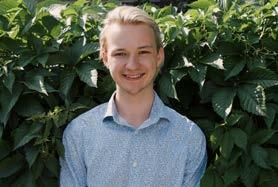
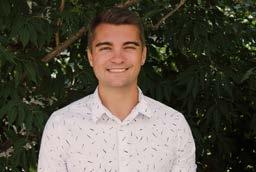
Two born-and-bred Winnipeggers have created a podcast examining the history, identity and challenges surrounding Canada’s minority francophone communities. Beyond Riel, a limited series presented by cohosts and U of M alumni André Marchildon and Ian T. D. Thomson, aims at expanding non-francophone understanding of the rich culture across the country beyond surface knowledge of Louis Riel, the founder of Manitoba and a prominent Métis figure in Canadian history.
In February 2020, the pair connected at a U of M alumni event in Toronto, Ont. where they are both pursuing further degrees at the University of Toronto. A shared interest in public policy and politics led to discussions of francophone affairs. Marchildon, who grew up speaking French, was interested in reconnecting with the topics affecting minority French communities and quickly realized language barriers had created accessibility complications around sharing information.
He drew particular inspiration from the French podcast Mon drapeau franco-manitobain — in English, My Franco-Manitoban Flag — which discussed the history of the FrancoManitoban community and its flag
on the 40th anniversary of the flag’s creation.
“I found it very interesting, but I realized it was not accessible to non-francophones,” Marchildon said.
“In general, there are a lot of resources focusing on the Franco-Manitoban community in French but few in English. This is where the idea of creating a podcast in English to explore the Franco-Manitoban community came from.”
The podcast showcases Marchildon as part of the minority francophone community it seeks to highlight, while Thomson plays the role of the anglophone target audience.
“As a Winnipegger and non-francophone, I found myself initially unaware of the issues and challenges of the francophone community that André would bring up in conversation,” Thomson said.
“It occurred to us that many non-francophone Canadians are not aware of the challenges facing francophone minority groups. People know about Louis Riel, but there is so much more to minority francophone communities across Canada. With Beyond Riel, we saw an opportunity to shed light on those francophone topics to a
non-francophone audience.”
The pandemic proved an unexpected benefit to creating the podcast, with the pair returning to Winnipeg and guests able to contribute via Zoom. Thomson’s previous experience producing podcasts, both with UMFM and at other universities, also came in handy.
“With this project, we knew we had to be well researched, sensitive to the topics discussed and ensure that we were gathering a breadth of experiences and perspectives from those across the community,” he said.
Episode topics include francophone culture across Canada, questions of who is included in francophone communities and the Official Languages Act — which requires all Canadian federal institutions to provide services in both French and English — with guests ranging from historians to politicians and artists. The podcast’s music comes from Franco-Manitoban singer-songwriter Rayannah.
While both Marchildon and Thomson are currently focused on their studies, the duo have not ruled out returning to the Beyond Riel premise.
“We think this is an important topic and we certainly have ideas for further episodes,” Marchildon said.
“We have already discussed the

possibility of producing a second season if this first one is well received. We believe that there can — and should be — more discussions around the issues and challenges of minority francophone communities.”
Beyond Riel airs on UMFM 101.5 every Monday at 11 a.m. and is also available on Apple Podcasts and Spotify. More information is available at umfm.com/series/ beyond-riel.
arts@themanitoban.com
The flickering, 16mm of U of M alumna Rhayne Vermette’s first feature-length film, Ste. Anne, speaks more than the limited script of the picture. Just as the narrative follows main character Renée — played by Vermette — and her abrupt entrance back into her family after her equally abrupt exit four years before, the artistic shots of darkness, overexposure and fauxaged film bring an accuracy to how memory functions.
The film follows a linear path of Renée’s rejoining the family in a Manitoba fall, living in the house of her brother, Modeste, played by Jack Theis, his wife, Elenore, played by Valerie Marion and Renée’s own daughter — raised by her brother and sister-in-law in her absence — Athene, played by Isabelle d’Eschambault. However, the highlights of the year — Halloween, Christmas and a Manitoba summer — are interrupted by bursts of visions and memories.
The impact of memory relies on both seriousness and humour in the film.
Athene confides in Elenore that Renée “doesn’t resemble the memories [she has] of her,” pointing to the romanticization of memories that happens over time, especially if that figure is someone we love — and in the case of Athene, her birth mother.
In humour, during the Halloween sequence, the funniest line of the film is uttered after the women of the family have gone trick-or-treating as nuns with white coverings hiding their faces — “there’s nothing scarier than a nun!”
In this moment, the niche territory of rural Manitoba becomes manifest, where stories shared by those who survived cruel nuns in the francophone communities of the Prairie province are ignited in the local viewer. Moreover, this moment, juxtaposed against the film as an artistic memoir of a Métis family, suggests that through humour, racism and reconciling past trauma can be broached.
The film is slow. The opening credits last two full minutes of long prairie
shots at dusk. However, the slowness eventually hooks you in as you realize the silences between become moments for reverie.
In fact, the film itself acts as a proxy for the narrative as the viewer attempts, along with Modeste and Elenore, to piece together what happened to make Renée leave and what her next move will be.
The familiar Manitoban sound of the train is heard throughout the film, grounding an otherwise artistic picture in realism, paired with the calls of local vireos and sparrows, as well as the notorious honks of Canada geese.
At the core of the film, the complicated relationship of family is brought to light, and the unspoken words between siblings ring loud.
The question of where Renée had disappeared to is just as unanswered as why Modeste and Elenore took it upon themselves to raise Athene. In fact, it begs a third question: what do we owe our family and ancestors?
Though the film doesn’t outright
state an answer to this, Renée’s return and purchase of a lot near Ste. Anne, Man. suggests there is no real escape from our past and that the only thing one can do is embrace who we are by where we came from.
Ste. Anne premieres at the Toronto International Film Festival (TIFF) from Sept. 13 to 16. Digital tickets are available at tiff.net.
arts@themanitoban.com
Kitty
Kerr, volunteer
Noé Lira’s debut EP Latiendo la tierra is an interdisciplinary symphony. The colourful record successfully holds trilingual lyrics, multiple genres, nature sounds, choral voices and a surprising array of rich and complex instrumentals. It embodies Lira’s interest in mixing languages and cultures and fusing different forms together, making for a listening experience that is both invigorating and emotional.
Lira’s ability to carry such multiplicity is unsurprising given her talents as a singer, songwriter, dancer and actor who works internationally. A first-generation Quebecomexican, she first began experimenting with music in 2018 at several creative musical laboratories in Europe and South America.
She performed in a touring production of a highly successful musical comedy, TIC-TAC, in Spain. The content of TIC-TAC reads much like the thesis of Lira’s body of work: it
explores the need for fiction in our life and how art can change and transform lives. Following the tour, in 2019, she introduced her sound to the world with a series of pared-down performances — just her, an accordion and two musicians. Finally, she returned to Quebec and set to developing what would become Latiendo la tierra with a team of women, a conscious choice on her part.
The product is an invigorating and hopeful sum of astonishing parts, with Lira’s vocals being the focal point of the soothing arrangements. The manifesto that appears in the lyrics of “Ríndete” wholly articulates her intention and achievement:
“May we nurture care, love, unity/ Embrace the dance, life force, energy/ Surrender to the winds and bow before the waves/Be thankful for every breath that you take/Calling all hearts to seek for the light/And may in compassion be rooted the change.”
Latiendo la tierra feels like an invitation. The music invites its listener sonically and lyrically to breathe, to
ARTS & CULTURE
Shaylyn Maharaj-Poliah, staff
Local independent theatre company Theatre by the River is thrilled to be presenting its first production in almost two years. Prior to the pandemic lockdowns last March, Theatre by the River presented a run of The Hours That Remain by Keith Barker but were unable to produce any further programming due to the increase in closures and tightening health restrictions.
Since 2005, Theatre by the River has been producing innovative, socially relevant theatre. The company makes a point of choosing lesser-known scripts to bring to life onstage and seeks to challenge not only their audience to think outside the box about theatre and theatre practices, but also themselves. Theatre by the River also encourages patrons of any income level to attend their shows by offering “pay what you can” price options for certain performances, meaning there is no set cost for tickets and customers pay what they can afford.
This week, the company is inviting audiences to Whittier Park — near the edge of the Red River — to experience a live, open-air performance of Meet Me at Dawn. Written by British playwright Zinnie Harris, the play opens with two women washing up on shore after a horrifying boating accident.

move and to reconnect to something greater — a powerful, feminine energy.
Want us to review your album? Email us at arts@themanitoban.com!

However, as happy as their reunion is, something is amiss, and not all is as it seems. Described as a “modern fable of life, love and grief,” Meet Me at Dawn is unapologetic and a beautiful allegory for the difficulties of letting go of a loved one.
The play was directed by Cherissa Richards and features the acting talents of Alissa Watson and Theatre by the River’s own artistic director, Mel Marginet. The production also
Theatre by the River’s upcoming programming includes a glimpse into the future of Winnipeg, tentatively titled #gladtobehere. A new work by Winnipeg playwright Ginny Collins, the production will physically take patrons through specific sites throughout the city and answer burning questions about Winnipeg
after the end.
Meet Me at Dawn runs until Sept. 18, with a Sept. 19 rain date. For more information, please visit theatrebytheriver.com.
arts@themanitoban.com
SPORTS Matthew Merkel, staff
Across the sports landscape, the use of COVID-19 vaccines has become increasingly popular. Many fans across Canada and the U.S. hoping to watch their favourite sports have been required by their local governments to be vaccinated before entering arenas and stadiums.
Now, athletes are also typically expected to receive the vaccine.
U-Sports announced in a press release Sept. 9 that all members will be required to be fully vaccinated against COVID-19, or provide a valid reason for not being able to get vaccinated, prior to arrival at any U-Sports national championship event. The mandate is effective Nov. 8.
This policy includes not only athletes and coaches, but also team support staff, athletic therapists, team medical staff, officials, event staff, technical delegates, event medical staff and travelling team delegates.
This announcement comes days after FISU, the International University Sports Federation that U-Sports is aligned with and operates under, announced that all attendees of the Lucerne 2021 Winter Universiade — a sporting event for university athletes from around the world — will be required to be fully vaccinated and undergo a PCR test upon arrival for the games in Switzerland.
U-Sports’ Nov. 8 deadline for double vaccinations of its athletes would allow its delegates to be able to attend the Lucerne games beginning Dec. 11.
For conferences of U-Sports, the

decision by the governing body means that participants will most likely have to fall in line if they hope to compete for a title.
Prior to the U-Sports mandate, Canada West announced the adoption of a proof of vaccination policy that came into effect Sept. 3.
Similar to the policy released by U-Sports, Canada West requires all of its members to have at least one dose of a vaccine by Sept. 9 and a second dose by Oct. 17.
For participants unable to be vaccinated due to prior health conditions, or any other reasons, accommodations will be respected.
Ontario University Athletics has also mandated that its members follow a similar policy.
The Atlantic University Sport announced Sept. 9 that they would also implement a vaccine mandate for their athletes.
The Réseau du sport étudiant du Québec (RSEQ) said it will not require athletes to be vaccinated, after rumours were circulating that a vaccine mandate would be coming into effect for their athletes. The majority of RSEQ schools are also not requiring their students to be vaccinated.
After the U-Sports announcement, members of RSEQ may now be forced to get the vaccine if they hope to win a national championship.
Back in Manitoba, the U of M has

already taken a pro-vaccine approach, mandating that all staff and students be fully vaccinated if they plan on being on campus this school year.
Katie Chatyrbok, a forward with the Bisons women’s hockey team, is pleased with the safety precautions U-Sports and Canada West have implemented so far.
“I think that it’s been a really difficult time for everyone, but I think that they’ve done their best to keep everyone safe and that they’ve done the best of their abilities to make sure that we can play safely,” she said.
“Everyone has to wear a mask in the dressing room, and then once everyone is fully vaccinated then you don’t have to wear a mask on the ice when we are practicing or playing games […] then just social distancing whenever possible.”
Chatyrbok is excited that Canada West has a planned schedule. Midway through training camp with her Bison teammates, she is confident that they will find success this season.
“I’m just grateful to have any sort of schedule and play games this year after missing a full season,” she said. “It’s just so nice to have something concrete to work off [of] and know that we’re working towards games.”
“It’s been so fun to be back on the ice finally and have a regular schedule [and] be able to come to the rink every day.
“I think we look really good. Everyone is really talented. We have a big roster this year and it’s going to be a lot of fun. I think everyone is looking really,

really good.”
Other sporting leagues in Canada have also adopted vaccine policies.
The Western Hockey League has mandated that all its members, including players, coaches, trainers and officials — as well as personnel that don’t work directly in game, like general managers, scouts and off-ice consultants — also be vaccinated.
In the CFL, as of early August, more than 79 per cent of players had at least one dose of a vaccine. While vaccines are not mandatory in the CFL, the league has introduced incentives for teams reaching an 85 per cent vaccination rate, allowing teams to go out to eat, meet in hotel rooms and not wear masks at practice or on the sidelines during games.
The NHL, NBA and MLB have not made vaccines mandatory for their athletes. However, all three leagues are encouraging their players to do so.
With the recent mandates by U-Sports, FISU and Canada West, vaccines are becoming increasingly a part of sport in this country. These new mandates show the commitment these organizations have toward safety, science and a return to normalcy while also telling athletes that they are entering a new era — an era where the decision to not get vaccinated puts not only their health and safety at risk, but their athletic careers as well.
sports@themanitoban.com

SPORTS Matthew Merkel, staff
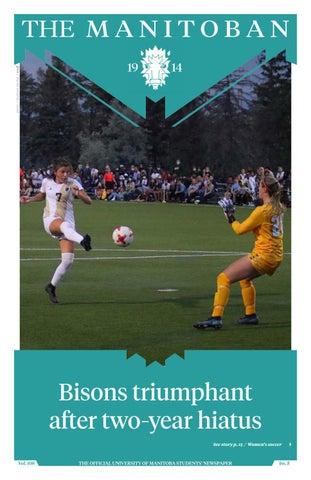
For the first time in nearly two years, the Bisons women’s soccer team hosted a game at the U of M’s West turf field. Playing their home opener against the University of Regina Cougars, the University of Manitoba packed the stands with 230 fans in attendance.
Heading into Friday night’s matchup, the U of M was the favourite. According to the Canada West coaches preseason poll, the Bisons were ranked 9th overall in the conference and 2nd overall in the eastern division ahead of Regina who are ranked 12th in the conference and 3rd in the division.
Early in the match, the Cougars maintained pressure in the Bisons’ end, yet the Bisons were quickly able to turn the tide around.
With the help of some great drives by Bison forward Nicole Davis and a hit crossbar by Jessica Tsai, the Bisons gained momentum, putting the Cougars on their heels.
In the 38th minute, Bison forward Jenna Kunkel fired a shot top left corner, breaking the ice and putting the herd up 1-0.
For the rest of the half, the Bisons continued to apply pressure to the Cougars’ net, but to no avail.
In the second half, the Bisons continued the attack. Brazilian national Bianca Cavalcanti sent a screamer from just outside the box into the net, sending Bison fans into a frenzy in the 47th minute.
In the 55th minute, the University of Regina would finally respond. After being brought down inside the box, Cougars forward Peyton Enns scored on a penalty kick, squeaking it past the fingertips of Bison keeper Karina Bagi.
Unphased by the goal against, Bagi would stand tall for the Bisons, preventing four U of R chances from getting past her.
Backstopped by Bagi, the Bisons attacked the Cougars’ net with reckless abandonment.
Numerous Bison strikes would be played into the Cougars’ box, including a Camila Goldsztein breakaway in front that was thwarted by Cougars goalie Allyson Ford.
Ford would do her best to keep her team in the game. As time ticked past, she made numerous saves attempting to keep her team in the game, but her efforts would not bear fruit.
In the 90th minute, a Bison free kick from outside the box would hit the crossbar and land on a platter for Cavalcanti to head in her second goal of the game.

Cavalcanti’s goal would prove to be the final dagger in the Cougars’ side. Shortly after, the referee would signal full time, giving the win to the Bisons.
With her two goals, Cavalcanti was named player of the game for the Bisons.
After the game, U of M coach Vanessa Martinez Lagunas praised Cavalcanti for her performance and emphasized how great of an achievement it was for the rookie forward to notch the first U-Sports goals of her career after sitting out all of last year and enduring so much uncertainty due to travelling during the pandemic.
“We are so excited that she had [such
a] great start,” Martinez Lagunas said.
“We worked really hard to bring her [to Canada], you know, lots of paperwork […] and then she couldn’t play last year because of the pandemic and, you know, we waited also two years to have those eager players see her in action, so it just feels great that she had such a great start.”
Martinez Lagunas also thanked the crowd for the team’s success in the home opener.
“Our fans were also a key factor in our win today,” she said.
“They push us, riding the hardest moments, and I want to thank every
“Our fans were also a key factor in our win today”
— Vanessa Martinez Lagunas, coach
single one of them who came today to cheer on the team.”
“I’m so proud of the girls because they put all this work [in]. We waited for almost two years to compete again and starting with a win, of course […] it fills our heart.”
After two years of no Canada West action, the U of M women’s soccer team was full of energy and enthusiasm. Boosted by the hundreds of fans that filled the stands, the team had a dominant performance in the home opener. There’s no doubt that this recent performance will motivate other Bison athletes to return with just as much ferocity and enthusiasm as the women’s soccer team did Friday night.
The Bisons women’s soccer team plays away against the University of Saskatchewan Huskies Sept. 17 and 18.
sports@themanitoban.com