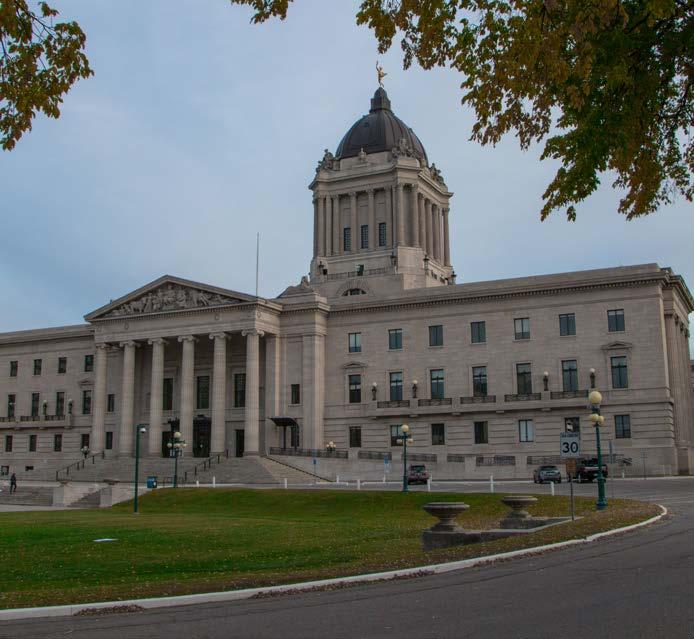




photo / Basel Abdelaziz

EDITOR-IN-CHIEF ? editor@themanitoban.com
Ty Brass
BUSINESS MANAGER ? accounts@themanitoban.com
Cindy Nguyen
ADVERTISING CO-ORDINATOR ? ads@themanitoban.com
Diego Castro
MANAGING EDITOR ? me@themanitoban.com
Sarah Doran
COPY DESK ? copy@themanitoban.com
Ursula Chojko-Bolec (ed.)
NEWS DESK ? news@themanitoban.com
Cam Cannon, Liam Forrester (eds.)
RESEARCH & TECHNOLOGY DESK ? research@themanitoban.com
Michael Campbell (ed.)
COMMENT DESK ? comment@themanitoban.com
Lucas Edmond (ed.)
ARTS & CULTURE DESK ? arts@themanitoban.com
Shaylyn Maharaj-Poliah (ed.)
SPORTS DESK ? sports@themanitoban.com
Matthew Merkel (ed.)
PHOTO DESK ? photo@themanitoban.com
Basel Abdelaziz (ed.)
DESIGN DESK ? design@themanitoban.com
Matthew Doering (ed.)
GRAPHICS DESK ? graphics@themanitoban.com
Dallin Chicoine (ed.)
AUDIO DESK ? audio@themanitoban.com applications open, see toban.news/jobs
VIDEO DESK ? video@themanitoban.com applications open, see toban.news/jobs
SOCIAL MEDIA DESK ? social@themanitoban.com
Jalene Moman (ed.)
VOLUNTEERS THIS ISSUE ?
Kunal Rajpal
VOLUNTEER STAFF ? Zoë LeBrun, Emily Unrau-Poetker
interested in volunteering? email me@themanitoban.com today!

109 HELEN GLASS BUILDING
UNIVERSITY OF MANITOBA WINNIPEG, MB
204. 474. 6535
The Manitoban is the official student newspaper of the University of Manitoba. It is published monthly during the summer and each week of regular classes during the academic year by the Manitoban Newspaper Publications Corporation.
The Manitoban is an independent and democratic student organization, open to participation from all students. It exists to serve its readers as students and citizens.
The Manitoban is a member of the Canadian University Press, and our journalistic standards can be found online at toban.news/jsp.
The newspaper’s primary mandate is to report fairly and objectively on issues and events of importance and interest to the students of the University of Manitoba, to provide an open forum for the free expression and exchange of opinions and ideas and to stimulate meaningful debate on issues that affect or would otherwise be of interest to the student body and/ or society in general. The Manitoban serves as a training ground for students interested in any aspect of journalism.
Students and other interested parties are invited to contribute to any section of the newspaper. Please contact the appropriate editor for submission guidelines.
The Manitoban reserves the right to edit all submissions and will not publish any material deemed by its Editorial Board to be discriminatory, racist, sexist, homophobic or trans-phobic, ableist or libellous.
Opinions expressed in letters and articles are solely those of the authors. Editorials in the Manitoban are signed and represent the opinions of the writer(s), not necessarily those of the Manitoban staff, Editorial Board or the publisher.
A “volunteer staff” member is defined as a person who has had three volunteer articles, photographs or pieces of art of reasonable length and/ or substance published in the current publishing year of the Manitoban.
Any individual who qualifies as a volunteer staff member must be voted in by a majority vote at a Manitoban editorial board meeting. Elected representatives and non-students may be excluded from holding votes as volunteer staff members in accordance with the Manitoban Constitution.
All contents are ©2021 and may not be reprinted without the express written permission of the Editor-in-Chief.







Multiple Liberal Party of Canada campaign events have been disrupted by “loosely organized” online anti-vaccine protests.
As early as Wednesday, Aug. 25, anti-vaccine protestors in Surrey, B.C. shouted at Liberal leader Justin Trudeau that they would not get the vaccine.
Friday, Aug. 27 saw Trudeau face off with two crowds of angry protesters.
During an afternoon campaign stop at a local bakery in Nobleton, Ont., protesters shouted obscenities and banged on windows while Trudeau was inside.
Later that evening in Bolton, Ont., Trudeau was expected to speak to a crowd of supporters. Before Trudeau could make his speech, obscenity-chanting protesters had already started to outnumber liberal supporters. The event was cancelled due to safety concerns after a two-hour delay.
Another round of protests caused an hour-long delay that Sunday in Cambridge, Ont. Protesters employing car horns and threatening language disrupted Trudeau’s speech promoting the party’s climate change platform.
Another campaign protest occurred in Sudbury, Ont. on Aug. 31, and another in Newmarket, Ont. on Sept. 5. The protests are not expressly acting on behalf of a political party, although Conservative party campaign workers for Kyle Seeback were identified among the crowd at the Bolton protest in their blue campaign shirts.
Conservative leader Erin O’Toole condemned the protesters the following day. “I strongly condemn any form of harassment and protest the like we’ve seen,” O’Toole said.
“From myself right through to any volunteer I expect professionalism, I expect respect.”
— Liam Forrester, staff
Grand Chiefs endorse Liberal at NDP event
The New Democratic Party’s (NDP) Winnipeg press conference ended on an awkward note when two Manitoba First Nations leaders endorsed the Liberal candidate over the NDP in Manitoba’s northernmost riding.
Grand Chief Arlen Dumas, of the Assembly of Manitoba Chiefs, and Manitoba Keewatinowi Okimakanak Grand Chief Garrison Settee appeared alongside NDP leader Jagmeet Singh during a campaign event discussing Indigenous issues on Aug. 26.
Dumas and Settee endorsed Liberal candidate Shirley Robinson over NDP incumbent Niki Ashton in the Churchill—Keewatinook Aski riding.
The leaders’ endorsement was based on a desire to add more Indigenous voices to Parliament and to remove Ashton over her political record.
Liberal candidate Robinson has spent 14 years as a Cross Lake First Nation band councillor and is running for federal office for the first time.
Ashton is not Indigenous and has advocated for clean drinking water on reserves as well as an inquiry into missing and murdered Indigenous women and girls.
When rail service to the north was cut off due to flood damage in 2017, Ashton advocated for the rail lines to be nationalized while First Nations leaders argued for an Indigenous-led group to take ownership.
The lines were repaired with federal funding and are currently run by the Arctic Gateway Group.
— Liam Forrester, staff news@themanitoban.com
Formerly excluded international students now able to access ‘vax passports’
NEWS Cam Cannon, staff
After months of exclusion from the province’s vaccine card program, fully vaccinated international students without a Manitoba health card are now eligible to receive their vaccine cards.
Previously, international students were unable to access the provincial vaccine card and had to rely on carrying a record of vaccination instead due to the requirement that those requesting a card must have a Manitoba health card.
As of Aug. 30, those without health cards can request a vaccine card if they have received two doses of the Pfizer-BioNTech, Moderna or OxfordAstraZeneca vaccines, or one dose of the Johnson & Johnson vaccine, at least two weeks prior to making the request.
Those vaccinated outside of Manitoba must also submit all vaccination records to the province prior to making their request.
Callum Morrison, an international student who has spent much of the summer advocating for the inclusion
of international students in the vaccine card program, said he was on the phone to put in his request within fifteen minutes of the announcement being made.
Although the hold time was long, Morrison was able to request a call back and by early evening he was being guided through the process over the phone.
“I was personally very impressed,” he said.
“Even though it took them a while, they were even prepared to work overtime to help people get into the system.”
Although Morrison welcomes the change, he feels that problems arising from their exclusion should have been foreseen and dealt with proactively instead of three months after the launch of the program.
“It takes a lot of stress off a lot of international students’ minds,” he said.
“Even if it’s not the stress of having to prove you’re vaccinated, it’s also just that feeling that you don’t have
NEWS Liam Forrester, staff
Steinbach MLA and deputy premier Kelvin Goertzen is now interim premier and leader of the Progressive Conservative (PC) Party of Manitoba.
Then-premier Brian Pallister announced in August that he would not be seeking re-election but gave no indication as to when he would vacate his position at the time. That day came Sept. 1, when he was officially replaced by Goertzen.
“It’s clear to me that none of this was planned out,” said Manitoba Liberal leader Dougald Lamont.
“I spoke with Goertzen yesterday […] and he did not expect to be premier this week, I don’t think.”
Goertzen is expected to act as premier until the PC leadership race concludes on Oct 30.
“I hope that it’s uneventful, for everyone’s sake. We’ve had enough crises in the last year and a half,” said Lamont.
“His job is to keep the wheels on the bus, he has not been elected by Manitobans to bring in some great
mandate of any kind.”
Goertzen expressed a similar sentiment during his first press conference as premier.
“I know that the role that I have is primarily viewed as one of caretaker,”
Goertzen said in a statement Sept. 1.
“A new premier will be selected for Manitobans in 60 days.”
Goertzen then announced that five major bills from Pallister’s legislative agenda — bills like the controversial Education Modernization Act, Bill 64 — would not be moving forward in the fall session.
“This is very strategic,” Lamont said.
“This is a way for […] whoever the new PC leader is to pretend that they didn’t support Brian Pallister.”
It is difficult to tell who that new leader could be as the list of candidates for the PC leadership race remains in flux.
“[Heather] Stefanson announced her leadership campaign with the support of 24 MLAs […] it was very much a

to constantly identify yourself as not being in many people’s eyes a true Manitoban.”
Not having access to the same proof of vaccination as others in Manitoba left Morrison constantly having to explain why he was using a physical vaccination record when entering places where such proof was required.
He said that he also felt access to the card will make things more convenient — the physical record he carried was rapidly deteriorating in condition
due to how often he had to take it in and out of his pocket.
The news comes shortly after most major post-secondary institutions in Manitoba announced vaccination mandates for those wishing to visit campus this fall.
news@themanitoban.com

power play […] to say, look, don’t even bother competing with me,” Lamont said.
“So basically, [Scott] Fielding dropped out, [Rochelle] Squires dropped out and it looked like it might be a coronation.”
Heather Stefanson came out with strong support among the PC MLAs but a recent opinion column by former PC speech writer Deveryn Ross may have opened up the field.
Ross alleged that “people were laying the groundwork for a Stefanson leadership bid during the height of the COVID-19 third wave” nine months ago and demonstrated a lack of leadership as a minister.
Shortly after the article was published, Shelly Glover and Shannon Martin announced their candidacy.
“I do think [the article] disrupted the coronation,” said Lamont.
“They were just looking to have the most stable, minimum-conflict leadership possible.”
Goertzen and the PC party could not be reached for comment.
news@themanitoban.com
Informal group hopes to raise awareness, advocate for students impacted by conflict
NEWS Cam Cannon, staff
An informal coalition of forty students at the University of Manitoba has managed to bring forward two motions to the UMSU board of directors regarding the state of Israel’s illegal occupation of Palestinian territories and protections for students impacted by the Palestinian struggle.
The two motions were moved by Tabitha Clavecillas and seconded by the Arts Student Body Council (ASBC) at the board of directors meeting July 22. They were then recommended to the executive committee and will be brought back for a final vote.
The coalition formed in early May during a period of heightened of violence during which Israeli bombardments killed 200 Palestinians, including 59 children, within a week.
Iqra Tariq, a science student in her final year and former president of the Muslim Students’ Association (MSA) explained in an interview that the goals of the group are to pass these motions, release a statement to raise awareness and form a Students for Justice in Palestine group on campus.
The group also plans to pursue a human rights complaint against the Asper School of Business.
Amid a tense media climate and a period of intensified discourse over human rights abuses in Israel/ Palestine among faculty and students in May, the Asper school of business sent an email to students which members of the group said was threatening.
In the email, which had the subject line “Offensive social media posts by Asper students,” it is mentioned that the school is aware of students posting “inflammatory messages” regarding conflict in the Middle East and warned that “anything you post […] can come back to haunt you later in life.”
“It was a direct threat to [the lives of international students] and their futures and their careers,” said Tariq.
“That was something that made me believe that there was a lot of work to be done at the University of Manitoba when it comes to the Palestinian cause.”
Zahra Rizvi, a member of the group and third-year computer science major, said that UMSU has historically failed when it comes to supporting Palestinian students.
“Any kind of Palestinian solidarity has

come with a disclaimer on campus and honestly Palestinian students are just very sick of it,” she said.
“We want to be able to talk about these issues without having to […] whitewash what we mean and what we want to say.”
In 2018, UMSU voted against the Canadian Federation of Students condemning the illegal occupation of Palestine by Israel and supporting the boycott, divestment and sanctions (BDS) movement. Then-UMSU president Jakob Sanderson claimed the motions were “divisive and ill-considered.”Years before that, in 2013, UMSU revoked the student group status of Students Against Israeli Apartheid, a student group that held annual Israeli Apartheid Weeks to raise awareness of ongoing human rights abuses in the occupied Palestinian territories.
Earlier this year, UMSU also adopted the controversial IHRA definition of antisemitism which has been criticized for its potential to be used in silencing pro-Palestinian speech.
Following the introduction of the motions in July, the group had a two-hour meeting with the UMSU executive in which they shared testimonials and discussed their needs.
Tariq described their reception by the executive as “accommodating.”
“UMSU does have a stance of being non-political and non-partisan,” said Tariq.
“As somebody who has a lot of experience in student leadership and student politics, I completely understand that student groups need
to be inclusive of everybody, but in an effort of being inclusive we almost felt excluded.”
Tariq continued that this manifested in UMSU shying away from the use of words such as “crisis” and “Palestine” in talking about the issues being brought up by the group.
Huda Alfarekh, a third-year student in the faculty of science and member of the group, said that there also seems to be a double standard on campus.
Students Supporting Israel, a student group on campus co-founded by current UMSU vice president advocacy Emily Kalo, has operated on campus for years while pro-Palestinian groups have been removed from campus.
During the uptick in violence in May which saw riots against the eviction of Palestinians from their homes in Sheikh Jarrah followed by Israeli airstrikes in Gaza and Hamas firing rockets, the Students Supporting Israel group posted, “Now is the time to speak out for our people. We are not Jews with trembling knees. Speak out. Be Loud.”
Infographics accompanying the post call for supporters to “call out these blatant lies against Israel.”
Another post contains a video which claims that being anti-Zionist — a category that those who support the Palestinian right to self-determination often fall into — is inherently antisemitic.
“A lot of the time when Palestinian students come forward, they’re told immediately that this is a political issue, this is not our business, we don’t
want to get involved,” said Alfarekh.
“My existence isn’t political. My culture isn’t political. This is something I’m affected with every day.”
Tariq said that getting other student groups to speak with theirs was difficult due to assumptions that they were attempting to force groups to take sides and exclude one viewpoint or group of people in favour of another.
“It took a while to get some student groups and student bodies willing to have a meeting with us because they felt like our work was not inclusive enough of both sides […] I think they didn’t realize that we weren’t asking them to choose a side.”
On September 1, a statement of in support of “the students who have been impacted by the apartheid, ethnic cleansing and violation of basic human rights in Palestine” was signed by the U of M Muslim, Pakistani, Bangladeshi and Arab students’ associations as well as the campus chapter of the Egyptian Student Association in North America.The statement also says the signatories “unconditionally support” the motions being brought forward by the informal group.
“What we want to come out of this is people who are willing to have conversations about what’s going on in Palestine,” said Tariq, “and students that are affected by the human rights crisis in Palestine and around the world.”
news@themanitoban.com
Michael Campbell, staff
Esyllt Jones, a professor in the department of history, has launched Pandemic Histories, an online space dedicated to preserving and highlighting historical perspectives on epidemic and pandemic disease outbreaks. The website emphasizes the relationships between health, structural inequalities and lived experience.
Jones is also a professor in community health sciences, the dean of studies at St. John’s College, and the author of Influenza 1918: Disease, Death, and Struggle in Winnipeg
“And for the next two years, I’m the faculty of arts humanities research professor,” Jones added.
“[The] faculty of arts began a new program last year, or earlier this year, that created two research professorships — one in the social sciences and one in the humanities. And it was an open application process, so I applied for a project that I call ‘Beyond the COVID-19 Pandemic.’”
The project has two components, the first being Pandemic Histories, and the second a history of community health. The second component examines the history of socialized medicine in Canada and the emergence of social movements such as feminism, Indigenous rights and community health models of care beginning in the late 1960s and ’70s.
“The two projects are kind of linked together in my mind because, in the aftermath of the influenza pandemic at the end of the First World War, eventually there was a significant push for the creation of a more accessible health-care system,” Jones said.
Pandemic Histories aims to reach a non-specialist audience.
“It’s less meant as a showcase for academic research and more as a place where academic research and interested members of the public can engage with each other,” Jones explained.
The COVID-19 pandemic has highlighted and exacerbated inequalities around the world. In Winnipeg, the pandemic has caused a great deal of hardship for specific communities.
“I’m especially concerned about the experiences of non-elite members of society and the importance of preserving those groups that are frequently most impacted by pandemics,” Jones said.
“[Specifically] racialized groups, people of colour,
Indigenous people, impoverished people living in inner cities, you know, poor rural families. I’d like to make sure that we don’t lose those stories.”
These stories are preserved and made accessible to researchers through archives. As a member of the Royal Society of Canada COVID-19 task force, Jones was involved with producing a policy paper urging supplemental support for archiving institutions in Canada.
Running counter to the memorialization mission of Pandemic Histories is the growing influx of misinformation. The COVID-19 pandemic has drawn out an incredible amount of misinformation regarding homeopathic medicines, vaccines and supposed miracle cures for the virus. While Pandemic Histories does not aim at tackling current misinformation about the ongoing pandemic, it does address the historical social context of facts and scientific discovery.
“It’s always important for us to understand that facts operate within a social context,” Jones said.
the intersection between science and the societies in which it functions. So, I think it does help to understand, in a larger picture sort of way, where misinformation comes from and where it’s rooted.”
Jones highlighted the necessity of avoiding “the same phenomenon after COVID-19 that we had after the flu pandemic, which was this longterm historical forgetting, and really, an active forgetting.”
To forestall the cultural forgetting of COVID-19, Jones is inviting submissions to Pandemic Histories from a variety of communities, from a wide range of academics to members of the health-care community. Jones has offered her own reflection of her role as a pandemic historian in the time of a pandemic in her inaugural piece “On pandemic history and pandemic amnesia.”
The website also plays host to roundtables and webinars. Jones hopes to draw attention to the role of artists in major disease outbreaks and how artists have responded to and shaped our societal understanding of such outbreaks.

“And that’s something that historians of medicine and health and disease have a lot to say about, and something important to contribute on is the way we can understand
One such artistic reflection of the pandemic has been centred on the homepage of the site.
“If you go to the site right now, you have a wonderful screenshot from a project done by my friend Lilian Bonin, whose mother died of COVID-19 fairly early in the pandemic in Winnipeg,” Jones said.
During troubling times, people turn to art and spirituality to provide meaning to their experiences. One of Jones’s research interests is the emergence or popularization of spiritual practices in response to disease outbreaks. Jones said that despite the secular nature of modern North America, “there might very well be some spiritual sorts of movements that arise, [although] they might not look quite like spiritual wisdom” of past disease outbreaks.
“When […] there is a kind of mass death experience like this, there is the sense of, you know, having lost so many people, and this idea of these lost souls being in very close proximity with survivors. And that’s an important part of that early-20th century thing, is this sort of lack of a normal boundary between the living and the dead.”
Researchers at all stages of career and members of the health-care community are encouraged to submit to Pandemic Histories by visiting pandemichistories.ca.
Kunal Rajpal, volunteer
Ben Collins, adjunct professor in the department of anthropology, is engaged in a collaborative study targeting the effects of the pandemic on mental health. The study is aimed at filling knowledge gaps in the prevention and management of negative mental health outcomes among people predisposed to severe COVID-19 outcomes.
Collins is working with Dr. Karen Davison — a researcher at Kwantlen Polytechnic University and Canada Research Chair — who is leading the initiative.
“It’s a big collaborative project, and it was part of one of the rapid funding [Canadian Institutes of Health Research] grants,” Collins said.
At the outset of the COVID-19 pandemic, Patty Hajdu, Canada’s minister of health, announced an additional $25.8 million in federal funding for COVID-19 research. This investment was a small portion of the $275 million in funding for COVID-19 research announced by Prime Minister Justin Trudeau last March. The project was funded through the Canadian 2019 novel coronavirus (COVID-19) rapid research funding opportunity.
The research is especially pertinent to students who have struggled to cope with their mental health during the pandemic. Students, as a demographic, have struggled intensely with mental health challenges during the ongoing pandemic.
“There’s a big focus on COVID-19, on the virus and infection [and] everything else — and there should be,” Collins said.
“But, you know, the correlates of that, in terms of people’s mental health kind of being challenged in a global pandemic for what has been

18 months […] I think the majority of people are facing probably more challenges with their mental health during the pandemic than they were previously. And this is something that also needs to be brought into the conversation.”
Collins was tapped to collaborate on the project because of his experience with the type of qualitative analysis used by the study.
“This current project [is] based on some of my kind of experience with the realist evaluation [or] realist review, which is a qualitative analysis method,” Collins said.
The study is a scoping literature review — or a preliminary assessment of potential size and scope of available research literature — in English and Chinese regarding health issues, mental health therapies and support during the coronavirus pandemic.
“I think the majority of people are facing probably more challenges with their mental health during the pandemic than they were previously”
— Ben Collins, adjunct professor
The literature review considered published data from the severe acute respiratory syndrome (SARS) and the Middle East respiratory syndrome (MERS) outbreaks as well as the emerging research on mental health and COVID-19. COVID-19 has caused a higher risk of substance abuse, depression and feelings of isolation.
The findings of the study will serve as the foundation for future research into evaluating effective tactics across various populations. Two further publications resulting from the study are currently being reviewed. Collins and the other researchers are working on a third that will be ready to submit in early October.
The study’s ultimate goal is to determine interventions or techniques to be used to promote mental health throughout the pandemic, as well as to identify knowledge gaps in the prevention and management of mental health responses.
“Starting a conversation about mental health, mental health promotion, different approaches to mental health during the pandemic and things that we can think about with regards to mental health promotion after the pandemic,” Collins explained.
The research team found taking a holistic approach to health care is the best practice.
“What we found looking at the literature was talking about mental health promotion and especially integrated health services,” Collins said.
“So, that’s the integration of mental, physical and social health care. When you have integrated health services, it generally improves access to the services and enhances the sustainability and stability of these services.”
Collins also recognizes that researchers should address the “infodemic”— both the lack of clear information and preponderance of misinformation about the pandemic.
Collins highlighted the need for greater scientific understanding and literacy to combat the emerging protest movements that have emerged in Winnipeg.
“These are some of the things that were present at the start of the pandemic and are still present,” Collins said, referencing recent anti-vaccine and anti-mask protests.
Another way to address community health concerns during the pandemic, the study found, is to address equality to access to health services.
People who do not have access to broadband internet or who do not have simple digital literacy skills are disproportionately affected by the pandemic and thus have limited access to health-care providers.
“Not everyone has the same access to those [mobile health] services,” Collins said.
“There are disparities in digital access.”
Students struggling with their mental health are encouraged to reach out to the Student Counselling Centre by calling the reception desk at 204-474-8592.
research@themanitoban.com
O’Toole’s more progressive direction a safety net for 2019’s would-be NDP voters
A headline earlier this year from the Beaverton, a satirical publication, reads: “Poll finds 100% of liberal voters would vote NDP if they thought it had a chance at winning.”
While the number may not be wholly accurate, there’s no question that strategic voting — casting one’s vote for a more popular party to prevent another party from winning the election rather than voting for preferred candidates — has a strong influence on modern Canadian elections. A Leger poll conducted after the 2019 election showed that 43 per cent of Liberal party voters took considerations of strategic voting into account, and 46 per cent of respondents who voted for the Liberal party considered voting for the New Democratic Party (NDP) at one point. The poll showed that Conservative party voters were less likely to consider strategic voting.
The effects of strategic voting are felt on the more crowded left side of the nation’s political spectrum, with the Liberal Party of Canada (LPC) and the NDP consistently seeing voter shares in double digits. A result of this is NDP supporters deciding before an election to make the “smart” choice and voting for the LPC in order to prevent a Conservative-led government, rather than voting with their conscience. But the case for doing so Sept. 20 is weaker than it was in the previous two elections.
In 2015, Canadians were introduced to new Liberal leadership that inspired hope for some sort of change. Meanwhile, the Conservative party struggled with leadership that was past its days of inspiring much of anything. But after six years of Justin Trudeau’s administration, that hope has dried up for many.
There are a number of broken campaign promises people will cite when discussing Justin Trudeau — implementing a national pharmacare plan, meaningful action toward Indigenous reconciliation, a more balanced budget — but key for NDP supporters were his assurances that the 2015 election would be the final first-past-the-post federal election.
There are two systems that have been discussed by the federal parties in recent years: the NDP’s favoured mixed-member proportional system — which, put somewhat reductively, would generally result in the number of seats in the House of Commons distributed to a party being more affected by their share of the popular
vote — and a preferential voting system that Trudeau and the Liberals have expressed past interest in, which would likely see a stronger NDP vote given most Liberal voters list the NDP as their second party of choice.
Unfortunately, the Liberal government has abandoned any plans for such reform. With hopes for election reform shattered under the leadership of the LPC, as well as a number of other promises broken, the “second-best choice” the Liberal party has represented to many in the past may look a lot more like the “lesser of two evils” in 2021 — and fresh Conservative party leader Erin O’Toole might make the margin between the two from the left’s perspective even slimmer.
Despite painting his Conservative leadership race rival Peter MacKay
as too liberal and touting rhetoric about “taking Canada back,” since becoming leader O’Toole has proved to be something of a bulwark against any drift further right by his party.
While he wouldn’t be mistaken for a Liberal, O’Toole has expressed beliefs and policy plans that one might expect from the more “progressive” parties: he’s brandished a decent climate plan, is pro-choice and has directly spoken against the more radical elements of his party.
It’s clear he understands the Conservative party must cater to a wider portion of the Canadian population than only the firmly right — an understanding which is likely to at least somewhat influence how his party chooses to govern should they win the election.

Such a leader takes a lot of the bite out of the LPC’s fear-mongering against a Conservative party they would like to paint as being far-right and takes a lot of danger out of left-wing voters’ worst fears about a Conservative government.
Say Canadians who align more with the NDP than Liberals vote with their hearts this election. After bleeding votes the previous two elections, the idea of a strong enough turnaround to become the official opposition — let alone forming a government — is far-fetched. Still, at worst, the country would be governed by a Conservative minority under O’Toole, and at best, a recovering NDP could get on a path back to the highs of 2011 within the next few elections.










COMMENT
Lucas Edmond, staff
Today, Canada’s universal health-care system is as popular as it was when it was first introduced decades ago. Most Canadians praise our system as proof of an empathetic society. To this day, political parties have not dared to challenge its dominance in Canadian popular opinion.
The unfortunate truth is, however, our universal system isn’t as comprehensive as the original blueprint was designed to be. The historic movement toward equitable access to medicare started with great momentum in the 1950s and slowly met an impasse in the political arena afterward.
After a fateful political campaign in the small yet politically influential province of Saskatchewan, Tommy Douglas — then leader of the province’s Co-operative Commonwealth Federation — won a sweeping majority on the party’s promise to introduce fair and equitable health care to all provincial residents on June 8, 1960.
In the following year, the popularity of universal medicare spread promptly from Saskatchewan into national debate. As a result, a Royal Commission was established to analyze the benefits and costs of a Canadian public health-care system.
After being appointed chair of the commission, conservative-leaning justice Emmett Hall shocked the nation by concluding all facets of medical care should be bundled into one single-payer system to maximize and ensure public administration, accessibility, comprehensiveness, universality and portability. In 1966, the Medical Care Act passed, officially setting Canada on a path toward a national health-care system.
However, despite the report’s conclusion in 1961, there remain large gaps in Canada’s health-care framework. Pharmaceutical insurance continues to be dominated by private, for-profit enterprises and the nation’s public health coverage fails as soon as Canadians are handed a prescription.
Over 50 years ago, Hall recommended that “in view of the high cost of many of the new life-saving, life-sustaining and disease-preventing medicines, prescribed drugs should be introduced as a benefit of the public health services program.” Yet Canada remains the only nation with a universal health-care system that does not include universal pharmaceutical coverage. As a result, nearly one in five Canadians don’t have access to drug insurance. Worse yet, one in 10 cannot afford prescription drugs. These stats lead to the death of up to 640 Canadians yearly.
With the upcoming election on Sept. 20, universal pharmacare is gearing up to become a key wedge issue.

However, although the topic features contentious debate between parties, according to a national survey completed in 2019 by Canadian research firm Abacus Data, a majority of voters rank universal pharmacare as their top priority for parliamentary cooperation.
Beyond this, the survey concluded that 89 per cent of New Democratic Party (NDP) voters, 86 per cent of Green party voters, 84 per cent of Liberal party voters, 78 per cent of Bloc Québécois voters and 66 per cent of Conservative party voters support the idea of incorporating pharmacare into Canada’s single-tiered healthcare system.
So, why has pharmacare been a wedge issue for such a prolonged period when, according to principles of representational democracy, it should be a bipartisan issue? In large part, it is the same barrier that moderated Canada’s medicare plan in the first place — people who serve to profit from private pockets of medicare continue to have a large influence in the political arena.
Most arguments against a national pharmacare plan claim the program would be far too expensive for government coffers to handle. According to a 2017 report done by the parliamentary budget officer, a nonpartisan researcher that advises the parliament, a universal pharmacare system would have cost roughly $20 billion if it was established in 2015 and would
save Canadians about $4 billion a year in expenses. This is not to mention all the medical expenses saved by giving Canadians access to preventative prescription drugs.
Considering Canada would actually save money by implementing a better organized pharmacare plan, all the while ensuring every citizen — regardless of socioeconomic status — receives adequate medication, those at the top would be the only players served losses. To be precise, private insurance and pharmaceutical companies would miss out on approximately $8,000 in profits per minute.
Just like the infamous anti-medicare doctors’ strike in 1962, special interest groups with significant resources influence our ability to make meaningful steps toward a pharmacare agenda.
Elections have been won and lost because of this issue. In 2019, the Liberal party campaigned on a plan to implement pharmacare likely stealing a significant portion of votes from the NDP, which also prioritized this issue. In February 2021, however, the NDP tabled a bill that would have kickstarted parliamentary progress toward universal pharmacare — all but two Liberal members of parliament (MP) teamed up with the Conservative party to stop the bill in the midst of the global COVID-19 pandemic.
The issue now extends beyond the Liberal party’s inability to reach
consensus in parliament — it has actively attacked Canadians’ chances to pursue policy reform that every nine in 10 Canadians approve of.
Time and time again, the Liberal party has succumbed to the interests of corporate giants. So far, the Liberal party has promised to include pharmacare in its political agenda since 1997 and is doing so again this year. It appears fighting for Canadians’ right to life-saving pharmaceuticals only matters to Liberal MPs when their power is in jeopardy. When the Liberals control the House of Commons, however, their true colours shine through — one need only remember the impolitic tweet from Toronto Liberal MP Adam Vaughan when he addressed blocking the NDP’s pharmacare bill: “Who gives a fuck.”
As Tommy Douglas predicted, “Unless there is a concerted effort to apply pressure on the federal and provincial governments, the erosion of medicare will continue unabated and might even be accelerated.” If we wish to live up to Douglas’s standards for Canadian health care pharmacare must be made a priority. Political excuses, lack of reform and broken promises are killing Canadians.
comment@themanitoban.com

























Emily Unrau-Poetker, volunteer staff
David Bergen is celebrated as one of Canada’s best writers, and his works have received plenty of recognition in the form of nominations for the Governor General’s Literary Awards and the Dublin Literary Award. His body of work includes several novels and short story collections, including last year’s Here the Dark, which was shortlisted for the 2020 Scotiabank Giller Prize. His latest work, Out of Mind, is a companion piece to his novel The Matter with Morris, another Scotiabank Giller Prize finalist from 2010.
In Out of Mind, Bergen takes the reader deep into the mind of Lucille Black, a psychiatrist who struggles to guide herself through difficulty, even though she is adept at doing so for others. Her ex-husband has published a memoir that intimately details their life, their relationship and the death of their son, and this exposition of personal grief has impressed on her a profound feeling of betrayal.
The novel follows Lucille as she
travels to Thailand, where her daughter has joined an apparent cult, then on to France to attend the wedding of a former flame. Bergen parallels Lucille’s physical journey across the globe in the emotional and mental journey she embarks on as she wrestles with her role in her family. In meeting the needs of her children, grandchild and ex-husband, she has compromised her dedication to herself.
Out of Mind brings the reader into Lucille’s rich and complex inner life. Through her thoughts and feelings about the people she meets, the places she sees and the things she experiences, we come to understand that Lucille is a woman torn — torn out of her comfort zone, torn by the loss of her son and the dissolution of her marriage and torn between her duty to her friends and family and her personal desires.
By way of memories of her past and moments in her present, the story of Lucille’s life plays out in a sharp and unidealistic way. Bergen portrays
Lucille to the reader in much the same way that she sees the world: brutally and beautifully detailed. Her analytical — and critical — mind may make her seem uncompromising, but it is obvious that she is as stringent with herself as she is with others. Reading through Out of Mind, the reader is drawn into Lucille’s gravity and cannot help but root for her to find that which she seeks.
Her memories of friends, lovers, family members, patients and strangers comprise the lens that Lucille uses to explore her wants and needs and to get to know herself. In life’s endless cycle of love and loss, sadness and happiness and pain and pleasure, she seems to seek something that is almost universally sought: peace, both within and outside of herself.
Lucille’s story and character reflect the realities of life, reassuring us that we are not alone in our joy or in our pain. In spite of all she has faced, she is still standing. Her strength and her struggle are so quintessentially human that they act as an important reminder that our vulnerability and our perseverance is not for naught.

arts@themanitoban.com
ARTS & CULTURE
Shaylyn Maharaj-Poliah, staff
The Winnipeg Theatre Awards, or the Evies, presented its fifth annual awards ceremony online via YouTube Aug. 30. Due to the COVID-19 pandemic, the ceremony celebrated a theatre season unlike any other. Many performances were cancelled or postponed over the past year and a half, but the magic of theatre never left. Rather, it changed and persevered, with many theatre companies moving their productions from in-person to digital media outlets.
The Evies — named after Winnipeg actor Evelyne “Evie” Anderson — have been celebrating the arts and recognizing excellence in Winnipeg’s professional theatre community both onstage and behind the scenes since 2017.
The ceremony was carried by a quartet of hosts. Actor Gabriel Daniels opened the show with a “Winnipeg Welcome.” Artistic director of Shakespeare in the Ruins Rodrigo Beilfuss shared a heartfelt anecdote about the resilience of the theatre industry during these unprecedented times. Lara Rae, co-founder of the Winnipeg Comedy Festival, discussed the importance of arts, accessibility and community and the multitalented Laura Lussier performed her hosting duties — a land acknowledgement and the show
closer — in both French and English.
This year’s ceremony looked a bit different from last year’s, and it’s not because of the online viewing platform. Due to the limited number of theatrical offerings since the pandemic began, there was only one juried award category — the outstanding digital production award, which went to the Prairie Theatre Exchange’s production of Hannah Moscovitch’s Post-Democracy. The Evies promise to return to their traditional categories in June 2022.
Toward the middle of the almost 75-minute broadcast was a sketch comedy routine, performed by local theatre company Echo Theatre. The sketch, titled Doorbell Shakespeare, was short, sweet and side-splitting, artfully fusing the sophisticated language of William Shakespeare with informal commentary on the worldwide pandemic situation.
The ceremony also featured an “In Memoriam” presentation to honour those the community has lost over the past season. One of these individuals was Chris Johnson, a former English, theatre, film and media professor at the University of Manitoba, who passed away suddenly in June. For his profound contribution to drama education — including the founding

of the U of M’s Black Hole Theatre Company, now the John J. Conklin Theatre at the Gail Asper Performing Arts Hall — Johnson was the recipient of the honorary theatre educator award at the 2018 Evie Awards and went on to sit on the board of the awards as co-chair.
Despite a challenging time for the performing arts, theatre artists in Winnipeg and all over the world have been resiliently keeping the flame
alive against all odds and they are ready to return with abandon, live and in person, when theatres reopen again.
arts@themanitoban.com
The
Manitoban staff shares some games they went gaga over this summer
After the past year and a half, there is a collective need for decompressing, raising morale and releasing frustrations. Thankfully, these are all things video games provide the perfect outlet for. Nowadays, it’s easy for anyone to find a video game to enjoy and there are seemingly endless choices, no matter what you fancy — console games, online games, phone apps, virtual reality and beyond. So, in honour of National Video Games Day on Sept. 12, the Manitoban staff has put together a list of games that we logged many hours in this summer to celebrate our love for digital gaming.
First released on PC in 2016 by Firaxis Games and 2K Games, XCOM 2 provides a simple yet addictive gameplay loop centred around tactical turn-based combat and strategic base management.
XCOM 2 follows the events of 2012’s XCOM: Enemy Unknown, in which the player commands the titular international military force tasked with repelling an invasion by space aliens. The sequel assumes the first XCOM project failed, allowing the extraterrestrial threat to install a puppet regime called ADVENT.
Picking up 20 years after the invasion, with XCOM reduced to a scrappy guerilla army on the run from ADVENT forces. After being rescued in the game’s tutorial mission, the player is put back in charge of XCOM and its struggle to stop the nefarious Avatar Project.
From XCOM’s new base of operations, a massive Marvel helicarrier-esque aircraft called the Avenger, the player chooses four to six custom soldiers to deploy on various operations, which include stealing supplies, demolishing facilities and defending resistance outposts. Between deployments, the player chooses what to build, what to upgrade and what research to pursue.
The game’s basic structure incentivizes players to keep going with small, hard-fought victories at every step. Every engagement pits your soldiers against a vastly superior force. Every new gadget is the product of weeks of research. Once the player starts to gain momentum, XCOM 2 is almost impossible to put down.
While optimized for PC, Nintendo Switch and last-gen system owners can still enjoy the full game, albeit with some minor graphical issues and longer load times.
— Liam Forrester, news editor
If you’re looking for your next cozy game for fall and winter and you’re a fan of games like Animal Crossing, Minecraft and Terraria, look no further than Stardew Valley
Solely developed by American indie game designer Eric Barone and published by British studio Chucklefish, Stardew Valley is a farming simulation and role-playing game that can be played in both single and multiplayer modes.

Stardew Valley’s story begins with the player trading their busy corporate job for a simpler life on a farmstead inherited from their grandfather in lush Stardew Valley
Upon arriving in Stardew Valley, the game becomes open-ended, leaving the player to decide what they would like to do with their land. The main activities consist of cultivating the land to grow and harvest crops, raising livestock, mining ore and socializing with the townspeople in the nearby town.
However, Stardew Valley also presents a vast, complex and nuanced world beyond just a simple farming game, with a variety of major and minor quests, minigames and options for exploration.
Additionally, as you move through quests and build relationships with townspeople, real-world topics are brought up — poverty, capitalism, alcohol abuse and post-traumatic stress disorder, to name a few — with a sincerity and sensitivity that isn’t
often seen in games.
— Zoë LeBrun, volunteer staff
Quantic Dream’s latest offering, Detroit: Become Human, is a cinematic masterpiece. Set in a futuristic Detroit, human-like machines called androids have become something of a marginalized commodity. Though they are mass-produced and commonplace, their existence remains controversial and attitudes toward them are contentious. These sentiments are compounded by the growing number of “deviant” androids who have broken their programming, experience emotions and exercise free will.
The game follows a trio of characters with their own interactive journeys that split from, impact and overlap with each other. There is Connor, an android with the Detroit City Police Department tasked with handling cases involving “deviant” androids, Markus, a household android turned activist who hopes to start a revolution and free the android race and, finally, Kara, another domestic android, who rescues a young girl from an abusive home. The pair goes on the run and they must hide their identities, avoid the authorities and fight to survive.
The player takes control of each character at various points in the story and dictates their words and actions through selecting dialogue options and completing quick time events. Some of these choices could be the difference between life and death for certain characters. Their moral decisions — and, by extension, the player’s — affect gameplay and shape the complex narrative in a way that keeps you on your toes until the credits roll. The resulting experience is truly more like a film than a video game.
Detroit: Become Human is not all perfect in its execution, but its flaws are easy to overlook when presented with high replay value, a stellar soundtrack and an emotional story.
— Shaylyn Maharaj-Poliah, arts and culture editor
arts@themanitoban.com
SPORTS Matthew Merkel, staff
Throughout the COVID-19 pandemic, the Active Living Centre (ALC) has gone through multiple transformations. From being completely open in February 2020 to suddenly resembling a ghost town in March, then re-opening months later and eventually going through multiple openings and closures, the past year and a half has forced members of the ALC to adjust on the fly.
As August began, the U of M made the decision to prioritize the health of faculty and students, making masks mandatory for everyone on campus, including those exercising at the ALC. These restrictions were more stringent than what the provincial public health restrictions were at the time, when masks were not mandatory in many indoor public places. Cases of the Delta variant continued to rise across the country as Manitobans reaped the benefits of lighter restrictions. In late August, that changed — the danger of a fourth wave in the province became too much to ignore.
The U of M’s decision is in line with many other universities’ COVID-19 policies across the country, including other educational institutions in Manitoba.
Approximately a week after Benarroch’s announcement, the provincial government also introduced tighter restrictions for unvaccinated Manitobans. People visiting indoor fitness facilities, restaurants, concerts and professional sports games are required to be double vaccinated under provincial health orders that came into effect Sept. 3.
The mask mandate was also reintroduced for all public indoor spaces. In gyms, a mask must be worn when walking around the gym, but not

when working out.
The ALC continues to have much more stringent rules for its members, mandating that masks must be worn at all times in the facility, garnering mixed reactions from its fully vaccinated members.
Griffen Hawe, a student in the faculty of science, thinks it is preposterous that some individuals oppose the mask mandate, but admits that it is not ideal when working out.
“To me, it’s ridiculous that we [wouldn’t] be wearing masks when something like this is going on,” said Hawe.
“There’s almost no downside to them […] so, I don’t see why we wouldn’t
wear masks. It seems like the [easiest] solution […] it’s not the end of the world.”
“However, at the gym, it is kind of an inconvenience. I think everywhere else, I understand it, but at the gym it’s such an inconvenience because you’re breathing heavy, you’re sweating and they get gross, but I do think that the mask mandate is important.”
The new vaccine guidelines have also caused controversy in the province. Hawe finds comfort in knowing that fellow gym members and classmates will be vaccinated and believes that taking the vaccine is also a no-brainer.
“I think everybody should be double vaccinated,” he said.

“I understand there’s people who have health conditions that don’t allow them to get vaccinated […] but [now] there’s all these conspiracy theories about it so people don’t want to take the vaccine. Were you vaccinated for polio when you were a kid? Were you vaccinated for hepatitis A, hepatitis C, hepatitis B?”
“I would hope that most of my classmates in the faculty of science would already have the vaccine because they understand how a vaccine works and they know that it’s perfectly safe […] so, I don’t know that too many more classmates will be getting the vaccine because of the mandate. I’m assuming that most of them would already have the vaccine, but I do take comfort in knowing that everybody has to be double vaccinated.”
For the next few weeks, athletes and gymgoers at the U of M will be subjected to slightly stricter public health rules than others. While some may deem these rules unnecessary, there is no doubt that they will be some of the most protected by COVID-19 in the province.
Judging by the last year and a half, there is a possibility that these restrictions will tighten and loosen throughout the fall semester. The efficacy of these decisions has yet to be seen — only at the end of the academic year will we be able to judge the university’s actions.
sports@themanitoban.com
SPORTS Matthew Merkel, staff
For many Bison athletes, making their U-Sports debut is a momentous achievement representing the culmination of years of hard work. Many will spend their final competitive years at the college level, while a few exceptional athletes will use this time as a stepping-stone before embarking on a professional career, but one thing is for certain for both groups — these athletes will never forget their first time competing for their school.
Unfortunately, last year’s freshman class was robbed of this memory. Due to the COVID-19 pandemic, all U-Sports championships and schedules were cancelled.
Bison athletes hoping to rep the brown and gold for the first time would have to wait, forced to go back to the drawing board and continue training until they were given the opportunity to begin their collegiate careers.
With the fall term beginning and Canada West releasing schedules for most sports, the likelihood that these now second-year athletes will be able to make their debuts is looking promising.
One of these second-year players that is looking forward to making their Bison debut is Sam Jensen of the men’s basketball team. After his season was cancelled, Jensen spent all last year preparing for a potential season in 2021. Utilizing his time, he now feels like a more
complete player.
“Not being able to fully practice, to deal with one month being able to and the next month not, it was kind of hard to navigate all that […] I think I’m mostly disappointed about just missing the team camaraderie aspect,” said Jensen.
“Before we got back in the gym, I was trying to work out as [regularly] as possible and then in the summer we had a couple days where you go into the gym and play, but other than that it was lots of outdoor court, getting shots up there, and lots of runs and workouts and stuff preparing for when we’re able to consistently go back into the gym.
“I feel like getting to compete against guys who are older than me and more experienced and better than me every day, whether it’s just shooting competitions […] [or] getting back into scrimmages, I feel like every day I get better just being able to play against some great players.”
For Jensen, each week last school year was a rollercoaster of emotions. Constantly changing COVID-19 restrictions caused the opening and closing of gyms, something that Jensen highlights as the most difficult part of his freshman year.
“The most difficult thing is just not knowing,” he said. “There was times where there was practice for two weeks and they changed the restrictions, then we don’t practice for two months and then next week we could practice again.
“The craziness of it all was kind of hard to navigate at times. We [have to] always be prepared, which was something I had to learn more.”
Thankfully for Jensen and the rest of his teammates, Canada West has committed to a full schedule. The Headingley native is excited to rejoin his teammates and continue his journey as a Bison.
“It’s a good feeling to know that there’s set things in place, especially [since] we’re back into a regular practice schedule,” said Jensen.
“I’m feeling good, I’m feeling excited, a little bit of jitters because I haven’t really played an actual game for over a year. I think with the group of guys we’ve got — we’ve got lots of veterans who are very experienced and played on national teams — I think we stack up well across the country and I think we’re going to do really good.”
Overseeing Jensen’s Bison journey is men’s basketball head coach Kirby Schepp. The 13-year Bison head coach has a team this year that has more than half a dozen players making their debut. He described the difficulty a young player may encounter this unique season and explained how his coaching staff is helping prepare them for the season tip-off in November.
“The daily rhythm of the competition season is totally different,” said Schepp.
“From the [wear and tear] to the body, to the travel component, to even managing the school and training schedules at the same time, to me that’s probably [going to] be the biggest learning curve.
“We’re trying to ease them into it […]
and trying to make sure they’re more ready even than they were [last year].”
Off the court, Schepp emphasizes the importance of coaching hands-on and having a strong veteran group when breaking in a rookie.
“In terms of off-the-court [academics] and helping to prepare these guys in terms of how are they going to manage their days and that kind of stuff, I think we’re going to have to be even more structured than we normally would be and really help these guys kind of be ready to go,” said Schepp.
“For us, I think one of the benefits we have is […] we have a really good veteran core, and we’re going to rely on those guys to be leaders even more than they would in a normal year.”
“It’s one thing if you’re one first-year [...] or two first-year guys on the team and they just kind of fall in line with everyone else who has kind of been there, done that. When you have seven or eight first-year guys, it’s very easy to just fit in with a bunch of guys who also don’t know what the hell they’re doing […] and that’s where we’ve got to make sure that that kind of thing doesn’t happen, that they sort of fall in with who they want them to fall in with and kind of learn from the right people around them.”

For second-year Bisons, this will be a year of learning and adjusting. Coaches will be hard at work making sure that their athletes understand the basics so that they may have fruitful U-Sports careers beyond this season.
While these future stars may have many successful years ahead of them, it is important that they not look too far ahead and take their time representing the Bisons one step at a time.
sports@themanitoban.com




Ultra-Serial Violet C light is unpolarized, so you don’t have to flip the polarizing filter over when you get the orientation wrong the first time.