

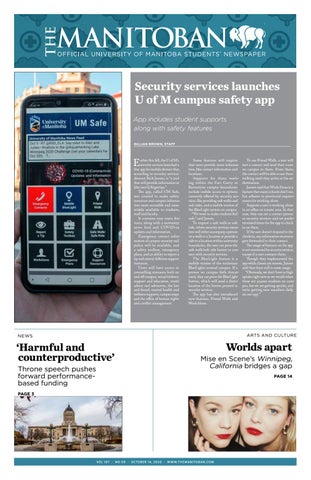
Earlier this fall, the U of M’s security services launched a free app for mobile devices that, according to security services director Rick Jansen, is “a tool that will provide information at [the user’s] fingertips.”
The app, called UM Safe, was created to make safety resources and campus information more accessible and more widely available to students, staff and faculty.
It contains nine main features, along with a university news feed and COVID-19 updates and information.
Emergency contact information of campus security and police will be available, and a safety toolbox, emergency plans, and an ability to report a tip and several different support resources.
Users will have access to counselling resources both on and off-campus, sexual violence support and education, travel advice and advisories, the lost and found, mental health and wellness supports, campus maps and the office of human rights and conflict management.
Some features will require that users provide more information, like contact information and locations.
Supports for those working within the Fort Garry or Bannatyne campus boundaries include mobile access to options currently offered by security services, like providing safe walks and safe rides, and a mobile version of the BlueLight system on campus.
“We want to make students feel safe,” said Jansen.
To request a safe walk or safe ride, where security services members will either accompany a person on a walk to a location or provide a ride to a location within university boundaries, the user can press the safe walk/safe ride button to connect with security services.
The BlueLight feature is a mobile version of the stationary BlueLights around campus. If a person on campus feels threatened, they can press the BlueLight button, which will send a direct location of the button pressed to security services.
The app has also introduced new features, Friend Walk and WorkAlone.
To use Friend Walk, a user will text a contact and send their route on campus to them. From there, the contact will be able to see them walking until they arrive at the set destination.
Jansen said that WorkAlone is a feature that many schools don’t use, but adheres to provincial requirements for working alone.
Suppose a user is working alone in an office or remote area. In that case, they can set a contact person or security services and set predetermined times for the app to check in on them.
If the user doesn’t respond to the check-in, any information necessary gets forwarded to their contact. The usage of features on the app is not monitored by security services, except if a user contacts them.
Though they implemented the app while classes are remote, Jansen said that there still is some usage.
“Obviously, we don’t have as high uptake right now as we would when there are 30,000 students on campus, but we are getting uptake, and we’re getting new members daily on our app.”
Throne speech pushes forward performancebased funding PAGE 3

Mise en Scene’s Winnipeg, California bridges a






AMIRA TEKLE, STAFF

The Manitoba government laid out its agenda for the third session of the 42nd legislative assembly in the speech from the throne delivered at the provincial legislature Oct. 7.
Parts of the speech pertaining to post-secondary institutions were in keeping with the message imparted in a mandate letter issued to Manitoba colleges and universities — including the U of M — by the Minister for Economic Development and Training Ralph Eichler released to the public Jan. 17. Both the throne speech and the mandate letter touched on the topic of university graduates meeting “labour market needs.” In the letter, Eichler wrote that “Manitoba will be developing a new model for post-secondary funding based on performance” and “ceasing programs that lack responsiveness and value in a modern context and building programs that deliver the skills needed for today and tomorrow.”
In the throne speech, the government said it will develop a “strategy to prepare Manitobans for the jobs of the future and to ensure our workers get the education and labour market training they need to be job-ready.”
“This will include legislation to better align post-secondary institutions with labour market needs, expand work-integrated learning opportunities for students and improve the governance, transparency and
accountability of our colleges and universities.”
The metrics used to determine performance-based funding are still to be determined.
“We are working with the system to improve data collection and develop a modernized performancemeasured funding model,” Eichler’s office said in a statement.
Performance-based funding models for colleges and universities are nothing new, and these systems are being explored and implemented in provinces across Canada.
However, provinces like Ontario have put a pin in such plans for now due to the effects of the COVID-19 pandemic. New Democratic Party MLA for St. Vital and Opposition Critic for Economic Development and Training Jamie Moses has criticized the government’s plan.
“We know that universities [and] their administrations, along with working with their students, have a real sense of the types of programs that are effective and can be and should be taught and offered at universities,” Moses said.
“U of M in particular, in my conversations with administration and with the student union, [is] finding ways to be adaptable in [and] including the environment we find ourselves in with [COVID-19].”
“I think that the minister’s [of eco-
nomic development and training] office should continue to respect and allow institutions to find the right types of programming without overly controlling programming at institutions,” he said.
Moses said he views universities
“I think that the minister’s
office should continue to respect and allow institutions to find the right types of programming without overly controlling programming at institutions” — Jamie Moses, opposition critic for economic development and training
as having a “very broad role in our community and a very vital role as a
part of our economy.”
“We know that universities have a big role to play,” he said.
“We think that role includes offering strong programs, vital strong programs in the areas such as science, in arts [and] in economics, but also in things that the minister [of economic development and training] might also include like engineering and other skilled trades. But it’s not exclusively that.
“Universities also play a large role in research, and we do think that is a continued area where it deserves to have due funding and progress made in that area.”
The Manitoba Alliance of PostSecondary Students — which counts UMSU, the University of Manitoba Graduate Students’ Association and the Red River College Students’ Association as its members — released a statement calling the use of performance-based funding models “a controversial issue among postsecondary students.”
“A decision to impose a performance-based funding model for operating grants that remain stagnant or are reduced every year as a percentage of government spending will be harmful and counterproductive,” the statement read.
In a press release, the Manitoba Organization of Faculty Associations (MOFA) said it is “concerned regard-
ing the continued erosion of public post-secondary education.”
MOFA — which represents faculty and staff at Brandon University, Université de Saint-Boniface, the University of Manitoba and the University of Winnipeg — said the kind of legislation mentioned in the throne speech by the government “will only undermine and interfere with university autonomy.”
Audit released on oversight of postsecondary institutions
Manitoba’s office of the auditor general released a report Thursday on government oversight of Manitoba’s seven public colleges and universities.
The report culminated in 22 recommendations being made to the provincial government to improve oversight.
The audit found a “weak oversight framework for post-secondary institutions” on the part of the provincial government and that “post-secondary institutions’ governing boards need to modernize governance practices and strengthen oversight.”
In a press release, the province said it is “welcoming” the report.
“This report will continue to guide our work together with post-secondary institutions and help strengthen governance and accountability,” Eichler said in the release.
DAMIEN DAVIS, STAFF

In a time where people are instructed to stay at home, isolation can have an impact on an individual’s mental health.
On Oct. 7, students, professors and community members came together to join in an online discussion titled “Being Queer in the time of COVID-19,” where many already feel the consequences that come with distance from community.
The discussion was hosted over Zoom by UMQueer, the Rady faculty of health sciences and the office of equity, diversity and inclusion (EDI).
Elizabeth Caslake, project developer and representative for social responsibility in the office of EDI, said the idea for the discussion came from her own feelings of isolation from the community during the pandemic.
“There was a need that I had personally, and our thought was, ‘Well, maybe somebody else has the same need,’” Caslake said.
The goal of the discussion — which was facilitated by Caslake along with faculty members, EDI director Jackie Gruber and EDI coordinator Funmi Owoade — was to
provide a space for individuals in the LGBTTQ* community to talk about how COVID-19 has affected them and if their experiences had made life harder.
Another discussion topic asked the question, “How can [the community] help each other in this difficult time?”
Before the beginning of the discussion, Caslake emphasized the importance of creating and maintaining a safe space throughout the hour.
She also emphasized “conversation-based learning.”
“Let’s keep talking, push yourself and get outside your comfort zone if
you can. That’s how we’re going to learn and support each other,” she said.
Caslake commended the efforts in equity, diversity and inclusion at the U of M.
“Let’s keep talking, push yourself and get outside your comfort zone if you can. That’s how we’re going to learn and support each other” — Elizabeth Caslake, project developer and representative for social responsibility in the office of EDI
Last September, she was the first transgender person to ever be appointed to the admissions committee in the Max Rady college of
medicine.
“Our experience is special at the university and in health-care education,”she said.
Working in EDI positions in the faculty of health sciences has given Caslake the opportunity to put LGBTTQ* initiatives at the attention of the university.
She said the community has “health-care needs, physical and mental, that are not being met.” As members of the community discuss the needs they have, they are able to “press the university to fill those needs.”
Caslake said the participation level in this discussion “exceeded [her] expectations.”
“The importance is that we talk to each other,” she said.
“If I’m sitting here by myself and I never share the good, the bad and the ugly of my life with someone else who is at least interested, or maybe going through the same thing, then I have no common ground with anybody, and it takes me back to when I was in my early twenties […] and I thought, ‘I’m the only person. There’s nobody else out there like me.’
“And it took a long time to figure out, if I just talked to other people, there’s lots of people like me out there.”
CAM CANNON, STAFF

At its Oct. 8 meeting, UMSU’s board of directors discussed ongoing advocacy regarding Respondus Monitor and tuition payment plans for international students. It also passed a motion signalling an incoming abolition of slates in UMSU elections.
UMSU received a presentation on Respondus Monitor — the exam invigilation software introduced this year by the university, which has raised concerns from UMSU — from Mark Torchia, vice-provost teaching
and learning and executive director of the Centre for the Advancement of Teaching and Learning.
Torchia said that due to the principles of academic freedom — which stipulate that the university is unable to mandate how instructors teach, including their use of technology — solutions to UMSU’s concerns about “environmental checks” and practice exams cannot be mandated by the university.
As a stop-gap measure, the university has made a practice quiz avail-
able through UM Learn so students can familiarize themselves with the invigilation software without needing to mandate instructors to create practice exams.
Torchia said the university has negotiated with the company to prevent recordings of students being used in research but is unable to guarantee full privacy due to the existing Freedom of Information and Protection of Privacy Act (FIPPA), which the recordings may be subject to.
“We will always manage data held in Respondus [Monitor] just like all other data that we hold, in compliance with FIPPA” Torchia said.
“FIPPA is the law and we have a legal obligation to that.”
Due to the difficulties posed by commitments to academic freedom, UMSU vice-president advocacy Kristin Smith said in the meeting that advocacy around Respondus Monitor will move from a focus on working with the university administration to working with individual faculties.
UMSU also made the decision to vote on its official position on Respondus Monitor at the next meeting.
Smith presented her report on
ongoing efforts to assist international students who are having difficulties paying tuition due to the economic impacts of COVID-19.
Smith said in the meeting that efforts to advocate for instalment
“We will always manage data held in Respondus [Monitor] just like all other data that we hold, in compliance with FIPPA” — Mark Torchia, vice-provost teaching and learning
plans for international undergraduate students “have been met with adversity.”
The report further stated that the financial services office at the university has cited “difficulties” in implementing instalment payment plans for international undergraduate students but are “always willing to help students on a case-by-case basis.”
As part of ongoing efforts to restructure UMSU, the board also voted in favour of a motion which could mean the future abolition of slates in UMSU elections.
The motion reads, “Be it resolved that the board instruct the [governance] committee with its support or rejection of the use of slates during the elections of the UMSU executives.”
In opposing the motion, members cited the potential for lowering an already low voter turnout, as well as potential for less efficient governance arising from electing independent candidates, rather than slates.
Arguments in favour of the motion cited the high barriers to entry in UMSU that slates create. Lauren Slegers — a Commerce Students’ Association UMSU representative — described the slate system as “a dying way of doing elections.”
In support of the motion, UMSU president Jelynn Dela Cruz said that “in order to continue moving this organization forward, I do think that we need to stop keeping ourselves and keeping our aim where we’re at and we need to place it where we need to be.”
COLIN IJEBOR, STAFF

Artificial intelligence (AI) technology is being rapidly integrated more and more into different sectors, and health care is no exception.
Pingzhao Hu, an assistant professor in the department of biochemistry and medical genetics at the U of M, is currently working on a project that aims to develop an Al system for the integrated analysis of complex health data. He recently won a Terry G. Falconer Emerging Researcher award from the Winnipeg Rh Institute Foundation for this project, which combines the fields of statistics, computer science and genome science.
Hu started his work in medical genetics in 2003 at the Mount Sinai Hospital Lunenfeld-Tanenbaum Research Institute in Toronto, Ont. where he worked with a team to develop and analyze the different kinds of genomic data gathered using gene chip technology.
This technology, also known as DNA chips or biochips, describes the genetic information of each patient at the genome level. From there, Hu moved to the Hospital for Sick Children in Toronto, where he spent 10-and-a-half years before coming to the U of M in 2014. Hu is also affili-
ated with the data science platform at the George and Faye Yee Centre for Healthcare Innovation in downtown Winnipeg.
Hu’s current research applies the deep learning approach of machine learning, in which an AI can learn from its data sets to train itself, to the analysis and integration of health data gathered from numerous sources to accomplish two goals.
The first is to diagnose or provide the prognosis of certain diseases. By identifying specific biomarkers or gene signatures, the AI algorithm they seek to develop and use will be able to predict the average survival rates of patients.
Using a personalized method of genetic sequencing, the AI’s second aim will be to predict whether certain patients will respond to particular drugs.
In addition to this, it will enable them to study closely the development and progression of the diseases being researched.
This breakthrough will introduce a new dimension to medicine.
“The future of medicine is mainly precision medicine, or personal medicine […] and based on my own opin-
ion, AI is one of the key technologies we need to use or apply here,” Hu said.
Through the study of gene signatures, patients can be separated into different groups, and the disease progression, prognostic factors and survival rates of these groups can be analyzed.
Their responses to treatment can also be closely studied, enabling those in the medical field to choose what specific drugs to give to patients that reacted well to others with similar genetic signatures.
Presently, the project is focused on patients with breast cancer. Women aged over 50 should go through breast cancer screening every two years, and Hu and his team hope to assist in early detection for women who may develop interval breast cancer, or cancer developed in the interval between tests. Through the use of AI, they also seek to increase the specificity of screening tests.
Hu’s AI system can analyze many different kinds of data from a variety of sources, including clinical data, genomic data and medical imaging data, such as computerized tomography (CT) scans. In sourcing the data for this project, Hu identified two
major sources: local clinicians and organizations, who gather genetic materials from their patients, and data from public domains, such as journals.
“The
future of medicine is mainly precision or personal medicine”
— Pingzhao Hu, professor
Due to the sheer amount of data available, the biggest challenge faced by the health industry is the integration of this data, which is where AI comes in.
“More than 90 per cent of diseases more or less have a genetic component, so basically the genetics play a key role in the majority of human disease,” Hu said.
One of the challenges Hu identified is the fact that different populations of people have different genetic backgrounds, and so their
genetic information is quite different. Therefore, when samples are being analyzed, in order to avoid bias, it must be determined whether they are from a homogenous or mixed population. This is done by comparing samples to reference genomic data available for the different populations.
However, some of Hu’s challenges have come on a much more personal scale. He has been trying to recruit more graduate students for his program with experience in more than just computer science, ideally in fields such as statistics and biology, but he said that the interdisciplinary nature of his research makes it difficult.
Moving forward, Hu’s next steps will be to design programs that are methodology-focused with long-term impact.
He will use a computational algorithm derived from statistics and AI to integrate and combine medical imaging data with genomics. Through a rapidly growing field known as imaging genomics or radiogenomics, scientists hope the ability to have AI technology quickly identify quantitative data from medical images will one day replace invasive biopsies.
SARAH DORAN, STAFF

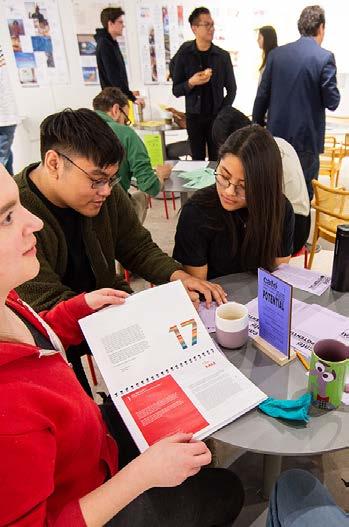
Anew report on the Canadian Architecture Forums on Education (CAFÉ) initiative was released Sept. 18. Part of an initiative to create a national architectural policy, CAFÉ was created to allow architecture students a chance to weigh in about the future of architecture in Canada.
The report summarizes five events held in different regions of the country at Dalhousie University in Nova Scotia, the Université de Montréal in Quebec, Ryerson University in Ontario, the University of Manitoba and the University of Calgary in Alberta. Each session brought together students from regional architecture programs as well as local professionals in the field to discuss the future of Canadian architecture.
In addition to presentations and discussions at the CAFÉ sessions, students also contributed online survey responses and manifestos on the future of design. Between in-person events and online engagement, the CAFÉ initiative was active from fall 2019 to summer 2020.
Lisa Landrum, associate professor and associate dean of research in
the U of M’s faculty of architecture, organized the sessions and compiled the report.
“The whole point of the project was to have student leaders from different schools talking to one another and
“So many aspects of daily life and well-being rely on good design” — Lisa Landrum, professor and organizer
for the academic communities to be comparing notes and thoughts on these big topics,” Landrum said.
“It’s helped build more bridges between the professional sector and the academic sector when it comes to the design communities.”
Benita Kliewer, a U of M architecture student who helped Landrum analyze and summarize feedback for the report, said the student reaction
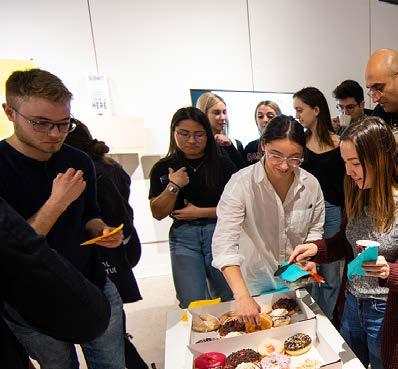

to CAFÉ events was overwhelmingly positive — including her own.
“I thought having a chance to have a national conversation about these topics was super exciting,” she said.
“So often, students — and professionals, I’m sure — get mired in their immediate projects and deadlines and don’t always have the chance to look at the bigger picture. Even rarer is the opportunity to share big-picture opinions with students from architecture programs at other universities. Many of the student representatives that participated in CAFÉ events away from their home university mentioned how much they appreciated the chance to swap perspectives with students from other universities.”
The report identified five major concerns in education and professional practice raised by the sessions: climate change and environmental stewardship, equity and inclusion, mental health and well-being, culturally relevant and regionally meaningful design and meaningful community engagement.
“As someone summarizing the feedback from this project, it was incredibly heartening to see the con-
sistency with which students took their social and ecological responsibilities seriously and placed these issues at the centre of the conversation,” Kliewer said.
“This sort of exchange shows that we are not working in isolation, but that we are part of a large cohort of people who care deeply, passionately about the world and those in it, and feel profoundly compelled to make it better.”
Over 30 countries worldwide have developed or are developing similar policies in an effort to guide future design strategy, especially in regard to sustainability and heritage. National policies are also intended to influence politicians involved in public policy as well as architects and designers.
Each country has unique factors to consider when it comes to creating goals for the future, and Canada is no different.
“Some of the European countries who have created architecture policies, like Denmark, Finland, Sweden — these are small countries compared to Canada,” Landrum explained.
“So, part of the challenge for Canada is how to create some unity
around some general initiatives and priorities, while always allowing for regional specificity and local decision-making to happen in ways that are right for that community. And, of course, that is all the more important for Indigenous communities, who want to have the power to make their own decisions for their own regions.” Indigenous voices played a major
“It’s in action that we will see true change in architecture” — Reanna Merasty and Danielle Desjarlais, IDPSA members
part in the CAFÉ Prairie session, held at the U of M. The faculty of architecture’s Indigenous Design and Planning Student Association (IDPSA) organized an event, titled “Nation-to-Nation Conversation,”
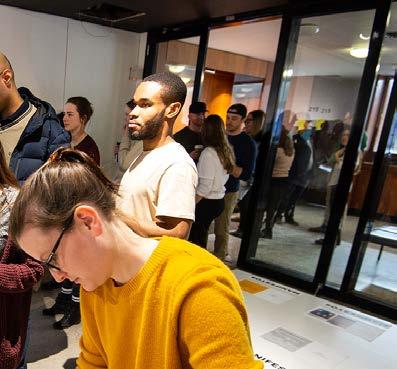

to discuss how architects can better recognize and support Indigenous communities.
The event’s morning session began with a song and smudge ceremony performed by the Kind Hart Women Singers, the first smudge ceremony within the faculty of architecture.
Presentations followed from professional architects, educators, community members and students about topics ranging from cultural input, recovering and preserving Indigenous stories, multi-generational design, sustainability and community autonomy. IDPSA co-founder Reanna Merasty and member Danielle Desjarlais, both Cree, organized the discussion and moderated a panel following the presentations.
“A national architecture policy as an aspirational document is able to be inclusive, but it’s in action that we will see true change in architecture,” Merasty and Desjarlais told the Manitoban in a joint statement.
“Coming from an Indigenous perspective, this stems from education, and until there are required topics that incorporate Indigenous cultures, then you truly [won’t] see any
change in our built environment. It’s in education where the architects and designers emerge from [who] are the future in designing our spaces across Canada.”
However, architects don’t design in a vacuum. Over the summer, Landrum has been studying Canadian architectural legislation and existing national policies with Shannon Furness, a political science and public policy student, and Alex Bartmanovich, an architecture student. Their research forms the next phase of the CAFÉ project.
Though Furness did not have a background in architecture, she said the passion, creativity and depth of information in the CAFÉ data made joining the project enjoyable.
“As a student on the policy side of the multi-disciplinary relationship, the CAFÉ sessions and the findings [were] a substantial breath of fresh air […] in the process of conceptualizing a picture of the problems and situating them within a broader policy framework,” Furness said.
“The amount of knowledge disseminated in these sessions reflected both abstract and concrete perspec-
tives, concerns and aspirations that were shared across, but also unique to, each region where the CAFÉ forums were held.”
Bartmanovich said the policy ideas and goals raised by the CAFÉ sessions were “notably consistent” with existing national policies elsewhere and current Canadian discussions and research but added that the way federal policy thinks about architecture would need to change.
“We are part of a large cohort of people who care deeply, passionately about the world and those in it” — Benita Kliewer, student
“An architectural policy is not just about how much is being committed to buildings,” he said.
“It is a commitment of government in making these projects socially
and environmentally sustainable long-term.
“It is leading by example in promoting the creativity and competition and innovation that spurs architectural excellence.
“It is a strategy to empower citizens and stakeholders in a bottomup process of designing meaningful, beautiful, sustainable places and not just buildings.”
Furness and Landrum agreed, both mentioning the effect of COVID-19 restrictions on public awareness of design and architecture as a good example.
“The built environment affects all of us,” Landrum said.
“You don’t need to have any specialized knowledge to know whether or not you’re comfortable in a space, or to know whether or not you like your neighbourhood. I think part of this project is to sort of demystify or despecialize assumptions people might have about what architecture is, or what the design of the built environment is.
“The field still has the problem of being associated with luxury […] but actually, so many aspects of daily life
and well-being rely on good design.”
In the process of working on the CAFÉ report over the summer, faculty of architecture students Andria Langi and Alixa Lacerna created two animated videos, as well as a montage of highlights from the CAFÉ Prairie session.
The animations involved describing architecture in five words, using responses from the online survey and a short explanation of the need for a national architecture policy narrated by Furness. Langi also designed the cover of the report.
Lacerna, who was one of the table captains at the CAFÉ Prairie session, was enthusiastic about the potential the CAFÉ initiative represents.
“When we finished, I realized that there is a lot more to do for an architecture policy to be properly tailored to the rich context of Canada’s multilayered society,” she said.
“People are already working toward getting it right, and involving the general public is essential to making sure the steps taken are right. It’s inspiring, humbling and makes for a good reason to wake up in the morning.”
Doering
Editor-In-Chief:
EDITOR-IN-CHIEF Matthew Doering editor@themanitoban.com
BUSINESS MANAGER Alice Teufack accounts@themanitoban.com
ADVERTISING CO-ORDINATOR Diego Castro ads@themanitoban.com
MANAGING EDITOR Ty Brass me@themanitoban.com
NEWS EDITOR Amira Tekle amira@themanitoban.com
NEWS EDITOR Gillian Brown gillian@themanitoban.com
COMMENT EDITOR Lucas Edmond comment@themanitoban.com
ARTS AND CULTURE EDITOR Shaylyn MaharajPoliah arts@themanitoban.com
SPORTS EDITOR Isaiah Wagner sports@themanitoban.com
RESEARCH AND TECH EDITOR Sarah Doran research@themanitoban.com
COPY EDITOR Ursula Chojko-Bolec copy@themanitoban.com
DESIGN EDITOR Joshua Wesey design@themanitoban.com
GRAPHICS EDITOR Jenelle McCann graphics@themanitoban.com
PHOTO EDITOR Alex Decebal-Cuza photo@themanitoban.com
AUDIO EDITOR Tino Hove audio@themanitoban.com
VIDEO EDITOR Nish Joshi video@themanitoban.com
SOCIAL MEDIA EDITOR Kathy Dinh social@themanitoban.com
VISUAL COMM. DEVELOPER Evan Tremblay evan@themanitoban.com
REPORTERS & ASSOCIATES
NEWS REPORTER Cameron Cannon
NEWS REPORTER Damien Davis
RESEARCH AND TECH REPORTER Colin Ijebor
ARTS AND CULTURE REPORTER Kaelen Bell
ARTS AND CULTURE REPORTER Zoë LeBrun
COLUMNIST Matthew Averbeck
COLUMNIST Jesse Boily
DESIGN ASSOCIATE Mikaela Warkentin
PHOTO ASSOCIATE Basel Abdelaziz
SOCIAL MEDIA ASSOCIATE Jalene Moman
VIDEO ASSOCIATE Arsalan Saeed
AUDIO ASSOCIATE Tawana Matizanadzo
GRAPHICS ASSOCIATE Dallin Chicoine
COPY ASSOCIATE Aldin Sabic
VOLUNTEER CONTRIBUTORS
Emily Unrau-Poetker
A “volunteer staff” member is defined as a person who has had three volunteer articles, photographs, or pieces of art of reasonable length and/or substance published in three different issues of the current publishing year of the Manitoban. Any individual who qualifies must be voted in by a majority vote at a Manitoban editorial board meeting. Elected representatives and nonstudents may be excluded from holding votes as volunteer staff members in accordance with the Manitoban Constitution. The Manitoban is the official student newspaper of the University of Manitoba. It is published monthly during the summer and each week of regular classes during the academic year by the Manitoban Newspaper Publications Corporation. The Manitoban is an independent and democratic student organization, open to participation from all students. It exists to serve its readers as students and citizens. The newspaper’s primary mandate is to report fairly and objectively on issues and events of importance and interest to the students of the University of Manitoba, to provide an open forum for the free expression and exchang of opinions and ideas, and to stimulate meaningful debate on issues that affect or would otherwise be of interest to the student body and/or society in general. The Manitoban serves as a training ground for students interested in any aspect of journalism.Students and other interested parties are invited to contribute to any section of the newspaper. Please contact the appropriate editor for submission guidelines. The Manitoban reserves the right to edit all submissions and will not publish any material deemed by its editorial board to be discriminatory, racist, sexist, homophobic or transphobic, ableist or libellous. Opinions expressed in letters and articles are solely those of the authors. Editorials in the Manitoban are signed and represent the opinions of the writer(s), not necessarily those of the Manitoban staff, Editorial Board, or the publisher. All contents are ©2020 and may not be reprinted without the express written permission of the Editor-in-Chief.
Mental illness has a story, let’s treat it that way
LUCAS EDMOND, STAFF
This article discusses suicide.
My brother, Colin, was the type of character to fill rooms with laughter. Although large and at times intimidating, his strong heart and habit of not taking life too seriously tended to warm a person’s day. Not to mention, his smile and laugh were contagious. He was a gentle giant.
But what people see on the surface isn’t necessarily indicative of what litters a person’s soul. Deep down, my brother was extremely self-conscious and much too willing to put other people in front of his own needs — a characteristic that is both noble and self-harming.
To this day, much of what haunted my brother’s thoughts remains unknown.
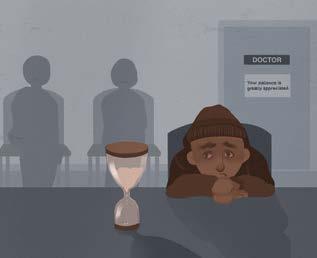
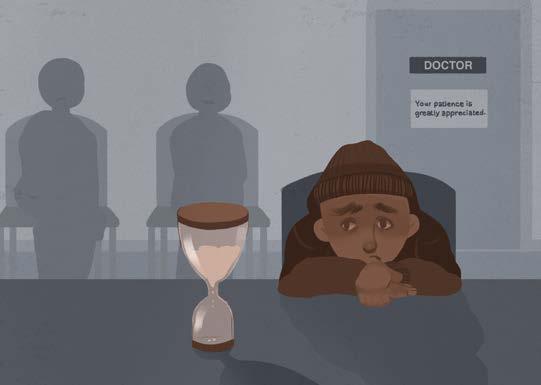
On a life-defining day, six years ago, Colin had a psychotic break. For the next few months, our family would rush him to the closest hospital after the latest in what would become a series of manias and depressions.
He had expressed on several occasions that he was suicidal, but by the time a doctor could see him out of the waiting room, he had usually calmed down.
He would then sit and listen to a doctor inaccurately explain they didn’t deem him to be a “high-risk” patient and, therefore, they couldn’t afford him space in a treatment facility.
Colin would usually leave the hospital experiencing a hopeless despair that no one, not even the people who were institutionally responsible for his health, would afford him the resources he needed for his care.
He would have to wait months, along with other suicidal patients, to get the proper treatment that he needed so desperately.
Unfortunately, when someone is suicidal, a split second is usually the difference between life and death.
Putting a suicidal person on one of these waitlists is the bureaucratic equivalent of telling families “good luck.”
Just a few months after Colin’s initial psychotic break, I received a call — I was told to
pull over the car, and I was given the news that my brother had died by suicide.
The pain of mental illness does not end with a loved one’s suicide. That night sticks with me to this day — the feeling of bloodied knuckles
It’s about time to do more than talk about mental health once a year as a token to those who suffer
— we need to actually start doing something about it
from punching the frozen ground, seeing my dad cry for the first time, hearing my mom’s sobs and the smell of stale beer mixed with artisanal incense from the perfumery we were forced to relocate above. It is as if it happened yesterday.
Sadly, though I wish it weren’t true, this story is not exceptional. It happens quite often. Years of my family’s role in mental health advocacy has unveiled this to me.
Everywhere you go, you could be standing next to a mother, aunt, uncle, brother, sister or father who has lost a loved one due to institutional neglect and suicide.
It would be easy to put a face to my brother’s death and blame the doctors that had overseen his illness in the emergency rooms, but I would be lying to myself. This isn’t an individual problem — it is systemic.
Doctors want to help people — it’s why they got into their profession in the first place. But they can only do so much with their resources. And it isn’t nearly enough.
Roughly 23 per cent of the world’s healthcare burden is related to mental illness. Yet, Canada devotes only seven per cent of its health-
care budget to mental health care. In Manitoba, we only allocate approximately five per cent. When doctors are provided with a pittance to manage a health crisis as large as mental illness, they often have to choose between bad and worse decisions.
This means prioritizing patients that are arbitrarily deemed a “higher-risk” to die by suicide. But when you attempt to filter out who really means what they are saying, it becomes a dangerous life-or-death scenario. And this is not a game. These are lives.
To put this crisis into perspective, by the time the average Canadian will have reached 40 years of age, one in two will have or have suffered from a mental illness — only about 20 per cent will receive adequate health care.
Imagine this hypothetical scenario psychologist Vikram Patel presents — two people walk into the emergency room with symptoms of acute chest pain, shortness of breath, numbness and dizziness. One of these patients receives emergency cardiac surgery, but the other is sent home.
The reason one was treated and the other was not, you ask? One patient was suffering from an anxiety attack.
Now, this might not sound like a fair comparison. Still, the average person who has a mental illness lives 10 to 20 years less than those who don’t, and this doesn’t include those who die by suicide.
Mental illness is a very real health crisis that is equivalent to and just as valid as physical illnesses.
Beyond what many gather from mental health awareness weeks, the people who suffer from mental illnesses are more than a statistic. They have a face, a history, stories of resilience, trauma, tragedy and, most importantly, they have people who love them.
It’s about time to do more than talk about mental health once a year as a token to those who suffer — we need to actually start doing something about it.
Our loved ones depend on it.


STARTS OCTOBER 13, 2020
DEADLINE FOR SUBMISSIONS: October 21, 2020 @ 4 PM
WINNERS & PRIZES ANNOUNCED: Oct. 30, 2020 (After 12PM)
CHECK OUT @MYUMSU FOR THE FULL CONTEST DETAILS!


Comment Editor: Lucas Edmond Contact: comment@themanitoban.com
As pumpkin spice takes foot in the world, many forget about the classic pumpkin pie
JESSE BOILY, STAFF

As the leaves turn colour and the streets fill with fall clothing, one thing remains in the back of my mind — pumpkin spice season has arrived.
Pumpkin spice season, once known as fall in days past, is the time of the year when we know summer is over and the inevitable cold season begins to sneak in. We warm up our souls with wholesome family gatherings and prepare ourselves for the comfort food season after a massive Thanksgiving dinner.
Local haunts carry their twist of pumpkin spice delicacies, all while the original pumpkin spice king, the granddaddy of the spinoffs, is left forgotten — today, we will remember the once loved and always overindulged pumpkin pie.
Pumpkin pie has long been a staple dessert for Thanksgiving dinners and holiday seasons.
A classic symbol of the holidays, pumpkin pie has always shed a bit of warming joy as the Canadian winter looms in the distance.
The mighty pumpkin was once a sign of the harvest, but as a city kid stereotypically caught in the almighty web of popular culture and knowing nothing of farming, I really only relate the season to pumpkin spice.
The core of what makes a pumpkin
pie so good is the pumpkin spice: that insurmountable blend of nutmeg, cinnamon, cloves and allspice. The pie is served with a generous amount of whipped cream or ice cream, adding creaminess to the sharp but sweet comfort food.
I have seen first-hand the pumpkin pie become a victim of consumerism — being mimicked in many forms and forgotten to what’s new.
I have to admit my family is guilty of the crumbling of the legacy of pumpkin pie.
Years ago, my mother substituted pumpkin pie with sweet potato pie with a pinch of pumpkin spice as a healthy alternative to the holidays’ already high-caloric meals.
I have always said that calories don’t count during the holidays, and I restate this claim with vigour in 2020.
Sweet potato pie joins the long list of just another imitator of pumpkin pie.
But the latte is the guiltiest in trying to imitate its glory.
The now oh-so-popular pumpkin spice is mainly made famous by coffee chains having pumpkin spice lattes, a wannabe pumpkin pie in a mug.
I can understand the appeal with all the spice and creaminess of a pumpkin pie in a to-go cup.
Pumpkin pie has also been mimicked in the land of adult beverages with pumpkin ales and even wines.
Ice cream, what once was a lovely addition to pumpkin pie, has skipped the pie and now has its pumpkin spice flavouring — the ultimate betrayal.
As I walked through the aisles of my local supermarket, the aisles are lined with pumpkin pie wannabes — all culprits to the potential death of the forgotten king of seasonal desserts.
Pumpkin spice cookies, hot drinks and ice cream are all products I could potentially accept with time, but recently, the newest and possibly worst offender of them all struck a blow to harsh to forgive, Kraft Dinner.
Kraft Heinz Canada describes its newest addition as a “spicy, cheesy treat,” which will include a cinnamon spice topping.
I consider myself a Kraft Dinner connoisseur of sorts. I can make a mean Kraft Dinner, but never in my life have I imagined or desired a pumpkin spiced cheesy noodle such as this.
It is a mockery to the king of holiday desserts.
Pumpkin pie was never cheesy, nor should it be.
And it has never had noodles. Again, nor should it. Kraft Dinner and pumpkin pie don’t mix.
The abomination of pumpkin spice Kraft Dinner is the final blow to pumpkin pie — how could it recover from such a betrayal of its original flavour?
Pumpkin pie was once a constant, the dessert that was the fall cherry on top of overindulgent meals.
Today, we will remember the once loved and always overindulged pumpkin pie
The pumpkin pie was the thing to look forward to at dreaded holiday dinners where family politics are at all-time highs.
The pumpkin pie became the peacekeeper.
It would silence everyone at the end of the meal with its decadent deliciousness.
This article will be published after
Thanksgiving Day in Canada, so I hope you didn’t forget pumpkin pie at your meal.
If the great dessert didn’t make it in your dinner, don’t fret.
You will have many more opportunities in the coming months.
It’s easy to forget when there are so many options.
Still, the originals are better than the imitations, just like so many things in this world.
As we go into the holiday season, remember to bring the pumpkin spice’s best into your homes, the humble pumpkin pie.
It will warm your heart and soul, while a piece will keep the peace in your home.

MATTHEW AVERBECK, STAFF

As the upcoming U.S. presidential election draws near, anxiety is increasing about the potential re-election of President Donald Trump, despite recent polling data that shows a comfortable lead for Trump’s Democratic opponent, Joe Biden.
The Democratic establishment has long peddled the country can unify and return to the pre-Trump era if Trump loses the election. While this may be comforting to Democratic voters, it’s unrealistic. The country will continue to move to the right side of the political spectrum, it is merely a matter of how far.
The unfortunate truth is that the United States is irreversibly being broken socially, politically and economically.
The country is sharply divided. There is a strong correlation between geography and political leanings. If you reside in an urban area, you are more likely to be a registered Democrat, disapprove of the president’s performance, believe that gay marriage is good for society and support the right to abortion. On the other hand, if you live in a rural area, the opposite is usually true.
This may not come as a surprise — rural voters and urban voters are often at odds politically. Still, the divide becomes far more sinister when you understand the context it is borne from.
According to a spring Pew Research Poll, 93 per cent of Republican voters primarily obtain their information from Fox News.
This is concerning considering the number one star on Fox’s network is Tucker Carlson — the same person who recently won a lawsuit filed against him for slander by claiming that viewers should understand that what he says on his show is not factual.
Beyond Fox News and its partisan agenda, there is a growing problem with social media.
A 2019 survey showed that 52 per cent of U.S. adults had, at some point, shared fake news.
Even though fake news is spread by people who fall on and between every political ideology, it is particularly prevalent among conservative social media pages.
Take the right-wing Q-Anon conspiracy theory.
For example, the conspiracy purports that liberal elites run child sex rings that President Trump was selected to undermine.
The idea has spread rapidly across Facebook with #savethechildren as its motto.
Beyond this, the baseless and disproven Plandemic movie, posted on social media in the early stages of the pandemic, was viewed more than eight million times.
This undoubtedly contributed to the astonishing fact that 25 per cent of U.S. adults believe the government planned COVID-19.
These “alternative” theories could have severe effects if Trump loses, claims voter fraud and doesn’t concede his place as president.
With 25 per cent of Americans believing that voter fraud is a significant problem — despite there being little evidence — the election process could be delegitimized.
False information on Fox News and social media has undoubtedly shaped the worldview of millions of Americans. Unfortunately, there is no chance for national unity when there is disagreement on basic and verifiable facts.
This has recently had dire consequences, with the United States’ inability to get the number of COVID-19 cases under control.
While a lack of federal leadership is partly the problem, there are still individuals who actively choose not to trust public health officials and, instead, trust unverified Facebook posts.
Unfortunately, the divide among the general public is not the only issue here.
Even if Joe Biden were to win the upcoming election, the recent death of Supreme Court Justice Ruth Bader Ginsburg is likely to lead to a quick
senatorial confirmation of President Trump’s far-right nominee, Amy Coney Barrett, due to a majority presence of Republican senators. In turn, this will cement the Supreme Court as a conservative institution for decades.
The new conservative court has the potential to kick millions of people with pre-existing conditions off of their health insurance, end the right to abortion and allow discrimination
The unfortunate truth is that the United States is irreversibly being broken socially, politically and economically
of LGBTTQ* people in the name of religious liberty.
The rights of women, LGBTTQ* people, immigrants and other marginalized groups are in danger even if Trump loses on Nov. 3. Biden, a hesitant centrist, would be unlikely to make any dramatic structural changes to the Supreme
Court to counter this.
Beyond the potential loss of basic human rights, the U.S. economy is in shambles for the majority of Americans.
The unemployment rate is currently at 7.9 per cent, between roughly 29 million and 40 million renters are at risk of eviction this year and President Trump announced this week that negotiations on a desperately needed stimulus bill are halted until at least after the election.
As the stock market returns to the highs of 2019 and the rich continue to make excessive gains of wealth during the economic recession, the average American is struggling to make ends meet.
And there is little to no help on the way.
Even under a Biden administration, it is unlikely that the wealth gap will reduce due to cautious economic policies and strong ties to Wall Street.
None of this is to say that the upcoming election doesn’t matter, it’s still the most consequential election in U.S. history, and it will have a direct impact on American allies, including Canada.
Unfortunately, though, American voters’ choice is between a dark future and a less dismal one.
Let’s at least hope that they choose the latter.

ZOË LEBRUN, STAFF

This Saturday, Martha Street Studio is hosting a virtual artist talk with Winnipeg-based artist Yisa Akinbolaji.
Akinbolaji, whose career spans more than three decades, is an interdisciplinary artist who explores creative expression possibilities through a variety of mediums such as painting, sculpture and printmaking.
Born in Nigeria, Akinbolaji began his artistic journey by studying fine arts at the Yaba College of Technology and was published in Nigerian Artists: A Who’s Who and Bibliography. He immigrated to Canada in the ’90s and currently lives in Winnipeg.
This mixture of Yoruba-African roots and western education results in the ability to convey a wide range of emotions, perspectives and experiences in even just a single work.
However, his distinctive painting style and use of a flexible gum in his work put him on the map as an artist. This technique, which he began
developing in 1993, incorporates aspects of painting and print-making to create something brand new that speaks directly to his own life experiences.
“My technique allows me to engage the viewers in the upsidedown thinking process and discourse relating to each work,” Akinbolaji
“My technique allows me to engage viewers in the upside-down thinking process and discourse relating to each work” — Yisa Akinbolaji, artist
said in his artist statement.
As a widely published and exhibited artist, much of Akinbolaji’s work focuses on bringing attention to social
issues both within Winnipeg’s community and globally, establishing his identity and subject matter through his distinctive style.
In addition to his artistic practice, Akinbolaji also works as a youth advocate, regularly presenting at high schools and summer camps in Winnipeg and the surrounding areas. Akinbolaji is also the founder of the Creative Foundation Inc., located in Winnipeg. This mentoring program empowers and motivates youth to strive for academic success.
Akinbolaji’s artist talk will take place via Zoom. It is free to attend and does not require attendees to download Zoom onto their device. The Zoom meeting ID will be shared the week before the event through social media.
Yisa Akinbolaji’s artist talk will take place virtually on Saturday, Oct. 17 at 2 p.m. Attendees who require ASL interpretation can contact Martha Street Studio at askmartha@printmakers. mb.ca by Oct. 14 at 5 p.m. to request it.
Powered by Optima Global Health
Call the 24/7 helpline at 1-833-628-5589 from anywhere in Canada or the US. You’ll be asked for your contact and demographic information, as well as some details about the kind of support you’re looking for.
Immediate access to crisis services is always available.
Visit www.studentcare.ca for eligibility details, helpline numbers for international access, and more information.
For more information
Empower Me is available to UMSU and UMGSA members covered by the UMSU Enhanced Care or Basic Care Dental Plan. Visit www.studentcare.ca for complete details.
Shaylyn Maharaj-Poliah
en Scene — ‘Winnipeg, California,’ 4.5/5
KAELEN BELL, STAFF

T
he space between Manitoba and California is less a literal distance and more an imagined one. They
couldn’t occupy more disparate places in the public imagination: one is quiet, scrappy and unheard of, while the other is a sun-drenched land of opportunity and environmental ter-

grown weary. In our retreat from the outside world, it’s understandable many of us are seeking some form of spiritual fulfillment. Celebrated Mennonite author Sarah Klassen explores this yearning in her latest work, a poetry collection titled The Tree of Life.
An accomplished writer, Klassen has previously authored several other poetry collections and fiction works, including Monstrance, The Peony Season and The Wittenbergs She has received numerous writing awards, including the Gerald Lampert Memorial Award, the Canadian Authors Association Award for Poetry and the Margaret McWilliams Award for popular history, one of Canada’s oldest literary awards.
In poems that cut to the heart of our search for meaning, The Tree of Life portrays the quintessential pilgrimage experience. Following the Old Testament trek across biblical wilderness through the modern Mennonite march from church pew to lunch venue, Klassen invites the reader to contemplate the concept of
ror, a place of fantasy and combustion.
But listen to Mise en Scene’s effervescent Winnipeg, California , and you’ll swear you can hear the ocean from that wind-swept Winnipeg street corner.
It’s a fiery record that finds common ground between two different worlds, a universal exploration of complicated love, nostalgia, regrets
It’s a joyful soundtrack for both heartache and triumph, whether you’re on a road trip to the golden state or a walk through the snow
and frustration.
There are wafts of the salty Pacific haze that fueled Best Coast’s minorclassic debut. The two bands share a knack for undeniable hooks — every track on Winnipeg, California rushes past on a wave of sterling melodies and cotton-candy vocals.
The duo, made up of guitarist/ vocalist Stef Johnson and drummer Jodi Dunlop, is adept at channelling that particular golden-hour glow, taking simple songs to a rarified state.
The production, courtesy of Eric Ratz and Dave Genn, is never fussy
or overwrought. It strips back some of the smaller details that dotted the duo’s previous records in favour of an immense surge of joyful noise.
Equal parts grunge and shoegaze, it’s a power-pop record that understands the goal isn’t necessarily depth but obliterating passion.
From the opening onslaught of “About Love” to starry-eyed closer “All The Love,” the record is a highlycalibrated world unto itself — Mise en Scene picked a mood and settled in, crafting ten briskly paced variations on a single sound that still manages to thrill.
The highlights, from “About Love” to the floating “Dollar Dreams,” or the gargantuan single “High School Feelings,” are masterclasses in big, brash pop songs, driven by relentless emotion and a wellspring of catchy hooks.
It’s nothing new, but Winnipeg, California is the platonic ideal of this brand of sky-high guitar pop. It’s enormous and universal enough to let just about anyone in, a sonic invitation to lose yourself in memory or whatever emotional reality is biting at your ankles.
It’s a joyful soundtrack for both heartache and triumphs, whether you’re on a road trip to the golden state or a walk through the snow.
journeying.
The Tree of Life recognizes the
We are all searching for an elusive Eden, and Klassen steadily guides us in that pursuit through these poems
tumultuous nature of being, offering glimpses of the now and the eternal, alongside a call to greater empathy. These poems highlight the sacred in everyday life and address difficult themes with compassion, tenacity and certainty.
The certainty of Klassen’s poetry is without arrogance. It humbly addresses the relationships between fear and love, man and nature as well as faith and trials.
The seriousness of these topics does not, however, weigh down these poems. Instead, the aptly named tree
of life quenches the thirst of the world — weary with the abiding belief that, even amidst ambiguity, all will be well.
We are all searching for an elusive Eden, and Klassen steadily guides us in that pursuit through these poems.
Perhaps one of the most significant elements of The Tree of Life is its tendency to merge timelines with exceptional fluidity, as though the poetry is situated simultaneously in biblical and modern eras.
In a single poem, Klassen will spirit the reader from scriptural settings to contemporary contexts and back again, each more familiar than the last.
These transitions are so seamless that the timelessness of the human experience is brought to the forefront almost effortlessly.
In some way, we are all troubled, just as we are all, in some way, seeking the tree of life.
Through her poetry, Klassen offers a safe space by which we may undertake this pilgrimage.
Local bluegrass duo Serenade discusses making music in the midst of a global pandemic
KAELEN BELL, STAFF

Were it not for the crystalline float of their harmonies, you’d be hard-pressed to believe opera was what first brought Allison Phipps and Geneva Halverson together. The music they make as Serenade — bright and simple, classic and warm — is lightyears removed from the classical opera that the duo studied at the University of Manitoba. But that formal training is there if you look for it, both in the richness of their voices and the ease with which they dance around each other.
“Isn’t that the weirdest thing? To say, ‘Oh, we studied classical training opera,’ but then we go into country,” Halverson said over Zoom. The duo spoke from their respective homes, but their close friendship and familiar banter were evident even through the glitches and pauses.
“It’s another genre that no one else likes, just like opera,” Phipps said.
“Yeah, why not do the second least desirable form of music?” Halverson said.
The duo began making music as Serenade in 2018 and have released a modest collection of singles and a
Christmas album of classic covers on the journey toward their upcoming debut EP, Country Love Songs
Songwriter Halverson and multiinstrumentalist Phipps describe their musical partnership as an extension of their friendship, sharing of strengths and mutual passions.
“So, I suck at songwriting,” Phipps said. “I don’t do any of it, Geneva does all of it, and I just come in after. She’s like, ‘Okay, I made this song,’ and I’m like ‘Ooh, let’s create a harmony,’ and then that’s it.”
Halverson jokingly threatened to throw an orange through her screen before acquiescing.
“Well, I mean, you’re not wrong,” she said. “She gives me way too much credit.”
“If something kind of, really good or really bad or just anything really emotional happens in my life, instead of dealing with it, I write it down and turn it into a song,” Halverson said.
“I’ll see Allison after having this huge breakdown and be like, ‘Hey, I wrote a song about my feelings!’”
“It’s more like you write about my feelings,” Phipps said.
“Yeah, because I know your feelings better than I know my own,” Halverson said.
The two say they’ve always been singing, whether in other groups or alone, but describe Serenade as the first time they felt everything click.
“The minute you’re singing a song and the minute you’re on stage, it’s a way to get away from everything else” — Geneva Halverson, songwriter
“I’d always played in numerous weird [...] not bar bands, I would say [more] like garage bands and stuff. But I didn’t really find the thing I wanted to do until I sang with Allison,” Halverson said.
“I would sing country music by myself but, I don’t know, it wasn’t the same,” Phipps said.
And just as they’d begun to develop this shared musical voice, the world took a turn. Halverson describes the months of quarantine as creatively fruitful — after quickly bubbling together, the duo wrote a slew of new songs while stuck inside. Still, in terms of trying to release and market their music amid a worsening pandemic, Phipps puts it rather succinctly.
“It sucks,” she said. “This summer especially […] we had applied to all these music festivals and got into quite a few and then we couldn’t do any of them.”
Even beyond the loss of opportunity and exposure, Halverson describes the difficulties in releasing music without a live audience to engage with.
“What you write is meant to be shared,” Halverson said. “I mean, recording them is great, doing them in the studio is great, hearing people’s reaction to a music video is cool.”
“But, I mean, I’ll never forget the
first time we sang ‘Chestnut Eyes’ for one of our first gigs, and I looked out and people are mouthing words back. And it was a song I wrote? It was the weirdest feeling.”
“That’s something we don’t get to experience with these new songs. They’re just kind of out in the world, and you don’t get to really see what people feel about them,” Halverson said.
“It just kind of stays in mid-air.” Still, the duo continues on — plans for a second Christmas record are in the works. Their debut EP as Serenade is still somewhere on the horizon. Halverson and Phipps will keep singing and recording until they can stand on a stage again and share their music — for their fans, for each other and for themselves.
As Halverson puts it, “It’s a form of escape, and the minute you’re singing a song and the minute you’re on stage, it’s a way to get away from everything else.”
ISAIAH WAGNER, STAFF

W
hen the 2020 National Hockey League free agency opened up last Friday, the Winnipeg Jets had some holes to fill. With Bryan Little not playing for the Jets this coming season due to an injury, the team
needed to fill a gap at the secondline centre position.
The Jets went out and grabbed Paul Stastny from the Vegas Golden Knights in exchange for a 2022 fourth-round draft pick and Carl
Dahlstrom. This was the perfect trade for the Jets for three reasons.
The first reason is that the Jets now have its second-line centre for the coming year. Stastny’s contract is finished at the end of the year so this
could possibly be just a rental player.
The second reason is that this is the perfect temporary solution to a problem. The Jets selected Cole Perfetti in the NHL entry draft this season 10th overall and with Stastny only being one year, it could be Perfetti who will fill the second-line centre job in the 2021-22 season as the long-term solution.
With the addition of Stastny, it’s likely that the top two forward lines will be Kyle Connor, Mark Scheifele and Blake Wheeler on the first line and Patrik Laine, Paul Stastny and Nikolaj Ehlers on the second line.
The third reason is that the Laine, Stastny and Ehlers line will be reunited after a great stint in the 2018 NHL playoffs when the Jets acquired Stastny at the 2018 trade deadline.
The Jets made a number of other transactions throughout the week.
Dylan DeMelo was signed for a four-year contract extension and is set to play in the Jets’s top-four defence this coming year to help solidify the blue line. Other notable signings include Nathan Beaulieu, Mason Appleton, Nate Thompson, Luca
Sbisa, C.J. Suess, Dominic Toninato and Derek Forbort.
Thompson is a six-foot-one 205pound centreman who is perfect for the Jets’s fourth line.
Forbort provides a much-needed toughness on the blue line for the Jets. Standing at six-foot-four and 219 pounds, his big body will be in the mix for the Jets’s last line of defence.
The Jets will have plenty of options on the blue line this year.
Sbisa, Forbort, Beaulieu, Dylan Samberg, Ville Heinola and Sami Niku are all potential defencemen who are going to be battling for a few spots come next season.
With plenty of options still out there, the Jets may not be finished.
One name that stands out is Travis Hamonic.
The defenceman from St. Malo, Man. has had a very successful NHL career. He has played over 600 NHL games for a total of 188 points and 591 penalty minutes.
If the Jets can land Hamonic, it would be a great addition to its defence corps and will be a homecoming for the Manitoba native.
Perfetti headlines Winnipeg’s 2020 draft picks
ISAIAH WAGNER, STAFF

L
ast week’s 2020 National Hockey League entry draft was one to remember. The Winnipeg Jets did not select many players in the draft, but they did select quality. Due to COVID-19 and social
distancing, the draft was held virtually with the players at their homes. Thankfully, with very few technical difficulties, the draft went by smoothly with few problems.
The Jets selected Cole Perfetti with the 10th overall pick in the draft. The pick was announced by Crystal Hawerchuk, the wife of late Jets star Dale Hawerchuk, who passed away recently due to stomach cancer.
Perfetti was ranked the fifth-best North American skater by the NHL ahead of the draft. The five-foot-ten centre played for the Saginaw Spirit of the Ontario Hockey League for the majority of his junior career.
In the 2018-19 season, Perfetti put up 74 points for the Spirit, great numbers for a rookie player. He then made a huge jump and put up 111 points in the 2019-20 season, his second with the club.
This pick was a bit different for the Jets based on the last couple of years.
Three out of the Jets’s four previous top picks in the draft have been from Finland, with Patrik Laine in 2016, Kristian Vesalainen in 2017 and Ville Heinola in 2019.
The other draft pick was the Swedish-born David Gustafsson in 2018.
Perfetti will be looking to make the Jets’s roster right out of camp this coming up season, but a year back in junior may be better for his development.
The Jets also had three other
picks in the draft, selecting Daniel Torgersson at 40th, Anton Johannesson at 133rd and Tyrel Bauer at 164th overall.
Torgersson put up 44 points last season for the Frölunda Hockey Club’s under-20 team. He is playing for the main Frölunda hockey team this year, and could bring some size to the wing for the Jets as he stands six-foot-three and 205 pounds.
With the Jets’s third pick, the team selected another Swedish player in Johannesson, a shifty defenceman that, at just five-foot-nine and 154 pounds, may need to add some size and muscle if he wants to make the Jets roster during any part of his career.
With the Jets’s final pick in the draft, it selected defenceman Tyrel Bauer from the Seattle Thunderbirds of the Western Hockey League. Bauer is the opposite of Johannesson as he stands six-foot-three and 205 pounds.
The hard-hitting defenceman was an assistant captain for the Thunderbirds last season and put up 17 points and 85 penalty minutes.
The Jets ended up with a very good draft and selected a variety of different players with highly skilled Perfetti, big-winger Torgersson, small and shifty Johannesson and hard-hitting defenceman Bauer.
These players will make the Jets a better team hopefully throughout the next couple of the years.