As our publishing year closes, remote education is set to continue through the summer semester. Though we take a break from our regular publishing schedule until June, feel free to reach out to us to let us know the stories and situations that are most valuable and informative, and what you, our valued readers, want to know as we find our ways through the COVID-19 pandemic.
With you in isolation,
— The Manitoban editorial board
A day at the virtual gallery
WAG@Home worth checking out
EDITORIAL
MANAGING EDITOR Garett Williams me@themanitoban.com
NEWS EDITOR Garett Williams garett@themanitoban.com / 474.6770
NEWS EDITOR Ty Brass ty@themanitoban.com / 474.6770
AUDIO EDITOR Joseph Gonzales audio@themanitoban.com
PHOTO ASSOCIATE Alex Decebal-Cuza
PHOTO ASSOCIATE Ally Gonzalo
VIDEO ASSOCIATE Nish Joshi
VIDEO ASSOCIATE Paul Stabell
AUDIO ASSOCIATE Tino Hove
REPORTERS
NEWS Gillian Brown
NEWS Damien Davis
NEWS Amira Tekle
NEWS (INDIGENOUS AFFAIRS) Kayla Lariviere
COLUMNIST Cam Cannon
COLUMNIST Meagan Hughes
ARTS & CULTURE Kaelen Bell
ARTS & CULTURE Zachary Sigurdson
SPORTS Isaiah Wagner
Pass/fail option announced for winter courses
‘Pass’ courses will not satisfy some program prerequisites
GILLIAN BROWN, STAFF
The U of M has announced that students will be given the option to have winter 2020 courses take on a pass/fail grading scheme on their transcripts in response to academic hardships resulting from the COVID-19 pandemic.
The announcement follows the university’s previous decision to allow students to selectively exclude letter grade courses from GPA calculations for the winter 2020 term, an option that will remain.
The university announced these changes after a petition created by engineering student Andrew Sadik on change.org advocating flexible course assessments quickly garnered more than 6,000 signatures.
“I started this petition because of a clear realization that the studying conditions of winter 2020 are not what students signed up for,” said Sadik.
Sadik said he believed that, even though the U of M “had taken many
crucial steps to facilitate remote learning and online resources for continued education,” the changes to course delivery had a negative impact for both students and instructors.
“Empowering students and valuing their perception are steps in the right direction” — Andrew Sadik, U of M student
He said that although he is pleased with the steps the university and UMSU have taken in recent days, he urged them to remember “that there is no ‘One size fits all’ solution to this situation” and that faculty should continue to co-ordinate with students and instructors to create beneficial solutions well-suited to the circumstances.
“Empowering students and valuing their perception are steps in the right direction,” he said.
A recent update from vice-provost (students) Laurie Schnarr reads that “Students, except for those in the faculty of law, can choose whether or not to receive a ‘pass’ grade instead of a letter grade.”
“This option will apply to all winter term or spanned courses that you complete by April 2020. Students must have achieved a letter grade of D or higher to exercise this option.”
The message also says that if a student chooses this option, the pass designation will appear on their transcripts, flagged with a notation that they made this decision due to the COVID-19 situation.
“However, it is important to note that course grades of ‘pass’ will not normally be used to satisfy prerequisites. You should not choose this option if your program specifies a grade of C or higher is required for courses counted towards the degree.”
It also notes that failing grades in the winter term will automatically be excluded from GPA calculations.
UMSU vice-president advocacy Sarah Bonner-Proulx said the union has been advocating for the pass/fail option “quite strongly.”
“We do think it is a positive change,
Graduate students hit pause on research
University closure leaves timelines for master’s, doctoral programs uncertain
GARETT WILLIAMS, STAFF
The U of M’s more than 3,400 graduate students are facing an uncertain future as they deal with the “massive” disruption caused by the university’s indefinite closure.
The same day the provincial government declared a 30-day state of emergency and announced new protective measures to manage the spread of COVID-19 through Manitoba, the U of M announced it would be closing its doors indefinitely to nearly all but those deemed essential staff.
The closure had a pronounced
impact on graduate students, many of whom are both students and employees of the university working as teaching assistants, instructors or research assistants while completing their own studies.
Carl Neumann, president of the U of M Graduate Students’ Association (UMGSA), said the university closure has forced the majority of grad students to pause their research.
“For the majority of grad students — if you’re in medicine or if you’re in engineering or in sciences or so on — most of the research has to happen
in a lab and with the university shut down people can’t make any progress,” he said. “This is a huge delay to them completing their programs.”
For more than two weeks, nearly all research being conducted through the university has been suspended. Exceptions were made for research relating to COVID-19 and work involving the care of live plants and animals but Neumann said more requests for exemptions were submitted by students than were granted by the university.
The university has extended the
timeline for grad students to complete their programs by four months, which Neumann said is appreciated but until the university re-opens and students are back in the labs it is too soon to say if it will be generous enough.
“We hope that a lot of people can get back to the labs in the not too distant future,” he said, “but it’s still really uncertain how long it’ll be until that can happen.”
The university has announced that in-person classes will not be resumed until at least September.
“We understand they’re dealing with a lot and in a lot of ways there’s not a lot they can do — they can’t magically make a lab safe to work in. It’s a tough situation,” he said.
Since the arrival of COVID-19 in Manitoba last month, the U of M has continued to tailor its response.
Just last week, the senate executive approved a revision to the university’s grading policy to allow students three options for the winter 2020 term.
An emergency fund offering support to both graduate and undergraduate students was established but was overwhelmed with applications within days.
But it was in the days after COVID-19 arrived in Manitoba
and our goal at the end of the day is to allow students the most option and the most flexibility to be able to decide for themselves what works best for them, acknowledging that these circumstances have affected students uniquely,” she said.
Bonner-Proulx, along with specific faculties, particularly the engineering faculty, are advocating to raise the “pass” minimum to a C.
“We had proposed that a 60 per cent be a pass, and that is because a C, across the board for most faculties, is what is needed in order to qualify as a prerequisite for other courses, as well as to maintain good academic standing,” she said.
Bonner-Proulx urged the university community to recognize the effects recent events have on students.
“With these unprecedented times, we need to take measures that reflect these changes and that accommodate students in a way that is best for them,” she said.
“And from whether speaking anecdotally or empirically, we know that this has affected students in a number of different ways that go far beyond just the classroom and learning.”
that Neumann said graduate students were most unsure of the next steps as the university’s focus was set on limiting the number of people on campus
“They can’t magically make a lab safe to work in” — Carl Neumann, UMGSA
and relocating all instruction online.
“So much of what we do wasn’t really covered in those initial immediate reactions to dealing with classes specifically,” he said, acknowledging that it was a fast moving and difficult situation and that “I think they really were doing the best that they could.”
Neumann said there is now some more clarity for graduate students but noted there are still many questions to be answered, most directly concerning emergency funding from the provincial and federal levels.
“There’s still a lot that we don’t know,” he said, “but I think the things that we don’t know now are just things that we can’t really answer until things progress more.”
PHOTO BY QUINCY HOUDAYER
PHOTO BY QUINCY HOUDAYER
Conservatives cut post-secondary funding yet again
Operating grants down approximately $7.5 million
TY BRASS, STAFF
Manitoba’s Progressive Conservative-led government has cut post-secondary operating grants for the third year in a row.
The budget includes a one per cent reduction in the provincial sales tax as well as a $25-per-tonne carbon tax.
An emergency supplement to the
budget was made to bring the province’s rainy-day fund to $800 million in light of the COVID-19 pandemic.
Post-secondary institutions,
responsibility for which was moved from the education minister to the minister of economic development and training in October, have had their grant assistance cut by roughly $7.5 million — nearly one per cent — for the 2020-21 fiscal year.
“The only thing dropping faster than funding for vital services is my level of surprise at their woeful decisions”
— Jakob Sanderson, UMSU president
For each of the past two years following similar cuts, the U of M has adopted tuition hikes of 6.6 per cent and 3.75 per cent, respectively, to help offset the decreases in government funding.
The university is expected to unveil this year’s budget in the coming months.
There is no word yet from the university on whether tuition will follow the pattern set over the last two years and increase again this fall.
UMSU president Jakob Sanderson called the cuts “unsurprising but deeply harmful.”
“The provincial government thinks it can run a province without consultation with any meaningful community from students to administrators, to nurses to First Nations to the business community and beyond,” Sanderson said in an email.
“Cutting funding to our leading education institution as we are going to need vital research and innovation to solve this crisis and kickstart our economy is dangerously shortsighted,” he continued.
“I have come to expect this from the Pallister government however. The only thing dropping faster than funding for vital services is my level of surprise at their woeful decisions.”
U of M Student Emergency Fund closed after two days
Fundraising underway for its reopening
TY BRASS, STAFF
Two days after becoming available, the COVID-19 UM Student Emergency Fund closed.
The fund was announced on March 31 by the U of M as well as via an email from UMSU to the student body that included the application form.
A U of M bursary opened to students to help offset costs resulting from the COVID-19 pandemic. It offered a one-time deposit to undergraduate and graduate students of up to $800 for full-time students and $400 for part-time.
Applying students were required to have no tuition costs owed to the university, have any previous emergency aid repaid, have achieved a minimum passing grade on all courses taken in the previous term
and be able to demonstrate that their financial distress resulted from the COVID-19 pandemic and that support was needed to continue at the U of M.
Applications for the fund closed April 2, and the university’s web page that contained the application form now states: “At this time, we are no longer accepting undergraduate application forms due to an overwhelming response. Should this situation change, we will update our website.”
Graduate student applications are also closed.
According to UMSU president Jakob Sanderson, the fund was made up of approximately $1.2 million and took in roughly 2,000 applications before its closure.
Asked to comment on its closure, Sanderson urged students to recognize the significant size of the fund.
“We’re sad in some sense it closed so soon but the fact it did is because 2,000 students applied and will be helped by it,” wrote Sanderson in an email. “That should be celebrated, not vilified.”
Sanderson said UMSU is currently surveying students to figure out what students need most right now, “particularly extending beyond [the Canada Emergency Response Benefit] and this fund,” and is advocating to the province “for a freeze on student loan payments, and on evictions, late fees or utility tampering to protect renters.
The emergency bursary was funded by the university and its
donors. According to UMSU vicepresident student life Jelynn Dela Cruz, the university is currently fundraising in hopes of reopening the fund.
“We’re sad in some sense it closed so soon but the fact it did is because 2,000 students applied and will be helped by it”
— Jakob Sanderson, UMSU
president
“To our understanding, the university is working very hard to raise more money in order to reopen the fund and we’ll be announcing it again to UMSU’s networks once it is back up and running.”
The faculty of science announced on an emergency fund specifically for students of the faculty on April 6. Contributions to the fund can be made online.
There is no word yet on when and how applications for students in need will be available.
Applications for the Canada Emergency Response Benefit — the federal government’s assistance program for citizens affected by the pandemic — opened Monday.
PHOTO BY ALLY GONZALO
Editor-In-Chief: Matthew Doering
Contact: editor@themanitoban.com / 474.6770
The COVID-19 pandemic in Winnipeg through the lens
A visibly empty city is the result of a quarantined population
QUINCY HOUDAYER, STAFF
It’s strange being home when your home is empty.
As someone who lives in downtown Winnipeg, in what is usually a very busy and loud neighbourhood, it’s been a very different experience walking the streets nearby and being the only person out there. Leaving my building and not seeing a single soul walking, smoking, talking or yelling.
I work as a freelancer, which means that I, along with many other people, am not working right now.
Other than my work for the Manitoban, I haven’t had a full workload since March 19, the day before more strict physical distancing rules began to be implemented in Manitoba.
I’ve been going for socially distant photowalks to pass the time, and there’s been quite a lot of time to pass. I’m focusing on photographing places that I’ve known and walked through since I moved here six years ago, places that are often full of life, but now, are decidedly empty.
For the most part, the only
people I have seen are folks waiting for the bus, driving to work or people that I know to be homeless. People who don’t have a home to quarantine in, and people who are deemed essential workers and have to go out everyday and keep the wheel turning.
As bored and cooped up as I may feel inside my apartment, there are things I need to remind myself of.
I have a roof over my head and I am able to safely distance myself during this time of crisis. During this pandemic, remember to check in with those in your life, particularly those who are on the frontlines, and remember that there are many people out there who are unable to safely quarantine themselves, whether their housing situation is unsafe or because they do not have access to shelter.
I hope that these photos offer a slight respite from the news, and make you pause to remember that what makes up our city, our neighbourhoods, our homes is the people who populate those places. Stay safe and stay healthy. We’ll get through this.
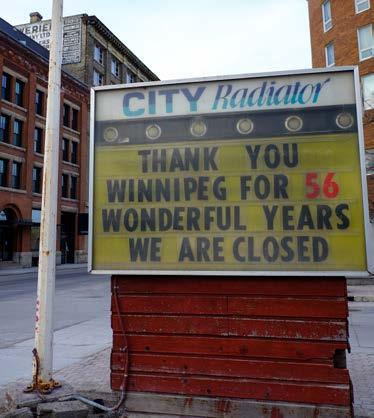
just made sense to finally close their doors for good, this serves as a reminder of all of the families and small businesses that are currently being affected by COVID-19.
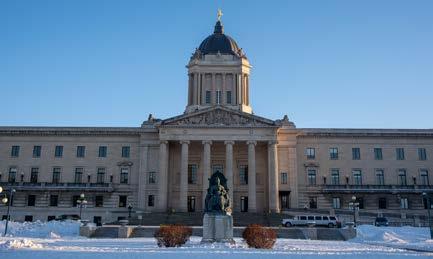
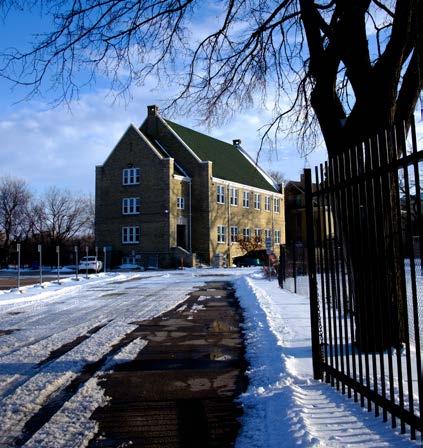
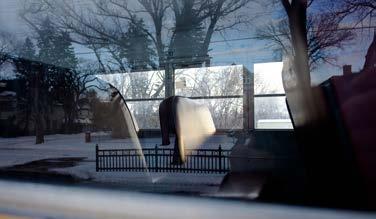
1 and 5: Balmoral Hall Girls School lies vacant (1) and a school bus sits empty. All schools, universities, and colleges in the province have suspended classes as a result of the spread of COVID-19. A majority of students are being moved to online learning, as educational institutions try to wrap up the school year.
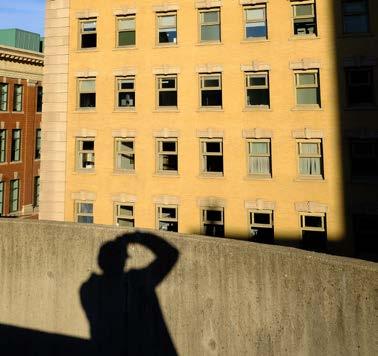
2 and 3: City Radiator in the Exchange says goodbye to its customers as it has closed after 56 years. While it is unclear if they closed because of the pandemic, or if it
4: Fresh snowfall lies undisturbed around a house in Winnipeg’s West End. Many families in Winnipeg are now home together, as schools close down and people begin to get laid off or work from home.
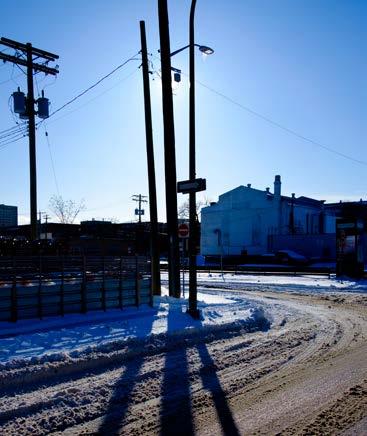
5: A street corner between Little Brown Jug brewery and Red River College is empty and still. While both are usually bustling locations, most Winnipeggers are attempting to quarantine as much as possible, leaving much of the city eerily empty.
7: The sun sets on a quiet Exchange District. Usually a busy hub of restaurants, nightlife and business, the streets lie empty. Most businesses have closed, with no clear date on when they’ll be able to open again.
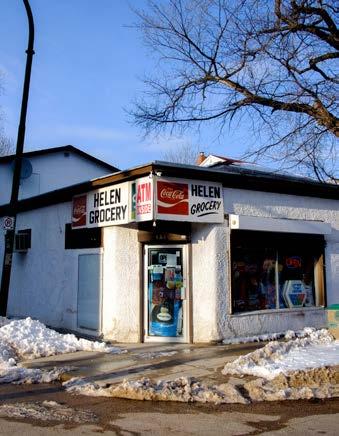
8: A corner store in Winnipeg’s West Broadway remains open, still supplying the neighbourhood with much-needed items. With restrictions on which businesses can open tightening, grocery and convenience stores and restaurants are essential services.
8
Comment Editor: Kenny Ingram
Contact: comment@themanitoban.com / 474.6529
Contemplations of a post-COVID-19 world
How the pandemic may change our perspectives and how we live our lives
MEAGAN HUGHES, STAFF
There is no doubt that COVID-19 has already had a huge global impact. Entire cities have essentially shut down and the ways in which we connect with the people in our lives have completely shifted.
Eventually, we will see rates of infection dropping off and we will no longer be confined to isolation. But what lasting changes in our lives and ourselves will be present after this pandemic finally ceases to exist?
COVID-19 has stripped away many aspects of our daily lives. We may be used to a routine of going to work, going to school and socializing without giving much thought to how these basic activities relate to public health and safety.
It’s likely a lot of people who have lived through COVID-19 will encounter long-lasting changes in the way they perceive and interact with the world we live in.
Systems within our world will
remain forever altered — with the impact on our national economies and a palpable fear of touchable surfaces within public spaces, businesses are being forced to ever-further adapt.
It reminds us of the things that are most fundamentally important: our health, friends, family and safety
The COVID-19 pandemic shows us just how many of the aspects of our daily lives we may be accustomed to are privileges, like going out to shop or see a movie.
The facade of some of our per-
ceived needs easily melts away once we can no longer leave our homes or partake in indulgences used to fill insecurities or quell boredom. This will hopefully instil a new sense of appreciation in people once we are able to live freely again.
Being confined to our homes may be both a curse and a blessing as we may have more time to spend with loved ones — either at home or at a distance — and more freedom to focus on our own mental and physical needs.
The culture we live in is obsessed with productivity which can act as fuel for workaholism, anxiety and burnout.
During this time, the world should adapt an alternate perspective and see how this culture detracts from our lives, taking focus away from the things that truly enrich our lives like spending time with loved ones.
Hopefully, this will turn out to be a time of contemplation for a lot
of us. A situation such as this global pandemic is a profound reality check and it reminds us of the things that are most fundamentally important: our health, friends, family and safety.
The only silver lining of COVID19 may be that there is something positive to take away from the experience: to see a communal priority shift toward being more grounded and appreciative of the simple and important aspects of life, even though it will absolutely take time for people to mentally recover from and process this experience.
This experience may also aid people in becoming more mindful and aware of their privilege. It is important to appreciate what we have and recognize that many people are not dealt a fortunate hand. The more we become aware of this, the more we can inspire change and action toward helping to support those who need it in our communities.
Though some will face great strug-
gles during this time, the situation has brought the necessity of coming face to face with a lot of our fears. We have nowhere left to run, leading hopefully to insight amongst the chaos.
There are reasons for concern regarding how the anxiety of these times will linger on into the future. There already exists a saddening amount of paranoia and xenophobia in our world. But with the aim to educate and look out for each other, there is hope to clear up misjudgments and misunderstandings.
We will likely see people throwing sharp glances at strangers coughing or sneezing in public areas for a while into the near future. It will take time for the communal wounds of COVID-19 to fade.
The more optimistic and realistic we are as we look to the future, the greater chance we have at making it out of this situation with insights overpowering ill feelings.
Response to COVID-19 serves big business, not workers Government’s temporary relief by subsidizing wages only prolongs a hegemonic hierarchy
CAM CANNON, STAFF
As emergency measures continue to be taken by all levels of government, it’s become increasingly clear that these governments act on behalf of a specific, property-owning segment of the population — leaving workers to simultaneously carry the weight of a global pandemic and an economic downturn.
On March 31, Manitoba’s Minister of Health Cameron Friesen issued a public health order, closing all businesses that were not considered essential in an attempt to prevent further spread of the COVID-19 virus.
The businesses that one might deem essential for immediate survival seem to be fairly evident — like those that sell supplies like groceries and those that provide medical care.
However, there are a few details that are particularly interesting: lawn care, natural resource exploration, construction and temporary staffing agencies stand out as businesses that the government has deemed essential. Even more interestingly, the public health order includes no protections for workers on the front lines. There still has yet to be any government intervention that grants workers the right to personal protective equipment (PPE), a sanitary workplace, any kind of hazard pay or even job protection for those that need to selfisolate after developing symptoms of COVID-19.
What this indicates is that many workers — who likely have few other options for income and want
to remain employed — are being asked to risk not only their lives, but the lives of their families and those around them for no additional pay and without mandated PPE. These workers are in direct danger of being hit hard by the virus while businesses and their bottom lines remain the priority of the government.
The emergency measures put in place by the provincial and federal governments are clearly not intended to protect workers
While lauding these workers for their selfless effort is important, a failure to implement safeguards that will adequately protect them from the virus will foster an entire province that simply accepts the inevitability that many workers will likely die as a result.
Many people are faced with a choice: risk continuing to work without proper safety measures or opt for safety and become reliant on whatever government aid is available. Both options are filled with uncertainty and neither guarantees that individuals will be able to live
through all of this. After all, both Employment Insurance and the Canada Emergency Relief Benefit only pay out for a finite amount of time, and it’s likely that the impending economic downturn will last long beyond the periods these benefits cover.
Workers are brave in the face of all of this because they have to be. These sacrifices are structurally coerced and in a capitalist society — this has always been the case.
This is because the state is simply the collection of institutions and apparatuses that ensure one class’ domination — or hegemony — over all other classes. This is how capitalist societies have always reproduced themselves and how they maintain a ruling class.
Simply put, the state is precisely that which reproduces the ruling class as the ruling class and normalizes it. This concept is especially powerful in times of crisis because it explains what, to many, would seem like obvious flaws in responses to crises.
The government has subsidized wages rather than providing direct, universal assistance — operations that keep businesses able to expand and maintain investments remain open. It has instead deemed construction and maintenance like lawn care essential with a lack of mandated hazard pay or protective equipment and chosen to prioritize keeping temporary staffing agencies open to ensure that staff are available to replace those that cannot work.
This is not even beginning to scratch the surface of the massive bailouts for businesses that are likely coming from the federal government — even businesses that should be shuttered due to market forces like the oil and gas sector.
The emergency measures put in place by the provincial and federal governments are clearly not intended to protect workers. This is made even more clear by the fact that around one third of unemployed workers will not be able to access financial help from the government.
The takeaway from all of this is clear: there are no guarantees for any individual worker. Yet there will always be guarantees to businesses: people healthy or desperate enough to perform any work — at whatever wage — deemed essential by a state more concerned with maintaining the economy than anything else.
Canada is dependent on the continued labour of workers and it’s time that it demonstrated this dependence by meeting their basic needs. In this time of crisis, workers deserve a minimum guaranteed income — regardless of employment history or status — a moratorium on rent and utility payments, hazard pay, proper safety precautions and job security if they develop symptoms.
All the property in the world is useless if there is nobody to contribute their labour power, the sole commodity that produces value. Without workers, there is no economy, there is no society. We deserve much, much better.
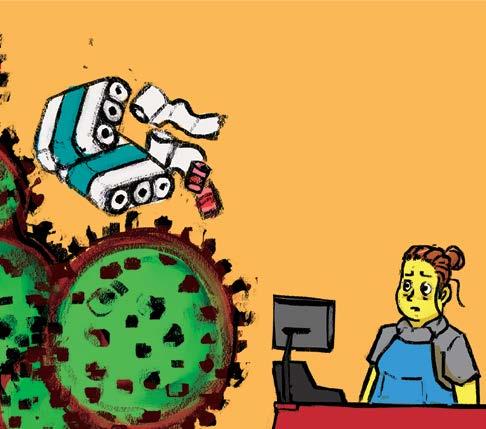
GRAPHIC BY ERNEST ZARZUELA
We know exam time is stressful, here are some resources if you’re feeling overwhelmed!
Student Counselling Centre
During the COVID-19 pandemic, only individual counselling services by telephone are being offered at this time – all groups and workshops are suspended. Call reception to request an initial intake counselling appointment.
Reception Phone: 204 474-8592
Visit the SSC webpage for students resources that can be accessed remotely!
EmpowerMe 24/7
Telephone Counselling by StudentCare
Available to students with UMSU Health & Dental coverage through StudentCare.
Toll-Free: 1-844-741-6389
Academic Supports
Many student services are offering phone, email, and/or video appointments, including: Academic Advisors , Academic Learning Centre, Libraries and Student Accessibility Services
To book an appointment with an Elder in Residence, email isc@umanitoba.ca or call 204-474-8850
Be Mindful, Socialize and De-Stress
Making time for yourself is important during these uncertain times. Free, daily mindfulness meditation is being offered through the Faculty of Social Work to help us all restore and reconnect. We have also compiled advice from UM experts on how to reduce anxiety and be productive during our time away from others. Lastly, although gyms are closed, there are home exercise options available. The UM’s Recreation Services is posting workouts on its YouTube channel. We encourage you to take advantage of these helpful resources.
From a basement on a hill
Student advocacy won’t only change you for the better, but that’s OK
JAKOB SANDERSON, UMSU PRESIDENT
“I’m never going to know you now, but I’m going to love you anyhow,” sings Elliott Smith
I don’t think there is such a thing as a perfect leader. If there is, its definition eludes me and certainly excludes me. If there is, there shouldn’t be. What will always exist is room for improvement for those strong enough to seek it. Or, as my late grandfather said, “When you duff your drive or make a mistake, life is giving you all the more opportunity for a better second shot.”
Near the end of my first term as UMSU president and after my second election, I went to see a counsellor. My mental health was at an all-time low and I was falling into deeply unhealthy coping habits, something I thought I had previously escaped. I wasn’t sure whether I was looking for therapy, medication or someone to vent to, but I knew something had to change if I was going to survive, let alone be the type of leader I thought I could be or that students deserved.
By the end of the meeting, I was told by the counsellor that I likely just wasn’t cut out to be in a high-stress job and I should consider leaving my post.
I was at a crossroads and did not
see any options. In reality, no amount of public pressure I thought I faced measured up to the amount of pressure I put on myself.
Most people care about you far less than you think they do: a truth that ranges between comforting and deeply shattering but is nevertheless accurate. Nonetheless, I felt at that time leaving my job was less of an option than just about anything else.
I walked home that day from the university (well over a two-hour walk) and strongly considered just continuing to walk. Anything to escape the
To those that want to go into advocacy work one day — student or otherwise — and don’t have all their shit together yet, I say there is no time like the present
pressure others put on me, that I put on myself.
The version of myself I presented and the version inside my head could not have been further apart. I had positioned myself on the mountain I’d always wished to climb, but internally I was beneath the floor.
Luckily, I did not keep walking. I discussed my situation with my teammates, who are among the most supportive people in my life.
And over the past while, I slowly realized the person I am is much
more suited to be in the job I hold than the person I wished I was or tried to present.
There are many attributes to being a good leader: intelligence, public speaking, confidence — many of which may compose that elusive definition of perfection. But I think the most important quality is empathy.
I spent so much of my climb to the top of the hill trying to convince everyone around me — most of all, myself — I had it all figured out that I quite actively shut off the empathetic lever inside me. It was hard to embrace the hardships of others without confronting the reality of my own demons.
While I knew doing this would make me less happy — and potentially make me less loving of a person — I felt it was all worth it if it made me a better leader.
A stronger leader. If I’d seen a better counsellor that day, they probably would have illuminated me to the bullshit I had been spewing.
Sadly, that bullshit — masquerading itself as a concocted raison d’être of the tortured genius — hurt many people around me, in addition to myself. I often found purpose in vengeance, happiness — albeit fleeting — in attainment and weakness in vulnerability. It’s a societal ethos that’s deeply problematic, and I am one of many that have fallen into that trap.
Quite unexpectedly, as I became more comfortable and open with my flaws, blind spots and weaknesses, I became a much stronger leader. Make no mistake, I am extremely proud of some of the accomplishments of my team and I in our first
term. But above our advocacy wins, what I tried to treasure most in my second term were my opportunities to connect with and impact people
I spent so much of my climb to the top of the hill trying to convince everyone around me — most of all, myself — I had it all figured out that I quite actively shut off the empathetic lever inside me
— at times those closest to me, and at times total strangers. We could always do better, but I truly think we succeeded at that.
To those that want to go into advocacy work one day — student or otherwise — and don’t have all their shit together yet, I say there is no time like the present. Just don’t assume your new title will vanish your insecurities. Nor should it.
We need those who speak for us to speak with us and to understand us. No person can resonate with all the challenges of the people they represent. But I do believe that acknowledging your own hardships — and admitting what you don’t and can’t know — is the best start in finding out.
I chose the title for my article
not just because Elliott Smith is my favourite artist, but because the phrase which entitles his posthumous album serves as an enduring reminder that often those we view as atop the hill may experience an extremely different reality. We ought to treat our leaders with the same type of empathy we demand from them.
As I move into a new chapter, I hope I can keep my head levelled, embarking on a new hill to climb. And I am even more excited about what’s next for UMSU and our entire new generation of student leaders.
To all of them: I promise you that you are much stronger and more capable than you could possibly imagine, and that you’ll likely find that strength in the areas you look to least often.
I used to view my life as linear. I had overcome a childhood of repeated bullying, a high school experience often spent eating lunches in the washroom, crippling social anxiety and substance abuse to become an elected leader.
I remain proud of these accomplishments, but that’s no longer the end of my story. Life is never that linear.
While this leg of my journey has changed me in many ways for the better, in some ways it brought out the worst. And that’s OK.
To those who showed me love at my worst, criticized me at my best and directed my journey in any possible way: I thank you, I will miss you and I am grateful for you.
Marsee. Ekosani. Kinanaskomitin.
Acknowledging our weaknesses gives us strength. Most importantly, it gives us plenty of company.
Arts & Culture
12
Music in the age of coronavirus
The
Prairie Joggers talk about debuting
EP during these strange times
Cody Goertzen and Adam Hill are keeping busy while the world burns outside, attempting to make the most of this collective isolation.
“We’re doing okay,” Goertzen said. “We’ve got a nice space — we’ve got a decent sized house we’re renting here, with our jam space and everything here.”
“We’ve got some recording equipment here, so we’re also learning how to use [that]. We want to start recording our own music.”
The duo, who are planning to release their debut EP as the Prairie Joggers this summer, are trying to keep things running as planned in the midst of their quarantine.
“We’re kind of carrying forward with all our plans for releasing, and just kind of cancelling shows as they get closer to the date and seeing how everything plays out,” Hill said.
The Prairie Joggers had already postponed their debut once before. After releasing their first single, “Moments Happen,” in November, the duo ran into a problem with their planned second single, an eyebrow-raising Marilyn MansonSabrina Carpenter mashup that will likely never see the light of day.
“As we were registering it, we realized we couldn’t get it licensed,” Goertzen said, laughing.
Releasing a cover track comes with a minefield of copyright laws. Following this snafu, they decided
to hold off on the EP’s release and recalibrate — they said now they just want to push through this latest, much scarier obstacle.
“We’ve already waited a long time, and we’re just going to go ahead and release it, and we’re just eager to put some music out there,” Goertzen said.
The as-yet-untitled EP is an overview of the duo’s folksy, eclectic sound, incorporating country, rock, roots and blues.
“There’s four songs on the EP, and we chose those four songs because they were all very individual,” Goertzen said.
“Adam and I have written a lot of songs together, and we’ve been writing and playing together for a long time, and for the first release for this band we wanted to kind of pull in the different genres and the different moods and styles that we touch on throughout all of our music.”
Their musical partnership began years ago, though it didn’t take off in earnest until they realized they’d both been writing songs individually.
“After Cody took a trip to Southeast Asia, he came back and had a handful of songs and I helped him finish a bunch of those and then everything took off from there,” Hill said.
“We’ve been writing like crazy since.”
They chose to record their debut
’Toban
turntable
Ada Lea — ‘Woman, Here,’ 3.5/5
KAELEN BELL, STAFF
Ada Lea’s debut record, 2019’s What We Say in Private, was a prickly and elastic rock composition, built from bent folk guitars and an itching stop-start rhythmic pulse.
Lea’s new EP, Woman, Here, is billed as a bridge between that record and what’s to come. It’s a slightly softer set of music, paring back some of the debut’s more rigid textures.
with Winnipeg music mainstay Micah Erenberg, whose presence they credit with helping shape the EP’s identity.
“He’s got a very fun but dry sense of humour — he likes to keep things very light, but he also works really hard,” Goertzen said.
“His attitude and his playfulness and his energy and hard work really shows in our EP.”
That they can’t currently bring that energy directly to their audience is weighing on the duo, though they seem to be taking isolation in good humour.
“We love playing live, that’s one of the reasons why we do this,” Hill said. “But we’re somewhat fortunate that right now we’re getting so much together with [figuring] out how to record. And I do all of our video editing and photo editing, so getting all our single art and EP art together.”
“Not being able to play live is forcing us to learn a few new tunes, but playing live is definitely, I would say, our favourite part about being musicians, as opposed to recording and doing everything else,” Goertzen said.
Like most bands trying to make it work, they have plans for virtual shows and Facebook Live content, but for the time being the Prairie Joggers seem content to hone their studio skills and practice for the day they can bring their music to the real world again.
If the opening track is an indication of where Lea is headed, it’s an intriguing taste
The title track is the only truly new song here — the rest of this brief EP consists of two songs left over from What We Say in Private and the “Woman, Here” demo.
If the opening track is an indication of where Lea is headed, it’s an intriguing taste.
It shares the processed guitars and subtle complexities of her earlier work, but it’s slightly looser and more shambolic, absent of the drum machines that ticked throughout
her debut.
Lea’s writing remains sharp as ever — the admittance “I can’t be a woman here” making for one of the most captivating lines in her catalogue.
The entirely acoustic demo version is an interesting peek into Lea’s process. She’s a master of dynamics and space, and the finished track benefits from its layered arrangement.
“Perfect World” is downtempo and atmospheric, awash in mist-like synths that evaporate the song’s sullen tension. A raucous guitar breaks through the haze and the song begins to mutate into something more jagged, a solid encapsulation of what Lea does so well.
The warped sparkle of “Jade” rounds things out and you’re left with what’s essentially a tasting menu of Lea’s multifaceted writing. While it lacks some of the disorienting dynamic shifts of her debut, Woman, Here is exciting in its own right, a warmer avenue left open to explore.
The EP is a satisfying album to tide us over to whatever Lea has planned next, a taste of the past and a glimpse of what’s to come.
Want us to review your band? Email arts@themanitoban.com today!
KAELEN BELL, STAFF
PHOTO PROVIDED BY PRAIRIE JOGGERS
PHOTO PROVIDED BY ADA LEA
The who’s who of Canadiana
‘Hinterland Remixed’
GRACE PAIZEN, STAFF
Acollective memory of Canadians, Hinterland Who’s Who remains a staple of Canadiana, with newly produced versions of the short educational films on television at this very moment.
Andrew Burke, a film professor at the University of Winnipeg, has now taken the time to analyze the shorts and mine them for Canadian identity in his book Hinterland Remixed: Media, Memory, and the Canadian 1970s
Throughout the book’s five chapters, Burke thoroughly examines Canadian television shows and films from the 1970s to see how these works cemented and perpetuated Canadian mythologies.
Chapter one gives an in-depth look into the complicated history of how Hinterland Who’s Who came into being, including how the 60-second shorts got their name.
The information concerning how the Canadian Wildlife Service — now called the Canadian Wildlife Federation — used the shorts to promote their conservation efforts while masking their self-promotion as educative clips is fascinating.
After the setup of Hinterland Who’s Who as a perpetuation tool of Canadian mythology, the proceeding choices of shows analyzed are as interesting as they are limiting.
Chapter two focusing on Michael Snow’s La Région Centrale is sound, as the film can be argued to be perpetuating the “barren landscape” of
documents how Canadian nostalgia never outgrew the 1970s
Canada into the global imaginative collective.
However, chapter three is an interesting choice which focuses on how Canadian comedy perpetuated Canadian mythologies.
At first glance, focusing on SCTV is a wise choice with the amount of comedic talent on the show as a collection of proof that Canada is a comedic powerhouse.
Burke thoroughly examines Canadian television shows and films from the 1970s
But on second thought, all Canadian comedy shows seem to perpetuate Canadian mythologies and manifest them in our present day.
Most glaringly, the “Great White North” segment on SCTV barely gets a page of recognition in the book, where a line of impetus from SCTV to the birth of the Red Green Show could be drawn.
It’s chapter four that reads the best. Analyzing the film Death by Popcorn: The Tragedy of the Winnipeg Jets, Burke eloquently connects the modern Winnipeg identity as being hinged on the sale of the Winnipeg Jets, the first iteration of the team having originated in the ’70s.
Burke argues that by creating the narrative National Hockey League commissioner Gary Bettman betrayed the Jets and the city, Winnipeg’s “downon-our-luck” identity seems to have been created in this moment, linked to the “fortunes of its hockey team.”
At its best, Hinterland Remixed makes the case that Canadian media from the ’70s perpetuated and propelled Canadian mythologies into our present world, including the fact that these mythologies are mainly composed of white imaginings of what Canada is.
At its worst, the book perpetuates what can be referred to as ’90s dissociation — that things held nostalgically for occurring in the 1980s disappeared for kids born in the 1990s.
Where Burke definitively asserts Hinterland Who’s Who largely disappeared from the Canadian television landscape in the mid- to late-’80s, anyone born in the ’90s will dispute the claim, fondly remembering the Canadian shorts while watching Beave and Buckley on the Manitoba Television Network — a frustrating moment of misinformation now canonized and perpetuated in academic literature.
That being said, Hinterland Remixed is a worthwhile read chockfull of information about the manifestation of Canadian nostalgia.
Hinterland Remixed is available at major retailers.
A trip to the art gallery without stepping outdoors
WAG@Home brings Winnipeg Art Gallery exhibitions to you
ZACHARY SIGURDSON, STAFF
Through the COVID-19 quarantine, the ravenous consumption of art can make the hours pass by.
Whether it’s movies, television, games, creating art or a dozen other hobbies, these are some of the things that make life worth living.
During this time, many people are able to rediscover their passions that were often set aside for the hectic lifestyle we have grown accustomed to.
In this spirit, WAG@Home is another antidote to the solitude of social distancing.
The Winnipeg Art Gallery (WAG), while closed at this time, has made strides in creating online content free and open to the public.
Until the gallery reopens, Stephen Borys, the WAG’s director and CEO, has daily posts sharing some of his favourite pieces, giving them historical and artistic context as well as his own personal anecdotes and musings.
These intimate and thoughtful posts feel as if you are being read to by a wisened old sage. They range from being funny, insightful and fascinating to absolutely bizarre.
They can be found on the WAG website’s “Stories” page and their social media pages. Following the comments, you can find immediate engagement with Borys and other
The search engine features allow you to narrow down artists, date, style and even medium
local art fanatics.
The WAG’s website also includes a full user interface with major categories ranging from Indigenous art to contemporary art to classic art. The search engine features allow you to narrow down artists, date, style and even medium.
Nearly half of the WAG’s permanent collection is comprised of Indigenous artists’ works with techniques including carving, drawing, print, textile and stonework.
In fact, the WAG holds the big-
gest public collection of modern and contemporary Inuit art in the world. There are hundreds of pages of artwork to comb through, finding new and fascinating pieces each time.
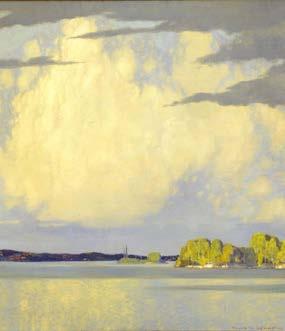
For those who may have missed the phenomenal exhibition by Kent Monkman — Shame and Prejudice: A Story of Resilience — a small sample of the incredible Cree artist’s reinterpretation of Romantic North American styles, depicting scenes of colonial violence and the complexities of historic and contemporary Indigenous experience, is available online.
Since 2017, the WAG’s exhibitions have been recorded and archived on their “Exhibitions” and “Past Exhibitions” webpages. There you will find information on the artists, the works and often extensive supplementary information such as videos and interviews.
While social distancing, one thing to do is appreciate incredible art, even if it’s just to hold back the anxiety for an hour or two.
To experience WAG@Home go to wag.ca.
PHOTO PROVIDED BY MCGILL-QUEENS UNIVERSITY PRESS
PHOTO PROVIDED BY WAG
From board to digital
The Manitoban staff gives its picks for games during social distancing
Alchemists
Matthew Doering, editor-in-chief
Even more soul-sucking than fixating on the daily increase in the spread of COVID-19 may be the absence of research and conferences as our academic lives are turned upside down during this time of physical distancing. Luckily, the board game Alchemists can fill the void otherwise occupied by continual worry left by the pandemic-induced university closures.
Worried you are falling behind in your research? Alchemists offers the tantalizing challenge of deducing the nature of ingredients, and how to blend potions for healing, speed and wisdom. Or for poison, paralysis and insanity.
Not progressing with grant writing? Alchemists offers five coveted grants to boost your reputation — alchemical H-index anyone?
Unable to focus on writing papers? Publish your theories about bird claws, toads and scorpions. Or discredit the pterido-theories of your fellow alchemists. Missing the inundation of tasks assigned to graduate students? Never fear, Alchemists ensures there’s never a shortage of potions for the lowly, oft-forgotten grad student to drink. And if there’s a risk of insanity, the grad student might just get paid for the research.
Of course, a board game review when nonessential businesses — sadly, though responsibly, including game stores — are shuttered, and physically distancing ourselves is the new norm, seems unhelpful. Luckily Alchemists is available as a module on the Vassal board gamesimulation engine. Alchemists offers a way to minimize social distance, and connect over the most anxiety-inducing aspects of academia, with your next conference arriving one turn sooner than you prepared for. A self-isolation filled with this grad-school-in-a-box will leave you a calmer, more rational, more critical student when university life returns to whatever normal we’re headed for.
Animal Crossing: New Horizons
Joseph Gonzales, audio editor
Did coronavirus cancel your vacation and you’re missing out on an island escape?
Animal Crossing: New Horizons has you covered.
The fifth game in the console series, New Horizons builds upon the features in previous versions, but the concept remains the same: inhabiting an anthropomorphic community made up of animals from all across the kingdom that you interact with and build up your community alongside.
With its vibrant colours, heartwarming animations and a beautifully produced soundtrack which changes depending on the time of day, New Horizons provides a virtual world for you to play in.
And that is more than just a pleasant distraction from the current situation in the outside world.
From the moment you start, a tanuki named Tom Nook and his two sons, Tommy and Timmy, give you a task to begin work on turning your deserted island into a thriving locale.
This can involve gathering materials to help build new homes for visitors to move into, catching fish and bugs or finding fossils to donate to the local museum.
Regardless of what you set your mind on doing in New Horizons, a quick check of the time might show that two hours have passed without you noticing.
There is no right way to play the game and what you decide to do can change from day to day.
Whether it’s hunting for tarantulas to sell or annoying your anteater neighbour Antonio, New Horizons is a great way to find some downtime and have an island adventure.
NHL 20
Jason Pchajek, sports editor
With the COVID-19 virus currently creating a lockdown of sports leagues and recreation facilities across the country, many Canadians are sitting home missing the familiar scent of a hockey locker room, or the rhythmic clatter of plates at the local gym.
Thankfully, the world of video games has just the ticket to keep you active through this tough time with EA Sports’ NHL 20
The latest edition of the long-running sports simulation franchise has everything a hockey fan needs to live out their own pro dream.
And everything that fan needs to finish the NHL season currently on hiatus.
Want to see your favourite club lift the Stanley Cup?
Jump into “Playoff” mode where you can finish the season the NHL can’t — and if you’re a fan of, say, the Detroit Red Wings, do what your squad couldn’t.
Can’t hit the ice with your friends?
Well grab your pals and head out to the virtual outdoor rink for some properly socialdistanced fun.
The “Ones Now” mode allows three players to go head-to-head in order to see who truly dominates the outdoor sheet.
Or maybe you’ve got that pro dream you could never quite reach in real life — don’t worry, everyone has a story. NHL 20 has you covered there too.
With “Be a Pro” mode you can take your journey all the way from the Canadian junior ranks to its hall-of-fame finish.
Since you can’t go outside right now, you might as well experience all that sports have to offer from the comfort of your couch, with friends or solo.
Winnipeg-Opoly
Zachary Sigurdson, arts reporter
Missing going out and about our dear old ’Peg? Winnipeg-Opoly is just the game you need.
Outset Media and Walmart Canada have come together to create a series of communityspecific editions of Monopoly
The project was in place before the quarantine but has had a huge resurgence with many people in isolation needing something to do at home with their friends and family.
There are nearly 50 community-specific Monopoly editions across Canada, with the intent to expand to over 100.
Commence a microcosm of commercial capitalism that will end with one person taking a major share of our city’s resources — for the cynic gamer, this is just a microcosm of our lived experience as Winnipeggers, so you’ll be sure to feel the brutal “realness” of this game.
Winnipeg-Opoly includes landmarks and attractions such as the Royal Canadian Mint, the Canadian Museum for Human Rights, the Winnipeg Railway Museum and the Winnipeg Art Gallery.
Even though you can’t play as a Slurpee and Garbage Hill is sadly missing from the landmarks to purchase — the game may even feel a bit like a Google search of Winnipeg landmarks — this doesn’t take away from the experience and there will certainly be entertaining fights over who wants to buy Portage Avenue.
Be sure to add these games to the list for the next volunteer grocery tribute to pick up.
Browne selected by Rattlers in CEBL draft Guard joins fellow Bison Alleyn on defending champion Saskatchewan squad
JASON PCHAJEK, STAFF
The U of M continues to generate professional sports talent.
With the eighth-overall selection in the 2020 Canadian Elite Basketball League (CEBL) draft, the Saskatchewan Rattlers selected Bisons guard Rashawn Browne.
“I had an idea, but nothing is ever guaranteed,” Browne said.
“The coaching staff had reached out before the draft just to make sure I was interested. As for the actual draft, it was a great feeling.
“Just the fact that I am now able to call myself a professional basketball player after all the years of work feels rewarding, but I do know that the real work starts now.”
With its two other picks, Saskatchewan looked within its provincial borders, selecting Chan De Ciman in the first round and Alexander Dewar in the third. Both are products of the University of Saskatchewan Huskies.
Being picked first in the second round is a great accomplishment in any league, as teams spend valuable picks to snag the best talent available. Browne said he knows what it means to have a team jump in to draft you
with an early pick and is ready for the challenge.
“It was a good feeling to me, it showed they believed in me,” Browne said.
“There were a lot of people that could have been selected, but they knew what they were looking for and now it’s my job to go out and perform.”
“As
for the actual
draft, it was a great feeling” — Rashawn Browne, Saskatchewan Rattlers guard
Seeing the Toronto-born guard selected in the top 10 should not surprise anyone, as he was one of the best players at his position in Canada West during the 2019-20 season. He finished third in the conference in assists with 99, points-per-game with 19.6 and turnovers with 68.
His 94-121 record from the free-
throw line was at the top of the conference and his 353 points were seventh-best in the conference as well.
Saskatchewan dipping into the Bisons’ well during the CEBL draft is not new, as the club chose former Bisons guard Justus Alleyn 16th overall in the league’s inaugural draft last season.
“Justus had nothing but good things to say about [the Rattlers],” Browne said.
“He said they were a well-run organization and that they would be a good team to continue my development with.”
Alleyn and the Rattlers finished third in the CEBL in 2019 with an 11-8 record but made a strong run to the CEBL finals, knocking off the Hamilton Honey Badgers to win the league’s first championship.
Browne can now turn his attention toward getting ready for his first professional season, living out a dream many other athletes never reach.
And despite the current global pandemic, he is doing everything he can to stay in shape until he can set foot back in the gym.
Just outside the spotlight
“What does change my plan — and by my plan I mean training plan — is the COVID-19 stuff,” he said.
“I am trying to do as much as I can to stay in shape at home until it has
Lamb, Gregoire and Wagner headline underrated Bisons of 2019-20
JASON PCHAJEK, STAFF
The coming of spring means one thing is for certain.
No, not the slush and muck, and no, not the start of patio season, but the end of most U Sports competitions and the academic year. So, with this final buzzer, some U of M Bisons deserve extra recognition.
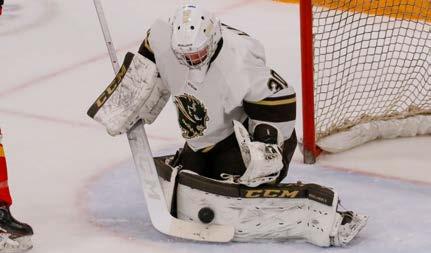
He’s a solid netminder who can bear a heavy load in the blue paint, and without him the herd would be in real trouble.
In a year where the COVID-19 virus cut short four national tournaments, the Bisons still finished each team’s season, providing plenty of data to draw on. But while Bison Sports is busy naming its MVPs for this year, these are some of the most valuable underrated Bisons from 2019-20.
Men’s hockey: Riley Lamb
While captain Adam Henry was undoubtedly the best player for the Bisons in 2019-20 — he’s developed into a pro-ready two-way defender who you can throw out in any situation, led the team in points this
season, and was a first team all-star — the goalies deserve love, too.
Coming in this season as a rookie, Rivers-born netminder Lamb was set to play in a tandem with fellow rookie Tyler Brown. Very quickly, Lamb proved himself to be more than capable of being the man in charge.
While a 3.42 goals-against-average along with a .908 save percentage doesn’t look so hot, these numbers hide Lamb’s stellar work between the pipes. Despite the former being 11th out of 13 Canada West netminders, the latter stat was third-best.
Lamb faced the fifth-most shots of any Canada West netminder in 2019-20 at 573 and helped get a Bisons club that was under siege for most of the year into the playoffs. He’s a solid netminder who can bear a heavy load in the blue paint, and without him the herd would be in real trouble.
Women’s hockey: Kate Gregoire
From one rookie on the Wayne Fleming Arena ice to another, on an extremely young Bisons squad Gregoire stood out amongst the pack. With only two goals before the holiday break, she came storming out into 2020, picking up six goals and an assist for seven points in the herd’s final seven games.
She tied for third in rookie scoring with nine points but was second in goals with eight — just three behind the University of Alberta’s Madison
all passed.
“Normally, I would have set up a lot of workouts with my trainers and coaches to prepare myself for the pro game.”
Willan who played on a far more offensively gifted team. Gregoire has quickly shown her ability to slip from coverage, find lanes and open space, and then fill the net.
As this Bisons squad continues to grow, the herd may just have a new all-time goal-scoring leader when Gregoire’s five years are up.
Men’s basketball: James Wagner
While almost all eyes were on now-Saskatchewan Rattlers guard Rashawn Browne, Bisons forward
James Wagner made the space below the rim a nightmare for opposition.
The fourth-year finished fourth in total rebounds in Canada West with 182 — also fourth in offensive rebounds with 62 and sixth in defensive rebounds with 120 — and fifth in rebounds-per-game with 9.1.
Not to be outdone in the offensive department, he also finished 11th in the conference in points with 339, 12th in blocks with 14 and 13th in pointsper-game with 16.9.
Wagner was also an iron man in 2019-20, playing the second-most
minutes of any Canada West player this season with 688.
He also earned the secondbest per-game mark at 34.4 minutes-per-game.
He appeared in all 20 games for the herd and helped his club play strong in the key while draining his fair share of shots.
Honourable mentions Emma Thompson — women’s basketball, Light Uchechukwu — women’s volleyball and Gabrielle Clark — women’s soccer.
PHOTO BY ALEX DECEBAL-CUZA
PHOTO BY DAVE MAHUSSIER
The world of sport haunted by ghost of Spanish flu History repeats itself on larger scale in 2020
JASON PCHAJEK, STAFF
The world of sport has changed forever.
With the ongoing COVID-19 viral outbreak, various leagues and sports bodies across the globe have been thrown into disarray. In North America alone, the NHL, NBA and MLS have suspended their seasons.
The MLB has delayed the start of its 2020-21 season, and only the NFL believes its season will start on time.
Outside the professional ranks, you have the Canadian Hockey League, United States Hockey League, NCAA and U Sports all falling like dominoes as COVID-19 spreads throughout the globe.
All cancelled, and all going without a champion in 2019-20.
The pros, though, aren’t ready to throw in the towel.
Most recent reports have the NHL asking its teams to submit arena dates for August as the league seems bound and determined to finish the season, even if it means giving players no break between 2019-20 and the 2020-21 season slated to start in October.
While other leagues are all right calling it a year, the NHL will explore every option to crown a Stanley Cup champion — because it’s already gone
through this once before.
1919: The rise of Spanish flu and fall of Lord Stanley
Since it was first awarded in 1893, the Stanley Cup has gone unclaimed just twice in its 126-year history. The latest came in 2005, when a labour stoppage led to the 2004-05 season being cancelled.
The first came just over 100 years ago under unsettlingly similar conditions.
In 1918, the world was still wandering through the aftermath of the First World War, picking up the pieces left behind after the greatest conflict our planet had seen to that point. People were sick and tired of war, and soon the former would outrank the latter.
Although the exact location of origin is unclear, the Spanish flu — an H1N1 virus with avian origins — spread throughout the globe in a pandemic from 1918 to 1919. It is estimated that one-third of the Earth’s population was infected and approximately 50 million people died.
Like the COVID-19 virus, the world came to a halt, and so did the sports world — or at least hockey.
But even then, the leagues and teams involved battled to the bitter end.
The 1919 Stanley Cup final was fought between the NHL’s Montreal Canadiens and the Pacific Coast Hockey Association’s Seattle Metropolitans.
Now, over a century later, history seems doomed to repeat itself — and this time more championships are ready to fall.
Seattle crushed Montreal in a lopsided 7-0 game-one win, to which the Canadiens responded by tying the series up in game two. The Metropolitans took game three, the clubs drew game four and Montreal again evened the series with a game five win.
Yet the win was not the biggest story coming out of game five — Montreal defender Joe Hall collapsed on the ice and was taken to the hospital.
In the two-day break between
games, more Canadiens players joined Hall in hospital due to flu-like symptoms, along with team general manager George Kennedy. Multiple options to continue the series were explored but rejected, and when Montreal offered to forfeit the final, Seattle declined.
The Metropolitans didn’t want to win that way, but eventually this meant nobody would.
In the following days, most of the infected Canadiens players began to improve — except for Hall, who contracted pneumonia and died on April 5, 1919.
The series was never finished.
Now, over a century later, history seems doomed to repeat itself — and this time more championships are ready to fall.
2020: COVID-19 and a tsunami of cancellations
In 1919, the sports world was a different place. While the Cincinnati Reds won the 1919 World Series, the Super Bowl was still almost 50 years away from existing, the NBA wouldn’t be around until after the end of the Second World War and the MLS didn’t exist until 1996.
U Sports — then known as CIAU
Central — was in its formative years, and so too was the NCAA.
The Grey Cup wasn’t awarded in 1919 either, though this was due to a rules dispute and not the Spanish flu.
We are currently in unprecedented territory in North American sports. For generations, sports have been the shield people hide behind when times get tough, when they need a little distraction from tragedy and strife.
One need only cast an eye back to Sept. 21, 2001, as the Atlanta Braves and New York Mets took to Shea Stadium to play the first professional sporting event in New York since the Sept. 11 terrorist attacks.
For so many, the crack of Mike Piazza’s bat off his eighth-inning game-winning home run is seared into their memories as the ultimate statement of “We’re back.”
Now, the world doesn’t have that — yet. Nobody knows who will be the first league to try and come back, and some have already said they won’t until next season.
Unlike 1919, it’s not just one sports league falling victim — it may be all of them.
For many in the sports world, we will now be left with 2020: the year without champions.