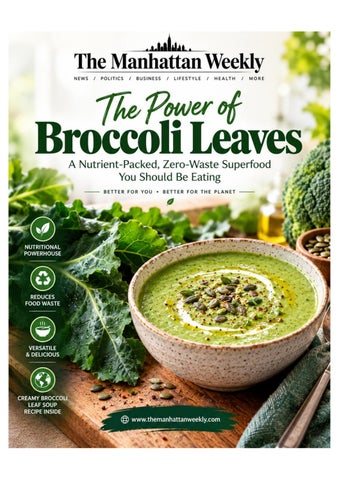
BROCCOLI LEAVES A practical guide to nutrition, zero-waste cooking, storage, and creamy broccoli leaf soup Yes, broccoli leaves are edible. They can be cooked much like kale or collard greens, and young leaves can also be eaten raw. Their flavour is usually mild, slightly sweet, and earthy. Broccoli florets are only one part of the plant. The stems and leaves are often discarded, even though they can be useful ingredients. Using the leaves is a simple way to make more of the food you buy or grow go onto your plate.
KEY TAKEAWAYS • Edible and versatile: broccoli leaves can be used in salads, soups, stews, stir-fries, smoothies, pesto, and crispy chips. • Different nutritional strengths: leaves can contain more carotenoids, vitamins E and K, phenolic compounds, and some minerals than florets; florets can contain more of certain glucosinolates. • Less food waste: cooking with leaves makes use of a part of the plant that is often thrown away. • Choose the right cooking method: young leaves are tender; larger leaves benefit from chopping and cooking. • Easy first recipe: creamy broccoli leaf soup uses a potato to create a smooth texture.
Why You Should Eat Broccoli Leaves Broccoli belongs to the Brassica family, which also includes vegetables such as kale and collard greens. The leaves can be prepared in similar ways. Younger leaves are tender, while mature leaves have a firmer texture and may need more cooking.
1. Nutritional benefits Research comparing different parts of the broccoli plant has found that leaves may have higher levels of total phenolic compounds and flavonoids than florets and seeds. Studies have also reported higher levels in leaves of nutrients such as beta-carotene and vitamins E and K, as well as manganese and calcium, compared with some other plant parts. The amounts vary by variety, growing conditions, storage, and preparation. Broccoli florets can be richer in certain glucosinolates, including glucoraphanin, so leaves and florets offer different nutritional benefits rather than one being universally healthier.
2. Helps reduce food waste Broccoli leaves are often left in the field or removed during processing and transport. Using them at home can reduce kitchen waste and help you get more use from the plant. Estimates of losses vary by production system and by how waste is measured.
3. Easy to use in everyday meals • Use tender, young leaves raw in salads or smoothies. • Add chopped leaves to soups, stews, and curries. • Sauté leaves with garlic, olive oil, and a squeeze of lemon. • Blend cooked leaves into pesto or sauces. • Bake or air-fry leaves into crisp chips.
Broccoli Leaves: Nutrition, Storage & Recipe Guide
Page 1
Creamy Broccoli Leaf Soup Prep: 10 minutes
Cook: 25 minutes
Total: 35 minutes
Serves: 4
A velvety, comforting soup with a mild green flavour. Potato adds creaminess without needing a large amount of cream.
Ingredients Ingredient
Amount
Fresh broccoli leaves, roughly chopped
4 cups (about 1 large bunch)
Olive oil
1 tbsp
Butter
1 tbsp
Onion, diced
1 medium
Garlic, minced
2 cloves
Potato, peeled and cubed
1 medium
Vegetable broth
3 cups
Milk or unsweetened oat milk
1 cup
Heavy cream or coconut cream
½ cup
Nutmeg
¼ tsp
Salt and black pepper
To taste
Lemon juice and toasted pumpkin seeds
For garnish
Instructions 1. Sauté the aromatics. Heat the olive oil and butter in a large saucepan over medium heat. Add the onion and cook for 4–5 minutes, until softened. Add the garlic and cook for about 30 seconds. 2. Wilt the leaves. Add the chopped broccoli leaves and stir for 2–3 minutes, until wilted. 3. Simmer. Add the cubed potato and vegetable broth. Bring to a boil, then reduce the heat and simmer for 12–15 minutes, or until the potato is very tender. 4. Blend. Remove the pan from the heat. Add the milk and blend with an immersion blender until smooth. If using a standard blender, follow its hot-liquid safety instructions and blend in batches if needed. 5. Finish the soup. Stir in the cream, nutmeg, salt, pepper, and a squeeze of lemon juice. Warm gently; avoid boiling after adding the cream. 6. Serve. Ladle into bowls and garnish with a drizzle of olive oil, toasted pumpkin seeds, and black pepper. Serve hot with crusty bread.
Vegan option: Use olive oil instead of butter, choose oat milk, and use coconut cream. Add 2 tablespoons of nutritional yeast for a richer, savoury flavour. Cooking note: Heat can change nutrient levels. Long cooking, especially at high temperatures, can reduce some water-soluble vitamins such as vitamin C. The extent depends on the nutrient and cooking method.
How to Buy and Store Broccoli Leaves • When growing broccoli: remove outer leaves carefully and avoid damaging the central head.
Broccoli Leaves: Nutrition, Storage & Recipe Guide
Page 2
• When shopping: choose firm, deep-green leaves that are not yellowing or wilting. Broccoli sold with leaves attached can give you more to cook with. • Storage: wait to wash the leaves until you are ready to use them. Keep them in a perforated bag or loosely closed container in the refrigerator, between slightly damp paper towels. Aim to use them within about 3 days. • Preparation: rinse well. For very large leaves, remove or finely chop the tough central stem. Slice the leaves before cooking.
Are Broccoli Leaves Healthier Than Florets? They are different, rather than simply better. Broccoli leaves may provide more carotenoids, vitamins E and K, phenolic compounds, and certain minerals. Florets often provide more of some glucosinolates, including glucoraphanin. The exact comparison depends on the plant and how it is prepared.
A practical approach is to eat both florets and leaves. Using the leaves also makes better use of the plant and can help reduce food waste.
Frequently Asked Questions 1. Can you eat broccoli leaves raw? Yes. Young, tender leaves can be eaten raw in salads or smoothies. Larger, tougher leaves are often more enjoyable when cooked in soups or sautéed.
2. What do broccoli leaves taste like? They taste somewhat like kale or collard greens, with a mild, earthy flavour that can be slightly sweet. Mature leaves may taste stronger than young leaves.
3. Are broccoli leaves healthier than broccoli florets? Both are nutritious. Leaves may contain more carotenoids, vitamins E and K, and some phenolic compounds, while florets can be higher in certain glucosinolates. Eating both provides variety.
4. Are broccoli leaves safe for people with thyroid problems? Cruciferous vegetables are generally safe for most people in ordinary food amounts. If you have a thyroid condition, iodine deficiency, or specific dietary advice from a clinician, ask your healthcare professional about what is appropriate for you.
5. How can you reduce bitterness? Blanch leaves in salted boiling water for about a minute, then cool them in an ice bath. Sautéing with garlic and a little lemon juice or vinegar can also help. Cream, olive oil, and other rich ingredients can balance stronger flavours.
A simple zero-waste habit Next time you buy broccoli, check whether the leaves are fresh enough to save. Wash, chop, and cook them just as you would other leafy greens—and enjoy the florets, stems, and leaves as useful parts of the same vegetable.
Broccoli Leaves: Nutrition, Storage & Recipe Guide
Page 3