THE ART OF SUMMER

“Logic will take you from A to B; imagination will take you everywhere.”
ALBERT EINSTEIN









“I



THE ART OF SUMMER think I’m greedy, but I’m not greedy for money –I think that can be a burdenI’m greedy for an exciting life. I want it to be exciting all the time, and I get it, actually. On the other hand, I can find excitement, I admit, in raindrops falling on a puddle and a lot of people wouldn’t. I intend to have it exciting until the day I fall over.”

DAVID HOCKNEY, A BIGGER MESSAGE: CONVERSATIONS WITH DAVID HOCKNEY

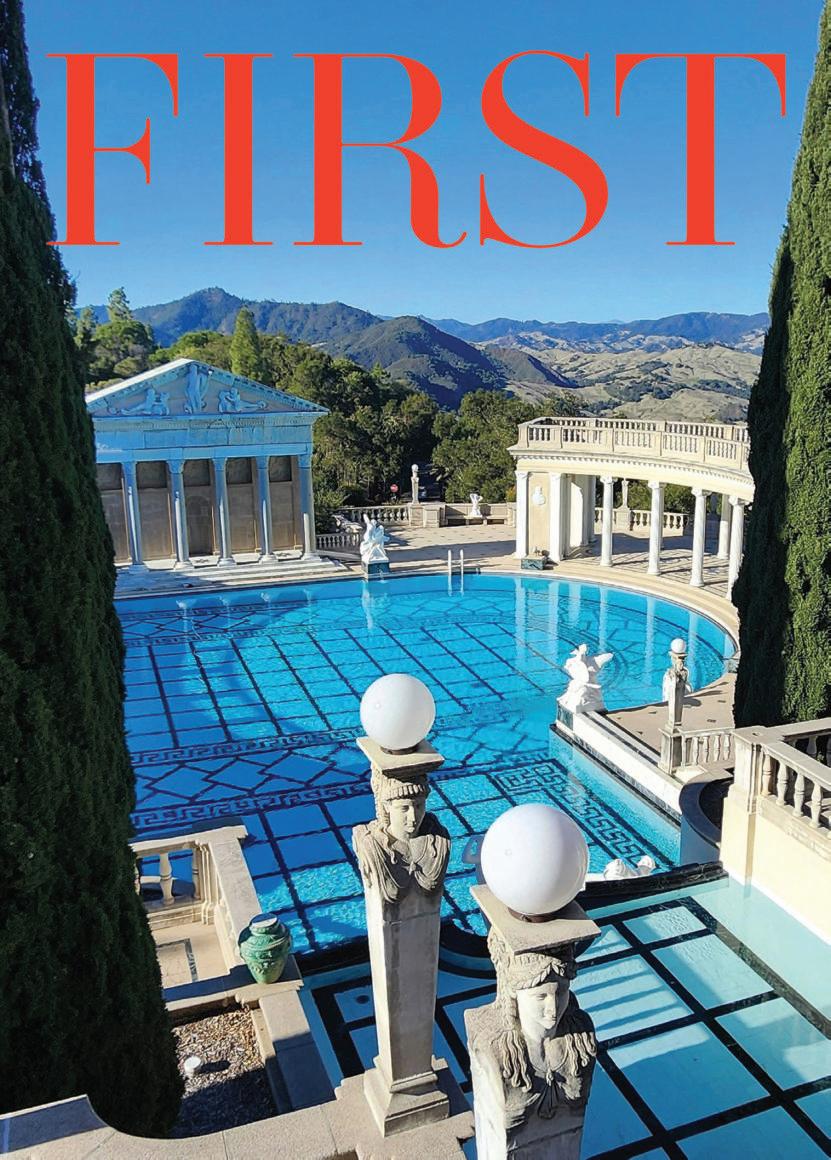
Neptune Pool at Hearst Castle, San Simeon, California. Photo Michelekay Saiki-Poaha.
Los Angeles, California. Photo Roberto Nickson.









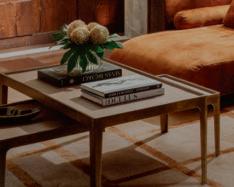



Nestled in historic Valletta, Iniala offers a collection of distinctive suites and residences overlooking the Grand Harbour. Thoughtful hospitality, distinctive dining, and restorative wellbeing come together in one of Malta’s most remarkable settings.





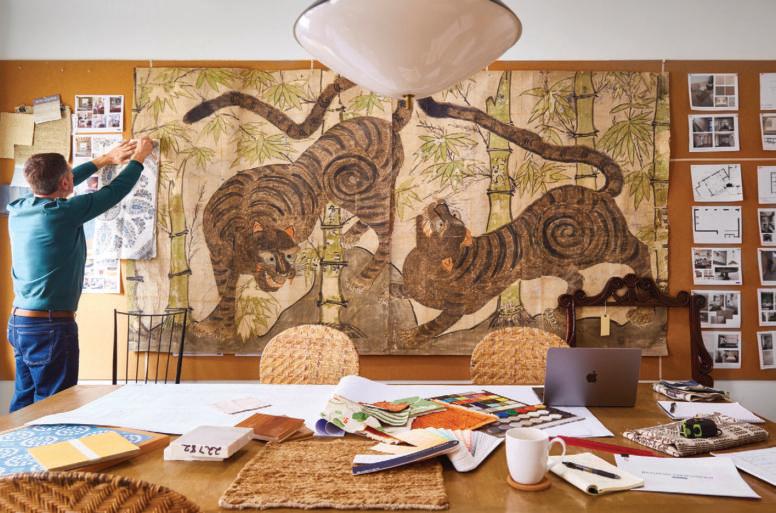
INTERIORS. Peter Dunham, the A-List Los Angeles designer known for his bold colour, layered pattern and relaxed sophistication, has been described by the LA Times as “Merchant Ivory Moderne” and “restraint with a kick”. Photocourtesy Vendome Press.
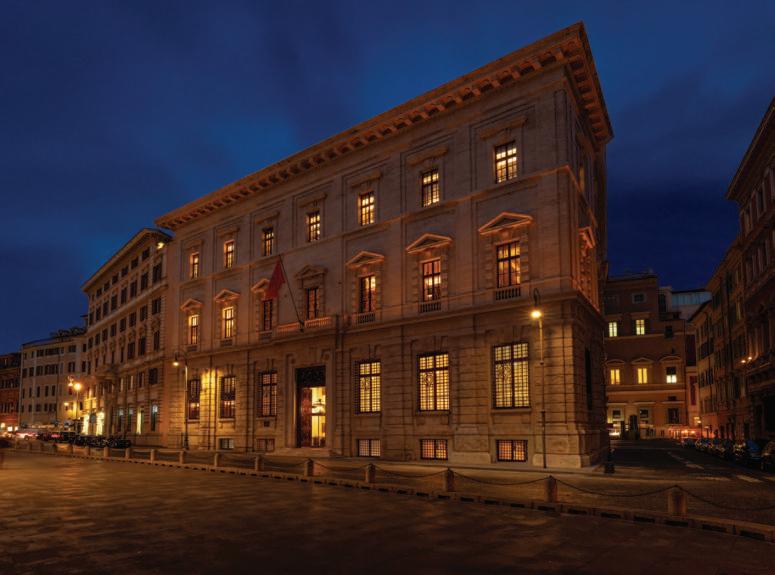
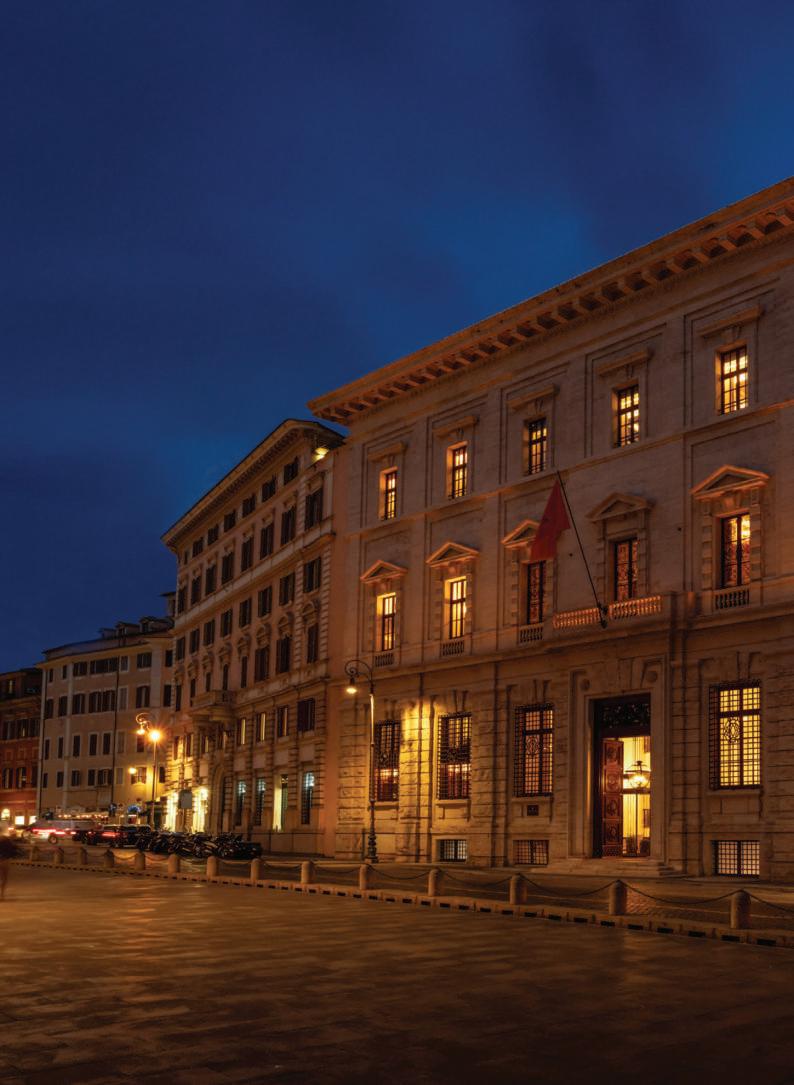
LA DOLCE VITA. A New Roman Address. Once hometotheBankofItaly, a neoclassical palazzo on Piazza del Parlamento has been transformed into Corinthia Rome. Photo Jonathan Maloney, courtesy Corinthia Rome.
10
LA DOLCE VITA
A New Roman Address. Corinthia Rome Reimagines a20th-Century Icon.
24 INTERIORS
Global Style From Paris to Hollywood. The World of Peter Dunham.
38 CULTURE
Love Life.
Seeing Differently –The British Artist David Hockney.
48 ARTS & CULTURE
Cultural Rights at the Heart of Arts Council Malta’s Strategy 2030.
50 CONCOURS D’ELEGANCE
Craftsmanship and Character. The Valletta Concours at Triton Square.
58 PENSION PLANNING
Income Streams: Building Financial Security from More Than One Source.
Building a Secure Retirement Starts with Smart Investing Today.
63 HEALTH & WELLBEING
Sun and Skin. Textures, Technologies and SPF.
66 ENVIRONMENT
Restoring Green Spaces –Wied Inċita Park. Bee Happy. Why Bees, Children, and a Garden in Marsa Matte
75 GASTRONOMY
A Fantastical Carriage for Modern Times. The British Pullman Unveils Celia.
88
THIS IS WINE TASTING NOTES
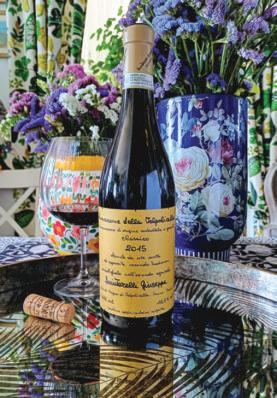
Boillot Puligny-Montrachet Champ-Canet 2022. Giuseppe Quintarelli Amarone 2015. Benjamin Leroux Vosne Romanée 2022.
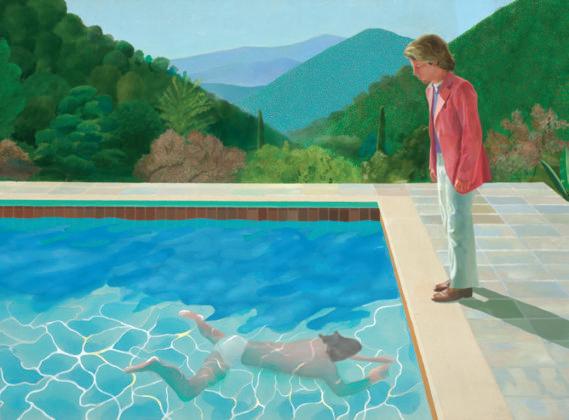
CULTURE. David Hockney, one of Britain’s most influential modern artists, passed away this June. Celebrated for bold colour and constant experimentation, he leaves a joyful and enduring body of work. Portrait of an Artist (Pool with Two Figures), 1972 Acrylic on canvas, 213.4 x 304.8 cm © David Hockney. Photo Jonathan Wilkinson.
88
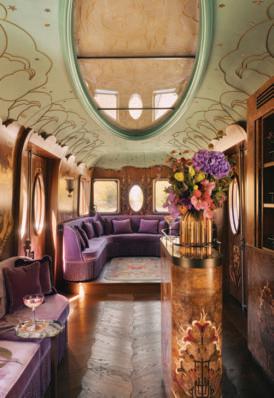
GASTRONOMY. A Fantastical Carriage for Modern Times. The British Pullman Unveils Celia. Photo Ludovic Balay, courtesy Belmond.
THIS IS WINE. TASTING NOTES with Kris @FirstThisIsWine. This month’s lineup includes Puligny-Montrachet, Amarone and Vosne Romanée.

GRAND DESIGN IN THE ETERNAL CITY
A NEW ROMAN ADDRESS
CORINTHIA ROME REIMAGINES A TWENTIETH-CENTURY CIVIC ICON
Once home to the Bank of Italy, a neoclassical palazzo on Piazza del Parlamento has been transformed into Corinthia Rome, where restored frescoes, elegant proportions, and a refreshed courtyard garden blend to create a hotel rich in design, history, and a modern Roman spirit.

Photography Jonathan Maloney, courtesy Corinthia Rome.
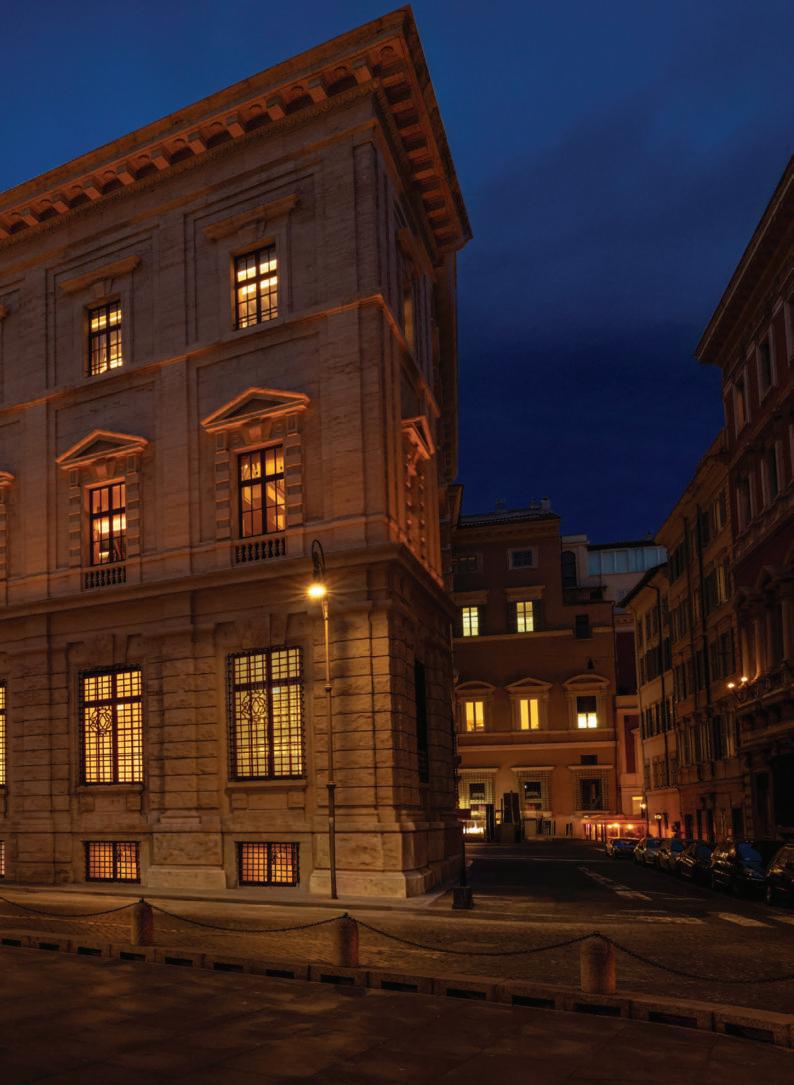
This page: Designed by Pio and Marcello Piacentini, the palazzo was constructed between 1913 and 1921. Located in the neighbourhood of Campo Marzio overlooking Palazzo Montecitorio, the property is owned by Reuben Brothers and is their second hotel to be operated by Corinthia Hotels.
For over a century, the neoclassical palazzo on Piazza del Parlamento, once the home of the Central Bank of Italy, was one of Rome’s most iconic institutional landmarks, its identity shaped by the political life unfolding around it. Designed by Pio and Marcello Piacentini and completed in the early 1920s, the building carried a strong civic purpose, with frescoed rooms and marble halls hosting decades of national decision-making. Its recent transformation into Corinthia Rome marks a rare moment in the city’s architectural story, where the palazzo’s once formal character has been reimagined through contemporary
hospitality, allowing its historic fabric to be experienced in a whole new way.
The transformation was led by hospitality design studio GA, whose approach centred on reinstating the palazzo’s original proportions and uncovering details concealed by decades of institutional use. Through extensive research and careful intervention, mosaics, stuccoes, cornices, painted ceilings and marble detailing have re-emerged, allowing the building’s early twentieth-century character to take its place within the hotel’s new identity. GA describes the project as a revival shaped by the idea of a palazzo passed through generations, each room carrying traces of its past while opening itself to new interpretations.
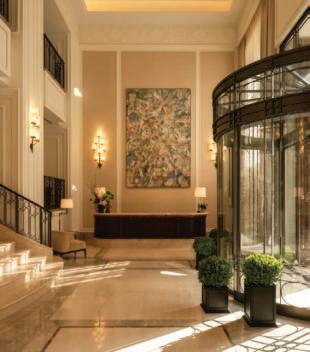
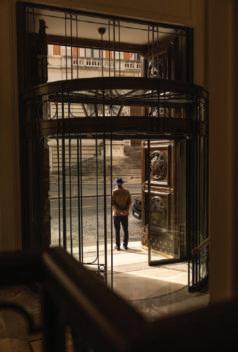
This page: For over a century, the neoclassical palazzo on Piazza del Parlamento, once the home of the Central Bank of Italy, was one of Rome’s most iconic institutional landmarks.
Now transformed into Corinthia Rome, the palazzo's once formal character has been reimagined through contemporary hospitality.






Starting From €26,900




LA DOLCE VITA
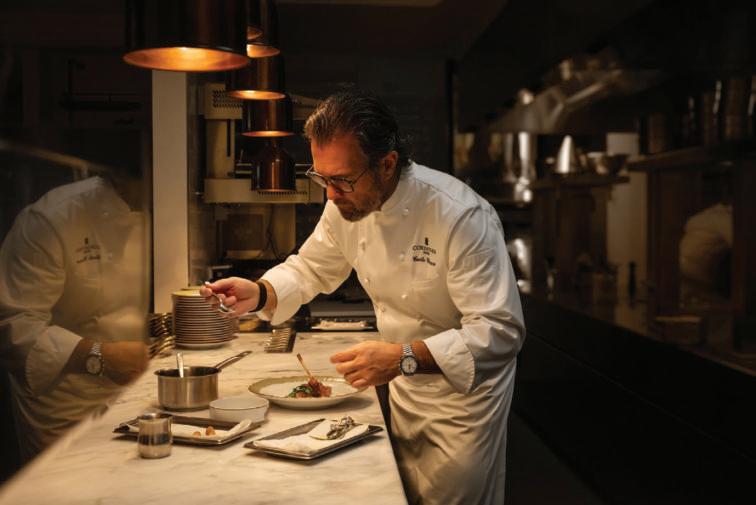
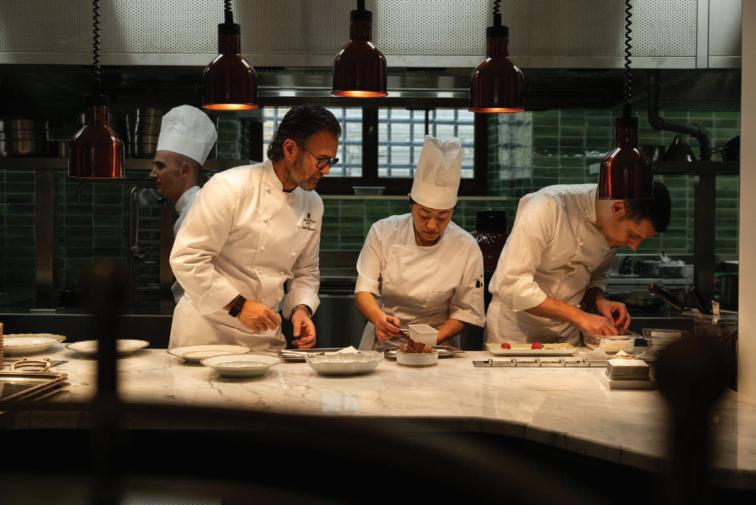
This page: Carlo Cracco, one of Italy’s most celebrated Michelin-starred chefs, is known for his refined yet modern approach to Italian cuisine. He honed his craft under legendary masters like Gualtiero Marchesi and Alain Ducasse, earning international acclaim through his renowned restaurants in Milan and Portofino. His television series, Dinner Club, takes viewers on a journey through Italy’s rich culinary traditions.





























LA DOLCE VITA
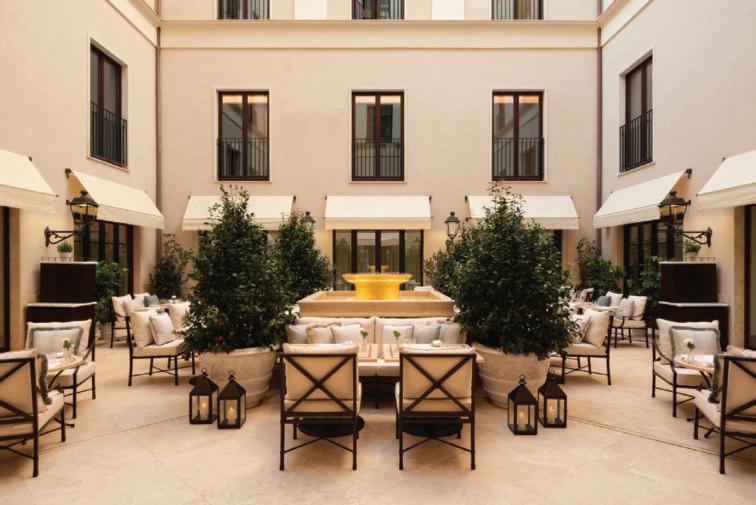
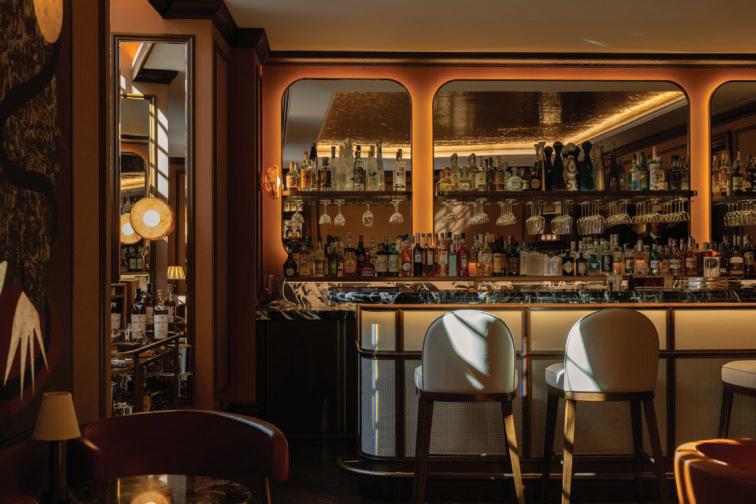
Avove: Open and inviting, Piazzetta is the heart of the palazzo. Below: Ocra Bar embodies the charm of Rome’s golden hour, its name inspired by the warm hues of Mediterranean earth that reflect the city’s palaces, sunsets, and timeless beauty.
LA DOLCE VITA
The hotel’s art collection continues this dialogue between past and present. Curated by international art consultancy VISTO, the programme reflects Rome’s tradition of artistic patronage, commissioning contemporary artists to create new works for the building. Featured Italian artists include Elisa Grezzani, whose monumental tapestry anchors the collection, alongside Francesca Longhini, Alice Faloretti and Maddalena Negrone. Displayed throughout the hotel, the works include both preparatory sketches and finished pieces, revealing the journey from concept to completion.
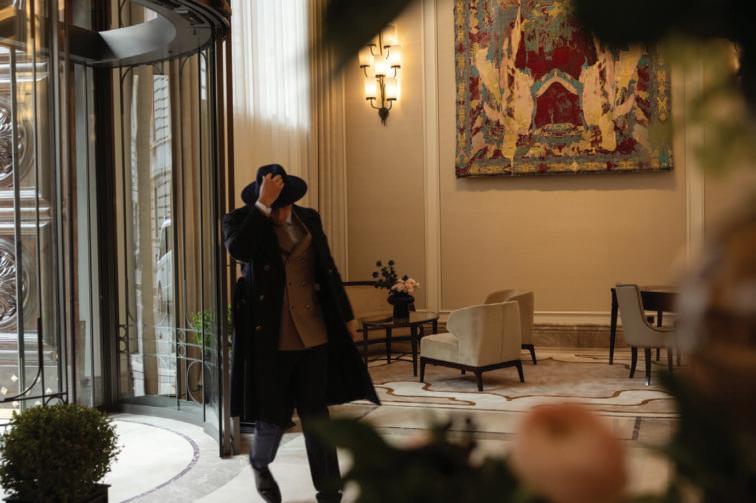
At the centre of the building, the courtyard garden has been restored to its original open form. Enclosed during the palazzo’s banking years, it now serves as the hotel’s organising space, drawing light into the surrounding rooms and establishing a calm, measured atmosphere. The hotel’s public areas are imagined as a series of elegant, intimate rooms gathered around this central space, the living heart of the palazzo. The Lobby Lounge introduces the tone of a private residence, with marble floors, layered textures and a fireplace that anchors the room. A library sits at the opposite end, designed as a more intimate retreat that can be closed off for meetings or conversation, reinforcing the building’s domestic scale.
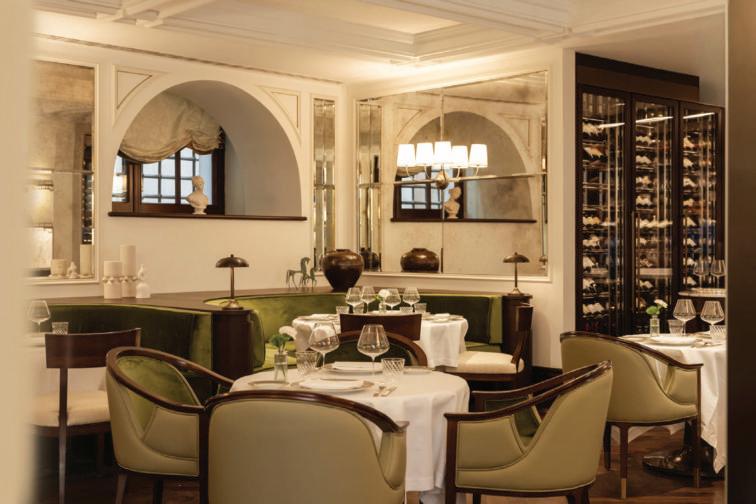
This page: At Viride, Michelin-starred chef Carlo Cracco reimagines Italian gastronomy through a lens of freshness and renewal. Named after the Latin viridis, meaning “green,” the restaurant draws inspiration from Rome’s hidden gardens and fertile hills. Expect seasonal produce, expressive flavour and dishes that celebrate both tradition and innovation in a setting of quiet elegance
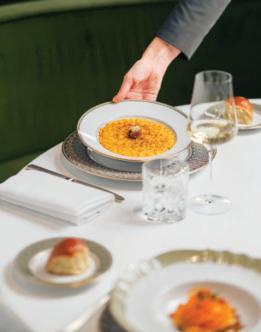
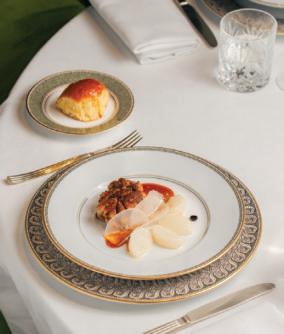
Dining is shaped by Italy’s celebrated Michelin-starred chef Carlo Cracco in his first Roman venture. Viride, overlooking the courtyard, draws its palette from the gardens of Italian palazzi, its name taken from the Latin viridis The restaurant’s design references the city’s hidden green spaces and the natural tones that run through Rome’s historic interiors. Piazzetta brings a more open, social energy, while Ocra Bar introduces a darker, more atmospheric mood. Set just below ground level, its ceiling is lined with gold glass mosaics that catch the light in shifting patterns, a contemporary gesture that nods to the building’s banking past and reinterprets the idea of a frescoed ceiling for the present day.
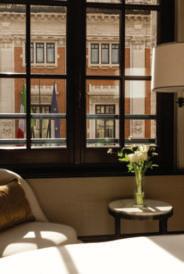
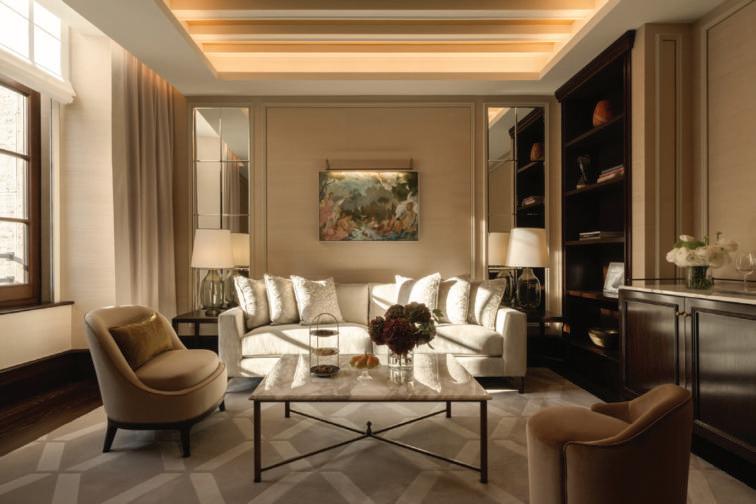
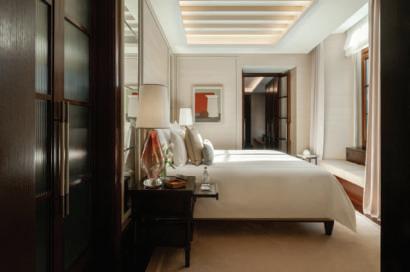
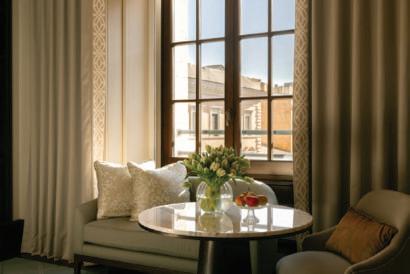
This page: The 60 rooms, including 21 suites, were conceived as refined Roman residences set within the historic fabric of the building. Generous in proportion and filled with natural light, they feature high ceilings and large windows overlooking Rome or the inner courtyard.






















LA DOLCE VITA
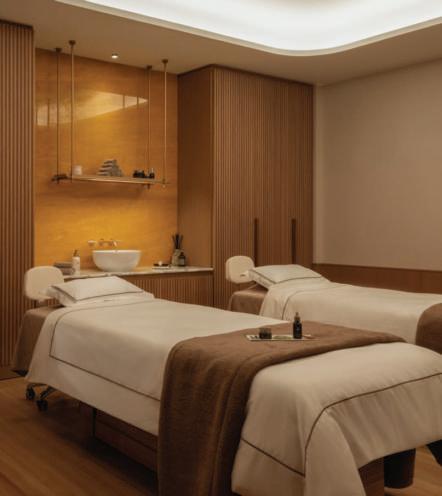
The 60 rooms, including 21 suites, were conceived as refined Roman residences set within the historic fabric of the building. Generous in proportion and filled with natural light, they feature high ceilings and large windows overlooking Rome or the inner courtyard. Restored architectural details are paired with contemporary furnishings, creating a measured balance between heritage and modern comfort.
The suites extend this residential spirit, each offering its own interpretation of Roman character. The duplex Campo Marzio Suites, the Arte Suite and the Chigi Suite with its expansive terrace all present distinct atmospheres, while the Theodoli Heritage Suite occupies the former Council Chamber of the Bank of Italy. Here, original frescoes by Giulio Bargellini and a ceiling by Guglielmo Janni remain intact, their allegorical scenes tracing the history of Italian currency. The room’s transformation into a suite introduces a new layer of meaning, its narrative shifting from financial deliberation to hospitality.
The Aurea Penthouse crowns the collection, drawing inspiration from the Domus Aurea and offering complete privacy above the city. Its design reflects the hotel’s broader approach: a balance of heritage and contemporary refinement, shaped by materials, proportion and a sense of place.
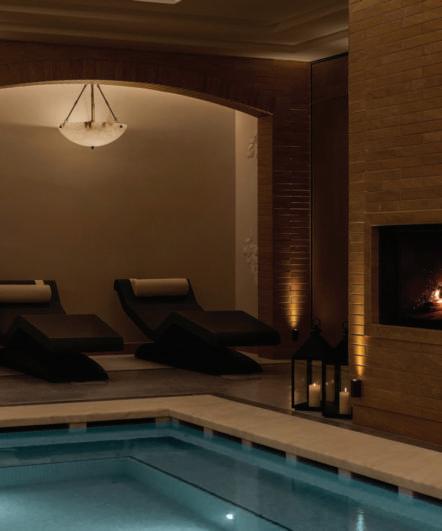
Below ground, the former bank vault has been reimagined as the Corinthia Spa.
Inspired by the ritual of Roman bathing, the Spa is an intimate, subterranean space shaped by water, mineral stone and softened light, a quiet counterpoint to the city above. The design nods to the laurel wreath, reflected in subtle bas-relief details and patterned floors. Treatments by Seed to Skin and 111Skin London blend botanical and clinical methods, offering rituals aimed at deep restoration.
Corinthia Rome brings fresh energy to a historic landmark, seamlessly mixing the city’s timeless architecture with modern style and culture. Tucked in the lively heart of the historic centre, it offers a calm retreat within, thoughtfully designed with harmony in mind. For those wanting a Roman stay that combines tradition with contemporary elegance right in the middle of it all, this palazzo is hard to resist.
Above and below: Where the bank vault once safeguarded financial reserves, it now protects a sense of personal time. Inspired by the ritual of Roman bathing, the Corinthia Spa is an intimate, subterranean space shaped by water, mineral stone and softened light –a quiet counterpoint to the city above.






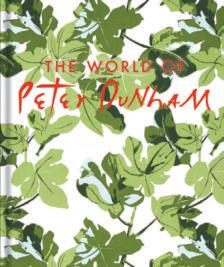
A-LIST INTERIOR DESIGNER PETER DUNHAM’S FIRST BOOK REVEALS HIS SINGULAR APPROACH TO COLOURFUL, PATTERN-FILLED INTERIORS
THE WORLD OF PETER DUNHAM
GLOBAL STYLE FROM PARIS TO HOLLYWOOD
Drawing on a life lived between Paris, London, New York and Los Angeles, Peter Dunham presents a book that reflects the interiors, influences and encounters that continue to inform his work.
Photography courtesy Vendome Press.
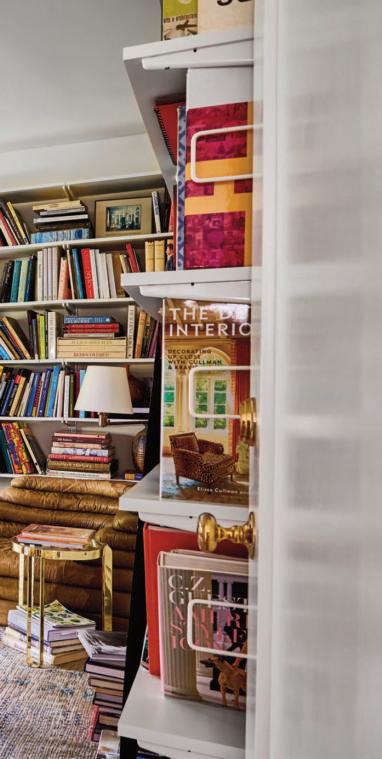
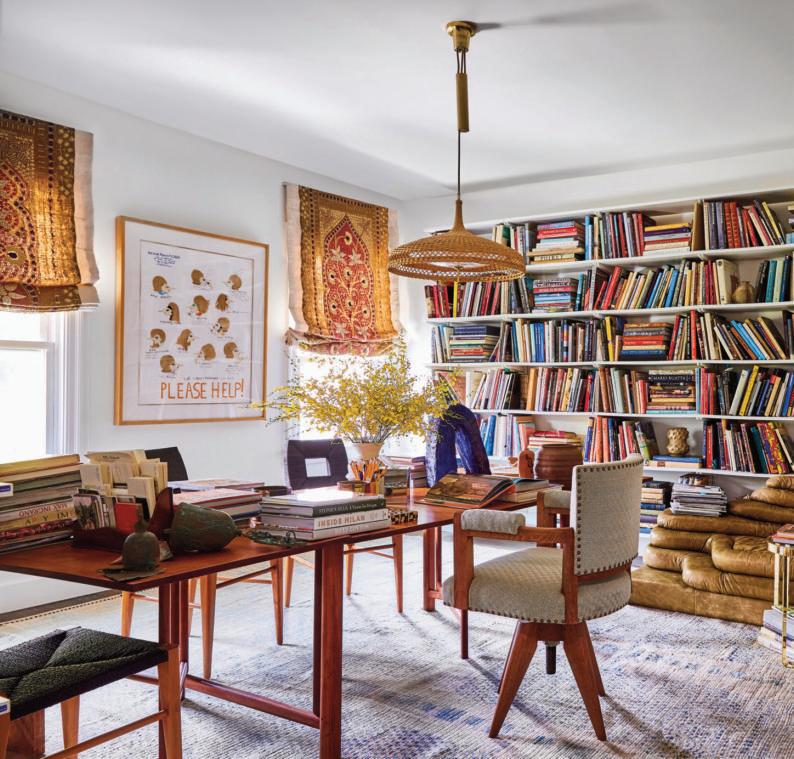
Above: “To me, books create strong visual rhythm. This is the library at my design office. The window treatments are made from antique embroidered panels. Artwork by Konstantin Kakanias.”
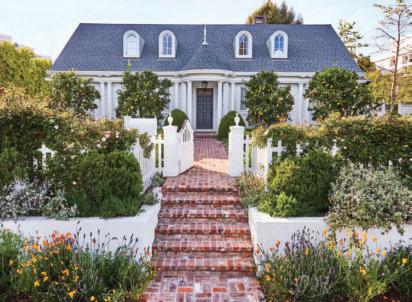
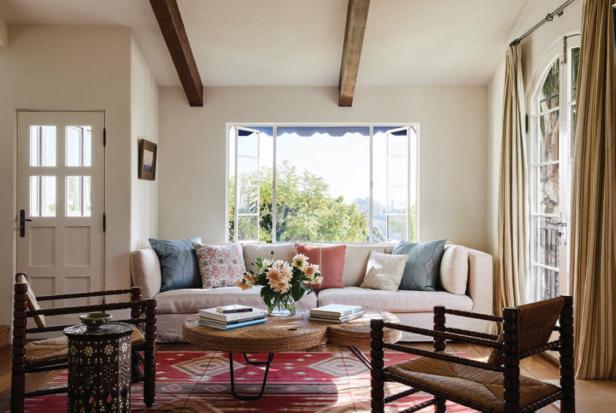
Right: “I worked with architect Paul Williger and landscaper Wade Graham to adapt this house for a young, modern family. Originally belonging to the architect Robert Farquhar and designated a historic landmark, Farquhar had the house moved in the 1930s from its original location in Brentwood to Santa Monica.”
Peter Dunham holds a distinctive place in the transatlantic design imagination, a designer whose rooms carry the ease of California living while at the same time drawing on a life shaped by Paris, London and New York. His new book, The World of Peter Dunham: Global Style from Paris to Hollywood, published by Vendome Press, gathers over ten years of his work into one volume, painting a vivid picture of a career built on instinct, curiosity, and worldly ease. Packed with rich photography, it showcases projects from Manhattan penthouses to Montecito retreats, along with his own homes, including the Paris pied-à-terre tied to his earliest memories. The pages explore themes like colour, rhythm, nature, and sociability, all tied together by a designer who’s always trusted his eye. As Dunham writes in the first
chapter, “A designer’s creative DNA is based on several factors: your own personality, your eye, and your interests… Then there are the experiences that inform you.”
Those experiences began early. Dunham grew up in and around Paris in what he describes as “a succession of dreamy and varied houses”, places chosen not for decoration but for atmosphere. His parents, part of a cosmopolitan circle of diplomats, artists and writers, lived lightly in spaces that carried their own histories. “My parents didn’t spend a lot of money on decorating, but as semi-expats, they always lived in magical places in Paris: an eighteenth-century haunted mansion in Saint Germain-en-Laye, a 1930s artist’s atelier, an apartment above Shakespeare & Company.” These spaces were formative, they were absorbed, not studied, and they shaped the sensibility that would later define his work.
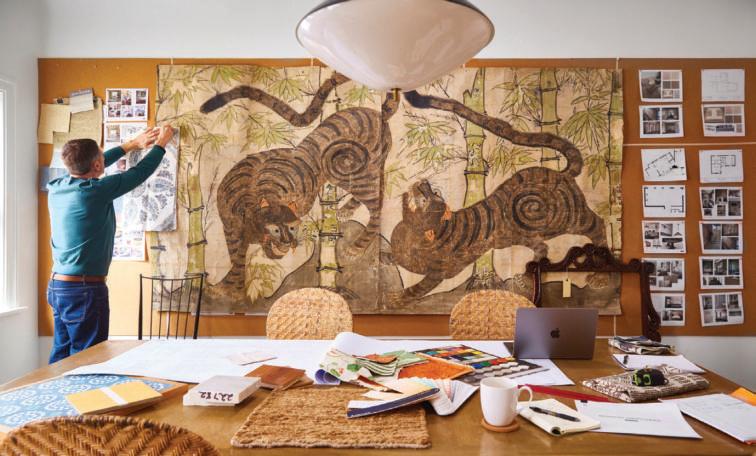
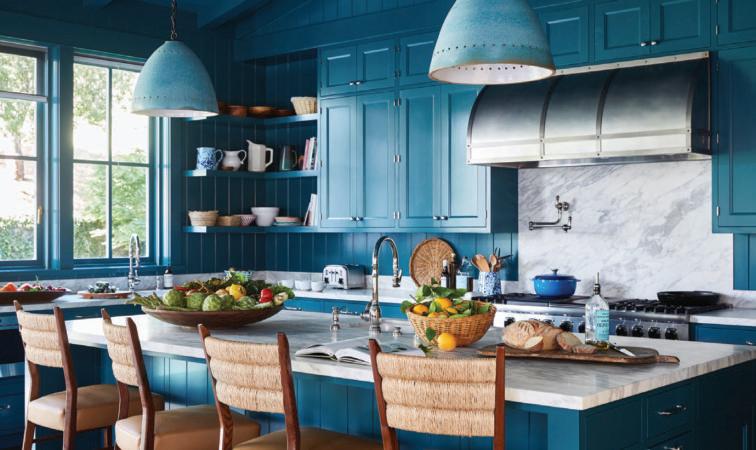
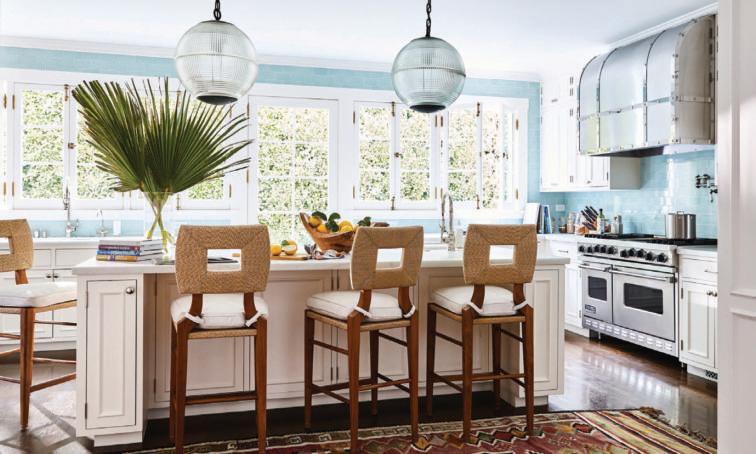
Above: Peter Dunham is a Los Angeles-based interior designer known for his bold use of colour and pattern, sophisticated yet casual style, and a timeless feeling. The Los Angeles Times described his style as “Merchant Ivory Moderne” and “restraint with a kick.” Below: “Ceramic pendants by my friend and longtime collaborator Natan Moss add to the symphony of blues in this Napa kitchen. The natural rush of my Silverlake barstools create an earthy foil.”
By eight, he was an experienced dumpster diver, already combing the streets for discarded treasures. “Tuesday was the day the city of Paris collected
discarded household goods in our arrondissement. I would almost always get there before anyone else,” he writes. In his teens, he discovered Drouot, the official association of French auctioneers, which at the time was housed in the shuttered Gare d’Orsay. The energy of the auctions, the
characters, the pace of the bids, this was his first true education. His mother’s plea, “Please, no more single chairs!”, became a family refrain, though he later learned that his paternal grandmother had done much the same. The instinct, it seems, was inherited.

Lombard Home Loan







Dunham’s professional path was less predetermined. His first summer jobs were with designers on Sloane Street, but no one pushed him towards the field. He moved to New York with ambitions shaped partly by practicality and partly by the city’s
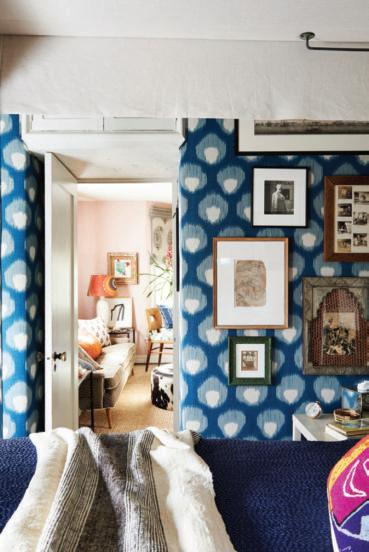
promise. “What about real estate?” his father suggested. Real estate became a gateway. He began flipping properties, working with architects, adjusting layouts, refining proportions. “I was excited about the quest and the transformative possibilities of real estate,” he writes, and this sense of transformation still runs through his interiors.
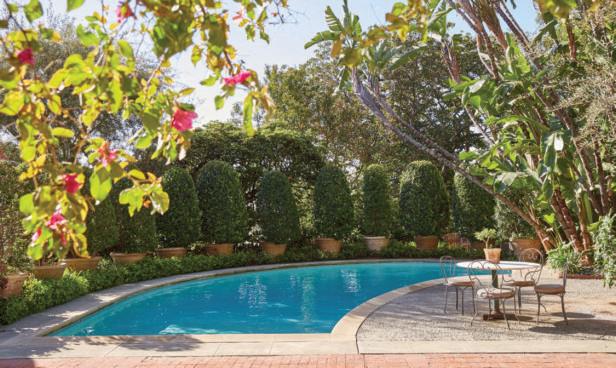
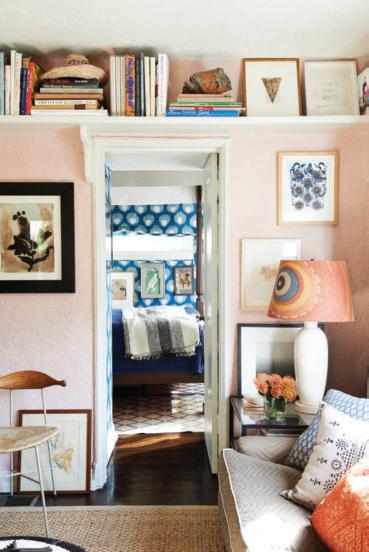
Above: “One of my favorite places was a little apartment just off Sunset Boulevard in the English Village, a historic property dating from the
curving along
silent movie era.”
Left: The unusual pool
a Hollywood hillside exudes that iconic Los Angeles glamour of the 30s.














Los Angeles changed everything. Drawn west by a relationship, he found himself captivated by the city’s architectural range. “The Ultimate City of Reinvention gave me a chance
to recast myself as a designer.” His first commission, a friend’s living room, came with a budget of $25,000, and revealed what had been missing. “Installing this one room, I realized what had been missing in my life: creative satisfaction, I still get the same thrill from every finished job.”
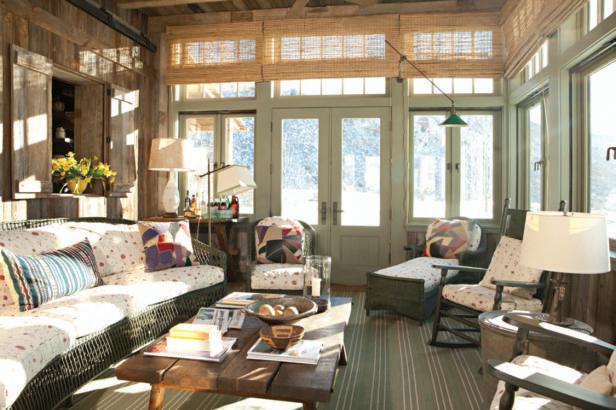
Top: A charming, comfortable corner overlooking the Pacific Ocean. Above: “This screened porch in Aspen feels quintessentially Americana. With custom wicker and rocking chairs, a Robert Kime print we quilted, and patchwork cushions I found at Brimfield.”
BAJA
UBICA
FOCAL
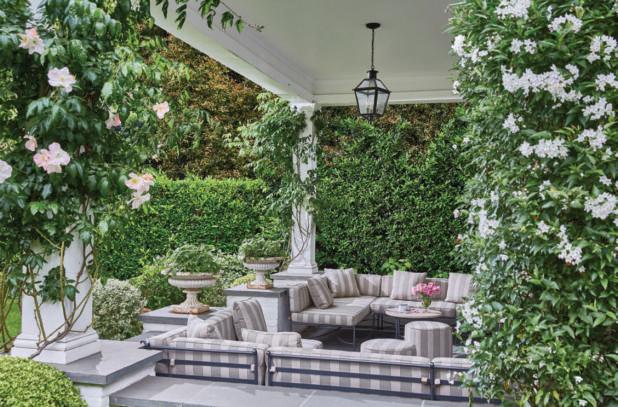
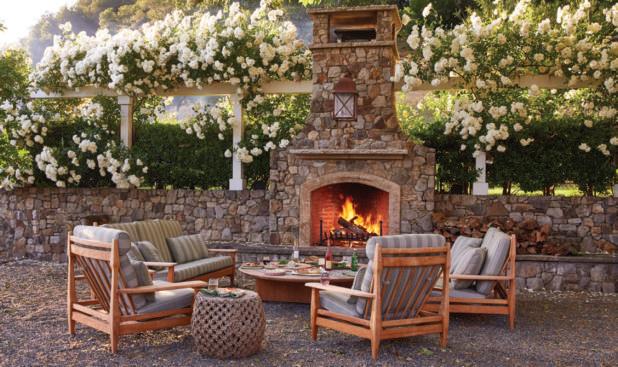
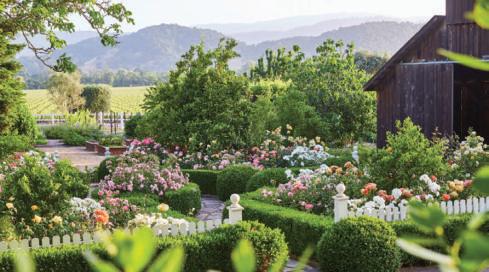

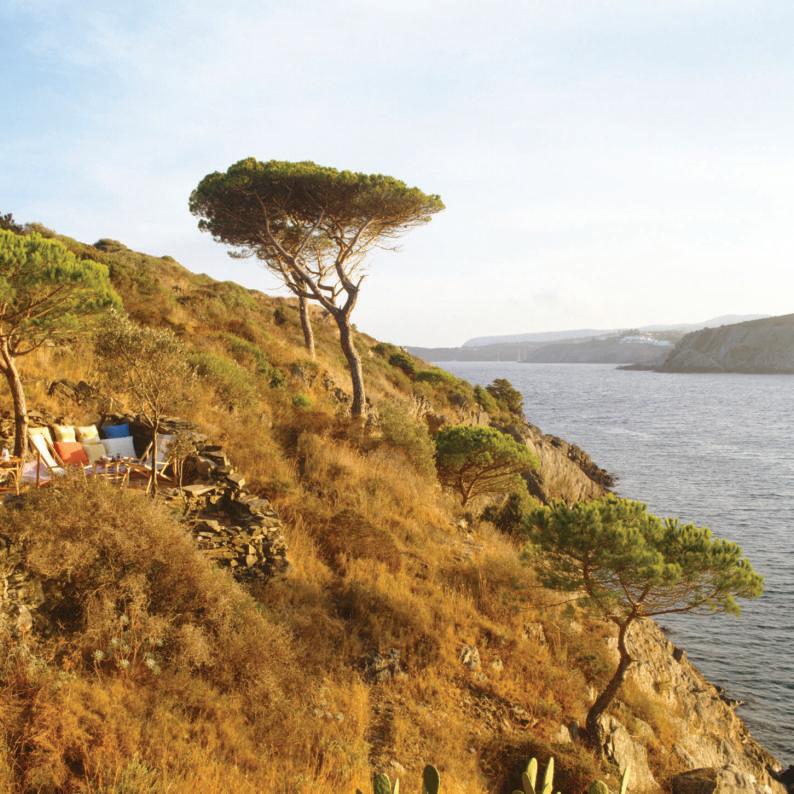
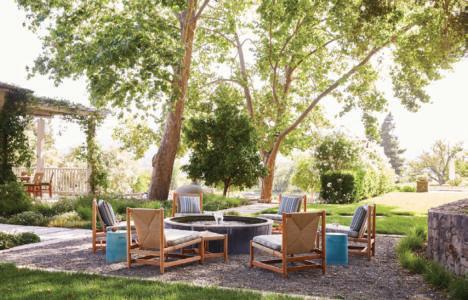
Top left: A pair of classical corner banquettes covered in my Asilah fabric create an elegant outdoor sitting room. Above left: “Dusk in Napa is some type of heaven. My teak furniture gives plenty of seating by the fire. Garden by Scott Lewis Landscape Architecture.” Above right: At a property in Spain, a terrace created by landscape designer Jonathan Ladd to catch the sunset. Left: A rose garden in full bloom in Napa.
His textile and wallpaper line emerged almost accidentally, the result of a long trip to India. “I like to think everything I do in life and work is about 75 percent planned and 25 percent serendipity.” A friend introduced him to block printing in Jaipur; he began sketching designs for clients; word
spread. As the textiles took off, he opened a little showroom calling it Hollywood at Home. Aa space filled with textiles, furniture and the vintage pieces he could never resist. “People kept buying the props! Before I knew it, I had a furniture company with a vintage division.” Then in 2024, he opened Peter Dunham Home & Garden in New York, “so I get to spend even more time in the city of my childhood dreams.”
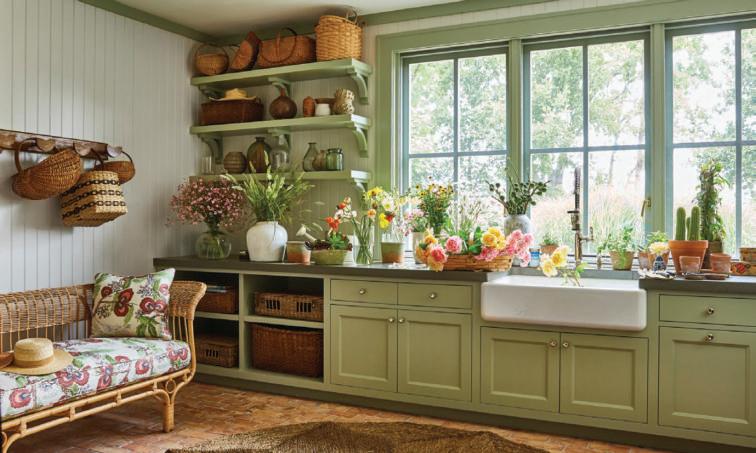
Above: Flower-arranging rooms and potting areas are heaven for garden lovers.
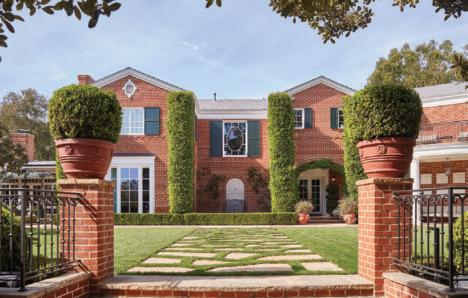
Left: A welcoming seating area in the dappled shade of sycamores in Napa. Bottom left: “It’s a true privilege as an interior designer to work with important architecture. This 1932 Beverly Hills house by Paul R. Williams is one of those gems.”
The book is reflective, it’s an exploration of how a designer’s mind works, how spaces take shape, how architecture and decoration connect, and how a home develops character. “This is a look into how I approach what I consider to be a successful project, marrying the homeowner, the site, and the décor to create a house with style, charm, and personality.” Dunham may not have planned this path, but the book makes clear that he has always been moving towards it. “Getting the balance right is what I love doing. I might not have set out to be a designer, but somehow all roads have led to this book.”









ABOUT THE AUTHORS. PETER DUNHAM is a renowned interiors, textiles, and furnishings designer celebrated for his sophisticated yet casual aesthetic, worldly eye, and deft use of pattern and colour. Born and raised in Europe, he moved to New York as a young man before relocating to Los Angeles where he founded Peter Dunham & Associates. The firm works on projects all over the globe, often collaborating with leading architects on ground-up construction and historic houses. His textiles and furnishings brands, Peter Dunham Textiles and Hollywood at Home, are beloved sources for designers and design enthusiasts alike. Peter has appeared as a design expert on television on PBS and Bravo and his work has been featured in Architectural Digest,
ELLE Decor, WSJ, the New York Times, and more.
STEPHEN DRUCKER is the former editorin-chief of House Beautiful and Town & Country, and has developed some of Vendome’s most successful interior design titles, including Sunnylands and Inspired Design. He has been a contributor to numerous publications, including Architectural Digest, Travel + Leisure, House & Garden, and the New York Times. He lives in New York
THE WORLD OF PETER
DUNHAM
By Peter Dunham, edited by Stephen Drucker. Published by Vendome Press. Hardcover, 320pages.
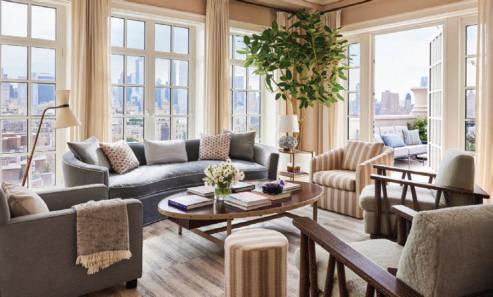
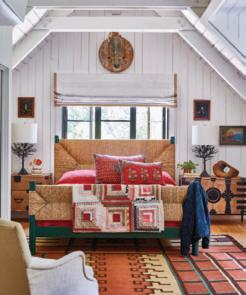
Top: A wall of windows brings wonderful light to the kitchen. The allover tile energizes it with colour. Above left: “In this spectacular penthouse I used the colours of the skyline to make a seamless experience between the view and the interior.” Above right: A buildup of natural materials and geometric patterns in a guest bedroom outside Los Angeles.


Daphne’s Home Masterpiece

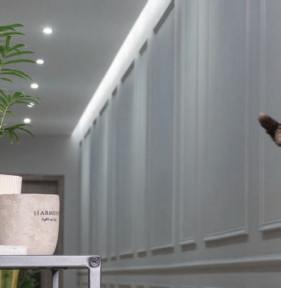








“We kept postponing getting the corridor done for years, until my husband and I had a vision, and chose to do it entirely ourselves. It’s quite a long corridor, but this colour choice coupled with the panelling makes it a lot warmer and more inviting. At first we only painted one side, but once it was done we loved the grey so much that we decided to paint the other side too.


Daphne Cassar Genovese
SIGMA VOICE OF COLOUR: LONGFUL GRAY
SEEING DIFFERENTLY
LOVE LIFE
The British artist David Hockney, one of the most important figures in contemporary art in both the 20th and 21st centuries, passed away this June 2026, 1 month short of his 89th birthday. Celebrated for his bold colour, restless experimentation and unwavering belief in the pleasures of looking, he leaves behind one of the most significant and joyful bodies of work in contemporary art.
Photography © David Hockney.
“The world is very, very beautiful if you look at it. But most people don’t look very closely. They scan the ground ahead of them so they can walk, but they don’t observe things very attentively, intensely. I observe, and I’ve always known that.”
DAVID HOCKNEY
Born in 1937, in Bradford, West Yorkshire, David Hockney OM CH RA is considered one of the most influential and defining figures in contemporary art. His seven-decade career and prolific oeuvre was characterized by his multimedia approach in image making, an intellectual
inquiry into the nature of depiction and perspective, and a sustained commitment to celebrating and portraying the world around him.
Hockney’s formal training began at the Bradford School of Art (1953-57), followed by the Royal College of Art in London (1959-62), where he graduated with Gold Medal distinction and subsequently emerged as one of the seminal talents in the new generation of British artists.
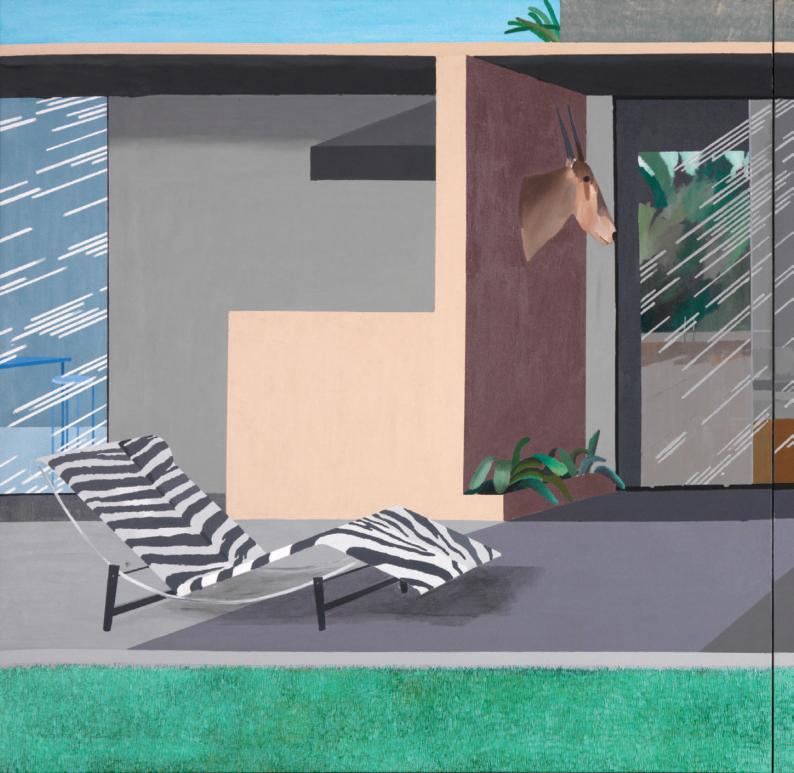
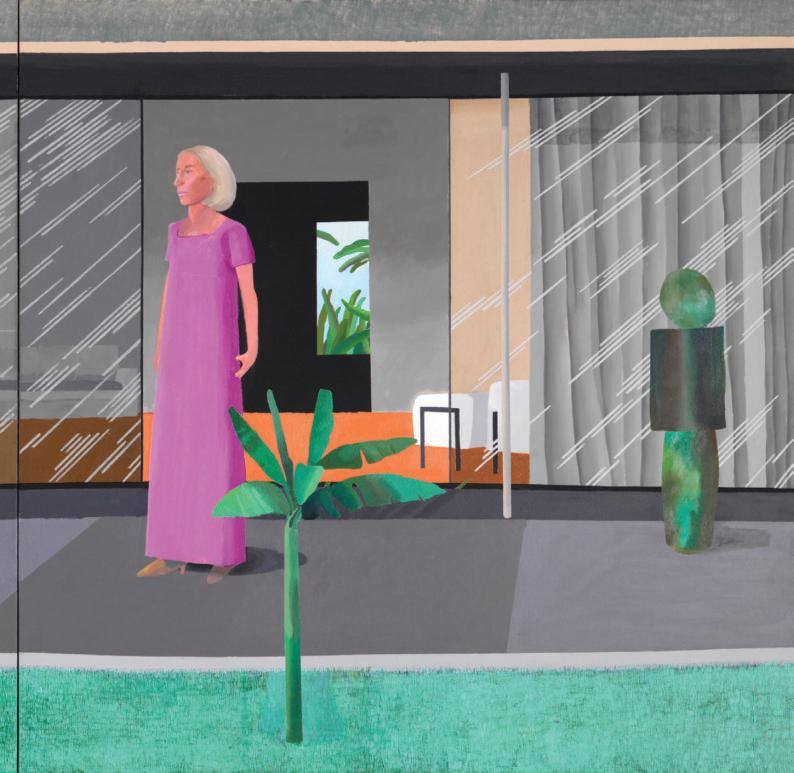
This page: Beverly Hills Housewife, 1966 –1967 Acrylic on canvas –two canvases, 72 x 144 in (182.9 x 365.8 cm), overall © David Hockney.PhotoRichard Schmidt.
CULTURE
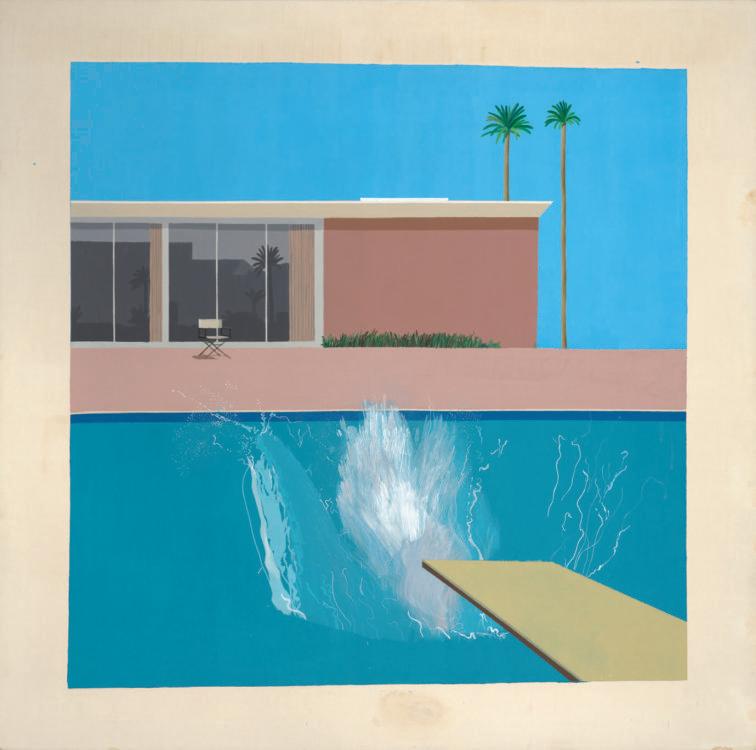
The 1960s marked a pivotal shift in the development of Hockney’s distinctive artistic style as he moved away from early experiments with abstract expressionism toward figuration and linear mark making, two approaches very unfashionable at the time. Following his move from London to Los Angeles in 1964, he began to document the city’s seductive charm from the perspective of an outsider. This new environment inspired his iconic renderings of the Southern Californian lifestyle, including Beverly Hills Housewife (1966) as well as his celebrated swimming
pool series, most notably A Bigger Splash (1967), both widely acclaimed as canonical works. His subject matter at the time frequently explored themes of intimacy, leading to large-scale double portraits such as Christopher Isherwood and Don Bachardy (1968) and Mr and Mrs Clark and Percy (1971). Photography became an important preparatory tool in these works and in paintings such as Portrait of an Artist (Pool with Two Figures) (1972), though Hockney later came to feel that this approach was too reliant on photorealism. He did not use photography for portraits since.
The mid-1960s also marked the start of Hockney’s enduring contributions to opera
and theatre design. His comprehensive stage designs often involved intense periods of concentration, sometimes extending a year or more on a single production. Beginning with Alfred Jarry’s Ubu Roi (1966) for London’s Roval Court Theatre, Hockney went on to create a series of landmark productions, including the iconic staging of Igor Stravinsky’s The Rake’s Progress (1975) for Glyndebourne, and Giacomo Puccini’s Turandot (1990)for LA Opera. Many of his designs, spanning ten opera and ballet productions –are regarded as the definitive visual interpretation of the works and continue to be presented decades after their premieres.
Above: A Bigger Splash, 1967 Acrylic on canvas,95 1/2 x 96 in(242.5 x 243.9 cm) © David Hockney.PhotoRichard Schmidt, 1967.Collection Tate, U.K.
Hockney’s interest in theatrical space evolved into a broader engagement with figurative abstraction and art– historical references, exemplified by his initial use of ‘reverse perspective’as a pictorial device in Kerby (After Hogarth) Useful Knowledge (1975).
Hockney’s intellectual curiosity and desire to investigate perception and depiction initiated a long and exploratory relationship with photography and perspective. The 1980s heralded a deep experimentation with photography as Hockney pioneered his photographic collages, employing a Cubist
language that combined multiple viewpoints to create two-dimensional images, suggesting the passage of time and challenging the fixedpoint perspective inherent to the camera lens and the observer in Western art (Pearblossom Hwy., 11-18th April 1986).
From the late 1990s through the early 2000s, Hockney devoted a significant part of his practice to investigating the techniques and working methods of Western artists from the fifteenth century onward, with particular attention to their use of optical devices. Approaching the subject not only as a researcher but as one of the most accomplished draftsmen of his generation, Hockney brought an artist’s understanding of drawing, perspective,
light, and image-making to the study of historical works. This practical knowledge enabled him to identify visual evidence that he believed had often been overlooked within conventional art-historical scholarship.
Central to Hockney’s argument was the idea that many artists had employed camera obscuras, concave mirrors,lenses, and, later on, camera lucidas, as optical aids to project images onto a surface, allowing them to trace or closely follow contours and tonal effects. He argued that the ability to capture photographic likeness through light and shadow existed centuries before the chemical invention of photography in 1839 (often confused as the invention of the camera).
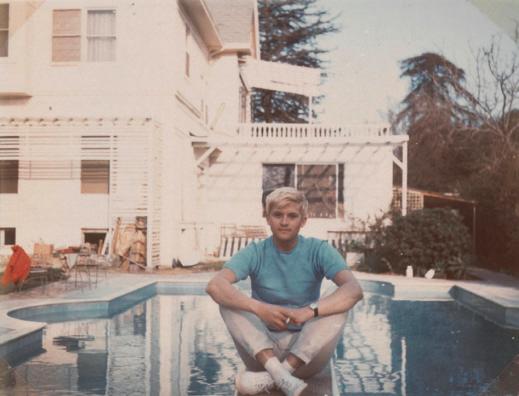
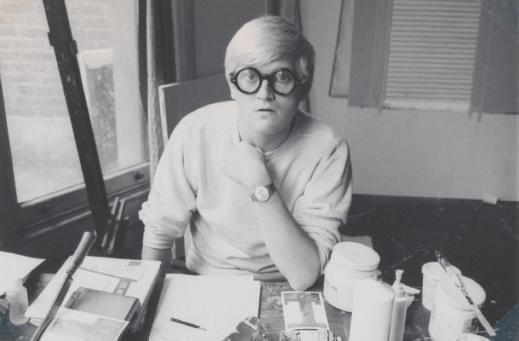
Top: David Hockney, Los Angeles, 1964 © David Hockney. Above: David Hockney, Powis Terrace, London, 1967 © David Hockney.
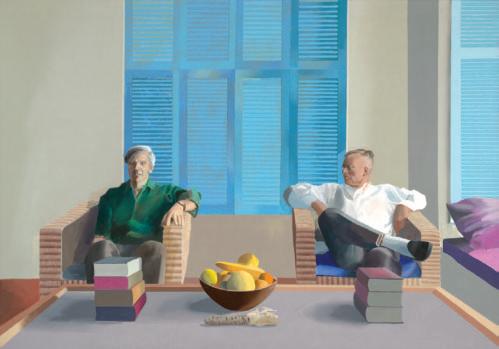
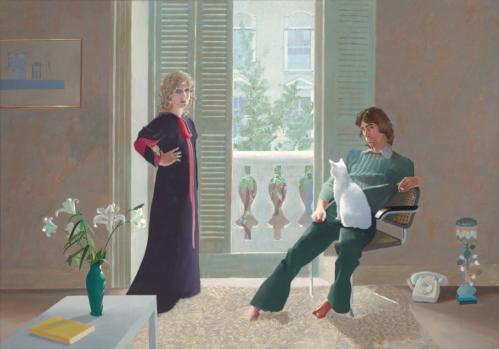
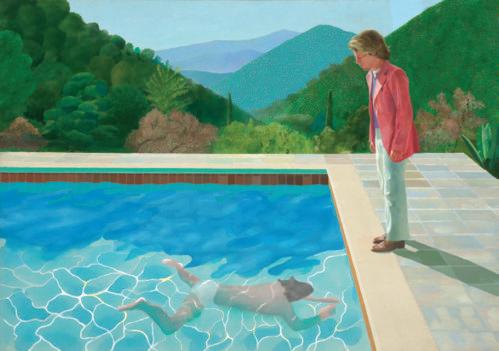
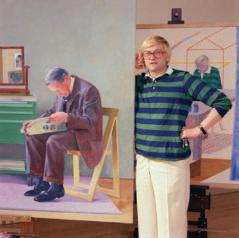
Above: David Hockney with My Parents, London, 5 July 1977 © National Portrait Gallery, London.PhotoBern Schwartz. Top left: Christopher Isherwood and Don Bachardy, 1968 Acrylic on canvas,83 1/2 x 119 1/2 in (212.1 x 303.5 cm) © David Hockney.PhotoJonathan Wilkinson. Centre left: Mr. and Mrs. Clark and Percy, 1970 – 1971 Acrylic on canvas,84 x 120 in (213.4 x 304.8 cm) © David Hockney.Photo Jonathan Wilkinson. Collection Tate, U.K. Bottom left: Portrait of an Artist (Pool with Two Figures), 1972 Acrylic on canvas,84 x 120 in(213.4 x 304.8 cm) © David Hockney. PhotoJonathan Wilkinson.
Hockney also observed that convincing cast shadows and highly naturalistic modelling began to appear in Western painting around the 1420s, suggesting a significant shift in how artists represented space, light, and visual reality. He was one of the first people to point out there had never been any shadows or reflections outside of Western Art prior to 1420. These investigations culminated in Secret Knowledge (2001), otherwise known as the Hockney/Falco Thesis, in which Hockney and Charles Falco, a professor of optical science, presented a comprehensive theory regarding the use of optical aids by the Old Masters. The book established Hockney as an important contributor to debates in art history and the history of technology. It was initially met with strong scepticism by most established ar historians and curators, who implied lack of evidence and that Hockney was suggesting the Old Masters ‘cheated.’ However, the thesis has since been examined, tested, and further developed by a younger generation of scholars, sustaining discussion about the role of optics in the development of Western art and agreeing with Hockney’s comment, “Brunelleschi didn’t invent perspective, he just discovered there was a law of optics.”

CULTURE
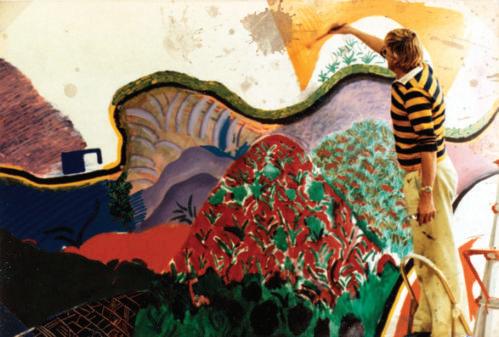
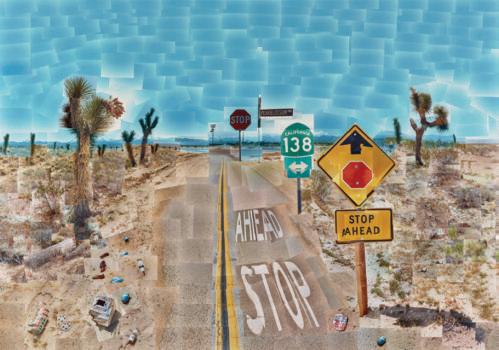
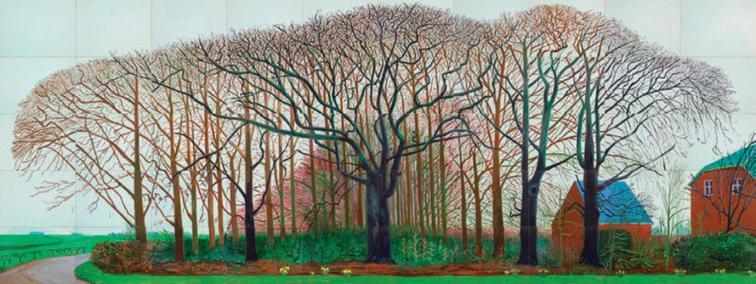
Top: David Hockney painting Mulholland Drive: The Road to the Studio, 1980 © David Hockney. Above: Pearblossom Hwy., 11-18th April 1986 (Second Version), Photographic collage 181.61 x 271.8 cm (71.5 x 10⁷ Inches) © David Hockney.Collection J. Paul Getty Museum, Los Angeles. Below: Bigger Trees near Warter or/ou Peinture sur le Motif pour le Nouvel Age Post-Photographique, 2007 Oil on canvas,fifty canvases, 36 x 48 in(91.4 x 121.9 cm)each,180 x 480 in(457.2 x 1219.2 cm)overall © David Hockney.Collection Tate, U.K.
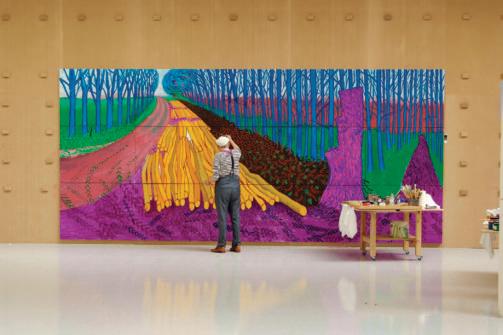
In the early 2000s, Hockney’s return to Yorkshire prompted a renewed engagement with the landscapes of his native country, portrayed in the intensive Midsummer: East Yorkshire watercolour series (2004) and ambitious multi-canvas oil paintings, most notably Bigger Trees near Warter (2007). The emergence of digital technologies, specifically the iPhone and iPad, became central to Hockney’s practice from 2007 onward. He embraced these tools for immediacy and plein airdrawing, resulting in the vast series The Arrival of Spring in Woldgate, East Yorkshire in 2011 (twenty eleven).
In 2013, he moved back to Los Angeles following personal tragedy, which triggered the start of the 82 portraits and 1 Still Life series and numerous new works.
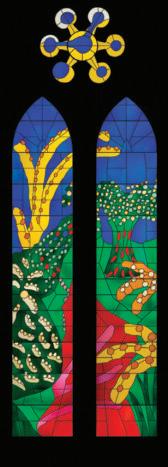
In 2017, he was honoured to be invited by the Dean of Westminster Abbey to produce the stained-glass Queen’s Window in honour of Queen Elizabeth 11, which was unveiled in October 2018.
In 2019, Hockney started working at his partner’s house and new studio in Normandy and rediscovered the lush landscape and four seasons after years in LA, producing ink drawings, paintings, and numerous iPad paintings including his iPad frieze A Year In Normandie (2020-2021), the ninety-metre-long panoramic iPad painting inspired by the nearby Bayeux Tapestry and his long-time fascination with Chinese scrolls, further demonstrating his commitment to pushing the expressive possibilities of digital media while remaining deeply engaged with the traditions of landscape painting.
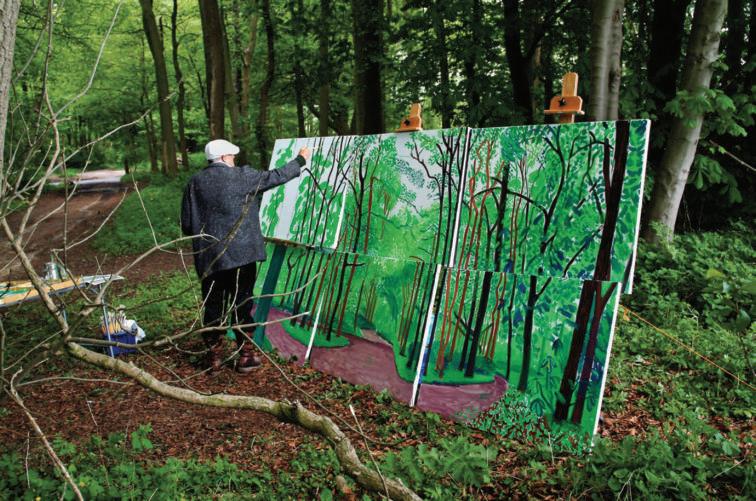
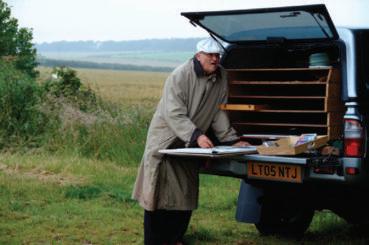
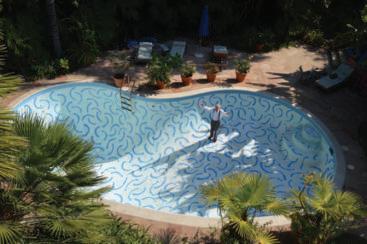
After relocating to London in 2023, his legacy was celebrated by major international shows, including the pioneering 360-degree immersive projection film Bigger & Closer (not smaller & further away) at London’s Lightroom (2023), which continues to travel worldwide, Normandism at the Musée des Beaux-Arts Rouen (2024), where the Moon Room iPad drawings were first featured, and culminating in the monumental David Hockney 25 at the Fondation Louis Vuitton in Paris (2025).
On his return from the Paris exhibition, he straight away returned to painting, with vigour, producing two new shows in London: Some Very, Very, Very New Paintings Not Yet Shown in Paris in November 2025 at Annely Juda Fine Art; then a show of A Year in Normandie
and ten new works at Serpentine North Gallery, (on view through the end of August). These shows revealed the most developed stage yet of Hockney’s exploration of ‘reverse perspective’as a pictorial device.
Future exhibitions at Tate, London and the Munch Museum, Oslo, amongst others, are in development.
Amongst the many honours bestowed upon him over the course of his seven-decade career, he was appointed by Her Majesty Queen Elizabeth II to the Order of the Companions of Honour in 1997 and to the Order of Merit in 2012. In 2026, Hockney became one of the few non-French citizens to be awarded the rank of Officier in France’s prestigious Légion d’Honneur, granted through exceptional merit and in recognition of his profound contributions to the country through his work.
Top: David Hockney painting Woldgate Woods III, 20 & 21 May, 2006 © David Hockney.Photo Jean-Pierre Gonçalves de Lima. Above left: David Hockney drawing Big Trees nearer Warter, 2008 © David Hockney.Photo Jean-Pierre Gonçalves de Lima. Above right: David Hockney in his newly repainted pool, Hollywood Hills, CA, 8 July 2017 © David Hockney.Photo Jean-Pierre Gonçalves de Lima.
CULTURE

From traditional media such as drawing, painting, printmaking, set design, and photography to evolving media including photocopier and fax machines, computer, iPhone and iPad drawing, and stained glass, Hockney synthesized exceptional draftsmanship with keen observation, a sophisticated understanding of art history coupled with an embrace of modern technology. These extensive explorations later influenced the expression he adopted, ‘the hand, the eye, and the heart’, rooted in an ancient Chinese proverb to articulate the sentiment that painting requires the integration of all three components, firmly believing that ‘two won’t do.’
Hockney was also a committed life-long and defiant smoker, expressing the pleasure in life it brought him. He campaigned against anti-smoking laws and health ‘bossiness,’and was an avid defender of individual freedom. He smoked up to the end.
He is survived by his long-time partner and companion JeanPierre Gonçalves de Lima, his great-nephew Richard who acted as studio assistant in his last years, his brothers Philip and John, and numerous nieces, nephews, greatnieces and great-nephews. David Hockney’s enduring legacy reflects his underlying enthusiasm for life, his outstanding sense of humour, his immense generosity, and his investigative curiosity encapsulated by his signature phrase, LOVE LIFE.
Top: A Year in Normandie (detail), 2020-2021 Composite iPad painting © David Hockney. Above: David Hockney painting Winter Timber, 2009 © David Hockney.Photo Jean-Pierre Gonçalves De Lima.
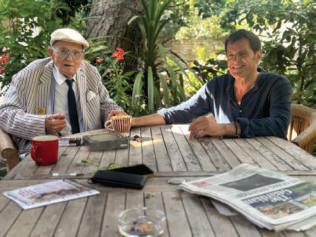
Left: The Queen’s Window, Westminster Abbey, 2018 Stained glass © David Hockney. Photo Jonathan Wilkinson. Below: David Hockney and Jean-Pierre Gonçalves de Lima, London, 2025 © David Hockney.

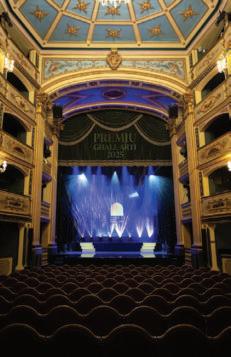
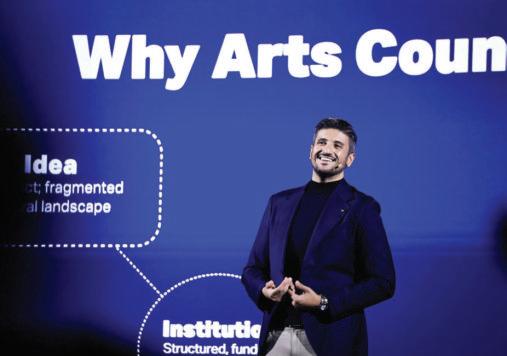
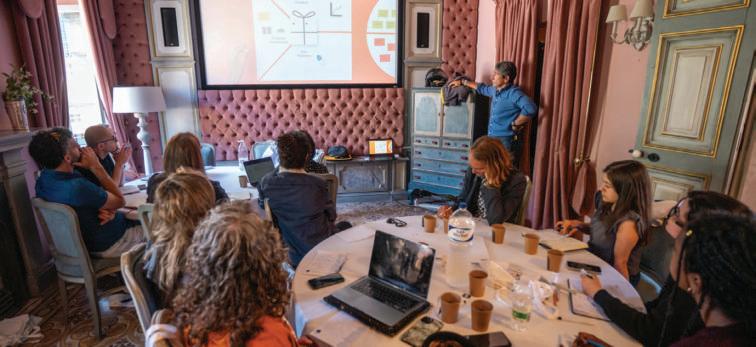
Above left: Premju għall-Arti is Arts Council Malta’s premier national awards celebrating excellence in the cultural and creative sectors. The 2025 edition marked the 10th anniversary of the Council, receiving a record 600 nominations, with winners announced across competitive categories and honorary titles. Photo Darren Agius. Above right: “Through Strategy 2030, we are working towards a more inclusive, connected and culturally ambitious Malta, where cultural rights are recognised as an essential part of individual well-being”, says Dr Luke Dalli, Executive Chairman of Arts Council Malta. Photo Alan Saliba. Bottom: Phase 2 of the Creative Innovators and Platforms Fund, a programme focused on incubation, mentorship, and expert-led support aimed at strengthening innovation and sustainability within Malta’s creative sector. The first workshop from a series of workshops, ‘Foundational Principles of Planning and Developing a Business’ was led by Nathan Farrugia. Through his expertise in entrepreneurship and business strategy, participants explored key principles for building resilient and sustainable creative ventures, setting a strong foundation for the journey ahead. Photo Eric Montebello.
CULTURAL RIGHTS AT THE HEART OF ARTS COUNCIL MALTA’S STRATEGY 2030
THE Cultural RIGHT
As Arts Council Malta continues to implement its Strategy 2030, the organisation remains committed to placing Cultural Rights at the centre of its work. Built around three interconnected pillars of Professional Development, Cultural Rights and Internationalisation, the strategy provides a framework for strengthening Malta’s cultural and creative sectors while ensuring that culture remains accessible, relevant and meaningful to all, writes the team at Arts Council Malta. Photography courtesy Arts Council Malta.


ARTS & CULTURE
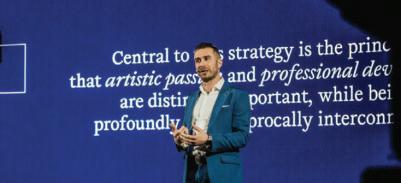
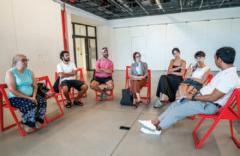

Top left: The Premju għall-Arti was launched in 2017. The event symbolizes inclusion, professionalism, and sustained artistic growth, aligning closely with Arts Council Malta's goals. Photo Darren Agius. Top right: According to Daniel Azzopardi, Director Strategy of Arts Council Malta, Arts Council Malta’s Strategy 2030 is grounded in the belief that culture is both a fundamental right and a shared public good that enriches lives. Photo Albert Camilleri. Above left: Strategy 2030 launched this April. The new decade plan focuses on building a stronger, more sustainable, and inclusive ecosystem for Malta’s creative sectors. Photo Shaun Spiteri. Above Centre: One of the focus groups held in 2025 as part of ACM’s Strategy 2030 public consultation. Photo Vince Piscopo. Above right: Café Climate: Climate Change & Migration. Held in late October 2025, the evening brought together local experts, artists, and the public to explore the intersection of the climate crisis, human displacement, and artistic expression. Photo Darren Agius.
Recognising culture as both a fundamental human right and a public good, Arts Council Malta is working to ensure that everyone has the opportunity to access, participate in and contribute to cultural life, regardless of their background, circumstances or abilities.
Commenting on the Council’s long-term vision, Dr Luke Dalli, Executive Chairman of Arts Council Malta, said: “At Arts Council Malta, we believe that culture should be accessible, relevant and meaningful to everyone. Our vision is to foster a cultural ecosystem where every individual has the opportunity to participate, create and thrive, while ensuring that artists and cultural practitioners are supported, valued and empowered to develop sustainable careers. Through Strategy 2030, we are working towards a more inclusive, connected and culturally ambitious Malta, where cultural rights are recognised as an essential part of individual well-being, community development and national progress.”
Central to this effort is the work of the Strategy Department, which plays a key role in translating the ambitions of Strategy 2030 into practical actions, policies and programmes. Through research, stakeholder engagement, policy development and cross-sector collaboration, the department works to ensure that Arts Council Malta’s strategic objectives are reflected across its initiatives while responding to the evolving needs of artists, cultural organisations and communities. This approach enables the Council to adopt more inclusive, evidenceinformed and effective ways of working, helping to maximise the impact of its programmes and investments.
Through its strategic initiatives, programmes and partnerships, Arts Council Malta is strengthening its commitment to inclusivity, community engagement and well-being, while also supporting the sustainable development of Malta’s cultural and creative sectors. This approach reflects a broader understanding of culture not only as a means of artistic expression, but also as a powerful tool for social cohesion, personal development and community resilience.
Daniel Azzopardi, Director Strategy of Arts Council Malta, emphasised how Cultural Rights underpin the wider vision of Strategy 2030: “Arts Council Malta’s Strategy 2030 is grounded in the belief that culture is both a fundamental right and a shared public good that enriches lives, strengthens communities and contributes to sustainable development. Through the Cultural Rights pillar, we are committed to ensuring that everyone can access, participate in, and contribute to cultural life, while recognising creativity as an essential dimension of personal development, well-being and social cohesion.
Central to this vision is our commitment to fostering inclusive communities where diverse voices are heard, barriers to participation are addressed, and cultural engagement is recognised as a pathway to belonging, resilience and collective well-being. At the same time, Strategy 2030 places significant emphasis on improving the status of the artist by promoting fair practices, professional standing, and the conditions necessary for creative practitioners to build sustainable and rewarding careers.
This integrated approach reflects our belief that investing in cultural rights and the sustainability of artistic practice is fundamental to building a more inclusive, connected and culturally vibrant society.”
One of the key priorities under the Cultural Rights pillar of Strategy 2030 is to create more opportunities for meaningful participation in cultural and creative activities. Through multiple initiatives, Arts Council Malta is supporting projects that place creativity, well-being and community engagement at the forefront.
Simone Inguanez, Diversity & Communities Executive at Arts Council Malta, highlighted the transformative role of creativity in everyday life: “Creativity is a cultural and human right and a vital force that shapes how we understand ourselves, each other, and the communities we build. Through The President’s Fund for Creativity and the Culture and Health Platform for the Maltese Islands, we are championing the stories that rarely make it to the surface yet bind us together in powerful ways. These initiatives nurture critical thinking, enable collective creation, and help us find meaning in the small, everyday moments that inspire hope and positive change. They recognise creative engagement as a health-supporting behaviour that strengthens individual well-being and contributes to healthier, more connected communities.”
Arts Council Malta’s work in this area is guided by the belief that cultural participation should be accessible to all. By addressing barriers to engagement, listening to diverse communities and encouraging broader participation across society, the Council aims to ensure that culture remains relevant, inclusive and reflective of Malta’s evolving social realities.
As Arts Council Malta continues to deliver on the ambitions of Strategy 2030, Cultural Rights remain a guiding principle across its work, helping to shape policies, programmes and initiatives that place people, communities and creativity at the heart of cultural development. Through this ongoing commitment, the Council seeks to contribute to a society where culture is not only celebrated, but also recognised as an essential part of everyday life, and a key driver of social, cultural and economic well-being.
VALLETTA CONCOURS

CRAFTSMANSHIP AND CHARACTER
vintage and classic machines, international entrants and a new sense of scale at Triton Square, confirming its place as one of the Mediterranean’s most distinctive motoring gatherings.

Photography Ikona Artworks, courtesy Valletta Concours.
CONCOURS D’ELEGANCE
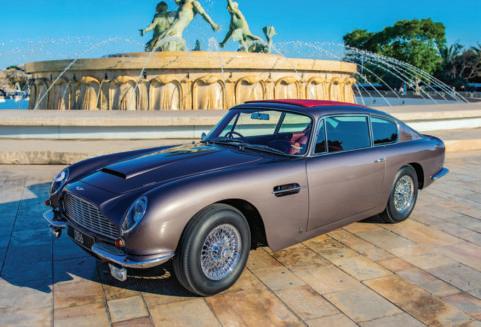
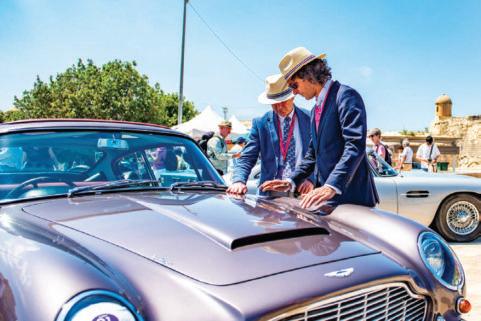
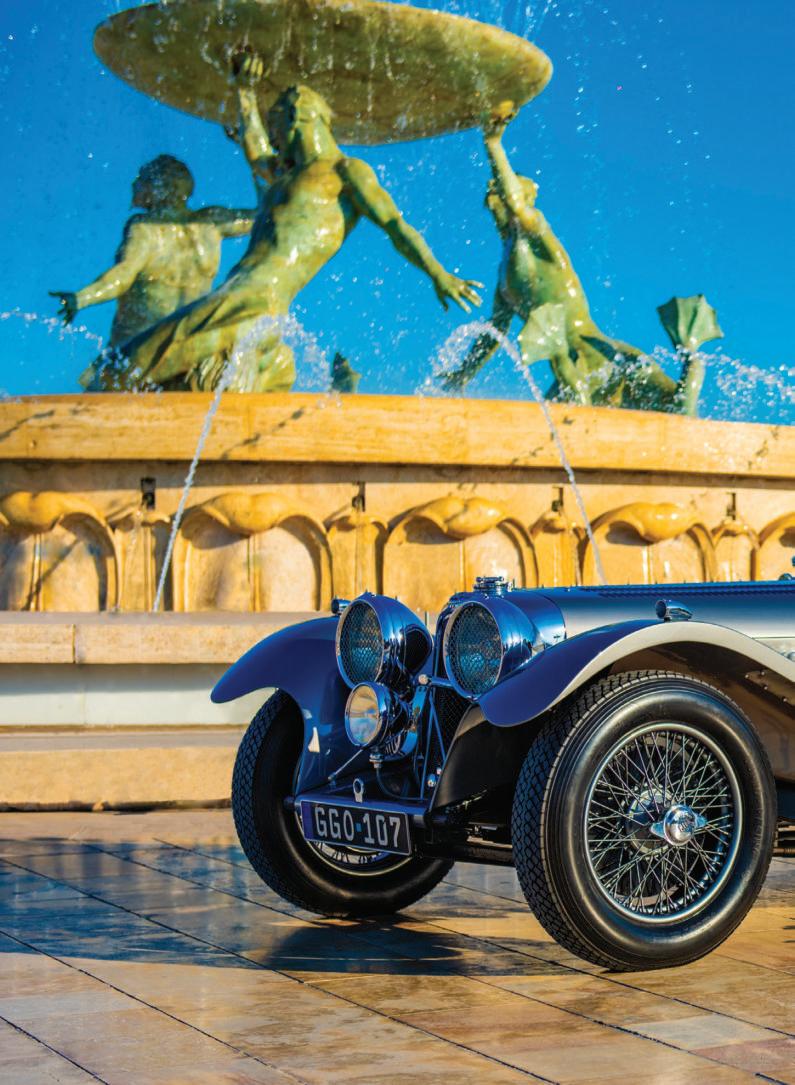
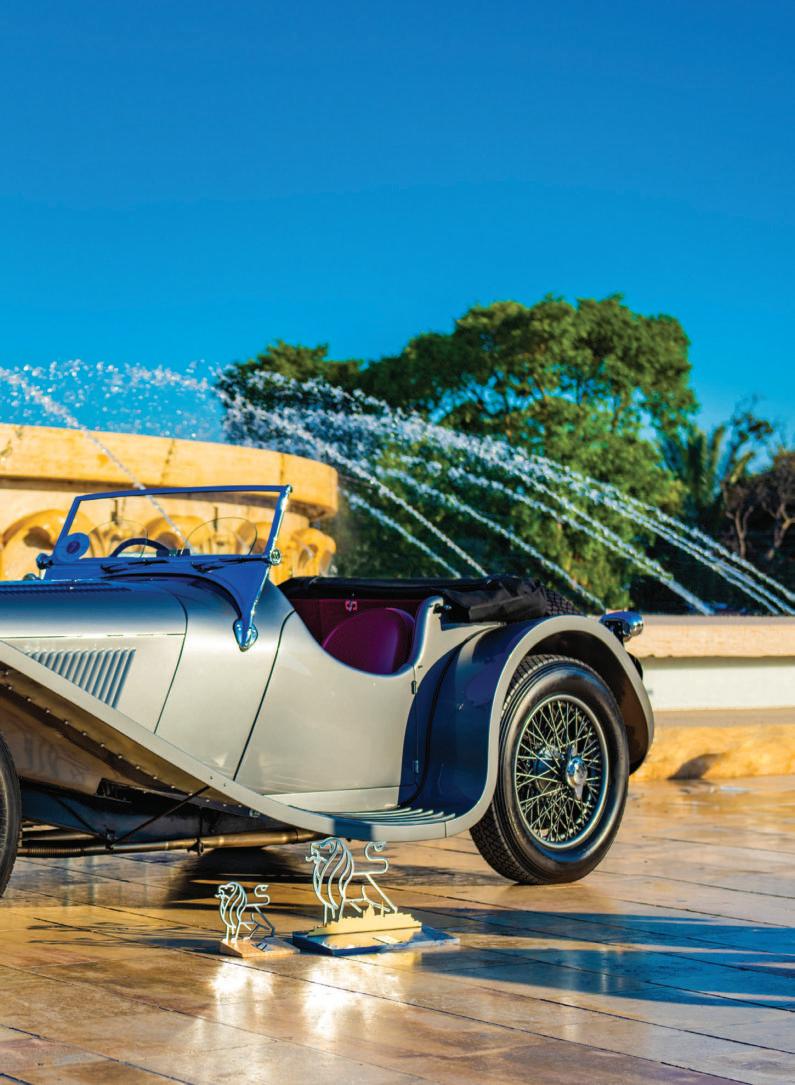
Overleaft: Best in Show, Valletta Concours 2026 - the breathtaking 1939 Jaguar SS100 3.5 Litre Roadster, owned by Anthony Axisa. The car also secured first place in the Pre-War Class. Top and above: The runner-up for Best in Show was Alessandro Runco’s elegant 1968 Aston Martin DB6, also taking top honors in the Touring Superleggera Class. Judging has always been a source of pride for the organizers, who regularly bring in professional international jurors to Valletta. Their involvement has attracted cars with world-class restorations, and the impressive results could be seen all around the square. Below: The 2026 Valletta Concours brought classic motoring to Triton Square with a line up that drew enthusiasts and visitors throughout the day.
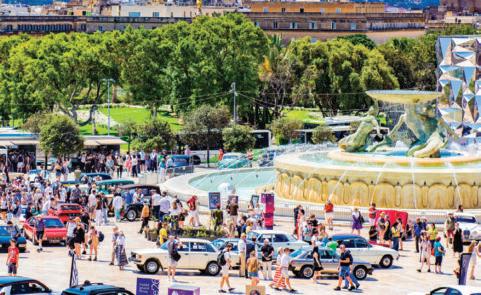
The Valletta Concours returned on 24th May with a shift in setting that subtly altered the character of the event. Triton Square, with its broad expanse and the sculptural presence of the Triton Fountain, offered a more open stage than the traditional backdrop of St George’s Square. The move created a sense of scale that suited the occasion, drawing thousands of visitors and welcoming entrants not only from Malta but also from the UK and Italy. For an event that has steadily grown in ambition, the new location felt like a natural progression.
This year’s edition brought together sixty vintage and classic cars and twelve motorcycles, each competing within its class for the top three places. Alongside the class awards, a series of distinctions added further texture to the competition: the First Time Participant Award, two Spirit of the Concours awards, and prizes supported by ENEMED, AX Hotels and Mercedes-Benz. Technical excellence was recognised through the Best Engine Compartment Award and the Best Restoration Award, while the Historic Car Award and Junior Judging Award broadened the scope of appreciation. The VBL Spirit of Valletta Award continued to highlight entries that capture the character of the city.
The 2026 edition also marked the centenary of Touring Superleggera, honoured through a dedicated class. Alessandra Giorgetti attended on behalf of the Italian coachbuilder to present a commemorative award, reinforcing the international connections the Concours has cultivated. ASI, Automoto Società Italiana, was represented by Fabio Berardi, who presented the ASI Award to an Italian marque, adding another layer of cross-border engagement.
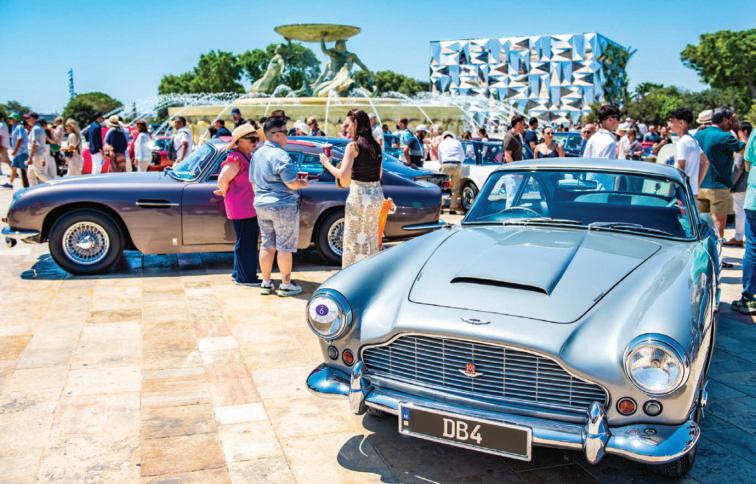
Judging has always been a source of pride for the organizers, who regularly bring in professional international jurors to Valletta. Their involvement has attracted cars with world-class restorations, and the impressive results could be seen all around the square. The addition of awards for restoration and engine presentation highlights the event’s dedication to craftsmanship and detail. These are values that truly resonate in the classic-car community.
CONCOURS D’ELEGANCE
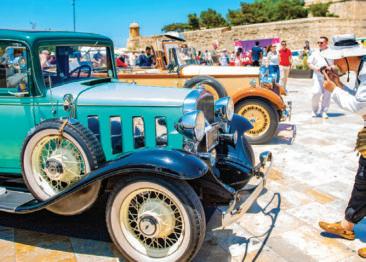
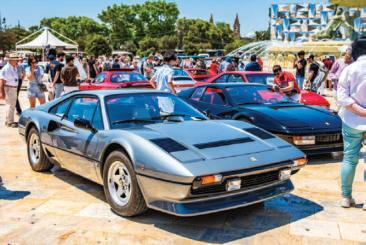
The Best in Show was awarded to Anthony Axisa’s 1939 Jaguar SS100, which also secured first place in the Pre-War Class. The runner-up for Best in Show was Alessandro Runco’s elegant 1968 Aston Martin DB6, also taking top honors in the Touring Superleggera Class. Beyond the automotive competition, the Concours continued its tradition of pairing motoring culture with the arts. Sixteen artists exhibited at the Chamber of Commerce throughout the week, while eight local and international artists took part in a live painting competition, won by Nathan Saliba. The Retro Clothing Competition, now firmly established, drew eighteen couples and added a touch of theatre to the day.
With the 2026 edition concluded, attention has already turned to next year. The 2027 Valletta Concours is scheduled for the weekend of 30th May, and applications are already open. Triton Square has set a new tone for the event, and the momentum suggests that the Concours will keep evolving while retaining its distinctive blend of style, heritage and Maltese character.
For more information www.vallettaconcours.com

This page: The Valletta Concours assembled cars from Malta, the UK and Italy, creating a refined showcase of design, engineering and restoration. Close-up views across the Concours revealed the precision and care behind this year’s entries.







FINANCIAL SECURITY & PENSION PLANNING

The Luxury Of Time
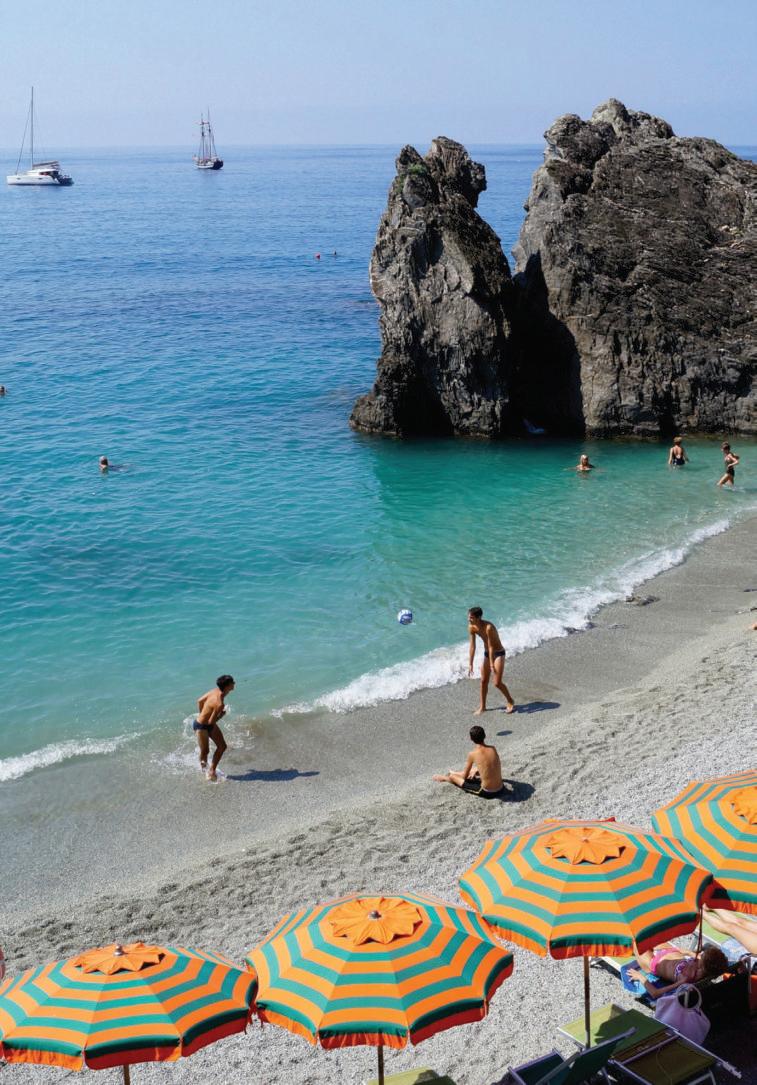
The early years of retirement often bring a surge in travel and longdelayed plans –a pattern known as the retirement spending smile. A balanced mix of pensions, investments and other assets helps ensure that income in later life supports these ambitions, with pension diversification providing a steadier foundation for the journeys ahead.

MONTEROSSO AL MARE, CINQUE TERRE. Photo Daniel Rickard.
“The correct lesson to learn from surprises is that the world is surprising. Not that we should use past surprises as a guide to future boundaries; that we should use past surprises as an admission that we have no idea what might happen next.”
MORGAN HOUSEL, THE PSYCHOLOGY OF MONEY
THE LONG VIEW –PLANNING FOR LIFE, MONEY AND TIME
INCOME STREAMS: BUILDING FINANCIAL SECURITY FROM MORE THAN ONE SOURCE
For most of the twentieth century, retirement income was pretty straightforward. People worked, paid into a pension throughout their careers, and then mainly lived off that pension once they stopped working. While the specifics varied, the basic idea stayed the same. But now, things look quite different. Longer lifespans, shifts in work patterns, and changing financial markets have sparked broader discussions about where future income will come from and how secure it will be over time.
Diversification. One of the most important lessons that can be taken from wealth management. It’s a concept often linked to investment portfolios, where spreading money across different assets helps reduce the risk tied to any single one. The same idea works for income too. Instead of relying solely on one source, many financial planners suggest creating multiple income streams that can back each other up through the different phases of life. This approach is not necessarily about accumulating great wealth. It is about creating resilience. When earnings come from different sources, unexpected events carry less weight. A change in laws, a market downturn, rising costs or personal challenges may disrupt one stream while others continue. Diversification cannot remove risk, but it can stop a single setback from becoming a serious financial problem, the essence of income resilience.
In Malta, the state pension remains central to retirement planning, offering stability and forming a major part of many people’s future income. Yet most financial specialists agree it is unlikely to fully sustain pre-retirement living standards on its own. This pressure is not unique to Malta. Across Europe and beyond, longer lifespans and lower birth rates are straining pension systems, prompting more people to take an active role in shaping their retirement income. Private pensions offer one route, allowing individuals to build additional savings with tax advantages and flexible contributions. Starting earlier means more time for growth through compounding and investment gains.
Pensions are just one piece of the bigger financial puzzle. Retirement planning increasingly involves a mix of investments that can strengthen future income. Alongside pensions, people often look to stocks, bonds, funds and property, each offering different levels of risk and potential return. Dividend- paying shares remain popular with those seeking both growth and steady payouts; when reinvested over time, these dividends can significantly enhance longterm returns and later provide an additional income stream, a principle central to dividend investing. Property has traditionally occupied a prominent place in
the financial thinking of many Maltese families. Rental income can support long term retirement goals, especially in strong locations, though ownership brings responsibilities such as maintenance, taxes and occasional vacancies. As with any investment, success depends on realistic expectations and a balanced approach.
The American investor Warren Buffett once said: "Never depend on a single income. Make an investment to create a second source." The big takeaway is that no income source works on its own. Each has its pros and cons. State pensions are steady but might not cover every future need. Private pensions can boost your income but depend on what you put in and how investments perform. Property can bring in money but needs regular upkeep. Investments can offer growth and flexibility, but they also go through ups and downs.
Building multiple income streams usually happens gradually. Small, consistent decisions, contributing to a pension, maintaining a savings habit, investing regularly, or acquiring income-producing assets, may seem modest individually, but over time they create a stronger financial base.
Morgan Housel explores this idea in The Psychology of Money. “The truth is that wealth is what you don’t see. Wealth is the nice cars not purchased. The diamonds not bought. The watches not worn, the clothes forgone and the first-class upgrade declined. Wealth is financial assets that haven’t yet been converted into the stuff you see.” His argument draws a distinction between income and longterm security. Earning more does not automatically create stability; what matters is the ability to turn income into resources that endure.
Ultimately, retirement planning is about balancing uncertainty across several sources of income. A mix of pensions, investments, property and other assets creates a more reliable foundation than any single stream could provide.
SUGGESTED READING: The Psychology of Money: Timeless Lessons on Wealth, Greed, and Happiness by Morgan Housel, The Intelligent Investor by Benjamin Graham, and The Warren Buffett Way by Robert G. Hagstrom.
COMPOUNDING, DIVERSIFICATION AND LONG-TERM INVESTING
BUILDING A SECURE RETIREMENT STARTS WITH
SMART INVESTING TODAY
The difference between a comfortable retirement and a stressful one often comes down to one decision: whether you start investing early and stick with it, writes Ray Calleja, Head of Wealth Management at MeDirect Bank (Malta) plc.
Planning for retirement is one of the most important financial journeys anyone can undertake, and it requires a long-term mindset built around consistency, discipline and informed decision-making. While traditional pension schemes can play a role, taking a more active approach to investing can significantly enhance your financial security in later life. At MeDirect Bank Malta, a wide range of investment solutions are available to help individuals build and grow their wealth steadily over time, providing the flexibility and control needed to support longterm financial goals.
A key principle of successful investing is the power of compounding, which allows your money to grow not only from the returns you earn but also from the returns generated on those gains over time. This means that starting early, even with modest amounts, can make a meaningful difference to your future wealth. Time is a powerful ally in investing, and the longer your money remains invested, the more opportunity it has to grow. This is why it is far more effective to focus on time in the market rather than trying to time the market. Attempting to predict short-term movements is notoriously difficult and can result in missed opportunities, whereas staying invested through market cycles allows you to benefit from long-term growth trends.
Equally important is diversification, which involves spreading investments across different asset classes to reduce risk and improve the resilience of your portfolio. By combining equities, bonds, ETFs and mutual funds, investors can balance growth potential with stability, ensuring that their portfolio is better positioned to weather market fluctuations. MeDirect provides access to all these instruments, allowing investors to construct portfolios that reflect their risk appetite and investment objectives while taking advantage of opportunities across global markets.
For those who prefer a more guided approach, MeDirect offers solutions such as MeManaged and Model Portfolios, designed to simplify the investment process while maintaining a strong focus on long-term performance. These options are built on sound investment principles and provide a structured way to stay on track without the need to constantly monitor or adjust your holdings. At the same time, investors who wish to take a more hands on approach can choose from a wide universe of investments and build their own tailored strategies.
Managing investments has also never been more accessible. MeDirect’s digital platform and mobile app are designed to make investing straightforward and intuitive, giving you the ability to monitor your portfolio, make adjustments and stay informed wherever you are. Combined with a simpler and more competitive pricing structure, investing is now more approachable, helping you keep more of your returns over the long term.
While technology plays a key role in empowering investors, personal guidance remains an important part of the journey. MeDirect clients can always speak to an advisor for support and insights, ensuring that decisions are aligned with individual goals and circumstances. Building financial security for retirement is not about quick wins, but about making informed, consistent choices over time. With the right tools, access to diversified investments and a clear long-term strategy, MeDirect is here to support all our customers in creating a more secure and confident financial future. The sooner you act and the longer you stay invested, the more you let time do the heavy liftingturning today’s decisions into tomorrow’s financial freedom.

“A key principle of successful investing is the power of compounding, which allows your money to grow not only from the returns you earn but also from the returns generated on those gains over time. This means that starting early, even with modest amounts, can make a meaningful difference to your future wealth,” says Ray Calleja, Head of Wealth Management at MeDirect Bank (Malta) plc.
When investing you may lose some or all the money you invest. The value of your investment may go down, as well as up. Any income you get from this investment may go down, as well as up. A commission or sales fee may be charged when trading in these securities.
Any decision to invest in funds should always be based upon the details contained in the Prospectus and Key Information Document (KID), which may be obtained from the Distributor.
When investing in bonds, please consider the terms and conditions governing the relevant investment prior to making any investment decision. Investors should note that at worst they may lose all their invested principal in the event of default, insolvency and/or bankruptcy of the relevant issuer.
MeDirect Bank (Malta) plc, company registration number C34125, is regulated by the Malta Financial Services Authority and is licensed to undertake the business of investment services under the Investment Services Act (Cap. 370).
MeDirect Bank (Malta) plc, The Centre, Tigné Point, Sliema, TPO 0001, Malta.








TEXTURES, TECHNOLOGIES AND EXPERT ADVICE SHAPING SPF
SUN AND SKIN
The new generation of sunscreens blends cosmetic elegance with serious protection, reflecting a shift in how we approach sun exposure. Expert recommendations from the Skin Cancer Foundation underline why SPF has become a daily discipline rather than a seasonal habit, and an essential part of a polished routine.

Sunscreen has entered a new era. Once just a summer accessory that you threw at the bottom of your beach bag, it’s now a daily essential for anyone serious about their skin and skin health. In Malta, each summer bringsin a familiar scene of lively terraces, poolside life and bustling beach clubs. But the question remains: are people applying SPF, and doing it right? Dermatologists have stressed the value of broad-spectrum protection for years, and more people are finally making it part of their routine. And today it’s no longer only about shielding from the sun. The appeal is no longer just preventative. Today’s SPF blends seamlessly into luxury skincare, with textures and finishes rivaling high-end serums.
Today, when it comes to SPF, we have more choice than ever before, with clear gels, sticks, powders and sprays designed to suit different preferences and routines. The bottom line is simple however: the best sunscreen is the one you’ll use generously and consistently. Photo Raul Guilherme.

Formulations have become more sophisticated, driven by research and the demands of a market that expects efficacy without compromise. Hybrid products are everywhere, merging sunscreen with active skincare powerhouses such as vitamin C, niacinamide and hyaluronic acid to protect while boosting radiance, hydration, and barrier strength. Lightweight, fluid textures have taken over from the heavy, chalky creams of the past, with gels and silky emulsions that vanish on the skin and layer perfectly under makeup.
Tinted SPFs are also on the rise, offering a natural, even finish that can replace foundation. For blue light and pigmentation control, many formulas now feature iron oxides and brightening agents to protect against high-energy visible (HEV) light, helping to address hyperpigmentation and melasma. Iron oxides in particular are valued for shielding skin from HEV light, a growing concern for those prone to pigmentation issues.
The Skin Cancer Foundation (skincancer.org) is a trusted source for sun safety advice, and its message is straightforward. According to their article Ask the Expert: How Much Sunscreen Should I Be Using on My Face and Body?, “Most people don’t apply enough sunscreen, which is why undesirable sunburns and tanning can occur despite sunscreen application.” To achieve the level of protection stated on the bottle, the Foundation advises using “approximately two milligrams of sunscreen per square centimetre of skin,” which translates to a shot-glass amount for the body and half a teaspoon for the face. Sprays should be applied until an even sheen appears. Reapplication every two hours is essential, and more often after swimming, perspiring or towelling off.
Ultimately, we currently have more choice than ever, with clear gels, sticks, powders and sprays designed to suit different preferences and routines. The bottom line is simple: the best sunscreen is the one you’ll use generously and consistently. “No matter how much sunscreen you apply, the SPF should be 30 or higher for adequate protectionand ideally 50 or higher for extended time spent outdoors. Be sure your sunscreen says ‘broad spectrum‘on the label, which means the product protects against UVA and UVB rays”, writes the Skin Cancer Foundation.
Alongside sunscreen, dermatologists also stress other sun-smart habits: finding shade, wearing protective clothing, choosing wide-brimmed hats, and using UV-blocking sunglasses. These measures work together, forming a practical approach to safeguarding the skin in Maltawhere the summer (and winter) sun is both a pleasure and a constant presence.
“No matter how much sunscreen you apply, the SPF should be 30 or higher for adequate protection –and ideally 50 or higher for extended time spent outdoors. Be sure your sunscreen says 'broad spectrum' on the label, which means the product protects against UVA and UVB rays”, writes the Skin Cancer Foundation. Photo Zana PQ.










87% PLUMPER SKIN* Apply dailyBefore makeup



ENVIRONMENT
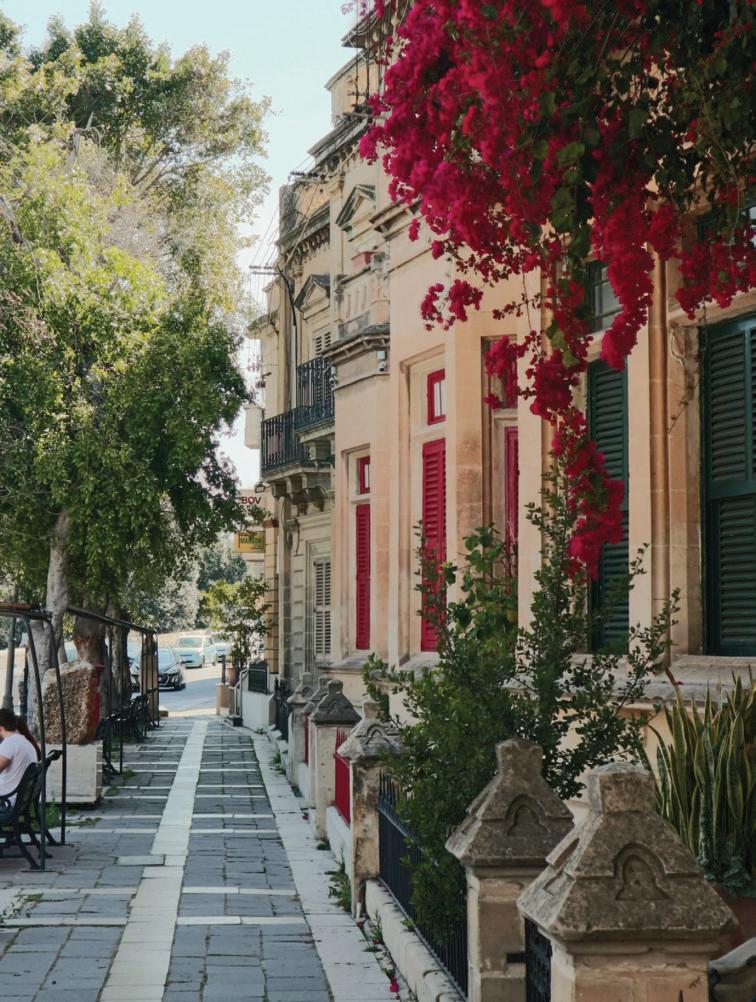
DESIGNING FOR HEAT: THE GREEN SHIFT CITIES NEED. The shade of trees and the spill of bougainvillea across façades show how greenery can transform the experience of summer. World Environment Day –5th June, reminds us that planting matters. Trees and climbers cool interiors, soften hard surfaces and help counter the urban heat island effect. Their shade and natural evaporative cooling can lower temperatures indoors and out, making homes more comfortable and neighbourhoods more resilient as heatwaves intensify. RABAT, MALTA. PHOTO YEVHENIIA.
THE SUMMER SHADE EDIT
THE COOL BEAUTY OF A GREENER CITY
TO KEEP YOUR COOL IN A HEATWAVE, IT MAY HELP TO WATER YOUR TREES. Heatwaves are among the world’s deadliest weather hazards. Every year, vast numbers of people are killed by heat stress and it can worsen health problems such as diabetes, asthma and heart disease. Unfortunately, the bitumen roads, brick and concrete structures and roofing tiles in cities can absorb and retain vast amounts of heat, much of which is released after the sun has set. This creates what’s known as the urban heat island effect. In fact, temperatures can be significantly higher in cities than in surrounding or rural areas. Trees and greenspace can drive down urban temperatures - but they must be able to draw water from the soil to achieve these massive cooling effects. In other words, it can sometimes be helpful to water your trees during a heatwave, writes Gregory Moore, Senior Research Associate, School of Agriculture, Food and Ecosystem Sciences, The University of Melbourne.
Trees reduce urban temperatures in two significant ways. One is by the shade they provides and the other is through their cooling effect - and no, they’re not the same thing. Water is taken up via a plant’s roots, moves through the stems or trunks and is then misted into the air from the leaves through little holes called stomata. This is called transpiration, and it helps cool the air around leaves.
Water can also evaporate from soil and other surfaces. The combined loss of water from plants and soil is called evapotranspiration. The cooling effects of evapotranspiration vary but are up to 4°C, depending on other environmental factors.
If heatwaves occur in generally hot, dry weather, then trees will provide shade - but some may struggle with transpiration if the soil is too dry. This can reduce the cooling effect of trees. Keeping soil moist and plants irrigated, however, can change that.
The best time to irrigate is early in the morning, as the water is less likely to evaporate quickly before transpiration can occur. You don’t need to do a deep water; most absorbing roots are close to the surface, so a bit of brief irrigation will often do the trick. You could also recycle water from your shower. Using mulch helps trap the water in the soil, giving the roots time to absorb it before it evaporates.
All transpiring plants have a cooling effect on the air surrounding them, so you might wonder if trees have anything special to offer in terms of the urban heat island effect and heatwaves. Their great size means that they
provide much larger areas of shade than other plants and if they are transpiring then there are greater cooling effects. The surface area of tree leaves, which is crucial to the evaporative cooling that takes place on their surfaces, is also much greater than many other plants.
Another advantage is that trees can be very long lived. They provide shade, cooling and other benefits over a very long time and at relatively low cost.
All that said, I don’t want to overstate the role of urban trees in heatwaves when soils are dry. Some trees cease transpiring early as soils dry, but others will persist until they wilt. Careful tree selection can help maximise the cooling effects of the urban forest. Trees that suit the local soil and can cope with some drying while maintaining transpiration can provide greater cooling.
Despite the clear benefits trees can provide in curbing heat, tree numbers and canopy cover are declining annually in many cities and towns. Housing development still occurs without proper consideration of how trees and greenspace improve residents’ quality of life. It is not an either/or argument. With proper planning, you can have both new housing and good tree canopy cover. We should also be cautious of over-pruning urban trees.
Trees cannot eliminate the effects of a heatwave but can mitigate some of them. Anything that we can do to mitigate the urban heat island effect and keep our cities and towns cooler will reduce heat-related illness and associated medical costs.
THIS ARTICLE FIRST APPEARED ON THE CONVERSATION.
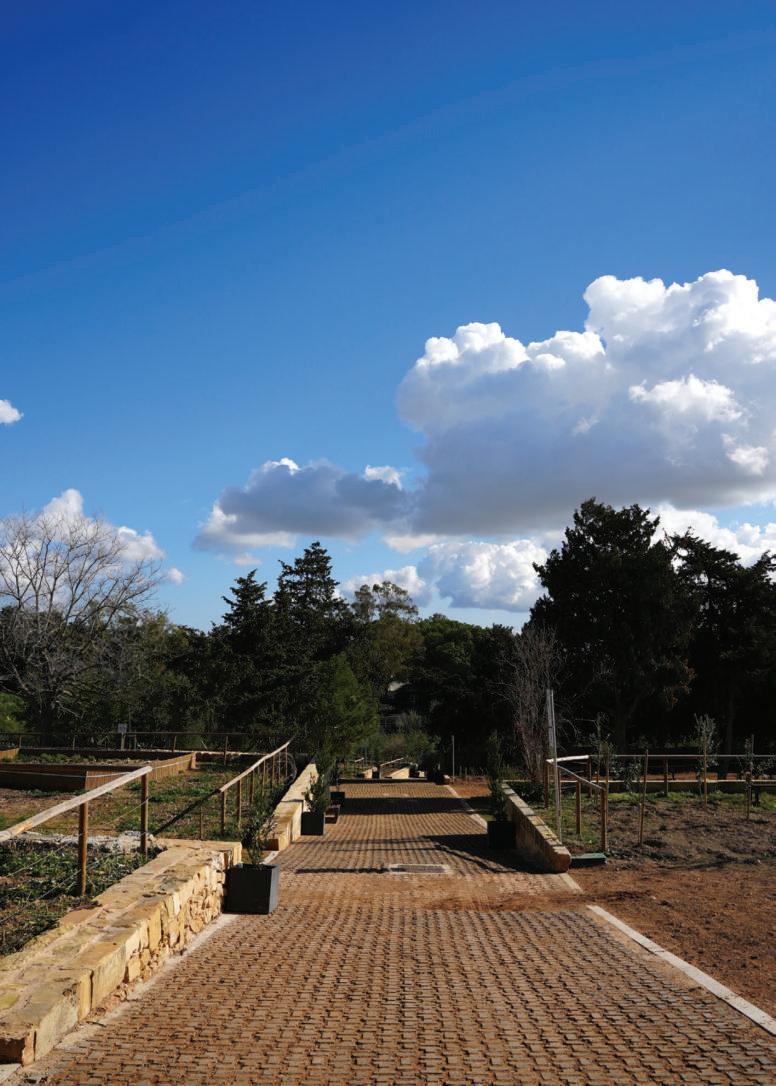


WIED INCITA PARK
A GREEN HAVEN FOR THE WHOLE FAMILY
Wied Inċita Park marks a major step in Malta’s commitment to restoring natural spaces for public enjoyment. Once inaccessible, this 20,000squaremetre valley has been transformed into a family friendly green haven, writes the team at Ambjent Malta. Photography courtesy Ambjent Malta.

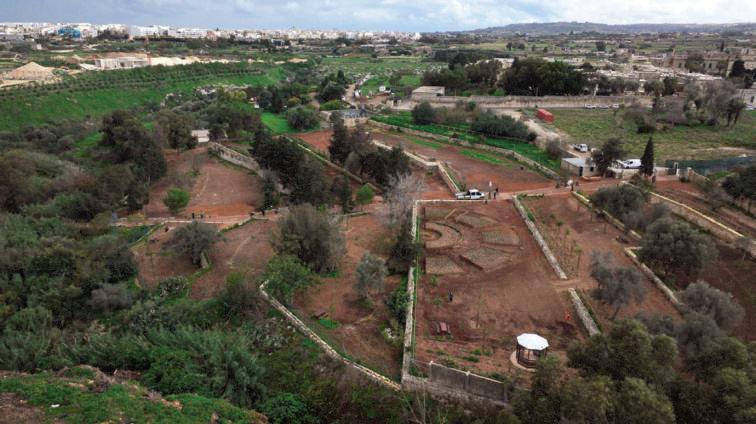
The opening of Wied Inċita, a 20,000 square metre public park in December 2024, marked a significant milestone in Malta’s ongoing investment in providing accessible green spaces. Wied Inċita Park, a project led by Ambjent Malta, represents the first phase of a larger environmental initiative aimed at returning natural areas to the public for enjoyment.
For years, the Wied Inċita site had been inaccessible to the public, in view that this was allocated to a consortium in 2002 for the management of landscaping. However, 20,000 square metres of this land has been restored and returned to the community. This space serves as a park for all ages and a family friendly location, offering a blend of nature, recreation, and educational value.
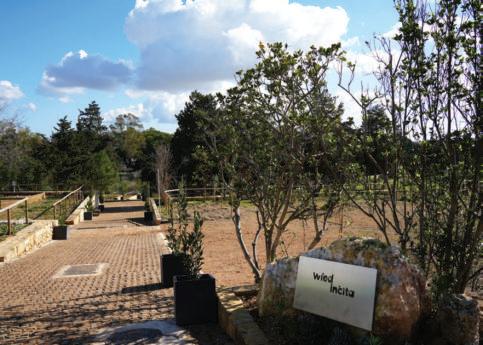
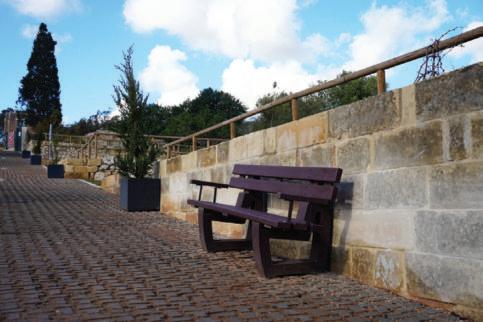
The key features of this area include: reconstructed pathways, which are safe, and accessible; picnic areas with benches and two gazebos, which are ideal for family outings; tree rich landscapes with various planted trees and shrubs, all of which are supported by a modern irrigation system; and educational opportunities which are highlighted by school participation through various activities, thus encouraging environmental awareness among children.
At its core, the transformation of this space is all about environmental restoration. The intervention in this space involved extensive environmental rehabilitation, including the removal of waste and debris, the restoration of traditional rubble walls, the installation of sustainable rainwater drainage systems and the creation of shaded rest areas and open recreational zones. These efforts ensure that the park is not only beautiful but also ecologically resilient, especially during Malta’s hot summer months.
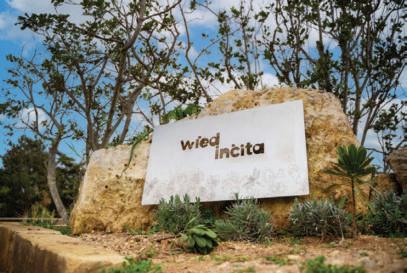
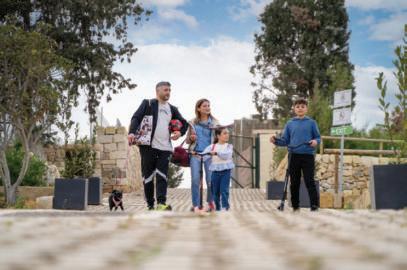
Facing page: A new public landscape. Reconstructed paths, shaded areas and native planting shape a park designed for all ages. Above: Wied Inċita from above. The scale of the restored space comes into view, revealing pathways, planting and open recreational zones. Below: Wied Inċita restored. A once inaccessible valley reopened as a calm, community centred green space. Bottom: A space for everyone. Families enjoy a safe, open environment designed to encourage outdoor activity and connection with nature
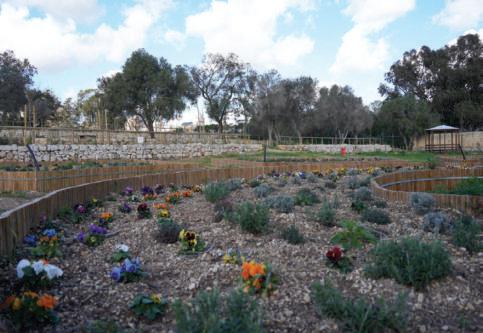
To complement this already open space, Ambjent Malta has been working to further expand this Park with an additional 7,000 square metres, which is aimed at scaling up both local biodiversity and environmental community infrastructure. This phase introduces further greening through the planting of various trees and shrubs, the setting up of an irrigation system, the creation of footpaths, restored traditional rubble walls, a water feature, shading structures, public sanitary facilities and lightweight shading structures.
Such a project is pivotal in restoring a contiguous green footprint and biodiversity corridors, since they provide crucial food and shelter for native pollinators, birds, and microfauna. Structurally, using permeable paving and restoring traditional rubble walls prevents soil erosion while maintaining soil health and subterranean biodiversity.
This expansion directly enhances local well-being by providing accessible green space that serves as a multigenerational community hub. Collectively, this space offers a peaceful retreat aimed at reducing stress, enjoying a healthier lifestyle and creating a significant environment for nearby families.
The Wied Inċita project directly executes Ambjent Malta’s core mission to restore and enhance green infrastructure and improve public wellbeing. The project mandates Ambjent Malta’s undertaking for boosting local biodiversity through afforestation. It focuses on restoring sustainable resource management and climate resilience, ultimately creating a multigenerational, eco-friendly community hub that successfully bridges environmental conservation with public health.
Wied Inċita Park is more than a green space, it is a community asset designed to promote wellbeing, outdoor activity, and environmental appreciation. Families can enjoy safe walking routes, children can explore nature, and visitors of all ages can relax in a peaceful valley setting that was previously not accessible.
Whether for a quiet morning walk, a weekend picnic, or an educational outing, the park offers something for everyone. Its opening marks a meaningful step toward a greener, more accessible Malta.
Keep up with Ambjent Malta’s conservation work, further updates on upcoming interventions and extensions at Wied Inċita and get involved in public activities organised by the Department by following Ambjent Malta’s Facebook and Instagram pages.
Top: Green space returned. Twenty thousand square metres of natural terrain brought back into public use.
Above: New planting in bloom. Shrubs and seasonal flowers support local biodiversity and soften the park’s restored landscape. Below: A place to pause. Seating areas offer quiet moments along the park’s accessible walking routes.













VOLUNTEER CENTRES





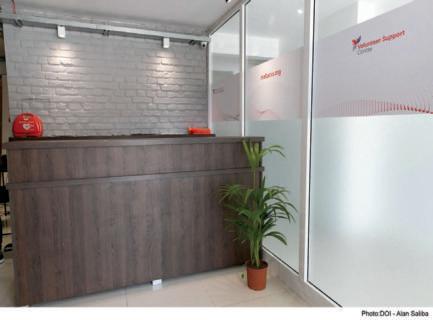








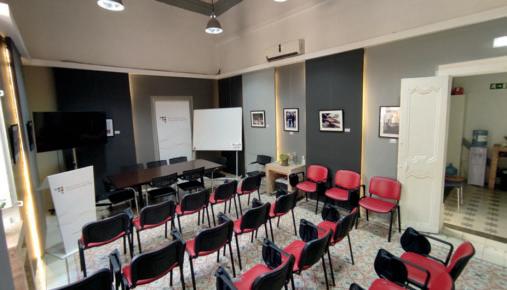
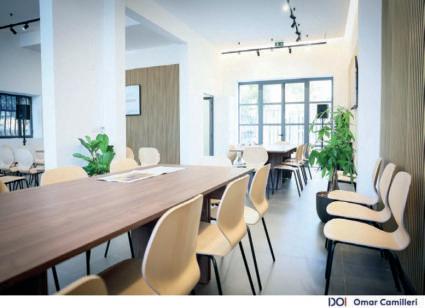






The Malta Council for the Voluntary Sector (MCVS) Volunteer Centres provide spaces and facilities where voluntary organisations can operate, hold seminars, meetings, and organise a myriad of other activities.



Malta Council for the Voluntary Sector
Volunteer Centre, 181, Melita Street, Valletta, VLT 1129, Malta
Tel: +(356) 2248 1110
Book a centre now through maltacvs.org.

Valletta Birkirkara Rabat Paola Xewkija, Gozo

ERA AND TEATRU MANOEL ON BRINGING ENVIRONMENTAL
BEE HAPPY. WHY BEES, CHILDREN, AND A GARDEN IN MARSA MATTER
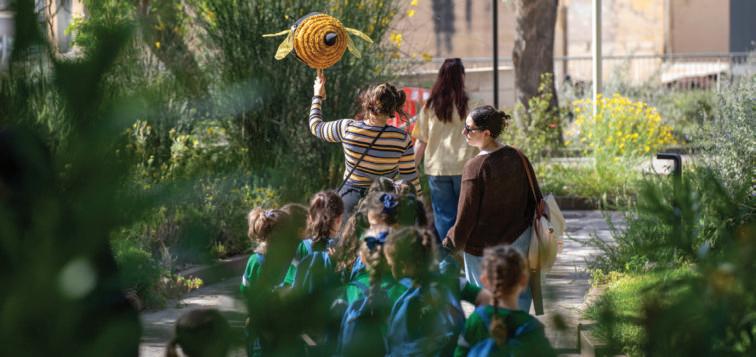
Ask any primary school teacher and they will tell you the same thing: the most memorable lessons are those that children experience. Not the ones they copy from a board or tick in a workbook, but the ones that make them laugh, or sit upright because something just clicked. That instinct was behind Bee Happy, a joint production by the Environment and Resources Authority (ERA) and Teatru Manoel that brought over 280 children aged four to six to Spencer Garden in Marsa across three days in early April. Photography courtesy ERA.
The idea was straightforward enough: take a subject that matters deeply - the role of bees and pollinators in keeping our ecosystems alive, and present it in a way that a reception-class child can actually absorb. Not a pamphlet. Not a classroom visit. A proper piece of theatre, performed outdoors, in a real garden, where the connection between story and setting was impossible to miss.
Pollinators are responsible for the reproduction of the vast majority of the world's flowering plants, including much of the food we eat. Lose them, and the knockon effects ripple across entire food chains. Pressures such as habitat loss, pesticide use and climate pressures are a real-world concern and while policy and science are essential to minimise impacts education is essential, especially from a young age.
That is where Teatru Manoel came in. Its TOI TOI programme has built a reputation on reaching young audiences in ways that stick, and Bee Happy was no exception.
The production, headed by Faye Mallia and brought to life by puppets from Theatre Anon, was interactive, joyful, and deliberately crafted for its age group, pitched at children who are still discovering nature. Staging it at Spencer Garden rather
than indoors was a smart decision. When you are sitting in a green space talking about why nature needs protecting, the message has a different weight.
What this collaboration gets right is something that often gets lost in environmental communication: the emotional element. Facts about pollinators are important. But a four-year-old who has just watched a bee character they rooted for, navigate a world of flowers and threats is carrying something richer than a fact. They are carrying a feeling, and feelings, as any good teacher knows, are where longlasting habits begin.
ERA and Teatru Manoel have shown that an environmental authority and a national theatre have more potential to collaborate than first appears. One brings rigour and purpose; the other brings imagination and reach. Together, they gave 280 children an afternoon in a garden that they will probably remember long after the worksheets have been forgotten. That is not a small thing. It is the kind of experience that helps environmental awareness develop at an early age and last.


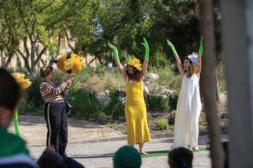
ERA and Teatru Manoel’s Bee Happy, an immersive experience for young audiences, introduced 280 children to the world of pollinators at Spencer Garden in Marsa. Bee Happy used puppetry, performance and the garden setting to spark early environmental awareness.

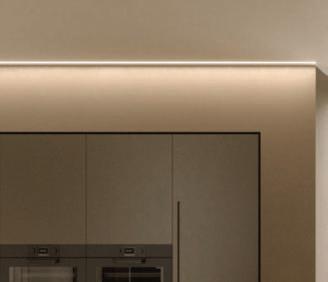
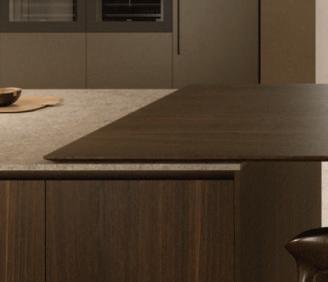


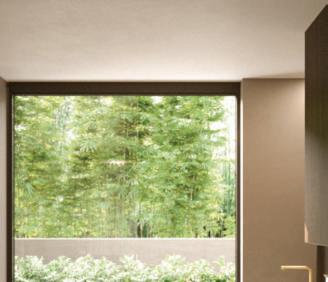



A Fantastical Carriage for Modern Times
The British Pullman enters a new creative chapter with Celia,a cinematic private dining carriage
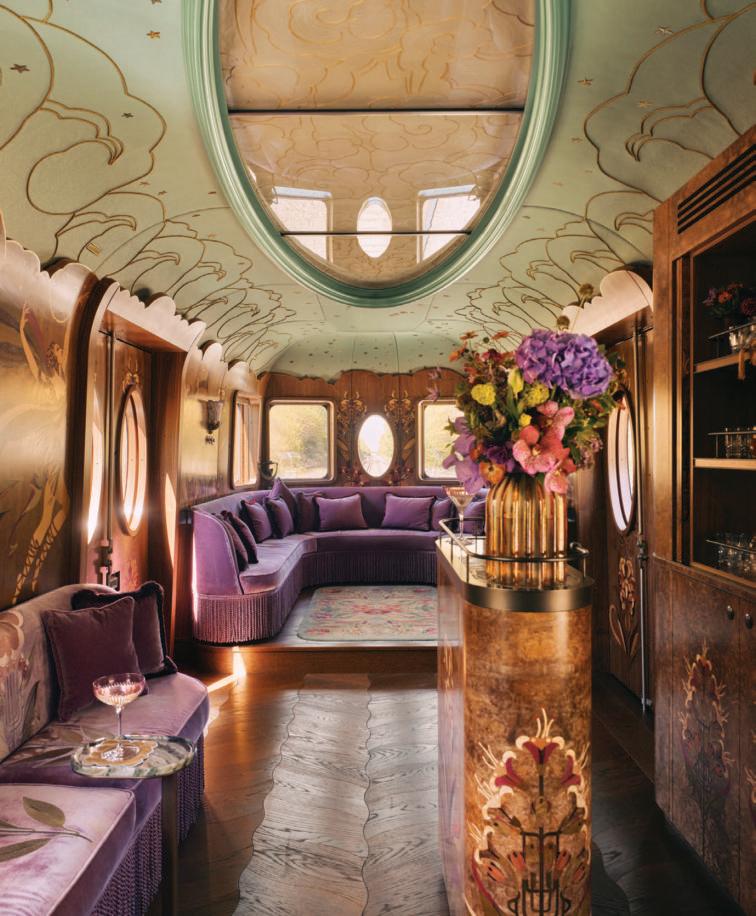
A hundred years after its Art Deco carriages first rolled across Britain, the British Pullman, A Belmond Train, England, still captures the magic of luxury rail travel. This season marks a new chapter with Celia, a beautifully designed private dining carriage dreamed up by visionary filmmaker Baz Luhrmann and Oscar-winning costume and production designer Catherine Martin, blending cinematic style with bespoke gastronomy to elevate the timeless charm of heritage rail journeys.
Photography courtesy Belmond.
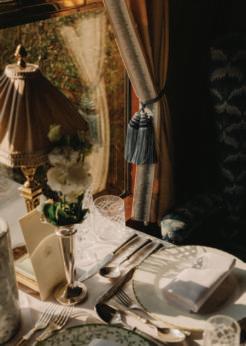
The British Pullman, A Belmond Train, England, has always held a special charm for travelers. With its gleaming marquetry, rich wood veneers, and Art Deco lamps, it evokes an era when rail journeys unfolded at a civilised pace and the ritual of dining on board was as anticipated as the destination itself. These 1920s and ’30s carriages once carried royalty, film stars and statesmen across Britain, and their stories remain embedded in the details: the Queen Mother’s preferred seat, the original Pullman Training School traditions still upheld by stewards, and the marquetry restored by the same family who crafted it nearly a century ago. Today, the train departs from London Victoria for excursions to Bath, Oxford, Canterbury, and England’s grand houses, its pace unchanged, its atmosphere set by the warm glow of table lamps and the graceful choreography of service.
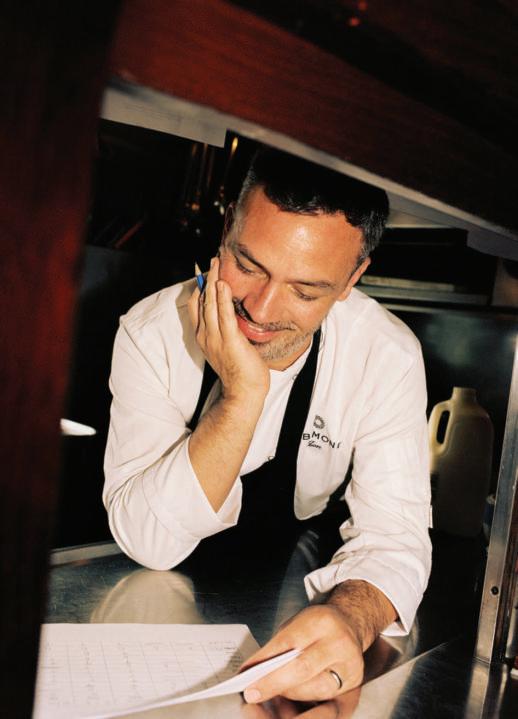
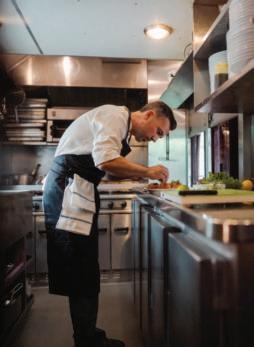
Previous page: Celia Lounge aboard the British Pullman, A Belmond Train, England. Photo Ludovic Balay. Above and far left: Head Chef Jon Freeman. Photos Pia Riverola (above) andJason Alfred-Palmer (far left) Left: With its gleaming marquetry, rich wood veneers, and Art Deco lamps, the British Pullman, A Belmond Train, England evokes an era when rail journeys unfolded at a civilised pace and the ritual of dining on board was as anticipated as the destination itself. Photo Mark Fox















































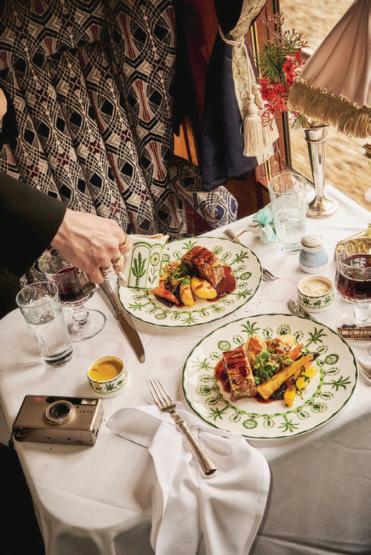
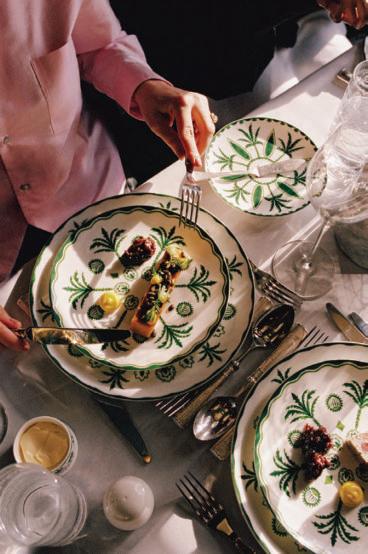
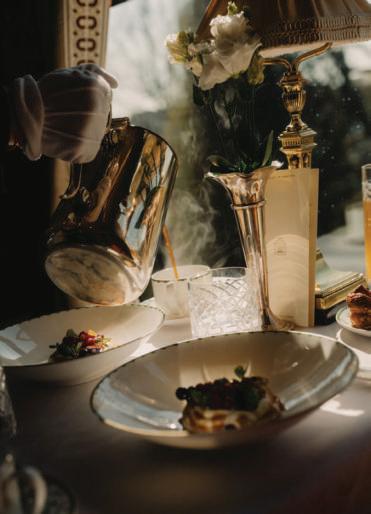
Dining has always been central to the experience. Head Chef Jon Freeman, who joined the train almost twenty years ago, works with the constraints and pleasures of cooking in motion, drawing inspiration from the landscapes the train passes through. His menus celebrate British produce with a contemporary sensibility, and the kitchen regularly welcomes Michelin-starred chefs for collaborative dinners. Champagne afternoon teas, seasonal lunches and celebratory journeys have become part of the Pullman’s identity, each one anchored in the pleasure of eating well while the countryside slips by.
This page: Dining on the British Pullman is pure luxury, with beautifully prepared dishes served by attentive stewards in full livery. Each menu is thoughtfully created using the freshest seasonal ingredients. (Above left) Photo Charlie McKay. (Above right) Photo Anna Jay. (Left) Photo Mark Fox.

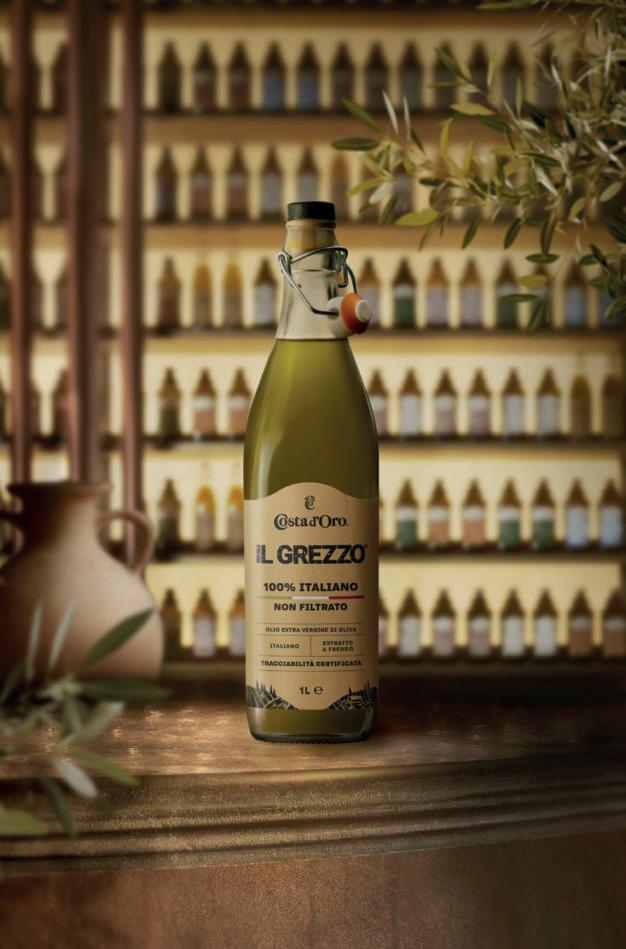
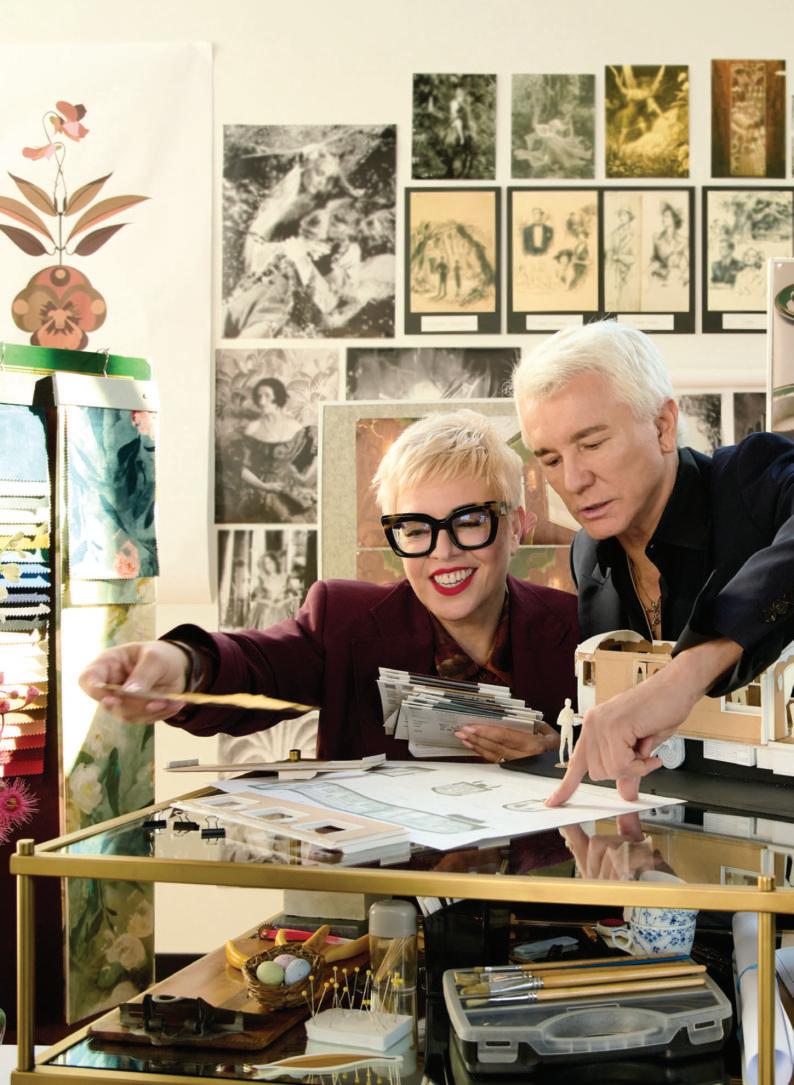
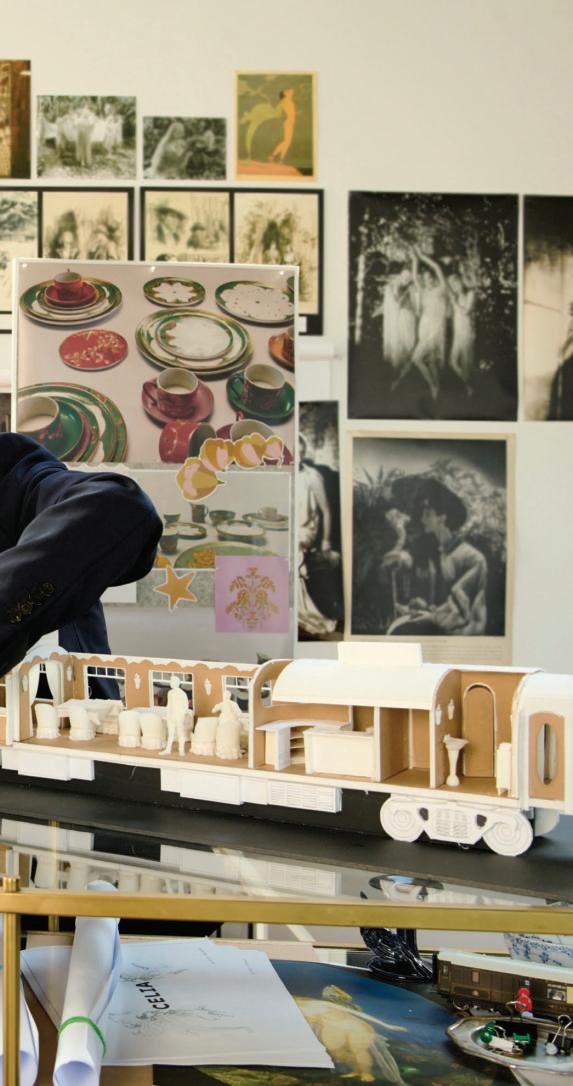
This spring, the train entered a new chapter with the arrival of Celia, a private dining and events carriage imagined by Baz Luhrmann and Catherine Martin. Conceived as a selfcontained world within the British Pullman, Celia introduces a cinematic layer to the train’s historic fabric, in a space where gastronomy, theatre and design converge. The carriage launched in May and now joins the roster of experiences available on board, offering a setting for intimate celebrations, performances and bespoke dining for up to twelve guests. It is the most ambitious addition to the train in decades, and its unveiling marks a shift towards highly personalised journeys shaped around individual tastes and occasions, a direction explored in bespoke travel design.
This page: Baz Luhrmann and Catherine Martin. Photo Hugh Stewart.
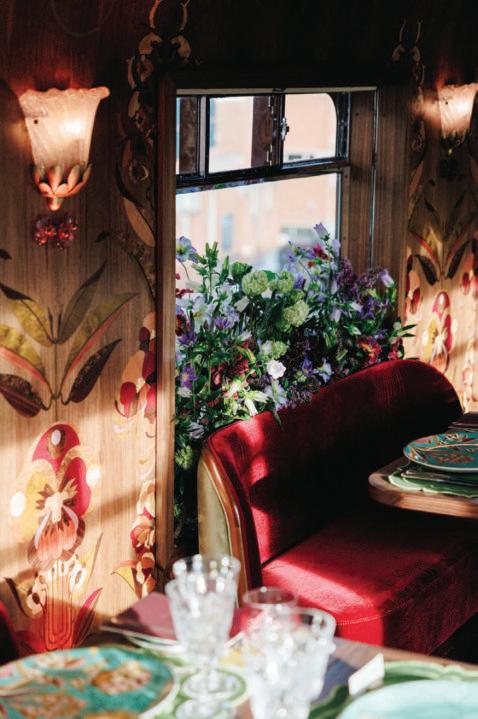
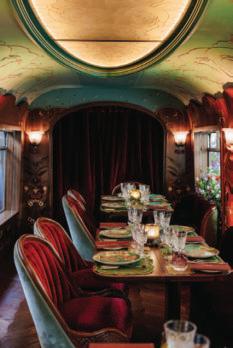
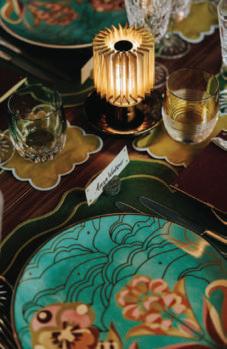
Luhrmann and Martin’s starting point was a fictional muse: Celia, a 1930s West End actress whose defining role was Titania, Queen of the Fairies, in A Midsummer Night's Dream.. The designers imagined that she had been gifted her own Pullman carriage in 1932, and the interiors unfold as a narrative of her life, influences and theatrical world. The result is richly layered, drawing on Shakespeare, English folklore and the landscapes the train traverses. Two sweeping velvet curtains divide the carriage into acts, revealing each space in sequence. The bar lounge opens the experience with parquet floors, patterned walls and fairylike motifs, followed by a snug lined with jewel-coloured textiles and a velvet sofa that curves beneath a cascade of cushions. The dining room continues the story through marquetry panels depicting pastoral scenes, pansies and woodland imagery, echoing the flower pressed into Titania’s ear in Shakespeare’s play.
Above and right: Drawing inspiration from the British countryside, Shakespeare, and the extravagant and flamboyant flair characteristic of a Baz Luhrmann film set, the design concept of Celia follows the narrative of the Australian director’s fictional muse Celia. Photography SAMLORT.

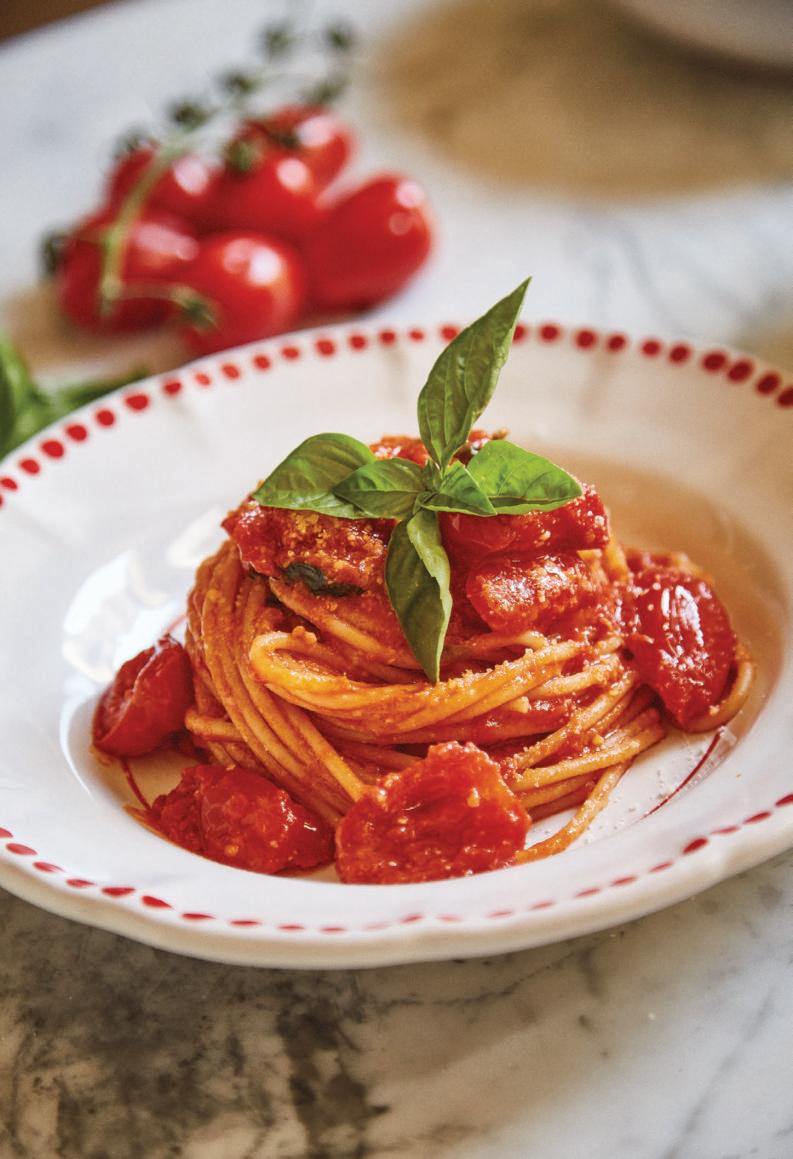
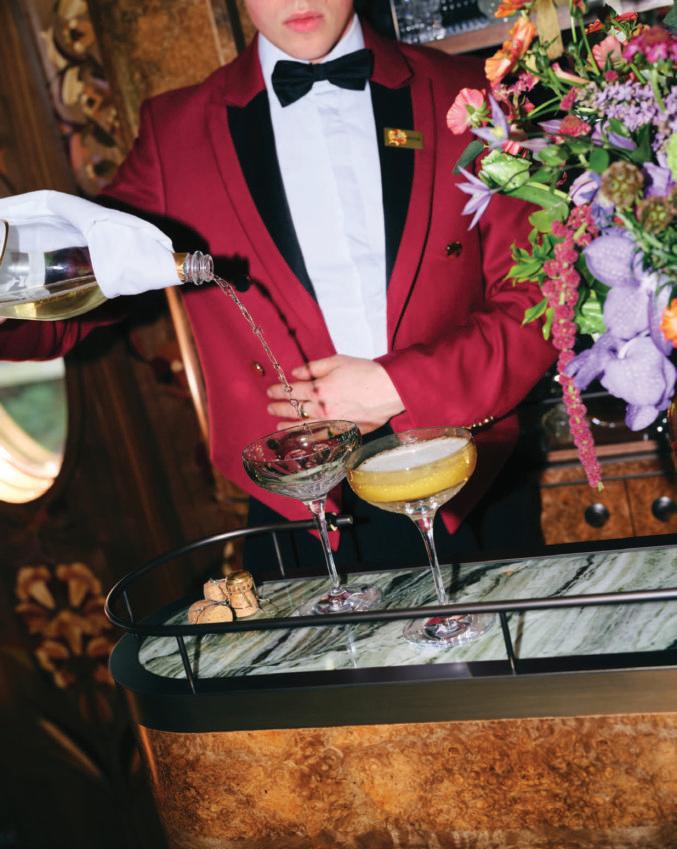
Colour is used with confidence. Greens, browns and reds reminiscent of the West End stage, scalloped chairs in maroon and forest tones, and backlit glass ceilings that create the impression of dining inside a theatrical jewel box. The craftsmanship is distinctly British. Martin collaborated with artisans including
Dunn & Son for marquetry, Bill Cleyndert for bespoke furniture, Hand & Lock for embroidery and Duchess China for tableware. Even the cutlery and glassware, by David Mellor and Waterford respectively, were selected to suggest a personal collection assembled over time. A signature scent chosen by Luhrmann and Martin completes the atmosphere, adding another layer to the carriage’s sensory world.
This page: The journey begins in the bar and lounge area of the carriage, where champagne flows and stories begin to unfold. Photo Ludovic Balay.













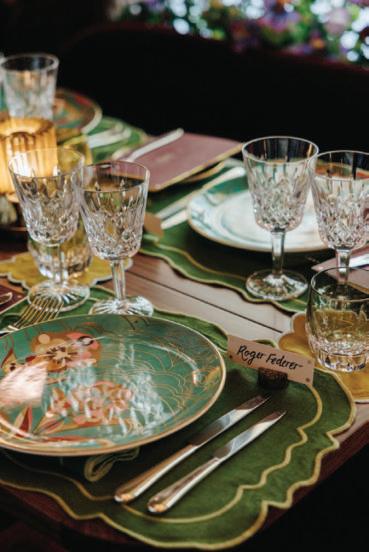
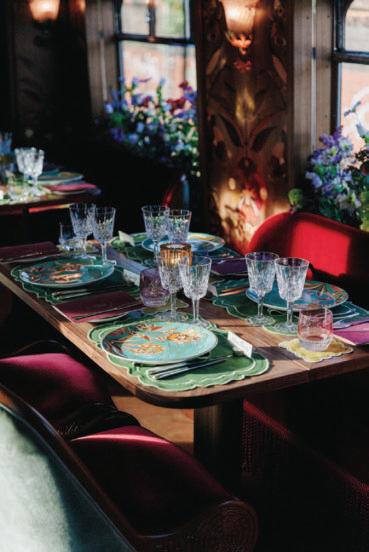
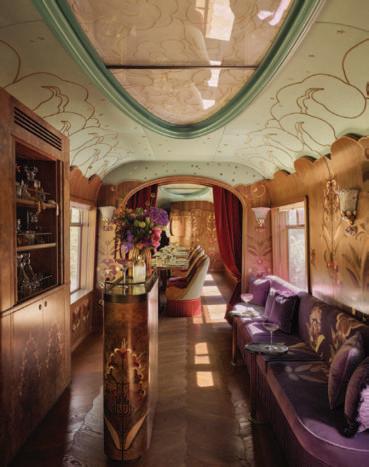
“The central design was built around storytelling in mind and how guests created their own narratives within the world of Celia. The carriage has been designed in such a way that it is modular and extremely customisable so guests can dial in their own experience in the fantastical make belief world Baz and I have created,” says Catherine Martin.
While the culinary element remains central, every element of Celia has been created to be bespoke. From the moment guests make a booking they will have direct access to a personal guest experience curator, a brand-new addition specifically created for Celia guests. All aspects of the experience will be meticulously planned from off-train excursions to personal menus and wine preferences, discussed and agreed upon directly with the carriage's dedicated chef and team before boarding the British Pullman. On the day, private transfers bring them to Victoria Station, where they are welcomed by their own team of stewards. The journey begins in the lounge with champagne and cocktails, including an exclusive list by Monica Berg of Tayer + Elementary, before the curtains part to reveal the dining space. Later, the lounge transforms into an entertainment area with a stage and dance floor, continuing the sense of unfolding theatre.
Celia adds a fresh twist to the British Pullman, blending the train’s classic heritage with a bold, theatrical flair. It fits right in with the historic fleet but stands out as a place where great food, engaging stories, and striking design come together in a theatrical way. For those who love the charm of vintage rail travel and exceptional dining, it’s a new reason to climb aboard.
Above: All of the plates, glassware and dishes have been individually selected to give the impression that they are part of someone's own personal collection of crockery. Photography SAMLORT. Below: Celia Lounge to Dining view. Photo Ludovic Balay

THIS IS WINE
Boillot Puligny-Montrachet Champ-Canet 2022
“Don’t
climb a mountain for the world to see you. Climb a mountain for you to see the world.”
Author unknown
Wine offers us the transparency of appreciating what we love about life. It provides a breathing space between the infinite, the intangible, and the unknowable; and all that is frail, flawed, and beautiful about our finite selves. Encapsulated in fermented juice is what we stand for by way of culture, ideals, knowledge and history. Physically drawn from the earth it is a catharsis of everyone and everything expressed through the prism of hallowed time, writes Kris @ FirstThisIsWine.
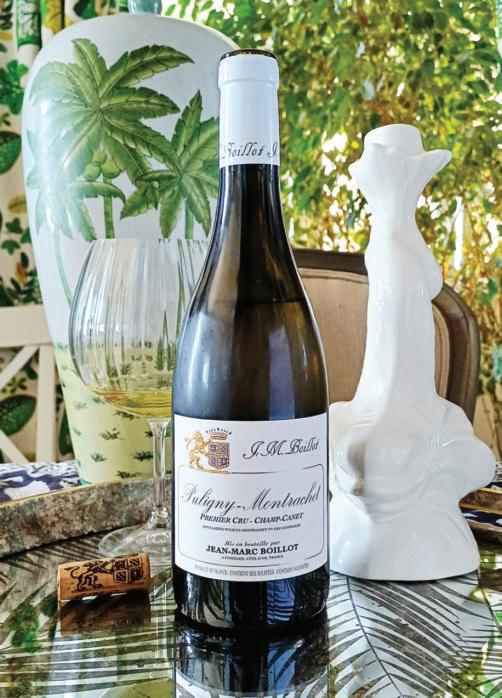
Puligny Montrachet has 17 premier cru vineyards, the less notable lie as satellite fields to the hamlet of Blagny, while the rest happily extend in a virtuous topographical swath of land from the five grand cru Montrachets all the way north to the village of Meursault. At 270 metres altitude Champ Canet at only 5.6 hectares, is in the hands of a few producers, amongst which JeanMarc Boillot is the largest owner. The progeny of two Burgundian houses Sauzet and Boillot, and an ex-student of Oliver Leflaive, Jean-Marc is known for a style based on purity, concentration and a vanilla cream bun finish. Champ Canet lies just above the powerful Les Combettes abutting the quasi-grand cru of Meursault’s finest Les Perrieres with which it shares a similar geology of well drained hard crushed limestone producing wines of solid structure and a pure minerality.
Jean-Marc Boillot Champ Canet 2022 is crisp apples and white flowers on the nose. A peach and pear core to the attack is blanketed in a soft frisson of lemon zest hazelnut buttered light toast brioche, melting into a bruised apple vanilla bean creamy finish. Flint, wet stone and mineral salts install a welcome tension without detracting from the generous opulent feel, coupled by an old vine intensity to the soft fruit. This is young but hugely enjoyable already, the concentration shows it has legs to cellar further, yet nothing is untowardly not already present. The Puligny nervosity may be understated but the mineral backbone compensates amply with enough Meursault melt textures to turn a blind eye to the strict pedigree of terroir.
Jean-Marc Boillot is available at Spades Wines & Spirits.
Giuseppe Quintarelli Amarone 2015
“Logic will take you from A to B. Imagination will take you everywhere.”
Einstein
From the land of Romeo and Juliet, Giuseppe Quintarelli stands apart in being more famous than the genre of wine he produces. Amarone, the great bitter, as the Italian name implies, is based on an ancient Classical technique of appassimento where grapes are wracked for several months in a drying process that increases depth and complexity especially favoured for making dessert wines, writes Kris @ FirstThisIsWine.
Giuseppe took it upon himself to rebelliously plant a great variety of vines in his 12 hectare holding and in a reductive style come out with a dry wine verging on the savoury and mineral bitters over and above its initial sweet cadence. From there the genre was born and a multitude of producers switched from a lighter style indigenous blend seen in Valpolicella to the long aged barrelled riserva Amarones needing decades of maturation to reach heights in both price and calibre to vie with the world’s best.
Quintarelli Amarone 2015 is a rich bodied high-octane wine with a strong showing on the attack of cherry, plum and berry flavours minced with wood, tobacco, spices and treacle, ending in an orange rind, dark chocolate, sun dried fruit, walnut, bay leaf and allspice mineralized epic finish. The heat is there but the weight of the wine obliterates any sense of excess. The intensity and depth of flavour are couched in satiny racy textures.
The power, concentration and complexity only gets you so far, but the real feat of excellence is the silky finesse with which all this suzerainty is handed over to you. Harking to its purity and gilded seam of over-the-top elements, there is dominance at length from afar but with a yielding panache arrestingly facile to approach. Captivating.
Quintarelli is available at Farsonsdirect.
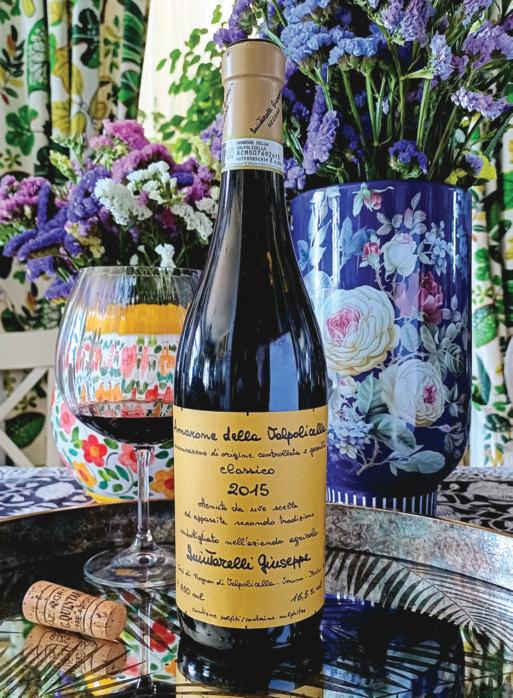
Benjamin Leroux Vosne Romanée 2022
If I die, I want to be buried in a cellar where the wine is good Burgundian swan song.
Pinot Noir is a bit of a diva; a Maria Callas in a bottle. It either brings the house roaring down or breaks the party. No wine suits best the acclamation of vin d’emotion because regardless of expense, you either ring the neck of the bottle in frustration or sit back and enjoy a rare treat of symphonic proportions. But this high maintenance attitude suits Burgundy well because as superb and varied as the soil and climate can be for growing grapes, it is also one of the hardest for wine makers. It has taken millennia for wine to be made well here and quite frankly it shows, writes Kris @ FirstThisIsWine.
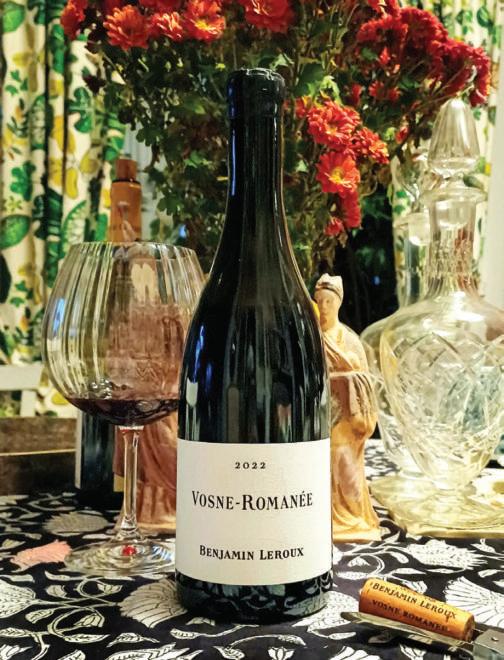
As stultifying upper crust as the Burgundian wine world may seem, the rise of prodigies like Leroux who started his apprenticeship under Comte Armand shows that Burgundy is equally up for grabs to meritocratic ambition purely on skill and hard work. Benjamin grew up surrounded by the perfumes of his mother’s flower shop in the midst of wine cellars without a viticultural inheritance. Star struck by a Roumier Chambolle 1985, he decided to make his life goal to create wines worthy of posterity.
Leroux Vosne Romanée 22 is strawberries and cherries on the nose and attack with purple flowers in trail. The palate is mid barrel warm Vosne spices laced in leather, truffle and vanilla bean. Woody old vine notes back the sun kissed primaries with enough weight and complexion to conjure up more than what is expected from a village cuvee. Energy in buckets and a colouration of fruits in varying states of ripeness and raciness to add depth and a bittersweet signature stems, tea leaves and rueful herbs wet stone finish. This is everything you would want from a village wine summing up the length and breadth of Vosne’s plots. My guess is ones close to Clos de Vougeot such as Les Violettes with its gravel violet elegance and the wistful tonka bean opulence of Haut Maizeres, yet some of the cola drop heart flirts with soils close to Nuits St Georges. Vosne is precise even village plot precise, but with a wine of such finesse you just abandon yourself to the vignerons skill and I'm all for it.
Benjamin Leroux is available at Philippe Martinet Fine Wines.
At OKA’s everything begins with family.


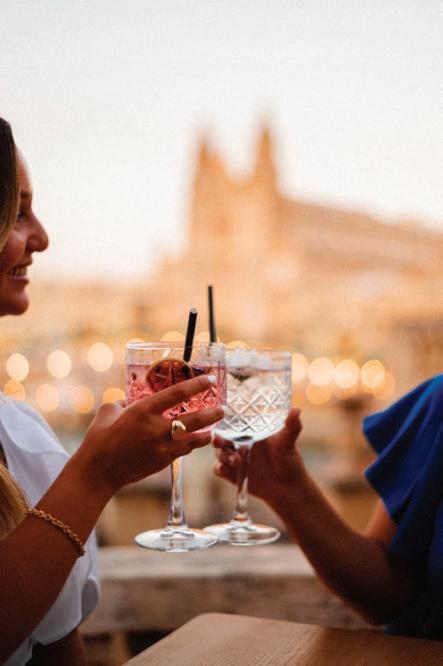
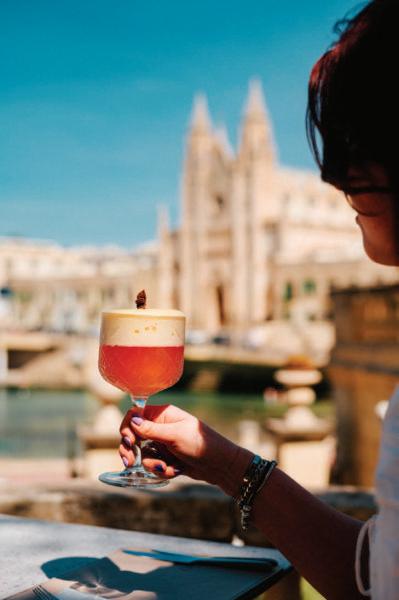
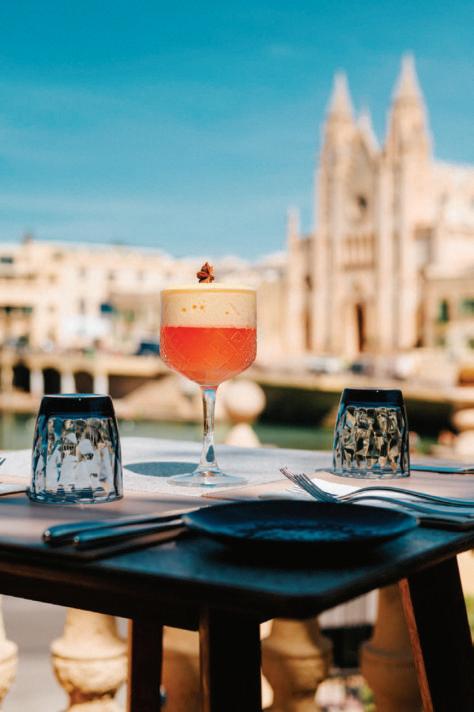
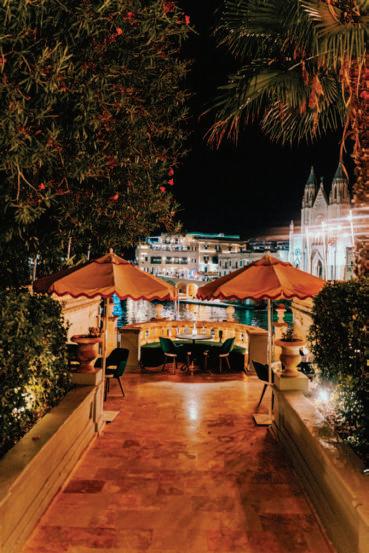
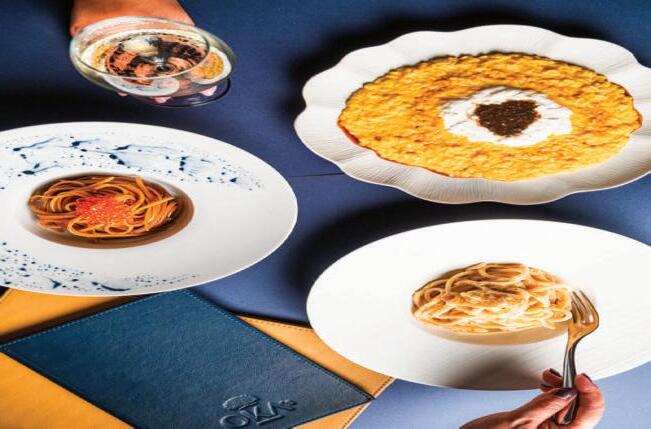
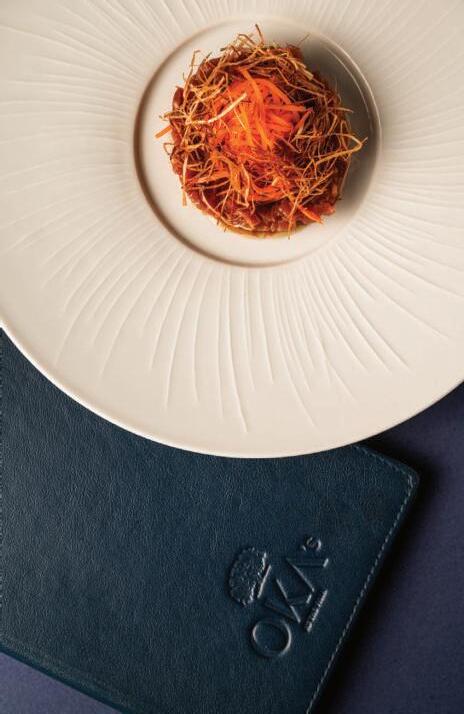
Two kitchens, one home. Rosami upstairs and OKA’s downstairs share more than just a roof.
What begins in one kitchen may be transformed in the other, a single ingredient, two interpretations, both honouring the same whole. The new menu nods to the past while staying rooted in the present.
Dining at OKA’s is more than sharing a meal. It’s sharing the joy of gathering around the table.
Book your table today.
The Villa, Main Street, Balluta Bay, Saint Julian's okas.xaracollection.com/