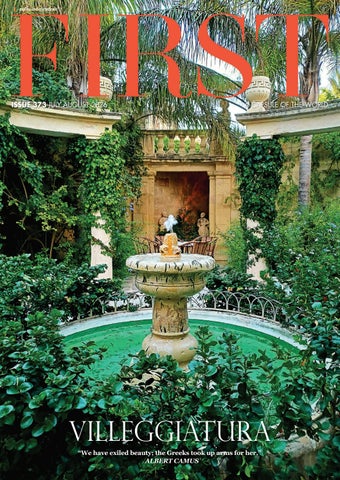
ISSUE 373 JULY AUGUST 2026
A CAPSULE OF THE WORLD
VILLEGGIATURA “We have exiled beauty; the Greeks took up arms for her.” ALBERT CAMUS
EDITORIAL “We do not remember days, we remember moments. The richness of life lies in memories we have forgotten.” CESARE PAVESE
VILLEGGIATURA
LA BELLA ESTATE uell’anno faceva tanto caldo che bisognava uscire ogni sera, e a Ginia pareva di non avere mai capito prima che cosa fosse l’estate, tanto era bello uscire ogni notte per passeggiare sotto i viali. Qualche volta pensava che quell’estate non sarebbe finita più, e insieme che bisognava far presto a godersela perché, cambiando la stagione, qualcosa doveva succedere.” “That year it was so hot that we had to go out every evening, and Ginia felt like she'd never understood what summer was, so wonderful was it to go out every night to stroll along the avenues. Sometimes she thought that summer would never end, and at the same time that she had to hurry and enjoy it because, with the change of season, something was bound to happen.” CESARE PAVESE, LA BELLA ESTATE
ON THE COVER: Inside the peaceful gardens at Casa Bonavita, Attard. Photo FIRST Magazine. THIS PAGE: Ravello, Amalfi Coast. Photo Kevin McMahon. SALES AND CREATIVE DIRECTOR SEAN ELLUL SELLUL@INDEPENDENT.COM.MT DESIGNER CONRAD BONDIN CBONDIN@INDEPENDENT.COM.MT PRODUCTION MANAGER ANDRE CAMILLERI ACAMILLERI@INDEPENDENT.COM.MT PUBLISHER STANDARD PUBLICATIONS, STANDARD HOUSE, BIRKIKARA HILL, ST JULIAN’S. TEL: 00356 2134 5888, WEB: WWW.INDEPENDENT.COM.MT FACEBOOK FIRSTMAGAZINE INSTAGRAM FIRSTMAGAZINEMALTA PRINTER PRINT-IT. FIRST IS PUBLISHED AS A COMPLIMENTARY MAGAZINE WITH THE MALTA INDEPENDENT ON SUNDAY AND IS NOT TO BE SOLD SEPARATELY. NO PART OF THE PUBLICATION MAY BE REPRODUCED WITHOUT THE PRIOR AGREEMENT OF THE PUBLISHER. FIRST MAGAZINE SINCE 1993. CELEBRATING 33 YEARS. ISSUE NUMBER 373.
5
CONTENTS
8
LA DOLCE VITA. Le Grand Contrôle. The first and only hotel located directly within the grounds of the Château de Versailles, Airelles Le Grand Contrôle captures the grandeur and elegance of 18th-century France at its peak. Photo © Renee Kemps, courtesy Airelles Château de Versailles, Le Grand Contrôle.
24
INTERIORS. Interior designer Tom Scheerer occupies a distinctive place in American decorating, admired for an approach that combines ease, proportion and a light-handed confidence. Photo Francesco Lagnese, courtesy Vendome Press.
8
LA DOLCE VITA
Le Grand Contrôle. Airelles’ 18th-century-style at Château de Versailles.
CONTENTS
35
18
VILLEGGIATURA A Summer of Art, Design and Fashion at San Domenico Palace.
24
INTERIORS
America’s Premier Interior Designer. Tom Scheerer: Still Decorating.
35
MELITENSIA
The Stunning Restoration of The Grand Master’s Palace and Tapestries.
50
SUPERYACHTS
Late-Summer at Port Hercule. The Monaco Yacht Show.
58
PENSION PLANNING A Mid-Year Financial Reset. Are You Still Heading in the Right Direction? Small Adjustments That Shape Long-Term Security.
MELITENSIA. The Stunning Restoration of The Grand Master’s Palace and Tapestries. Photo courtesy Heritage Malta.
74
88
65
HEALTH & WELLBEING
Summer Skin. SPF and Sun Advice from a Skin Cancer Researcher.
68
ENVIRONMENT
World Nature Conservation Day. The Science of Calm and The Human Need for Nature. ERA’s Work to Restore Malta’s Natural Environment.
74
GASTRONOMY
The Amalfi Table. Altitude, Produce and Mediterranean Light at Caruso.
88
THIS IS WINE TASTING NOTES
Cos d’Estournel 2016. Drouhin PulignyMontrachet Les Folatieres 1er Cru 2022. Leflaive Meursault Sous Le Dos D’Ane 2015.
GASTRONOMY. The Amalfi Table. Altitude, Produce and Mediterranean Light at Caruso. Photo Yoann et Marco, courtesy Belmond.
THIS IS WINE. TASTING NOTES with Kris @FirstThisIsWine. This month’s lineup includes St Estephe, Puligny-Montrachet, and Meursault.
CONTENTS [ISSUE 37 3. JULY AUGUST 2026]
7
LA DOLCE VITA
VERSAILLES
LE GRAND CONTRÔLE PAST MEETS PRESENT IN A RARE INVITATION INTO THE PRIVATE WORLD OF THE FRENCH COURT Photography courtesy Airelles Château de Versailles, Le Grand Contrôle.
This page: Airelles Le Grand Contrôle, Château de Versailles. The first and only hotel located directly within the grounds of the Château de Versailles, Le Grand Contrôle enjoys an unrivalled setting. Built in 1681 by Louis XIV’s favorite architect, Jules Hardouin-Mansart, this stunning residence captures the grandeur and elegance of 18th-century France at its peak. Photo © Renee Kemps. 8
LA DOLCE VITA
In June 2021, after a 4-year restoration, the luxury hotel brand Airelles unveiled Le Grand Contrôle, making history as the first and only hotel located directly within the grounds of the iconic Château de Versailles. Built in 1681 by the famous French classicism figure and favorite architect of king Louis XIV, Jules Hardouin-Mansart, the architect behind the Hall of Mirrors, the Grand Trianon, and the Royal Chapel, this remarkable residence embodies the splendour of 18th-century France at its height. Architect and interior designer Christophe Tollemer meticulously shaped the restoration using 1788 inventory archives, bringing forth the spirit of King Louis XVI’s personal style through period-correct art, fabrics, and chandeliers to create a vibrant residence that presents an immersion into the atmosphere of eighteenth-century Versailles.
9
LA DOLCE VITA
Above: Once the official residence of the Controller-General of Finances, the highest-ranking office after the King, Le Grand Contrôle welcomed Europe’s political and cultural elite, as well as many of the leading minds of the Age of Enlightenment. Photo © Renee Kemps. Left: In 1661, Louis XIV tasked André Le Nôtre with designing and renovating the gardens of Versailles, which he valued as highly as the Palace itself. Work on the gardens began alongside the palace construction and continued for roughly 40 years. The historic landscape remains an integral part of the Le Grand Contrôle’s setting. Photo courtesy Airelles Château de Versailles, Le Grand Contrôle.
L
e Grand Contrôle presents a fairytale, almost an Alice in Wonderland meets Marie Antoinette experience, all wrapped in French hospitality: the first and only hotel set within the grounds of the Château de Versailles, its windows opening directly onto the gardens shaped by centuries of royal life. The story of the building reaches back to 1681, when Jules Hardouin-Mansart, Louis XIV’s favoured architect, constructed a residence for the Controller-General of Finances. It later welcomed diplomats, musicians and thinkers of the Enlightenment, becoming part of the fabric of Versailles at a moment when the French court defined European taste. Today, after a four-year restoration led by the luxury hotel brand Airelles, it now welcomes guests to an experience where historical detail meets modern comfort in perfect harmony.
10
Lor em I psum
MA T T R E S S E S
5. 0 5. 0of5stars 300+ revi ews
B E D S
S OF AB E D S
A D J U S T A B L EB E D S
P I L L OWS
A C C E S S OR I E S
LA DOLCE VITA
T
he restoration, overseen by architect and interior designer Christophe Tollemer, drew directly from the 1788 inventory of the residence, faithfully preserving the building’s original architecture and decorative heritage. Fabrics recreated by Maison Pierre Frey, period chandeliers sourced from European dealers and discreet lighting designed to echo
candlelit rooms all contribute to an atmosphere that honours the building’s origins. Tollemer looked closely at the personal style of Louis XVI and the architecture of the Petit Trianon, creating interiors that reflect the refinement of the late eighteenth century without slipping into pastiche. The result is a space where every detail, from carved woodwork to upholstery patterns inspired by Versailles archives, reflects both craftsmanship and historical research.
Above: Salon d’Audience. The audience chamber blends gilded details, vintage wood paneling, grand chandeliers, and 18th-century-style furnishings to wrap visitors in the refined charm of the royal court. Left: Le Grand Cabinet, where historic décor and Alain Ducasse’s daytime menus meet in one of Versailles’ most characterful spaces. Photography © Vincent Leroux.
12
The Alternative Therapeutic approach for Acne-Prone Skin.
Treating all acne symptoms, spots, blackheads and blemishes.
Suitable for teenagers and adults Safe during pregnancy and breastfeeding. Exclusively Distributed by AM Mangion Ltd • Tel: +356 23976000 W. www.ammangion.com.mt • frezydermmalta • FrezyDermMalta
LA DOLCE VITA
W
Top left: Dinner beside the gardens. La Table des Jardiniers offers a relaxed interpretation of French cuisine, shaped by conviviality and the château’s historic landscape. Photo © Vincent Leroux. Above and below: The gardens and grounds at Versailles. Photography © Robin Lefebvre. Top right: The restoration, overseen by architect and interior designer Christophe Tollemer, drew directly from the 1788 inventory of the residence, faithfully preserving the building’s original architecture and decorative heritage. Featuring period furniture and rich fabrics, the décor captures the elegance of the eighteenth century. Photo courtesy Airelles Château de Versailles, Le Grand Contrôle.
14
ith only fifteen rooms and suites, Le Grand Contrôle is intimate. Views stretch across the Orangerie, the Cent Marches and the gardens, while suites such as Necker, Madame de Fouquet and Madame de Staël introduce their own architectural quirks: a hidden bathroom behind a concealed door, a freestanding bath overlooking the gardens, a canopy bed framed by antique textiles. The Pavillon des Jardiniers, which can be privately reserved, offers the atmosphere of a discreet country house within the estate, with two floors and spacious The experience goes far beyond the rooms. Guests are invited to explore Versailles outside public hours, entering the Hall of Mirrors, the Trianon Estate or the gardens in the early morning or late evening when the palace is at its most atmospheric. Historians guide private visits, opening doors rarely accessible to visitors and revealing details of court life that shaped the building’s past. A morning might begin with the King’s Awakening, a ritual inspired by eighteenth-century customs, followed by a refined breakfast before wandering through the estate or visiting the Royal Library. Days unfold slowly, immersed in the stillness of the landscape and the history of the château.
LA DOLCE VITA
D
ining of course plays a central role in the experience, as it should – we are in France after all. At Alain Ducasse at Château de Versailles, the culinary traditions of the Grand Siècle are reinterpreted with care, creating menus that draw on historical references while remaining firmly rooted in contemporary technique. Classic dishes appear throughout the menus – pot-au-feu (beef stew), blanquette de veau (veal in a light cream sauce), soupe à l’oignon (onion soup) and œufs mimosa (devilled eggs), followed by mousse au chocolat (chocolate mousse) or île flottante (poached meringue with custard) for dessert. Breakfast, brunch, tea and dinner each introduce a different facet of French gastronomy, from Marie-Antoinette-inspired afternoon tea to candlelit dinners that evoke the splendour of the royal table. Service follows French tradition, with gestures and details that reflect the ceremonial nature of dining at Versailles. For a more relaxed atmosphere, La Table des Jardiniers offers generous dishes drawn from the French repertoire, celebrating conviviality through shared plates and seasonal ingredients.
Above: Cabinet Marie-Antoinette. A panelled dining room shaped by eighteenthcentury detail, where Ducasse’s menus unfold in a setting inspired by the Queen’s private world. Photo © Renee Kemps. Below: The spacious Necker Suite is the former private apartment of Jacques Necker, the finance minister and statesman who became a significant figure in the French Revolution. Serving under Louis XVI, he was arguably the most popular minister of the era. Designed for two, the grandest Suite at Le Grand Controle boasts four metre high ceilings, and an impressive layout, perfect for those wanting to relive the lavish Palace lifestyle. Photography © Vincent Leroux.
15
LA DOLCE VITA
This page: Airelles Spa at Le Grand Contrôle. From the mirrored entrance to the indoor pool, the spa introduces a modern sense of ease within the château’s historic setting. (Above) Photo courtesy Airelles Château de Versailles, Le Grand Contrôle; (below) photo © Robin Lefebvre.
T
hroughout the property, the French art of living is expressed through thoughtful gestures: a candlelit bath prepared by a butler, a moment of calm in the Airelles Spa, or a leisurely walk through the
16
gardens before dinner. The hotel’s scale allows for a sense of ease, with staff guiding guests through experiences that highlight the estate’s history without overwhelming it. The atmosphere is shaped by craftsmanship, architecture and the pleasure of inhabiting spaces that once formed part of the royal household.
VILLEGGIATURA
VILLEGGIATURA
A SUMMER OF ART, DESIGN AND FASHION At San Domenico Palace, Taormina, a Four Seasons Hotel, summer unfolds through colour, art and fashion, with Dolce&Gabbana’s pool transformation and Sergio Fiorentino’s work in the Ancient Cloister animating one of Sicily’s most iconic settings. Photography courtesy San Domenico Palace, Taormina, A Four Seasons Hotel. This page: For the fourth consecutive year, Dolce&Gabbana renews its connection with Sicily by choosing San Domenico Palace as the setting for the exclusive DG pool creative takeover. Photo credit © San Domenico Palace, Taormina, A Four Seasons Hotel.
18
VILLEGGIATURA
19
VILLEGGIATURA
S
an Domenico Palace holds a unique spot in Taormina, with terraces that seem to float above the Ionian Sea and architecture shaped by centuries of monastic life. The building’s story begins in the fourteenth century, when a Dominican convent was established on the site with the support of Baron Damiano Rosso d’Altavilla. His residence,
later bequeathed to the order, became the foundation of the complex that defines the hotel today. Over time, the convent evolved into one of Europe’s early grand hotels, attracting writers, artists and travellers drawn to Taormina’s scenery and its reputation for summer escapism. Today, that distinct spirit of villeggiatura, the quintessential, slow-paced Italian summer escape, remains entirely intact, with long, unhurried days and energising Mediterranean light. Above: Spaces come alive through the vibrant and energetic colour palette of Dolce&Gabbana's iconic Palme print. Photo © G Gold 2019 / San Domenico Palace, Taormina, A Four Seasons Hotel. Left: Looking towards San Domenico Palace from the ancient theatre, the view captures the elements that have drawn travellers to Taormina for generations. Photo © Peter Vitale / Four Seasons.
20
ARCHITECTURAL MUTE
OUTDOOR CADAQUES
INDOOR CATA
FAN HEY
VILLEGGIATURA
T
his summer, San Domenico Palace introduces a series of creative interventions that bring contemporary culture into dialogue with its historic setting. Dolce&Gabbana returns for a fourth season with an exclusive pool takeover, transforming the infinity pool and seafacing terrace through the house’s Palme print. The palette of green and white creates a vivid contrast with the coastline, becoming part of a cohesive visual narrative that blends seamlessly with the surrounding landscape. The collaboration extends indoors, where the old sacristy has been reimagined as a boutique offering a curated selection of clothing and accessories created for the hotel. Art also forms part of the season. In the Ancient Cloister, contemporary artist Sergio Fiorentino presents Volto (“Face”), a work developed from an entirely blue surface and shaped through layers, abrasion and incision. The blue recalls the Mediterranean surrounding Sicily, carrying associations of depth, memory and transformation. Set within the cloister’s architecture, the painting introduces a contemplative counterpoint to the energy of the pool terrace, offering guests a moment of stillness within the hotel’s historic core. Together, these touches come together to create a summer atmosphere that blends fashion, art and the long tradition of Sicilian villeggiatura. San Domenico Palace keeps evolving, but its charm still lies in the same things that attracted travelers over a century ago: the sea, stunning architecture, and the pleasure of slowing down in one of the Mediterranean’s most iconic settings.
Above: Sergio Fiorentini by Peter Vitale. Photo © San Domenico Palace, Taormina, A Four Seasons Hotel. Left: The Ancient Cloister. A quiet corner of San Domenico Palace where stone, arches and Mediterranean light frame Sergio Fiorentino’s Volto. Photo © Peter Vitale / Four Seasons.
22
THE ANTI-FATIGUE FOOD SUPPLEMENT with sweetener & without added sugars. GOOD TROPICAL TASTE. ACTIVE INGREDIENTS: • Magnesium 450 mg • Potassium 165 mg • Taurine 500 mg IDEAL FOR: • Neuromuscular tiredness • Cramps in athletes • Heavy perspiration MAGNESIUM: It is a modulator of the electrical activity of molecules and participates in the transmission of nerve impulses. An adequate dose of Magnesium improves resistance to fatigue and counteracts the development of muscle cramps. POTASSIUM: It participates in important cellular functions such as contraction of muscle myofibrils, transmission of electrical impulses, acid-base balance and water-salt balance. Excessive water loss can cause the lowering of the concentration of this mineral with consequent development of fatigue, weakness, muscle pain. TAURINE: It has antioxidant and anti-catabolic properties, stabilizes cell membranes, and regulates ionic fluxes. It also intervenes in energy metabolism.
AVAILABLE AT ALL LEADING PHARMACIES Exclusively distributed by A.M.Mangion Ltd • T: 23976000 Marfarma.Malta
Marfarma.Malta
1 effervescent tablet dissolved in a glass of water once a day or when necessary.
INTERIORS
THE NEWEST PROJECTS FROM INTERIOR DESIGNER TOM SCHEERER, WHOM THE NEW YORK TIMES PROCLAIMED “ONE OF THE TRUE AMERICAN GREATS.”
AMERICA’S PREMIER INTERIOR DESIGNER TOM SCHEERER: STILL DECORATING
Tom Scheerer occupies a distinctive place in American decorating, admired for an approach that combines ease, proportion and a light-handed confidence. His third book, Tom Scheerer: Still Decorating, published by Vendome Press, gathers eighteen recent projects from Maine to Palm Beach, Aspen to Jackson Hole, each shaped by the sensibility that has made his work instantly recognisable. Main photography Francesco Lagnese, courtesy Vendome Press. 24
INTERIORS
T
he New York Times has called interior designer Tom Scheerer “one of the true American greats,” but he treats the praise with modesty. “Here is the last volume of what appears to be a tidy ‘trilogy’ of monographs,” he writes in the introduction to his third book, Tom Scheerer: Still Decorating, published by Vendome Press. “I trust that my assiduous and Taurean application of the same formula leads not to diminishing returns but to the opposite.” Scheerer is honest about his own growth. “Have I evolved? As a decorator, not all that much, though I hope I have as a human.” His style has always leaned on consistency over reinvention, grounded in what he calls “an innate and a parentally conditioned sense of propriety, and possibly to a soupçon each of obstinance and intellectual inertia.” The result is a look that values comfort, balance, and an easy elegance. The rooms in Still Decorating demonstrate this clearly: spaces meant to be lived in, not staged; refined, not overdone; where beauty and practicality fit together naturally. Scheerer’s honesty comes through when tackling the age-old question designers face: what makes a signature style? “Oh boy,” he admits, recognizing the difficulty of describing something that others claim to recognise instantly. For him, it comes down to repetition and consistency. “I’ve always stuck to my guns,” he says, explaining that even when he strays “off piste” into a modernist apartment or an Italianate palazzo, he still incorporates his trusted lexicon of elements. These touches act as both anchor and compass, reminding him, and his clients, of the sensibility that is at the heart of his work.
This 1970 house was reconstructed almost inch by inch. Above: New windows and building technologies were introduced, including the retractable window wall. The panoramic photograph above the built-in banquette is by Richard Misrach. Right: This garden room opens to a raised-bed cutting garden and one of several outdoor dining spots around the property. The sofa is by Flexform. The vintage wicker chair is covered in a Manuel Canovas striped twill. Right: The roof line of the kitchen remained the same as in the original house, but a three-foot-deep bay window was added to accommodate a banquette and a pair of café tables. The owners and the decorator foresaw The New York Times and espresso on one, sippy cups and Cheerios scattered on the other. It works. The lampshades on the sconces are covered in Nobilis Faux Bois wallpaper.
25
INTERIORS
Above: A Horst photo of a Valerian Rybar room in Paris for São Schlumberger was the starting point for this library. The custom cube cocktail tables were inspired by those found in rooms designed by Renzo Mongiardino – decorating by name-dropping, I confess. Below left: The exotic bar in this pool house was loosely inspired by the restaurant Le Coucou in New York. The scenic wallpaper by Ananbô was skillfully blended into the vaulted ceiling by artist Frank Reijnen. The pair of banquettes are tufted in Java, a reproduction batik by Jasper Textiles. The freestanding bar in this room and the pair of consoles, lamps, and mirrored niches in the sitting room beyond were made by The Raj Company, Mumbai. Below right: The wisely north-facing sunroom does not require window shades or curtains – even in the Texas heat. The table is used for family breakfasts, lunches, and the occasional dinner at home.
T
hat sensibility is shaped by practicality as much as aesthetics. “There’s an underlying practicality and restraint at the core of my work, or so I like to think,” he writes. He is candid about cost, value and the realities of decorating. “Anyone can get sticker shock. I look for intrinsic value over cost and I shudder at waste.” His mix of the expensive and the “not so much” has become part of his reputation, producing rooms that are intelligent and unforced. He draws a parallel with fashion: “Spending more money on clothes doesn’t guarantee being well-dressed or stylish. The same can be said for decorating.”
26
A Dialogue in Time On architecture, design and permanence.
Form, Valley Road, Msida | kavehome.mt
INTERIORS
Above: For this home in Aspen, the view from the kitchen includes a superb set of nineteenth-century Italian trompe l’oeil collages. The cabinets below them are Swedish from the 1950s. A rug-less passage separates the designated greeting area from the dining room. The rugs were made by Beauvais after an antique Amritsar document carpet. Photo Tuck Fauntleroy. Below left: The scenic wallpaper was digitally manipulated from well-known racing prints by John Frederick Herring. The wicker dining chairs are from Vittorio Bonacina, and the gold leaf-lined lampshade is from Rose Uniacke. Below right: Here a wall between two rooms was knocked down to create a spacious double parlour. The new configuration allowed for the addition of a tall door between the chimneys. A near pair of marble mantels was ordered from Jamb in London to replace a mismatched and puzzlingly inappropriate pair. Photography Adam Macchia.
S
cheerer’s love for comfort over formality is equally clear. “The goal is always something easygoing and livable, even in the grandest houses. I will always eschew formality.” He recounts rooms that risk becoming showpieces, unused
28
and admired only from a distance. His solution is always to activate them, sometimes with a television, occasionally with a Ping-Pong table. The point is purpose: rooms should be lived in, not preserved. Identifying himself as an “under-decorator” is one of the most revealing lines in the introduction. He credits his mother, who
warned him against “over-egging the pudding,” and explains that restraint and editing are central to his approach. “I try to leave a bit of breathing room and have never feared a blank wall – horror vacui, as it’s called – the way others do.” He prefers rooms with space for future improvisation, which allows houses to evolve with their owners.
INTERIORS
F
or Scheerer, place is always the guiding force. “Every house and apartment in this book falls under the spell of its locale in one way or another,” he writes. Geography, architecture, and atmosphere shape his choices, and he’s clear about the need for appropriateness. “Sometimes editorialising and commenting on archetypes is called for, but never do I want to see a Mayfair drawing room on an island in Maine.” His ability to “read the map and the tea leaves,” as he puts it, is one of the skills that has defined his career. Above left: The architects worked in several gemütlich touches, including the Swiss-like baluster on the stair and upper gallery. A fine Dutch baroque mirror purchased in Paris reflects the goings-on in the step-down living room and the postcard view beyond. Photo Tuck Fauntleroy. Above right: This sunroom is meant to resemble a loggia that was later closed in. The outer wall, pink stucco like the exterior, and outdoor wall lanterns bolster the story. The cushions on the rattan-and-brass suite of furniture from Harbinger are covered in Peter Dunham’s Fig Leaf print. Below left: The quirky asymmetry is the invention of the architect and the decorator. The barn and its structural elements are all new. The Japanese paper lantern is extra-oversize for the lofty space. Below right: The addition of dormers and steel-framed glass doors in this living area fill a former working barn with light.
30
Lombard
Home Loan • Borrow up to 90% of the Property Price • Competitive interest rates & flexible terms • Discounts on fees payable
Head Office: 67 Republic Street Valletta Malta Tel: +356 25581117 • e-mail: mail@lombardmalta.com
lombardmalta.com Terms and conditions apply and are available on request. Applications are subject to the Bank’s lending criteria. Lombard Bank Malta p.l.c. is licensed and regulated by the Malta Financial Services Authority as a credit institution and as an investment service provider and listed on the Malta Stock Exchange. The Bank is an authorised currency dealer and a financial intermediary on the Malta Stock Exchange, as well as a member of the Depositor Compensation Scheme and the Investor Compensation Scheme.
INTERIORS
Above: Gerrit Rietveld’s Utrecht chairs covered in wool bouclé are grouped around a fauxtortoiseshell cocktail table from CB2. The high-low wool rug, made in India, was inspired by the rugs of Swedish designer Märta Måås Fjetterström. Photo Tuck Fauntleroy. Below: This guest room opens directly onto a cloistered lap pool. The pair of wall lanterns flanking the doors were first designed by the decorator for the Lyford Cay Club.
D
espite closing his New York office, Scheerer remains as active as ever. “To set the record straight, I am still decorating,” he writes. His life now moves between West Palm Beach, the Bahamas and Europe, with a Paris apartment entering his seasonal orbit. Travel, movement and curiosity continue to shape his work, just as they have for more than thirty-five years. “Ideas and solutions flow as easily as breathing,” he writes, attributing this to memory, experience and what he calls “access to the good life in general.” ABOUT THE AUTHORS. TOM SCHEERER began his decorating career in the mid1980s and launched his own firm in 1995. His first two books, Tom Scheerer Decorates and Tom Scheerer: More Decorating, have been reprinted multiple times, and his work is regularly featured in AD, Town & Country, House Beautiful, and Elle Decor. He lives in Palm Beach.
FRANCESCO LAGNESE is an internationally acclaimed interiors and travel photographer whose work appears regularly in Condé Nast Traveler, Vanity Fair, House Beautiful, Town & Country, and AD. His books include Tom Scheerer Decorates, Tom Scheerer: More Decorating, and Pietro Cicognani: Architecture and Design. He lives in Germany. TOM SCHEERER: STILL DECORATING By Tom Scheerer. Photography by Francesco Lagnese. Published by Vendome Press. Hardcover, 320 pages. 32
TILES, SKIRTING & WINDOW SILLS
Exclusive discounts for Mapfre Clients!
App Scan the QR Code and download the app now!
MELITENSIA MELITENSIA
INSIDE VALLETTA’S RESTORATION MASTERWORK THE STUNNING RESTORATION OF THE GRAND MASTER’S PALACE AND TAPESTRIES
Restored rooms, revived corridors and renewed access at the Grand Master’s Palace reveal the building’s evolution from the era of the Knights to modern Malta. The conservation programme has brought back the depth of its interiors, from Nasoni’s frescoes to the reinstated Armoury and the rediscovered Uccelliera. Central to this revival is the return of the palace’s Gobelins tapestries, conserved in Belgium and rehung with a new system designed for long‑term preservation. Their restoration returns a defining element of the Grand Master’s Palace to the room it has occupied for more than three centuries. Main photography courtesy Heritage Malta. This page: The restoration of the Piano Nobile corridors was among the most complex undertakings. The soffit paintings, originally executed by Niccolò Nasoni between 1723 and 1725, required meticulous conservation. Conservator-restorers removed over-painting and previous interventions to arrive at the original paint layers. Missing areas were carefully integrated, and a new hanging system was designed to allow easier maintenance and future conservation. Photo Heritage Malta. 35
MELITENSIA
Above and left: The Uccelliera, where exotic birds were kept, with restored paintings on the ceiling by Nasoni. While most recently the space served as the Parliament’s Speaker’s Office, it is now a hall dedicated to the Republic of Malta. (Above) Photo FIRST Magazine, (Left) Heritage Malta. Below left: The decorative soffit in the Grand Master’s study. Photo Heritage Malta. Facing page above: The Cotoner Room, located in the upper-floor State Rooms, boasts a dramatic ceiling and is named after the distinguished Cotoner brothers, Nicolas and Raphael, who both served as Grand Masters of the Knights of St. John in the 17th century. The space showcases the artistic shifts and lavish high-baroque style they brought to the island. Part of the historic Piano Nobile complex, it features ornate wooden coffered ceilings, marble floors, and walls adorned with period portraits and frescoes from the era of the Knights. Photo Heritage Malta. Facing page bottom: One of the most remarkable achievements of the restoration brought the historic Armoury back to its original 16th-century hall, once used by Malta’s Parliament. The Armoury boasts an extensive collection, regarded as one of the finest in the world, featuring Grand Master Jean de Valette’s breastplate, Alof de Wignacourt’s gold-inlaid steel suit, Ottoman armour, and an impressive array of muskets, swords, pistols, and artillery pieces. Photography FIRST Magazine.
T
he Grand Master’s Palace in Valletta is a true icon of Malta’s architectural and cultural landscape, a building shaped by centuries of power, ceremony and administrative life. Constructed soon after the Knights of St John founded the new capital in 1566, it evolved through successive phases of expansion, absorbing residences, auberges and corridors into a single monumental complex. During the British period it became the Governor’s Palace, later hosting Malta’s first constitutional parliament in 1921. Its reopening in 2024, following five years of closure for an extensive conservation programme, marked a renewed chapter for one of the island’s most significant historic sites, after completing the first major phase of a multi-million-euro restoration project.
36
MELITENSIA
37
MELITENSIA
T
he project more than doubled the publicly accessible areas, revealing state rooms and administrative hallways that had long been closed to visitors. The palace’s layered architectural history is immediately visible. Girolamo Cassar’s original Mannerist structure incorporated the residence of Knight Eustachio del Monte and the auberge of the Italian langue, both
40
completed in the early 1570s. When Grand Master Pierre de Monte relocated the Order’s headquarters to Valletta, he took up residence in his nephew’s house, prompting the Order’s Council to acquire and convert the property into the Grand Master’s official palace. Over the following decades, the building absorbed neighbouring structures, gradually forming the footprint recognised today. Later Grand Masters introduced Baroque elements that enriched the palace’s interiors.
António Manoel de Vilhena commissioned Niccolò Nasoni to paint the main corridors in 1724, adding frescoes that still define the Piano Nobile. Manuel Pinto da Fonseca oversaw major renovations in the 1740s, including façade embellishments and a new entrance. In 1745 he commissioned the ornate clock tower overlooking Prince Alfred’s courtyard, its upper turret animated by four bronze jacquemarts striking the bells. The clock’s faces display the hour, month, day and phases of the moon, a reminder of the palace’s ceremonial and administrative functions. Visitors entering the grand courtyard encounter the wide spiral staircase, designed with shallow steps to accommodate knights in armour. It leads to corridors considered among the most impressive in Europe, with marble-inlay floors, portrait-lined walls and frescoed ceilings. The palace’s collections include Matteo Perez d’Aleccio’s narrative of the Great Siege of 1565 and late 18th-century illusionistic ceiling paintings that reflect the grandeur of the Order’s ceremonial life.
Above: Soffit masterpieces by Nasoni (1691-1773) adorn the Piano Nobile corridors, showcasing his artistic flair. He also created beautiful frescoes in other Maltese buildings, including Palazzo Spinola. Left: The Page’s Waiting Room features a frieze of wall paintings by Bolognese artist Leonello Spada (1576–1622), illustrating scenes from the history of the Order of the Knights of St John. Spada also painted the fresco cycles in three adjoining rooms of the Grand Master’s Palace. Photography Heritage Malta.
MELITENSIA
Above and right: Restoration works included the restoration of the courtyards. Photography FIRST Magazine. Below right: The main entrance to the Grand Masters’ Palace. Photo Heritage Malta.
T
he restoration project, led by Heritage Malta, addressed the palace’s façade, courtyards, state rooms and corridors. One of the most significant achievements was reinstating the historic Armoury to its original 16th century hall, previously used by Malta’s Parliament. The Armoury houses an exhaustive collection, considered as one of the best in the world, including Grand Master Jean de Valette’s breastplate, Alof de Wignacourt’s steel suit inlaid with gold, Ottoman armour and an array of muskets, swords, pistols and artillery pieces. During Pinto’s magistracy, the Armoury held enough arms for 25,000 men, underscoring the Order’s military strength. The restoration of the Piano Nobile corridors was among the most complex undertakings. Removing the soffit ceiling revealed structural damage caused by water infiltration into the concrete roof installed after the Second World War which was in imminent danger of collapse. This challenging situation prompted the reinstatement of the traditional timber beam and stone slab roofing system. The soffit paintings, originally executed by Nasoni between 1723 and 1725, required meticulous conservation that started with removing the original canvas from the polystyrene it had been stuck to when the soffit was reinstalled after being taken down for protection during the war. Conservator-restorers removed over-painting and previous interventions to arrive at the original paint layers. Missing areas were carefully integrated, and a new hanging system was designed to allow easier maintenance and future conservation. 41
MELITENSIA
Left and below: The Neptune Courtyard and the statue of Neptune. Photography Heritage Malta. Above: In 1745, Grandmaster Pinto commissioned the stunning palace clock in Prince Alfred’s Courtyard, a remarkable example of baroque artistry. Created by Maltese clockmaker Gaetano Vella, it boasts four bronze jacquemarts that strike the bells with perfect timing. With four faces displaying the hour, day, month, and lunar phase, this masterpiece beautifully fuses art and engineering. Photo Karelj, Wikipedia Commons.
T
he walls and lunettes were restored following extensive research to determine the original colour scheme. The marble floors, installed in the 19thcentury over earlier limestone slabs, were repaired using materials closely matched to the originals. The rediscovered Uccelliera, once home to exotic birds, was rehabilitated, and the Piano Nobile corridors were opened to visitors for the first time in decades. Restoration work has delivered a renewed perspective on Valletta’s architectural and cultural heritage. Restored rooms and corridors reveal the craftsmanship of Maltese and European artisans, the ambitions of successive Grand Masters and the building’s role in shaping Malta’s political history. With increased access and ongoing conservation, the palace stands ready for a new generation of visitors, scholars and admirers.
42
RESTORING A NATIONAL LANDMARK
INSIDE THE RESTORATION OF VALLETTA’S GRAND MASTER’S PALACE The restoration of the Grand Master’s Palace in Valletta has brought one of Malta’s most important historic buildings back into public life, completing a multi-year effort that combined conservation, structural renewal and museum transformation. For AS Management, the project represents years of coordinated, multidisciplinary work on one of Malta’s most treasured national monuments, delivered through a joint-venture design team that guided the Palace from construction site to reopened cultural landmark.
AS Management, 58C, Triq Patri Felicjan Bilocca, Marsa. asmanagement.com.mt
Our firm served as project managers within a jointventure integrated design team engaged for the restoration and renewal of the Grand Master's Palace in Valletta, Malta – one of the island's most significant heritage landmarks. Working alongside architects and engineers, we led project management across multiple phases from 2020 through to the museum's reopening in 2023–2024. Phase 1, an EU-funded initiative, encompassed the restoration and finishing works of the areas relating to the Palace's museum, including structural interventions, construction alterations, finishes, and specialist marble restoration throughout the historic interiors. Phase 2 covered the renewal and reconfiguration of the Office of the President within the complex, alongside the ongoing structural works across the site. Across both phases, we also oversaw the specialist restoration of paintings throughout the Palace, safeguarding significant works of art as part of the broader conservation effort. In parallel, we managed the fit-out tender for the Grand Master's Armoury, coordinating the specialist works required to prepare the space for public display, as well as the fit-out and furnishing of the museum spaces, ensuring the palace's historic interiors were sensitively adapted to modern museum standards while preserving their architectural and cultural significance.
MELITENSIA
Chamber of Wonders The Return of the Gobelins. the restored Tenture des Indes tapestries reclaim their historic chamber with renewed brilliance.
T
he Gobelins tapestries of the Grand Master’s Palace are among Malta’s most remarkable artistic treasures, commissioned in 1708 by Grand Master Ramon Perellos y Roccaful as his gioia, the traditional gift presented by each newly elected Grand Master. The set comprises ten large tapestries, six window panels and a door panel, all woven at the Gobelins Manufactory in Paris. Depicting exotic flora and fauna inspired by lands encountered during the age of exploration, they have graced the palace’s Tapestry Chamber since 1710, surviving
44
both the passage of time and near loss to corsairs en route to Malta. The Gobelins workshop, founded in the 15th century and transformed under Louis XIV’s minister Jean-Baptiste Colbert, became one of Europe’s most prestigious centres for tapestry weaving. Under Charles Le Brun, it produced works that adorned royal palaces and served as diplomatic gifts. The Tenture des Indes series, from which the Maltese set derives, was woven between 1687 and 1730. The Valletta set is the only complete surviving group created from the original cartoons, some of which are preserved today at the Victoria & Albert Museum in London.
MELITENSIA
E
Facing page: L'Indien à Cheval – Indian on Horseback, Gobelins Manufactory 1710. In an exotic landscape, the tapestry shows an Indian on horseback to the right, another figure with a bow next to a white horse on the left, and a white llama. At the centre, a fruit tree stands among rocks, lush greenery, and brightly coloured flowers and fruits. This page: Les Pêcheurs – The Fishermen, Gobelins Manufactory 1710. In a lush tropical scene, a fisherman in red sits facing away, fishing rod in hand. The clear foreground waters are alive with fish, aquatic plants, and reptiles. On the right, an exotic tree bursts with birds and bright flowers, while a palm tree and rocky wall provide balance on the left. Photography Heritage Malta.
xotic scenes populated by animals and plants from Africa, India, the Caribbean and Brazil: palm trees, tapirs, jaguars, iguanas, and a dramatic vignette of a rhino and zebra confronted by a leopard are depicted in the tapestries. They differ significantly from the Flemish tapestries in St John’s CoCathedral, which narrate episodes from the life of Christ; the palace’s Gobelins works instead present a wider vision of the natural world.
Although well preserved thanks to limited exposure to light and earlier conservation, the tapestries required significant restoration. Heritage Malta entrusted the project to De Wit Royal Manufacturers in Belgium, specialists in historic tapestry conservation. The tapestries arrived at De Wit in June 2024 and returned to Malta in April 2026. The conservation process involved cleaning, consolidating weakened areas and reinforcing delicate silk elements with custom dyed fabrics. Techniques such as vacuum and aerosol suction ensured that original dyes remained intact. Each tapestry, measuring around five metres in height, demanded careful handling. 45
MELITENSIA
Above: The tapestries offer a rare encounter with one of Europe’s most extraordinary surviving sets of Gobelins weaving, and extraordinary collection that has remained hanging in the room it was created for more than three centuries. Left: Installation view. The tapestries were entrusted to De Wit Royal Manufacturers in Belgium, experts in historic tapestry care. The conservation process included cleaning, strengthening weakened areas, and reinforcing delicate silk details with custom‑dyed fabrics. In consultation with De Wit, Heritage Malta updated the hanging system so the tapestries can be taken down without ladders or scaffolding, making future maintenance safer and allowing conservators to work more precisely. Photography Heritage Malta.
I
n consultation with De Wit, Heritage Malta updated the hanging system so the tapestries can be removed without ladders or scaffolding, reducing risk during future maintenance and allowing conservators to work with greater precision. The Tapestry Chamber itself underwent a comprehensive refurbishment that restored the character of one of the palace’s most historically charged rooms. Once Malta’s original parliament chamber (before moving first to the armoury and then to the new Parliament building), the hall retains its coffered ceiling and the cycle of wall paintings depicting the Order’s naval battles against the Ottomans. The conservation programme addressed every architectural and decorative element: the unique thatched roof was carefully repaired; the painted soffit and decorative frieze were restored; the walls, apertures and marble floor were treated and stabilised; and the beams and flooring were structurally reinforced. The project also included the installation and upgrading of services, together with the restoration of the canvas paintings that line the upper part of the chamber, ensuring that the room’s artistic and architectural details are preserved with the same care afforded to the tapestries themselves.
46
MELITENSIA
This page: The Tapestry Chamber underwent a comprehensive refurbishment. Once Malta’s original parliament chamber, the hall retains its coffered ceiling and the cycle of wall paintings depicting the Order’s naval battles against the Ottomans. The conservation programme addressed every architectural and decorative element: the unique thatched roof was carefully repaired; the painted soffit and decorative frieze were restored; the walls, apertures and marble floor were treated and stabilised; and the beams and flooring were structurally reinforced. Photography Heritage Malta.
T
oday, the tapestries hang in their historic chamber with renewed vibrancy and offer a rare encounter with one of Europe’s most extraordinary surviving sets of Gobelins weaving, and extraordinary collection that has remained hanging in the room it was created for more than three centuries.
48
FRESH SMOOTHIES, FRESH FIT
LAND YOUR MOMENT
SUPERYACHTS LATE‑SUMMER AT PORT HERCULE
SUPERYACHT EDIT
INSIDE THE MONACO YACHT SHOW
Port Hercule will once again take the spotlight in the superyacht world as the Monaco Yacht Show returns for its 35th edition from 23 to 26 September 2026. Now the most influential annual event in the industry, it gathers everything from superyachts and tenders to designers, builders, brokers, and specialists who play a role in every stage of a yacht’s creation. As the organisers describe it, the show offers “a unique immersive experience, showcasing the complete superyacht ecosystem.” For visitors, it’s the time when the year’s newest launches, concepts, trends and future outlook all come together in one stunning harbour. Photography courtesy the Monaco Yacht Show.
50
SUPERYACHTS
51
SUPERYACHTS
The Monaco Yacht Show (MYS), turning 35 in 2026, is the ultimate annual gathering for superyachting enthusiasts. Since 1991, Port Hercule in Monaco has been transformed each year into a stunning display of the newest and most eagerly awaited superyachts. Overleaf and above: Photography © Monaco Yacht Show – ImagIN Agency. Below: Photo © Monaco Yacht Show – Superyachts.com.
M
onaco’s harbour gathers the year’s most anticipated launches as the superyacht world returns to Port Hercule this September, bringing new deliveries, brokerage highlights and the industry’s leading designers, builders and
52
specialists together for the 35th edition of the Monaco Yacht Show. The scale of the fleet really sets the mood. Already this July, the show announced the first yachts for what will be a line‑up of 120 vessels, including forty‑three making their world debut. “What this fleet offers a client exists nowhere else in the world,” says Toby Moore, CEO of Informa Prestige, organiser of the Monaco Yacht Show.
“In four days and in a single harbour, you can walk the decks of forty-three yachts delivering this year, stand alongside the yards that built them and the brokers who will charter, manage or resell them.” With top shipyards booked up through the end of the decade, being able to compare what’s available soon is a big advantage for anyone planning a new build or looking into buying or chartering.
% UP TO
Triq L-Imdina, Zone 1, Central Business District, Birkirkara | T. 2546 4172 Triq L-Imġarr, Għajnsielem, Gozo | T. 2546 4152
SUPERYACHTS
By September, over 560 exhibitors are expected to take part in the MYS, once again creating one of the most impressive gatherings in the superyacht industry. This page: Photography © Monaco Yacht Show – ImagIN Agency.
T
he fleet spans every bracket of the market, from compact explorers to the largest launches of the year. The average length sits around fifty metres, with several yachts exceeding one hundred metres. Alongside the new deliveries, the brokerage and charter contingent adds depth to the offering. Thirty-eight yachts are presented by brokerage firms, with launch years ranging from the mid-1980s to 2025 and an average length close to forty-nine metres. This group represents the most commercially active part of the market, covering charter, management and resale. As the organisers have said, “the show is not only where the next fleet is sold, but where the existing fleet changes hands”. Beyond the yachts themselves, the show’s strength comes from the wide range of expertise gathered along the quays. With over 560 exhibitors expected, from designers and naval architects to builders, equipment suppliers, and luxury service providers, it’s a hub for ideas, comparisons, and decisions. This network gives clients the chance to fine-tune projects and explore fresh directions. The Exhibitor List, updated throughout the summer, offers an early view at the companies set to join, showcasing skills that cover every stage of a yacht project, from design and construction to brokerage, refits, and project management.
54
SUPERYACHTS
Port Hercule. Monaco’s natural deep-water harbour has been a focal point of Mediterranean trade since antiquity, later becoming the principality’s maritime stage for regattas, royal visits and the early motor-yacht pioneers of the 20th century. Above: Photo © Monaco Yacht Show – ImagIN Agency. Below: Photography © Monaco Yacht Show – Ciel Azur MC.
T
he list also reflects the trends shaping the sector in 2026. Innovation continues to accelerate across propulsion, onboard energy management, emissions reduction, water treatment and digital systems. Sustainability remains a central driver of development, influencing both engineering and operations. Visitors will encounter advances in interior craftsmanship, bespoke materials and luxury furnishings, illustrating the growing demand for highly personalised yacht experiences. The show’s ecosystem extends well beyond yacht construction,
56
incorporating tenders, water toys, luxury cars, destinations, insurance, classification, legal services and yacht management. Together, they form the infrastructure that supports modern superyacht ownership. Sustainability takes a prominent role through the Blue Wake programme, introduced in 2025. Last year’s edition featured fifty‑nine exhibitors selected with the Water Revolution Foundation for their eco‑responsible solutions, ranging from hydrogen propulsion and alternative fuels to recyclable materials and circular construction practices. Blue Wake provides a clear reference point for identifying companies committed to sustainability, giving visitors a practical way to assess how new technologies
might be integrated into future projects. The programme returns in 2026 with an expanded selection, reflecting the sector’s continued investment in environmental performance. Held under the High Patronage of His Serene Highness Prince Albert II of Monaco, the show remains one of the most influential gatherings in the superyacht calendar, offering a concentrated view of the market’s direction and the projects shaping its future. And “as the list continues to grow throughout the summer, it will once again demonstrate why the MYS is where yacht projects move forward and where the superyacht industry comes together to build new partnerships, explore innovation and shape its future,” says Toby Moore.
23 TO 30 SEPTEMBER
EUROPEAN WEEK OF SPORT This September, the European Week of Sport returns to Malta with a full programme of activity designed to get the whole country moving. Running from 23 to 30 September, the week gives everyone a reason to get active, no matter how small that first step might be. Since its launch in 2014, the European Week of Sport has grown into the continent’s largest celebration of physical activity. Last year’s 10th edition alone mobilised more than 15 million people across almost 80,000 events. As National Coordinating Body for the initiative, SportMalta is once again bringing the campaign to every corner of the islands throughout September, building up to the week’s headline moment. The 2026 edition puts its Main Event centre stage on 26 September with #BeActive Night, an open-air evening of sport, music and community. Entry is free and open to all, with activities pitched for complete beginners right through to competitive athletes. Beyond the Main Event, the campaign’s wider #BeActiveYourWay push encourages people to build activity into daily life in whatever form suits them best – reinforcing that an active lifestyle doesn’t need to start big to make a lasting difference. Organised with the support of the European Commission, the week continues to underline Malta’s commitment to health and wellbeing at a national level.
FINANCIAL SECURITY & PENSION PLANNING
The Long View “The stock market is a device for transferring money from the impatient to the patient.” Warren Buffett. A reminder that patience is valuable well beyond investing. Financial security is rarely created by reacting to every headline. It is built through consistent decisions repeated over time. 58
FINANCIAL SECURITY & PENSION PLANNING “The hardest financial skill is getting the goalpost to stop moving.” MORGAN HOUSEL, THE PSYCHOLOGY OF MONEY THE LONG VIEW – PLANNING FOR LIFE, MONEY AND TIME
A MONTHLY SERIES EXPLORING THE DECISIONS, HABITS AND PERSPECTIVES THAT SHAPE LONG-TERM FINANCIAL WELLBEING.
A Mid-Year Financial Reset: Are You Still Heading in the Right Direction? There is something about the middle of the year that invites reflection. New year's resolutions, plans and schedules have settled into routine, holidays are beginning, and the pace slows briefly before autumn arrives. Financial planning benefits from the same pause. Long-term success rarely depends on dramatic decisions; it is shaped by regular moments of review, when small adjustments prevent larger problems from developing. Photography Anastase Maragos. Location Milos and Pollonia, Greece.
W
e often think of financial planning as something undertaken at major milestones: buying a home, changing jobs, preparing for retirement or receiving an inheritance. Yet wealth is rarely built through isolated events. It develops gradually, through habits repeated over many years. A mid-year review provides an opportunity to step back from the momentum of everyday life and ask a simple question: are today’s decisions still supporting tomorrow’s ambitions? The answer is not always straightforward. Circumstances change, sometimes gradually, sometimes unexpectedly. Inflation alters spending power, markets rise and fall, careers evolve, family responsibilities shift, and priorities that once seemed fixed begin to look different. Financial plans should be able to accommodate these changes. A plan that never evolves can become as problematic as having no plan at all. This is where behavioural finance offers valuable insight. One of the central ideas explored by Morgan Housel in The Psychology of Money: Timeless Lessons on Wealth, Greed, and Happiness is that success with money depends less upon technical expertise than upon behaviour. As he writes, “Doing well with money has little to do with how smart you are and a lot to do with how you behave.” Knowledge matters, but consistency often matters more. The willingness to review, adapt and continue usually produces stronger outcomes than searching for perfect decisions.
WHERE FINANCIAL HABITS MEET SUMMER HORIZONS. Consistent saving supports long-term objectives, but it also opens space for experiences that matter now: swimming off Milos, wandering through Pollonia, or watching the sun settle over the Aegean. A mid-year review helps keep both the future and the present in view. 59
FINANCIAL SECURITY & PENSION PLANNING
THE VALUE OF STEADY SAVING. Reviewing a financial plan mid‑year helps ensure tomorrow’s goals remain on track, while still allowing for the moments that define a life well‑lived.
I
t is tempting to believe that financial progress should follow a straight line. In reality, very few lives unfold according to plan. Unexpected expenses arrive without invitation: a major home repair, medical costs, support for ageing parents or adult children, or simply the cumulative effect of rising everyday prices. These moments can interrupt even the most carefully prepared budget. Rather than viewing them as failures, they are better understood as reminders that resilience deserves as much attention as growth. One practical way of measuring that resilience is to examine how easily an unexpected expense could be absorbed today compared with six months ago. Has an emergency fund grown steadily? Have savings continued despite higher living costs? Have pension contributions remained consistent? Small improvements in each of these areas
60
often indicate that a financial plan is becoming stronger, even if investment markets have been less predictable. Equally important is recognising when confidence begins to work against us. Successful investing often rewards patience, but confidence can gradually evolve into complacency. Markets performing well may encourage unnecessary risk-taking, while periods of stability can create the illusion that regular reviews are no longer necessary. Warren Buffett has frequently reminded investors that “Risk comes from not knowing what you’re doing.” The observation extends beyond choosing investments. It also applies to neglecting them altogether. The opposite behaviour can be equally damaging. Many people avoid reviewing their finances because they fear discovering that they have fallen behind. Pension statements remain unopened, investment accounts go unchecked, and savings goals quietly drift into the background. Months become years,
making future adjustments considerably more difficult than they would have been earlier. Housel describes another behavioural tendency that resonates strongly with longterm planning. “The hardest financial skill is getting the goalpost to stop moving.” As incomes rise, expectations often rise alongside them. What once felt comfortable begins to appear modest, and aspirations continue to expand. Without noticing, financial success becomes defined by comparison rather than contentment. The result is that higher earnings do not necessarily translate into greater financial security. A mid-year review provides an opportunity to reconnect with the original purpose behind a financial plan. Retirement may remain an important objective, but it is rarely the only one. Saving for travel, supporting family members, reducing debt, purchasing a home or creating greater flexibility in working life may all sit alongside longer-term ambitions. Looking at these goals together helps place financial decisions within the wider context of life rather than viewing them as isolated numbers on a spreadsheet. Sometimes the most valuable adjustment is remarkably modest. Increasing a monthly pension contribution by a small amount after a salary review, rebuilding an emergency fund following an unexpected expense, or setting up an automatic transfer into a savings account can produce meaningful results over time. Financial progress often depends less upon dramatic change than upon making the next sensible decision and allowing consistency to do the rest. There is also value in recognising achievements. Financial planning can become so focused on future objectives that progress already made receives little attention. A home-loan balance that has fallen, savings that have slowly accumulated or investments that have benefited from years of regular contributions all deserve acknowledgement. Momentum itself has value. Recognising it encourages the behaviours that sustain longterm success. Perhaps that is why Buffett’s advice has remained so enduring: “Someone’s sitting in the shade today because someone planted a tree a long time ago.” His words capture the relationship between patience and reward. Trees are not planted for immediate comfort, they are planted with future seasons in mind. The halfway point of the year offers a similar perspective. It is neither a beginning nor an ending, but an opportunity to pause before continuing the journey. Financial wellbeing is rarely determined by a single decision or a single year. It is shaped through regular moments of reflection, honest assessment and thoughtful adjustment. Those habits, repeated over decades, often prove far more valuable than trying to predict what markets, economies or headlines may bring next. SUGGESTED READING: The Psychology of Money: Timeless Lessons on Wealth, Greed, and Happiness by Morgan Housel, The Intelligent Investor by Benjamin Graham, and The Warren Buffett Way by Robert G. Hagstrom.
Pension Plans
e s o o h C your future today Start your Unit-Linked Personal Pension Plan from €1.33/day
Limited Time Offer One-time top-up of up to
€200
Tax credit up to
€750
Terms and Conditions apply. Refer to our website on www.bov.com.
bov.invest@bov.com | 2123 6500 Further information on the plan may be obtained from the Key Features Document available from our website www.bov.com. If you invest in this Product, you will not have access to your money before the retirement date. If you stop paying your plan before the selected retirement date, you may not get back as much as you invested as plan charges will continue to apply. The value of your investment may go down as well as up and you may get back less than you originally invested. Changes in currency exchange rates may also affect the value of investments. Tax treatment depends on the individual circumstances. Tax legislation and the amount of rebate may change in the future. This is a limited time offer ending 30 September 2026. Mapfre Msv Life reserves the right to close this offer earlier. The Product is manufactured by Mapfre Msv Life p.l.c., which provides cover under the policy and is distributed by Bank of Valletta p.l.c. This advert is issued by Bank of Valletta p.l.c., 58, Triq San Żakkarija, il-Belt Valletta VLT 1130. Bank of Valletta p.l.c. is a public limited company regulated by the Malta Financial Services Authority and is licensed to carry out the business of investment services in terms of the Investment Services Act, Cap. 370 of the Laws of Malta and is enrolled under the Insurance Distribution Act, Cap. 487 of the Laws of Malta, as a Tied Insurance Intermediary for Mapfre Msv Life p.l.c. (MMSV). MMSV (C-15722) is authorised by the Malta Financial Services Authority (MFSA) to carry on long-term business under the Insurance Business Act, Cap. 403 of the Laws of Malta. Both entities are regulated by the MFSA.
FINANCIAL SECURITY & PENSION PLANNING HALF‑YEAR PERSPECTIVE
Small Adjustments That Shape Long-Term Security At the start of the year, we tend to think that everything is possible. We set our budgets for the year ahead, our savings goals seem achievable, and we are convinced that we will increase our retirement contributions. Yet by the time summer arrives, life has usually rewritten part of that plan, writes Mark Bezzina, a pensions expert and team member of ĠEMMA – Know, Plan, Act.
A
n unexpected car or home repair, a growing family or simply the rising cost of everyday essentials can quietly shift our financial position without us noticing. Rarely does it happen because of one major event. In most of the cases, it is the accumulation of small changes that slowly move us away from where we intended to be. That is why the middle of the year offers an ideal opportunity to pause and review. Not because something has gone wrong, but because financial planning should evolve alongside life itself. One of the biggest mistakes we see is when a person sets a financial plan and leaves it untouched for a couple of years. In reality, the strongest plans are those that are reviewed regularly. Not necessarily changing your plan, but rather review it. Has my income changed? Have my expenses increased? Is my emergency fund still sufficient? Am I saving enough for retirement? Do my insurance arrangements still reflect my current circumstances? These are not difficult questions, yet they often reveal that what was appropriate six months ago may no longer be enough today. As life changes, so do our financial needs. One of the biggest lessons in managing money is that small, regular actions can have a big impact over time. Many people wait for the right moment to start saving, investing or increasing their pension contributions, but the perfect time rarely arrives. The important thing is to start when you can and build good habits that last. Building financial security is usually about consistency rather than making perfect decisions. Saving a small amount every month, keeping an eye on your spending and increasing your retirement contributions when your income improves may not seem like major changes at the time. However, over the years, these small habits can make a significant difference. Another challenge many people face is that as their income increases, their spending often increases too. A higher salary can quickly be absorbed by more frequent meals out, new subscriptions, a newer car or bigger holidays. There is nothing wrong with enjoying the benefits of your hard work, but it is important to make sure that you are also building towards your future goals. Even a modest increase in savings or pension contributions whenever income rises can make a meaningful difference over the long term, often with little noticeable
The start of the year feels full of possibility, but by summer the accumulation of rising costs, unexpected expenses and everyday changes can shift a financial plan off course. A mid‑year review helps ensure today’s habits still support tomorrow’s goals.
effect on day-to-day living. Financial resilience is also about preparing for uncertainty. An emergency fund remains one of the most valuable foundations of any financial plan. It provides flexibility when unexpected expenses arise. The most important thing to remember is that reviewing your finances is not about looking back at past decisions. Life changes, and our priorities change with it. It is simply about making sure that the habits you have today are helping you reach your future goals. A mid-year financial review is a chance to check that you are still on the right path. Financial success does not come from making perfect decisions, but from making good choices consistently over time. Small steps taken today can make a big difference in the
future. After all, today is the first day of the rest of your life. ĠEMMA – Know, Plan, Act is Malta's national independent financial capability portal, offering tools and education on budgeting, retirement planning, and financial literacy. Find out more on gemma.gov.mt
63
Sun Secure THE POWER OF DAILY SPF 50+ PROTECTION SCAN to Discover More
distributed by SVR-SUN-MT-0726-20
HEALTH & WELLBEING There is certainly growing awareness of the damaging effects of overexposure to the sun, including skin cancers. Still, I see in both my medical practice as a skin cancer specialist and in the course of my research as an associate professor of oncology that there are still many harmful habits and ideas about tanning that still circulate. As a result, many may think they’re already doing enough to look after themselves and their families when the incidence of skin cancer is actually growing. Clearly, we need to do more to stay safe, and that starts with knowledge, writes Dr Elaine McWhirter – Chair, Melanoma/Skin Disease Site Group, Juravinski Cancer Centre, Hamilton Health Sciences, and Associate Professor, Oncology, McMaster University.
SUMMER SKIN SPF AND SUN ADVICE FROM A SKIN CANCER RESEARCHER AND PHYSICIAN
P
erhaps someday, we will look at lying on a beach slathered with oil in the same way we look at smoking cigarettes. Ultraviolet (UV) radiation is also a carcinogen and, like smoking, is a modifiable risk factor for cancer. Here are some sun facts to think about and act on: Being outdoors and in the shade is better than being in the direct sun, but even in the shade, one is still exposed to damaging UV rays, especially if there are nearby reflective surfaces, such as water or sand. Sun protection is necessary all year round. Damage can happen when people think July and August are the only months when it’s necessary to pay attention to sun exposure. Hauling out the bike during the winter? Protect yourself. Spring gardening and it’s fresh outside? It’s time for some protection. Check your local weather forecast for the UV index; if it’s three or greater, wear sunscreen.
Lightweight, heat‑stable sunscreens are shaping modern summer routines, offering protection that suits commutes, sea days and weekend escapes. Dermatologists emphasise broad‑spectrum SPF 30–50, applied generously and topped up every two hours to support summer skin health. Photo Vidar Nordli Mathisen. 65
HEALTH & WELLBEING
Long days by the sea demand reliable protection: SPF 50, water‑resistant formulas and regular reapplication. Dermatologists recommend sticks and sprays for quick top‑ups during sea swims and boat days, supporting SPF best practice. Photo Serjan Midili.
S
un exposure is cumulative over the course of a lifetime. If you had too much sun as a child or young adult, it’s even more important to protect yourself over the entire course of your adult life. Having two blistering sunburns as a child or young adult increases the lifetime chance of developing the most harmful form of skin cancer, melanoma, by 10 times. Any suntan or sunburn is evidence of sun damage. Developing a tan is the body’s response to harm to the DNA of cells in our skin. The persistent idea of a “healthy tan” is simply incorrect. When I see someone tanning, I see a future with premature
66
wrinkles and risk of skin cancers, including melanoma. A burn is far more damaging. Avoid both. While fair-skinned people with red or blonde hair and blue or green eyes are the most susceptible to serious harm from the sun, all people, regardless of their skin, hair or eye colour, are vulnerable and should limit exposure. Sunscreen with a sun protection factor (SPF) of 50, applied every two to three hours, starting 30 minutes before exposure, is the most practical protection for exposed skin. Pick something you like, whether a lotion, stick or spray, and be sure to use enough. Reapply more often when you are very active outdoors, and hourly if in water. Remember when applying sunscreen to protect your feet, which is easy to forget in
flip flops. I see a lot of ears and back of necks get missed as well! Wear a hat, of course, but also choose your hat carefully. Baseball caps leave the ears and neck too exposed. The best hats have broad brims that go all the way around the head. The very best hats have a flap in the back that covers the neck. It is possible to experience sun damage even through your clothes. Special SPF clothing, made from purposely formulated material and labelled as such, is optimal for reducing sun exposure. A white cotton summer T-shirt offers an SPF of maybe four or five – a small fraction of the protection a good sunscreen or SPF clothing will provide. Though sun exposure does provide beneficial Vitamin D, it is better to use Vitamin D supplements year-round – something in the range of 600-800 IU is a good benchmark – rather than risking unprotected sun exposure. Using tanning beds is unhealthy and significantly increases the risk of melanoma and other skin cancers. A tanning bed can have a UV index in the 20s. Compare that to natural conditions, where 10 is considered very high. Cloud cover is deceptive. While there is a little protection in clouds, it’s less than most think. The sun’s ultraviolet (UV) rays still get through and cause damage. Use sun protection even on cloudy days. Protecting children and helping them develop sun awareness is vital. If they are in and out of the water, they will need to reapply sunscreen more often. Babies under six months should not be using sunscreen and are especially vulnerable to sun damage; they should be kept out of direct sunlight. I recommend SPF-fabric covers for playpens and strollers. You can still get sun damage while travelling in a car with the windows rolled up. Front windshields do offer some protection, but side windows and even sunroofs, unless specifically tinted to protect from sun damage, can let in harmful UV rays. Swimmers, boaters, and fishers (and even skiers in winter) are all more susceptible to sun damage because they are both in the direct path of the sun and receive significant UV exposure from light reflecting off water (or snow). People who swim outdoors should seriously consider a special swimming shirt, like a board shirt that surfers use, made from swimsuit fabric with SPF. People exposed to the sun at higher altitudes, such as skiers in winter, are receiving more UV exposure than people at lower altitudes and should protect themselves accordingly. Many people describe receiving a windburn from such outdoor activities when what they have is a sunburn. Remember to check your skin monthly for skin cancer using the ABCDE rule. Our warm weather season is here, and it’s important to enjoy the outdoors. The point isn’t to be sun-scared – just stay sun-safe. This article first appeared on The Conversation.
ENVIRONMENT
World Nature Conservation Day, observed each year on 28 July, is a reminder that environmental protection is not an abstract ideal but a shared responsibility. The date encourages everyone to consider how natural resources are managed, how ecosystems are protected, and how biodiversity is safeguarded for future generations. It is a moment to pause and recognise the pressures facing the planet, from habitat loss and pollution to climate-driven extremes, and also to think about the interdependence between human wellbeing and the natural world. WORLD NATURE CONSERVATION DAY
OUR GREEN INSTINCT THE SCIENCE OF CALM AND THE HUMAN NEED FOR NATURE Photography Bussaco National Forest, Portugal.
68
Studies show that time spent in forest environments can lower blood pressure, reduce pulse rate, strengthen the immune system and improve sleep quality, and this 17th July Portugal’s Bussaco National Forest became the first certified Therapeutic Forest in the Iberian Peninsula. Photo Wendell Adriel L.S.
WORLD NATURE CONSERVATION DAY
W
orld Nature Conservation Day is not just about the planet – it is about everyone of us and the human experience. While we often think of environmental protection in terms of Earth’s health, it also affects our emotions and minds, our mental state of being. Anthropologists and evolutionary psychologists have long observed that humans respond instinctively to green landscapes. For early societies, green signalled safety: water sources, edible plants and thriving wildlife. It marked the end of scarcity and the presence of shelter. This association is deeply embedded in human psychology, shaping how we react to natural environments. Yes, even today.
69
ENVIRONMENT
The biophilia hypothesis, suggests that humans possess an innate affinity for nature. Green sits at the centre of the visible spectrum, requiring minimal effort from the eye to process. This ease sends signals to the nervous system that the environment is safe, reducing heart rate and lowering blood pressure. Photo Denis.
O
ur human brains are not hardwired to concrete and rectangular blocks, but to nature’s green and fractal patterns. When we spend time around straight lines and hard angles, our visual cortex has to work much harder to process the information, which can lead to stress and mental fatigue. The biophilia hypothesis, introduced by E.O. Wilson, suggests that humans possess an innate affinity for nature. Green sits at the centre of the visible spectrum, requiring minimal effort from the eye to process. The visual system distinguishes more shades of green than any other colour, and the wavelength is focused directly onto the retina
70
with little muscular strain. This ease sends signals to the nervous system that the environment is safe, reducing heart rate and lowering blood pressure. Exposure to green activates the parasympathetic nervous system, shifting the body from alertness to restoration. In evolutionary terms, this response helped our ancestors conserve energy; in modern life, it offers a counterbalance to stress, digital saturation and urban intensity. These principles underpin the growing interest in therapeutic landscapes, where nature is used intentionally to support wellbeing. A perfect – and well-timed – example is Portugal’s Bussaco National Forest, which this past 17th July became the first certified Therapeutic Forest in the Iberian Peninsula. The certification, granted
by the Healing Forest – International Certification Office, places Bussaco among only four such sites worldwide. Located in the municipality of Mealhada, the forest occupies around 105 hectares and benefits from a distinctive microclimate shaped by its altitude and exposure. Mild temperatures, high rainfall and morning mists create conditions that support remarkable biodiversity, from Mediterranean evergreen vegetation on the southern slopes to temperate deciduous species on the northern side. Bussaco’s dendrological collection is one of the most significant in Europe, with around 250 species of trees and shrubs. Its landscape is divided into four units, the Arboretum, the Gardens and Valley of the Ferns, the Relic Forest and the Pinhal do Marquês, each offering a different expression of the forest’s ecological richness. The certification recognises not only this diversity but also the forest’s suitability for therapeutic use. To qualify, a healing forest must provide natural structures that soften noise, offer visual and wind protection, and include trails with varying levels of difficulty. It must also contain areas dedicated to therapeutic practices, from guided breathing exercises to structured movement programmes. Therapeutic forests are designed to support people with existing medical conditions, including cardiovascular, respiratory, psychosomatic and neurological challenges. The moderated climate of Bussaco, with reduced temperature extremes, low dust levels and gentle winds, allows visitors to spend extended periods outdoors. Studies show that time spent in forest environments can lower blood pressure, reduce pulse rate, strengthen the immune system and improve sleep quality. For individuals with cardiovascular disease or metabolic syndrome, gradual physical activity on forest trails can be particularly beneficial. The forest’s natural setting also supports cognitive restoration, reducing anxiety and improving concentration. The concept aligns with the Japanese practice of forest bathing which encourages slow, mindful immersion in woodland environments, allowing the senses to engage fully with the surroundings. In Bussaco, this approach is enhanced by the forest’s unique ecological character and its long cultural history, creating a setting where environmental conservation and personal wellbeing meet. Ultimately, World Nature Conservation Day is a reminder that caring for nature is inseparable from caring for ourselves. Places like Bussaco demonstrate how conservation can support both planetary health and human restoration, offering spaces where biodiversity thrives and where people can reconnect with instincts shaped over thousands of years. In today’s fast-paced world full of environmental challenges, nature offers a simple, sciencebacked way to find balance – starting with the easy step of spending time in the green.
VOLUNTEER CENTRES
The Malta Council for the Voluntary r Sector (MCVS) Volunteer Centres ry provide spaces and facilities where voluntary organisations can operate, hold seminars, meetings, and organise a myriad of other activities. Valletta
Birkirkara
Rabat
Paola
Xewkija, Gozo
Book a centre now through maltacvs.org.
Malta Council for the Voluntary r Sector ry Volunteer Centre, 181, Melita Street, Valletta, VLT 1129, Malta Tel: +(356) 2248 1110
maltacvs.org
PROMOTION
Above: Ongoing restoration efforts are working to safeguard Malta’s remaining sand dune habitats at spots like Little Armier, Għadira Bay, White Tower Bay, Mixquqa Bay, and Ġnejna Bay, preserving these rare and valuable coastal areas that have only limited coverage across the Islands. Below: Through habitat restoration, planting native species, and removing invasive alien species, ERA’s work helps strengthen Malta’s biodiversity while bringing back the ecosystems that sustain it.
WORLD NATURE CONSERVATION DAY
ERA’s work to Restore Malta’s Natural Environment The Environment and Resources Authority (ERA) is taking action to protect and enhance Malta’s natural environment, from restoring sand dunes and marshlands to tackling invasive alien species. Through targeted conservation measures across the Maltese Islands, ERA is helping strengthen ecosystems and safeguard Malta’s natural heritage for generations to come. Photography ERA.
A
t Little Armier, dedicated restoration works are helping to protect one of Malta’s remaining sand dune habitats. The area was affected by invasive alien species, including Great Reed and Cape Sorrel, which can take over and prevent native dune plants from growing. To help the habitat recover, these invasive species were targeted for removal, while geotextile was used to further limit the spread of Cape Sorrel. As a result, its cover was reduced by around 80%, giving native dune vegetation more room to return and thrive. The work does not stop at Little Armier. Similar restoration efforts have also been carried out at other important sand dune sites, including Għadira Bay, White Tower Bay, Mixquqa Bay and Ġnejna Bay, helping to protect these valuable coastal habitats which are limited in their cover extent across the Islands. 72
WORLD NATURE CONSERVATION DAY
Above: Further inland, at Mistra, ERA has been working to bring a small marshland habitat back to life. Left: Removing invasive alien species is a key part of ERA’s conservation efforts, helping local plants and animals bounce back. Recently, this work included clearing 20 tonnes of Prickly Pear from the tal-Miġnuna area and 25 tonnes of American Agave from Qalet Marku. Right: At Little Armier, around 400 native plant specimens were introduced, including Sea Daffodil, Sea Holly and Sea Medick.
R
estoration is also about bringing native life back to places where it has been lost. At Little Armier, around 400 native plant specimens were introduced, including Sea Daffodil, Sea Holly and Sea Medick. Natural materials were also used to support the recovery of the dunes, with washed-up seagrass collected from nearby beaches, along with the sand naturally gathered within it, returned to the dune system. This helped rebuild the dunes naturally, while providing nutrients that support the growth of native vegetation. Further inland, at Mistra, ERA has been working to bring a small marshland habitat back to life. Once heavily dominated by Great Reed, the site has been carefully restored with more than 200 additional native plant
specimens. It now supports a diverse range of species associated with saline marshlands, including Lesser Reed, Chaste Tree, SharpPointed Rush, Oleander, African Tamarisk, Narbonne’s Sea Lavender and Violet Sea Lavender. Protecting Malta’s natural spaces also means addressing the species that threaten them. The removal of invasive alien species is an important part of ERA’s conservation work, helping to reduce pressure on native habitats and giving local flora and fauna a better chance to recover. Recent efforts have included the removal of 20 tonnes of Prickly Pear from the tal-Miġnuna area and 25 tonnes of American Agave from Qalet Marku. Conservation goes beyond affording protection to habitats and species for instance
through site designation – it is also about giving nature the opportunity to recover. Through habitat restoration, the planting of native species and the removal of invasive alien species, ERA’s work is strengthening Malta’s biodiversity while restoring the ecosystems that support it. On World Nature Conservation Day, these initiatives by ERA highlight the value of caring for Malta’s natural environment – ecosystems that provide various important services to us living on these islands.
73
GASTRONOMY “It is believed that the sea from Reggio to Gaeta is almost the most delightful part of Italy. In which, very close to Salerno, there is a coast over the sea concerning which the inhabitants call the Amalfi Coast, full of small towns, gardens and fountains.” GIOVANNI BOCCACCIO, DECAMERON
RAVELLO, AMALFI COAST
The Amalfi Table A summer shaped by altitude, produce and Mediterranean light – Caruso’s terraces capture the rhythm of villeggiatura High above the Tyrrhenian Sea, Caruso, A Belmond Hotel, Amalfi Coast, embodies the relaxed charm of villeggiatura, offering a summer filled with stunning views, fresh local produce, and Mediterranean light. On Ravello’s terraces, Executive Chef Armando Aristarco’s seasonal dishes blend seamlessly with Belmond’s slow-living spirit, delivering a summer dining experience deeply connected to Campania’s landscape and traditions. Photography courtesy Belmond.
This page: The Krug table – an ornate XVII century door from the old Caruso Palace as dining table, decadent Emilio Pucci chairs to sink into and a menu created by the Executive Chef, developed around fresh local products, paired with Krug Champagne. Photo Letizia Cigliutti. 74
GASTRONOMY
75
GASTRONOMY
Above: Executive Chef Armando Aristarco. Photo Rachele Daminelli.
“H
ere is the garden we always and futilely seek after the perfect places of childhood. A memory that is tangible above the abysses of the sea, suspended on the leaves of the orange and cedar trees sumptuous in the hanging gardens of convents,” wrote Salvatore Quasimodo in 76
Eulogy, his tribute to the Amalfi Coast. The words capture the suspended quality of Ravello in August, where altitude, citrus groves and the horizon over the Tyrrhenian Sea create a landscape that feels apart from the world. This is a place to pause. This stretch of coastline epitomises villeggiatura, the Italian art of summer living marked by lazy days, lingering meals, and the harmony between landscape and leisure. The
food culture of the Amalfi Coast reflects its closeness to the sea and the bounty of Campania’s produce. Regional seasonality defines the table here: lemons, herbs, tomatoes, stone fruits, and vegetables from terraced gardens, paired with fresh fish from small coastal towns. Cooking is guided by simplicity and precision, perfectly suited to drawn-out summer meals that follow the unhurried pace of the land.
Ta’ Qali, ATD4000 Tel: +356 2141 3550 • Email: info@meridiana.com.mt
www.meridiana.com.mt Meridiana Wine Estate
CO M E V IS IT US FO R A N
unforgettable experience Reservations for winery visits & tastings by email at events@meridiana.com.mt
TRADE ENQUIRIES
Wine & Spirits Merchants
Stadium Street, Gzira, GZR1301 Tel: +356 2133 0447 • Mob: +356 7909 3197 • Email: info@srausi.com
www.srausi.com
GASTRONOMY
This page: The restaurant, originally named Belvedere and launched in 1893 by the previous owner, Pantaleone Caruso, has been rechristened Ristorante Il Pantaleone in honour of the man who shaped the hotel's authentic character. Photography Kurt Bauer.
I
t’s a pace that continues to inspire travellers seeking a more grounded way to enjoy the season. Caruso, A Belmond Hotel, Amalfi Coast, sits within this setting at 350 metres above the water, its gardens and architecture shaped by centuries of cultivation and craftsmanship. This summer, the hotel has unveiled a new culinary vision inspired by its surroundings, offering a slower, more sensual approach to dining and drinking that captures the coast at its most alluring.
78
OFFICIAL PARTNER OF SIEMENS HOME APPLIANCES
GASTRONOMY
80
GASTRONOMY
Facing and this page: Ristorante Il Pantaleone forms the new stage for Executive Chef Armando Aristarco’s distinct vision of the Antiqua Cucina Nova philosophy. At the heart of this concept lies a continuous dialogue between past and present. Rooted in locality and guided by respect and innovation, four new tasting journeys offer immersive explorations of land, sea and seasonality, shaped by close relationships with local farmers, fishermen and producers, whose living heritage defines the dining experience. Photography Kurt Bauer.
A
t the heart of this transformation is Ristorante Il Pantaleone, the new stage for Executive Chef Armando Aristarco’s distinct vision of the Antiqua Cucina Nova philosophy. Aristarco’s journey with Caruso began in 2010 when he first started his career as the demi chef de partie. After settling in Milan, Rome, Bahrain, Singapore and Dubai, his return to Ravello brings him back to the region where he first learned to cook, and his approach is shaped by the ingredients and producers of Campania. The restaurant, originally named Belvedere and launched in 1893 by the previous owner, Pantaleone Caruso, has been rechristened Ristorante Il Pantaleone in honour of the man who shaped the hotel’s authentic character. Here, elegant interiors open onto a terrace overlooking the spectacular Amalfi Coast.
81
GASTRONOMY
Left: Amidst ancient frescoes, vintage mirrors, and decorated walls, Adagio, A Caruso Bar, emerges as an intimate space, where mixology becomes both a sensory experience and a form of storytelling. Photo Jonangelo Molinari. Above: Inspired by local Amalfi botanicals and citrus fruits, Adagio introduces the concept of Mindful Mixology – an invitation to savour slowly, with intention, balance and awareness. Photo Kurt Bauer. Below left: Caruso, A Belmond Hotel, Amalfi Coast, sits at 350 metres above the water, its gardens and architecture shaped by centuries of cultivation and craftsmanship. Photo Yoann et Marco.
A
ristarco’s philosophy is built on a dialogue between past and present. Antiqua draws on ancestral techniques, regional knowledge and the flavours that define Campania’s culinary heritage. Nova introduces contemporary methods and and a touch of refined creativity. Together, they form the basis of four tasting journeys, Antiqua Cucina Nova, Il Feudo, Il Borgo and Il Campo, each exploring land, sea and seasonality through relationships with local farmers, fishermen and producers. The result is a cuisine that showcases the region’s ingredients with elegance, shaped by the altitude, terraces, and golden Mediterranean light of Ravello in August.
82
GASTRONOMY
Above: Sweeping views over the Amalfi Coast from The Krug Table. Photo Marco Valmarana. Left: The cuisine of Armando Aristarco, Executive Chef at Caruso, focuses on the precious ingredients of Dieta Mediterranea. Photo Cortili. Below: Caruso, Exterior. Photo Kurt Bauer.
A
longside Il Pantaleone, Caruso introduces Adagio, A Caruso Bar, an intimate space framed by frescoes, vintage mirrors and decorated walls. Here mixology becomes a sensory experience and a form of storytelling. Inspired by local Amalfi botanicals and citrus fruits, Adagio introduces the concept of Mindful Mixology an invitation to savour slowly, with intention, balance and awareness. The name itself evokes the graceful rhythm of the experience: Adagio, as in music, evokes a slow and harmonious tempo. Each cocktail, curated by Bar Manager Tommaso Mansi, reflects a refined approach deeply rooted in the surrounding landscape. Embodying this philosophy, specialty drinks include the Signature “Adagio” and the “Caruso” Martini, both original creations personally developed by Mansi. From morning coffee to sunset aperitivo, through to more intimate after-dinner moments, Adagio follows the natural rhythm of the day, evolving into an elegant destination where time is not measured, but savoured.
84
GASTRONOMY
Above: Aereal view of Caruso and San Giovanni del Toro church. Photo Marco Valmarana. Left: The hotel terrace overlooking the Church of Saint John the Apostle of the Toro. Photo Mary Quincy. Below: View of the coast. Photo Sara De Luigi.
I
n summer, Caruso becomes a place where culture, nature and gastronomy converge, offering a portrait of the Amalfi Coast at its most atmospheric: a place where Mediterranean ingredients, hospitality and the art of slow living come together in a single, elevated moment, “suspended on the leaves of the orange and cedar trees.”
86
t: 2152 3865 e: info@jcallejaltd.com
THIS IS WINE
THIS IS WINE
Cos d’Estournel 2016 “We have exiled beauty; the Greeks took up arms for her.” Albert Camus St Estephe is the largest under vine and has some of the least classified chateaux, only five 1855 growths, but in terms of appreciation it holds its own with the best. The appellation provides an exotic take on Pauillac just a stream divide away, writes Kris @ FirstThisIsWine.
A
generous use of Merlot on soils with a penchant for heavy clay has a signature Chinese five spice and clove inflection to a weightier mid palate even if a sol de grave graphite, tobacco and purple flower backbone ensures all the gravitas left bankies crave. While Montrose has a familial flavour profile to Mouton indeed sporting a similar outcrop of terroir, Cos d’Estournel cosies up to some of the elegance and serenity of Lafite next door even if perhaps not as soaringly lyrical. Cos d’Estournel 2016 is berries, tea leaves and flowers on the nose with a tightly layered attack of dark berried fruit, damson plums and cherries; and an Asian spice, saffron silky mid palate lightness and depth all leading to a gravely pencil, cedar, cigar, animal scent, orange zest, liquorice and espresso kirsch and cassis long finish. Surprisingly low in heat at 13%, this is racy, pure; dancing on the palette with a gusto and energy that brightly lets the flowers, soft textured fruit and minerals come to light. There is a pleasing precision, intensity of flavour and signature vintage 2016 stellar balance to give this a casual horizontal feel to the promising elegance if cellared further. Sumptuous, silk road exotic, and carefully voluptuous, a far cry from the tannined stuff of times gone by, this goes down the immediate, seductive and sensual path. Scarlet in colour on a rose petal bedding framed by crimson berries in a deeply hued light; there is a Rothko abstraction to this. Conceptual in its bearing and demeanour with a few dauntless notes played hauntingly well.
88
THIS IS WINE
Drouhin Puligny-Montrachet Les Folatieres 1er Cru 2022 “A comfort zone is a beautiful place, but nothing ever grows there.” Unknown author It is dead easy to make wine out of Chardonnay but fiendishly difficult to excel. As a blank canvas the grape oscillates between mundane simplicity and over dabbling. Burgundy provides the right geology and weather to make the best of this facile berry, yet it is all down to what vignerons field and play. There is a tug of war tension between terroir and domaine style and it is within the grounds of each maker this skews one way or the other in the name of pleasure and/or beauty, writes Kris @ FirstThisIsWine.
P
uligny of course is ground zero for great whites and furnished along the same contour lines as the Montrachet grand crus, the goldilocks zone is home to one of the largest premier crus. Les Folatieres is tidily defined by what it is not. It does not have the broad opulence of Clavoillon just below; nor the tight steely streak of Champ Canet just above; nor the bijou rich fare of Clos de Garenne just to its side; nor the floral finesse of stellar Pucelles; nor the lean minerality of Caillerets; Instead the cru is at best a balanced symphony of all these traits and its forte lies in a nerve and butter not too fat not too lean fresh take blend of grapes from holdings within its varied terrain. Joseph Drouhin Puligny Montrachet 1er Cru Les Folatieres 2022 is on brand swell nose of white flowers and summer fruit. The entry is finetuned peach and apricot with crisp apples in quick pursuit. A soft toast barrel nutmeg and vanilla brioche creamy confection is held in check with a salt, steel and wet stone darting freshness lapsing into a citrus tropical honeyed finish. Perhaps less intense than some other names, yet a purity, signature finesse and depth of balance with a touch of nerve, slight nuts, and popcorn hints of caramel, show this is exactly what summer calls for by way of breezy touch drifty exhilaration.
89
THIS IS WINE
Leflaive Meursault Sous Le Dos D’Ane 2015 “There are no beautiful surfaces without a terrible depth.” Friedrich Nietzsche What Puligny is to nerve Meursault is to butter. Straddling the top of both appellations the hill hamlet of Blagny has vineyards once home to light reds before domaines saw the value of growing chardonnay on thin marly soils over hard rock and replanted to create some of the stridently most dual natured whites south Burgundy has to offer, writes Kris @ FirstThisIsWine.
S
ous Le Dos d’Ane is the ultimate geological outlier. At a high altitude with cool exposure and mountain breezes, grapes here enjoy long hanging times to create a Chablis suspense of acidity coupled with a butter and steel fretwork that you can slice with your teeth. This premier cru is just above scrubland split from the quasi-grand cru crushed stone explosive force of Meursault’s finest Les Perrieres; and away from the opulent grace of Les Charmes; or the exotic elegance of Les Genevrieres. Leflaive’s own iteration may not cut down trees for fame but is worthy of mention. Leflaive Meursault Sous Le Dos d’Ane 2015 is white flowers and brioche on the nose and baked apple and pear on the attack. Bijou flavours of roast pineapple and summer melon are backed by a shot and sling minerality before an in-house signature mid barrel toasting of vanilla and cinnamon buttered croissant melts in on a serious finish. Cracked flint, salt esters, essence of praline and caramel popcorn show we are at home in Meursault even if a chiselled acidity and energy lightness keeps this racy enough for the long haul with good evolution. 2015 is what I like to call a shut up and drink vintage, such is its legendary status; and here we have Messi in a bottle; a preternatural instinctual star overachiever of a dribbler.
FOR CONSTANT REVIEWS ON WINES FOLLOW FirstThisIsWine ON INSTAGRAM 90
T H E S PA C E T O S AY ‘ I D O ’
ON US
T H E XA R A LO D G E , R A BAT F R E E V E N U E H I R E | S E L E C T E D DAT E S 2 0 2 7 T E R M S A N D C O N D I T I O N S A P P LY
FIND OUT MORE