
Our Church Family Album
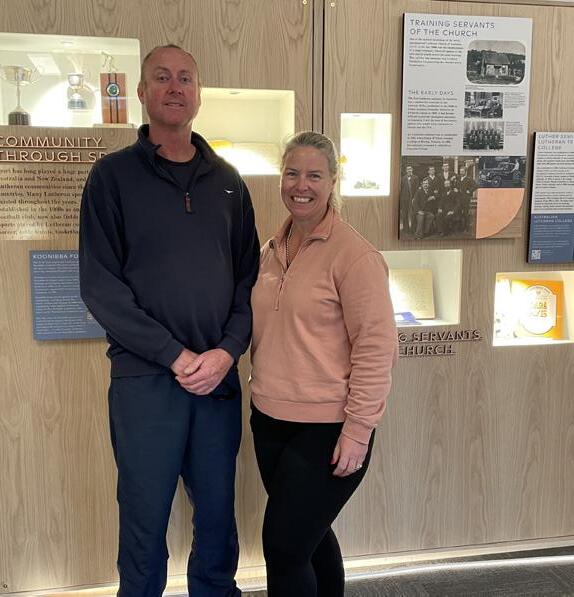
Exhibition centre welcomes visitors
Opened in time for South Australia’s History Festival, the Church House Exhibition Centre welcomed its first visitors in Adelaide in May.
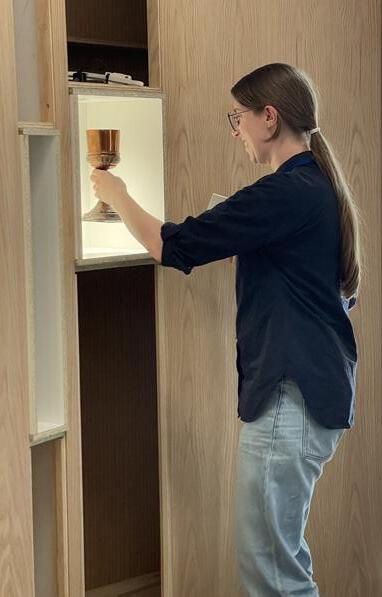
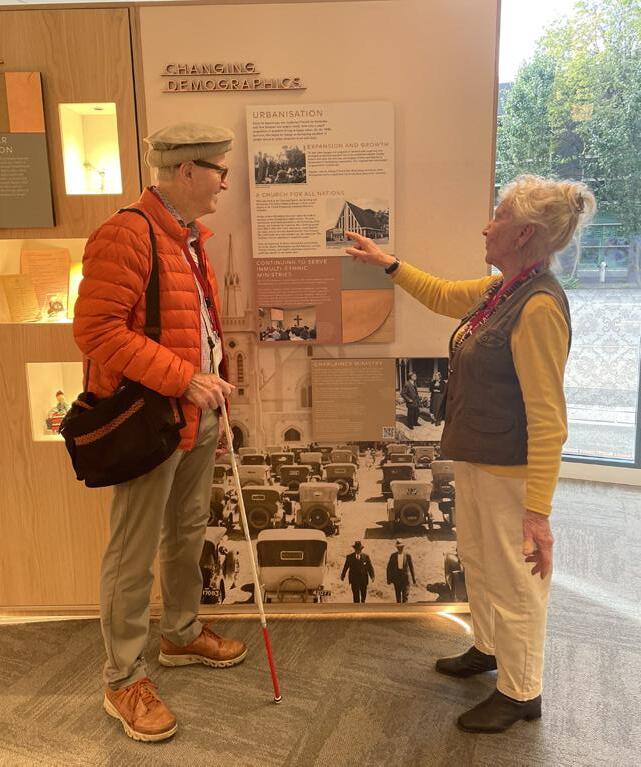
Above left: LCA General Church Board member Kelly Mathews and her husband Jason were among the first visitors after the centre opened. Above right: Lutheran Archives historian and archivist Bethany Pietsch places the first artefact into display cabinets during construction of the Exhibition Centre. Right: Volunteer Elvira Boehler-Proeve guides visitor Grant Lock through the exhibits during the festival. See also page 23.

First youth gathering at Living Faith
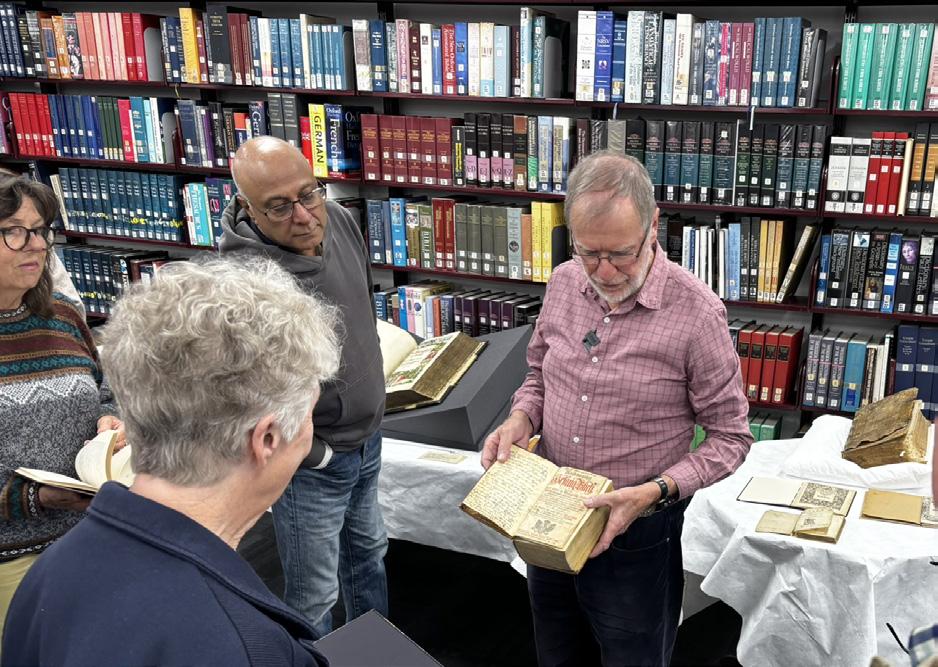
Rare treasures on display
As part of South Australia’s History Festival, the Australian Lutheran College (ALC) Library opened its rare books collection for viewings and discussions led by retired librarian Trevor Schaefer. Highlights included a 1551 Luther Bible and other significant Reformation-era works connected to Lutheran history. Approximately 40 people attended, with one session booked out.
Good News Harmonycelebrates Day
Students, staff and families from both campuses of Good News Lutheran College in Victoria celebrated Harmony Day together for the first time, reflecting the college’s 2026 theme of ‘Community’. Families shared food, performances and cultural traditions, while students read Bible verses in their own languages. The college now has more than 2,000 students across its Tarneit and Mambourin campuses.
‘Give us a heart of faith to go’
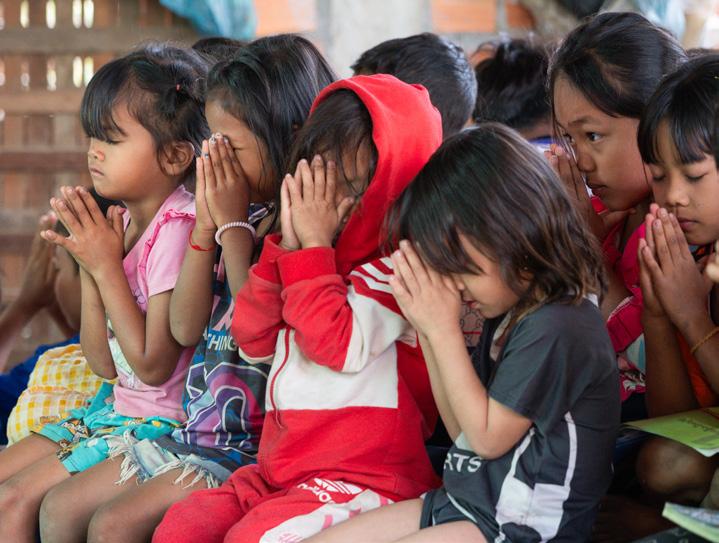
Assistant to the Bishop for International Mission, Pastor Mark Schultz, attended the Mekong Mission Forum Theological Consultation. The annual gathering brought together 40 participants from 18 countries, primarily from the Mekong region of South-East Asia. It shared stories of Christian life under pressure, including surveillance, limits on worship and the risks of expressing faith publicly. One young participant reflected: ‘We don’t ask God to take away our problems. We ask for patience, integrity and wisdom to face them.’ Pastor Mark prays, ‘May we have that same courage. God, prepare our hearts for what you have for us next and give us a heart of faith to go where you call us to go. Amen.’
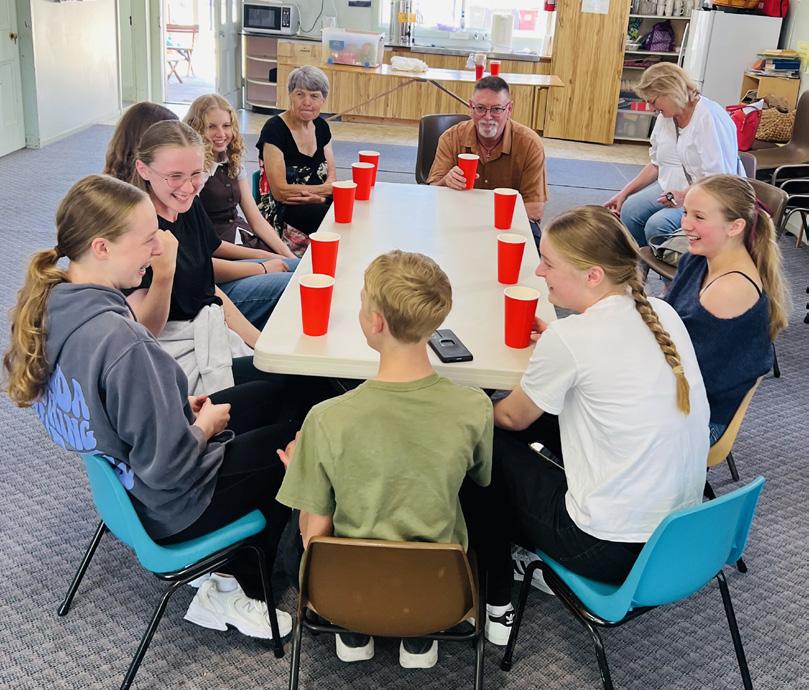
Young people from Living Faith Lutheran Church Greater Geelong in Victoria recently gathered for their first youth event, led by newly appointed Youth Ministry Coordinator Ian Weaver. The group shared lunch, got to know one another and spoke about favourite Bible passages. The ministry is supported by an LCANZ Local Mission Fund grant.
Finke River Mission welcomes new finance secretary
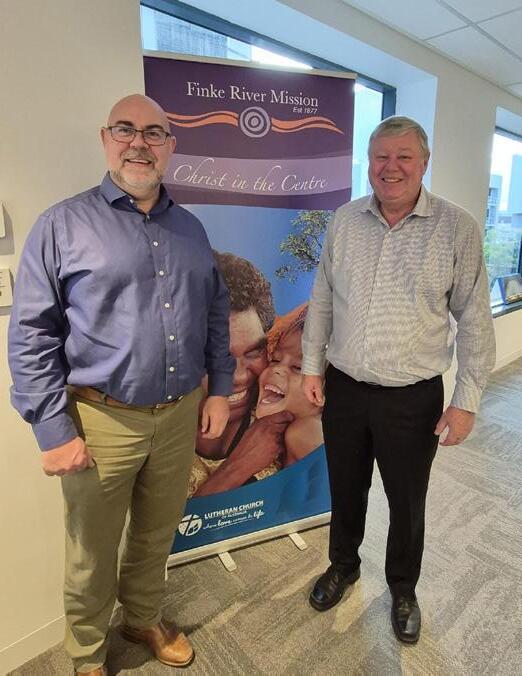
Finke River Mission (FRM) has appointed Peter Doecke (left) as its new finance secretary, taking over from Bryan Elliott (right) following his retirement after serving FRM since 2017. A qualified accountant and member of St John’s Unley SA, Peter recently travelled to Alice Springs and surrounding communities with FRM and other representatives, visiting ministry sites and meeting people involved in mission work across the region. ‘I’m looking forward to continuing to meet the inspiring people involved in mission work,’ says Peter.
Have you ever heard someone say, ‘If God is real, why is there all this suffering?’
It’s one of the most challenging questions people ask about faith. And for many, it isn’t just hypothetical but comes from lived experience.
My stepfather passed away last year after battling cancer for 27 years. For much of that time, you wouldn’t have guessed he was ill if you didn’t know him very well.
He continued to generously help others, sharing his faith along the way. Yet behind the scenes were countless hospital visits and surgeries, the anxiety of waiting for scan results, difficult conversations and the emotional toll that the years of uncertainty took on both him and my mum.
It reminded me that suffering is often far less visible than we realise. Many people carry burdens quietly, and it can be easy to assume suffering only looks a certain way – visible illness, obvious grief or public tragedy. But so many struggles remain hidden. Some people silently carry anxiety, relationship breakdowns, financial stress, caregiving responsibilities or deep loneliness. Yet they continue to show up each day as though everything is fine.
In this edition of The Lutheran, members of our Lutheran family share their experiences of grief, illness, depression, burnout and domestic violence. Their stories don’t offer simple solutions to suffering. But they do point to something deeper: the hope found in Christ and the comfort of knowing we do not walk through dark places alone.
Sharing painful experiences can leave people feeling vulnerable, particularly in church communities where they may feel pressure to appear strong or ‘faithful’. Yet honesty can become a gift to others. Stories shared with courage can remind someone else they are not weak for struggling and not abandoned by God in their suffering.
The image on this edition’s cover – a lighthouse standing firm in a storm – feels apt. As Psalm 27:1 reminds us, ‘The Lord is my light and my salvation.’ In difficult seasons, God’s people can reflect that light in the way we care for each other.
We can’t always remove suffering, answer every question or fix every situation. But we can sit beside people in dark places, listening, encouraging, praying and reminding each other of God’s presence.
Perhaps that’s one way hope is found in suffering – not in pretending the storm isn’t real, but in discovering that Christ is with us through it and that his people are, too. A lighthouse does not stop the storm. It stands within it, providing direction and hope to those navigating dangerous waters. In many ways, we are called to do the same for one another.
As you read these stories, I hope you are encouraged by the honesty of those who have shared their experiences and reminded of the hope we have in Christ, even in times of suffering.
Elise Mattiske Editor, The Lutheran
Special features
Where can we find hope in suffering?
The rhythms of grace
When words fail, faith remains
God meets us in the rubble
Holding on to hope
Preserving our Lutheran heritage
Regulars
Because we bear your name: Assistant Bishop Stephen’s Letter
Dwelling in God’s Word Congregational Life
Directory
The Inside Story Faces of Faith
Celebrating Our Story
Coffee Break
Assistant Bishop Stephen’s Letter
Because we bear your name
Because of the Lord’s great love we are not consumed, for his compassions never fail. They are new every morning; great is your faithfulness (Lamentations 3:22,23).
These are encouraging verses from the Bible. But that is all well and good – as long as things are well and good. What about when they are not?
What about the times you encounter a litany of things going wrong? What about the days when you wake up and can’t see the point in getting out of bed? What compassion and mercies of God are new on those mornings?
These words from Lamentations were written in the heart of a lament – when things were certainly not ‘well and good’ for God’s people. The original Hebrew title of Lamentations is Ekah – the first word used in the book.
The English translation of this word is ‘how’. We read at the outset: ‘How deserted lies the city, once so full of people! How like a widow is she, who once was great among the nations!’ (Lamentations 1:1).
We miss this structure in our translations, but God’s suffering people would not have.
Their attention was drawn to the heart of the lament, where they heard: ‘Because of the Lord’s great love we are not consumed, for his compassions never fail. They are new every morning; great is your faithfulness.’
Jeremiah used a literary device to draw God’s people to find hope amid their suffering. Centuries later, God sent his Son, Jesus, to literally provide hope in the heart of our suffering.
We can find hope in the heart of our suffering because we find Jesus there.
We can find ourselves asking why suffering happens, but lament firstly recognises how this suffering impacts us. For example, as you grieve the loss of a loved one, you feel how different life will be without them.
The prophet Jeremiah (who wrote Lamentations) sat in this space of how different things were for God’s broken, exiled people. There seemed to be no hope for them. How could they speak of God’s great love and his unfailing compassion at such a time? Yet Jeremiah did – and he did so at the very heart of the lament!
The Book of Lamentations has five chapters. Chapters 1, 2, 4 and 5 all comprise 22 verses, but chapter 3 – at the heart of the lament – has 66 verses.
‘Lord Jesus, we belong to you, you live in us, we live in you; we live and work for you because we bear your name’
Jesus became flesh and dwelt among us in our suffering – to suffer himself. His death on the cross does not answer all our ‘why’ questions. Even Jesus posed a ‘why’ question from the cross: ‘My God, my God, why have you forsaken me?’ (Matthew 27:46).
Jesus’ presence in our suffering shows us how deeply God loves and cares for us. We can find hope in the heart of our suffering because we find Jesus there.
Now we can reflect on how different things are for us because of what Jesus has done. Our future is safe in God’s hands. His compassions never fail; they are new every morning!
God’s love and mercy are here for us this day, as they are every day. He has not forsaken us in the past, and he will not fail us in our future.
Even in our suffering, Jesus is our hope and our salvation – and he always will be!
In Christ,
(LCANZ Bishop Paul Smith is currently on rest and refreshment leave.) Stephen
Rev Stephen Schultz
Assistant Bishop, Lutheran Church of Australia and New Zealand