















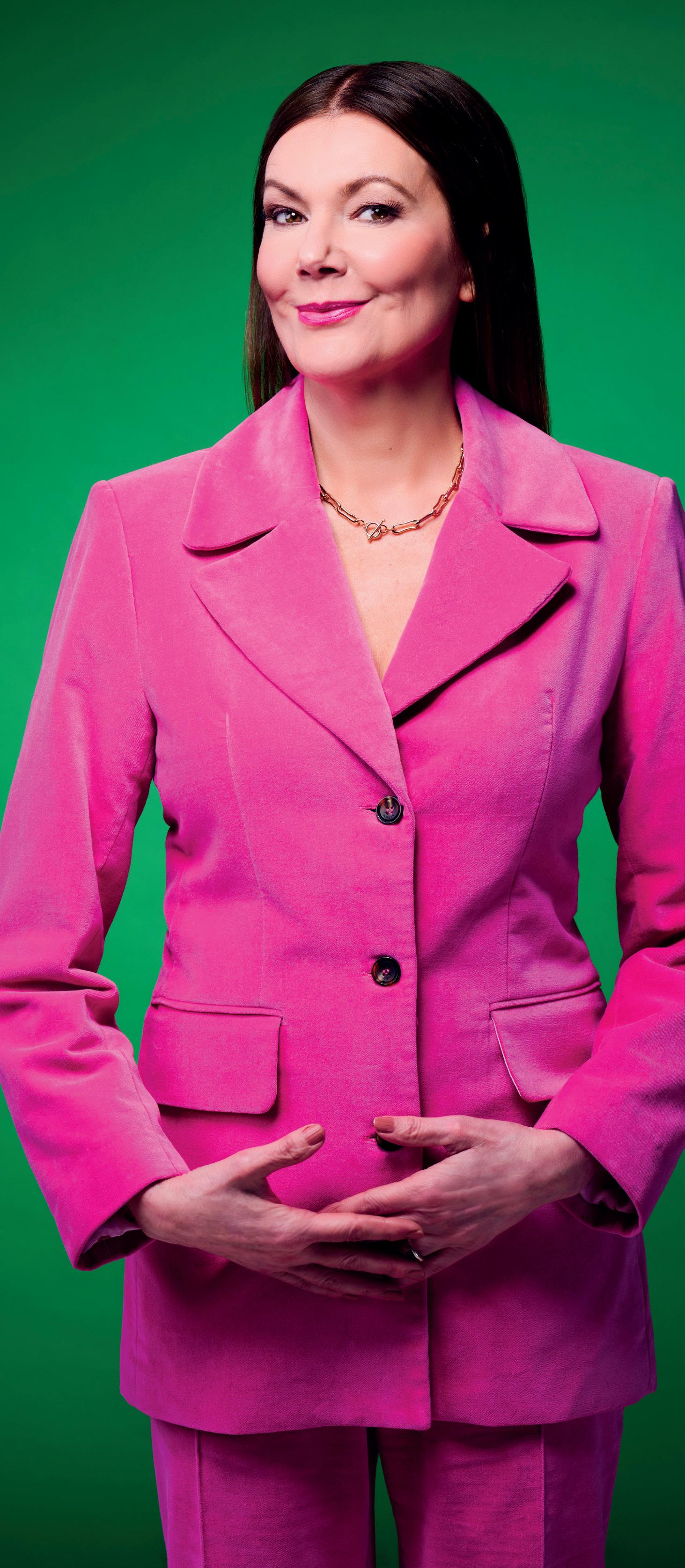
Glasgow is a unique and special city. Yes, it has a bunch of problems (where doesn’t?) but when it’s on its game, the Dear Green Place is red hot. With Edinburgh set to dominate cultural conversations in August, it made sense to focus a bit more on the west across this double-month mag. The Commonwealth Games (wonder if anyone has ever pitched a new title for this event?) will be having its moment in Glasgow again and the accompanying cultural programme has some heavyweight highlights: Turner Prize-winner Jasleen Kaur gives us Superstructure which questions the city’s economic models past and present, while Surge takes the creative fight onto the streets.
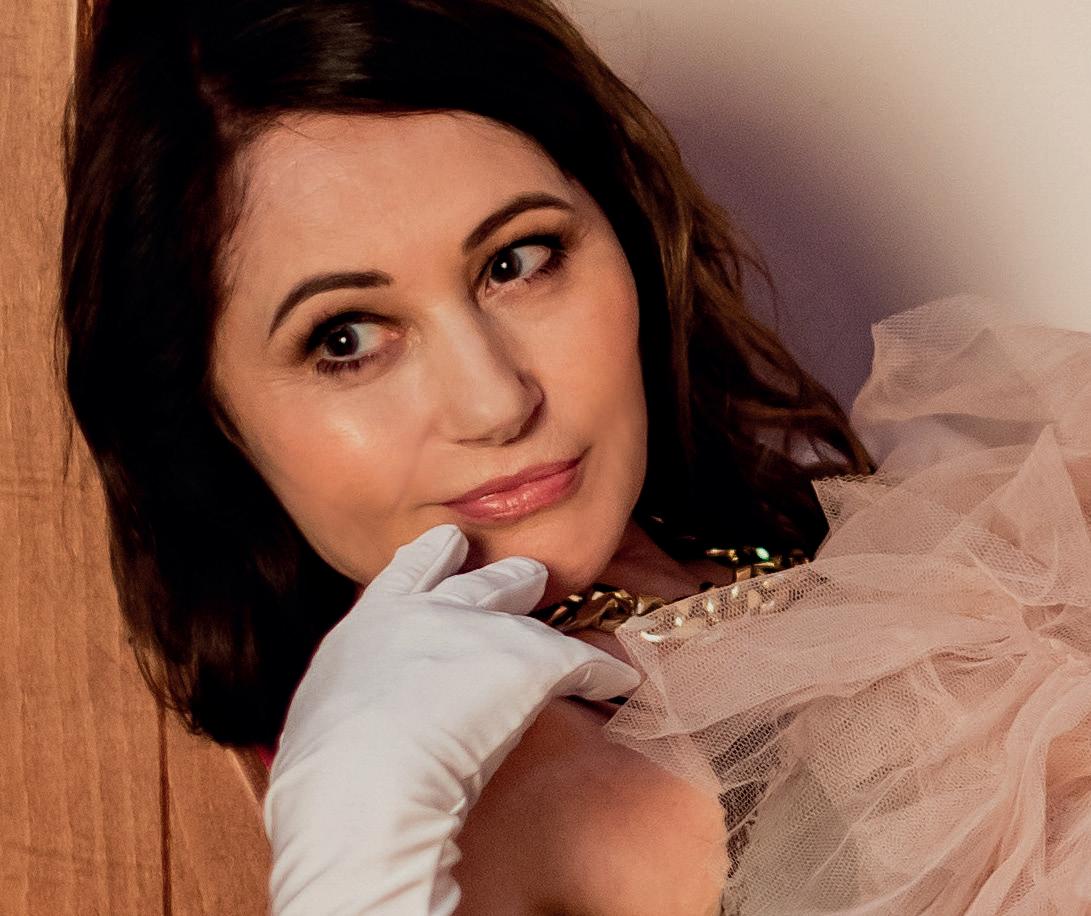
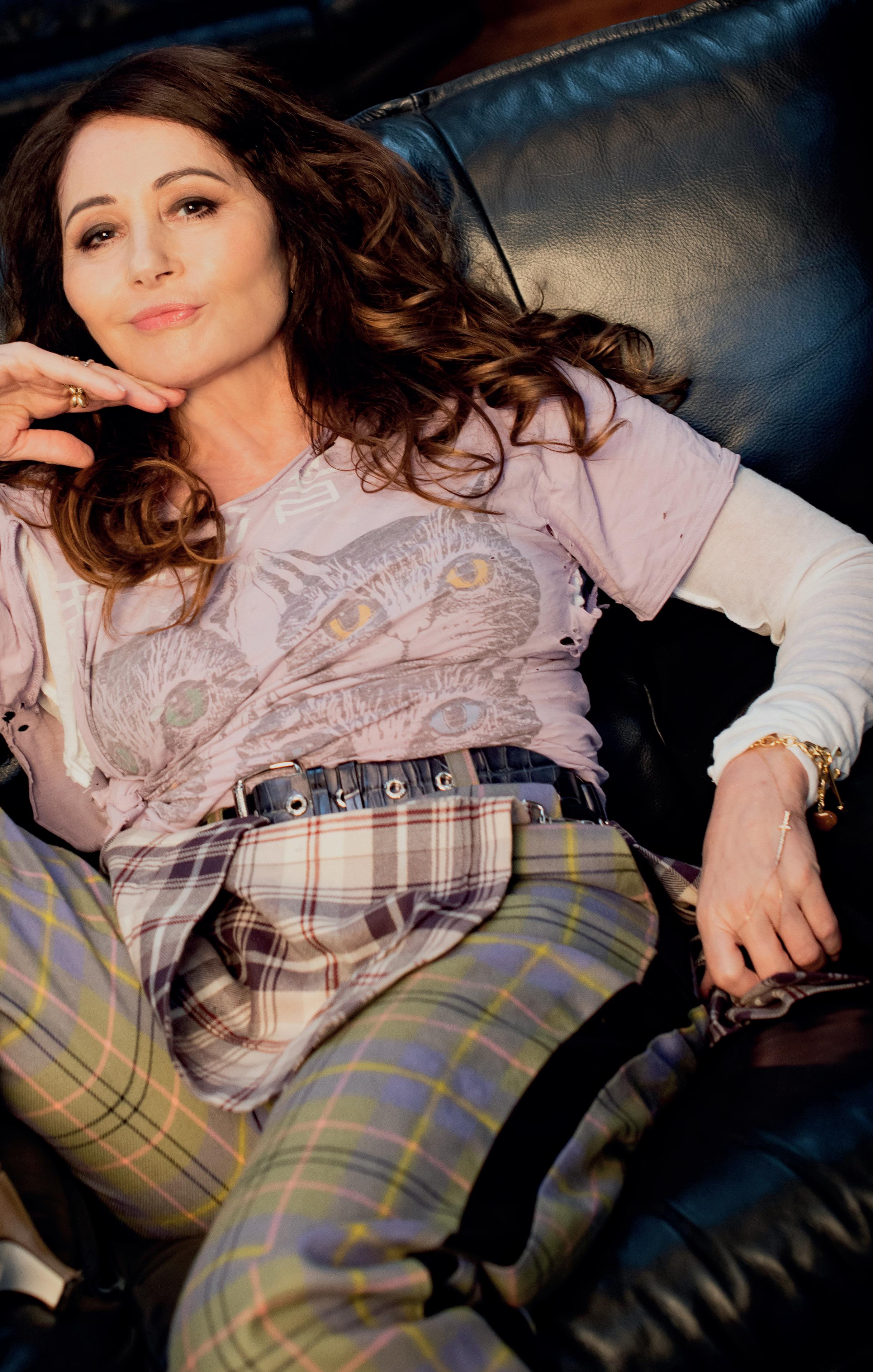
Among the other Glasgow treats in this issue are the city’s beloved poet Edwin Morgan, another slice of evidence that Glaswegians love Italian food, a Gaelic ceilidh, concert and workshop, our Future Sound subject Radhika who insists that she’ll live in Glasgow forever, community dance work Horses, and a potent Goma exhibition from Jasmine Togo-Brisby. We’re also taking a trip to Perthshire with two features on the outstanding programme coming straight out of Pitlochry: our cover star Frances Ruffelle discusses Jean Cocteau and Alan Cumming, while Maureen Beattie dips into the dark side with a fresh and bloody take on King Lear
Our reviewers have been having fun recently with an array of exciting work such as the darkly comic Teenage Sex And Death At Camp Miasma starring Gillian Anderson and Hannah Einbinder, the Catwalk exhibition which is proudly stepping out at Dundee’s V&A, an informative but also funny podcast from Suzi Ruffell, an Outer Hebrides-inspired album from Lambchop and a novelistic take on an ill-fated Scottish project. And no, I’m not referring to the men’s World Cup campaign . . . *
Brian Donaldson EDITOR
*this was written the day after Brazil gubbed Scotland so if a football miracle has subsequently happened, I’m delighted to have been proven premature

Santini
Thomson, Ailsa Sheldon, Allan Radcliffe, Brian Donaldson, Carol Main, Claire Sawers, Danny Munro, David Kirkwood, Dominic Corr, Donald Reid, Emma Simmonds, Fiona Shepherd, Greg Thomas, Isy Santini, James Mottram, Jennifer McLaren, Kelly Apter, Kevin Fullerton, Lucy Ribchester, Marcas Mac an Tuairneir, Mark Fisher, Megan Merino, Murray Robertson, Paul McLean, Rachel Morrell, Rob Adams, Suzy Pope, Vic Galloway, Zara Janjua




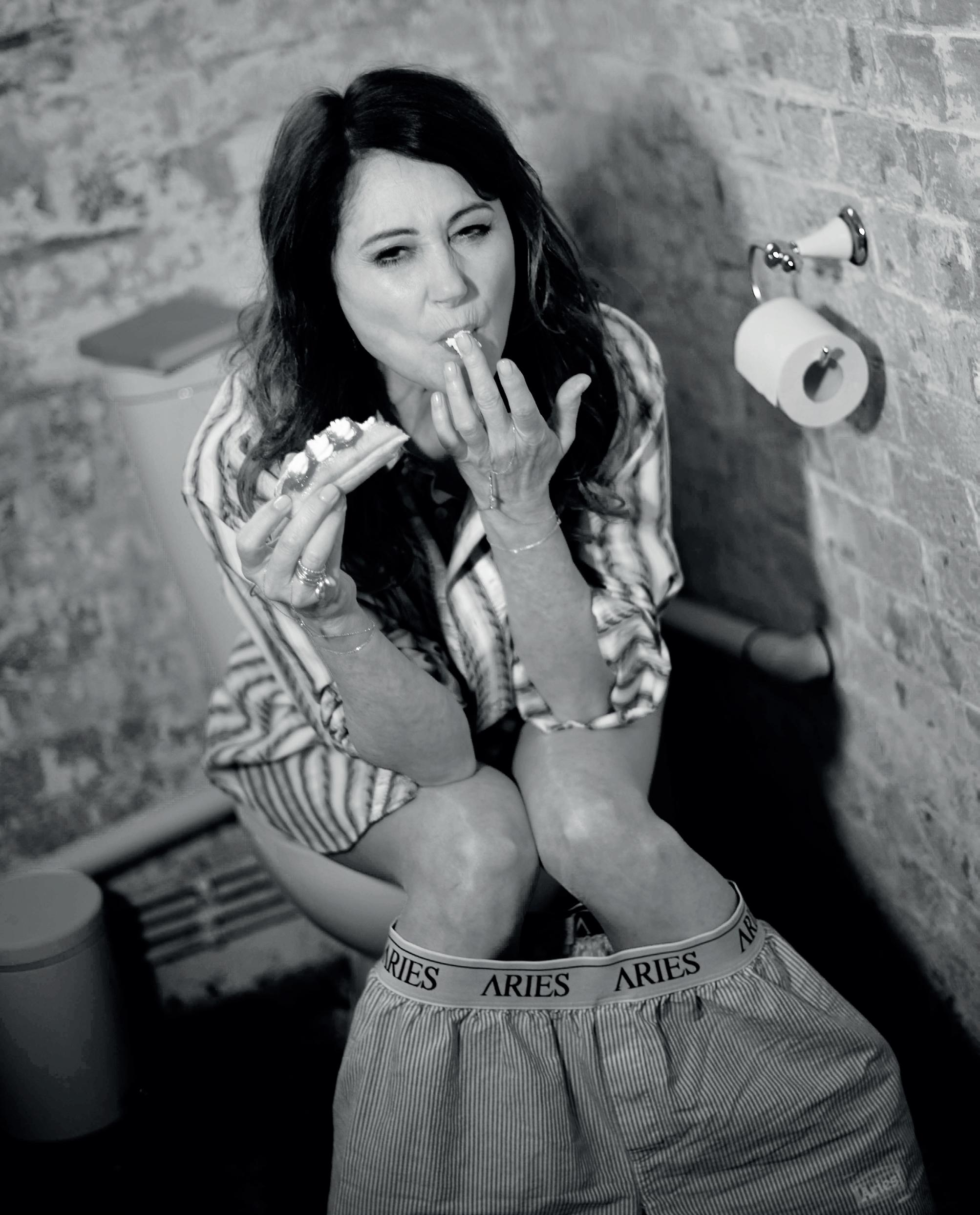
As overnight sensations Geese head to Barrowlands this August, the poor loves have had to weather accusations of social media jiggery pokery and of being ‘industry plants’. Our regular columnist Kevin Fullerton makes a few admissions about his own dramatic part in their rise to prominence
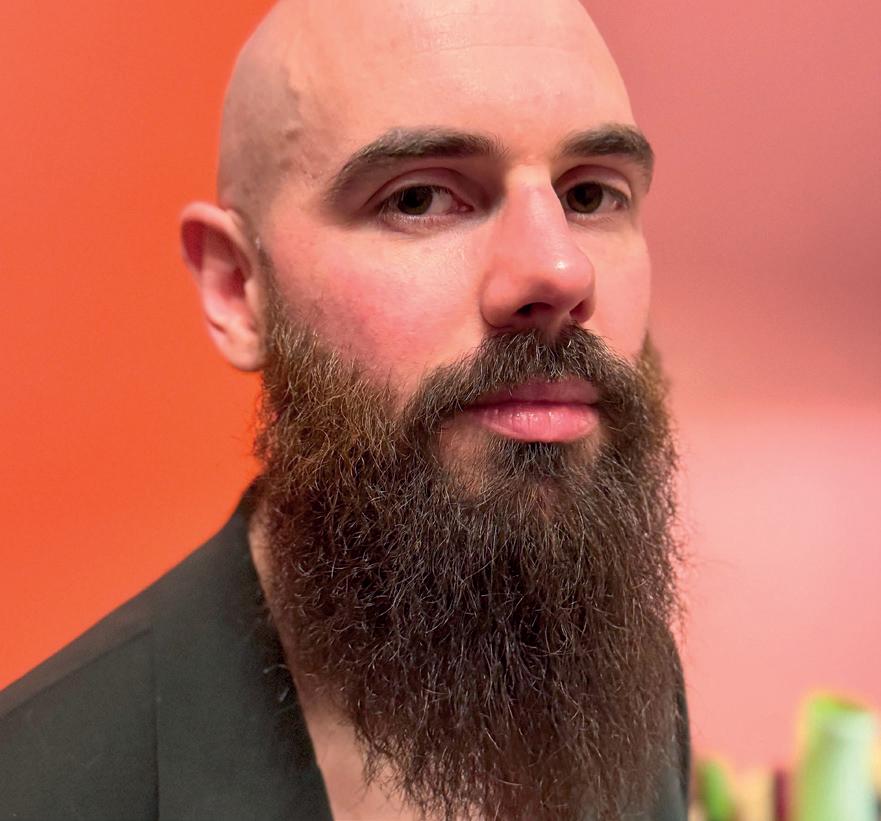
Forget the internet hyperbole: Geese were no industry plant; nor were the scales tipped in their favour by calculated social media campaigns. And nor were they the result of middle-aged music executives desperate for the alt-rock of their youth to surge back into the mainstream. Only I know the true origin story of Geese. For it was I who invented them . . .
I devised the band name after watching a late-night Channel 4 documentary called Avian Rocks in which Danny Dyer, Nile Rodgers and Goldie attempted to teach four birds rudimentary guitar music. Determined to create a band of my own, I retreated to a small garden shed I rent from a pockmarked retiree in Penicuik (we operate on a ‘cash in hand, no questions asked’ basis). I began by making my floppy-haired lead singer, Cameron Winter, from pipe cleaners, a loose-fitting t-shirt purchased from Primark and a large Vileda mophead from Home Bargains.
The rest I fashioned in much the same way, taking inspiration from a 2006 issue of NME and photofits of Charles Manson. I travelled to Camden to harvest some brains and, before spearing them onto their pipe cleaner bodies, injected them with promethazine to ensure they were medically incapable of smiling in press shots. But how to compose an entire album of indie-rock throwaways? That was easy: I simply put

. . . a whole heap of music, it turns out. First up, though, in non-sonic matters, Joe Alwyn, Anjana Vasan and James McArdle are among the acting types who have signed up to appear in a BBC adaptation of John le Carré’s A Legacy Of Spies. Brace yourself as the final Jackass movie is upsetting sensitive folk in cinemas as we speak, Johnny Knoxville putting all common sense aside for the Best And Last time, and J-Lo stars opposite Brett Goldstein in Netflix movie Office Romance (wonder what that’s about?). Right, cop a load of this pile of J or A people with music coming out and/or venues to play in as part of a tour. Actress Alicia Witt joins forces






the discography of Radiohead in a blender with a selection of Grizzly Bear’s greatest hits. For lyrics, I fed printouts of Jack Kerouac and Allen Ginsberg’s beat poetry to a highly trained Pekingese; whatever order it excreted the words, those were my lyrics. I then invited a group of influencers to my shed, offering them one selfie with the hottest band of the year in return for six months of positive coverage. As with all influencers, they were alarmingly delighted to work for free.
Imagine my surprise when Geese blew up on social media beyond my wildest dreams. As it turns out, all you need to be the future of rock is to sound like its very recent past. Had my tinkerings inadvertently tapped into the time slip that’s defined the past few years of contemporary rock, one that simply revives the 90s and mid-2000s in the manner of a creaky tribute act? Perhaps.
Either way, now I’m stuck. Amidst mounting success, I’ve had to hire a crack team of puppeteers to help Geese perform live, while scrawling Jim Morrison-esque screeds for my fictitious frontman to recite on the radio. I have become a manufacturer, expanding my shed to the size of an AI data centre. The retiree I pay is less than pleased and has told me it’s getting in the way of his tomato plants. If you think orchestrating the success of an indie rock sensation is easy, then think again: I’ve just run out of pipe cleaners.
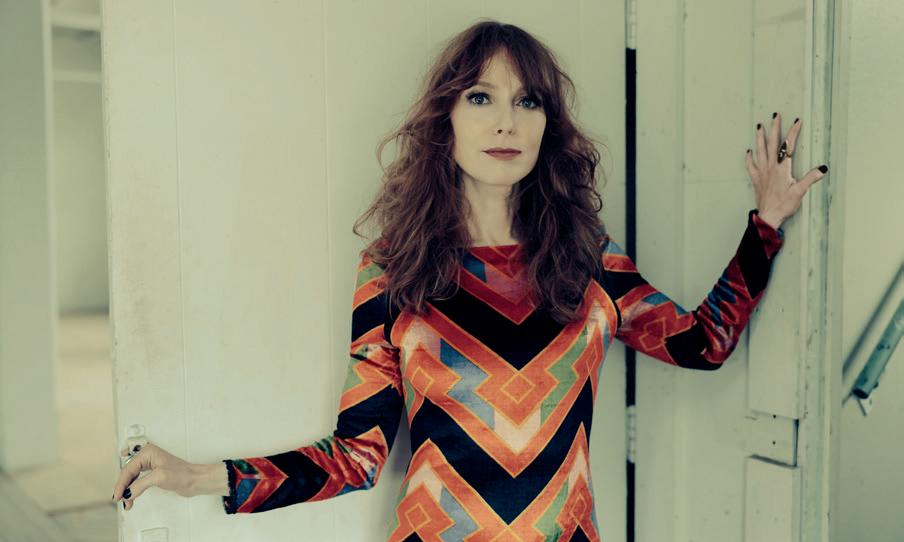
with producer Joe Henry for an album which pays homage to the late David Lynch while Jack White is back with a seventh solo effort. Meanwhile, mono-monikered acts
Anyx, Alewya and Aifric do their recordreleasing bit for the first letter of our alphabet while Finland-born and Mexico-raised Joalin is set to unleash a new EP, Perspective, which merges the stark stillness and vibrant rhythms of those twin locations and influences. And finally, a couple of delightful double point scores to be noted down as Julia Jacklin announces an autumn album, The Gem, and Paris-based Acid Arab mix electronica with Middle Eastern aesthetics on fourth studio record, Resonance.
With the longest day of the year behind us and Edinburgh’s festival season just around the corner, it’s time to fully embrace our final business-as-usual mag of this red hot summer. Featuring music by Yard Act, Lambchop, Steven Osborne, Overmono, Radhika and Patti Smith, dive in to hear what this two-month issue has to offer.
Scan and listen as you read:

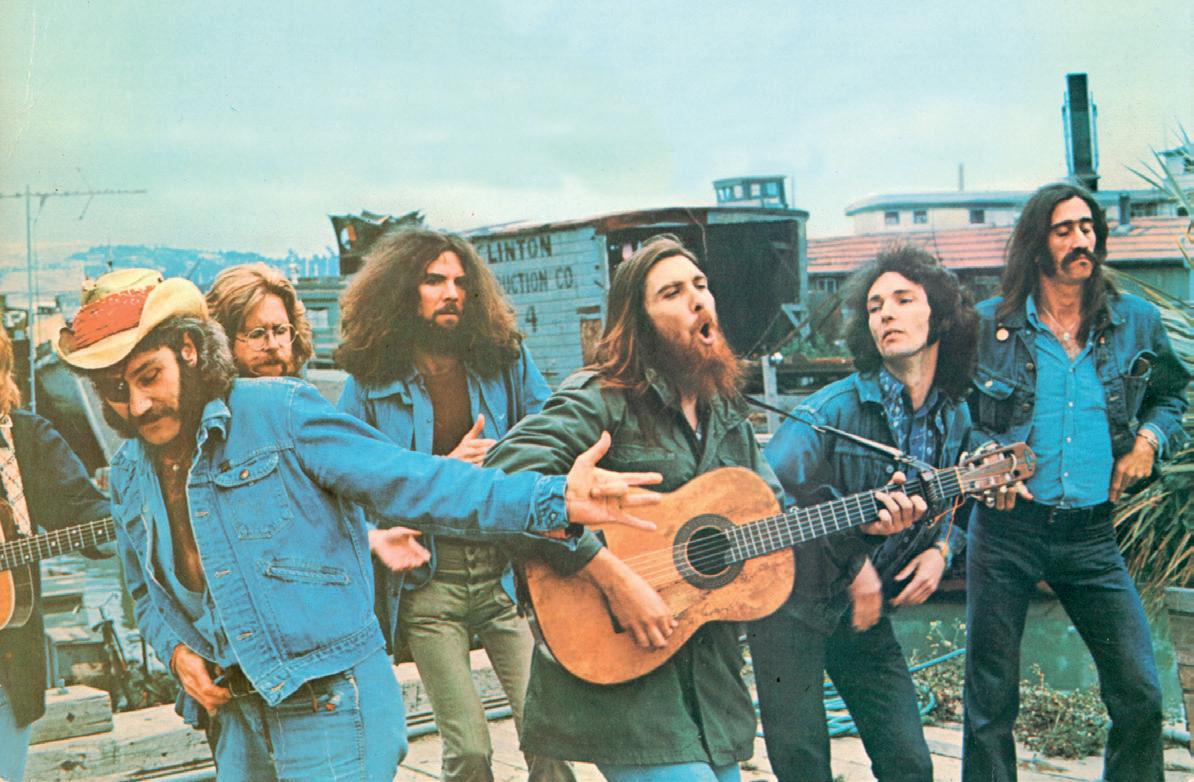
Ok, so it’s debatable whether the image here could be considered ‘wholesome’. For one time only, perhaps the column could be renamed Compelling Image Of The Issue. Your eyes are currently falling on the promo shot for Dr Hook And The Medicine Show from circa 1973 which is back in the ‘news’ as the cover of a doorstopping double CD which has just been released featuring no fewer than five albums. The image contains multitudes: a frontman no doubt playing the most succulent of major chords while all manner of highly committed air acoustic guitar playing and double denim thrusting in various directions goes on around him. Wholesome? Not so much. Seared on the brain forever? Certainly.
In this series of articles, we turn the focus back on ourselves by asking folk at The List about cultural artefacts that touch their heart and soul. This time around, Zara Janjua tells us which things . . .
Made me cry: In a bid to drag myself out of winter hibernation, I started an evening ritual involving long walks through Inverleith Park while discovering new music. Glasgow singer-songwriter Orla Noble’s Unfurl absolutely poleaxed me. Haunting, melancholic, devastatingly intimate. ‘Hold Me’ had me staring into the middle distance like I’d been recently pied.
Made me angry: Full disclosure . . . I had a small role in episode two of Half Man. But watching it as an ordinary punter, I found myself furious at how we normalise male toxicity. We discuss its impact on women, but the emotional brutality men unleash on each other is how the whole rotten ecosystem sustains itself.
Made me laugh: In a world currently feeling like it’s being run by angry toddlers with nuclear codes, I find young politically engaged voices oddly reassuring. ScottishPakistani comic Ifrah Qureshi is one of them. I’ve seen her at The Stand: razor-sharp, brilliantly observational and funny enough to make mascara a high-risk choice.
Made me think: I arrived at Beltane knowing very little about paganism and left knowing, if anything, less. There were Shrek-like guardians protecting an onion from goblin seagulls, a May Queen, a Green Man and glorious fire-fuelled chaos. Yet the TikTok I posted drew hundreds of thousands of fascinated Americans craving this modern Scottish ritual.
Made me think twice: I’m usually a modern boutique hotel person. Sharp edges, good lighting, somewhere within stumbling distance of decent coffee. But Mar Hall changed my mind. This grand old dame, once a wartime hospital linked to prosthetics innovation, has had a £20m glow-up. History, spa robes and a hint of Kylie Minogue? Consider me converted.
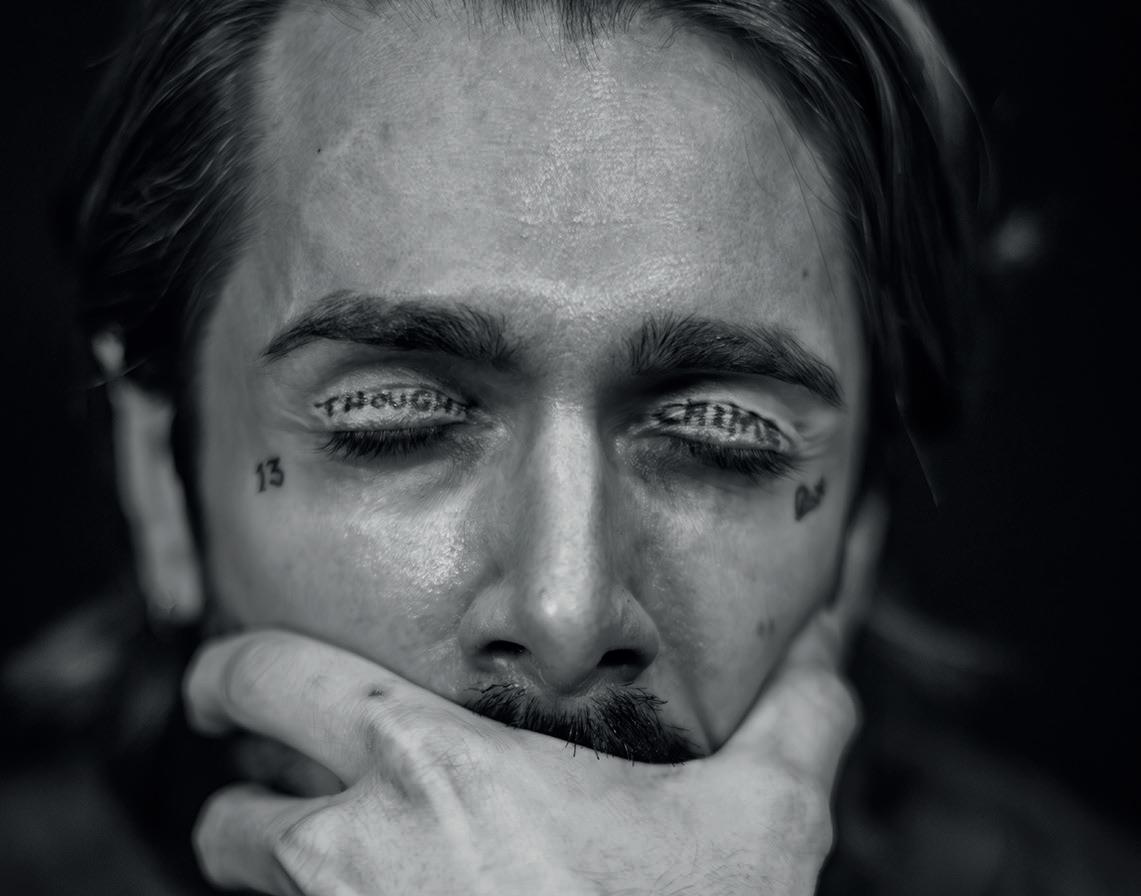
ScreenList recommends can’t-miss screenings coming soon to Edinburgh’s Filmhouse. We’ve got Raymah Tariq, programme manager for Filmhouse, highlighting the best hits of their We’ve Got a Cinema And We’re Not Afraid To Use It programme and Harry Dean Stanton Centenary.
DRUNKEN
In June, I highlighted that we were playing Umbrellas Of Cherbourg as part of our Big Birthday programme. Serendipitously, a video that always puts a smile on my face appeared on my feed shortly after – Malcolm and John David Washington in the Criterion Closet. Malcolm discusses Umbrellas... and about ‘artists in dialogue,’ referring to Agnes Varda and Spike Lee. Then John says: ‘Jackie Chan boxset, you know what I’m saying!’. It lives rent free in my mind. An opportunity to double bill them as part of the We’ve Got A Cinema And We’re Not Afraid To Use It strand could not pass me by!
n Drunken Master is screening on Sunday 5 July.
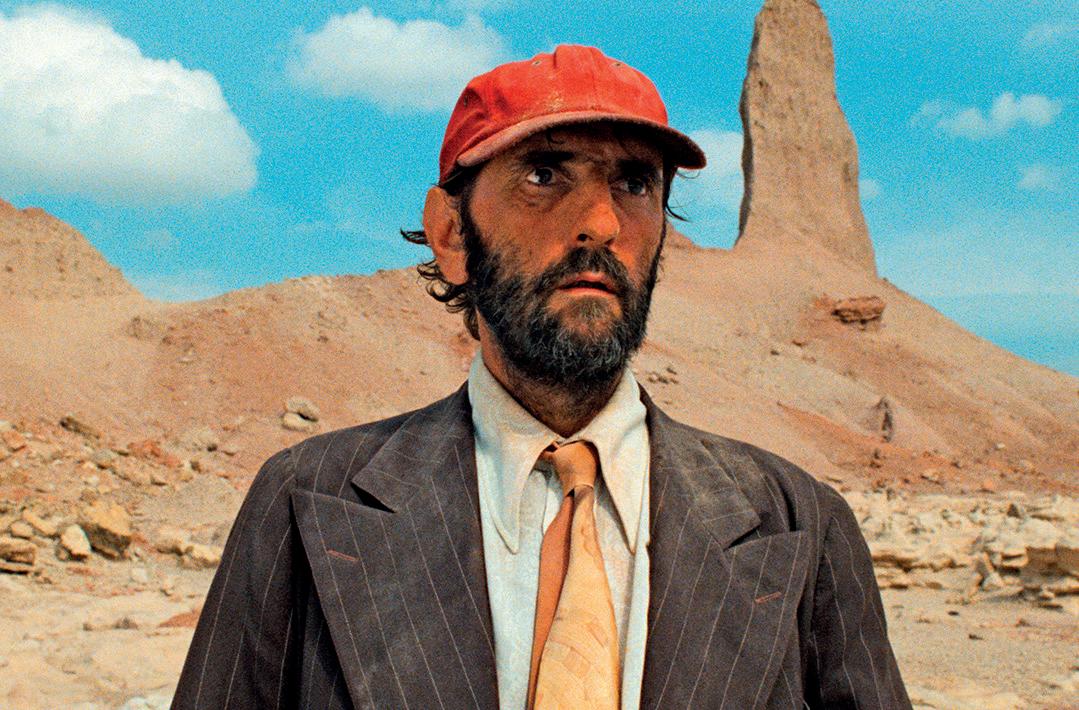
PARIS, TEXAS
Beautifully crafted in every sense, from its performances, photography and soundtrack, Paris, Texas is a tragic modern Western which captures melancholy like no other.

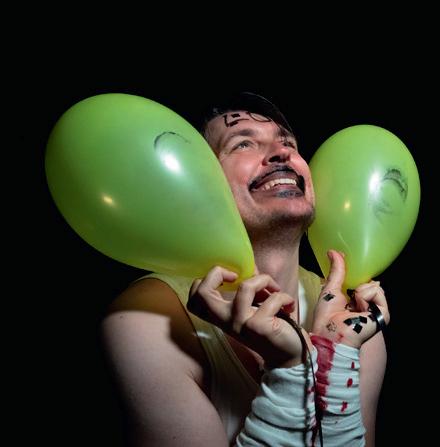


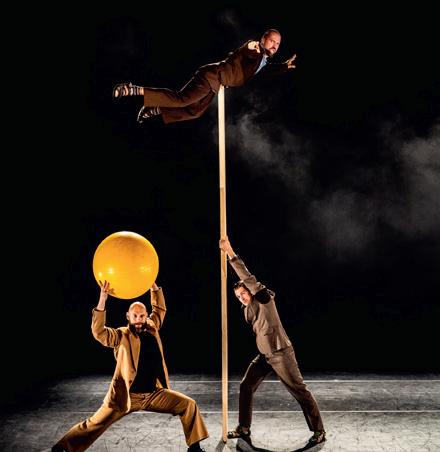




Playing as part of our Harry Dean Stanton Centenary, this film will be on Screen One on Stanton’s birthday. And whilst I’m at it, don’t miss the chance to catch Lucky, the actor’s swan song, which has now fallen out of UK distribution, meaning chances to watch this in a UK cinema will be quite rare.
n Paris, Texas is screening on Tuesday 14 July; Lucky is screening on Sunday 19 July.
One of my biggest pleasures as a programmer is watching a film at home that knocks my socks off, then immediately finding a way to programme it. In fact, we conceived of We’ve Got A Cinema… for this purpose, and would recommend checking out this strand for more of the Filmhouse staff team’s picks.
Address Unknown is a haunting anti-fascist noir from 1944 which follows a friendship being driven apart at great cost due to the rise of the Nazi regime. Directed by William Cameron Menzies (who was more well known for being a pioneer of production design) and photographed by one of the all-time greats, Rudolph Maté, this film is surprisingly a bit of an obscurity but has some of the most striking imagery I’ve seen in a noir.
n Address Unknown is screening on Wednesday 29 July and Sunday 2 August.
In partnership with


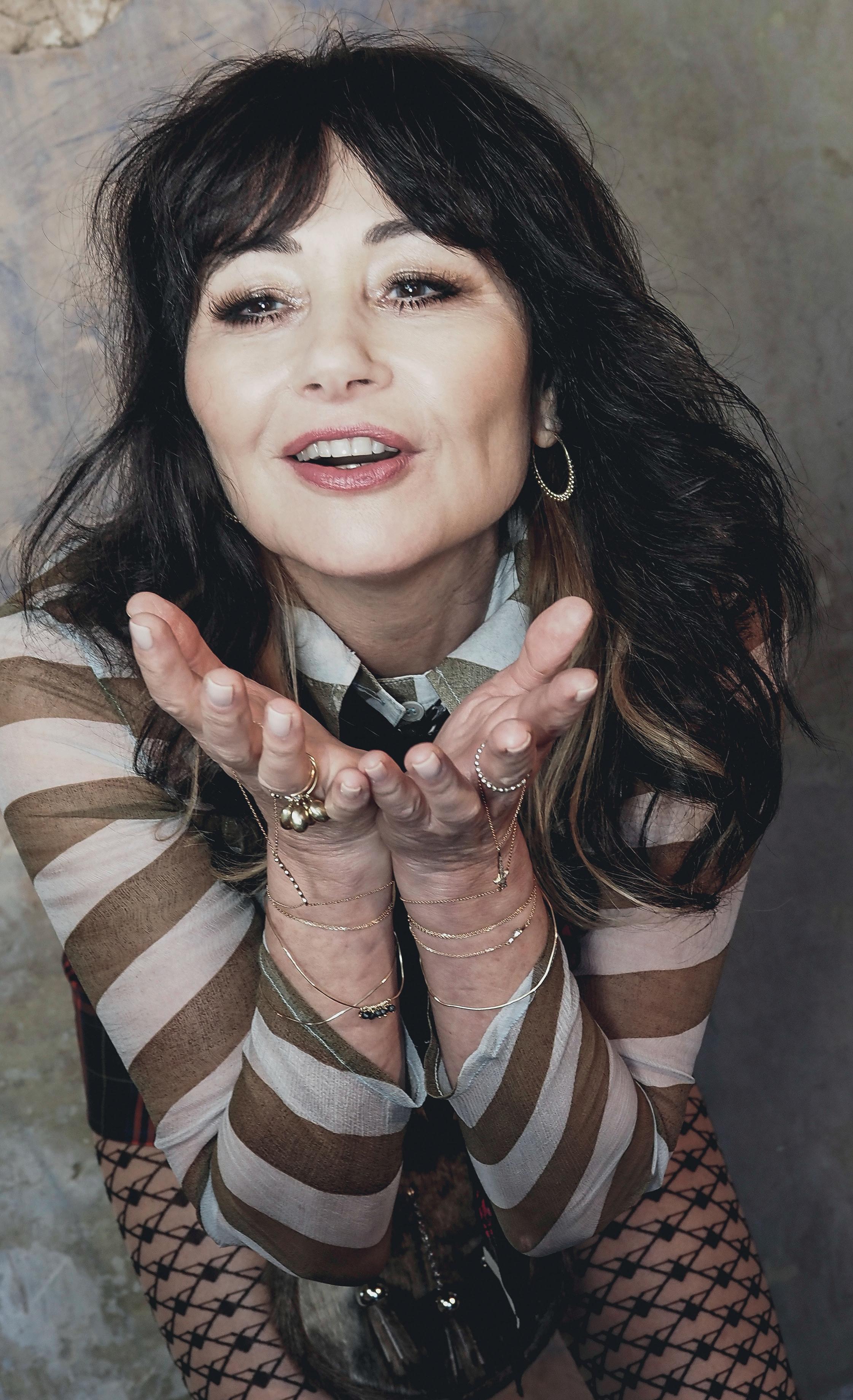
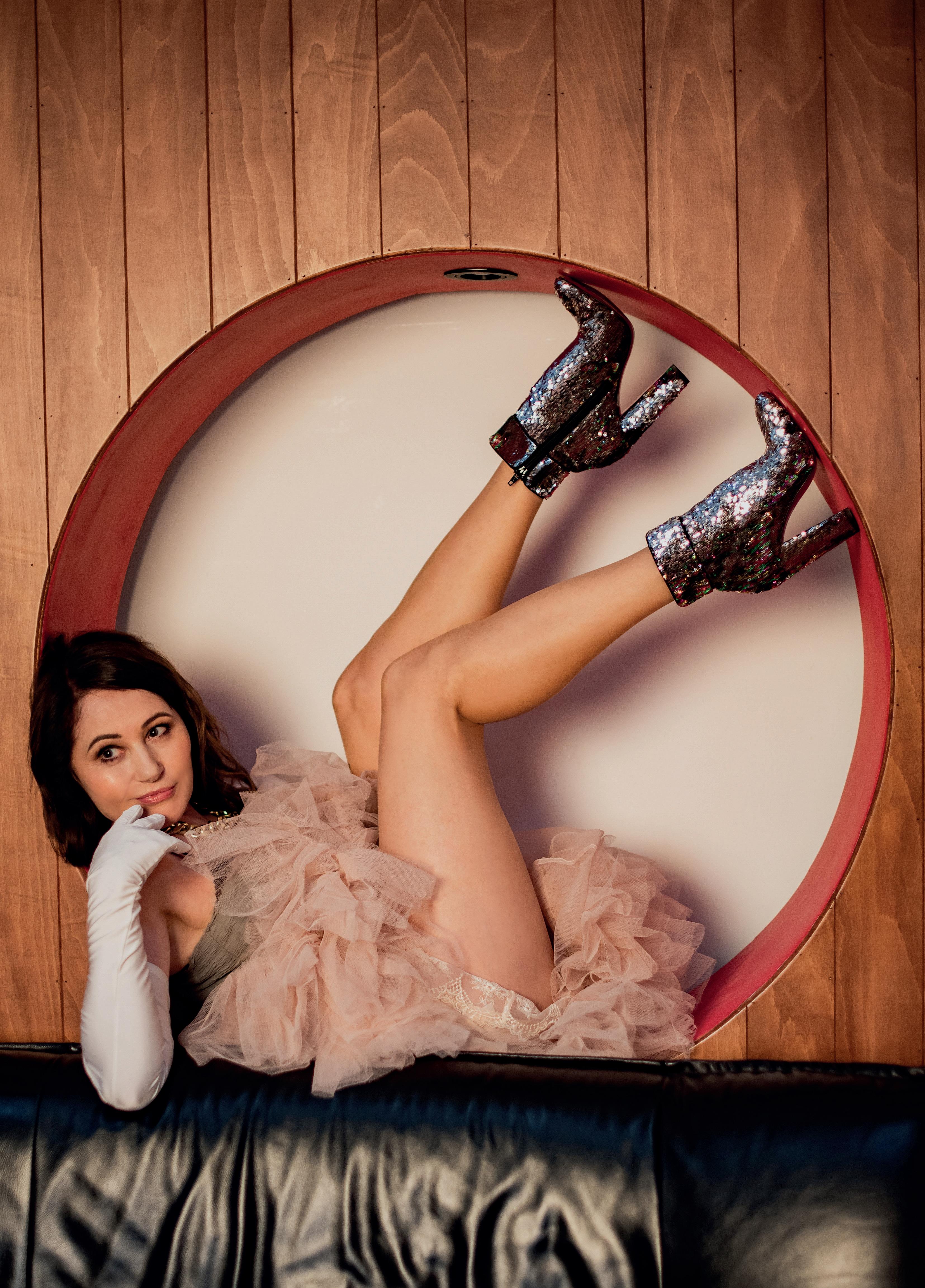
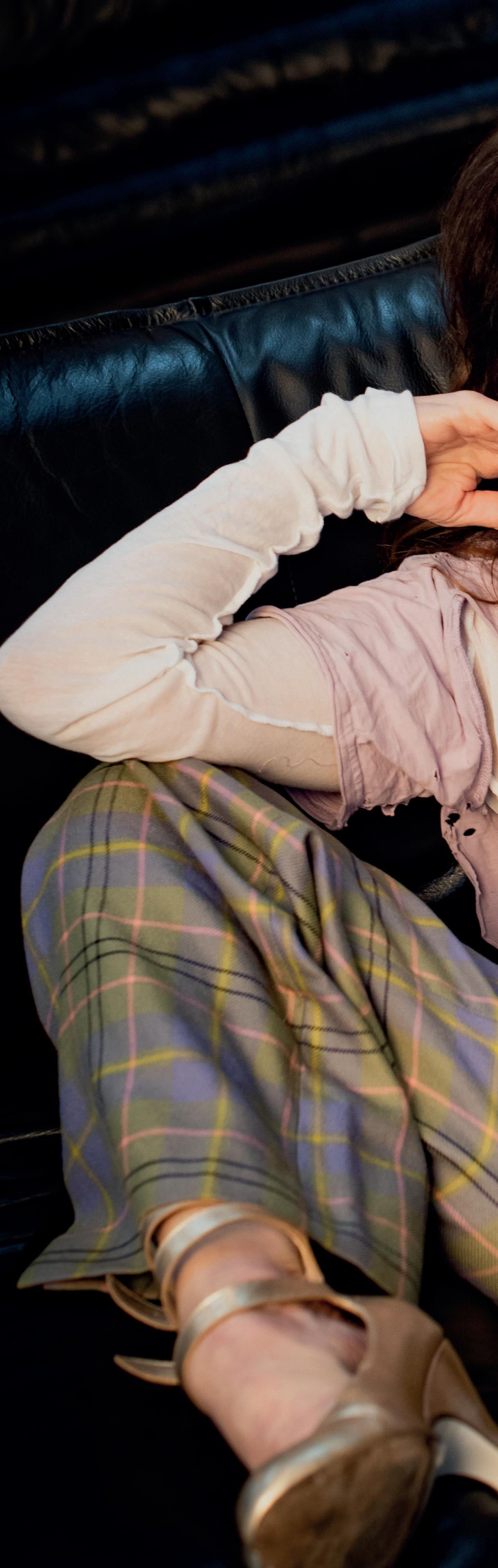
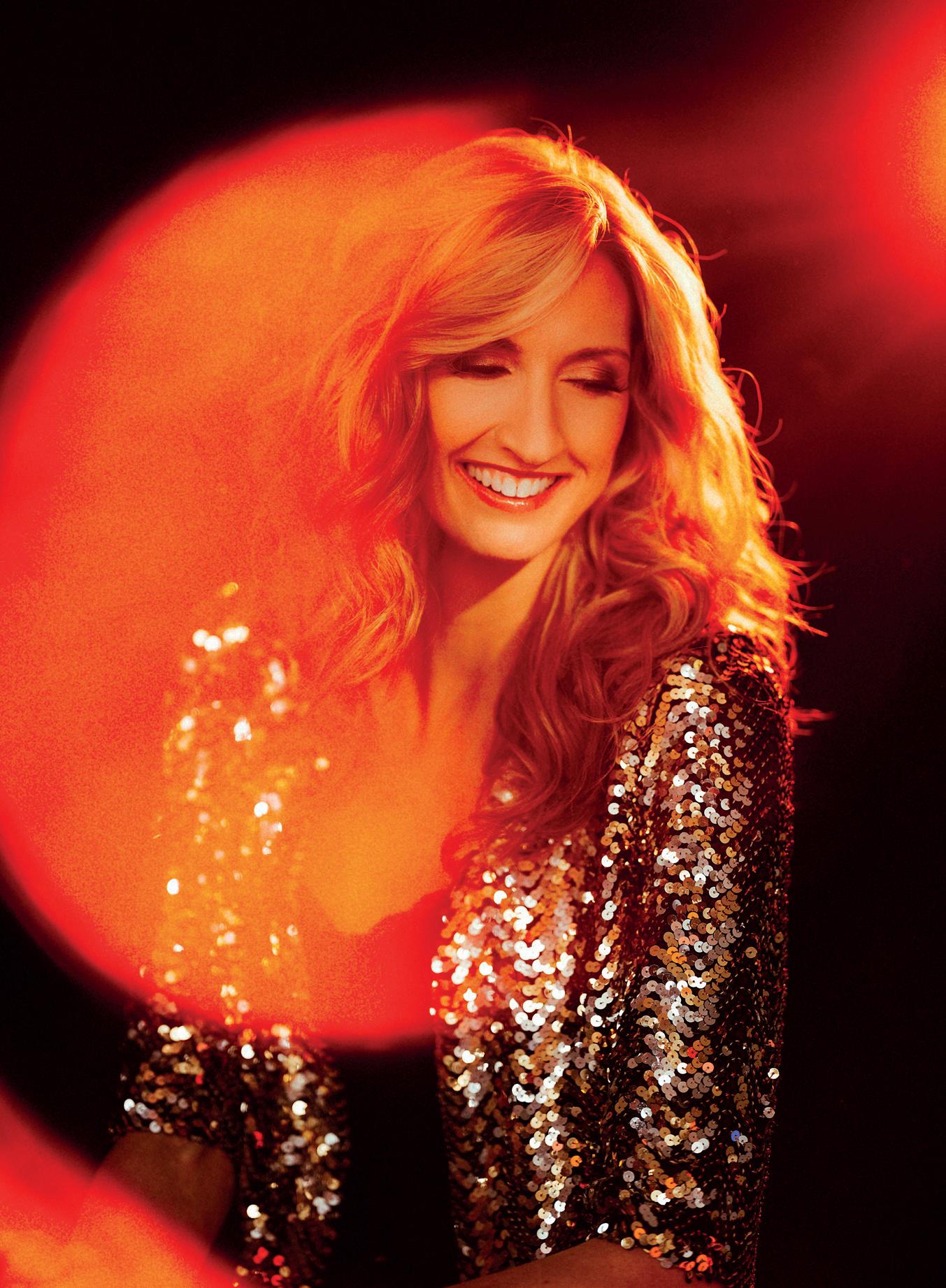
She’s a West End star and Tony Award winner, but Alan Cumming had to work his socks off to persuade Frances Ruffelle that she could write too. With the fruits of her labour set to debut in Pitlochry, Ruffelle looks back on the show’s seven-year creative journey and tells Kelly Apter how Cumming’s belief in her has been life-changing









When somebody says no to you, it usually means a hope or dream is being quashed. Not so with Alan Cumming and Frances Ru elle. When these two darlings of the West End and Broadway teamed up for a creative project in 2019, Cumming put his foot down in the face of Ru elle’s insecurity. ‘The people at New York Theatre Workshop had seen my one-woman show on Broadway and liked it,’ explains Ru elle. ‘So they asked me to bring them an idea for one of their residential workshops. I also needed to bring a director with me, so I asked Alan and said we’ll have to nd a writer to come on board with us. But he said, “no, no, no, we’re writing this together”.’ And so the journey to I Can Die Too began.



If Cumming’s inaugural season at Pitlochry Festival Theatre is a basket marked ‘goodies’, then this play with music is a cake baked to perfection and ready to slice. Seven years in the making, I Can Die Too is inspired by Jean Cocteau’s 1930s theatrical monologue La Voix Humaine (The Human Voice), in which a woman talks on the phone to her lover the day before he’s due to marry someone else. The aforementioned idea Ru elle took to New York Theatre Workshop was a kind of ‘play within a play’ in which an actor attempts to stage The Human Voice but keeps falling apart during rehearsals as it’s so reminiscent of her own life.

‘I was given the script by a friend who thought I’d be good in the role,’ she explains. ‘And I thought, “I’d love to do this but only if I could stop the play and tell the audience what I really thought of her”. And that’s when the idea came to me to actually write it about someone being in rehearsal with that character.’ Acting and singing have come as naturally as breathing to Ru elle since childhood (as a daughter of the late stage-school doyenne Sylvia Young, how could they not?) but writing was a whole other matter. She recalls being ‘absolutely petri ed’ at the prospect of co-writing her rst play, but with Cumming by her side the mountain felt less steep. That is, until he had to step o it.

writing was a whole other matter. She recalls being ‘absolutely petri ed’ him recently
‘Alan and I were born in the same year, and when we wrote together we were literally nishing each other’s sentences. We were so on the same page, and it was incredible to be creative with him like that. But because Alan is a big superstar and he’s so busy, I couldn’t wait around forever. So he asked me if I wanted someone else to come on board as a collaborator. He was very happy for the play to continue; he just seriously didn’t have the time.’ Enter Sally George, who helped Ru elle nish the piece. But, of course, one of the reasons Cumming has been hectic recently is his artistic directorship at Pitlochy Festival Theatre. Which made it the obvious choice for the show’s premiere.
‘A month or two a er Alan took up that role, he thought about staging this show at Pitlochry,’ says Ru elle. ‘Obviously he is a co-writer so in that respect it’s very handy who you know. But we were sending him
‘A month or two a er Alan took up that role, he thought about staging respect



dra s over the years and he would call up and say, “Frankie, I think this is so great!” So I know he believed in it; he wouldn’t be putting it on otherwise.’ Cumming also had another ‘no’ up his sleeve when Ru elle toyed with the idea of handing the play over to a di erent performer. ‘I said to him, “you know, I don’t have to play this role; I can just be a writer”. But he was like, “no, no, no, no, you’re doing it”.’ As the rst person to play the iconic role of Éponine in the London and Broadway productions of Les Misérables (winning a Tony Award in the process), Ru elle is no stranger to belting out a tune to serve a story. She also represented the UK at 1994’s Eurovision with ‘Lonely Symphony’ (coming tenth which, by today’s standards, is remarkably high). And most recently in Scotland, Ru elle was seen performing The Scot And The Showgirl at the 2024 Edinburgh Fringe, a fabulous hour of show tunes sung with passion and wit alongside her real-life partner, Norman Bowman.
I Can Die Too is packed with original songs, many of which she co-wrote, but they don’t follow the usual musical theatre format. ‘I do believe that in a musical, the song has to take you from A to B, but not all of our songs do that. Because right from the start, Alan
and I wanted to do a play that merged into a concert. So some of the songs really help you understand what the character is feeling, but mainly we think of them more like a release; an entertainment. We come out of the play and go back into it. And the other thing I wanted was for most of the songs to be upli ing. Even if they’re ballads, they mostly have positive messages. Because the character is quite negative and going through hell, so everything is about bringing her back from that.’
Ru elle says Cumming’s belief in her as a writer has ‘changed my life and my creative journey’. So while the process has been challenging and forced her to revisit unhappy memories from the past, it’s led to a production rooted in real life, love and heartbreak. ‘It’s been an emotional journey because a lot of it touches on my own childhood and experiences,’ says Ru elle. ‘So although it’s not all about me, and I exaggerate and use my imagination and create, it has all come from my heart.’
I Can Die Too, Pitlochry Festival Theatre, Saturday 11 July–Sunday 2 August.
















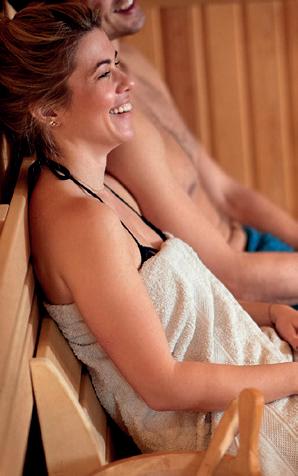




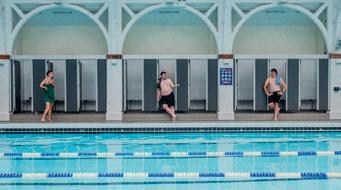




Take a break from the festival crowds and discover one of the city’s best-kept secrets.
Loved by locals, Edinburgh’s Victorian pools, Warrender, Leith Victoria, Glenogle and Portobello Swim Centre offer a calm, spacious setting throughout the city centre - perfect for a casual swim, a sauna, or simply switching off for a while. No pre-booking is necessary. Simply find your favourite Victorian


inside for a striking historic architecture, and have a moment to reset before heading back out into the Fringe chaos and fun. and plan your visit











































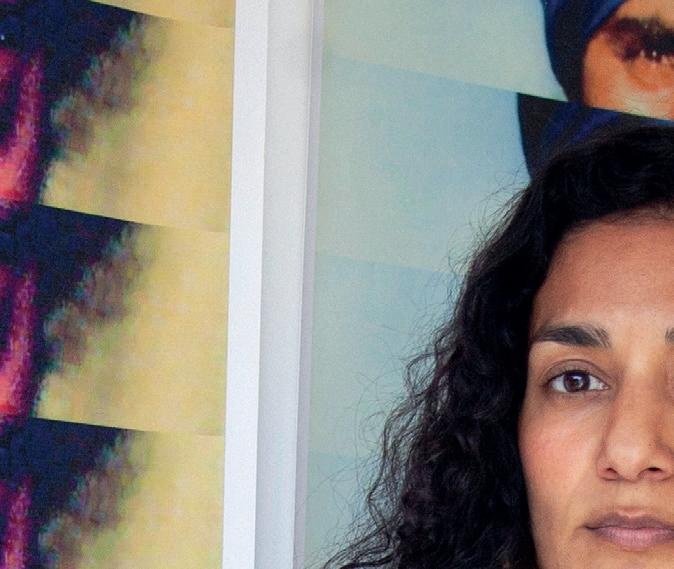

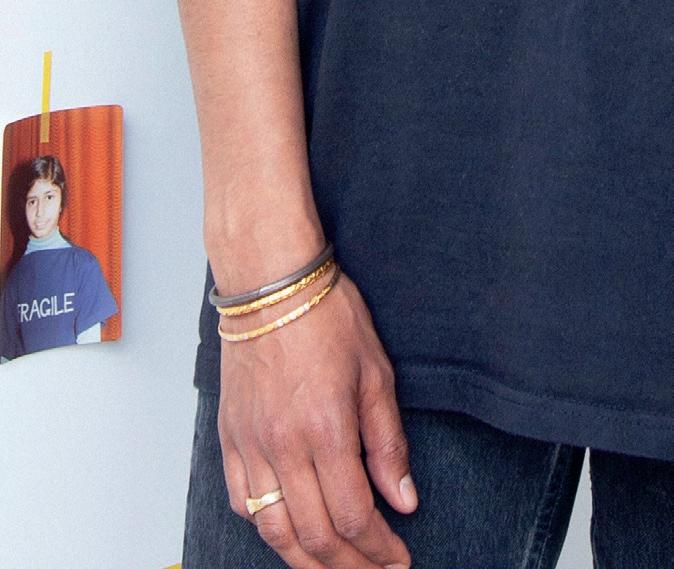

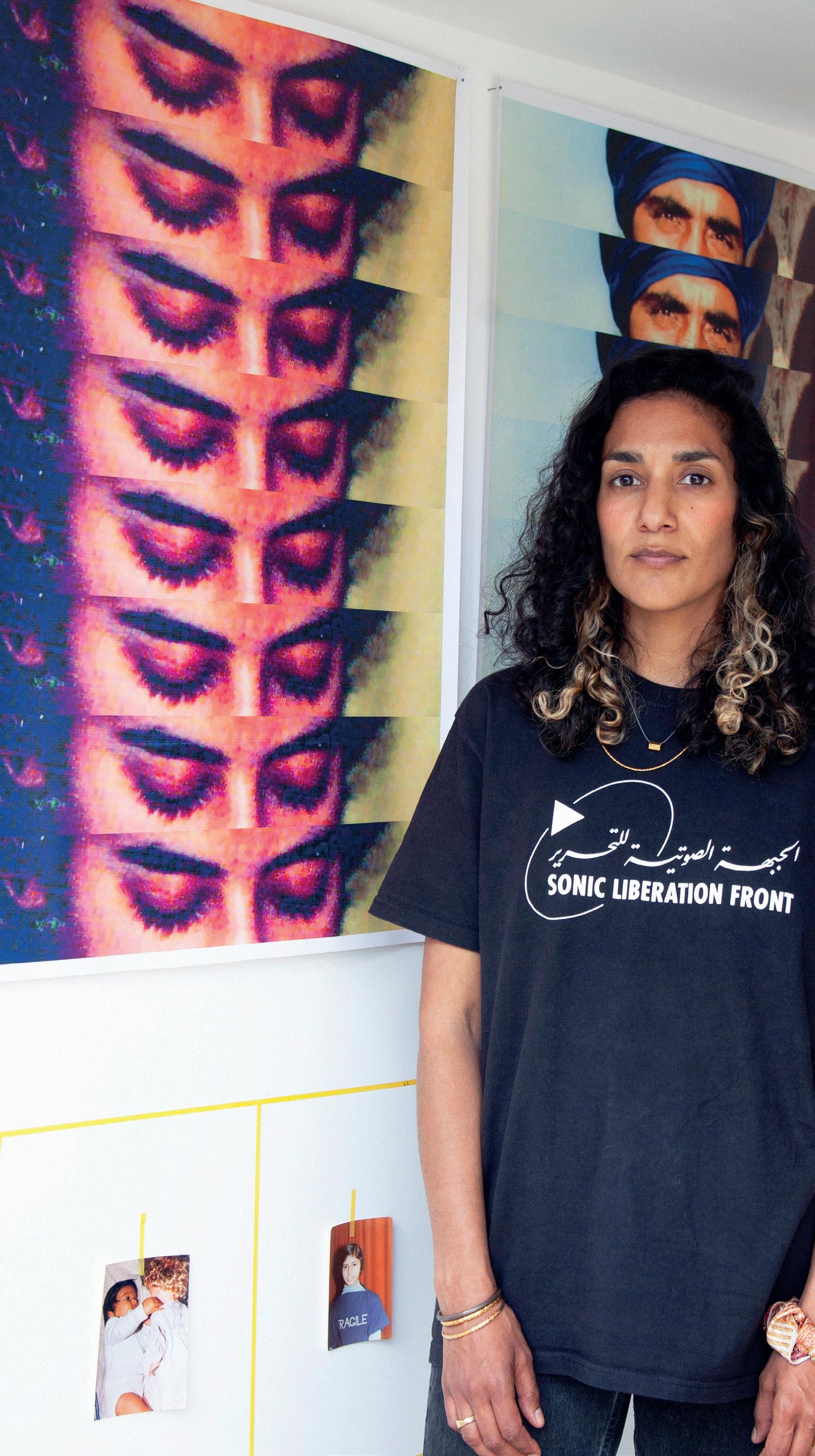
For the Glasgow Festival, Turner Prize winner Jasleen Kaur investigates trade, industry and empire in a work that wends its way along the banks of the Clyde. Greg Thomas discovers that the artist’s new-found status hasn’t dimmed her political activism

























to arrive wrapped up, as the workshop unison.





’m sitting on a fold-out chair in a dra y construction workshop on a north Glasgow trading estate. This is the slightly idiosyncratic setting for my discussion with Jasleen Kaur, the Pollokshields-born sculptor and installation artist selected to create a permanent public artwork for Glasgow 2026, the festival coinciding with this year’s Commonwealth Games. In spite of the clammy, mild weather, I’ve been advised to arrive wrapped up, as the workshop gets cold. At one point, a strong breeze slams a nearby door violently shut. We jolt and swear in unison. When I caught up with Kaur in 2023, she was preparing for another homecoming of sorts, a large-scale solo exhibition at Tramway, just a few streets from where the artist grew up. A lot has changed since then. Most signi cantly, that show, Alter Altar, secured Kaur the 2024 Turner Prize, for what the Tate called ‘its ability to gather di erent voices through unexpected and playful combinations of material, locating moments of resilience and possibility’. A mixture of sculpture and sound-and-motion based installations (most memorably a vintage Ford Escort with a giant doily draped over it), the exhibition evoked the migrant activism







Most signi cantly, that show,
















experience in ways that were equal parts poignant, politically freighted and formally inventive. Kaur recalls leaving Tramway the day before Alter Altar wrapped: ‘I filmed my exit. It felt like such a romantic but also conflicted moment. Glasgow is such a complicated place for me. There’s a reason I don’t live here. That adds to the significance of having space to make stuff here.’
Kaur used the platform granted by the Turner Prize to express solidarity with a pro-Palestine protest taking place on the night of the ceremony at Tate Britain, and which she joined beforehand. From the podium she called for Tate to sever ties with organisations complicit in ‘a genocide of the Palestinian people’. It was, she tells me, an easy decision to use her enhanced reputation in this way. But at times the artist’s activist inclinations have rubbed up against the corporate and civic bureaucracies now inviting her to collaborate with them.
So far, though, the Glasgow 2026 team have placed no barriers in her way. So what is she making? ‘The work has developed from a permanent artwork at Thamesmead in London. I worked for four years with various community groups there and the piece developed from that; a text on the end of a pole that moves around in the wind.’
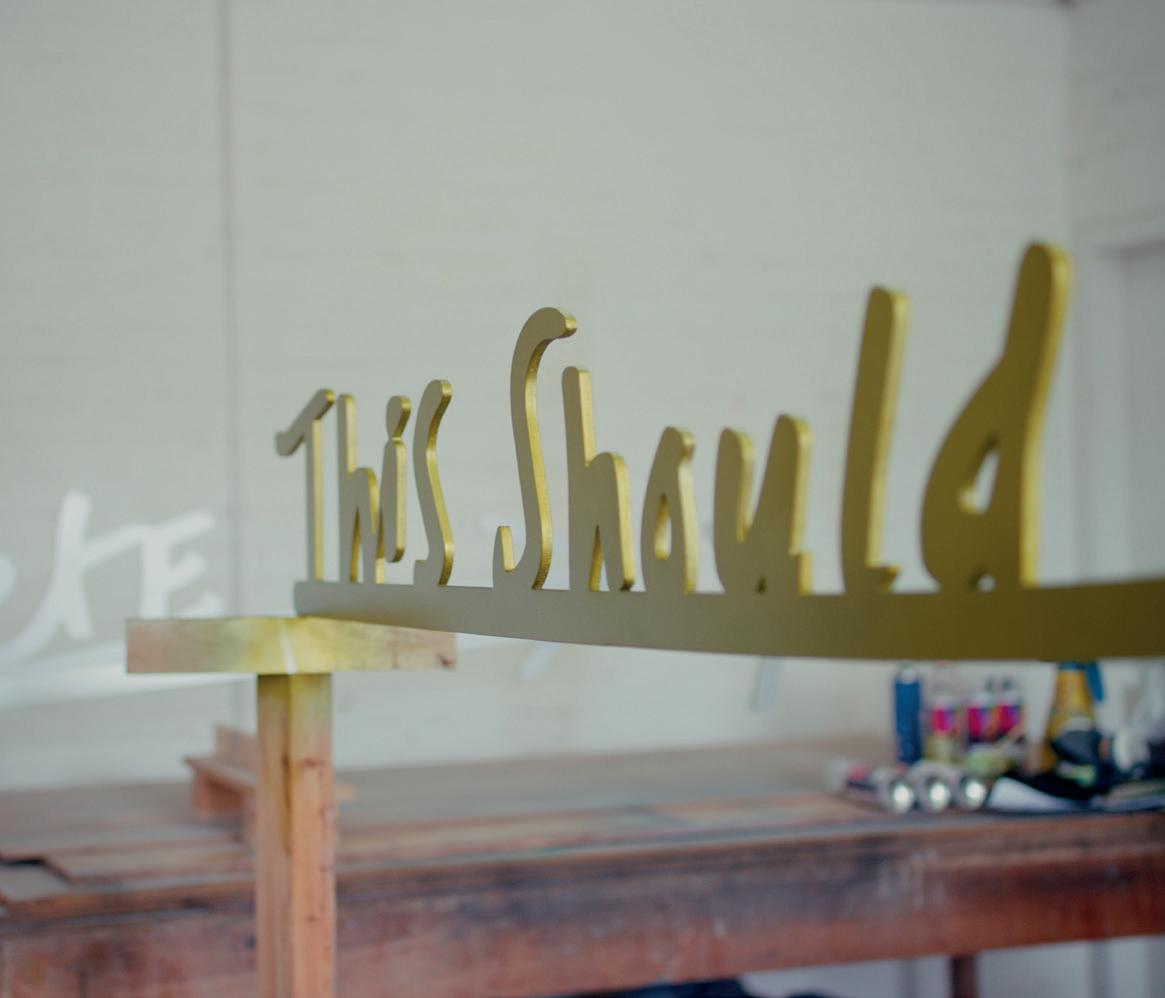
The line of writing, converted from cursive into a largescale piece of coloured metalwork that’s somewhere between a road sign and a weathervane, read ‘Horses Are Here’, a reference to the rich Traveller history of the district.
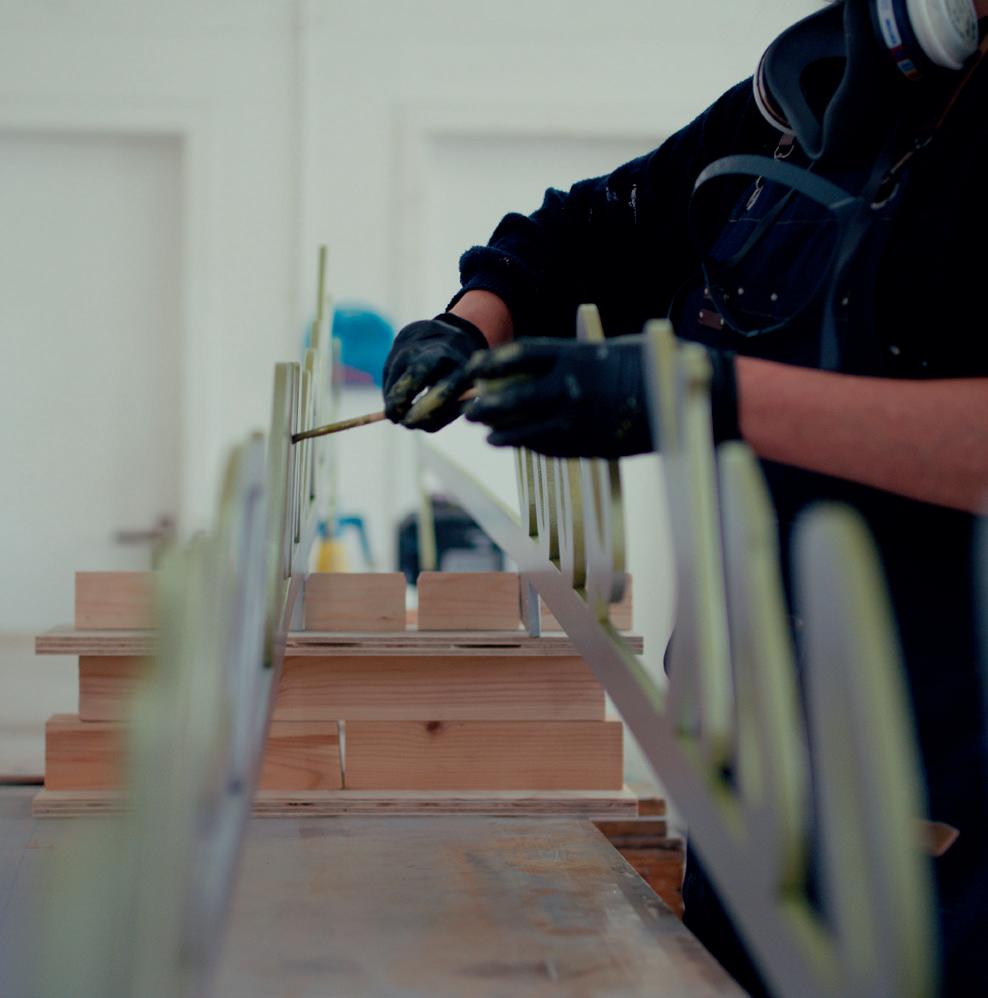
Kaur’s project for Glasgow 2026 will consist of eight works on a similar scale, six-metre-high poles on heavy terrazzo concrete bases, with lines of text above that spin around, pointing to different locations along the edges of the River Clyde. Entitled Superstructure,
it responds both to the Marxist idea of economic relations configuring cultural discourse (we speak about festivals celebrating the Commonwealth as classic examples of this, designed to sanitise international relationships forged through imperial plunder) and the architectural forms that sit above building foundations.
After various permission-based fankles, locations for the eight works have been chosen at two sites, the first outside The Briggait, a Victorian market-hall complex and site of the city’s original Trades House: ‘Though I’m also interested in its proximity to the sheriff court,’ says Kaur. The second is further west in the city centre, at Broomielaw. ‘I wanted those pieces to point towards the new Barclays building, as well as the King George V Bridge, with BAE Systems [arms manufacturers] nearby in Tradeston.’
The aim is for the perched, spinning phrases (including pithy statements such as ‘this should be public’) to gesture towards sites redolent of the city’s economic and imperial past, present and future. ‘There’s all this debate and dialogue about how the Clyde is not developed. But what you do have is a huge new bank complex, a weapons company, as well as sites that suggest the judiciary and taxation. These are the forces that are burgeoning on the Clyde.’ The work will make a formally creative yet politically freighted intervention into the story of a city that still carries the conflicts and tensions birthed by empire deep in its breast.

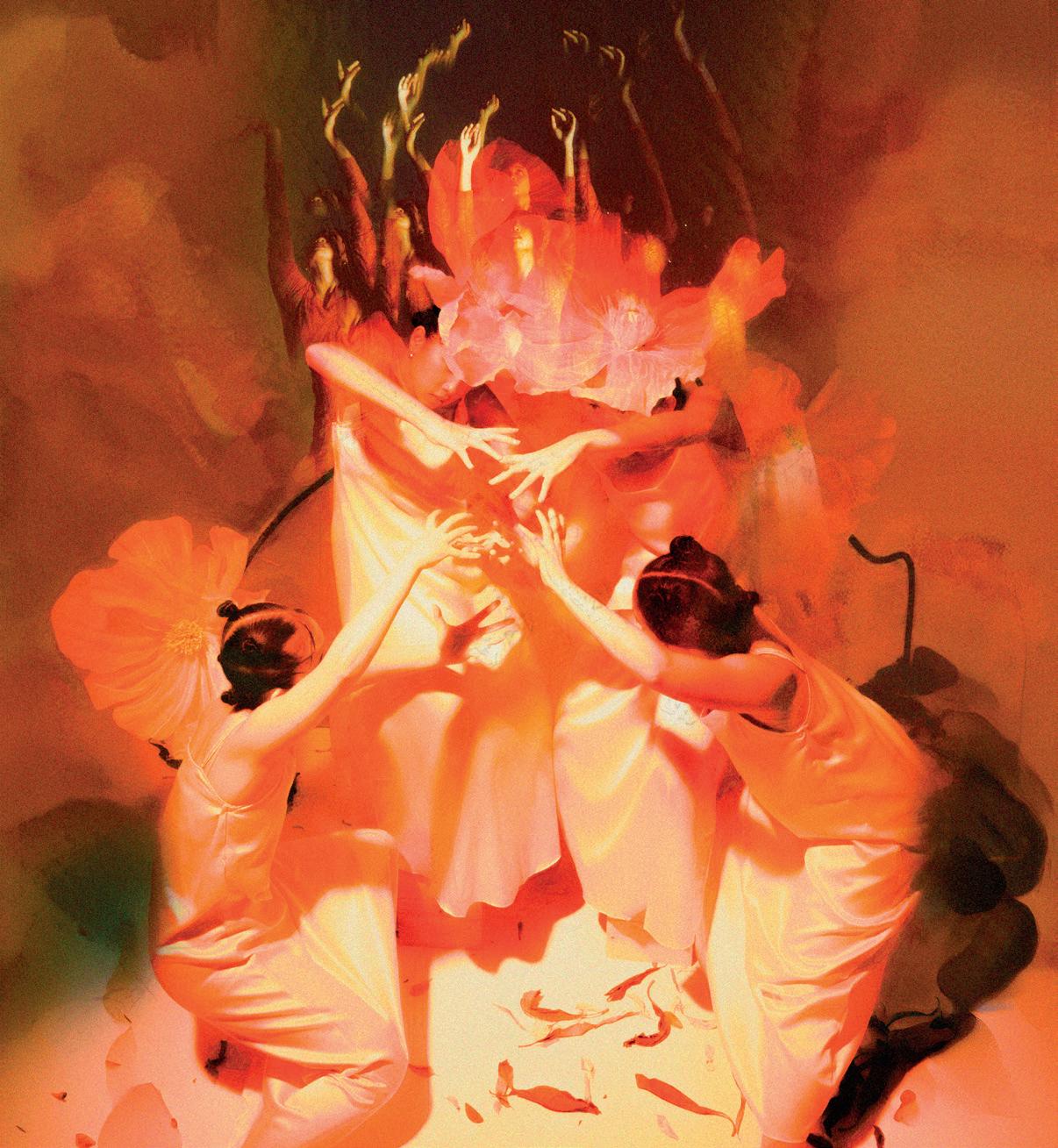
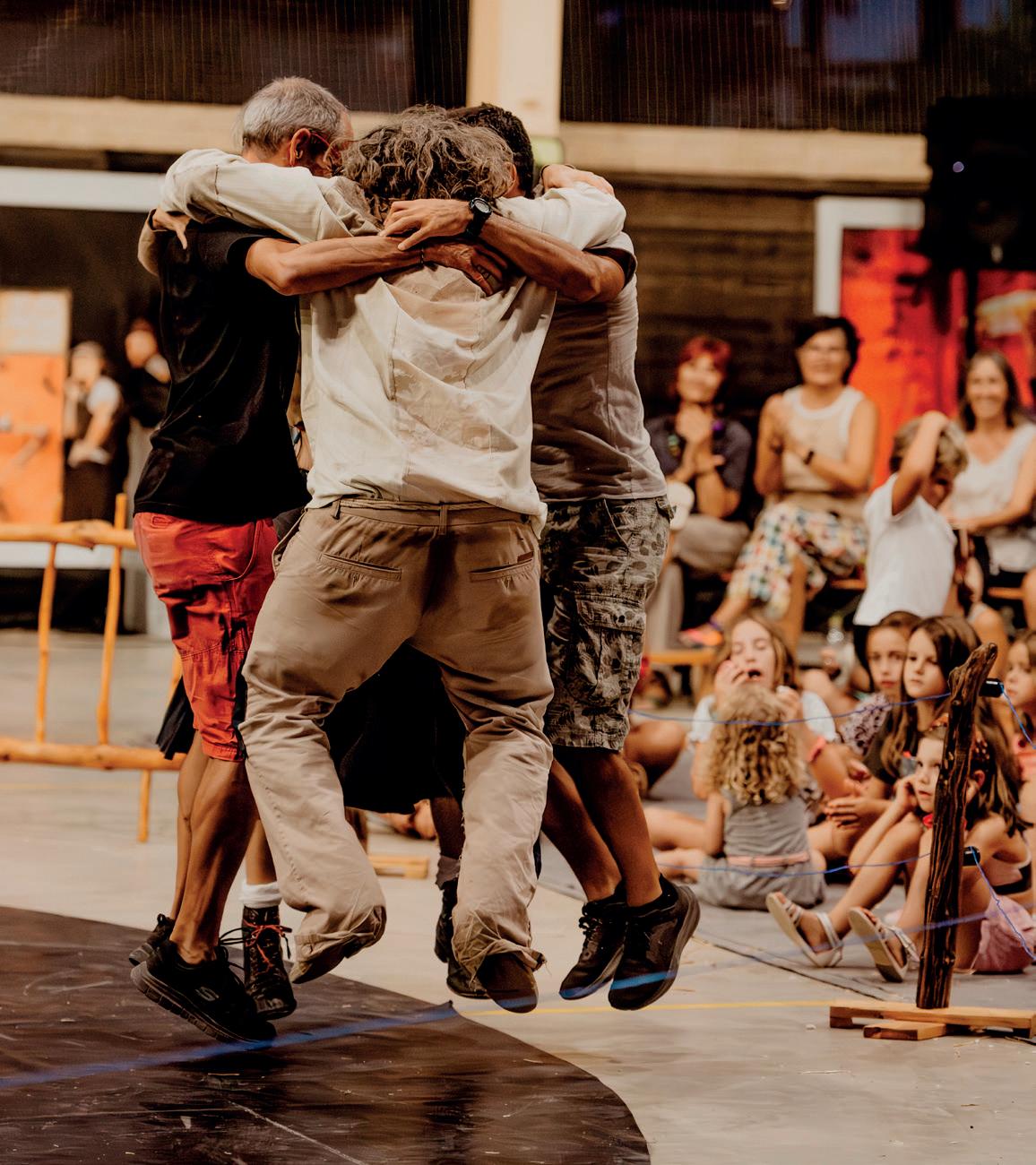
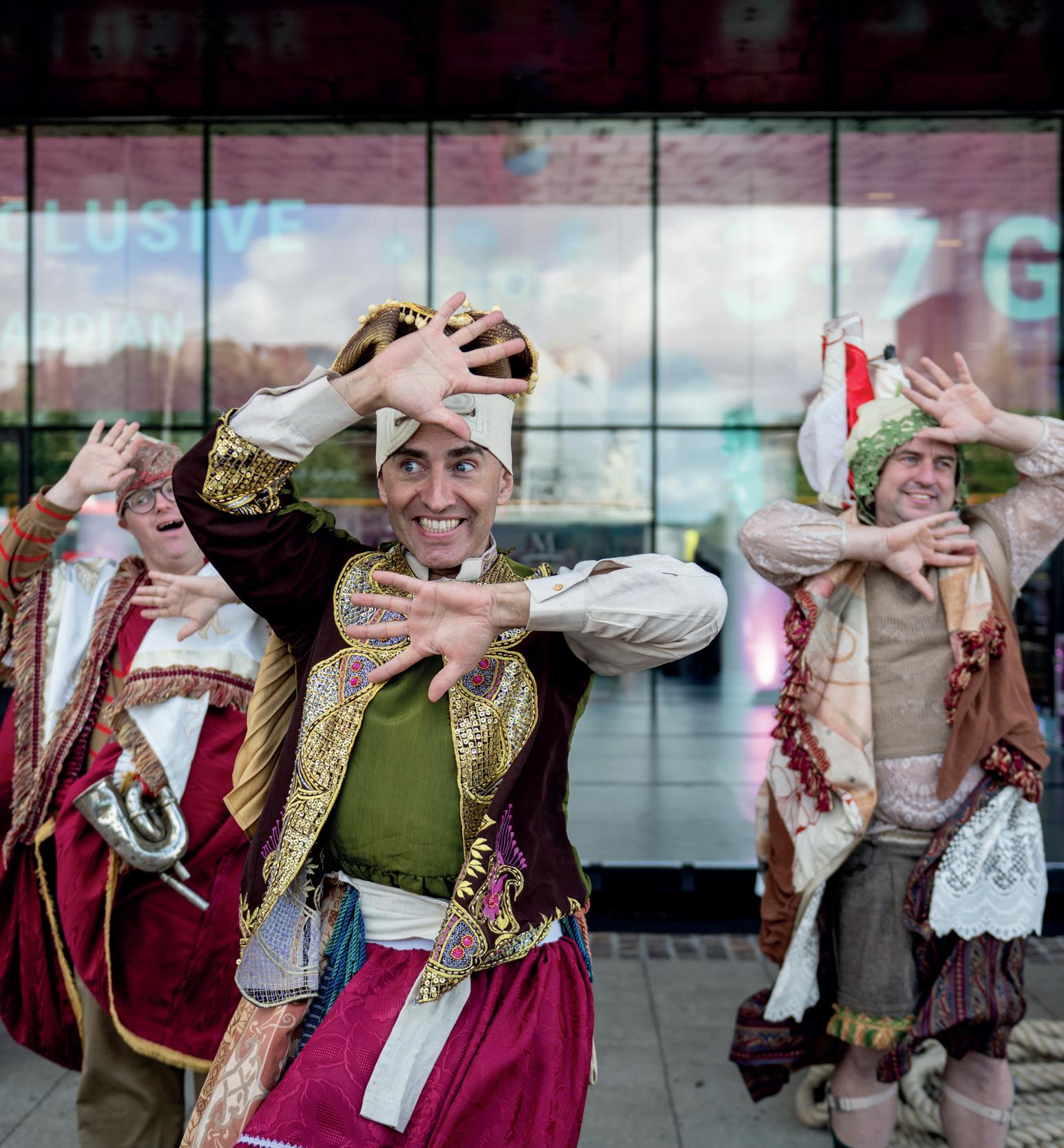
Outdoor arts are facing difficult new challenges as the availability of public spaces continues to be squeezed. Isy Santini talks to the director of Surge Festival as it attempts to open up Glasgow’s streets and people’s minds
C‘hildren are very good at playing and adults are rubbish at it.’ Surge Festival director Alan Richardson laughs as he looks ahead to Scotland’s biggest outdoor arts festival, now in its 16th year. ‘But this is an invitation for people to come along and play.’ For two weekends across July and August, the streets of Glasgow will be transformed into a dynamic performance space, where any corner could be host to jaw-dropping circus acts and thought-provoking physical theatre. Aside from fostering play, the festival also has an important role in aiding Surge’s other work. As an organisation, it’s dedicated to developing outdoor arts, physical theatre and circus across Scotland. ‘From our perspective, the

main aim of the festival is to provide opportunities for Scottish-based artists to present new outdoor arts work,’ explains Richardson. ‘You never quite know what you’re going to get because all the shows are brand new. That’s also one of the policies: all the work we put on is either brand new or hasn’t been seen in Scotland before.’ Since the festival’s inception, the percentage of Scottish acts in its programme has risen from around 10% to 50%. And in the last few years, the Four Nations Bursary for early-career artists from the UK and Ireland has been introduced.
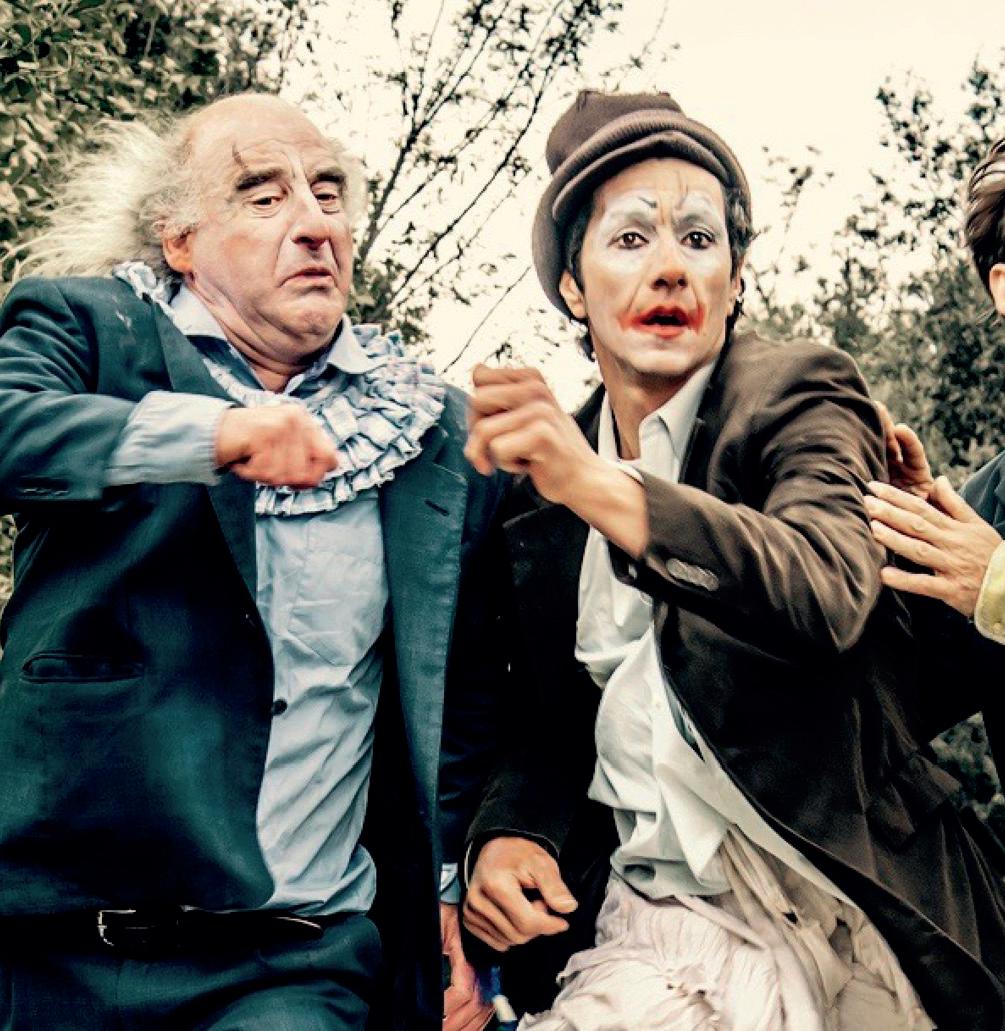
While Surge nurtures Scottish talent, the festival brings together cutting-edge works from around the world, including Catalonia and Indonesia. Though this year’s festival doesn’t have an o cial theme, Richardson says that positivity runs throughout the programme. ‘Due to the current situation that we nd ourselves in politically and culturally, we’ve concentrated a lot on hope and joy. There are a couple of stark warnings in there, but largely it’s a lot of meditative and gentle work about community cohesion.’ He points to a number of exciting shows such as the six-part dance work Alih which explores change in all its forms. ‘It’s a sort of interaction with the audience around what change looks like; if change is good and what change is bad.’ Other highlights include Domte, a contemporary circus piece about collaboration in the face of domination, and MDR, a clown show all about crime and blame.
As Surge has continued to grow, new challenges have emerged for street theatre and outdoor arts beyond the ever-present Glasgow threat of bad weather. The erosion of public spaces has been the biggest problem in recent years. ‘A lot of the spaces that were available to perform in have now been taken over by private companies,’ Richardson says. ‘And they have very speci c things that they would like to see put on in their spaces, which are generally not that imaginative or challenging.’
Despite these roadblocks, he has faith in the power of outdoor arts to foster community. ‘It’s a collective activity. It’s about audiences interacting with one another.’ For him, outdoor arts are uniquely situated to do this because of the diverse audiences they’re able to attract: ‘A lot of people won’t step over the threshold of a theatre because they don’t think it’s for them.’ By utilising public spaces, traditional barriers to theatre are removed, allowing new audiences to be moved and transported.



As well as Surge, the Glasgow Festival pulls together a number of events which bring the city to life round about this time of year on an annual basis.
Such as (
The Windrush

Laura Oghagbon. Glasgow Mela Sunday 5 July us who put on a feast of contemporary

Singh. Promoting art, heritage and culture, Jhankar Beats ( 19 head
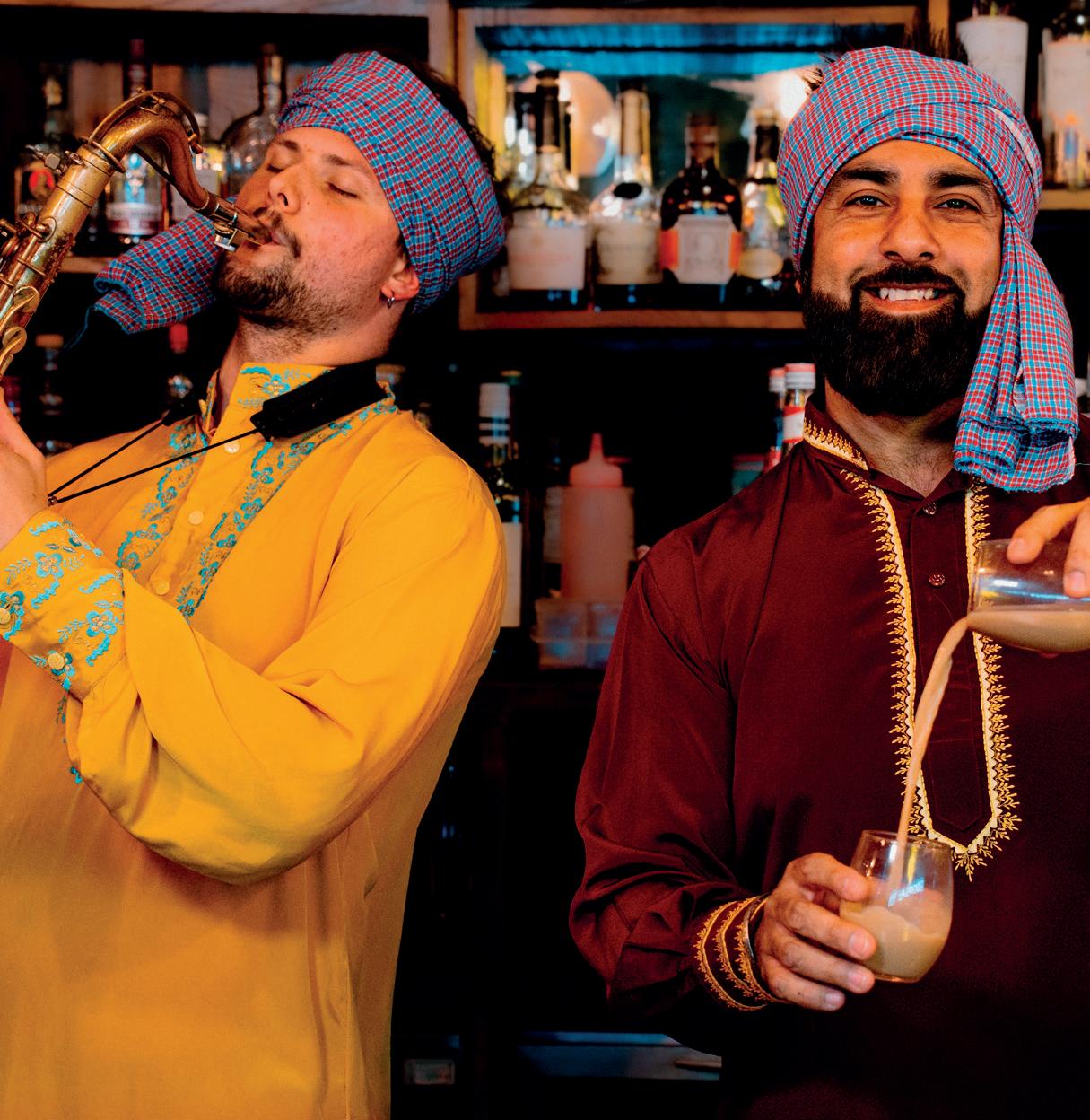
Merchant City Festival various venues, Friday 24 July–Sunday 2 August) which has a number of glittering attractions like the Hip Replacement Disco, the Women Of opera, a stage curated by Hen Hoose, Scottish Alternative Music Awards presenting Vlure, and performances by rising jazz stars Rachel Duns (pictured below) and (Kelvingrove Park, ) brings us vibrant sights and sounds across two stages, kicking off at noon and featuring the likes of Dance Ihayami who put on a feast of contemporary and traditional movement, classically trained vocalist Reya Kundu, and sarangi maestro Ustad Satwinderpal Singh. Promoting art, heritage and culture, Woodside Hall, Sunday July) head up an afternoon of music and dance, and Celebrating The Design Journey: Commonwealth Games Medals (Glasgow School Of Art, Friday 10 July–Saturday 8 August) is an immersive exhibition which features materials from the GSA collection and offers an insight into the medal-making process.
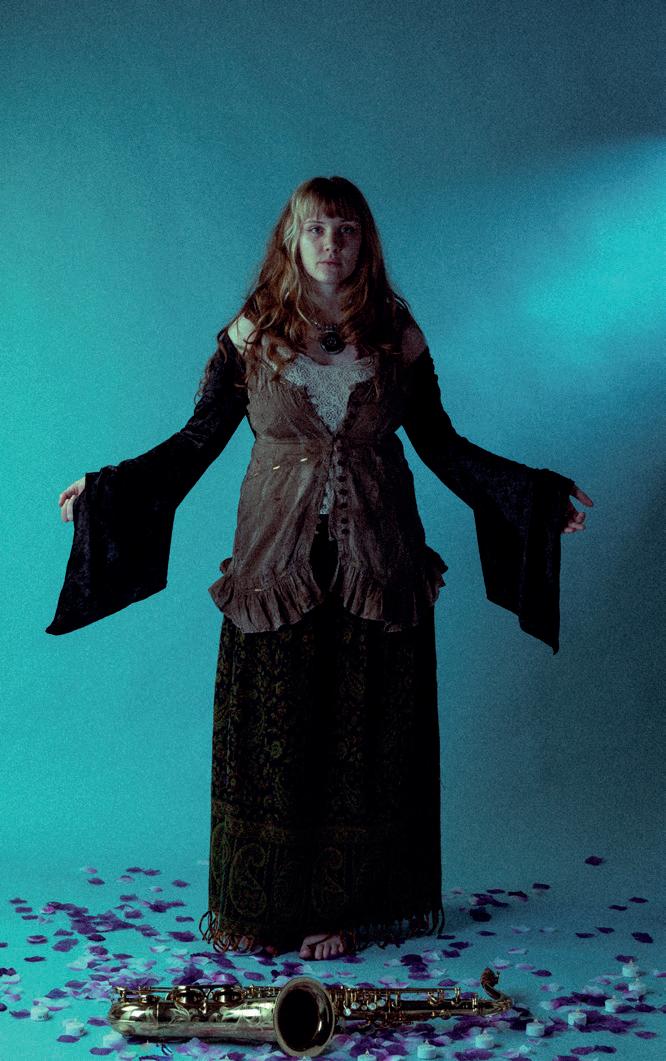
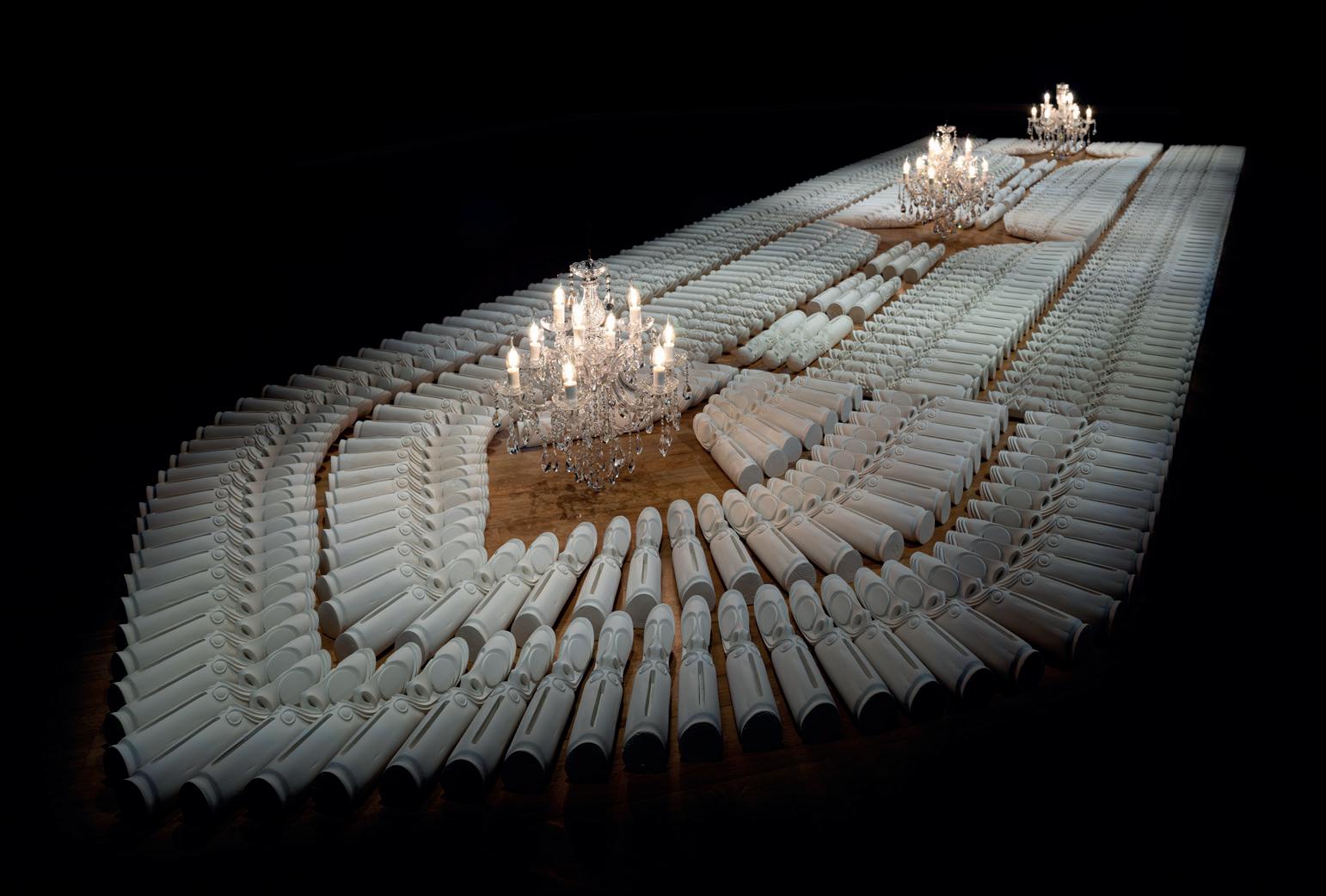
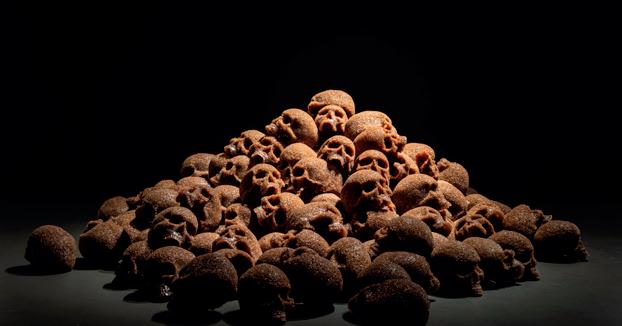
Marking Jasmine Togo-Brisby’s first solo exhibition in Europe, Liquid Land arrives as part of Glasgow International and forms a key exhibition in the Glasgow 2026 Festival programme. The exhibition resists easy categorisation. Moving between sculpture, installation and architectural intervention, the work operates more as an act of reclamation, rooted in personal and collective histories that stretch across continents.
At the centre of the work is a full-scale recreation of the artist’s ancestral home which sits inside the grand interiors of the Gallery Of Modern Art, a building once owned by tobacco merchant William Cuninghame, whose wealth was tied to colonial trade. The contrast is immediate: a modest structure placed within a space built on exploitation and global systems of inequality.
For Togo-Brisby, the recreated home functions as a vessel for memory, carrying the stories of her Ni-Vanuatu ancestors into a space that historically excluded them. These are narratives that have often gone undocumented, obscured by colonial record-keeping or erased altogether. By situating them here, the artist creates an insistent dialogue between past and present, absence and presence.
Liquid Land draws on the history of ‘blackbirding’, the coercive labour trade that forcibly displaced Pacific Islanders in the 19th century following the abolition of slavery. Its
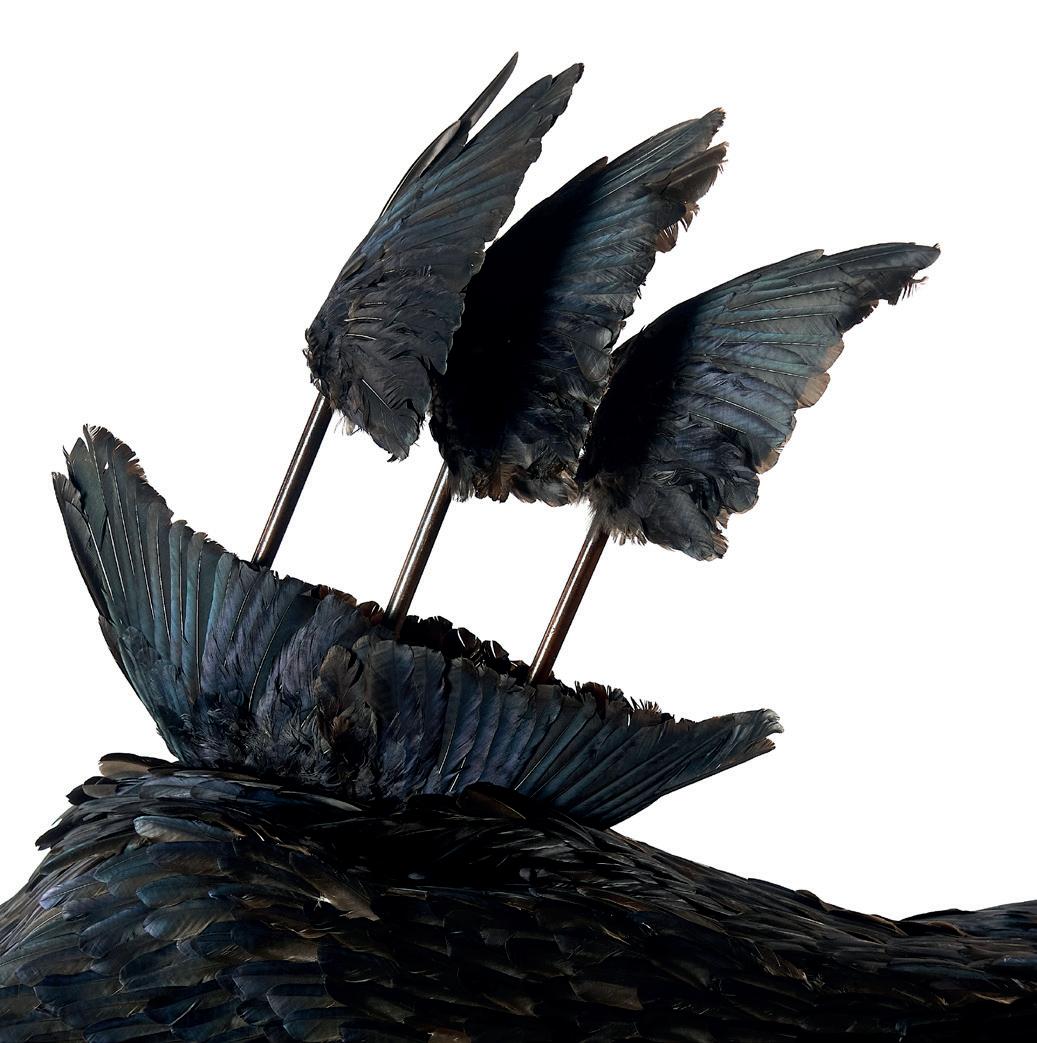
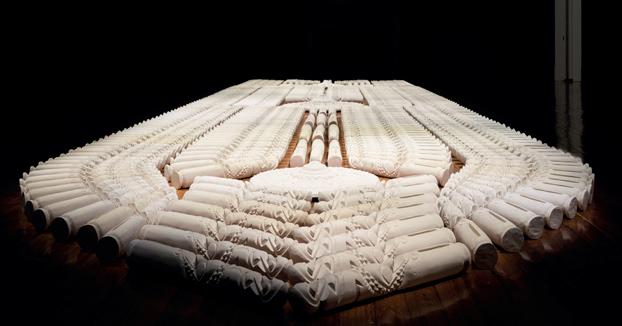
legacies continue to reverberate across the Pacific and beyond and Togo-Brisby’s work traces these transnational connections, linking Australia, the Pacific and Scotland through shared, if often unacknowledged, histories.
The work operates through texture and presence. Materials, forms and spatial relationships become carriers of meaning, inviting visitors to move through the work rather than simply observe it. The effect is immersive and deliberately paced, encouraging reflection rather than reaction.
This attention to space feels particularly significant in the context of GoMA itself. The building’s interiors are recast as part of the narrative. By inserting her own architectural language into this historic setting, Togo-Brisby effectively reshapes the gallery’s frame, turning it into a site of encounter rather than display.
As Glasgow prepares for the 2026 Commonwealth Games, the city is positioning itself on a global stage, celebrating culture, community and sporting excellence. The Glasgow 2026 Festival, which runs alongside the Games, also brings together hundreds of events across the city, from large-scale commissions to community-led projects.
Within these programmes, Liquid Land reminds us that global connections are rooted in complex and often uncomfortable pasts. This new work deepens perspectives, offering a more nuanced
understanding of what it means to gather, connect and share cultural space.
There’s also a compelling personal nature to the work too. While the themes are expansive, spanning continents and centuries, they are grounded in Togo-Brisby’s own background. The recreated home, in particular, acts as a point of anchoring, making abstract histories tangible. It is an invitation to consider history not as distant or academic, but as lived, inherited and carried forward.
As part of Glasgow International, the exhibition sits within a city known for its engagement with contemporary art. Yet Liquid Land feels likely to leave a distinct mark. Its strength lies in a careful, considered approach, allowing space for stories that have too often been overlooked.
Running at GoMA throughout the summer and into early autumn, the exhibition offers visitors a chance to encounter a different kind of historical narrative. One that doesn’t seek to resolve or simplify, but to hold complexity and contradiction in view. In doing so, Togo-Brisby’s work asks an urgent question: what does it mean to truly see history, and who gets to tell it?
Jasmine Togo-Brisby: Liquid Land, Gallery Of Modern Art, Glasgow, until Sunday 6 September.
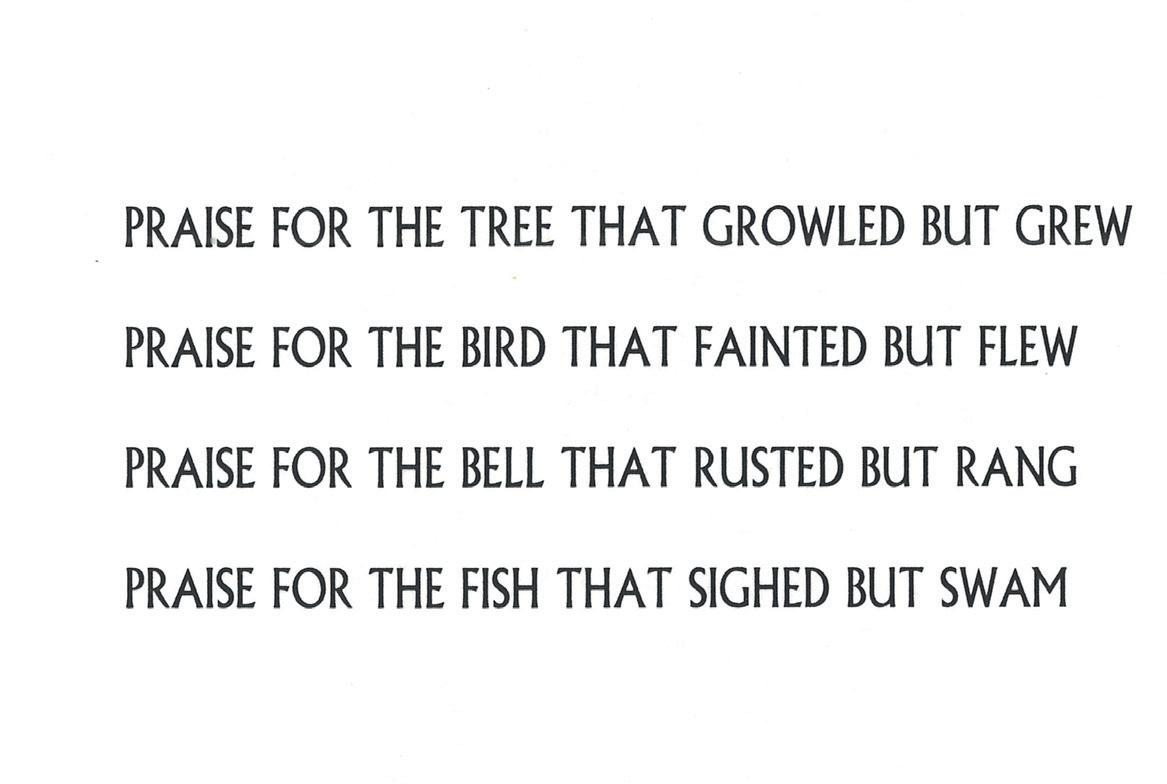
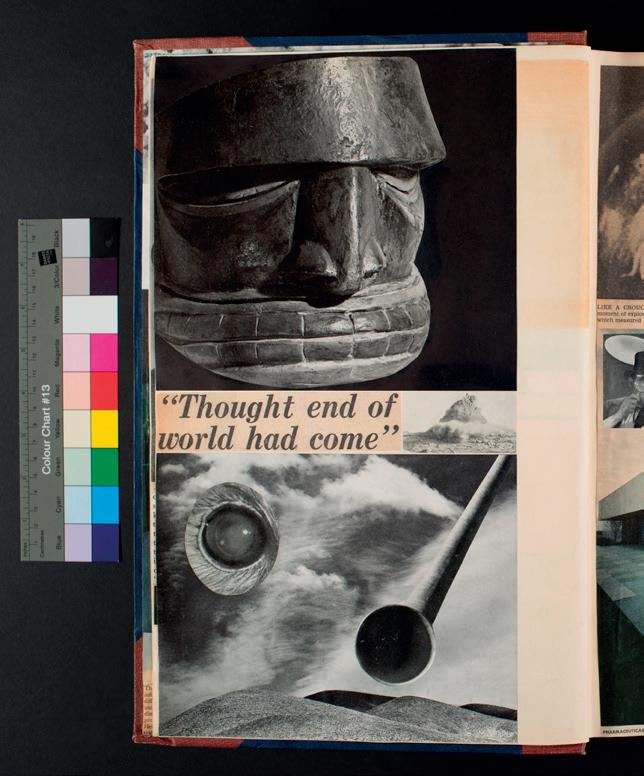
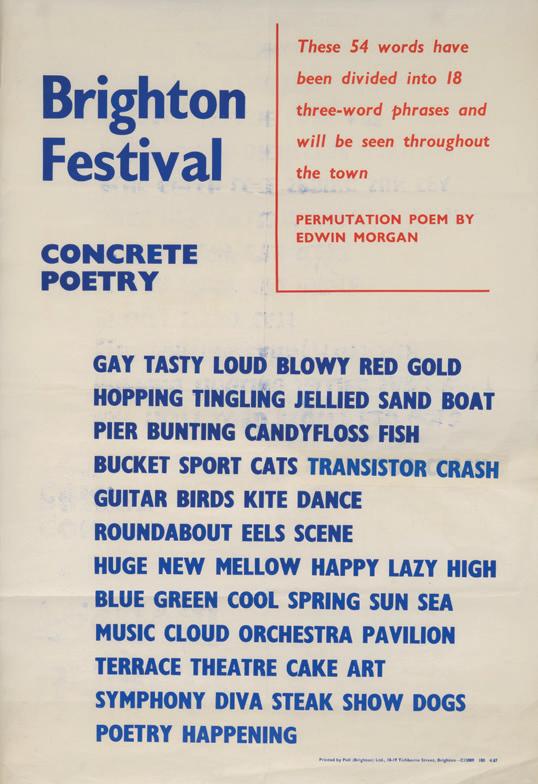
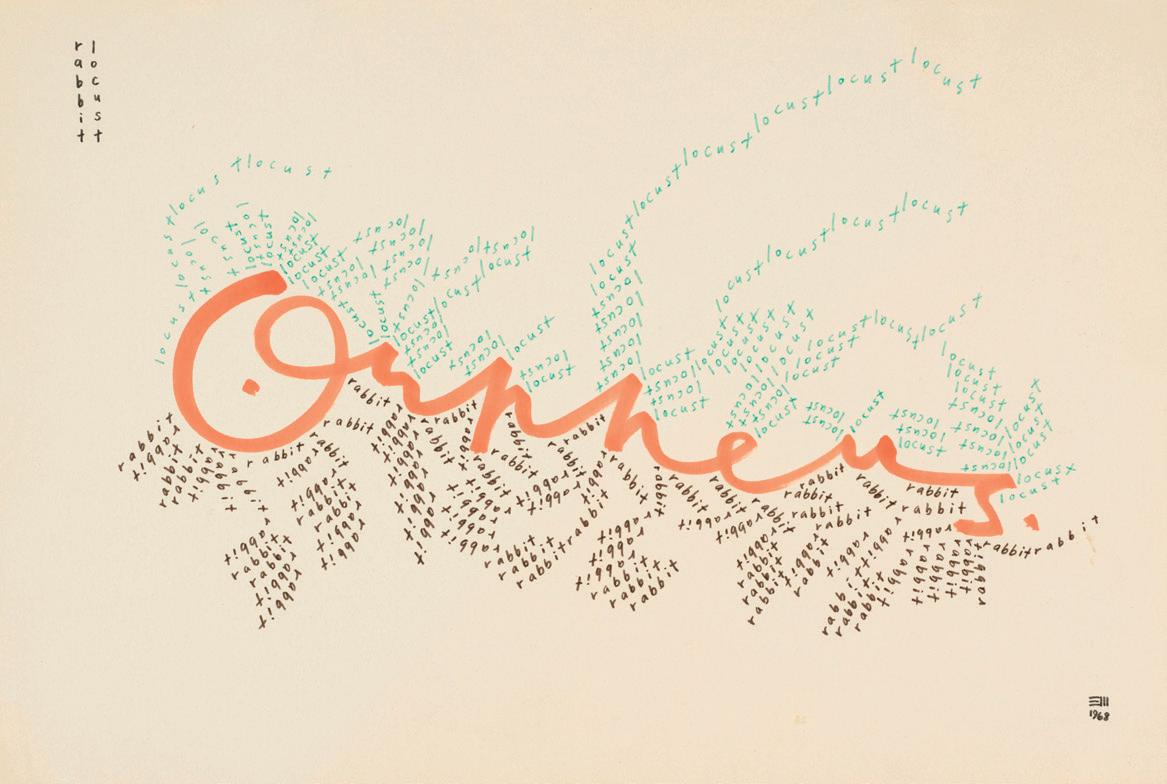
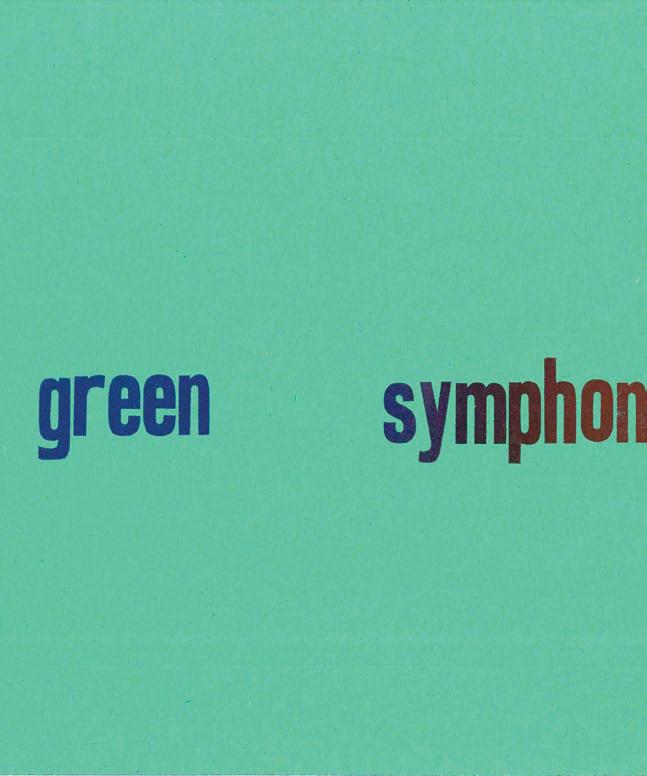
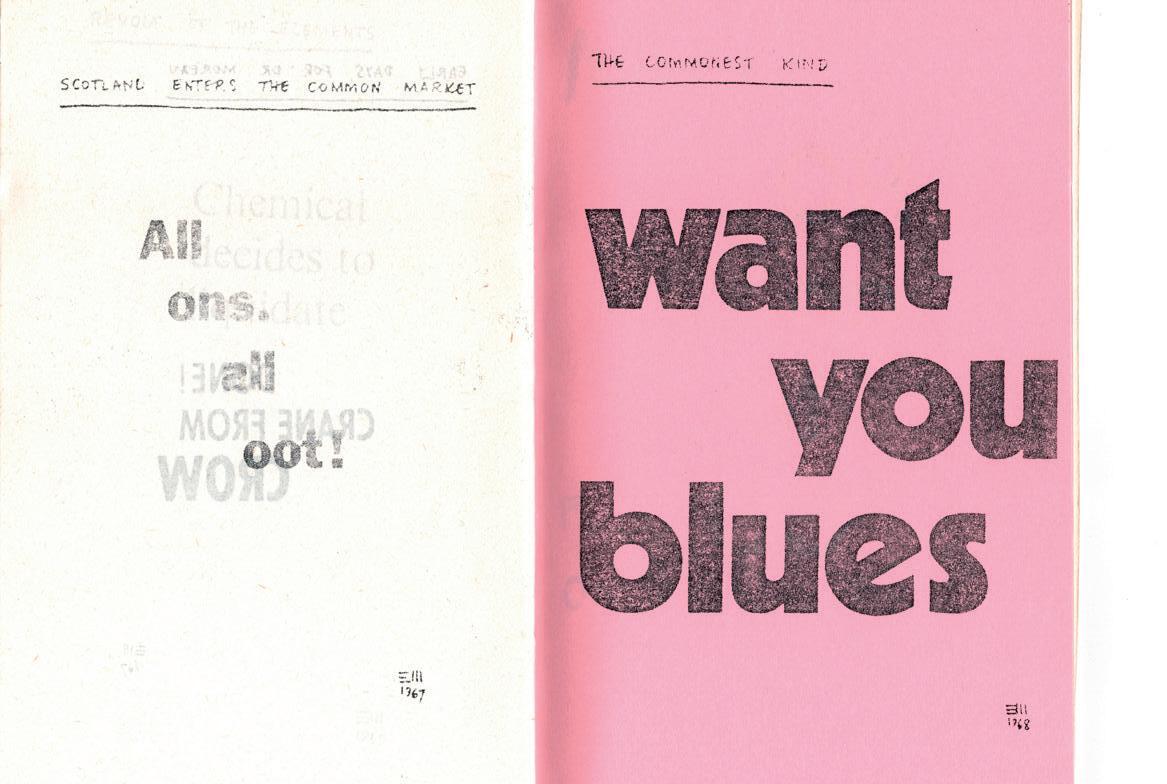
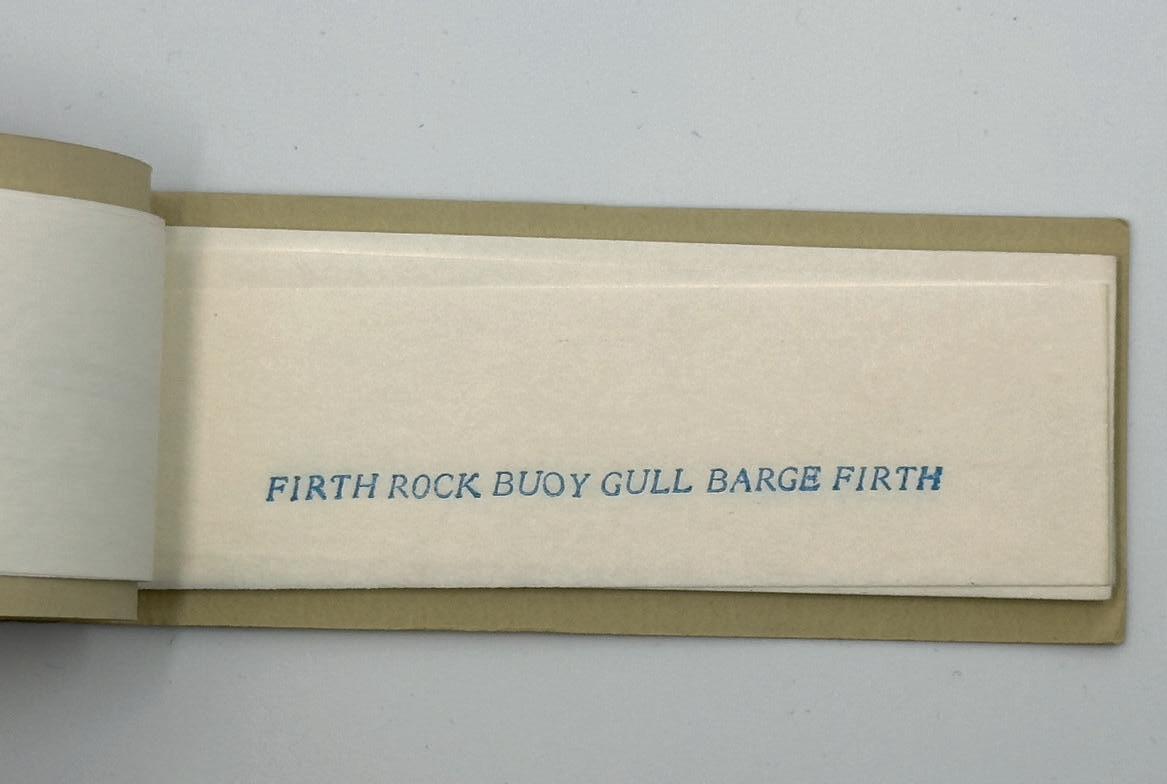
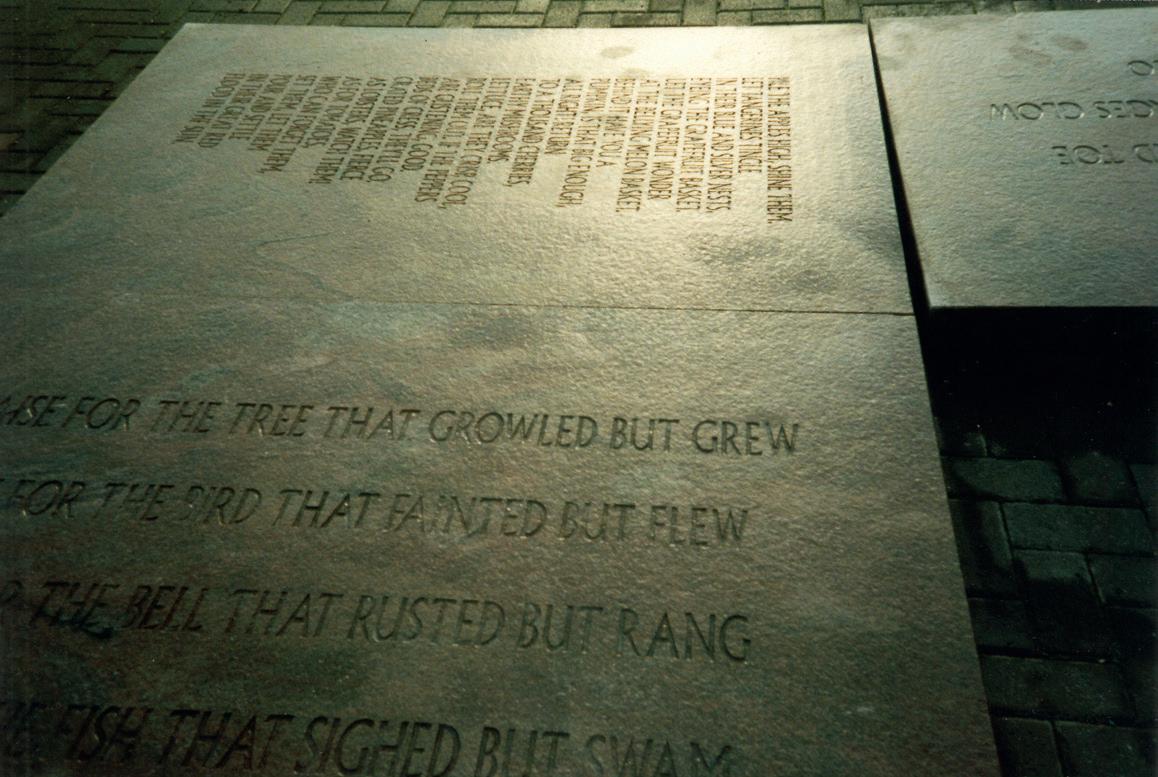
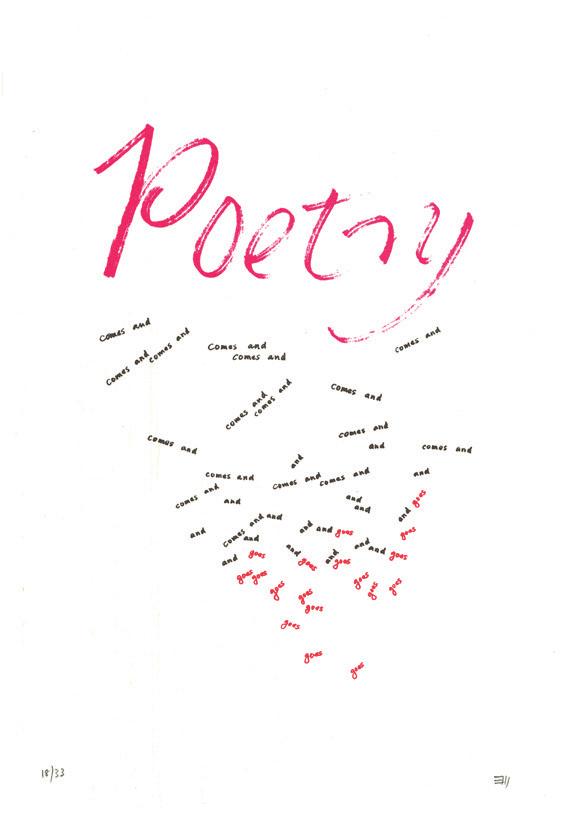
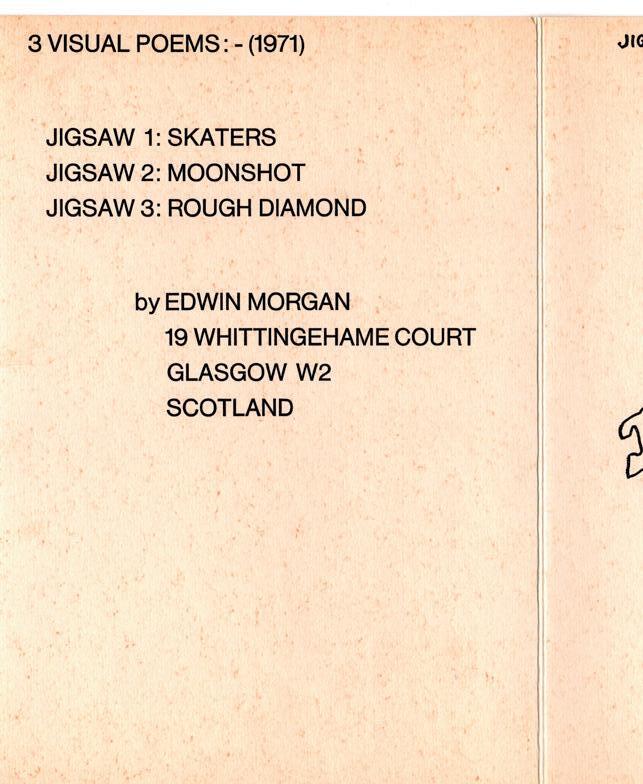
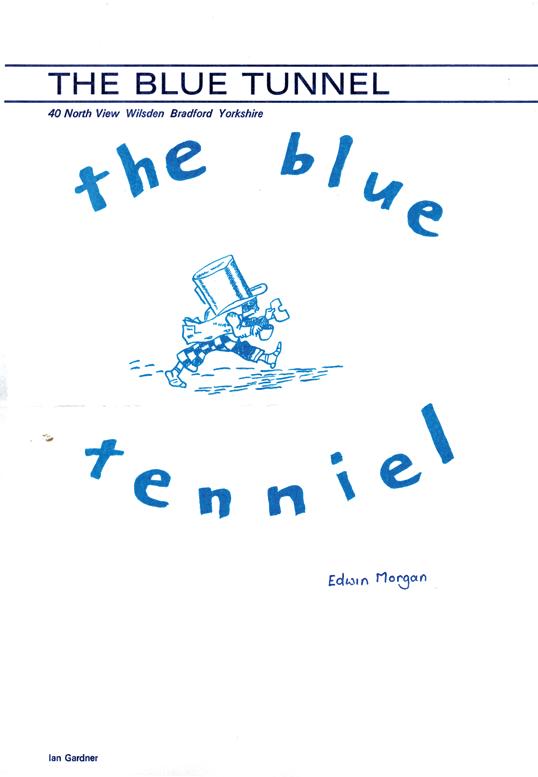
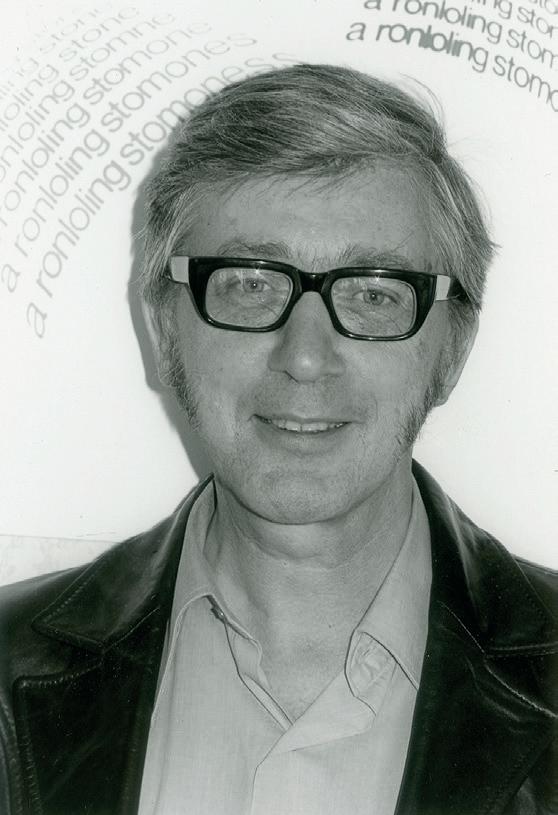
Sonnets and poems were the literary bread and butter of Scotland’s late Makar, Edwin Morgan. But as Allan Radcliffe discovers, a new publication shows that his flair for experimentation was just as vital
More than 15 years since his death, the legacy of Edwin Morgan, the first Makar, or national poet for Scotland, continues to grow. His work is continually anthologised and studied in schools. Since 2012, the Edwin Morgan Trust, established through a behest in his will, has nurtured poets under the age of 30. In 2021, on what would have been his 101st birthday (the pandemic having put paid to centenary celebrations), 101 poets were invited to contribute a single word to the creation of a concrete poetry poster, a kind of linguistic collage in the shape of a pyramid.
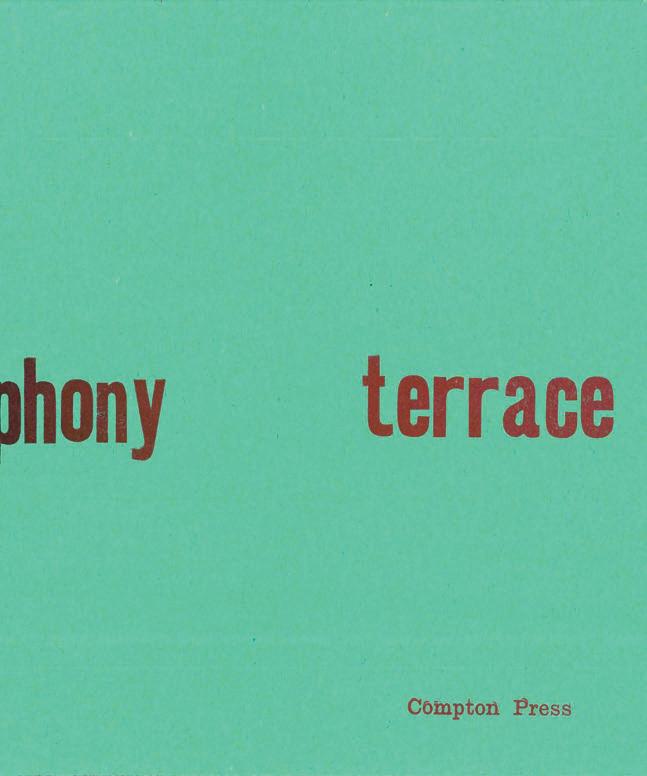
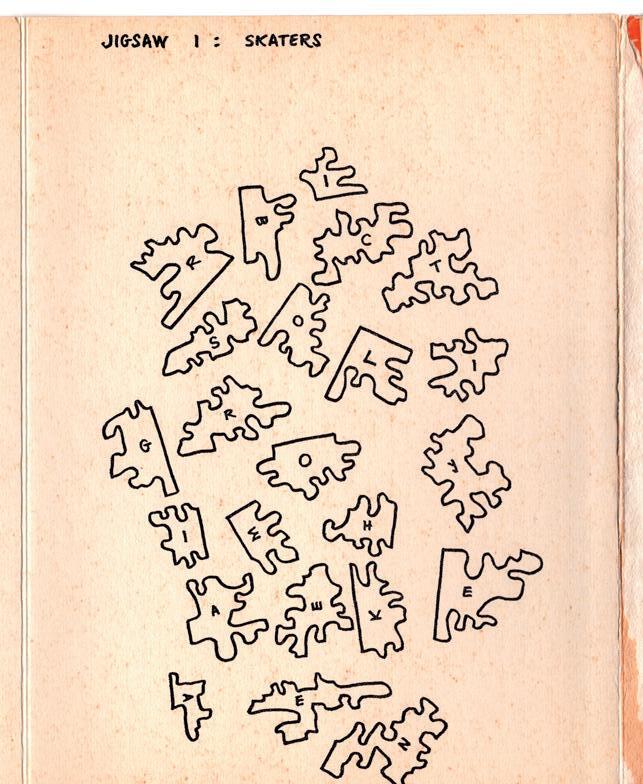
That project, which straddled literature and visual art, may seem worlds away from the sonnets and poems of social commentary for which Morgan is known. Yet, judging by a new collection of his more experimental work (which includes visual and sound poetry, collage and hand-drawn poems), such innovation was part of his oeuvre from an early age.
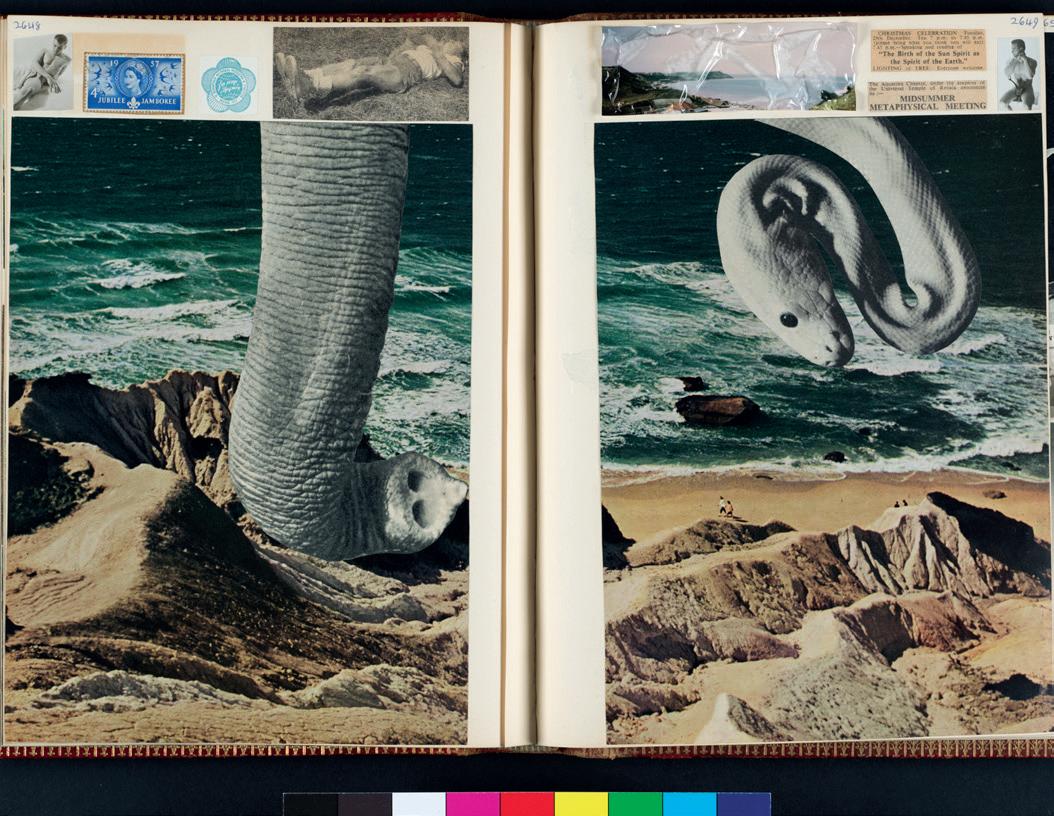
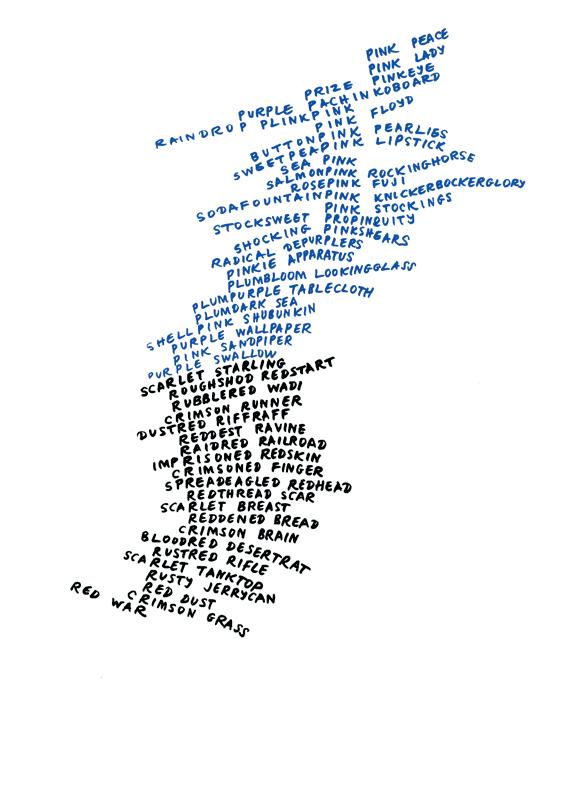
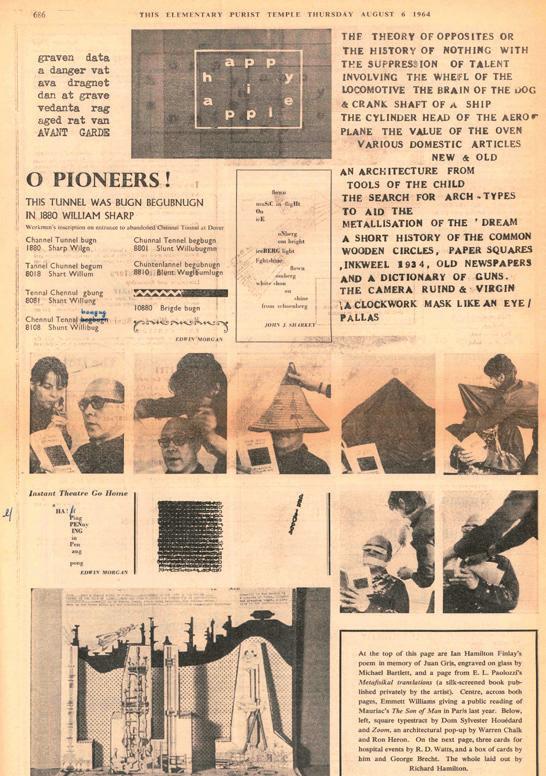
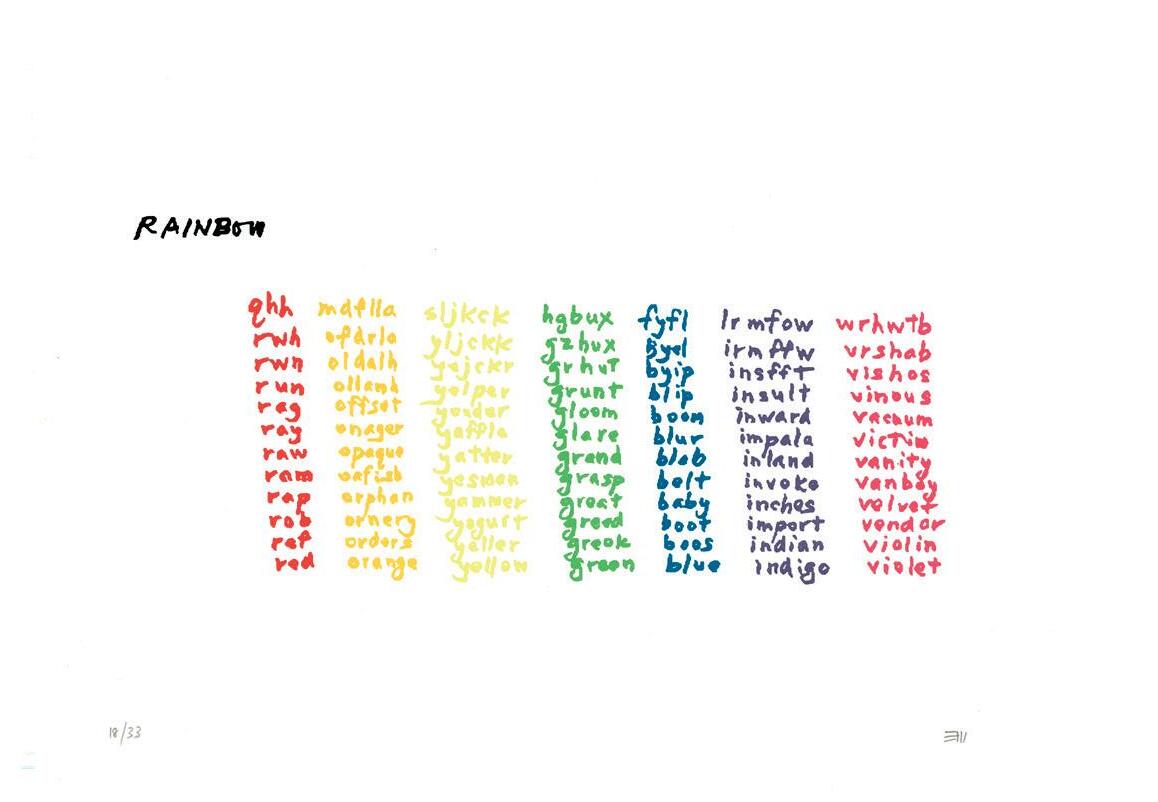
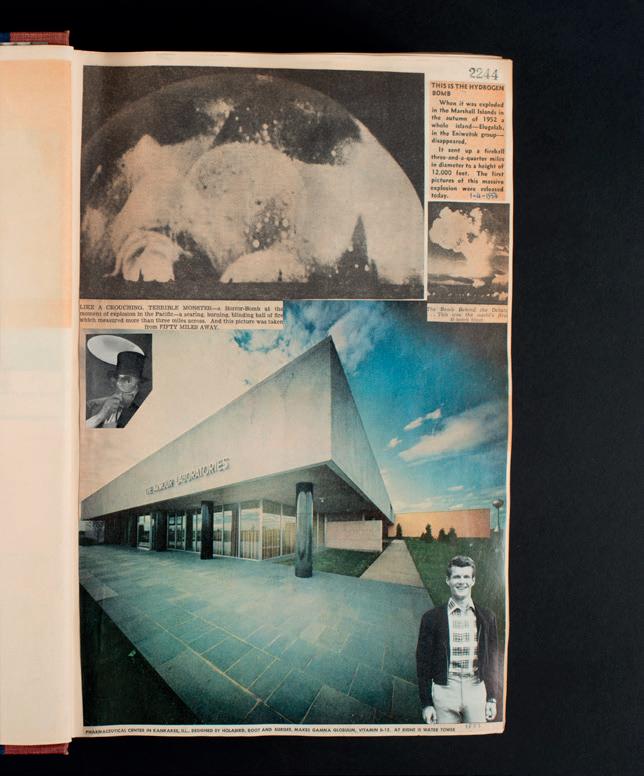
‘He always felt this side of his work was central to what he was trying to do as a poet,’ says Greg Thomas who, alongside Julie Johnstone, edits A Home In Space: Selected Concrete, Visual And Sound Poetry. ‘It’s fair to say that he has become best-known for his work in what you might call more traditional styles, so I think there was a need to redress that balance.’ Thomas, who describes himself as a ‘lapsed academic’ with a PhD in concrete poetry in Scotland, now works as a poet and arts journalist. He and Johnstone, a poet and one-time head librarian at the Scottish Poetry Library, were initially approached by Robyn Marsack from the trust, who felt it was important for this side of Morgan’s legacy to be better understood. The pair spent time immersed in archives at Glasgow University and Mitchell Library, poring over scrapbooks that Morgan compiled from the age of 11 or 12 through to the mid 1960s. These ledger-style books, featuring images from magazines, pasted-in poems, paintings and newspaper headlines, form an entire chapter of their book. Thomas and Johnstone also unearthed hidden gems, including surrealist-style pencil sketches he made in his teens and early 20s.
As Thomas points out, the tension in Morgan’s work between the avant-garde and traditional forms, reflects the contradictions inherent in his life. ‘One of the things that gets buried in the cuddly idea we have of Morgan as a beloved Scottish poet is that his politics were those of a radical socialist,’ he says. ‘He was an advocate of
the new, and that made him stand out in a Scottish modernist literary milieu where there was a kind of gruff, backwards-looking impulse. I think his willingness to engage with new poetic forms was part of a conscious strategy to nudge Scottish literature out into the light of the modern world.’
Thomas also argues that Morgan’s personal identity as a gay man who only came out in 1990 at the age of 70 is key to his experimentalism. ‘His breakthrough collection was called The Second Life, and one of the connotations of that might well be his second life as a gay man, which ran alongside his life as a university lecturer and a member of Glasgow’s liberal middle class. But another side was his second life as someone with a much more experimental sensibility than you would think if you’d studied him for school exams.’
As the work featured in A Home In Space is as much visual as literary, there is a case to be made for an exhibition that complements the publication. Thomas agrees that it would be a wonderful thing to do. ‘In a way, the book is us claiming it as literature, but it could be art. As far as I know there has never been an exhibition that has brought the full range of Eddie’s work in this area together. It would be brilliant to have both, wouldn’t it?’
A Home In Space, edited by Greg Thomas and Julie Johnstone, is published by Reaktion Books on Saturday 1 August.







OFOZHOUSE OFOZHOUSE O OUSEOF SEOFOZ HO

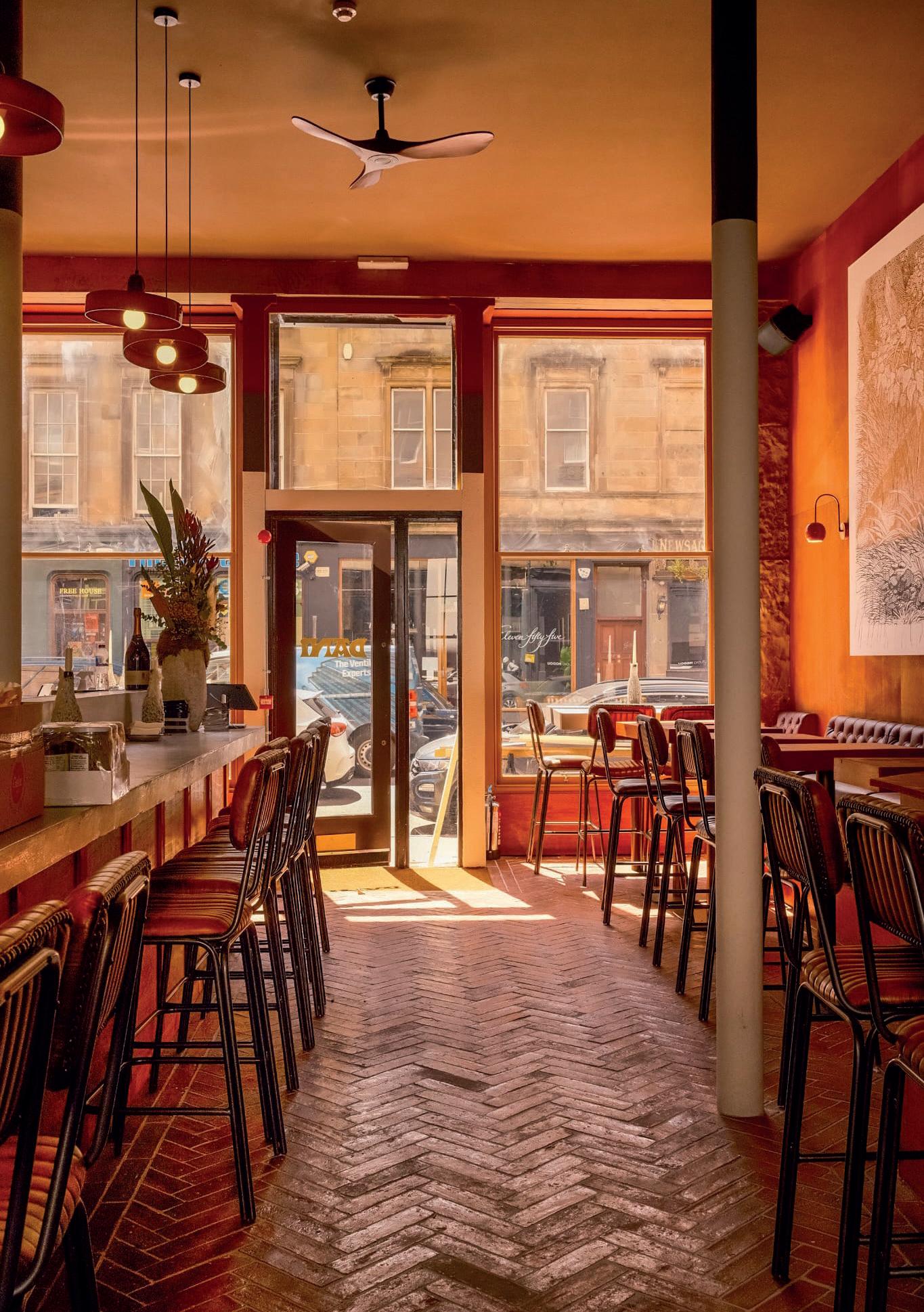
It’s been mere months since The Kelvingrove Café lot announced they were opening a Basque-inspired wine bar across the road, but the dream’s been simmering for a while according to general manager Alec Dyson. Seats are barstool-high in a place for mingling and drinking, with food that complements the precisely curated list of wines and ciders rather than the other way around (although clams with chistorra sausage sounds rather tasty). The communal, convivial vibe peaks at the big tables near the windows, with swanky ice wells built into the middle. It’s an enticing view for passersby: thankfully walk-ins are positively encouraged. (David Kirkwood) n 1126 Argyle Street, Glasgow; bardaniglasgow.com

The wellbeing of people working in hospitality can be as invisible as the commis chef in a fine restaurant or the cellarman in a trendy bar. But, as Donald Reid finds out, some folk are taking notice
In the quasi-theatrical world of hospitality, sleight of hand is stock-in-trade. It’s in the culinary wizardry of a chef’s signature dish, the alchemy of a clever cocktail, the effortlessness of top-notch service, the going home leaving someone else to wash the dishes and sweep the floor. As customers, we willingly suspend our disbelief, pay for the privilege and generally consider ourselves satisfied. It’s an age-old formula.
Yet if all the hospitality world is a stage, then are all its men and women merely players? Or, possibly, real people living real lives? To put it another way: if hospitality is about caring, who cares for the carers? This is, after all, an industry whose best-known contribution to workplace wellbeing is ‘if you can’t stand the heat, get out of the kitchen’.
Gordon McIntyre places that phrase at the heart of his Scottish-based charity Hospitality Health’s origin story. ‘As a chef, one thing that always troubled me was that atmosphere in the kitchen. And when I moved front of house, I realised it wasn’t just a kitchen thing; it’s across the whole of the industry, from housekeeping to bar work. The industry still too often treats wellbeing as a soft perk.’
‘Anxiety and stress are big issues, but who can you turn to?’ he adds. ‘Our industry doesn’t often look outside the hospitality family when they need that support. We felt we could perhaps signpost the support to help get it to the people that need it.’
Mental health remains something of a taboo subject, too often medicated or patched over by drink, drugs, bullying and inappropriate

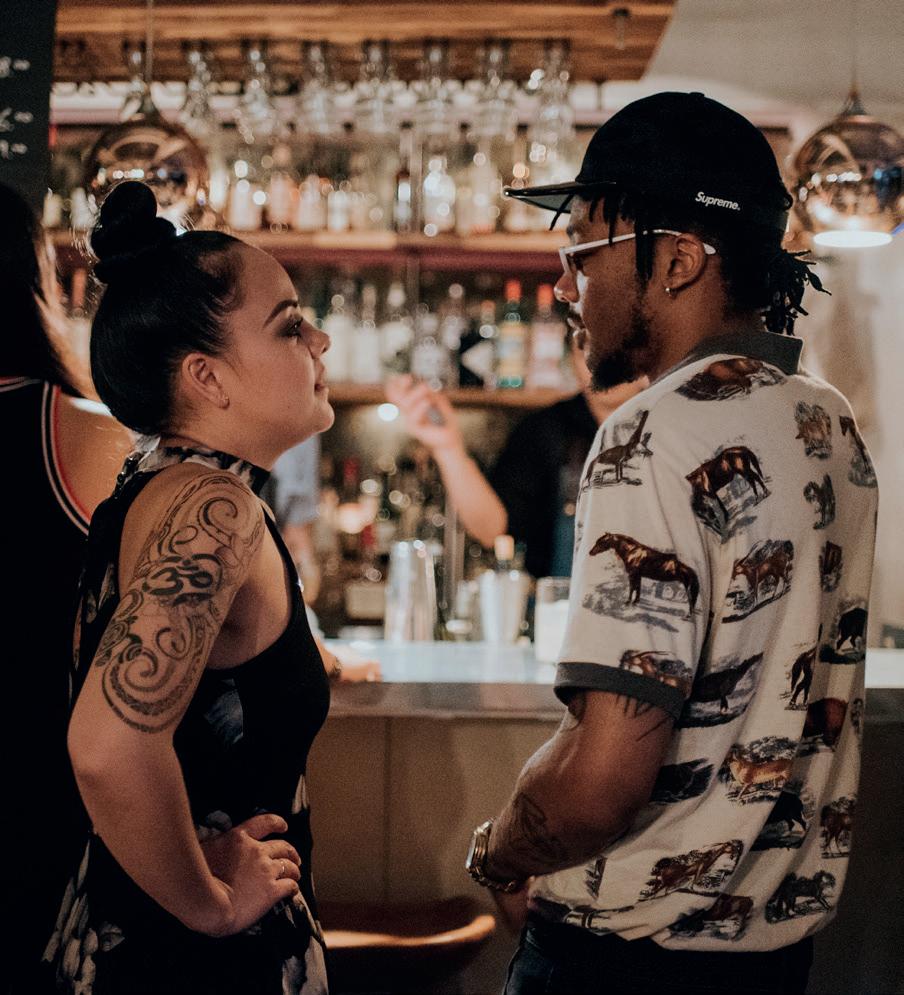
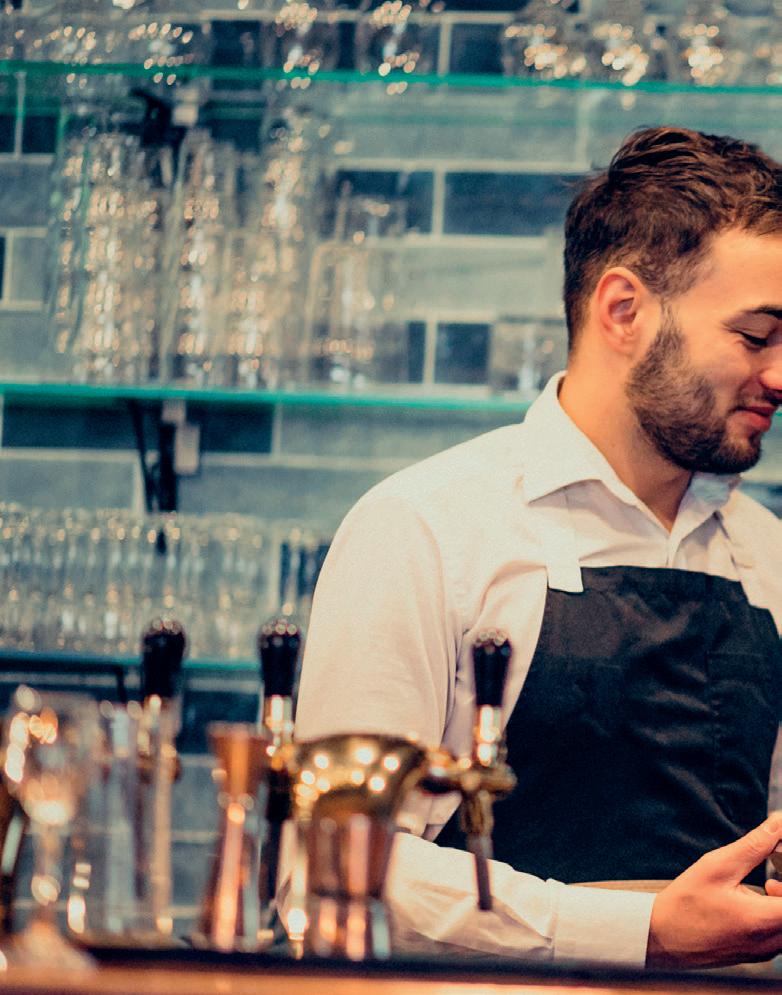
While most hospitality charities, including The Drinks Trust and The Ben, receive support from industry players big and small, there’s always a call for more fundraising which often goes hand in hand with raising awareness. That’s why Neil Barker is embarking on the Sixtreme: On The Rocks challenge alongside colleagues, friends and partner businesses in late July. He’ll run six marathons on six consecutive days on a route from Ailsa Craig (Girvan) to the Bass Rock (North Berwick), a total of 177 miles.
‘There are lots of people doing things for lots of incredible causes,’ he says. ‘I’m doing something a little bit more extreme to try and raise awareness and show that it impacts communities across Scotland. It’s an excuse to shine a light on a very real problem.’ n For info on the challenge and how to donate, visit instagram.com/drinks_trust

behaviour. That Hospitality Health and other similar Scottish and UK charities even exist is testament both to the recognition of a need, and the increasing availability of emotional and practical support.
Caring for the carers reaches customers too. McIntyre is a fan of inspirational American restaurateur Danny Meyer who upends the conventional thinking of ‘the customer is number one’. In order, Meyer’s priorities are: employees, guests, community, suppliers then investors, believing that happy staff actually want to look after guests while happy guests look after the bottom line.
Tellingly, this isn’t just a contemporary manifestation of shifting attitudes to wellbeing. UK charity The Drinks Trust originated in London in 1886; even older is the Scottish Wine And Spirit Merchants’ Benevolent Institution, founded in Glasgow in 1864, now known as The Ben. Both offer grants to hospitality employees to address emergency situations and hardship, along with mental health support or awards to support training.
Neil Barker is the current trustee chair for The Drinks Trust. He observes that the positives and the negatives of working in hospitality are often not far apart. ‘It’s a great industry for giving people their first chance of a job and giving them a sense of structure. It gives them formal
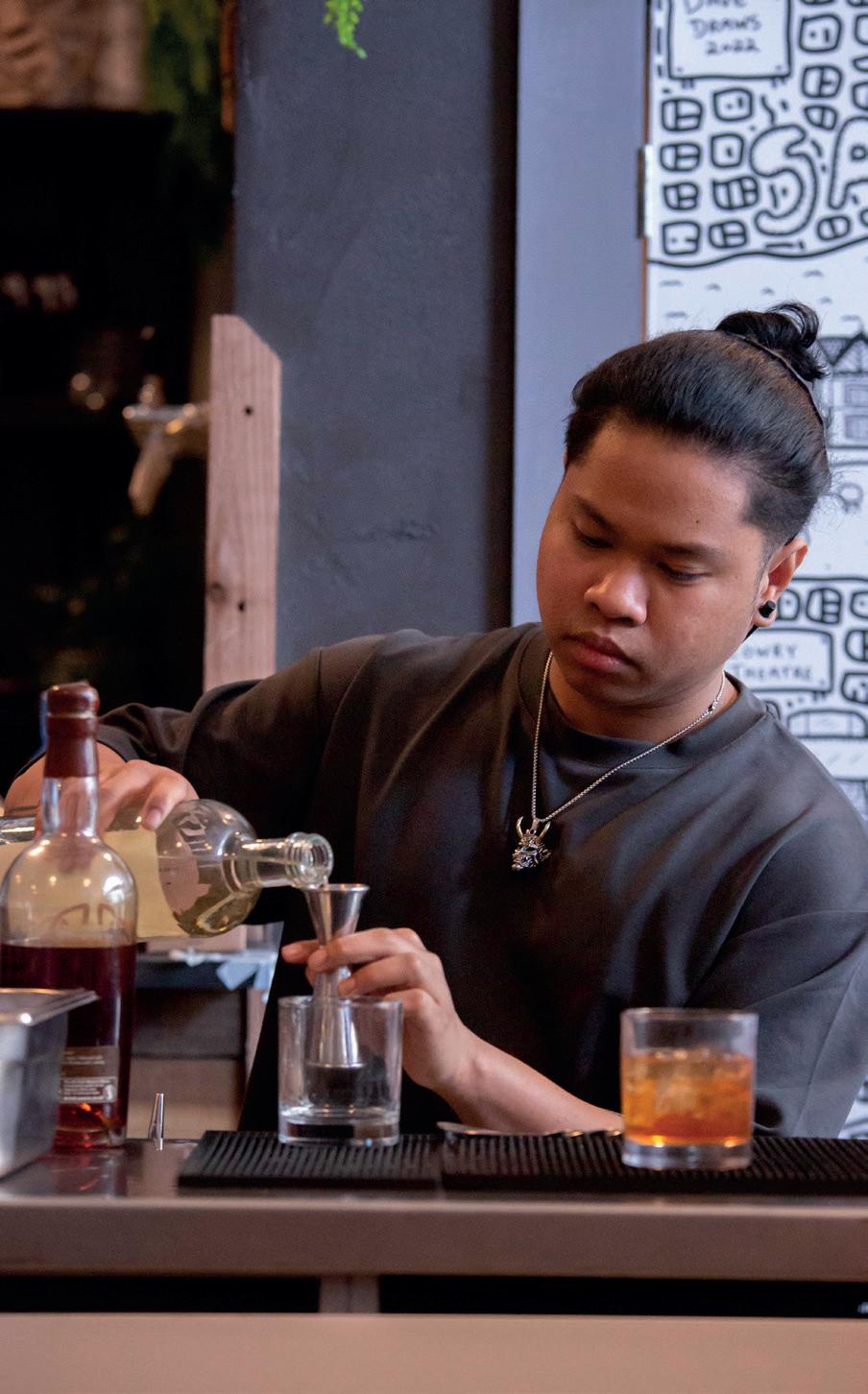
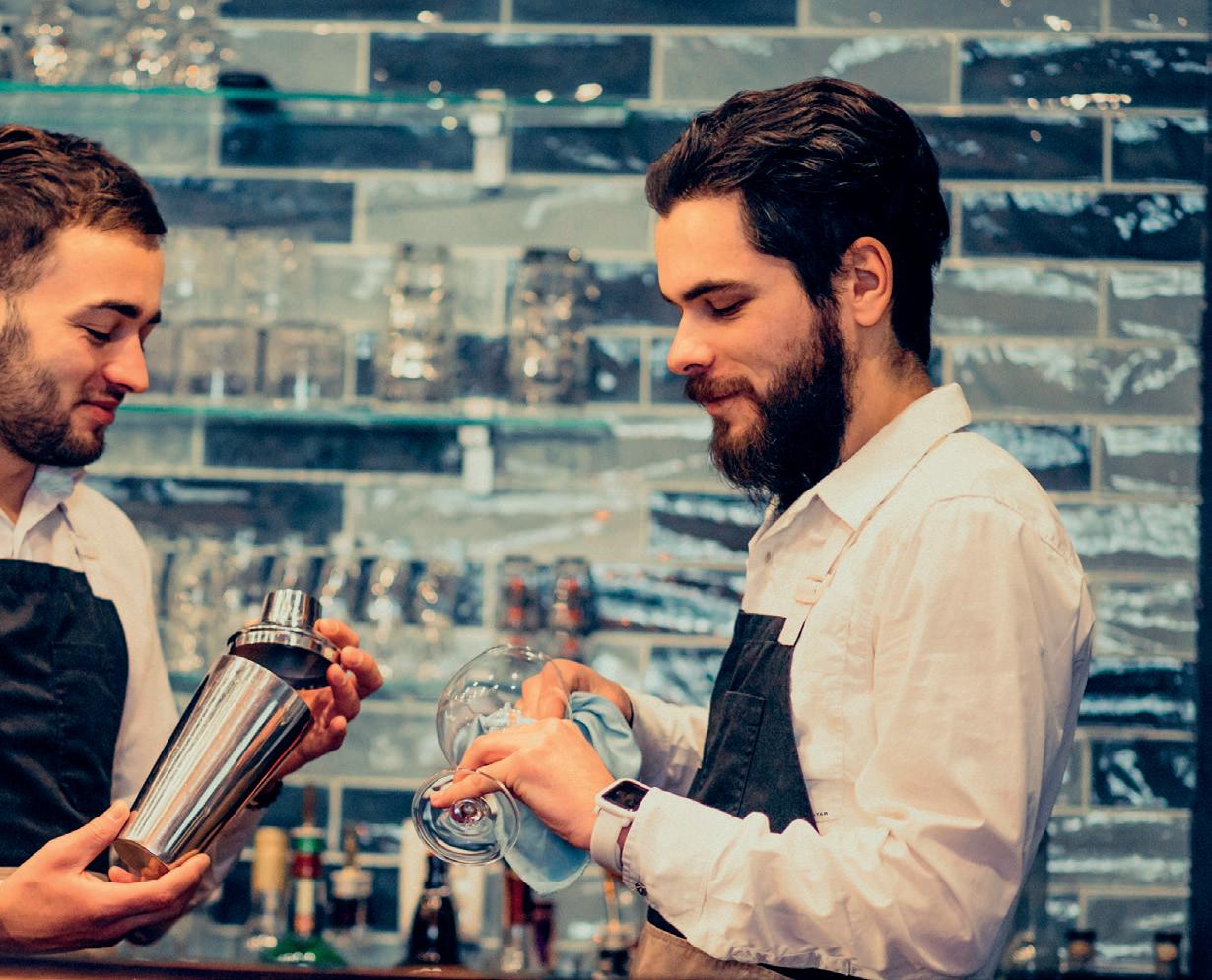
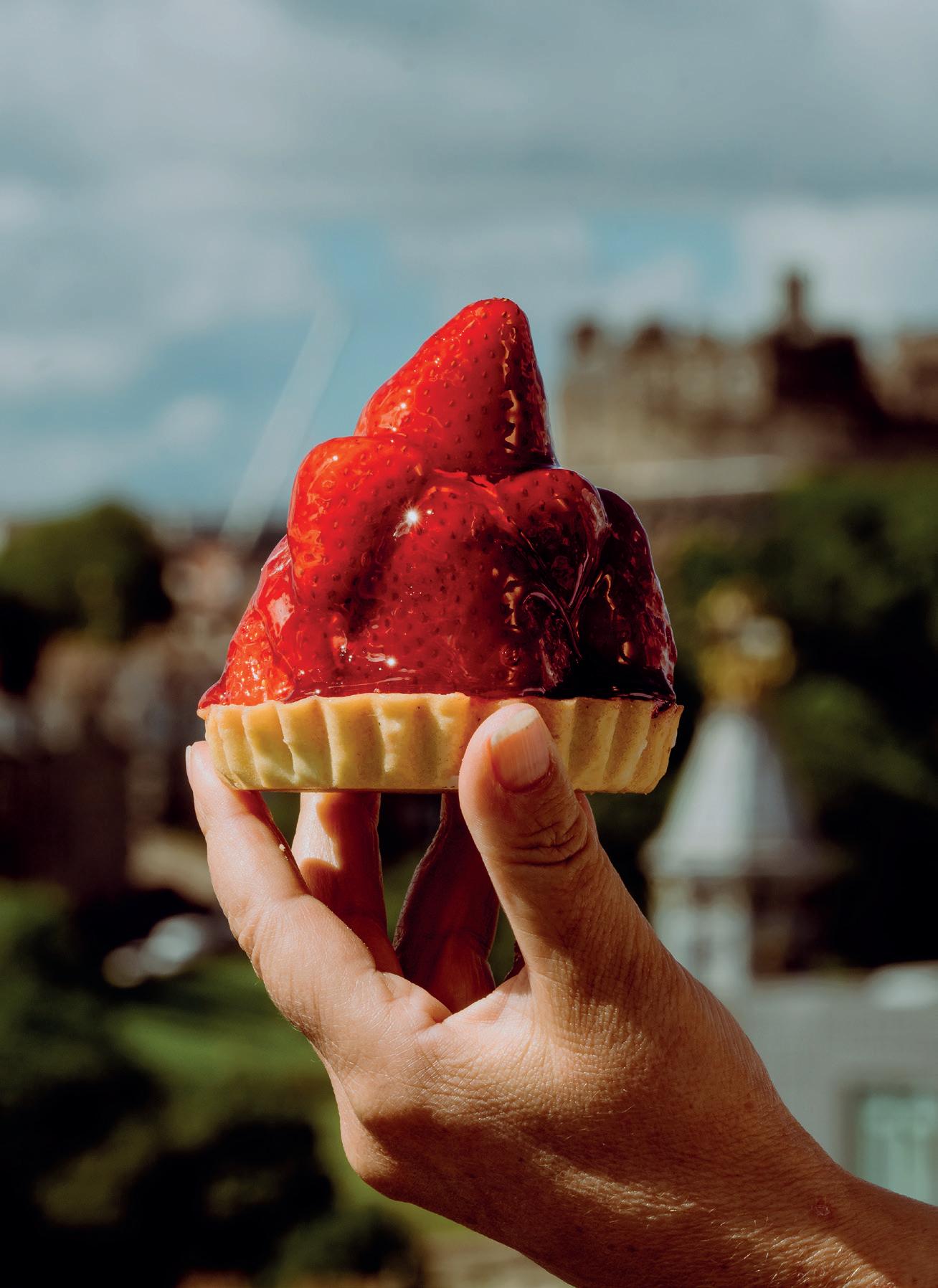
As festival season approaches, Suzy Pope tracks new openings, relocations and reinventions across the food and drink scene
In Glasgow, following the success of Corner Shop, Conor McGeady and head chef Alex Brady are set to open Next Door on Pollokshaws Road, promising a neighbourhood cocktail bar with a focus on food and vinyl. Meanwhile, it’s all change for lovers of the grain: Bon Accord has reopened under new stewardship while former landlords Thomas and Inga McDonagh have launched The Valinch, a whisky bar, shop and alehouse on Hope Street. Former Finnieston favourite Pickled Ginger is on the move to new premises on Gordon Street and the fancy Japanese sandwich craze is about to hit town with Sando teased to open soon.
July and August brings festival season. Glasgow Foodies Festival (Friday 14–Sunday 16 August) will take over Rouken Glen Park with celebrity chefs, food demonstrations, street food galore and 90s music headliners, with Edinburgh Foodies Festival promising much of the same (Friday 7–Sunday 9 August). Edinburgh Folk & Food Festival (Friday 24 July–Sunday 2 August) offers street eats and workshops in George Square with a soundtrack of trad and folk songs.
Edinburgh also has a couple of new openings to plan in. Argyle Place will be replaced by Alpine-inspired brunch spot Freschen, slated to open in September. Gary Maclean of MasterChef: The Professionals fame has opened Scottish produce-led Kin at the Roseate Hotel in the West End. And Eusebi Bakery, a new offshoot of the Glasgowbased Italian deli, becomes the latest addition to Bonnie & Wild at St James Quarter.
and informal training and you learn a lot,’ says Barker. ‘Once you’ve had a job, you’re more likely to get a job. But it can be a tough place to work. The hours are antisocial. Keeping a private life and a social life is very difficult. Dealing with the public can be a tricky thing. You’re on stage the whole time.’
Barker is also MD of the UK & Ireland division of drinks company William Grant & Sons. He’s well aware that other issues demand the attention of managers and bosses, including regulation, taxation and rising costs, which add to the pressure on everyone.
‘Venues are under strain like never before,’ he explains. ‘And this is a sector where people are employed on a much more casual basis than they are elsewhere. We’re seeing way more cases where people simply can’t pay rent, way more cases where people are displaced and find it difficult to get a job; more cases of domestic abuse as the pressure goes up. And frankly, we’re seeing more cases of suicide. The Trust had 7500 beneficiaries last year and we could have helped a lot more people, which is probably the hardest thing to say.’
hospitalityhealth.org.uk; drinkstrust.org.uk; bensoc.org.uk
W Deck is Edinburgh’s destination 360° seasonal rooftop bar, located on the 12th floor of W Edinburgh




After a few fallow years, the hedges have been cut back and the veg beds weeded. With new ownership and a new name, curious diners can return to the gardens to find one of the city’s most interesting dinner tables, hidden in the trees on Royal Terrace. Reawakening the fairytale cottage is Peter Adshead, a familiar figure on Edinburgh’s dining scene, alongside head chef Jamie Stapleton, formerly of Cannonball.
Inside, candlelight flickers across long communal tables and cleanlined interiors. Views into the kitchen (and even the pot wash) add to a sense of openness. With its upbeat soundtrack, easy-going service and intimate scale, it feels less formal restaurant, more particularly stylish dinner party. There’s a five or seven-course tasting menu, or a neat two courses for lunch or pre-theatre (sensible, given its proximity to Edinburgh Playhouse).
The extended experience opens with a trio of deftly executed snacks: warm cheddar gougère, cured trout tartlet and a delicate goat’s cheese tart. Asparagus soup combines green and white spears with black garlic, charred lemon and basil, while a carrot course demonstrates how much can be achieved from a single ingredient. Smoked, pickled and puréed, it’s the best version of itself: sweet, earthy and intense.
A beautiful fillet of Peterhead halibut is gently poached, almost shockingly pale and tender, with pickled red grapes and celery, charred baby leeks and pops of roe cutting through a creamy champagne beurre blanc. The standout main is hogget shoulder (from The Free Company), accompanied by ewe’s curd, juicy St George’s mushrooms and a rich jus. Desserts finish strong courtesy of hibiscus-poached rhubarb with yoghurt mousse and oats, followed by properly punchy dark chocolate tart with candied nuts, crème fraîche and miso caramel. It’s a delightful next chapter for this humble gardener’s cottage. (Ailsa Sheldon) n 1 Royal Terrace Gardens, Edinburgh; thecottageedinburgh.com; average price £55 for a five-course tasting menu.
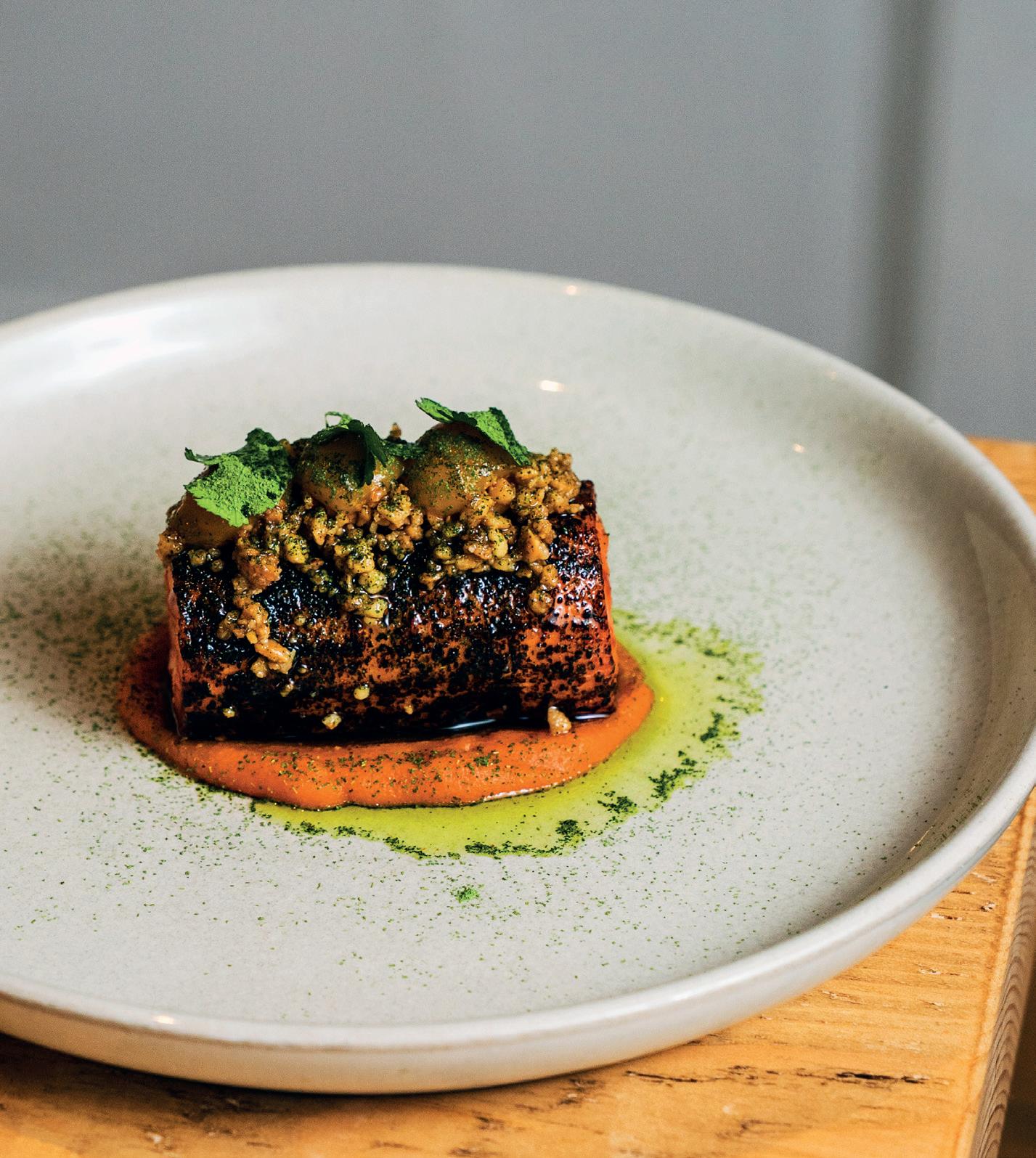
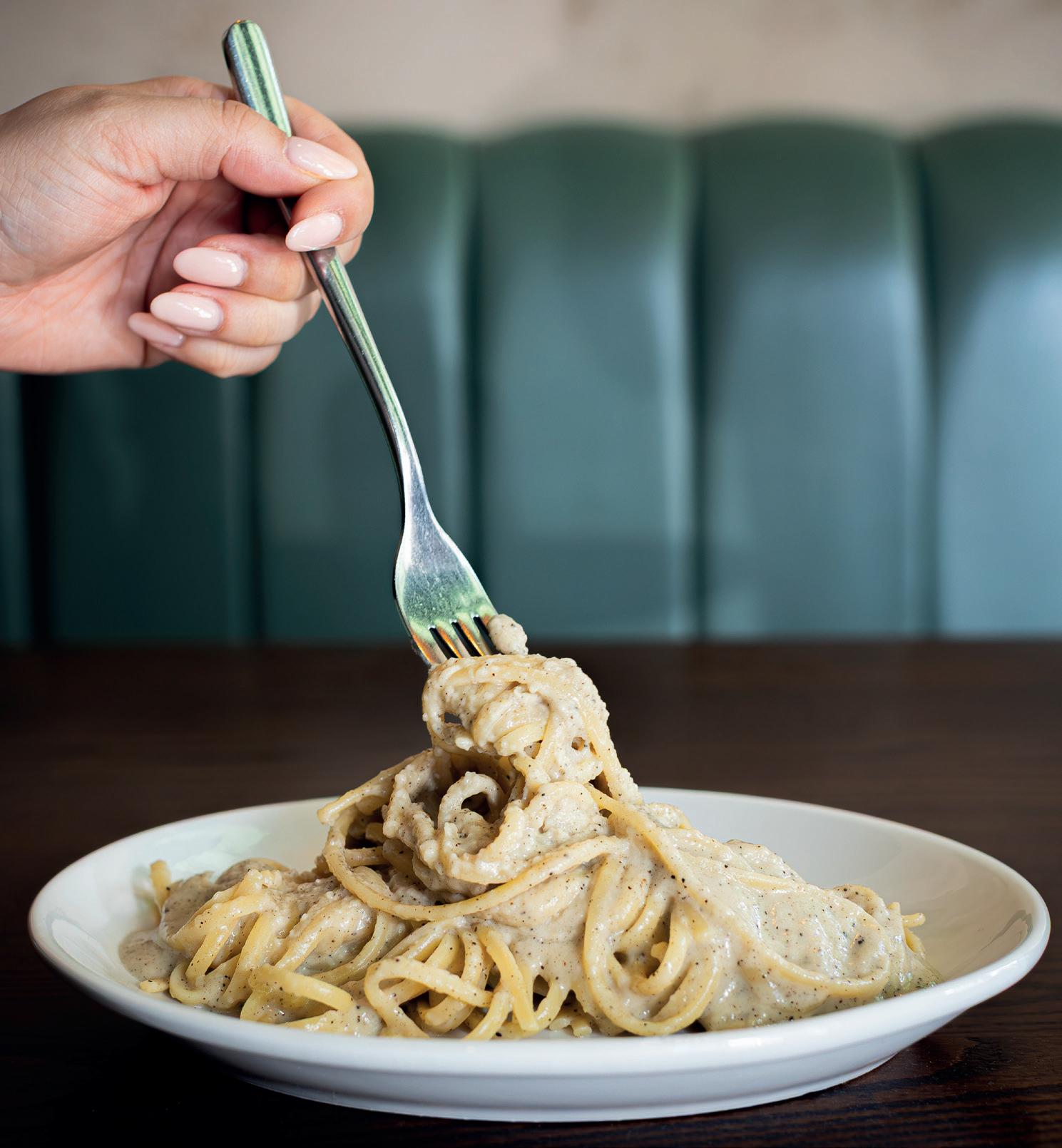
It is a truth universally acknowledged that pretty much every Weegie completely and utterly loves Italian food. And, as the city’s love for the cuisine veers towards another zenith, it seems pasta is set to become the new pizza following Sugo’s lead towards cheap and cheerful yet stylish (but not posh or scary). Pappa’s is a case in point: until recently it was Casa, an Instafriendly brunch spot with dried strawberries in your prosecco, before pivoting to pasta.
Brunchy stuff is available until mid-afternoon but pasta is the focal point for mains. Pleasant small plates kick things off, like grilled focaccia that’s unashamedly garlicky and buttery (we’re not doing subtle). The caprese salad uses burrata instead of boring old mozzarella for a happy little touch of bougie. Yes, the varieties of tomato would shine a tad more if they were closer to room temperature, but that’s been the plight of many a caprese through the years. In another easy-peasy riff, vodka sauce lasagne is mighty fine: sweet, creamy and with a wee peppery kick in the background.
There’s rigatoni bolognese, there’s cacio e pepe and a green goddess sauce pops up more than once; it’s a simple, herby and nut-free take on green pesto that’s fresh and digestion-friendly if an afternoon in the office or lecture theatre beckons. Lunchtime properly ticks over here, with all pastas priced under a tenner during the day. That said, Pappa’s is open until midnight at the weekend in another nod towards the vastly superior (for which read ‘later’) dining habits of the Italians. (David Kirkwood) n 526 Great Western Road, Glasgow; pappaspastabar.co.uk; average price £18 for two courses.

Got a food dilemma? Need a killer rec to seal the deal? Or just want the inside track on Glasgow and Edinburgh’s eating and drinking scene? Then why not ask EADith, our Eat & Drink team’s helpful agony aunt. This time around, she practises the fine art of tourist avoidance, which truly is so vital for a successful Edinburgh summer
Dear EADith
I’m showing some visiting friends Edinburgh’s tourist hotspots, mainly around the Royal Mile, lord help me. Any tips for good, casual food and decent drinks that aren’t overpriced tourist traps or a load of tartan hoo-ha?
Dear TerryNaeTat,
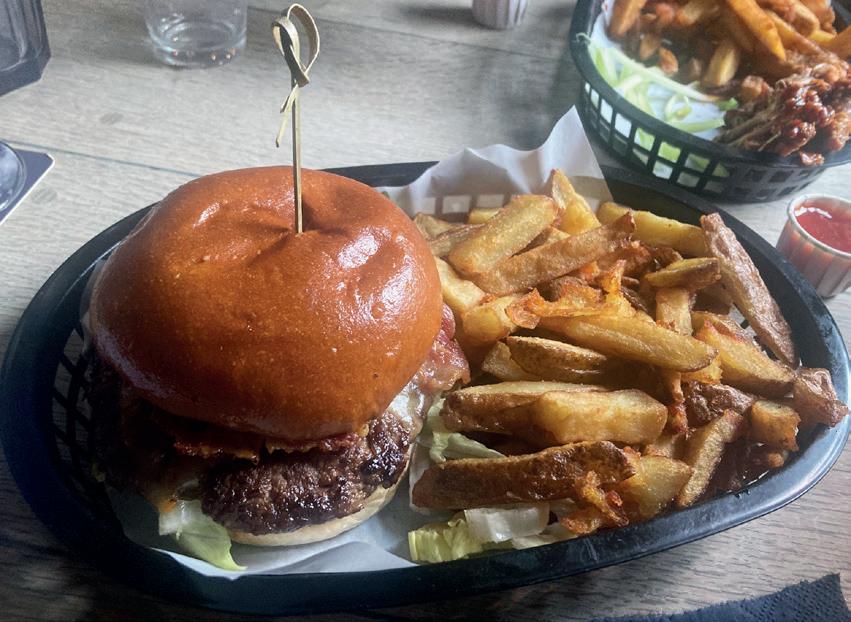
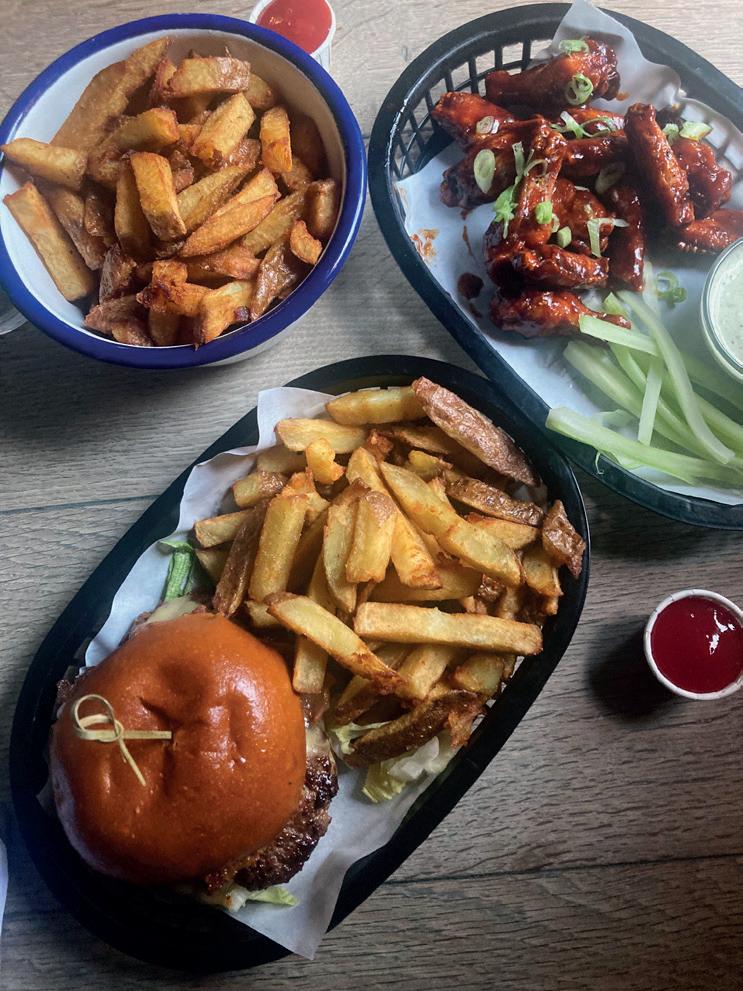
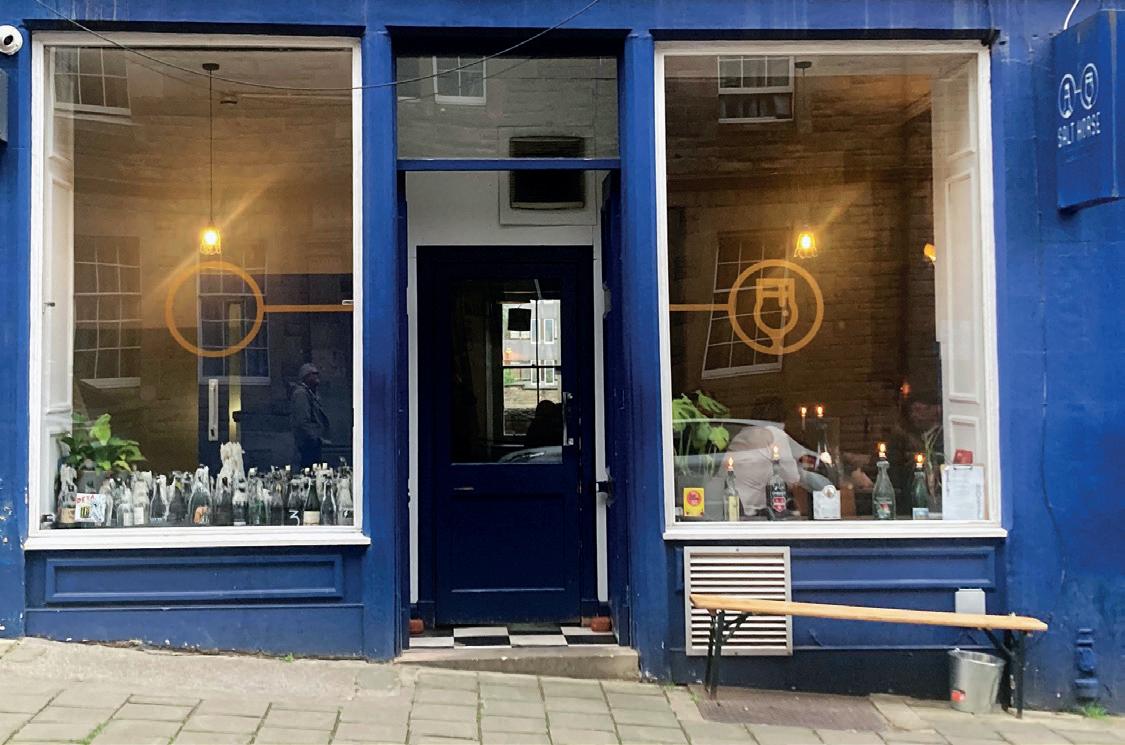
I too am averse to the tartan hoo-ha ever since that unfortunate stramash with Moira Anderson many moons ago which I cannot discuss for legal reasons. But (strictly entre nous) she started it. I digress. Here am I going on about what I believe the kids these days call ‘beef’ and you’re desperately waiting for me to disseminate some words of wisdom. So here you go: beef. Not the Moira kind. Beef as in burgers. As in those at Salt Horse, an establishment just far enough down Blackfriars Street to escape the heaving masses of the Royal Mile but close enough to not tax anyone’s bunions.
Their meat is 100% pasture fed and comes from those fine Fifers at Bowhouse, with a tight menu of excellent smash burgers, fried chicken sandwiches, wings and loaded fries. I favour the 5oz burger with tangy sauce, bourbon pickles and monterey jack cheese, while Mr E loves getting sticky fingered with a pile of barbecue wings. Currently he’s a martyr to his insides, so anything too spicy or vinegary is an absolute nono. I, on the other hand, have the constitution of a particularly robust ox so will happily polish off a couple of Bloody Mary-pickled eggs on the side.
Drinks you say? Goodness, there’s more craft brews here than real men at one of little Tommy Robinson’s flag-waving jamborees. I’m not a massive beer drinker (a figure this trim is not brought to you by a lifetime skulling pints) but Mr E is a total hop-head. Salt Horse has more than 200 different cans and 14 rotating draught lines from all over the world (he quaffed a lovely drop from NZ-based Garage Project on our last visit). You see, in many ways, our different tastes are the key to our continuing blissful union. As young Shavonne down the street is oft heard screeching at her latest beau, ‘you do you babez’. (As told to Paul McLean) Salt Horse, 57–61 Blackfriars Street, Edinburgh; salthorse.beer; £23 for a burger and beer.

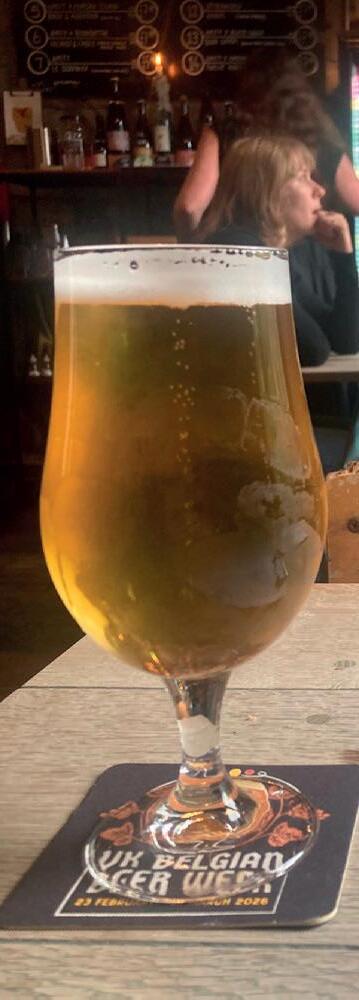





I’m a creature of comfort so my favourite watering hole is just around the corner from where I live in central Edinburgh. The Cask & Barrel on Broughton Street is an old-man pub with good ales on tap and frequent dogs in attendance. One of its big selling points though is about eight TVs dotted around the space showing whatever sport happens to be on that day. For major sporting events, it can have a great atmosphere, much more fun than watching alone at home. I often head up there during Wimbledon and the World Cup, as long as it’s not too rammed. A fringe benefit is that it’s right next door to a wonderful Nepalese restaurant, Thamel, that does killer cocktails for a change of pace.
Steven Osborne performs at Paxton House, near Berwick-Upon-Tweed, Friday 17 July as part of Music At Paxton; he also performs at Queen’s Hall, Monday 17 August as part of Edinburgh International Festival.


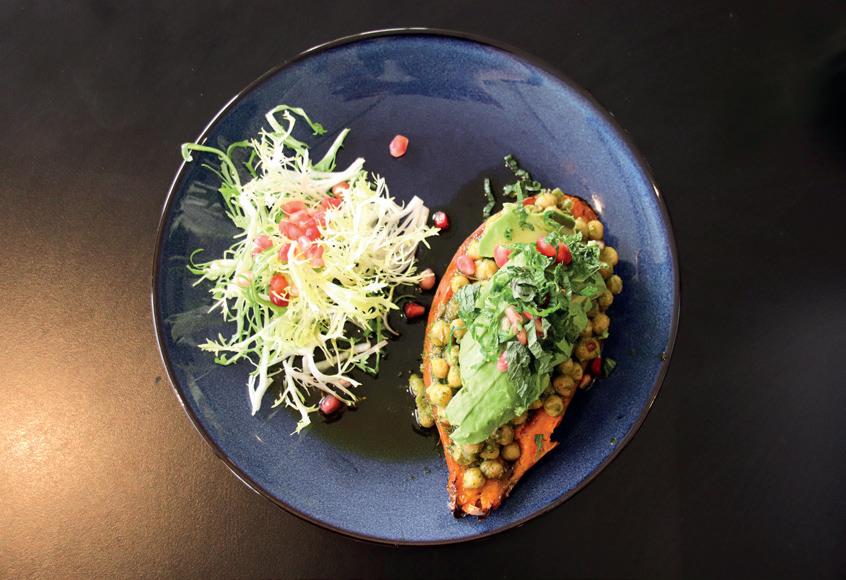
Our TipLists suggest the places worth knowing about in different themes, categories and locations. This month, we examine an emerging food scene to discover the best African food in Glasgow and Edinburgh
KUBA
1 Dundee Street; kubaedinburgh.com
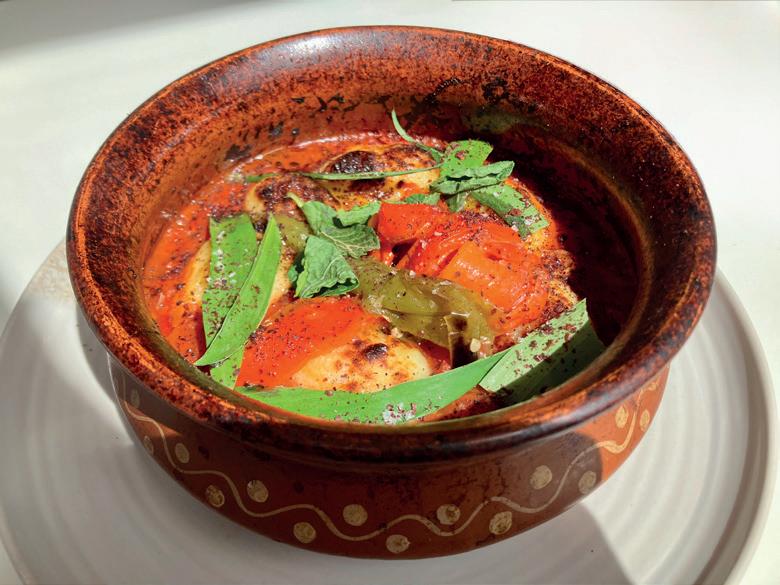
Edinburgh Printmakers is home to galleries, workshops and this spacious café. Kuba’s brunch/ lunch menu of freshly cooked options seem conventional enough but deeper exploration reveals a number of African touches such as Ghanian shakshuka or ful medames stew. Keep an eye out for their monthly jollof Sunday roast.
MAROBERT’S
7 Dublin Street; ma-roberts.com
After years selling Tanzanian spice mixes and sauces, MaRobert’s opened a permanent café. There are just a handful of tables and high stools inside to enjoy intensely spiced chickpea curries and blackened chicken thighs (and the hope of nyama choma on the daily-changing menu).
MUNA’S ETHIOPIAN CUISINE
8 Gillespie Place; instagram.com/munasethiopiancuisine
A little slice of Ethiopia where meals are based around injera: the sour, yeasty and delicious pancake-like bread which serves as an edible plate to tear, dip and dunk into deeply avoured wots (spicy stews). Order a combo platter to try as many as you can.
PHRIENDS FOOD
16 Morrison Street; instagram.com/phriendsfood
It’s not about aesthetics at Phriends: it’s 100% about avour. If you’ve got cravings that only jollof rice or waakye will satisfy, this is the spot for you. Rich and creamy peanut soup has a chilli kick, softened by a dense ball of fufu and the menu is a lesson in Ghanaian cuisine.
UWAGBOE’S KITCHEN & GRILL
250–252 Leith Walk; uwagboeskitchen.com
This restaurant hosts a steady stream of hungry people picking up evening takeaways as well as lling up its comfy seating area, proving its popularity with the Nigerian community. App-based table ordering is a tall order for the uninitiated, so ask the friendly staff for help before tucking into spicy soup or smoky jollof rice. (Ailsa Sheldon, Donald Reid, Jo Laidlaw & Suzy Pope)
213 Gallowgate; facebook.com/ familycafeeritreanandethiopianrestaurant Community is strong at this casual Ethiopian/ Eritrean spot where expats gather. Lamb stews shine with tender meat and fruity sauce, lentils are cooked lovingly and the gigantic, thin injera mops everything up with malty satisfaction. A lovely exponent of one of the world’s oldest cuisines.
GOAT IN THE TREE
16 Park Road; goatinthetreeglasgow.co.uk
This Kelvinbridge Moroccan diner is a real rarity these days: generous portions of great food at bargain prices. Punters leave sated and smiling thanks to top-quality snacks and dips, tagines and mountainous couscous options. Add in BYOB and personable staff, and this place is almost as extraordinary as a herd of goats up a tree.
MASSAWA
53 Byres Road; massawa-glasgow.com
A great spot for enjoying Eritrean and Ethiopian food, with wooden and terracotta décor that’s as warming as the service. Take enough folk to justify a big sharing option of regional wats spiced with berbere and served on spongy sourdough injera, all revealed beneath a traditional basket covering. BYOB if you want alcohol.
MOSOB BAR & RESTAURANT
56 Dundas Street; mosobglasgow.co.uk
Climb the industrial stairs to pop up in one of Glasgow’s top Ethiopian/Eritrean restaurants. It’s a big comfy space, dotted with the decorative baskets for which the place is named. Ethiopian Orthodox Christians traditionally abstain from meat for much of the year, which means you’ll nd delicious, complex vegan dishes here.
QASBA
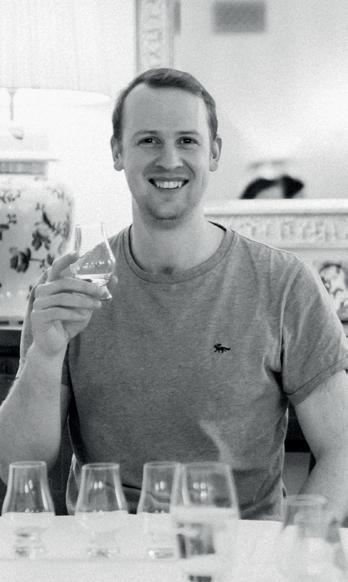
If you fancy making the most of the long, summer evenings, Dougal Gordon, Glenfiddich Brand Ambassador, shares his top spots for a sundowner after your African feast
CAFÉ CALTON
Calton Hill, Edinburgh; cafecalton.com
Café Calton pairs relaxed dining with gorgeous views across the city and right out to the Firth Of Forth. Whether you’re after a sunrise coffee or sunset dinner, the skyline is the star, making the climb as rewarding as anything on the plate.
NOR’ LOFT
6 Market Street, Edinburgh; norloft.co.uk
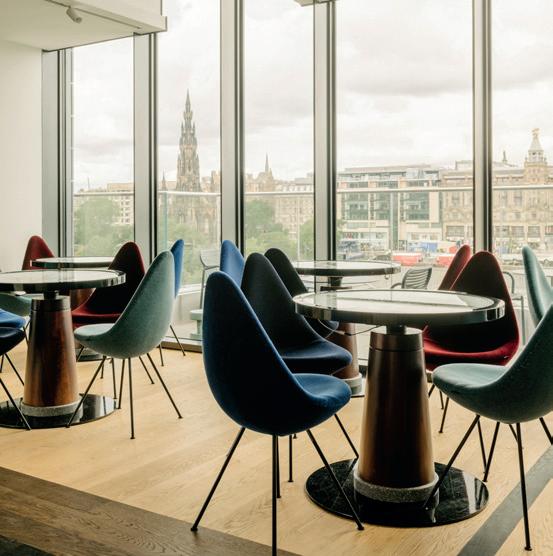
In Market Street Hotel, Nor’ Loft is a sleek rooftop champagne bar offering some of Edinburgh’s nest vistas. Floor-to-ceiling windows and a small terrace open onto sweeping panoramas of Princes Street and beyond. It’s a place where the view does the talking: perfect for a drink as sunset washes the city in gold.
SÍSÍ
15 Candleriggs, Glasgow; sisirooftop.com/gb/glasgow
Sísí is all about the view. Perched high above Glasgow, you get a full sweep of the city: rooftops, the Clyde and lights stretch out in every direction. The drinks menu is slick too, with cocktails and classics. Go at sunset when the cityscape does the heavy lifting; it’s an easy place to linger longer.
21 Allison Street; instagram.com/qasba_gla Compact café-diner with an ebullient owner-chef, top African soundtrack and great Algerian and Levantine food. The daily-changing menu does sandwiches and brunchy daytime dishes evolving to evening numbers. Expect big punchy avours and endless interest from the tiny kitchen. BYOB at the moment. (David Kirkwood & Jay Thundercliffe) IN PARTNERSHIP WITH









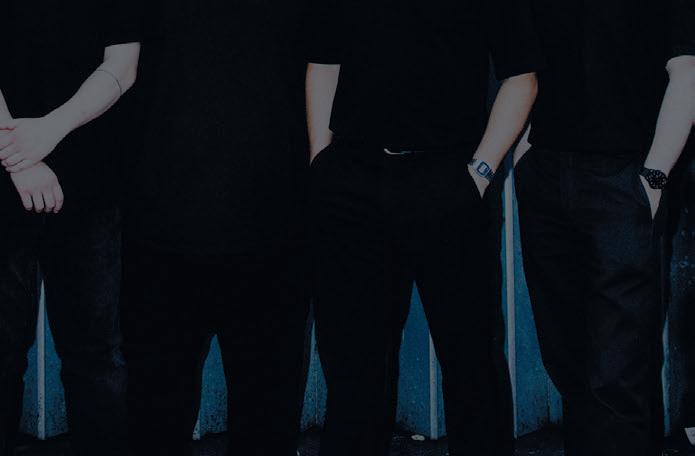
















































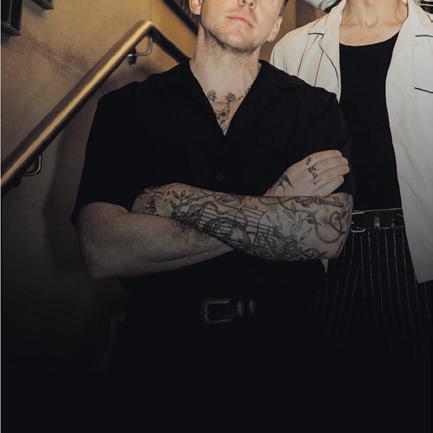


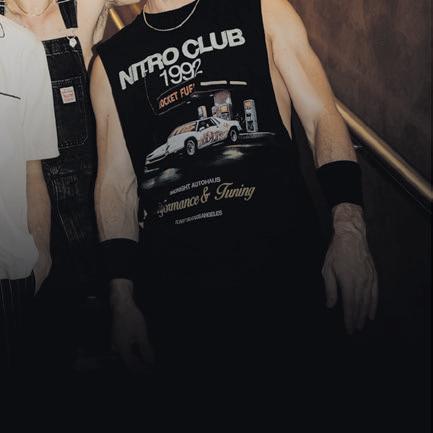

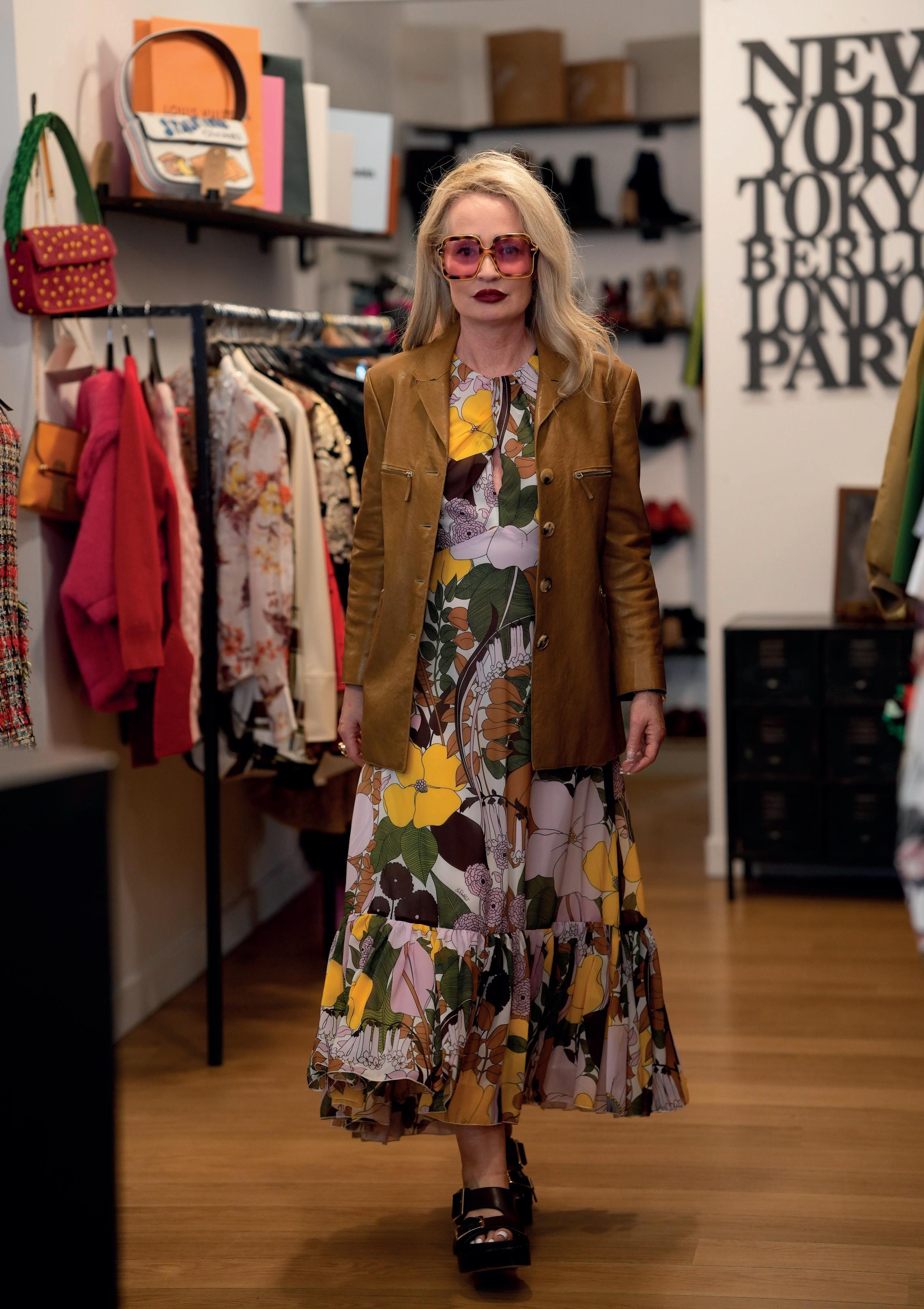
Luxury fashion doesn’t always have to mean luxury prices. Launched in 2025, Haute’s Edinburgh boutique houses a curated selection of items past and present from iconic brands such as Prada, Dior and Louis Vuitton for up to 90% off the recommended retail price. Customers can also sell their preloved luxury goods as part of a sustainable approach to fashion. In addition to buying and selling, Haute offers expert personal shopping and image consultancy services. Their coaches pledge to transform your wardrobe and more, providing support to improve presentation skills, relationship-building and mental resilience. (Isy Santini) n 111a Broughton Street, Edinburgh; haute-lc.co.uk; instagram.com/haute_lc
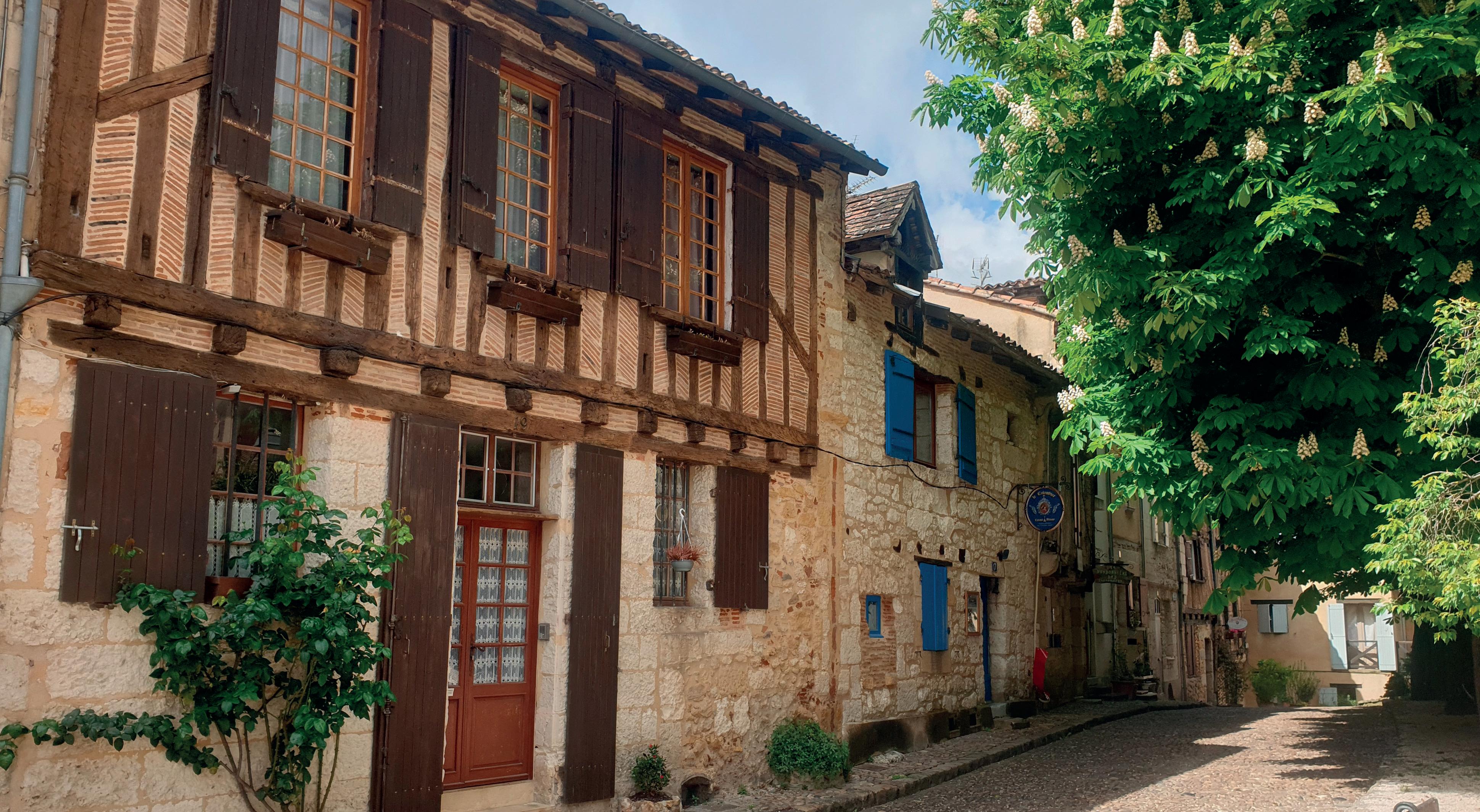
Isy Santini hops on a bargain flight to Bergerac where she explores the French city’s historic heart, culinary hotspots and natural charms
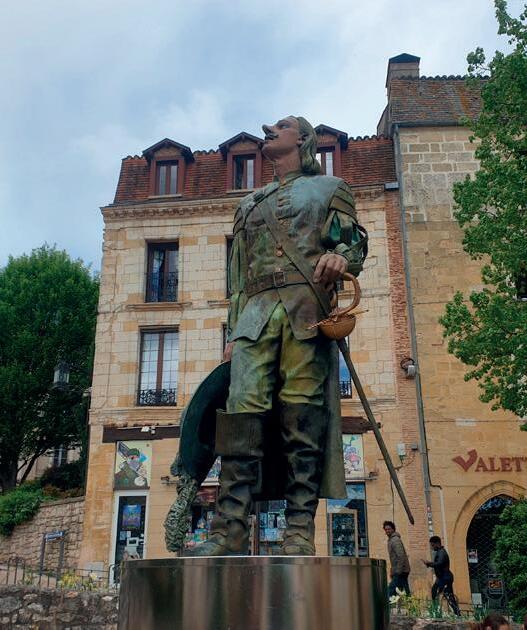
For many, Bergerac will conjure images of a long-nosed writer and feathered hats. But while it celebrates the legacy of Cyrano De Bergerac with two statues and a mural, there’s so much more to this small medieval destination.
In the heart of France’s south-west wine region, Bergerac prides itself on its full-bodied reds and dry whites. After a £15 direct flight from Edinburgh, make a beeline for Quai Cyrano which houses both the tourist office and the Maison Des Vins, a bar offering free tastings of local wines. We eventually opt for a bottle of Monbazillac from a nearby vineyard to enjoy on the sunny balcony overlooking the Dordogne.
Every alley and side street in Bergerac is chock-full of historical charm, the half-timbered houses and masonry seemingly unchanged for centuries. Between quaint ice-cream parlours and independent clothing and gift stores, you can easily spend a full day shopping in the city centre. But for those wanting a little more culture from their holiday, Bergerac has you covered. Start with a visit to the City Museum for a rundown of Bergerac’s tumultuous past. Follow this up with the adjacent Costi Museum where you can admire over 60 works by 20th-century sculptor Constantin Papachristopoulos; or try the Tobacco Museum, the only one of its kind in Europe.
Once you’ve had your fill of history, hop on one of the traditional gabarres waiting at the quay. These barges, once used to ferry goods along the Dordogne, now provide river tours. Less crowded these adays, the river is resplendent with wildlife; geese, herons, kites and kingfishers all call the Dordogne their home and can be spotted by eagle-eyed tourists.
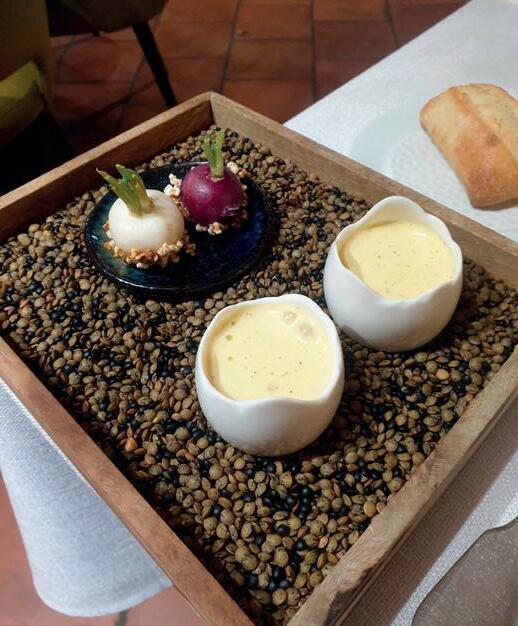
Next it’s time to try the city’s gustatory offerings. Look no further than Michelin-starred L’Imparfait with its cosy atmosphere, impeccable service and decadent dishes such as beef fillet served with foie gras and veal jus, all for a reasonable price (they even offer an under-30s discount). For a slightly more low-key meal, tuck into beautifully tender confit duck at Le Bistro Du Coin.
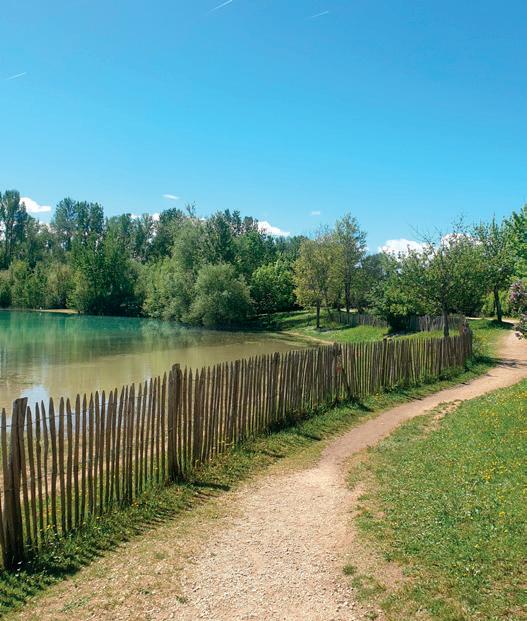
If you’ve got time to wander outside the city proper, check out Parc De Pombonne, a sprawling parkland filled with pleasant tree-shaded walks and trickling streams. At the centre is Lac De Pombonne, whose impossibly blue waters are sure to take your breath away. Bring a picnic, birdwatch in the dedicated nature area or simply look out over the water and bask in the beauty of Bergerac.
pays-bergerac-tourisme.com/en
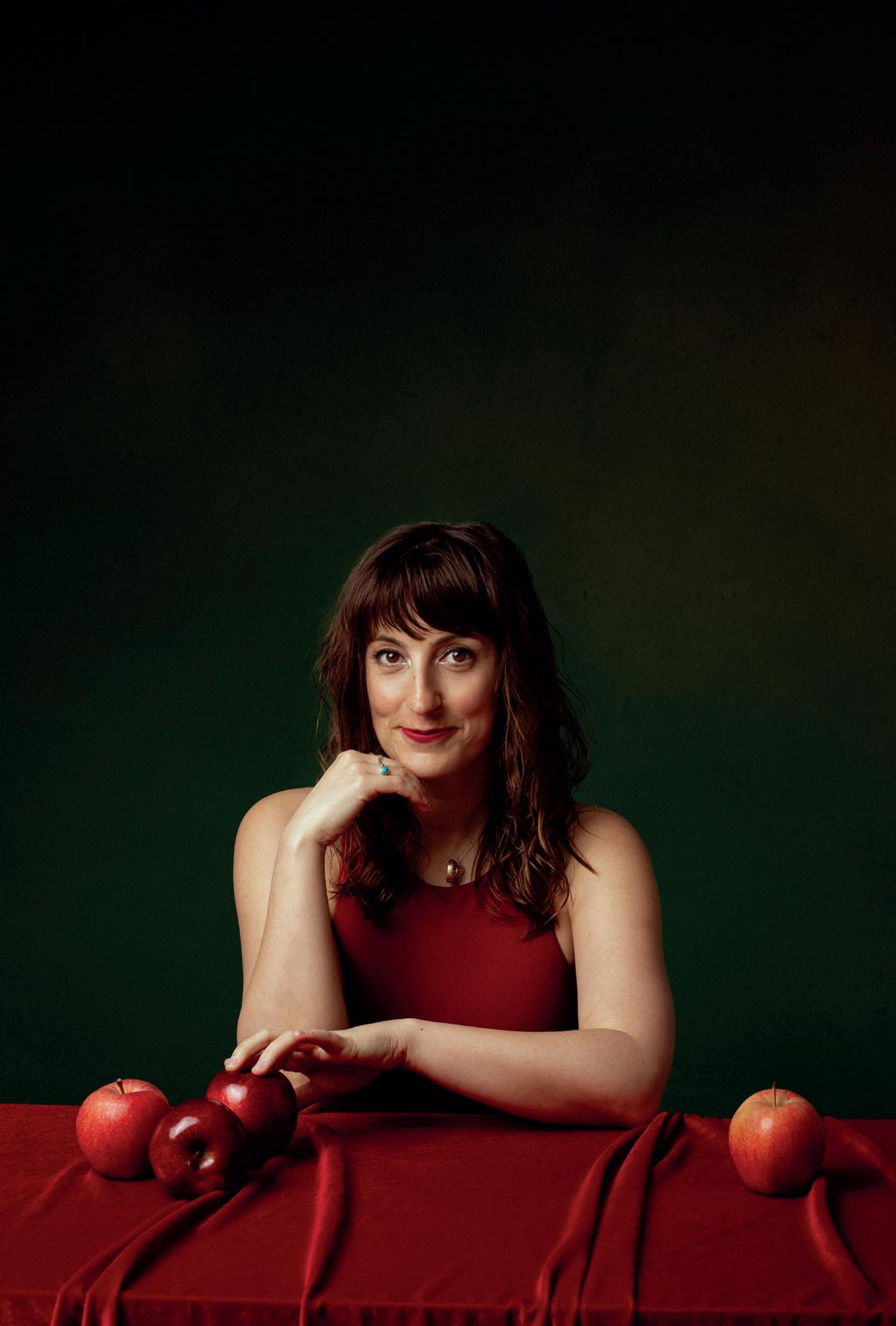
Ahead of her new work-in-progress show at the Fringe, comedian Jo Griffin casts her mind back to a time of Spain, Sisqó and stilettos
Magaluf. 2005. My first girls’ holiday. A dream trip for any anxious teenager who’s a fan of boy racers and dressing like Christina Aguilera in ‘Dirrty’ while waiting for your A-level results. It was a confusing rite of passage for me. I’d spend the days sunbathing, reading feminist texts such as Virgina Woolf’s A Room Of One’s Own on a lilo, but by the evening it was club nights, necking fishbowl cocktails, and hoping to get off with a boy who looked like a jacket potato squashed into a Ben Sherman shirt. I couldn’t believe those suffragettes died for my right to wear this Jane Norman halterneck top and to body ripple (quite badly) to Sisqó’s ‘Thong Song’.
But I gained life skills on that holiday to rival Bear Grylls: the rock solid calf muscles developed from hobbling around in stilettos seven nights on the trot; the sheer focus and determination required to follow a group of guys up and down the bar strip for six hours (purely because they had eyebrow piercings); and finally the admirable, stoic patience shown as you held your friend’s clutch bag while she snogged a lad who looked a bit like Jay from 5ive if you squinted hard enough. And to those whose teenage summer holidays were more a trip to daddy’s vineyard in Tuscany to the soundtrack of Classic FM: well, you missed out, because that string quartet at the beginning of ‘Thong Song’ puts Mozart and his mates to shame.
Jo Griffin: Renegade, Underbelly George Square, Edinburgh, Thursday 20–Saturday 29 August.
Fancy a grand day out? Rachel Morrell picks a trio of mansions and stately homes sure to satisfy your Downton delusions
LENNOXLOVE HOUSE
Lennoxlove House just outside Haddington features architecture dating back to the 15th century. This rich built history, added to by notable architects over time, is only surpassed by the collection of art and artefacts within its walls, including a silver jewellery box belonging to Mary, Queen Of Scots. The gardens also hold a variety of rare plant life, including a 600-year-old chestnut tree.
n lennoxlove.com
HOLMWOOD HOUSE
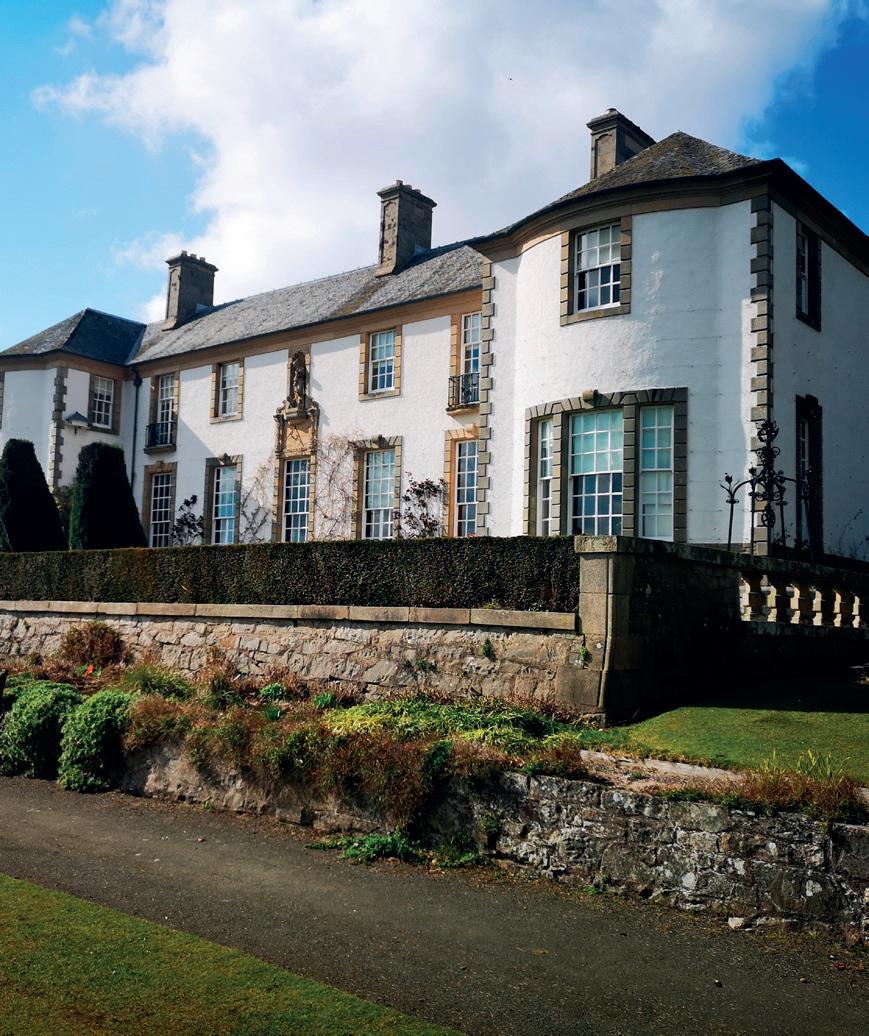
For lovers of classical design, Holmwood House near Glasgow is a chocolate box of a grand home, filled with exquisite décor. Situated on a bend of the River Cart, it was designed in 1858 by architect and proponent of sustainable design, Alexander ‘Greek’ Thomson, whose life is depicted in the house’s imagination gallery. Wander the gilded rooms, marvel at the cornicing of the dome and enjoy sculptures old and new, including fascinating work by Jonathan Owen. n nts.org.uk/visit/places/holmwood
HILL OF TARVIT MANSION
Over in Fife, Hill Of Tarvit may not be the largest of mansions, but it isn’t without a unique charm. Designed by Robert Lorimer, the arts and crafts interior not only showcases the life of its wealthy inhabitants (exhibiting furniture and art collected by jute mogul Frederick Bower Sharp), but also gives visitors a glimpse of life below stairs. For golfers, it’s also home to the only dedicated hickory golf course in the UK.
n nts.org.uk/visit/places/hill-of-tarvit-mansion















Being kind to animals and the planet are the driving forces behind Glasgow-based skincare and cosmetics brand Och Vegan, as Afreka Thomson finds out
Being vegan in Glasgow has never been easier. The city has long been one of the UK’s most animal-loving destinations, with everything from bakeries (shout out to Honeytrap in Shawlands) to fine dining spots embracing meat-free menus. But once you’ve left the café and headed home, full of aquafaba and avocado, things become a little more complicated. Skincare is one of the trickiest areas for vegans to navigate. Unlike food, there is no legal requirement for cosmetics companies to clearly flag animal-derived ingredients. Instead, consumers are left decoding names on labels: cera alba for beeswax, and adeps bovis is actually just beef tallow in Latin. Sneaky.
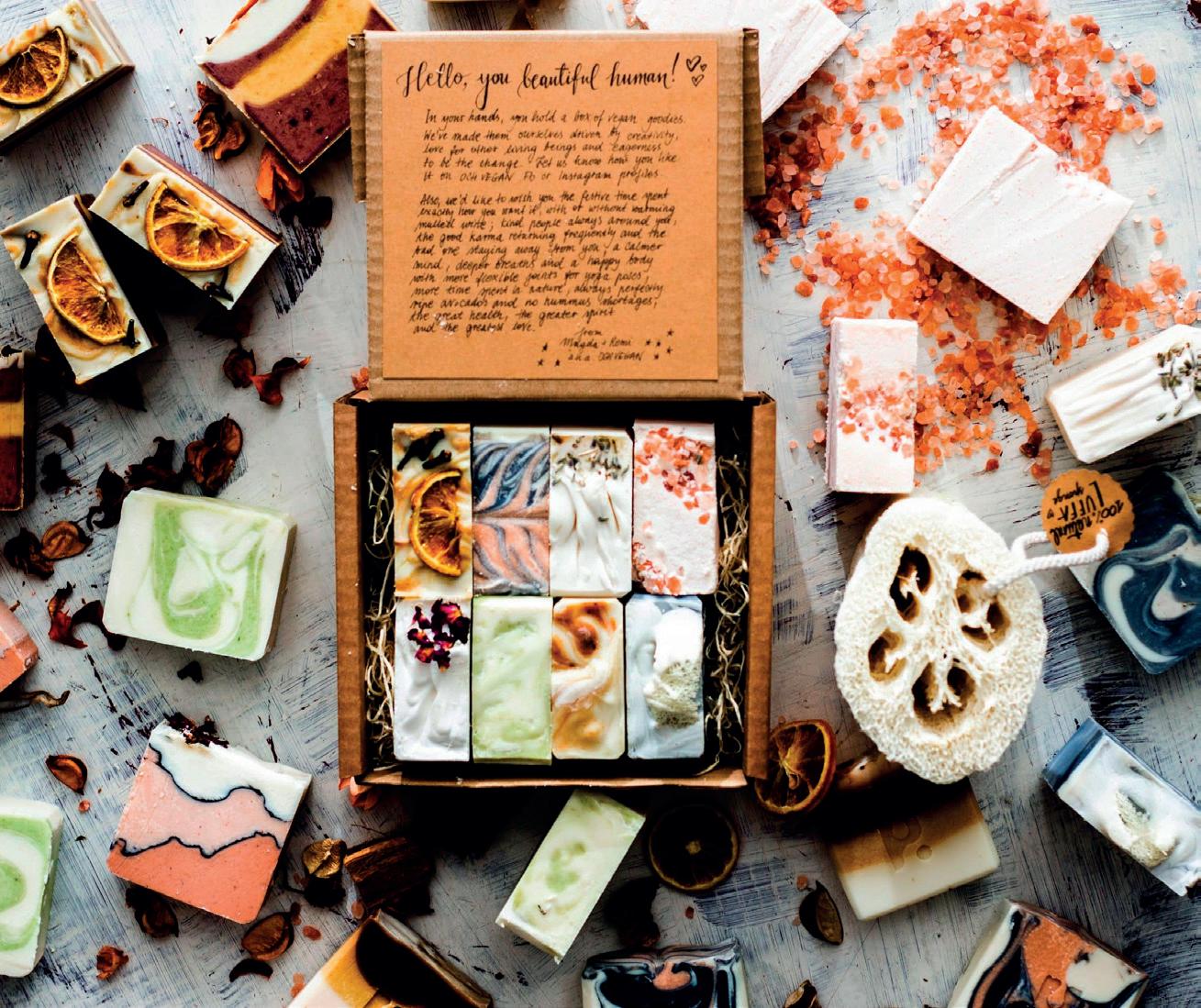
It’s exactly this kind of confusion that inspired Glasgow-based skincare and cosmetics brand Och Vegan. Founded by Magdalena Och and her business partner Remi, the company is built around a simple principle: ‘Our mission is to promote veganism,’ explains Och. ‘To us, something labelled healthy is expected to help us feel better in some way and must not exploit the Earth.’ Och Vegan produces handmade soaps that look like little cakes, beautifully marbled in bright colours and scented with yummy combinations like lemon and poppy seed. On their socials, they share satisfying videos of the iconic soaps being poured, cut and pressed into perfectly moulded shapes. It’s quite the process, but it doesn’t end there: they also make room sprays, lip balms, shampoo bars, deodorants, body butters, candles and bath salts, all using plant-based oils, butters and botanicals.
‘We test them all on ourselves,’ laughs Och. ‘Brave? Nah, we know that what we put inside is safe and mostly edible.’ That ethos runs through every part of a business that is growing and growing, with stockists all over the UK. And their commitment to sustainability extends beyond ingredients.
‘We firmly refuse to use any plastic,’ insists Och, despite the challenges of finding alternatives. ‘We don’t hide any costs that would steadily increase our debt to nature.’
ochvegan.co.uk; instagram.com/ochvegan
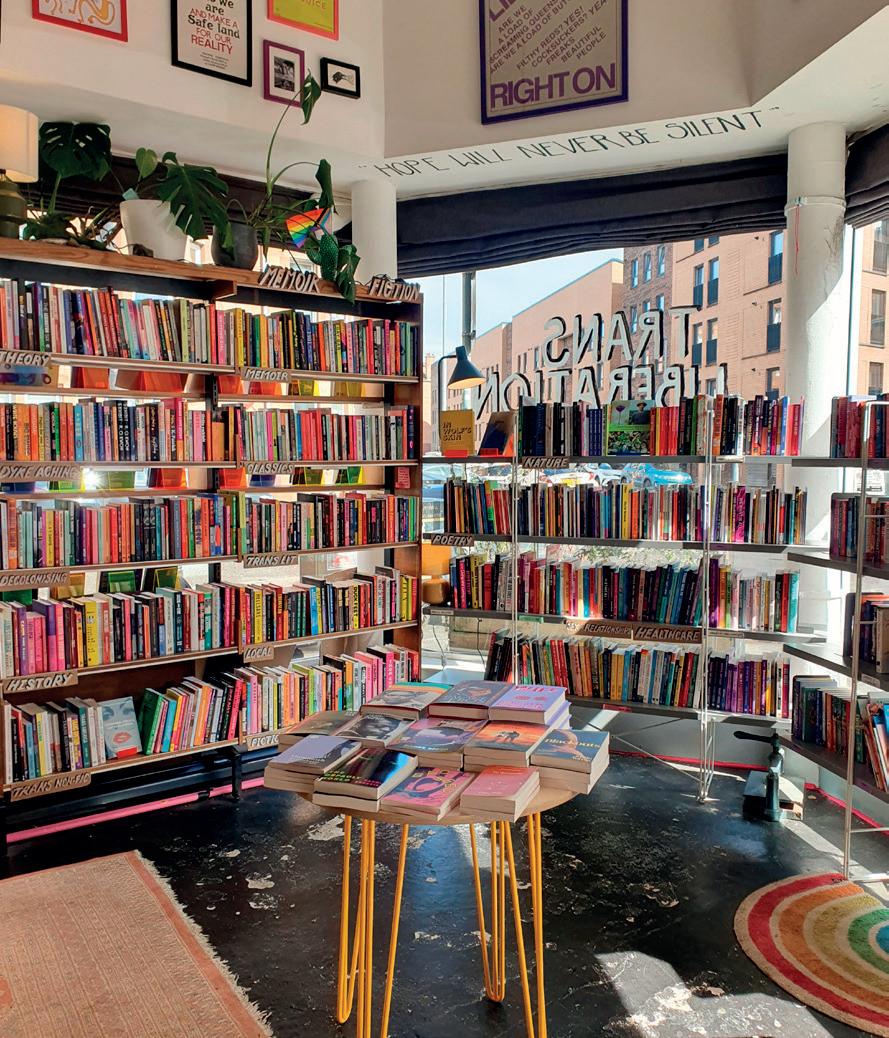

Glasgow’s only dedicated LGBTQ+ bookstore, Category Is Books is more than just a bookshop; it’s a space for queer people to come together in solidarity to share their love of books as well as activism. Eager to include everyone, Category Is Books also offers a home delivery service. n 34 Allison Street, Glasgow; categoryisbooks.com; instagram.com/categoryisbooks
This independent family-run bookshop has grown into a thriving literary hub in the nine years since its opening. As well as having a fantastic range of titles for children and
Forget the online behemoths: Isy Santini rounds up three great indie bookshops near you
adults, The Bookhouse regularly hosts signings, readings and discussions, as well as seven different book clubs.
n 41 Gray Street, Broughty Ferry; thebookhousebroughtyferry.co.uk; instagram.com/bookhouse_broughtyferry
Already beloved by Leith residents, Argonaut Books shot to fame last year after successfully taking on bookstore giant Waterstones in a viral dispute. This light, airy shop boasts a wide array of titles as well as a café where customers can sip as they crack open their newest read.
n 15–17 Leith Walk, Edinburgh; argonautbooks.co.uk; instagram.com/argonautbooks



BY OLIVER EMANUEL & GARETH WILLIAMS














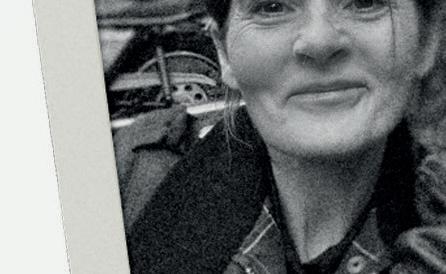



















































































































































































































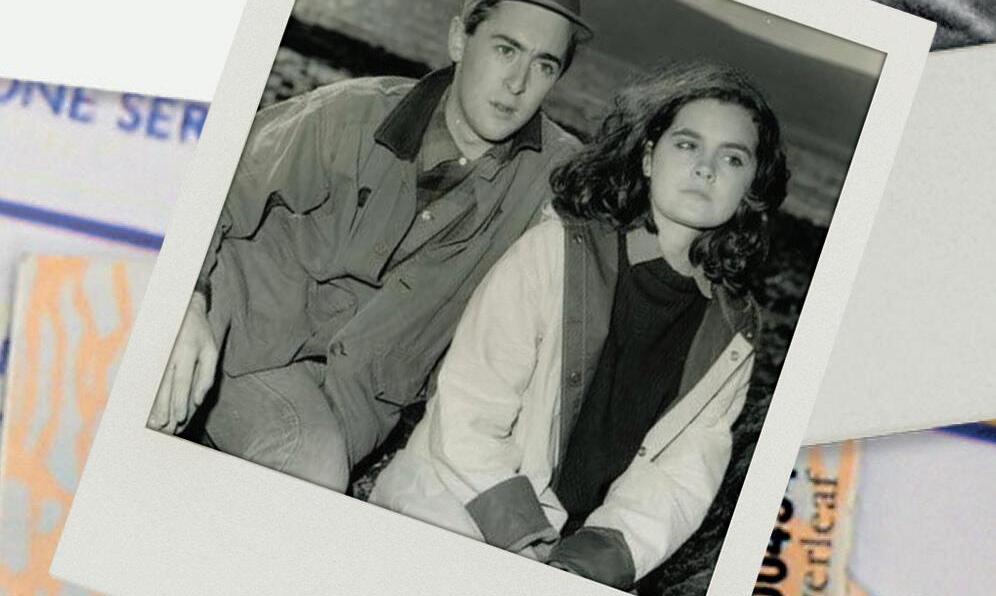


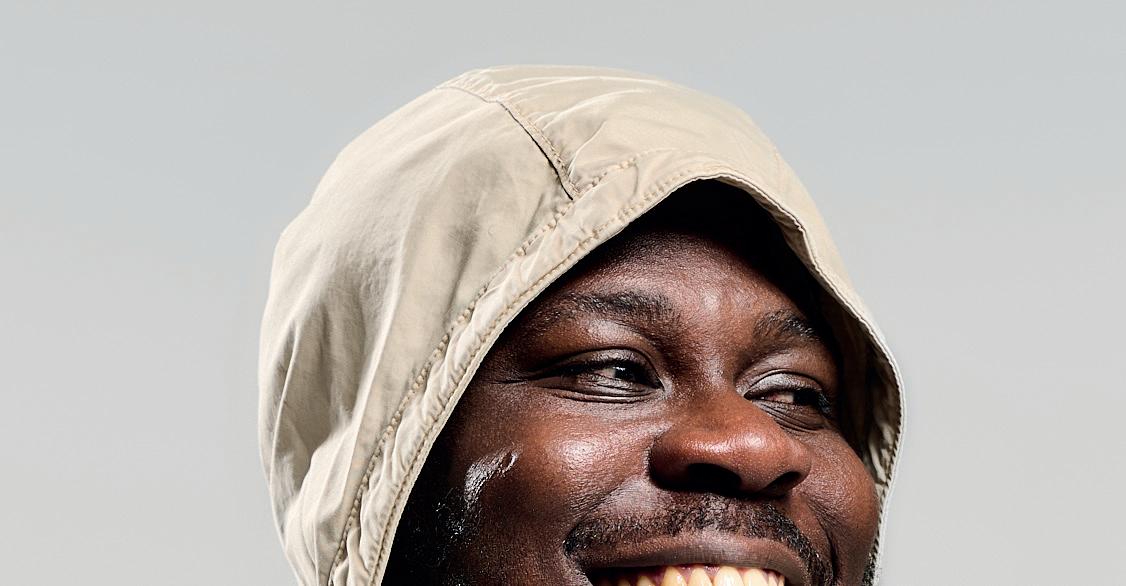

Bemz isn’t just a highly talented rapper (and our very first cover star when the mag returned in 2022), he’s a man who is using his success and platform to help others on their own musical journey. His M4 Festival supports Scottish hip hop, R&B, afrobeat and soul, genres which might not otherwise get the push they deserve. Acts so far announced for this the third M4 (and second at SWG3) include AntsLive, Salam Kitty and Joshua Dube, while Bemz himself takes on headlining duties. (Brian Donaldson) SWG3, Glasgow, Saturday 29 August.



As they head to Scotland for a pair of live gigs, Greg Thomas reflects on the plectrum shredding career and politically progressive influence of elusive black metallers
Wolves In The Throne Room





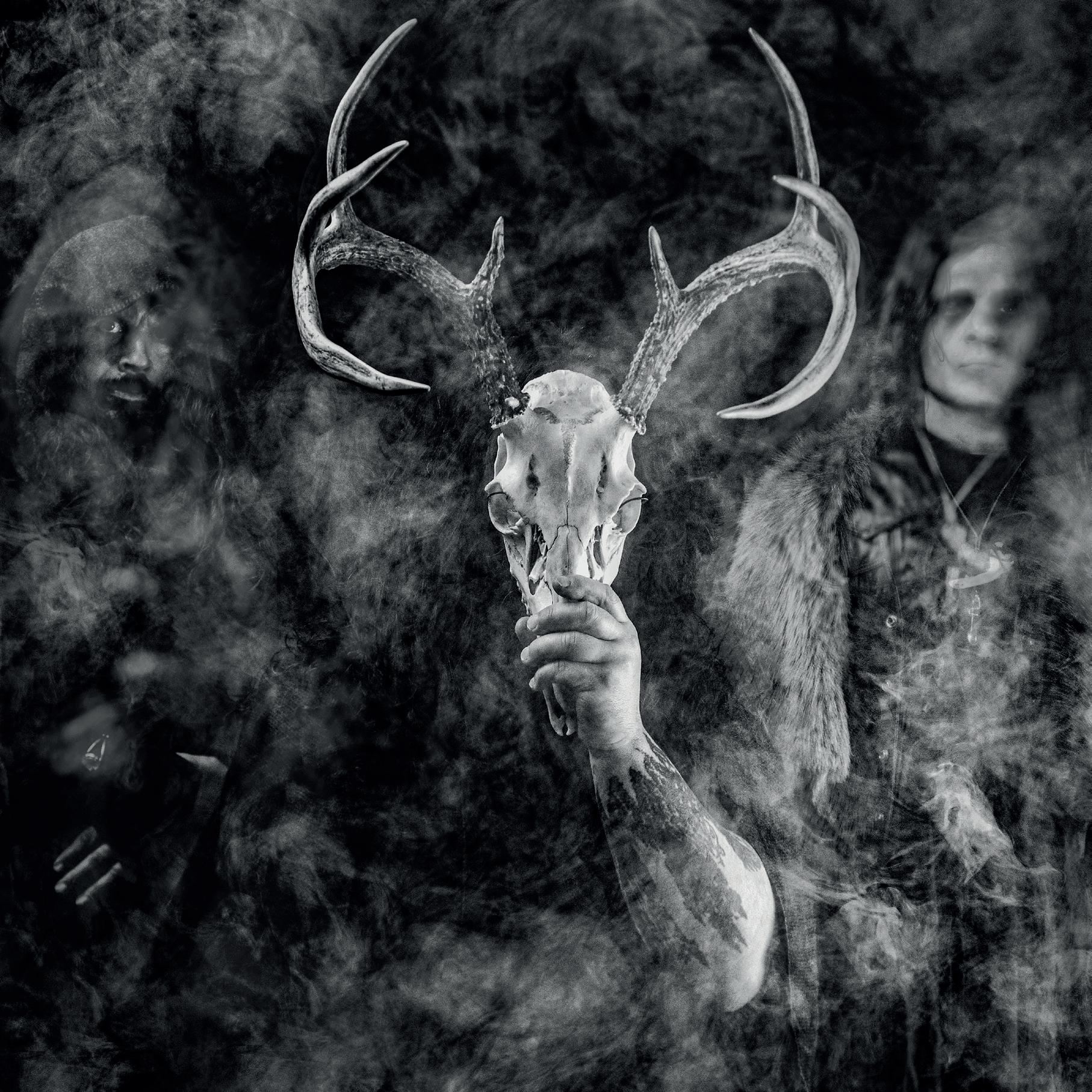

t’s hard to nail down an interview with Wolves In The Throne Room. Several months of back-and-forth with their magni cent Scottish promoters Core yields a series of cryptic, second-hand responses. ‘Nothing yet’ . . . ‘keen but busy’ . . . ‘sorry, it’s not going to happen’. Perhaps it was to be expected from a band who pride themselves on glorious isolation in both musical and cultural terms; who held their rst practice in a derelict cabin in the evergreen woodlands of the Cascade Mountains; whose debut 2004 demo was released, according to one stockist’s blurb, on a CD-R wrapped in fur with moss inside the lyric sheet.
Since the early noughties, Wolves In The Throne Room have forged a path as one of the most vital forces in international heavy music, spawning, by various and sundry accounts, a number of the new sub genres and sub-sub genres that the scene likes to sputter out: eco black metal, red anarchist black metal, cascadian black metal, post black metal, black gaze and, more disparagingly, hipster black metal. These endless coinages are, of course, unwittingly (or wilfully) silly. But they do provide a kind of topical word cloud to pre x a potted biography.
The Olympia-based brothers Aaron and Nathan Weaver started the band in 2002, when both were attached to the crust punk and anarchist squat scenes of the Paci c Northwest. Across the course of seven albums, two EPs and multiple line-up changes (guitarist and vocalist
Kody Keyworth has been a regular third member since 2017), they have pioneered a sound that combines the abrasive howls and lo- plectrum shredding of black metal with elements of ambient and analogue-synth atmospherics, spoken word and classical vocals, and a kind of enveloping warmth-through-distortion that is redolent of shoegaze.
Meanwhile, through visual imagery, song and album titles, and the semi-mythical anecdotes that circulate about the group’s lifestyle, they have become synonymous with a kind of heavy metal world-building that
chucks out the corpse paint, blood and misogyny for communion with the natural world, life-a rming psychedelic experience and New Age spirituality. Track names such as ‘Mountain Magick’, ‘The Old Ones Are With Us’, ‘Fires Roar In The Palace Of The Moon’, ‘Woodland Cathedral’, and ‘Prayer Of Transformation’ pretty much get the idea across. In a 2011 interview, Aaron Weaver spoke about accessing a set of spiritual archetypes that might reconnect people with the non-human world from which civilisation has severed us. ‘It’s incredibly pretentious,’ he acknowledged. ‘That’s something that a lot of people think . . . but I have no problem indulging those sort of pretensions. I think it’s really good and useful to try to work on a mythic level.’ Thankfully, this awareness of the grounding power of archetypes predates the sub-Jungian tosh that circulates in the manosphere, mostly in Jordan Peterson’s falsetto.
Indeed, the band has become associated with a broadly green-socialist outlook that was something of a forerunner for a wider shi within heavy music over the last ten to 15 years (though Weaver has spoken of his embarrassment at such tags, ‘as if we’re talking about recycling’). A swathe of groups across black metal (a genre previously infamous for male-coded misanthropy and irtation with far-right politics) have come to embody an outlook that is both philosophically curious and associated with progressive political agendas.
Ahead of their most recent full-length album, 2021’s Primordial Arcana, the band released a statement: ‘We’ve gotten even deeper into the DIY aspect by building our own recording studio from the ground up, and producing and mixing the record ourselves . . . and now we’re making our own videos within the local wilderness.’ As interviewees, they might just remain hard to pin down.
Wolves In The Throne Room, La Belle Angele, Edinburgh, Monday 3 August; St Luke’s, Glasgow, Tuesday 4 August.








































“It’s always tomorrow
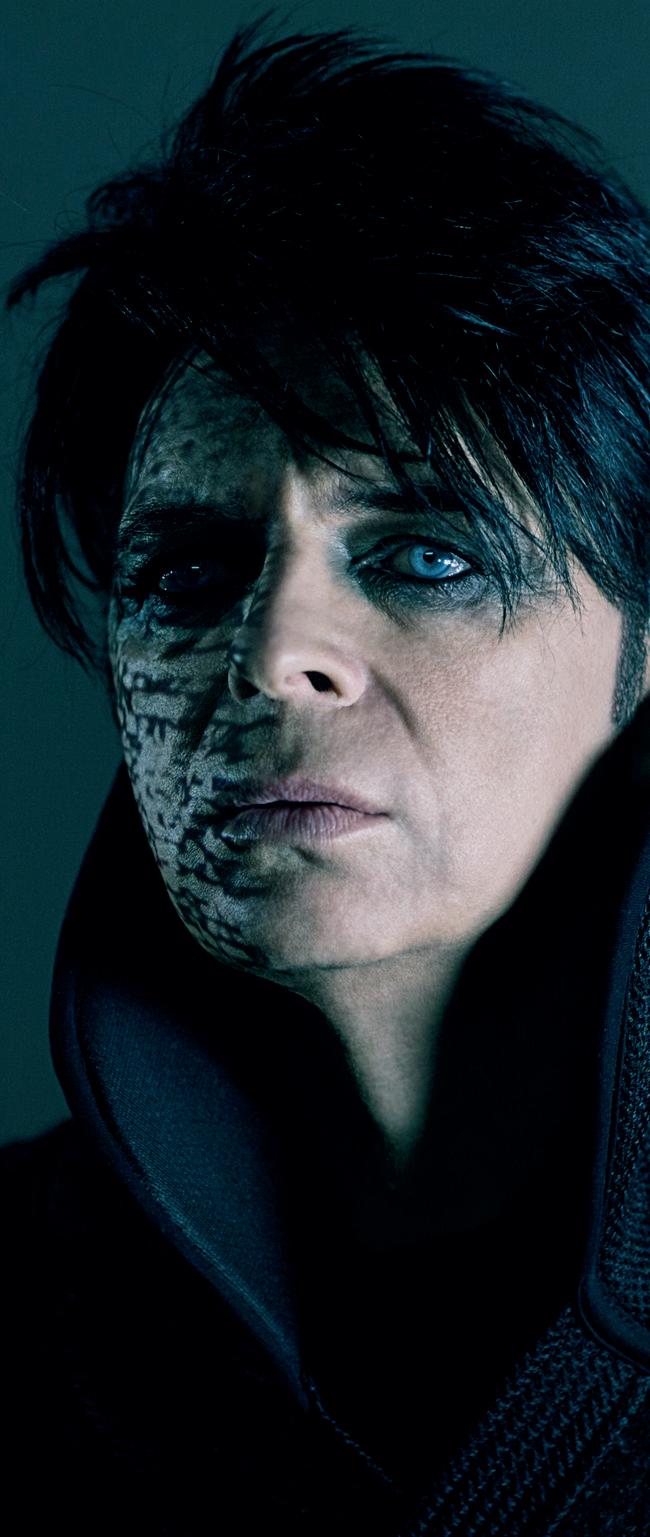
Electronic music pioneer Gary Numan is approaching his 50th year in the business and still gigging around the world. From his early days with Tubeway Army and major solo success with hits such as ‘Cars’, Numan has continued to release original material throughout his career and made his Glastonbury debut in 2025. As he gears up for an outdoor show at Glasgow’s Queen’s Park Arena, he chats to Fiona Shepherd about his problem with nostalgia, the importance of melody and dealing with daughters who ignore his sage advice
What are your plans for your forthcoming Glasgow show? I’m looking forward to that; it’s the biggest thing I’ve done in Glasgow for a long time. The first concert I ever did was in Glasgow in September 1979 at the Apollo so everything started for me there and every time I go back it just feels like going home in a way. Musically, I’m working on new stuff so if that goes well there should be one or two new songs I could bring into the set.
Can you tell us more about your new material? I know exactly where I’m going with it. I just need to write the tunes to match the idea. The last two albums have been connected to climate change. Savage was about the effect on humanity should the climate apocalypse happen and Intruder was about if the Earth could speak, how it feels about what we’ve done to it. The next one is looking at the effects on humanity of AI in the near to mid-term future. In 1979 I did an album called Replicas about handing over control of society to a computer. That was very much science fiction in 1979 and here we are today where it’s actually happening. I am excited to get on with the album because it’s long overdue. The working title is This Is How It Ends.
How was your first experience playing an 80s music cruise earlier this year? I thought it was going to be horrendous. I’m ashamed to admit it was money that convinced me to do it. My principles have always been stronger than that in the past. I was getting lots of advice that I really should do it and get over myself, so I gave it a try and it was surprisingly ok. I’m just so uncomfortable with nostalgia or being seen as a nostalgia act. For me it’s always been about what I’m going to do tomorrow rather than what I did yesterday. I got interested in music in the first place because it was all about this new world of sound that was suddenly available to us.
And for your troubles, you attracted criticism from the Musicians’ Union in those early days They said some really ignorant things, like you are putting string players out of work. I’m trying to come up with noises that you’ve never heard before. We’re certainly not trying to replicate things that have been out there for hundreds of years.
In that respect, the 2023 acoustic tour was a bit of curveball When you’re doing a normal show, it’s this huge wall of noise and lights and spectacle so you can almost blunder through it. This was so much more difficult than a normal gig; you’re so exposed. I wasn’t convinced that the songs would translate to being done acoustically because they are quite heavy electronic songs. I was surprised at how well it did work. That’s probably because the most important thing for me as a songwriter is melody. The first thing I do is the tunes, so if you strip the songs down to the barest essentials you’ve still got what you need to make it work.
Your music is frequently sampled by other artists. Have you ever returned the favour? I’ve sampled a few sound effects from films a long time ago which was a bit naughty. I would rather come up with my own grooves and beats but it’s not quite as pure as I’m painting. A lot of these software synths that you buy now will come with a library of 10,000 sounds and I will gladly use those. I would not be interested in taking someone else’s.


How do you feel about your daughters Raven and Persia following you into the family business? I’m all for it. There’s a downside to it, obviously. You are judged constantly. Sometimes the public can be pretty scathing, especially in the social media world. I worry about it because it’s a pretty ruthless business. My advice has always been ‘don’t read feedback’ because the horrible thing will be the one you remember: they have ignored that completely. They laugh about it. I couldn’t do that. It used to cut me.
Despite your anti-nostalgia stance, do you have plans to mark your half century in music? Oh yes, that’s such a milestone, you can’t let that go by! The 50th anniversary of my signing is in 2027. The first single came out in ’78 and ‘Are “Friends” Electric?’ and ‘Cars’ the next year. I am going to go for it because it’s a big thing. I should be proud of it and I am.
Gary Numan plays Queen’s Park Arena, Glasgow, Friday 17 July.





West coast ceilidh meets Glasgow’s West End as conductor Joy Dunlop leads Gaelic vocal ensemble Còisir Alba back to the city with a special event featuring a workshop, concert and cèilidh. Dunlop, best known to non-Gaelic audiences for her TV and radio work, also happens to be a huge star on the Gaelic singing scene. Leading the workshop herself, she’ll introduce newcomers to the language in a fun way, with singalongs ‘so that those new to Gaelic can feel part of the evening’.
Dunlop will then be joined by Còisir Alba, a group originally created to represent Scotland in the Eurovision Choir Of The Year competition in 2019. While the line-up has changed since then, they’ve continued to perform on the likes of BBC Alba’s Hogmanay celebration Cèilidh na Bliadhn Ùire, joined Runrig tribute band Beat The Drum on stage at Glasgow’s Royal Concert Hall, and celebrated the 25th anniversary of the Scottish Parliament.
The Adelaide Place audience can expect to hear Còisir Alba sing Gaelic mash-ups of traditional songs, translations of pop songs, and arrangements created especially for them. The evening finishes on the dancefloor. ‘We’ll have traditional music allstars Adam Sutherland, John Somerville and Steve Fivey leading our cèilidh and I’ll call the dances,’ says Dunlop, who praises the venue’s acoustics for a cappella singing as well as suiting a lively Highland cèilidh dance. (Marcas Mac an Tuairneir)
Adelaide Place, Glasgow, Saturday 8 July.


Any West Ham fans out there might not be up for blowing too many bubbles (as per their club anthem) given their team has been freshly relegated, but the Amazing Bubble Man (Whitehall Theatre, Sunday 2 August) won’t care too many jots about that. Louis Pearl has come a long way since the early 80s when he was selling a toy called the Bubble Trumpet (his own creation) on street corners in California. Now he’s all about the art, science and entertainment of bubbles. A full run at the Edinburgh Fringe is also in the offing this summer.

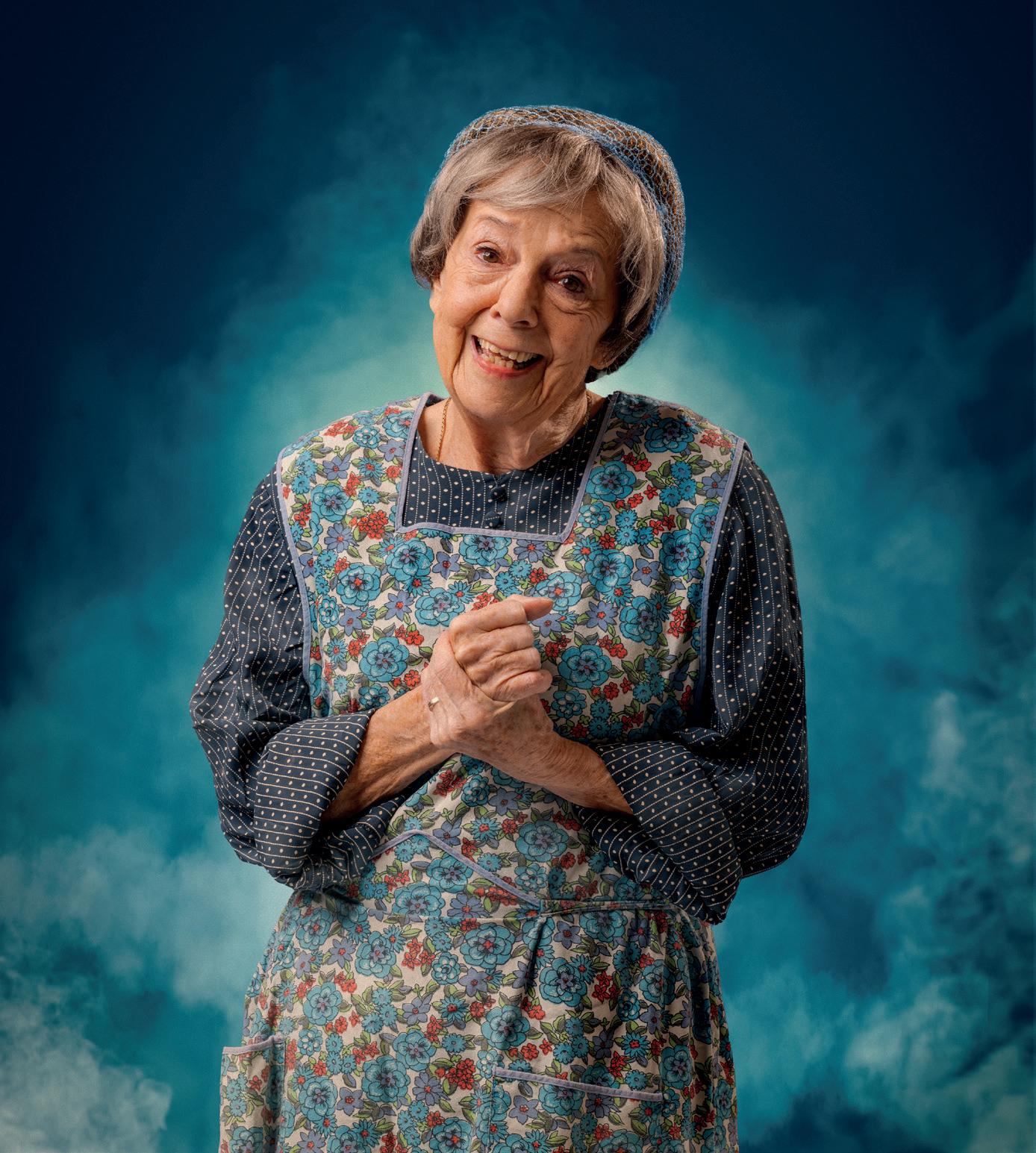
SAnother longstanding cultural phenomenon is Tony Roper’s The Steamie (Dundee Rep, Thursday 27 August–Saturday 12 September), the play which is drenched in ‘patter, pride and plenty of laughs’. First performed in Glasgow by the legendary Wildcat, this 1950s-set play occurs in a washhouse on Hogmanay and is a poignant and wry celebration of friendship and working-class life. The cunningly titled Ska Face (Beat Generator, Saturday 1 August) are a ten-piece band who perform 2-Tone and ska classics from the likes of Toots And The Maytals, The Beat, Bad Manners, The Selecter and The Specials. So revered are they that some of the aforementioned have even taken them on tour for support. Which says all you need to know about the gang’s quality. (Brian Donaldson)
need to know about the gang’s quality. (Brian Donaldson)


BBC broadcaster, author, actor, musician, DJ and List columnist, Mr Galloway flicks through some music listings to choose top July and August gigs in variously sized rooms and across different genres . . .
urely Edinburgh’s own Shirley Manson must be pinching herself in disbelief at her next hometown gig. Having fronted techy alt-rockers Garbage since 1993, she and the boys get to play Auld Reekie’s single most prestigious venue, Edinburgh Castle (Saturday 11 July). An extraordinary experience and a career highlight for any Edinburgher that will doubtless never be topped; her old muckers and previous bandmates Goodbye Mr Mackenzie are along for the ride as support act too. This is the kind of full-circle phenomenon that dreams are made of, so why not be part of the spectacle and sing along to the band’s outsider anthems in the open air. Just don’t bring a beach ball.




Indietronica geek Dan Snaith has been rocking dancefloors in his own unobtrusive and unassuming way, fusing techno, house, psychedelia and alt-pop sensibilities as Caribou for decades now. Excellent albums aside, he has built up a massive loyal following for his nuanced and effervescent productions in a live setting. He is also an excellent DJ, as I can attest to, having once shook my tail feather at a warehouse party in downtown Los Angeles. Scottish dance crowds are always better though, as you can witness for yourself at SWG3 Galvanizers Yard in Glasgow (Friday 17 July). Glow sticks are recommended but not mandatory.







Want an antidote to the festival luvvies with a dose of the heavy stuff?
Glasgow (Friday 17 July). Glow sticks are recommended but not mandatory. to the






in tiny shorts and handlebar moustache screaming in your face. Not for
Pigs Pigs Pigs Pigs Pigs Pigs Pigs (or Pigs x7 to their parents) roll up to Edinburgh’s La Belle Angele (Thursday 20 August) with a veritable armoury of monstrous, down-tuned riffs and reverb-drenched vocals. Think Black Sabbath, Hawkwind and Melvins as reference points, with a sweaty man in tiny shorts and handlebar moustache screaming in your face. Not for the faint-hearted, but the good stuff rarely is. Bring your earplugs and prepare for a highly entertaining, if slightly terrifying, full-frontal assault.
Listen to Vic Galloway every Monday night on BBC Radio Scotland, or anytime on BBC Sounds; he curates and hosts live events at Wavelength film festival as part of North Berwick’s Fringe By The Sea, Friday 31 July–Sunday 9 August, and appears in An Unbiased Afternoon With Allaster McKallaster, Gilded Balloon At The Museum, Monday 10–Wednesday 19 August as part of Edinburgh Fringe.

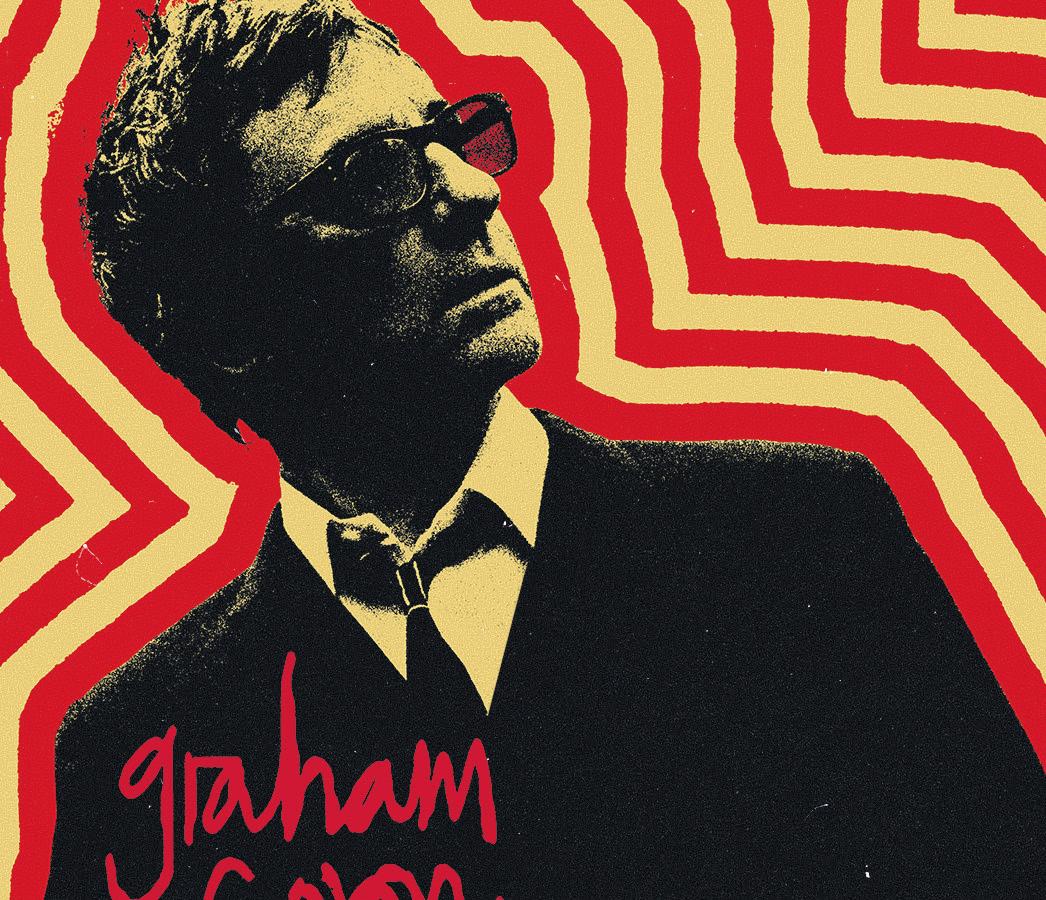







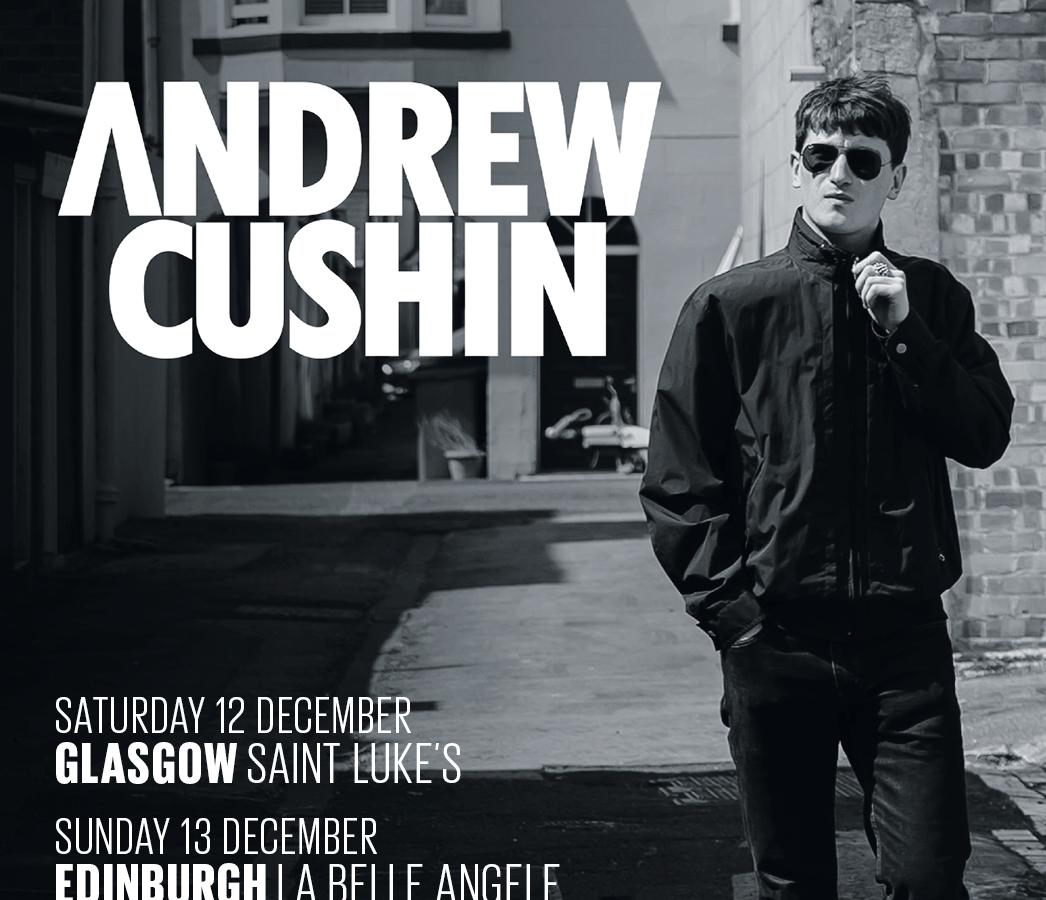








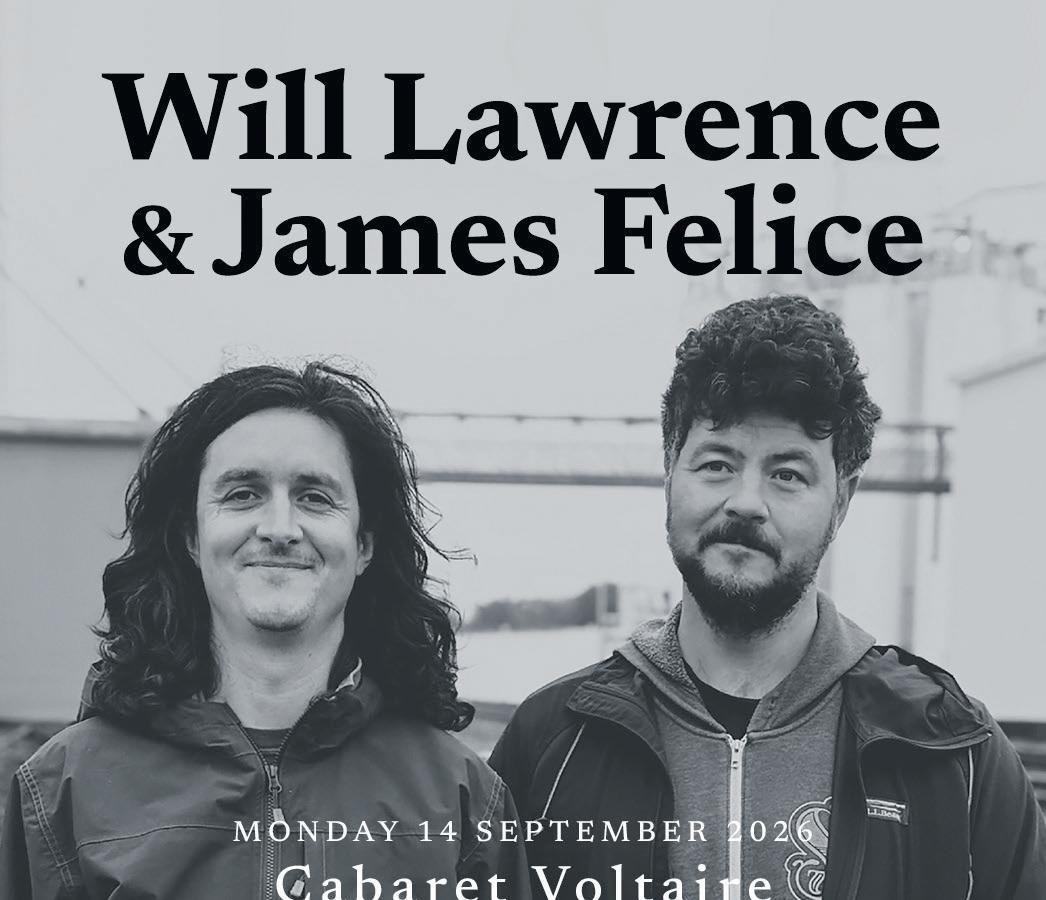


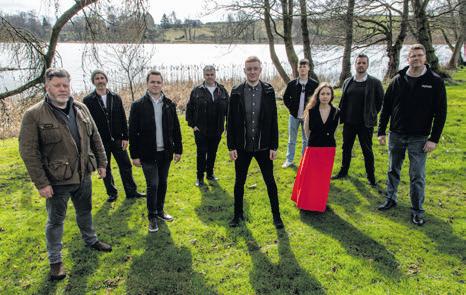

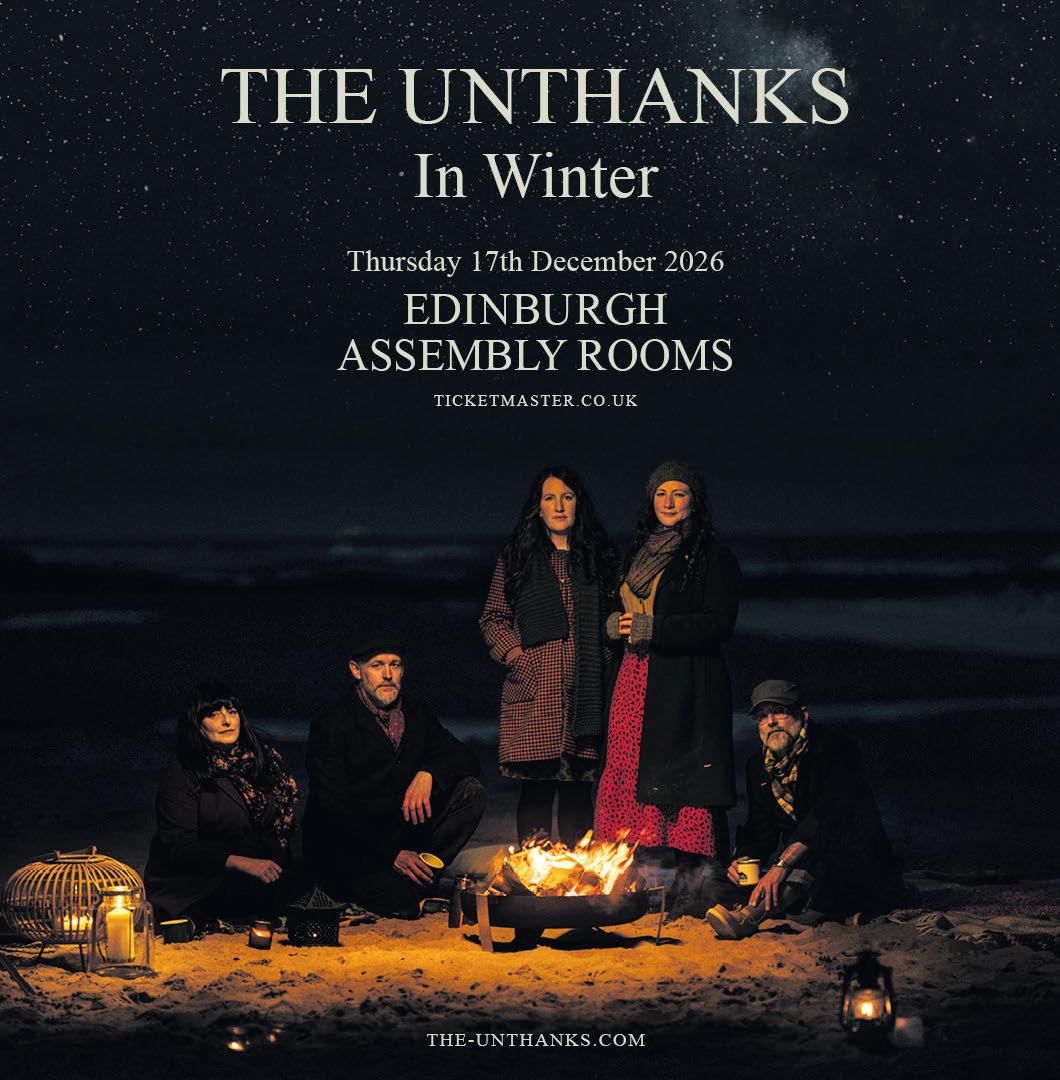






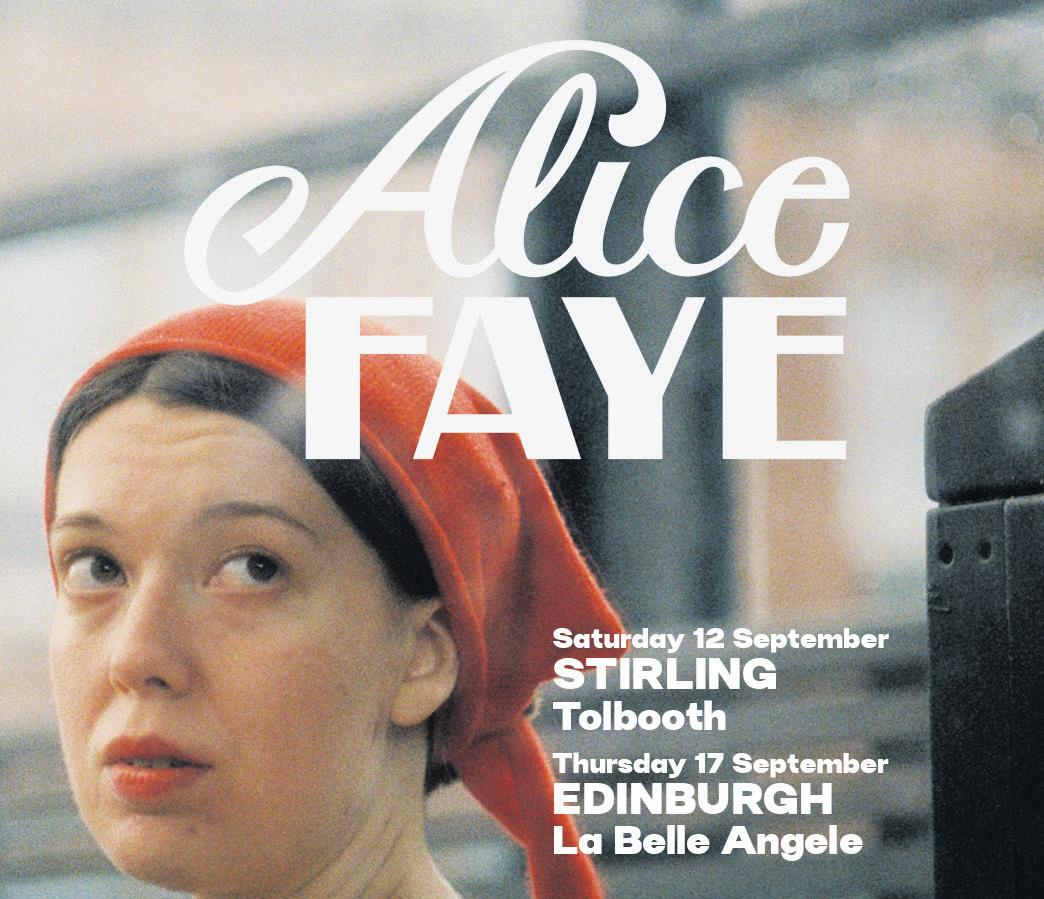














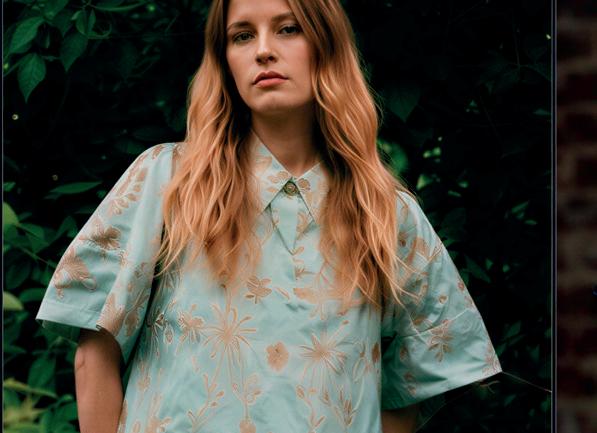
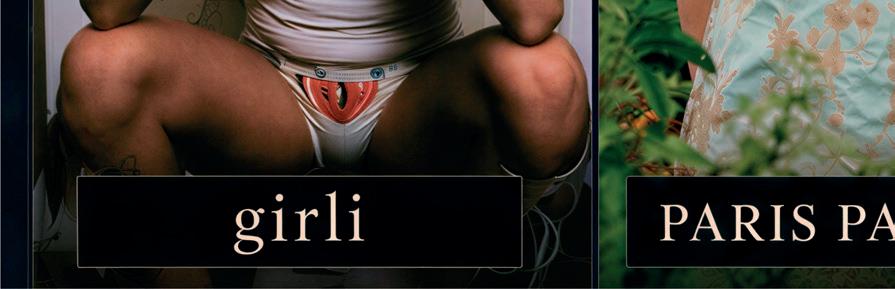
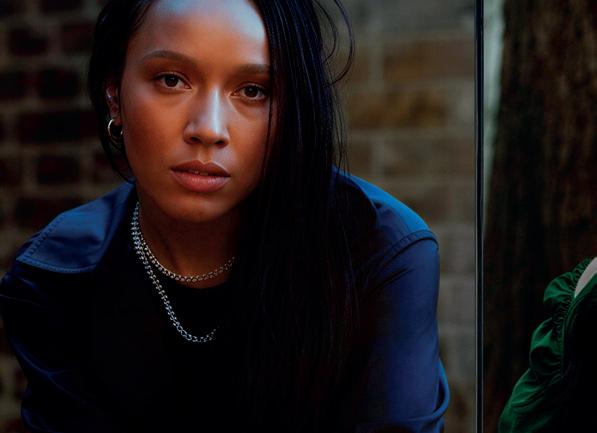

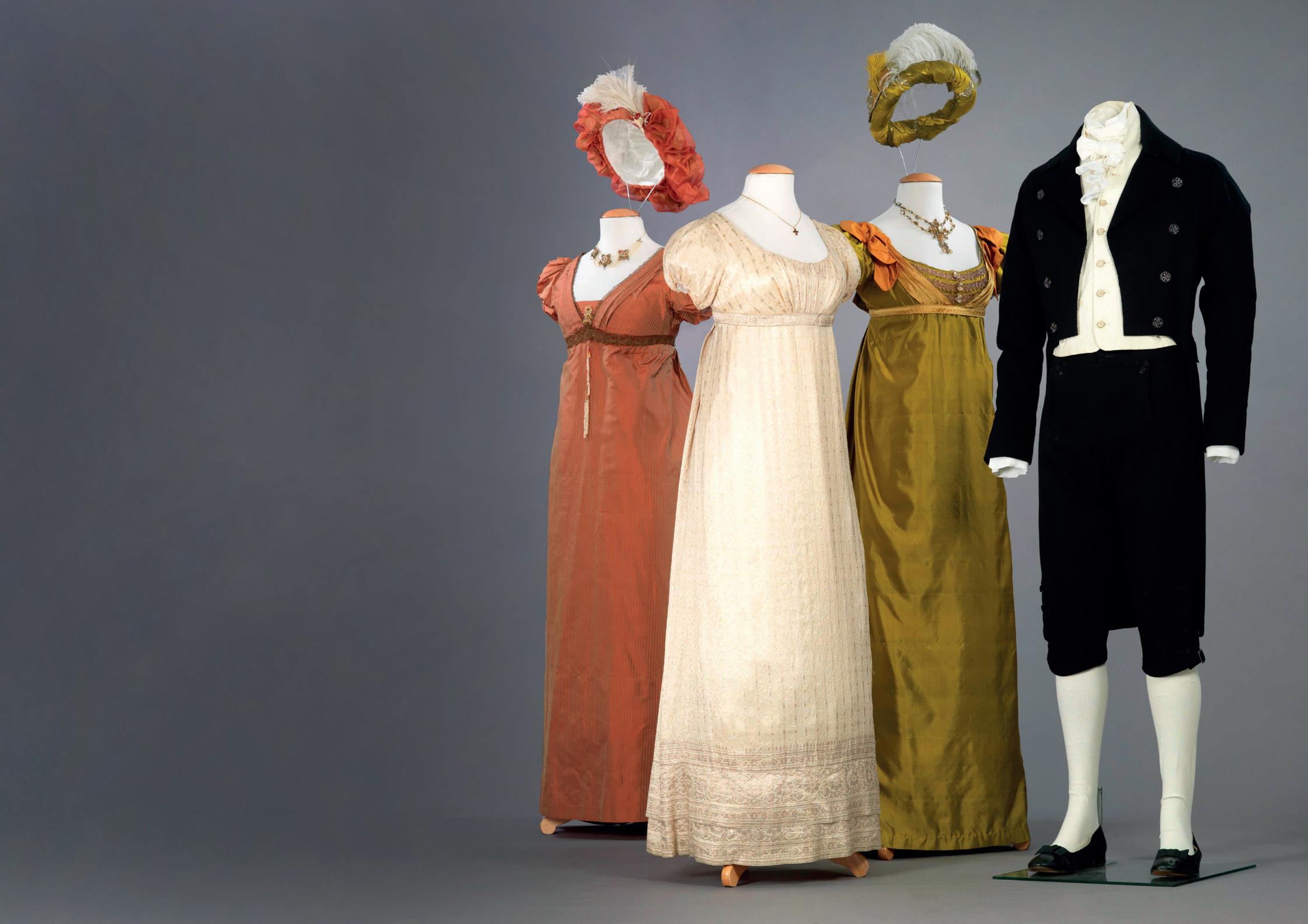
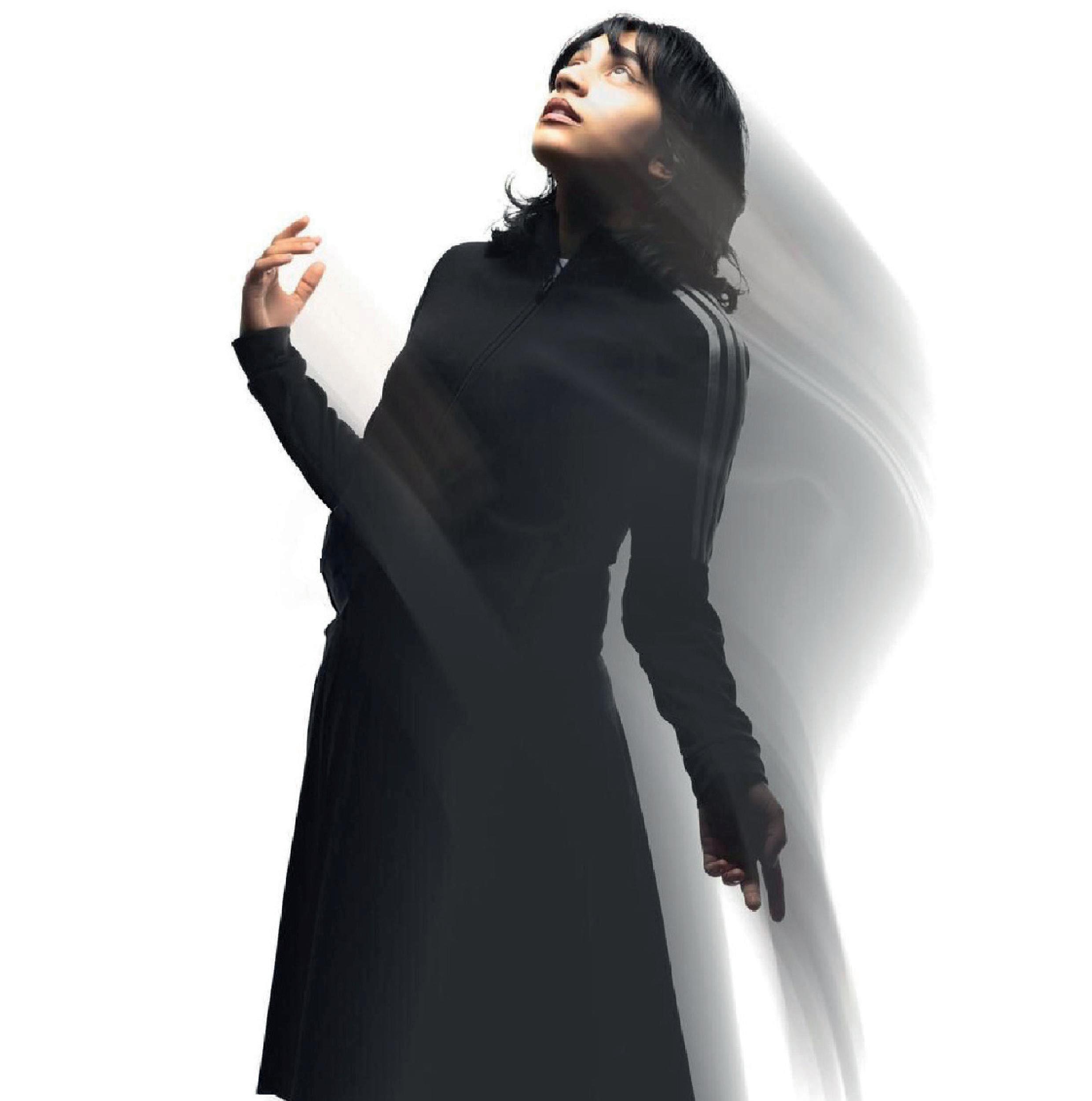
Our column celebrating new music to watch continues with Radhika. Raised deep in the heart of Glasgow’s dream-pop heritage, she was born to write languid indie songs. Fiona Shepherd talks to her about having an influential dad and why making music is more than just a job
I‘’m going to live in Glasgow forever; I just know it,’ says Radhika with disarming certainty. The 21-year-old singer and guitarist is part of a noble indie lineage in the city, with an additional blood connection through her father Sushil Dade, the redoubtable Soup Dragons/Future Pilot AKA man who made sure his daughter had the best start in life. ‘When I was born, my dad played this Indian prayer, a drone sound,’ she says. ‘Music has been with me since the day I entered this realm.’
Dade has since passed on his eclectic music taste to Radhika as well as encouraging her songwriting. She vividly remembers writing her first song ‘on my baby pastel pink guitar. I had learned bar chords which was quite a stretch for your fingers but I remember being saturated in the process and something clicked in me that night. It just felt so magical.’
That first song ‘Future Me’ appears on her debut album Cine-Pop along with tracks written through her teens. ‘I like to think of it as a story of my life throughout the years,’ she says.
The album is a feast of gorgeous, languorous indie pop, squarely in the Glasgow dreamers tradition, with two themes (one written specifically for David Lynch, the second for Lalo Schifrin and Laetitia Sadier) reflecting her love of floaty, airy retro soundscapes. Meanwhile, her cover of Strawberry Switchblade’s ‘Since Yesterday’ is even more wistful than the original. Cine-Pop features guest vocals from an august trio of Glasgow indie veterans: former Teenage Fanclub mainstay Gerry Love,
Camera Obscura frontwoman Tracyanne Campbell, and Mitch Mitchell of The Pastels who Radhika describes as her ‘personal heroes’. But her closest musical compadre is her dad, with whom she promotes monthly residency The Hangar at Paisley Arts Centre. Guests so far include Norman Blake of Teenage Fanclub, BMX Bandit Duglas T Stewart, Stuart Braithwaite, and My Bloody Valentine bassist Debbie Googe.
‘Me and my dad are very close; we’re like best friends,’ she says. ‘Without his bass on this album, it would be very bare. His bass playing isn’t standard, it’s very melodic and dynamic, almost chordal, like he’s playing lead guitar lines. When we’re onstage I look to my left and think, “how lucky am I? My dad’s playing with me”.’
Radhika also honours her Indian heritage by incorporating the drone of tanpura and harmonium, and the mournful flutter of bansuri (Indian flute) on the album. ‘I want to show the world how beautiful these sounds are,’ she enthuses. ‘Music is the most grounding thing. In Hinduism, we believe that “om” was the first sound on Earth and I think everything goes back to music. Songwriting has always been my guidance and support. I don’t really like it when people say it’s a job. It’s more like a friend.’
Radhika plays Glasgow Mela at Kelvingrove Park, Sunday 5 July; Glas-Goes Pop at GUU, Glasgow, Friday 14 August; Hug And Pint, Glasgow, Monday 24 August.
Bitter Christmas, the 24th film of Spanish director Pedro Almodóvar’s career may be his most personal yet. It follows filmmaker Raúl (Leonardo Sbaraglia) as he conjures his latest script: the early 2000s-set story of Elsa, a commercials director trying to reignite her feature filmmaking career. ‘Pedro said to me, “I don’t want a gentle portrait’’,’ says Sbaraglia, the Argentinean actor who previously featured in the director’s 2019 auto-fiction, Pain And Glory. ‘There, the character was kind and tender, but in this case I really had to work hard because the character was a calculating person.’
With Raúl drawing from the lives of his boyfriend Santi and assistant Mónica, with little concern for their emotions, it raises the question of just how much an artist can plunder from real life. Almodóvar’s slippery script also depicts cult moviemaker Elsa, played by Bárbara Lennie (Magical Girl). Beset by migraines and personal trauma, she’s struggling with a new script as she travels to Lanzarote, where Almodóvar filmed 2009’s Broken Embraces ‘It’s a volcanic island, so it’s powerful,’ says Lennie. ‘It’s a place where Elsa can reconnect with her creative energy.’
With the story flipping back and forth between the two strands, both actors are seemingly playing aspects of Almodóvar, with ‘a little invention’ thrown in, adds Lennie. ‘It’s a very self-referential movie,’ she continues. ‘It speaks about himself and his real surroundings and universe.’ Sbaraglia adds: ‘It wasn’t Pedro, but it was Pedro at the same time.’ The way the actor sees it, the film allows Almodóvar to reflect on what drives him through life, and just how cinema forms part of his emotional core. ‘When he doesn’t film, in a way it’s the beginning of death. Creation is always a way to save yourself.’ (James Mottram)
In cinemas from Friday 28 August.

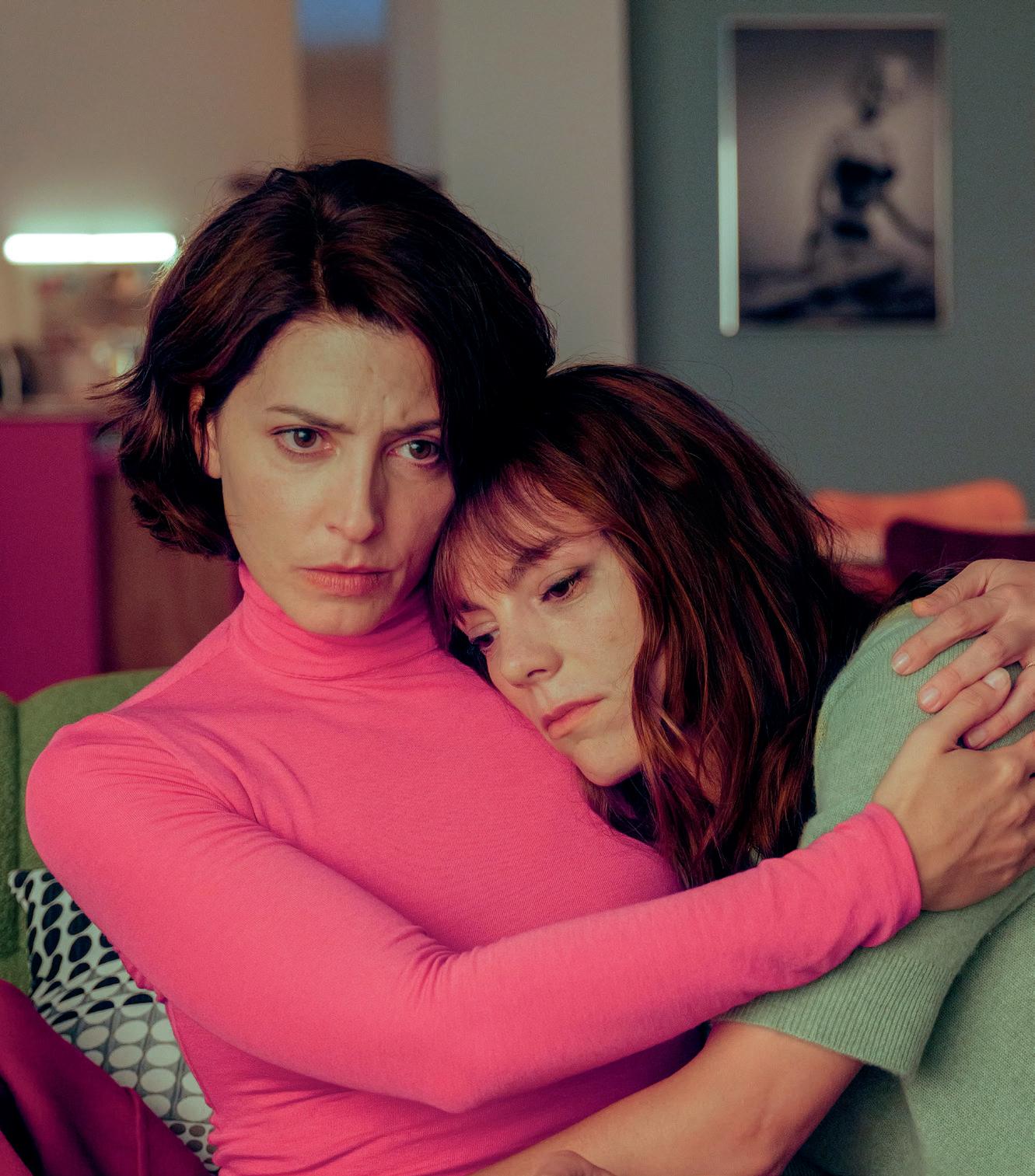






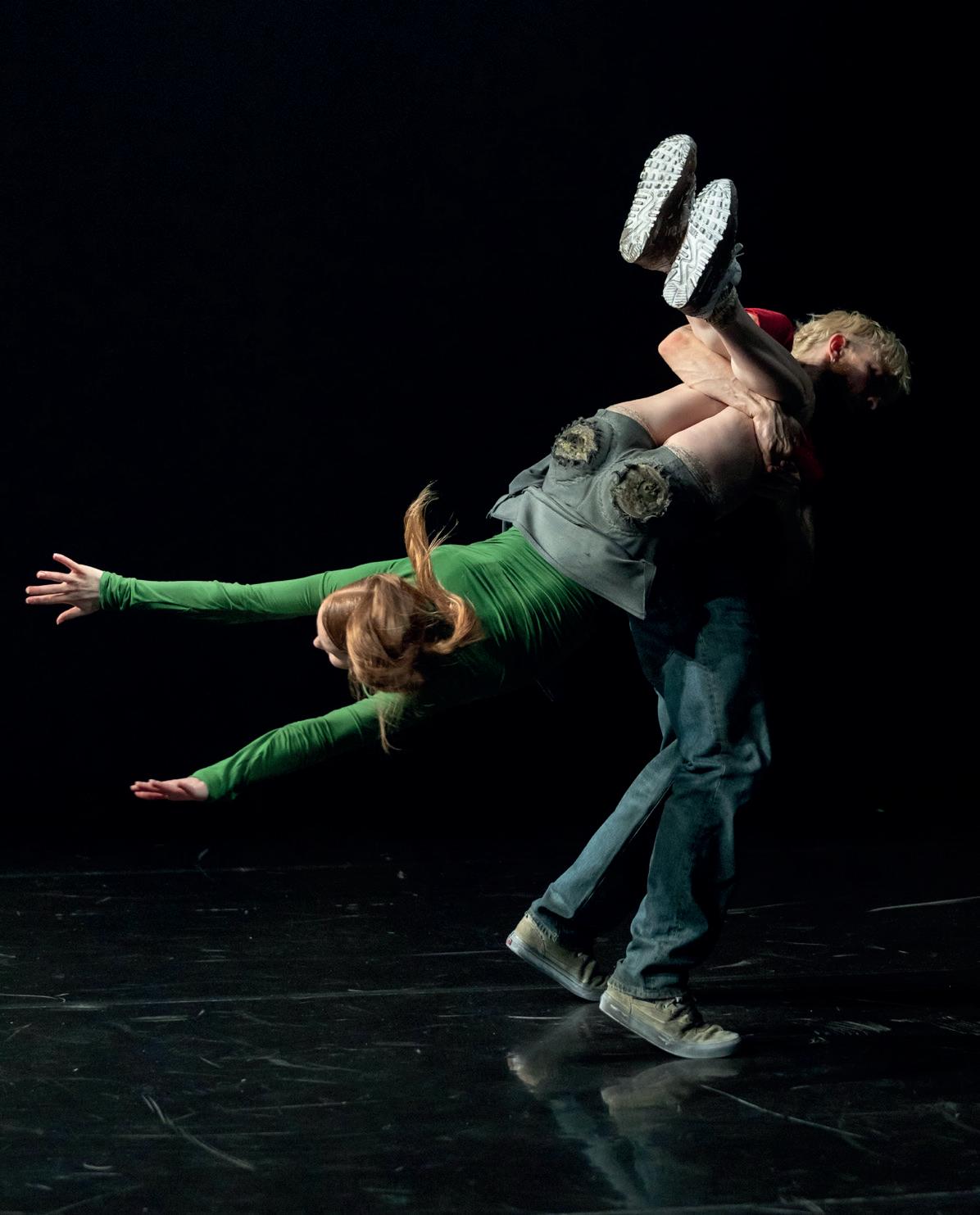
It’s hard to imagine a time when ballet was not the kingpin of staged dance in the UK. Though narrative dance had been performed before the 1920s (the first recorded one was The Loves Of Mars And Venus at London’s Drury Lane in 1717), there were no homegrown companies dedicated to producing anything we’d recognise as ballet today. Enter Marie Rambert, a dancer born in Poland to a Lithuanian Jewish family, who had moved to Paris in 1905 to study with dance legends Sergei Diaghilev and Vaslav Nijinsky. Rambert arrived in London in 1914 and by 1926 had established a regular performing troupe, later known as The Ballet Club.
In 1935 they adopted the name ‘Ballet Rambert’ and staged popular works by the Ballets Russes alongside genre-bending new modernist pieces from choreographers such as Frederick Ashton. The ‘Ballet’ part of the name was dropped in 1987, reflecting a shift towards a blend of contemporary and classical styles. These days under current artistic director Benoit Swan Pouffer, you’re as likely to find avant-garde dance-theatre whimsy from Ben Duke on the repertoire as you are sprawling, seductive neo-ballets such as Peaky Blinders. The centenary touring programme promises ‘bitesized, high impact’ works, combining Lindy Hop, airports, liminal spaces and live music. The best thing about Rambert is that it takes risks while staying accessible. You can recommend a Rambert show to your dance snob uncle or your dance-phobic partner and know that both will have an amazing time. (Lucy Ribchester)
Festival Theatre, Edinburgh, Thursday 2–Saturday 4 July.

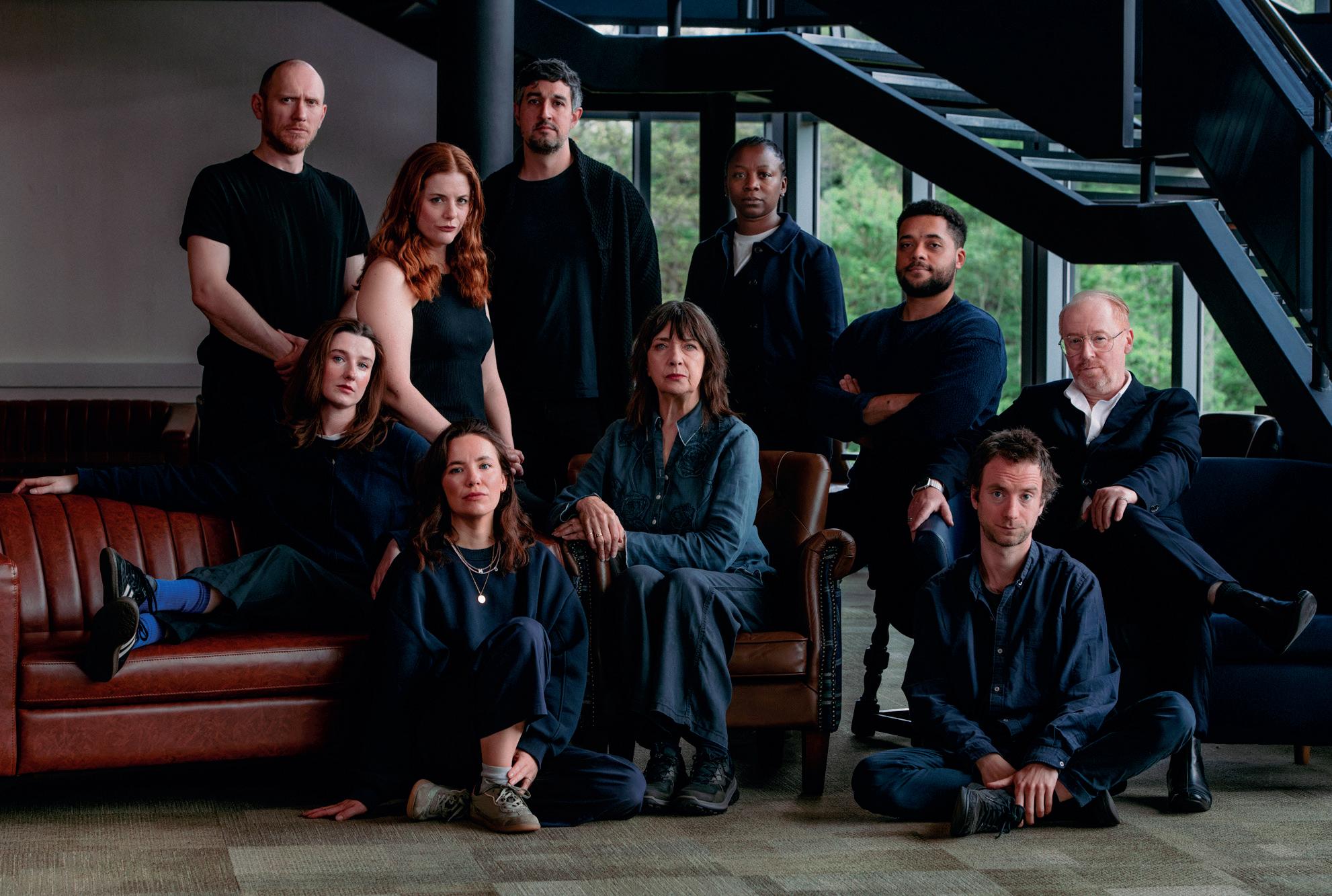
With Lear, Maureen Beattie takes on a character that is cruel, vain and destructive. Afreka Thomson talks to this star of stage, TV and radio about keeping audiences onside in the face of grim horror and appalling violence
In a wee Highland town, in a rehearsal room just up from Pitlochry Festival Theatre, Shakespeare’s bleakest, most tragic family drama is being brought to life. Outside, the Scottish summer is in full swing and the streets are busy with tourists clutching melting ice-creams, hoping to catch sight of a leaping salmon. Yet inside this little rehearsal room, terrible things are taking place: a mother betrayed by her daughters; a man’s eyes gouged from their sockets; a descent into madness on the moors. By the end of Finn Den Hertog’s interpretation of King Lear, almost everyone is dead.
At the centre of this chaos is Maureen Beattie, an actor whose career has moved between stage, screen and radio, and who now finds herself stepping into one of theatre’s most punishing roles; although not as we know it. ‘It’s a matriarchal society and the women have the power: Lear is a woman,’ she explains.
The change is more than symbolic. In this production, power does not pass from father to daughters; it begins with a woman and stays in female hands throughout. But these changes don’t tamper with the fundamentals of the story. ‘It’s very much still King Lear as written
by
William Shakespeare,’ she says. ‘We’re not messing around with one of the greatest pieces of literature ever written.’
For Beattie, Lear is another chapter in a career that has taken her from the Royal Shakespeare Company to television dramas and acclaimed radio work. Yet theatre remains her first love. ‘I love radio,’ she says. ‘There’s an alchemy about it. But I think really my heart would lie with theatre.’ The role of Lear is demanding, a journey through rage, grief and disintegration. But rather than find it draining, Beattie seems to thrive on all this intensity.
‘When the work is good, it’s like fuel,’ she says. ‘You get on like a surfboard at the beginning and the play takes you.’ She describes herself as blessed with a ‘sort of preternatural amount of energy’, a momentum that runs through this interpretation of Lear: a woman who once wielded power and is not yet ready to relinquish it, with the production kept deliberately high-octane. ‘It all comes together in the last scene. We’ve just been working on it; and it’s like, my god, we’ll all need to lie down in a dark room after this.’






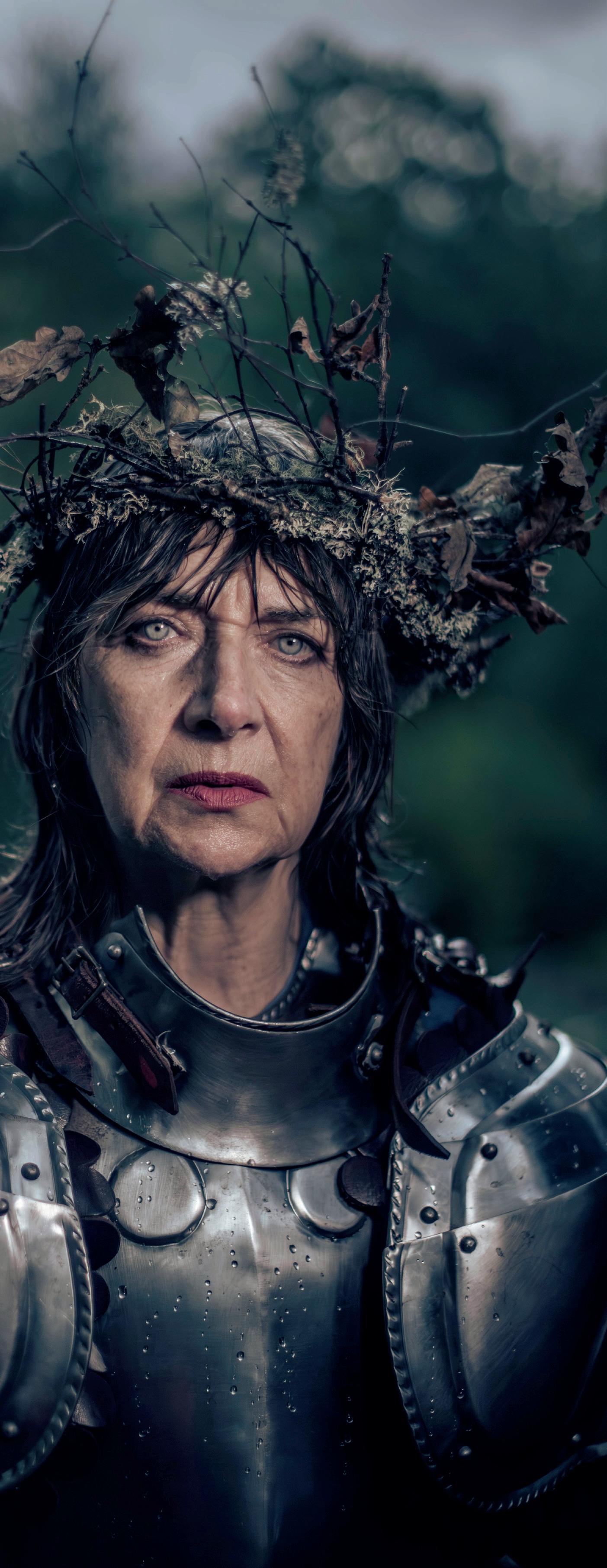
eht a tre• the a •ert
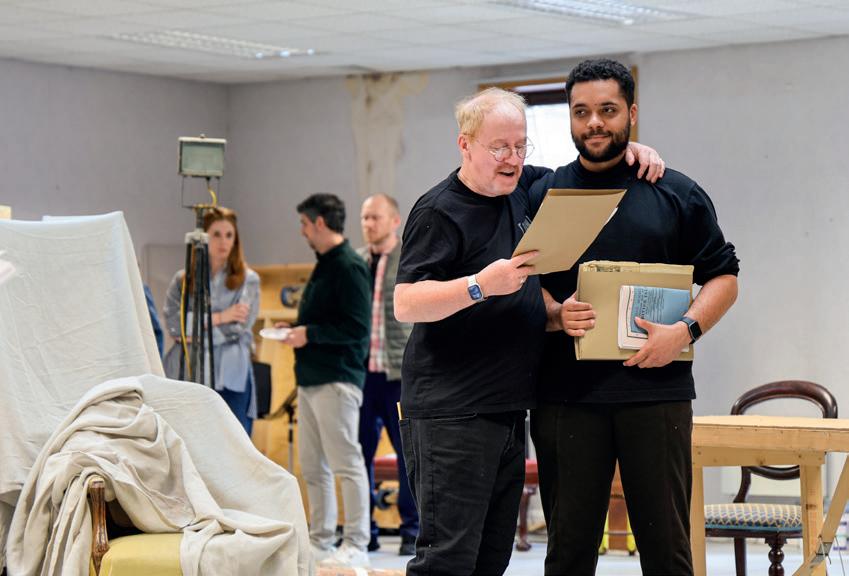
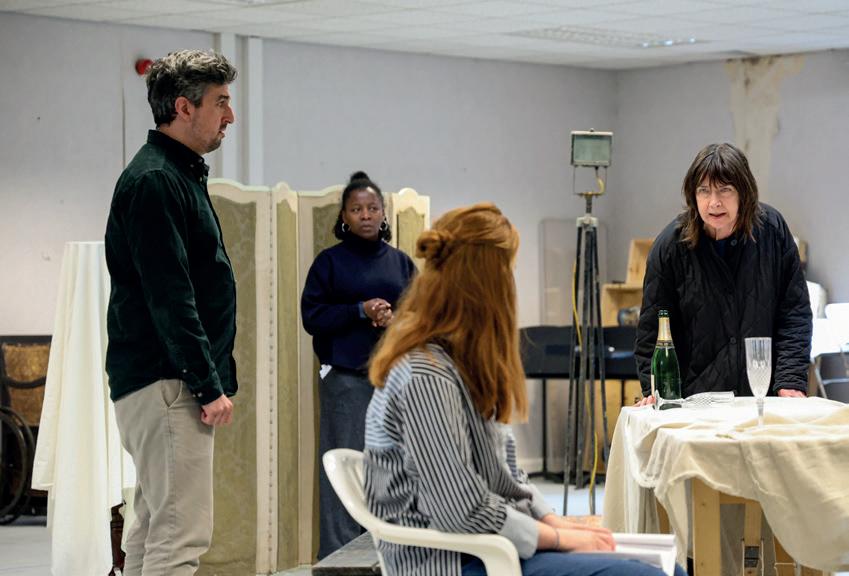
Even her costume re ects that energy. Lear is well turned out but, as Beattie puts it, ‘could still run for a 49 bus’. This is not a queen fading into irrelevance, but one still ready for action. The challenge lies elsewhere: making an audience understand a character capable of appalling behaviour. Lear can be vain, cruel and destructive, yet the tragedy only works, Beattie argues, if audiences remain emotionally invested. ‘You have to bring the audience. Because if they go, “I don’t like her”, then we’re lost. Audiences are very sophisticated and very intelligent. We have to acknowledge their sophistication.’ O stage, there is plenty of excitement around the play and what it means for Pitlochry Festival Theatre under artistic director Alan Cumming. ‘I’ve known Alan since he was at drama school,’ Beattie says. ‘He’s passionate about this place and we’re so lucky to have him up here.’ So, with an old friend at the helm and a storm of emotional turmoil to navigate each night, Beattie looks set for a very interesting Highland summer.
Lear, Pitlochry Festival Theatre, Saturday 4 July–Saturday 1 August.
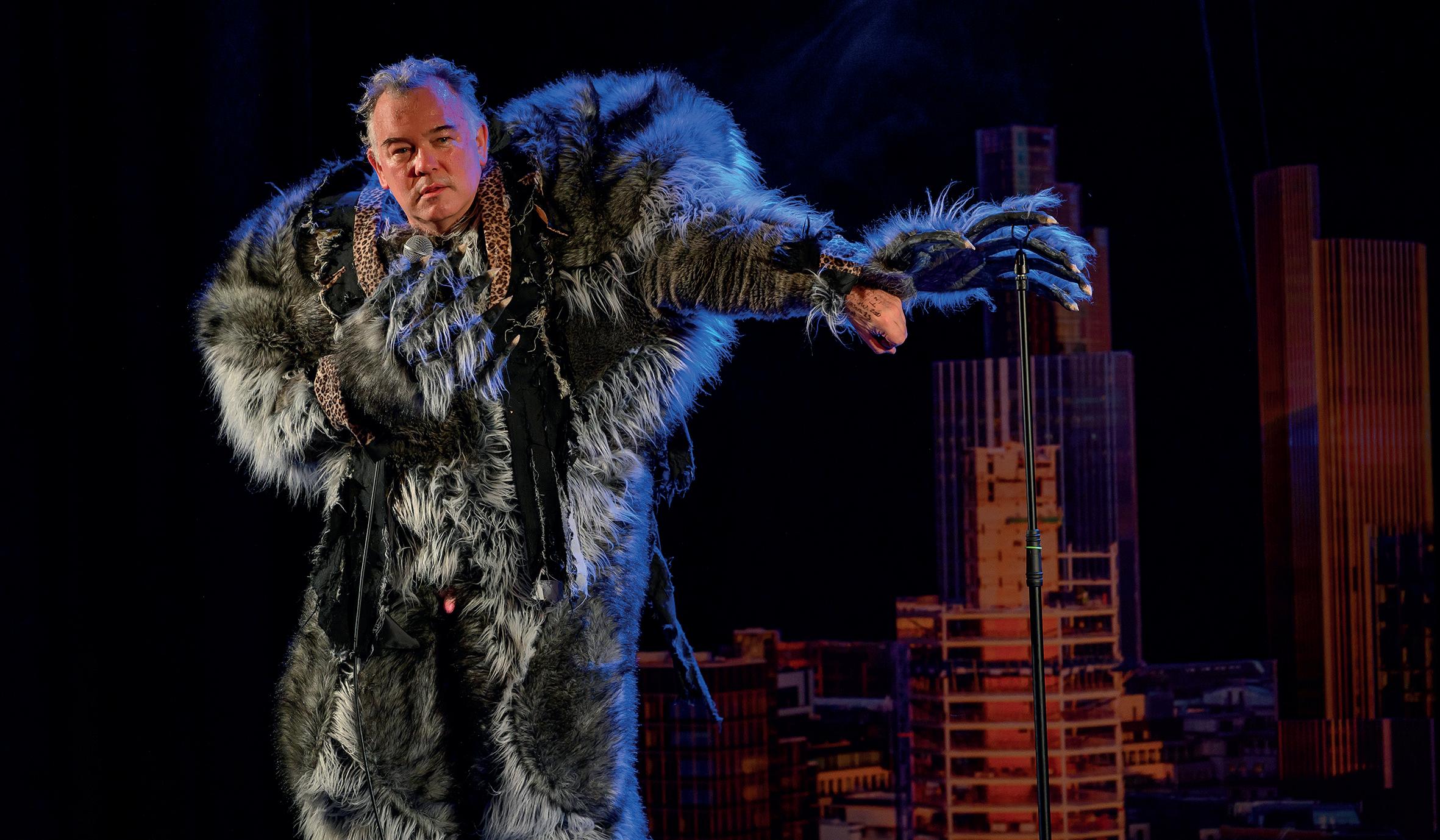
Get yourself away from the central belt and out into various parts of Scotland where the cultural landscape is just as rich and varied. Among the upcoming highlights are a wild tribute to a classic slice of crime-solving TV, a half-man half-werewolf comedian, an 80s Fringe play resurrected, a touring opera, and a multi-genre music festival deep in the heart of Scotland
ABERDEEN
ELEVATED DREAMS
This collection celebrates the creativity of the late Austrian artist Antonia Jabloner who came to the north-east of Scotland as a refugee after the outbreak of the Second World War.
n Aberdeen Art Gallery, until Sunday 10 January.
ARBROATH
YOUR MEANING NOT YOUR MATERIALITY
A one-off collaboration between Florence Peake and Scottish Dance Theatre to accompany the former’s exhibition will feature her sculptures being animated. It tackles themes of loss and the human desire to cope in the face of grief.
n Hospitalfield, Saturday 16 August.
BONESS
SOLVE-ALONG-A-MURDER-SHE-WROTE Games, prizes and a whole heap of audience participation can be expected in this fiesta which celebrates a specific Murder She Wrote episode in which Angela Lansbury played both Jessica Fletcher and her identical twin cousin . . . n Hippodrome, Wednesday 5 August.
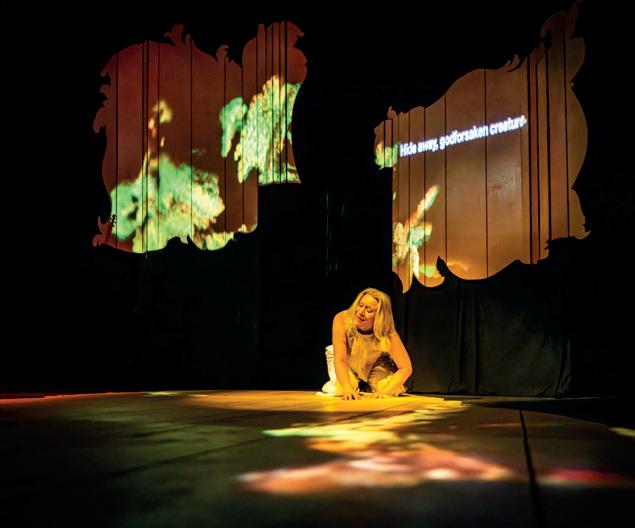
FALKIRK
IRON AND CLAY
A selection from an archive of photographs of foundries and brickworks taken by Tom Astbury who worked as the photographer for Falkirk Council’s Museum Service between 1979 and 1983.
n Callendar House, until Sunday 16 August.
HAWICK
THE REAL LADY MACBETH
First performed at the 1982 Edinburgh Fringe, writer Stuart Delves has contributed some new sections to bring the script up to date and show that fake news is not exactly a modern concept.
n Cornucopia Unit 4, Sunday 19 & Monday 20 July.
STEWART LEE
The ever innovative comic once performed in character with streaks of bacon across his face and here he dons a huge werewolf costume as he shares stage time with a forest-dwelling act who hates humanity.
n Eden Court, Friday 17 July.
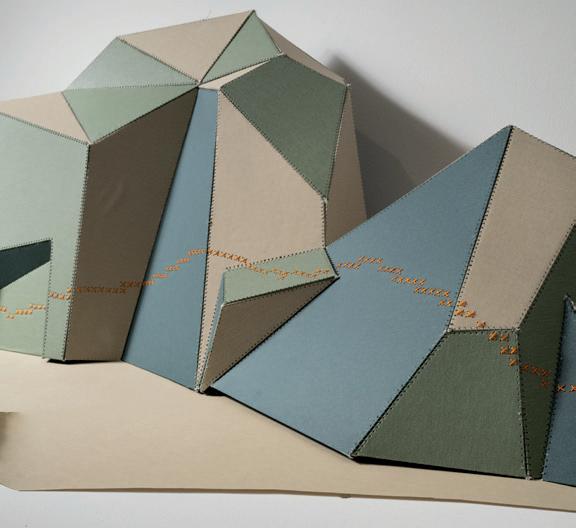
DUNEDIN CONSORT
Featuring 300-year-old music, In The Belly Of The Beast combines the beauty and intimacy of the baroque cantata, with bold theatrical storytelling. For this touring show, Dunedin Consort have teamed up with Mahogany Opera and inclusive feminist opera company Hera.
n Perth Theatre, Thursday 2 July.
STIRLING
THREE RIVERS FESTIVAL
‘Music in the heart of Scotland’ features works by Brahms, Rachmaninov and Chopin, some jazz, ‘The Selkie’s Song’, and musical fun for preschoolers.
n Various venues, Monday 13–Sunday 19 July.
THORNHILL
MAJD ABDEL HAMID & KATIE SCHWAB
Two exhibitions run side by side through the summer, Palestinian artist Hamid’s Murmuration and Glasgow-based creator Schwab’s The Warp And Woof Of My Self
n Cample Line, until 6 September.
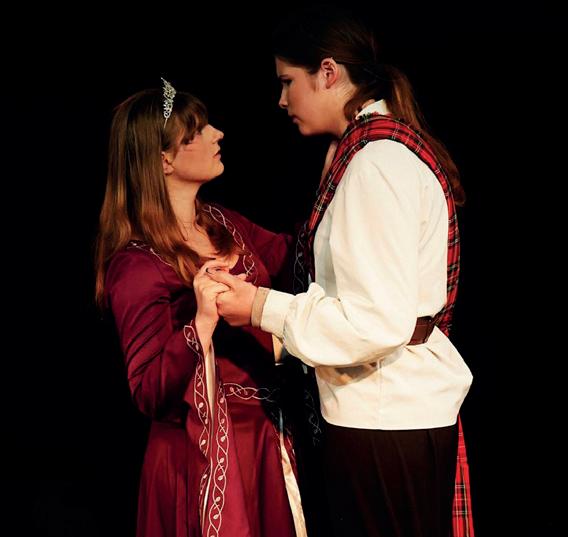
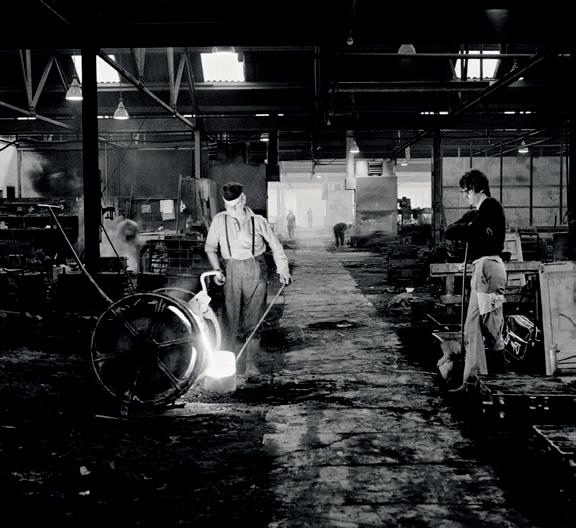


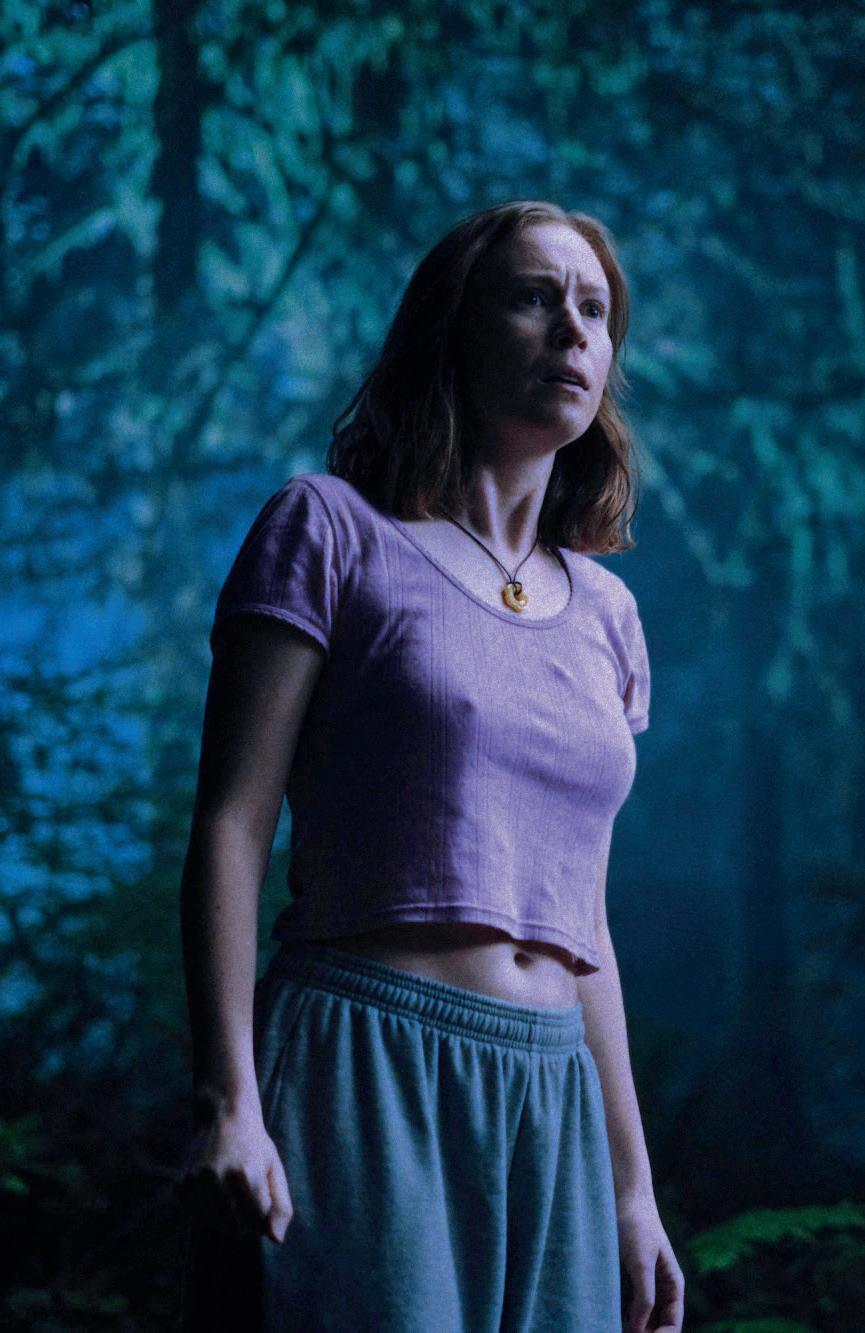
Teenage Sex And Death At Camp Miasma features a stellar central pairing and an insightful exploration of the problematic slasher genre. Emma Simmonds hails a pleasingly deranged movie that manages to be satirical, savvy and very entertaining
In the ferociously funny, playful and achingly personal third narrative feature from director Jane Schoenbrun (We’re All Going To The World’s Fair, I Saw The TV Glow), Gillian Anderson stars as a scream queen and fried chicken end who casts a seductive spell over Hannah Einbinder’s queer lm director before things descend into the mother of all bloodbaths. And if that doesn’t pique your interest, then perhaps nothing will. As in-your-face and o beat as the title suggests, Teenage Sex And Death At Camp Miasma was the winner of the Queer Palm at this year’s Cannes Film Festival. Einbinder plays Kris, an avant-garde artist who we’re told ‘remade Psycho from the perspective of the shower curtain’. She’s been brought in to resurrect the toxic Camp Miasma franchise, a transphobic 1980s slasher series in the Friday The 13th mould that’s crying out for a woke and potentially lucrative makeover.


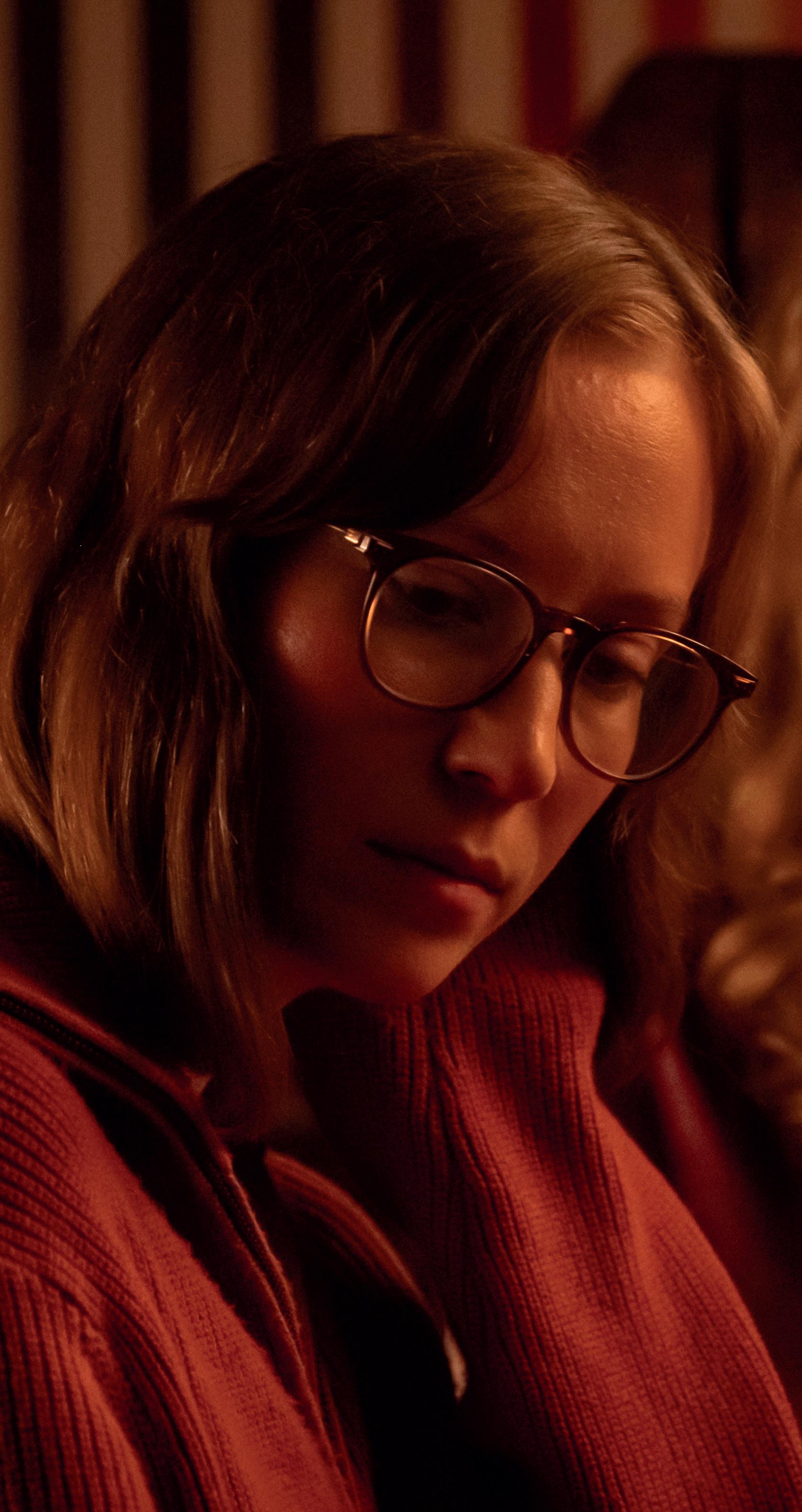
The lm’s ‘big bad’ is Little Death (played by Jack Haven), a trans teen who was bullied and eventually drowned by peers and who rises from their watery grave to enact bloody vengeance, clad in an aircon unit helmet and armed with a spear.
To get her creative juices owing, Kris tracks down the original lm’s nal girl, Billy Preston (played by Anderson in the present day and Amanda Fix as a twentysomething). This enigmatic gure went o -grid following the rst instalment and lives a bizarre Norma Desmond-like existence on the abandoned summer camp set of the lm in question. Pristinely attired and speaking in a lavish southern drawl, Billy saunters about the place behaving suspiciously and sco ng absurd quantities of junk food while encouraging Kris to indulge her own appetites.
When Kris makes her pitch to get this reclusive star involved in the reboot, Billy is turned o by the overanalytical, academic approach, suggesting the franchise is about two very simple things: ‘ esh and uids’. The pair come to an understanding and, as the sexual tension builds with reality and ction merging, Little Death threatens to cross over
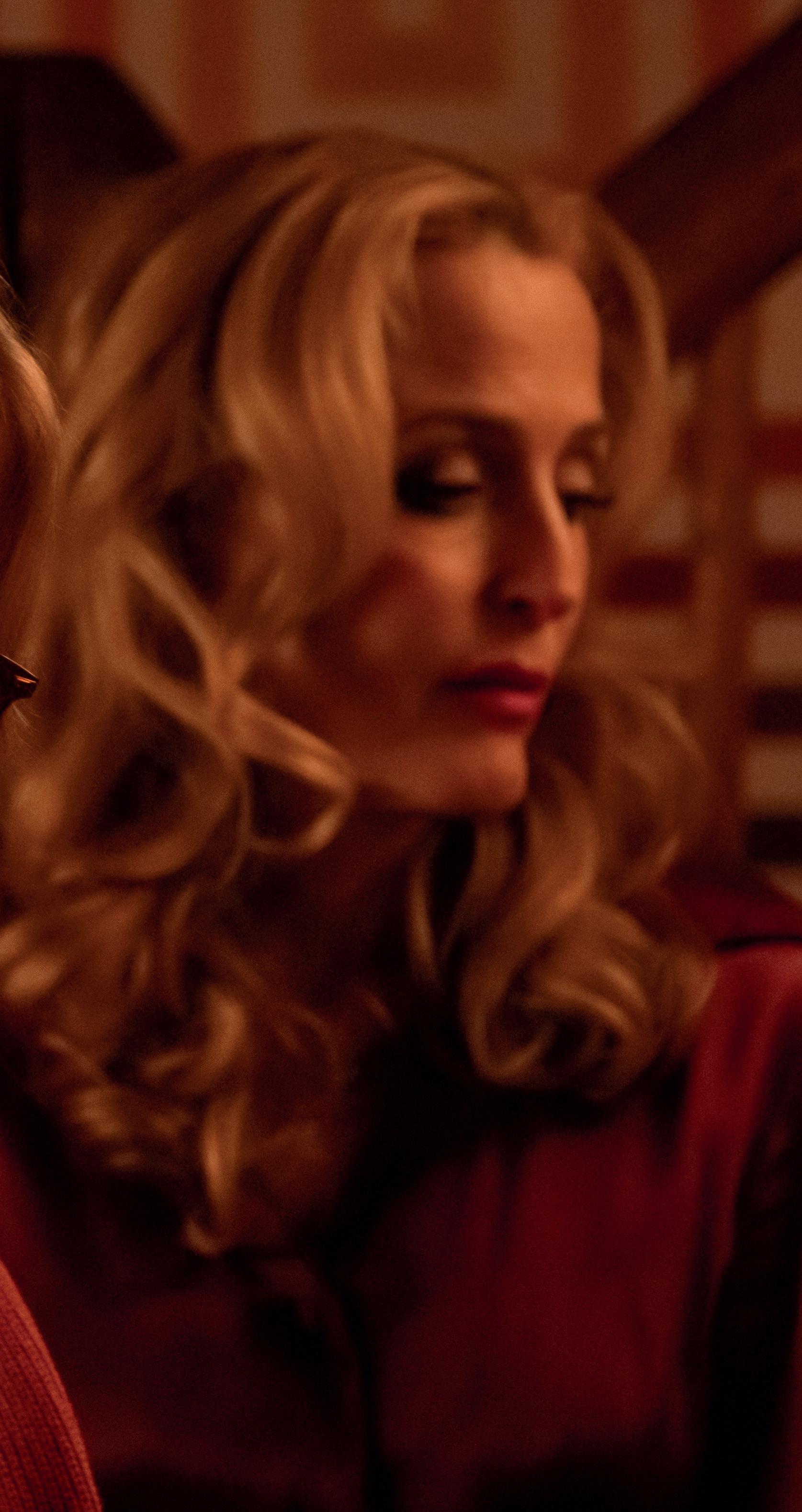
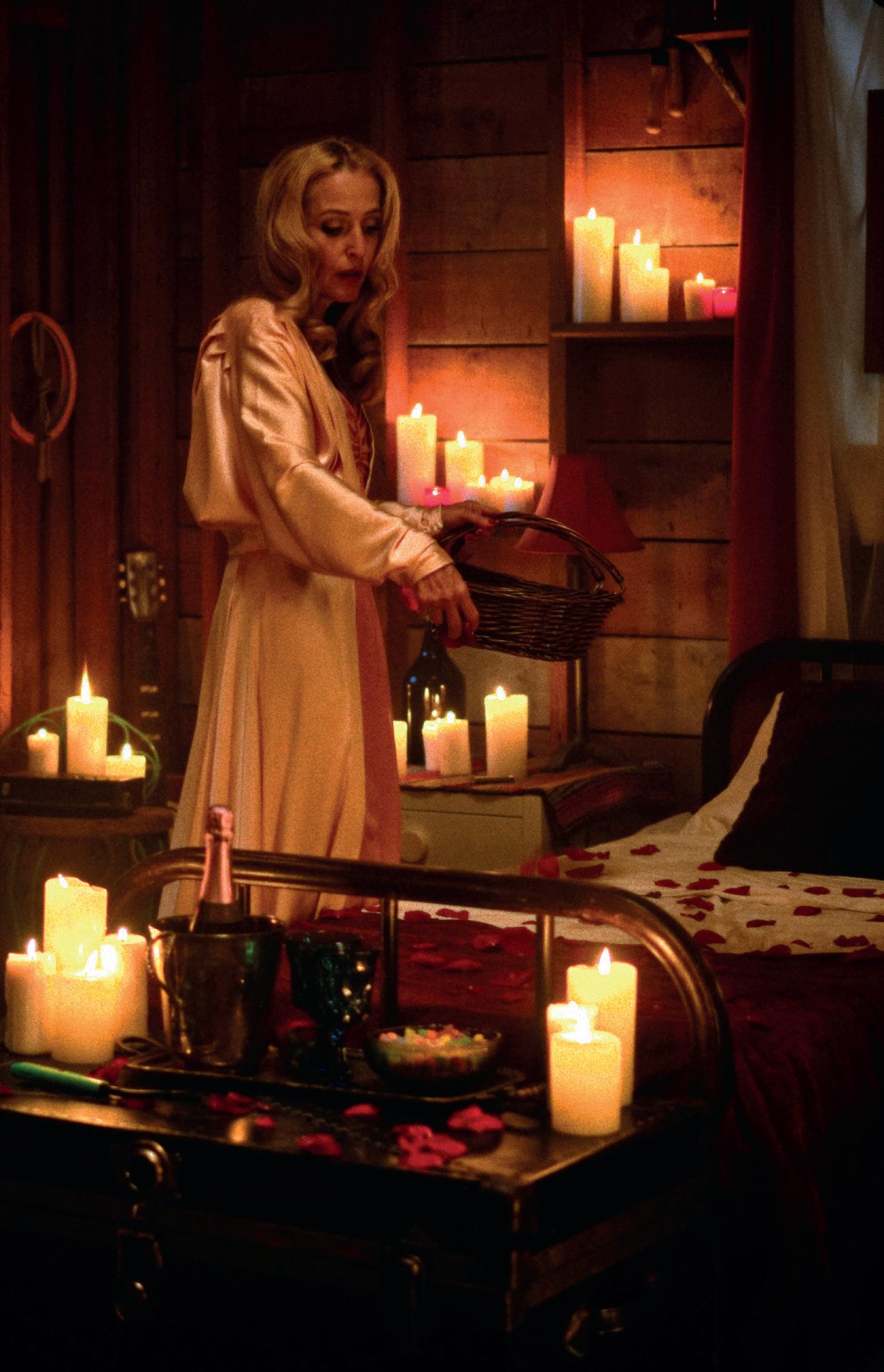
to the real world. Jasmin Savoy Brown (Yellowjackets, the Scream franchise) features as Kris’ partner Mari with whom she’s in an open relationship, while Dylan Baker appears brie y as a ba ed movie exec.
Following the character of Kris as she muddles her way through a creative and personal crisis and explores her sexuality, this is the rst lm made by Schoenbrun post-transition and interrogates the process of ‘slowly coming into oneself’. The lm also gets its hands dirty digging into the nostalgia and ongoing obsession with the fun, horny and frequently o ensive slasher genre that appeals to everyone from incels to feminists. Punishing youth, sexual activity and beauty, the genre also has a history of bigotry, foregrounding and empowering some women while simultaneously judging and objectifying others.
Schoenbrun makes lms that are gorgeously idiosyncratic and ethereal to the point of being a little ungraspable. But here the director makes the jump to something with a wider appeal that concretely satis es its satirical ambitions while feeling authentically midnight movie-esque. Shot on a shoestring over 25 days, this dreamy and deranged e ort hilariously sends
up generational tensions and the movie business, leaning in hard to the surrealness of its set-up. Full of delicious details for slasher a cionados and VHS lovers to enjoy, it includes extravagant kills and an unforgettable opening credits sequence which charts the highs and lows of the Camp Miasma franchise in savvy and amusing style.
From her roles in Crooked House, The Great and American Gods to her slightly barmy Thatcher in The Crown, Anderson has camped it up before but perhaps not on this level; as she evokes Gloria Swanson and other classic Hollywood dames, she’s evidently having a blast. Einbinder is the perfect foil, employing skills honed over ve seasons of TV’s Hacks, in which she bounced o the great Jean Smart. Her deadpan schtick and experience playing impeccably awkward second ddle to an older and rather fabulous female co-star comes in very handy here. Amid the slashing and the snacking, it’s a partnership to savour.
Teenage Sex And Death At Camp Miasma is in cinemas from Friday 21 August.
‘As Australian South Sea Islanders, we cannot always trace our lineage back to our specific ancestral islands,’ notes Jasmine Togo-Brisby in an artist’s statement accompanying her Gallery Of Modern Art show Liquid Land ‘We do, however, always hold the knowledge of the sugar industry as our origins.’ She is referring here to the process of blackbirding, whereby South Sea Islanders were kidnapped and taken to work on sugarcane plantations in Australia across the second half of the 19th century (sometimes based on decisions made in the Royal Exchange building which now houses Goma).
Liquid Land is an elegant, affecting and compact sequence of works, built around the central edifice of an ancestral hut. This life-sized replica shack, constructed from wood and rusted steel, is an impressionistic rendering of the first home built by the artist’s great-great-grandmother in Australia, after she herself was blackbirded (picked up from a beach in Vanuatu and set to work as a house slave). A large-scale transfer of a family photograph on the near gable end recreates the entranceway and straw-filled wall cavities. Inside, a steel washtub of treacle sits beneath a chandelier, symbols of opulence and the exploitation which sustained it.
Beyond the hut, a beautiful floor-based assemblage, primarily consisting of crows’ feathers, gives the look of seaweed strands flattened and shaped by a receding tide. Indeed, the mood of this exhibition, set in sultry gloom, is one of aesthetic intrigue and even womb-like cosiness as much as moral and emotional darkness. A vat of molasses in the entrance foyer offers a complementary, befuddling scent of sugar. ‘The plantation was (and still is) a place of contradiction,’ Togo-Brisby notes, ‘a place of confinement and violence, but also the site where our community and families were forged.’ Liquid Land captures this tension with lithe and effective simplicity. (Greg Thomas) n Gallery Of Modern Art, Glasgow, until Sunday 6 September.
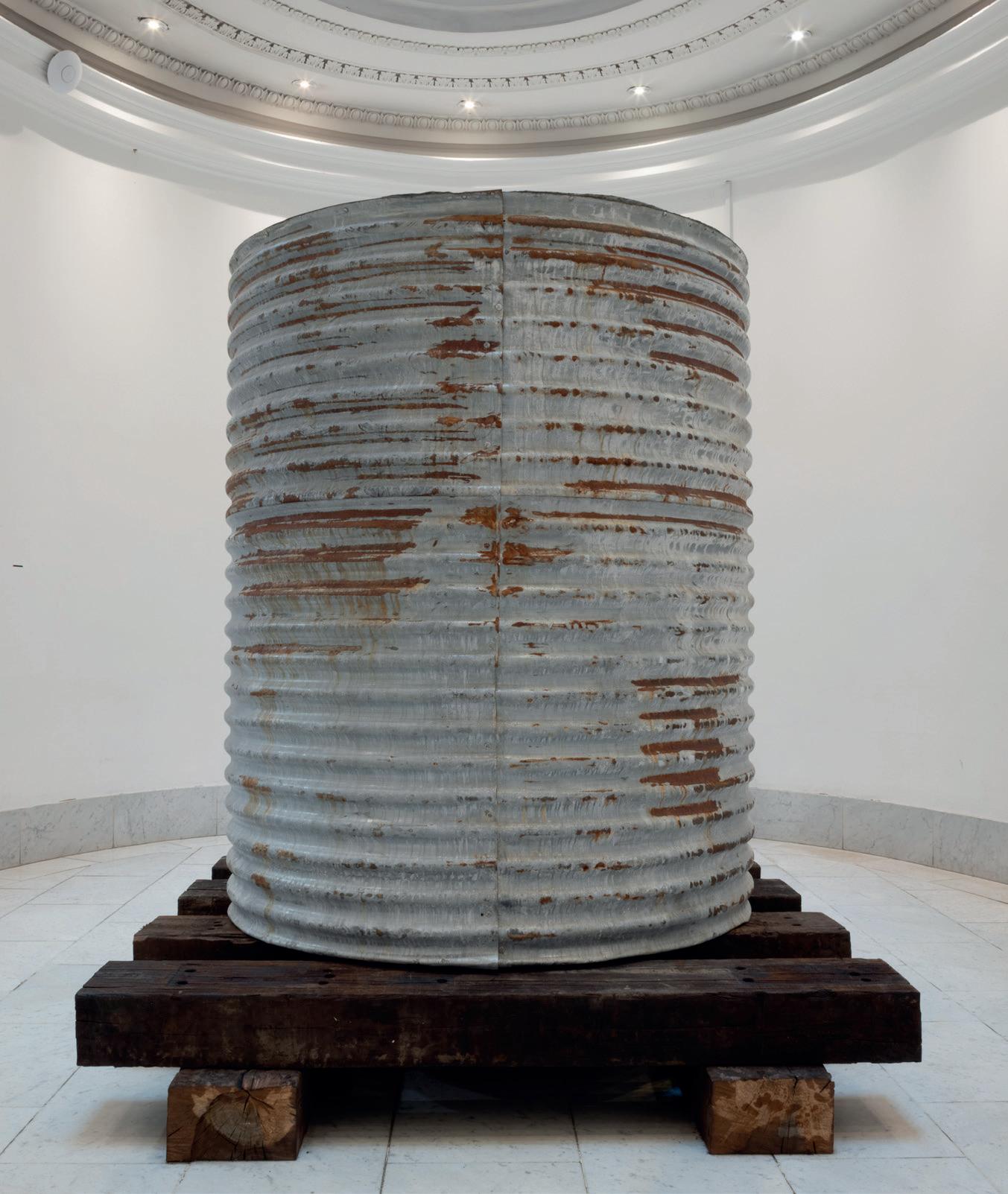
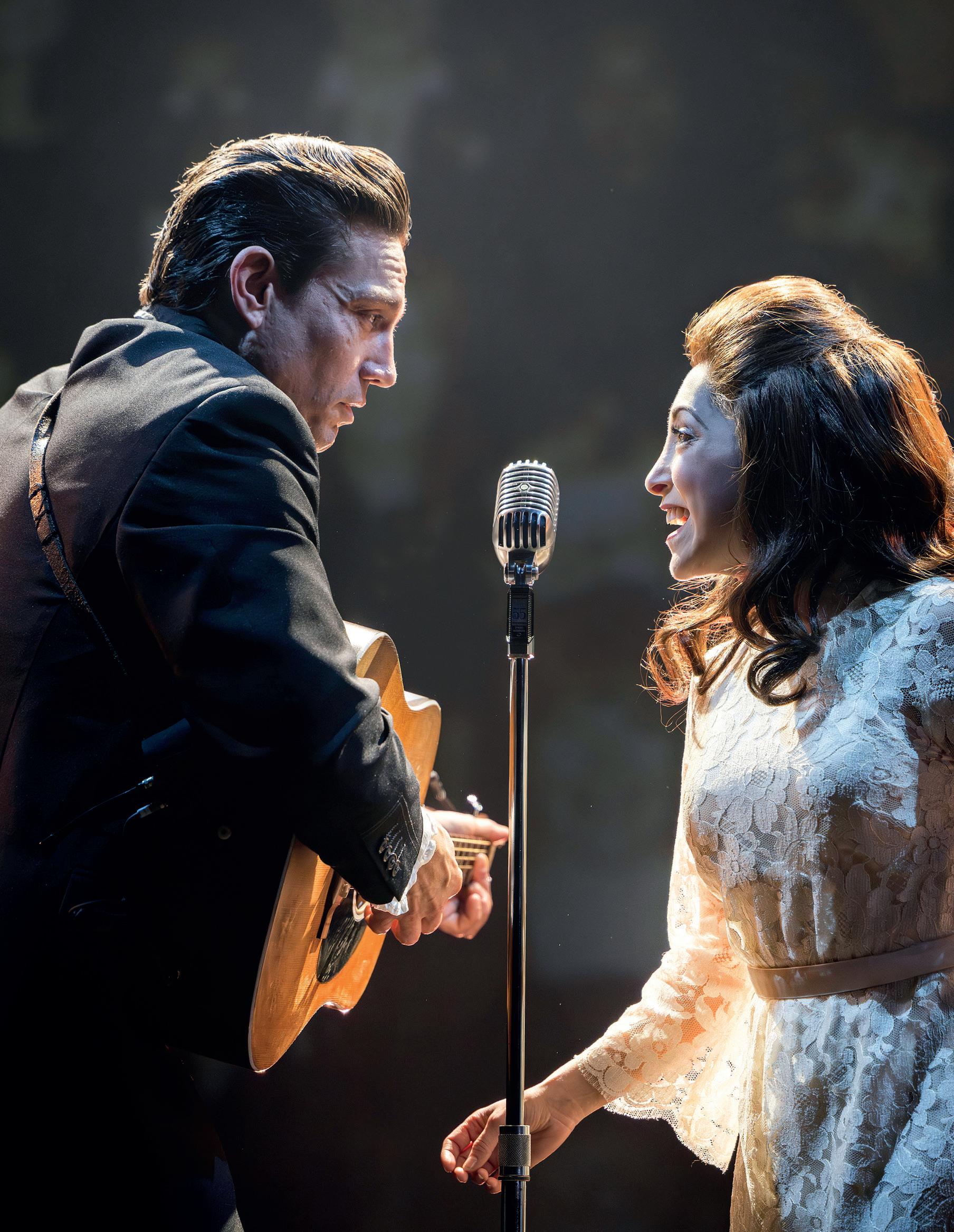
Country music may trade in heartbreak, but The Ballad Of Johnny And June curiously seems determined to prove that even the most iconic love affair can feel weightless when polished too clean. Des McAnuff’s new musical charts the rise, fall and resurrection of Johnny Cash and June Carter, narrated by Ryan O’Donnell playing the pair’s son John Carter Cash, stitching together their careers with a jukebox-friendly sheen that favours momentum over nuance. It is a handsome production, full of charm and craft, yet one that mistakes speed for storytelling.
The narrative principally follows Johnny’s spiralling addiction, with June’s steady resilience and the magnetism that kept pulling them back together being an afterthought. A tough act to emulate, Christopher Ryan Grant brings grit and swagger to Johnny, capturing his volatility without quite finding the emotional depth beneath the legend. Christina Bianco fares better as June, with vocals bright and assured, and her presence grounding scenes that risk drifting into musical montage. Their chemistry flickers, though the script rarely gives them space to let the relationship breathe.
Cramming in over 30 songs, performed by a terrific live band, and with no denying the production’s polish or affection for its subjects, The Ballad Of Johnny And June serves up exactly what audiences would expect. But the heart of the story feels more hinted at than fully realised. It walks the line with confidence but never quite sets the stage alight. (Dominic Corr)
n Pavilion Theatre, Glasgow, Thursday 13–Saturday 22 August; reviewed at Festival Theatre, Edinburgh.












































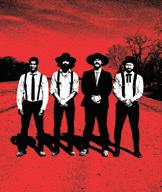














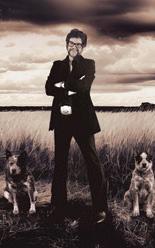



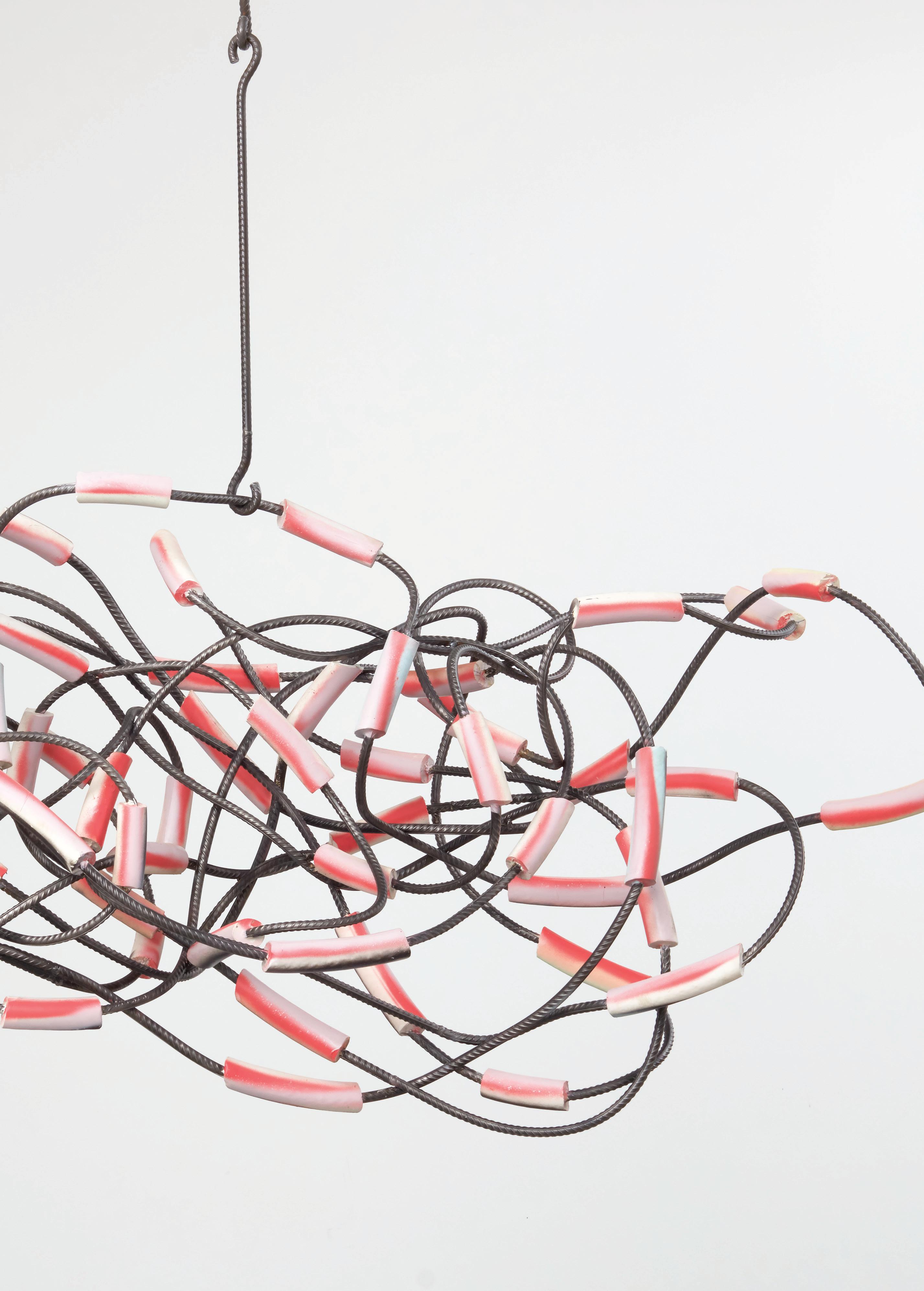
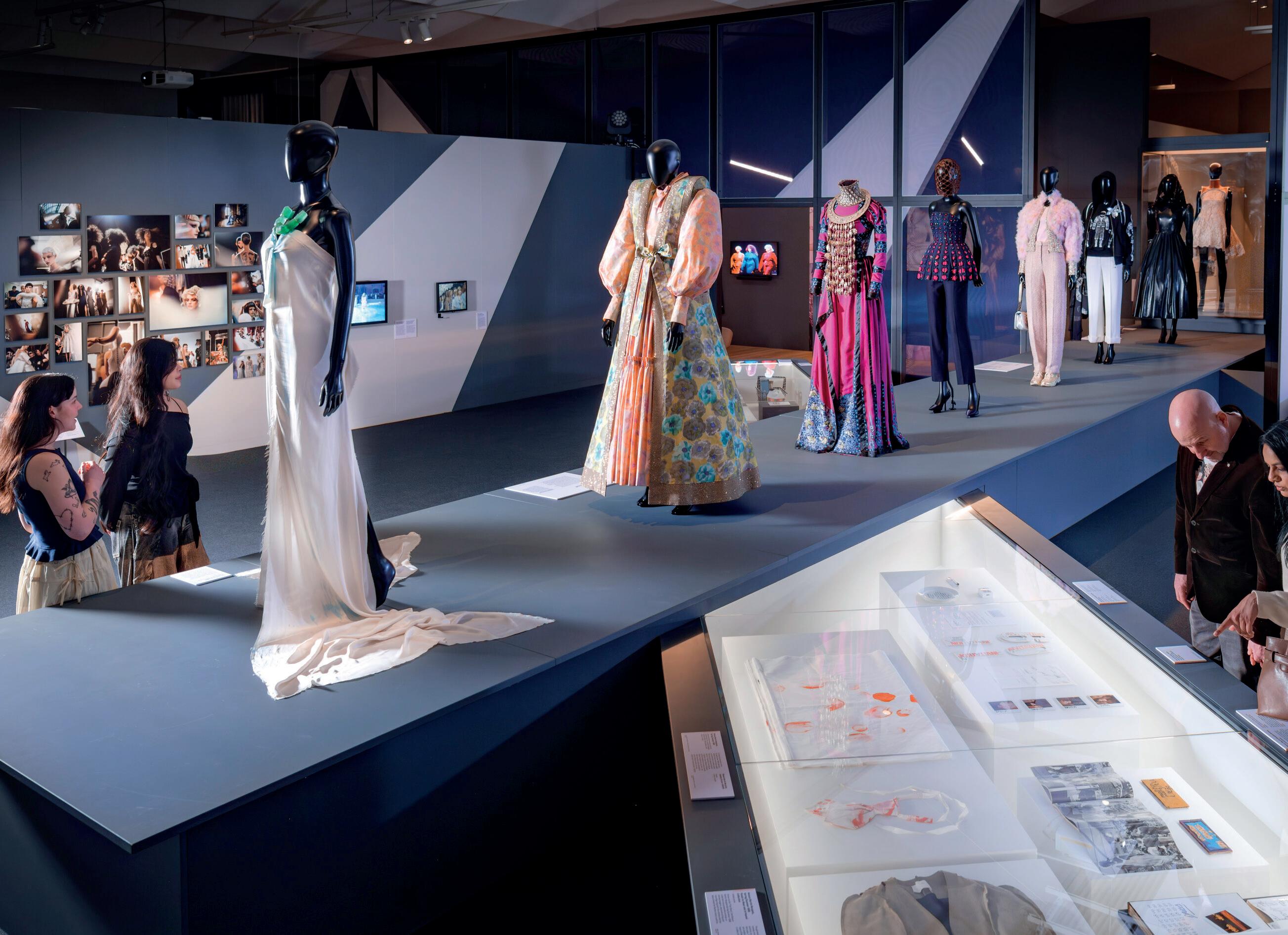
Walk, walk, fashion, baby: V&A Dundee’s latest blockbuster exhibition charts the rise of the catwalk from its origins in the 1800s to modern times. Jennifer McLaren finds that ready-to-wear, supermodels and even an animated homage are all part of this journey
V&A Dundee’s Catwalk: The Art Of The Fashion Show is as chic and stylish as its title suggests, charting the 125-year story of the industry’s journey to becoming an influential and inseparable part of popular culture. From its late 19th-century beginnings in the fashion houses of Lucile, Paquin, Chanel, Dior, Balenciaga, Worth and Poiret, each room focuses on a shift in style or approach until the Big Four (Paris, London, Milan and New York) finally share the spoils of fashion’s explosion into the public consciousness.
Designer Lady Duff-Gordon, known as Lucile, is said to have been the founder of the mannequin parade, the revelation that living models could breathe life into garments. This resulted in the birth of a spectacle that has grown to become a staple part of the industry as we know it.
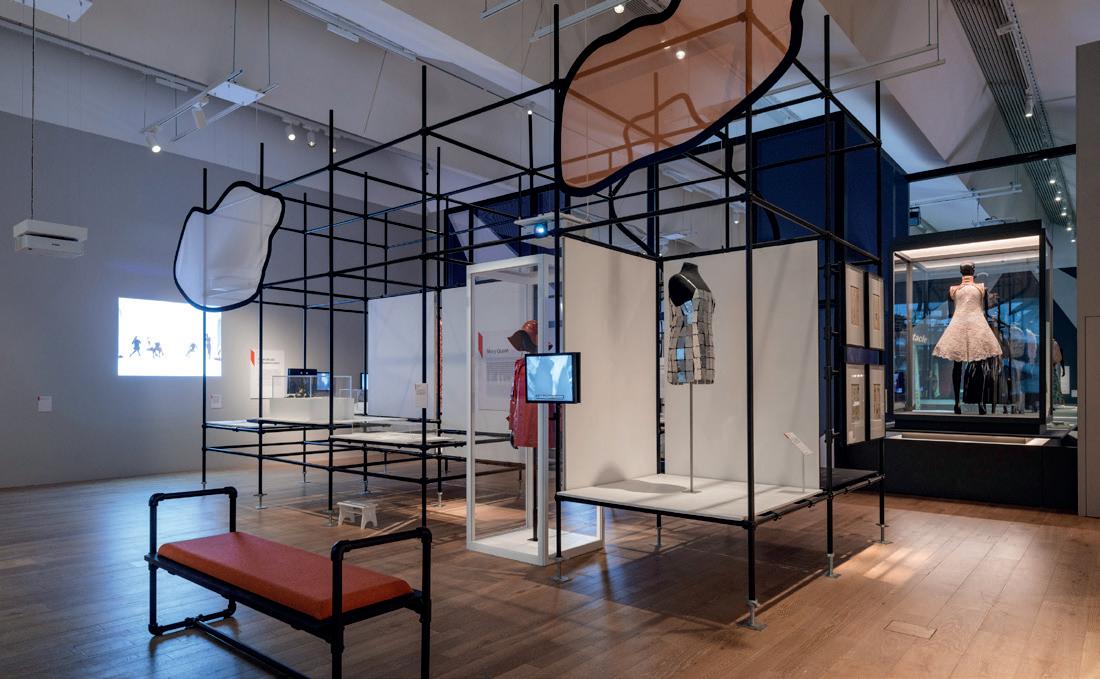
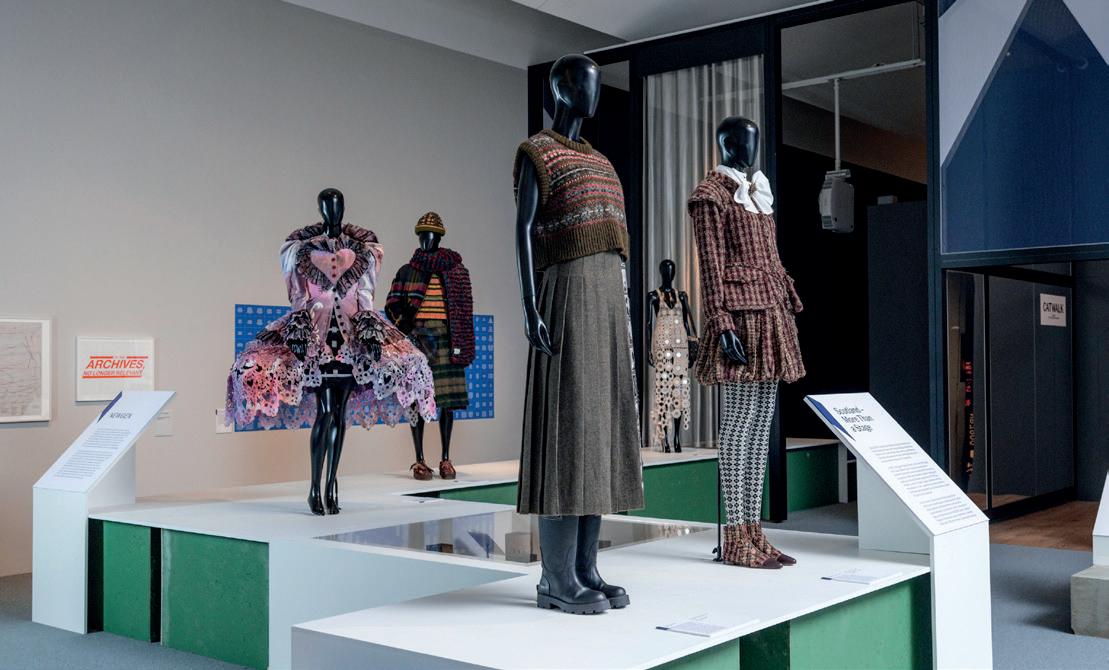
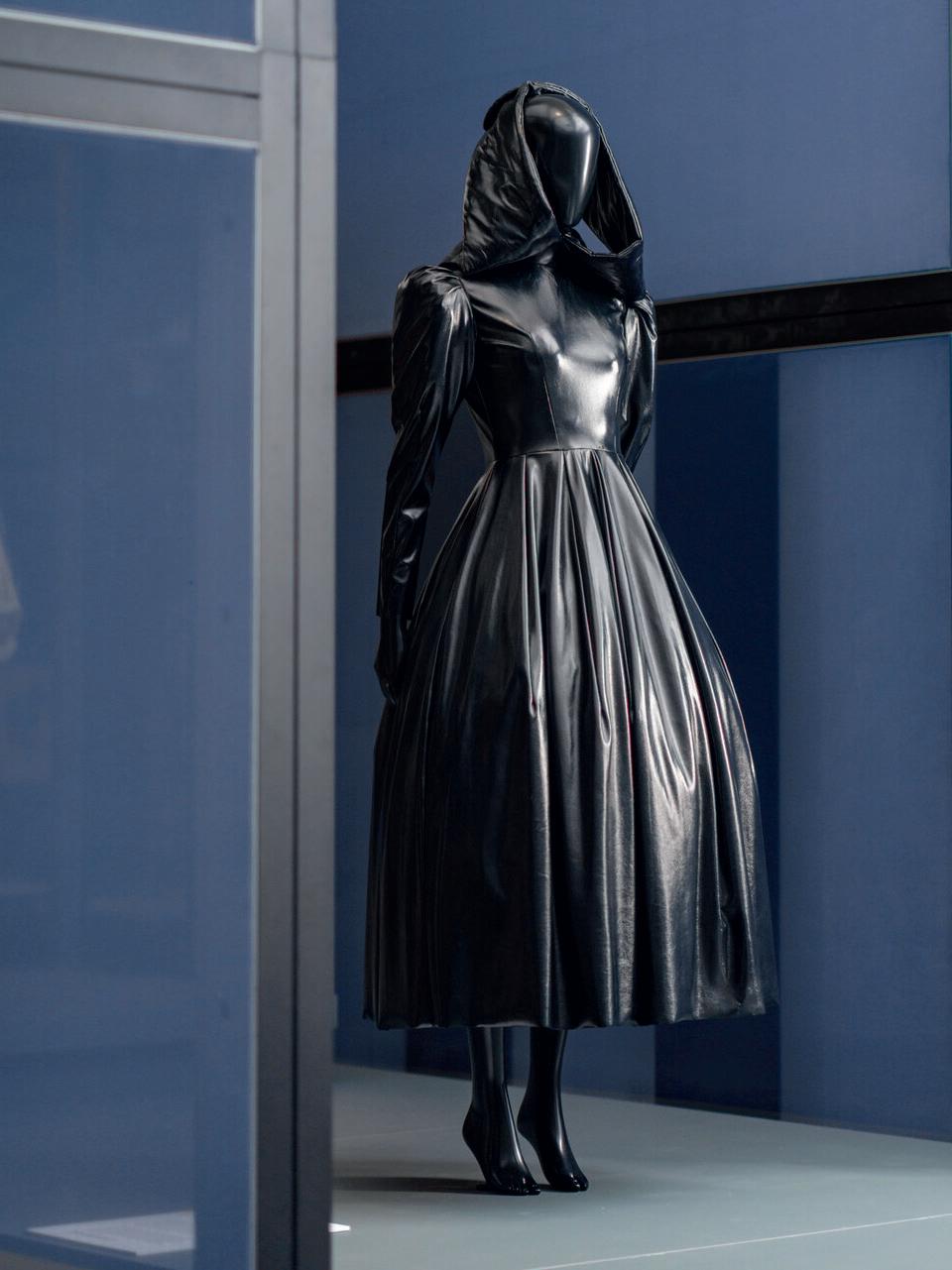
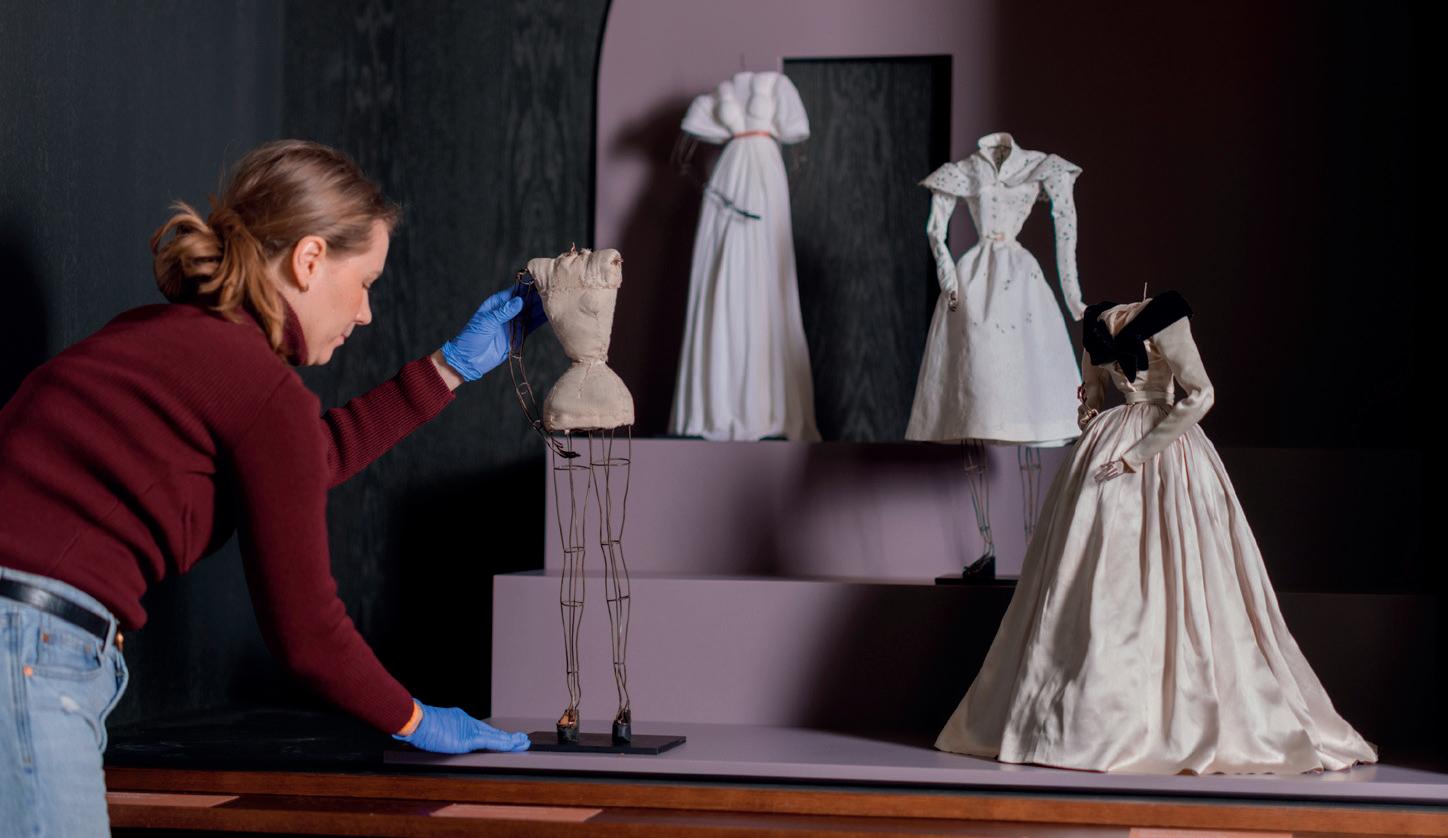
A 1971 pair of green suede Manolo Blahnik sandals on display created a new way of walking for unsteady models due to an oversight which meant there were no steel pins in the heel to keep them supported. Meanwhile, Paco Rabanne’s iconic Mirror Dress (c.1967) was ambitious, futuristic and purposely unwearable due to being made from metal. The rise of fashion shows as theatre is evident in images such as those from the Missoni show which took place at Piscina Solari, Milan, in 1967, where models were pushed around the swimming pool on inflatable loungers.
Ready-to-wear (or prêt-à-porter) makes its entrance with the emergence of labels such as French brand Chloé and 60s icon Mary Quant. Scotland gets in on the action with nods to 1955 fundraising Dior fashion shows at Gleneagles Hotel and Glasgow’s Central Hotel, as well as the more recent Dior Cruise show, held in June 2024 at Drummond Castle in Perthshire, and finally Chanel’s Metiers d’Art collection in 2012 at Linlithgow Palace. Also featured are pieces by designers with Scottish roots such as the late Pam Hogg, Charles Jeffrey and Jamaican-Scottish designer Nicholas Daley.
Supermodels make their meteoric ascent in the 1980s and 90s as Naomi Campbell, Cindy Crawford, Linda Evangelista, Christy Turlington, Claudia Schiffer and Kate Moss bring star power to the catwalk. The question of the industry’s influence on unobtainable beauty ideals is broached and changing attitudes to body image explored.
Visitors are ushered backstage where the preparation happens; a fun piece is a simple but chic dark grey t-shirt that reads ‘Galliano’s Girl’, worn by staff at John Galliano’s shows. In the final rooms, the fashion show has officially evolved into a spectacle and V&A Dundee has its own catwalk featuring pieces by Viktor&Rolf, Dior, Chanel and Alexander McQueen. Video clips from iconic shows play on the walls, while surreal props from events such as Chanel’s Supermarket Show are ensconced behind glass.
To top it off, a crowd-pleasing episode of The Simpsons created for the Balenciaga Spring/Summer 2022 runway show at Paris Fashion Week plays on a loop, in which the residents of Springfield are transformed into fashionistas.
Sunday 17 January.
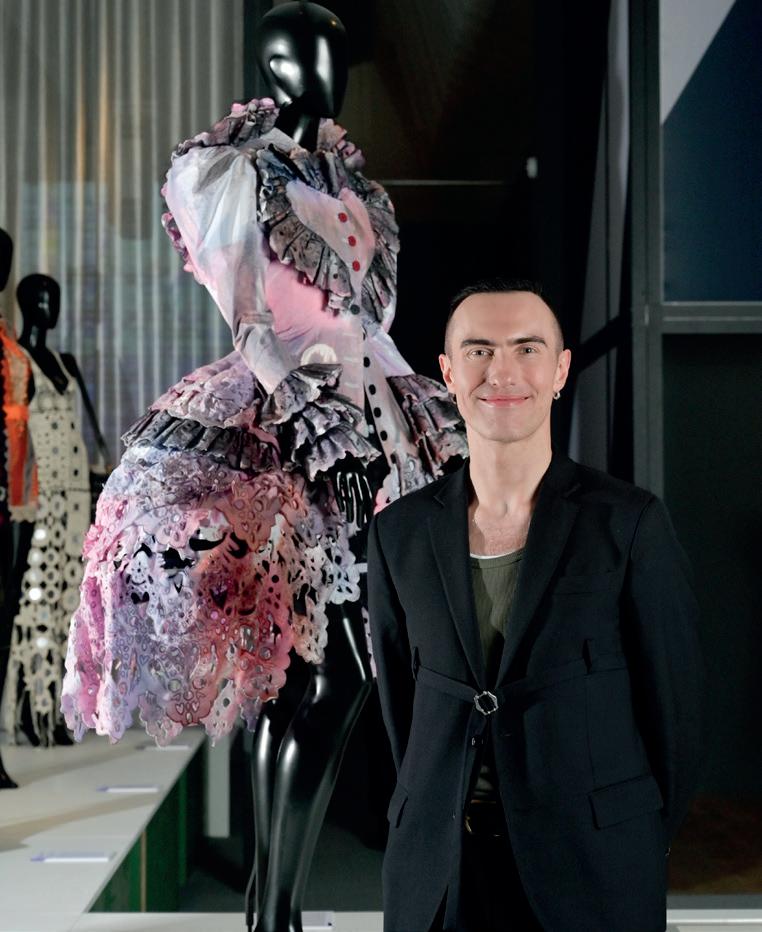
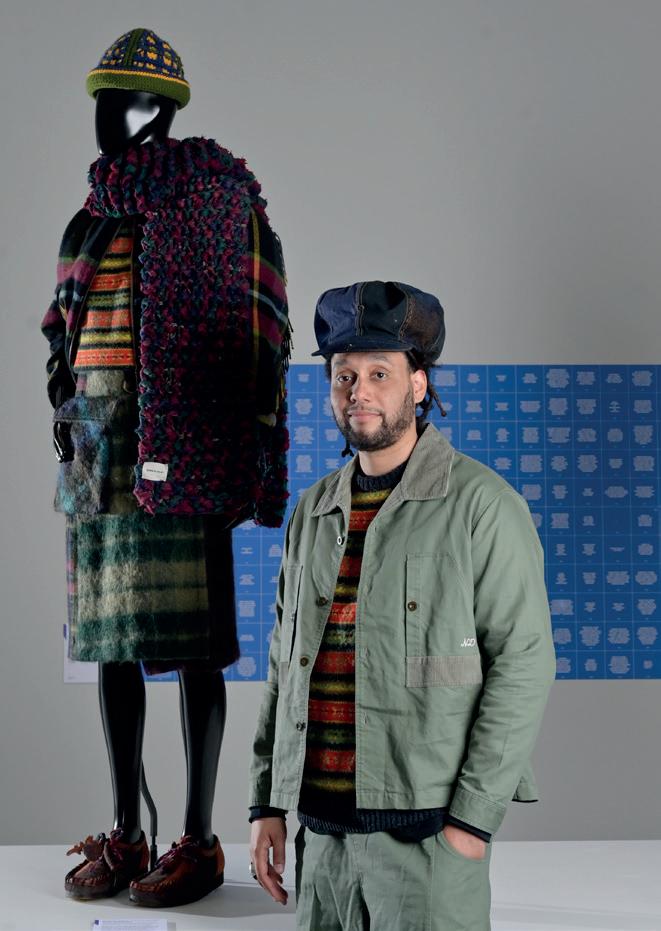
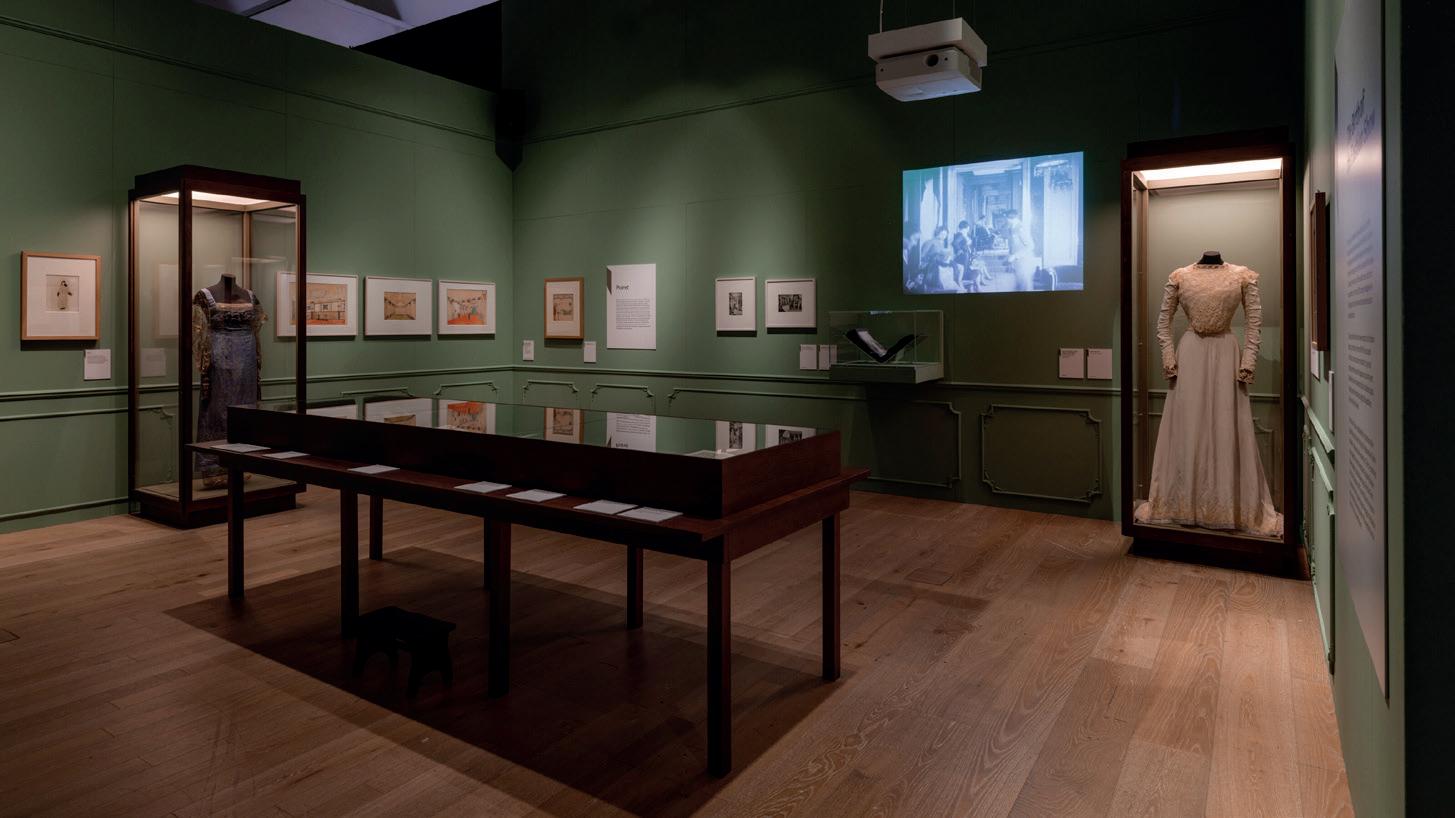
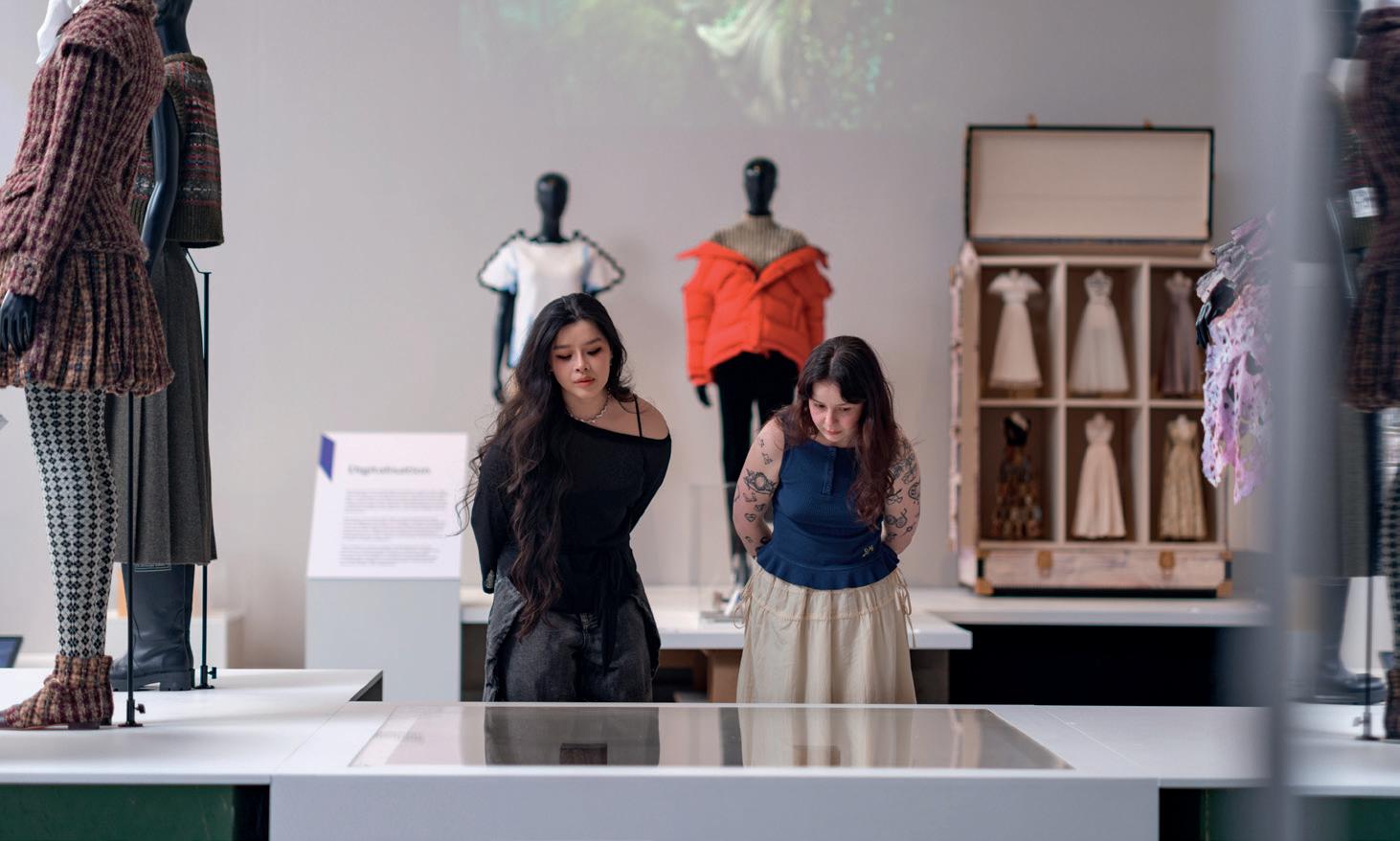
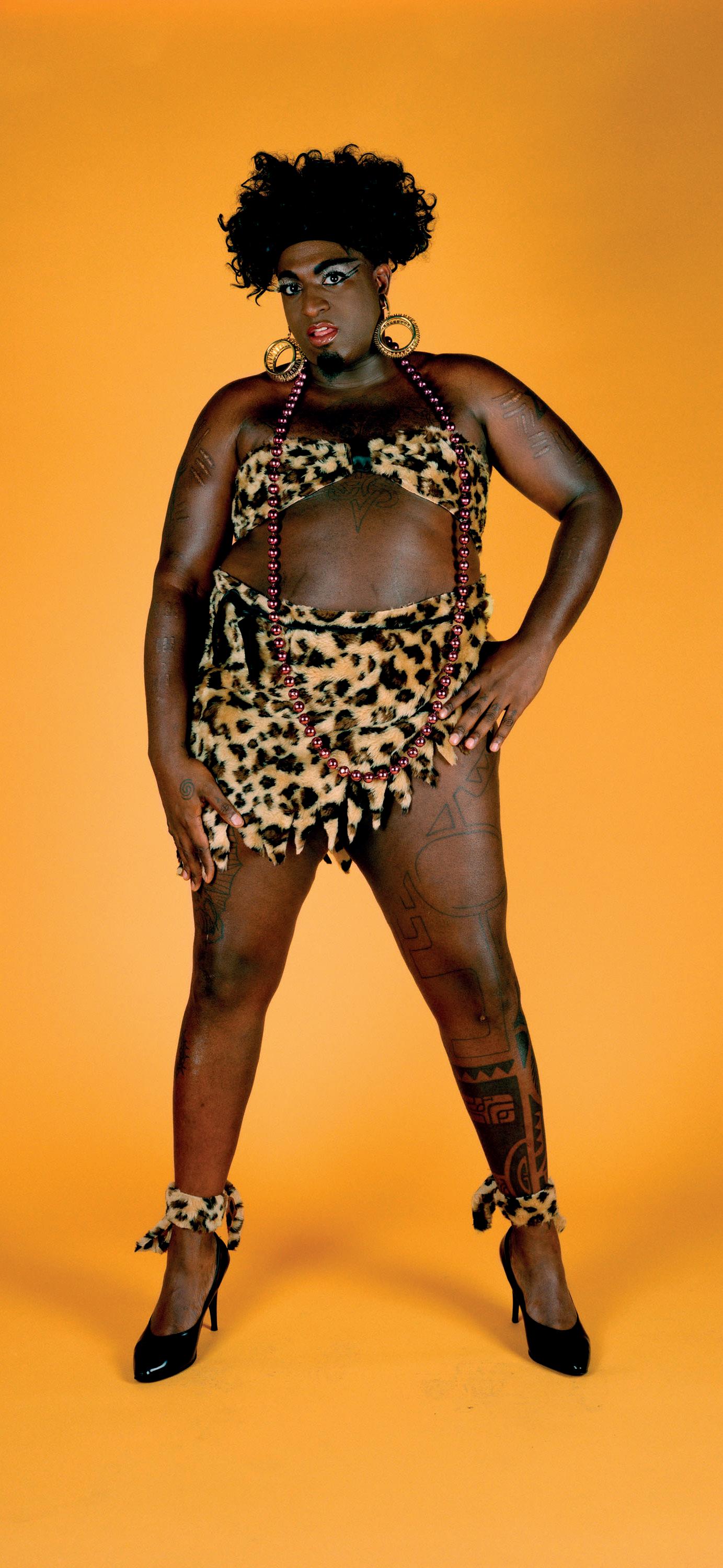
A reliable source of juicy drama, the disastrous dinner party movie is one of the most exhilaratingly attention-grabbing genres. It’s given us cultural milestone Guess Who’s Coming To Dinner, Dogme classic Festen, Burton and Taylor tearing strips off each other in Who’s Afraid Of Virginia Woolf? and underrated 2015 horror gem The Invitation, while The Bear did wonders with the format on TV in its legendary ‘Fishes’ episode. Sparkling sex comedy The Invite proudly joins that throng. Written by Will McCormack and Rashida Jones and directed by Olivia Wilde, it’s a US remake of wellregarded 2020 Spanish farce The People Upstairs, while influences closer to home are evident in a film dedicated to Diane Keaton that evokes Woody Allen at his best/least problematic.
Accompanied by frantic, tension-amplifying strings and sumptuously shot on celluloid, the film is set almost entirely in a San Francisco apartment. Olivia Wilde’s insecure Angela invites her upstairs neighbours round, blindsiding her curmudgeonly and combustible partner Joe (Seth Rogen). The combination of Angela’s excruciating attempts to impress sex therapist Piña (Penélope Cruz) and ex-firefighter Hawk (Edward Norton), and Joe’s hostility towards them is hysterical even before the pair turn out to be swingers.
Wilde stormed onto the directing scene with 2019’s Booksmart and does an equally impressive job here, with her deft, retro-infused direction cranking up the awkwardness and harnessing the power of a howlingly funny, battle-of-the-sexes script. Performances are pivotal in a chamber piece and these are perfectly pitched. In fact, it’s hard to imagine a more complementary quartet, with Rogen truth-bombing with aplomb, Cruz preposterously sexy and Norton a riot of mischievous glee. But it’s Wilde herself that edges it, delivering screwball energy in spades and more than a hint of Keaton, as she turns anxiety into an art. (Emma Simmonds) In cinemas from Friday 3 July.


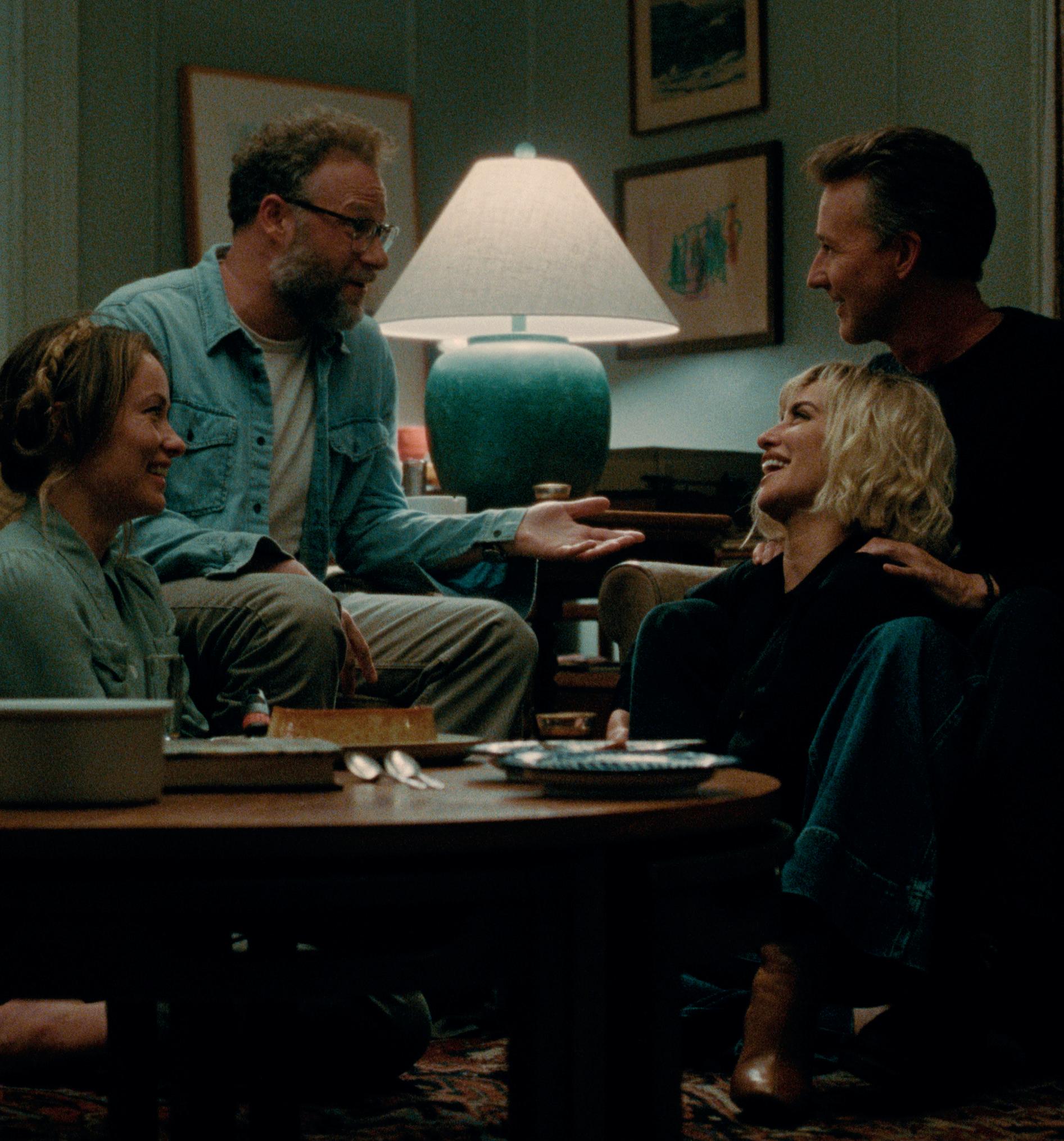


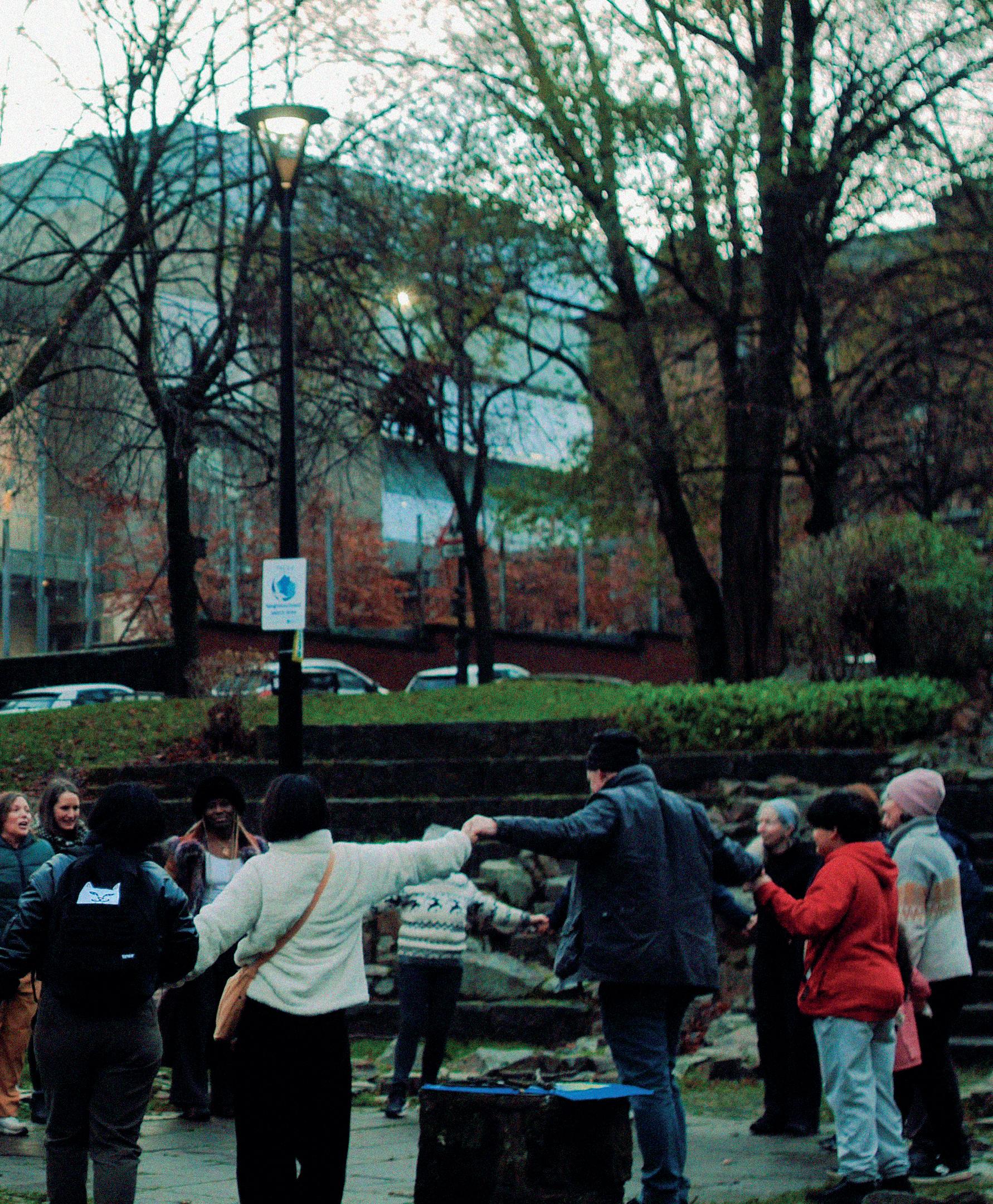
Snap Elastic is an artist collective known for producing daring, unconventional performance works. The company’s latest production, Horses, is a participatory dance, written with outdoor performance in mind and delivered with medieval flare. This free, unticketed event is inspired by the 1800s German novella Michael Kohlhaas, which tells the true story of a 16th-century horse dealer's struggles against the Saxon aristocracy.
The piece begins with three of Snap Elastic’s resident performers and members of its community cast ceremonially parading down the steps of Garnethill Park, inviting the audience to disregard the world around them and join in on creating a feeling of pageantry against a modern backdrop. The crowd, an eclectic mixture of adults, children and bemused (though seemingly entertained) passersby, are largely happy to partake in the frivolities. Balls are tossed through hoops and spectators are paraded around in wheelbarrows, with the cast intermittently pausing the games to resume the dramatics.
This all takes place on a sunny Saturday evening, the buzz of Glasgow refusing to quieten down for the performers, and the cast do a stellar job of blocking out the world around them. Three men drinking Tennent’s Super on a nearby bench look nonplussed as the audience takes part in a giant game of tug of war, and dancer Kemono Lebe-Riot gets a good laugh as he apologises for the ‘commercial break’ as an ambulance speeds by with its sirens blaring. Though it’s not immediately clear what is happening at any given time, and the opportunities for participation are eclipsed by lengthy bouts of interpretive dance, Horses succeeds in providing audience members with an hour of free entertainment they won’t forget in a hurry. (Danny Munro)
Queen’s Park, Glasgow, Sunday 2 August; reviewed at Garnethill Park, Glasgow.

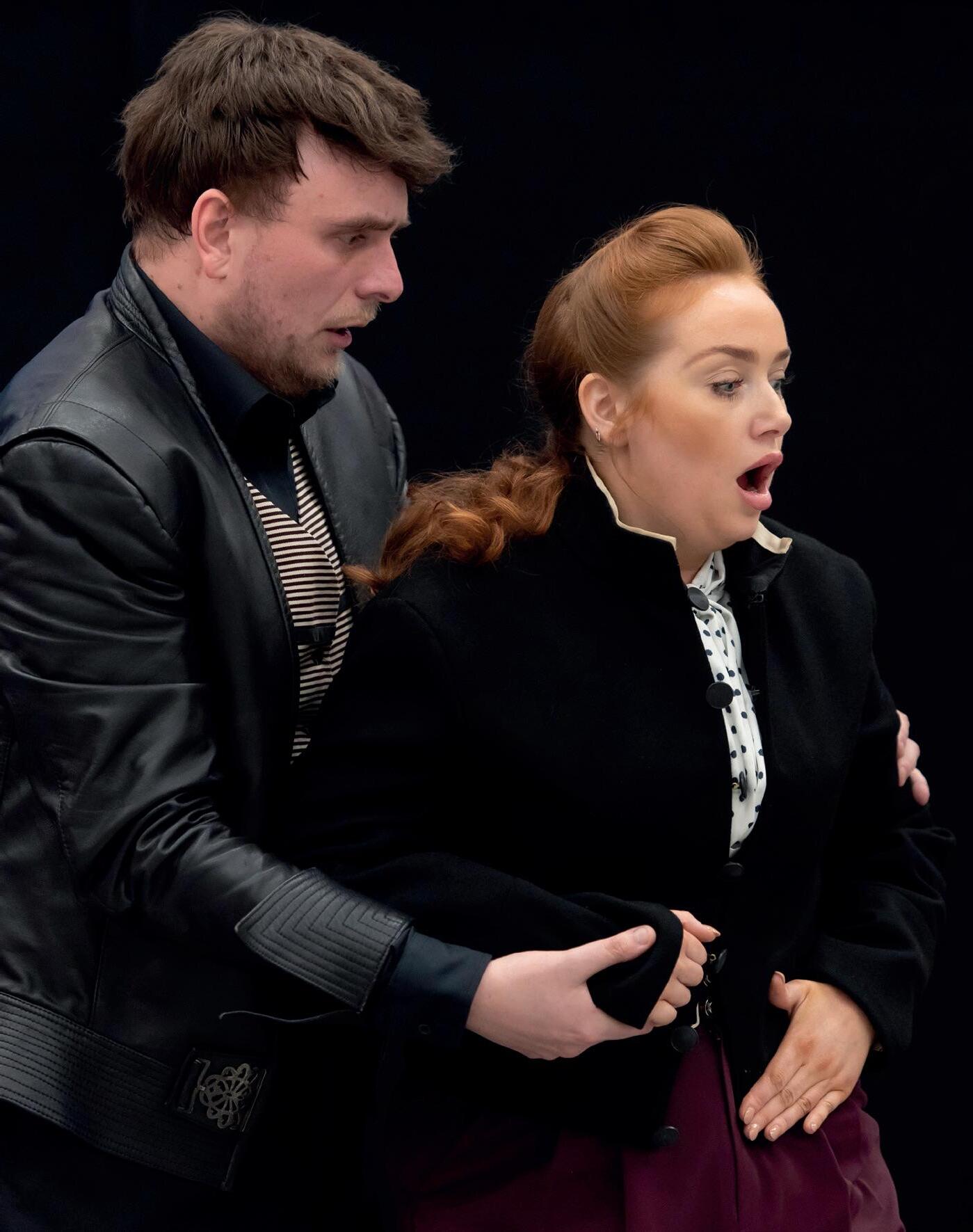


Billed as lasting just 30 minutes each (actually nearer 40), how Scottish Opera would fit a pair of two-and-a-half hour operas into such a short time posed an intriguing question. With just two singers, two instrumentalists, a narrator and specially commissioned illustrations, this is opera cut down to its very core. Full stagings and symphony orchestras left behind, the key emotions of both Verdi’s Rigoletto and Donizetti’s The Elixir Of Love are all the more keenly felt with leaner forces in intimate venues.
The singers and narrator change at different performances, but all credit at this show to soprano Holly Teague and baritone Ross Cumming, narrator Marc MacKinnon and instrumentalists Sasha Savaloni on guitar and Andrew Drummond Huggan on cello. The latter two perform like magicians, conjuring up an astonishing range of colour coupled with the dramatic intensity of the original orchestral scores in Derek Clark’s brilliant arrangement. Intended as an entry point to opera for whoever fancies giving it a go, including families with children, the pairing of Rigoletto’s dark tragedy followed by the lighter-hearted music, characters and storyline of the Donizetti works well.
The singers, with no escape from full-blown audience attention, effectively adapt their styles to suit their contrasting characters. While narration moves the drama along, the Verdi could have gained from more depth of tone. But MacKinnon’s camped-up storytelling for the light-hearted romantic nonsense of The Elixir Of Love is spot on. (Carol Main)


A 17-year-old cancer survivor enrolls in a summer camp with others who have been touched by the disease in this crowdpleasing coming-of-age tale. Bella Ramsey (The Last Of Us) plays Ivy, a truculent teen whose parents (James Norton, Jessica Gunning) urge her to spend four weeks at CRF (Children Run Free) to bring their daughter out of her shell. Reluctantly she agrees, almost immediately clashing with Patrick (Neil Patrick Harris), the camp’s counsellor whose own personal life has been blighted by cancer.
Gradually, Ivy’s moodiness and isolation give way as she forges bonds with those around her; from her therapist (Shalom Brune-Franklin) to a high-octane roommate Ella (Ruby Stokes), and Jake (Daniel Quinn-Toye) whom she takes a shine to; meanwhile other sufferers in the group have had to endure the pity of those around them. Largely shot at Auchengillan Outdoor Centre near Loch Lomond, writerdirector George Jaques’ empathetic script avoids the usual tropes of cancer films such as The Fault In Our Stars which tend to show ailing adolescents at death’s door. Instead, in a story about optimism and positivity, Sunny Dancer focuses on youngsters trying to live as normally as possible (making friends, getting drunk, sharing a first kiss, even falling in love) despite being dealt a brutal hand.
Between a cheesy celebrity cameo at the camp’s talent show and a tricksy narrative development that doesn’t quite come off, the final act is a little deflating. But Sunny Dancer is still blessed with terrific performances, especially from Ramsey who anchors the story with real believability. Borrowing heavily from films such as The Breakfast Club, scripted with black humour and scored with a lively soundtrack that includes Scissor Sisters’ infectious ‘I Don’t Feel Like Dancin’’, this is ultimately an uplifting affair. (James Mottram)
In cinemas from Friday 14 August.
Eastwood House, Giffnock, Wednesday 1 July; Arthurlie House, Barrhead, Thursday 2 July; Linlithgow Burgh Halls, Friday 3 July; Stockingfield Bridge, Ruchill, Saturday 4 July; National Mining Museum Scotland, Newtongrange, Sunday 5 July; reviewed at Eastgate Theatre, Peebles.
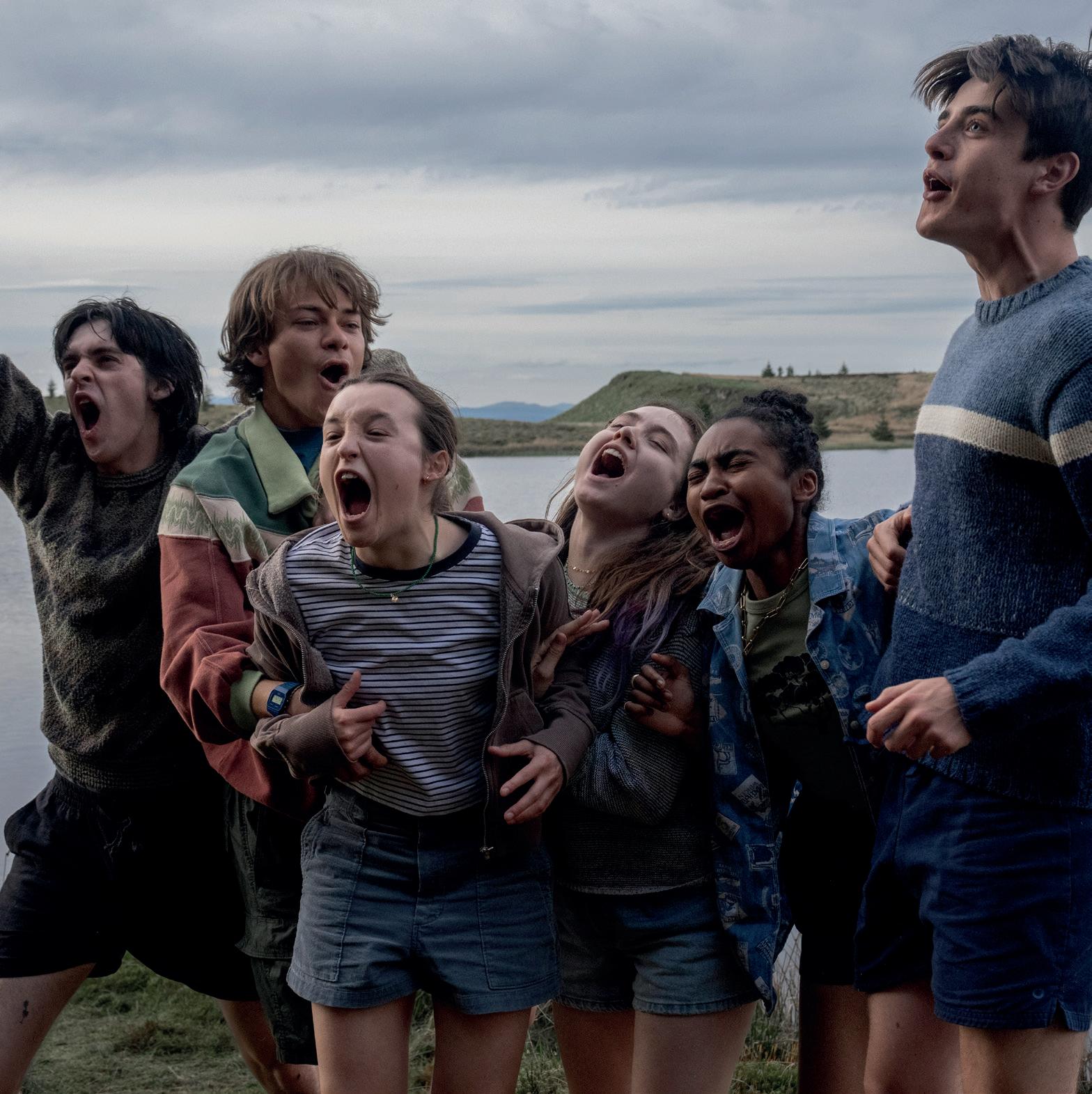



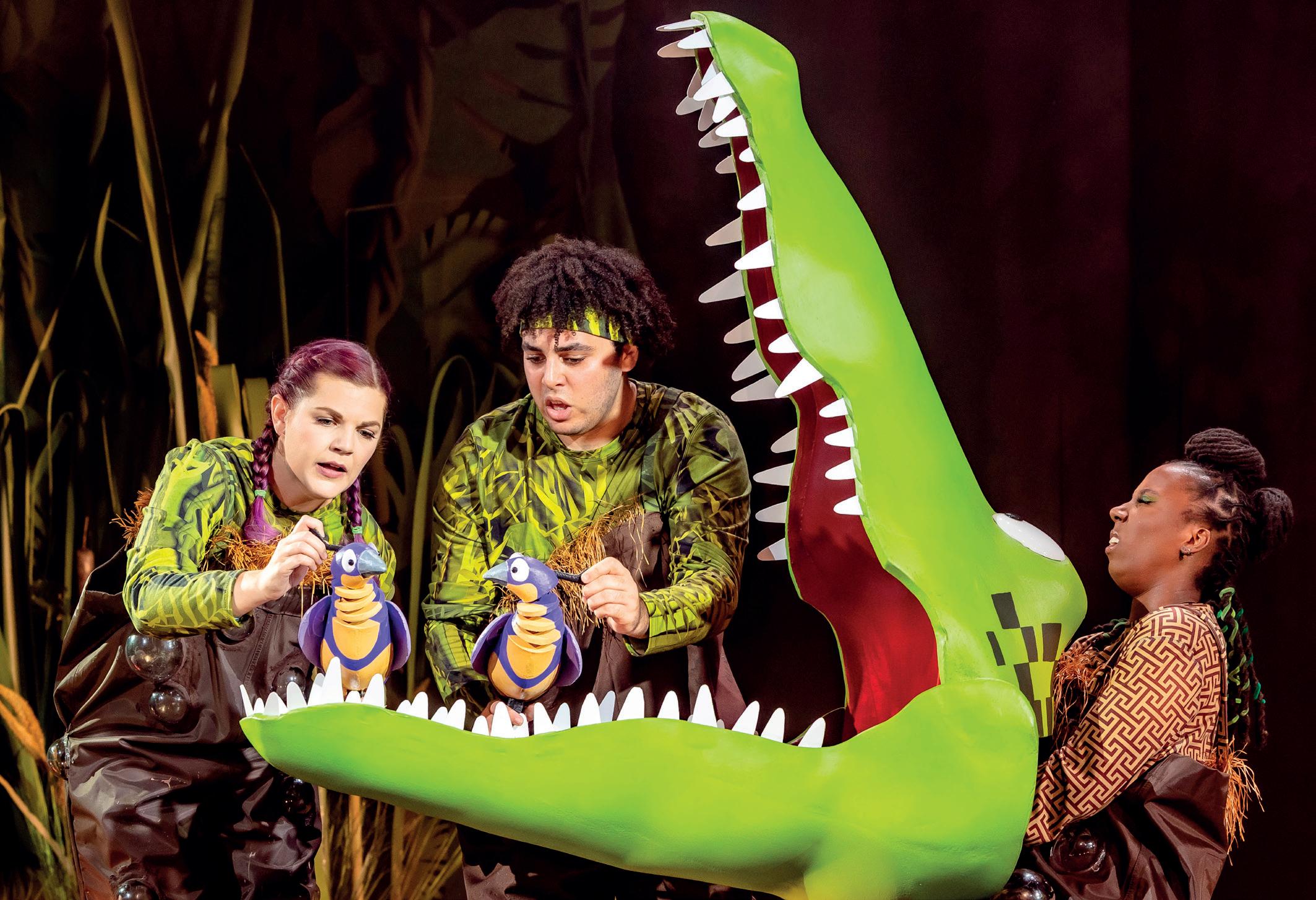
If you fancy getting out and about, there’s plenty culture to sample such as a Greek epic thrust onto the big screen, a kids’ show which aims to unlock our curiosity, a summer panto, a feast of rock and pop stars, and a fine banquet of early music
ART
JERICHO MARS
Developed over seven months in a former schoolhouse, Glasgow-based Mars’ twicenamed exhibition My Heart Is Drenched In Blood! My Heart Is Drenched In Blood! features a close examination of language, speech and form.
Tramway, Glasgow, until Sunday 9 August.
FILM
SHOOT THE PEOPLE
The subject of this documentary is Misan Harriman, a filmmaker and photographer who has made an impact with the images he’s taken of social activism in an age where protest is under severe threat within so-called democracies.
In cinemas from Friday 10 July.
THE ODYSSEY
Two years ago, Christopher Nolan was sparring with Greta Gerwig to win the summer cinema battle (remember Barbenheimer?). He’s out on his own this time as Matt Damon becomes Odysseus who has the most tortured walk home in history.
In cinemas from Friday 17 July.
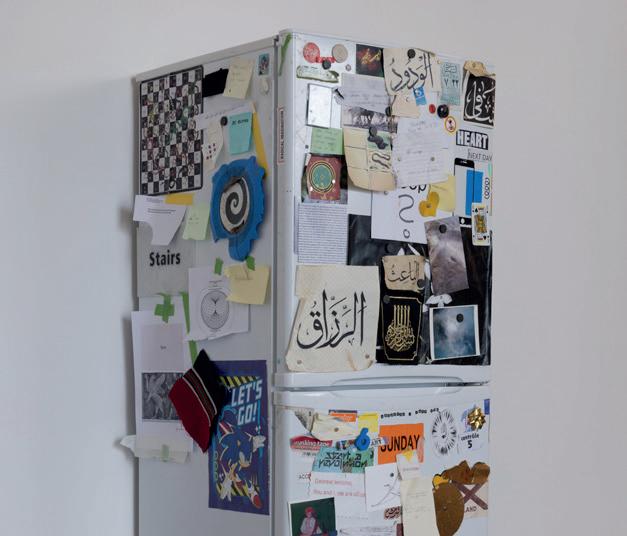
KIDS BE LIKE BLIPPI
This brand-new interactive adventure invites you and your family to slap on some orange glasses and unlock a spark of curiosity. In case you want to do your research ahead of time, top tunes include ‘Monster Truck’ and ‘Dino Dance’.
SEC, Glasgow, Monday 6 & Tuesday 7 July; Usher Hall, Edinburgh, Saturday 18 & Sunday 19 July.
THE ENORMOUS CROCODILE
Sounds gruesome but the titular character is after tasty little fingers and podgy knees. Who will spoil his dastardly plans? Fellow jungle creatures, that’s who.
King’s Theatre, Glasgow, Friday 24–Sunday 26 July.
GLASGOW BARONS
The early music maestros are back with another summer festival including performances from The Royal Sackbut Collective, RSNO cellist Pei-Jee Ng and Glasgow-based vocal quartet Luchair.
Govan Old Parish Church, Glasgow, Friday 24–Sunday 26 July.
SUMMER NIGHTS AT THE BANDSTAND
A galaxy of rock and pop stars perform in Glasgow this summer including Suzanne Vega, OMD, Sophie Ellis-Bextor, Marti Pellow, Idlewild, Billy Ocean and The Bluebells.
Kelvingrove Bandstand, Glasgow, Monday 27 July–Saturday 15 August.
THEATRE
BIG BAD RIDING HOOD
Time for a summer panto as the ever-inventive Gary McNair spins a new yarn from a classic tale with Little Red visiting her gran in Panto Land.
Òran Mór, Glasgow, Wednesday 1–Sunday 19 July.
1984
George Orwell’s sinister and depressingly relevant tale of totalitarianism and the lengths some people will go to in order to control a populace is adapted for the stage by Chris Hannan who has previously created theatre scripts out of Crime And Punishment and The Iliad
Citizens Theatre, Glasgow, Saturday 29 August–Saturday 26 September.







































If you’ve watched hundreds of hours of TV from Ryan Murphy down the years (from Feud to Glee and Ratched to Halston) but thought ‘there’s just one thing missing here: a dash of Bret Easton Ellis’, then your wish has finally come true. The former is bringing the latter’s 2023 novel The Shards to our small screens. ‘Suspense, seduction and obsession’ are at the core of the 1980s LA-set tale which centres on an aspiring young writer and privileged high school senior called Bret (hmmm . . . ) whose life is turned askew when an enigmatic new student arrives on the scene. Throw in a rampaging serial killer targeting teenagers and you have classic Ellis. And heavily moreish Murphy. (Brian Donaldson)
Available on Disney+ from Thursday 6 August.
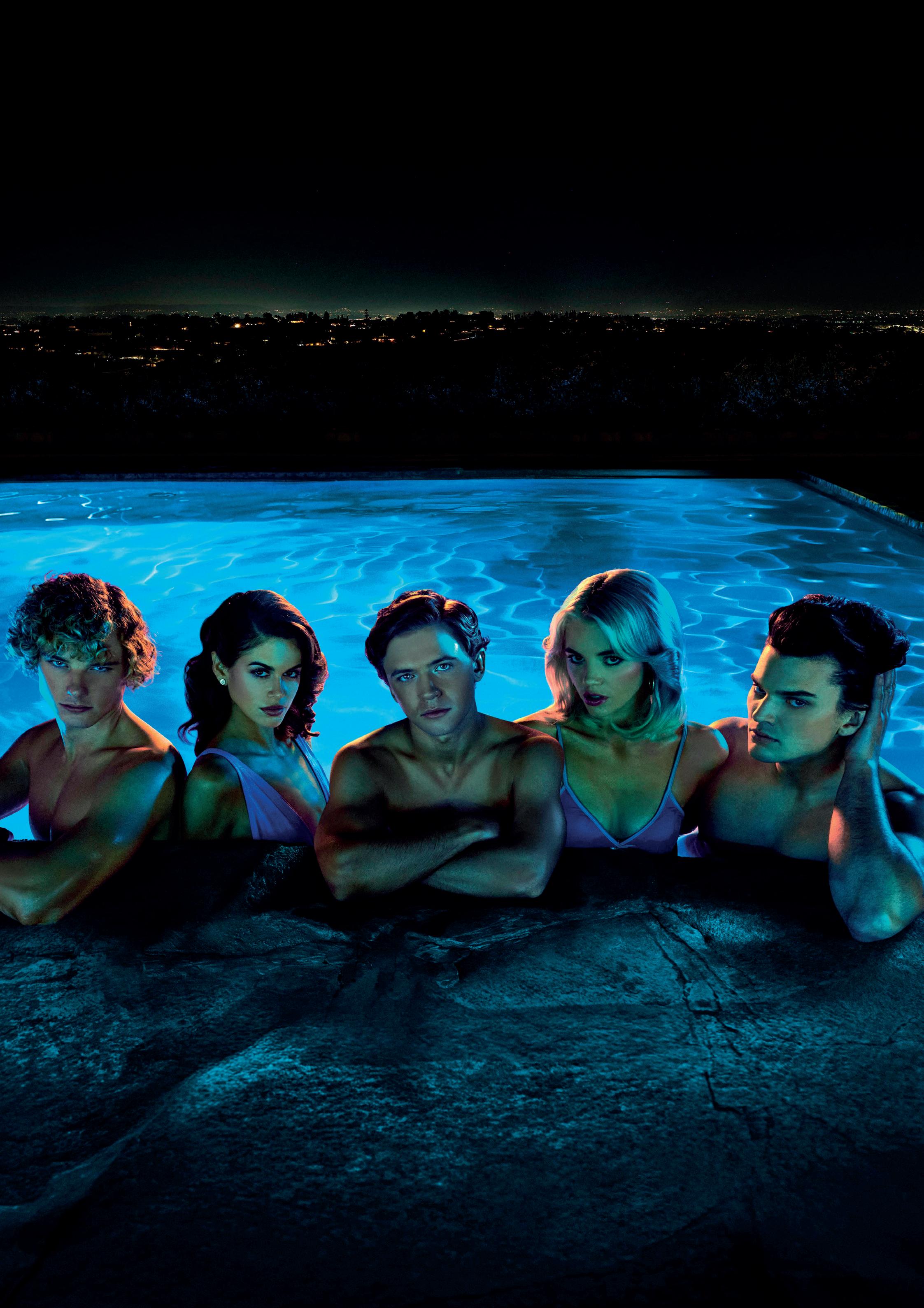
While at first glance The Dink may seem like a movie about pickleball, its stars say it’s really about discovering joy and finding your place in the world. Mary Steenburgen and Jake Johnson chat to James Mottram about lost souls, trashtalking pensioners and working with tennis legend John McEnroe


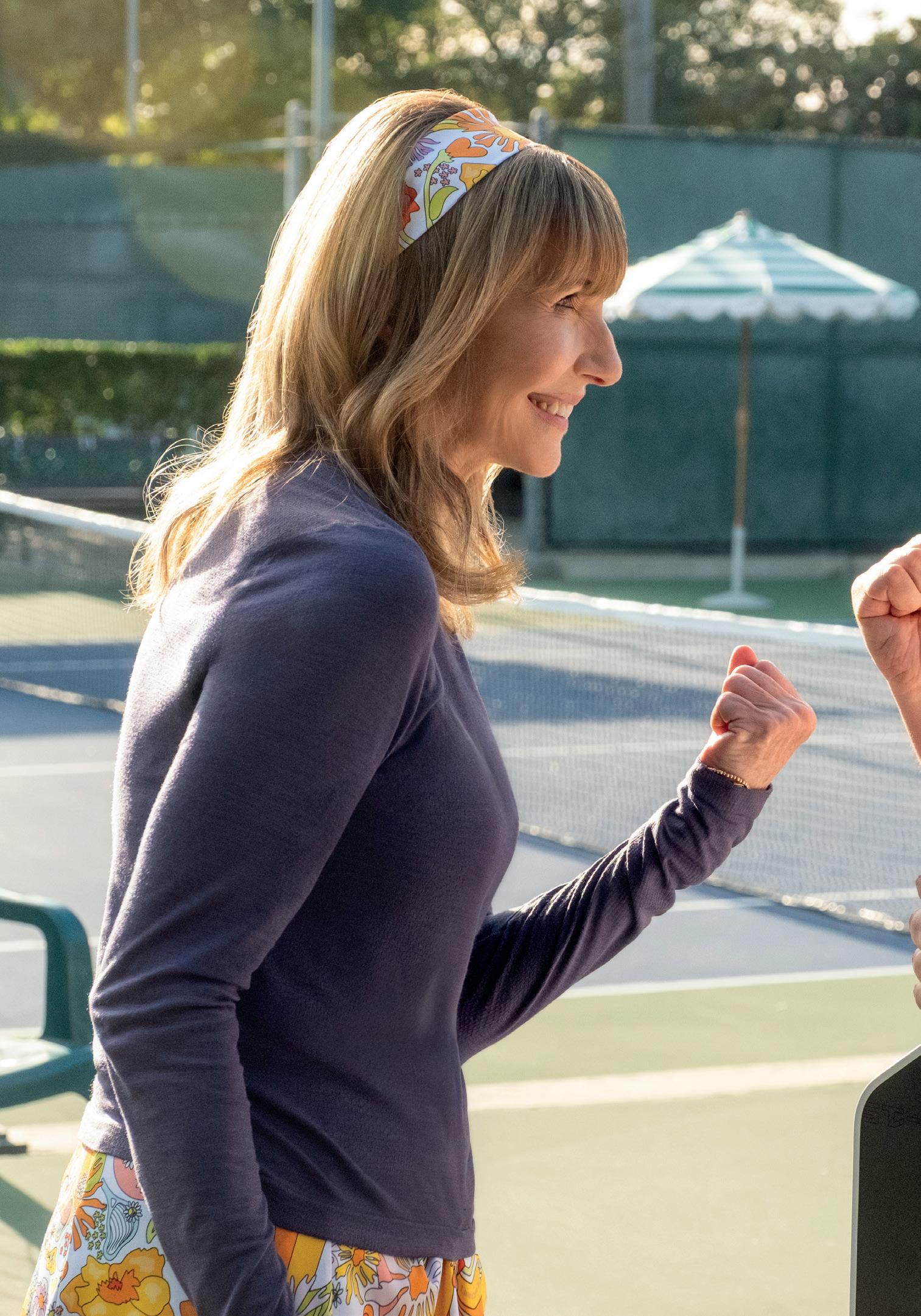
I‘think it’s the fastest growing sport in the world,’ remarks actress Mary Steenburgen. She’s talking pickleball, the tennis-like game that has players battling it out with paddles and a hollow plastic ball. It’s also at the heart of her new Apple TV movie The Dink, directed by Josh Greenbaum, in which her character, divorcee Candace, introduces a washed-up tennis pro named Dusty (Jake Johnson) to the sport.
‘She’s claiming her own life and discovering what she loves,’ explains Steenburgen. ‘And one of the things she loves is pickleball. She doesn’t really have a partner, and then she meets up with someone who’s as much of a lost soul as she is. For her, nding a pickleball partner is her very special goal and means a lot. And it sounds silly, but it gives her joy. And I think her life had been missing joy.’
This joy has spread to the stars themselves. The 73-year-old Oscar-winning actress, known for such beloved comedies as Parenthood, Elf and Step Brothers, has become such a fan that she recently hosted eight members of the London-based Lemon Pickleball club (all friends of her son, who also plays) at her home in Los Angeles. ‘When I’m playing, I catch myself grinning like an idiot, just from the fun of it.’ Johnson, whose credits include Jurassic World, the animated Spider-Verse movies and TV’s New Girl, smiles at the thought of his co-star’s newfound passion for pickleball. ‘Mary Steenburgen loves it . . . she will play forever.’ Initially, Johnson was a little sceptical. ‘I had never played before I signed on, and I thought I found the game a little embarrassing,’ he admits. But then he got into it, thanks to his actor buddy, Justin Long. Famed for lms like Drag Me To Hell and Barbarian, Long is a pickleball nut. ‘So he’s become a pickleball buddy. He played at a court in Altadena where I went with him, and it was him and all these older people, and they all knew him and they knew all these personal things about his life. And I was like, “Justin, I’m literally making this movie, man!”’
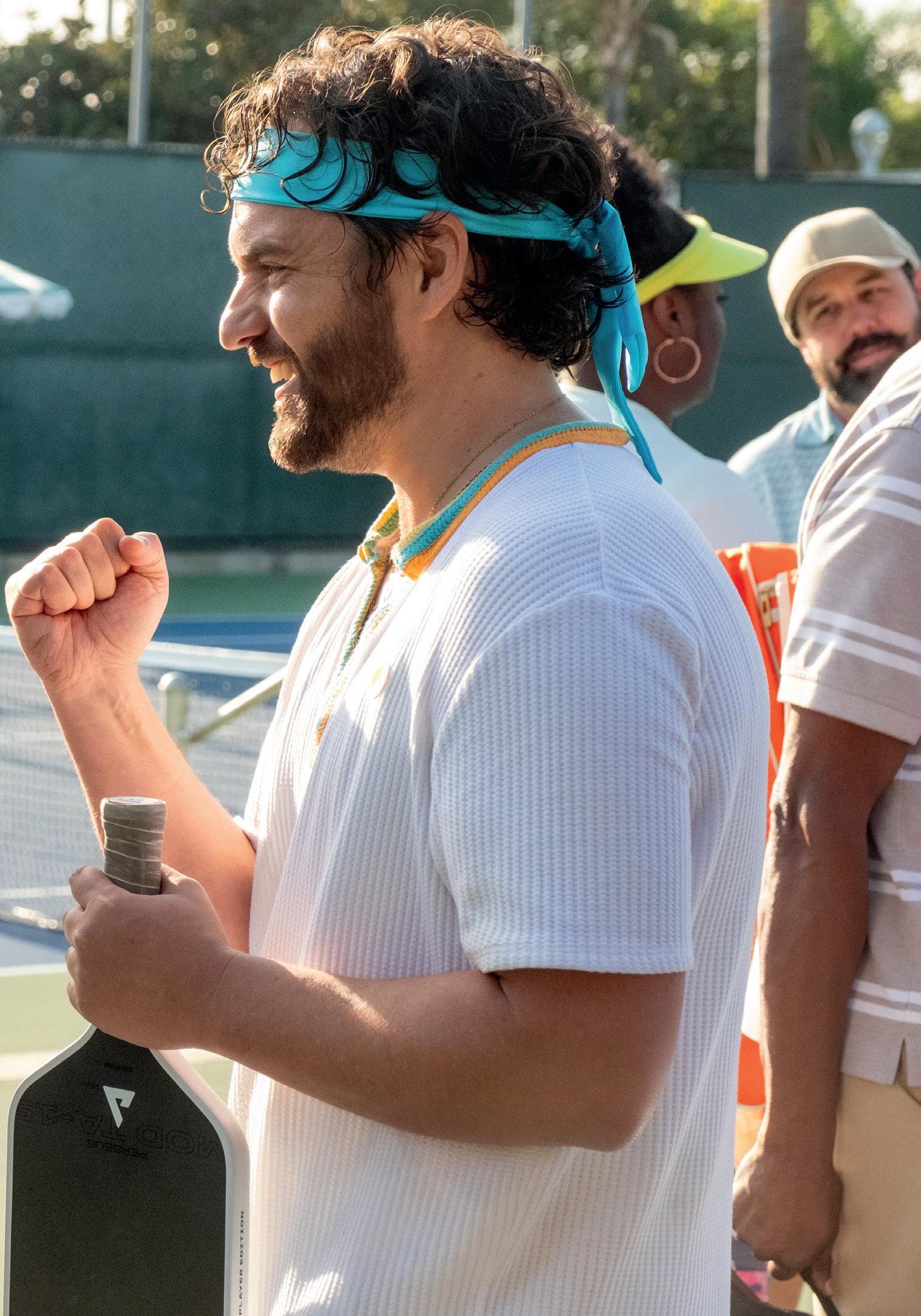
The origins of The Dink came when its screenwriter Sean Clements joined a pickleball club in Beverly Hills. ‘These older women always beat him [Dusty] and talked trash to him,’ says Johnson. ‘He used to be a great tennis player and it really frustrated him. But then he became friends with them and they would invite him out to co ee; and he would feel really weird, but he also wanted to go, because he wanted to be in a group.’
Whatever you make of the premise, The Dink is bursting with talent. Another Oscar winner, the formidable Ed Harris, plays Dusty’s father Chuck who owns the country club where, much to his chagrin, pickleball is becoming a thing. ‘His intensity is so palpable,’ says Johnson. ‘And he’s not of the new generation of gratitude and sweetness and optimism, which is something I encounter a lot on sets, even when they’re empty words of gratitude or empty words of validation and compliments. When Ed’s not happy, you feel it!’
The lm is also stacked full of comedy gods, from Chloe Fineman and Patton Oswalt to Ben Stiller, who both produces and cameos and is clearly channelling vibes from his earlier American sports comedy Dodgeball. ‘He’s one of our true masters,’ says Johnson. If that’s not enough, tennis stars Andy Roddick and John McEnroe also appear. While it’s tempting to yell ‘you cannot be serious!’, Steenburgen calls it ‘a pinch-me moment’ working with the once-volatile champ. ‘All the times I watched the young John McEnroe came ooding back.’
At the core of The Dink, says Steenburgen, is a story about claiming your place in the world. ‘Whether it’s a guy proving himself to his father or proving himself to himself; whether it’s proving you can be good at a sport, or just that you can meet people and have joy by playing that sport. If you lose your marriage and your husband and your status and all the things that you thought made you who you were, you are still able to nd meaning in life again. It might be rocky, but you can do it.’

The experienced graphic-novel duo who work under the Metaphrog moniker are back with a dynamic new character. They tell Isy Santini that getting young people into reading has never been more important
M‘ore than anything else, we want young readers to be transported,’ says John Chalmers, one half of the creative duo commonly known as Metaphrog. Together, Chalmers and illustrator Sandra Marrs have published dozens of comics and graphic novels since they began working together nearly 30 years ago. Their latest offering takes readers on a whimsical journey through magical libraries, spooky forests and never-ending lakes.
Wilomina: The Land Of Dreams And Nightmares tells the story of a young girl who finds herself lost in the dreamworld of Nocturna on her way to visiting her mother in hospital. Desperate to return in time to see her, Wilomina must first rescue her father and brother and figure out a way to restore balance to a world slowly being taken over by nightmares. ‘It’s full of creepy and exciting stuff like monsters, dragons, spider-witches,’ says Marrs.
Though Wilomina deals with some heavy topics, Chalmers and Marrs are careful never to let the book feel dark or depressing. ‘We knew that the mum had to be in hospital and that Wilomina was on her way, but we made sure to balance that with a lot of humour,’ explains Marrs. Beyond the addition of wit, the pair felt it was important to imbue their story with hope. ‘There are characters who obviously love each other and care about what’s happening; they want to see dreams survive,’ says Chalmers. This chimes with the duo’s own punk-rocker past. ‘We wanted to make the world a better place and we see that in Wilomina, probably because she’s part of us in a sense.’ Nodding, Marrs adds, ‘she feels like our kid’.
For Chalmers, Wilomina’s hope is a reflection of real-life youngsters. ‘A lot of young people like doing community gardens or getting together to do stand-up comedy or form a band or write poetry. I think they understand that culture needs diversity and that we need to have positives, regardless of what’s happening outside of our control.’ Writing for young people has always come naturally to the pair, but they now ascribe a new urgency to it. ‘In our anglophonic world, education has been underfunded for several terms, which means that books aren’t naturally finding their way to young people,’ says Chalmers. ‘Comics in a way redress that. Marrs agrees: ‘And it seems that most children who read comics still prefer paper formats rather than screens, which I think is a great thing.’
Wilomina: The Land Of Dreams And Nightmares is published by Scholastic on Thursday 13 August; Metaphrog discuss the book at Waterstones, Glasgow, Tuesday 11 August and at La Belle Adventure, Edinburgh, Saturday 12 September.
Time to take a trip to the letter T in the latest instalment of our alphabet-themed round-up of album recommendations

If you’ve been enjoying Boards Of Canada’s sprawling epic Inferno, then a trawl through the heyday of cut-ups should be your next listening project. Thought For Food (2002) by The Books is perhaps one of the most underrated of the era, overshadowed by more accessible entries from The Avalanches and their chart-topping ilk. A shame, because it’s a winding and unpredictable sound bank, combining Eastern folk instrumentation with a library of samples that alternate between anxiety-inducing and soothingly ambient. Its collages have the carefree air of channel sur ng, where creaking doors give way to sustained notes from violins and onto Slint-adjacent gloom rock, spiralling outwards with the hypnotic inscrutability of a Rorschach painting.
And if you haven’t been enjoying Inferno, here’s something completely di erent: Tezeta (1975), a work of supple Ethiopian lounge jazz from the proli c Hailu Mergia & The Walias Band. Notoriously di cult to nd since its initial pressing, the album was reissued in 2021 and has since gained a cult following for its loose rhythms and sprawling melodies from Mergia’s kitschy organ. Structurally there’s a lot going on here, but you’d never guess from its chirpy and immediately accessible composure. (Kevin Fullerton)
Other T albums: A Theory Of /Cloud/ by Shrine Maiden (2025), These Actions Cannot Be Undone by Gentle Sinners (2022), Three Imaginary Boys by The Cure (1979).



























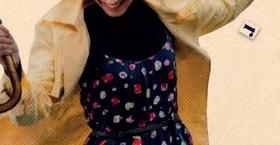



















In this Q&A, we throw some questions about ‘firsts’ at debut novelists. This month we feature Alicia Upano, author of Everything To The Sea, the Hawaii-set love story of Jane and Kenji, and the devastating tsunami that upends their lives
What’s the first book you remember reading as a child? Hard to pinpoint a title, but my family claims I was walking into tra c while reading by the rst grade. My childhood reading comprised standard American fare: boy detectives, babysitters, Malibu twins, Salem witches and vampire brothers. Delightful, but I don’t recall any early books with families who looked like mine or my home in the Paci c.
What was the book you read that made you decide to be a writer? By the early aughts, my reading expanded, thanks to writers like Chang-Rae Lee, Zadie Smith, Lois-Ann Yamanaka and Susan Choi. By the time I got to Jhumpa Lahiri’s The Namesake, I understood that publishing was changing, now lling with these beautiful and nuanced novels of a multicultural world I recognised. It also struck me then that, despite working in a newsroom, I loved no form of writing more than the novel.
What’s your favourite first line in a book? ‘By nightfall, the headlines would be reporting devastation,’ from Shirley Hazzard’s The Transit Of Venus. When the big revelation comes decades and hundreds of pages later, I immediately had to ip breathlessly back to this sentence on page one. A marvel.
Which debut publication had the most profound effect on you? Lost City Radio by Daniel Alarcón remains one of my favorite books: love, grief and community in war and its a ermath. I read it 15 years ago and still talk about it all the time.
What’s the first thing you do when you wake up on a writing day? Seek solitude and ca einate.
What’s the first thing you do when you’ve stopped writing for the day? Triage the daily demands of everything that’s not writing.
In a parallel universe where you’re the tyrant leader of a dystopian civilisation, what’s the first book you’d burn? As imagined tyrant, I’m burning The Complete Works Of William Shakespeare. Too many fallen kings.
What’s the first piece of advice you’d offer to an aspiring novelist? Learn to love the process because most days that’s all there is.
Everything To The Sea is published by Bloomsbury on Tuesday 14 July.
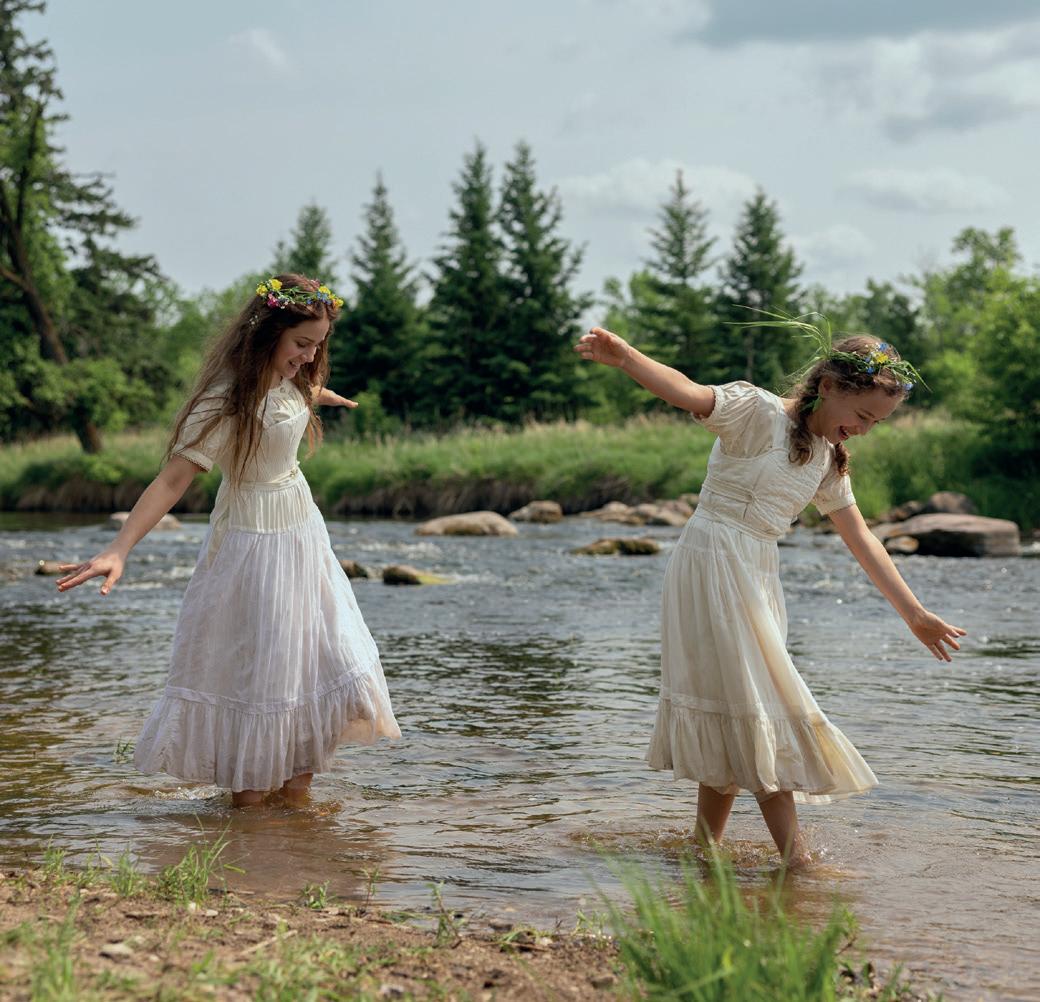


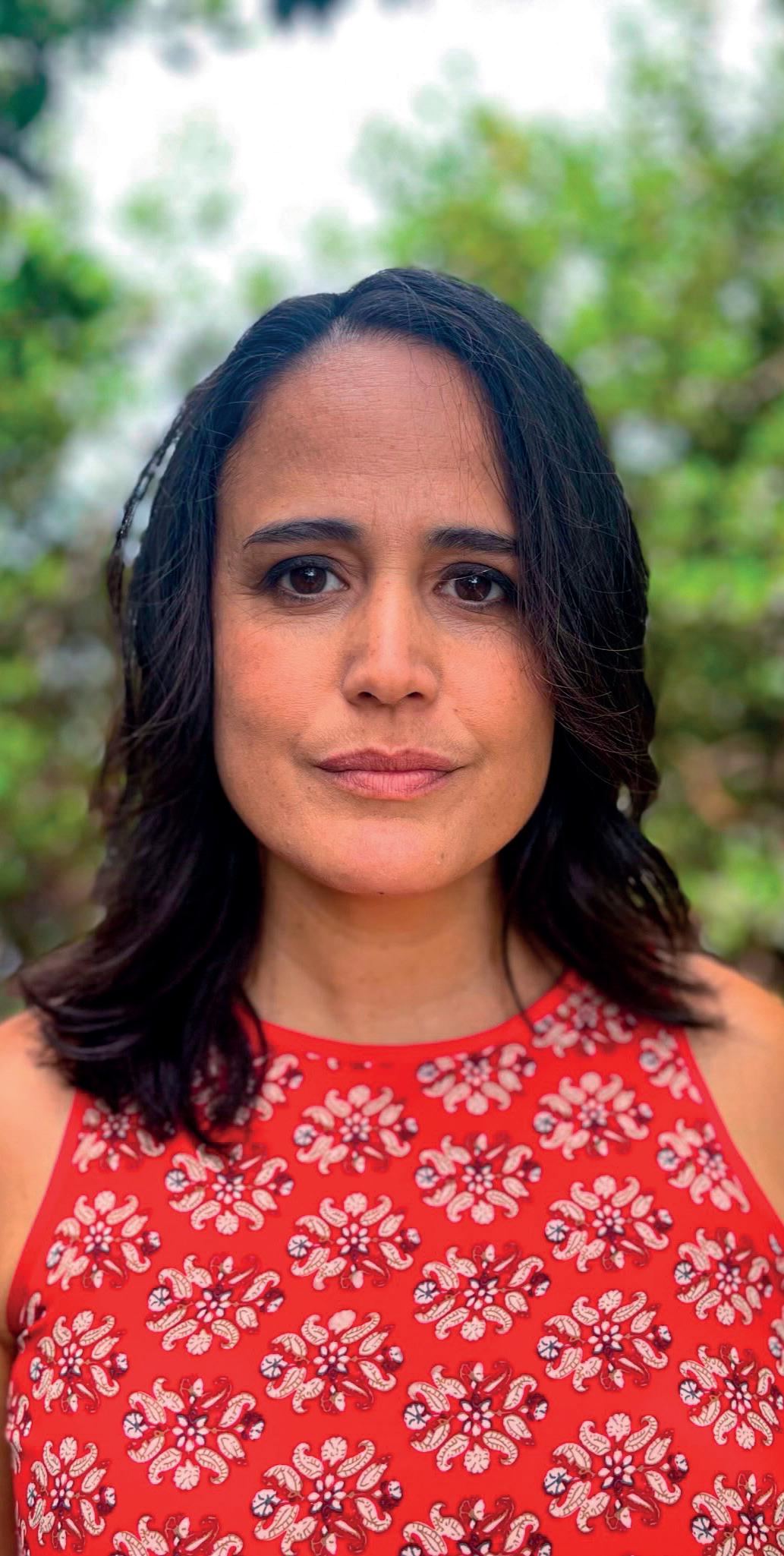


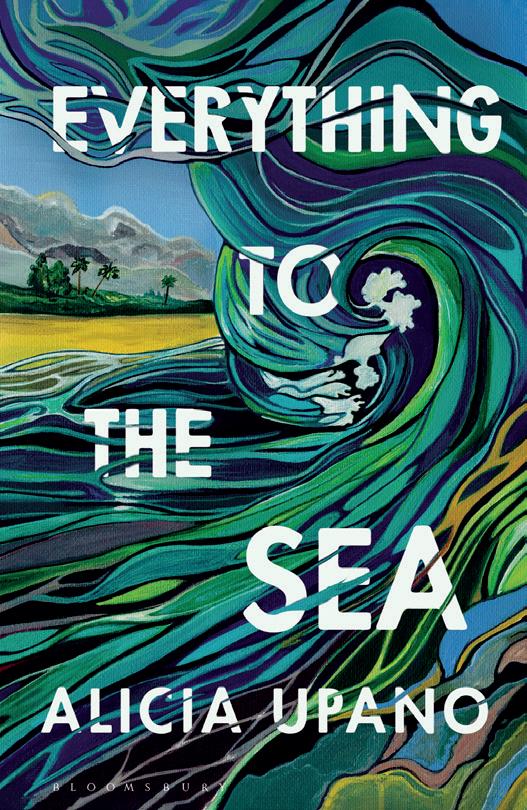
Early in the 1974 feature-length pilot of Little House On The Prairie, there is a joke. It is surprisingly rude. The Ingalls family are economic migrants moving to the Midwest from the woods of Wisconsin and, having exhausted one horse, have to saddle up two replacements. The young daughters get to name them. Big sister Mary calls the first horse Patty. Then it is the turn of little sister Laura. She squats down for a low-level view and tells it as she see it: ‘Better name this one Pat. He’s a boy.’
Mother Caroline is shocked. As well she might be. The series, which ran for 200 episodes, fed into the myth of squeaky clean all-American pioneers bringing their godfearing values to the virgin soil of 1870s Minnesota. ‘Home is the nicest word there is,’ says Laura after her dad has built a house by hand. Sickly enough?
No surprises, then, that the 2026 Netflix revival is a fair deal grittier, not to mention more culturally sensitive. The characters in Rebecca Sonnenshine’s eight-parter have dirty hands and unwashed hair. Although there is no shortage of gingham and bonnets, the costumes look as practical as they are pretty. As in the original books by Laura Ingalls Wilder, a black doctor (Jocko Sims) tends to the white family’s injuries. Unlike in Wilder’s version, they get to meet the Native American neighbours. As the US struggles to define its modern-day identity, it’s good to see an origin story with some nuance. Perhaps that explains why a second series is already on the way. (Mark Fisher)
Available on Netflix from Thursday 9 July.









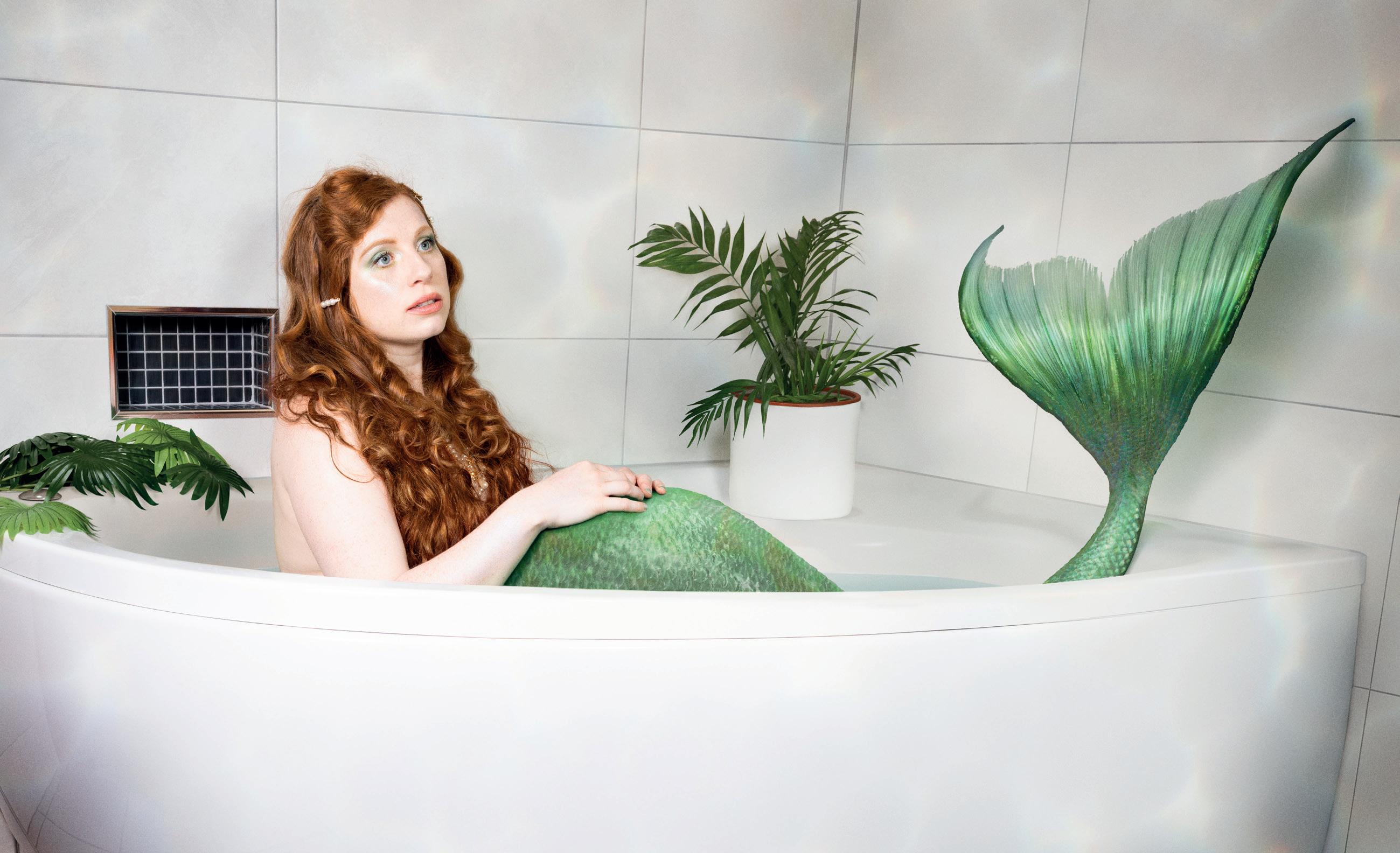
In this column, we ask a pod person about the ‘casts that mean a lot to them. This time around it’s Eleanor Morton who records a podcast with fellow comic Alasdair Beckett-King. Their own blurb can’t be bettered so here it is in full: ‘Two red-headed comedians revisit classic kids’ books. Will our childhood treasures stand the test of time? Or will we be forced to make fun of them on a podcast?’ See? Just perfect. Now let the Q&A commence . . .
Which podcast educates you? Assume Nothing on BBC Sounds has so many great stories from Northern Ireland, including a fascinating series on a cult in Donegal and miscarriages of justice during The Troubles. Then I love After Dark and Betwixt The Sheets on the History Hit network, about unusual and morbid historical stories which are a perfect blend of funny and informative. And Cautionary Tales by Tim Harford is brilliant. He takes stories from history and explores what they teach us about human behaviour. I’m so jealous of people who haven’t already listened to them all.
Which podcast makes you laugh? The Last Podcast On The Left It features three comedians talking about paranormal cases, UFOs, cults and serial killers, but it’s really well researched and they all balance each other so well. I like dark humour, especially when it comes to true crime because I think too often killers are given this status as evil geniuses, when in fact they are most often pathetic weirdos who only got away with their crimes because of police failings. This podcast demystifies them. And then the paranormal stuff is just very funny. Plus, they have historical deep dives into things like The Great Molasses Flood and the assassination of Abraham Lincoln.
Which podcast makes you sad or angry?
Swindled is a fantastically funny and dry series all about con artists and scammers, covering everything from Ponzi schemes to big company cover ups to compulsive liars. There are so many sad stories about justice not being served or ongoing repercussions for victims of these scams that still haven’t been dealt with. I recommend the episode ‘The Crusader’, all about Nicholas Alahverdian who was involved in a big court case here in
Scotland recently, where he was on the run from justice in the US, disguised as an ‘Irish orphan’ called Arthur Knight. The longer you listen the weirder it gets.
Which podcast is your guilty pleasure? I don’t know about guilty pleasure but any true crime podcast always makes me feel like I’m rubbernecking a bit, even if they’re really well done. There’s one that’s just an Australian man reading out grim stories in a grim voice and after a while I think, ‘hmmm, probably enough of that today’. But even then I would say it’s a great podcast, very sensitive to its subjects.
Tell us someone who currently doesn’t have a podcast but totally should. And why do you think their one would be amazing? Myself, Esyllt Sears and Mary Flanigan definitely should have one. We do the game show 8 Out Of 10 Celts (still waiting on a cease and desist from C4) where we each represent our Celtic nation and compete to be the best one. I think we’ve got great chat, if I do say so myself, and Celts in podcast form really would be so much fun.
Pitch us a new podcast idea in exactly 25 words Doctor, Doctor. Each episode I interview a medical doctor and someone with a PhD about their areas of expertise and we all leave feeling smarter.
New monthly episodes of Eleanor & Alasdair Read That are available in all the usual places; Eleanor Morton’s Edinburgh Fringe show The Mermaid is at Monkey Barrel Cabaret Voltaire, Thursday 6–Sunday 30 August.











Tap On and Tap Off with your contactless card or device to pay for your tram travel.
Contactless terms and conditions apply.
You must Tap Off to pay the cheapest adult single City Zone fare, otherwise an Airport Zone fare will be charged.
Trip-hop titan Tricky returns with a collaborative and touching new album. Different When It’s Silent finds him reclaiming the sound that’s rightfully his, says Kevin Fullerton >>
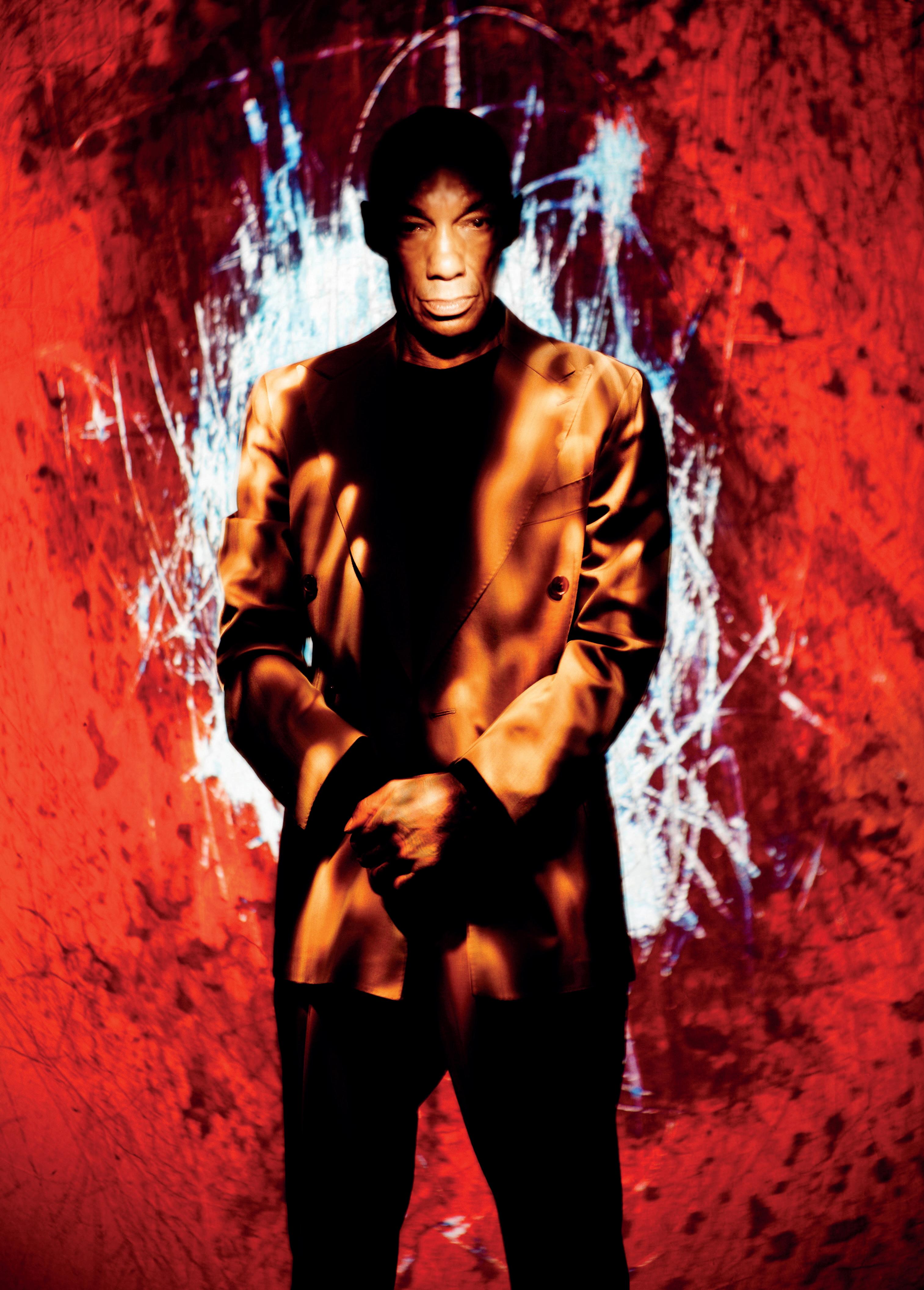


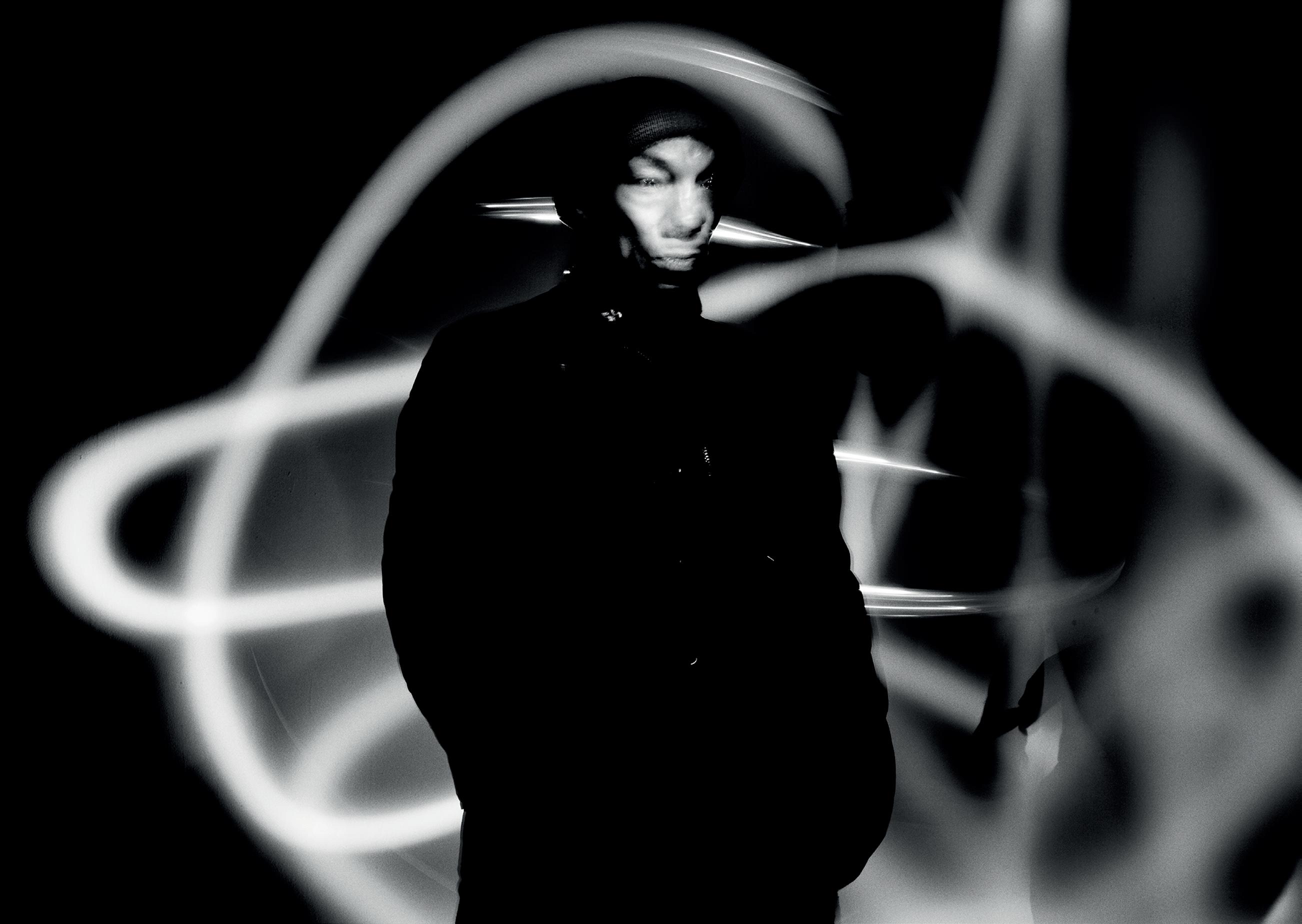
Nostalgia will flatten all art eventually, but one of its most recent victims has been the 90s British music scene. Britpop’s vicelike grip on the cultural imagination might lead you to think that the chart landscape 30 years ago consisted exclusively of a war of attrition between Oasis and Blur, while Jarvis Cocker occasionally flashed his bum. In reality, it was a vibrant period of stark contrasts. While Oasis swaggered, Mogwai raged. When Damon Albarn was painting cock-er-nee caricatures, PJ Harvey was smuggling feminist rhetoric onto Top Of The Pops. And while the redtops revelled in rock’s seeming lack of seriousness, acts such as Massive Attack and Tricky were crafting demure, textured and studious revolutions in trip hop.
Tricky himself has barely let up since his 1994 debut, marking himself as a prolific though mercurial presence. Since the death of his daughter in 2019, he pushed himself further to the sidelines, happier platforming other acts through his record label or writing songs for a variety of side projects. Different When It’s Silent, his first album since 2020, often feels like it’s wrestling with his reluctance to be the star of his own show. Known for using female vocalists, here he enlists fellow Bristolian Mitch Sanders whose high-strung falsetto acts as a foil to Tricky’s low, guttural whisper, which lurks near-spectrally in the background. Where his voice once possessed a hectoring quality, now he’s a growling, keening presence, too wounded to fully engage.
Released under the Tricky moniker on the insistence of his new manager (the 90s mogul Alan McGee), there’s a distinctly collaborative air to each song, all of which credit Sanders and Tricky as co-writers. Elsewhere, Radana spits some nose-flaring bars, while Marta (another frequent flyer with Tricky) joins in on the energetic ‘Out Of Place’, one of the few songs that directly addresses the loss of his
child (‘I sing for my daughter,’ he croaks, his voice notably louder than anywhere else on the album). But Sanders’ vocals are a focal point, comparable to Perfume Genius without any of the knowing irony. His full-powered delivery contains a soulful pain in even the slightest lyrics. Perhaps his finest moment is ‘Paris Maybe’, a bass-heavy antilove song which oozes passion. ‘I’ll be here, I’ll be right here,’ he croons with a sense of mordancy and regret.
Pain and disconnection are constants, complementing sparse arrangements which, though lacking the baroque elements of Maxinquaye or the more upbeat passages of Fall To Pieces, continue Tricky’s preference for foregrounding spidery bass lines and lingering notes. Away from the beauty of ‘Piano’ and ‘Hengrove Blues’, a lope into the shadows can be found on ‘I Still See Me There’, ‘Be Still In The Pain’ and ‘Cannon Fodder’, and yet glimmers of hope are hidden throughout its orchestral flourishes, joyous bursts of hip hop, and hattips to nu-soul. He may feel impotent in the face of life’s slings and arrows but his music is never less than purposeful.
McGee (who’s never shied from hyperbole) has insisted that this is Tricky’s best album since Maxinquaye, a weight that few albums should have to shoulder. Where that debut was part of a vivid movement subverting UK music’s norms, here Bristol’s finest export is reclaiming the sound that’s rightfully his and repurposing it for a period of necessary reflection. When trip hop does receive its much-needed reclamation for the masses, there’s no doubt Tricky will be championed once again. Until then, Different When It’s Silent is a touching ode to the people he’s lost and a tribute to the music community he’s proud to be a part of.
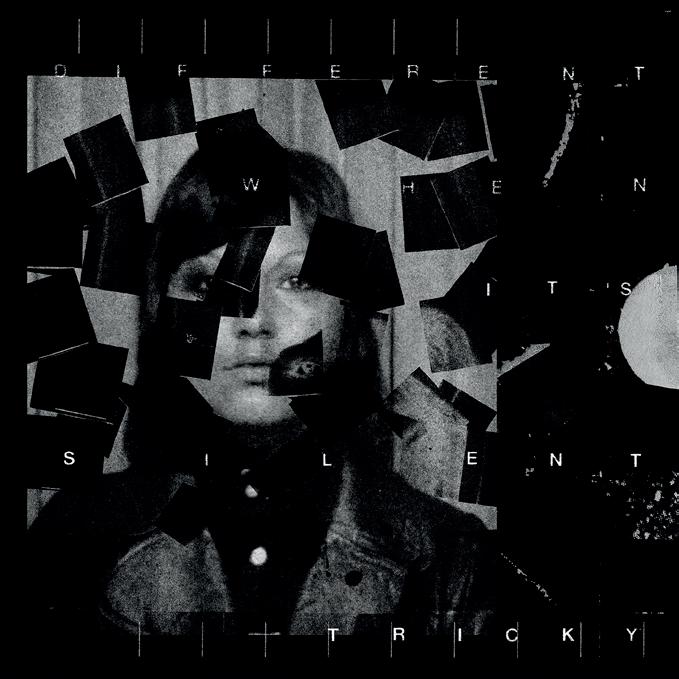
Tricky: Different When It’s Silent is released by False Idols on Friday 17 July.

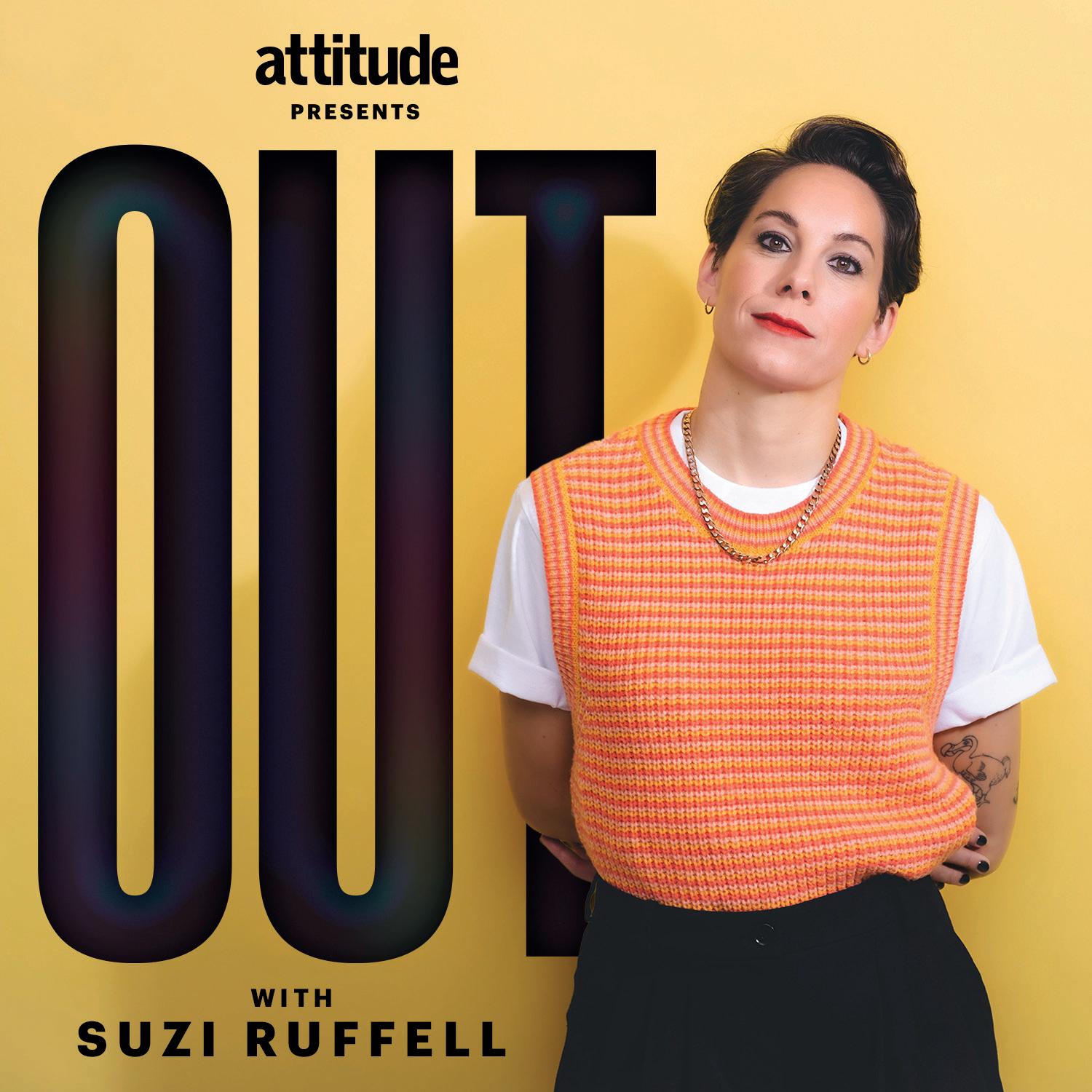


Times are not easy for the LGBTQ+ community, with opportunistic/bigoted politicians using them once more as a convenient punching bag. Which is why this podcast from comedian Suzi Ruffell comes as welcome respite and a safe haven from the hateful fearmongering. In her easy-going manner, Ruffell talks to queer writers and musicians, politicians and comedians, actors and activists, discovering what made them who they are.
Writer and star of Smoggie Queens and The Dickie Show, Phil Dunning bonds with Ruffell over their Edinburgh Fringe origins. Dunning laughs as he recalls dragging his mum to see Tom Allen in an attempt to get tacit approval of his sexuality and watching out of the corner of his eye to see her reaction to queer people on TV such as Lily Savage. It’s a charming chat as he reveals asking for a long blonde wig when he was six and being a ‘little camp lad’ who went into his shell in high school. Thankfully, he found safety in the drama department and later on in Middlesbrough’s queer scene.


Despite ignominiously arriving two years after the release of the film, Goldeneye 007 had a huge impact on the history of gaming, radically influencing the FPS genre. Ever since that launch, almost 30 years ago, there’s been a keen interest whenever a James Bond game releases. 007 First Light won’t leave such an enduring legacy but it is the most authentic Bond game ever made and a fun, if flawed, third-person action adventure.
It strips the character back to his origins, beginning with a protracted prologue in Iceland where the fresh-faced navy aircrewman finds himself thrust into a world of warfare for which he is seemingly unprepared. After realising his potential, MI6 recruits the 26-year-old (under the tutelage of a mentor played with superb, fractious authority by Lennie James), and he’s placed in an extensive training programme intended to tutor the player in the ways of modern espionage and combat (including a cute section testing gadgets in the labs of Q-Branch).
Once out in the field, Bond is sent to various exotic locales, including Mauritania, Vietnam and Antarctica, and it’s these expansive, detailed locations that benefit most from Hitman developer IO Interactive’s formidable talent for world-building. Less successful is the combat: there’s never enough ammo, which repeatedly drags out enemy encounters; hand-to-hand battles fare slightly better, although it’s frustratingly easy to press the wrong button in the heat of battle. Where the game succeeds most is in its depiction of Bond iconography: John Barry’s theme tune, the gun barrel sequence, the elaborate villain’s lair. And when that theme tune occasionally kicks in, it’s hard not to get swept up in the fun. (Murray Robertson) Out now on PC, PS5, Xbox Series X/S and Switch 2.


Dan Gillespie Sells, frontman of The Feeling and composer of hit musical There’s Something About Jamie, is erudite and entertaining as he shares great tales of growing up with lesbian parents and meeting his bandmates at The Brit School where he went from being an outsider to ‘the normal one among a lovely little gaggle of weirdos’. His insights into the music industry and falling out of love with indie as laddishness took hold are fascinating. Ruffell navigates these interviews with deft balance, bringing just enough of her own life story into the mix without detracting from her guests. In the current hostile environment, there’s something uplifting about a podcast that can inspire and reassure younger LGBTQ+ people, as well as simply entertain. (Paul McLean)
New episodes available every Friday.

In his terminally understated way, Lambchop mainman Kurt Wagner has been going great guns in recent years, swapping guitar for piano on Showtunes ‘for people who don’t like show tunes’, offering lamentations on The Bible, and now turning to the Outer Hebrides for inspiration on his latest album. Punching The Clown draws on the Lewis psalmsinging tradition where lines are called by a precentor and echoed by the congregation in austere but mesmerising fashion. Over in Lambchop world, Wagner’s distinctive clipped baritone is complemented by a transatlantic choral ensemble led by Blake Morgan. This is no a cappella devotional but what instrumentation there is only adds to the musical balm, with Justin ‘Bon Iver’ Vernon leading the way on banjo, providing that Appalachian connection.
Lyrics are impressionistic, sometimes downright oblique, but Wagner paints a front porch picture on ‘A Doctor In The House’, soundtracked by robust vocals in the East European male voice choral tradition. The dramatic flourishes on ‘White People’ sound almost monastic, while voices eddy like prairie wind on ‘Weakened’, a comforting country folk ode for a soul in need of healing. ‘To Do’ is a particularly hymnal sounding bucket list, ‘No Chicago’ a calming inventory of various cities around the northern hemisphere, arranged as a sacred incantation. But elsewhere Wagner pulls back further, offering a bare folk lament for the migrant worker on ‘Cigar’ and a snapshot of hard times in the Great Depression on ‘The New World Wave’, soothed with an exquisite overlapping choral call. (Fiona Shepherd)
Released on Friday 21 August.






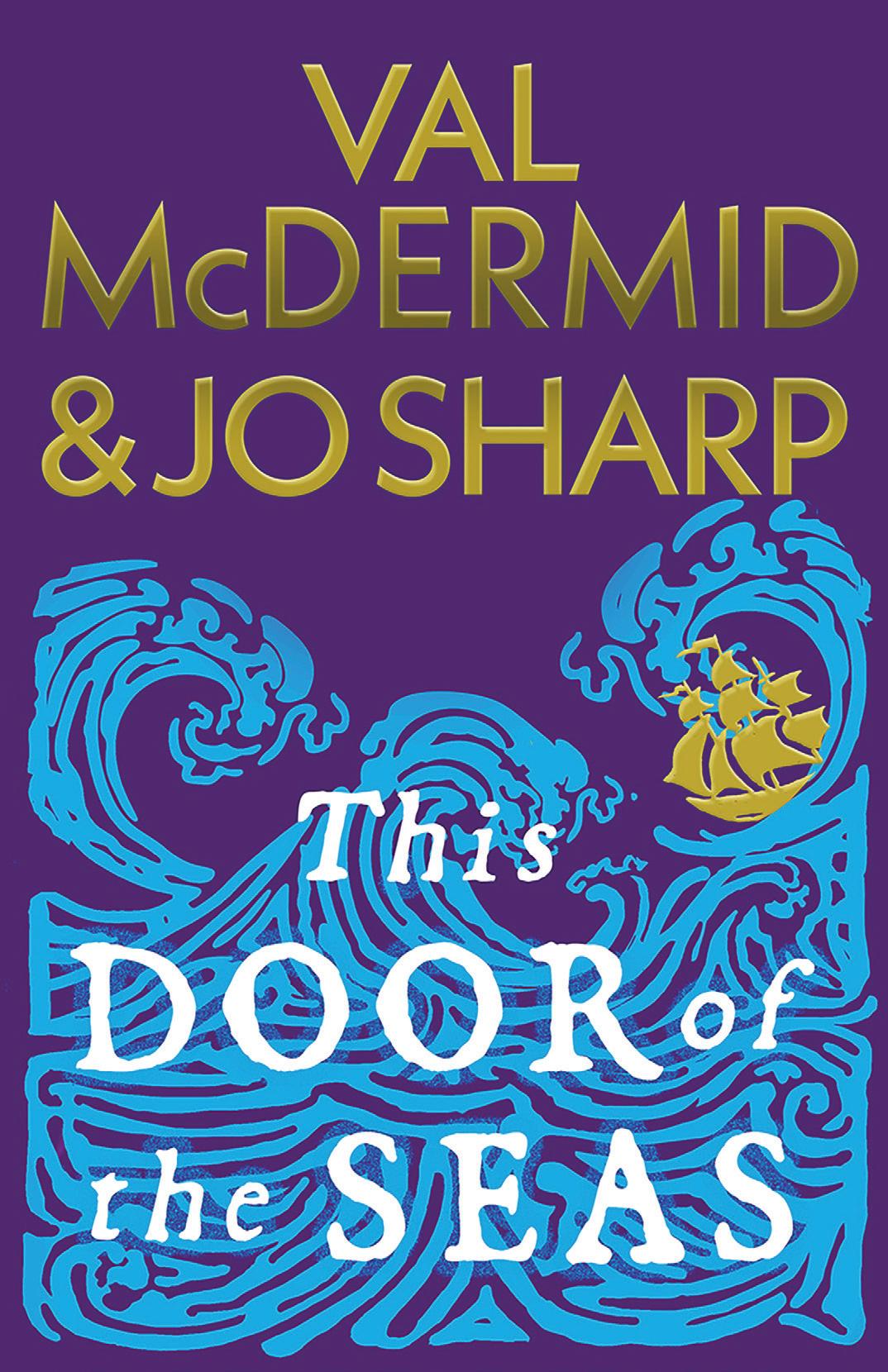


The newest installment of Polygon’s Darkland Tales series is a part of Scotland’s history that remains relatively and surprisingly unknown. This Door Of The Seas is the brainchild of acclaimed novelist Val McDermid and Geographer Royal Jo Sharp who, after a long drive from Assynt to Edinburgh, decided to share the compelling story of the nation’s failed attempt at colonising Panama’s Darién Gap, and the complicated series of events which eventually led to the 1707 Act Of Union.
The book is both imagined and painstakingly researched to provide a firsthand account through the letters of Dr James Wallace, one of the first real-life voyagers, as he reports back to his employer and pines for his wife, Eliza, who is expected to join him in the foretold tropical paradise. Aboard the Unicorn we travel with Wallace from the docks of Leith to their new home, enduring unsavoury conditions, severe storms and piracy. Reaching the crystalline shores of Panama’s jungle, the endless flora and fauna along with the good-natured native inhabitants buoy their hopes. But sure enough, a deadly sickness, power struggles, food shortages and sunken ships change the promised utopia into a hellish landscape.
Though the account of Wallace is based on historical sources, This Door Of The Seas has a sense of wonder that wouldn’t be out of place in Gulliver’s Travels. Despite feeling slightly rose-tinted regarding Scottish attitudes toward the slave trade, McDermid and Sharp masterfully illustrate the 17th-century journey. They show the ambitions of the colonial mindset amid the reality of betrayals by a ruling class (leading to death, destruction and desertion) while maintaining a sweet love story. Altogether, this novella is an enriching and impressive retelling of a crucial moment that would change Scotland’s future. (Rachel Morrell) Published on Thursday 6 August.
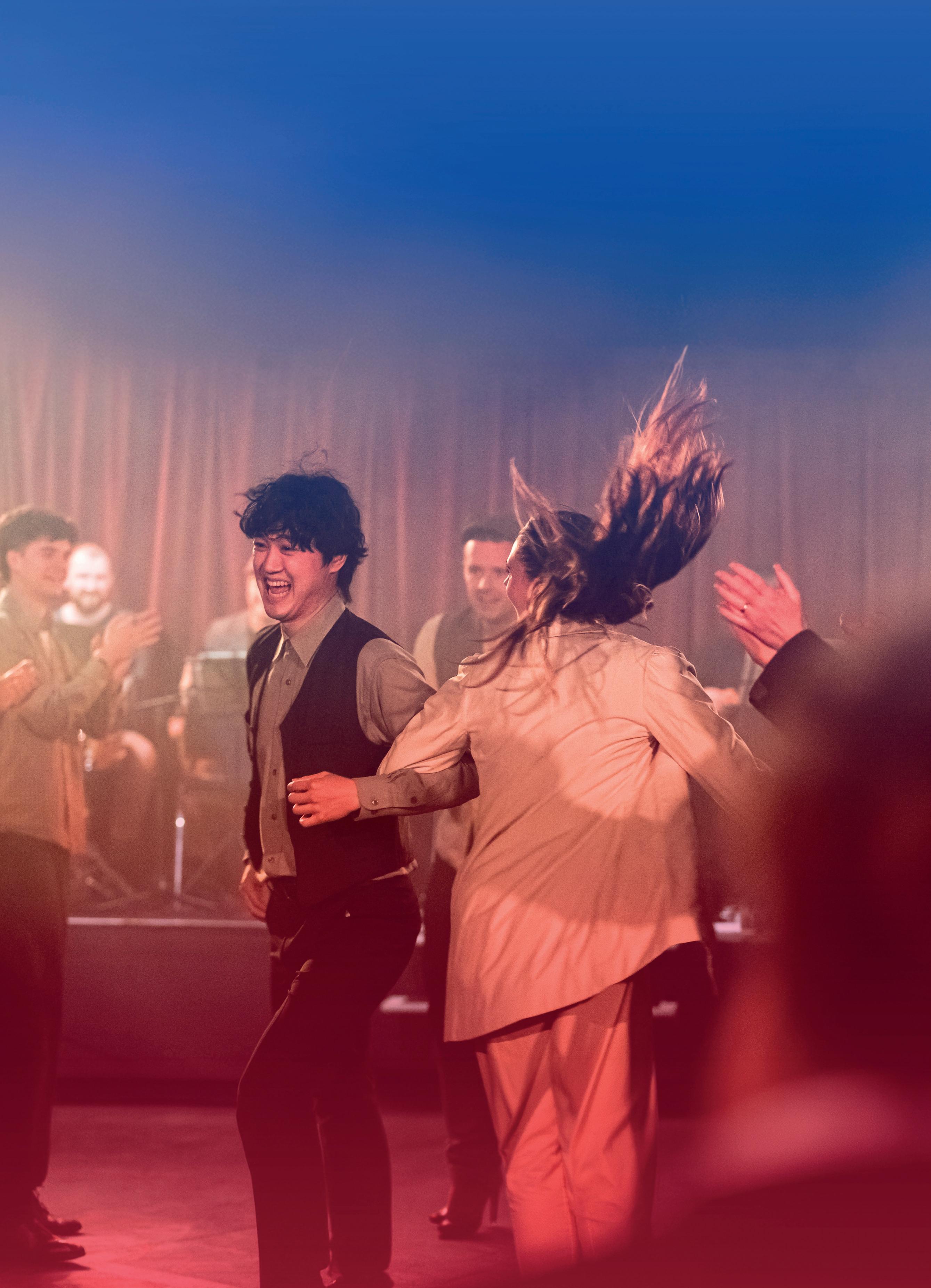
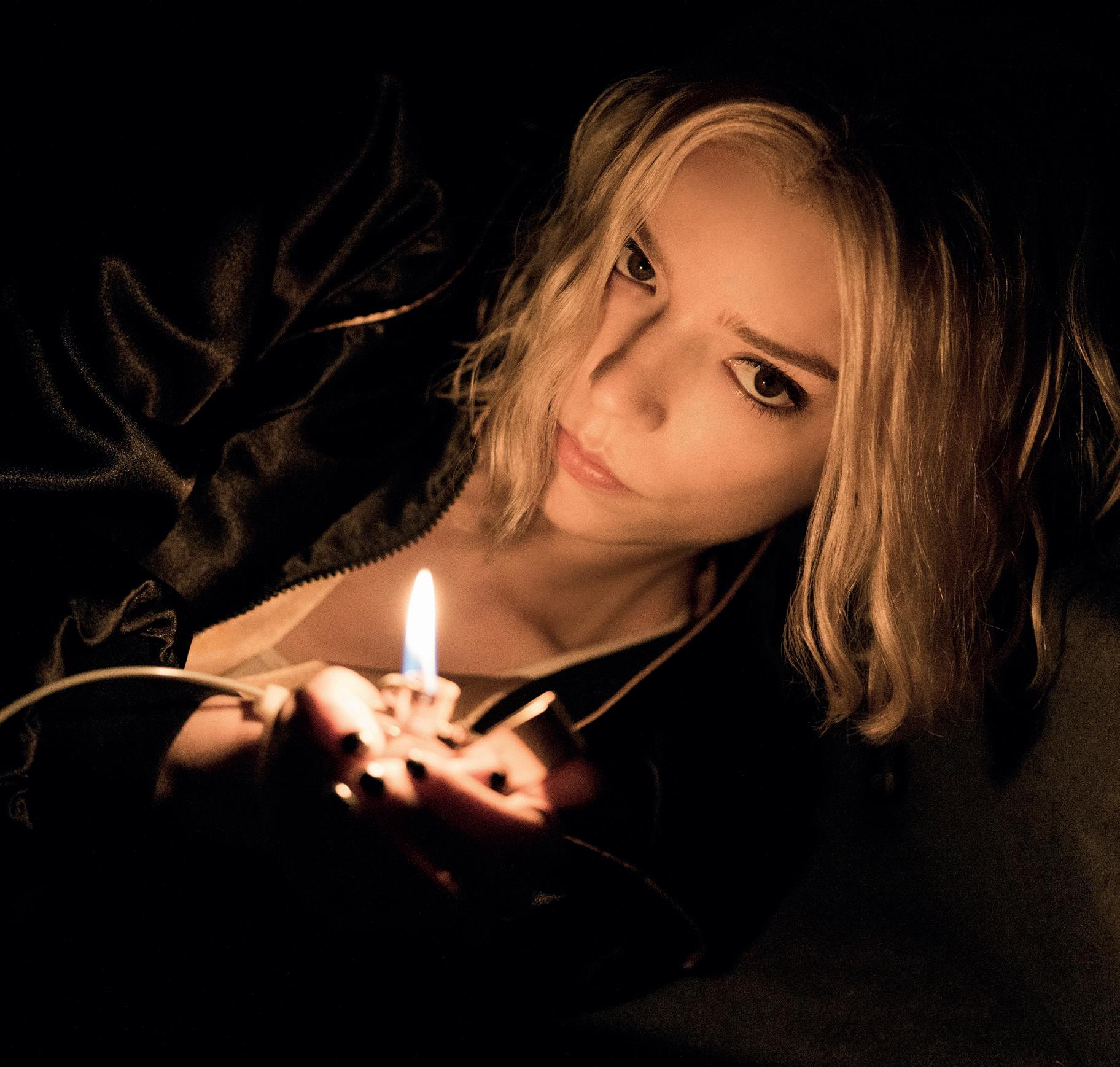
At times recently, it’s been almost too hot to go outside. Claire Sawers has the perfect solution by insisting we stay safe indoors with scorching TV viewing such as the return of a comedy icon, two strong women on the run, and a noir detective with quite the USP

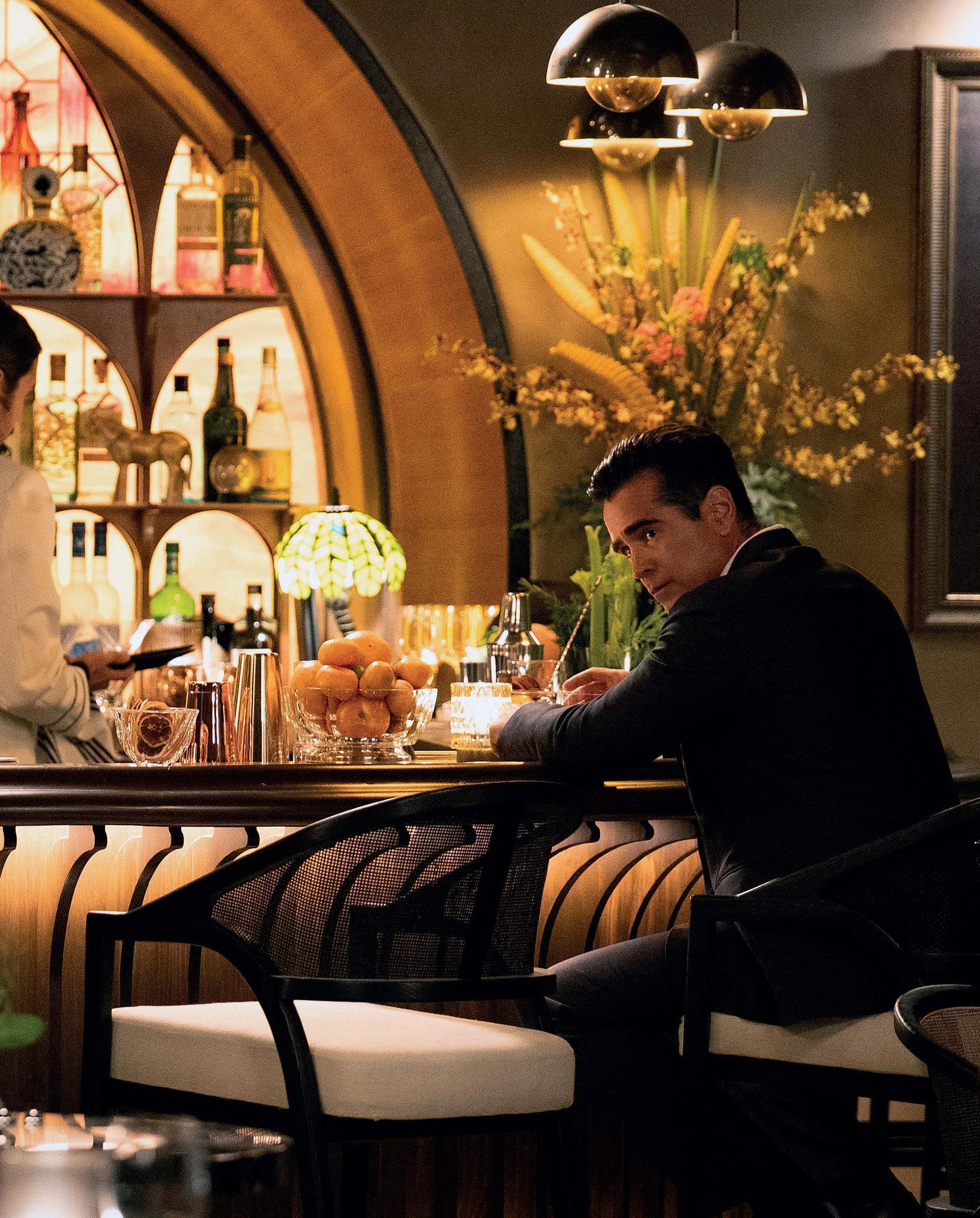
Two years a er the nal episode of Curb Your Enthusiasm aired, fans can rejoice as Larry David makes a triumphant return to TV. He may not be appearing as a ctionalised version of himself this time, but thankfully he still manages to be 100% pure Larry David in satirising gures from American history via quality sketch show Life, Larry And The Pursuit Of Unhappiness (HBO Max). Ahead of airing, this was guarded by HBO as though it was a matter of national security, with reviewers sworn to secrecy on plots and jokes. But all the Curb tropes are there: profanity, the long-su ering, vinegary wives, and e ortlessly o ensive ga es, bolstered by cameos from Barack Obama, Jerry Seinfeld, Kathryn Hahn, Rita Wilson and plenty of Curb cast members. It’s very easy to enjoy David here in many luscious wigs, unwilling combat scenarios and irritating pickles.
In Apple TV’s Lucky, we nd Anya Taylor-Joy playing a con artist on the lam, being chased by mob leader Priscilla (Annette Bening) and the FBI. Based on Marissa Stapley’s New York Times-bestselling crime thriller of the same name, Reese Witherspoon enjoyed it so much she brought her production company onboard for this TV adaptation. A female-centred cat and mouse chase, the streetwise and resilient Lucky Armstrong must hide from authorities trying to pin her down a er a heist goes wrong. The opening episodes are action driven, with a few too many breathless car chases and stunt sequences giving way to meatier character exploration later. Lucky learned expert gri s thanks to her scammer father John, so we watch her morph between many aliases for survival, rather like The Day Of The Jackal if he found himself in Vegas casinos, luxury California homes and, occasionally, silk dresses and car boots. Bening is a highlight as the ruthless crime matriarch who is actually under the thumb of an even nastier man.
Also on the lam is Hannah Waddingham, playing a 50-yearold assassin who drags her unsuspecting best friend out of their dull book group to hit the road in Ride Or Die (Prime Video). Waddingham is fabulous as the deadly, seductive fembot fatale with a high body count in every sense. It seriously rattles her cage to learn she’s been marked as a ‘WOACA’ (woman of a certain age) by her bosses, but thankfully she has a wise, loyal, belly laughing sidekick Debbie (played by Octavia Spencer) in tow. This sits somewhere between the comedy, spy thriller and action genres, with Waddingham sprinting in stilettos or skiing with sniper guns. Think Russ Meyer meets Mr & Mrs Smith action humour, and add in absurd laughs from mid-life moments.
Returning to our screens, along with his vintage convertible 1960s baby blue Chevrolet Corvette, is private investigator John Sugar played by Colin Farrell. In Sugar (Apple TV), the titular PI is a lm noir obsessive who we can also now say, without fear of spoilers, also happens to be an extra-terrestrial. If that premise sounds too strange to work, the sci- detective hybrid remains weirdly e ective in season two, aligning with tropes of the misunderstood outsider such as Philip Marlowe. This time Sugar’s work takes him to Koreatown in Los Angeles and the search for a missing brother.
SAWERS ALSO SAW . . .
The Bear on Disney+: ‘Is chef Sydney steering a sinking ship? Panicky, delicious chaos returns for a fifth and final course’
Dolly Parton: America Reunited on Now: ‘Smart documentary looking at the beloved singer’s superpower to unite conservatives and progressives’
OnlyFans: Inside The Machine on BBC iPlayer: ‘Insightful doc on how shady, abusive pimps operate on the camming platform’

Brass mastery runs in the Alessi family, as does the name Joseph. Ralph Alessi’s Sicilian grandfather and father both occupied the principal trumpeter role in the New York Metropolitan Opera Orchestra. Both were also called Joseph. Having an older brother, Ralph arrived too late to claim their forename but he does share their trumpet skills which he sets against (as well as complementing) brother Joseph’s trombone playing on this adventurous, sometimes abstract but often mellifluous album.
The intricate, fanfare-like opening title track might be seen as celebrating those family skills. There’s discipline involved but the quintet, with pianist Matt Mitchell, double bassist John Hébert and Ches Smith on drums and vibraphone, also thrives on freedom, the rhythm section getting especially physical as Alessi’s trumpet showcases his muscular invention. Alessi’s writing is varied: the wildness of ‘A Sun That Never Sets’ is followed by the gently unfolding ‘Nothing Is Dead’, where Mitchell’s piano splashes droplets of colour over Smith’s soulfully chiming vibes. Then follows the rather misnamed ‘Relaxed Misery’: too urgent to convey relaxation with its insistent ostinato, this is also playful, with trumpet and trombone in mischievous cahoots before the leader fires off an energetic solo propelled by Hébert’s itchy-fingered bass playing.
Other highlights include the elegiac ‘Sweet Spot’ and the simply melodic ‘Ether’, with trumpet and trombone showing sibling closeness before Mitchell picks up their phrasing and sprints off with startling creativity. Also enjoyable is ‘Of Trees (Variations On A Theme By TB)’ where muted trumpet and almost tuba-like trombone strike up an animated conversation with Mitchell’s deft piano. If, on the whole, this album requires repeated concentrated listening to get the full picture, it also suggests that this quintet would be well worth seeking out in concert. (Rob Adams) Released on Friday 3 July.
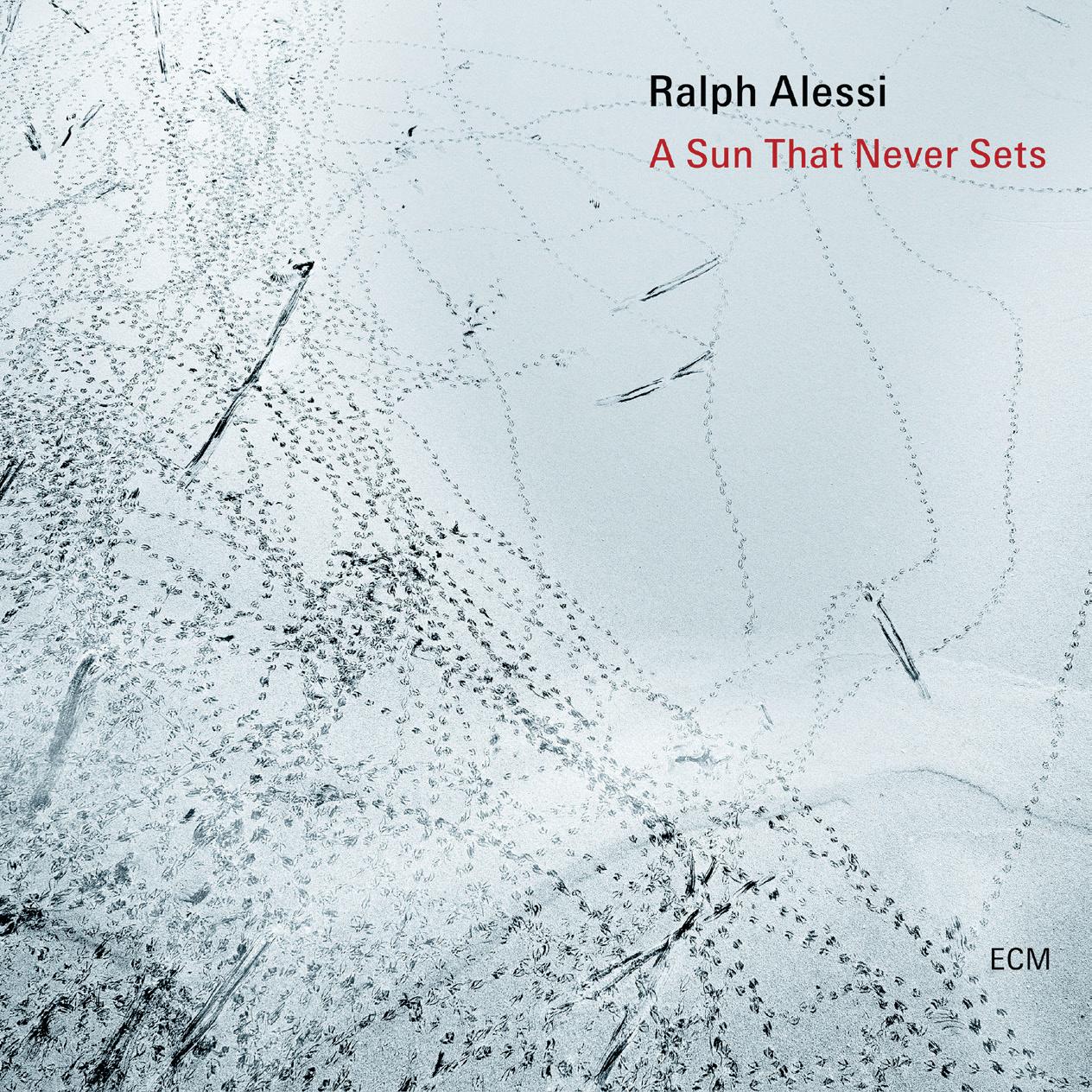




Presented by forensic psychiatrist Dr Sohom Das and investigative journalist Paul Connolly, new podcast True Crime Dissected comes loaded with the heft of its hosts’ expertise. It’s also pleasingly lo-fi, with no theme music or jingles, only the briefest of introductions then straight into the crime chat. The first episode centres around the pathology of hate crimes, using as examples the recent Golders Green stabbing of two Jewish men and the Charleston mass shooting at a black church in 2015. Das and Connolly have a smooth rapport. In this episode, their conversation is at its strongest when Connolly grills Das about procedures surrounding the detention and release of patients in forensic units (violent offenders deemed unfit for the criminal justice system). This yields knotty ethical debate surrounding blame and the terrifying judgement calls that rest on the shoulders of psychiatrists and psychologists.
The free-flowing format, however, does mean the podcast deals mainly in generalisations and patterns, rather than diving deep into the details of its cases (the way RedHanded does, for example). Both stories are merely skated over (the hosts do acknowledge Golders Green is an ongoing investigation), with the chat prioritising broader points about extremist views and mental health. It feels like the podcast equivalent of an academic essay. The pilot episode (also available), covering ‘Butcher Surgeon’ Ian Paterson, does have a tighter approach to tying together story and commentary though. And with two undoubtedly great minds at the helm, the series is certain to be an educational listen. (Lucy Ribchester) New episodes available every Thursday.













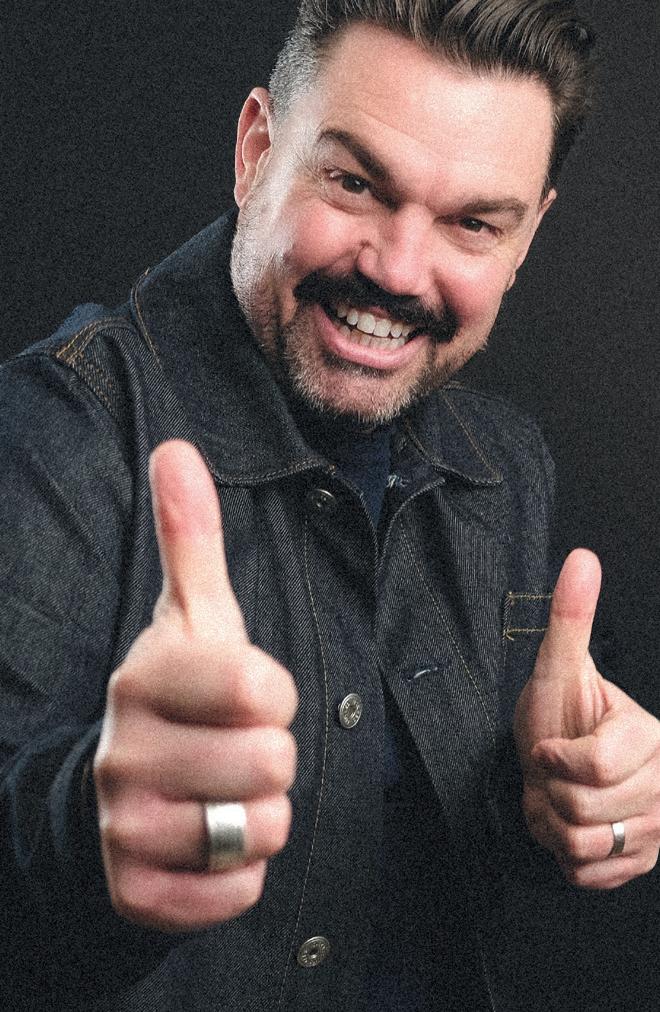































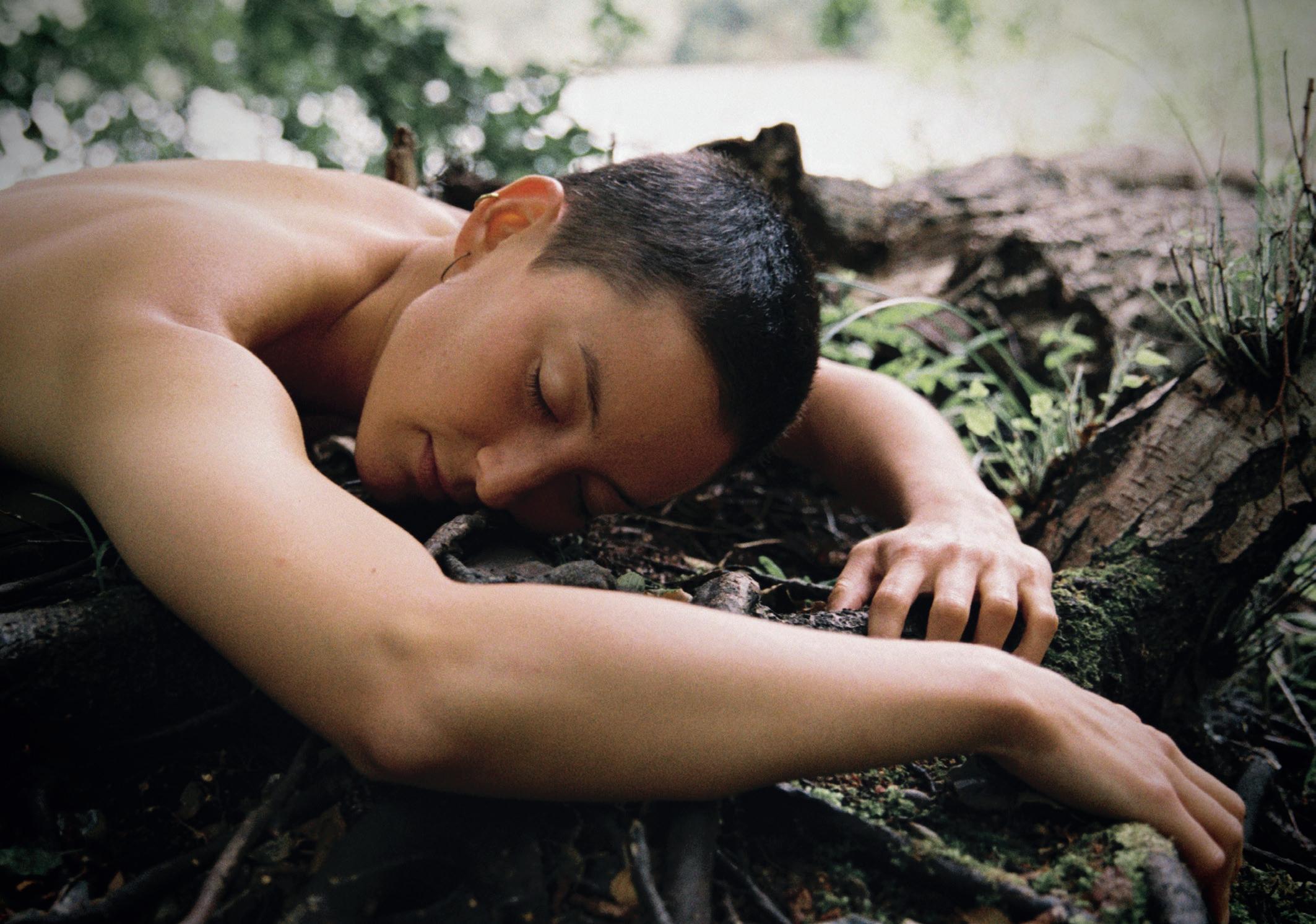
A packed two months of things to do indoors or consume on your travels include a searing thriller from Edinburgh’s finest, the remake of a video game classic, a pod about finding your place in the world, and another TV drama based on a movie
LEO SAYER
The bubble-haired icon who stormed the charts throughout the 70s launches Leothology towards our ears, a career-spanning 18-CD box set featuring over 200 tracks. Not to be consumed in one sitting.
Edsel Records/Demon Music, Friday 14 August.
MIDORI JAEGER
The London-based cellist-singer whose name is pronounced ‘Mid-uh-ree Yay-ger’ draws musical parallels between her chosen instrument and a living tree. (Re)planted is the name of this collection featuring tracks such as ‘Or’ and ‘Lungs’.
Self-released, Wednesday 26 August.
IRVINE WELSH
The Edinburgher’s latest novel is a searing thriller set in the blistering heat of Las Vegas aka Sin City as Molly and Goerge Warburton (actress and lawyer respectively) face up to their failures as life closes in.
Jonathan Cape, Thursday 13 August.

When his son Joel sent him some unsettling texts from the heart of a New England forest, it sent the writer and journalist hurtling towards another adventure with extremists. Ronson Snr is finally tackling the manosphere in book form.
Viking, Thursday 20 August.
ASSASSIN’S CREED
The remake of a 2013 game, Black Flag Resynced is the latest in the Assassin’s Creed franchise, an action adventure game set in the Caribbean during the later years of piracy’s golden.
Ubisoft, Thursday 9 July.
SUCCESSPOD
Adam Buxton unleashes his latest podcast, with this one all about him finding his place in the media world. With that packed sphere awash with influencers, metrics and uber-optimisations, where does an ageing Bowie obsessive fit in?
Audible, available now.
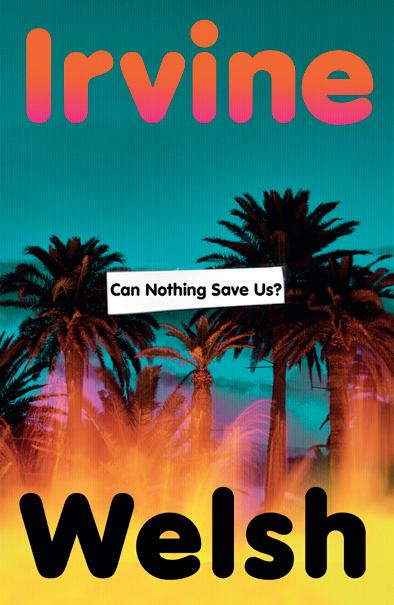
Just in case you thought they would never make a TV show based on the lead character of Legally Blonde, you were wrong. They did. Here it is.
Prime Video, Wednesday 1 July.
Lonnie ‘Hawk’ Hawkins is just one shot away from the finest comeback in golfing history. At least that’s what he’s convinced himself as this former legend of the game struggles to keep up. Will Ferrell is the lead with Molly Shannon and Luke Wilson also involved.
Netflix, Thursday 16 July.
Not to be confused with the recently released Hong Kong action movie The Furious, this small screen affair is based on the 80s movie Black Widow and tracks the investigation into a woman who bumps off a series of wealthy men she’s just married.
Disney+, Monday 27 July.

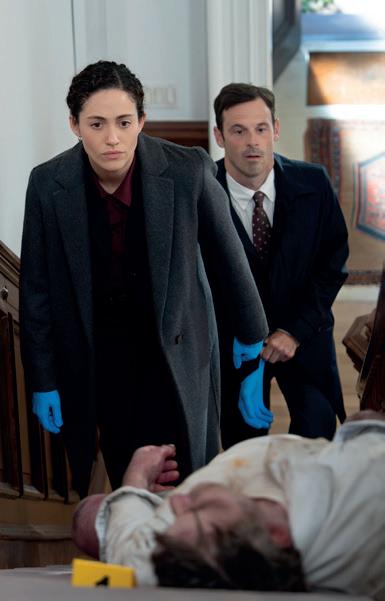
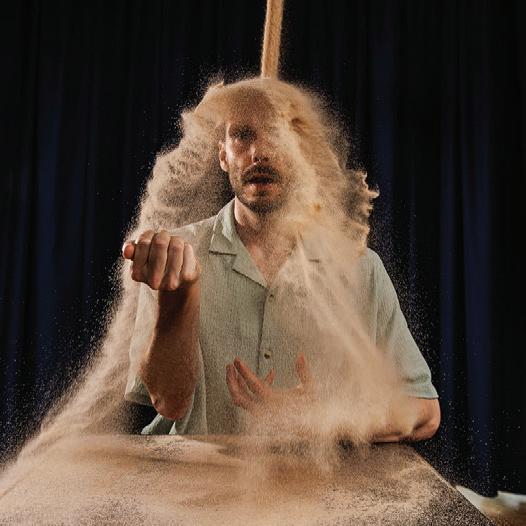
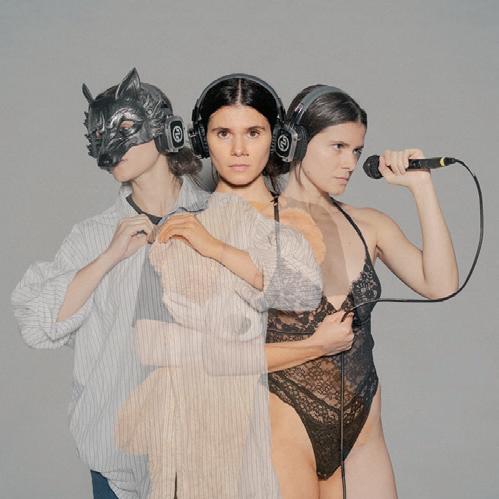

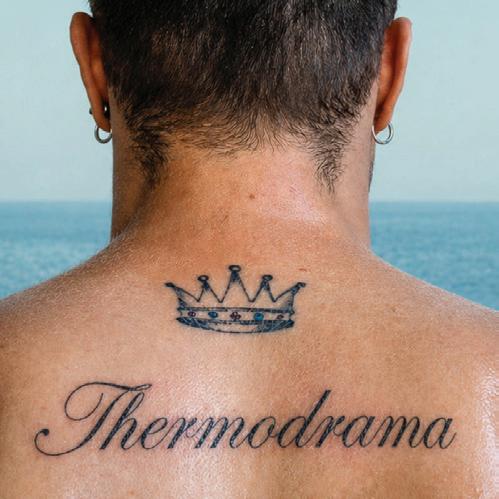
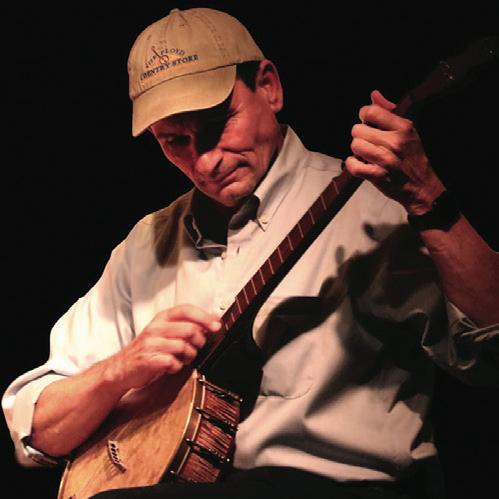
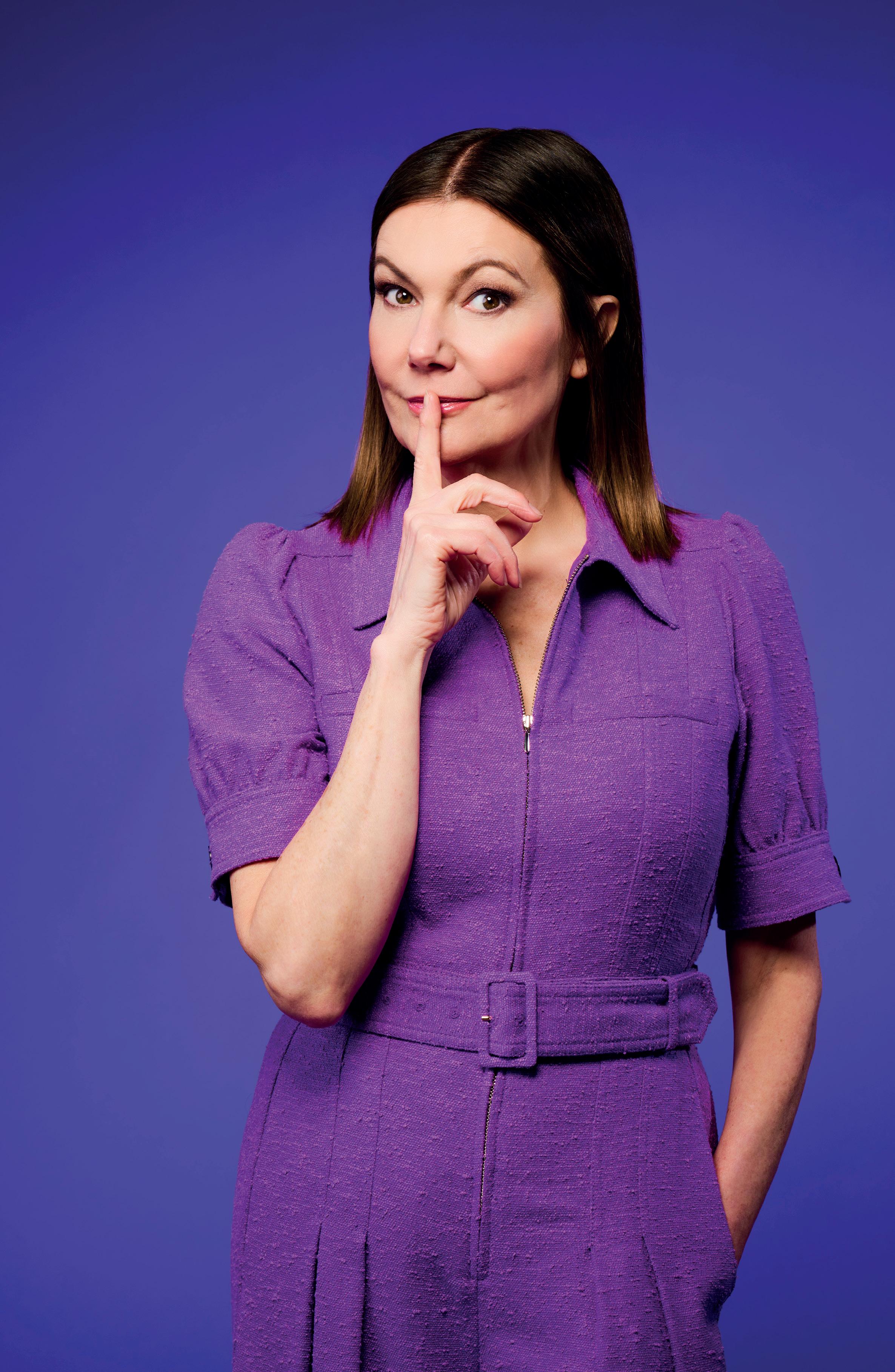
Having made a name for herself as one third of the Smack The Pony sketch team, Fiona Allen is now a successful stand-up and has appeared on small screens in EastEnders and Waterloo Road, and on much bigger screens for 24 Hour Party People and The Fat Slags. Ahead of her latest assault on the Edinburgh Fringe with some White Lies, she tackles our Q&A to talk messy bedrooms, soothing voices, casting choices and rock masterpieces
Who would you like to see playing you in the movie about your life? Who do you think the casting people would choose? Think I’d like to see Bad Bunny cast in this. Of course it would be a disaster. Doubt very much he’s been to Lancashire but I like that he’s vocal, does what he likes and is passionate about everything. Or Rosalía. This would not fly with casting directors so guess they would choose the opposite.
What’s the punchline to your favourite joke? ‘No, it’s always got water in it!’
If you were to return in a future life as an animal, what would it be? A silverback gorilla. One: because they feed and nurture their ‘family’ (that’s me cooking every day for a family that never stops eating); and two: they are massive in size. Just covering myself in case I put three stones on.
If you were playing in an escape room name two other people (well-known or otherwise) you’d recruit to help you get out? Definitely Brian Cox because he can analyse the situation using his hugely bright brain and physics his way out. And I’d follow. Second ‘person’ would be my dog. He’d sniff out a weak spot in the wall.
When was the last time you were mistaken for someone else and what were the circumstances? It was Meryl Streep in Waitrose. Ok that’s not true; it was a massive white lie . . .
What’s the best cover version ever? I’d say Jimi Hendrix’s cover of ‘All Along The Watchtower’ because he transformed a folk ballad (which I liked) into a swirling, explosive and dense rock masterpiece.
Whose speaking voice soothes your ears? David Attenborough’s voice has to be the most soothing on telly. Also my mum’s voice with her soft Spanish accent and all she has to say.
Tell us something you wish you had discovered sooner in life? I seriously wish I’d discovered 360 degree parking cameras earlier. I have zilch spatial awareness. I reversed into
a tree stump once. To be fair it was short but if I’d just had those sensors I wouldn’t have needed a new bumper.
Describe your perfect Saturday evening? That depends on the seasons. Hot summer evening: in my lovely garden. Autumn: dog walks crunching through leaves. Winter: in front of a roaring fire. Spring: flopping around at home.
If you were a ghost, who would you haunt? Probably everyone in The House Of Commons. Especially when they announce a terrible policy. I’d just love to go in and shake up that space.
If you could relive any day of your life, which one would it be? Yesterday. Well, just the morning. I was confronted with two massive spiders. I swear they get bigger every year. I saved them and put them outside. They probably moved back in when I wasn’t looking.
What’s your earliest recollection of winning something? I was reading a comic called Whizzer And Chips and won 100 stamps from around the world. Oh, and I won Pass The Parcel at a kids’ party once but there were about two Smarties in it so I wasn’t impressed!
When were you most recently astonished by something? Yesterday. Actually, not just astonished, I was flabbergasted. In fact, I was astounded. Because my youngest daughter started clearing out her bedroom. If I was someone who could faint I would have just for dramatic effect.
What tune do you find it impossible not to get up and dance to, whether in public or private? As soon as I hear anything Latin or Cuban I can’t help but move. But this is definitely in private. DEFINITELY. I am not someone who rushes onto a dance floor.
Which famous person would be your ideal holiday companion? I can’t think of anything worse. I don’t want to sound antisocial but I would never go on holiday with anyone other than my lot at home. Is that weird?
As an adult, what has a child said to you that made a powerful impact? When my kids were little and they’d have friends round, I used to sometimes mess about and try and make them laugh. A few times they stopped playing, looked at me and said: ‘Are you a grown up?’ I suppose there’s a compliment in there somewhere. They just thought I was a tall childish person. That made me realise just how childish I can be. I know for a fact I’ll be like that forever.
What’s a skill you’d love to learn but never got round to? I always wished I’d learned to master Aikido (I like the outfits). I think I’d like to fly a plane. Just because. Could be lovely on a sunny day in a blue sky going wherever I’d like to go.
By decree of your local council, you’ve been ordered to destroy one room in your house and all of its contents. Which room do you choose? I wouldn’t want to destroy any room in my house, but if I absolutely had to, then it would have to be my daughter’s bedroom. No, wait, she’s started tidying it up . . . I take that back. Hmmm, actually my bedroom. I decided I don’t like it so then I’d have no choice but to get new stuff. Hoorah. I like this question now; you’ve given me an idea.
If you were selected as the next 007, where would you pick as your first luxury destination for espionage? Firstly, I think I would take a superyacht to a remote luxury villa in Spain as a stopover (not saying where: it’s a secret). Then I would look at my assignment whilst eating a huge amount of tapas. Then I’d have a siesta. It comes naturally as I’m half Spanish. Then a black coffee (milky coffee after 11am in Spain is like asking for a well-done steak in France: not a good idea). Then hop on a plane to a secret destination to begin my journey in cyber espionage. Thinking about it, after writing that, my actual day today is going to be quite boring.
Fiona Allen: White Lies is at Gilded Balloon Teviot, Wednesday 5–Saturday 29 August, as part of Edinburgh Fringe.
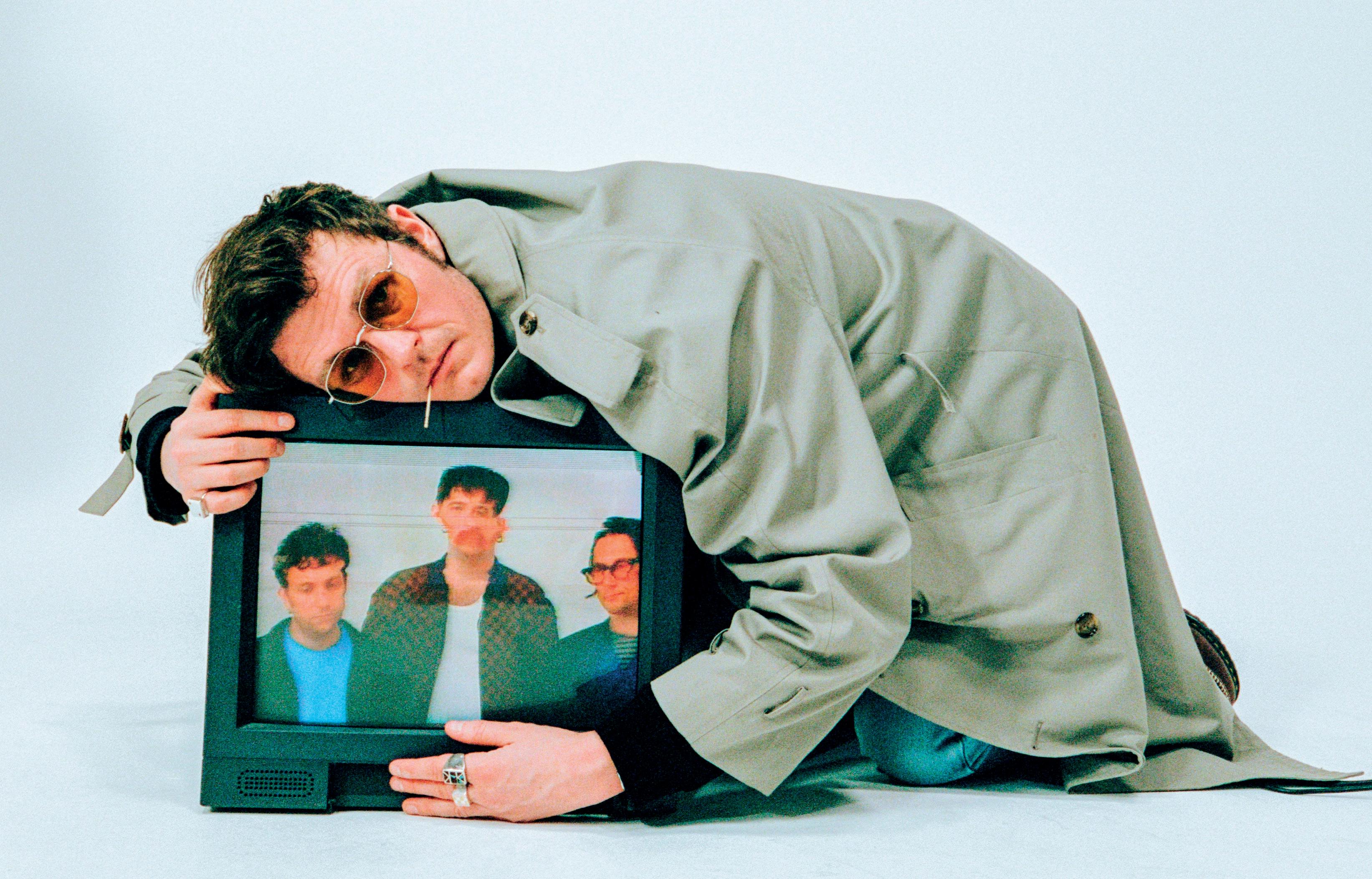

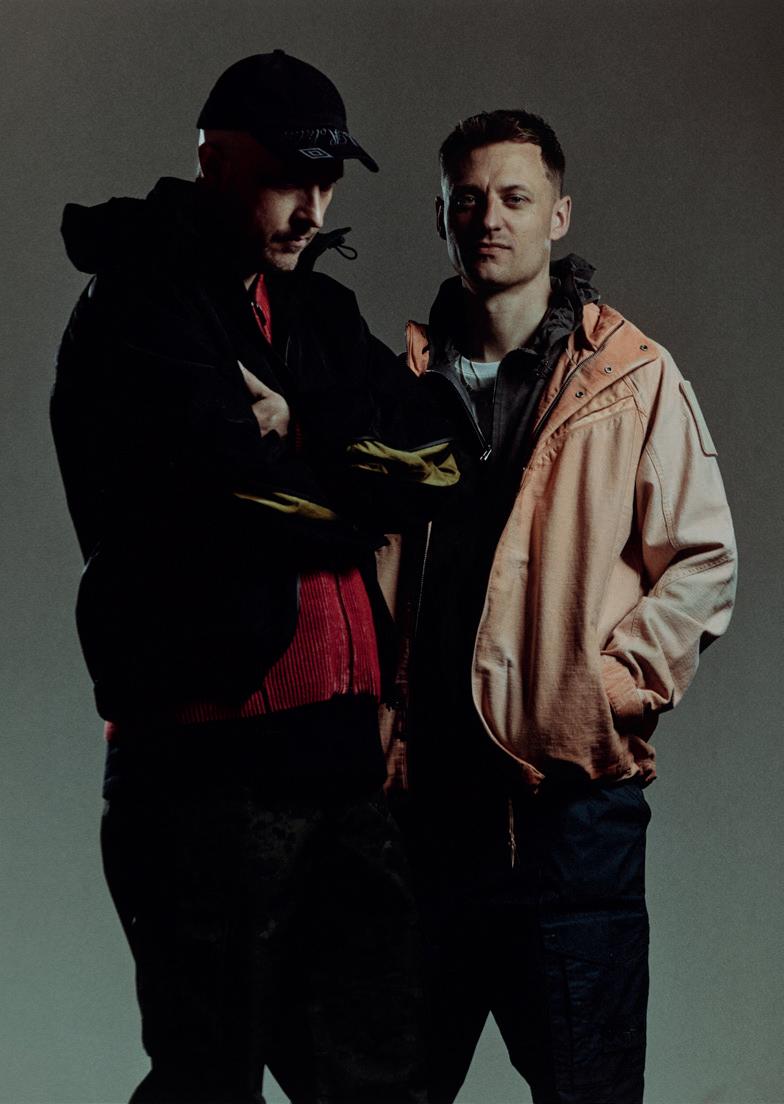
1 2 3
Clever talkie band Yard Act unleash their third album on our ears in mid-July. You’re Gonna Need A Little Music is the very germane title for an album of music. Produced in Leeds and Los Angeles, this, weirdly, is the first time they’ve been in the same room together to record songs, the previous two collections being ‘laptop records’.
‘Where legends meet the future’ is the intriguing tagline for Summer’s End festival in Brechin (14–16 August) featuring Sugababes (pictured), Emeli Sandé, UB40, Becky Sikasa, Pixie Lott, Tide Lines, Rudim3ntal, Kitti, Susan Boyle, Cammy Barnes, and a young rising star of the DJ world who goes by the name of Gok Wan . . .
It’s not just brothers in the vein of the Everlys, Gallaghers or Jacksons who can make an impact on the music world. Less shouty and controversial siblings can also succeed. Overmono (aka the Russell lads, Tom and Ed) have a new album, Pure Devotion, out in August. Bone up on that before they head to Barrowlands in November.