


By James Garrett & Allison Sam
by Ellen Wu
Graphic

By James Garrett & Allison Sam
by Ellen Wu
By Chloe Carrano

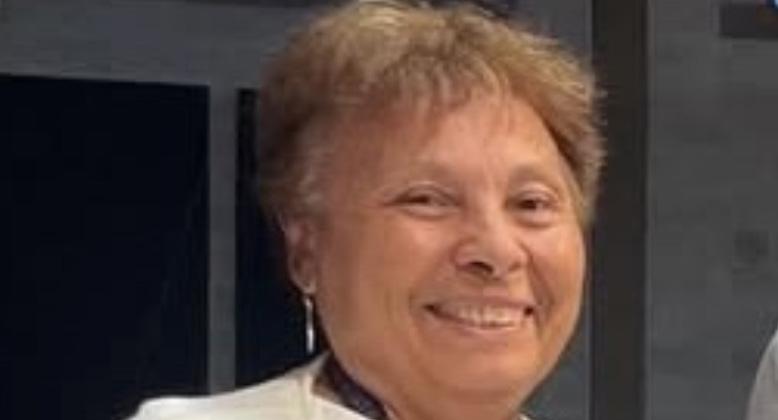
Patricia Gonzalez, who retired from being South's athletic director in 2025, has received a 2026 Citation Award from the National Federation of State High School Associations. In addition to this achievement, Gonzalez was a 2022 recipient of the Massachusetts Interscholastic Athletic Association Distinguished Service Award and former member of its Diversity Task Force. Her changes to the landscape of Massachusetts high school sports have not gone unnoticed.
It is not surprising to me in the least that she is receiving this award. Mrs. Gonzalez has always been considerate of and a voice for ... people who don't have a seat at the table.
Patrick Jordan-Quern South Wellness Department Head
[A Citation Award goes to] an athletic administrator who has made signi cant contributions to [NFHS] and other orginizations, positively impacting high school athletics.
National Federation of State High School Associations (NFHS) via Fig City News
[Elementary school] is an important time for these kids to learn social skills and physical skills ... [accessibility] is needed during recess time to develop those skills.
Shira Schoenberg via the Boston Globe Boston Globe reporter
I know that sta and faculty at Franklin were very, very excited ... [the relocation] is meant to give students a strong, in-district option.
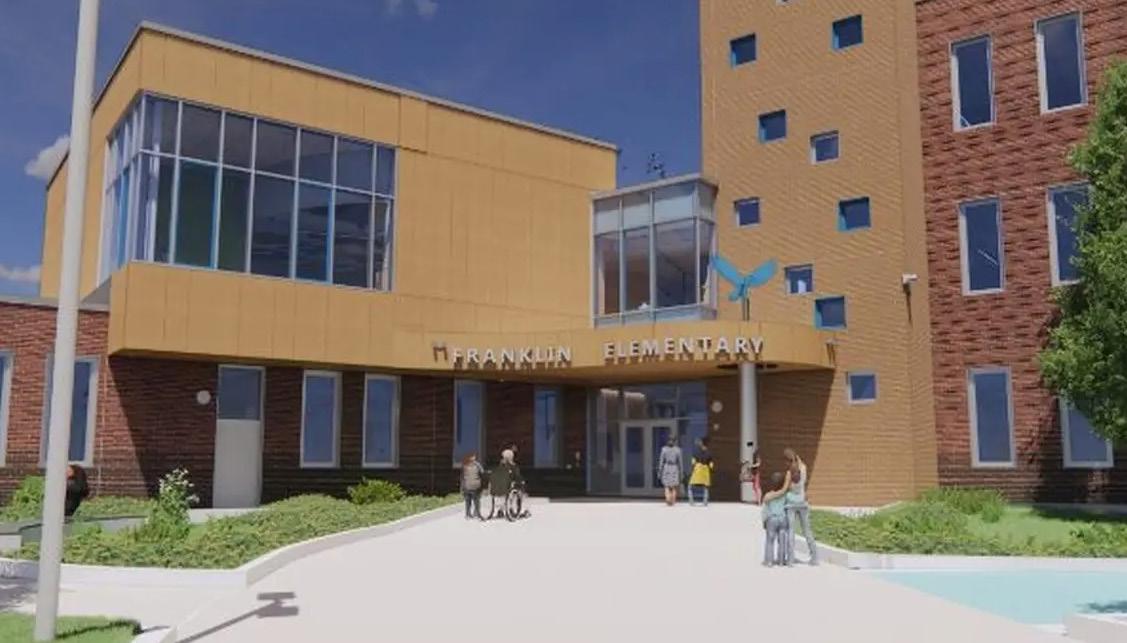
e Newton Public Schools Re"ections Program is relocating from Williams Elementary School to Franklin Elementary School. e relocation will begin during the 2027-2028 school year. e program serves as a place where parents can nd childcare that adapts to individual needs, and approximately 11 students currently attend. Accessibility complaints, including problems with playground access at Williams Elementary School, prompted the relocation.
graphics by Emily Cheng
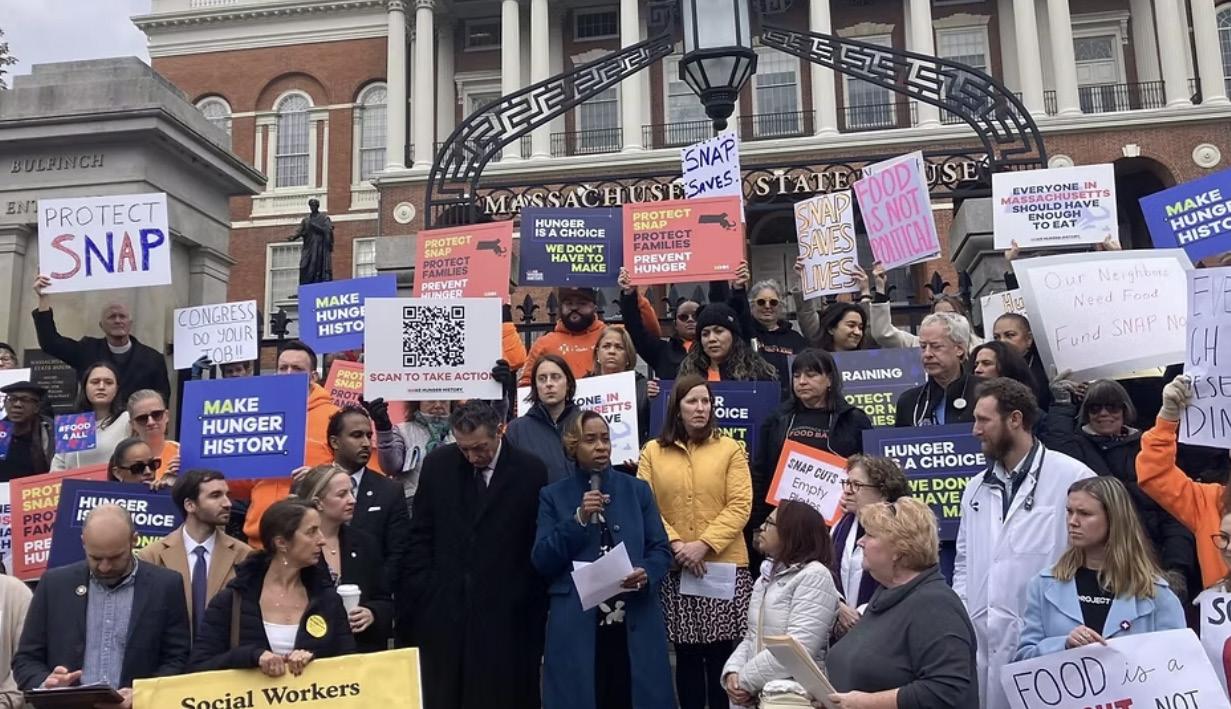
Amid federal government cuts to the Supplemental Nutrition Assistance Program (SNAP), increased costs of living and economic in"ation, Massachusetts food insecurity rates have sharply increased. A record number of households — approximately 1.1 million, or 40% of the Massachusetts total — struggle to nd reliable sources of food. e Greater Boston Food Bank is attempting to combat this disparity, along with local food pantries, such as the Newton Food Pantry.

Food is a main expense that everybody has to pay for … People are falling behind, not able to keep up with the regular expenses.
Gary Roy Assistant Director of Public Relations at the Greater Boston Food Bank
Everybody has their own personal story … Food insecurity is more than just numbers and government programs.
Jeff Lemberg
Executive Director
at the Newton Food Pantry
Abby Miller Managing Editor
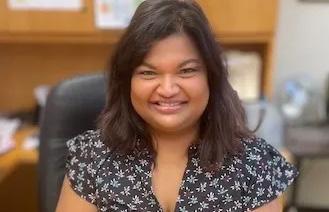
On May 19, South Principal Tamara Stras announced she will be leaving South to assume the role of Assistant Superintendent of Secondary Education at Cambridge Public Schools.
Stras said via StudentSquare that the decision to leave was bittersweet.
“While I am excited for this next chapter in my professional journey, leaving this community is incredibly di cult,” she said. “ is school has become such an important part of my life and heart.”
e search for a new principal begins immediately. Ward 5 School Committee member Ben Schlesinger said he anticipates a lengthy process.
“I expect the "rst thing they will do is take applications and interview for an interim,” he said. “For the permanent role, they will post the job and solicit applications from people in their networks; assemble a Superintendent’s Advisory Council of teachers, parents and students; and go through a multi-stage interview process.”
Superintendent Anna Nolin said that "nding a new principal is a shift, but manageable given Stras’ impact on South.
"When a principal leaves, it's a time of transition for the school,” she said. “No matter how strong, weak, positive or negative the principal was, the sta% and students are all a%ected by their departure.”
Vice Principal Jason Williams said he is con"dent in the community Stras will be
leaving behind.
“While we’re going to obviously take some time to "gure out who the new person will be, the impact she’s left and the changes she’s made have made it so we will not be terribly negatively impacted,” he said.
Stras took the reins as principal during the summer of 2021, succeeding former Principal Joel Stembridge and former Interim Principal Mark Aronson.
Stras said via StudentSquare that under her leadership, South furthered their curriculum and reformed the systems for ninth graders.
“We sharpened our instructional practices by engaging in collective teacher e cacy and by engaging deeply in curriculum review cycles,” she said. “We rebuilt our multi-tiered system of supports to better support the needs of today’s students, and redesigned our Grade 9 cluster teams.”
Goldrick Dean Marc Banks said he believes Stras’ greatest impact has been the ninth-grade groupings.
“From a Dean’s perspective, one of my favorite things she’s done has been the tightening of the cluster system,” he said.
Stras said via StudentSquare that she is most proud of the community South has fostered.
“Alongside an extraordinary sta%, leadership team, students and families, we have worked to create a school culture at South where every student feels seen, supported and valued.
Wheeler Dean Meaghan Martin said she admires Stras’ ability to strengthen school spirit.
“She’s done a really good job of trying to make people proud of the school. [She wants]
the students to be really proud of where they go to school,” she said.
Nolin said the district will miss Stras’ guidance.
“To me, Principal Stras is the best kind of school leadership: listening constantly, never forgetting what it was like to be a teacher, putting kids "rst and ensuring they had what they needed whenever and wherever she could,” she said.
“She was outspoken on their behalf and was never afraid to speak up or challenge the status quo.”
Martin said South will remember Stras’ ability to connect.
“I will miss her willingness to partner with students and faculty, and to "gure out
how to make the situation better,” she said. “She’s been at so many things, and that visibility [will be missed].”
Schlesinger said that celebrating Stras’ new opportunity and recognizing her in uence is important.
“We can be disappointed for our own loss and also excited for Ms. Stras about the opportunity she has. We can also view this as an opportunity to bring in a new person,” he said.
Stras said via StudentSquare that she is con"dent in the South community and its ability to progress in her absence.
“I leave knowing this community will continue to thrive because of the incredible people who make it so special every single day,” she said.
Serena Liu & Emma Xia News Editor, News Contributor
Newton city o cials are continuing to re"ne the Building Emissions Reduction and Disclosure Ordinance (BERDO), which states that Newton must work towards its goal of reaching net-zero emissions by 2050.
BERDO originated in Boston in 2013 and was revised in 2021. Newton adopted BERDO in 2025.
is policy is aimed at reducing emissions from large buildings throughout the city. Large buildings are among Newton’s biggest contributors to carbon emissions, so the updated regulations will require many property owners to report energy use and follow stricter emissions guidelines over time.
Recent updates aim to make the policy more structured and to add more exibility for owners of large buildings. However, debates remain over enforcement, costs, exibility for building owners and long-term e%ects on residents.
John Oliver, President of the Newton City Council, said that BERDO was created to reduce emissions from buildings across Newton.
ings and regulation exibility. “ e biggest debates and challenges are how to balance veri"cations so that buildings will need to verify every "ve years,” he said. Under updated regulations, large build-
construction projects.
Oliver said that buildings that fail to meet requirements could face penalties in the future.
“ ere will be "nes if the requirements are not met,” he said.
Review Board in Boston, said that they often do not have the funding to do so. “ ey are very committed to greening their portfolios, but their ability to make major improvements is a little more constrained by time,” she said.
“Buildings are a huge factor of emitting carbon dioxide, and BERDO will try to correct them step-by-step,” he said. “BERDO policies are still secure, but recent updates focus on re"ning how the ordinance will function when put into practice.”
Darius Bailey, Newton’s BERDO Project Manager, said that some of the most important changes involve veri"cation measures for build-
ing owners will be required to report information about their carbon emissions to the city. e policy is designed to in uence long-term decision-making and prepare owners for future requirements.
Building owners may now need to consider BERDO requirements when regarding the implementation of heat systems or future
Fines encourage all owners to comply with BERDO, but large buildings often house renters, businesses or public institutions. As a result, increased costs could mean higher rental prices and operational expenses.
Although many affordable housing organizations support sustainability e%orts, Jessica Berman Boatright, Chairperson of the
A%ordable housing developments frequently rely on government grants and "xed funding cycles, meaning they cannot always immediately replace heating systems or infrastructure, even if they want to.
Sam Nighman, Newton’s CoDirector of Climate and Sustainability, said that some buildings have increasingly di cult experiences trying to reduce their emissions.
“Some buildings need to rely on air and water to generate heat, so it is not easy for buildings to change,” he said.
Nighman also said that the city has tried to make the process more manageable for building owners.
“If buildings cannot meet what BERDO requires, they can report to the city and tell them they can’t meet the emission standard,” he said.” ey can push the timeline out more.”
Freshman Simone Klingaman said that she is focused on preserving the environment.
“I would say climate change is a long term impact so we have to try everything to stop that before it’s too late,” she said. Freshman Julia Jin said that she believes BERDO is important for improving Newton’s emissions.
“It's a very important goal that will help sustainability in the future for all years to come,” she said.
Allora Chaudhari, Joy Chou, Ana Fitzpatrick & Rebecca Telio News
Reporters
is spring, local community spaces in Newton hosted numerous author events where writers shared stories behind their work and writing process.
Recent events include author Elizabeth Rusch’s Zoom presentation about her climate change advocacy novel,“ 17; poet Heather Treseler’s April 22 talk about “Auguries & Divinations”; and professor Steve Grossberg’s event at the Cooper Center on June 3 about his book,“Your Creative Brain and AI.” Rusch’s event, in particular, was made possible by collaboration between the Newton high schools and the Newton Free Library.
“It was created originally by Newton North Library,” said South librarian Morgan Harper. “ ey roped in the Newton Free Li brary [and] the South Library … and it was open to the entire community.”
At South, these author events often fol low a similar structure.
History teacher Andrew said that typically, the author presents their work, then invites conversation.
“You might have the author read a little, have someone interview them, and then have a chance for questions from the audience,” he said.
South freshman Esther Li said that she would love to see new aspects incorporated into authors’ presentations.
“I would like to hear about their thought process behind writing their book, what their inspiration is, tips for writers and maybe a
signature from them,” she said. Treseler said that she adapts her strate -
According to Treseler, one of the most meaningful bene ts of these events is con-
about her inspiration for “ e 21” gave him a deeper understanding of the author as a person.
Harper said that listening to Rusch talk
“It just was so fascinating and eyeopening to hear these [unique] stories,” he said. “Not everyone has had the same experience.”
According to Harper, this close contact between audiences and writers can serve as a great motivator for budding authors.
“Fiction topics … can be fun and inspire those who maybe want to write, who are trygure out ‘How do I get into writing [a novel]?’” Harper said.“ en [if authors] come in and talk about their process, that might
Li echoed that author events are helpful for both speakers and participants.
cial for the public and increase literacy,” she said.“It's a really good idea for authors to have these events because they're able to advertise better.”
Sophomore Lucy Telio, a student moderator for Rusch’s event, acknowledged that marketing and advertising for these events can be ere was de nitely a lack of student interest and just knowledge about the event in general,” she said. Student and community awareness is key, since events like these help educate the public about local authors they might not have known about otherwise.
“We have a lot of Newton authors, so it lets you learn more about your own community,” ompson said.“It's good to celebrate the work of authors. It's empowering to learn about how they're producing these works that you see.”

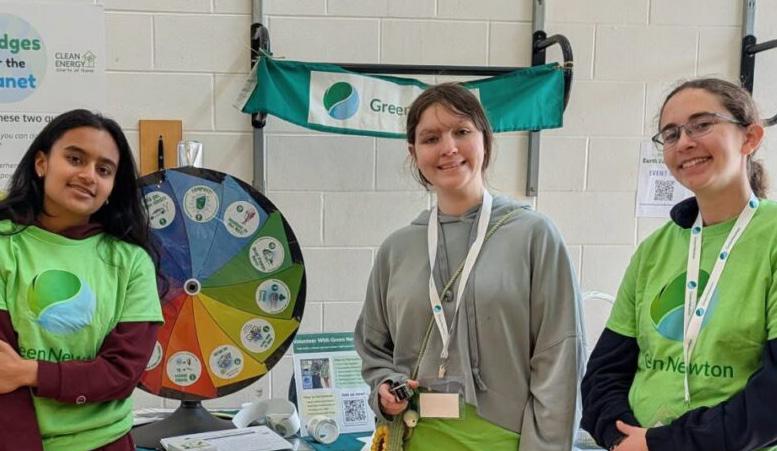
On May 3, Zervas Elementary School hosted Newton’s annual Earth Day Festival. t Green Newton and the City of Newton Climate and Sustaine event consisted of booths held by many climate action groups, such as Protect Newton Trees and Newton Conservators, while musical groups performed in Zervas’s including an ensemble from Music School as well South’s Newtones group. Several South volunteered at the Caroline Weiss, Climate Action Coordinator for Newton’s Climate and tainability that the festival opportunities for so many can take
that are working on the same cause,” she said.
Even though volunteers took action in a variety of ways, most seemed to share a similar motivation.
Sophomore and festival volunteer Lucy Vaval said that her priority at the festival was promoting caring for the environment.
“We all share this earth and spreading awareness about it is really important, so we can continue to take care of it in the future and have festivals like these where we get to come together,” she said.
Melissa Brown, a volunteer from Protect Newton Trees, said that there was a wide variety of participation in the festival.
“[We had] a lot of people doing di erent kinds of climate advocacy, all in the same place,” she said.
Freshman and member of Newtones Danielle Morgenbesser said that the group’s performance is impactful at the festival.
“[We go] to the Earth Day festival every year, just to show our awareness of why we think this cause is important,” she said.
Volunteers at the festival said that there were several ways for more people to get involved with helping the environment.
Kim Leeds, Development and Outreach Coordinator at Green Newton, said that there are many ways to help the climate.
“Reducing single-use plastic is huge,” she said.“[Taking action] could be something super small as just, like, not buying things that come in plastic water bottles,” she said.
Newton Conservators volunteer Jacob Mihalak said environmental activism can range
from small actions to large contributions.
“It starts with being a friendly neighbor — being kind to your neighbors and o ering to help means picking up trash, doing recycling and some of those things that are not pretty but make a di erence,” he said.
Vaval said that small contributions are especially important.
“Try to help out in any little ways that you can,” she said. “Recycling is the main one because it's something that everyone can incorporate into their daily life.”
Weiss said that teenagers, in particular, can help save the environment.
e biggest thing high school students can do is join an environmental group in [their] high schools,” she said. “In addition to joining those groups and getting involved, get involved with the broader community.”
Leeds said that it is important to get involved with helping the Earth on a broader, community-wide scale.
“One person could probably, in their lifetime, ll a football eld full of plastic,” she said. “Even reducing just one or two football elds’ worth [of plastic] is going to make a huge impact on the planet.”
Weiss said that change can be made both individually and collectively.
“ e more individual action that we take, we can work towards collective action that makes meaningful change and advocate for stronger policies,” she said.
Mihalak said that putting attention towards the environment is a large priority. e environment is where we live, and if we want to enjoy our environment and keep us safe and healthy, we have to invest in it,” he said.
City residents and officials reflect on immigration in Newton amid current conversations regarding ICE.
In February 2017, Newton o cially became a “welcoming city.” e Welcoming City Ordinance contains policies aimed at ensuring the safety, rights and protections of immigrant residents at the local level.
However, potential ICE raids in Newton have become a rising concern, with Mayor Marc Laredo stating in a recent interview with e Newton Beacon that the city is preparing for possible ICE activity.
ese statements have sparked discussion on how Newton will respond, what role the Welcoming Ordinance will play and how immigrant communities will be impacted.
Ward 2 City Councillor Susan Albright said that she led the charge in creating and passing the Welcoming City Ordinance in 2017.
“America is founded on immigration. We want to be sure that people know Newton is a place where immigrants are accepted and praised,” she said. “We hope immigrants feel safe.”
Newton resident and former Ward 3 School Committee member Anping Shen said that he immigrated to Newton 38 years ago and appreciates the Newton community.
“I moved to Newton in October of 1988, and since then, I have never moved away,” he said. “I’ve been in the Newton community for almost 40 years now.”
Zhanyan Fu said that she cherishes Newton’s inviting nature.
ton in 2013 when I purchased my house in New ton Center. So far, I have been very happy about the culture overall.
Newton is a very wel coming city,” she said.
immigrant resident from Russia said that she loves the community Newton fosters.
By Serena Liu
my experience is totally positive. I have lived in many parts of Newton, and the community is always great,” she said.
Shen said that he fondly remembers an event where an immigrant parent from his daughter’s school was summoned to court because he did not have legal status, and that the community supported him.
“ e Horace Mann community had a rally for him, and I was there, and City Council members were there too, and we tried to help him and raise money for him.”
Ward 2 City Councilor Tarik Lucas, who chairs the Public Safety and Transportation Committee, said that the Ordinance is intended to ensure safety to residents accessing schools.
“We want students who may have undocumented parents, or may be undocumented themselves, to go to school to learn,” he said.
“We want a better society and a safer society when children of all ages are learning in the Newton Public Schools.”
Lucas also said that he hopes immigrant residents feel safe when accessing healthcare and other city services.
“We also want Newton residents who are undocumented to go to City Hall or a health clinic … knowing that a nurse or a healthcare worker is not also going to record their immigration information,” he said.
Fu said that providing public and easily accessible resources for immigrants is particularly important.
“Immigrants always have so many things to learn,” she said. “It is an entirely new environment for them to pick up, let alone this complicated federal law and city-level power.”
Maria Scibelli Greenberg, Ward 1 City Councilor and member of the Public Safety and Transportation Committee, said that there are resources in Newton for immigrants to feel comfortable accessing city services.
“ ey can go to court, they can go to school, they can go to hospitals,” she said.“ ey don't need to worry about our police reporting them or detaining them or dealing with federal agents to somehow detain these people.”
Shen said that the Newton community has always been a welcoming community, and one that continues to diversify the city.
We all bene t from this diversity, and that's why many minority families and immigrant families consider Newton as their home.
Anping Shen Newton resident and former School Committee member
“We all bene t from this diversity,” he said. “ at's why many minority families and immigrant families consider Newton as their home, and certainly, my family has considered Newton as our home.”
Chern said that she is optimistic about the city’s progress in ensuring comfort for immigrant residents.
“I hope they can keep up with the good work they have done so far,” she said.


Newton for 15 years, and
Greenberg said that the Welcoming City Ordinance plays a significant role in Newton’s approach to public safety and immigrant community prosperity.
“ is is really going to be a community endeavor,” she said.
Fu said that she is eager for Newton’s progress regarding the comfort and safety of immigrant citizens.



“I hope city o ces provide resources or come up with standard protocols or procedures for immigrants to follow. Whenever immigrants are in any situation, knowing what to do is so important,” she said.
“I hope they are able to let immigrant residents know they are here to support, to help us to understand the process.”
Volume 43, Issue 2
Social media has fundamentally changed what activism looks and feels like — and not entirely for the better.
Movements that once required bodies in the streets, petitions and sustained organizing are now condensed into Instagram stories that disappear in 24 hours.
For Gen Z, who grew up with much online exposure, political and cultural identities are deeply entangled with digital performances.
The result is a generation that is, in theory, active but, in practice, profoundly passive.
According to United Way NCA, 66% of Gen Z activism takes place digitally through reposts, shared stories and online fundraisers, while only 34% is based on in-person engagement.
Nearly 40% of Gen Zers have shared political content online, yet only 15% have attended a rally or a demonstration.
70% of people who post political content on Instagram report they do so out of social obligation and pressure, rather than genuine belief in its impact.
Obligation-driven activism cannot be called or lauded as activism—it is, at best, a rehearsal.
The clearest example of performative activism came in 2020, when millions of Instagram users posted black squares for #BlackoutTuesday in solidarity with Black Lives Matter.
Within days, many quietly deleted them.
The posts flooded the hashtag, burying real protest resources, hotlines and organizers' contacts.
The gesture did not just fail to advance the movement, but got in the way.
What was meant to signal solidarity ended up silencing the very voices the moment was supposed to amplify.
It is a striking example of how the instinct to participate, untethered from strategy or listening, can cause harm while giving participants a feeling of righteousness.
Online engagement makes causes popular, but categorically fails to boost tangible effectiveness.
Posts become the whole point — a release value that substitutes the appearance of action for action itself.
Participants and observers mistake visibility for impact. Spreading information matters, but awareness that goes no further than a 24-hour story is a ceiling, not a starting point. The scroll moves on, but the structural conditions that produced an issue remain unchanged. However, online engagement is not wholly without value.
Not everyone has the safety, access or resources to show up in person.
Digital organization has, to an extent, expanded who can participate in civic life: someone homebound, closeted or living in a hostile community can still find information, donate money or connect with others.

The Lion’s Roar, founded in 1984, is the student newspaper of Newton South High School, acting as a public forum for student views and attitudes.
The Lion’s Roar’s right to freedom of expression is protected by the Massachusetts Student Free Expression Law (Mass. Gen. Laws Ann. ch. 71, Section 82). All content decisions are made by student editors, and the content of The Lion’s Roar in no way reflects the official policy of Newton South, its faculty or its administration.
Editorials are the official opinion of The Lion’s Roar, while opinions and letters are the personal viewpoints of the writers and do not necessarily reflect the opinion of The Lion’s Roar The Lion’s Roar reserves the right to edit all submitted content, to reject advertising copy for resubmission of new copy that is deemed acceptable by student editors and to make decisions regarding the submission of letters to the editors, which are welcomed.
The Lion’s Roar is printed by USA Today Co. and published every eight weeks by Newton South students. All funding comes from advertisers and subscriptions.
The Lion’s Roar's policy on journalistic ethics strictly forbids any use of artificial intelligence (AI) in the reporting, writing and editing process. The Lion's Roar reserves the right to reject pieces offered for publication that are found to be in violation of this policy.
Determining where genuine engagement ends and performance begins is difficult.
Social media collapses sincerity into simplified, temporary posts that appeal not only to audiences, but also to algorithms.
Social media platforms reward aesthetics, not mere intent.
Consequently, all activism begins to look performative. Viewers begin to question what they see online and believe that posts are created for viewership.
This blurred line isn’t just frustrating; it is actively corrosive—it creates a culture of suspicion that makes authentic engagement feel impossible to prove.
In that climate of suspicion, many people simply opt out, reasoning that any effort they make will be dismissed as empty.
The suspicion extends to cultural identity as well. The “performative male” trend was widely enjoyed as an inside joke in 2025.
Publicly, men adopted characteristics associated with feminist sensibility, such as reading feminist literature or carrying tote bags.
However, the trend was also mocked as a calculated appeal rather than a genuine shift in values.
The mockery was often sharper than the appreciation, a sign of how the broader culture interrogates progressive gestures for authenticity in a way that few other social behaviors are.
Regardless, 43% of Gen Z men identify
as feminist, compared to 61% of Gen Z women. If the trend prompted even some of those men to examine their own assumptions more seriously, dismissing it as theater may be cynicism dressed up as rigor.
The pressure to promote progressive values, combined with the social risk of being accused of performing them, leaves little room to engage at all.
Too performative, and you’re a fraud. Too sincere, and you’re suspicious. The result is a fear of doing activism wrong, ultimately becoming a reason not to do it at all.
Authentic activism has always been hard. It requires sustained effort, discomfort and a willingness to act without an audience.
Social media did not invent the gap between belief and action, but it gave that gap a reward structure.
Posting is not protesting. Until society treats the two as different things, performance will continue to crowd out action.
Students should ask themselves one question after every post: what am I doing next?
Awareness without follow-through is not in its complete form.
The generation that grew up online has the tools to be the most informed activists. But information is only power when it moves off the screen, like movements that changed history were built by people who showed up repeatedly, without applause.

Abby Miller Managing Editor
When asked what my favorite book is, I tend to say something along the lines of, “Asking me to pick from John Green’s books is like asking somebody to pick among their children.”
Actually, I don’t think I’ve ever said something like that, but it’s certainly what I’m thinking every time.
Even if you haven’t heard John Green’s name before, chances are you’ve attended a history class in the last 14 years. Moreover, chances are the term “Crash Course video” has popped up on the class agenda at least once or twice.
Before showing a video, your teacher has probably said, “!is John guy talks too fast, so I’ve slowed the video down in an attempt to help you retain at least some of the information.”
However, if you’ve never had the pleasure of watching a Crash Course video at 0.5 speed, I’ll catch you up: In 2010, brothers and social media presences Hank and John Green invented an educational YouTube channel, designed to teach a signi cant amount of information in under 20 minutes.
Since 2010, “Crash Course” has become a classroom name. !e channel has produced over 45 courses, with topics ranging from intellectual property to theater to botany.
Assuming these six paragraphs and a few “Crash Course” videos have been your only introduction to John Green thus far, allow me to enlighten you further.
Green has written and released nine books, his most notable being “!e Fault in Our Stars,” a young adult novel described by !e Guardian as “beautiful, enthralling, funny, and just fantastic,” which sold 23 million copies.
Success from “!e Fault in Our Stars” has allowed Green to work with experts to build the rst neonatal intensive care unit in
Green illustration on my nightstand.
You’re likely curious as to why I’ve used my once-per-volume half page to talk about my favorite author. You’re thinking, “She probably sleeps with that signed illustration under her pillow each night.”
!at would be incorrect. I did, however, wake up at 5 a.m. to queue for his book event,
!ose who make the biggest impact don’t brag about it. Green’s e ect isn’t thrown in your face or mischievously planted in his books. !e true impactful actions are the ones that inspire others to follow suit, not the actions that tell others how great you are.
Sierra Leone, donate to tuberculosis research in an attempt to eradicate the disease and use his platform to spread awareness about topics such as maternal mortality.
!e Green brothers also host an annual “Project for Awesome,” a two-day livestream where community members can advocate for charities of their choosing. !is year, they raised over 4 million dollars.
Of course, there are perks to supporting this project — just ask me about the signed John

but that's a story for another letter.
!ere are the obvious aspects of Green’s impact: writing, educating and raising awareness come to mind. Yet there are also lessobvious facets.
Not only does Green himself contribute to solving global problems, but he creates opportunities for others to get involved. When presenting his audience with information about an issue, he provides resources for further research and links to reliable charities.
Additionally, through his tuberculosis advocacy, he successfully pressured large pharmaceutical companies to lower the cost of their medication, allowing those su ering from tuberculosis to receive life-saving drugs.
Without this medication, hundreds of thousands of people would have died from a preventable disease. Without Green’s advocacy, most people wouldn’t even know that tuberculosis is still a present-day issue.
Nonetheless, when asked about his work, Green tends to shy away from personal accomplishments, even though they’re objectively fascinating. Instead, he talks about his support for his favorite third-tier English soccer team, AFC Wimbledon.
!ose who make the biggest impact don’t brag about it. Green’s impact isn’t thrown in your face or mischievously planted in his books. !e truly powerful actions are the ones that inspire others to follow suit, not the actions that tell others how great you are.
Next time you watch a slow “Crash Course” video, don’t let this information about his e orts change the way you view him. After all, it’s for a reason that he doesn’t boast about his contributions.
“Crash Course” was created to inform students, not to display how knowledgeable Green and the producers behind the videos are. Instead, focus on the actual history content. Especially with nals approaching.
DFTBA! (You can look that one up once you nish reading the paper.)

South's administration has made numerous efforts to mitigate bullying, as seen with the hallway QR code and CCoR. Yet how effective are these efforts?
By June Henry
Schools have been attempting to crack down on bullying for over 100 years, and yet, the impact has been minimal.
In a world where people have walked on the moon, where we have all the information in the world available at our fingertips and where we have made the impossible possible, how is it that something as archaic and problematic as bullying remains a major issue in our world today?
The answer lies deep within school culture. As schools have tried to crack down on bullying, they often have good intentions and initiatives with the wrong targets.
That’s why bullying rates remain so high, with 77% of students in the U.S. experiencing bullying at some point from kindergarten to 12th grade, according to the PACER Center.
Bullying remains such a huge problem because schools treat it as a disciplinary issue rather than a mental health crisis, and focus on individual, short-term measures rather than long-term, group measures that actually have the potential to reform school culture.
Punitive methods may stop one case from continuing, but we want to prevent bul lying from happening in the first place. Bullies already know that what they’re doing is wrong; the way to stop them from doing it is to stop them from getting something out of it.
Bullying is funda mentally a group phenom enon. The vast majority of the time, bullies aren’t operating in secrecy. For most perpetrators, bully ing is fueled by visibility, power and status gain.
For that reason, many bullies need by standers or spectators to achieve their desired social reward, and often, school programs fail to take these bystanders into account when working to prevent bullying, focusing solely on the perpetrator and victim.
society to prevent bullying at those early stages.
Library of Medicine, people become bullies because of a lack of empathy, poor emotional regulation or a desire for control. These social-emotional factors must be regulated as early as possible, because as people get older, they become much harder

elementary schools in the US have structural, active anti-

Although efforts like CCoI/CCoR at South and other high schools are important, the roots of bullying lie with much younger children. The formation of social hierarchies and toxic cultures happens as young as kindergarten, and we aren’t doing enough as a
reduce bullying, but also to reduce microaggressions and systemic, unconscious biases against other races, genders and sexual orien tations.

ple as much as possible and reducing negative rhetoric toward people different from ourselves, we can minimize the “us vs. them” mindset that fuels bias and prejudice, not only in schools but also in the
However, many children are past that stage, so what can we do about bullying in middle and high schools?
Though many programs haven’t reached the impact they desired, one program in particular stands out from the rest: the KiVa antibullying
KiVa follows a three-pronged approach: prevention, intervention and assessment. Every school year, the program is implemented through 10 interactive lessons, including role-playing, short films, and discussions, which focus on the role of each group in bullying as the “prevention” stage. When bullying is identified, the program uses a specific, nonpunitive approach with a team of
Anti-bullying efforts must be constant, and integrate bystanders into the prevention efforts as well as perpetrators and victims.
three trained staff members, where individual and small group discussions are held with the bully, the victim and classmates who witnessed or encouraged the act as the “intervention” phase.
For the final “assessment” stage, schools use an online annual survey of students and teachers to track incidents, identify trends and assess the effectiveness of the program.
Additionally, teachers and staff are often encouraged to work with the existing social hierarchy to privately encourage more popular students to support the victim.
This program has shown an 80% reduction in bullying in schools where it has been implemented, as opposed to an average of 20% reduction in the U.S., according to the KiVa website.
However, change can’t only happen in the school system; it also has to happen in students. We can all try harder every day to not let bullying go unnoticed, no matter how small.
Because the truth is, the majority of us won’t be the bully or the victim in a given instance; most of us will be bystanders. In a bullying incident, the loudest noise isn’t the taunts of the bully; it’s the silence of the people watching.
Bullying prevention must start at a young age and include teaching empathy and emotional regulation.
Anti-bullying efforts must be constant and integrate bystanders into the prevention efforts. Schools must go to the root of the problem and help students with mental health issues that exacerbate bullying without just focusing on punitive measures.
We as students must not stand by silently as injustice continues all around us. Do not let another student fall victim to the cruelty and violence of bullying. Use your voice, change our world.

Are third spaces — places intended to build community without the burden of cost or status — slowly disappearing?
By Cole Ueberroth
Agroup of South students sits inside Pressed Café on Needham Street after school, each buying a small drink, mostly so they have somewhere to stay while scrolling on their phones or talking over homework, trying to make a single coffee last as long as possible.
and restaurants have become the default places for people to gather socially, raising the question of whether actual third spaces still exist at all.
term “third spaces” to describe places outside of home and work or school where people can gather casually and build community.
libraries, parks, cafés, malls and town centers: places where people can exist comfortably without much pressure or obligation.
they create belonging through casual inter action outside of struc tured en vironments like school or work. Oldenburg believed that they are essential for civic and social life; they’re places where people strengthen com munity through repeated inter action, without needing a formal reason to be there.
links these spaces to improved well-being and reduced social isolation. While New ton and Boston still have libraries, parks and cafés, many gathering plac es have become increas ingly commer

Let me paint you a picture: Sept. 1, the unofficial end of hot dog season, according to many (Snapple Facts). You’re at Staples, and you’re deciding that this is the year that you’re going to lock in on your classes and get some folders for them.
cialized.
As free and accessible third places decline, social interaction becomes more tied to consumption, contributing to isolation and changing the way communities connect.
Although public gathering spaces still exist, like the Boston Public Library or Boston Common, they rarely feel like the obvious choice. Social media and pop culture have quietly shaped the expectation that socializing happens around
A coffee date, a mall trip or a restaurant hangout are all images that fill our Instagram and TikTok feeds, not two friends studying together at a library table. When every influencer’s afternoon looks like a café outing, libraries and parlors start to feel like backup options, not legitimate
The result is the presence of a new cultural norm where gathering without spending money feels almost unusual, even when the free option
Third spaces have not completely disappeared, but many of the most active social environments now revolve around spending money. As communities become increasingly commercialized and digitally focused, free gathering spaces become even more important. South students sitting in Pressed are not necessarily there because they love coffee. They are there because they have fewer and es left where people can gether without spendcommunity looks like, then it is worth asking what has quietly been
Because you’re a studious student, you take your seven classes, and of course, you need seven colors of folders. So you get yourself a red, an orange, a yellow, a green, a blue, a purple and a cyan because you ball out (Staples ran out of everything else).
The first day of school, first class of the day: science. You get your first “three fun facts about me” assignment from your teacher, and in your hands, you have a dilemma. What color folder do I give science?
And this is where I come in to help the uneducated and, frankly, confused. As I've recently found out that so many people are so objectively wrong about the colors of folders they use, I’ll give it to you straight — straight from an Indonesian mountain goat praying on one leg on the top of a mountain that is cartoonishly steep.
Science: Green. And if you say otherwise, you’re wrong. Leaves are green, nature is green, science is green. If you’re not with me, then start using your brain to think instead of just imagining hippos frollicking with headbands and sparkly magic wands.
Math: A lil controversial, but there is an objectively right answer here. Math is red, no doubt about it. Any blue believers (shout out, Mr. Lloyd) need to reconsider their life choices. There really should be no question to it, because math.
History: Blue. If you put your ol’ noggin to use, you’ll understand that history is the sea, and the sea is blue in a metaphysical spiritual way. Always has been, always will be.
English: Yellow or black, based on what colors you’ve got. I’d be fine with a purple, depending on the stock at Staples, because English isn’t really worthy of its own definitive color.
Spanish: If you take French, Chinese or Russian, don’t. Spanish is orange or purple. You’re really just scraping the bottom of the barrel here. Just scooping up those mid-tier colors. Spanish is lucky to even have a color and should be more thankful for that.
Random Elective (cooking): You’ve got to go with the ugliest color you have. If any of the aforementioned colors don’t work due to squirrel infestations or other such unfortunate events, random elective (cooking) will be taking up the slack on folder colors. They’re being considered for MVP this year.
Free Block: The hue of the pure bliss of unemployment.
Any complaints — if you, for whatever reason, have them — can be directly sent to wisewordsofarex@gmail.com. They will be ignored.


As South upholds tight limits on AP enrollment, students are increasingly turning to self-studying — reshaping what rigor looks like outside the classroom.
By Leena Choi, Julia Ding, Julia Jin & Audrey Wang
Every year, thousands of high school students spend hours stressing over APs, hoping for a strong college application, but it is more like a fast track to burnout rather than a head start.
In high school, students see APs as the "golden ticket" to college, pressur ing nearly every student to take them. However, a problem that has become increasingly apparent is that students lack control over which AP courses they can choose at South.
Access to APs plays a far greater role than expected in determining a student’s course rigor. Rather than achieving the intended relief for students’ mental health, South’s restrictions on AP courses force students to self-study, imposing greater stress and hindering quality education.
Specifically, South notoriously only of fers AP classes to juniors and seniors. Despite justifying the policy by arguing that it reduces stress for freshmen and sophomores, South's AP policy piles the burdens of APs onto the last two years of high school.
upperclassmen.

Without any knowledge of how APs work, and South's belief that it is better to “worry about them later,” students are left to their own devices
Limits on AP classes pressure upperclassmen to sign up for more during their final two years, forcing them to balance heavier coursework with inevitably growing responsibilities.
Colleges actually look for course rigor. Taking AP courses throughout high school, rather than just the last two years, allows students to demonstrate academic rigor while spreading out the workload, reducing the cramming commonly associated with upperclassmen in South culture today.
The chance to distribute AP courses across four years, which is the case for many other school districts in the nation, can allow juniors and seniors to get ahead and make the
often resort to selfstudying for AP tests.
Self-studying for APs – while seeming unconventional – has gained recent popularity among lower grade levels, posing as the only option for underclassmen to take AP exams without taking the courses offered at South.
At the beginning of high school, unfamiliarity overwhelms students. Without any knowledge of how APs work, and South's belief that it is better to “worry about them later,” students are left to their own devices to seek out information without assistance from the school, only compounding stress.
Self-studying feels crucial to the success of freshmen and sophomore years because it can relieve some of the weight of APs in junior and senior years. But, it has some caveats as well – namely, the near-zero resources South provides for students who self-study.
In a traditional school offering AP courses, teachers can guide and collaborate with students as they learn the difficult content, but these resources and other study materials, like official College Board practice tests, are inaccessible if students choose to self-study.
Students are forced to navigate textbooks and online content or resources with no guidance. They are unable to go to class with the proper support for the exam, like
students who choose to self-study. grows, the pressure for students to keep up and join in on selfstudying steadily increases; yet, not even mentioning the alterna tive of self-studying creates an unfair imbalance between students who are familiar with this option and those who are not, allowing one group to get ahead while others are left with only the current, subpar system and a heavier workload later on.
United States allow underclassmen to take APs, with the compro mise of im ple
ment ing strict limits, such as a maximum of two APs each year. Schools that seek middle
ground like this prevent students from taking on too many APs early on, while also allowing them to get access to AP classes at their schools, which is crucial to college admissions. Additionally, these schools tend to offer easier AP classes, creating balanced opportunities that are perfect for freshmen and sophomores, who are still unfamiliar with the system – this flexibility lessens the need to self-study, helping to preserve students’ mental health while establishing thorough education and better exam results.
South should consider accommodating, as compromises that already exist do not sacrifice the health of students or their personal success.
As the community continues to push for changes in the NPS curriculum, South’s class structure, built around distinct levels of course rigor, is already a start on progress.
Making additions to AP levels, like the opportunity to take AP Chemistry in 10th grade, would not require many changes, but would produce the benefits of a more balanced course load.

Although there is valid concern around the workload and stress of students, especially those who have just entered high school, APs will always be taken sooner or later — the mindset of South regarding APs is like that of a student dealing with procrastination. If the current system is creating a more toxic AP culture by encouraging selfstudying, while making AP courses available for sophomores and freshmen is very much possible, what is stopping this change?
By Emilia Hackner
Every few months, someone online likes to dramatically claim that “2016 is back,” as if society accidentally hit shuffle on the cultural aux cord. Suddenly, skinny scarves are reappear ing, tall UGGs are “in”, and the oversaturated Rio de Janeiro Instagram filter is a must.
It's easy to breathe in the nostalgia. Some even revel in it. And right on cue, another group responds with horror, “Can 2026 PLEASE be its own year?”
But here's the thing: every year already is its own year. Culture has never operated on clean breaks. The obsession with making every new year completely original can never happen because every era throughout all of time has been recycled.
The 1970s recycled the same platform wedges and shoulder pads from the 1940s. The 1990s revived the bell-bottoms and crop tops from the 1970s. The 2000s, which we so cherish, dragged the 1980s metallic fabrics back into fashion.
Even the early 2020s practically held a funeral for low-rise jeans before immediately resurrecting them. Trends don’t die. They just wait long enough for people to forget why they hated them the first time.
2016 was bound to come back; it was too culturally loud not to. 2016 was more than a year; it was an atmosphere. It was chaotic, over accessorized and excessively online. Social media wasn’t so perfected and polished into a specific aesthetic or organized into a precisely curated algorithm.
Online culture in 2016 was messy in a


filtered through burnout and exhaustion, with people posting just to go viral, and photos to be perfectly airbrushed. The aesthetics may have survived, but the psychology behind it has changed entirely.
The same smudged eyeliner that once symbolized carefree rebellion almost symbolizes rebellion differently: the rejection of hyper-curated perfection. The return of messy fashion and chaotic aesthetics says less about wanting to relive 2016 in a literal sense, and more about wanting relief from an era where everything feels so painfully optimized for engagement.
A year does not lose its identity because it references the past. Culture becomes more interesting through reinterpretation. Nobody accuses architecture of failure because it uses the same columns invented years before. In fact, so many movies nowadays are remakes.
These aren’t just films from today’s generation that take inspiration from past movies and are applied in different ways, but exact replicas only in the more modern era.
Reinvention is the blueprint to culture itself. Besides that, the idea that any year could be completely detached from previous eras is almost impossible because of social media. Every aesthetic simultaneously exists online, patiently waiting for some 17-year-old to stumble upon it on Pinterest.
So, yes, 2026 can absolutely borrow pieces from 2016 while still becoming its own distinct era. The ideas aren't contradictory; they are how culture has always worked.


Noticeably absent from nationwide protests, young
By James Garrett
On Jan. 30, 200 Newton North students joined thousands of middle and high schoolers across the country in the nationwide “ICE Out” protest. South did not participate. In fact, South’s last notable protest was a 2022 walkout in response to a Title IX infraction at the fitness center.
Except for some major movements, such as “ICE Out,” youthful voices are often absent from protests. Research by Dana Fisher, a professor in the School of International Service at American University, found that the median age of this past March’s No Kings Protest was 48.
Protest attendee and English teacher Joseph Golding said he has noticed a lack of age and racial diversity at some of the protests he has attended.
“At the No Kings rallies, wicked old white people dominate that protest,” he said. “There are a lot of college-age and 20-somethings there. [Young people] do show, but it's predominantly older folks. The farther you get from downtown Boston, the more true that is.”
English teacher and restorative circle host Alan Reinstein said he thinks some older adults may be more motivated to attend protests because of their involvement in widespread political action taken in the mid-20th century.
“Older people remember the political activism of the late ‘60s, and there's a return to the thrill of political activism,” he said. “I don't mean to disparage the real, authentic motivation, because I think there's real anger, but it's also thrilling to be a part of a community that has a very clear purpose and a clear focus.”
Former Facing His tory vice president and Brook line resident Marc Skvir sky, who was very active in protesting the Vietnam War, said that today’s protests echo the same communal sentiment as in the past.
he said. “When you're in a nonviolent protest, where there are thousands and thousands and thousands of people, there's a real good feeling about [how] there is a community, and there are people besides myself and my friends who really care.”
Fisher’s data also points to a substantial number of middle-aged protest attendees. One such attendee is Jamaica Plain parent Jocelyn Stanton, who serves as Facing History and Ourselves’ senior director of staff development and program design. Stanton said she attends protests to model advocacy.
“[I’ll go] if I'm really frustrated about something or want my voice to be heard. … It sort of feels good to be with other people who care about things as well,” she said.“Sometimes I go to model it for my children. I want them to see this as a way to participate.”

Throughout history, younger genera tions have dominated many national protest movements. According to the Northeastern University History Library, over one million students in 883 schools across the U.S. par ticipated in protests against the Vietnam War.
Since the Vietnam War, Skvirsky said one shift he has seen in protesting culture is the involvement of college students.
“People feel pretty isolated right now,”
“If I look back into my own history, I was very involved in protesting the war in Viet nam. [Those protests] were full of people from high school to university, and you don’t see as much of that [today],” he said.“There's been a lot of pressure on universities and on stu dents in univer sities [from the gov ernment]. If you protest certain things, you're going to be punished, and that might be one deterrent.”
Concerns surrounding govern ment backlash against student protesting are
not without reason. The American Association of University Professors found that in March of 2025, the Trump administration canceled $400 million in federal contracts and grants to Columbia University, citing that the administration had failed to respond to antisemitism on campus in the form of pro-Palestine protests

Even if students at South want to attend protests, sophomore Sarah Leng said that pressures from school and other extracurriculars may hinder their ability to participate. Some then turn to social media to make their voices heard.
On platforms like Instagram, teenagers can post content supporting different social movements for their followers to see.
Senior Forest Lanciloti is politically active on Instagram, often reposting informational posts. He has also worked on local campaigns and is involved with political clubs at South, serving as co-president of the Learning the Left Club and a member of the ACLU club.
Lanciloti said he finds social media posts ineffective if students don’t follow them up with tangible action.
“People will post something on their stories once, and then they don't actually do anything,” he said.“They don't go to protests. They don't get involved with local campaigns. They don't get involved with national campaigns.”

However, senior and ACLU club copresident Anya Kopinja said she thinks discouraging social media activism can make activism as a whole inaccessible.

young people increasingly turn to other forms of activism.
“It's dangerous to say, ‘This form of activism or this form of protesting isn't enough,’ because sometimes it's the only thing that people can do,” she said.
While he acknowledges that social media can play an important role in raising awareness, protest attendee and freshman Keaton Zhang said social media can create radical bubbles surrounding a belief.
“If your main news source is social media, and you repost stuff that your friends are going to see, this leaves a lot of
people stuck in echo chambers,” he said.“Sometimes that causes people to become extreme.”

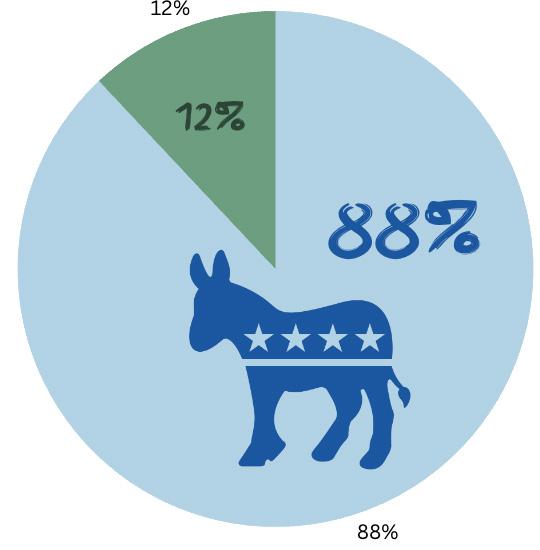
According to data from The Boston College Heights, 88% of Newton’s party-registered voters in 2024 were Democrats. Given that Newton is an overwhelmingly liberal city, protest attendee and junior Liam Caldicott said that he is disappointed in the vapid nature of student activism at South.
“Our [protest] culture at South is pretty
lescent protesters has to do with the fact that the protested issues don’t affect many South students.
“I don't think it's a structural problem within the school,” she said. “It's more of a structural problem with [the fact that] we are in a predominantly white, wealthy suburb, where we're not as easily prone to the effects of the issues that are happening.”

lackluster, and I'd appreciate seeing more student interest in these mat - ters,” he said.
“Sure, people talk about stuff, but there's nothing done about it.”
Kopinja said that the lack of ado-
Politically active freshman Almog Keshet said that students lack the drive to protest issues that don’t involve them.
“There isn't much publicity, and people don't really feel like they need to [participate], because it doesn't necessarily personally affect them,” they said. “[Since these people are] not as affected by [the issues], they take less action.”

The “3.5% rule,” coined by political scientist and Harvard Kennedy School professor Erica Chenoweth, is an observation that the most suc cessful social movements mobilized at least 3.5% of the population.
Chenoweth’s data calculated that two to 4.8 million people attended the No Kings Rallies on June 14, 2025, meaning that only a little over 1% of the United States’ total population attended the protest.
To reach the 3.5% benchmark, an additional 12 million people would need to join the movement. If a fraction of 73 million people under the age of 18 in the US were to join the movements, the 3.5% threshold would be met.
With a lagging number of youth at protests, history department head Jennifer Morrill said that she hopes that students will still find a way to exercise their rights.
“My biggest hope is that people always feel empowered to speak their mind, to ask questions. I hope that people will be curious about what they don't know instead of certain about what they do know,” she said. “Freedom of speech, the right to assemble, free speech, the right to the free press: those things are such important aspects of our society, and we have to fight to maintain them.”
One exerciser of these First Amendment rights is junior Leyla Grossman, who has been to Capitol Hill and Newton City Hall to speak about political issues. Grossman said she wishes more students would use their voices as catalysts of change.
“We walked out when we were done speaking [at a congressional meeting on Capitol Hill], and one of the council members literally came out with tears in his eyes, saying how powerful it was to hear two young voices,” she said.
Grossman also said if students at South spoke up more, their actions would make an important statement.
“To hear people speak about something that doesn't just affect them, especially in a town like this — not to be mean to any of our friends really says something,” Gross“It would mean a lot kids at South spoke

Similarly to Grossman, Skvirsky said that speaking up for what you believe in is more important than ever.
“I hope that there will be a realization that, [with] the way things are moving in our country, if we do not act with everyone taking some kind of action that they feel is right for them, we're going to turn around and see a country that we would never have wanted,” he





By Leena Choi & Aurora Gerber
unities, a large selection of art courses, including orchestra, band and choir, as well as two unique performing clubs, Newtones and Children of the Candy Corn. The Newtones, South’s a capella group, recently scored third place in the Varsity Vocals International Competition of High Schools. Children of the Candy Corn, South’s improv comedy group, spent the year preparing for shows to present at South.
Newtones, they would [say], ‘You're doing so good,’ and then they would laugh because we aren't doing that good, but I had so much fun doing it,” she said.
Freshman Lenny Cho, a tenor for Newtones, said practicing with these groups may seem daunting at first, but both groups welcome everyone with open arms and support.
“Even if you're not talking, there's never a moment when you feel left out,” she said. “They'll just come up to you.”
photo contributed by Netta Miller
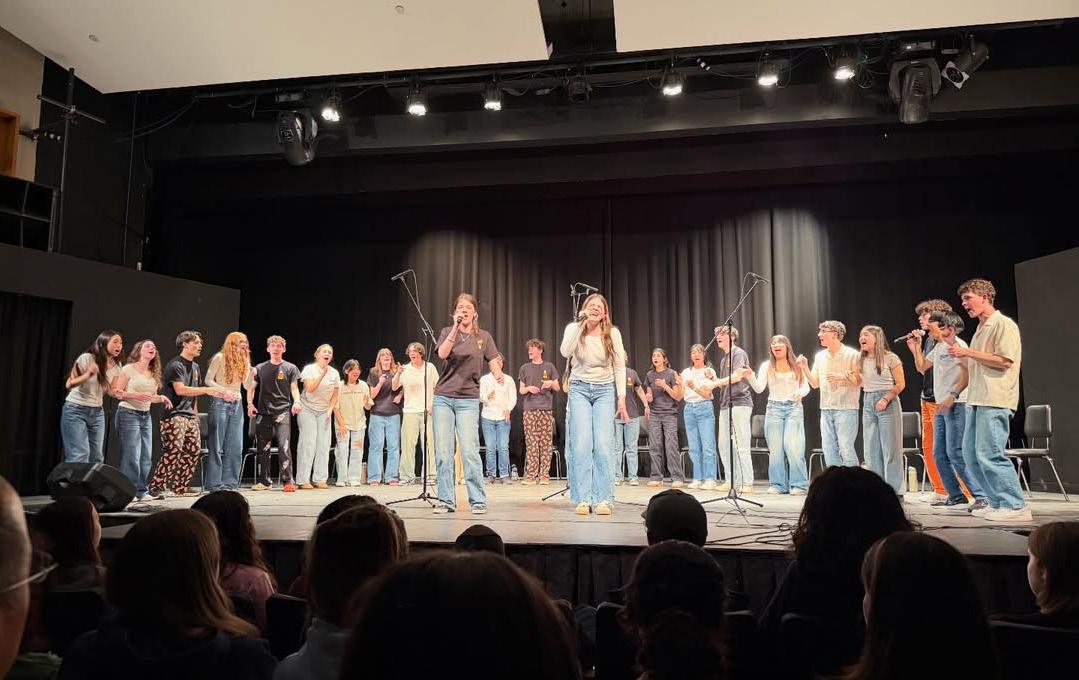
Together, on April 7, the two groups held their annual joint performance, Candytones.
Freshman Stella Thurm, a member of Candy Corn, said the two groups rehearse together in the weeks leading up to Candytones, with Newtones providing guidance on how to sing.
Sophomore Ji Jeong, a soprano for Newtones, said the group is a tight-knit community that embraces mistakes.
“I've thrown absolute stinkers on stage, and I've done really badly on stage before. I've done amazing on stage before,” she said.“Other soloists have done horrendous, great, whatever

and sharing ideas collaboratively, also making many memories along the way.
Senior Andrew Linsday describes the Candy Corn community as a family.
“We spend four hours together a week,” he said.“Candy Corn definitely feels like a family inside of South.”
Thurm said that being a part of Candy
than, winning.
“In other areas of my life, it's always about the results … and it's always about the wins and the losses,” she said. “[But in Newtones], there are no wins and losses. There are performances and there are good days and bad days, but it's always a day. [Everyone] always puts in their share of effort to make that good.”
Seyoon Byun & Grace Yang Managing Editor, Editor-in-Chief
From April 25 to 28, South’s DECA team attended the 2026 DECA International Career Development Conference (ICDC) in Atlanta.
The Distributive Education Clubs of America, or DECA, is an organization preparing student leaders and entrepreneurs in marketing, finance, hospitality and management. South’s team qualified four members to the international competition: sophomore Danica Hou and juniors Peter Looby, Karuna Tarafdar and Andrew Yum. The latter three will assume leadership positions on the team board for the 2026-2027 season.
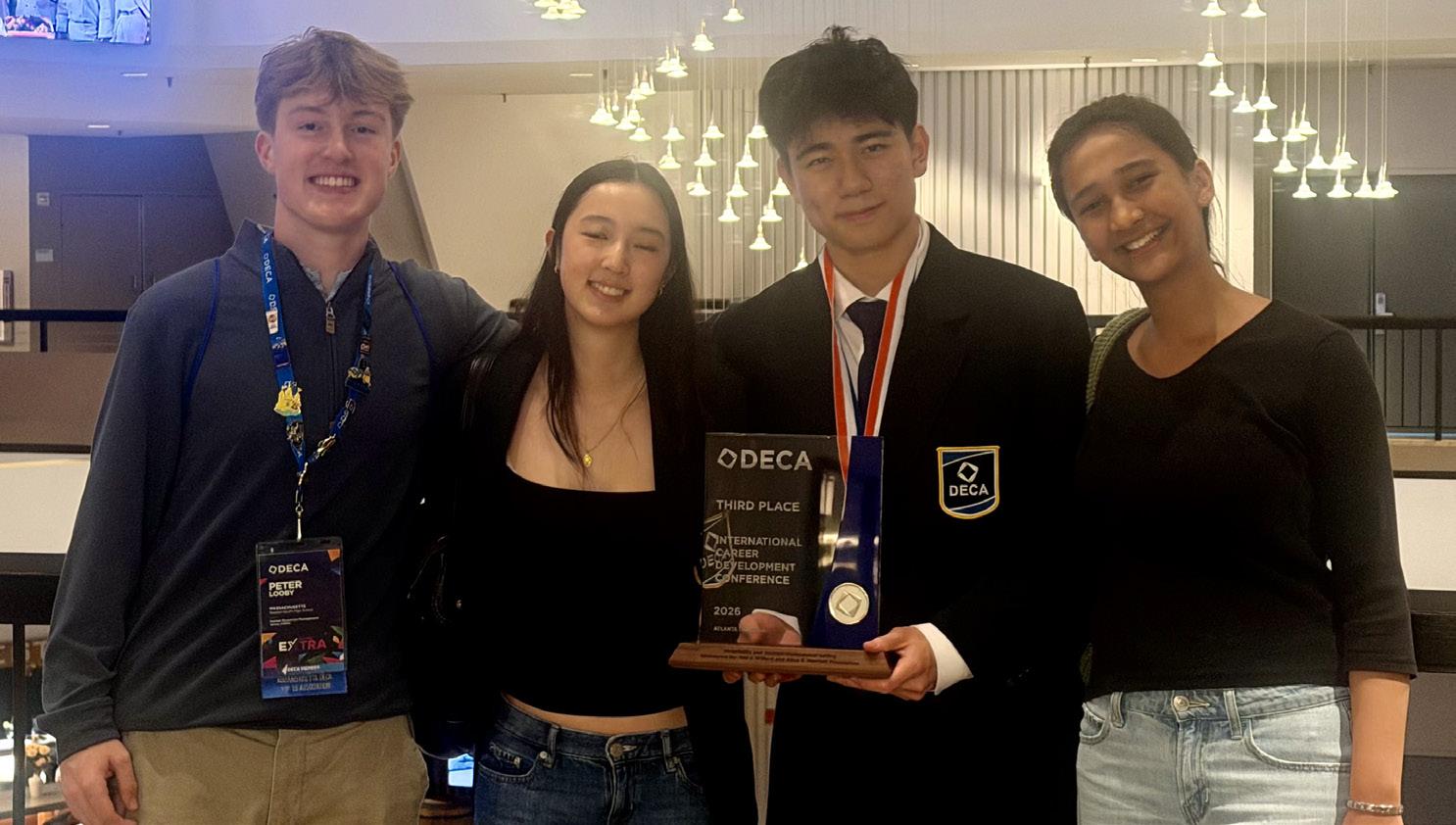
This year’s competition was historic for the team, with Yum winning third-place in his event, Hospitality and Tourism Professional Selling (HTPS).
Not only is he South’s first DECA world champion, given his top-three placement, but he is also the team’s first member to place in the top 20 since its inception over 10 years ago.
For Looby,Yum’s win was the most memorable aspect of ICDC.
“That was a surreal moment, because no one from our school has been a finalist,” he said. “He was a trailblazer when he got that.”
Jenna Derkoski, South’s DECA faculty advisor and a Family and Consumer Sciences teacher, said a lot of hard work and practice helped contribute to an environment where a victory like Yum’s could happen.
“Not everyone wins, especially at first, but learning how to handle feedback, improve, and come back stronger is one of the most valuable lessons DECA teaches,” she said.
Junior Cooper McFarland, also on the 2026-2027 board, said team members are mutually supportive.
“People love to talk to each other and discuss how they can improve,” he said.
Yum joined DECA in his sophomore year after hearing about it through social media and from friends already in the club. He said it was at
another one where he could prepare in advance for competitions.
“I mainly was looking for … something that I was interested in, because I'm going to dedicate so much of my time,” said Yum. “One was about influencer marketing for a visitor's bureau, and I felt like that was something that I was experienced in and that I know more about.”
his first district competition that he realized he enjoyed DECA and could commit to it.
“Joining DECA allowed me to find my interest in business or economics,” he said.“It kind of helped me find purpose.”
Originally, he competed in a role-play event that involved on-the-spot problem-solving and presentations. He said the high intensity and pressure of the event prompted him to look for
Beyond providing the opportunity to compete at conferences, DECA helped improve Yum’s public speaking skills and ability to succeed under pressure. During the club’s meetings, he said that Derkoski chooses random members for practice role-plays.
“Public speaking was a huge fear of mine,” Yum said. “She made me do a role-play in front of the whole class — that was so stressful, but it
helped me build that confidence.”
Although there are still some nerves associated with preparing and waiting to present for the competition judges, Hou said DECA’s overall competitiveness is rewarding and fun.
“I realized there are certain areas where I do enjoy the competition,” she said.“In school, when we do presentations, I feel a lot more confident with that, and being creative and thinking on the spot.”
Improved self-confidence, however, is not the only highlight of being part of South’s DECA team.
Tarafdar, who attended ICDC for the second consecutive year, said her favorite aspect of DECA is either competing with friends or mentoring.
“I love sharing my ideas and being completely heard,” she said.
Looby said the team’s leadership tries to ensure the club is collaborative. Its focus is not only on competing, but also on providing opportunities for members to meet one another. There were no heavy expectations on Yum to do well, either.
“That environment, where it’s competitive, but it’s also targeted toward collaboration and getting to know people better, set him up for success,” he said.
While at ICDC, Yum said his main focus was getting South’s name out there as a school capable of doing well at the international level. Simply being able to represent the school, he said, was something he was grateful for throughout.
Regardless, he remained open to the opportunity to win — a mindset that ultimately paid off, bringing home a glass trophy for the first time.
"If I'm here already,” said Yum, “why not just commit all the way?”
Elias Arroyo, Jonathan Cheng, Denis Eraslan & Henry Oliveira
Features Contributors, Features Editor, Features Contributor
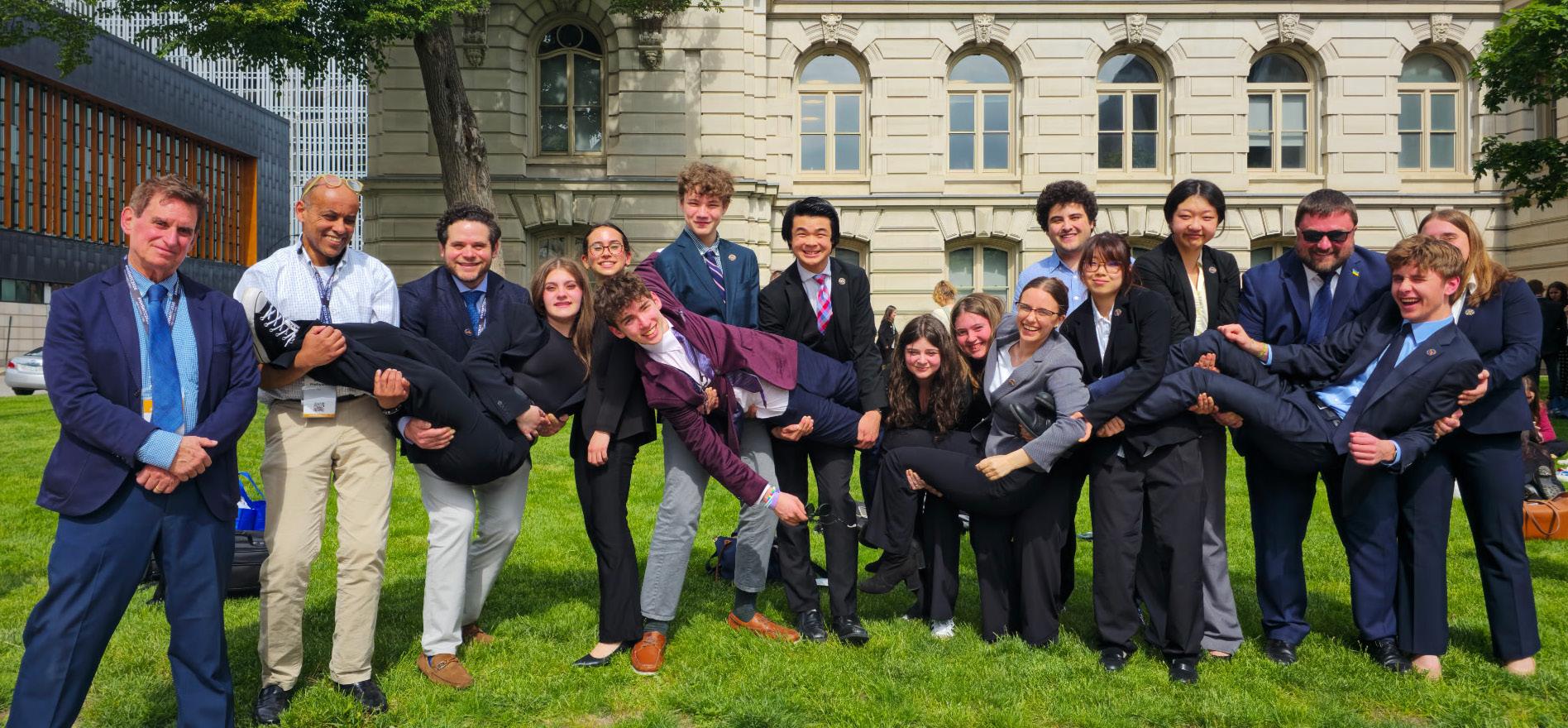
After a 16-year drought, South’s Mock Trial team is once again the best in the state. From May 7 to 9, the team competed in the National High School Mock Trial Championship in Des Moines, Iowa, after winning the Massachusetts state championship.
The team’s achievement was especially impressive, having been eliminated in the preliminary round last year. Junior and captain Henry Fu said that their winning streak is the result of a well-organized team.
“We bounced back because we had a lot of new membership and new leadership,” he said.
“Instead of just being the best at mock trial, we had people who were great at managing the team.”
all that's important.”
Telio said that each person’s smaller individual achievements helped the team achieve its larger aim of taking home the state title once more.
“Some people made personal goals to make more objections, or to speak louder, or to speak slower,” she said. “All those things contribute to your personal score, which contributes to us winning.”

During trials, students simulate a courtroom with a fictional case by taking on
“Over there on the printer, you see that huge stack. That's what they memorize inside and out. They memorize it … in one month,” he said. “That's why I'm saying that they are excellent.”
Members of the team also play a vital role. Freshman Jamie Brandt said that being a team member requires tremendous dedication.
“We have two-hour meetings on Wednesday and three-hour meetings on Sunday,” he said. “Preparing for nationals, it's probably been five hours a week outside of
he said. “We were assertive, and we stood and were strong advocates for our clients.”
Leading up to the Des Moines tournament, senior and captain Owen Butler said he felt eager to represent his home state on the national stage.
“I'm proud to do this thing,” he said.“I'm excited to represent Massachusetts. I've never done anything like that before.”
During Nationals, the team placed 34th out of 46 teams. Metcalf said that simply competing at the tournament gave the team valuable experience and insight.
The
Senior and captain Sofia Telio said that before every competition, captains gave pep talks to encourage the team to set their sights on individual improvement rather than winning.
“One of the things [we] would tell the team is, ‘Look, it doesn't matter how many rounds we win or lose. Forget all of that,’” she said. “What you're here to do is learn. You can set a goal for yourself to achieve that goal; that's
the roles of witnesses, lawyers and attorneys. None of it is easy work; each case requires hours of advance preparation.
Chemistry teacher Gojeb Freyhwot, the team’s faculty advisor, said the captain’s roles include memorizing a large number of rules, laws and case details, which takes immense organization and skill.
those five.”
As a result of their hard work, the team improved significantly, allowing for a better chance at making it to Nationals. Coach Joel Metcalf said that the team was able to refine many specific skills over the course of the season.
“This year, we really excelled at the presentational aspect … We were very smooth,”
“The national championship gives us a great leg up for next year. I think we should be considered the favorites in Massachusetts, mainly because of what we learned about high level mock trial from seeing the other high level teams in the Nationals,” he said.

“There's a lot of teamwork dynamics, public speaking dynamics, legal advocacy dynamics and improvisational dynamics that you can learn from a successful Mock Trial season like this.”
Freyhwot said that, altogether, the team's shared journey through the state championship and Nationals this season helped boost morale.
“This year, we hit that sweet spot,” he said. “It came together this year, and next year, it's getting even better.”

South’s Counseling Center is available for students seeking a break from the school day.
By Naomi Koganov, Abigail Lee & Maven Mceachern
High school can be a truly overwhelming time, but some resources can help make it more manageable and enjoyable. The Counseling Center, located in Room 6176, is a space where students can access support services, participate in group discussions and connect with peers and counselors.
The Center is run by four of South’s adjustment counselors who are actively working to make the Center a more welcoming environment for students. The room is filled with comfortable couches and pillows, and is a warm, cozy environment that is open to everyone.
Nicole Mottley, a school adjustment counselor, said that the Center was developed in response to challenges students faced returning to in-person school after the pandemic.
“Being in the pandemic, being isolated from friends, all the stuff that was coming up … we were needing a place where we can really work with students and address their needs,” she said.
Kathleen Solage, another counselor working in the Center, said that the Center was designed to expand the types of support available to students throughout the day.
things about the Center as a place — it's up to you how you want to use it.”
Daniel Rubin, the head of South’s counseling department, said that one of the main initiatives of the Center is to refocus the perception of mental health toward strength rather than weakness.
“We can develop to continue to shift away from only understanding mental health through the lens of a diagnosis of some kind, which is really more like a deficit approach as opposed to a strengths-based approach,” he said.
Guidance counselor Sarah Style said that
For senior Charlotte Klingaman, the Center was there as a resource during a stressful time. She said that the opportunity to connect with a counselor before getting her wisdom teeth removed helped alleviate her stress.
“It was really nice to just sit there,” she said. “He was talking about his experience [getting teeth removed], and we were joking around about how painful experiences build character.”
Students and staff members also recognize some of the challenges the Center faces. Hardigg said that the general awareness around the space could be improved.
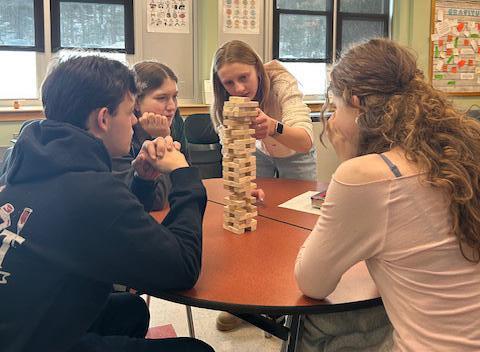
“Part of it was we wanted a space for students to connect and receive support,” she said.“That's kind of been the basis of our groups.”
Mottley said that the Center offers opportunities for students to take part in group activities and discussions, talking about anything from general self-care to transition out of high school for seniors. self-select the groups learn cope de-stress relationships,”
Senior An said he believes tant that students need, and the provides that in ways.
“They're very receptive to you need,” he said. need space, they'll space. If you want they'll talk you. That's of the
The Center also hosts regular events to create a more community-based atmosphere and to encourage students to participate.
“We did a couple of open house events, which were very low-key,” she said. “We sort of
“It is moderately achieving, but there definitely needs to be more promotion around it,” she said.
English teacher and restorative practice coordinator Alan Reinstein said that the Center’s location on the periphery of Goodwin House makes it difficult to find and easy to overlook.
“I wish it were more centrally located. I just don't think enough people know about it,” he said. “I wish we were in a place where people just walk by it all the time, and they say, ‘I'm going to go there.’”
Despite these challenges, counselors and students said that they hope the Center continues to grow and encourages conversation around mental health among students.

Many students said that the existence of a dedicated counseling space helps normalize discussions surrounding stress, anxiety and in school
contribing surhealth among stuhealth is not that we need away from,” he “It's something we can embrace talk about and our best [to] rethe stigma around. The ter helps in that conversa -
Alan Reinstein
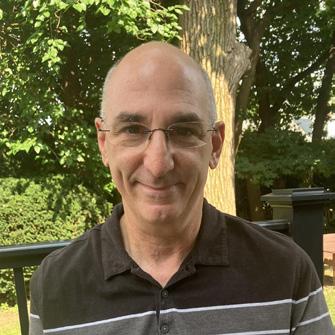
Afriend from college called me up the other day by mistake. She called the wrong “Alan”, and I’m glad she did.
Her about-to-be daughter-in-law was experiencing an emotional breakdown when she realized that the wedding dress she would be wearing that afternoon did not look or fit as she’d hoped. My friend meant to call dressmaker Alan but had phoned college-friend Alan instead. We hadn’t spoken since early COVID, when people had lots of time on their hands to call up old friends to try to reconnect some of the torn shards of the global community.
I answered right away. “My first thought was joy when I saw your name,” I said, “but now it’s concern,” suddenly worried that she was calling with sad news. Friends who haven’t spoken in six or more years may still call when there are sad announcements to make.
“It’s concern,” she said — still unaware that she was speaking to an Alan whose last sewing gig was in 1987, stitching up his backpack with dental floss — and asked me if I had forgotten to add the patch that I had said I would.
I still didn’t know that I was the wrong Alan and thought that I hadn’t seen a wedding invitation that I should have seen or hadn’t sent something special for the bride’s dress. Once the confusion melted, and it was clear to everyone that I was the wrong Alan, she promised to fill me in on more details later and went on her way to find the Alan who could help.
She texted me the next day: “More info to come, but it turned out splendidly.”
That same day, my son, two years removed from finishing college, called me to share news that he had connected with a fellow classmate through Instagram, a friend whom he had not spoken with for four years, who was planning a visit to LA, where my son lives. My son used the word nourishing when he described the feeling of this renewed connection. An old friend — an old friendship — can feed you.
And earlier than that, a few Saturdays ago, I thought of a middle-school friend when my wife and I passed by the highway sign for Scituate on our way home from a beach trip to Nantasket. He had moved from New England — Scituate — to Maryland at the start of seventh grade, and I became one of his early friends. Although we drifted into different friend groups by high school, he remains in my mind as an important friend. In the early days of our friendship, he taught me how to juggle and how to yell happy hellos to people on the other side of the street while walking to the park. I found his email through LinkedIn, emailed him, and am waiting for a response. If I don’t get one, I’ll assume he’s working somewhere else. I’ve got a few other ways of finding him. Why am I writing about this — my own connection with a college chum, my son’s renewed connection with his, my hope for seeing a pal from middle school? Here’s why. Know this, all you soon-to-be graduates: Deep friendships are burnished during your school days, and the strength of most of these bonds does not dissipate with time. Six years or 46 years. The something that was there at the school cafeteria in 10th grade will still be there whenever you’re ready to reclaim it, even if that reclamation begins with being the wrong Alan.
Leena Choi & Abby Miller Features Editor, Managing Editor
For 11 years, Jenny Robertson has been passionately instructing at South, teaching a variety of classes and advising clubs. Currently, Robertson teaches Sophomore English and Women in Literature.
Senior Mariana Alencar, in Women in Literature, said that Robertson teaches in a unique way, focusing on the standards society holds for women compared to men.
“I like that her class isn't a typical English class,” she said.“There's a lot more talking about things and analysis. I feel like she has maybe not the most typical approach to teaching literature.”
Robertson said that one of her fa vorite books to teach is “Home going.” Sophomore Grace Gaddipati said that Robertson makes reading enjoyable and engaging.
“[Homegoing] does get repetitive … [but] she goes over all the different connections, like the literary analysis, but also how it ties back into different characters,” she said. “She's very descriptive and very passion ate, and it keeps people engaged.”
Similarly, sophomore June Henry said that Robertson can lead the class with knowl edge and enthusiasm.
“My favorite memory from English is probably one of the Socratic seminars. I really like those. I like how involved she is and how she really, really knows how to lead a discussion,” she said. “She really makes sure that
everybody is focusing on what's happening, which is great. There's some great discussions that happen in class.”
English teacher Alan Reinstein said that he has also noticed Robertson’s connection with her students.
“The relationship she has with her students matters a lot. In that way, we're kind of kindred spirits,” he said.
Robertson said that she loves teaching students, feel


spark.
“I love the moments where I see light bulbs go off, or I see engagement,” she said. “It's exciting every day, because you never know what to expect.”
Although Robertson said that she has always wanted to teach, before coming to South, she was a bookstore owner in Amherst and then a lawyer who specialized in domestic violence and family law.
English teacher, in high school, I felt like was the first person who saw me,” she said. “I didn't come from a family that really focused on education or my education. So it meant a lot to me when my teachers saw something in me.”
In addition to her dedication to teaching, Robertson said that when she is not at South, she enjoys being outside.
“I love to swim, and I love to be outside in nature, and be with my dog, and things like that,” she said.
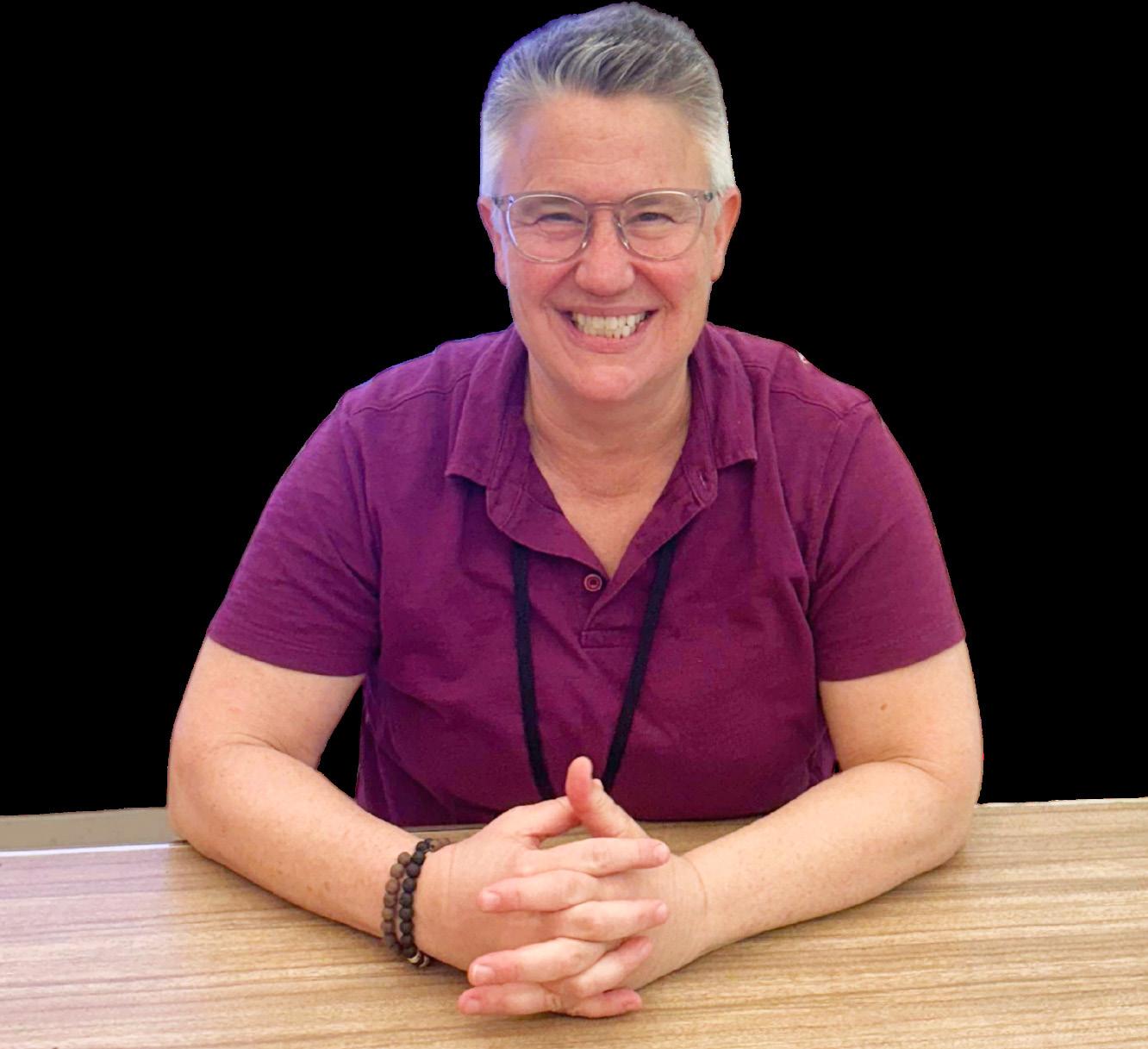
“I always wanted to be a teacher. It's a

Sophomore Jason Huang said that Robertson has shared her past in class, talking
“When she was in law school, she had to write and present some speeches or cases, and she was really nervous,” he said. “It caused her to do really poorly. And she got several criticisms from her teachers or her professors.”
Huang said that Robertson shared her strategies for reassuring herself during law school, which allowed him to further connect with her.
“The next time she presented things, she tried hard to build up her confidence, and as it turned out, she ended up being really confident in her speeches, and she did really well, which helped her become a lot more confident of a
Librarian Margaret Schoen said that she admires Robertson’s passion for her job.
“[She is] thoroughly dedicated to her students and her subject, and it's impressive to see,” she said.

By Andrew Petrilla
Previously known as Alice, Paige Taylor plans to attend Virginia Tech for biochemistry and veterinary sciences.
The school will give her a mix of a traditional four-year college and the more regimented military academies she applied to, West Point and the United States Naval Academy.
In April, Taylor visited Tech for an overnight program, and the experience solidified her enthusiasm for the school. She was particularly drawn to the strength of their chemistry program, the balanced schedule that she could plan for herself and the beauty of the campus.
“It really just immediately felt like the right fit,” she said.
Having committed, Taylor said that she is glad to finally be done with the stressful process.
their physical examinations, congressional nominations and interviews.
Some students in her position might see it as having all been in vain, but for Taylor, it was an opportunity for her to challenge herself and grow.
“I'm really glad that I decided to do the harder applications for the academies,” she said.

“I lived in a lot of fear of what's happening next and anxiety over things I can't control,” she said.
Much of this stress stemmed from her applications to the military academies, with
“I am very proud, and it was the right decision to try, because I got to meet so many cool people, and I learned so many life skills.”
As she looks ahead to college, Taylor said she feels excited to pursue her passions and become more independent at VT.
“[I can] figure out who I am as my own person,” she said. “Just kind of figuring out who I am on my own terms.”
Having stressed about the application process, Taylor said that she urges other students to stay positive and grounded and trust that everything will work out.
“My favorite quote that I've been using this year is ‘Be where your feet are,’” she said. “Really just stay present in every moment.”
Mia Dalzell, previously known as Kate, committed to George Washington University (GW) in Washington, D.C., where she plans to major in public health.
For Dalzell, GW was an 11th-hour decision. After touring Scripps and Carleton over April break and realizing they did not feel right, Dalzell was left searching through her other acceptances.
“It was getting close to decision day, like two days before, and I was like, ‘I actually have no idea where I'm going to go,’” she said. “None of my options [were] really standing out to me.”
As the clock ticked closer towards May 1, the date many colleges require a decision, Dalzell said that she struggled to be honest with herself.
list with her brother for each of the schools, Dalzell said that she rediscovered GW. With all of the colleges she had applied to, the school had gotten lost in the choices.
“I realized how much I actually did like about it, and how weird it was of me to have dismissed it so early in the process,” she said. “I don't even know why, because [it] actually had everything I wanted.”

“I was kind of in denial about how I liked some of the other schools I had looked at,” she said. “It was kind of making me dread going to college.”
Then, while making a pros-and-cons
As she researched and toured schools, Dalzell found that an urban location and lively social scene were very important to her.
“They all promise you great classes and great faculty and opportunities and that kind of stuff,” she said.
“The real difference was where they were.” Thinking back on the months of work and stress, Dalzell is glad to finally be out of the woods.
“I feel very happy that I can just chill out and enjoy getting excited about going to college,” she said. “It's like, ‘What classes am I going to take?’, ‘What dorm am I going to be in?’ And it's nice that it's more real now.”
We spoke to committed athletes about the steps they took to play collegiately and the impact their sport has had on their lives.
By Thomas Timko

How did you get started doing track?
“I played soccer in both middle and all four years of high school. In middle school, my mom said, ‘You seem fast. You're going to do track, and it should be good to stay in shape for soccer.’ My freshman year, I had a pretty good outdoor season. It just kind of became a natural progression. [Throughout high school], it just became more serious, so going into my sophomore year, I was aware I'd run in college.” What has your sport taught you?
“Track taught me a lot about being dedicated to something. It's one of the things [where] if you skip your run, or don't work hard because it's just you, you get what you put into it. So I feel I have an accountability to myself to keep trying, and then also going to run in college definitely want to keep improving. I feel like it's mostly accountability to myself, because track is an individual sport.”
What is your advice to younger athletes?
“A lot of times I would get really nervous, but you can do hard things, and you just need to not be scared to take a risk. It's better to go try your best and know that you tried your best — and maybe not get the result you wanted than to have wanted to and never try at all. You just gotta be committed enough to it or be disciplined to it, and just keep trying.”

Who has been your mentor during high school?
“I would say a big mentor is my swim coach on my club. She has been really helpful throughout the whole recruiting process. She's always respectful, kind and trying to make me the best swimmer that I can [be]. But she also recognizes that as a person in high school, I can have other things going on, especially with academics. So she really helps me balance everything, and I was able to find the right place."
Who do you look up to in your sport?
I don't really have a specific person. Olympians in general are really inspiring to me. Not that I'm necessarily going to make the Olympics, probably not. But their work ethic and their drive to be the best possible is really inspiring, and it can be really hard, and I feel like they really handle the pressure well, so that's something I look up to.”
Who are you most grateful for helping you get to where you are?
“I'd like to thank my parents. They've been always supportive throughout this whole process, and told me they'll support my decisions no matter what. They've been really helpful when it was stressful with the recruiting, and provided me lots of guidance. Even though they're not necessarily familiar with the process, they're always there with love and support. I really appreciate that.”
Who is a person you look up to as an example in your sport?
“My high school volleyball coach has been a big role in my volleyball career because he runs the club that I play for. He's just a person that really cares about players’ wellbeing. I actually saw a lot of my highcoach in the Connecticut College coach. I really admired him, which is a big reason why I wanted to play for Connecticut College.”
Who has been the most helpful during the recruitment process?
“My parents were so helpful and supportive throughout this whole process. They got me places; they helped me narrow down colleges and navigate all this. My club coaches, too, were a big help. We had a lot of resources that helped us through this recruiting process, because as sophomores and juniors, it can get really scary.”
What are you looking forward to in college?
“In college, I just hope to be part of a community that is really supportive and that we get really close up for these four years. It makes the college experience so much better, having this type of group of girls that I can get really familiar with and that can become part of my family.”

What was the recruitment process like for you?
“It pretty much started freshman or sophomore year, I started emailing coaches and going to a bunch of ID clinics. It was a lot of emailing and going to clinics for a while, and then as junior year started, the talking to coaches picked up, and I started to do visit days. It felt so cool to just get knowledge to understand the other schools' programs, and I didn't feel like there were any bad choices. All the schools are super welcoming, and the teams are welcoming.”
What does your sport mean to you?
“Field hockey means a lot to me. It’s definitely a super big part of my life— a massive part of my identity. Field hockey has done so much for me. Anytime I'm stressed, I go play field hockey; anytime I'm having a bad day, I get on the field, and my day is instantly better. I can't put [into] words how much I love the sport, and I love the teams, and I feel so privileged to get to play with some of the girls I get to play with.”
What do you hope to get from the sport in college?
“My hopes are to make sure I'm having fun. It's really easy to get caught up in sports and forget that the whole point of playing these sports is to have a good time, create connections with those around you and become close with your teammates. So my goals are to create a good community where everyone feels safe and to connect with my teammates.”
Ayelet Dorfman Benjamin Sports Contributor
This season is special for South’s girls and boys lacrosse teams. Both teams have worked hard and improved from last year, despite the challenges in their way.
Senior Jacob Spector, co-captain of the boys lacrosse team, has been playing since first grade. Spector said that everyone was ready to start winning this season.
“We're very determined,” he said. “Last year it really didn't go well, so a lot of people went into the season wanting something more, and I think that that's coming out this year.”
Co-captain and junior Aidan Volk said that the team has had a good season so far.
“We've beaten a lot of teams that we lost to last year,” he said. “Definitely on an upper trend of winning and success, especially compared to last season.”
The girls lacrosse team is also doing well and has many goals for the season.
Head coach Angie Sutherland, who is in her eighth year leading the program, said that her players never give up.
“I'm very proud of this team for taking on as much work as they have. And doing it all with smiles and laughter,” she said.
Beyond the team’s levity, Sutherland said she enjoys coaching the team because she gets to see the result of the players’ hard work.
“I love seeing when we're working on something in practice, and it comes to life in games,” she said.
Freshman Ella Chow said she enjoys meeting new friends and improving her skills
on the team.
ress every day,” she said.“Everyone is supportive of each other.”
supports each other.
there are people there to support you and work together,” he said.
taught him to trust his teammates and give them room to lead.
even though I’ve been playing for longer than some of the other people, and I’m the cap tain of the team, there’s still a lot of space to let others make decisions and do their own things,” he said.
things, and a lot of times I just let them make decisions,” Spector said.
teacher Scott Perrin, who previously coached the JV lacrosse team, said that both programs are headed in the right direction.
the best part of coach ing goes beyond
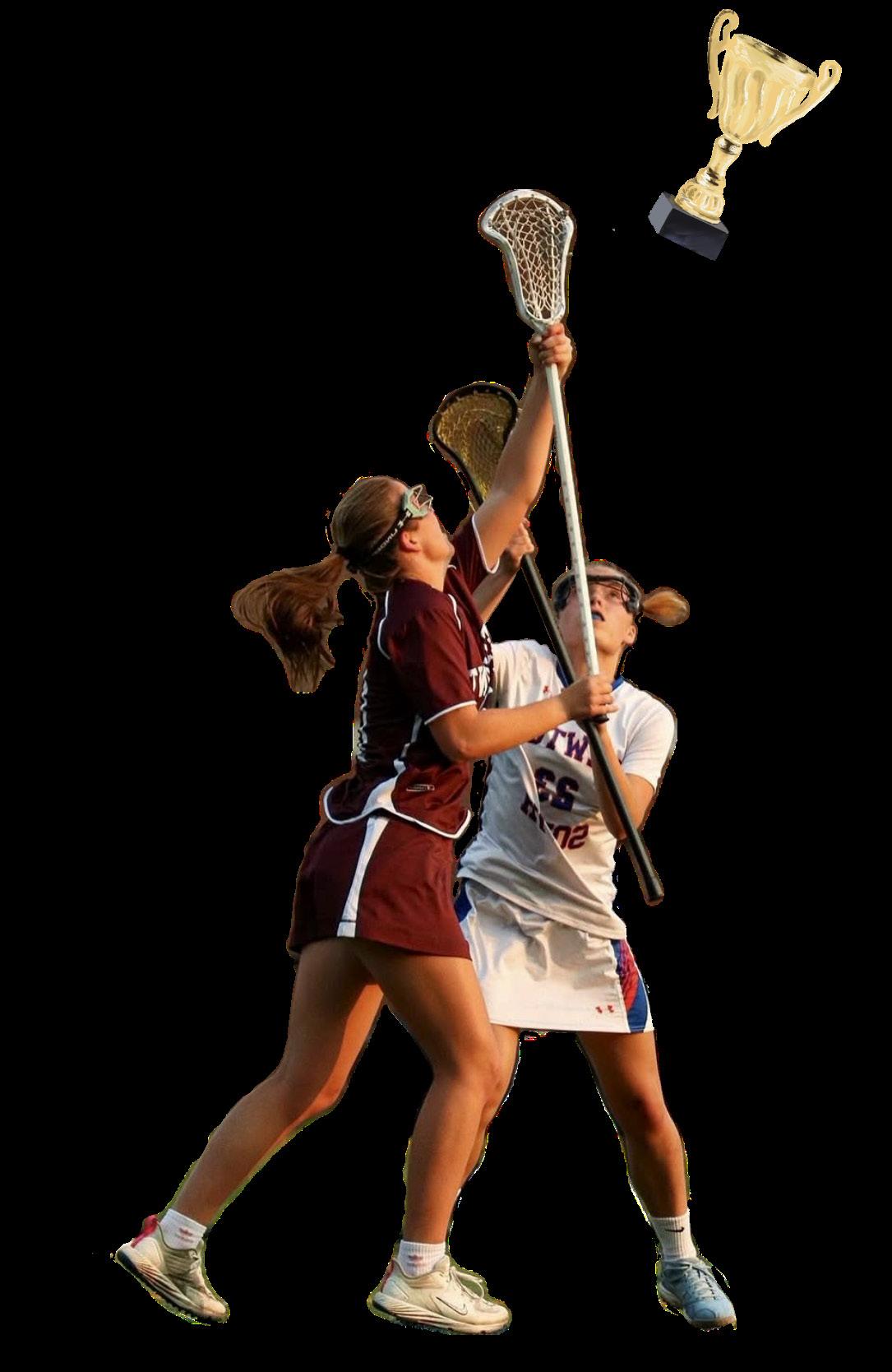
watching kids they didn't the ability to
Perrin said his perience with the boys highlights the difference
“[My favorite memory is] watching them have the success that we knew that they were capable of having over the past few years,” he said.
“It’s watching this group of seniors and juniors come together and sort of begin to put us back where we've been trying to be for many, many years.”
The teams’ success this season is not without challenges. Volk said that lacrosse has taught him
“There's a lot of frustrating moments. Last year, we were 1-15,” he said. “[I’ve learned] a lot of perseverance there, and keep playing my hardest. Keep pushing through and looking to keep trying and better this year as we have.”
Patrick Picciuto, the crosse head coach, started the team this year. He believes the team is firmly
“Our short-
term goal this year is to win a first-round playoff game, which I don't think we've done at Newton South in at least 10 years,” he said.
He said he also has a longer-term goal involving the rest of the school’s students. “My long-term goal is to build a program here that is attractive to students.”
Picciuto said the lacrosse teams are forming a welcoming community where everyone is welcome, regardless of experience or age.
“If you are a student who is not doing anything in the spring or is not sure what they want to do in the spring, please think about playing lacrosse in the future,” he said.
Perrin echoed that sentiment, noting that lacrosse offers students a unique opportunity to be a part of a close-knit team environment. As he put it simply: “To me, it's the greatest game that North America has.”
[My favorite memory is] watching them have the success that we knew that they were capable of having over the past few years.
Scott Perrin Former lacrosse coach
problem. Female athletes are judged on standards that extend beyond athletic performance.
Women in sports have never been judged solely on performance. Standards of fairness shift depending on who’s competing and who’s setting the rules. If women’s sports aim for fair competition, why does the definition of fairness keep changing?
Women face inconsistent standards compared to men. Media coverage, institu tional policies and public perception shape these standards, which in turn influence how society values women’s sports. The debate over transgender participation is just one example.
Media coverage is a stark example of this imbalance. For decades, women’s athletics have received only a fraction of the attention given to men’s sports.
A 30-year study by the University of Southern California (USC) and Purdue Uni versity researchers found that women’s sports made up only 5.4% of sports coverage in 2019, while the remaining 95% focused on men’s sports.
audiences, women’s sports still disproportionately less attention.
visibility shapes audience inter est, sponsorship deals, public investment and cultural macy. Sports with the viewership receive the most and social support.


to the margins, female athletes must compete not only against their opponents but also against the system that undervalues them.


Unfair media coverage is only part of the
sition is incomplete, especially at the elite level.

Some studies suggest physical advantages are reduced significantly after hormone therapy, while others suggest that certain advantages may persist. Experts acknowledge that science alone may not settle the debate because fairness is ultimately a policy
The uncertainty is the problem. If women’s sports are meant to operate under fair competition, fairness cannot be based on shifting
Different sports organizations apply different rules, creating an environment where fairness is constantly debated but rarely or clearly defined.
The transgender debate did not create the issue of shifting standards in women’s sports; it exposed a problem that already existed. Women’s sports have been shaped by unequal media coverage, institutional inconsistency and public narratives that redefine fairness.
Until standards become clear, transparent and consistently enforced, women will continue to compete in a system where rules change depending on
The Red Sox had an abysmal start to this season, with a sub .500 record and staff firings.
OThe Sox had a game the next day and no clear replacement.
team’s difficult start to the season. The Sox had a 10-17 record and were the second-worst team in the MLB.
Cora, hitting coach Peter Fatse, bench coach Ramón Vázquez, third-base coach Kyle Hudson, assistant hitting coach Dillion Lawson or major-league hitting strategy coach Joe Cronin.
central, beloved figures of the Red Sox organization.
warning, it follows a trend of recent years. Red Sox owner John Henry has been playing moneyball for more than two decades, so this kind of major change was not a shock.
in the past (hence, as evidenced by the 2018 World Series win), Henry doesn't seem to understand when it is time to stop playing it and start paying.
victory, several Sox players in their prime were traded away for players who would cost less.
Mookie Betts, Jackie Bradley Jr., Andrew Benintendi, Rafael Devers, Sandy Leon, J.D. Martinez and more. Many of these players are still relevant today.

Betts, Bogaerts, Devers and Martinez have all won Silver Slugger awards. Additionally, players who used to be on the team have also won the Gold Glove, including Bradley Jr., Betts and Benintendi.
However, these players are all noticeably absent from the 2026 Red Sox roster. While Betts and Benintendi were traded, Bradley Jr., Bogaerts and others became free agents.
In most cases, this was not because the player wanted to leave,but because upper management wanted to avoid paying the long-term, highvalue contracts that these players commanded
no lined-up replacements for the departed staff, despite it being midseason, which is highly unusual.
Interim manager Chad Tracy has taken over, along with other coaching staff called up from the Triple-A Worcester Red Sox.
Since April 25, it has been revealed that Cora was likely fired over disagreements about roster construction and philosophical differences. However, the firing was unnecessary and did not address the actual problem. Alex Cora was not the issue.
The real problem is that upper management refuses to spend money on experienced players. The Sox are a team increasingly composed of young players.
On the 2018 roster, Rafael Devers was new to the majors, while players like Bogaerts and Betts had many seasons under their belts. With this roster balance, the veteran players can lead the team — both on the field as a player and off it as a mentor — while giving rookies space to learn and adjust to the majors.
Baseball at the major-league level is vastly different from even Triple-A, so it takes time to adapt and build the confidence needed to thrive.
When players are learning the game, it is essential to have veteran players on the field to guide and take pressure off young players. While rookies are talented players individually, they need support from veterans to find their
place and settle into the team. The Red Sox, with mostly rookies, cannot find a rhythm and
This is where actual investing comes in. Yes, a team can include rookies on its roster, but not at the expense of talented veterans, who have gained experience in the games. Furthermore, that team should not have only rookies. Veteran players might come with big contracts, but that is because they have proven they are good players who can thrive at the highest level, and help younger players do
Given recent trends, it appears that John Henry cares more about profit than building a quality team. Owners owe fans an experience worth watching, and not games that drive people to leave in the fifth inning because the Sox are
Fans will keep coming to Fenway Park because it has a history of supporting an incredible team, with one of the biggest rivalries
So, John Henry — capitalizing on that for personal gain, when you already have a net worth of $5.7 billion — is not the solution. You have more money than you know what
Spend it either on signing high-quality players with experience, or sell the team. Don’t string fans who cling to have the vague hope
The moneyball strategy is not an awful idea and has its own merits. You can get players cheaply and develop them into great players. But you are missing a key understanding, because the fatal flaw is clear: the second one of those players becomes great, and their contract is up, you cut them loose.
So yes, the Red Sox suck right now. Stop scapegoating coaches when the real problem is the ownership’s and your unwillingness to spend your ample amount of money on quality players. Something needs to change. Either change your approach to actually benefit the players, fans and overall team, or sell it. Because when Red Sox fans are literally chanting “sell the team” at games, they have a point.
Margot An & Sofia Castillo Sports Editor & Sports Contributor
As the only Grand Slam played on clay courts, the French Open is known for producing long, intense matches.
This year’s French Open gained widespread attention after Carlos Alcaraz, the two-time defending champion, withdrew from the competition. Alcaraz pulled out not only from the French Open, but also from preceding tournaments such as the Madrid Open and the Italian Open due to a wrist injury.
With the tournament suddenly missing its reigning champion, the conversation quickly shifted to what this means for men’s tennis, and more importantly, who is the favorite to win the French Open?
Most would argue that Jannik Sinner, the current world No 1. and the four-time Grand Slam champion, is heavily favored to win. He has won five ATP Masters 1000 titles this season and has reached the quarterfinals in all tournaments he has entered.
Beyond his performance, Sinner’s mental toughness and ability to stay composed under pressure have consistently proven to produce wins. Led by coaches Darren Cahill and Simone Vagnozzi since 2022, Sinner has quickly skyrocketed in the rankings and become one of the most, if not the most, prominent players on the ATP tour.
However, with the temperature in Paris shooting up to 91 degrees, Sinner suffered a physical collapse in round 2, prompting him to take out a medical timeout. He began the match with a lead against Argentina’s Juan Manuel
Cerùndolo, but ultimately lost 3 sets out of 5.
On other courts, many players such as veteran Novak Djokovic, world No. 3 Alexander Zverev, and rising young stars like João Fonseca and Rafael Jódar are expected to do well.
As the only man to have 24 Grand Slam titles to his name, Djokovic had both the ex perience and determination to capture another major before retiring and extend his record for the most Grand Slam titles in the Open Era.
Surprisingly, Djokovic also lost in the 3rd round against Brazil’s Fonseca.
Fonseca advanced to the quarterfinals of the Monte Carlos Masters and additionally, Spain’s Jódar
On the other hand, the top-ranked German player, Zverev, has struggled to reach the level of tennis that Sinner and Alcaraz have produced. However, with Alcaraz and tention, this is his himself and win Grand Slam title.
lower back and hip issues, raising doubts about her French Open form and title hopes.
Looking on women’s side, world No. 1, Aryna Sabalenka has yet to win a French Open title. Although she is the top women’s player right now, she is facing injury concerns after a surprisingly early loss to No. 28,

made it to the quarterfinals of both the Madrid Open and the Italian Open.

Meanwhile, world No. 4, Iga Świątek, and world No. 3, Coco Gauff, are the players to look out for at Roland Garros. After making it to the semifinals at the Italian Open and with four French Open titles, Świątek is looking terrifying on clay again.
Gauff is the reigning champion of the French Open after beating Sabalenka in last year’s tournament, and she has had impressive consistency on clay.
However, Gauff recently opened up about mental health issues surrounding the pressure of the sport. In a recent interview, she revealed that she has been struggling to find sufficient motivation on the court. Yet, she has continued to persist, and fans hope to see her feeling and performing her best this June.
A recent controversy has surrounded the French Open, from both the men’s and women’s sides, regarding prize money. Some of the top-ranked players have threatened to boycott the Open since it appears that players are being paid less than 15% of the total revenue.
Players such as Gauff, Sabalenka and Sinner have addressed this issue, arguing that it is not just a financial problem, but a respect problem, for the hundreds of players not being paid what they deserve. While it does not seem that the boycott will occur this year, it is definitely a possibility in future years.
With Alcaraz out, and among the current contenders, Zverev feels most likely to claim the title at Roland Garros. As for the women’s side, the draw remains wide open and the outcome unpredictable.





(Jan. 20-Feb. 18):




This is the summer you finally pick up a new hobby. Jetskiing, handstands, cutting your friends' hair — whatever it is, go for it. New summer, new you!
Pisces (Feb. 19-March 20):
Step away from the water this season and head for higher ground. The mountains are calling, and there's a good chance you'll make some unexpected animal friends along the way.
Aries (March 21-April 19):
First one in, last one out the pool! Go for the biggest cannonball, make some noise, and own this summer like you always planned to.
Taurus (April 22-May 20):
Put the planner down. The best parts of this summer aren't scheduled; they're already on their way. Sit back and let them find



Gemini (May 21- June 20):
You're in full social butterfly mode for this summer. Say yes to the last-minute plans, and hit the road! By the time school starts, you'll know everyone and have the stories to prove it.
Cancer (June 21- July 22):
You're hosting the cookout everyoone will be talking about all summer. After that? Retreat to the couch, pick a movie and relax.

Leo (July 23- Aug. 22):
You're one of the stars this summer. Wear the bold swimsuit, order the towering ice cream cone, eat it dramatically in public. And on quieter days, channel that energy into a full wardrobe refresh for next year!

Virgo (Aug. 23- Sept. 22):
Make the color-coded reading list. Bake the brownies. Put your phone down and enjoy beyond your screen and scrolls!

Libra (Sept. 23- Oct. 22):
It might actually be time to get that summer job. Polish up the resume, get your applica tions in and give yourself something to show for it come fall.

Scorpio (Oct. 23- Nov. 21):

Get to Six Flags Superman ride before anyone even finishes parking, and pose for the camera! Dominate 'em coasters!

Sagittarius (Nov. 22- Dec. 21):
Take a breath this summer. Stay in, find a great show to binge and let yourself recharge. Not every season needs to be an adventure —this one's for you.

Capricorn (Dec. 22- Jan. 19):
You've put in the work — now take the vacation. The emails will still be there. The summer won't. Log off!
Follow @nshslionsroar for 10 years of good luck —it's your cosmic destiny!

By Abby Miller
Prevention and Intervention counselor
Brian Deleskey is retiring a er 12 years at South.
Deleskey said that his favorite part about South has been working with students and his fellow faculty members.
Head of the Family and Consumer Sciences department and director of South's preschool Kevin Lenane is retiring a er 21 years at South.
Lenane said that he is grateful he joined South community.
“ "is position opened up and I had a background in early childhood educa-
Aer 15 years at South, South class of 1978 graduate-turned-Spanish teacher Cynthia Manthei is retiring.
In addition to teaching Spanish, Manthei has advised many clubs during her time at South, and has also overseen exchange trips.
“I was the advisor for Quidditch
English teacher Alan Reinstein said that he admires Deleskey’s passion for his work.
“He has a deep empathy for the kids he works with, who need to work with him,” he said. “He’s also very funny. [He] has the
“I’ll miss the students most of all because that’s why we do this work,” he said. “[I’ll also miss] the connections and support I shared with my colleagues.”
Aer 27 years at South, Todd Elwell is retiring from his position as a health and wellness teacher.
In addition to teaching, Elwell also worked as a volleyball coach. He said that the mentality around teams was evolving when he joined.
“I still felt like even when I was
tion. I’m glad I did because it’s been great. I love this job.”
Lenane said that he especially enjoys working with preschoolers.
“Every day is just so much fun with the kids here, and I’ve really enjoyed that,” he said.
ability to balance his earnest care for young adults with a sense of humor.”
A er retirement, Deleskey said that he plans to nd a new job.
“With three kids in high school and college awaiting, I will be working somewhere. We’ll see what the future has in store,” he said. “Maybe drive an ice cream truck.”
coaching, it was becoming more about culture and community,” he said.
Health and Wellness department head and teacher Patrick Jordan-Quern said that he admires Elwell’s encouraging spirit.
“[Elwell] has been consistent over the years in challenging people to bring their best self forward and think critically, and maybe
South preschool teacher Nicole Maloney said that she will miss Lenane's collaborative nature.
“He’s always very willing to work with you and be very open-minded,” she said.
Lenane said that a er retiring, he may still search for a new job.
“I’m probably going to look for a job, but I’m going to wait a couple months,” he said.
teacher Maureen Maher is retiring a er 27 years at South.
In addition to teaching Spanish, Maher accompanied students on exchange trips and said that those trips were one of her favorite aspects of South.
“A lot of [my students] have stayed in touch with people in Peru, and for me,
club, and I’ve been the advisor for FRead and Spanish Club,” she said. “I’ve led trips to other countries, too.”
World Language department head and French teacher Suzanne Murphy Ferguson said that she has appreciated many of Manthei’s qualities.
“She is somebody who is extremely
House Executive Assistant
Diane Trieger is retiring a er 17 years at South.
Trieger said that her favorite aspect of South was the students.
“I like working with the kids … [My favorite part about South] is all the kids that come and go.”
that was very ful lling,” she said.
Maher also said that she enjoyed teaching Spanish to her students.
“My favorite moments took place in the classroom,” she said.
Spanish teacher Ricardo Gessa said that Maher is a very reliable colleague.

even more analytically," he said.
Elwell said that a er retiring, he is looking forward to spending time with his loved ones.
“I’d like to make sure that I have quality time with the people closest to me, because they are the ones who have supported me along the journey,” he said.

Maher said that she plans to travel and learn new languages a er retirement.
“I’m going to India in October, and I’m trying to learn Italian, and I’d like to spend some time in Spain and Italy,” she said.
“She will always have your back, and will always do whatever is needed to help,” he said.
community based and others-focused,” she said. “She’s also incredibly generous.”
Manthei said that a er retiring, she hopes to nd new hobbies to enjoy.
“I will probably pick up some kind of part-time work with plants,” she said. “I want to do some creative writing, some artwork and some dancing."
Goldrick Dean Marc Banks said that he will miss Trieger’s welcoming presence.
“She’s warm, she’s welcoming, she’s thoughtful, she’s on top of everything,” he said. “She has a great way of connecting with people."
Banks also said that he has gotten to know Trieger very well over the 13 years he

has worked with her.“She’s been with me since April of 2013,” he said. “She is a true boss lady.”
Trieger said that a er retirement, she is going to spend time relaxing and going the beach.
“I’m going to enjoy some beach time and some me time," she said.