




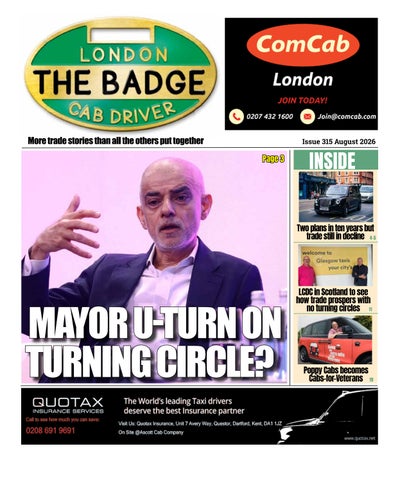
As our front page clearly illustrates, at a recent Mayor’s Question Time the Mayor himself expressed deep concern about the future of London’s licensed taxi trade. His words were striking when he said that he “didn’t want the cab trade to go the way of the red post box.”
I sincerely hope he reads The Badge online because, sadly, few others within our own trade appear willing to confront the seriousness of the situation we now face. For too long we have heard comforting slogans such as “built to order,” while others continue to insist that simply protecting the icon is enough - even when the very vehicles that represent that icon are becoming increasingly difficult to obtain.
For many years I have said that the London taxi trade is a microcosm of our country. We are witnessing change at an unprecedented pace, yet too many choose to believe that somehow everything will simply work itself out. It won’t.
The facts speak for themselves. Last week, just one new London taxi licence was issued compared

with 701 private hire licences That statistic alone should concern every single person who has the future of our profession at heart.
The challenges do not stop there. Over the next eleven months we stand to lose around 1,300 licensed taxis from our fleet. Alongside those vehicles we will lose experienced, knowledgeable taxi drivers who have devoted years to serving London. Once their cab leaves the road, many simply cannot afford to return when a cab costs around £350 a week. When we lose those drivers, we lose something that cannot easily be replaced: their experience, their professionalism and the world-famous Knowledge that has made London’s taxis the finest in the world.
The LCDC has never believed in standing by and hoping for the best. We have always believed that leadership means facing difficult truths, asking difficult questions and working tirelessly to find practical solutions. Remaining silent is not leadership. Pretending there isn’t a problem is not leadership. If others choose not to engage in finding an alternative path for our trade,
history will judge whether they served the trade as it deserved.
As Chairman of the London Cab Drivers Club, I cannot simply stand by and watch a profession that has given so much to me, and to thousands of others, slowly disappear. After nearly four decades behind the wheel of a London taxi, this is far more than a job to me - it is part of who I am. It has allowed me to provide for my family, meet extraordinary people, and play a small part in the life of the greatest city in the world. I believe, as I always have, that the London taxi is more than a vehicle. It is a symbol of trust, professionalism and public service. It is recognised throughout the world, and it deserves a future every bit as proud as its past.
That future will not be secured by wishful thinking or by hoping someone else will act. It will be secured by courage, by honesty and by a determination to adapt without ever losing the values that have made this profession unique.
As long as I have the privilege of serving as your Chairman, the

LCDC will never stop fighting for London’s taxi trade. We owe that not only to today’s drivers, but to every generation that came before usand to every generation still to come.
Grant Davis
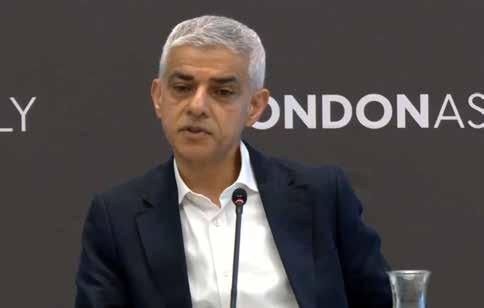
As you can see from the Front page, it looks like the Mayor has finally grasped the severity of the state of the trade and in his recent questions with Reform GLA member, Mr Alex Wilson at City Hall, he voiced his concerns over our future.
In the August edition of The Badge, the LCDC reported that a member reminded Transport for London (TfL) through a court claim that traditional taxi laws are still in force.
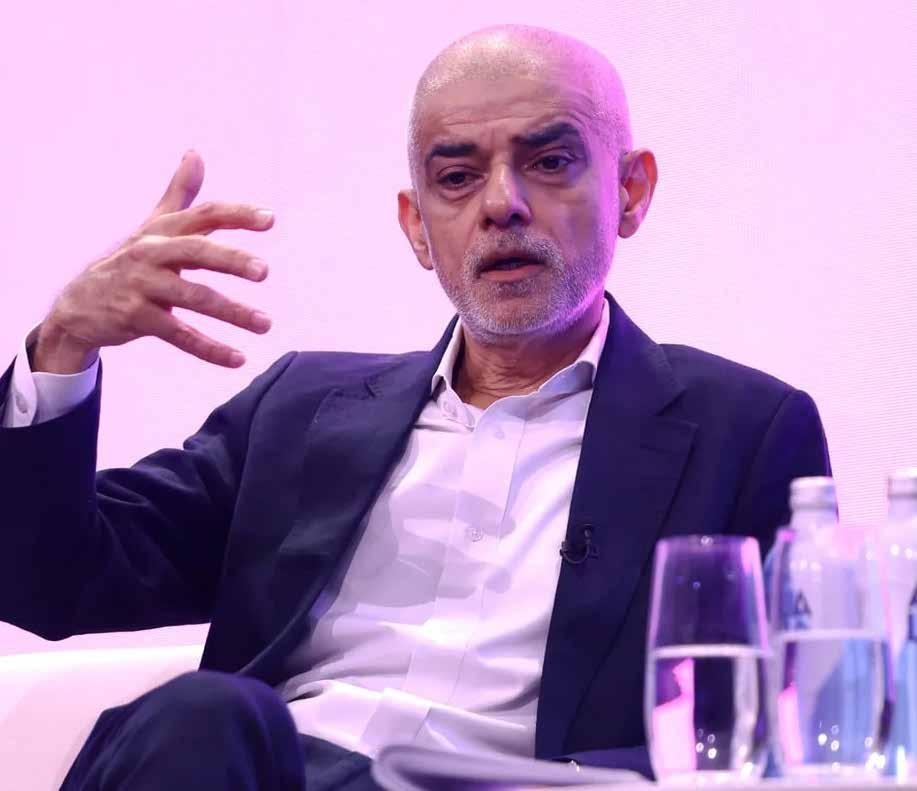
Mr Wilson, (pictured below quizzing Mayor), asked the Mayor that at the most recent Mayor's Question Time, he had seemed to change his stance about the dire situation we face with LEVC, stating that previously the Mayor had laid the woes of the cab trade at "market forces".
In response to this claim, TfL’s legal department clarified a key issue raised by our member: whether a taxi driver may start the meter upon accepting an immediate app-based booking. TfL replied:
organisations like the LCDC, LTDA, Unite, RMT, and UCG, where TfL stated: “…case law has determined that a hiring for a London taxi takes place where the booking is accepted, not where the passenger is picked up.”
But the Reform member stated that it was the "turning Circle" requirement and NOT market forces and then asked the Mayor why the change of opinion.
It is all very good to play to the gallery and rant about the icon taxi, but if none are being produced, are you happy the trade is shrinking?
legal framework for London’s regulated taxi service.
By treating taxis and private hire vehicles similarly and allowing app companies to do the same, TfL may be
cancellations if drivers are not compensated from the moment of booking acceptance, as case law and the London Cab Order allow.
not regulate taxi apps, an assertion that seems
Are you happy self employed cab drivers will be made unemployed when their plates run out and the fleets have no spare capacity? In a perfect world we would not be having this discussion, but this isn't a perfect world. As I sit in the Club's office writing the Badge, this week there was only one new taxi licence issued and a staggering seven hundred and one PH licences issued, this is utter madness and how does licensing seven hundred private cars a week help achieve lowering congestions and emissions in the gridlocked capital we all see every day?
Since taxis perform a public service, the app companies that dispatch them also perform a public function, thereby falling under the PSED, which TfL is tasked
“TfL has already confirmed to you in correspondence dated 21 May 2024, that a hackney carriage driver may not switch on the taximeter prior to the point at which the passenger is picked up, when it is being pre-booked as a hackney carriage. Again, we consider that this point is clear and does not require a declaration from the High Court before that is the case.”
The Mayor started off by saying that what TFL had seen was the big increase with PH drivers and also the threat of automated vehicles coming into London.
This 2017 statement was related to a case involving yellow badge taxi drivers working for Computer Cab, addressing whether they were plying for hire in the green badge sector. Given that TfL understands that hiring occurs at the booking location, it should also recognize that Section 39 of the London Cab Order 1934 permits the meter to start from the acceptance point.
He said that other manufacturers had contacted TFL with another vehicle that was cheaper. The Mayor pointed out that TFL should be looking at everything in its toolkit to help make the trade still a viable profession and TFL should be thinking outside the box and make sure the trade is still a viable proposition going forwards and did not want the trade to go the way of say, red telephone boxes.
Section 39 of the Cab Order 1934 specifies: “The driver of a motor cab shall start the taximeter no sooner than when the cab is hired or at such later time as the driver thinks fit.”
This statement from TfL appears to contradict a 2017 statement made during a trade meeting with

This inconsistency raises questions about TfL’s taxi and private hire department?
Drivers are asking if they are
I must say that I welcome the Mayor's change of heart and it is refreshing that someone is actually talking about our plight.
does not regulate apps appears misleading; it has a statutory duty to ensure that these apps operate within the
The PSED mandates that TfL eliminate discrimination, harassment, victimization, and practices that endanger the public. Therefore, TfL companies or drivers to cancel bookings, which could
Moreover, TfL's PSED duty includes maintaining regulated fare limits. Added fees, such as technology charges, high-demand fees, and surge pricing may make a taxi unaffordable for vulnerable passengers, including wheelchair users and disabled individuals who may already be financially disadvantaged.
If we carry on losing drivers and vehicles we are doomed- the Ford might not be everybody's cup of tea, but you cannot be a cab driver without a cab and at this time we do not have one.
In conclusion, TfL’s claim of non-regulation over apps seems disingenuous given its statutory duty to safeguard public welfare in taxis, a form of public transport distinct from private hire vehicles.
particularly those relying on contracted services in a vulnerable situation if drivers cancel the app job in Favor
Let's be proactive for a change and not fall in to the old cab trap of only being reactive and on the back foot with this, if you dont like the Ford, dont buy it, simple, but I think hundreds of drivers will like it and then we can maintain our numbers on the street because if we cannot give a service to Londoners... U know who will.
Be safe
We have 1300 Euro 5 taxis coming off the road from now to next September and with no new taxis coming on stream, what are we to do?
TfL’s policy requiring drivers to start the meter only when the passenger is picked up may lead to app booking
There is a pressing need for government intervention to address TfL’s apparent shortcomings and potential biases that continue to affect the London taxi industry.
Grant Davis Chairman
TfL has been contacted for comment.
By Dan O’Regan of the London Cab Drivers Club (LCDC)
When Transport for London published its second Taxi & Private Hire Action Plan in 2025, it admitted what London’s taxi trade had been saying for years.
The licensed taxi fleet is shrinking.
Taxi driver numbers continue to fall.
The workforce is ageing.
Recruitment is failing to replace those retiring.
These are not claims made by the LCDC.
They are admissions made by TfL.
Yet after almost a decade since the first Action Plan was published in 2016, the second plan offers little more than another list of aspirations while the decline continues.
The obvious question is:
If two Action Plans have not stopped the decline, what exactly has changed?
The Results Speak for Themselves
Governments and public bodies like to measure success by the number of initiatives launched.
The public measures success by results.
TfL’s own licensing statistics tell the real story.
Since 2009/10:
• Licensed taxis have fallen from 22,445 to 13,749.
• Private hire vehicles have
No target fleet.
No commitment to increase taxi numbers.
increased from 49,355 to 93,454.
London has lost almost 9,000 black cabs while gaining more than 44,000 private hire vehicles.
That is not market balance.
It is market transformation.
And it has happened under successive Mayors and TfL strategies.
Plenty of Initiatives. No Recovery.
The Action Plan proudly lists its achievements.
More electric taxis.
More charging points.
Card payments.
Safety initiatives.
There is nothing wrong with any of those.
But none answers the question Londoners are beginning to ask. Why are there fewer black cabs available every year?
The document talks extensively about managing the taxi trade. It says remarkably little about rebuilding it.
The Question the Action Plan Doesn’t Answer
Read the entire document and one question keeps returning. How many licensed taxis does London actually need?
There is no answer.
No timetable for recovery.
No benchmark against which the Mayor or TfL can be judged.
Instead, the decline is almost presented as something to be managed rather than reversed.
That is not a recovery strategy. It is an acceptance of decline.
The “We Need More Powers” Argument
For years the Mayor argued that he lacked the legal powers to manage the growth of private hire vehicles.
In 2018 he said he wanted powers to cap PHV numbers and would continue lobbying Government until he got
them.
That argument is now becoming harder to sustain.
The Government has committed to bringing forward a Draft Taxi and Private Hire Vehicle Bill, recognising that existing legislation is outdated and fragmented. The proposed reforms include modernising taxi and PHV regulation, strengthening enforcement, improving information sharing, introducing a national database and taking action to ensure operators and drivers are licensed where they actually work.
That does not mean London’s problems are solved. Far from it. But it does mean that the debate is changing.
For years the question was: “Why won’t Government give London the powers it says it needs?”
The question now becomes:v What will London do with those powers if and when they arrive?
A New Prime Minister. A New Opportunity?
The arrival of Andy Burnham as Prime Minister changes the political landscape.
Unlike many previous Prime Ministers, Burnham has spent years arguing that taxi and private hire legislation is outdated. As Mayor of Greater Manchester he repeatedly called for reform of licensing, stronger enforcement and an end to weaknesses in the current system.
His Government has inherited plans for a Draft Taxi and Private Hire Vehicle Bill announced in the King’s Speech, and the expectation is that reform will now move forward.
That creates an opportunity—but not a guarantee.
If Burnham is serious about creating a fair, modern licensing system, London’s taxi trade will expect legislation that does more than tidy up administration.
It should:
• stop out-of-area licensing abuses;
• give regulators effective enforcement powers;
• ensure operators and drivers are licensed where they principally work;
• protect the role of the licensed taxi as part of the public transport network; and
• create a regulatory framework that allows black cabs to compete fairly while maintaining the standards that make them unique.
If those reforms are delivered, they could represent the biggest overhaul of taxi legislation for decades.
If they are not, London’s taxi trade will simply inherit another set of promises.
Recruitment Is Not the Problem
TfL says it wants more people to do the Knowledge. So does everyone else But recruitment is a consequence—not a cause People look at the industry and see:
• taxis costing around £70,000;
• years needed to qualify;
• increasing competition;
• uncertainty about future policy;
• a fleet that has been shrinking for more than a decade.
Until those fundamentals change, no recruitment campaign is likely to reverse the trend.
London’s Greatest Transport Asset
One fact should never be forgotten.
Every London taxi is
wheelchair accessible.
Every taxi accepts assistance dogs.
Every taxi can be hailed from the street.
Every taxi operates under regulated fares.
Every taxi is driven by someone who has completed one of the world’s most demanding vocational qualifications.
That public service is unique. But it depends on having enough taxis on the road. A shrinking fleet means a shrinking service.
The first Action Plan promised a sustainable future. The second acknowledges continuing decline. Neither has reversed the trend.
Perhaps the third chapter in this story will not be written at City Hall, but in Westminster.
With a new Prime Minister
and long-awaited legislation on the horizon, the excuses are running out.
The taxi trade does not need another glossy strategy.
It does not need another list of ambitions.
It needs measurable outcomes.
More taxis.
More qualified drivers. Better availability.
A fair regulatory framework.
And a Government and Mayor prepared to judge success not by the number of policy documents they publish, but by one simple question:
Are there more black cabs serving London than there were before?
Until the answer is yes, no Action Plan—however well presented—can honestly be described as a success.
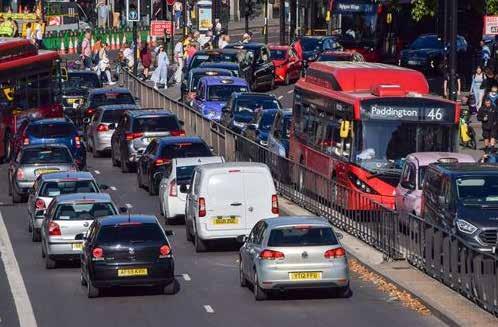


It’s been nearly two years now since the LCDC started campaigning for the introduction of the Ford Maxicab. Other than some individual drivers we seemed to receive little support and plenty of criticism from other driver organisations and assorted ancillary cab related businesses’ with perhaps a vested interested in maintaining the monopoly.
THEN AND NOW
If we compare today with 1977, our figures don’t look too bad.
In 1977, we had a fleet of 12,452 cabs. Today, we currently have 14,803, an increase of nearly 20%. Equally, in 1973 we had 16,474 drivers, against the current number of 17,356, making an increase of nearly 10%.
Looking at these figures, its not unreasonable to ask why some in the trade, including myself, are worried for its future. But this doesn’t tell anything like the whole story. Its when you look at the KOL (Knowledge of London) figures, that the problems become clearer. In 1973, there were three times as many KOL students as there are today. Then, it took less than half the time it does today to pass out. That means that there were effectively six times as many KOL students over a 4yr period.
Some have claimed that The Club are profiting from supporting the Maxicab. It’s true that we get some advertising revenue from this but it doesn’t go into anybody’s pocket; it’s used to support and defend our membership and the trade in general. Or should we support it and advertise it for nothing? As it is, it costs us time and money to support this vehicle. Not as much as the advertising money received and so to the benefit of our members as well as the wider trade.
This old geezer passed out in December 1979 and it took me 19 months, doing it part-time. Today it takes more than 4 years, on average. There is an argument that the KOL is harder today, than it was then, but I would dispute that.
So now the veil has been lifted from the nay sayers eyes and there are more than a few converts to the cause. Listen. Listen. THERE AIN’T NO MORE TXEs. You can’t buy a new one and if you don’t buy cabs new it’s still your problem because it reduces the availability of used cabs. As cabs come off as a result of the stupid decision of TfL to introduce the 12yr age limit and then not lift it, our the fleet is going down the plug ‘ole.
If you rent you are still affected. Your garage can’t buy new cabs and they have cabs reaching the age limit, weekly in the case of larger garages and being forced to reduce their fleets. Their income is reducing faster than outgoings. That
means that if you are lucky your rent is going to go up by £20 - £30 per week and if you’re unlucky you won’t be able to work because you won’t be able to rent a cab at any price.
It can be argued that places like The Docklands and E20 weren’t part of the KOL in my day. Against that though, denied road access means that most runs will be simpler today. For example, the rat run from Oxford Circus to St Giles Circus required calling 11 points Similarly, it is no longer possible to use the rat run between Guildhall and Southwark Bridge Rd. There were plenty more like this that have gone today.
THE LAST DECADE Viewed over the last 10 years, the problems become clearer and it is no coincidence that it’s the same period of time during which Uber first gained a serious foothold in London.
From 2014 to September 19, just prior to Covid, the number of drivers fell by
all – electric taxi is likely to replace the TX WITHIN THE NEXT TWO YEARS and will be assembled at the Coventry plant and have a 435ml range.” That quote comes from May 2023 Well, that date has passed and

The garages aren’t profiteering, they are cacking themselves that they won’t go out of business. We’re not talking about “arches garages” here, we are talking about biggest renters, sales and suppliers to the trade.
cab numbers fell off a cliff.
I gave evidence at City Hall before COVID and suggested our trade was dying and not because the likes of uber were stealing our sales. They were but the bigger problem was our supply; the reduction of our fleet and drivers. We had 19,200 cabs then and I put forward that if we dropped much below 15,000 we’d turn into a tourist attraction like Venetian Gondolas and Viennese Horse and carriages. I am only too pleased to say I was wrong because we have been below that figure since the end of COVID. Currently we have just under 14,000 taxis and 5 years ago we had 13,200 after being savaged by COVID.
they are still only talking about a new cab. Doesn’t help us much. Let’s hope were not soon talking about the work we could have done if we had had a cab to work in.
Although we have had a resurgence since the bottom dropped out with Covid and a ridiculously expensive vehicle became compulsory, driver numbers are still down by 5,562 and cabs down by 4,331 on those 2019 figures.
KOL
On current numbers, we’ll be lucky to see more than 200 new drivers annually. Back in 2014, the GLA FP (Future Proof Report) warned about this situation, while the Mayor and TfL sat, and continue to sit, on their hands instead of doing something useful and positive. They pointed out then that more than 40% of drivers were aged 55 or over.
DON’T WORRY, THE CAVALRY IS ON IT’S WAY.
LEVC to the rescue. The new all – electric cab is on the way very soon. To quote LEVC, “The new
Even when the new cab does eventually arrive (if it’s not too late for many of us), there will be a new problem. It won’t meet the turning circle CoF so what will TFL do then? They’ve been knocking back alternatives for years, solely on that requirement not being met.
– meter co.s, fleets, vehicle manufacturers, repair garages, etc – be able to continue serving our trade? Then what?
to 1,700 units. Currently, expected demand would be around 1000 units. How on earth could anybody think a PBV could be developed and produced on sales of 1000 units per year? Not Geely, that’s for sure. The new platform they have developed at their Coventry plant is capable of producing 20,000 vehicles per shift per year. That could easily be ramped up to 60,000 vehicles per year. Hears some shock news. They ain’t developed that platform to produce 1,000 vehicles per year and the only way they can expand sales is to ditch the TC and develop world sales like every other vehicle manufacturer.
Up s**t creek without a paddle if The Mayor and TFL don’t pull their fingers out and pull them out quickly. All cab drivers love the turning circle. Not only for the U-turn but also the increased manoeuvrability in traffic but we all need to accept that it’s gone. We can have no turning circle or no cab, simple as that and there is only one vehicle available to fit the bill and on sale at the moment and that is the Ford Maxicab.
The KOL needs sorting out badly. It doesn’t need watering down as it is what makes our trade what it is and what it has always been. Come on, though. If I could do the KOL in 19 months in 1979, does it really need to take 4 years today? Really? Are today’s K students really that much thicker than me?
No company can make money out of the PBV. It is impossible. Various companies have tried since M&Os lost control in 1981 to the mining company Manganese Bronze,who couldn’t make it work.. LTI took over in 2003 and lost money every year. First, they sold off their assets and then went into administration in 2012, after which the current producer, Geely, took over and have been pouring millions down the drain ever since. Now, Geely have obviously decided no more.
At this rate, even if we don’t take leavers from the trade into account, at current pass out rates, it will take until 2051 before we get the number of drivers back up to 2019 numbers. In reality, there are currently far more drivers leaving the trade than there are joining it and so our number is more likely to fall.
We only have a fleet of 14,408 cabs now. How long before that figure drops to 10,000? Scare-mongering? I think not. Andi if it does? At what point will the ancillary
When the London taxi fleet was at a peak, annual demand only amounted
“When did you get out?” “1990”. “How long did it take you?” “36 months”. “36 months, well you must be really thick because it only took me 19 months.” I’d probably get a punch in the mouth if I had that conversation in a café. So, why does it take more than twice the time it took 45 years ago? It isn’t because the streets are more numerous and complicated. It isn’t because today’s students are much thicker. It can only be one thing and that’s the administration. When I di the K, you started with 2 x 56 days (which were 90 days in reality. You then went on to 28s. After about 12 appearances on 28s, you went on to 21s. Your drive took about 3 weeks from
It looks like TFL and The Mayor are coming to realise this, albeit far too late. TFL have actually had a look at a Maxicab demonstration and the Mayor has rowed back from his defence of the TC requirement only this week at City Hall. They don’t have much choice really or there just won’t be a taxi available of any sort. This raises a question as to whether there is any sort of vested interest at TfL in keeping the Maxicab out of London. I’m not saying that is the case but the question is a valid one. Surely, nobody would be naïve enough to think Geely would develop a new taxi and build the platform
to make it on without some assurance that they would be allowed to sell it without the TC ability? It seems reasonable that this question would have been broached to TFL at least five years ago. If that is the case, why has the Maxicab been turned down for approval as it meets every other requirement and more?
I can only think of two explanations. Either TFL are holding back the Maxicab in order to give Geely a head start or Geely are so confident and arrogant as to think if they produce a taxi without the TC, TFL will have to approve it. If it’s the former, what’s in it for TFL or persons within that organisation. If the latter, that is proof that we need to break the monopoly.
got your suburbs. On these you would be asked about 6 straightforward runs and you either got through immediately or were asked to come back later in the day to review any that you did wrong or maybe asked back a second time and then you got your badge and bill. The current system was supposed to streamline the K when what is has done in reality is double the time required to pass and for no good reason.
At the same time, TfL have been unable or unwilling to prevent PH becoming a pseudo-taxi service. With the advent of Apps, the customer no longer prebooks a ride, as per the law, but just opens a phone, looks at the screen for cars in the area and electronically hails a PHV that is cruising the streets or parking in busy areas. What kind of idiot will spend 48 months doing the K today when he/she can spend just 4 weeks in order to drive a pseudo-taxi?
wheelchair accessible but only 0.5% of PHV were accessible. Their recommendation was that the number of accessible PHVs should be increased over time to 25%. Its still only 0.5% and TfL doesn’t give a toss about the disabled or the equality Act. The situation is actually worse now. While PHVs were pre-booked, there was a case for them being only 25% accessible. Now though, with immediate street hiring of PHVs, a disable person, that is supposed to have an equal opportunity of booking a PHV, has only a 1 in 200 chance to book one, against the chances of an ablebodied rider. If they are going to allows electronic hailing by PH, all PHVs should be accessible. If Uber and its ilk were a cinema, theatre, shopping centre, etc, it would immediately be closed down.
Once, rather than if, the TC disappears, this will open the London market to a range of MPVs. There are many cab drivers fearful of the dilution of “the Icon” and this is not without foundation. The Icon is important as a USP. However, because of all the other licensing requirements such as wheelchair access, there will not be a huge range and the size and shape of these vehicles will not be a whole lot different from each other. But we do need to keep our USP and there is no better way than to make the colour black a CoF on all new vehicles. At the same time, bar any new PHVs from being black or any colour that could be mistaken for black.
TFL: COULDN’T RUN A BATH
I realise that many of us like being able to choose a colour but at the end of the day, the cab is only your office or shop counter. Would you care that much what colour your office chair was so long as it was comfortable and reasonably priced?
Back in 2014, FP pointed out that 14% of taxi users and a greater number – 19% - of PH customers were disabled. They recognised
One of our members, Andrew, sent in his licence renewal early in the new year. When he hadn’t heard back after two months, he eventually managed to contact TFL. They’d lost his forms and by then, he needed to redo his CRB check again. He duly did this and then nothing happened again. He then got The Club involved and frankly, we did not do any better at first. Andrew’s licence eventually ran out and he could no longer work. The Chair, Grant, involved the two top bods that deal with taxis at TFL. At first, all he got was promises, excuses and blame. By the time it finally got sorted out, Andrew had not only lost eight weeks’ work through TFLs ineptitude, he also paid his cab rent throughout the period out of fear of losing the cab if he handed it back. At time of writing Andrew still doesn’t have his bill but he has an email granting permission to drive the cab. You would think TFL would be shame-faced and at least offer an apology. Nah, the day before the email arrived, they were still trying to blame Andrew himself, for the delay.
The summer has been roasting us all over the last few weeks and the work seems to have slowed a little since the children summer break kicked in. This years sems to have been a funny old one so far, there are obviously fewer tourists arriving in the UK due to what’s going on around the World and with no end currently in sight for the current World problems I can’t see things improving too soon. All we can all do is just put the hours in and do the best we can.
By the time you read this the final preparations will be well under way for the Taxi Trades premier event, The Magical Taxi Tour to Disneyland Paris for Children with Life Limiting Illnesses.
I am quite often asked how a driver can get to go on the trip? As the event is run by the Worshipful Company of Hackney Carriage Drivers spaces on the trip are firstly offered to members of the company, if all of the places are not filled by members it is then offered to drivers who have done the trip before but who are not members, and then to others who may like to go on the trip.
The only real way of guaranteeing a place is by becoming a member of the WCHCD, going on the Disney Trip is not the only reason for becoming a member, there is also the social side of the company, and the historic side.
The Magical Taxi Tour is totally reliant on donations and sponsorship and as the costs are always going up the committee are always on the lookout for potential or new sponsors. Sponsorship of a Taxi for the trip is currently £1700 for which the sponsor has a poster on the front doors of the
participating Taxi, and they can also come along to the Big Breakfast at Canary Wharf.
If you or anyone you know would like to sponsor or donate towards the cost of the trip details can be found on the Charities website at www.magicaltaxitour. com
career which can make your time driving a taxi varied and interesting.
If you would like more information about the Cab Guide Course please visit the WCHCD website www.thewchcd.co.uk
Cab Chat Social Meets
Tom and I have been

We have also developed a tracking app that will track the convoy on its journey from Canary Wharf to Disneyland Paris and back again.
The Cab Guide course is also run by the WCHCD, although you do not have to be a member to undertake the course it is a very worthwhile course to put yourself through. I always say to drivers, do the course for yourself, to enhance your working life, not because you think you will earn a lot more money by undertaking tours as this is not always the case.
The course gives you a basis of tour guiding which you can then build on if you want to go further and pursue tour guiding as part of your
cabchatshow.uk/app.
If you save the app to your home screen on your phone and enable push notifications, you will get a notification pop up each time an audio podcast or YouTube video is added to the app.
We are always on the lookout for interesting topics to discuss on the show so if there are any issues that you would like us to investigate? Please let us know, and if you would like to come on the show as a guest, please get in touch.
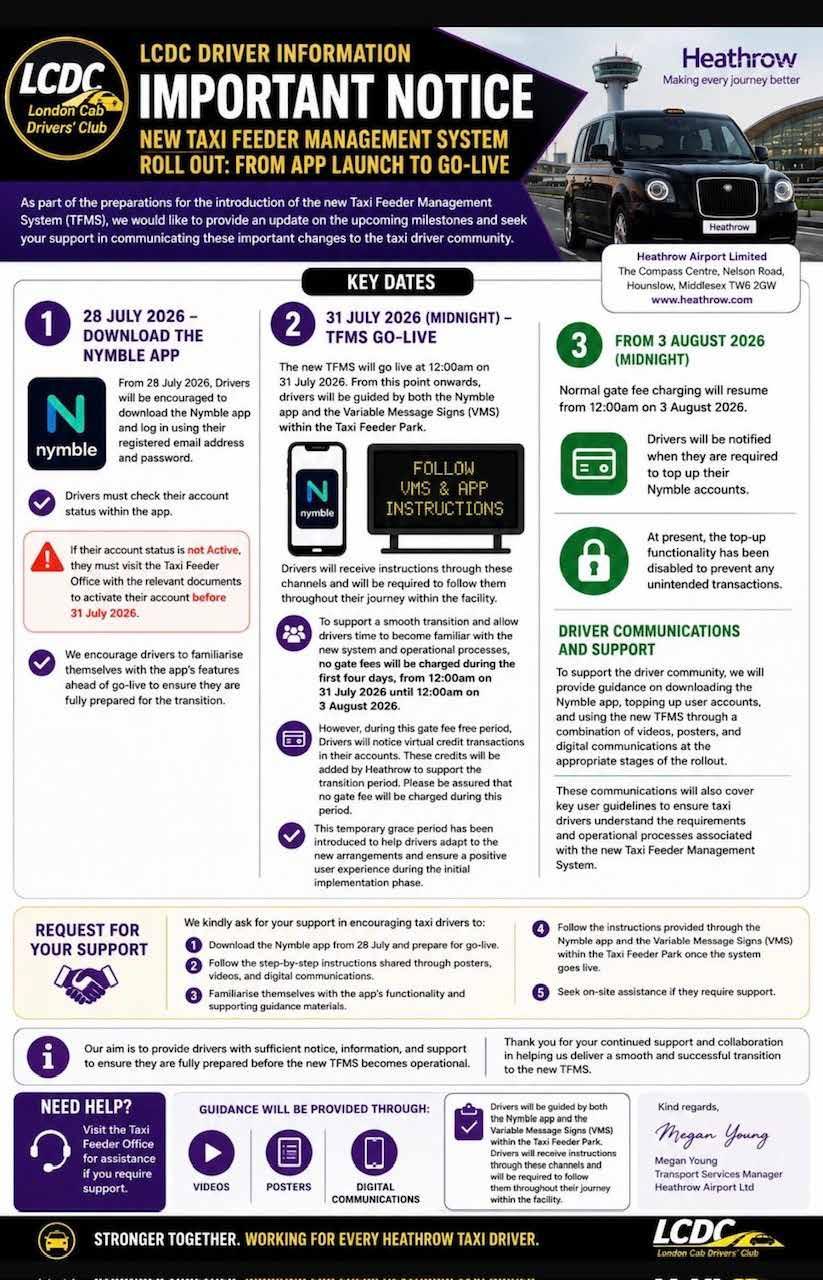
The old Tag system at Heathrow was switched off on Tuesday 21st July at 11:00pm and we were led to believe that the new app based system would be up and running by Friday 31st July, this date has now been put back for some unexplained reason.
it working by then as manual operation at the Feeder Park causes delays for passengers, and frustrations for drivers as entering the park is slowed down which at times leaves drivers queueing on the perimeter road.
Clean Cabs and well Presented
I have always liked to keep my cab clean both inside and out, I hate driving around in a dirty taxi for a few reasons.
We like to portray ourselves as a premium service, the Gold Standard and if our cabs are dirty, it gives the traveling public the opposite perception.
trying to encourage drivers to take a break from driving and come along to one of our monthly meets, we hold a regular Fish and Chip meet at Kennedy’s in Goswell Road on the 2nd Tuesday of every month, all are welcome to come along, we are a friendly bunch and enjoy a chat, so why not take a break and come and join us.
We will be restarting our Pie & Mash meets when Tom and I can settle on a day of the month to hold them, so keep an eye out for those also.
I have also developed an App for Cab Chat, this is what’s called a Progressive Web app so it is not currently available in the Apple App store or Google Play Store but it can be found on the Cab Chat Website www.
The new system has already been delayed by 2 years and now it seems that it is still not ready and has problems. The thing I cannot understand is why the old system needed to be switched off before the new system was ready to use? Surely resilience is the key to running and efficient operation and having both systems available for use would be advantageous.
Keping the old Tag system up and running would have meant that should the new system fall over and break they would have been able to revert back to using the old tag system rather than having to go over to a fully manual system which is currently the method of operation as I write this.
The new date for the App based Taxi Feeder Park Management system to go live is 10th August, we can only hope and pray that the company behind the system manage to get
Customers often comment on the cleanliness of my cab which makes me feel good, it also means that your passengers are impressed and that you are giving them a quality service. It can also on occasions enhance the tip that you get from the customer.
It doesn’t take a lot to keep your cab clean, especially during the summer months as recently we have had very little rain, but I still see cabs being driven around with so much dust and dirt on them that it is hard to decipher what colour the cab actually is!
You can get your cab washed for as little as £10 as some car washes, and even having it washed every other week at this time of year would make it presentable to the public.
So if we want to make the travelling public think we are the Gold Standard let’s make sure that we actually look like the Gold Standard with cleand cabs and well-presented drivers.
I have rattled on for long enough this month, so until we met again please be lucky out there and stay safe.
£430,098
As many of you know, Helen Chapman was the Director of Licensing and Regulation at Tfl and had presided over the cab trade for the last 15 years or thereabouts.
I had always found her polite and affable, we did cross swords on quite a few occasions but as the "Head" she was always the person to go to if you were having trouble with Tfl over a taxi / member issue.
But, and this is the kicker, when she left TFL she left with a package totalling an unbelievable sum of £430,098... £302,593 of which was compensation for losing her job.
I am sorry but if we are
talking openly here, I and many of my taxi driver brethren would say that under her and TfL we have in effect "lost our job".
105k PH drivers and growing at 700 p week, No regulations to hold back the PH onslaught and what have we got for TFL being in charge whilst Uber came into London... nothing.
I know many drivers who have called it a day due to the working conditions and costs, TFL have sat back and watched us wither on the vine and for Helen Chapman to receive such a massive pay off, I feel it's a disgrace.
Grant Davis LCDC Chair



It's considered one of the most difficult exams in the world: the Knowledge.
For more than a century-and-a-half, the memorization of every twist, turn, dead-end and shortcut has been tripping up aspiring taxi drivers across London, who are required to know just about every detail of the city’s 25,000 streets and 20,000 other points of interest by heart to earn their badge.
"There's no looking at pens or paper," said Tony Walker, who passed the taxi exam in 1979 and has been driving a black cab in London since. "It's all done through memory and hard work and repetition."
Passing the Knowledge typically takes four years. Many never do.
But for the select few with the discipline and resilience to follow through, the rewards include independence, prestige and a place in city history.
“You feel as though you scored the gamewinning goal at the World Cup,” Walker said. “It’s a euphoria and an achievement that you never get the opportunity to experience unless you've done it.”
Best of 7 spoke to Walker about the discipline required to pass, managing the stress of the job, and how he continues to find excitement in his work after more than 45 years.
This interview has been edited and condensed for clarity.
Tony, what did your preparation for the Knowledge look like?
You’re getting on a
moped, and they give you runs from the carriage office. These are the people who give you the license. They give you 486 runs, and you have to recite all of the roads getting you from A to B. What you do is any time you go past an important building — a theater, it could be Downing Street, it could be a famous statue, it could be Parliament Square or any environmental building — you have to have the brain power to absorb it.
When you've done your pre-runs as well as the points of interest, you have to call them over, and you have to repeat and repeat and repeat until it's firmly in your head, like an actor learning a script. You must know every street or road or square or environmental building or sign of importance from A to B. You have to know the shortest route, and you’ve got to learn all of the bridges, from east to south.
What skills are most relevant in preparation?
The toolkit is repetition. It’s like if I say to you, “Can you sing ‘A Hard Day's Night?’” you wouldn't even have to think. You've heard it so many times now. You call it over until it's ingrained. But the most important thing is not only if you can call the run in your mind, it’s that you can see where you're going. There might be a theater on the right, there might be Buckingham Palace on the left. There might be a smell, and you remember that smell of a hospital, which reminds you of when you cut your hand one day.
You also have word associations. I’m a James Dean fan as well as a Paul Newman fan. In
London, there's a Dean Street, and there's a Newman Street, that type of thing. It can get you out of trouble when they ask you a certain question. These are the tricks of the trade.
You’ve practiced and practiced, but then the actual exam comes. How did you manage the pressure of it?
When you go in for the interviews, it’s very regimented. It’s very scary. You also have to wear a collar and tie and look very presentable. It's like a jigsaw puzzle at the beginning. You start off with a big canvas of blank, then you put one little bit of jigsaw in, and it all comes together where you can close your eyes and can see all of the patterns of the streets, the roads, the cinemas, the theaters, the environmental buildings, the squares, the football grounds, and anything else that's important in London.
Tell me about the strategy of driving and maximizing fares in a city as congested as London.
Some people work the airport, some people work the stations… There's some people who work for money, and there's some people who work for routine. (Some drivers) go out at 9 and they come home at 7, no matter what they've taken.
They might have an airport — a get out of jail card — so they can go home earlier. But cab drivers have routines. They meet at 1 o'clock in the cafe or where we've got green huts, and cabbies go and play their golf. It's still a routine, really stringent, but it’s an adventure. It's not a
job where you go to a factory and you've got to do it. You drive for your own pleasure, and it's a real great job for people like me who love their independence.
down Oxford Street. Can you go Regent Street? Yes, I can go Regent Street, hit Hanover Square. I can then cut round the back of Bolton Street into Piccadilly,

What is the key to navigating high-stress situations?
It's a funny thing. Imagine I'm in Oxford Circus, then all of a sudden, the man says, "Waterloo, driver. Can you get there in 15 minutes?” Your mind has to sort of refresh and think, "Where do I go?” So you look straight in front of you. You can't go
down by Duke of William Place, Constitution Hill. We can go now by the Queen’s Palace. We can go up Birdcage Walk, over to Parliament Square, into Westminster Bridge, in the back way into Waterloo — if you can see a line...
It all depends on the traffic. You just don't know what's there. It might be not only congestion; it
might be a broken-down car or three or four buses in front of you. It’s a hotbed of thinking, really. Most of all, you’ve got to be quick and get the line straight in your head.
the end of the day (if it’s), “I’ll do my best to,” they will leave you alone.
If they’re drunk or abusive, you say, “Sir, do you mind curbing your
passengers in a short amount of time?
From a homeless man on the street to Boris Johnson, the prime minister, who I had
The (other) skill is to knock up abuse if you get it. If they jump in, “Get me to Victoria Station. You’ve got five minutes,” you say, 'Sir, you know I can't. I haven't got a helicopter in the boot. I'll get there in my own time, and I will do my best, sir.” You’re on his side or her side, and you know they've got a meeting or that type of thing, but you sort of patronize them, and at
language? Any more of this, I’ll have to get another cab.” I’ve had my bits of trouble now and again, but I try to defuse the situation at all times and act professional, because that's what London cabbies are. Professional.
Some really good thoughts. How do you adapt to interacting with a wide range of
friend of court.
Everyone tells you the truth, because to a stranger, you will give your heart out. You will tell what's going on because you're never going to see them again. I'll give a lot of people advice, and whether it's good or bad, it's only my opinion at that personal time. I’m just trying to just give them a bit of encouragement to not feel so bad. I try to leave them with a bit of happiness.
You’ve been doing the same job for so many years. How do you maintain enthusiasm about your work?
I’m one of the chosen few. I've also got other little strings to my bow. I'm also an actor, and I'm doing commercials. I can ride a horse, I'm a professional jockey. I've been an actor now for nearly 45 years, doing bits and pieces, whether it's extra work, where I started meeting Steven Spielberg and Christian Bale. I was his understudy, believe it or not.
On the surface, a London taxi driver might not have much to do with coaching and general leadership. But two universal themes emerged from the interview.
The first is the importance of discipline and repetition in pursuit of an ambitious goal. Tens of thousands have dreamed of driving a black cab across the city over the years, but have likely gotten discouraged by various setbacks, distractions and the overall difficulty of the exam.
Part of what Walker said kept him going was that when he started, he was newly-married and had few life alternatives.
“It was the deprivation. We had no scratch. I was only 23, and we had a baby son of three months,” Walker said. “The only pot of gold at the end of the rainbow I could see was a green badge from the London cab.”
picked up when he was mayor in London. Shirley MacLaine, Sigourney Weaver, Robert Downey Jr., George Hamilton… It’s the whole social spectrum. You pick up a happy person, you pick up an unhappy person, you pick up a person who just got divorced. You might pick up a woman who's just been arguing with her husband, things like that. You are their
But when I first drove the cab, it wasn't a job. It was an adventure meeting people, talking to people of all nationalities: Polish, French, Greek, Turkish, Arabic, Chinese, Australians. It was a hotbed of lovely cultures coming into my cab, talking in it and trying to learn some language. It's an education in itself by definition.
And if you get in my cab, there's an old saying, “You're very easy to remember, because you're too nice to forget.” The latter is how I perceive it to be. I'm a happy-go-lucky type of guy.
Desperation can be a competitive advantage.
The other theme was the importance of managing expectations. Walker has gotten countless unrealistic demands from passengers over the decades, but he seems to manage those with respectful pushbacks and the phrase “I’ll do my best.”
Those four words don’t guarantee a desired outcome, but when said with sincerity, they’re usually effective at slightly turning down the dial and assuring the other side we’re still devoted to the task.
Trevor Kapp

Just my luck, whilst the UK sweltered in tropical weather, I had already planned to visit both Edinburgh and Glasgow to speak to their taxi drivers about how they survived and dare say prospered without a turning circle taxi.
Flying up to Edinburgh from LCA on a warm Monday morning, I was gutted to say the least as I walked out of arrivals and the rain was torrential...good job I packed a mac in July!
After meeting up with Roy Mcmasters we got the train into Edinburgh to meet up with Murray fleming who was Secretary of the Scottish taxi federation for many years and still drives a taxi in Edinburgh. I asked him if the taxi drivers missed having a taxi with a TC requirement.He said he completely understood their concerns and at the time he was against it, but in reality,

he said it was properly the best thing that happened. Taxi drivers look at the cost and the comfort and with the hire light on the top, the public will not be confused. He also said that with the Ford Maxicab, parts and servicing was also a major factor in drivers buying them and until now, he has not heard from the ranks any negative remarks.
After thanking Murray, I jumped a train to Glasgow and left the station to what I can only describe as a storm!.......thank God i didn't
pack my shorts I thought to myself.
In Glasgow I met up with a driver and one of the owners of Glasgow Taxis that run the biggest taxi circuit in Glasgow.
I made my way to Glasgow Taxis and met one of the committee, Mr Doogie McPherson who as well as working on the cooperative , worked as a taxi driver as well. He said he understands that in London the TC is a major talking point but his passengers

have never asked him if his taxi has one. He said the space is well appreciated by the Public and passengers often ask to book the Ford for airport runs. In Glasgow he says the drivers are conscious of "pound, shillings and pence" and want to know what they are getting and with a superb drive, space and good economy the numbers of FordMaxi Cabs on the ranks are growing.
A point made was that older drivers are scared of having a TXe as when the
warranty runs out, the parts situation is a worry and with the Ford, nearly all his local garages could work on it, if needed.
I thanked him for his time and grabbed a Glasgow taxi to the Airport, exiting at City Airport in my Cab, I wondered how all this with Ford was going to play out in London, but after seeing the conversation between the Mayor and Alex Wilson at City Hall, maybe a bit more optimistic.
Grant Davis, Chairman
A fleet of new electric buses in East Yorkshire is being charged with generators that run on diesel due to delays in installing the necessary infrastructure, a firm has said.
East Yorkshire Buses launched 27 green electric vehicles in March to replace diesel models. But the company said there had been "unexpected and significant" delays to the electric supply, so it took the decision to use the generators so older diesel buses could be removed from its fleet.
The firm said the use of the generators was a "short-term measure" while it commissioned the electric charging infrastructure. East Yorkshire Buses said the £16.5m investment in the vehicles and their
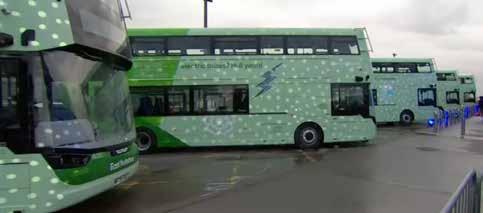
charging infrastructure was part of its commitment to cleaner, greener transport.
An aerial view of the generators in a car park. They look like large, white shipping containers.
A spokesperson said the vehicles
had been ready to enter service in November last year, but the main infrastructure contractor had gone into administration.
Five diesel powered generators were being used to charge 20 electric buses until there was a permanent electrical connection,
they added.
The company said the arrangement still delivered environmental benefits because the electric fleet vehicles produced zero tailpipe emissions when in service.
A spokesperson from East Yorkshire Buses said: "Due to unexpected and significant delays in commissioning the electrical supply we took the decision to power the charging points in the short term with generators allowing us to remove older diesel buses from our fleet The use of the generators is only ever a short-term measure and we expect the power supply to be commissioned in the coming few weeks."
Courtesy of The BBC

If George Orwell were alive today, he might have been tempted to relocate 1984 from Airstrip One to Stratford.
Transport for London likes to speak the language of transparency, accountability and public service. The reality, however, appears rather different.
I recently submitted a straightforward Freedom of Information request asking for recorded information about the private hire operator licence held by London Buses Limited—a company wholly owned by TfL itself.
The response?
Not an explanation. Not a refusal notice citing the Freedom of Information Act. Not even an attempt to justify withholding the information.
Instead, TfL simply announced that it would not be responding because it had answered enough questions in the past. To top it off, it declared that any further correspondence would simply be "filed away without response."
How wonderfully convenient.
Imagine if every taxi driver adopted the same approach.
"Your licence renewal?"
"I'm not responding."
"Your complaint?"
"I'm filing it away without response."
"I'd like to inspect your vehicle."
"My position remains
unchanged."
We all know how long that would last.
Yet apparently the regulator believes a different set of rules applies when the questions are directed at itself.
meticulously with every condition, every policy and every notice it issues. Miss a requirement, and enforcement action soon follows.
But when someone asks
Democracies don't work because public bodies decide when they've had enough accountability. They work because those exercising public power remain open to challenge.
to the same standards of openness, fairness and accountability that it demands from everyone else.
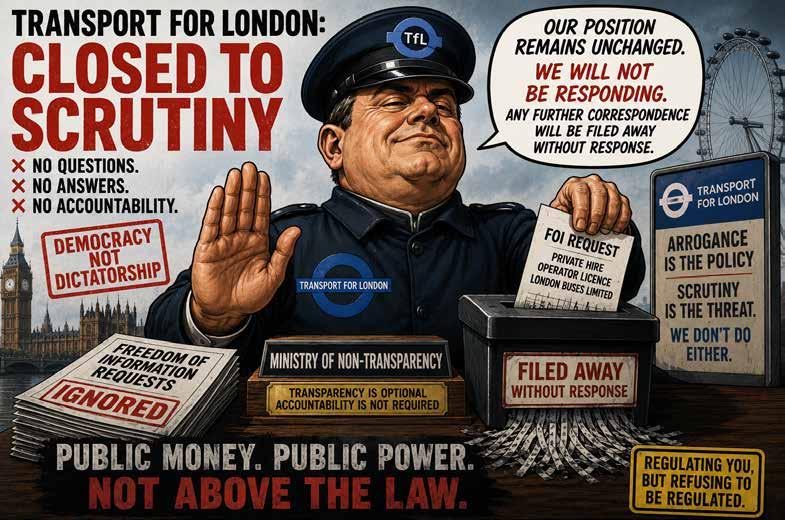
TfL to explain its own conduct, the shutters come down.
Perhaps the most worrying aspect is the precedent.
Respect is earned, not demanded. Transparency is demonstrated, not advertised.
The Freedom of Information Act wasn't created for easy questions. It exists precisely because public authorities sometimes need reminding that they are accountable to the people they serve.
TfL seems to have developed an alternative model: Freedom of Information—subject to whether we're in the mood.
The irony is breathtaking. TfL expects taxi drivers to comply
This is more than discourteous. It gives the impression of an organisation that has become uncomfortable with scrutiny and believes persistence should be met with silence rather than answers.
Some will inevitably joke that this resembles the communications strategy of North Korea rather than that of a modern public authority. That comparison is, of course, tongue-in-cheek—but it highlights a serious issue.
If TfL can simply declare that it will no longer answer Freedom of Information requests from someone who persistently scrutinises its decisions, what message does that send? Is the statutory right to information available only to those who ask comfortable questions?
Taxi drivers are regulated, inspected, licensed and disciplined by TfL. The least we should expect is that the regulator subjects itself
And accountability is not something a public authority can simply decide to file away without response.
If TfL wishes to rebuild confidence with the licensed taxi trade, it should remember a simple principle: regulators who refuse scrutiny rarely strengthen their authority—they merely strengthen the suspicion that they have something they would rather the public didn't see.


(326 City Road, London EC1V 2NZ)
*Weekdays, Monday to Friday. Earnings from Friday will be credited to the account on Monday the following week.
At last I can tell you the story!
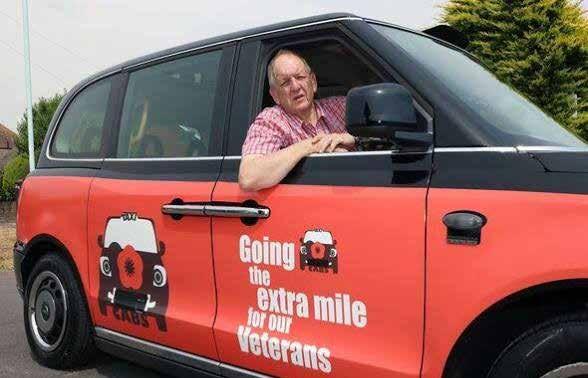
As you are possibly aware, Poppy Cabs has closed down and we are now offering the Remembrance Sunday free taxi service using the title Cabs-for-Veterans.
Why the change?
Although I am nominally the main coordinator, this is not a solo effort. I have a team of experienced drivers and helpers whose opinions I value greatly. It is with their help that things are moving onwards. We had promised the Daily Express reporter who regularly reports on matters for the Taxi Charity for Military Veterans an exclusive interview. Now that the article has appeared in the Daily Express (pages 6-7 Monday 27 July) I can finally bring you all up to date.
The best way to understand what initiated this is to look at the latest press release which you can get at our new website https://c4v.uk/ downloads
The New name and logo.
When we realised that we could no longer use the name Poppy in our title, we considered various names, finally ending upon Cabs-forVeterans. Thanks to a happy coincidence Chloe, the daughter of one of the team, had already created a design which we were considering producing as a badge to add to the range we already have. With a few changes and quite a few exchanges of emails we came up with the new logo you see here. You will
eventually be able to get this as a badge for a small donation!
By another happy coincidence, Alex White who, although he now lives in Gibraltar where he designs web sites for a living, had already started on a site for our service. When we made the decision it was a relatively easy task to change the names on the website. He is doing a brilliant job.
up as a driver or helper. While I will be using my traditional system this year we are intending to run the web based system alongside my system with a view to transition to the web based system fully next year,
This is a work in progress so please keep coming back to the site regularly.
As you know I have been giving away badges in

This means that the Beardmore Poppy Cab badges I had already purchased can be distributed. Thanks to the team members they will be distributed to the green huts and other various taxi haunts. You can also obtain these by mail order direct from me. Email
The site can be accessed by entering www.Cabsfor-veterans.uk To help us get this higher up on the search engine lists can you please search Google or whatever search engine you use for. Please do this several times to increase our rankings.
Not only can you download the press release but you can also get the latest Briefing Notes for drivers and marshals plus a copy of the initial flyer.
More importantly you can already use this to sign
exchange for donations for several years. As part of the negotiations with RBL I received the following statement from the Director, Remembrance
Regarding the badges, I have sought advice from our Legal Team and can confirm that we would be happy for you to use the following statement in relation to your existing 2026 stock:
"RBL has been made aware of these badges and it is understood that donations from the badges will be forwarded to RBL."
mike@mikehughes.org.uk for ordering details.
In addition to badges we also have some distinctive circular window stickers with our new logo. A donation of £1 is requested to cover costs.
I will also have badges with the new logo on them. The order has been placed but it can take up to 6 weeks to receive them. I’ll let you know when they arrive.
Hi-vis vests.
I’m getting quotes for
hi-vis vests with our new logo on them. I will then be approaching our usual sponsor to ask if they are prepared to support us again so that we can give one each to the marshals and helpers.
In the meantime I have a number (around 40) hi-vis vests with the Poppy Cabs sign written on the back that are no longer valid. However, I’m loathe to just throw them away. If anyone knows of an organisation that wants them for free please let me know. Sizes vary from small to XL
Changing from Poppy Cabs to Cabs-for-Veterans was not something we wanted to do.
I had already stated that it is my intention to coordinate the free taxi service this year and next year and then to retire as Coordinator. I still intend to help as a driver / marshal. To be able to have a smooth hand over the team is working hard so that I can get the 16 years of information in my head onto paper and into computer systems.
Most importantly, to show that the taxi trade is not to be controlled when they give help, we really need your help.
This year’s date is 8 November. Drivers, Helpers, Supporters, please log on to the web site www.Cabs-forveterans.uk and sign up.
You can also download the latest Briefing Notes from the website
Mike Hughes Cabs-for-Veterans Independent Taxi Coordinator

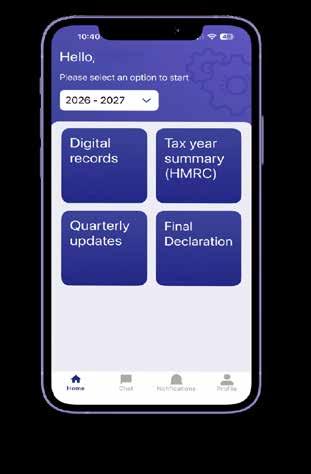
The accountant in your pocket
the accountant in your pocket
TRUSTED BY THE TRADE

The Licensed London Cabbies already using Tax Mouse love its simplicity
No jargon, no spreadsheetjust a few taps between fares and your books are done.
HMRC RECOGNISED
Fully authorised for 2026/27 MTD filing requirements
TOTAL SIMPLICITY
Log income & expenses in seconds. Edit or delete mistakes in one tap.
INSTANT VISIBILITY
See your running profit in realtime
25 YEARS OF HISTORY
Built by the team at United House who have been looking after the trade for over two decades






On Wednesday 15 July, representatives from the London Cab Drivers Club (LCDC) met with Transport for London to discuss the annual review of London’s taxi tariff and the proposals that will form the basis of the 2026/27 consultation.
Representing the LCDC were Mark White and Jamie Owens, with Kamal Abdellaoui attending on behalf of Unite. TfL was represented by Darren Crowson, Taxi and Private Hire Policy Manager.
The meeting covered the latest Cost Index, possible changes to the minimum fare, a review of longerdistance tariffs, airport extras and a number of wider policy issues affecting London’s licensed taxi trade.
While the figures remain provisional and subject to minor amendment, they provide a good indication of the direction TfL is considering.
Cost Index Increases by 7.09% TfL’s latest Cost Index shows an overall increase of 7.09%.
The figure is made up of:
• 5.06% increase in taxi operating costs.
• 2.03% increase in average national earnings.
Together these form the basis of the annual tariff review. The figures underline what most drivers already know – the cost of operating a licensed London taxi continues to rise.
Vehicle costs remain one of the biggest pressures, increasing by almost 30%, reflecting the continued high cost of purchasing Zero Emission Capable taxis.
Energy costs have also risen sharply. Rapid electric charging increased by over 33%, home charging by around 13%, while diesel
By Mark White
prices increased by more than 30%.
Garage servicing, repairs and tyre costs all increased by approximately 7.4%.
The only notable reduction came from insurance, which fell by almost 9%. Average national earnings continue to represent the largest single element of the Cost Index, accounting for almost 46% of the overall calculation.
TfL is considering a number of options for increasing the minimum fare. The current minimum fare is £4.40.
Rather than applying the full 7.09% increase evenly across the tariff, TfL is looking at whether a greater proportion should be reflected in the starting fare.
Options discussed ranged from increasing the minimum fare by:
• 20p • 40p • 60p
•
The larger the increase to the minimum fare, the smaller the percentage increase required across the remainder of the tariff.
No decision has been made and all options will be considered during the consultation.
One of the more significant
discussions centred on Tariff 4, which currently applies after approximately six miles.
TfL believes there may be merit in reducing fares for longer journeys to improve the competitiveness of licensed taxis, particularly against private hire.
Three options are being considered. The first is to leave the tariff unchanged. The second would see Tariff 4 begin at approximately six miles before reverting to Tariff 1 at around twelve miles. The third would also begin Tariff 4 at six miles but return to Tariff 1 after approximately fifteen miles.
For shorter journeys there is little or no difference between the three options.
However, for airport transfers and longer-distance work the differences become more significant.
Under the current tariff, a twenty-mile journey remains the highest-priced option.
Switching back to Tariff 1 after twelve miles would reduce the fare by around £7, while the fifteen-mile option sits between the two.
Over very long journeys the gap becomes much wider. By one hundred miles the twelve-mile option is around £75 cheaper than retaining
is seeking views on whether changes are required.
A separate issue is the future of the booking fee. TfL explained that concerns have been raised about abuse of the booking fee by a minority of both drivers and operators, and that this has prompted a review of whether the current arrangements remain appropriate.
During the discussion, the LCDC challenged TfL’s repeated assertion that apps themselves are not regulated. While the software may not be licensed in its own right, bookings are accepted and managed by licensed private hire operators, who are regulated by TfL and are responsible for how bookings are handled through their platforms.
the current tariff, while the fifteen-mile option remains approximately £2.60 higher than the twelve-mile model.
TfL’s view is that lower longdistance fares could make taxis more competitive.
Whether increased demand would compensate drivers for the reduced fare remains a matter for consultation.
TfL also confirmed that the consultation will review airport extras.
This includes the Heathrow Airport extra, currently £6.00, and the London City Airport drop-off extra, also £6.00.
The review will also consider whether airport extras should continue to be adjusted whenever airport charges increase, or whether they should instead be reviewed periodically.
For drivers working Heathrow in particular, this will be an important part of the consultation given the continuing increase in airport access charges.
TfL also intends to consult on the rules governing booked taxi journeys.
One issue is when the taximeter should be started and stopped during a booked journey. TfL is reviewing the existing arrangements and
The LCDC’s view is that where abuse exists, it should be tackled through effective enforcement against those responsible rather than by removing a legitimate charge available to the wider trade.
Towards the end of the meeting, LCDC representatives also raised concerns about TfL’s forthcoming Surface Access consultation, particularly where it may impact licensed taxis.
The Club emphasised the importance of ensuring that taxis continue to be recognised as an essential part of London’s integrated transport network, providing a fully wheelchair accessible, regulated public transport service rather than simply being treated as another road user.
The current timetable is:
• July–August 2026: Agree consultation proposals.
• October–November 2026: Public consultation.
• November–December 2026: Review consultation responses.
• March 2027: Finance Committee consideration.
• April 2027: Implementation of any approved changes.

TfL are not fit for purpose and haven’t been so for many years.
The figures speak for themselves.
Last week ending the 26th of July alone,
12 London Taxis reached their end of life, bringing the total number of vehicles in London, down to just 13,530.
Might not seem a lot but remember another 1,500 Taxis are due to reach their end of life by the end of next year.
Drivers trying to buy new, extremely expensive TXEs are told by the manufacturer that they only have a few white ones for sale and that if you want a black one, you will have to put your name on an extremely long waiting list.
Rental garages have posted on social media that spare parts are getting harder to come by and many cabs are left up against the wall waiting
for replacement parts.
No other manufacturer has stepped up to the front to produce a vehicle that meets all TfL's conditions of fitness and no other manufacturer will, as the market for a new vehicle which meets these conditions
circle. This problem is made worse by the trade's drivers who are adamant that the restriction of the turning circle must at all costs be left in place, therefore restricting another manufacturer from producing a Vehicle for London…such as the Ford MaxiCab.
and expanding private hire. But when exposed by myself, the full force of Project Horizon was shelved for nearly a decade.
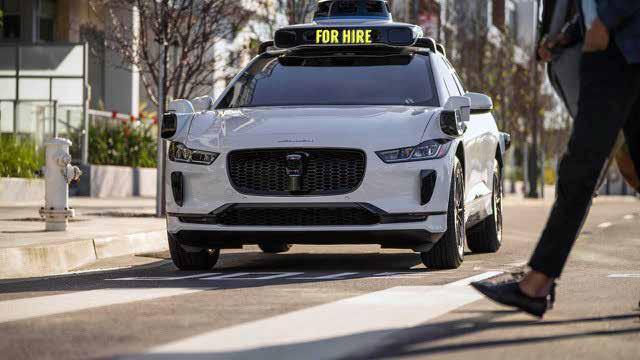
Since the introduction of autonomous vehicles, Horizon is now fully back on the table, to make way
is extremely small and in their eyes isn’t worth the investment.
No other city in the UK is faced with this situation. The main issue is the controversial turning
So, what is behind TfL, the GLA and Sadiq Khan killing off the London Taxi trade.
We knew over 15 years ago that TfL was bent of reducing the trade
for the 'Driverless Taxi'.
Most cabbies believe these vehicles won’t be able to ply for hire because of legislation, but because they will be operating fully under AI
technology, TfL will say they don’t need to do the Knowledge and Sadiq Khan will make sure the legislation is changed.
As the trade decreases week after week, with no new vehicles available (mainly because of the COF), they will say they need to replace us, because of the dramatic fall in revenue.
They will claim the licences they will grant to these autonomous vehicles to work in London, will more than cover the loss of income from a dying trade.
Drivers should remember…they don’t leave home every day just to be an icon or a tourist attraction. They leave home to earn a living. The new MaxiCab will do the job as perfect as any cab has in the past.
Our passengers don’t care what vehicle we use as long as it is driven by the icon…which is the Licensed London Tax Driver.



By Christopher Johnson
Transport for London wants scrutiny of its own conduct to stop. That is the only reasonable conclusion to draw from the way it has handled a formal warning issued to me on 4 June 2026 — and from what has happened since.
The warning came under TfL's "Unreasonable and Unreasonably Persistent Complainants Policy" — a document designed for members of the public complaining about TfL's transport services, buses, tubes, and the like. It was never designed for, and has no application to, licensed drivers raising regulatory and statutory concerns with their own licensing authority. I am not a passenger complaining about a late bus. I am a licensed Hackney Carriage driver engaging TfL, in its capacity as regulator, on matters of licensing compliance and public accountability. TfL has taken a policy built for one purpose and stretched it to cover something it was never intended to touch — using consumercomplaints machinery to silence regulatory scrutiny from within the trade it regulates.
That misapplication is compounded by a deeper problem: the document itself is not, so far as I have been able to establish, a formally adopted policy at all. It is marked "Draft version 3," dated January 2013, authored and owned by individuals who have not held their stated positions at TfL for years. TfL has been unable to point me to any governance process that took this draft and turned it into an adopted policy binding on licence holders. In plain terms: TfL is threatening licensed drivers with sanctions under a policy that was never designed for them, and which — on the evidence currently available — was never even properly adopted in the first place.
It gets worse. The policy TfL says it is applying does, on its face, provide a route of appeal

— to a more senior officer. That ought to be a basic safeguard. But when I submitted a formal Subject Access Request asking TfL to identify who authored the warning and who authorised it, TfL refused. Its position was that this information is not "biographical" enough to count as my own personal data.
Think about what that means in practice. TfL issues a formal written warning, threatens a licensed driver with sanctions, and then withholds the one piece of information — who made this decision — that the driver needs to exercise the appeal that TfL's own policy promises. A right of appeal to nobody is not a right of appeal. It is a fiction, dressed up in procedural language to look like due process while offering none.
An organisation that cannot or will not identify who is making decisions on its behalf is not exercising regulatory authority
accountably. It is exercising power without answering for it. That distinction matters enormously when the power in question can end a driver's livelihood.
None of this happened by accident. A driver raises legitimate questions about licensing compliance and regulatory conduct. TfL responds not with answers, but with a warning drawn from a misapplied and unadopted policy, enforced by an anonymous decisionmaker, with no functioning route of challenge. Strip away the institutional language, and what you are left with is straightforward: an attempt to discourage scrutiny by making the person doing the scrutinising afraid to continue.
Licensed drivers are entitled to ask TfL hard questions about how the trade is regulated. TfL is entitled to disagree with those questions, or to explain why it
considers them mistaken. What TfL is not entitled to do is reach for a policy that was never built with drivers in mind, of doubtful legal status in the first place, refuse to say who is responsible for enforcing it, and call that regulation.
I have requested an internal review of TfL's refusal to identify the author and authorising officer of this warning, and given TfL 20 days to respond substantively. If that deadline passes without a proper answer, further action will follow — including, if necessary, a complaint to the Local Government and Social Care Ombudsman on the question of governance and accountability this episode raises.
Every driver reading this should ask themselves: if TfL will do this to a driver raising questions in the open, on the record, what is it prepared to do to a driver who simply asks a question TfL would rather not answer?
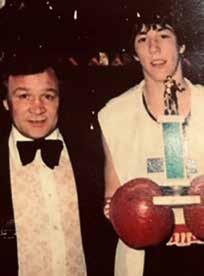
Tyson Fury won first in seven rounds on Friday night, the next night Anthony Joshua won in two rounds, but that does not tell the story of an extraordinary weekend of fights.
The pair have agreed to fight each other later this year in a massive and long overdue showdown. The harsh truth is that neither victory was impressive.
Fury looked sluggish and Joshua was dropped twice by Kristian Prenga
not even confirmation of a country for their long overdue fight. The original signed contracts from two months ago are close to being ripped up; the contracts are only valid if their fight takes place in Britain.
The pair have been linked since they both held versions of the world heavyweight title at the same time in the summer of 2016; it is one of boxing’s longest running sagas, a potentially great fight that is now moving ever closer to collapse.
He entered the ring in Jeddah looking calm and relaxed, but was sent sprawling by a short right uppercut in the opening 15 seconds. He looked badly hurt, both stunned and dazed. He recovered his feet, wa
s staggered several more times and then touched down again for a second knockdown. The Fury fight looked over. Fury was expected at ringside but never showed. Joshua survived the round – just.
In round two, Prenga
impressive comeback.
In Pattaya, Thailand, the night before, Fury finally forced the ageing and hulking Polish veteran, Mariusz Wach to quit at the end of seven rounds. It was not vintage Fury, but it was enough on the night in front of a lively crowd at a Muay Thai stadium. The fight was not shown live and will instead be part of a Netflix series about family life in the Fury household.
The consensus, during the past three weeks,

in the opening round before recovering his senses to deliver a stunning knockout.
However, there is still no date, no venue and
Joshua was having his first fight since the fatal car crash last December in Lagos; two of Joshua’s closest friends died in the crash – Joshua survived.
never threw a punch, Joshua recovered and knocked out the Albanian with about 20 seconds of the round left. Prenga was out cold, Joshua was ecstatic. It was an
By Steve Bunce
and announce a date and a venue; the plan seemed to start unravelling when it was clear that New York and Las Vegas were also contenders to stage the fight. Eddie Hearn confirmed the contracts – signed by both boxers –were for a fight in Britain only.
“I will fight him anywhere,” insisted Fury. “I just can’t see him in the corner opposite me.”
Fury has long insisted that Joshua will never fight him; Joshua has laughed at the slight. “He’s the one that keeps retiring – I’ve never gone anywhere,” countered Joshua.
Meanwhile, Fury’s business manager, Spencer Brown, did make the arduous journey from ringside in Pattaya to ringside in Jeddah, and was confident the fight will take place. “It’s 100 per cent happening – there will be big news soon,” he insisted.
Nobody expected Joshua to come so close to defeat in a fight that looked like a sensible match, but a mismatch; Prenga came close to ruining the big dreams of the big men.
was that they would both win their warm-up fights, then Fury would arrive at ringside in Jeddah after a 4,000km journey, Joshua would invite him to the ring, they would face off
The fight will be announced in the next week or two, and that will be long enough for everybody involved to look forward, and not back at the two scraps at the very heart of a truly bizarre weekend.
Steve Marriott. Blimey, where to begin?
How about, once upon a time, there lived King Mod. Young, sussed, sharp, clobbered up with a great barnet, he came complete with a voice that roared him and his band, The Small Faces, to the top of the charts in the era of the Stones and the Beatles. He then quit the pop life to rock out with Humble Pie for a few years, before ending up singing in pubs dressed in dungarees in various line ups with novelty names.
Only, to try and capture his fast-paced life in 500 words or so is somewhat of a challenge, and one I’ve not tackled before, mainly due to the reverence I have for him and that wonderful music, he and the Small Faces, served up, and frankly, because of the sad way it all ended. My young ears in those formative years, soaked it all in and then some.
Anyway, finally the time has come, so eyes down for a full house.
Steven Peter Marriott was born in East Ham on the 30th January 1947 to mum Kay and dad Bill. Bill was a decent pub piano player and so passed on some musical genes to his son, who was soon out busking on a harmonica and ukulele, earning a few bob in the surrounding streets, as well as picking up first prizes in talent shows at holiday camps down in Jaywick.
He was in bands from the age of 12, mimicking his then idol Buddy Holly. A bundle of hyperactive energy, and full of life, he soon found himself on stage in the West End, after Bill got him an audition for the musical ‘Oliver!’ written by Lionel Bart. Whilst on a twelve-month contract, he played various roles in the show and sung as the Artful Dodger on the official album recorded at Abbey Road in 1961.
He then enrolled as a student at the Italia Conti theatre school in London, and soon found plenty of

work in TV, film and on the radio, but in truth his heart wasn’t really in it and he returned to his first love, music, managing to pick up a solo recording deal with Decca. Sadly, his early release, the Kenny Lynch penned Give Her My Regards flopped .
Taking stock, he was back shortly after, this time in a
when their version of You Really Got Me failed to make a dent in the charts, Marriott was ‘let go.’
It was whilst working in the J60 Music Bar in Manor Park, that he bumped into Ronnie Lane, recognising him from a gig Marriott had previously attended in a local pub. On this second occasion, Lane was looking
movement.
‘Things could work out, Just like I want them to, yeah…’
They were joined by young drummer Kenney Jones, when they teamed up with keyboard player Jimmy Winston to form the Small Faces, so named by an
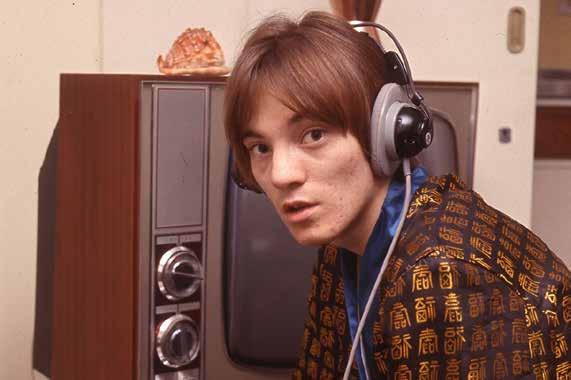
band line up, namely The Moments. They were soon on the gig circuit, supporting the likes of Georgie Fame, John Mayall, and The Animals during 1964. Then
to buy a bass guitar and the two of them would go on to become firm friends, bonding over a love of imported American music and the early days of the Mod
by the notorious manager Don Arden, they released Whatcha Gonna Do About It in the August of 1965, which hit the top twenty of the charts, with, it is said, some deft manipulation by Arden and his team.
Aged just 18, Marriott was now on circa £20 approx. a week wages, with clothing accounts up and down Carnaby Street at his disposable (all later charged against earnings, of course.) Arden housed them in central London at 22 Westmoreland Terrace in Pimlico, where a quiet night in, was a very rare occurrence indeed.
Despite a hectic cycle of concerts and that busy social life, they wrote a number of great old tunes, among them, and in no particular order, All Or Nothing –number one in September 1966 – Tin Soldier, Itchycoo Park, Grow Your Own, Wham Bam Thank You Mam, Rene, Here Come the Nice and Lazy Sunday to name but an handful.
Their time with Arden came to an abrupt end however, when their families became concerned about those earnings of the band and questions began to be raised about royalties. Don quickly sold them on to Andrew Loog Oldham and his newly formed Immediate Records soon after, in 1967. There they became more studio based, which suited them just fine at that stage of their career.
Marriott moved to Beehive Cottage in rural Essex, which he bought along with Ronnie and Susan Lane, Ronnie’s wife. There they established their own studio, which they named ‘Clear Sounds.’
actress friend of Marriott’s called Anabel, what with them being small (apart from Winston and to quote Marriott later ‘with little boats (faces)’. Quickly signed
After the success of their 1968 album ‘Ogden’s Nut Gone Flake’ Steve wanted to bring guitarist Peter Frampton into the line-up, but the rest of the band disagreed, signalling the beginning of the end, with Marriott leaving whilst they were working in Paris, on New Year’s Eve 1968.
Continues next edition...










All under one roof
• Exclusive Insurance schemes
• Breakdown cover only £99
• Roadside assistance and recovery
• Recovery to any UK Location