







As you read this, I sincerely hope that tensions in the Middle East have eased and that work levels have begun to improve, as many within the trade are currently finding conditions increasingly difficult.
Telephone: 020 7394 5553
E-mail for membership enquiries: thelcdc@gmail.com Web: www.lcdc.cab
Editor: Grant Davis
The Badge is distributed free to the Licensed London Cab Trade.
For advertising enquiries please contact the office on 020 7394 5553 or E-mail: thelcdc@gmail.com
All advertising in The Badge is accepted under our terms and conditions. These are available at the LCDC office. Before entering into any commitment, financial or otherwise, always remember to seek professional advice.
The views expressed in this publication are not necessarily those of the Editor or of the Management Committee of the London Cab Driver’s Club.
Contributions for publication are welcomed and should be sent to the Editor at the above address.
Printed by Iliffe Print. T:
01223 656500
On page 3, you will see that the Club has continued to press TfL regarding the Private Hire booking process on some platforms which we firmly believe remains unlawful. Had TfL and the Department for Transport listened to our longstanding concerns surrounding consumer rights, it is possible that this could also have assisted in tackling the growing cross-border issue now affecting the industry
Pages 4 & 5 highlight what I believe is becoming a deeply concerning and potentially unmanageable rise in complaints relating to Private Hire driver behaviour. These incidents are clearly not associated with our trade. The very structure of the licensed taxi — with the passenger seated behind a protective partition — provides a level of security and professionalism that is increasingly important in today’s environment. The allegations being reported are extremely troubling and raise serious questions that cannot be ignored.
Both myself and members of the LCDC Committee have recently handed over the Club’s computers and phones to Bullitt21 in support of the trade’s legal case against Uber. Like many of you, I remain hopeful that our industry will finally receive the justice and compensation it deserves following the disgraceful manner in which Uber was allowed to enter London.
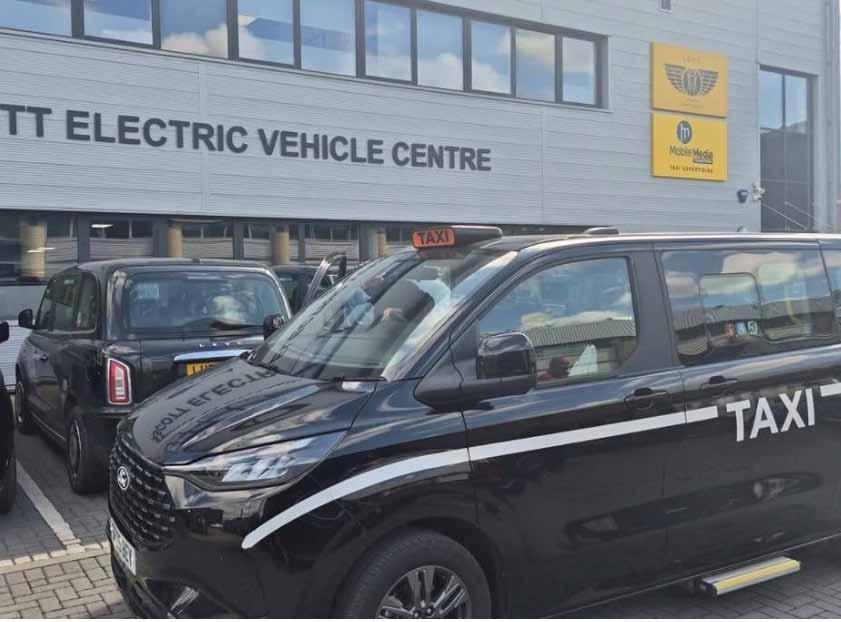
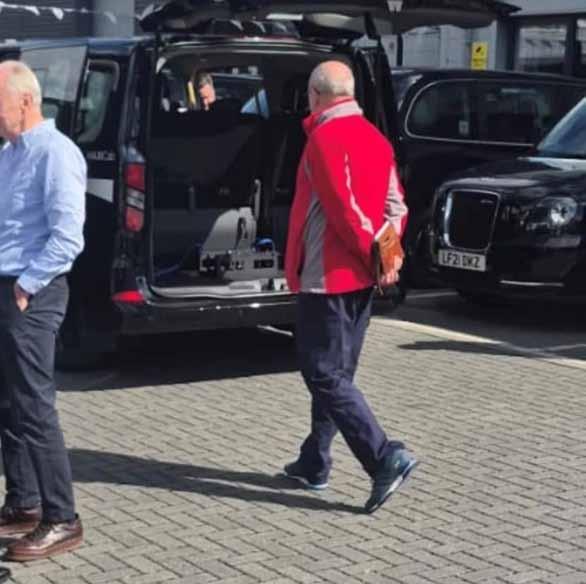
You will also see that the Ford MaxiCab was spotted at Ascott’s a few weeks ago — an interesting development and one that will no doubt attract attention across the trade. Finally, it is encouraging to see sensible discussions once again taking place around the table over the MaxiCab.
Grant Davis

Graham Robinson General Manager
Taxi and Private Hire
Transport for London
5th May 2026
I write in my capacity as Chairman of the London Cab Drivers Club, on behalf of its members.
I am instructed to raise a matter of increasing concern following numerous representations received from members over the course of the weekend. These concerns relate to the significant number of private hire vehicles licensed by Wolverhampton City Council and operating within London, in particular via the Bolt platform.
For the avoidance of doubt, no issue is taken as to the legality of cross-border hiring. The concern, rather, is whether the operational model presently deployed accords with the statutory requirements governing private hire services.
In particular, there is a serious question as to whether private hire drivers using the Bolt platform are, in practice, accepting bookings prior to any lawful allocation to a licensed private hire operator. If that is so, such a model would be inconsistent with section 2 of the Private Hire Vehicles (London) Act 1998, which requires that bookings be accepted by a licensed operator and not by drivers.
Further, as you will be aware, private hire operators fall to be treated as “traders” for the purposes of the Consumer Contracts (Information, Cancellation and Additional Charges) Regulations 2013 (“the 2013 Regulations”). Regulations 10 and 13, read together with Schedule 2, impose a clear obligation to provide specified pre-contract information to consumers, including the geographical address of the trader responsible for the service. In this context, that necessarily requires disclosure—prior to contract formation—of the relevant licensed operating centre responsible for the booking.
Our members report that, when bookings are made via the Bolt platform, such information is not disclosed at the pre-contract stage. If correct, this gives rise to a more fundamental concern. In the absence of disclosure of the identity and geographical address of the contracting operator, it is unclear how a consumer can properly be said to be contracting with a licensed private hire operator at the point of booking.
In those circumstances, there is a real question as to whether the acceptance of the booking is, in substance, occurring at driver level, or otherwise prior to any lawful allocation to a licensed operator. In our submission, such a failure of disclosure does not merely constitute a breach of consumer protection legislation; it undermines the statutory requirement that bookings be accepted by a licensed operator and creates the conditions in which private hire drivers may accept, or be treated as accepting, bookings independently of any identifiable operator.
This lack of transparency further gives rise to material regulatory and public safety concerns. In particular, it enables a model whereby vehicles licensed outside London may undertake bookings within London without the consumer being informed, at the point of contract formation, which licensing regime applies or which operator is legally responsible for the journey. The consequence is that neither the consumer nor the regulator can readily ascertain which authority’s standards and enforcement regime govern the journey in question.
We are further concerned that, if such an operational model has been permitted (whether in respect of Bolt or any other operator), it risks entrenching a wider industry practice which is inconsistent with the statutory framework.
In those circumstances, I should be obliged if you would confirm the following:
1. Whether private hire drivers operating via the Bolt platform are able, in practice, to accept bookings prior to allocation to a licensed private hire operator; and
2. Whether Transport for London is satisfied that Bolt’s operating model, as presently deployed, complies with section 2 of the Private Hire Vehicles (London) Act 1998.
Given the evident public safety and regulatory implications, I would be grateful for your prompt and substantive response.
Yours sincerely,
Grant Davis
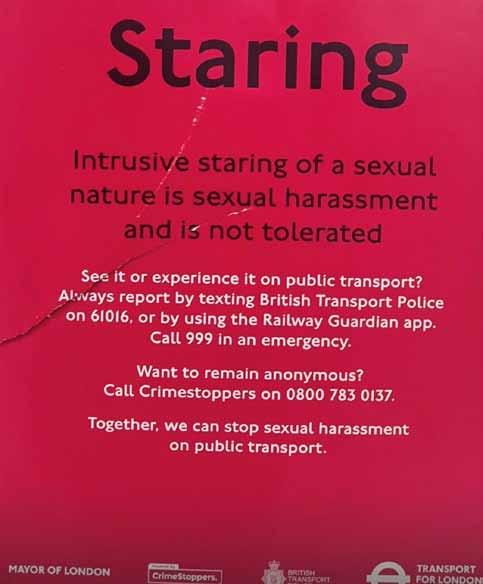
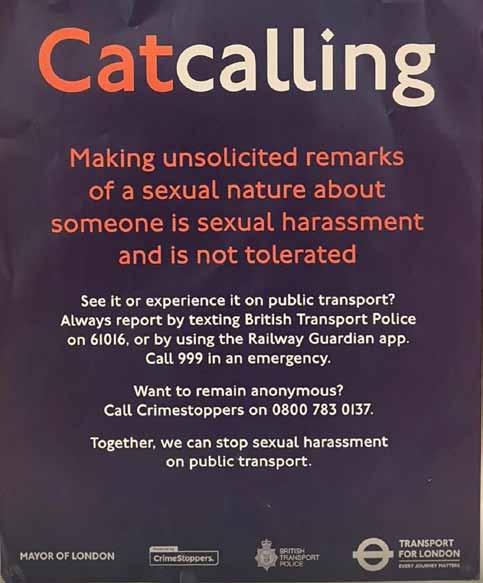
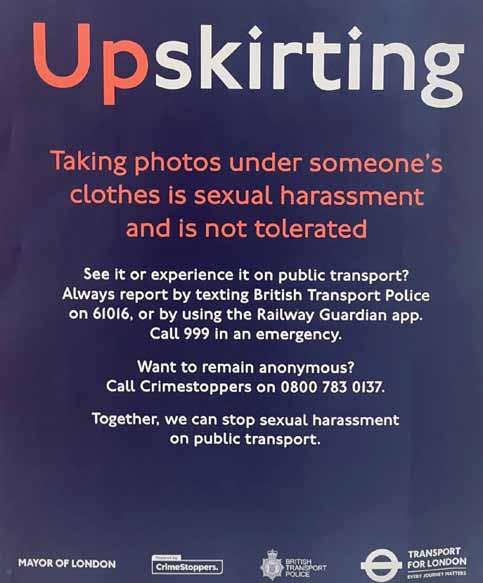
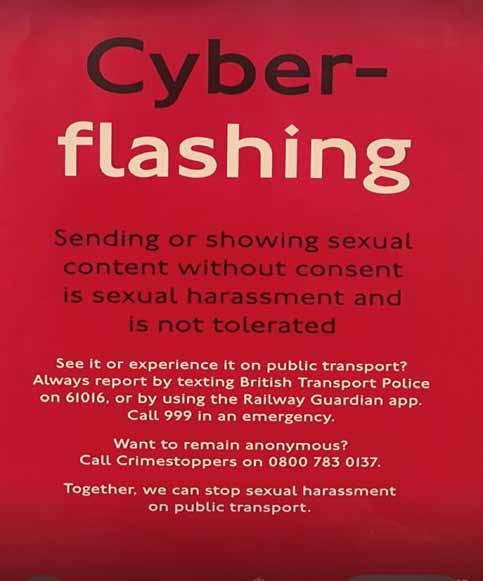
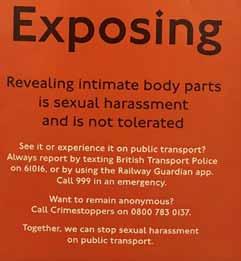
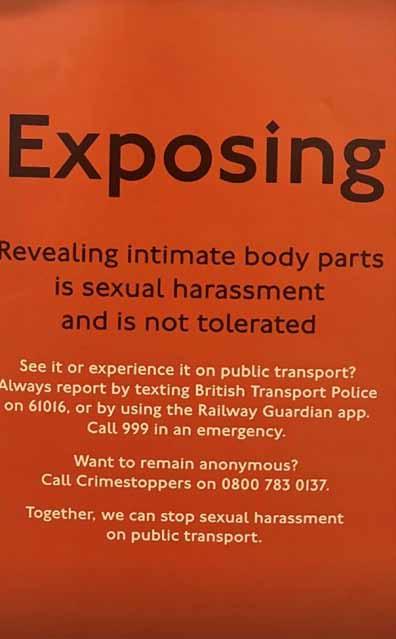
When I received these pictures (see left and below right) from a member, I could hardly believe what I was seeing. In the NSL test Centre at Rainham, Essex, these posters were placed on the wall in the taxi / PH waiting room.
In the August edition of The Badge, the LCDC reported that a member reminded Transport for London (TfL) through a court claim that traditional taxi laws are still in force.
I truly believe that the amount of complaints that Tph are receiving must be going through the roof, as if they have to put these up for the drivers to read, then there must be alarming bells ringing at TFL.
You will see headlines on the posters such as EXPOSING - PRESSING - TOUCHING - STARING - UP SKIRTING - CYBER FLASHING
In response to this claim, TfL’s legal department clarified a key issue raised by our member: whether a taxi driver may start the meter upon accepting an immediate app-based booking. TfL replied:
This is unreal. Looking at this list, I can only assume that this is for the PH Industry and NOT us as when you sit in the front of a cab we have the partition for the passengers' safety, and we certainly cannot, Press nor Touch as we cannot sit anywhere near the passengers, and it is impossible for any taxi driver to "Upskirt" a passenger.
“TfL has already confirmed to you in correspondence dated 21 May 2024, that a hackney carriage driver may not switch on the taximeter prior to the point at which the passenger is picked up, when it is being pre-booked as a hackney carriage. Again, we consider that this point is clear and does not require a declaration from the High Court before that is the case.”
organisations like the LCDC, LTDA, Unite, RMT, and UCG, where TfL stated: “…case law has determined that a hiring for a London taxi takes place where the booking is accepted, not where the passenger is picked up.”
This 2017 statement was related to a case involving yellow badge taxi drivers working for Computer Cab, addressing whether they were plying for hire in the green badge sector. Given that TfL understands that hiring occurs at the booking location, it should also recognize that Section 39 of the London Cab Order 1934 permits the meter to start from the acceptance point.
potentially favouring the commercial interests of app companies?
These companies, also licensed by TfL as private hire operators and contribute substantial revenue through licensing fees, could this be a conflict of interest?
TfL has stated that it does not regulate taxi apps, an assertion that seems intended to deflect responsibility for protecting both the public and taxi drivers.
Section 39 of the Cab Order 1934 specifies: “The driver of a motor cab shall start the taximeter no sooner than when the cab is hired or at such later time as the driver thinks fit.”
legal framework for London’s regulated taxi service.
hire vehicles similarly and allowing app companies to do the same, TfL may be acting unlawfully?
service, the app companies that dispatch them also perform a public function, thereby falling under the PSED, which TfL is tasked with enforcing.

This is very worrying that our regulator is trying to educate drivers on what NOT to do with female passengers and should raise alarm bells with female passengers in PH vehicles.
This statement from TfL appears to contradict a 2017 statement made during a trade meeting with
This inconsistency raises questions about TfL’s taxi and private hire department? Drivers are asking if they are
However, case law classifies taxis as public transport, unlike private hire vehicles, which are categorized as private transport. As a result, Section 149 of the Equality Act 2010 requires TfL to fulfil its Public Sector Equality Duty (PSED) when third parties, such as app companies, dispatch taxis. Therefore, TfL’s claim that it does not regulate apps appears misleading; it has a statutory duty to ensure that these apps operate within the
TfL eliminate discrimination, harassment, victimization, and practices that endanger the public. Therefore, TfL cannot permit app companies or drivers to cancel bookings, which could leave passengers, particularly those relying on contracted services in a vulnerable situation if drivers cancel the app job in Favor of a street hail.
For years the LCDC have demanded from TFL that complaint stickers be placed in the back of PH vehicles and obviously, the PH Industry have fought against our suggestions, but now I am hoping that in the new stickers, TFL will include numbers and email addresses for customers to make complaints.
TfL’s policy requiring drivers to start the meter only when the passenger is picked up may lead to app booking
There is a pressing need for government intervention to address TfL’s apparent shortcomings and potential biases that continue to affect the London taxi industry.
TfL has been contacted for comment.
With over 106k PH drivers in London and with TFL allowing asylum seekers to work as a PH drivers, I genuinely worry for passengers' safety and if they are having to resort to these posters to try and "Educate" drivers, then God help us.

“I must admit I wasn’t too sure about this until I drove it. I think having a brand new cab on the streets will only be a good thing. I must say it drove very smoothly and I know the public would love it with the massive glass roof, the vision is first class.”
Tony
“I really enjoyed taking this for a spin, fast, smooth and a joy to drive. I was even flagged down on Waterloo Road! I know some drivers will say it does not look like a “cab” but we have about 5 different taxis on the streets now, and the public would love it. I’d like to buy one when they come to London.”
“Do I have to give it back? This is the future in my opinion, modern, smooth, spacious, everything we need to do our job in the 21st Century. I sometimes work the airport, and this would be just the ticket, loads of room for passengers and luggage, fantastic. I for one think it would be a major asset for the trade.”
Noel
“I loved it, absolutely loved it, I want to know when TFL will pass this. I think many drivers once they get behind the wheel will be of the same opinion. I love the driving position, the big windows and mirrors, the view for the driver is very good. The space for 6 passengers in the back is a massive plus for the trade in my opinion.”
Johnny
A couple of weeks ago on a taxi Facebook site, it was reported by a driver that he had seen the new Ford MaxiCab at Ascott's taxi offices in Dartford.
There was much conversation around the sighting and many drivers came onboard with their opinions. I must say that the Club, sadly, has had to suffer much abuse on social media for even daring to have the conversation publicly that we need a CHOICE of vehicle.
As readers of the Badge would be aware, we have written to Mr Alex Nan (CEO of LEVC) and emailled Mr Chris Allen at Ansty (who has now recently left the company) in the hope that someone at LEVC would tell the Cab Trade what the state of play is concerning a new taxi... but not a peep.
Some in our Industry have stated that they are being made to order, but when I called up LEVC to order a new TXe, I was told to call back in December and ask. I must say that if that's "made to order" my mum's a Dutchman.
Like everyone, we at the LCDC want the Cab trade to flourish and continue, but for that to happen we need another vehicle in the marketplace. With the Mayor's age limit policy, between now and September 2027 we are going to lose some 1,500 Euro5 taxis. That's some number and so I would like to ask the Club's detractors... what's your Plan B?
I have had meetings with some fleets who have ordered 30 new TXe cabs and been told they can only have 5 white onesthis is madness. Where
does this leave mushers who trade in their 5 year old TXe and then wish to go again on a 5 year deal?
They will now have to finance their balloon payment (I am hearing for some it is in the £28k bracket) and also purchase a new 3 year old warranty.
Also as Euro5 drivers come off the road, even if they want to rent, the fleets would shrink. Also as their Euro5 taxis come off the road, it's not good in my opinion for the trade.
In my 38 years of driving a Cab, it's been a FX4, Fairway, TX1, 2 Vitos and now a TXe, the trade evolves and as I have mentioned, we could be looking at self employed drivers becoming unemployed.
When I saw that the Ford had been seen at Ascott's, I thought it made sense. Ascott's have a long and distinguished history in our trade, I used them back in the day at Druid Street and Micky Ascott was a great trade supporter and active on many fronts with the LCDC.
The new market for cabs and second hand market are drying up rapidly. If it came to pass that Ascott's were made a dealer for the MaxiCab then not only would they be able to service the drivers with brand new taxis, but also take in the drivers' 2nd hand TXes and the market would start to flow again.
I would be very interested in your views on this situation we are facing and always happy to chat with members and the trade alike.
Be lucky
Grant DavisChairman LCDC

‘I’m
driver - people don’t believe me when I say I’m old enough’
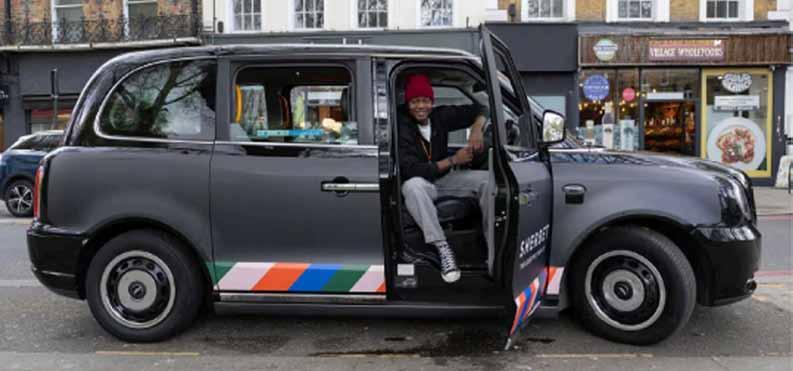
At just 21 years old, customers have a hard time believing Bahrain ‘Baha’ Mujagata is old enough to drive - let alone own a black cab. “A few nights ago I was driving a lady and at the end she said ‘thank god we’re here, I was worried the whole time,” he told MyLondon.
“She then said: ‘Do you actually have a licence because you are so young? Actually I’d rather not know’, before stepping out of the car.”
Following his birthday on March 26, Baha has officially taken the title of London’s youngest black cabbie from fellow Bromley resident Connor Dill who has become a viral sensation on social media since earning his badge earlier this year.
Baha moved to London from Uganda in 2022 aged 17 to live with his dad who already works as a cab driver. Despite enrolling at university shortly afterwards to study computer science engineering, he was interested in becoming a black cabbie to earn extra money while learning.
Most students in this scenario opt to work in a bar or café, but Baha instead chose to study for ‘The Knowledge of London’ - considered one of the world’s toughest exams and likened to studying for a law degree.
The 21-year-old was aware of the challenge ahead, but felt compelled to dive into it during a particular journey with his dad. “He turned to me and said ‘shall
we switch on the meter to see how much I’d get if this was a job?’
“We then drove for 30 minutes and I saw it was racking up a lot of money. At the end I said ‘Oh my god! Could you imagine if that was a proper journey?’“It was at this point I knew I wanted to be a black cab driver.”
Although he didn’t have the benefit of growing up
his large map of London collecting dust in the attic and re-attached it to the living room wall.
Baha and his brother also rode around London on a moped to test themselves real-time on streets and landmarks. In the end he was able to pass after studying for two years and five months, considerably faster than the average of between three and four years.
time, but to this day the pronunciation can still be tough. There’s this place off Kings Road in Knightsbridge called Cheltenham Terrace which to this day I’m still insecure about saying.
“You could have the best knowledge of London and be able to picture every street, but if you can’t name the exact road or what you’re passing the examiner won’t know as the exam is completely verbal.”
Baha will graduate from university this summer and intends to pursue a career as a cyber security engineer. He also wants to resume acting classes which he was forced to stop once his preparation for ‘The Knowledge’ intensified.
“I cannot top the freedom of this job,” Baha concluded. “Just waking up and thinking ‘I don’t have to go to work if I don’t want to’. Having the freedom to choose is
in London, Baha feels fortunate his dad was able to help with his studies for the Knowledge exam, while his younger brother also joined in.
To pass the test candidates must memorise more than 25,000 streets and 20,000 landmarks within a six-mile radius of Charing Cross, before providing the most direct route between any two parts of the city on the spot when quizzed by examiners. To prepare for this, Baha's dad retrieved
London’s youngest black cabbie found learning the pronunciation of certain roads and places the hardest part of the process.
“I remember the first time I saw ‘Greenwich’, I read it as ‘Green-wich’ but my Dad said that’s not how you say it, but I said that’s how it’s written,” he continued.
“I was already speaking English because it’s the formal language in Uganda, but what was new was the accent and pronunciation. The accent came with
Another key challenge Baha has discovered about London more widely is the weather which frantically changes between seasons.
“In Uganda we have summer all year round but here we have winter, spring; sun, rain and everything.
“The heat in Uganda is also quite moderate as here was the first time I experienced 40C heat. I said to my friends ‘they have lied to me, this can’t be London’.”
definitely worth studying for.
“I go out knowing I can make the money and having the certainty of knowing I get paid there and then for every fare.
“The way I like to see it is, I have the best part-time job which is never going to go away. I also don’t have to commit to it, I could stop working for 10 years and it wouldn’t matter as I can wake up and start again.”
Courtesy of MyLondon

The accountant in your pocket
Two of London’s largest train stations will face temporary closures over the 2026 summer holidays.
Charing Cross and Waterloo East train stations will both be closed for 22 days to carry out improvements, which would have otherwise taken more than a year in weekend closures. The major engineering work will take place between July 26 and August 16 this year.
South Eastern Railway said it will replace 1,800 metres of life-expired track, which was installed in the 1990s. Other upgrades will include drainage improvements and structural repairs.
Trains into Charing Cross will be diverted to London
Victoria, London Cannon Street or London Blackfriars. Some services may
National Rail station which is expected to close. The Underground station will

terminate early at London Bridge.
Luckily, it is only the
still operate as usual, so passengers can use Bakerloo and Northern line services to get to Charing
Cross. There are also plenty of train stations located within walking distance of Charing Cross, including Embankment, Leicester Square and Westminster.
The central London station has suffered many faults in recent years. Southeastern sees the 22-day closure as the “least disruption and most efficient way” to prevent future hiccups on the line.
Southeastern is the only operator that serves Waterloo East, meaning the station will be completely shut over the 22-day period.
Services typically connect to Sevenoaks, Hayes, Dartford and parts of Kent and East Sussex. However, passengers can take a short
walk to access services from the mainline Waterloo station and Jubilee line services from Southwark. To reach Kent or Sussex, there are trains from London Victoria, London Cannon Street, London Blackfriars, and London Bridge.
Scott Brightwell, director of operations and safety, South Eastern Railway, said: “We know closing Charing Cross and Waterloo East for 22 days is a significant change and we’re sorry for the disruption it will cause. This is not a decision we’ve taken lightly. We’ve looked long and hard at every possible option and although none of them are without impact, a single summer closure is the least disruptive and most efficient way to carry out this vital work."


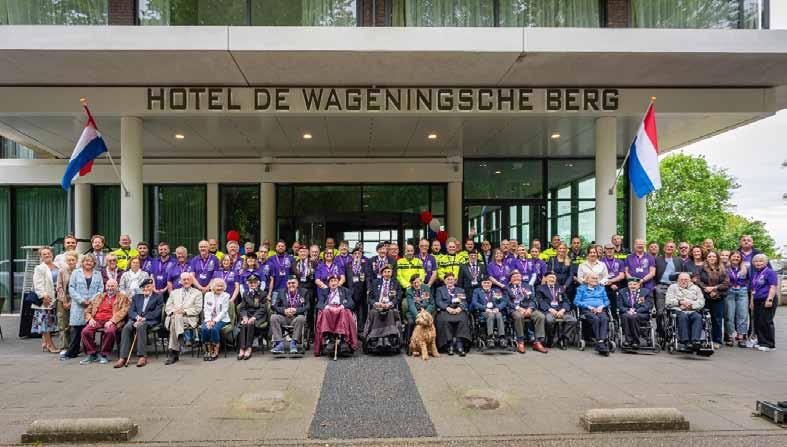
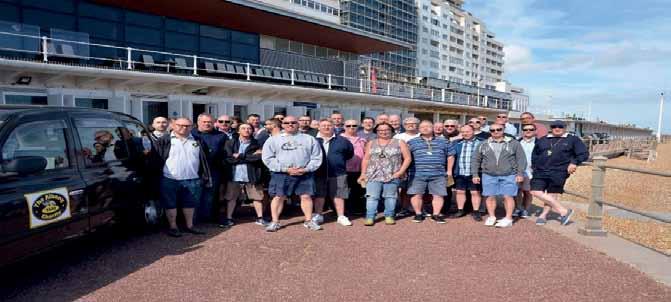
Fourteen iconic London taxis carrying eleven WWII veterans, alongside other veterans and volunteers from the Taxi Charity for Military Veterans, travelled to the Netherlands this week to take part in the annual Dutch Liberation commemorations in Wageningen, the city where the German capitulation was signed in May 1945.
The annual trip, organised by the Taxi Charity, once again highlighted the enduring bond between the Dutch people and the British veterans who helped liberate their country more than 80 years ago.
At midnight on 4 May, 103-year-old WWII veteran Robbie Hall had the honour of lighting the Flame of Liberation during a poignant ceremony in Wageningen. Thousands gathered in the town square to witness the emotional moment marking the transition from remembrance to liberation.
The following day, the veterans proudly led the Freedom Parade through the streets of Wageningen while Robbie, alongside Chris Rampling, the UK Ambassador to the Netherlands, watched from the main podium with representatives of the Dutch King and the Wageningen 45 Committee. Tens of thousands of families lined the streets, applauding, waving flags and thanking the veterans as they passed through the historic city.
During the visit, the veterans also paid their respects at the Oosterbeek Commonwealth War Graves Commission Cemetery. Among them was
100-year-old Market Garden veteran Geoff Roberts MBE, who laid crosses at the graves of two close friends killed during the battle in 1944. The moving moment served as a reminder that, for many veterans, these commemorations are not only celebrations of freedom but also deeply personal acts of remembrance.
The convoy of London taxis received a remarkable reception throughout the trip. Dutch Police escorted the cabs to and from the Hook of Holland, temporarily closing motorways to ensure the veterans travelled safely and smoothly. From the Stena Line ferry crossing to the staff at the Fletcher Hotel in Wageningen and the Arnhem 40-45 Museum, the veterans were warmly welcomed and treated as honoured guests wherever they went.
Ann Russell, daughter of WWII veteran George Durrant, praised the Taxi Charity volunteers and drivers who made the visit possible. She said: “Dad has loved it and we’ve made such special memories. We’ve been blown away by how much everyone cares and by the kindness shown to all the veterans.”
Chris Janssen, Director of Wageningen 45, said the veterans remain at the heart of the city’s liberation commemorations. He said: “The WWII veterans are the absolute guests of honour in Wageningen. Through them, the Second World War becomes living history for younger generations. The veterans and the Taxi Charity are woven into the very soul of Wageningen, the City of Liberation.”
Taxi Charity Chairman
Colin Mills said: “One of the most special things about the Taxi Charity is the friendships that develop between the cab drivers and the veterans. Many of our drivers have supported the same veterans for years and those bonds are incredibly important.”
The Taxi Charity for Military Veterans has supported veterans for more than 75 years, providing transport, companionship and memorable trips for those who served their country, while ensuring the sacrifices of WWII veterans are never forgotten. To fund and facilitate their work, the charity is wholly reliant on donations, grants and sponsorship.
www.taxicharity.org and if you would like to read more about the work of this charity do sign up for the newsletter
here www.taxicharity.org/ newsletters
About the Taxi Charity for Military Veterans
The Taxi Charity is run by volunteer London licensed taxi drivers and has been supporting thousands of veterans since 1948. It is the only Forces charity that focuses on providing fun and entertainment and arranges free trips (for veterans from all conflicts) to the Netherlands and France for acts of commemoration and days out to museums, concerts, or social events across the UK.
The charity received the Queen’s Award for Voluntary Service in 2021 and celebrated its 75th anniversary in 2023, a remarkable milestone for a small, niche charity peopled by enthusiastic volunteers.




If you've got something to say about the taxi and private hire industry — and let's be honest, who among us doesn't — then Cab Chat wants to hear from you.
Cab Chat is the podcast and YouTube show that has become one of the most talked-about voices in the UK taxi trade. Whether you're a black cab driver with decades of knowledge under your belt, a trade rep with a message that needs to reach a wider audience, or simply someone who cares deeply about the future of the licensed taxi trade, Cab Chat is the platform that puts your voice front and centre.
What Is Cab Chat?
Cab Chat is a regular show dedicated entirely to the issues that matter most to people working in and around the taxi and private hire trade. From licensing battles and TfL policy to app wars, driver welfare, and the fight for fair regulation, no subject is off limits.
The show is hosted by Jamie the Cabby & Tom the Taxi Driver and brings together drivers, trade organisations, journalists, legal experts and industry insiders for frank, honest, and often passionate conversations about the state of the trade — and where it's heading.
It's the kind of talk you have at the rank, at the garage, or over a brew with fellow drivers. Except now, thousands of people across the country are listening in.
Where Can You Watch and Listen?
Cab Chat is available wherever you consume your
media:
• YouTube — Subscribe to the Cab Chat YouTube channel for the full video experience. Watch interviews, debates and panel discussions, and never miss an episode.
• Apple Podcasts — Listen on the go, perfect for long shifts or waiting on a job.
• Spotify — Available on one of the world's most popular streaming platforms.
• All Major Podcast Apps — Whether you use Amazon Music, Pocket Casts, Overcast, Google Podcasts or any other app, simply search for Cab Chat and hit subscribe.
New episodes drop regularly, so subscribing ensures you'll always be the first to know when fresh content lands.
Why the Trade Needs a Show Like This
The taxi industry is one of the most heavily debated and politically charged sectors in the UK. Decisions made in town halls, at TfL, and in Westminster have a direct impact on the livelihoods of tens of thousands of working
drivers — yet too often, the trade's voice goes unheard in the mainstream media.
Cab Chat exists to change that.
It gives a platform to the people who are actually living these issues every day. It amplifies the voices of grassroots drivers alongside trade leaders and policy
to say. You don't need to be a public figure or a union rep — some of the most compelling episodes have featured everyday drivers sharing their experiences from behind the wheel.
Are you dealing with a licensing dispute that others need to know about? Have you built a successful operation and want to share

influencers. And it holds a mirror up to an industry that deserves serious, informed coverage.
Could You Be a Guest?
The team behind Cab Chat is always looking for guests who have something
what you've learned? Are you frustrated with the direction of the industry and ready to speak up? Or perhaps you have a positive story about how the trade is evolving?
Whatever your angle, Cab Chat wants to hear
from you. Getting involved is simple. Reach out to the show's team and tell them what you'd like to talk about. Appearances can be done in person or remotely, making it accessible for drivers across the country — not just those based in London.
Cab Chat's audience is growing, and it's not hard to see why. In an industry where information travels fast and opinions travel faster, having a trusted, dedicated show to turn to matters. By subscribing — whether on YouTube or your preferred podcast platform — you become part of a community of trade professionals who stay informed, stay connected, and stay ready to speak up for their industry.
So if you haven't already, search for Cab Chat today. Subscribe. Listen. And if you've got something worth saying — get in touch. The mic is open. To find out more about appearing on Cab Chat or to subscribe, search 'Cab Chat' on YouTube, Apple Podcasts, Spotify, or your preferred podcast app or visit our website www.cabchatshow.uk.

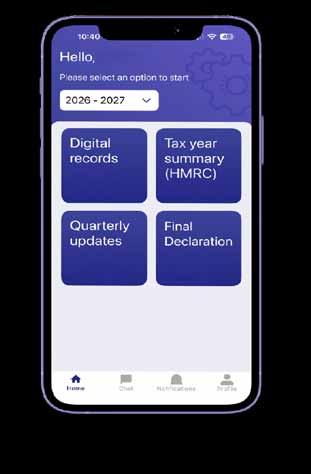
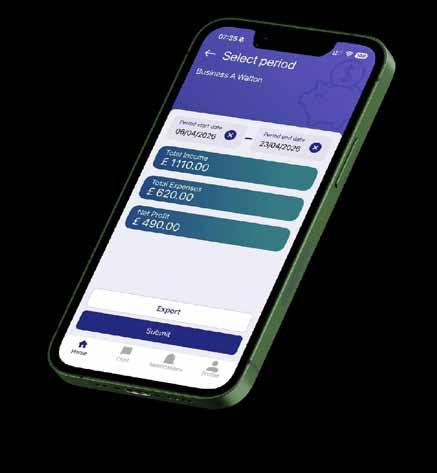
TRUSTED BY THE TRADE the accountant in your pocket

The Licensed London Cabbies already using Tax Mouse love its simplicity
No jargon, no spreadsheetjust a few taps between fares and your books are done
HMRC RECOGNISED
Fully authorised for 2026/27 MTD filing requirements
TOTAL SIMPLICITY
Log income & expenses in seconds Edit or delete mistakes in one tap
INSTANT VISIBILITY
See your running profit in realtime
25 YEARS OF HISTORY
Built by the team at United House who have been looking after the trade for over two decades





The First London TX4 Taxi has been Successfully Upgraded to Euro 6 Emission Standards with HJS Retrofit Exhaust Technology.
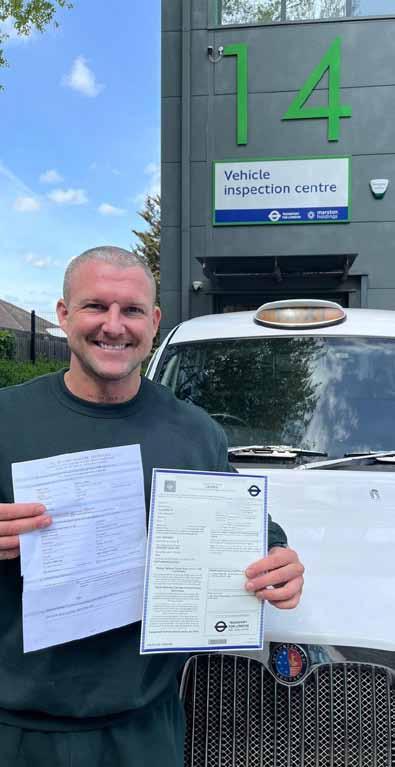
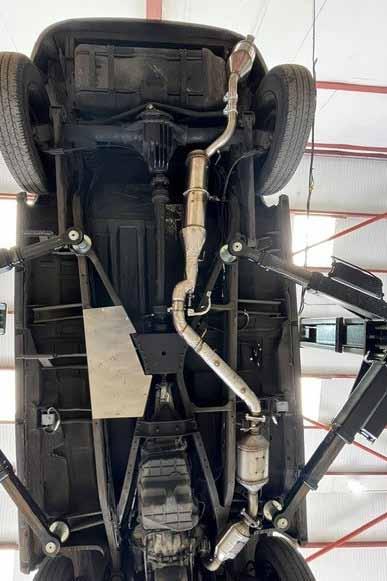
HJS Emission Technology is proud to announce a major milestone for the London taxi industry - the first successful and TfL approved upgrade of a TX4 black cab from Euro 5 to Euro 6 emissions standards.
London taxi driver Bobby Holley, has become the first in the capital to complete the upgrade with HJS. The upgrade has resulted in his vehicle meeting the equivalent of Euro 6 emissions standards enabling it to remain licensed for up to 15 years, matching the lifespan of other Euro 6 taxis. After completing the TfL inspections, Bobby was delighted when his plate was renewed.
Holley described the moment as a turning point after months of uncertainty across the trade:
“This is what we’ve all been waiting for. There was a point where it felt like it might never happen. Now drivers like myself have a clear way forward and can finally plan for the future.”
The successful emission upgrade marks a significant step forward for thousands of TX4 owners seeking a practical, cost-effective route to compliance without the immediate need to transition to a fully electric vehicle.
The TfL approved retrofit programme provides a vital solution for drivers facing tightened age limits and rising vehicle costs. By extending the working life of existing taxis, the HJS system offers a financially viable alternative that supports drivers while maintaining London’s commitment to
improved air quality.
Following extensive investment and development, HJS have delivered a certified solution that meets all required standards, unlocking a programme that had long been anticipated by the industry.
The retrofit technology is widely seen as a crucial bridge allowing drivers to continue operating their current vehicles while preparing for a gradual transition towards zero emission capable taxis. It also helps stabilise the market by easing immediate financial pressures and supporting long term sustainability within the trade.
For Holley, the benefits are clear:
“It’s a relief to finally have my cab compliant to Euro 6. I am glad I decided to be the first to
adopt this technology, and after my cab passed its licensing inspection today, I am looking forward to another three years in my TX4"
With the first successful upgrade to Euro 6 emission standards now complete, HJS Emission Technology looks forward to supporting more drivers across London as the rollout gathers pace, delivering a proven, compliant, and driver focused solution for the future of the black cab industry.
Any enquiries should be directed to tx4@hjs.com
Dear Commissioner and Mayor,
This correspondence constitutes formal notice in respect of the proposed introduction of a zero-emission (at tailpipe) licensing requirement for London taxis
It is not submitted as part of informal engagement. It is provided on the basis that it will be relied upon in assessing the lawfulness, rationality and implementation of any subsequent policy, consultation or decision.
The London taxi trade has previously been subjected to a mandated technological transition in circumstances where infrastructure, cost mitigation and operational viability were not secured in advance. The consequences—foreseeable at the time—have since materialised in the form of increased capital burden on individual drivers, operational constraint and measurable pressure on trade viability.
In that context, any further transition must be defined, evidenced and secured prior to implementation. Reliance on assumption, aspiration or “market outcomes” is not a lawful or rational basis for decision-making in a regulated, safety-critical and accessibility-dependent public transport system.
It is not possible to assess the impact of a policy in the absence of a defined and quantified objective. Accordingly, Transport for London is required to set out, in clear, evidenced and enforceable terms, the following:
The full and evidenced cost of compliance to a taxi driver, including vehicle purchase, financing, insurance, maintenance, energy, charging time, downtime and loss of earning capacity, together with a precise statement of how that cost is apportioned between the individual and any form of public or policy support.
The specific environmental objective of the proposed policy, including:
- the quantified emissions reduction expected
- the timeframe over which that reduction will be achieved
- the baseline against which that reduction is measured - the assumptions made regarding fleet size, vehicle numbers and uptake rates and confirmation that this modelling has been completed in advance of consultation.
The minimum level, distribution and reliability of charging infrastructure required to sustain the taxi fleet, including: - a defined ratio of operational charging points to licensed taxis - maximum acceptable waiting times - geographic coverage sufficient to support continuous service together with confirmation that these conditions will be met in advance of implementation.
Evidence that a fully electric taxi can operate a full working shift without material loss of income, based on real-world operating conditions rather than theoretical modelling.
The required ratio between licensed taxis and private hire vehicles necessary to sustain: - a viable immediate-hire service - effective kerbside management
- and a regulated public protection model and the mechanisms by which that ratio will be actively maintained.
The minimum number and proportion of universally wheelchair-accessible taxis required to meet public need, and the enforceable measures by which that level will be guaranteed.
A clear and quantified assessment of the impact of this policy on accessibility, and the specific safeguards that will prevent any reduction in the availability of wheelchair-accessible taxis.
In light of section 149 of the Equality Act 2010, please identify:
- the Equality Impact Assessment undertaken in respect of this proposal
- how the position of licence holders with protected characteristics has been assessed, including disabled drivers and those with caring responsibilities
- what analysis has been carried out in relation to drivers who are structurally limited in their earning capacity, including part-time or capacity-constrained working patterns
In particular, please provide:
- modelling of the affordability of compliance for these cohorts - assessment of whether increased capital and operational costs will have a disproportionate impact on those groups - analysis of the likely rate and distribution of exit from the trade arising from those impacts
It is not sufficient to rely on average or full-time income assumptions where a material proportion of licence holders operate on a reduced or constrained basis.
Further, please confirm what consideration has been given to less discriminatory alternatives and mitigation measures, including phased implementation, financial support or exemptions, and how these have been evaluated against the risk of indirect discrimination and exclusion.
A clear statement as to whether Transport for London intends to rely on market forces to determine fleet size, composition and accessibility provision.

If reliance is placed on the market, an explanation of how this is compatible with statutory duties, public protection and accessibility requirements. If not, the regulatory mechanisms that will be used to control supply and maintain system integrity.
An explanation of how the proposed policy aligns with and enforces: - transparency and accountability in service provision - clear distinction between taxis and private hire - prevention of regulatory arbitrage - and the application of equivalent obligations where services operate in the same market together with any additional controls required to ensure compliance.
Supply Control Mechanisms
The specific regulatory tools that will be used to control vehicle numbers, distribution and operational behaviour across both taxis and private hire, including any limits, thresholds or conditions necessary to maintain viability and public safety.
The defined minimum fleet size, infrastructure level and accessibility provision required to sustain a functioning taxi system, and the intervention mechanisms that will be triggered if those thresholds are not met.
The measurable conditions—cost, infrastructure, ratios, accessibility, equality compliance and viability—that must be satisfied before any zero-emission licensing requirement is introduced.
Identification of the decision-makers responsible for this policy and confirmation of accountability in the event that implementation results in reduced taxi numbers, diminished accessibility or loss of service viability.
For the avoidance of doubt:
The issues raised above are not matters of general policy preference. They go directly to the lawfulness of any proposed decision.
A policy that imposes disproportionate cost on individual drivers, fails to secure infrastructure in advance, proceeds without quantified benefit, relies on undefined market outcomes, fails to comply with the Public Sector Equality Duty, permits unequal obligations across competing services, or fails to define and maintain the ratios required for a functioning system, would be vulnerable to challenge.
A substantive and evidenced response is required.
Yours sincerely,
LCDC
Across two Heathrow Taxi Trade Liaison Meetings, held on 12 March and 30 April, a total of three hours was spent addressing the operating conditions faced by taxi drivers at Heathrow.
Those meetings did not lack detail, nor did they lack clarity about the issues. What they exposed was something more fundamental: the difference between establishing a position, maintaining it, and then accurately representing what has happened afterwards.
The March meeting was deliberately structured to move away from the pattern that has defined previous discussions. Instead of allowing issues to be raised and carried forward without resolution, a set of fifteen proposals was circulated, in advance. These proposals were not abstract. They reflected the day-to-day experience of drivers working the airport and covered the full operating environment: illegal touting and enforcement, congestion across the Central Terminal Area and surrounding roads, electric charging provision, driver welfare facilities including toilets and canteen access, infrastructure failures such as unreliable barriers and poor road surfaces, signage, communication failures when systems go down, and the broader issue of accountability within Heathrow for the management of the taxi operation.
Each proposal was put to the room individually. Representatives were asked directly whether they and their organisation supported them. Where support was not given, the proposal would not

By Mark White
proceed. That approach was intended to remove ambiguity and to establish a clear and defensible position.
Full support was given in advance of the meeting by Unite and during the meeting by Stephen Jones of the United Cabbies Group. That created a working majority across the proposals and allowed them to be formally put to Heathrow as an agreed position on behalf of those present.
The LTDA position at that meeting, represented by Chris Goddard, differed in that no position was taken on key items. On the proposal relating to the introduction of a structured anti-touting strategy, the response recorded was “no comment.” That did not prevent the proposals proceeding, but it forms part of the record and is directly relevant to the way that issue was handled subsequently. The proposal was for HAL to tell us what they intended to do about the epidemic of illegal touts and how they were going to fund their plan having asked the Cab trade to fund a dedicated tout squad of 5 Police Officers supported by their own Security Team at a cost not far short of £400,000.
With majority support established, Heathrow were asked to respond to each of the proposals at the April meeting. That defined the purpose of the second meeting clearly. It was not intended to revisit the issues, but to require Heathrow to respond to them.
By the time of the meeting on 30 April, the representatives present had changed. Suzanne Sullivan attended for the LTDA, alongside the UCG’s Ben Ellis and RMT’s Paul Walsh. None of those representatives had been present at the March meeting where the proposals had been discussed, supported and submitted.
The expectation was that the position agreed in March would be carried forward. In practice, it became clear during the course of the meeting that this had not happened. Instead of proceeding directly to Heathrow’s responses to the fifteen proposals, discussion moved back over issues that had already been addressed, as though no prior position existed. Time that had been intended for accountability was spent re-establishing context.
This shift did not originate
but on internal reporting. So the name of the person at Retail and the dates of their most recent visit were asked for. HAL are going to have to find out…
This explains the continuing discrepancy between the standard described by Heathrow and the condition experienced by drivers. Where a department responsible for assessing standards has not attended the site, its assurance that standards are being met cannot reasonably be treated as conclusive. In those circumstances, escalation to the relevant local authorities responsible for environmental health becomes a practical next step if no change occurs.
from Heathrow. Heathrow’s representatives, including James Ashfield, were responding within the structure of the agenda. The loss of direction arose from the trade side of the meeting, where those now present had not been properly briefed by their own Reps on the earlier discussion and had not contributed additional items to the agenda. Despite having had weeks of notice, no new agenda items were submitted.
As a result, Heathrow’s responses were given, but the meeting did not consistently build upon the agreed position from March. Those responses, however, provide a clear account of where matters now stand.
On welfare facilities, concerns were raised again regarding the condition of toilets and the canteen. Drivers reported ongoing issues with ageing fittings, broken doors and fixtures, and delays in repairs. Heathrow’s response was that their Retail department considers the facilities to meet required health and cleanliness standards. During the discussion it became clear that Retail had not recently visited the site to inspect the facilities directly. The position being relied upon is therefore not based on current inspection,
The issue of canteen access was considered alongside this. A proposal to restore 24-hour operation was rejected by Heathrow on the basis that it could allow access by “undesirable elements.” That reasoning was challenged in the meeting. The canteen operated on a 24-hour basis prior to COVID without sustained problems. The incident cited as justification for restricting access, involving a homeless individual, was isolated and had been addressed at the request of the trade. In response to Heathrow’s concerns, proposals had been put forward to control access more effectively. These included fencing the feeder park from surrounding public roads so that the area could not be accessed freely. Heathrow accepted that proposal in principle. In addition, a proposal to improve the park area adjacent to the canteen for driver welfare was also accepted. Both measures are now acknowledged as appropriate, but at the time of the meeting neither had been implemented.
On illegal touting, the position remains unchanged despite repeated discussion. Heathrow confirmed that enforcement responsibility rests with the police, with airport security operating within a limited
remit. This reflects the current framework but does not address the underlying issue.
Heathrow have previously proposed a more structured enforcement model involving dedicated police and security resources. At one stage, this included a suggestion that the taxi trade contribute towards the cost of that enforcement. That proposal was challenged and Heathrow accepted that it was not appropriate for drivers to fund enforcement against criminal activity. Heathrow are therefore aware of both the scale of the problem and the level of resource required to address it. The cost of an effective enforcement model is now estimated to be in the region of £500,000. Despite that, no funded enforcement solution has been implemented.
At the same time, existing measures that could contribute to enforcement are not being applied effectively. The ten-minute rule governing access to terminal forecourts is not being enforced consistently. This rule has the potential both to reduce opportunistic touting and to generate revenue that could support enforcement activity. Its current lack of application limits its effectiveness.
The result is a position in which the problem is understood and the requirements for addressing it are known, but no operational solution has been delivered.
Congestion within the Central Terminal Area and surrounding roads continues to affect drivers on a daily basis. Heathrow acknowledged that private hire vehicle activity is a significant contributing factor to congestion, particularly at peak times and in key access areas. Measures are being trialled, including adjustments to traffic flow and the relocation of certain services, but these remain incremental. No comprehensive strategy has been set out. As a result, congestion remains an
active issue, and its impact on drivers has not materially changed. Yet Heathrow’s Surface Transport Policy was aligned with a pledge to produce ‘No More Traffic’ - that is until Uber and others turned up and promptly started filling the surrounding car parks and contributing millions of pounds as a revenue stream.
Electric charging provision remains insufficient. Heathrow confirmed that only a limited number
channels, with larger issues addressed as part of project work.
At the same time, Heathrow indicated that the new Taxi Feeder Management System is expected to go live in June. This system is intended to improve the management of taxi flows within the feeder park and at terminals. Its introduction represents a significant operational change. However, it is being introduced into an environment where existing
paid. A workable solution had been identified, involving the use of terminal forecourts as an alternative drop-off location where appropriate. Heathrow were prepared to accept that approach.
During the March meeting, however, the position put forward by Chris Goddard was that drivers should pay the hotel drop-off charge. This diverted the discussion away from implementing the alternative solution.
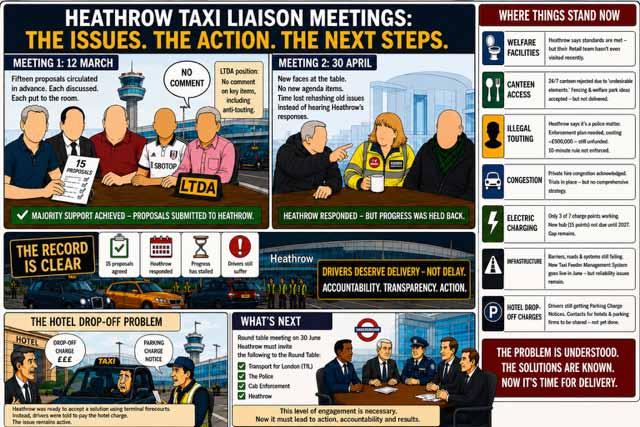
of charging points are currently operational (3 out of 7). Expansion of charging infrastructure requires approval through governance processes involving airline stakeholders, which slows delivery. Plans for a larger charging hub exist (15 charge points), but delivery is not expected until 2027. This does not address the immediate requirements of drivers who are already operating electric vehicles. The gap between current demand and available infrastructure remains.
Infrastructure and system reliability were also discussed. Issues with barriers, road surfaces and communication systems continue to be reported. Heathrow confirmed that faults are logged through established reporting
systems are not consistently reliable. The effectiveness of the new system will depend on whether those underlying issues are addressed.
The issue of hotel dropoff charges was discussed in detail, and its current position reflects the broader pattern seen across other issues.
The problem originated from the introduction of Heathrow’s Terminal DropOff Charge, which led to displacement of drop-off activity to nearby hotels. Those hotels introduced their own charges in response. Taxi drivers were then placed in a position where they could not pass those charges on in many cases and were exposed to Parking Charge Notices where charges were not
after the substantive discussion had taken place. James Ashfield confirmed that the minutes were official and accurately reflected the meeting. The discrepancy arose from a difference between the recorded account and her understanding that had been carried into the meeting. Maybe she shouldn’t rely on what her partner told her.
Looking forward, the most significant development to emerge from the April meeting is the proposed round table scheduled for 30 June. Heathrow indicated that this may involve Transport for London, Cab Enforcement and Aviation Policing alongside Heathrow.
This level of engagement is necessary if issues such as illegal touting, congestion and enforcement are to be addressed in a coordinated way. The effectiveness of the round table will depend on whether it results in defined actions, clear allocation of responsibility and a commitment to delivery.
By the time of the April meeting, drivers were still receiving Parking Charge Notices. This was acknowledged during the meeting by Suzanne Sullivan. It was also agreed that contact details for the relevant parking operators, including Euro Car Parks and the hotels would be provided to Heathrow so that the issue could be addressed directly. That step had not been completed prior to that point. The issue therefore remained active, despite claims made elsewhere that it had been resolved.
At the conclusion of the April meeting, Suzanne Sullivan raised concerns regarding the accuracy of the minutes from the March meeting, suggesting that they may have been “doctored.” This occurred
Across both meetings, the position is consistent. A set of fifteen proposals was put forward and supported by a majority at the March meeting. That position was not carried forward effectively at the April meeting due to a change in representation and lack of continuity.
Heathrow have acknowledged the issues raised across welfare, enforcement, congestion, charging and infrastructure, but have not delivered solutions in key areas.
The hotel drop-off issue remains active, with drivers continuing to receive Parking Charge Notices.
Operational conditions experienced by drivers remain materially unchanged.
The record of the meetings provides a clear account of what has been raised, what has been agreed, and what has not yet been delivered.
Eddie Hearn has claimed that Conor Benn turned down three world-title fights against different opponents before leaving Matchroom earlier this year.
In February, Benn was involved in a shock split from Hearn’s promotional company Matchroom, signing with rivals Zuffa Boxing – despite Hearn’s apparent loyalty to the British star during a twoyear saga that began with Benn failing two drug tests.
Benn has since fought once, outpointing Regis Prograis in a catchweight bout in April, though he is expected to drop back down to his natural division of welterweight next, having traded middleweight wins with rival Chris Eubank Jr in 2025.
It is unclear whom the 29-year-old will face, although he has repeatedly targeted big names from the US. And now, Hearn has offered a potential explanation for that approach.
Speaking to various outlets, including Boxing
In the biggest Japanese boxing match of this generation, Naoya Inoue beat Junto Nakatani on Saturday, handing his compatriot the first loss of his professional career.
Inoue secured a unanimous-decision victory at the Tokyo Dome, retaining the undisputed super-bantamweight titles and preserving his unbeaten record.
Both Inoue, 33, and Nakatani, 28, entered the super-fight with perfect records and as multi-weight world champions, but it was the “Monster” who solidified his already-remarkable
News, Hearn said: “When Lewis Crocker won the world [IBF welterweight] title, I was like: ‘Oh, my God. Crocker vs Benn at the O2 [Arena] for the world title!’
“I went to Conor and he was like: ‘Nah, I don’t want that fight’. Then he eventually started talking about the [IBF’s 10lb] rehydration [policy] and all that kind of stuff.
“So, then I was like ‘Rolly Romero’. We had that fight done with [Romero’s manager] Luis DeCubas. Benn was like: ‘It’s not a very big fight.’ I’m like: ‘Mate, you’re getting a [WBA] world-title fight in London. I think you can beat Rolly Romero.’
“‘What about [IBF superwelterweight champion] Josh Kelly at the Stadium of Light?’ [Benn said:] ‘I ain’t fighting f***ing Josh Kelly.’
“I think he knows his limitations, so why would you get beat for small money when you can get beat for bigger money?”
The Independent has approached Benn for comment.
Prior to a points loss to Eubank Jr last April, Benn was unbeaten as a professional. He avenged that loss in November, as the pair returned


By Steve Bunce
Following Benn’s shock move to Zuffa, he was expected to be paired with a big-name opponent, given reports of Zuffa paying him $15m for one fight.
And while Prograis is a former world champion, he did not bring the profile that some fans expected, nor was he fighting at his natural weight or in his prime.
Furthermore, the American – who ventured up in weight to box Benn – carried an injury into his fight with the Briton, who outpointed the 37-year-old in Tottenham. Prograis then retired in the aftermath.
legacy with another victory.
Inoue (33-0, 27 KOs) earned scorecards of 116-112, 115-113, 116112, extending his current title reign, which has followed an undisputed run at bantamweight, and previous title wins at light-flyweight and superflyweight.
Meanwhile, Nakatani won gold at flyweight and super-flyweight before becoming unified
bantamweight champion, a reign that gave way to his super-bantamweight debut in December. Nakatani (32-1, 24 KOs) struggled on that night, sustaining considerable damage in a razor-close win over Sebastian Hernandez Reyes, at the same event where Inoue eased past David Picasso.
While the first few rounds were tense and neither boxer was especially active, it was Inoue who was
doing a better job at testing Nakatani, who remained somewhat passive.
Indeed, Inoue began to take gradually-greater risks, darting into range to land crosses and throwing lengthier combinations while staying crisp with his defence. As such, the champion seemed to have a relatively-healthy lead at the midway point.
But the similarly heavyhanded Nakatani began
to turn the tide in the second half of the fight. The challenger was doing a better job at holding the centre of the ring and pressing forward, as he began to unload multiple hooks on a tiring Inoue.
With that in mind, there seemed to be all to play for heading into the final three rounds, but it was then that Inoue showed his pedigree and finished strongly – as he so often has over the years.




All under one roof
• Exclusive Insurance schemes
• Breakdown cover only £99
• Roadside assistance and recovery
• Recovery to any UK Location